How to Decorate a Small Bathroom: 7 Steps to Maximize Style
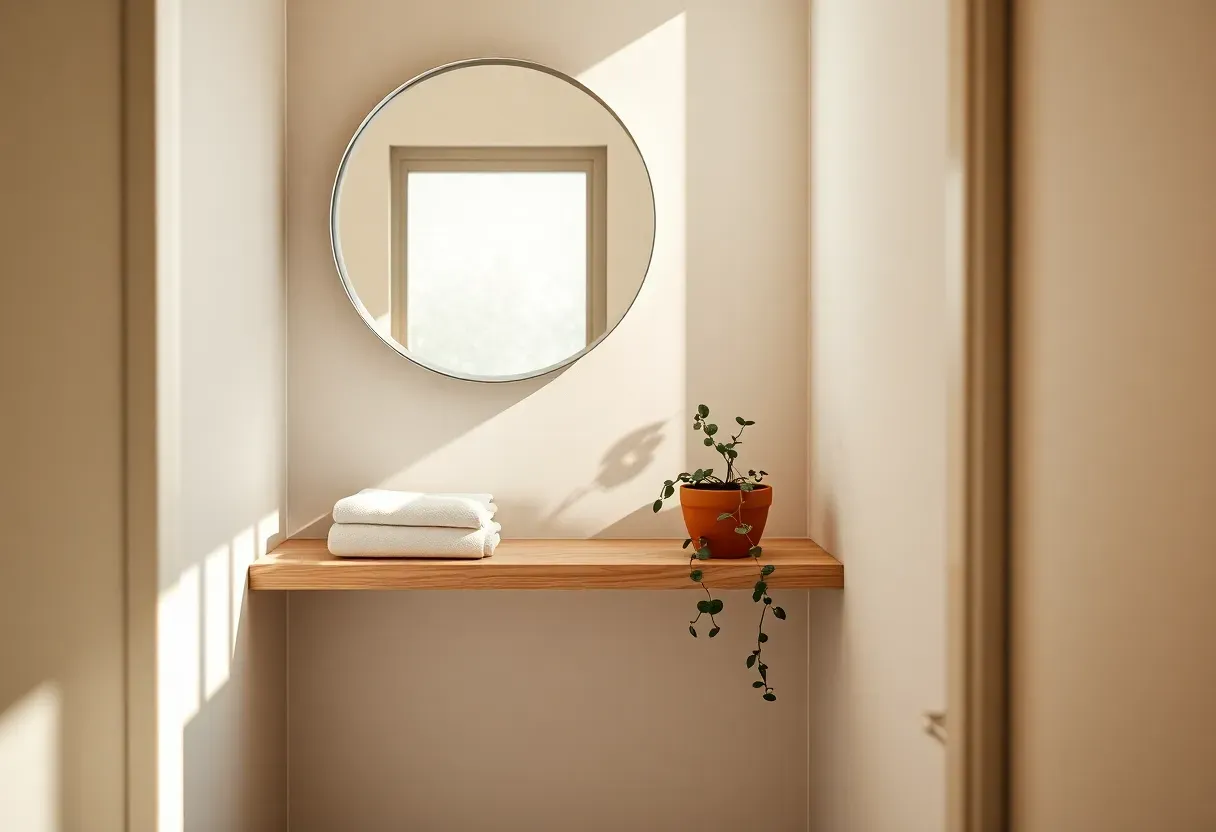
Most small bathrooms don't have a size problem — they have a clarity problem. Too much stuff, the wrong colors, and light that flattens everything. These 7 steps give you a clear sequence for turning even the most cramped bathroom into a space that feels intentional, airy, and genuinely stylish — without touching a single tile.
Table of Contents
- What You'll Need
- Step 1: Clear the Clutter First
- Step 2: Choose a Light, Warm Color Palette
- Step 3: Maximize Vertical Storage
- Step 4: Use Mirrors Strategically
- Step 5: Layer Your Lighting
- Step 6: Upgrade Your Textiles
- Step 7: Style with Focused Accessories
What You'll Need
- Paint in a warm neutral (linen, parchment, warm white, or sage)
- Peel-and-stick wallpaper (optional, for an accent wall)
- Tall slim open shelving unit or wall-mounted shelves
- Round or arched mirror with a warm-toned frame
- LED backlit mirror or plug-in wall sconces (2700K bulbs)
- Waffle-weave or linen towels in one or two complementary tones
- Woven bath mat (jute or ribbed cotton)
- Small tray for grouping accessories
- 1-2 plants tolerant of humidity (pothos or snake plant)
- Woven basket or lidded box for hidden storage
Step 1: Clear the Clutter First
Don't decorate around the mess — eliminate it. What you remove matters more than what you add.
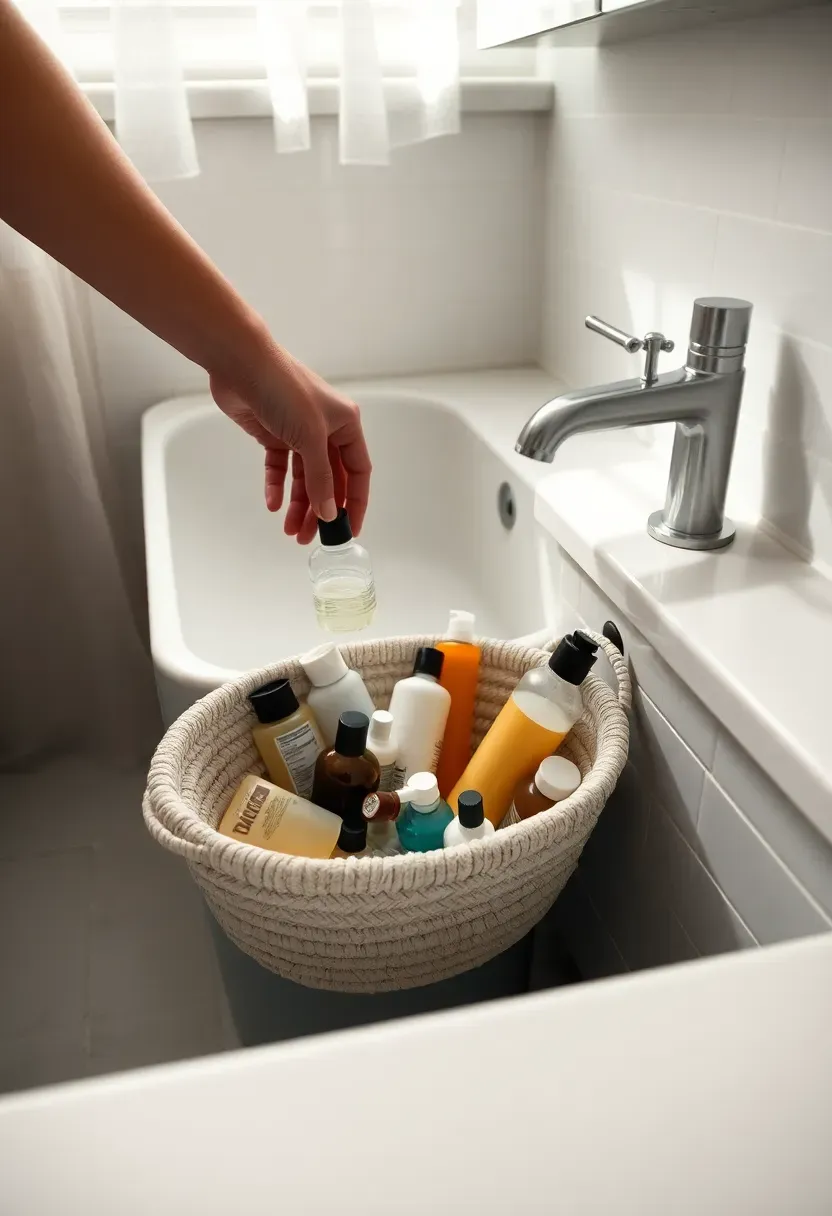
Pull everything off the counter and out of open shelving. Keep only what you use daily. Everything else goes into a cabinet, a basket, or out of the room entirely. In a small bathroom, each object on display competes for visual space — five random items make a bathroom feel chaotic; three curated ones make it feel designed. Edit down to the minimum, then proceed to the next steps with a clean slate to work from.
Do: decant everyday products (cotton buds, soap) into matching ceramic or glass containers Don't: store items on the back of the toilet — it reads as overflow, not decor Pro tip: a lidded woven basket on the floor handles all the overflow without looking cluttered
Step 2: Choose a Light, Warm Color Palette
Color does more visual work in a small bathroom than any other single decision. The right palette doubles the perceived size of the room.
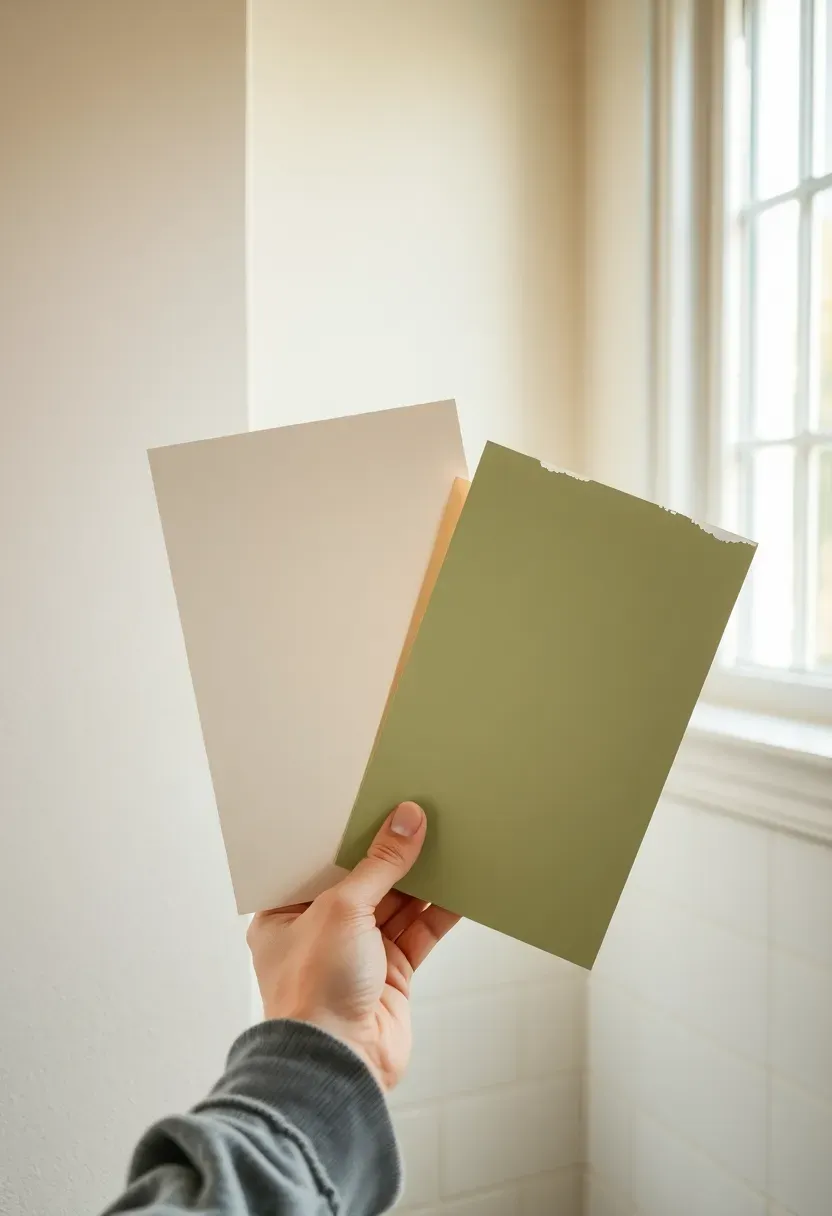
Go warm rather than stark white. Warm off-whites (linen, parchment, warm ivory), dusty sage, and pale terracotta all reflect light beautifully without feeling clinical. The envelope trick — painting walls, ceiling, and trim the same color — removes visual interruptions and makes the room read as one continuous, larger surface. If you're renting, peel-and-stick wallpaper on a single accent wall (behind the toilet or the vanity) creates the same palette-defining effect with zero commitment.
Do: test paint swatches on the actual wall and observe them in both morning and evening light Don't: choose stark bright white — it emphasizes edges and makes small rooms feel boxy Pro tip: painting the ceiling the same shade as the walls is the fastest way to make the room feel taller
Recommended
Items for this idea
Step 3: Maximize Vertical Storage
Small bathrooms run out of floor space fast — but the walls almost always have room. Think upward.
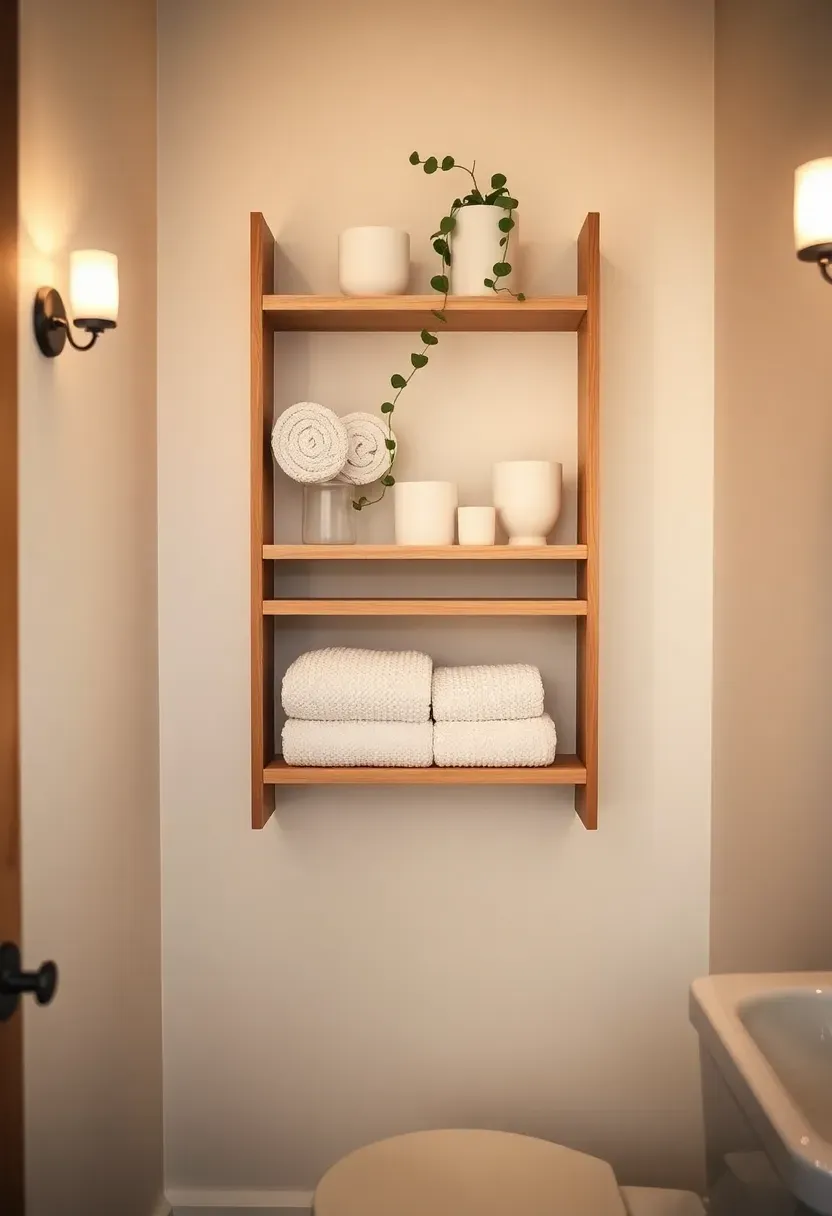
A floor-to-ceiling slim open shelf (30–40 cm wide) mounted next to the toilet or door wall reclaims vertical space most bathrooms waste completely. Use the lower shelves for rolled towels and bathroom organizers; reserve the top shelf for a plant or a single decorative object. Wall-mounted floating shelves above the door are another zero-footprint option. The key discipline: keep at least one shelf mostly empty — negative space signals intentional styling, not storage overflow.
Do: use matching containers and baskets on shelves to make storage look deliberate Don't: stack shelves to maximum capacity — overfilled shelves look like clutter even when organized Pro tip: a shelf height above eye level feels more spacious than one that interrupts the midpoint of the wall
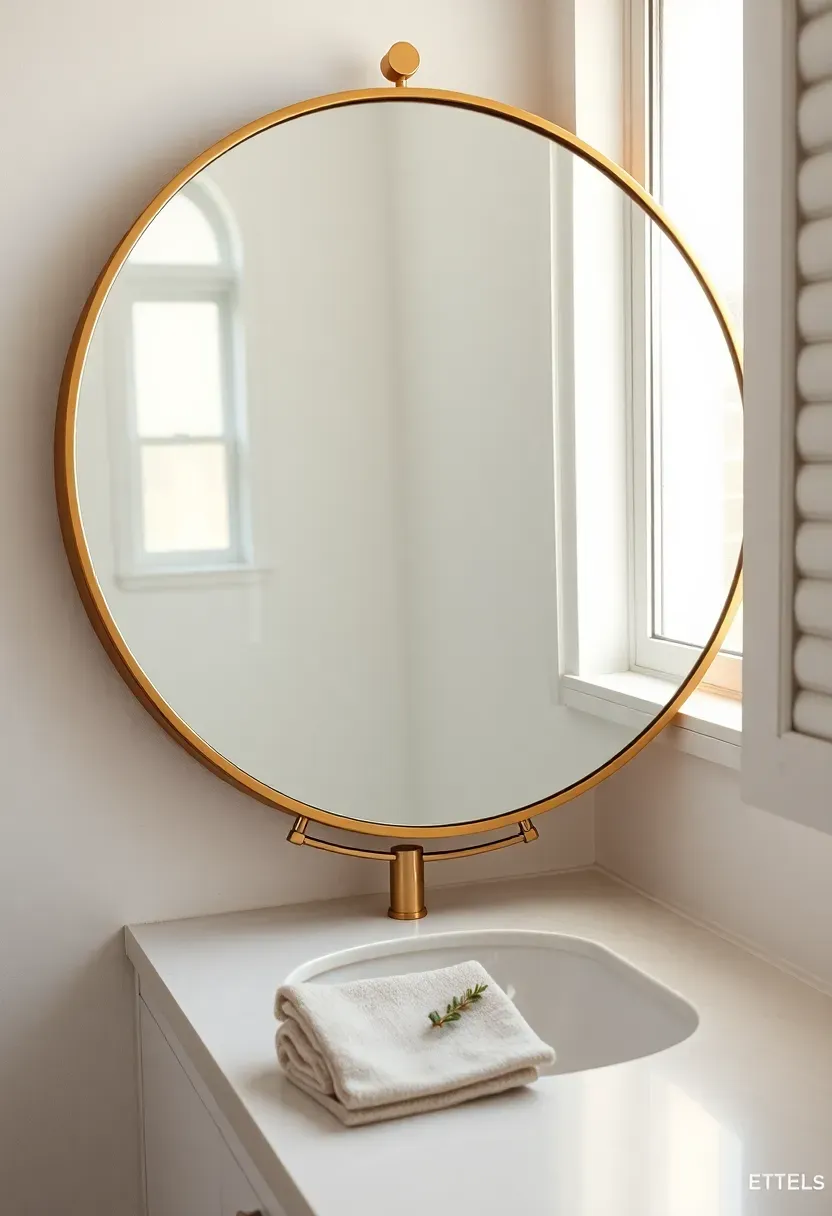
Step 4: Use Mirrors Strategically
A mirror isn't just a functional object in a small bathroom — it's an architectural tool that multiplies light and space.
The most impactful upgrade you can make: go larger than you think is appropriate. A round mirror that spans most of the vanity wall, or a leaning full-length mirror in a corner, reflects the window and the room back on itself — effectively doubling the perceived depth. Round and arched mirrors are particularly effective because their curves soften the hard angles that make small rooms feel boxy. Position the mirror to reflect the most light source in the room. A brushed brass or matte black frame adds warmth or contrast without visual bulk.
Do: position the mirror to reflect natural light from a window whenever possible Don't: use a small medicine-cabinet-sized mirror on a large wall — it looks lost and shrinks the room Pro tip: a leaning mirror costs nothing to reposition and requires no wall drilling — ideal for renters
Recommended
Items for this idea
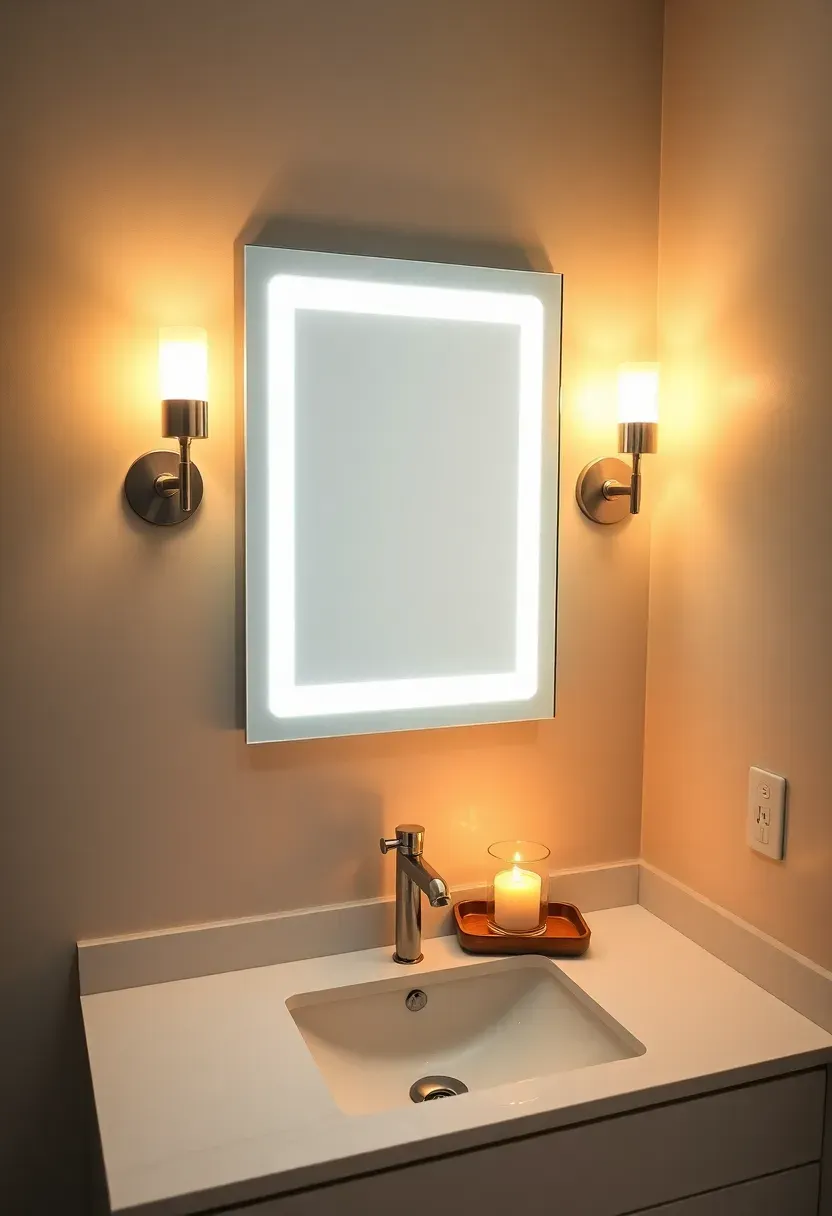
Step 5: Layer Your Lighting
Single overhead lighting is the enemy of small bathroom style. It flattens surfaces, creates harsh shadows, and makes everything feel institutional.
The fix is layered lighting — at least two sources at different heights. Start with the non-negotiable: replace or supplement your overhead with a backlit LED mirror or side-mounted sconces at face height. Side lighting eliminates the unflattering shadows overhead fixtures create and makes the room feel instantly warmer. Plug-in sconces require zero wiring — perfect for rentals. Add a third layer with a small candle or a dimmable overhead. Use only warm white bulbs (2700K) throughout: cooler tones make small bathrooms feel cold and clinical.
Do: use warm 2700K bulbs in every fixture — color temperature is more impactful than fixture style Don't: rely on a single ceiling fixture, especially centered above the vanity Pro tip: a plug-in backlit mirror solves lighting and mirror needs in one purchase
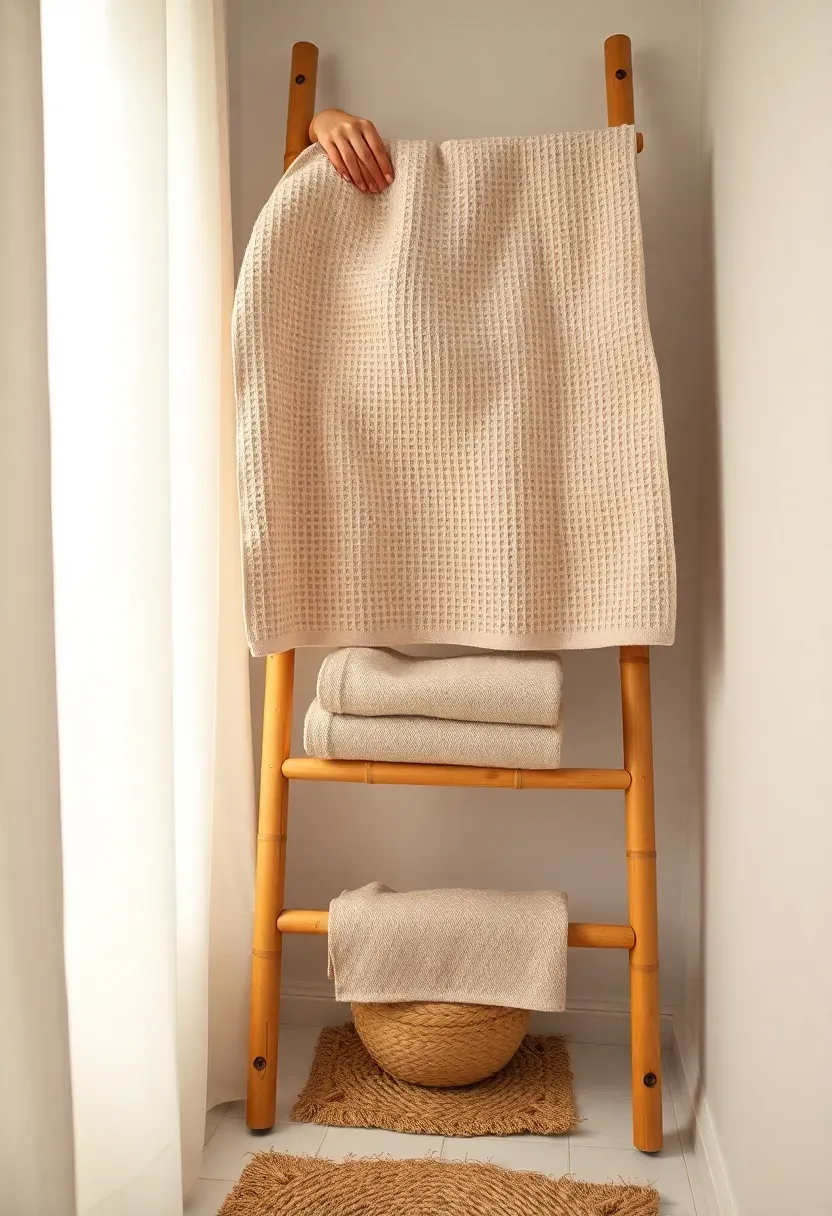
Step 6: Upgrade Your Textiles
Textiles are the cheapest, most reversible upgrade in any room — and the impact in a small bathroom is immediate.
Swap bright white or mismatched towels for a set in a single warm neutral — oat, linen, warm ivory, or dusty sage. Waffle-weave and stonewashed linen read as intentional and high-end at a fraction of the cost of fluffy hotel towels. Fold them in thirds and stack or roll rather than hanging flat. Replace a plain bath mat with a woven jute or ribbed cotton version in a tone that ties into your palette. A linen shower curtain (with a plain white liner behind it) softens the room's largest vertical surface and signals the whole color direction at once.
Do: keep the textile palette to two tones maximum — more reads as random, not layered Don't: buy matching sets in synthetic fabric — they photograph cheaply and feel stiff Pro tip: rolling towels takes 30 seconds and transforms shelf storage into a display moment
Recommended
Items for this idea
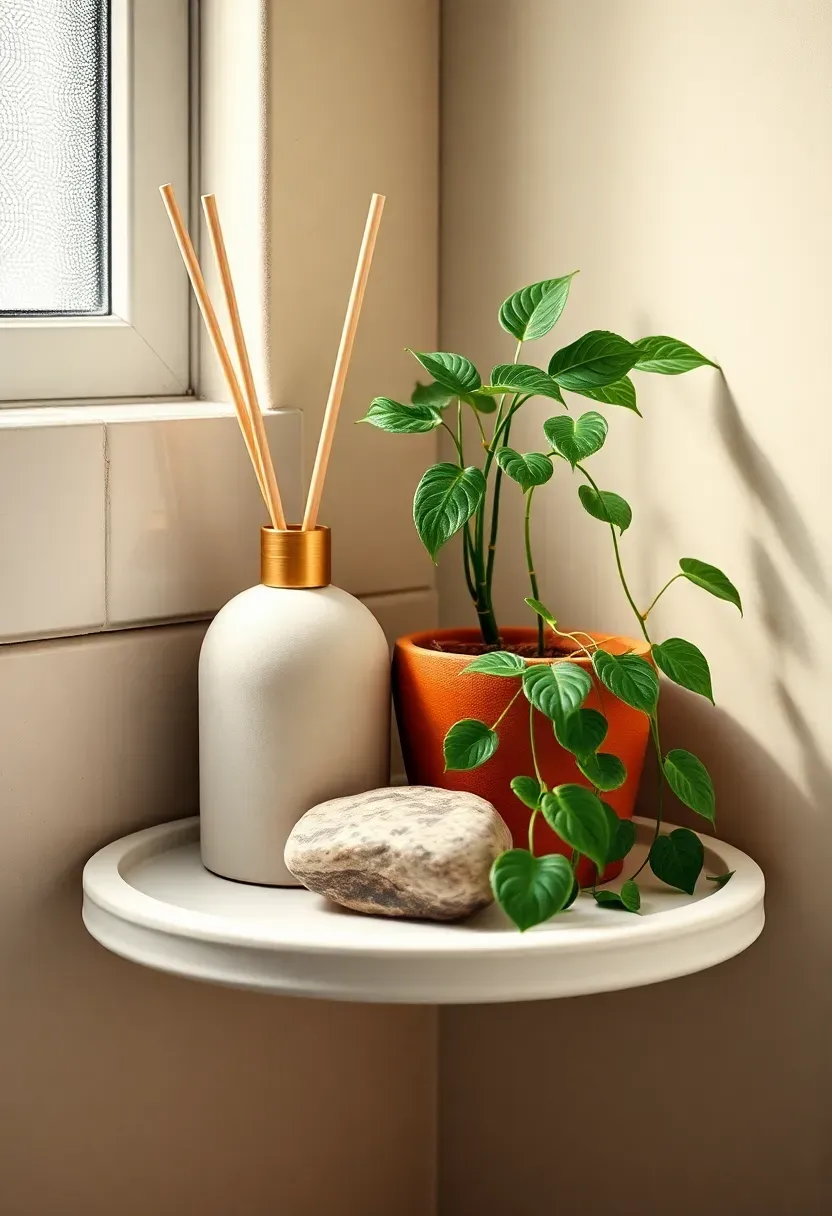
Step 7: Style with Focused Accessories
This is the finishing layer — and restraint is the most important skill here. A small bathroom styled with intention looks curated; one styled without it looks crowded.
Choose one surface to style (the vanity counter or one shelf) and group objects on a small tray. A matte ceramic soap dispenser, a reed diffuser, one smooth stone, and a pothos in a terracotta pot: that's four objects that together read as a considered vignette. Follow the rule of odd numbers — three or five items feel balanced, four or six feel stiff. A trailing pothos or small snake plant introduces organic softness that no product can replicate, and both tolerate bathroom humidity. Then stop adding. The negative space around your grouping is as important as what fills it.
Do: group all countertop items on a tray — it turns a collection of products into a styled moment Don't: spread accessories across every surface — concentrate them for maximum impact Pro tip: swap out one seasonal element (a candle scent, a dried stem, a small plant) to keep the room feeling fresh without a full re-style
FAQ
Is it possible to make a small bathroom feel bigger without renovating? Absolutely. Color, mirrors, and lighting do more to expand perceived space than any structural change. A warm envelope paint color, a large mirror, and layered warm lighting can make a 5 m² bathroom feel significantly more spacious in a single weekend.
What's the difference between decorating a small bathroom and a regular one? The main difference is scale and restraint. Every object in a small bathroom is more visible, so each one needs to earn its place. You also lean harder on vertical space and reflective surfaces — mirrors, glossy tiles, and metallic accents — to bounce light around and create depth.
Should I use open or closed storage in a small bathroom? Both — but strategically. Closed storage (cabinets, baskets with lids) is better for products you use daily. Open storage works for items that look good: folded towels, a plant, a few matching ceramic containers. The mistake is storing too much on open shelves: everything visible should be intentionally styled.
Can a renter decorate a small bathroom without losing their deposit? Yes. Peel-and-stick wallpaper, removable floor tiles, plug-in sconces, and freestanding furniture all work without wall damage. Focus the bulk of your investment on textiles and accessories — they travel with you when you move and cost almost nothing to swap.
What plants actually survive in a small bathroom with low light? Pothos, snake plant, peace lily, and ZZ plant all tolerate low light and humidity. Pothos is the most forgiving — it thrives on neglect, cascades beautifully from a shelf edge, and can go weeks between waterings.
Pick one step and start this weekend. Clear the counter today, choose your paint color tomorrow — the rest follows naturally once the foundation is right.
Pinterest cover for How to Decorate a Small Bathroom: 7 Steps to Maximize Style
About the author
OBCD
CGI visualization and interior design content. We create detailed 3D renders and curate practical design ideas for every room in your home.