How to Decorate a Mantle for Every Season: 5 Simple Steps
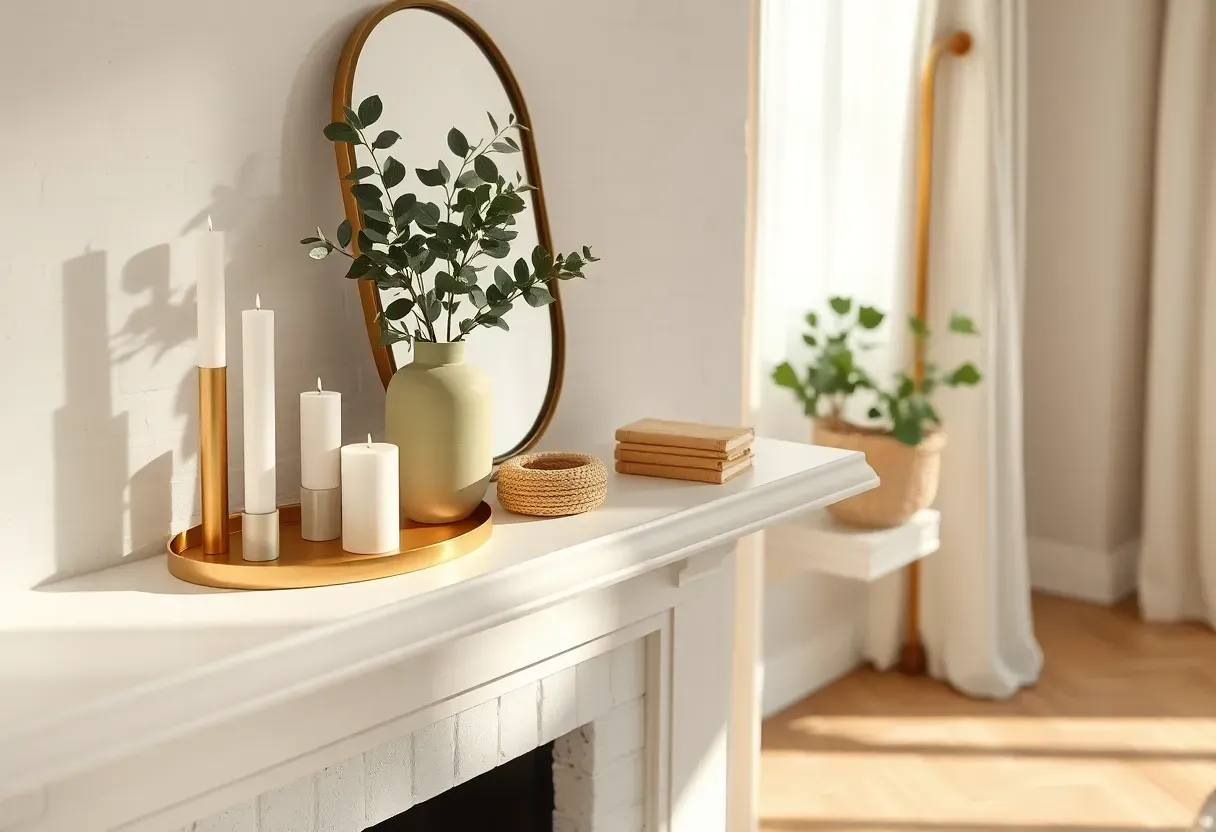
Your mantle is the first thing people notice when they walk into a living room — and yet most of us set it up once and leave it untouched for years. The secret to a mantle that always feels current is not buying new decor every quarter. It is building a flexible base layer that stays year-round and swapping only a few accent pieces when the season shifts. These five steps give you that system, so every seasonal refresh takes minutes rather than hours.
Table of Contents
- What You'll Need
- Step 1: Establish a Permanent Foundation
- Step 2: Create Height with a Focal Anchor
- Step 3: Layer Seasonal Textures and Botanicals
- Step 4: Add Candlelight and Warm Accents
- Step 5: Style the Finishing Details for the Current Season
What You'll Need
- A large mirror or framed artwork for the back wall (permanent piece)
- 2-3 pillar candles or lanterns in neutral tones
- 1-2 tall vases (ceramic, glass, or brass)
- Seasonal botanicals: fresh stems, dried branches, or faux greenery
- A small stack of hardcover books (2-3, neutral spines)
- 1-2 textured objects: a woven basket, ceramic bowl, or sculptural piece
- Seasonal accent items: pinecones, seashells, mini pumpkins, or spring bulbs
- A small tray or riser for grouping objects
Step 1: Establish a Permanent Foundation
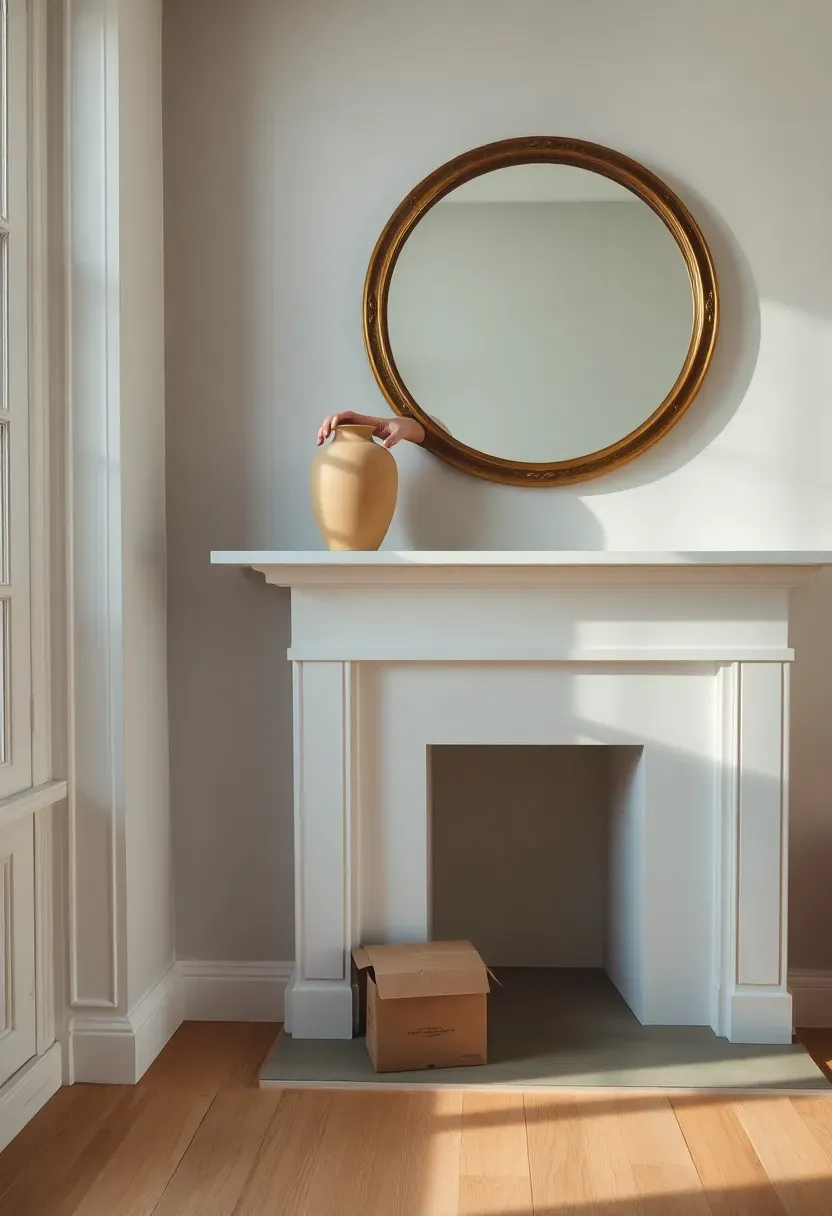
Every well-styled mantle begins with a backbone that never changes. Get this right and seasonal swaps become effortless.
Strip the mantle completely bare. Wipe it down and look at the empty surface the way a painter looks at a blank canvas — notice its width, depth, and the wall space above it. Now place your single largest piece: a mirror leaning against the wall or a large piece of framed art centered above the mantle. This anchor stays put through spring, summer, fall, and winter. It provides the visual structure that every seasonal layer will lean against. Choose something with a neutral frame — warm wood, antique brass, or matte black — that plays well with any color palette you introduce later.
Do: select a mirror or artwork wider than half the mantle length so it reads as intentional and proportionate, not lost on the wall Don't: hang the piece so high that it disconnects from the mantle surface — lean it directly on the shelf or mount it just 5-10 cm above Pro tip: a round mirror softens a room with angular furniture; a rectangular frame reinforces a more structured, contemporary layout
Step 2: Create Height with a Focal Anchor
Most people skip this — and their mantle ends up looking like a flat shelf of trinkets rather than a composed display.
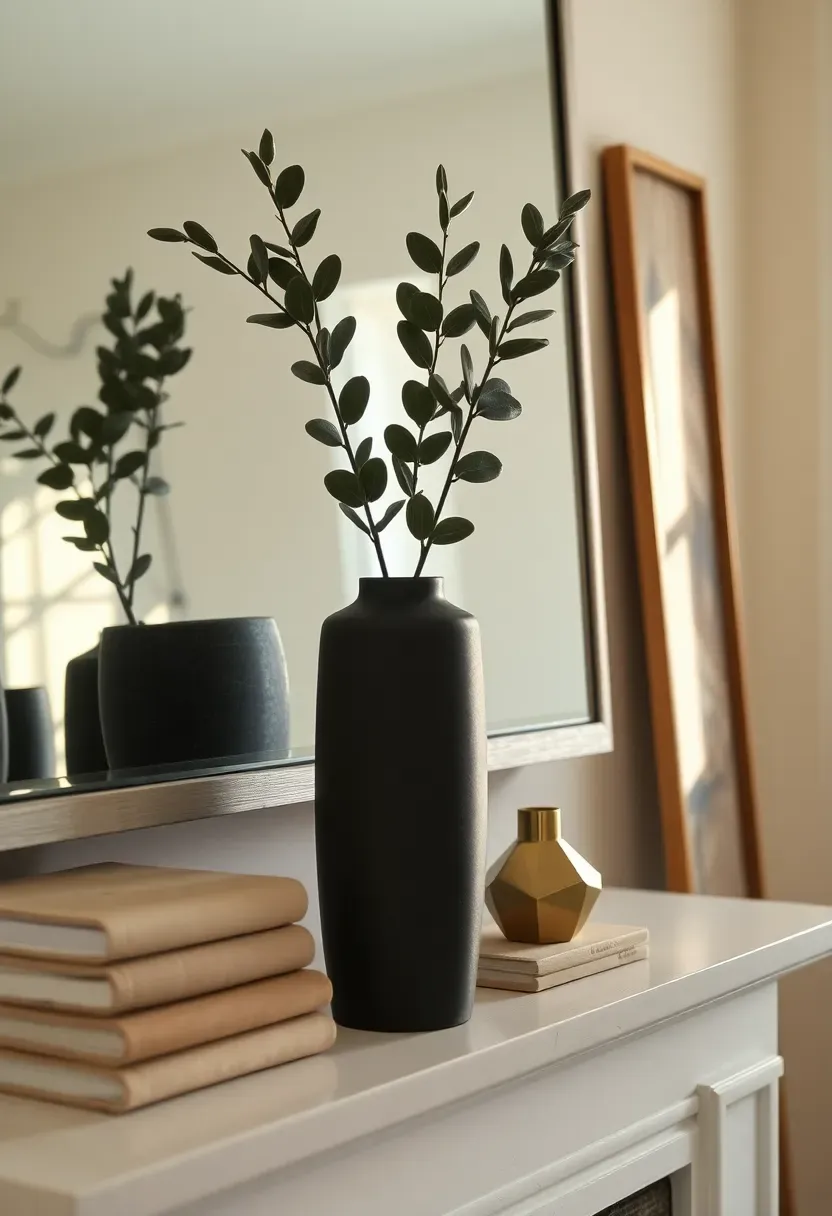
Place your tallest object at one end of the mantle — not in the center. A tall ceramic vase, a brass candlestick, or a lantern positioned at the left or right third creates an asymmetric peak that the eye travels toward first, then sweeps across the rest of the arrangement. Balance this height on the opposite side with something shorter but visually heavy: a stack of two or three hardcover books with a small ceramic on top, or a squat sculptural object. The visual weight on both sides should feel equal even though the heights are different. This asymmetric balance is what gives a mantle energy — perfect symmetry feels stiff, and total randomness feels messy.
Do: aim for your tallest piece to be roughly half the height of the space between the mantle shelf and the ceiling or the top of the mirror Don't: place two objects of identical height at opposite ends — near-equal heights create a goalpost effect that flattens the whole arrangement Pro tip: if your mantle is narrow, lean a tall branch or dried stem in a slim vase against the mirror — it adds height without consuming shelf depth
Recommended
Items for this idea
Step 3: Layer Seasonal Textures and Botanicals
This is where the real transformation happens. One swap of greenery completely changes the season your mantle communicates.
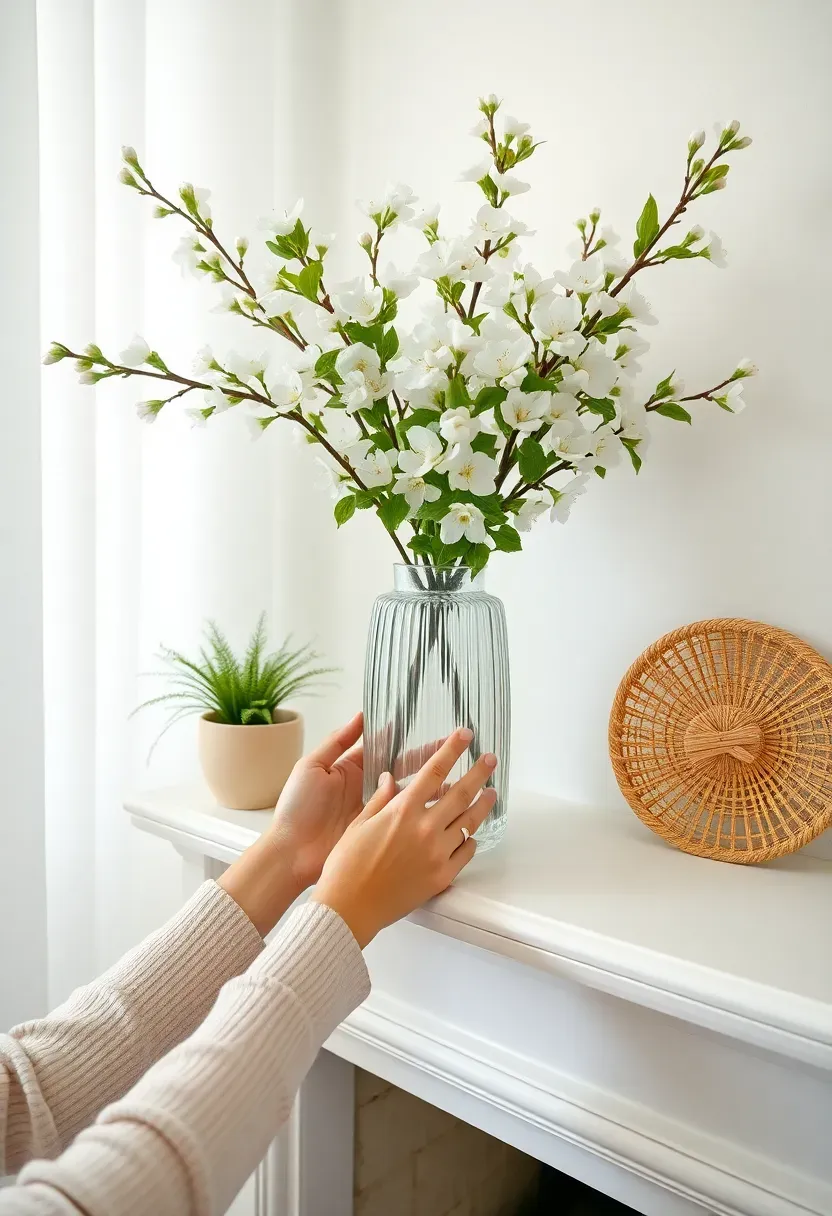
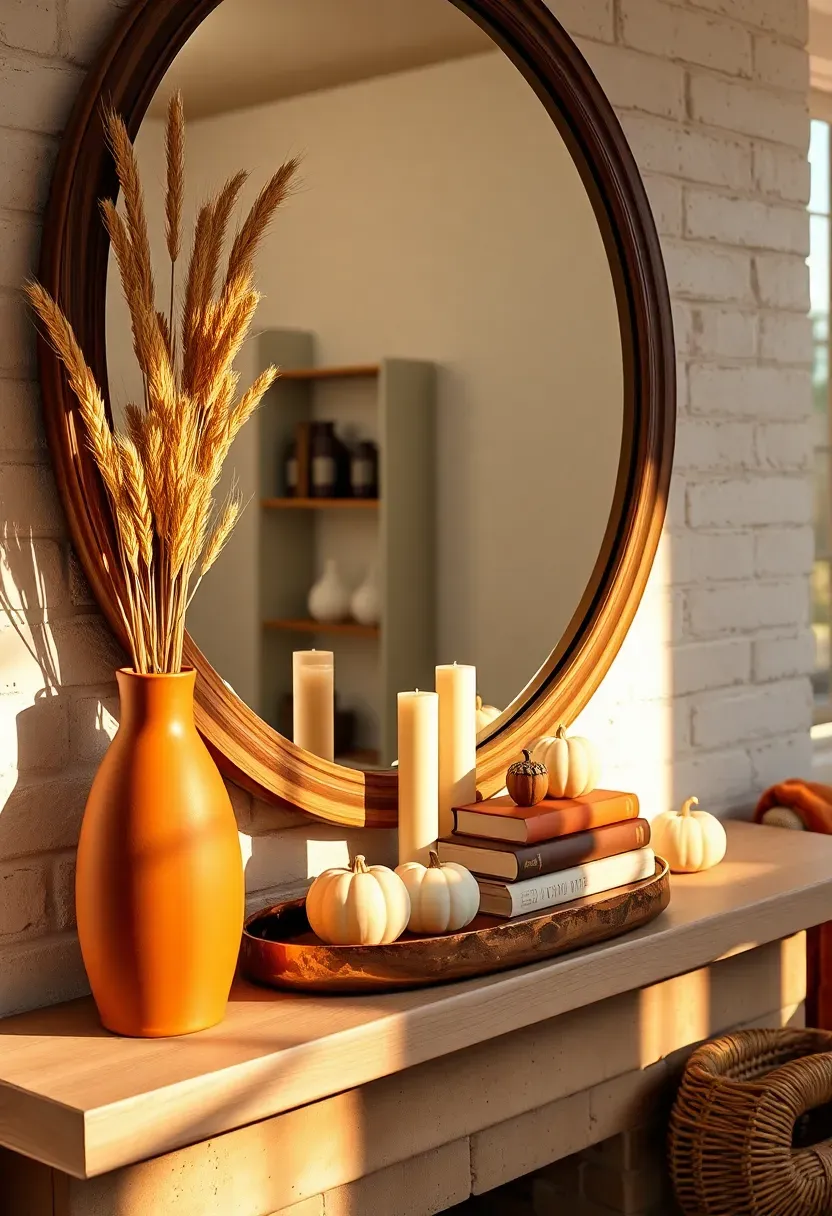
Build a rotating botanical element into the center or off-center position on your mantle. In spring, fill a clear glass vase with flowering branches — cherry blossom, forsythia, or dogwood. In summer, switch to lush green ferns, monstera leaves, or a simple bunch of fresh herbs in a water pitcher. For fall, dried wheat stalks, bittersweet branches, or preserved autumn leaves in a matte vase shift the entire palette. Winter calls for evergreen sprigs, bare birch branches, or a cluster of pinecones piled in a shallow bowl. The container stays the same across two or three seasons — you are only swapping what goes inside it. Beside the vase, add one textured object that reinforces the season: a woven basket in spring, a piece of driftwood in summer, a copper bowl in autumn, a chunky knit object in winter.
Do: keep one or two containers permanent and swap only the botanical contents — this is the efficiency that makes seasonal decorating sustainable Don't: mix seasonal signals — cherry blossoms next to pinecones confuses the eye and dilutes the mood Pro tip: dried botanicals from one season often carry over beautifully into the next — dried lavender works from summer through early fall, and eucalyptus transitions from fall into winter without looking out of place
Step 4: Add Candlelight and Warm Accents
Don't rush this step — it makes the biggest visual difference, especially in the evening hours when the mantle becomes the room's focal point.
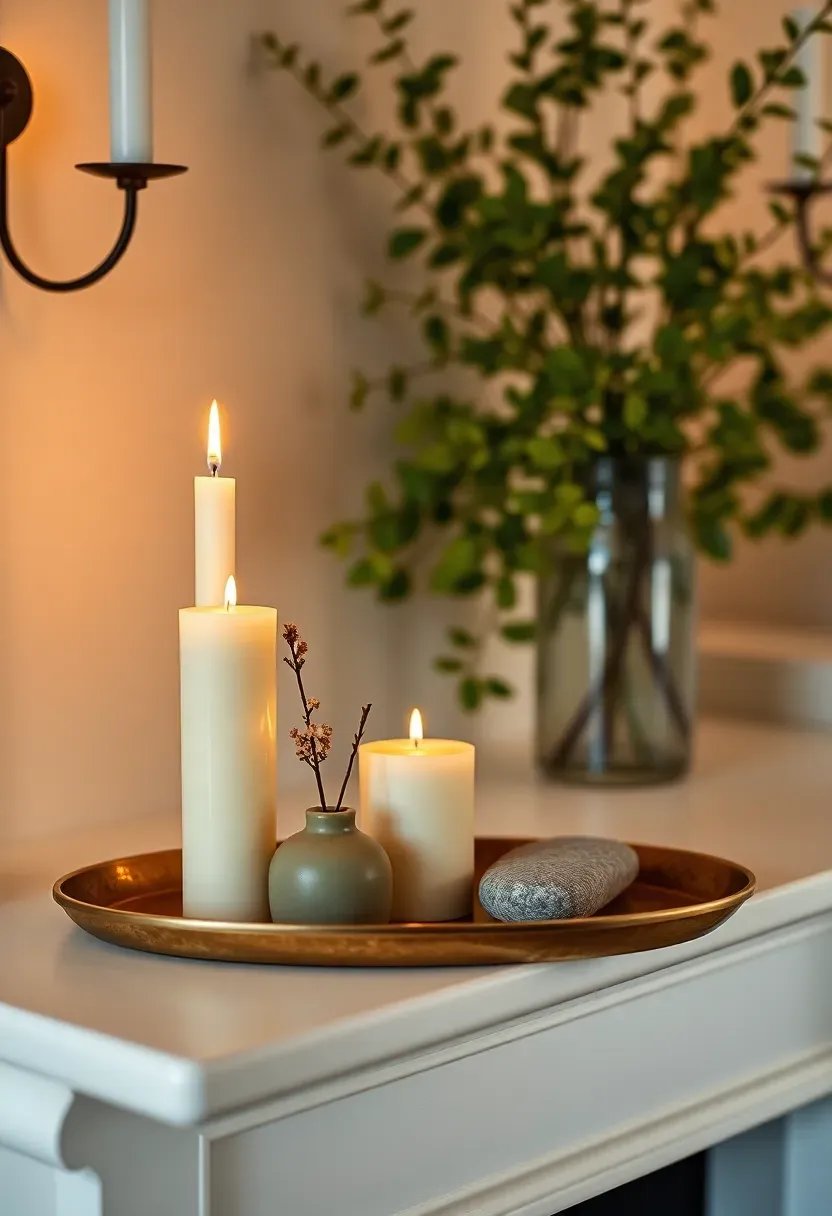
Group two or three pillar candles of varying heights on a small tray near the center or slightly off-center on the mantle. The tray creates a boundary that makes candles look collected rather than scattered. Choose ivory, cream, or warm white candles — they read as intentional year-round. In fall and winter, swap the tray for a copper or brass one to catch the warm light. In spring and summer, a marble or light wood tray keeps the mood airy. Flank the candles with a small accent object on each side: a ceramic bud vase with a single stem, a smooth stone, or a tiny brass figurine. These small satellites draw the eye inward toward the candlelight and prevent the mantle from feeling empty between the tall anchor at one end and the botanical arrangement at the other.
Do: use unscented candles for the mantle display — scented ones compete with any room diffuser and the wax tends to discolor differently Don't: line candles up in a row at the same height — stagger heights and place them in a loose triangle formation on the tray Pro tip: LED pillar candles with a warm flicker setting give the same ambiance without the soot or fire risk, and they work perfectly on mantles above active fireplaces where real flame would be impractical
Recommended
Items for this idea
Step 5: Style the Finishing Details for the Current Season
This is where your mantle stops looking like a template and starts looking like yours. The finishing layer is small, personal, and entirely seasonal.
Scatter two or three tiny seasonal accents in the remaining gaps. For spring: a bird's nest, a small potted bulb, or a pastel egg in a ceramic dish. For summer: a seashell, a small piece of coral, or a citrus-scented candle in a glass jar. For fall: miniature pumpkins, acorns in a shallow wooden bowl, or a cinnamon bundle tied with twine. For winter: a frosted pinecone, a mercury glass ornament, or a sprig of holly tucked behind a frame edge. These finishing objects should be small enough that removing them takes seconds — that is the entire point. When the next season arrives, you lift out three small items, drop in three new ones, swap the botanicals from Step 3, and the mantle is refreshed. Total time: ten minutes.
Do: keep seasonal finishing accents in a labeled box or basket for each season — having them ready removes the friction that keeps people from updating their mantle Don't: add more than three or four finishing accents — the mantle should still breathe, and overcrowding in this final step undoes the restraint you built in Steps 1 through 4 Pro tip: photograph your mantle at the end of each season before you swap — over a year, you build a visual reference library of what worked, and each season's styling gets faster and more confident
FAQ
Should I match my mantle decor to the rest of the living room? Pull one or two tones from your existing room palette — a sofa cushion color, a rug accent, or the wood tone of your furniture — and echo them on the mantle. The mantle should feel like part of the room, not a separate island. Full matching is unnecessary, but two shared tones create visual connection without making things look overly coordinated.
Is it possible to decorate a mantle seasonally on a very tight budget? Completely. The most effective seasonal elements — branches from your yard, pinecones from a park, herbs from a grocery store — are free or nearly free. The permanent foundation pieces (mirror, candles, vase) are one-time purchases. After the initial setup, a seasonal swap costs between zero and fifteen dollars if you forage botanicals and reuse containers.
Can renters decorate a mantle without damaging the wall above it? Leaning a mirror or frame directly on the mantle shelf eliminates the need for wall holes entirely. Command strips rated for the weight can hold lighter pieces. Everything in these five steps sits on the mantle surface or leans against the wall without permanent mounting.
What's the biggest mistake people make with mantle decorating? Centering everything. A perfectly symmetric mantle — matching objects on each side, everything at equal height, a piece of art dead center — looks static and uninviting. Asymmetric arrangements with varied heights feel alive and draw the eye across the entire surface. Shift your focal pieces off-center and the whole display wakes up.
How often should I actually change the seasonal pieces? Four times a year is the natural rhythm — roughly aligned with the equinoxes and solstices. But two transitions work well for most people: a warm-season setup (spring through summer) and a cool-season setup (fall through winter). Even twice a year is enough to keep the mantle from becoming invisible background noise.
Pick one weekend morning, clear your mantle bare, and place that first foundation piece. The hardest part is starting — everything after Step 1 is just layering.
Pinterest cover for How to Decorate a Mantle for Every Season: 5 Simple Steps
About the author
OBCD
CGI visualization and interior design content. We create detailed 3D renders and curate practical design ideas for every room in your home.