21 Beautiful Spring Centerpiece Designs
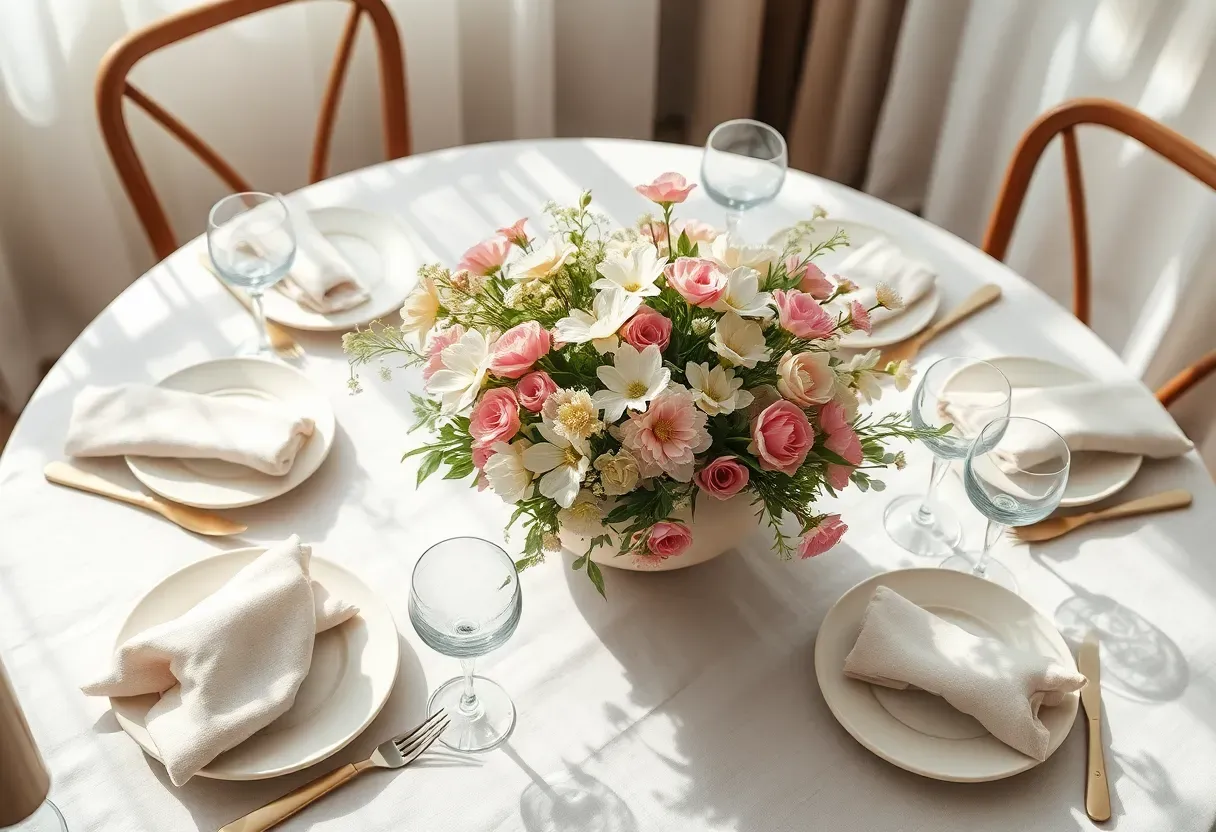
There is something quietly transformative about placing the right centerpiece on a table. It shifts the entire room. Suddenly the space feels intentional, gathered, alive. Spring — with its abundance of blooming branches, soft pastels, and sun-warmed textures — offers the richest palette of the year for table styling. Whether you are setting a casual brunch, planning an Easter celebration, or simply want your dining room to reflect the season outside, a well-chosen centerpiece does the work of a dozen decorations.
Ready? Below you will find 21 spring centerpiece ideas spanning rustic farmhouse charm, sleek modern minimalism, playful Easter motifs, and hands-on DIY projects you can finish in an afternoon.
Table of Contents
- Wildflower Meadow in a Rustic Wooden Box
- Tulip Trio in Clear Glass Cylinders
- Easter Egg Nest with Moss and Blooms
- Lemon and Greenery Citrus Runner
- Cherry Blossom Branch Display
- Herb Garden Centerpiece
- Peony Cloud in a Low Bowl
- Bird Cage with Trailing Vines
- Succulent and Moss Terrarium
- Floating Flower Bowls
- Pastel Ranunculus in Vintage Pitchers
- Candle Ring with Spring Florals
- Lavender Bundle Farmhouse Style
- Modern Ikebana with Single Stems
- Potted Bulbs in Galvanized Tin
- Dried Flower and Fresh Green Mix
- Tiered Tray Spring Vignette
- Woven Basket Overflowing with Daffodils
- Concrete Vessel with Sculptural Branches
- Edible Centerpiece with Fruits and Flowers
- DIY Paper Flower and Candle Arrangement
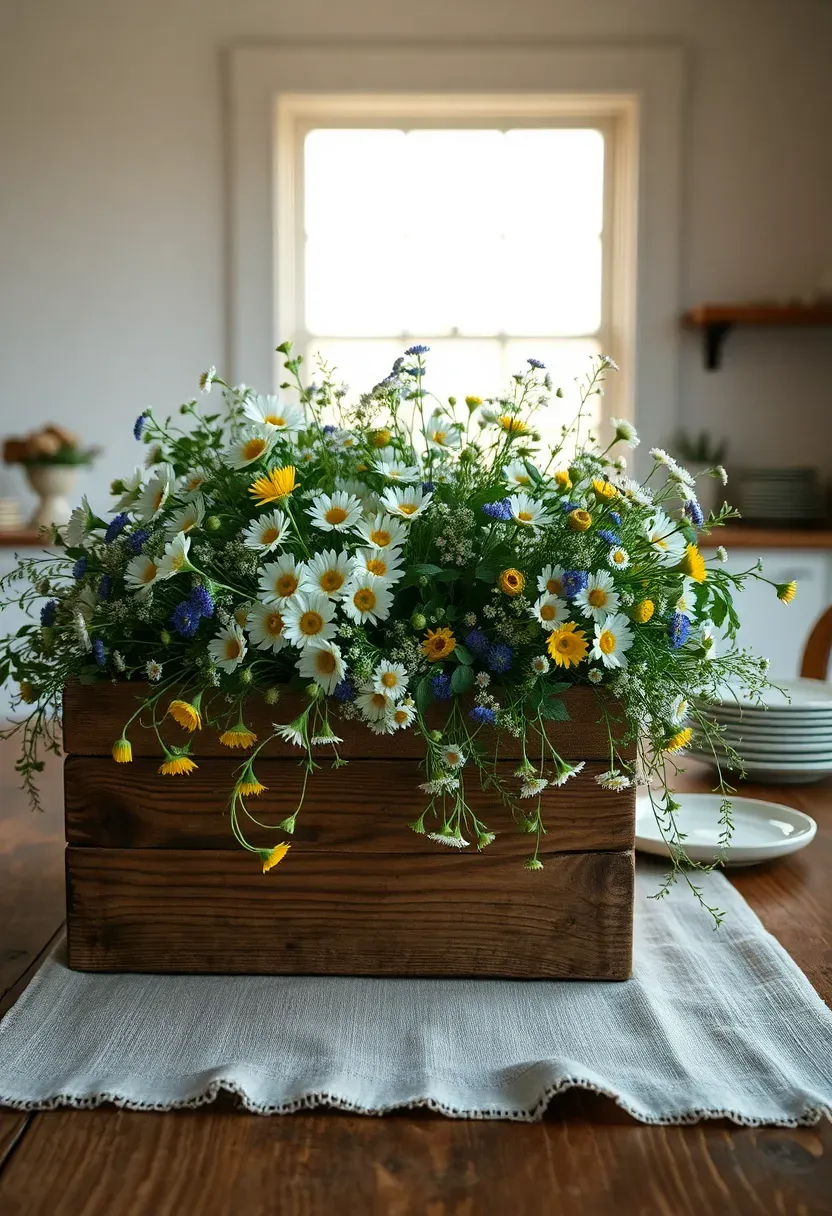
1. Wildflower Meadow in a Rustic Wooden Box
Picture a weathered wooden planter overflowing with buttercups, Queen Anne's lace, cornflowers, and sprigs of chamomile — the kind of arrangement that looks like someone walked through a meadow and brought the whole field indoors. This is the centerpiece for anyone who believes perfection is overrated. The beauty lives in the tangled, unstructured volume.
How to Build It
Line a vintage crate or wooden box with a plastic tray, add damp floral foam, and start inserting stems at varying heights. Begin with your tallest elements — grasses or delphinium — then fill downward with mid-sized blooms and trailing greenery along the edges.
Why It Works
- The rustic container grounds the wild flowers without competing with them
- Wildflowers are affordable and available at most farmers' markets in spring
- Imperfection is the goal, which makes this extremely forgiving to assemble
We picked a few things that go well with this idea: LUEUR Faux Flower Arrangement with Vase (★4.5), Donmills Artificial Sunflower Ceramic Vases (6-Pack) (★4.5) and Silk Dahlia Flowers with Vase Arrangement (★4.4). As an Amazon Associate we earn from qualifying purchases.
2. Tulip Trio in Clear Glass Cylinders
The Concept
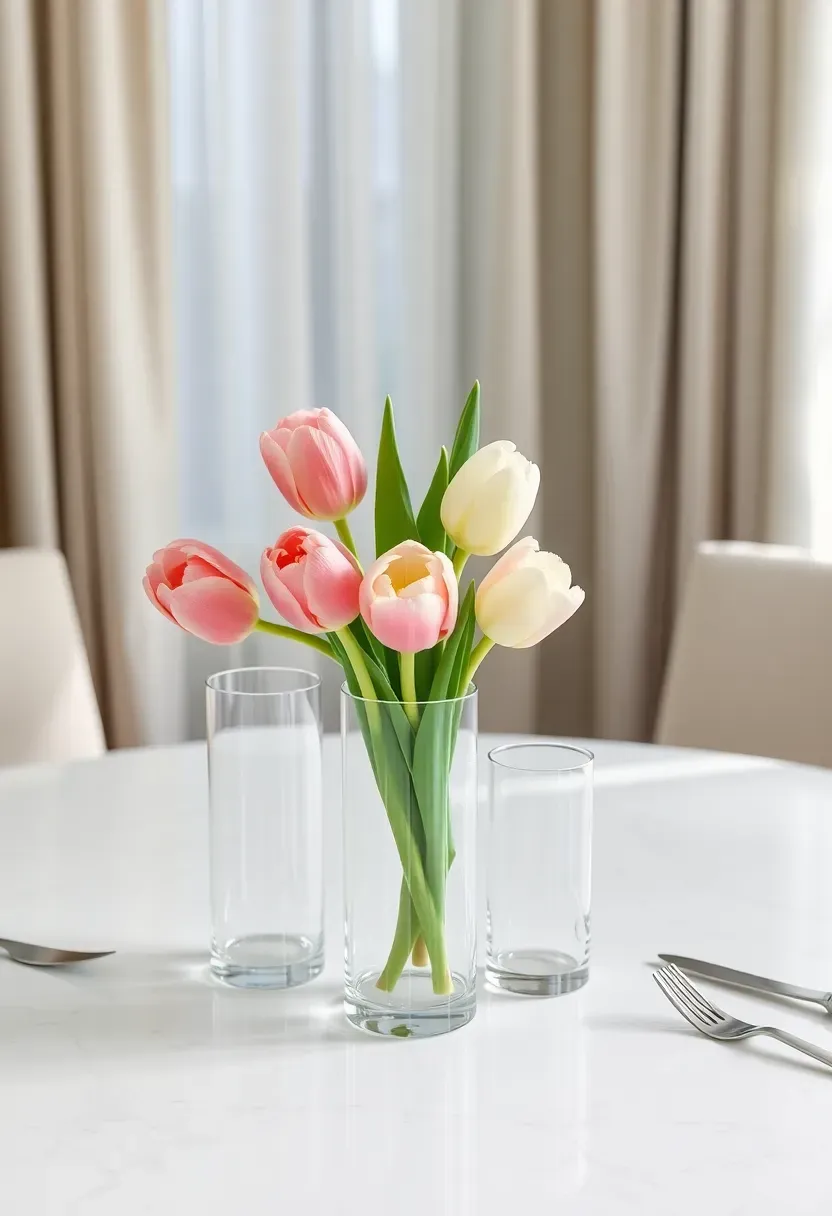
Three glass cylinders of graduating heights, each holding a single color of tulips — blush pink, creamy white, and deep coral. The transparency of the glass lets the stems become part of the visual story, their pale green curves adding an architectural quality that opaque vases hide.
Execution Details
Select tulips at the half-open stage so they continue to open over the next two to three days. Cut stems at an angle, and fill each cylinder with cool water only halfway. Tulips continue growing after being cut, so leave room for that natural movement. Group the three cylinders in a tight triangle for maximum impact on a round table, or space them in a line on a rectangular one.
Pros and Cons
Pros: Effortlessly elegant, takes under five minutes to arrange, tulips are among the most affordable spring flowers. Cons: Tulips are short-lived compared to chrysanthemums or alstroemeria, lasting four to six days at best.
We picked a few things that go well with this idea: Uiifan Artificial Tulips with Metal Pot (19-Piece) (★4.8), Real Touch Silk Tulips (15-Pack) (★4.6) and Mandy's White PU Tulips (20 Stems) (★4.5). As an Amazon Associate we earn from qualifying purchases.
3. Easter Egg Nest with Moss and Blooms
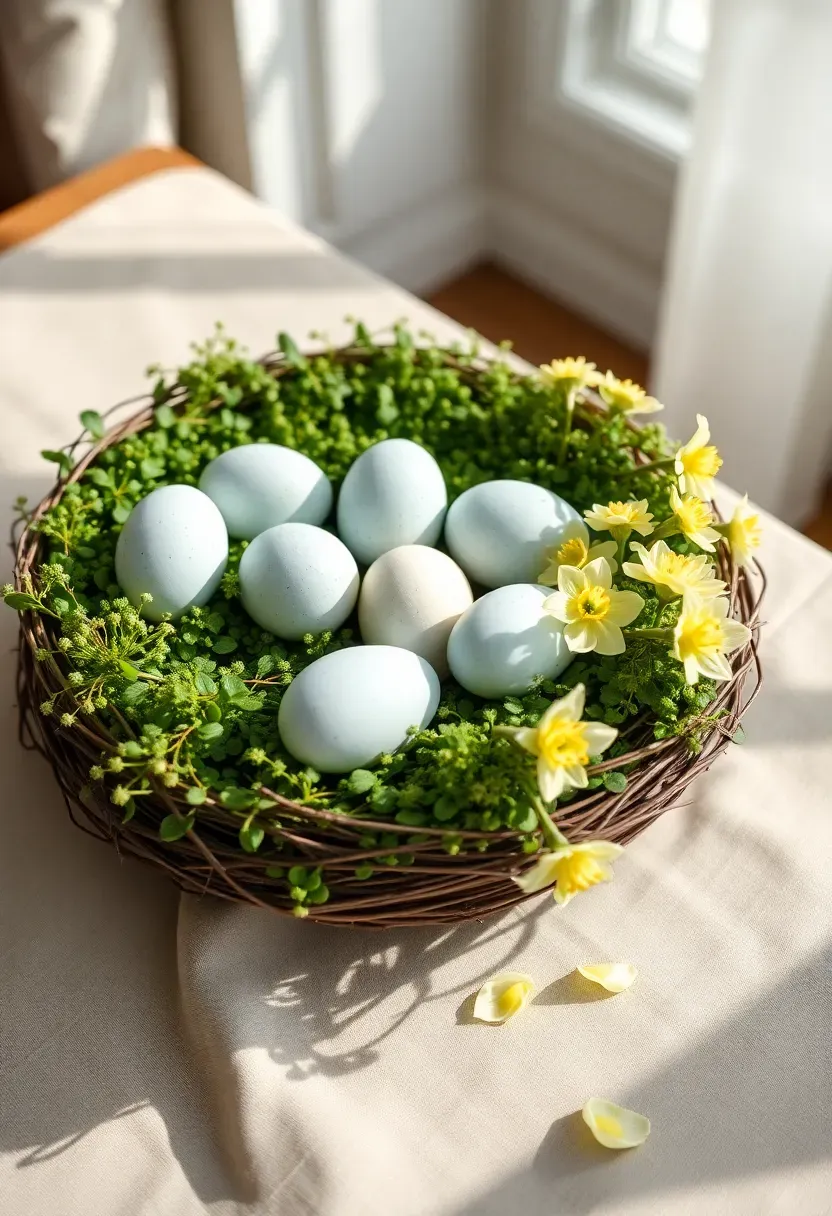
For an Easter table that feels whimsical without veering into kitsch, consider a nest-shaped centerpiece. Start with a grapevine wreath laid flat. Fill the center with preserved moss, then nestle hand-painted or speckled eggs among tiny clusters of hellebores, grape hyacinths, or miniature daffodils. The effect is a woodland discovery — as if spring arrived in the form of a hidden nest on your dining table.
Materials You Will Need
- One 10-inch grapevine wreath (flat style)
- Sheet moss or reindeer moss
- 6 to 8 decorative eggs (ceramic, painted wood, or real blown-out shells)
- Small water tubes for fresh flower stems
- Votive candle (optional, placed in the center)
Styling Tip
Scatter a few loose petals and tiny feathers around the base of the wreath on the tablecloth for an effortless, just-discovered look.
We picked a few things that go well with this idea: YOUEON Glass Bubble Bowl Vases (4-Pack) (★4.2), Glass Floating Candle Bowl (7-Inch) (★4.4) and Glass Bubble Vases and Candle Holders (24-Pack) (★4.6). As an Amazon Associate we earn from qualifying purchases.
4. Lemon and Greenery Citrus Runner
Why Citrus Changes Everything
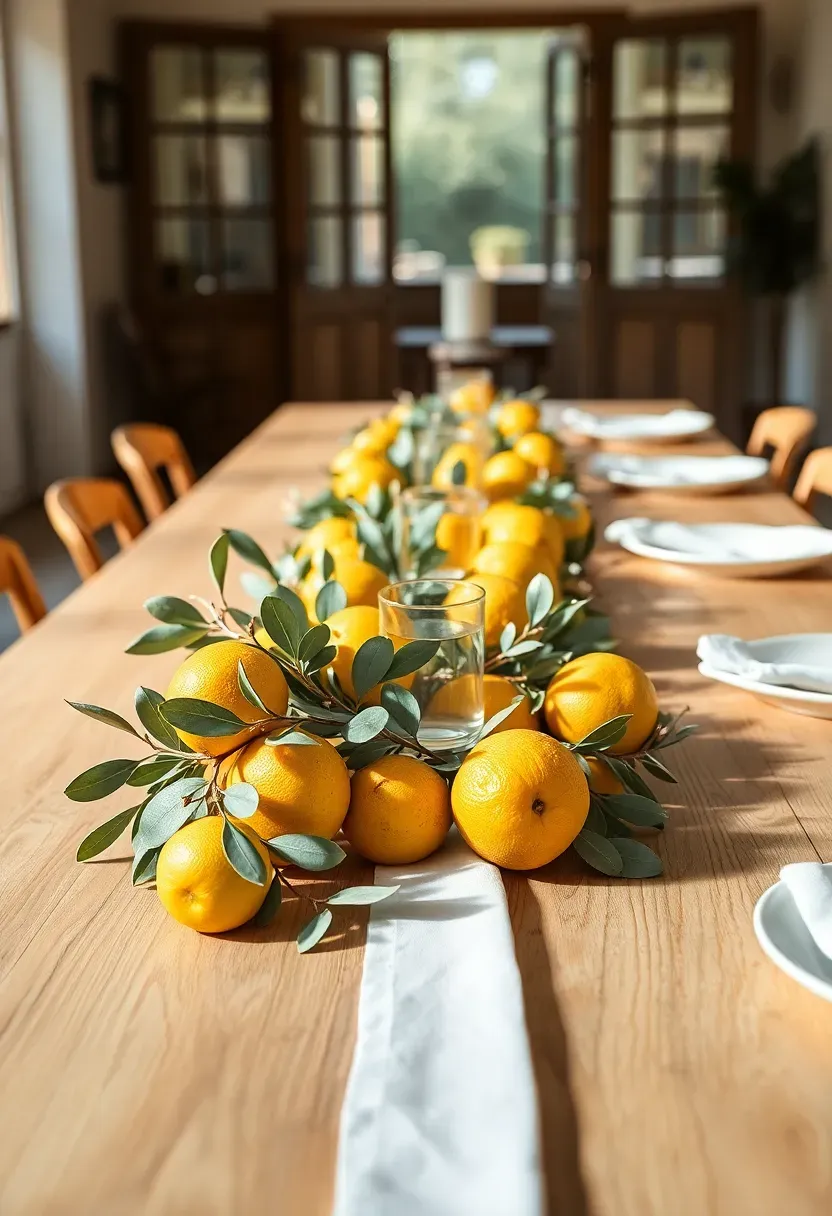
Lemons on a table do something flowers alone cannot — they introduce scent, color saturation, and a tactile quality that invites people to reach out and touch. Combined with eucalyptus, olive branches, or Italian ruscus, they create a Mediterranean-inspired runner that stretches the full length of the table.
The Solution
Lay a base of greenery down the center of your table, weaving eucalyptus and olive stems loosely. Tuck whole lemons — choose ones with leaves still attached — into the greenery every eight to ten inches. Add small glass votives between the fruit for evening warmth. The result reads as sophisticated, seasonal, and entirely fresh.
Pros and Cons
Pros: Incredibly fragrant, long-lasting (lemons hold up for a week or more), budget-friendly. Cons: Not ideal for very formal settings where a tighter, more structured arrangement is expected.
Recommended
Items for this idea
5. Cherry Blossom Branch Display
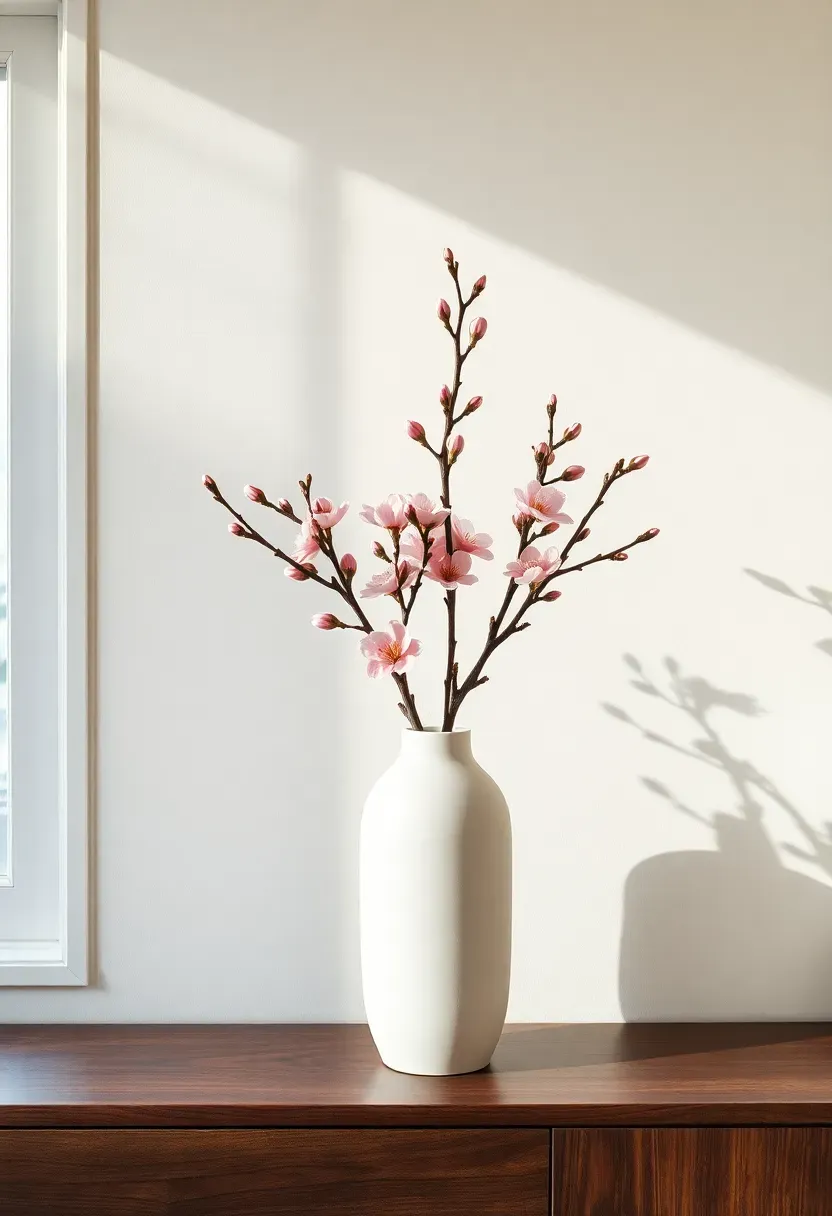
Nothing announces spring with more drama than a tall arrangement of flowering branches. Cherry blossoms, forsythia, quince, or apple blossom branches bring height, movement, and an unmistakable sense of the season shifting. A single tall ceramic vase — white, matte black, or soft sage green — is all you need.
Step 1: Source the Branches
Cut branches from your own yard or purchase them from a florist. Look for branches with a mix of open blossoms and tight buds for the longest display life.
Step 2: Prepare the Vase
Use a heavy vase with a narrow neck to keep branches upright without a grid or frog. Fill with lukewarm water and a drop of bleach to prevent bacteria.
Step 3: Arrange with Restraint
Three to five branches is enough. Let them fan out naturally. Resist the urge to add filler — the negative space between branches is what makes this arrangement powerful.
6. Herb Garden Centerpiece
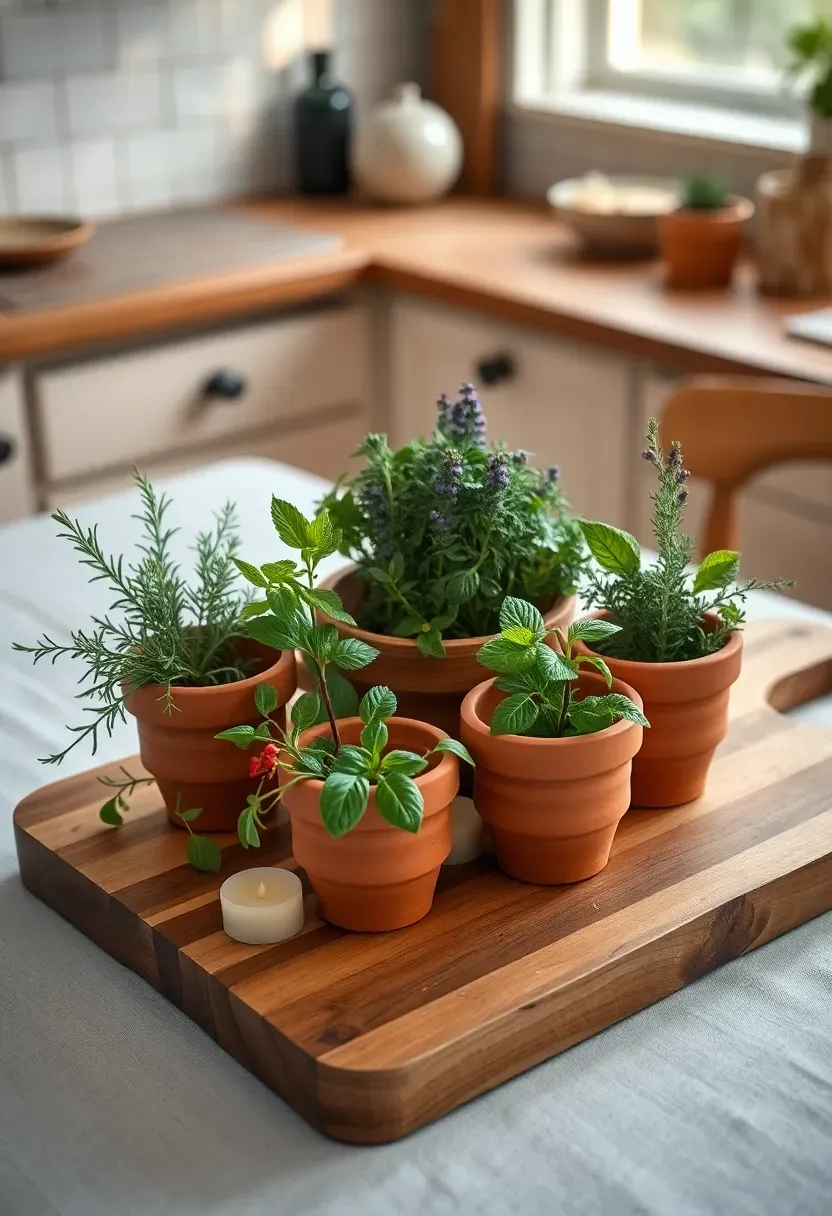
Forget flowers entirely. A cluster of potted herbs — rosemary, basil, thyme, mint, and lavender — arranged on a wooden cutting board or metal tray creates a living centerpiece that smells incredible and serves a practical purpose. Guests can actually tear off a sprig of mint for their water or basil for their Caprese salad. This is the centerpiece for people who want beauty with function.
Practical Recommendations
- Choose terracotta pots in similar sizes for a cohesive look, or intentionally mix glazed and unglazed for texture contrast
- Water herbs the morning of your gathering so soil is moist but not soggy
- Tuck a few small beeswax candles between the pots for evening ambiance
- After the event, move the herbs to a windowsill and enjoy them all season
Recommended
Items for this idea
7. Peony Cloud in a Low Bowl
The Core Issue
Tall centerpieces block sightlines. Guests end up leaning sideways to talk to the person across the table. It is one of the most common entertaining frustrations, and it has a simple fix.
The Solution
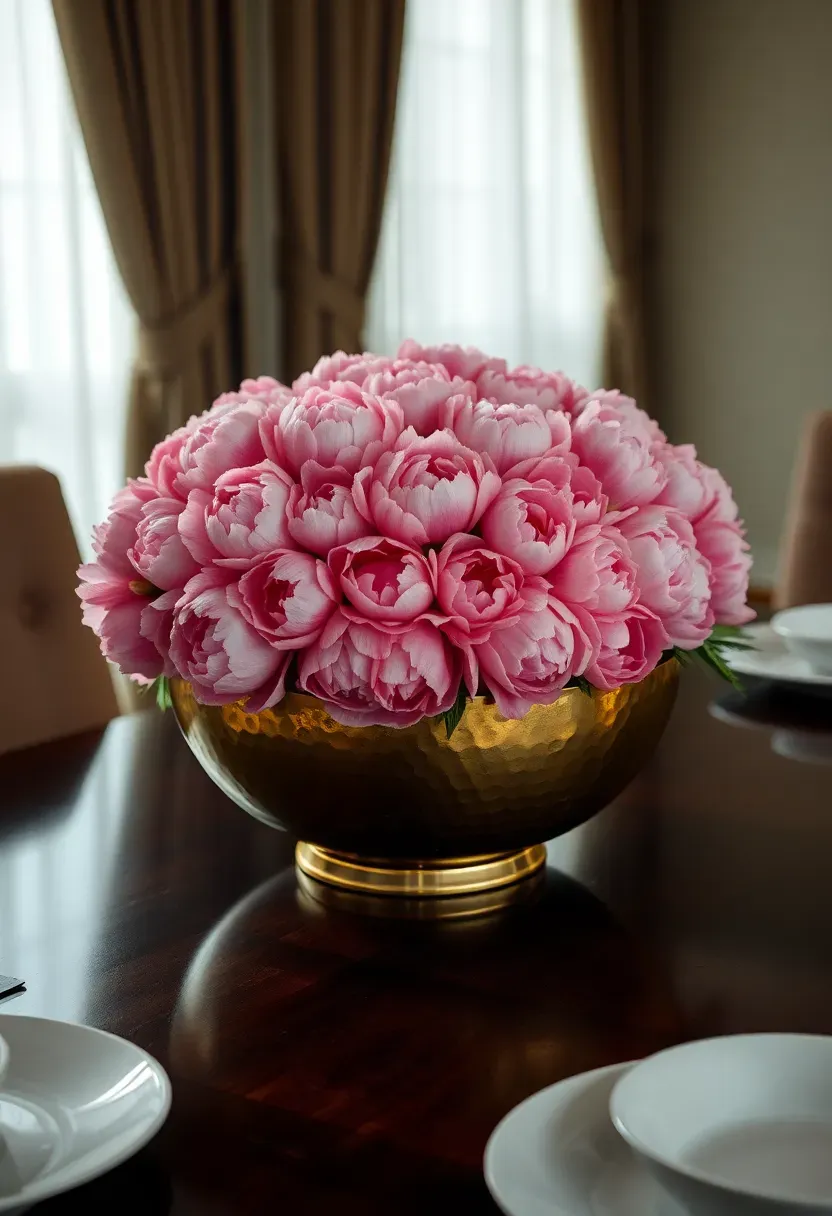
A wide, low bowl — ceramic, brass, or even a shallow wooden salad bowl — filled with a tight dome of peonies solves the height problem while delivering maximum visual impact. Cut peony stems to just three or four inches. Pack them tightly into damp floral foam so the blooms form a continuous cloud of petals. Choose a single color for elegance (all blush, all white) or mix soft pinks with deeper magentas for a gradient effect. The arrangement sits below eye level, keeps conversation flowing, and looks breathtakingly lush from every angle.
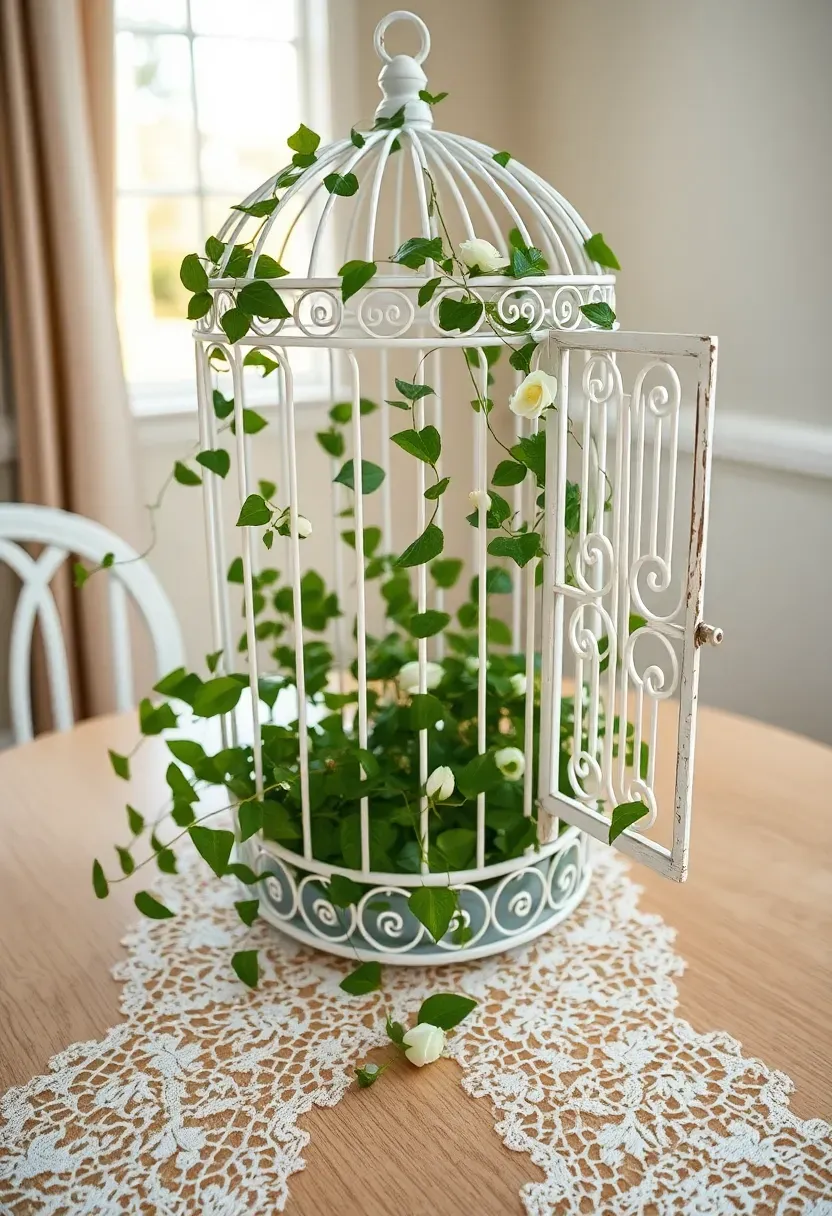
8. Bird Cage with Trailing Vines
An open-door vintage bird cage stuffed with trailing ivy, jasmine, and small clusters of spray roses creates a fairy-tale centerpiece that doubles as a conversation piece. The cage provides vertical structure and visual interest without blocking the view across the table. Leave the door ajar — it suggests freedom, spring, the idea of something beautiful that chose to stay.
Styling Variations
- Romantic: Fill with garden roses and drape pearl strands from the cage bars
- Rustic: Use dried lavender, wheat stalks, and burlap ribbon
- Modern: Paint the cage matte white, add a single orchid stem and moss
Where to Find Vintage Cages
Thrift stores, estate sales, and online marketplaces like Etsy are reliable sources. Look for cages with interesting scrollwork or arched tops. A little rust or patina adds character.
Recommended
Items for this idea
9. Succulent and Moss Terrarium
Origins of the Terrarium Trend
Terrariums date back to the Victorian era, when Nathaniel Bagshaw Ward accidentally discovered that plants could thrive in sealed glass containers. Today, open terrariums — geometric glass vessels filled with living succulents, moss, and decorative stones — have become a staple of modern interior styling.
Modern Interpretation
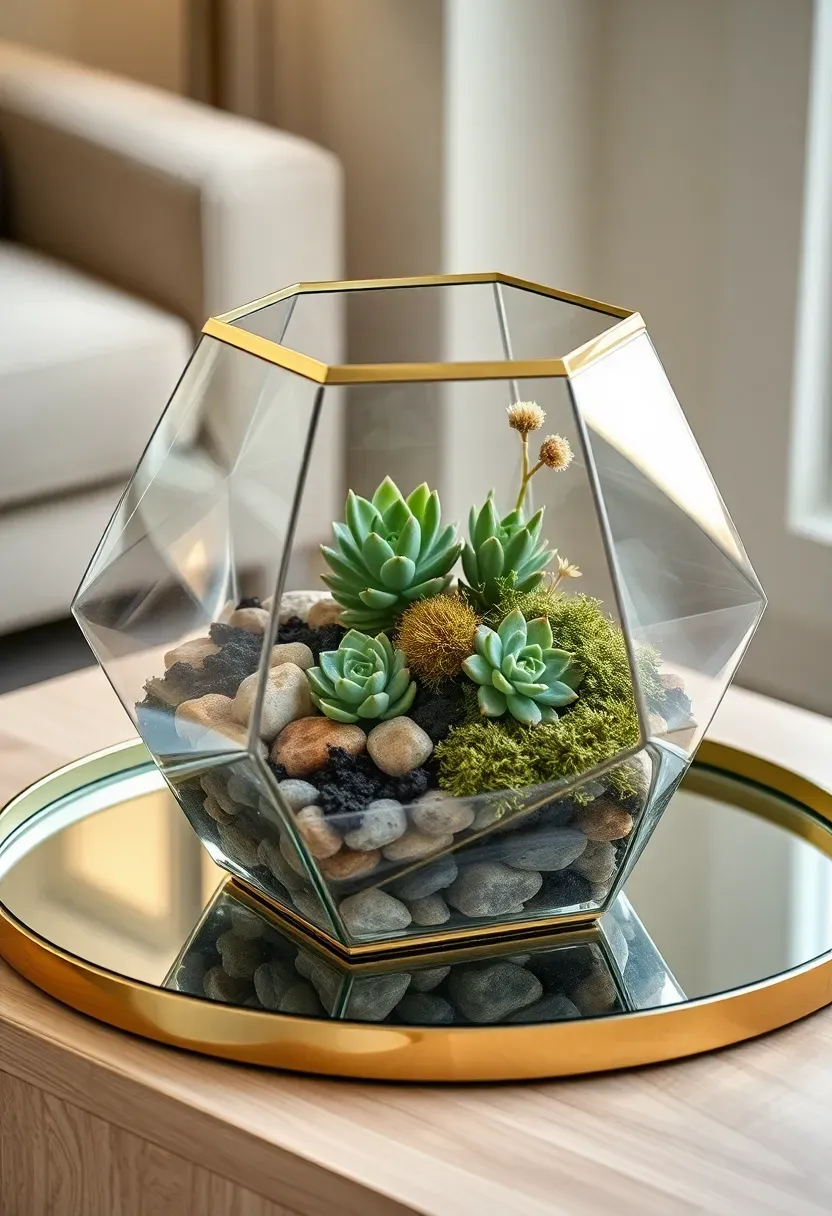
For a spring centerpiece, choose an open geometric terrarium and layer it: pebbles on the bottom, activated charcoal, then cactus soil. Plant two or three small succulents of varying heights and textures. Fill gaps with preserved reindeer moss in spring green. Add one or two tiny dried flower heads — strawflowers or billy buttons — for a seasonal touch. The result is a low-maintenance centerpiece that lasts for months.
How to Apply at Home
- Group three terrariums of different sizes for a clustered effect
- Place on a mirror tray to double the visual depth
- Mist lightly once a week rather than watering directly
- Swap seasonal accents (mini pumpkins in fall, ornaments in winter)
10. Floating Flower Bowls
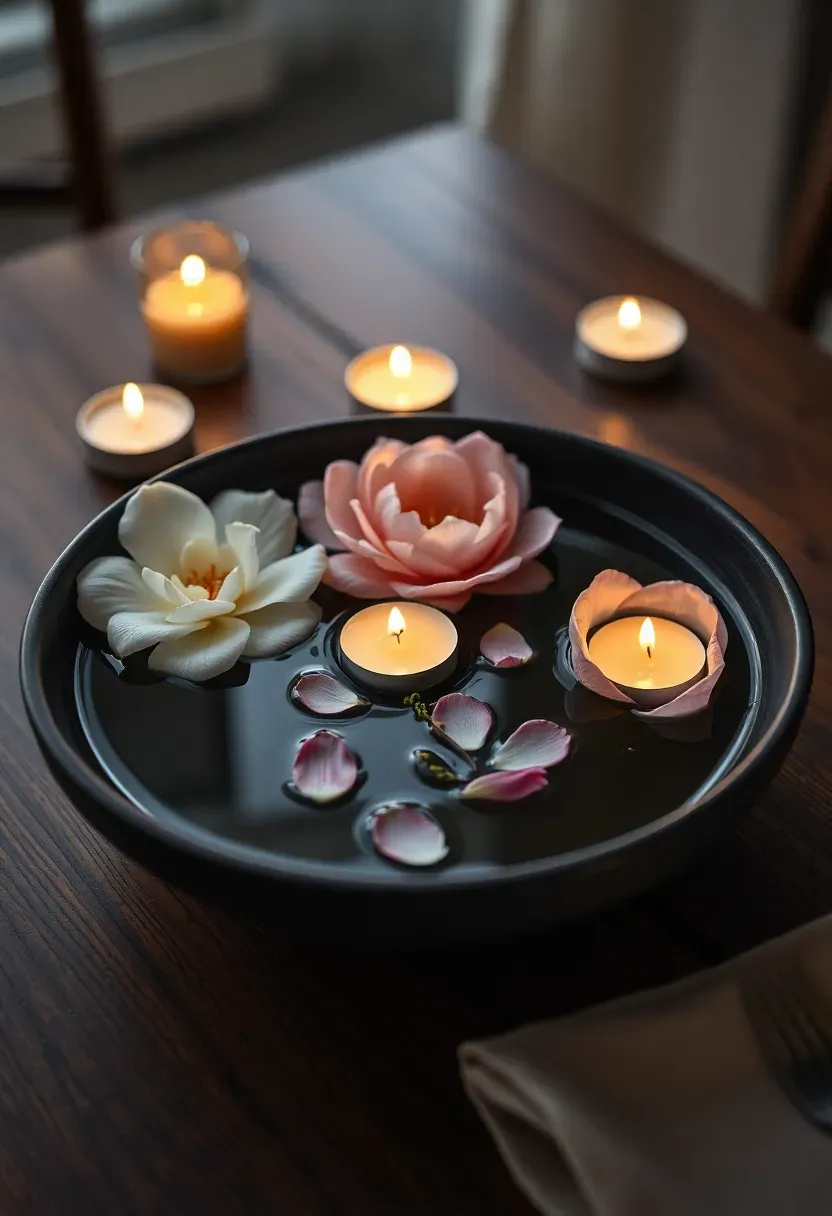
Wide, shallow bowls filled with water, floating flower heads, and tea light candles create a serene, almost meditative centerpiece. The water catches and reflects candlelight, amplifying the glow across the table. This approach works particularly well for evening spring dinners or garden parties at dusk.
Step 1: Choose Your Bowl
Select a wide, shallow vessel — a ceramic pasta bowl, a brass tray with a lip, or a clear glass bowl all work. Depth should be no more than three inches.
Step 2: Prepare the Flowers
Snip flower heads from their stems, leaving about half an inch of stem. Gardenias, camellias, ranunculus, and single open roses float best due to their flat, layered petal structure.
Step 3: Compose the Bowl
Fill with room-temperature water. Place flowers first, spacing them evenly. Add floating candles in the gaps. Drop a few loose petals and a sprig of greenery for a natural finish.
What to Watch Out For
- Avoid flowers that absorb water quickly and sink (like daisies)
- Use unscented candles so they do not compete with the flower fragrance
- Refresh the water daily if displaying for more than one evening
Recommended
Items for this idea
11. Pastel Ranunculus in Vintage Pitchers
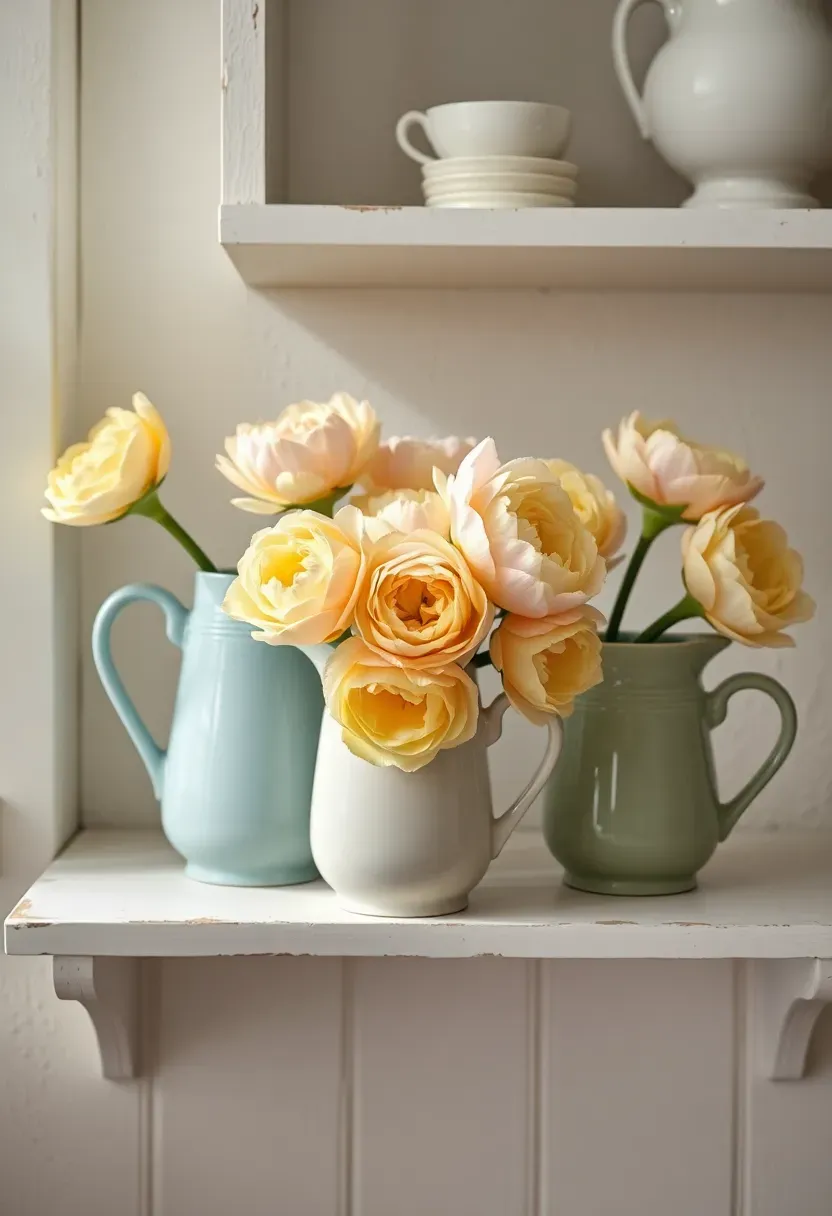
Ranunculus are the unsung heroes of spring arrangements. Their tightly layered petals — tissue-thin and luminous — come in every pastel shade imaginable: butter yellow, peach, lavender, pale pink, and ivory. Displayed in a collection of mismatched vintage pitchers or creamers, they evoke a French country kitchen where flowers are part of daily life rather than reserved for special occasions.
Tips for Maximum Vase Life
- Purchase ranunculus when buds are still tight and showing color; they will open over three to four days
- Change water every other day and recut stems at an angle
- Keep away from direct sunlight and fruit bowls (ethylene gas shortens their life)
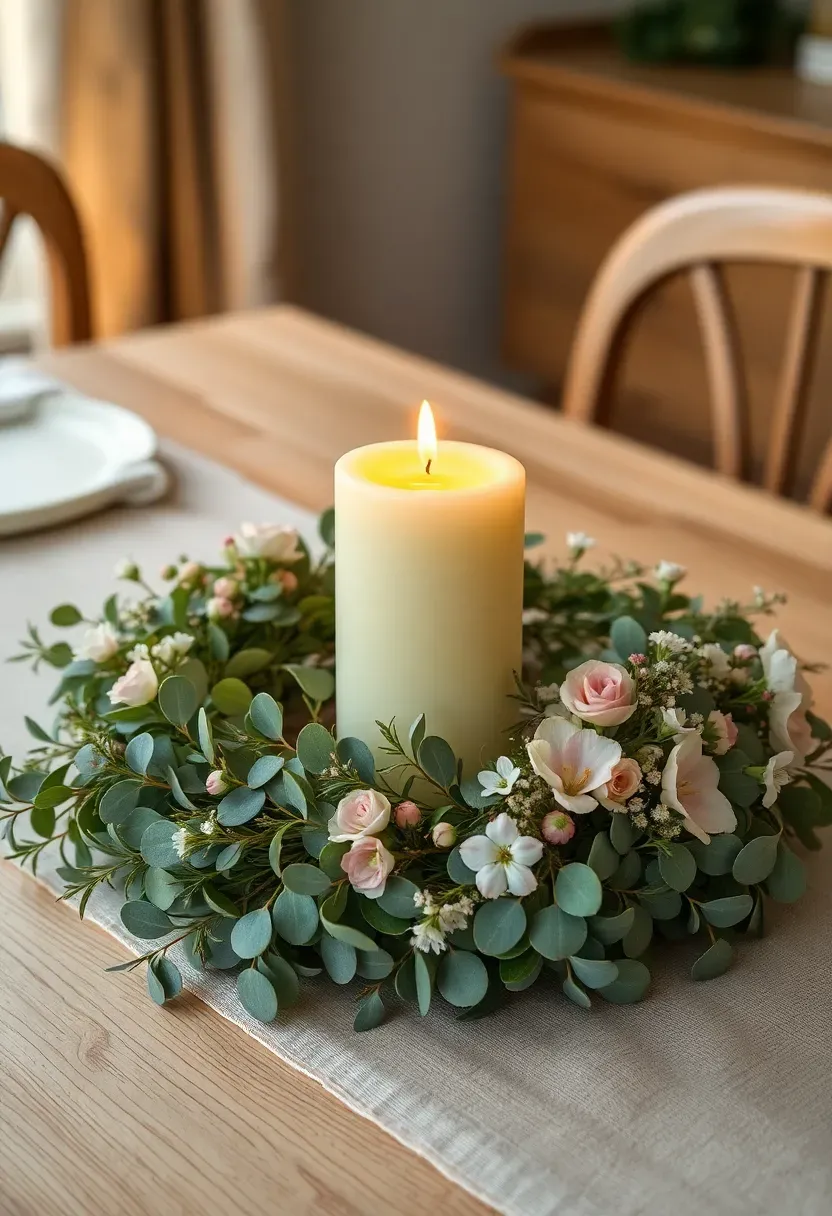
12. Candle Ring with Spring Florals
Comparing: Candle Ring vs. Traditional Vase Arrangement
Both options bring flowers to the table, but they serve different moods and practical needs.
Candle Ring
A wreath of fresh greenery and small blooms encircling a pillar candle. Flat, compact, and it adds warm light to the table. Works beautifully for intimate dinners where you want ambiance without visual clutter.
Traditional Vase
Taller, more dramatic, and a clear focal point. Better suited for sideboards, buffet tables, or large dining tables where height does not obstruct conversation.
What to Choose
Choose a candle ring if: you are hosting a sit-down dinner for six or fewer, want candlelight, and prefer a low-profile arrangement. Choose a traditional vase if: the table is large, the event is a buffet, or you want a single dramatic statement.
Recommendation
For spring specifically, the candle ring wins. It keeps sightlines open and the combination of warm candlelight with fresh spring greenery is genuinely magical after sunset.
Recommended
Items for this idea
13. Lavender Bundle Farmhouse Style
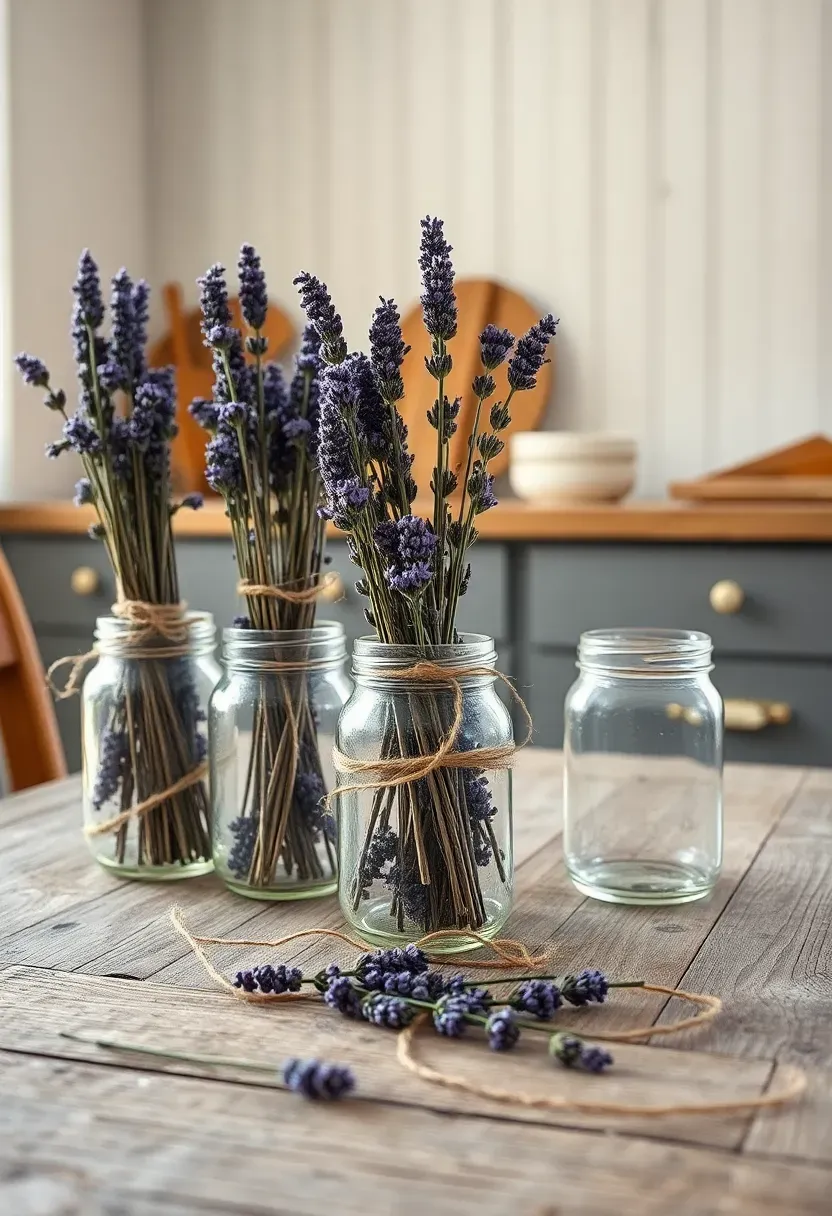
Dried lavender tied in bundles with twine or burlap ribbon, arranged upright in mason jars or small galvanized buckets, delivers a farmhouse aesthetic with minimal effort. The fragrance alone justifies the choice — lavender is calming, persistent, and universally appealing. Group three to five containers along the table center, varying heights by using different-sized jars or placing some on stacked books or wooden risers.
Why Dried Works Better Here
Fresh lavender wilts quickly once cut. Dried lavender maintains its color, shape, and scent for months. You can prepare these bundles weeks before your event, which eliminates last-minute arranging stress entirely.
Added Touches
- Weave in dried wheat stalks for texture contrast
- Tie a small sprig of lavender to each napkin as a guest favor
- Place a few loose stems directly on the table runner
14. Modern Ikebana with Single Stems
The Philosophy Behind Ikebana
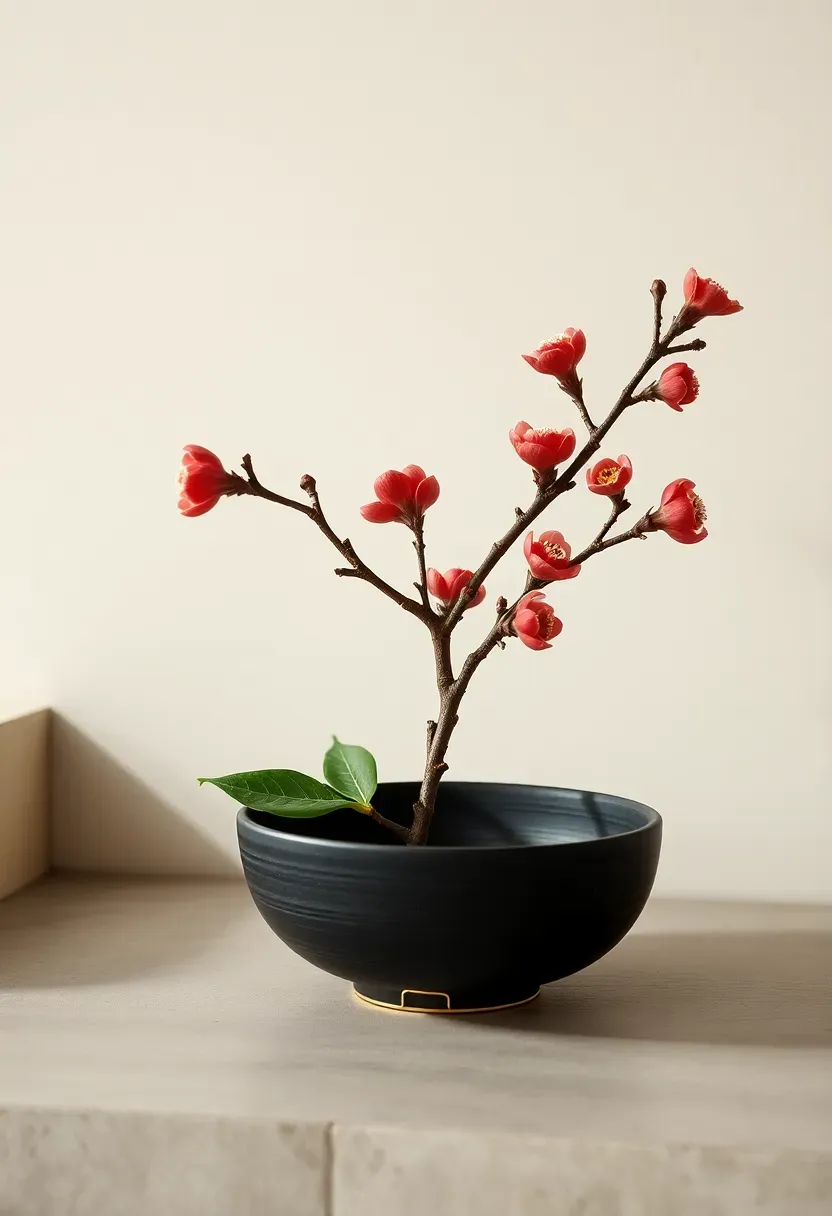
Japanese flower arranging — ikebana — treats empty space with the same respect as the flowers themselves. Every stem, every leaf, every angle carries intention. For a modern spring centerpiece, this translates into a single flowering branch, one or two leaves, and a sculptural vessel, all composed with deliberate asymmetry.
How to Make It
Select a shallow ikebana vessel or a heavy ceramic bowl. Place a kenzan (pin frog) in the center. Insert one spring branch — a blooming quince or magnolia works beautifully — at a 15-degree angle from vertical. Add one low leaf or grass blade at the base. That's it. The arrangement should feel like a haiku: concise, evocative, complete.
Best Vessels for This Style
- Matte black stoneware bowls
- Rough-hewn concrete dishes
- Glazed ceramic plates in earthy tones
- Vintage brass compote dishes
Recommended
Items for this idea
15. Potted Bulbs in Galvanized Tin
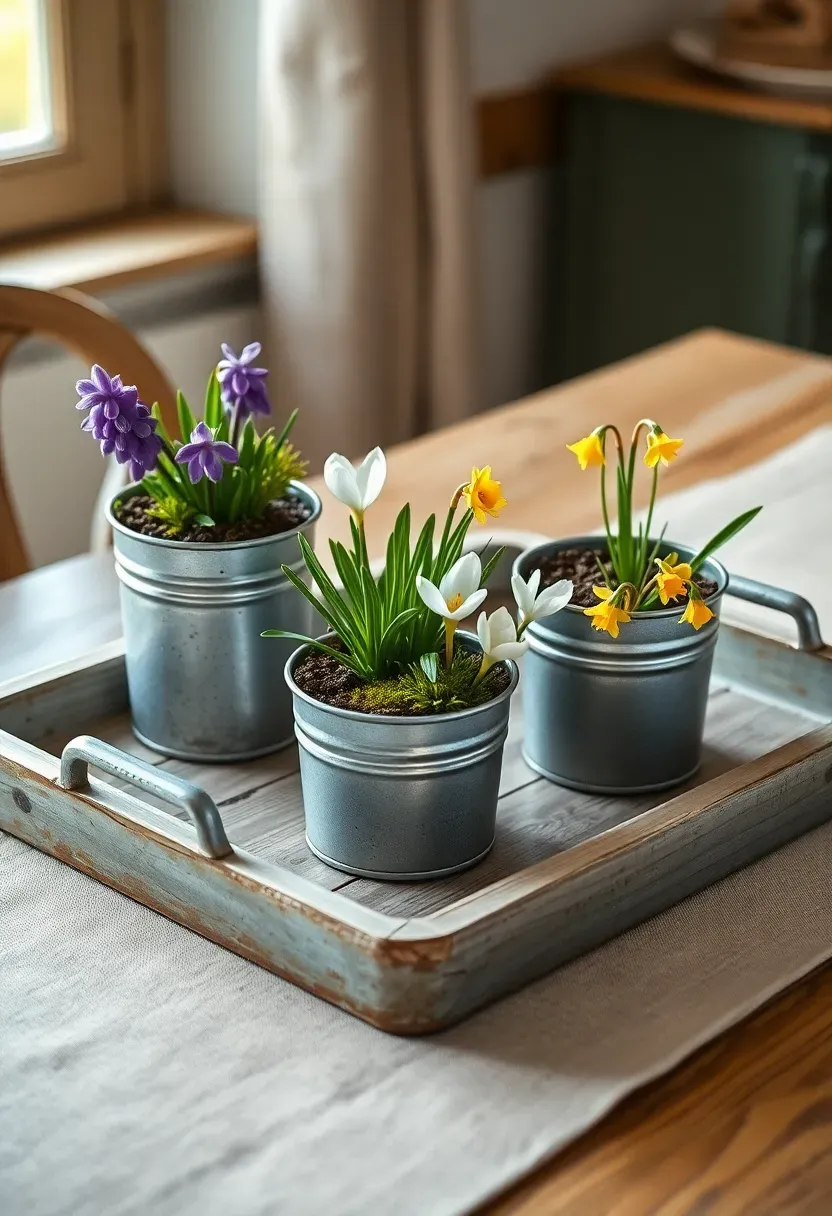
Forget cut flowers. Plant living spring bulbs — grape hyacinths, crocuses, miniature daffodils, or paperwhites — directly into small galvanized tins, enamelware cups, or vintage loaf pans. Top the soil with preserved moss to conceal the dirt, and you have a centerpiece that grows and changes throughout the meal. Guests watch buds open in real time over a long brunch, which adds a living, breathing quality no cut arrangement can match.
Practical Recommendations
- Start forcing bulbs three to four weeks before your event for perfectly timed blooms
- Line metal containers with plastic to prevent rust staining on tablecloths
- Group odd numbers of containers (three or five) for a natural look
- Gift the potted bulbs to guests as they leave — plant straight into the garden
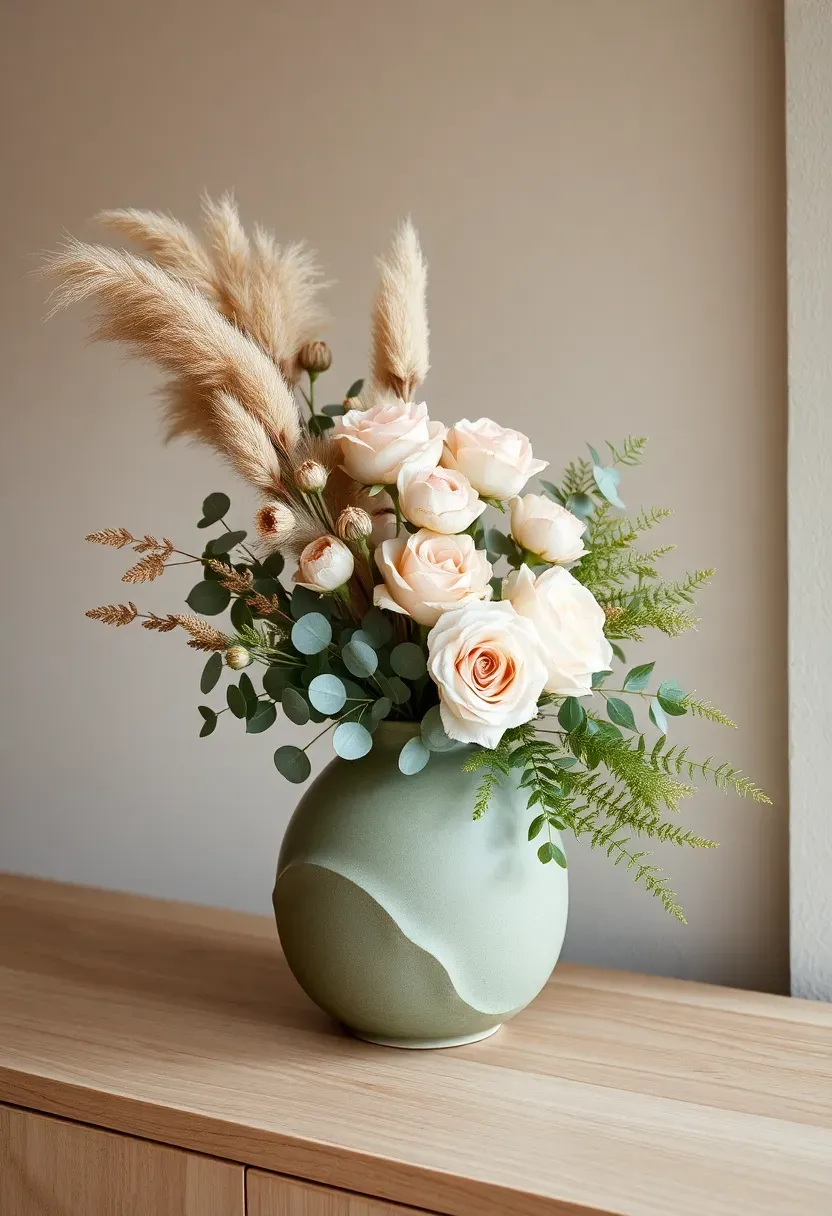
16. Dried Flower and Fresh Green Mix
The Core Issue
Fresh flowers are gorgeous but fleeting. Dried flowers last indefinitely but can look flat and lifeless on their own. Neither option alone fully satisfies if you want both longevity and vibrancy.
The Solution
Combine them. Build a base of dried elements — pampas grass plumes, dried roses, strawflowers, lunaria seed pods — and weave in fresh spring greenery: eucalyptus, fern fronds, or Italian ruscus. The dried elements provide structure, texture, and warm tones, while the fresh greens inject life, color, and that unmistakable just-picked vitality. As the greenery eventually dries, it transitions naturally into the arrangement rather than looking wilted.
Pros and Cons
Pros: Lasts significantly longer than all-fresh arrangements, visually complex, budget-friendly since you reuse dried elements. Cons: Requires a good eye for color balance — too many dried elements can read as autumn rather than spring.
Recommended
Items for this idea
17. Tiered Tray Spring Vignette
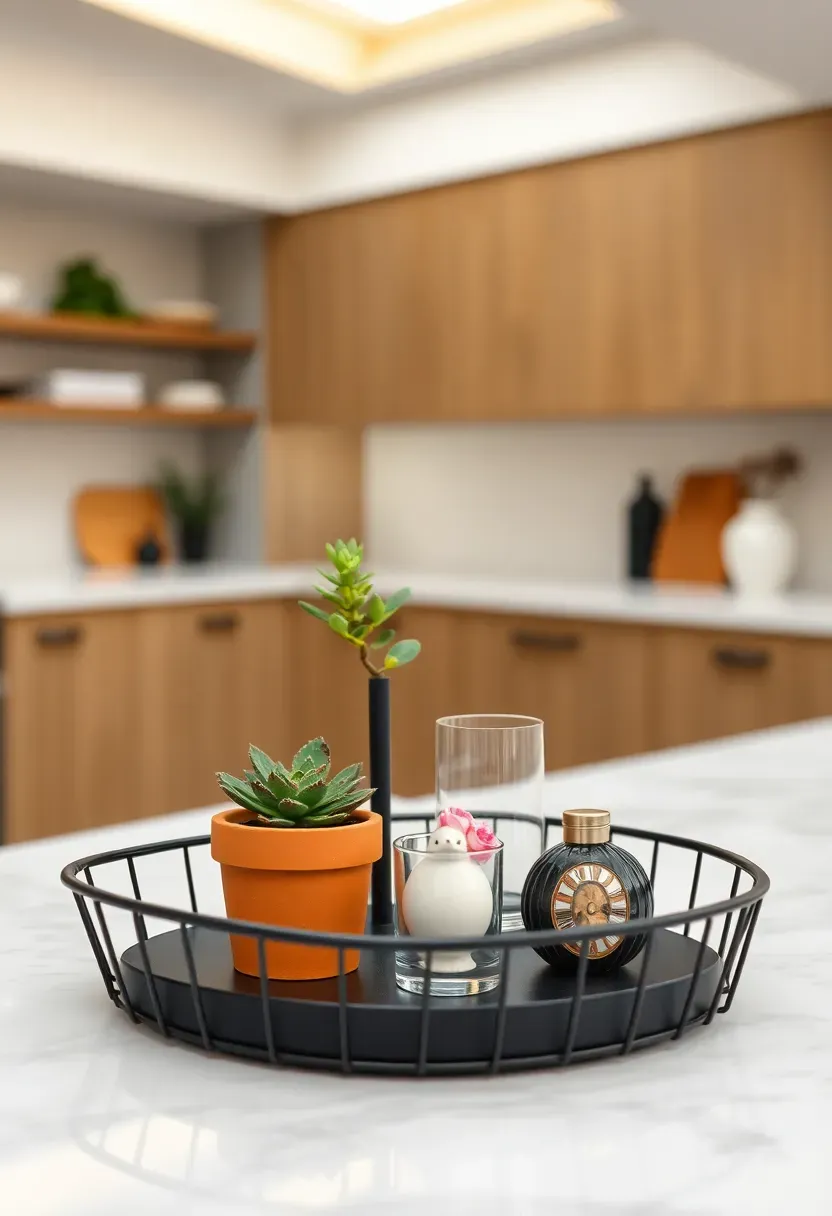
A two- or three-tier tray becomes a self-contained spring world when you fill each level with thoughtfully chosen objects. Bottom tier: a small potted succulent or herb and a votive candle. Middle tier: a tiny bud vase with one or two stems and a decorative egg or ceramic bird. Top tier: a miniature sign, a single bloom, or a small stack of vintage seed packets. The layered heights create visual richness without spreading across the table.
Why Tiered Trays Work for Spring
- They corral multiple small items into one cohesive display
- Vertical layering means you use less table real estate
- Easy to restyle weekly as new spring flowers become available
- The tray itself becomes a permanent piece you rotate seasonally
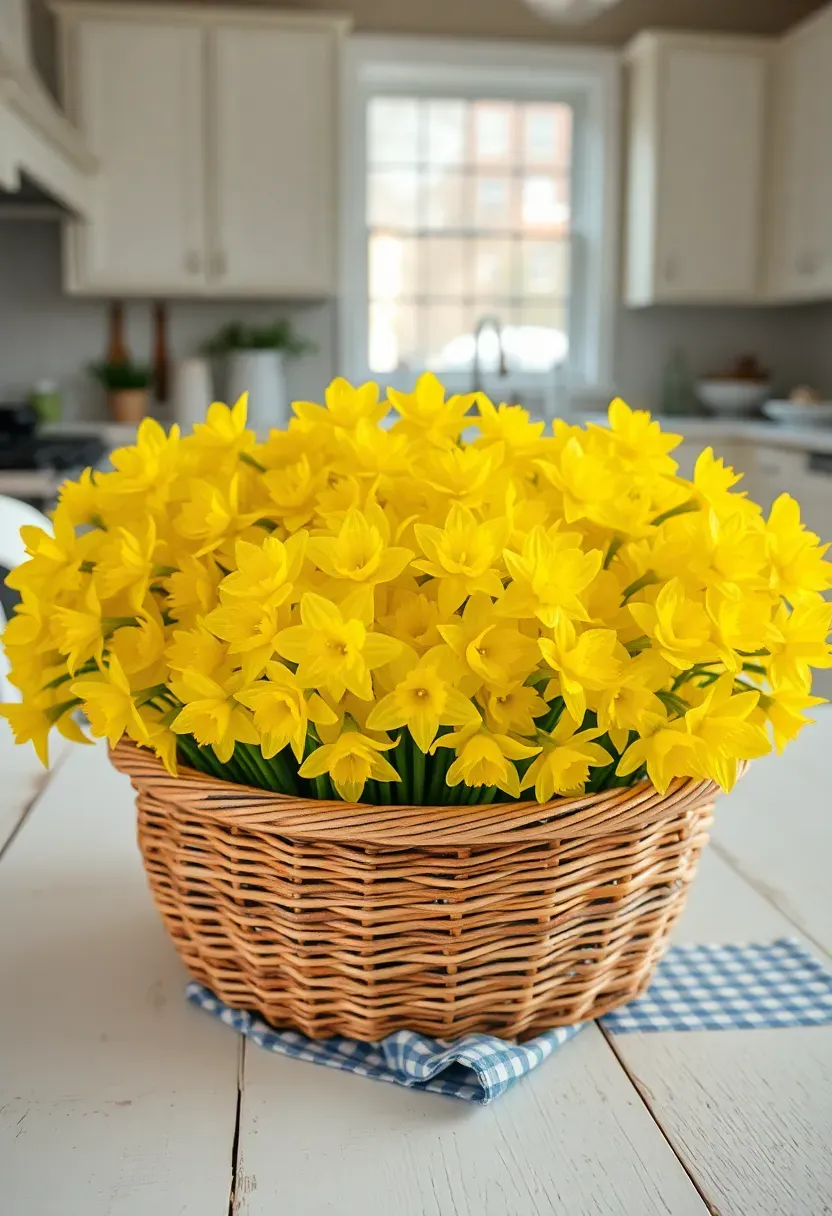
18. Woven Basket Overflowing with Daffodils
There is a reason daffodils are synonymous with spring — their saturated yellows and whites pulse with optimism. Massed in a woven basket (lined with plastic and filled with a jar of water hidden inside), they create a centerpiece that is unapologetically cheerful. No filler flowers needed. No greenery required. Just dozens of daffodils, stems cut to the same length, packed tightly so the heads form a golden dome.
Important Note on Daffodils
Daffodil stems exude a sap that is toxic to other cut flowers. If you plan to mix daffodils with other blooms, condition the daffodils separately in water for 24 hours first. Or — and this is the easier path — simply display them on their own and let their singular beauty speak.
Recommended
Items for this idea
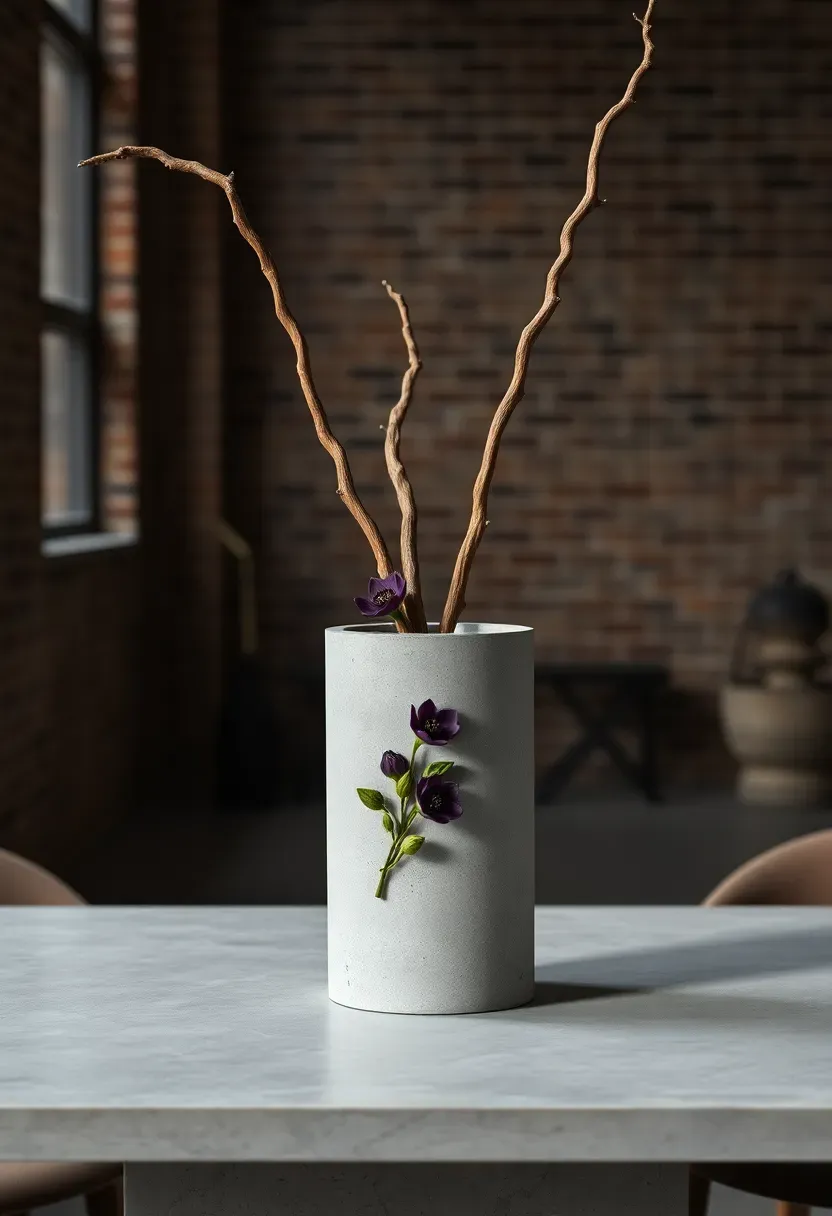
19. Concrete Vessel with Sculptural Branches
For those drawn to modern and industrial aesthetics, a raw concrete vessel paired with one or two sculptural branches creates a centerpiece that feels gallery-worthy. Choose branches with interesting shapes — corkscrew willow, red dogwood, or contorted hazel — and add one small cluster of spring blooms at the base. The contrast between the heavy, matte concrete and the delicate blossoms is where the tension and beauty live.
Step 1: Select the Vessel
Look for handmade concrete planters or bowls with organic, imperfect shapes. Smooth, mass-produced concrete lacks character.
Step 2: Position the Branches
Secure branches in floral clay or pebbles at the base of the vessel. Let them arc naturally upward and outward.
Step 3: Add the Bloom Accent
Tuck a small cluster of hellebores, muscari, or fritillaria at the base where branch meets vessel. Keep the bloom volume minimal — this is a branch-forward arrangement.
20. Edible Centerpiece with Fruits and Flowers
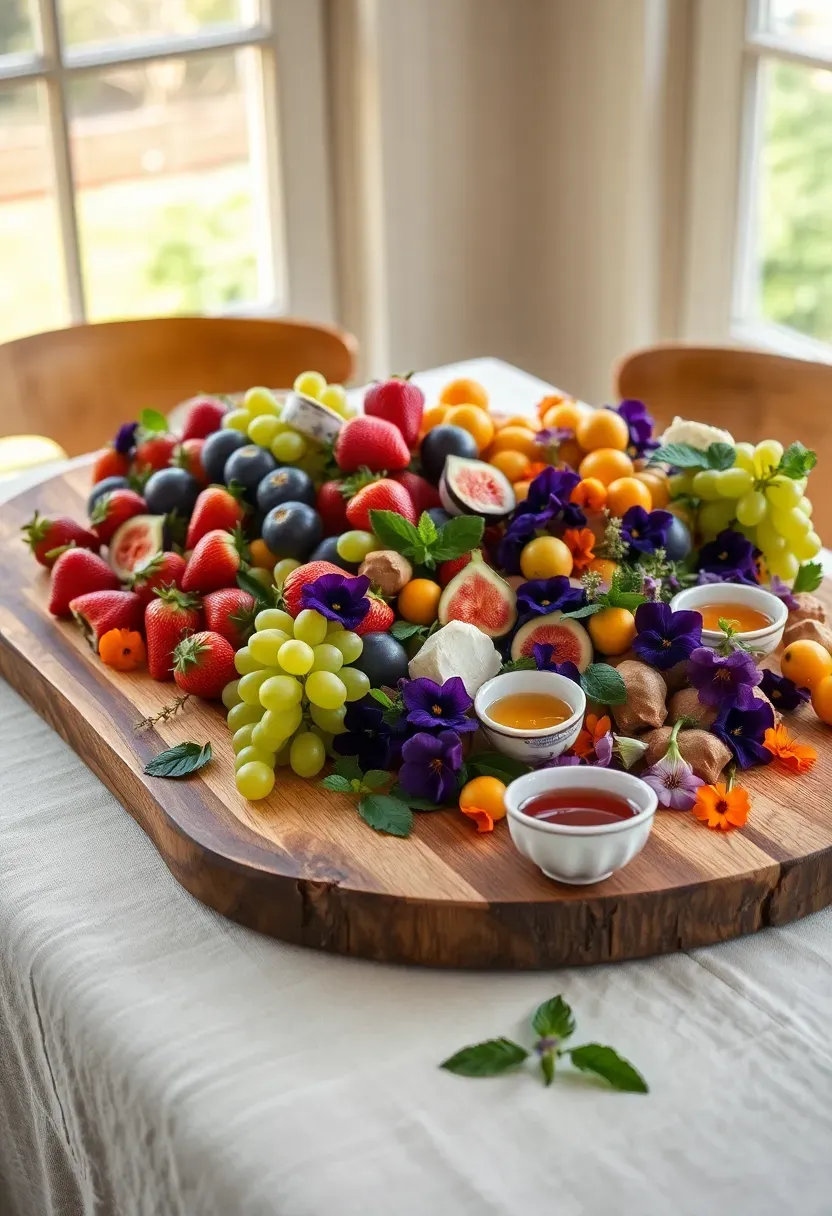
Blur the line between decor and dining. Arrange a large platter or wooden board with fresh spring fruits — strawberries, green grapes, figs, kumquats — interspersed with edible flowers (nasturtiums, pansies, violas) and fresh herb sprigs (mint, basil, lemon thyme). Guests graze directly from the centerpiece throughout the meal, which makes the table feel generous, communal, and alive.
Food Safety Reminders
- Only use flowers confirmed as food-safe and unsprayed
- Keep dairy-based accompaniments (cheese, dips) in small bowls set into ice if the event is outdoors
- Refresh fruit platters every two hours in warm weather
Best Pairings for Spring
- Strawberries with basil and balsamic drizzle
- Kumquats with rosemary and honey
- Figs with mint and soft goat cheese
Recommended
Items for this idea
21. DIY Paper Flower and Candle Arrangement
A Weekend Craft That Lasts All Season
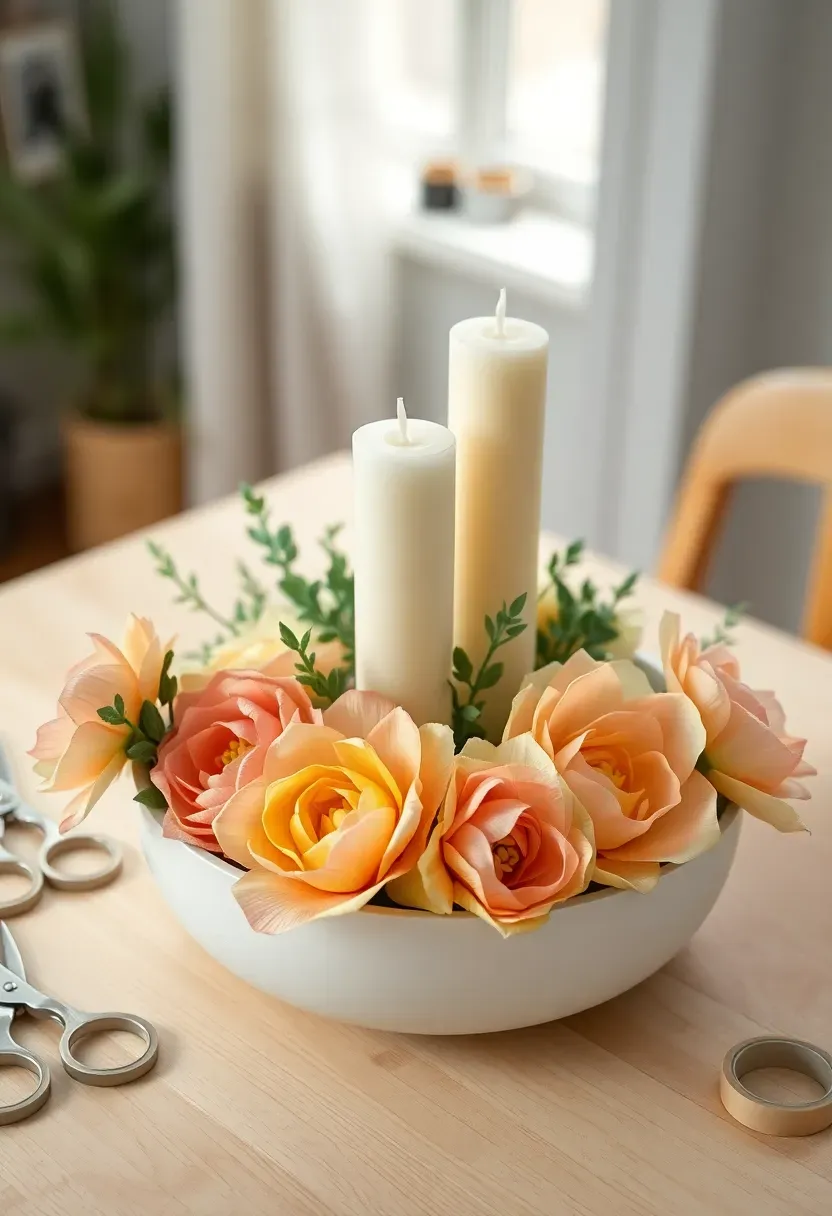
If fresh flowers are not an option — allergies, budget, or simply wanting something permanent — crepe paper flowers offer a surprisingly convincing alternative. When made with quality Italian crepe paper, they hold shape, color, and even a degree of translucency that mimics real petals.
What You Will Need
- Italian crepe paper in spring colors (blush, peach, butter yellow, sage green)
- Floral wire (18-gauge for stems, 26-gauge for petals)
- Floral tape in green
- Wire cutters and scissors
- A low bowl or tray
- Pillar candles in ivory or soft pink
Assembly Overview
Shape petals by stretching the crepe paper gently across the grain. Wrap petals around floral wire stems with floral tape, building from the center outward. Create five to eight flowers of varying sizes. Arrange them in the low bowl around two or three pillar candles. Add real or paper greenery to fill gaps. The finished piece looks handcrafted in the best possible way — artful, warm, and entirely personal.
Quick FAQ
Can spring centerpieces work on outdoor tables in windy conditions? Absolutely. Choose low, heavy arrangements — potted bulbs, concrete vessels, or wide bowls with floating flowers — that resist tipping. Avoid tall branches or lightweight dried elements that catch the wind. Weighted bases and non-porous containers are your best allies outside.
Should I match my centerpiece to my dinnerware or keep them independent? A loose relationship is better than an exact match. If your plates are white, almost any floral palette works. If your dishes are patterned or colorful, pull one accent color from the pattern and echo it in your flowers. Contrast creates energy; too much coordination feels stiff.
Is it possible to make a spring centerpiece that lasts longer than a week? Yes. Dried flower and succulent arrangements, potted bulbs, paper flower projects, and terrarium-style setups all last weeks to months. Even fresh arrangements can be extended by recutting stems every two days, changing water daily, and keeping them away from heat sources and direct sunlight.
Which spring flowers offer the best value for large arrangements? Daffodils, tulips, carnations, and alstroemeria are the most budget-friendly options that still look abundant. Buying from local farms or wholesale flower markets rather than retail florists can cut costs by half or more.
What size centerpiece suits a six-person rectangular table? For a table seating six, aim for an arrangement no wider than 12 inches and no taller than 14 inches (if using a raised design) so it does not dominate the place settings or block conversation. A runner-style arrangement — long and low — is often the most practical choice for rectangular tables.
Spring centerpieces are not about perfection or spending a fortune at the florist. Start with whatever catches your eye at the farmers' market this weekend — a bunch of tulips, a handful of herbs, a branch with buds just beginning to open — and place it in something you already own. The table will thank you, and so will everyone who sits down at it.
Pinterest cover for 21 Beautiful Spring Centerpiece Designs
About the author
OBCD
CGI visualization and interior design content. We create detailed 3D renders and curate practical design ideas for every room in your home.