23 Shabby Chic Nursery Ideas for a Dreamy Baby Room
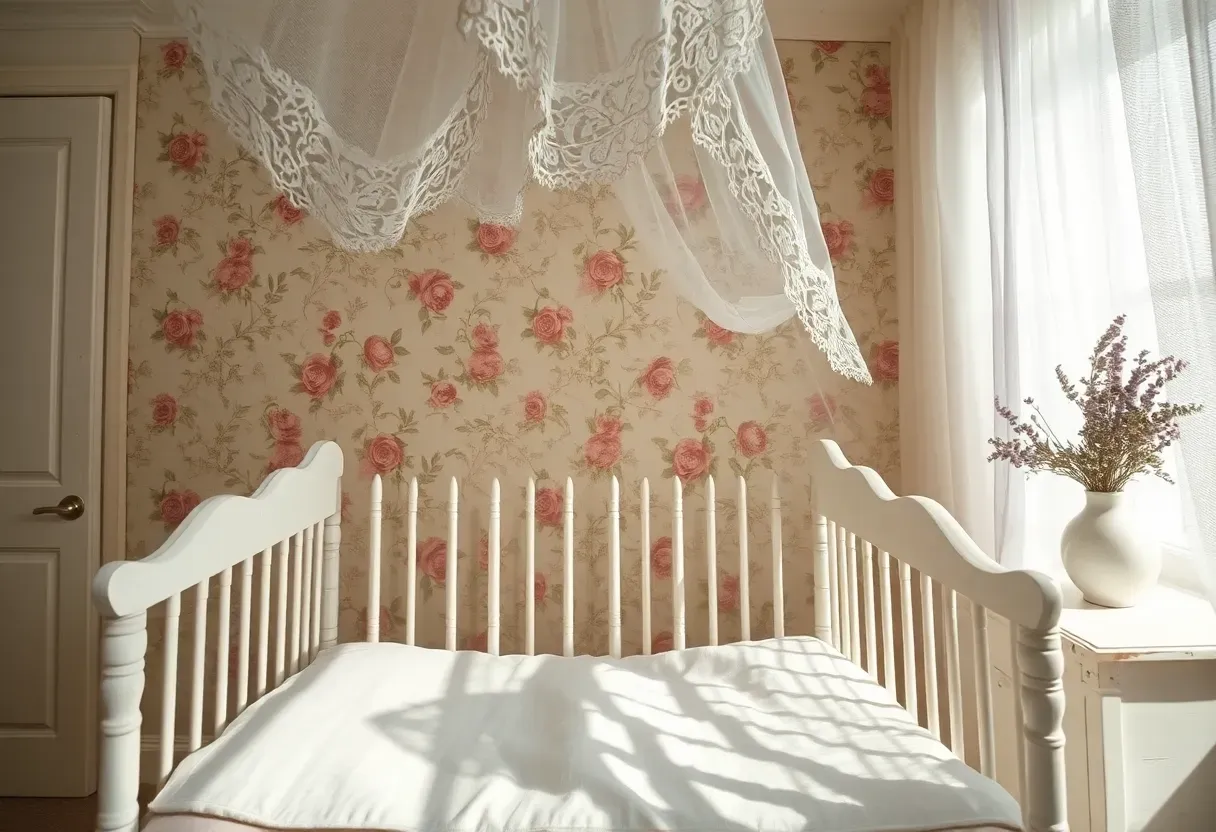
We have all felt that quiet, charged moment standing in an empty room that is about to become a nursery. The blank walls hold so much possibility it can feel paralyzing. Shabby chic offers a way through that paralysis because its rules are generous: nothing needs to be perfect, age is welcome, and softness is the point. A chipped paint finish on an heirloom dresser, a linen canopy with raw edges, a pile of mismatched vintage quilts at the foot of the crib — these imperfections become the personality of the room. The result is a space that already feels lived in and loved before your baby arrives.
Ready? Below you will find 23 nursery directions that lean into the worn, romantic spirit of shabby chic while staying practical for midnight diaper changes and three-in-the-morning feedings.
Table of Contents
- White Distressed Crib as the Centerpiece
- Vintage Floral Wallpaper Accent Wall
- Lace Canopy Over the Crib
- Pastel Rose and Cream Color Palette
- Repurposed Antique Dresser as Changing Table
- Ruffled Linen Crib Skirt and Bedding
- Crystal Chandelier for Soft Overhead Light
- Weathered Wood Floating Shelves
- Vintage Mirror Gallery Wall
- French Provincial Rocking Chair
- Floral Bunting and Fabric Garlands
- Shabby Chic Bookshelf with Scalloped Edges
- Patchwork Quilt Wall Hanging
- Whitewashed Wicker Storage Baskets
- Toile de Jouy Curtains
- Soft Tulle Tutu Crib Skirt
- Vintage Birdcage Shelf Decor
- Shabby Chic Name Letters on the Wall
- Distressed Wood Photo Frames Cluster
- Rose-Patterned Nursing Glider Cushion
- Layered Rugs in Muted Florals
- Antique Tea Set as Shelf Decor
- Vintage Lace Lampshade Trio
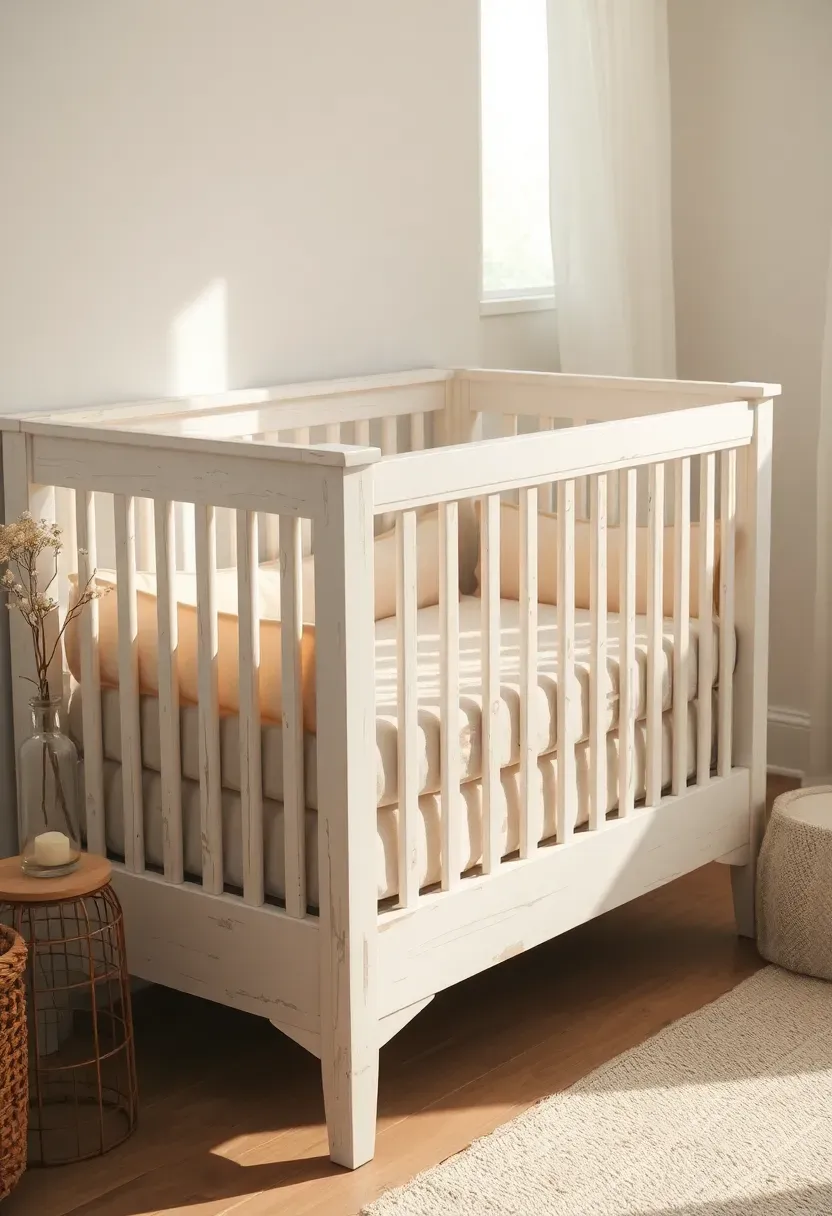
1. White Distressed Crib as the Centerpiece
Why It Sets the Tone
Every nursery revolves around the crib, and a deliberately distressed white frame immediately tells visitors what kind of room this is. The visible brush strokes and gently worn edges suggest history, even if the piece is brand new. Paired with organic cotton bedding in ivory or blush, the crib becomes a visual anchor that makes everything else — wall color, rug choice, accessories — fall into place with less effort than you might expect.
Making It Work Safely
- Look for cribs that meet current safety standards first, then sand and repaint with zero-VOC chalk paint for the distressed effect
- Avoid flaking or peeling paint near the rail where the baby will teeth — apply a food-safe sealant to teething areas
- Keep bedding minimal inside the crib; the decorative quilts and ruffles stay on the outside or on a nearby chair
We picked a few things that go well with this idea: Sweet Jojo Boho Chic Crib Bedding (4-Piece) (★4.7), Tufted Ruffled Shabby Chic Crib Bedding (3-Piece) (★4.6) and Sweet Jojo Boho Sun Cotton Crib Set (4-Piece) (★4.7). As an Amazon Associate we earn from qualifying purchases.
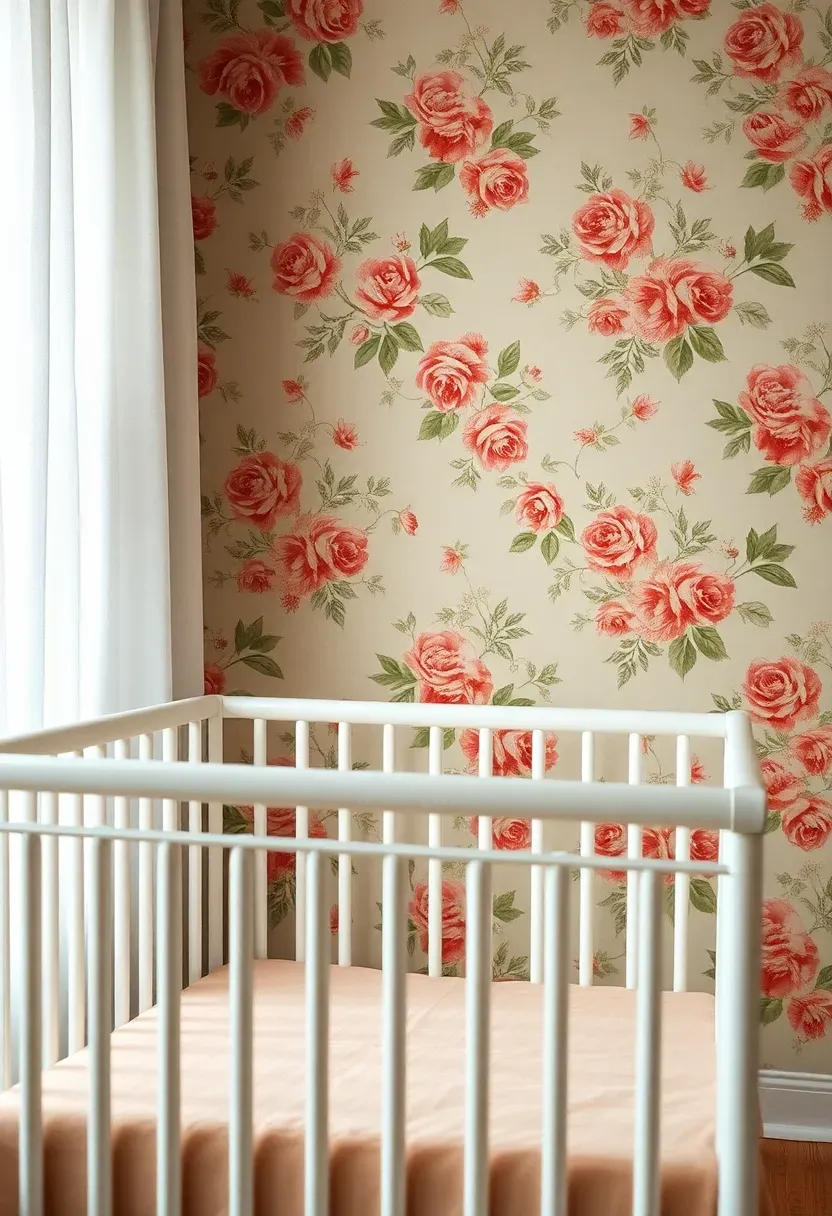
2. Vintage Floral Wallpaper Accent Wall
A single wall covered in cabbage roses, trailing vines, or delicate peony prints transforms the room without overwhelming it. The trick with shabby chic florals is choosing a pattern with a slightly faded quality — as though the wallpaper has been there for decades, gently bleached by afternoon sunlight streaming through sheer curtains.
Step 1: Select the Right Wall
Choose the wall behind the crib or the wall you see first when entering. This gives the pattern maximum visual impact with minimum material cost.
Step 2: Match the Scale
Large-scale blooms suit bigger rooms. In a compact nursery, opt for a denser, smaller repeat so the pattern does not compete with the furniture for attention.
Step 3: Coordinate Without Matching
Pull one secondary color from the wallpaper — a muted sage, a dusty blue — and echo it in a throw pillow or the crib sheet. Avoid matching everything exactly; the charm lives in the near-miss.
We picked a few things that go well with this idea: MTFBWY Pink Hydrangea Floral Wall Art (Set of 3) (★4.3), Rustic Pink Rose Oval Wall Art Framed (★4.4) and Vintage Wildflower Meadow Round Nursery Art. As an Amazon Associate we earn from qualifying purchases.
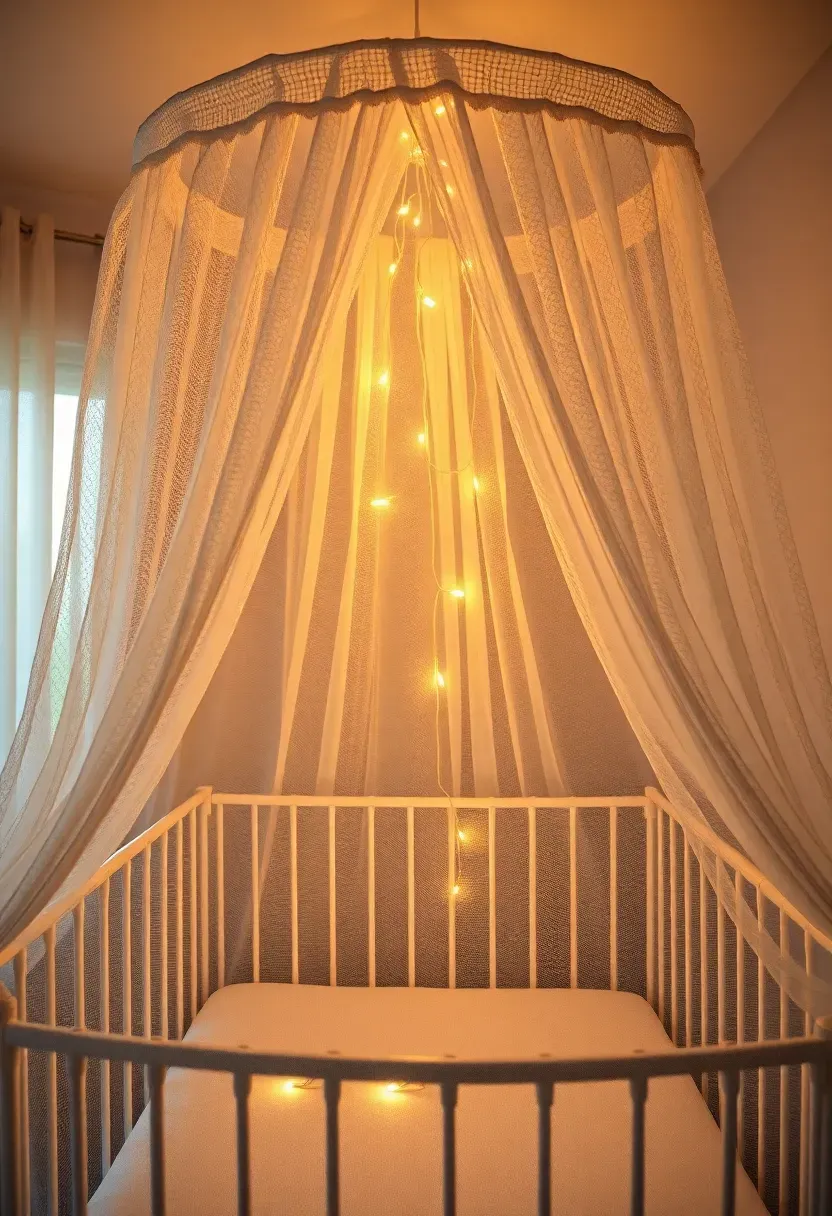
3. Lace Canopy Over the Crib
There is something irresistibly fairy-tale about a lace canopy drifting above a baby crib. It creates a sense of enclosure without closing the space, filtering light into soft patterns across the bedding below. For shabby chic nurseries, vintage lace panels work better than new machine-made netting because the slight irregularities in the weave catch light differently. Hang it from a single ceiling hook and let the fabric cascade wide enough to frame the crib without touching the mattress.
Pros and Cons
Pros: Adds instant romance, diffuses harsh overhead light, costs very little if you source from thrift stores or estate sales
Cons: Collects dust (wash monthly), must be secured well above baby's reach, purely decorative and should never drape inside the crib
We picked a few things that go well with this idea: Scalloped Wicker Nursery Baskets (Set of 3) (★4.4), TeoKJ Cotton Rope Storage Baskets (Set of 3) (★4.8) and Water Hyacinth Scalloped Baskets (Set of 2) (★4.8). As an Amazon Associate we earn from qualifying purchases.
4. Pastel Rose and Cream Color Palette
The Core Idea
Forget the bold pink-or-blue debate entirely. Shabby chic nurseries thrive in the space between colors — the dusty rose that is almost mauve, the cream that leans slightly toward buttermilk, the pink that could also be described as peach depending on the light. These half-tones create a room that feels warm during the day and cozy at night without ever shouting.
How to Layer It
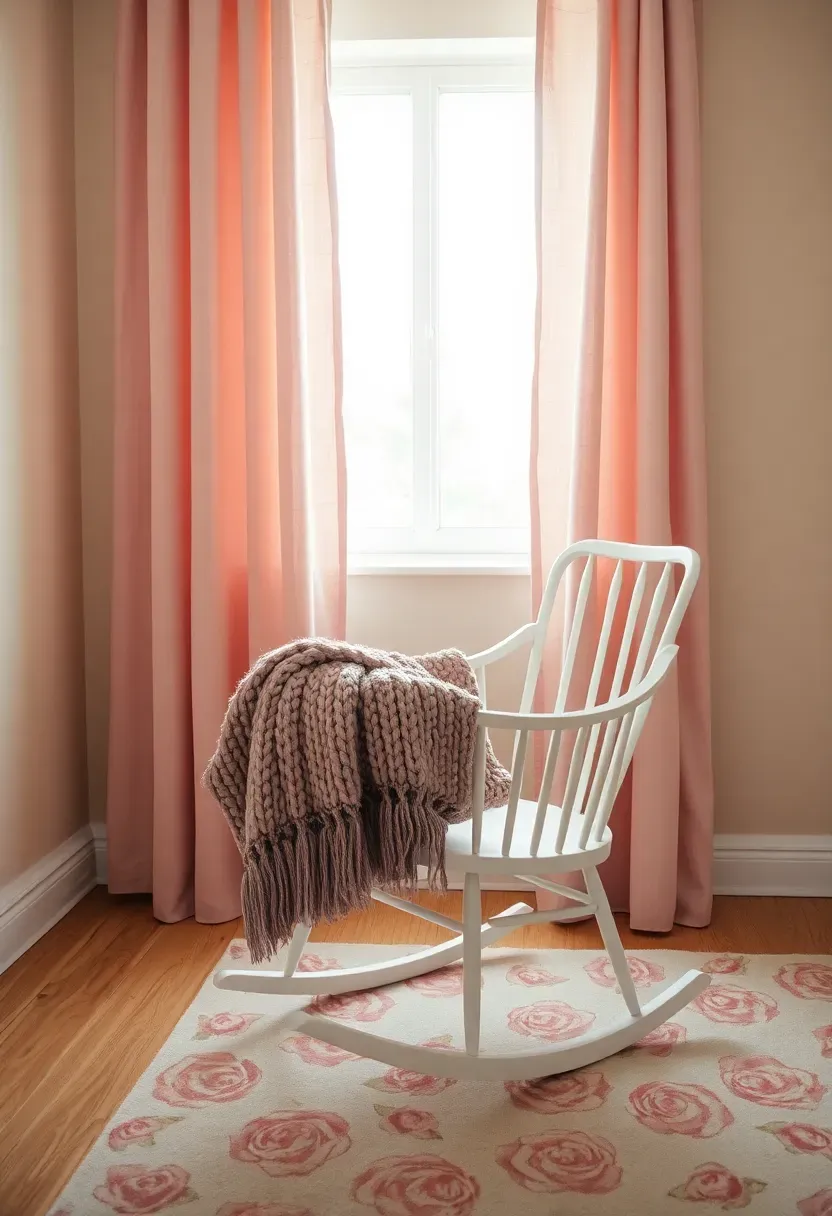
Start with cream walls and layer the rose tones through textiles: a blush linen curtain, a mauve knit blanket, a rose-printed rug. Add white furniture to keep the palette from becoming too sweet. The result reads sophisticated rather than saccharine — a nursery that a parent genuinely enjoys spending hours in.
Recommended
Items for this idea
5. Repurposed Antique Dresser as Changing Table
The Problem
Purpose-built changing tables have a short useful life. Within eighteen months, most parents convert them to something else or move them to storage. Meanwhile, they sit there looking conspicuously temporary in a room you worked hard to make feel timeless.
The Solution
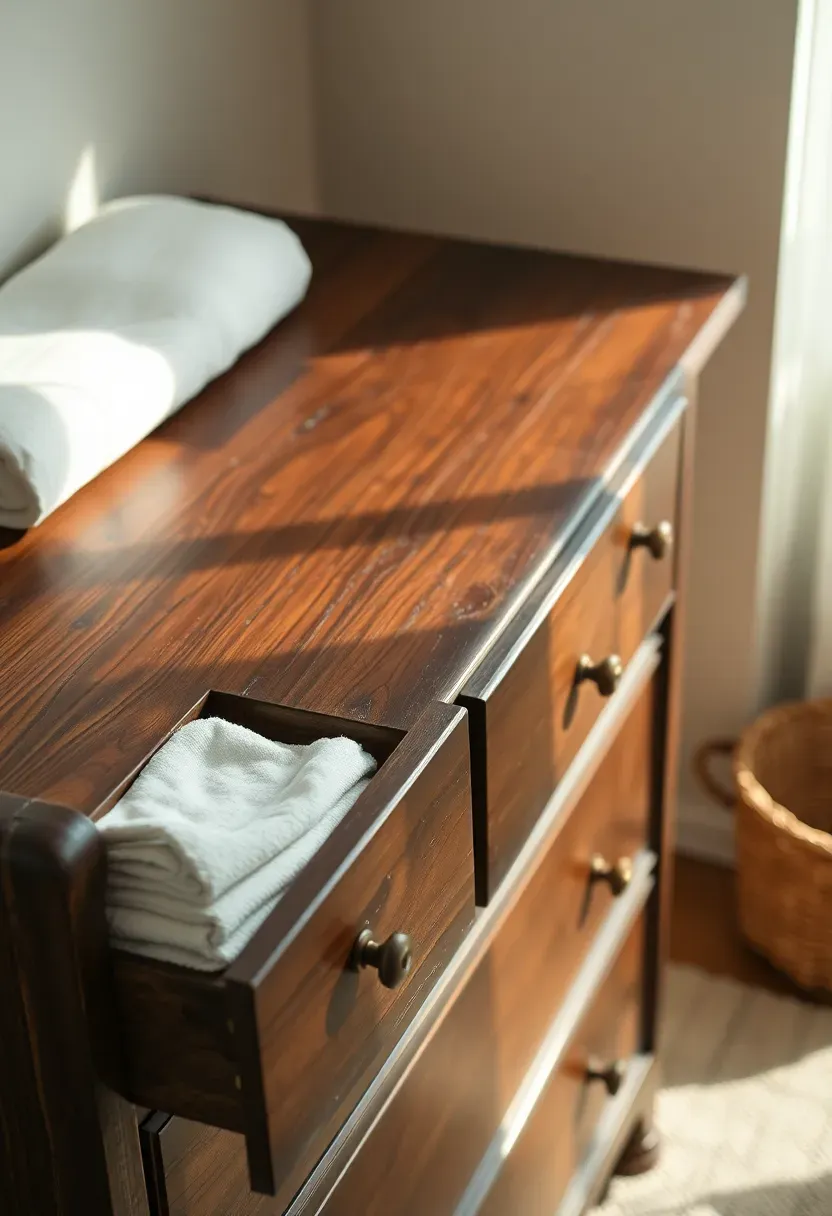
An antique dresser with a changing pad secured on top solves both problems. It stores clothes, blankets, and supplies in its drawers right now, and it continues as bedroom furniture for years afterward. Sand and seal the top surface for easy cleaning. Replace worn hardware with mismatched vintage knobs — porcelain flowers, tarnished brass pulls, crystal droplets — to reinforce the shabby chic feeling. The dresser becomes the most practical and the most beautiful piece in the room simultaneously.
6. Ruffled Linen Crib Skirt and Bedding
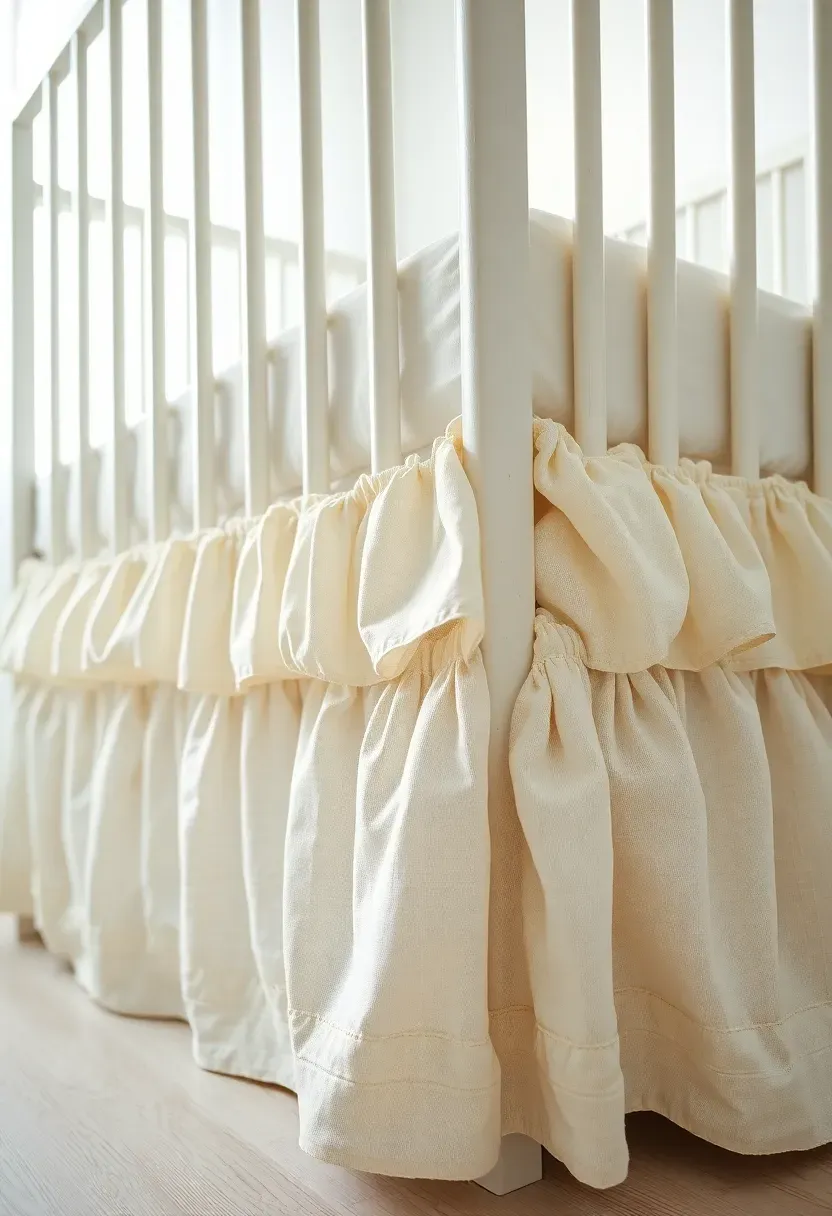
Linen is the fabric of shabby chic — it wrinkles beautifully, softens with every wash, and has that perfectly imperfect drape that cotton just cannot replicate. A ruffled linen crib skirt adds volume and movement to the base of the crib, making even a simple frame look dressed up. Layer it with a flat linen sheet inside and a quilted linen coverlet folded at the foot for the visual texture that photographs so well on Pinterest.
Tips for Linen Care
- Wash in cold water and tumble dry on low; the natural wrinkles are part of the look
- Choose oatmeal, ivory, or pale blush rather than stark white for warmth
- Pre-wash before first use to remove sizing and activate the signature softness
Recommended
Items for this idea
7. Crystal Chandelier for Soft Overhead Light
Comparing: Chandelier vs. Standard Flush Mount
Should you bother swapping the builder-grade ceiling light for a crystal chandelier in a baby's room? Absolutely — and here is why the comparison matters.
Standard Flush Mount
Provides even, functional light. Blends into the ceiling. Does nothing for the mood of the room. Costs less but adds zero personality. Fine for a hallway, forgettable in a nursery.
Crystal Chandelier
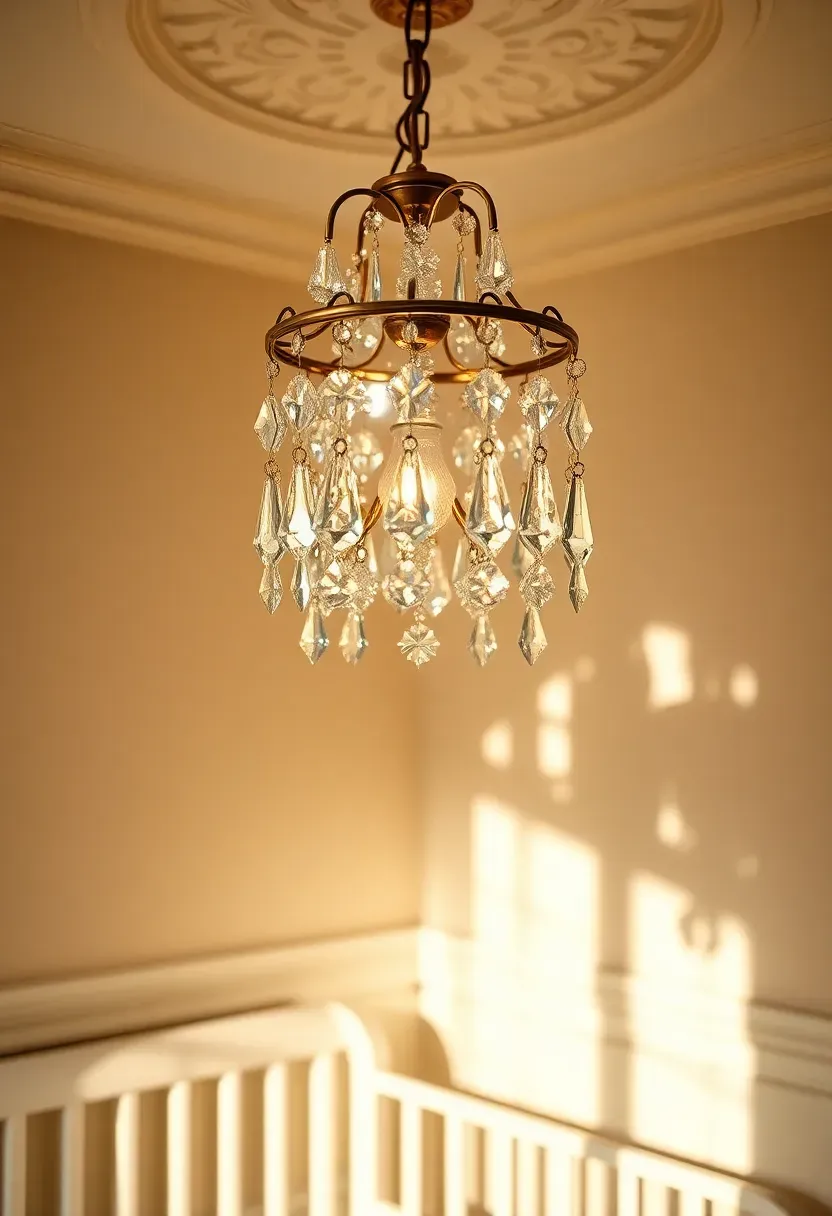
Scatters rainbow prisms across the walls on sunny afternoons. Creates a warm glow on a dimmer switch during nighttime feeds. Becomes the single detail that makes guests stop and say the room feels special.
Choose the flush mount if: budget is extremely tight or ceiling height is under seven feet
Choose the chandelier if: you want a statement piece that grows with the room and the child
8. Weathered Wood Floating Shelves
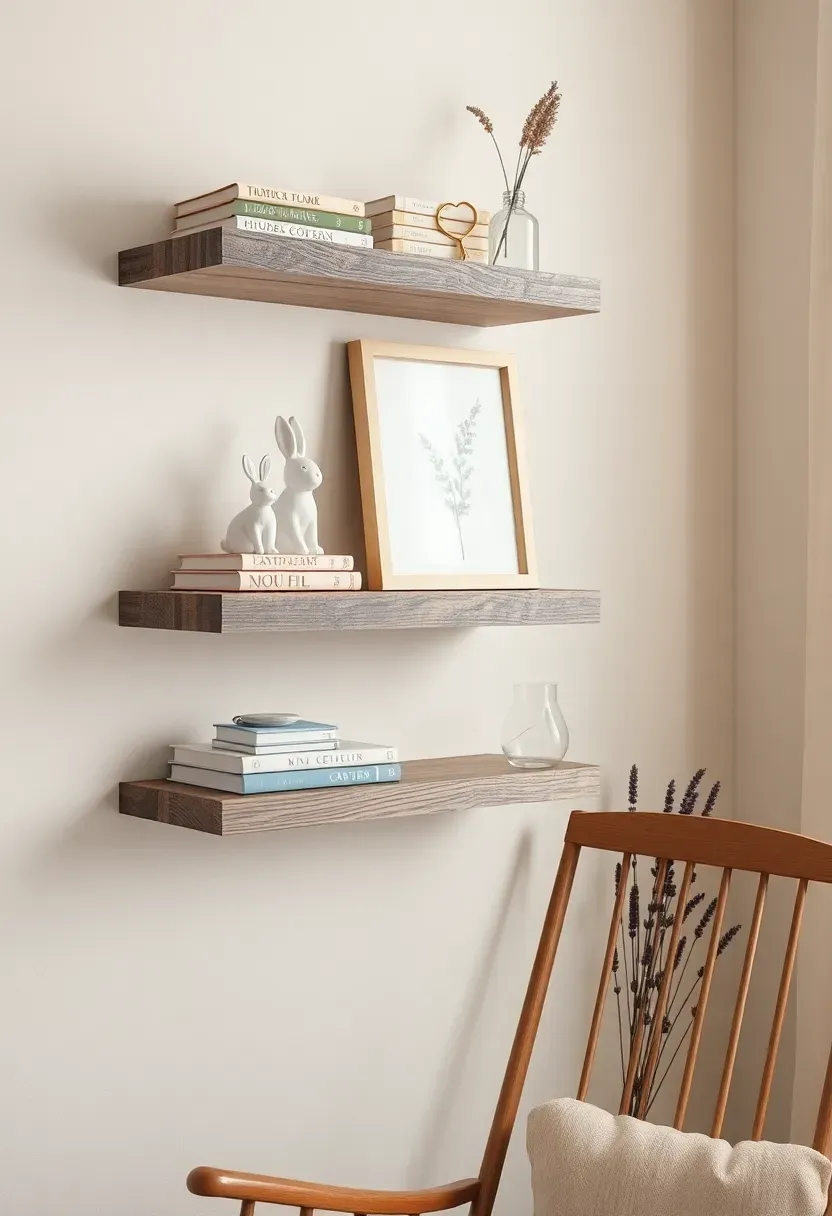
Floating shelves in reclaimed or deliberately weathered wood bring an organic roughness that balances all the lace and linen elsewhere in the room. Mount two or three at staggered heights above the changing area or beside the rocking chair. Display small stacks of cloth-bound books, a ceramic bunny, a framed botanical print, a tiny vase with dried lavender. The shelves become a rotating gallery as your child grows — first holding nursery trinkets, later displaying their own small treasures.
What to Watch Out For
- Secure shelves with heavy-duty anchors rated well above the intended weight — babies become toddlers who pull on things
- Keep items on higher shelves purely decorative and lightweight
- Avoid glass objects on any shelf a climbing child could reach within the first three years

Recommended
Items for this idea
9. Vintage Mirror Gallery Wall
Origins
The gallery wall concept dates back to 18th-century Parisian salons where paintings covered walls floor to ceiling. Shabby chic reimagines this tradition with mirrors instead of art, using ornate frames found at flea markets, estate sales, and antique shops.
Modern Interpretation
A cluster of five to eight vintage mirrors in varying sizes and frame styles — oval, rectangular, arched — creates depth and reflected light in a nursery. The mismatched frames in gold, cream, and distressed white become the decorative statement. Arrange them on a wall opposite or adjacent to a window so they bounce natural light deeper into the room. The baby will eventually discover their own reflection, adding an interactive element you did not plan but will love.
How to Apply at Home
- Start with one large mirror as the anchor and arrange smaller ones around it
- Mix frame finishes: gilt gold next to painted white next to raw wood
- Use picture-hanging strips rated for the mirror weight to avoid drilling multiple holes while you experiment with layout
- Keep mirrors above crib height and secured with safety backing film
10. French Provincial Rocking Chair
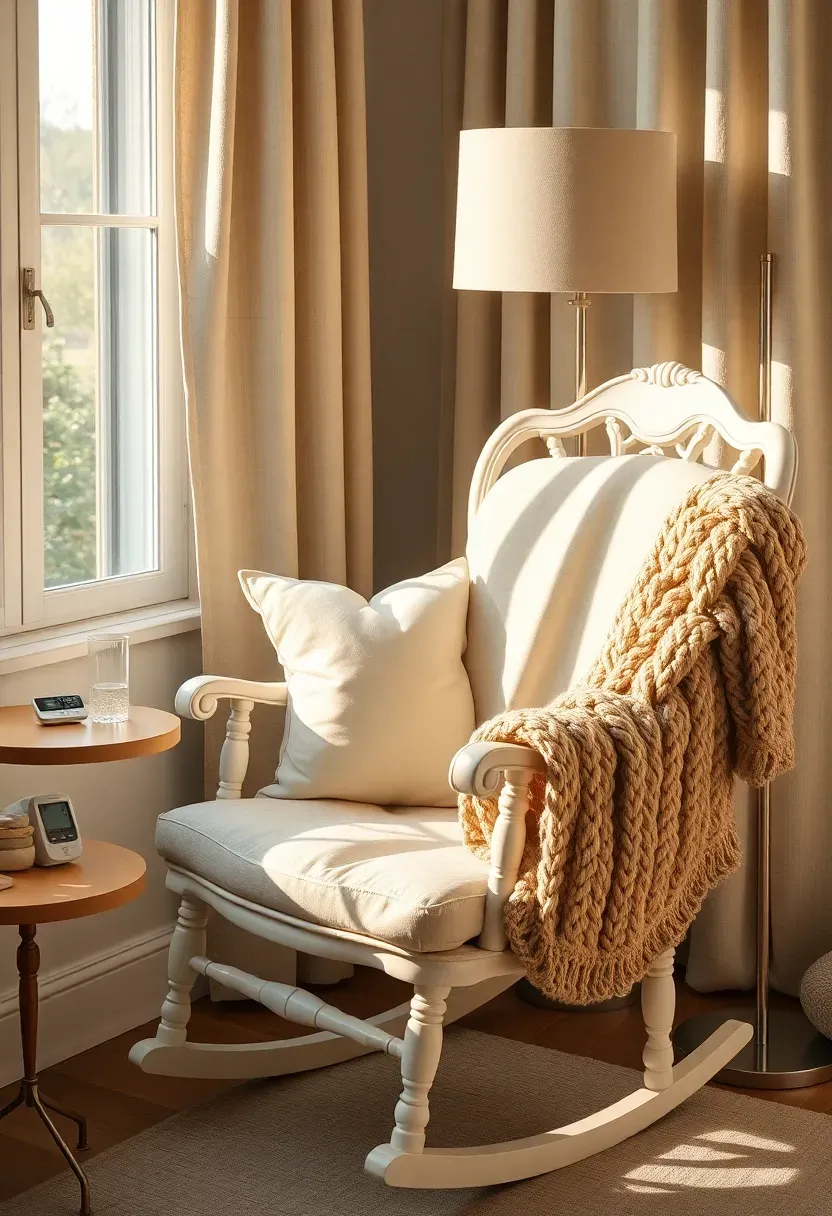
Late-night nursing sessions and those hazy 4 a.m. bottle feeds become significantly more bearable in a chair that actually supports your body and pleases your eye. A French provincial rocker — think cabriole legs, a gently curved back, and linen or cotton upholstery in a neutral tone — merges function with the aesthetic seamlessly. Position it near the window with a small side table for your water glass and phone. Add a knit throw over one arm. This corner will become the most used square footage in the entire house for the first year.
Recommended
Items for this idea
11. Floral Bunting and Fabric Garlands
How to Make Your Own
Bunting is one of the simplest and least expensive ways to add a handmade touch to the nursery. It fills empty wall space above the crib or window without requiring nails or heavy hardware.
Step 1: Gather Fabric Scraps
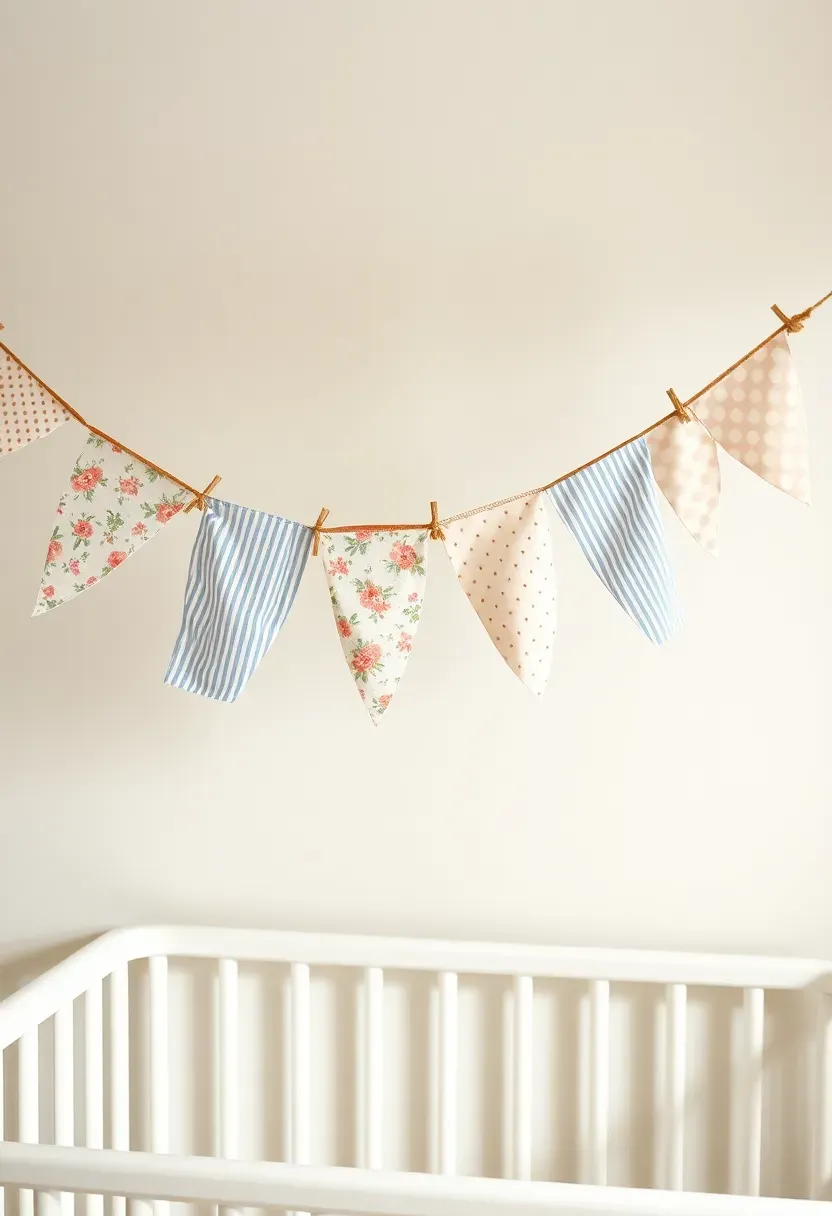
Raid your linen closet or visit a fabric store remnants bin. Look for small-scale florals, ticking stripes, dotted swiss, and solid pastels in cotton or linen.
Step 2: Cut and Assemble
Cut triangles or pennant shapes, fold over a length of ribbon or twine, and sew or glue in place. Alternate patterns so no two adjacent flags match.
Step 3: Hang and Adjust
String across the wall in a gentle swag. Use small command hooks at each end. The slight droop in the middle is part of the charm — do not pull it taut.
12. Shabby Chic Bookshelf with Scalloped Edges
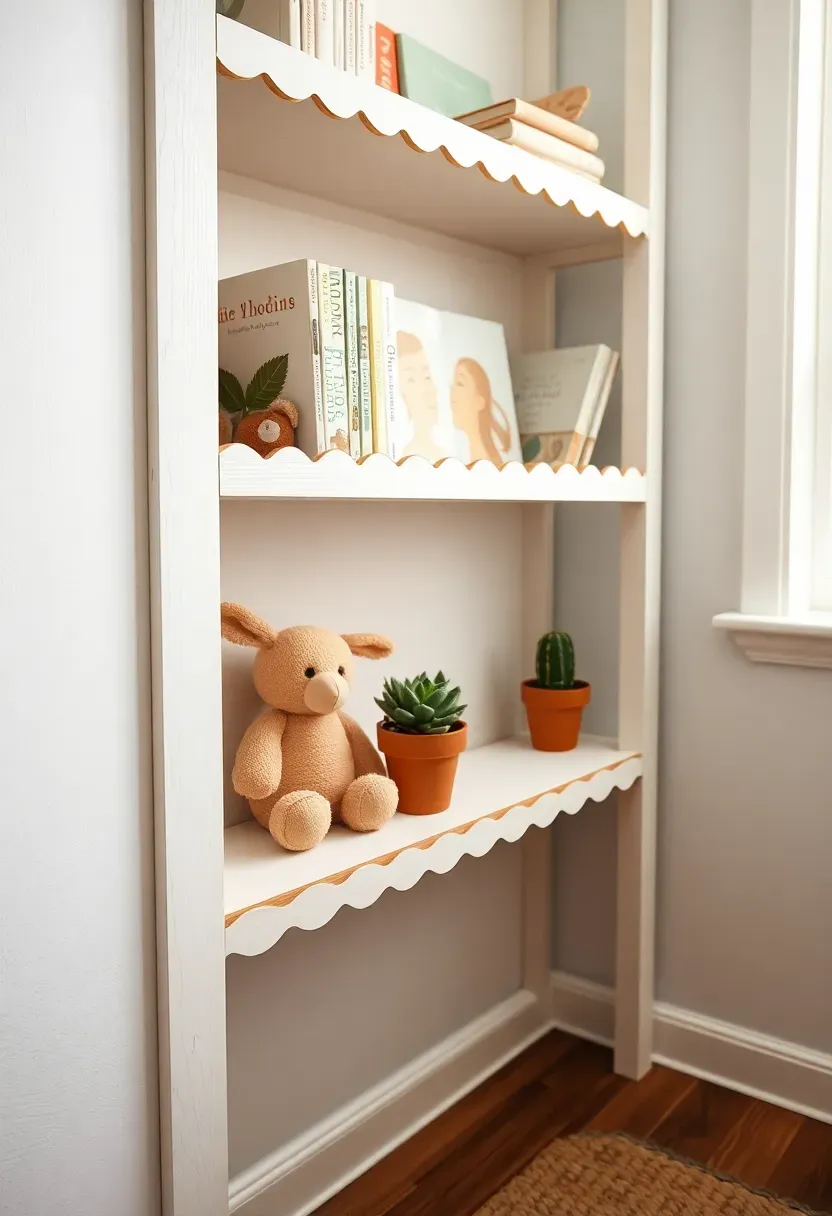
A standard bookcase becomes shabby chic the moment you add decorative scalloped trim along the shelf edges. You can buy pre-cut wooden trim at any hardware store and attach it with wood glue and small finishing nails. Paint the entire piece in white chalk paint, then lightly sand the edges and corners to reveal hints of the wood beneath. Stock it with board books spine-out on the lower shelves and display-worthy covers face-out on top. The scalloped detail catches the eye without demanding attention — exactly the balance shabby chic aims for.
Recommended
Items for this idea
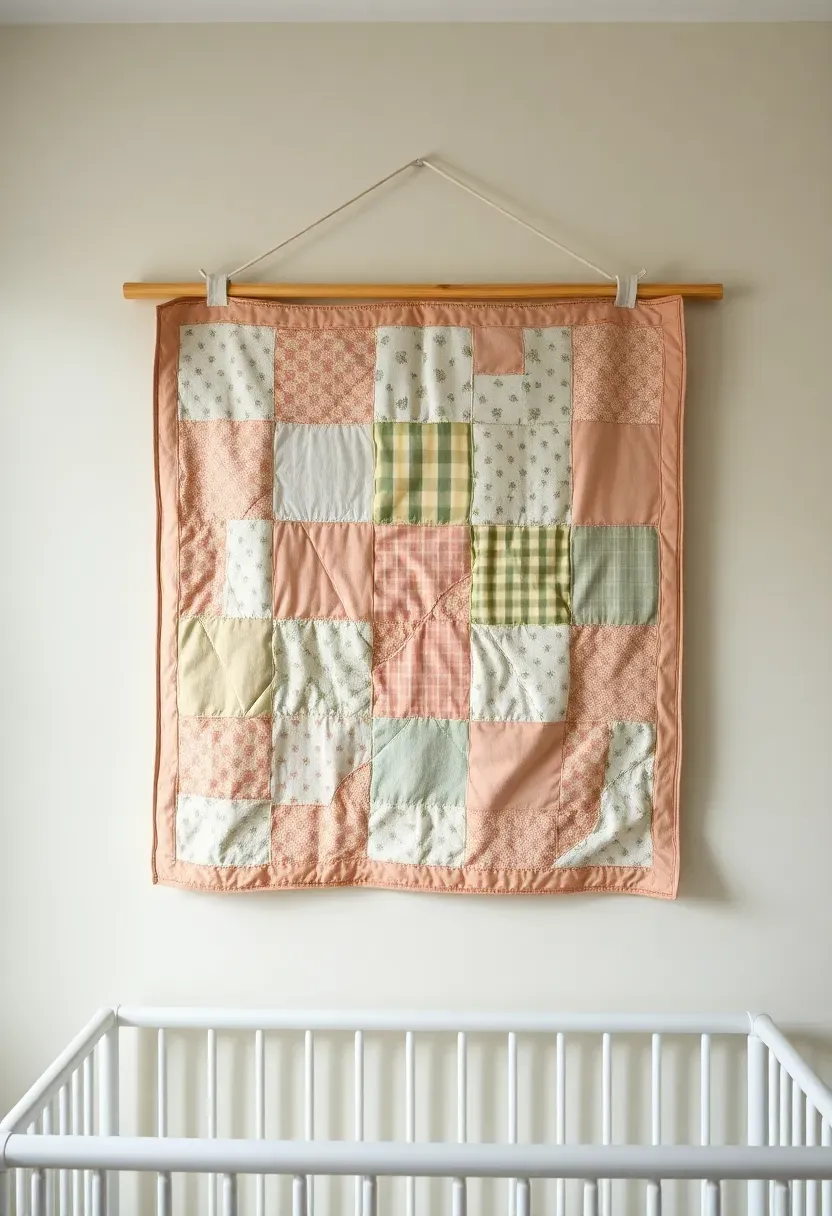
13. Patchwork Quilt Wall Hanging
Instead of framed art, hang a vintage or handmade patchwork quilt on the wall behind or beside the crib. The textile adds color, pattern, and texture in one gesture and carries emotional weight if it belonged to a grandmother or was stitched during the pregnancy. Use a wooden quilt hanger or a slim dowel threaded through fabric loops sewn along the top edge. The imperfect seams and slightly faded fabrics embody shabby chic better than any store-bought decoration ever could.
Practical Notes
- Ensure the quilt is secured flat against the wall and cannot fall into the crib
- Rotate quilts seasonally for a fresh look with zero cost
- If using a family heirloom, photograph it for insurance records before hanging
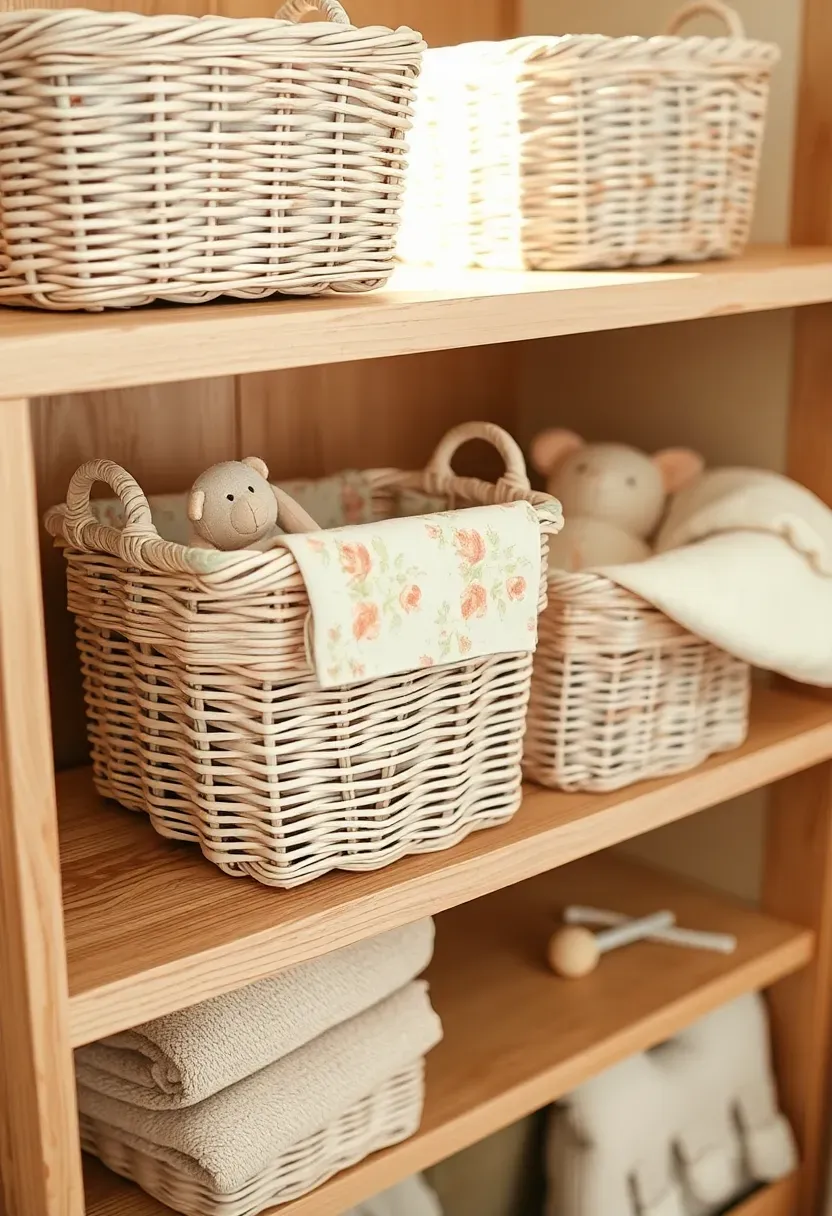
14. Whitewashed Wicker Storage Baskets
Storage is the unsexy necessity that makes or breaks a nursery. Whitewashed wicker baskets solve the problem beautifully — they hold blankets, burp cloths, diapers, and toys while looking like decorative objects. Line them with cotton fabric in a coordinating print for a polished interior. Stack them on open shelves, tuck them under the crib, or place a large one beside the rocking chair as a blanket catch-all. The wicker texture adds another natural layer to the room's material palette alongside the linen, wood, and lace already present.
Recommended
Items for this idea
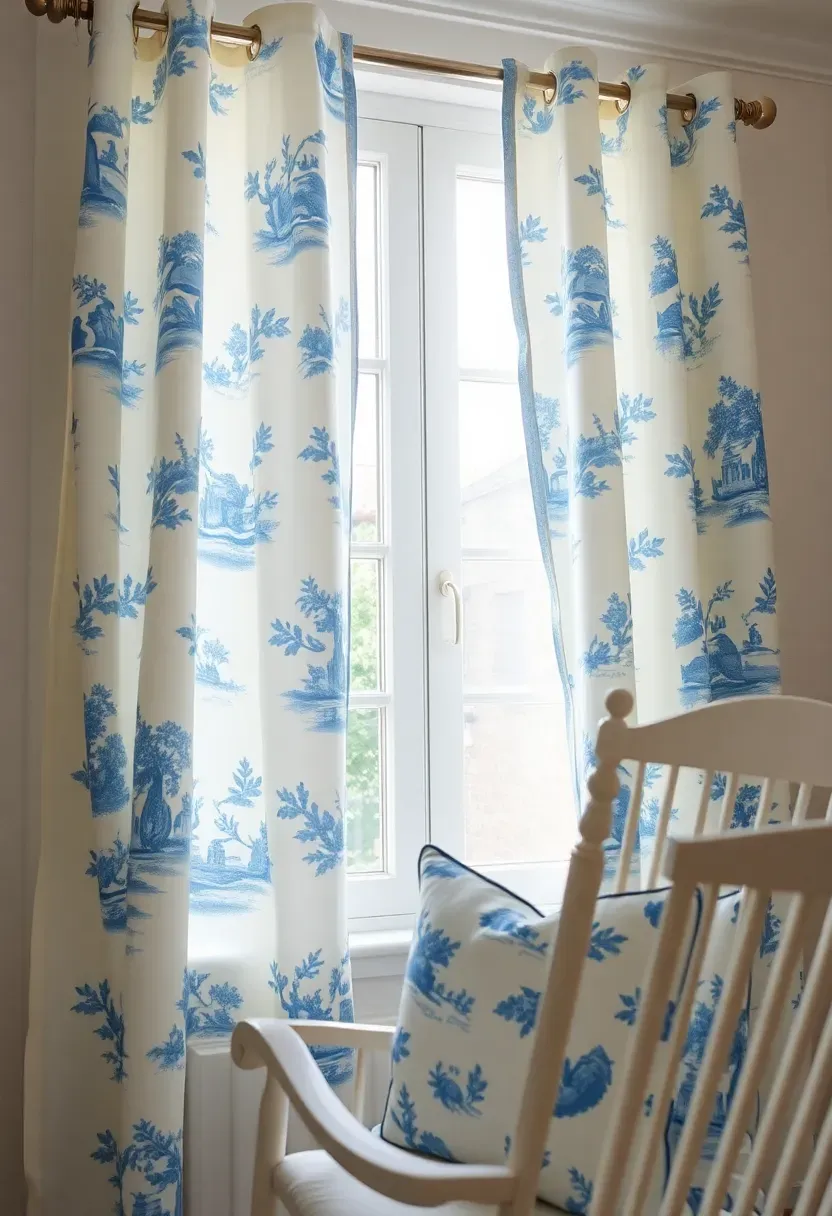
15. Toile de Jouy Curtains
Origins
Toile de Jouy originated in Jouy-en-Josas, France in the 1760s. The printed cotton fabric featured pastoral scenes — shepherds, gardens, romantic vignettes — in a single color on a light ground. It became a staple of French country interiors and later a cornerstone of shabby chic style.
Modern Interpretation
In a nursery setting, toile curtains bring narrative and artistry to an otherwise simple window treatment. Choose blue-on-white for a cooler, gender-neutral look or rose-on-cream for warmth. The scenic patterns give older babies something to gaze at from the crib while adding a layer of historical sophistication that elevates the room far beyond a typical baby space. Line the curtains with blackout fabric for nap time without sacrificing the front-facing beauty.
How to Apply at Home
- Use toile on curtains or one set of pillow covers but not both — too much reads costume-like
- Pair with solid-colored walls to let the pattern breathe
- Complement with simple white or cream furniture to avoid visual competition
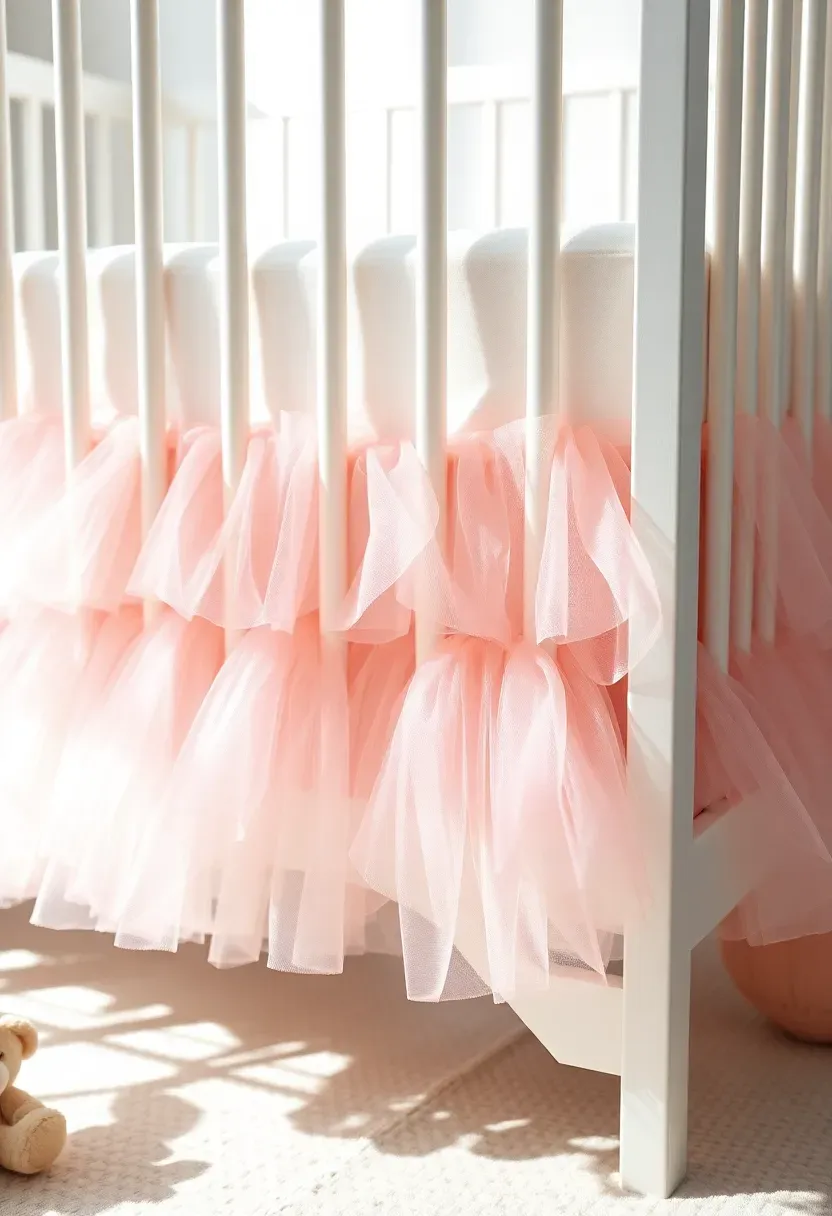
16. Soft Tulle Tutu Crib Skirt
For parents who want to push the romantic aesthetic further, a tulle tutu crib skirt adds ballet-inspired volume beneath the mattress line. Layers of soft tulle in blush, ivory, or lavender create a cloud-like effect around the base of the crib. It is purely decorative — the tulle stays outside the sleep area — but it photographs beautifully and gives the crib a presence that a flat fabric skirt simply cannot achieve.
Is It Practical?
Surprisingly, yes. Tulle does not wrinkle, shakes clean easily, and hides the storage bins you will inevitably slide underneath the crib. Replace or wash it as needed by untying the strips from the elastic band and retying fresh ones.

Recommended
Items for this idea
17. Vintage Birdcage Shelf Decor
An empty vintage birdcage sitting on a shelf or dresser top is one of those unexpected shabby chic touches that sparks conversation. Fill it with a trailing faux ivy plant, a battery-operated fairy light strand, or a small collection of dried roses. The birdcage adds vertical interest and an architectural quality that flat decorations lack. Source them at flea markets or online vintage shops — the more patina and character on the metal frame, the better it fits the aesthetic.
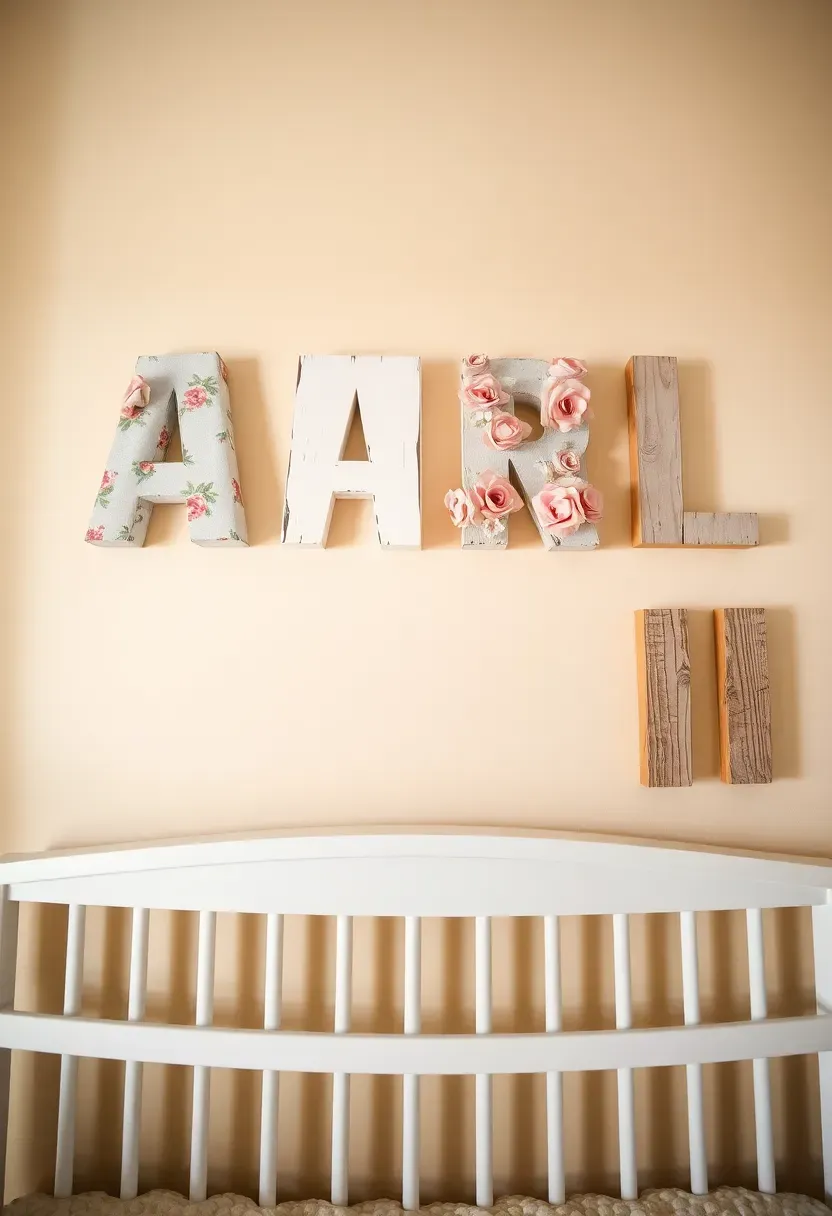
18. Shabby Chic Name Letters on the Wall
The Core Issue
Standard nursery name letters from big-box stores look generic and often clash with a carefully curated shabby chic room. The fonts are too modern, the paint too glossy, and the overall effect feels mass-produced.
The Solution
Buy plain wooden letters and customize them yourself. Wrap some in vintage fabric scraps, paint others in chalk paint and distress the edges, cover one in small silk roses, and leave another showing bare weathered wood. Mount them in a gentle arc above the crib or along one wall. The variety in textures and finishes across the letters mirrors the mix-and-match spirit of shabby chic while spelling out something deeply personal.
Recommended
Items for this idea
19. Distressed Wood Photo Frames Cluster
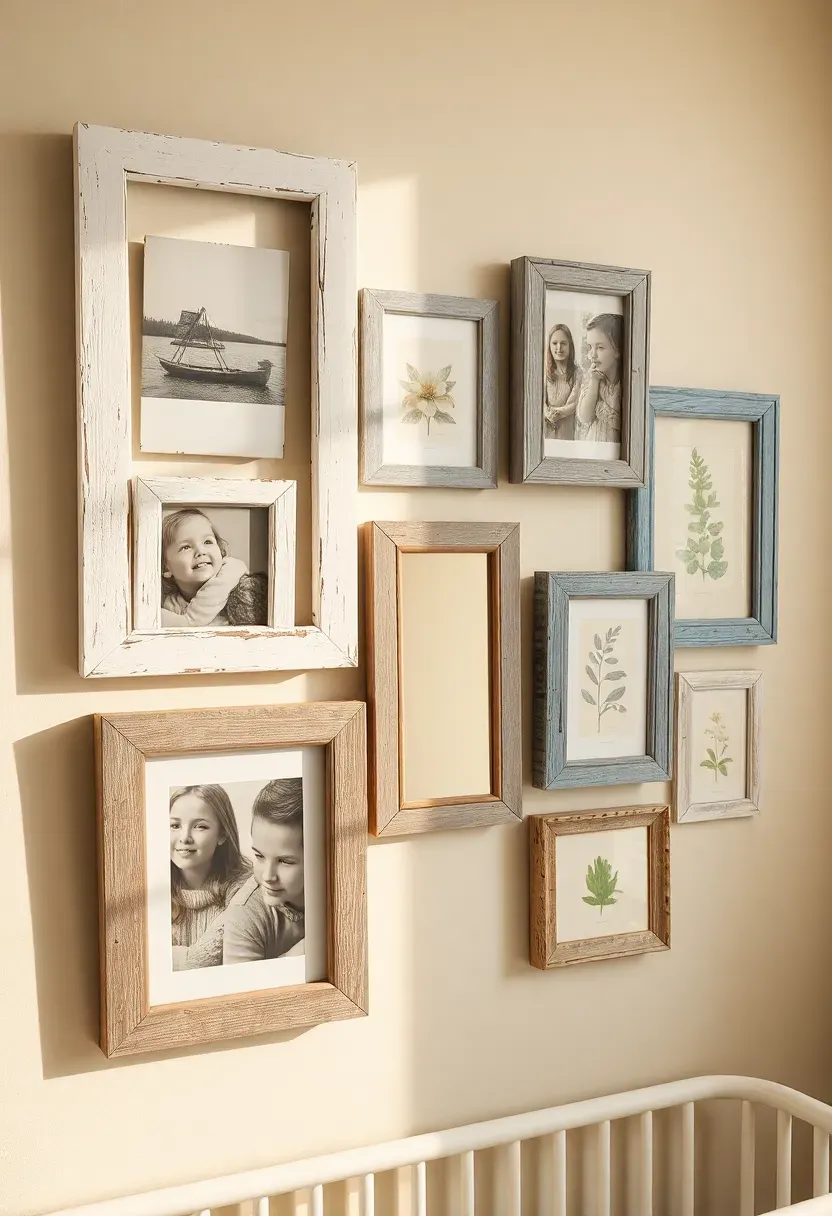
A cluster of frames in various sizes and distressed finishes — peeling white paint, weathered gray, washed-out blue — brings warmth and personality to any nursery wall. Mix family photos with botanical illustrations, vintage nursery rhyme pages, and one or two small mirrors. The arrangement should look collected over time rather than purchased as a set. Leave slight gaps between frames. Lean one or two against the wall on a shelf rather than hanging everything for a relaxed, unstudied composition.
Tips for Arrangement
- Lay the frames out on the floor first to test the arrangement before putting holes in the wall
- Use paper templates taped to the wall if you need precision
- Start with the largest frame in the center and work outward in a loose organic shape
20. Rose-Patterned Nursing Glider Cushion
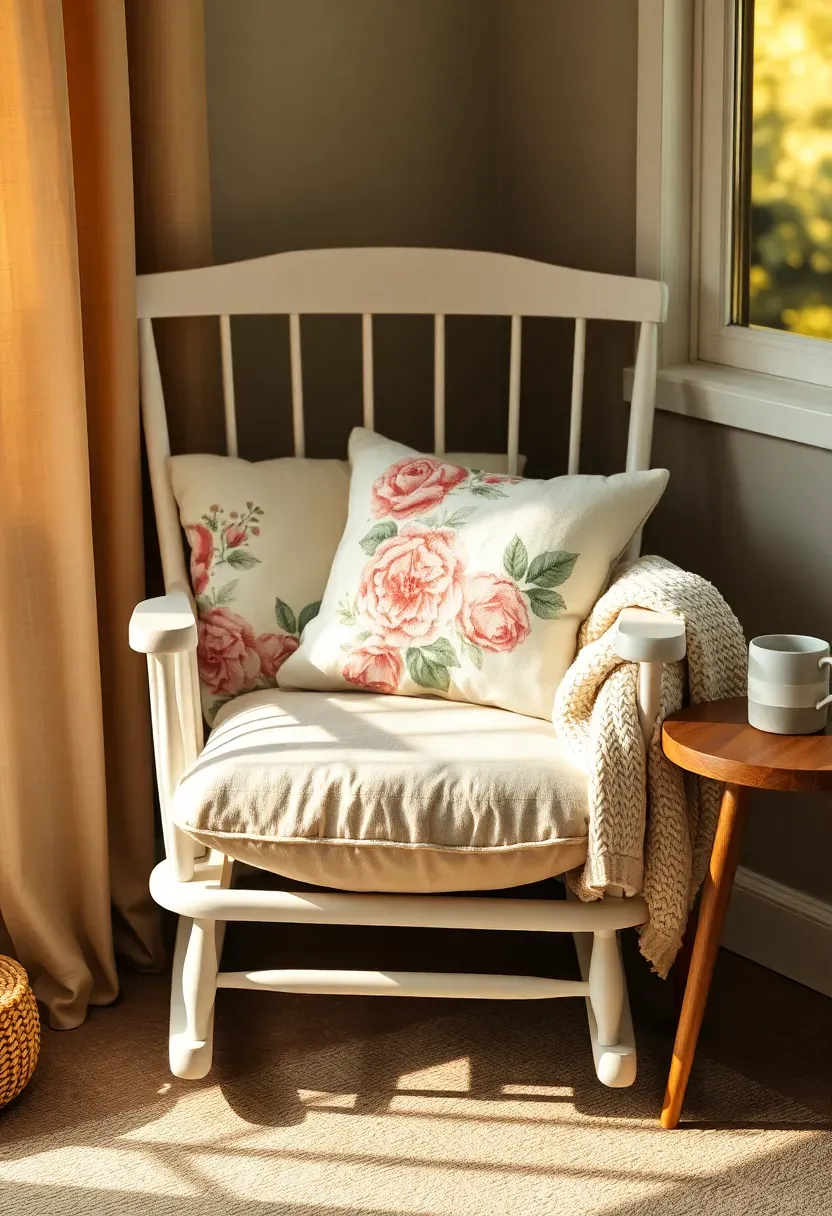
You do not need to buy a new chair to get the shabby chic look in the nursing corner. A rose-patterned cushion set — seat pad and lumbar pillow — transforms even a plain white glider into something that belongs in this room. Look for a muted, vintage-style rose print rather than a bright modern floral. The fabric should feel like a garden that has been growing for fifty years, not one that was planted last week.
Pros and Cons
Pros: Affordable instant update, easy to swap seasonally, machine-washable covers protect the chair beneath
Cons: Patterned cushions can clash if the room already has competing prints — limit bold florals to one or two surfaces maximum
Recommended
Items for this idea
21. Layered Rugs in Muted Florals
Why Layer Instead of Using One Rug
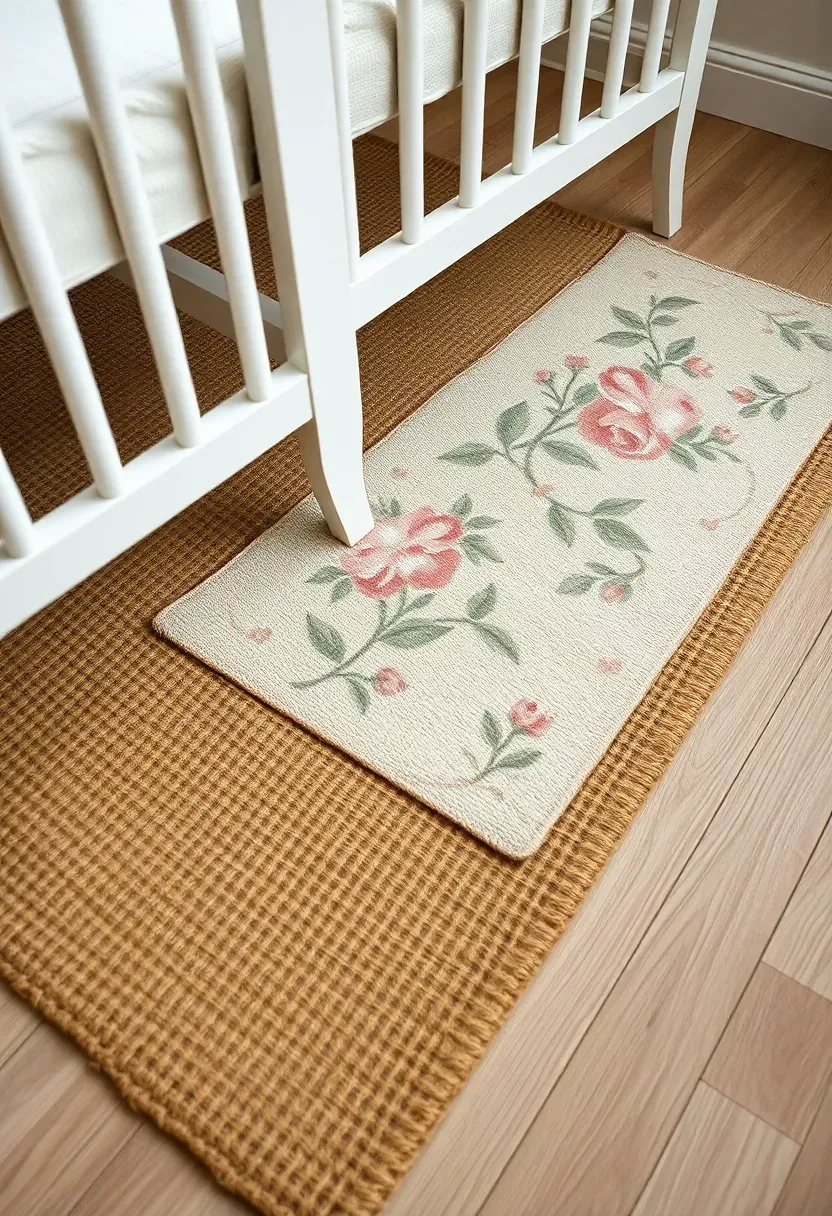
A single rug defines a space. Layered rugs create a space. Place a larger neutral jute or sisal rug as the base, then angle a smaller vintage floral rug on top, slightly off-center. The layering adds depth, visual warmth, and a bohemian-meets-shabby-chic quality that feels effortless. It also lets you protect the more delicate vintage rug from heavy furniture legs by positioning them on the sturdier base layer.
What to Watch Out For
- Use rug grip pads between layers to prevent sliding — critical once the baby starts crawling
- Ensure all rug edges lie flat with no curling corners that could catch a crawling baby
- Choose low-pile or flat-weave rugs for easier vacuuming and fewer allergen traps
22. Antique Tea Set as Shelf Decor
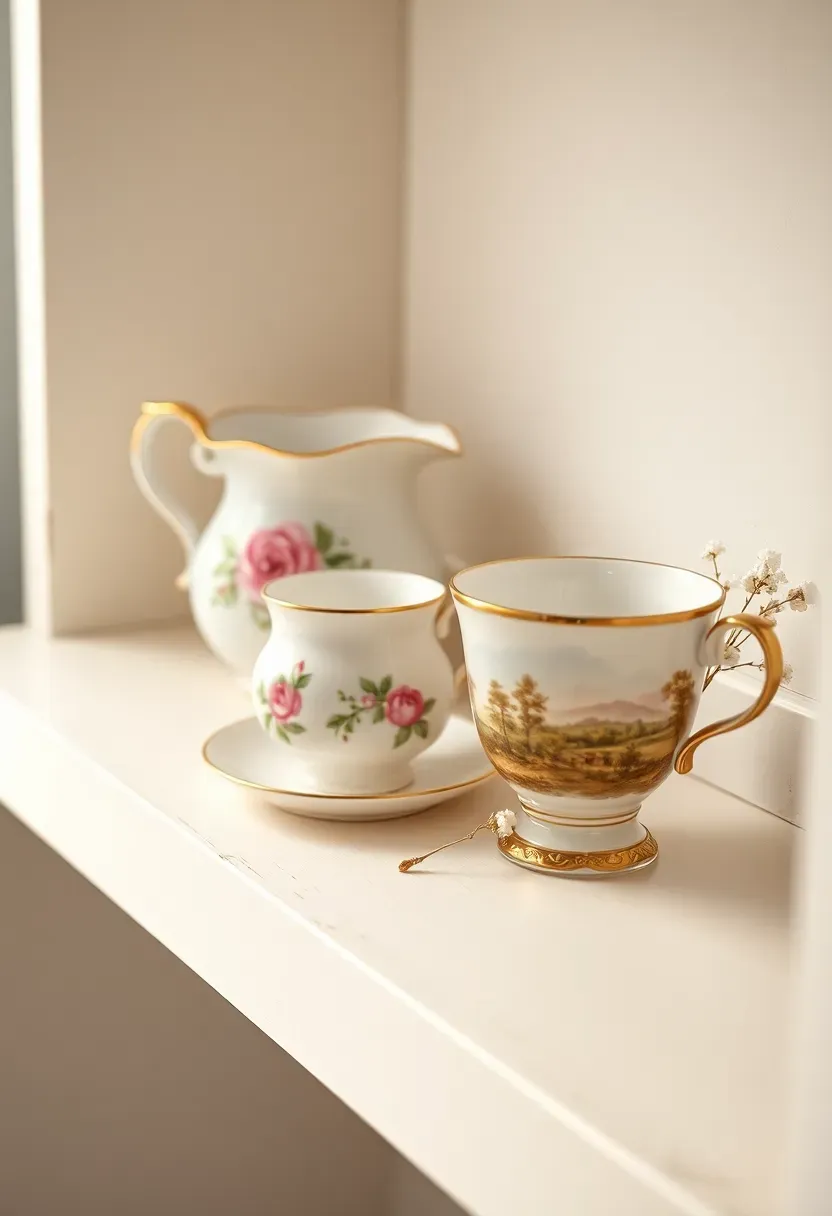
This is the kind of detail that separates a thoughtfully designed nursery from one that just followed a shopping list. A small antique tea set — a creamer, a sugar bowl, a cup and saucer — displayed on a high shelf adds an unexpected, whimsical element. Use the pieces to hold cotton balls, pacifiers, or hair bows as the child grows. The delicate porcelain patterns, often featuring roses or pastoral scenes, reinforce the shabby chic narrative without adding clutter at baby level.
Recommended
Items for this idea
23. Vintage Lace Lampshade Trio
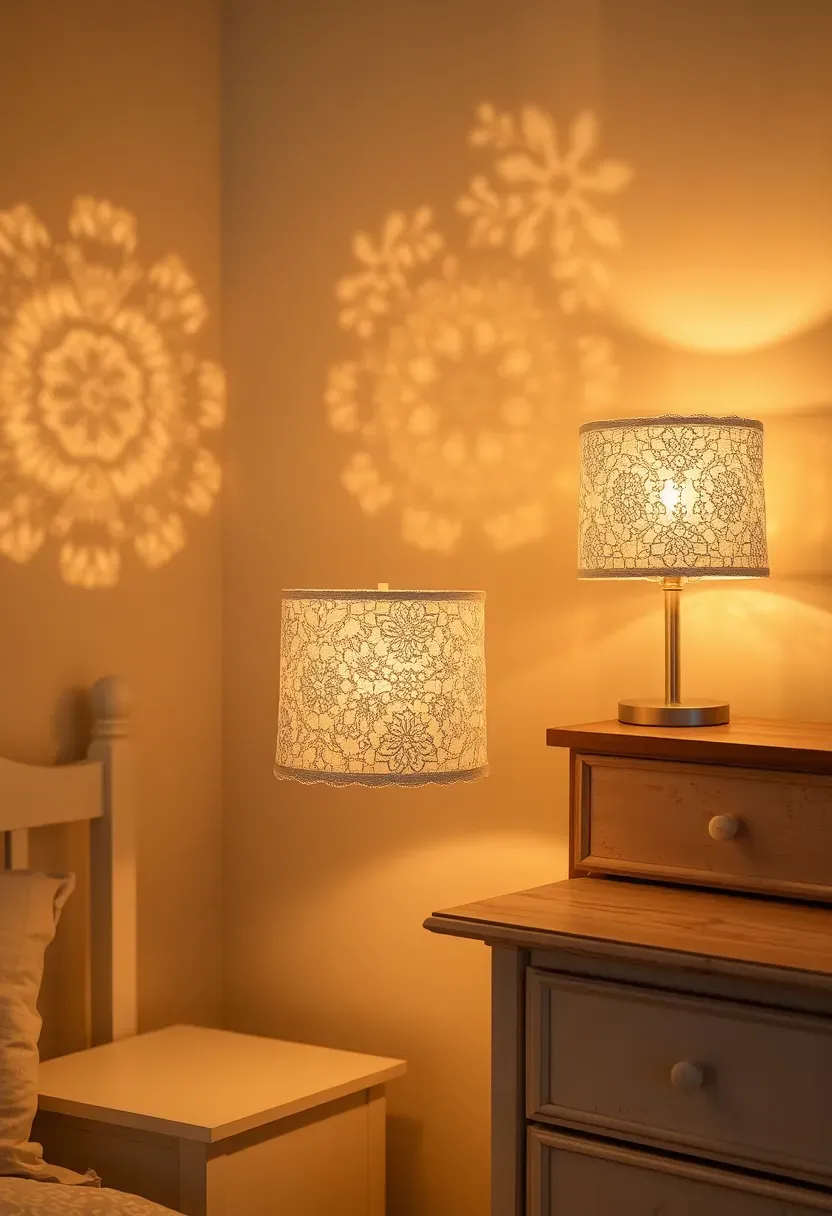
Three lace-covered lampshades in different sizes — one on the nightstand, one on the dresser, one as a pendant — unify the room through repetition of material rather than identical matching. Source plain drum shades and wrap or glue vintage lace remnants over the exterior. When lit, the lace casts intricate shadow patterns on the ceiling and walls, turning a simple bulb into ambient art. The effect during nighttime feeds is genuinely magical and makes the exhausting hours feel a fraction more beautiful.
Quick FAQ
Should I use real vintage furniture in a nursery, or is it unsafe? Vintage furniture can absolutely be used, but every piece needs a safety check first. Ensure cribs meet current spacing standards (no more than 2 3/8 inches between slats), test for lead paint on anything made before 1978, and secure all tall furniture to the wall with anti-tip straps. Dressers and shelves are generally safe after these checks; cribs require the most caution.
Is shabby chic too feminine for a baby boy's nursery? Not at all. The style is about worn textures, soft lighting, and vintage charm — none of which are inherently gendered. Shift the palette toward cream, sage, soft blue, and weathered gray instead of pink and rose. Use linen and natural wood more prominently than lace and tulle. The result feels equally warm and inviting without leaning in any particular direction.
Which shabby chic nursery elements are the most budget-friendly? Fabric bunting, distressed photo frames, and repurposed furniture deliver the biggest visual impact for the smallest investment. Thrift stores, estate sales, and online marketplaces are the best sources. A single afternoon of thrifting can furnish the decorative layer of an entire nursery for under fifty dollars if you know what to look for.
Can I mix shabby chic with other nursery styles? Shabby chic pairs naturally with farmhouse, French country, cottagecore, and even boho aesthetics. The key is maintaining the soft, worn, and layered quality that defines shabby chic while borrowing structural elements from the other style. A boho macrame wall hanging beside a shabby chic floral quilt, for instance, works beautifully because both celebrate handmade texture.
Does a shabby chic nursery stay relevant as the child grows? This is one of the style's greatest strengths. Because shabby chic relies on classic furniture shapes, neutral-leaning palettes, and timeless materials like wood, linen, and cotton, the room transitions gracefully from nursery to toddler room to young child's bedroom with only minor accessory swaps. The distressed dresser, the rocking chair, and the layered rugs will still make sense five years from now.
A nursery does not need to be perfect to be beautiful — in fact, shabby chic proves the opposite. The worn edges, the faded florals, the slightly mismatched frames: they are what make the room feel like it has been loved long before the baby arrives. Start with one idea from this list, let it guide the next choice, and trust that the room will come together with the same gentle, unhurried spirit that defines the style itself.
Pinterest cover for 23 Shabby Chic Nursery Ideas for a Dreamy Baby Room
About the author
OBCD
CGI visualization and interior design content. We create detailed 3D renders and curate practical design ideas for every room in your home.