17 Japandi Industrial Bedroom Ideas That Blend Raw and Refined
A japandi industrial bedroom merges the clean lines of Japanese minimalism with the cozy warmth of Scandinavian style, then punctuates it all with raw industrial elements that add character and depth. This sophisticated fusion creates spaces that feel both serene and visually dynamic, perfect for modern apartments and rental bedrooms alike. These 17 curated japandi industrial bedroom ideas show how to balance soft textures with hard materials, achieving harmony through thoughtful contrast rather than compromise.
The beauty of a japandi bedroom with industrial elements lies in its ability to create warmth through restraint. Concrete meets wood, black metal pairs with natural linen, and every piece earns its place through both function and form. Whether you are designing from scratch or refreshing an existing room on a budget, these ideas explore how to layer Japanese, Scandinavian, and industrial influences without clutter, maintaining the calm simplicity essential to restful spaces.
Quick FAQ
What defines japandi industrial bedroom style?
Japandi industrial combines Japanese minimalism (clean lines, low furniture, neutral palettes) with Scandinavian coziness (natural wood, warm textiles, soft lighting) and industrial elements (exposed metal, concrete, raw finishes). The key is balance: each influence should be present but none should dominate.
How do I warm up an industrial bedroom without losing the aesthetic?
Layer natural materials—light wood furniture, wool or linen bedding, jute rugs, and cotton curtains. Add textile accents in warm neutrals (cream, taupe, warm gray). Use warm lighting (2700K-3000K bulbs) and incorporate plants to soften hard surfaces. Keep metal accents minimal and choose matte black over polished chrome.
What colors work best for japandi industrial spaces?
Start with a base of white or warm gray walls, add light wood tones (oak, ash, birch), and anchor with black metal or concrete elements. Accent colors should be minimal: muted earth tones (sage, terracotta, warm beige) or deep neutrals (charcoal, navy). Avoid bright colors—stick to a palette of 3-4 core colors maximum.
Can japandi industrial work in small bedrooms?
Yes—the japandi emphasis on minimalism and low-profile furniture actually helps small spaces feel larger. Choose a platform bed with built-in storage, use wall-mounted shelves instead of bulky bookcases, and keep the floor mostly clear. One industrial accent (like a metal sconce or pipe shelf) adds character without consuming space.
What materials should I prioritize for an authentic japandi industrial look?
Essential materials include: light wood (bed frame, nightstands, flooring), black metal (bed frame, lamp bases, shelving), concrete or plaster walls (even as accents), natural textiles (linen bedding, wool throws, jute rugs), and leather or canvas for small accents. Avoid glossy finishes—matte and raw surfaces reinforce the aesthetic.
How do I prevent japandi industrial from feeling cold or sterile?
Focus on texture layering: a chunky wool throw over smooth linen sheets, a jute rug on concrete flooring, fabric lampshades on metal bases. Ensure warm lighting (multiple light sources, dimmable bulbs). Incorporate organic shapes—curved ceramics, round mirrors, potted plants—to soften linear furniture. Limit industrial elements to 30% of the room.
As an Amazon Associate I earn from qualifying purchases.
Table of Contents
- 1. Low Platform Bed With Black Metal Frame for a Japandi Industrial Look
- 2. Concrete Accent Wall Behind Bed
- 3. Exposed Pipe Shelving Unit
- 4. Light Wood Nightstands With Black Hardware
- 5. Industrial Sconces With Fabric Shades
- 6. Minimalist Pendant Light Over Bed
- 7. Large Canvas Art With Industrial Theme
- 8. Sliding Barn Door For Closet
- 9. Floating Desk With Metal Legs
- 10. Layered Jute And Wool Rugs
- 11. Built-In Window Seat With Storage
- 12. Black Metal Clothing Rack Display
- 13. Minimalist Bed Bench With Leather Cushion
- 14. Monstera Plant In Concrete Planter
- 15. Floor-Length Mirror With Black Metal Frame
- 16. Linen Curtains With Industrial Rods
- 17. Woven Light Wood Headboard
1. Low Platform Bed With Black Metal Frame for a Japandi Industrial Look
Prompt: Nature documentary capture on Hasselblad X2D 100C with XCD 90V lens at f/4, ISO 64, 1/125s shutter. Hyper-realistic 3/4 view of a low platform bed with sleek black metal frame, light oak wood slat headboard, crisp white linens, charcoal wool throw at foot. Concrete floor visible, part of white plaster wall with black metal sconce. Materials: matte black powder-coated steel, light oak wood, crisp cotton linen, soft wool. Warm diffused window light from left (5500K), creating soft shadows on concrete floor. Minimalist serene mood with japandi balance—cozy yet refined. Shallow depth of field, sharp details on bed frame textures, balanced composition, no extra objects.
The foundation of any japandi industrial bedroom begins with the bed—a low platform design in black metal anchors the room while maintaining the japanese principle of proximity to the ground, which creates a sense of grounded calm. The light oak wood headboard or slats add necessary warmth, preventing the industrial metal from feeling cold, while the low profile preserves visual space and keeps the room feeling open. Unlike traditional industrial beds with heavy piping and oversized frames, this japandi interpretation keeps lines clean and silhouette minimal.
The platform design eliminates the need for a box spring, reducing visual bulk and aligning with scandinavian practicality—the mattress sits directly on slats, creating a streamlined profile that feels modern yet timeless. Black metal provides the industrial edge without overwhelming the space, especially when paired with warm bedding in whites, grays, or muted earth tones that soften the hard lines.
Tips
- Choose a platform height of 12-14 inches from the floor for authentic japandi proportion—low enough to feel grounded but high enough for easy cleaning underneath
- Opt for matte black powder-coated metal instead of glossy or distressed finishes for a refined industrial look that won't chip or show fingerprints
- Pair with a light oak headboard (either solid wood or vertical slats) to introduce necessary warmth and create contrast with the black frame
Best for: Those who want the industrial edge without heaviness—this bed feels substantial yet airy, perfect for small to medium rooms where visual space matters.
What this gives you: A serene focal point that balances raw and refined elements while maintaining the japandi principles of calm and functionality.
We picked a few things that go well with this idea: HOJINLINERO Black Metal Bed Frame with Wood Headboard (★4.2), Victorian Style Metal Platform Bed Frame (★4.4) and Kujielan Minimalist Metal Platform Bed Frame (12-Inch) (★4.4). As an Amazon Associate we earn from qualifying purchases.
2. Concrete Accent Wall Behind Bed
Prompt: Nature documentary capture on Hasselblad X2D 100C with XCD 90V lens at f/4. Hyper-realistic 3/4 view of a bedroom featuring a raw concrete accent wall behind a low platform bed, light oak floating nightstands, black metal sconces, white linens, gray textured throw. Partial view of window with sheer linen curtains on adjacent wall. Materials: polished concrete with subtle aggregate, light oak wood, matte black metal, crisp white linen, sheer linen fabric. Soft natural light from window right (5500K), creating gentle shadows that highlight concrete texture.
A concrete accent wall behind the bed creates a powerful industrial anchor while providing the perfect neutral backdrop for the rest of your japandi-inspired elements. The raw texture adds visual interest without introducing color, allowing wood tones and textiles to take center stage while the concrete subtly asserts its presence through depth and shadow rather than pattern or hue. Unlike painted drywall, concrete has honest imperfections—subtle variations in color, tiny aggregate exposure, and natural voids—that make the room feel authentic rather than designed.
The key to japandi balance with concrete is warming it through surrounding elements: light wood nightstands, warm bedding, fabric lampshades, and soft curtains prevent the space from feeling cold or cavernous. The concrete wall becomes a grounding element rather than a dominating feature when limited to one surface—ideally the wall behind the bed, where it creates a dramatic headboard alternative that feels both modern and timeless.
Placement note: If concrete isn't structurally practical, use concrete-look plaster or large concrete-effect tiles—real concrete requires sealing and can be cold to the touch, which may not suit all climates.
In rooms with existing drywall, a concrete-effect skim coat or wallpaper designed to mimic concrete texture can achieve a similar aesthetic without the cost and complexity of real concrete application. The goal is the visual and tactile experience of raw material, not necessarily authentic concrete construction.
Tips
- Keep the concrete wall mostly clear—avoid gallery walls or excessive decor that competes with the texture; one or two carefully chosen pieces are sufficient
- Warm the space with a jute or wool rug in front of the bed, fabric bedside lighting, and textile layers on the bed to balance the hard surface
- Consider concrete-look alternatives if real concrete isn't feasible: polished plaster, micro-toppings, or high-quality concrete-effect wallpaper can provide similar texture
What this gives you: An authentic industrial foundation that adds depth and character while maintaining the calm, neutral base essential to japandi design.
We picked a few things that go well with this idea: MooMee Washed Cotton Linen Duvet Cover Set (★4.4), Shilucheng French Flax Linen Duvet Cover Set (★4.4) and Simple&Opulence French Washed Linen Duvet Set (★4.5). As an Amazon Associate we earn from qualifying purchases.
3. Exposed Pipe Shelving Unit
Prompt: Nature documentary capture on Hasselblad X2D 100C with XCD 90V lens at f/4. Hyper-realistic 3/4 view of a wall-mounted shelving unit made of black iron pipes with light oak wood shelves, displaying minimal curated items: ceramic vase, stacked linen-wrapped books, small potted succulent in concrete pot, folded gray throw. White plaster wall behind, part of concrete floor visible.
Exposed pipe shelving captures industrial authenticity while embodying the japandi principle of functional beauty—these shelves display only what you genuinely need or love, avoiding clutter through intentional curation rather than hidden storage. Black iron pipes with flange fittings create the industrial framework, while light oak wood shelves introduce necessary warmth and prevent the piece from feeling too harsh or utilitarian. Unlike traditional bookcases, pipe shelving feels open and airy, allowing wall space to show through and maintaining visual breathing room.
The beauty of pipe shelving lies in its modular flexibility—you can adjust shelf heights, expand the unit horizontally, or create custom configurations to fit your specific needs and space constraints. This adaptability aligns with scandinavian practicality: the furniture serves you, not the other way around. When styled sparingly with ceramic vessels, linen-bound books, plants in simple containers, and one or two meaningful objects, the shelves become a curated display that reflects your aesthetic while maintaining minimalism.
Tips
- Stick to the rule of thirds: fill each shelf 1/3 with items, leaving 2/3 empty—this prevents visual clutter while creating intentional negative space
- Choose light oak or ash shelves rather than pine or reclaimed barn wood—lighter woods feel more japandi and less rustic-industrial
- Group items in odd numbers (1, 3, or 5) and vary heights to create visual rhythm without overcrowding; edit ruthlessly until only essentials remain
Avoid if: You tend to accumulate clutter—these shelves work best when consistently edited; if you struggle to keep surfaces minimal, consider closed storage instead.
What this gives you: Functional storage and display that combines industrial authenticity with japandi restraint, proving that utility and beauty can coexist.
We picked a few things that go well with this idea: Kante 11" Round Concrete Cylinder Planter (Weathered) (★4.6), Kante 9.8" Modern Concrete Planter (Charcoal) (★4.4) and Kante 11" Round Concrete Cylinder Planter (Black) (★4.6). As an Amazon Associate we earn from qualifying purchases.
4. Light Wood Nightstands With Black Hardware
Recommended
Items for this idea
Prompt: Nature documentary capture on Hasselblad X2D 100C with XCD 90V lens at f/4. Hyper-realistic 3/4 view of two matching light oak nightstands with black metal drawer pulls, simple cylindrical design with slightly recessed base. Left nightstand has matte black table lamp with white linen shade, white ceramic dish. Right nightstand has small stack of books, ceramic vase with single dried branch.
Nightstands in japandi industrial bedrooms should feel substantial yet minimal—light wood designs with black metal drawer pulls bridge the warmth of scandinavian style with the edge of industrial elements without committing fully to either aesthetic. The cylindrical or simple rectangular silhouette keeps visual clutter low while providing essential surface area and concealed storage for bedside necessities. Light oak or ash brightens the space, contrasting beautifully with black metal bed frames or concrete walls while maintaining the neutral palette essential to japandi calm.
The black hardware is where industrial character enters: simple bar pulls, cup pulls, or edge-mounted tabs in matte black create just enough edge to reference industrial design without feeling heavy or overdone. Unlike nightstands with visible pipe legs or excessive metal framing, these designs keep the wood as the dominant material, using black metal as an accent rather than a structural statement. This restraint maintains japandi balance—industrial elements should enhance, not overwhelm.
Placement note: Ensure nightstands are roughly 24-28 inches tall—the ideal height aligns the top surface with your mattress height for easy reach from bed.
When selecting nightstands, prioritize drawer storage over open shelves—concealed space maintains the calm, uncluttered japandi aesthetic by hiding practical items (charging cables, books, water glass) while keeping surfaces free for one or two intentional objects. A single drawer or two small drawers provide sufficient storage for most needs while keeping the silhouette clean.
Tips
- Match the wood tone to your bed frame or headboard for continuity—mixed wood tones can work, but they should be in the same light-to-medium range
- Keep surface styling to two items maximum: one functional (lamp, clock) and one decorative (ceramic piece, small plant, book)
- If choosing between drawers and open shelf design, opt for drawers—concealed storage maintains japandi calm by hiding practical items
What this gives you: Essential bedside storage that balances warmth and edge while maintaining the serene, uncluttered foundation of japandi design.
5. Industrial Sconces With Fabric Shades
Prompt: Nature documentary capture on Hasselblad X2D 100C with XCD 90V lens at f/4. Hyper-realistic close 3/4 view of black metal wall sconce with adjustable arm and white linen drum shade, mounted on white plaster wall. Warm glow from shade (2700K bulb visible inside), soft shadow on wall. Part of light oak nightstand with black pull visible below, small ceramic vase with dried grass.
Wall sconces with black metal arms and fabric shades perfectly encapsulate the japandi industrial balance: the fixture form references industrial design with its exposed metal and adjustable joints, while the fabric shade introduces the softness essential to scandinavian coziness. Mounted bedside, these lights provide focused task lighting for reading without consuming valuable nightstand surface area—a practical solution that aligns with japandi's functional minimalism. The black metal arm, especially when it has visible joints or an adjustable swivel, nods to industrial task lighting without feeling utilitarian.
The fabric shade is non-negotiable for japandi balance—linen, cotton, or wool shades in white, cream, or gray soften the hard metal and diffuse light into a warm glow rather than harsh directional beams. This material choice prevents the fixture from feeling too industrial or cold, creating ambient warmth that makes the bedroom feel livable rather than staged. Unlike fully exposed bulb fixtures or purely metal industrial lights, sconces with fabric shades bridge aesthetics while serving practical needs.
Tips
- Mount sconces 6-8 inches above the top of your mattress and 18-24 inches from the wall center—this positions light ideally for reading without glare
- Choose linen or cotton shades rather than paper or metal—natural fabrics diffuse light warmly and age gracefully, developing a patina that enhances the aesthetic
- Install dimmable sconces with 2700K LED bulbs for adjustable ambiance—full brightness for reading, dimmed for mood lighting and relaxation
Budget/Time: Hardwired sconces require professional installation (~$150-300 for basic install), but plug-in versions with cord covers offer a renter-friendly alternative.
What this gives you: Focused bedside lighting that combines industrial form with japandi warmth while preserving valuable surface space for intentional styling.
6. Minimalist Pendant Light Over Bed
Recommended
Items for this idea
Prompt: Nature documentary capture on Hasselblad X2D 100C with XCD 90V lens at f/4. Hyper-realistic view from below of a minimalist pendant light centered over a low platform bed, black metal cone shade with slight brass interior visible, warm bulb glow. Light oak slat headboard, crisp white linens, gray throw partially visible.
A single minimalist pendant centered over the bed creates a dramatic focal point while maintaining the japandi principle of minimal ornamentation—black metal cone shades with brass or copper interiors add subtle warmth through metallic contrast without introducing color or pattern. Unlike multi-light fixtures or chandeliers, a single pendant makes a strong statement through restraint rather than abundance, feeling intentional rather than decorative. The downward-facing shade provides focused light that's perfect for reading or ambiance while creating a geometric anchor above the bed.
The industrial character comes from the metal shade form and visible cord or chain, especially when hung from a high ceiling with substantial drop height (30-36 inches above the mattress). However, the japandi balance is maintained through proportion—the shade shouldn't be oversized or bulky, and the hanging mechanism should feel refined rather than rough. A matte black finish with contrasting interior (brass, copper, or even light wood) adds warmth and depth, preventing the fixture from feeling too stark.
Placement note: Hang the pendant so the bottom of the shade is 30-36 inches above the mattress surface—this provides clearance for sitting up while keeping light focused and intimate.
For rooms with standard 8-foot ceilings, consider a flush-mount or semi-flush industrial fixture instead—low-hanging pendants can feel cramped in rooms without vertical space to spare. The goal is a fixture that feels purposeful in scale, not constrained.
Tips
- Choose a shade with 12-16 inch diameter for queen/king beds—oversized shades disrupt japandi minimalism while undersized shades feel inadequate for the space
- Opt for warm white LEDs (2700K) with a CRI of 90+ for accurate color rendering—this keeps bedding and wood tones looking natural rather than washed out
- Consider a pendant with a dimmer switch for versatility—full brightness for tasks, dimmed for ambiance; this single fixture can serve multiple moods
What this gives you: A bold yet minimal focal point that provides functional lighting while embodying the japandi industrial fusion through refined metal forms.
7. Large Canvas Art With Industrial Theme
Prompt: Nature documentary capture on Hasselblad X2D 100C with XCD 90V lens at f/4. Hyper-realistic 3/4 view of a large canvas art piece mounted on white plaster wall above a platform bed, abstract composition in charcoal, black, cream with subtle geometric shapes suggesting architectural forms. Light oak floating shelf below art with small ceramic vessel and single stem.
Art in japandi industrial bedrooms should reference industrial themes without being literal—abstract compositions in charcoal, black, cream, and muted gray capture the essence of industrial spaces (architecture, machinery, urban landscapes) without depicting them directly. Large-scale canvas art creates a focal point that balances the weight of industrial elements like concrete or metal, introducing the curated sophistication essential to japandi style. Unlike vintage factory signage, gear motifs, or overtly industrial decor, abstract art feels contemporary and refined while still nodding to the aesthetic through color and form.
The scale matters significantly—art above the bed should be substantial (at least 2/3 the width of the bed) to hold its own against industrial features like concrete walls or metal bed frames. A single large piece maintains minimalism better than a gallery wall, which can feel cluttered and disrupt the calm japandi foundation. The frame should be minimal or nonexistent—floating canvas or a simple black wood frame reinforces the aesthetic without drawing attention away from the artwork itself.
Tips
- Hang art so the center point is 57-60 inches from the floor—this standard gallery height feels intentional and ensures the piece relates to both the bed and the room scale
- Choose abstract or architectural subjects rather than literal industrial imagery—gestural brushstrokes, geometric forms, or monochromatic compositions feel more japandi than factory scenes
- Keep the surrounding wall mostly clear—avoid gallery walls or competing art that distracts; one strong piece creates more impact than multiple smaller works
Budget/Time: Original large-scale art can be expensive—consider limited edition prints, posters from independent artists, or even DIY abstract paintings for an affordable alternative.
What this gives you: A curated focal point that reinforces the industrial theme while maintaining japandi sophistication through abstraction and scale rather than literalism.
8. Sliding Barn Door For Closet
Recommended
Items for this idea
Prompt: Nature documentary capture on Hasselblad X2D 100C with XCD 90V lens at f/4. Hyper-realistic 3/4 view of a sliding barn door with light oak planks and black metal hardware, mounted on white plaster wall with exposed rail track. Door has minimal black metal pull handle, part of bedroom with platform bed visible in background.
A sliding barn door with light oak planks and black metal hardware serves as both functional closet access and a statement piece that embodies japandi industrial fusion—while barn doors often skew rustic, the right materials and proportions keep this feeling refined rather than country. The horizontal planks in light oak or ash introduce warmth and horizontal lines that visually widen the space, while the exposed sliding track and black metal hardware provide authentic industrial character without feeling raw or unfinished. Unlike traditional hinged doors, sliding doors save floor space and create a continuous wall surface when closed, maintaining japandi minimalism.
The key to japandi balance with barn doors lies in restraint—choose light wood rather than distressed or reclaimed lumber, opt for simple black metal pulls rather than decorative hardware, and ensure the track system feels refined rather than rough. The door should feel like a deliberate architectural element rather than a thematic accessory. When paired with concrete walls or black metal bed frames, the wood door becomes the warming element that prevents the space from feeling too cold or industrial-heavy.
Placement note: Sliding doors require wall space equal to the door width on one side—ensure you have at least 36-42 inches of clear wall for the door to slide into when open.
For existing hinged doors, retrofit barn door hardware requires structural support—tracks must be mounted into studs, and the wall must accommodate the door's weight when open. If structural modifications aren't possible (rental situations, load-bearing walls), consider a bypass door system or a pocket door as alternatives that still achieve space-saving benefits.
Tips
- Choose a door with a simple flat design rather than x-bracing or decorative patterns—clean lines feel more japandi and less farmhouse
- Match the wood tone to other wood elements in the room (bed frame, nightstands) for continuity—mixed light woods work, but avoid mixing light and dark woods
- Ensure the track hardware has a soft-close mechanism if possible—this prevents slamming and adds a refined detail that aligns with japandi quality
What this gives you: Space-saving functionality combined with architectural character—a sliding door becomes a design feature while serving practical needs.
9. Floating Desk With Metal Legs
Prompt: Nature documentary capture on Hasselblad X2D 100C with XCD 90V lens at f/4. Hyper-realistic 3/4 view of a floating wall-mounted desk with light oak wood top and matte black metal hairpin legs, minimal styling—laptop, small ceramic vessel, single plant in concrete pot. White plaster wall above with small black sconce, part of window with linen blind visible.
A floating desk with light oak top and black metal legs provides workspace functionality without the visual bulk of traditional desks, embodying japandi's principle of functional minimalism. The wall-mounted design keeps the floor partially visible, maintaining a sense of openness and preventing the room from feeling cramped—especially important in smaller bedrooms where workspace must coexist with sleep areas. The combination of light wood (warmth, japandi simplicity) and black metal legs (industrial edge, structural honesty) creates a piece that fits perfectly within the aesthetic while serving genuine practical needs.
The floating design—whether achieved through wall-mounted brackets or slim metal legs that create the illusion of floating—preserves floor space and makes cleaning easier, aligning with scandinavian practicality. Unlike bulky executive desks or storage-heavy workstations, this desk prioritizes surface area over storage, encouraging intentional editing of workspace essentials rather than accumulation. When styled minimally with just a laptop, one vessel or tray, and perhaps a small plant, the desk feels purposeful rather than cluttered.
Tips
- Mount the desk at 29-30 inches high for ergonomic comfort—standard desk height prevents neck and shoulder strain during extended use
- Keep surface styling minimal: laptop, one vessel (ceramic tray or dish), and optional small plant—edit daily to maintain japandi calm
- Choose wall-mounted brackets or slim metal legs that create visual "float"—thick or chunky bases disrupt the airy, minimal quality essential to japandi
Rental note: Wall-mounted desks require structural anchors—renters should opt for freestanding desks with slim legs that can be secured to studs for stability without permanent modifications.
What this gives you: Functional workspace that maintains japandi minimalism through floating design and material balance, proving that utility and beauty can coexist.
10. Layered Jute And Wool Rugs
Recommended
Items for this idea
Prompt: Nature documentary capture on Hasselblad X2D 100C with XCD 90V lens at f/4. Hyper-realistic top-down view of layered rugs on concrete floor: large natural jute rug with visible texture, smaller charcoal wool rug layered on top at slight angle. Part of platform bed with black metal frame visible at edge, light oak nightstand with black pull.
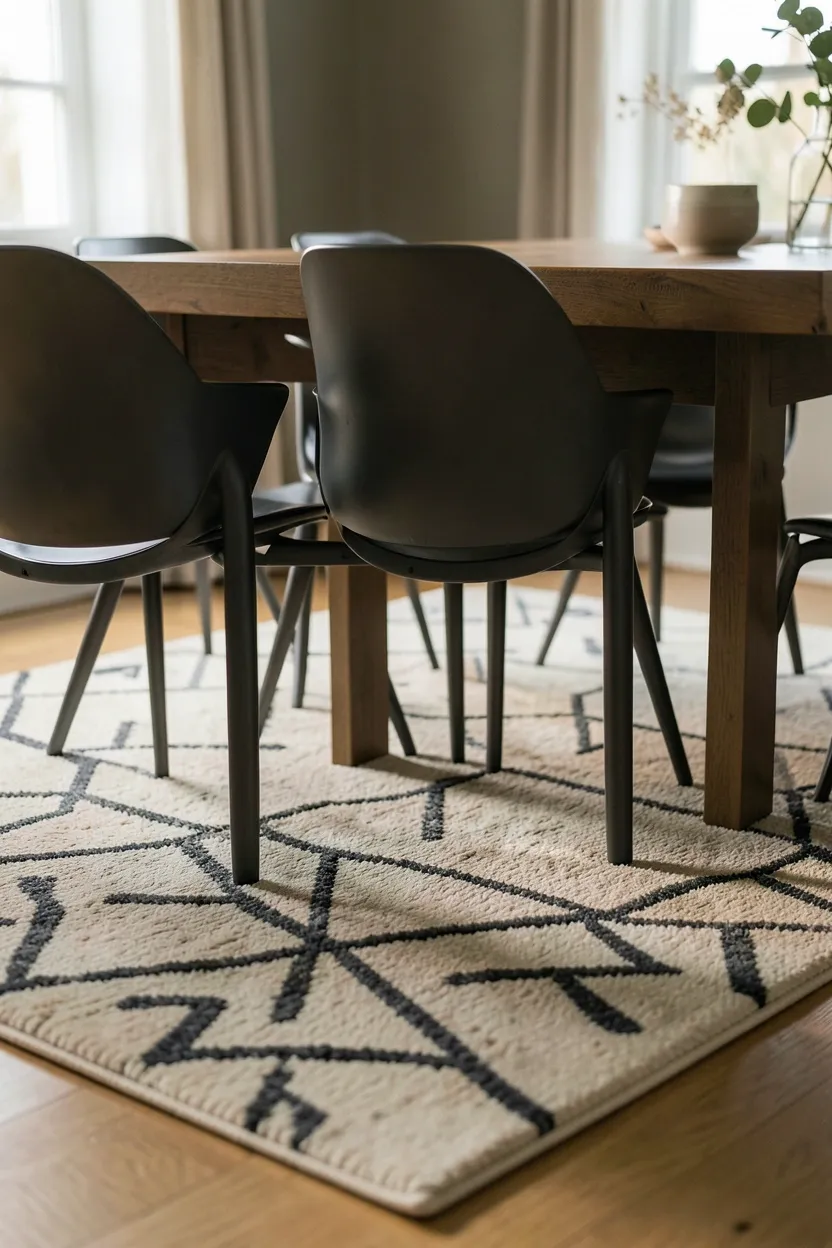
Layering a jute base rug with a smaller wool rug on top introduces essential warmth and texture to japandi industrial bedrooms, softening hard surfaces like concrete floors while maintaining the neutral palette. The jute rug provides substantial size and coverage at an affordable price point while adding natural texture that references scandinavian design, while the top wool rug in charcoal, gray, or cream adds softness underfoot and creates visual interest through layering rather than pattern. This combination prevents the room from feeling cold or sterile—common risks with concrete floors and industrial elements—while preserving minimalism through neutral tones.
The jute rug serves as the foundation—natural, undyed jute feels organic and authentic, introducing warmth without introducing color. Its substantial texture creates visual interest that compensates for its lack of pattern. The layered wool rug should be positioned slightly off-center or at an angle to create intentional casualness—one of japandi's subtle principles is that spaces should feel lived-in rather than staged. Unlike traditional Persian or patterned rugs, these neutral layered rugs feel contemporary and refined while adding necessary softness.
Tips
- Choose a jute rug that extends at least 24 inches beyond all sides of the bed—this ensures the rug anchors the space rather than feeling undersized
- Layer a wool rug that's roughly 2/3 the size of the jute base—this proportion creates clear layering without the top rug feeling too small or too dominant
- Position the layered rug asymmetrically or at a slight angle rather than perfectly centered—this intentional casualness feels more japandi than rigid alignment
Budget/Time: Jute rugs offer excellent coverage for the price—layering a smaller high-quality wool rug over an affordable jute base creates a luxe look for less.
What this gives you: Essential warmth and texture that softens industrial elements while maintaining japandi minimalism through neutral tones and layered simplicity.
11. Built-In Window Seat With Storage
Prompt: Nature documentary capture on Hasselblad X2D 100C with XCD 90V lens at f/4. Hyper-realistic 3/4 view of a built-in window seat with light oak wood base and black metal hardware, white linen cushions, charcoal wool throw, small concrete planter with succulent. Window with sheer linen curtains, view of minimalist outdoor space.
A built-in window seat with light wood construction and storage underneath creates a serene reading nook while embodying japandi's practical luxury—this feature combines comfort, storage, and architectural interest in one cohesive element. The light oak base warms the space and connects visually with other wood elements (bed frame, nightstands, desk), while black metal hardware on the storage hinged panels provides just enough industrial edge without feeling heavy or utilitarian. Unlike freestanding benches or chairs, built-in seating feels custom and intentional while maximizing every inch of space.
The window seat serves multiple functions: a spot for reading or morning coffee, additional surface space when entertaining, and concealed storage for bedding, seasonal items, or occasional-use items that you want to keep accessible but out of daily sight. The cushions and throw introduce textile softness—white linen feels crisp and japandi-appropriate, while a charcoal or gray wool throw adds warmth and contrast. The seat becomes a transitional space between bed and room, a calm moment that reinforces the bedroom's purpose as a sanctuary.
Placement note: Window seats work best in windows with at least 48 inches of width and 18-24 inches of depth—smaller windows may feel cramped with built-ins.
For rooms without suitable windows or where built-in construction isn't feasible, a floating bench with similar materials and hidden storage can achieve the same effect without requiring window integration. The key is the combination of light wood, black hardware, linen cushions, and hidden functionality.
Tips
- Design storage with slow-close hinges—this prevents slamming and adds a refined quality that aligns with japandi attention to detail
- Choose outdoor-rated linen or performance fabrics for cushions—window seats receive direct sunlight which can fade standard fabrics quickly
- Include a removable cushion cover with hidden zipper—this makes cleaning practical while maintaining a clean, custom appearance
What this gives you: A multipurpose sanctuary feature that provides storage, seating, and architectural interest while maintaining japandi warmth through materials and minimalism.
12. Black Metal Clothing Rack Display
Recommended
Items for this idea
Prompt: Nature documentary capture on Hasselblad X2D 100C with XCD 90V lens at f/4. Hyper-realistic 3/4 view of a black metal clothing rack with minimal hanging items—white linen shirt, gray wool sweater, black denim—and light oak wood shelf at top with folded linen clothes and small ceramic vessel.
An open clothing rack in black metal with a light oak top shelf turns wardrobe storage into intentional display, embodying japandi's principle that functional items can serve as decor when curated with restraint. Unlike traditional closets or armoires that conceal clothing, a rack displays only your most intentional pieces—items that are worn regularly and fit your aesthetic—creating a rotating installation that reflects your current style and season. The black metal frame provides industrial edge while the oak shelf adds warmth and surfaces for folded items or accessories, maintaining balance between hard and soft elements.
This approach only works with rigorous editing—the rack should contain only current-season essentials, each item visible and accessible. No overcrowding, no mismatched hangers (stick to uniform black or wood hangers), no items that don't align with your aesthetic. The beauty of open storage is that it forces intentionality—you can only display what you genuinely use and love, which naturally limits accumulation. For japandi industrial bedrooms, this creates a curated, gallery-like quality where functional objects become visual elements.
Tips
- Stick to uniform hangers—all black metal or all wood hangers maintain japandi minimalism while mismatched hangers feel chaotic and cluttered
- Edit seasonally—store off-season items elsewhere and display only current weather clothing to prevent the rack from feeling overstuffed
- Style the top shelf with folded items in neutral tones plus one or two objects (ceramic vessel, small plant, tray) to create visual interest without clutter
Avoid if: You struggle to keep clothes organized or resist accumulation—open storage requires consistent editing and isn't forgiving of cluttered habits.
What this gives you: Functional storage that doubles as curated decor, forcing intentional editing while adding industrial character through material and form.
13. Minimalist Bed Bench With Leather Cushion
Prompt: Nature documentary capture on Hasselblad X2D 100C with XCD 90V lens at f/4. Hyper-realistic 3/4 view of a low bench at foot of platform bed, black metal hairpin legs with light oak wood seat and charcoal leather cushion. White linens on bed with gray throw, part of black metal bed frame visible.
A low bench at the foot of the bed with light oak wood, black metal legs, and a leather cushion provides a practical surface for seating or temporary clothing storage while reinforcing the japandi industrial palette through materials. The bench form is inherently minimal—no backrest, no arms, clean lines—while the combination of light wood (warmth, japandi simplicity) and black metal hairpin legs (industrial reference, visual lightness) creates a piece that feels balanced rather than committed to a single aesthetic. The leather cushion in charcoal, cognac, or black adds sophistication and durability while introducing another natural material that ages beautifully.
Functionally, the bench serves multiple purposes: a spot to sit when dressing, a surface for laying out clothes the night before, or temporary storage for throws and pillows. Unlike upholstered benches or ottomans, this design maintains japandi minimalism through clean lines and minimal material volume. The bench should be low (14-16 inches in height) to align with japandi's low-to-ground principle and to maintain visual proportion with the platform bed—height consistency creates a sense of calm and intentionality.
Placement note: Ensure at least 24-30 inches of clearance between the bench and the bed—this allows easy movement while maintaining visual connection between the pieces.
For smaller rooms where a bench might feel cramped, consider a stool-scale version or skip this element entirely—japandi prioritizes negative space over furnishing every surface. The bench should enhance flow, not obstruct it.
Tips
- Match the bench length to bed width—queen beds work with 48-54 inch benches, king beds with 60-66 inches, maintaining visual proportion
- Choose full-grain or top-grain leather rather than bonded leather—quality leather develops a patina that enhances japandi's appreciation for authentic materials
- Keep surface styling minimal—one small object (ceramic bowl, tray, plant) maximum—otherwise the bench becomes a horizontal surface for accumulating clutter
What this gives you: A functional accent piece that reinforces japandi industrial material palettes while providing practical utility at the foot of the bed.
14. Monstera Plant In Concrete Planter
Recommended
Items for this idea
Prompt: Nature documentary capture on Hasselblad X2D 100C with XCD 90V lens at f/4. Hyper-realistic 3/4 view of a large Monstera deliciosa plant in raw concrete cylindrical planter, multiple glossy leaves with natural splits and holes, part of light oak nightstand and black sconce visible. White plaster wall, sheer linen curtains with soft light filtering.
A statement plant like a Monstera in a raw concrete planter introduces living organic warmth that softens industrial elements while embodying japandi's connection to natural materials—plants provide the essential counterpoint to hard surfaces like concrete, metal, and glass. The Monstera's large split leaves create sculptural interest that rivals art while adding movement and life to the space, while the concrete planter reinforces the industrial aesthetic in a refined way. Unlike colorful flowering plants or smaller succulents, a Monstera has substantial presence that balances the scale of a bed without competing for attention.
The concrete planter is key—raw gray concrete with visible aggregate and subtle imperfections feels authentic to industrial spaces while providing a neutral backdrop that lets the plant's foliage take center stage. The cylinder shape keeps the focus on form rather than decorative detail, maintaining japandi minimalism. Plants in japandi interiors should feel intentional rather than abundant—this single statement plant has more impact than multiple small plants, which can feel cluttered and disrupt the calm foundation.
Tips
- Choose a planter with drainage holes and a saucer—concrete is porous and can damage floors if water seeps through; a cachepot (decorative outer pot) is also an option
- Position near a window but not in direct sunlight—Monsteras prefer bright indirect light and can scorch in harsh sun, while still thriving in moderate bedroom conditions
- Wipe leaves monthly with a damp cloth—dust accumulation reduces light absorption and dulls the glossy finish that makes Monstera leaves feel luxurious
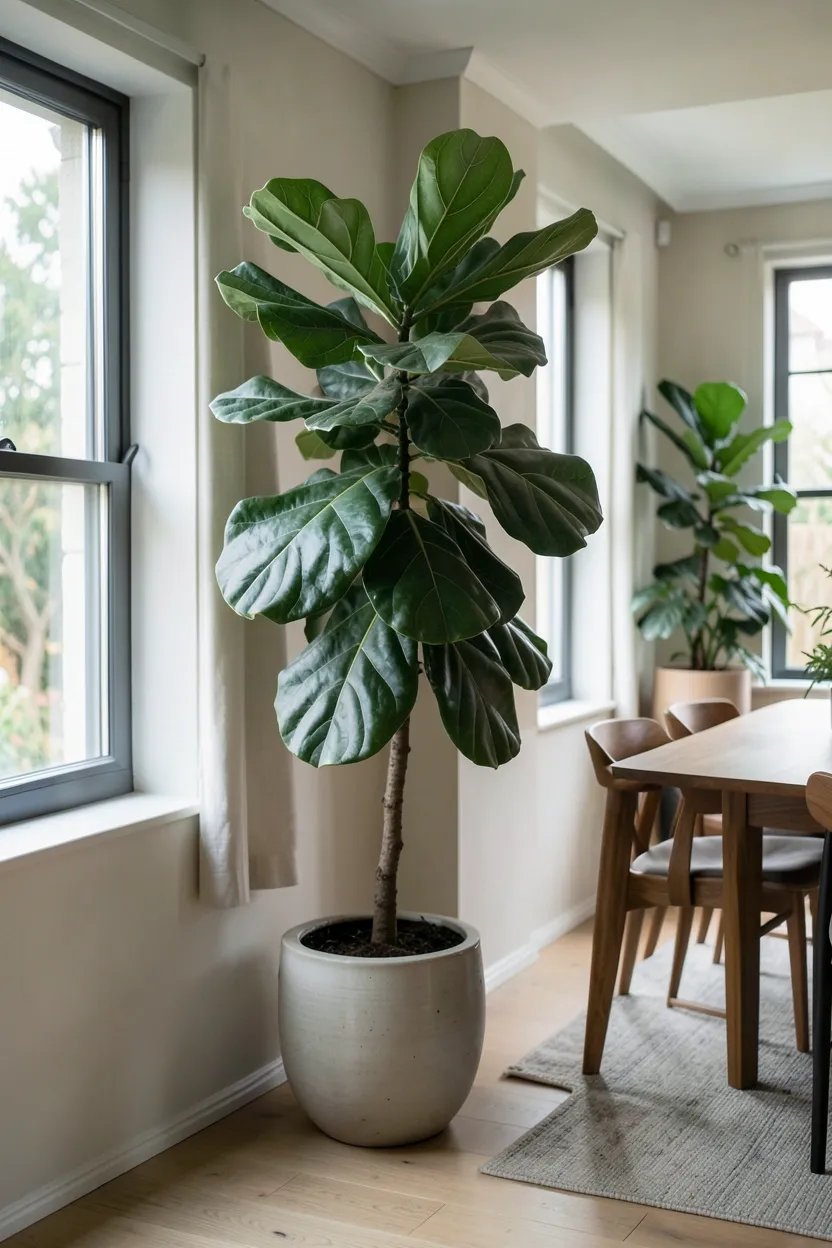
Alternative: If Monstera care feels intimidating, a Fiddle Leaf Fig or Bird of Paradise offers similar sculptural impact with comparable care requirements for low-maintenance drama.
What this gives you: Living organic contrast to industrial elements, introducing movement and life while maintaining japandi minimalism through intentional single-plant design.
15. Floor-Length Mirror With Black Metal Frame
Prompt: Nature documentary capture on Hasselblad X2D 100C with XCD 90V lens at f/4. Hyper-realistic 3/4 view of a large floor-length mirror leaning against white plaster wall, thin black metal frame with subtle brushed finish, reflection showing part of room with platform bed and window.
A large floor-length mirror with a thin black metal frame, leaned against the wall rather than mounted, serves both practical and aesthetic purposes in japandi industrial bedrooms. The mirror provides full-length reflection for dressing while visually doubling the space and light—a crucial benefit in bedrooms where spaciousness contributes to calm. The thin black metal frame reinforces the industrial aesthetic without feeling heavy or decorative, and the leaning placement feels intentional rather than permanent, adding a casual quality that aligns with japandi's understated elegance.
Unlike traditional framed mirrors or wall-mounted versions, the leaning mirror feels contemporary and sculptural while serving genuine function. The black metal frame should be minimal—thin (0.5-1 inch) and either matte black or brushed black rather than glossy or ornate. This restraint ensures the mirror feels integrated rather than featured. The substantial size (at least 60 inches tall, 24-30 inches wide) creates impact through scale rather than decoration, maintaining japandi principles of minimal ornamentation and maximum functionality.
Placement note: Lean the mirror in a corner or against a wall with at least 3 feet of clearance in front—this ensures functional use while preventing the room from feeling cramped.
For safety, especially in households with children or pets, consider securing the mirror to the wall with discrete anchors—this maintains the leaning aesthetic while preventing tipping. Alternatively, wall-mounting at a slight angle can achieve a similar look with more security.
Tips
- Position the mirror to reflect window light or a visually pleasing area of the room—this maximizes the light-doubling effect and creates intentional reflection rather than visual clutter
- Choose a mirror with at least 1/4 inch thickness—thin mirrors can warp or feel flimsy, while substantial glass enhances quality perception and japandi appreciation for craftsmanship
- Clean mirror glass weekly with a microfiber cloth and non-ammonia cleaner—streaks or dust disrupt the calm clarity that mirrors should provide in japandi spaces
What this gives you: Functional full-length reflection that visually expands the space while reinforcing industrial character through minimal black metal framing.
16. Linen Curtains With Industrial Rods
Recommended
Items for this idea
Prompt: Nature documentary capture on Hasselblad X2D 100C with XCD 90V lens at f/4. Hyper-realistic 3/4 view of window with white linen sheer curtains, black metal pipe curtain rod with exposed flange mounts, soft natural light filtering through fabric. Part of room visible through curtains—light oak desk, concrete floor.
Window treatments in japandi industrial bedrooms should soften hard elements while maintaining minimalism—white linen sheers on black metal pipe rods achieve this balance perfectly. The linen fabric introduces necessary texture and softness, filtering harsh sunlight into a gentle glow that enhances the room's serene atmosphere, while the black metal pipe rod provides authentic industrial character through its exposed construction and raw material honesty. Unlike heavy drapes or patterned curtains, linen sheers feel contemporary and light, maintaining japandi's preference for visual breathing room.
The black metal pipe rod—visible iron pipe with flange mounts—references industrial spaces without feeling costume-y or themed. This authentic construction feels honest rather than decorative, aligning with japandi's appreciation for functional materials. The linen curtains should be hung high and wide—mounted 2-4 inches above the window frame and extending 6-12 inches beyond each side—to maximize light and create the illusion of larger windows. This generous proportion feels luxurious while maintaining minimalism through neutral color and simple material.
Tips
- Choose linen or linen-cotton blend rather than polyester—natural fabrics drape more beautifully and develop a lived-in quality that enhances japandi warmth
- Install curtains high and wide—rod 2-4 inches above frame, panels extending 6-12 inches past each side—to maximize window presence and light filtration
- Use curtain rings or clips rather than rod pockets—this allows easy sliding and adds authentic industrial detail through visible hardware
Budget/Time: Black iron pipe curtain rods can be DIY-assembled from plumbing supply materials for a fraction of the cost of retail "industrial" rods while looking more authentic.
What this gives you: Light-filtering softness that balances industrial elements while maintaining japandi minimalism through neutral fabric and authentic metal construction.
17. Woven Light Wood Headboard
Prompt: Nature documentary capture on Hasselblad X2D 100C with XCD 90V lens at f/4. Hyper-realistic 3/4 view of a platform bed with large woven light oak headboard, visible cane or rattan weave texture creating geometric pattern, black metal bed frame, crisp white linens, charcoal wool throw.
A woven light wood headboard in cane, rattan, or woven wood introduces essential texture and craftsmanship to japandi industrial bedrooms, providing visual interest through pattern and material rather than color or ornamentation. The geometric weave creates subtle depth that catches light and shadow beautifully, while the light oak or ash tone warms the space and connects visually with other wood elements (nightstands, benches, floating shelves). Unlike upholstered or solid wood headboards, woven designs bring japandi's appreciation for natural materials and traditional craftsmanship to the bedroom while maintaining minimalism through neutral tones and simple form.
The woven headboard serves as the room's primary textural element—its intricate weave provides visual richness that eliminates the need for patterned pillows, throw blankets, or decorative accessories. This singular textural statement maintains japandi minimalism while preventing the room from feeling sterile or flat. When paired with black metal bed frames and concrete walls, the woven headboard becomes the essential warming element that balances hard surfaces and creates the cozy atmosphere essential to restful spaces.
Placement note: Woven headboards are most impactful when at least 60-70% of bed width—smaller woven panels feel insignificant, while oversized versions create dramatic focal points.
For rooms where wall-mounted headboards aren't practical (rental situations, concrete walls), consider a freestanding woven screen or lean a large woven panel against the wall behind the bed. The effect is similar—textural warmth and craftsmanship—with more flexibility for temporary installations.
Tips
- Choose cane or tight-weave rattan over loose basketweave patterns—tight weaves feel more refined and japandi-appropriate while basketweave can skew rustic
- Position the headboard so the top edge reaches 48-54 inches from the floor—this height creates substantial presence without overwhelming the room scale
- Clean woven surfaces gently with a soft brush or vacuum attachment—dust accumulation in weave crevices dulls the texture that makes these headboards special
What this gives you: Textural warmth and craftsmanship that balances industrial elements while maintaining japandi minimalism through natural materials and geometric pattern.
A japandi industrial bedroom succeeds through balance, and each idea above represents a thoughtful dialogue between warm minimalism and authentic character. These aesthetics are not opposing forces but complementary elements. When implemented with restraint and attention to material quality, these seventeen japandi industrial bedroom ideas create spaces that feel simultaneously serene and dynamic, warm and edgy, timeless and contemporary. The key is not accumulation but curation: choose elements that resonate, edit ruthlessly, and prioritize negative space as actively as you select furniture and decor. Your japandi industrial bedroom should feel like a sanctuary, whether you are renting a small apartment or designing a permanent home.

About the author
OBCD
CGI visualization and interior design content. We create detailed 3D renders and curate practical design ideas for every room in your home.