19 Sun Room Ideas on a Budget for Outdoor Rooms Backyards: Small Changes, Big Impact
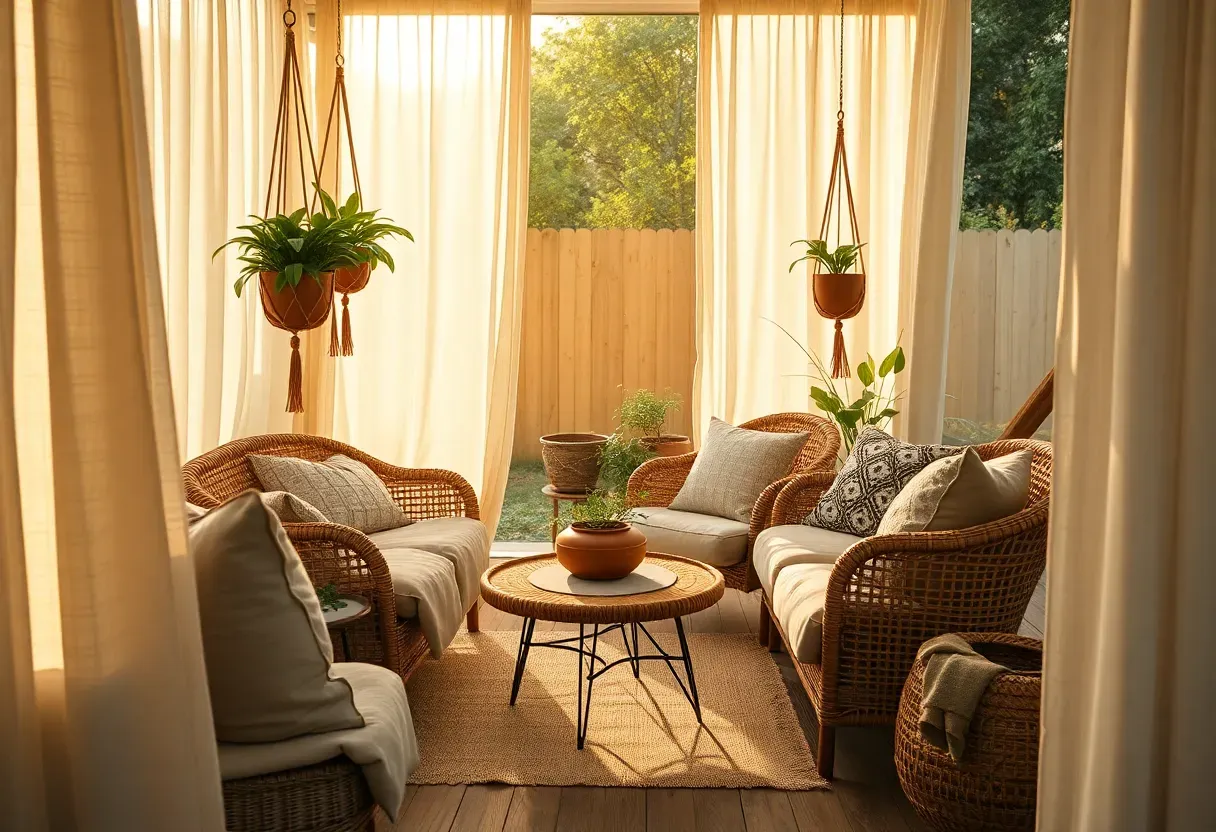
According to the National Association of Home Builders, sun rooms consistently rank among the top five most-wanted home features — yet the average professional installation runs between fifteen and thirty thousand dollars. That number stops most homeowners cold. But here is the thing: the sun rooms that perform best on Pinterest and in real life are rarely the expensive glass-box additions. They are the scrappy, inventive outdoor spaces where someone turned a neglected backyard corner into a light-filled retreat using materials from the hardware store and a free weekend.
This collection focuses on backyard sun rooms and outdoor rooms built on tight budgets. Every idea here targets maximum visual and functional impact for minimum spend. Whether you have a concrete slab, a patch of grass, or an aging deck, there is a starting point waiting for you.
We will move from quick cosmetic wins to more involved weekend projects. Grab your measuring tape and let us get started.
Table of Contents
- Gravel Pad Foundation Room
- Sail Shade Canopy Retreat
- Repurposed Greenhouse Frame
- Lattice Privacy Wall Enclosure
- Outdoor Daybed Nook
- Cinder Block and Plank Seating
- Fairy Light Ceiling Grid
- Vintage Rug Layering Zone
- Bamboo Screen Room Divider
- Container Garden Border
- Pergola with Draped Fabric
- Folding Bistro Breakfast Spot
- Reclaimed Wood Accent Wall
- Hanging Planter Curtain
- Painted Deck Board Makeover
- Outdoor Mirror Illusion Wall
- Floor Cushion Lounge Pit
- Corrugated Metal Roof Addition
- Four-Season Budget Enclosure
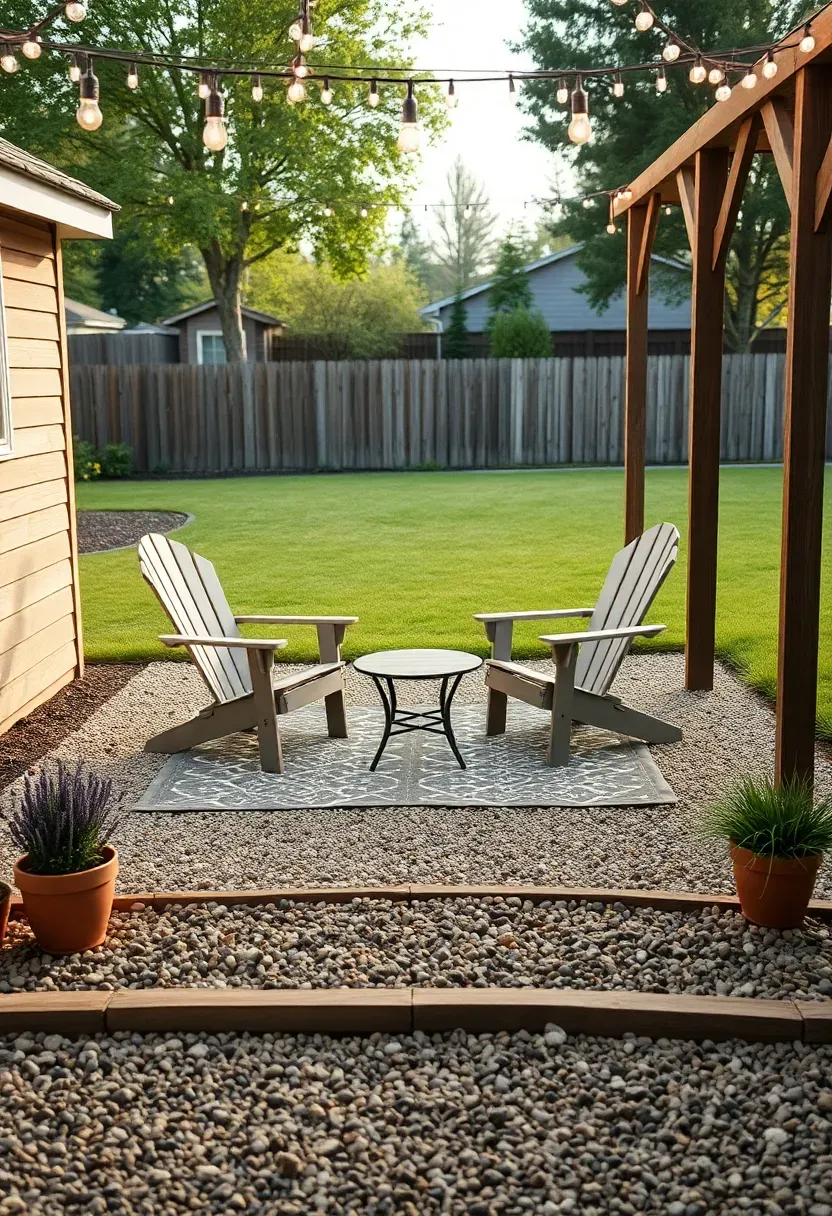
1. Gravel Pad Foundation Room
Every outdoor sun room needs a foundation, and pea gravel is the budget champion. A ten-by-twelve-foot gravel pad costs roughly sixty to ninety dollars in materials, levels itself naturally, drains beautifully, and creates an instant visual boundary that reads as a "room" even before you add a single piece of furniture.
Step 1: Define the Perimeter
Lay landscape timbers or metal edging in a rectangle. This border keeps gravel contained and gives the space architectural definition that separates it from the surrounding lawn.
Step 2: Prepare and Fill
Remove grass, lay landscape fabric to prevent weeds, then spread three to four inches of pea gravel. Rake it level. The entire process takes one afternoon.
Step 3: Furnish the Space
Place an outdoor rug over the gravel to create a stable surface for chairs and tables. The rug prevents furniture legs from sinking while adding color and pattern underfoot.
What to Watch Out For
- Choose rounded pea gravel over crushed stone for barefoot comfort
- Edging material must sit at least one inch above gravel height to contain shifting
- Top off gravel annually as it settles and displaces slightly over time
We picked a few things that go well with this idea: Brightever 100FT Outdoor String Lights (52 Bulbs) (★4.6), Brightown 50FT Waterproof Patio String Lights (★4.7) and Addlon 100FT Dimmable Outdoor String Lights (★4.6). As an Amazon Associate we earn from qualifying purchases.
2. Sail Shade Canopy Retreat
Why Open Backyards Feel Unusable
Full sun exposure turns most backyard seating areas into ovens by mid-morning. Without overhead cover, outdoor furniture fades, cushions deteriorate, and nobody actually sits outside during the hours when the yard looks best.
The Solution
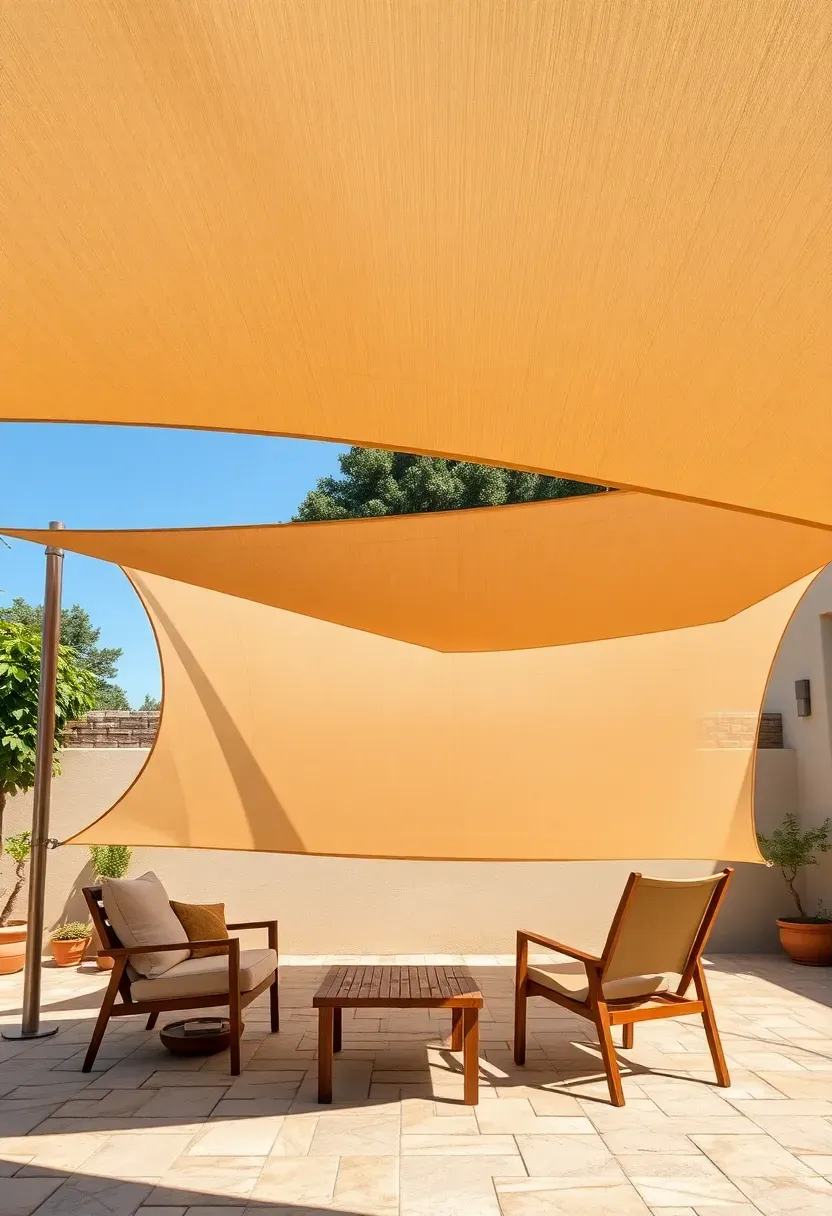
Triangular sail shades solve this for under a hundred dollars. Mount three overlapping shades at different heights between fence posts, house walls, or pressure-treated four-by-four posts set in concrete. The overlapping layers filter harsh sunlight into soft dappled shade while allowing air circulation — something solid roofing cannot match.
Pros and Cons
Pros: Affordable, dramatic visual impact, easy to install and remove seasonally, available in dozens of colors, and UV-rated fabric blocks up to ninety-eight percent of harmful rays.
Cons: No rain protection, fabric stretches in high winds unless tensioned properly, and mounting points need to be structurally sound to handle wind load.
We picked a few things that go well with this idea: Degrees of Comfort Floor Pillows (Set of 2) (★4.4), Waterproof Tufted Outdoor Seat Cushion 18x18 (★4.6) and Menkxi Boho Floor Cushions (6-Pack) (★4.2). As an Amazon Associate we earn from qualifying purchases.
3. Repurposed Greenhouse Frame
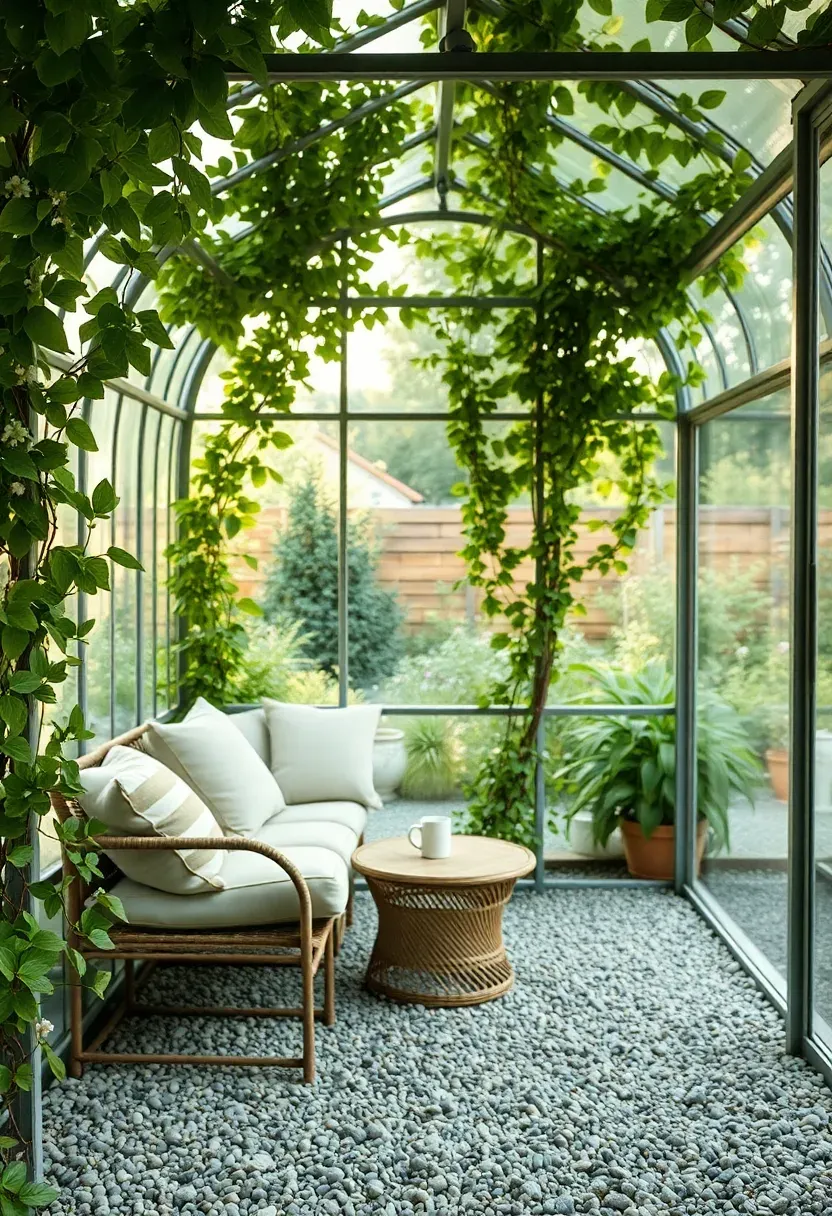
There is a trend gaining traction on salvage sites and Facebook Marketplace: buying used greenhouse frames and converting them into open-air sun rooms. The metal or aluminum frame provides structure, while you choose what to fill the walls with — clear panels, screen mesh, climbing plants, or nothing at all.
Origins of the Idea
Greenhouse frames became popular as sun room shells after gardeners discovered that dismantled commercial greenhouse kits sell for pennies on the dollar when growers upgrade. The arched or A-frame shapes add architectural interest that a basic pergola cannot replicate.
Modern Interpretation
Today, backyard designers are anchoring these frames to gravel pads or existing patios, then dressing them with outdoor curtains, string lights, and climbing roses or jasmine. The result looks like something from an English country garden at a fraction of custom metalwork pricing. Used frames typically run between fifty and two hundred dollars depending on size and condition.
How to Apply at Home
- Search Marketplace, Craigslist, or local farm auctions for dismantled greenhouse frames
- Pressure-wash and paint the frame with rust-inhibiting spray before assembly
- Anchor corner posts into concrete footings or bolt directly to an existing slab
- Train climbing plants along the frame for natural walls that evolve over the season
We picked a few things that go well with this idea: LOVE STORY Triangle Sun Shade Sail 12ft (★4.5), Shade&Beyond Triangle Sun Shade Sail 16ft (★4.5) and SUNNY GUARD Triangle UV Block Shade Sail (★4.6). As an Amazon Associate we earn from qualifying purchases.
4. Lattice Privacy Wall Enclosure
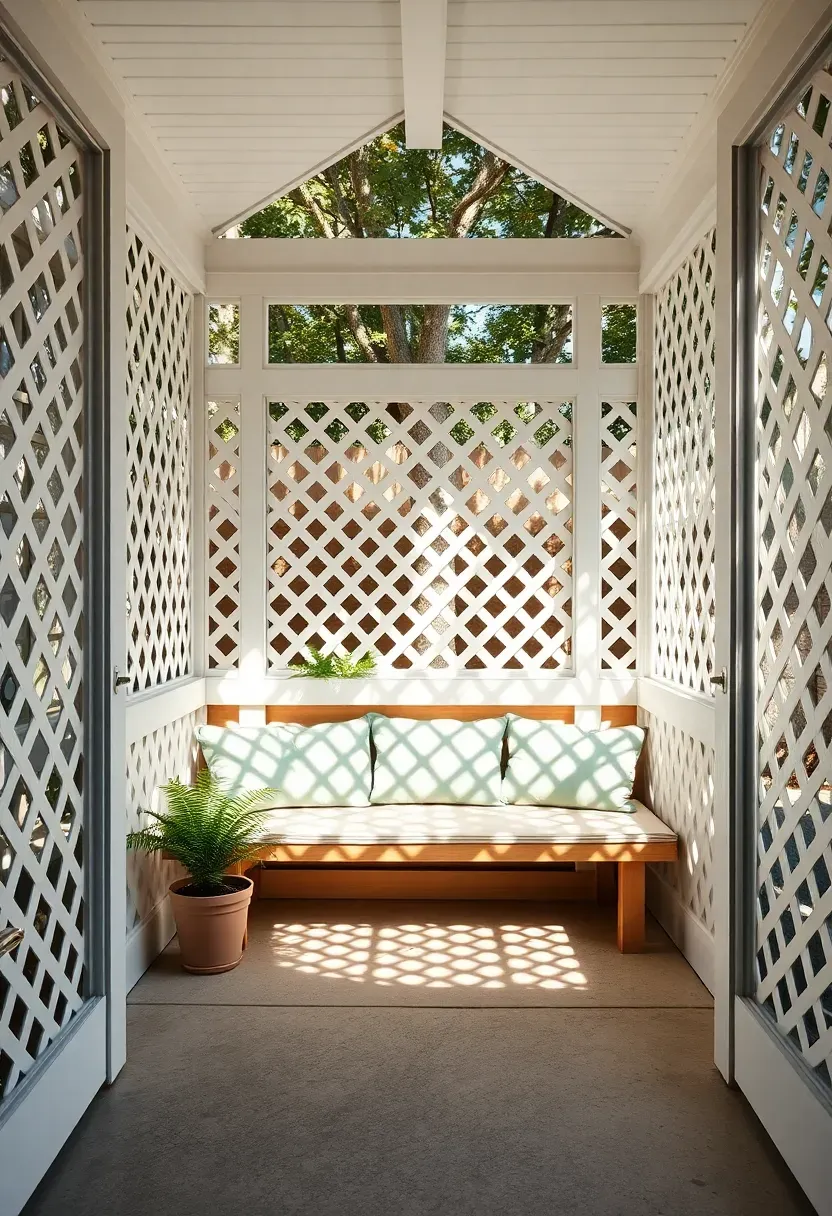
Lattice panels from the lumber aisle accomplish two things simultaneously: they define your outdoor room boundaries and filter sunlight into geometric shadow patterns that shift throughout the day. At roughly fifteen dollars per four-by-eight-foot panel, building three walls of a backyard sun room costs under fifty dollars in materials.
Tips for a Refined Look
- Paint or stain all lattice panels before installation — a unified color elevates the entire project
- Cap the top edges with a simple one-by-two trim board for a finished frame appearance
- Leave gaps at the base for airflow and to prevent moisture rot at ground contact
- Space panels six inches apart for a breezier enclosure or butt them together for more privacy
Recommended
Items for this idea
5. Outdoor Daybed Nook
Comparing: Pallet Daybed vs Store-Bought Outdoor Sofa
The centerpiece of any sun room is its main seating. This comparison helps you decide whether to build or buy.
Pallet Daybed
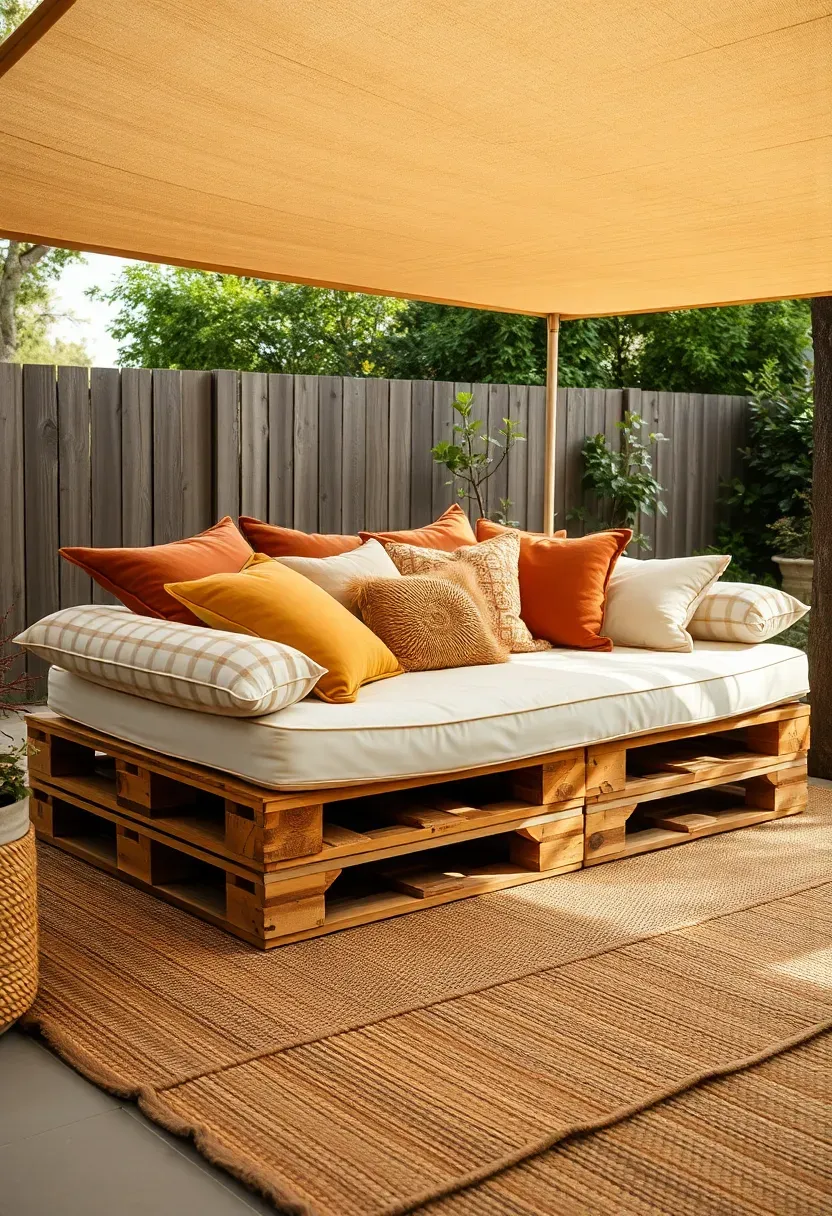
Stack two pallets, sand and seal them, then top with a twin mattress wrapped in a waterproof cover. Total cost hovers around forty to seventy dollars. The oversized footprint creates a lounging surface generous enough for napping, reading, or hosting two adults comfortably. You control the height by adding or removing pallet layers.
Store-Bought Outdoor Sofa
A basic outdoor sofa starts around three hundred dollars and goes up quickly. You get engineered comfort, consistent quality, and warranty coverage. But the footprint is fixed and the style options at the budget end are limited.
What to Choose
Choose a pallet daybed if: you want the largest seating surface for the least money and enjoy a casual, boho-leaning aesthetic.
Choose a store-bought sofa if: you need something immediately and prefer a polished silhouette without DIY time investment.
6. Cinder Block and Plank Seating
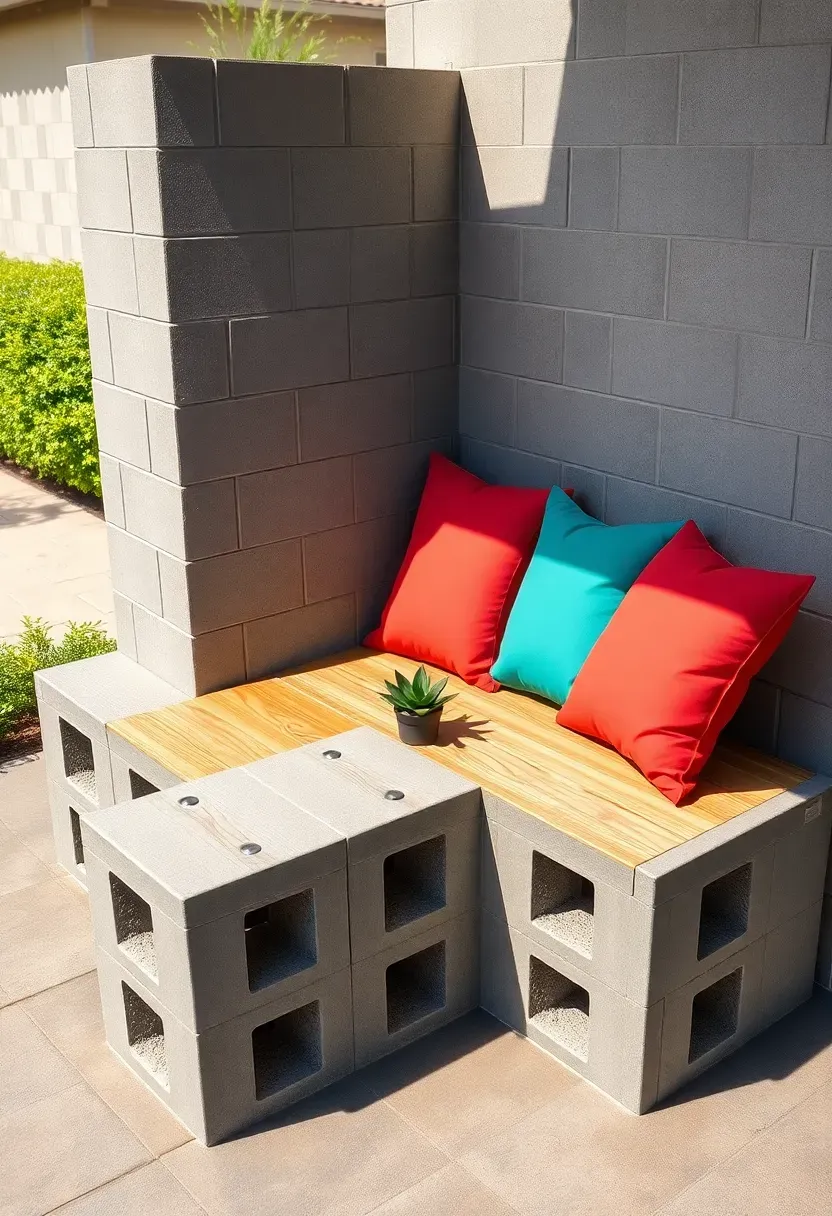
This is the backyard hack that refuses to die — because it works. Stacked cinder blocks with lumber planks create sturdy, permanent-feeling seating for under thirty dollars per section. Arrange three sections in a U-shape around a low table and you have an outdoor sun room conversation pit that seats eight.
Why This Works So Well
The cinder block openings double as storage cubbies for blankets, candles, or small planters. Painting the blocks a single bold color — terracotta, navy, or sage green — transforms them from construction materials into intentional design elements. The proportions mimic built-in banquette seating found in high-end outdoor restaurants.
Tips for Comfort and Style
- Use two-by-ten or two-by-twelve boards for the seat planks — narrower lumber flexes under weight
- Add three-inch outdoor cushions or fold thick blankets on the planks for comfort
- Apply exterior wood stain to the planks for weather protection and a finished look
- Stack blocks three high for standard seat height, four high for bar-height perching
Recommended
Items for this idea
7. Fairy Light Ceiling Grid
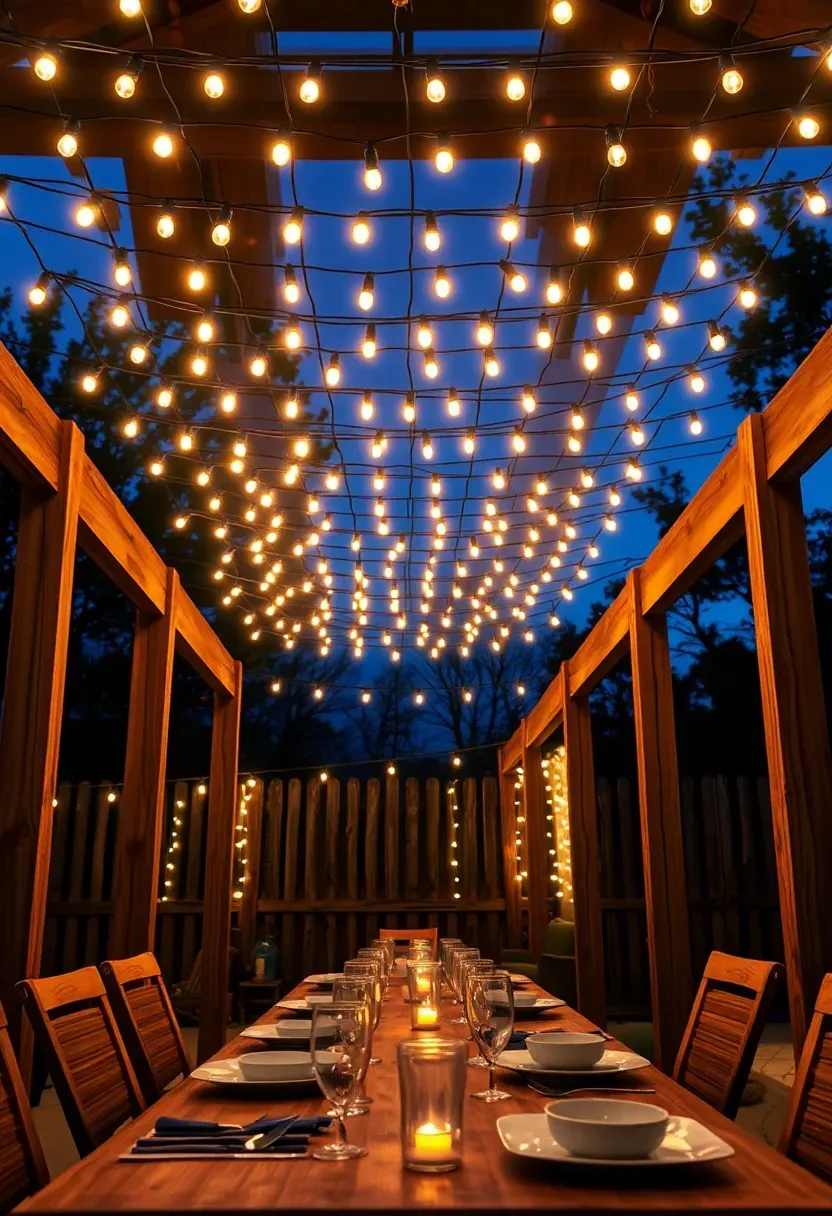
Nothing transitions an outdoor space from daytime patio to evening sun room faster than overhead lighting. A grid of warm white string lights, stretched in parallel lines across the ceiling plane of your outdoor room, creates the illusion of an enclosed, intimate interior — even without walls or a solid roof.
Step 1: Establish Anchor Points
Screw cup hooks or eye bolts into fence tops, pergola beams, or tall posts at the perimeter of your space. You need anchor points along two parallel edges to run lights back and forth.
Step 2: String the Grid
Run commercial-grade outdoor string lights in parallel rows spaced twelve to eighteen inches apart. Alternate direction with each row for a woven effect. Use zip ties at each hook for secure attachment.
Step 3: Layer the Ambiance
Add a dimmer switch or use smart plugs to control brightness. Full brightness for evening dinners, dimmed to thirty percent for a cocktail atmosphere. The lights define your room's ceiling height and boundaries after dark.
What to Watch Out For
- LED string lights use negligible electricity — a full grid runs about two dollars per month
- Avoid icicle-style lights; their dangling strands collect debris and look tangled outdoors
- Solar-powered strings work for small spaces but lack the brightness for a full ceiling grid
8. Vintage Rug Layering Zone
The Core Issue
Bare concrete, old deck boards, and worn pavers make any outdoor space feel unfinished and cold underfoot. Replacing the flooring surface is expensive and labor-intensive, often requiring demolition before installation.
The Solution
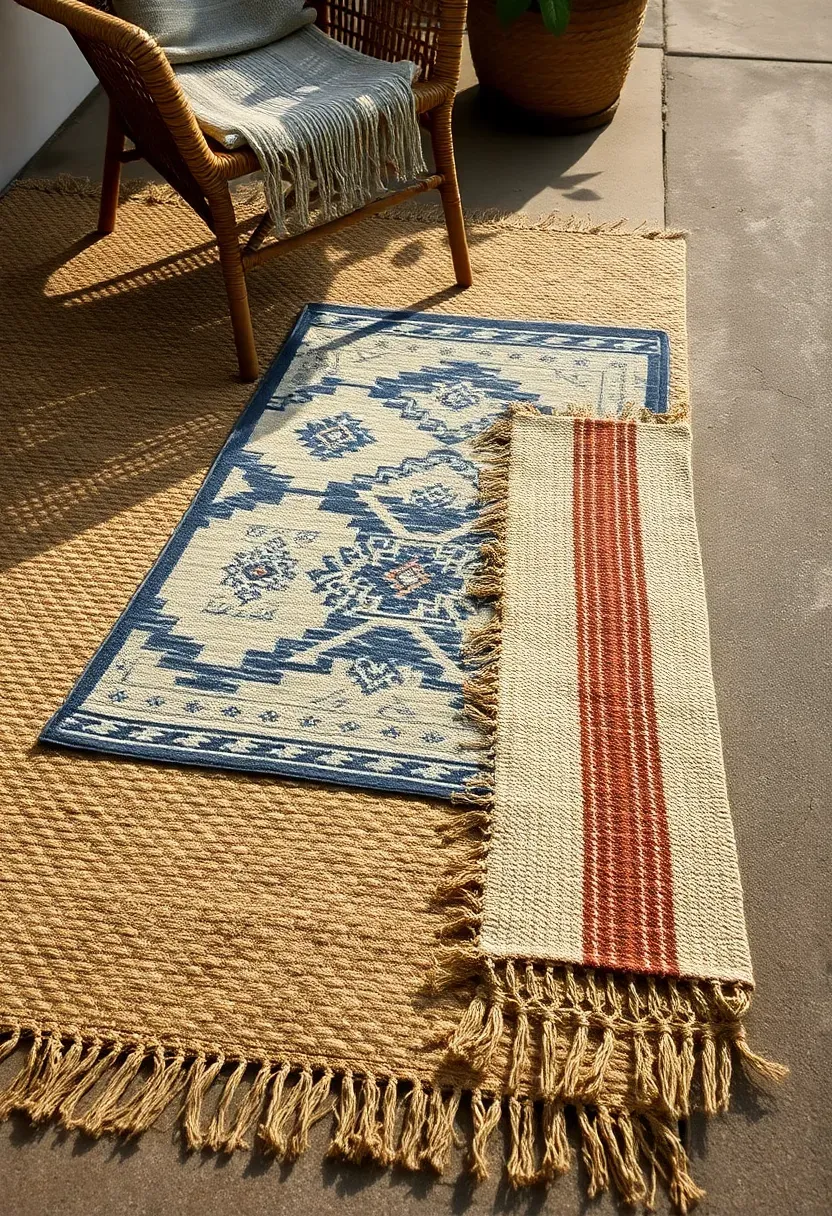
Layer two or three outdoor-rated rugs in overlapping positions across your sun room floor. Mix scales — a large neutral base rug with a medium patterned rug angled on top, then a small accent runner near the seating. This technique steals directly from high-end interior design and costs between forty and eighty dollars total when shopping clearance sales or discount retailers.
Pros and Cons
Pros: Instant warmth, visual richness, hides damaged flooring, easy to swap seasonally, and machine-washable options exist for simple maintenance.
Cons: Rugs shift on smooth surfaces without grip pads underneath, edges may curl in direct sun, and trapped moisture beneath rugs can promote mildew on certain surfaces.
Recommended
Items for this idea
9. Bamboo Screen Room Divider
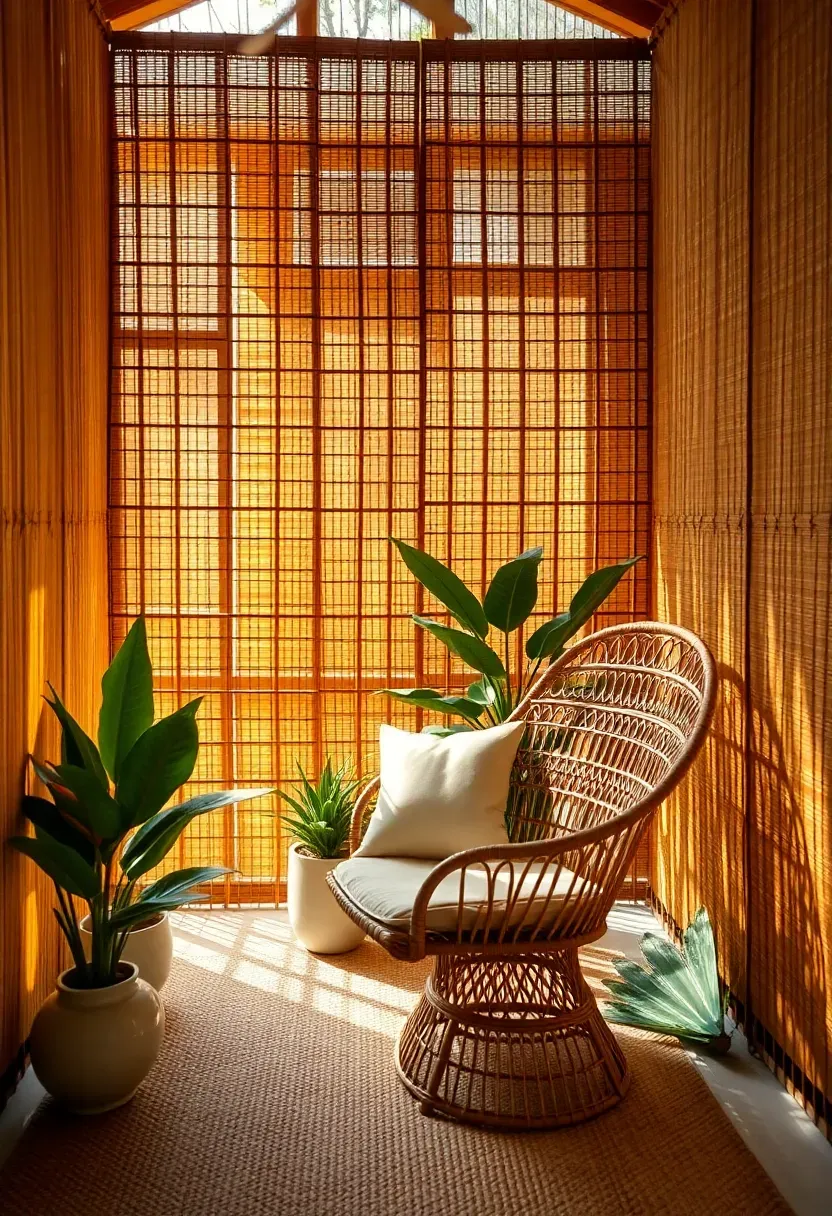
Bamboo roll-up fencing turns an open backyard into a multi-room layout for about twenty dollars per six-foot section. Attach the rolls to existing fence posts, clothesline poles, or freestanding frames to create walls that breathe, filter light, and bring a warm organic texture to your outdoor room.
The natural golden-brown tone of bamboo works with almost every outdoor palette. It pairs equally well with tropical plants and Mediterranean terracotta, with Scandinavian minimalism and bohemian abundance. Over time, bamboo weathers to a silvery gray that many homeowners find even more appealing than the original color.
Tips for Installation and Longevity
- Wire bamboo fencing to posts with galvanized wire — zip ties degrade in UV light within a year
- Apply a coat of exterior wood sealer before hanging to double the lifespan
- Leave a two-inch gap at the base to prevent ground moisture from wicking up the bamboo
- For moveable partitions, build a simple wooden frame and staple the bamboo to it
10. Container Garden Border
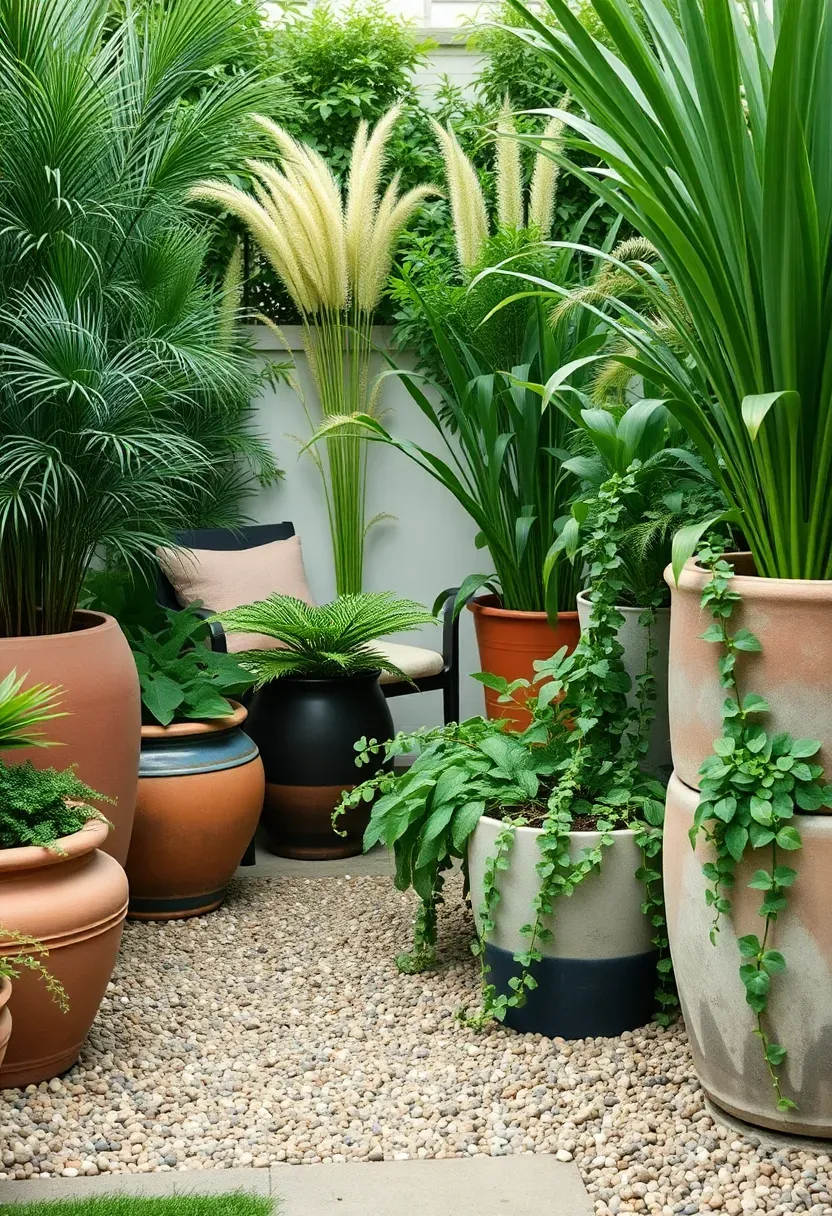
Plants are the cheapest architects in your backyard. A perimeter of tall potted grasses, ferns, and flowering shrubs defines your sun room boundaries organically while adding privacy, fragrance, and visual depth that no built wall can replicate.
Origins of the Concept
Container gardening as room architecture traces back to Italian Renaissance courtyards, where citrus trees in terracotta pots defined outdoor dining spaces. The principle translates perfectly to modern backyards: portable, seasonal, and adjustable.
Modern Interpretation
Group containers in clusters of odd numbers — three, five, or seven — at varying heights along the edges of your outdoor room. Mix foliage textures: spiky ornamental grasses next to rounded boxwood, trailing sweet potato vine cascading over pot edges beside upright lavender. The variation creates the lush, layered feeling of an established garden border in a single afternoon of planting.
How to Apply at Home
- Use the tallest plants at corners and entries to emphasize the room's architecture
- Elevate some pots on overturned crates or plant stands for height variation
- Choose self-watering planters for low-maintenance upkeep during hot months
- Rotate seasonal blooms at the front while keeping structural evergreens at the back
Recommended
Items for this idea
11. Pergola with Draped Fabric
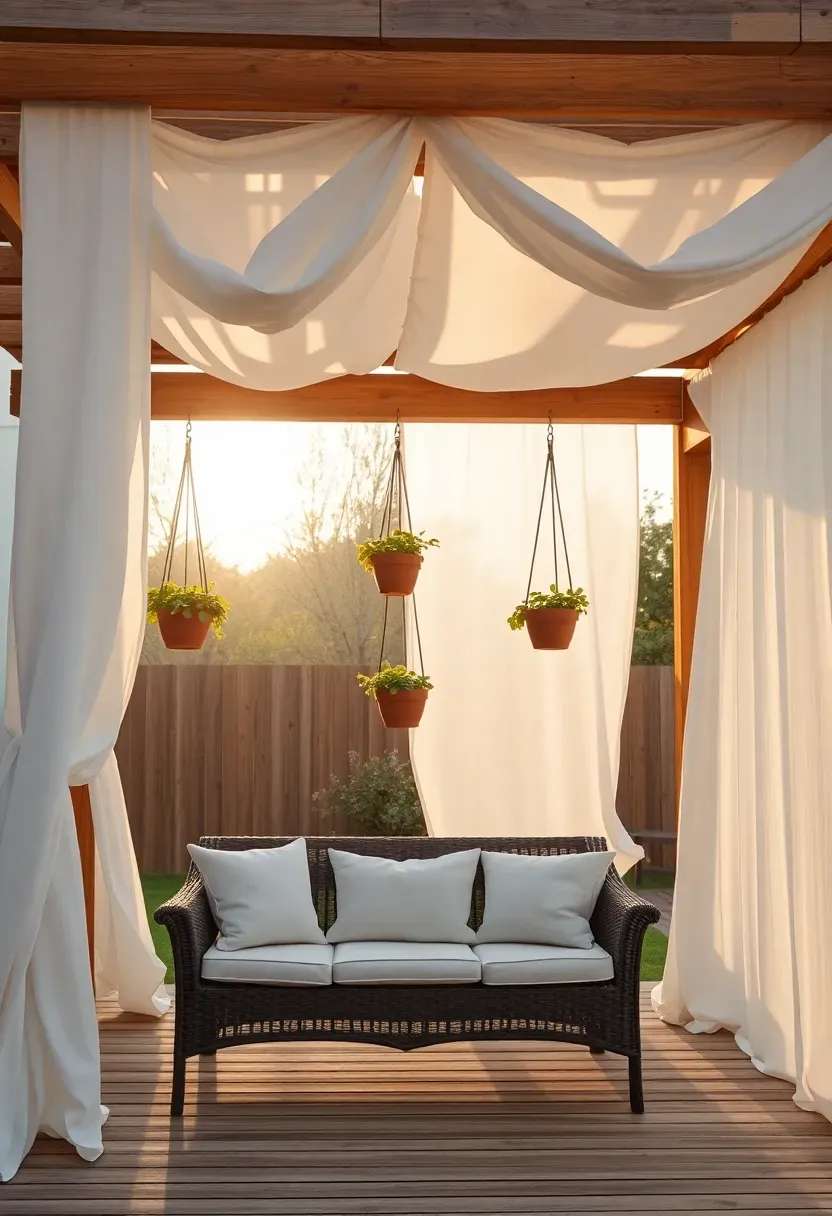
A basic pergola kit from a home improvement store runs between one hundred fifty and three hundred dollars. On its own, it provides structure but little shade. The real magic happens when you weave outdoor fabric through the overhead beams — pulling yards of inexpensive canvas, muslin, or even bedsheets between the slats to create a billowing, resort-style canopy.
Step 1: Choose Your Fabric
Canvas drop cloths work for budget builds. Outdoor-rated Sunbrella fabric lasts longer but costs more. Even repurposed bedsheets create a beautiful effect for one-season use before replacing.
Step 2: Thread and Secure
Weave fabric over and under alternating beams for a wave effect. Staple or clamp the ends securely. Pull the fabric taut enough to prevent pooling in rain but loose enough to create gentle curves.
Step 3: Accessorize Below
Hang potted plants from the pergola beams at varying heights. The combination of flowing fabric above and suspended greenery below creates a layered ceiling that feels intentional and immersive.
What to Watch Out For
- Remove or roll fabric before heavy storms to prevent tearing and water weight damage
- White and cream fabrics photograph best but show dirt — wash monthly for a fresh appearance
- Heavier fabrics resist wind better but create more heat trapping underneath
12. Folding Bistro Breakfast Spot
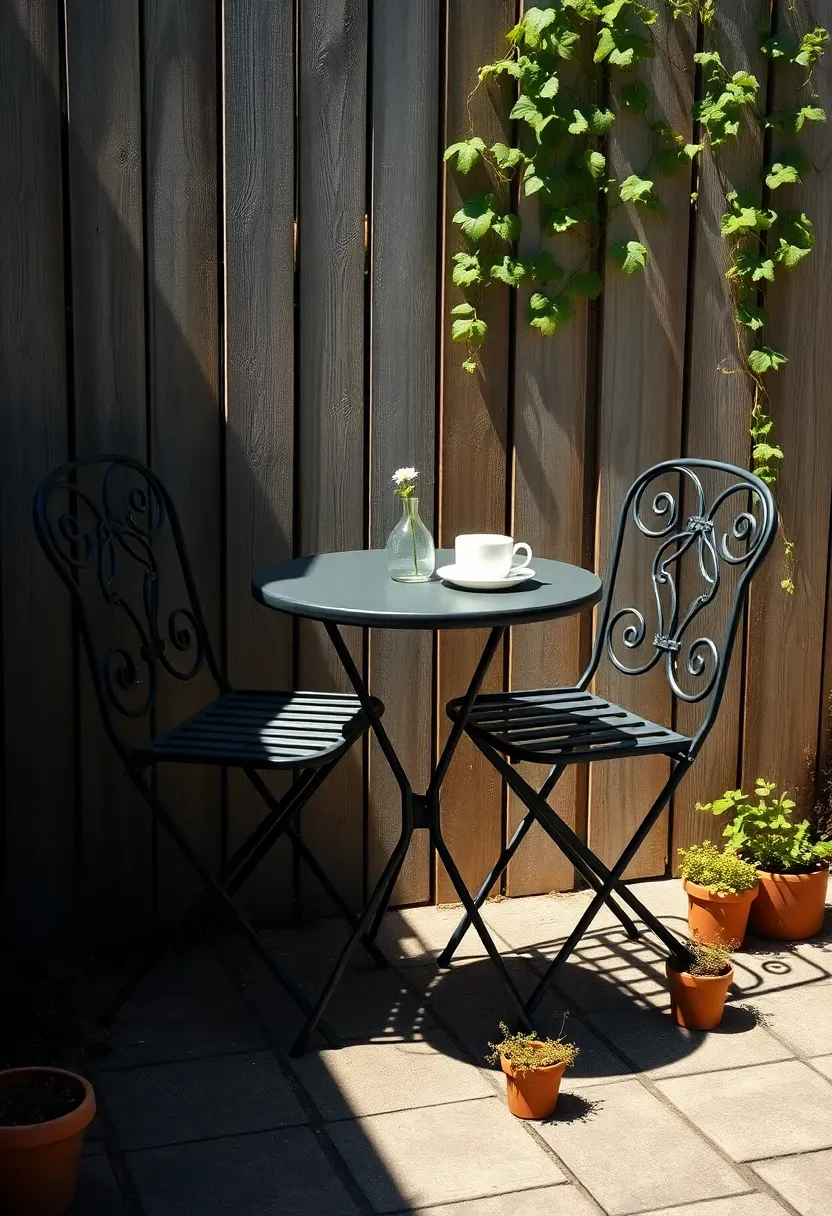
Not every sun room needs to be large. A bistro set tucked into a sunny backyard corner — one small round table, two folding chairs — creates a dedicated morning coffee spot that feels like a Parisian sidewalk cafe. The deliberate smallness is the point. It reads as curated rather than cramped.
Why Small Spaces Win on Pinterest
Compact, well-styled vignettes consistently outperform sprawling patios in engagement metrics. The contained composition tells a complete visual story in a single frame. A cup of coffee, a folded newspaper, a small vase of wildflowers on a round bistro table — that is a pin-worthy scene.
Tips for Maximum Charm
- Choose a metal bistro set that folds flat for storage during off-season months
- Position the table where it catches morning sun and afternoon shade for comfort
- Add a small potted herb garden within arm's reach — rosemary, mint, basil
- Lay a small square outdoor rug beneath the set to anchor it visually
Recommended
Items for this idea
13. Reclaimed Wood Accent Wall
The Core Issue
Open-air outdoor rooms often lack a focal point. Without a defined back wall, the eye drifts to the fence, the neighbors' yard, or the back of the house — none of which contribute to the sun room atmosphere you want.
The Solution
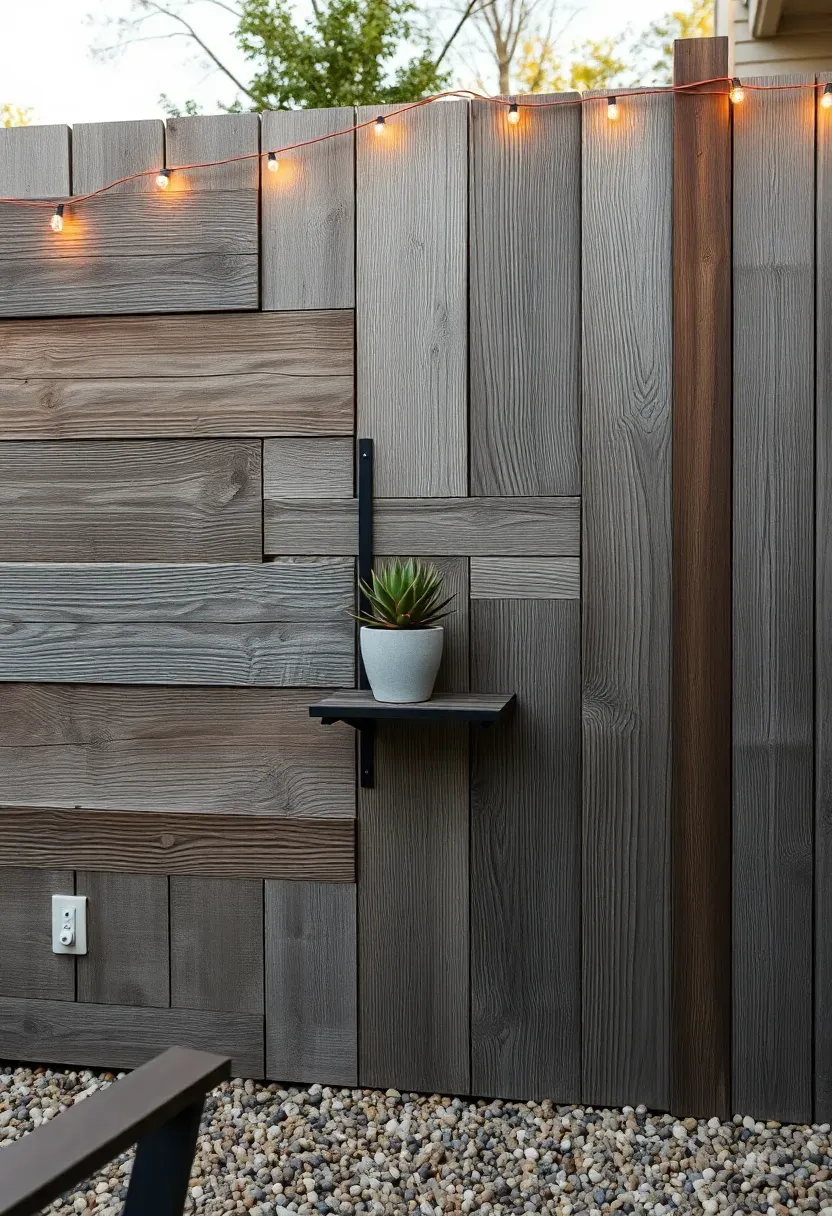
Build a single accent wall from reclaimed wood — old fence boards, pallet planks, or salvaged barn wood. Mount the boards horizontally on a simple frame of two-by-fours attached to the fence or standing independently. The textured, weathered surface immediately creates a backdrop that grounds furniture arrangements and gives the space a finished, intentional quality. Cost for an eight-by-six-foot wall using free or cheap salvaged wood runs between zero and forty dollars.
Pros and Cons
Pros: Strong visual anchor, free or nearly free materials, adds warmth and texture, works as a mounting surface for shelves, hooks, or art.
Cons: Reclaimed wood may contain hidden nails or splinters requiring sanding, weight may need structural support beyond a basic fence, and untreated wood weathers further over time — though many consider this a feature.
14. Hanging Planter Curtain
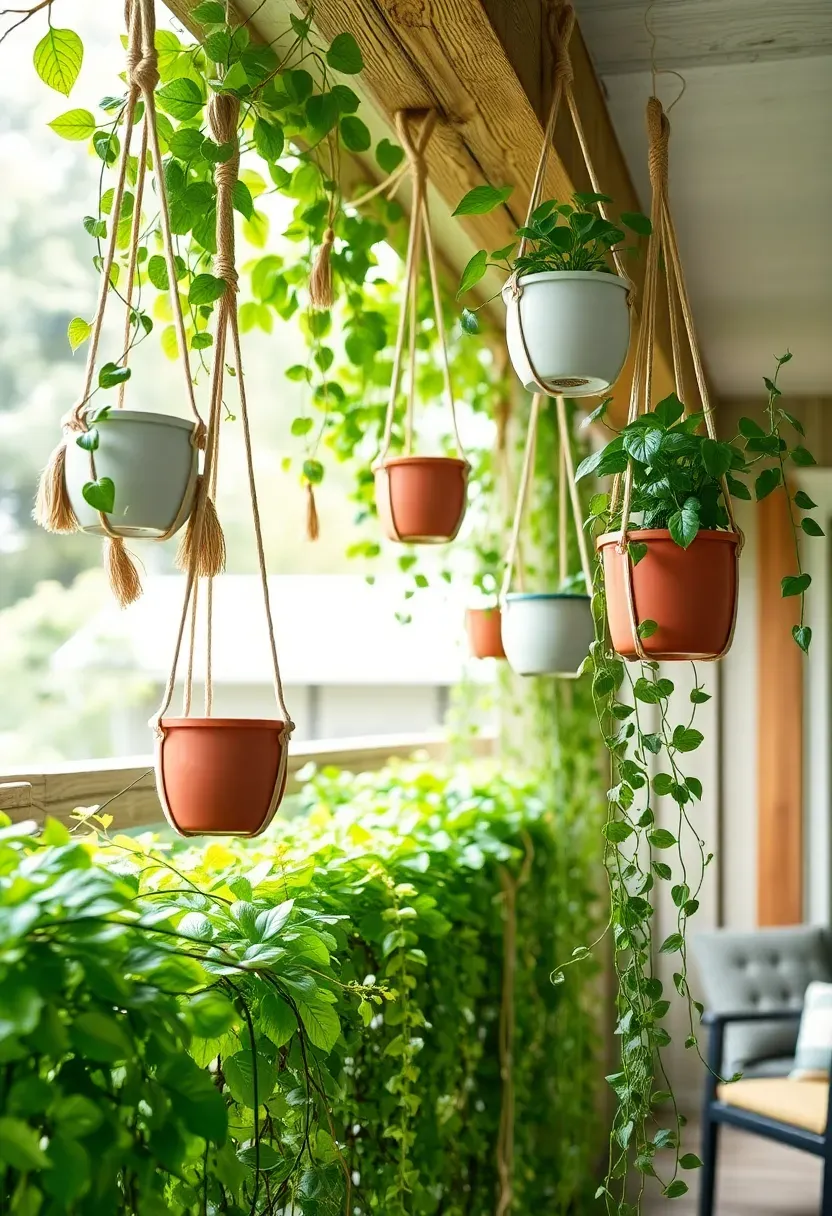
Suspend a row of hanging planters from a horizontal beam, pergola edge, or tension wire at the boundary of your outdoor room. Filled with trailing pothos, string of pearls, Boston ferns, or ivy, these living curtains provide privacy screening that improves with every passing week as the plants grow and fill in.
The effect is stunning from both inside and outside the sun room. Light filters through the foliage in patterns that shift with the breeze. Unlike static privacy screens, a plant curtain evolves — it thickens in summer, thins in winter, and surprises you with new growth constantly.
Tips for a Full, Lush Curtain
- Space planters eight to twelve inches apart for complete coverage by midsummer
- Choose fast-growing trailing varieties that tolerate your local sun exposure
- Use macrame hangers for a bohemian look or uniform plastic pots for a modern line
- Install a drip irrigation line along the support beam for hands-free watering
Recommended
Items for this idea
15. Painted Deck Board Makeover
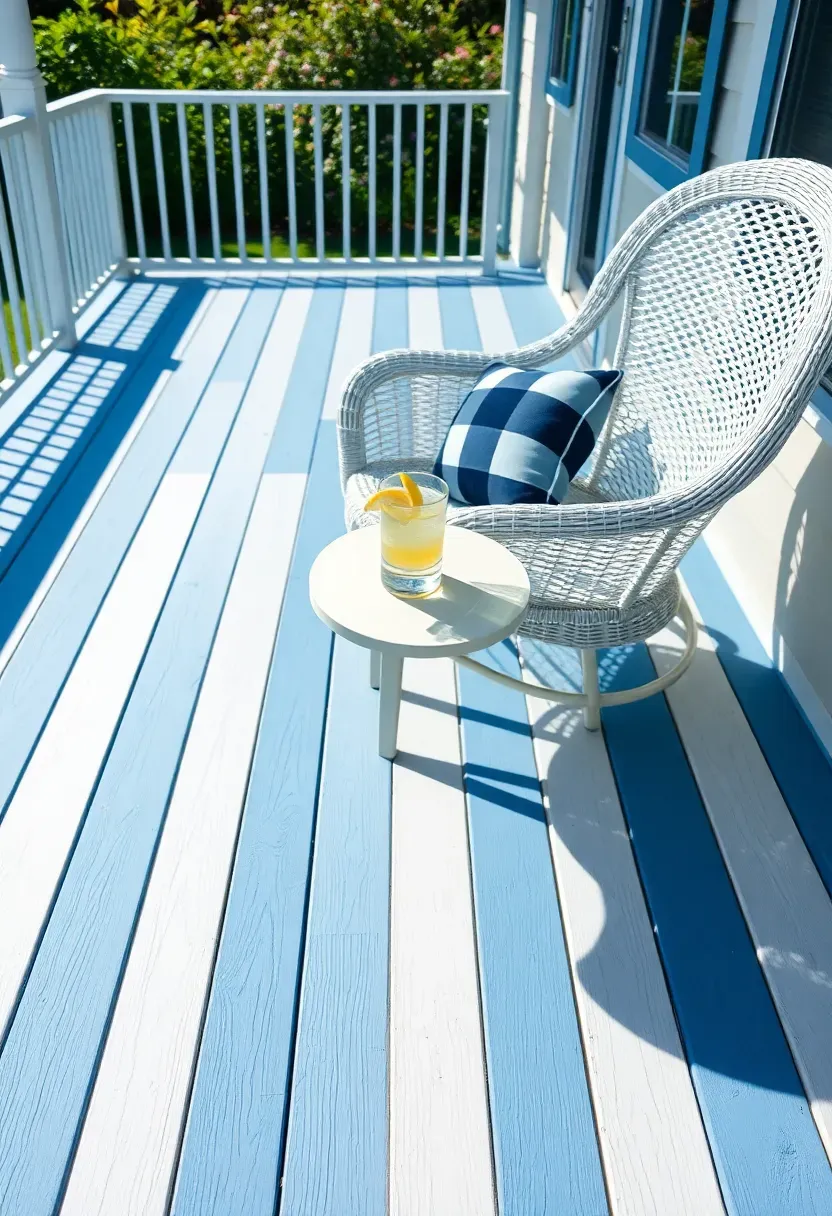
An aging deck transforms completely with paint. Forget the standard single-color approach — painting alternating boards in two tones, or adding a geometric border pattern, turns a worn surface into a designed floor that anchors your entire outdoor sun room concept.
Comparing: Striped vs Solid Deck Paint
Both approaches require the same prep: pressure wash, let dry fully, apply primer.
Striped Pattern
Two alternating colors on every other board. Creates visual length, adds nautical or cottage character, and disguises board-to-board color variation in aged wood. Takes about thirty percent longer than solid painting due to taping.
Solid Color
Single tone across all boards. Cleaner, faster application. Works best with a stenciled border or rug on top to add visual interest. Shows wear patterns more uniformly.
What to Choose
Choose stripes if: you want a statement floor that eliminates the need for outdoor rugs and enjoy a coastal or cottage aesthetic.
Choose solid if: you prefer a neutral base that lets furniture and accessories carry the design weight, or you want the fastest application.
16. Outdoor Mirror Illusion Wall
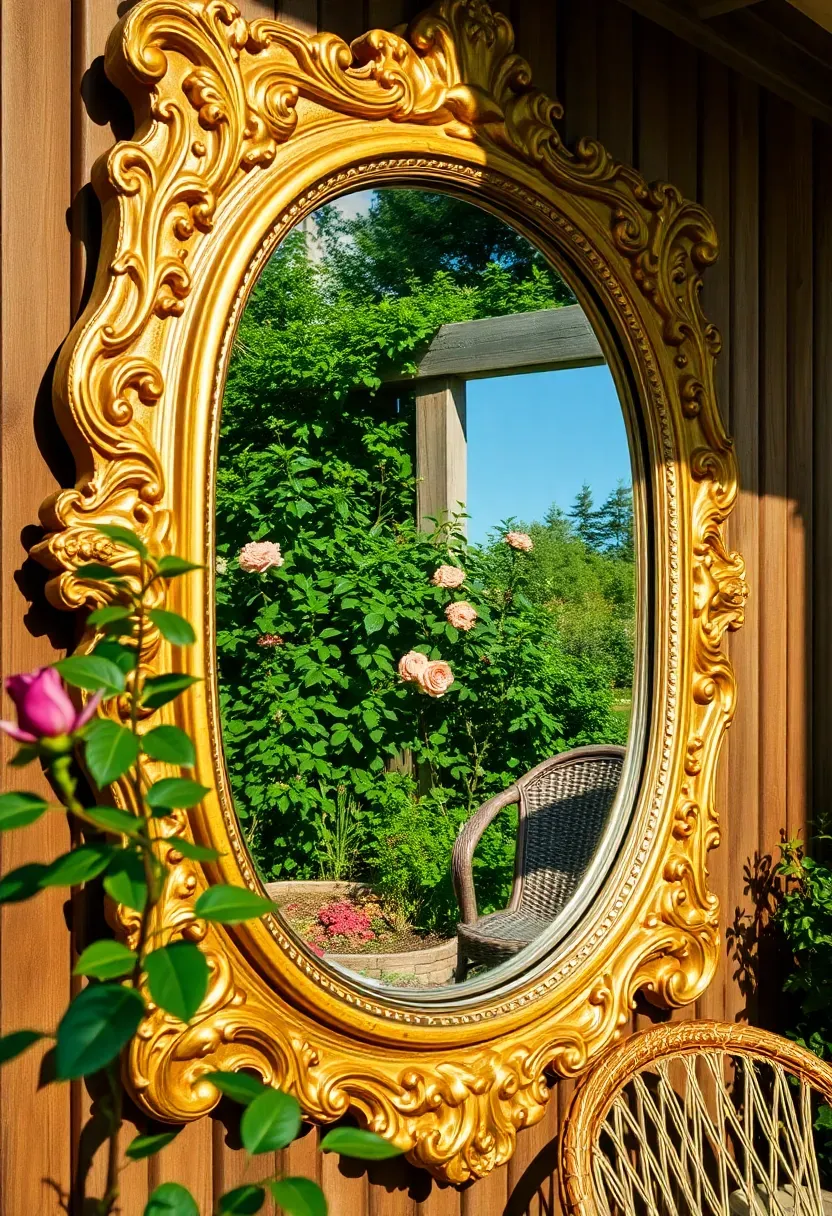
Interior designers have used mirrors to expand small rooms for centuries. The same principle works outdoors with surprising effectiveness. A large secondhand mirror — or a grid of smaller thrift store mirrors — mounted on a fence or wall behind your sun room seating doubles the perceived depth of the space instantly.
Why This Trick Is Underused Outdoors
Most people assume mirrors cannot survive outdoor conditions. Framed mirrors with sealed backing actually hold up well under covered or semi-covered installations. Position them where they reflect greenery rather than direct sky to avoid bird strikes and maximize the garden-doubling illusion.
Tips for Safe Outdoor Use
- Mount mirrors on a surface protected from direct rain — under an eave, pergola, or overhang
- Apply mirror adhesive and mechanical brackets for redundant security against wind
- Choose mirrors with wooden or metal frames — plastic frames become brittle in UV exposure
- Clean monthly with glass cleaner to maintain the reflective illusion
Recommended
Items for this idea
17. Floor Cushion Lounge Pit
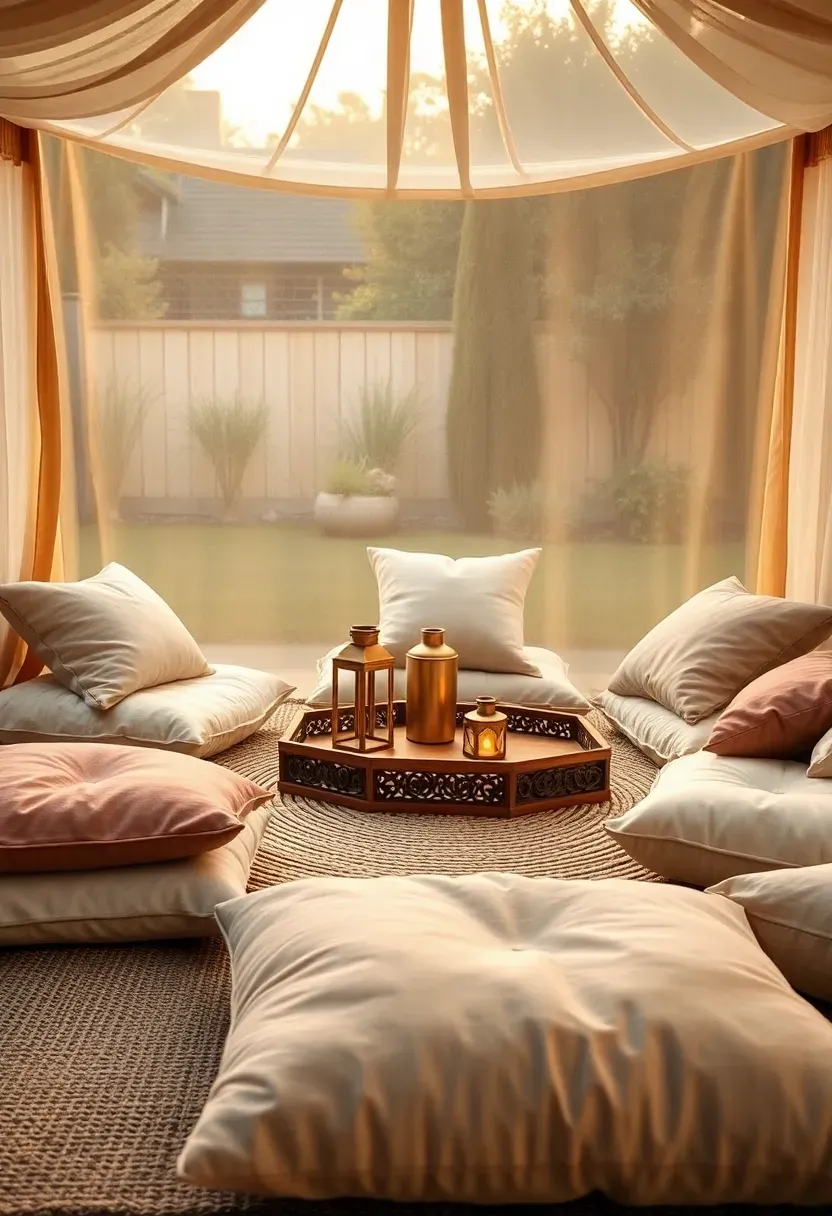
Skip the chairs entirely. A cluster of oversized floor cushions, outdoor poufs, and bolster pillows arranged on a large outdoor rug creates a ground-level lounge that feels more like a Moroccan riad than a suburban backyard. This approach costs less than buying a single outdoor sofa and creates a seating area that accommodates twice as many people.
Origins and Cultural Context
Floor seating is the default in many cultures — from Japanese tatami rooms to Middle Eastern majlis. The low sightline changes your relationship with the surrounding landscape, making fences and walls recede while sky and treetops dominate the view.
Modern Interpretation
Combine weather-resistant floor cushions in a mix of sizes and textures. Add a low wooden tray or stump section as a central table surface. Scatter battery-powered lanterns around the perimeter. The entire setup stores in a single deck box when not in use, making it ideal for small backyards that serve multiple functions.
How to Apply at Home
- Invest in cushions with removable, washable covers rated for outdoor use
- Layer a waterproof tarp beneath the rug to block ground moisture from reaching cushions
- Use a mix of twenty-four-inch square cushions and cylindrical bolsters for variety
- Add a mosquito net canopy overhead for bug-free evening lounging
18. Corrugated Metal Roof Addition
Step 1: Set the Posts
Sink four pressure-treated four-by-four posts into concrete footings at the corners of your desired sun room footprint. Aim for a minimum seven-foot clearance at the low end and eight feet at the high end to create a rain-shedding pitch.
Step 2: Frame the Roof
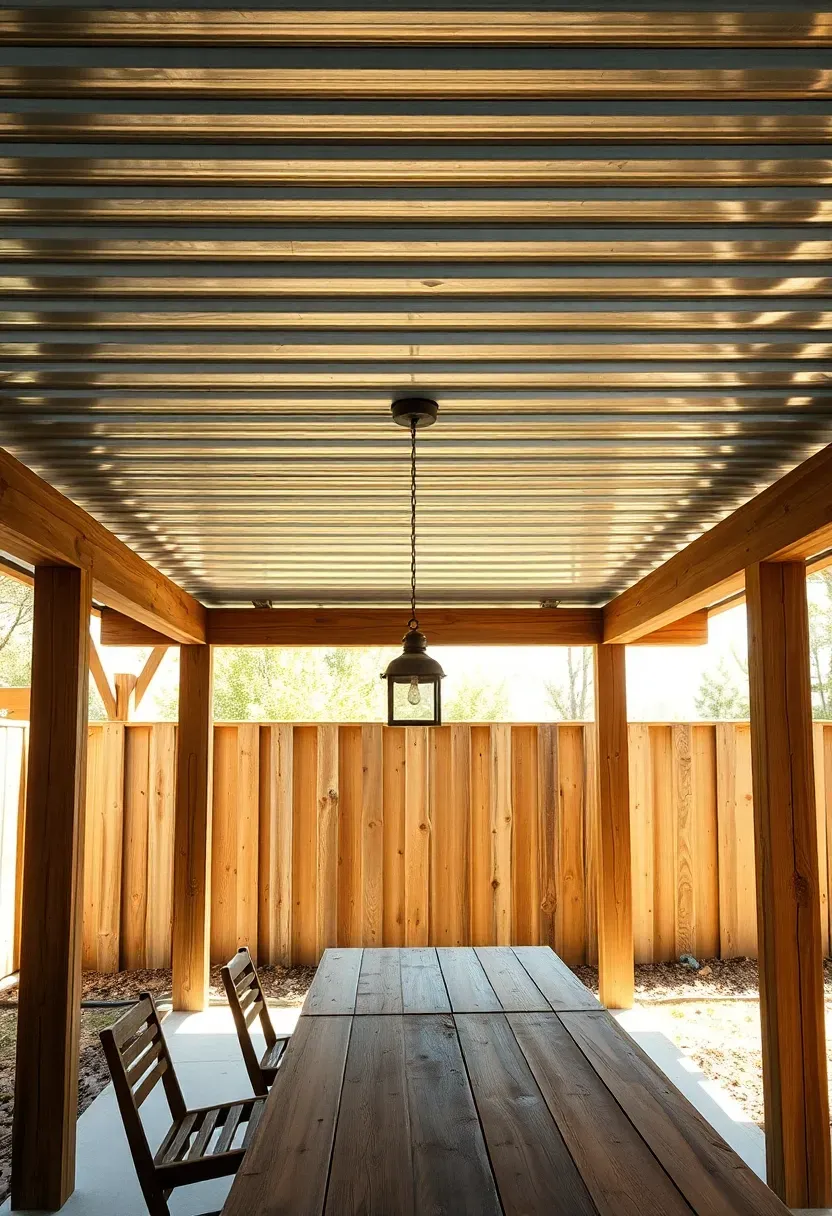
Connect posts with two-by-six beams along the length, then run two-by-four purlins across the width every twenty-four inches. This framework supports the metal panels and creates the exposed beam aesthetic that photographs so well.
Step 3: Install Metal Panels
Lay corrugated metal roofing panels across the purlins with a two-inch overlap at each seam. Secure with self-tapping roofing screws fitted with rubber washers. A ten-by-twelve-foot roof requires roughly ten panels at about twelve dollars each.
Opening paragraph: a corrugated metal roof provides permanent rain protection and shade for roughly one hundred fifty to two hundred dollars in materials. The industrial texture pairs beautifully with rustic wood furniture and soft textiles, creating the contrast that makes budget outdoor rooms feel designed rather than improvised.
What to Watch Out For
- Always slope away from the house or seating area to direct rainwater runoff properly
- Paint the underside of panels white or light gray to reflect light back down into the space
- Add a gutter along the low edge to channel water into a rain barrel for garden use
Recommended
Items for this idea
19. Four-Season Budget Enclosure
This is the most ambitious project on the list — and still achievable for under five hundred dollars. By combining several techniques from the ideas above, you can build a fully enclosed outdoor sun room that functions through every season.
The Framework
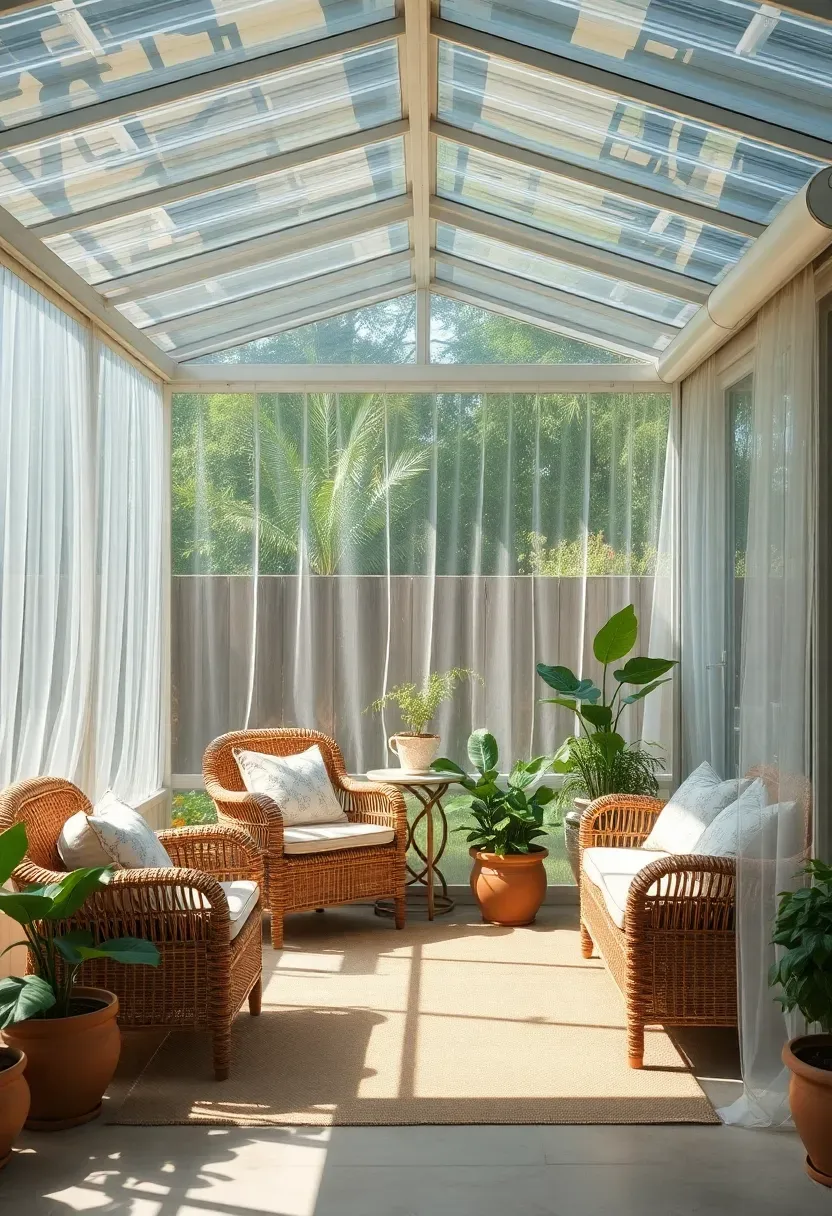
Start with a pergola or post-and-beam structure as the skeleton. Add a corrugated metal or polycarbonate panel roof for rain and snow protection. Then enclose the sides with clear vinyl curtain panels that roll up in warm weather and snap closed in cold months.
Insulation on a Budget
Clear vinyl panels create a greenhouse effect that keeps the interior ten to twenty degrees warmer than outside air on sunny winter days. Add an outdoor-rated space heater for evening use during shoulder seasons. Thermal mass — large water jugs or stone pavers that absorb daytime heat — radiates warmth after sunset.
Making It Livable Year-Round
Furnish with weather-resistant pieces that handle temperature swings. Add an outdoor rug for underfoot warmth. Install a small fan for summer air circulation when vinyl panels are closed against bugs. The result is a backyard room that works for morning coffee in January and evening cocktails in August.
Tips for Success
- Use marine-grade clear vinyl rated for UV exposure — cheap vinyl yellows within one season
- Install magnetic closures or snap fasteners on vinyl panels for easy open-close operation
- Budget approximately thirty dollars per panel for six-foot-wide clear vinyl sheeting
- Add weather stripping at panel overlaps to minimize drafts during winter use
Quick FAQ
Is a backyard sun room worth the effort if I rent my home? Absolutely. Most of these ideas are fully portable or easily reversible. Gravel pads, potted plant borders, sail shades, and floor cushion lounges leave no permanent marks. When your lease ends, pack everything into a moving truck and reinstall at your next place.
What is the single highest-impact change for under fifty dollars? String lights overhead and a layered rug underfoot. Together, these two elements define a ceiling plane and a floor surface — the two things that make an open backyard area register as a "room" in your brain. Everything else builds on that foundation.
Do I need a permit for a backyard sun room structure? That depends on your municipality and the permanence of the structure. Freestanding structures under a certain square footage — often one hundred twenty square feet — frequently bypass permit requirements. Anything attached to the house or involving electrical work typically requires a permit. Check local building codes before starting.
Can budget outdoor sun rooms survive harsh winters? Temporary elements like fabric, cushions, and rugs should come inside during winter. Permanent structures — gravel pads, pergolas, metal roofs — handle freezing temperatures without issue. The four-season enclosure option with vinyl walls extends usability but still benefits from bringing textiles indoors during the coldest months.
Which backyard surface works best as a sun room base? Existing concrete or pavers give you the most stable, level starting point. Gravel pads are the best budget option for bare ground. Wooden decks work well but check for structural soundness before adding heavy furniture. Grass is the most challenging base — it stays damp, grows through rugs, and creates an uneven surface over time.
The backyard you have right now is probably closer to a sun room than you think. Start with the change that excites you most — whether that is stringing lights tonight or planning a pergola build for next weekend. Budget constraints force creative solutions, and creative solutions are what make outdoor spaces feel personal rather than catalog-perfect. Your best room might turn out to be the one without four walls.
Pinterest cover for 19 Sun Room Ideas on a Budget for Outdoor Rooms Backyards: Small Changes, Big Impact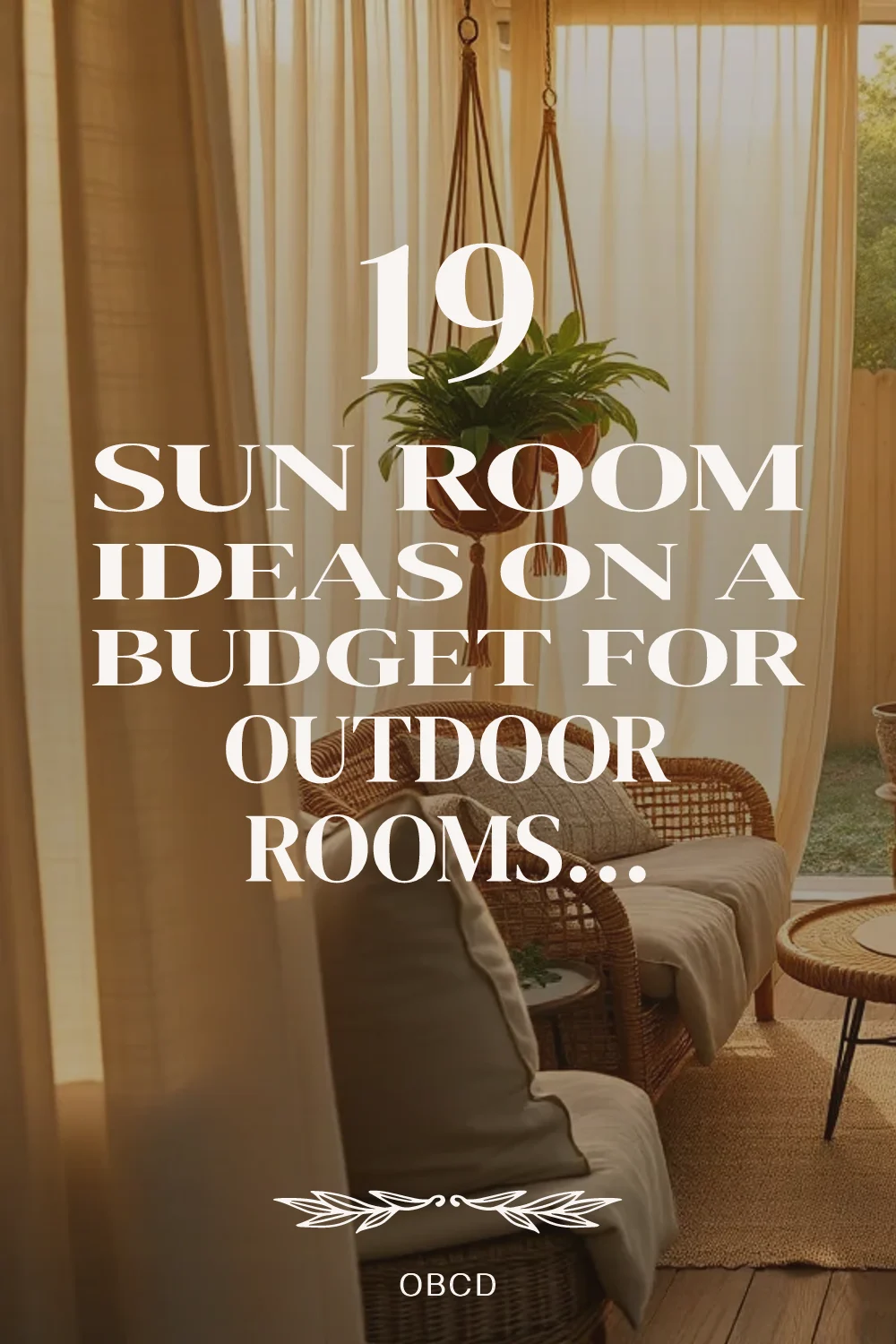
About the author
OBCD
CGI visualization and interior design content. We create detailed 3D renders and curate practical design ideas for every room in your home.