35 Japandi Bedroom Ideas That Create Calm, Balanced Spaces
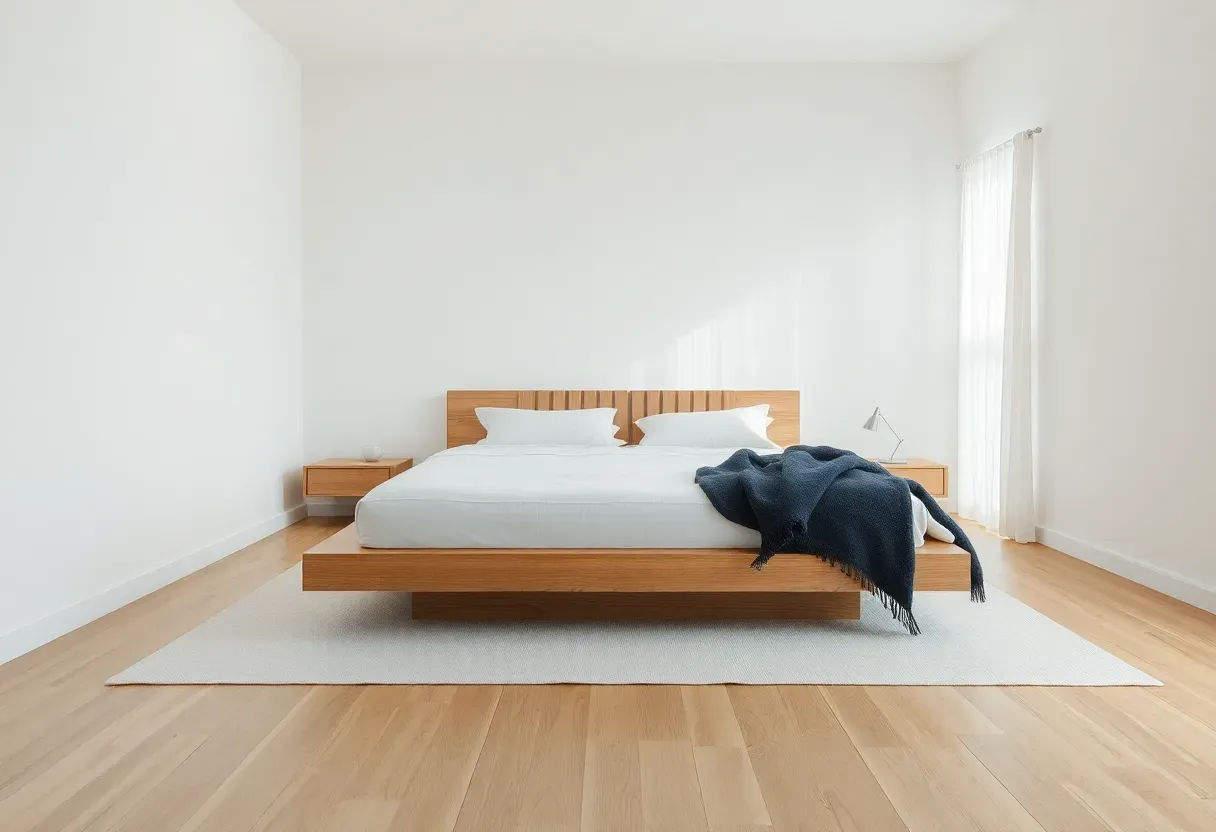
These 35 japandi bedroom ideas show you how to blend Japanese Zen minimalism with Scandinavian hygge—where clean lines meet cozy warmth, and intentional simplicity embraces authentic comfort. This japandi style bedroom philosophy creates spaces that feel simultaneously calm and livably warm, where every object earns its place through function or genuine joy rather than decoration. From low platform beds and light oak furniture to neutral linen textiles, these curated ideas explore how to bring japandi harmony into your sleeping space through thoughtful material choices and restrained color palettes.
The essence of [japandi interior design](/posts/206_what-is-japandi-interior-design/) lies in balance—between light and dark, minimal and cozy, functional and beautiful. Unlike stark minimalism which can feel sterile, or maximalism which feels chaotic, japandi bedroom decor finds the sweet spot where spaces feel curated yet relaxed. Whether you are working with a [small bedroom](/posts/74_17-japandi-bedroom-ideas-for-small-rooms-zen-makeover-for-comfort-and-visual-balance/) or a spacious primary suite, these concepts cover everything from foundational elements (beds, nightstands, lighting) to finishing touches (textiles, art, plants) that together create bedrooms genuinely conducive to rest and rejuvenation.
Quick FAQ
What defines japandi bedroom interior design?
Japandi combines Japanese minimalism (low furniture, clean lines, neutral palettes, negative space) with Scandinavian functionality (natural materials, warm textiles, cozy lighting, practical storage). The key is balance: Japanese restraint creates visual calm while Scandinavian warmth prevents sterility, resulting in spaces that feel both serene and livably inviting.
What color palette works best for japandi bedrooms?
Start with warm white or cream walls as base, add light wood tones (oak, ash, birch) for furniture and flooring, then layer in darker neutrals (charcoal, warm gray, navy-black) for contrast. Limit accent colors to 2-3 maximum: muted earth tones (sage, terracotta, warm beige) or deep blues/greens. The palette should feel cohesive and calming, with 4-5 core colors total.
What materials should I prioritize for authentic japandi style?
Essential japandi materials include light wood (oak, ash, birch) for furniture and flooring, natural textiles (linen, cotton, wool, jute) for bedding and rugs, ceramic or wood for accessories, and black metal for lighting or hardware. Avoid glossy finishes, synthetic fabrics, or ornate details. Authenticity and material honesty are more important than matching any specific look.
How can I achieve japandi style on a budget?
Start with essentials: paint walls warm white, declutter surfaces, invest in quality bedding (linen or high-quality cotton in neutral tones), add one or two light wood furniture pieces (IKEA has great options), incorporate texture through throw blankets and rugs. Japandi is about curation and intentionality rather than expensive pieces—edit ruthlessly and prioritize quality over quantity.
Can japandi design work in small bedrooms?
Absolutely—japandi's emphasis on low-profile furniture and minimal clutter actually makes small spaces feel larger. Choose a platform bed with hidden storage, use wall-mounted shelves instead of nightstands, keep floor space mostly clear, and opt for light colors that reflect light. The japandi principle of "less is more" is particularly powerful in small rooms where every object counts.
How do I add personality to japandi design without creating clutter?
Japandi personality comes through material quality rather than decorative objects: handmade ceramics with visible maker marks, woodworking with visible grain, textiles with natural texture, or art with nature motifs. Choose one statement piece per wall or surface rather than collections. Personal items should be functional or genuinely meaningful—display things you use daily or objects that tell your story rather than generic decor.
As an Amazon Associate I earn from qualifying purchases.
Table of Contents
- 1. Low Platform Bed With Light Wood Frame
- 2. Floating Wall-Mounted Nightstands
- 3. Neutral Textured Bedding Layers
- 4. Ceramic Table Lamps With Linen Shades
- 5. Large Natural Fiber Area Rug
- 6. Floor-To-Ceiling Light Curtains
- 7. Single Statement Plant
- 8. Wall-Mounted Wooden Sconces
- 9. Minimalist Storage Bench
- 10. Floating Oak Wall Shelves
- 11. Warm White Or Cream Wall Color
- 12. Woven Textile Wall Hanging
- 13. Simple Wood Mirror
- 14. Minimalist Writing Desk
- 15. Warm White Ambient Lighting
- 16. Handmade Ceramic Collection
- 17. Sliding Door Wardrobe
- 18. Window Reading Nook
- 19. Neutral Throw Blanket Texture
- 20. Minimalist Or Slatted Headboard
- 21. Under-Bed Storage Drawers
- 22. Nature-Inspired Minimalist Art
- 23. Quality Over Quantity Philosophy
- 24. Layered Neutral Textiles
- 25. Intentional Negative Space
- 26. Low-Profile Ceiling Light
- 27. Minimalist Alarm Clock
- 28. Simple Window Treatments
- 29. Concealed Charging Station
- 30. Small Ceramic Bud Vase
- 31. Light Wood Flooring
- 32. Minimalist Bedside Books
- 33. Soft Area Runner Rug
- 34. Calming Nature Scent
- 35. Minimalist Coat Rack Or Hook
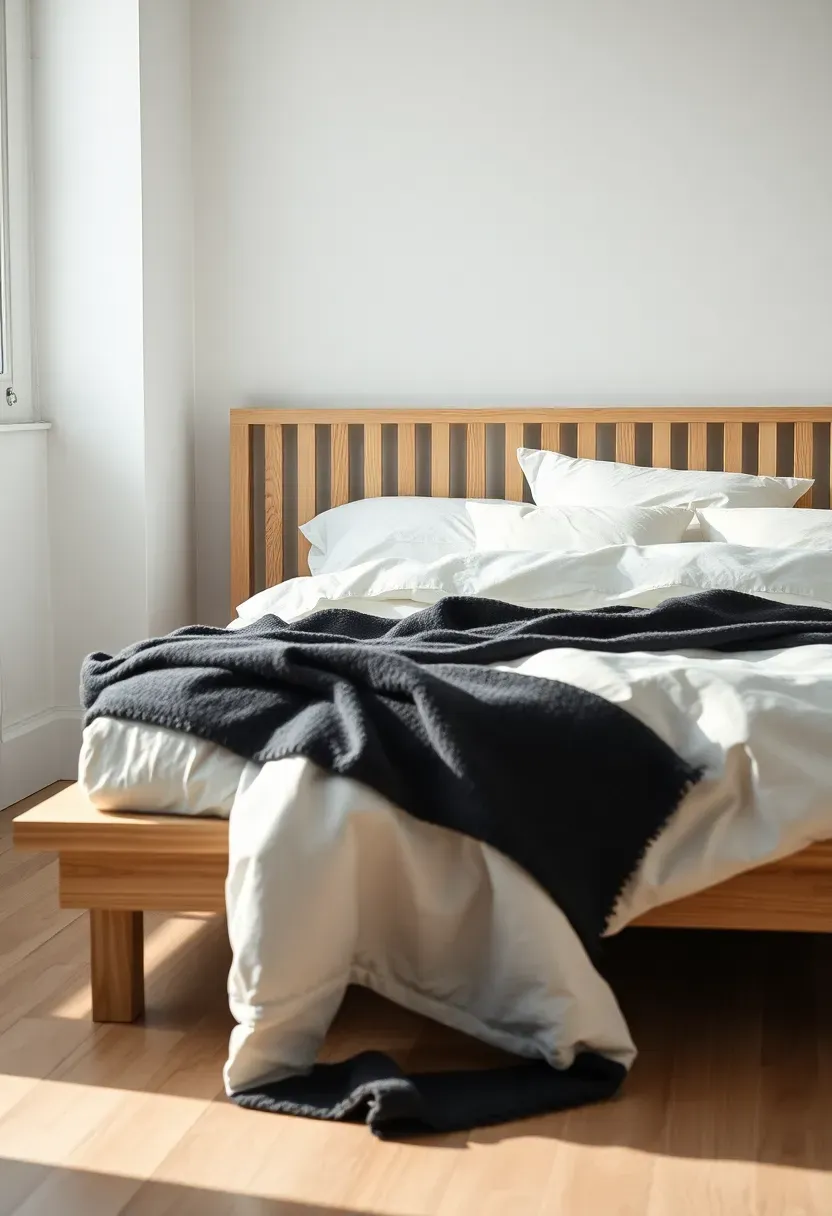
Prompt: Nature documentary capture on Hasselblad X2D 100C with XCD 90V lens at f/4. Hyper-realistic 3/4 view of low platform bed with light oak wood frame, simple vertical slat headboard, white and cream linens, charcoal wool throw. Warm white walls, light oak flooring. Materials: light oak wood with visible grain, white cotton linen, cream linen duvet, charcoal wool. Soft natural light from window (5000K), creating gentle shadows. Japandi serene minimalist mood.
The low platform bed serves as japandi interior design's foundational element—light oak frames provide warmth without visual weight, while the low profile (12-14 inches from floor) embodies Japanese proximity to the ground and creates a sense of grounded calm. Unlike traditional beds with box springs and prominent headboards, platform beds feel streamlined and intentional, with every element serving purpose without excess.
Scandinavian practicality shines through: no box spring needed (mattress sits directly on slats), reduced visual bulk, and easy cleaning underneath. Light oak or ash construction maintains japandi's preference for natural materials that age beautifully rather than synthetic alternatives that deteriorate over time.
Tips
- Choose platform height of 12-14 inches for authentic japandi proportion—low enough to feel grounded but practical for cleaning
- Opt for light oak or ash rather than stained or painted wood—natural tones feel more authentic and develop character with age
- Skip the headboard or choose minimal slat design—upholstered or elaborate headboards disrupt japandi's clean aesthetic
What this gives you: A grounded serene focal point that embodies japandi principles through natural materials, low profile, and functional simplicity.
We picked a few things that go well with this idea: Thor Japanese Joinery Platform Bed (Full) (★4.6), Thor Japanese Joinery Platform Bed (Queen) (★4.6) and Low Profile Floor Platform Bed (Full) (★4.2). As an Amazon Associate we earn from qualifying purchases.
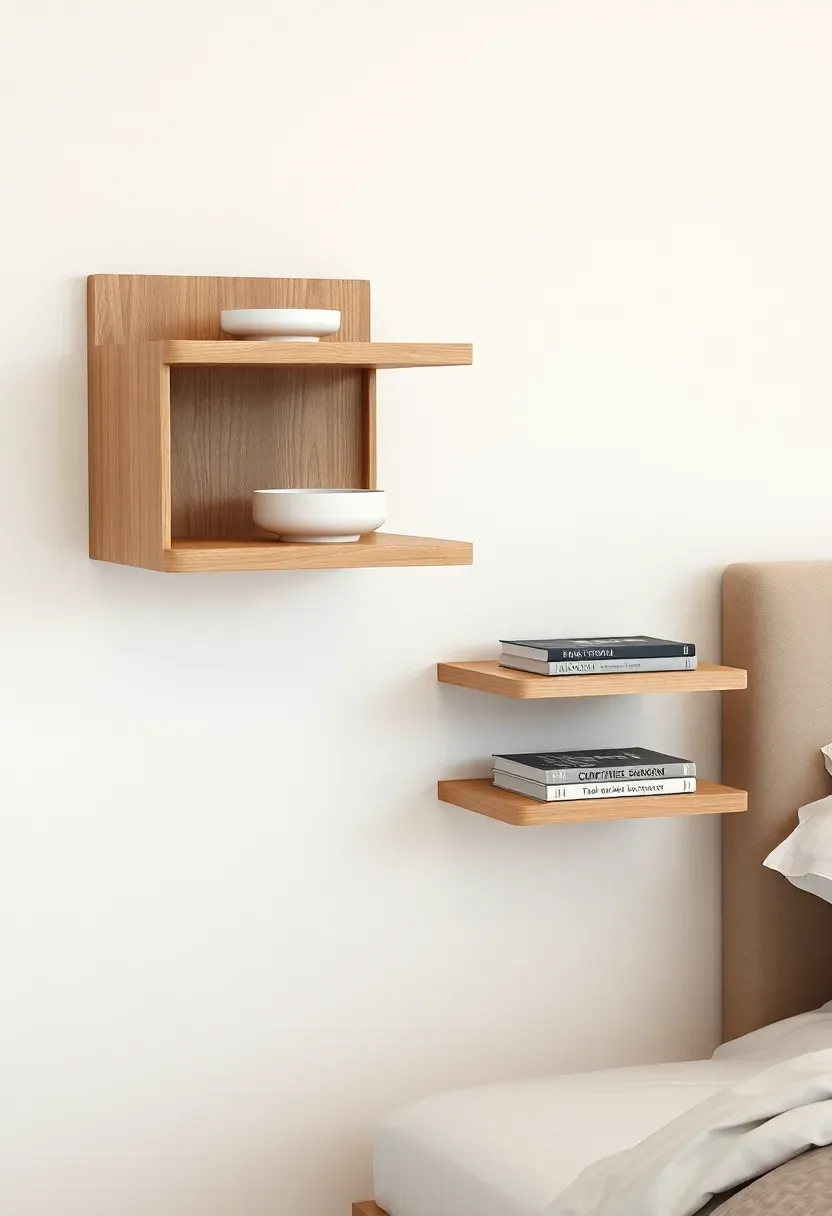
Prompt: Nature documentary capture on Hasselblad X2D 100C with XCD 90V lens at f/4. Hyper-realistic 3/4 view of floating wall-mounted nightstands in light oak, simple rectangular design with minimal styling—white ceramic dish on one, small stack of books on other. Warm white wall, part of platform bed visible. Materials: light oak wood, matte white ceramic. Soft ambient light (5000K).
Floating nightstands provide essential surface area while preserving japandi's visual lightness—wall-mounted designs eliminate legs or bases that create visual clutter, making cleaning easier and preserving floor space. Light oak construction adds necessary warmth while maintaining the neutral palette, and simple rectangular or square forms keep visual noise to an absolute minimum.
Style with extreme restraint: 1-2 items per surface maximum. One functional item (lamp or clock) and one decorative (small ceramic vessel, single book, or tiny plant). This prevents accumulation while ensuring every object earns its place through daily use or genuine joy—japandi interiors aren't about emptiness but intentionality.
Tips
- Mount at 24-26 inches from floor—this aligns perfectly with platform bed mattress height for comfortable reach
- Choose shallow depth (12-14 inches) to maintain minimal visual bulk while providing sufficient surface area
- Include drawer or hidden compartment if possible—concealed storage maintains japandi calm by hiding practical items
Rental note: Wall-mounted nightstands require structural anchors—renters can use freestanding designs with slim legs secured to studs.
What this gives you: Functional bedside storage that maintains japandi lightness through floating design and rigorous surface editing.
We picked a few things that go well with this idea: Flax Linen Duvet Cover Set (King) (★5.0), AORISSI French Flax Linen Duvet Set (Queen) (★4.5) and Stone Washed Linen Duvet Cover Set (King). As an Amazon Associate we earn from qualifying purchases.
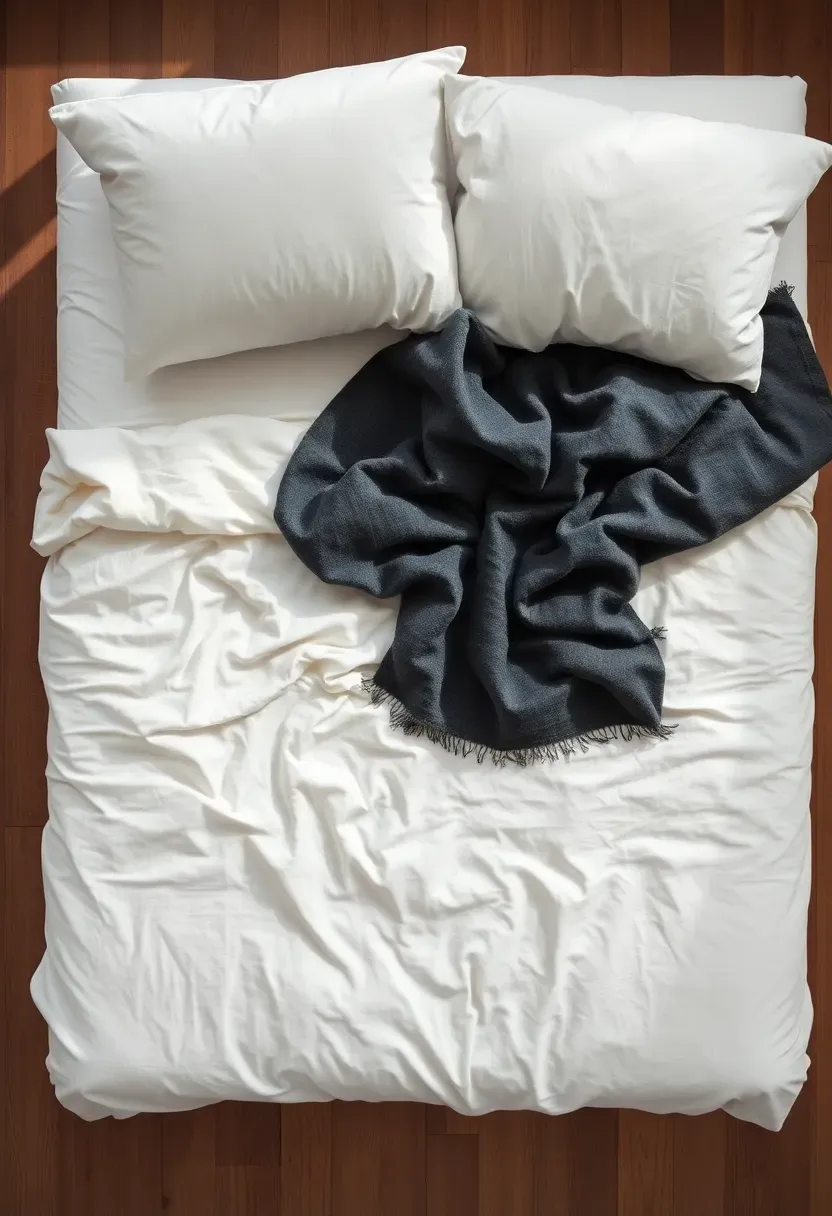
Prompt: Nature documentary capture on Hasselblad X2D 100C with XCD 90V lens at f/4. Hyper-realistic top-down view of layered neutral bedding: white fitted sheet, cream linen flat sheet, white linen duvet, two white pillows, charcoal wool throw casually draped. Visible fabric texture and natural linen wrinkles. Materials: white cotton, cream linen, charcoal wool. Soft natural light (5000K), highlighting texture.
Linen bedding in neutral layered tones creates japandi's signature warmth—unlike crisp cotton percale which feels hotel-standard, linen has natural texture, subtle wrinkles, and lived-in softness that makes bedrooms feel genuinely serene. The palette stays within white, cream, gray, and charcoal—layering creates visual interest without pattern or color, while fabric texture provides necessary depth.
Layering formula: fitted sheet, flat sheet, duvet cover, two pillowcases, one throw blanket maximum. This provides comfort without visual weight. Linen's inherent texture means you don't need pattern—let material quality shine through rather than decorative printing or embellishment.
Tips
- Choose pre-washed or garment-washed linen for immediate softness—stiff linen undermines japandi comfort
- Stick to 3-color palette maximum: white, one light neutral (cream or gray), one darker accent (charcoal)
- Embrace natural wrinkles—overly ironed bedding feels too formal for japandi's relaxed authenticity
What this gives you: Authentic japandi warmth through material quality—linen's natural texture replaces pattern while neutral layering creates calm.
We picked a few things that go well with this idea: Nourison Sand Ceramic Table Lamp (20") (★4.0), Nourison White Ceramic Jar Table Lamp (23") (★4.3) and PoKat Modern Ceramic Table Lamp Set (2-Pack) (★4.6). As an Amazon Associate we earn from qualifying purchases.
Recommended
Items for this idea
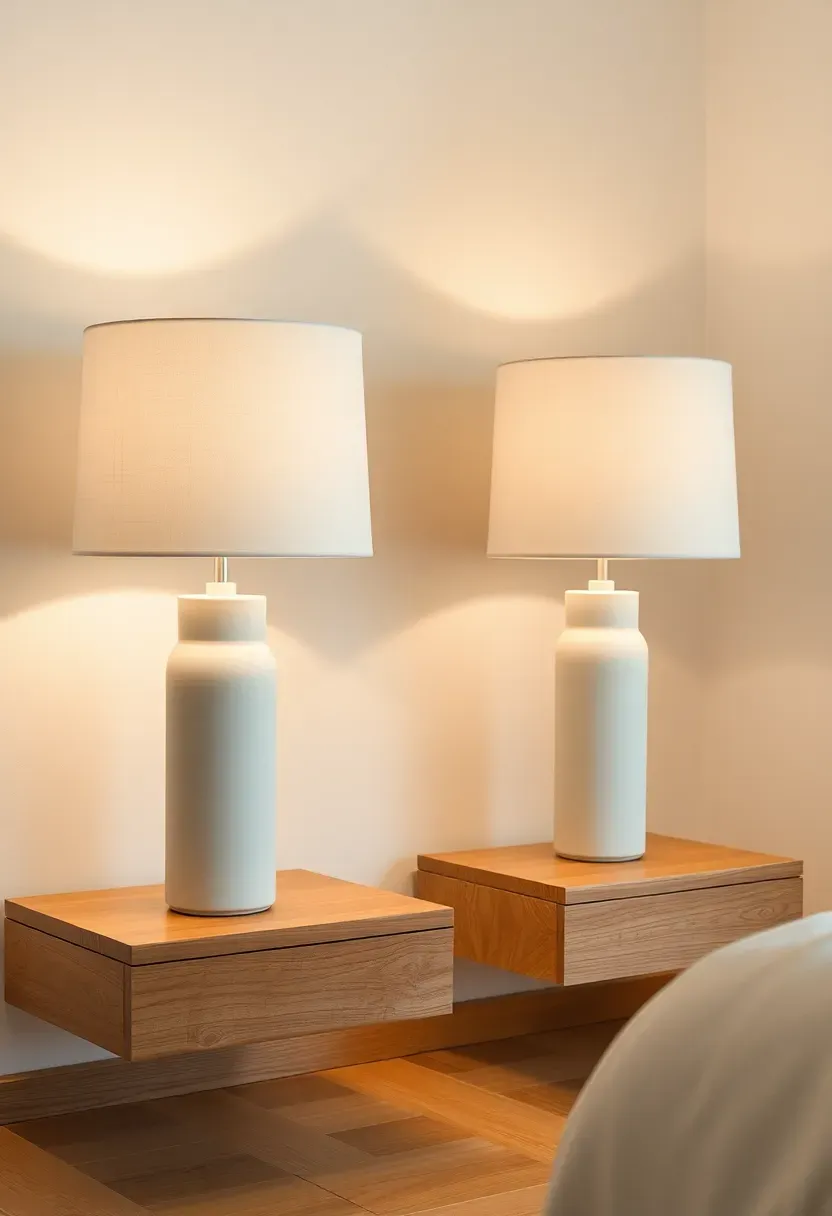
Prompt: Nature documentary capture on Hasselblad X2D 100C with XCD 90V lens at f/4. Hyper-realistic 3/4 view of minimalist ceramic table lamps with simple cylindrical bases in matte white and soft gray, white linen drum shades, on floating oak nightstands. Warm ambient glow from shades (2700K). Materials: matte ceramic, white linen shades, light oak wood.
Bedside lamps in japandi bedrooms should feel substantial yet simple—ceramic bases in matte white, cream, or soft gray provide weight and grounding without visual noise. Clean cylindrical or softly squared forms avoid decorative complexity. Fabric shades in white or cream linen diffuse light softly, creating warm ambiance that distinguishes japandi from clinical minimalism.
Unlike decorative lamps with ornate bases or glass/metal constructions, ceramic lamps feel honest and handcrafted. Their weight provides counterpoint to japandi lightness while maintaining minimalism through form restraint. The warm glow they emit when lit creates cozy atmosphere essential to japandi serenity.
Tips
- Choose lamp heights of 20-24 inches for proper proportion with platform beds and focused reading light
- Use warm white bulbs (2700K) with dimmers for adjustable ambiance—full brightness for tasks, dimmed for relaxation
- Match shade diameter to base width—proportional balance feels intentional and japandi-appropriate
What this gives you: Warm functional lighting that embodies japandi minimalism through simple ceramic forms and fabric-diffused light.
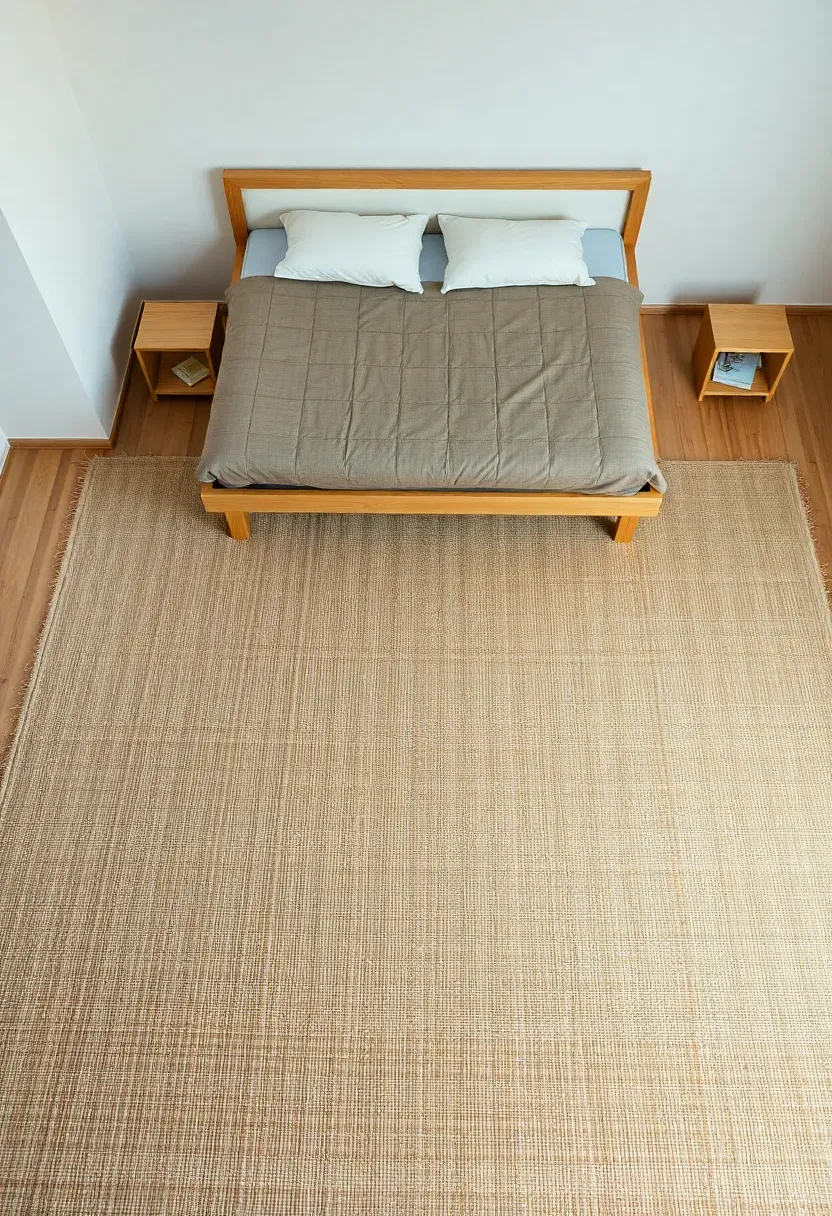
Prompt: Nature documentary capture on Hasselblad X2D 100C with XCD 90V lens at f/4. Hyper-realistic top-down view of large natural fiber rug (jute or light wool) covering most of bedroom floor, extending under bed and beyond on all sides. Part of platform bed with light wood frame visible at edges. Materials: natural jute or light wool, light oak wood. Soft ambient light (5000K), highlighting fiber texture.
A large natural fiber rug provides essential warmth and texture while maintaining japandi minimalism—jute, sisal, or light wool in neutral tones adds softness underfoot and introduces organic texture that prevents rooms from feeling sterile. Unlike patterned or colorful rugs, natural fiber rugs feel honest and unobtrusive, serving as calm foundations rather than decorative statements.
Size matters: extend at least 24 inches beyond all bed sides to create soft landing zone and proportional harmony. Natural fiber's visible texture and subtle color variations provide visual interest without pattern, aligning with japandi's preference for material authenticity over decoration.
Tips
- Choose jute or sisal for budget-friendly warmth, or light wool for added softness—both provide natural japandi-appropriate texture
- Extend rug at least 24 inches beyond bed edges on all sides for proper proportions and generous coverage
- Consider rug pad for comfort—natural fibers can be thin, and cushioned layer underfoot adds practical luxury without visual impact
What this gives you: Essential warmth and texture that grounds japandi spaces through natural materials and neutral tones.
Recommended
Items for this idea
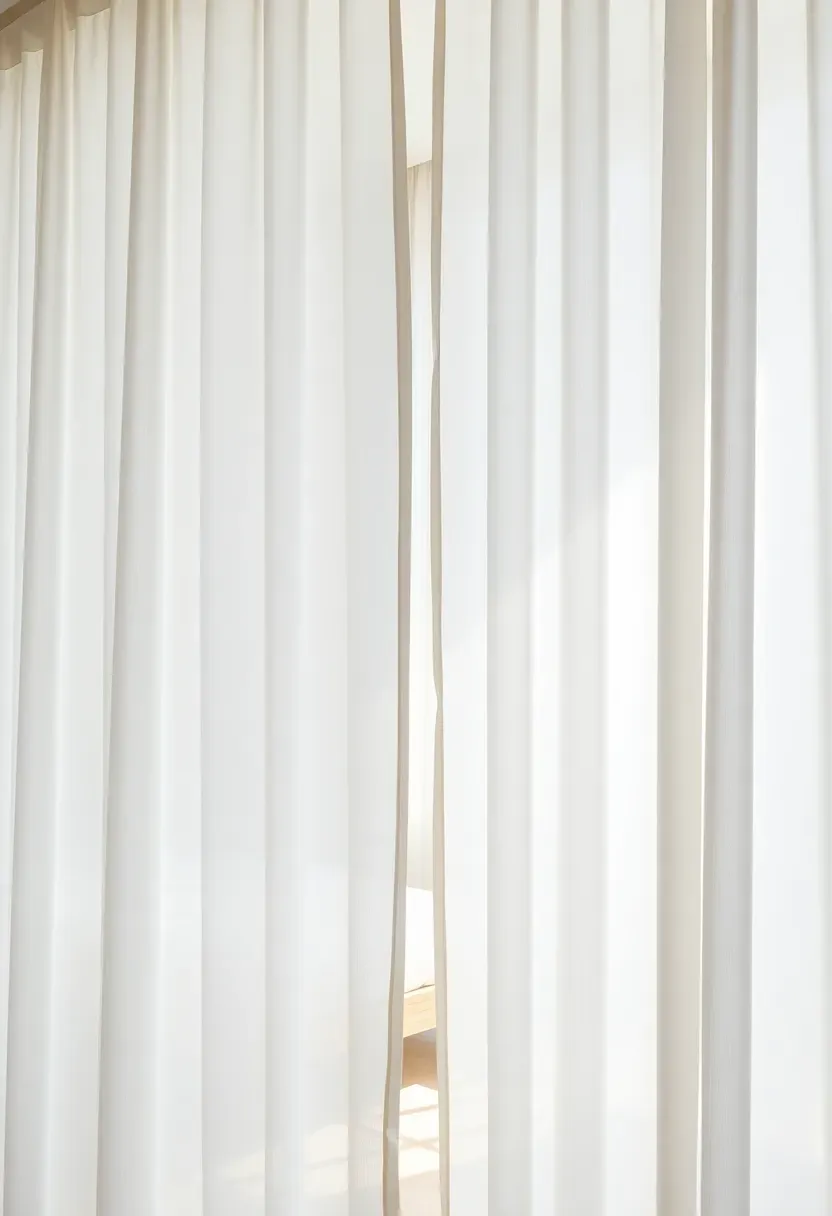
Prompt: Nature documentary capture on Hasselblad X2D 100C with XCD 90V lens at f/4. Hyper-realistic 3/4 view of floor-to-ceiling white linen sheer curtains hung from hidden rod, soft natural light filtering through fabric creating gentle glow. Part of room with platform bed visible through curtains. Materials: white linen sheer fabric, light oak wood. Soft diffused natural light (5000K).
Floor-to-ceiling sheer curtains introduce softness and light diffusion while maintaining japandi's airy openness—unlike heavy drapes which feel weighty, white or cream linen sheers provide privacy and light filtering without blocking natural light. The fabric's natural texture adds visual interest without pattern, and floor-to-ceiling height creates vertical drama without ornamentation.
Hang curtains high and wide—mounted 2-4 inches above window frame or at ceiling height, extending 6-12 inches beyond each side—to maximize light and create window illusion. White or cream linen sheers feel timeless rather than trendy, aligning with japandi's preference for enduring style.
Tips
- Choose linen or linen-cotton blend sheers—natural fibers drape beautifully and develop lived-in japandi warmth
- Install at ceiling height rather than just above window frame—creates vertical drama and makes rooms feel taller
- Add simple blackout roller shade behind sheers if needed—provides light control for sleeping while maintaining sheer daytime aesthetic
What this gives you: Light-filtering softness that maintains japandi airiness while providing privacy and textile warmth.
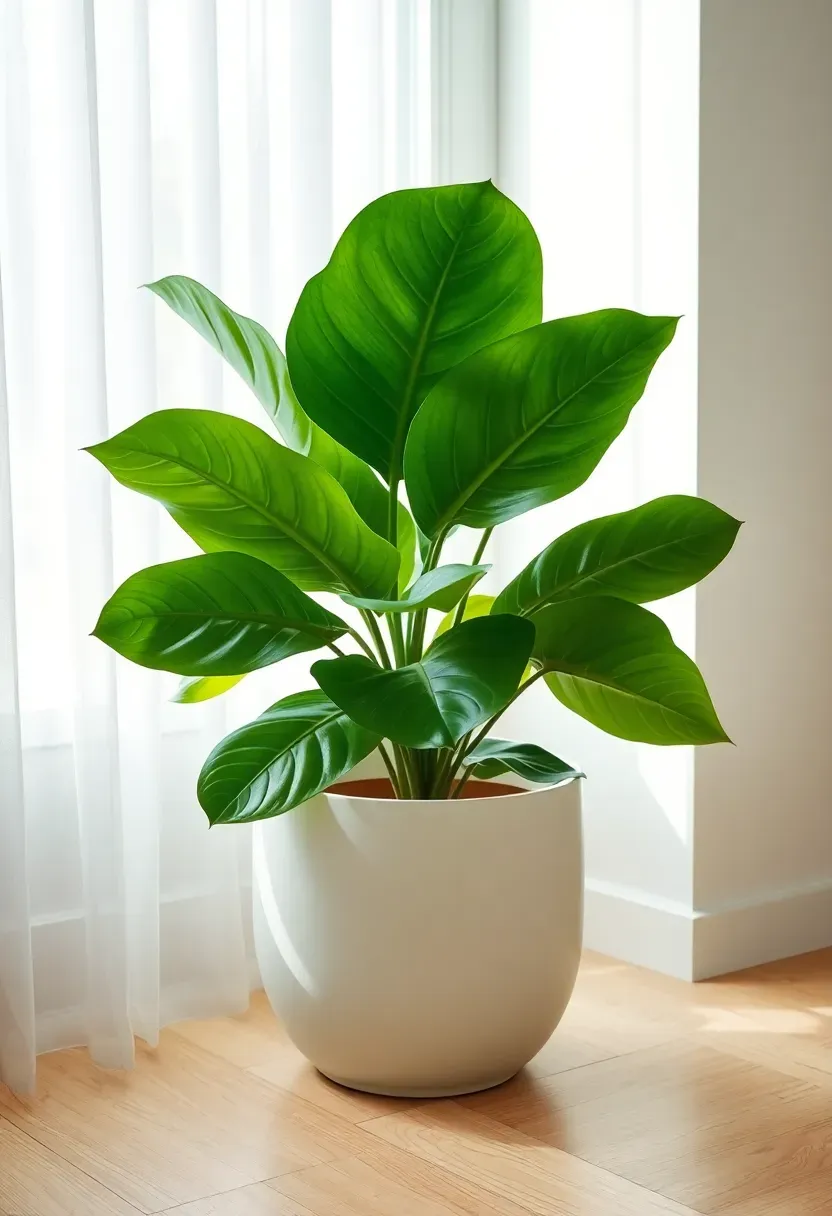
Prompt: Nature documentary capture on Hasselblad X2D 100C with XCD 90V lens at f/4. Hyper-realistic 3/4 view of single large statement plant (fiddle leaf fig) in matte white ceramic planter, multiple glossy leaves creating sculptural form. Part of window with sheer curtains, light oak floor. Materials: glossy green foliage, matte white ceramic, light oak wood. Soft natural light from window (5000K).
A single statement plant introduces organic life while embodying japandi's intentional minimalism—an approach explored in depth in our nature-inspired japandi bedroom ideas. Rather than multiple small plants which feel cluttered, one substantial specimen creates focal point impact through size and form. Fiddle leaf figs, birds of paradise, or large monsteras provide vertical drama and natural contrast against clean lines and neutral palettes.
The planter should be simple and neutral—matte white or cream ceramic in cylinder or minimal bowl form reinforces japandi restraint. Position near window for light, where plant becomes living sculpture that adds movement and life without disrupting visual calm.
Tips
- Choose plants suited to light conditions—fiddle leaf figs need bright indirect light, while snake plants tolerate lower light
- Use simple neutral planter—matte white or cream ceramic in cylinder or bowl lets plant's foliage take center stage
- Maintain consistently—dropping leaves disrupt japandi calm; choose plants you can realistically care for
What this gives you: Living organic contrast that adds movement and life while maintaining japandi minimalism through intentional single-plant design.
Recommended
Items for this idea
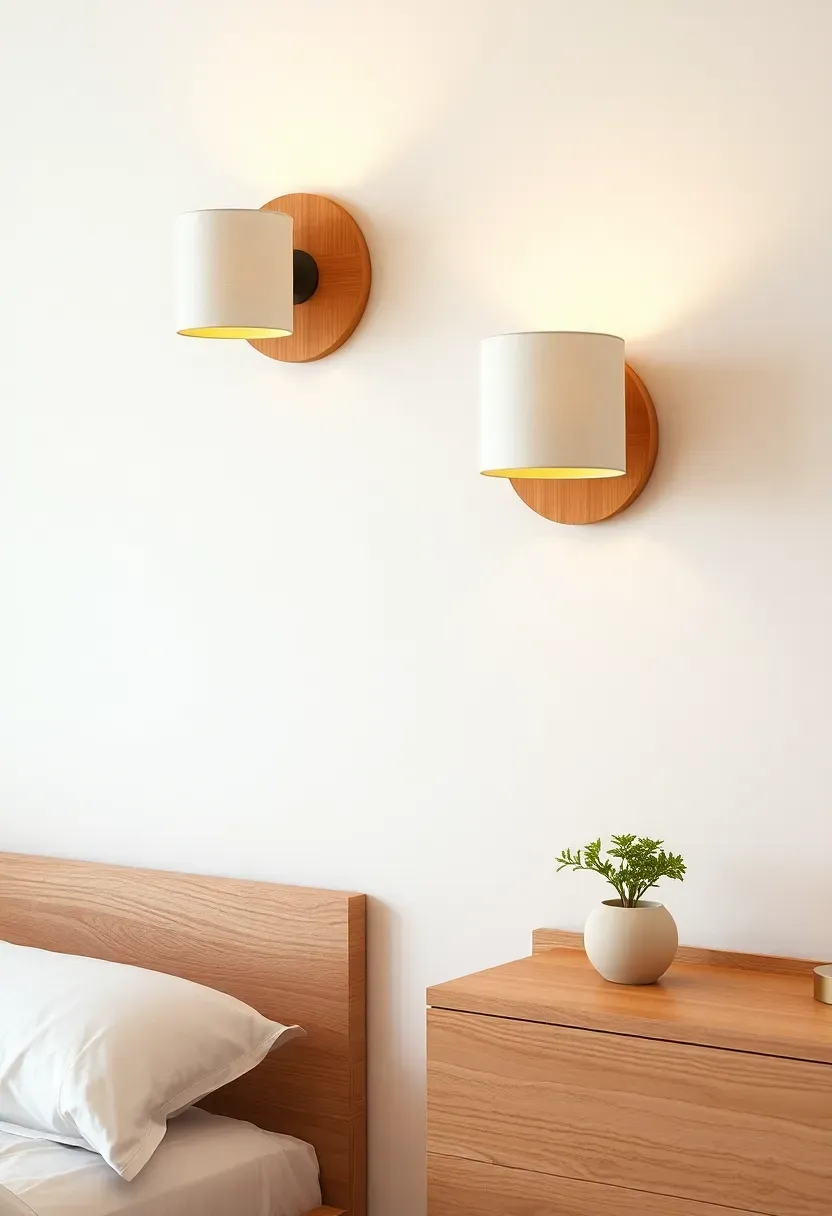
Prompt: Nature documentary capture on Hasselblad X2D 100C with XCD 90V lens at f/4. Hyper-realistic 3/4 view of wall-mounted sconces with light oak wood backplates and white linen shades, mounted on warm white wall above floating oak nightstands. Nightstands have minimal styling. Warm glow from sconces (2700K). Materials: light oak wood, white linen shades.
Wall-mounted sconces replace table lamps while preserving essential lighting and freeing valuable nightstand surface area—japandi prioritizes visual breathing room over conventional styling (for a bolder take, see our japandi industrial bedroom ideas). Sconces with oak backplates and linen shades provide same warmth and diffusion as table lamps while reducing footprint through wall-mounted design.
Mount 6-8 inches above mattress surface and 18-24 inches from wall center for optimal reading light. Choose oak or wood bases in white, cream, or light oak to maintain neutral palette. Always use fabric shades (linen or cotton) for soft diffusion—japandi lighting should feel warm and ambient, never harsh.
Tips
- Install dimmable sconces with warm white bulbs (2700K) for adjustable ambiance—full brightness for reading, dimmed for relaxation
- Choose corded hardwired sconces rather than battery-powered for consistent brightness and reliability
- Match sconce scale to bed size—queen/king beds handle larger fixtures, twin beds require proportionally smaller sconces
What this gives you: Focused bedside lighting that preserves japandi minimalism by reducing surface clutter while maintaining warm ambiance.
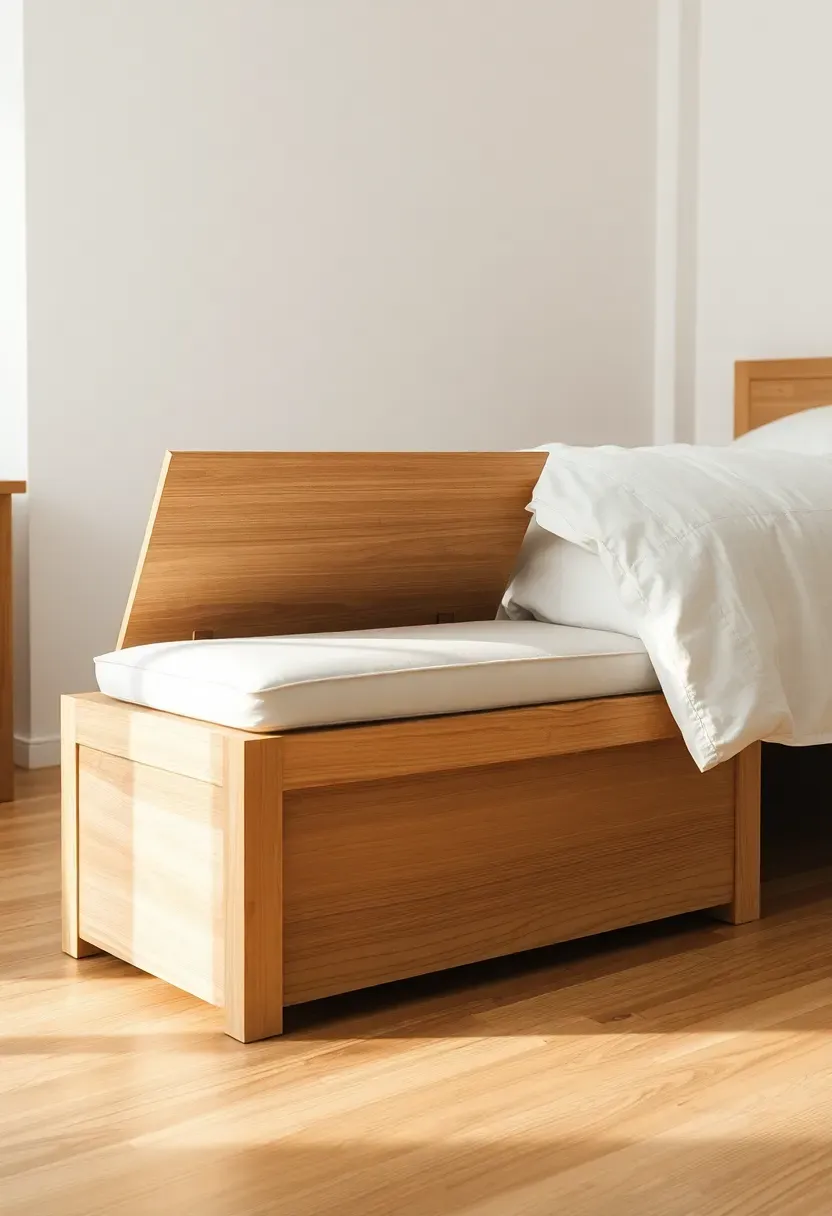
Prompt: Nature documentary capture on Hasselblad X2D 100C with XCD 90V lens at f/4. Hyper-realistic 3/4 view of low bench at foot of platform bed, light oak wood base with hinged storage lid, white linen cushion. Warm white walls, light oak flooring. Materials: light oak wood, white linen cushion fabric.
A low-profile storage bench at bed's foot provides concealed storage and optional seating while maintaining japandi minimalism through clean lines and neutral materials. Light oak construction warms space without visual weight, and low height (14-16 inches) preserves openness while creating proportional harmony with platform bed.
Use for practical items: extra bedding, seasonal clothing, occasional-use items. Linen or cotton cushion in white or cream adds softness and comfort. Style surface minimally—one small object (ceramic bowl, tray, or book) maximum to prevent accumulation.
Tips
- Match bench length to bed width—queen beds work with 48-54 inch benches, king beds with 60-66 inches
- Include slow-close hinges on storage lid—prevents slamming and adds refined japandi quality
- Choose removable cushion covers with hidden zippers—makes cleaning practical while maintaining custom appearance
What this gives you: Functional storage and seating that maintains japandi minimalism through low profile, neutral materials, and concealed functionality.
Recommended
Items for this idea
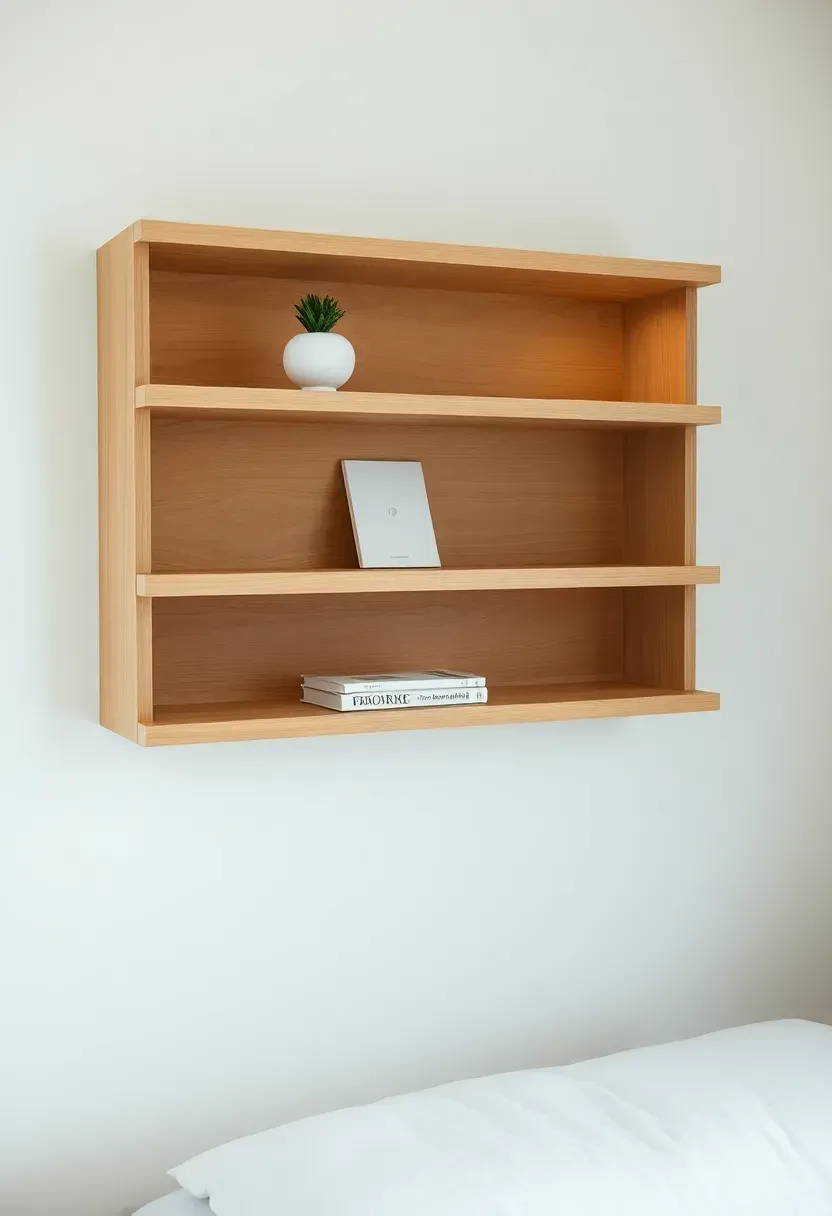
Prompt: Nature documentary capture on Hasselblad X2D 100C with XCD 90V lens at f/4. Hyper-realistic 3/4 view of floating wall shelves in light oak, displaying minimal curated items: small white ceramic vase, single book, tiny succulent. Warm white wall. Materials: light oak wood, matte white ceramic, small succulent. Soft natural light (5000K).
Floating shelves in light oak provide display and storage without visual bulk, embodying japandi's preference for functional minimalism. Unlike bookcases or closed cabinets, floating shelves feel open and airy, allowing wall space to show through and maintaining room's sense of spaciousness. Style with extreme restraint—1-3 items per shelf maximum, edited to include only objects serving daily function or bringing genuine joy.
Position at varying heights or asymmetrical arrangements for intentional casualness—perfect alignment feels too rigid for japandi's relaxed authenticity. Choose light oak or ash to maintain warmth and consistency with other furniture. Keep shelf depth minimal (6-8 inches) to prevent visual heaviness.
Tips
- Follow rule of thirds: fill each shelf 1/3 with items, leaving 2/3 empty—prevents visual clutter while creating intentional negative space
- Group items in odd numbers (1, 3, or 5) and vary heights for visual rhythm—creates intentional composition without formal arrangement
- Edit ruthlessly—remove anything that doesn't serve clear purpose or spark joy; japandi requires consistent curation
What this gives you: Functional display that maintains japandi minimalism through floating design, warm materials, and rigorous editing.
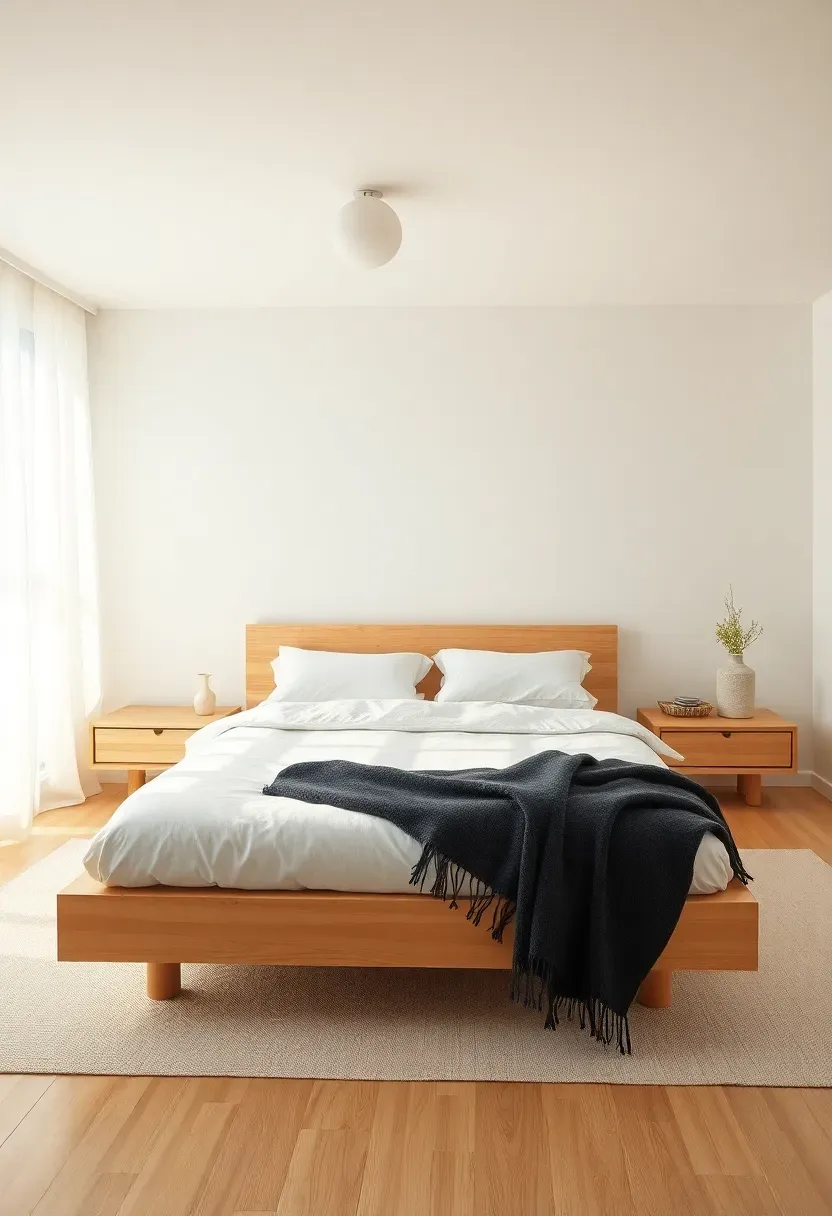
Prompt: Nature documentary capture on Hasselblad X2D 100C with XCD 90V lens at f/4. Hyper-realistic wide view of japandi bedroom with warm white walls, light oak platform bed and floating nightstands, white linens, charcoal wool throw. Large window with white sheer curtains. Materials: warm white plaster, light oak wood, white cotton linen, charcoal wool. Soft natural light (5000K).
Warm white or cream walls provide bright japandi backdrop—unlike bright white which can feel stark, warm whites with yellow or pink undertones create cozy japandi atmosphere. Light oak furniture introduces warmth while maintaining visual consistency, and neutral textiles (white, gray, cream, charcoal) add depth without color disruption.
Limit palette to 3-4 core colors: wall color (warm white or cream), wood tone (light oak or ash), light textile neutral (white or cream), darker accent (charcoal or navy-gray). This restrained approach creates visual harmony while preventing chaotic feeling. Natural materials provide sufficient variation through texture and grain.
Tips
- Choose warm white or cream paint rather than pure bright white—yellow or pink undertones create cozy japandi warmth
- Keep all wood tones in same light-to-medium range—mixing very light and very dark woods disrupts japandi visual calm
- Use texture rather than color for interest: linen, wool, jute, oak grain, and ceramic glaze provide sufficient variation
What this gives you: Serene cohesive foundation embodying japandi minimalism through restrained color, material consistency, and texture-based variation.
Recommended
Items for this idea
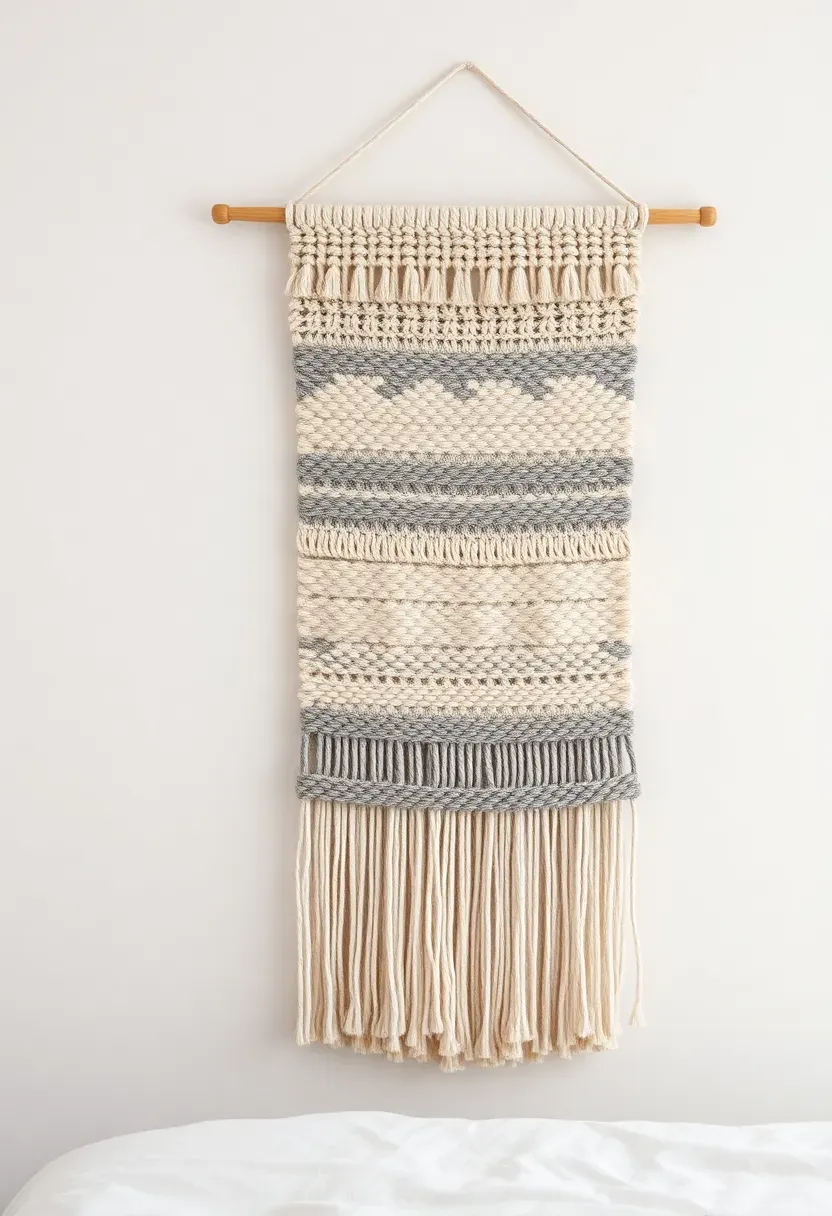
Prompt: Nature documentary capture on Hasselblad X2D 100C with XCD 90V lens at f/4. Hyper-realistic 3/4 view of woven textile wall hanging in neutral cream and gray tones, simple geometric weave pattern, hanging from minimal wood dowel on warm white wall. Materials: cotton or wool woven textile, light wood dowel. Soft natural light (5000K), highlighting weave texture.
A woven textile wall hanging introduces texture and craftsmanship while maintaining japandi minimalism through neutral tones and simple patterns. Unlike framed art or decorative objects, woven textiles feel organic and handmade, adding warmth through material authenticity rather than color or ornamentation. Visible weave creates visual interest preventing rooms from feeling flat.
Hang single substantial textile rather than gallery wall—japandi favors one strong statement over collections. Choose simple geometric weaves, subtle gradients, or solid textures rather than figurative designs. The textile should feel like natural material exploration rather than decorative image.
Tips
- Choose textiles in room's existing palette—cream, gray, beige, soft black—rather than introducing new colors
- Hang at eye level (57-60 inches from floor to center) for optimal viewing—standard gallery height feels intentional
- Keep surrounding wall mostly clear—avoid crowding with additional art or decor competing with textile's texture
What this gives you: Textural warmth and craftsmanship maintaining japandi minimalism through neutral tones, simple patterns, and single-statement presentation.
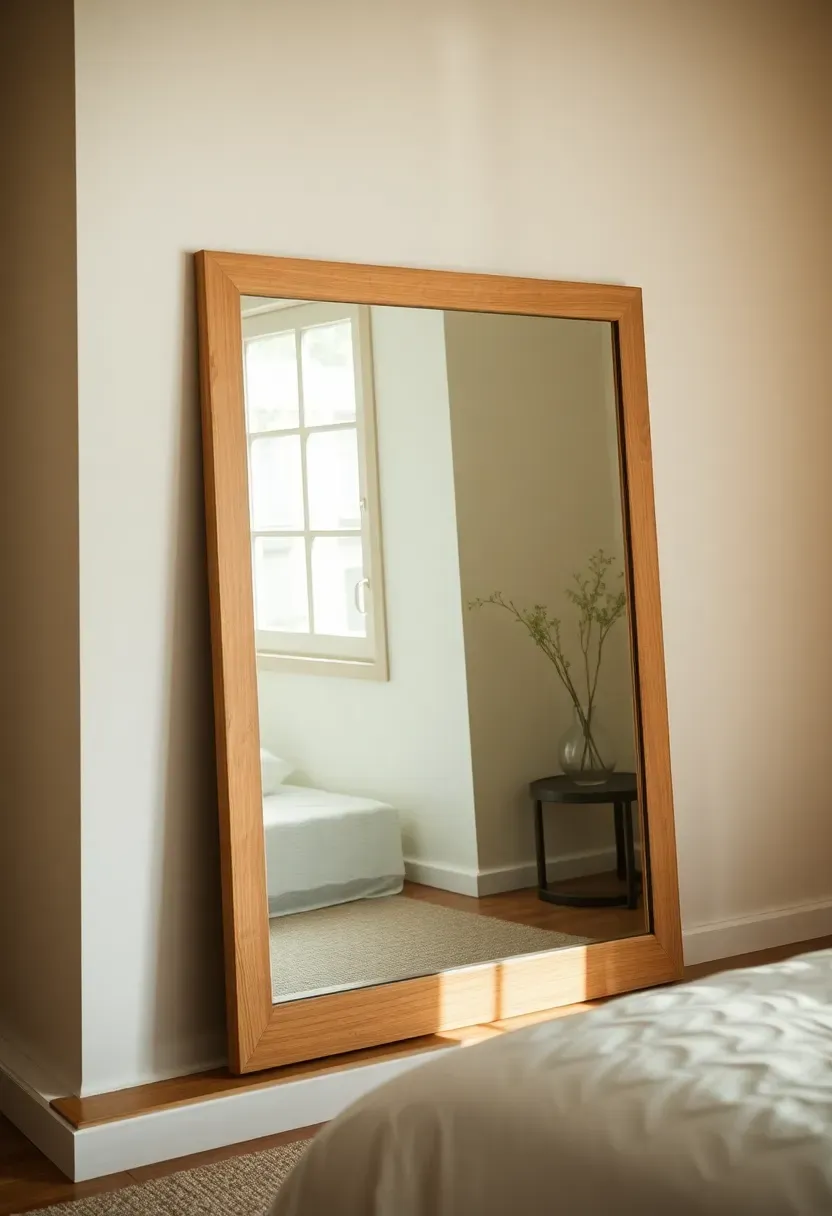
Prompt: Nature documentary capture on Hasselblad X2D 100C with XCD 90V lens at f/4. Hyper-realistic 3/4 view of large rectangular mirror with light oak wood frame, leaning against warm white wall, reflection showing part of bedroom with window. Materials: light oak wood frame with visible grain, high-quality mirror glass. Soft natural light (5000K).
A simple mirror with light oak frame provides functional reflection while introducing japandi warmth through natural materials—unlike frameless or black-framed mirrors which feel stark, oak-framed mirrors maintain japandi's preference for authentic materials. Leaning placement feels intentional yet casual, and substantial size (at least 30x40 inches) creates impact through scale.
Position mirror to reflect window light or visually pleasing area—maximizes light-doubling effect and creates intentional reflection. Oak frame should be minimal (1-2 inches wide) with simple joinery, avoiding decorative molding. A large, simply-framed mirror feels architectural rather than decorative.
Tips
- Choose mirror with at least 1/4 inch thickness—thin mirrors can warp or feel flimsy, while substantial glass enhances quality perception
- Match wood tone to other furniture—oak frame with oak nightstands and bed maintains japandi visual consistency
- Secure leaning mirrors to wall with discrete anchors for safety—maintains casual aesthetic while preventing tipping
What this gives you: Functional reflection maintaining japandi minimalism through simple oak framing, substantial scale, and authentic materials.
Recommended
Items for this idea
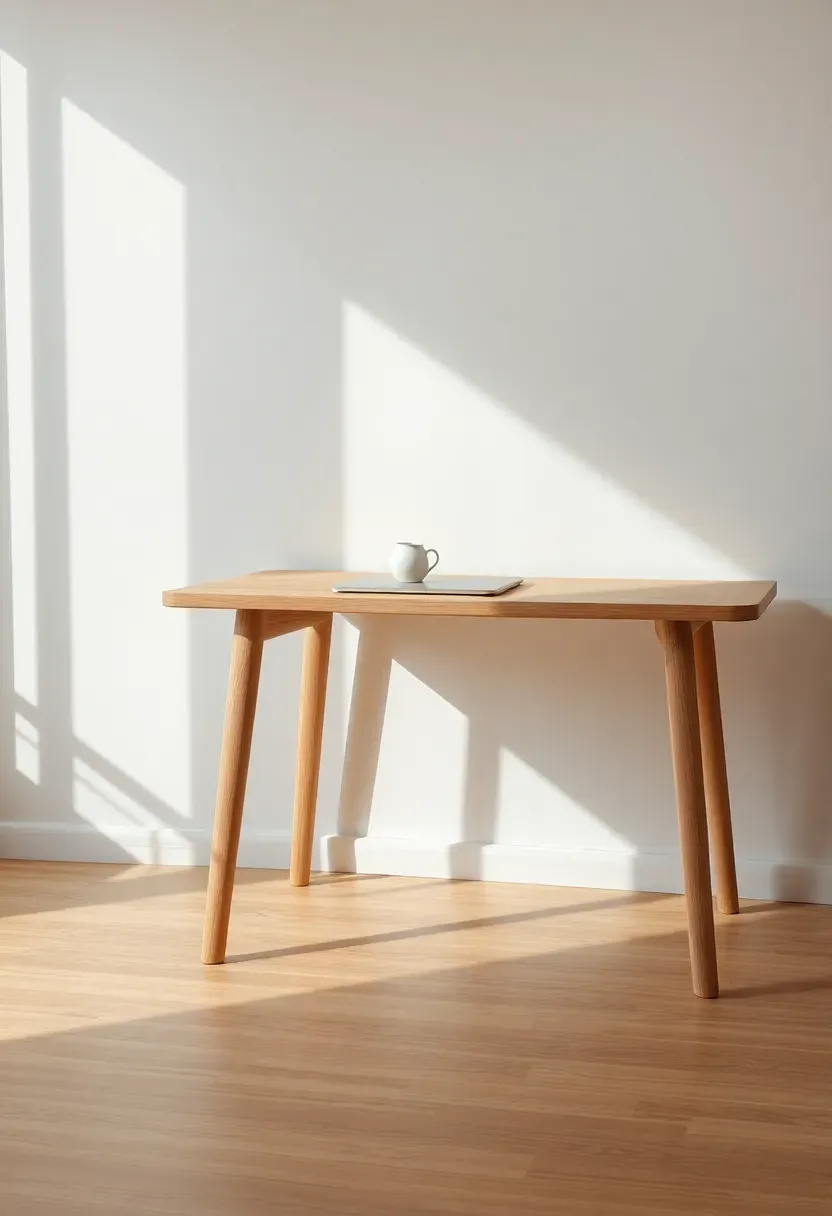
Prompt: Nature documentary capture on Hasselblad X2D 100C with XCD 90V lens at f/4. Hyper-realistic 3/4 view of minimalist writing desk with light oak wood top and tapered oak legs, simple rectangular form with minimal styling—single small ceramic vessel and laptop. Warm white wall, light oak flooring. Materials: light oak wood, matte white ceramic. Soft natural light (5000K).
A minimalist desk with clean lines provides workspace functionality while maintaining japandi simplicity through material consistency and reduced ornamentation. Light oak construction connects visually with bed and nightstands for cohesion, while simple rectangular or tapered form avoids decorative complexity. Unlike executive desks or storage-heavy workstations, japandi desks prioritize surface area for essentials while discouraging accumulation through limited depth.
Keep surface styling minimal: laptop, one notebook, one small object (ceramic dish, tray, or plant) maximum. This prevents desk from becoming clutter magnet. Position near window if possible—natural light enhances japandi's connection to outdoors and creates more pleasant workspace.
Tips
- Mount desks at 29-30 inches high for ergonomic comfort—standard desk height prevents neck and shoulder strain
- Choose shallow designs (18-20 inches deep) for smaller bedrooms—provides sufficient surface area without consuming excessive floor space
- Edit desk contents daily—japandi minimalism requires consistent curation to prevent surfaces becoming clutter magnets
What this gives you: Functional workspace maintaining japandi minimalism through clean lines, material consistency, and rigorous surface editing.
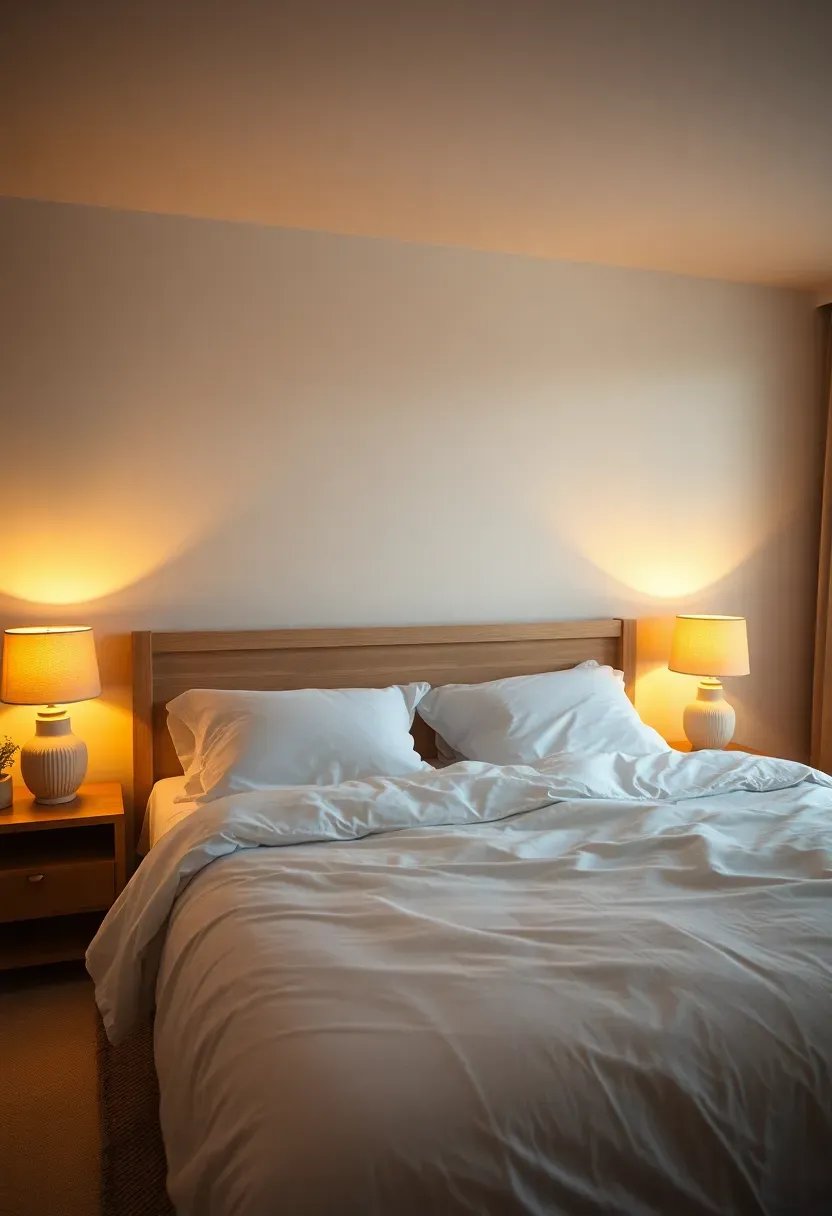
Nature documentary capture on Hasselblad X2D 100C with XCD 90V lens at f/4. Hyper-realistic 3/4 view of japandi bedroom at dusk with layered warm lighting: ambient ceiling light (2700K), bedside ceramic lamps with linen shades glowing warmly. Light oak bed, white linens, warm white walls. Materials: light oak wood, white cotton linen, ceramic lamp bases, linen shades. Warm layered lighting.
Layered warm white lighting creates ambiance while maintaining japandi minimalism through color consistency and material simplicity. Unlike mixed-temperature lighting, using warm white (2700K-3000K) throughout creates cohesive ambiance. Ceiling fixture provides ambient light, bedside lamps offer task lighting, optional accent lights highlight architectural features or plants. All fixtures should share warm temperature and fabric or material shades for diffused, flattering light.
Install dimmers on all circuits for maximum versatility—full brightness for tasks and cleaning, dimmed for relaxation. Choose fixtures with ceramic or wood bases and linen or cotton shades rather than metal or glass. This material warmth prevents spaces from feeling clinical or harsh.
Tips
- Use consistent 2700K-3000K bulbs throughout—mixed temperatures create visual discord and disrupt japandi calm
- Install dimmers on all lighting circuits for adjustable ambiance—single addition dramatically increases room functionality
- Choose fabric shades (linen or cotton) over paper or metal—natural materials diffuse light warmly and age gracefully
What this gives you: Versatile ambiance maintaining japandi minimalism through warm color temperature, material consistency, and diffused fixtures.
Recommended
Items for this idea
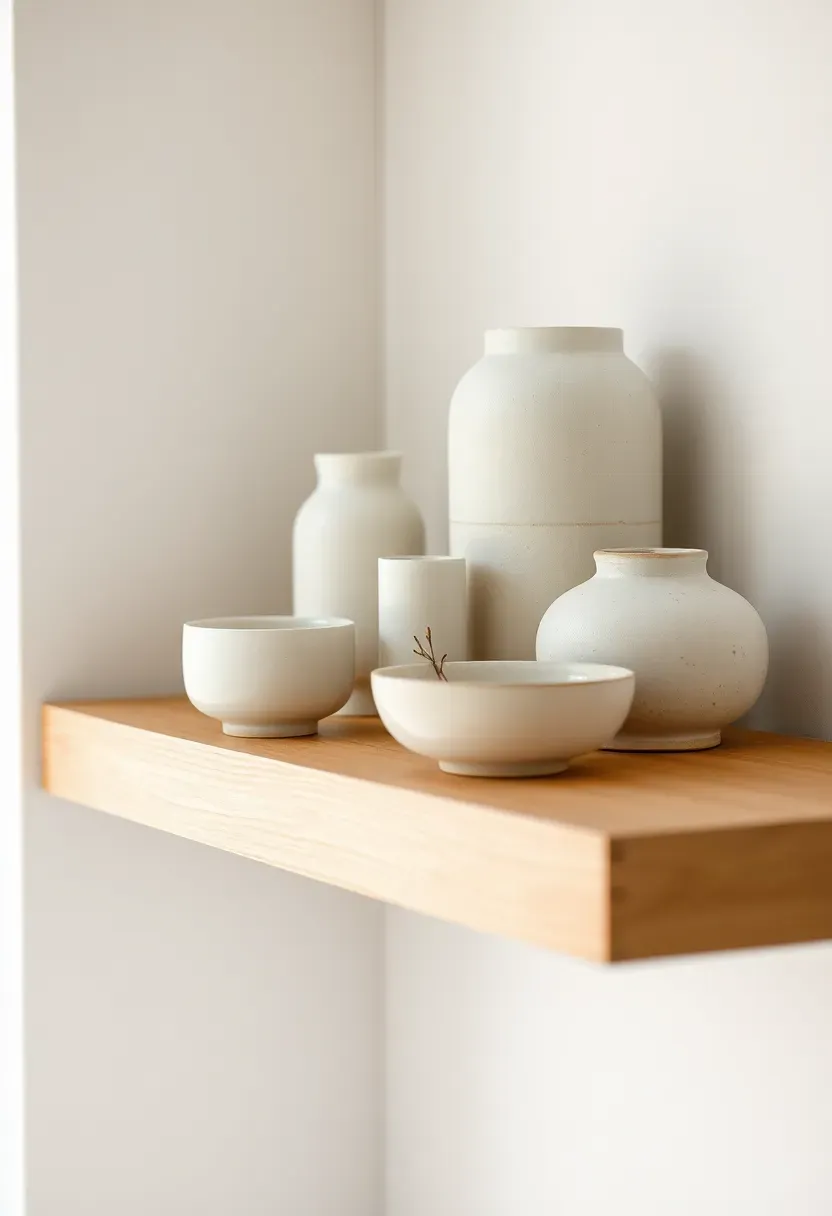
Prompt: Nature documentary capture on Hasselblad X2D 100C with XCD 90V lens at f/4. Hyper-realistic 3/4 view of small collection of handmade ceramic vessels in matte white and cream tones, displayed on floating oak shelf. Varied simple forms: small bowl, cylinder vase, rounded dish. Visible ceramic texture and glaze variation. Materials: handmade ceramic, light oak wood shelf. Soft natural light (5000K).
A small collection of handmade ceramic vessels introduces warmth and craftsmanship while embodying japandi minimalism through neutral colors and simple forms. Unlike mass-produced decorative objects, handmade ceramics carry authentic imperfections—subtle surface variations, visible tool marks, glaze inconsistencies—that provide visual interest without ornamentation. Displayed sparingly (3-5 vessels maximum), they create curated still-life feeling intentional rather than cluttered.
Choose vessels in white, cream, or soft gray to maintain room's neutral palette. Forms should be simple: cylinders, bowls, dishes, or gently rounded shapes. Display on floating shelves, nightstands, or dresser—edit regularly and remove pieces no longer sparking joy.
Tips
- Limit collections to 3-5 vessels maximum—japandi minimalism favors editing over accumulation
- Choose handmade over mass-produced for authentic imperfections—visible maker marks provide necessary visual interest
- Group in odd numbers and vary heights for visual rhythm—creates intentional composition without formal arrangement
What this gives you: Authentic warmth and craftsmanship maintaining japandi minimalism through neutral tones, simple forms, and restrained curation.
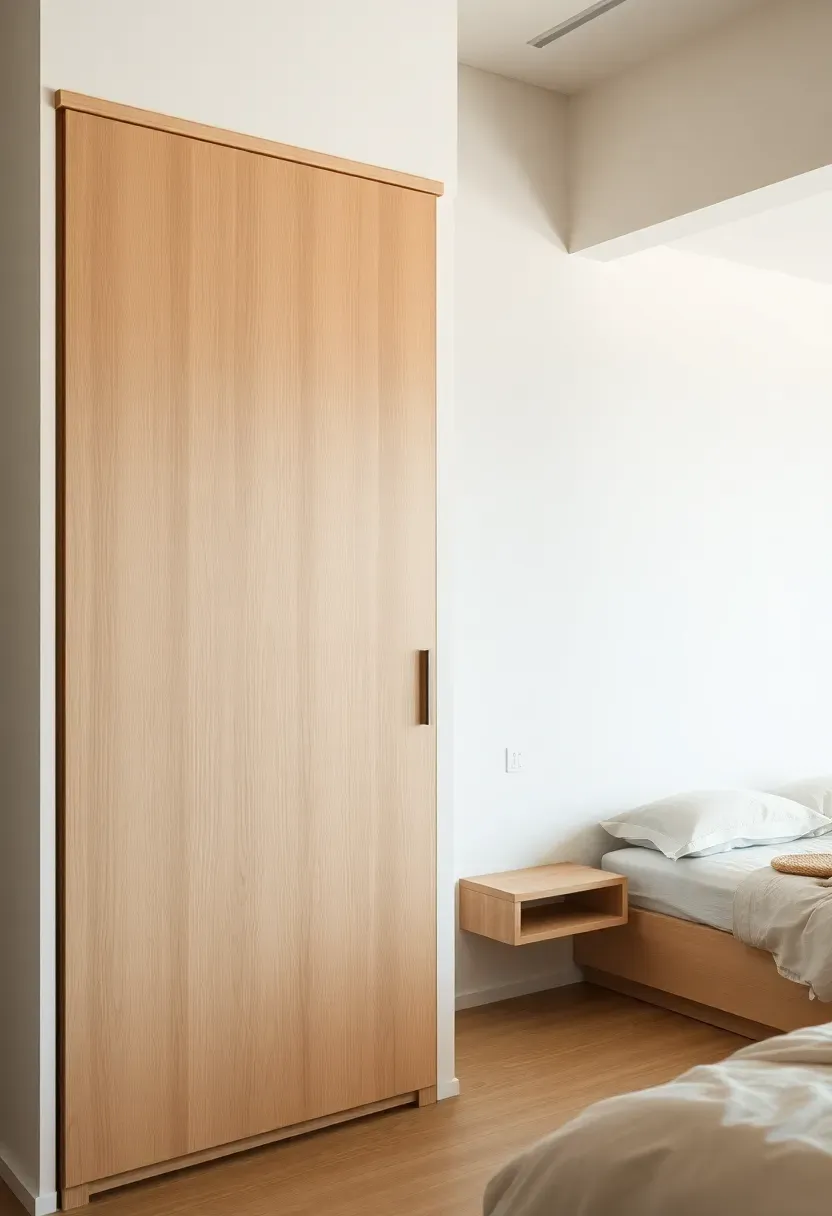
Prompt: Nature documentary capture on Hasselblad X2D 100C with XCD 90V lens at f/4. Hyper-realistic 3/4 view of floor-to-ceiling wardrobe with light oak sliding doors, minimal recessed handles, warm white wall surrounding. Part of bedroom with platform bed visible. Materials: light oak wood with visible grain, warm white plaster. Soft natural light (5000K).
A built-in wardrobe with light wood sliding doors provides substantial concealed storage while maintaining japandi minimalism through seamless integration. Unlike freestanding armoires or closet systems with visible hardware, built-in sliding doors feel architectural and intentional—flush with surrounding walls and using minimal recessed handles.
Floor-to-ceiling design maximizes storage without consuming additional floor area—essential for japandi's emphasis on spaciousness. Sliding mechanism eliminates door swing clearance, preserving open space. Interior organization should be highly functional: adjustable shelving, hanging rods, and drawers accommodate specific needs while preventing stuffed, chaotic closets.
Tips
- Choose recessed handles or push-latch mechanisms rather than protruding hardware—maintains japandi's clean aesthetic
- Organize interior with configurable systems adapting as needs change—japandi values longevity and adaptability
- Edit wardrobe contents seasonally—donate or store items not worn to prevent stuffed interiors creating daily friction
Budget/Time: Built-ins require significant investment—consider IKEA systems with custom panel doors for more budget-friendly alternative achieving similar seamless appearance.
What this gives you: Substantial concealed storage maintaining japandi minimalism through architectural integration, seamless hardware, and material consistency.
Recommended
Items for this idea
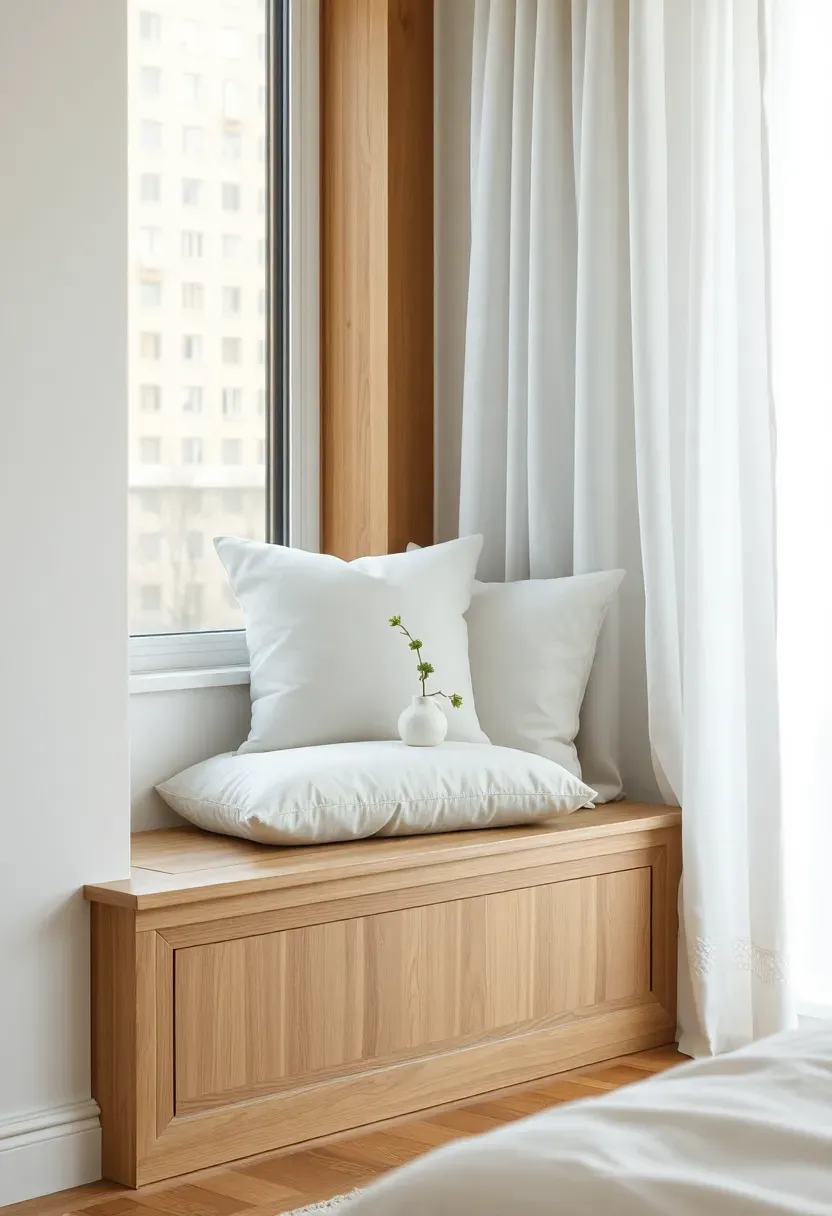
Prompt: Nature documentary capture on Hasselblad X2D 100C with XCD 90V lens at f/4. Hyper-realistic 3/4 view of built-in window seat with light oak wood base, white linen cushions, small white ceramic vase with single stem. Window with sheer linen curtains, warm white walls. Materials: light oak wood, white linen cushion fabric, matte white ceramic. Soft natural light from window (5000K).
A built-in window seat provides serene reading nook functionality while embodying japandi minimalism through material consistency and architectural integration. Light oak construction connects visually with other furniture, while white or cream linen cushions introduce necessary softness. Unlike freestanding benches or armchairs, built-in seats feel custom and intentional.
Window seats work best in windows with at least 48 inches width and 18-24 inches depth. Include concealed storage underneath for functionality. Style surface minimally—one small object maximum to preserve calm, uncluttered aesthetic.
Tips
- Design storage with slow-close hinges—prevents slamming and adds refined japandi quality
- Choose outdoor-rated linen or performance fabrics for curtains if window receives direct sunlight
- Include removable cushion covers with hidden zippers—makes cleaning practical while maintaining custom appearance
What this gives you: Functional sanctuary space maintaining japandi minimalism through architectural integration, material consistency, and concealed storage.
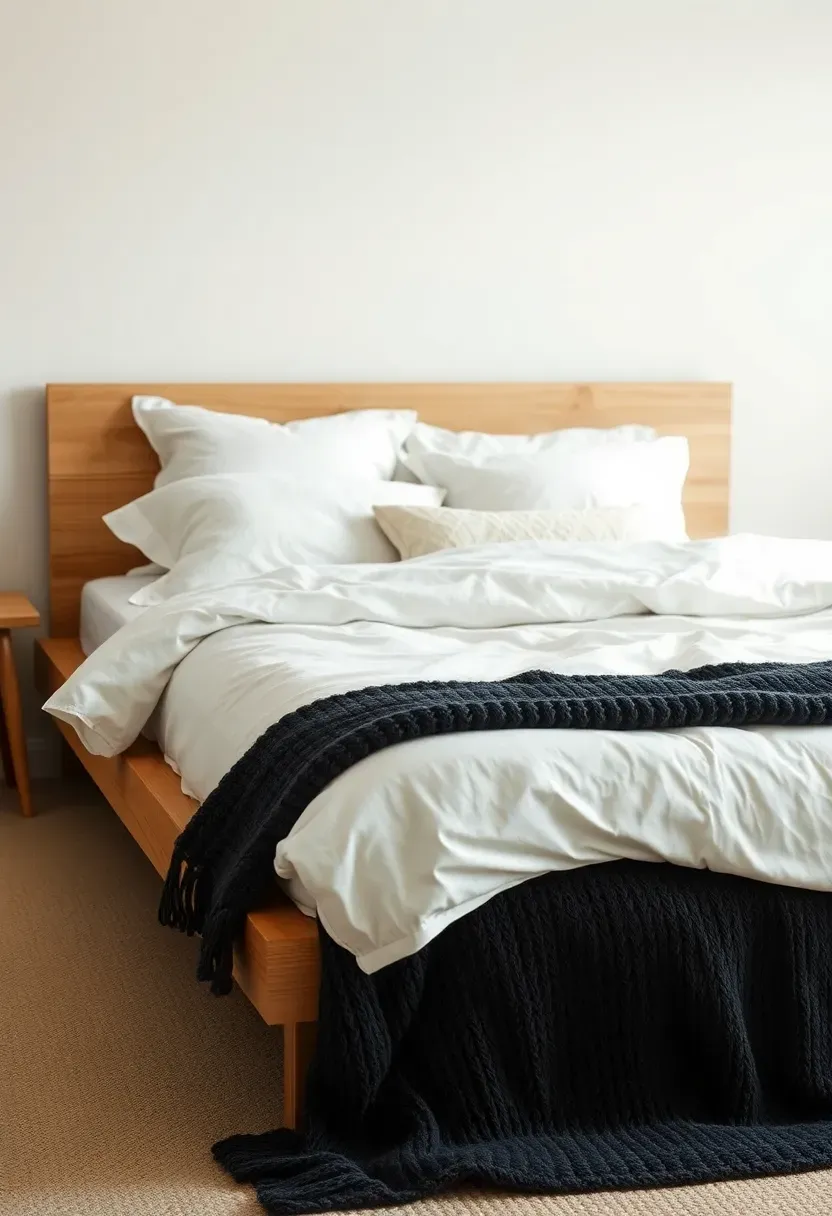
Prompt: Nature documentary capture on Hasselblad X2D 100C with XCD 90V lens at f/4. Hyper-realistic 3/4 view of platform bed with white and cream linens, charcoal wool throw casually draped at foot, visible chunky knit texture. Light oak bed frame, warm white walls. Materials: white cotton linen, cream linen, charcoal wool with visible knit texture. Soft natural light (5000K).
A single throw blanket in charcoal, cream, or soft wool adds textural accent and practical warmth while maintaining japandi minimalism through neutral tone and singular presence. Unlike multiple decorative pillows or layered throws creating visual clutter, one well-chosen throw provides sufficient interest through material quality—chunky knits, merino wool, or heavyweight cotton.
Drape casually at bed's foot rather than folding precisely—japandi embraces lived-in ease over formality. Choose materials feeling genuinely useful for cool mornings or reading sessions, aligning with japandi's principle that objects should serve purpose.
Tips
- Choose one throw maximum—additional throws or pillows disrupt japandi minimalism
- Select materials feeling authentic: wool, cotton, or linen rather than synthetics—natural fibers age beautifully
- Embrace casual draping rather than precise folding—lived-in ease feels more japandi than stiff formality
What this gives you: Tactile warmth and visual interest maintaining japandi minimalism through neutral tone, singular presence, and authentic materials.
Recommended
Items for this idea
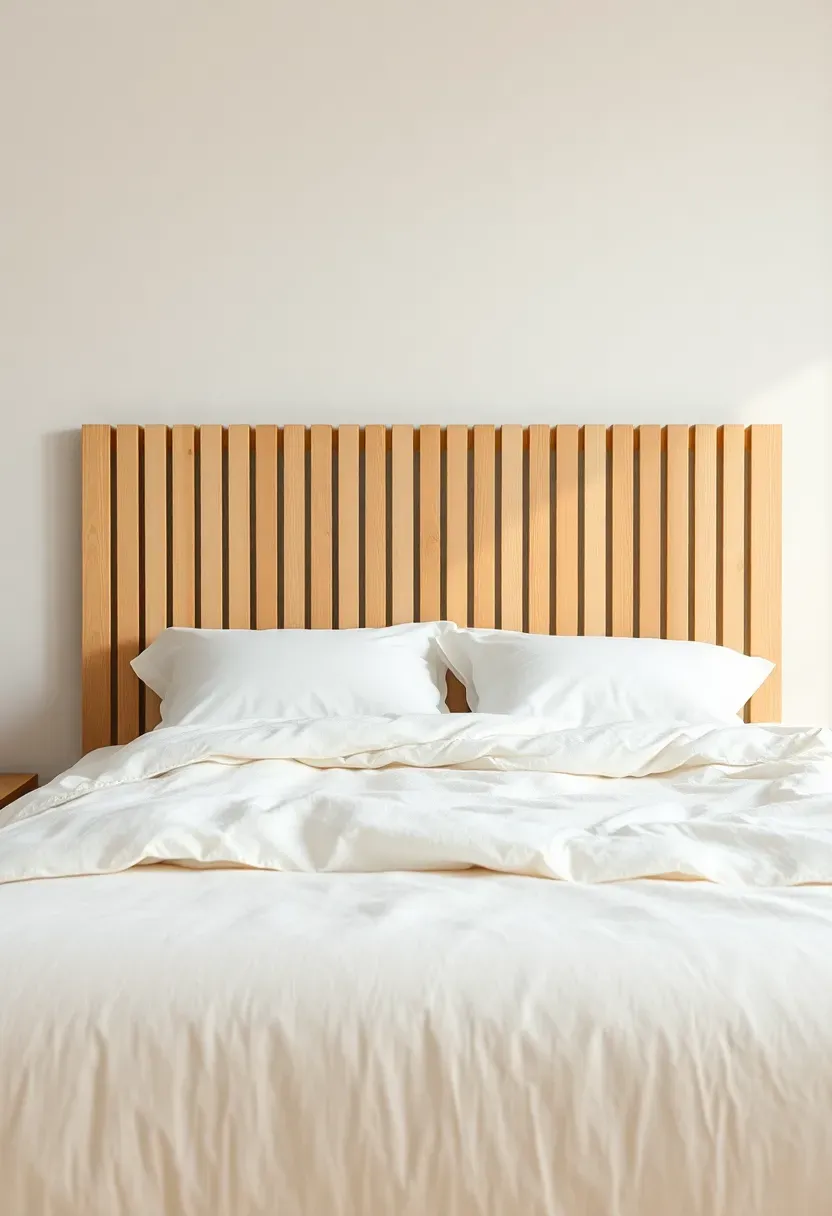
Prompt: Nature documentary capture on Hasselblad X2D 100C with XCD 90V lens at f/4. Hyper-realistic 3/4 view of platform bed with minimal light oak slat headboard, white linens, cream duvet, warm white walls. Simple vertical wood slats with subtle spacing. Materials: light oak wood with visible grain, white cotton linen, cream linen duvet. Soft natural light (5000K).
Choosing minimal slat headboard or no headboard embodies japandi minimalism by eliminating unnecessary elements while maintaining warmth through material authenticity. Wood slat headboards in light oak provide subtle visual interest through grain and spacing without weight of upholstered designs. Alternatively, skipping headboard entirely maximizes visual spaciousness.
If choosing slat headboard, opt for vertical or horizontal planks with minimal spacing and simple construction—no decorative molding, carved details, or integrated shelving. Headboard should feel architectural rather than furniture, blending seamlessly with platform bed.
Tips
- Choose vertical slats for height perception or horizontal slats for width perception—either direction maintains japandi minimalism
- Match headboard wood tone to bed frame exactly—consistent tones create visual cohesion and prevent disjointed feeling
- Consider no headboard for maximum spaciousness—japandi minimalism values negative space as active design element
What this gives you: Architectural simplicity embodying japandi minimalism through reduced ornamentation, material authenticity, and essentialist design.
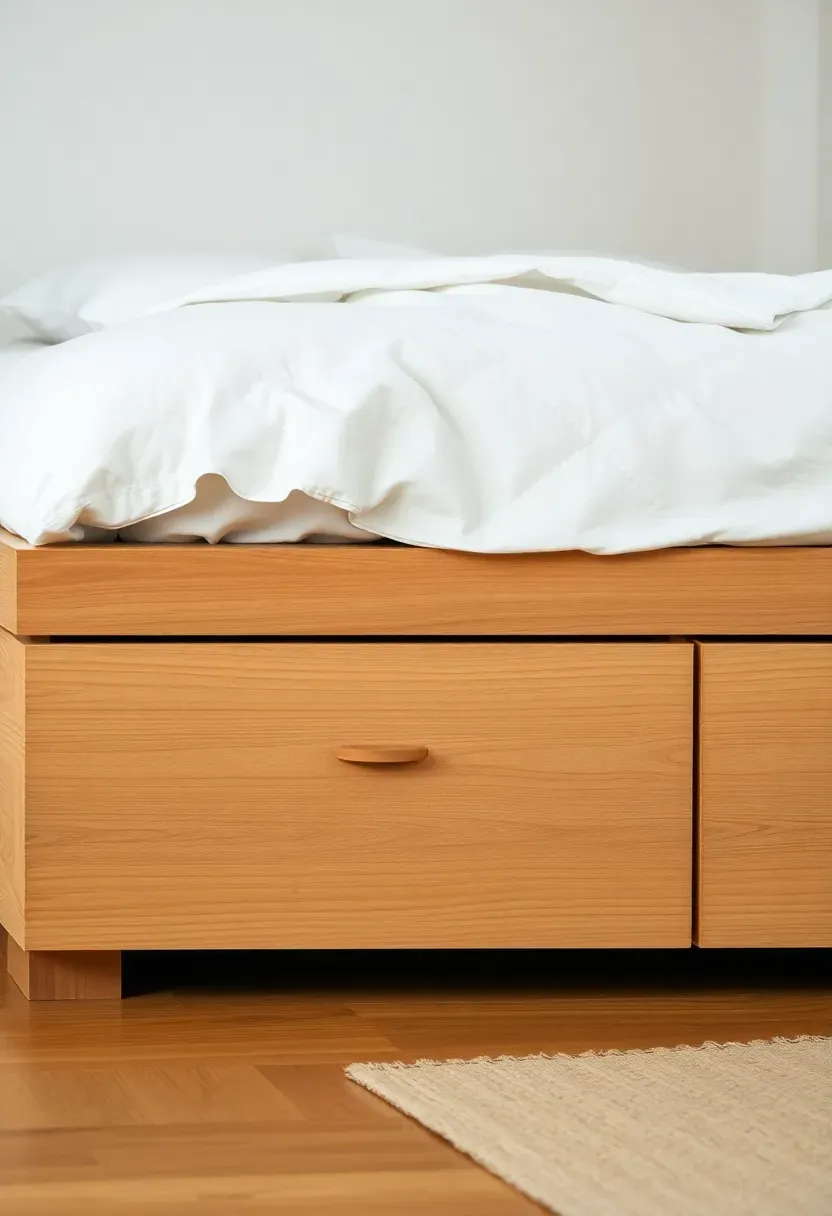
Prompt: Nature documentary capture on Hasselblad X2D 100C with XCD 90V lens at f/4. Hyper-realistic 3/4 view of platform bed with under-bed storage drawers on light oak base, white linens, warm white walls. Drawers with minimal pulls. Materials: light oak wood, white cotton linen. Soft ambient light (5000K).
Concealed under-bed storage maintains japandi minimalism by hiding practical items while preserving visual calm—platform beds with built-in drawers or separate rolling drawers provide substantial storage capacity without visual clutter. Unlike freestanding dressers or visible storage containers, concealed solutions keep necessary items accessible but out of sight.
Hydraulic lift beds or under-bed drawers with soft-close slides provide easy access for frequently used items. Built-in closet systems with adjustable shelving maximize vertical space while keeping contents organized and hidden. Key is maintaining visual simplicity through seamless integration.
Tips
- Choose hydraulic lift beds with gas pistons rated for mattress weight—cheaper mechanisms struggle with heavier mattresses
- Include soft-close slides on under-bed drawers—prevents slamming and adds refined japandi quality
- Edit stored items seasonally—concealed storage should not become dumping ground for items that should be discarded
What this gives you: Substantial storage capacity maintaining japandi minimalism through concealed design, seamless integration, and hidden functionality.
Recommended
Items for this idea
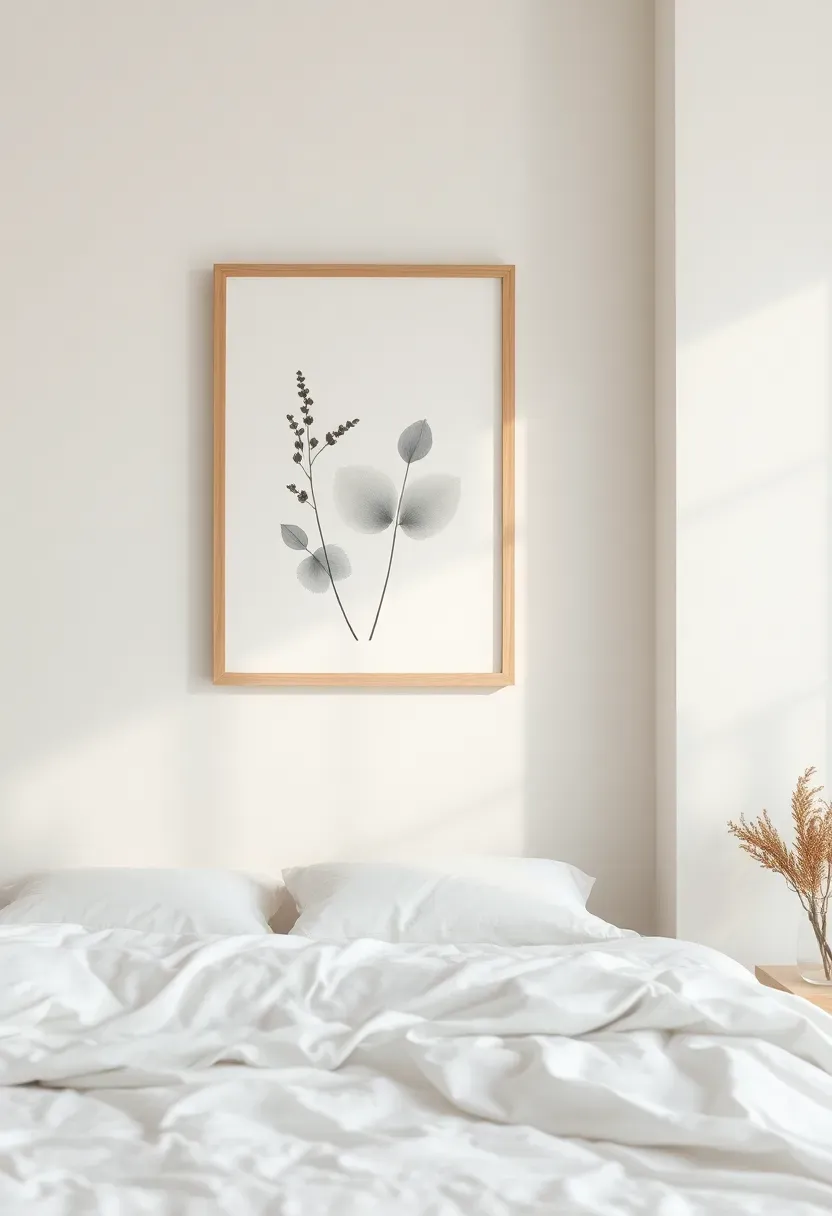
Prompt: Nature documentary capture on Hasselblad X2D 100C with XCD 90V lens at f/4. Hyper-realistic 3/4 view of minimalist nature-inspired art piece on warm white wall above platform bed—abstract botanical print in charcoal, cream, and soft gray on white paper background. Simple light oak frame. Part of bedroom with white linens visible. Materials: paper print with visible texture, light oak wood frame. Soft natural light (5000K).
Minimalist art with nature motifs introduces organic subject matter while maintaining japandi restraint through simplified forms and neutral palettes. Botanical prints, landscape photographs, or abstract nature studies in black, white, gray, or earth tones provide visual interest without color disruption.
Choose one substantial piece rather than gallery wall—japandi minimalism favors single statements over collections. Framing should be simple: light oak or matte black wood frames with white or cream mats. Position at standard gallery height (57-60 inches from floor to center) or center above bed.
Tips
- Choose art in room's existing palette—black, white, gray, cream, or soft earth tones—rather than introducing new colors
- Opt for simplified or abstracted nature forms over realistic details—minimalism maintained through reduction
- Hang at standard gallery height (57-60 inches from floor to center) or center above bed for intentional positioning
What this gives you: Organic interest maintaining japandi minimalism through simplified forms, neutral palettes, and single-statement presentation.
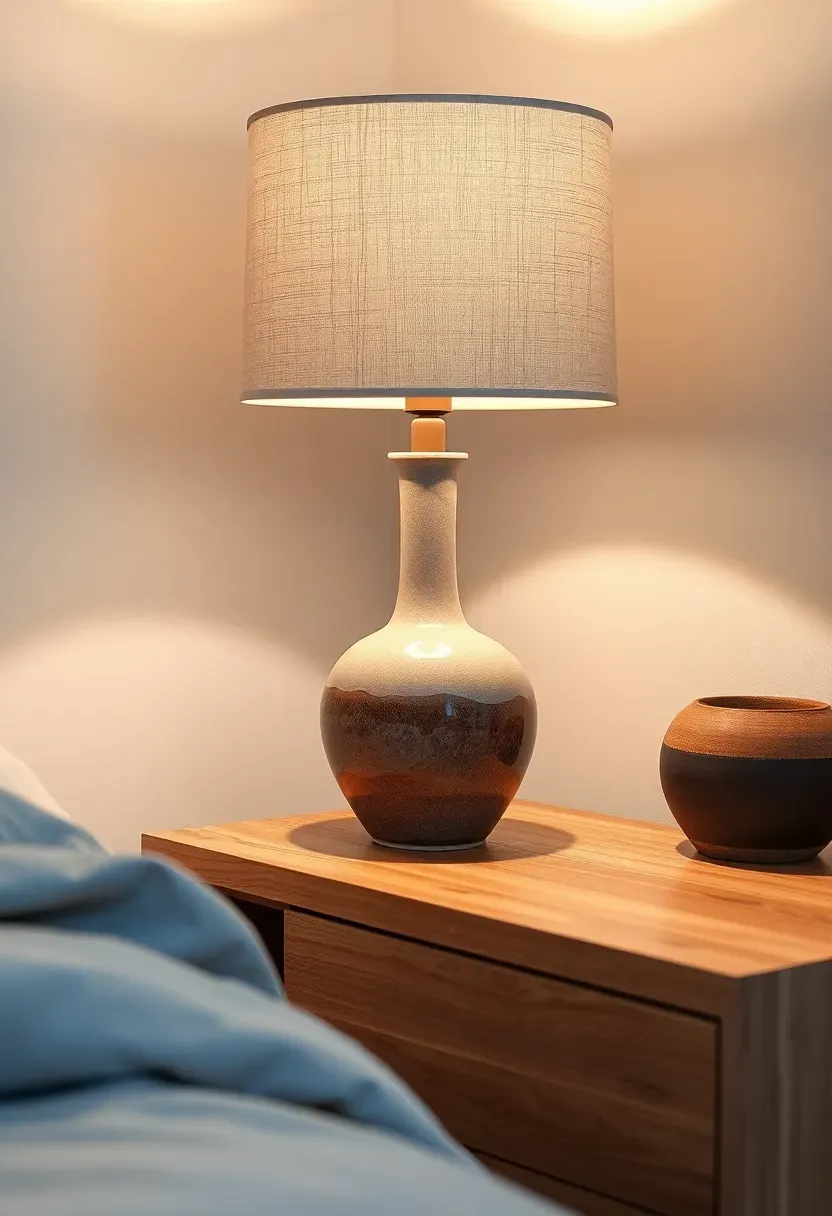
Prompt: Nature documentary capture on Hasselblad X2D 100C with XCD 90V lens at f/4. Hyper-realistic 3/4 view of single high-quality ceramic table lamp on floating oak nightstand, highlighting material quality and craftsmanship—visible ceramic glaze variation, substantial base weight, fine linen shade. Warm white wall background. Materials: handmade ceramic, quality linen shade, light oak wood. Soft ambient light (5000K).
Embracing quality over quantity is japandi interior design's philosophical foundation—a core principle we also explore in our minimalist japandi bedroom design guide. Investing in fewer, better items rather than accumulating many mediocre pieces creates spaces feeling both curated and livable. A single well-made ceramic lamp, one substantial wool throw, or quality light oak bed frame provides more satisfaction and aesthetic pleasure than multiple cheaper alternatives.
Apply systematically: one high-quality lamp per nightstand rather than two mediocre ones, one excellent throw rather than three decorative ones, one substantial rug rather than layered smaller rugs. Each item earns its place through superior material quality, construction integrity, or genuine emotional connection.
Tips
- Prioritize investment pieces: bed frame, mattress, lighting, rug—foundational items impacting daily comfort should be highest quality feasible
- Choose natural materials (wood, ceramic, linen, wool) over synthetics—authentic materials age beautifully while cheap alternatives degrade
- Buy less but better: save for one excellent item rather than settling for multiple mediocre pieces requiring replacement
What this gives you: Authentic satisfaction and aesthetic harmony maintaining japandi minimalism through material quality, reduced quantity, and intentional investment.
Recommended
Items for this idea
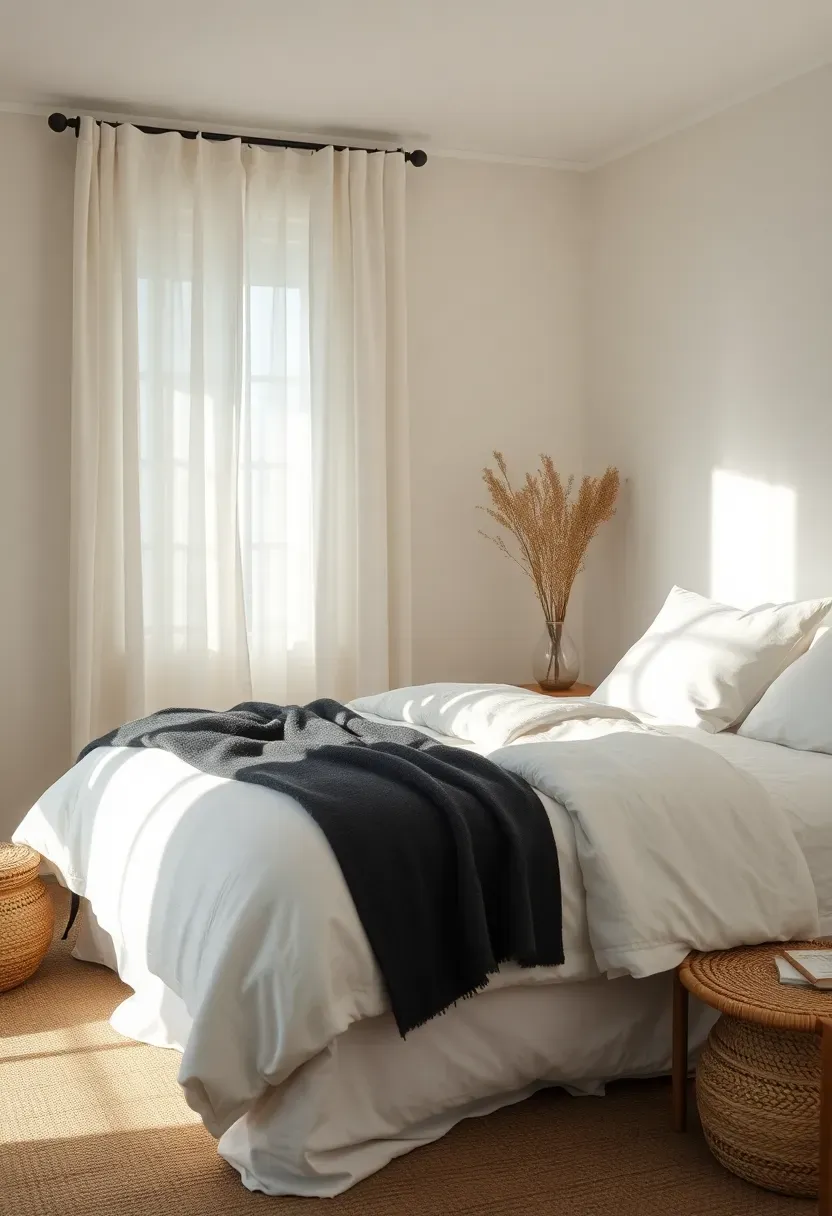
Prompt: Nature documentary capture on Hasselblad X2D 100C with XCD 90V lens at f/4. Hyper-realistic 3/4 view showing layered neutral textiles in bedroom: white linen bedding, charcoal wool throw, white linen sheer curtains, jute rug. Visible fabric textures creating warmth without color. Materials: white linen, charcoal wool, white linen sheer, natural jute. Soft natural light (5000K), highlighting textures.
Layering soft textiles in neutral tones creates warmth and comfort while maintaining japandi minimalism through material quality rather than color or pattern. Linen sheets, wool or cotton throws, sheer curtains, and jute or wool rugs introduce essential texture preventing rooms from feeling sterile.
Limit textile palette to 3-4 colors maximum: white, cream, gray, one darker accent (charcoal or navy-black). This restraint creates cohesion while allowing variation through different materials and textures. Quality matters significantly—natural fibers (linen, wool, cotton, jute) feel authentic and develop character.
Tips
- Choose natural fibers (linen, wool, cotton, jute) over synthetics—authentic materials provide superior comfort and age beautifully
- Embrace visible texture: linen wrinkles, wool grain, jute fiber variation provide necessary interest without pattern
- Layer textiles rather than using colorful prints—white linen duvet, charcoal wool throw, cream rug create sufficient interest through material contrast
What this gives you: Tactile warmth and visual interest maintaining japandi minimalism through neutral tones, natural materials, and texture-based variation.
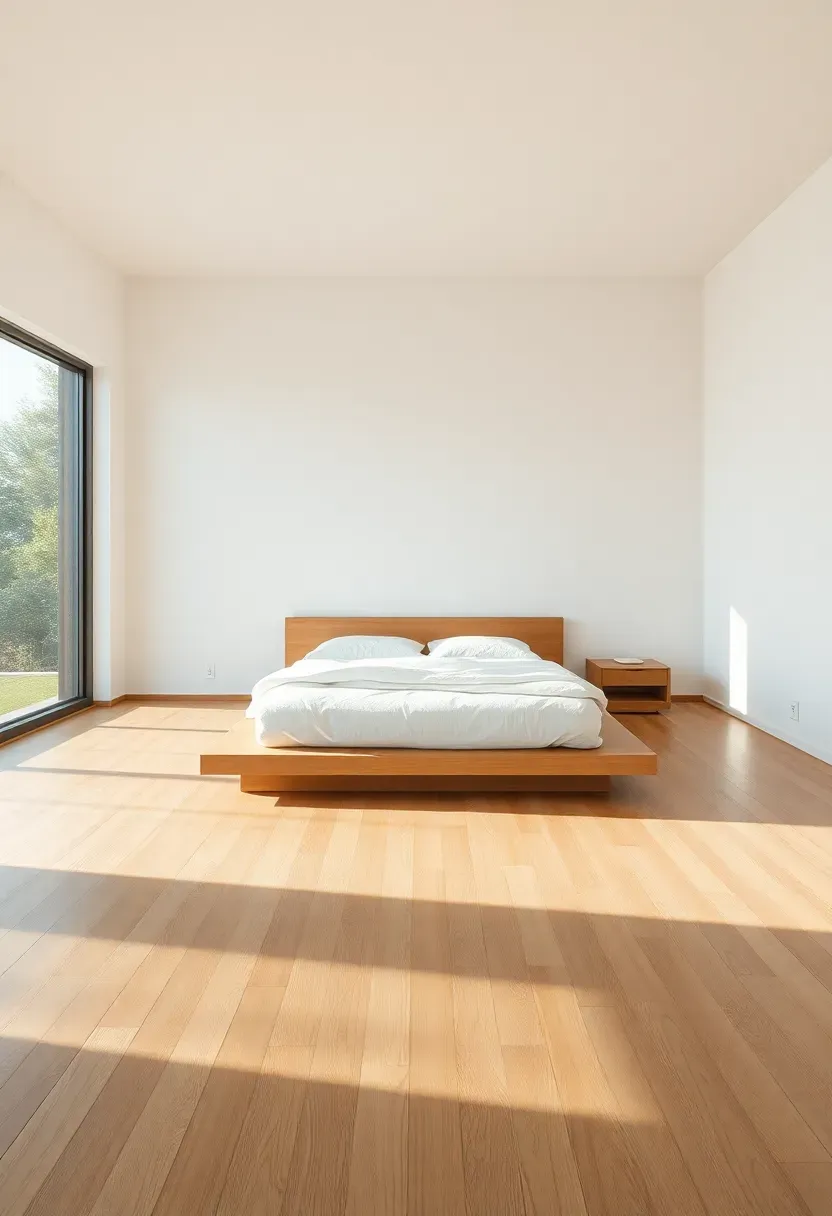
Prompt: Nature documentary capture on Hasselblad X2D 100C with XCD 90V lens at f/4. Hyper-realistic wide view of japandi minimalist bedroom with generous empty floor space, low platform bed, single floating nightstand, large window. Warm white walls, light oak flooring, abundant negative space. Materials: light oak wood, white cotton linen, warm white plaster. Soft natural light (5000K), emphasizing open space.
Intentional empty space—negative space left deliberately clear—is japandi minimalism's defining characteristic and most powerful tool for creating serene environments. Unlike filled corners or maximized furniture layouts, japandi bedrooms preserve substantial floor and wall space, allowing rooms to breathe and creating visual calm through absence rather than addition.
Maintain at least 30-36 inches clearance around bed for comfortable movement, keep walls mostly empty (art should be minimal and strategic), resist urge to fill every surface or corner. Empty space feels luxurious rather than wasteful in japandi design—it's visual equivalent of silence, providing mental and emotional respite.
Tips
- Keep 30-36 inches of clearance around bed sides and foot—maintains spaciousness and prevents over-furnished cramped feeling
- Practice regular editing: every 3-6 months, assess possessions and remove items no longer serving purpose or joy
- Resist filling empty corners or walls—japandi minimalism values negative space as active design element rather than wasted area
What this gives you: Serene spaciousness embodying japandi minimalism through intentional absence, rigorous editing, and preserved breathing room.
Recommended
Items for this idea
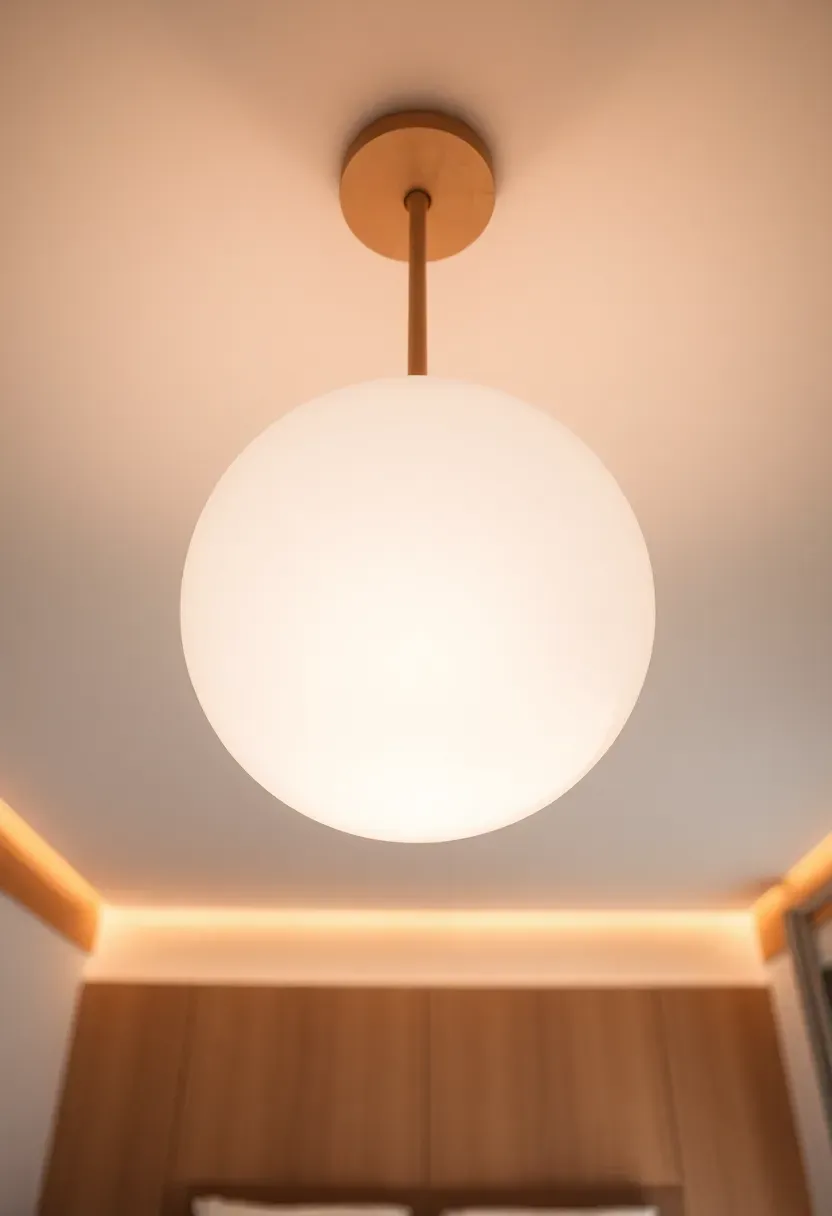
Prompt: Nature documentary capture on Hasselblad X2D 100C with XCD 90V lens at f/4. Hyper-realistic upward view showing minimalist ceiling light fixture with white glass globe shade and light oak backplate, warm white glow (2700K). Warm white ceiling, part of room with platform bed visible below. Materials: matte white glass, light oak wood.
Low-profile ceiling light fixtures provide essential ambient illumination while maintaining japandi's visual calm through reduced scale and material integration. Flush mount or semi-flush fixtures in light oak with white glass or linen shades sit close to ceiling rather than dangling at eye-catching heights, preserving vertical space and maintaining japandi emphasis on horizontal planes.
Choose fixtures with warm white bulbs (2700K-3000K) and fabric or frosted glass diffusion. Avoid exposed bulbs, crystal drops, or decorative chains which feel at odds with japandi simplicity. The fixture should nearly disappear when lit, providing gentle illumination without becoming visual focal point.
Tips
- Choose flush or semi-flush mounts for bedrooms with 8-foot ceilings—standard pendant height can feel cramped in low rooms
- Use warm white bulbs (2700K-3000K) to maintain japandi's warm ambient atmosphere
- Install dimmer switches for adjustable versatility—full brightness for tasks, dimmed for relaxation
What this gives you: Essential ambient lighting maintaining japandi minimalism through low-profile design, material integration, and warm color temperature.
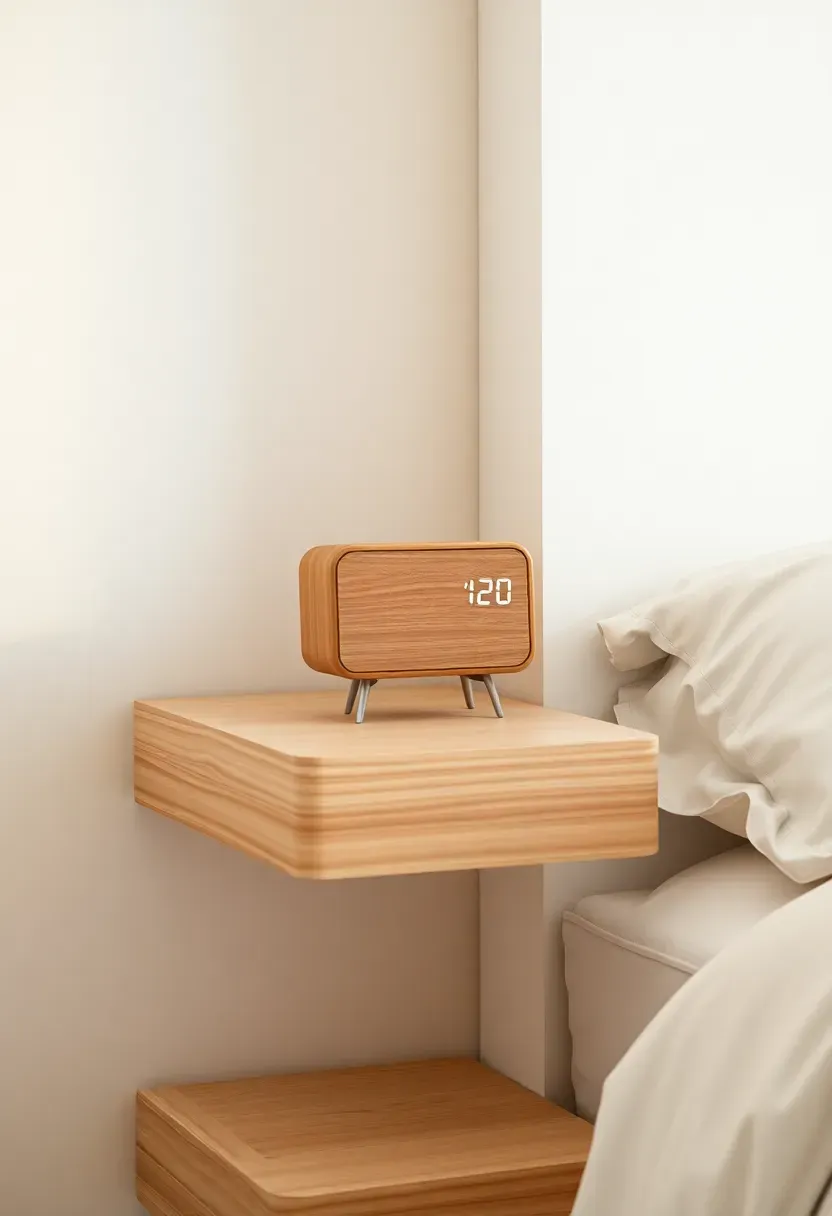
<small class="prompt": Nature documentary capture on Hasselblad X2D 100C with XCD 90V lens at f4. Hyper-realistic 3/4 view of minimalist alarm clock in light oak wood or matte white on floating nightstand, simple rectangular design, minimal display or analog face. Warm white wall, part of platform bed visible. Materials: light oak wood or matte white plastic, small LCD display. Soft ambient light (5000K).
A minimalist alarm clock provides necessary functionality without disrupting japandi serenity through streamlined design and neutral materials. Unlike traditional digital clocks with bright displays, complex buttons, or decorative ornamentation, japandi alarm clocks feature simple rectangular forms, muted displays (or analog faces), and wood or matte white finishes that blend with neutral decor.
Choose clocks with essential features only: time display, alarm, possibly ambient temperature. Avoid models with multiple functions, colorful displays, or unnecessary buttons which create visual noise. Position at bedside where easily accessible but not visually dominant.
Tips
- Choose analog clocks with quiet sweeping second hands—or digital clocks with dimmable displays to avoid harsh light disrupting japandi calm
- Opt for simple rectangular or cylindrical forms in wood or white—avoid decorative shapes, patterns, or bright colors
- Consider phone as alarm if bedside—eliminates clock entirely and reduces surfaces while maintaining japandi minimalism
What this gives you: Functional timekeeping maintaining japandi minimalism through streamlined design, neutral materials, and reduced visual disruption.
Recommended
Items for this idea
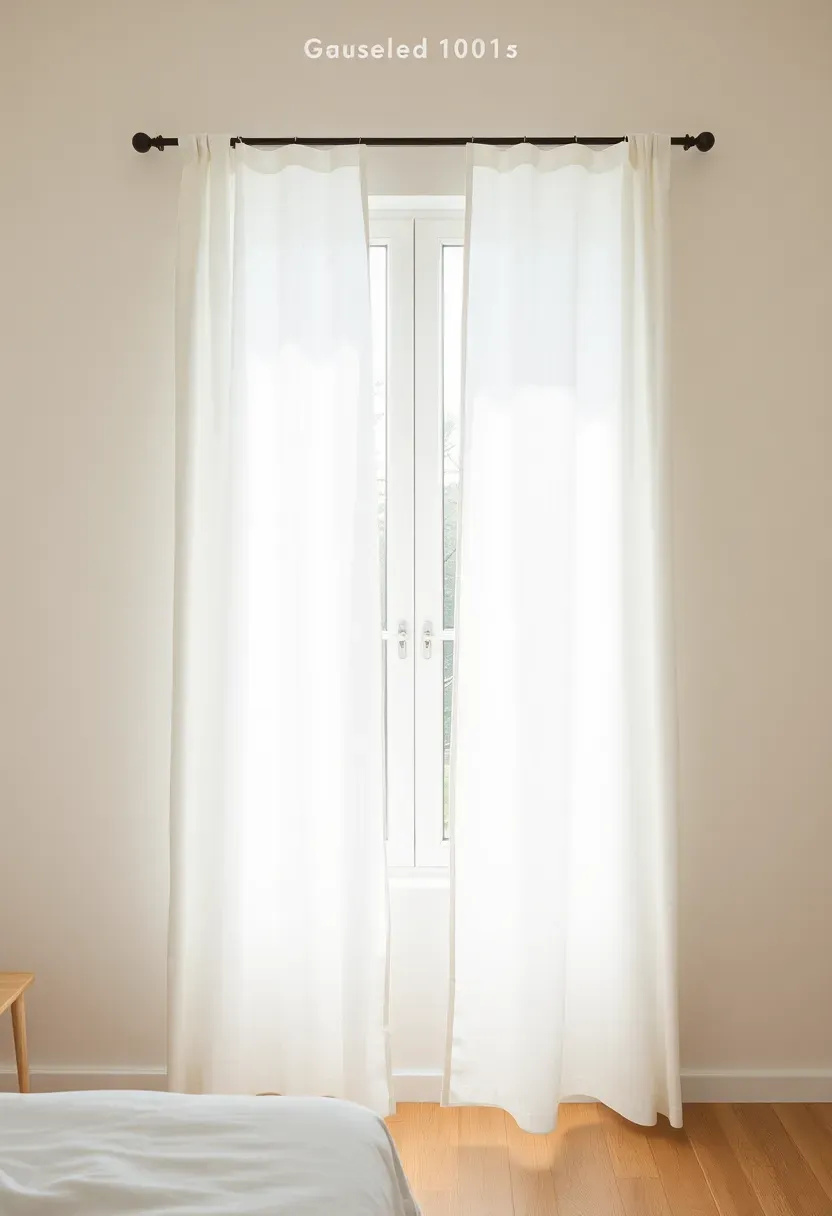
Prompt: Nature documentary capture on Hasselblad X2D 100C with XCD 90V lens at f/4. Hyper-realistic 3/4 view of window with simple white linen curtains hung from minimal metal rod, warm white walls, light oak flooring. Soft natural light filtering through fabric. Materials: white linen fabric, black metal rod, warm white plaster. Soft natural light (5000K).
Simple window treatments in white linen provide privacy and light filtering while maintaining japandi's airy openness—unlike heavy drapes or valances which feel weighty, simple curtains on minimal rods feel light and intentional. White or cream linen sheers diffuse harsh sunlight gently while maintaining japandi's connection to outdoors.
Install on minimal metal rods in black or matte white finishes rather than decorative rods with finials or ornamentation. Hang high and wide—2-4 inches above window frame, extending 6-12 inches beyond each side—to maximize light and create window illusion.
Tips
- Choose linen or linen-cotton blend sheers—natural fibers drape beautifully and develop japandi warmth with age
- Install high and wide—rod 2-4 inches above frame, panels extending 6-12 inches past each side—maximizes window presence
- Use simple metal rods without decorative finials—black or matte white finishes blend rather than stand out
What this gives you: Light-filtering privacy maintaining japandi minimalism through simple materials, minimal hardware, and intentional hanging.
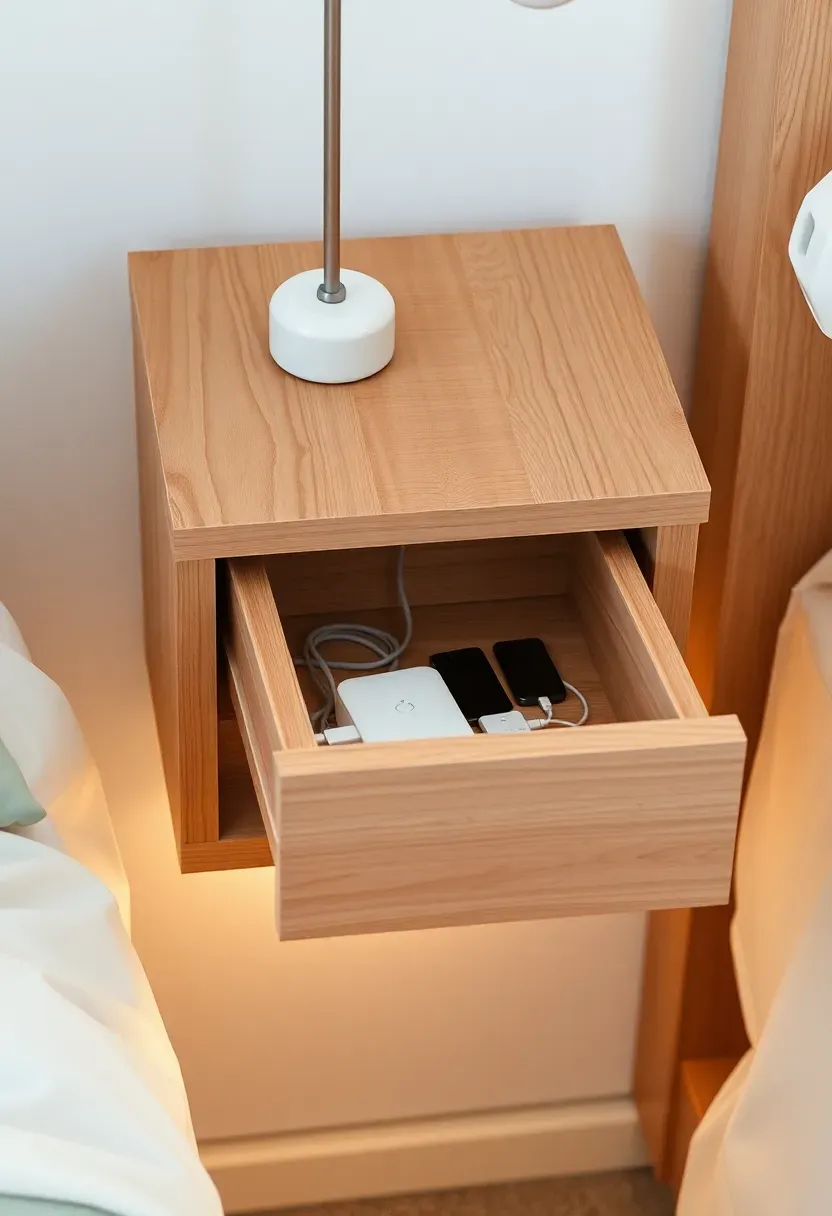
Prompt: Nature documentary capture on Hasselblad X2D 100C with XCD 90V lens at f/4. Hyper-realistic 3/4 view of floating nightstand with small drawer open showing concealed charging station inside—power strip with plugged devices, cord management. Light oak wood, warm white wall. Materials: light oak wood, white plastic power strip, device charging cables. Soft ambient light (5000K).
A concealed charging station within nightstand drawer or cabinet provides essential device charging without disrupting japandi minimalism through visible cord clutter. Unlike charging stations on nightstands where devices, cables, and power strips create visual chaos, concealed solutions keep technology accessible but hidden.
Install power strip with multiple USB and standard outlets inside drawer or cabinet. Use cord management ties or velcro to organize cables neatly. Close drawer when not in use—technology becomes accessible but invisible, maintaining japandi's calm visual surface.
Tips
- Choose power strips with multiple USB ports and standard outlets—accommodates phones, tablets, watches simultaneously
- Use velcro cable ties or cord organizers—keep cables neatly bundled and prevent tangles
- Consider USB-integrated outlets built into nightstands for even more streamlined solution—eliminates power strip entirely
What this gives you: Practical device charging maintaining japandi minimalism through concealed storage, hidden cords, and preserved surface calm.
Recommended
Items for this idea
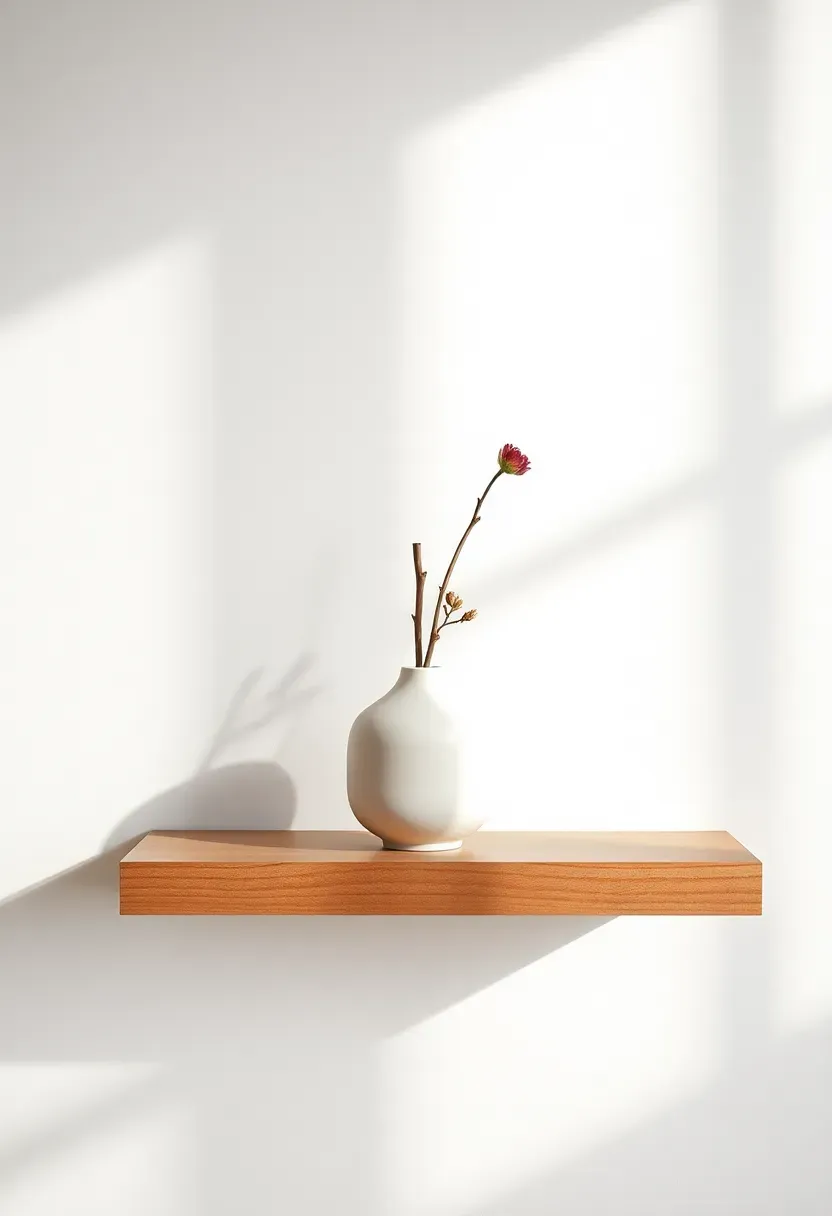
Prompt: Nature documentary capture on Hasselblad X2D 100C with XCD 90V lens at f/4. Hyper-realistic 3/4 view of small ceramic bud vase in matte white or cream on floating oak shelf, single dried branch or stem with small bloom inside. Warm white wall background. Materials: handmade ceramic with subtle texture, dried branch, small flower. Soft natural light (5000K), creating gentle shadows.
A small ceramic bud vase with single stem or branch introduces organic life while maintaining japandi minimalism through perfect scale and neutral presentation. Unlike large vases with elaborate arrangements which feel overwhelming, tiny bud vases (3-5 inches) with single stems provide just enough life and color without disrupting visual calm.
Position on floating shelf, nightstand, or dresser where it won't interfere with daily function. Choose vases in white, cream, or soft gray to maintain neutral palette. Fill with single dried branch, small fresh bloom, or even leave empty as sculptural object.
Tips
- Choose bud vases 3-5 inches tall—proportional to japandi minimalism rather than statement scale
- Use matte white or cream ceramic with subtle surface texture—glazed or shiny finishes feel at odds with japandi authenticity
- Display single stems or branches rather than full arrangements—less is more in japandi floral philosophy
What this gives you: Organic accent maintaining japandi minimalism through perfect scale, neutral materials, and single-statement presentation.
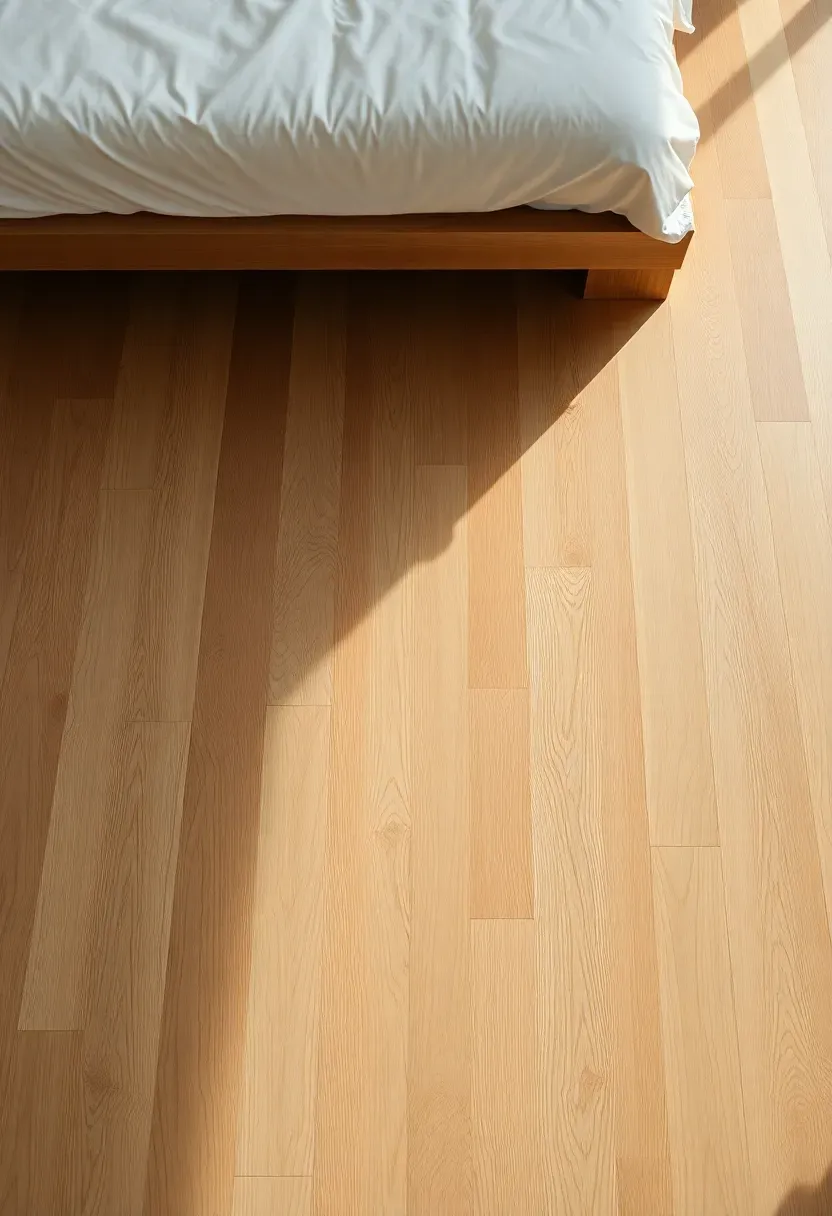
Prompt: Nature documentary capture on Hasselblad X2D 100C with XCD 90V lens at f/4. Hyper-realistic top-down view of light oak hardwood flooring covering entire bedroom floor, visible wood grain and plank joints. Part of platform bed with white linens visible at edges. Warm natural light (5000K), highlighting wood grain. Materials: light oak wood planks with visible grain pattern.
Light oak flooring throughout bedroom provides japandi's foundation—continuous wood surface creates warmth and continuity while neutral tone maintains visual calm. Unlike carpet which can feel heavy or patterned, wood flooring feels clean and bright, reflecting natural light to enhance japandi's sense of spaciousness.
Light oak or ash with clear or subtly stained finish maintains japandi's preference for natural materials. Wood flooring connects visually with bed frame, nightstands, and other furniture, creating cohesive material palette throughout space.
Tips
- Choose light oak or ash rather than darker walnut or mahogany—lighter floors feel more japandi and make rooms feel larger
- Consider engineered wood for stability—provides real wood surface with better performance than solid wood in varying humidity
- Add large jute or wool rug to soften acoustics and introduce texture layering essential to japandi warmth
What this gives you: Warm foundational surface maintaining japandi minimalism through continuous natural material, neutral tone, and visual cohesion.
Recommended
Items for this idea
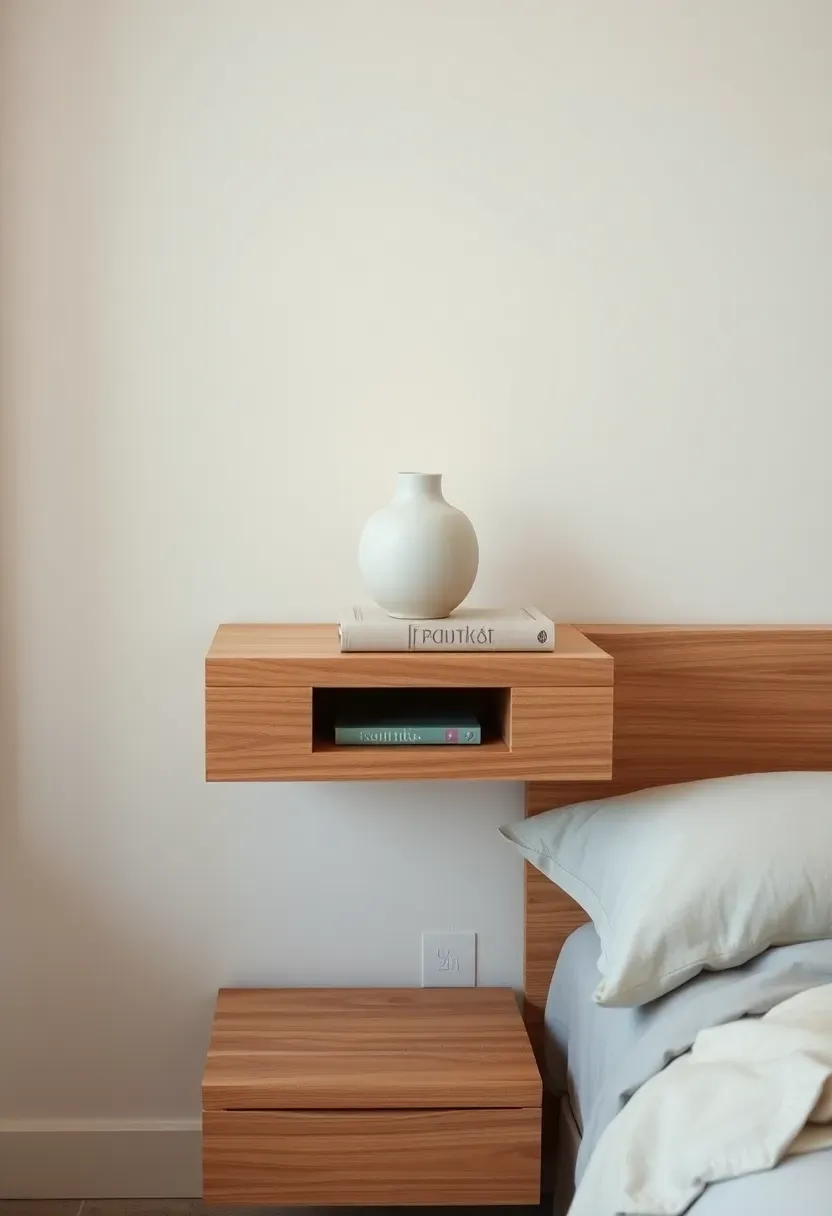
Prompt: Nature documentary capture on Hasselblad X2D 100C with XCD 90V lens at f/4. Hyper-realistic 3/4 view of floating oak nightstand with minimal ceramic lamp and small stack of 2-3 neutral books with fabric-wrapped covers. Warm white wall background. Materials: light oak wood, matte white ceramic, neutral books with linen or fabric covers. Soft ambient light (5000K).
A small stack of carefully chosen books on bedside table or shelf adds personal touch while maintaining japandi minimalism through restrained quantity and neutral presentation. Unlike large book collections or elaborate shelving which feel overwhelming, 2-3 books provide sufficient intellectual engagement without visual clutter.
Choose books with fabric or neutral-covered spines rather than colorful jackets. Stack horizontally rather than vertically for lower profile. Position where easily accessible from bed but not interfering with lamp or other essential objects.
Tips
- Limit to 2-3 books maximum—japandi minimalism favors curated selection over abundant collections
- Choose books with neutral covers: white, cream, gray, fabric-wrapped, or neutral leather—avoid colorful or busy jackets
- Stack horizontally rather than vertically—lower profile feels more japandi and less visually dominant
What this gives you: Personal touch and intellectual engagement maintaining japandi minimalism through restrained quantity, neutral presentation, and functional accessibility.
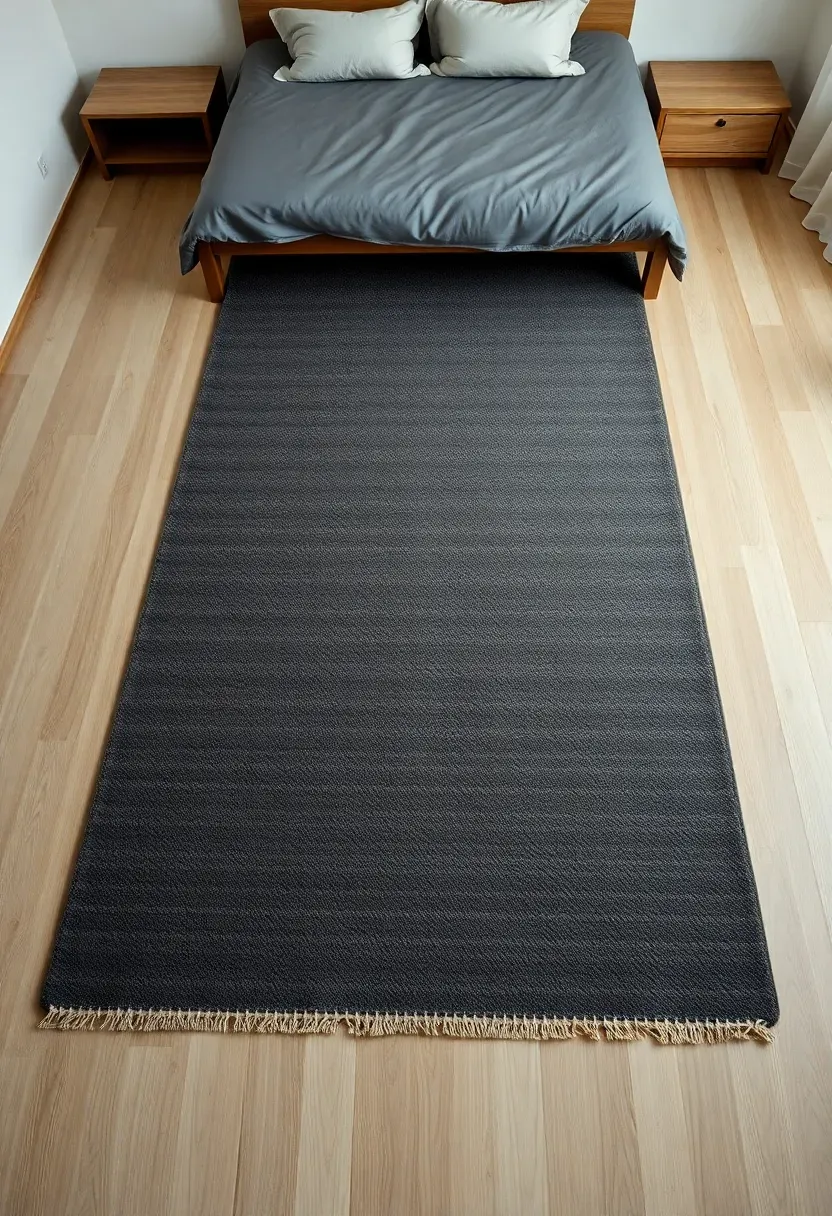
Prompt: Nature documentary capture on Hasselblad X2D 100C with XCD 90V lens at f/4. Hyper-realistic top-down view showing long narrow wool runner rug at side of platform bed or at foot, charcoal or cream color. Light oak flooring visible around rug. Materials: wool rug with visible texture, light oak wood flooring. Soft ambient light (5000K), highlighting rug texture.
A soft wool runner rug adds specific warmth and comfort to particular zones while maintaining japandi minimalism through strategic placement and neutral tones. Unlike large wall-to-wall rugs which cover entire floors, runners define specific areas (bedside, foot of bed, pathway to closet) without overwhelming space with carpeting.
Position along one side of bed or at foot for soft landing when waking. Wool provides natural softness and durability while neutral colors (charcoal, cream, gray) maintain japandi palette. Runner dimensions (typically 2x6 or 2x8 feet) provide sufficient coverage without dominating room.
Tips
- Choose wool over synthetic fibers—natural material feels more authentic, provides better durability, develops character with age
- Position rug where you actually need soft landing zone—beside bed or at foot—rather than purely decorative placement
- Use rug pad underneath for cushioning—prevents slipping and adds comfort underfoot without visual impact
What this gives you: Zone-specific warmth and comfort maintaining japandi minimalism through strategic placement, neutral materials, and focused functionality.
Recommended
Items for this idea
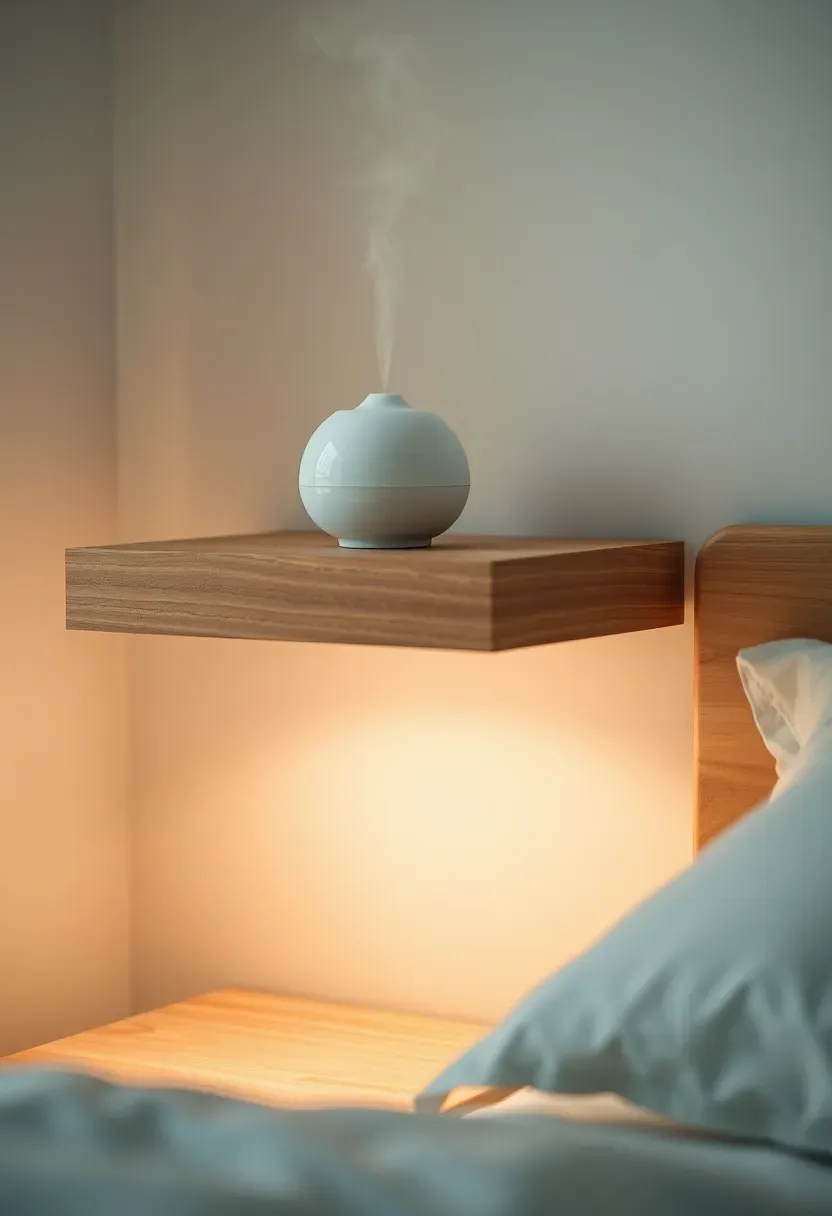
Prompt: Nature documentary capture on Hasselblad X2D 100C with XCD 90V lens at f/4. Hyper-realistic 3/4 view of floating oak nightstand with small white ceramic diffuser or essential oil warmer, gentle steam rising. Warm white wall, part of bed visible. Materials: matte white ceramic diffuser, light oak wood, water vapor. Soft ambient light (5000K).
A calming nature scent introduced through essential oil diffuser or high-quality candle adds subtle sensory dimension to japandi bedroom while maintaining minimalism through functional presentation. Unlike heavy room sprays or decorative fragrance vessels, simple white ceramic diffusers or candles provide aromatherapy without visual disruption.
Choose japandi-appropriate scents: lavender, sandalwood, cedar, hinoki, or subtle citrus. These natural scents enhance japandi's connection to nature without overwhelming space with artificial fragrances. Simple white ceramic diffusers or candles blend with neutral decor.
Tips
- Choose natural essential oils over synthetic fragrances—lavender, sandalwood, cedar, hinoki, subtle citrus work well with japandi aesthetics
- Use ultrasonic diffusers with simple white ceramic designs—avoid elaborate decorative diffusers disrupting japandi minimalism
- Apply scent conservatively—japandi spaces should smell subtly fragrant, not heavily perfumed
What this gives you: Subtle sensory enhancement maintaining japandi minimalism through functional presentation, natural scents, and integrated design.
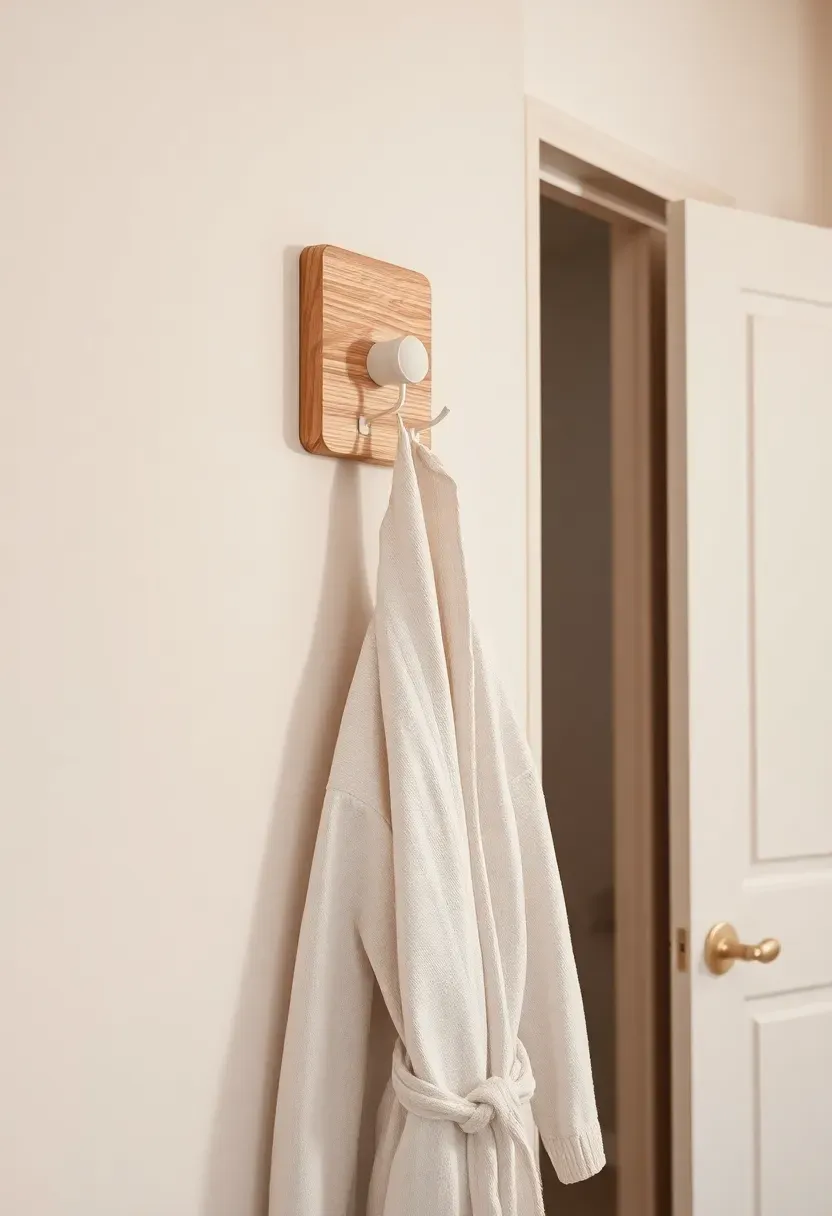
Prompt: Nature documentary capture on Hasselblad X2D 100C with XCD 90V lens at f/4. Hyper-realistic 3/4 view of minimalist wall hook in light oak wood or matte white on warm white wall, white cotton bathrobe or linen jacket hanging. Part of bedroom with door visible. Materials: light oak wood hook or matte white metal hook, white cotton or linen fabric. Soft ambient light (5000K).
A minimalist coat hook behind door or on wall provides functional storage for robes or jackets while maintaining japandi minimalism through reduced scale and neutral integration. Unlike freestanding coat racks or hook rows which feel cluttered, single hook or double hook setup provides essential utility without visual noise.
Position behind bedroom door or on wall near closet. Choose hooks in light oak wood or matte white metal to blend with neutral palette. Install at appropriate height for intended use—lower for children's items, higher for adult robes.
Tips
- Choose single or double hooks rather than hook rows—japandi minimalism favors functional essentials over abundant storage
- Match hook material to other room hardware—oak hook with oak furniture, white hook with white walls for visual consistency
- Position where accessible but not visually prominent—behind door or on wall near closet rather than as decorative feature
What this gives you: Functional storage maintaining japandi minimalism through reduced scale, neutral materials, and utilitarian presentation.
These japandi bedroom ideas succeed through balance—each concept above represents a thoughtful dialogue between Japanese minimalism and Scandinavian functionality, between reduced ornamentation and material warmth, between intentional emptiness and authentic comfort. When implemented together, these 35 japandi bedroom design concepts create spaces that feel genuinely serene: rooms where quality supersedes quantity, where negative space feels luxurious rather than empty, where every object earns its place through either essential function or genuine joy. The japandi approach works beautifully for renters and small apartments because it doesn't require structural changes—just thoughtful editing, natural materials, and intentional curation. Your bedroom should feel like a retreat from daily noise rather than another source of visual chaos or mental clutter.

About the author
OBCD
CGI visualization and interior design content. We create detailed 3D renders and curate practical design ideas for every room in your home.