21 Farmhouse Sunroom Ideas with Natural Wood, Linen, and Vintage Touches
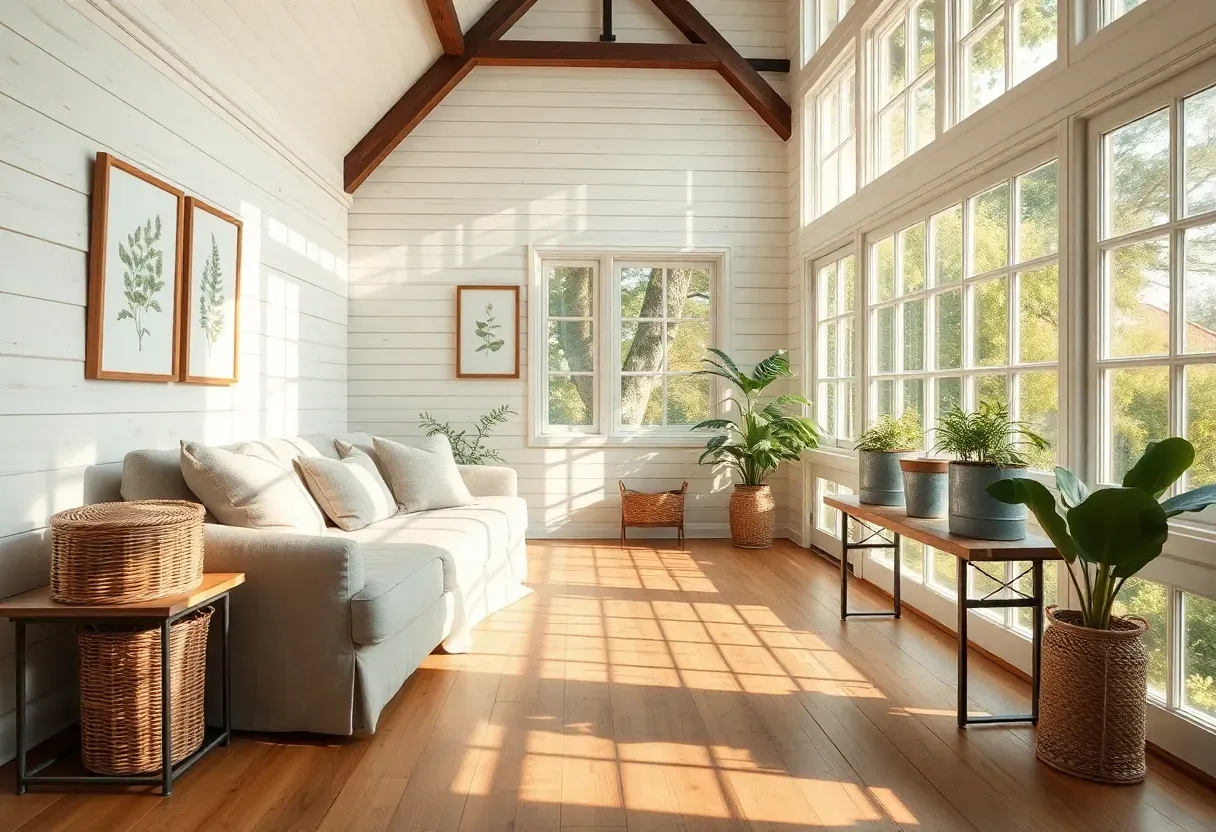
Walk into a well-done farmhouse sunroom and something immediately shifts — the tension in your shoulders releases, you slow down, you want to stay. It is not magic. It is the deliberate combination of rough-hewn wood beams, the cool weight of linen against your hand, a chipped enamel pitcher holding wildflowers on the windowsill. These rooms feel genuine because they are built from genuine materials with genuine histories. The farmhouse aesthetic was never about perfection. It was about gathering what works, layering what feels right, and leaving room for a life actually lived inside the space. These twenty-one ideas bring that same spirit to the modern sunroom — a room that gets full sun, deserves full attention, and rewards every layer you add to it.
In this article I have gathered ideas across structure, material, lighting, and detail — organized so you can tackle one idea at a time or combine several for a complete farmhouse transformation.
Table of Contents
- Shiplap Accent Wall in Whitewash
- Reclaimed Wood Ceiling Beams
- Linen Sofa with Grain-Sack Pillows
- Vintage Wicker Furniture Set
- Galvanized Metal Planter Wall
- Mason Jar Pendant Lights
- Antique Farmhouse Door as Room Divider
- Cotton Rag Rug on Hardwood
- Botanical Print Gallery Wall
- Wrought Iron Plant Stand Cluster
- Barn Wood Coffee Table with Hairpin Legs
- Enamel Pitcher Wildflower Arrangements
- Vintage Window Frame Mirror
- Buffalo Check Throw Basket
- Painted Brick Fireplace Surround
- Potting Bench as a Sideboard
- Antique Milk Glass Pendant Lights
- Rolling Library Ladder on Shelving
- Linen Roman Shades with Wood Cornice
- Chippy-Paint Side Tables
- Farmhouse Swing Bench
1. Shiplap Accent Wall in Whitewash
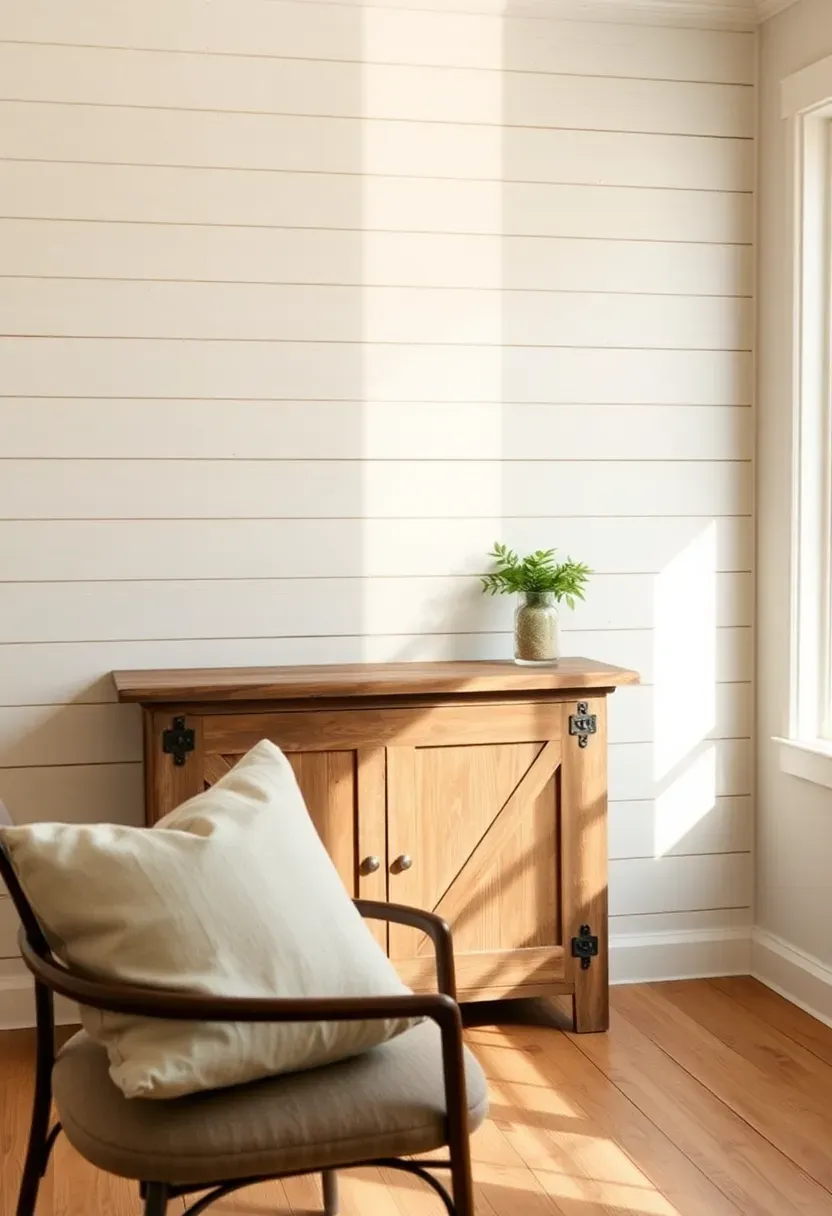
Shiplap is the detail that signals farmhouse style more clearly than almost anything else. The horizontal boards, the shadow lines between each plank, the slightly rough texture — together they turn a plain drywall surface into something that looks like it has been there for a hundred years.
Origins / History
Shiplap originally referred to a type of rabbet joint used in barn and ship construction in the 1800s, chosen for its weather-tightness. It migrated indoors over decades as a practical wall sheathing, and survived in farmhouses long after other styles moved on. Its contemporary revival began around 2015 and has proven to be more than a passing trend because it connects to a genuine craft tradition.
Modern Interpretation
Apply shiplap to the solid interior wall of the sunroom — the one that connects to the main house — rather than the glass walls. Whitewash the boards with a fifty-fifty mix of white latex paint and water, then wipe it down with a damp cloth before it dries. The result is a color that is neither white nor natural wood but something luminous in between. Leave visible nail holes rather than filling them. The imperfections are the point.
How to Apply at Home
- Use eight-centimeter-wide pine or poplar boards with a one-centimeter reveal between each plank
- Install horizontally starting from the baseboard and working upward
- Apply the whitewash in the direction of the wood grain
- Finish with a single coat of matte sealant to prevent the paint from rubbing off on furniture
We picked a few things that go well with this idea: Piper Classics Gray Grain Sack Pillow Cover (★4.5), Piper Classics Ticking Stripe Lumbar Pillow Cover (★4.5) and Piper Classics Red Grain Sack Pillow Cover (★4.3). As an Amazon Associate we earn from qualifying purchases.
2. Reclaimed Wood Ceiling Beams
The Core Issue
Most sunroom ceilings are flat drywall or generic tongue-and-groove — surfaces that offer nothing to look at and do nothing to warm up the space.
The Solution
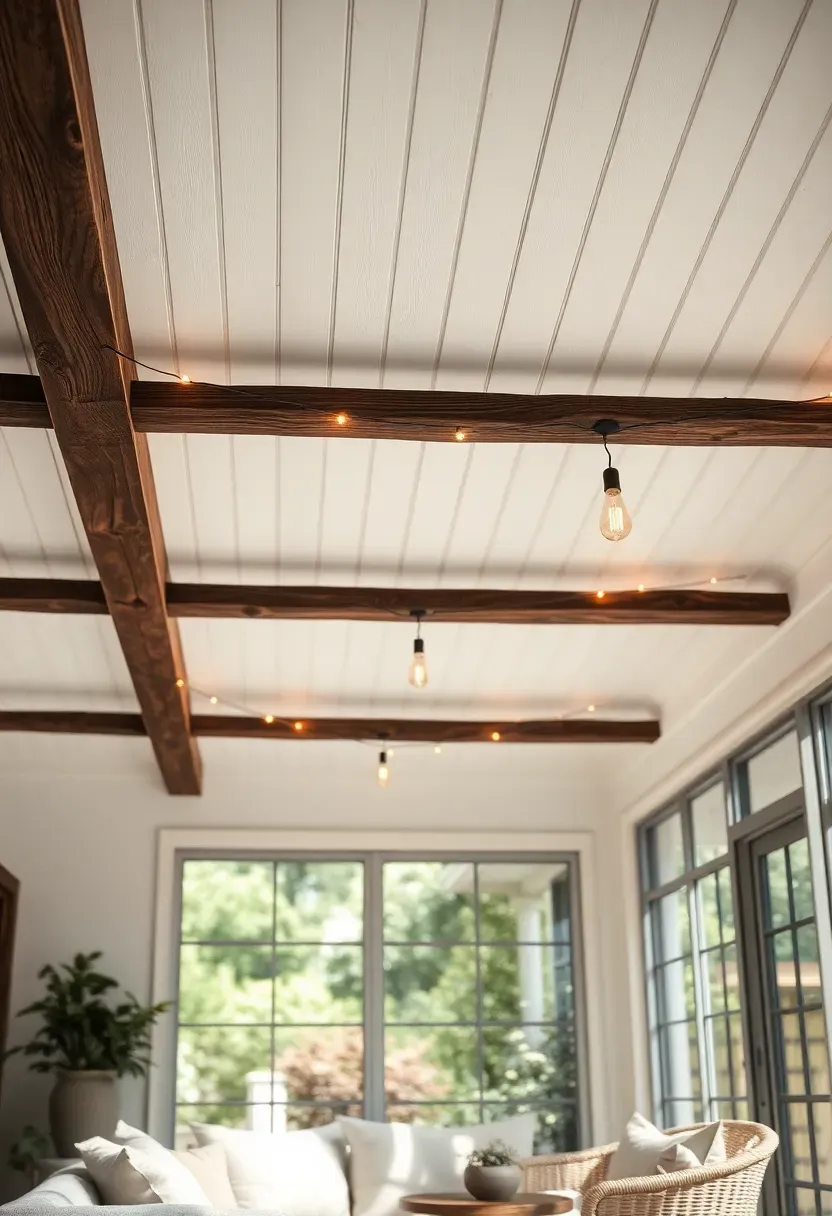
Install reclaimed wood beams across the ceiling, spaced sixty to ninety centimeters apart. They do not need to be structural. Hollow box beams made from reclaimed planks wrap around a simple wood nailer and fasten to the ceiling joists. The visual impact is identical to solid beams at a fraction of the weight and cost. Choose dark-stained or naturally weathered wood for maximum contrast against a white ceiling, or match the beam tone to the floor for a monochromatic warmth.
Pros and Cons
Pros: Completely transforms the ceiling plane, adds architectural interest that reads in photographs, and anchors hanging pendant lights or string lights naturally. Cons: Installing box beams requires careful measurement and at least a day of work per beam run; poorly fitted joints look worse than no beams at all.
We picked a few things that go well with this idea: GEEBOBO 5-Tier Tall Wood Plant Stand (★4.3), GEEBOBO 3-Tier Metal Wood Plant Stand (★4.4) and GEEBOBO 5-Tier Plant Stand with Wheels (★4.4). As an Amazon Associate we earn from qualifying purchases.
3. Linen Sofa with Grain-Sack Pillows
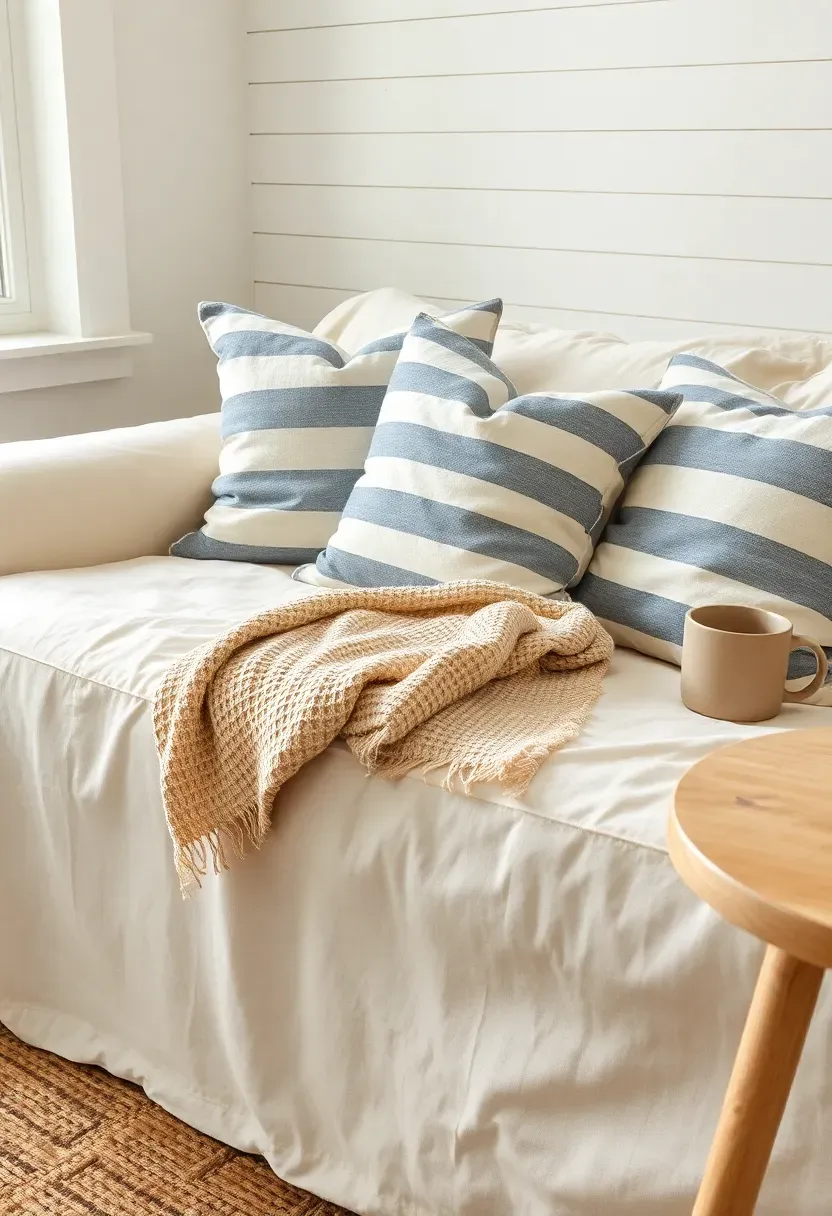
Linen is the fabric that defines farmhouse interiors the way marble defines luxury ones. Slubby, slightly rumpled even when freshly laundered, warm in tone, and durable enough to survive daily use — it is the honest choice for a room meant to be lived in rather than admired from the doorway. Choose a sofa upholstered in natural or undyed linen with a deep seat and sturdy wooden legs. Pair it with grain-sack pillows in faded blue or black stripes on ivory ground.
Tips
- Pre-wash linen upholstery covers once before using them to soften the hand and prevent future shrinkage
- Rotate cushions weekly so the fills compress evenly and maintain their shape
- Add a chunky cotton waffle throw in oatmeal across the sofa arm — it looks casually placed but doubles as warmth on cold mornings
We picked a few things that go well with this idea: DII Buffalo Check Farmhouse Throw (Black/White) (★4.5), DII Buffalo Check Farmhouse Throw (Gray/White) (★4.5) and Chenille Buffalo Plaid Knitted Throw with Tassels (★4.6). As an Amazon Associate we earn from qualifying purchases.
4. Vintage Wicker Furniture Set
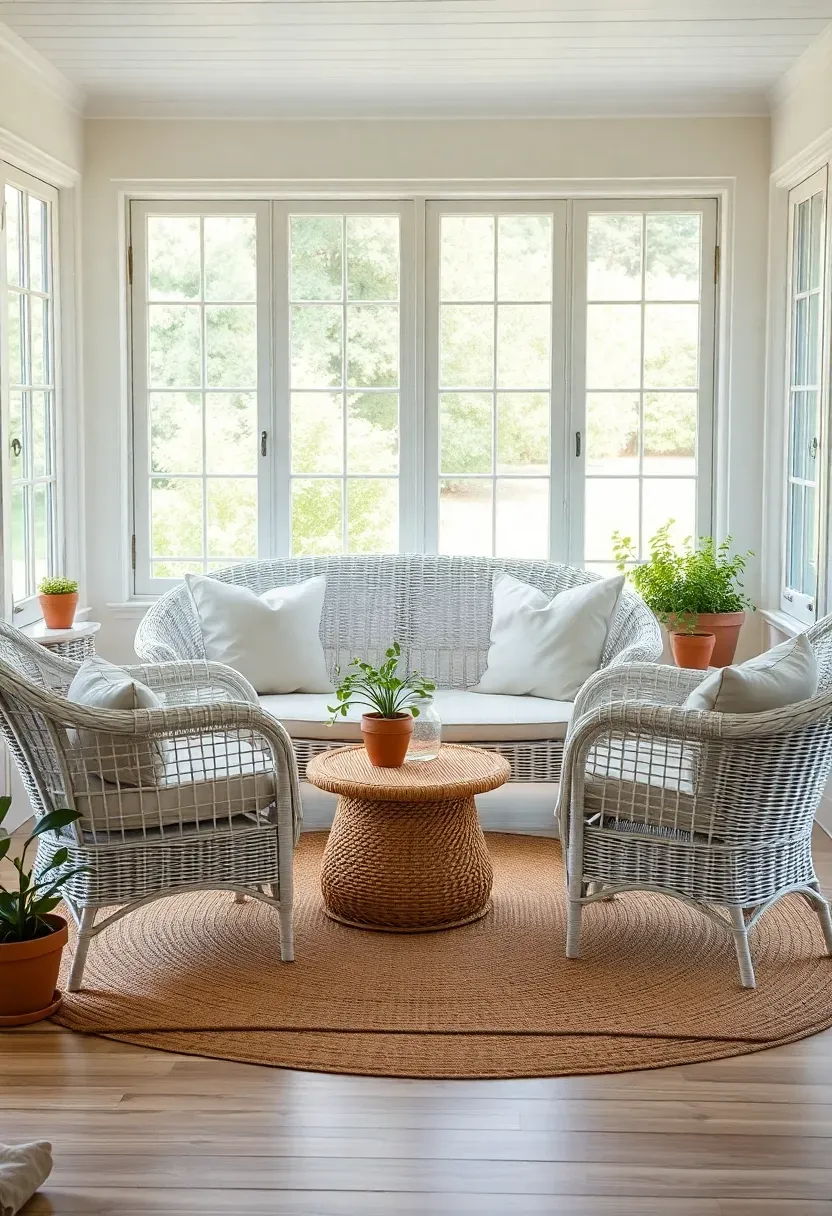
Wicker furniture belongs in the farmhouse sunroom the way cast iron belongs in the farmhouse kitchen — it is the right tool for the right room. An aged or whitewashed wicker sofa and two matching armchairs form a classic sitting arrangement that breathes in the humidity of a glass-walled room, weighs almost nothing when you need to rearrange, and ages beautifully rather than showing wear. Cushion everything in heavy natural linen.
Step 1: Source or Age the Wicker
Look for vintage sets at estate sales or online marketplaces. Alternatively, buy new natural wicker and distress it: dry-brush white chalk paint over the weave, then sand the edges and raised points once dry to reveal the natural color underneath.
Step 2: Cushion Thoughtfully
Order custom cushion covers in twelve-ounce linen. Use two-inch foam inserts for the seat base and one-inch for backrests. Ticking-stripe or grain-sack fabric for the backs adds visual variety without introducing color.
Step 3: Arrange for Conversation
Position the sofa against the shiplap wall and the two chairs angling toward each other. This creates a U-shape that makes conversation natural and keeps the window views unobstructed.
What to Watch Out For
- Wicker can mildew if moisture accumulates inside the weave — ensure the sunroom has cross-ventilation
- Heavy wicker frames can indent soft floors — use furniture pads under each leg
- Avoid painting wicker with latex paint, which cracks along the weave and looks worse than bare wicker
Recommended
Items for this idea
5. Galvanized Metal Planter Wall
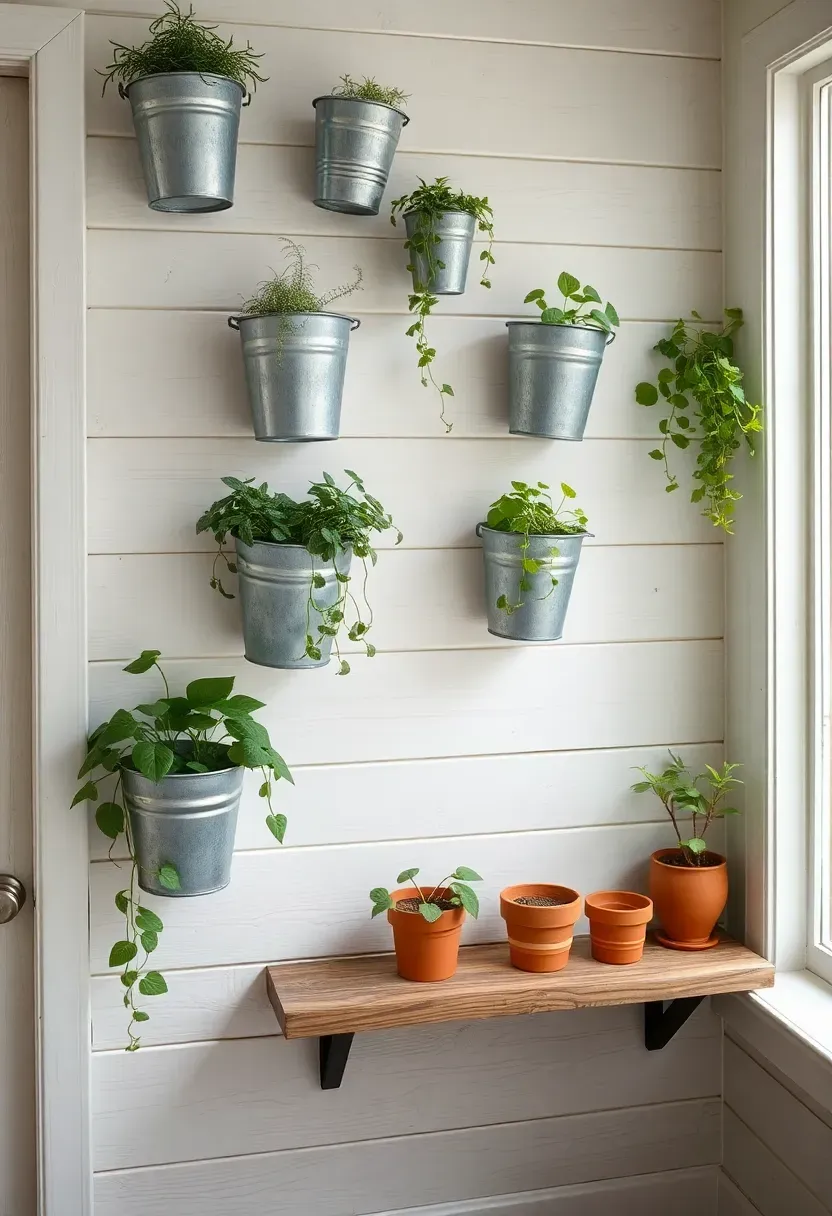
Galvanized metal is the material that ties farmhouse style to its agricultural roots. The dull silver-grey tone of zinc-coated steel reads as industrial and organic at once, contrasting beautifully with warm wood and soft linen. Mount a grid of galvanized metal buckets or oval planters on a single wall, stagger the heights, and fill them with trailing herbs, small succulents, or air plants. The planter wall functions as art, air purifier, and herb garden simultaneously.
Tips
- Drill drainage holes in each bucket before planting and seal the wall behind with a moisture barrier
- Use coco coir liner in the buckets to retain moisture without waterlogging the roots
- Mix plant heights: tall rosemary at the top row, compact thyme in the middle, trailing pothos at the bottom
6. Mason Jar Pendant Lights
Why [cheap fixtures] and How [mason jars fix them]
The Core Issue
Generic pendant lights in a farmhouse sunroom feel out of place — too modern, too polished, or too industrial for a room that is supposed to feel like a gathering of honest materials.
The Solution
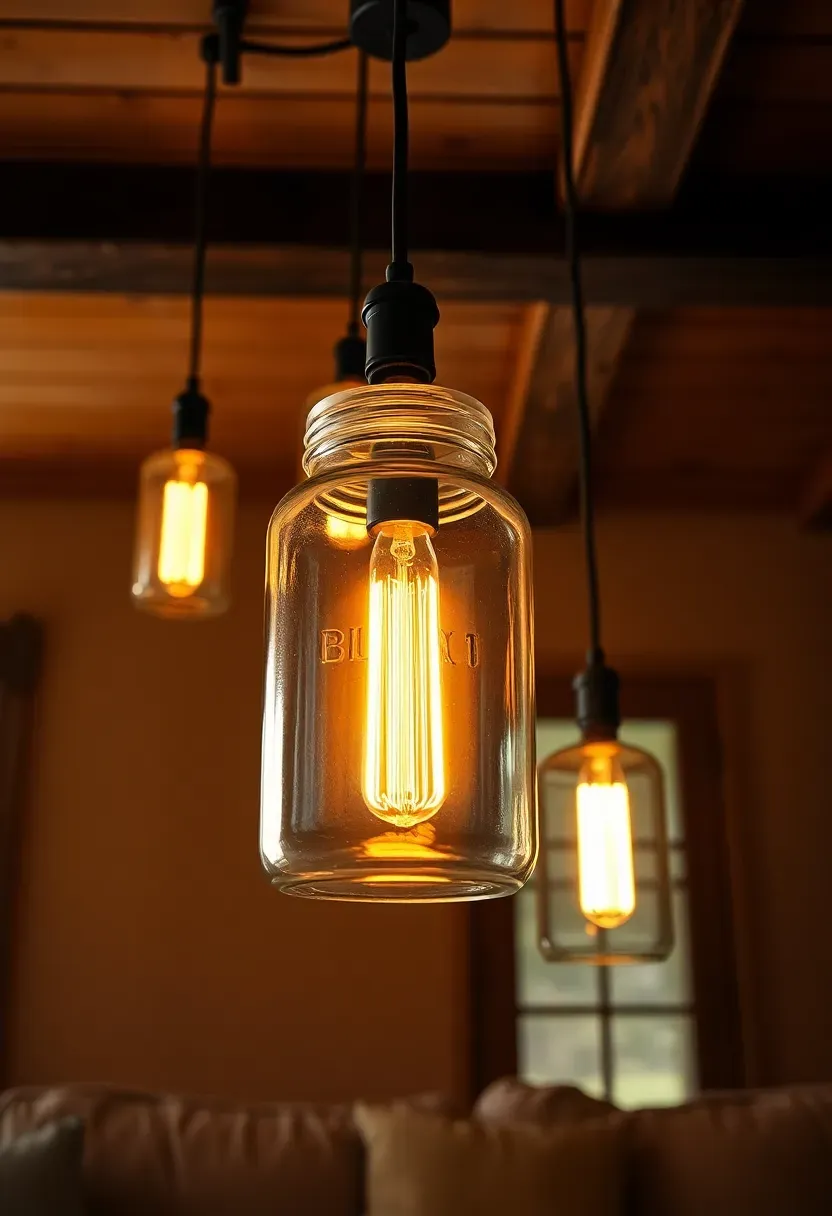
Hang three to five pendant lights made from wide-mouth mason jars fitted with Edison bulbs. The clear glass shows the warm filament glow, the jar threads add utilitarian detail, and the overall effect feels genuinely farmhouse without looking like a costume. Hang them at different heights — thirty, forty-five, and sixty centimeters below the ceiling — from a central canopy over the seating area. Use warm-white bulbs rated 2200 to 2400 Kelvin for an authentic incandescent glow.
Pros and Cons
Pros: Inexpensive to make or buy, completely on-theme, and the clear glass amplifies the warmth of warm-toned bulbs in ways that opaque fixtures cannot. Cons: Open jars collect dust inside and require occasional cleaning; they also offer no light diffusion, which can feel harsh if the bulbs are too bright.
Recommended
Items for this idea
7. Antique Farmhouse Door as Room Divider
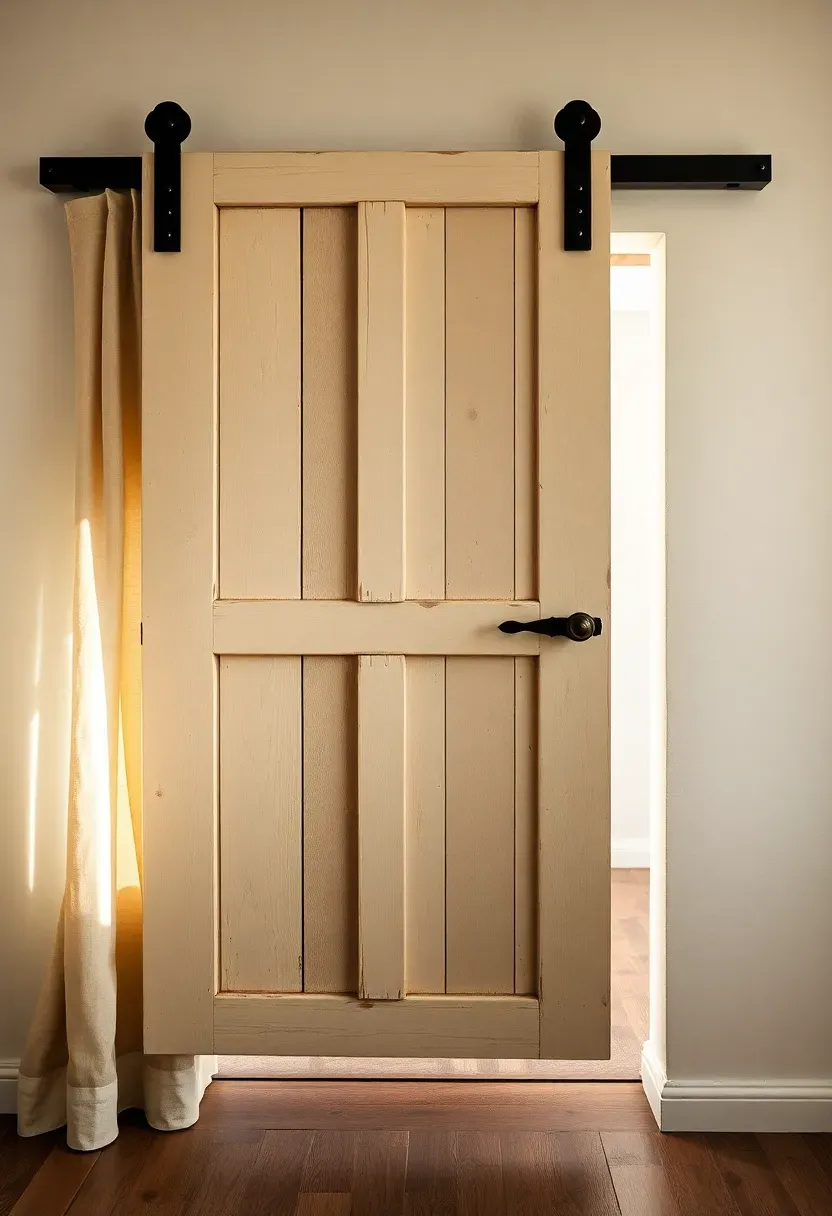
An original farmhouse door — painted many times over, hardware oxidized to a rich patina, panels worn smooth from a century of hands — brings immediate authenticity to a sunroom. Source one from an architectural salvage yard. Mount it on a sliding barn-door track above the opening between the sunroom and the main house, or use it as a freestanding room divider on casters. Either way, the door becomes the most interesting object in the room.
Comparing: Sliding Track vs Freestanding
Sliding Track
Permanent installation, smooth operation, and a clean professional look. Requires a header board above the opening and hardware rated for the door's weight. Cannot be moved once installed.
Freestanding on Casters
Flexible and renters-friendly. Add industrial casters to the bottom of the door and a simple steel frame on each side to keep it upright. Can be repositioned or removed entirely.
What to Choose
Choose sliding track if: the sunroom has a permanent entry opening and you want a functional space divider. Choose freestanding if: you want the aesthetic without committing to installation, or if you rent.
Recommendation
A sliding antique door is worth the installation for a room you intend to keep. The movement of real hardware and the thud of a solid old-growth door closing is a sensory experience that modern barn doors rarely replicate.
8. Cotton Rag Rug on Hardwood
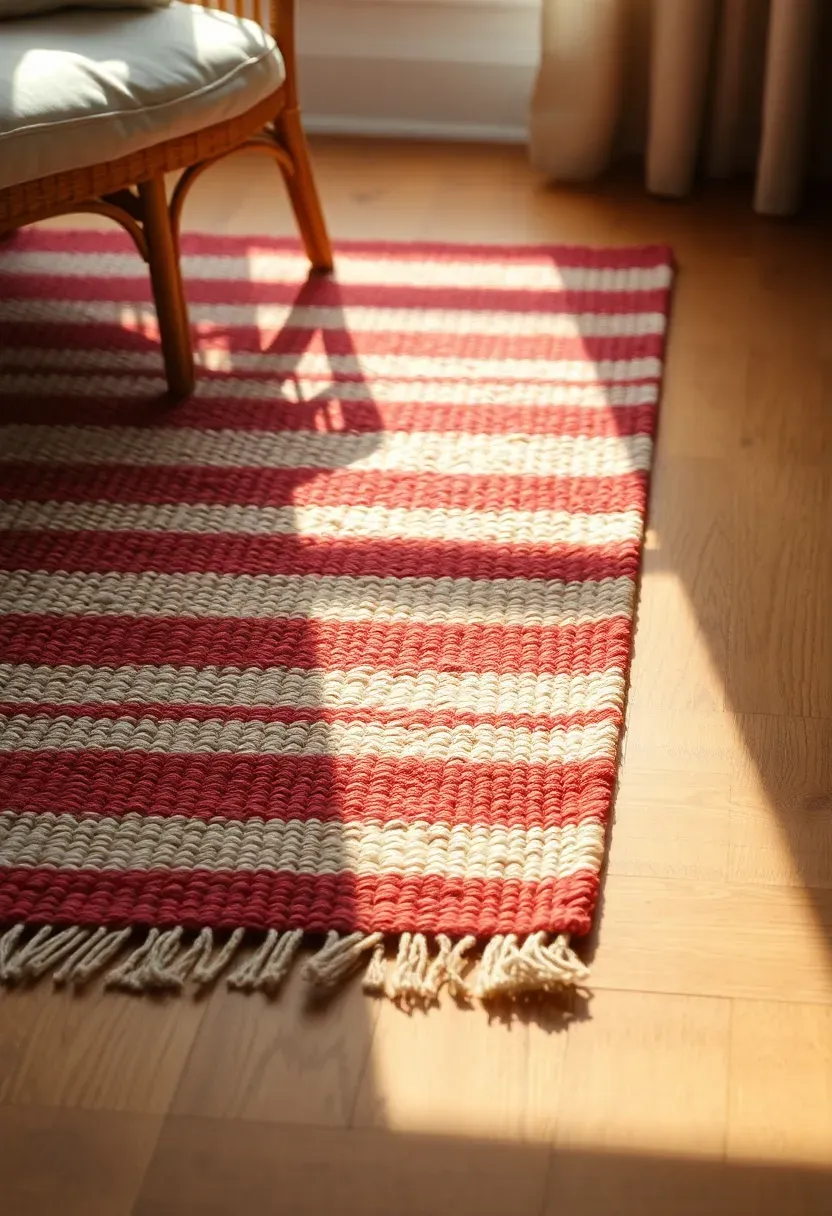
Rag rugs are among the oldest American farmhouse traditions — strips of worn-out clothing woven into something beautiful and useful. Modern rag rugs maintain the flat-weave construction and the color variation from scrap fabrics, but are woven from fresh cotton for consistency. In a farmhouse sunroom with hardwood or painted wood floors, a large cotton rag rug anchors the seating area and adds a layer of pattern that feels earned rather than purchased.
Tips
- Choose a rug with a flat weave so it lies completely flat without curling edges in the heat
- Look for rugs in a two-color palette — faded red and cream, or denim blue and white — that reference actual feed-sack or quilt traditions
- Use a natural rubber non-slip pad underneath; cotton rag rugs slide easily on smooth floors
Recommended
Items for this idea
9. Botanical Print Gallery Wall
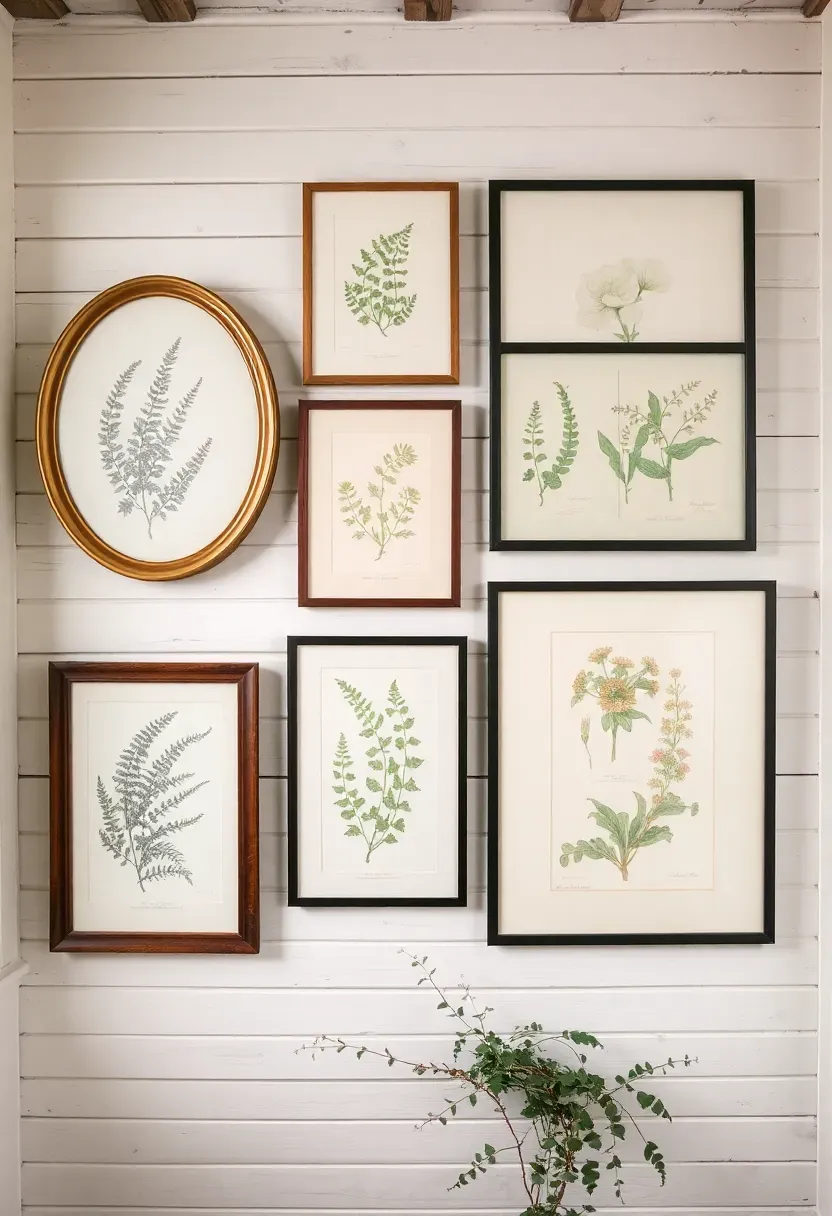
The farmhouse tradition of pressing and framing plants — bringing the outside in — fits a sunroom better than any other room in the house. Assemble a gallery wall of vintage botanical illustrations: the kind with precise Latin labels, hand-drawn root systems, and watercolor shading that looks faded even when newly printed. Frame them inconsistently. The mixing of gilt frames, plain wood frames, oval frames, and simple black frames gives the wall the feeling of a collection gathered over time rather than bought all at once.
Step 1: Gather Your Prints
Search for public domain botanical illustrations from the 1700s and 1800s — the work of Maria Sibylla Merian, Georg Dionys Ehret, or the illustrations from Curtis's Botanical Magazine. Download and print on heavyweight matte paper.
Step 2: Frame Deliberately
Vary the frames and the mat widths. Some prints look better with a wide cream mat; others benefit from being frame-flush. The inconsistency reads as curation.
Step 3: Hang in a Salon Style
Start with the largest piece centered at eye level. Build outward, maintaining three to five centimeters between each frame. The arrangement should feel dense but not crowded.
10. Wrought Iron Plant Stand Cluster
Why This Works
Farmhouse style embraces the interplay between delicate and heavy, soft and hard. Wrought iron plant stands — slender, forge-bent, blackened — belong to the heavy category. Pairing them with full, leafy plants creates the farmhouse visual tension that makes the style feel alive rather than decorated.
Modern Interpretation
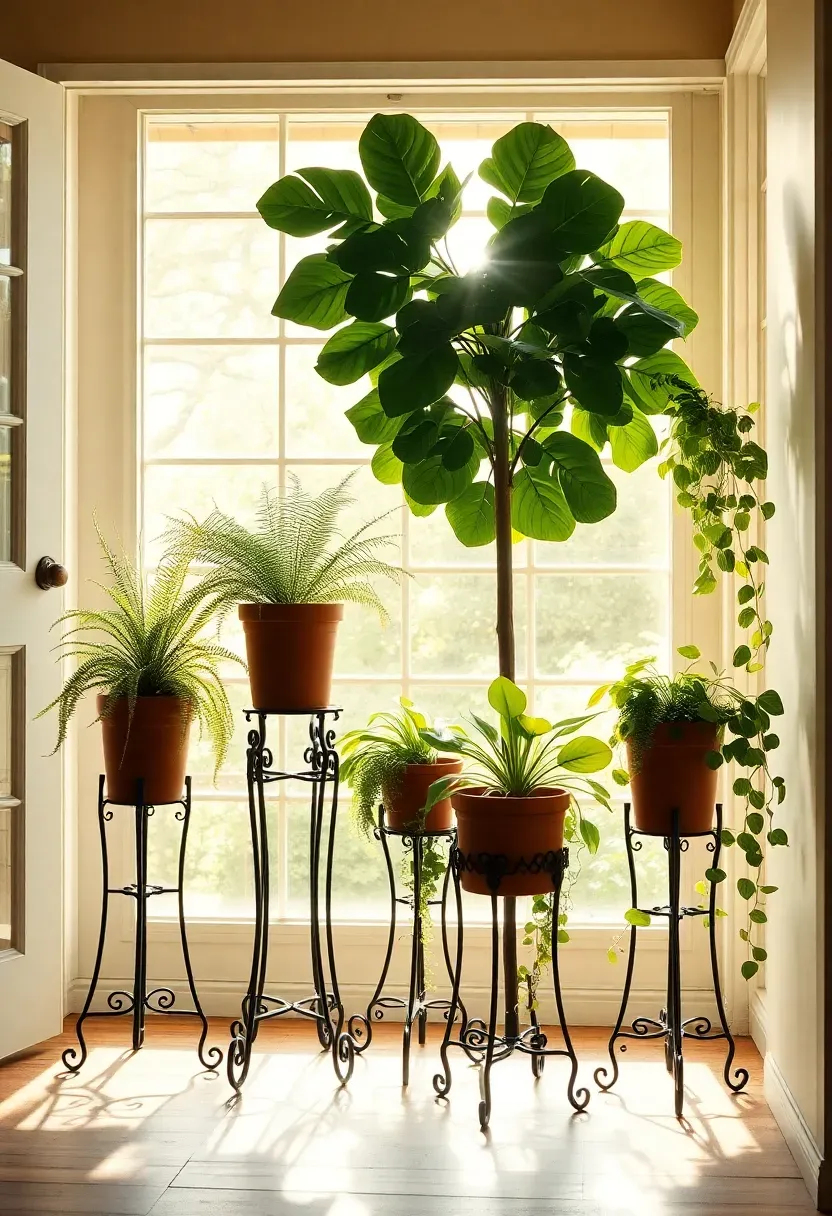
Group five to seven wrought iron stands at different heights in the sunniest corner of the sunroom. Place terracotta pots on each stand, unmatched in size but consistent in material. Mix a tall fiddle-leaf fig on the tallest stand with ferns on mid-height ones and trailing pothos on the shortest. The cluster creates a living installation that changes shape as the plants grow.
How to Apply at Home
- Vary the stand heights by at least thirty centimeters between the shortest and tallest
- Terracotta pots in natural clay tones read as authentically farmhouse; avoid glazed or colorful finishes in this context
- Group the stands close enough that the plants overlap slightly at the canopy — this creates the lush, abundant feel of a farmhouse garden corner
Recommended
Items for this idea
11. Barn Wood Coffee Table with Hairpin Legs
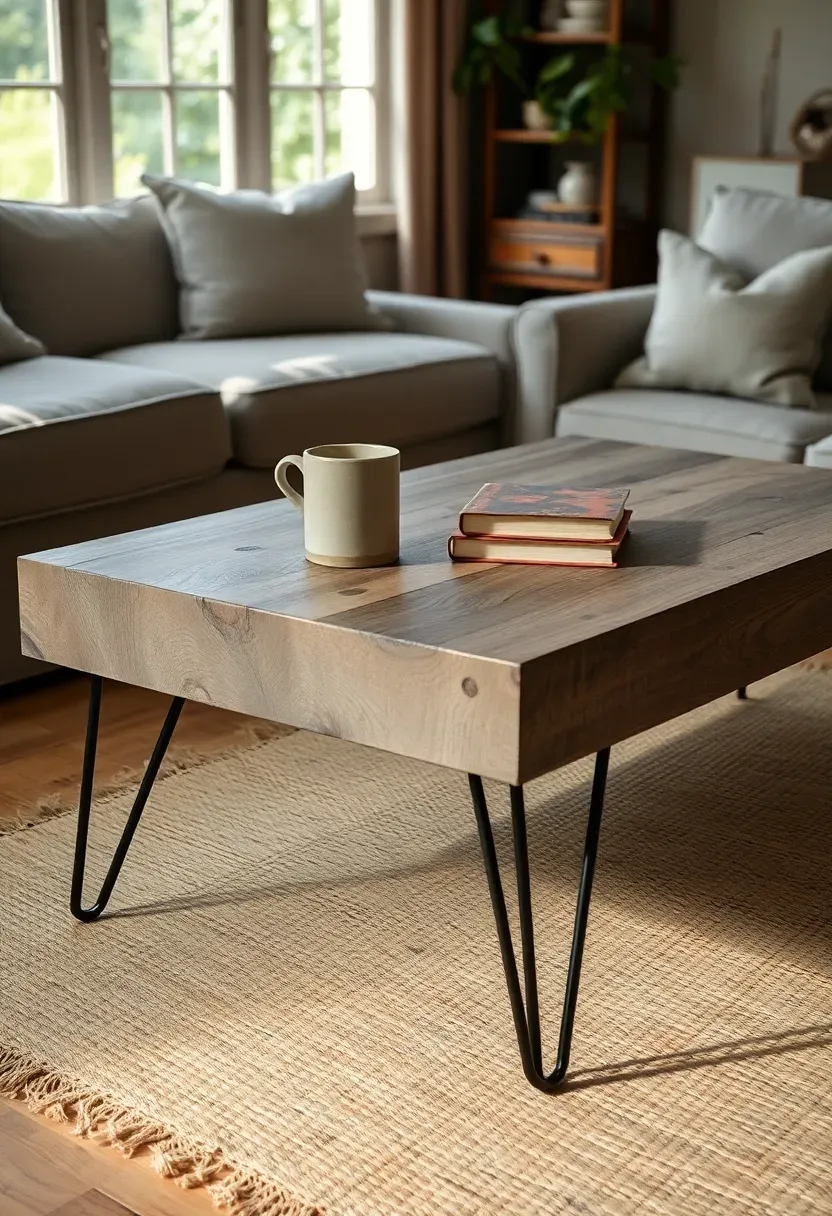
Reclaimed barn wood carries its history visibly — the grey weathering from decades outdoors, the drill holes from old hardware, the occasional hand-painted marking from the barn's original use. When you turn those planks into a coffee table, you are placing that history at the center of the room. The contrast between the rough old wood and slim modern hairpin legs in black steel is a classic farmhouse move: old material, clean bones.
Tips
- Sand the surface lightly with 120-grit paper to remove splinters while leaving the texture and character intact
- Apply a thin coat of raw linseed oil to bring out the wood grain without adding shine
- Choose hairpin legs in the twenty-eight-centimeter height — standard coffee table height — and space the leg sets sixty centimeters apart for stability
12. Enamel Pitcher Wildflower Arrangements
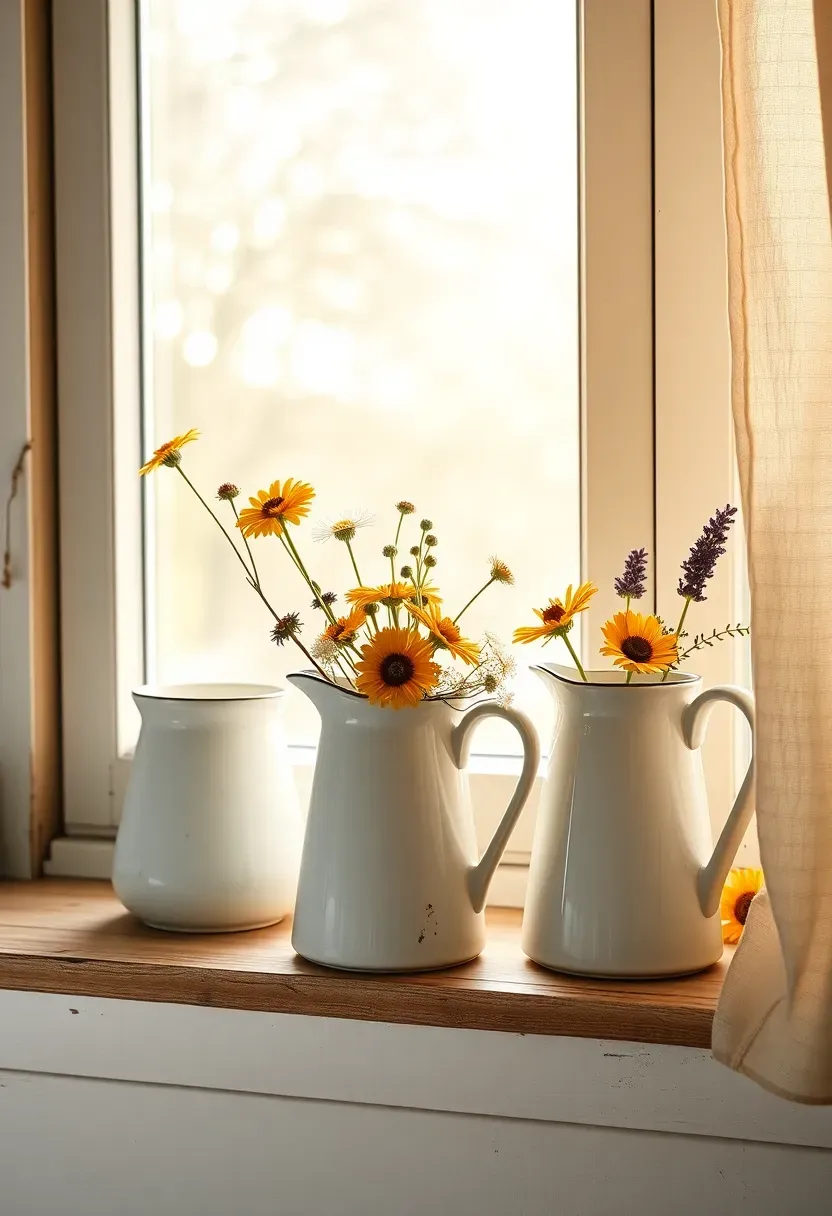
There is no more farmhouse-correct flower arrangement than wildflowers stuffed loosely into an enamel pitcher. The flowers should look like they were gathered from a field walk, not purchased from a florist. The pitcher should have a chip or two, a slight dent, the kind of wear that confirms it has been used for a hundred different things before becoming a vase. Place two or three on the windowsill at different heights using pitchers of different sizes.
Origins / History
Enamelware pitchers were a farmhouse kitchen staple from the mid-1800s through the mid-1900s, used for water, milk, and storage before refrigeration. Their durability made them nearly indestructible, which is why original pieces still surface at estate sales in usable condition.
Modern Interpretation
Collect vintage enamelware in white, speckled blue-and-white, or cream-with-rust. Fill with seasonal wildflowers or garden cuttings: Queen Anne's lace, black-eyed Susans, lavender, dried seed pods in winter. The arrangements should look effortless because they are — just water and whatever is blooming.
How to Apply at Home
- Place the tallest arrangement in the center window, shorter ones at each side
- Add a stem or two of dried wheat or dried lavender in each pitcher for permanence
- Change the water every two days and the flowers whenever they fade
Recommended
Items for this idea
13. Vintage Window Frame Mirror
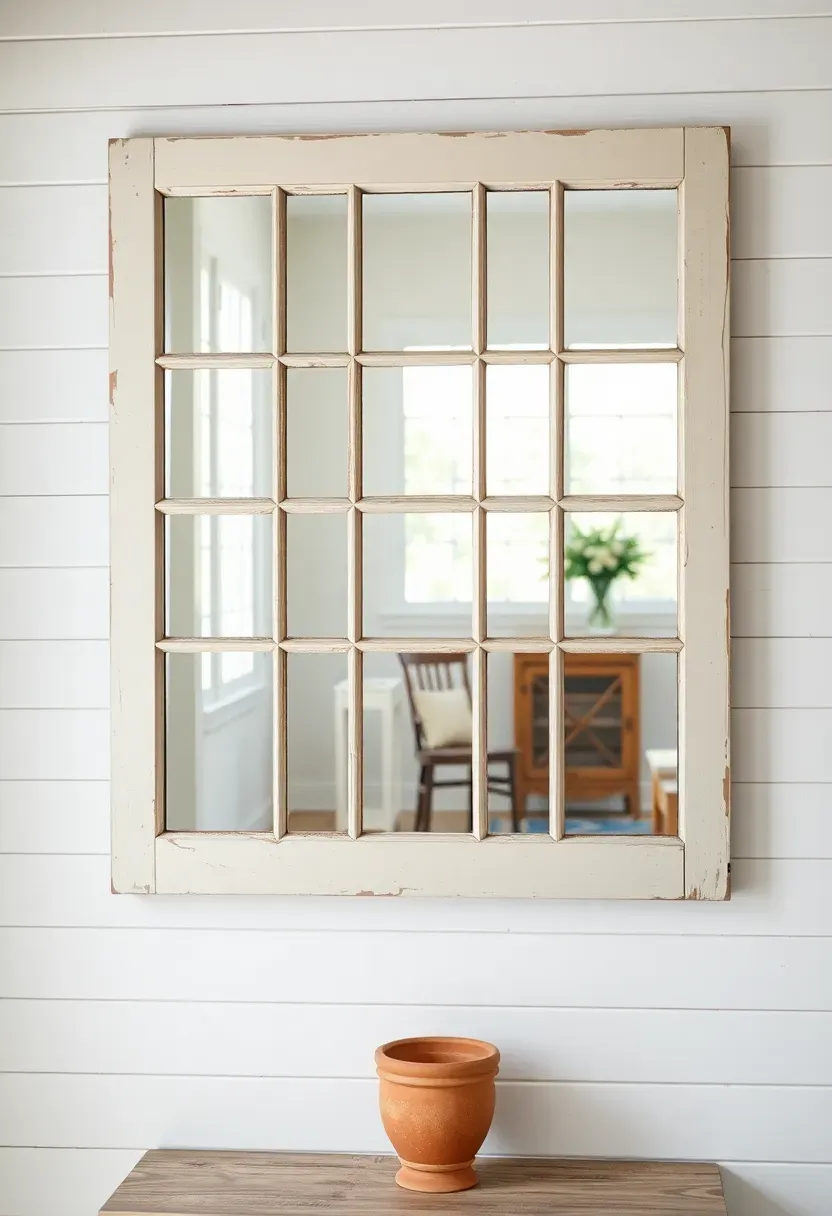
Old farmhouse window frames — multi-pane, wooden, slightly warped — become extraordinary mirrors when the glass panes are replaced with mirror inserts. The divided sections create a mosaic reflection that is far more interesting than a single large mirror, and the aged wood frame introduces the authentic patina that no new furniture can fake.
The Core Issue
Mirrors in sunrooms can create uncomfortable glare and make the space feel like a hall of mirrors rather than a retreat.
The Solution
A divided-pane window frame mirror diffuses the reflection. Each small pane reflects a slightly different angle of the room, creating a soft mosaic effect that amplifies light without harsh glare. Hang it on the solid interior wall opposite the largest window so it bounces garden light into the shadowed part of the room.
Pros and Cons
Pros: Unique focal point, functional light amplification, and genuine farmhouse character that a standard mirror cannot replicate. Cons: The divided panes make the mirror difficult to use for grooming; this is decorative, not functional as a vanity mirror.
14. Buffalo Check Throw Basket
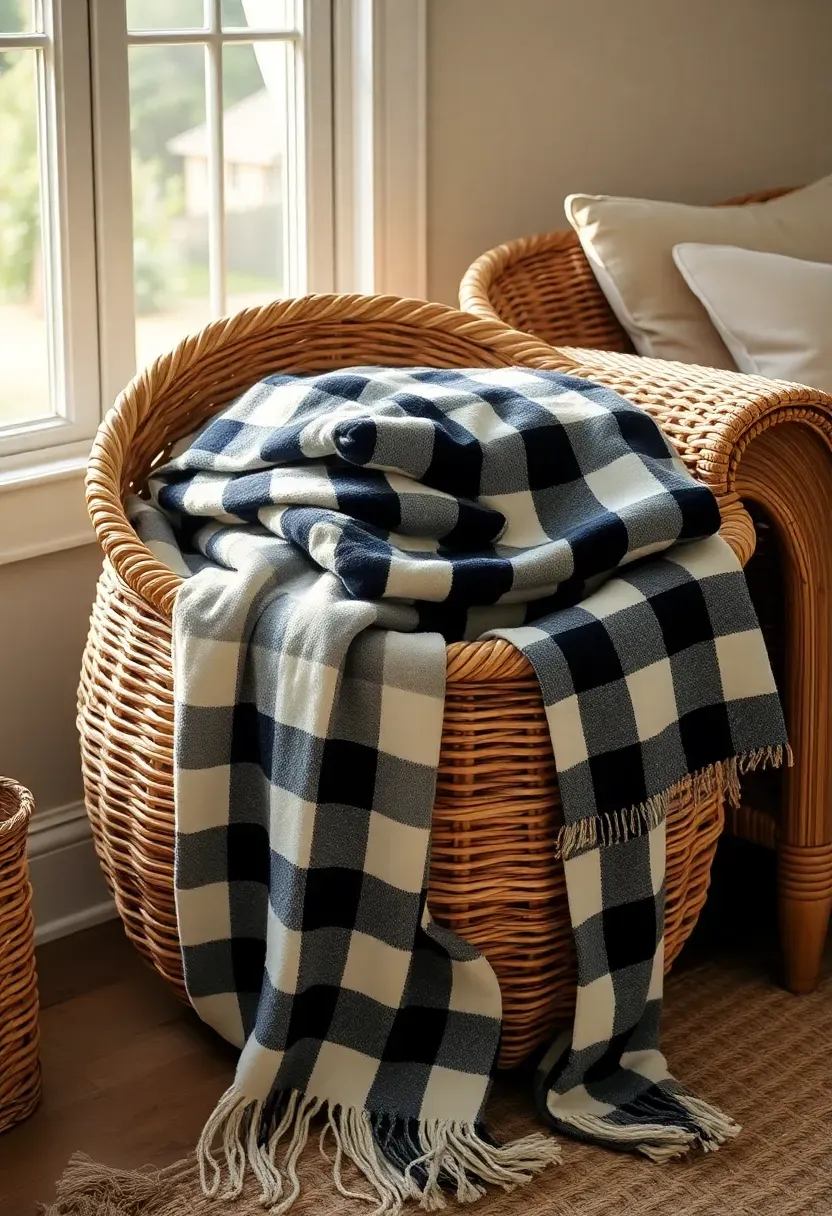
Buffalo check — the classic large-scale plaid in two colors — is one of farmhouse style's most recognizable textiles. In a sunroom, it shows up most effectively as blanket throws gathered in an oversized seagrass basket beside the sofa. The bold pattern stands out against the quieter textures of linen upholstery and natural wood, which is exactly what it is supposed to do. Use black-and-cream or red-and-black check for maximum contrast, and fold the throws loosely so the pattern shows clearly over the basket rim.
Tips
- Use a minimum of three throws in the basket so it looks full rather than forgotten
- Mix the folding directions: one laid flat, one loosely rolled, one draped over the edge
- Position the basket where a guest can reach it without getting up from the sofa
Recommended
Items for this idea
15. Painted Brick Fireplace Surround
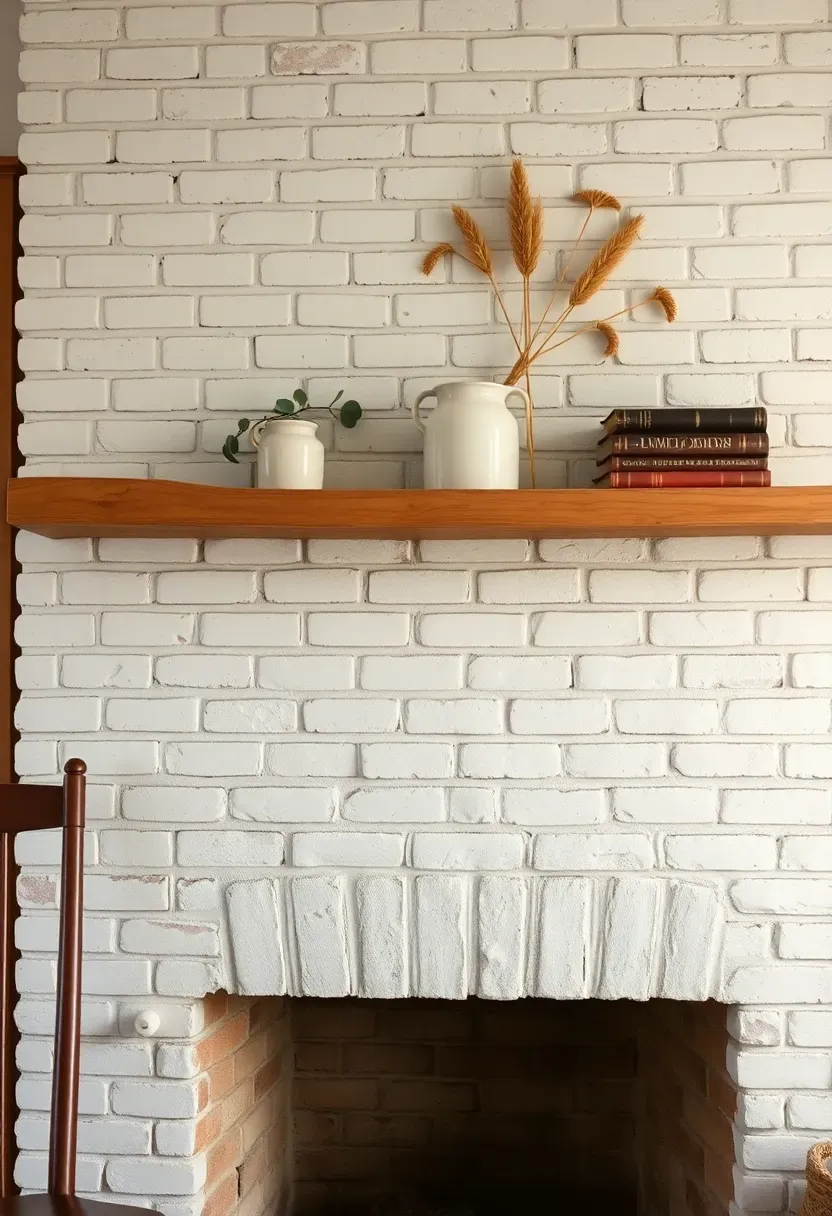
A brick fireplace painted in warm white or limewash brings the farmhouse kitchen into the sunroom without any reference to kitchens at all. The texture of painted brick is different from flat drywall — the surface breathes, has shadow and relief, and catches the light differently at different times of day. Add a simple wood mantel in reclaimed lumber to complete the look.
Step 1: Prepare the Brick
Clean with a stiff brush and masonry cleaner. Fill mortar cracks with fresh mortar and allow to cure fully before painting.
Step 2: Apply Limewash or Chalk Paint
Limewash penetrates the brick and creates a natural color variation that looks genuinely aged. Chalk paint provides a more opaque, consistent finish. Apply with a large bristle brush in circular motions for texture.
Step 3: Style the Mantel
Place a collection of antique crocks in graduated sizes at one end, a stack of old books in the center, and a dried botanical arrangement in an enamel vessel at the other. Leave space between objects — overfilled mantels look like gift shop displays.
What to Watch Out For
- Test the paint or limewash on a small section first — brick absorbs color unpredictably
- Use masonry-specific paint or primer if working with chalk paint to ensure adhesion
- Never paint a fireplace that is actively used for wood burning; apply only to the decorative surround area
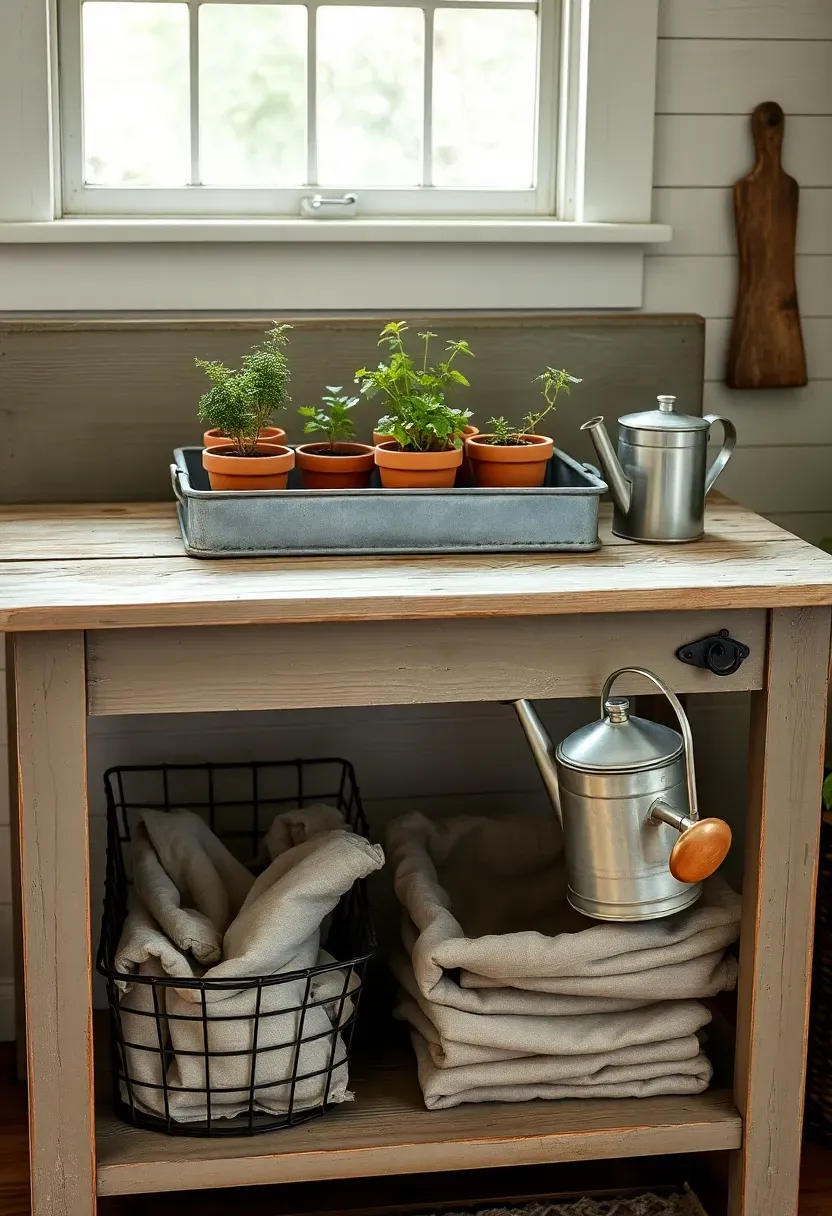
16. Potting Bench as a Sideboard
A potting bench from the garden shed, brought inside and given a new role as a sunroom sideboard, captures the farmhouse principle of use and reuse with perfect logic. The open shelving below holds wire baskets for blankets and books. The work surface above displays plants, a tray for glasses, a stack of vintage gardening books. The weathered wood, the stain of old soil, the utilitarian hooks on the sides — all of it belongs in a room that looks out onto a garden.
Tips
- Clean the bench thoroughly and seal any loose joints before bringing it indoors
- Line the lower shelf with a zinc or galvanized sheet to protect the wood from plant drainage
- Replace the original hooks with antique iron S-hooks for hanging small gardening baskets and tools as decoration
Recommended
Items for this idea
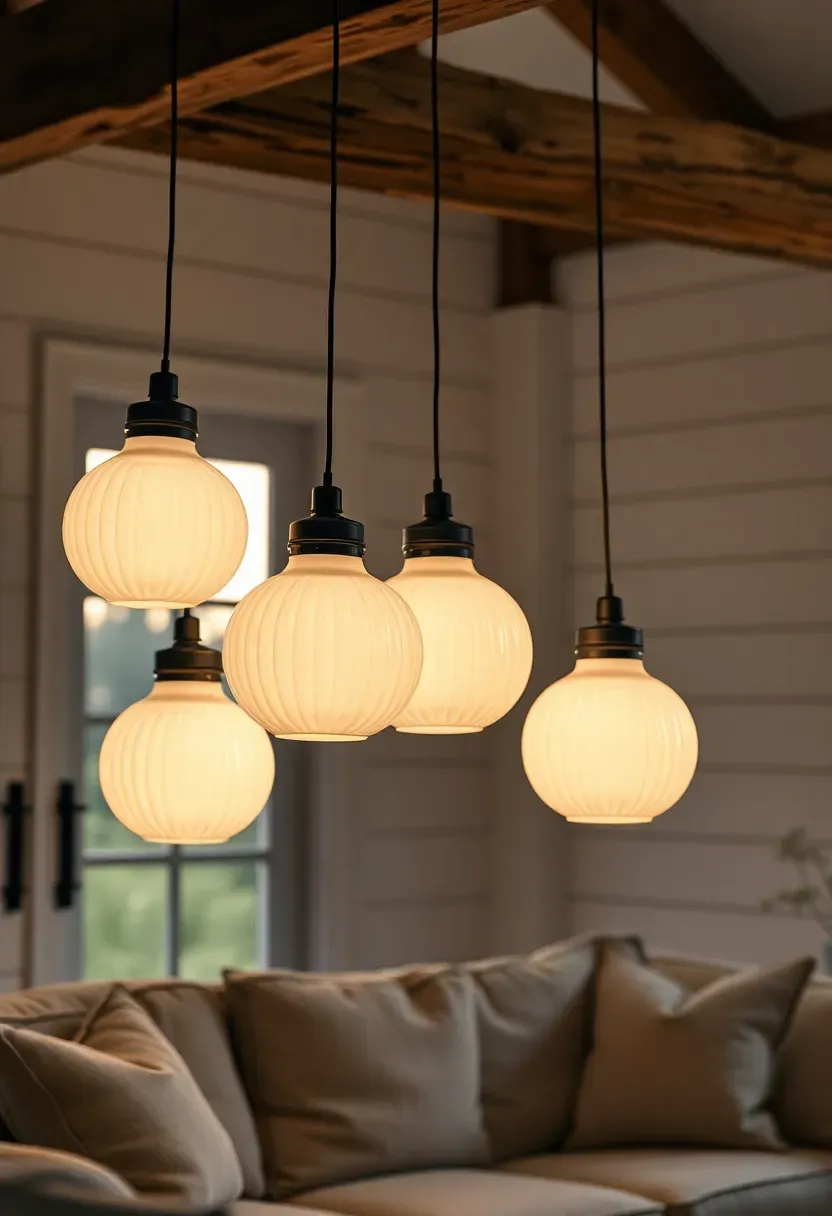
17. Antique Milk Glass Pendant Lights
Milk glass — the opaque white pressed glass produced in abundance from the 1870s through the 1960s — diffuses light in a uniquely soft, even way. A cluster of milk glass pendant globes in a farmhouse sunroom provides warm evening light without harsh glare, and the ribbed or hobnail textures on authentic pieces add a layer of handmade detail that contemporary pendants rarely achieve.
Comparing: Antique Milk Glass vs Modern Reproductions
Antique Milk Glass
Sourced from estate sales and antique markets, genuine pre-1960 milk glass has a weight and opalescence that modern reproductions rarely match. Each piece is slightly different in shape. Wiring requires updating by a licensed electrician.
Modern Reproductions
Consistent sizing, pre-wired for easy installation, and significantly cheaper. Good reproductions have the texture and opacity of the original; poor ones look plastic.
What to Choose
Choose antique pieces if: you are building a curated, historically grounded farmhouse room and the wiring investment makes sense. Choose reproductions if: you need to install five or more matching pendants quickly and within a budget.
Recommendation
Mix one genuine antique globe among reproduction pendants. The slight size and tone variation of the real piece gives the entire cluster an authenticity that matching reproductions cannot fake.
18. Rolling Library Ladder on Shelving
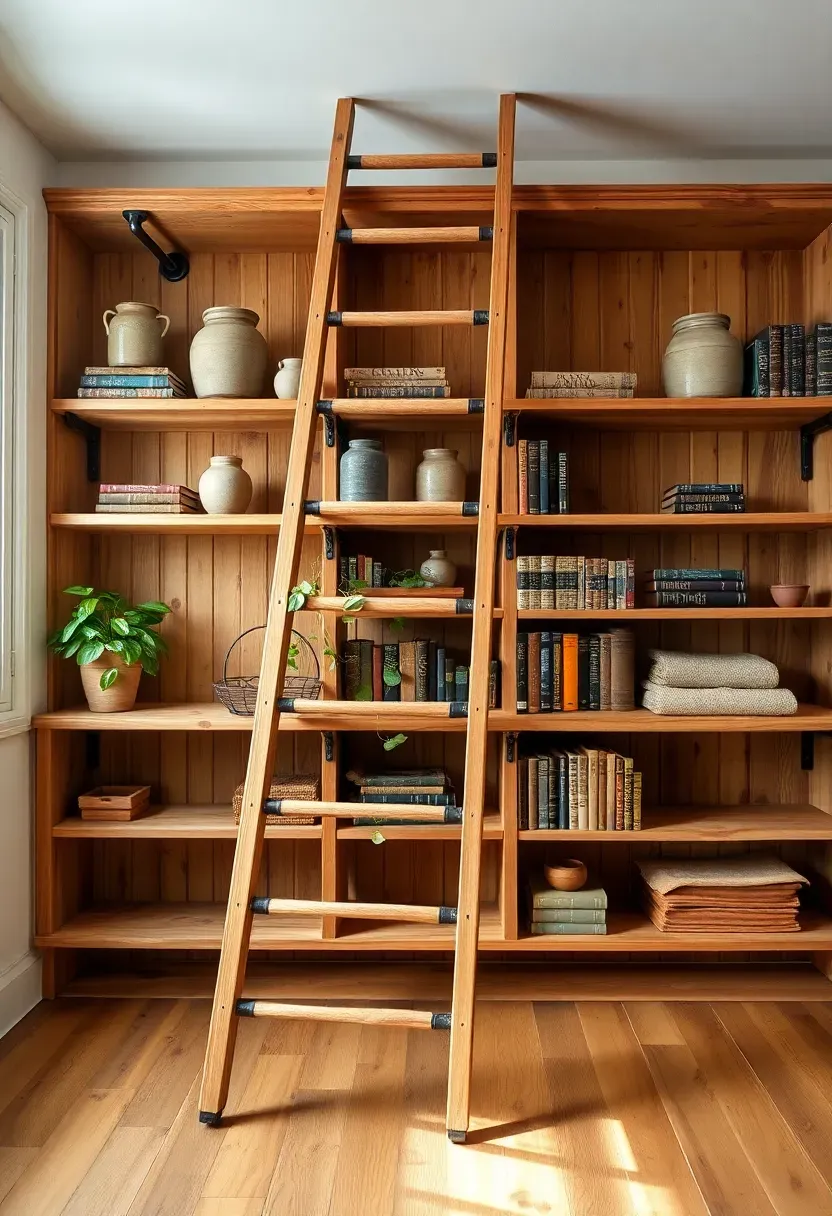
A rolling library ladder on a floor-to-ceiling shelving wall is the most dramatic single addition you can make to a farmhouse sunroom. It signals that this room is taken seriously as a living space, not just a seasonal porch. It also solves the practical problem of high shelves that are otherwise accessible only with a step stool. Use the upper shelves for vintage baskets, old crocks, and books you want to display; keep the lower shelves at arm's reach for daily use items.
Step 1: Build the Shelving
Construct open shelving from rough-sawn pine or reclaimed lumber with iron pipe brackets. Stagger the shelf depths — deeper shelves at the bottom for larger items, shallower at the top.
Step 2: Install the Rail
Mount a floor-to-ceiling library ladder rail at the top edge of the shelving unit. Use the hardware rated for the weight of your specific ladder.
Step 3: Choose the Ladder
A natural wood ladder with black iron rungs and matching black rail hardware suits the farmhouse palette. Avoid chrome or brushed nickel — too contemporary.
Recommended
Items for this idea
19. Linen Roman Shades with Wood Cornice
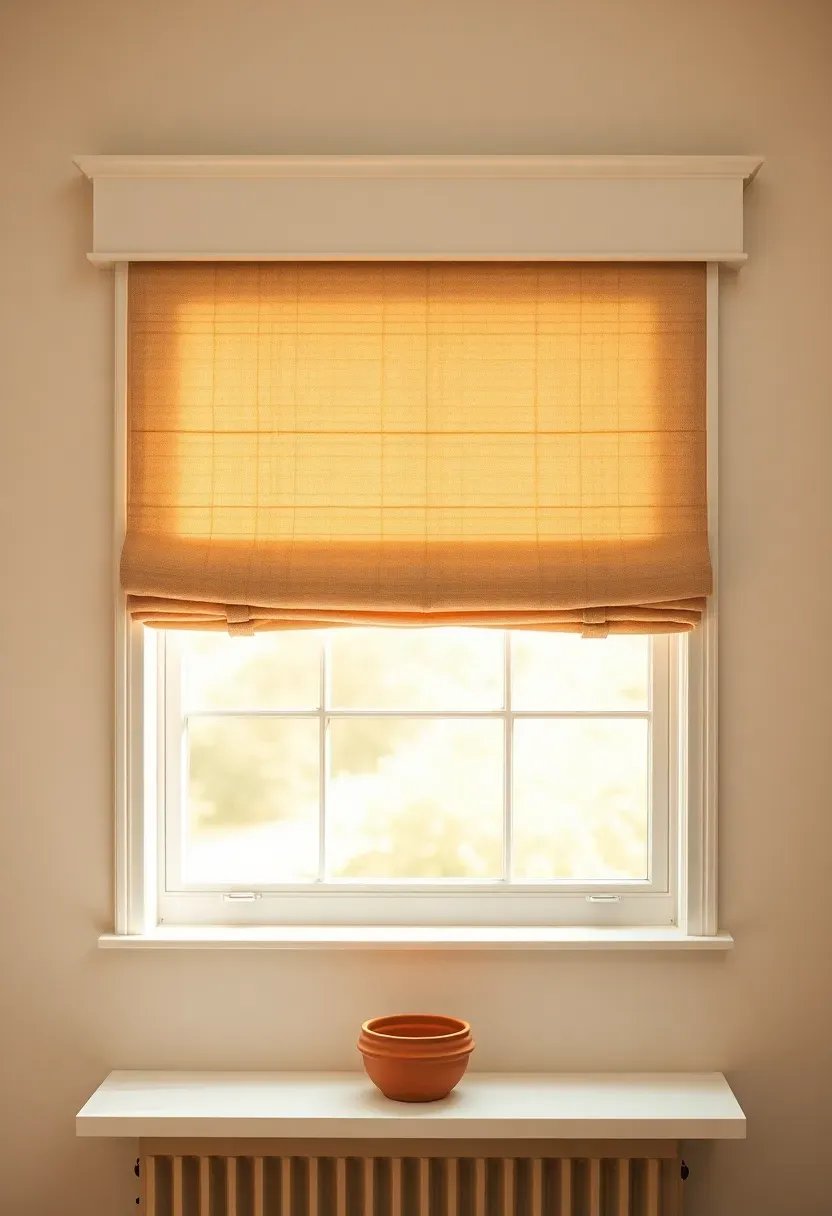
Roman shades in natural linen provide the farmhouse sunroom with clean, architectural window dressing that hangs flat and folds neatly without the softness of curtains. Pair them with a painted wood cornice mounted above each window — the cornice hides the hardware and adds a built-in quality that elevates the whole room. Choose linen in a raw, undyed tone for maximum texture contrast against white painted wood.
The Core Issue
Sunroom windows often have no good solution for privacy or sun control. Curtains catch in the mechanism of casement windows; blinds look too office-like.
The Solution
Roman shades in linen mount outside the window frame and roll up cleanly when not in use. The wood cornice hides the mounting board and gives the window a finished, furniture-like presence. Inside mount the shade for a tailored look if the window frame is deep enough.
Pros and Cons
Pros: Clean lines, excellent light control, the linen fabric softens without adding volume. Cons: Linen Roman shades are more expensive than off-the-shelf curtains and require professional measuring for a clean hang.
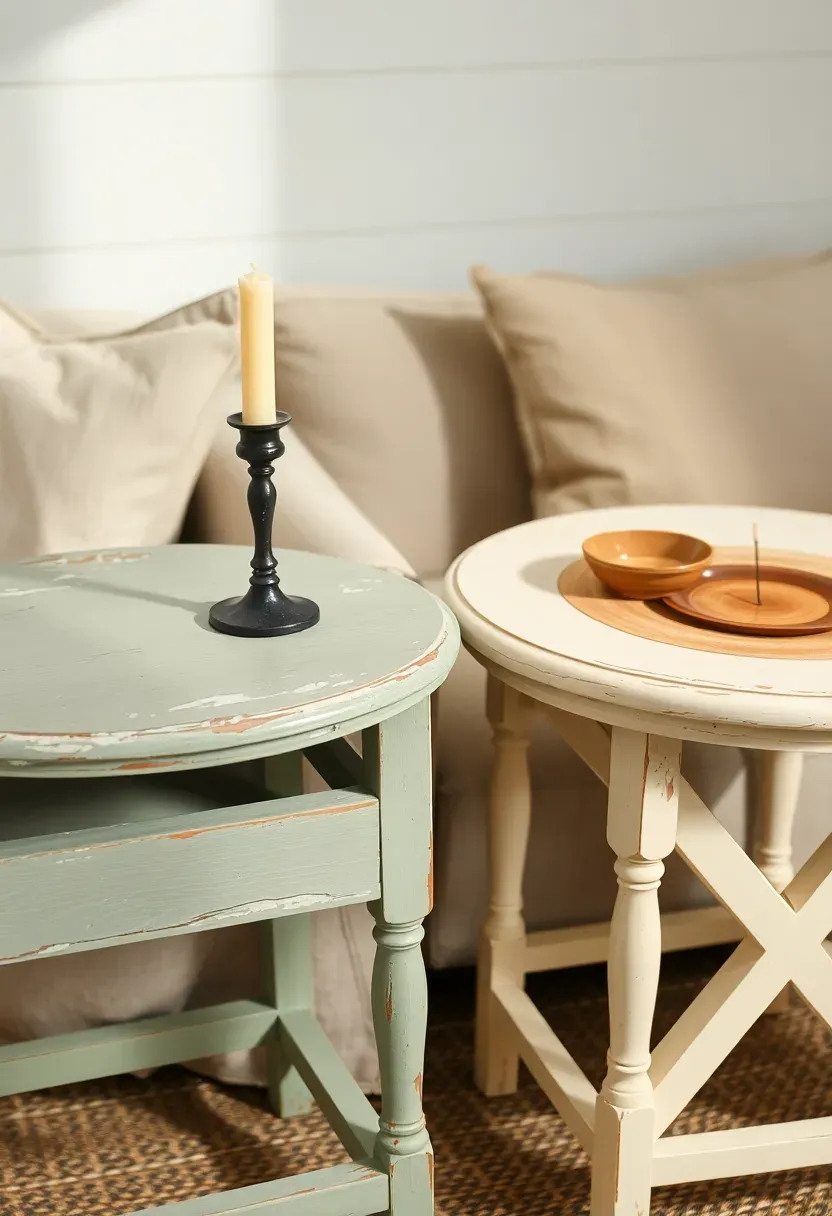
20. Chippy-Paint Side Tables
Chippy paint is not a flaw in farmhouse style — it is the evidence of a long, useful life. A side table where the original green or cream paint has chipped down to bare wood at the corners, where a ring from a hundred coffee cups has darkened the top, where the drawer pulls are slightly mismatched because one was replaced long ago — this is exactly the kind of piece that makes a farmhouse room feel inhabited rather than staged. Use two mismatched side tables rather than a matching pair. The slight inconsistency confirms that the room was assembled over time, not purchased at once.
Tips
- Seal chippy surfaces with a light coat of clear wax rather than polyurethane, which looks too polished over distressed paint
- If sourcing new tables, create the chippy effect with chalk paint: apply two coat colors, let dry, then sand the edges and pressure points back to the lower color
- Top each table with a small item in a contrasting material: a stone coaster, a small iron candlestick, a ceramic dish
Recommended
Items for this idea
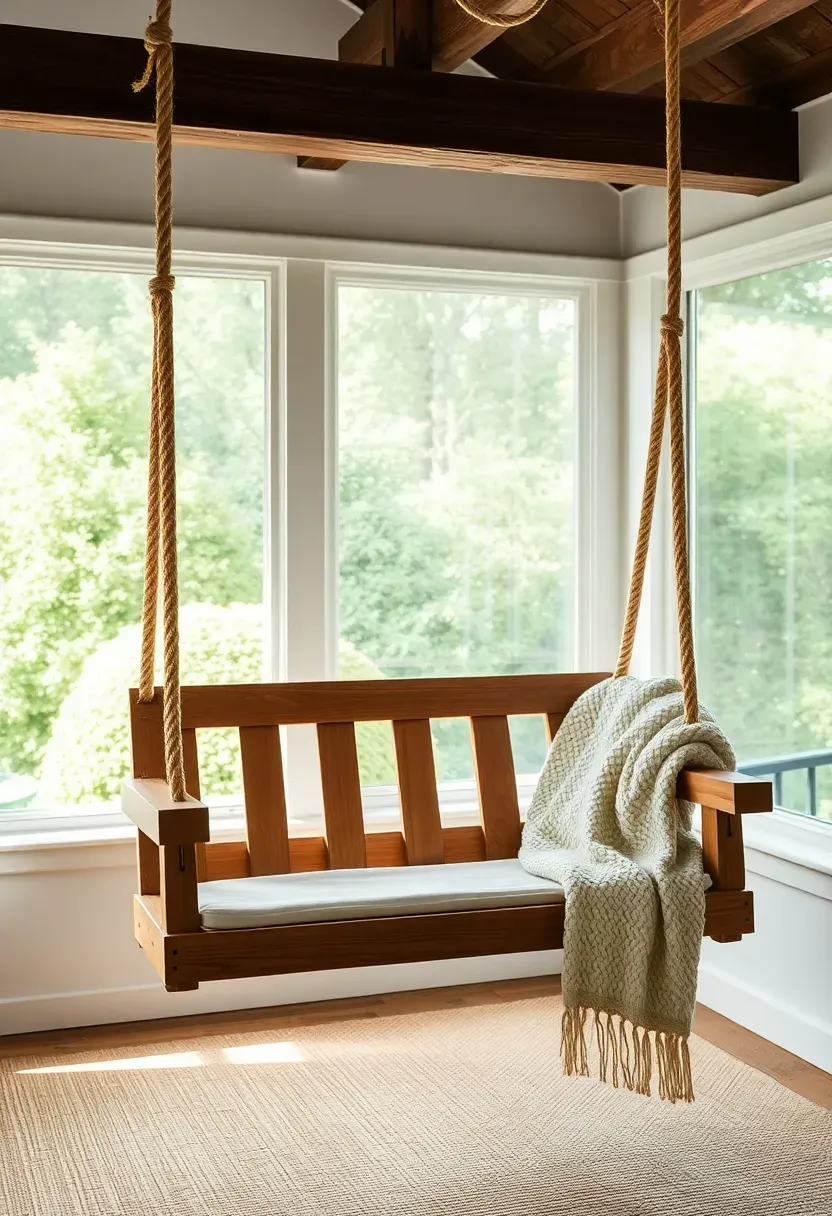
21. Farmhouse Swing Bench
A swing bench hung from the ceiling — or from a simple A-frame if the ceiling cannot bear the load — is the most specifically farmhouse-porch element you can bring into a sunroom. The motion is gentle and self-induced, the creak of the rope is comforting, and the image of a swing in a glass-walled room that looks out onto a garden captures the farmhouse dream completely. Cushion the seat in heavy linen, drape the back with a knit throw, and leave enough floor clearance that it swings freely without touching the furniture around it.
Step 1: Verify the Ceiling Load
A swing bearing an adult requires ceiling joists or a structural beam rated for at least 150 kilograms. Use a structural engineer if you are uncertain.
Step 2: Choose the Rope
Manila rope in two-centimeter diameter has the farmhouse visual quality and the strength required. Seal the ends with a flame to prevent fraying.
Step 3: Build or Source the Bench
A simple plank bench from two-inch pine boards with rounded edges works perfectly. Sand smooth to avoid splinters, then apply a clear oil finish that lets the wood grain show.
What to Watch Out For
- A swing needs at least ninety centimeters of clear space in front and behind for safe movement
- Place felt bumpers on anything the swing might contact at the end of its arc
- Use eye bolts rated for the combined weight of the swing, cushion, and occupant, with a safety factor of three
Quick FAQ
Is it possible to achieve the farmhouse look in a modern sunroom addition? Absolutely. New construction can incorporate the materials — shiplap, reclaimed wood, linen, galvanized metal — that define farmhouse style. Start with the ceiling beams or a shiplap accent wall, then layer in textiles and vintage accessories. The bones of the room matter less than the materials and objects placed within them.
Should you mix antique and reproduction pieces in a farmhouse sunroom? Yes, and it is actually preferable. A room filled entirely with genuine antiques reads as a museum. A room filled entirely with reproductions reads as a theme park. The mix — a genuine antique door, reproduction pendant lights, an authentic vintage rug, new linen upholstery — creates something that feels like a real life accumulated over time.
What is the best wood finish for a farmhouse sunroom with high humidity? Exterior-grade oil finishes and penetrating hardwax oils handle humidity better than film-forming finishes like polyurethane, which can crack and peel as wood expands and contracts. For tabletops and high-contact surfaces, a hardwax oil applied in two thin coats provides protection while maintaining the natural look.
Which plants thrive in a farmhouse-style sunroom? Herbs are the most farmhouse-correct choice: rosemary, thyme, sage, and basil thrive in sunroom light and connect to the kitchen garden tradition. Beyond herbs, fiddle-leaf figs, trailing pothos, and Boston ferns all look good against natural wood and linen. Avoid highly architectural succulents that read as contemporary rather than farmhouse.
Do galvanized metal accents work with wood and linen or do they feel too industrial? Galvanized metal in a farmhouse context reads as agricultural rather than industrial. The weathered zinc tone sits comfortably beside natural wood, cream linen, and terracotta because all of those materials share an earthy, organic quality. The key is keeping the metal accents functional — planters, buckets, watering cans, hardware — rather than purely decorative.
Trends come and go, but the farmhouse sunroom has a staying power rooted in something older than design cycles. It is about bringing into one room the best materials from two hundred years of American rural life — the honest wood, the sturdy linen, the repurposed and the mended — and letting them settle into a space that fills with morning light every day. Start with one piece: the shiplap board, the linen sofa, the enamel pitcher on the windowsill. Build from there. The room will tell you what it needs next.
Pinterest cover for 21 Farmhouse Sunroom Ideas with Natural Wood, Linen, and Vintage Touches
About the author
OBCD
CGI visualization and interior design content. We create detailed 3D renders and curate practical design ideas for every room in your home.