23 Sunroom Ideas with Plants: Greenery Setups That Thrive in Bright Light
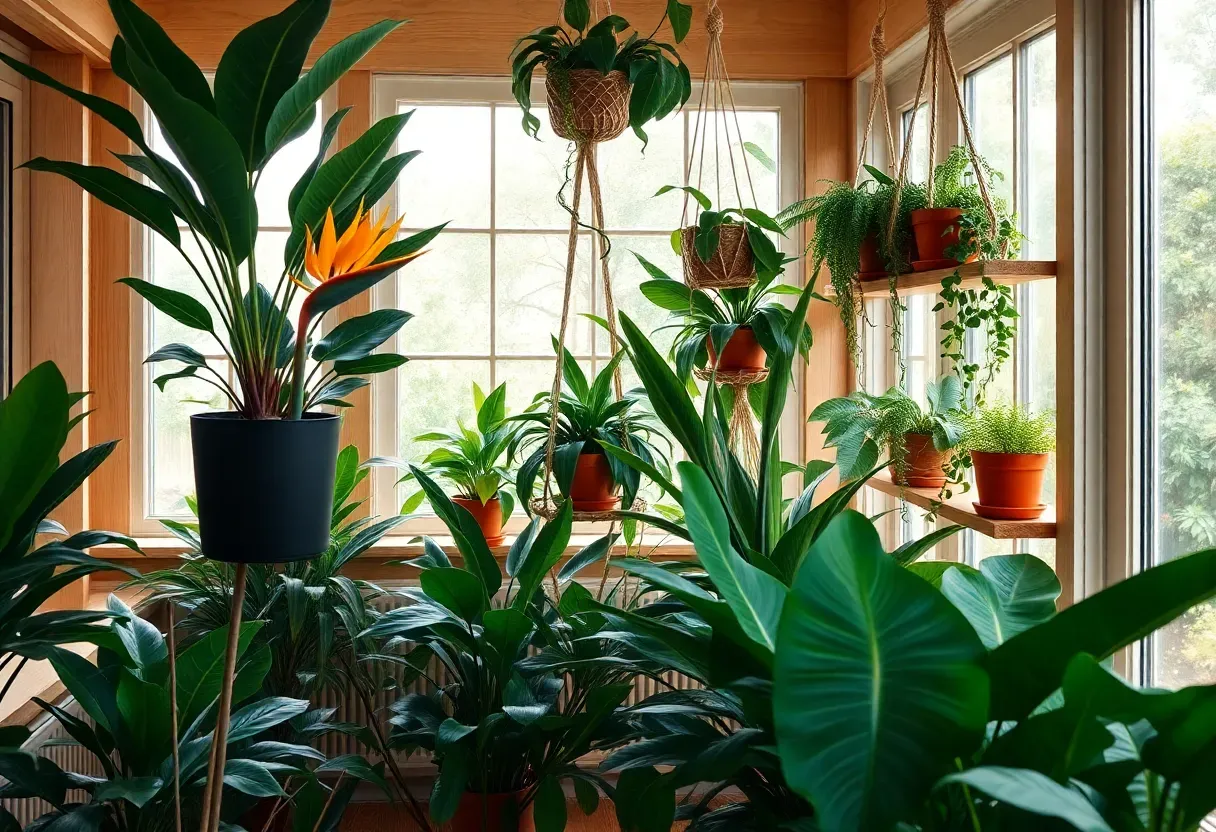
Walk into a sunroom that has been done right with plants and the difference is immediate — the air feels alive, the light looks softer where it passes through leaves, and the whole space seems to breathe. According to 2026 design trends, sunrooms are becoming the go-to spot for serious indoor gardening precisely because they offer what most rooms cannot: full-spectrum natural light for the majority of the day. The challenge is knowing which plants actually thrive under those conditions versus which ones will scorch or sulk within a week, and how to display them so the setup looks intentional rather than like a garden center overflow.
In this article I have gathered 23 plant ideas and greenery setups specifically for bright sunroom conditions — covering plant selection, shelving arrangements, hanging systems, living walls, humidity strategies, and ways to style greenery as the room's central design element.
Table of Contents
- Bird of Paradise as a Floor Anchor
- Tiered Wooden Plant Shelves
- Hanging Macramé Planters in a Cluster
- String-of-Pearls Cascade from a High Shelf
- Living Plant Wall with Modular Pockets
- Citrus Tree in a Ceramic Pot
- Succulent and Cactus Windowsill Row
- Monstera Deliciosa Statement Corner
- Fern Humidity Station Near a Water Feature
- Railing-Mounted Hanging Rail System
- Raised Cedar Planter Bench
- Orchid Display on a Floating Glass Shelf
- Pothos Totem Pole Climber
- Wicker Trolley Plant Cart
- Passion Flower Trellis Along the Wall
- Herb Garden on a Sunny Ledge
- Self-Watering Planter Row for Busy Schedules
- Banana Leaf Plant Grouping
- Trailing Philodendron Above the Sofa
- Terrarium Cluster on a Round Table
- Bougainvillea Trained Up a Wire Frame
- Zen Corner with Bamboo and River Stones
- Seasonal Rotation System for Fresh Variety
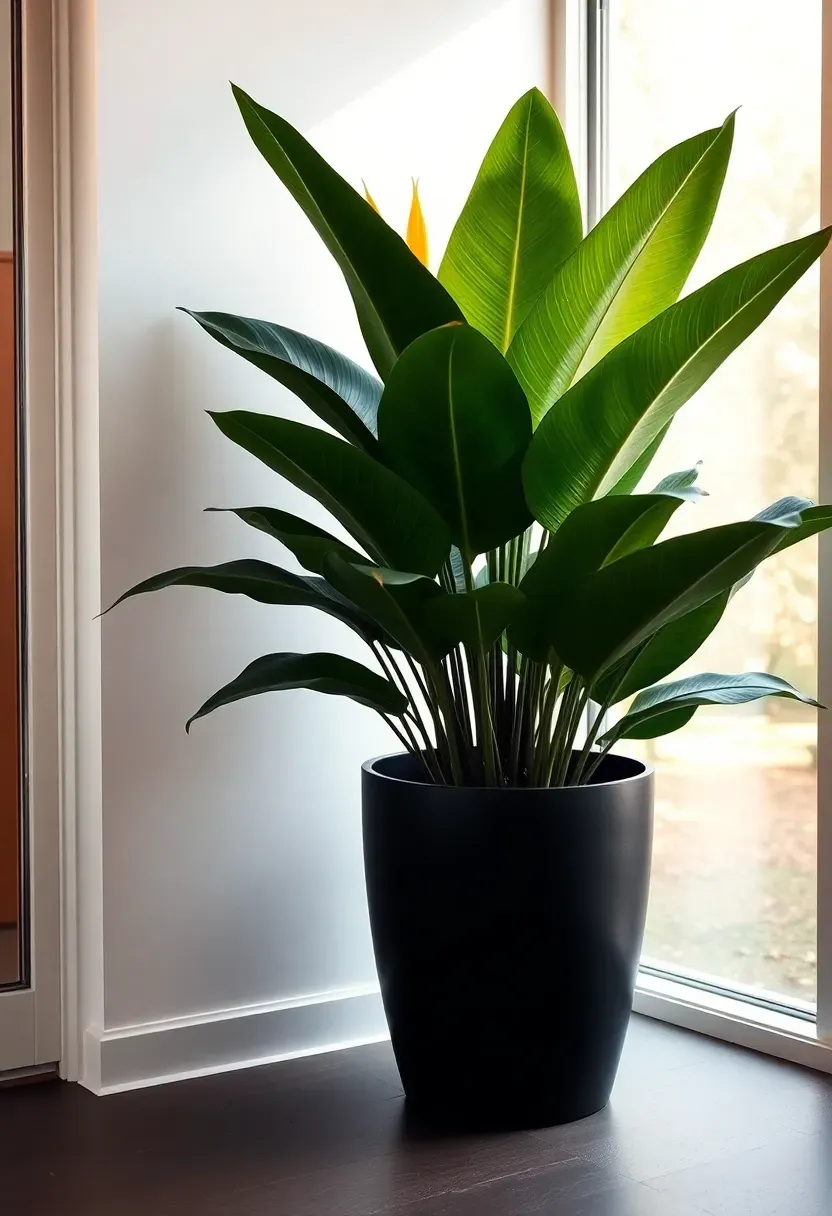
1. Bird of Paradise as a Floor Anchor
The bird of paradise is the single most effective plant for anchoring a sunroom because its scale, structure, and boldness match the architecture. This plant genuinely loves direct light and will produce its iconic orange blooms when placed in a sunroom that receives six or more hours of sun daily. Choose a pot that is wide and heavy enough to prevent tipping — a matte black or stone-finish planter in a thirty-plus centimeter diameter works beautifully and prevents the terracotta-only look that can feel expected.
Tips / Practical Recommendations
- Water deeply every seven to ten days and allow the top third of the soil to dry between waterings
- Wipe the broad leaves with a damp microfiber cloth monthly to prevent dust from blocking photosynthesis
- Expect slow growth in winter even in a sunny sunroom; this is normal, not a sign of distress
We picked a few things that go well with this idea: EPFamily 10-Inch Ceramic Planter with Saucer (★4.7), D'vine Dev 14-Inch White Cylinder Planter (★4.8) and D'vine Dev 14-Inch Olive Cylinder Planter (★4.8). As an Amazon Associate we earn from qualifying purchases.
2. Tiered Wooden Plant Shelves
Why Tiered Shelves Work So Well
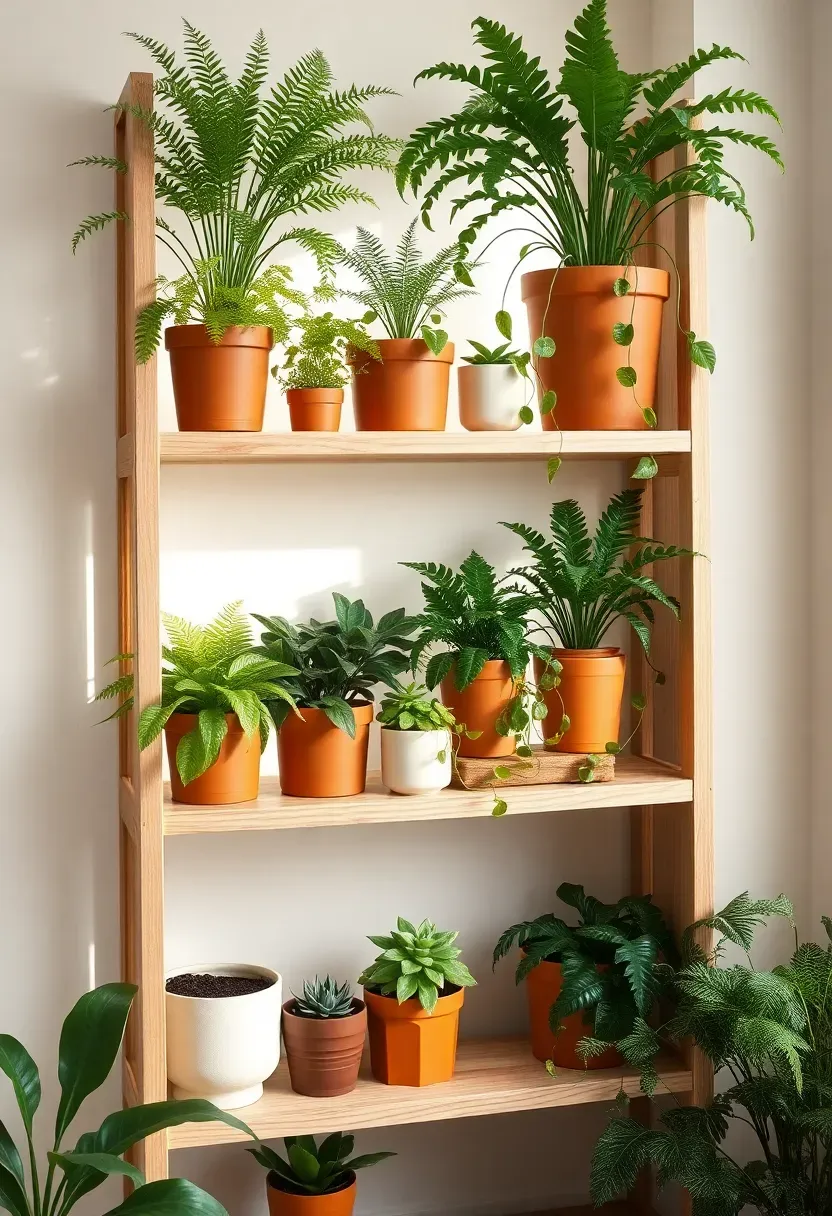
Flat surfaces hold one layer of plants. Tiered shelving turns a single wall section into a vertical garden that layers small, medium, and large plants at different heights, which looks more dynamic and allows every pot to receive adequate light without one blocking another.
The Solution
A three-tier freestanding shelf in light oak or natural pine fits most sunroom walls and holds twelve to eighteen pots comfortably. Place trailing plants on the top tier so vines cascade downward, mid-size plants like ferns and pothos on the middle tier, and compact succulents or herbs on the bottom. Vary pot materials — terracotta beside ceramic beside woven jute sleeves — to keep the arrangement visually textured.
Pros and Cons
Pros: Efficient use of vertical space, portable, easy to rearrange as seasons change. Cons: Requires regular watering management since top-tier pots dry out faster than bottom ones.
We picked a few things that go well with this idea: SFENNGPET Macrame Hanging Planter Kit (6-Pack) (★4.7), Macrame Boho Hanging Planter Set (6-Pack) (★4.7) and Boho Macrame Plant Hanger Basket (3-Pack) (★4.7). As an Amazon Associate we earn from qualifying purchases.
3. Hanging Macramé Planters in a Cluster
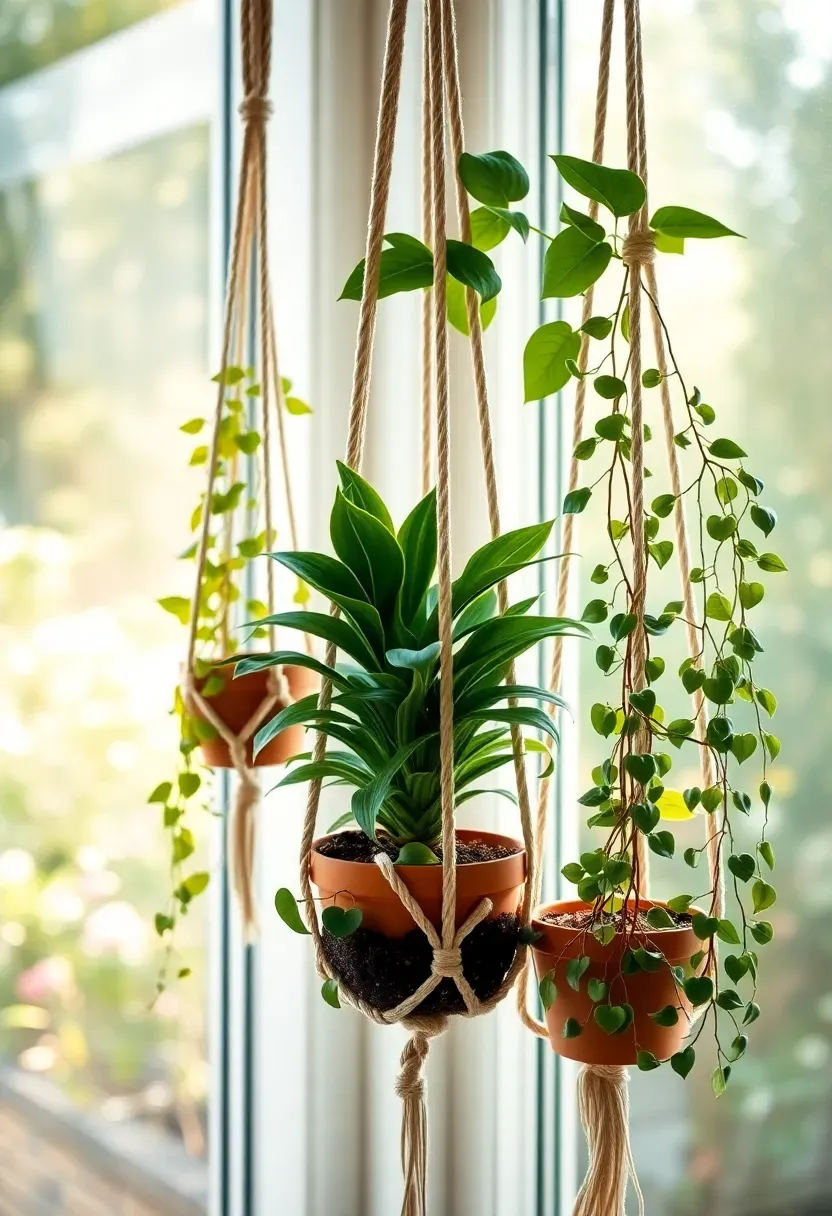
Hanging planters solve a specific sunroom problem: floor space is finite, but ceiling space is completely unused. A cluster of three to five macramé hangers at staggered lengths converts dead ceiling area into a living canopy that filters light before it reaches the floor, creating that dappled quality that makes a sunroom feel like sitting under a tree. Choose plants that genuinely thrive in bright indirect light at height — spider plants, pothos, string of hearts, or Boston ferns.
Step 1: Find the Right Ceiling Points
Locate joists or rafters with a stud finder. Use heavy-duty ceiling hooks rated for at least five kilograms each. Avoid the center of glass panels where structural support is minimal.
Step 2: Stagger the Lengths
Hang the three planters at heights of sixty, ninety, and one hundred twenty centimeters below the ceiling. The asymmetry looks intentional and prevents the cluster from reading as a rigid row.
Step 3: Water Without the Mess
Insert drip trays or use self-watering pot inserts inside each hanger. Alternatively, lower each planter to water, then rehang — this is easier than managing drips at ceiling height.
What to Watch Out For
- Spider plants and pothos grow fast in bright conditions — trim regularly to prevent overcrowding between hangers
- Macramé rope can mildew in high-humidity sunrooms; switch to cotton-coated wire hangers in very humid spaces
We picked a few things that go well with this idea: GEEBOBO 5-Tier Walnut Plant Stand Indoor (★4.3), GEEBOBO 3-Tier Metal Wood Plant Stand (★4.4) and GEEBOBO 5-Tier Rolling Plant Stand (Wheels) (★4.4). As an Amazon Associate we earn from qualifying purchases.
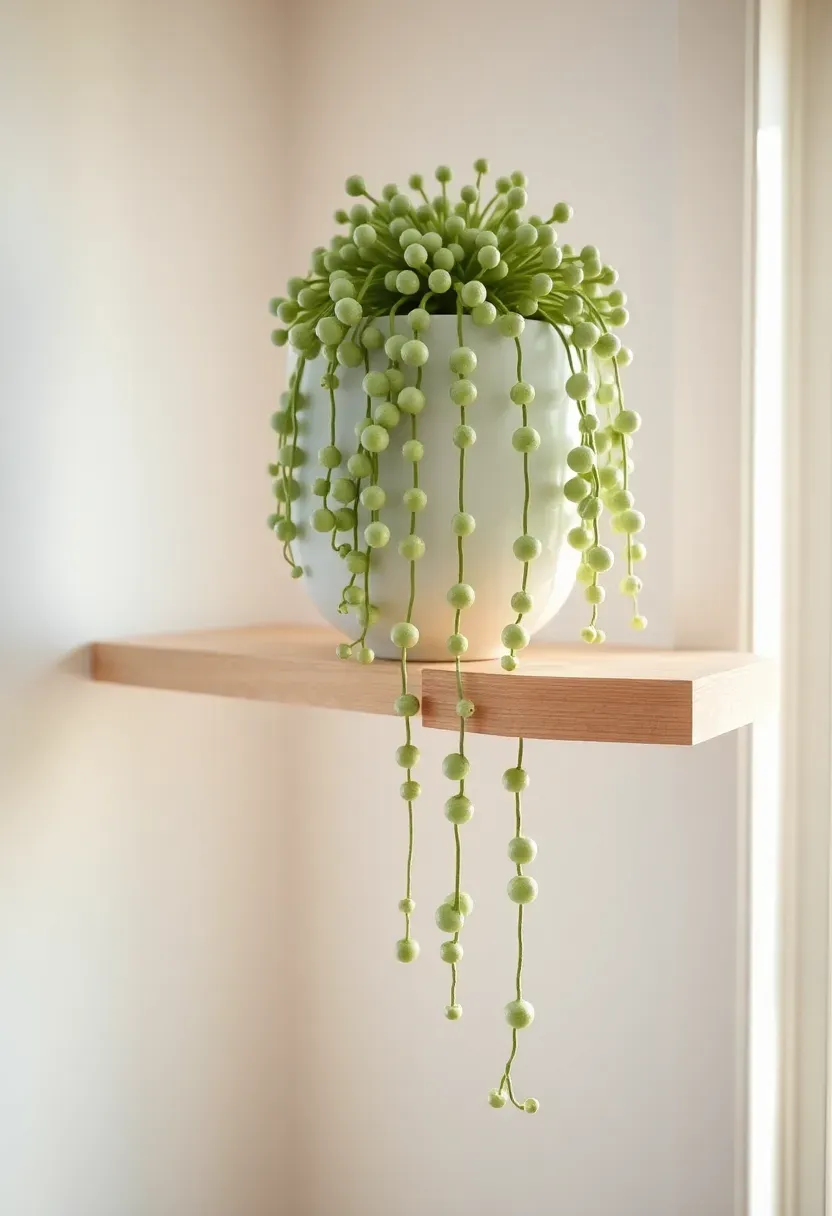
4. String-of-Pearls Cascade from a High Shelf
String-of-pearls is one of the few succulents that actually behaves dramatically — the bead-like strands cascade downward in long, trailing curtains that look almost sculptural from across the room. In a bright sunroom it grows aggressively, which means you get a satisfying display within a single growing season. Mount a narrow floating shelf at shoulder height or above a window, place two to three pots of string-of-pearls in simple white or cream ceramic pots, and let the strands hang freely.
Tips / Practical Recommendations
- Water sparingly — once every ten to fourteen days — since overwatering is the primary killer of this plant
- Give the shelf at least fifteen centimeters of clearance from any window glass to prevent the cascading strands from pressing against hot surfaces on summer afternoons
- Propagate by simply laying a strand on fresh potting mix in a new pot; roots emerge within two weeks in warm sunroom conditions
Recommended
Items for this idea
5. Living Plant Wall with Modular Pockets
Comparing: Pocket Panel System vs Mounted Frame Boxes
Both create a living wall effect, but the construction and maintenance differ significantly.
Pocket Panel System
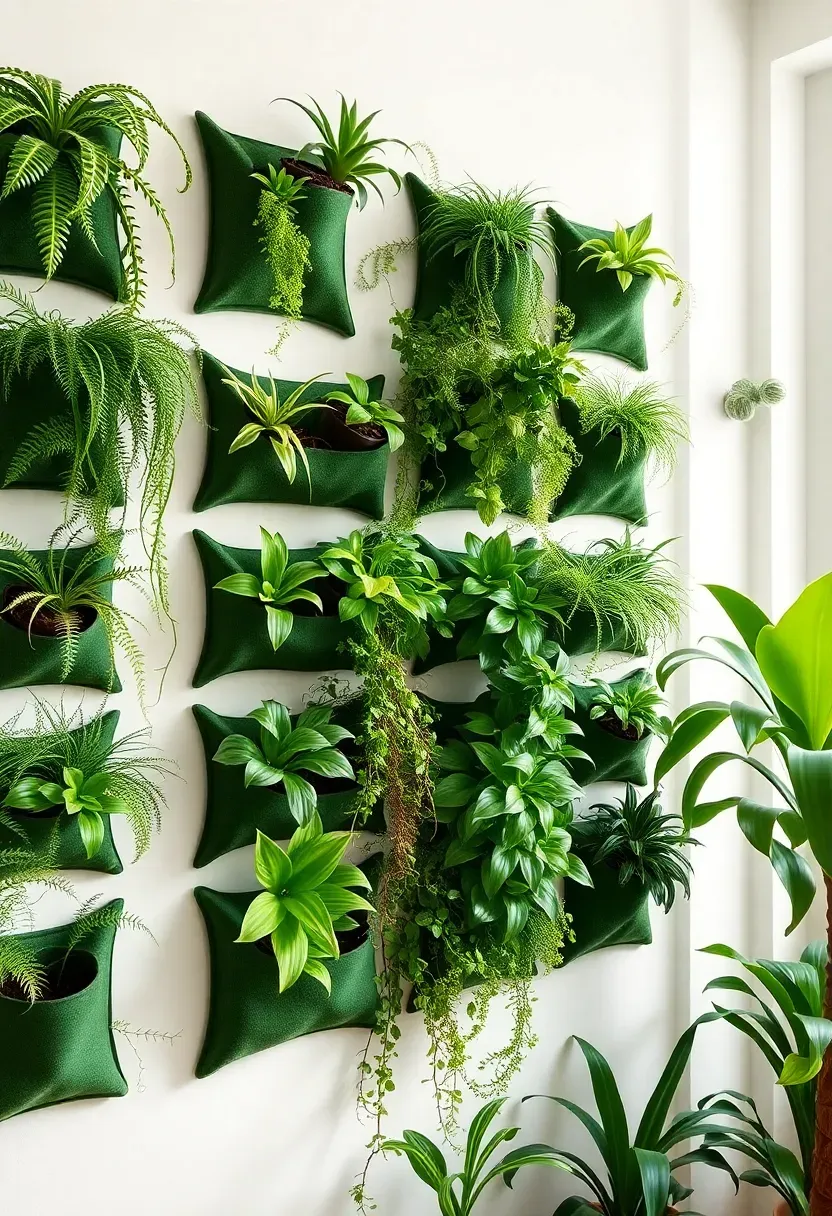
Felt or fabric panels with individual pockets mount directly to the wall with minimal hardware. Each pocket holds a small pot or bare-root plant. The setup is lightweight, affordable, and easy to expand. However, pockets retain moisture unevenly, and bottom pockets can become waterlogged.
Mounted Frame Boxes
Wooden or metal frames hold individual modular planters in a grid. The result is more structured and architectural. Easier to water each cell individually. More expensive and heavier — requires wall anchoring into studs.
What to Choose
Choose pocket panels if: you want a lush, dense look quickly and on a budget, and your sunroom wall can handle some moisture exposure. Choose frame boxes if: you want a precise, grid-like appearance with easier maintenance long-term.
Recommendation
For a sunroom with good ventilation, the pocket panel system creates a more dramatic, jungle-like effect. Plant it with ferns, pothos, and peace lilies for a layered green texture that works beautifully against a white or light grey wall.
6. Citrus Tree in a Ceramic Pot
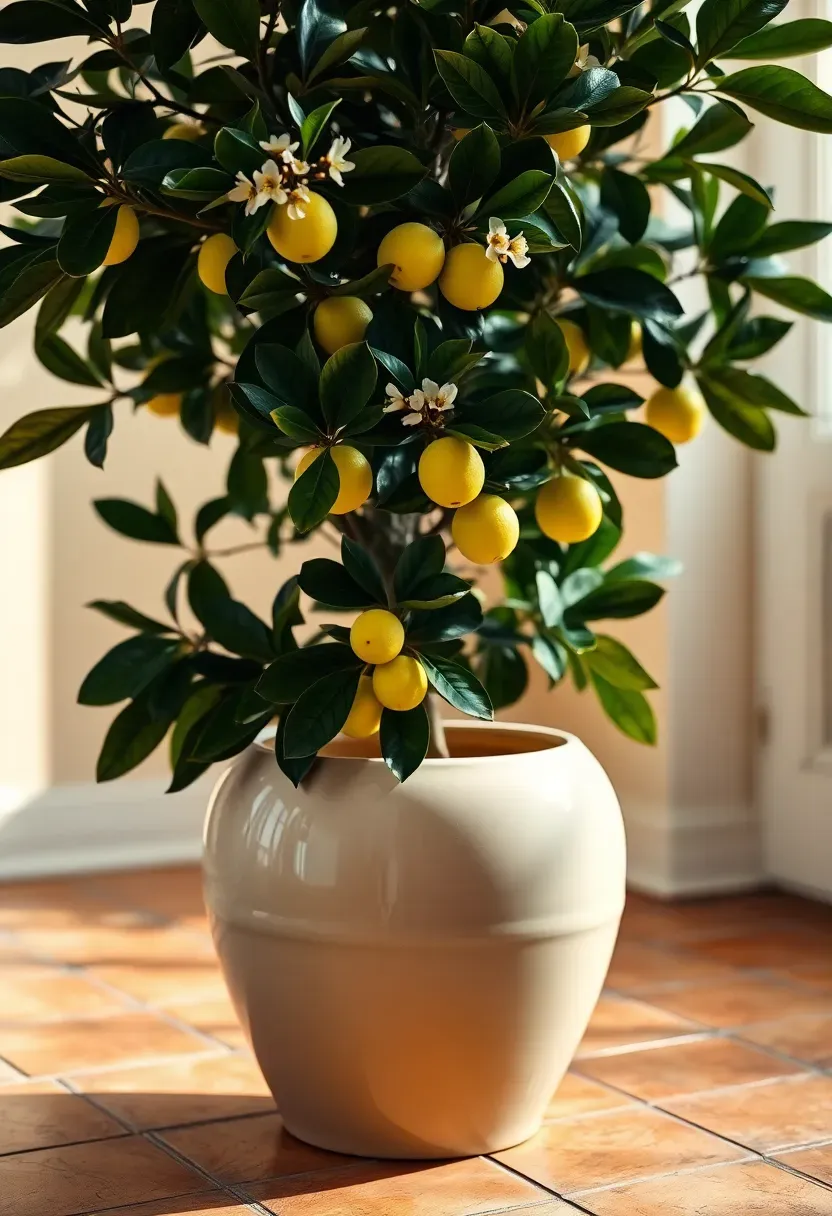
Few plants combine beauty, fragrance, and utility the way a dwarf citrus tree does. Meyer lemon, calamondin orange, and kumquat are the most reliable sunroom performers — compact enough to stay in a large container, productive enough to bear fruit after two to three years, and gorgeous year-round with their glossy dark foliage. Position the tree where it receives the most direct sun in the room, ideally near a south or west-facing wall. A wide cream or terracotta ceramic pot provides adequate root space and looks refined rather than utilitarian.
Tips / Practical Recommendations
- Feed with a citrus-specific liquid fertilizer every four weeks from March through October
- Mist the foliage lightly if sunroom humidity drops below forty percent in winter — citrus prefers humidity between fifty and sixty percent
- Rotate the pot a quarter turn every two weeks so all sides receive even light and the canopy stays symmetrical
Recommended
Items for this idea
7. Succulent and Cactus Windowsill Row
The Core Issue
Not everyone has the time or consistency for high-maintenance plants, but bare windowsills waste the most valuable real estate in a sunroom — the brightest, sunniest strip of all.
The Solution
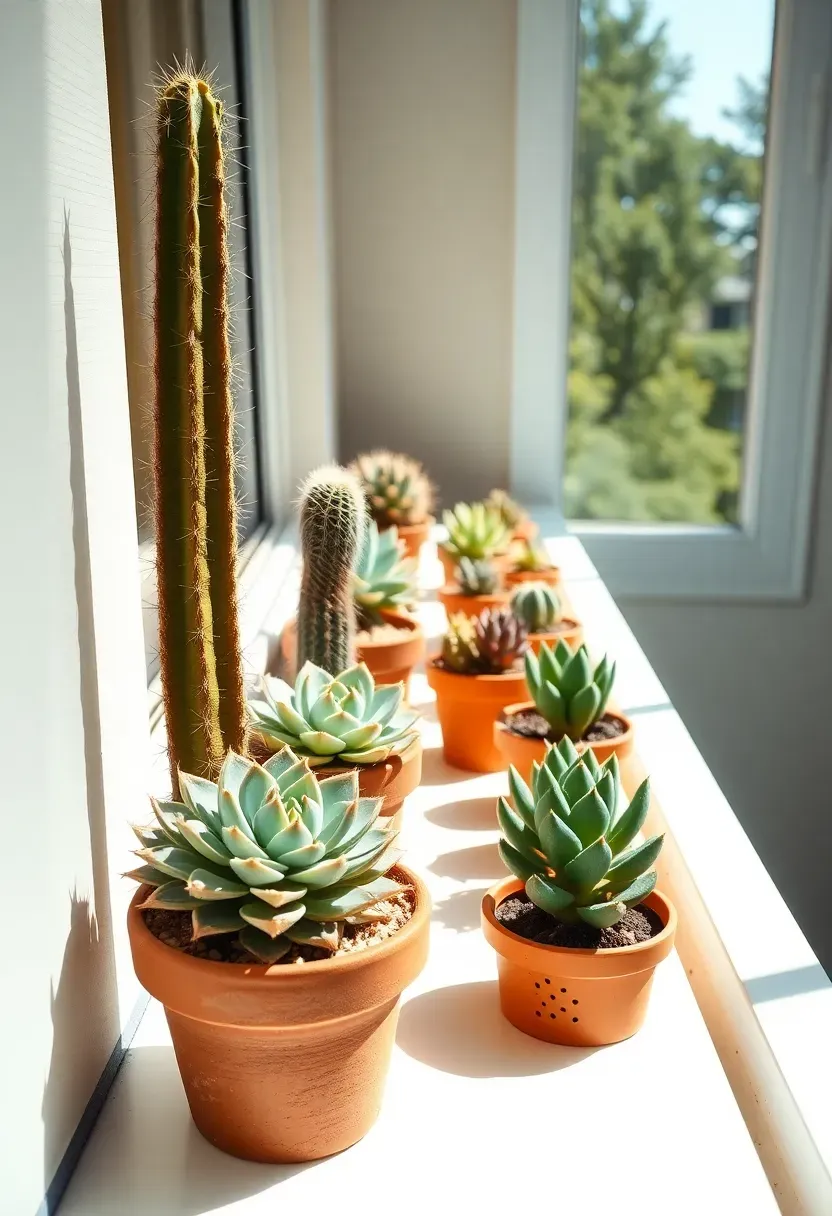
A curated row of succulents and cacti along the sill requires watering only once every two to three weeks and thrives in the intense direct light that would cook most other plants. Mix forms for visual variety: a tall columnar cactus beside a flat echeveria rosette beside a spiky aloe — all in matching small terracotta pots for a cohesive look. Keep spacing generous enough that each plant gets its full silhouette of sunlight rather than one casting shade on the next.
Pros and Cons
Pros: Near-zero maintenance, tolerates the most extreme sun exposure, affordable to assemble gradually over time. Cons: Limited visual drama compared to larger plants; does not add humidity to the space.
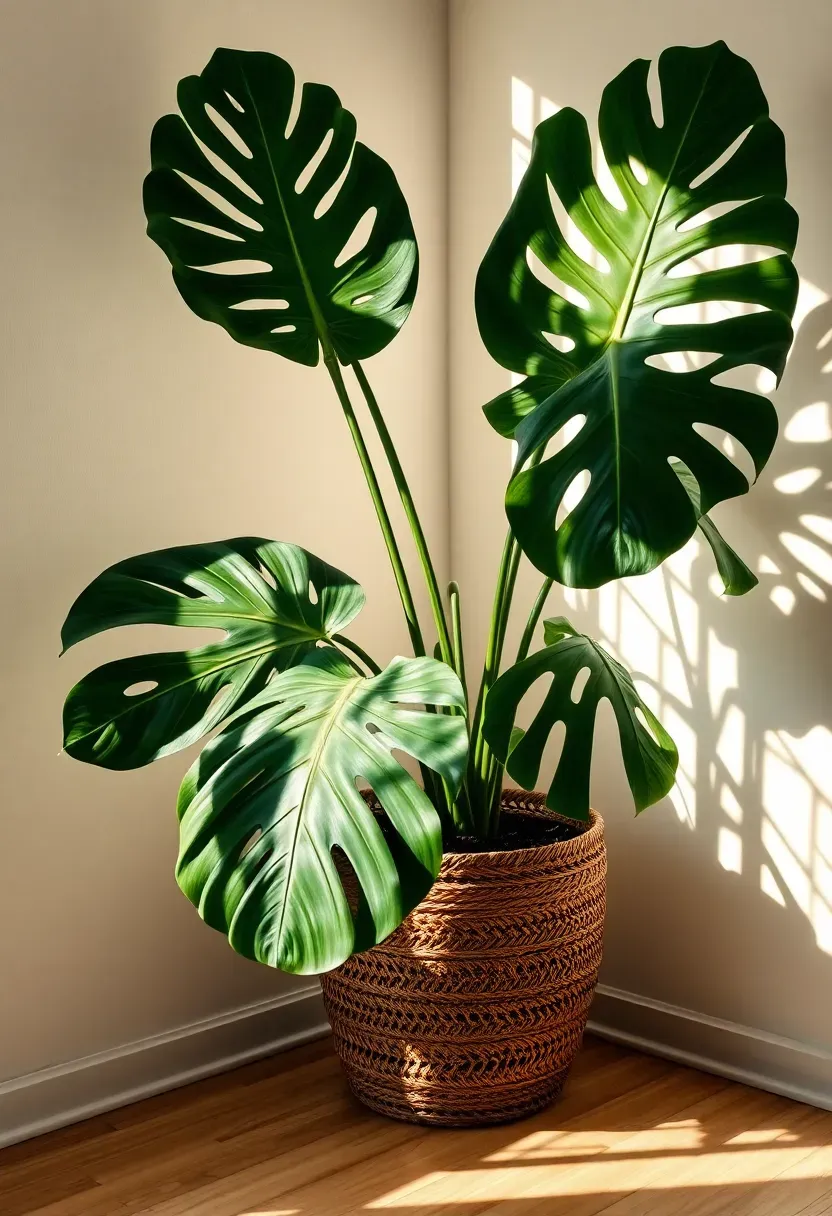
8. Monstera Deliciosa Statement Corner
The monstera's split leaves cast extraordinary shadows on walls and floors when bright sunlight passes through them — a living, shifting pattern that changes throughout the day. This effect is unique to sunrooms and cannot be replicated with grow lights. Place a mature monstera in a large woven seagrass basket planter in a corner where two walls meet and the light comes from an angle. As the plant grows, train new stems upward with a moss pole to keep the silhouette tall and architectural rather than sprawling.
Step 1: Choose the Right Spot
Position the monstera where it receives bright indirect light — near a window but not in direct afternoon rays that can scorch the leaves. Morning sun is ideal.
Step 2: Install a Moss Pole
Push a sixty to ninety centimeter moss pole into the center of the pot. Tie existing aerial roots loosely to it with jute twine. Within a few months, the plant grips the pole independently.
Step 3: Manage Moisture
Water when the top five centimeters of soil are dry. Empty the saucer within thirty minutes of watering to prevent root rot. In a sunroom, this typically means watering every five to seven days in summer.
Recommended
Items for this idea
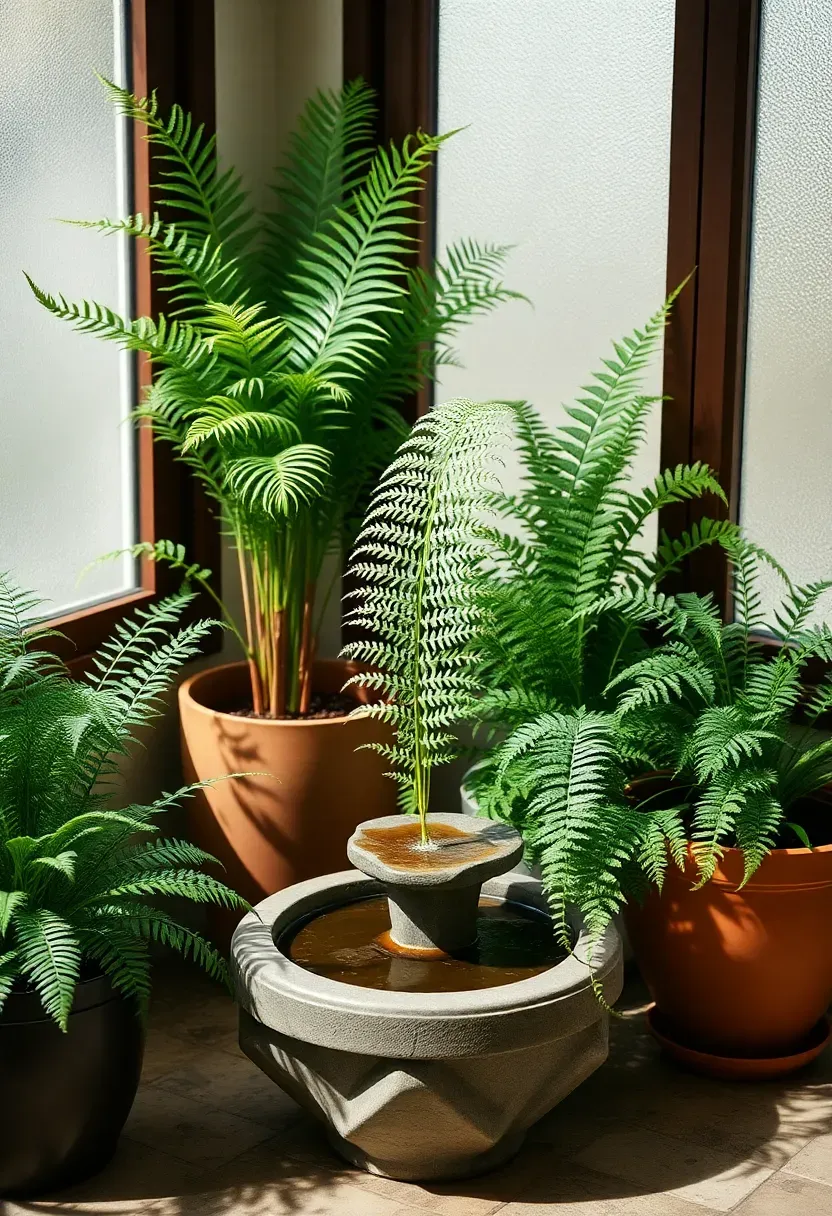
9. Fern Humidity Station Near a Water Feature
Ferns are the one type of plant that genuinely struggles in a dry, sun-blasted sunroom — they need moisture in the air as much as they need light. The solution is creating a dedicated humidity station: group three to five fern varieties together near a small tabletop fountain or electric mist diffuser. The constant moisture from the water feature raises local humidity by fifteen to twenty percent, which is often enough to keep Boston ferns, maidenhair ferns, and bird's nest ferns thriving where they would otherwise fail.
Tips / Practical Recommendations
- Set up a shallow gravel tray filled with water beneath the fern pots; as the water evaporates, it humidifies the immediate air around the plants
- Keep the fountain or diffuser on a timer — four to six hours of active misting per day is sufficient and prevents excessive moisture buildup on the glass walls
- Pair the fern station with a shade cloth panel on the most intense window to reduce direct midday sun that quickly dehydrates fern fronds
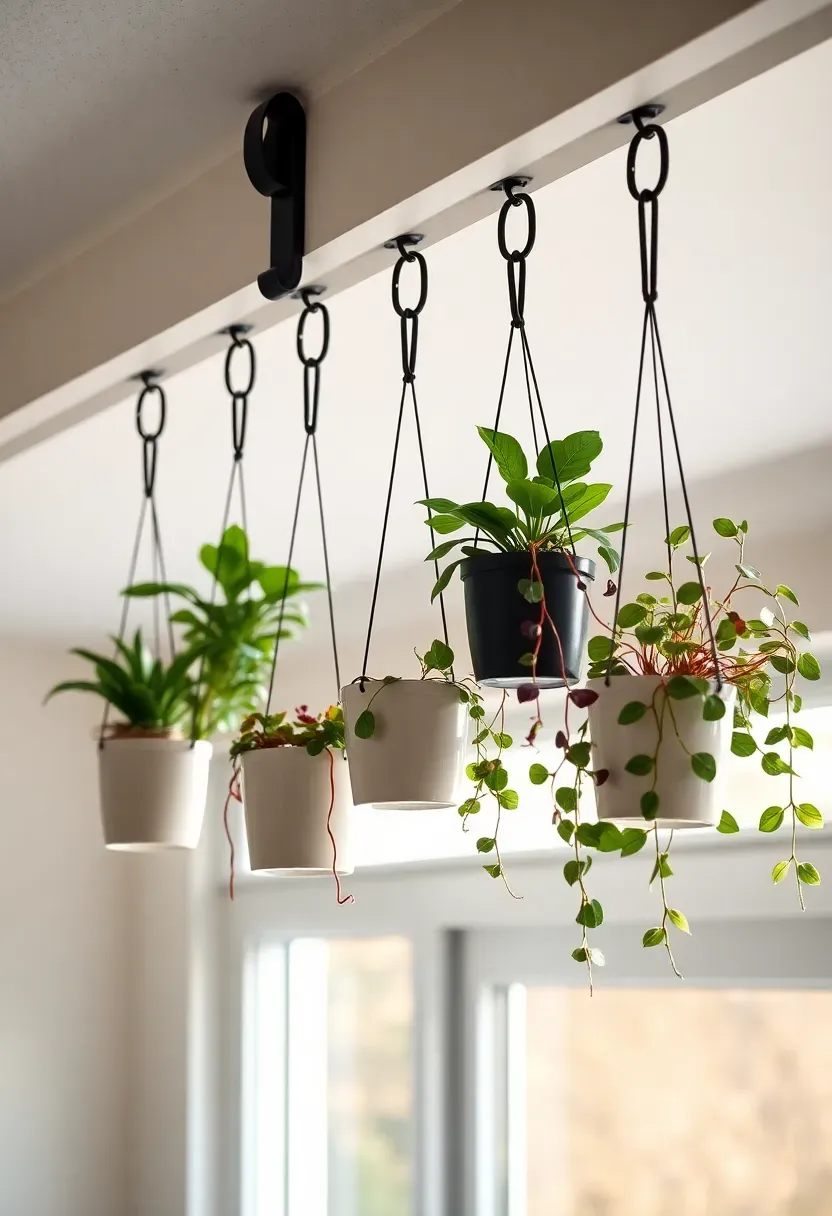
10. Railing-Mounted Hanging Rail System
If your sunroom has a railing, a low beam, or a horizontal structural element, a mounted hanging rail turns it into a plant display system. The rail holds S-hooks from which you hang small pots at varying lengths, creating a curtain of plants that lines the room's edge without taking any floor space. This setup is ideal for a sunroom that transitions to an outdoor patio — the plant rail serves as a soft visual divider between the two zones. Use ceramic or terracotta pots in uniform sizes for a clean look, or mix sizes for something more relaxed.
Tips / Practical Recommendations
- Choose plants that prefer the same watering frequency for a rail you water all at once — pothos, spider plants, and trailing tradescantia all share similar needs
- Keep the heaviest pots nearest the wall mounts rather than at the ends of the rail where leverage is greatest
- Add a drip tray beneath each pot, or water pots in the sink and rehang after draining
Recommended
Items for this idea
11. Raised Cedar Planter Bench
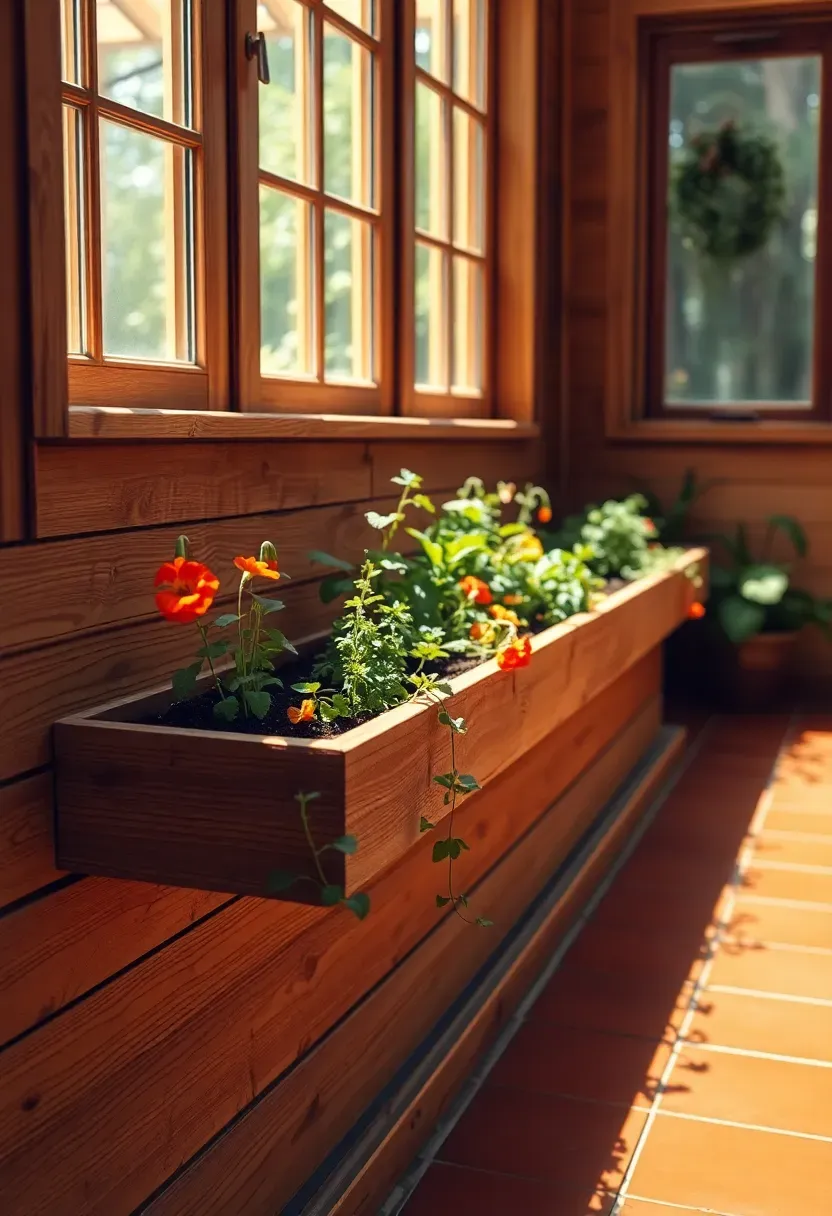
A raised cedar planter bench combines two sunroom needs into one piece of furniture: a place to sit and a place to grow plants. The bench frame runs along the bottom of a window wall, with the planter section filling the interior and the bench seat forming the lid. Planted with compact herbs, trailing nasturtiums, or fragrant lavender, it becomes an aromatic, living room element. Cedar is the correct material choice — it naturally resists moisture and warping, making it appropriate for a space where plants are watered regularly.
Pros and Cons
Pros: Doubles as storage or seating, cedar weathers beautifully without treatment, and plants at this height are easy to tend without kneeling. Cons: Fixed furniture piece that cannot be rearranged; the planter section requires a waterproof liner to protect the floor.
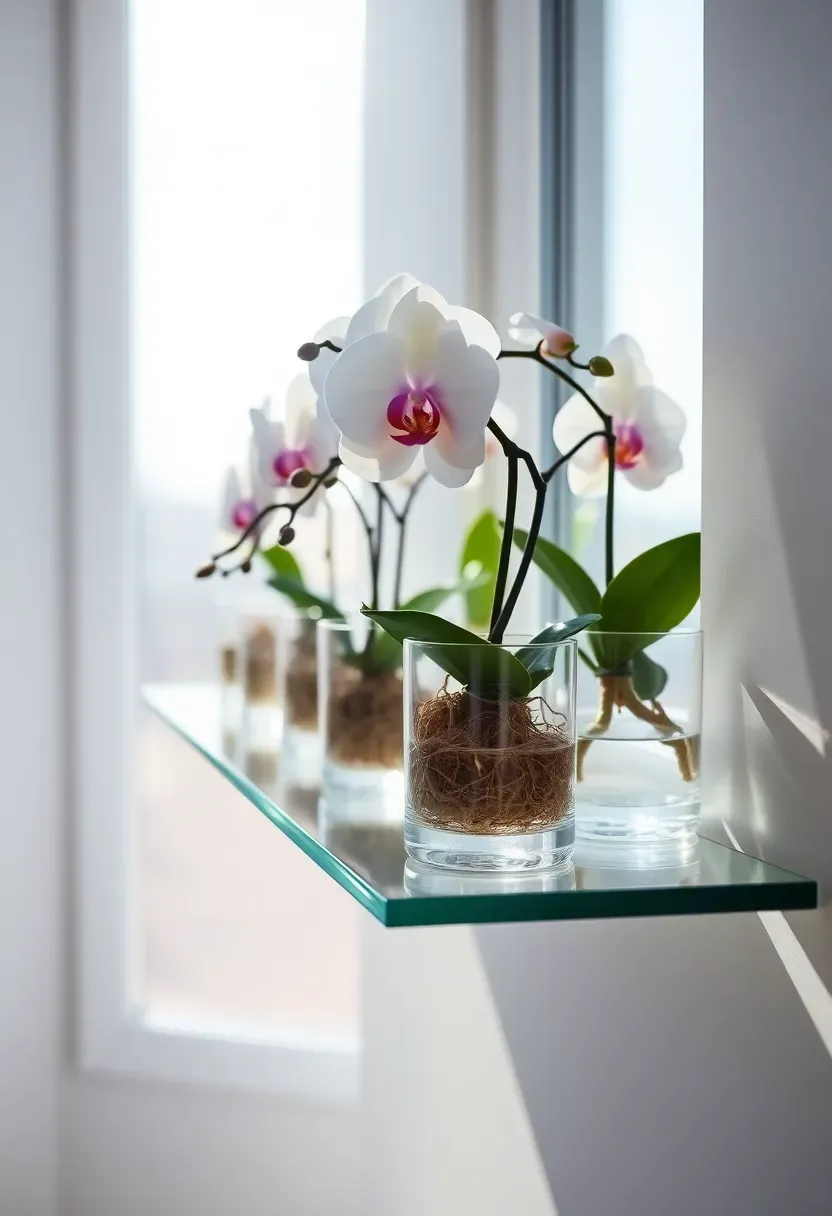
12. Orchid Display on a Floating Glass Shelf
Orchids are widely assumed to be difficult, but phalaenopsis orchids in a bright sunroom with indirect light are surprisingly straightforward — and extraordinarily beautiful for the effort involved. Mount a narrow floating glass shelf across a window where the orchids can backlit by light passing through their translucent roots and white blooms. The glass shelf disappears visually, so the orchids appear to float in the air in front of the window. Keep them in clear glass pots so the root system, which is attractive in its own right, remains visible.
Step 1: Select the Position
Choose a window with bright light but no direct afternoon sun. East-facing windows are ideal. Avoid south-facing glass on summer afternoons.
Step 2: Mount the Glass Shelf
Use a tempered glass shelf at least eight millimeters thick on heavy-duty wall-mounted brackets. Position it at eye level for maximum visual impact.
Step 3: Care Routine
Water by submerging the entire clear pot in water for fifteen minutes once every seven to ten days. Allow to drain fully before returning to the shelf. Feed with a quarter-strength orchid fertilizer every third watering.
Recommended
Items for this idea
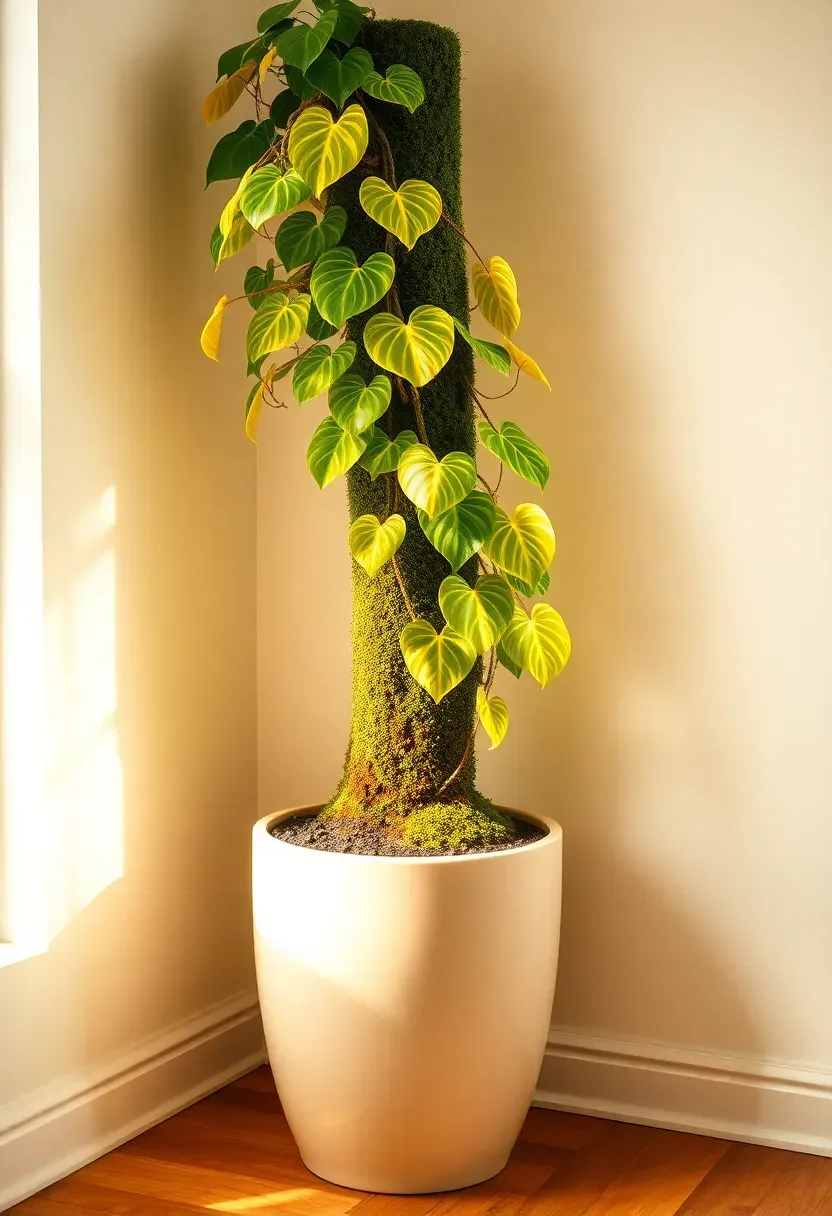
13. Pothos Totem Pole Climber
Pothos is often kept as a trailing plant, but given a vertical structure it climbs — and the climbing form is dramatically more impressive than the trailing form. The leaves of a climbing pothos grow significantly larger than those of the same plant left to trail, sometimes reaching thirty centimeters across in good light. Set up a tall moss pole (ninety to one hundred twenty centimeters) in a large pot and train the pothos stems upward from the base. Within a year in a bright sunroom, the totem becomes a substantial green column that reads as sculptural from across the room.
Tips / Practical Recommendations
- Attach aerial roots to the damp moss pole with hairpins or loose jute twine until they grip independently
- Keep the moss pole consistently moist by misting it directly two to three times per week — this is what encourages the roots to adhere
- Golden pothos is the most vigorous climber; neon pothos is slightly slower but the chartreuse color is striking in bright light
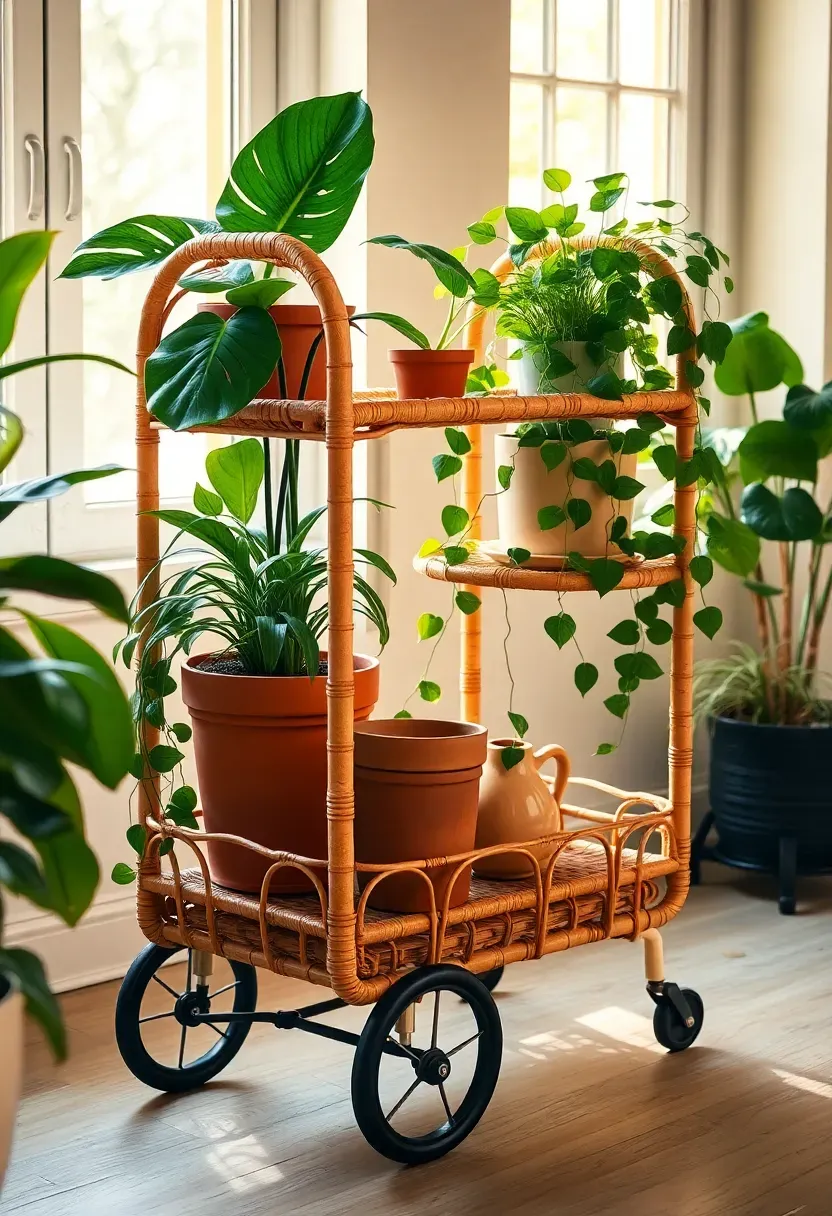
14. Wicker Trolley Plant Cart
Mobility matters in a sunroom because light conditions shift with the seasons. A plant that thrives in the east corner in summer may need to be near the south window in winter. A wicker or rattan trolley on lockable casters solves this problem elegantly — you can move an entire grouping of six to eight plants across the room in thirty seconds without repotting or rearranging individual pots. Choose a three-tier model in natural wicker to complement rather than compete with the plants.
Tips / Practical Recommendations
- Lock the casters when the trolley is in its final position to prevent drift on smooth tile floors
- Line each tier with a waterproof tray so watering overflow does not drip through
- Use the trolley's mobility intentionally: rotate it ninety degrees every two weeks so plants on the back tier get their turn near the glass
Recommended
Items for this idea
15. Passion Flower Trellis Along the Wall
Trend: Climbers and Trained Vines in Sunrooms
The biggest shift in sunroom plant styling over the past two years is the move from potted displays to trained climbers — plants grown up walls, across wire frames, and along ceiling structures. Passion flower is the standout performer in this category.
Origins
Native to South America, passion flower has been grown in European conservatories since the seventeenth century precisely because its extravagant blooms thrive in the kind of warm, glass-enclosed environment a sunroom provides.
Modern Interpretation
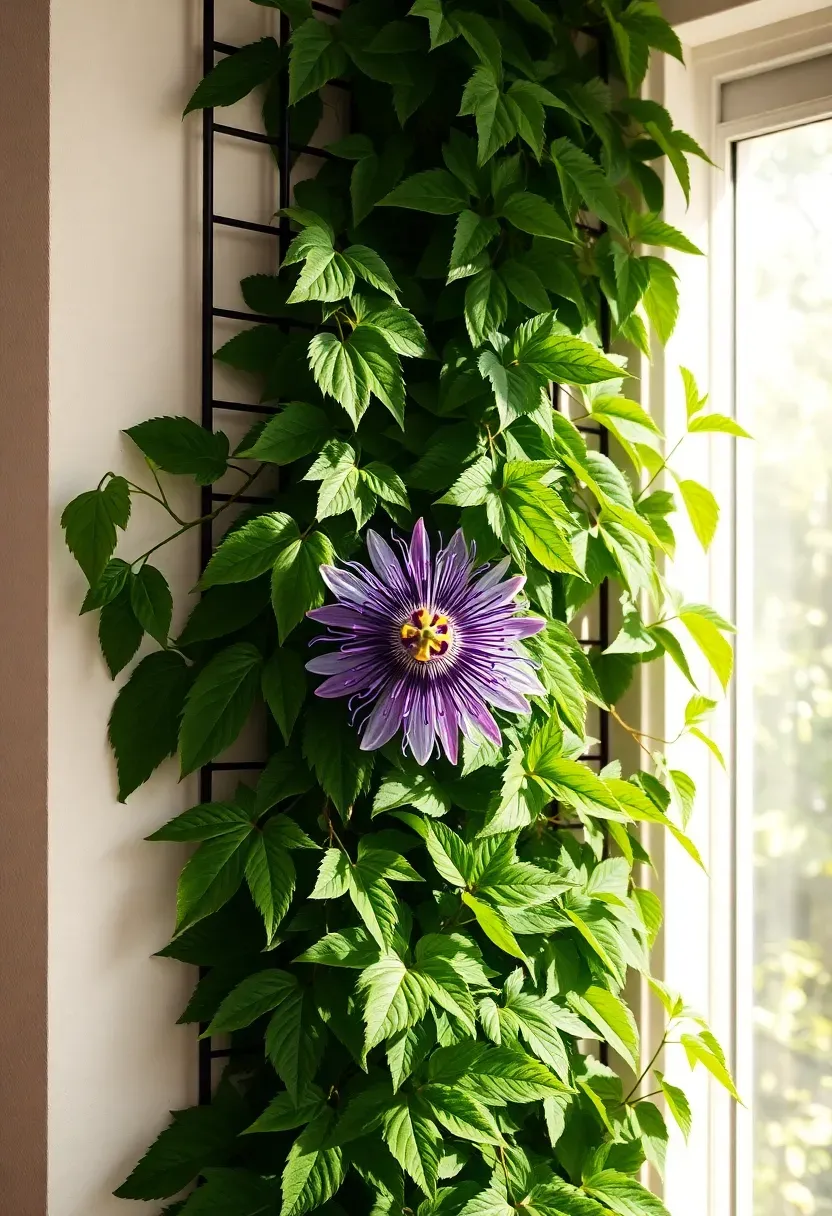
Mount a grid of horizontal stainless steel wires or a black powder-coated trellis panel across the interior wall of your sunroom. Train a passion flower plant — Passiflora caerulea is the most cold-tolerant variety — from a large pot at the base. Within a single season it will cover the trellis in dense green foliage punctuated by the plant's extraordinary purple and white blooms.
How to Apply at Home
- Install trellis wires at least five centimeters from the wall surface so air can circulate behind the leaves and prevent mold
- Guide new shoots across the trellis weekly during the growing season; the plant grows fast enough to cover a two-meter span in one summer
- Cut the plant back by a third in early spring to encourage dense new growth rather than a single long vine
16. Herb Garden on a Sunny Ledge
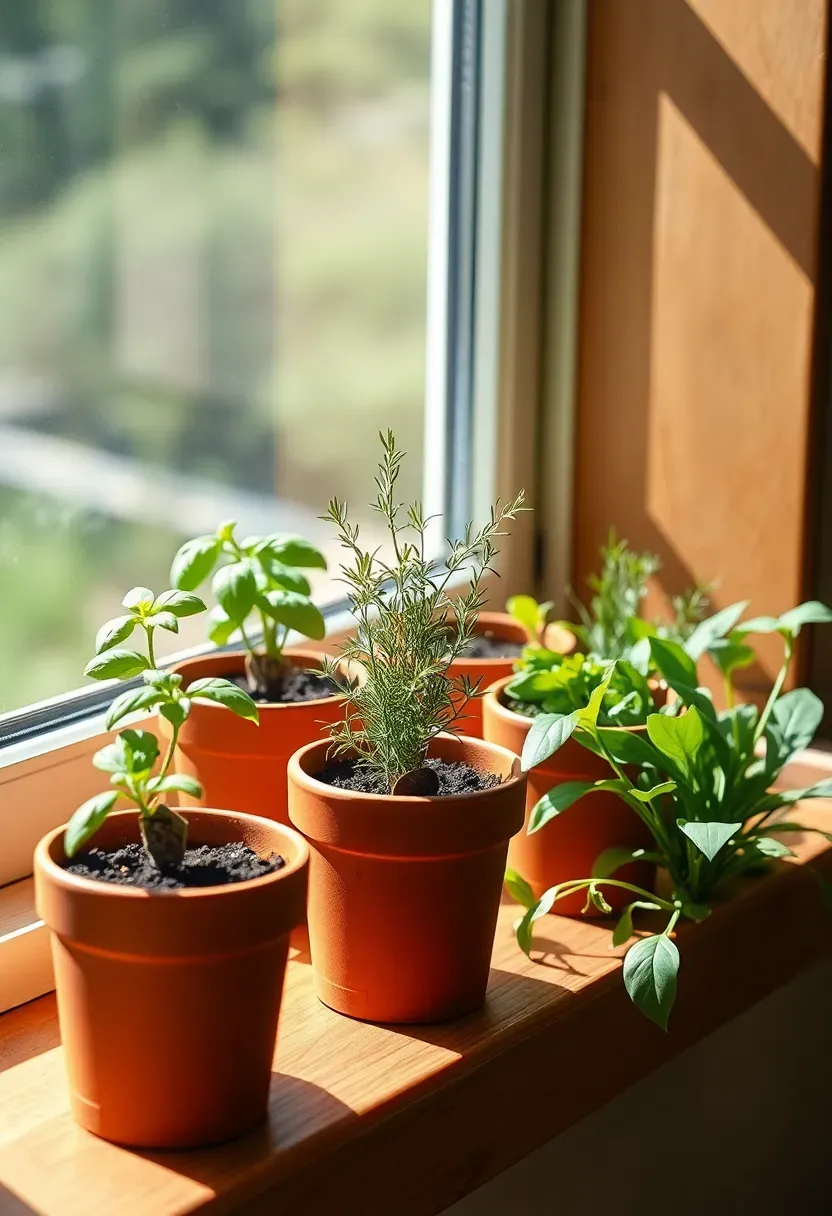
A sunroom windowsill is arguably the best spot in any house for growing herbs — better than the kitchen window, better than an outdoor garden in unpredictable climates. Basil, thyme, rosemary, oregano, and chives all thrive in the intense, consistent light a south or west-facing sunroom ledge provides. Group them in individual small terracotta pots so you can replace any plant that bolts or dies without disrupting the whole arrangement. Label each pot with a simple copper tag pressed into the soil.
Step 1: Select Your Herbs
Start with five varieties: basil, thyme, rosemary, chives, and one wildcard — lemon balm, mint, or tarragon. These cover most cooking needs and have complementary growing requirements.
Step 2: Space Them Properly
Leave at least eight centimeters between pots so air circulates freely and you can harvest without disturbing neighboring plants.
Step 3: Harvest Regularly
Harvesting is what keeps herb plants compact and productive. Pinch stems from the top regularly rather than stripping leaves from the bottom. This encourages bushy growth.
What to Watch Out For
- Mint is invasive and spreads aggressively even in pots if roots find drainage holes — use pots with sealed bases
- Basil is the most heat-sensitive: move it back from the glass on days when the sunroom exceeds thirty degrees Celsius
Recommended
Items for this idea
17. Self-Watering Planter Row for Busy Schedules
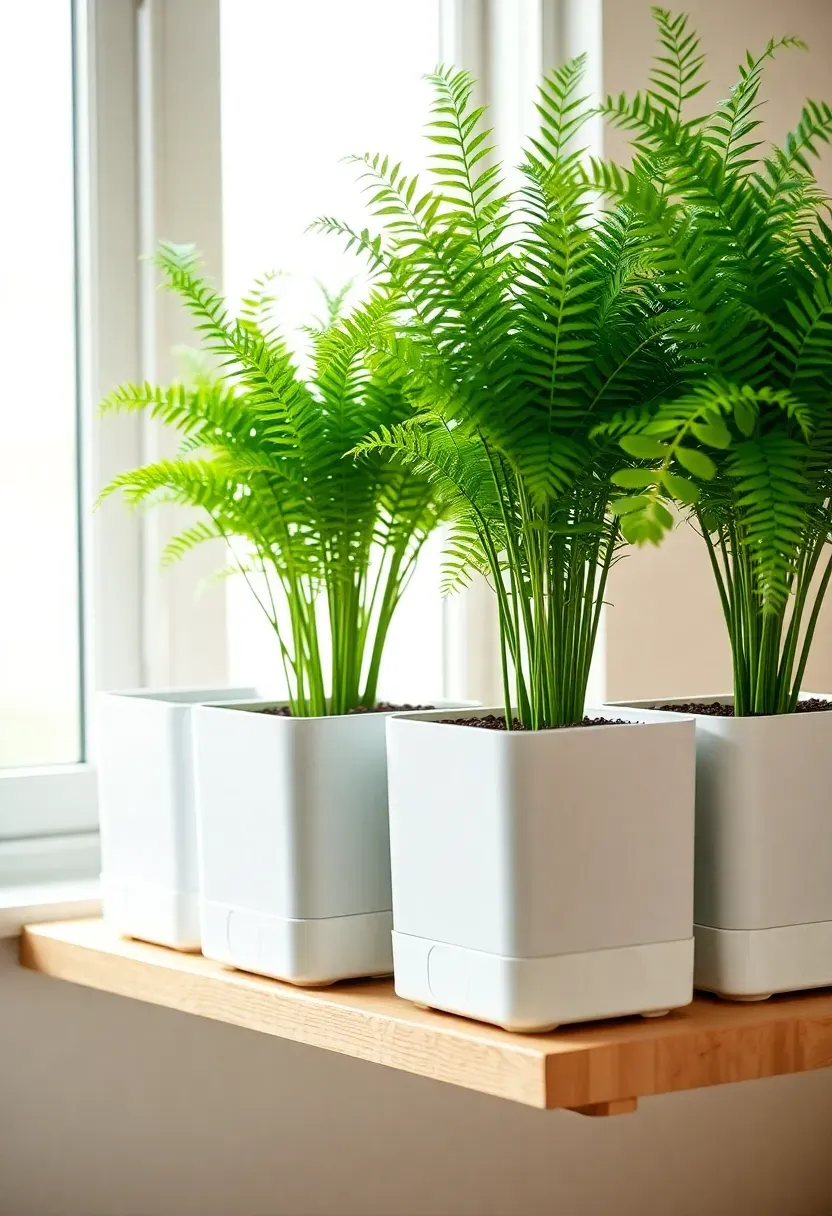
The main reason sunroom plants die is inconsistent watering — people go away for a week or simply forget during a busy period, and plants in bright conditions dry out faster than those in shadier rooms. Self-watering planters solve this directly. A reservoir in the base holds two to three weeks of water and releases it upward through a wicking system as the soil dries. The result is consistent moisture at the root level without over or under-watering. Set up a matched row of these planters along a shelf or ledge for a clean, contemporary look.
Tips / Practical Recommendations
- Fill the reservoir through the fill tube at the side rather than watering from the top, which bypasses the wicking system
- Use a potting mix specifically formulated for self-watering planters — standard mixes compact and stop wicking efficiently after a few months
- Top-water once every four to six weeks to flush accumulated mineral salts from the soil
18. Banana Leaf Plant Grouping
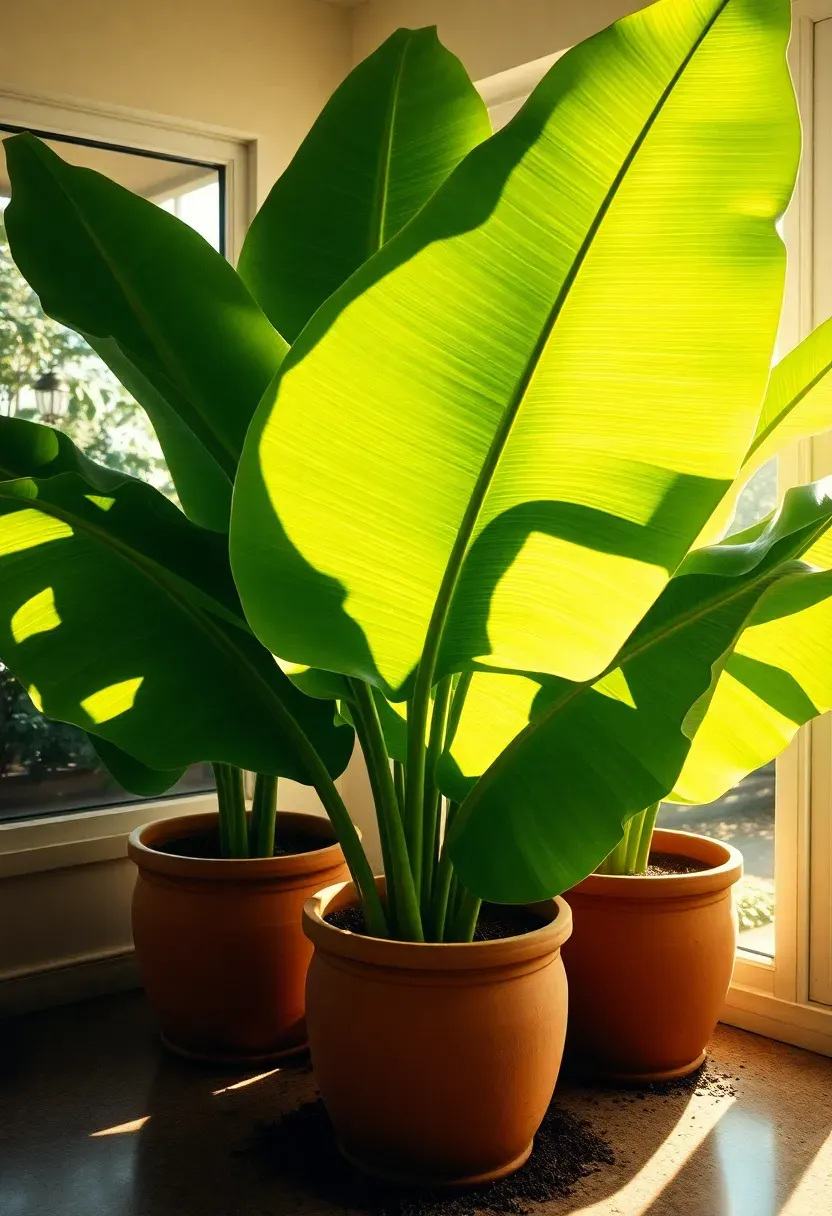
Few plants communicate tropical abundance as immediately as a banana or musa plant with its enormous paddle-shaped leaves. In a sunroom that receives strong, direct light for most of the day, a grouping of two or three banana plants in large terracotta pots creates an instant tropical corner that feels genuinely lush rather than decorated. The key is grouping: a single banana plant can look lonely, but three plants at different stages of growth — a large mature specimen flanked by two smaller ones — create a natural-looking cluster.
Tips / Practical Recommendations
- Water generously during summer — banana plants are thirsty and will signal dehydration quickly by developing brown leaf edges
- Protect the leaves from direct midday sun through a sheer curtain or shade cloth in peak summer; the intensity will split and bleach the foliage
- Feed with a high-potassium fertilizer every two weeks during the growing season to fuel the rapid leaf production
Recommended
Items for this idea
19. Trailing Philodendron Above the Sofa
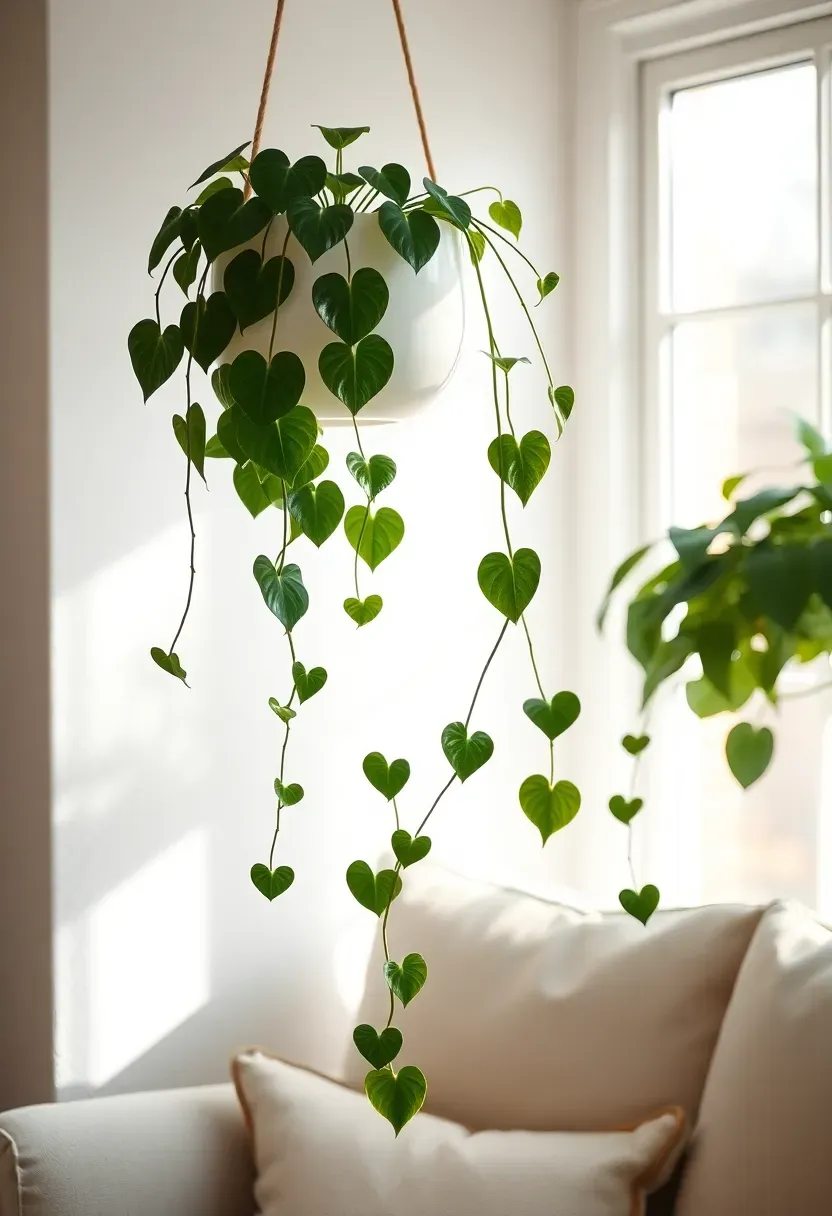
A heartleaf philodendron mounted in a hanging planter or on a high shelf above the sofa creates the effect of sitting beneath a canopy of green — one of the most appealing and relaxing atmospheres a sunroom can offer. The plant trails in long, graceful arcs, and in good light the leaves develop a deeper, more saturated green than they ever achieve indoors away from windows. Unlike some trailing plants, the philodendron is very forgiving of irregular watering and tolerates the temperature fluctuations that can affect sunrooms between morning and evening.
Tips / Practical Recommendations
- Prune stems back to the desired length once a month and root the cuttings in water to propagate new plants for other spots in the room
- Dust the leaves with a damp cloth every three to four weeks — dusty philodendron leaves look dull even in bright light
- A single well-grown philodendron with stems trained outward on small wall hooks can eventually cover two to three square meters of wall area
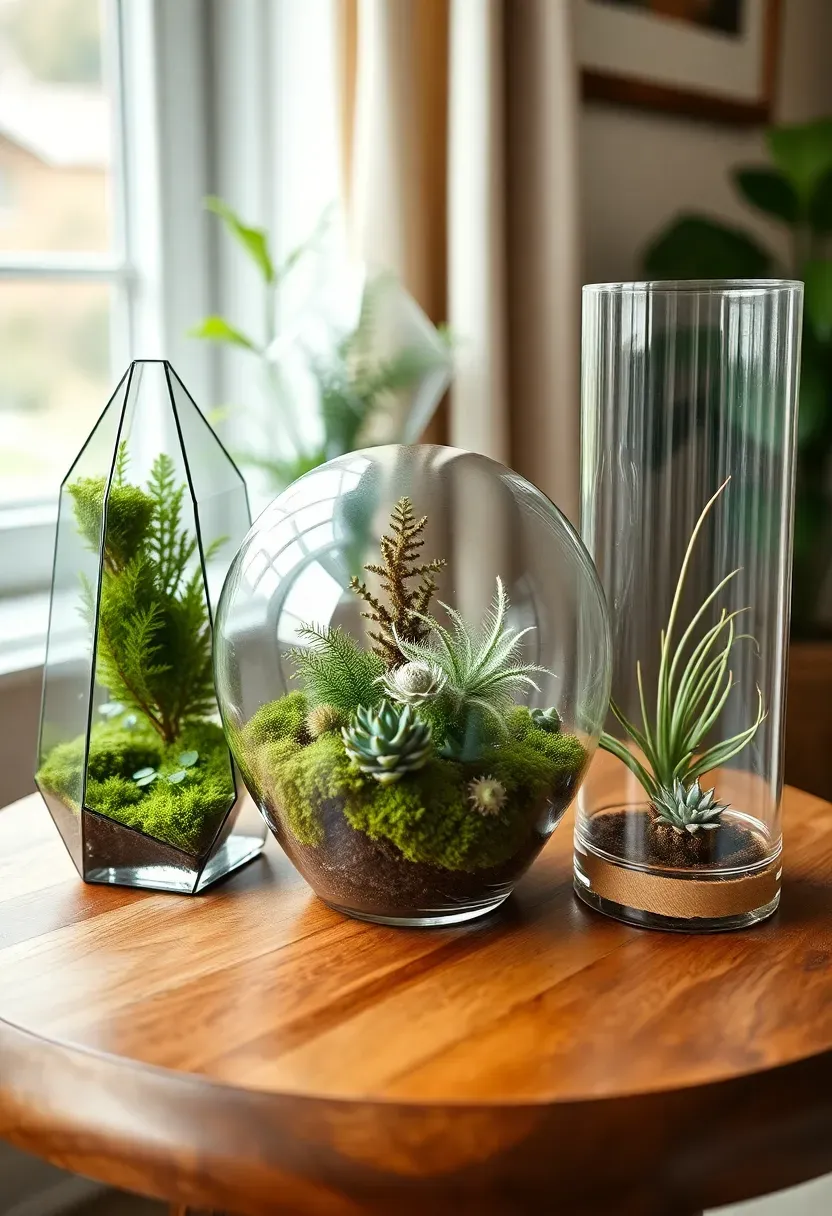
20. Terrarium Cluster on a Round Table
Comparing: Open Terrarium vs Closed Terrarium for Sunrooms
Both create a self-contained garden, but they suit different plants and positions within a bright sunroom.
Open Terrarium
No lid means airflow and lower humidity inside — ideal for succulents, cacti, and air plants that prefer drier conditions. Works well in the sunniest spots of the sunroom where direct light hits it for several hours.
Closed Terrarium
The sealed glass creates a humid microclimate that suits mosses, ferns, and miniature tropical plants. Best positioned in bright indirect light rather than direct sun, which can overheat and cook the plants inside.
What to Choose
Choose open if: your sunroom gets intense direct light and you want low-maintenance planting with drought-tolerant species. Choose closed if: you want a self-sustaining ecosystem that needs minimal intervention and you have a spot with bright but filtered light.
Recommendation
A cluster of two or three terrariums of mixed types on a round side table creates a curated, botanical display. Use glass vessels in different shapes — a geometric prism beside a classic globe beside a tall cylinder — to keep the grouping interesting from every angle.
Recommended
Items for this idea
21. Bougainvillea Trained Up a Wire Frame
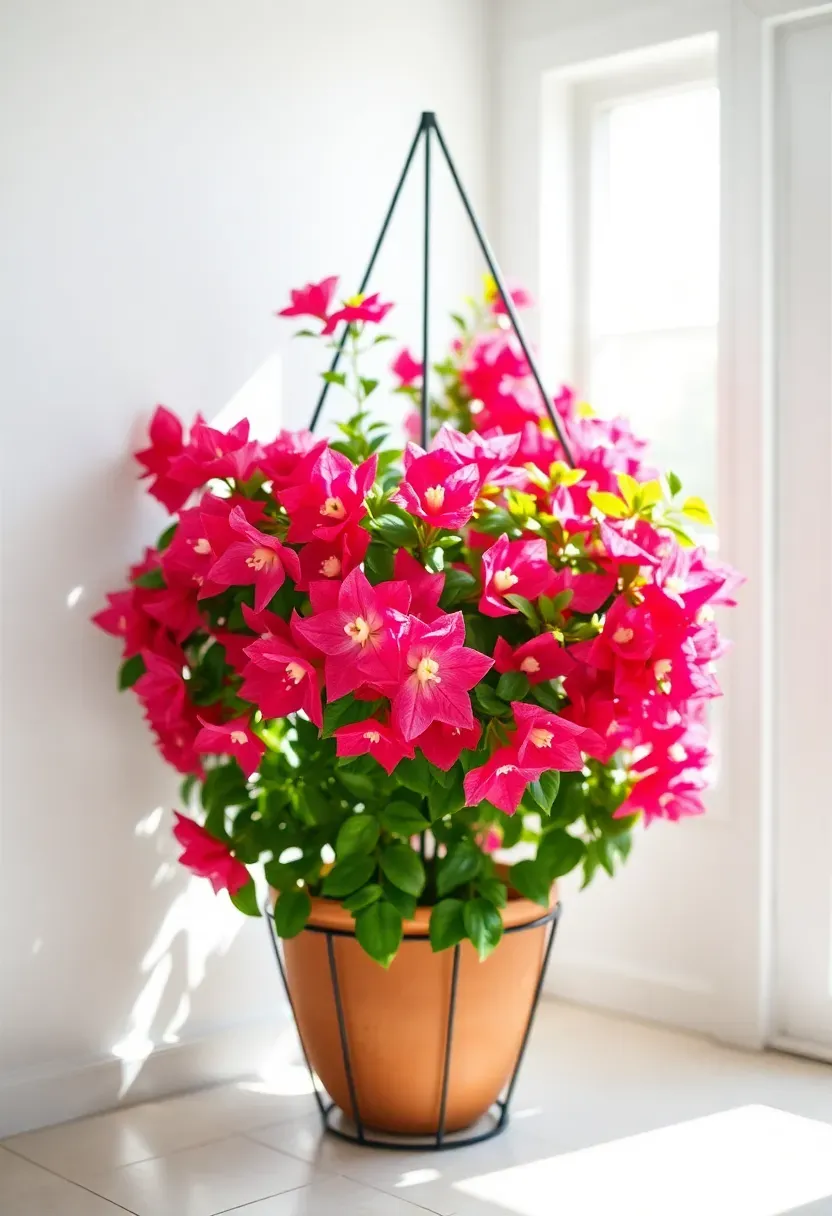
Bougainvillea is the most spectacularly colorful plant that can live in a sunroom — the papery bracts range from hot pink and magenta to deep purple and bright orange, and in a sunroom receiving six or more hours of direct sun, a healthy plant produces continuous color for months at a time. The trick is structure: bougainvillea grown without support becomes a sprawling, thorny tangle. Trained up a geometric wire frame — a pyramid, a cone, or a flat trellis square — it becomes architectural and stunning.
Tips / Practical Recommendations
- Bougainvillea blooms most prolifically when slightly root-bound and when watering is reduced between flowering cycles; stress triggers flowering
- Use thick gardening gloves when training new stems — the thorns are sharp and numerous
- Deadhead spent bracts promptly to encourage the next flush of color rather than letting energy go toward seed production
22. Zen Corner with Bamboo and River Stones
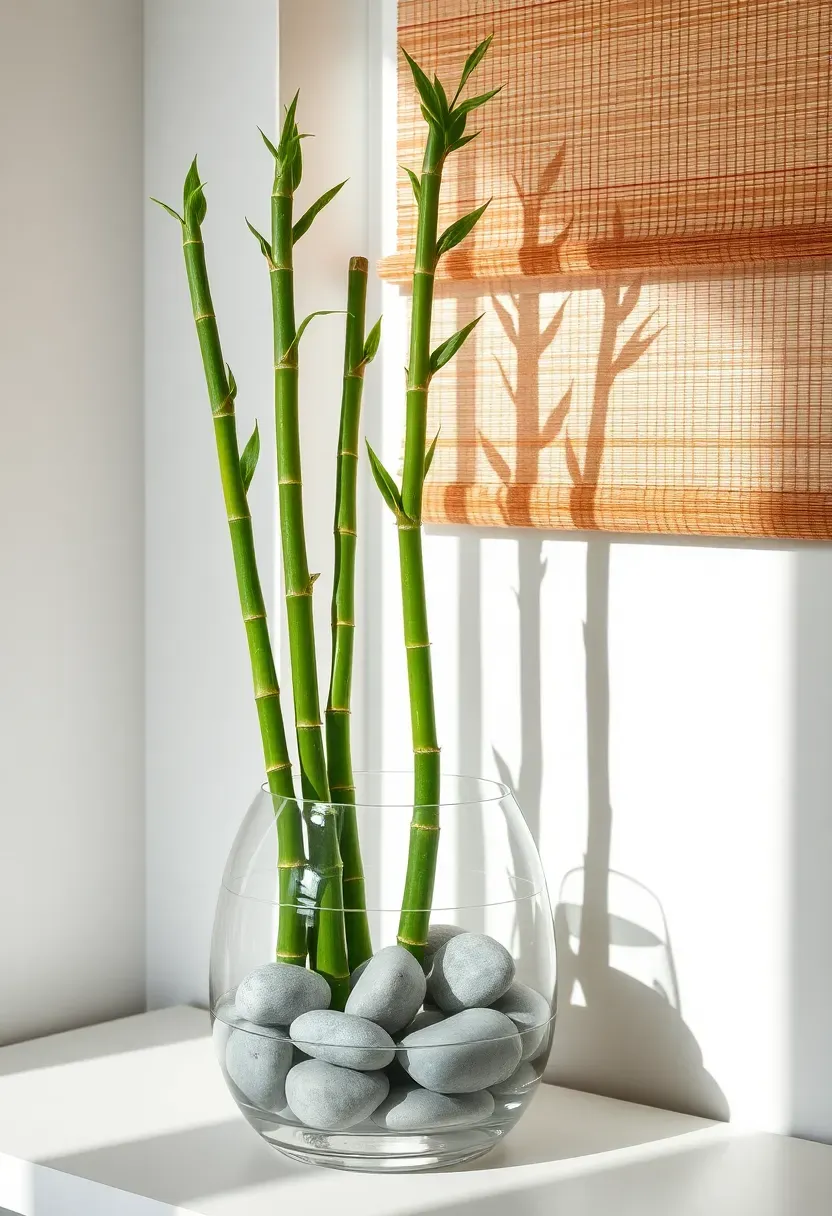
Not every sunroom plant setup has to be lush and tropical. A zen corner built around lucky bamboo — grown in a tall clear glass vase filled with river stones and water rather than soil — offers calm, minimal, and architectural greenery that suits a contemporary or Japanese-influenced sunroom. The bamboo's vertical lines and the translucent vessel work particularly well in a corner where the morning sun creates long shadows across the stones.
Step 1: Select Your Vase
Choose a clear glass vase at least thirty centimeters tall. The clarity allows light to pass through the water and illuminate the root system, which adds depth to the composition.
Step 2: Add Stones and Bamboo
Line the base with smooth river stones in grey or white, then arrange three, five, or seven lucky bamboo stalks — always an odd number for a more natural grouping. Fill with clean water to cover the root nodes.
Step 3: Maintain the Water
Change the water every two weeks to prevent algae. Add a few drops of liquid plant food monthly. Keep the vase out of direct harsh sun — lucky bamboo prefers bright indirect light.
Recommended
Items for this idea
23. Seasonal Rotation System for Fresh Variety
The Core Issue
The most common complaint about sunroom plant setups is that they start strong and then stagnate — the same plants in the same positions year after year until they either take over the space or quietly decline.
The Solution
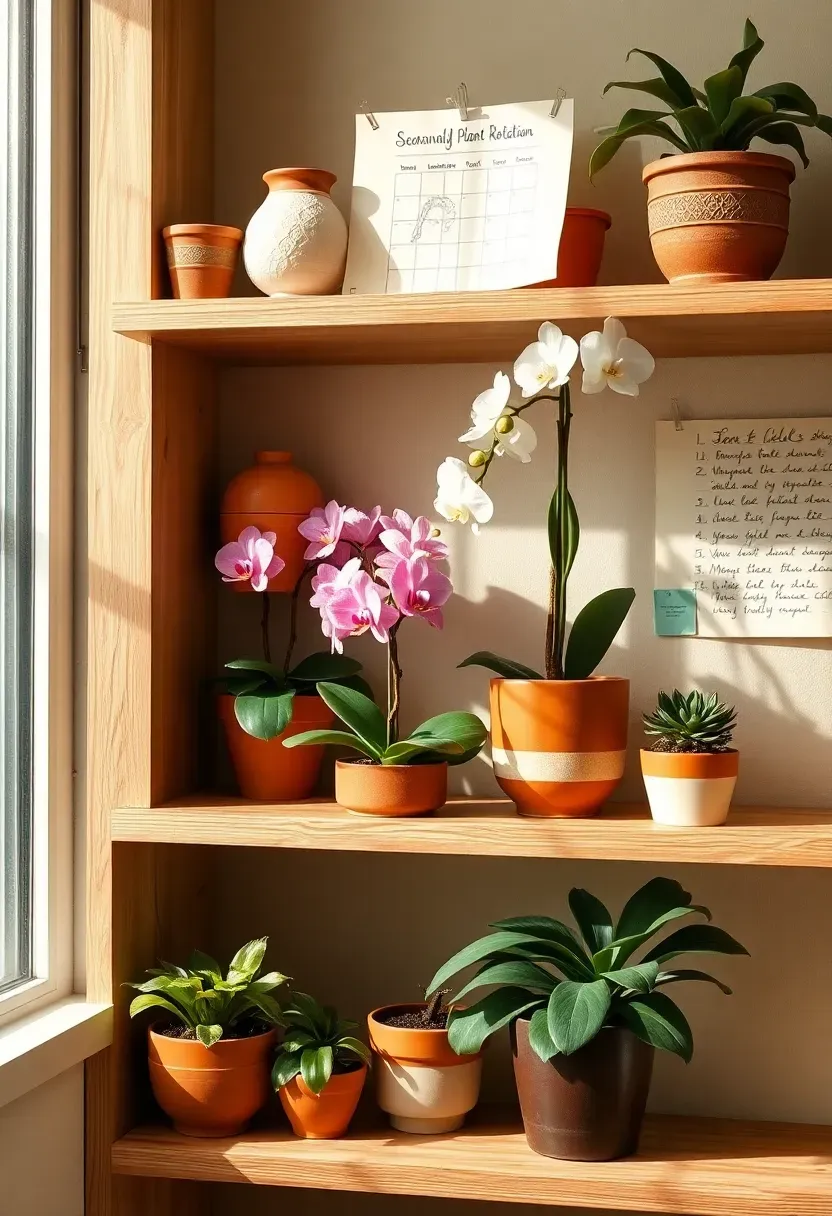
A rotation system treats the sunroom like a stage, cycling plants in and out with the seasons. In spring and summer, bring in heat-loving tropicals — banana plants, bougainvillea, hibiscus. In autumn, replace them with cold-tolerant plants like ornamental cabbages, cyclamen, and potted bulbs. In winter, focus on orchids, succulents, and citrus. The room looks different every few months, and each plant gets the optimal conditions for its active season.
Pros and Cons
Pros: The sunroom always looks intentional and seasonally fresh; plants moved out of the sunroom during their rest period recover and come back stronger. Cons: Requires storage space for off-season plants and a basic tracking system so you remember which plants need to come back when.
Quick FAQ
Which sunroom plants can handle direct midday sun without scorching? Bougainvillea, most cacti and succulents, rosemary, citrus trees, and bird of paradise all tolerate intense direct sunlight without scorching. Most other tropical plants prefer the bright indirect light that comes from being near — but not directly in front of — the sunroom's strongest glass panel.
Should I worry about humidity levels for sunroom plants? Yes, especially in winter when sunrooms can become surprisingly dry due to heating. Most tropical plants prefer humidity between fifty and sixty percent. A simple hygrometer near your plant groupings will tell you the current level; if it reads below forty percent consistently, add a pebble tray with water, group plants together to share transpiration, or run a small humidifier nearby.
Is it possible to keep soil-sensitive plants like orchids and bromeliads in a sunroom? Absolutely — in fact, the bright filtered light of a sunroom is closer to their natural rainforest canopy habitat than any other spot in the house. Use the correct growing medium: orchid bark for orchids, bromeliad mix for bromeliads. The critical adjustment is shading the most intense glass with a sheer curtain during peak afternoon hours.
What's the difference between bright direct and bright indirect light for plant selection? Direct light means the sun's rays fall on the plant unobstructed for part of the day. Indirect means the plant receives bright ambient light but the sun's direct beam is blocked by a wall, curtain, or other plant. Many common sunroom plants — pothos, philodendron, monstera — prefer indirect even in a sunny room. Position these plants one to two meters back from the glass or behind a sheer curtain.
Do I need to repot sunroom plants more often than indoor plants? Likely yes. Plants in bright sunrooms grow faster than their counterparts in dimmer rooms, which means roots fill the pot more quickly. Check for roots emerging from drainage holes or circling the surface of the soil — these are signals to move up one pot size. In a sunroom, this may happen annually rather than every two to three years.
Start with one strong anchor plant — the bird of paradise, the monstera, or a citrus tree — and build the rest of the setup around it. A single bold plant establishes the room's character, and everything else becomes complementary. Trends come and go, but a sunroom full of genuinely thriving plants — plants that grow visibly and fill the air with something alive — never goes out of style. The best plant setup is the one you actually tend, so choose species that fit your schedule and then let them do the rest of the work.
Pinterest cover for 23 Sunroom Ideas with Plants: Greenery Setups That Thrive in Bright Light
About the author
OBCD
CGI visualization and interior design content. We create detailed 3D renders and curate practical design ideas for every room in your home.