19 Outdoor Sunroom Ideas for Breezy Lounge Areas and Easy Entertaining
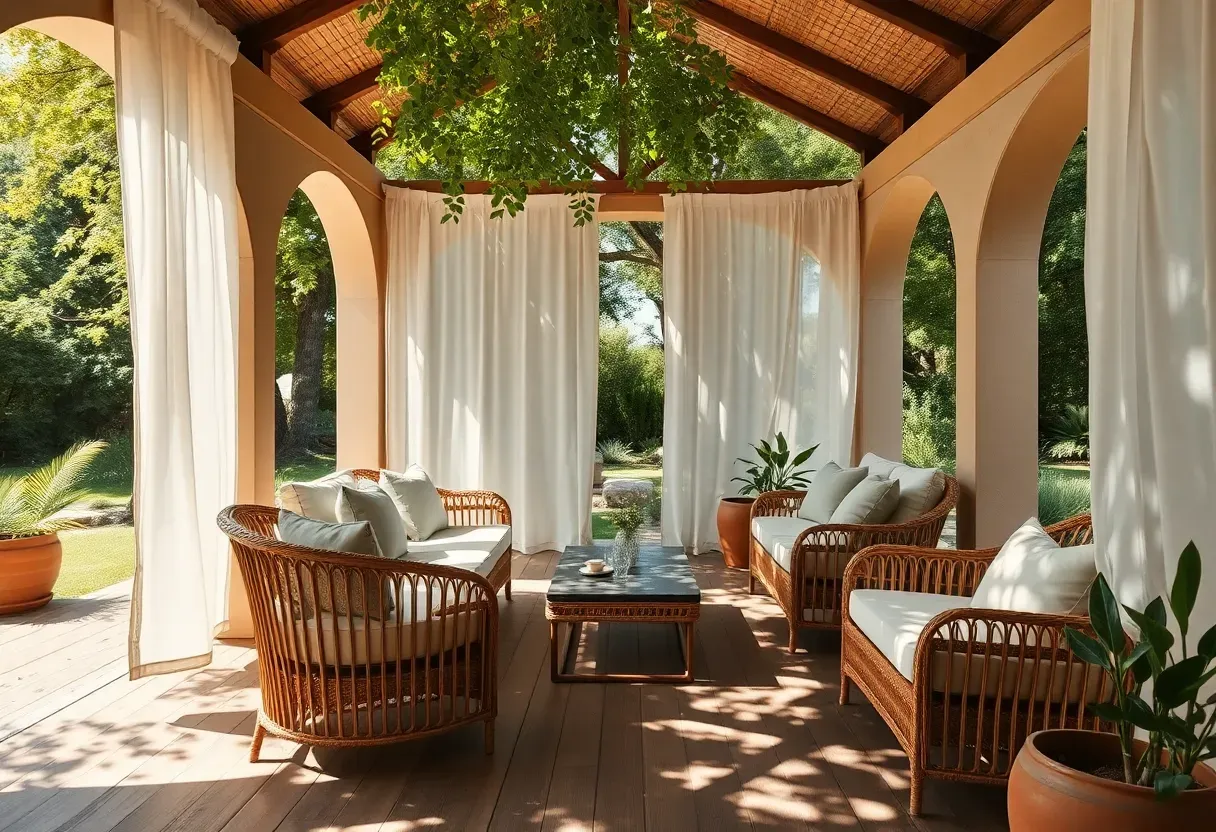
We have all walked past that one house on the street -- the one with the screened porch glowing in the early evening, ceiling fan turning slowly, someone reading a paperback with their feet up. There is something deeply magnetic about an outdoor sunroom done right. It occupies a sweet spot between interior comfort and open-air freedom that neither a living room nor a bare patio can match on its own.
The reality is that most porches, patios, and three-season rooms never reach that potential. They collect pollen in spring, turn into ovens in July, and sit empty through autumn. What separates the ones that get daily use from the ones that don't comes down to three design decisions: how you manage airflow, what furniture you choose for weather exposure, and whether the space is wired for gathering -- not just sitting.
Below you will find 19 approaches that cover all three. From fully screened enclosures to half-open lounge platforms, from intimate reading corners to full-scale entertaining setups with wet bars and dining tables. Take what matches your footprint and skip what doesn't.
Table of Contents
- Screened Wraparound Porch Lounge
- Glass-Panel Garden Sunroom
- Pergola Sunroom with Climbing Vines
- Three-Season Enclosed Patio
- Open-Air Daybed Pavilion
- Farmhouse Screened Porch with Swing
- Tropical Rattan Sunroom
- Minimalist Steel-Frame Solarium
- Cottage Conservatory Dining Room
- Sunken Lounge Sunroom
- Bohemian Floor-Level Gathering Space
- Pool-Adjacent Cabana Sunroom
- Rustic Stone Sunroom with Fireplace
- Coastal Breezy Entertaining Porch
- Modern Black-Frame Greenhouse Lounge
- Multi-Level Deck Sunroom
- Outdoor Sunroom Bar and Lounge
- Japanese-Inspired Engawa Sitting Room
- Weatherproof Curtain Sunroom
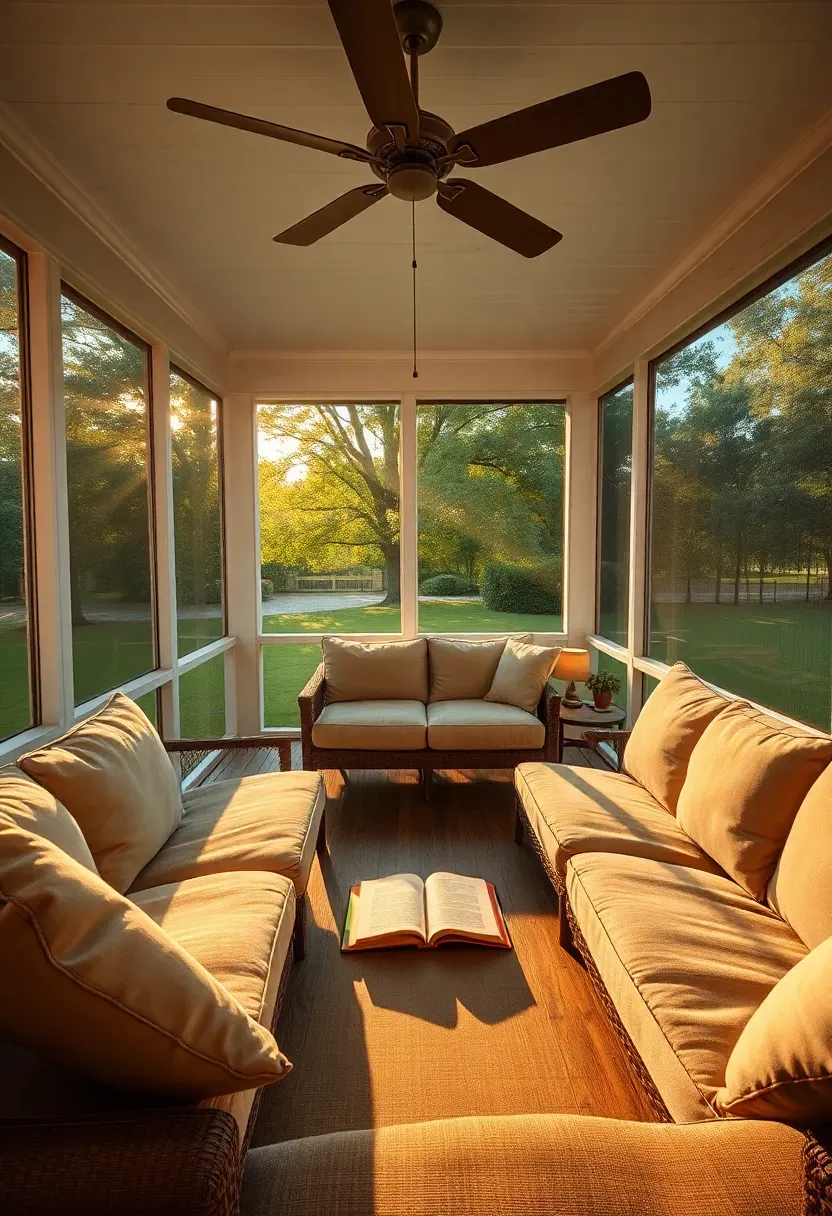
1. Screened Wraparound Porch Lounge
A wraparound screened porch takes the classic American porch and extends it into a full living environment. The screens keep out mosquitoes and debris while allowing cross-ventilation from multiple directions -- something a single-wall porch can never achieve. Position your longest sofa along the house wall and let smaller chairs face outward toward the yard. The circulation pattern encourages conversation without blocking the breeze path.
Tips for Getting It Right
- Use fiberglass screening instead of aluminum -- it resists corrosion and won't dent during cleaning
- Install a ceiling fan rated for damp locations on each porch section to keep air moving during still afternoons
- Add outdoor rugs to define seating zones and soften the floor underfoot
We picked a few things that go well with this idea: FDW 4-Piece Wicker Patio Conversation Set (★4.2), Flamaker 3-Piece Wicker Bistro Set (★4.4) and Devoko 3-Piece PE Rattan Porch Set (★4.4). As an Amazon Associate we earn from qualifying purchases.
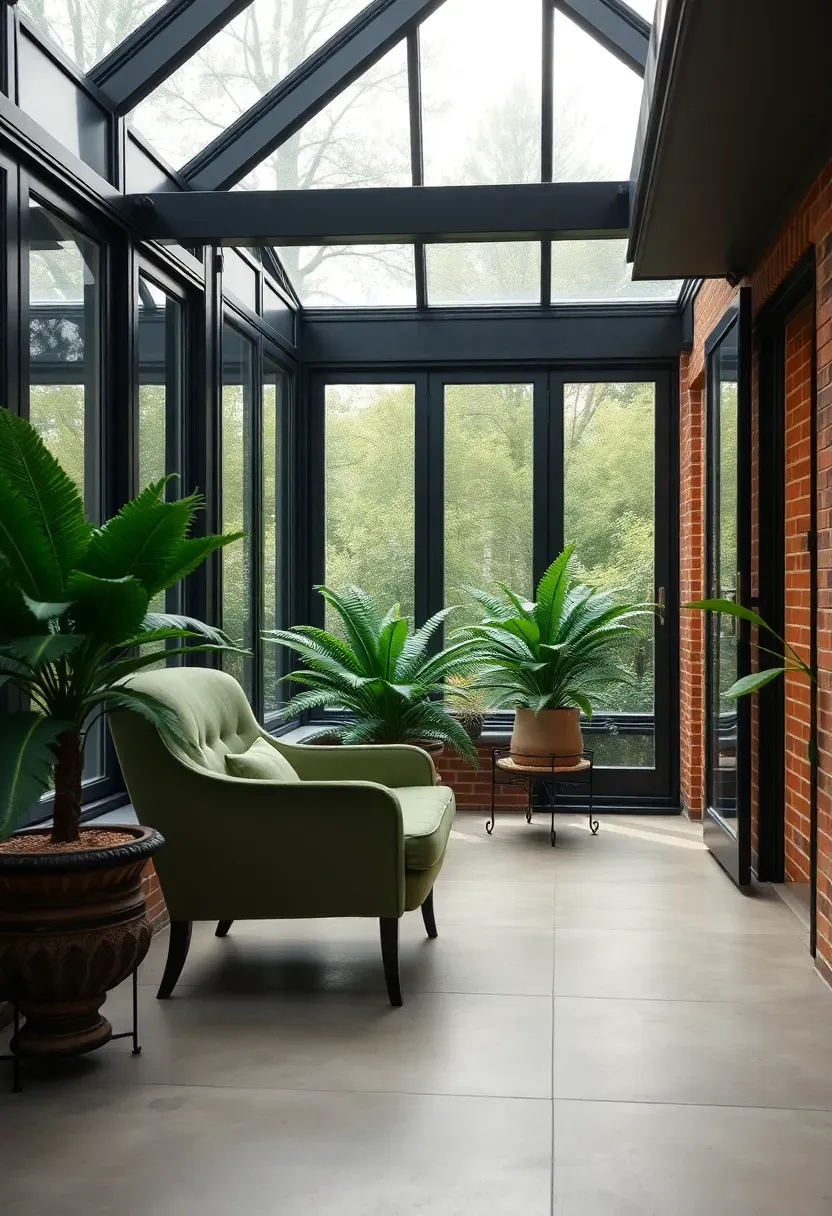
2. Glass-Panel Garden Sunroom
The Core Issue
Traditional sunrooms with solid knee walls and small windows can feel dim and disconnected from the garden they're supposed to celebrate. They trap heat without delivering the view that justifies the square footage.
The Solution
Floor-to-ceiling glass panels erase the boundary between interior and exterior. Modern insulated glass units with low-E coatings let you enjoy panoramic garden views without the greenhouse-level heat buildup that plagued older designs. Pair the glass with a properly sized mini-split system and you get a year-round room that feels like sitting inside your garden rather than next to it.
Pros and Cons
Pros: Unobstructed garden views, floods interiors with natural light, increases home value significantly Cons: Higher installation cost than screened options; requires regular glass cleaning to maintain the effect
We picked a few things that go well with this idea: NICETOWN Outdoor Sheer Patio Curtains (2-Pack) (★4.5), RYB HOME Waterproof Sheer Outdoor Curtains (★4.4) and DWCN Waterproof Semi Sheer Porch Curtains (★4.3). As an Amazon Associate we earn from qualifying purchases.
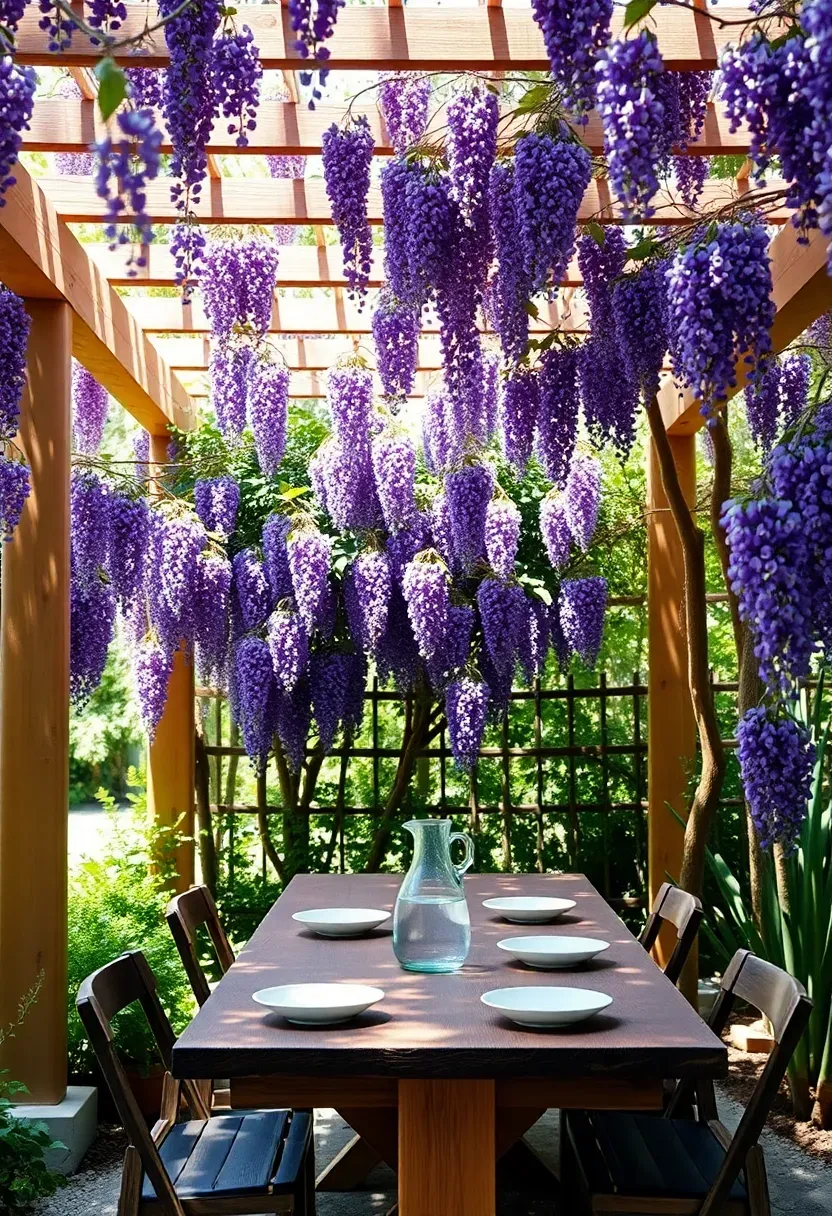
3. Pergola Sunroom with Climbing Vines
Nature builds the best roofs. A pergola draped in climbing vines -- wisteria, jasmine, or trumpet vine -- creates a living canopy that thickens each season. The shade deepens from spring through summer as foliage fills in, then opens back up in fall to let low-angle sunlight through. It is a roof that regulates itself without any mechanical system.
Best Vines for Pergola Coverage
- Wisteria: Dramatic cascading blooms, but aggressive -- needs regular pruning and a strong structure
- Star jasmine: Evergreen in warm climates, fragrant white flowers, moderate growth rate
- Trumpet vine: Fast-growing with orange-red flowers, attracts hummingbirds, tolerates poor soil
- Climbing hydrangea: Shade-tolerant, white lacecap flowers, slower to establish but elegant once mature
We picked a few things that go well with this idea: Honeywell Belmar 52-Inch Outdoor Ceiling Fan (★4.5), Prominence Home Alvina 42-Inch LED Fan (★4.4) and Ciata 42-Inch Indoor/Outdoor LED Ceiling Fan (★4.3). As an Amazon Associate we earn from qualifying purchases.
4. Three-Season Enclosed Patio
How to Make It Work Year-Round (Almost)
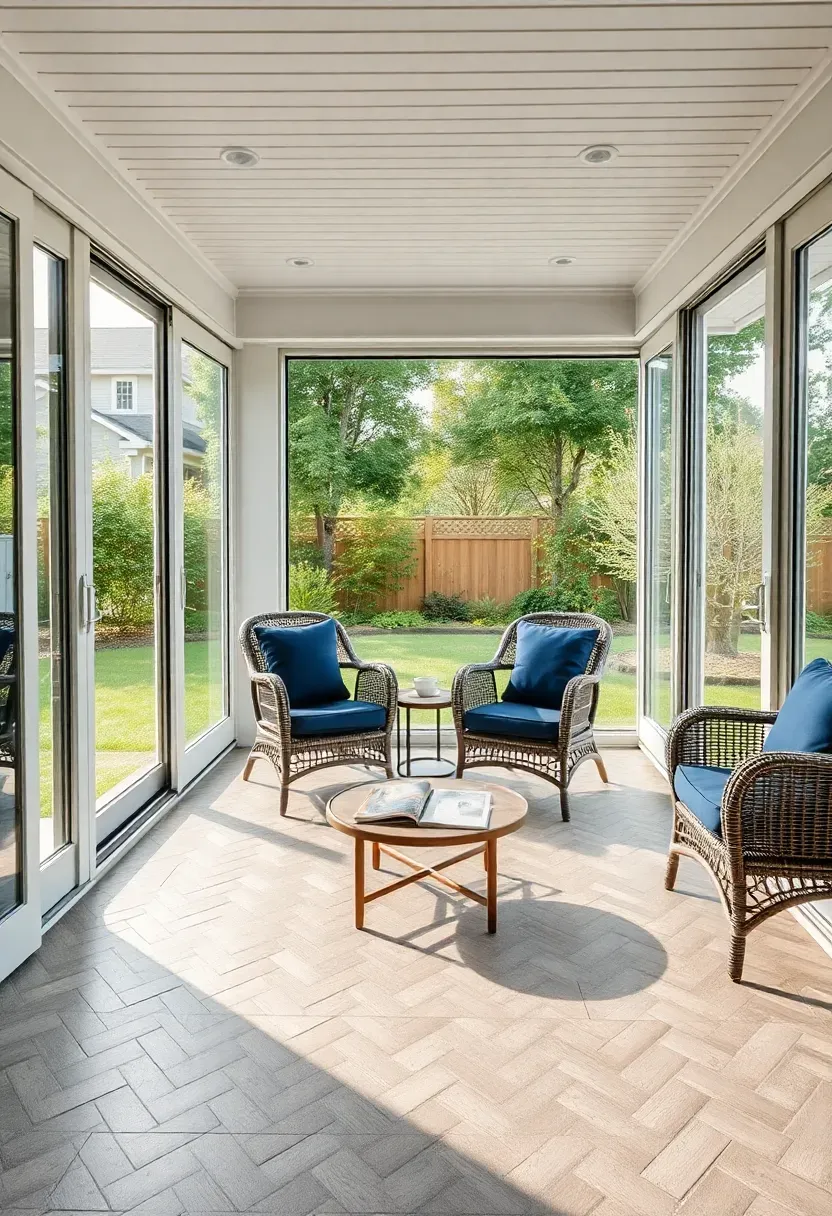
A three-season room bridges the gap between a fully heated addition and an open porch. The concept is simple: enclose an existing patio with operable windows or sliding panels that open wide in warm months and seal against wind and rain from late fall through early spring.
Step 1: Choose Your Enclosure System
Sliding glass panels offer the cleanest look and widest openings. Removable screen-and-glass inserts cost less but require seasonal swapping and storage space.
Step 2: Address the Floor
Existing concrete patios work well as a base. Add porcelain tile or luxury vinyl plank rated for temperature fluctuations. Avoid hardwood -- it warps with seasonal moisture changes in an unheated space.
Step 3: Plan Heating for Shoulder Seasons
A portable infrared heater or a wall-mounted electric panel extends usability into November and back again by March. Skip full HVAC unless you plan to insulate walls and ceiling to building-code standards.
What to Watch Out For
- Condensation on glass panels during cold snaps -- a ceiling fan on low helps circulate air and reduce fogging
- Local building codes may classify an enclosed patio as habitable space, requiring permits and inspections
Recommended
Items for this idea
5. Open-Air Daybed Pavilion
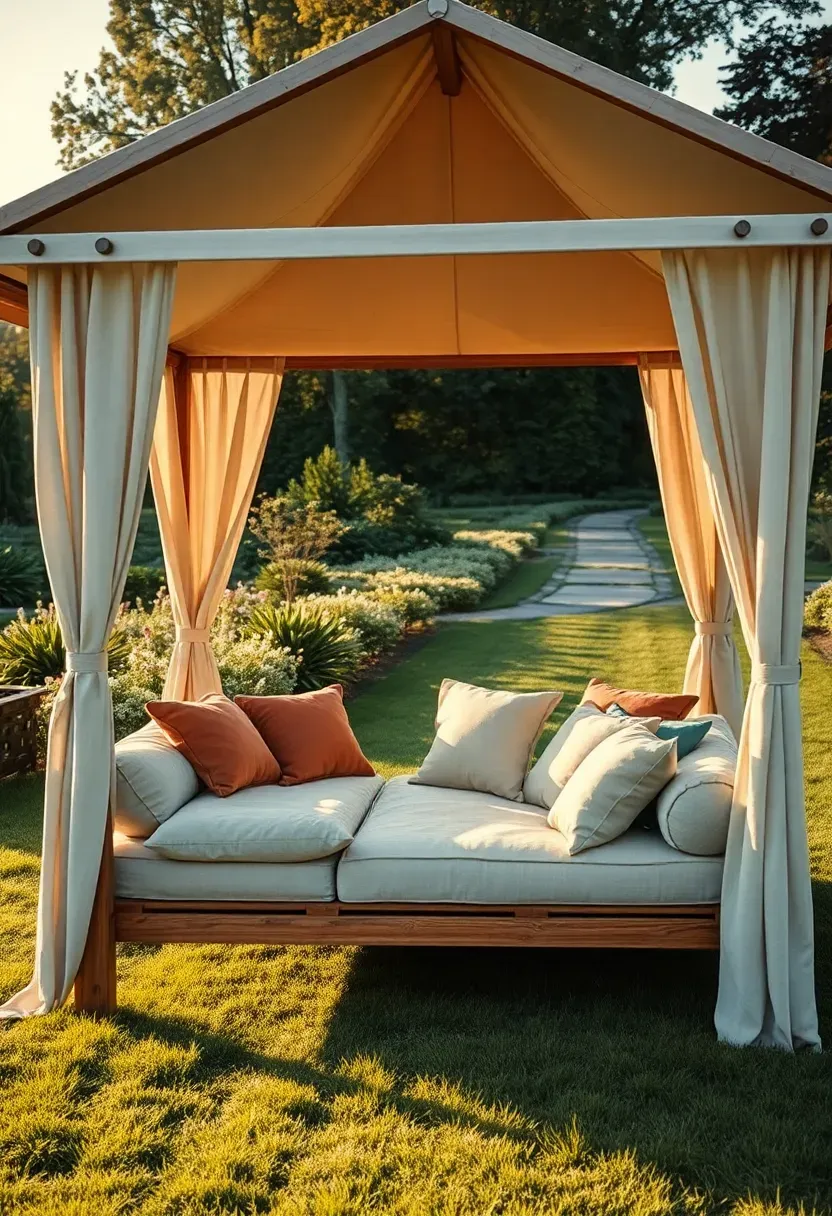
Picture a freestanding pavilion anchored in the far corner of your yard -- four posts, a peaked roof, a generous daybed underneath, and curtains that sway without purpose. This is a sunroom stripped to its emotional core: shelter, softness, and breeze. No screens, no glass, no pretense of being a room. Just a place where naps happen and conversations stretch longer than intended.
Tips for Building One
- Set posts in concrete footings at least 24 inches deep to resist wind rocking
- Choose a roof material that breathes: shade cloth or marine canvas rather than solid polycarbonate
- Use outdoor-rated curtain fabric and stainless steel curtain rods to prevent rust stains on fabric
6. Farmhouse Screened Porch with Swing
Why This Works So Well
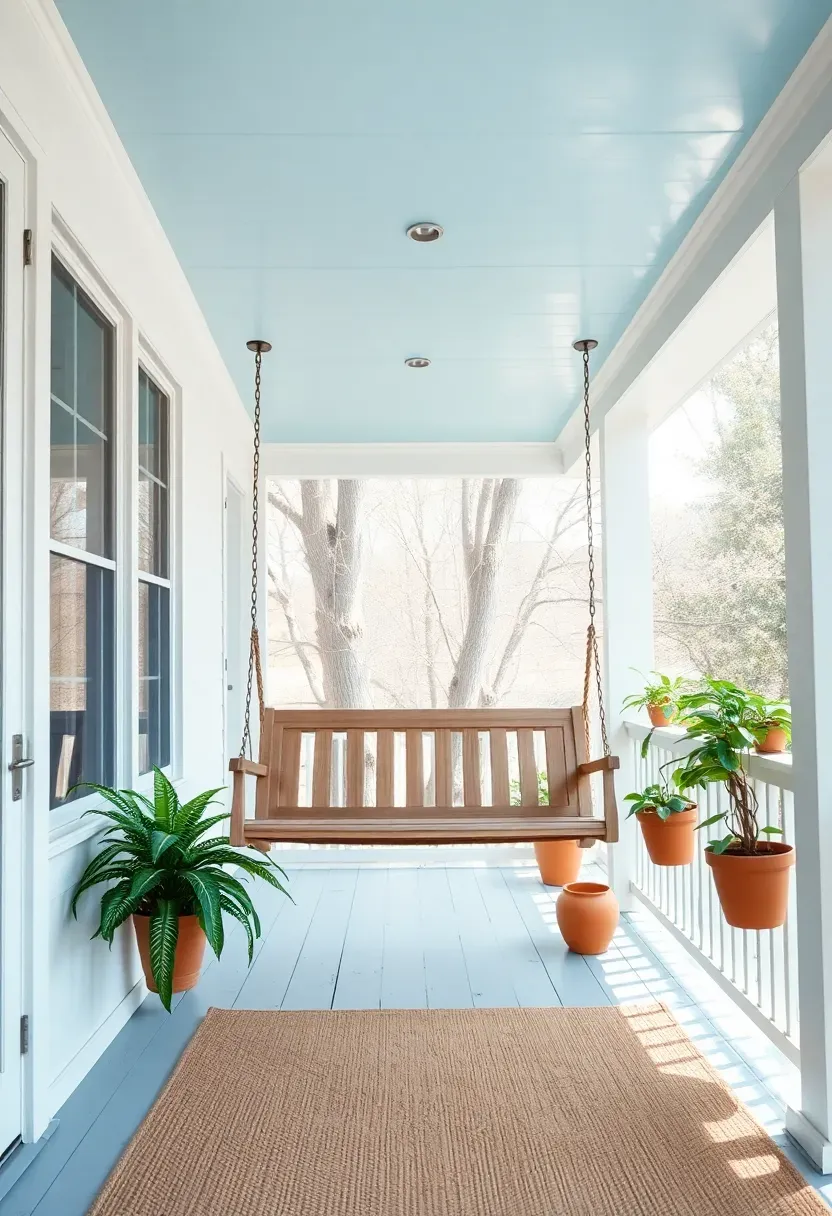
There is a reason the porch swing has survived every design trend for two centuries. The gentle motion creates its own breeze, the rhythmic creak becomes background music, and the elevated seating position gives you a better view of the yard than any stationary chair. Wrap it in a screened porch with shiplap ceilings painted haint blue, and you have a space that feels inherited even when it is brand new.
Practical Considerations
- Hang the swing from engineered eye bolts rated for at least 500 pounds, screwed into ceiling joists -- never into drywall or decorative beams
- Leave at least 36 inches of clearance behind and in front of the swing arc for safe movement
- Add a small side table within arm's reach for drinks and books
Recommended
Items for this idea
7. Tropical Rattan Sunroom
Origins
Rattan furniture in sunrooms traces back to colonial-era verandas in Southeast Asia, where lightweight cane seating allowed airflow in humid climates. European colonists adapted the style for conservatories, and the aesthetic has cycled through fashion ever since -- always returning because nothing else balances warmth, texture, and breathability the same way.
Modern Interpretation
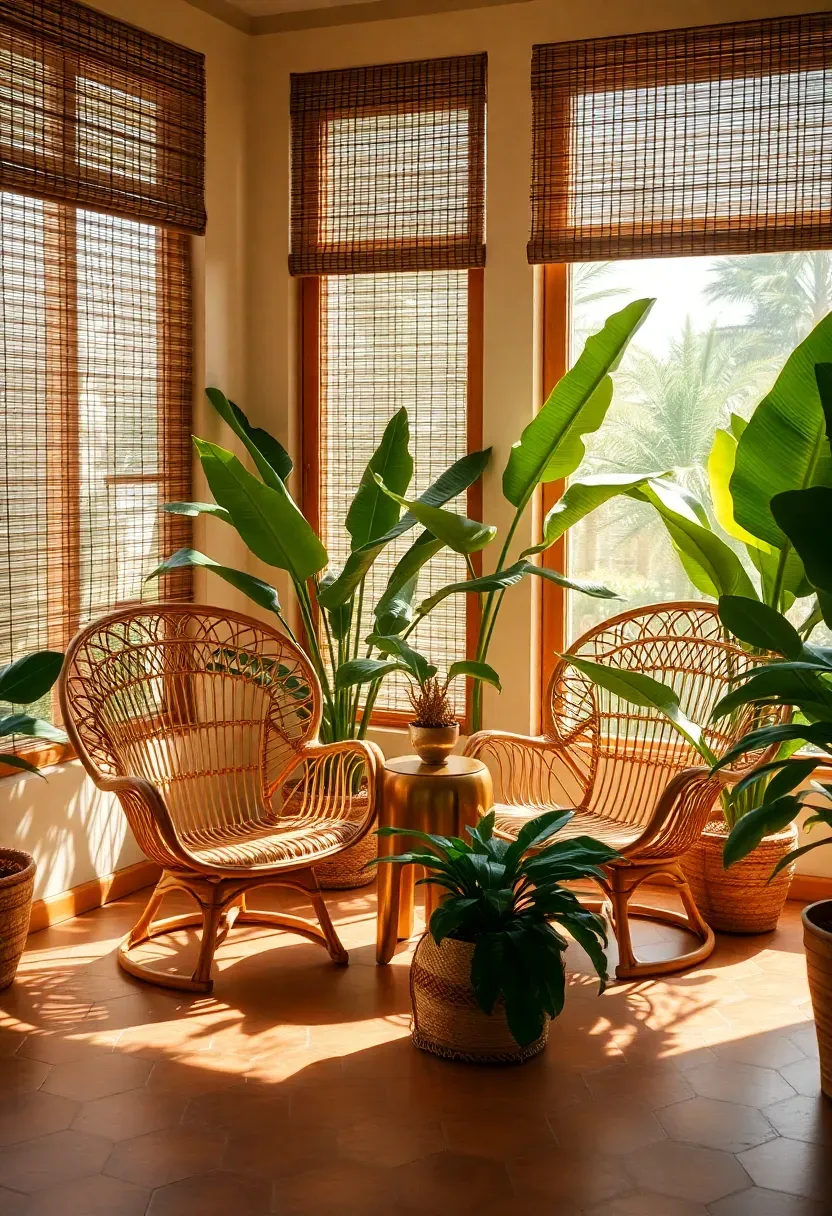
Today's tropical sunroom pairs natural rattan frames with performance cushion fabrics that resist mildew and UV fading. Oversized peacock chairs serve as statement pieces while modular rattan sectionals handle everyday lounging. Banana leaf plants, bird of paradise, and trailing pothos fill corners with living texture. Bamboo roller blinds manage sun exposure without blocking airflow entirely. The result feels like a resort lobby that you never have to check out of.
How to Apply at Home
- Mix natural rattan with synthetic resin wicker for pieces exposed to direct rain or sprinkler spray
- Choose terracotta or stone-look tile flooring that handles tracked-in moisture and barefoot traffic
- Add a ceiling-mounted fan with palm-leaf blades for both function and atmosphere
- Place a tall fiddle leaf fig or monstera in a woven basket planter as a focal point near the entrance
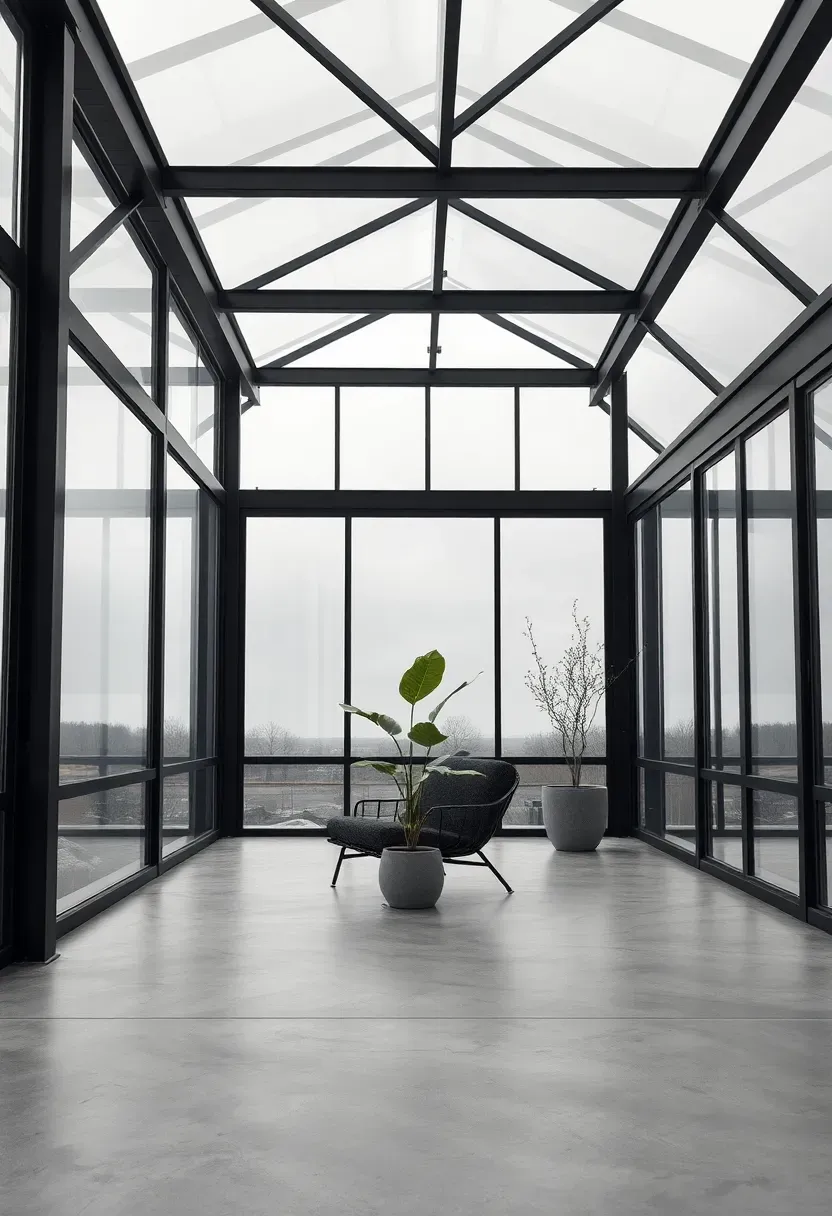
8. Minimalist Steel-Frame Solarium
Comparing: Glass Sunroom vs. Steel-Frame Solarium
A glass sunroom and a steel-frame solarium may sound identical, but the structural approach creates a different experience entirely.
Glass Sunroom
Relies on wide aluminum or vinyl frames that prioritize insulation. Frames are thick, mullions are visible, and the overall feel leans residential and enclosed. Best for year-round climate control where heating and cooling efficiency matter most.
Steel-Frame Solarium
Uses slender hot-rolled steel profiles that almost disappear visually. The thinner frames mean more glass surface area and a more architectural, industrial character. The trade-off is less insulation per square inch -- these structures work best in mild climates or as three-season spaces.
What to Choose
Choose a glass sunroom if: you need four-season insulation, live in extreme climates, or want lower maintenance. Choose a steel-frame solarium if: you prioritize aesthetics, live in a temperate zone, or want a dramatic, gallery-like space.
Recommended
Items for this idea
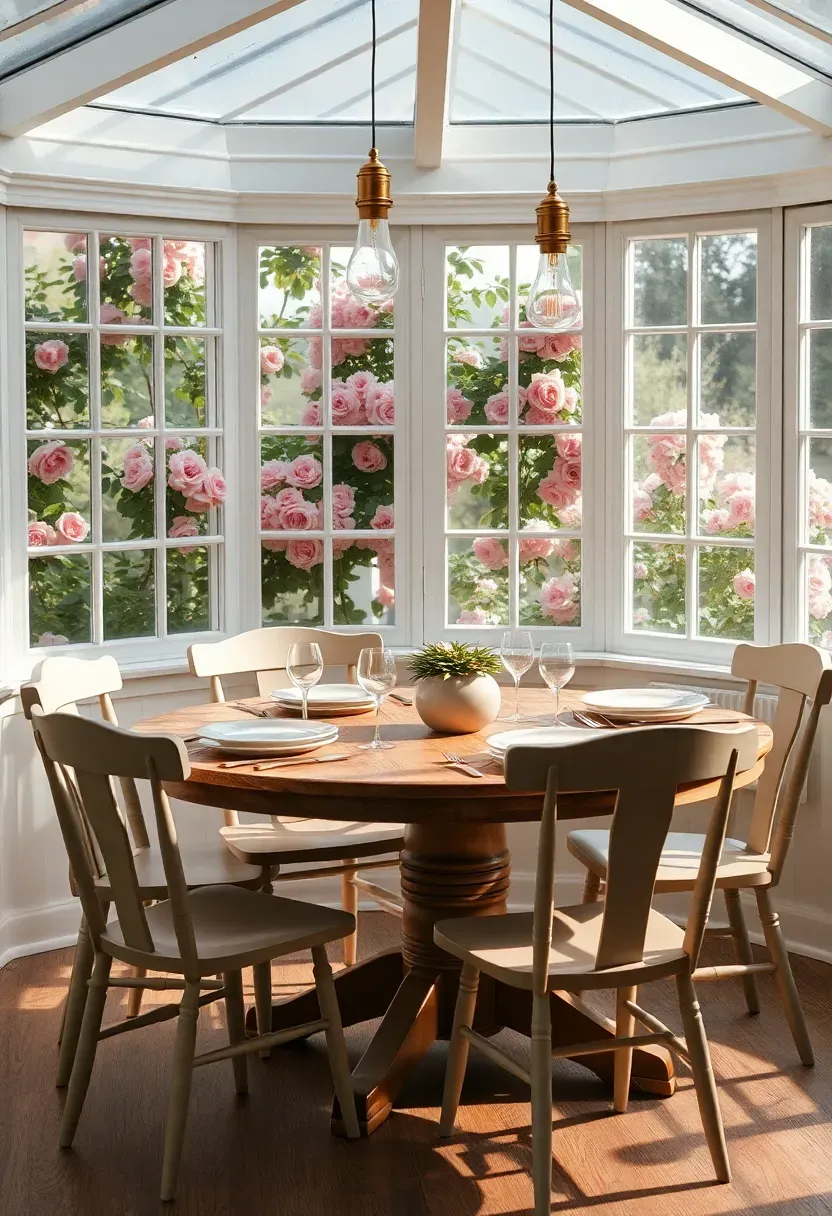
9. Cottage Conservatory Dining Room
Transform an underused conservatory into your primary dining space and it changes how you eat. Morning coffee with sunlight streaming across the table. Weekend brunches where everyone lingers because the view holds them. Dinner parties where the garden becomes a backdrop as candles take over from daylight. The conservatory dining room works because it makes every meal feel slightly special without any extra effort.
Tips for Setting Up
- Choose a round or oval table rather than rectangular -- it fits the organic shape of most conservatories better and improves conversation flow
- Hang pendant lights on dimmers so you can shift from bright morning energy to intimate evening warmth
- Use mismatched vintage chairs for character -- they don't need to match the table as long as seat heights are consistent
- Keep a stack of lightweight throws nearby for cooler evenings when you don't want to close the windows
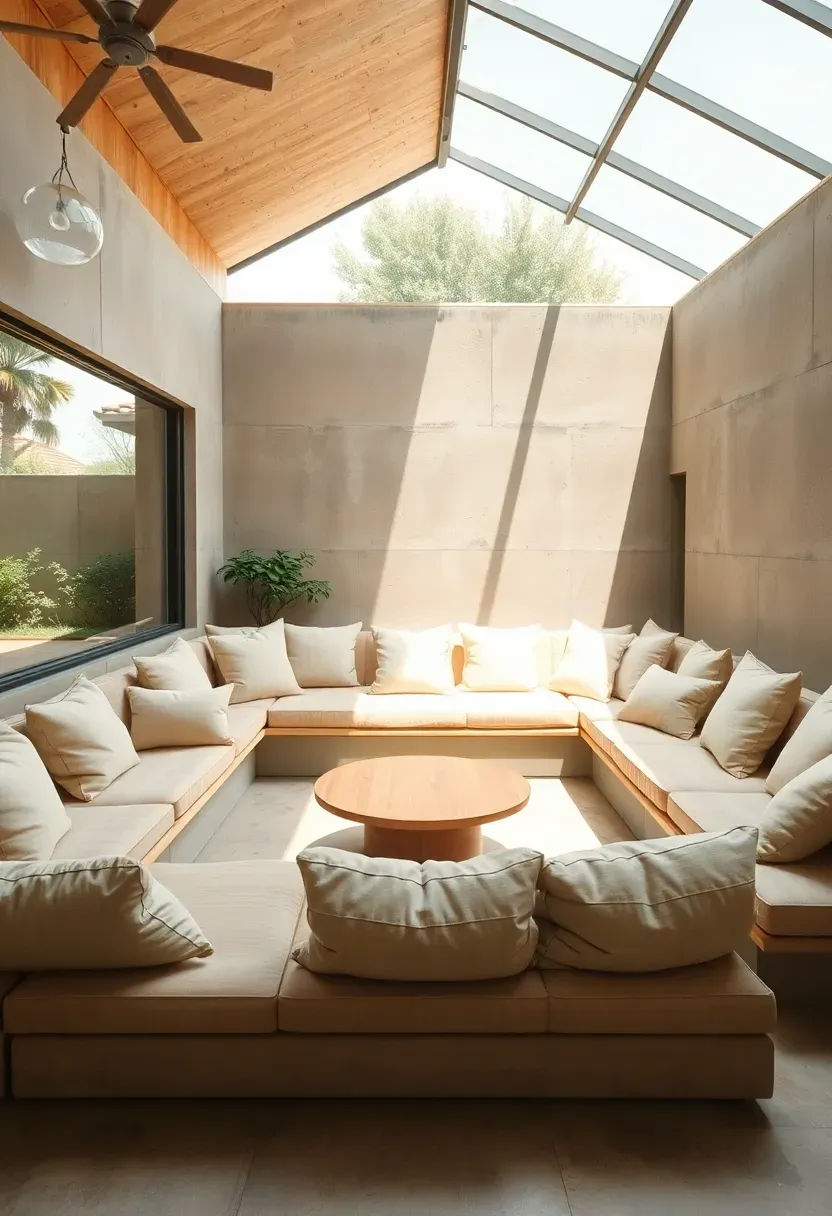
10. Sunken Lounge Sunroom
Dropping the floor level by even 12 to 18 inches creates a psychological shift. You feel nestled, protected, gathered in -- without losing the openness of an airy sunroom above. A sunken lounge with built-in perimeter seating eliminates the need for freestanding furniture entirely. Cushions pile directly on the bench, the center stays open for a coffee table or a firepit insert, and the step down becomes a natural backrest for overflow guests during parties.
Pros and Cons
Pros: Creates an intimate focal point, maximizes seating capacity without clutter, visually dramatic Cons: Requires structural modification and drainage planning; not accessible for mobility-impaired guests without a ramp addition
Recommended
Items for this idea
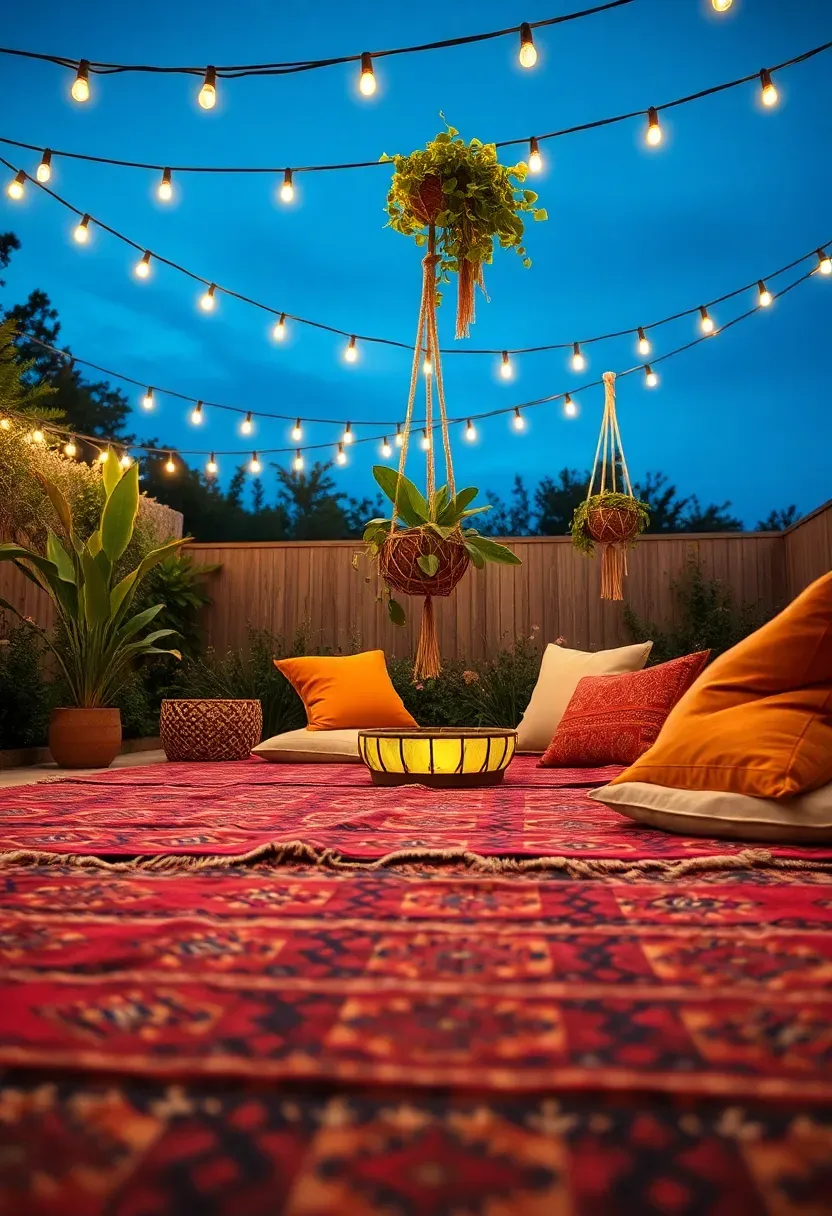
11. Bohemian Floor-Level Gathering Space
Forget chairs entirely. A floor-level sunroom leans into the oldest form of communal seating: everyone on the ground, surrounded by textiles, leaning on cushions, reaching across a low tray table. It works beautifully for casual entertaining because it erases the hierarchy that traditional seating creates. There is no head of the table when there is no table -- just a circle of people at the same level.
How to Layer the Floor
Step 1: Start with a Waterproof Base
Lay down an outdoor-rated base rug or interlocking foam tiles covered with a weatherproof mat. This protects cushions from ground moisture.
Step 2: Add Pattern and Texture
Layer two or three rugs of different sizes and patterns. Moroccan, kilim, and dhurrie rugs work well together because their geometric patterns coexist without competing.
Step 3: Pile On the Cushions
Mix large floor cushions (24x24 minimum) with cylindrical bolsters and flat meditation cushions. Use outdoor fabric covers or bring them inside after each gathering.
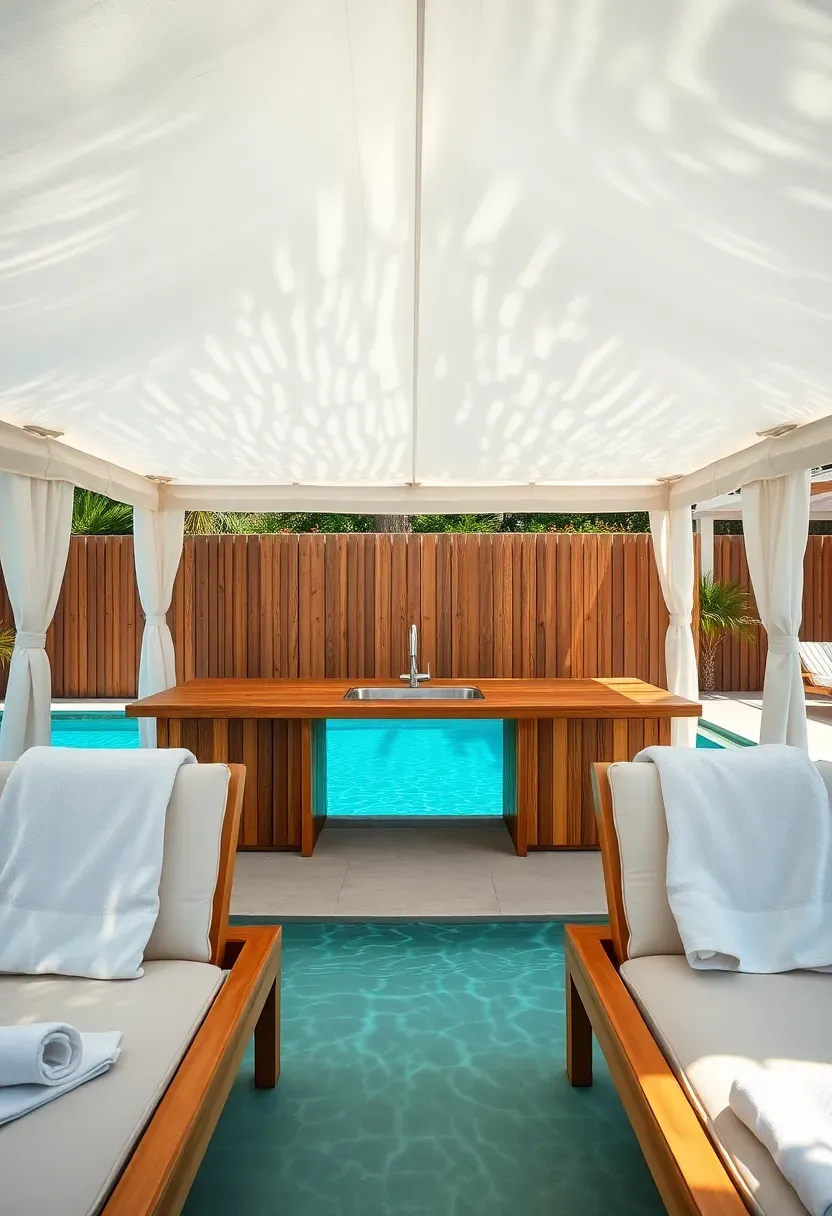
12. Pool-Adjacent Cabana Sunroom
A cabana positioned at poolside serves double duty: shade shelter during the heat of the day and an entertaining hub once the swimming winds down. The most functional versions include a small wet bar or at least a countertop with a mini-fridge, towel storage, and enough seating to transition from swimwear to cocktail hour without anyone going back inside the house.
What Makes a Great Pool Cabana
- Roof pitch should allow rain runoff away from the pool to prevent dirty water entering the basin
- Use marine-grade upholstery on all seating -- chlorine splash and sunscreen will ruin standard outdoor fabric within one season
- Include at least one electrical outlet for a blender, speaker, or phone charger
- A ceiling fan rated for wet locations keeps the air moving under the roof where heat builds
Recommended
Items for this idea
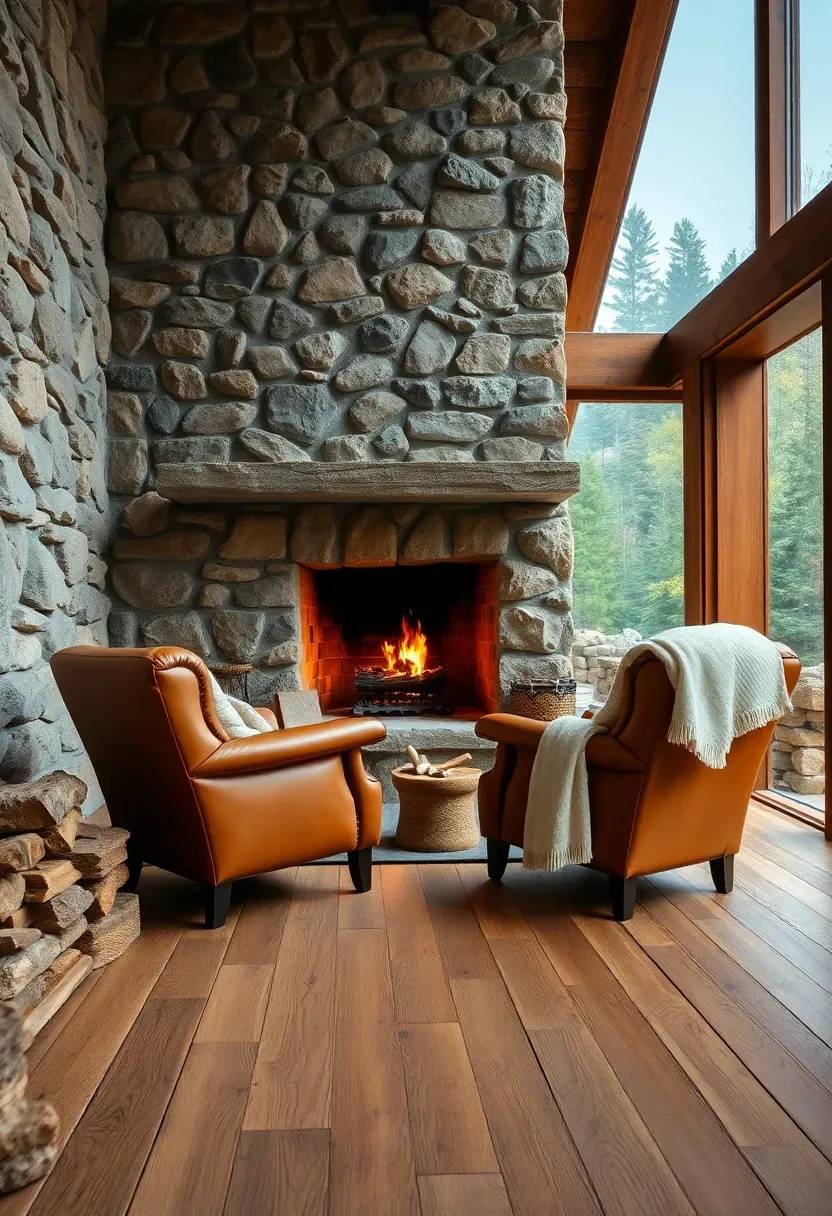
13. Rustic Stone Sunroom with Fireplace
Why It Belongs Outdoors
A fireplace in an indoor room is a luxury. A fireplace in an outdoor sunroom is a season extender. It pushes the usable months of your sunroom from six or seven all the way to ten or eleven, depending on your climate. The combination of radiant heat from the fire and overhead shelter from the roof creates a microclimate that stays comfortable well below the temperature where an unheated porch becomes unbearable.
Building with Natural Stone
Natural stone walls -- fieldstone, river rock, or stacked slate -- give the room mass and texture that manufactured materials cannot replicate. The thermal mass of stone absorbs heat during sunny days and releases it slowly through the evening, smoothing out temperature swings. Pair stone walls with a wood-burning or gas-insert fireplace, deep leather chairs, and wool throws for a mountain-lodge atmosphere that works in any geography.
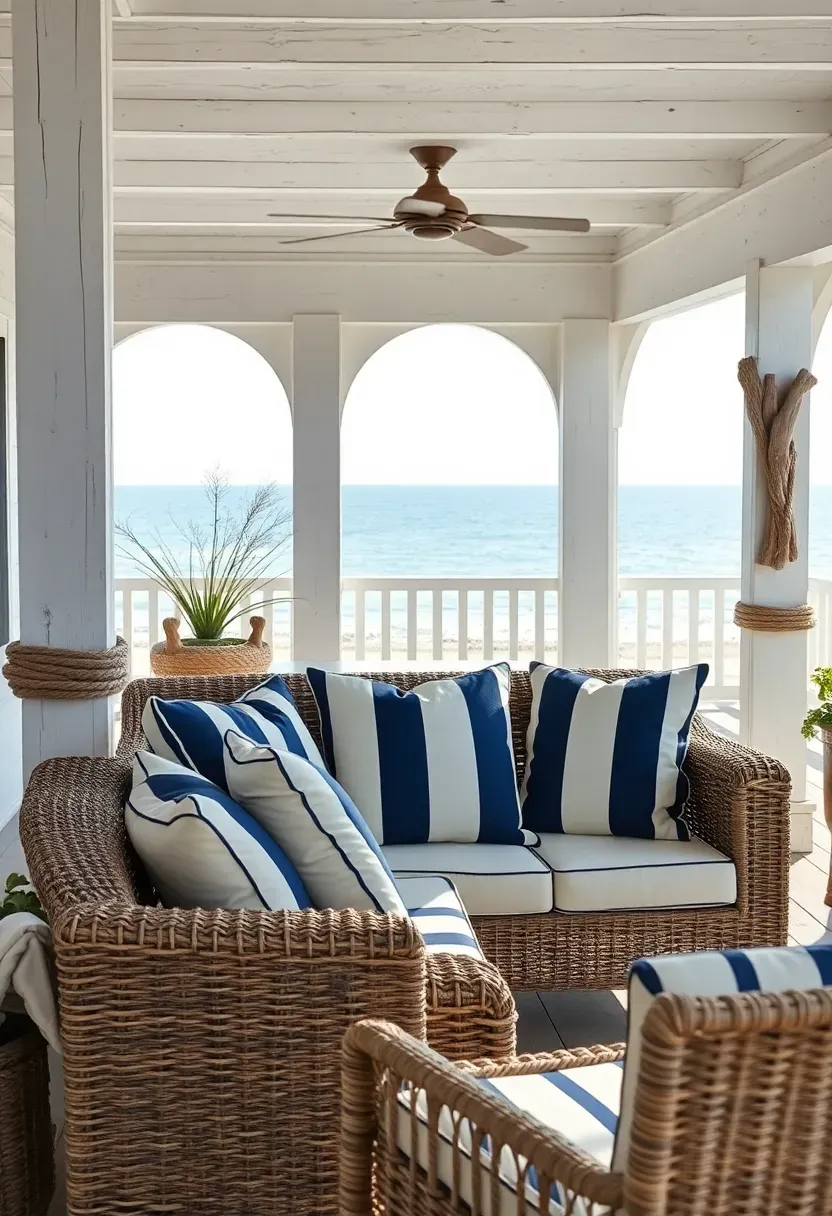
14. Coastal Breezy Entertaining Porch
Salt air, wide horizons, and no rush. A coastal sunroom leans into that energy with a palette of whites, navies, and weathered wood. The key distinction from other styles is openness -- coastal entertaining porches use arched openings or wide-span sliding panels instead of standard windows. The goal is to let the ocean breeze pass through uninterrupted rather than trapping it behind glass.
Tips for Coastal Climate Durability
- All metal hardware should be marine-grade stainless steel -- standard zinc-plated fasteners corrode within months near saltwater
- Choose HDPE (high-density polyethylene) furniture over wood for zero-maintenance performance in salt spray environments
- Rope accents and driftwood details add coastal character without adding maintenance -- they already look weathered by design
Recommended
Items for this idea
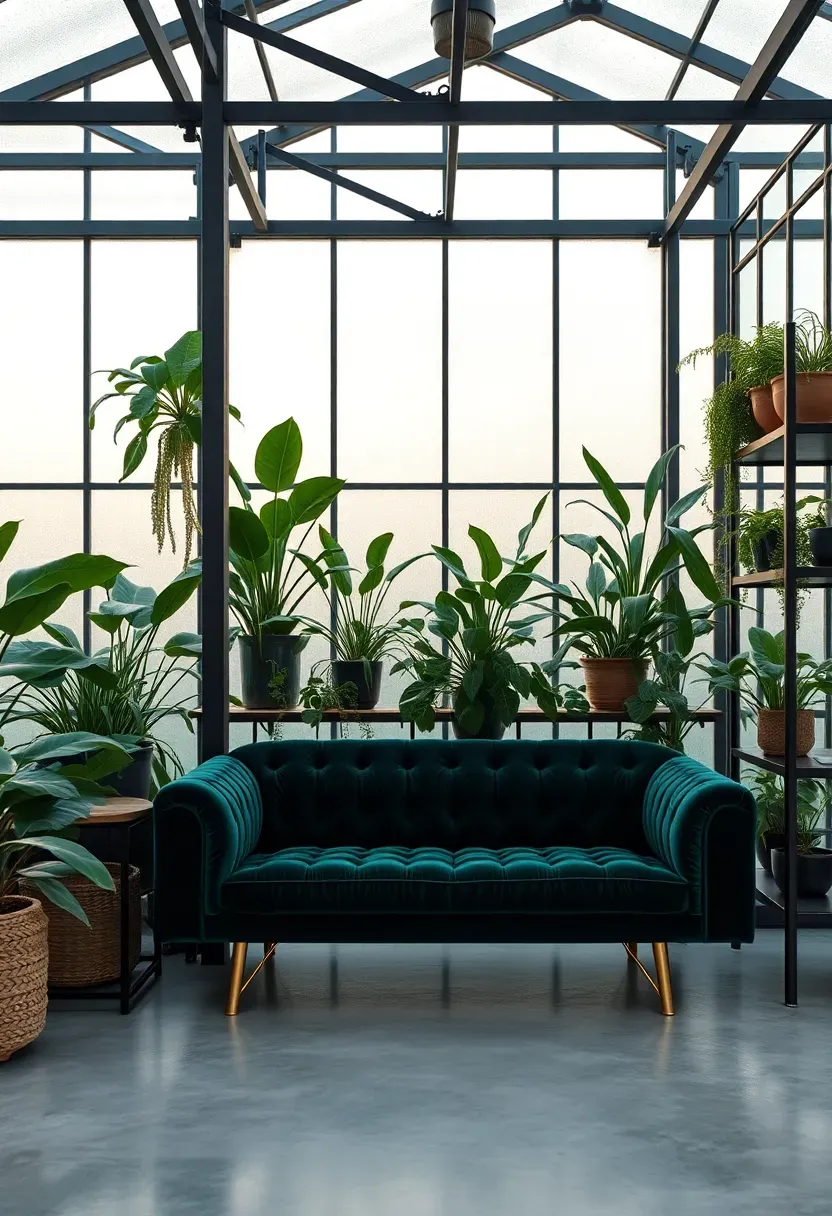
15. Modern Black-Frame Greenhouse Lounge
Take the Victorian greenhouse, strip it of ornament, repaint the frame matte black, and fill it with living things and comfortable seating. That is this idea. The black steel framework creates a graphic grid pattern against the sky that reads as both industrial and elegant. Inside, the microclimate runs warmer and more humid than the surrounding yard -- perfect for tropical houseplants that struggle outdoors in temperate zones.
How to Prevent Overheating
- Install at least two operable roof vents or ridge vents to let rising hot air escape naturally
- Use automated vent openers that respond to temperature -- they require no electricity and cost under thirty dollars each
- Position a shade cloth panel on the south-facing roof section during summer months to cut solar gain by 50-70 percent
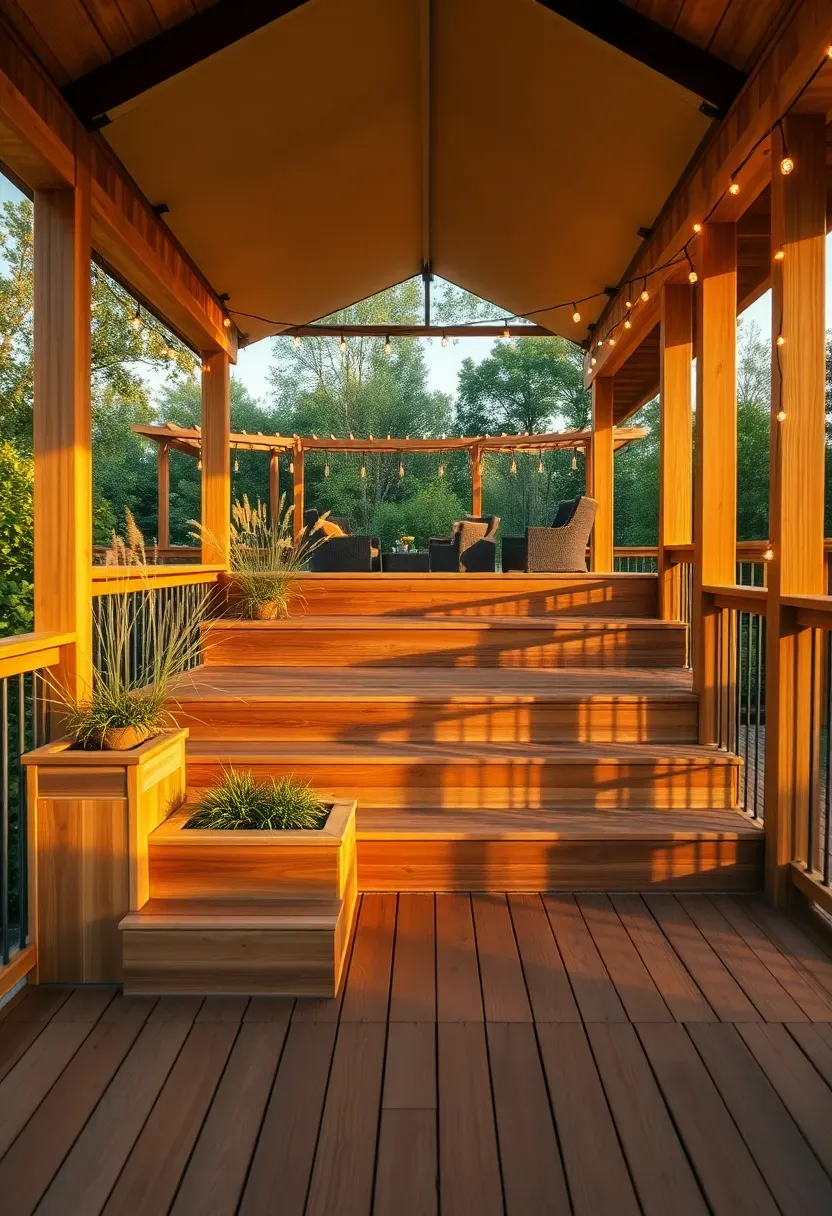
16. Multi-Level Deck Sunroom
The Core Issue
Flat, single-level outdoor rooms feel monotonous once they exceed a certain size. A large unbroken deck can feel like a stage with no set -- open and exposed rather than intimate and layered.
The Solution
Breaking the space into two or three levels connected by short staircases creates distinct zones without building walls. The upper level becomes the covered sunroom with seating. The middle level hosts dining or grilling. The lowest level transitions into the yard with planters or a fire feature. Each tier has its own purpose, its own mood, and its own relationship with the sun. Guests naturally distribute themselves across the levels during parties, which prevents the awkward clumping that happens on a flat deck.
Pros and Cons
Pros: Defines zones without walls, creates visual interest, handles sloped yards elegantly Cons: Higher construction cost than a single-level deck; requires careful railing code compliance at each level change
Recommended
Items for this idea
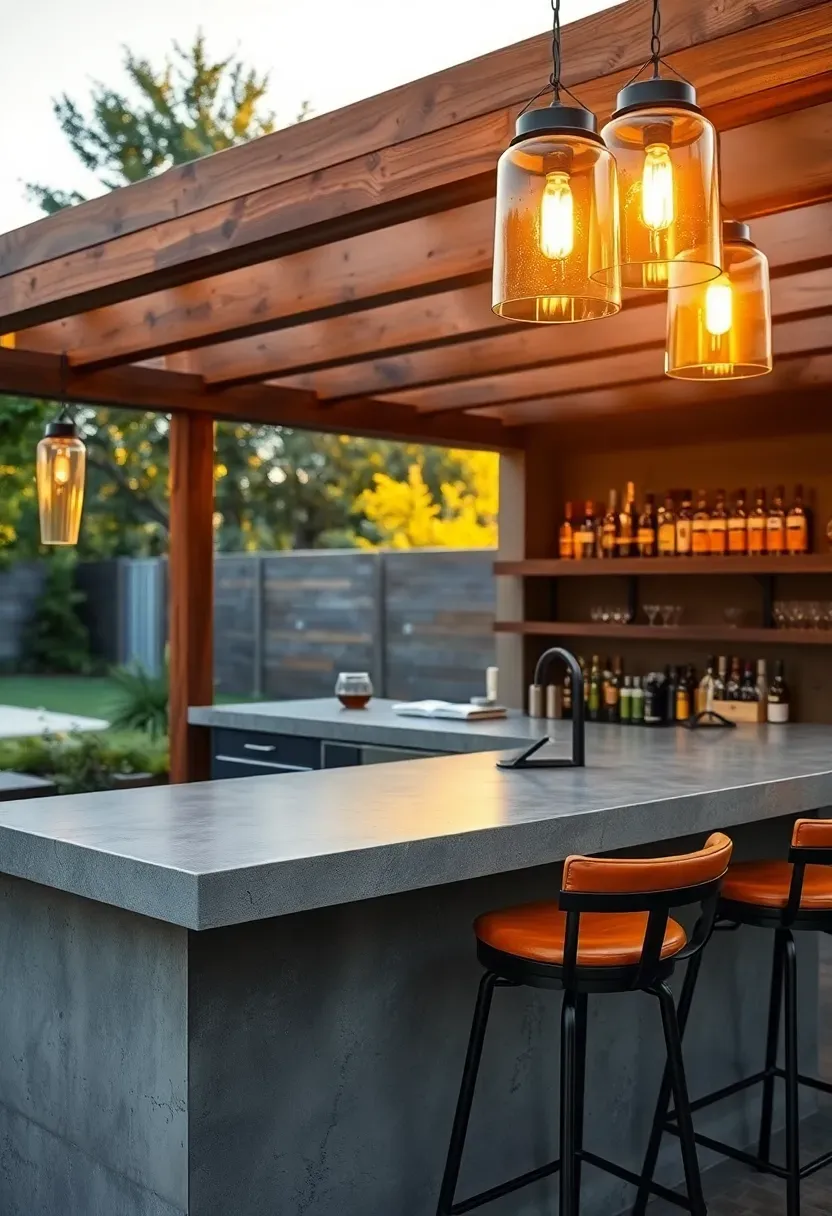
17. Outdoor Sunroom Bar and Lounge
Nothing shifts a sunroom from passive relaxation to active entertaining faster than a built-in bar. It gives guests a destination -- somewhere to stand, lean, mix a drink, and talk to the person making the next round. The bar becomes the social anchor while lounge seating nearby handles the slower conversations. Together, they create two speeds of socializing within the same covered space.
Essential Bar Setup
- A countertop depth of 16 to 18 inches provides enough workspace without consuming too much floor area
- Install a small under-counter refrigerator for drinks and garnishes -- it eliminates constant trips to the kitchen
- Pendant lights on dimmers hung from the pergola or ceiling mark the bar area visually and set evening mood
- Open shelving behind the bar displays bottles and glassware while keeping everything within arm's reach
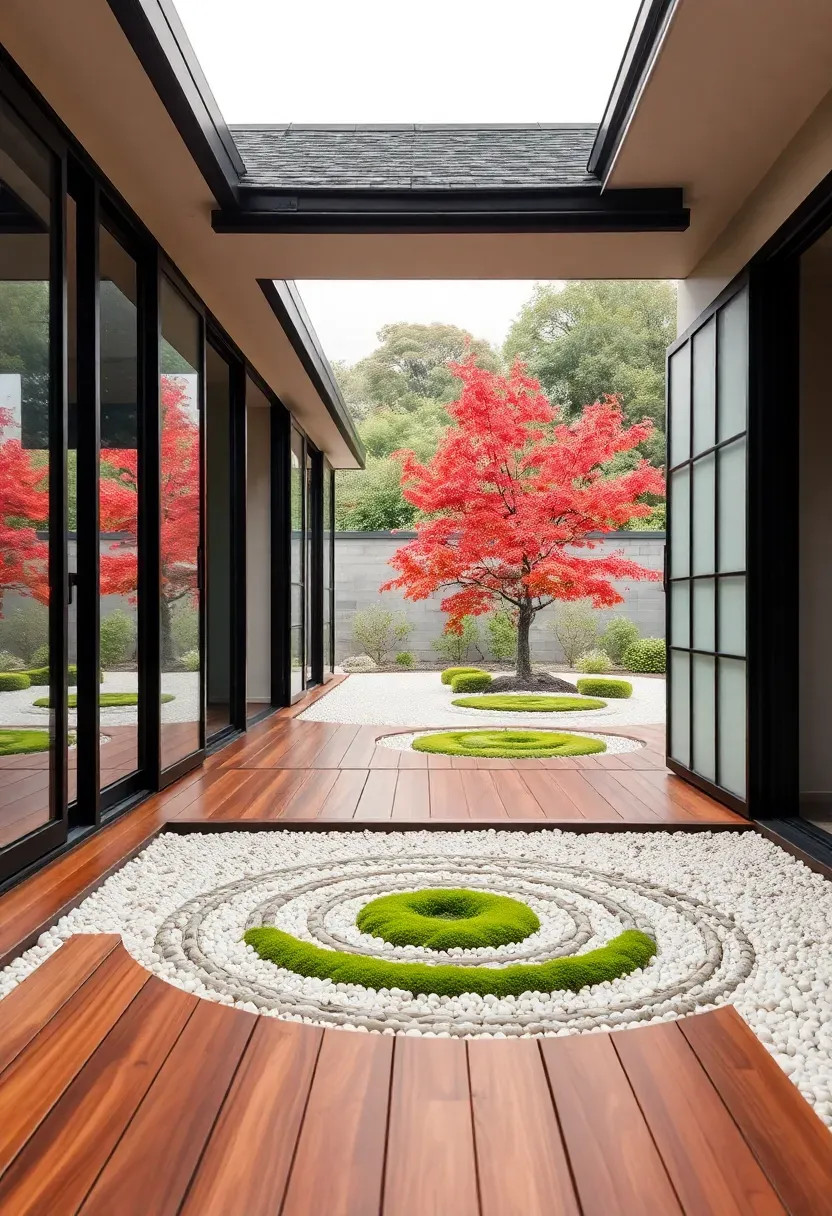
18. Japanese-Inspired Engawa Sitting Room
Origins
The engawa is a narrow wooden veranda that wraps the perimeter of traditional Japanese homes. It sits between interior rooms and the garden -- neither fully inside nor outside. Shoji screens slide open to merge the engawa with interior space, or close to create a buffer against weather. For centuries, it has served as a place for tea, contemplation, and watching seasons change from a sheltered vantage point.
Modern Interpretation
A contemporary engawa-style sunroom strips the concept to its essentials: a covered wooden platform at floor level, flush with interior flooring, opening directly onto a landscaped garden. Instead of traditional shoji screens, use sliding glass panels that stack to one side for full openness. The seating stays low -- floor cushions, a zabuton, or a narrow bench just inches off the deck. The garden does the decorating. Gravel, moss, a single specimen tree, and carefully placed stones replace the furniture-heavy approach of Western sunrooms. The restraint is the point.
How to Apply at Home
- Build the platform from ipe or thermally modified ash for longevity without chemical treatment
- Keep the platform narrow -- 5 to 7 feet deep -- to preserve the corridor-like intimacy of a true engawa
- Design the adjacent garden as a viewing garden, not a working garden: low maintenance, high visual impact
- Use warm-toned exterior wood stain to match interior flooring and blur the threshold between house and platform
Recommended
Items for this idea
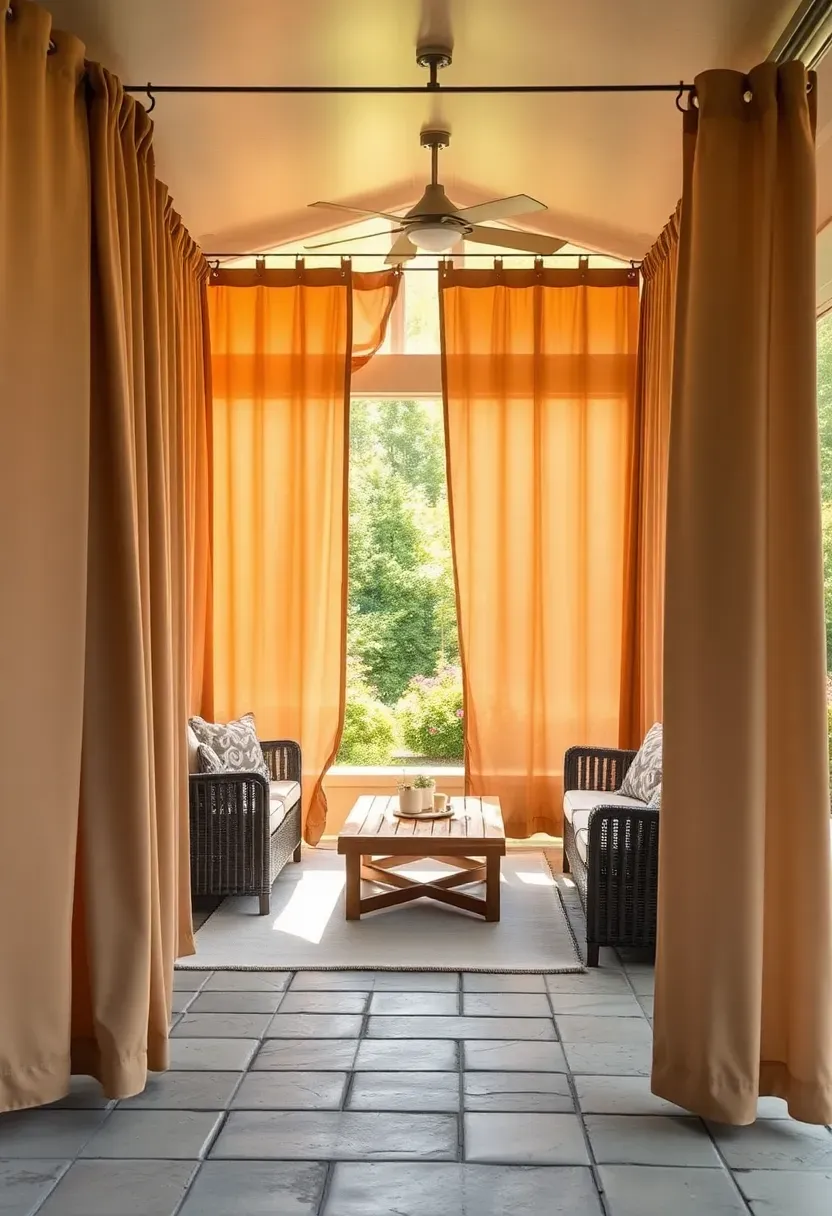
19. Weatherproof Curtain Sunroom
This is the most flexible and least permanent approach to an outdoor sunroom. Instead of screens, glass, or solid walls, heavy-duty outdoor curtains hang from a ceiling-mounted track system around an existing covered patio or pergola. Pull them closed against wind, rain, or low sun. Push them open when conditions are perfect. The transformation takes seconds and costs a fraction of any built enclosure.
Tips for Choosing the Right Curtains
- Select fabric rated for outdoor use: solution-dyed acrylic (like Sunbrella) resists UV fading, mildew, and water absorption
- Use a stainless steel track system rather than a rod -- tracks allow curtains to curve around corners and close without gaps
- Weight the bottom hem with a chain or heavy-duty magnets to prevent billowing in moderate wind
- For maximum weather protection, overlap panels by at least 6 inches at each junction point
Quick FAQ
Is an outdoor sunroom the same as a screened porch? Not always. A screened porch is one type of outdoor sunroom -- the kind with mesh walls that block insects while allowing airflow. But outdoor sunrooms also include glass-enclosed conservatories, open-sided pavilions, pergola rooms with curtains, and hybrid designs that combine several enclosure methods. The term covers any sheltered outdoor space designed for comfortable, extended use.
Should I choose screens or glass for my sunroom enclosure? That depends on your climate and priorities. Screens cost less, allow maximum airflow, and work best in mild, bug-heavy regions. Glass panels provide better insulation, weather protection, and noise reduction, but they require ventilation planning to prevent overheating. In moderate climates, removable glass-and-screen insert panels give you the best of both options.
Can I build an outdoor sunroom without a permit? It varies by municipality. Freestanding structures under a certain square footage -- often 120 to 200 square feet -- may be exempt from permits in many areas. However, any structure attached to your house, connected to electrical or plumbing, or exceeding local size thresholds typically requires a building permit and inspection. Check your local building department before starting.
What flooring holds up best in an outdoor sunroom? Porcelain tile, stamped concrete, and composite decking are the top performers. All three handle moisture, temperature swings, and UV exposure without warping or cracking. Natural stone works well but needs periodic sealing. Avoid indoor-rated laminate or engineered hardwood -- they delaminate quickly in the humidity swings of an unheated outdoor room.
How much does a basic outdoor sunroom addition cost? A screened porch conversion on an existing patio runs roughly 3,000 to 8,000 dollars for materials in a DIY scenario, or 10,000 to 25,000 installed professionally. A glass-enclosed sunroom addition starts around 15,000 for a simple kit system and can exceed 70,000 for a custom-built, climate-controlled room with electrical and HVAC. Budget enclosures using curtain or shade-sail systems can cost under 1,000 for materials alone.
Every outdoor sunroom starts with an honest look at what you already have. A covered patio, a sagging porch, a concrete slab next to the house -- these are not problems. They are starting points. Pick one idea from this list that matches your footprint, your budget, and the way you actually want to spend time outdoors. Then build just enough structure to make that space irresistible on a Tuesday evening, not just a Saturday afternoon. The best outdoor rooms are the ones that pull you outside without a reason.
Pinterest cover for 19 Outdoor Sunroom Ideas for Breezy Lounge Areas and Easy Entertaining
About the author
OBCD
CGI visualization and interior design content. We create detailed 3D renders and curate practical design ideas for every room in your home.