23 Shower Tile Ideas for 2026
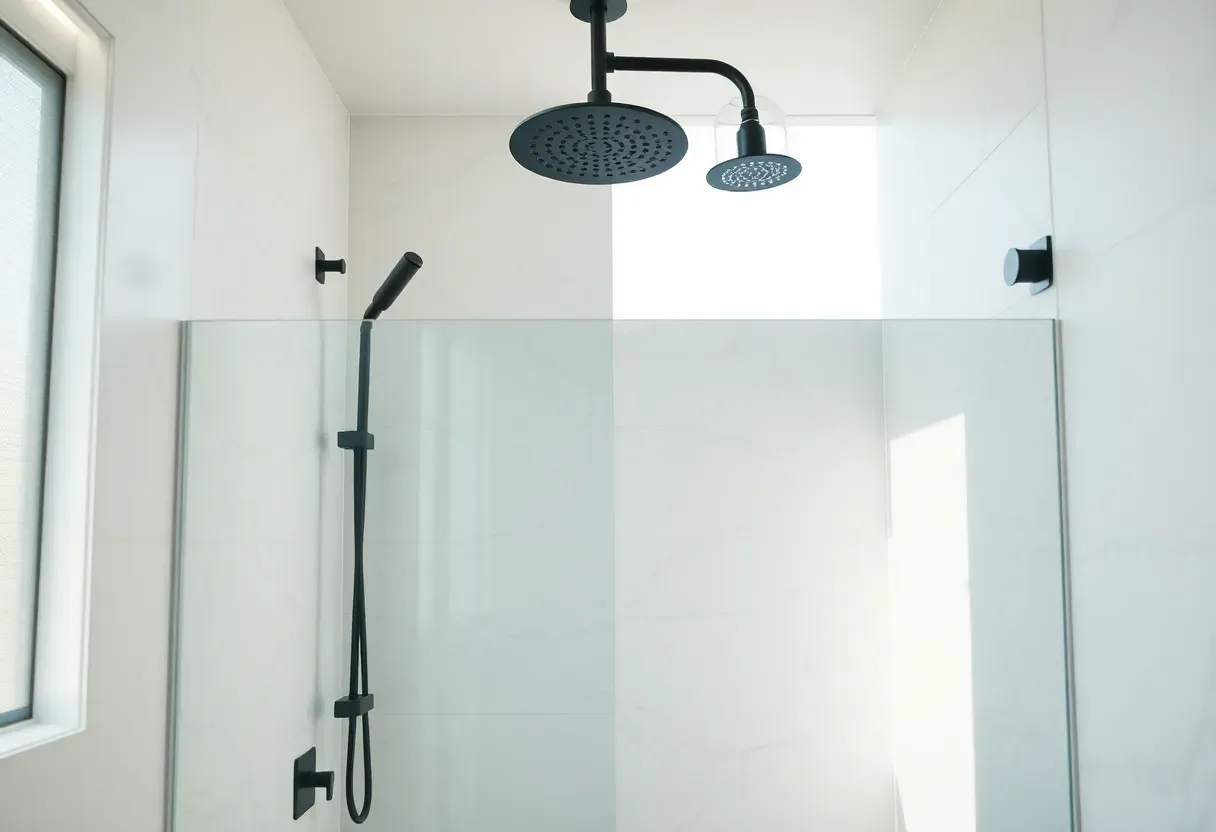
For centuries, tile has done the heavy lifting in bathrooms — protecting walls from moisture while quietly setting the entire visual tone of the space. Yet the shower enclosure, arguably the most used surface in any home, often gets the least creative attention. Designers in 2026 are pushing back hard on that habit. Textured porcelain, hand-glazed zellige, oversized slabs that eliminate grout lines, and bold geometric mosaics are replacing the predictable white subway tile that dominated the last decade. The shower is becoming the feature wall of the bathroom.
Below you will find 23 distinct tile approaches organized from subtle sophistication to bold statements, each grounded in materials and layouts that work in real-world bathrooms.
Table of Contents
- Large-Format Porcelain Slabs
- Zellige Tile in Warm White
- Vertical Stacked Subway Tile
- Herringbone Floor-to-Ceiling
- Matte Black Penny Rounds
- Fluted Porcelain Wall Panels
- Terrazzo Tile Accent Wall
- Sage Green Scallop Tile
- Marble-Look Chevron Pattern
- Concrete-Effect Textured Tile
- Deep Blue Glazed Ceramic
- Mixed-Width Horizontal Planks
- Hexagonal Mosaic Feature Strip
- Warm Terracotta Clay Tile
- Basket Weave Marble Mosaic
- Monochrome Checkerboard Pattern
- Arched Niche with Contrasting Tile
- Japanese Wabi-Sabi Crackle Glaze
- Bold Geometric Encaustic Pattern
- Ribbed 3D Wall Tile
- Travertine Slab with Vein Matching
- Gradient Ombre Tile Transition
- Mixed Material Tile Collage
1. Large-Format Porcelain Slabs
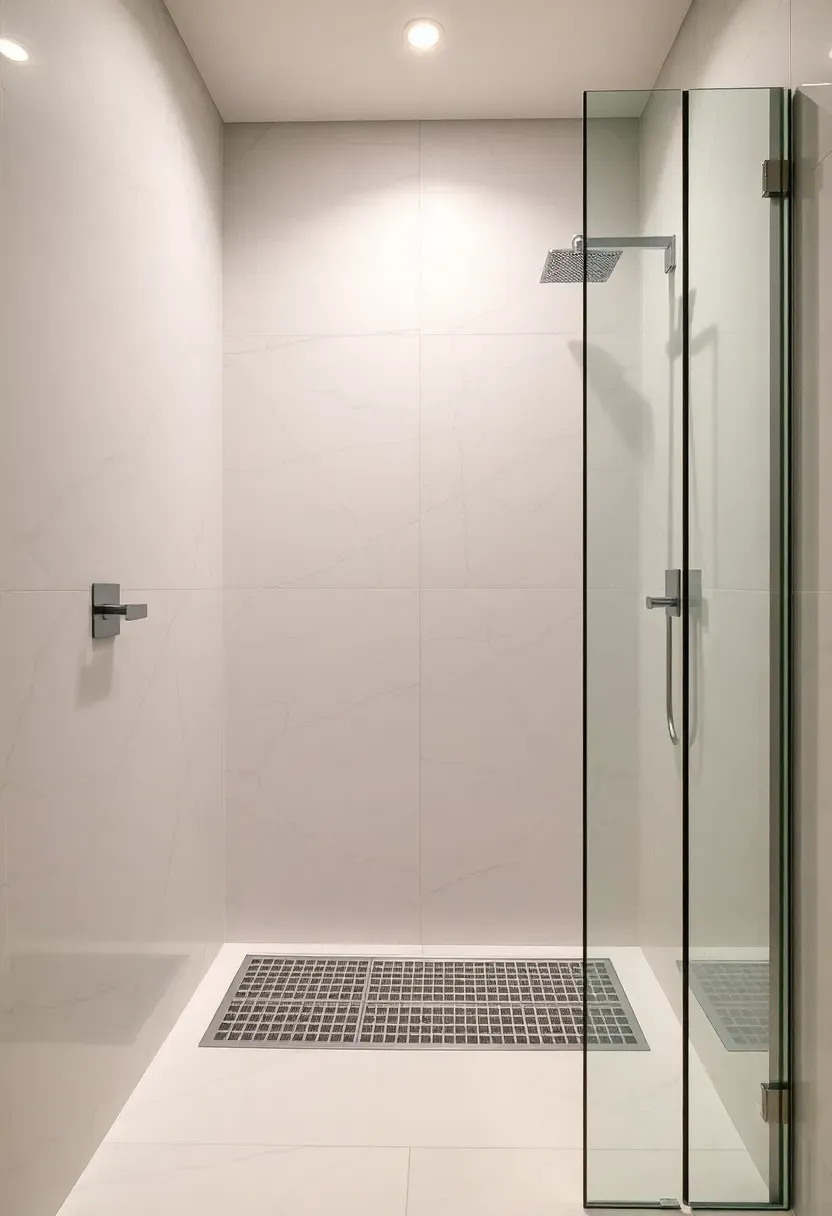
Grout lines collect mildew. That single frustration drove the biggest shift in shower tile design for 2026 — oversized porcelain slabs that cover an entire wall in one or two pieces. These panels, typically 60 by 120 centimeters or larger, mimic natural stone with photographic precision while offering zero-maintenance surfaces that stay cleaner longer. The visual result is a shower that feels like walking into a luxury hotel.
Tips for Installation
- Hire an experienced installer — large slabs crack easily during handling and require specialized suction-cup tools
- Choose book-matched pairs for a symmetrical veined pattern across opposite walls
- Use a thin-set adhesive rated for heavy tile and ensure the substrate is perfectly flat
We picked a few things that go well with this idea: Herringbone Peel Stick Backsplash Tile (10 Sheets) (★4.4), Pectro Waterproof Grout Sealer Tube (6.62 oz) (★4.3) and MORE Ceramic Porcelain Tile Grout Sealer (32oz) (★4.5). As an Amazon Associate we earn from qualifying purchases.
2. Zellige Tile in Warm White
Why Factory Tile Feels Cold — and How Handmade Zellige Fixes It
The Core Issue
Mass-produced tiles deliver perfect uniformity. In a shower, that precision can feel sterile and impersonal, especially under harsh overhead lighting.
The Solution
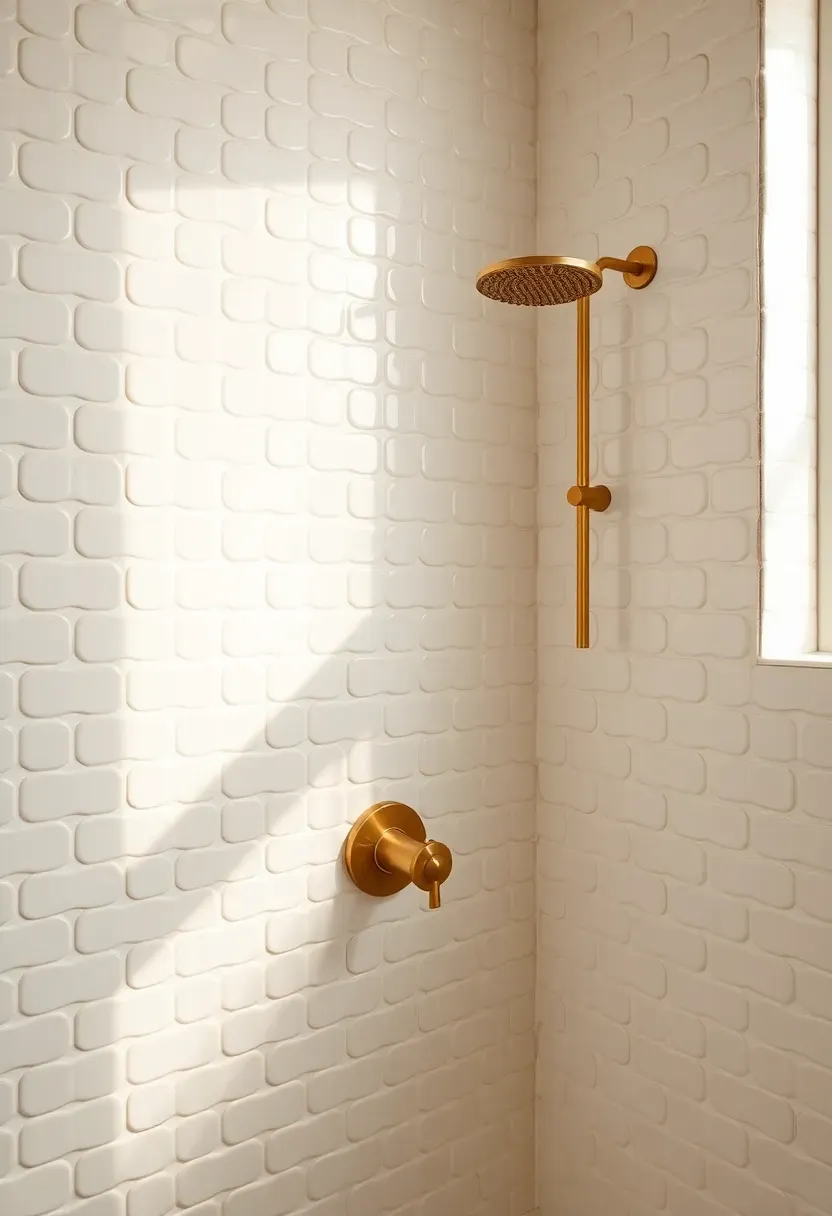
Zellige tiles are hand-cut and hand-glazed in Morocco, and no two pieces match exactly. Each tile catches light at a slightly different angle, creating a living surface that shifts throughout the day. In warm white or cream tones, zellige softens the shower without darkening it. The subtle imperfections add the kind of organic texture that makes a bathroom feel collected rather than catalog-ordered. Pair with brass fixtures and a teak shower bench for a spa-like atmosphere that balances rustic charm with modern simplicity.
Pros and Cons
Pros: unique texture impossible to replicate with machine tile, warm light reflection, timeless appeal that won't date
Cons: higher cost per square foot, requires skilled installation, more grout lines to maintain than large-format options
We picked a few things that go well with this idea: BESy 12" Square Rain Showerhead Matte Black (★4.6), 13" Rainfall Dual Showerhead with Handheld Combo (★4.5) and KAIYING Magnetic Rain Showerhead with Handheld (★4.5). As an Amazon Associate we earn from qualifying purchases.
3. Vertical Stacked Subway Tile
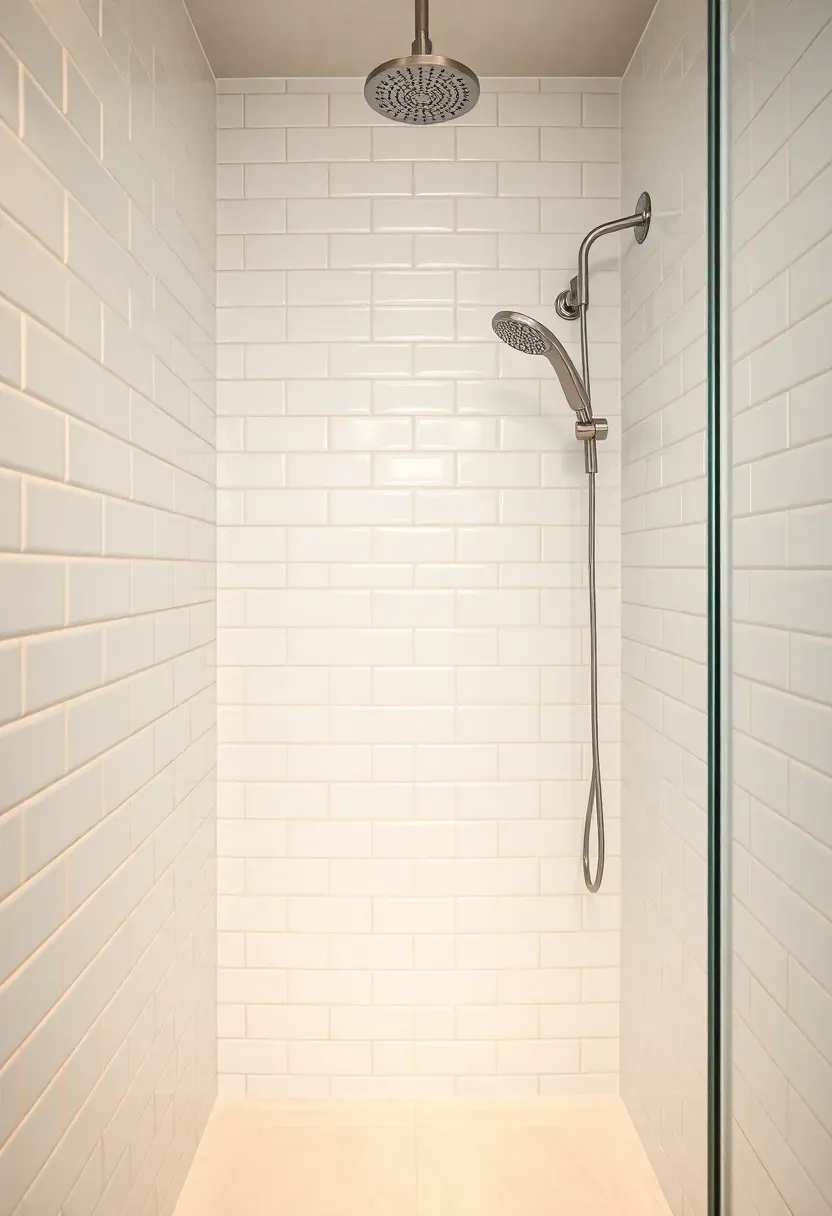
Rotating the classic subway tile ninety degrees and stacking it vertically transforms a familiar material into something unexpectedly modern. The continuous vertical lines pull the eye upward, making standard eight-foot ceilings feel taller and shower stalls feel less boxy. This layout works especially well in narrow shower enclosures where horizontal grout lines would emphasize the tight width. White remains the safest choice, but muted sage, pale blue, and warm greige are gaining ground fast in 2026 installations.
What to Watch Out For
- Vertical stacking requires precise alignment — even slight offsets are more visible than in a running-bond horizontal pattern
- Use a contrasting grout color (light grey on white tile, for example) to emphasize the vertical rhythm
- Consider continuing the vertical tile beyond the shower enclosure onto the adjacent bathroom wall for a seamless look
We picked a few things that go well with this idea: AQUA-X Professional Grout Sealer (16 oz) (★4.4), Meuvcol Waterproof Grout Sealer Spray (17.6 oz) (★4.3) and Homax Silicone Grout Sealer Tile Guard (16 oz) (★4.4). As an Amazon Associate we earn from qualifying purchases.
4. Herringbone Floor-to-Ceiling
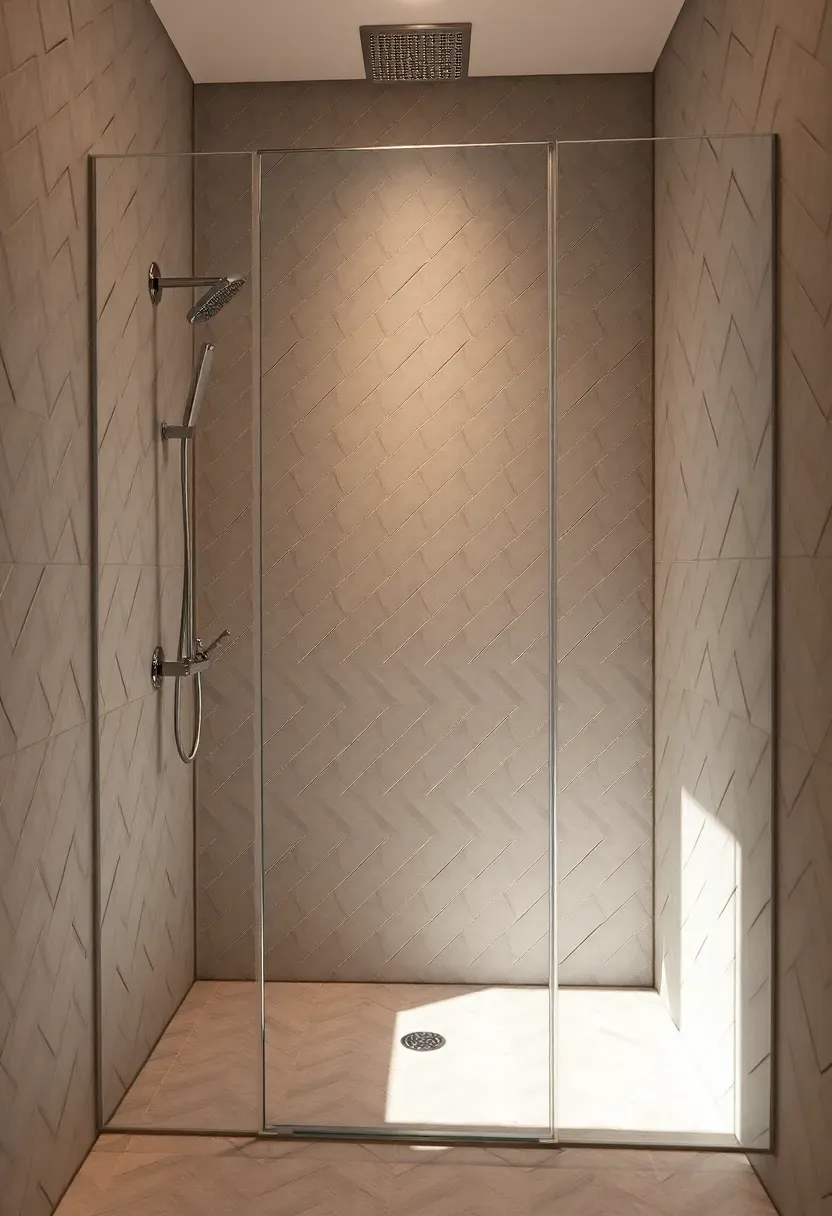
Herringbone is one of the oldest tile patterns in existence, yet it never looks dated. The angled arrangement creates natural visual movement that guides the eye in multiple directions simultaneously — a trick that makes shower walls feel dynamic without resorting to bold color. Extending the herringbone from floor to ceiling unifies the entire shower enclosure and eliminates the awkward transition line where tile stops and painted drywall begins. Light grey porcelain tiles in a slim rectangular format produce the most refined version of this look.
Tips for the Best Outcome
- Choose tiles with a 1:3 or 1:4 length-to-width ratio for the most pronounced zigzag effect
- Plan the starting row carefully at the bottom center, then work outward and upward symmetrically
- A matching grout color keeps the pattern subtle; a contrasting grout makes it graphic
Recommended
Items for this idea
5. Matte Black Penny Rounds
How to Make a Small Shower Feel Intentional
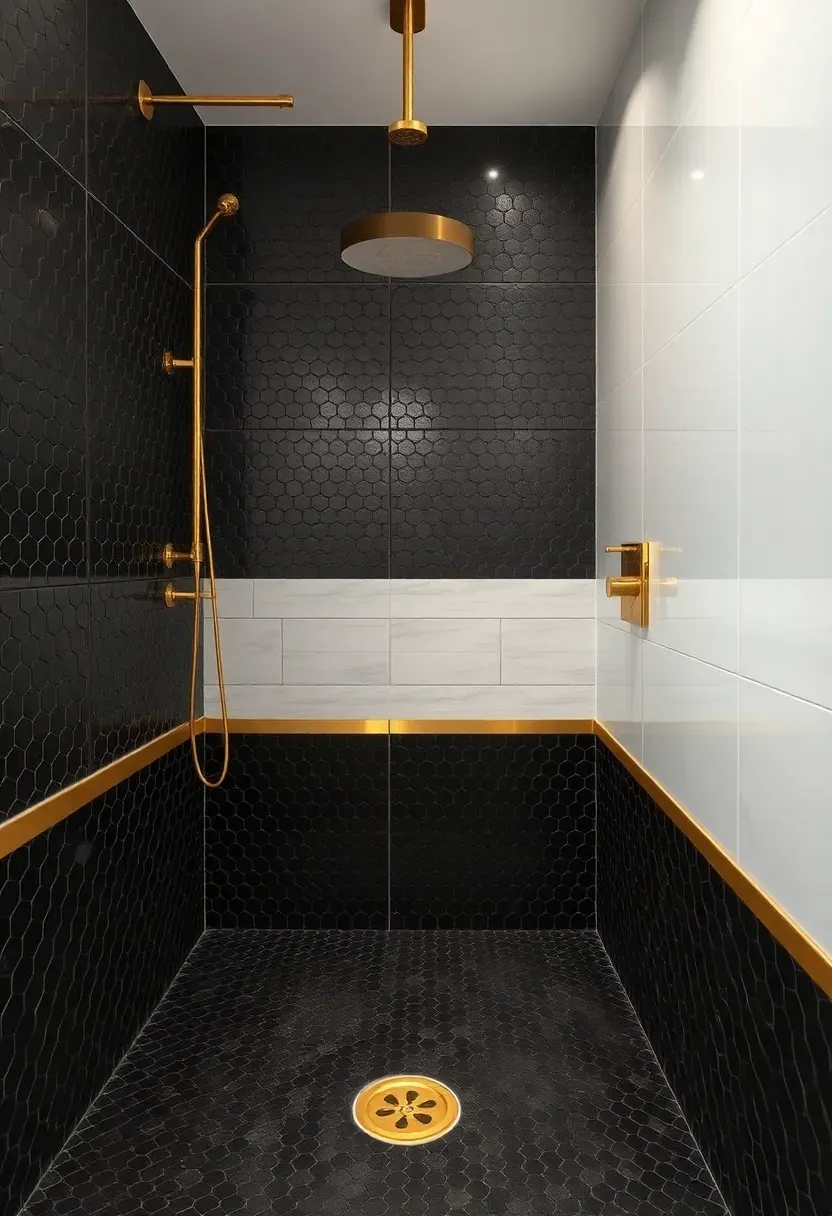
Small showers benefit from smaller tiles — the increased grout lines actually improve slip resistance on the floor while creating a sense of visual density that makes the space feel purposeful rather than cramped. Matte black penny rounds bring a boldness that glossy white tile simply cannot match. Used on the shower floor and extended partway up the wall as an accent band, they ground the space and provide a striking contrast to lighter walls above. The matte finish hides water spots and soap scum better than any glossy surface, which makes daily upkeep genuinely easier.
Step 1: Choose the Right Grout
Select a dark charcoal or black grout to create a seamless look. White grout on black tile creates a polka-dot effect that fights the sophistication you are aiming for.
Step 2: Waterproof Thoroughly
Penny round sheets have more grout joints per square foot than any other tile format. Apply a premium waterproof membrane on the substrate before tiling.
Step 3: Seal and Protect
Even with dark grout, seal grout lines with a penetrating sealer after curing to prevent moisture absorption and staining over time.
6. Fluted Porcelain Wall Panels
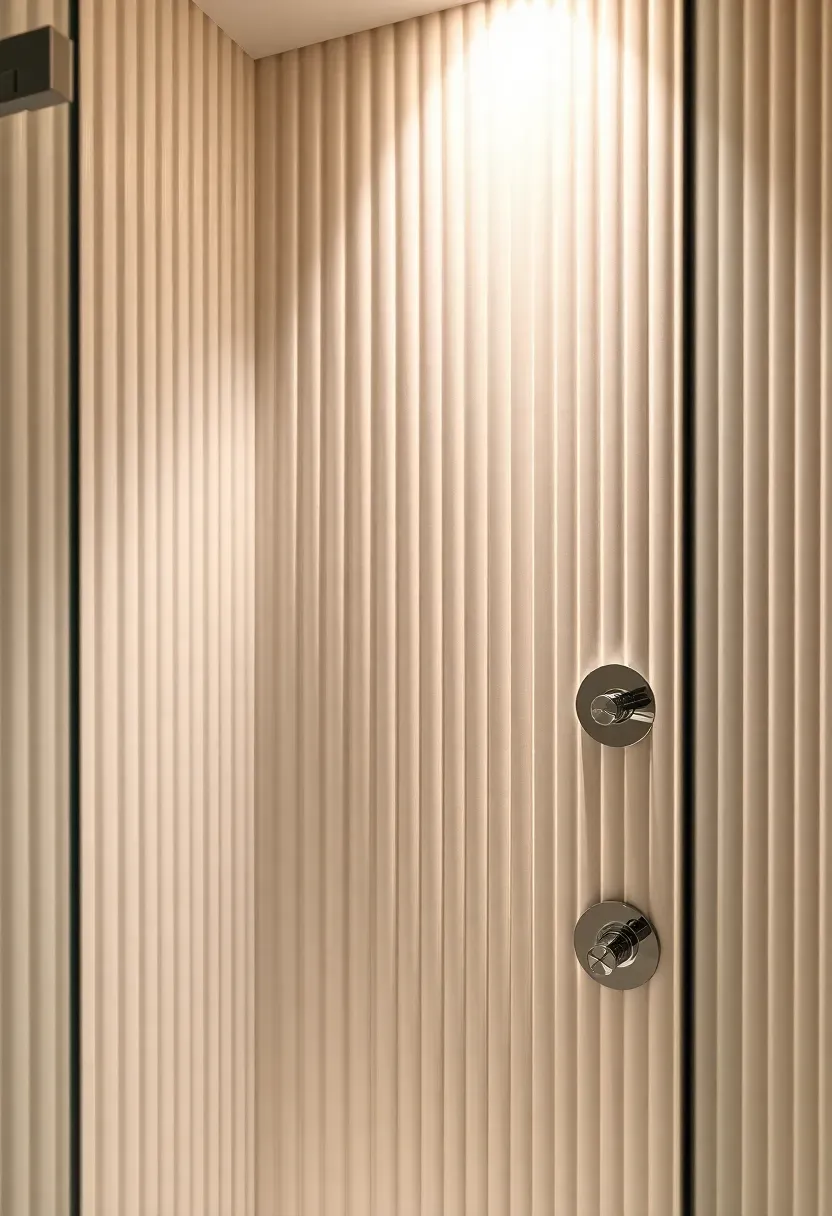
The fluted texture trend that swept through furniture and cabinetry in recent years has arrived in tile form. Vertical ridges cast soft shadows that shift as light moves across the surface, adding three-dimensional depth to shower walls without color or pattern. In off-white or warm ivory porcelain, these panels feel like a cross between classical column architecture and contemporary spa design. They pair exceptionally well with frameless glass enclosures that let the texture speak for itself.
Practical Considerations
- Fluted surfaces can trap soap residue in the grooves — a quick weekly wipe with a non-abrasive cleaner keeps them spotless
- Position recessed ceiling lights to graze the wall surface at an angle, which maximizes the shadow play that makes fluted tile worth choosing
- Avoid combining fluted walls with patterned floors; let one surface carry the visual weight
Recommended
Items for this idea
7. Terrazzo Tile Accent Wall
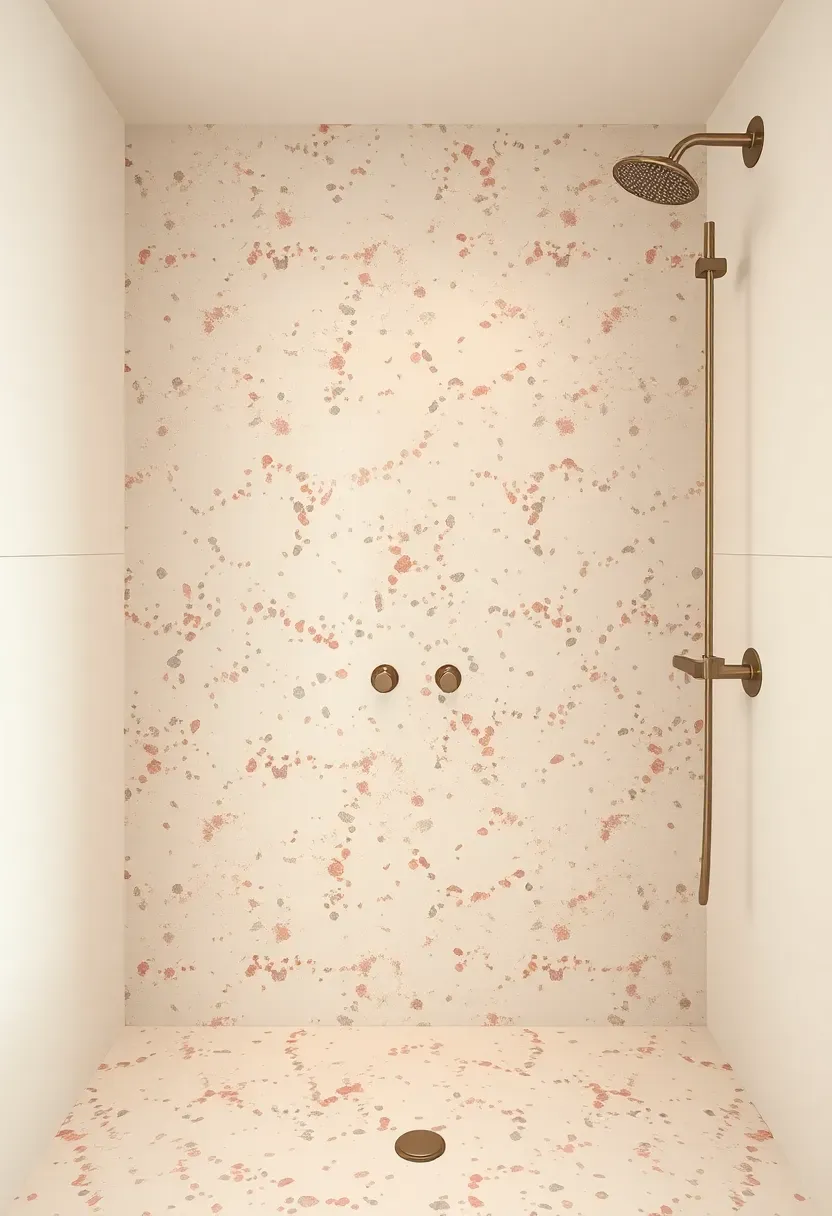
Terrazzo originated as a construction byproduct — workers pressed leftover stone chips into cement to create durable floors in Venetian palazzos. Today, engineered terrazzo tile offers that same speckled character in a controlled, water-resistant format perfect for showers. Using terrazzo on a single accent wall (typically the wall facing the showerhead) creates a focal point that feels playful and sophisticated at once. Choose a base color that ties to your bathroom palette, then let the scattered stone chips in contrasting tones do the decorating for you.
How to Apply at Home
- Limit terrazzo to one wall to avoid visual overload — the pattern is inherently busy
- Pair with solid-colored tiles on the remaining walls in a tone pulled from the terrazzo chip colors
- Large-format terrazzo tiles (30x60cm or bigger) look more refined than small mosaic versions in shower applications
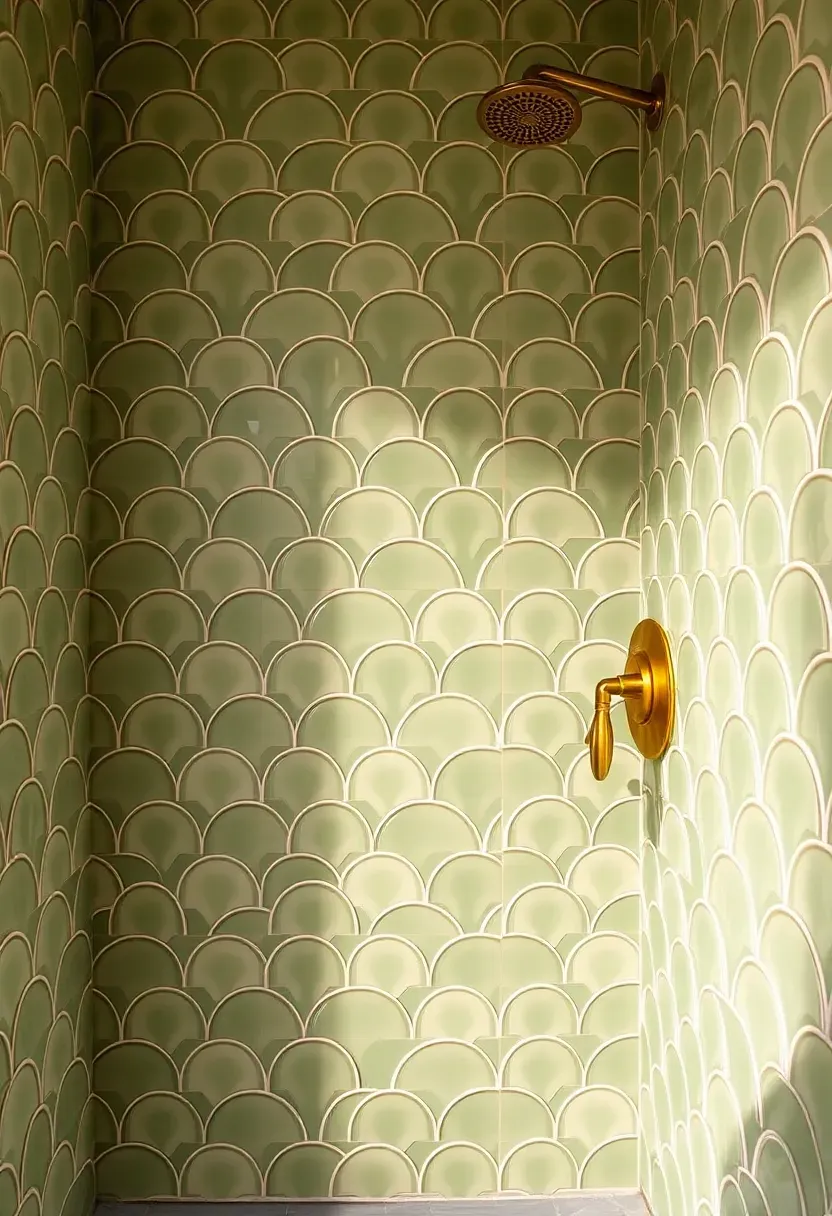
8. Sage Green Scallop Tile
Comparing: Scallop Tile vs. Traditional Subway Tile
Introduction: Both options cover shower walls effectively, but the visual personality they bring could not be more different.
Scallop Tile
Each piece fans outward like a seashell or fish scale, creating overlapping curves that soften the rigid geometry of a shower enclosure. In sage green, the organic shape pairs with the earthy color to evoke coastal calm without the cliche of literal beach decor.
Subway Tile
Clean, rectangular, and endlessly versatile. Subway tile fades into the background by design — it supports other elements rather than demanding attention on its own.
What to Choose
Choose scallop if: you want the shower to be the visual centerpiece of the bathroom and you enjoy nature-inspired textures.
Choose subway if: you prefer a neutral backdrop that lets fixtures, lighting, and accessories define the bathroom's character.
Recommended
Items for this idea
9. Marble-Look Chevron Pattern
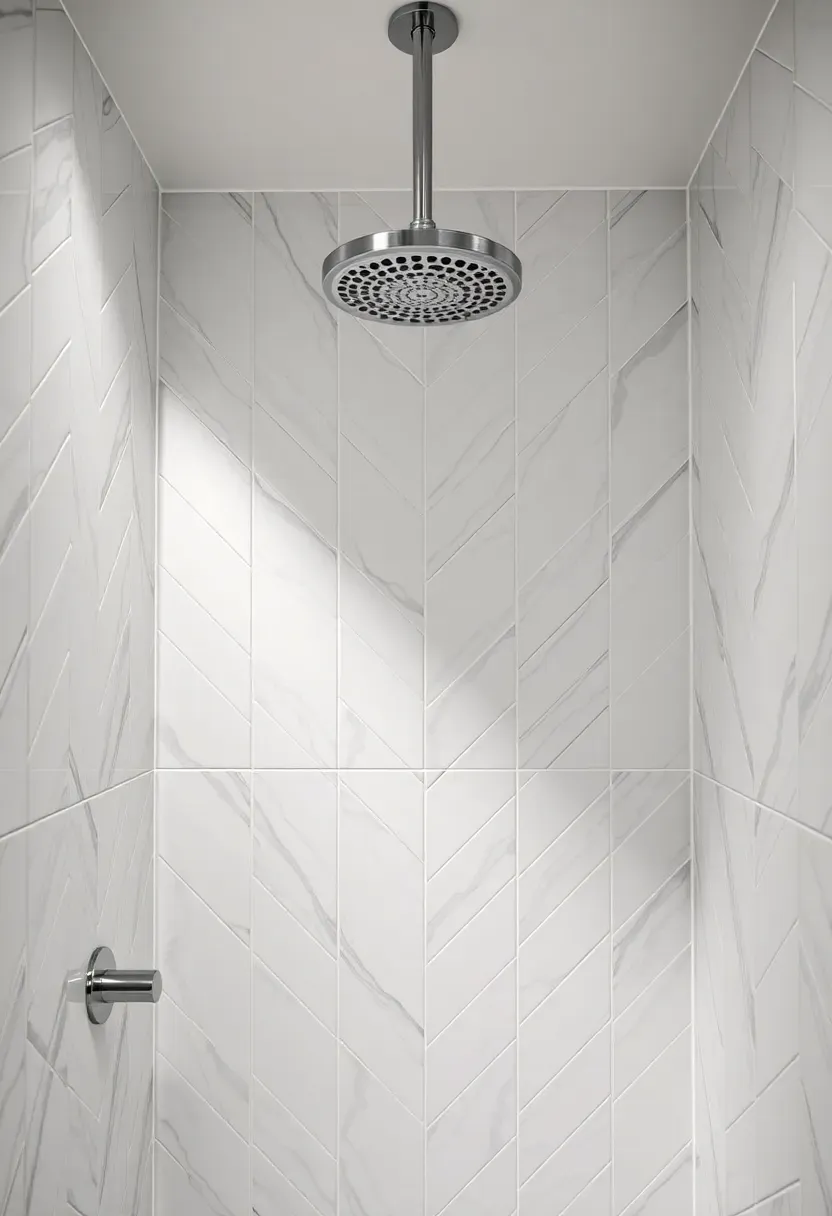
Real marble carries weight — both literally and in maintenance demands. Marble-look porcelain tiles in a chevron layout deliver the veined elegance of Calacatta or Carrara without the etching, staining, and sealing headaches that natural stone requires in wet environments. The chevron pattern adds directional energy to the wall, guiding the eye upward in a way that flat marble slabs cannot. Position the V-point of the chevron facing up on the main shower wall for a cathedral-like lifting effect that stretches perceived ceiling height.
Tips for Realistic Results
- Select tiles with varied vein patterns — if every tile is identical, the faux-marble look becomes obvious quickly
- Match the grout color as closely as possible to the tile base color so the chevron reads as one continuous surface
- Run the chevron to the ceiling; stopping midway creates an unfinished look that undermines the pattern's rhythm
10. Concrete-Effect Textured Tile
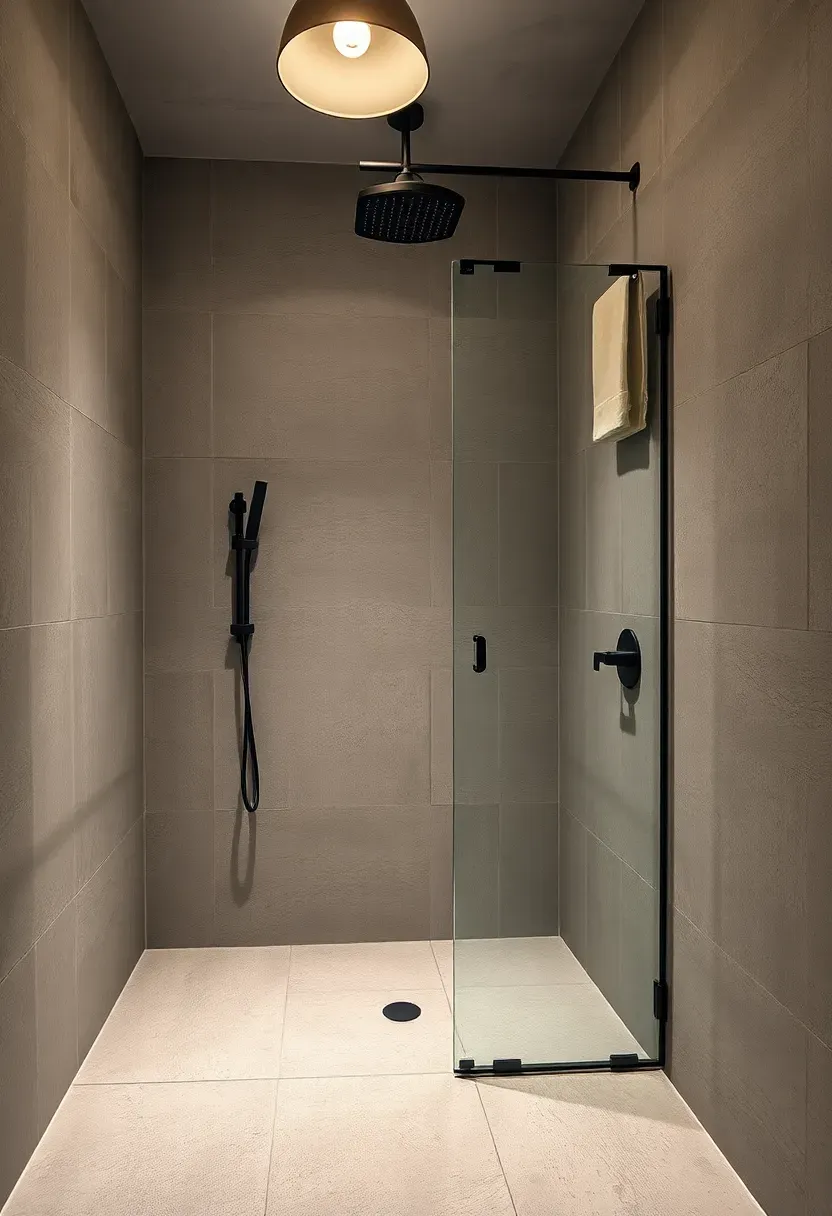
Not everyone wants polish and pattern. For bathrooms leaning toward industrial, brutalist, or raw-modern aesthetics, concrete-effect tiles deliver an unfinished honesty that polished surfaces cannot. These porcelain tiles replicate the trowel marks, subtle color variation, and matte patina of poured concrete while remaining waterproof and warm underfoot (especially when paired with radiant floor heating). The warm grey tones ground the shower and create a masculine, architectural presence.
Key Details
- Choose rectified edges for tight grout lines that maintain the monolithic concrete illusion
- Pair with matte black fixtures and frameless glass for the cleanest industrial composition
- Add a single wooden element — a teak bench or cedar mat — to prevent the space from feeling too cold
Recommended
Items for this idea
11. Deep Blue Glazed Ceramic
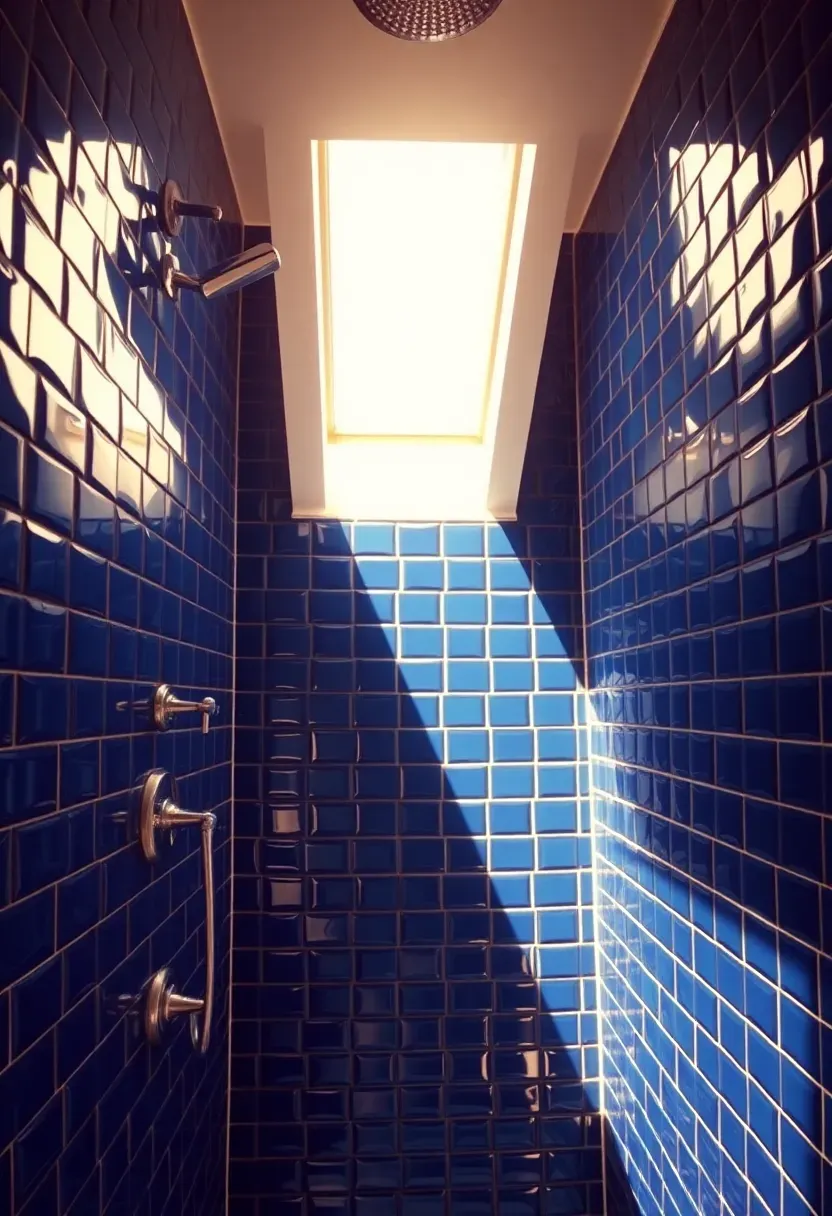
Deep blue brings the depth of ocean water into a shower without the whimsy of a nautical theme. When applied in a high-gloss glaze, these tiles bounce light around the enclosure and create reflections that shift from navy to cobalt to midnight depending on the angle. The result is a shower that feels immersive — like stepping into a pool of color. This approach works best in bathrooms with natural light (a skylight or frosted window) that activates the glaze and prevents the dark color from swallowing the space.
Design Pairings
- White floor tiles create necessary contrast and prevent the enclosure from feeling like a cave
- Polished chrome fixtures echo the tile's reflective quality better than matte finishes
- A single band of white or brass mosaic at eye level can break the blue and add a horizontal accent
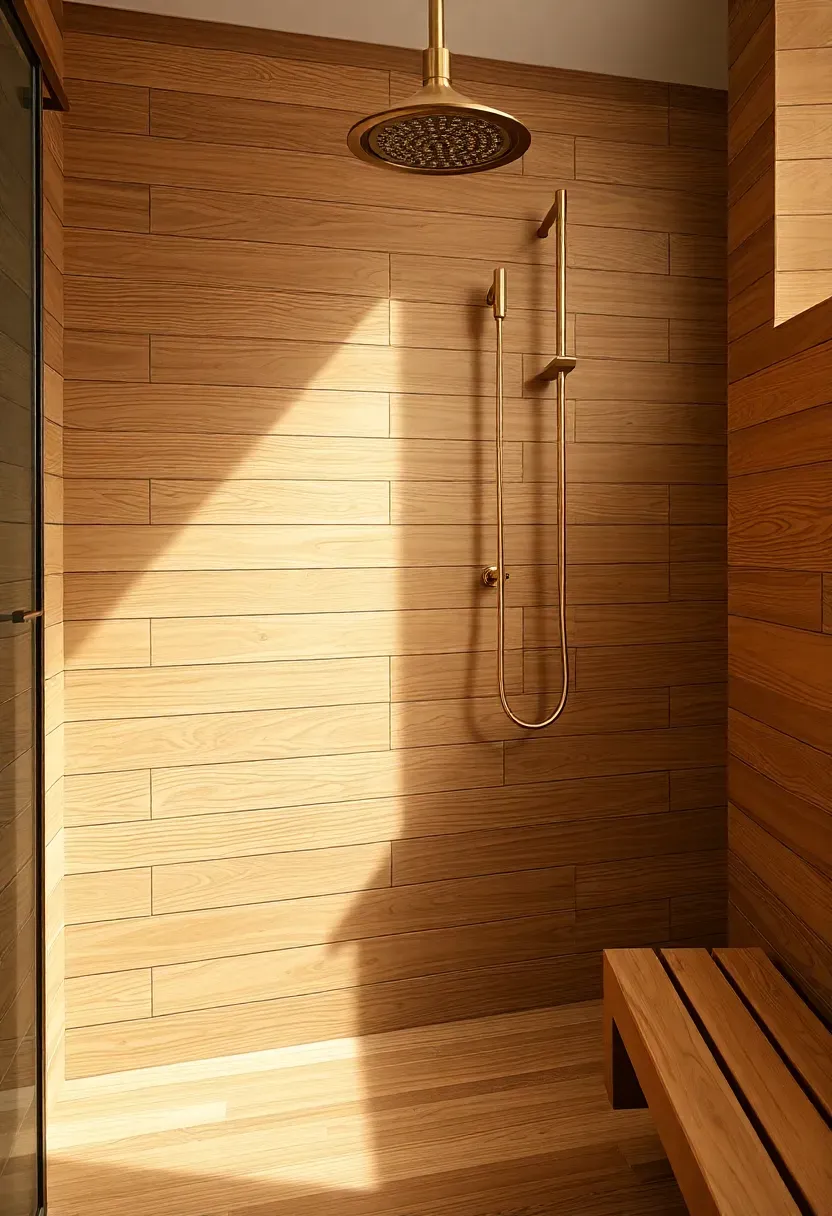
12. Mixed-Width Horizontal Planks
Wood-look porcelain planks in varying widths mimic the rhythm of actual timber cladding. Alternating between narrow and wide planks prevents the repeating-pattern monotony that plagues single-width installations. The horizontal orientation makes a narrow shower feel wider, and the warm wood tones transform a sterile wet room into something that feels like an outdoor rain shower at a jungle resort. This is one of the best approaches for homeowners who want warmth without sacrificing the waterproof integrity that real wood cannot reliably provide in a shower.
What to Watch Out For
- Vary the plank width between at least two sizes (for instance, 10cm and 20cm) to sell the natural-wood illusion
- Stagger the end joints randomly rather than in a repeating offset — natural wood is never perfectly patterned
- Choose a matte or lightly textured finish over high gloss, which would break the wood illusion immediately

Recommended
Items for this idea
13. Hexagonal Mosaic Feature Strip
A full wall of tiny mosaic tiles can overwhelm a shower. A vertical feature strip — typically 20 to 30 centimeters wide, running floor to ceiling — delivers the mosaic's intricate texture in a controlled dose. Hexagonal shapes in white and grey marble create a classic honeycomb effect that draws the eye along the height of the shower without dominating. Position the strip behind the showerhead or along the back wall to frame the fixture and give the enclosure a designed, intentional quality.
Practical Notes
- Use mesh-backed mosaic sheets for faster installation and more consistent spacing
- Align the feature strip with a niche or shelf to create a cohesive vertical zone
- Keep surrounding tiles simple and solid-colored so the mosaic strip reads as an accent rather than competing noise
14. Warm Terracotta Clay Tile
Origins and History
Terracotta — literally "baked earth" in Italian — has been used in construction for thousands of years across the Mediterranean, North Africa, and Central America. Its warm, sun-baked palette connects any space to these ancient building traditions.
Modern Interpretation
In 2026 showers, terracotta tile appears in sealed, glazed formats that resist moisture while retaining the warmth and color variation of traditional clay. Designers are pairing terracotta walls with arched shower openings and antique brass fixtures to create bathrooms that feel like they belong in a Tuscan farmhouse or a Marrakech riad. The orange-brown warmth counteracts the cold, clinical feeling that many modern bathrooms suffer from, making the shower an enveloping, welcoming space rather than a purely functional one.
How to Apply at Home
- Seal terracotta tiles with a waterproof penetrating sealer before grouting and again after installation
- Pair with warm-toned grout (sand or terracotta-colored) rather than white, which would fight the earthy palette
- Use warm-white LED lighting to complement the tile's natural warmth — cool-white bulbs make terracotta look muddy
- Add a few handmade ceramic accessories in complementary earth tones to complete the rustic aesthetic
Recommended
Items for this idea
15. Basket Weave Marble Mosaic
The basket weave is a pattern of interlocking rectangles that creates the illusion of woven fabric — an architectural trompe l'oeil with roots in Roman mosaic floors. In a shower, this pattern works best on the floor and lower third of the wall, where it provides superior grip (the many grout lines increase traction) while adding old-world sophistication. Carrara marble in the classic white-and-grey combination keeps the look timeless without skewing too trendy.
Tips for Longevity
- Hone rather than polish the marble surface for better slip resistance and a more forgiving finish that shows less wear
- Apply an impregnating sealer every six to twelve months to protect against water damage and soap staining
- Pair with simple large-format tiles on the upper walls so the intricate floor pattern remains the star
16. Monochrome Checkerboard Pattern
Checkerboard tile is having a genuine revival. After years of muted neutrals and safe monochromatics, designers are returning to high-contrast pattern as a statement of confidence. Black and white checks in the shower create a graphic punch that transforms an ordinary enclosure into something architectural and memorable. The pattern scales well — large 15x15cm checks feel modern and clean; smaller 5x5cm checks lean toward vintage charm. Either way, the shower becomes the most photographed surface in the bathroom.
Getting the Scale Right
- In a small shower (under 90cm wide), stick to larger checks to avoid a busy, dizzying effect
- In a generous walk-in, smaller checks can create a stunning immersive pattern reminiscent of Art Deco bathrooms
- Rotate the checkerboard 45 degrees (diamond orientation) for a more dynamic, less expected variation
Recommended
Items for this idea
17. Arched Niche with Contrasting Tile
The built-in shower niche evolved from a practical soap holder into a legitimate design opportunity. Adding an arched profile to the niche opening softens the rectangular geometry of the shower, while lining the interior with a contrasting tile — emerald green, brass mosaic, or patterned encaustic — turns a six-inch-deep recess into a visual jewel box. The surrounding wall stays neutral, which makes the niche pop without any additional decoration. This single detail can elevate an otherwise conventional shower into something that feels custom and considered.
Execution Details
- Frame the arch with a bullnose or pencil-liner trim tile for a clean, finished edge
- Choose a contrasting tile color that appears elsewhere in the bathroom (towels, vanity hardware, or a painted accent) so the niche feels connected to the room
- Waterproof the niche interior with extra care — the shelf and corners are vulnerable to moisture penetration
18. Japanese Wabi-Sabi Crackle Glaze
Wabi-sabi celebrates imperfection as beauty. Crackle-glaze tiles embody this philosophy — the network of fine lines (called crazing) that develops in the glaze during firing gives each tile a one-of-a-kind surface that mass production cannot replicate. In a shower, these tiles create walls that feel handmade and alive, shifting in appearance as light and steam move across them. Pale celadon green and warm cream are the most popular colors for this application, both rooted in traditional Japanese ceramic traditions.
Design Philosophy
- Embrace variation — install tiles with different crackle densities together for a natural, unforced look
- Pair with minimal hardware and clean architectural lines to let the tile texture speak
- Avoid busy grout patterns; a tone-matched grout keeps the focus on the surface character
Recommended
Items for this idea
19. Bold Geometric Encaustic Pattern
Encaustic cement tiles bring handcrafted pattern to the shower in a way that printed porcelain simply cannot replicate. The pigment is pressed into the tile body rather than applied on top, which means the color runs deep and endures decades of daily use. A feature wall of Moorish star patterns, interlocking diamonds, or eight-pointed rosettes in navy and white transforms the shower into a statement piece that could anchor an entire bathroom renovation. Reserve the pattern for one wall and keep the other three surfaces calm.
Maintenance Reality
- Encaustic tiles require sealing before and after grouting to prevent the porous cement body from absorbing moisture
- Avoid acidic cleaners — vinegar, citrus-based sprays, and bleach will etch and discolor the surface
- Re-seal annually in a shower environment where the tiles face constant water exposure
20. Ribbed 3D Wall Tile
Three-dimensional tiles push beyond the flat plane and create surfaces you want to touch. Ribbed profiles — evenly spaced raised ridges — cast parallel shadow lines that change intensity throughout the day as bathroom light shifts. In soft white, the effect is quietly dramatic: architectural enough to command attention, restrained enough to work in small spaces. These tiles are particularly effective on the showerhead wall, where water cascading over the ridges adds an additional sensory layer to the daily routine.
Selection and Care
- Choose porcelain over ceramic for 3D tiles in wet areas — porcelain's lower absorption rate is critical in showers
- Clean grooves weekly with a soft brush to prevent soap buildup in the recesses
- Mount with the ridges running vertically for the most flattering shadow angle from typical overhead lighting
Recommended
Items for this idea
21. Travertine Slab with Vein Matching
Travertine brings a warmth that cooler stones like marble and granite cannot match. Its honeyed tones range from creamy ivory to warm walnut, and when cut into full slabs and vein-matched across a shower enclosure, the result is breathtaking continuity — the stone pattern flows from one wall to the next as if carved from a single block. This is a premium installation that requires careful planning at the quarry or stone yard, where adjacent slabs are numbered and arranged before shipping.
Investment Considerations
- Vein-matched travertine installations typically cost three to five times more than porcelain alternatives due to material waste and skilled labor
- Fill and hone the travertine rather than leaving it unfilled — open pores in a shower will trap water and develop mold
- Seal with a high-quality impregnating sealer rated for wet areas; reapply every twelve months
22. Gradient Ombre Tile Transition
An ombre tile wall transitions from dark at the base to light at the top (or vice versa), creating a watercolor-like gradient that adds depth and movement to the shower without relying on pattern. The technique works by arranging tiles in four to six tonal bands of the same color family — deep navy at floor level fading through medium blue and powder blue to pale sky at the ceiling. The gradual shift makes the shower feel taller and draws the eye upward naturally.
How to Execute
Step 1: Source the Palette
Select four to six shades from the same tile manufacturer's color range to ensure consistent texture and thickness across the gradient.
Step 2: Plan the Bands
Divide the wall height into equal horizontal bands and assign each shade. Start with the darkest at floor level for visual grounding.
Step 3: Blend the Transitions
At each color boundary, intermix a few tiles from both bands to soften the transition and avoid a striped look. The goal is a gentle fade, not hard horizontal lines.
Recommended
Items for this idea
23. Mixed Material Tile Collage
Rules are useful until they become a cage. A mixed-material tile collage breaks every conventional tiling guideline — combining marble with cement, ceramic with porcelain, glossy with matte — and the result, when anchored by a unified color palette, is a shower that feels artistically composed rather than chaotically assembled. The key is choosing three to four materials that share a common tone (warm earth tones, cool greys, or a specific accent color) and arranging them in deliberate zones rather than random patchwork.
Making It Work
- Assign each material to a defined area: one for the floor, one for the feature wall, one for the niche interior, one for accent bands
- Keep grout color consistent across all materials to unify the composition
- Limit your palette to three materials maximum — beyond that, the eye has nowhere to rest and the shower reads as a tile showroom rather than a designed space
Quick FAQ
Should I extend shower tile all the way to the ceiling? Yes, whenever budget allows. Floor-to-ceiling tile creates a cleaner, more finished look and prevents moisture damage to painted surfaces above the tile line. It also makes the shower feel taller and more intentional as a designed space.
Is natural stone safe to use in showers? Natural stone works beautifully in showers when properly sealed and maintained. Marble, travertine, and slate all require periodic re-sealing (every six to twelve months) and should be cleaned only with pH-neutral products. Porcelain alternatives offer the look with significantly less maintenance.
What tile size works best for small showers? Large-format tiles with fewer grout lines make small showers feel more spacious. Aim for 30x60cm or larger on walls. For floors, smaller tiles (mosaic or penny rounds) are actually preferable because they conform better to the sloped drain and provide better slip resistance.
Which grout color should I pick — matching or contrasting? Matching grout creates a seamless, monolithic surface where the tile pattern takes center stage. Contrasting grout emphasizes the tile shape and layout. For a modern, clean look, match the grout to the tile. For a graphic, structured look, go one or two shades darker.
Are patterned tiles still on trend for 2026? Absolutely. Geometric encaustic patterns, terrazzo, and hand-painted motifs are all gaining momentum. The shift is toward using bold patterns on a single accent wall rather than covering every surface, which keeps the design from feeling overwhelming.
Start with the wall you face every morning — the one behind the showerhead. Even changing just that single surface can transform how the entire bathroom feels. The best tile choice is the one that makes you pause, even briefly, during an otherwise automatic daily routine.
Pinterest cover for 23 Shower Tile Ideas for 2026
About the author
OBCD
CGI visualization and interior design content. We create detailed 3D renders and curate practical design ideas for every room in your home.