27 Front Porch Ideas for Ranch Style Homes Before and After
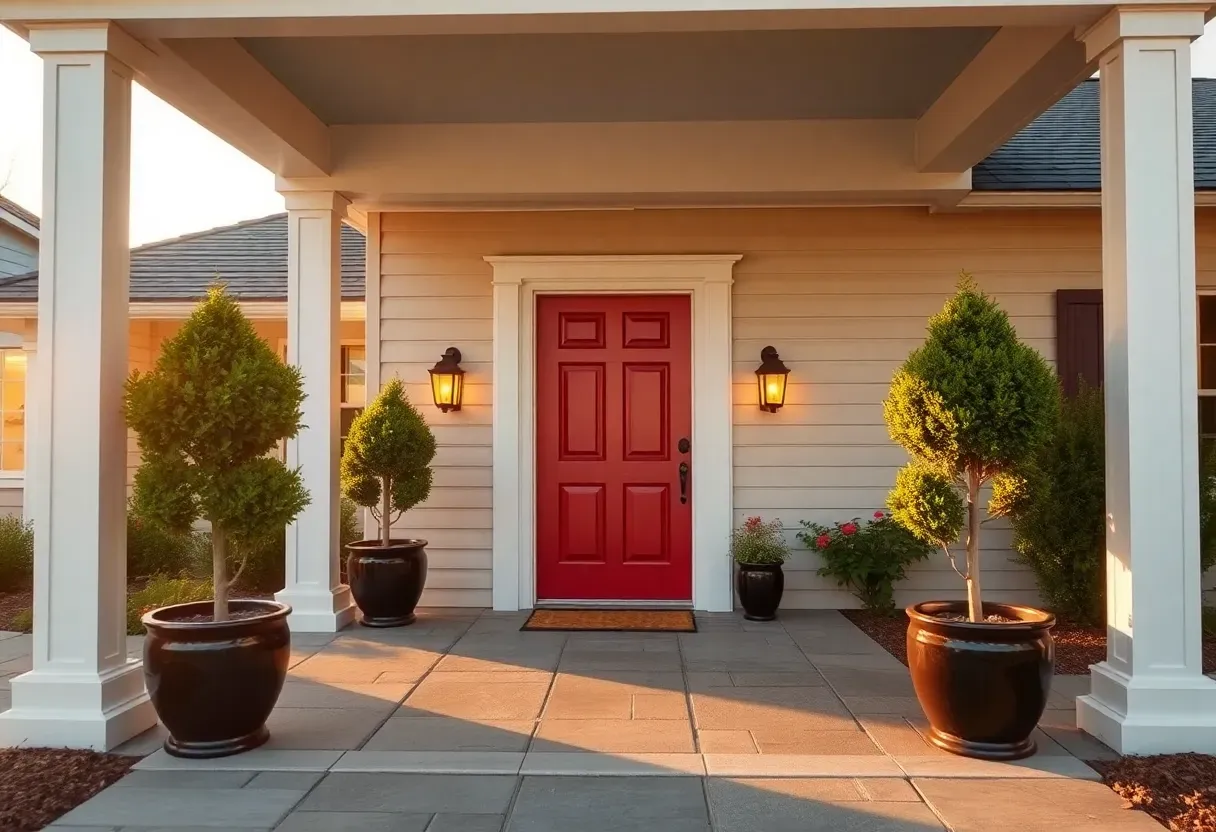
According to the National Association of Realtors, curb appeal improvements recoup up to 71 percent of their cost at resale -- and for ranch style homes, the front porch is the single most impactful area to upgrade. That long, low roofline puts the porch front and center, making even small changes instantly visible from the street. A weekend spent swapping out railings or painting the front door can turn a tired 1960s entryway into something that stops neighbors mid-walk.
What follows are 27 transformations organized by scope and budget. Some take an afternoon. Others require a contractor and a plan. All of them work with the horizontal proportions that make ranch homes distinctive rather than fighting against them.
Table of Contents
- Wrought Iron Railing to Craftsman Columns
- Bold Front Door Color Swap
- Concrete Slab to Flagstone Overlay
- Overgrown Shrubs to Clean Foundation Planting
- Aluminum Awning to Standing Seam Metal Roof
- Bare Bulb to Coach Lantern Sconces
- Flat Facade to Board and Batten Siding
- Cracked Steps to Brick Stoop Rebuild
- Chain Link to Horizontal Slat Privacy Screen
- Empty Slab to Rocking Chair Conversation Area
- Dated Shutters to Modern Plank Shutters
- Worn Welcome Mat to Layered Entry Styling
- Exposed Foundation to Dry Stack Stone Veneer
- Faded Trim to Two-Tone Exterior Paint
- Plain Ceiling to Tongue and Groove Porch Ceiling
- Single Pendant to Ceiling Fan with Integrated Light
- Bare Railing to Window Box Planter Rail
- Narrow Walkway to Widened Paver Path
- Basic Doorbell to Smart Video Doorbell Setup
- No Seating to Porch Swing Nook
- Plastic Numbers to Oversized Modern Address Sign
- Standard Mailbox to Custom Post Mailbox Station
- Missing Gutters to Copper Half-Round Gutters
- No Symmetry to Matched Topiary Flanking
- Bare Concrete to Stenciled Porch Floor
- Old Screen Door to Full View Storm Door
- Full Exterior Overhaul with Covered Porch Extension
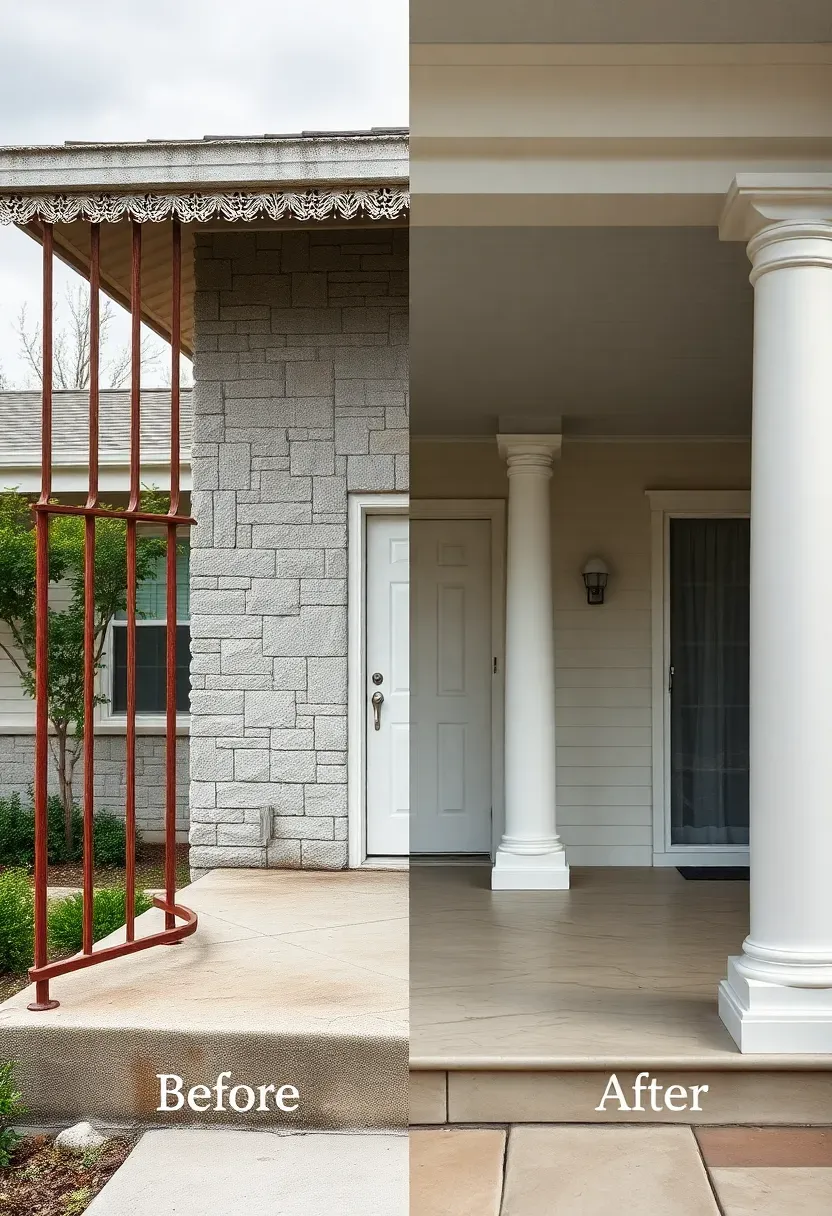
1. Wrought Iron Railing to Craftsman Columns
The Core Issue
Thin wrought iron railings were standard on 1960s and 70s ranch homes. They rust, they look skeletal, and they make the porch feel exposed rather than sheltered.
The Solution
Replacing them with tapered craftsman-style columns changes the entire visual weight of the facade. Fiberglass or PVC column wraps install over existing posts in a single day and resist rot for decades. The wider base draws the eye outward, emphasizing the ranch's horizontal lines rather than breaking them with spindly verticals.
Pros and Cons
Pros: Instant architectural presence, low maintenance, adds perceived square footage Cons: Professional install recommended if structural posts are involved, cost ranges from $800 to $2,500
We picked a few things that go well with this idea: Weatherables 6x6 Vinyl Porch Post Wrap (★4.5), Muzata 6x6 Vinyl Porch Column Sleeve and Thyle Vinyl Post Wrap Cover White (★4.2). As an Amazon Associate we earn from qualifying purchases.
2. Bold Front Door Color Swap
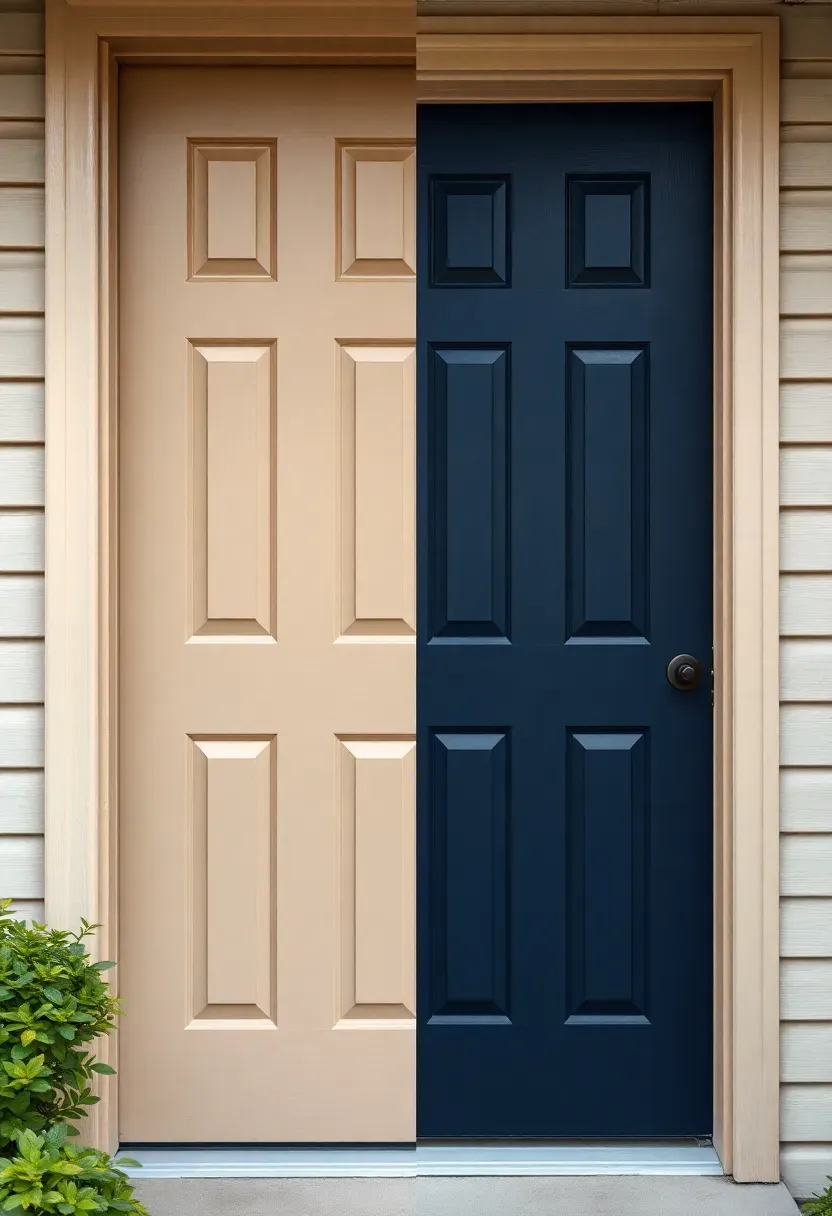
There is no cheaper or faster way to transform a ranch porch than painting the front door. A gallon of exterior paint costs under $50 and the project takes a Saturday morning.
Step 1: Remove and Prep
Take the door off its hinges. Sand lightly, clean with TSP solution, and let it dry completely.
Step 2: Prime and Paint
Apply one coat of bonding primer, then two coats of semi-gloss exterior paint. Navy, forest green, and matte black are the most popular choices for ranch homes because they contrast well with neutral siding.
Step 3: Reinstall with New Hardware
While the door dries, swap the old hardware for a matte black or brushed brass handle set. The combination of fresh paint and new hardware reads as a complete renovation from the curb.
What to Watch Out For
- Test your chosen color with a sample on the door edge before committing
- Avoid painting in direct sun -- the paint dries too fast and leaves brush marks
- HOA neighborhoods may require color pre-approval
We picked a few things that go well with this idea: Oil Rubbed Bronze Outdoor Porch Lantern (★4.6), Laplusbelle Outdoor Wall Sconces (2-Pack) (★4.7) and Roravilila Bronze Outdoor Wall Lanterns (2-Pack) (★4.6). As an Amazon Associate we earn from qualifying purchases.
3. Concrete Slab to Flagstone Overlay
Why This Upgrade Matters
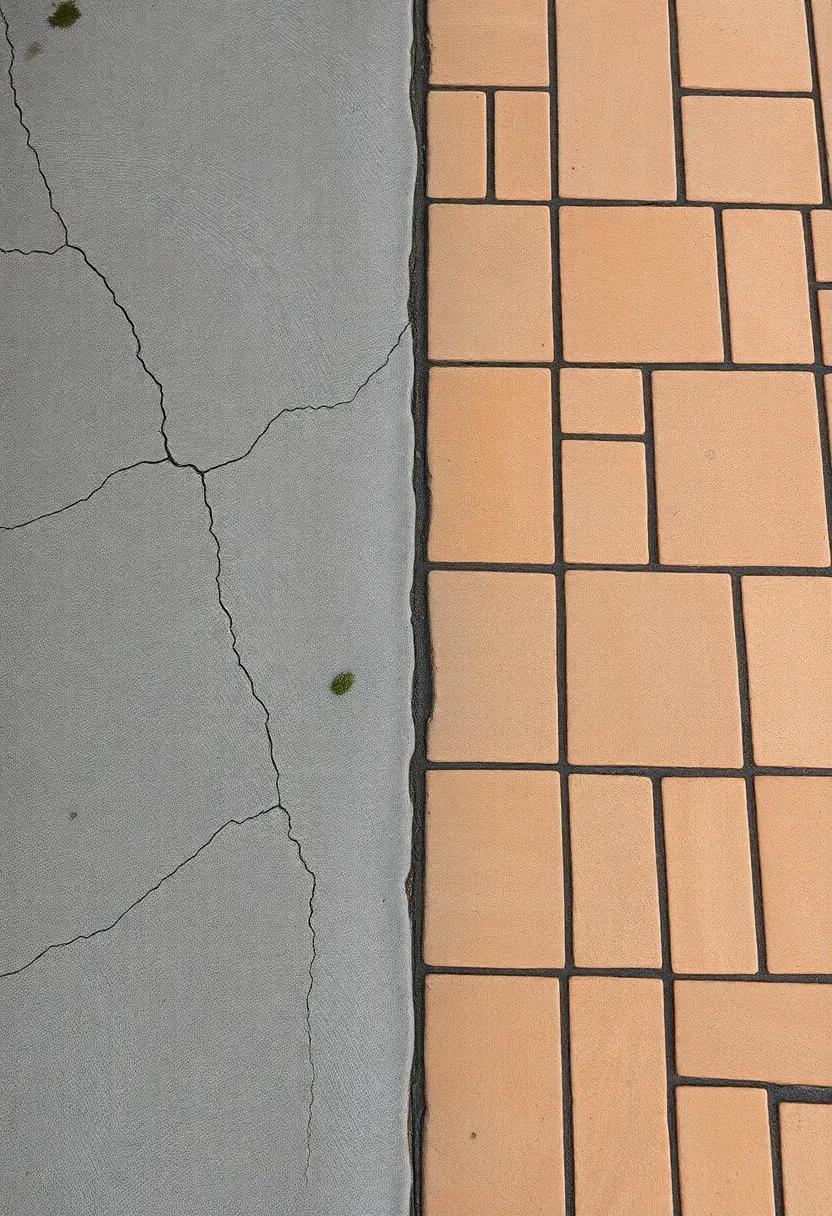
Original ranch porch slabs develop hairline cracks within two decades. Rather than demolishing the existing concrete, a flagstone overlay bonds directly to the surface and adds natural warmth that bare concrete never delivers.
Irregular flagstone shapes break up the monotony of a long, flat ranch porch. Warm sandstone tones pull the eye across the full width of the entry, making the home feel grounded and substantial. The material handles freeze-thaw cycles better than stamped concrete and ages gracefully rather than deteriorating.
Tips
- Use polymeric sand between joints to prevent weed growth
- Seal annually in climates with heavy rain or snow
- Budget between $12 and $22 per square foot installed
We picked a few things that go well with this idea: HDPE Porch Rocking Chair Set with Table (★4.8), GREENVINES HDPE Outdoor Rocking Chairs (Set of 2) (★4.8) and HDPE High Back Porch Rocking Chair (★4.4). As an Amazon Associate we earn from qualifying purchases.
4. Overgrown Shrubs to Clean Foundation Planting
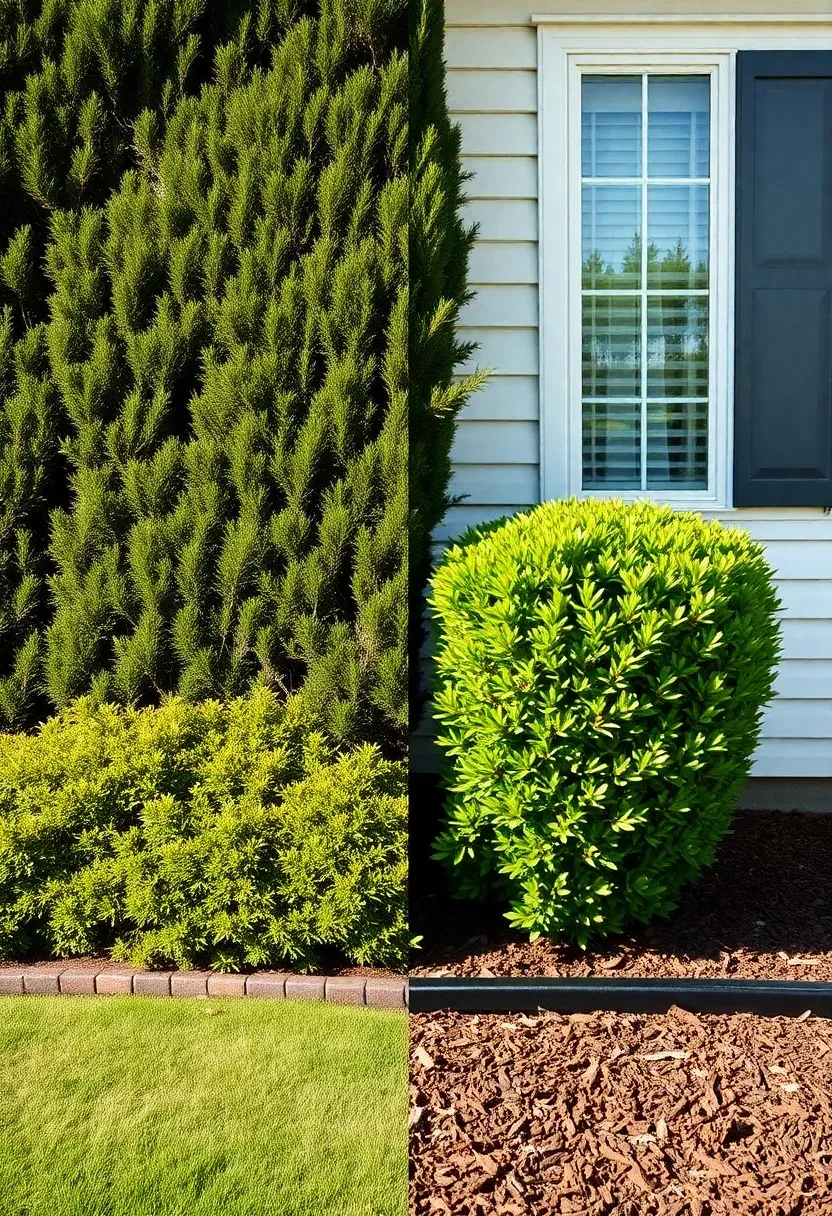
We have all driven past that ranch house where the junipers swallowed the front windows sometime around 1998. Overgrown foundation plantings make a home look abandoned even when someone lives there.
The fix is ruthless editing. Pull out anything taller than the windowsill and replace with compact evergreens -- dwarf boxwood, low spreading yews, or ornamental grasses depending on your hardiness zone. Add a clean mulch border between the plants and the porch edge. The result is a tidy baseline that lets the architecture speak.
Practical Recommendations
- Keep all shrubs at least 18 inches from the foundation wall for airflow
- Use three species maximum to avoid a plant nursery effect
- Edge beds with black aluminum landscape edging for a permanent clean line
Recommended
Items for this idea
5. Aluminum Awning to Standing Seam Metal Roof
Comparing: Aluminum Awning vs Standing Seam Metal Roof
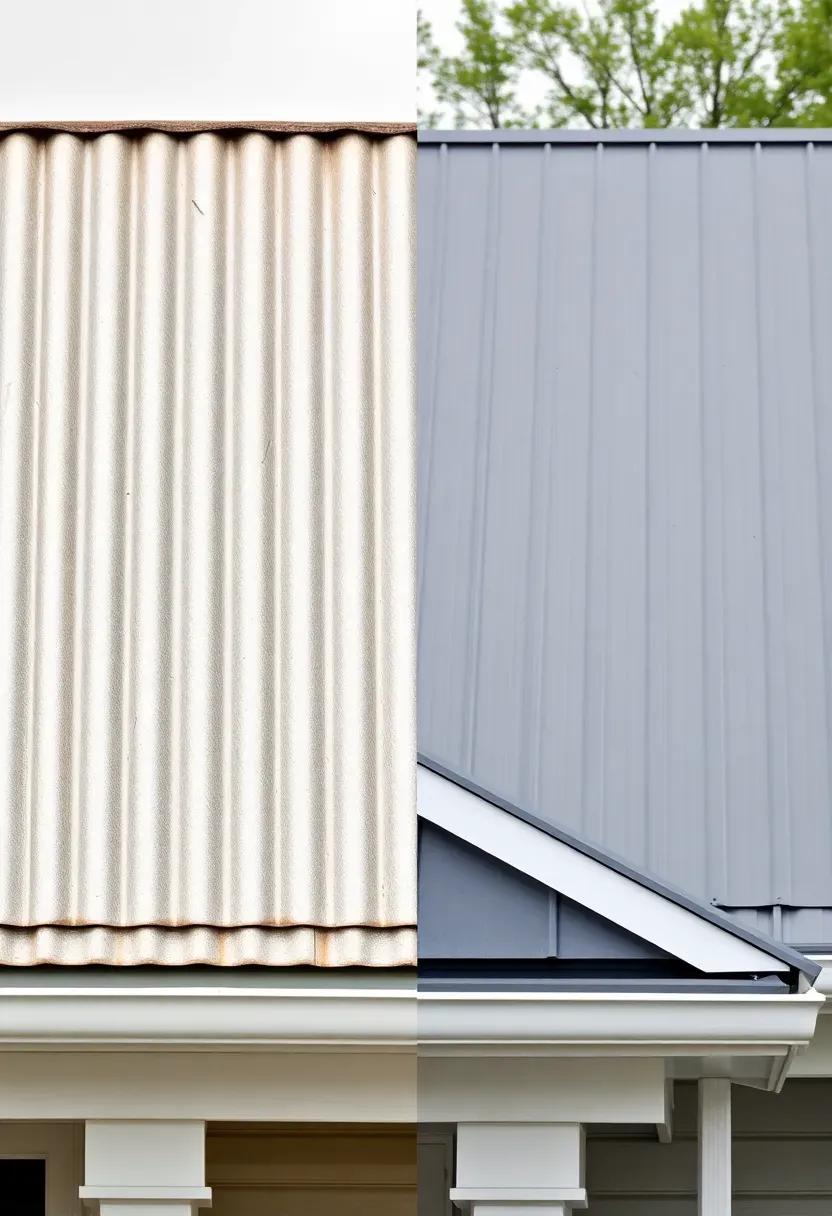
Aluminum awnings were a practical solution in the mid-century era, but they dent easily, oxidize over time, and look dated against modern exterior finishes.
Aluminum Awning
Lightweight, inexpensive to install originally, but prone to chalking, rattling in wind, and an industrial appearance that clashes with updated siding or stonework.
Standing Seam Metal Roof
Clean vertical lines that complement ranch proportions. Available in charcoal, bronze, forest green, and matte black. Lasts 50+ years with zero maintenance beyond occasional hosing.
What to Choose
Keep the awning if: Budget is extremely tight and the existing awning is structurally sound Upgrade to standing seam if: You plan to stay in the home or sell within five years -- the ROI on curb appeal alone justifies the $3,000 to $6,000 cost
6. Bare Bulb to Coach Lantern Sconces
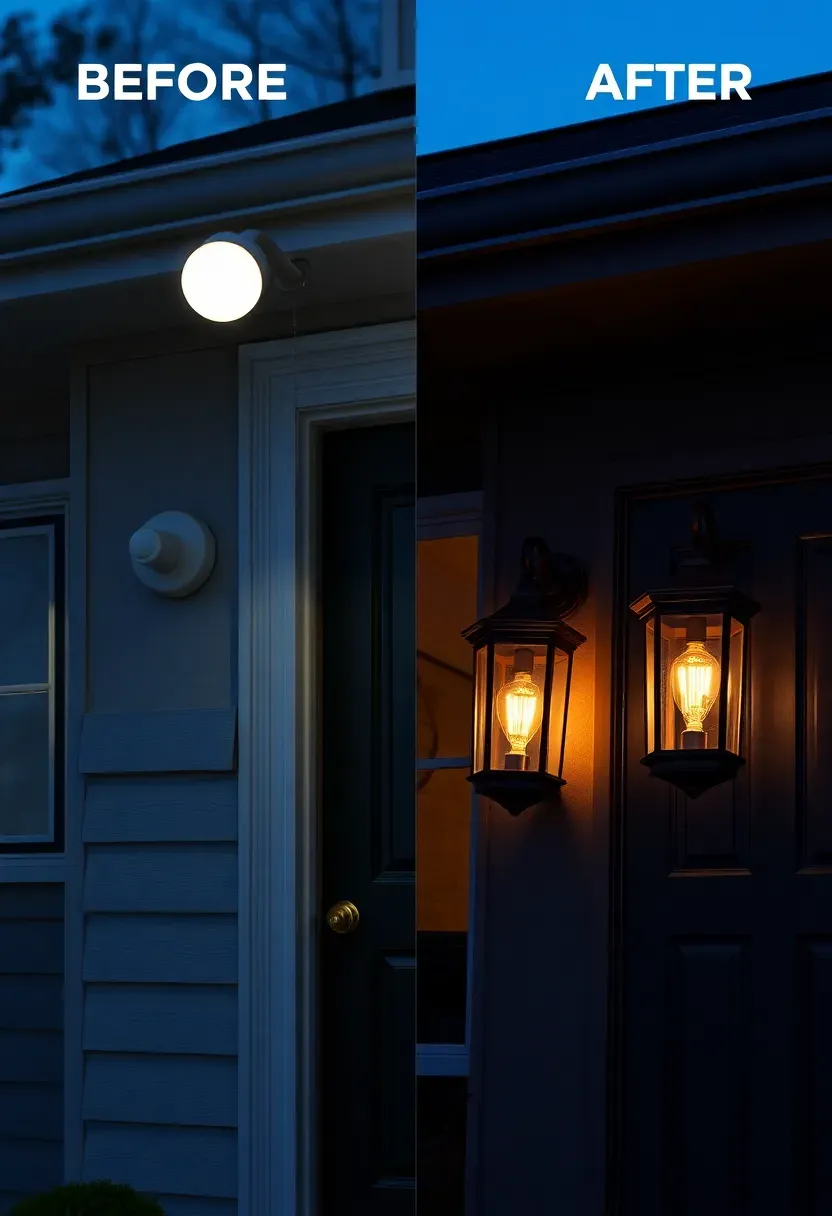
Nothing says neglected porch quite like a single bare porcelain bulb socket hanging next to the door. Swapping it for a pair of coach lantern sconces instantly adds symmetry and warmth.
Mount them at eye level -- roughly 66 inches from the porch floor to the center of the fixture. Choose a finish that matches your door hardware: oil-rubbed bronze with a black door, brushed nickel with a gray door. Use warm LED bulbs rated 2700K to keep the evening glow inviting rather than clinical.
Tips
- Hire an electrician if you need to add a second junction box
- Look for dusk-to-dawn photocell models to automate lighting
- Fixtures rated for wet locations last longer in exposed porch areas
Recommended
Items for this idea
7. Flat Facade to Board and Batten Siding
Origins of the Style
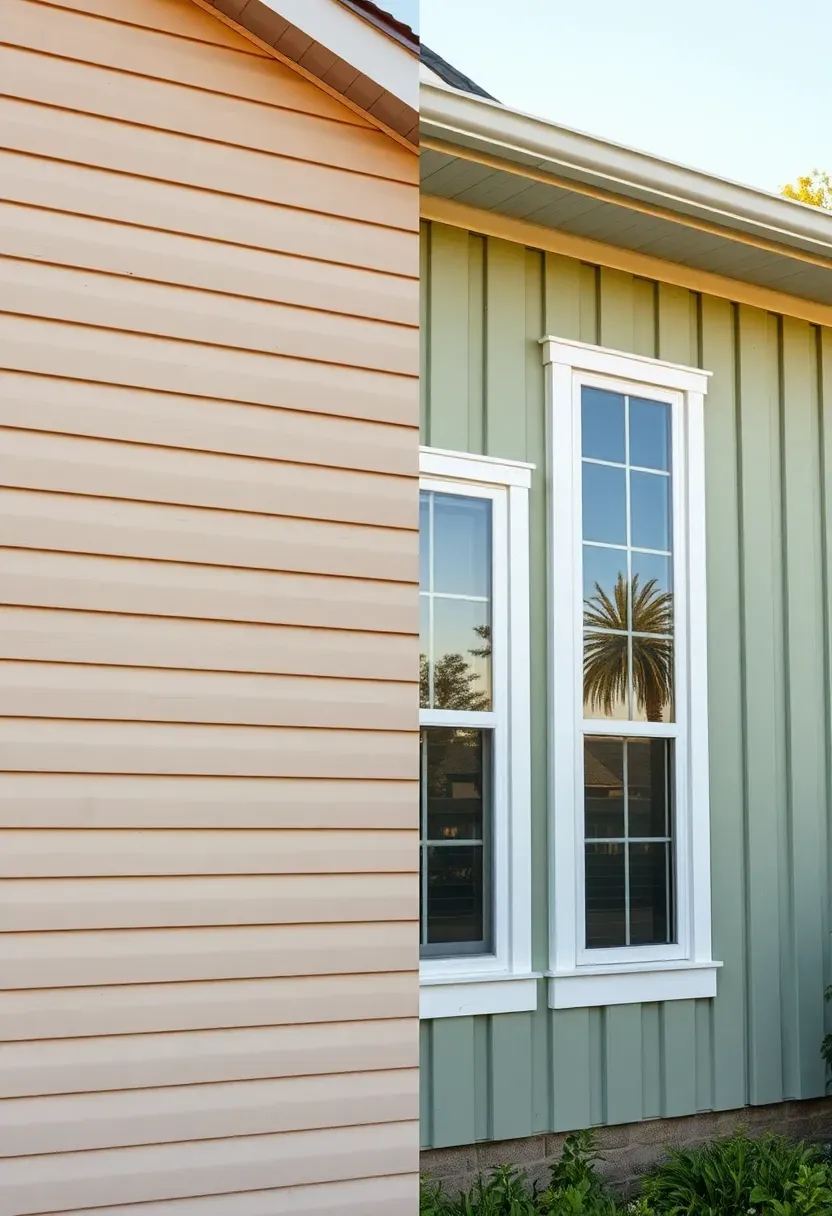
Board and batten siding dates to the early American colonial period. Vertical planks with narrow battens covering the joints created a weathertight envelope using rough-sawn lumber. The pattern has endured because its vertical rhythm adds height to low structures.
Modern Interpretation
On a ranch home, applying board and batten to the front-facing wall behind the porch creates a focal accent without re-siding the entire house. Fiber cement versions from James Hardie and LP SmartSide resist moisture and termites while maintaining the look of real wood. Popular ranch color pairings include sage green with white trim, charcoal with warm wood accents, or classic white with black window frames.
How to Apply at Home
- Start with the porch-facing wall only -- full house re-siding is a separate project and budget
- Vertical boards should be 8 to 10 inches wide with 2-inch battens
- Prime all edges before installation to prevent moisture wicking
- Use a 16-gauge nail gun for clean, consistent attachment
8. Cracked Steps to Brick Stoop Rebuild
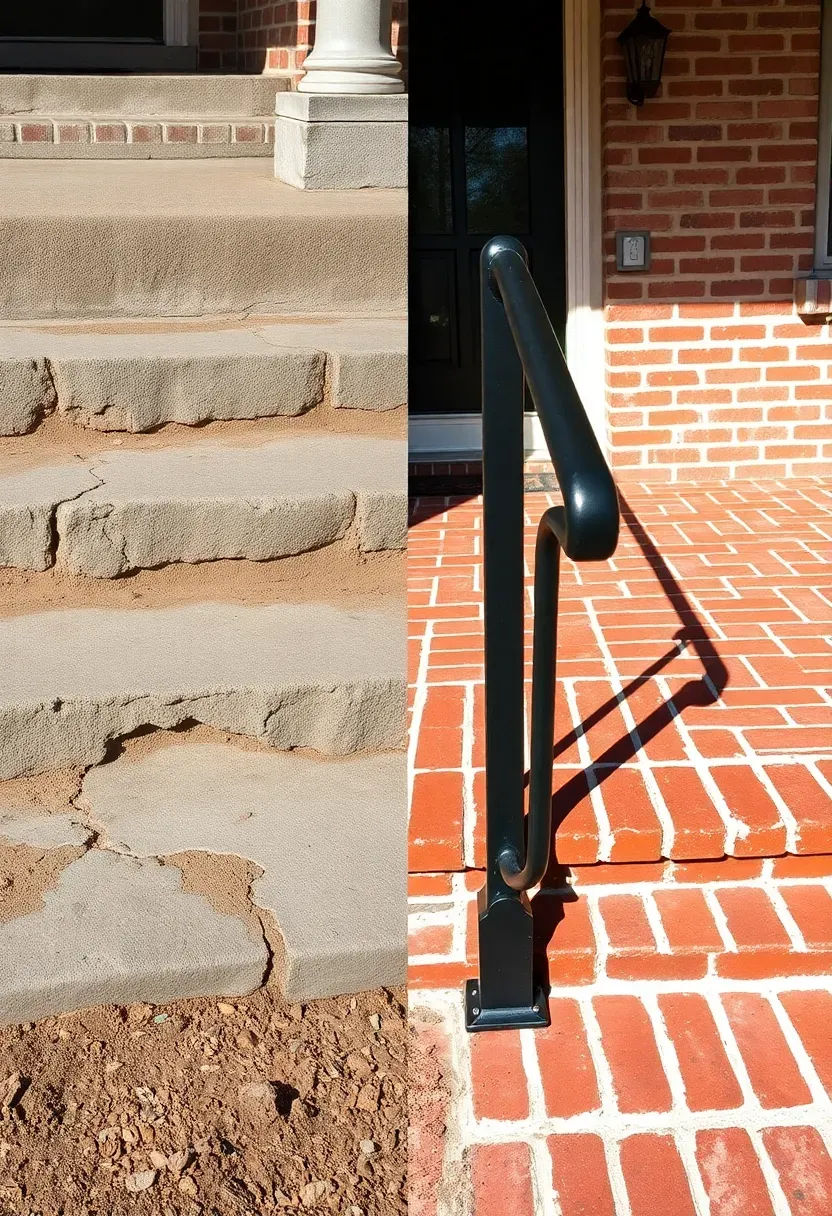
Porch steps take more abuse than any other exterior element. On ranch homes, the original poured concrete steps often crack and heave after 30 years, creating both an eyesore and a tripping hazard.
A brick stoop rebuild replaces the old concrete with a properly footed brick structure that includes a small landing pad. The warm red or brown tones of brick pair naturally with ranch exteriors, and the material is nearly indestructible when installed over a compacted gravel base with proper drainage.
Practical Recommendations
- Always include a code-compliant handrail if steps exceed two risers
- Use full-depth firebrick rather than thin brick veneer for structural applications
- Slope the landing pad 1/4 inch per foot away from the house to shed water
Recommended
Items for this idea
9. Chain Link to Horizontal Slat Privacy Screen
The Core Issue
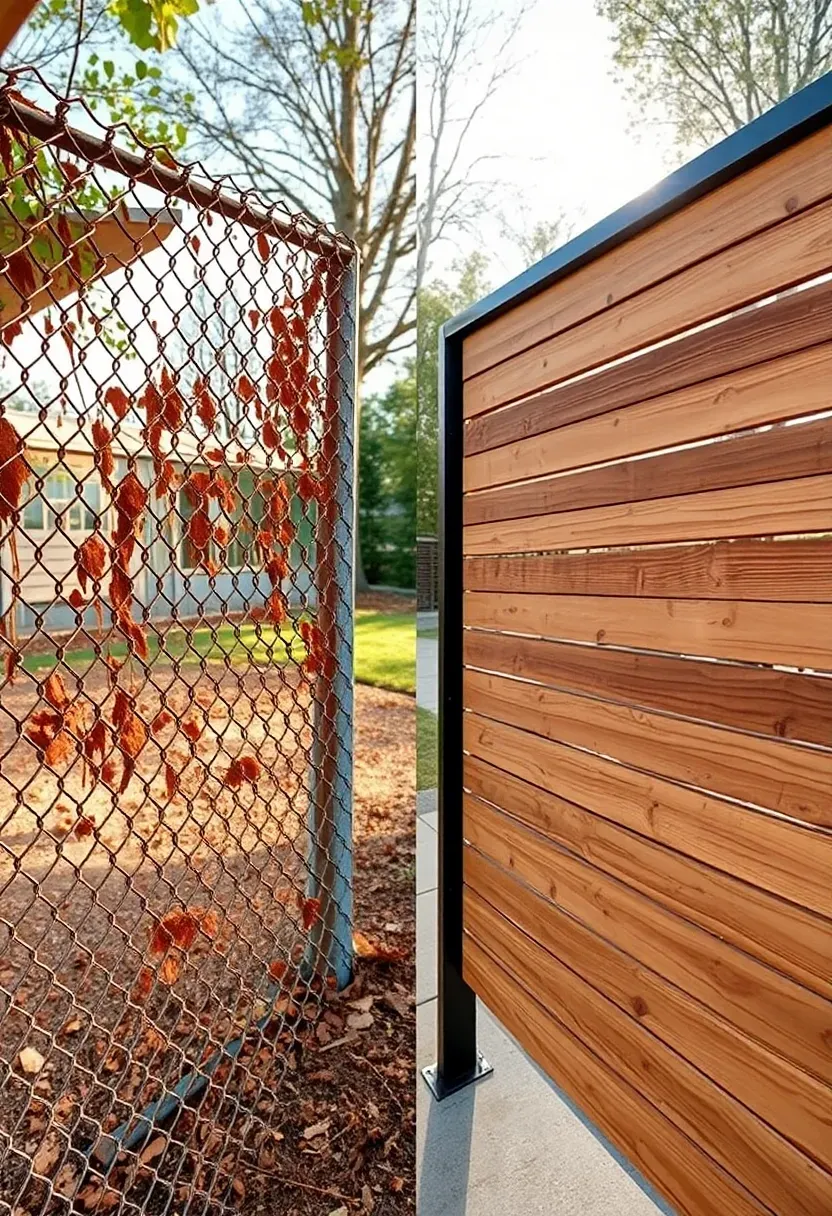
Chain link fencing near a ranch porch provides zero privacy and maximum industrial ugliness. It turns what could be a semi-private outdoor room into a fishbowl.
The Solution
A horizontal slat privacy screen built from cedar or composite lumber transforms the porch perimeter into a defined outdoor space. Slats spaced at 1/2 inch allow airflow while blocking direct sight lines from the street or neighbors. The horizontal orientation echoes the ranch roofline and creates a cohesive, modern look.
Pros and Cons
Pros: Creates usable private space, wind reduction, visual warmth of natural wood Cons: Cedar requires re-staining every 2 to 3 years; composite costs more upfront but eliminates maintenance
10. Empty Slab to Rocking Chair Conversation Area
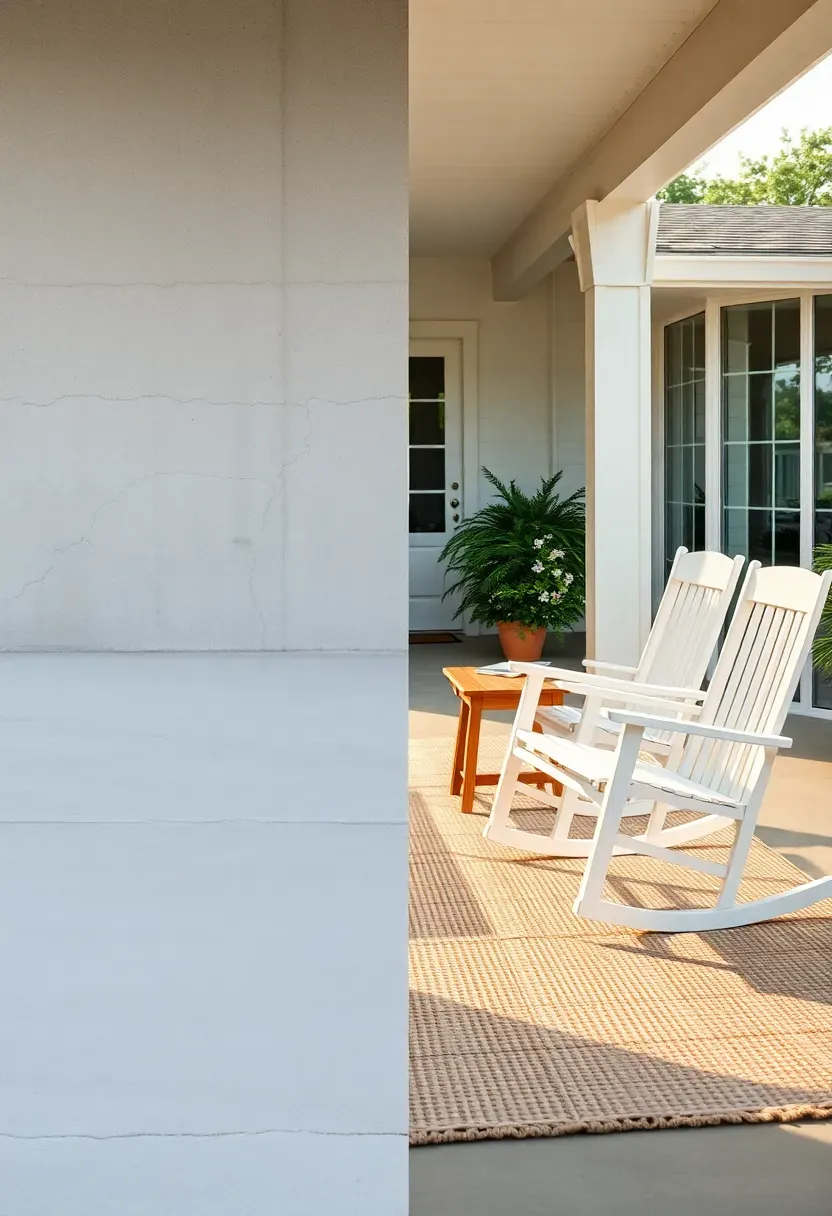
Most ranch porches are deep enough for seating but narrow enough that furniture selection matters. Two rocking chairs with a small side table between them is the classic arrangement because it fits a 5-foot-deep porch without blocking the front door swing.
Choose chairs made from HDPE recycled plastic -- they look like painted wood, never need refinishing, and survive any weather. Add an outdoor rug to define the zone and a small potted plant on the side table. The total cost runs between $350 and $600 and the visual difference between an empty slab and a furnished sitting area is enormous.
What to Watch Out For
- Measure your porch depth before ordering -- 4 feet is the minimum for rockers
- Anchor the rug with furniture legs or use a non-slip pad in windy areas
- Leave at least 36 inches of clear walkway to the front door
Recommended
Items for this idea
11. Dated Shutters to Modern Plank Shutters
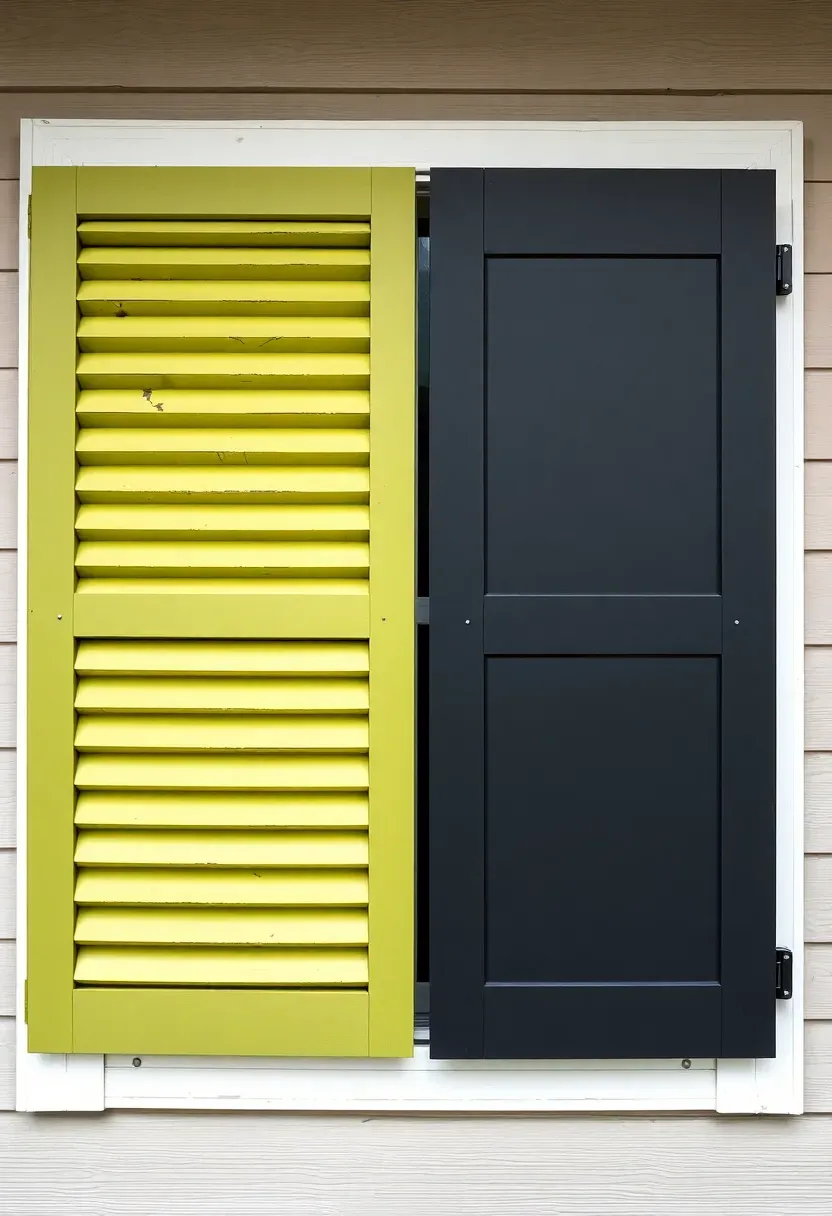
Louvered shutters were the default builder-grade choice for ranch homes. Over the years, the paint cracks, louvers break, and the whole facade looks tired.
Step 1: Remove Old Shutters
Unscrew existing shutters and patch any holes in the siding with exterior caulk and touch-up paint.
Step 2: Choose the Right Style
Flat panel or board-and-batten style shutters suit ranch proportions better than louvered. The simpler profile avoids visual clutter on a home that already has a busy horizontal roofline.
Step 3: Install at Correct Width
Each shutter should be exactly half the window width so they look functional, not decorative afterthoughts screwed flat against the wall. Mount using stainless steel screws and color-matched shutter spikes.
What to Watch Out For
- PVC shutters outlast wood in terms of weather resistance
- Dark colors fade faster in southern exposures -- choose UV-stabilized finishes
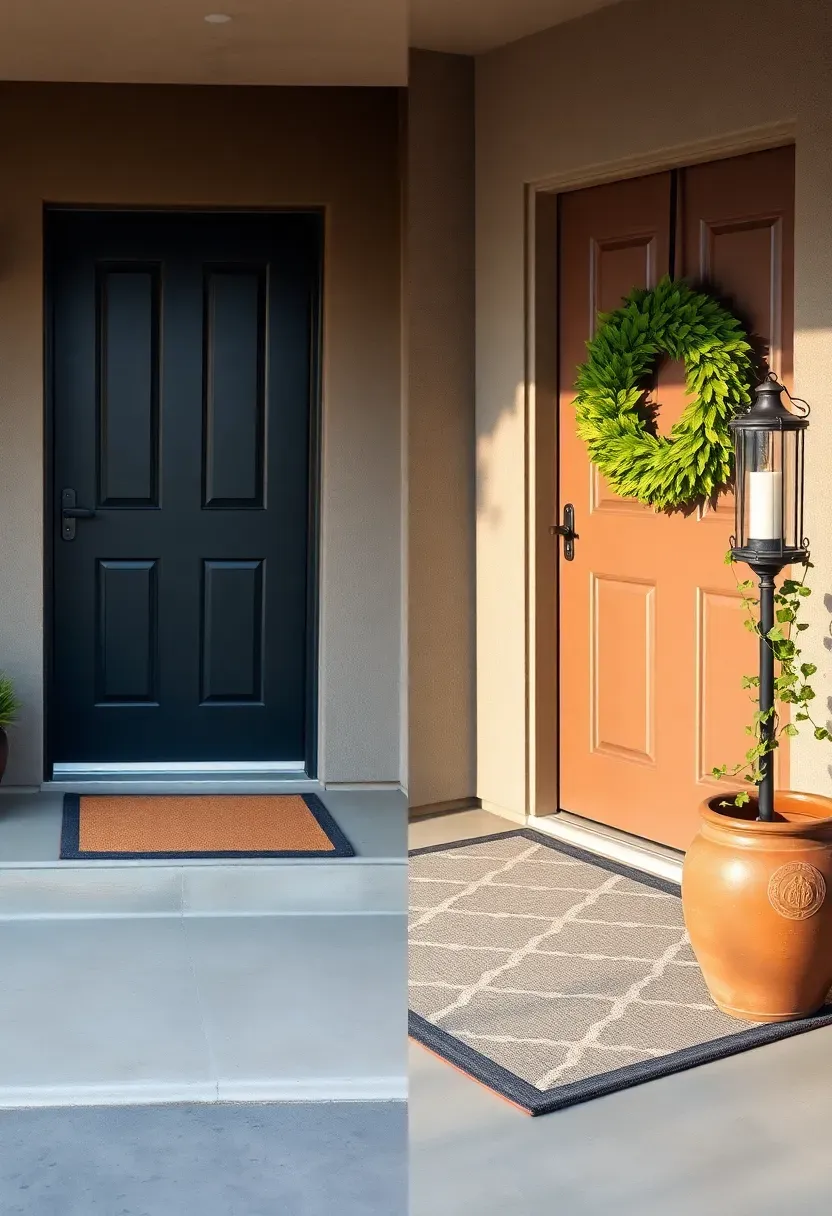
12. Worn Welcome Mat to Layered Entry Styling
This is the five-minute upgrade that photographs better than projects costing ten times more. Layer a natural coir doormat over a larger geometric outdoor rug. Hang a seasonal wreath at eye level on the door. Place one tall lantern to the left and a medium potted plant to the right.
The asymmetry feels intentional rather than random, and swapping the wreath and plant seasonally keeps the porch looking current year-round. Total investment: under $120 if you shop home goods stores.
Practical Recommendations
- Replace coir mats every 6 months -- they compress and look shabby quickly
- Use battery-operated candles in lanterns for worry-free evening glow
- Avoid wreaths larger than 24 inches on standard ranch doors -- they overwhelm the scale
Recommended
Items for this idea
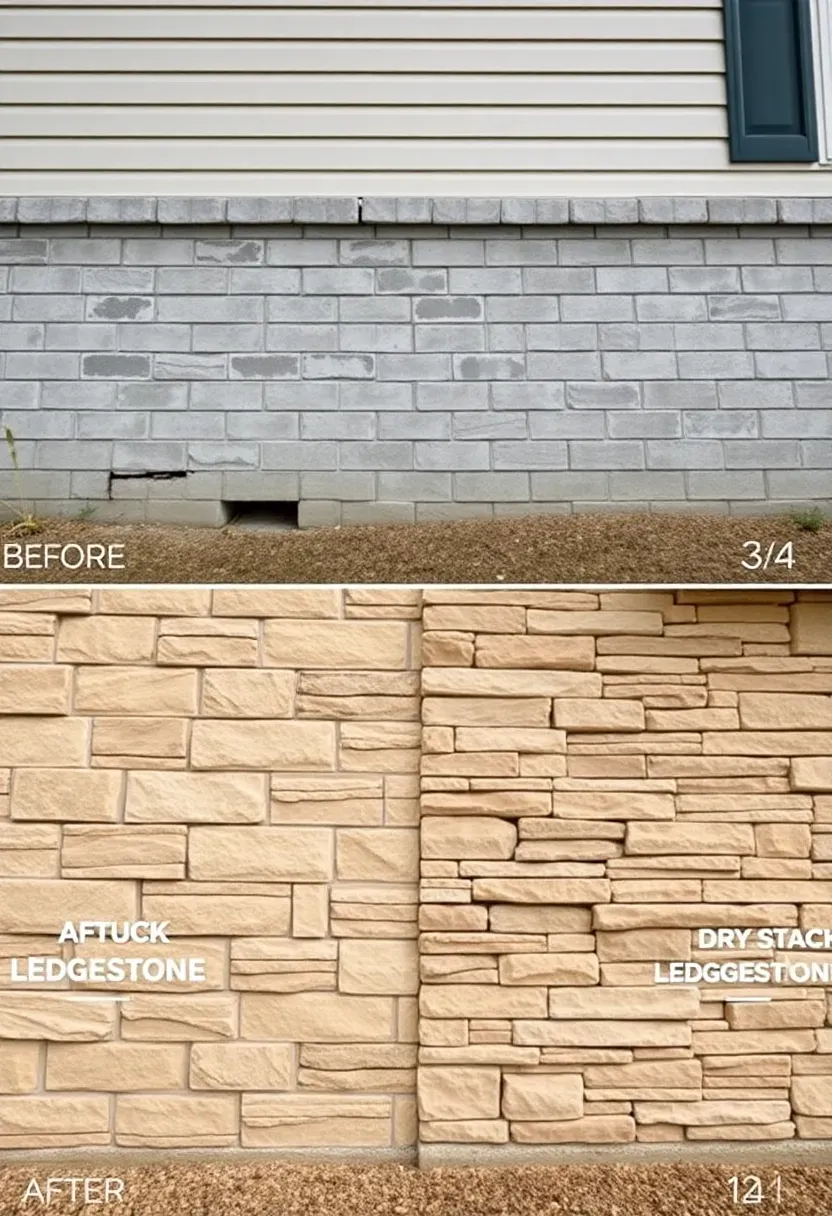
13. Exposed Foundation to Dry Stack Stone Veneer
Why This Upgrade Matters
Ranch homes sit low to the ground, which means the concrete block foundation is often visible from the street. That band of gray block cheapens the entire look of the home regardless of what you do above it.
Adhered stone veneer covers the foundation with natural or manufactured stone and immediately adds visual mass and warmth. The dry stack pattern -- stones fitted tightly without visible mortar joints -- gives a clean, contemporary feel that works with both traditional and modern ranch exteriors. Manufactured stone veneer is lighter than natural stone and can be applied directly to concrete block with a scratch coat.
Tips
- Install a metal drip edge at the top to prevent water from running behind the veneer
- Wrap corners for a convincing natural stone appearance
- Budget $18 to $30 per square foot installed
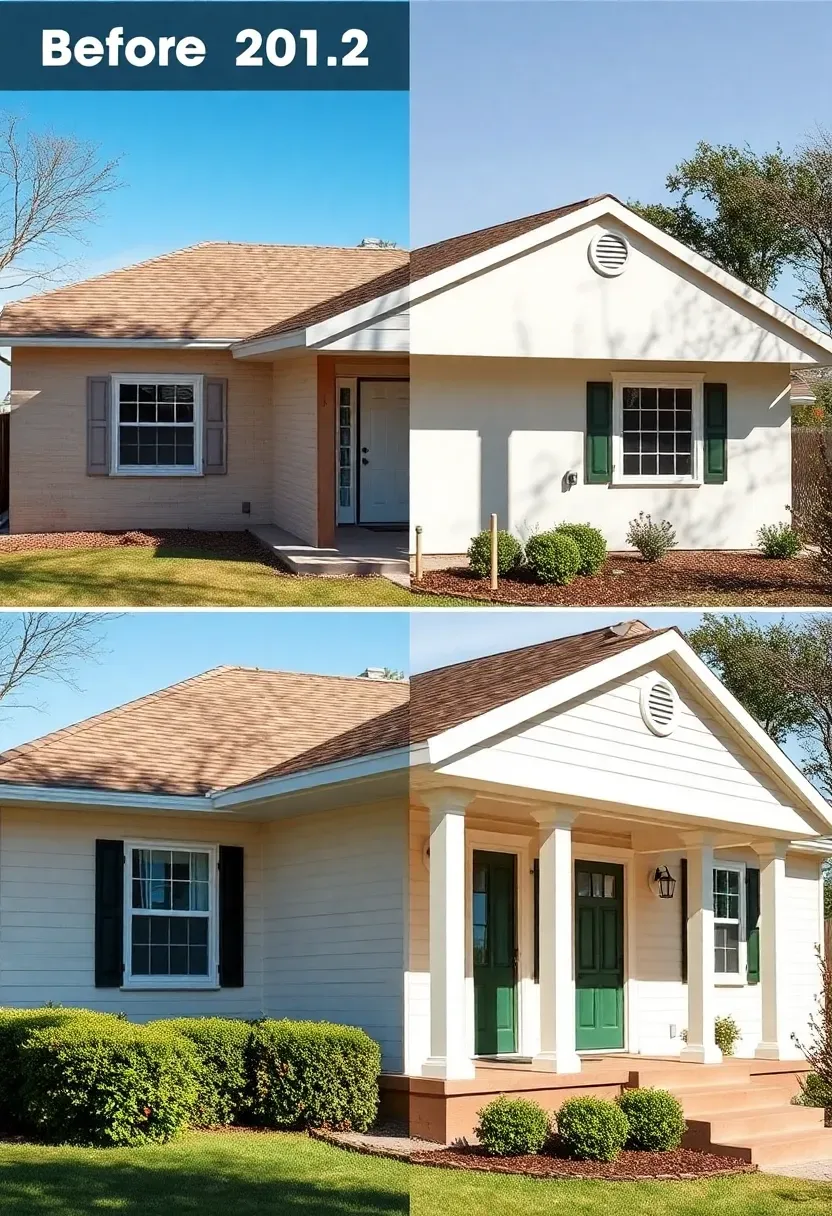
14. Faded Trim to Two-Tone Exterior Paint
A single-color exterior is the most common reason ranch homes look flat and forgettable. Adding a contrasting trim color creates depth and highlights architectural details that disappear when everything is the same shade.
The winning formula for ranch homes: light body color with a darker trim, or a medium-toned body with bright white trim. The porch ceiling, fascia, and column details all read as distinct elements when painted a different shade. A full exterior two-tone paint job costs between $3,500 and $7,000 depending on home size and paint quality.
Practical Recommendations
- Test combinations with large sample swatches taped to the siding -- small paint chips lie
- Use satin finish on the body and semi-gloss on trim for subtle contrast in sheen
- Benjamin Moore's Historic Colors and Sherwin-Williams' Exterior Color Collections both offer pre-coordinated ranch-friendly palettes
Recommended
Items for this idea
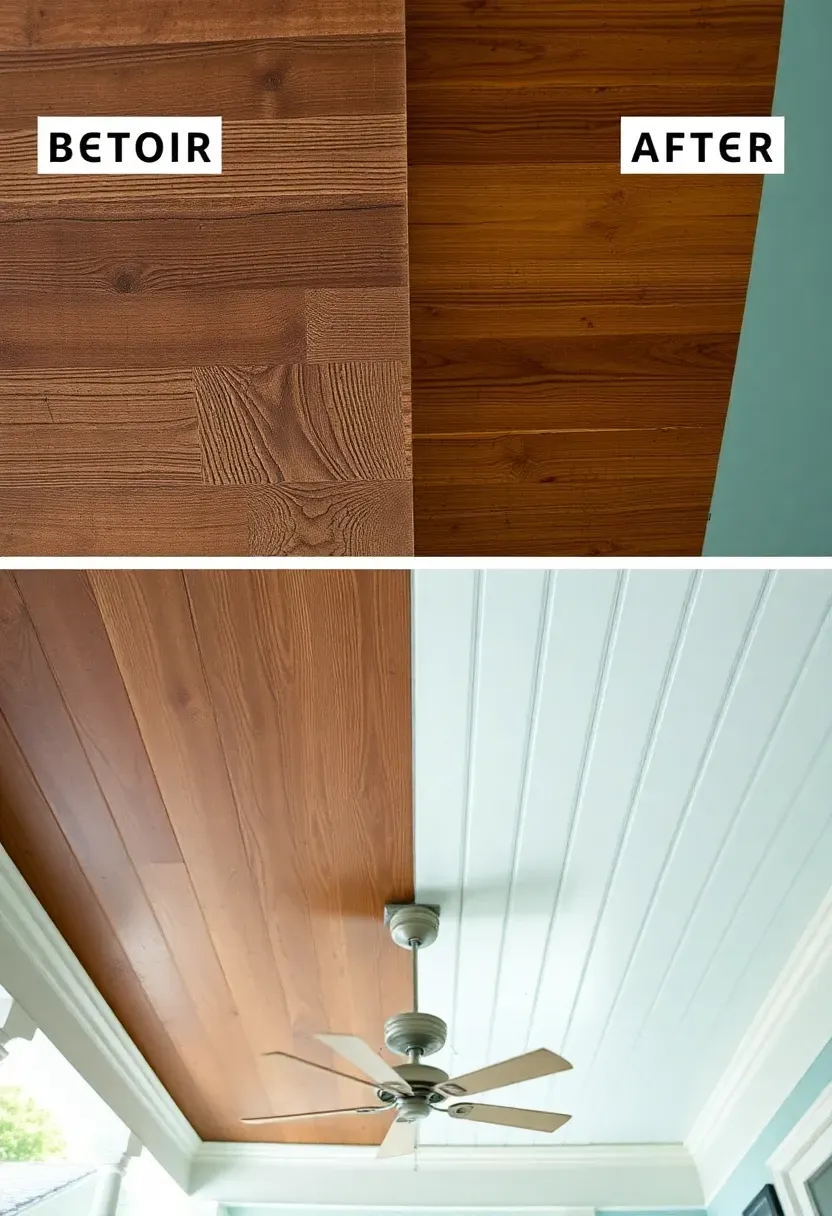
15. Plain Ceiling to Tongue and Groove Porch Ceiling
Look up on most ranch porches and you will see raw plywood, peeling paint, or stained drywall. The ceiling is the most neglected surface and the one that makes the biggest difference when finished properly.
Step 1: Prep the Existing Surface
Scrape loose paint, check for water damage, and repair any soft spots. Nail furring strips to provide a flat mounting surface.
Step 2: Install Tongue and Groove Planks
PVC beadboard planks snap together cleanly and resist moisture. Start from the house wall and work outward, face-nailing through the tongue at an angle.
Step 3: Paint with Porch Ceiling Color
Haint blue is the Southern tradition -- a soft blue-green that discourages insects and visually lifts the ceiling height. Sherwin-Williams Atmospheric (SW 6505) and Benjamin Moore Gossamer Blue (2123-40) are proven ranch porch favorites.
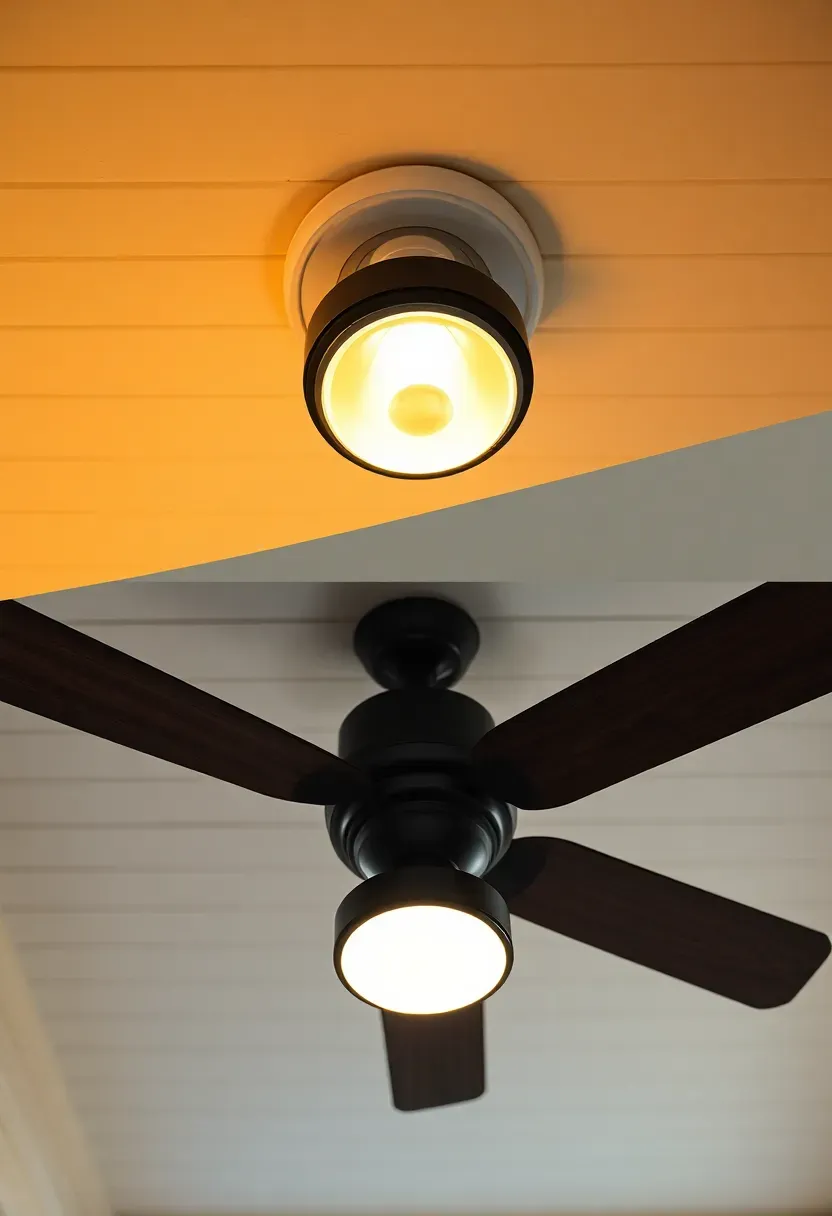
16. Single Pendant to Ceiling Fan with Integrated Light
Comparing: Pendant Light vs Outdoor Ceiling Fan
Both illuminate the porch, but they solve different problems. The question is whether you use the porch for anything beyond walking through the front door.
Pendant Light
Provides focused downlight. Works for porches used only as passageways. Takes up less visual space and looks clean on shallow ceilings.
Outdoor Ceiling Fan
Moves air, extends three-season comfort, and provides ambient light. Essential if you sit on the porch for more than five minutes during warm months. Requires a minimum 8-foot ceiling clearance for safe blade height.
What to Choose
Keep a pendant if: Your porch is shallow, you rarely sit outside, or your ceiling is lower than 8 feet Install a fan if: You use the porch for relaxing, have adequate ceiling height, and want to push mosquitoes away naturally
Recommendation
For ranch homes with standard 8-foot porch ceilings, a 52-inch damp-rated fan in matte black or aged bronze strikes the right proportion and handles real outdoor conditions.
Recommended
Items for this idea
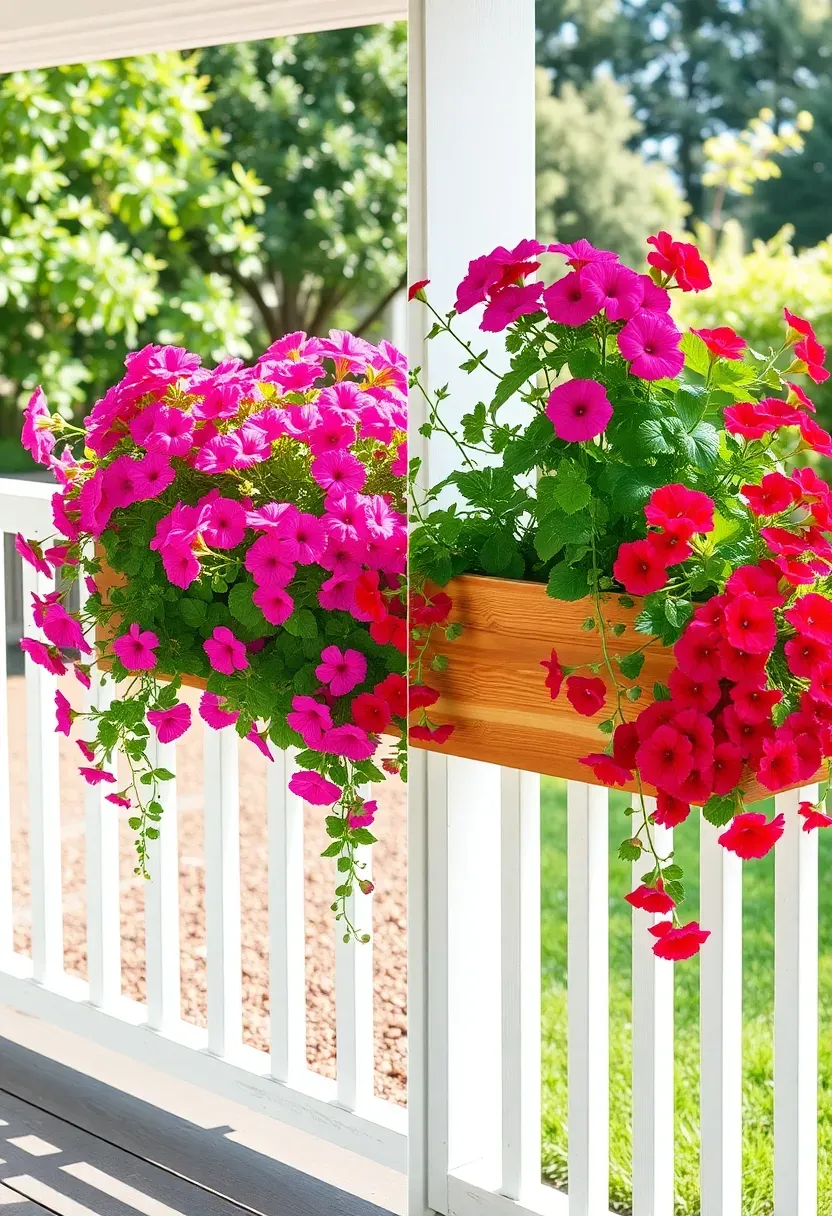
17. Bare Railing to Window Box Planter Rail
Window boxes are not just for windows. Mounting them along the porch railing rail turns a utilitarian barrier into a cascading garden border visible from the street and enjoyed from the chairs.
Use rot-resistant cedar boxes with drainage holes spaced every 6 inches. Plant a mix of upright and trailing varieties -- geraniums with sweet potato vine, or lavender with trailing lobelia. The color and texture fill the visual gap between the porch floor and the roofline that makes many ranch homes feel unfinished.
Tips
- Secure boxes with heavy-duty brackets rated for wet soil weight
- Line the interior with landscape fabric to retain soil while allowing drainage
- Swap plants seasonally: pansies in spring, petunias in summer, ornamental kale in fall
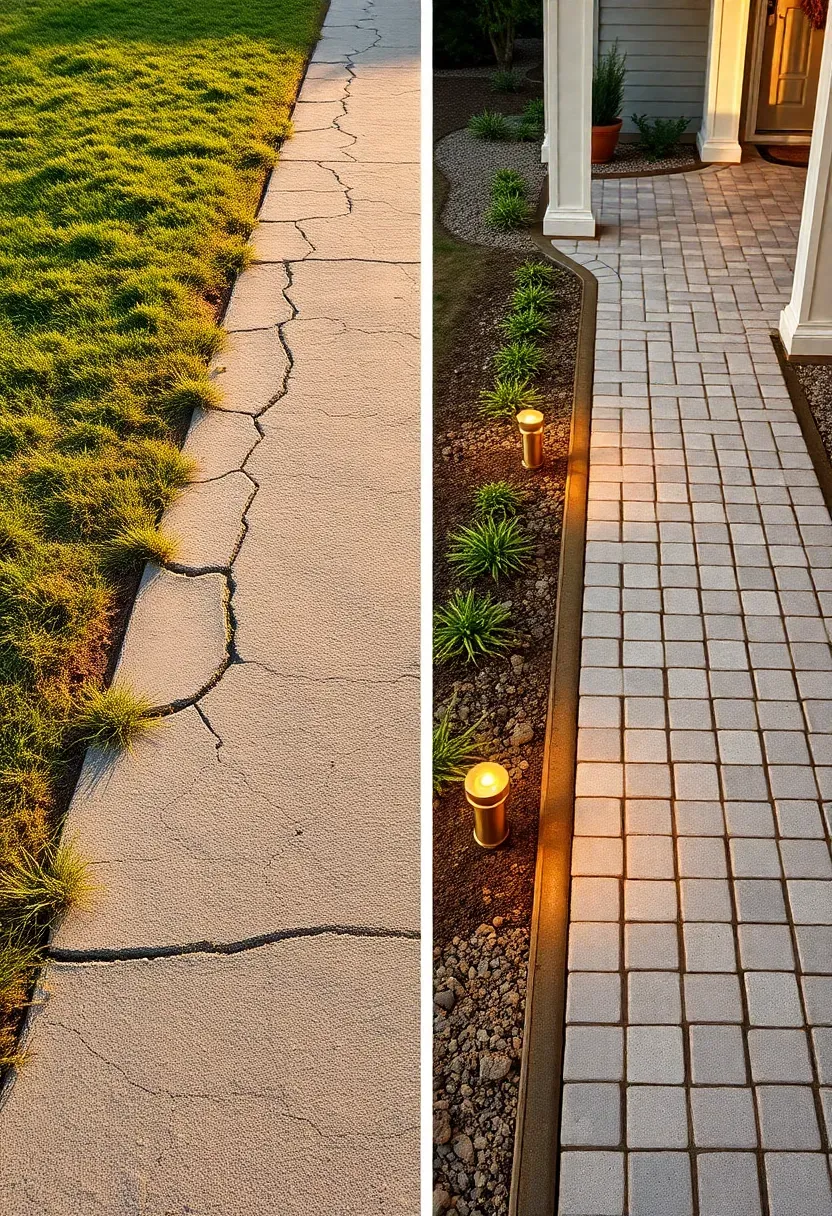
18. Narrow Walkway to Widened Paver Path
The standard 3-foot concrete walkway installed with most ranch homes feels cramped and unwelcoming. Widening it to 4 or 5 feet and using pavers instead of poured concrete adds presence and durability in a single project.
Herringbone and running bond patterns work best for ranch approaches because the directional pattern draws the eye toward the porch. Choose a paver color that complements your porch floor -- warm gray tones bridge the gap between a brick home and a concrete porch, while buff-colored pavers pair well with stone veneer foundations.
Practical Recommendations
- Install a proper gravel and sand base to prevent settling and frost heave
- Edge with steel paver restraints, not plastic -- plastic shifts within two seasons
- Add low-voltage path lights every 8 feet along one side for evening safety

Recommended
Items for this idea
19. Basic Doorbell to Smart Video Doorbell Setup
This is a 30-minute upgrade with outsized curb appeal impact. Modern video doorbells like Ring, Google Nest, and Eufy have sleek profiles that look intentionally designed rather than utilitarian.
Beyond aesthetics, they add a practical security layer that buyers value at resale. The camera, motion detection, and two-way audio mean you always know who is at the door. Most models run on existing doorbell wiring, so installation means removing two screws and connecting two wires.
What to Watch Out For
- Choose a faceplate finish that matches your door hardware
- Wired models are more reliable than battery-only versions
- Mount at 48 inches from the porch floor for optimal camera angle
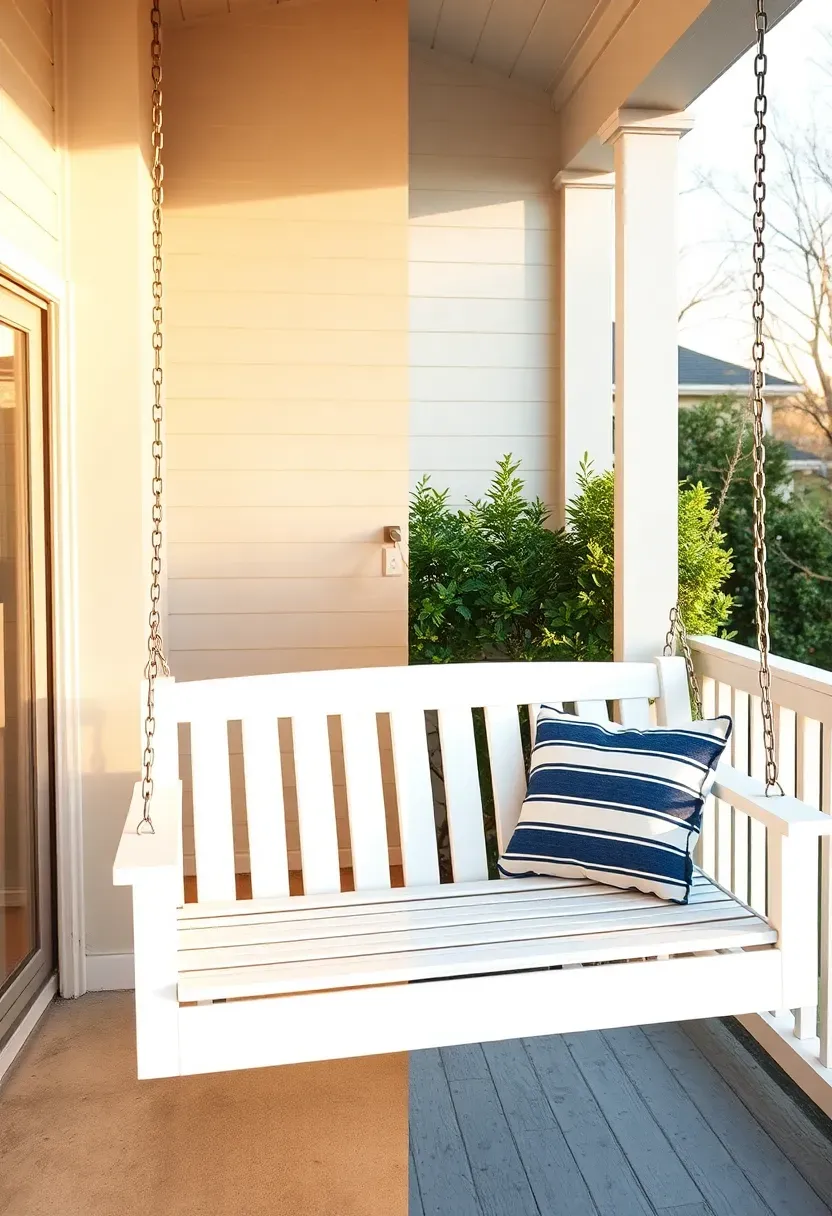
20. No Seating to Porch Swing Nook
A porch swing turns a ranch porch from a hallway into a destination. The gentle motion, the creak of the chain, the excuse to sit outside with nothing to do -- these are the details that make people actually use their front porch.
Step 1: Check the Ceiling Structure
Porch swings weigh 50 to 80 pounds empty and 300+ pounds loaded. You need to bolt into a joist or header, not just the ceiling boards. Use a stud finder or drill a test hole to locate solid framing.
Step 2: Install Heavy-Duty Hooks
Screw-in ceiling hooks rated for 500 pounds each, spaced to match the swing's hanging width. Use stainless steel to prevent rust staining on the ceiling.
Step 3: Hang and Style
Add a 4-inch thick outdoor cushion in a solid color and two throw pillows for contrast. The swing should clear the porch railing or wall by at least 14 inches when swinging.
Recommended
Items for this idea
21. Plastic Numbers to Oversized Modern Address Sign
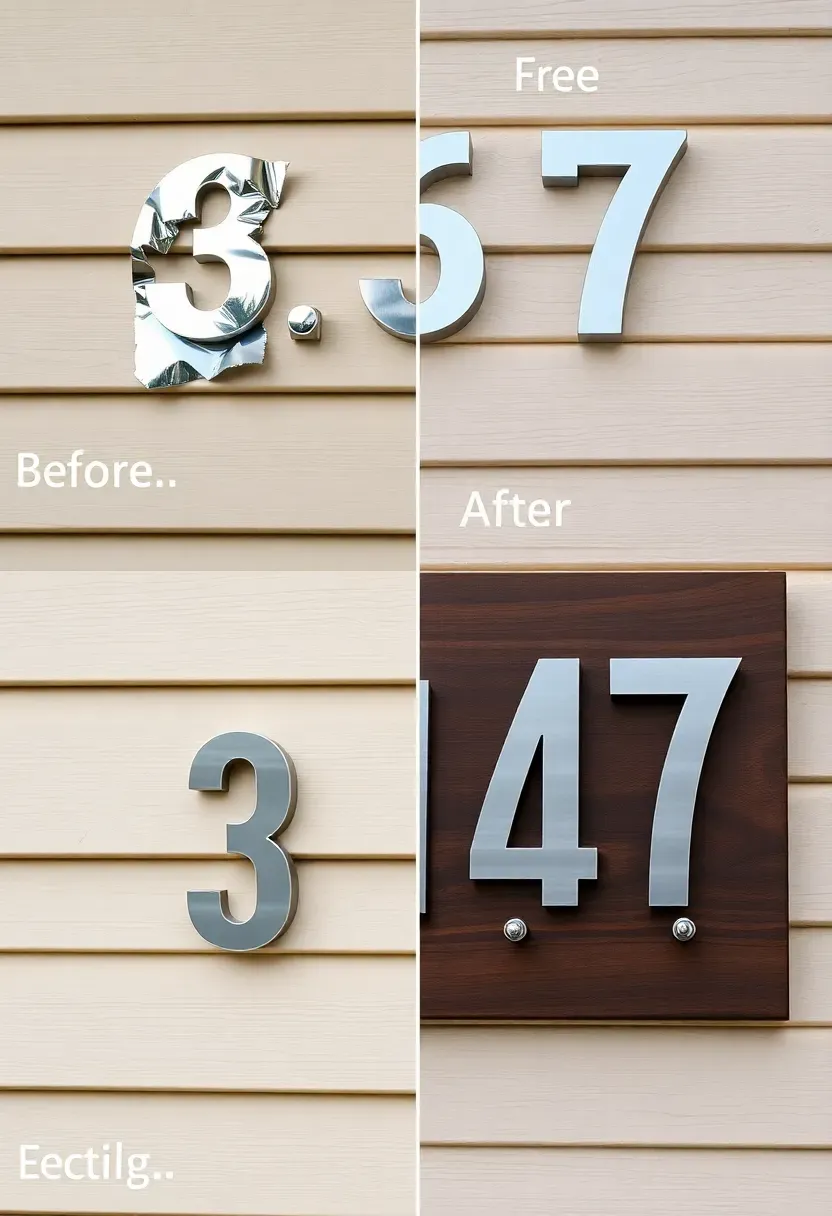
Tiny stick-on numbers from the hardware store blend into the siding and disappear from the street. Oversized floating numbers -- 6 to 8 inches tall in brushed steel, matte black, or brass -- make a design statement while improving wayfinding for delivery drivers and emergency services.
Mount them on a contrasting surface for maximum visibility: dark numbers on light siding, or light numbers on a stained wood plaque. Horizontal layouts suit ranch proportions better than vertical stacking.
Tips
- LED-backlit numbers add nighttime visibility and a high-end touch for under $100
- Use a paper template taped to the wall before drilling to ensure level spacing
- Stainless steel holds up better than aluminum in coastal or high-humidity areas
22. Standard Mailbox to Custom Post Mailbox Station
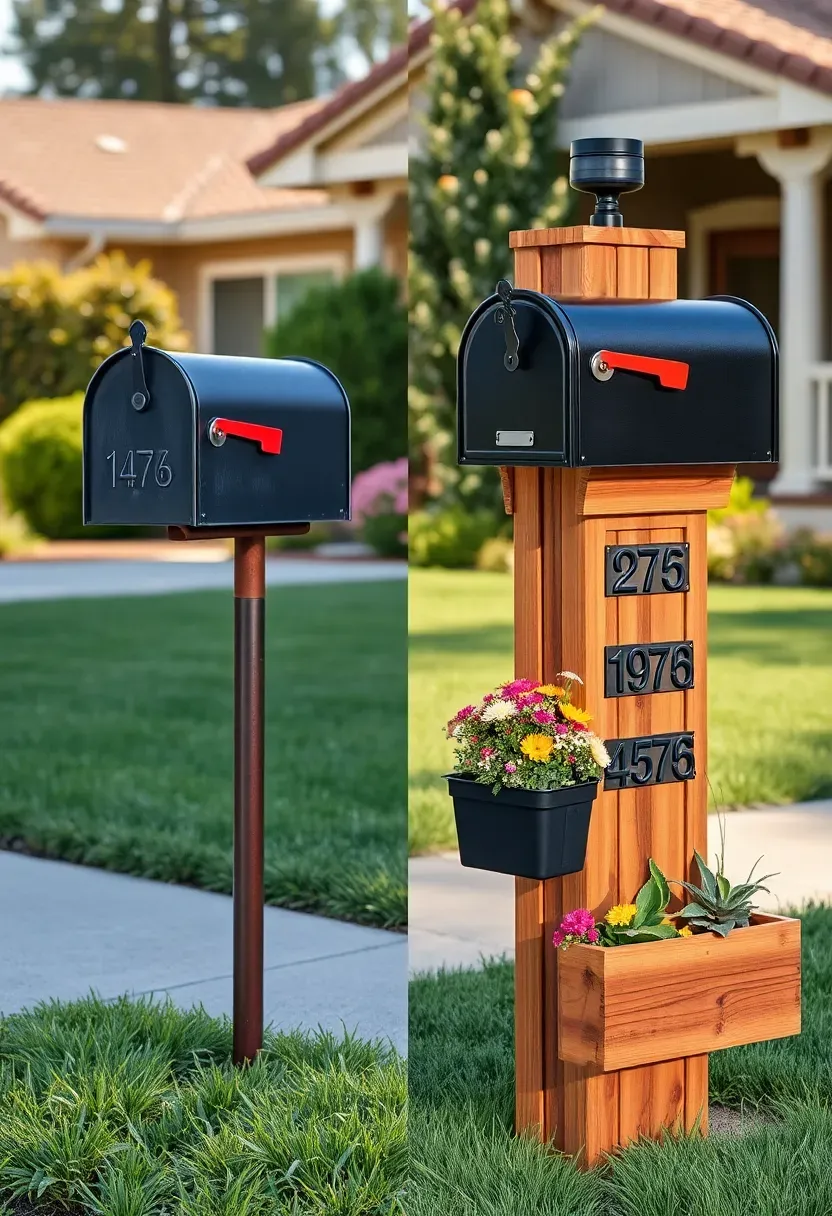
The mailbox is technically not on the porch, but it is the first thing visitors notice when approaching a ranch home. A custom post station integrates the mailbox, house numbers, and a small planter into a single designed element.
Cedar posts with a simple cross-brace design, stained to match the home's trim color, elevate a $30 commodity mailbox into a landscape feature. Add a small planter box at the base for seasonal color and mount address numbers on the post face for easy reading.
Practical Recommendations
- Check USPS regulations for mailbox height and setback requirements before building
- Use pressure-treated lumber for below-grade portions and cedar for visible elements
- A solar-powered cap light on top of the post provides nighttime visibility
Recommended
Items for this idea
23. Missing Gutters to Copper Half-Round Gutters
The Core Issue
Many ranch homes either lack gutters entirely or have damaged aluminum K-style gutters that sag and overflow. Without proper drainage, water splashes against the foundation, stains the siding, and erodes the landscaping beds flanking the porch.
The Solution
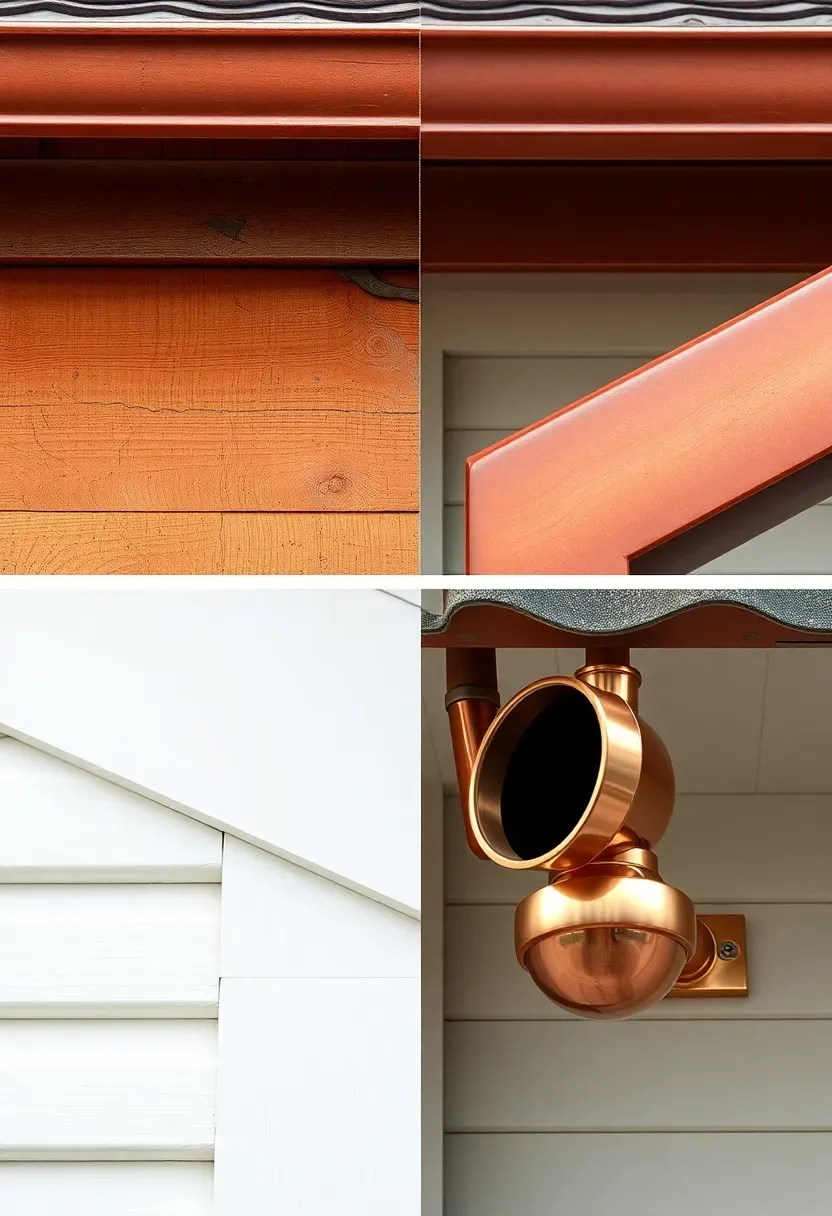
Copper half-round gutters solve the drainage problem while adding a design element that appreciates over time. The warm copper tone patinas to a rich verde green within three to five years, creating a distinctive character that aluminum cannot replicate. The half-round profile is simpler and more elegant than the angular K-style, which suits the clean lines of a ranch facade.
Pros and Cons
Pros: 80+ year lifespan, zero painting required, develops unique patina, increases home value Cons: Initial cost is 3 to 4 times higher than aluminum, requires specialized installation
24. No Symmetry to Matched Topiary Flanking
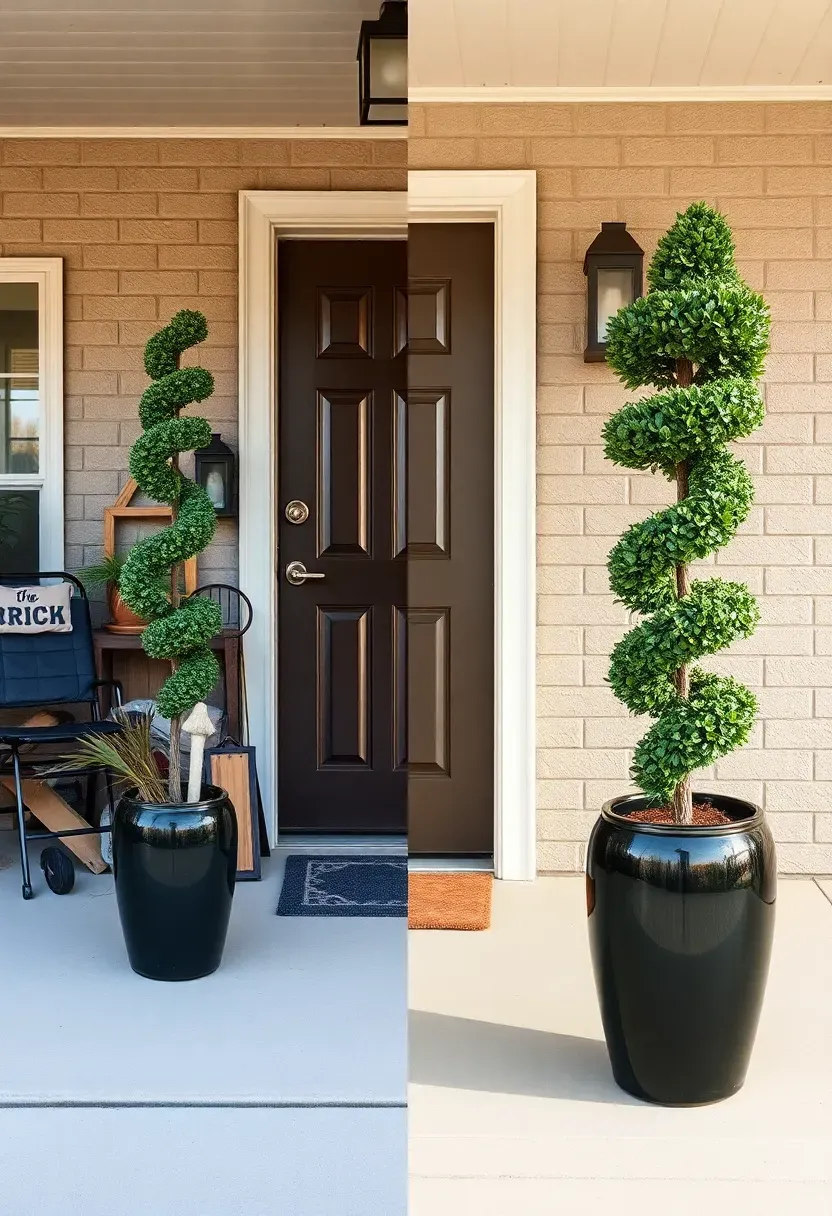
Symmetry is the simplest design principle and the one most often missing from ranch porches. Placing two identical planters with matching topiaries on either side of the front door creates a sense of order and intentionality that random porch clutter never achieves.
Spiral or ball-form topiaries in dark glazed planters are the most versatile choice -- they work with colonial, farmhouse, and contemporary ranch styles. For low-maintenance options, use high-quality faux topiaries rated for outdoor use. They look convincing from the street and never need watering, pruning, or replacement.
Tips
- Planter height plus topiary height should equal roughly two-thirds of the door height for correct proportion
- Square planters suit modern ranch homes; round urns suit traditional styles
- Weight the planters with gravel at the bottom to prevent wind toppling
Recommended
Items for this idea
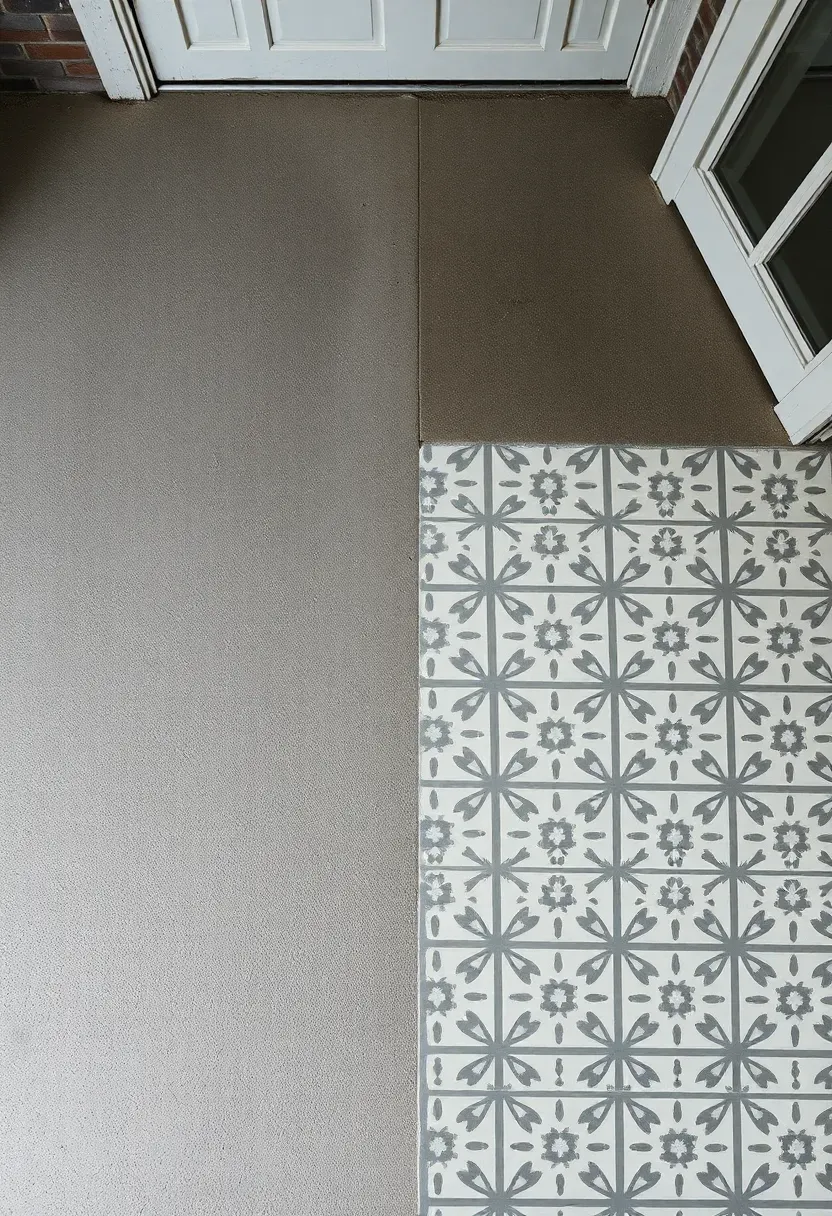
25. Bare Concrete to Stenciled Porch Floor
Stenciling a pattern onto a concrete porch floor mimics the look of encaustic tile at a fraction of the cost. The technique works on any structurally sound concrete surface, even one with minor imperfections.
Step 1: Clean and Prime
Power wash the concrete, let it cure for 48 hours, and apply a concrete bonding primer. This ensures the paint adheres permanently.
Step 2: Tape and Stencil
Secure a large-format geometric stencil with spray adhesive. Roll on porch and floor paint using a dense foam roller for clean edges. Lift the stencil carefully and reposition for the next section.
Step 3: Seal
Apply two coats of clear concrete sealer rated for foot traffic. This protects the pattern from scuffing and makes cleaning simple.
What to Watch Out For
- Practice the stencil pattern on cardboard first to nail your roller pressure
- Choose two-color schemes -- more than two gets busy on a porch floor
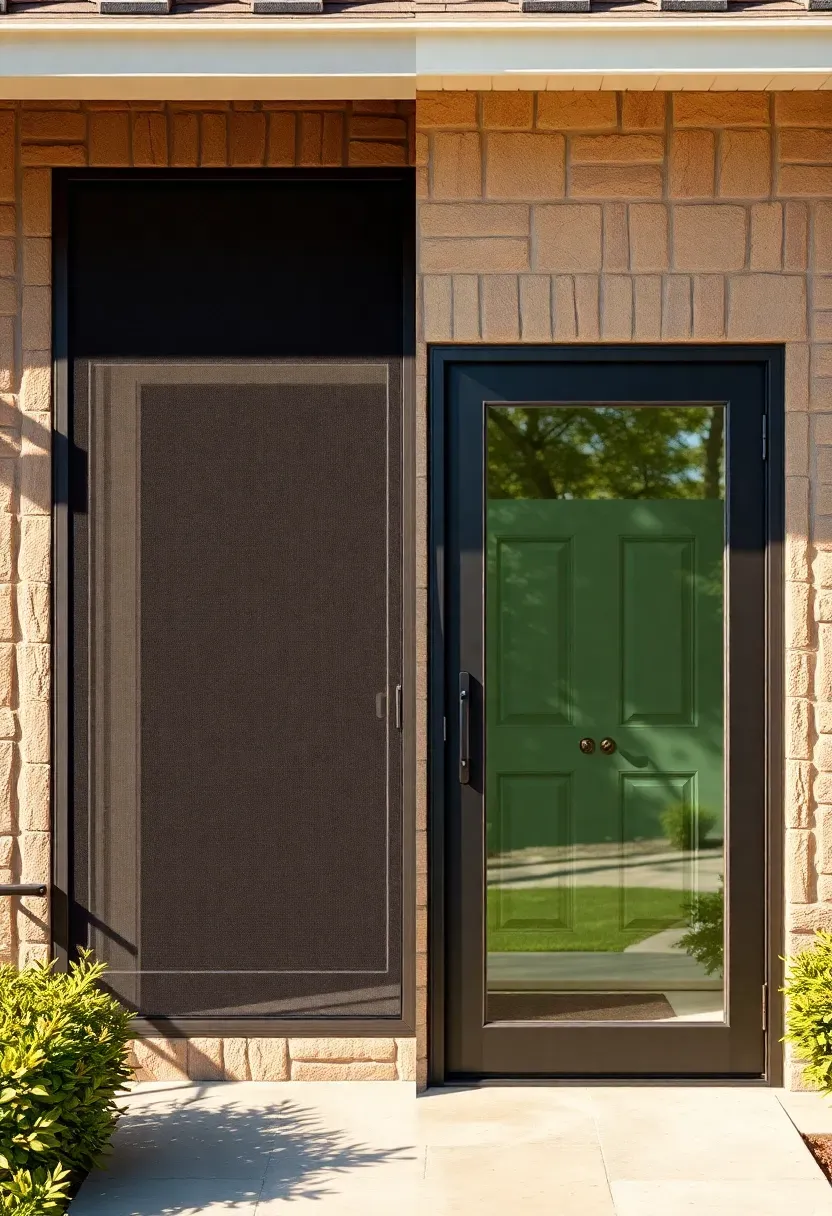
26. Old Screen Door to Full View Storm Door
Traditional screen doors and aluminum storm doors hide the front door behind a grid of frames and mesh. A full view storm door uses a single pane of tempered glass in a slim frame, letting the front door color and hardware shine through while still providing weather protection and ventilation via a retractable screen.
The effect is like removing sunglasses from the face of the house -- suddenly you can see the features you spent money improving. Choose a frame color that matches the door hardware for a unified look.
Practical Recommendations
- Measure the door opening precisely -- full view doors are less forgiving of out-of-square frames
- Self-storing screen models retract the screen into the top rail when not in use
- Budget $250 to $500 for a quality full view storm door with installation hardware
Recommended
Items for this idea
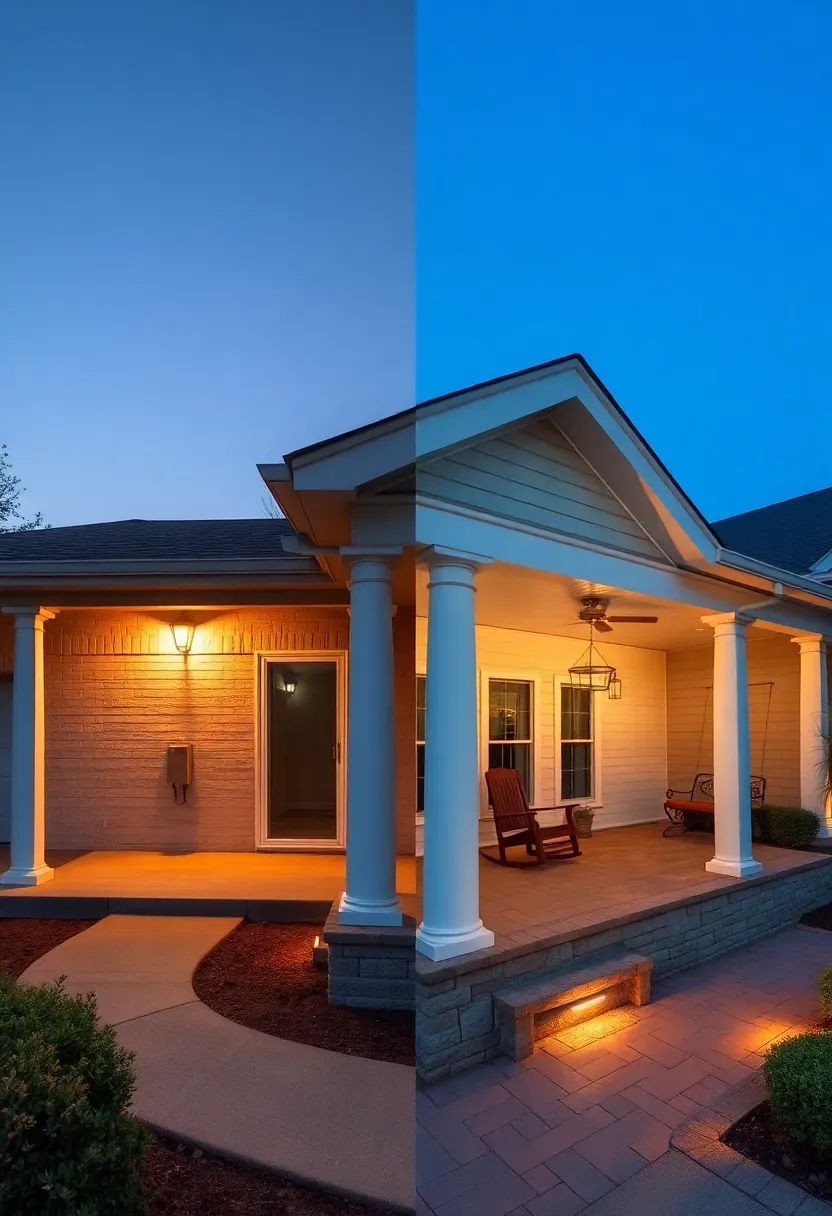
27. Full Exterior Overhaul with Covered Porch Extension
This is the project that combines everything above into a single transformation. Extending a ranch porch by 4 to 6 feet, adding a proper roof structure, and finishing with columns, lighting, ceiling treatment, and furniture turns the entire front of the house into an outdoor living room.
It is also the most expensive option on this list -- typically $15,000 to $40,000 depending on size, materials, and local labor rates. But the before-and-after impact is staggering. Ranch homes with covered porches sell faster and for higher prices than identical models without them, and the daily quality of life improvement is something homeowners consistently rank as their best renovation decision.
Practical Recommendations
- Pull permits before construction -- porch additions require foundation inspection and setback compliance
- Match the new roof pitch and material to the existing roof for seamless integration
- Plan electrical runs for lighting, fans, and outlets during framing, not after
Quick FAQ
Is it worth upgrading a ranch porch if I plan to sell soon? Absolutely. Front porch improvements have one of the highest return-on-investment ratios in residential renovation. Even a $500 refresh with paint, hardware, and plants can shift buyer perception significantly.
Should I hire a contractor or DIY my ranch porch makeover? Projects involving structural changes, electrical work, or roofing should go to a licensed contractor. Cosmetic upgrades -- paint, lighting fixtures, planters, and furniture -- are straightforward DIY projects that save 50 to 70 percent on labor.
Which single upgrade makes the biggest before-and-after difference? The front door color swap combined with new hardware consistently produces the most dramatic visual change for the least money. It takes less than a day and costs under $100.
Can I add a covered porch to a ranch home that never had one? Yes, but it requires a foundation, structural posts, and a roof tie-in to the existing structure. Budget $15,000 minimum and get three contractor bids. Check local setback requirements before committing to a design.
What porch colors work best with brick ranch homes? White or cream trim with a dark door -- navy, hunter green, or matte black -- creates classic contrast against red or brown brick. Avoid matching the trim color to the brick mortar; the monochrome effect flattens the facade.
Start with the project that bothers you most every time you pull into the driveway. That nagging detail -- the rusty railing, the bare bulb, the cracked steps -- is the right first move. One focused weekend upgrade often triggers a chain reaction of improvements because you finally see what your ranch porch could look like when every element is intentional.
Pinterest cover for 27 Front Porch Ideas for Ranch Style Homes Before and After
About the author
OBCD
CGI visualization and interior design content. We create detailed 3D renders and curate practical design ideas for every room in your home.