21 Accent Wall Bedroom Ideas That Make a Bold Statement
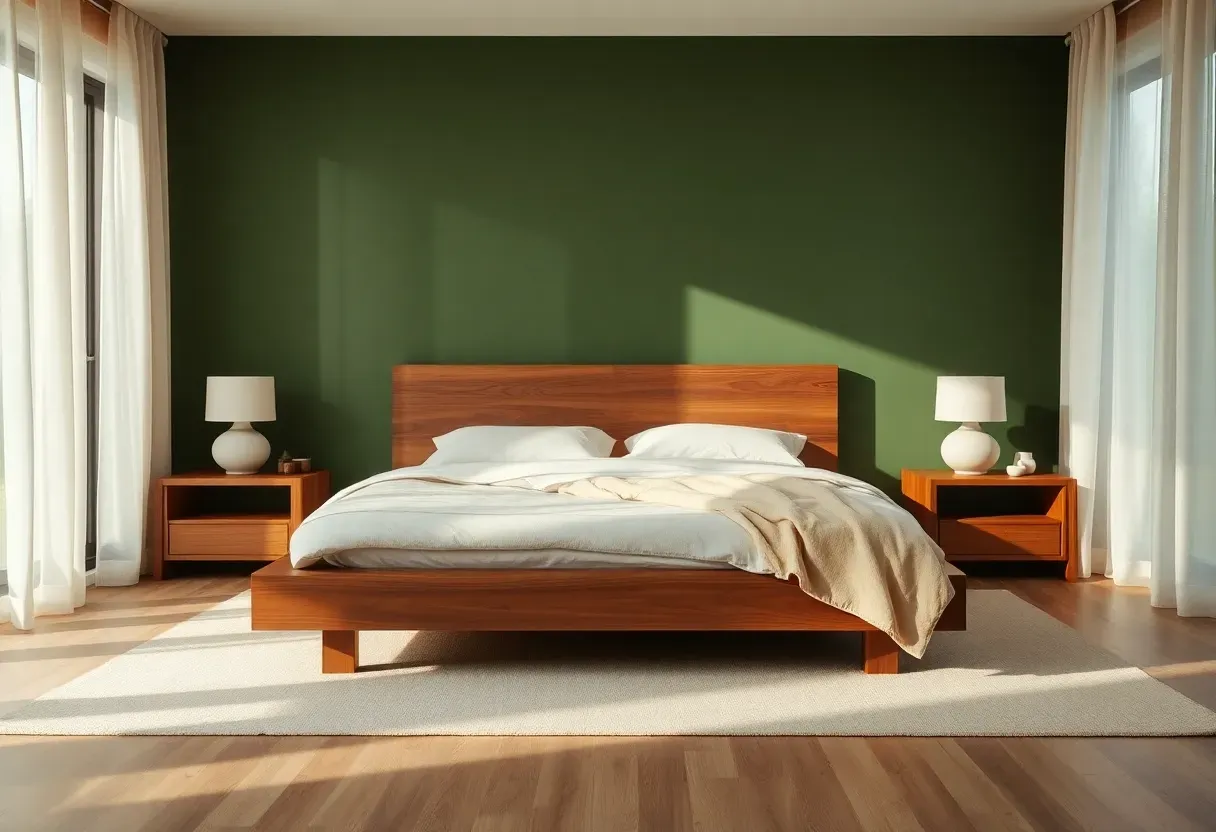
We've all felt that moment when a bedroom looks fine but lacks punch. The furniture works, the bedding is clean, the lighting is decent — yet something feels flat. Nine times out of ten, the missing ingredient is a single wall that dares to be different. An accent wall gives a bedroom depth, direction, and personality without overwhelming the rest of the space. It anchors the eye, frames the bed, and turns an ordinary room into one that feels intentional. Whether you lean toward rich paint colors, natural wood, textured panels, or dramatic wallpaper, the right feature wall can redefine how the entire room feels from the moment you step inside.
Below you will find 21 distinct approaches, each paired with practical tips so you can adapt them to your own space and budget.
Table of Contents
- Dark Forest Green Paint
- Vertical Wood Slat Panel
- Limewash Plaster Finish
- Bold Geometric Wallpaper
- Exposed Brick Feature
- Floor-to-Ceiling Board and Batten
- Natural Stone Veneer
- Moody Navy Blue Paint
- Woven Rattan Panel
- Oversized Mural Art
- Reclaimed Barn Wood
- Fluted Plaster Columns
- Terracotta Clay Paint
- Botanical Print Wallpaper
- Concrete Effect Microcement
- Velvet Upholstered Headboard Wall
- Arched Niche with Shelving
- Ombre Gradient Paint
- Textured 3D Wall Tiles
- Gallery Wall Grid
- Black Accent with Brass Fixtures
1. Dark Forest Green Paint
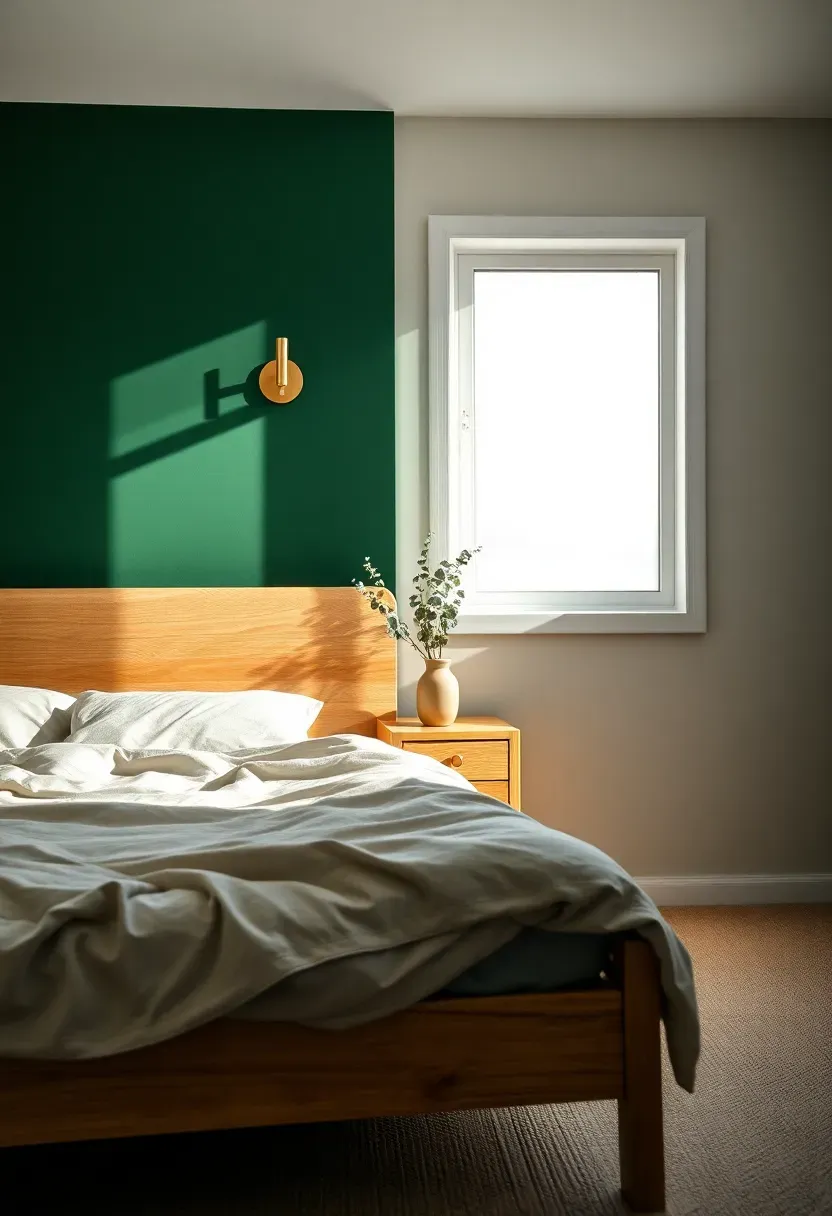
A single coat of deep forest green behind the bed transforms the entire room into a woodland retreat. This shade pairs beautifully with warm brass hardware, natural linen bedding, and light oak furniture, creating a contrast that feels grounded without being heavy.
Why It Works
Green connects to nature on a subconscious level, lowering visual stress and making the room feel more restful. Unlike darker shades such as charcoal or black, forest green retains warmth and avoids making a bedroom feel like a cave. It reads as sophisticated in daylight and cocooning at night.
Tips for Getting It Right
- Test three swatches side by side — green shifts dramatically under warm versus cool lighting
- Pair with cream or oatmeal bedding, never stark white, to keep the mood soft
- Add a single brass wall sconce on each side of the bed for depth
We picked a few things that go well with this idea: Peel and Stick PVC Slat Wall Panel (236") (★4.2), STICKEEP Brown Wood Slat Wall Panels (200") (★4.1) and STICKEEP 3D Brown Acoustic Slat Panels (200") (★4.1). As an Amazon Associate we earn from qualifying purchases.
2. Vertical Wood Slat Panel
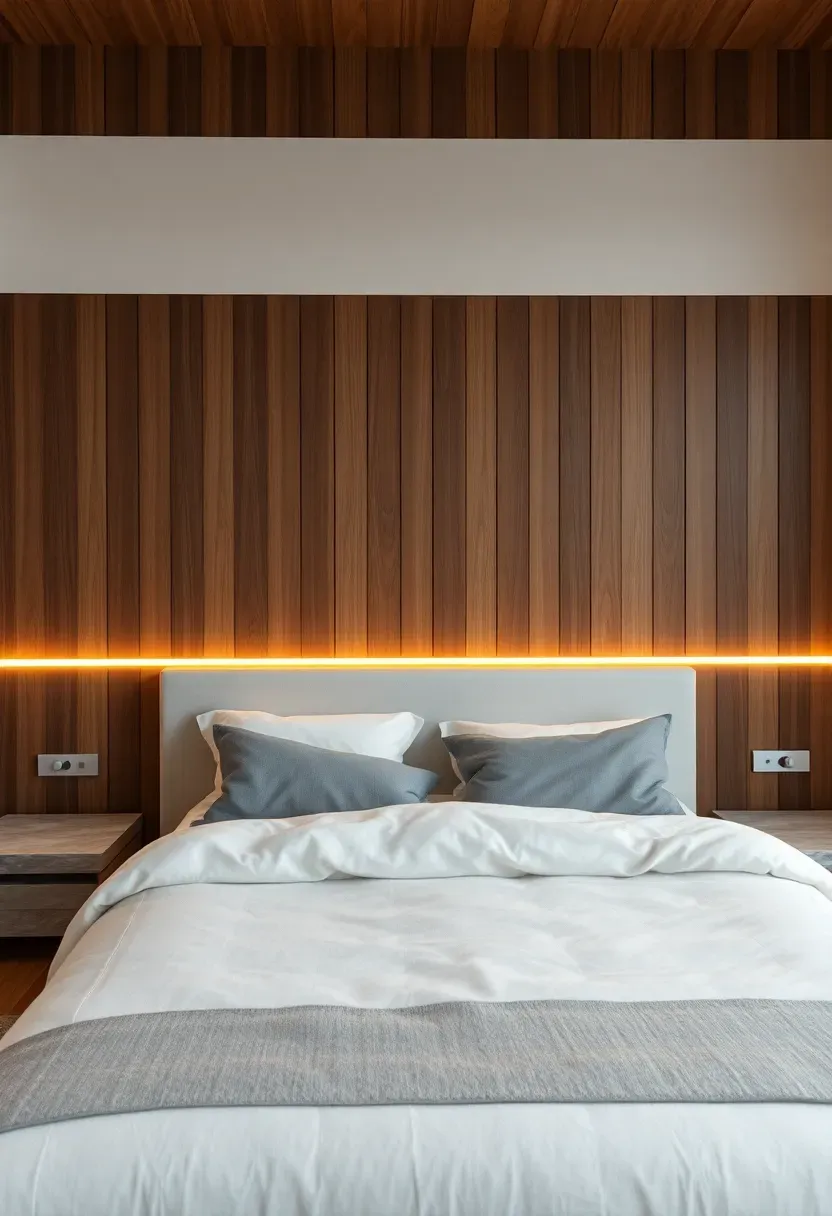
Vertical wood slats behind the headboard introduce rhythm, texture, and architectural interest to a flat wall. The parallel lines draw the eye upward, making ceilings feel taller and the room more spacious than it actually is.
Step 1: Choose Your Wood
Select between light ash for a Scandinavian feel, medium walnut for warmth, or dark-stained oak for drama. Each shifts the room's entire character.
Step 2: Determine Spacing
Tighter gaps (10-15 mm) create a refined, formal look. Wider spacing (25-40 mm) feels airier and more casual. Measure your wall width to plan even distribution.
Step 3: Install Backing and Lighting
Mount slats on a painted backing panel that matches their tone. Add a warm LED strip behind the top or bottom edge for a floating glow at night.
What to Watch Out For
- Pre-sand every slat before mounting to avoid splinters catching fabric
- Avoid slats wider than 50 mm on narrow walls — they look bulky
- Seal with matte polyurethane to protect against dust buildup
We picked a few things that go well with this idea: Flarnadox Gold Khaki Wood Stripe Wallpaper (★3.9), Laatse Vintage Black Floral Botanical Wallpaper (★4.7) and Safiyya Boho Modern Peel and Stick Wallpaper (★4.3). As an Amazon Associate we earn from qualifying purchases.
3. Limewash Plaster Finish
Limewash is the antithesis of a perfect paint job — and that is exactly the point. Its chalky, cloud-like finish creates tonal depth that flat paint simply cannot achieve. Every brushstroke leaves a slightly different shade, giving the wall a living, handmade quality that shifts with the light throughout the day.
The Core Issue
Standard painted walls can look sterile in bedrooms, especially under overhead lighting. They offer zero visual interest up close and photograph as blank rectangles.
The Solution
Limewash mineral paint builds layers of translucent pigment directly into the surface. Apply two to three coats with a wide masonry brush, using crisscross strokes. The result is a wall that reads as creamy at dawn, warm at midday, and moody at dusk — all without changing a single bulb.
Pros and Cons
Pros: Breathable and mold-resistant, repairs beautifully by spot-touching, zero VOCs in most formulas Cons: Requires porous surfaces (may need a primer on drywall), takes patience to master the technique
We picked a few things that go well with this idea: Bsmathom Brushed Brass Wall Sconces (Set of 2) (★4.6), VATONI Dimmable Gold Wall Sconces (2-Pack) (★4.6) and MWZ Modern Brass Swing Arm Sconces (Set of 2) (★4.6). As an Amazon Associate we earn from qualifying purchases.
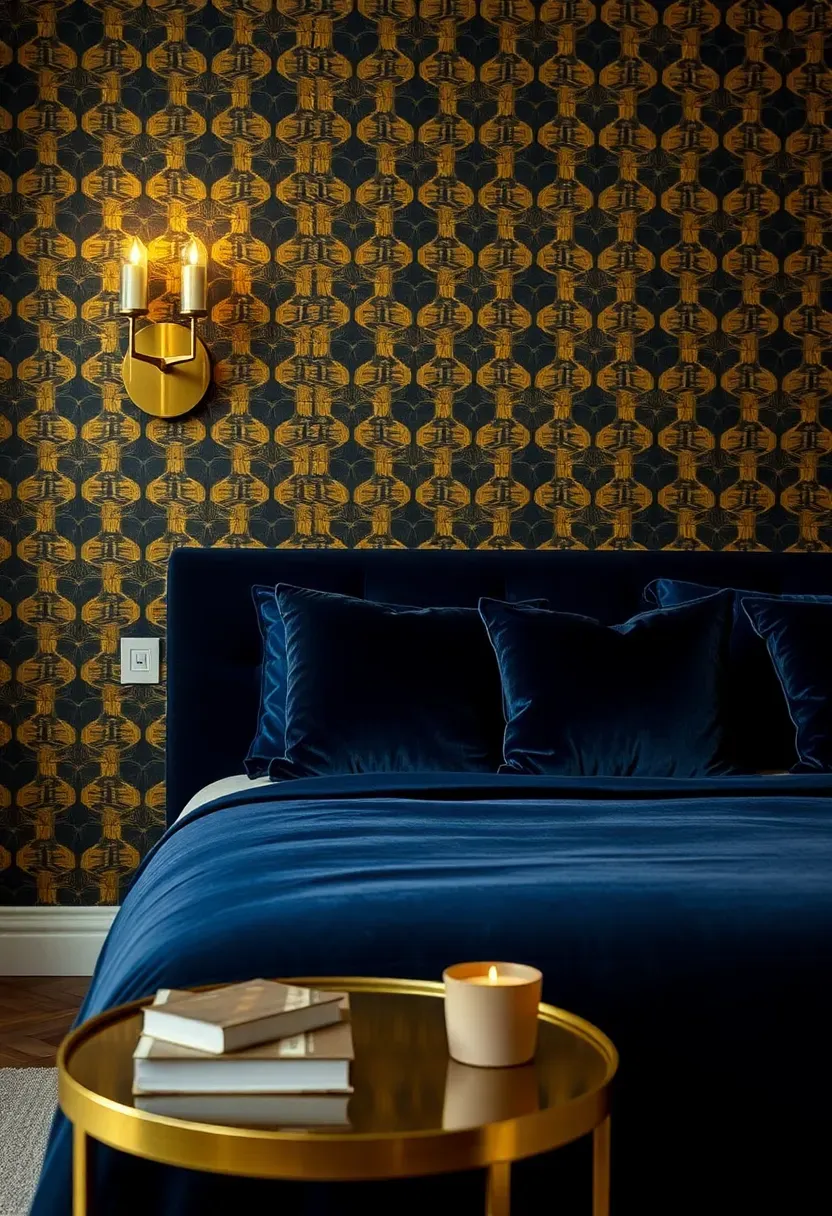
4. Bold Geometric Wallpaper
Geometric patterns inject energy into a bedroom without a single piece of art. From oversized hexagons to sharp chevrons, the key is choosing a scale that matches your room proportions — large patterns for spacious rooms, smaller repeats for compact bedrooms.
Choosing the Right Pattern
Angular shapes like triangles and chevrons feel dynamic and modern. Softer geometrics like circles and arcs lean toward art deco elegance. Avoid mixing two geometric patterns on adjacent walls; the visual noise will exhaust rather than excite.
Practical Recommendations
- Peel-and-stick options let renters try bold patterns without commitment
- Metallic accents in the pattern catch lamplight and add dimension at night
- Keep the remaining three walls a single neutral tone to let the pattern breathe
Recommended
Items for this idea
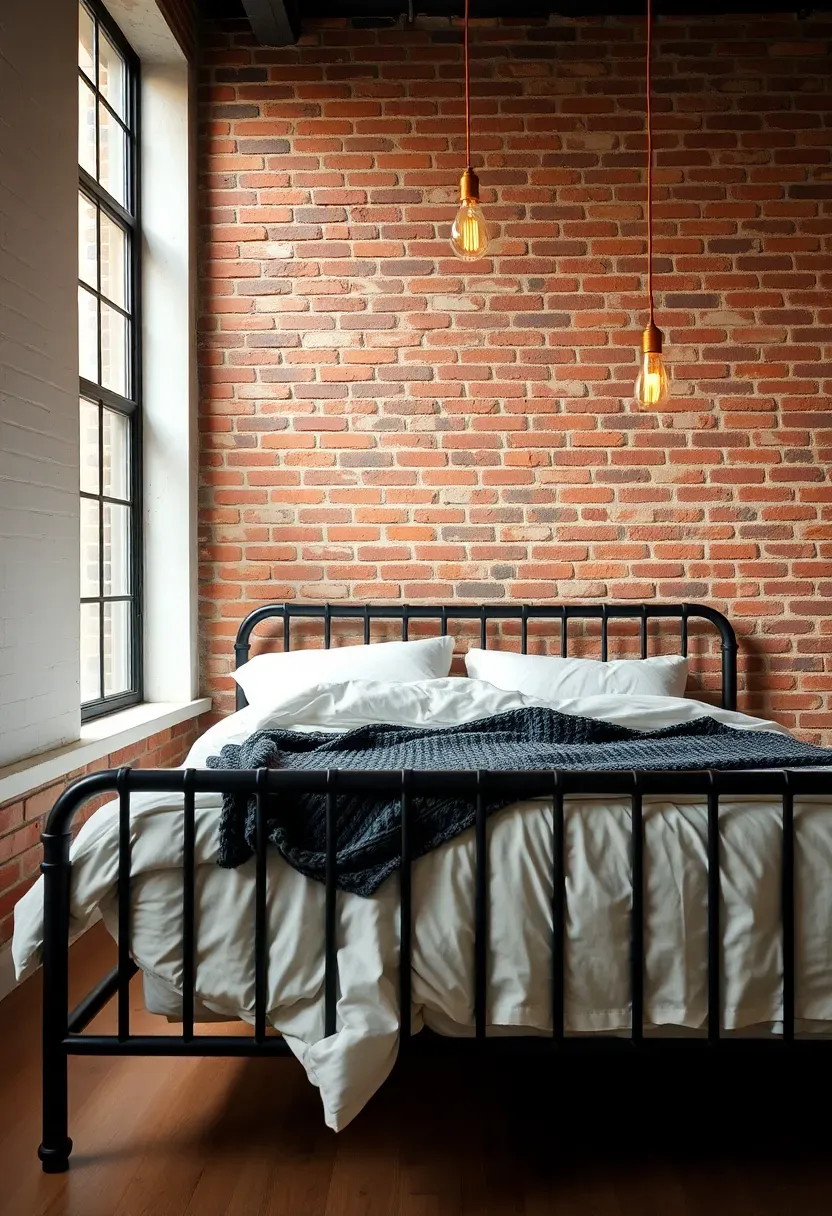
5. Exposed Brick Feature
Nothing matches the raw character of real brick. Whether you are lucky enough to uncover original masonry beneath plaster or install thin brick veneer panels, the texture and color variation of brick bring instant history and warmth to any bedroom.
Origins and History
Exposed brick became fashionable in the 1960s when artists converted abandoned warehouses into living spaces in Manhattan's SoHo district. What began as a budget necessity evolved into one of the most enduring interior design features across the world.
Modern Interpretation
Today, exposed brick works in far more contexts than industrial lofts. Whitewashed brick softens the look for cottage or Scandinavian-style bedrooms. Natural red brick anchors moody, romantic spaces when paired with velvet textiles and warm Edison bulb lighting. German smear (mortar wash) lands somewhere between, offering texture with a lighter, more relaxed palette that works in farmhouse and transitional bedrooms alike.
How to Apply at Home
- Thin brick veneer panels install over existing drywall in a weekend
- Seal with a matte coat to prevent dust without adding shine
- Pair with soft textiles — chunky knit throws, linen curtains — to balance the hardness
- Avoid on the wall opposite windows; direct sunlight can make unsealed brick fade unevenly
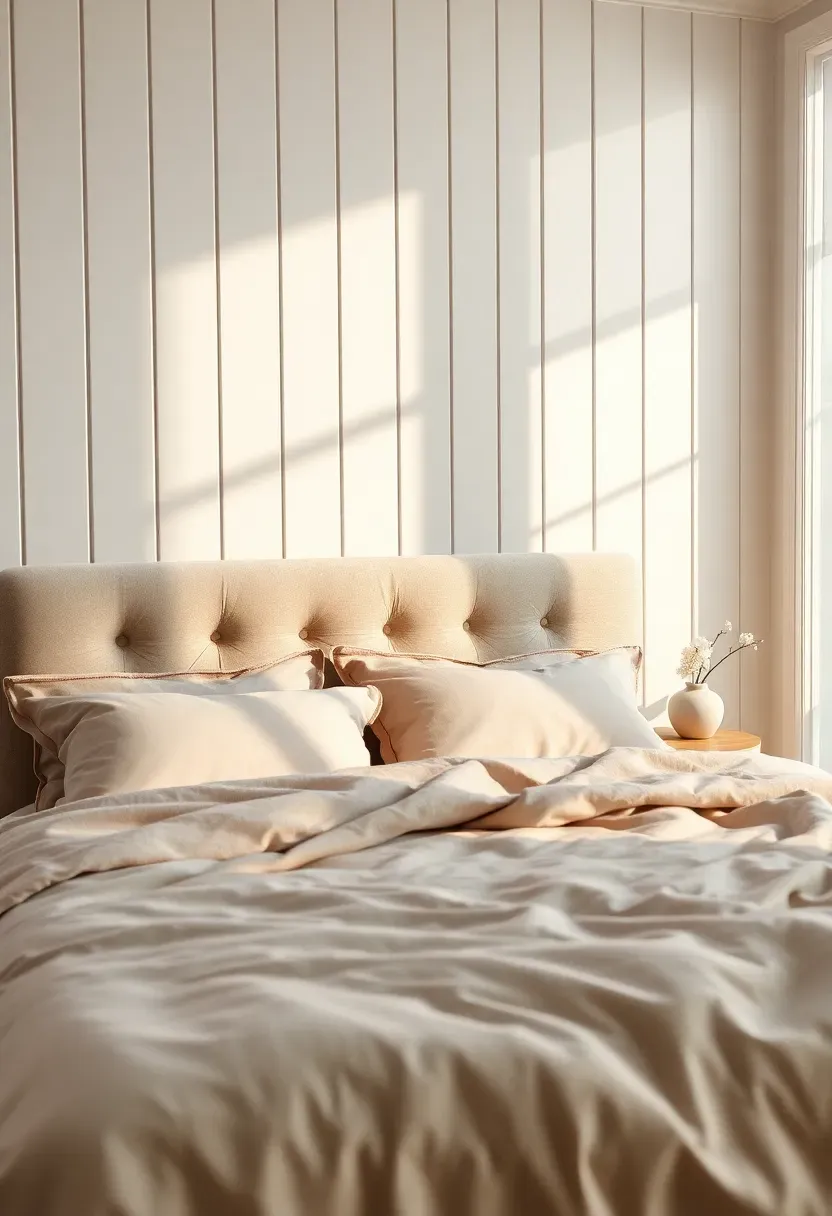
6. Floor-to-Ceiling Board and Batten
Board and batten adds vertical lines and shadow depth to flat drywall, giving an otherwise builder-grade bedroom the look of custom millwork. Running the battens from floor to ceiling — rather than stopping at chair rail height — makes the treatment feel modern rather than traditional.
Step 1: Plan the Layout
Mark batten placement at equal intervals across the wall. A 12-inch spacing works well for most bedrooms. Wider spacing reads as farmhouse; narrower spacing feels more formal.
Step 2: Install and Caulk
Nail battens to a flat backing board, then caulk every seam. The caulk step is what separates a professional result from a DIY project that looks unfinished.
Step 3: Paint Everything One Color
The magic of board and batten comes from shadow lines, not color contrast. Paint the battens and backing the same shade — a warm white, soft sage, or muted blue — so the dimension does the work.
What to Watch Out For
- Use MDF battens, not solid wood, to prevent warping and cracking over time
- Prime before painting; raw MDF absorbs unevenly and leaves visible blotches
Recommended
Items for this idea
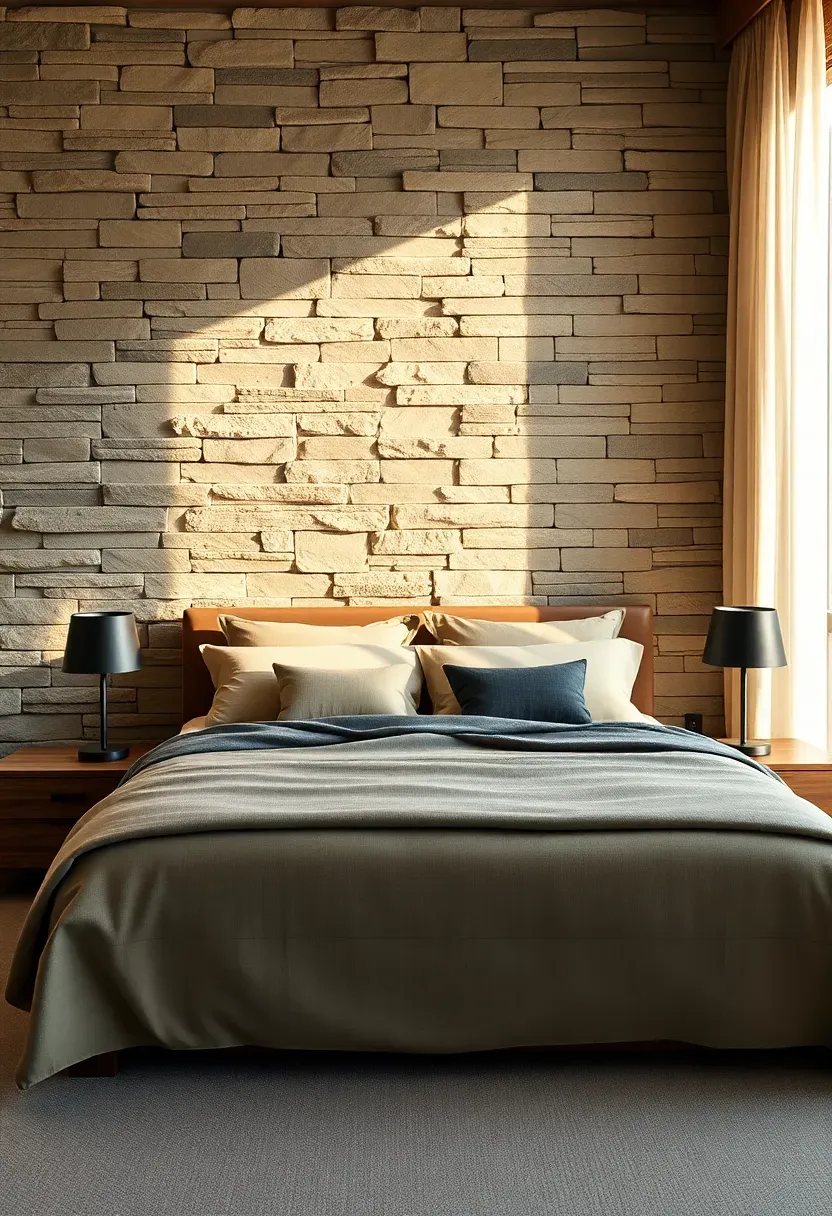
7. Natural Stone Veneer
Stone brings weight, permanence, and a grounding quality that no synthetic material can fully replicate. Lightweight stone veneer panels allow you to install the look of a full stone wall without structural reinforcement, making this once-exclusive treatment accessible to bedrooms of any size.
Comparing: Natural Stone vs. Faux Stone
Natural stone veneer: Real stone sliced thin. Unique grain patterns, authentic texture, heavier, higher cost. Best for homeowners who prioritize authenticity and long-term value.
Faux stone panels: Molded from polyurethane or high-density foam. Lightweight, easy to cut, budget-friendly. Some high-end faux options are nearly indistinguishable from real stone at a distance.
Choose natural if: You want genuine material character and plan to stay long-term. Choose faux if: You rent, want a weekend project, or are working with a tight budget.
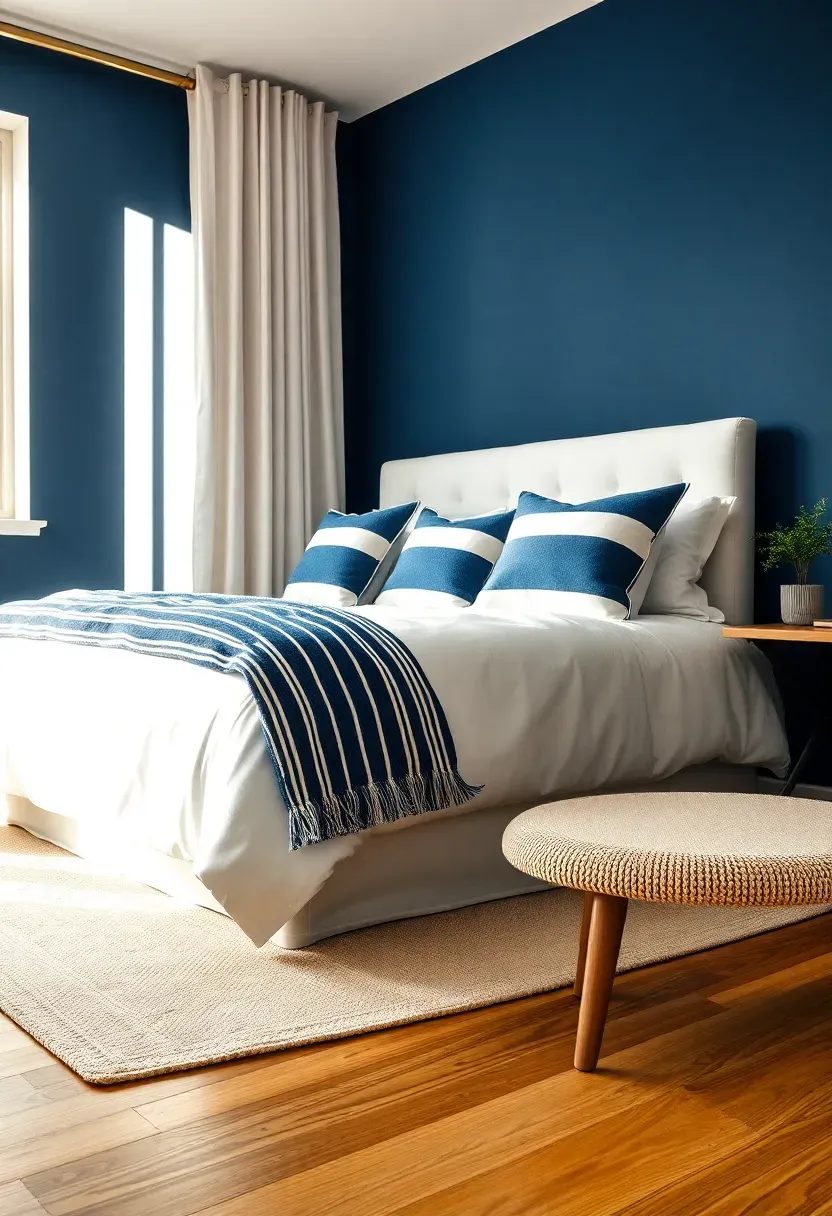
8. Moody Navy Blue Paint
Navy blue is the quieter sibling of black — it brings drama and sophistication without swallowing light entirely. Behind a white or cream headboard, a navy wall creates a striking contrast that reads as both classic and contemporary.
Why It Works
Blue tones lower heart rate and promote calm, making navy an ideal choice for sleep spaces. It works across seasons: cool and crisp in summer, deep and enveloping in winter. Unlike trendier colors that date quickly, navy has remained a staple in interior design for over a century.
Tips for Getting It Right
- Use a satin finish rather than matte for navy — flat sheens can look chalky in dark tones
- Layer warm metals like brass or copper on the accent wall to prevent the room from feeling cold
- Paint the ceiling white to maintain a sense of height and airiness above the dark wall
Recommended
Items for this idea
9. Woven Rattan Panel
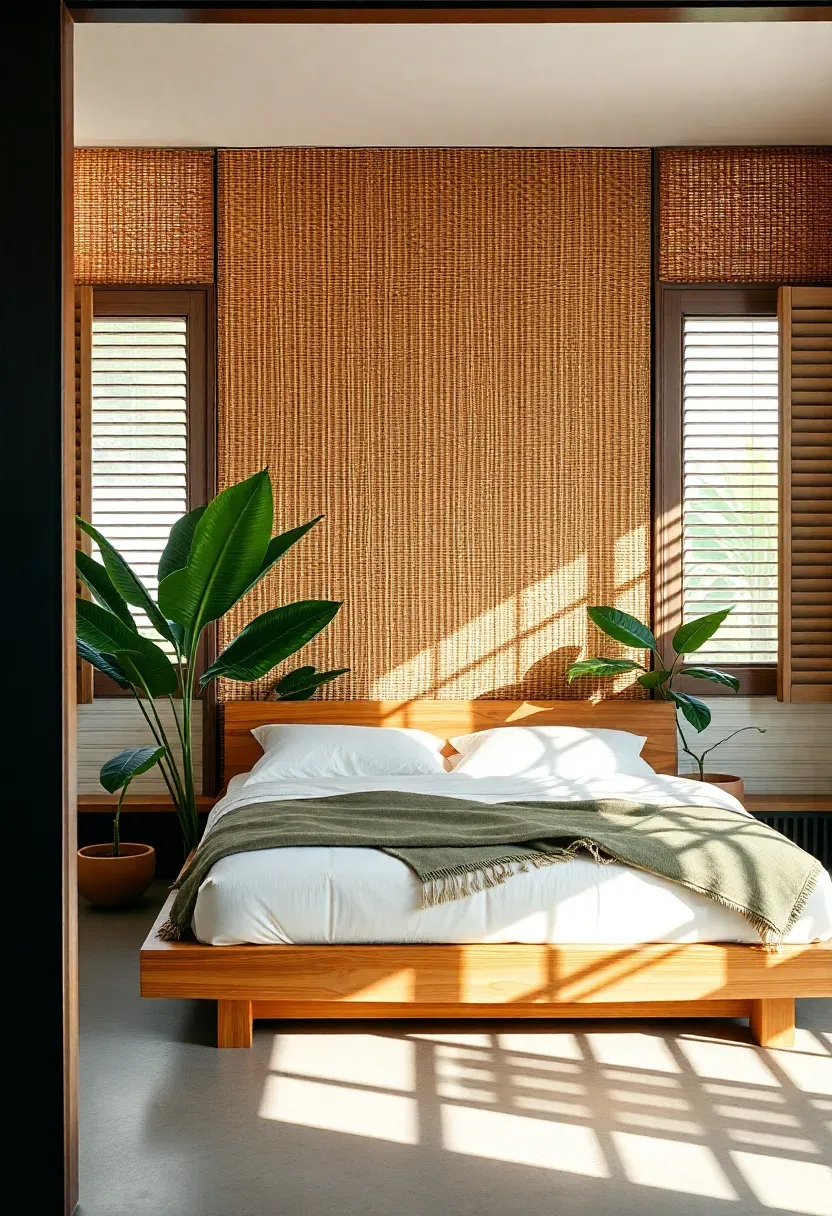
Rattan panels bring organic texture and a relaxed coastal or tropical energy to the bedroom. Mounted behind the bed, they create visual warmth that feels handmade and personal — far removed from mass-produced wallboard.
The Core Issue
Bedrooms with smooth drywall on every surface can feel sterile and lack tactile interest, especially in rental units where permanent changes are restricted.
The Solution
Pre-woven rattan cane sheets come in standard sizes and attach to a wooden frame that mounts directly to the wall. The open weave pattern catches light and shadow beautifully, creating depth that changes throughout the day. For renters, use Command strips or a freestanding frame leaned against the wall.
Pros and Cons
Pros: Lightweight and breathable, adds warmth without paint, removable for renters, pairs well with boho, coastal, and Japandi styles Cons: Collects dust in the weave (vacuum with a brush attachment monthly), can yellow in direct prolonged sunlight
10. Oversized Mural Art
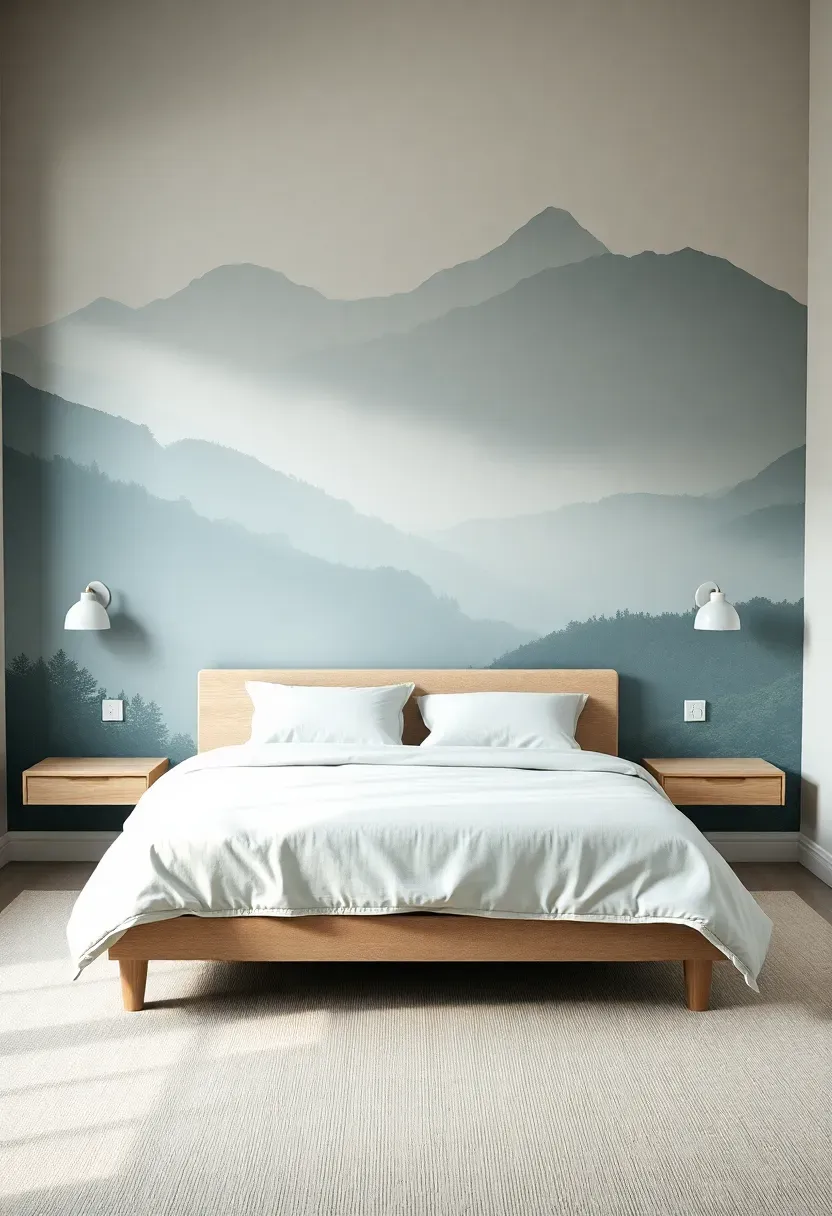
A wall-sized mural eliminates the need for individual art pieces and turns the bedroom into an immersive environment. From misty mountain landscapes to abstract watercolor washes, murals set a mood that no gallery wall can match.
Murals work best when they occupy the full wall from floor to ceiling. Partial coverage tends to look like a poster that outgrew its frame.
Practical Recommendations
- Custom-printed peel-and-stick murals let you match exact wall dimensions
- Choose muted, desaturated imagery for sleep spaces — vivid neon colors stimulate rather than soothe
- Avoid murals with a clear horizon line that does not align with your headboard height; the visual mismatch is distracting
- If you paint the adjacent walls, pull a secondary color from the mural palette for cohesion
Recommended
Items for this idea
11. Reclaimed Barn Wood
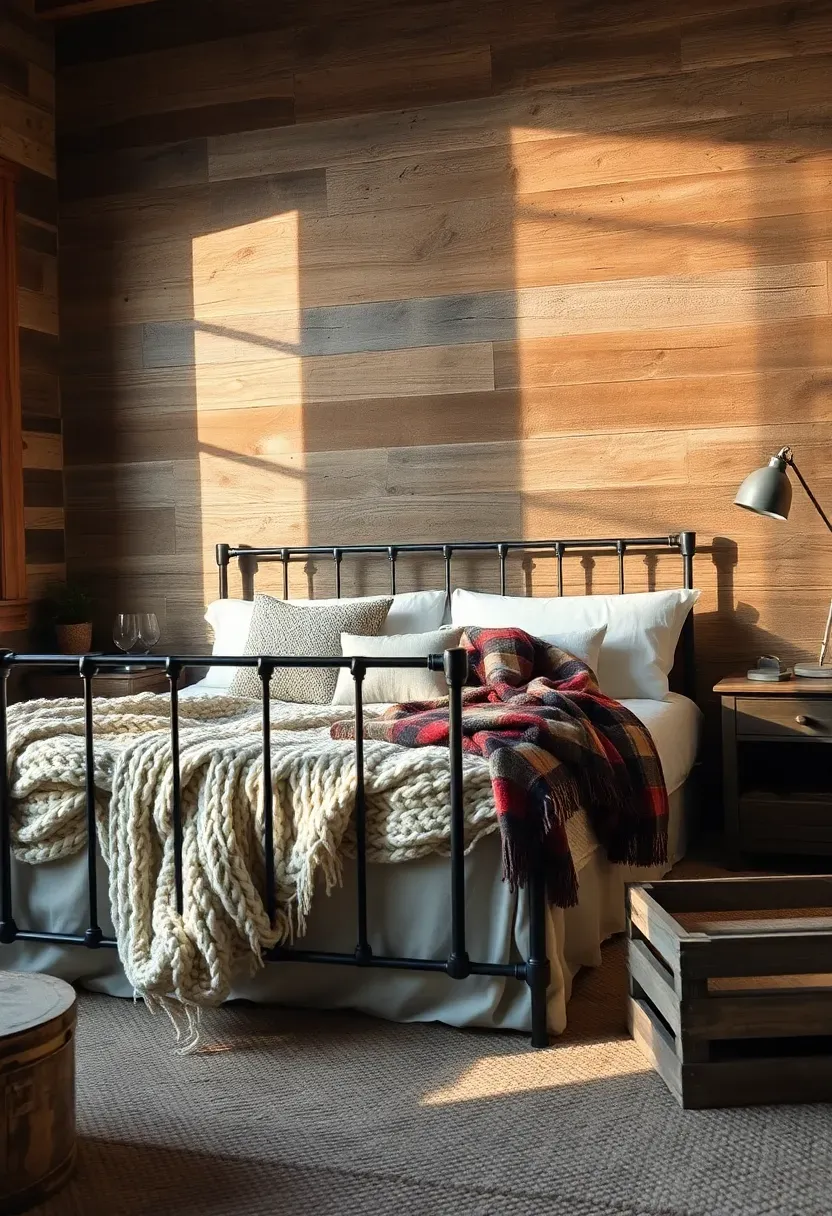
Salvaged barn wood carries history in every plank — nail holes, weathered grain, and color variations that no factory can replicate. Arranged horizontally behind the bed, it brings rustic warmth and storytelling to even the most modern bedroom layout.
How to Source and Install
Start by checking local salvage yards, demolition resellers, or online marketplaces for authentic planks. Kiln-dried reclaimed wood is essential to kill any hidden pests. Stagger the plank lengths for a natural, unplanned appearance rather than lining up the seams in rigid rows.
Tips for Getting It Right
- Sand lightly to remove loose splinters but preserve the aged patina
- Install over a plywood backer panel so individual planks can be swapped if damaged
- Seal with a clear matte finish to protect the wood without adding artificial shine
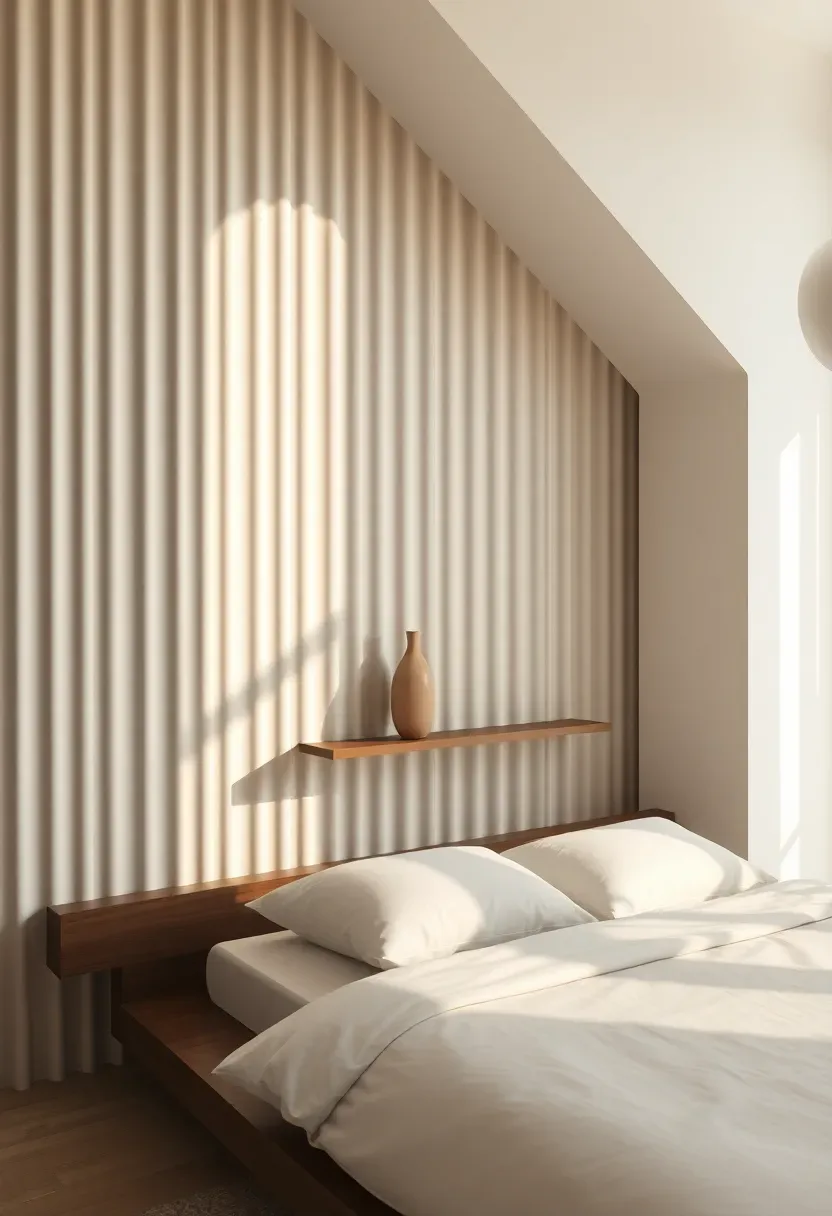
12. Fluted Plaster Columns
Fluted surfaces — characterized by evenly spaced vertical grooves — bring a sense of architectural refinement that recalls classical columns but in a thoroughly modern application. When rendered in plaster across a full bedroom wall, the result is a play of light and shadow that changes with the sun's angle throughout the day.
Step 1: Build the Template
Create a template from a strip of acrylic or MDF cut to your desired flute width and depth. Most residential applications use flutes between 20 mm and 40 mm wide.
Step 2: Apply Base Plaster
Skim a smooth plaster base coat across the entire wall. Allow it to cure fully before marking your flute positions.
Step 3: Score and Shape
Use the template to score even grooves while the finishing coat is still workable. A consistent hand pressure ensures uniform depth across the full width.
What to Watch Out For
- Hire a plasterer if you have not worked with wet plaster before; timing is critical
- Warm white or sandstone tones enhance the shadow effect better than cool white
Recommended
Items for this idea
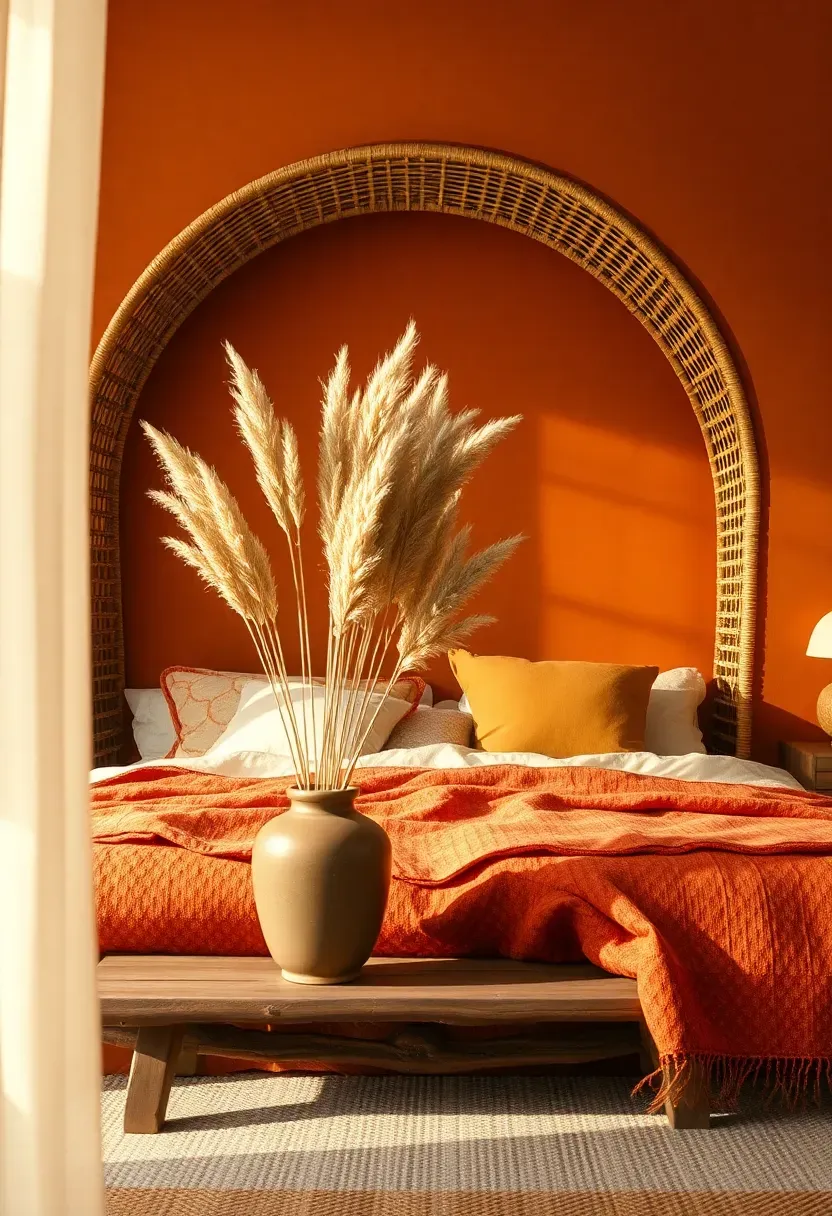
13. Terracotta Clay Paint
Terracotta bridges the gap between neutral and bold. Its earthy warmth evokes sun-baked Mediterranean villages and pairs naturally with raw wood, dried botanicals, and woven textiles. As an accent wall color, it reads as inviting rather than aggressive — an approachable alternative to the reds and oranges that can overwhelm a sleep space.
Why It Stands Out
Clay-based paints have a mineral quality that standard latex cannot achieve. They absorb and reflect light differently, creating subtle tonal shifts across the wall that give the surface a handcrafted depth. This is especially evident in bedrooms with side-facing windows where raking light hits the surface at an angle.
Practical Recommendations
- Pair terracotta with sage green accents for a Mediterranean palette
- Use warm-toned wood furniture (walnut, cherry) rather than cool gray or bleached wood
- Layer cream and rust-colored textiles to echo the wall without matching it exactly
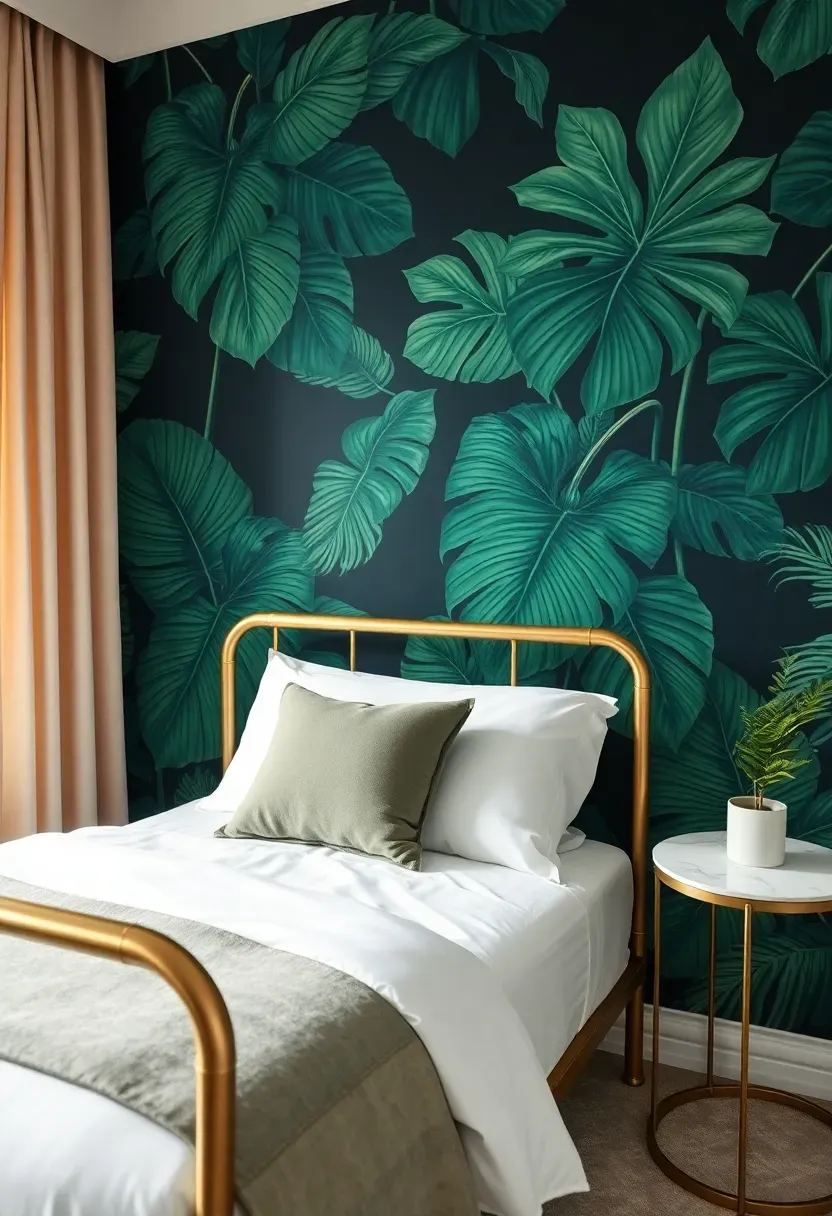
14. Botanical Print Wallpaper
Large-scale botanical wallpaper fills a bedroom with a sense of lush abundance. Oversized leaf patterns, trailing vine motifs, and tropical frond designs create an indoor garden atmosphere that feels both dramatic and calming at the same time.
Origins and History
Botanical wallpaper has roots in 18th-century Europe, where hand-painted Chinese export wallpapers depicting gardens and exotic plants became prized possessions in wealthy homes. The tradition evolved through the Arts and Crafts movement with William Morris's iconic designs and continues today with digitally printed patterns that capture photographic detail.
Modern Interpretation
Contemporary botanical wallpapers lean toward dark backgrounds with richly saturated foliage — a departure from the pastel florals of decades past. This darker palette works exceptionally well as a bedroom accent wall because it adds visual richness while maintaining a cocooning atmosphere. Some designers pair botanical walls with real trailing plants on the adjacent surfaces for a seamless indoor-outdoor transition.
How to Apply at Home
- Choose a pattern where the largest leaf or flower fits comfortably within your wall height
- Dark backgrounds hide seams better than light ones
- Keep bedding and curtains simple to avoid competing with the pattern
- Removable wallpaper options allow seasonal changes without wall damage
Recommended
Items for this idea
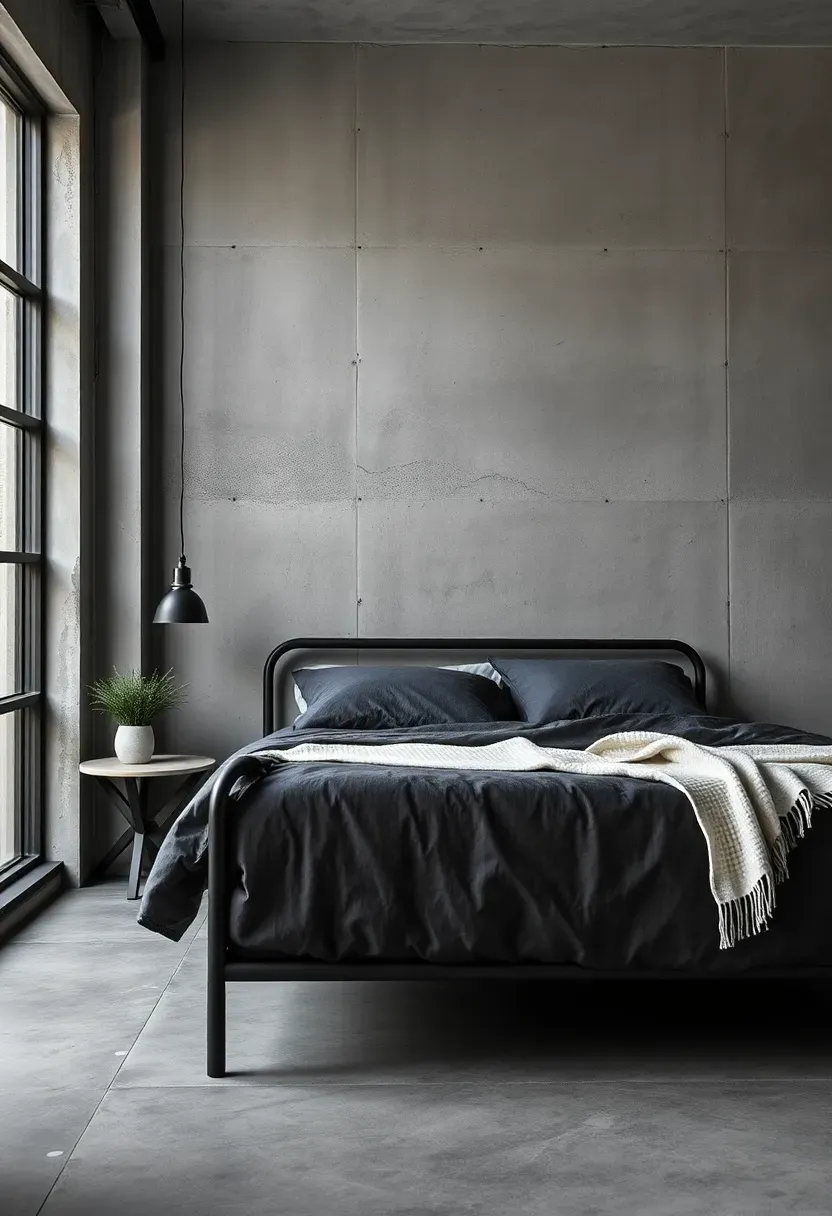
15. Concrete Effect Microcement
Microcement delivers the raw, urban edge of poured concrete without the weight, cold, or structural requirements. Applied in thin layers over existing surfaces, it creates a seamless, joint-free wall with a tactile surface that feels surprisingly warm to the touch.
Comparing: Microcement vs. Actual Concrete
Microcement: 2-3 mm thick coating applied over drywall, plaster, or tile. Available in dozens of colors. Flexible and crack-resistant. Installation takes 2-3 days including cure time.
Actual concrete: Structural material requiring formwork and curing. Limited to gray tones. Heavy, cold to touch, prone to hairline cracks. Only practical in new construction or renovations.
Choose microcement if: You want the aesthetic without the structural commitment. Choose actual concrete if: You are building from scratch and want full authenticity.
Recommendation
For bedroom accent walls, microcement wins on every practical measure. It stays warmer than real concrete, takes color beautifully, and can be sealed to a matte or satin finish.
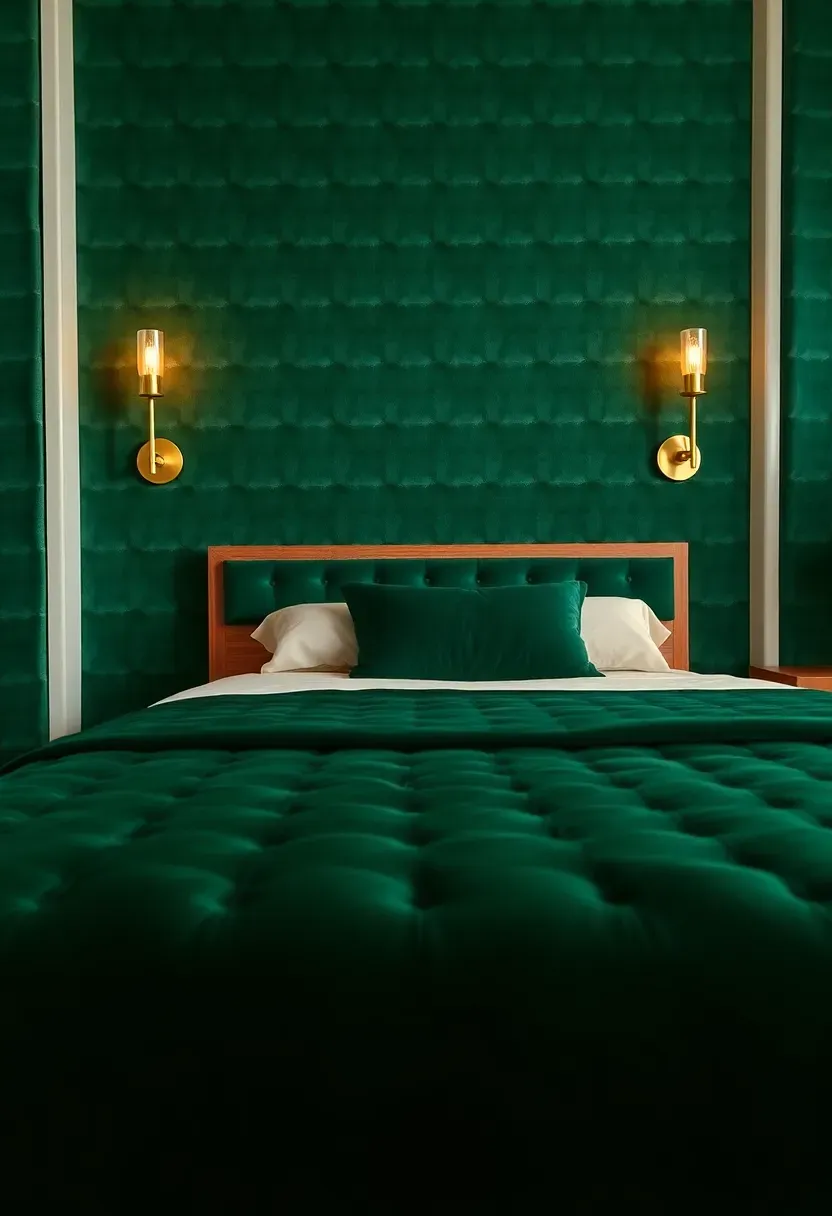
16. Velvet Upholstered Headboard Wall
Extending an upholstered panel from behind the headboard to cover the entire wall creates a statement that is equal parts visual and tactile. Velvet, with its light-catching pile, makes the wall appear to shift between deep shadow and luminous sheen depending on the angle of view.
Why It Works
Sound absorption is the hidden benefit. A fully upholstered wall dramatically reduces echo and outside noise, turning the bedroom into a quiet cocoon. The padded surface also eliminates the cold feel of drywall when your hand or pillow touches it at night.
Tips for Getting It Right
- Jewel tones (emerald, sapphire, plum) work best — they justify the luxury of floor-to-ceiling velvet
- Install a padded batting layer behind the velvet for extra sound dampening and a pillowed look
- Use a performance velvet fabric rated for upholstery to resist pilling and staining over time
Recommended
Items for this idea
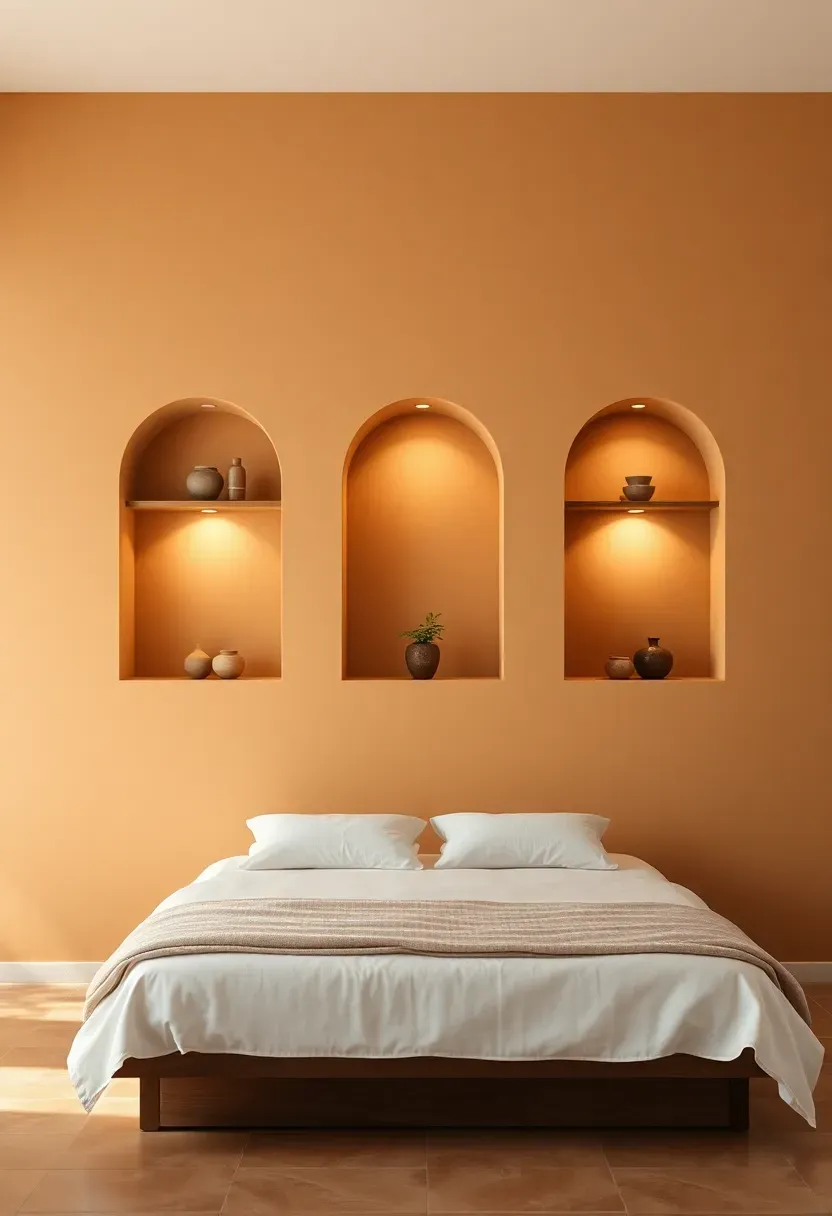
17. Arched Niche with Shelving
Carving arched niches into an accent wall adds architectural character that feels bespoke and timeless. These curved recesses soften the rigid geometry of a standard bedroom while providing functional display space for books, ceramics, or small plants.
Step 1: Frame the Arches
Build arch shapes from flexible MDF or plywood strips attached to the wall studs. Most bedroom niches work well at 400-600 mm wide and 900-1200 mm tall.
Step 2: Finish the Interior
Line the niche interior with a contrasting material — a warm wood, a painted color a few shades darker than the wall, or a thin stone tile for texture.
Step 3: Add Lighting
Recess a small LED puck light at the top of each arch. The downward wash of light turns each niche into its own tiny stage, highlighting whatever you display inside.
What to Watch Out For
- Odd numbers of niches (three or five) look more balanced than even numbers
- Keep niche depth under 150 mm unless your wall can accommodate deeper framing
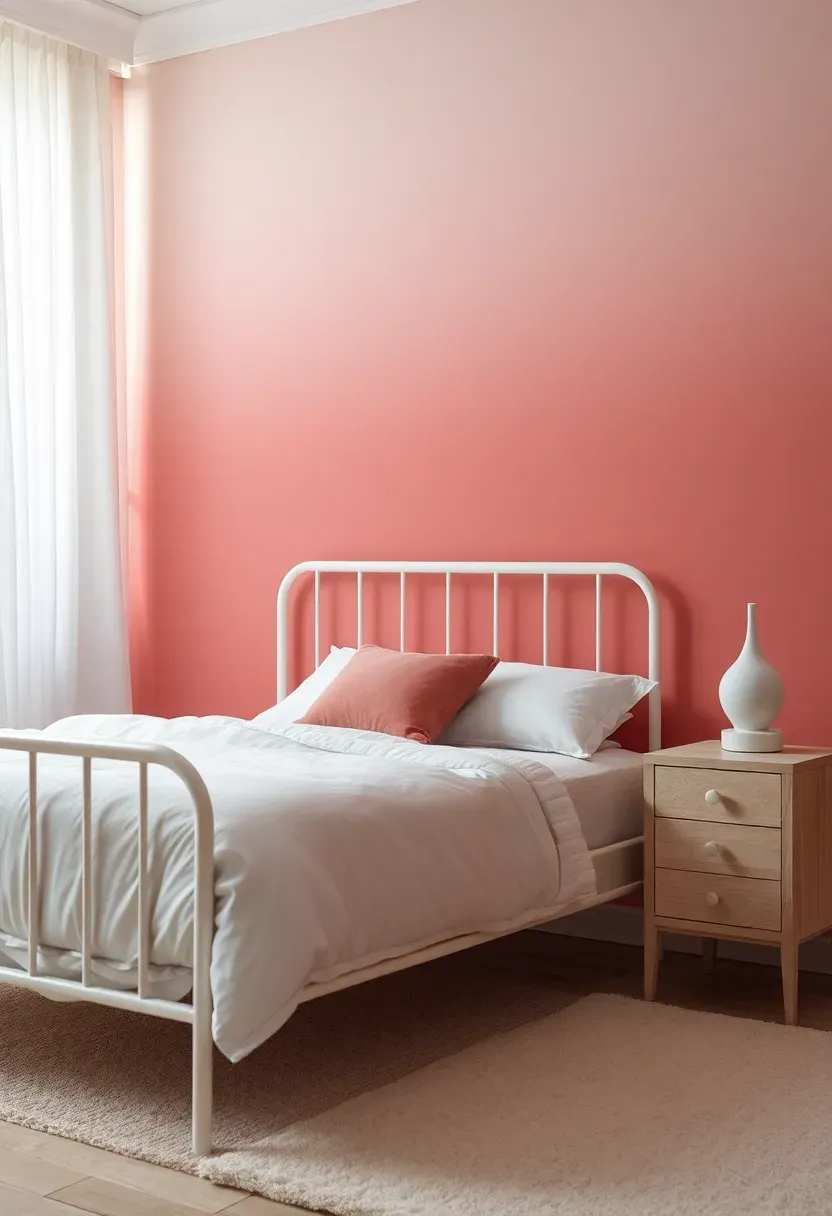
18. Ombre Gradient Paint
An ombre wall transitions smoothly from a deep tone at the base to a lighter version at the top, mimicking the sky at dawn. It adds visual height and a dreamlike quality that feels both artistic and restful — a technique that turns a simple paint job into a genuine conversation piece.
The Core Issue
Solid-colored accent walls can sometimes feel flat and one-dimensional, especially in bedrooms with limited wall decor or artwork. A single shade lacks movement.
The Solution
Start with your chosen color at full saturation along the baseboard. Mix progressively more white into the paint as you work upward, blending each band into the next with a damp roller while the paint is still wet. The result is a wall that appears to breathe, pulling the eye gently upward and creating an illusion of expanded space.
Pros and Cons
Pros: Costs nothing extra beyond paint and patience, completely unique each time, pairs with any decor style Cons: Technique requires speed and confidence (practice on cardboard first), difficult to touch up if scuffed
Recommended
Items for this idea
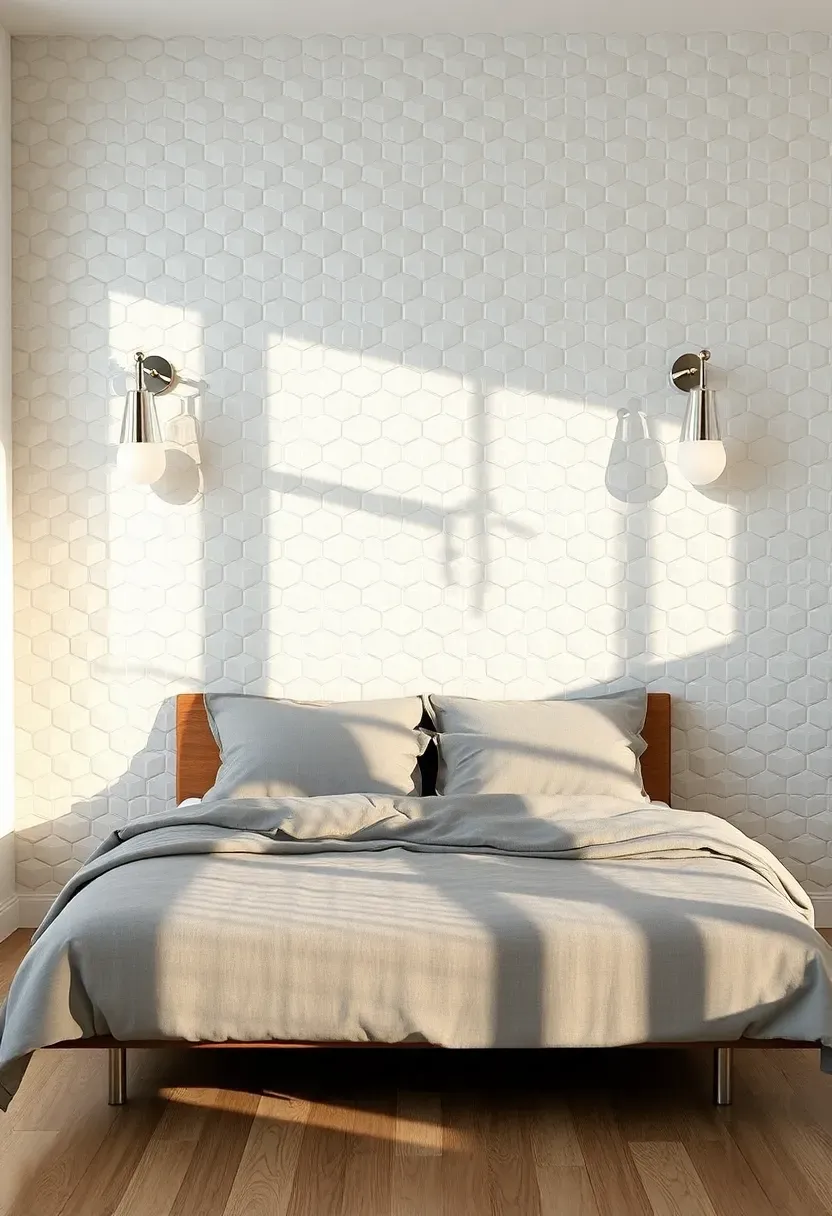
19. Textured 3D Wall Tiles
Three-dimensional wall tiles transform a flat surface into a sculptural feature. Available in materials ranging from gypsum to recycled plant fiber, these tiles create repeating patterns of peaks and valleys that catch light in constantly shifting ways.
Choosing the Right Pattern
Wave patterns bring organic fluidity and calm — ideal for bedrooms. Diamond or faceted patterns feel more geometric and modern. Avoid overly intricate patterns in small bedrooms; the busy texture can shrink the perceived space.
Practical Recommendations
- Paint all tiles the same color as the surrounding wall for a tone-on-tone effect that emphasizes shape over contrast
- Mount on the wall behind the bed only; covering more than one wall with 3D tiles creates visual overload
- White or off-white tiles in bedrooms that receive ample natural light produce the most dramatic shadow play
20. Gallery Wall Grid
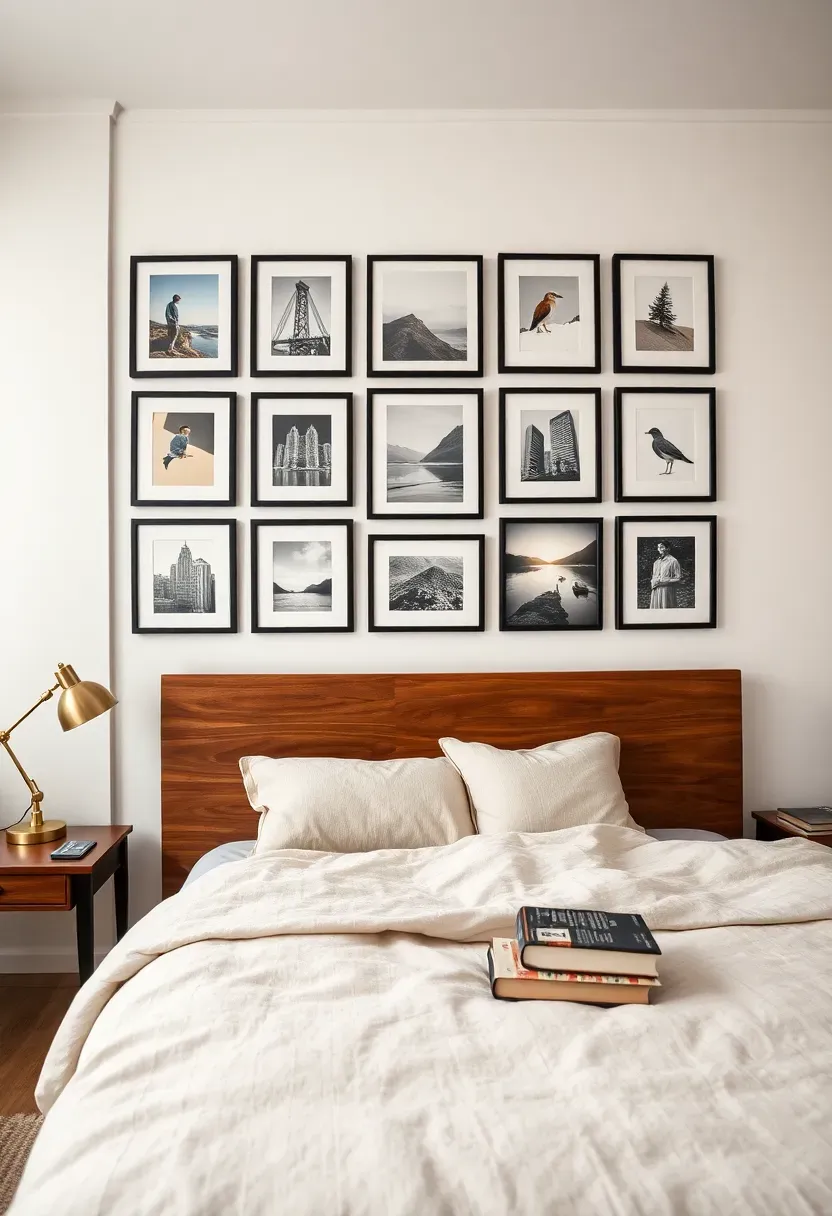
A tightly arranged grid of framed prints, photographs, and artwork can serve as the accent wall itself — no paint or wallpaper required. The key distinction from a casual salon-style hang is precision: uniform frames, consistent spacing, and a deliberate grid layout.
How to Build the Perfect Grid
Select frames in one finish (black, natural wood, or brass) and one size for maximum impact. Lay out the full arrangement on the floor before touching a single nail. Use painter's tape on the wall to mark each frame position. Maintain exactly the same gap between every frame — 50 mm works well for most standard sizes.
Tips for Getting It Right
- Black-and-white photography or line drawings create the most cohesive grid
- Avoid mixing too many color palettes within the grid; it undermines the structured feel
- Anchor the grid centered on the headboard so it reads as a unified feature rather than floating art
Recommended
Items for this idea
21. Black Accent with Brass Fixtures
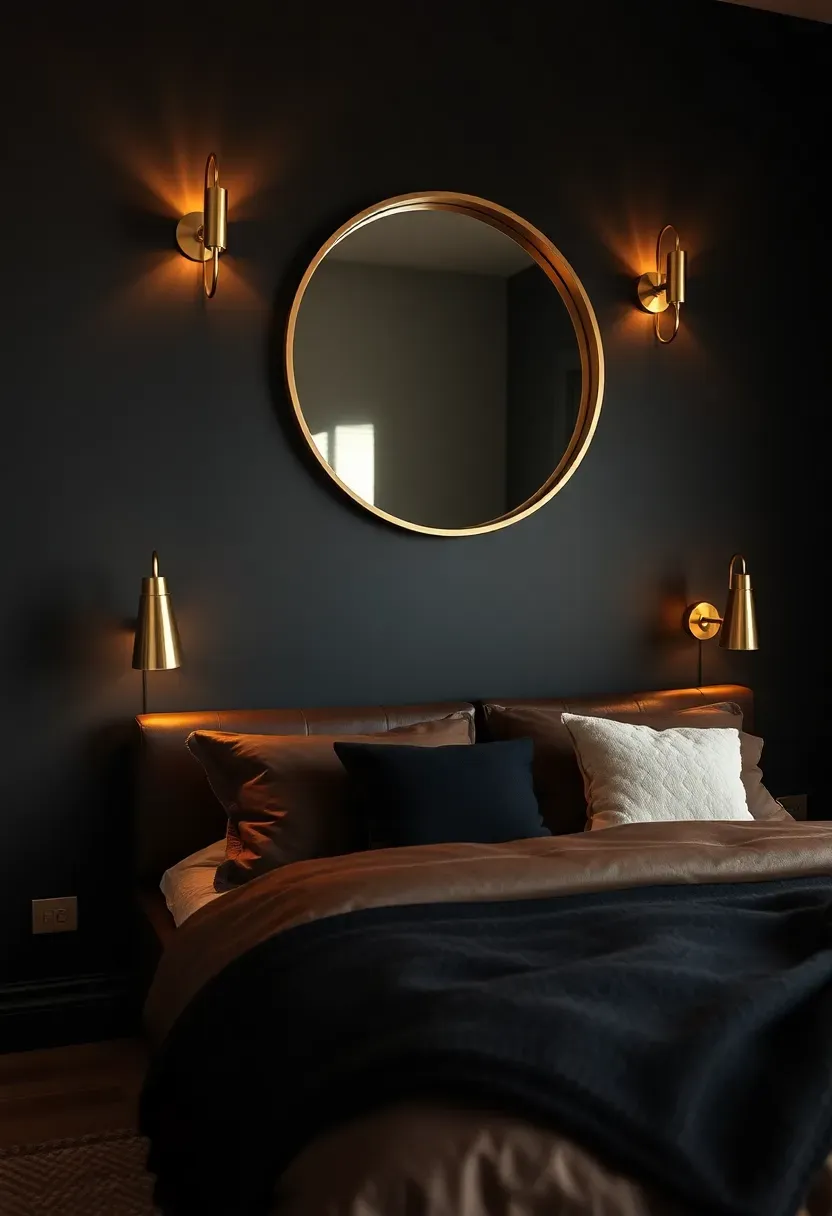
A matte black accent wall is the boldest move on this list — and when balanced correctly, it is also one of the most elegant. Black absorbs light, eliminates visual clutter, and pushes every object in front of it into sharp relief. Paired with warm brass sconces, a brass-framed mirror, or gilded picture frames, the contrast between dark wall and luminous metal creates a gallery-like sophistication.
Why It Works
Black walls flip the conventional bedroom hierarchy. Instead of the wall being a backdrop, it becomes the anchor that elevates everything placed against it. A simple white pillowcase or a ceramic vase suddenly reads as a deliberate design choice rather than an afterthought.
Tips for Getting It Right
- Use a true matte finish to avoid glare and fingerprint visibility
- Warm the room with plenty of layered lighting: wall sconces at eye level, bedside lamps, and a floor-standing reading light
- Balance with at least one large light-colored textile (a cream throw, white curtains) so the room does not feel closed in
- Brass or warm gold metals work better than chrome or silver against black — the warmth prevents the palette from feeling clinical
Quick FAQ
Is an accent wall still on trend in 2026? Absolutely. The concept has evolved beyond a single painted wall into a full range of textured, layered, and dimensional treatments. Designers now use accent walls as architectural features rather than just color blocks, which keeps the idea fresh and relevant.
Should the accent wall always go behind the bed? Not necessarily, but behind the bed is the most common and effective placement because it naturally frames the room's focal point. Other strong options include the wall visible from the doorway or a wall with an interesting architectural detail like a window alcove or fireplace.
Can renters create accent walls without permanent damage? Yes. Peel-and-stick wallpaper, removable murals, rattan panels mounted on Command strips, and leaning oversized artwork against the wall are all renter-friendly options that leave no trace when you move out.
Which colors make a small bedroom accent wall feel larger? Contrary to popular belief, deeper tones can make a wall appear to recede, creating a sense of depth. Dark navy, forest green, and charcoal all work well in small bedrooms when paired with lighter adjacent walls and ample lighting. Avoid very warm saturated colors like bright red, which tend to advance visually.
How do you choose between paint, wallpaper, and texture for an accent wall? Consider your commitment level and skill set. Paint is the most affordable and easiest to change. Wallpaper offers pattern complexity that paint cannot match. Textured treatments like wood slats, stone veneer, or 3D tiles add a tactile dimension that photographs and real life both reward, but they require more installation effort and budget.
A bedroom should feel like a place you actually want to be in at the end of the day — not just a room with a bed in it. Start with one wall. Pick the material or technique that excites you most, commit to it fully, and let the rest of the room follow its lead. That single decision will change how you experience the space every time you walk through the door.
Pinterest cover for 21 Accent Wall Bedroom Ideas That Make a Bold Statement
About the author
OBCD
CGI visualization and interior design content. We create detailed 3D renders and curate practical design ideas for every room in your home.