25 AI Coastal Bathroom Ideas for a Breezy Retreat
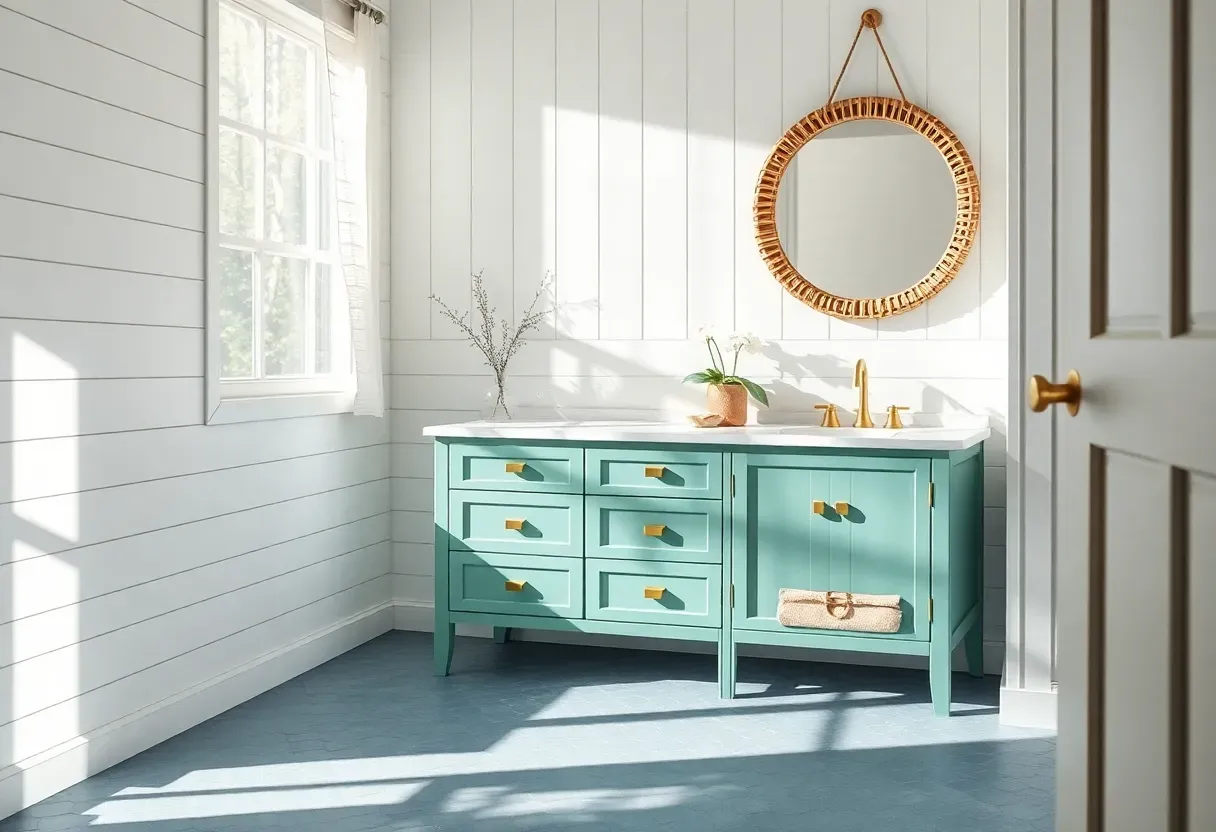
Picture this: you step into your bathroom and the first thing that hits you is a sense of calm. The tiles under your feet echo the pale sand of a quiet shoreline, the walls carry the soft blue-gray of an overcast sea, and every material — from the woven basket holding folded towels to the driftwood-framed mirror — whispers of salt air and open water. That is the promise of coastal bathroom design, and AI rendering tools have made it easier than ever to visualize these spaces before committing to a single tile purchase.
In this collection you will find 25 AI-generated coastal bathroom concepts, each exploring a different angle on the seaside aesthetic. We move from classic nautical palettes to unexpected tropical twists, covering materials, color stories, and layout strategies that work in real homes.
Table of Contents
- Weathered White Shiplap Sanctuary
- Seafoam Vanity with Brass Hardware
- Pebble Floor Walk-In Shower
- Driftwood and Linen Powder Room
- Navy and White Nautical Contrast
- Coral Accent Tile Feature Wall
- Open Shelf Coastal Cottage
- Pale Aqua Freestanding Tub Room
- Rope and Reclaimed Wood Details
- Sandy Beige Minimalist Retreat
- Tropical Coastal with Palm Leaf Wallpaper
- Seashell Mosaic Shower Niche
- Cape Cod Blue and White Classic
- Sun-Bleached Wood Ceiling Bathroom
- Coastal Farmhouse with Shaker Cabinets
- Turquoise Penny Tile Statement Floor
- Mediterranean Coastal Arched Mirror
- Sea Glass Green Double Vanity
- Whitewashed Brick and Copper Pipe
- Coastal Boho with Macrame and Rattan
- Storm Gray Spa Bathroom
- Lighthouse-Inspired Vertical Stripes
- Tide Pool Terrazzo Floor
- Pacific Northwest Coastal Dark Wood
- Sunset Coast Warm Tones
1. Weathered White Shiplap Sanctuary
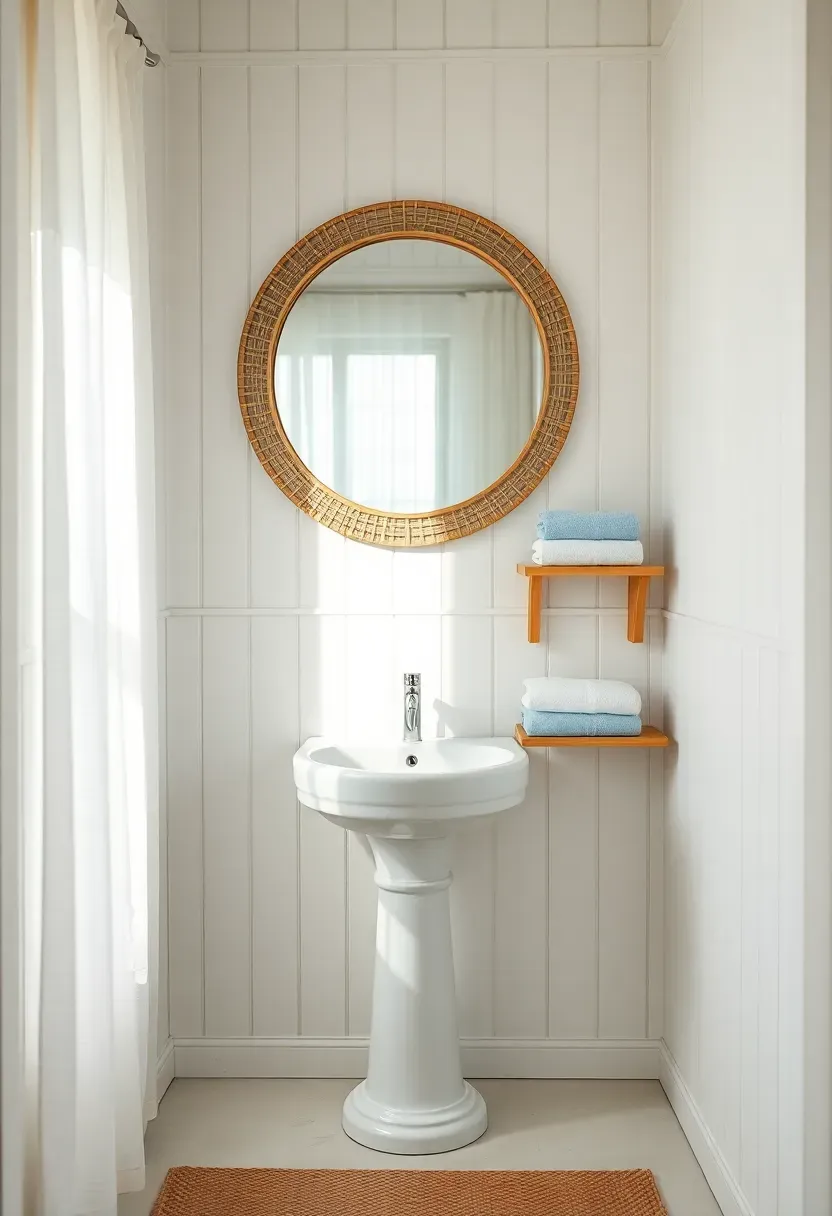
White shiplap has earned its place as the backbone of coastal bathroom design for good reason. Those horizontal planks evoke beach cottages without trying too hard, and the natural shadow lines between each board add subtle texture that plain drywall simply cannot deliver. When applied floor to ceiling, shiplap transforms even the smallest powder room into something that feels both expansive and intentional.
Tips for Making It Work
- Choose a slightly warm white (think Benjamin Moore White Dove) to avoid a sterile clinical look
- Seal the boards with a semi-gloss marine-grade finish to handle bathroom humidity
- Let one or two natural elements — a woven mirror frame, a sisal rug — do the decorating work
We picked a few things that go well with this idea: Avanti Seaglass Resin Toothbrush Holder (★4.6), Sweet Home Beach Shells Bathroom Set (4-Piece) (★4.4) and Sea Bathroom Accessories Set (4-Piece, Beige) (★4.6). As an Amazon Associate we earn from qualifying purchases.
2. Seafoam Vanity with Brass Hardware
The Core Issue
Standard white or gray vanities dominate bathrooms, and while they are safe choices, they rarely evoke a specific mood. Coastal design demands color that connects to water and sky without overwhelming the space.
The Solution
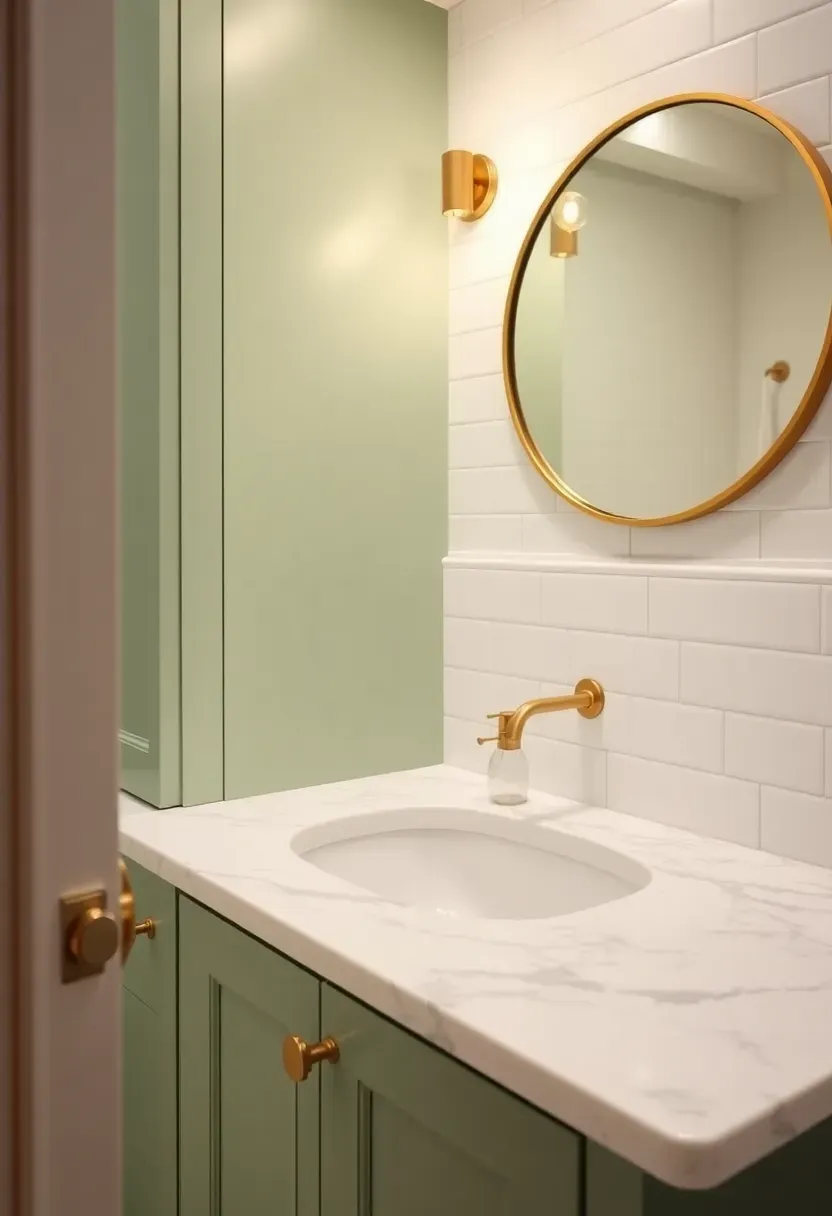
A seafoam green vanity strikes that balance perfectly. The shade sits between blue and green in a range that feels inherently aquatic, and when paired with brushed brass hardware, it gains a warmth that prevents the color from reading cold. White marble or quartz countertops keep the composition grounded. The result is a vanity that looks like it belongs in a restored seaside cottage — polished but not precious.
Pros and Cons
Pros: instantly establishes coastal identity, pairs with multiple accent colors, ages gracefully Cons: requires commitment to a specific palette, may feel dated if coastal trends shift
We picked a few things that go well with this idea: Handmade Round Rattan Wall Mirror (24") (★4.5), Barnyard Designs Rattan Farmhouse Mirror (25.5") (★4.4) and Boho Decorative Rattan Wall Mirror (24") (★5.0). As an Amazon Associate we earn from qualifying purchases.
3. Pebble Floor Walk-In Shower
Step 1: Choose the Right Stone
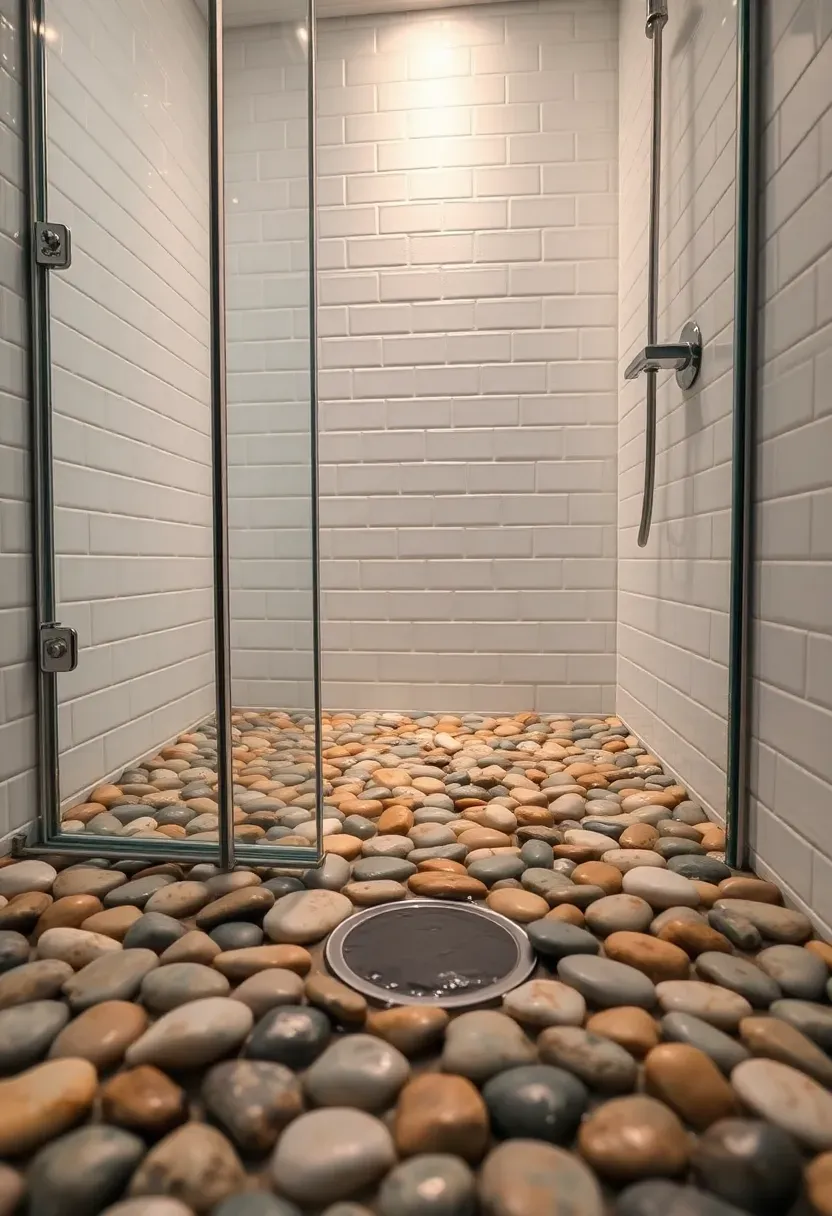
Select flat river pebbles in neutral tones — pale gray, tan, and soft white. Avoid highly polished stones, which lose the natural barefoot-on-the-beach feeling you are after.
Step 2: Set the Slope
A proper shower floor slopes toward the drain at roughly a quarter inch per foot. With pebble tile, this slope matters even more because water can pool between stones if drainage is off.
Step 3: Seal Thoroughly
Apply a penetrating stone sealer before grouting and again after. Pebble floors have enormous surface area exposed to water, and unsealed stone will harbor mildew within months.
What to Watch Out For
- Grout color matters — choose a medium gray that hides soap residue
- Test comfort underfoot before committing; some pebble tiles are genuinely uncomfortable
- Budget for professional installation; the slope and drain work require precision
We picked a few things that go well with this idea: Solid Teak Shower Bench with Shelf (20") (★4.6), AquaTeak Spa Teak Shower Bench (36") (★4.8) and AquaTeak Asia Teak Shower Bench (18") (★4.8). As an Amazon Associate we earn from qualifying purchases.
4. Driftwood and Linen Powder Room
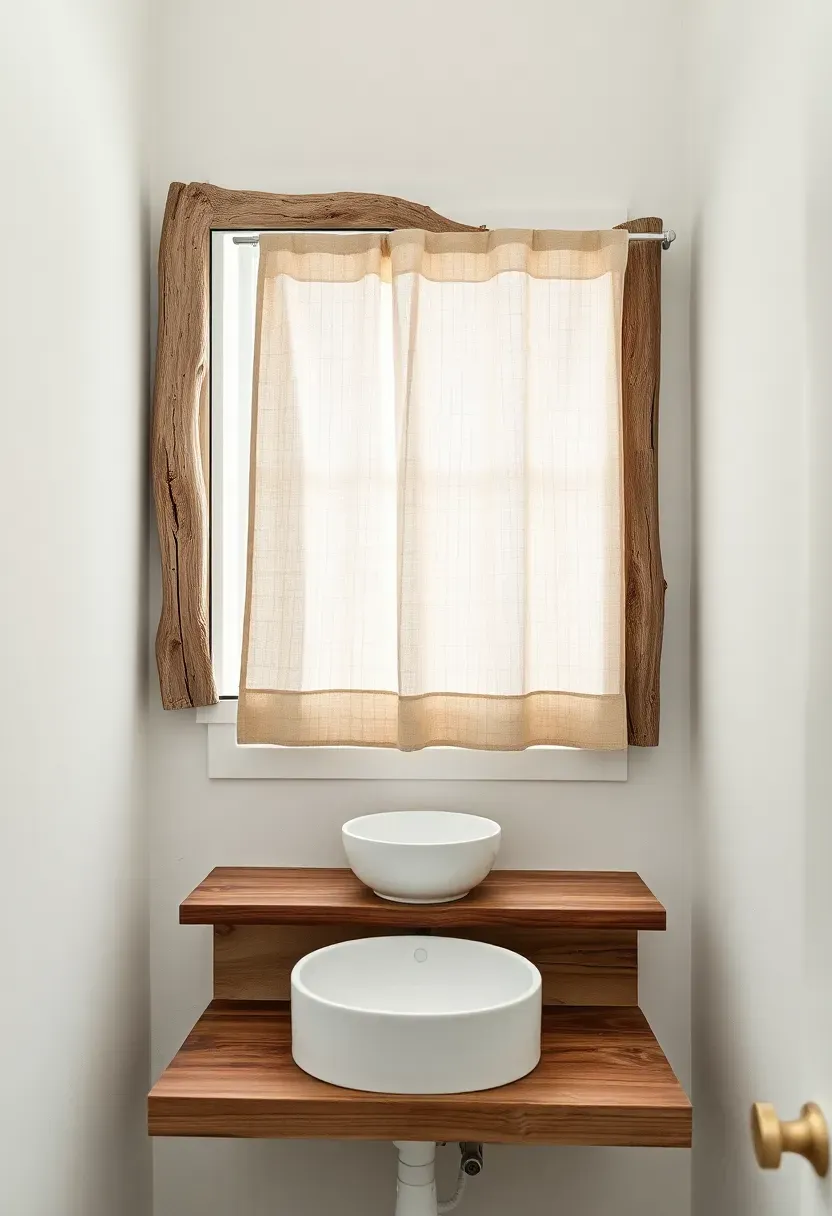
There is an entire design language built around found materials, and driftwood sits at the top of that vocabulary for coastal spaces. A mirror framed in sun-bleached, salt-worn wood immediately anchors the room to the shoreline. Pair it with a natural linen cafe curtain on the window — unlined, slightly wrinkled, filtering light the way canvas sails do — and you create a powder room that feels collected rather than decorated. A reclaimed wood floating shelf supporting a simple vessel sink completes the composition without adding visual clutter.
Practical Recommendations
- Source genuine driftwood from craft suppliers or beach cleanups; artificial versions look flat
- Treat driftwood with a clear matte polyurethane to prevent shedding and moisture damage
- Keep the palette to three materials maximum: wood, linen, and one hard surface like ceramic or stone
Recommended
Items for this idea
5. Navy and White Nautical Contrast
Comparing: Navy Walls vs. Navy Tile
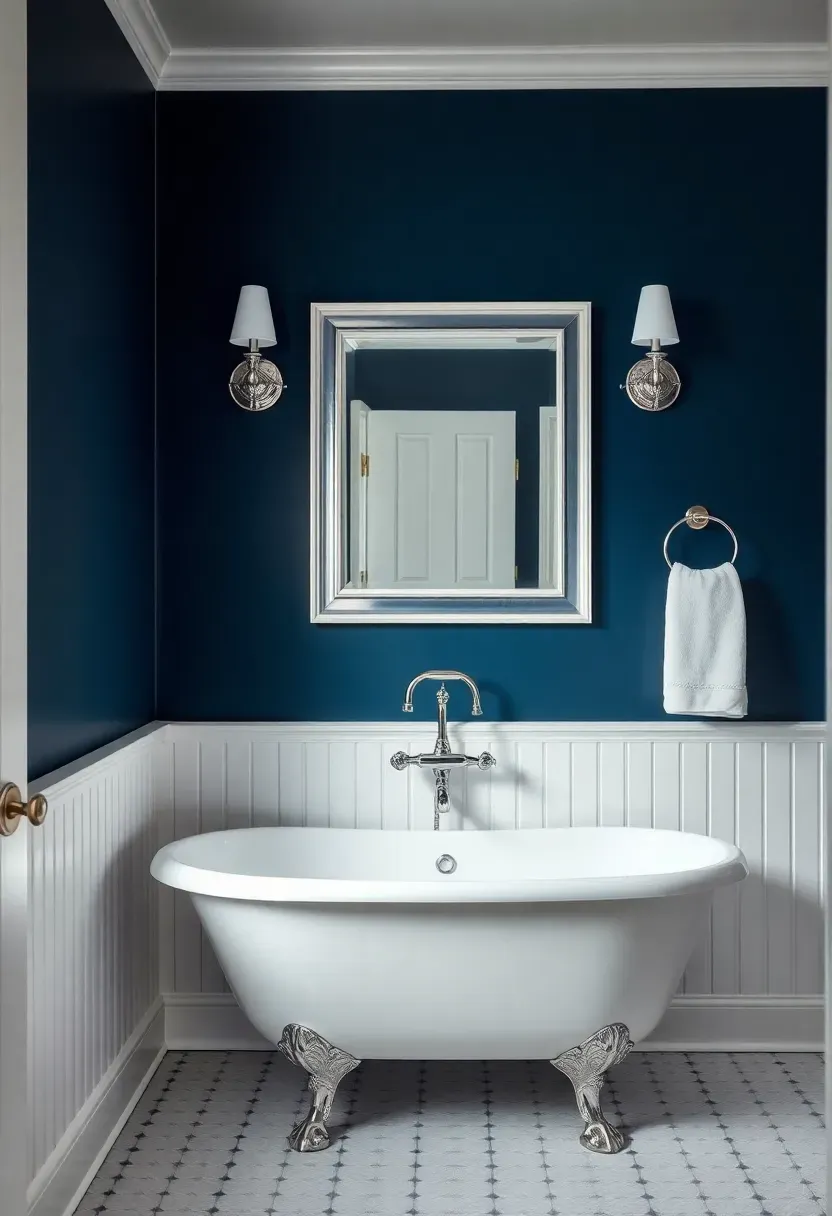
Navy blue delivers coastal authority differently depending on how you apply it. Understanding the trade-offs helps you commit with confidence.
Navy Walls
Paint is the faster, cheaper route. A deep navy above white wainscoting creates the classic yacht-club division that has defined nautical interiors for over a century. Matte finish absorbs light and feels sophisticated. Repainting takes a weekend if you change your mind.
Navy Tile
Ceramic or porcelain navy tile — especially in a subway or herringbone pattern — adds dimension through texture and grout lines. It handles moisture better than paint and lasts decades. However, it costs significantly more and requires professional installation.
What to Choose
Choose walls if: you want flexibility, lower cost, and easier updates Choose tile if: the surface faces direct water contact or you want permanent character
6. Coral Accent Tile Feature Wall
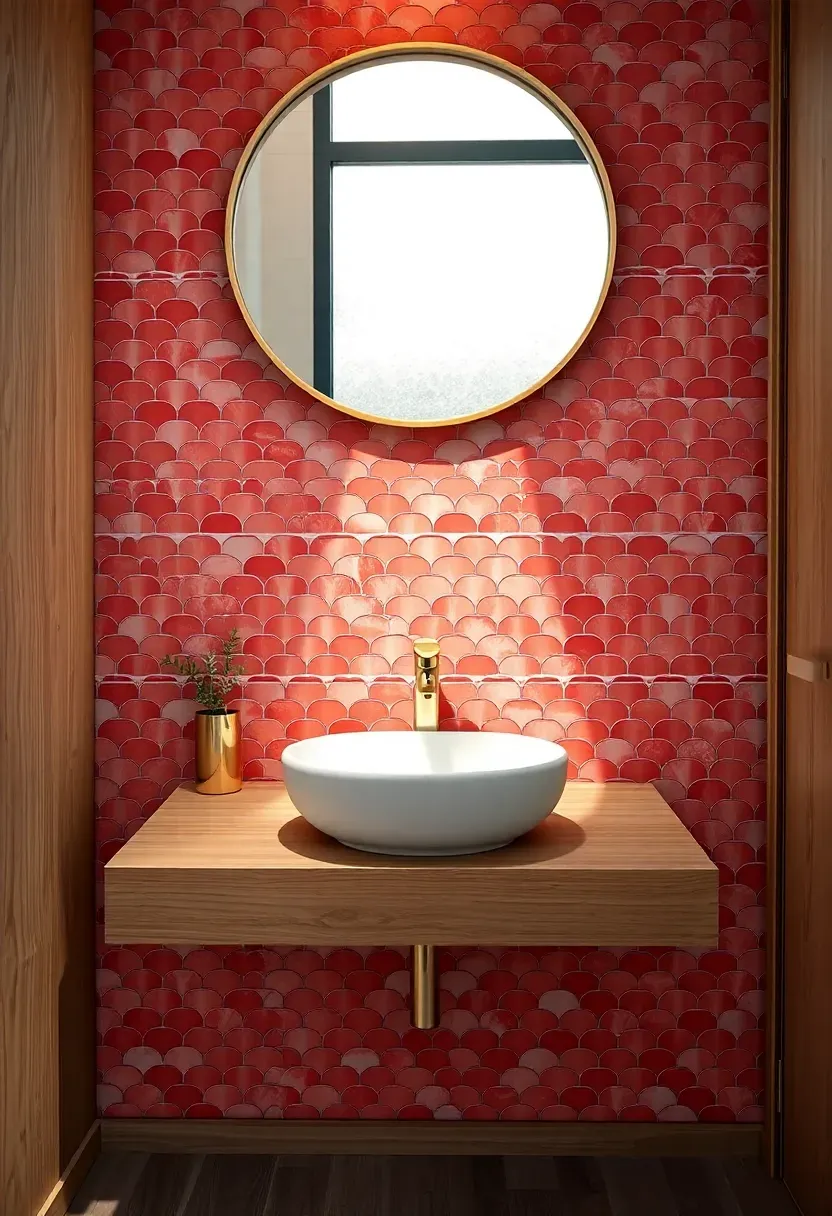
Coral belongs to the ocean, and bringing that warm pink-orange tone into a bathroom through fish scale or scallop tiles creates a feature wall that feels alive. Unlike flat paint, the dimensional shape of each tile catches light at different angles throughout the day, producing a rippling effect that genuinely mimics water movement. Keep surrounding surfaces neutral — white walls, pale wood vanity — to let the coral wall command attention without competition.
Tips to Get It Right
- Stick to matte or satin finish tiles; glossy coral can veer toward bubblegum
- Use a contrasting grout (warm gray or taupe) to define each scale shape
- Limit the coral to one wall; more than that overwhelms the coastal subtlety
Recommended
Items for this idea
7. Open Shelf Coastal Cottage
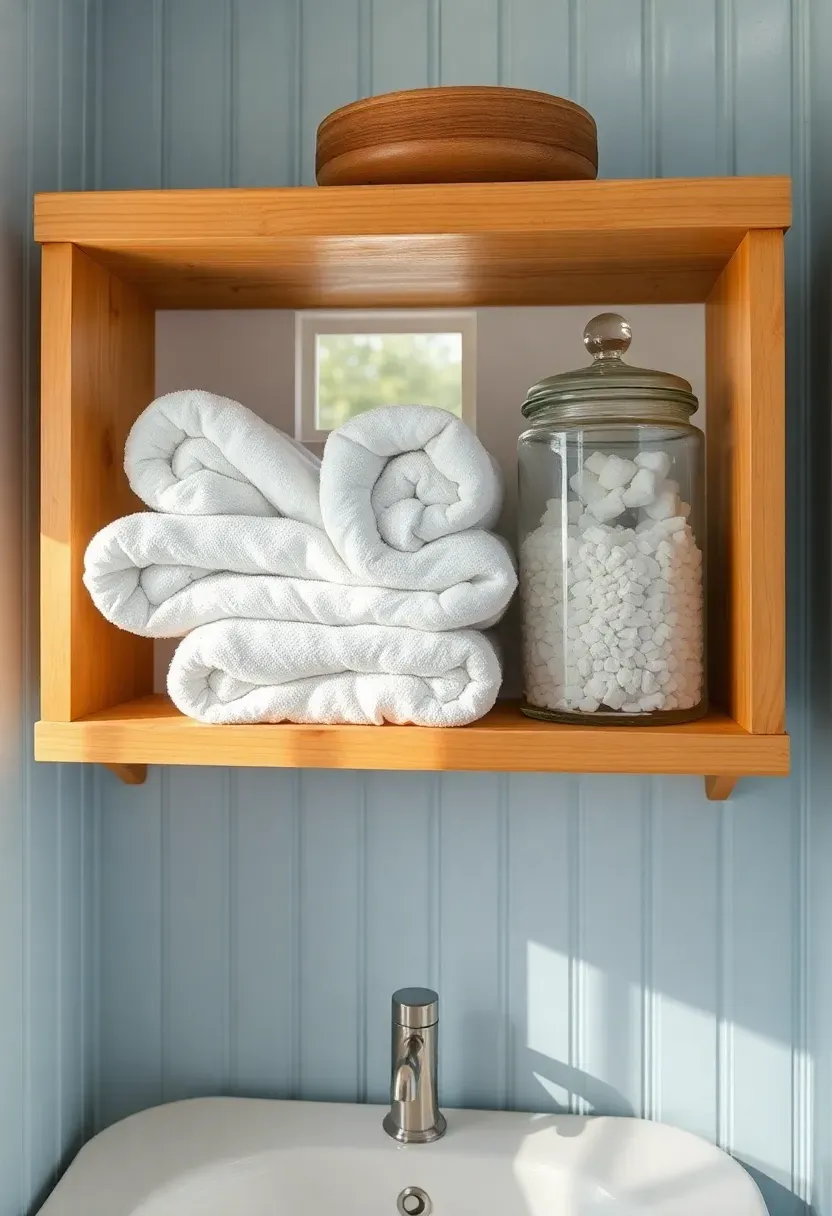
Closed cabinets hide everything, which is practical but visually inert. Open shelving in a coastal bathroom invites you to display the materials and objects that reinforce the theme — rolled white towels stacked like waves, glass jars filled with sea salt scrubs, a few pieces of beach-found coral or smooth stones. The shelves themselves should be simple pine or oak, stained in a light honey or left raw with a clear coat. Mounted against pale blue beadboard, they create depth and storytelling in a room that usually gets none.
Should You Go Fully Open?
Probably not. Reserve open shelves for display-worthy items and keep cleaning supplies, medications, and clutter behind a closed cabinet or in a vanity drawer. The hybrid approach gives you the coastal aesthetic without sacrificing function.
8. Pale Aqua Freestanding Tub Room
Origins of the Coastal Soaking Tradition
Freestanding tubs gained popularity in seaside hotels and beach resorts where bathing was treated as leisure, not just hygiene. The shape — open, sculptural, inviting — became synonymous with relaxation by the water.
Modern Interpretation
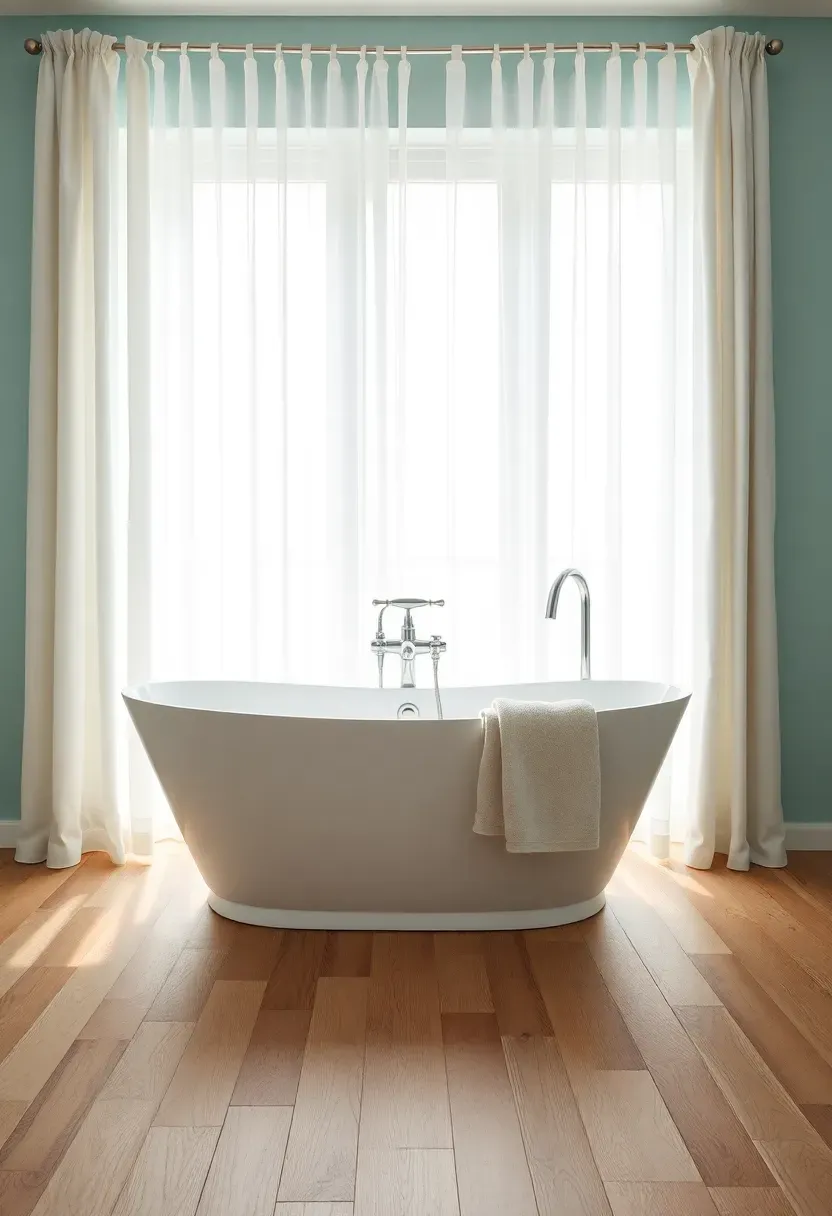
Today, a freestanding tub positioned near a window with sheer curtains captures that same resort energy. Pale aqua walls wrap the room in the lightest suggestion of ocean color, barely more than white but unmistakably blue. Wide plank white oak flooring grounds the composition with warmth. The tub itself — matte white composite or classic cast iron — becomes a centerpiece that makes daily routines feel like a coastal holiday. Brass or brushed nickel tub fillers add a finishing touch without competing with the room's serenity.
How to Apply at Home
- Position the tub where it catches natural light, ideally near the largest window
- Use sheer linen curtains rather than heavy drapes to preserve the airy quality
- Add a teak bath tray and a potted fern for functional coastal styling
- Choose a floor-mounted tub filler to keep the silhouette clean
Recommended
Items for this idea
9. Rope and Reclaimed Wood Details
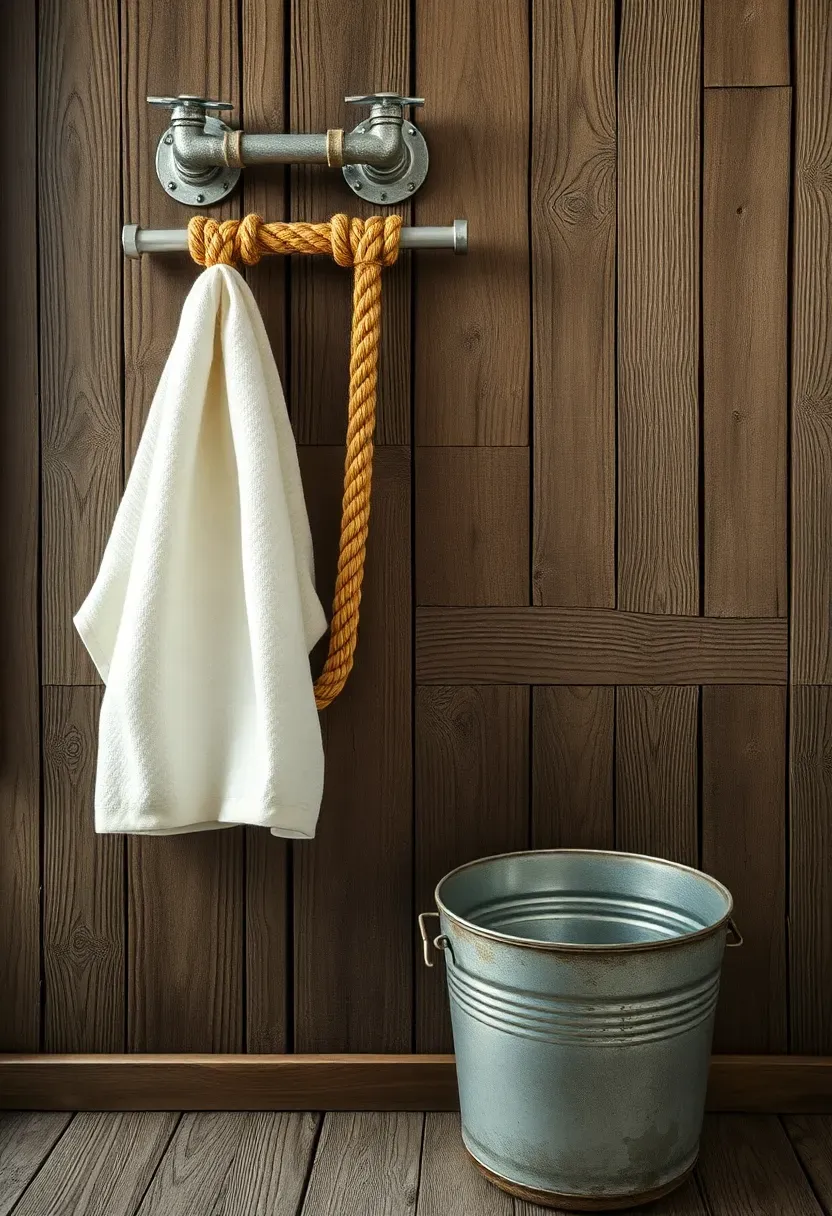
Small hardware choices define coastal character more than paint color ever could. Replacing a standard chrome towel bar with a length of thick nautical rope looped through galvanized pipe fittings transforms the ordinary into the thematic. Reclaimed barn wood — with its knots, nail holes, and uneven patina — works as accent paneling behind the toilet or as a frame for a builder-grade mirror. These are weekend projects that deliver outsized impact. The trick is restraint: pick two or three rope-and-wood moments per bathroom and let the rest stay clean.
Tips for Execution
- Use three-strand twisted manila or sisal rope, not braided nylon
- Seal reclaimed wood with a water-resistant finish; bathrooms are harsh environments
- Balance rustic elements with at least one polished surface — a marble countertop or ceramic tile — to avoid looking like a boat shed
10. Sandy Beige Minimalist Retreat
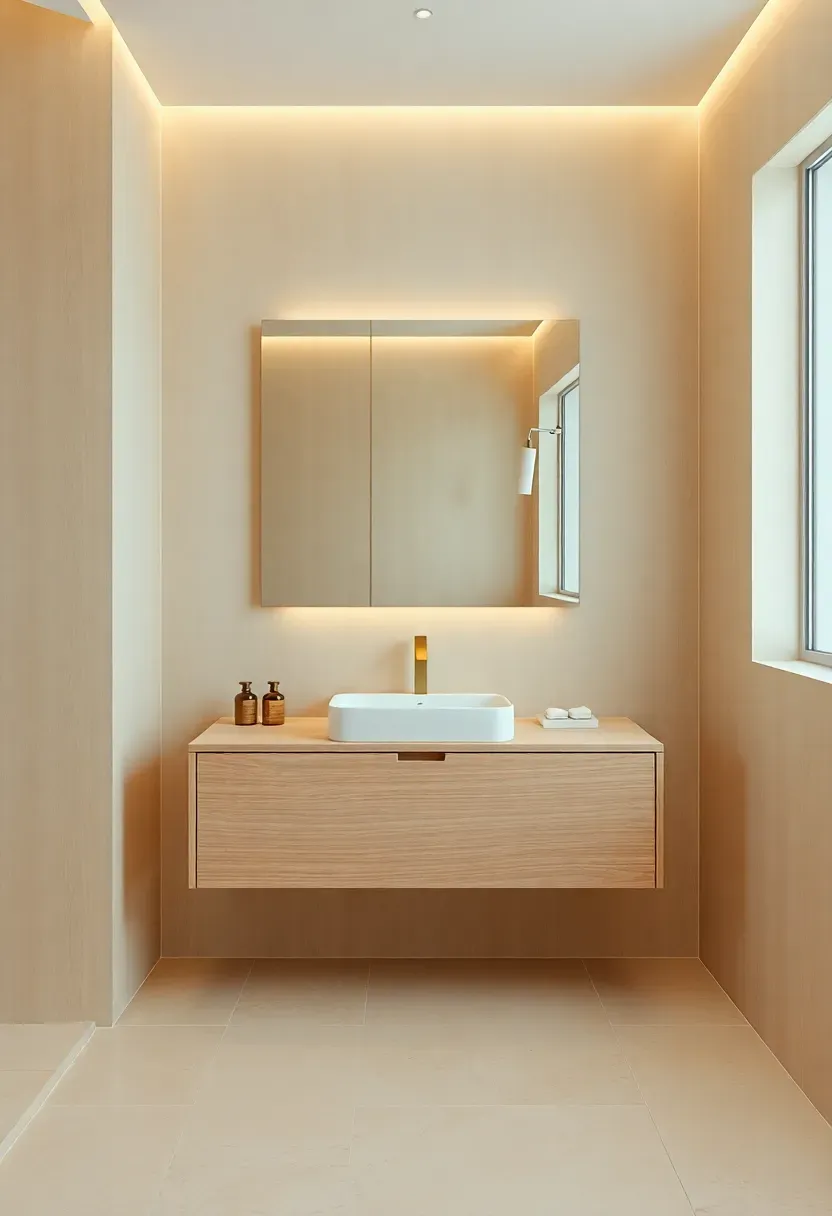
Not every coastal bathroom needs blue. Sandy beige — the color of dry dunes under late afternoon sun — creates a warm neutral envelope that reads as coastal through texture and tone rather than obvious color cues. Large format floor tiles in matte sand eliminate grout lines and create the visual expanse of an actual beach. A wall-mounted oak vanity and frameless mirror keep the lines minimal. The result is a bathroom that feels like a high-end beach resort: understated, warm, and quietly luxurious.
Practical Recommendations
- Use matte finishes throughout; shiny beige reads as dated rather than intentional
- Introduce texture through a woven pendant light or linen shower curtain
- Keep metal fixtures in brushed gold or champagne bronze to maintain the warm palette
Recommended
Items for this idea
11. Tropical Coastal with Palm Leaf Wallpaper
Why This Works in a Bathroom
Tropical motifs can overwhelm a living room but feel perfectly scaled in a bathroom. The smaller square footage contains the pattern's energy, and the association between tropical plants and water makes the pairing intuitive.
The Solution
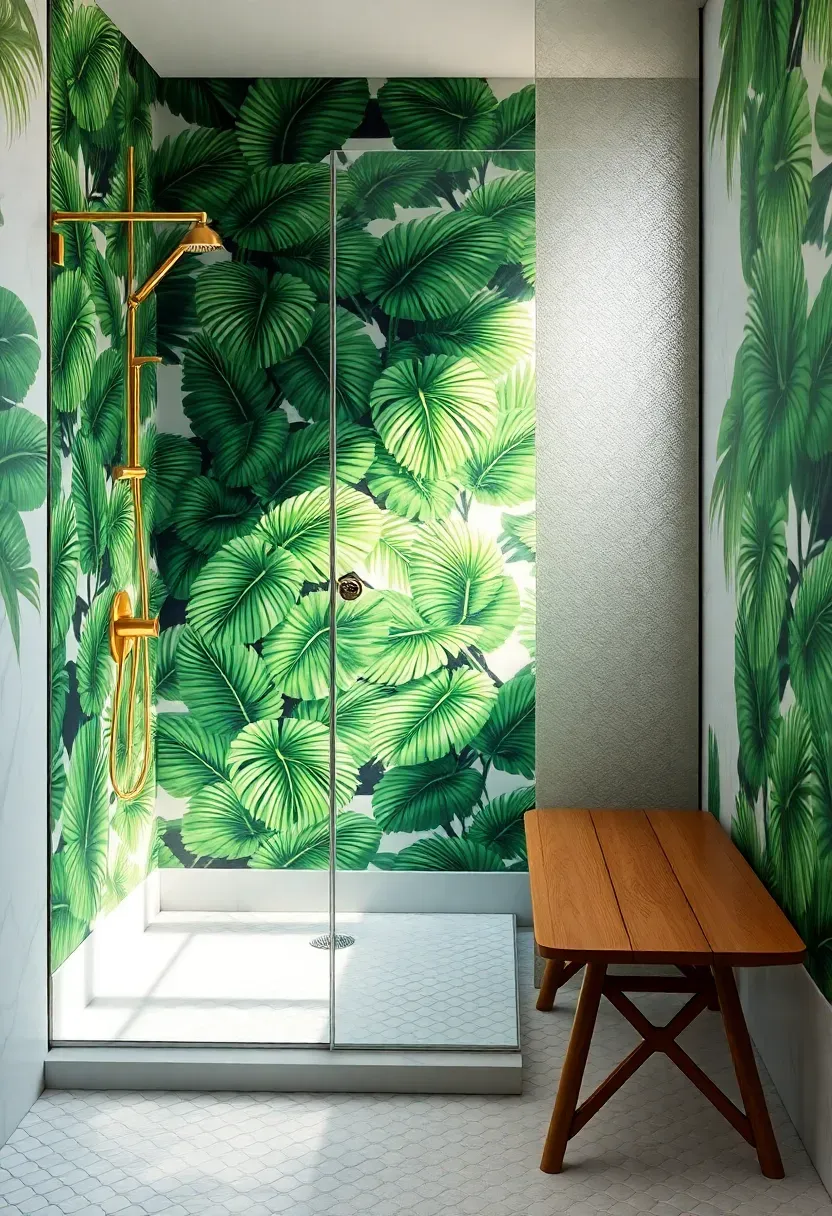
Apply a large-scale palm leaf wallpaper to one accent wall — typically behind the vanity or opposite the shower. Choose a design with a white or cream background to keep the tropical density from darkening the room. The leaves should be rendered in deep greens with visible vein detail for botanical accuracy. Complement with a teak bench in the shower, brass fixtures, and white marble floor tiles. The combination says "resort" without saying "theme park."
Pros and Cons
Pros: dramatic visual impact, easily removable with peel-and-stick versions, brings life to windowless bathrooms Cons: moisture-sensitive if not properly sealed, busy pattern limits other decor
12. Seashell Mosaic Shower Niche
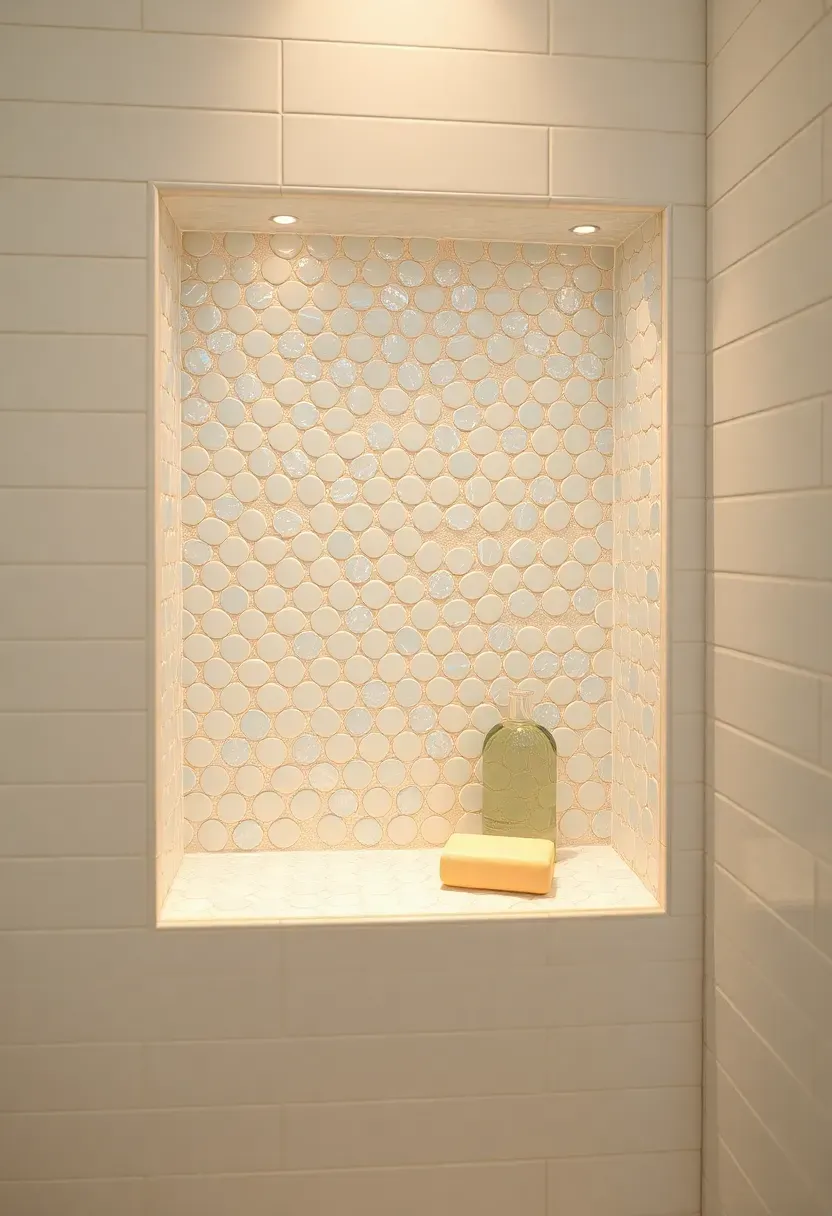
A shower niche is functional real estate — a place to hold shampoo bottles and soap. But it is also an opportunity for a design moment. Lining the niche interior with seashell-shaped mosaic tiles in pearlescent white and pale blue turns a utilitarian recess into the focal point of the entire shower. The small scale of mosaic tiles means they conform to the niche's geometry without awkward cuts. The iridescent finish catches water droplets and light, producing a shimmering effect that feels genuinely underwater.
Tips for Installation
- Size the niche at least 12 inches wide by 24 inches tall for practical storage
- Use a waterproof membrane behind the mosaic; niches are notorious leak points
- Choose epoxy grout for the niche interior — it resists mold better than standard cement grout
Recommended
Items for this idea
13. Cape Cod Blue and White Classic
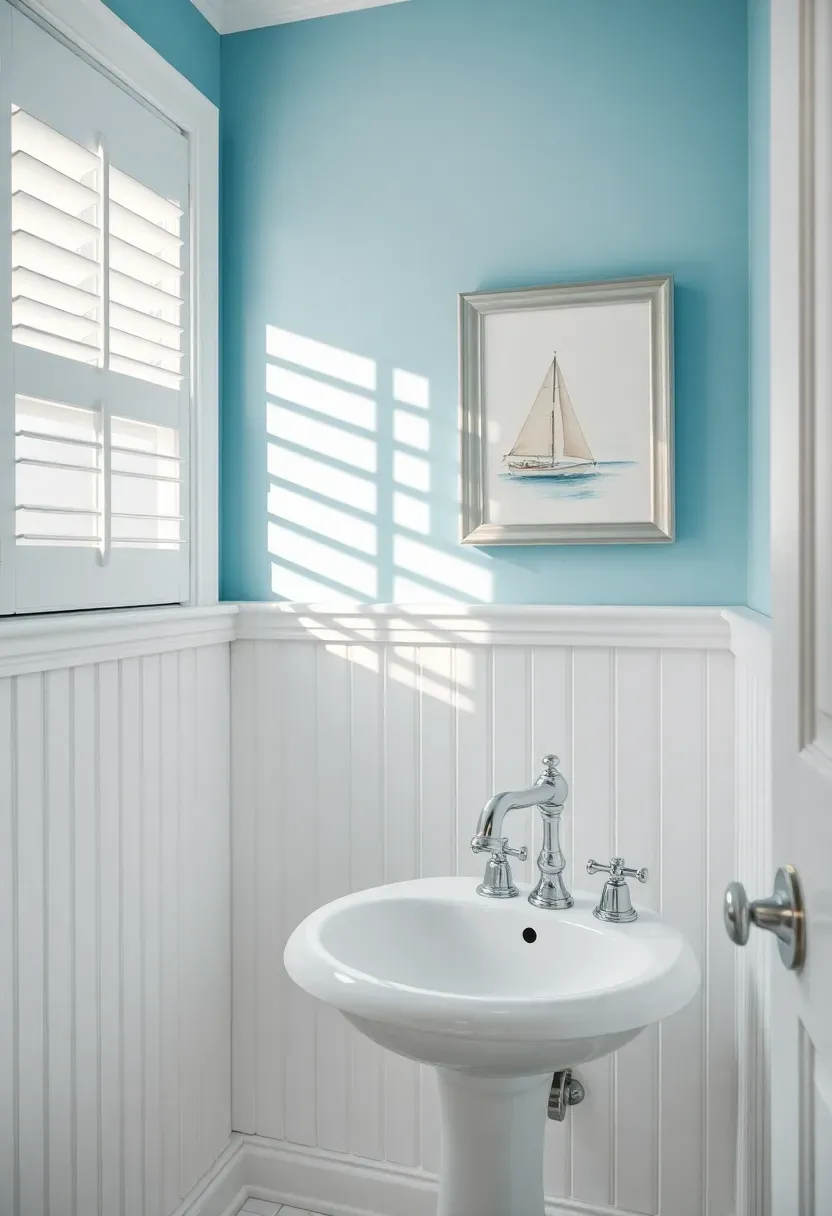
Some combinations endure because they simply work. The Cape Cod palette — white beadboard below, soft sky blue above, divided by a clean chair rail — has defined coastal American bathrooms for generations. What keeps it fresh is the detailing: chrome fixtures with crosshatch handles, a classic pedestal sink, a single framed nautical print that is not trying too hard. This is the coastal bathroom equivalent of a white oxford shirt — timeless, appropriate everywhere, and impossible to get wrong if you commit to quality materials.
What Makes It Timeless
- The blue-and-white ratio never goes out of style because it mirrors the sky meeting the sea
- Beadboard adds texture without cost; it is one of the most affordable wall treatments
- Chrome hardware maintains its relevance across decades of changing trends
14. Sun-Bleached Wood Ceiling Bathroom
Step 1: Select the Wood
Choose tongue-and-groove pine planks. Apply a whitewash stain — one part white latex paint to four parts water — brush on, then wipe off. This produces the silvery, sun-faded look of boardwalk lumber without waiting years for actual weathering.
Step 2: Install with Ventilation in Mind
Ceiling wood in a bathroom must breathe. Leave a small expansion gap at the perimeter, and ensure your exhaust fan is properly sized (at minimum 1 CFM per square foot). Wood ceilings in humid rooms fail when ventilation is an afterthought.
Step 3: Style the Room Around the Ceiling
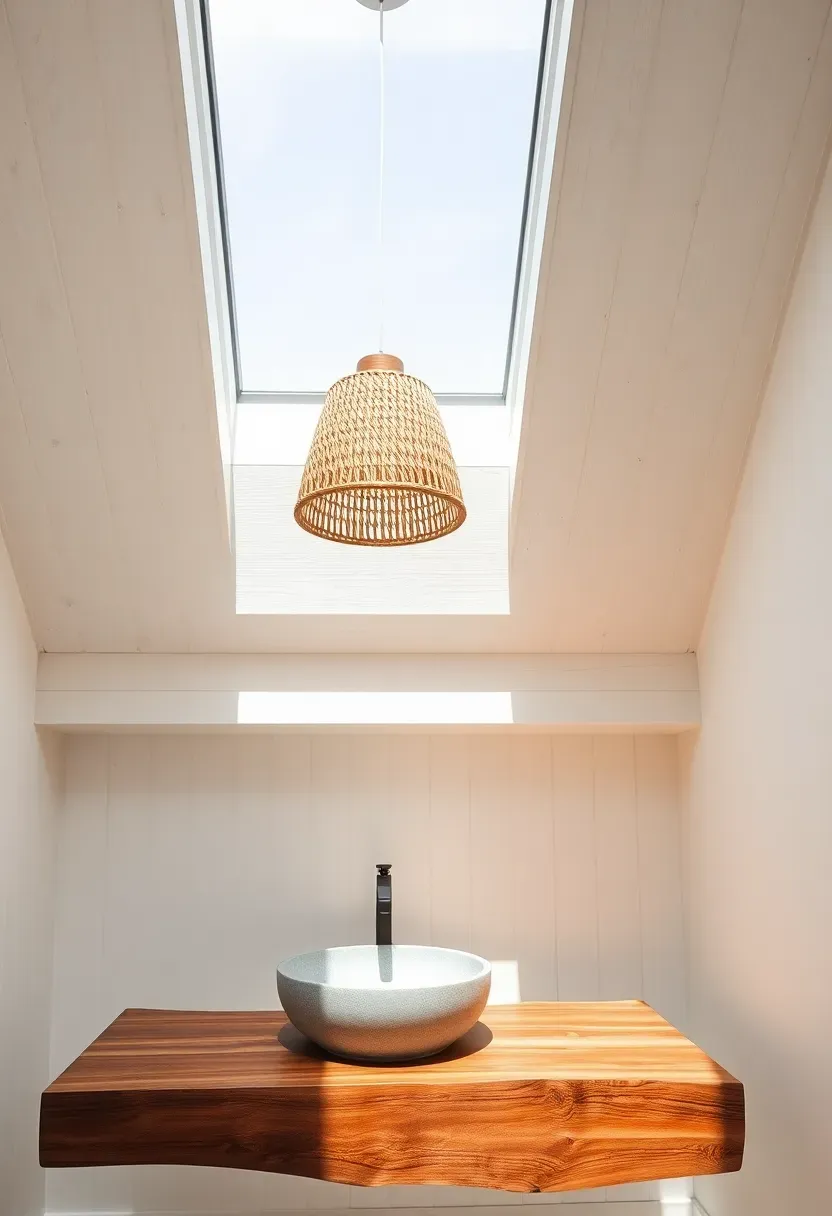
Let the wood ceiling be the star. Keep walls white or very pale gray. Use a stone vessel sink and a live-edge wood counter to echo the natural material overhead. A large woven pendant light adds another organic texture without competing.
What to Watch Out For
- Avoid dark wood stains on bathroom ceilings — they lower the visual height and trap shadows
- Test your whitewash formula on a scrap board before committing to the entire ceiling
- Seal with a clear matte polyurethane rated for high-humidity environments
Recommended
Items for this idea
15. Coastal Farmhouse with Shaker Cabinets
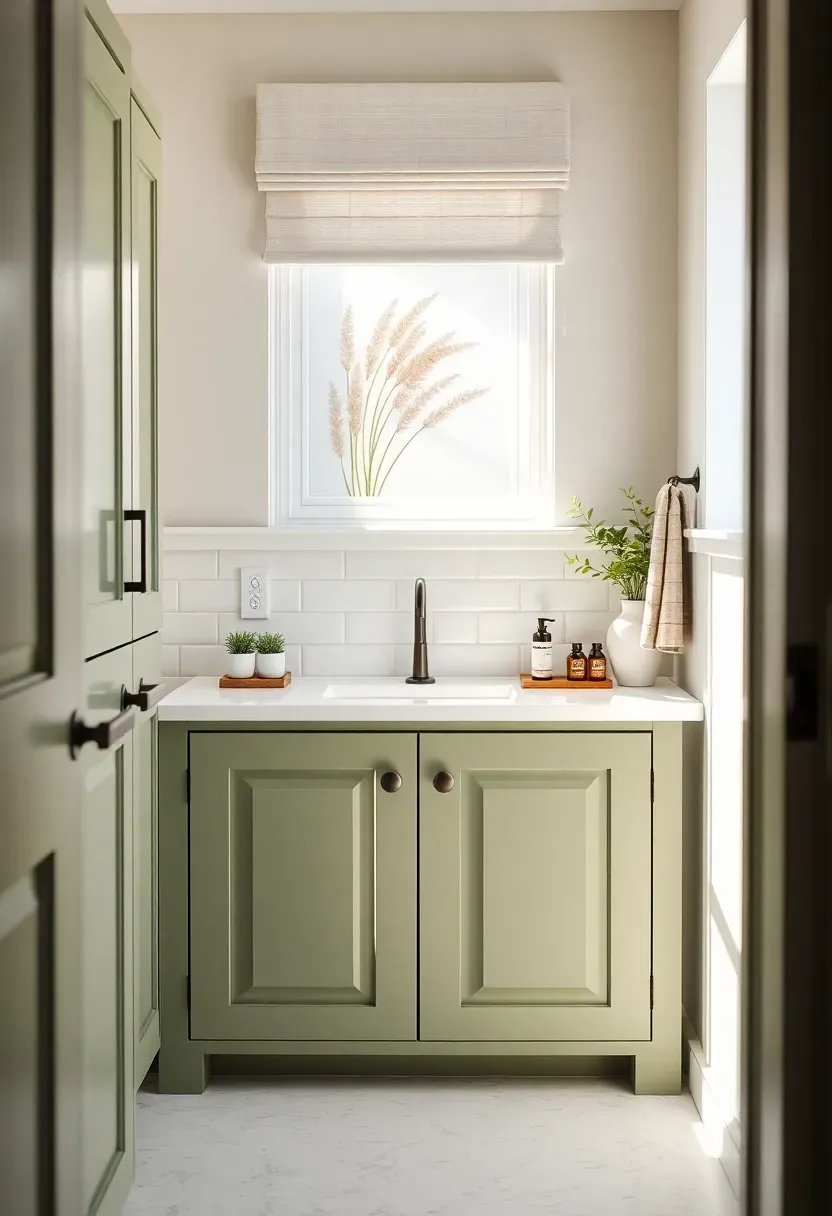
Farmhouse and coastal share more DNA than most people realize. Both styles value natural materials, unfussy silhouettes, and palettes drawn from the landscape. A Shaker-style vanity in sage green — with its clean recessed panel doors and simple round knobs — bridges the two aesthetics effortlessly. White subway tile provides the backdrop. Oil-rubbed bronze fixtures add the patina that farmhouse design demands. The coastal element arrives through color choice and a framed botanical print featuring sea grass or beach roses. No anchors, no shells, no obvious cliches.
Practical Recommendations
- Shaker cabinets work in any bathroom size; their simplicity prevents visual crowding
- Choose oil-rubbed bronze over black matte for warmth — it has amber undertones that complement green
- Add a natural fiber rug (jute or sisal) in front of the vanity for texture underfoot
16. Turquoise Penny Tile Statement Floor
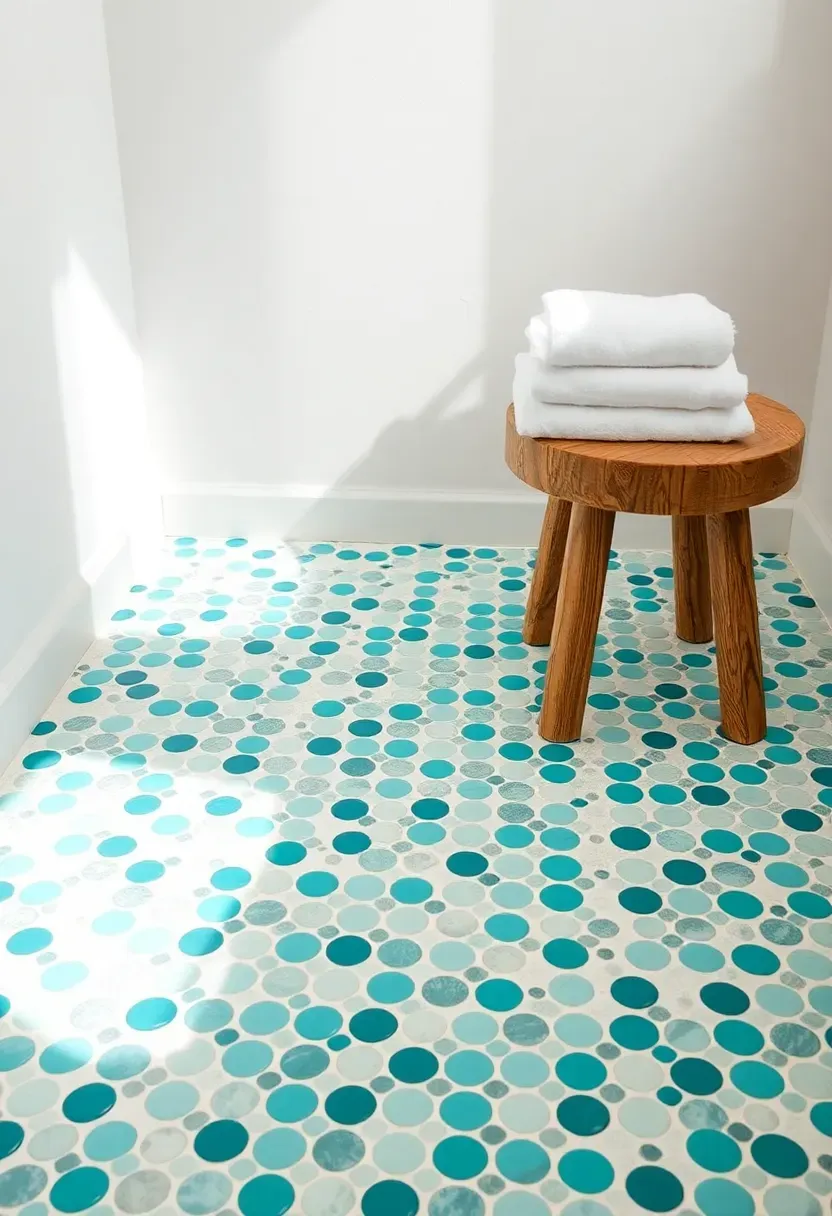
Penny rounds are having a revival, and turquoise might be their best coastal application. Those tiny circles — each about the size of a penny — create a densely textured surface that reads as water from a distance and as handcrafted mosaic up close. White grout outlines every circle, producing a pattern that is simultaneously busy and unified. The floor becomes the room's defining feature, which means walls should stay neutral white and fixtures should remain simple. A weathered wooden stool in the corner and a white cotton shower curtain are all the styling this floor needs.
Should You Try This at Home?
Absolutely, with one caveat: penny tile floors require meticulous installation. The small tile size means more grout lines, which means more sealing and maintenance. Budget for professional tile setting and plan to reseal grout annually to keep the white lines white.
Recommended
Items for this idea
17. Mediterranean Coastal Arched Mirror
Origins of the Arch in Coastal Design
Arched forms have defined Mediterranean architecture for millennia — doorways, windows, niches. They soften rigid bathroom geometry and introduce a sense of age and craftsmanship that square mirrors cannot match.
Modern Interpretation
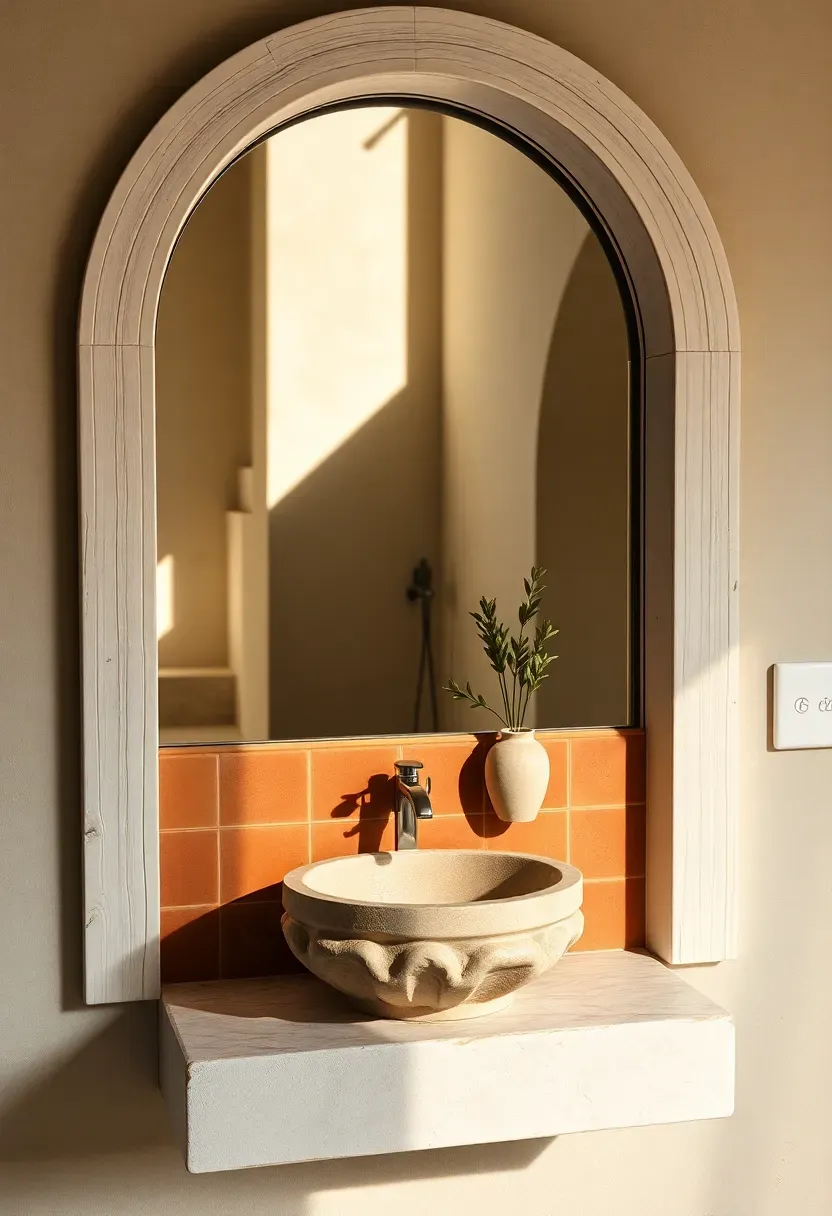
A large arched mirror in whitewashed wood serves as the bathroom's architectural centerpiece. Positioned above a carved stone basin, it reflects light in a way that makes the room feel like a villa bathroom overlooking the Aegean. Terracotta accent tiles on the backsplash or floor add earthy warmth that anchors the Mediterranean palette. A single olive branch in a ceramic vase completes the scene without overthinking it.
How to Apply at Home
- Source arched mirrors from vintage markets or modern reproductions in the 36-to-48-inch height range
- Pair with hand-finished plaster walls for an authentic Mediterranean texture
- Use terracotta sparingly — a border or backsplash, not the entire floor
- Keep lighting warm (2700K bulbs) to enhance the golden Mediterranean atmosphere
18. Sea Glass Green Double Vanity
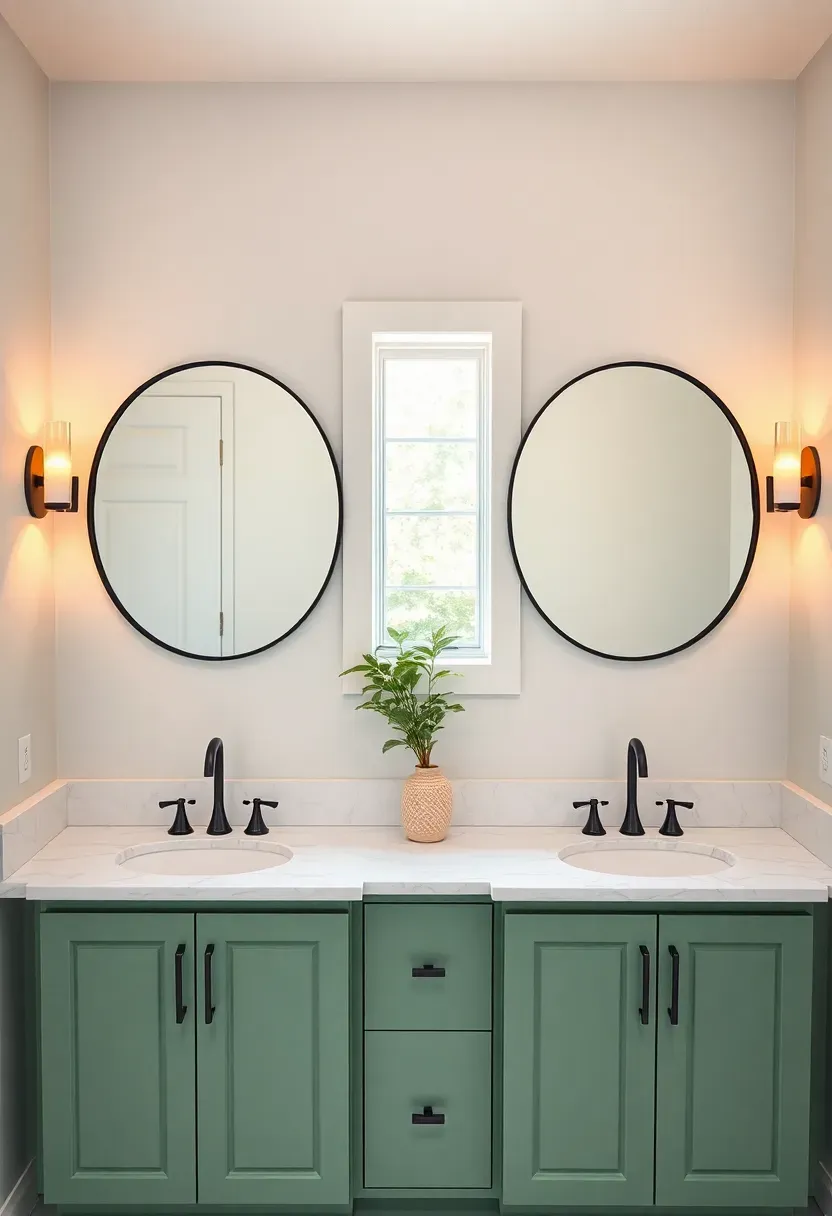
Sea glass occupies a peculiar sweet spot — it is both a natural artifact and a human-made material tumbled smooth by the ocean. That duality makes sea glass green an ideal vanity color: it feels organic and refined simultaneously. Applied to a double vanity with simple Shaker doors, the shade transforms a utilitarian piece into something worth noticing. White quartz countertops prevent the green from feeling heavy. Thin black-framed round mirrors and chrome sconces add modern precision that balances the organic color. This palette works in both primary and guest bathrooms without feeling too themed or too bland.
Tips for Color Matching
- Look for paint colors described as "frosted jade" or "sea mist" — they capture the translucent quality of genuine sea glass
- Avoid greens with strong yellow undertones; sea glass leans cool and blue-ish
- Test paint samples in bathroom lighting specifically; fluorescent fixtures can shift green dramatically
Recommended
Items for this idea
19. Whitewashed Brick and Copper Pipe
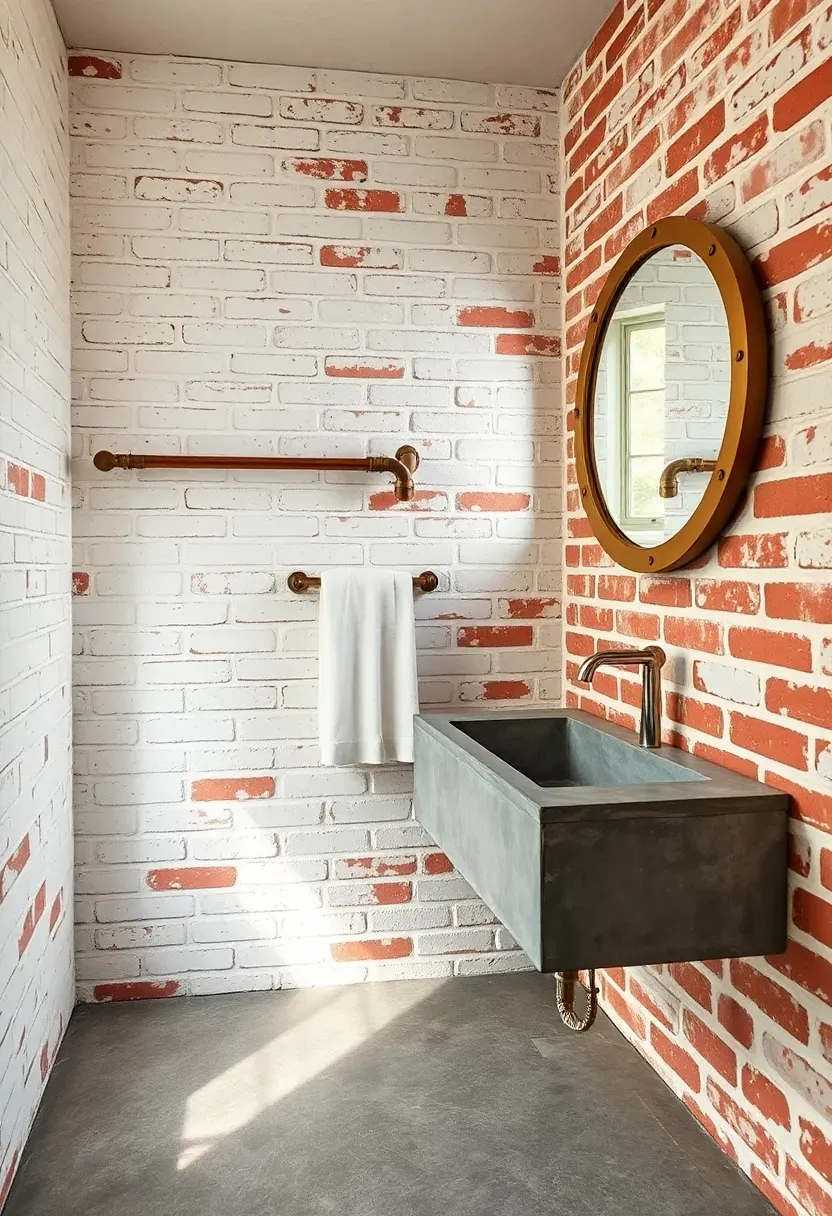
Coastal does not have to mean soft. Whitewashed brick brings an industrial backbone to the bathroom while maintaining the airy, light-filled quality that coastal design demands. The uneven texture of brick — some areas absorbing more whitewash than others — creates the kind of organic imperfection that perfectly mirrors the randomness of shoreline formations. Exposed copper pipe repurposed as a towel rack adds warmth and patina that develops over time. A concrete floating vanity grounds the composition with weight. The porthole mirror is the single obvious nod to the sea, and one is enough.
Practical Recommendations
- Use a lime-based whitewash rather than paint for a more authentic, breathable finish
- Seal brick in wet zones (near shower or tub) with a clear masonry sealer
- Let copper age naturally — the green patina that develops over months adds coastal character
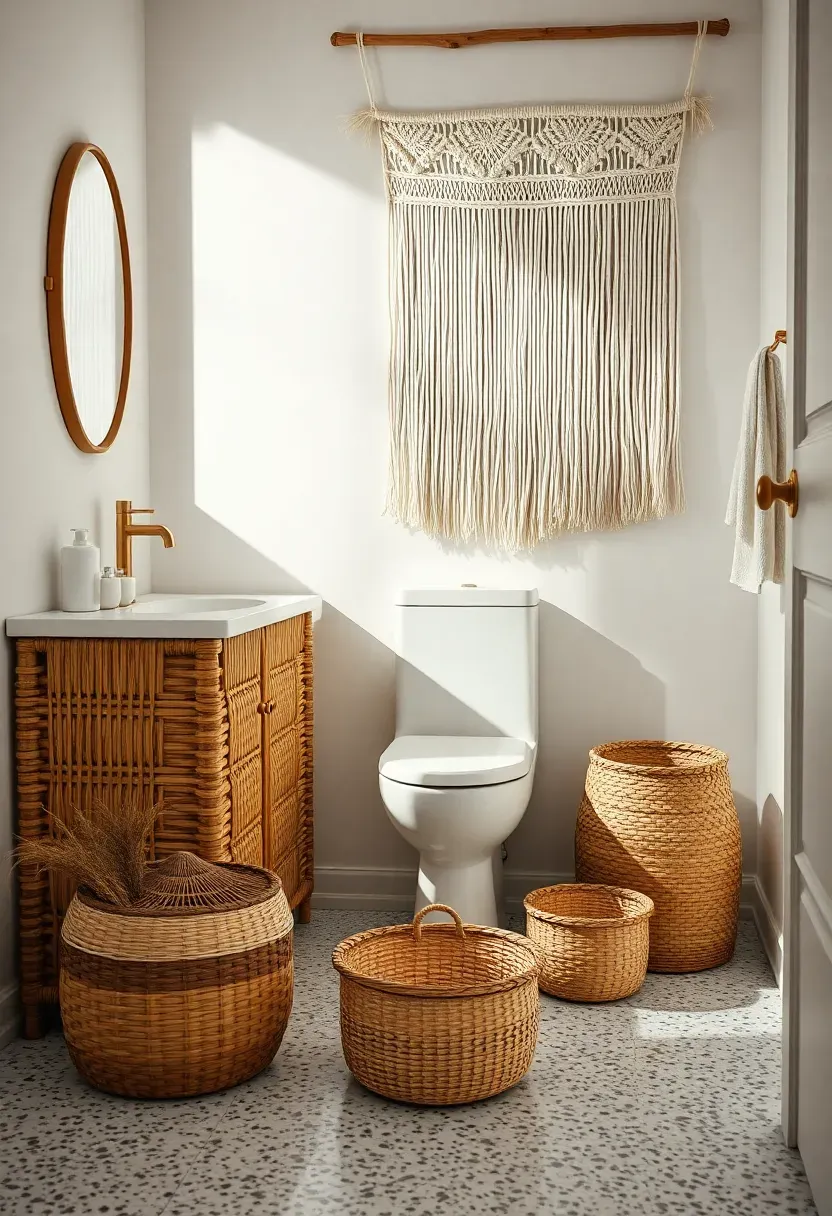
20. Coastal Boho with Macrame and Rattan
Two design movements that share a love for natural fibers, handcraft, and relaxed living. When coastal meets bohemian, the bathroom gains a layered, collected quality that feels like it evolved over time rather than being installed in a single renovation. A rattan vanity base sets the foundation. A macrame wall hanging above the toilet introduces vertical texture without taking up floor space. Seagrass baskets handle storage with visual warmth. Terrazzo floor tiles — with their speckled, stone-flecked surface — provide a durable base that ties all the organic materials together.
Tips for Balance
- Limit macrame to one piece per bathroom; more than that crosses into craft fair territory
- Choose tightly woven rattan (not open weave) for vanity bases — it handles moisture better
- Ground boho textures with at least one hard, sleek surface: a frameless mirror, a ceramic vessel sink
Recommended
Items for this idea
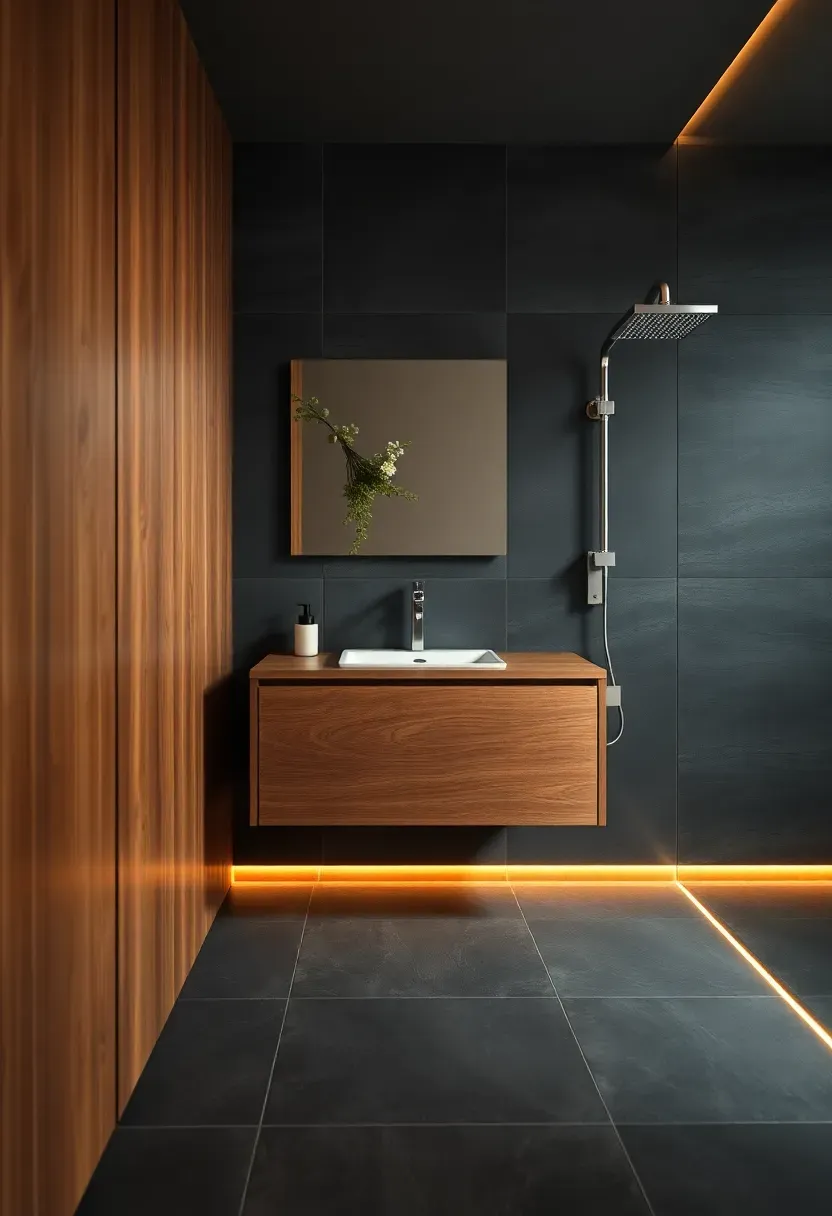
21. Storm Gray Spa Bathroom
Coastal design is not always sunshine and clear water. Some of the most dramatic coastlines are defined by storm clouds, granite cliffs, and steel-gray surf. This bathroom channels that moodier side of the ocean with large format matte tiles in a rich charcoal gray that covers walls and floor seamlessly. A floating teak vanity introduces the warmth of maritime wood. The rain shower head delivers an immersive experience that suits the atmospheric palette. A single eucalyptus bundle hanging from the shower head adds scent and a flash of green against the gray.
Should You Go This Dark?
In bathrooms with adequate lighting — either natural or well-designed artificial — absolutely. The key is using warm-toned gray (with brown or taupe undertones) rather than blue-gray, which can read as cold. Supplement with warm LED strips under the vanity and behind the mirror.
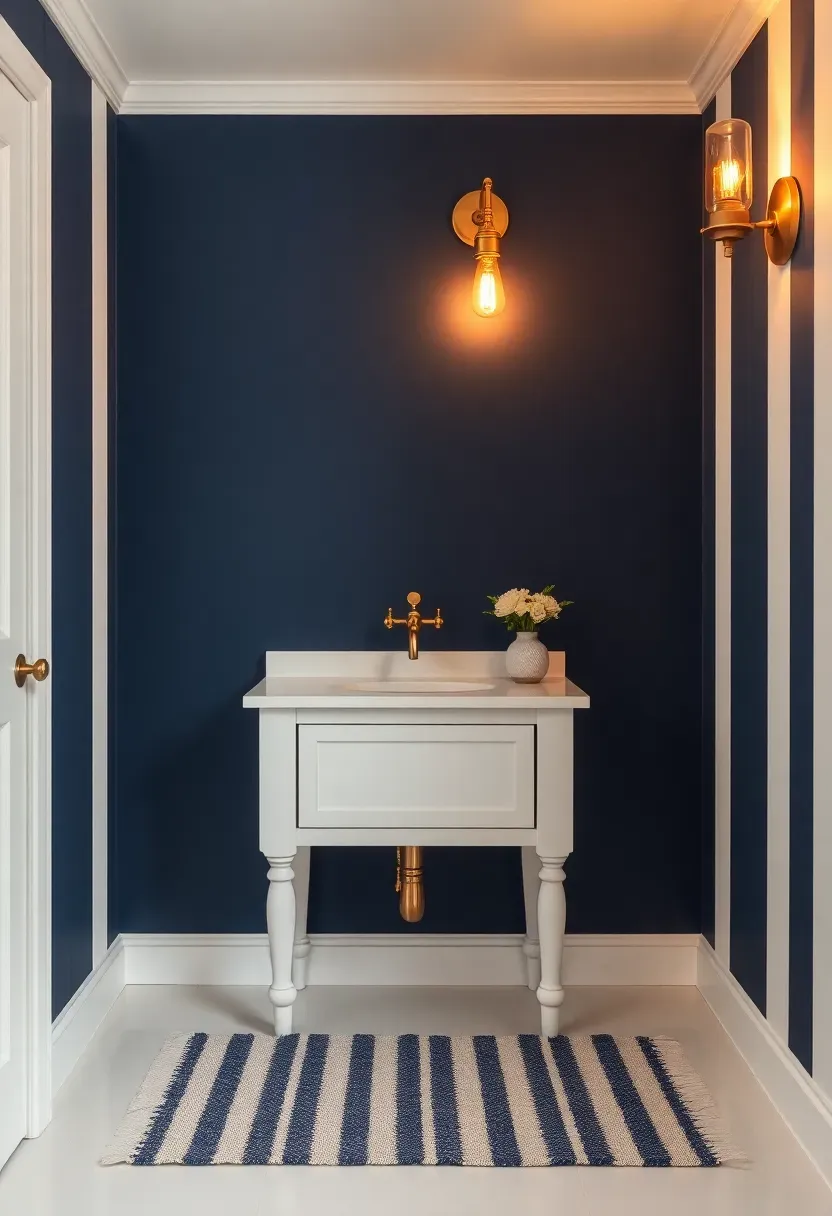
22. Lighthouse-Inspired Vertical Stripes
The Core Issue
Solid-color coastal bathrooms can feel flat. Pattern introduces energy, but wallpaper in wet rooms is risky and tile patterns are permanent.
The Solution
Painted vertical stripes — wide, bold alternations of navy and white — solve both problems. Tape is cheap, paint is forgiving, and the result evokes the bold graphic identity of lighthouses and nautical signal flags. Vertical orientation draws the eye upward, making ceilings feel taller. Apply stripes to one accent wall behind the sink and keep the remaining walls in solid white. A brass ship lantern sconce and a matching striped bath mat reinforce the motif without overdoing it.
Pros and Cons
Pros: costs almost nothing, can be painted over easily, adds instant character to rental bathrooms with landlord approval Cons: requires precise taping for clean lines, bold pattern may tire more quickly than solid color
Recommended
Items for this idea
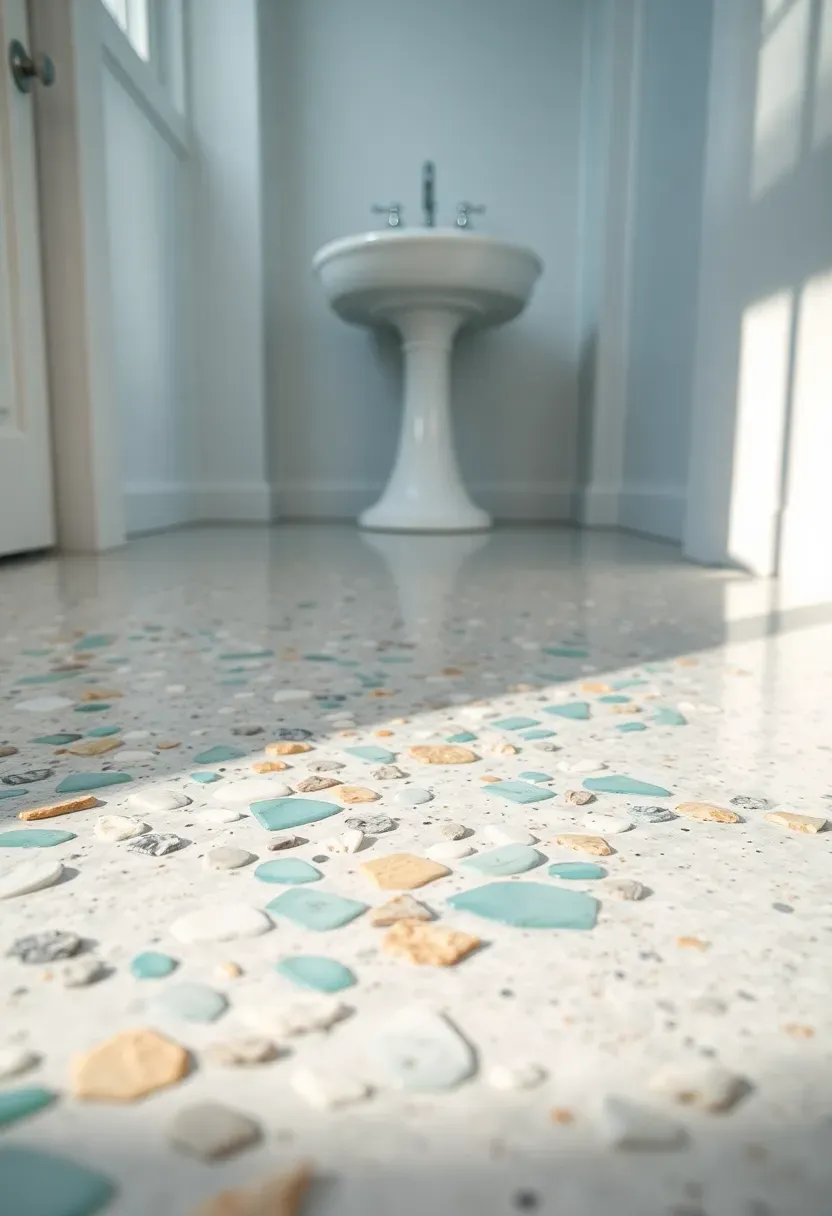
23. Tide Pool Terrazzo Floor
Terrazzo has been used in high-traffic commercial spaces for decades because it is nearly indestructible. Custom coastal terrazzo — with chips of turquoise, seafoam green, white marble, and sandy quartz suspended in a pale cement matrix — transforms this utilitarian material into something that genuinely resembles a tide pool frozen in time. Each tile is unique, which means the floor has the organic randomness of an actual shoreline. Pair with white walls and simple fixtures to let the floor dominate the visual field.
Tips for Specification
- Request samples with your specific chip colors before ordering; monitor photos rarely capture terrazzo accurately
- Choose a honed (matte) finish for the floor — polished terrazzo becomes dangerously slippery when wet
- Use large format tiles (24x24 or bigger) to reduce grout lines and let the pattern flow
24. Pacific Northwest Coastal Dark Wood
Comparing: Pacific NW vs. Classic Coastal
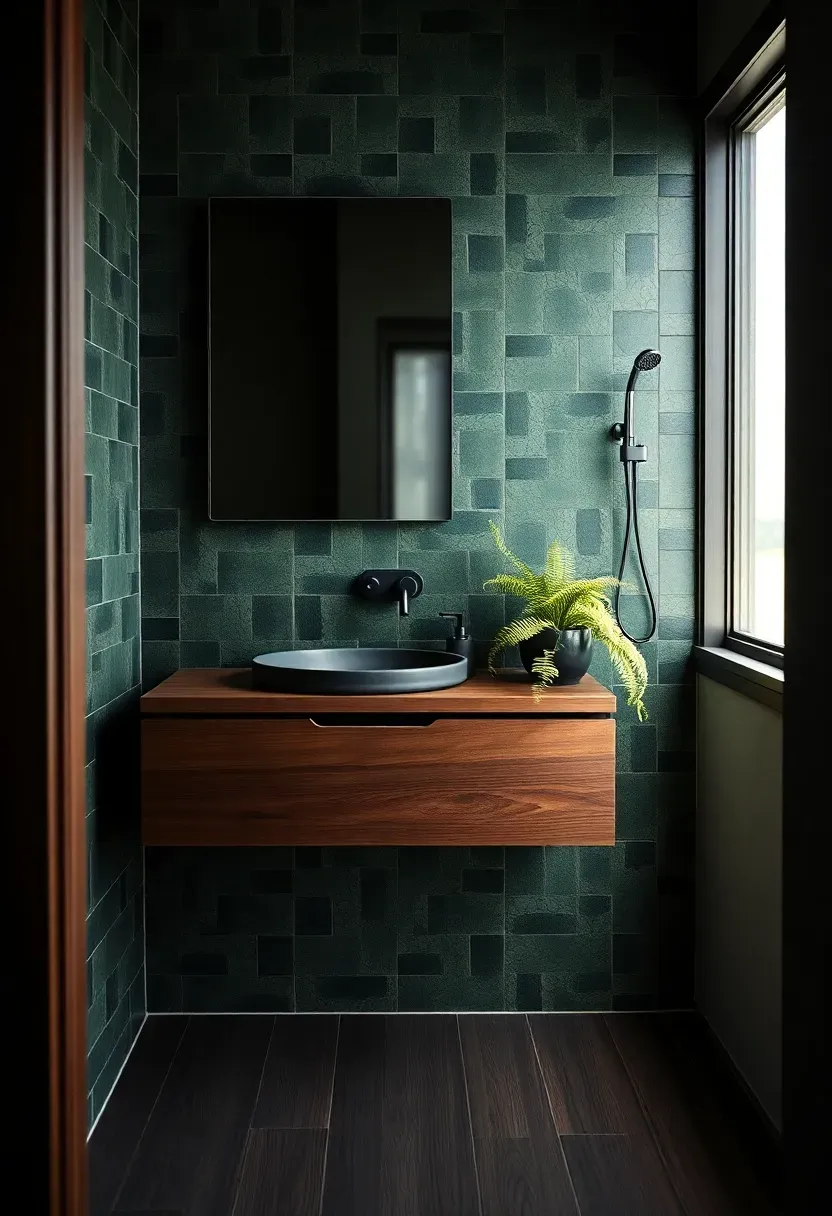
Not all coastlines are sunny and pale. The Pacific Northwest offers a different coastal vocabulary — one built on dark wood, deep greens, mist, and volcanic stone.
Classic Coastal
Light woods, white walls, blue accents. Evokes Atlantic beaches, Caribbean coves, Mediterranean villages. Bright, airy, warm.
Pacific NW Coastal
Walnut vanities, dark green zellige tiles, matte black fixtures. Evokes Oregon cliffs, Washington rainforests, British Columbia fjords. Moody, grounded, rich.
What to Choose
Choose classic if: your bathroom has abundant natural light and you prefer cheerful energy Choose Pacific NW if: you want coastal character with sophistication and you are comfortable with darker, warmer tones
Recommendation
Pacific Northwest coastal works especially well in primary bathrooms where moody atmosphere enhances the spa experience. Add a potted fern and a rain shower to complete the forest-meets-ocean feeling.
Recommended
Items for this idea
25. Sunset Coast Warm Tones
Origins of the Warm Coastal Palette
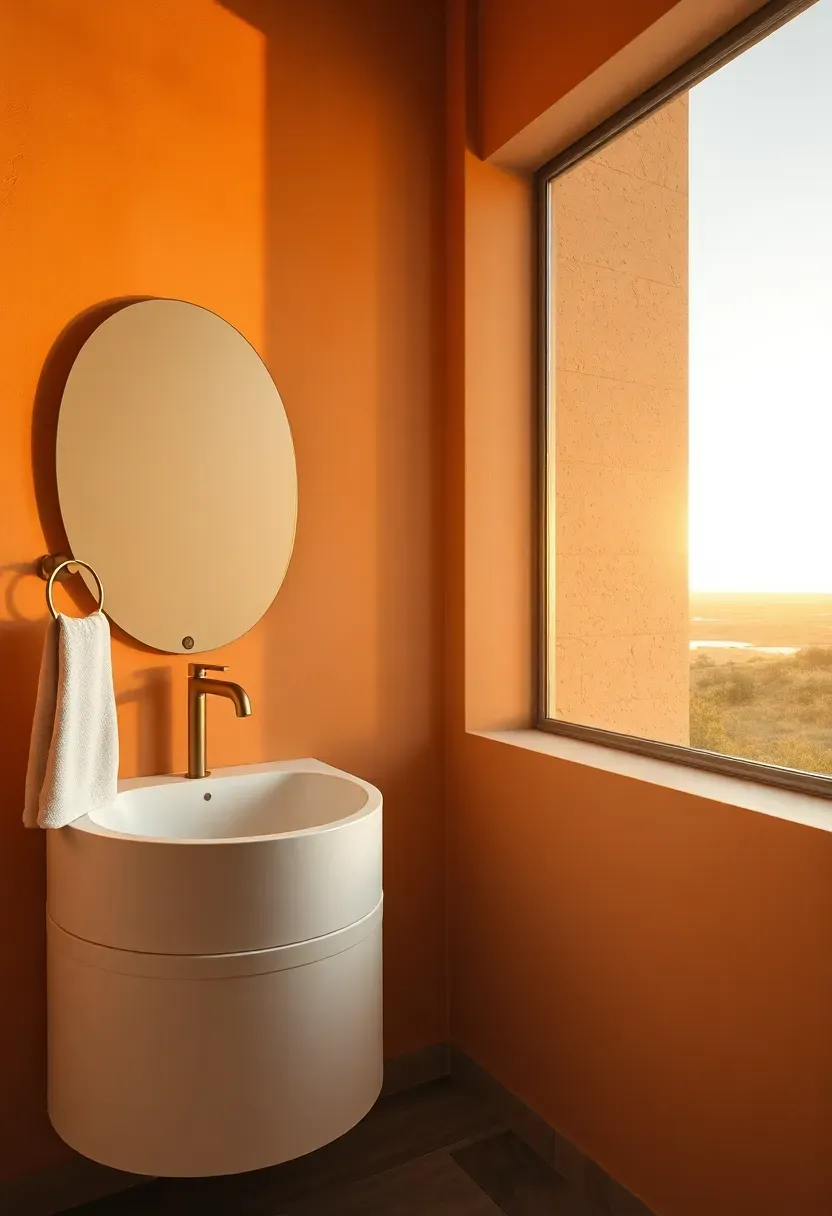
Coastal design defaults to cool blues and whites because we associate the ocean with daytime. But anyone who has watched a sunset over water knows the coast produces some of the warmest colors in nature — peach, coral, amber, burnt sienna, and molten gold.
Modern Interpretation
This bathroom captures the golden hour. Walls in a warm peach-terracotta tone wrap the room in sunset light even on gray mornings. A curved white vanity softens the geometry. Gold fixtures — faucet, shower head, towel ring — reflect the warm palette and add a touch of glamour. A large window invites actual light to layer over the painted warmth, producing a bathroom that feels like a permanent vacation evening. It is coastal without a single shade of blue.
How to Apply at Home
- Test peach paint colors at sunset to see how they interact with actual golden light
- Balance warm walls with white ceiling and trim to prevent the room from feeling enclosed
- Choose gold fixtures with a brushed or satin finish to avoid looking overly formal
- Add a woven straw pendant light and a natural stone soap dish for textural grounding
Quick FAQ
Is coastal bathroom design only for beach houses? Not at all. Coastal design works in any location because it draws on universal materials — wood, stone, natural fibers — and a calming color palette that suits urban apartments just as well as waterfront properties. The style is about evoking a feeling, not documenting a geography.
Which coastal color palette has the longest staying power? White and soft blue remains the most enduring coastal combination, largely because it mirrors the natural relationship between sky and sea. Trend cycles may favor specific accent colors — coral one year, sage the next — but the core blue-white foundation has not fallen out of favor in over a century.
Can you create a coastal bathroom on a tight budget? Definitely. Paint is the most cost-effective transformation tool. A fresh coat of seafoam or pale blue on the vanity, white walls, and two or three thrifted accessories — a driftwood mirror, woven baskets, rolled white towels — deliver coastal character for under two hundred dollars.
Do dark coastal bathrooms feel too small? Darkness and smallness are different problems. A well-lit dark bathroom — with layered LED lighting, a large mirror, and reflective tile surfaces — can actually feel more spacious than a poorly lit white one. The key is strategic lighting placement, not wall color avoidance.
What flooring holds up best in a coastal-themed bathroom? Porcelain tile that mimics natural stone or weathered wood offers the best combination of coastal aesthetics and practical durability. It handles moisture, cleans easily, and comes in textures that feel genuine underfoot. Natural stone works too but requires more sealing and maintenance.
A bathroom does not need an ocean view to feel coastal. It needs intention — the right shade of blue on a vanity, a pebble floor that makes your morning shower feel like wading into shallow water, or a driftwood mirror that carries the memory of salt and wind. Start with one element from this collection, live with it for a week, and notice how a single coastal detail can shift the entire mood of the room. The ocean is a feeling, and your bathroom can hold it.
Pinterest cover for 25 AI Coastal Bathroom Ideas for a Breezy Retreat
About the author
OBCD
CGI visualization and interior design content. We create detailed 3D renders and curate practical design ideas for every room in your home.