17 Accent Wall Behind TV Ideas to Frame Your Screen in Style
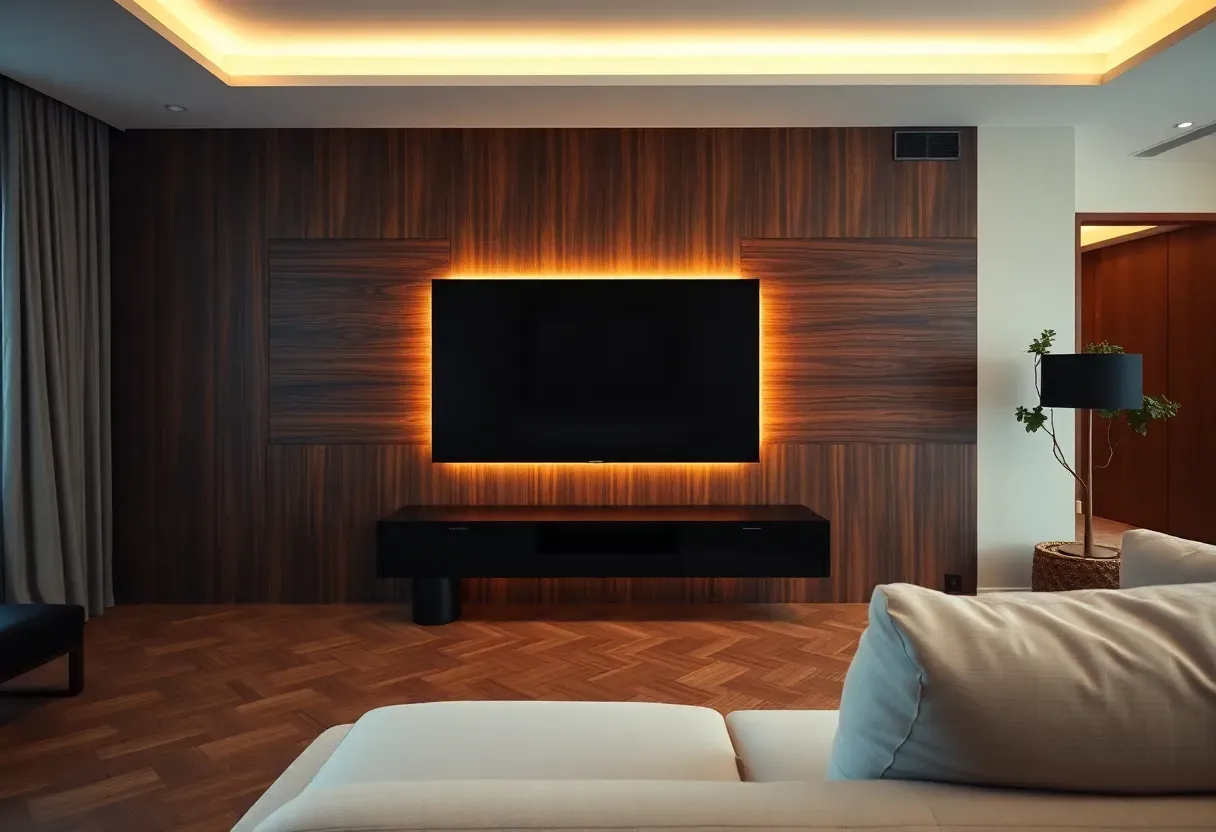
Your television does not have to be the eyesore that interrupts an otherwise beautiful room. With the right accent wall treatment, the screen becomes part of a deliberate design composition rather than a black rectangle stuck on drywall. The wall behind your TV is prime real estate for texture, color, and architectural detail that elevates everything around it.
Below you will find 17 distinct approaches, ranging from natural stone and reclaimed wood to bold geometric paint and backlit panels. Each idea focuses on materials you can actually source, finishes that hold up to daily life, and proportions that work whether your screen is 55 or 85 inches.
Table of Contents
- Vertical Wood Slat Panel
- Dark Stone Veneer Feature
- Floating Shelves Flanking the Screen
- Black Limewash Backdrop
- Fluted MDF Accent
- Brick Exposure with Matte Sealant
- LED Backlit Recessed Niche
- Concrete Microcement Finish
- Gallery Wall Frame Arrangement
- Warm Walnut Full-Height Cabinet
- Two-Tone Horizontal Paint Division
- Marble Porcelain Slab Panel
- Woven Rattan Texture Wall
- Geometric 3D Tile Pattern
- Reclaimed Barn Wood Planks
- Grasscloth Wallpaper Surround
- Arched Built-In Media Alcove
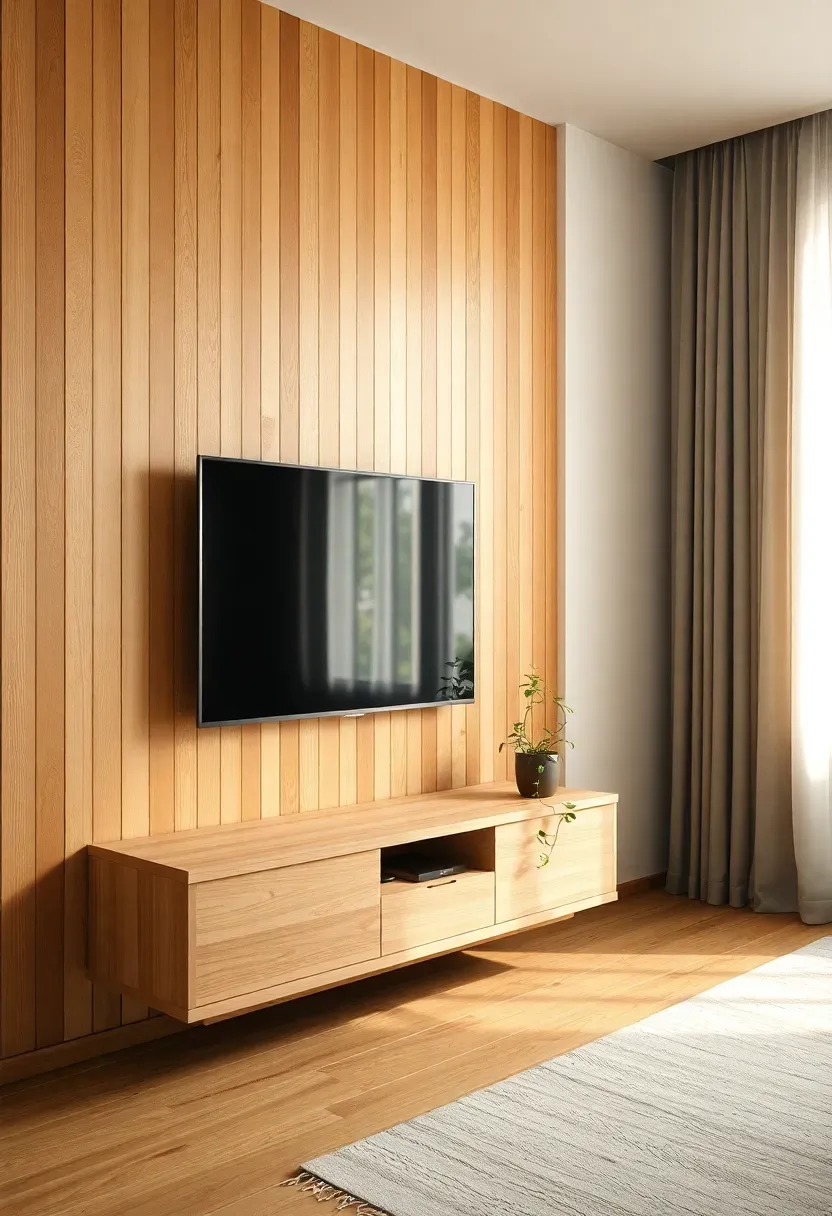
1. Vertical Wood Slat Panel
Vertical wood slats behind the TV create rhythm and warmth without competing with whatever is on screen. Oak, ash, and walnut all work depending on your palette. Space the slats about 15 to 20 millimeters apart for clean shadow lines, and run them floor to ceiling for the strongest visual impact.
How to Get the Look
- Use prefinished slat panels (most come in 8-foot sections) for quick installation over existing drywall
- Mount the TV bracket directly through the slats into studs behind
- Add a slim floating console below in a matching or contrasting wood tone
- Route cables through a gap between slat rows so wiring stays hidden
We picked a few things that go well with this idea: Art3d WPC Slat Wall Panels (8-Pack) (★4.4), ARMURO Natural Oak Wood Slat Panels (2-Pack) (★4.3) and MSI Acoustic 3D Fluted Wood Slat Panel (★4.5). As an Amazon Associate we earn from qualifying purchases.
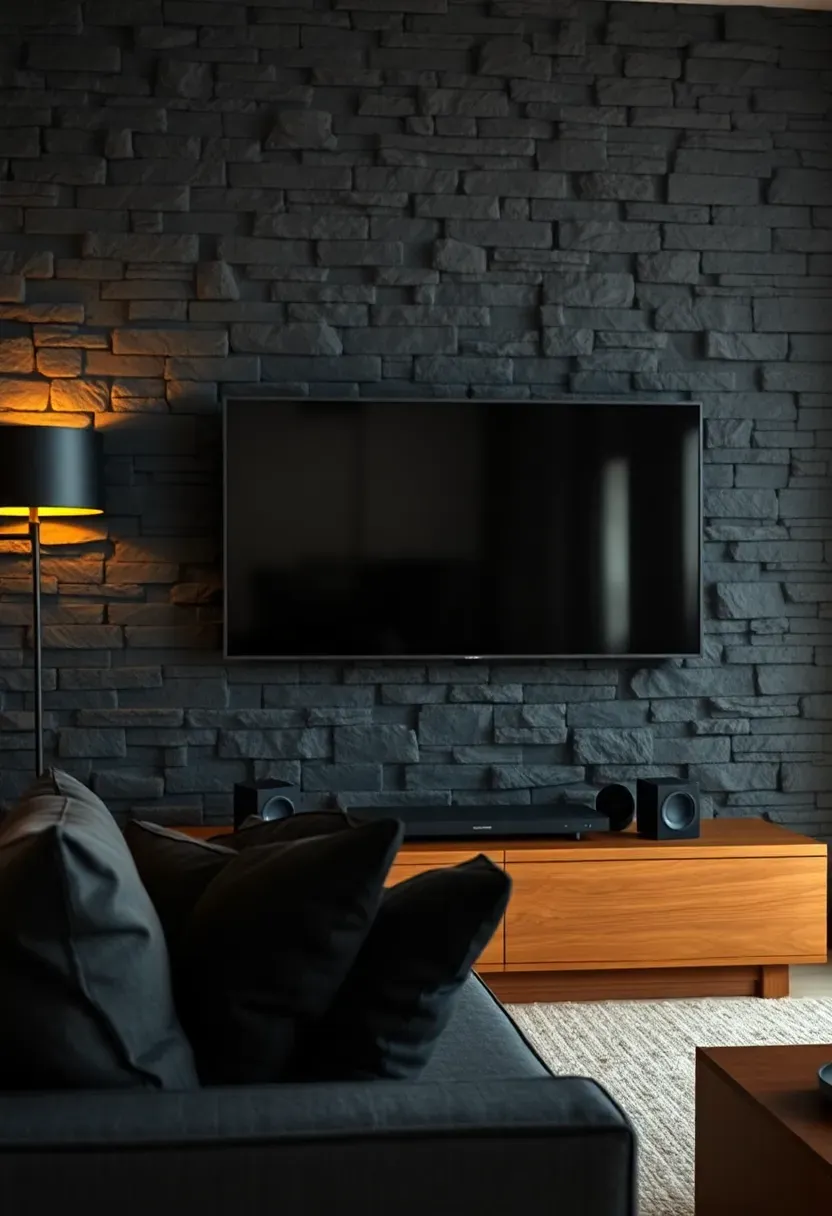
2. Dark Stone Veneer Feature
Why Stone Works Behind a TV
Most living rooms lack textural depth. A flat painted wall behind the screen does nothing to anchor the space or justify the TV's visual weight.
The Solution
Stacked stone veneer panels in charcoal, slate grey, or dark sandstone give the wall mass and presence. The irregular surface catches side light beautifully, creating a moody backdrop that makes the screen feel intentional rather than tacked on. Thin-cut veneer panels keep the weight manageable — most are under 15 pounds per square foot — and install with construction adhesive over cement board.
Pros and Cons
Pros: dramatic visual anchor, hides minor wall imperfections, increases perceived room value Cons: higher material cost than paint, requires careful cable management behind textured surface
We picked a few things that go well with this idea: Power Practical LED TV Bias Lighting Strip (★4.5), HAMLITE RGBW TV Backlight (14.8ft) (★4.6) and Nexillumi RGB TV LED Backlight (16.4ft) (★4.4). As an Amazon Associate we earn from qualifying purchases.
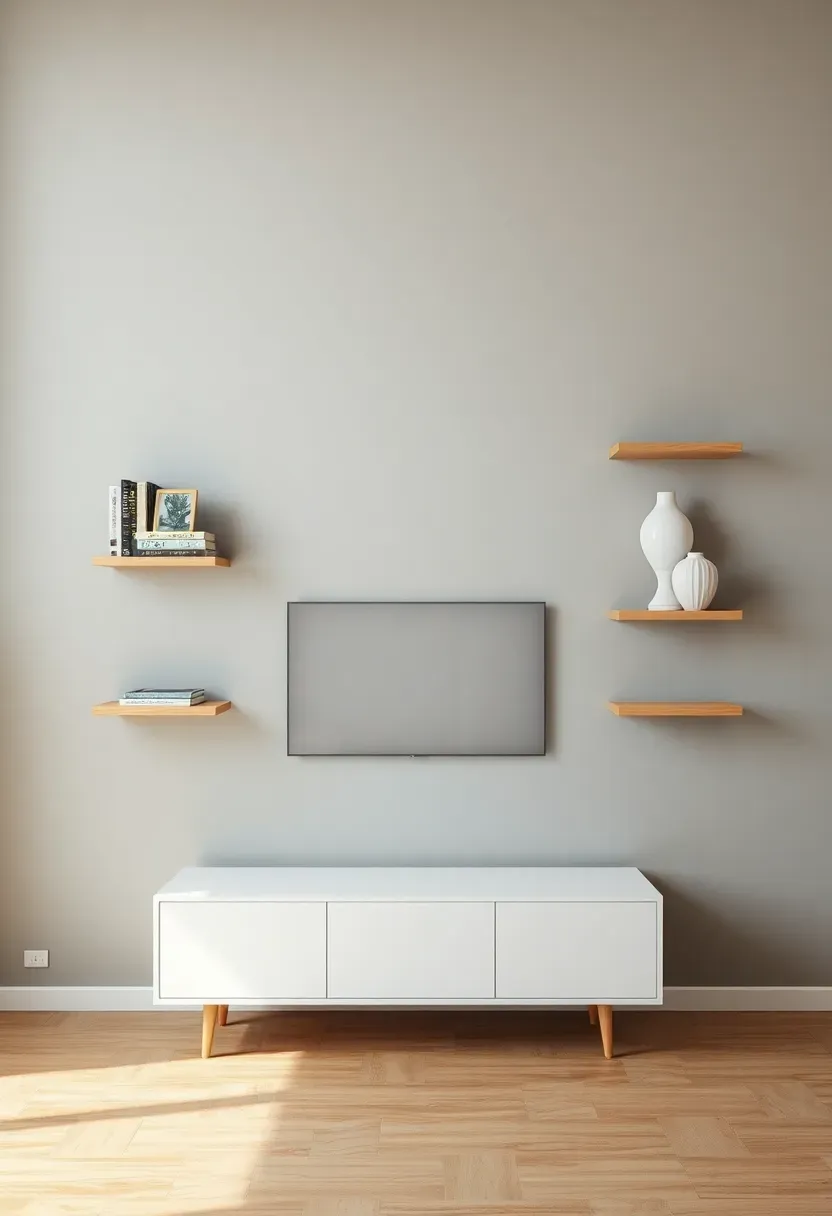
3. Floating Shelves Flanking the Screen
Symmetrical floating shelves on either side of the TV turn a blank wall into a curated display zone. This approach works especially well in smaller rooms where a full media unit would overwhelm the space. Use shelves that match the width of your screen for balanced proportions.
Tips for Shelf Styling
- Keep objects at varied heights — a tall vase, a short stack of books, a small framed print
- Leave at least 30 percent of each shelf empty so the arrangement breathes
- Choose a shelf depth of 20 to 25 centimeters so items sit comfortably without blocking sightlines
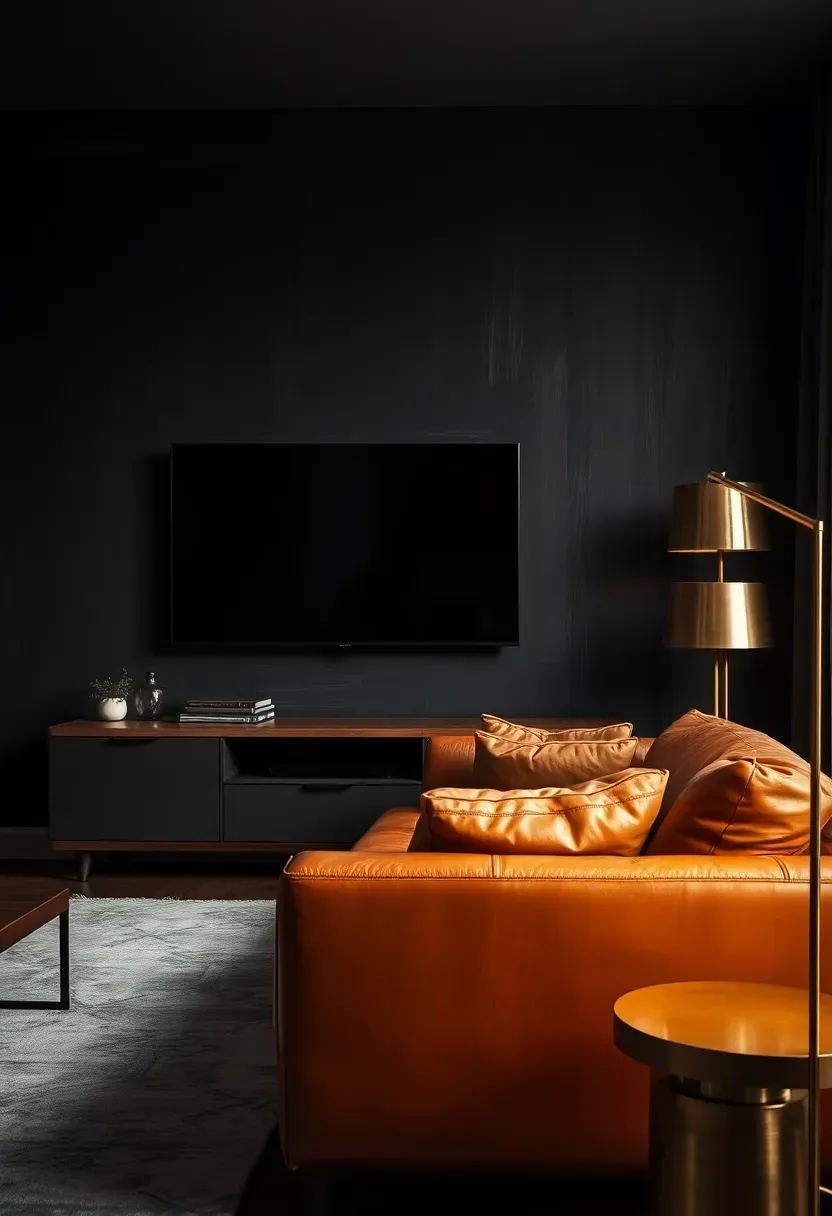
We picked a few things that go well with this idea: Pmnianhua Walnut Floating TV Console (47") (★4.3), FITUEYES Rustic Brown Floating TV Stand (★4.4) and KELIXU Black Floating TV Entertainment Shelf (★4.2). As an Amazon Associate we earn from qualifying purchases.
4. Black Limewash Backdrop
The Core Issue
Standard matte black paint reads flat and lifeless on large wall surfaces, creating a cave-like effect that swallows the room's energy.
The Solution
Limewash in a deep black or near-black shade solves this. The mineral-based finish creates subtle tonal variation across the surface — areas that catch light appear slightly warmer while shadows deepen into rich charcoal. Apply it with a large brush in cross-hatch strokes directly over primed drywall. Two coats give enough coverage while preserving the cloudy, hand-finished texture that makes limewash special. The TV virtually disappears against this backdrop when off.
Pros and Cons
Pros: screen blends when powered off, rich textural depth, easy DIY project Cons: touch-ups can be tricky to blend, lighter marks show on dark surfaces
Recommended
Items for this idea
5. Fluted MDF Accent
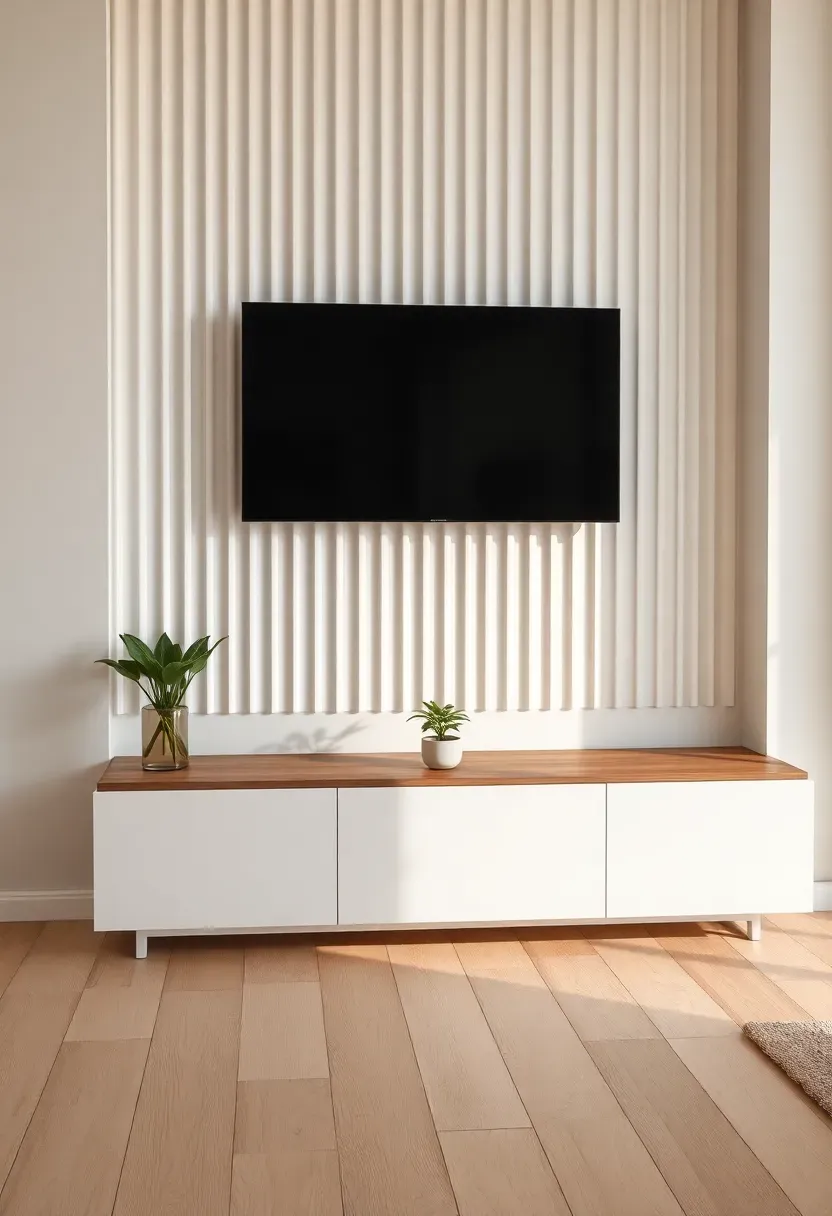
Fluted panels bring architectural detail at a fraction of solid wood cost. MDF fluting painted in the same color as the surrounding wall creates a tone-on-tone texture effect — the ridges catch light and add dimension without introducing a new color. In white or off-white, this looks modern and airy. In a deep forest green or navy, it turns dramatic.
Step 1: Measure and Plan
Calculate the wall area and order panels that cover the full zone behind and around the TV. Most sheets come in 4-by-8-foot sections.
Step 2: Install and Paint
Secure panels to the wall with construction adhesive and finish nails. Fill nail holes, sand lightly, then apply two coats of your chosen paint color.
Step 3: Mount the TV
Locate the studs behind the panels (use a stud finder before installing panels and mark positions). Attach the bracket through the MDF into the framing.
6. Brick Exposure with Matte Sealant
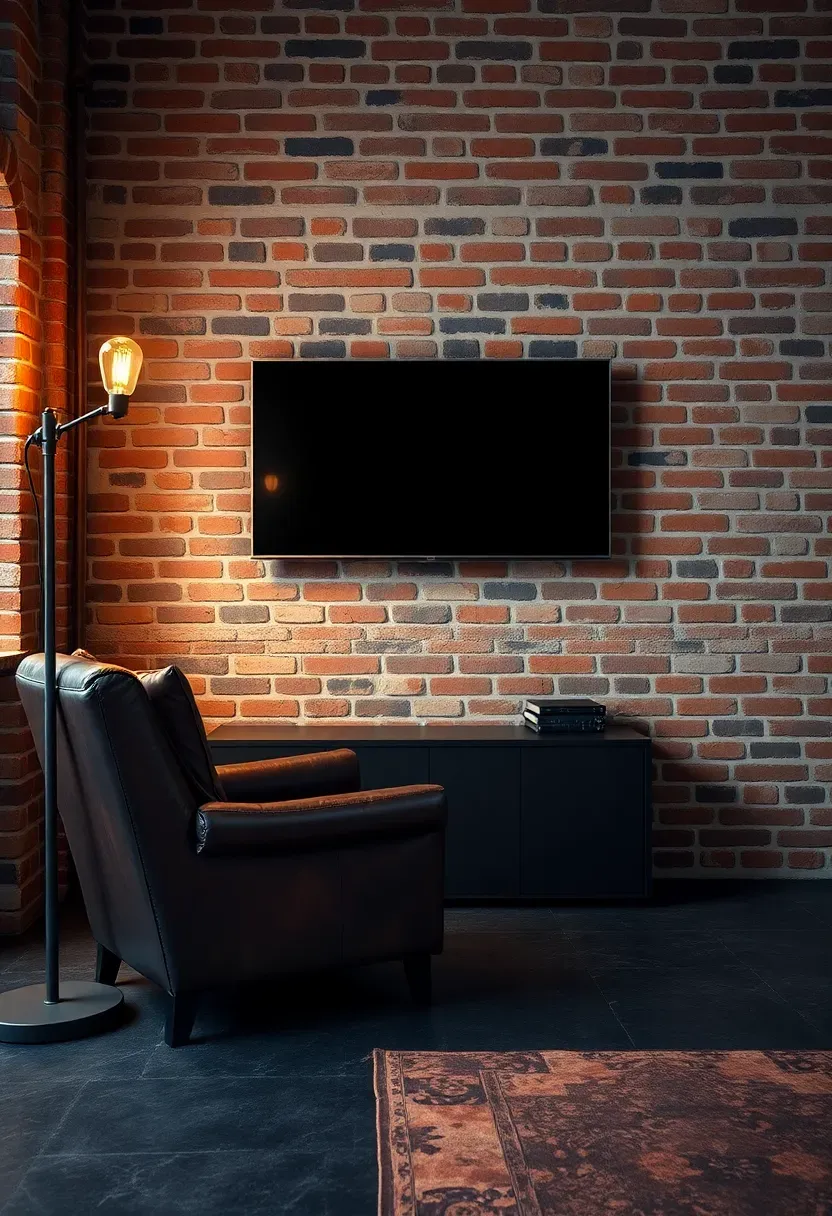
Exposed brick delivers character that no manufactured product can replicate. If your home has brick hiding under plaster, uncovering it behind the TV creates an instant focal point with real age and texture. Seal the surface with a clear matte polyurethane to prevent dust and mortar crumble without adding shine.
What to Watch Out For
- Test a small section first — not all hidden brick is in presentable condition
- Repoint any crumbling mortar joints before sealing
- Use a masonry bit when drilling for the TV mount to avoid cracking bricks
Recommended
Items for this idea
7. LED Backlit Recessed Niche
How to Create a Floating Screen Effect
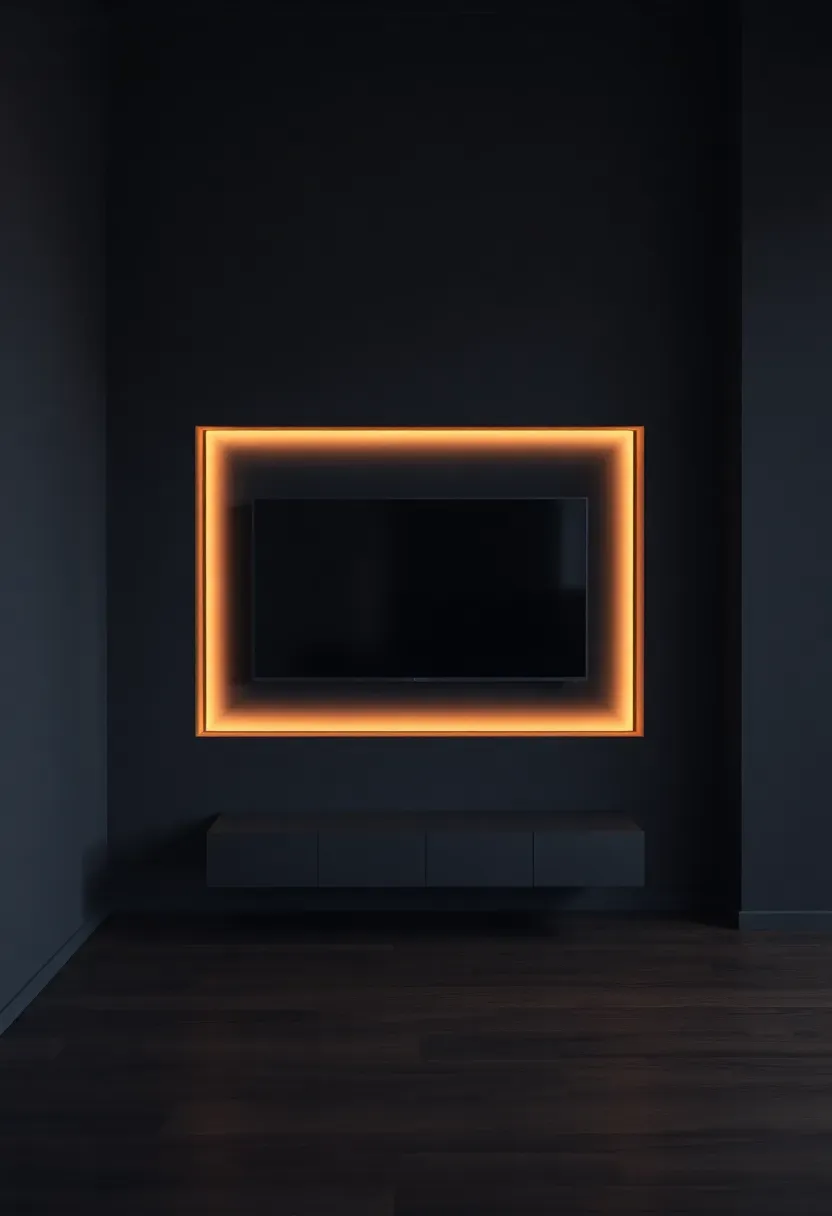
Building a shallow niche in the wall and recessing the TV creates a dramatic floating appearance.
Step 1: Frame the Niche
Build a frame using 2x4 lumber that sets the TV plane back 3 to 4 inches from the wall surface. Finish with drywall and smooth compound.
Step 2: Install LED Strips
Run warm white LED strip lighting around the interior perimeter of the niche, set back about 2 inches from the edge so the bulbs remain invisible.
Step 3: Mount and Connect
Flush-mount the TV inside the niche and route power and data cables behind the wall. The result is a glowing halo effect that reduces eye strain during evening viewing and looks spectacular.
What to Watch Out For
- Use tunable LEDs so you can shift color temperature between day and night
- Keep the niche at least 6 inches wider than the TV on each side for a balanced glow
8. Concrete Microcement Finish
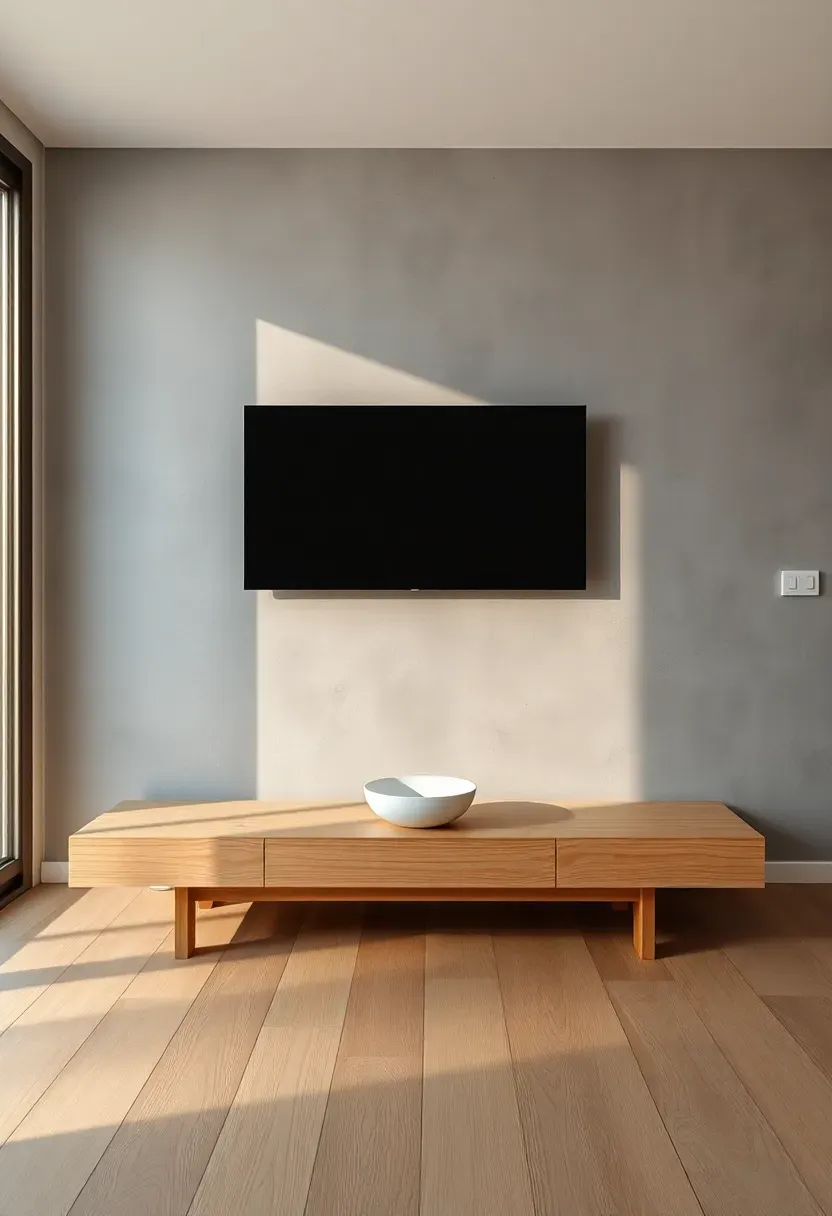
Microcement applied directly over drywall gives the raw industrial look of poured concrete without the weight or structural requirements. The finish is seamless, waterproof, and available in shades from pale dove grey to deep anthracite. Behind a TV, it creates a gallery-like backdrop that feels deliberate and contemporary.
Tips for Application
- Hire a specialist for your first microcement project — the technique requires consistent hand pressure
- Apply a penetrating sealer after curing to protect against fingerprints and scuffs
- Pair with warm wood furniture to prevent the space from reading too cold
Recommended
Items for this idea
9. Gallery Wall Frame Arrangement
Comparing: Symmetrical Grid vs Organic Cluster
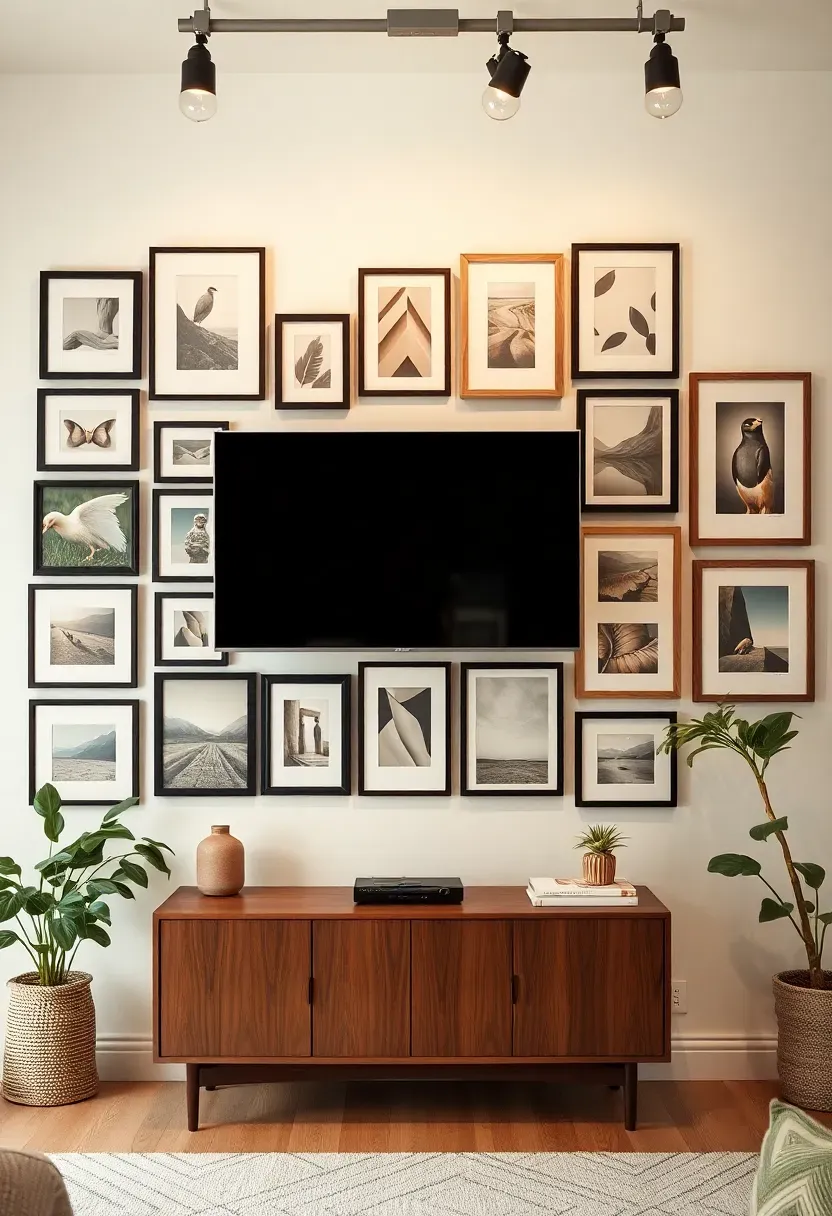
Sometimes the best accent wall is not about the surface material but about what hangs on it.
Symmetrical Grid
Identical frames in a grid pattern around the TV create order and calm. This suits modern and minimalist interiors where clean lines matter. (Best with 20-30 frames of the same size.)
Organic Cluster
Mixed frame sizes, colors, and orientations arranged organically around the screen feel collected and personal. This suits bohemian, eclectic, and maximalist spaces.
What to Choose
Choose a grid if: your room has strong geometric furniture and you value visual quiet Choose a cluster if: you want the wall to tell a story and you enjoy rearranging things seasonally
10. Warm Walnut Full-Height Cabinet
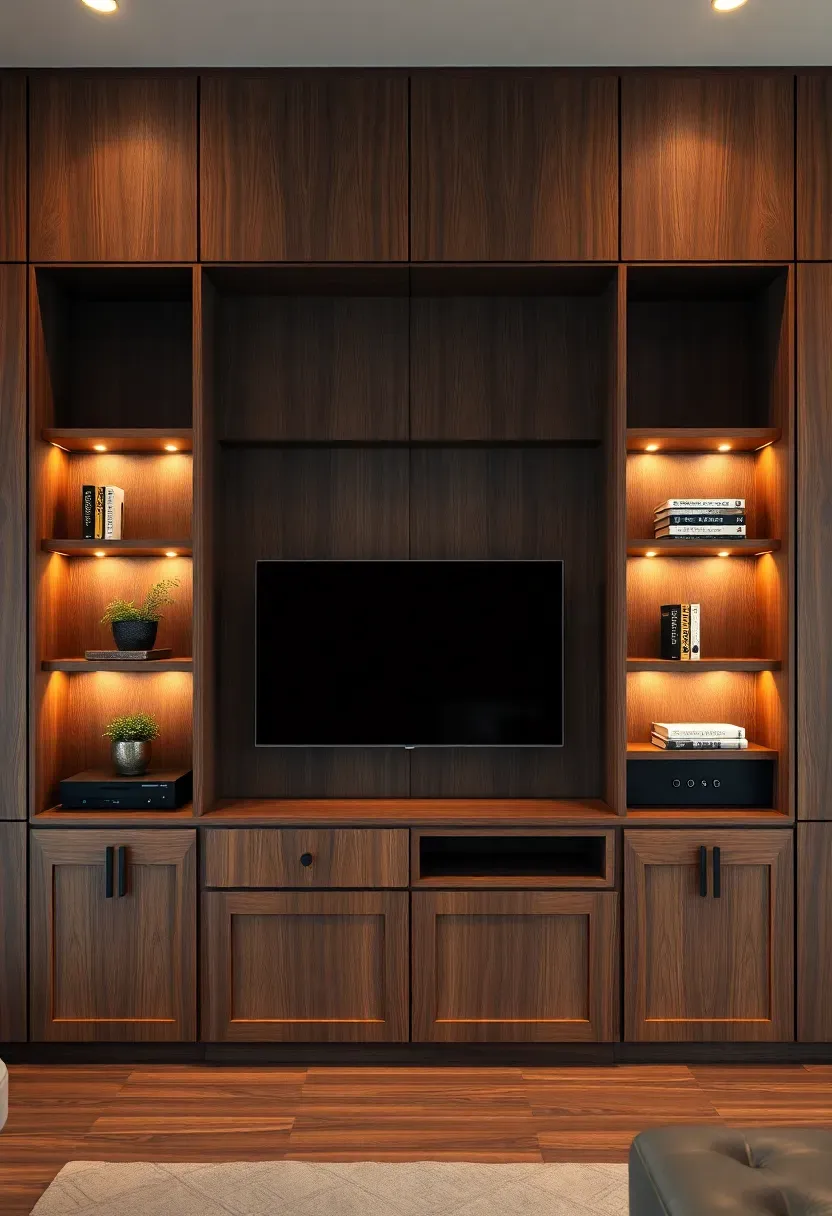
A floor-to-ceiling walnut cabinet system transforms the TV wall into a piece of furniture. The screen sits recessed in a designated opening while surrounding compartments handle books, speakers, media players, and everything else that typically clutters a media console. Walnut's warm undertone prevents the large cabinet mass from feeling heavy.
Tips for Planning
- Design the TV opening 10 percent larger than your current screen to allow for future upgrades
- Include cable pass-throughs and ventilation holes behind closed sections for electronics
- Use push-to-open hardware on lower cabinets for a handleless, streamlined front
Recommended
Items for this idea
11. Two-Tone Horizontal Paint Division
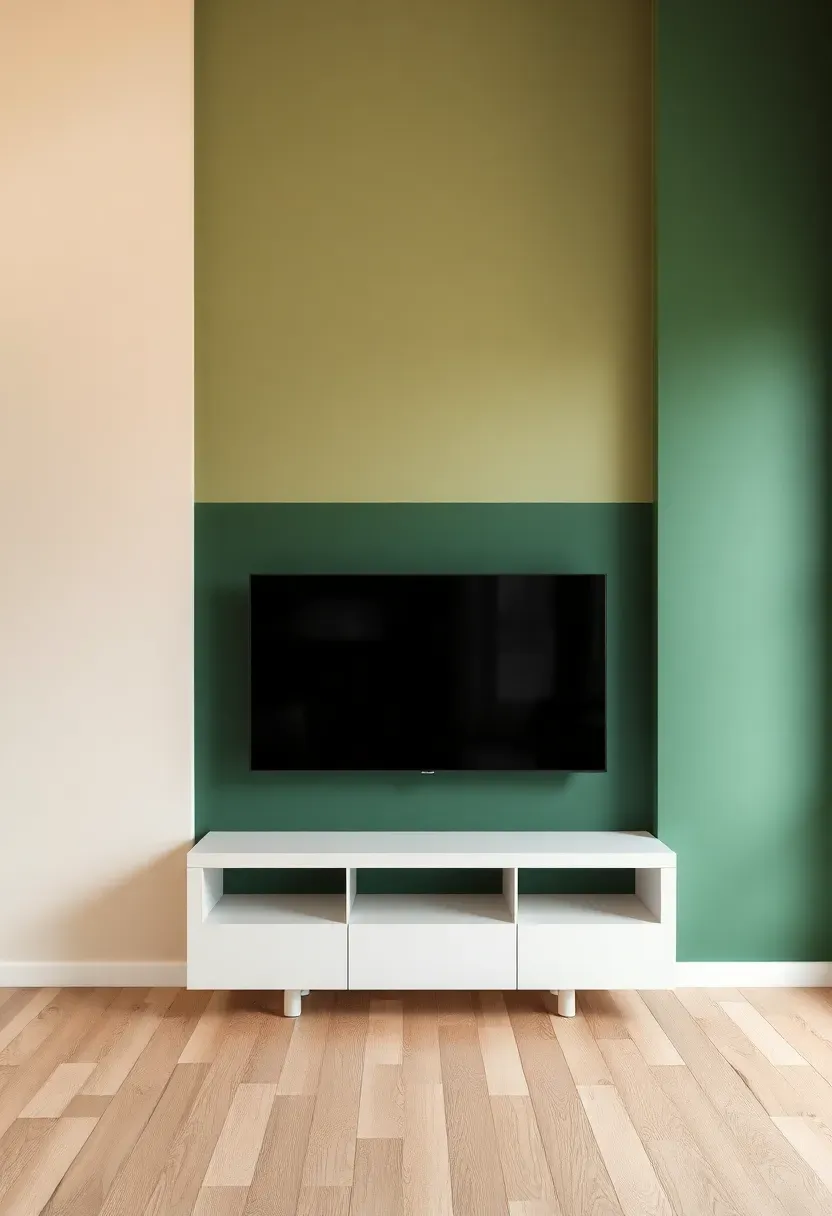
Splitting the wall into two colors at roughly the two-thirds mark creates visual interest with nothing more than painter's tape and two cans of paint. Place the darker shade on the bottom and a lighter tone on top to ground the space and give the ceiling a sense of height.
Origins and History
Two-tone walls draw from traditional wainscoting and dado rail treatments found in European homes since the 18th century. The technique originally protected lower walls from chair backs and foot traffic.
Modern Interpretation
Today the look has been stripped to pure color — no molding required. The clean horizontal break feels graphic and intentional. Behind a TV, the darker lower section absorbs the screen's visual weight while the lighter upper portion keeps the room bright.
How to Apply at Home
- Use a laser level for a perfectly straight line
- Paint the lighter top color first, let it dry, then tape and apply the lower shade
- Position the color break at 120 to 140 centimeters from the floor for the most pleasing proportion
- Choose colors within the same temperature family — warm with warm, cool with cool
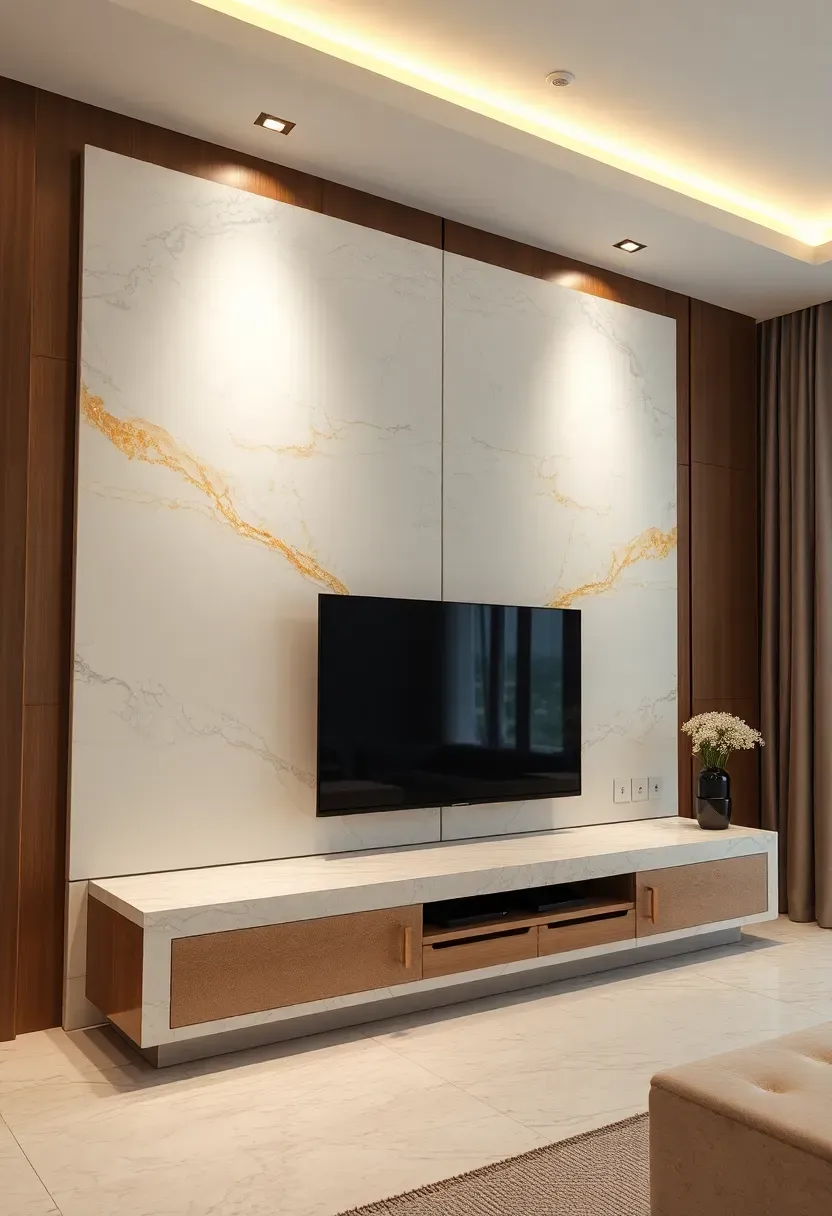
12. Marble Porcelain Slab Panel
Real marble behind a TV would be excessive in weight and cost for most homes. Large-format porcelain slabs with marble-effect printing solve both problems. Slabs come in sizes up to 320 by 160 centimeters, which means fewer grout lines and a more convincing stone appearance. The surface is scratch-resistant, easy to clean, and completely unaffected by humidity.
Tips for Installation
- Book-match two slabs (mirror the veining pattern) for a symmetrical marble effect
- Use a professional installer — large slabs require suction cups and specialized cutting tools
- Warm-toned veining (Calacatta gold, honey onyx) pairs better with wood floors than cool blue-grey options
Recommended
Items for this idea
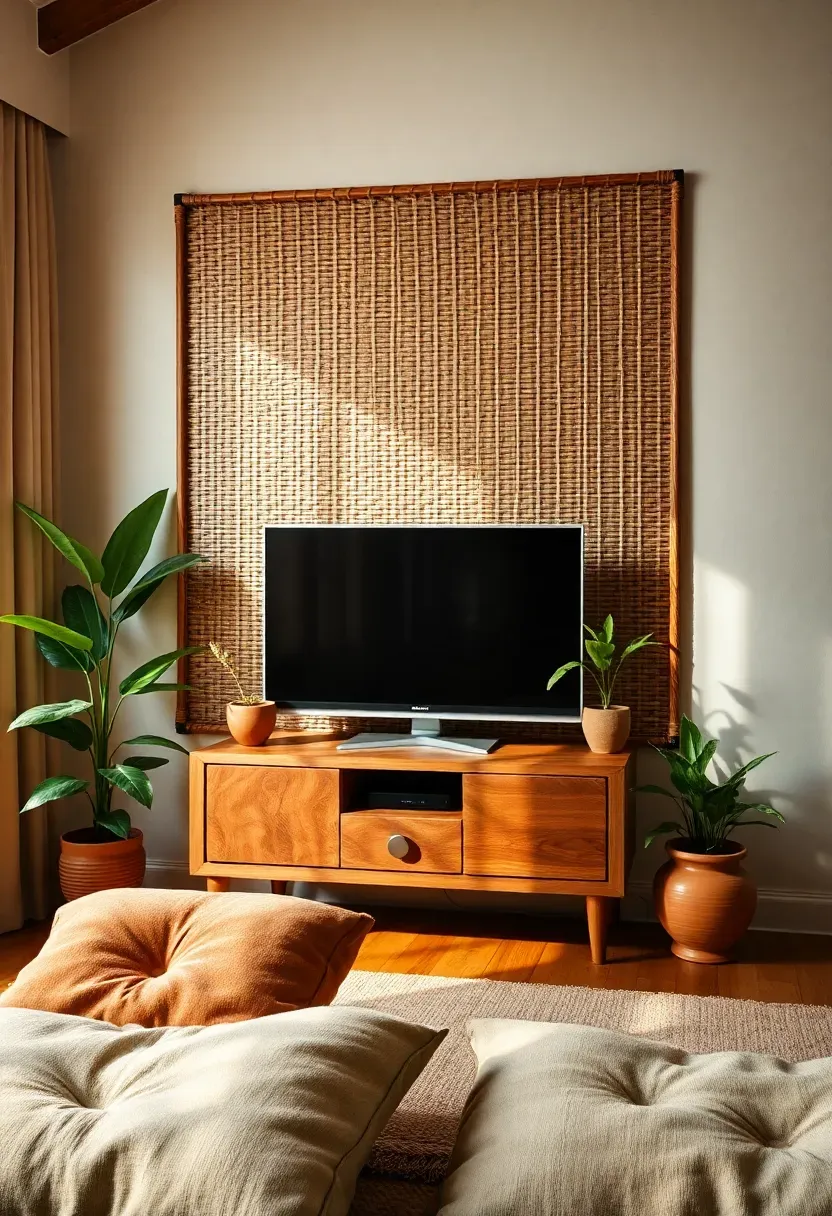
13. Woven Rattan Texture Wall
Rattan cane webbing stretched over a frame and mounted behind the TV brings organic texture that softens the technology in the room. The woven pattern filters light in interesting ways and introduces a handmade quality that feels relaxed and tropical. Use a tightly woven pattern for a refined look or an open weave for a more casual, beachy atmosphere.
Practical Considerations
- Stretch the cane tightly over a wooden frame and staple it from the back to keep the front clean
- Seal with a light clear coat to prevent the natural fibers from drying and cracking
- This works best with TVs on a stand rather than wall-mounted, since drilling through rattan is unreliable
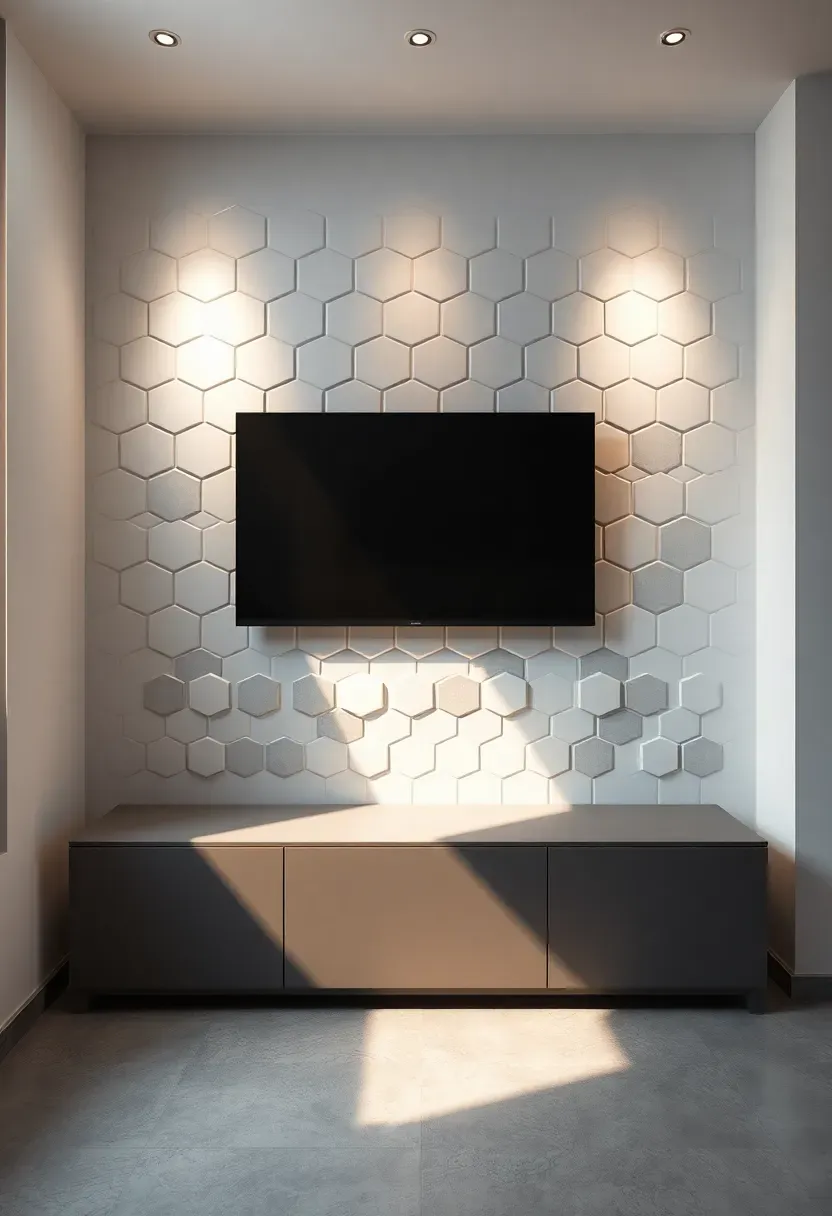
14. Geometric 3D Tile Pattern
Why 3D Tiles Work Behind a Screen
Flat walls make a TV look like it was an afterthought. Three-dimensional wall tiles create depth, shadow play, and architectural intrigue that frame the screen as the centerpiece of a designed composition.
The Solution
Hexagonal, diamond, or wave-patterned 3D tiles in a neutral tone — white, warm grey, or soft beige — add dramatic texture without competing with the screen's content. Install them in a panel that extends 30 to 45 centimeters beyond the TV on all sides. The tile edges catch overhead and side lighting, producing shifting shadows throughout the day.
Pros and Cons
Pros: strong visual impact, durable and cleanable, timeless geometric appeal Cons: professional installation recommended, grout lines require maintenance, heavier than paint or panel solutions
Recommended
Items for this idea
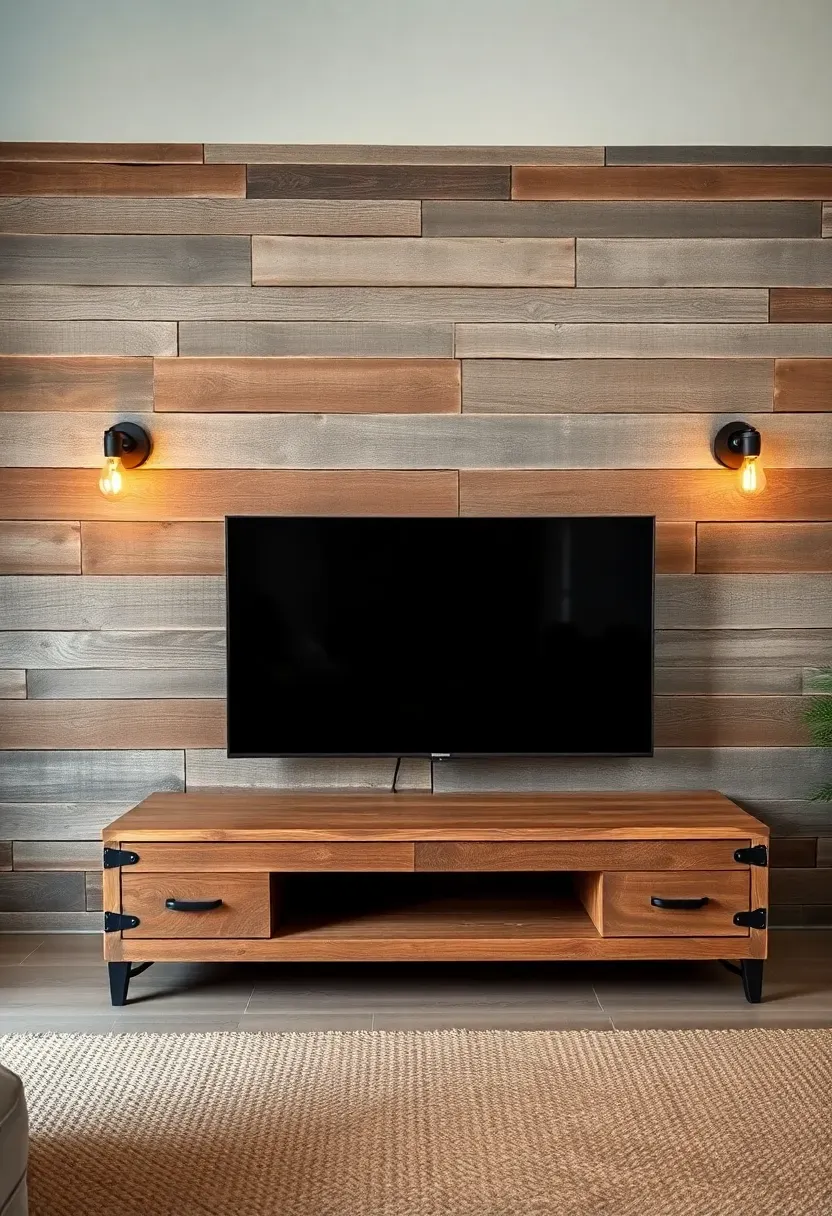
15. Reclaimed Barn Wood Planks
Reclaimed wood tells a story that no factory product can imitate. The nail holes, weathered grain, and color variation from plank to plank create a one-of-a-kind backdrop behind the TV. Run the boards horizontally for a relaxed, cabin-like feel, or vertically for a more contemporary interpretation.
Step 1: Source and Prepare
Find a reclaimed wood supplier and select planks with consistent thickness (typically 1/2 to 3/4 inch). Sand lightly to remove splinters but preserve patina.
Step 2: Install
Attach planks to a plywood backer or directly to studs with a brad nailer. Stagger the joints for a natural look.
Step 3: Finish
Apply a matte clear sealant to protect against dust and make cleaning easier. Skip glossy finishes — they kill the rustic character.
16. Grasscloth Wallpaper Surround
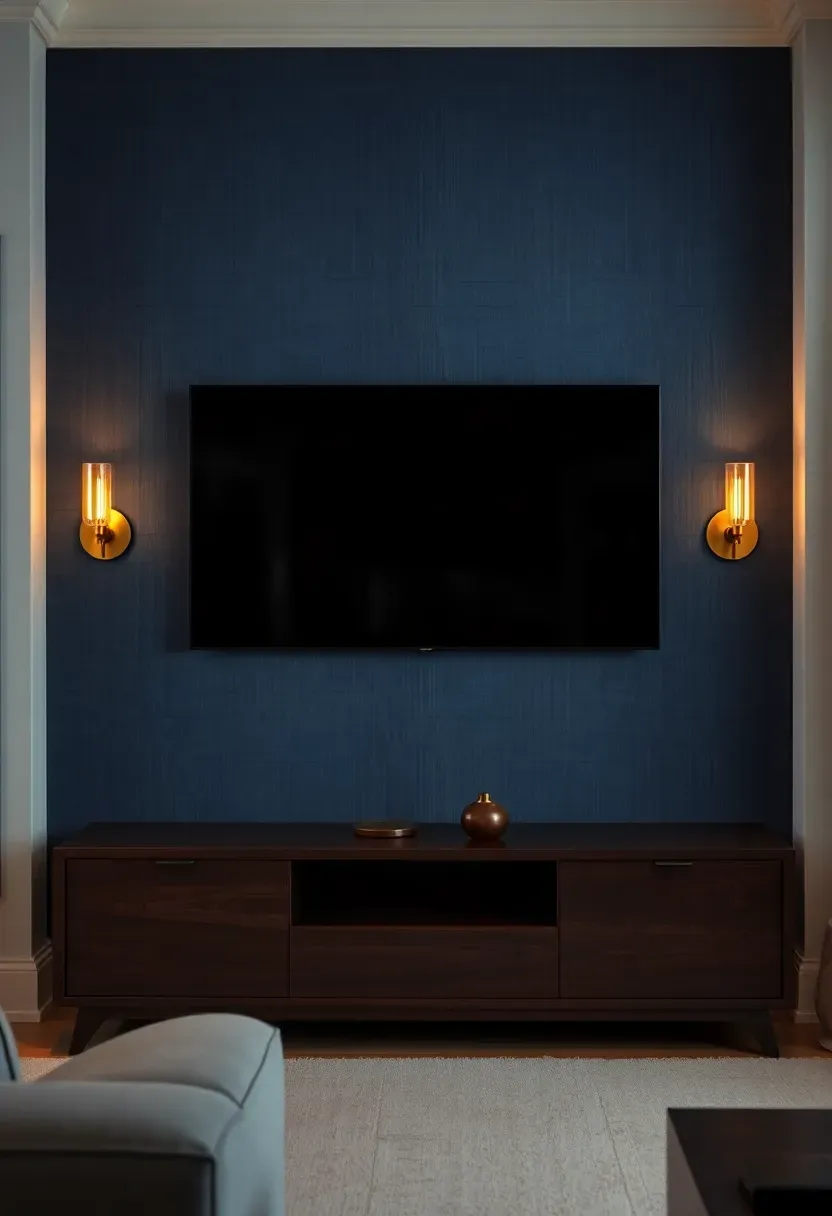
Grasscloth wallpaper is woven from natural fibers — jute, sisal, or seagrass — and backed with paper for easy hanging. The woven texture adds warmth and visual depth that flat wallpaper cannot match. Behind a TV, grasscloth in deep navy, charcoal, or forest green creates a sophisticated backdrop that absorbs sound and reduces screen glare.
Tips for Hanging
- Use the manufacturer's recommended adhesive — grasscloth is heavier than standard wallpaper
- Hang panels in the same direction to keep the weave pattern consistent
- Do not wipe with water; blot stains gently with a dry cloth
- Add brass picture lights or sconces above the TV for a polished, layered finish
Recommended
Items for this idea
17. Arched Built-In Media Alcove
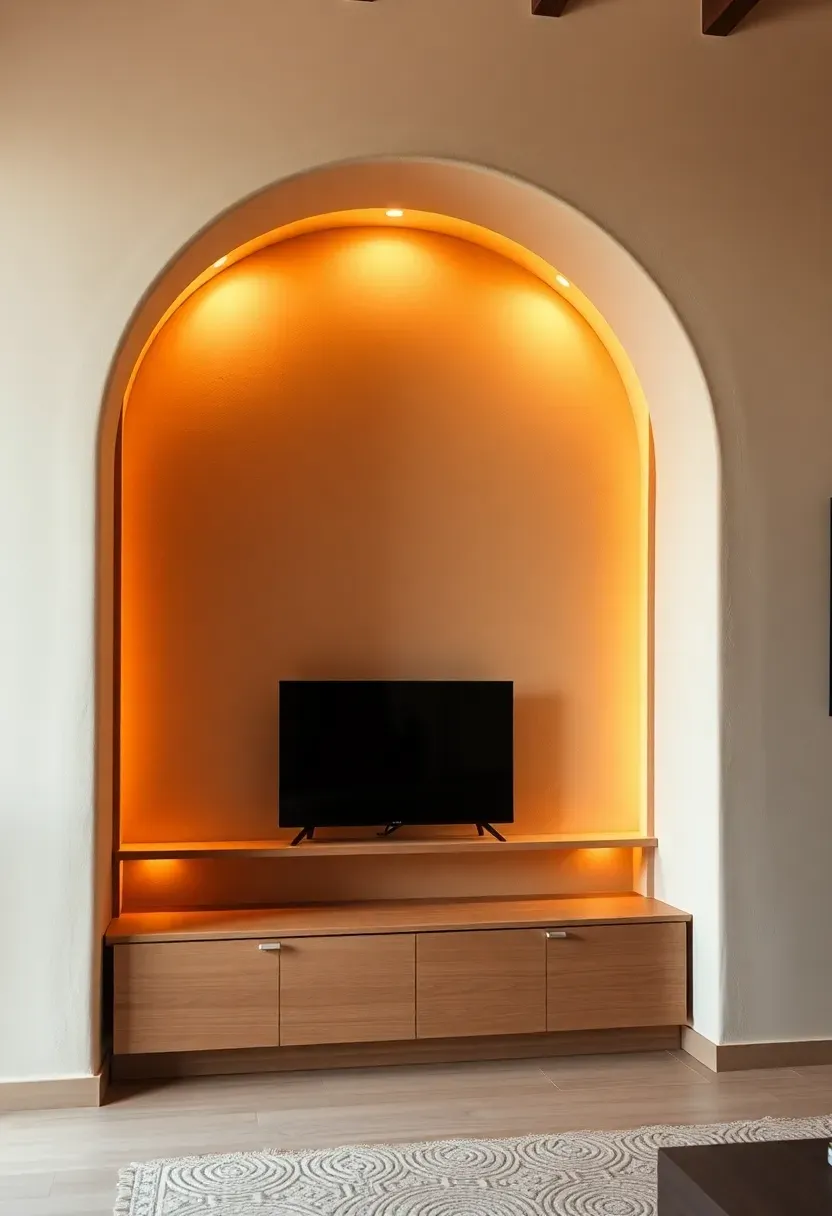
An arched alcove turns the TV wall into an architectural statement. The curved top softens the rigid geometry of the screen while the built-in frame gives the entire arrangement permanence and intention. Finish the interior of the alcove in a contrasting shade — warm plaster, limewash, or a deep accent color — to create a niche that feels like it was always part of the house.
How to Build It
- Frame the arch with flexible drywall or a pre-formed arch kit over standard stud framing
- Set the alcove depth at 4 to 6 inches for visual separation without losing floor space
- Include a recessed shelf below the TV for a soundbar or small decorative objects
- Route all cables through the wall cavity before finishing for a completely clean look
Quick FAQ
Can I mount a TV on any accent wall material? Most materials support TV mounting as long as you anchor into the wall studs behind them. Wood slats, MDF panels, and drywall-based finishes work well. For stone veneer or tile, use a masonry bit and appropriate anchors. Always verify the mount's weight rating exceeds your TV's weight by at least 20 percent.
Does backlighting behind the TV actually reduce eye strain? Yes. Bias lighting — a soft glow behind the screen — reduces the contrast between the bright display and the dark surrounding wall. This eases the strain on your eyes during extended viewing, especially in dimly lit rooms. Warm white LED strips at around 6000 to 6500K work best.
Should the accent wall color be darker or lighter than the rest of the room? Either can work, but darker shades are more popular behind TVs because the screen blends into the wall when powered off. Lighter accents work when you want the wall to feel open and airy, particularly in small rooms or spaces with limited natural light.
Is it worth hiring a professional for panel or tile installation? For large-format porcelain slabs, microcement, and complex 3D tile layouts, professional installation is strongly recommended. These materials require specialized tools and techniques. Wood slats, paint treatments, and wallpaper are more forgiving for confident DIY work.
Which accent wall idea works best for renters? Grasscloth wallpaper with removable adhesive, a freestanding wood slat panel leaned against the wall, or a gallery wall arrangement with command strips all work without permanent modifications. Two-tone paint is also reversible with a coat of primer and paint when you move out.
The wall behind your TV deserves as much design attention as the furniture in front of it. Start with the approach that matches your skill level and budget — even a single coat of limewash or a set of floating shelves can shift the entire character of your living room. The screen was always going to be there; now it has a backdrop worth looking at.
Pinterest cover for 17 Accent Wall Behind TV Ideas to Frame Your Screen in Style
About the author
OBCD
CGI visualization and interior design content. We create detailed 3D renders and curate practical design ideas for every room in your home.