17 AI Basement Remodel Ideas
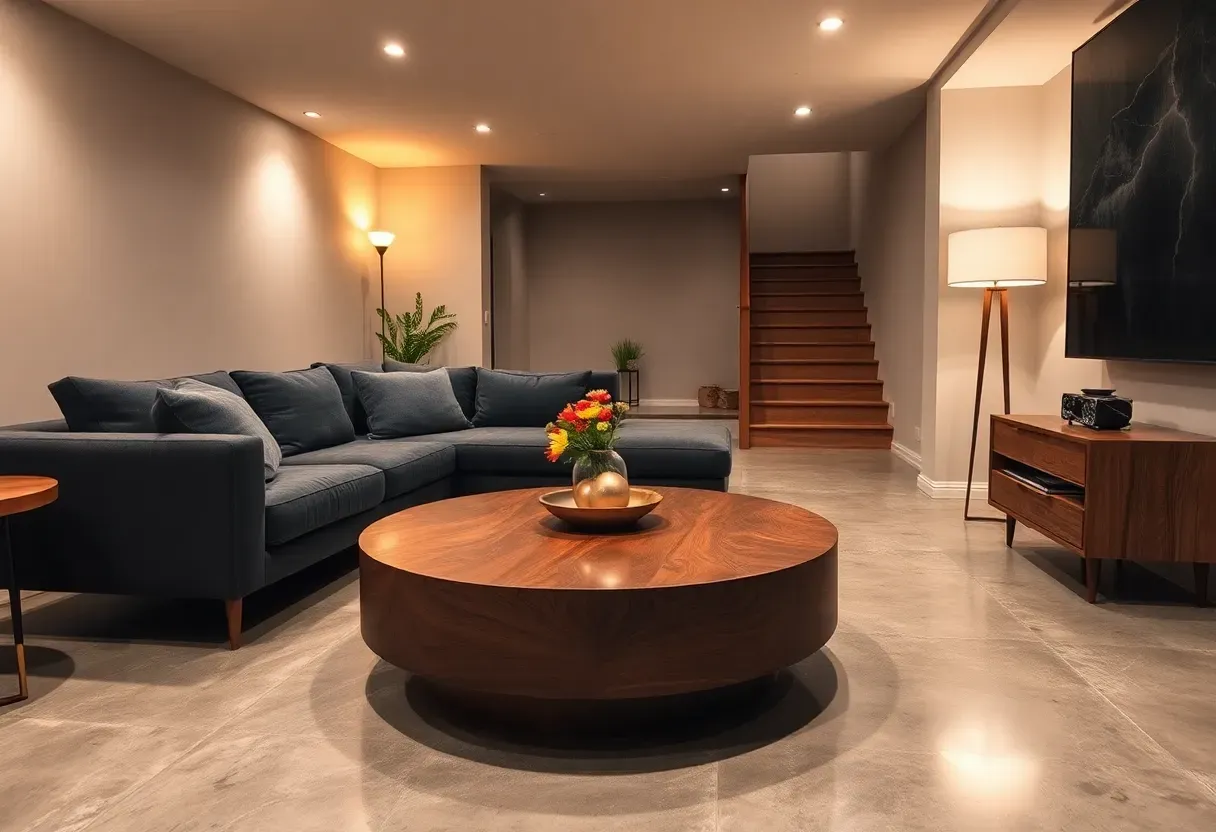
We have all walked past that basement door — the one leading to a dim, slightly damp space stuffed with forgotten holiday boxes and an exercise bike nobody rides. Yet beneath your feet sits potentially the largest untapped room in your entire home. Square footage that costs nothing extra in property taxes in many jurisdictions and that sits waiting for a purpose. A finished basement can return sixty to seventy percent of its renovation cost at resale, but the real payoff is daily life: a place where movie nights feel cinematic, workouts happen without a gym membership, and teenagers finally have somewhere to be loud without shaking the living room walls.
Ready to rethink what lives beneath your main floor? Here are seventeen remodel concepts — each one visualized with AI — ranging from simple weekend refreshes to full architectural transformations.
Table of Contents
- Cozy Home Theater Lounge
- Industrial Chic Open Plan
- Walkout Basement Sunroom
- Compact Home Gym
- Mid-Century Modern Rec Room
- Underground Wine Cellar
- Kids Playroom with Storage Wall
- Basement Guest Suite
- Rustic Pub and Game Room
- Home Office with Built-In Library
- Scandinavian Spa Bathroom
- Music Studio with Acoustic Panels
- Bright White Laundry and Mudroom
- Craftsman Workshop
- Teen Hangout with Kitchenette
- Luxury Lounge with Fireplace
- Multi-Zone Open Basement
1. Cozy Home Theater Lounge
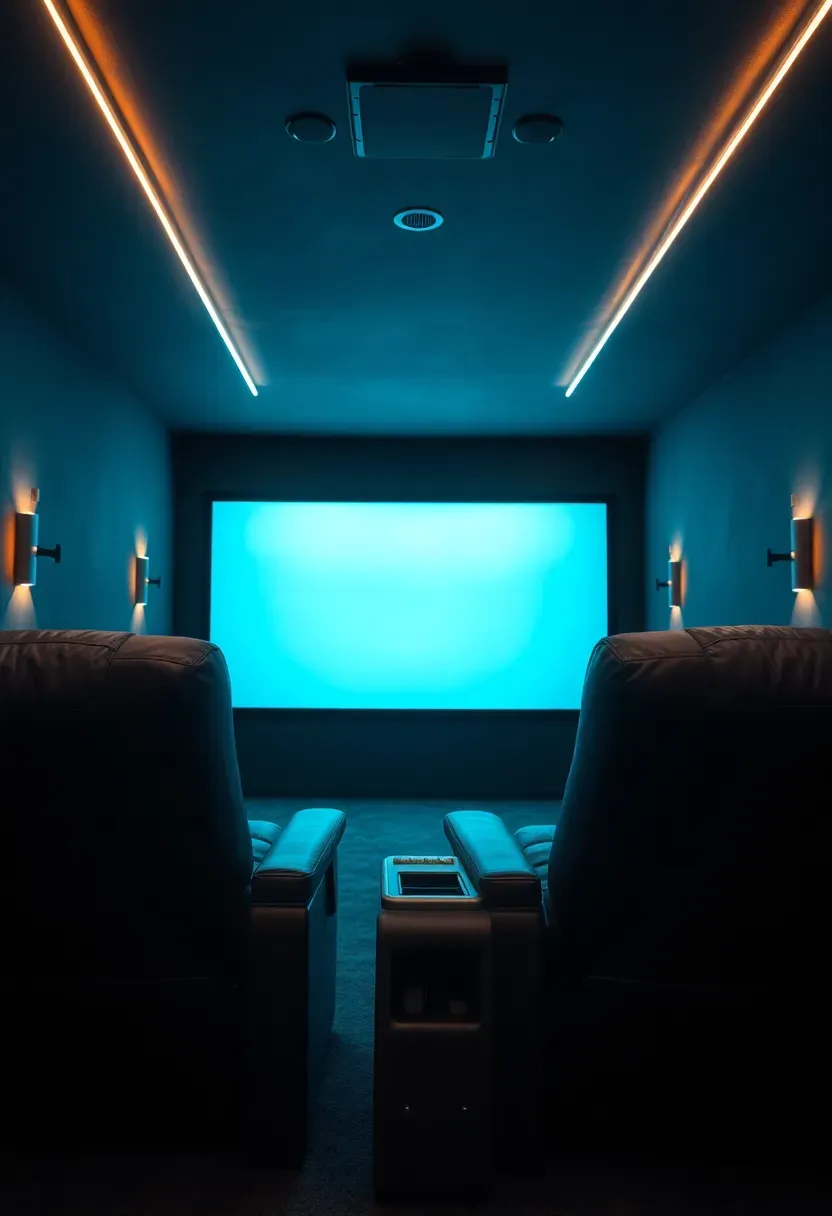
Nothing turns a neglected basement into the most popular room in the house faster than a dedicated theater setup. The underground location already gives you a head start — no windows to block out and thick foundation walls that keep sound from traveling upstairs.
What You Need to Get Started
- A short-throw projector or 75-inch-plus display mounted at eye level from the primary seating row
- Blackout paint or dark fabric panels on walls and ceiling to kill light reflections
- Two rows of seating: recliners in front, a raised platform with a couch behind
Watch Out For
Ventilation matters more than you think. Electronics and bodies generate heat in a sealed room. Install a dedicated return vent or a mini-split unit so the space stays comfortable during a three-hour film marathon.
We picked a few things that go well with this idea: SPC Rigid Core Waterproof Vinyl Plank Flooring (★4.4), Suntecwood Soundproof Waterproof LVP Flooring (★4.3) and EverLux 20 MIL Click Lock Vinyl Plank (★4.5). As an Amazon Associate we earn from qualifying purchases.
2. Industrial Chic Open Plan
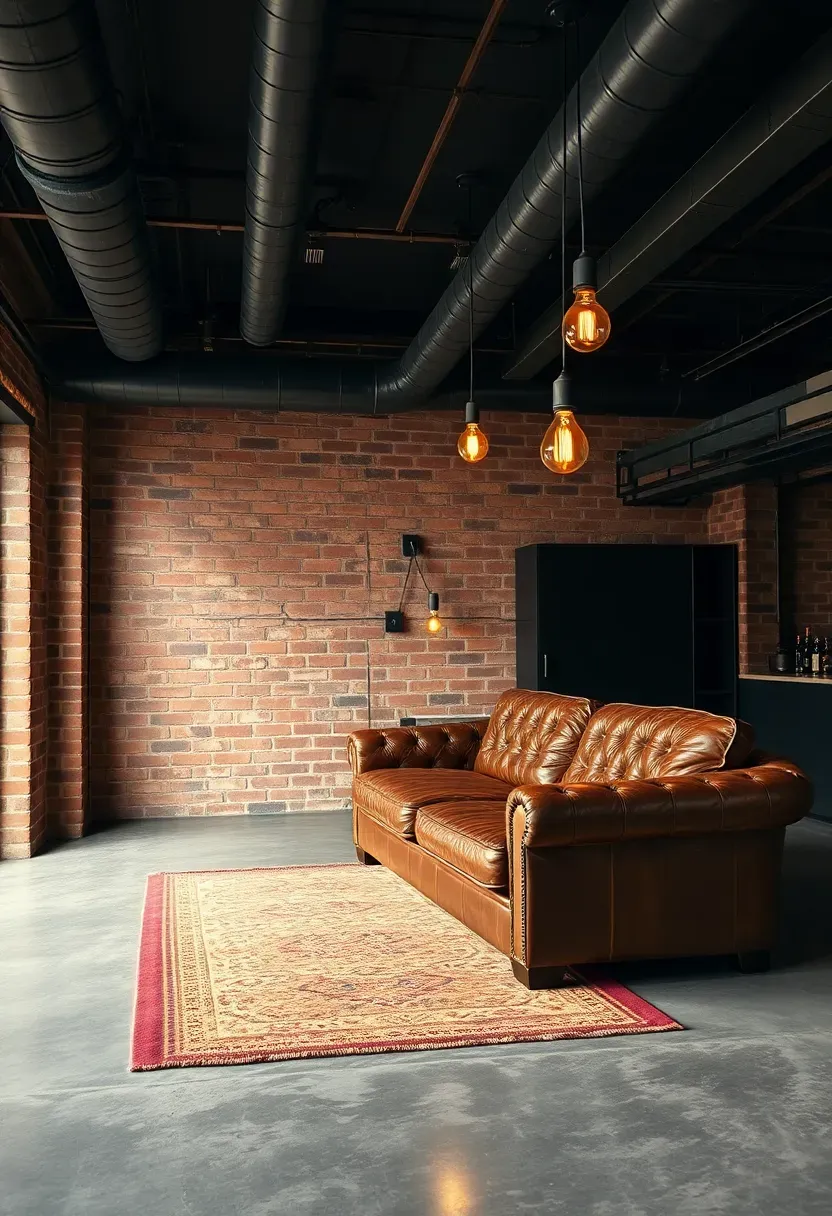
Exposed ductwork, concrete floors, and raw brick — elements that most basements already have — become the entire design language when you lean into an industrial aesthetic instead of hiding it. This approach saves significant money on ceiling framing and drywall while delivering a look that feels intentional and urban.
Tips / Practical Recommendations
- Seal concrete floors with a clear epoxy or stain rather than covering them with carpet
- Spray paint exposed pipes and ducts a uniform matte black or charcoal to unify the ceiling plane
- Introduce warmth through leather furniture, vintage rugs, and Edison-bulb pendant lights
- Keep one accent wall in natural brick and paint the remaining walls a warm white
We picked a few things that go well with this idea: Ensenior 12-Pack Dimmable LED Recessed Lights (★4.6), Amico 12-Pack 5CCT Ultra-Thin Recessed Lights (★4.6) and DAMINY 12-Pack 5CCT Dimmable Ceiling Lights (★4.5). As an Amazon Associate we earn from qualifying purchases.
3. Walkout Basement Sunroom
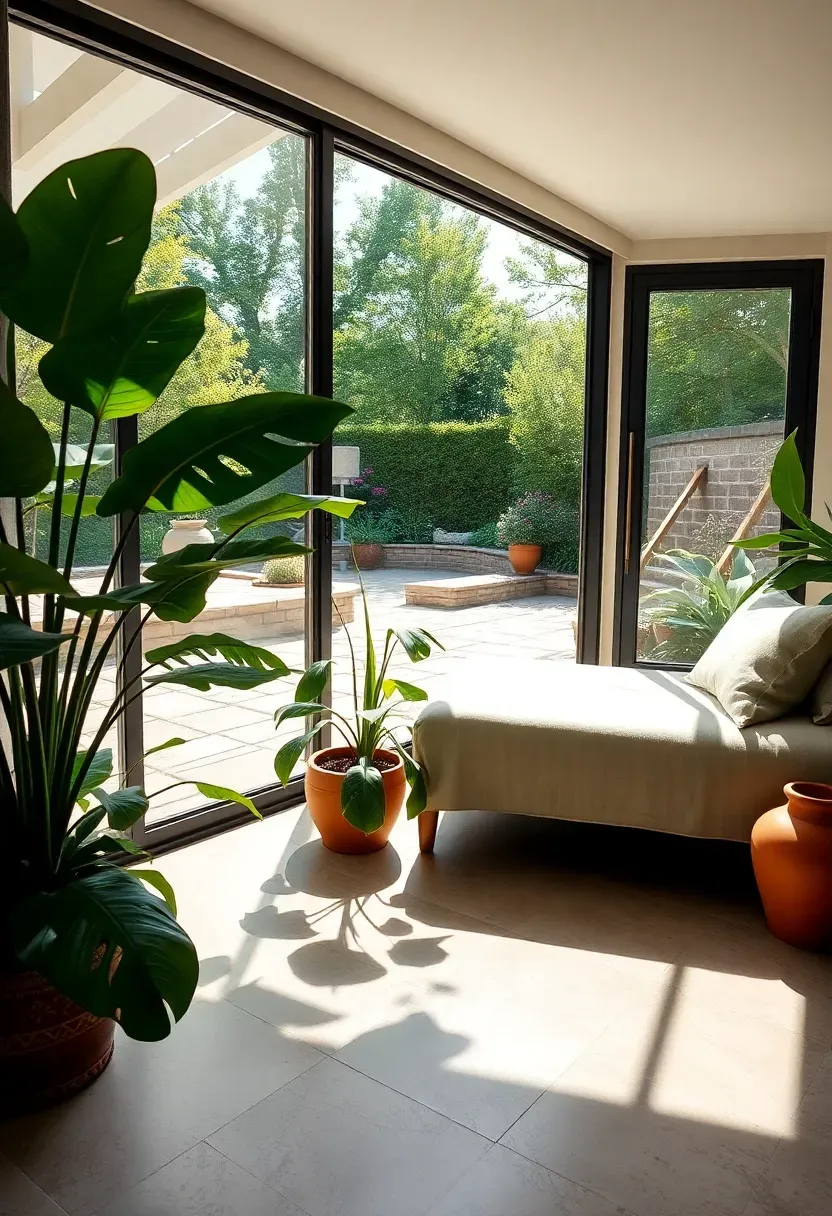
Is your lot sloped enough to allow a walkout exit? That single architectural advantage transforms a basement from a cave into a sun-filled extension of outdoor living. Floor-to-ceiling sliding doors flood the space with natural light and connect directly to a patio or garden level.
Step 1: Assess the Grade
Walk the perimeter outside. If the ground drops at least six feet from front to back, you likely have room for a full-height door wall on the downhill side.
Step 2: Choose the Right Glass
Triple-pane low-E glass keeps energy loss minimal while maximizing daylight. Consider a multi-slide or folding door system for warm-weather entertaining.
Step 3: Design the Transition
Extend the same flooring material — porcelain tile that mimics stone works well — from inside to the patio so the boundary between indoors and out disappears visually.
We picked a few things that go well with this idea: Rubber King Recycled Rubber Gym Tiles (10-Pack) (★4.4), SUPERJARE Extra-Thick Rubber Gym Mat (36-Pack) (★4.5) and AmeriFlex Recycled Rubber Gym Tiles USA-Made (★4.3). As an Amazon Associate we earn from qualifying purchases.
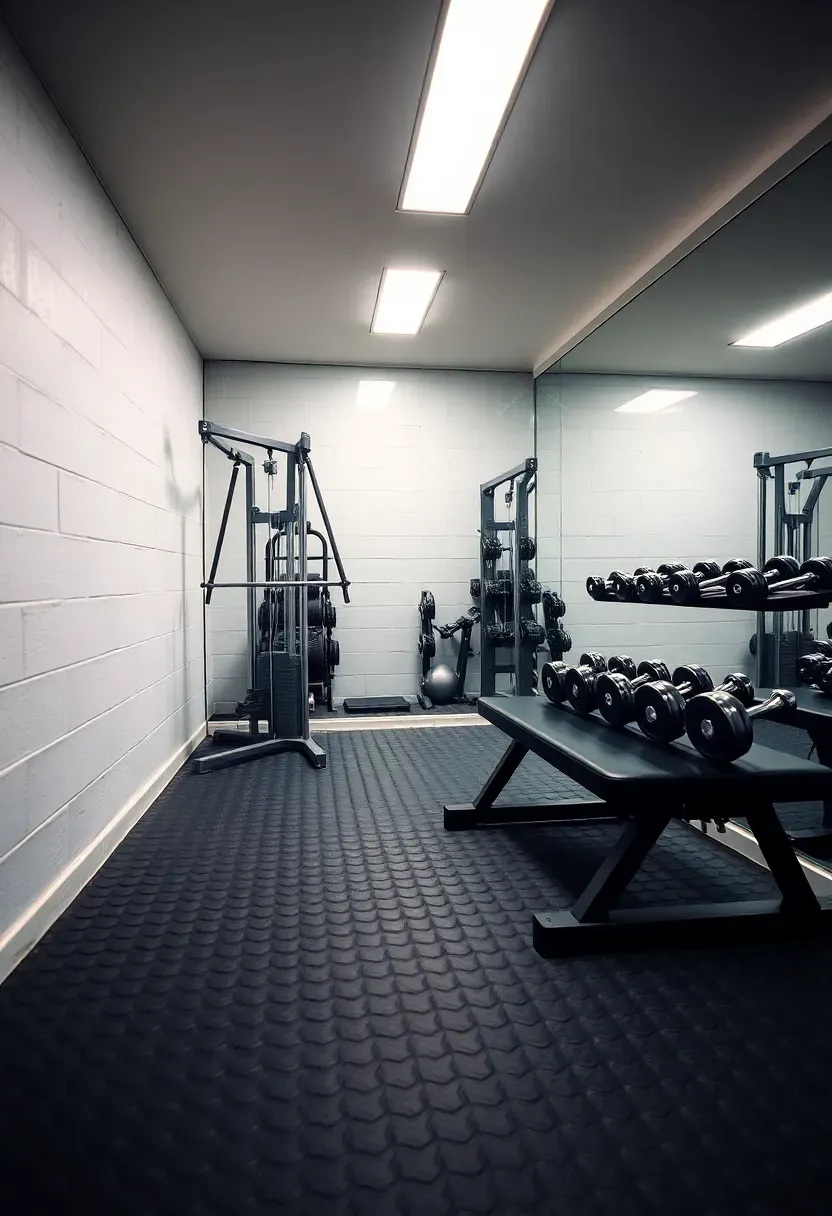
4. Compact Home Gym
The Core Issue
Gym memberships cost between forty and eighty dollars per month, and the commute eats into workout time. Meanwhile, a ten-by-twelve-foot corner of your basement sits empty.
The Solution
A dedicated basement gym eliminates every barrier to consistency. Rubber interlocking floor tiles protect the slab and dampen noise. A full-length mirror on one wall makes the room feel twice its size while letting you check form. Mount a pull-up bar in the ceiling joists — they are already engineered to handle the load. Add a fold-down bench, a set of adjustable dumbbells, and a compact cable machine, and you have a setup that covers ninety percent of strength training needs in under twelve square meters.
Pros and Cons
Pros: No monthly fees, no waiting for equipment, and you can train at midnight if you want. Cons: Initial investment runs one to three thousand dollars; humidity control is essential to prevent rust on metal equipment.
Recommended
Items for this idea
5. Mid-Century Modern Rec Room
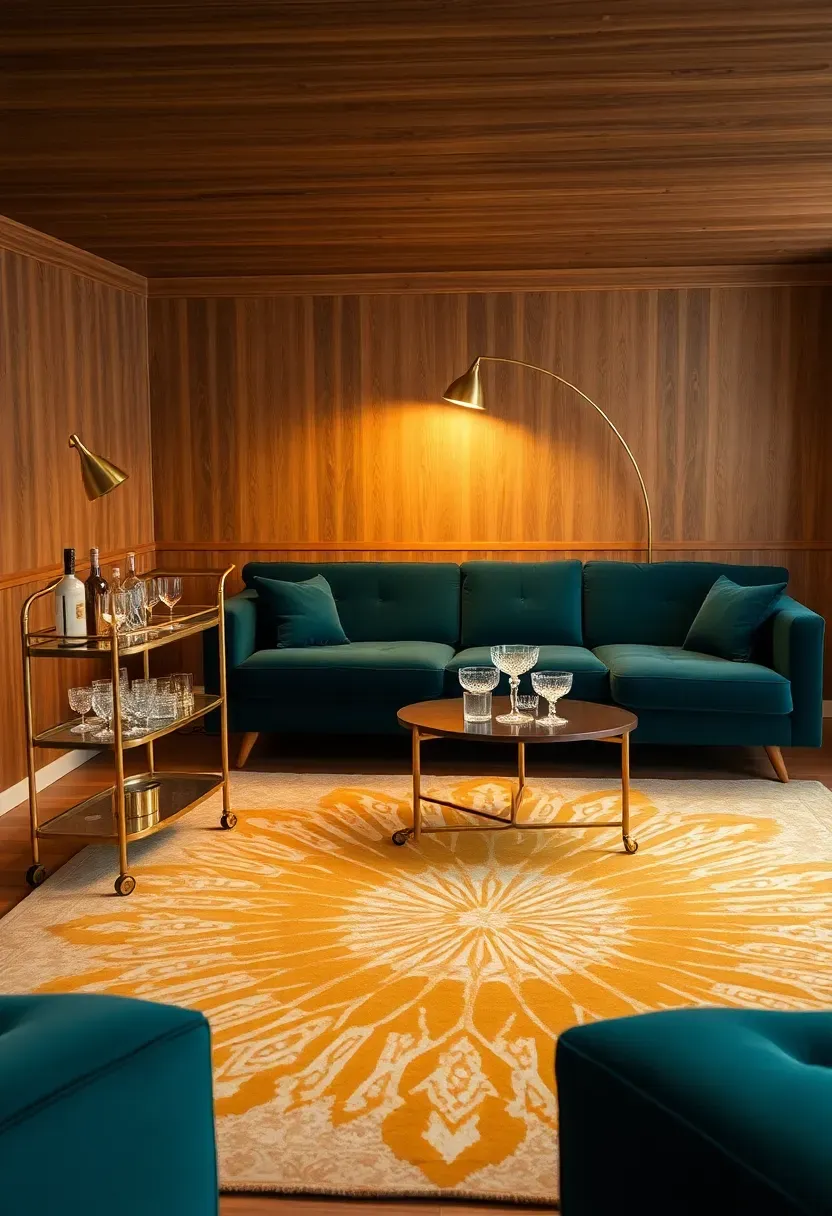
Walnut paneling, tapered-leg furniture, and saturated jewel tones give a basement rec room a personality that generic beige finishes never will. The mid-century palette — teal, mustard, burnt orange against warm wood — actually benefits from the lower light levels underground, where those rich colors glow rather than compete with harsh daylight.
Tips / Practical Recommendations
- Install walnut or walnut-veneer panels on a single feature wall to anchor the room without overwhelming it
- Choose a low-profile sectional in teal or olive and pair it with a vintage brass floor lamp
- Add a bar cart stocked with glassware as both a functional piece and a styling focal point
- Lay a geometric or starburst-pattern area rug to ground the seating zone
6. Underground Wine Cellar
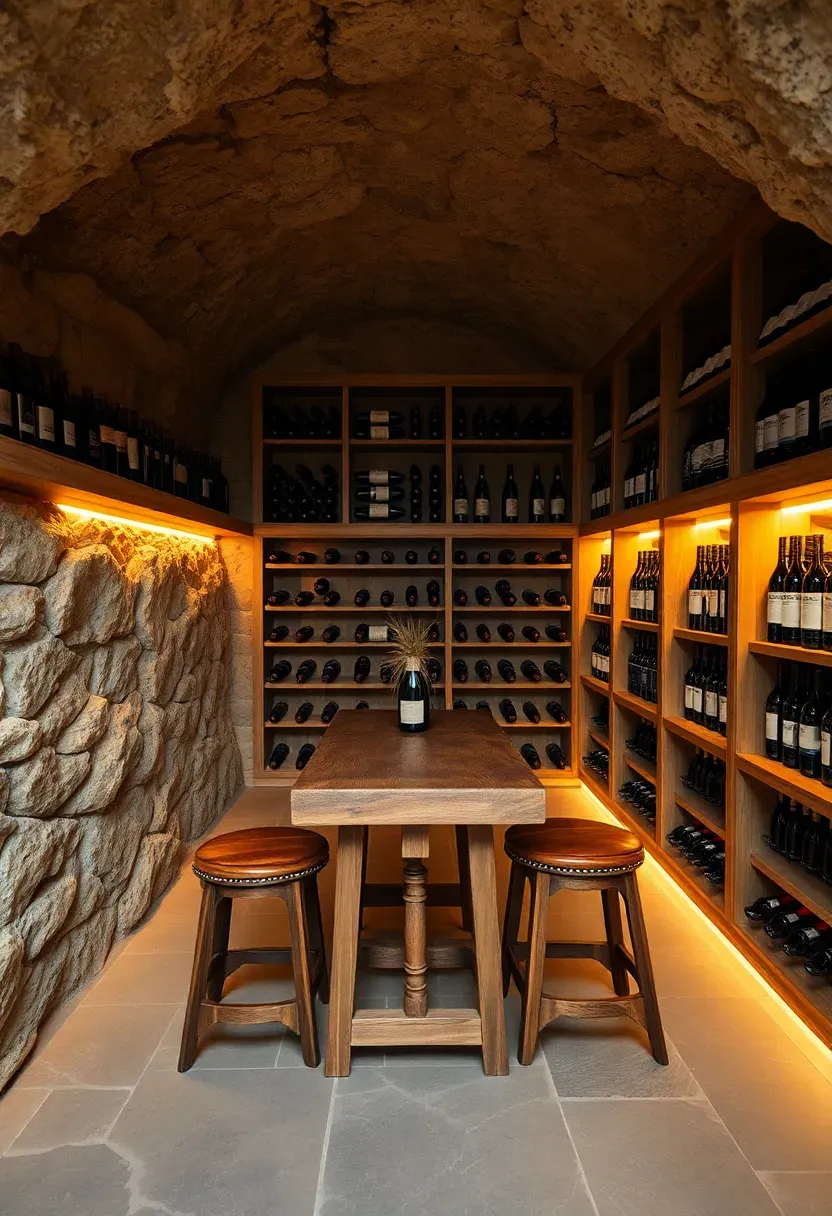
Basements naturally maintain temperatures between fifty-five and sixty degrees Fahrenheit — precisely the range that wine storage demands. Instead of fighting the underground climate, use it to your advantage.
Origins and Tradition
Wine cellars have existed beneath homes for millennia, from Roman villas to French chateaux. The principle has never changed: cool, dark, vibration-free storage preserves flavor and extends aging potential. Your basement offers all three conditions with minimal mechanical help.
Modern Interpretation
Today's residential wine cellars blend function with display. Glass-fronted walls let you showcase bottles from an adjacent room. Modular racking systems in metal or reclaimed wood accommodate collections from fifty to five hundred bottles. LED strip lights with warm color temperatures illuminate labels without generating heat. A small tasting counter with two stools turns storage into an experience.
How to Apply at Home
- Start with a vapor barrier and insulation to stabilize humidity between fifty and seventy percent
- Use a through-wall cooling unit if your basement runs warmer than sixty-two degrees
- Separate everyday drinking wines on accessible racks from aging bottles stored horizontally in back
- Add a stone or brick accent wall for atmosphere and thermal mass
Recommended
Items for this idea
7. Kids Playroom with Storage Wall
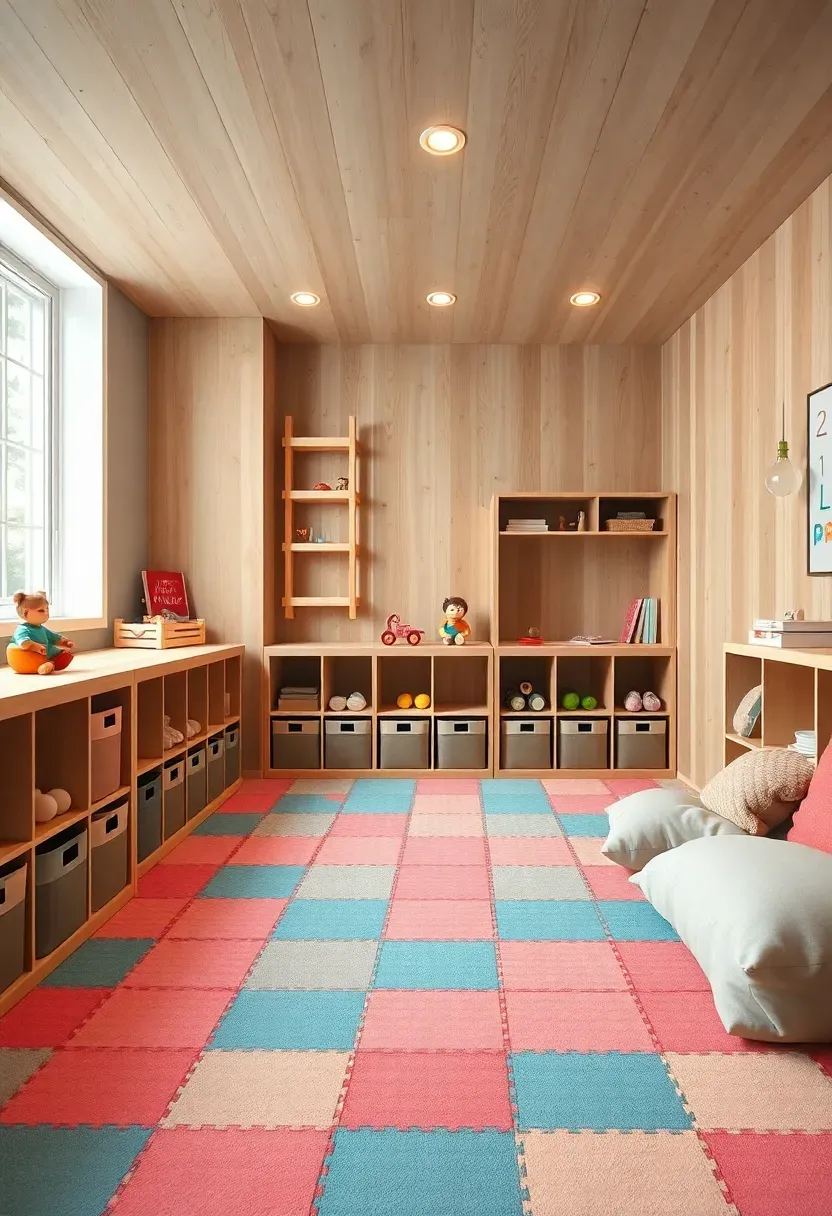
Every parent knows the feeling: toys migrating upstairs like an unstoppable force. A basement playroom gives children a kingdom of their own while keeping the main living areas presentable for adults. The key is designing storage that kids actually use — low open bins, labeled cubbies, and hooks at child height.
Tips / Practical Recommendations
- Install interlocking foam tiles over the slab for cushioned, easy-to-clean flooring
- Build or buy a full-wall cubby system with fabric bins so cleanup becomes a sorting game
- Dedicate one corner to a reading nook with floor cushions and a battery-powered wall sconce
- Mount a small indoor climbing wall on a load-bearing wall for active play on rainy days
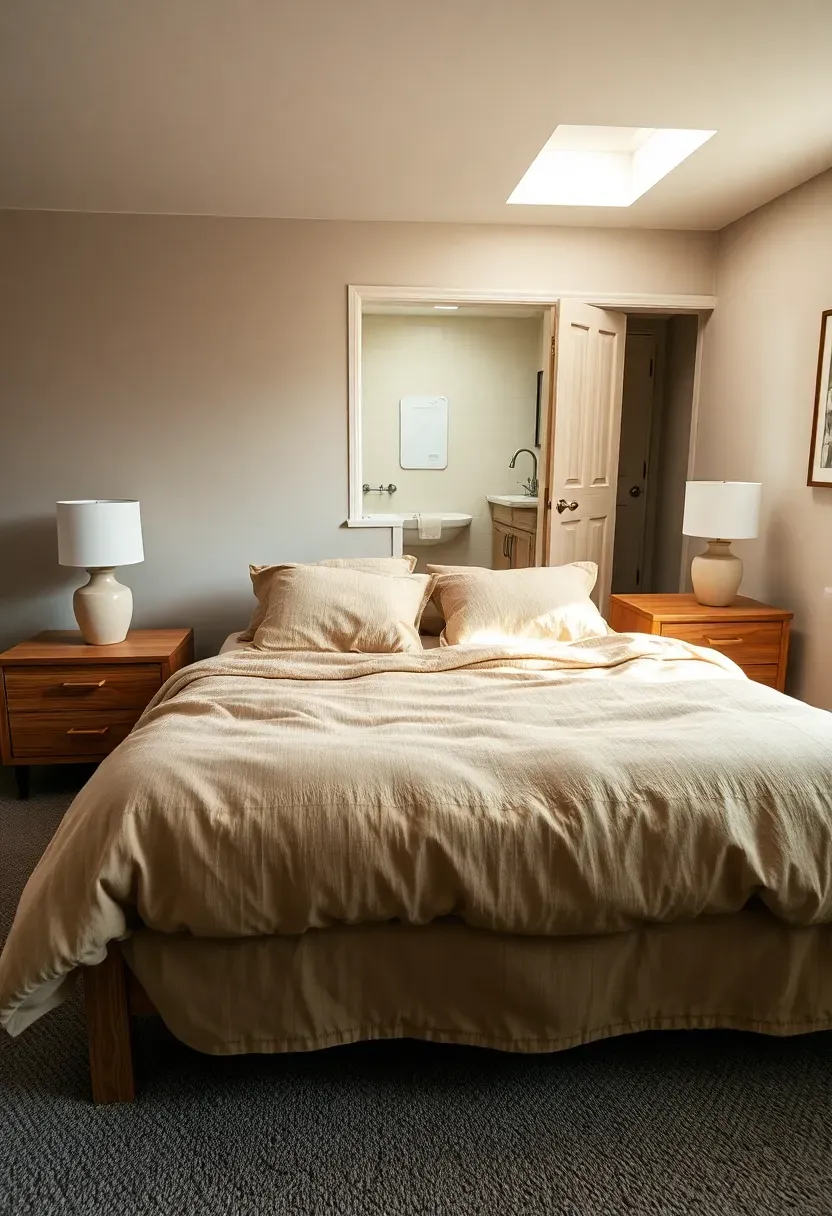
8. Basement Guest Suite
Why a Basement Guest Room Works
Guests get privacy, a separate entrance if the layout allows, and distance from the household morning routine. You get a room that doubles as a home office or retreat when nobody is visiting.
Making It Feel Above-Grade
The biggest challenge is perception. Guests should forget they are underground. Enlarged window wells with white gravel reflectors bounce daylight deeper inside. A layered lighting plan — recessed cans, bedside sconces, and a table lamp — prevents the flat, fluorescent feel. Choose light bedding in warm neutrals and hang curtains at ceiling height to draw the eye upward.
Essentials Checklist
- A quality mattress on a proper bed frame, not a pullout sofa
- Bedside USB charging outlets on both sides
- A luggage bench or folding rack near the closet
- An en-suite half bath or at minimum a dedicated full bath nearby
Recommended
Items for this idea
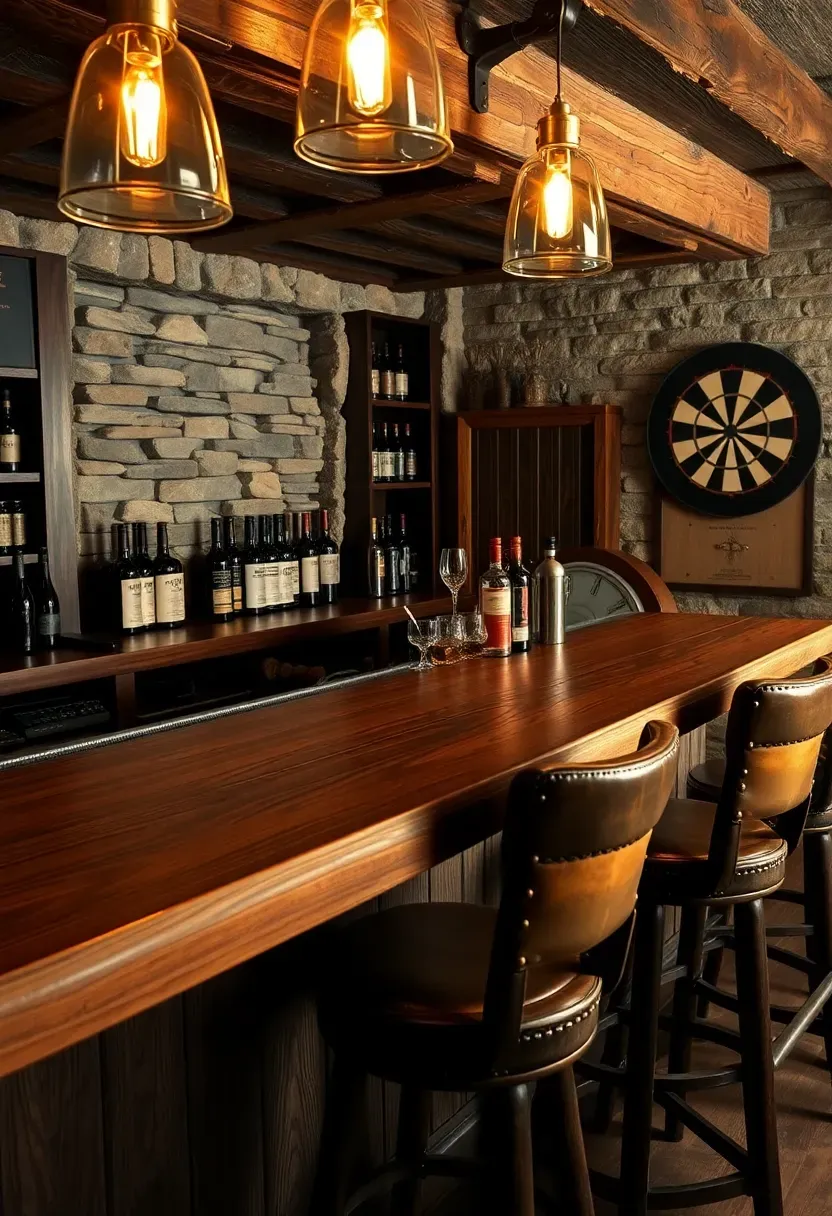
9. Rustic Pub and Game Room
There is something about descending a staircase into a wood-paneled room with a proper bar, a dartboard on the wall, and the faint smell of leather that makes every Friday evening feel like an event. A basement pub works because the enclosed space creates intimacy that an open-plan kitchen bar never can.
Step 1: Build the Bar
A six-foot countertop with an overhang deep enough for bar stools is the minimum. Use butcher block or reclaimed wood on top, with open shelving behind for bottles and glassware.
Step 2: Define the Game Zone
Position a pool table, foosball table, or card table at least three feet from any wall to allow comfortable play. Hang a dartboard on a cork-backed surround to protect the wall behind it.
Step 3: Set the Mood
Install dimmable pendant lights over the bar and a separate fixture over the game table. Add a vintage-style neon sign or chalkboard menu for character.
What to Watch Out For
- A small bar sink with running water saves countless trips upstairs
- Noise from game nights travels through floor joists — add sound-dampening insulation between the basement ceiling and the main floor
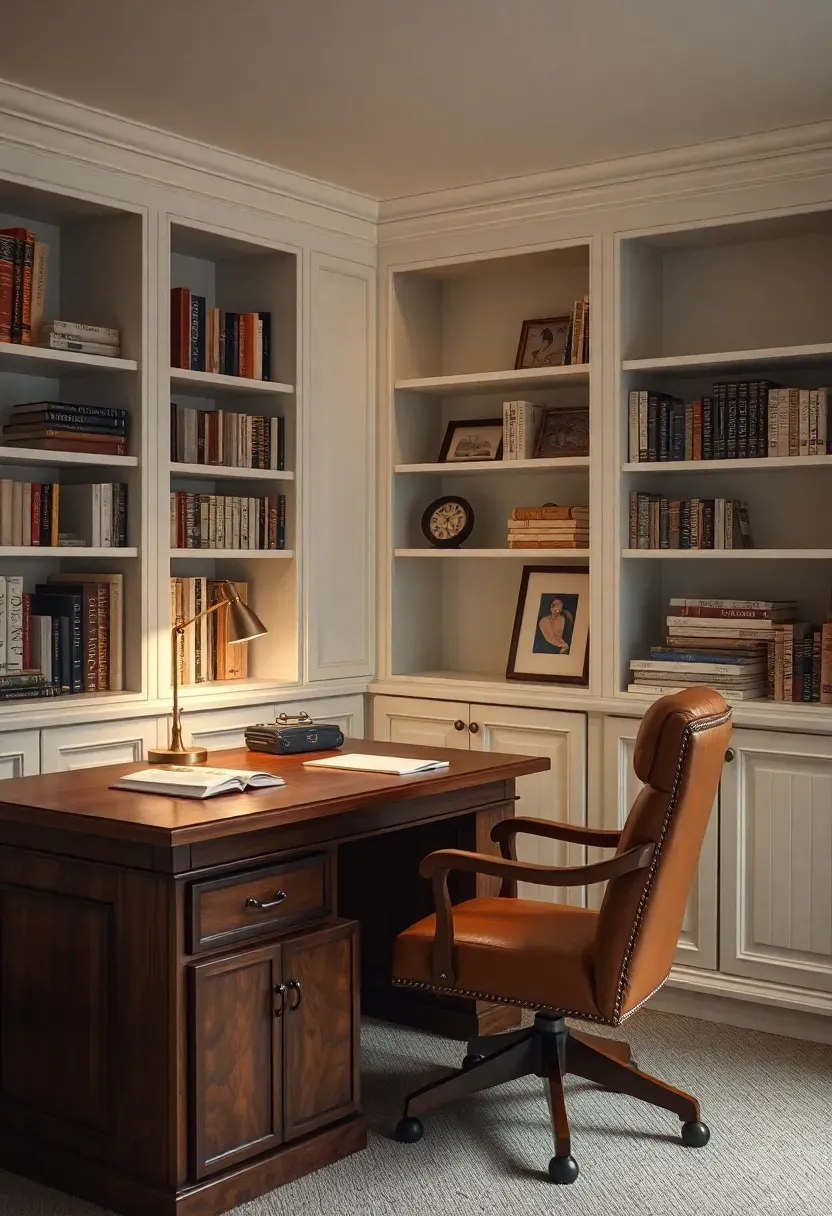
10. Home Office with Built-In Library
Remote workers who share living space with family know the struggle: conference calls interrupted by doorbells, laundry timers, and small children requesting snacks. A basement office draws a clear boundary. The physical act of walking downstairs signals the start of the workday, and walking back up signals its end.
Tips / Practical Recommendations
- Position the desk facing away from the staircase so foot traffic behind you does not appear on video calls
- Install floor-to-ceiling bookshelves on the wall behind your monitor — they serve as both storage and a professional-looking camera backdrop
- Use a daylight-balanced desk lamp and a bias light behind the screen to reduce eye strain in a windowless room
- Add a small rug under the desk chair to protect flooring and dampen rolling noise
Recommended
Items for this idea
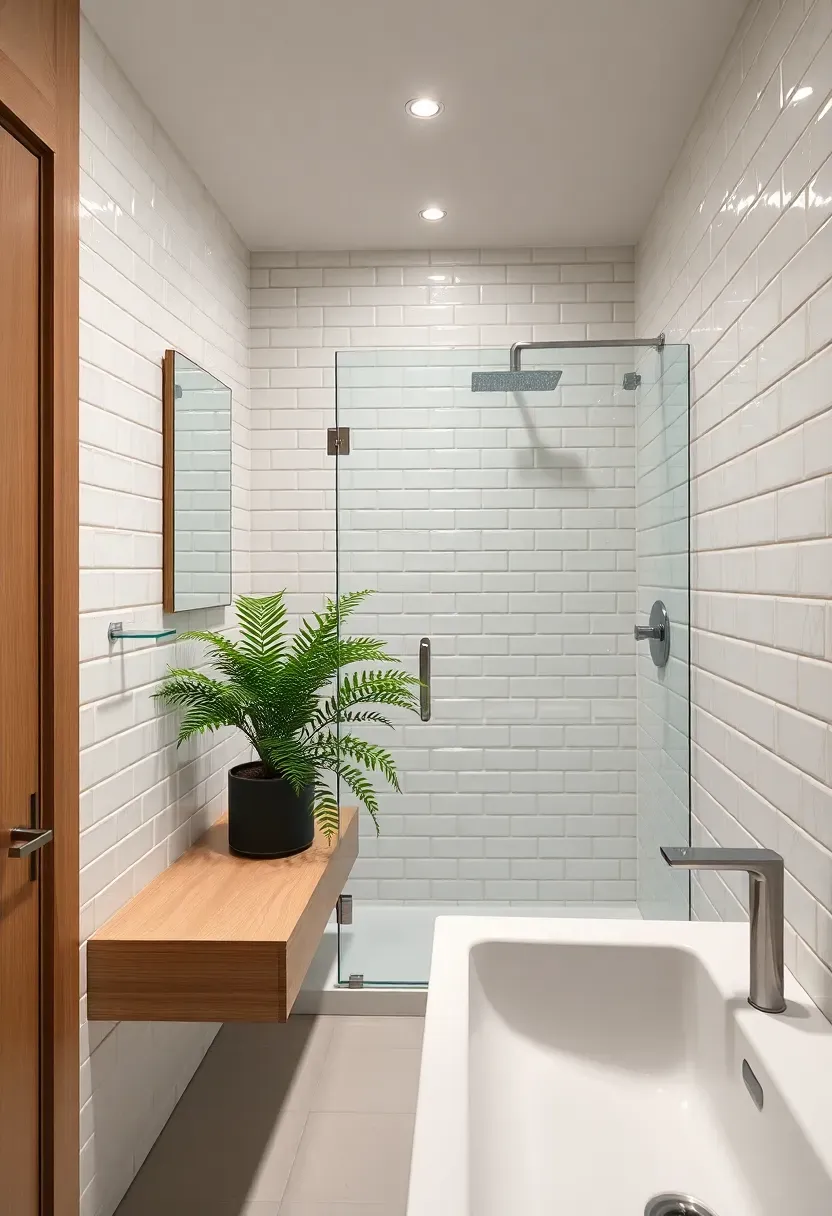
11. Scandinavian Spa Bathroom
Comparing: Upstairs Bath vs. Basement Spa
A basement bathroom does not need to copy the utilitarian format of the one beside your bedroom. Without the pressure of morning rush-hour traffic, it can lean toward indulgence — a rainfall shower with a bench, heated floors over the cold slab, and a freestanding tub if space allows.
Upstairs Bath
Designed for efficiency. Quick showers, shared countertops, and fixtures chosen for durability above all else.
Basement Spa
Designed for restoration. Warm wood tones, white subway tile, soft towel hooks at arm height, and a potted fern that thrives in the naturally humid air.
What to Choose
Choose upstairs practicality if: your renovation budget is tight and you need the bathroom to serve daily grooming. Choose a basement spa if: you want a retreat space and your plumbing stack allows easy connection to the sewer line below the slab.
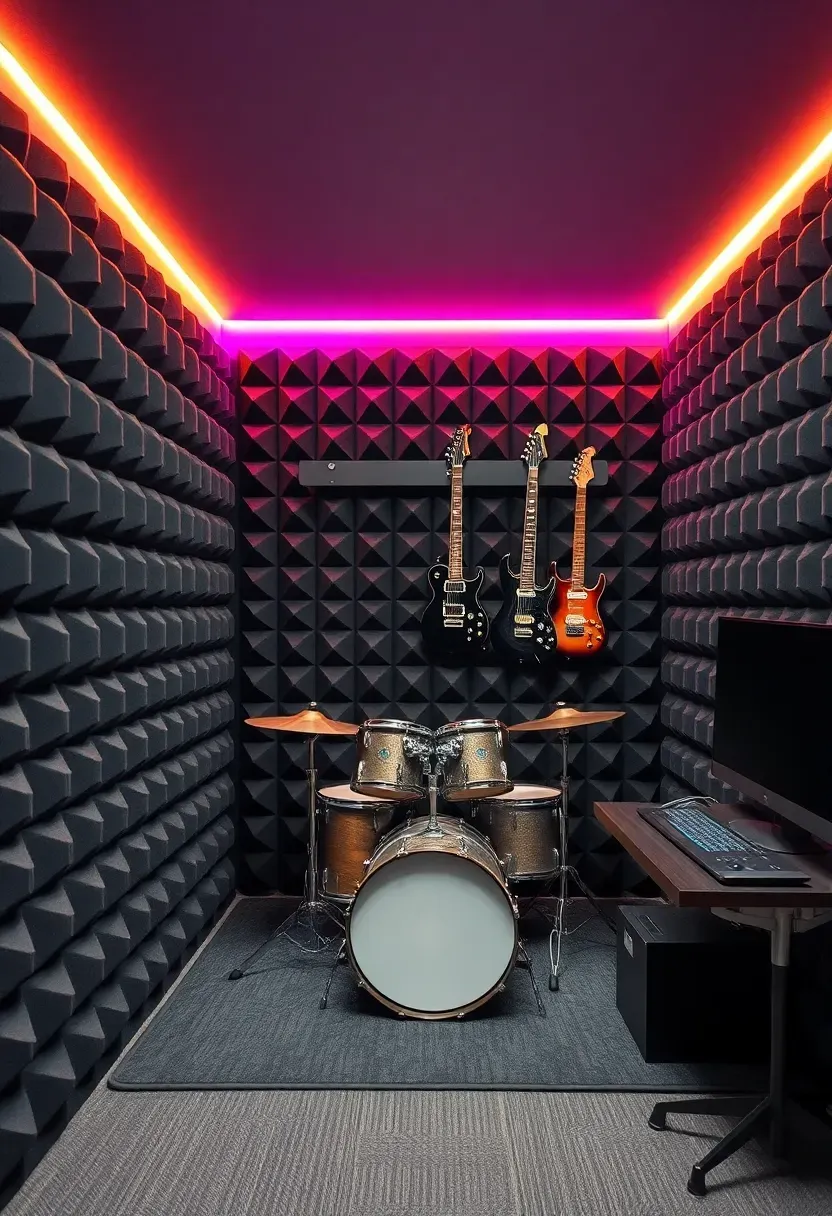
12. Music Studio with Acoustic Panels
Basements and music studios share a critical need: sound isolation. Concrete walls and a slab floor already block a significant amount of noise transfer to the outside world. Add a layer of resilient channel and double drywall on the ceiling, seal the door with weather stripping, and you have a practice room where a drum kit at full volume barely registers upstairs.
Tips / Practical Recommendations
- Cover at least forty percent of wall surface with two-inch acoustic foam panels placed at reflection points
- Float the floor using rubber isolation pads beneath a plywood subfloor to decouple vibrations from the slab
- Run dedicated twenty-amp circuits for amplifiers and recording equipment to avoid ground-loop hum
- Mount guitars and instruments on wall hooks to save floor space and double as decoration
Recommended
Items for this idea
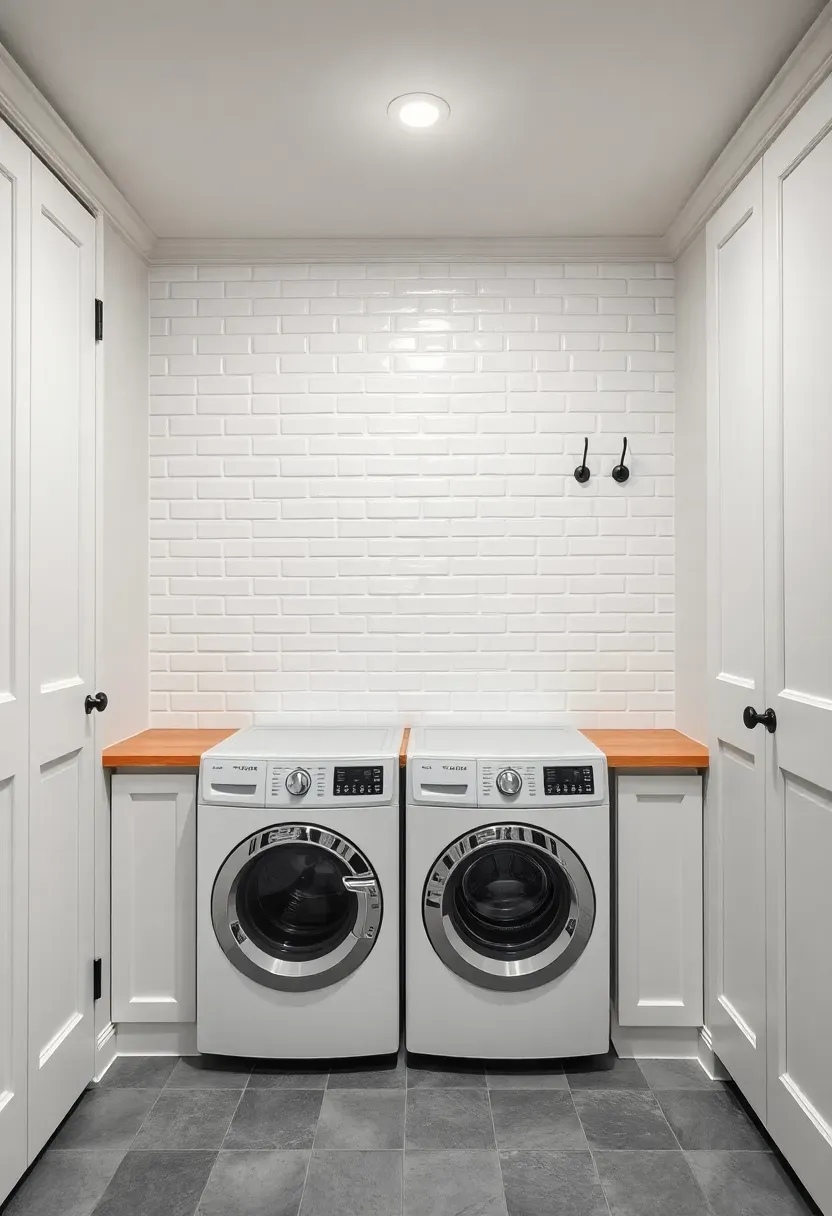
13. Bright White Laundry and Mudroom
The Core Issue
Many homes route the garage or side entrance through the basement, meaning muddy shoes and wet coats already end up down there. Yet the space greets you with bare concrete and exposed wiring.
The Solution
Combine the laundry area with a proper mudroom entry. White shaker cabinets bounce light around a space that often lacks windows. A subway tile backsplash behind the washer protects walls from splashes while looking clean and intentional. A built-in bench with shoe storage underneath gives family members a place to sit while removing boots, and hooks above handle coats, bags, and dog leashes. The result is a functional room that handles the dirtiest tasks in the house while looking genuinely inviting.
Pros and Cons
Pros: Consolidates two functions into one room, keeps dirt from reaching the main floor, easy to clean with tile and painted surfaces. Cons: Requires plumbing for the washer and potentially a floor drain; ventilation is critical for dryer heat.
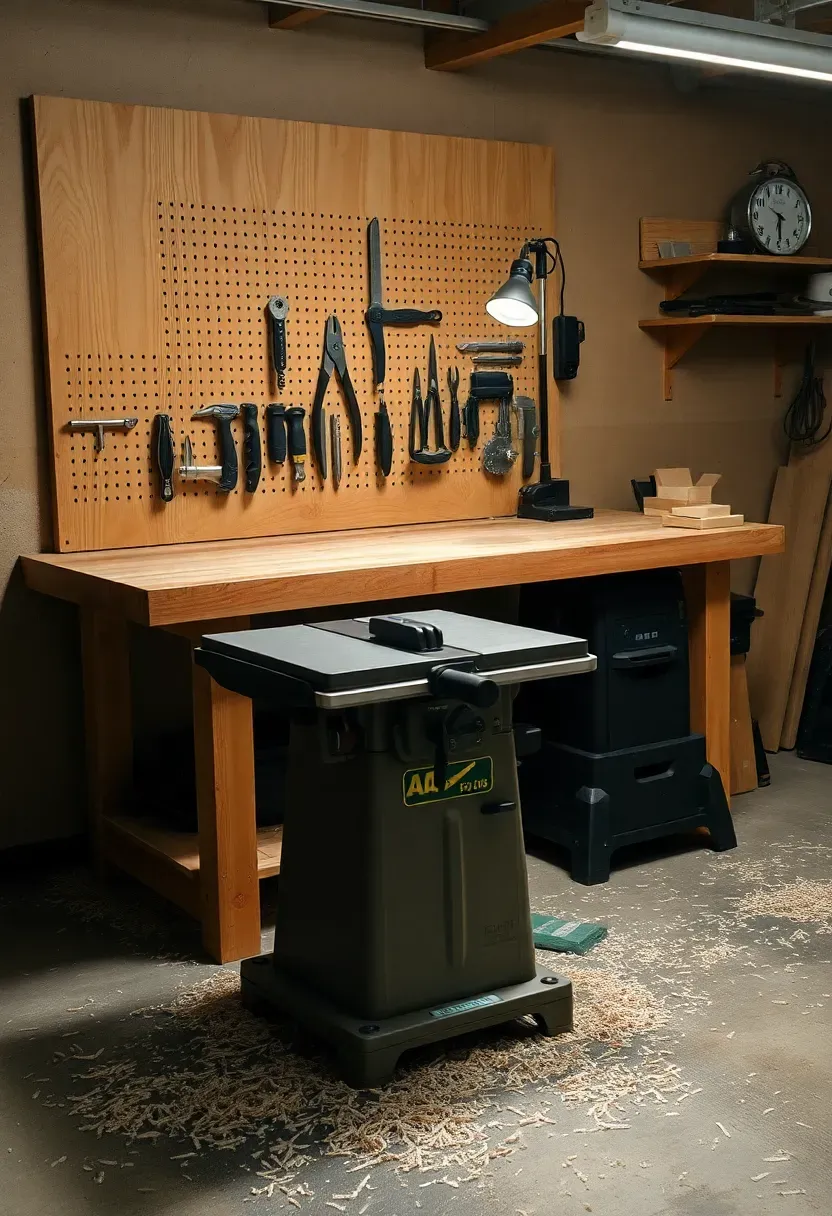
14. Craftsman Workshop
For hobbyists who build, fix, and tinker, a basement workshop is the ideal setup. The concrete floor handles spills and heavy equipment without complaint. Ceiling joists provide natural mounting points for overhead tool racks and dust collection ducting. And the separation from living spaces means sawdust stays where it belongs.
Step 1: Plan the Layout
Place your primary workbench against the longest wall with task lighting directly above. Position power tools — table saw, band saw, drill press — in the center where you can walk around them freely.
Step 2: Organize the Tool Wall
A four-by-eight-foot pegboard panel mounted above the bench puts every hand tool within arm's reach. Outline each tool's shape with a marker so you always know what is missing.
Step 3: Address Dust and Ventilation
Connect a shop vacuum or small dust collector to your stationary tools with four-inch flexible hose. Crack a window or install a ventilation fan to manage fumes from finishes and adhesives.
Recommended
Items for this idea
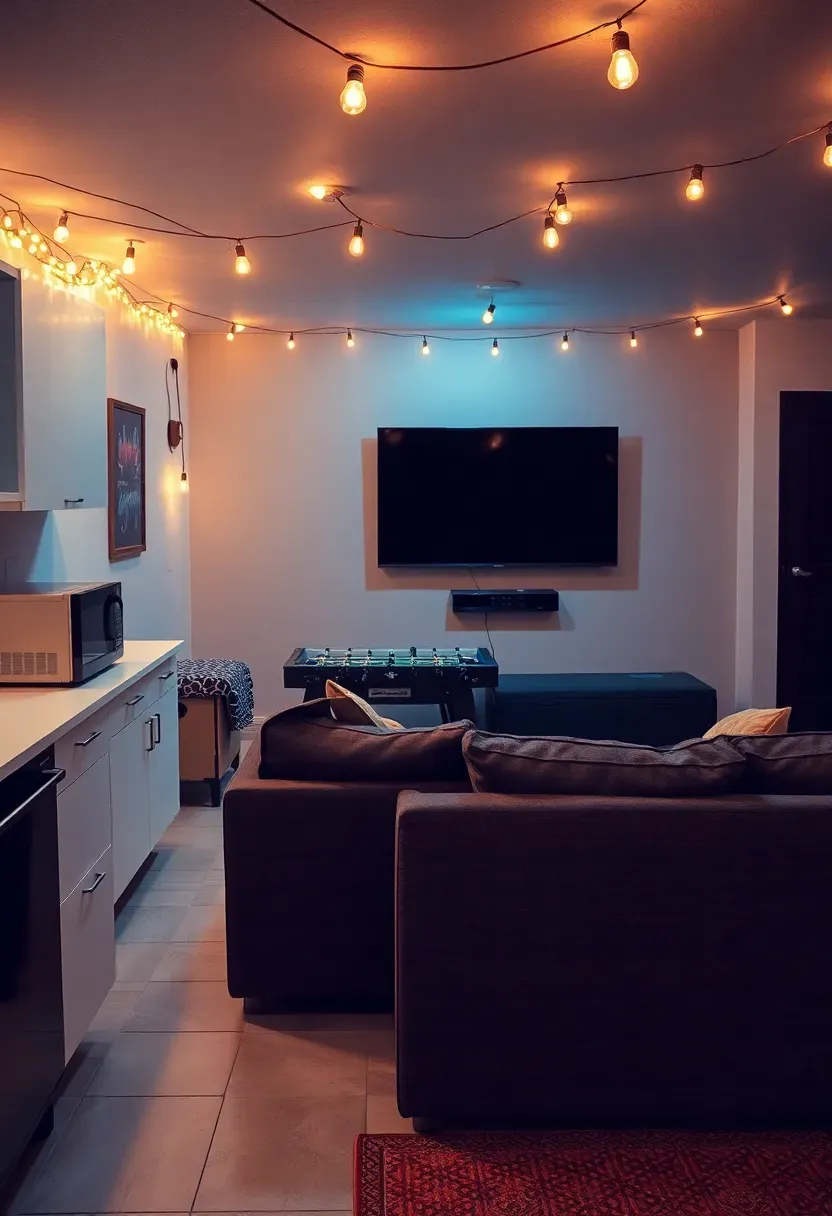
15. Teen Hangout with Kitchenette
Teenagers need autonomy. Giving them a dedicated basement space with comfortable seating, a screen, and a small kitchenette — sink, mini-fridge, microwave, and a few cabinets — means they can host friends without overtaking the family kitchen. It teaches responsibility for a shared space while reducing friction between generations under one roof.
Tips / Practical Recommendations
- Install a durable, wipe-clean countertop like quartz or laminate near the sink
- Mount the television on the wall to prevent accidental damage during active hangouts
- Use string lights or LED strips on a dimmer for atmosphere that feels less parental than overhead fluorescents
- Choose a stain-resistant sectional fabric — performance microfiber holds up to spilled soda and pizza grease better than cotton blends
16. Luxury Lounge with Fireplace
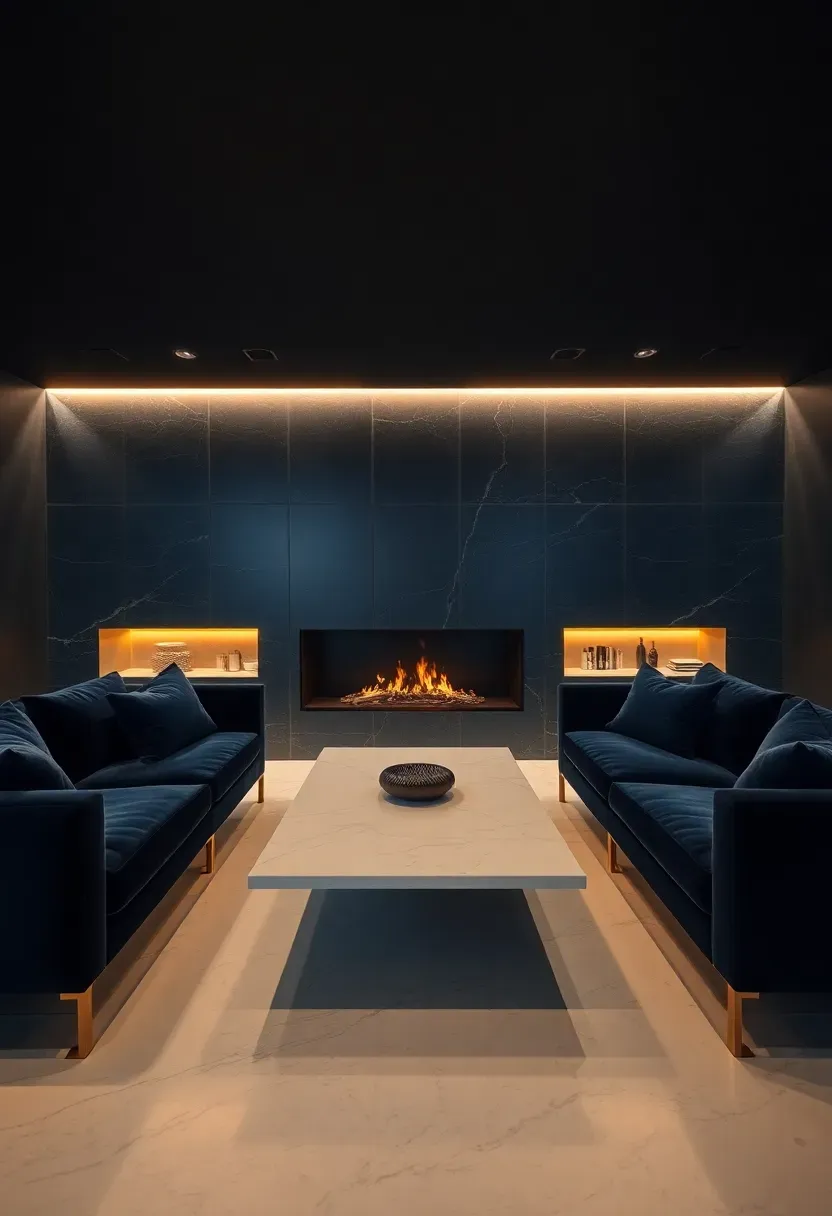
A fireplace underground may sound contradictory, but modern linear gas units vent directly through the foundation wall, making installation simpler than most homeowners expect. The effect is transformative — a low flame stretching across a stone or porcelain-panel feature wall turns the basement into the most sophisticated room in the house.
Design Elements That Sell the Look
- Deep-seated velvet sofas in charcoal or navy flanking a low coffee table
- Recessed floor lighting along the perimeter walls for a floating architectural effect
- A tray ceiling with indirect LED cove lighting that eliminates the need for visible fixtures
- Built-in shelving on either side of the fireplace for books, art objects, and a concealed sound system
Should You Choose Gas or Electric?
Gas offers real flame and radiant heat but requires a vent line through the wall. Electric is cheaper, needs no venting, and works in any basement — but the flame effect, while improved in recent years, still lacks the warmth of the real thing. For a luxury feel, gas wins.
Recommended
Items for this idea
17. Multi-Zone Open Basement
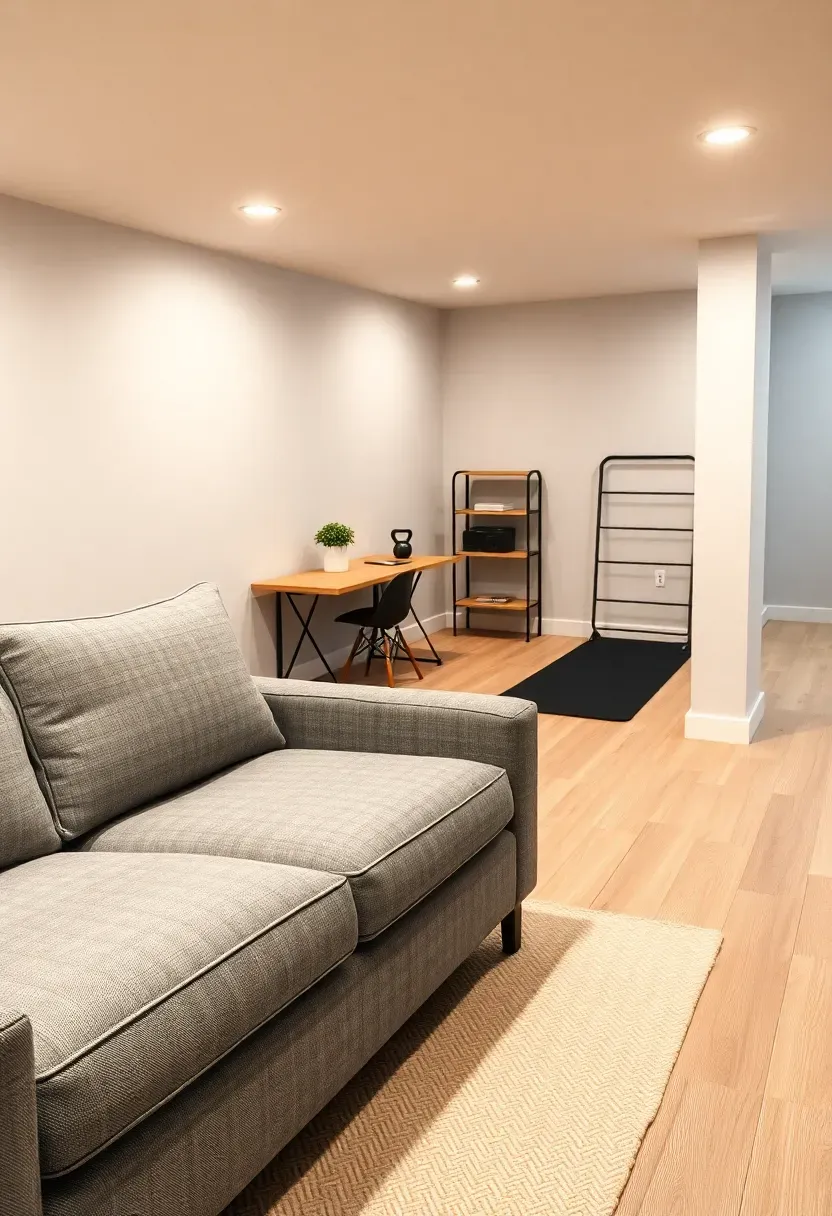
Not everyone wants to commit an entire basement to a single purpose. The open multi-zone approach divides the footprint into three or four functional areas — lounge, workspace, fitness corner, and hobby station — without building permanent walls. Area rugs define each zone. Changes in ceiling treatment or lighting temperature signal transitions. A low bookshelf or a half-height partition provides visual separation while keeping the space feeling expansive.
How to Pull It Off
- Map out zones on paper first, placing louder activities (gym, workshop) farthest from quiet ones (office, reading nook)
- Use consistent flooring throughout — luxury vinyl plank works well — and differentiate zones with rugs in complementary tones
- Assign each zone its own lighting circuit so you can illuminate only the area in use
- Keep pathways between zones at least ninety centimeters wide for comfortable circulation
Quick FAQ
Does finishing a basement increase home value? On average a finished basement recoups sixty to seventy percent of its cost at resale, according to Remodeling Magazine's annual Cost vs. Value report. The exact return depends on your local market and the quality of the finish. Even a partial remodel — clean floors, painted walls, good lighting — makes a noticeable difference to buyers.
Should I worry about moisture before starting a remodel? Absolutely. Moisture is the single biggest threat to any basement project. Before you invest in framing and drywall, address any water intrusion issues. Grade the soil outside to slope away from the foundation, repair cracks, and consider interior or exterior waterproofing. A dehumidifier rated for the square footage is essential even in dry climates.
Is it possible to add a bathroom to a basement without a sewer line below the slab? Yes. An upflush or macerating toilet system pumps waste upward to the existing sewer line without breaking the concrete floor. These systems are compact, relatively affordable, and approved by most building codes. They do require electricity to operate the pump, so a backup power source is worth considering.
Which flooring works best over a concrete slab? Luxury vinyl plank is the current favorite for basement floors. It is waterproof, installs as a floating system without adhesive, and comes in convincing wood and stone patterns. Engineered hardwood with a click-lock system also works if moisture levels stay below manufacturer thresholds. Avoid solid hardwood and standard laminate — both react poorly to slab moisture.
What ceiling height do I need for a legal living space? Most building codes require a minimum finished ceiling height of seven feet for habitable rooms. Basements with lower clearance can still be finished as non-habitable space — storage, utility, or hobby rooms — but you will not be able to list the square footage as living area on a real estate listing.
Start with the problem that bothers you most — whether it is the wasted space, the damp smell, or simply the lost potential — and tackle that first. A basement remodel does not need to happen all at once. Frame one room this year, finish another next year. The space will reward every hour you put into it.
Pinterest cover for 17 AI Basement Remodel Ideas
About the author
OBCD
CGI visualization and interior design content. We create detailed 3D renders and curate practical design ideas for every room in your home.