21 AI Closet Organization Ideas That Actually Keep Things Tidy
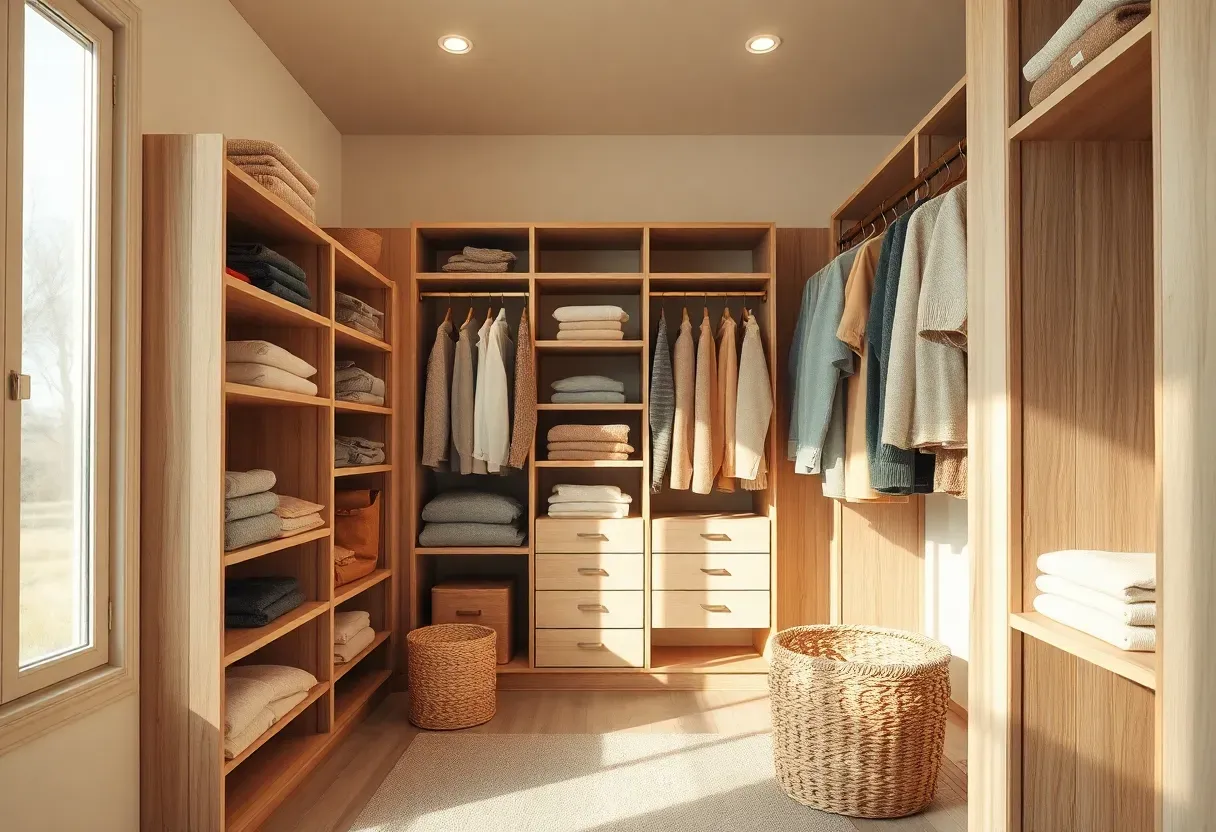
We have all opened a closet door and felt that sinking wave of chaos — clothes crammed onto hangers at odd angles, shoes scattered across the floor, scarves dangling from a single overloaded hook. The frustration is universal because most closets were designed with a single rod and a shelf, a layout that ignores how people actually dress and store belongings. The good news is that a few deliberate changes can turn even the smallest reach-in closet into a space that practically organizes itself. AI visualization tools now let you model custom configurations before buying a single shelf bracket, so you can experiment freely without wasting money on solutions that do not fit.
In this article I have gathered 21 closet organization ideas ranging from full walk-in transformations to simple weekend upgrades for compact wardrobes. We will start with structural layouts and move toward accessories and finishing touches.
Table of Contents
- Double-Rod Hanging System
- Custom Shelf Dividers for Folded Stacks
- Pull-Out Shoe Rack Tower
- Velvet Slim Hanger Overhaul
- Drawer Island in a Walk-In Closet
- Floor-to-Ceiling Open Shelving Wall
- Acrylic Divider Bins for Accessories
- Rotating Corner Carousel Unit
- Built-In Laundry Hamper Cabinet
- Tension Rod Dividers for Boots
- Color-Coded Wardrobe Sections
- Over-the-Door Pocket Organizer
- Modular Cube Storage System
- Lighted Closet Rod with Motion Sensor
- Scarf and Belt Hook Rail
- Clear Front Storage Boxes
- Adjustable Closet Rod Heights
- Seasonal Rotation Wardrobe Strategy
- Hat Display Shelf with Pegs
- Jewelry Drawer with Velvet Inserts
- Mirrored Closet Door with Integrated Shelf
1. Double-Rod Hanging System
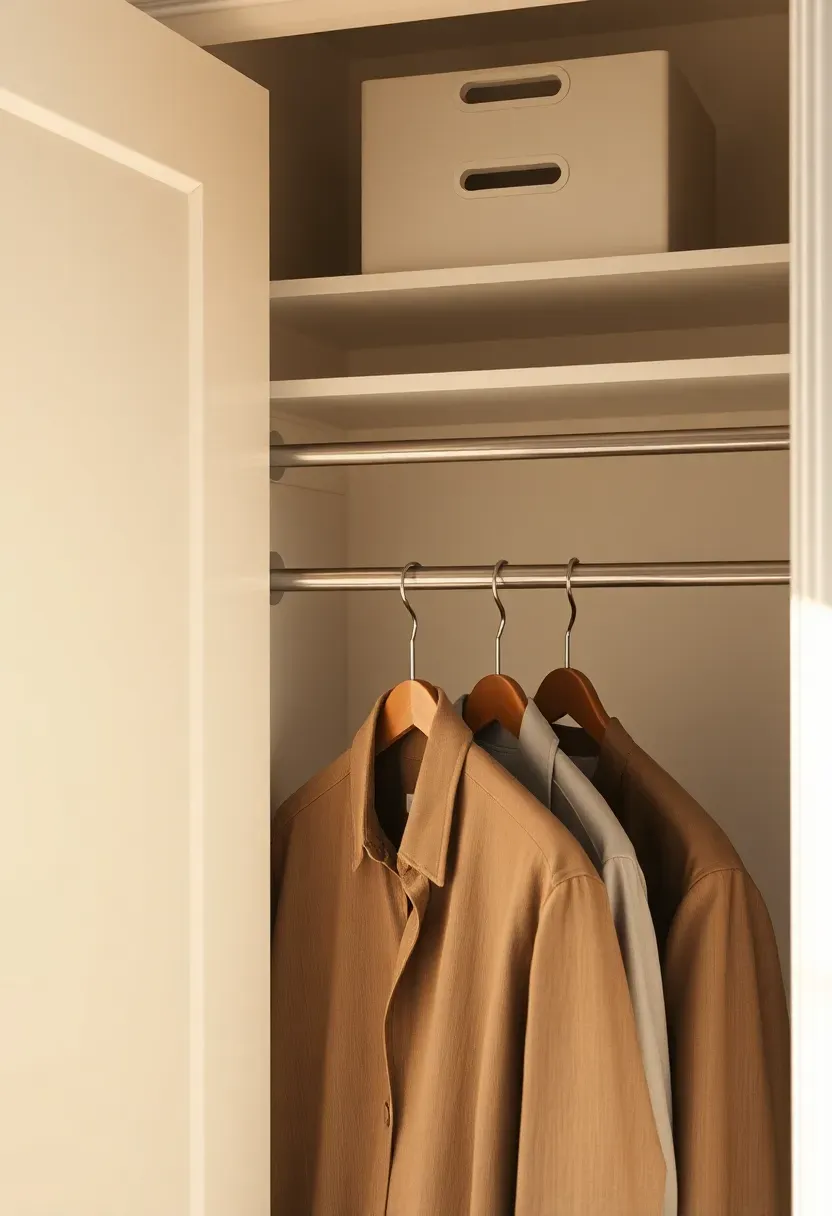
Installing a second hanging rod below the existing one is the single most effective upgrade for any reach-in closet. The concept is straightforward: shirts, blouses, and folded trousers hang on the upper rod while jackets, skirts, and shorter dresses occupy the lower rod. This arrangement nearly doubles your usable hanging space without expanding the closet footprint by a single centimeter. Most hardware stores sell adjustable double-rod kits that clamp onto the existing rod, requiring no drilling or permanent modification.
Tips / Practical Recommendations
- Set the upper rod at approximately 200 centimeters and the lower rod at 100 centimeters for standard adult clothing
- Reserve one side of the closet for full-length items like coats or gowns that need the complete vertical drop
- Use matching slim hangers on both rods to maintain uniform spacing and avoid tangled shoulders
We picked a few things that go well with this idea: Amazon Basics Velvet Hangers Black (50-Pack) (★4.8), Amazon Basics Velvet Hangers Ivory (50-Pack) (★4.8) and ZOBER Non-Slip Velvet Hangers (50-Pack) (★4.8). As an Amazon Associate we earn from qualifying purchases.
2. Custom Shelf Dividers for Folded Stacks
The Core Issue
Folded clothes on open shelves inevitably topple into each other, turning a tidy stack of sweaters into a leaning tower that collapses whenever you pull one item from the middle.
The Solution
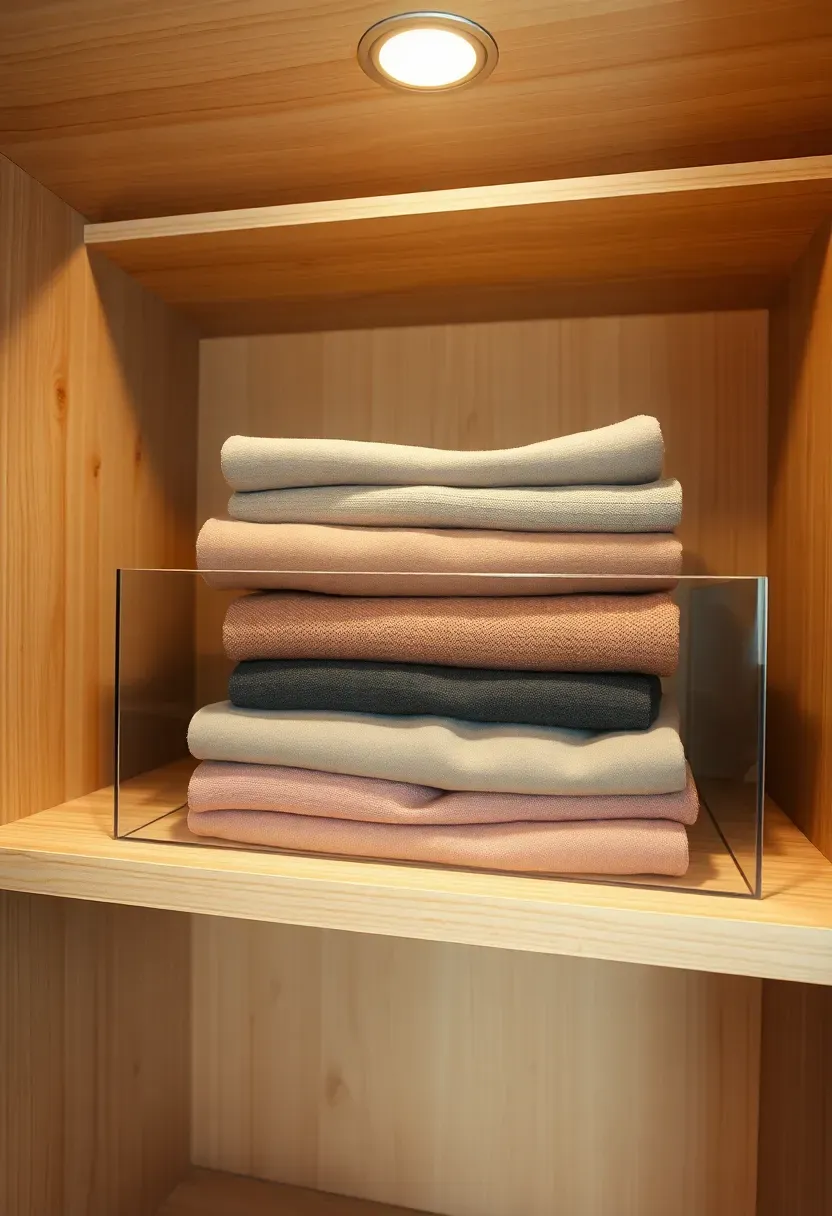
Acrylic or wood shelf dividers clip onto existing shelves and create defined vertical boundaries between stacks. Each compartment holds four to six garments, keeping piles stable and visible. The transparent acrylic versions are nearly invisible once installed, preserving a clean aesthetic while doing all the structural work behind the scenes. For wire shelving, look for clip-on dividers specifically designed to grip round wire without slipping.
Pros and Cons
Pros: Inexpensive, no tools required for most clip-on styles, keeps folded items visible and accessible. Cons: Does not work well on shelves deeper than forty centimeters unless items are folded to match the depth exactly.
We picked a few things that go well with this idea: Clemate Clear Drop-Front Shoe Boxes (12-Pack) (★4.5), Stackable Magnetic Door Shoe Boxes (6-Pack) (★4.6) and Clemate Clear Stackable Shoe Boxes (8-Pack) (★4.5). As an Amazon Associate we earn from qualifying purchases.
3. Pull-Out Shoe Rack Tower
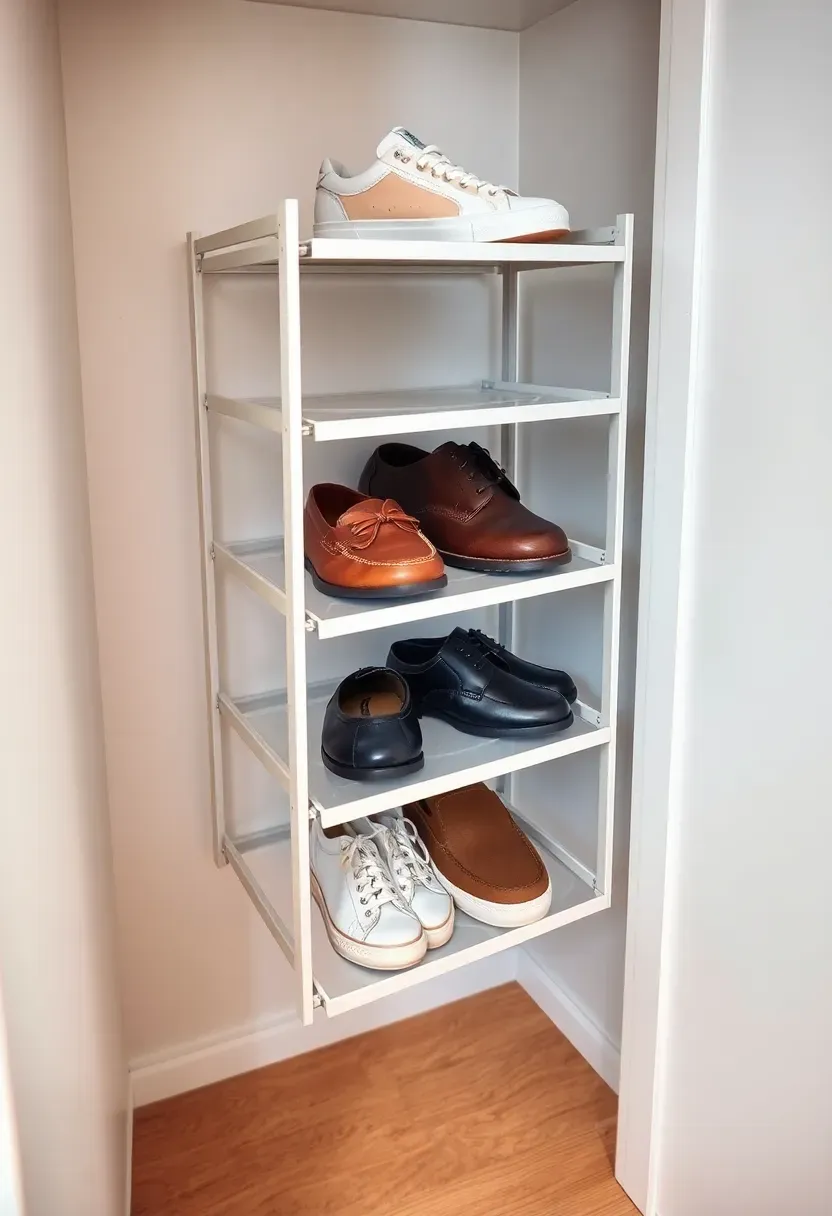
Shoes devour closet floor space faster than any other category of clothing. A pull-out shoe tower — a narrow vertical unit on drawer slides — stores twelve to twenty pairs in the same footprint that three pairs would occupy on the floor. The angled shelves display each pair face-forward, making it easy to find the right shoes without rummaging through a pile. Most towers mount between existing shelf standards, and because they pull outward on slides, you can access pairs at the back just as easily as those at the front.
Tips / Practical Recommendations
- Measure the interior depth of your closet before ordering; most pull-out towers need at least forty centimeters of clearance
- Place heavier boots and sneakers on the lower shelves to keep the center of gravity stable when sliding the unit
- Wipe the angled shelves monthly because shoe soles transfer dust and grit quickly
We picked a few things that go well with this idea: Vtopmart Clear Drawer Organizer Set (25-Piece) (★4.7), Large Acrylic Drawer Organizer Trays (6-Pack) (★4.8) and Acrylic 24-Cell Closet Drawer Organizer (★4.4). As an Amazon Associate we earn from qualifying purchases.
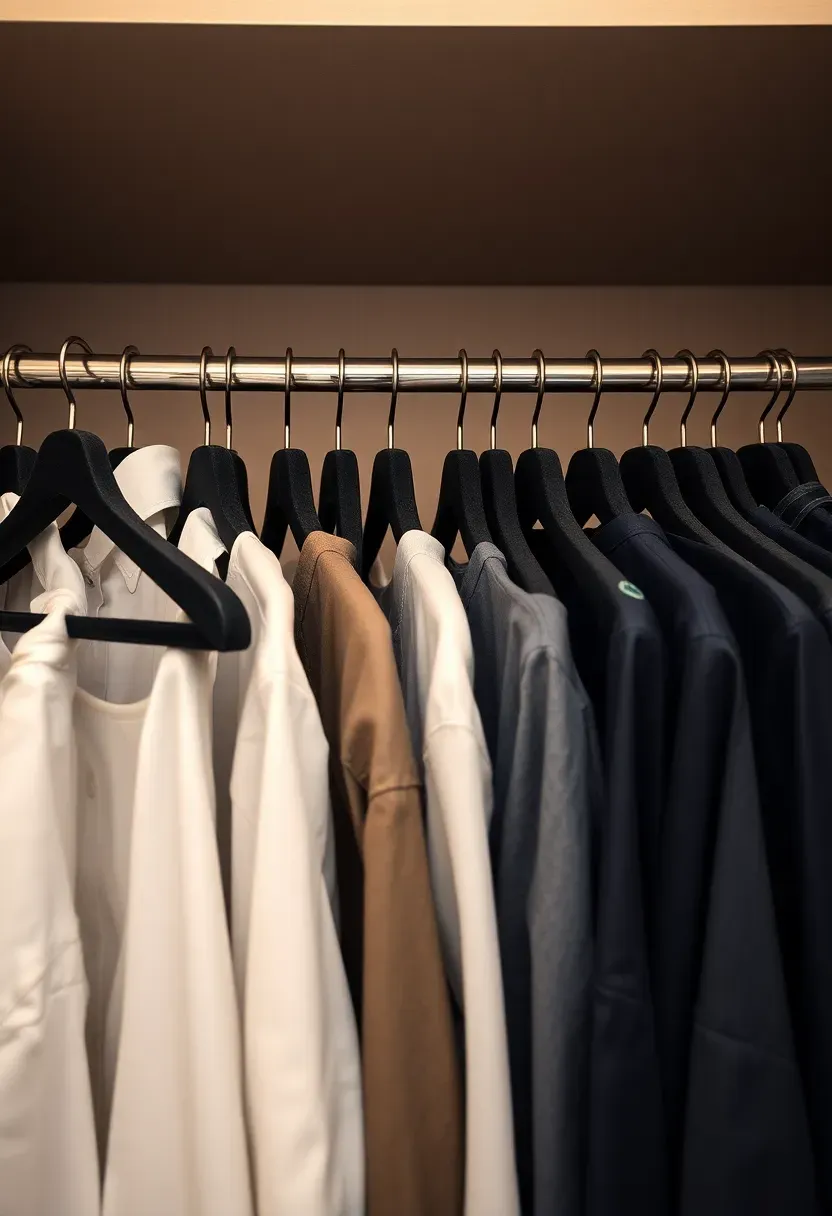
4. Velvet Slim Hanger Overhaul
Why Mismatched Hangers Create More Mess Than You Realize
Different hanger widths, thicknesses, and materials create uneven spacing on the rod. Wire hangers let clothes slip off, plastic ones take up unnecessary width, and wooden ones — while sturdy — are too bulky for tight closets.
The Solution
Replacing every hanger in the closet with a uniform set of velvet-flocked slim hangers solves multiple problems at once. The velvet surface grips fabrics so nothing slides off, even silk and satin. The slim profile recovers roughly thirty percent more rod space compared to standard plastic hangers. Visual uniformity makes the entire closet feel curated and intentional rather than assembled from random hotel and dry-cleaning leftovers. Commit to a single color — grey, black, or blush — for a clean, cohesive look.
Pros and Cons
Pros: Instant visual upgrade, prevents shoulder bumps on knitwear, affordable at roughly fifteen cents per hanger in bulk. Cons: Velvet surface can collect lint over time; a lint roller pass every few months keeps them fresh.
Recommended
Items for this idea
5. Drawer Island in a Walk-In Closet
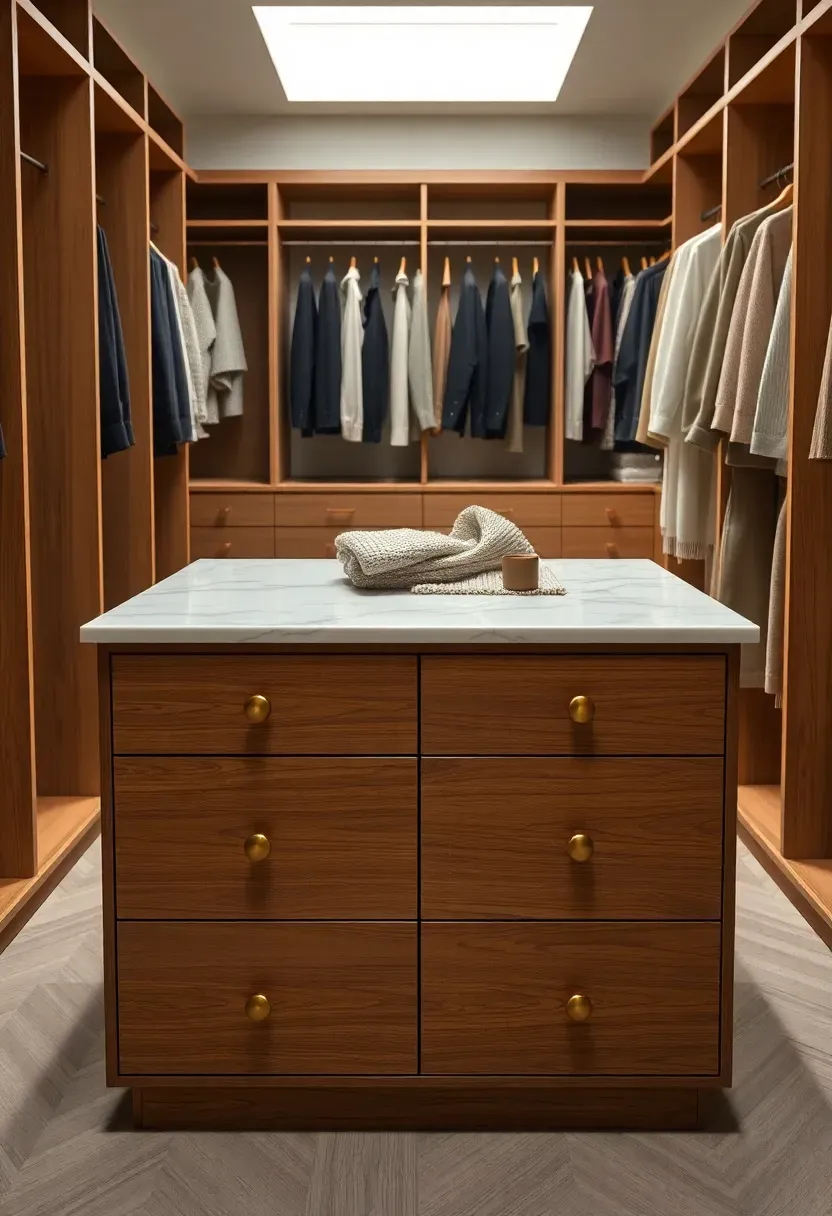
If your walk-in closet has enough floor space — at least two meters by two meters of open area — a freestanding or built-in island with drawers transforms how you store folded items, undergarments, and accessories. The countertop doubles as a staging surface for laying out outfits, packing suitcases, or folding laundry. Drawers organized with fabric inserts keep socks, belts, and ties separated without the visual clutter of open bins.
Step 1: Measure the Clearance
Leave at least seventy centimeters of walkway space on every side of the island so you can move freely and open drawers without bumping into hanging clothes.
Step 2: Choose the Configuration
A six-drawer unit with three shallow drawers on top for accessories and three deep drawers below for folded knitwear and denim covers most needs.
Step 3: Add a Countertop
Marble, butcher block, or laminate all work. Pick a material that matches the closet shelving for a built-in appearance.
What to Watch Out For
- An island that is too tall blocks sightlines to the lower hanging sections behind it
- Skip casters if the closet has carpet — they roll unevenly and leave track marks
6. Floor-to-Ceiling Open Shelving Wall
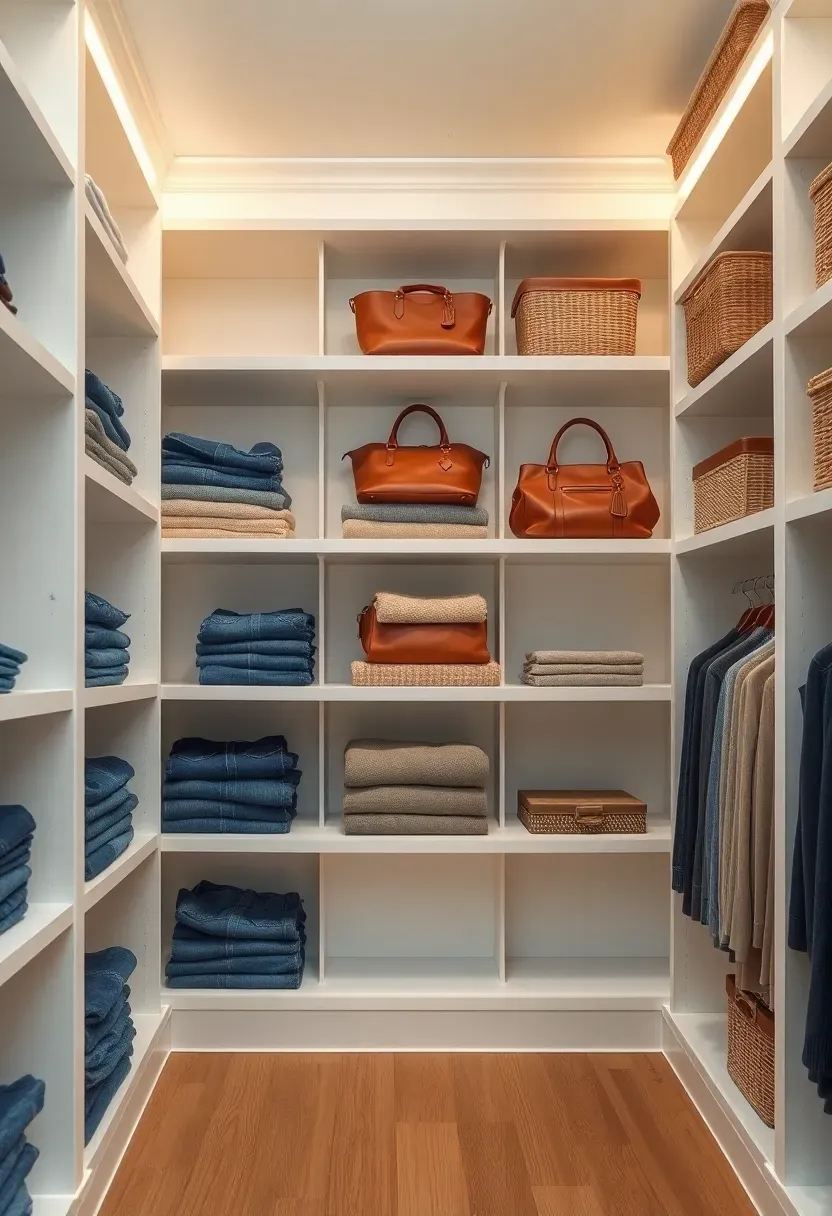
Removing the traditional rod-and-shelf setup from one wall and replacing it with floor-to-ceiling open shelving creates a boutique-style display for folded clothes, bags, and accessories. Each shelf acts as its own curated vignette — three stacks of denim on one level, handbags propped upright on another, and decorative storage boxes holding out-of-season items on the highest shelf. The key is committing to a consistent folding method so every stack maintains the same width and height.
Tips / Practical Recommendations
- Keep shelf spacing between twenty-eight and thirty-five centimeters for standard folded garments
- Place frequently used items between waist and eye level to minimize reaching and bending
- Add a small step stool in the closet for the highest shelf rather than overstretching
Recommended
Items for this idea
7. Acrylic Divider Bins for Accessories
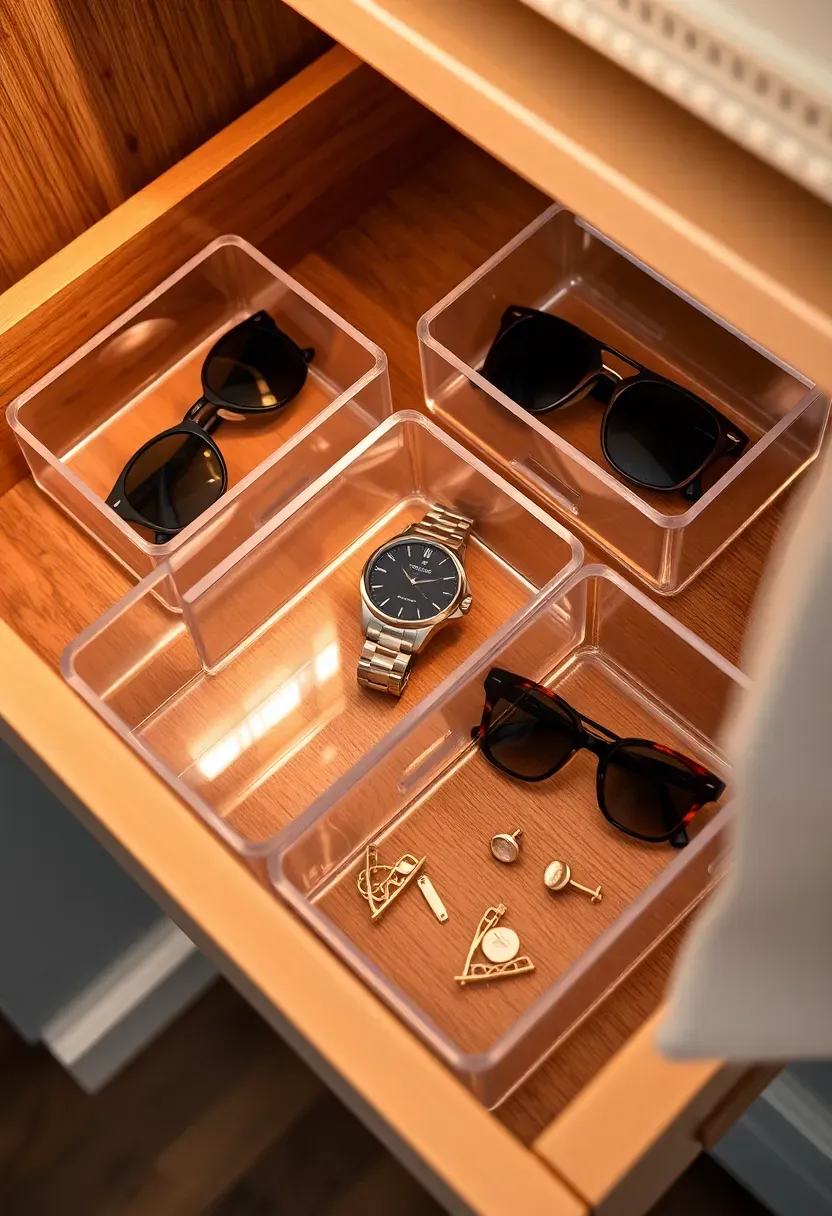
Small accessories — sunglasses, watches, cufflinks, hair clips — vanish inside drawers the moment they lose a designated spot. Stackable acrylic bins with individual compartments turn a single deep drawer into a visible, accessible collection display. The transparent material lets you scan the entire contents at a glance without opening multiple containers. Interlocking designs mean you can reconfigure the layout whenever your collection changes size.
How to Set This Up
Start by emptying the drawer and measuring its interior dimensions. Select a combination of small square compartments for jewelry and wider rectangular sections for sunglasses or watches. Arrange them snugly so they do not shift when the drawer slides open and closed. Leave one compartment empty as a landing zone for items you remove during the day and need to return that evening.
8. Rotating Corner Carousel Unit
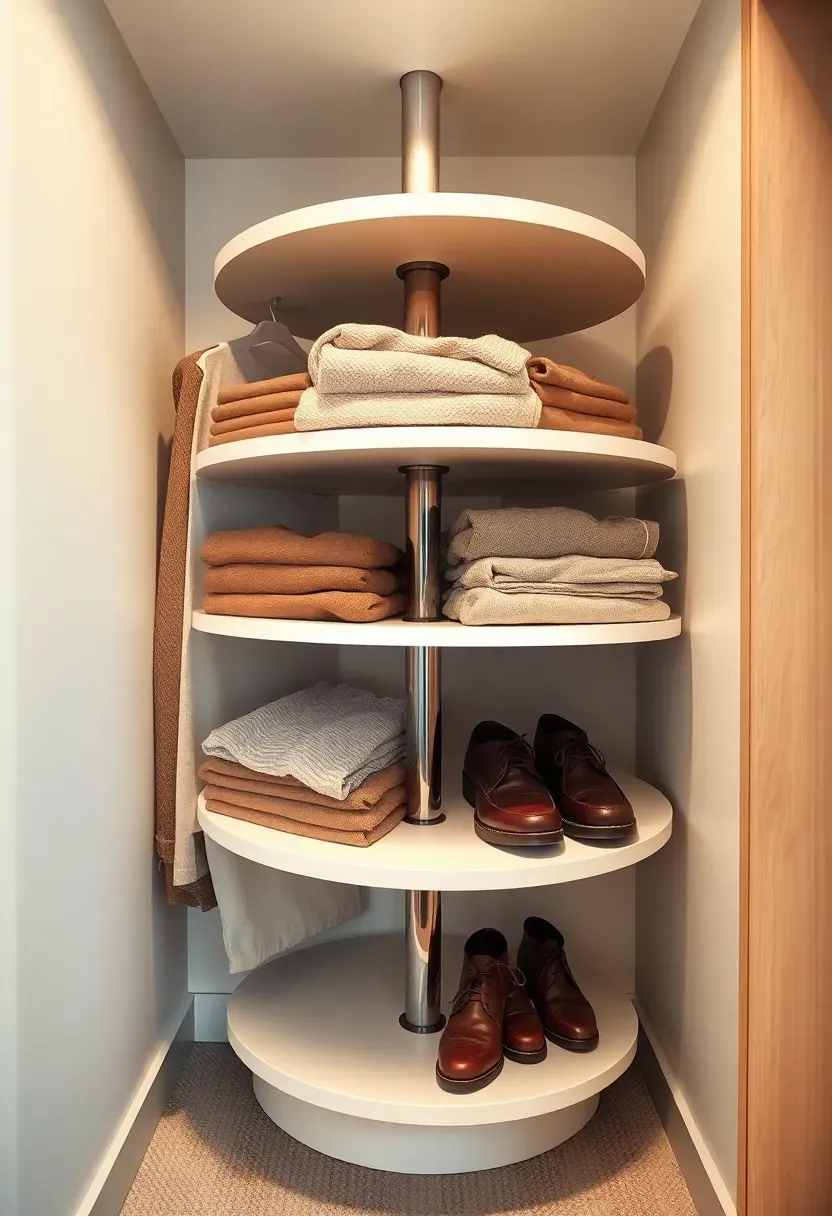
The Core Issue
Corner spaces in walk-in closets are notoriously dead zones. Items pushed into the back corner become invisible and forgotten, wasting valuable square footage that you are paying rent or mortgage on.
The Solution
A rotating corner carousel — similar in principle to a lazy Susan but built for clothing — mounts inside the corner and spins a full 360 degrees so every item stored on it can rotate to the front. Shelved versions hold folded clothes, shoes, and bins. Hanging versions feature a circular rod that brings garments around to face you. One spin replaces five minutes of digging into a dark corner. Most carousel units install into standard closet systems with four screws and a central post.
Pros and Cons
Pros: Reclaims the most wasted space in any closet, smooth bearing mechanism requires almost no effort to spin. Cons: Requires at least sixty centimeters of corner depth on each wall to function, and the curved shelves hold slightly less per linear centimeter than flat shelving.
Recommended
Items for this idea
9. Built-In Laundry Hamper Cabinet
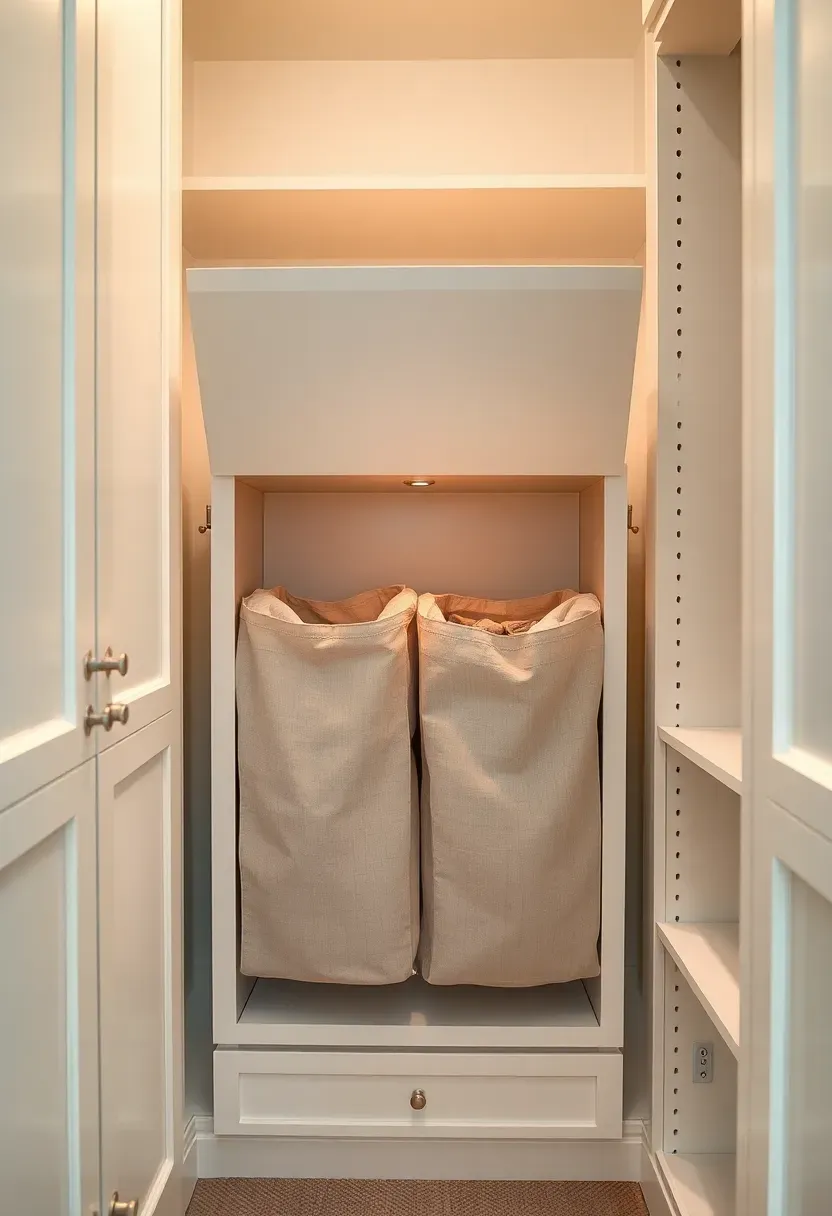
A tilt-out hamper cabinet built into the closet system eliminates the freestanding laundry basket that always seems to migrate across the floor. The cabinet door matches the surrounding millwork, so when closed it looks like another cabinet panel. Inside, a removable fabric liner bag holds dirty clothes and lifts out easily for transport to the washing machine. Double-bin versions let you pre-sort lights and darks without any additional floor basket.
Tips / Practical Recommendations
- Position the hamper at the end of the closet nearest the bedroom door for convenient access when undressing
- Choose a ventilated fabric liner rather than solid plastic to prevent moisture buildup and odor
- Install a soft-close hinge on the tilt-out door to avoid slamming noises late at night
10. Tension Rod Dividers for Boots
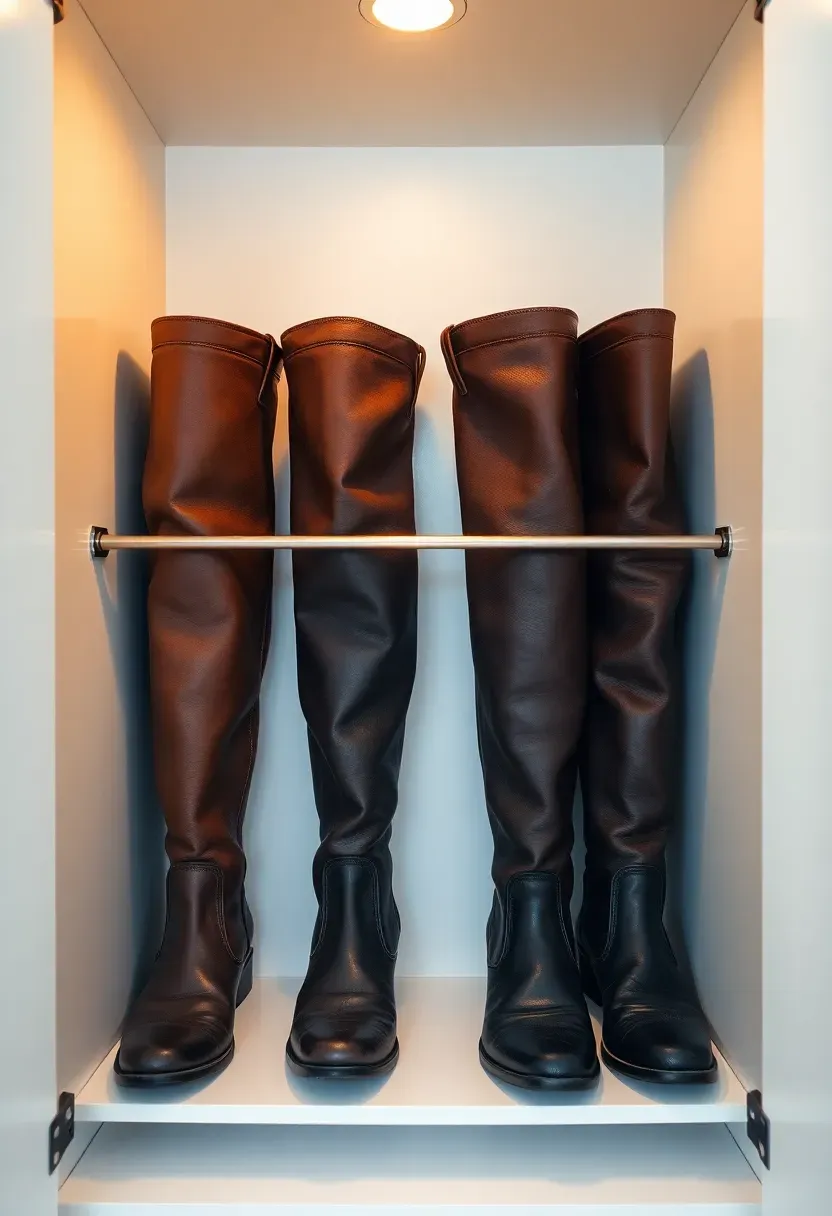
Tall boots flop sideways the moment they lose a leg inside them, creasing the shaft leather and creating a domino effect that knocks over neighboring pairs. Tension rods — the same spring-loaded rods used for cafe curtains — press horizontally between closet shelf walls and create upright compartments that hold each boot standing. No clips, no stuffing tissue paper inside the shaft, no boot shapers needed. The rods adjust to any shelf width and remove in seconds when you want to reconfigure.
How to Implement
Place one tension rod at approximately two-thirds of the boot shaft height. For knee-high boots, a second rod near the top provides extra support. Space the rods so each boot pair gets its own lane — roughly fifteen centimeters per boot is sufficient.
Recommended
Items for this idea
11. Color-Coded Wardrobe Sections
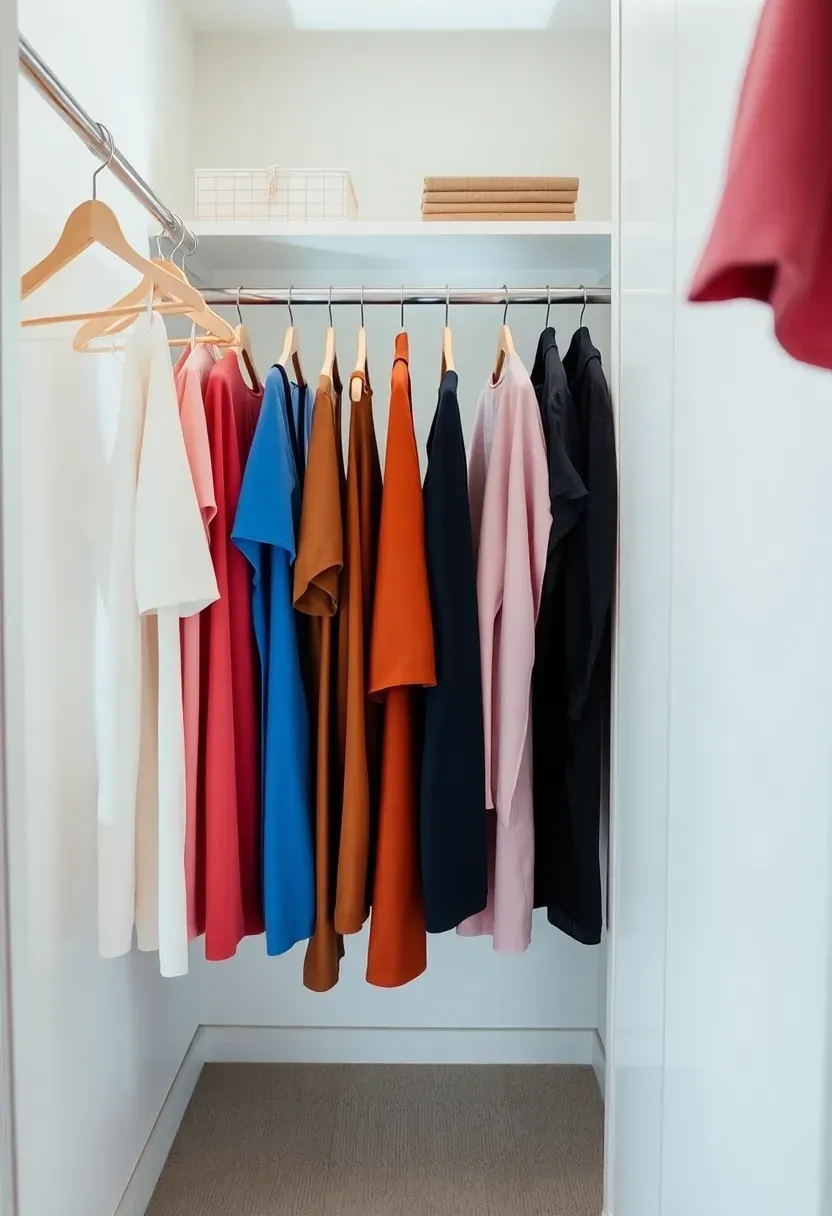
Arranging hanging clothes by color rather than by garment type transforms a closet from a functional storage box into something that genuinely pleases the eye every time you open the door. The visual gradient — whites flowing into creams, then pastels, saturated hues, and finally darks — makes it effortless to locate a specific item because your brain processes color faster than it reads labels or scans silhouettes. Beyond aesthetics, color coding reveals wardrobe gaps and redundancies you never noticed when everything was jumbled together.
Tips / Practical Recommendations
- Within each color group, arrange items from lightest to heaviest fabric weight for a secondary layer of organization
- Use the same hanger type throughout to maintain the clean gradient without visual interruptions
- Reserve the most visible rod section — usually at eye level — for daily-wear colors you reach for most often
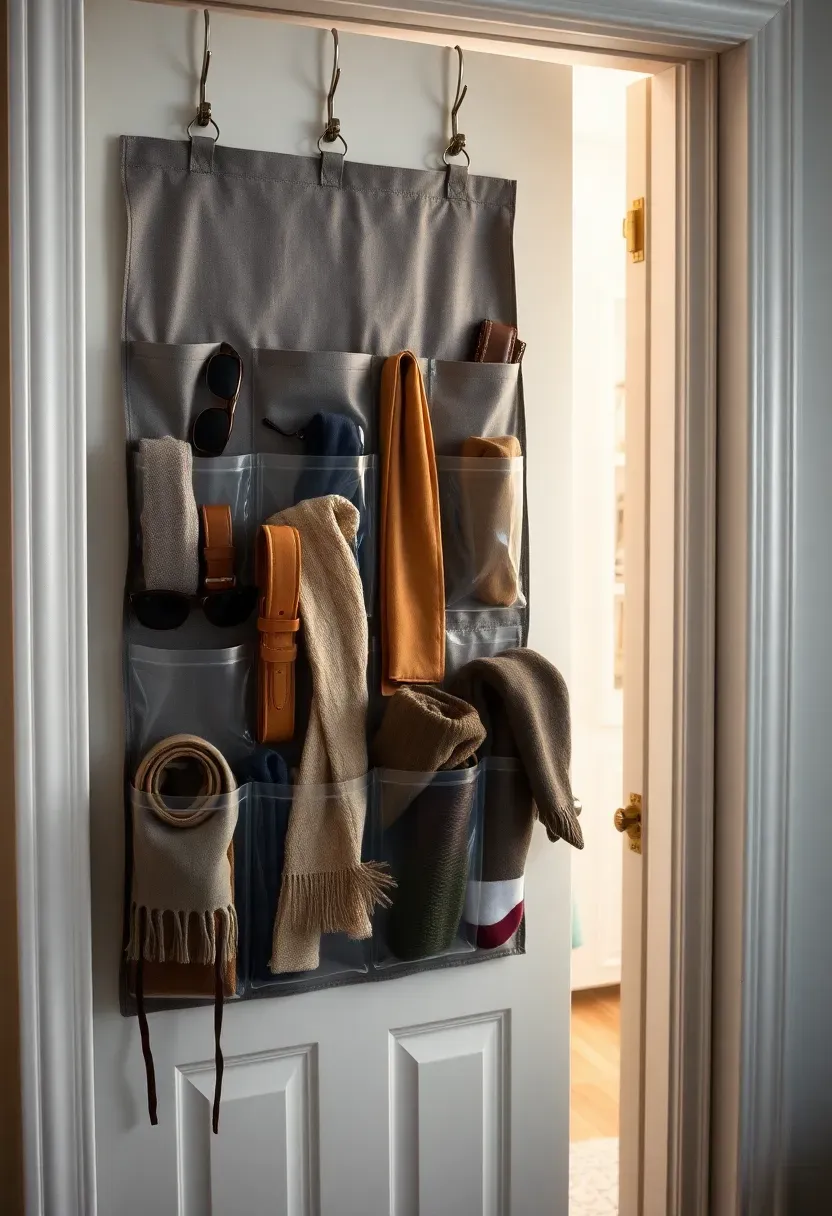
12. Over-the-Door Pocket Organizer
Why Small Items Disappear in Traditional Closets
Scarves, belts, socks, and accessories end up stuffed into corners, draped over rod ends, or buried inside drawers where they become invisible. Without a dedicated, visible home, these smaller items create low-level daily frustration.
The Solution
An over-the-door pocket organizer hangs from standard hooks on any closet door and provides twenty to thirty clear-front pockets in a single vertical strip. Each pocket holds one category — one for sunglasses, one for belts rolled into coils, one for winter scarves. The clear front means you never need to open or unfold anything to find what you need. The entire organizer installs in under sixty seconds and removes without leaving marks when you move.
Pros and Cons
Pros: Zero installation, fully portable, maximizes door space that is otherwise wasted. Cons: Heavy items like thick leather belts can cause the organizer to sag; reinforce the top hooks with adhesive strips if needed.
Recommended
Items for this idea
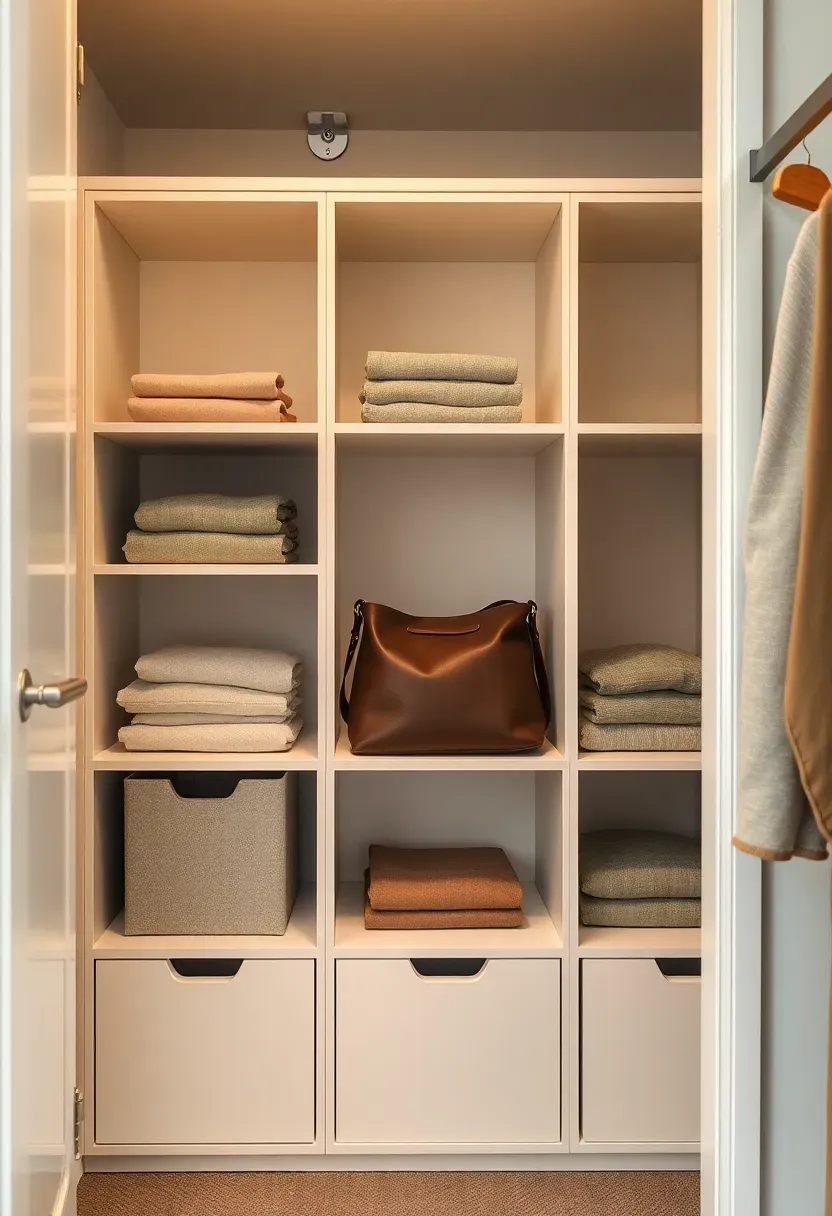
13. Modular Cube Storage System
Modular cubes — stackable open-front boxes that lock together — offer the flexibility of shelving with the portability of furniture. Each cube measures roughly thirty-three centimeters on every side, sized to accept standard fabric drawer inserts, wire baskets, or vinyl record dividers repurposed for clutch bags. Build a three-by-three grid for a small closet corner or a two-by-six tower that fills an awkward vertical gap beside a door frame.
Step 1: Plan the Grid
Sketch the closet wall and decide which cubes get open fronts for grab-and-go items and which get fabric drawers for hidden storage.
Step 2: Assign Categories
Dedicate each cube to a single category: one for gym clothes, one for loungewear, one for evening bags. Label the fabric drawers on the front.
Step 3: Secure the Stack
Bolt the top row to the wall with a furniture anti-tip bracket. Even sturdy cubes become unstable above four rows high.
What to Watch Out For
- Cheap connector pegs weaken over time; upgrade to metal cam-lock connectors for a permanent installation
- Avoid placing the cube system directly on carpet without a thin plywood base, which prevents rocking
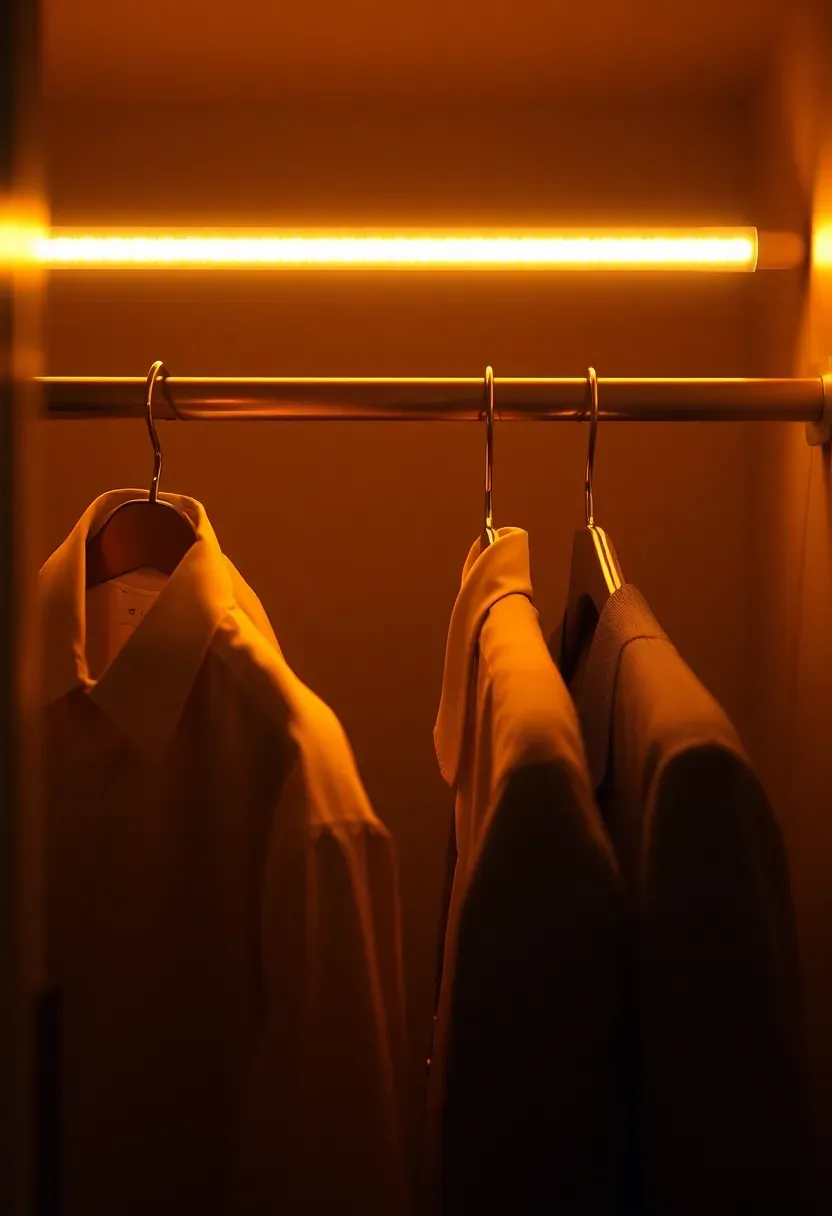
14. Lighted Closet Rod with Motion Sensor
Most closets have a single overhead bulb that casts shadows across the lower half of the space, making it difficult to distinguish navy from black or dark green from charcoal. A closet rod with an integrated LED strip solves this by placing light exactly where your eyes need it — at hanger level, illuminating garment colors and textures from directly above the shoulders. Motion-sensor activation means the light turns on the moment you open the door and switches off automatically after sixty seconds, consuming no standby power.
Tips / Practical Recommendations
- Choose a warm white LED temperature around 3000 Kelvin to render fabric colors accurately without the clinical feel of daylight bulbs
- Battery-operated versions avoid any wiring work, but rechargeable USB models save money on replacement batteries over time
- Pair with a second LED strip along the shelf edge above shoe storage for complete closet illumination
Recommended
Items for this idea
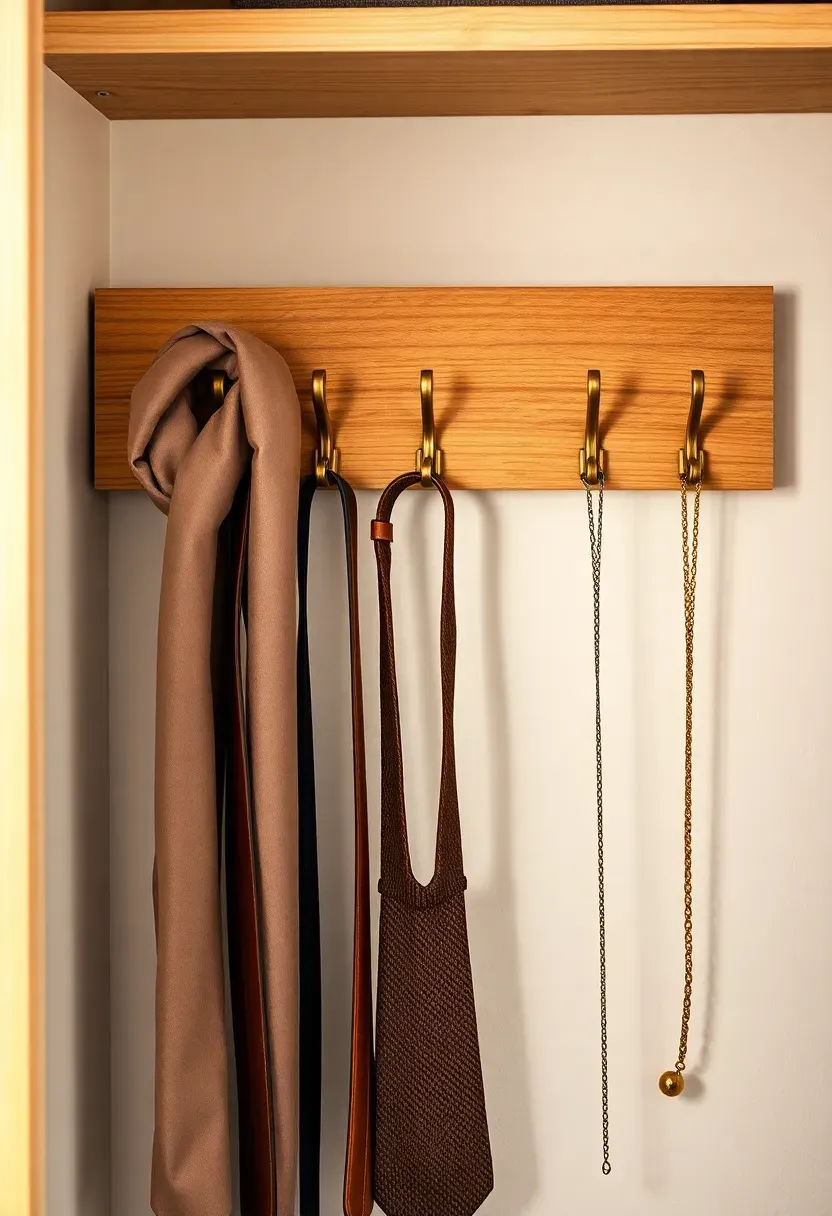
15. Scarf and Belt Hook Rail
A single horizontal rail with evenly spaced hooks — mounted on the closet sidewall or the back wall behind shorter garments — gives scarves, belts, ties, and necklaces a visible, tangle-free home. Unlike drawer storage where these items knot together, hooks keep each piece separate and displayed. Wooden rails with brass hooks add warmth to the closet interior, while matte black steel rails suit modern or industrial aesthetics.
How to Set This Up
Mount the rail at eye level or slightly above so items hang freely without touching the shelf below. Space hooks approximately eight centimeters apart — close enough to maximize capacity but wide enough to prevent neighboring items from tangling. Reserve the first two hooks nearest the closet opening for daily-use belts and the far end for seasonal scarves.
16. Clear Front Storage Boxes
Comparing: Clear Boxes vs. Opaque Bins
Both options protect stored shoes and off-season items from dust. But the choice between them affects how often you actually use what is inside.
Clear Front Boxes
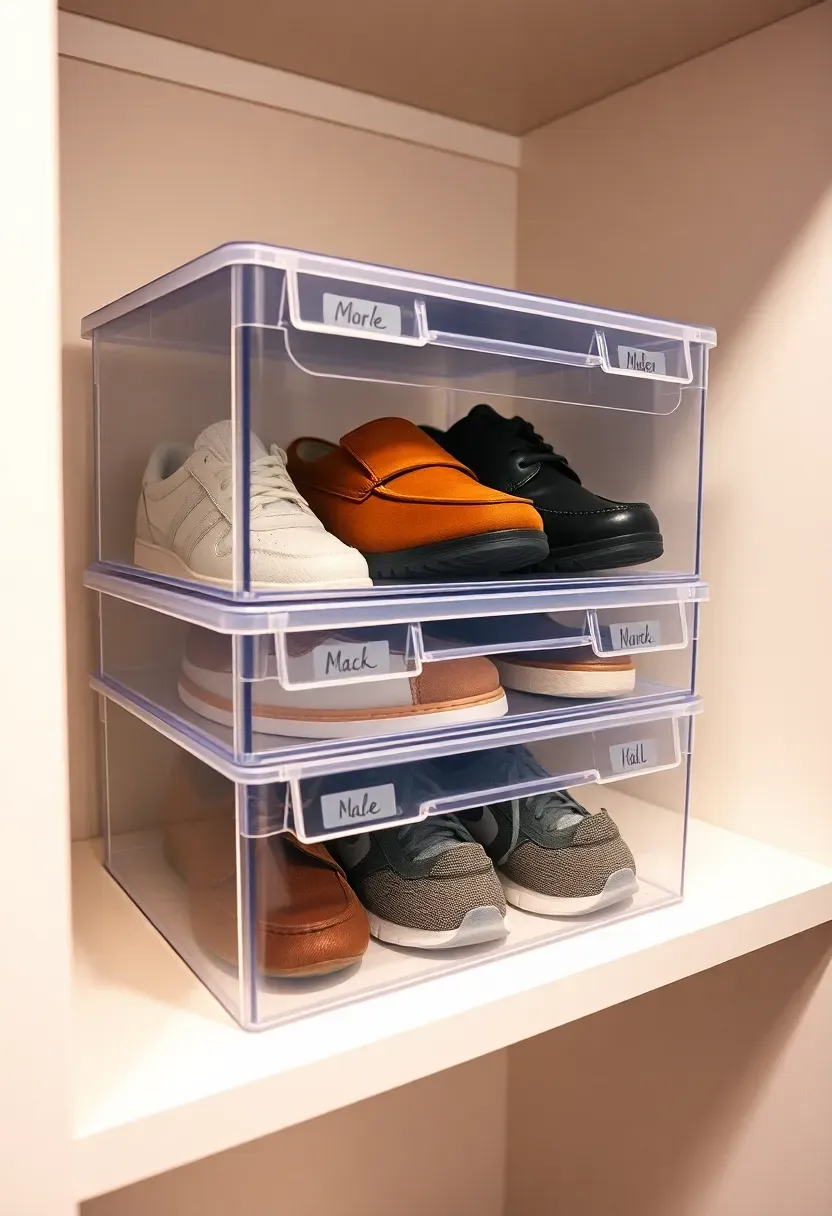
Transparent or drop-front boxes let you see the contents without opening the lid. They stack neatly, create a uniform grid on shelves, and make it psychologically easier to retrieve items because the barrier to access feels lower.
Opaque Bins
Solid-color bins look tidier from the outside and hide visual clutter. However, they require labels, and unlabeled bins quickly become mystery boxes that you stop opening altogether.
What to Choose
Choose clear boxes if: You want daily visibility and quick retrieval, especially for shoes and frequently rotated items. Choose opaque bins if: The items inside are truly seasonal — holiday decor, ski gear — and you only need access a few times per year.
Recommendation
For closet organization, clear front boxes win in almost every scenario because the entire point is seeing and using what you own.
Recommended
Items for this idea
17. Adjustable Closet Rod Heights
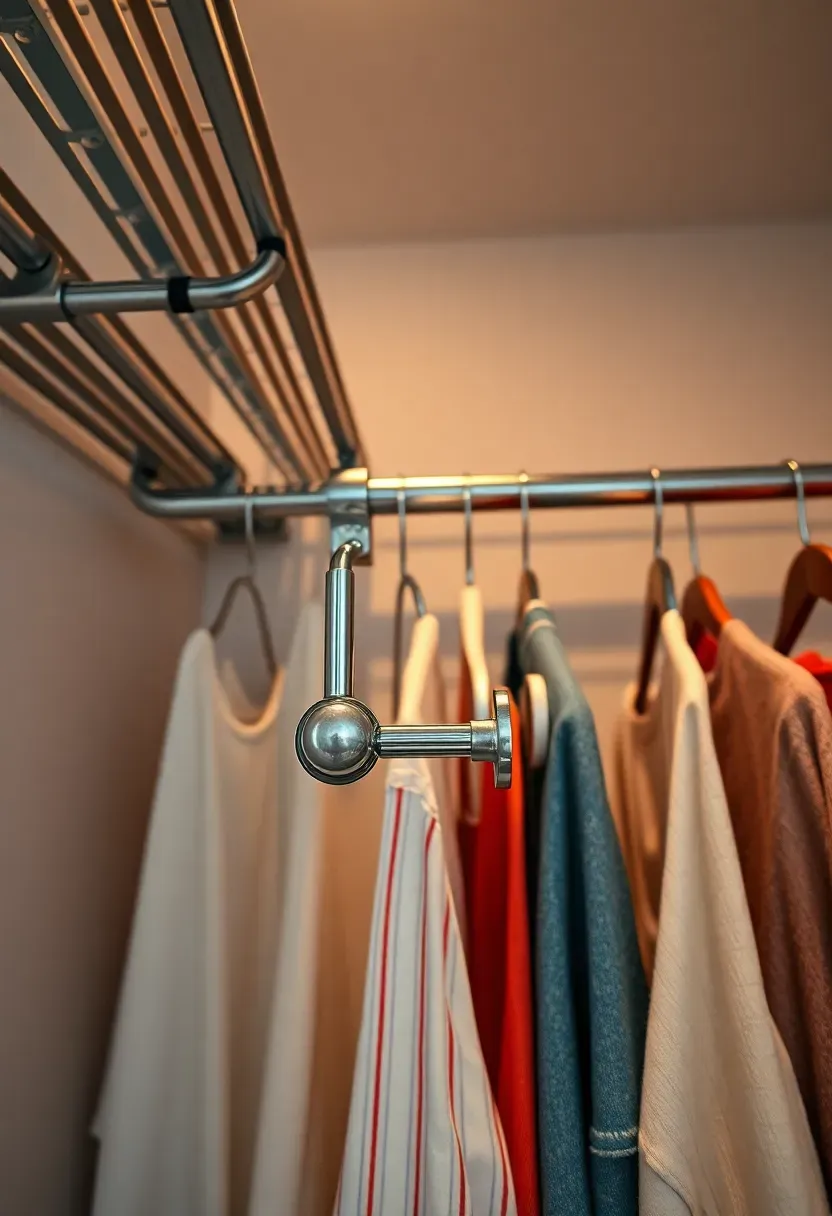
Fixed closet rods force your wardrobe to conform to one height, wasting vertical space above short garments and making it impossible to hang long dresses without them bunching on the floor. Adjustable rod brackets — slotted wall channels with repositionable rod cups — let you set each rod section at the exact height your clothing requires. As your wardrobe evolves, the rods move with it. This system is especially valuable in shared closets where two people have different garment lengths.
Tips / Practical Recommendations
- Install the slotted channel with a level; even a slight tilt causes hangers to migrate toward one end
- Mark your preferred rod positions with a small adhesive label so you can quickly reset after seasonal wardrobe changes
- Choose chrome or brushed nickel rod cups that match your hanger hooks for a polished, cohesive interior
18. Seasonal Rotation Wardrobe Strategy
Origins of the Concept
The idea of rotating wardrobes by season dates back to Japanese domestic culture, where limited living space made it impractical to keep every garment accessible year-round. Traditional homes featured a semi-annual clothing swap coordinated with the changing of the seasons.
Modern Interpretation
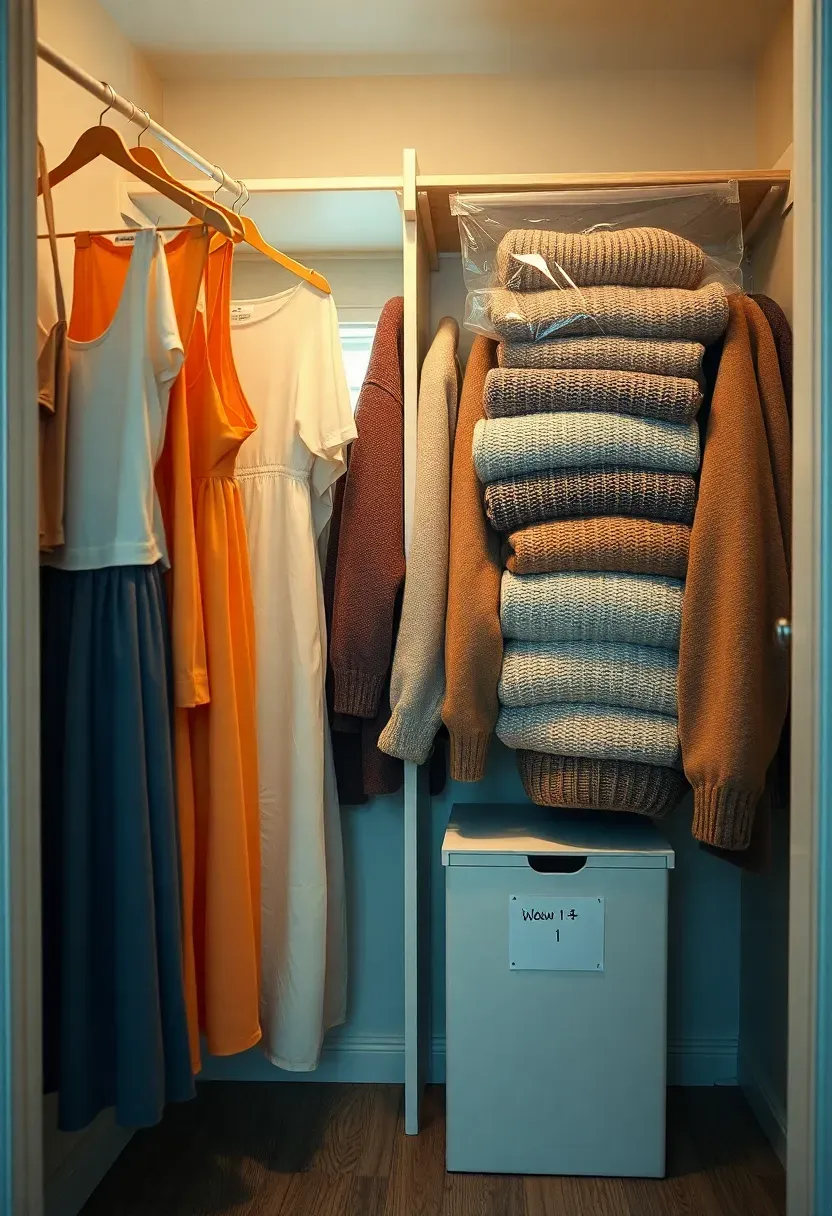
Today, seasonal rotation means splitting your closet into an active zone for the current season and a storage zone for everything else. Off-season garments go into vacuum-seal bags, under-bed containers, or the highest closet shelves where they stay dust-free and out of the way. The active zone feels spacious because it holds only what you will actually wear in the coming three months. Every item is visible, reachable, and relevant — eliminating the daily scroll past heavy winter coats in July or linen shirts in January.
How to Apply at Home
- Schedule two swap days per year: one in early spring and one in early autumn
- Vacuum-seal bulky winter items to compress them to roughly one-third of their original volume
- Wash or dry-clean every garment before storing it to prevent stains from setting over months of storage
- Label each storage container with a season and a brief contents list
Recommended
Items for this idea
19. Hat Display Shelf with Pegs
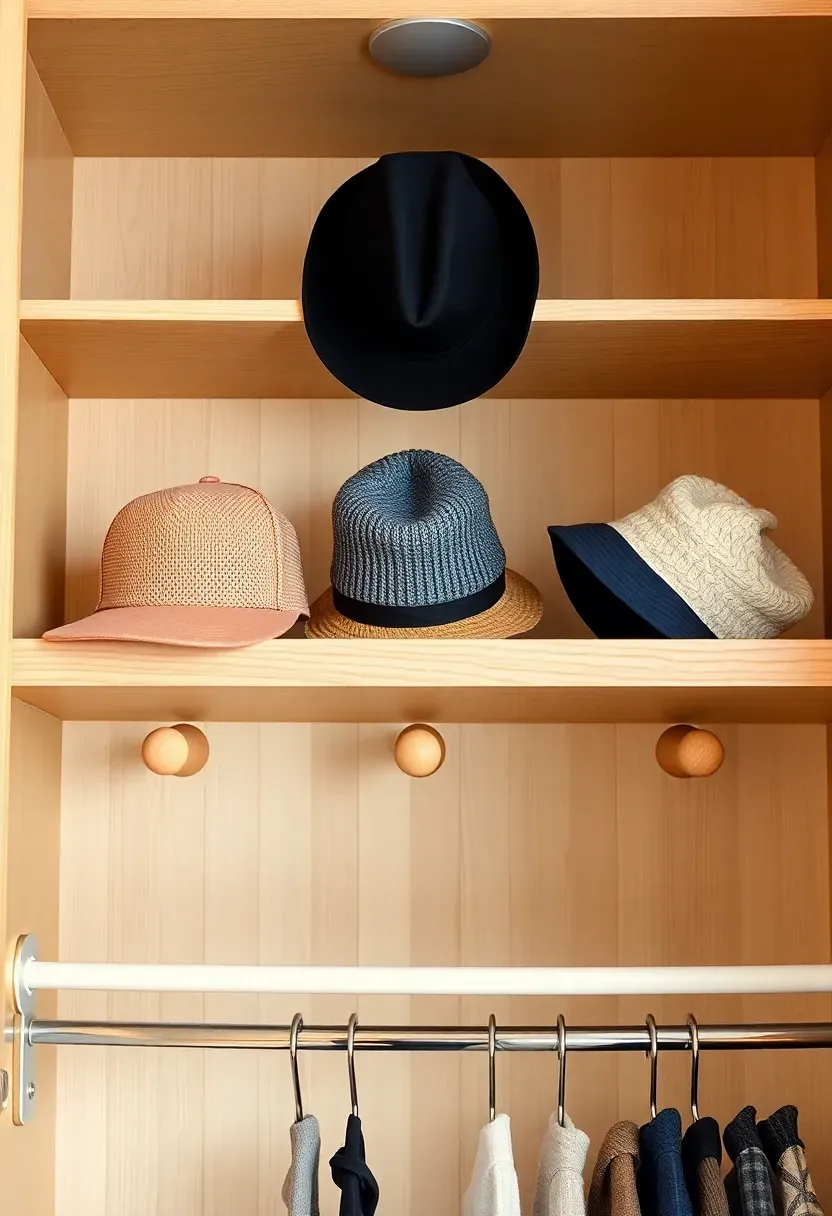
Hats stored in drawers lose their shape. Hats stacked on shelves compress the brims of the ones underneath. A dedicated hat shelf with upward-facing pegs holds each hat individually, preserving its form and displaying your collection like a haberdashery wall. The pegs keep hats from sliding off during the door-open breeze that moves through most closets, and the display format makes it easy to grab the right hat on your way out without digging.
Tips / Practical Recommendations
- Space pegs at twenty centimeters apart for baseball caps and twenty-five centimeters for wider brimmed hats
- Mount the shelf above the main hanging rod where headroom is usually wasted
- Use rounded wooden pegs rather than metal hooks to avoid denting or stretching the hat crown
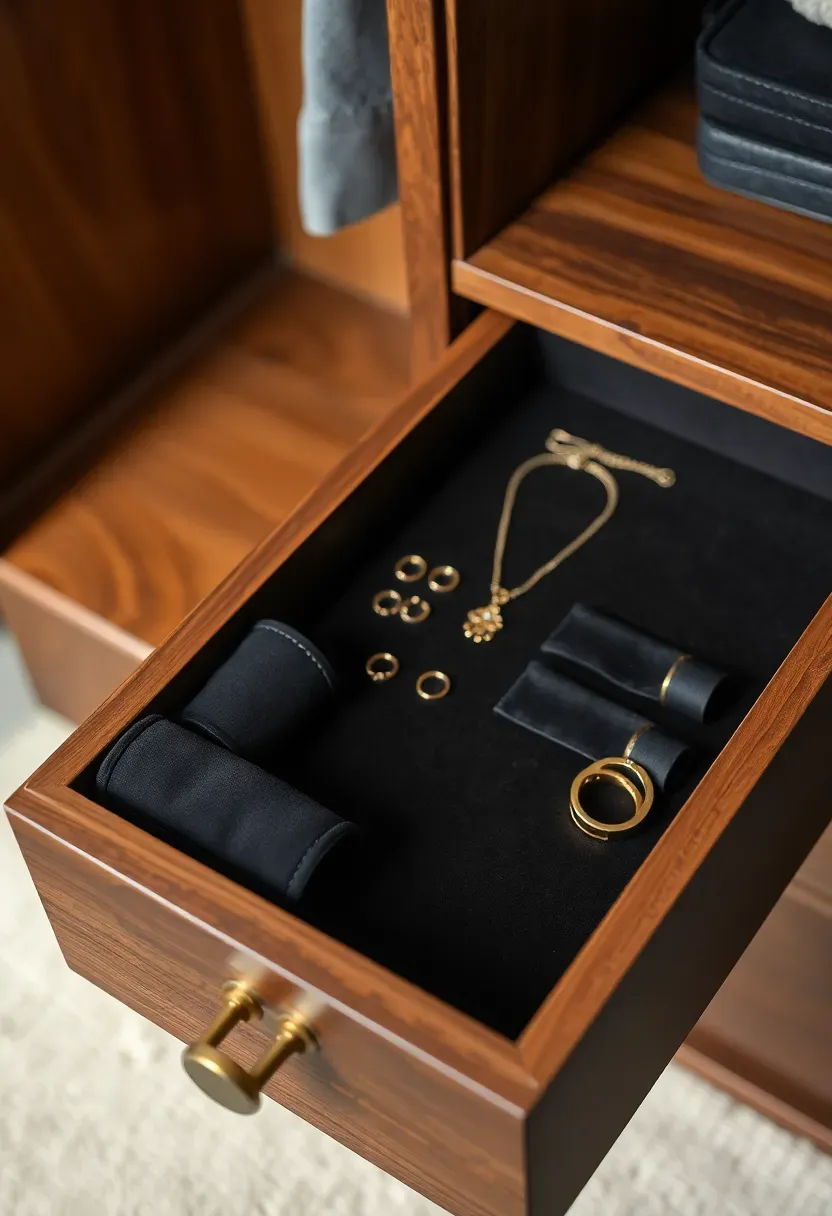
20. Jewelry Drawer with Velvet Inserts
Jewelry tangled in a box is jewelry you stop wearing. A shallow drawer fitted with a custom velvet insert — compartments for rings, slots for earrings, channels for necklaces, and padded rolls for bracelets — turns your collection into a visual catalog. The velvet surface prevents pieces from sliding when the drawer opens and protects delicate finishes from scratching against wood or metal. Building this into the closet system rather than using a freestanding jewelry box centralizes your morning routine in one location.
How to Set This Up
Measure your shallowest available drawer — ideally five to eight centimeters deep. Order or cut a velvet insert to match the interior dimensions. Arrange compartments with the most-worn pieces closest to the front of the drawer and reserve deeper sections for special-occasion items. A ring roll along one edge and a necklace channel along another maximizes the usable area without crowding.
Recommended
Items for this idea
21. Mirrored Closet Door with Integrated Shelf
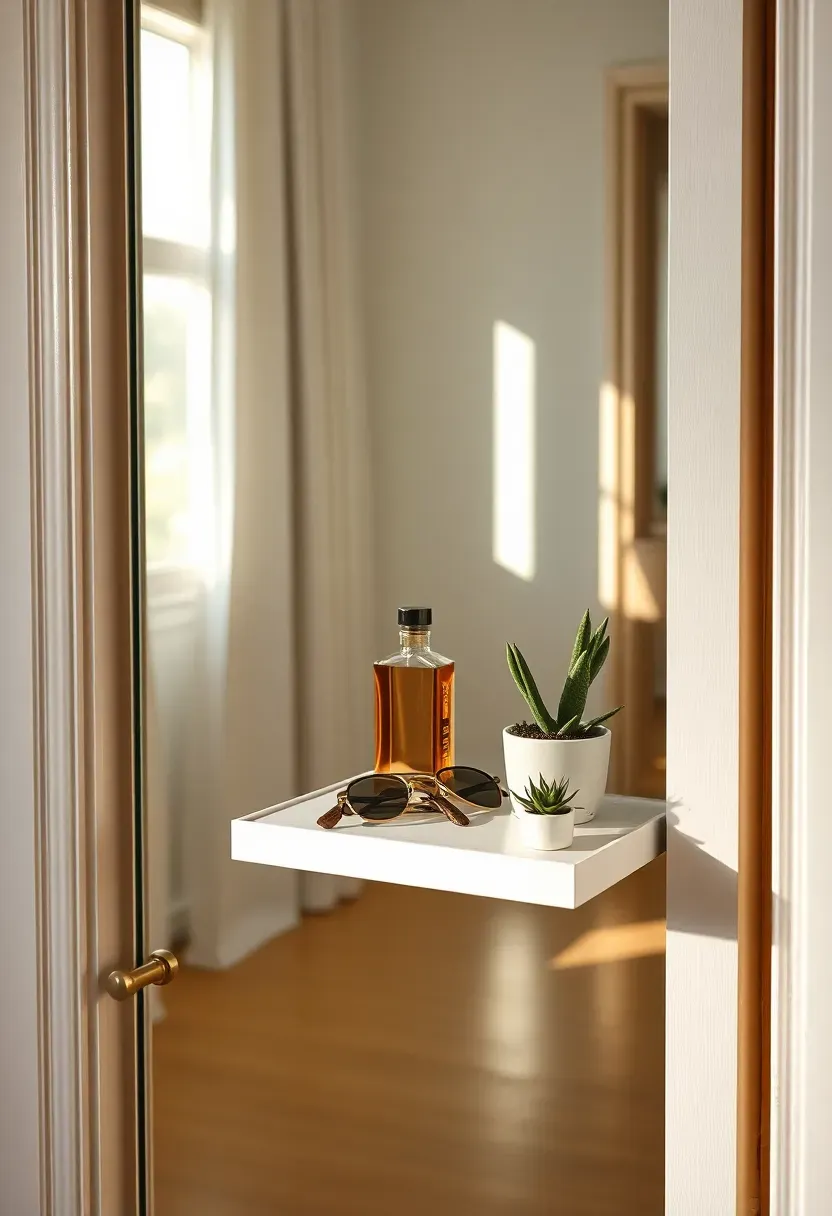
A full-length mirror on the closet door is common enough, but pairing it with a narrow integrated shelf — five to ten centimeters deep — mounted just below chest height adds a functional surface for the items you reach for every single morning: perfume, a watch, sunglasses, a wallet. This keeps those daily essentials at the threshold between closet and room, right where the getting-dressed process ends and the leaving-the-house process begins. The mirror handles outfit checks, and the shelf handles the grab-and-go items in one unified station.
Tips / Practical Recommendations
- Choose a frameless mirror with adhesive mounting to keep the door lightweight and avoid hinge strain
- Add a small lip or railing to the shelf edge so items do not roll off when the door swings
- Position the shelf at roughly 120 centimeters from the floor — comfortable reach for most adults without blocking the lower mirror view
Quick FAQ
Is it worth investing in a closet system for a rental apartment? Absolutely. Freestanding modular systems, tension rod add-ons, and over-the-door organizers install without drilling and move with you to the next apartment. The organization benefit is identical to a built-in system.
Should I hire a professional or build a closet system myself? For reach-in closets, most DIY kits from home improvement stores install in a single afternoon with basic tools. Walk-in closets with custom millwork, integrated lighting, and islands usually benefit from professional measurement and installation to avoid costly mistakes.
Which closet organization upgrade gives the biggest return for the least money? Replacing all hangers with uniform slim velvet hangers costs under twenty dollars for a typical closet and immediately recovers thirty percent of rod space while making the entire interior look intentional.
Can a small reach-in closet really hold a full wardrobe? Yes, if you use vertical space aggressively. Double rods, floor-to-ceiling shelving, over-the-door organizers, and seasonal rotation together can triple the effective capacity of a standard 120-centimeter-wide reach-in closet.
What is the first step if my closet feels hopelessly cluttered? Empty it completely. Every single item out. Then sort into keep, donate, and discard piles before putting anything back. Organizing clutter just produces organized clutter — the volume has to decrease first.
A closet that works properly is not about expensive custom cabinetry or a massive walk-in space. It is about giving every item a visible, reachable, designated spot and resisting the urge to let any category outgrow its allotted zone. Start with one upgrade from this list — even just the hanger swap — and notice how quickly the momentum builds toward a closet you actually enjoy opening every morning.
Pinterest cover for 21 AI Closet Organization Ideas That Actually Keep Things Tidy
About the author
OBCD
CGI visualization and interior design content. We create detailed 3D renders and curate practical design ideas for every room in your home.