21 AI Deck Design Ideas
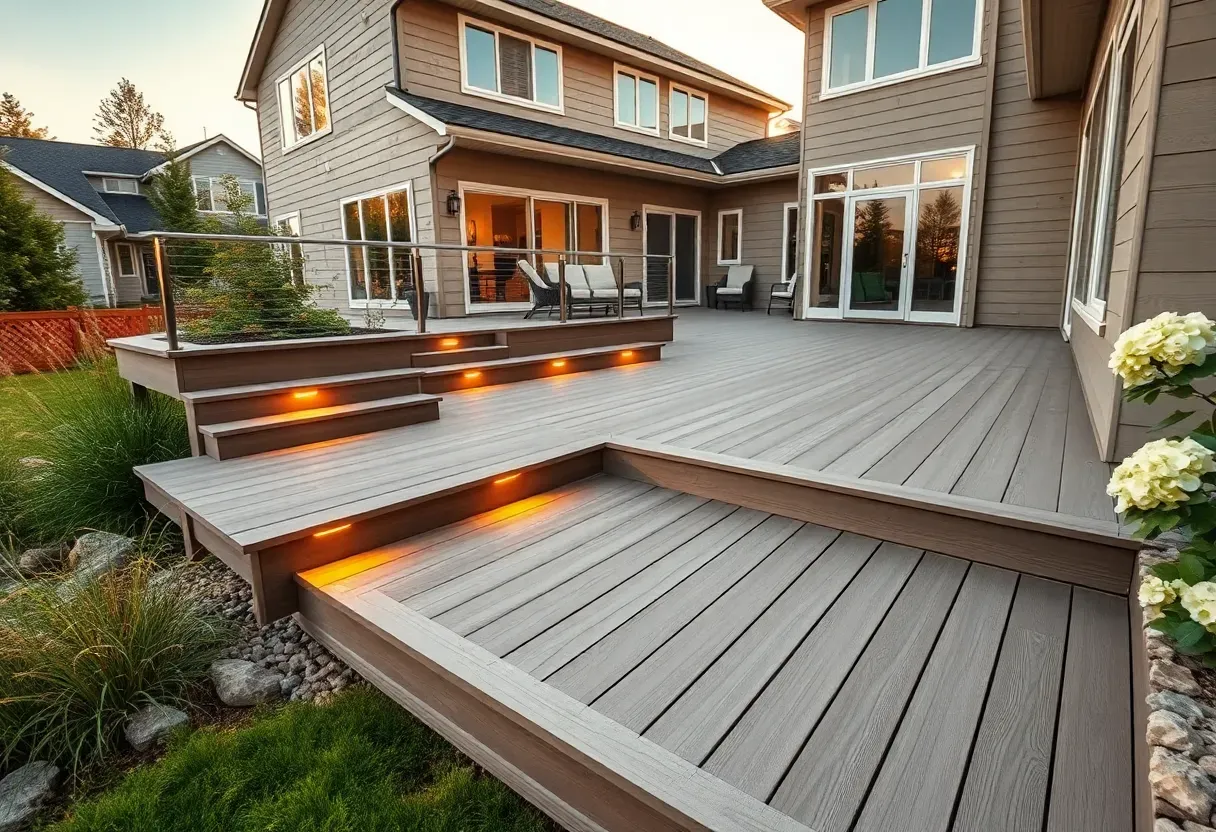
Walk into any home improvement store and you will find stacks of decking samples, but none of them tell you how a finished deck will actually look attached to your house, surrounded by your trees, under your specific afternoon light. That is where AI design tools change the conversation. Feed these platforms a photo of your backyard and they render photorealistic deck concepts in minutes — testing railing styles, board patterns, color tones, and furniture layouts before you order a single plank. The guesswork disappears. What remains is informed decision-making grounded in visual proof.
Here are 21 AI-generated deck concepts spanning rustic retreats and sleek contemporary platforms. Some prioritize entertaining, others chase quiet relaxation, and a few push creative boundaries you might not have considered on your own.
Table of Contents
- Wraparound Multi-Level Deck
- Floating Platform Over Sloped Yard
- Rooftop Urban Deck Terrace
- Rustic Reclaimed Wood Deck
- Minimalist Concrete and Timber Hybrid
- Poolside Sunbathing Deck
- Japanese-Inspired Engawa Deck
- Built-In Planter Box Deck
- Fire Pit Conversation Deck
- Covered Pergola Deck
- Cantilevered Hillside Deck
- Ground-Level Patio Deck
- Herringbone Pattern Deck
- Hot Tub Surround Deck
- Screened-In Three-Season Deck
- Outdoor Kitchen Deck
- Curved Freeform Deck
- Split-Level Entertaining Deck
- Low-Maintenance Composite Deck
- Tropical Resort-Style Deck
- Stargazing Lounge Deck
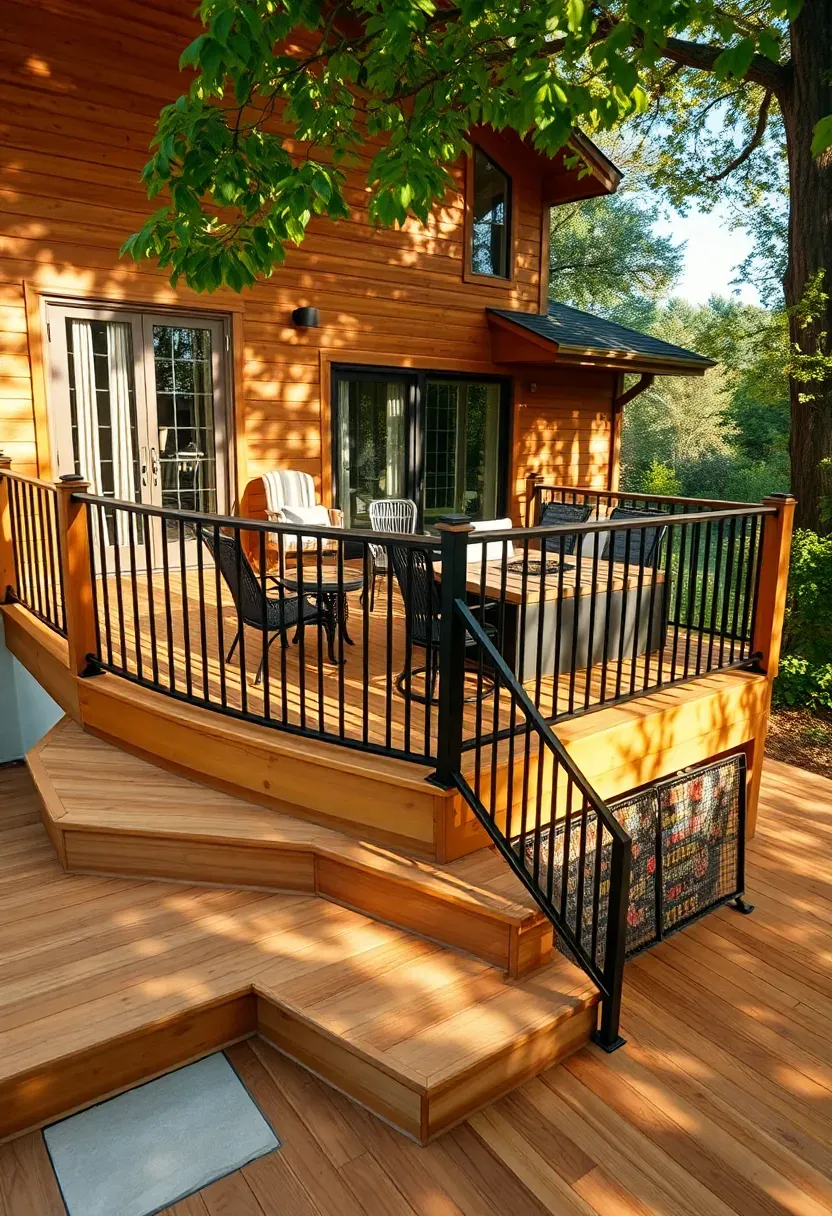
1. Wraparound Multi-Level Deck
A wraparound deck turns the entire rear facade of your home into usable outdoor square footage. AI layout tools shine here because they calculate how different levels can flow around corners, accommodating grade changes, door placements, and window sight lines simultaneously.
Step 1: Map Your Footprint
Photograph every exterior wall where decking might attach. AI platforms stitch these into a single model and suggest level transitions based on door threshold heights.
Step 2: Zone Each Level
Designate purposes — upper level for grilling and dining near the kitchen door, lower level for lounging or a fire pit away from cooking smoke.
Step 3: Connect With Wide Steps
Narrow stairs between levels create bottlenecks. AI renderings consistently recommend steps at least 48 inches wide for natural traffic flow.
What to Watch Out For
- Check local setback requirements before wrapping a deck around a side wall
- Budget for additional footings at every corner and level change
- Use consistent railing material across all levels for visual unity
We picked a few things that go well with this idea: Giantex 18-Pack Composite Deck Tiles (★4.5), Famobay WPC Interlocking Deck Tiles (18-Pack) (★4.4) and Pure Era Composite Deck Tiles (10-Pack) (★4.6). As an Amazon Associate we earn from qualifying purchases.
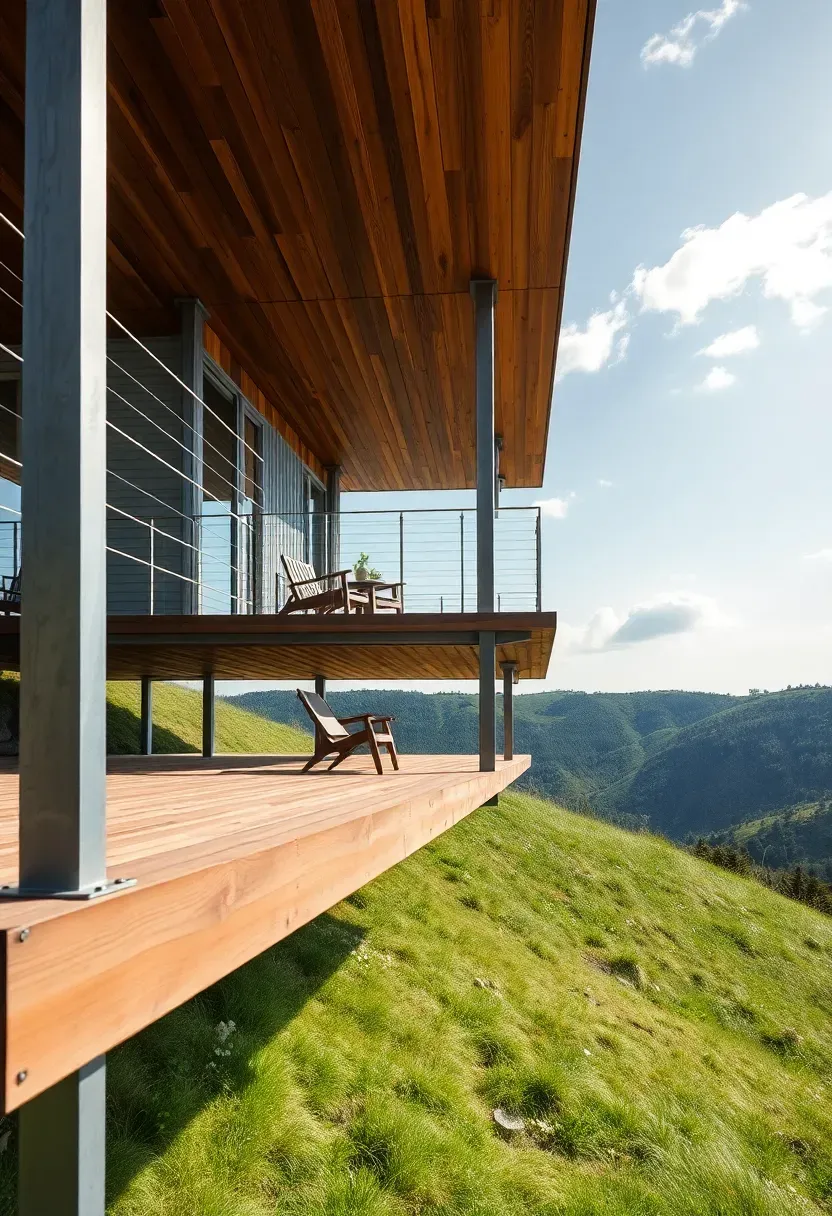
2. Floating Platform Over Sloped Yard
The Core Issue
Sloped backyards often go unused because flat outdoor space feels impossible without expensive grading or retaining walls. Homeowners stare at that hill and see wasted potential.
The Solution
A floating platform deck solves the grade problem elegantly. Steel posts anchor into the hillside at varying depths, and a level composite or hardwood platform spans above the slope. AI tools calculate post placement, cantilever limits, and structural load requirements based on your specific grade. The result is a level outdoor room that hovers above the landscape without disturbing the natural terrain beneath it. Cable railing keeps sight lines open to the view below.
Pros and Cons
Pros: preserves natural landscape, creates dramatic architectural statement, avoids expensive earthmoving Cons: requires engineered structural plans, taller posts increase cost significantly, underside needs rodent screening in some regions
We picked a few things that go well with this idea: Merax Acacia Wood Chaise Lounge Set of 2 (★4.5), Christopher Knight Teak Lounge Chairs (Set of 2) (★4.3) and DAYAOUTDOOR Modern Patio Lounge Chairs (Set of 2) (★4.6). As an Amazon Associate we earn from qualifying purchases.
3. Rooftop Urban Deck Terrace
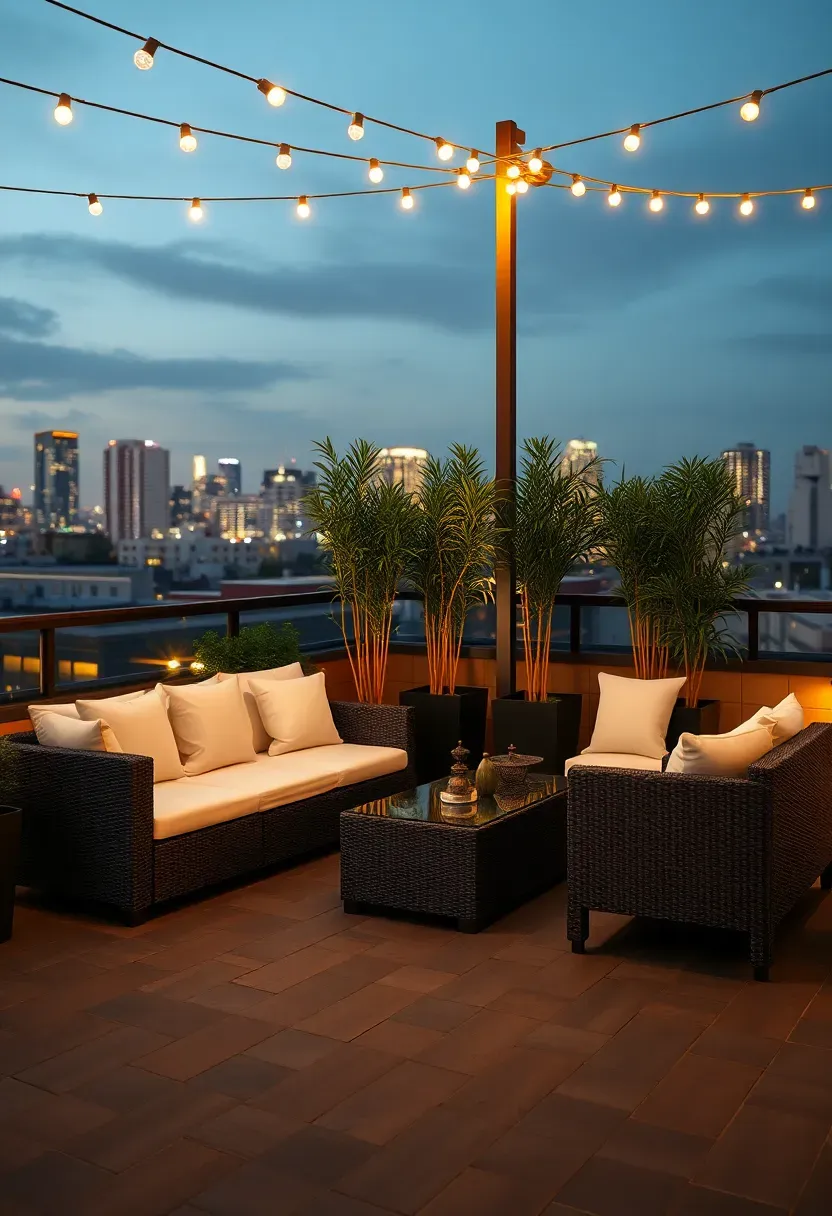
City dwellers rarely have backyards, but rooftops offer untapped square footage that AI design tools can transform into genuine living spaces. The constraints are different from ground-level decks — weight limits, wind exposure, and waterproofing all factor into the design.
AI platforms model rooftop-specific variables: load distribution across the roof structure, drainage pathways around deck tiles, and wind-resistant furniture placement. Lightweight composite pavers laid on adjustable pedestal systems create a level surface without permanent attachment. Modular planters filled with bamboo or ornamental grasses provide privacy screening and wind buffering.
Tips for Success
- Always get a structural engineer's assessment of roof load capacity before proceeding
- Choose pedestal-mounted pavers so the membrane underneath remains accessible for maintenance
- Anchor all furniture and planters against wind uplift — rooftop gusts are stronger than ground level
We picked a few things that go well with this idea: Sumaote Dimmable LED Deck Lights (20-Pack) (★4.5), JUABREY Recessed LED Deck Lights (16-Pack) (★4.4) and HIBOITEC Warm White Deck Light Kit (10-Pack) (★4.3). As an Amazon Associate we earn from qualifying purchases.
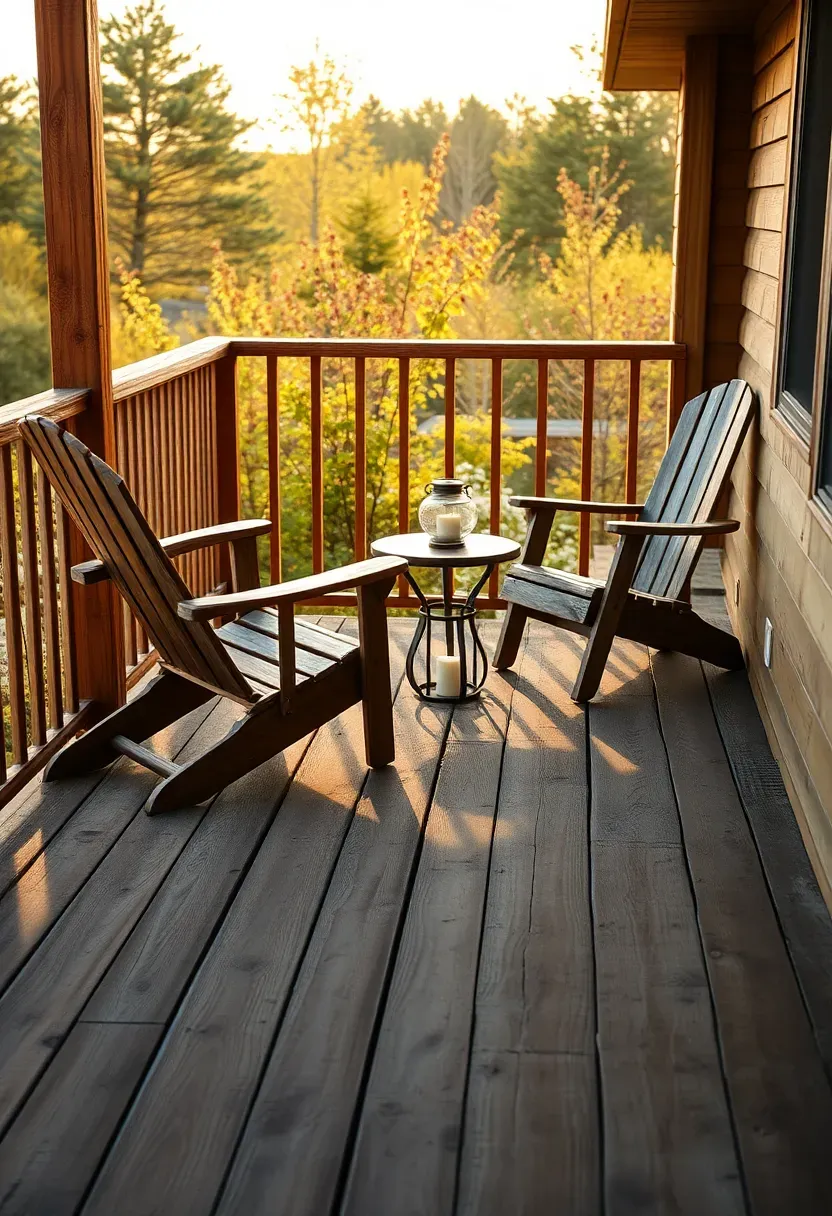
4. Rustic Reclaimed Wood Deck
Origins
Reclaimed wood decking traces its appeal to the salvage movement that gained momentum in the early 2000s, when designers began rescuing barn timbers, warehouse flooring, and dock planks from demolition. Each board carries decades of patina that no factory finish can replicate.
Modern Interpretation
AI rendering tools now catalog reclaimed wood species — heart pine, Douglas fir, white oak — and simulate how their weathered tones will look as decking. The software arranges boards by color variation to create either a harmonious blend or deliberate contrast patterns. Structural analysis flags boards too compromised for load-bearing use and suggests reinforcement strategies. The finished aesthetic reads as authentically aged, warm, and full of character that brand-new lumber simply cannot deliver.
How to Apply at Home
- Source reclaimed boards from certified salvage dealers who verify structural integrity
- Mill all boards to uniform thickness for a level walking surface
- Apply a UV-protective penetrating oil rather than film-forming stain to preserve the aged look
- Expect 15 to 20 percent waste from boards too damaged to use
Recommended
Items for this idea
5. Minimalist Concrete and Timber Hybrid
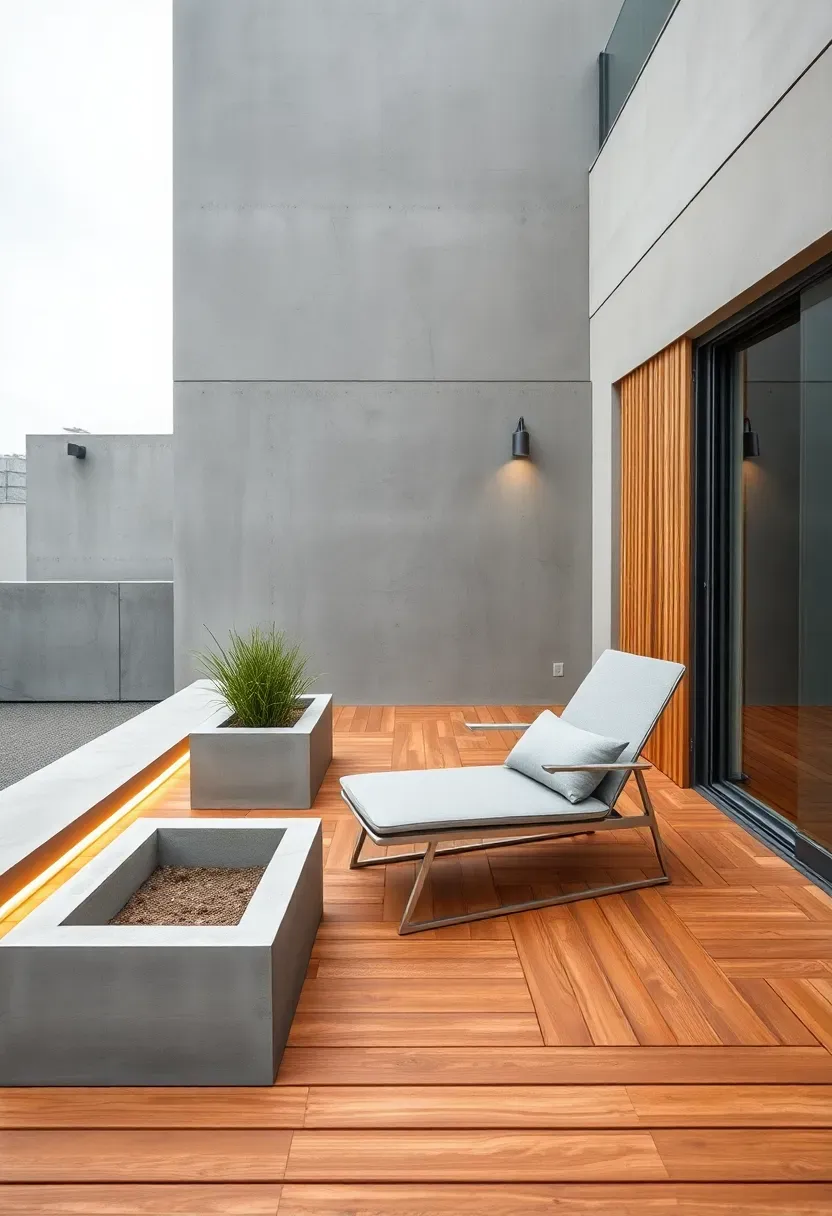
Why choose one material when the tension between two creates something more compelling? A concrete-and-timber hybrid deck pairs the industrial weight of poured or precast concrete with the organic warmth of natural wood slats. AI tools map the transition zones between materials so they feel intentional rather than accidental.
Typical configurations place concrete pads at high-traffic or heavy-load areas — dining tables, grill stations, hot tub pads — while timber fills the surrounding relaxation zones. The material contrast doubles as an implicit wayfinding system: step onto wood and you know you have entered the lounge territory.
Tips for Clean Execution
- Maintain a consistent 1/4-inch gap between concrete and timber to allow for wood expansion
- Use the same gray tone in the concrete as appears in the timber's grain for visual continuity
- Flush-mount LED strip lighting along the material transition line for subtle nighttime definition
6. Poolside Sunbathing Deck
Comparing: Wood vs Composite for Pool Surrounds
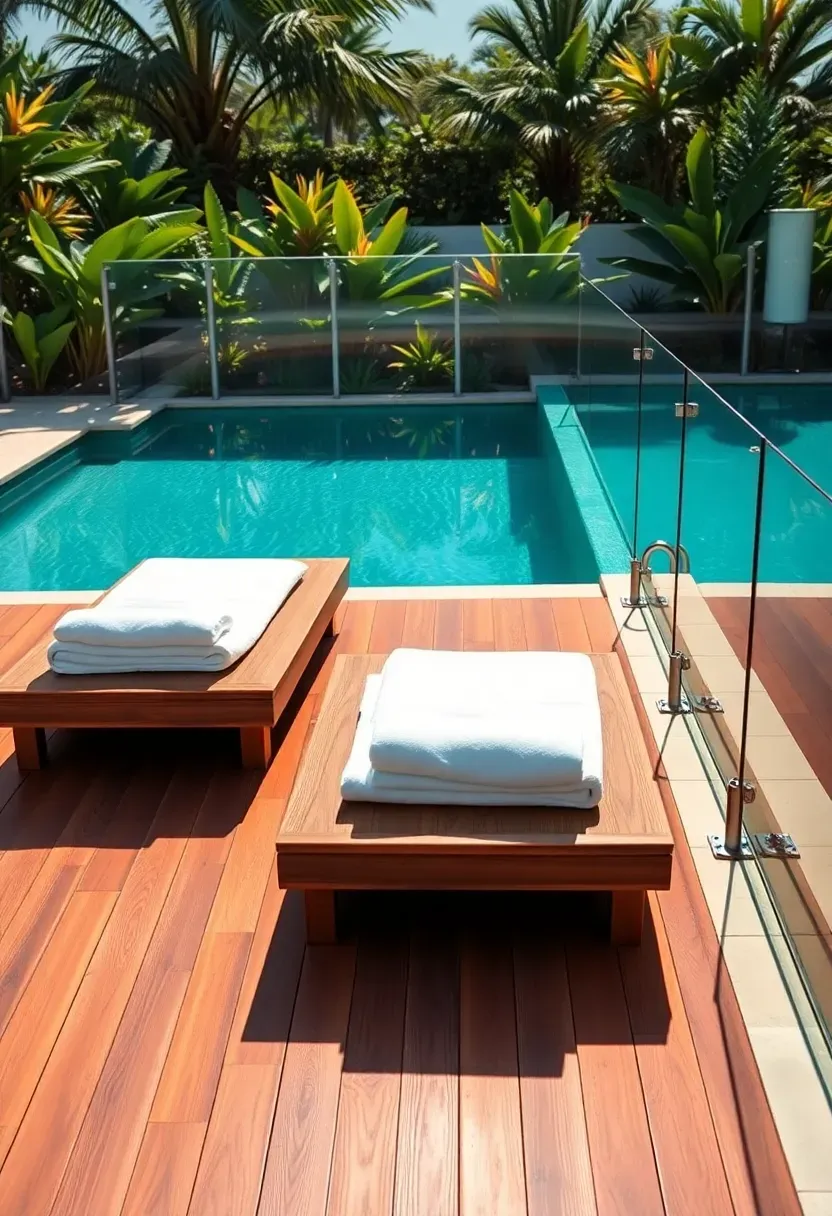
Pools demand decking that handles constant moisture, bare feet, and splashed chemicals without degrading or becoming dangerously slippery.
Wood Option
Natural hardwoods like ipe and cumaru offer unmatched beauty around pools. Their dense grain resists water absorption, and their surfaces stay cool enough for bare feet in direct sun. However, they require annual oiling and will silver to gray without maintenance.
Composite Option
Modern capped composites mimic wood grain convincingly and never need sealing. They resist chlorine, saltwater, and UV fade. The tradeoff is heat retention — dark composites can become uncomfortably hot in full afternoon sun.
What to Choose
Choose wood if: you value natural beauty and do not mind annual maintenance Choose composite if: you want zero upkeep and plan to install shade structures over the hottest zones
Recommendation
For most homeowners, a light-colored capped composite with a matte finish offers the best balance of aesthetics, safety, and longevity around pool environments.
Recommended
Items for this idea
7. Japanese-Inspired Engawa Deck
Origins
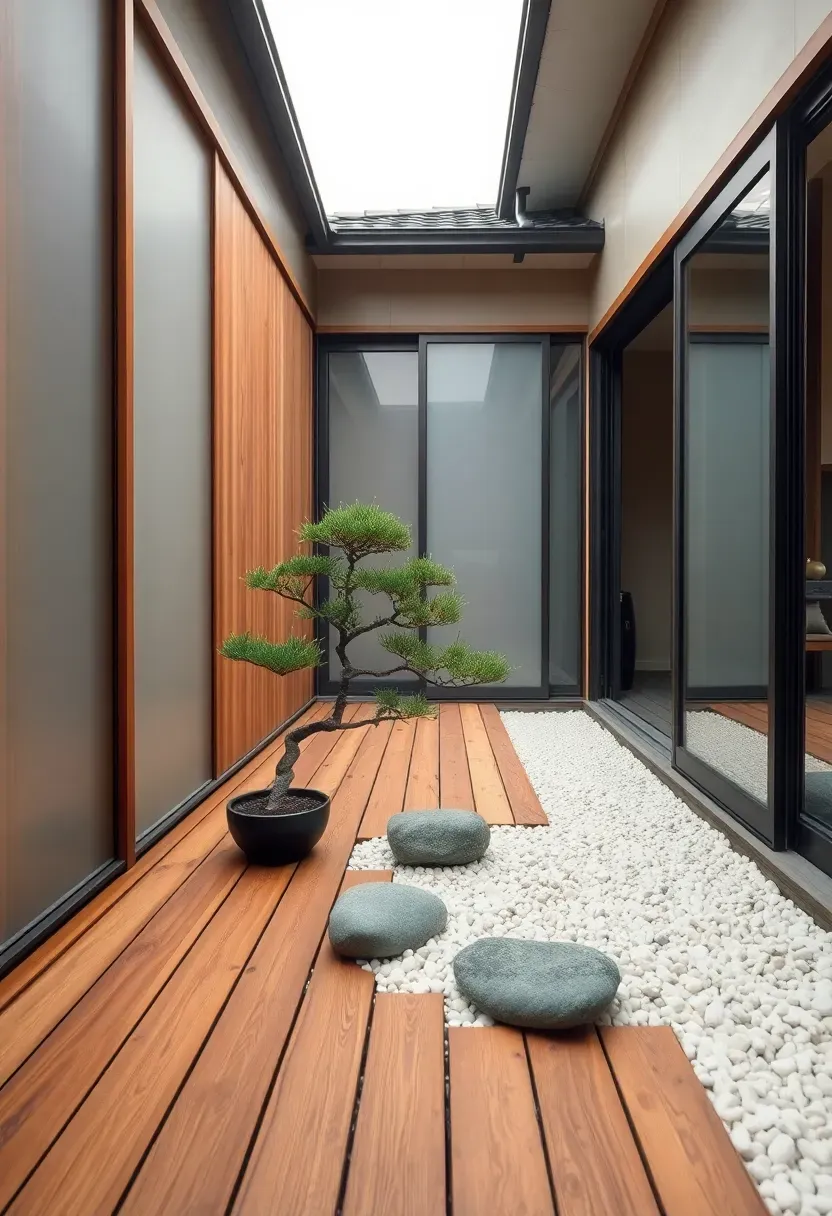
The engawa is a traditional Japanese architectural element — a narrow covered platform running along the exterior of a house, blurring the boundary between indoors and outdoors. It served as transition space, social perch, and passive cooling system for centuries before Western design discovered its elegance.
Modern Interpretation
AI tools adapt the engawa concept to Western home styles by adjusting proportions, materials, and depth. A three-to-five-foot-wide timber platform wraps one or two sides of the house, sitting low to the ground without railing. Sliding screens or glass panels at the interior wall allow the adjacent room to open completely onto the engawa. Below the platform, a raked gravel or pebble garden reinforces the Japanese aesthetic.
How to Apply at Home
- Keep the deck surface no more than 18 inches above grade to eliminate railing requirements
- Use naturally rot-resistant timber like western red cedar or cypress
- Add a deep roof overhang to protect the platform from rain
- Plant a single sculptural element — a Japanese maple or trained pine — as a focal point from the engawa
8. Built-In Planter Box Deck
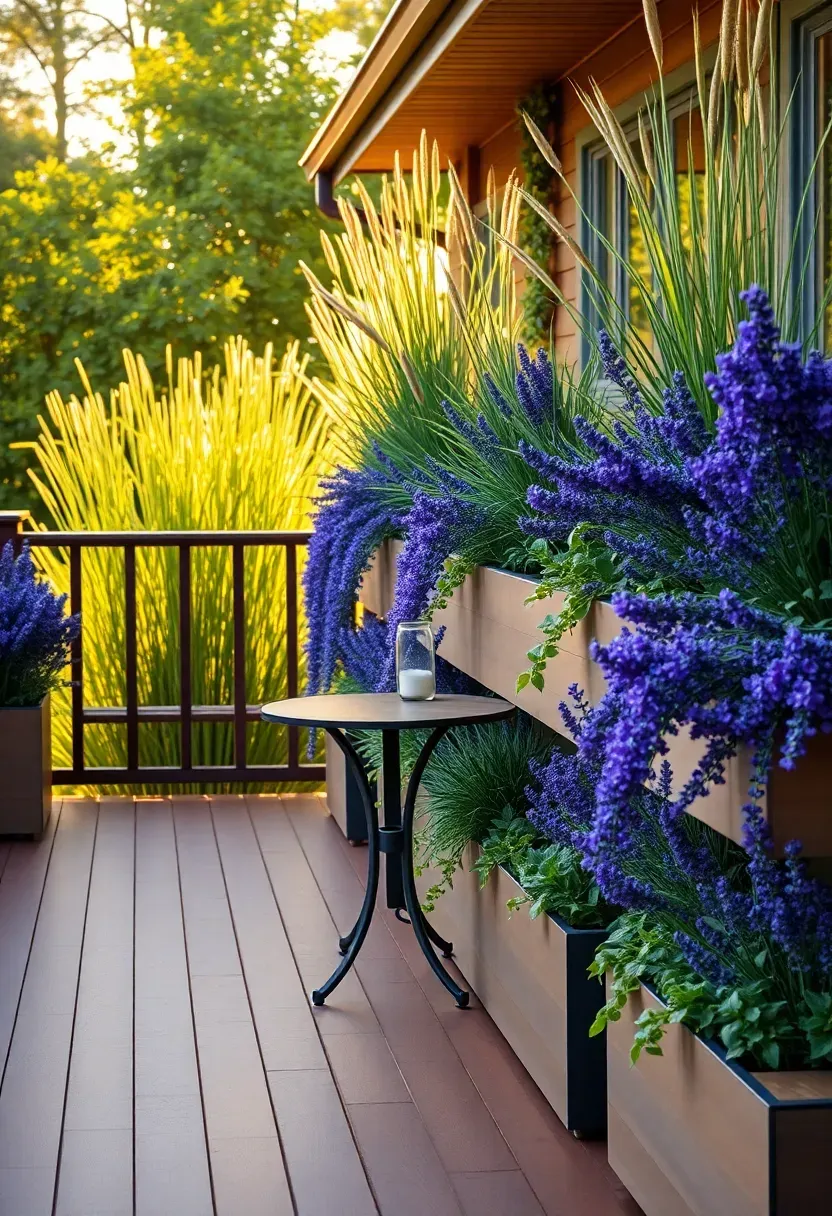
Standalone pots on a deck look like afterthoughts. Built-in planter boxes, on the other hand, make greenery feel structural — as permanent and deliberate as the decking itself. AI design tools position planters where they serve double duty: defining seating zones, screening neighbors, and softening the hard edges of the platform.
The best designs integrate planters into the railing system. Instead of a traditional balustrade, a 16-inch-wide planter runs along the deck perimeter, rising to seat height. Trailing plants spill over the exterior face while upright grasses provide privacy above. Interior drainage channels route excess water away from the deck surface and framing below.
Tips for Longevity
- Line planter interiors with waterproof membrane to protect the deck framing
- Use lightweight soil mixes to reduce structural load
- Install drip irrigation inside each planter — hand watering built-ins is tedious and inconsistent
Recommended
Items for this idea
9. Fire Pit Conversation Deck
The Core Issue
Standard deck layouts push seating to the perimeter, leaving a dead center that nobody uses. Conversation feels scattered when people sit in a line along the railing rather than facing each other.
The Solution
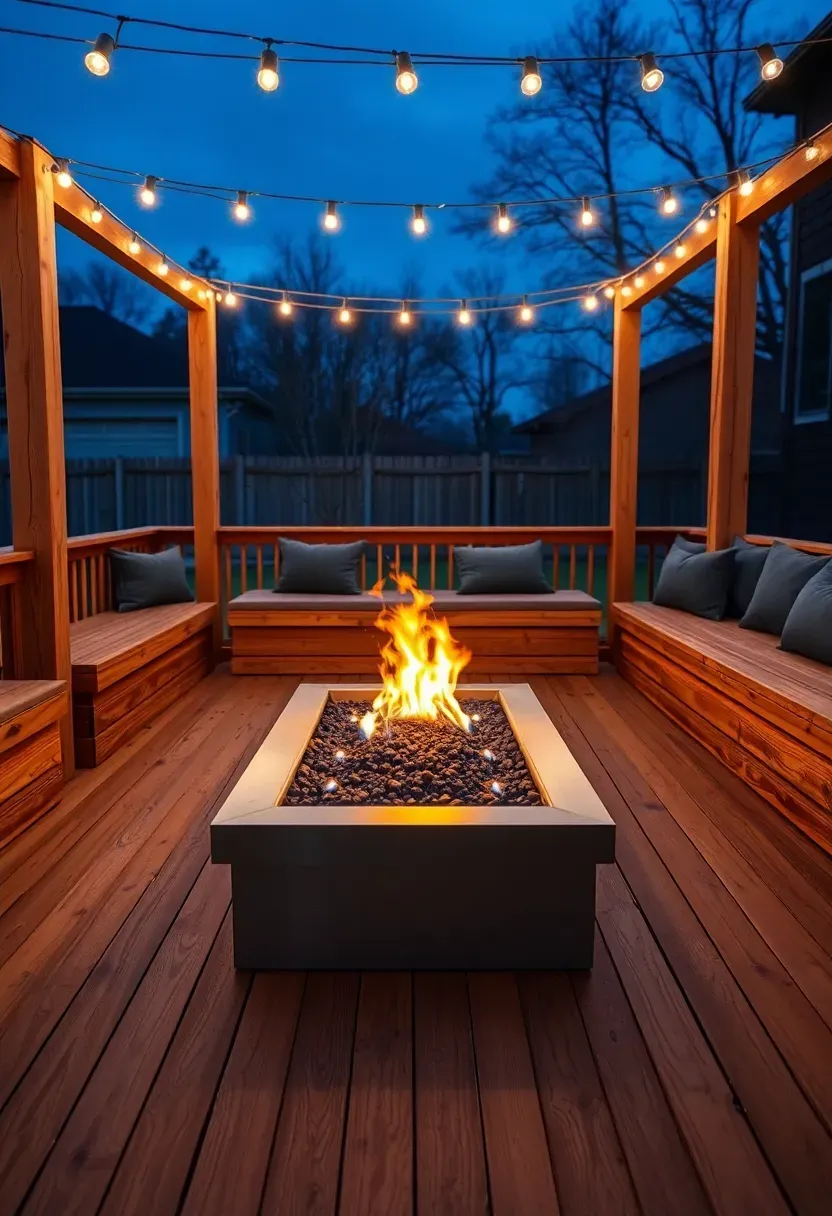
A fire pit deck flips the layout inward. A gas-burning fire feature sits at the center of the platform, and built-in bench seating wraps around it in a U or full circle. AI tools ensure the fire element meets clearance requirements from combustible decking by specifying a non-combustible surround pad — typically steel, stone, or concrete — embedded flush with the deck surface. The result is a gathering space with a magnetic center that draws everyone together on cool evenings.
Pros and Cons
Pros: creates a natural social focal point, extends deck usability into colder months, adds ambient lighting without electricity Cons: gas line installation adds cost, requires careful fire-rated material selection around the feature, some municipalities restrict open flames on elevated structures
10. Covered Pergola Deck
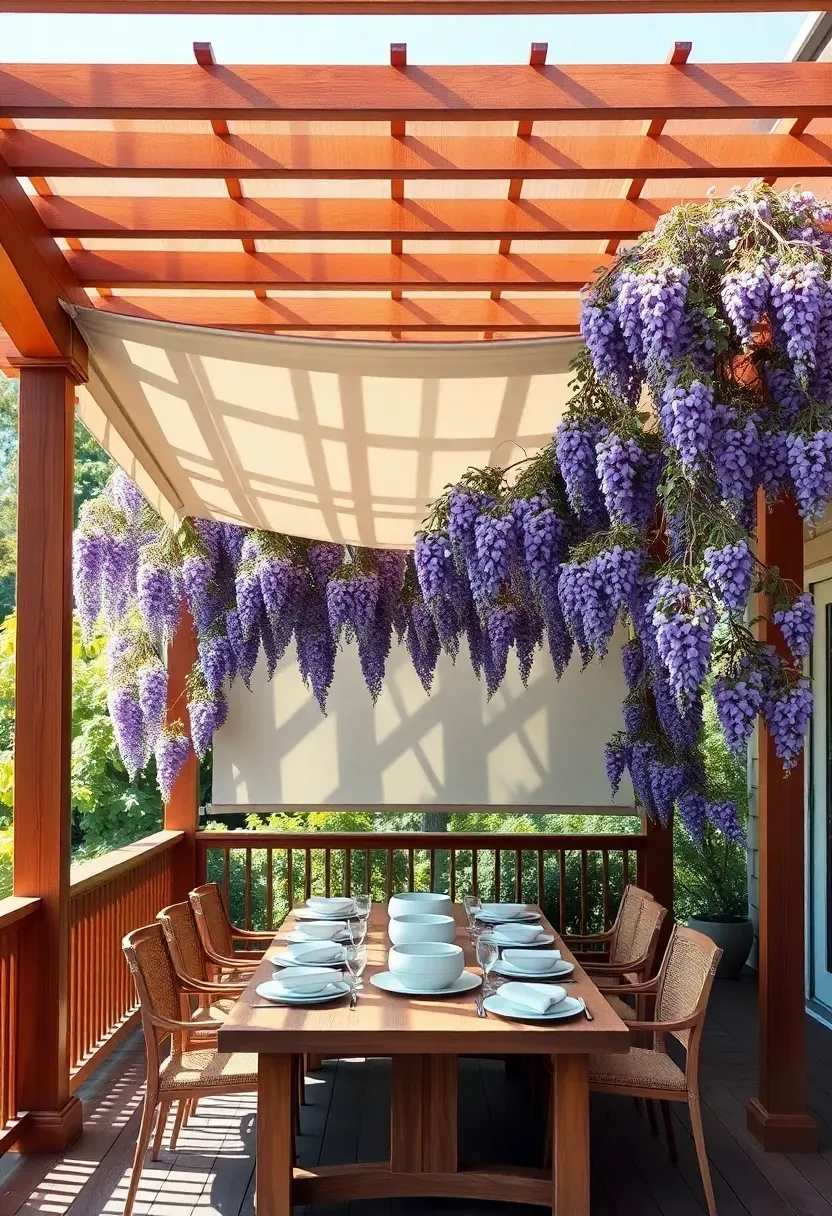
A pergola transforms a flat, exposed deck into a room with a ceiling — or at least the suggestion of one. AI visualization excels at dialing in the slat spacing, post dimensions, and canopy options that balance shade coverage with natural light.
Step 1: Set the Scale
Pergola posts should rise 8 to 10 feet above the deck surface. AI tools calculate proportions based on your deck's footprint so the structure feels neither cramped nor overwhelmed.
Step 2: Choose Your Coverage
Open rafters cast striped shadow patterns. Retractable fabric canopies offer adjustable shade. Polycarbonate panels provide rain protection. Each option changes the deck's usability window.
Step 3: Add Vertical Interest
Train climbing plants — wisteria, grape vine, or jasmine — along the posts and across the rafters for living shade that deepens over seasons.
What to Watch Out For
- Pergola footings must be independent of the deck frame to handle wind and snow loads
- Check HOA rules for maximum pergola height before committing to a design
- Wisteria is aggressive — install it only if you are prepared for regular pruning
Recommended
Items for this idea
11. Cantilevered Hillside Deck
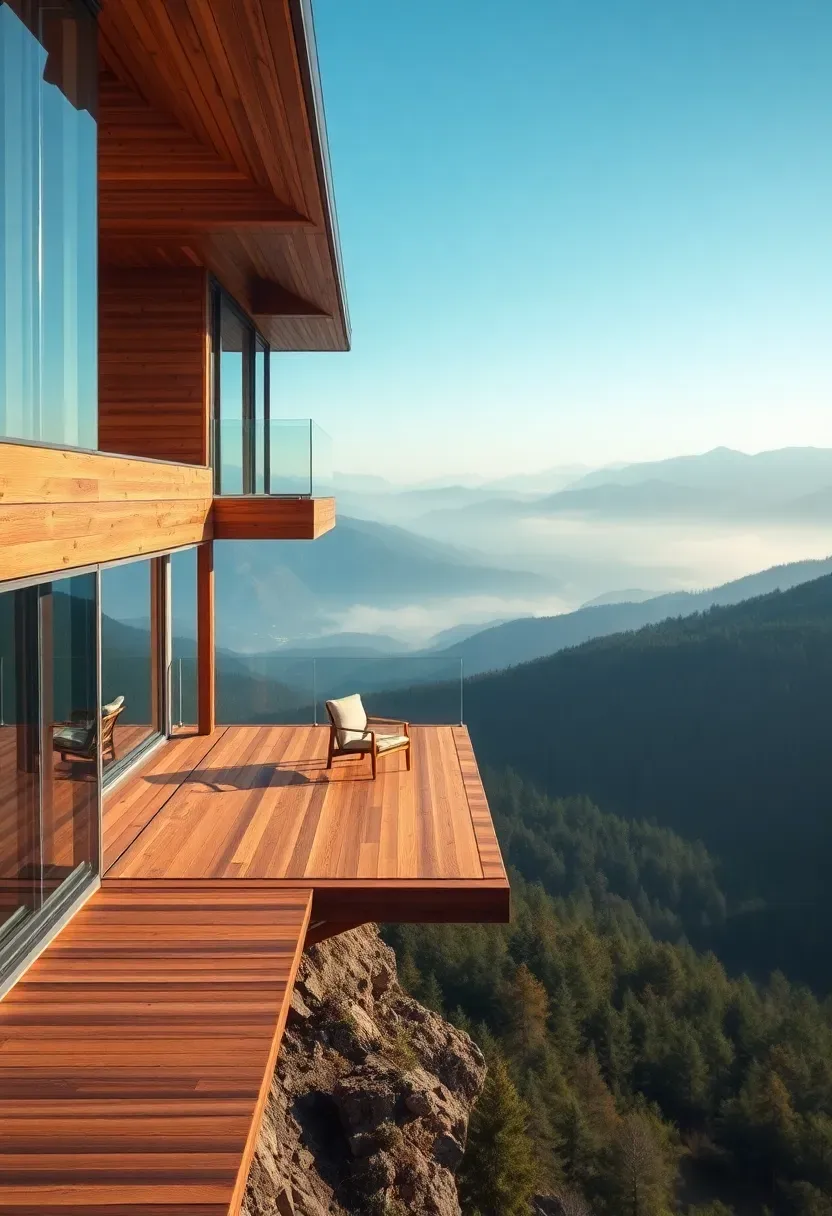
Nothing announces a relationship with landscape quite like a deck that reaches out over a cliff or steep hillside. The cantilevered section — the portion extending beyond the last support post — creates the sensation of floating above the terrain.
AI structural modeling determines safe cantilever distances based on beam size, wood species, and anticipated loads. Most residential decks support a 24-to-36-inch cantilever beyond the last beam, but engineered steel brackets can extend that further. The visual payoff is significant: guests sitting at the far edge see nothing but landscape below and horizon ahead.
Tips for Safety and Permits
- Cantilevered decks almost always require stamped engineering drawings
- Install glass or cable railing to preserve the open-air feeling
- Use composite decking on the cantilevered section for lighter weight and reduced maintenance at the hardest-to-reach zone
12. Ground-Level Patio Deck
Comparing: Raised Deck vs Ground-Level Platform
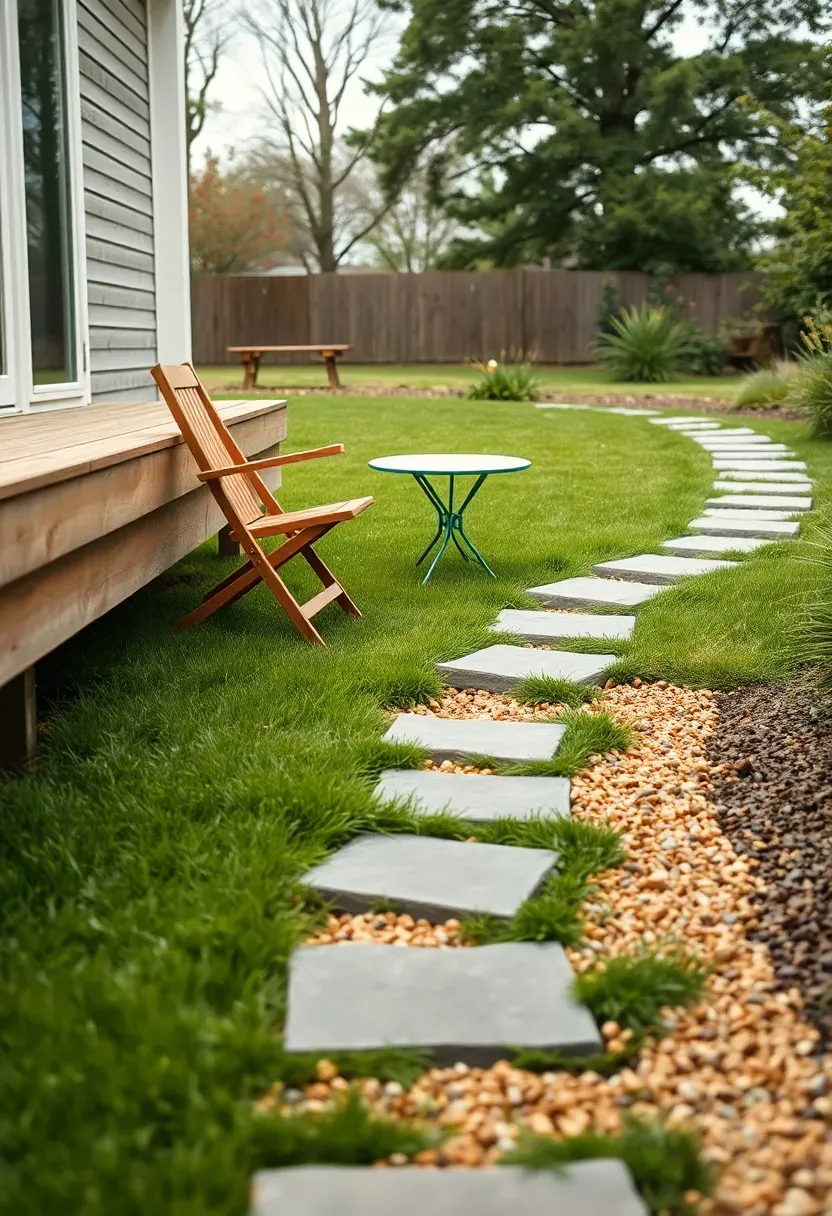
Not every deck needs to stand four feet off the ground. A ground-level platform offers a different set of advantages worth considering.
Raised Deck
Traditional raised decks connect to upper-floor doors and provide storage space underneath. They require railings, stairs, and deeper footings. Construction costs run higher.
Ground-Level Platform
A deck surface sitting just inches above grade eliminates the need for railings entirely. It feels more like a hardscape patio but with the warmth of wood underfoot. AI tools optimize joist spacing and ventilation gaps to prevent moisture issues in the low-clearance cavity beneath.
What to Choose
Choose raised if: your home's main floor sits well above grade or you need under-deck storage Choose ground-level if: you want seamless indoor-outdoor flow, a safer surface for children, and lower construction costs
Recommendation
Ground-level decks suit single-story homes and modern designs where the goal is blurring the line between interior flooring and outdoor surface. They cost roughly 30 to 40 percent less than comparable raised structures.
Recommended
Items for this idea
13. Herringbone Pattern Deck
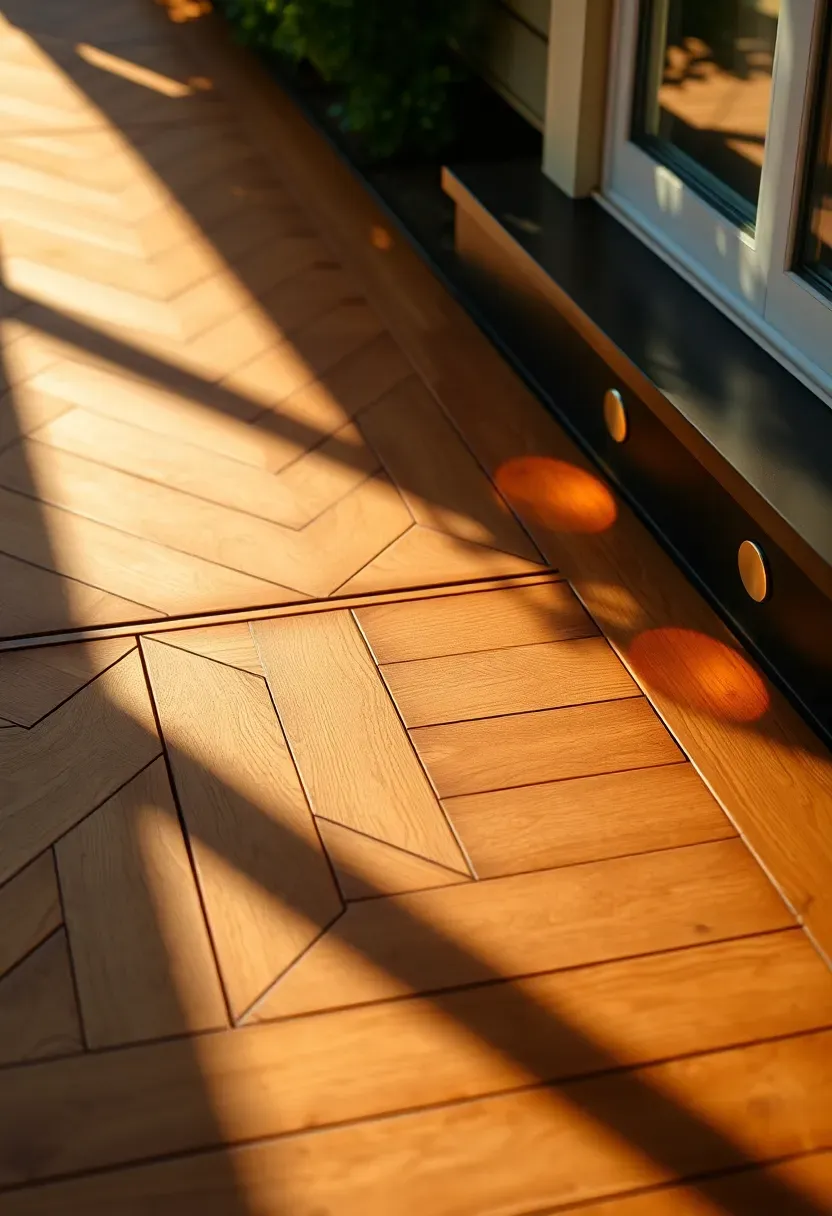
Standard parallel board layouts are functional but visually predictable. A herringbone pattern — boards laid at alternating 45-degree angles — injects architectural sophistication without adding exotic materials or complex structures.
AI design software maps the cutting angles and board counts precisely, minimizing waste. The pattern requires twice the framing density of a straight layout because boards meet at the center seam and need continuous support along both directions. The visual reward justifies the extra labor: a herringbone deck reads as intentionally designed rather than merely built.
Tips for Clean Results
- Use composite boards for herringbone — they cut cleanly and do not split at the sharp angles where wood grain would be vulnerable
- A contrasting border frame around the herringbone field adds definition
- Plan the pattern on paper first so the center seam aligns with a natural focal point like the back door
14. Hot Tub Surround Deck
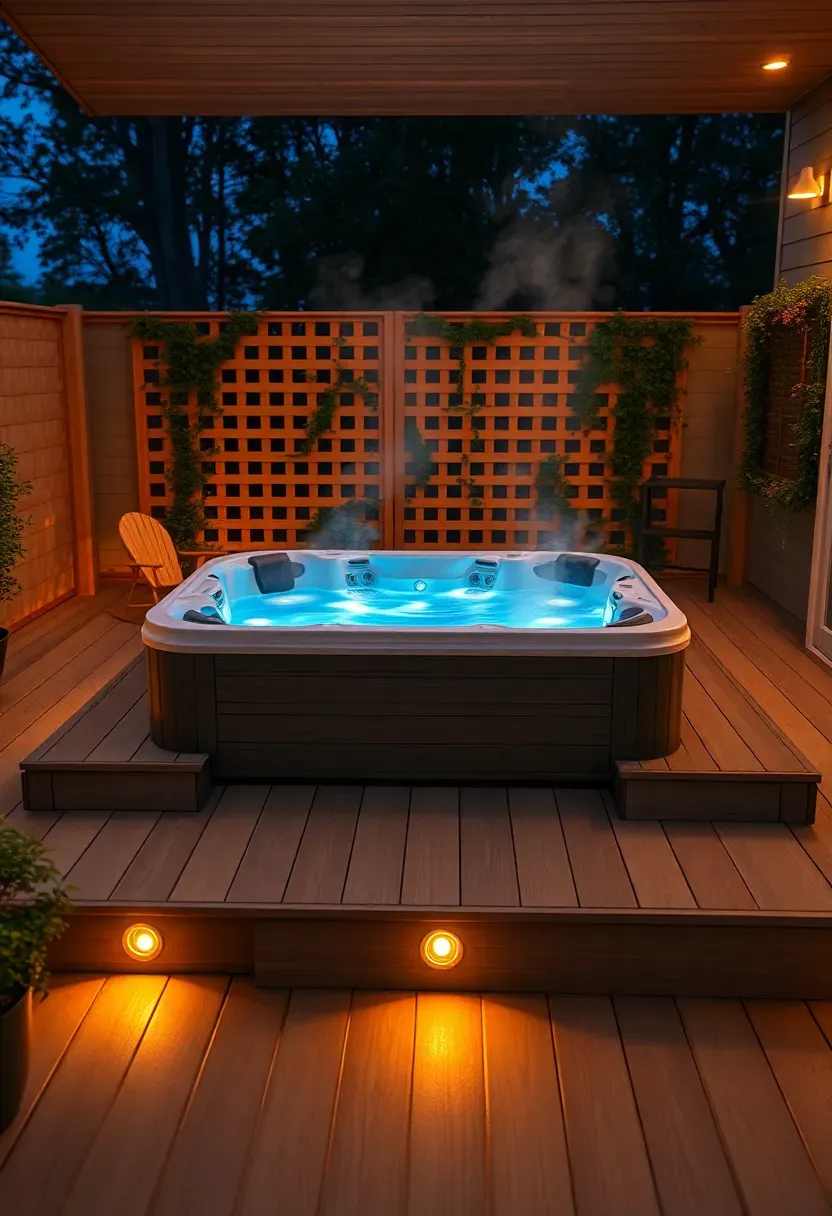
A hot tub sitting on bare concrete looks like equipment. The same tub sunk into a well-designed deck becomes a spa feature. AI tools calculate the structural reinforcement needed to support a filled hot tub — typically 3,000 to 5,000 pounds — and design the surrounding platform for easy access and maintenance.
Step 1: Decide Flush or Raised
A flush-mount tub sits level with the deck surface for a sleek, built-in look. A raised installation keeps the tub shell above deck height, simplifying plumbing access but creating a step-up entry.
Step 2: Reinforce the Substructure
Doubled joists, larger beams, and additional footings beneath the tub location prevent structural failure. AI models flag exact reinforcement requirements based on tub dimensions and fill weight.
Step 3: Plan Access Panels
Service technicians need to reach the tub's mechanical components. Design removable deck panels on at least two sides of the tub for pump and heater access.
What to Watch Out For
- Electrical requirements for hot tubs typically include a dedicated 240-volt GFCI circuit
- Position the tub so prevailing winds do not blow across the water surface and accelerate heat loss
- Drainage around the tub should route splash water away from the deck framing
Recommended
Items for this idea
15. Screened-In Three-Season Deck
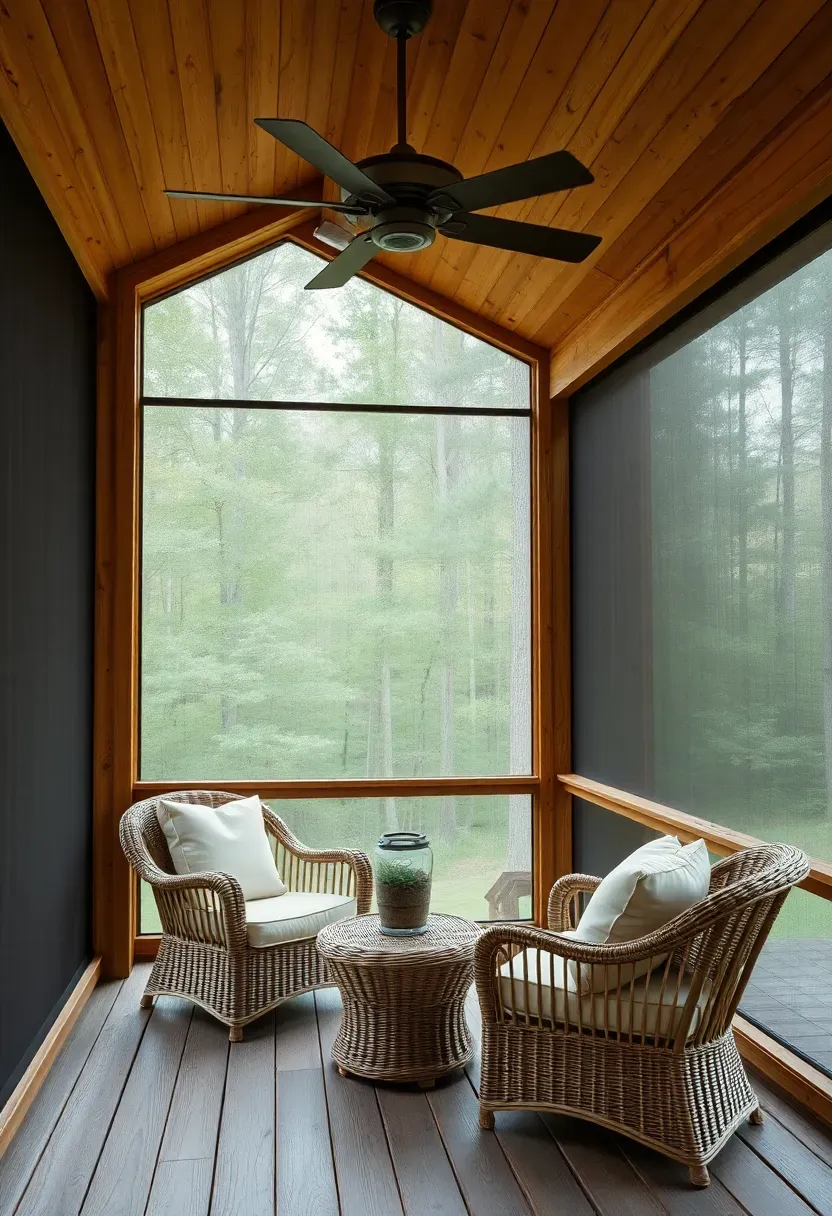
Mosquitoes, flies, and pollen turn beautiful deck evenings into endurance tests in many regions. A screened enclosure solves all three without sacrificing the open-air feeling. AI tools design screen panel layouts that maximize airflow while maintaining structural integrity against wind loads.
The framework mounts to existing deck posts or integrates into new ones. Fine mesh panels — fiberglass for budget builds, bronze or stainless steel for longevity — fill the bays between posts from deck surface to roof soffit. A simple shed or gable roof above keeps rain off the seating area. The result is a bug-free outdoor room usable from early spring through late autumn.
Tips for Comfort
- Install ceiling fans to keep air moving — screened spaces trap heat without them
- Choose dark-colored screen mesh for better outward visibility
- Add a weatherproof rug and upholstered furniture since the screened environment protects them from direct exposure
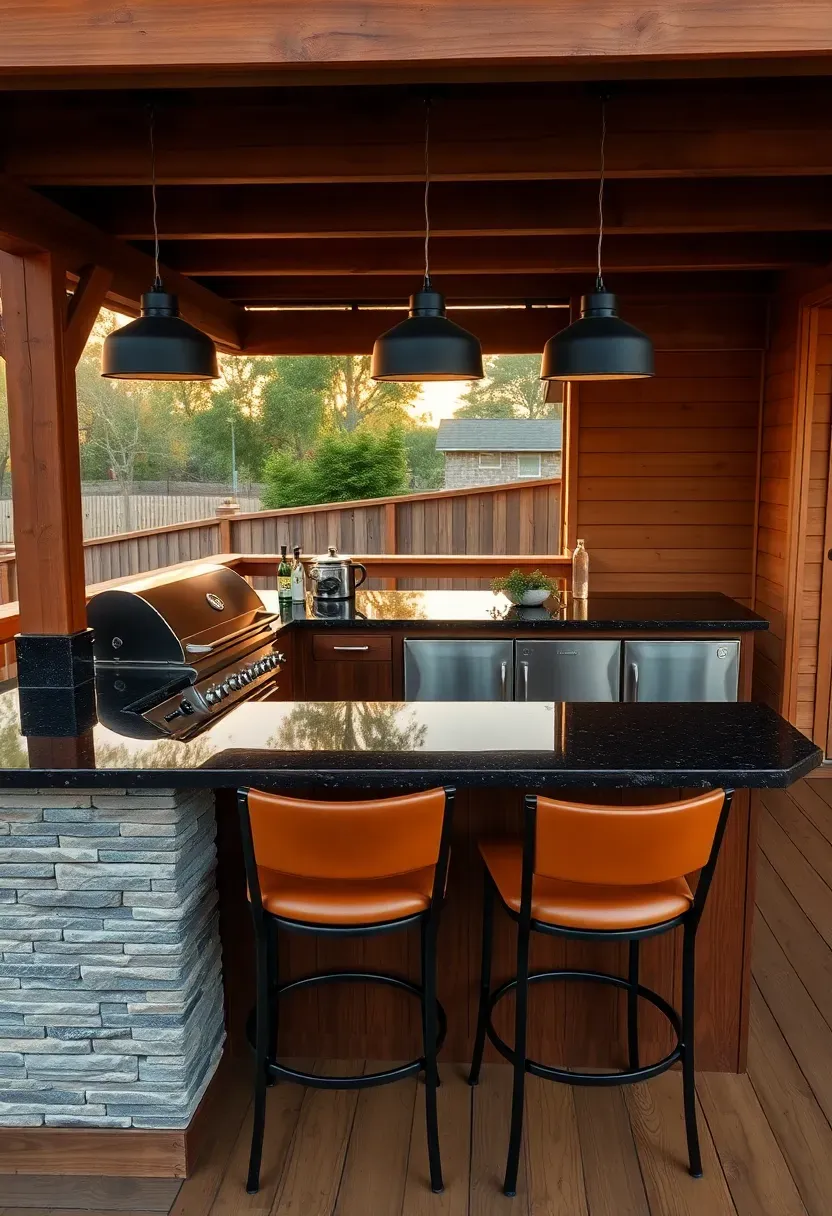
16. Outdoor Kitchen Deck
The Core Issue
Grilling on a standard deck means hauling food back and forth through the house, eating at a table far from the cooking action, and washing everything inside. The cook ends up isolated from the gathering.
The Solution
An outdoor kitchen deck places prep, cooking, and dining on a single platform. AI design tools lay out L-shaped or U-shaped counter configurations that maximize workspace while maintaining open traffic lanes. A built-in grill, sink with running water, and under-counter refrigerator transform the deck into a fully functional cooking station. Bar seating along the counter keeps guests engaged with the cook. Pendant lights or a lighted pergola above define the kitchen zone after dark.
Pros and Cons
Pros: eliminates indoor-outdoor trips during entertaining, increases home resale value, makes grilling a social activity Cons: requires gas, water, and electrical line extensions to the deck, countertop materials must withstand weather, grease management needs careful planning
Recommended
Items for this idea
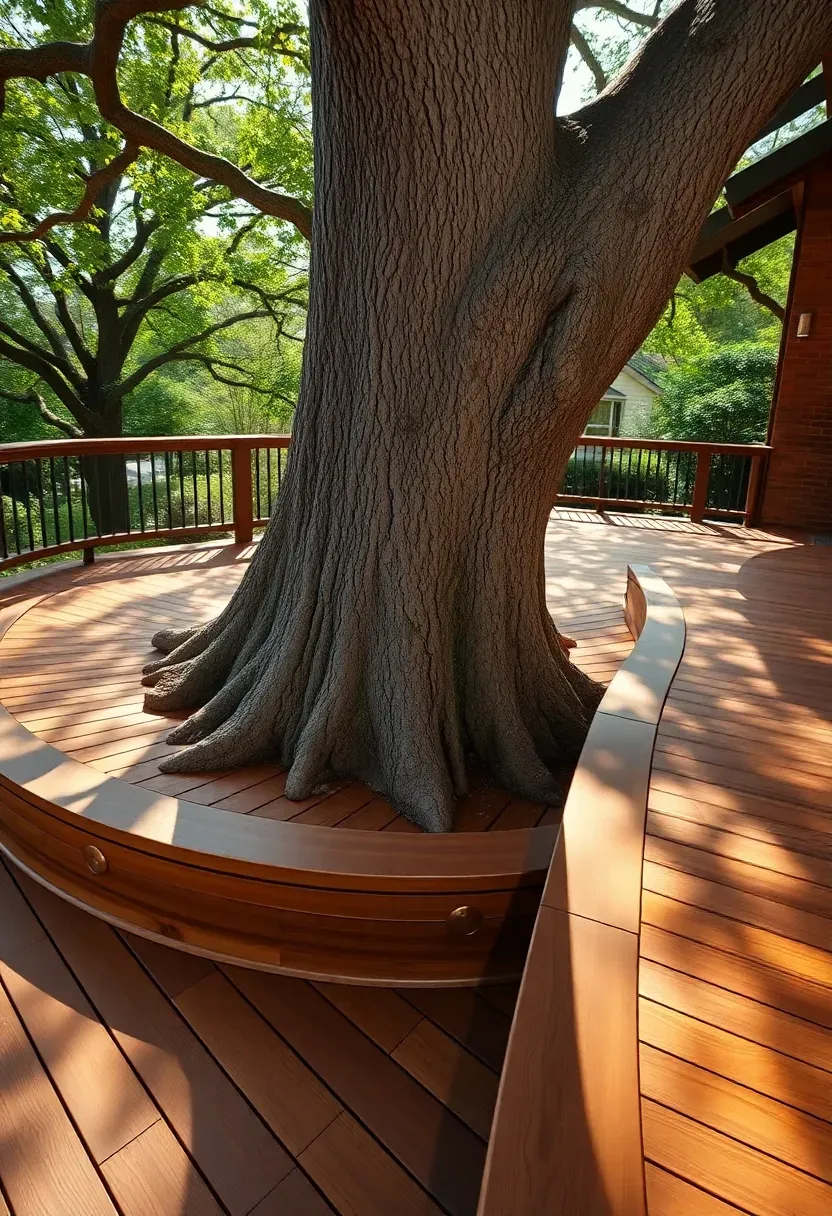
17. Curved Freeform Deck
Straight lines dominate deck construction because they are easier to build. But nature rarely works in right angles, and a curved deck that responds to the landscape around it — wrapping around a mature tree, following a garden bed's contour, or echoing a pond's shoreline — creates something genuinely distinctive.
AI modeling generates the curved framing layout, calculating the radius of each bent fascia board and the joist spacing required to support the curve without visible gaps between decking boards. Composite materials bend more predictably than natural wood, making them the preferred choice for tight radii. The freeform shape tends to feel organic and inviting, drawing people outward into the yard rather than confining them to a rectangular box.
Tips for Curved Builds
- Use heat-bent composite fascia for smooth curves — kerfed wood fascia tends to show saw marks
- Tighter curves require closer joist spacing, so budget for additional framing lumber
- Illuminate the curve's edge with recessed LED strip lighting to highlight the shape at night
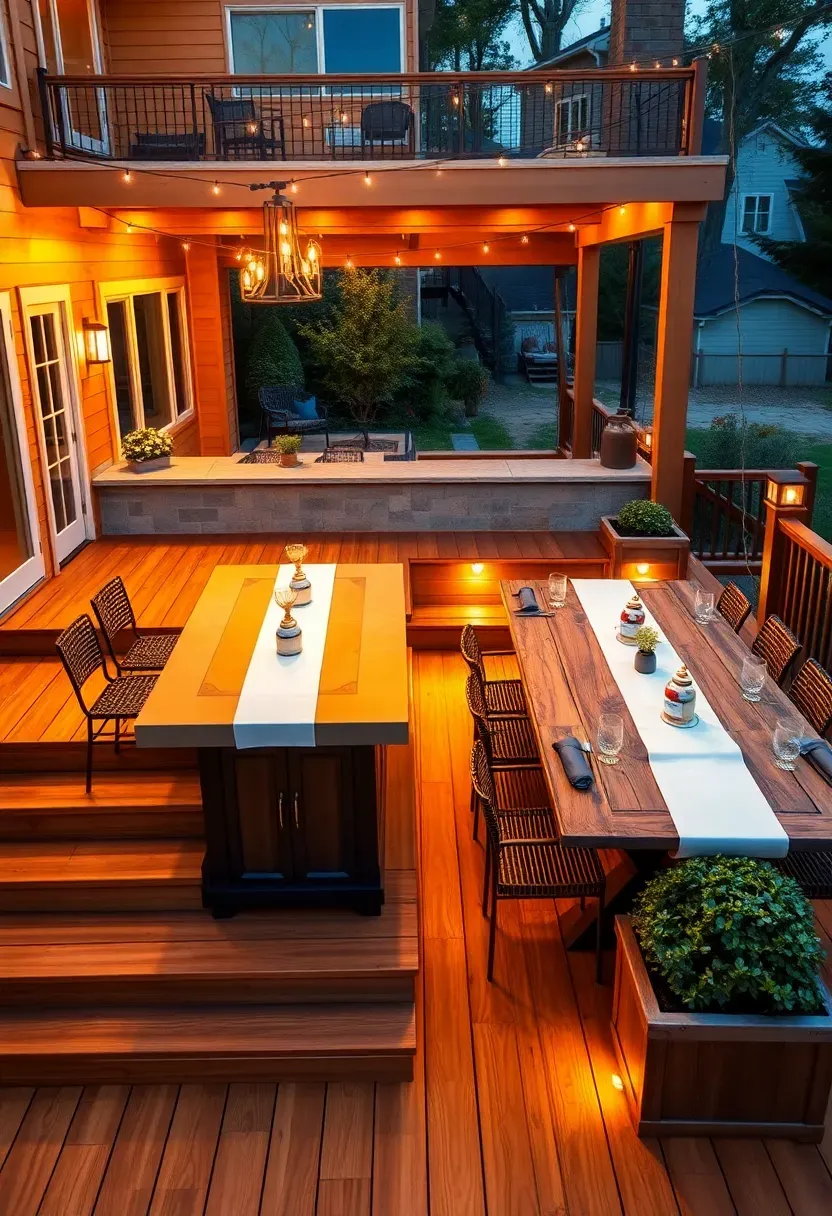
18. Split-Level Entertaining Deck
A single flat platform works for small gatherings, but larger events benefit from spatial separation between activities. A split-level deck creates distinct zones — cocktails above, dinner below, or vice versa — connected by a wide staircase that doubles as casual seating during parties.
AI event-flow modeling analyzes how groups move through the space and recommends level separations that feel intentional without creating barriers. A 16-to-24-inch height difference between levels is enough to define separate rooms while keeping conversation flowing across the step. Built-in lighting along the stair risers ensures safe transitions after dark.
Tips for Party-Ready Design
- Position the bar or drink station on the upper level so guests can survey the scene
- Run power outlets to both levels for music, blenders, and string light connections
- Use the staircase width as a design feature — extra-wide steps with built-in planter boxes serve as both transition and decor
Recommended
Items for this idea
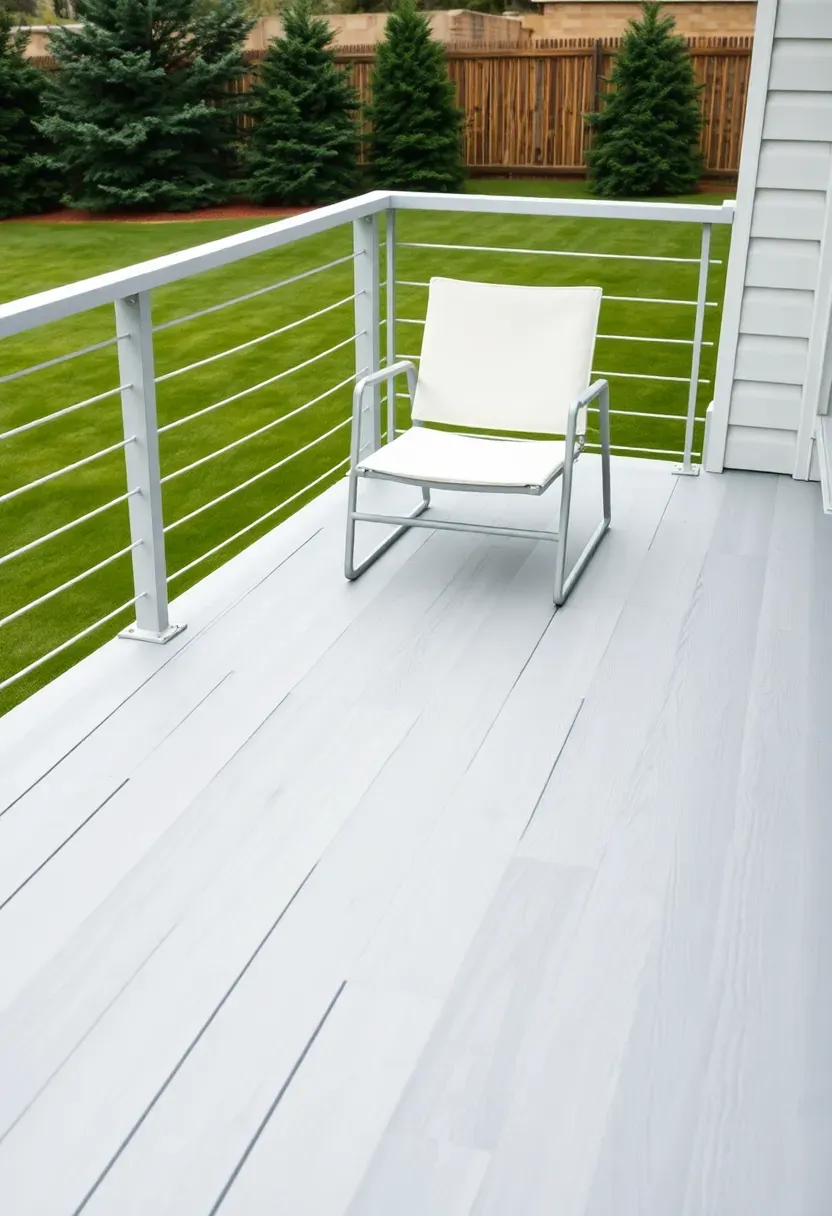
19. Low-Maintenance Composite Deck
Not everyone wants a weekend hobby disguised as a deck. Composite decking — a blend of wood fibers and plastic polymers wrapped in a protective cap — eliminates sanding, staining, and sealing from your life permanently.
AI visualization tools now render composite options so accurately that you can compare a dozen brand colors, textures, and grain patterns against your home's siding and trim before ordering samples. The technology even simulates how each color will look after five years of UV exposure, removing the guesswork around long-term appearance.
Tips for Getting Composite Right
- Choose lighter colors in sun-exposed areas to reduce heat absorption — dark composites in full sun can exceed 150 degrees Fahrenheit
- Hidden fastener systems create a screw-free surface that looks cleaner and reduces trip hazards
- Verify the manufacturer's warranty covers both structural integrity and color fade — some cover only one
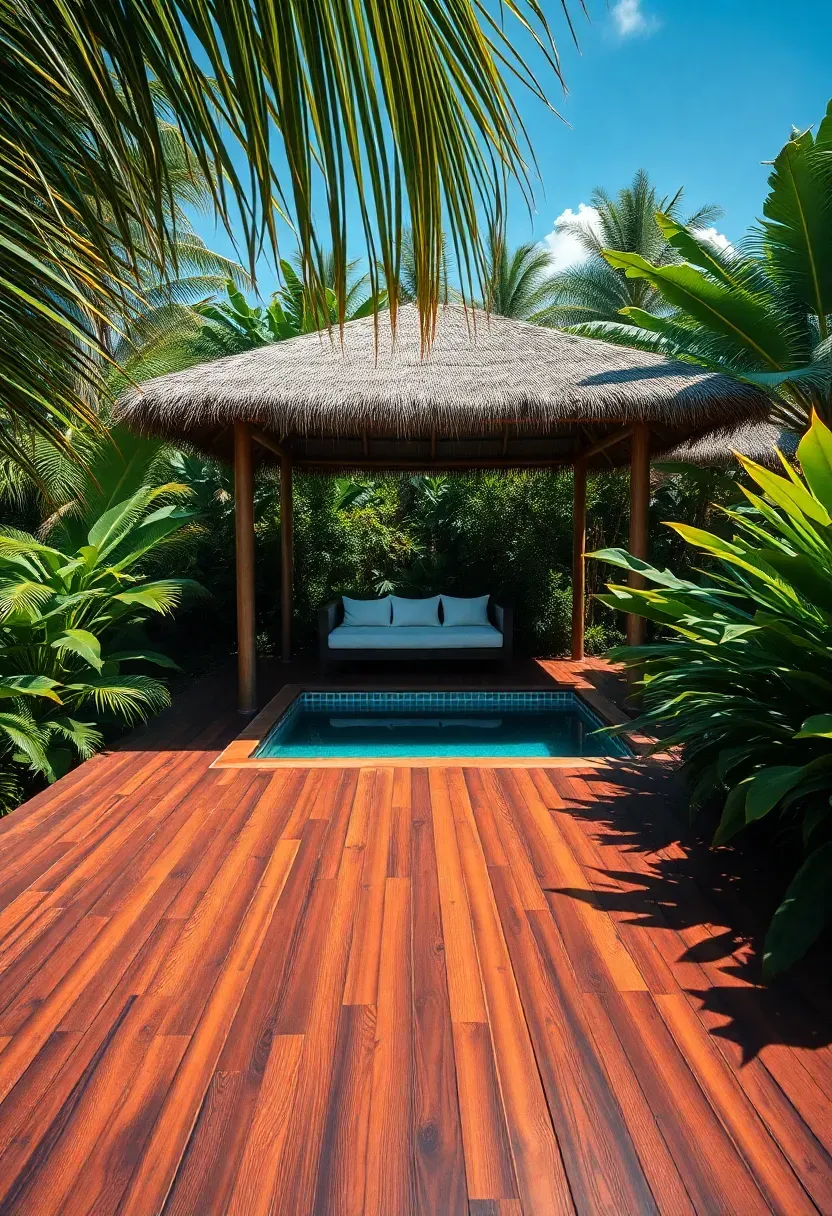
20. Tropical Resort-Style Deck
Origins
The tropical deck aesthetic descends directly from Balinese and Thai resort architecture — open-air platforms surrounded by dense vegetation, water features, and natural materials. What once required a plane ticket now sits in suburban backyards thanks to AI design tools that adapt resort proportions to residential lots.
Modern Interpretation
AI platforms model tropical deck environments by layering dark hardwood or mahogany-toned composite decking with key resort elements: a small plunge pool or soaking tub, a thatched or fabric cabana for shade, and dense tropical plantings that screen the perimeter. The software selects climate-appropriate plant substitutes — hardy palms, cannas, and elephant ears for temperate zones — that deliver the lush look without the tropical latitude. Outdoor curtains on the cabana complete the resort illusion.
How to Apply at Home
- Start with a dark-toned deck surface — it anchors the tropical palette
- Add one water element, even a simple recirculating fountain, for ambient sound
- Group plants in dense clusters rather than spacing them evenly for a jungle-canopy effect
- Use natural fiber textiles — jute, rattan, linen — for furniture and cushion covers
Recommended
Items for this idea
21. Stargazing Lounge Deck
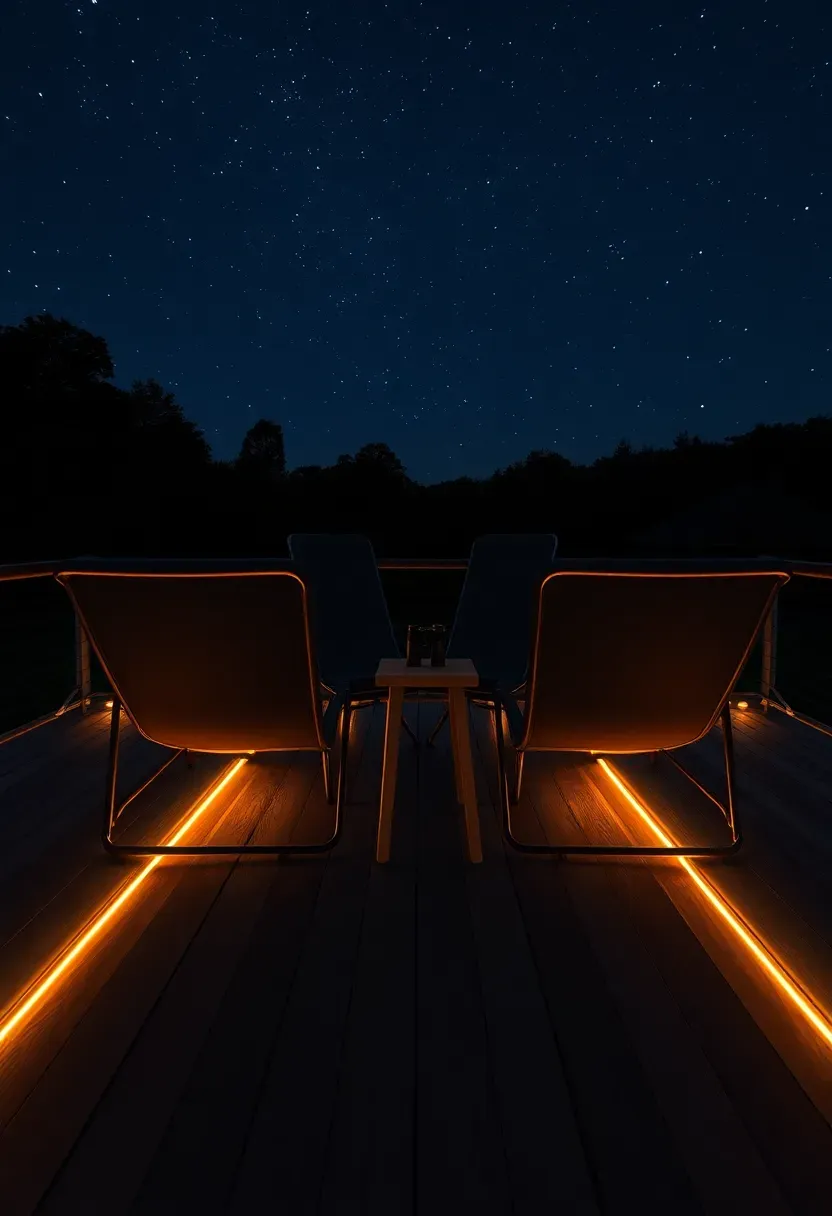
Every other deck on this list optimizes for daytime and evening use. This one is built for after midnight. A stargazing deck minimizes light pollution, maximizes open sky exposure, and provides comfortable reclined seating for hours of looking upward.
AI tools analyze your property's orientation, surrounding tree canopy height, and neighborhood light sources to position the deck where sky visibility is greatest. The platform sits low to the ground and away from the house to reduce reflected light from windows. All deck lighting stays at ankle level — recessed into stair risers and perimeter boards — using warm amber LEDs that preserve night vision rather than the cool white tones standard on most decks.
Tips for Maximum Sky Visibility
- Eliminate overhead structures entirely — no pergolas, no canopies, no string lights
- Position recliners facing south in the Northern Hemisphere for the widest celestial arc
- Use motion-sensor switches for safety lighting that activates only when someone is walking, then dims automatically
- Add a small side table at recliner height for binoculars, a star chart, or warm drinks
Quick FAQ
Do AI deck design tools work with unusual lot shapes? They handle irregular lots better than most human designers, actually. Upload a photo or plot survey and the software adapts deck geometry to fit awkward angles, narrow side yards, or pie-shaped backyards that standard rectangular plans ignore.
Is composite decking always better than natural wood? Not universally. Natural hardwoods like ipe remain unmatched in beauty and feel underfoot. Composite wins on maintenance and lifespan but can feel plasticky in lower-price ranges. Your budget, climate, and willingness to maintain determine the right choice.
Should I hire a contractor or build an AI-designed deck myself? Ground-level platforms under 200 square feet are reasonable DIY projects for experienced builders. Anything elevated, cantilevered, or supporting heavy loads like hot tubs should involve a licensed contractor and likely requires stamped engineering plans.
Which deck style adds the most resale value? Covered outdoor living spaces with cooking facilities consistently rank highest in home value surveys. A well-built outdoor kitchen deck or screened three-season porch can return 65 to 80 percent of its cost at resale.
Can I use AI to design a deck that wraps around an existing tree? Yes, and AI tools handle this particularly well. They model the tree's expected growth over 10 to 20 years and design framing with expansion gaps that prevent the trunk from pressing against the deck structure as it grows.
A deck is not just a platform — it is how your home meets the outdoors. Whether you lean toward a quiet engawa-style perch or a full split-level entertainment hub, AI design tools let you see every option rendered against your actual house before spending on materials. Start with the concept that matches how you truly use your outdoor space, not how a catalog tells you to use it. The best deck is the one that pulls you outside more often than you planned.
Pinterest cover for 21 AI Deck Design Ideas
About the author
OBCD
CGI visualization and interior design content. We create detailed 3D renders and curate practical design ideas for every room in your home.