17 Minimalist Kids Bedroom Ideas That Are Simple Yet Playful
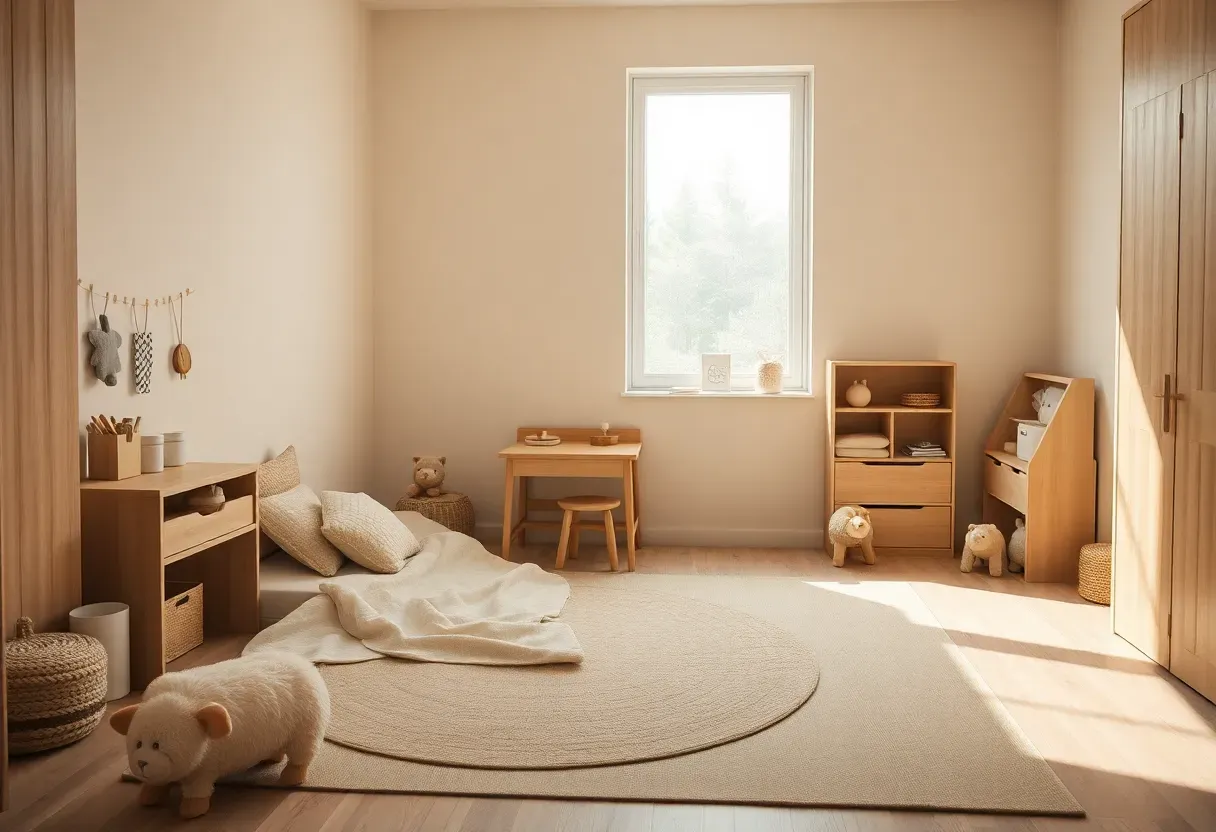
These minimalist kids bedroom ideas prove that a simple kids bedroom can still feel playful, warm, and complete. Each layout focuses on full-room setups with sleep, study, and play zones rather than small decorative tweaks. Whether you rent a small apartment or own a compact home, these minimalist kids room designs adapt as your child grows without constant redesigns or major renovations.
Quick FAQ
Which minimalist kids bedroom ideas work best in small rooms?
Look for layouts that combine storage and sleep in one wall, plus a compact study zone. A clear center floor keeps the room open and usable.
How do I keep a minimalist kids room design from feeling cold?
Use warm neutrals, natural materials, and soft lighting. A few tactile textiles make the room cozy without adding clutter.
Should a minimalist bedroom for kids still include a play area?
Yes. Create one defined play zone with storage nearby so play stays contained and easy to reset.
What storage style keeps a minimalist kids bedroom tidy?
Closed storage with labeled bins or drawers hides visual noise and makes cleanup faster for kids.
How often should I refresh a minimalist kids bedroom?
Plan for light updates every 2-3 years by swapping bedding and art. The core layout can last much longer.
As an Amazon Associate I earn from qualifying purchases.
Table of Contents
- 1. Low floor-bed layout with open play zone
- 2. Twin-bed symmetry with shared storage wall
- 3. Built-in desk and wardrobe wall system
- 4. Neutral canopy nook with calm lighting
- 5. Loft bed with open study zone
- 6. Window-seat reading bay with storage
- 7. Modular furniture set with moveable zones
- 8. Sliding closet wall for compact rooms
- 9. Gallery-rail art wall with closed base
- 10. Soft-textile cocoon with sleep-first layout
- 11. Cork floor plus washable rug system
- 12. Minimal bunk bed with pull-out trundle
- 13. Open shelving with closed cabinet base
- 14. Bed alcove with arched niche and task light
- 15. Minimal playhouse frame with clear perimeter
- 16. Shared sibling room with center aisle
- 17. Future-proof teen transition layout
1. Low floor-bed layout with open play zone
This minimalist kids bedroom concept uses a low Montessori-style floor bed and a clear play zone to keep the room flexible, even in a small apartment. Keep the bed along the longest wall and leave a 6x8 foot open area for play in the center. Instead of filling corners with extra furniture, commit to a single play surface and one storage unit. That simple zone planning keeps the room easy to reset and easier for kids to use independently. It feels complete without feeling crowded.
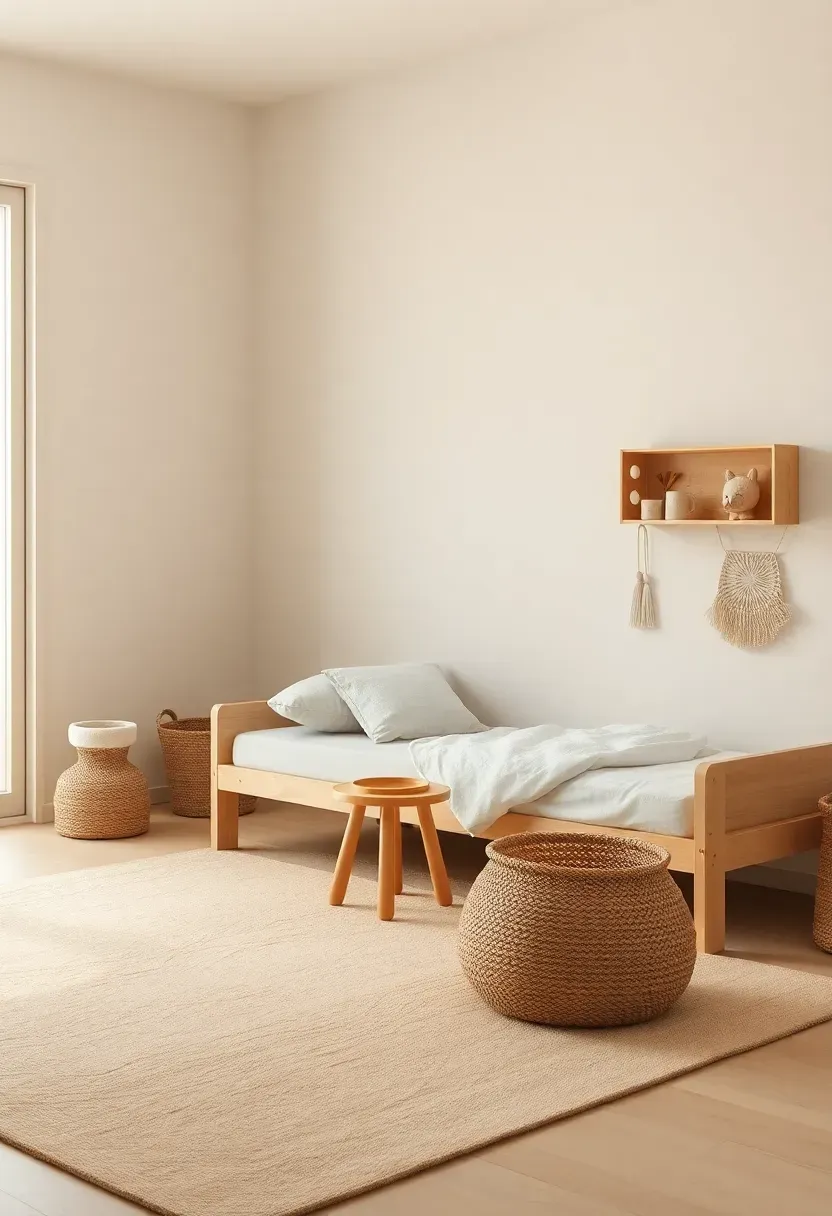
Use a low shelf or two pull-out bins to define the play zone while keeping toys organized. The trade-off is fewer decorative pieces, so lean on texture through a soft rug and a linen throw. Add a simple wall hook rail at 42 inches for bags and dress-up items, keeping the floor free. If you need more contrast, choose one darker basket and keep everything else light. This setup stays calm while still feeling playful and complete.
Tips
- Do: keep the floor bed under 10 inches high for easy access.
- Don’t: scatter small storage bins across the room.
- Do: leave a 30-inch clear path from door to bed.
Best for: toddlers who need a safe, open play area.
What this gives you: a full-room layout that encourages play without visual chaos.
2. Twin-bed symmetry with shared storage wall
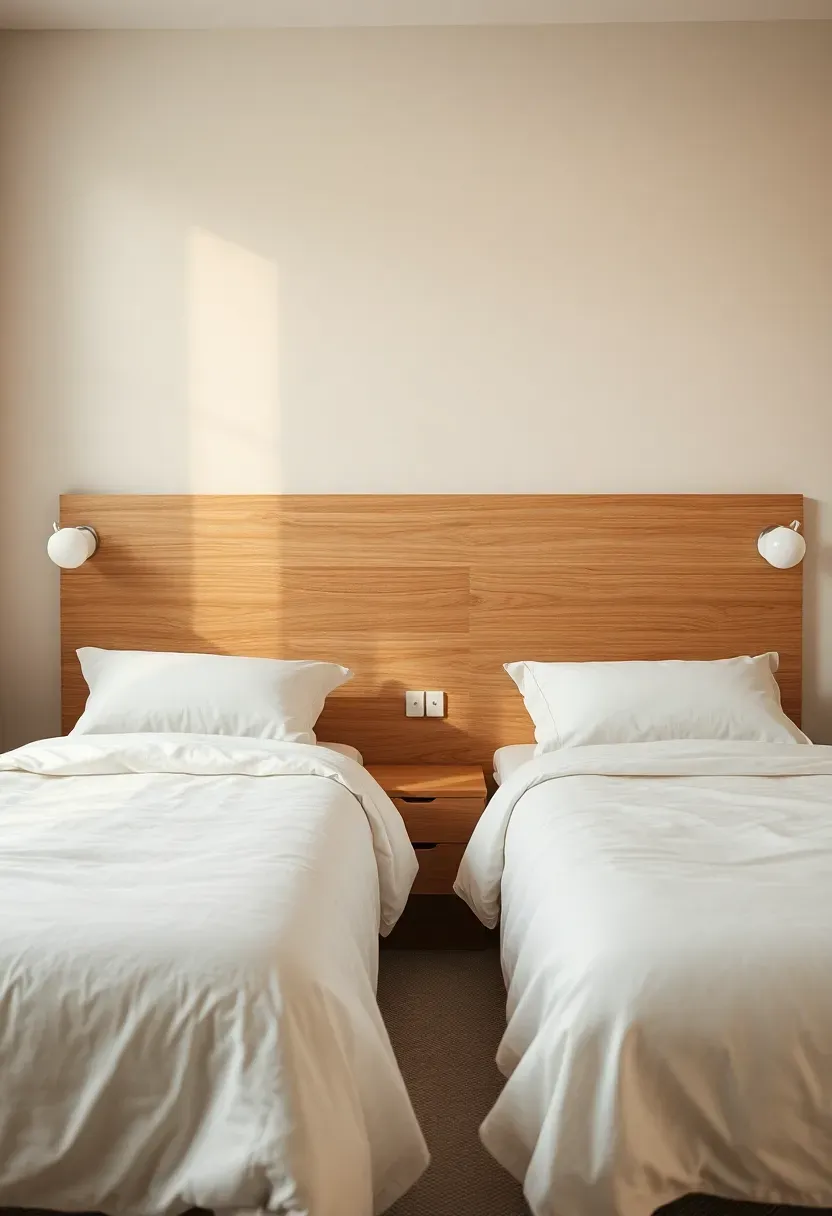
A minimalist kids bedroom for siblings can feel balanced when you use twin beds and a single shared storage wall. Place beds parallel with a 36-inch aisle between them and build one continuous cabinet or dresser run along the opposite wall. Instead of separate furniture pieces, use one long unit to reduce visual breaks. The toy rotation system lives in the center drawers, keeping play items controlled and easy to swap. This layout feels designed, not improvised.
Recommended
Items for this idea
Placement note: Keep the storage wall under 30 inches high so the room stays open.
Use matching bedding in two tones so the room reads as one set, not two competing corners. The consequence of symmetry is less individuality, so add personal touches via removable art above each bed. Add a narrow shared rug, around 2.5x8 feet, to connect the layout without clutter. If the room feels too strict, soften it with a single fabric pendant. The result is a complete, tidy room with clear structure.
For a warm shared palette, see 23 Cozy Warm Bedroom Ideas for Relaxing Nights at Home.
Tips
- If you need night access, then add a small shared nightstand in the aisle.
- If storage feels tight, then use rolling bins under each bed.
What this gives you: a calm, symmetric plan that works for two kids without doubling clutter.
3. Built-in desk and wardrobe wall system
This minimalist kids bedroom idea treats one full wall as a built-in system for sleep, study, and storage. Use a 48-inch desk centered between two tall wardrobes so every function lives in one clean line. Instead of separate shelves and dressers, the wall-to-wall storage keeps the room unified. Add a soft neutral wall color so the built-ins blend in rather than dominate. This is a full design option that feels tailored and quiet.
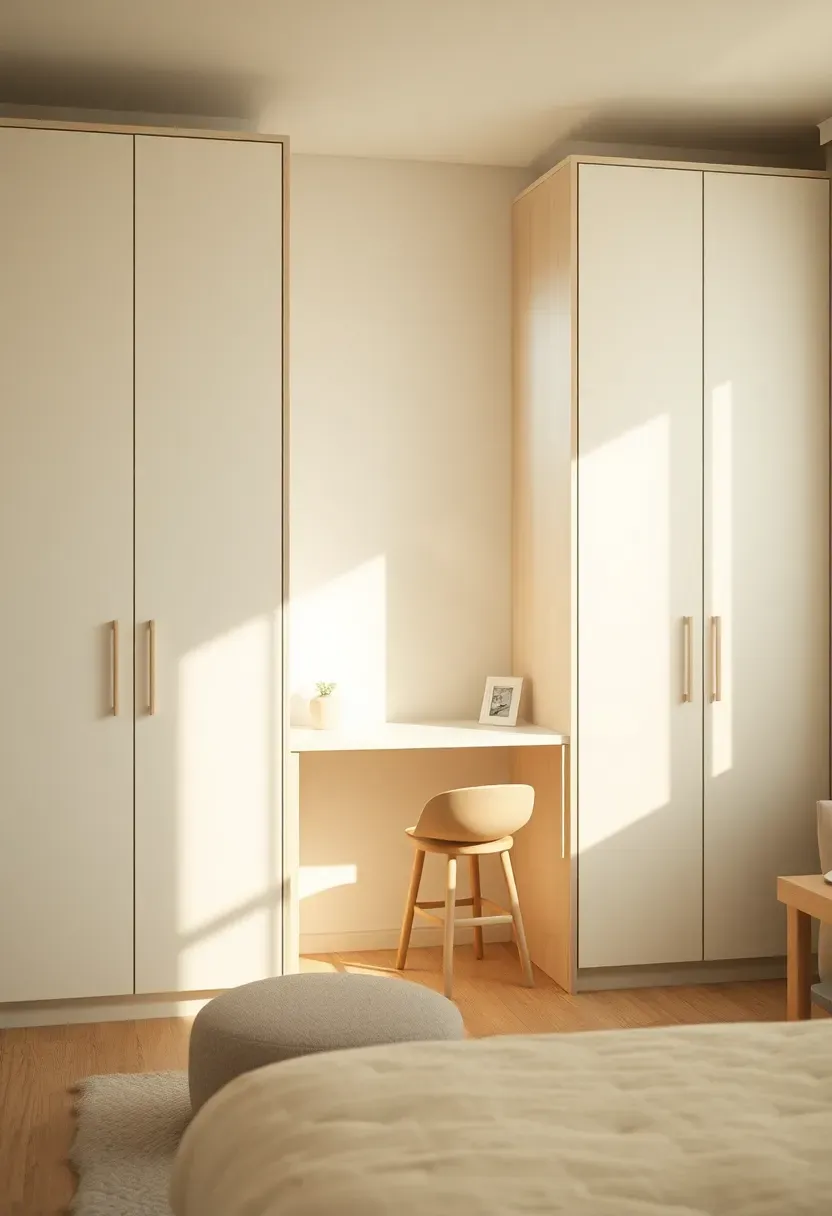
Why it works: one continuous system removes clutter and reduces decisions for kids each day.
Keep the bed simple on the opposite wall, leaving a 32-inch circulation path to the desk. The trade-off is a larger initial cost, but installation can be done in a weekend with a carpenter. Add a pinboard or magnetic strip over the desk for school items without spreading papers around the room. Choose birch plywood interiors for durability and a softer feel than glossy melamine. The room reads as a complete suite rather than a mix of pieces.
Tips
- Pro: vertical storage uses ceiling height for seasonal items.
- Con: tall doors can feel heavy in small rooms.
- Fix: paint the doors the same color as the walls.
Budget/Time: Expect $1,200-$2,500 for custom work or 2-3 IKEA systems.
What this gives you: a complete, built-in layout that keeps study and storage visually calm.
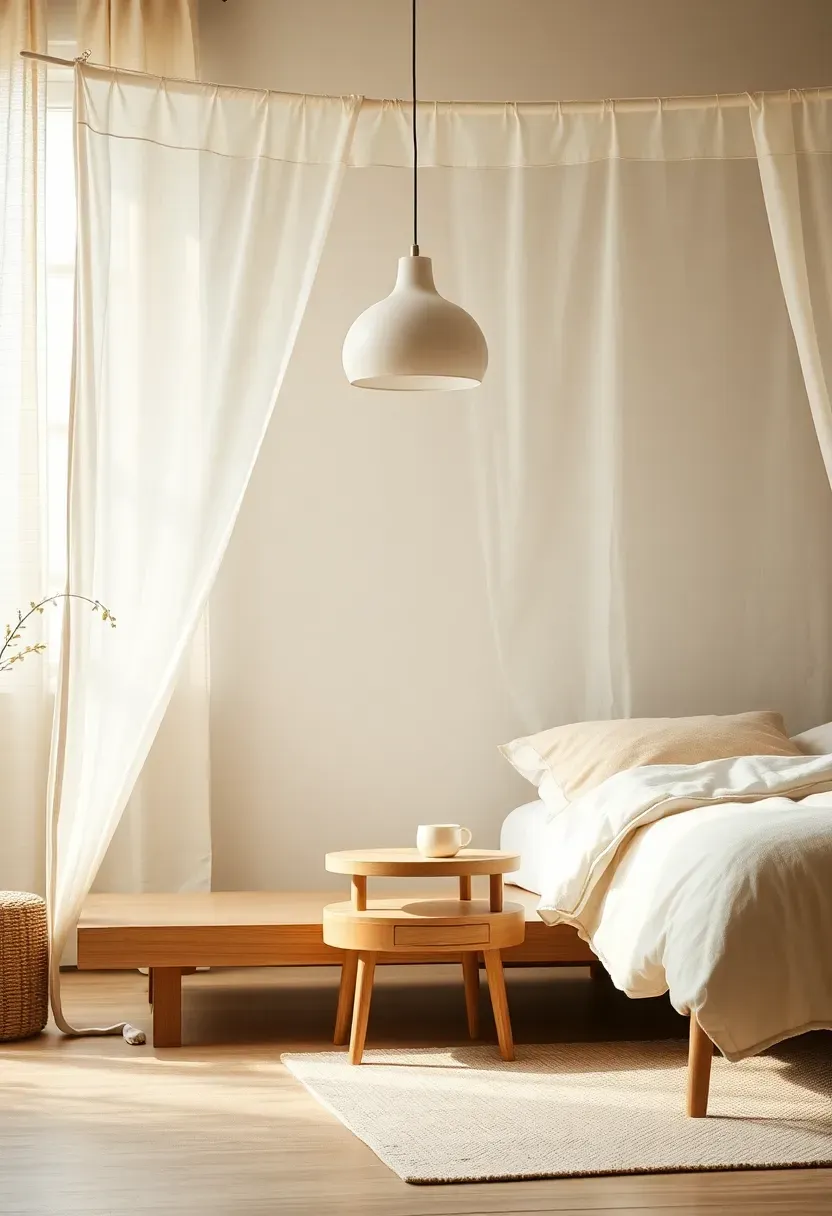
4. Neutral canopy nook with calm lighting
A minimalist kids bedroom can feel soft and complete with a canopy nook that frames the bed. Use a light linen canopy over a low bed and keep the rest of the room simple. Instead of a bold accent wall, use a neutral canopy to define the sleep zone. This works especially well in rooms with high ceilings because it brings the scale down to kid height. Keep the supporting term in mind: soft lighting is the hero here.
Recommended
Items for this idea
Common mistake: using a dark canopy fabric that makes the room feel smaller and heavy.
Layer two light sources: a 2700K wall sconce and a soft pendant for bedtime routines. The contrast move here is to avoid colorful string lights and upgrade to warm, matte fixtures instead. Add a 5x7 rug under the bed to anchor the nook and reduce noise. Keep storage to one low drawer unit so the canopy stays the focal point. The layout feels complete without extra decor.
For more cozy layering cues, see 17 Cozy Romantic Bedroom Ideas for Comfort and Elegance.
Tips
- Use a ceiling hook rated for 20 pounds or more.
- Keep the canopy hem 6 inches above the floor.
- Hang a small fabric loop for easy tie-back.
What this gives you: a soft, sleep-first zone that still feels clean and minimalist.
5. Loft bed with open study zone
This minimalist kids bedroom layout uses a loft bed to free the floor for a compact study and play area. Place a desk and a low bookcase under the bed, keeping the rest of the room open. Instead of adding multiple storage towers, use one modular furniture set under the loft to hold everything. The key is to keep the zone compact so the floor stays open for movement. It is a full-room solution for tight spaces.
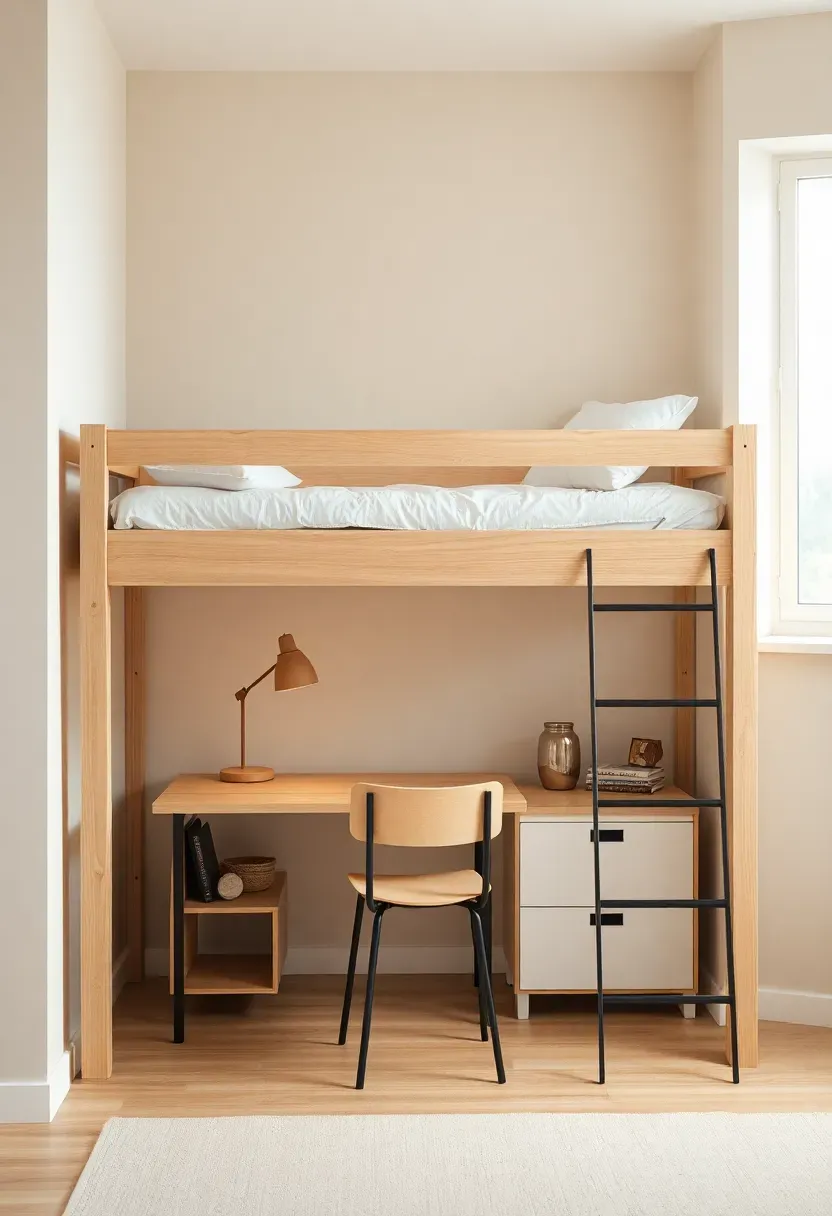
Use a 40-inch desk with rounded corners and keep chair legs light to avoid visual weight. The trade-off is less headroom under the bed, so limit shelves to the lower half of the wall. Add a clip-on task light to the desk so lighting stays focused rather than brightening the whole room. For contrast, avoid heavy drapes and choose a Roman shade to keep it airy. This layout provides a complete sleep and study solution without crowding.
Tips
- Do: keep the loft height under 55 inches for safer access.
- Don’t: add tall storage beside the ladder.
Rental note: Use freestanding units so you can move out without patching walls -- ideal for renter-friendly kids bedroom organization.
What this gives you: a compact, all-in-one layout for sleep and study.
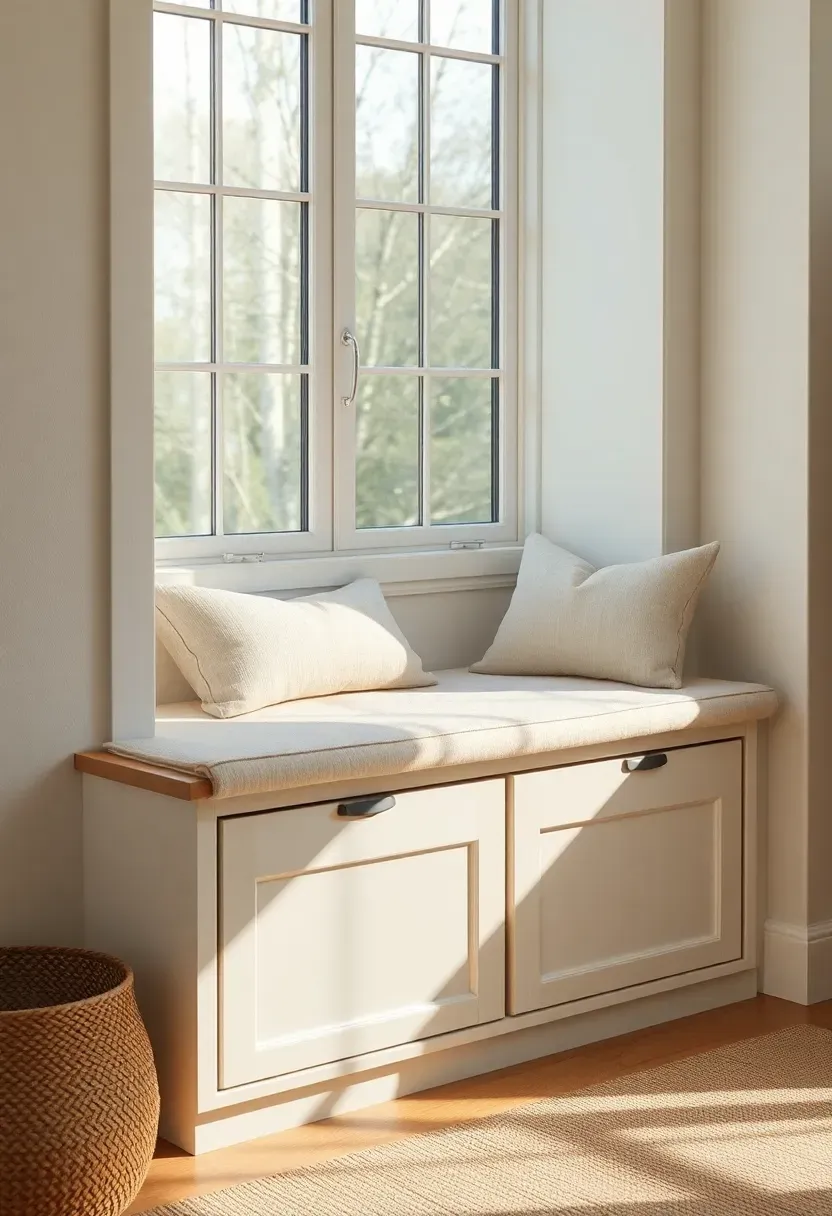
6. Window-seat reading bay with storage
A minimalist kids bedroom can feel complete when a reading nook is built into the window wall. Use a 16-inch-deep bench with drawers underneath and keep the rest of the room simple. Instead of extra chairs, the reading nook becomes a single purposeful destination. The supporting term here is reading nook, and it doubles as storage for books and quiet toys. It feels designed, not piecemeal.
Recommended
Items for this idea
Placement note: Keep the bench height around 18 inches for easy sit-and-read comfort.
Pair the bench with one floor lamp or a wall light, and keep the bed on the opposite wall to balance the room. The consequence of a built-in bench is less flexible layout, so keep the rest of the furniture minimal and movable. Add a single shelf above the seat for books and a soft basket below for a throw. Use washable seat cushions for easy care. The room feels complete with one calm focal point.
For gentle textures and reading corners, see Cozy Guest Bedroom Ideas for a Welcoming Stay.
Tips
- If the window is low, then add a slim guard rail.
- If the bench feels hard, then layer a 2-inch cushion.
- If storage is tight, then add dividers inside drawers.
What this gives you: a complete room plan with a built-in quiet zone.
7. Modular furniture set with moveable zones
This minimalist kids bedroom idea relies on a modular furniture set that can shift as routines change. Use a low bed, a small desk, and two storage cubes that can move from study to play. Instead of fixed layout, build flexible zones that still feel planned. The modular furniture approach is ideal for rooms that need seasonal changes. It feels like a full design system, not a collection of pieces.
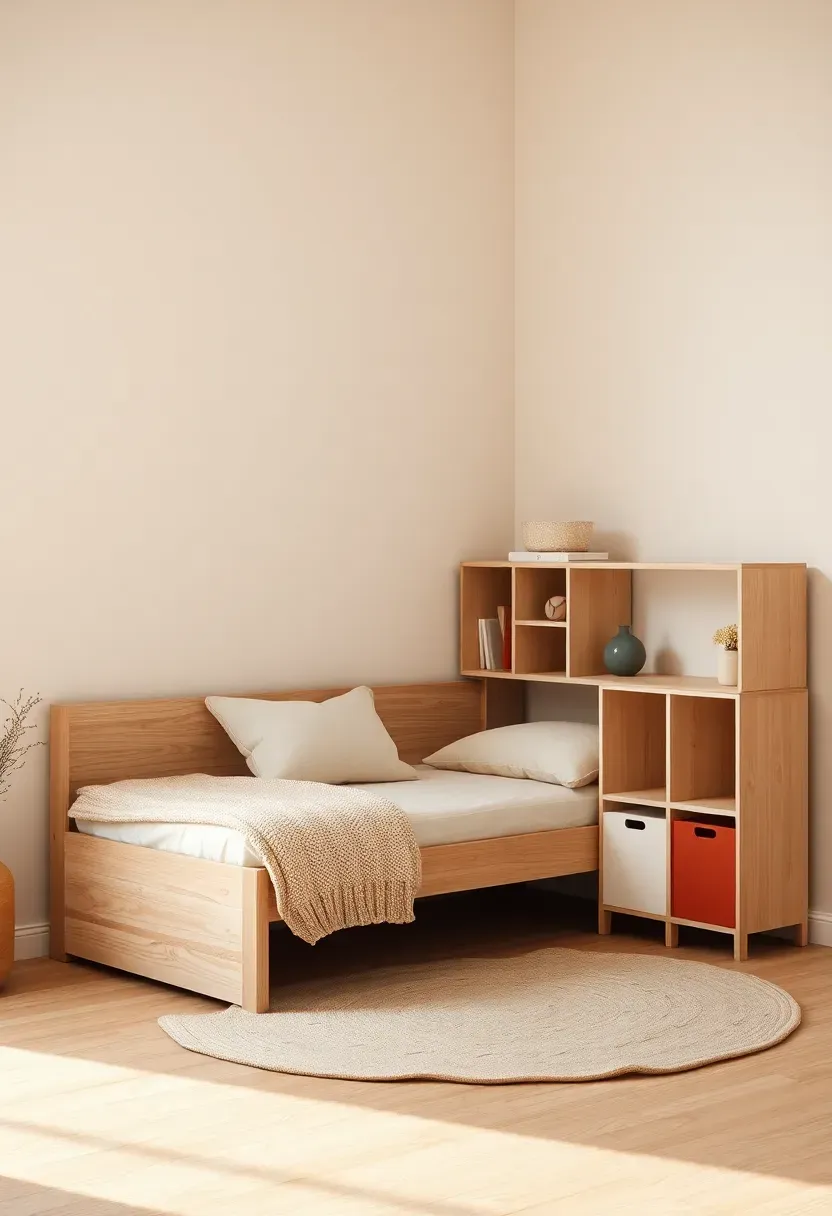
Why it works: moveable pieces let you reset the room in minutes without adding new furniture.
Keep one wall clear for a flexible play area and use a 4x6 rug to define it. The contrast line here is to avoid permanent built-ins and upgrade to stackable storage instead. Add felt pads to each piece so rearranging is quiet and easy. Use a single 24-inch wall shelf for books, keeping the rest uncluttered. The room stays playful while still feeling composed.
Tips
- Pro: easy to reconfigure when school starts.
- Con: pieces can drift and feel messy.
- Fix: mark zones with a rug and keep edges aligned.
Best for: families who rearrange the room for new activities.
What this gives you: a flexible, full-room layout that still feels intentional.
8. Sliding closet wall for compact rooms
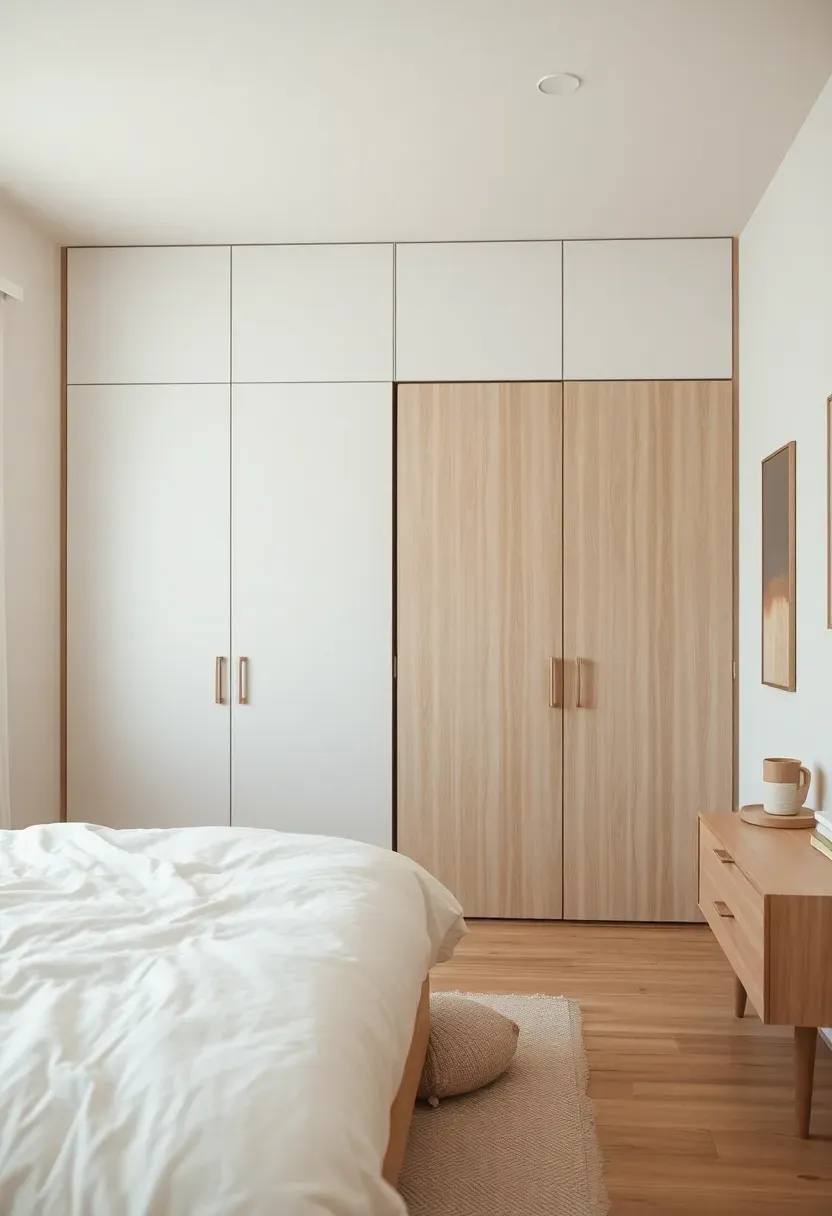
A minimalist kids bedroom in a tight space benefits from sliding closet doors that keep circulation clear. Place the bed along one wall and let the closet span the other, creating a clean, uninterrupted facade. Instead of hinged doors, use sliding panels to maintain a simple circulation path. This keeps the room open and prevents furniture from fighting for floor space. It is a complete layout choice that solves storage and flow together.
Recommended
Items for this idea
Common mistake: using mirrored doors that add visual noise and feel too adult for kids.
Use flat panels painted the same color as the walls so the closet recedes. The trade-off is fewer display surfaces, so add a single art rail above the bed for personality. Keep hardware minimal, and choose a soft-close track so little fingers stay safe. A 30-inch clear aisle in front of the closet ensures easy access. The room stays streamlined and complete.
For clean lines with a cozy tone, see 17 Minimalist Japandi Bedroom for Comfort and Visual Balance.
Tips
- Use soft-close hardware for quieter mornings.
- Keep the track flush to avoid dust buildup.
- Choose a low-gloss finish that wipes clean.
What this gives you: a space-saving layout that keeps storage invisible and the room open.
9. Gallery-rail art wall with closed base
This minimalist kids bedroom layout uses one gallery-rail wall and a low, closed cabinet base to keep the room tidy. Place the bed along the art wall and keep the cabinet beneath at 24 inches high. Instead of scattering small frames, use one continuous rail so art feels curated. A neutral palette keeps the wall calm even as art changes. The room feels complete because every visual element is contained.
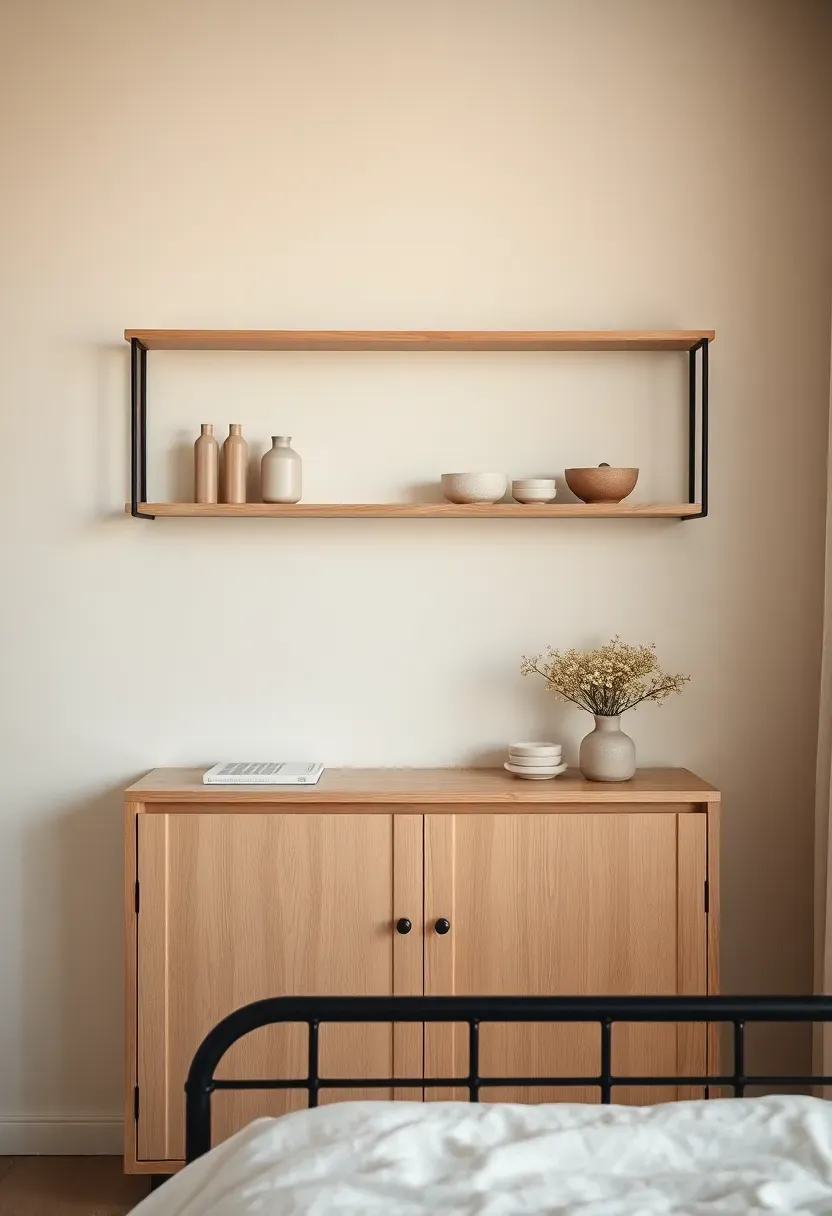
Use only 3-4 frames at a time and rotate seasonally, which keeps visuals light and fresh. The contrast move is to avoid open shelving and upgrade to closed cabinets that hide art supplies. Add one small task lamp on the cabinet to highlight the rail without brightening the whole room. Use a 5x8 rug to anchor the bed and cabinet as one unit. The layout stays playful but orderly.
Tips
- Do: keep the rail at 50-54 inches for kid-level access.
- Don’t: mix more than two frame colors.
- Do: use lightweight frames for safety.
Best for: kids who love to display art without clutter.
What this gives you: a neat, display-friendly layout with hidden storage.
10. Soft-textile cocoon with sleep-first layout
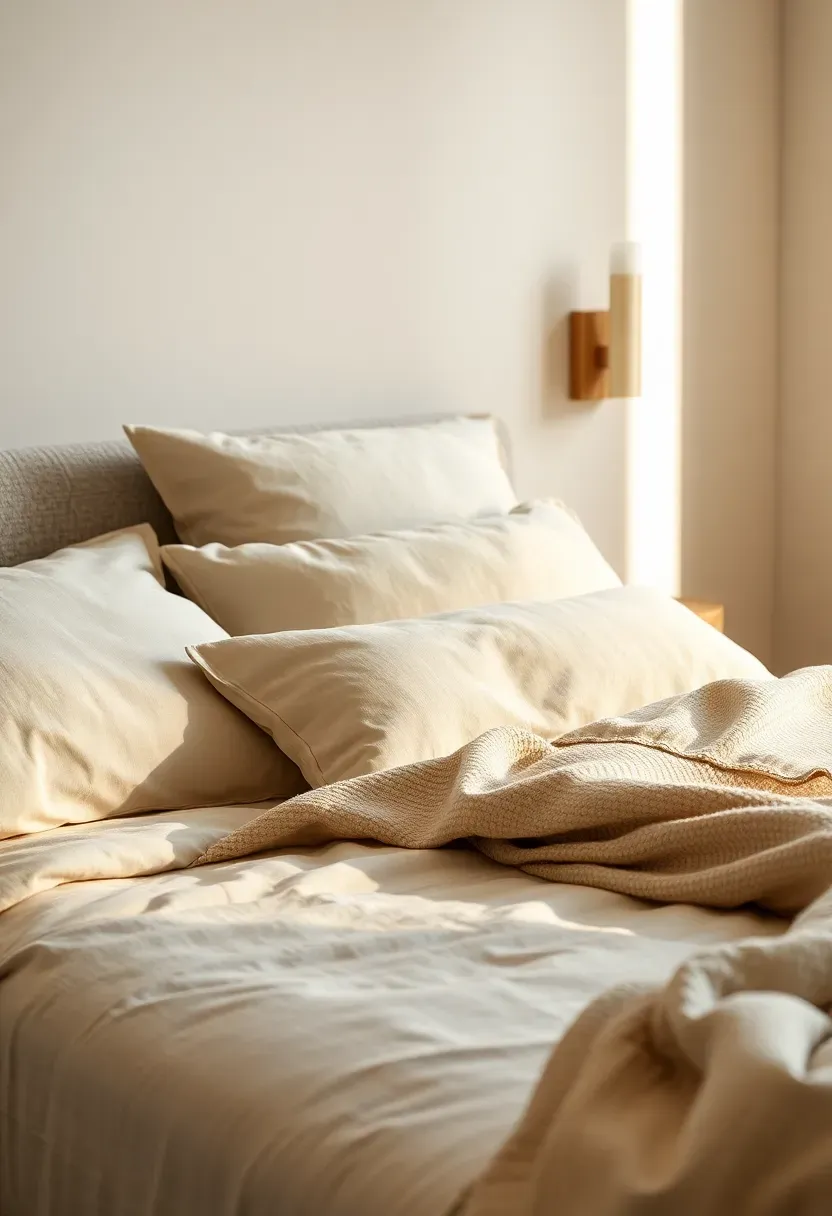
This minimalist kids bedroom idea treats sleep as the core function and keeps everything else secondary. Center the bed on the main wall, add soft textiles, and keep play items in closed bins. Instead of bright theme decor, use layered textures to make the room feel inviting. Support a consistent sleep routine with dimmable, warm lighting at 2700K. The result is a full-room plan that feels calm and complete.
Recommended
Items for this idea
Placement note: Keep the bed centered with 24 inches of clearance on both sides.
Use a 300-thread-count organic cotton sheet set and a wool throw for warmth without bulk. The trade-off is fewer playful accents, so let one patterned pillow carry the personality. Add a single wall hook rail for pajamas to keep the floor clear. If the room needs a pop, use a muted terracotta cushion rather than colorful prints. This layout keeps sleep at the center without feeling sterile.
For soft, layered calm, see 21 Stunning Rustic Farmhouse Bedroom Ideas for Cozy Living.
Tips
- If bedtime is late, then add a dimmer switch.
- If the bed feels flat, then add a single textured quilt.
What this gives you: a sleep-first layout that still feels playful through texture.
11. Cork floor plus washable rug system
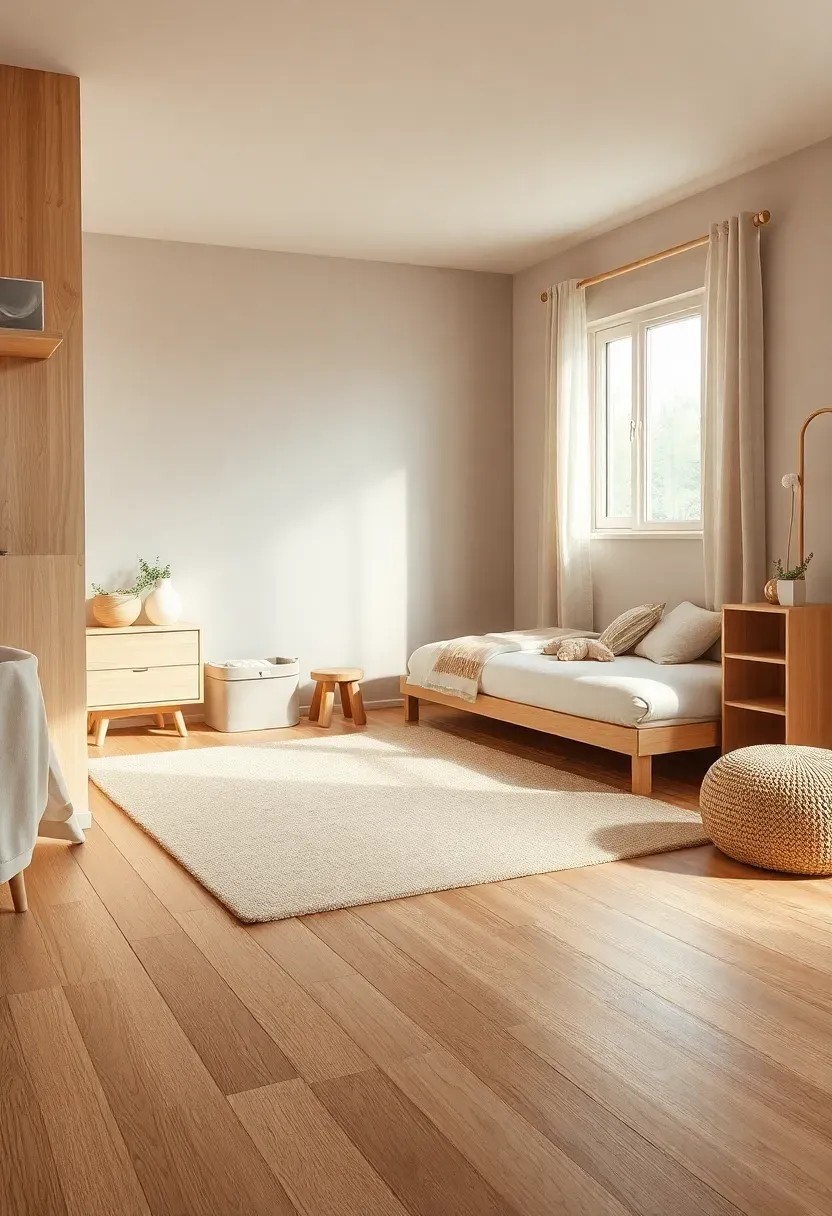
This minimalist kids bedroom plan starts with the floor and builds a full layout around comfort and cleanability. Use cork flooring for warmth and sound control, then add a washable rug for the play zone. Instead of multiple small rugs, use one 6x9 piece to define the main activity area. The supporting term here is durable textiles, which keep the room practical without adding clutter. It is a full-room solution that supports daily messes.
Why it works: the floor becomes the play surface, so the room stays open and flexible.
Pair the rug with a low bench and a closed toy cabinet on one wall. The contrast move is to avoid high-pile rugs and choose a flat weave that washes easily. Add a washable slipcover to the bench so cleanup takes minutes, not hours. Keep bedding light and simple so the floor stays the visual anchor. This creates a complete, easy-care room that still feels warm.
Tips
- Pro: cork reduces noise and feels soft underfoot.
- Con: cork can dent from heavy furniture legs.
- Fix: add felt pads and rotate rug placement yearly.
Budget/Time: Cork floors run about $4-$7 per sq ft installed.
What this gives you: a play-ready layout that stays clean and quiet.
12. Minimal bunk bed with pull-out trundle
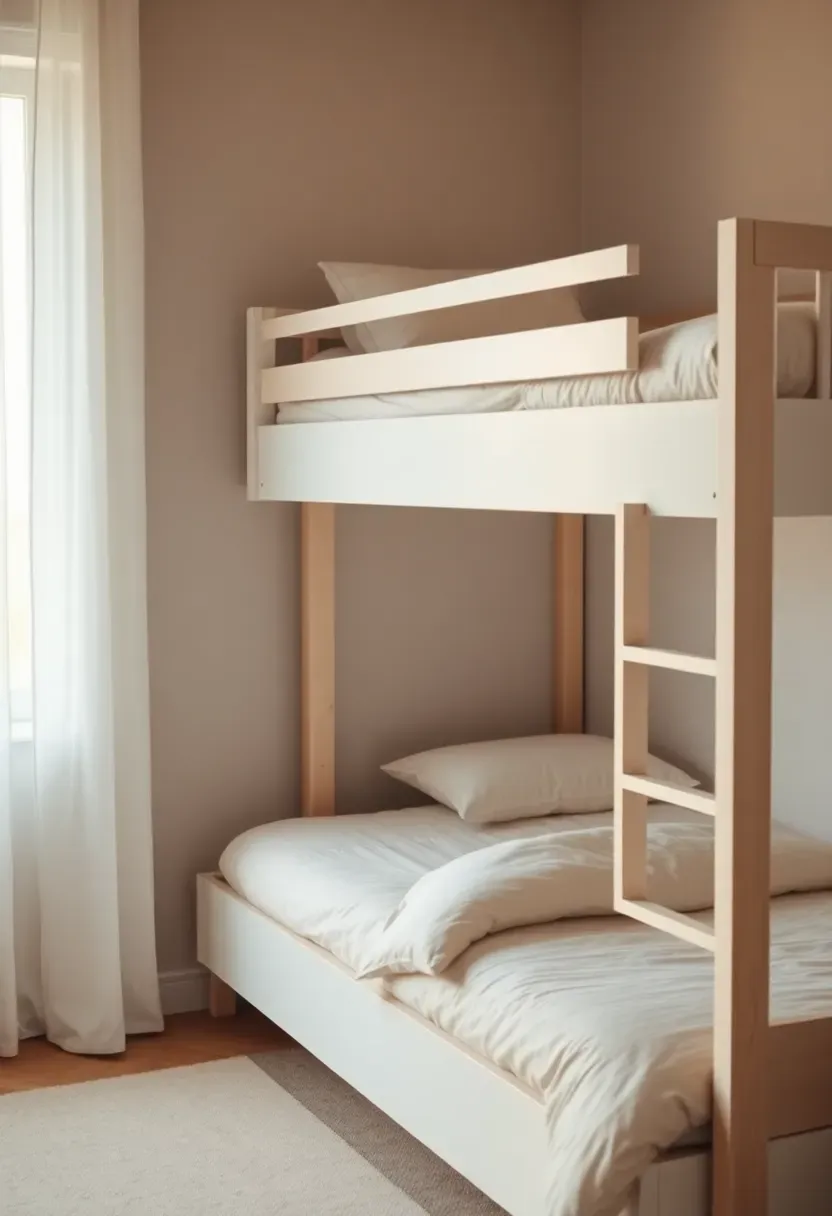
A minimalist kids bedroom for siblings or sleepovers can be complete with a clean bunk bed and a pull-out trundle. Keep the bunk frame slim and painted the same color as the walls to reduce visual weight. Instead of separate guest bedding storage, the trundle holds an extra mattress when needed. The supporting term here is space-saving, and it keeps the room functional without extra furniture. This is a full-room solution for shared spaces.
Recommended
Items for this idea
Common mistake: adding a bulky ladder and extra shelves that clutter the wall.
Choose a ladder with flat steps and keep it under 16 inches wide. The trade-off is less storage, so add a single low dresser across the room. Keep wall decor minimal, such as one large print, to avoid visual overload. Use linen or cotton bedding in two tones to keep the look calm. The result is a complete, guest-ready room without chaos.
For calm color pairing ideas, see 27 Navy Blue Bedroom Ideas That Feel Rich, Calm, and Timeless.
Tips
- Keep guardrails at least 5 inches above the mattress.
- Use a trundle mattress under 6 inches thick.
What this gives you: a space-smart layout that handles sleepovers with ease.
13. Open shelving with closed cabinet base
This minimalist kids bedroom layout uses open shelving for books and a closed cabinet base for toys. Keep the shelf depth around 10 inches so items stay light and tidy. Instead of displaying everything, curate only a few items and hide the rest below. The supporting term is under-bed storage, which can add a second layer of hidden capacity. This option feels like a full room system, not piecemeal storage.
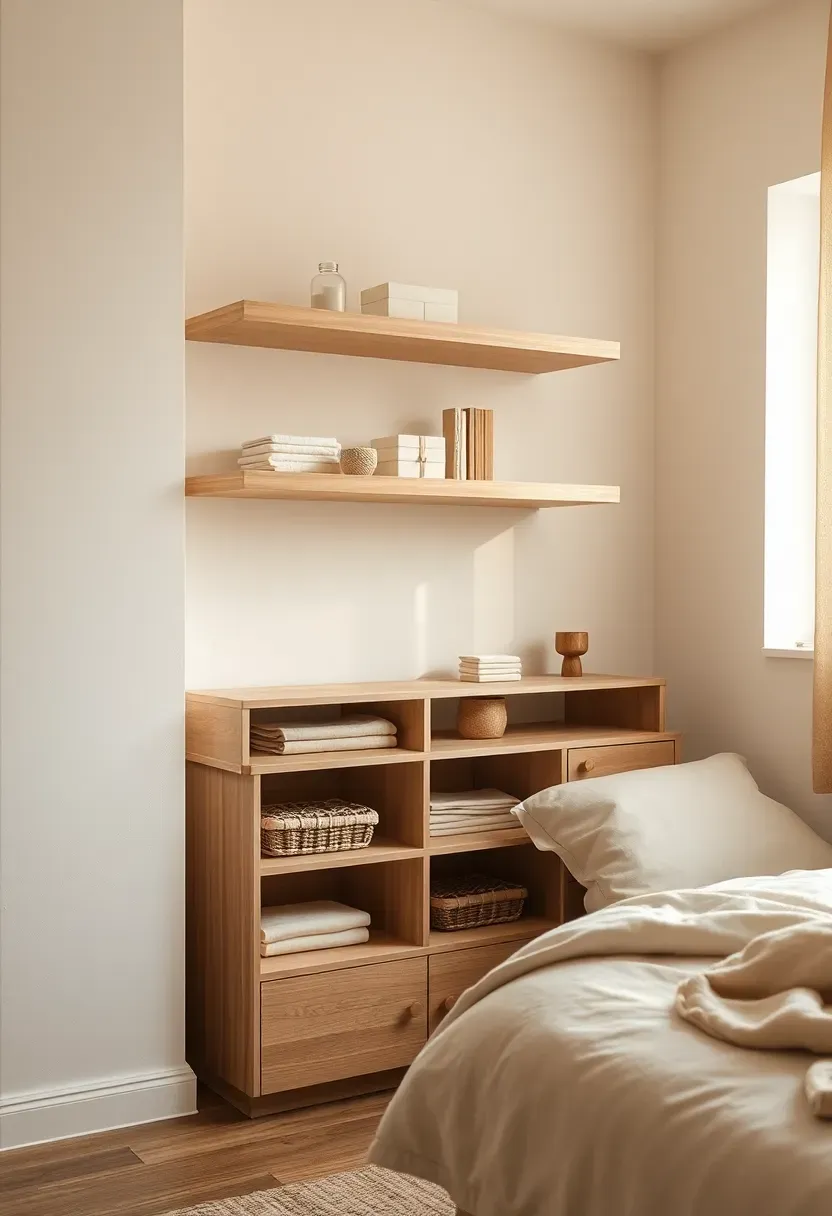
Pair the cabinet base with a 5x7 rug and a low bed frame to keep proportions grounded. The contrast move is to avoid tall bookcases and upgrade to low, wide storage that feels calmer. Add two bins labeled for toy rotation, and keep the shelf styling to three items per level. A simple wall sconce provides light without adding a floor lamp. The room feels complete and easy to maintain.
Tips
- Do: anchor shelving into studs for safety.
- Don’t: exceed three shelf colors in one wall.
- Do: store heavier items on the lowest shelf.
Best for: kids who want to see books but hide toys.
What this gives you: a balanced storage wall that keeps the room tidy.
14. Bed alcove with arched niche and task light
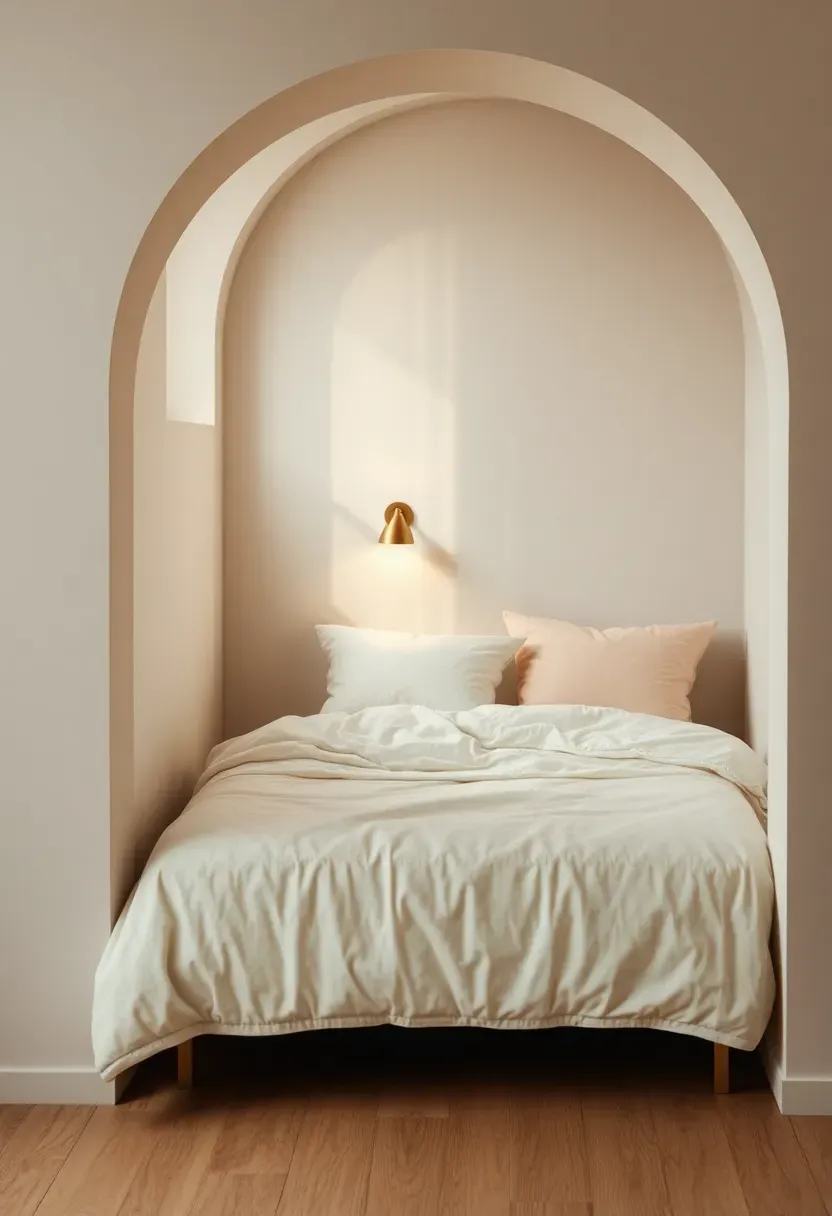
A minimalist kids bedroom can feel complete with a shallow bed alcove that frames the sleep zone. Use a 12-inch-deep niche on one wall and keep the rest of the room open. Instead of full wallpaper, paint the niche in a slightly warmer neutral to add depth. The supporting term here is display rail, which can sit inside the niche for one rotating piece. This layout feels thoughtful and fully designed.
Recommended
Items for this idea
Placement note: Keep the niche depth under 12 inches so the room does not shrink.
Use one focused task light in the niche for bedtime reading and keep the rest of the lighting soft. The trade-off is less flexibility for moving the bed, so commit to the alcove as a permanent anchor. Add a small 18-inch floating shelf inside the niche for books. If the room needs contrast, choose a matte black switch plate, not extra decor. This creates a full-room plan that feels intentional.
For simple wall moments, see Charming Dark Cottagecore Bedroom Ideas for Coziness and borrow the niche concept.
Tips
- If the niche feels flat, then add a thin wood trim.
- If reading is frequent, then use a swivel sconce.
What this gives you: a quiet sleep zone that anchors the entire room.
15. Minimal playhouse frame with clear perimeter
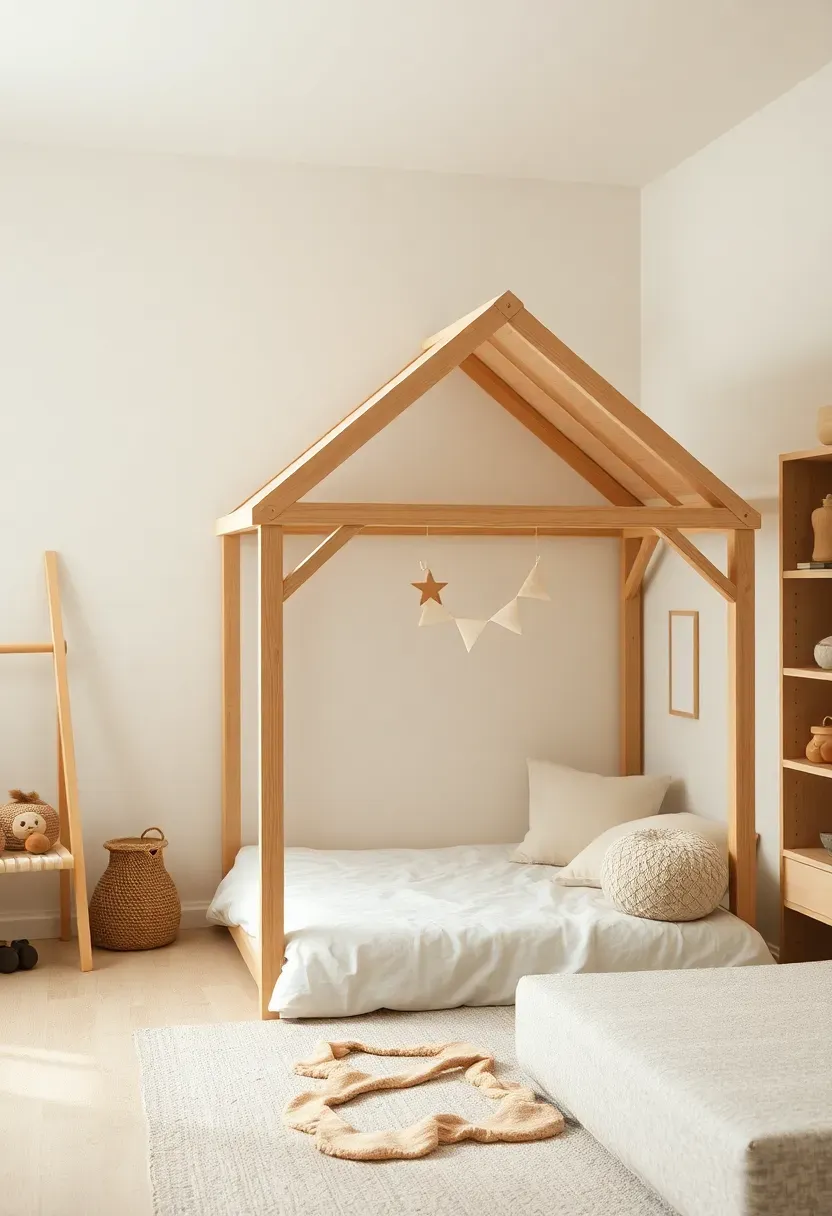
This minimalist kids bedroom layout uses a simple playhouse frame for imaginative play while keeping the perimeter clear. Place the frame in a corner and keep the bed on the opposite wall to preserve an open center. Instead of heavy themed decor, let the frame provide the playful element. The supporting term is play zone, and it keeps activity in one contained area. The room stays minimalist but still fun.
Why it works: the playful structure is one object, so it replaces many small toys.
Keep the frame under 50 inches tall so the room still feels open. The contrast move is to avoid bright fabric tents and use a natural wood frame with a neutral curtain. Add a 4x6 rug under the frame and a basket nearby for toys. Use a light oak or birch finish for durability and consistency. The layout feels complete without extra visual noise.
Tips
- Pro: one frame encourages imaginative play.
- Con: it can dominate tiny rooms.
- Fix: place it in a corner with one open side.
Best for: kids who want a play feature without a themed room.
What this gives you: a playful focal point that still keeps the room minimal.
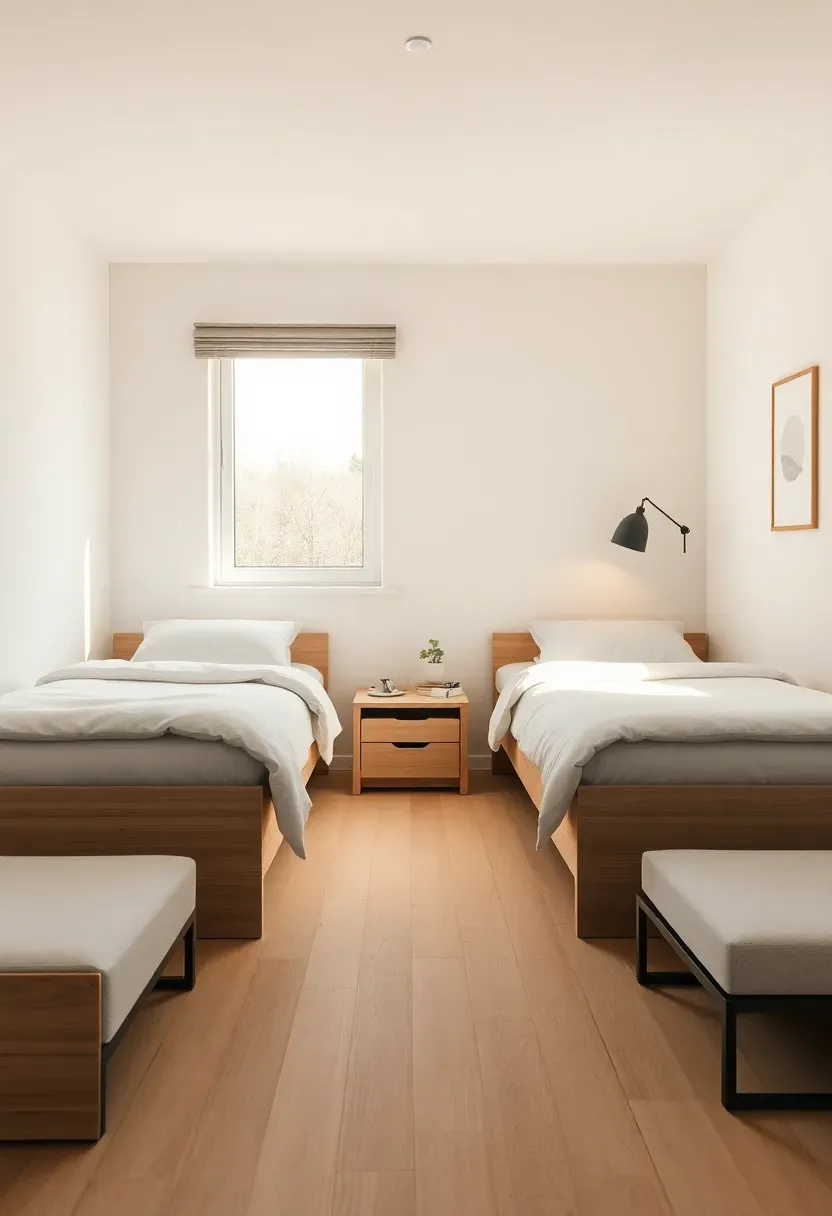
16. Shared sibling room with center aisle
This minimalist kids bedroom setup creates a shared room with a clear center aisle for easy movement. Place two beds on opposite walls and keep storage at the ends to avoid blocking flow. Instead of filling the middle with rugs and bins, keep the aisle open for a clean circulation path. The supporting term is flexible storage, which lives in low units on each side. This creates a fully planned room for two kids.
Recommended
Items for this idea
Common mistake: adding a center dresser that breaks the aisle and makes the room feel tight.
Use matching bedding to keep the room cohesive, and add one shared ceiling light for symmetry. The trade-off is less individual expression, so add one personalized pillow or art piece per bed. Keep an 18-inch bench at the foot of one bed for shared seating. If you need color, use a single muted accent in both bed linens. The room stays calm and complete.
For shared-room color cues, see 21 Navy Blue Bedroom Ideas for Women With Elegant Cozy Details.
Tips
- Use low storage under 24 inches to keep sightlines open.
- Keep the aisle at least 32 inches wide for easy passing.
- Choose identical nightstands to simplify styling.
What this gives you: a shared layout with clear flow and minimal visual noise.
17. Future-proof teen transition layout
This minimalist kids bedroom idea is designed to age into a teen room with minimal changes. Start with a simple bed, a desk, and a tall wardrobe in clean lines. Instead of kid-specific colors, use a soft neutral palette that can accept new accents later. The supporting term is open floor space, which makes the room feel larger and adapts to changing hobbies. It is a full-room plan that lasts.
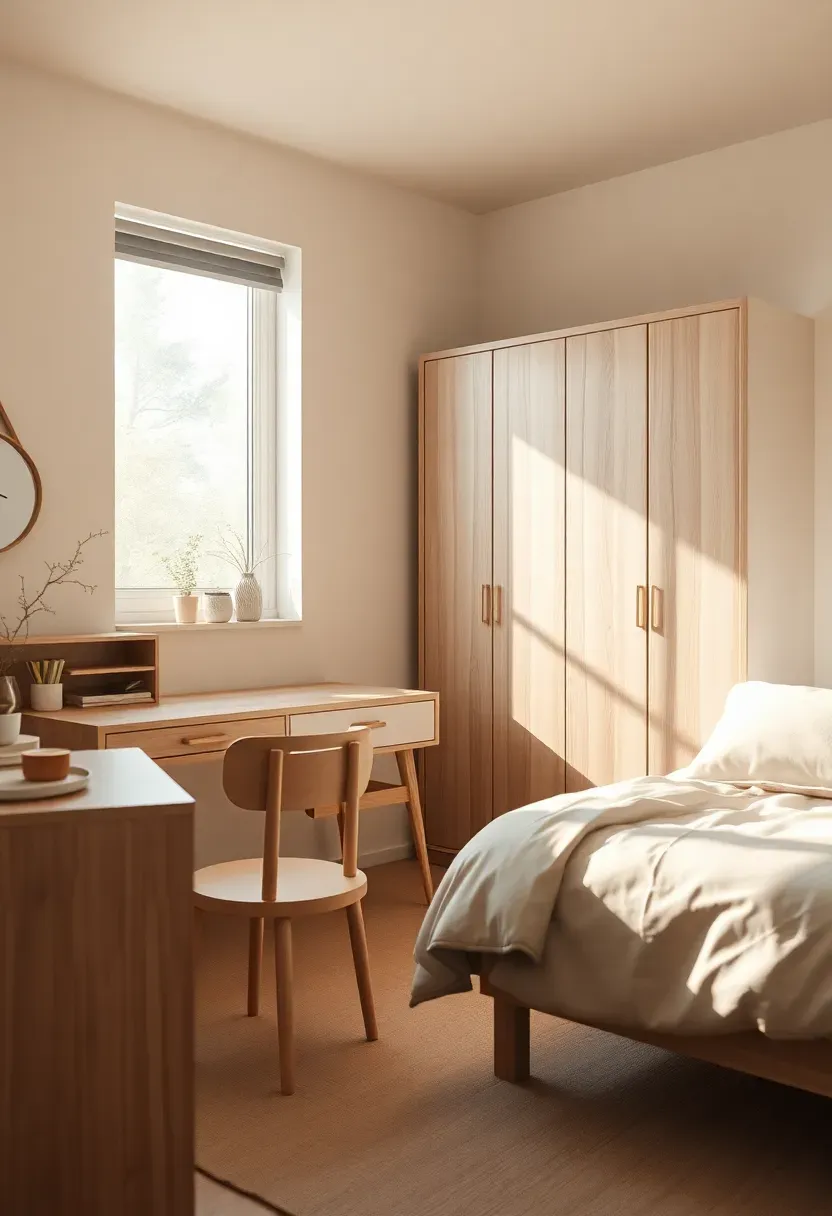
Use a 42-inch desk that can scale to homework needs and keep a single art rail for rotating posters. The contrast line is to avoid themed furniture and choose neutral, adult-friendly pieces instead. Add one soft rug for comfort and keep storage closed to preserve calm. When tastes change, update bedding and art only, not the layout. The room remains functional across years with minimal effort.
Tips
- Do: pick a desk with a clean cable channel.
- Don’t: lock in a color scheme that feels too young.
Best for: families who want one setup to last 5-8 years.
What this gives you: a timeless layout that grows with your child.
These minimalist kids bedroom ideas work best when the whole room is planned as a complete, flexible system rather than a set of isolated pieces. Use them to build a simple layout with calm zones, warm textures, and kids bedroom storage that supports daily routines. Each concept keeps the space playful while staying clean and organized, even in a small rental apartment. With a thoughtful plan, a minimalist kids bedroom can stay functional and beautiful for years.
About the author
OBCD
CGI visualization and interior design content. We create detailed 3D renders and curate practical design ideas for every room in your home.