27 AI Garden Bed Layout Ideas
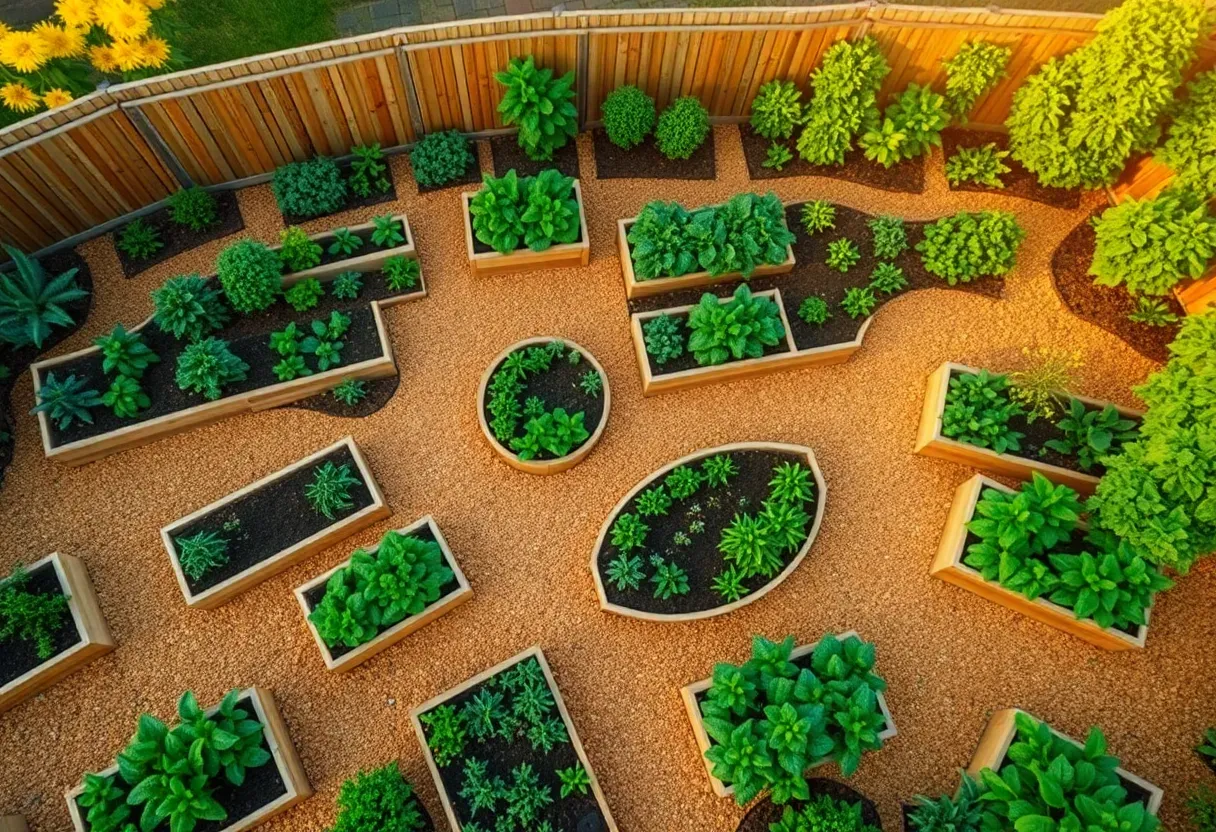
Picture yourself standing at your back door on a Saturday morning, coffee in hand, staring at a patch of grass that could be so much more. You have ideas — maybe a vegetable patch, maybe a flower border, maybe something wild and unexpected — but translating mental images into real planting beds with proper spacing, drainage, and visual balance is where most plans stall. AI garden design tools solve that gap. Upload a photo of your yard, describe what you want, and watch as the software generates scaled layouts that account for sunlight patterns, soil zones, and walking paths you never would have drawn yourself.
Below you will find 27 AI-rendered garden bed concepts ranging from simple rectangles to elaborate sculptural forms. Each one tackles a different yard challenge, aesthetic preference, or growing goal.
Table of Contents
- Symmetrical Raised Bed Grid
- Curved Perennial Border
- Keyhole Garden Bed
- Terraced Hillside Beds
- Spiral Herb Garden
- L-Shaped Corner Bed
- Cottage Garden Mixed Border
- Geometric Parterre Layout
- Sunken Garden Bed
- Hugelkultur Mound Bed
- Circular Focal Point Bed
- Stacked Tiered Planter Wall
- Pollinator Pathway Beds
- Kitchen Garden Quadrant
- Rain Garden Swale Bed
- Narrow Side Yard Beds
- Island Bed in Open Lawn
- Woven Willow Edge Beds
- Gravel Garden Dry Bed
- Vertical Living Wall Bed
- Modular Corten Steel Beds
- Free-Form Naturalistic Drift
- Mandala Garden Layout
- Raised Bed With Built-In Seating
- Espalier Border Bed
- Shade Garden Woodland Bed
- Edible Landscape Front Yard Bed
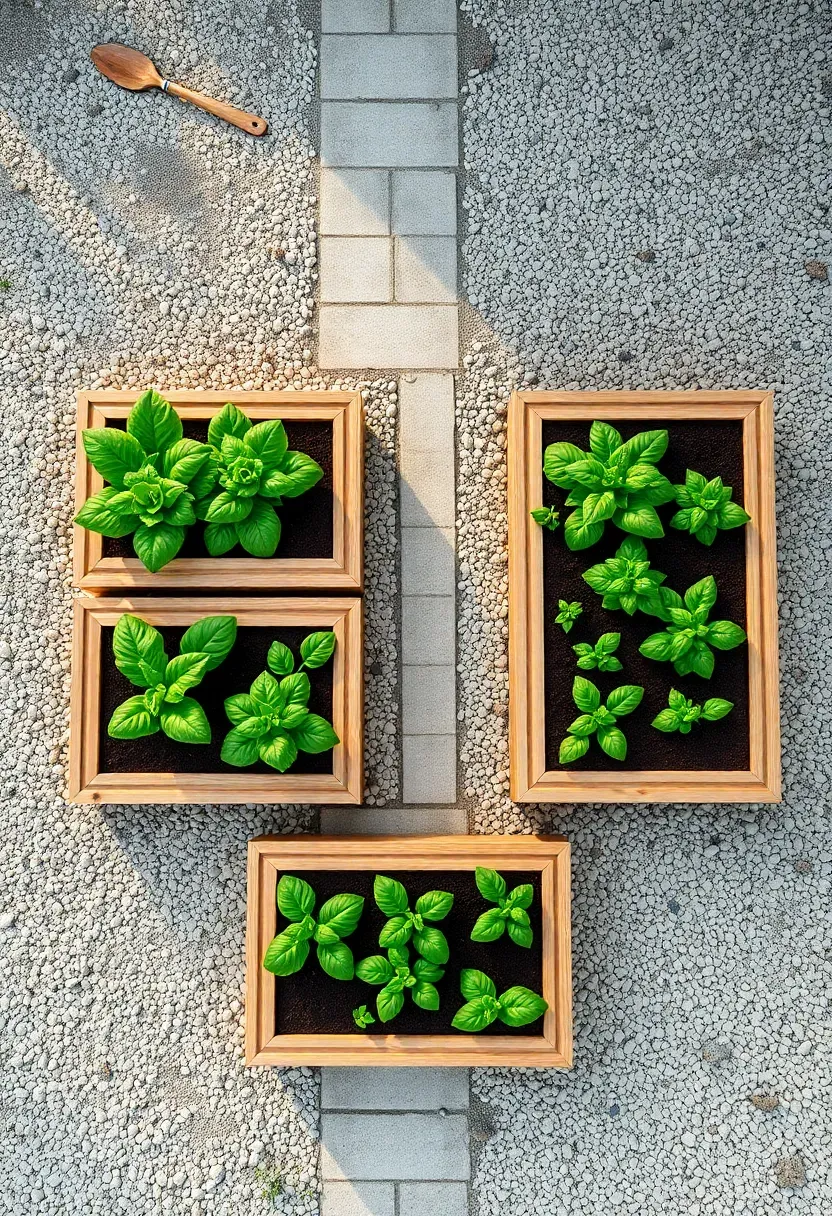
1. Symmetrical Raised Bed Grid
The grid is the workhorse of productive gardening, and AI layout tools prove why it endures. Feed the software your yard dimensions and it generates a grid that maximizes growing area while keeping every bed reachable from a walkway — no stepping on soil, no compaction, no guesswork about path width.
Step 1: Measure Your Growing Area
Photograph or measure the available rectangle. AI platforms calculate how many 4x8-foot beds fit with 24-to-30-inch aisles between them.
Step 2: Pick Your Bed Material
Cedar, galvanized steel, or composite lumber each carry different lifespans and price points. AI renderings let you compare all three against your yard context.
Step 3: Map Planting Zones
The software assigns sun-loving crops to south-facing beds and shade-tolerant greens to north-side positions based on your latitude and orientation.
What to Watch Out For
- Beds wider than 4 feet become hard to reach from one side
- North-south row orientation gives the most even sunlight distribution
- Budget for landscape fabric under gravel aisles to suppress weeds permanently
We picked a few things that go well with this idea: Earth Elevated Cedar Garden Bed (18x36) (★3.8), Vego 9-in-1 Metal Raised Garden Bed (★4.8) and Vego 10-in-1 Jumbo Modular Garden Bed (★4.7). As an Amazon Associate we earn from qualifying purchases.
2. Curved Perennial Border
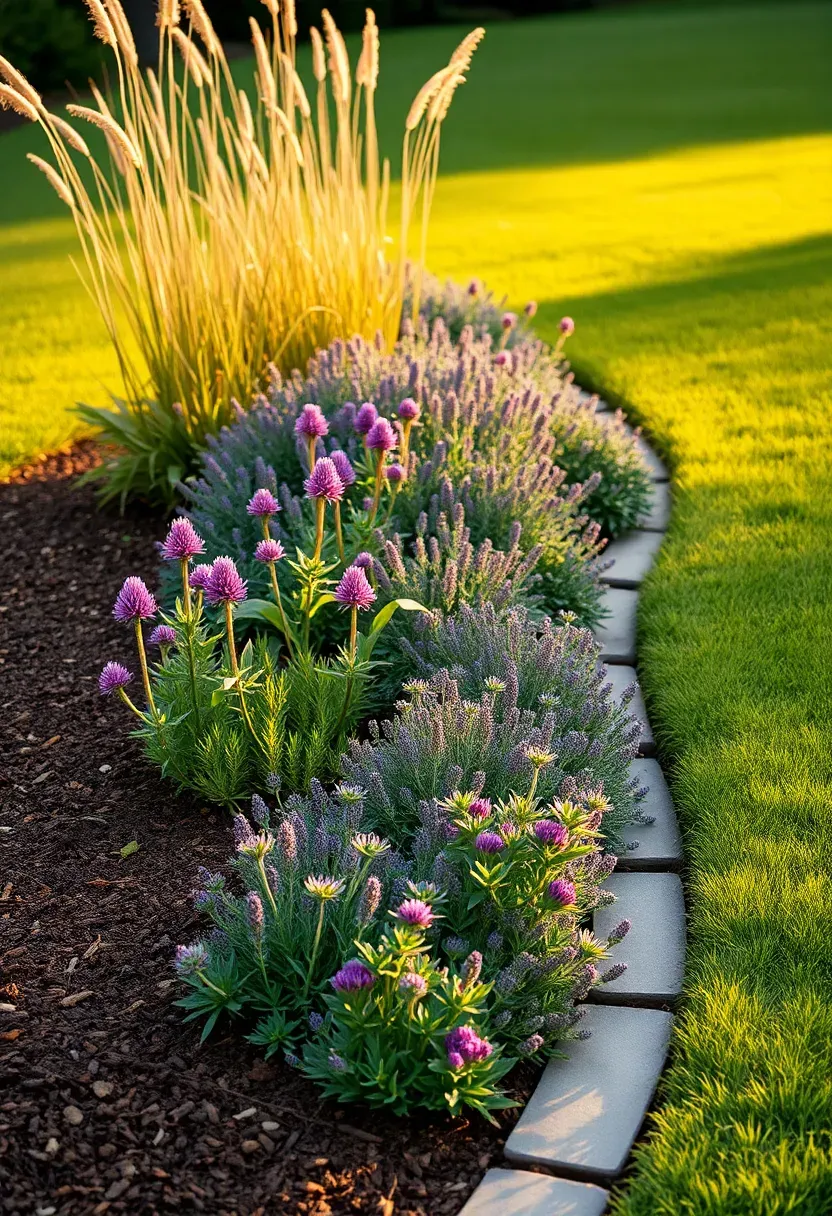
Straight edges belong to parking lots. A curved border flowing along the lawn edge creates rhythm, draws the eye forward, and makes a garden feel three times its actual size.
AI tools excel at curves because they calculate sight lines from multiple vantage points — your kitchen window, the patio chair, the front walkway — and adjust the border shape so it reads beautifully from each one. The software also layers plants by mature height, placing tall ornamental grasses and shrubs at the back, mid-height perennials in the center, and low groundcovers spilling over the front edge.
Tips for Long-Lasting Borders
- Use a garden hose laid on the ground to test your curve before any digging
- Repeat the same plant grouping at least three times along the border for visual cohesion
- Edge with steel or aluminum landscape edging to keep the curve crisp season after season
We picked a few things that go well with this idea: CARPATHEN Drip Irrigation System Kit (★4.5), Vego Garden Drip Irrigation Kit (Large) (★4.8) and MIXC 200Ft Drip Irrigation Kit (32 Nozzles) (★4.7). As an Amazon Associate we earn from qualifying purchases.
3. Keyhole Garden Bed
The Core Issue
Traditional rectangular beds waste space in small yards and require bending over a wide surface to reach the center, making maintenance a chore for anyone with limited mobility.
The Solution
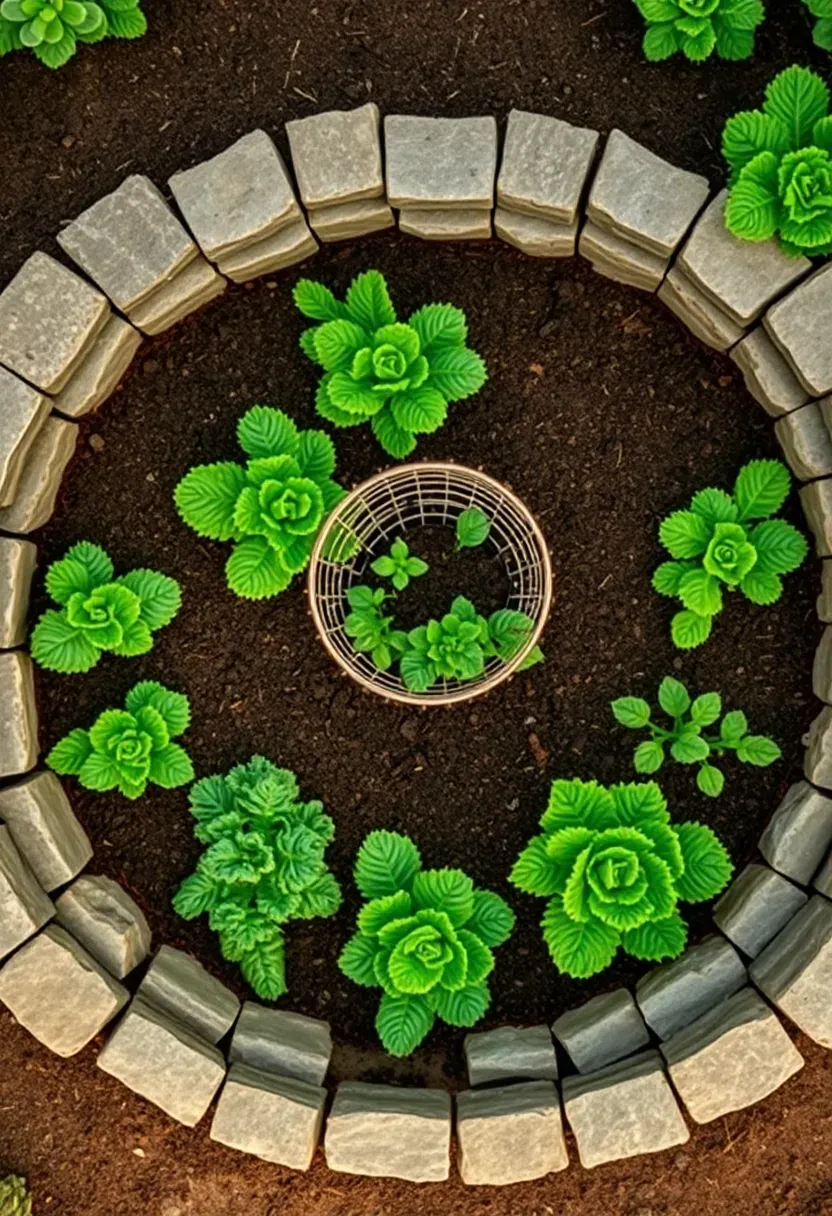
The keyhole design — a circular raised bed with a notch cut into one side and a central compost basket — puts every plant within arm's reach from the notch opening. AI tools generate the precise radius for your height and reach, then position the compost tube so nutrients leach evenly to all planting zones. Originally developed for sub-Saharan Africa where water and soil are scarce, the keyhole concept recycles kitchen scraps directly into the growing medium, creating a self-feeding loop that reduces fertilizer needs dramatically.
Pros and Cons
Pros: every square inch reachable without stepping on soil, built-in composting, ideal for small yards or accessible gardening Cons: the circular shape wastes some ground compared to tight rectangular grids, the compost basket needs regular attention, heavy rains can over-saturate the center zone
We picked a few things that go well with this idea: Corrugated Metal Garden Edging (6"x40Ft) (★4.4), VEVOR Galvanized Steel Landscape Edging (40ft) (★5.0) and Galvanized Corrugated Metal Edging (50Ft) (★4.4). As an Amazon Associate we earn from qualifying purchases.
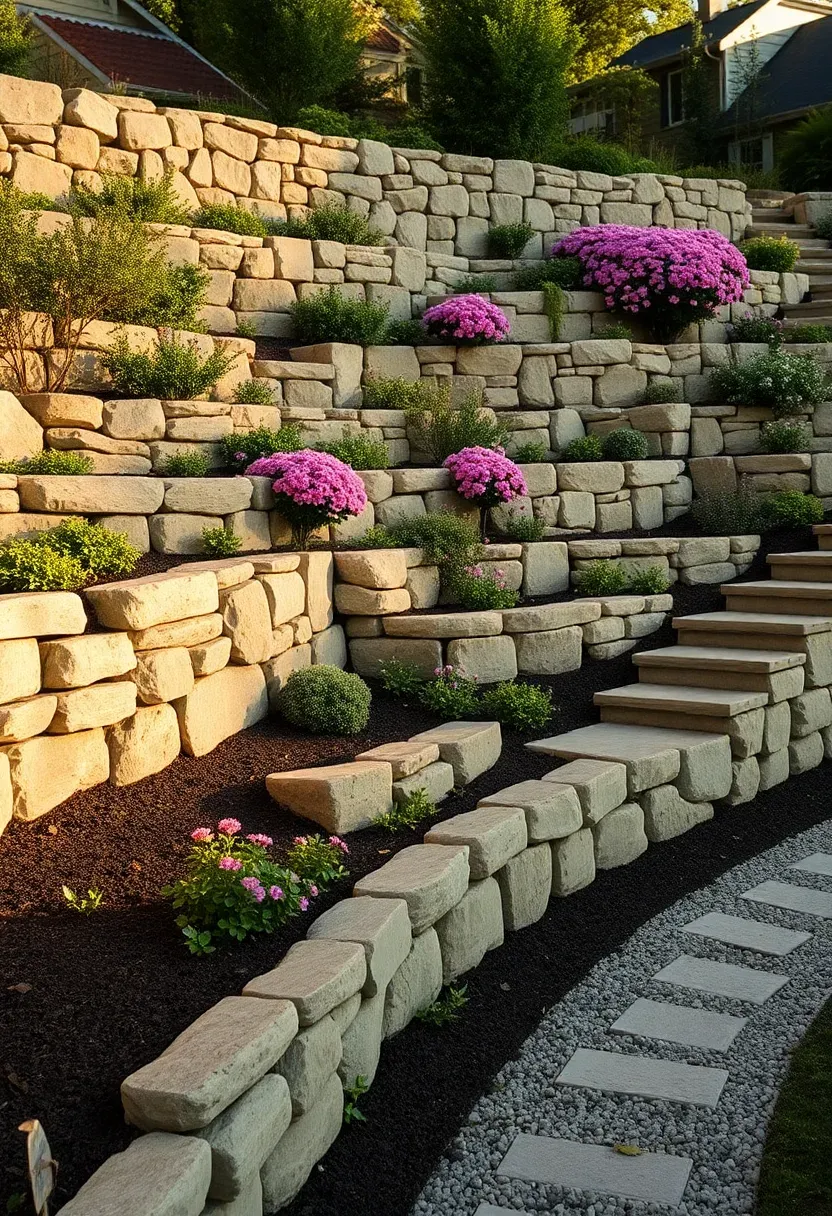
4. Terraced Hillside Beds
Slopes that once felt like landscaping liabilities become dramatic growing theaters when cut into terraces. AI terrain modeling reads your yard's grade from photographs and suggests terrace heights, retaining wall materials, and drainage paths that prevent erosion while creating flat planting surfaces.
Step 1: Assess the Grade
Upload a side-angle photo of the slope. The software estimates the grade percentage and recommends how many terrace levels will work without requiring engineered retaining walls.
Step 2: Choose Retaining Materials
Dry-stacked stone, timber sleepers, and concrete block each carry different structural limits. AI selects based on terrace height and local soil type.
Step 3: Plan Water Flow
Terraces redirect runoff. The software positions drainage channels and overflow points so water reaches lower beds without flooding them.
What to Watch Out For
- Any terrace wall over 4 feet tall typically requires engineering approval and a permit
- Install a French drain behind each retaining wall to prevent hydrostatic pressure buildup
- Plant deep-rooted groundcovers on terrace faces to stabilize exposed soil between walls
Recommended
Items for this idea
5. Spiral Herb Garden
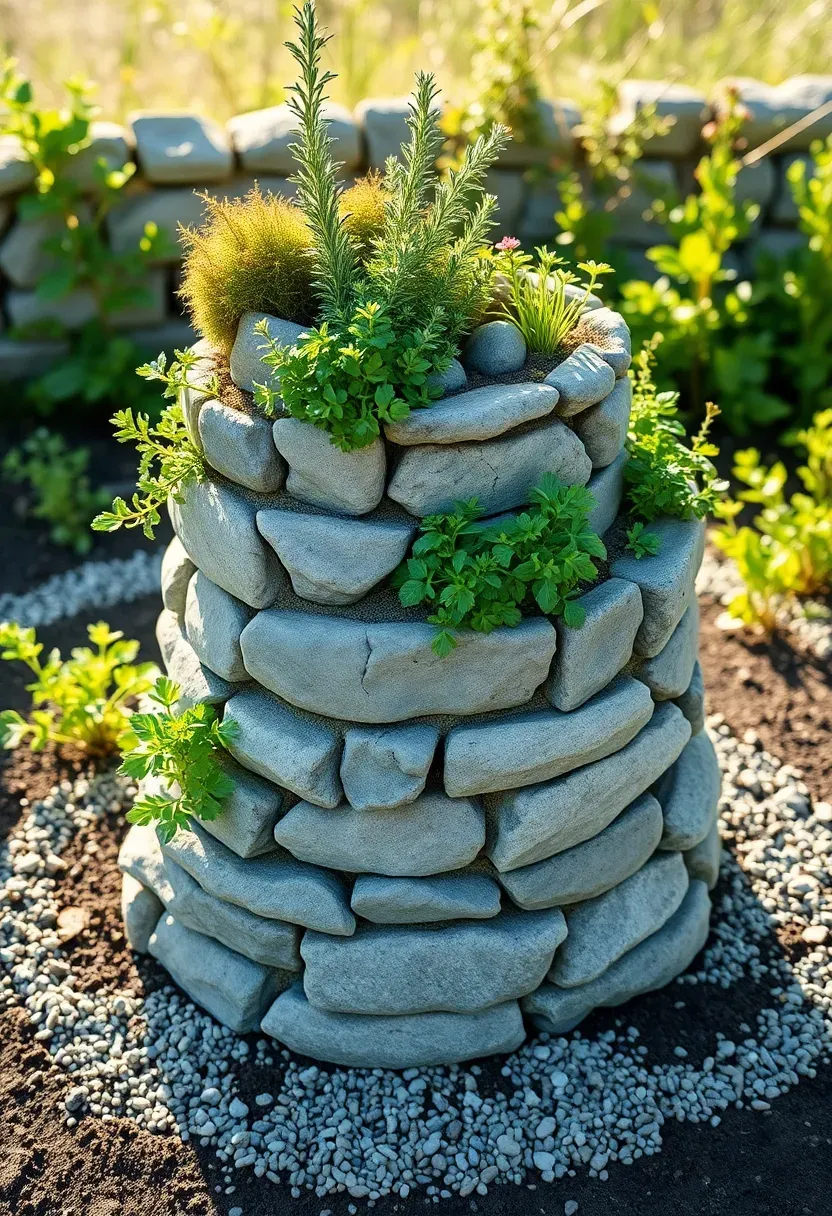
A herb spiral packs an astonishing range of microclimates into a tiny footprint. The top is dry and sun-blasted — perfect for rosemary and thyme. The base stays moist and partially shaded — ideal for parsley and chives. AI tools calculate the exact spiral diameter, stone quantity, and soil volume needed for your desired height, then assign each herb to its ideal position along the gradient.
The structure itself becomes a sculptural centerpiece, rising two to three feet above grade with a gentle ramp of stacked stone or brick. A small pond or bog area at the base captures runoff and supports moisture-loving mint without letting it invade the rest of the garden.
Tips for Building a Successful Spiral
- Orient the spiral so the tallest point faces north, casting shade downward toward moisture-loving herbs at the base
- Use unmortered stone so water drains naturally through the wall
- Plant creeping thyme in the wall gaps themselves — it softens the stone and deters insects
- Harvest regularly from the top to prevent tall herbs from shading lower neighbors
6. L-Shaped Corner Bed
Why Corners Go Unused and How an L-Bed Fixes That
The Core Issue
Fence corners and building junctions collect dead space that most gardeners ignore — too narrow for furniture, too awkward for standard rectangular beds.
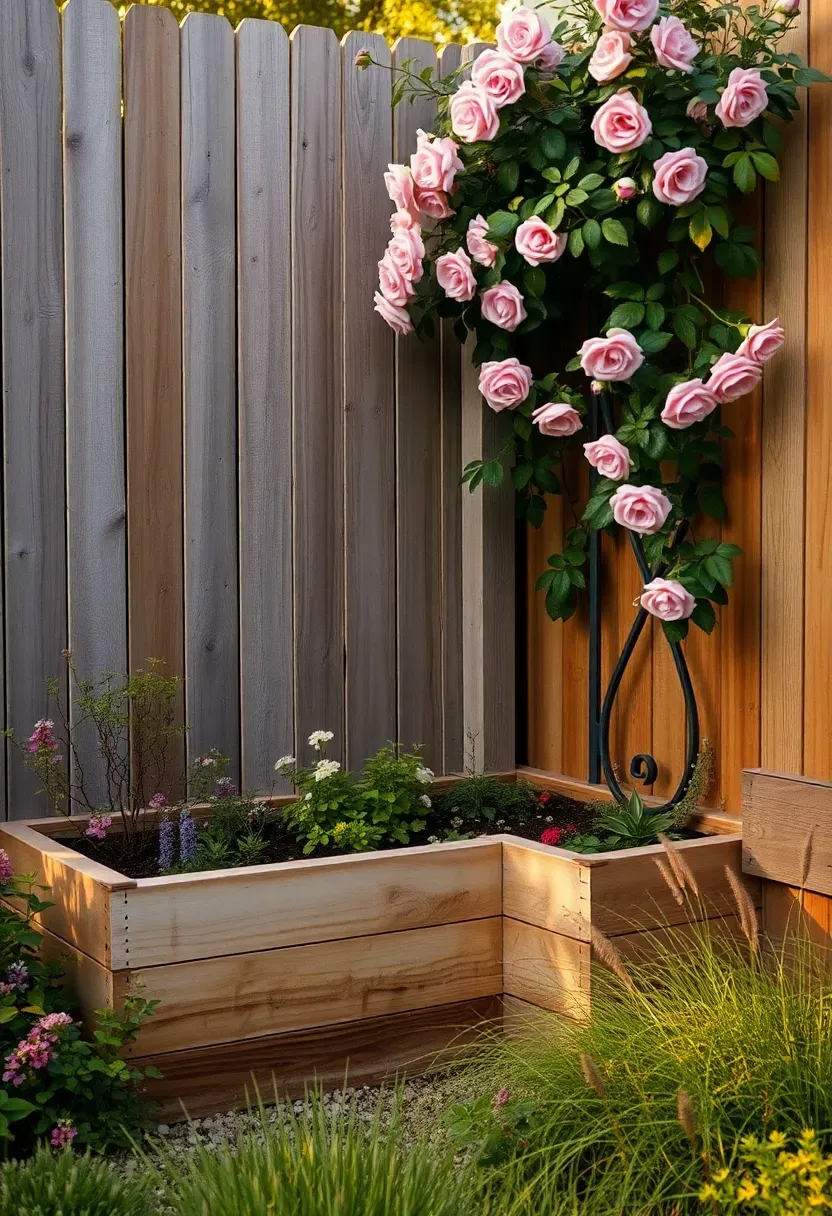
The Solution
An L-shaped bed wraps into the corner, following both fence lines and converting that wasted triangle into a productive planting zone. AI layout tools optimize the arm lengths and widths of the L so you can reach every plant from the outer edges without stepping inside. The software also suggests vertical elements — a trellis or climbing frame anchored to the fence — that add a third dimension and double your growing capacity.
Pros and Cons
Pros: reclaims dead corner space, creates a natural backdrop for climbing plants, works equally well for flowers or vegetables Cons: uneven sunlight in the inner corner may limit crop options, watering the deepest section requires a long-reach wand or drip irrigation
Recommended
Items for this idea
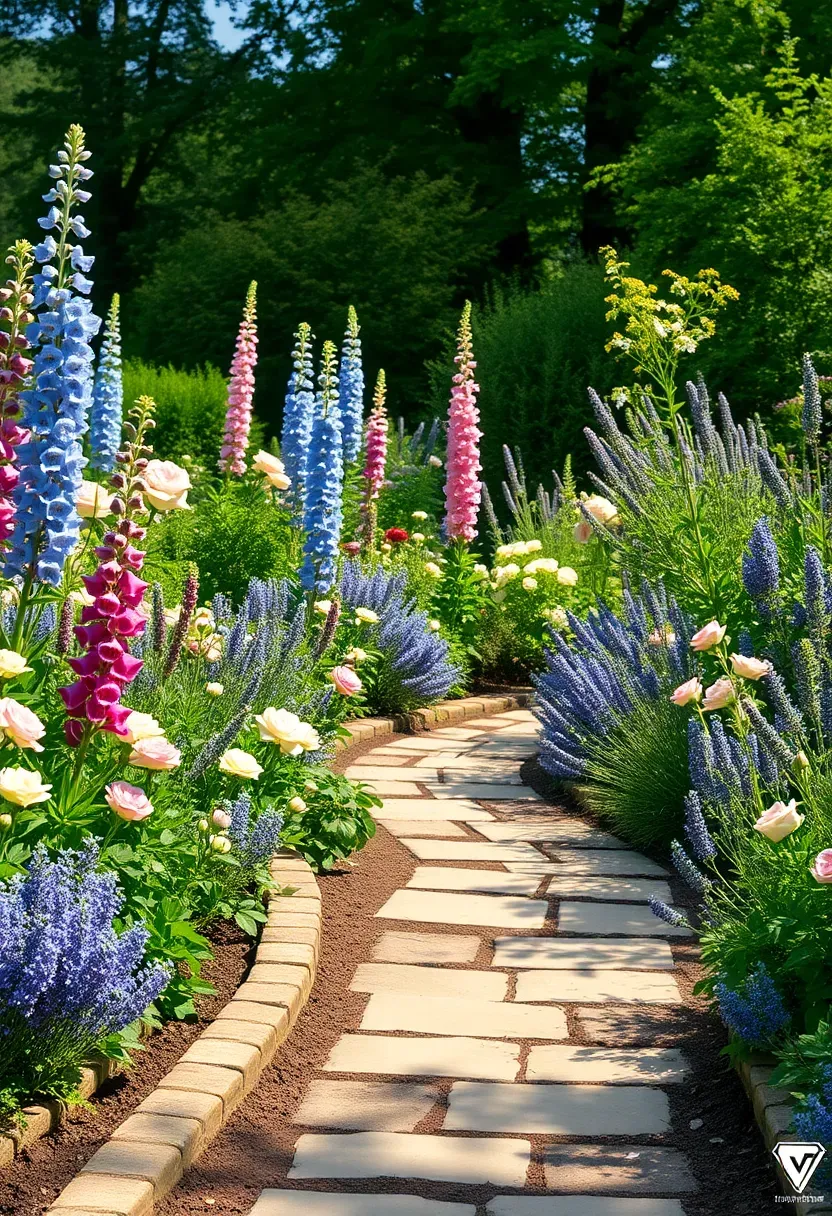
7. Cottage Garden Mixed Border
There is a specific kind of beautiful chaos that only a cottage garden achieves — the impression that plants chose their own places and somehow got it right. In reality, that casual look demands careful planning, and AI makes the complexity manageable.
The software maps bloom times across the full growing season so something is always flowering. It layers heights to create depth without blocking shorter plants behind taller ones. It even flags color clashes before you plant a single seedling, swapping a harsh orange next to hot pink for a softer apricot that harmonizes with everything around it.
Tips for Authentic Cottage Style
- Allow plants to self-seed and fill gaps naturally between intentional plantings
- Include at least one climbing rose or clematis for vertical drama
- Edge pathways with low billowing plants like catmint or lady's mantle that soften hard lines
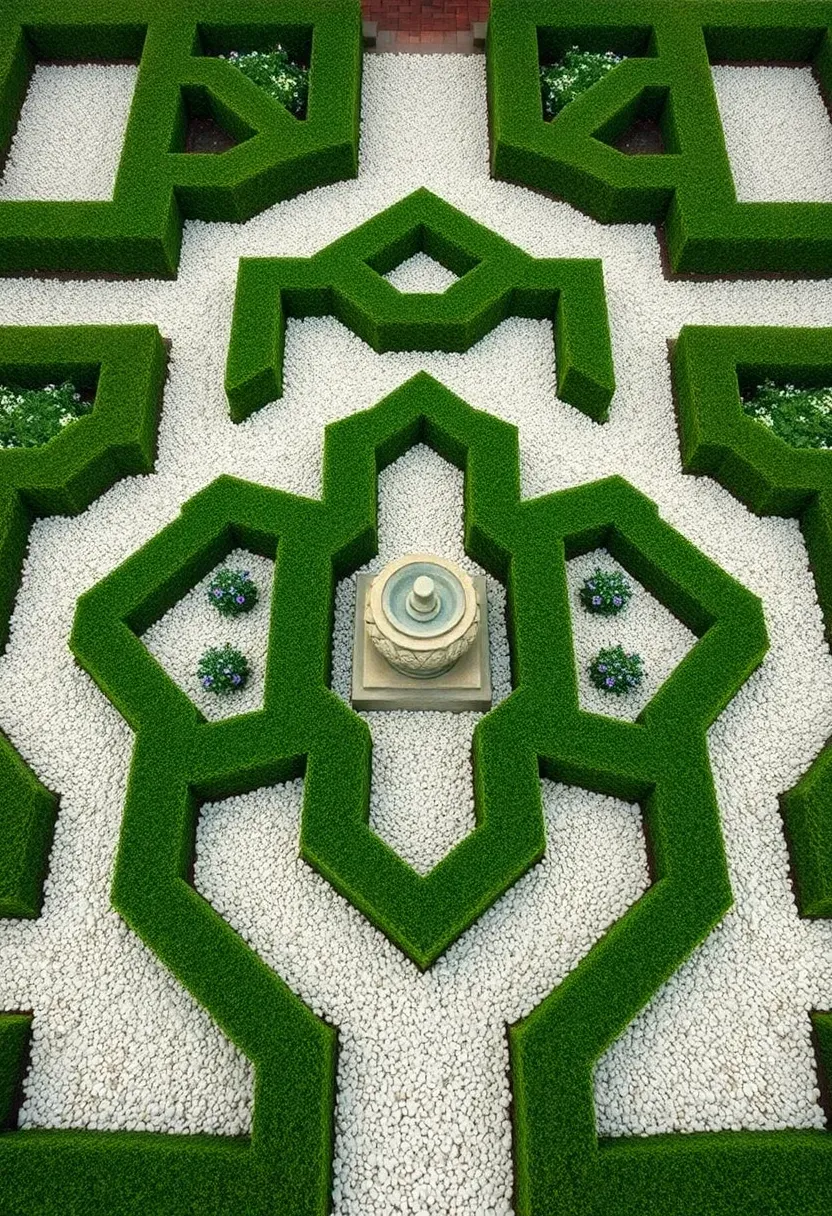
8. Geometric Parterre Layout
Origins
The parterre descends from Renaissance French and Italian gardens — aristocratic estates where clipped hedges formed intricate patterns visible from upper-story windows. Order, symmetry, and control over nature were the guiding principles.
Modern Interpretation
AI design tools bring the parterre within reach of ordinary backyards by scaling down the geometry. Instead of acres of boxwood, the software generates compact patterns — interlocking diamonds, squares, or quatrefoils — sized for a 20x20-foot area or even smaller. Low hedges of boxwood, lavender, or germander define the outlines, while the interior compartments hold seasonal flowers, herbs, or colored gravel. The AI calculates hedge spacing to account for mature width, preventing the crisp lines from merging into an amorphous mass after two growing seasons.
How to Apply at Home
- Start with just four symmetrical beds around a central feature like a birdbath or urn
- Use dwarf boxwood varieties that stay under 18 inches with minimal trimming
- Fill compartments with a single color of annual for maximum visual impact
- Maintain edges with hand shears twice per season to keep geometry sharp
Recommended
Items for this idea
9. Sunken Garden Bed
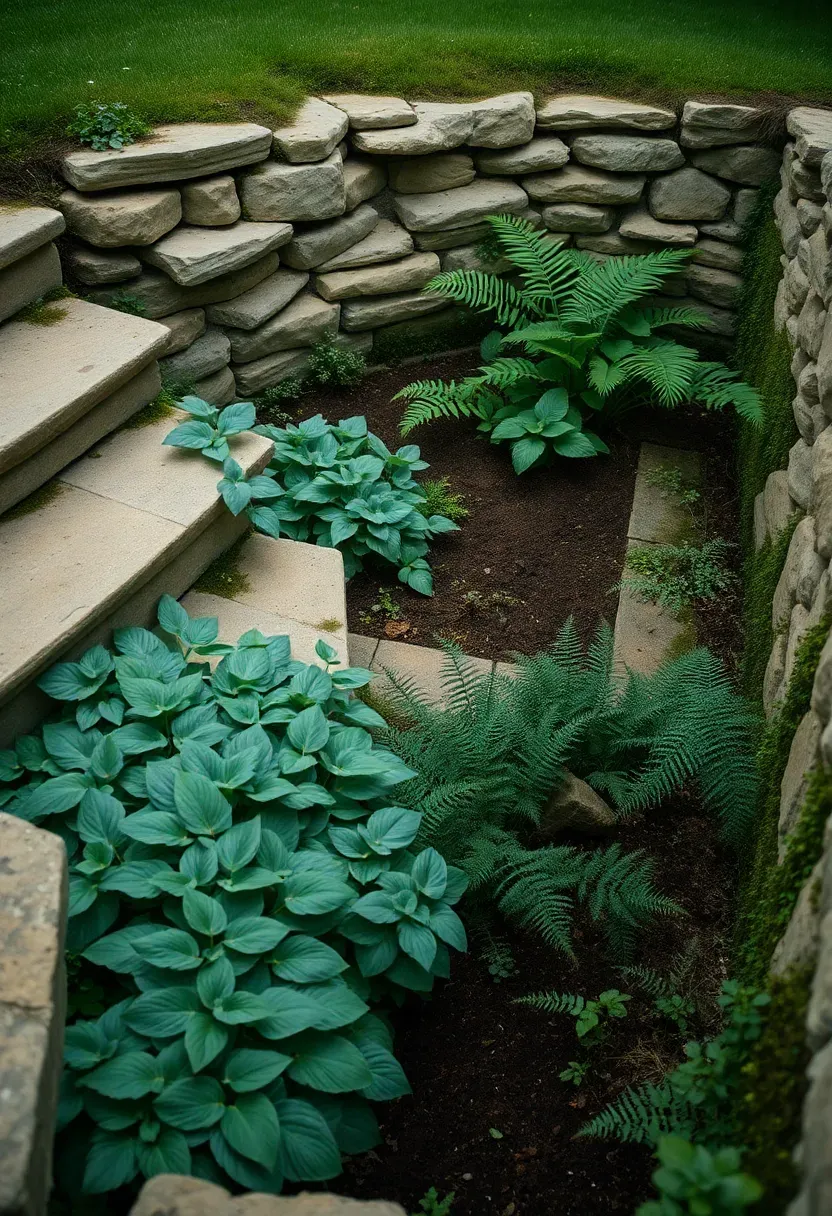
While most garden beds rise above grade, a sunken bed digs below it — creating a sheltered microclimate that protects tender plants from wind and retains moisture during dry spells. AI excavation modeling calculates how deep to go based on your soil drainage rate and water table depth, preventing the bed from becoming a pond after heavy rain.
The visual effect is striking. Walking along a flat lawn and then looking down into a lush planting pocket creates a sense of discovery that raised beds simply cannot replicate. Stone or brick walls line the excavation, and a set of steps or a sloped entry invites you in.
Tips for Sunken Success
- Install drainage at the lowest point — a gravel sump or French drain is essential
- Choose shade-tolerant and moisture-loving plants since sunken beds sit in their own shadow for part of the day
- Add a seating ledge along the interior wall to turn the bed into a contemplative nook

10. Hugelkultur Mound Bed
Hugelkultur — German for hill culture — buries logs and branches under a mound of soil, creating a slow-release moisture and nutrient sponge that feeds plants for years without irrigation. AI design tools calculate mound dimensions based on your available wood volume and desired planting area, then shape the profile for maximum surface area.
Step 1: Gather Deadwood
Collect logs, thick branches, and untreated wood scraps. Hardwoods decompose slower and feed the bed longer than softwoods.
Step 2: Build the Core
Lay the largest logs at the base, stack smaller branches on top, then cover with compost, leaf mulch, and topsoil.
Step 3: Shape and Plant
AI models the mound profile — typically 3 to 5 feet tall with gently sloping sides — and assigns crops by position. Moisture-loving squash goes near the base, drought-tolerant tomatoes sit on top.
What to Watch Out For
- Fresh wood temporarily locks up nitrogen as it decomposes — top-dress with compost the first year
- Mounds settle 20 to 30 percent in year one, so build taller than your target height
- Avoid using walnut or cedar wood, which release compounds toxic to many garden plants

Recommended
Items for this idea
11. Circular Focal Point Bed
A circle placed in open lawn becomes an automatic anchor for the entire yard. AI design tools center the bed on the strongest visual axis from your most-used window or seating area, then generate concentric planting rings that graduate from a central specimen tree or tall ornamental grass outward to low-growing bloomers at the perimeter.
The geometry is forgiving — unlike a formal parterre, slight asymmetry in plant growth adds character rather than looking like a mistake. The circular shape also eliminates corners where mulch piles up and weeds take hold, making maintenance simpler than rectangular alternatives.
Tips for Circular Beds
- Keep the diameter under 8 feet if the bed is accessible from all sides, or add a stepping stone path through the center for larger circles
- Choose a central plant with year-round structure — a Japanese maple, a multi-stem birch, or a large ornamental grass
- Edge with steel or aluminum to maintain the circle's shape against lawn encroachment
12. Stacked Tiered Planter Wall
Comparing: Horizontal Beds vs Vertical Tiered Planters
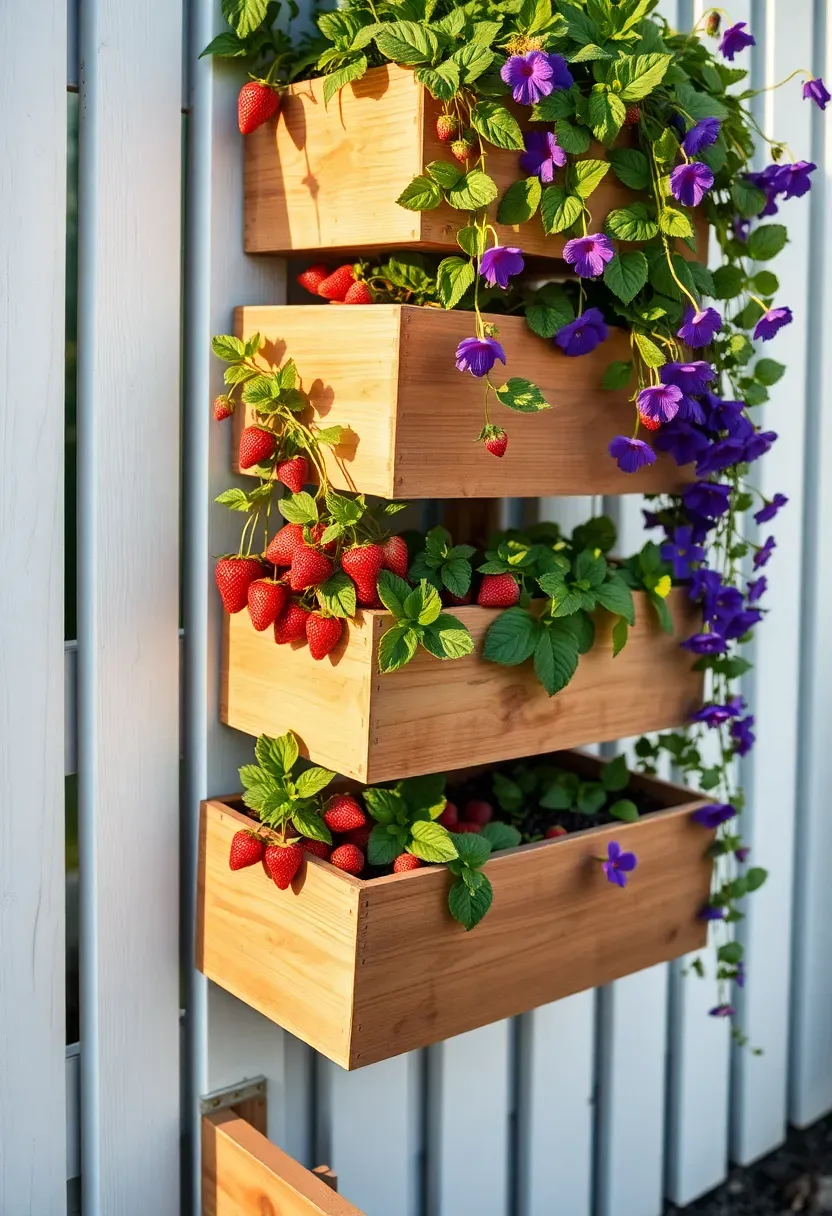
When ground space runs out, the only direction left is up. A tiered planter wall stacks multiple growing levels against a fence or wall, multiplying your planting area by the number of tiers.
Horizontal Beds
Standard raised beds spread outward and offer deep root zones for large vegetables, but they consume floor space rapidly. A single 4x8 bed claims 32 square feet of yard.
Vertical Tiered Planters
Three stacked tiers measuring 4 feet wide and 8 inches deep provide 12 square feet of planting surface while occupying only 4 square feet of ground. Ideal for herbs, strawberries, lettuce, and trailing flowers that thrive in shallow soil.
What to Choose
Choose horizontal beds if: you grow root vegetables, large tomatoes, or plants needing 12+ inches of soil depth Choose tiered planters if: you prioritize herbs, greens, and decorative flowers in a compact yard
Recommendation
AI layout tools often suggest combining both — ground-level beds for heavy crops and wall-mounted tiers for quick-harvest kitchen herbs directly outside the back door.
Recommended
Items for this idea
13. Pollinator Pathway Beds
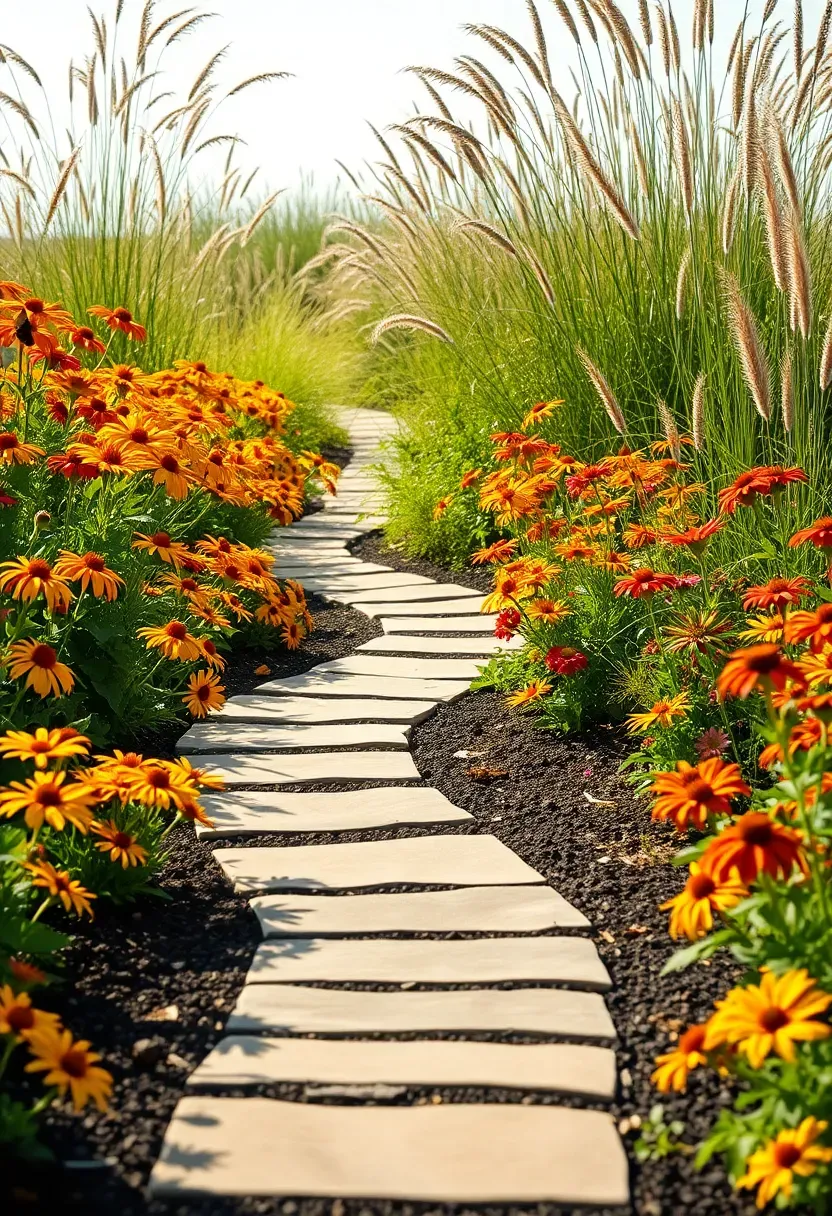
Pollinators do not visit isolated plants — they follow corridors. AI design tools map pollinator flight paths across your yard and position flower beds along those corridors so bees, butterflies, and hummingbirds move seamlessly from one bloom source to the next.
The beds themselves are long and narrow, flanking a walking path or lawn edge. Each one contains a mix of native species selected by bloom time so the corridor provides uninterrupted forage from early spring through late fall. AI databases cross-reference your hardiness zone, sun exposure, and soil type to generate a species list that requires minimal supplemental watering once established.
Tips for Pollinator Success
- Include plants with different flower shapes — tubular for hummingbirds, flat-topped for butterflies, open-faced for bees
- Avoid double-petaled cultivars that look pretty but produce little nectar
- Leave some bare soil patches — many native bees nest in the ground, not in hives
- Skip pesticides entirely within pollinator beds, including organic sprays that still harm beneficial insects
14. Kitchen Garden Quadrant
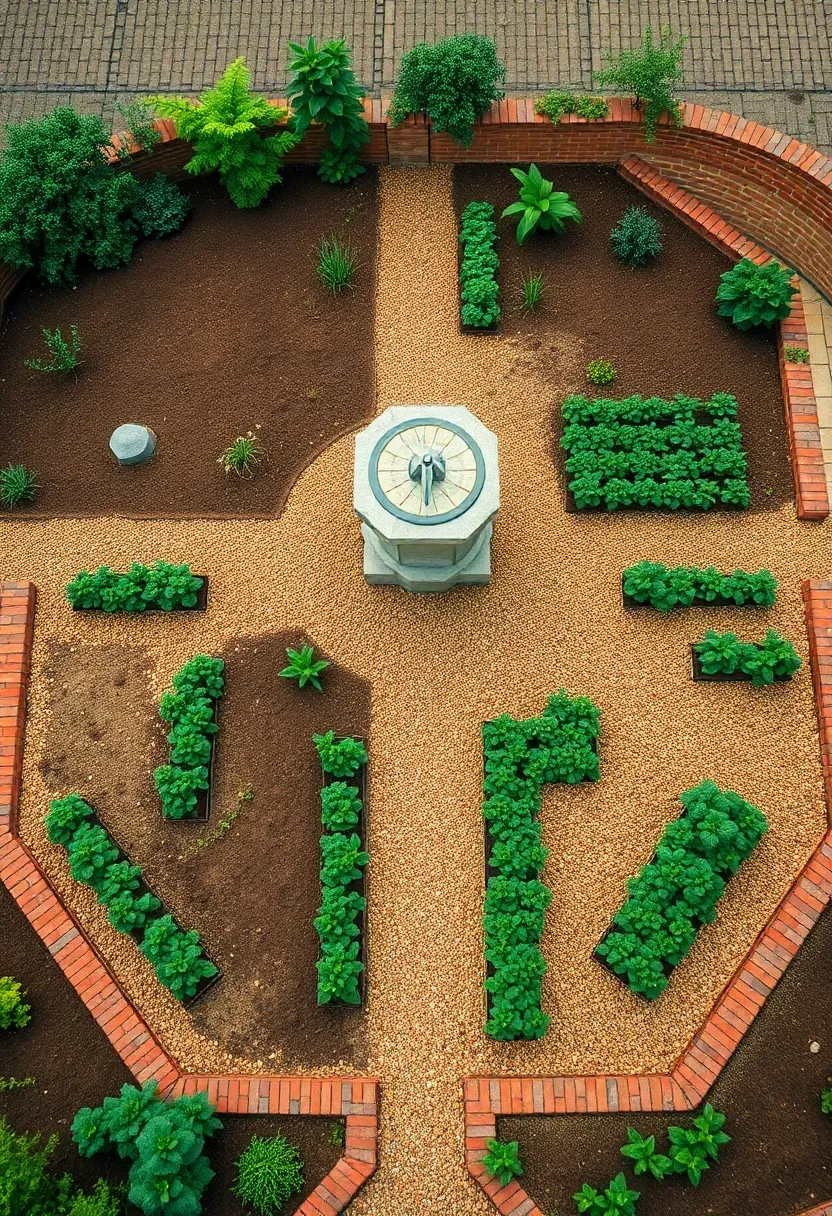
The classic four-quadrant kitchen garden dates back to medieval monastery layouts — a cross-shaped path dividing a square into four equal beds, each devoted to a different crop family. AI tools modernize this ancient template by optimizing crop rotation schedules, companion planting assignments, and succession sowing dates within each quadrant.
Upload your kitchen garden dimensions and the software generates a four-year rotation plan: legumes in quadrant one this year, brassicas next year, nightshades the year after, root crops last. This rotation breaks pest cycles, balances soil nutrients, and keeps yields strong without relying heavily on fertilizers.
Tips for Kitchen Quadrant Success
- Place the garden within 30 steps of your kitchen door — proximity increases actual harvest usage dramatically
- Install a small cold frame in one quadrant for season extension
- Edge paths with brick or stone for clean shoe access in wet weather
Recommended
Items for this idea
15. Rain Garden Swale Bed
The Core Issue
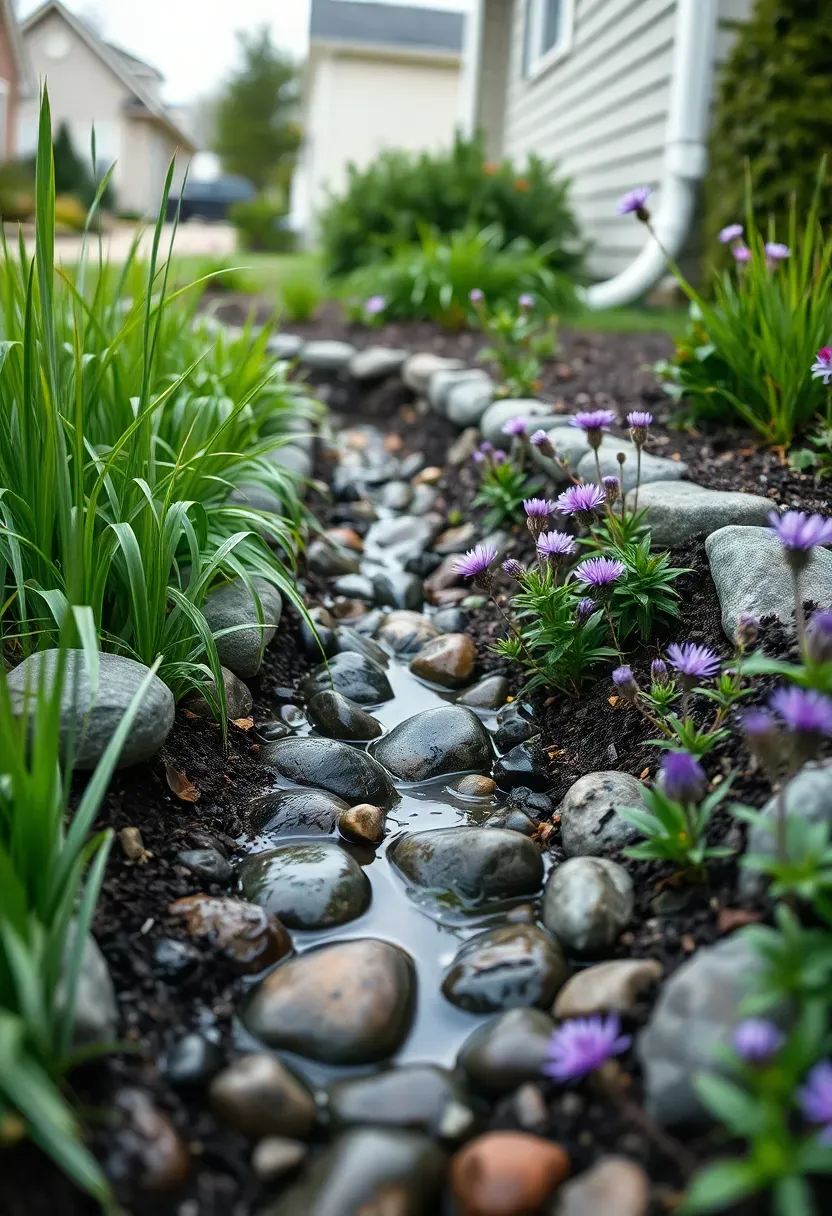
Suburban yards shed thousands of gallons of rainwater from roofs, driveways, and patios — water that floods low spots, erodes topsoil, and overloads storm drains.
The Solution
A rain garden intercepts that runoff in a shallow, planted depression that filters water through soil and root systems before it reaches groundwater. AI hydrology tools map the water flow across your property using topographic data from your photos, then position the garden at the natural low point where runoff converges. The software selects deep-rooted native plants that tolerate both temporary flooding and dry periods between storms.
Pros and Cons
Pros: reduces yard flooding, filters pollutants from runoff, supports native ecosystems, may qualify for municipal stormwater rebates Cons: looks muddy during establishment before plants fill in, requires specific grading tolerances, standing water after storms may concern neighbors unfamiliar with the concept
16. Narrow Side Yard Beds
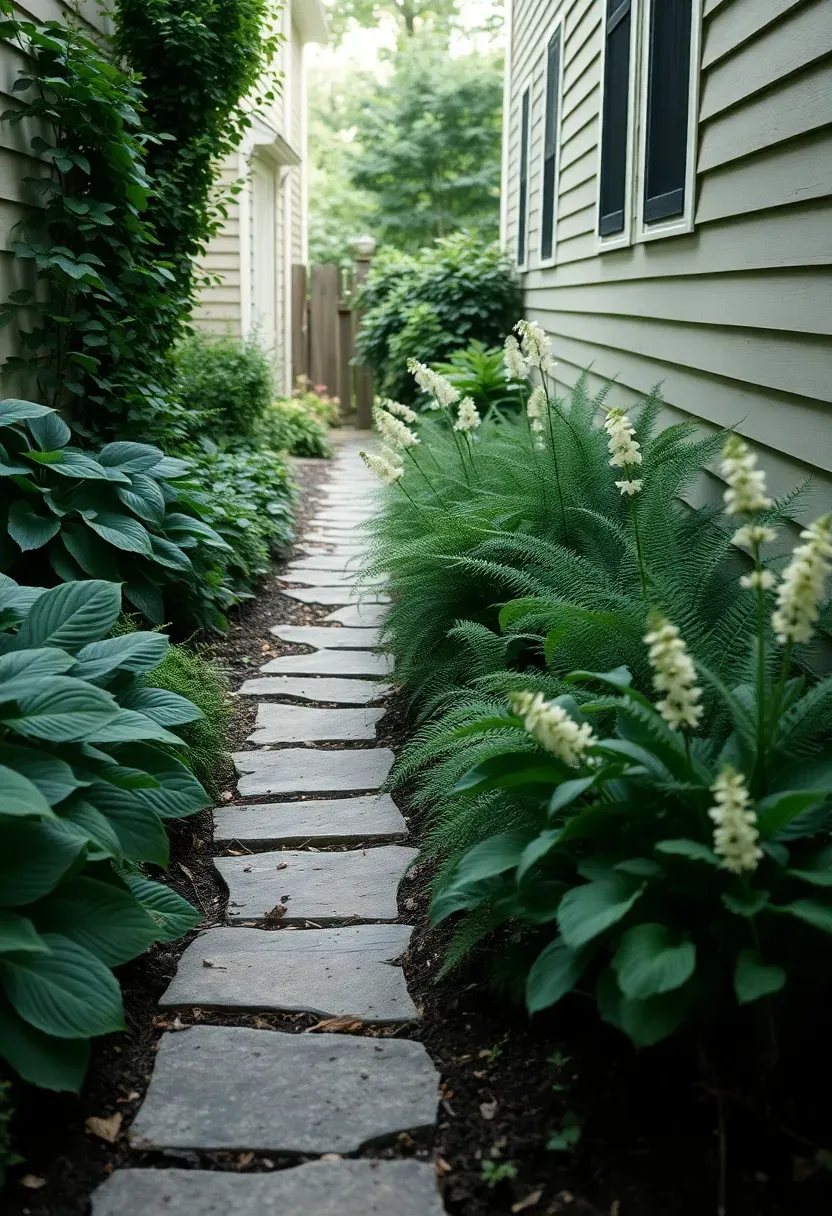
That forgotten strip between your house and the fence — too narrow for anything useful, too visible to ignore. AI design tools measure the width from your photo and generate beds that hug both walls with a stepping stone path threaded down the center.
Shade tolerance drives the plant selection since side yards receive limited direct sun. The software fills these beds with hostas, heucheras, astilbe, and native ferns that thrive in low light and tolerate root competition from nearby trees. Uplighting mounted at ground level transforms the side yard from a neglected corridor into a dramatic nighttime passage.
Tips for Narrow Spaces
- Use a single repeating plant species on each side for a clean, intentional look
- Choose light-colored foliage or white flowers to brighten shaded areas
- Install a simple drip line along each bed since narrow spaces between structures often miss rainfall
Recommended
Items for this idea
17. Island Bed in Open Lawn
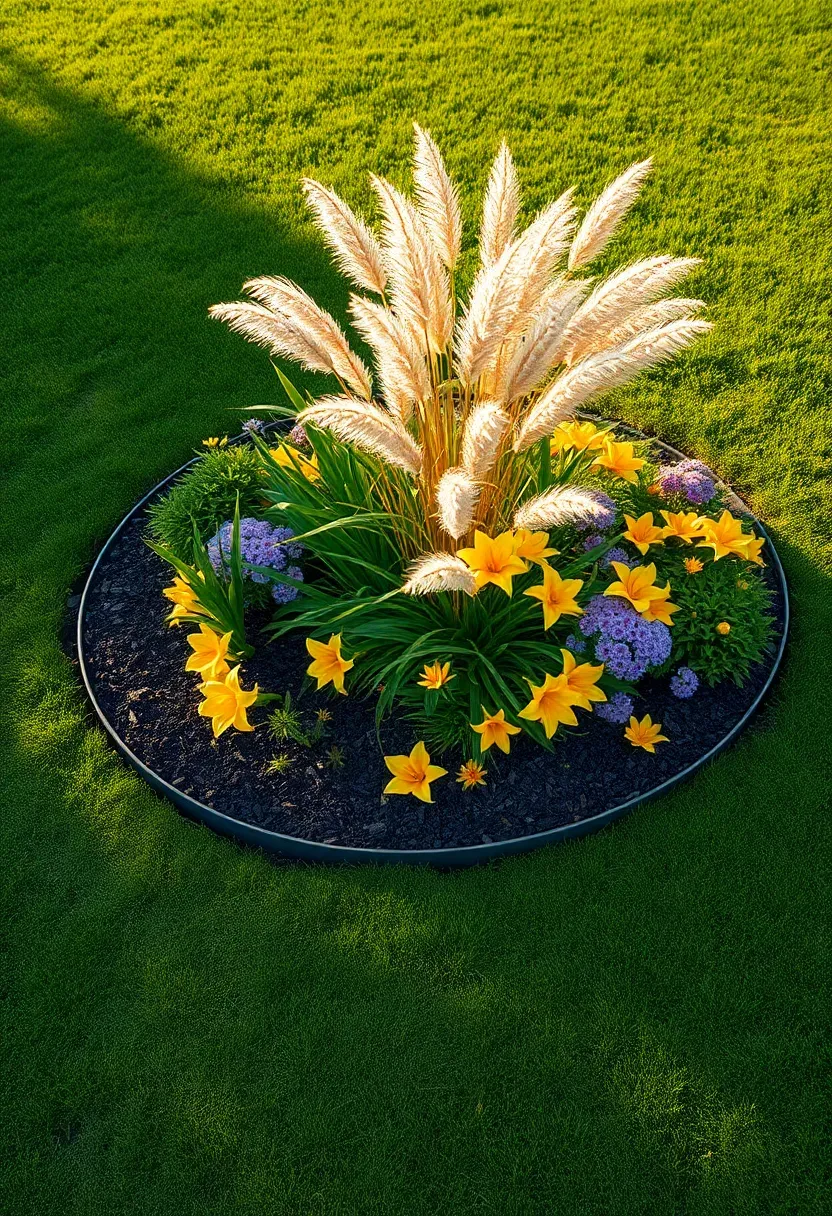
An island bed breaks the monotony of a large, flat lawn without requiring permanent structural changes. Because it is visible from every direction, the planting plan must work in 360 degrees — no front or back, just a seamless composition that looks good from the patio, the street, and the neighbor's yard.
AI design tools handle this multi-angle challenge by generating overhead and perspective renderings from eight compass points simultaneously. They place the tallest plants in the center and taper heights outward to the perimeter, ensuring no view is blocked. The shape itself — usually an elongated oval or kidney bean — creates more visual interest than a plain circle.
Tips for Island Beds
- Position the long axis perpendicular to your primary view for maximum visual depth
- Mulch heavily at the edges where lawn mowers tend to scalp the bed border
- Use a mix of evergreen structure plants and seasonal bloomers so the island has presence year-round
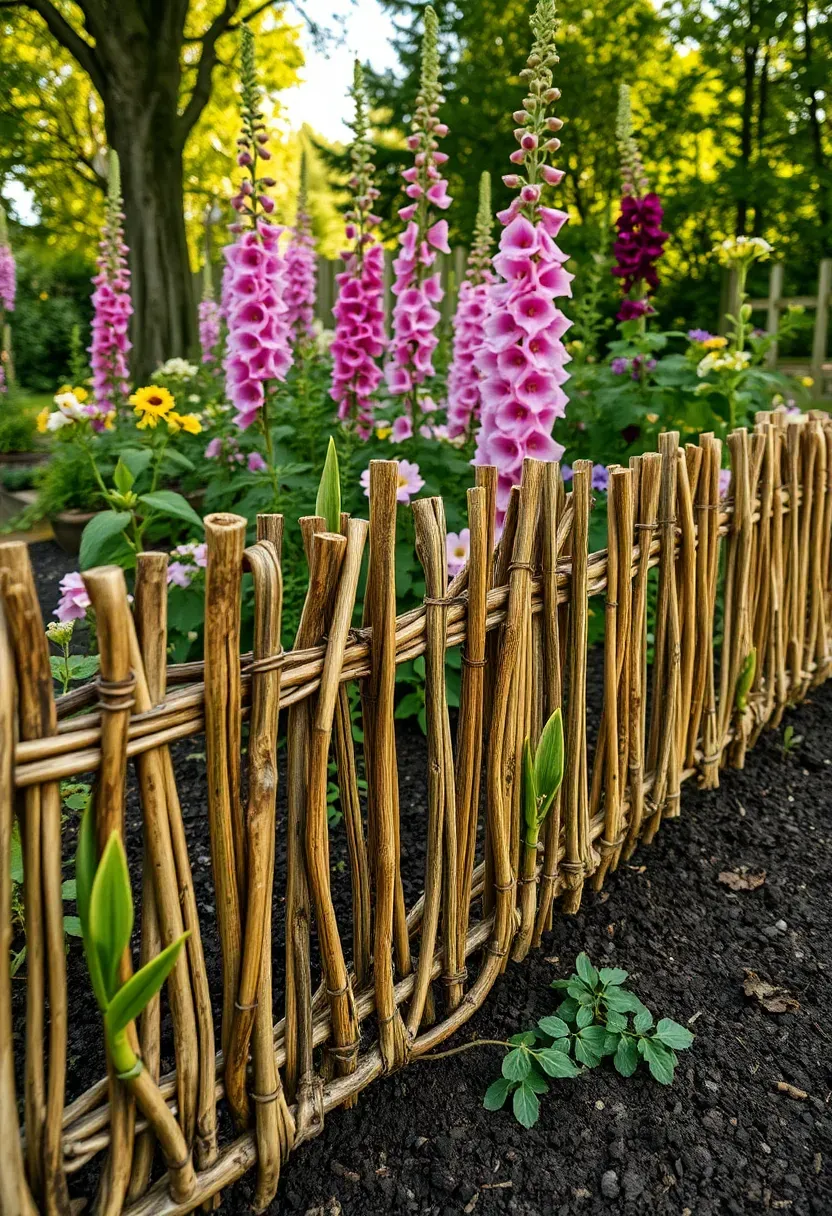
18. Woven Willow Edge Beds
Origins
Wattle fencing — panels woven from flexible willow or hazel branches — predates written history. Neolithic farmers used it to contain livestock and define garden plots across Northern Europe. The technique requires no hardware, no mortar, and produces a fence that biodegrades gracefully back into the soil.
Modern Interpretation
AI design tools render woven willow edges with photorealistic accuracy, letting you visualize the rustic texture against your existing garden before cutting a single branch. The software calculates how many uprights and weavers you need for a given bed perimeter and flags the ideal harvest time for your local willow variety. Living willow stakes root in place and sprout new growth, creating a green edge that strengthens over time rather than deteriorating. The organic shape pairs naturally with cottage-style plantings and wildflower meadows.
How to Apply at Home
- Source freshly cut willow in late winter when branches are most flexible
- Drive uprights 12 inches into the ground and weave horizontally in alternating passes
- Use living willow for a permanent, self-renewing edge or dried willow for a purely decorative border
- Spray the weave with water during construction to prevent cracking on tight bends
Recommended
Items for this idea
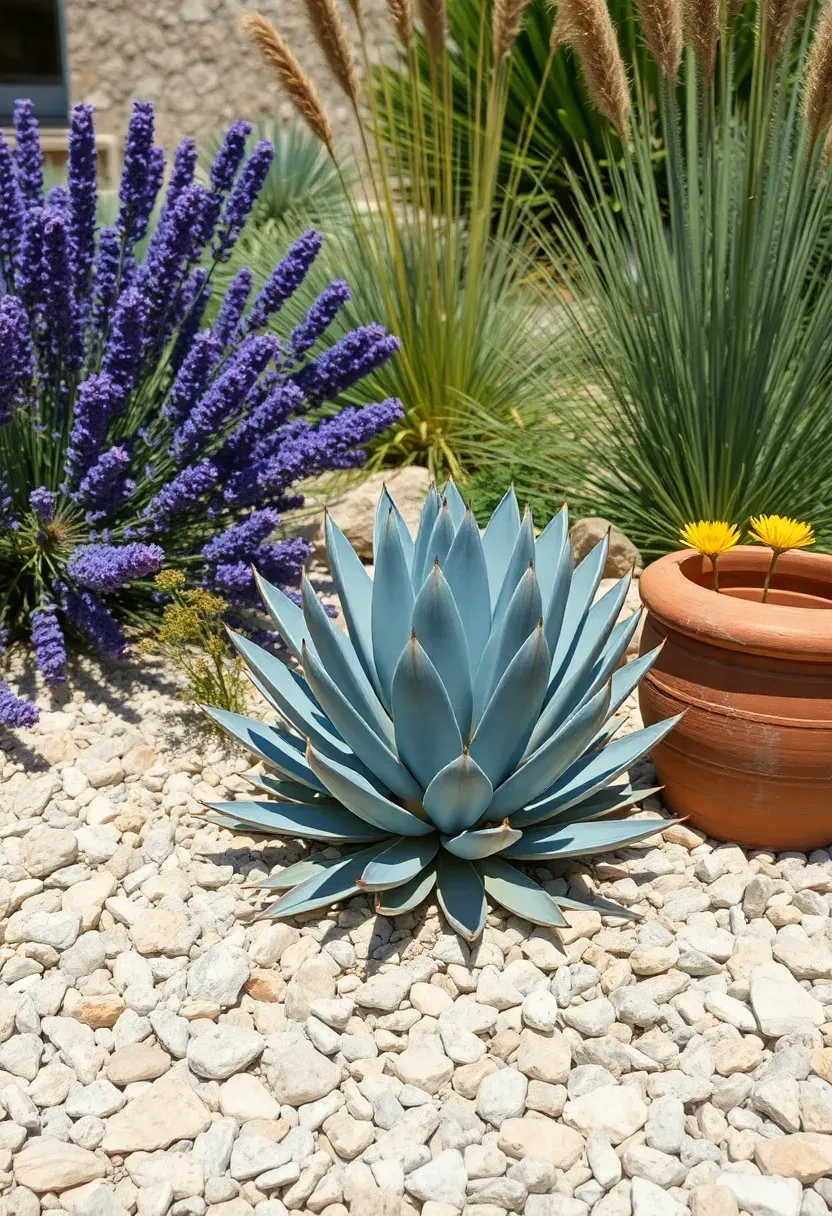
19. Gravel Garden Dry Bed
Water restrictions and rising utility bills are pushing more gardeners toward xeriscaping, and a gravel garden bed delivers the aesthetic without sacrificing visual richness. AI tools select drought-tolerant species from a database filtered by your hardiness zone, annual rainfall, and soil type, then arrange them in naturalistic drifts through a gravel mulch that suppresses weeds and retains whatever moisture the sky provides.
The look is Mediterranean or desert-modern depending on your plant palette. Lavender, santolina, and euphorbia evoke Provence. Agave, yucca, and desert marigold channel the American Southwest. Either way, the result is a garden that thrives on neglect once established — no irrigation system, no weekly mowing, no fertilizer schedule.
Tips for Dry Garden Success
- Lay landscape fabric under gravel only in paths — in planting areas, let gravel sit directly on soil so self-seeding plants can establish
- Choose angular gravel over rounded pea gravel, which shifts underfoot and migrates out of beds
- Group plants by water need so occasional irrigation targets thirsty specimens without overwatering their neighbors
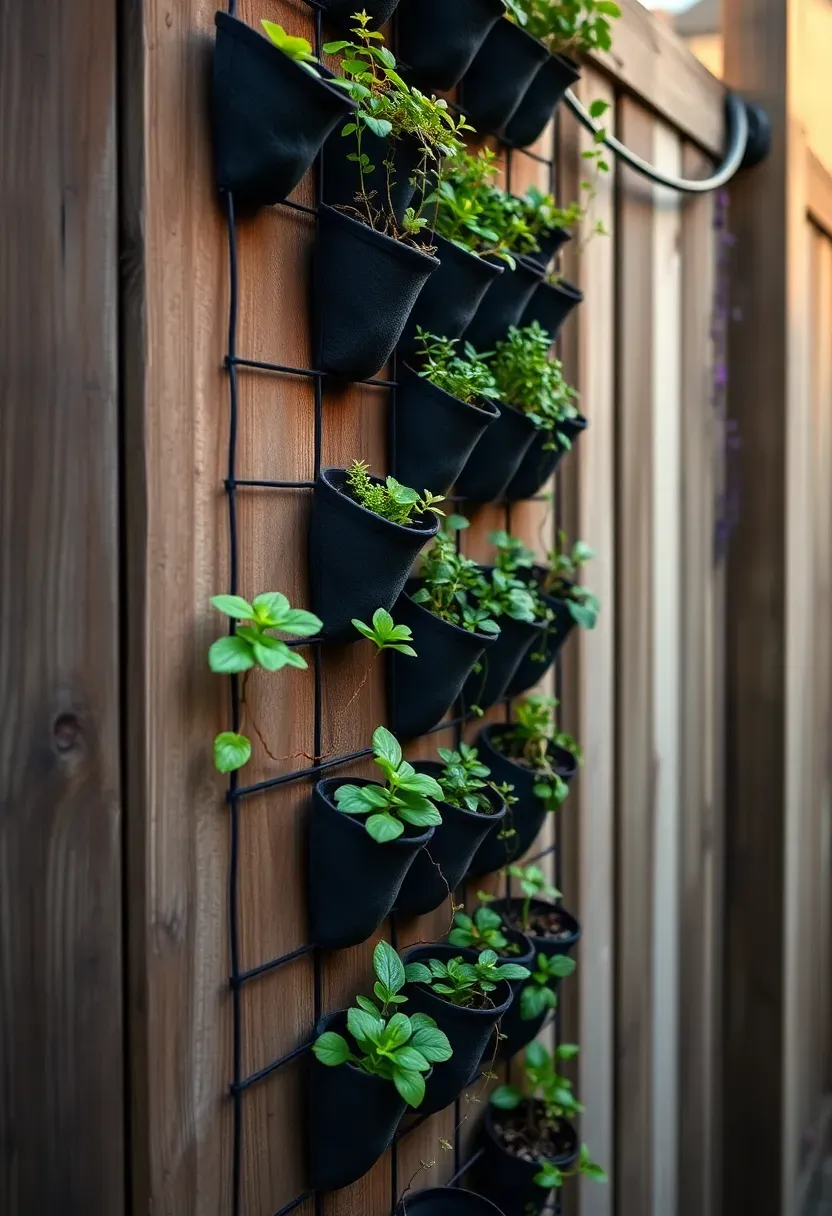
20. Vertical Living Wall Bed
When your yard measures in square feet rather than square yards, walls and fences become your primary growing surface. A vertical living wall — modular felt pockets, stackable planters, or a custom-built panel with drip irrigation — converts a blank fence into a productive garden without claiming a single inch of floor space.
AI layout tools assign each pocket based on sunlight exposure at that specific height on your wall. Top rows get the most sun and heat, making them suitable for rosemary and trailing nasturtiums. Lower pockets receive more shade and stay cooler, perfect for lettuce and mint. The software designs the irrigation manifold so water trickles from the top tier downward, reaching every pocket evenly.
Tips for Living Walls
- Use a waterproof membrane between the planter and fence to prevent moisture damage to the structure
- Choose lightweight growing media — a mix of coco coir and perlite — to reduce load on mounting hardware
- Harvest frequently from edible walls since overcrowded pockets restrict airflow and invite fungal disease
Recommended
Items for this idea
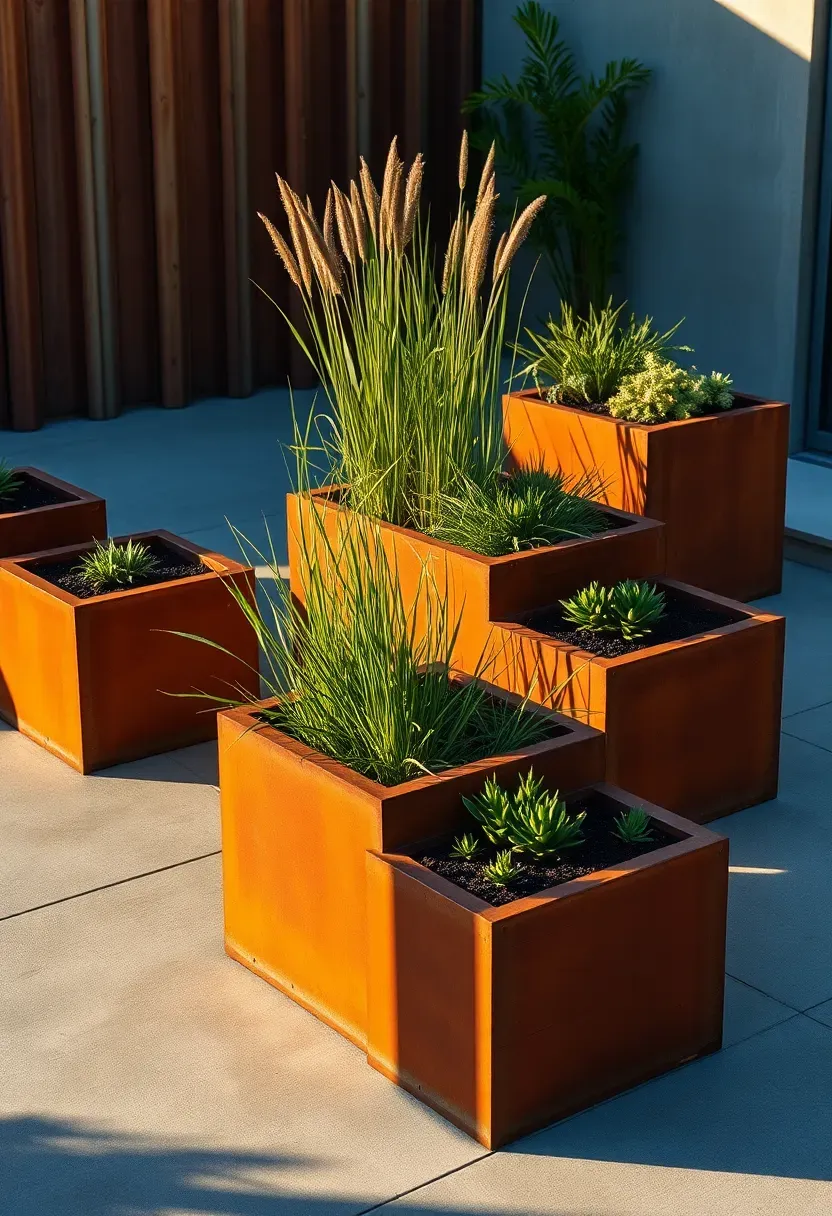
21. Modular Corten Steel Beds
Corten steel — the weathering steel that develops a stable rust patina — has migrated from highway bridges and public sculpture into residential garden design. The warm orange-brown surface pairs remarkably well with green foliage, and the material requires zero maintenance once the patina stabilizes after one to two years of outdoor exposure.
AI design tools arrange modular Corten panels in staggered heights and lengths that create a sculptural landscape element, not just a planting container. The software calculates steel gauge and panel dimensions to resist soil pressure at each height, ensuring panels hold their shape without bowing. Smaller cubes cluster near seating areas for herbs and trailing plants, while taller rectangles anchor the background with ornamental grasses or small shrubs.
Tips for Corten in the Garden
- Position new Corten beds on gravel or hardscape for the first year — rust runoff stains concrete and light-colored stone
- Line the interior with plastic sheeting if planting edibles, as prolonged soil contact with rusting steel can raise iron levels beyond ideal ranges for some crops
- Combine different heights in odd numbers — groupings of three or five feel more natural than symmetrical pairs
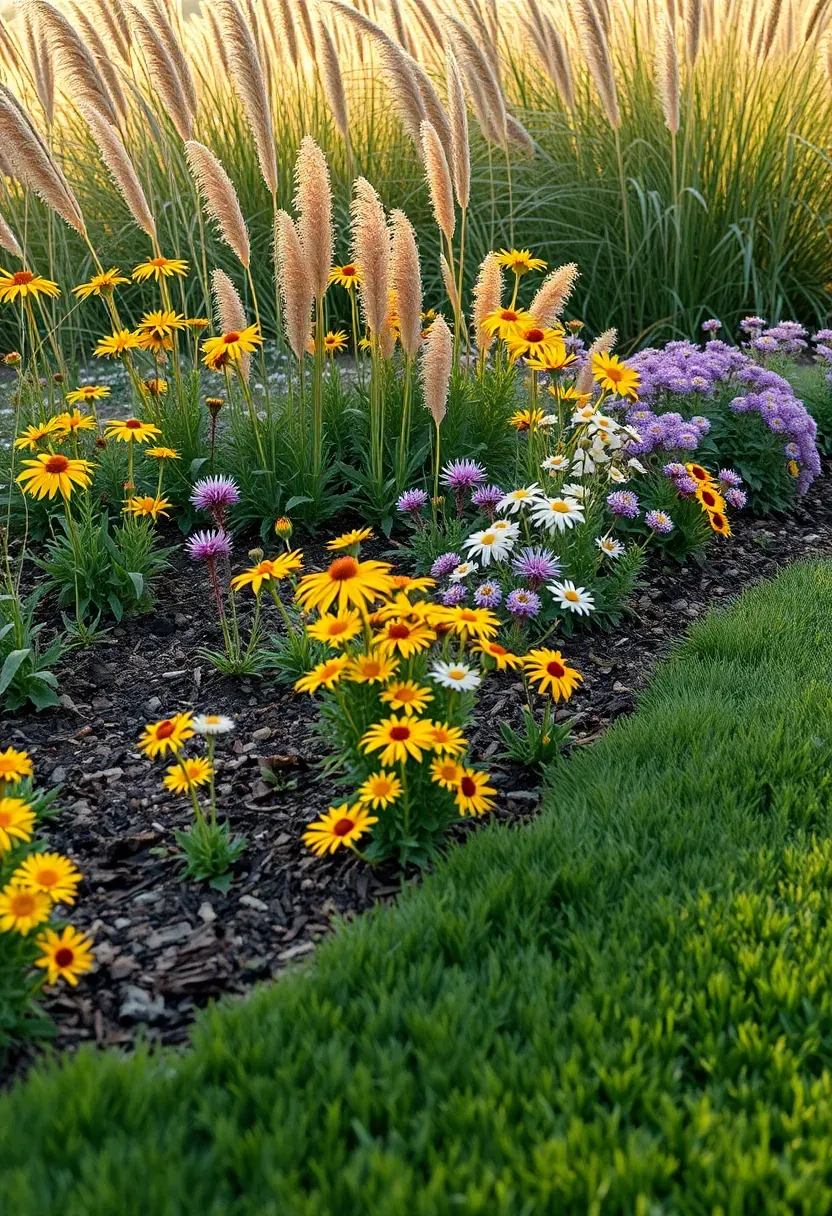
22. Free-Form Naturalistic Drift
Forget rulers and string lines. A naturalistic drift bed mimics the way plants colonize open ground in nature — loose clusters that overlap, merge, and fade at irregular edges. AI planting algorithms generate these drifts using ecological modeling, placing species in combinations that would naturally co-occur in your region's native plant communities.
The result looks effortless but performs with precision. Each drift blooms in sequence, provides ground coverage that suppresses weeds, and supports local wildlife from insects to songbirds. The irregular bed edge blends seamlessly into mowed lawn, eliminating the need for hard edging materials.
Tips for Naturalistic Planting
- Plant in odd-numbered groups — 5, 7, or 9 of the same species — for drift authenticity
- Allow seed heads to stand through winter for wildlife food and architectural interest
- Mow a clean lawn edge once monthly to maintain the contrast between wild bed and tidy turf

Recommended
Items for this idea
23. Mandala Garden Layout
A mandala garden arranges planting beds in concentric circles with radiating paths, creating a pattern that is as functional as it is beautiful. The circular design minimizes walking distance between beds — you stand at the center and every plant is within a few steps. AI permaculture tools optimize the radius of each ring and the angle of each spoke path based on your yard size and crop list.
The inner ring typically holds the most frequently harvested herbs and salad greens. Middle rings handle medium-maintenance vegetables. The outer ring supports perennial fruits, compost bins, and beneficial insect habitat. This arrangement follows the permaculture zone principle, where things you interact with daily sit closest to the center.
Tips for Mandala Gardens
- Mark the center point with a stake and use a rope compass to scribe each ring directly on the ground
- Curve the spoke paths slightly rather than making them perfectly straight — it softens the geometry
- Dedicate one triangular section as a permanent flower bed for pollinators that serve the entire mandala
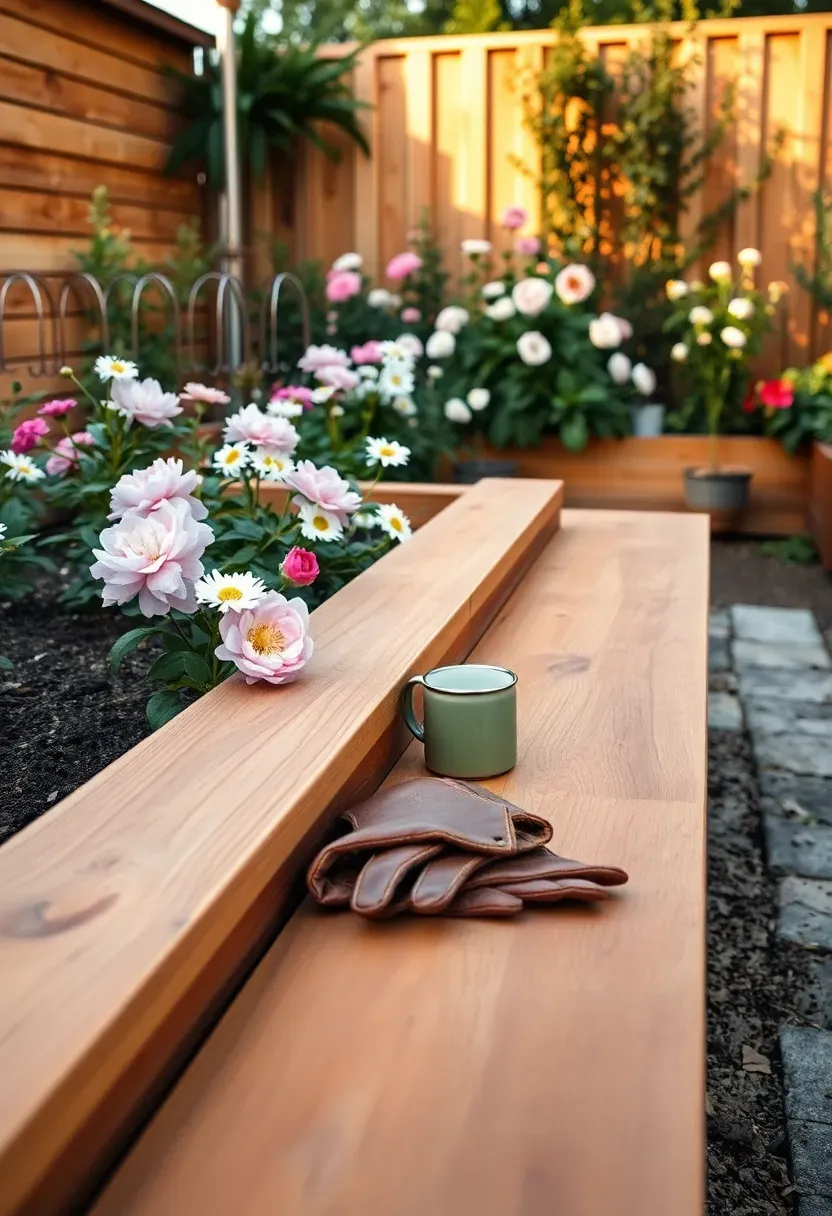
24. Raised Bed With Built-In Seating
A garden should be a place to linger, not just labor. Building a wide cap or bench seat along the top edge of a raised bed turns the structure into both a planting container and an outdoor seating element. AI design tools calculate the seat height, depth, and material thickness needed for comfort — typically 18 inches off the ground with a 12-inch-wide cap that accommodates sitting without crushing plants behind you.
The dual function saves space by eliminating the need for separate benches or chairs near the garden. Guests gather at the bed edge during parties, gardeners rest between tasks, and children sit while learning to plant seeds. The wide cap also serves as a staging surface for tools, harvested vegetables, and drinks.
Tips for Comfortable Bed Seating
- Sand wooden caps smooth and apply a food-safe sealant if the bed holds edibles
- Angle the seat cap with a slight forward tilt so rainwater drains off rather than pooling
- Position the seating side to face the best view — the rest of the garden, a water feature, or the sunset
Recommended
Items for this idea
25. Espalier Border Bed
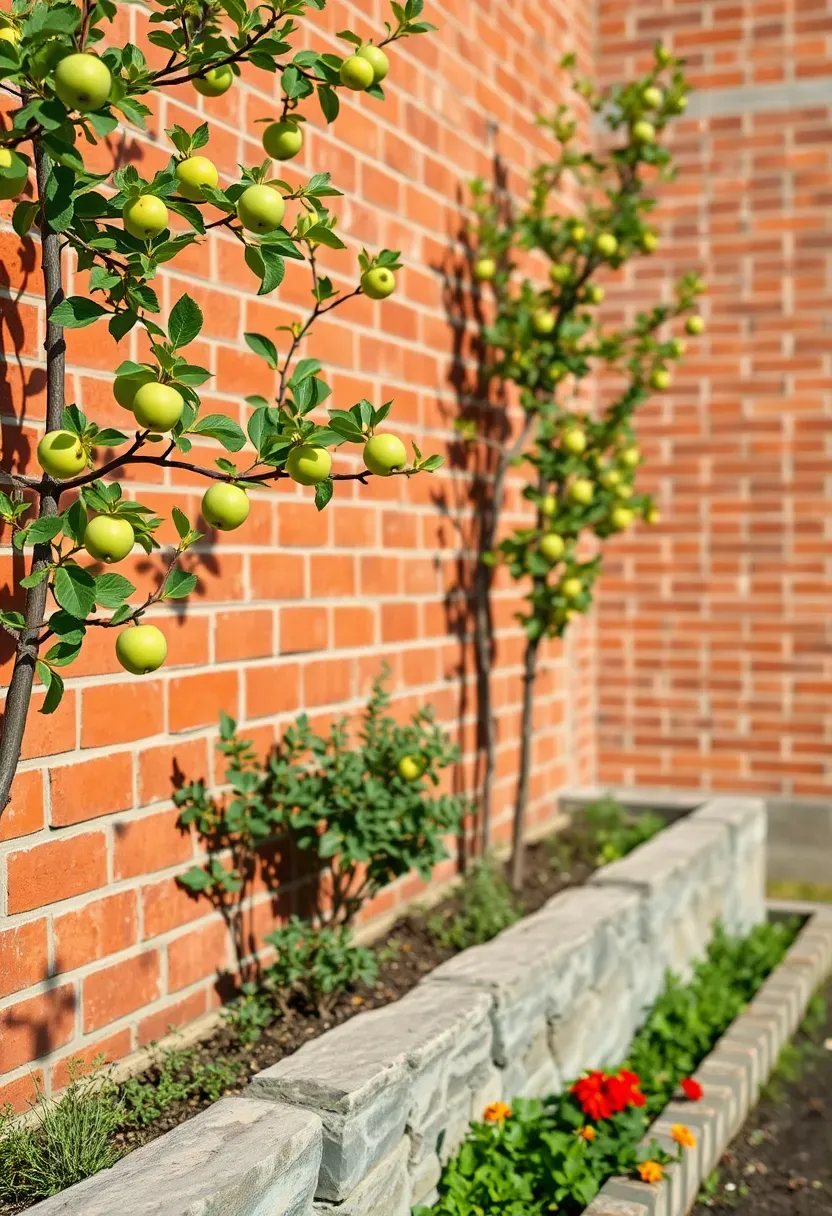
Espalier — the art of training fruit trees flat against a wall or wire framework — collapses a 20-foot tree canopy into a 12-inch-deep living fence. AI tools design the trellis grid spacing and suggest pruning angles for each branch tier, maximizing fruit production while keeping the tree within its two-dimensional plane.
The narrow bed at the base of the espalier holds companion plants: low herbs that attract pollinators, strawberries that benefit from the reflected warmth of the wall, or ornamental ground covers that suppress weeds around the trunk. Together, the flat tree and its underplanting create a productive garden wall that doubles as a privacy screen and a visual masterpiece.
Tips for Espalier Beginners
- Start with apple or pear trees on dwarfing rootstock — they respond best to training
- Install horizontal wires at 18-inch intervals and tie branches while they are young and flexible
- Prune in summer to control growth and in winter to shape structure
26. Shade Garden Woodland Bed
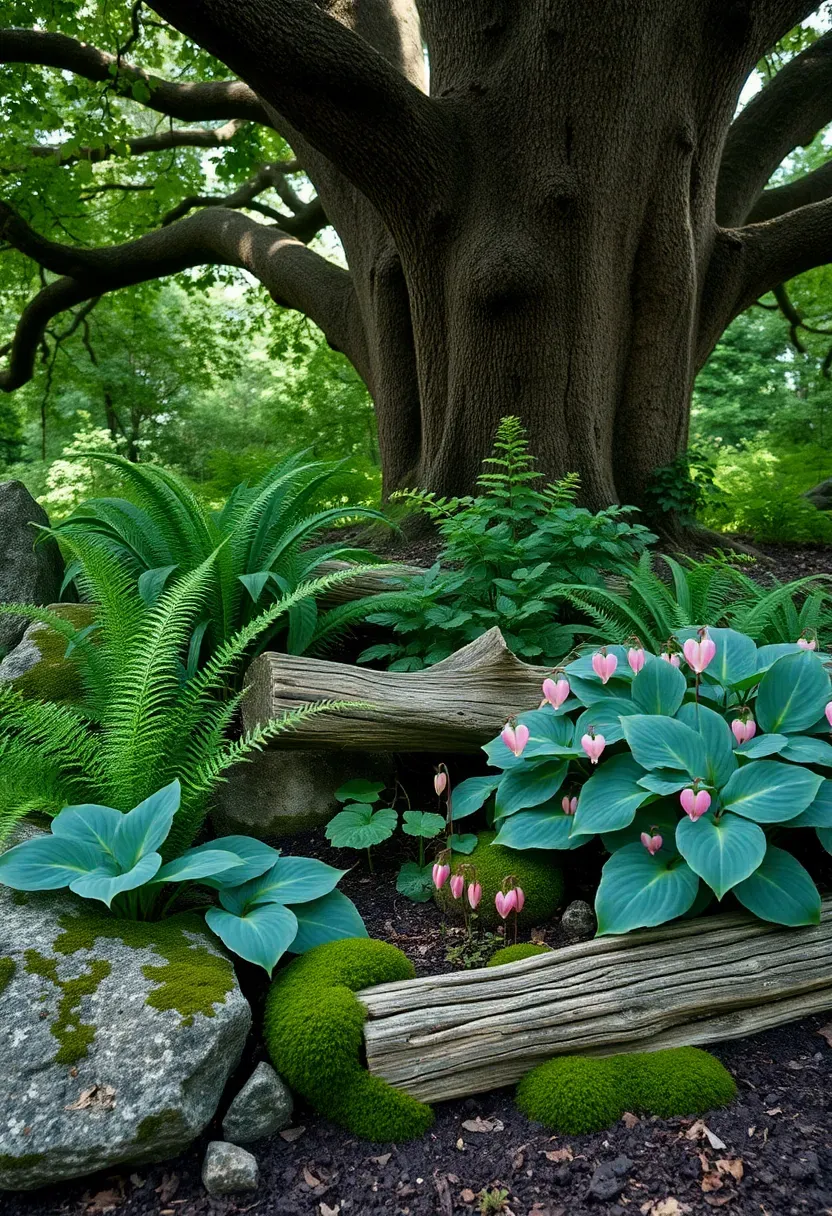
That dark patch under the old oak where grass refuses to grow is not a problem — it is a shade garden waiting to happen. AI design tools analyze the density and duration of shade from your tree canopy photos, then build a planting plan using species that thrive with minimal direct sun.
The layered approach mimics a natural forest floor. Tall native shrubs form the upper canopy layer. Medium-height perennials like astilbe, heuchera, and bleeding heart fill the mid-story. Ground-level ferns, mosses, and sweet woodruff carpet the floor. The overall effect is cool, quiet, and richly textured — a garden that feels like stepping into a forest clearing.
Tips for Shade Beds
- Improve soil with generous compost before planting — tree roots compete aggressively for nutrients
- Choose white and pale-colored flowers that glow in low light rather than dark reds and purples that disappear
- Add a few large mossy stones or a fallen log section for naturalistic structure and seating
Recommended
Items for this idea
27. Edible Landscape Front Yard Bed
The front lawn — that patch of thirsty grass we mow weekly and never use — is the most wasted real estate in American homes. Replacing it with an edible landscape garden transforms dead space into a food-producing showpiece that feeds your family and starts conversations with every neighbor who walks past.
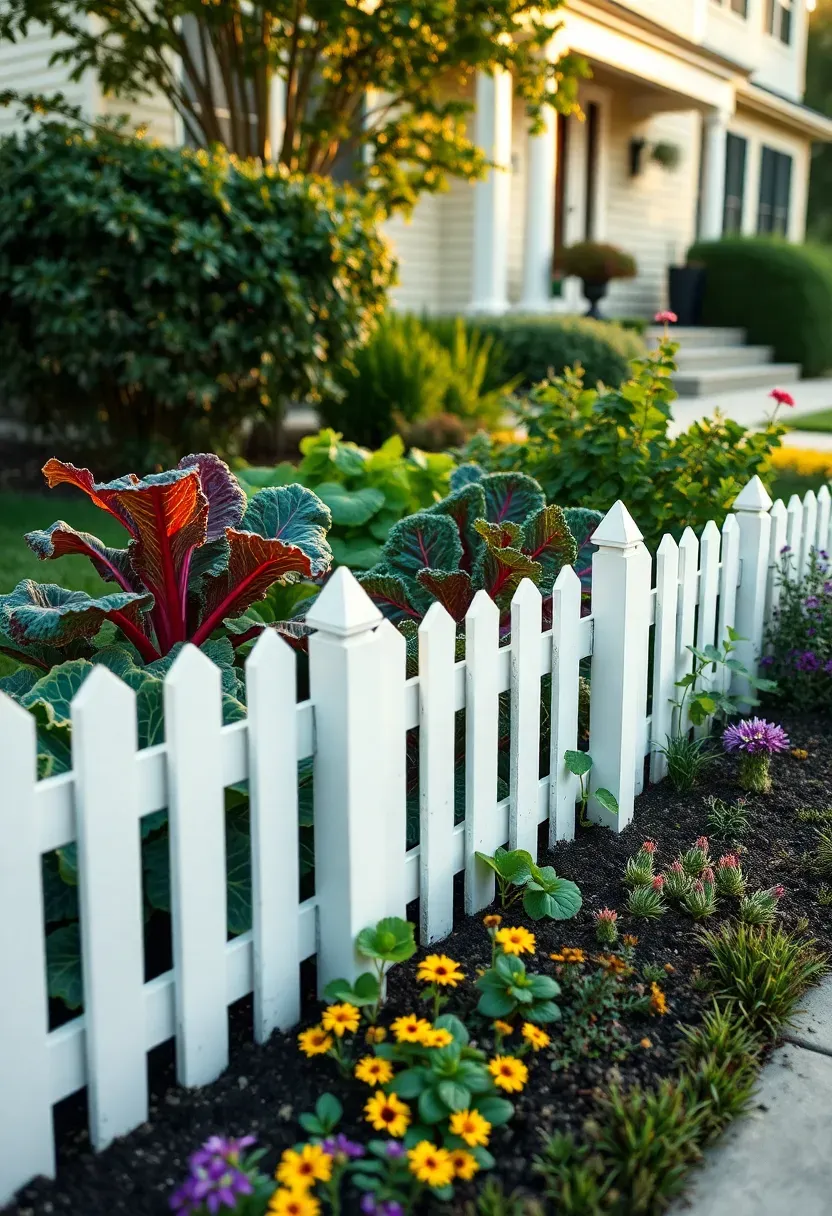
AI design tools lay out front yard edibles in attractive patterns that satisfy both homeowner association aesthetics and productive growing goals. Berry bushes form a low hedge along the property line. Raised beds hold rotating vegetable crops screened behind a border of ornamental kale and flowering herbs. Fruit trees anchor the corners. The software checks your local ordinances and HOA rules to flag potential conflicts before you break ground.
Tips for Edible Front Yards
- Border the garden with ornamental flowers to signal intentional design rather than neglect
- Include evergreen herbs like rosemary and sage for winter structure when annual crops are dormant
- Label unusual plants with small garden markers — it educates passersby and preempts complaints
- Start with one bed and expand over time to gauge neighbor reactions and your own maintenance capacity
Quick FAQ
Is AI-generated garden bed design accurate enough to follow without adjustments? AI layouts provide an excellent starting framework, but on-the-ground conditions always require some adaptation. Soil quality varies across even small yards, tree roots redirect planned bed placements, and actual sunlight patterns may differ from what photographs suggest. Use the AI output as a detailed blueprint, then fine-tune based on what you observe during the first growing season.
Should I build raised beds or plant directly in the ground? That depends on your existing soil. If your yard has heavy clay, poor drainage, or contaminated fill, raised beds let you control the growing medium completely. If you have decent loam with good structure, in-ground beds save material costs and connect plant roots to a deeper water table. AI tools can suggest the right approach based on your soil description.
Which bed shape works best for small yards under 500 square feet? Keyhole beds, L-shaped corner beds, and vertical tiered planters extract the most growing area from tight spaces. AI layout tools specifically excel at small-yard optimization because they test dozens of configurations in seconds, finding arrangements that a human sketching on graph paper would likely miss.
Can I mix ornamental and edible plants in the same bed? Absolutely, and AI design tools encourage it. Mixing edibles with flowers improves pollination, confuses pest insects that hunt by sight, and makes the garden visually richer. Place tall edibles like tomatoes and peppers where you would normally position ornamental focal points, and border beds with low herbs and edible flowers like nasturtiums and violas.
What is the cheapest way to edge a garden bed? Trenched edges — a clean V-cut between lawn and bed maintained with a half-moon edger — cost nothing and look sharp when refreshed each spring. For more permanent solutions, salvaged brick or stone from demolition sites often costs only the effort of hauling it. AI tools can render both options against your yard so you can compare before spending money.
Gardening rewards patience, but planning rewards precision. These 27 AI-generated bed layouts give you the precision part upfront, compressing weeks of sketching and second-guessing into a few minutes of software rendering. Pick one concept that matches your space, your climate, and the amount of time you honestly want to spend weeding — then let the plants do their thing. The soil does not care whether the design came from a landscape architect or an algorithm. It only cares that you showed up and started digging.
Pinterest cover for 27 AI Garden Bed Layout Ideas
About the author
OBCD
CGI visualization and interior design content. We create detailed 3D renders and curate practical design ideas for every room in your home.