29 AI Lighting Layout Ideas for Every Room
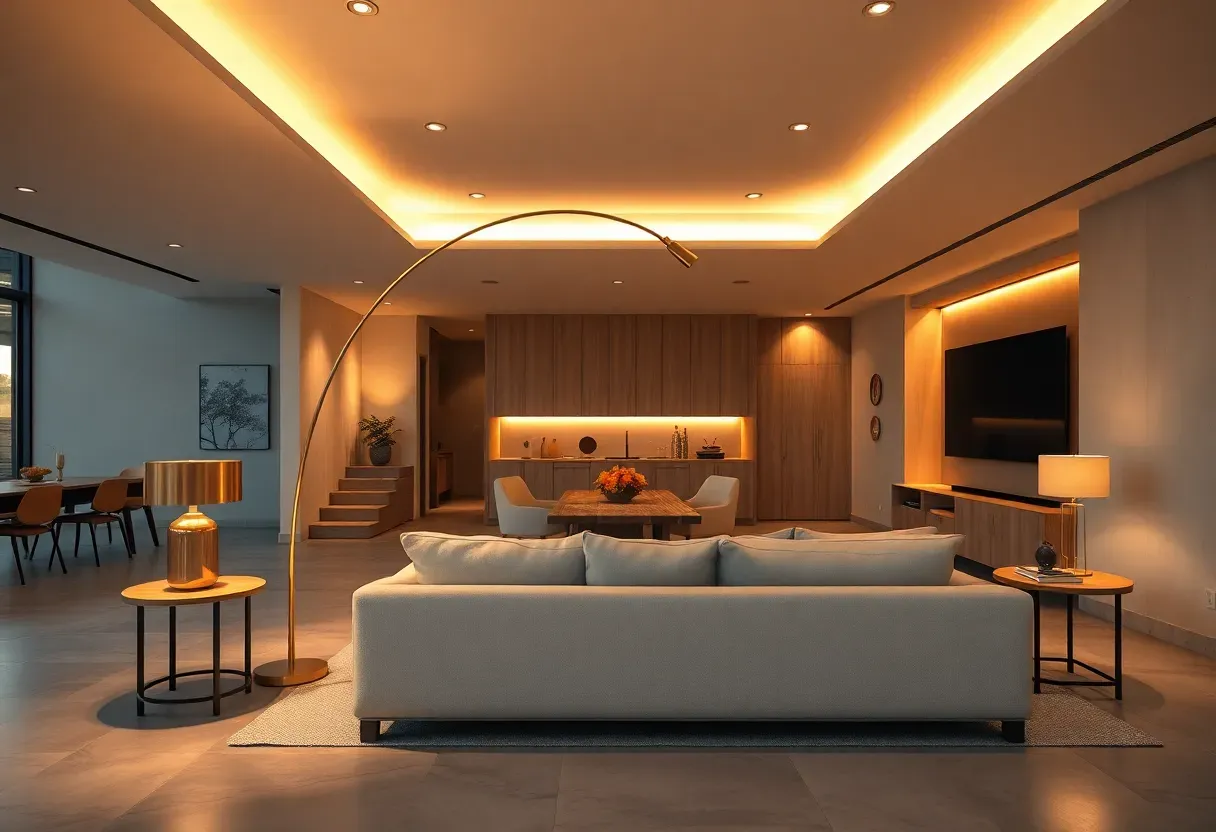
We've all felt that moment when a room looks exactly right in design photos but something feels flat and dim in real life. The culprit is almost always lighting — specifically, the absence of a thought-through layout. Artificial intelligence has changed how designers and homeowners alike approach this challenge. AI tools can analyze room dimensions, natural light patterns, ceiling height, and surface reflectance, then generate layered lighting plans that would have taken an experienced designer weeks to draft. The result is a smarter, faster route to rooms that feel alive at every hour of the day.
Below you'll find 29 AI lighting layout concepts spanning every room type and design style. Ready? Let's dive in.
Table of Contents
- Layered Ambient Living Room
- Task-First Kitchen Island
- Cove Ceiling Bedroom Glow
- Biophilic Sunroom Scheme
- Dramatic Entry Hall
- Dining Room Pendants and Perimeter
- Bathroom Mirror and Shower Zones
- Home Office Circadian Layout
- Staircase Step Lighting
- Children's Room Adaptive Layers
- Scandinavian Bedroom Warmth
- Moody Library Reading Alcove
- Kitchen Cabinet and Toe-Kick Glow
- Open-Plan Living-Dining Split
- Spa Bathroom Waterproof Scheme
- Accent Wall Grazing Technique
- Hallway Recessed Sequence
- Japandi Bedroom with Paper Pendants
- Garage Workshop Task Grid
- Basement Home Cinema
- Outdoor Patio Layered Scheme
- Mudroom Entry Functional Glow
- Nursery Dimmer-Controlled Layout
- Boho Living Room Edison Layers
- Walk-In Closet Colour-Accurate Lighting
- Attic Studio Task and Ambient Mix
- Eclectic Dining Room Gallery Wall Lighting
- Balcony Evening Ambient Scheme
- Whole-Home Circadian Smart System
1. Layered Ambient Living Room
Why One Overhead Light Is Never Enough
Most people install a single ceiling fixture and call it done. The result is a flat, shadowless environment that reads more like a waiting room than a home.
The Solution
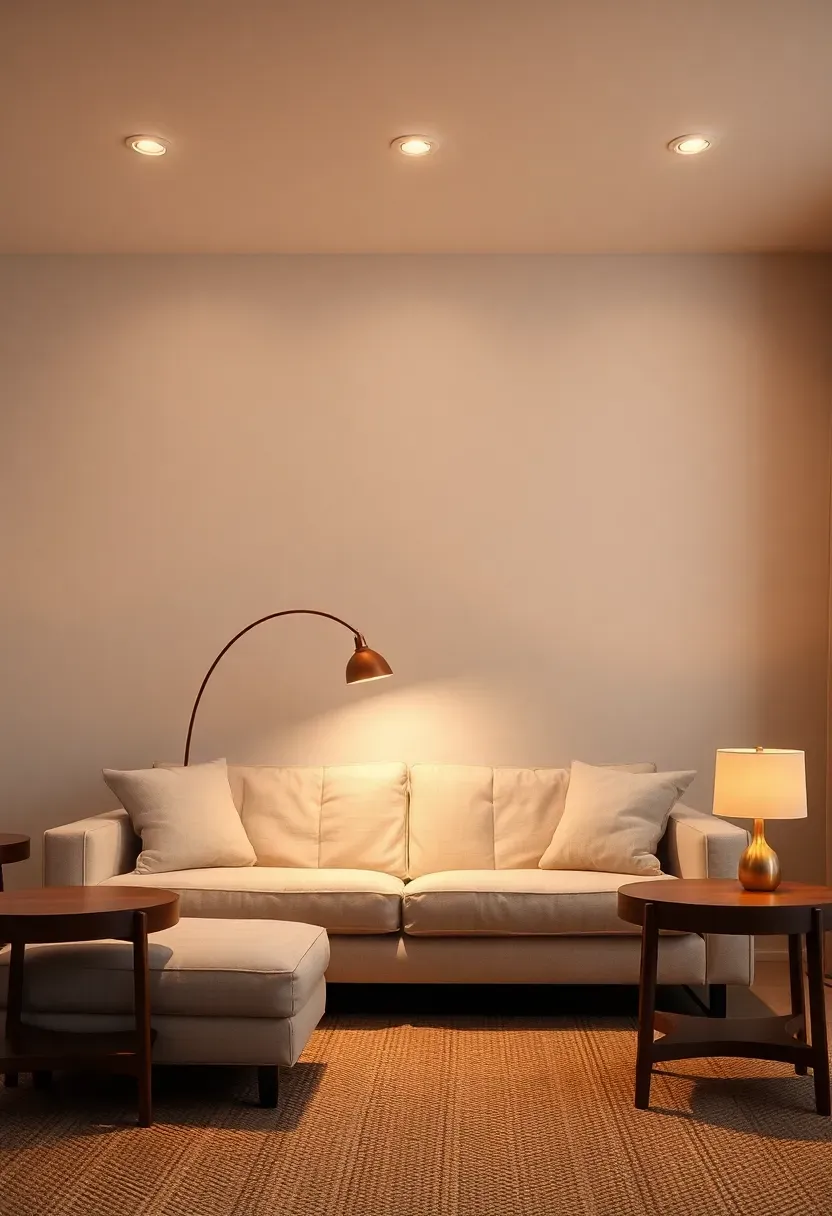
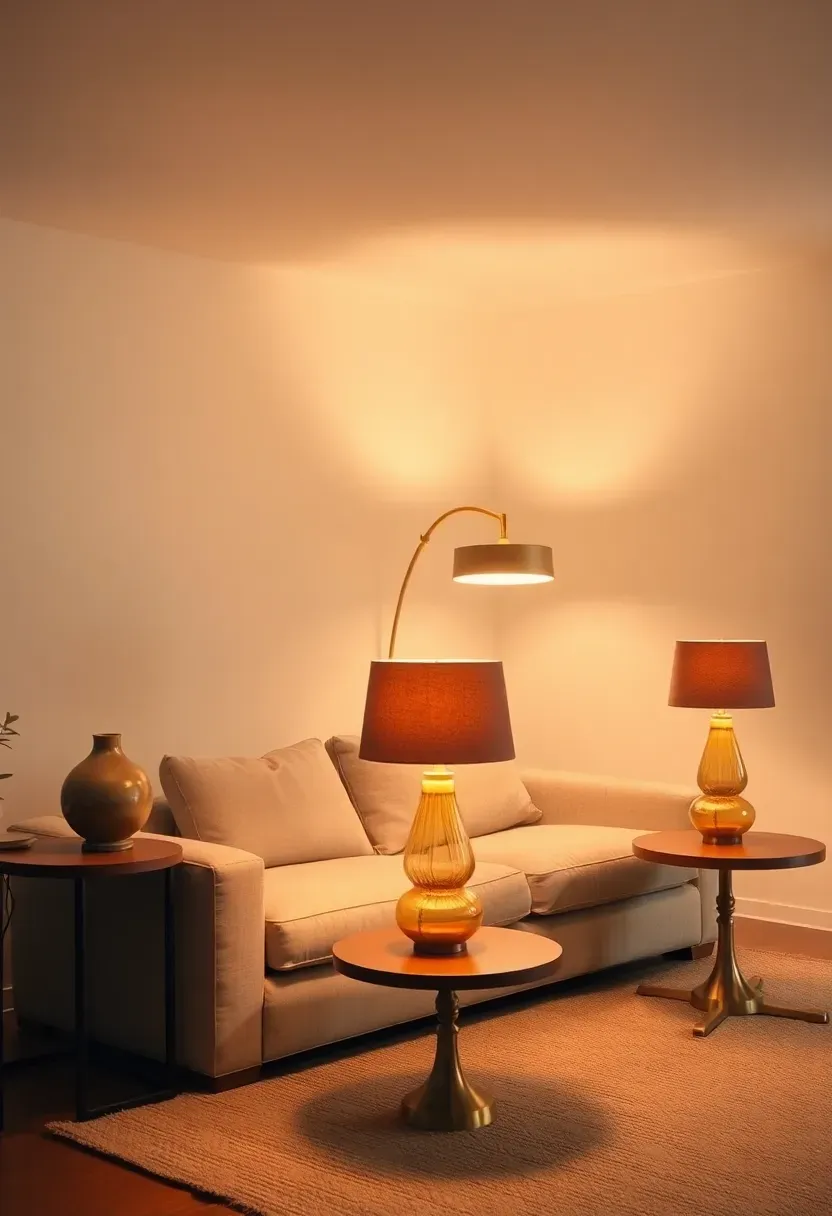
AI lighting tools identify three distinct zones in a typical living room — seating, circulation, and display — then assign a fixture type to each. Recessed downlights handle circulation, floor lamps anchor the seating zone, and LED strip lighting traces shelving or a TV console perimeter. Colour temperature is unified at 2700 K for a cohesive warm tone.
Pros and Cons
Pros: Dramatically richer atmosphere; each zone can be controlled separately; adapts to morning reading and evening film watching alike.
Cons: Requires multiple circuits or a smart dimmer system; initial fixture count is higher than a basic setup.
We picked a few things that go well with this idea: DAYBETTER Smart IC LED Strip (16ft) (★4.4), NOVOSTELLA Tunable White LED Strip (20ft) (★4.4) and COB Dimmable Tunable White LED Strip (16ft) (★4.1). As an Amazon Associate we earn from qualifying purchases.
2. Task-First Kitchen Island
Step 1: Identify the Work Surface
The island is where chopping, plating, and detail work happen. AI tools measure the surface area and recommend pendant height (typically 700–800 mm above the counter) and lumen output for adequate shadow-free illumination.
Step 2: Layer Perimeter Task Lighting
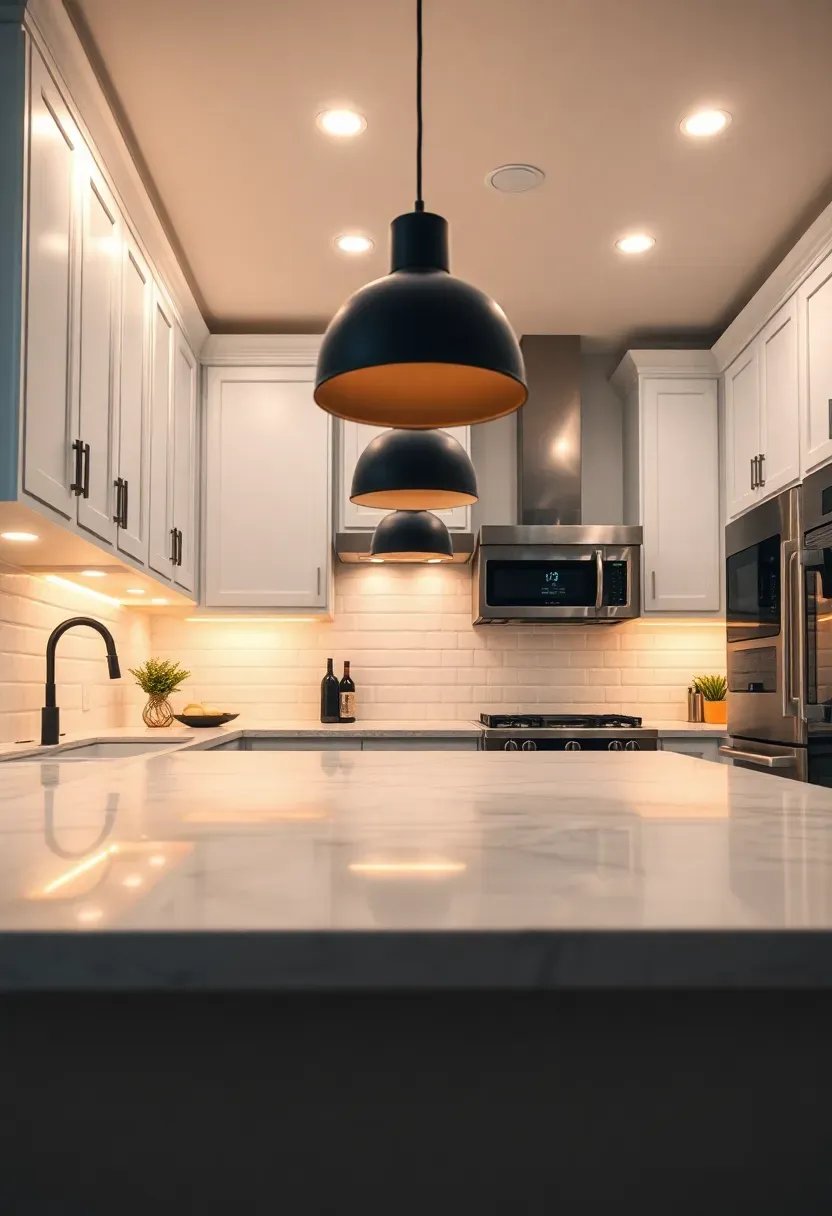
Under-cabinet LED strips bring even illumination to wall counters without glare. The AI calculates strip density based on cabinet depth and ceiling height.
Step 3: Add Ambient Fill
Recessed downlights on a separate dimmer circuit fill the room when the island lights alone create a too-dramatic spotlight effect.
What to Watch Out For
- Avoid warm-white pendants over a food prep zone — 3000 K reads truer for food colour
- Shadow-free lighting requires pendants spread across the island length, not clustered at centre
- Always add a dimmer; full brightness during every dinner service creates fatigue
We picked a few things that go well with this idea: Norb Circadian Wellness Smart Bulb (2-Pack) (★4.0), UltraPro Wi-Fi Tunable Smart Bulb (4-Pack) (★3.9) and Linkind Tunable White Smart Bulb (6-Pack) (★4.4). As an Amazon Associate we earn from qualifying purchases.
3. Cove Ceiling Bedroom Glow
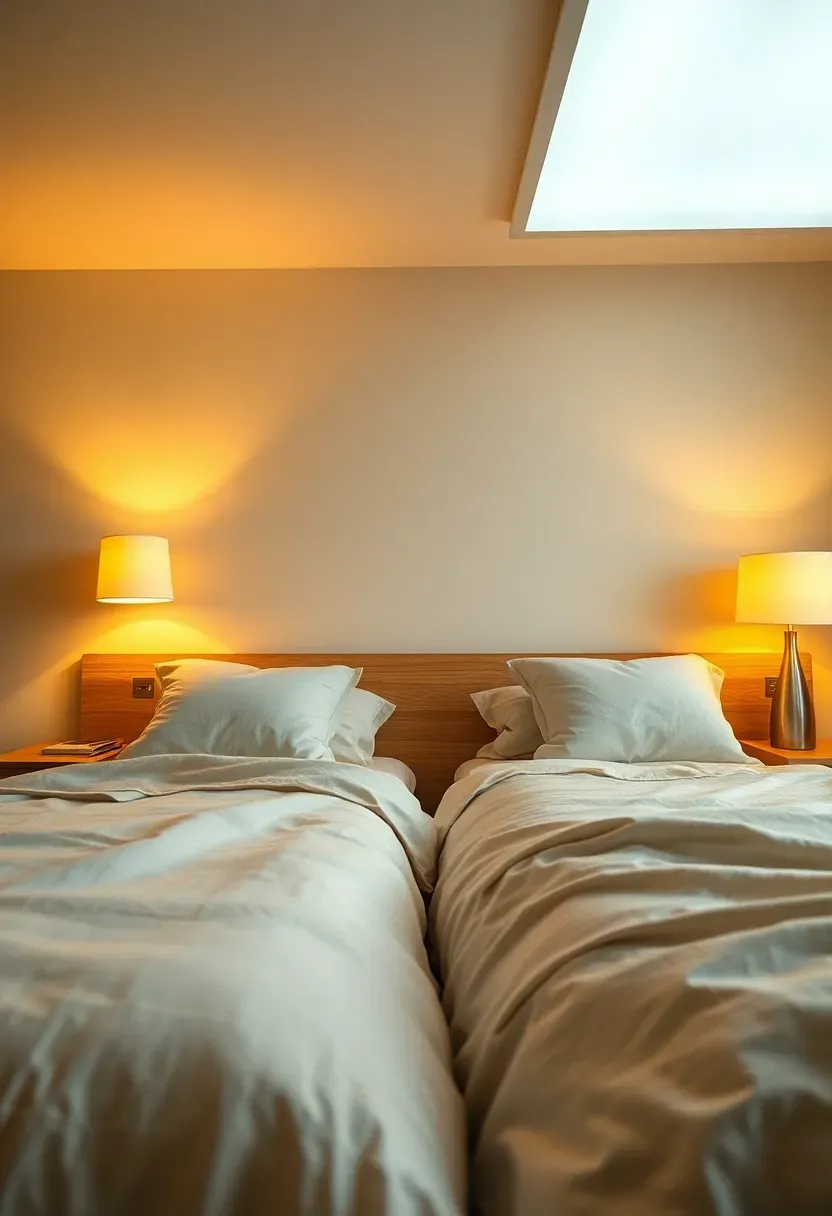
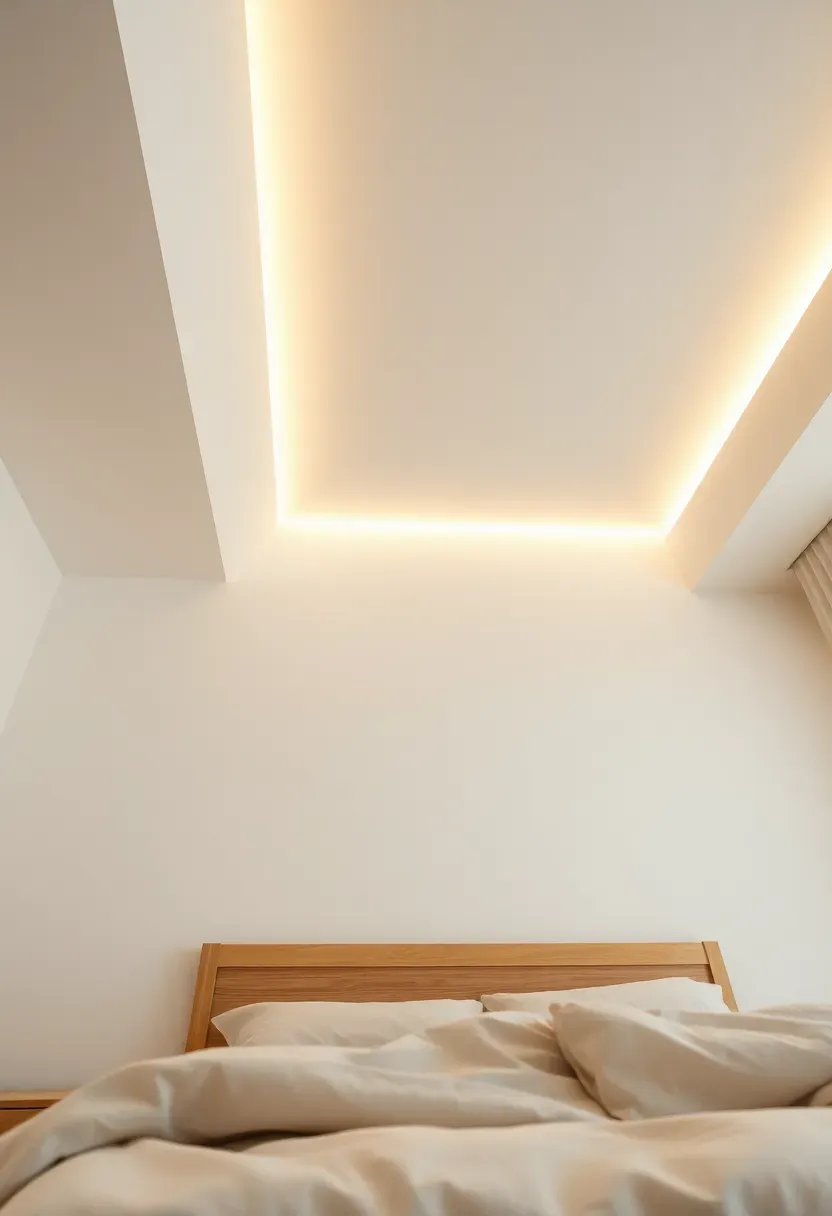
For bedrooms designed around total relaxation, hidden cove lighting is among the most effective AI-recommended layouts. AI drafts the cove dimensions relative to ceiling height — a 30 cm wide cove at 2.7 m ceiling height produces the ideal spill angle without glare or hot-spots. The result is ambient light that feels sourceless, wrapping the room in an even amber warmth. Pair it with a bedside dimmer for reading transition and a scene preset for sleep winding-down.
Practical Recommendations
- Choose LED strips with a CRI above 90 for accurate colour rendering on textiles
- Warm white (2400–2700 K) suits relaxation; avoid daylight strips in bedrooms
- Add a recessed spot on a separate circuit above the wardrobe for functional dressing light
We picked a few things that go well with this idea: Brushed Brass 3-Ring Modern Pendant Chandelier (★4.2), JAYMP Wabi Sabi Bird Nest Pendant (60cm) (★4.4) and JAYMP Wabi Sabi Bird Nest Pendant (40cm) (★4.4). As an Amazon Associate we earn from qualifying purchases.
4. Biophilic Sunroom Scheme
Comparing: Natural vs. Supplemental Lighting
Sunrooms are flooded with daylight — but only for part of the day. After sunset, or on overcast mornings, plants and occupants both suffer from dramatic contrast shifts.
Natural Daylight
Beautiful, free, and full-spectrum but completely unpredictable. Seasonal variation can range from 4 to 14 hours.
Supplemental LED Grow Lighting
AI tools map plant placement and specify LED strips or grow panels at the correct PPFD (photosynthetic photon flux density) to supplement daylight without overwhelming the human aesthetic of the room.
What to Choose
Choose natural-only if: the room is used casually and plants are low-light varieties.
Choose supplemental lighting if: the room functions as a plant sanctuary, a year-round dining area, or an evening living extension.
Recommendation
Most sunrooms benefit from a hybrid approach — AI tools specify supplemental strips concealed along roof beams that activate at dusk via a sensor, maintaining a consistent interior atmosphere regardless of outside conditions.
Recommended
Items for this idea
5. Dramatic Entry Hall
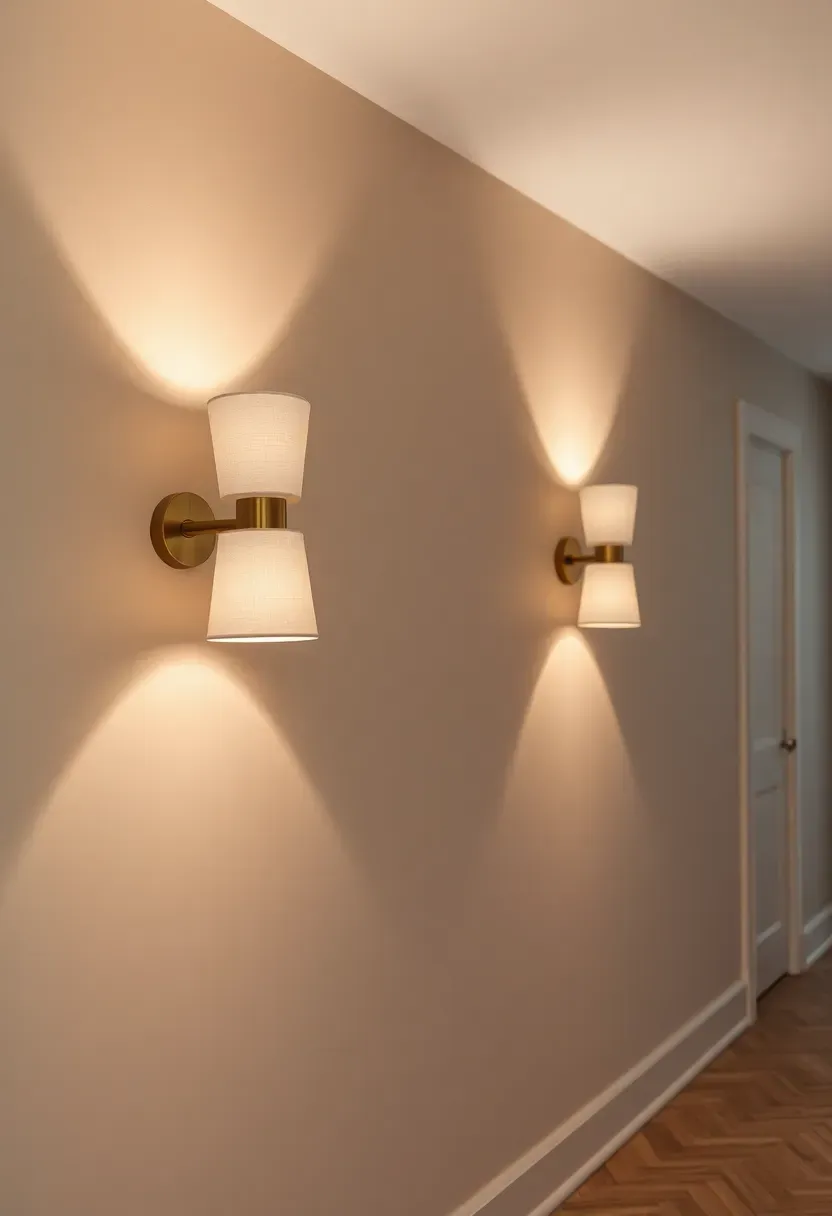
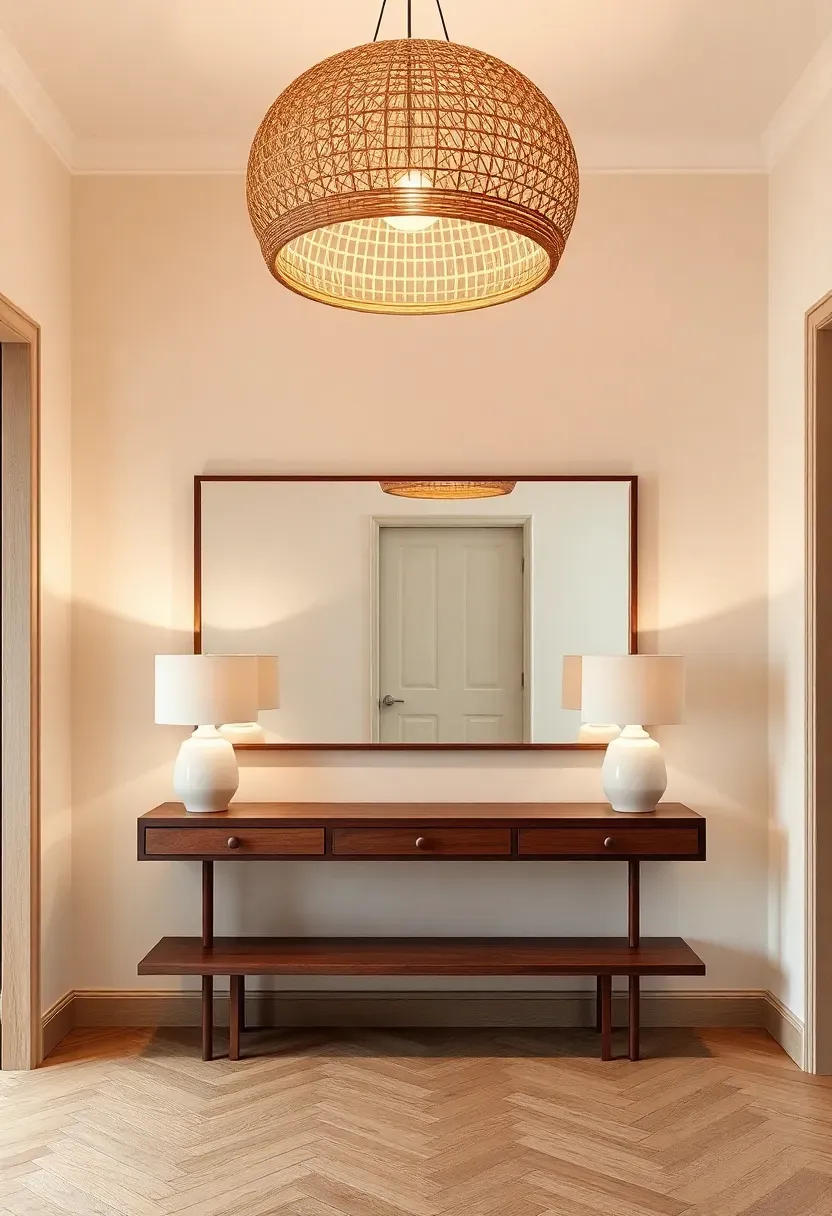
According to 2026 interior design research, the entryway is the most neglected room in the average home despite being the first space guests experience. AI lighting layouts address this with a three-tier approach: a statement overhead fixture that establishes visual height, wall sconces that define the wall plane and add warmth, and low floor-level LED strips that guide the eye through to the next room. The AI calculates fixture spacing based on hall width and ceiling height to avoid the tunnelling effect of a single pendant.
Practical Recommendations
- Choose a fixture colour temperature between 2700 K and 3000 K for a welcoming first impression
- Wall sconces should sit at 1.5–1.7 m from floor to centre of the shade
- A motion sensor on path lighting is practical for nighttime returns without waking the household
6. Dining Room Pendants and Perimeter
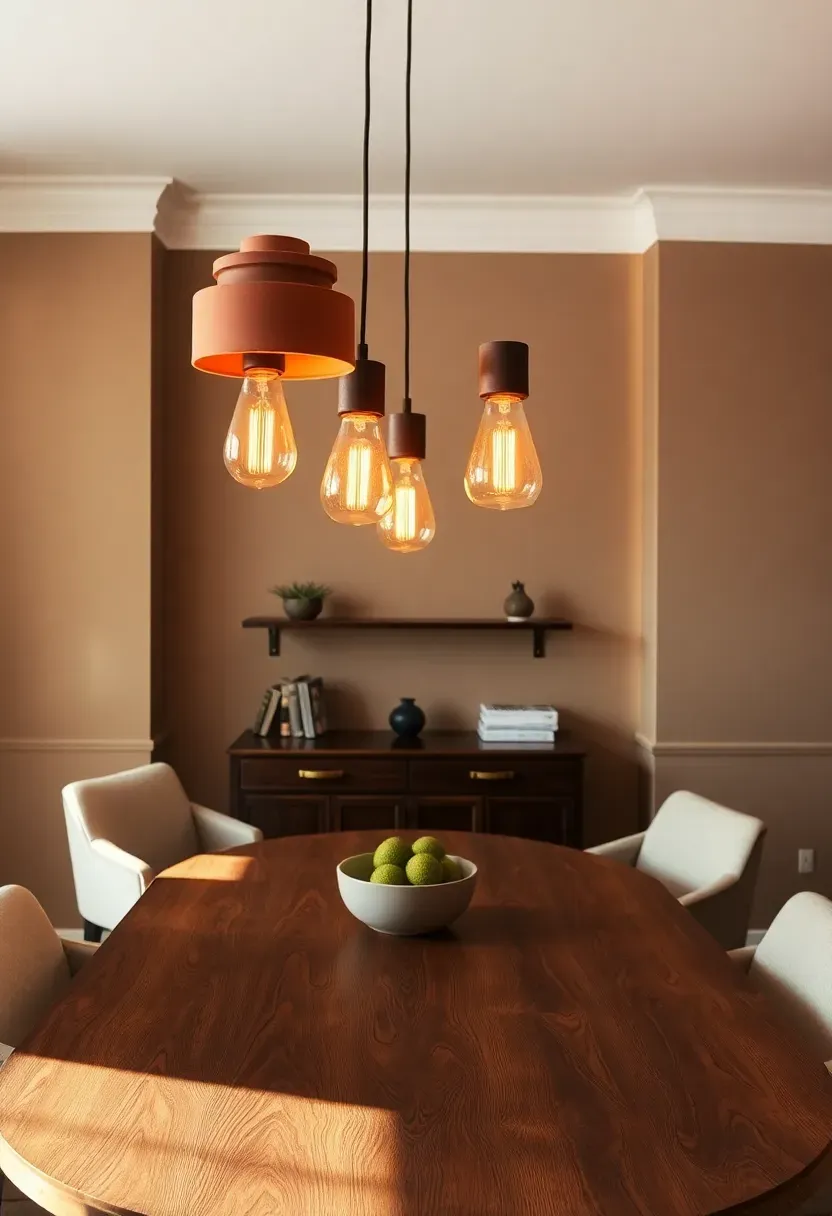
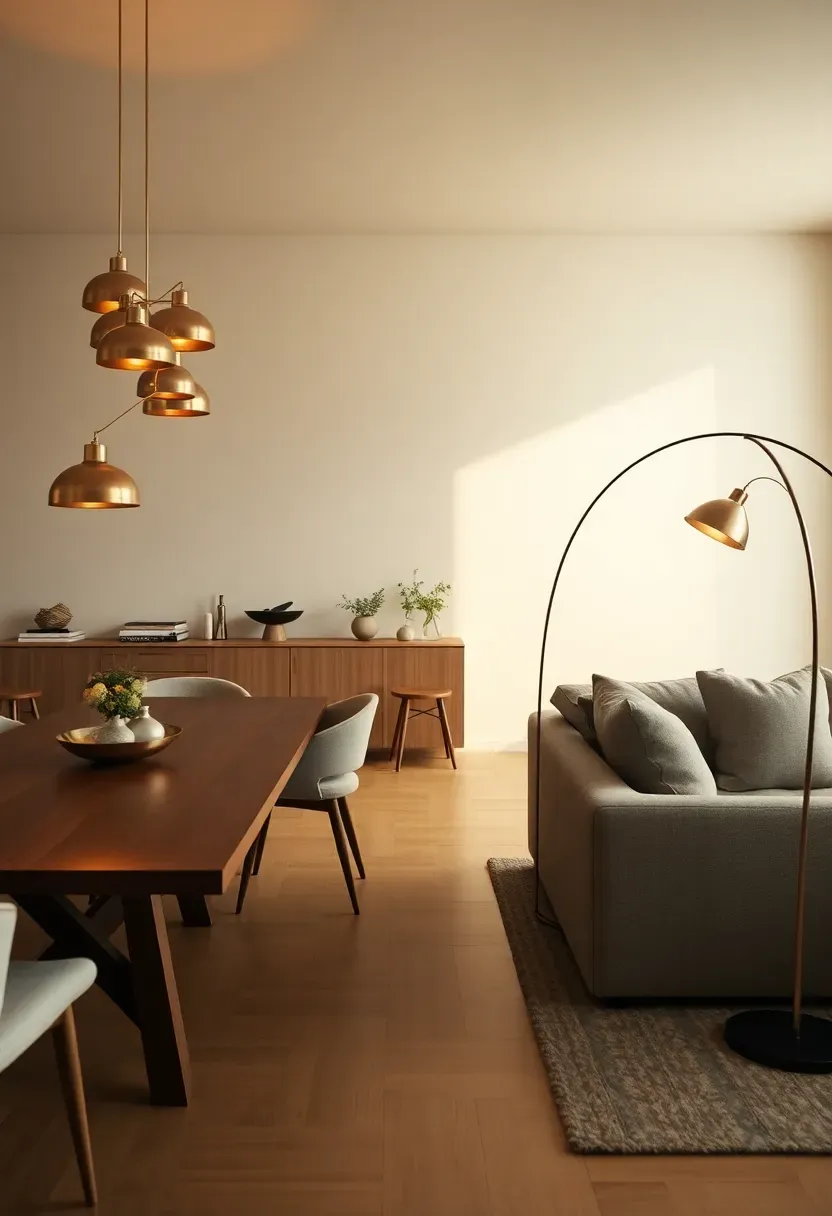
The dining room is built for theatre. AI lighting tools treat the table as a stage — pendants hang 700–900 mm above the surface, positioned directly over the centrepoint, and calibrated to produce enough illumination for food presentation (800–1000 lux) without blinding diners. Perimeter sconces reduce contrast and maintain visual warmth at the walls. The AI often recommends separate dimmer circuits for pendants and sconces, allowing the table to be bright during a dinner party and intimate during an evening of conversation.
Practical Recommendations
- Cluster three pendants of varying heights for contemporary visual interest over rectangular tables
- Avoid cool white in dining rooms — warm white (2700 K) flatters food and faces
- Integrate a mirror or glossy tile on one wall to double the visible sconce warmth without adding fixtures
Recommended
Items for this idea
7. Bathroom Mirror and Shower Zones
The Core Issue
A single overhead light in a bathroom casts downward shadows across the face — the exact opposite of what you need for grooming or makeup application.
The Solution
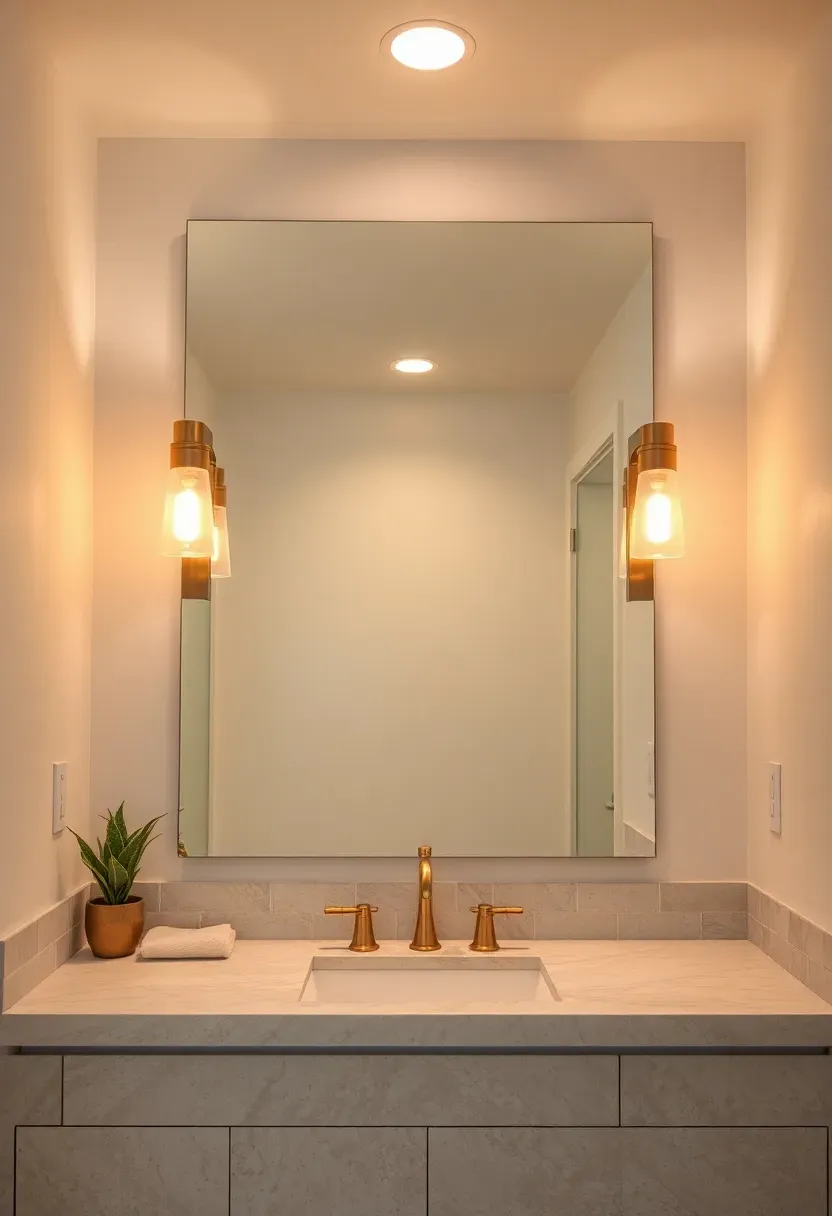
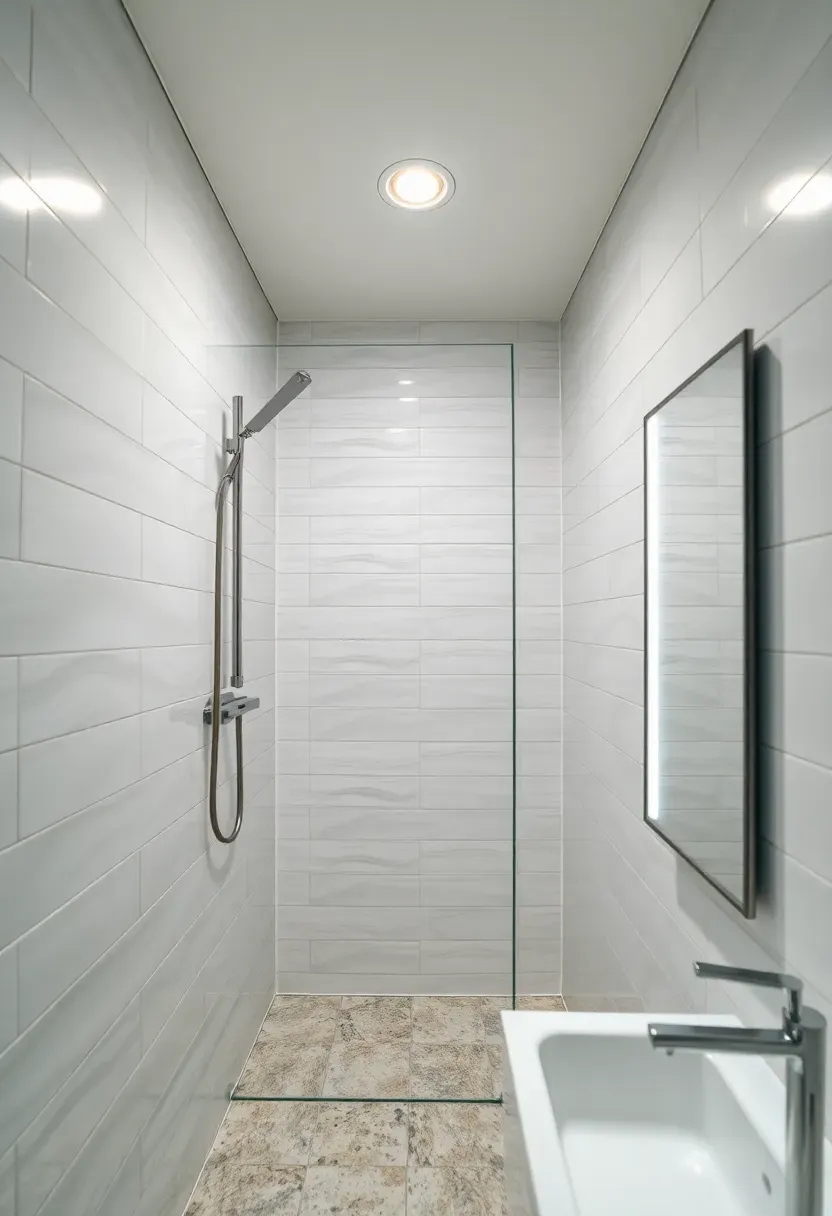
AI bathroom lighting plans split the room into three functional zones. Vertical LED strips (or a back-lit mirror panel) at face height flank the vanity mirror, eliminating shadow entirely. A separate IP65-rated recessed spotlight illuminates the shower niche. A third dimmer-controlled circuit handles ambient overhead light for relaxed baths.
Pros and Cons
Pros: Functional accuracy for grooming; watertight shower lighting; adjustable ambiance for different uses.
Cons: Three separate circuits require planning at renovation stage; retrofit in a finished bathroom is more complex.
8. Home Office Circadian Layout
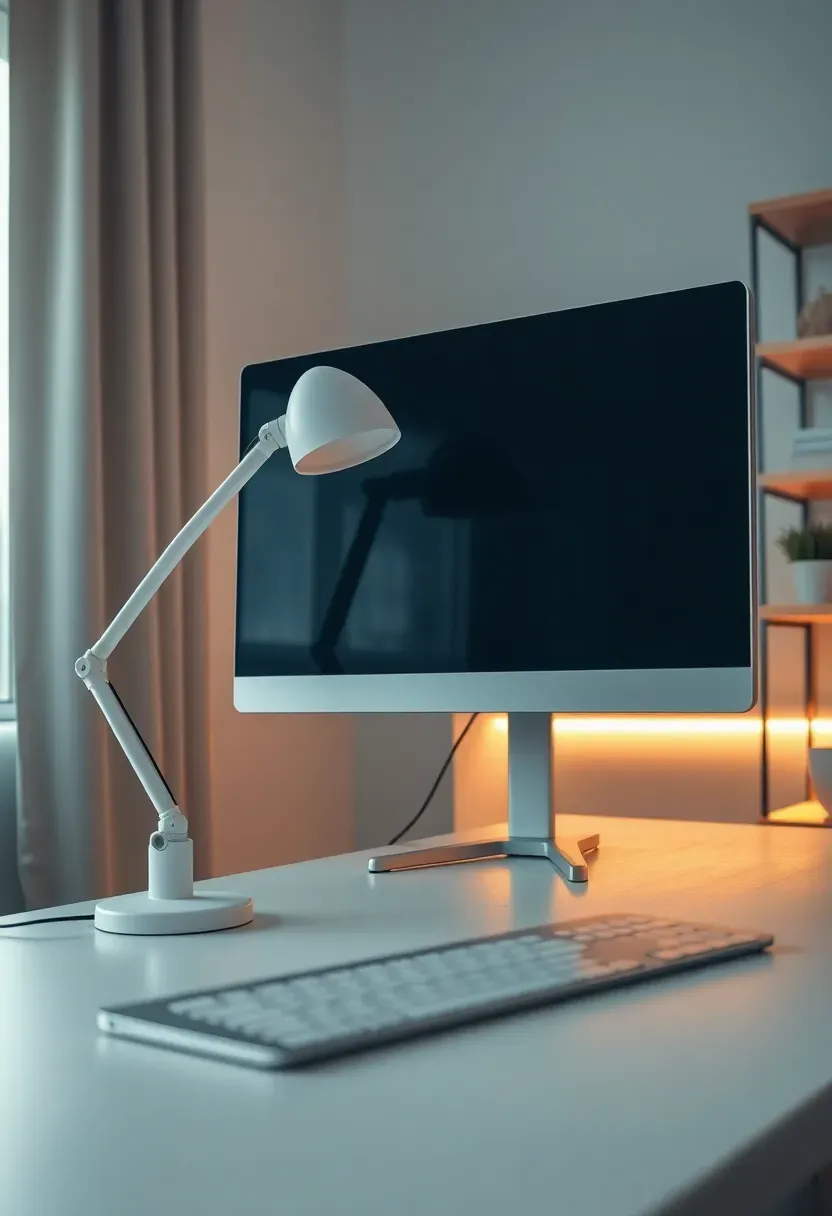
Imagine starting your workday under crisp, energising 5000 K cool white light that automatically transitions to a warmer 3000 K tone by 4 PM, then softens further by 7 PM. AI circadian lighting plans do exactly this. Research consistently links colour temperature shifts to alertness, focus, and melatonin production. The AI maps the desk position, calculates the ideal lux at the work surface (500 lux minimum for focused work), and programs smart LED panels to follow a sun-mimicking cycle throughout the day.
Practical Recommendations
- A backlit panel behind the monitor reduces eye strain by balancing the screen brightness against the wall
- Keep the floor lamp on a separate warm-white circuit for calls and post-work relaxation
- Avoid overhead fixtures positioned directly above the desk — they create glare on screens
Recommended
Items for this idea
9. Staircase Step Lighting
How to Create Safe, Beautiful Stair Lighting
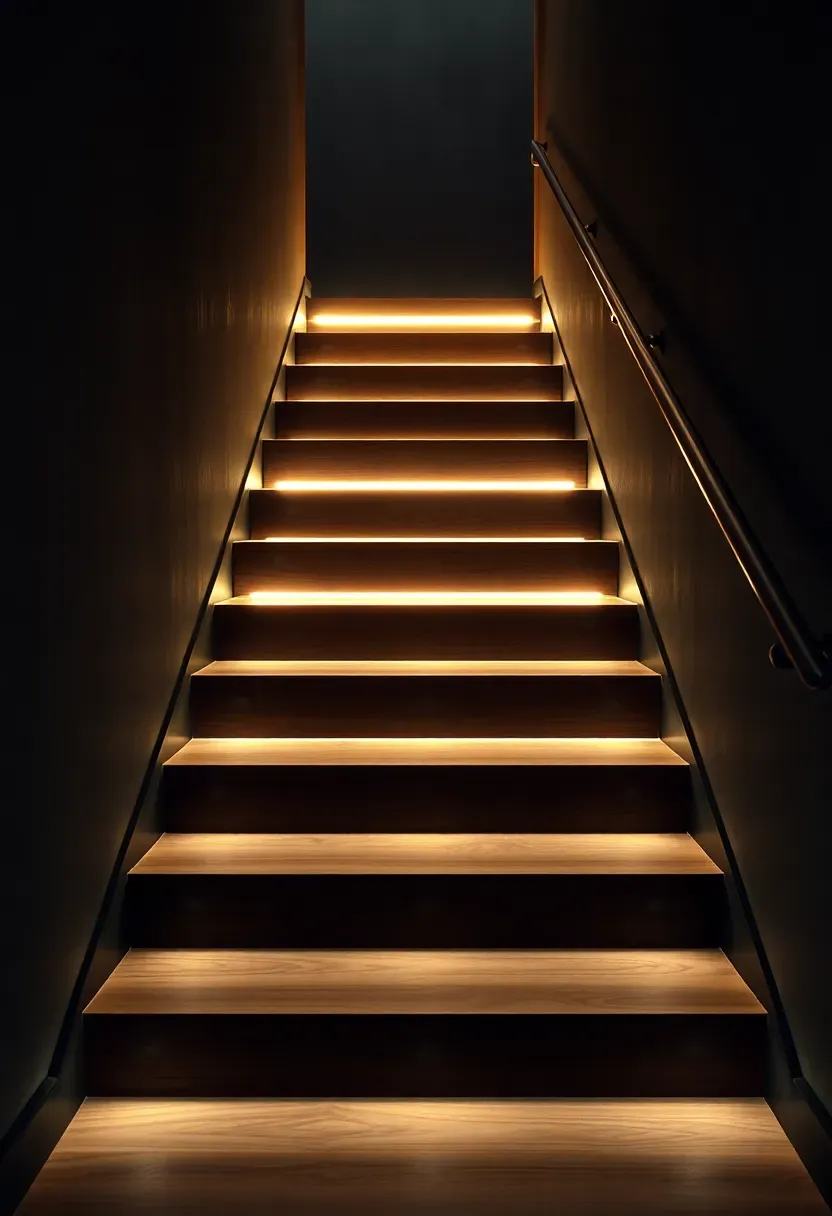
Step lighting serves a dual purpose — safety and drama. AI tools map each tread and riser, then specify LED strip placement under the nosing overhang for precise tread illumination without visible hardware.
Step 1: Map Tread Dimensions
The AI calculates the overhang depth of each tread to confirm the LED strip profile will sit flush and project downward without creating a visible hot-spot.
Step 2: Select Strip Profile
Aluminium diffuser profiles distribute the light into a soft even band. The AI recommends the profile width based on strip wattage and tread depth.
Step 3: Connect to Motion Sensor
Rather than leaving stair lighting on all night, a PIR sensor activates the sequence when motion is detected, fading up smoothly from the bottom tread upward.
What to Watch Out For
- Ensure all cabling passes through hollow stringers or recessed channels — exposed cables are unsafe
- Keep colour temperature consistent across the full staircase run
- Use a maximum 2-watt-per-metre strip to avoid overheating in enclosed channels
10. Children's Room Adaptive Layers
Comparing: Static vs. Adaptive Lighting
Children's lighting needs shift dramatically between daytime play, homework focus, bedtime stories, and overnight comfort.
Static Setup
A single dimmable ceiling light covers all situations passably but excels at none. Bright for play, it stays just as bright for sleep unless manually adjusted.
Adaptive AI Layout
AI tools design separate circuits for each activity zone: ceiling spots for play and general activity; a desk lamp specified for 500 lux task illumination; a warm-white bedside lamp limited to 50 lux for stories; and a low-level nightlight at 2700 K for overnight comfort.
What to Choose
Choose static if: the child shares a room and individual scenes are impractical.
Choose adaptive if: the room is a single child's dedicated space and you want lighting that genuinely supports sleep hygiene.
Recommendation
Smart bulbs in existing ceiling fixtures are the lowest-cost entry point — pair with a scene controller at the light switch for one-touch transitions from "play" to "bedtime" modes.
Recommended
Items for this idea
11. Scandinavian Bedroom Warmth
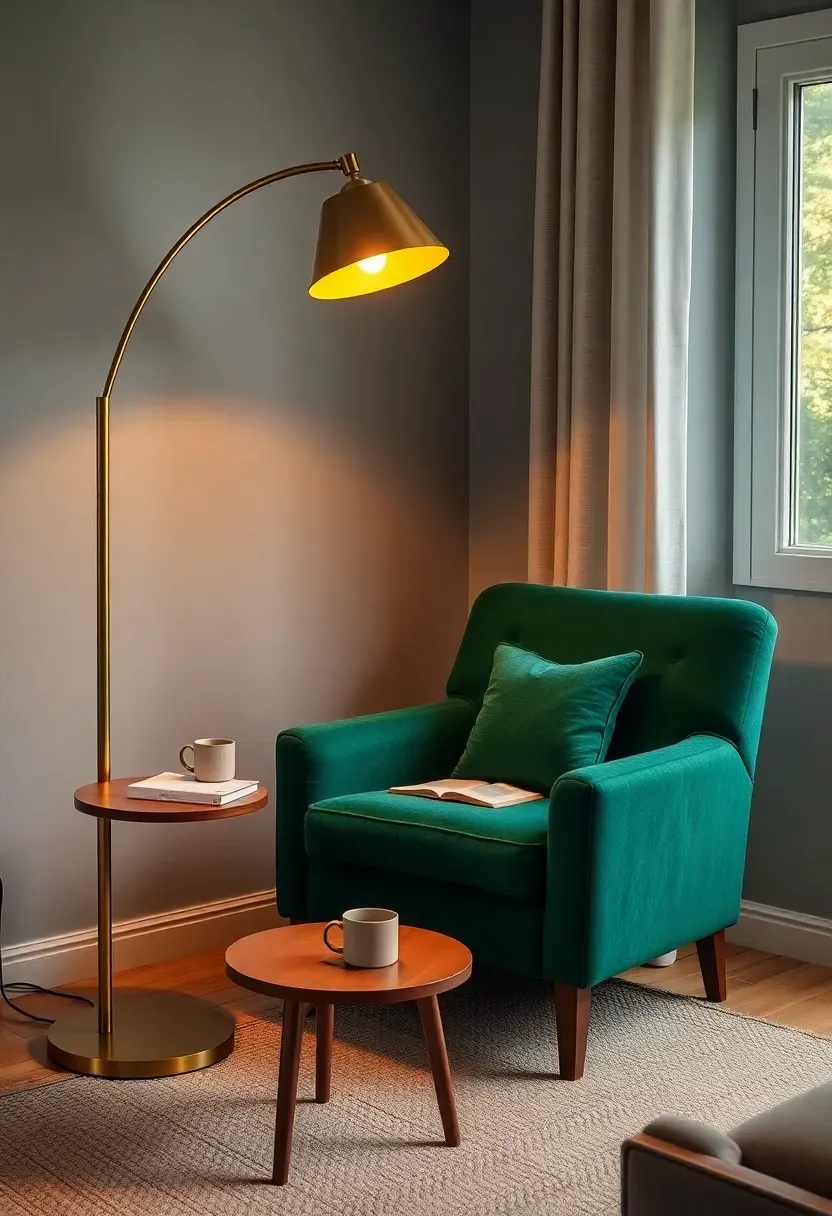
For centuries, Nordic design has grappled with winters that deliver barely six hours of light. The Scandinavian approach to interior lighting evolved directly from this scarcity — layering multiple small light sources instead of relying on a single overhead fixture. AI tools translate this tradition into modern plans: a primary pendant above the bed for general illumination, matching bedside lamps for bilateral symmetry and reading, and an indirect LED strip behind a floating headboard panel that bathes the wall in sourceless warmth. The AI positions each element to avoid direct glare into lying eyes.
Practical Recommendations
- Stick to a single colour temperature (2700 K) across all sources for visual coherence
- Linen and ceramic shades diffuse light more softly than glass or metal
- Position bedside lamps so the centre of the shade aligns with shoulder height when seated in bed
12. Moody Library Reading Alcove
The Core Issue
Book spines fade under prolonged UV exposure, and overhead lighting in a library creates glare on pages that makes extended reading uncomfortable.
The Solution
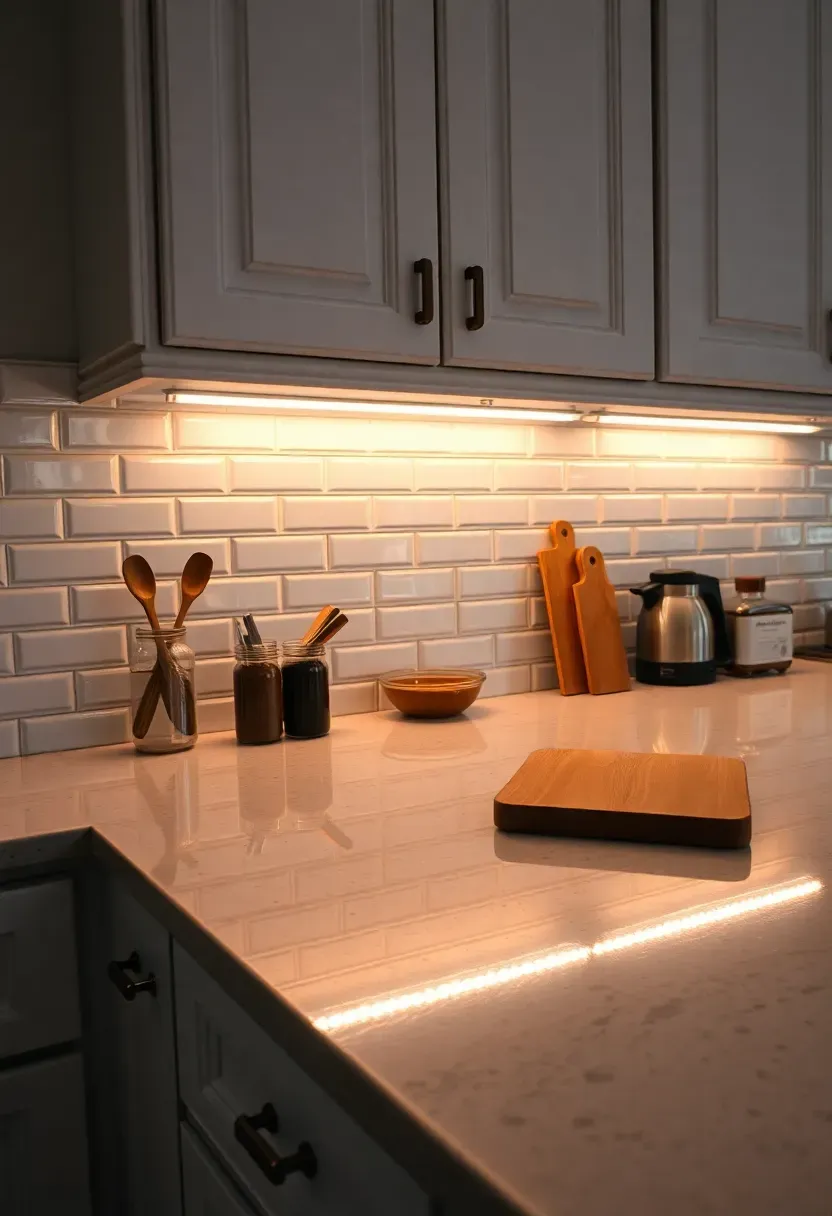
AI library lighting plans centre on picture lights mounted above each shelf section — adjustable arm fittings that direct warm light precisely onto the spines for display while being angled away from the reading position. A dedicated task lamp (with a CRI of 95+) sits at the writing desk, specified for a cone of illumination that covers the work surface without spilling onto peripheral walls. Ambient fill comes from a single floor lamp in the corner, ensuring the room never falls to complete darkness.
Pros and Cons
Pros: Protects books; flatters the drama of a dark-toned room; reading is comfortable for hours. Cons: Multiple fixture types require a considered installation; picture lights need a wall socket run behind each shelf.
Recommended
Items for this idea
13. Kitchen Cabinet and Toe-Kick Glow
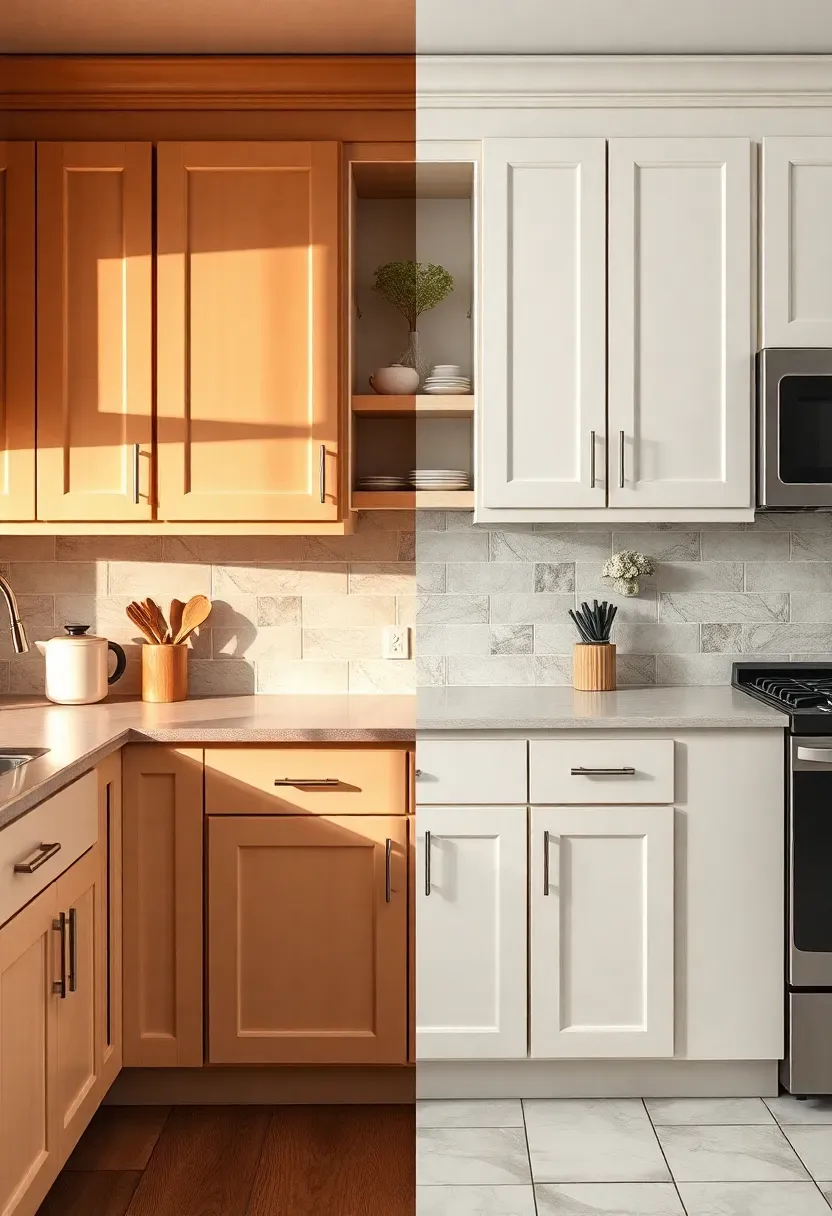
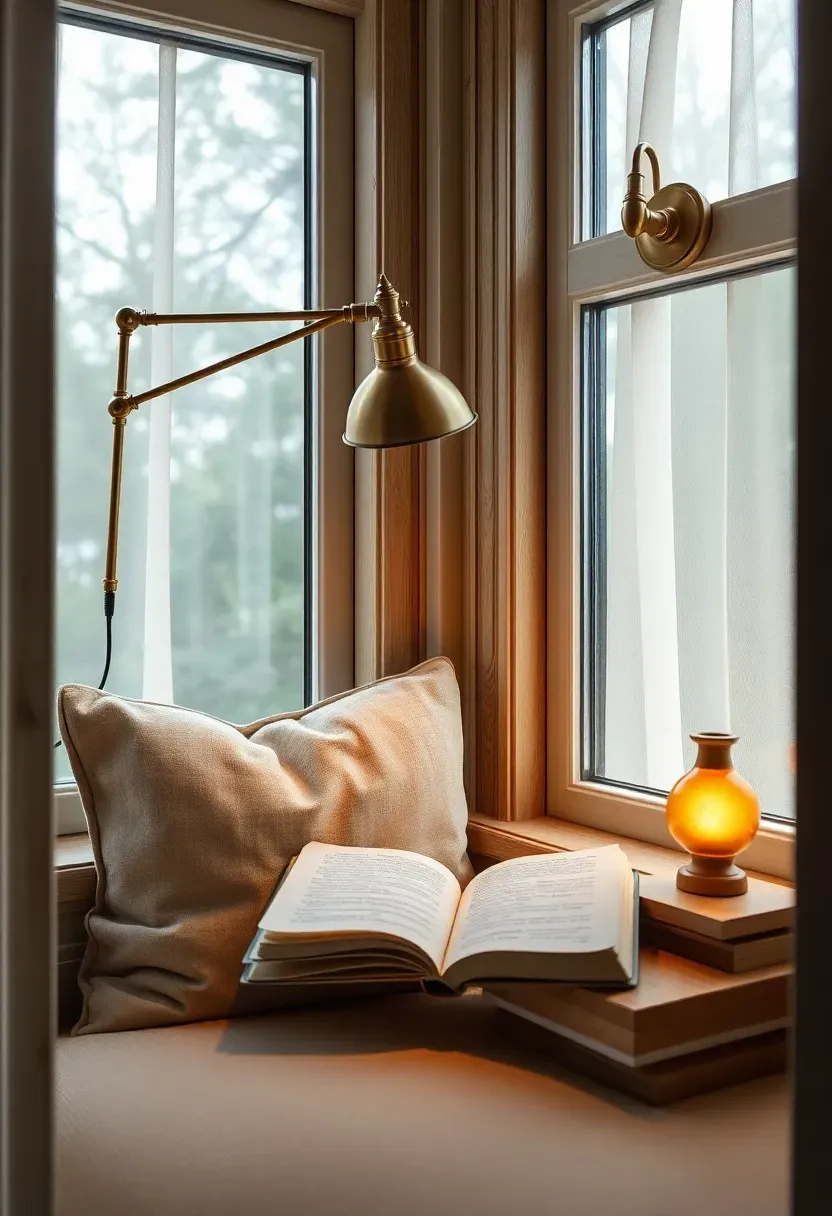
Is it possible to light a kitchen without installing a single new ceiling fixture? In many cases, yes. AI kitchen lighting plans frequently find that under-cabinet LED strips and toe-kick lighting at floor level together provide enough task and ambient illumination to transform a space without touching the ceiling. Under-cabinet strips illuminate the counter and backsplash — a visual win that makes even simple tile look spectacular. Toe-kick strips create a floating illusion for base cabinets and provide subtle night-navigation light for late-evening trips to the kitchen.
Practical Recommendations
- Choose warm white under-cabinet strips (2700–3000 K) to complement most cabinet finishes
- Use an aluminium diffuser channel under the cabinet front lip to prevent visible hotspots
- Toe-kick strips should be limited to 1–2 watts per metre for a subtle, not theatrical, result
14. Open-Plan Living-Dining Split
How to Zone an Open Plan Without Walls
The challenge of open-plan spaces is defining zones that feel distinct without physical division. Light is the most effective non-structural zoning tool available.
Step 1: Anchor Each Zone with a Statement Fixture
A pendant cluster over the dining table and a sculptural floor lamp in the living seating area each create a visual centre of gravity that anchors the zone.
Step 2: Vary Colour Temperature Intentionally
AI tools frequently specify a slight temperature difference between zones — 2700 K for the dining area and 3000 K for the kitchen prep zone — creating a subconscious sense of separation.
Step 3: Use a Cove or Strip to Bridge
A continuous LED cove or track running the perimeter unifies the space when all zones are illuminated simultaneously, preventing a patchwork effect.
What to Watch Out For
- Never let one zone dominate the other completely — maintain at least 10% ambient light in each area even when the other is at full brightness
- Dimmer compatibility with smart bulbs must be confirmed before purchase
- Pendant height over the dining table needs to clear sightlines across the table when seated
Recommended
Items for this idea
15. Spa Bathroom Waterproof Scheme
Why do we still treat the bathroom as a purely functional space when it's one of the few rooms in the house where we genuinely pause? AI spa bathroom lighting plans rethink the ceiling above a freestanding bath as a soft illuminated panel (IP65-rated for wet zone compliance) that creates overhead ambiance without harsh direct light. A backlit mirror replaces conventional overhead spotlights at the vanity, and an LED strip inset into the bath surround at water level adds a dramatic finishing touch.
Practical Recommendations
- Confirm IP ratings: IP44 for zones within 60 cm of water, IP65 for zones directly above the bath
- Dimmer control on every circuit is non-negotiable in a spa bathroom
- Choose a single warm colour temperature (2700 K) for all fixtures to maintain a cohesive, calming palette
16. Accent Wall Grazing Technique
The Core Issue
Texture in walls — plaster, stone, brick, panelling — is invisible under flat overhead lighting. The material investment is wasted if the light fails to reveal the surface.
The Solution
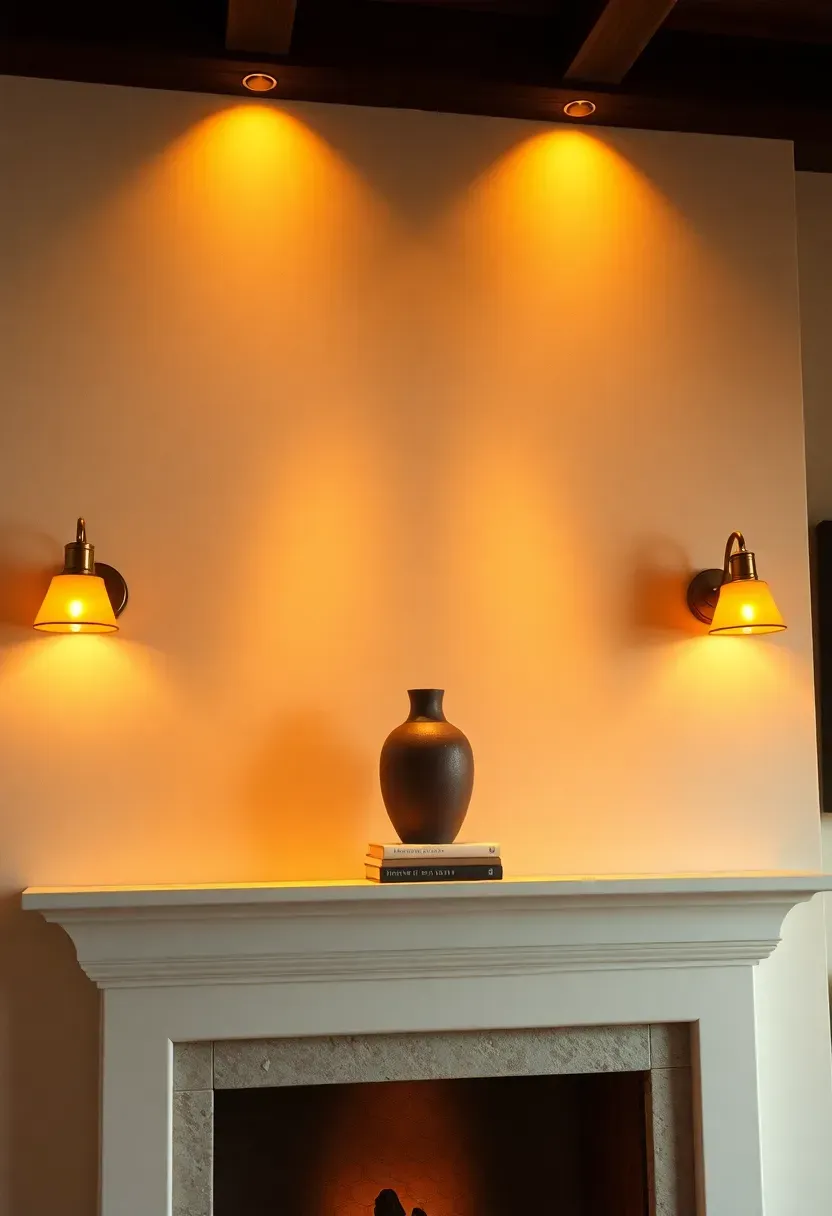
AI tools identify accent wall positions in a room and recommend narrow-beam spots (15–25 degree beam angle) mounted at ceiling height approximately 300 mm from the wall face. This grazing angle skims light across the surface, creating shadow within every textural variation. The result turns a plain plaster wall into a dynamic, dramatic surface.
Pros and Cons
Pros: Transforms inexpensive materials; adds visual depth without architectural changes; works on brick, plaster, stone, timber panelling. Cons: Requires ceiling-mounted adjustable spots, which may need a new ceiling rose circuit; grazing is unforgiving of an uneven surface.
Recommended
Items for this idea
17. Hallway Recessed Sequence
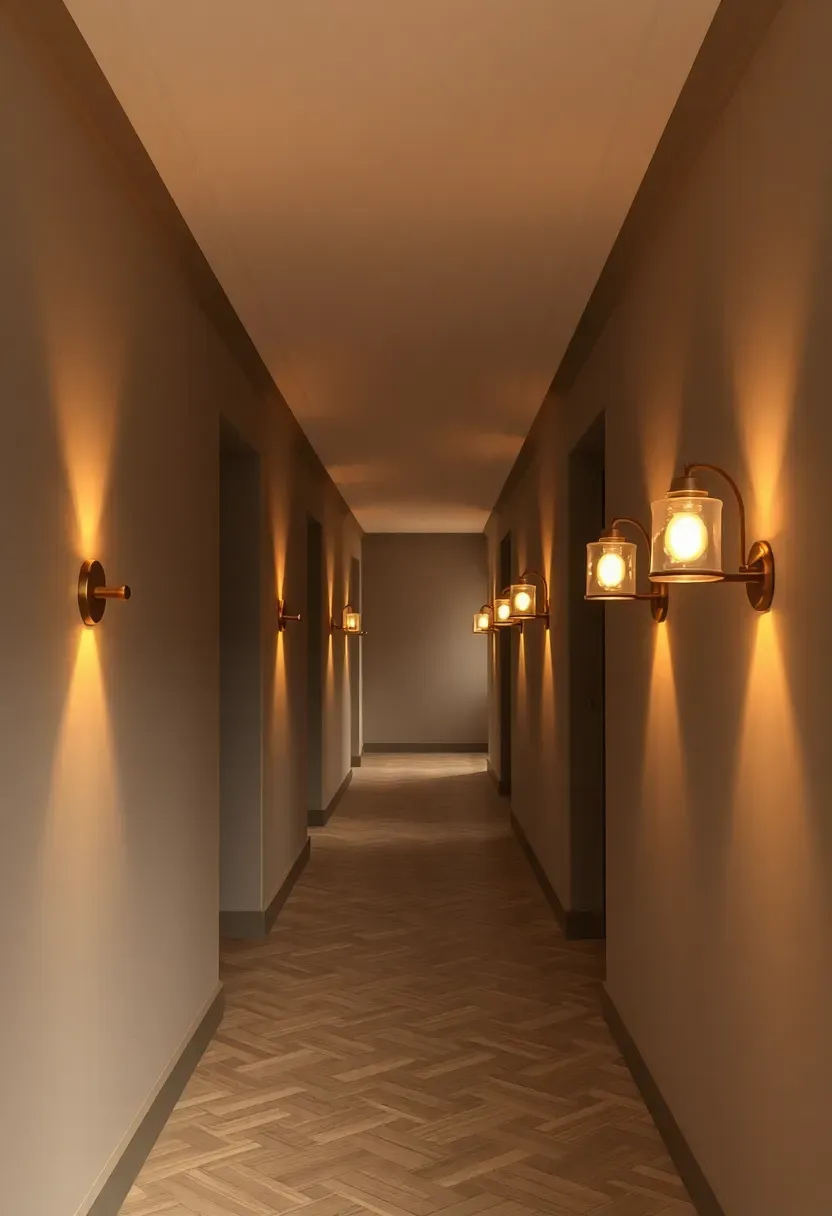
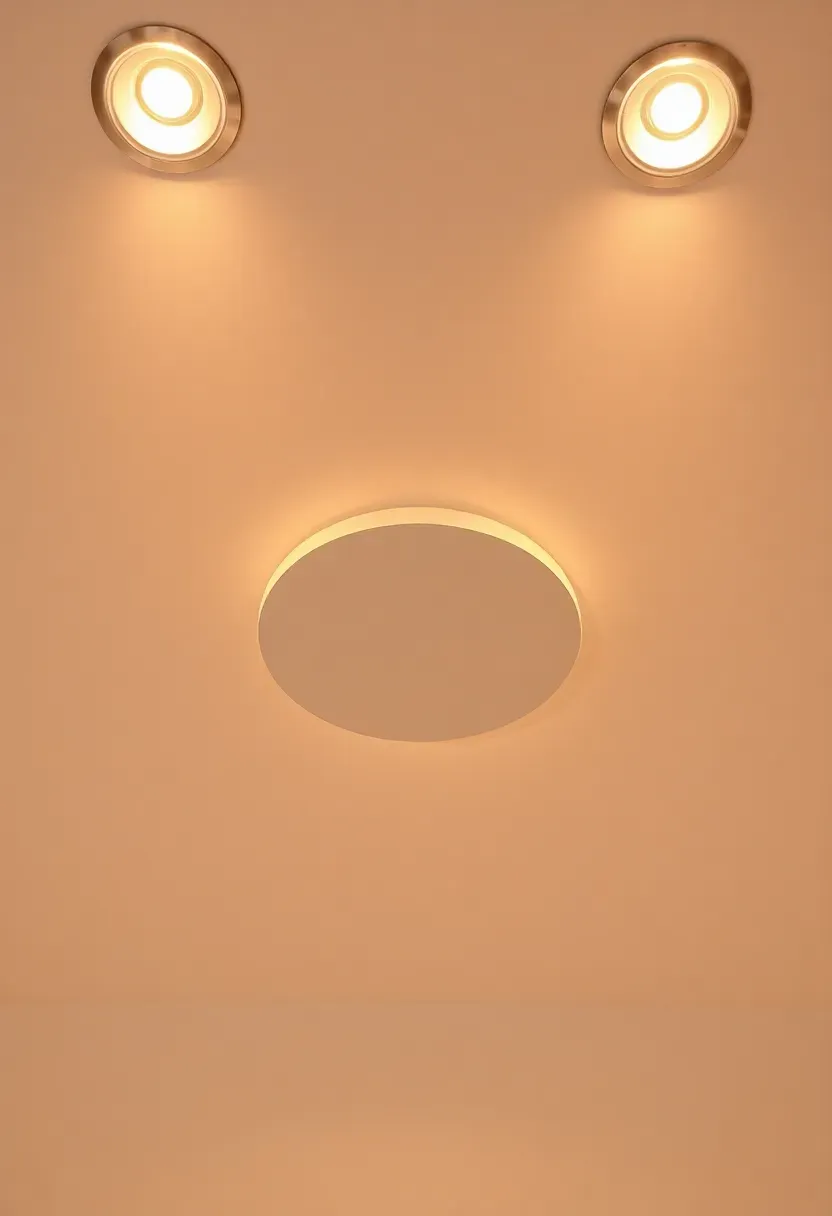
Start small: replace a single ceiling pendant with a sequence of recessed downlights and a hallway is transformed more decisively than almost any other single change. AI tools calculate the number of downlights, spacing, and beam angle required to produce overlapping pools of light with no dark gaps between them along the hall length. The result is a corridor that feels intentional rather than merely lit.
Practical Recommendations
- Space downlights at intervals equal to the ceiling height for overlapping pools: 2.4 m ceiling = 2.4 m spacing
- Use a consistent beam angle (45 degrees works well for most halls) to avoid hot-spot and dark-band alternation
- Add a motion sensor for night-time use without leaving lights on all evening
18. Japandi Bedroom with Paper Pendants
Origins of Washi Lighting
Shoji paper screens have filtered Japanese interiors for centuries. The washi lantern is a direct descendant — a form where the shade is the point, diffusing harsh bulb light into an even, contemplative glow. In Japandi design (the Japanese-Scandinavian fusion that dominated 2020s interiors), this principle meets Nordic restraint.
Modern Interpretation
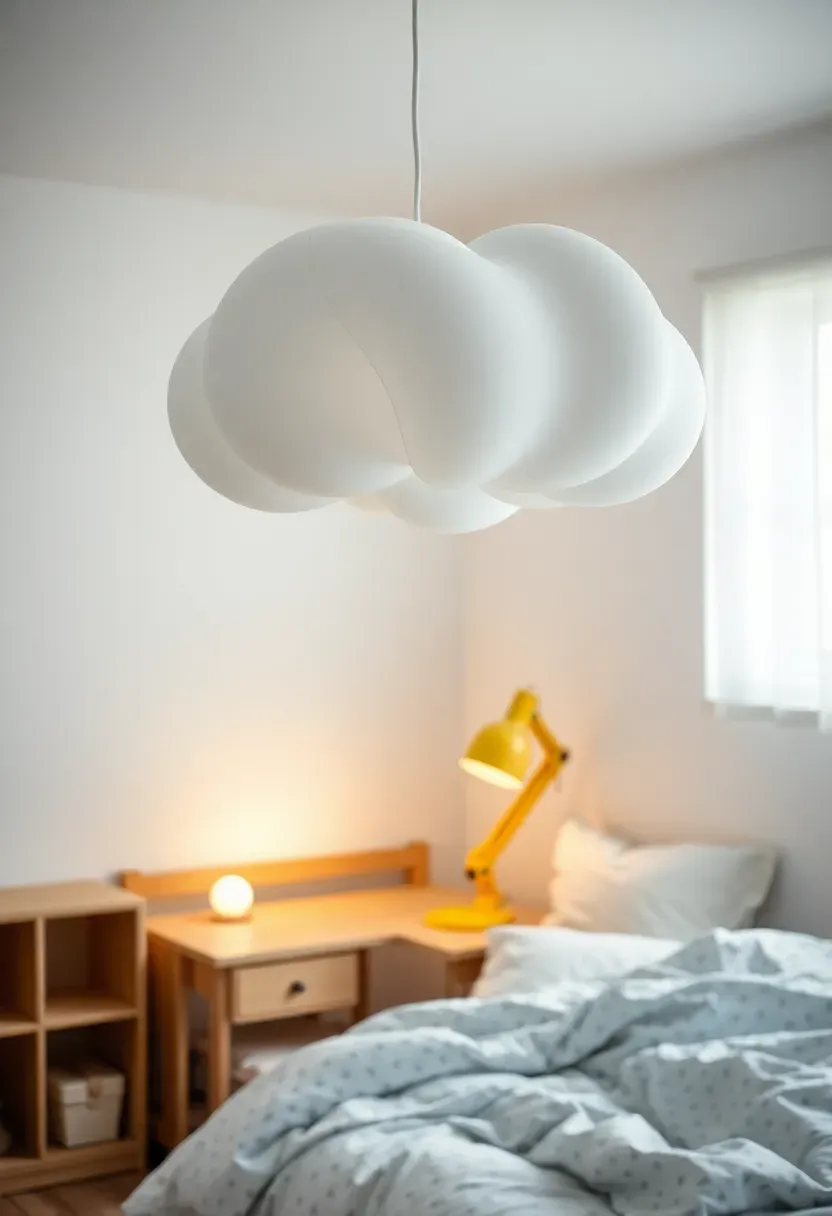
AI lighting tools for Japandi bedrooms consistently recommend a large flat washi pendant centred above the bed as the primary fixture, flanked by slim wall-mounted reading lights that extend outward on adjustable arms. A single natural-wood floor lamp completes the arrangement for a corner reading seat.
How to Apply at Home
- Source washi or rice-paper pendants from Japanese or Scandinavian suppliers for authentic diffusion quality
- Keep all bulbs at 2700 K — the paper amplifies warm tones beautifully
- Avoid LED spots with visible diode clusters; choose integrated or OLED sources inside pendant fittings
Recommended
Items for this idea
19. Garage Workshop Task Grid
Comparing: Fluorescent vs. LED Linear Panels
Workshop lighting is often the most neglected in any AI lighting audit — but it's among the most consequential for safety.
Fluorescent Shop Lights
Inexpensive and widely available. However, fluorescent tubes flicker perceptibly under some conditions, produce an inconsistent lumen output as they age, and require starter replacement.
LED Linear Panels
AI workshop plans nearly universally specify LED linear panels in a symmetrical ceiling grid. Lumen output is calculated for the workshop footprint to achieve a minimum 500 lux at workbench height. Colour temperature (4000 K neutral white) ensures accurate material and finish reading.
What to Choose
Choose fluorescent if: cost is the primary consideration and existing fixtures are already ceiling-mounted. Choose LED if: the workshop is used for detail work, painting, or precision cutting where accurate light colour matters.
Recommendation
A 4-light LED linear grid in a standard double garage (approximately 5 m x 6 m) typically provides even illumination. The AI adds a directional spot over the primary precision tool station for supplemental task focus.
20. Basement Home Cinema
Should you illuminate a cinema room? The instinct is to make everything as dark as possible. But AI home cinema lighting plans demonstrate that thoughtful low-level lighting actually improves the viewing experience. Bias lighting — an LED strip mounted directly behind the screen, matching the average colour temperature of the on-screen content — reduces the contrast ratio between the bright display and the surrounding dark wall, significantly reducing eye fatigue. Path lighting at footrest level allows movement without interrupting the film for seated viewers.
Practical Recommendations
- Bias lighting should be set at 10% of the screen's maximum brightness output
- Use an ambilight or smart strip that dynamically matches screen colour for immersive setups
- Floor path lights must be below the sightline to the screen — no higher than 200 mm from the floor
Recommended
Items for this idea
21. Outdoor Patio Layered Scheme
How to Design a Patio Lighting Plan That Works After Dark
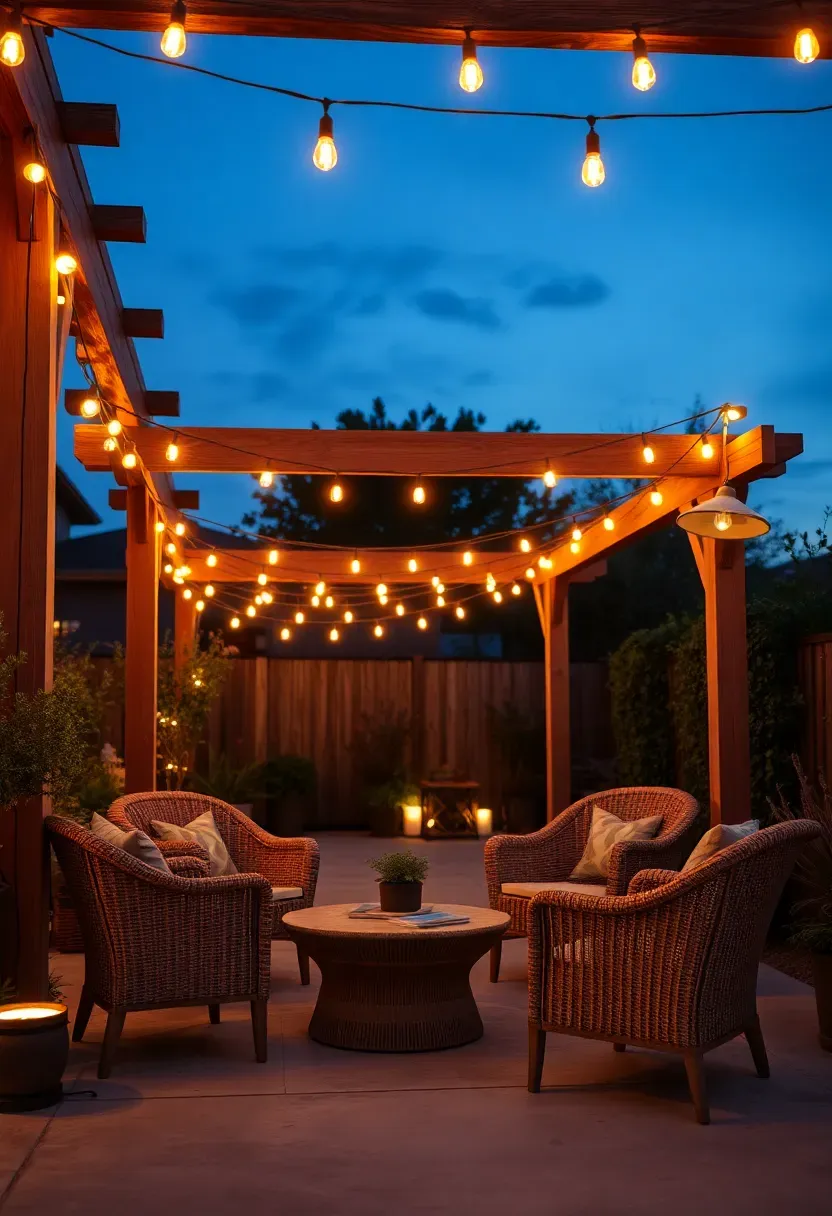
Outdoor lighting fails most often when a single type of fixture is used throughout — a row of bollard lights or a single overhead fitting. AI outdoor lighting plans use the same layered approach as interiors.
Step 1: Establish the Canopy
String lights or a cluster of pendant weatherproof fixtures define the patio ceiling visually, replacing the void of the open sky with a sense of enclosure and warmth.
Step 2: Frame the Architecture
Wall lanterns flanking the door and along fence sections define the perimeter of the space and add safety lighting near transitions between indoor and outdoor.
Step 3: Guide Movement
Low bollard lights or path lights trace pathways and step edges, separating the social gathering zone from circulation without interrupting conversation.
What to Watch Out For
- All outdoor fixtures must carry the appropriate IP rating (IP44 minimum for covered patios, IP65 for exposed areas)
- Use warm white (2700 K) outdoors for a welcoming, non-institutional feel
- Timer or smart controls prevent patio lights from running until dawn
22. Mudroom Entry Functional Glow
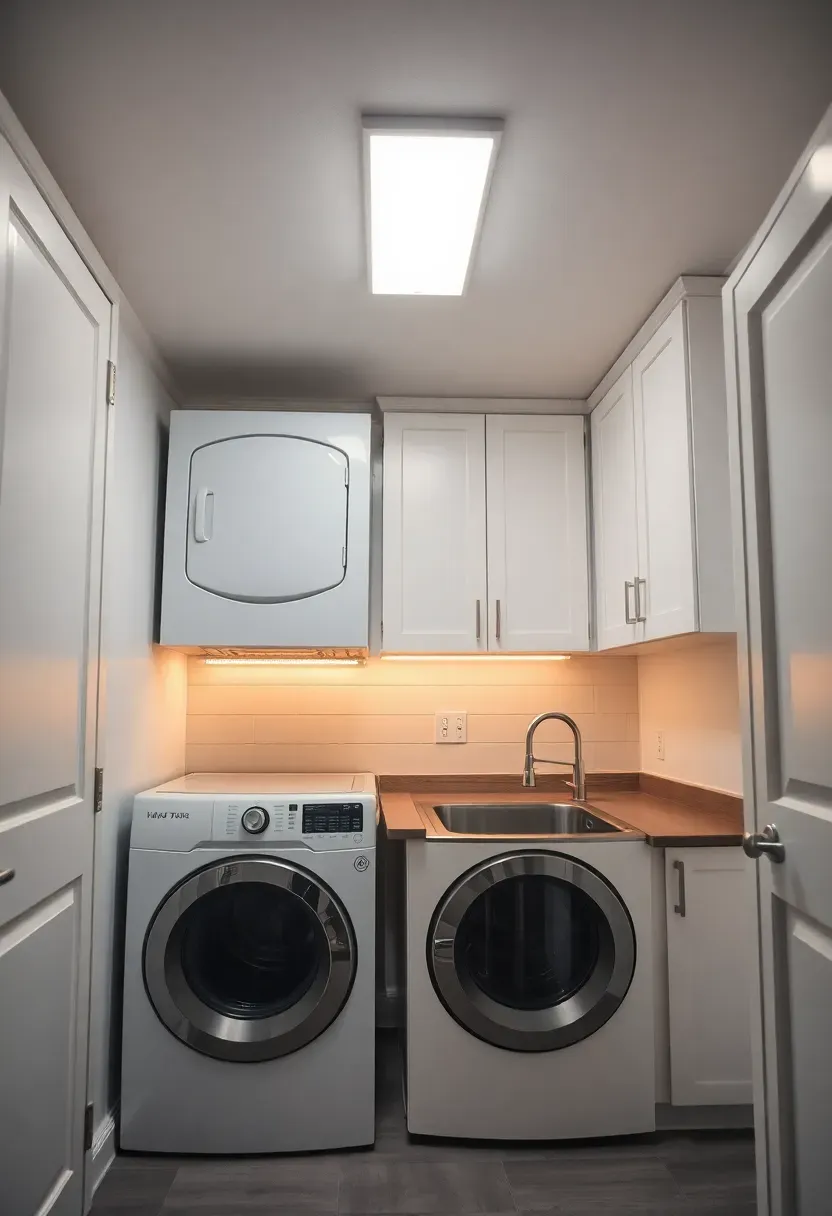
The mudroom is a working room — and AI treats it that way. Lighting plans for mudrooms prioritise even, bright illumination (400–500 lux) at the bench and coat hook zone where dressing and undressing happen in a hurry. An LED strip under a floating upper shelf provides downward task light to illuminate hooks and labels. A sensor-activated main ceiling circuit means lights turn on the moment the door opens and turn off when the space is empty.
Practical Recommendations
- Choose cool white (3000–4000 K) for a practical, energising functional tone
- Surface-mounted or waterproof downlights are preferable given the moisture from wet coats and boots
- A dimmer is unnecessary here — functional brightness at all times is the goal
Recommended
Items for this idea
23. Nursery Dimmer-Controlled Layout
The Core Issue
Newborns and infants are acutely sensitive to light. Bright overhead lighting during night feeds disrupts both the infant's and the parent's melatonin cycle, making return to sleep more difficult.
The Solution
AI nursery lighting plans are almost always built around a single principle: every circuit must be dimmable to near-zero. The main ceiling light should reach full brightness (for daytime play, diaper changes, and tending) but dim smoothly to under 10 lux for nighttime feeds. A dedicated amber night light (amber wavelengths interfere least with melatonin) sits beside the cot on a plug-in socket at the lowest possible output.
Pros and Cons
Pros: Supports infant sleep biology; preserves parental sleep during feeds; adapts as the child grows. Cons: Dimmer compatibility with chosen bulbs must be tested before installation; some LED bulbs buzz faintly at low dim levels — test before final install.
24. Boho Living Room Edison Layers
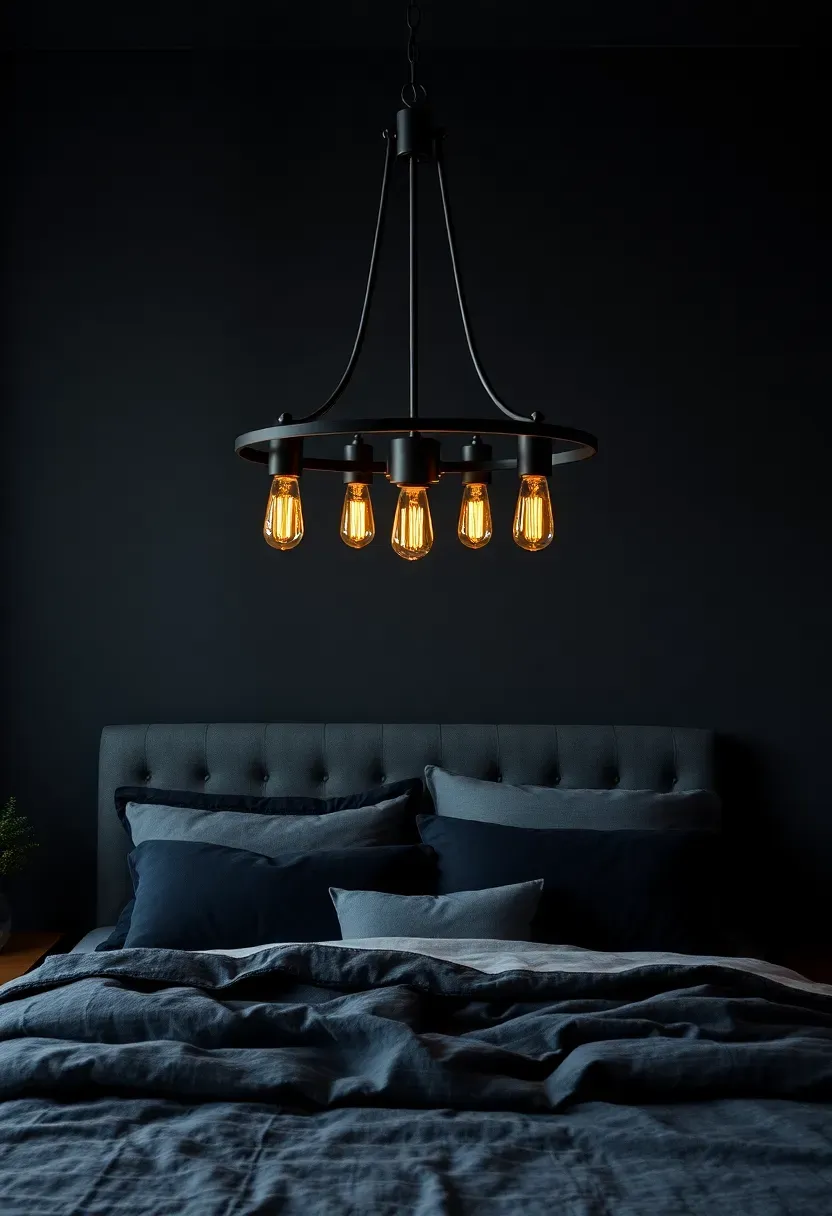
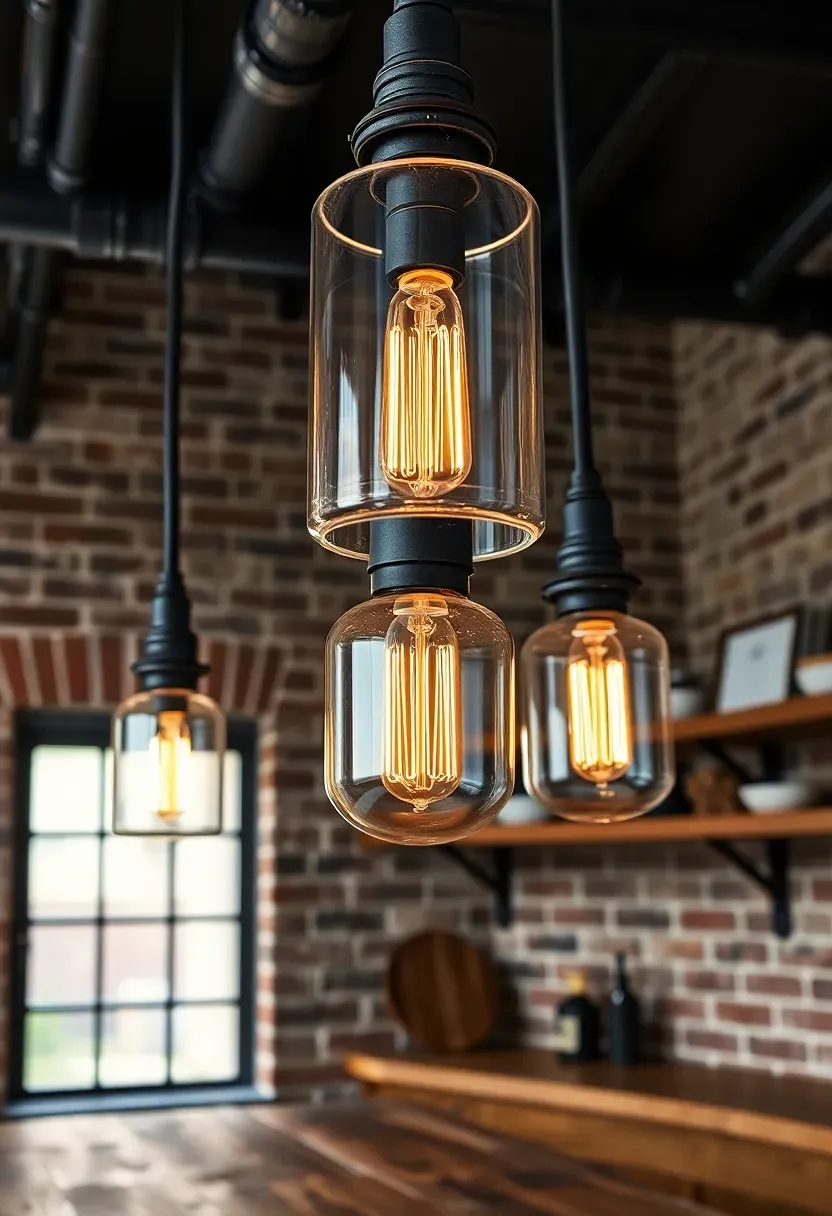
Trends come and go, but the Edison bulb's appeal endures — and AI lighting plans for bohemian interiors treat these exposed-filament sources as both light fixtures and decorative objects. The recommended layout suspends string Edison lights in loose catenary loops across the ceiling, with a tall tripod floor lamp beside the primary seating. Candle clusters on the coffee table contribute to the layered warm glow. AI tools ensure the total lumen output from all sources meets minimum room illumination standards before adding any of the purely decorative elements.
Practical Recommendations
- Specify 2200 K Edison-style LED filament bulbs — they mimic the warm glow of incandescent without the heat or energy use
- Never rely on candles alone as room illumination — they are always decorative supplements, not primary light
- String lights should be on a separate dimmer from the floor lamp for independent atmosphere control
Recommended
Items for this idea
25. Walk-In Closet Colour-Accurate Lighting
Why Colour Accuracy Matters More in Closets Than Anywhere Else
If you've ever selected an outfit under warm yellow closet lighting only to discover outside that your navy trousers are actually black, you've experienced the problem. A CRI (Colour Rendering Index) below 90 misleads colour perception for clothing, shoes, and accessories.
The Solution
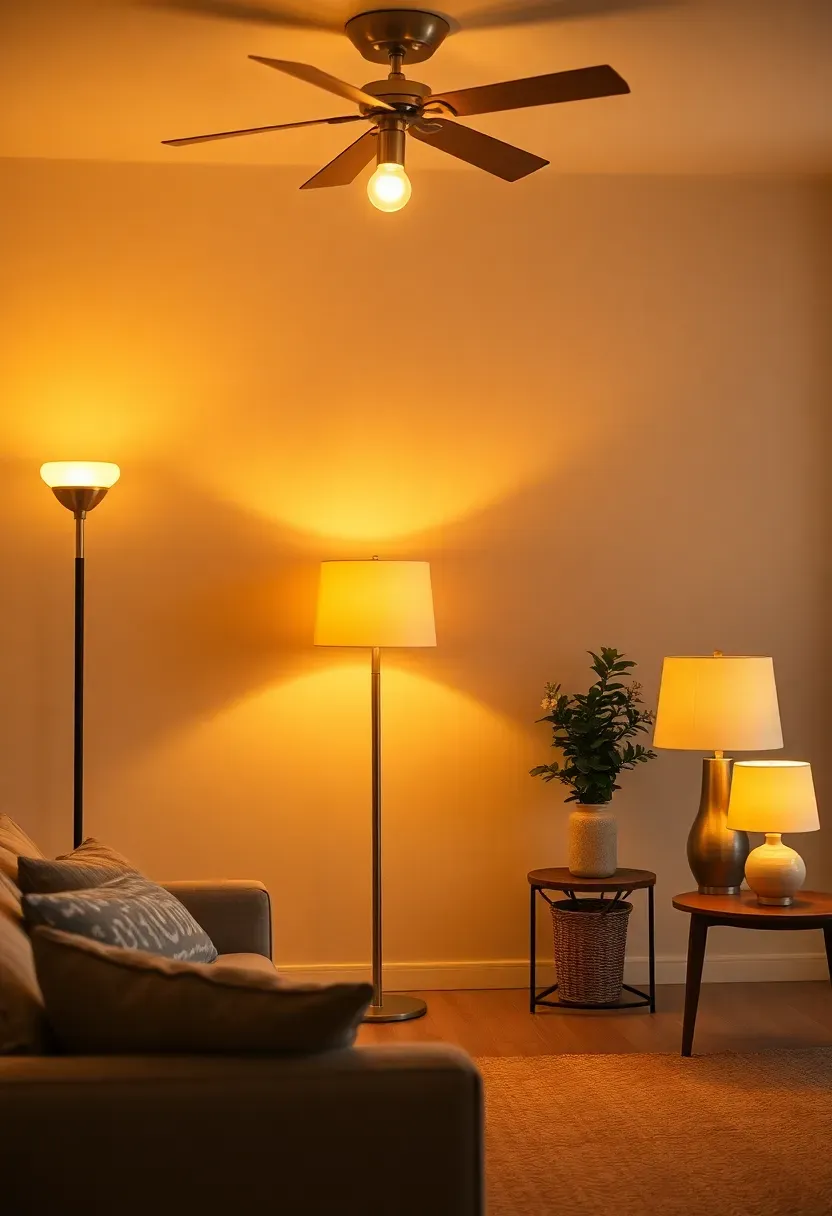
AI walk-in closet lighting plans specify neutral white LEDs (3500–4000 K) with a CRI of 95 or above. Strips are mounted in ceiling recesses above hanging rails and at the front face of shelf niches to eliminate shadows that would otherwise hide detail. The colour temperature falls between warm domestic light and the clinical cool of office fluorescents, making it ideal for accurate colour matching.
Pros and Cons
Pros: Accurate colour matching; no morning wardrobe surprises; professional visual quality. Cons: 4000 K can feel clinical in a small space — add a warm accent light at a mirror for balance.
26. Attic Studio Task and Ambient Mix
Origins of Studio Lighting
Artist studios have traditionally sought north-facing windows for consistent, indirect natural light free of direct sun glare. This principle — diffused, consistent, colour-neutral illumination — forms the basis of every AI attic studio lighting plan.
Modern Interpretation
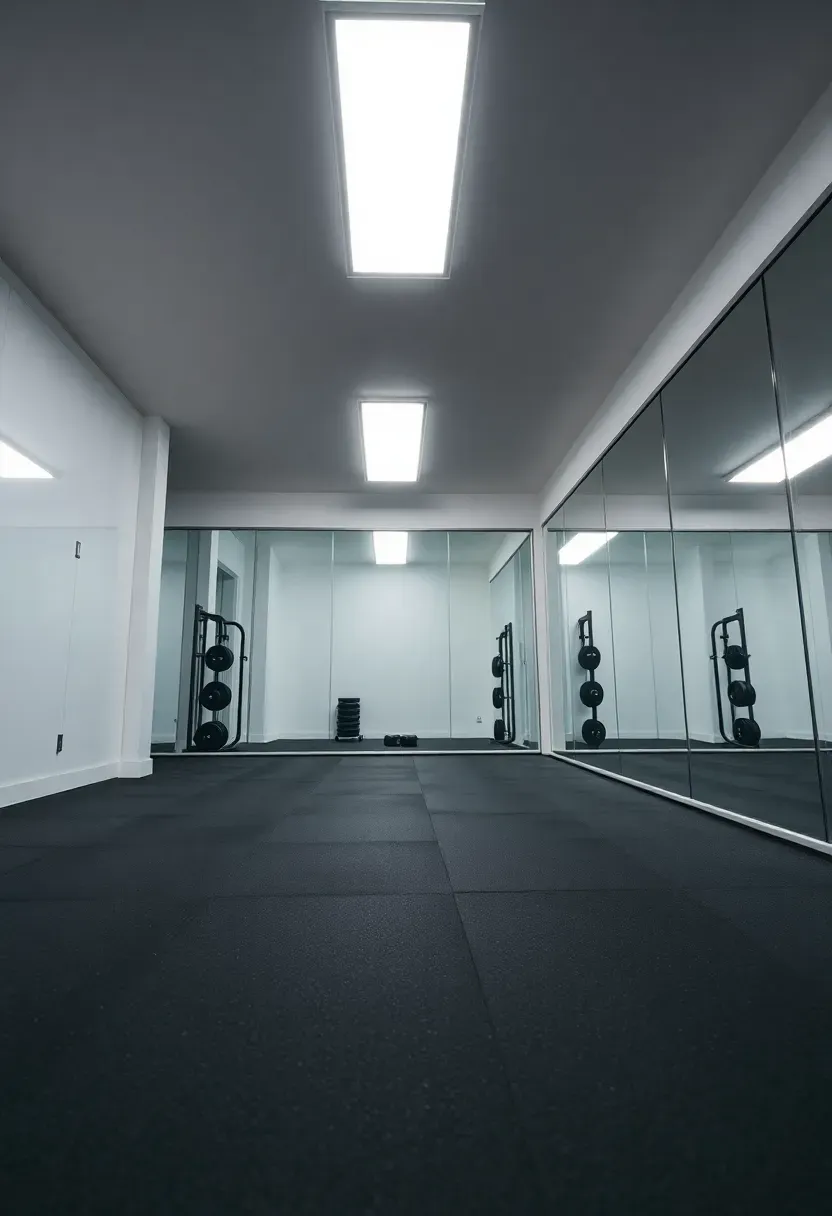
A skylight provides the consistent overhead daylight. AI tools supplement it with an adjustable daylight LED arm lamp (5000–6000 K) clamped to the work surface for task precision and overcast compensation. Wall sconces on dimmer control at 2700 K warm the perimeter for occupied evenings or video calls.
How to Apply at Home
- Never mix colour temperatures at the task surface — keep your primary work light at a single consistent tone
- A velux or roof lantern skylight changes the room's character entirely without structural complexity
- Supplement natural light before trying to replace it — the quality difference is significant
Recommended
Items for this idea
27. Eclectic Dining Room Gallery Wall Lighting
How to Light a Gallery Dining Room
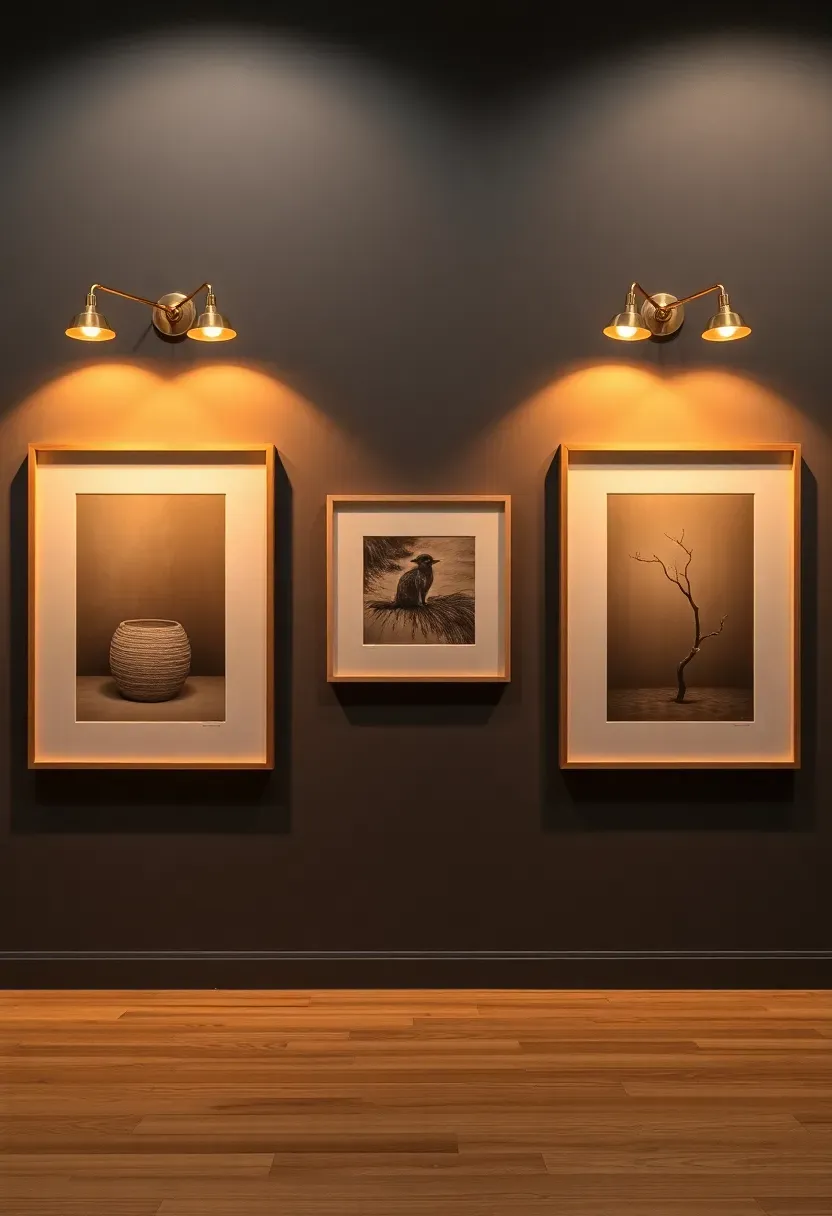
Gallery walls in dining rooms demand individual attention for each piece. AI lighting plans specify one picture light per artwork rather than a single wash — the difference between artwork that's glanceable and artwork that stops conversation.
Step 1: Catalogue the Artwork
The AI maps artwork dimensions and positions on the wall, calculating the required picture light arm reach and lumen output for each.
Step 2: Specify Compatible Fittings
Cable-hung or wall-mounted picture lights should be specced at 2700–3000 K to flatter oil, print, and canvas media without UV fading.
Step 3: Connect to a Scene
Gallery wall lights on a shared single dimmer circuit can be raised and lowered uniformly, allowing the same room to shift from "gallery showing" brightness to "intimate dinner" warmth.
What to Watch Out For
- Avoid clip-on picture lights that connect to the frame — they require battery changes and produce uneven output
- LED picture lights last 25,000+ hours; choose IP-protected cable entries for safety
- Confirm wall circuit capacity before adding multiple new lighting points
28. Balcony Evening Ambient Scheme
Balconies are the last frontier of thoughtful residential lighting. AI outdoor planning tools for balconies work within the constraint of a single exterior socket — most small balconies have one — and map every load precisely. String lights on the pergola or railing draw the primary circuit load. Solar-powered stake lights in planter boxes add accent light without any wiring at all. A wall lantern beside the sliding door provides safety illumination near the threshold and is specified at the lowest wattage that meets code.
Practical Recommendations
- Solar stake lights charge during the day and activate at dusk automatically — ideal for balconies with sun exposure
- Use IP65-rated string lights for all outdoor applications, even covered balconies
- Keep all outdoor fixtures warm white (2700 K) — the contrast with natural evening sky is most flattering
Recommended
Items for this idea
29. Whole-Home Circadian Smart System
The Core Issue
Most homes accumulate lighting over years — a lamp here, a ceiling fixture there — without any coherent plan or relationship between rooms. At 10 PM, the kitchen is still at midday brightness while the bedroom tries to induce sleep.
The Solution
AI whole-home lighting systems model every fixture across every room and program a unified circadian schedule. At 6 AM, hallway and kitchen lights step up to 5000 K to support alertness. By 7 PM, living areas begin a slow transition toward 2700 K. By 9 PM, bedrooms are at 40% brightness with circadian-optimised warm tones. The AI generates this schedule from the household's occupancy data and seasonal sunrise/sunset times.
Pros and Cons
Pros: Supports circadian biology across the whole household; eliminates manual scene switching; adaptable as routines change. Cons: Requires smart bulbs or smart switches in every room; upfront cost is higher than conventional lighting; system reliability depends on a functioning home network.
Quick FAQ
Is AI lighting design only for large renovation projects? Not at all. Many AI lighting tools work from smartphone photos and floor plan sketches, generating plans for a single room as easily as for an entire house. Even rented apartments can benefit — most recommendations involve portable fixtures and plug-in strips that leave no permanent marks.
Which colour temperature should I use throughout my home? There's no single answer, but a useful rule is: cooler whites (3000–4000 K) for task-oriented spaces like kitchens, bathrooms, and offices; warmer tones (2700 K or below) for bedrooms, living rooms, and dining areas. AI tools often specify slight temperature variations between rooms as a deliberate zoning strategy.
Should every room have a dimmer switch? Nearly every residential space benefits from dimmer control except purely functional areas like utility rooms and mudrooms. AI lighting plans include dimmers on at least two of the three circuits in any living space, allowing the room to serve different purposes at different times of day.
What does CRI mean and does it actually matter? CRI (Colour Rendering Index) measures how accurately a light source renders colours compared to natural daylight (rated 100). Below 80 CRI, colour distortion becomes noticeable. Above 90 CRI, most people cannot detect any difference from natural light. AI tools specify CRI 90+ for kitchens, bathrooms, walk-in closets, and any space where colour accuracy affects practical decisions.
Can I implement these ideas without an electrician? Many elements — under-cabinet LED strips, floor lamps, smart bulbs in existing sockets, plug-in wall sconces, and outdoor string lights — require no electrical work at all. Recessed ceiling fixtures, new circuit runs, and hardwired switches always need a licensed electrician. AI lighting tools flag this distinction clearly in their output plans.
A well-lit home is not a luxury — it's the invisible foundation that makes every other design decision work harder. Start with one room: pick two or three of these AI-recommended layouts, experiment with a dimmer and a warmer bulb, and notice how differently the space reads at different hours. The best lighting plan is the one you actually use.
Pinterest cover for 29 AI Lighting Layout Ideas for Every Room
About the author
OBCD
CGI visualization and interior design content. We create detailed 3D renders and curate practical design ideas for every room in your home.