25 AI She Shed Design Ideas
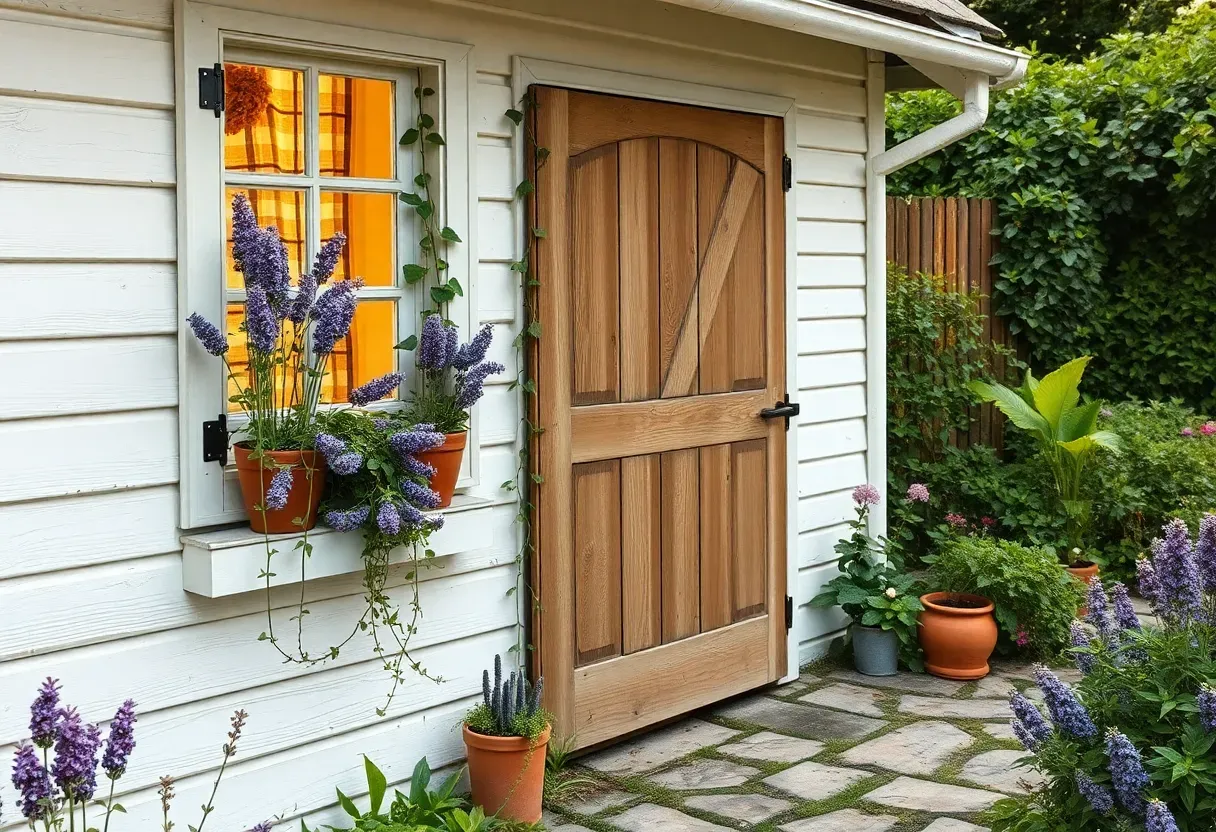
For centuries, the idea of a dedicated personal space — somewhere that belongs entirely to you — has captured the imagination. The she shed is today's answer: a backyard structure freed from the obligations of the main house, where the aesthetic is yours to dictate and the hours are yours to spend. What once required a designer, a contractor, and a lot of guesswork can now begin with a photo of your empty shed and an AI design tool. Within minutes, algorithms render material combinations, lighting schemes, and furniture arrangements you might never have considered on your own.
In this guide you will find 25 AI-generated she shed concepts spanning creative studios, wellness retreats, craft workshops, and entertaining spaces. Each section mixes structures — some compare competing approaches, others walk through practical steps, and a few spotlight the aesthetic and cultural context that makes a theme worth pursuing.
Table of Contents
- Bohemian Reading Cottage
- Crafting Studio With Wall Storage
- Yoga and Meditation Pod
- Floral Workshop and Potting Shed
- Home Office in the Garden
- Artist Studio With North-Facing Skylight
- Vintage Tea Room
- Book Nook With Built-In Shelving
- Cozy Knitting and Fiber Arts Studio
- Photography Studio and Darkroom
- Music Practice Room
- Wine and Entertaining Lounge
- Farmhouse-Style Baking Studio
- Plant Propagation Greenhouse
- Podcast and Content Creation Suite
- Spa and Beauty Retreat
- Sewing and Fashion Design Studio
- Nature-Inspired Watercolor Atelier
- Scandinavian Minimalist Study
- Jewellery Making Workshop
- Candle and Soap Making Studio
- Zen Garden Reading Pavilion
- Boho Plant Mama Sanctuary
- Vision Board and Creative Planning Studio
- Multi-Zone She Shed Entertainment Hub
1. Bohemian Reading Cottage
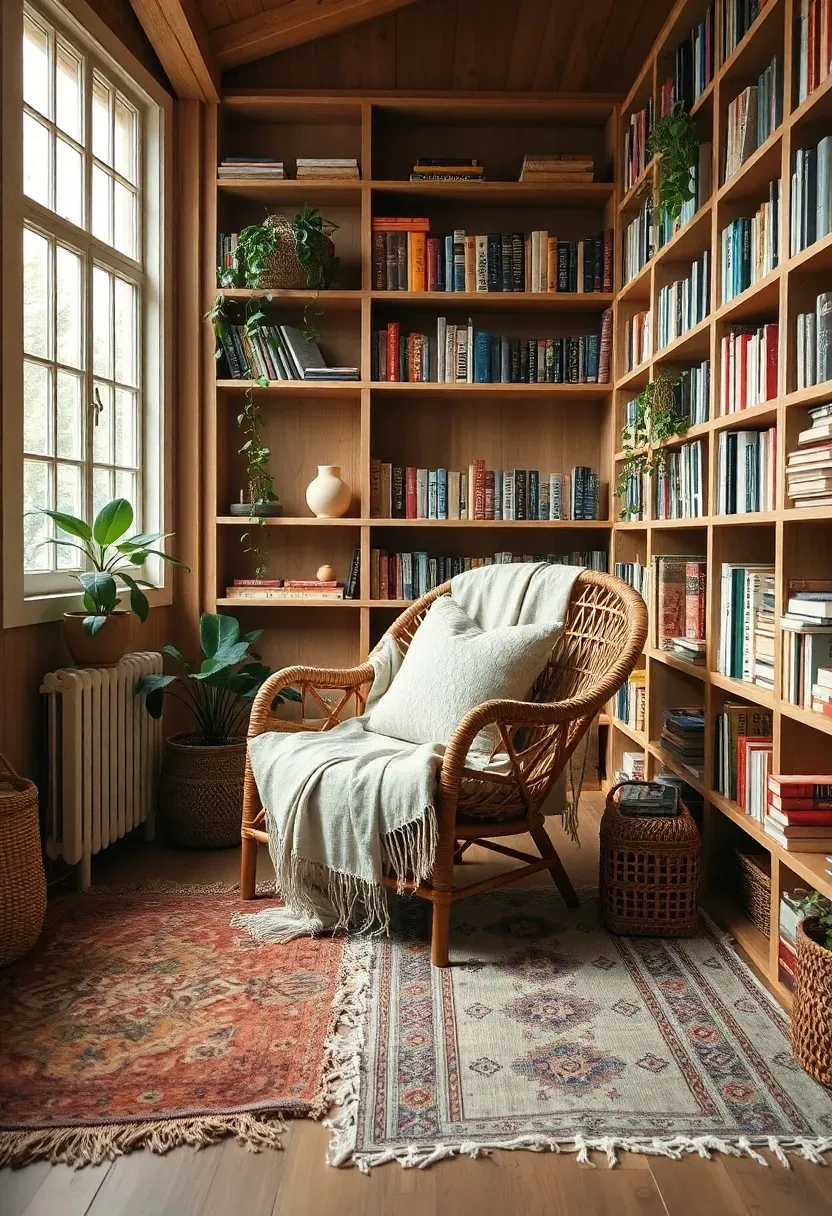
Imagine walking barefoot across layered Turkish kilim rugs, sinking into a deep rattan armchair, and reaching for any book on shelves that rise from floor to ceiling. The bohemian reading cottage is built around texture, softness, and a complete absence of urgency. AI tools translate this sensibility into your specific shed dimensions, testing how rattan, linen, and macramé interact under your available window light without ever looking overdone.
Style Origins
Bohemian interiors descend from the free-spirited artistic communities of nineteenth-century Paris, where painters, writers, and musicians decorated their studios with market finds, ethnic textiles, and layered patterns. That rejection of matching sets and rigid symmetry remains the beating heart of the style.
Modern Interpretation
Today's boho reading shed blends vintage kilim rugs with trailing pothos plants, warm Edison-bulb pendants, and handmade cotton macramé. AI design platforms test how different rug layers interact without making the floor look busy, and suggest shelf heights that balance book storage with plant display. A simple cream macramé wall hanging above the chair becomes the visual anchor that ties the whole palette together.
How to Apply at Home
- Choose one dominant color — terracotta, sage, or dusty rose — and build textures around it
- Layer at least two rug sizes rather than using a single large rug
- Mix open shelves with closed baskets to vary storage rhythm
- Hang one statement macramé piece and resist adding more wall art around it
We picked a few things that go well with this idea: Welnow Rattan Bamboo Lounge Accent Chair (★5.0), Karl Home Chenille Chair with Rattan Arms (★4.1) and Bme 40" Ergonomic Swivel Wicker Papasan Chair (★4.5). As an Amazon Associate we earn from qualifying purchases.
2. Crafting Studio With Wall Storage
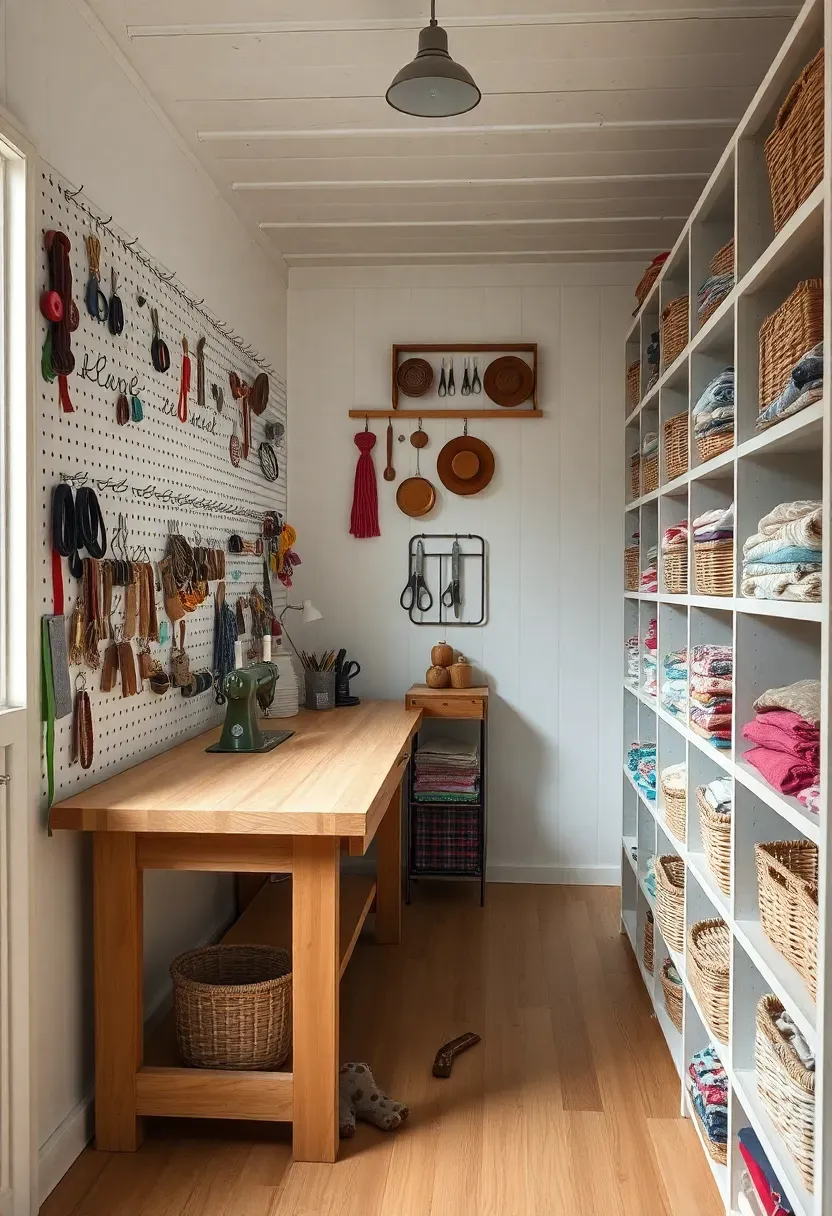
A crafting studio lives or dies by its storage system. Too little and every project ends in a search party; too much and the room becomes a warehouse. AI design tools solve this balance by rendering multiple pegboard configurations, shelf arrangements, and worktable layouts within your specific footprint before a single screw goes in.
The Core Issue
Most crafters accumulate supplies faster than they build storage. The result is a studio that looked organized at launch and chaotic three months later, once fabric bolts overflow the shelves and ribbon spools commandeer the worktable.
The Solution
A floor-to-ceiling pegboard wall with adjustable hooks, baskets, and shelf brackets adapts as your supply collection changes. AI modeling tests pegboard depth and hook spacing against the types of tools you use most, positioning frequently grabbed items at arm level and archive materials higher up. A long butcher-block worktable (ideally 96 inches or more) below the pegboard gives you continuous layout space without the interruption of legs or drawers. Open cubby shelving on the opposite wall handles fabric bolts and yarn bins.
Pros and Cons
Pros: Pegboard is cheap, infinitely reconfigurable, and shows every tool at a glance without opening drawers. Cons: Dust settles on open storage fast — cover seldom-used tools with fabric bins or small curtains on tension rods.
We picked a few things that go well with this idea: Bestylez Welcome to My She Shed Sign (★4.8), This Is My Happy Place Garden Welcome Sign (★5.0) and She Shed Rules Farmhouse Metal Tin Sign (★5.0). As an Amazon Associate we earn from qualifying purchases.
3. Yoga and Meditation Pod
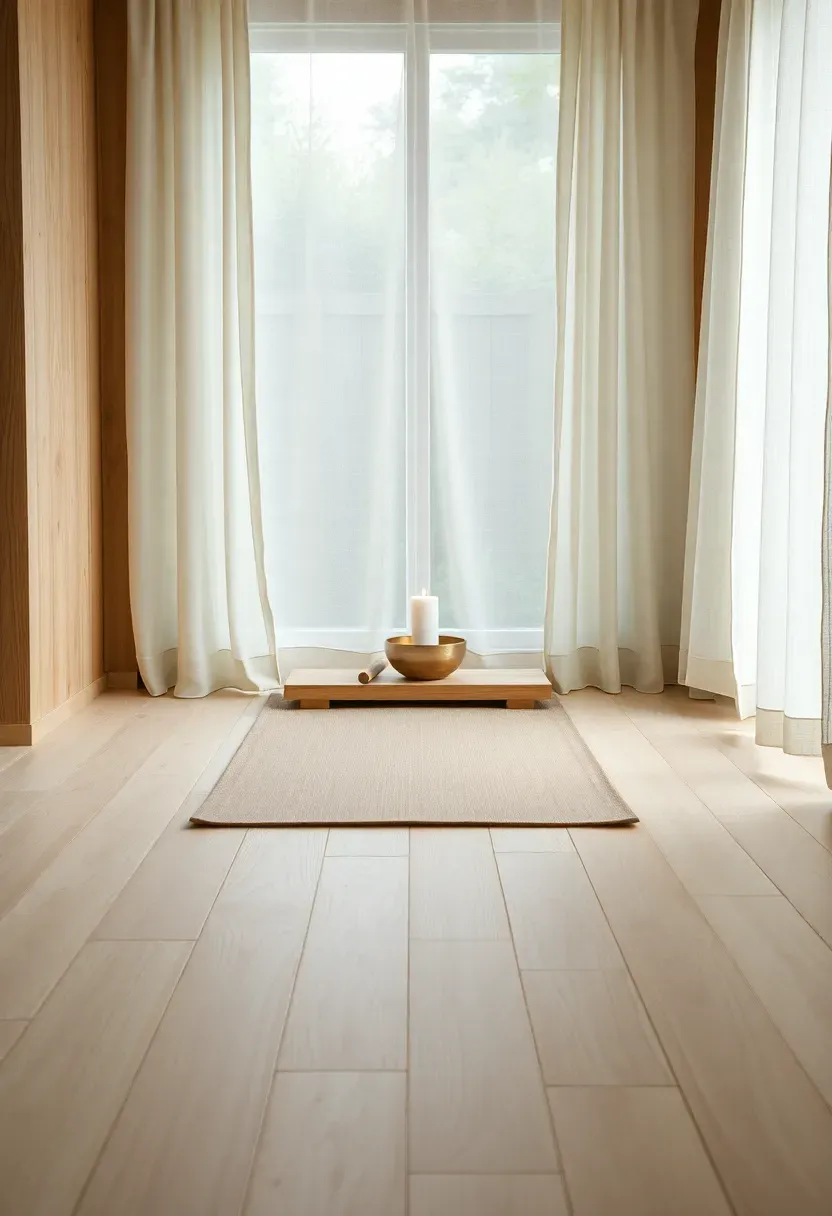
A yoga studio at the end of the garden path removes every domestic distraction the moment you close the door. No notifications, no laundry waiting, no family passing through. What remains is space — both literal and mental.
Step 1: Strip the Room
Remove everything that is not directly functional for practice. AI rendering shows how a yoga pod looks with zero furniture except a mat and one low shelf. Most people discover the room is larger than it felt before the decluttering.
Step 2: Choose the Floor
Wide-plank pale ash or cork flooring provides both warmth underfoot and natural grip for barefoot practice. AI material tools compare slip resistance ratings alongside visual warmth before you commit.
Step 3: Control the Light
Sheer linen curtains on all windows diffuse garden light into a soft, even glow without glare that disrupts focus. A dimmer on any overhead fixture lets you shift from bright morning energy sessions to candlelit evening wind-downs.
What to Watch Out For
- A single teak altar shelf with a candle and singing bowl prevents the room from feeling clinical
- Avoid mirrors — they redirect attention outward rather than inward during practice
- Ventilation is critical: a small fixed vent or window that opens keeps the air from becoming stale during longer sessions
We picked a few things that go well with this idea: Artilady Boho Macrame Plant Hangers (2-Pack) (★4.5), Mkono Macrame Plant Hangers 39 Inch (3-Pack) (★4.7) and Cuttte 4-Leg Macrame Plant Hanger 43 Inch (★4.8). As an Amazon Associate we earn from qualifying purchases.
4. Floral Workshop and Potting Shed
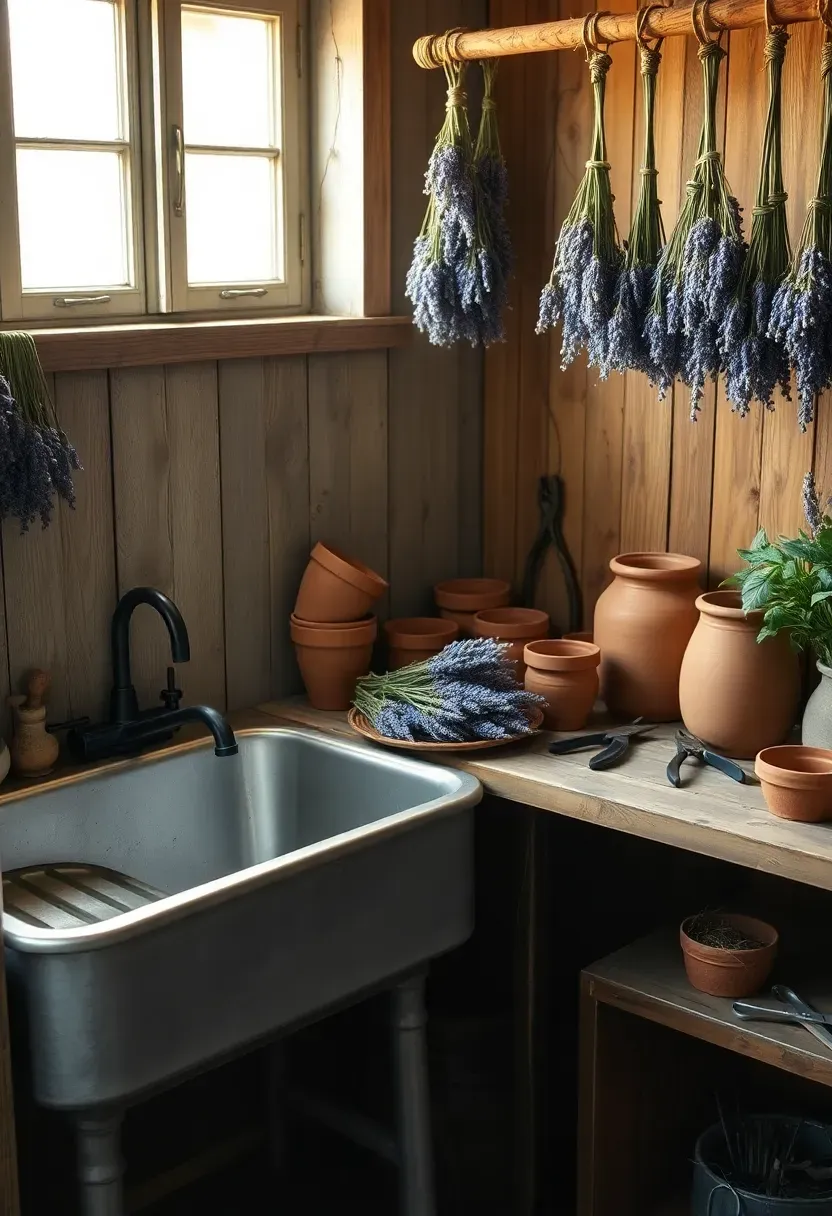
Few she shed themes feel as naturally functional as the floral workshop. Every element earns its place: the deep zinc sink for stem cutting and water changing, the weathered oak potting bench for arrangement work, the overhead dowels that air-dry lavender, eucalyptus, and rose heads into botanical wall art.
Tips and Practical Recommendations
- Position the sink directly below the window for natural light on detailed stem work and effortless cleanup
- Overhead wooden dowels hung at 70 to 80 inches create abundant drying space without stealing bench room
- A pegboard section near the sink holds pruning shears, floral wire, and ribbon within reach without bench clutter
- AI tools test which terracotta pot groupings create visual rhythm on the bench versus which look randomly scattered
- Line the bench apron with open shelving for soil bags, fertilizer, and large watering cans to keep the bench surface clear
Recommended
Items for this idea
5. Home Office in the Garden
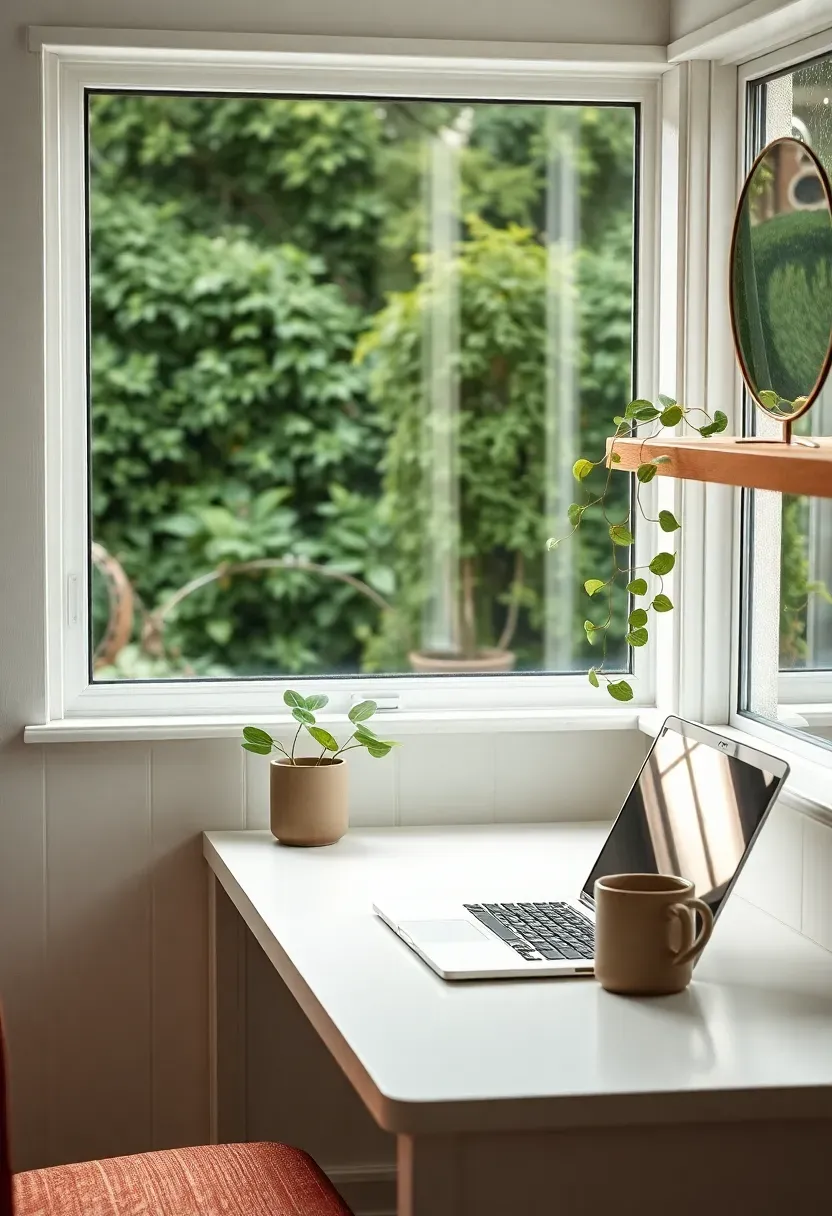
Working from home and working from your garden shed are different experiences. The physical separation — even if it is only thirty steps across the lawn — creates a commute that signals to your brain that work has started. At the end of the day, closing the shed door signals it has ended.
Comparing: Indoor Home Office vs. Garden Shed Office
The question is not which setup is prettier. It is which one helps you actually work.
Indoor Home Office
Convenient and always warm, but surrounded by the same environment where you sleep, watch television, and do laundry. Boundary erosion is the chronic problem — especially when colleagues can see your unmade bed on video calls.
Garden Shed Office
Provides genuine psychological separation. The commute, however short, resets your mental context. Connectivity requires a Wi-Fi extender or ethernet cable run from the house, and heating and cooling need planning for seasonal extremes.
What to Choose
Choose indoor if: your climate makes shed year-round use impractical without significant HVAC investment. Choose shed if: you need hard boundaries between work and home life and have an outdoor structure that can be insulated.
Recommendation
A garden office shed with a fast Wi-Fi connection and a mini-split heating and cooling unit offers productivity returns that typically justify the infrastructure cost within one year.
6. Artist Studio With North-Facing Skylight
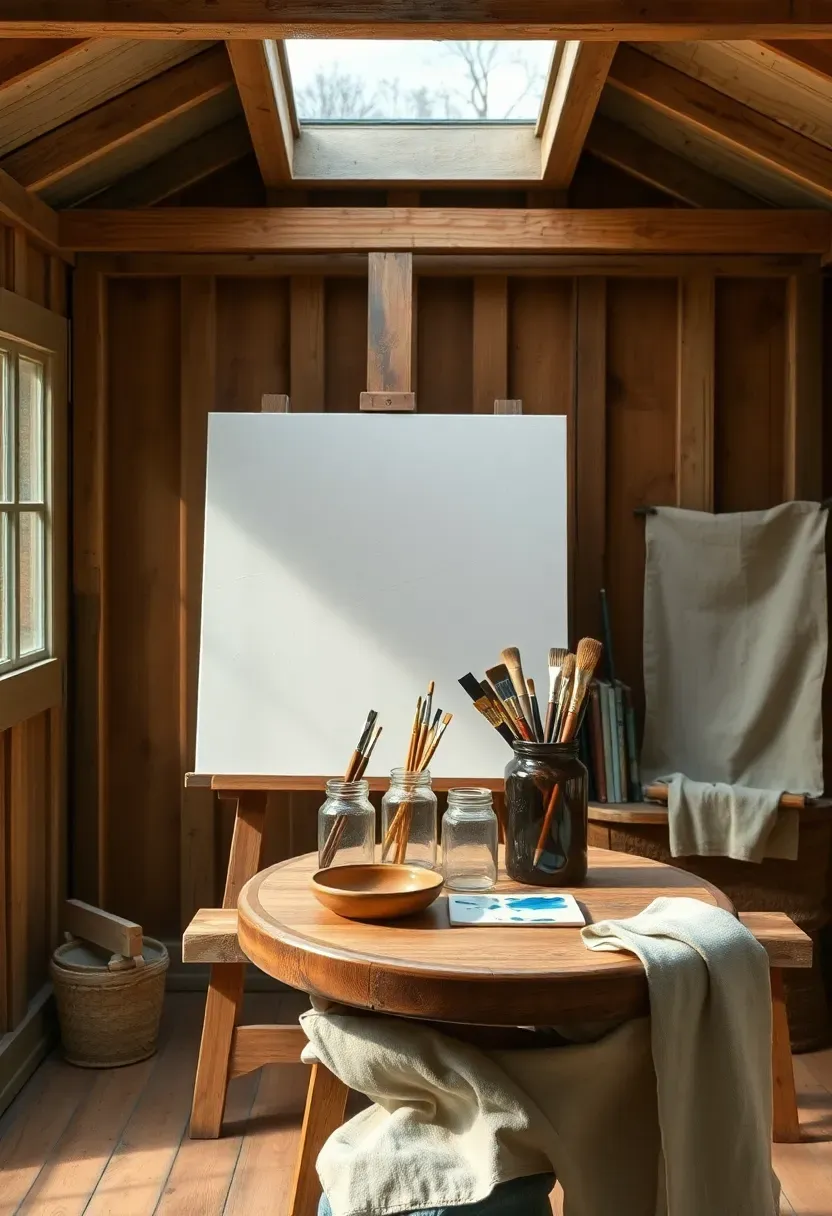
Every serious painter knows: north light is the holy grail. It does not shift through the day the way south or west light does, which means colors on the canvas look the same at 9 a.m. as they do at 4 p.m. A shed studio is uniquely positioned to deliver this — roof modifications are far less expensive than adding skylights to a main house, and AI tools calculate optimal skylight dimensions for your roof pitch before you commission a contractor.
Why North Light Matters
Direct sunlight creates hot spots on the canvas that wash out value relationships and throw shadows that mislead the eye. Diffused, stable north light reveals color temperature shifts and tonal gradations that the artist needs to evaluate accurately. AI rendering programs can even simulate how your specific skylight size and placement will distribute light across the studio floor at different times of year.
Setting Up the Space
Position the easel approximately four feet from the skylight's edge, not directly beneath it. This provides even top-front illumination across the canvas without creating a glare zone. A weathered oak side table keeps brushes, palette, and water jars within arm's reach without crowding the working area. The studio needs no other furniture — a paint-stained stool and a hook for the smock complete the setup.
What to Watch Out For
- Skylight glass should be frosted or use a neutral diffusion film to eliminate direct sun patches
- A north-facing vertical window can supplement the skylight for low morning or winter light
- Seal all wall seams and insulate the ceiling before finishing — temperature stability protects works in progress from expansion cracking
Recommended
Items for this idea
7. Vintage Tea Room
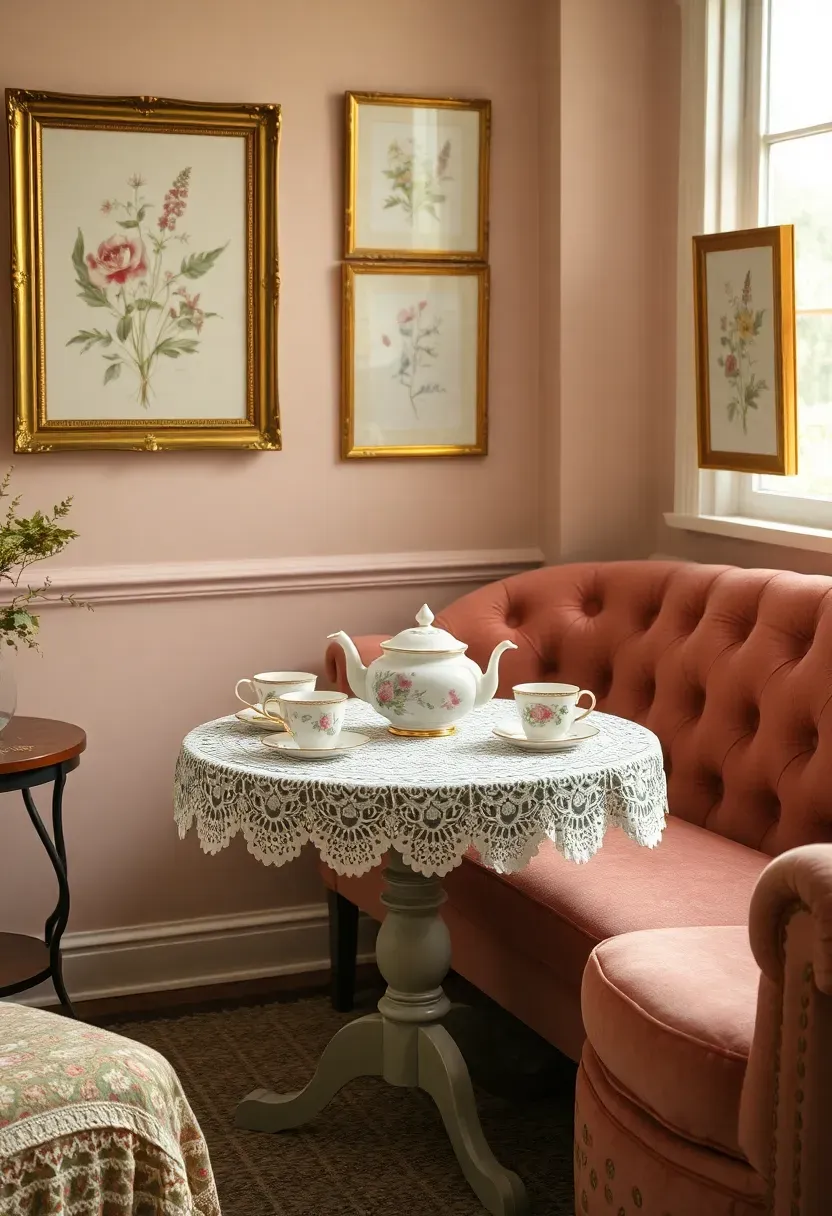
The vintage tea room she shed exists at the intersection of nostalgia and genuine hospitality. It is a space where the afternoon ritual of brewing and serving tea becomes an event rather than a habit — where mismatched china, a lace-covered table, and botanical prints on blush walls create an environment too beautiful to rush through.
The Core Issue
Vintage interiors often err toward cluttered or costume-like, where every surface is so packed with objects that the room feels overwhelming rather than inviting.
The Solution
AI design tools apply visual weight rules to vintage collections, spacing objects so the eye rests between them. The algorithm tests which combination of botanical prints, teacup silhouettes, and textile patterns creates harmony versus visual competition. In practice: limit the wall to three framed prints in matching gilded frames, keep the table surface to one teapot and four cups maximum, and let the velvet loveseat provide the soft visual counterweight to the harder china surfaces.
Pros and Cons
Pros: Intensely personal aesthetic that feels curated and warm, perfect for small-scale hosting of close friends. Cons: Requires ongoing curation discipline — without it, the tea room slides quickly into a storage room for miscellaneous china.
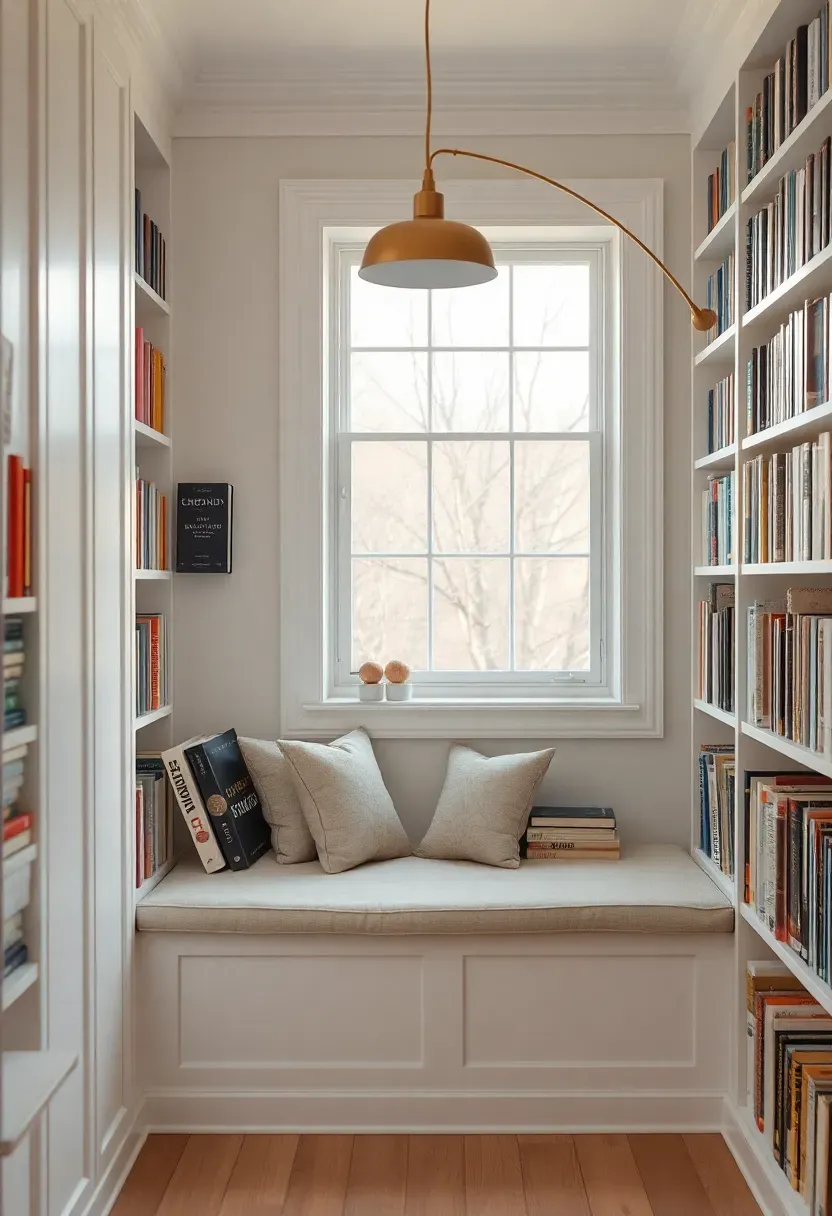
8. Book Nook With Built-In Shelving
Built-in shelving transforms a shed interior from a storage structure into an architectural statement. The secret is extending shelves all the way to the ceiling — not stopping at eye level — which makes a small room feel taller, richer, and intentional. AI room planning tools calculate shelf depth (typically 10 to 12 inches for paperbacks, 12 to 14 for hardcovers) relative to your ceiling height and door clearance.
Step 1: Plan the Layout Before Building
Map every wall and measure ceiling height, window positions, and door swings. AI tools generate shelf configurations that preserve natural light sources rather than blocking windows with book mass.
Step 2: Build the Window Seat First
A window seat with thick linen cushions (4 inches minimum) anchors the reading zone and creates storage underneath via hinged seat lids. Position it to face the dominant light source.
Step 3: Organize by Color
Color-blocking book spines is an AI interior design recommendation that consistently produces visually coherent shelving in small rooms where a chaotic mix of spine colors would feel overwhelming. It also makes titles easier to remember by location.
What to Watch Out For
- White-painted MDF shelves show scuffs on lower sections — use satin finish at knee height and below
- A library ladder on a brass rail adds function and becomes a striking decorative element
- Weight matters: solid built-ins require proper wall anchoring into shed framing, not just drywall
Recommended
Items for this idea
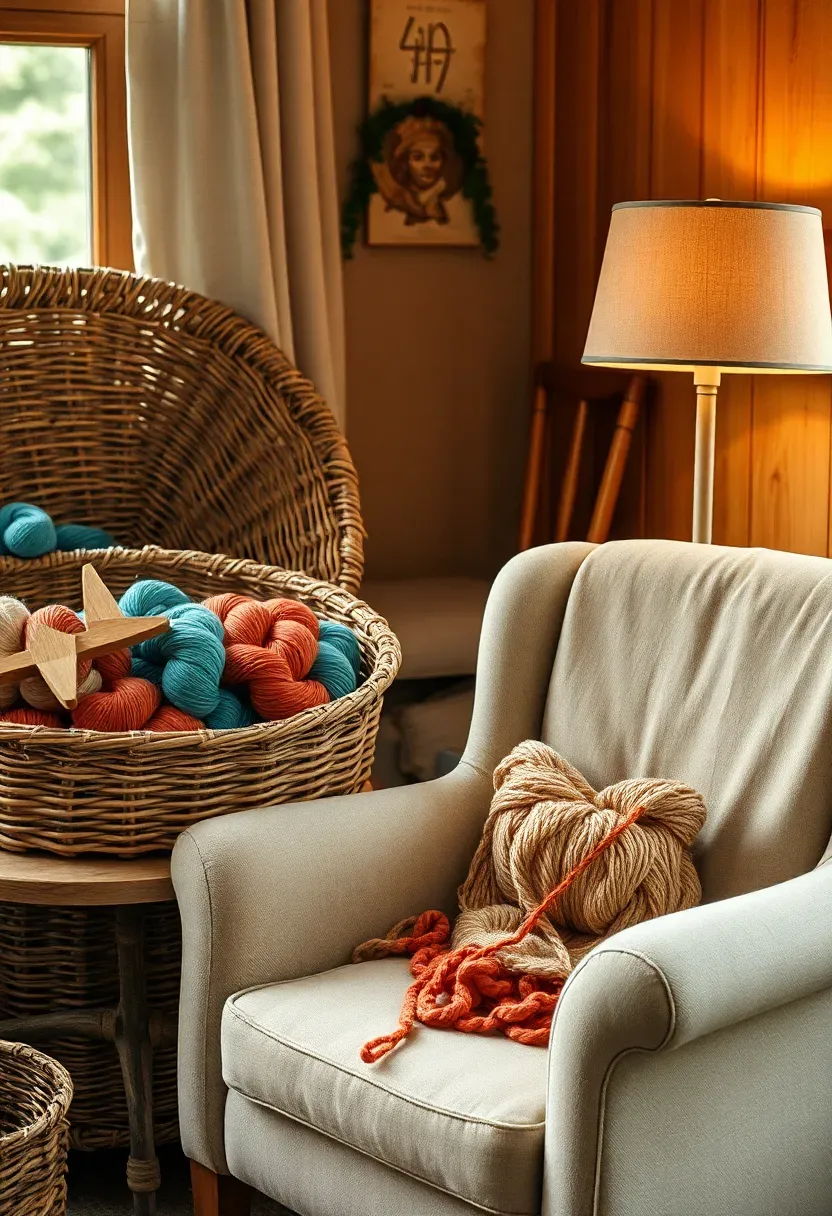
9. Cozy Knitting and Fiber Arts Studio
Fiber arts thrive on sensory environment. The feel of yarn between fingers, the rhythm of needles or a shuttle, the satisfaction of watching a project grow row by row — all of this is amplified when the room itself is soft, warm, and free of competing demands. A dedicated knitting studio gives the craft the respect it deserves.
Tips and Practical Recommendations
- A large wicker basket beside the armchair handles active project yarn without tangling — keep it within arm's reach, not across the room
- A wooden swift and ball winder mounted on a small side table makes winding skeins into working balls efficient and meditative
- Organize yarn by color family in open cubby shelving so the collection itself becomes wall art
- AI lighting tools calculate warm bulb temperatures (2700K) that make yarn colors read accurately without the cool cast that makes some fibers look greenish
- A daylight lamp supplement on the side table improves stitch visibility for fine gauge work without disrupting the room's warm ambient mood
10. Photography Studio and Darkroom
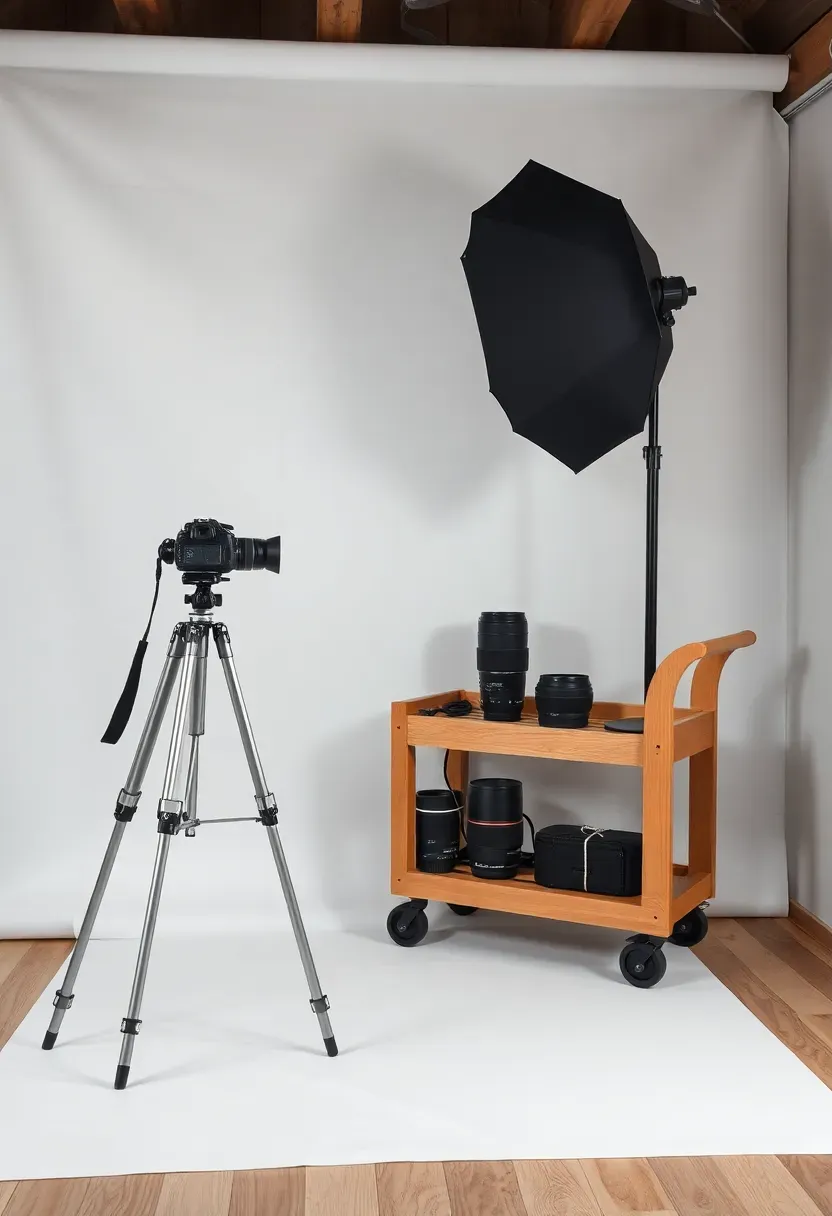
A dedicated photography studio in the garden removes the chronic compromise of shooting in the living room with furniture pushed aside and reflectors propped against the couch. AI room planning tools position backdrops, lighting equipment, and camera angles within your shed's specific dimensions, identifying cable routing paths and flagging any structural elements that would interfere with backdrop placement.
The Core Issue
Studio photography in a shared home space means constant setup and teardown, which erodes shooting time and motivation.
The Solution
A dedicated 10x12 foot shed studio provides enough room for a full-length portrait backdrop, one key light, and comfortable subject movement without cramping the photographer. AI tools design the layout so the backdrop roll holder mounts flush to the ceiling with a pull-down release, clearing the floor completely when not in use. A rolling oak cart beside the camera position organizes lenses, memory cards, and cables in a sequence that matches a natural shooting workflow — no crossing the room mid-session.
Pros and Cons
Pros: Permanent lighting setups mean consistent, repeatable results; the shed can double as an editing suite with a monitor and chair in one corner. Cons: Temperature control is essential — cameras and lenses don't tolerate condensation from sudden temperature swings when moving from a cold shed to warm subjects.
Recommended
Items for this idea
11. Music Practice Room
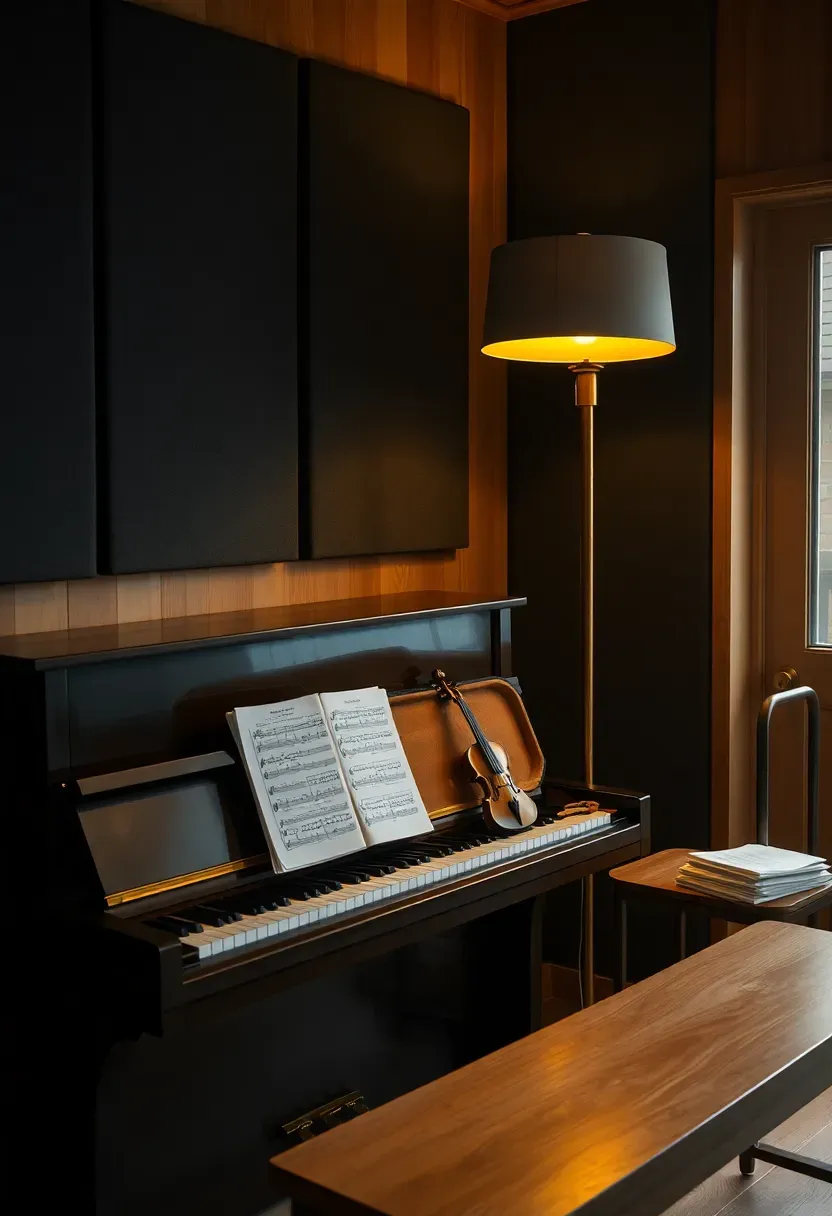
A music practice room in the garden solves the problem that every musician and every family member understands: the tension between the need to play freely and the need for quiet in the rest of the house. Physical separation lets the musician practice at full volume and full length without negotiation.
Step 1: Address Acoustics First
Before choosing any furniture, map your shed's parallel wall pairs — these create standing waves that color your instrument's sound. AI acoustic modeling positions absorption panels at first reflection points (the wall directly beside and behind the player) and adds bass traps in corners where low frequencies accumulate.
Step 2: Place the Instrument
Position the primary instrument — piano, drum kit, or vocal stand — away from the exterior door to minimize sound transfer through the weakest structural point. AI layout tools identify the acoustically quietest zone in your specific room shape.
Step 3: Furnish for Long Sessions
A practice room needs a chair or bench at precisely the right height for the instrument, a music stand with solid angle adjustment, and task lighting that illuminates the score without creating glare or eye strain. A brass floor lamp behind the seating position provides warm ambient fill between focused sessions.
What to Watch Out For
- Check local residential noise ordinances before investing in the space — they vary significantly by municipality
- A solid-core door with proper weatherstripping reduces sound transmission far more than additional interior acoustic treatment
- Ventilation must be designed carefully — standard louvered vents are significant sound paths
12. Wine and Entertaining Lounge
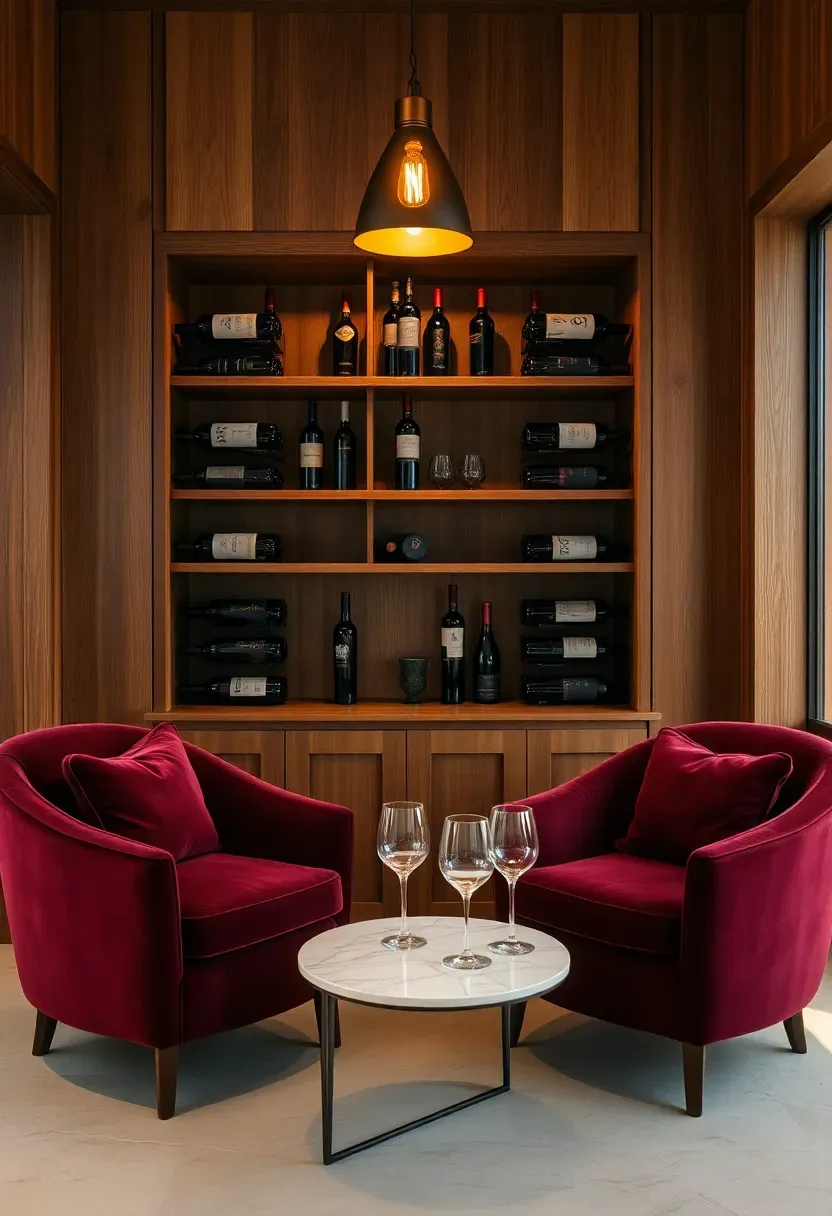
An entertaining shed is a different category from an entertaining room inside the house. The novelty of the space — the invitation to step outside the main home into something more intimate and deliberate — elevates every gathering held in it. Two velvet armchairs, a built-in wine rack, and a pendant that casts warm amber glow are enough to create an experience guests remember.
Comparing: Open Bar Cart vs. Built-In Wine Rack
Both store wine and serve drinks. The choice shapes the room's character permanently.
Open Bar Cart
Portable, flexible, and adds visual energy with exposed glassware and bottles. Works well in sheds that serve multiple functions and need storage to disappear between uses.
Built-In Wine Rack
Architectural and permanent. A walnut wine rack built into one wall signals that this room exists specifically for wine and conversation. It cannot be moved, but it also cannot be questioned.
What to Choose
Choose bar cart if: the shed serves multiple purposes and you want flexibility. Choose built-in if: the wine lounge is the singular purpose and you want the room to have a permanent identity.
Recommendation
A built-in walnut wine rack holding twenty to thirty bottles, paired with a marble side table between two velvet armchairs, creates a space that feels like a private members club — and delivers that atmosphere consistently every time the door opens.
Recommended
Items for this idea
13. Farmhouse-Style Baking Studio
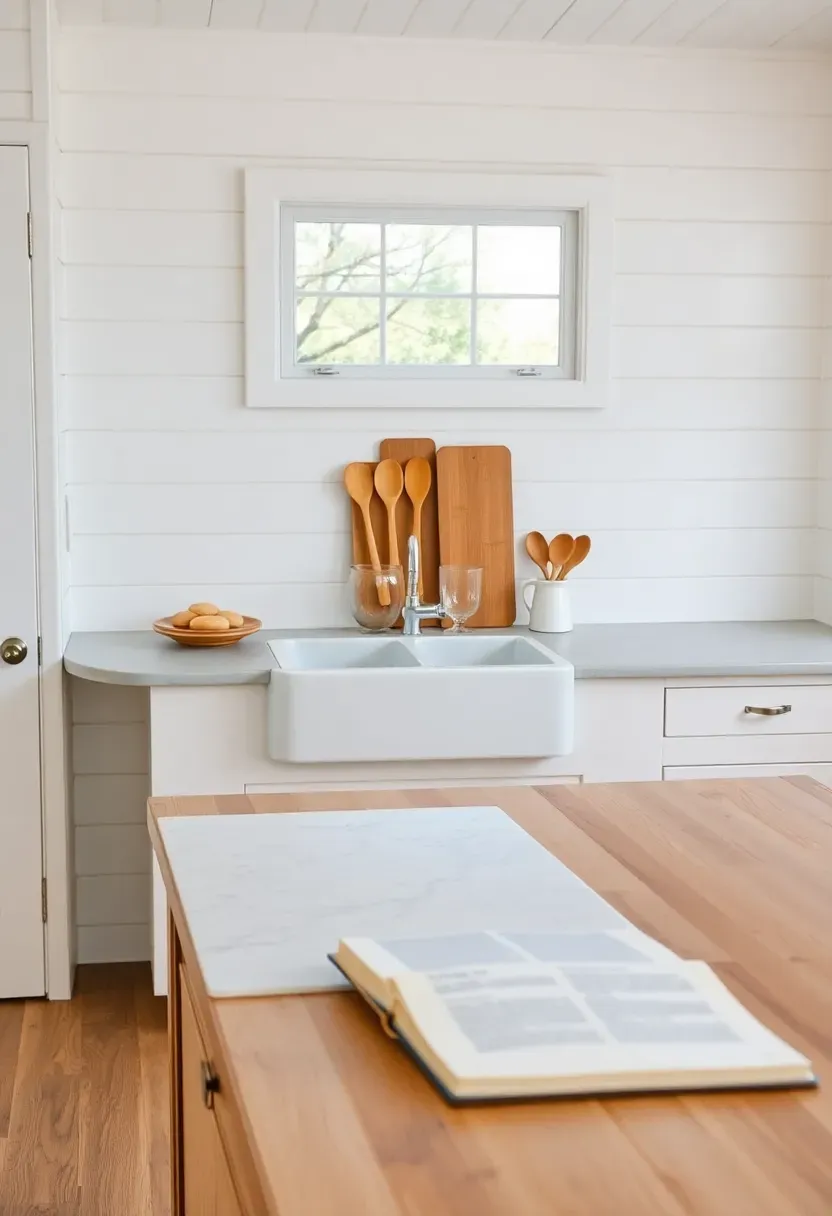
A baking studio separated from the main kitchen removes the domestic negotiation over counter space, appliance noise, and the flour that somehow reaches every surface in a shared kitchen. The farmhouse aesthetic suits the function perfectly — apron-front sinks, butcher-block counters, and shiplap walls all age gracefully under the conditions that baking creates.
Tips and Practical Recommendations
- A marble rolling surface inset into the butcher-block island provides both visual contrast and a naturally cool surface that keeps pastry dough from warming too quickly
- An apron-front ceramic sink positioned under the window handles both baking prep cleanup and the aesthetic requirement for a farmhouse focal point
- Open floating shelves above the sink display ceramic canisters, recipe books, and a few potted herbs — practical and beautiful simultaneously
- AI layout tools test island dimensions relative to the shed's footprint, ensuring enough clearance for two people to work comfortably side by side
- A dedicated electrical circuit (20 amp minimum) powers stand mixers, proofing drawers, and any warming equipment without tripping the shed's main breaker
14. Plant Propagation Greenhouse
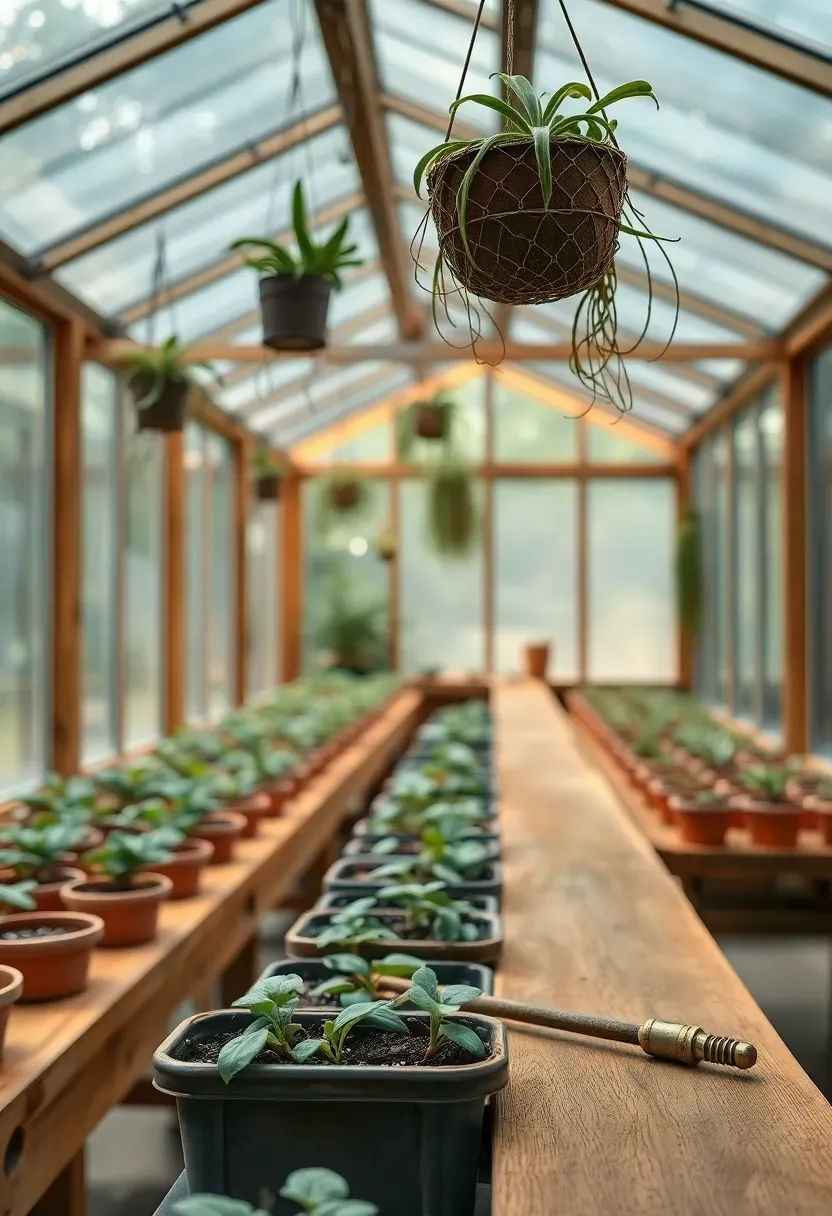
The propagation greenhouse is the most functionally specific she shed concept on this list — and arguably the most rewarding over time. Every plant you propagate from a cutting or seed represents both saved money and a deepened relationship with the species you grow. AI greenhouse planning tools calculate light transmission through your chosen glazing, bench height ergonomics, and drainage slope before the first cedar board is cut.
Origins and Historical Context
Glass conservatories and heated glasshouses became fashionable among wealthy Victorian households in the mid-1800s, where exotic tropical plants were grown as status symbols. The democratization of affordable polycarbonate and twin-wall glazing panels has made the backyard greenhouse accessible at every budget level.
Modern Interpretation
Today's she shed greenhouse blurs the line between growing space and relaxation space. Cedar potting benches serve the practical propagation function, while the filtered, dappled quality of light through glass panels creates an atmosphere that many people find meditative. AI layout tools model bench positioning for maximum light exposure throughout the day and identify which sections of the greenhouse will experience temperature spikes in summer, guiding ventilation placement accordingly.
How to Apply at Home
- Start with cedar or redwood benching — both resist moisture and soil contact without chemical treatment
- Install a misting system on a simple timer for propagation trays that need consistent humidity
- Use terracotta pots rather than plastic for seedlings — they breathe, reduce overwatering risk, and look considerably better
- Leave one section of bench dedicated to display rather than working propagation — a curated arrangement of finished plants makes the greenhouse feel like a destination, not just a utility space
Recommended
Items for this idea
15. Podcast and Content Creation Suite
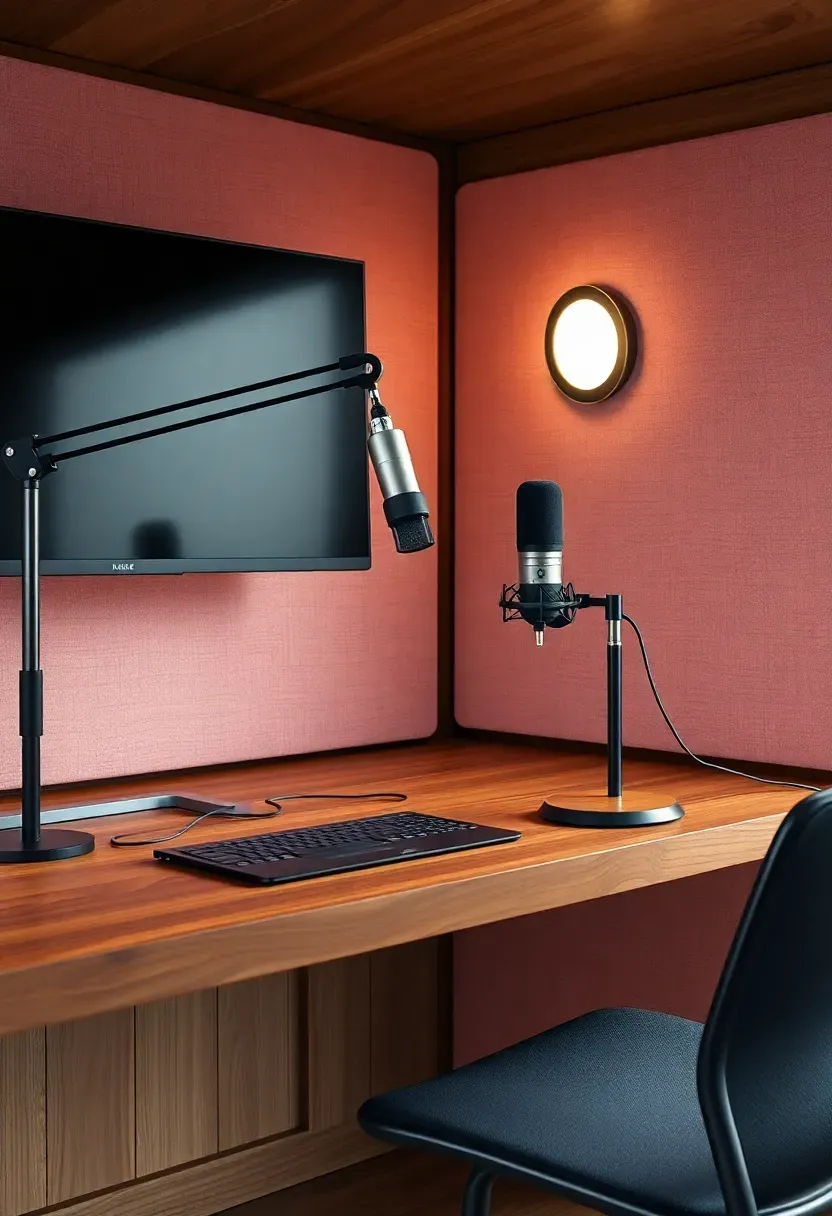
Content creation needs two things above all others: a quiet room and a visually compelling background. A garden shed delivers both when treated correctly. Acoustic panels on the rear wall eliminate the reverb that makes home recordings sound amateur, while a considered desk setup and soft lighting create a background that looks intentional on camera rather than improvised.
Step 1: Treat the Walls First
Mount blush linen acoustic panels on the rear wall (the one visible on camera) and the side walls at first reflection points. AI acoustic modeling identifies which panel thickness handles mid-frequency speech most effectively in your room dimensions — typically two-inch dense foam or rigid fiberglass in fabric wraps.
Step 2: Position the Microphone
A boom arm positions the condenser microphone at mouth level without taking up desk surface. Angle it slightly off-axis from the mouth to reduce plosives without adding a pop filter that looks clunky on camera.
Step 3: Light for Video
A ring light at monitor level provides catch-light in the eyes and even facial fill. A warmer supplemental lamp to one side adds depth and prevents the flat, corporate look that ring lights alone produce. AI color grading tools test warm-versus-cool light balance in your specific space before you position equipment.
What to Watch Out For
- Soundproofing and acoustic treatment are different things — panels absorb echo, but mass (thick walls, solid door) prevents external sound from entering
- A stable broadband connection via ethernet cable rather than Wi-Fi eliminates upload inconsistency during live recording sessions
- Power conditioning (a simple surge protector with line filtering) protects audio equipment from hum caused by variable household electrical loads
16. Spa and Beauty Retreat
A spa shed is not about replicating a commercial spa — it is about creating the conditions for unhurried self-care. The difference between a bathroom beauty routine and a spa retreat experience is almost entirely environmental: the quality of light, the absence of time pressure, and surfaces that feel deliberate rather than functional.
What Makes the Atmosphere
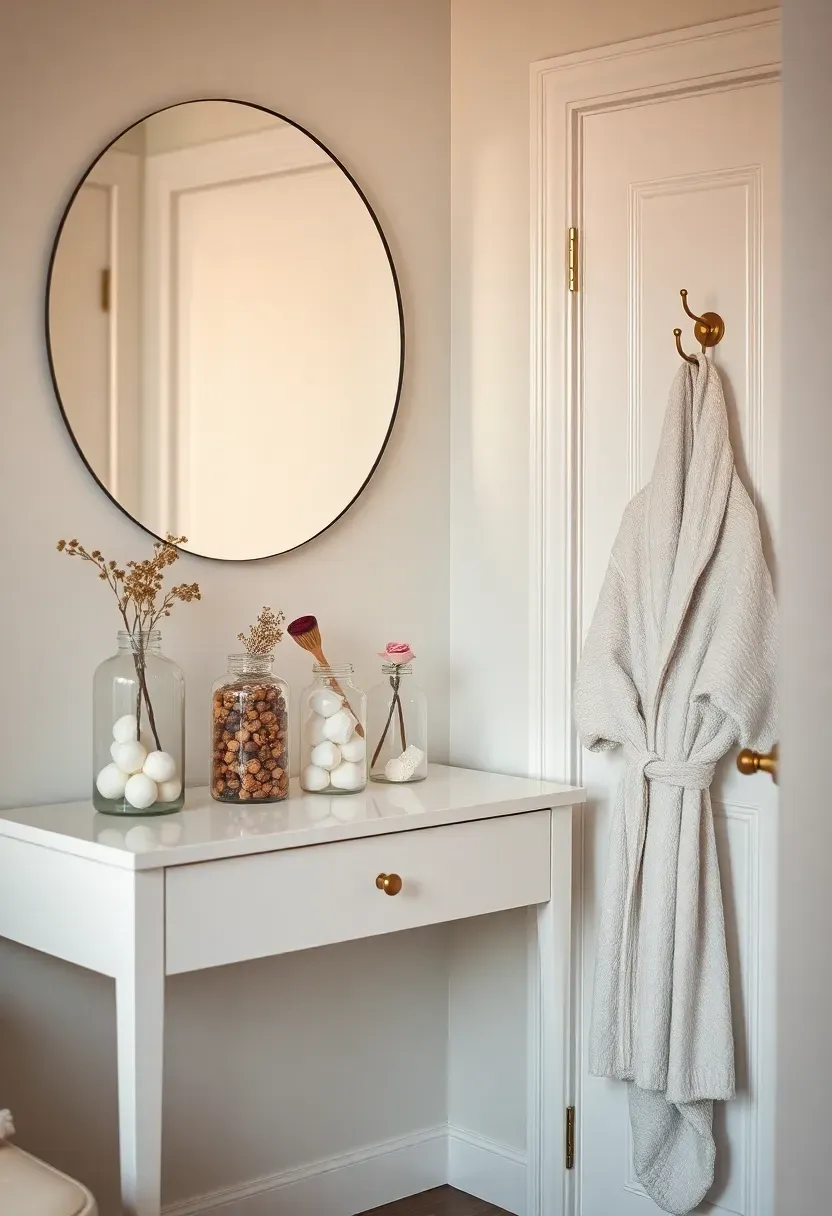
Warm, diffused vanity lighting (avoid cool-white LEDs above mirrors) renders skin tones accurately and creates a flattering quality of light that signals "retreat" rather than "clinical procedure." AI lighting design tools compare bulb color temperatures for vanity applications and consistently recommend 2700K to 3000K for the most flattering and relaxing results.
The Layout
A floating vanity with a large round frameless mirror occupies the primary wall. Apothecary glass jars on the countertop organize cotton rounds, face brushes, and dried roses into displays that are both functional and decorative. A brass hook beside the door holds the terrycloth robe that signals the session has begun. AI tools test countertop depth (ideally 18 inches for spa vanities versus the standard 21 inches of kitchen counters) to preserve floor space for a small folding treatment table or a floor cushion.
Pros and Cons
Pros: Creates a genuine psychological boundary around self-care time; the space communicates that your wellbeing is a priority worth dedicating a room to. Cons: Plumbing a shed for a sink significantly increases cost — a well-designed dry vanity with micellar water and waterless products can replicate most of the function without pipe work.
Recommended
Items for this idea
17. Sewing and Fashion Design Studio
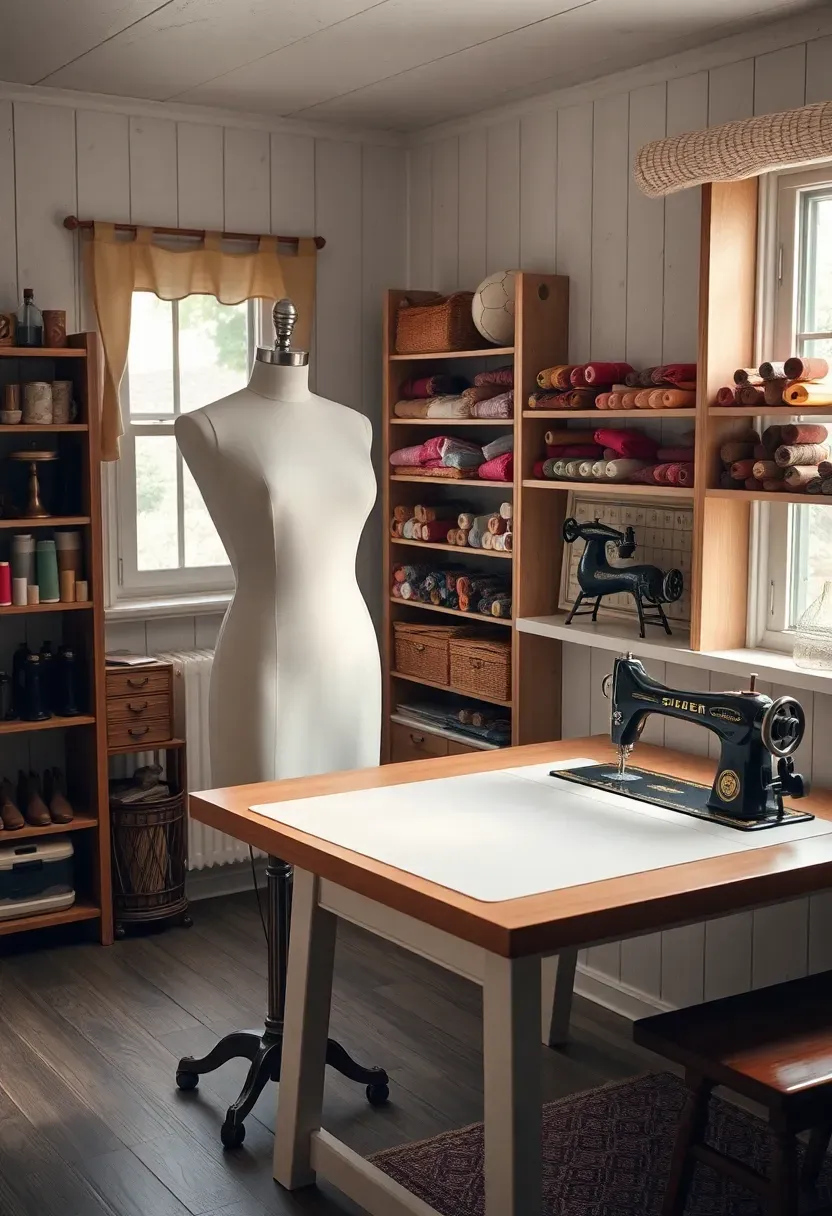
A sewing studio earns its own space the moment the cutting table appears. Cutting fabric on a dining table or the floor is one of the most common frustrations in home sewing — the table is never clear, the floor is never clean, and the interruptions are constant. A shed studio with a dedicated cutting table at counter height resolves all three problems permanently.
Step 1: Set the Cutting Table Height
A cutting table at 36 inches (standard counter height) eliminates back strain during long pattern layout sessions. AI ergonomic tools calculate optimal height against your body measurements — taller sewers often find 38 or 40 inches dramatically more comfortable.
Step 2: Position the Dress Form
A dress form on an adjustable stand belongs beside the machine, not in a corner. Frequent reference between the machine and the form — checking drape, fit, and seam alignment — is part of the construction process. AI layout tools position the form within one pivot of the machine seat.
Step 3: Organize Thread and Notions
Thread organized by color family on wall-mounted spool racks serves double duty as visual display and working storage. A dedicated notions drawer below the machine bench keeps zippers, buttons, and elastic accessible without cluttering the cutting surface.
What to Watch Out For
- Lighting needs to be bright and shadow-free over the cutting table — two overhead LED panels rather than a single center fixture eliminate the shadows that cause cutting errors
- Acoustic tile on the ceiling reduces machine noise transmission to the main house without treating the walls
- A dedicated ironing station with a sleeve board beside the machine completes a professional sewing workflow without requiring a second room
18. Nature-Inspired Watercolor Atelier
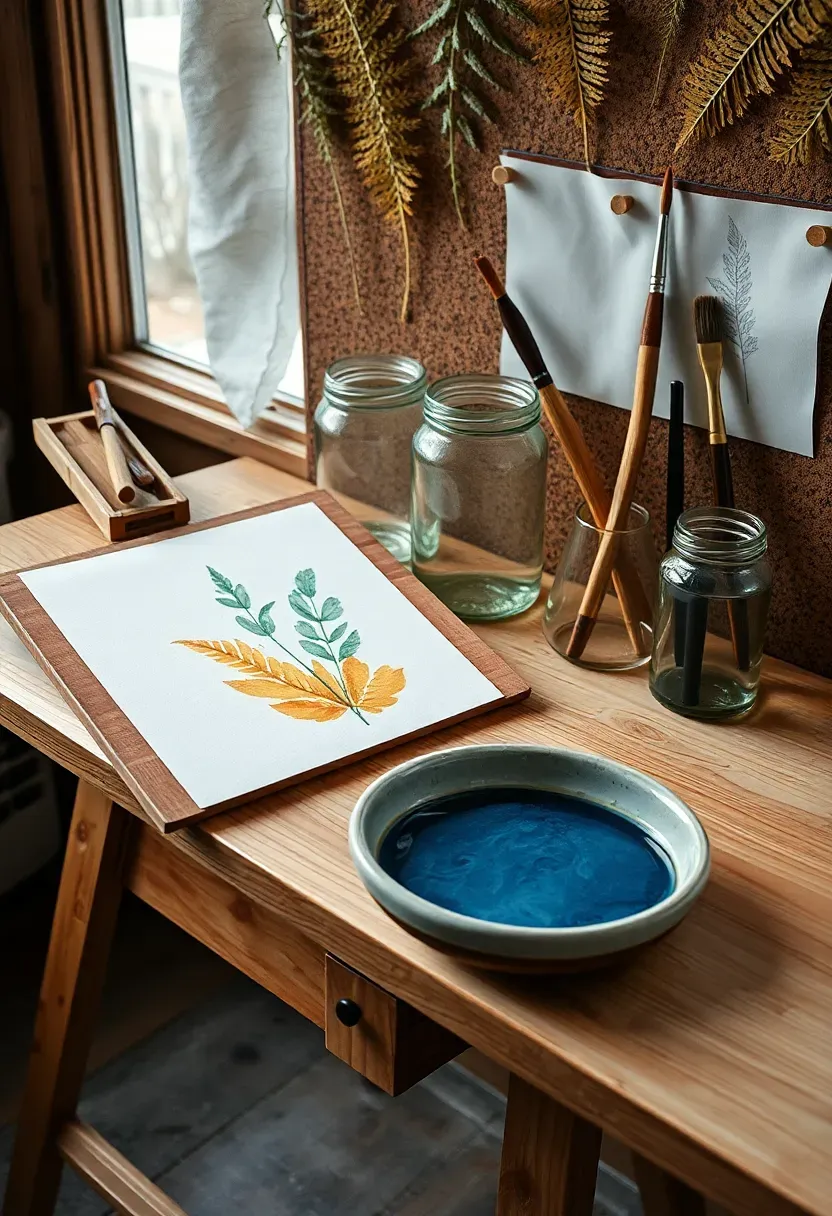
Watercolor is one of the few visual arts where the process is as compelling to watch as the finished work — paint blooming across wet paper, color mixing in ways the hand does not fully control. An atelier dedicated to botanical watercolor surrounds the artist with the source material: pressed ferns pinned to a corkboard behind the easel, small terracotta pots of live herbs on the windowsill, and field sketches accumulated over seasons.
The Relationship Between Space and Practice
AI design tools have noted a consistent pattern in creative studio layouts: practitioners who surround themselves with source reference material produce more varied and confident work than those who work from photographs alone. A watercolor atelier stocked with pressed specimens, dried seed heads, and living plants keeps the eye calibrated to natural form and color — which is why botanical illustrators have always worked in spaces that feel more like conservatories than galleries.
Setting Up the Atelier
A tilted drafting table at 15 to 20 degrees improves watercolor control by letting gravity guide washes without letting them run off the paper edge. A ceramic water dish with multiple compartments allows colors to pool separately without contaminating each other between mixes. The corkboard behind the table holds a rotating collection of pressed botanical specimens at eye level — accessible reference that does not require touching or repositioning the actual subject.
How to Apply at Home
- Mount the corkboard large enough to display a dozen pressed specimens with breathing room between them
- Keep a small spray bottle of clean water on the table for reactivating dry pans between long painting sessions
- A north or east-facing window provides the most consistent painting light throughout the day
- Allow paint stains on the drafting table surface — they become a record of every session and make the studio feel genuinely used
Recommended
Items for this idea
19. Scandinavian Minimalist Study
Scandinavian design philosophy — born from long winters, limited daylight, and a cultural emphasis on functional beauty — translates directly into the she shed context. The goal is not emptiness for its own sake but the deliberate selection of objects that earn their presence through both usefulness and beauty. Nothing decorates by accident.
The Core Issue
Minimalism in she shed design frequently tips into sterility, producing a space that looks composed in photographs but feels cold and uninviting during actual use.
The Solution
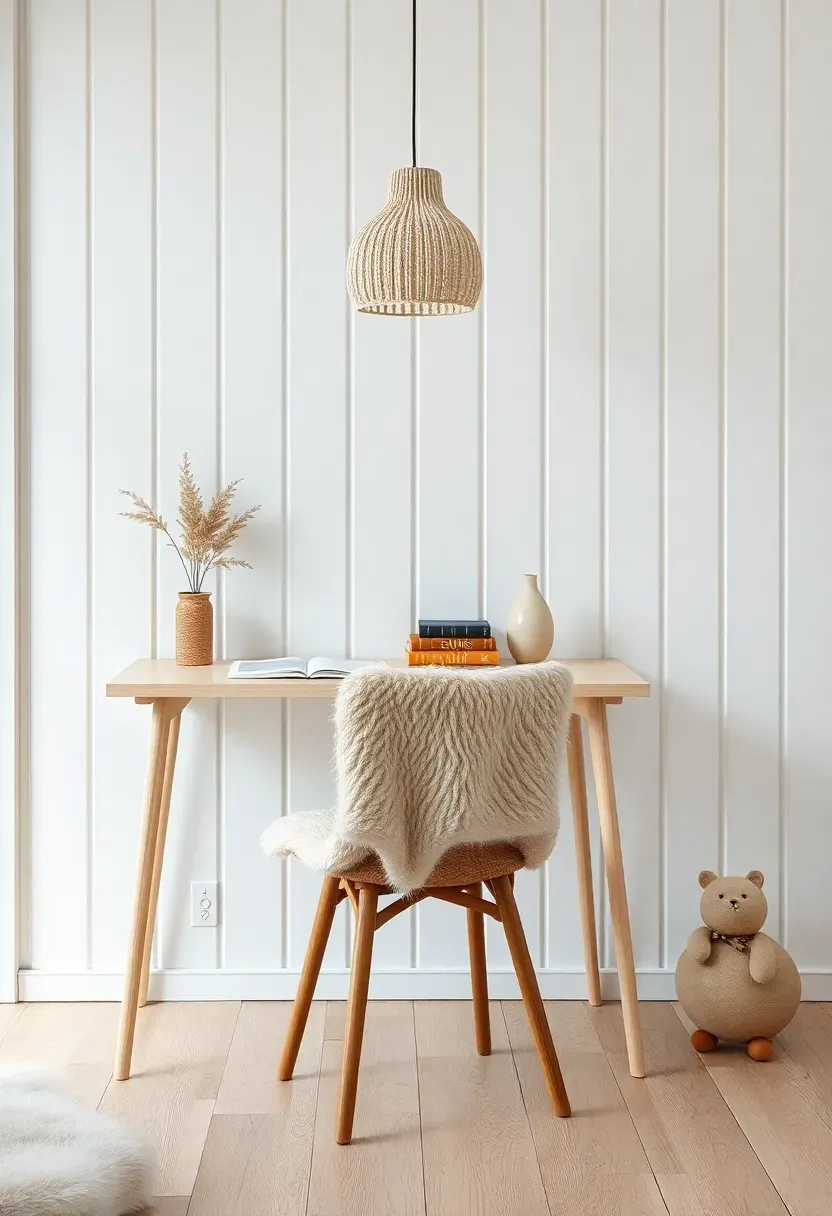
The Nordic warm minimalist approach uses material temperature to compensate for visual restraint. Pale birch wood, a sheepskin throw across the chair back, a single cream wool pendant lamp, and one ceramic vase holding dried pampas create a room that reads as empty but feels genuinely warm. AI material selection tools test wood tones against white paint variants, identifying which birch-to-white ratio produces warmth rather than clinical coolness. The answer is almost always tongue-and-groove wall cladding rather than flat plaster — the shadow lines between boards add texture that painted flat walls cannot replicate.
Pros and Cons
Pros: Demands almost no maintenance to look composed; each additional object is a considered decision rather than an accumulation. Cons: Requires ongoing discipline — the first time a random pile of papers lands on the desk, the aesthetic collapses immediately without a storage solution for exactly that scenario.

20. Jewellery Making Workshop
Jewellery making operates at a scale where millimeters matter. Tiny findings, stone settings, and wire gauges measured in fractions of a millimeter require both exceptional task lighting and a work surface that remains completely stable. A dedicated shed workshop provides both without the vibration, interruptions, and scale confusions of a shared household environment.
Tips and Practical Recommendations
- A stainless steel jeweller's bench at 34 inches height with a wooden bench pin socket provides both the stability and the cutout geometry that precision sawing and filing require
- Task lighting should exceed 1000 lux at the work surface — a chrome articulated lamp with a daylight LED bulb positioned overhead and slightly behind the dominant hand eliminates hand shadows
- Velvet-lined trays keep loose gemstones and findings organized and visible without rolling across the bench
- AI storage design tools plan drawer configurations for tools by size category — files, pliers, gravers, and burrs each need separate compartments to prevent edge damage
- A small ultrasonic cleaner on the bench processes finished pieces in minutes, turning a previously tedious manual step into a satisfying ritual
Recommended
Items for this idea
21. Candle and Soap Making Studio
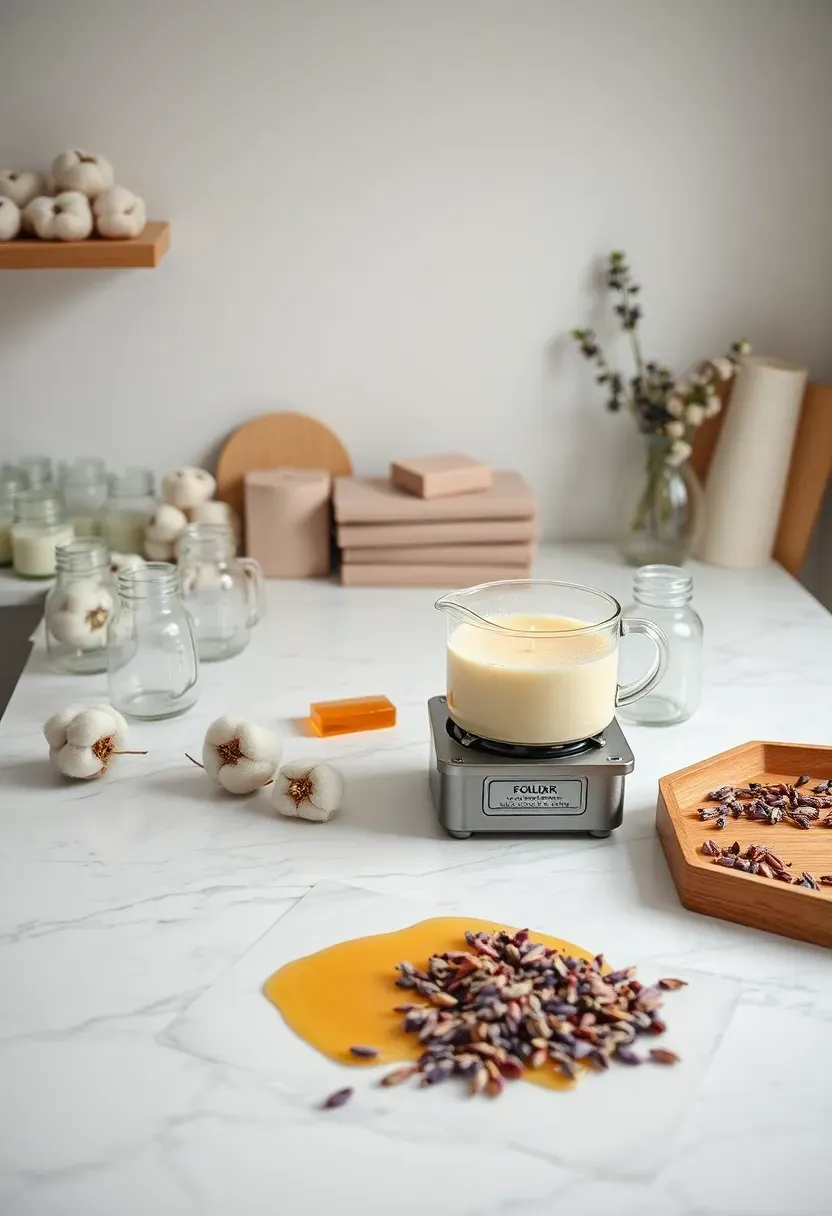
Candle and soap making occupy a unique creative category: the products are both beautiful objects and functional ones that leave the studio and enter daily life. A dedicated shed studio lets you work with hot wax and lye in a ventilated space without worrying about household air quality, and gives your collection room to cure on open shelving without taking over the kitchen counter.
Step 1: Ventilate Before Anything Else
Candle making produces fragrance oil vapors and minimal particulates during pouring; soap making with lye produces fumes during saponification. A shed window that opens fully plus a small exhaust fan in the opposite wall creates cross-ventilation sufficient for safe hobby-scale production.
Step 2: Set Up the Pour Station
A white marble countertop serves as the pour station — marble resists heat, cleans easily, and looks genuinely beautiful with rows of glass pouring pitchers and ceramic fragrance bowls arranged on it. AI heat-mapping tools verify that your specific marble slab can handle repeated hot wax pours without thermal shock cracking.
Step 3: Create a Curing Shelf
Finished candles and soap bars need undisturbed air curing — candles for 48 hours minimum, cold-process soap for four to six weeks. Open shelving on a wall away from direct sun provides the consistent temperature and air circulation that curing requires.
What to Watch Out For
- Keep a fire extinguisher rated for cooking oil fires (Class K) within arm's reach of the pour station at all times
- Label every fragrance oil and colorant clearly — in the flow of production, unlabelled bottles cause expensive errors
- A separate small refrigerator in the studio stores natural additives like yogurt, honey, and milk at the right temperature without mixing them with food
22. Zen Garden Reading Pavilion
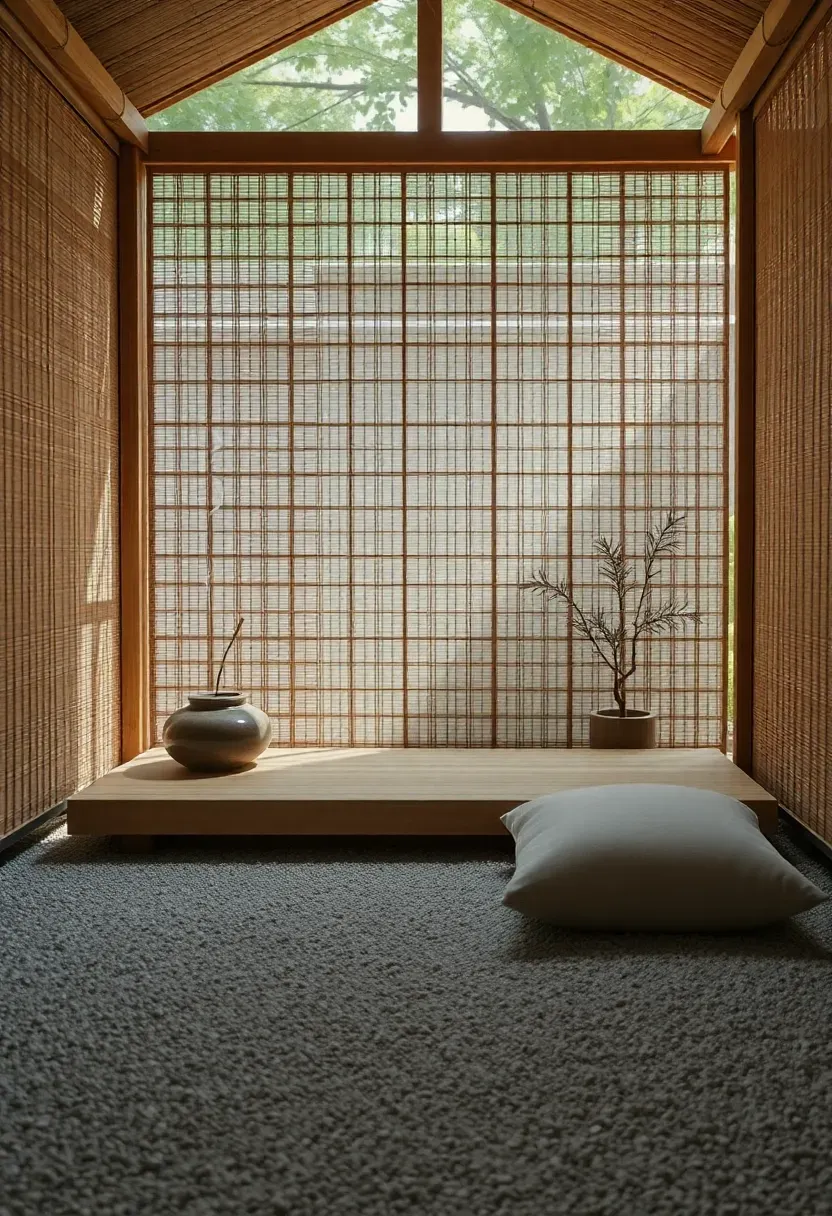
This concept asks a different question than most she shed designs: what if the space contained almost nothing? A low platform daybed in natural paulownia wood, a fine gravel floor raked into gentle patterns, a woven bamboo screen filtering garden light, and a single ceramic incense holder. The reading happens not at a desk but lying down or cross-legged, with the book resting in the reader's hands rather than propped on a stand.
Origins and Philosophy
Japanese garden pavilions — shoin and sukiya style tea houses — developed over centuries as architectural expressions of the wabi-sabi aesthetic: an appreciation of imperfection, transience, and the beauty found in the unfinished. The gravel floor is not a practical choice by Western standards; it is a philosophical one. Raking the gravel is itself a meditative practice.
Modern Interpretation
Few Western she shed owners will commit to a completely gravel floor, but the principles translate flexibly. A fine gravel section beneath the platform daybed, with smooth stone tiles in the entry area, captures the visual vocabulary without requiring the full commitment. AI material tools test which gravel sizes and stone tile combinations read as intentionally Japanese rather than accidentally beachy.
How to Apply at Home
- Source paulownia or hinoki wood if possible — both are traditional Japanese materials with a naturally light color and pleasant fragrance
- A single bamboo screen section (not a full wall) provides enough visual texture without overwhelming a small shed
- Resist adding any wall art — negative space on the walls is part of the design
- Limit the color palette to sand, warm wood, pale green, and smoke grey
Recommended
Items for this idea
23. Boho Plant Mama Sanctuary
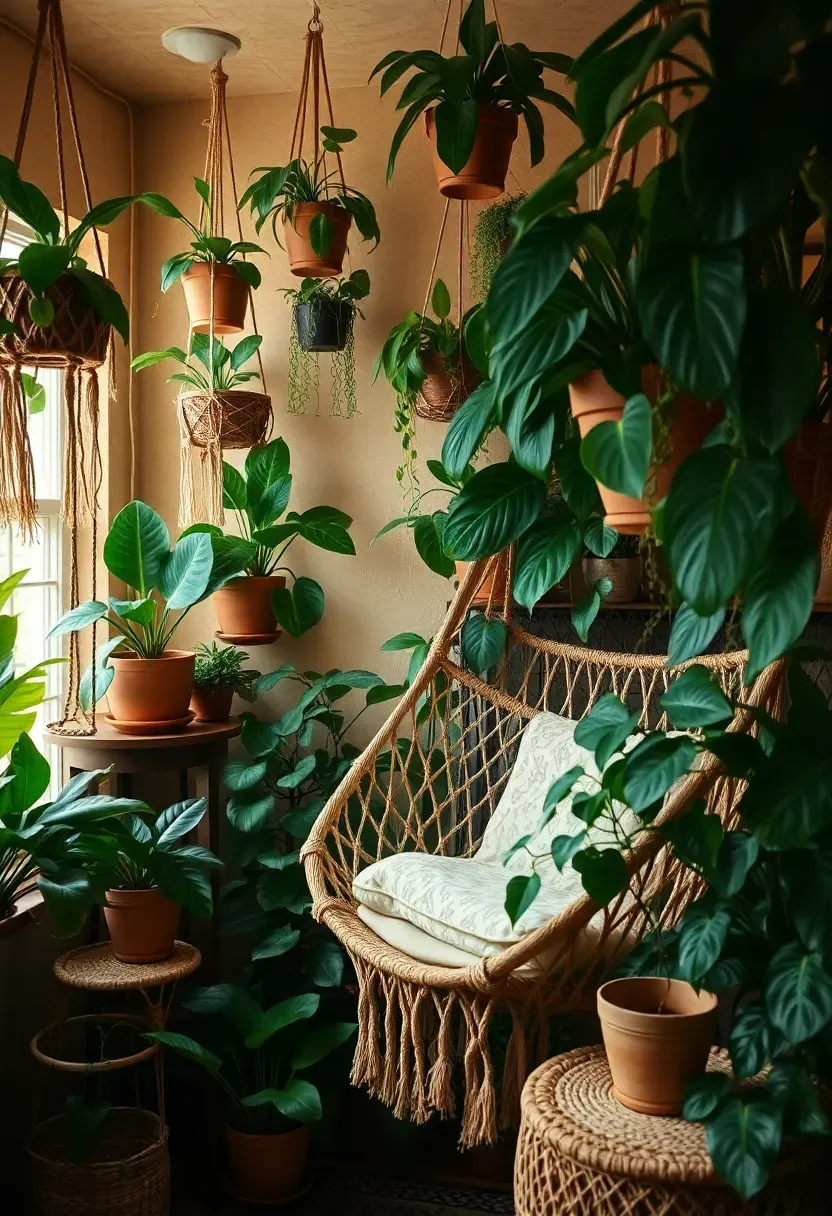
Is it possible for a room to feel like a jungle without being oppressive? The plant mama sanctuary answers yes — provided the plant density builds gradually and the containers share a coherent material language. Terracotta and woven jute rope planters in varying sizes create visual rhythm within the abundance, preventing the collection from reading as clutter.
The Core Issue
Plant rooms without a design framework look like a storage facility for impulse greenhouse purchases. The plants compete visually rather than contributing to a coherent environment.
The Solution
AI room arrangement tools model hanging planter positions in three dimensions, identifying height relationships between ceiling macramé, mid-wall mounted terracotta, and floor-level statement plants that create layered depth rather than visual competition. The algorithm flags when two plants at identical heights will fight each other visually and suggests raising one to create the staggered rhythm that makes the room feel intentionally lush rather than accidentally crowded.
Pros and Cons
Pros: Living plants genuinely improve air quality, humidity, and psychological wellbeing in enclosed spaces; the collection grows and changes with the seasons. Cons: Plants require consistent watering, light monitoring, and pest management — a plant sanctuary abandoned during vacation quickly becomes a casualty collection.
24. Vision Board and Creative Planning Studio
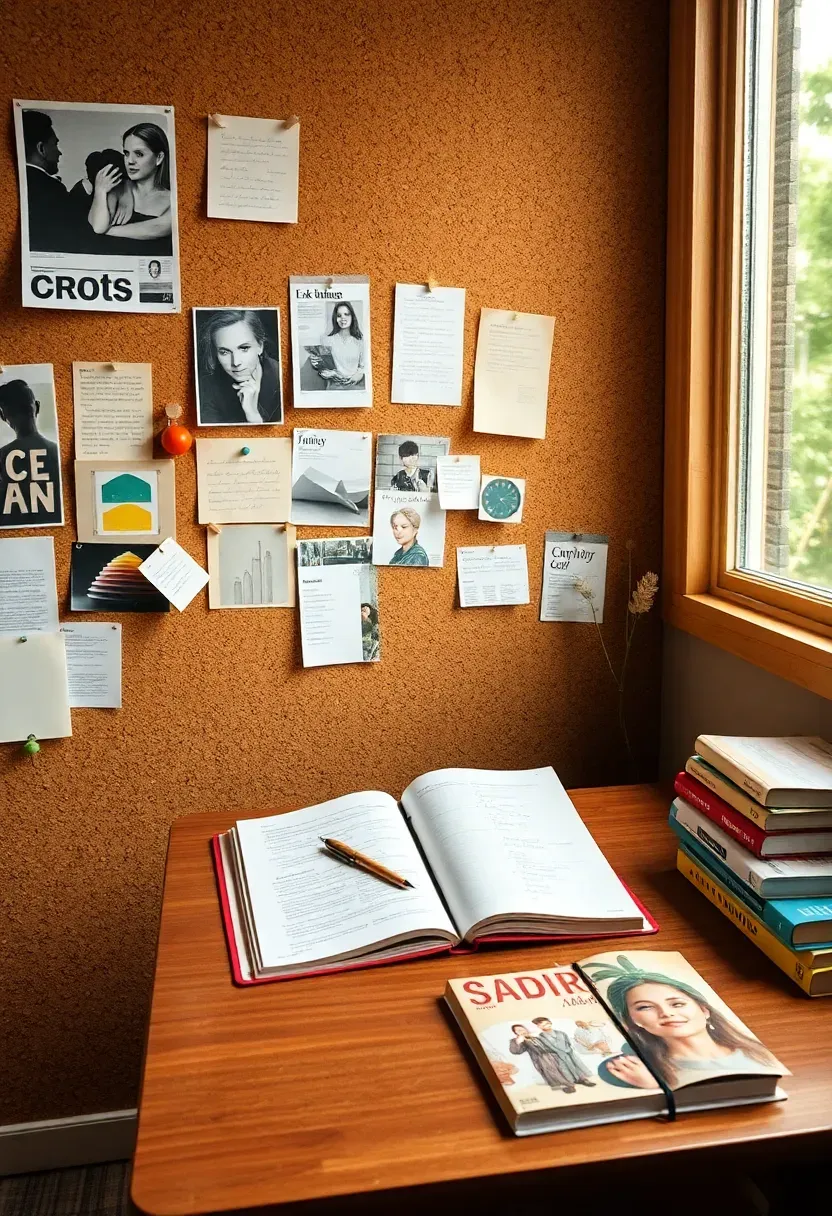
A vision board shed is about making the invisible visible. Goals, aesthetic directions, project ideas, and creative inspirations that exist vaguely in the mind become concrete when they are cut out, pinned, and arranged on a surface large enough to hold them all simultaneously. The act of physically moving images around a corkboard engages the spatial and kinesthetic intelligence that digital mood boarding on a screen cannot fully activate.
Tips and Practical Recommendations
- Cover the entire primary wall with cork tile rather than mounting a single framed board — the scale shift from small board to full wall changes the quality of thinking the space enables
- Organize the corkboard into loose zones (projects, color palettes, aspirational images, written intentions) rather than pinning randomly
- A low Japanese-style writing desk at 15 to 17 inches height, used cross-legged or on a zafu cushion, shifts the physical relationship to the planning process and encourages longer, more deliberate sessions
- AI layout tools test desk positioning relative to the corkboard wall, ensuring the full board is visible from the seated writing position without neck strain
- Swap images seasonally — a vision board that never changes becomes wallpaper rather than an active thinking tool
Recommended
Items for this idea
25. Multi-Zone She Shed Entertainment Hub
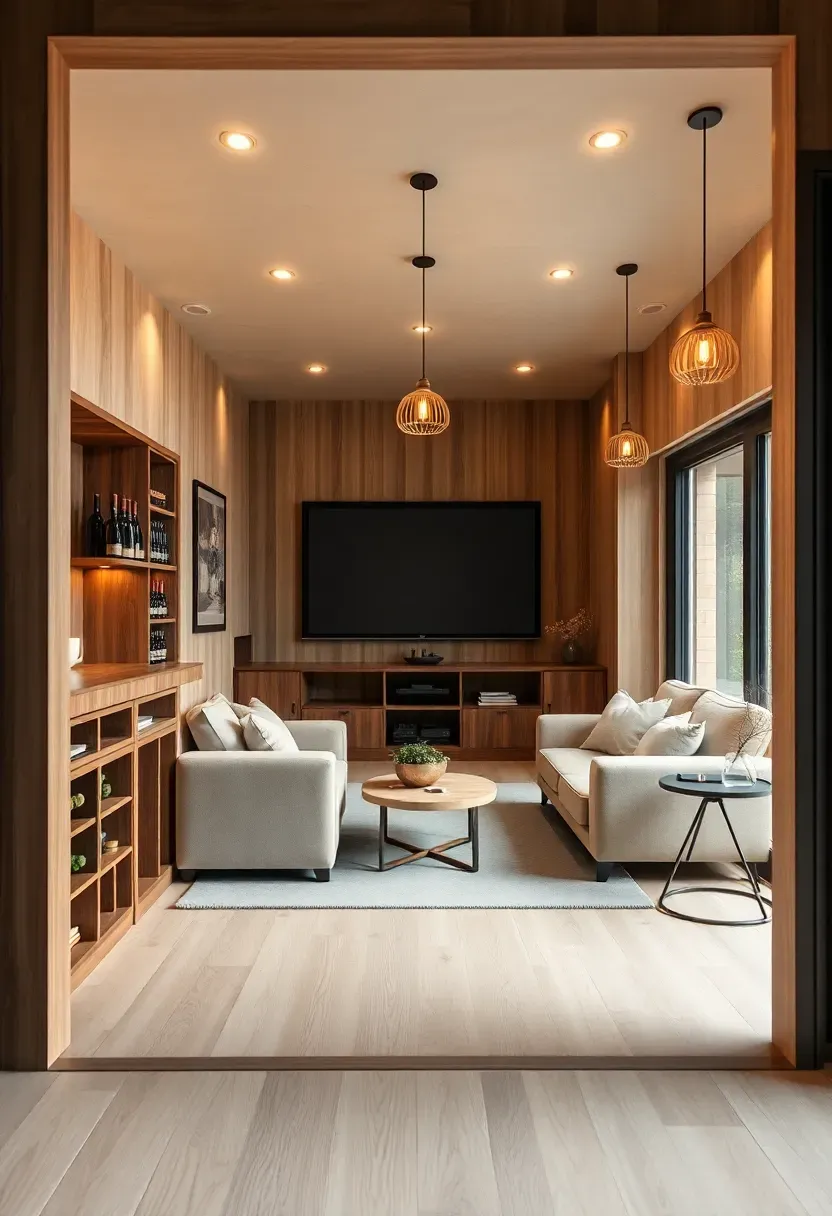
Why restrict the shed to a single purpose when a thoughtful multi-zone layout delivers three distinct experiences within one compact footprint? A walnut bar counter along one wall, a loveseat conversation area at the center, and a fold-down projector screen above the bar serve different needs on different evenings — all unified by consistent pale oak flooring and warm brass pendant lighting that makes the transitions between zones feel seamless.
Step 1: Define Each Zone With Lighting
Independent pendant dimmers over each zone allow you to spotlight the bar for cocktail preparation, dim to ambient glow over the conversation area during gatherings, and cut all other lights when the projector screen drops. Smart lighting circuits controlled by a single wall panel or phone app make this practical without requiring three separate switch locations.
Step 2: Unify the Material Palette
Different zones need different furniture scales and heights, but a shared palette — oiled walnut, pale oak, cream linen, and brass fittings — prevents the multi-zone shed from looking like three unrelated spaces forced into one room. AI color analysis tools test palette combinations in your specific lighting conditions, flagging combinations that look cohesive in daytime but clash under evening artificial light.
Step 3: Plan for Sound
A single compact Bluetooth speaker mounted at ceiling level and angled toward the center of the room provides audio coverage for all three zones without requiring separate systems. The shed's enclosed volume means a small speaker produces more than adequate output — resist the temptation to oversize the audio, which creates volume management problems in a small space.
What to Watch Out For
- Electrical planning is critical: the bar zone alone may need a 20-amp dedicated circuit for refrigeration, lighting, and audio
- Fold-down projector screens require a ceiling-mounted projector bracket positioned for the correct throw distance — verify this before cutting any holes
- Three zones in a shed under 120 square feet will feel cramped; this concept works best from 150 square feet upward
Quick FAQ
Does a she shed need planning permission? In most jurisdictions, small garden structures under a certain square footage (typically 120 to 200 square feet, depending on local codes) do not require a building permit. Running electrical service always requires a permit. Check your local authority's rules before breaking ground or commissioning electrical work.
Can a she shed be used year-round in cold climates? Absolutely, with the right preparation. Spray foam insulation in walls and ceiling, a mini-split heat pump (which both heats and cools), and a solid insulated door make year-round use practical even in climates that drop well below freezing. AI thermal modeling tools calculate the insulation values needed for your specific climate zone before you purchase materials.
Is it worth hiring an AI interior design tool versus doing it myself? AI tools add the most value during the planning phase, before any money is spent. Uploading a photo of your empty shed and generating twenty different interior layouts in an afternoon costs almost nothing and frequently surfaces ideas — a north skylight addition, a specific wall color, an unexpected furniture arrangement — that self-directed planning misses entirely. The actual purchasing and building remains your hands.
What size shed works best for a she shed? A 10x12 foot (120 square feet) shed comfortably accommodates a single-purpose studio — reading nook, yoga pod, painting atelier — with good furniture proportions. Multi-zone concepts need 12x16 feet or larger to prevent zones from crowding each other. AI layout tools will tell you honestly when a concept does not fit your footprint rather than forcing furniture that does not work.
Which she shed idea has the highest resale impact? A well-finished garden office shed with electrical service, insulation, and a dedicated internet connection appeals to the widest buyer pool and consistently adds measurable value in current real estate markets. Highly personalized creative studios (darkrooms, pottery kilns) appeal to a narrower audience but may become decisive selling points for the right buyer.
Trends come and go, but the appeal of a space that belongs entirely to you — insulated from domestic obligation, designed around a single passion, and separated by even thirty feet of garden — holds steady across every design era. Start with the activity that currently has no proper home in your life. Build the room around that one function. Let everything else — the aesthetic layers, the secondary features, the decorative accents — grow from that honest starting point. AI tools make the visualization effortless. The decision about what matters most is entirely yours.
Pinterest cover for 25 AI She Shed Design Ideas
About the author
OBCD
CGI visualization and interior design content. We create detailed 3D renders and curate practical design ideas for every room in your home.