17 AI Fire Pit Area Design Ideas
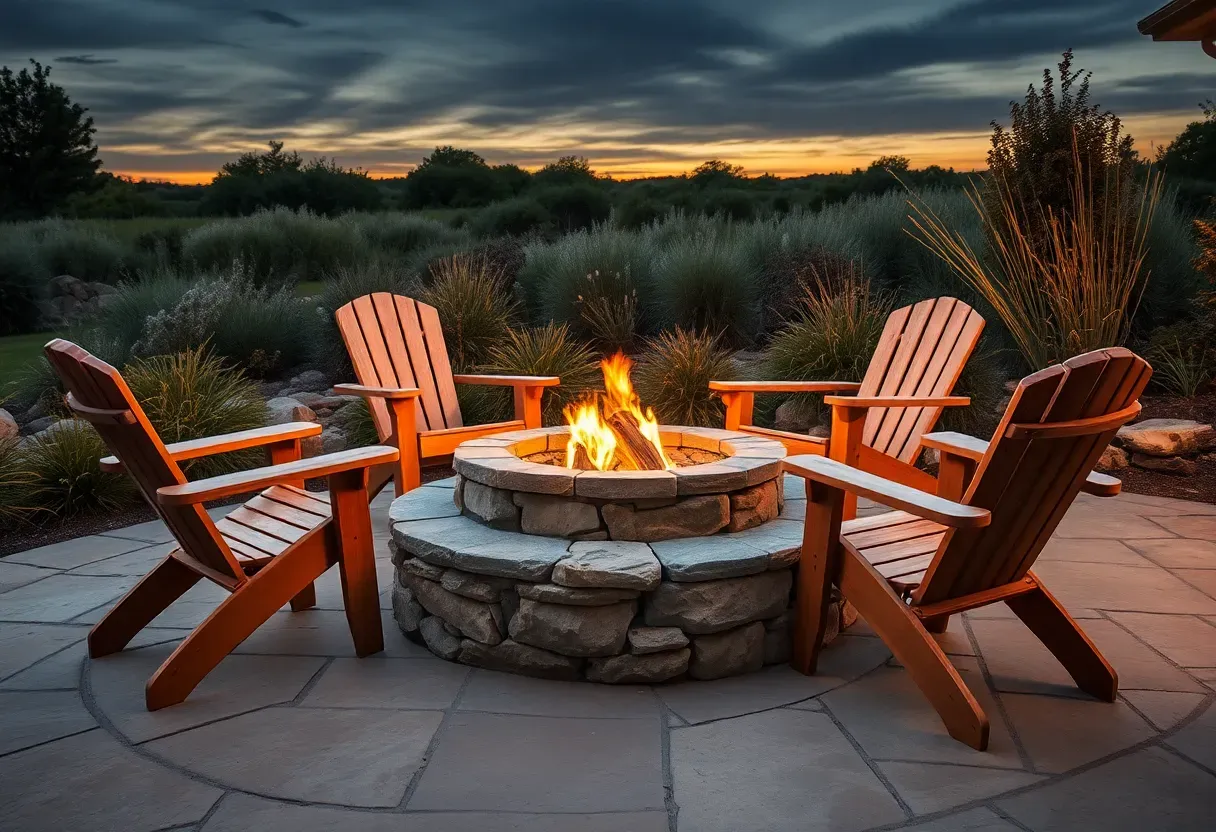
Picture the end of a long day — the sun dropping behind the tree line, a chill settling in, and a fire crackling at the center of an outdoor space that actually feels designed rather than thrown together. That scene is what an intentional fire pit area delivers, and AI design tools have made it surprisingly achievable. Feed a backyard photo into one of these platforms and within minutes you get photorealistic renderings testing different pit styles, seating arrangements, and surface materials. The guesswork disappears before a single stone gets laid.
Below are 17 AI-generated fire pit area concepts spanning every style from rustic farmhouse to coastal minimalism. Some focus on budget-conscious DIY builds, others push into architectural territory with sunken lounges and rooftop terraces. Pick the concept that fits your yard, your climate, and how you actually want to spend an evening outdoors.
Table of Contents
- Stone Circle with Adirondack Chairs
- Modern Gas Fire Bowl on Concrete
- Sunken Fire Pit Lounge
- Pergola Fire Pit Combo
- Rustic Farmhouse Fire Pit
- Rooftop Fire Pit Terrace
- Tropical Fire Pit Garden
- DIY Cinder Block Fire Pit
- Copper Bowl on a Small Patio
- Fire Pit with Built-In Seating Wall
- Bocce Court Fire Pit Zone
- Desert Fire Pit with Cacti
- Winter Fire Pit Snow Scene
- Fire Pit Dining Table Combo
- Japanese-Inspired Fire Pit
- Coastal Fire Pit with Sea View
- Scandinavian Minimalist Fire Pit
1. Stone Circle with Adirondack Chairs
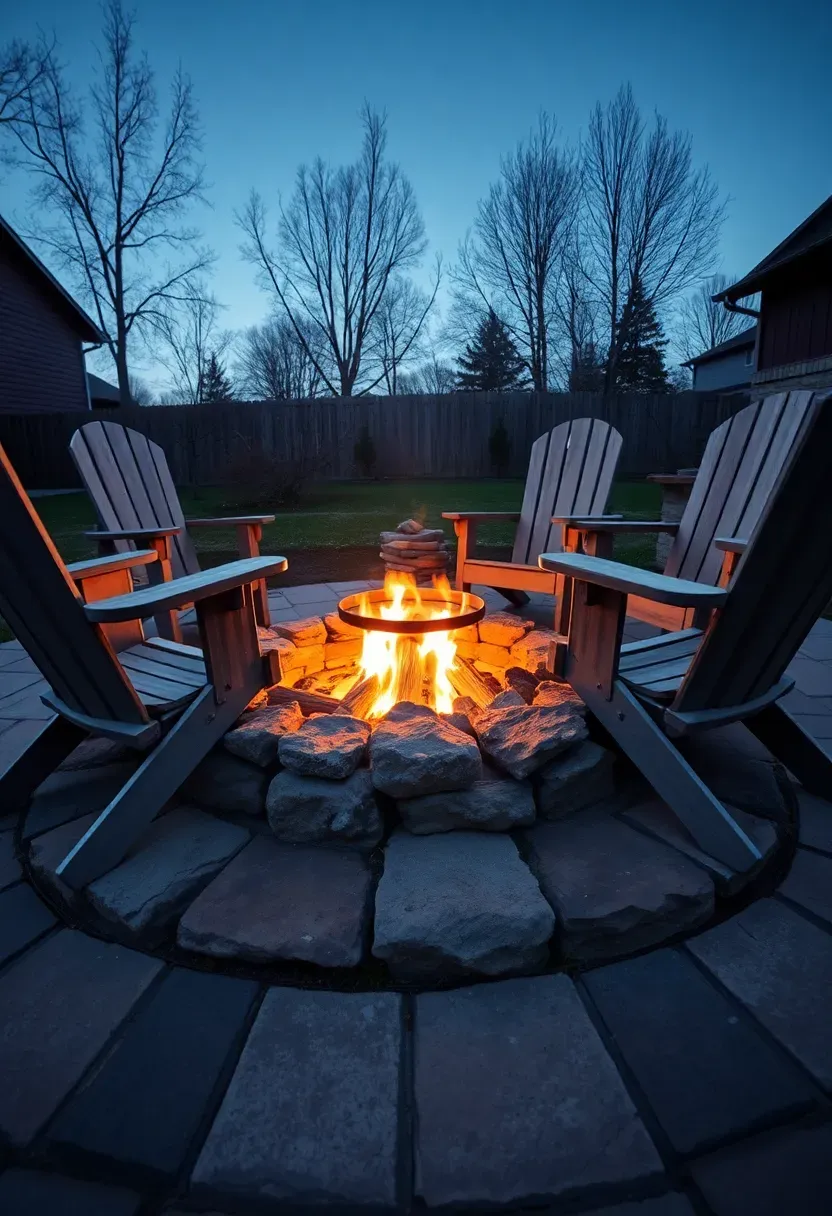
The simplest arrangement in fire pit design is often the most timeless. A ring of rough fieldstone — laid dry or mortared — anchors a clearing while weathered Adirondack chairs complete a setup that requires no contractor and almost no maintenance.
AI rendering shows this concept at its most persuasive: chairs positioned just far enough from the flame to stay comfortable, flagstone underfoot for a stable surface, and birch logs stacked nearby for easy reach. The key is the chair count. Four seats creates a conversation circle; six pushes into crowd territory for smaller yards.
Tips for Getting It Right
- Lay flagstone on a compacted gravel base to prevent frost heaving over winter
- Choose Adirondack chairs in cedar or HDPE poly — both resist moisture and UV without annual repainting
- Keep the stone ring at least 12 inches taller than your fire grate to contain embers on breezy evenings
We picked a few things that go well with this idea: 36-Inch Smokeless Steel Fire Pit Ring (★4.3), SoulMate 40-Inch Smokeless Fire Pit Ring (★4.4) and BPS Double-Layer Smokeless Fire Pit Ring (★4.4). As an Amazon Associate we earn from qualifying purchases.
2. Modern Gas Fire Bowl on Concrete
Why Gas Changes the Conversation
Wood-burning fire pits demand a dry wood supply, ash removal, and a smoke-management strategy that limits where you can situate the pit relative to seating and structures. A gas fire bowl eliminates all three friction points.
The Solution
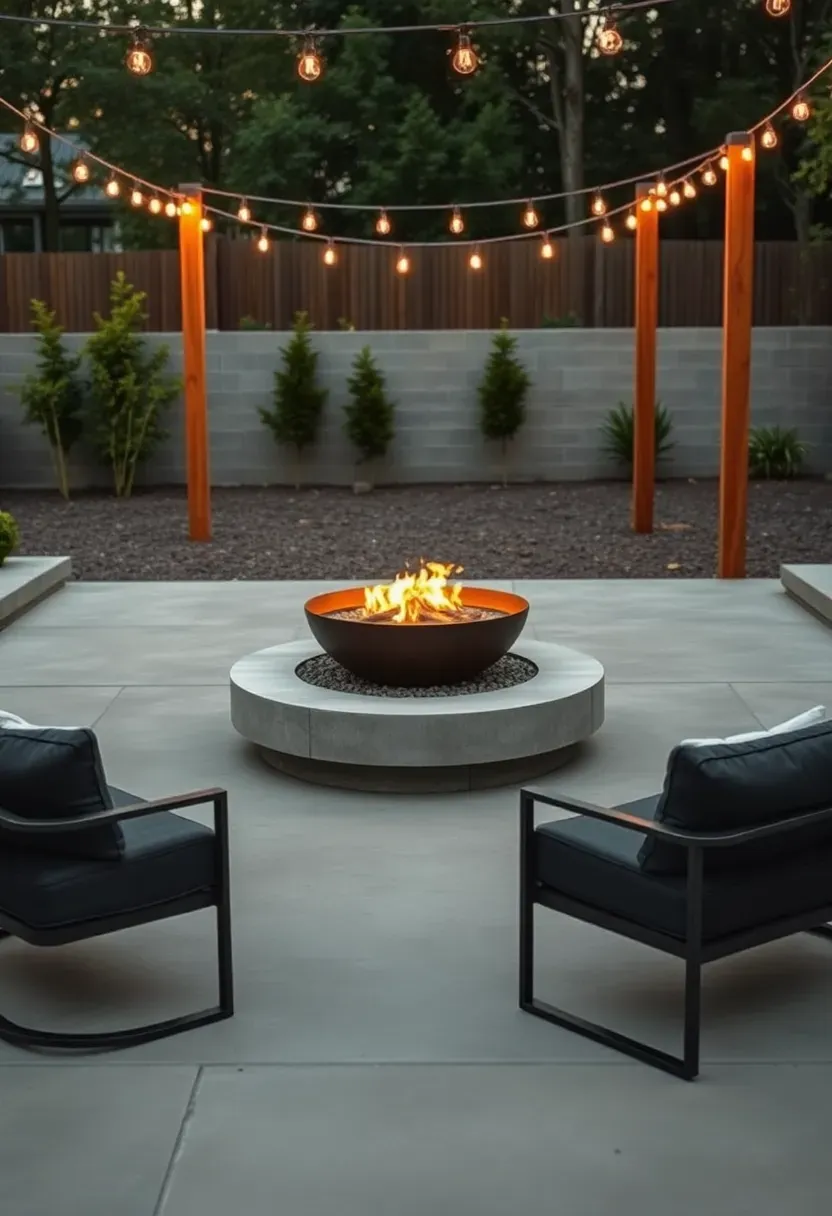
A round polished-concrete gas fire bowl paired with two contemporary outdoor sofas on a poured concrete patio delivers clean geometry and immediate ignition at the turn of a valve. AI design tools render this combination in minutes, testing bowl sizing against sofa scale so the proportions feel resolved rather than guessed. String lights on cedar posts define the vertical boundary of the zone without requiring a roof structure.
Pros and Cons
Pros: instant on/off control, no ash cleanup, low smoke output, works within tighter setbacks than wood-burning pits Cons: requires a gas line run by a licensed plumber, ongoing fuel cost, loses the crackling sound that many people prize in an outdoor fire
We picked a few things that go well with this idea: Walsunny 43-Inch Propane Fire Pit Table (★4.4), Ciays 42-Inch 2-in-1 Gas Fire Pit Table (★4.6) and Ciays 28-Inch CSA-Listed Propane Fire Pit (★4.6). As an Amazon Associate we earn from qualifying purchases.
3. Sunken Fire Pit Lounge
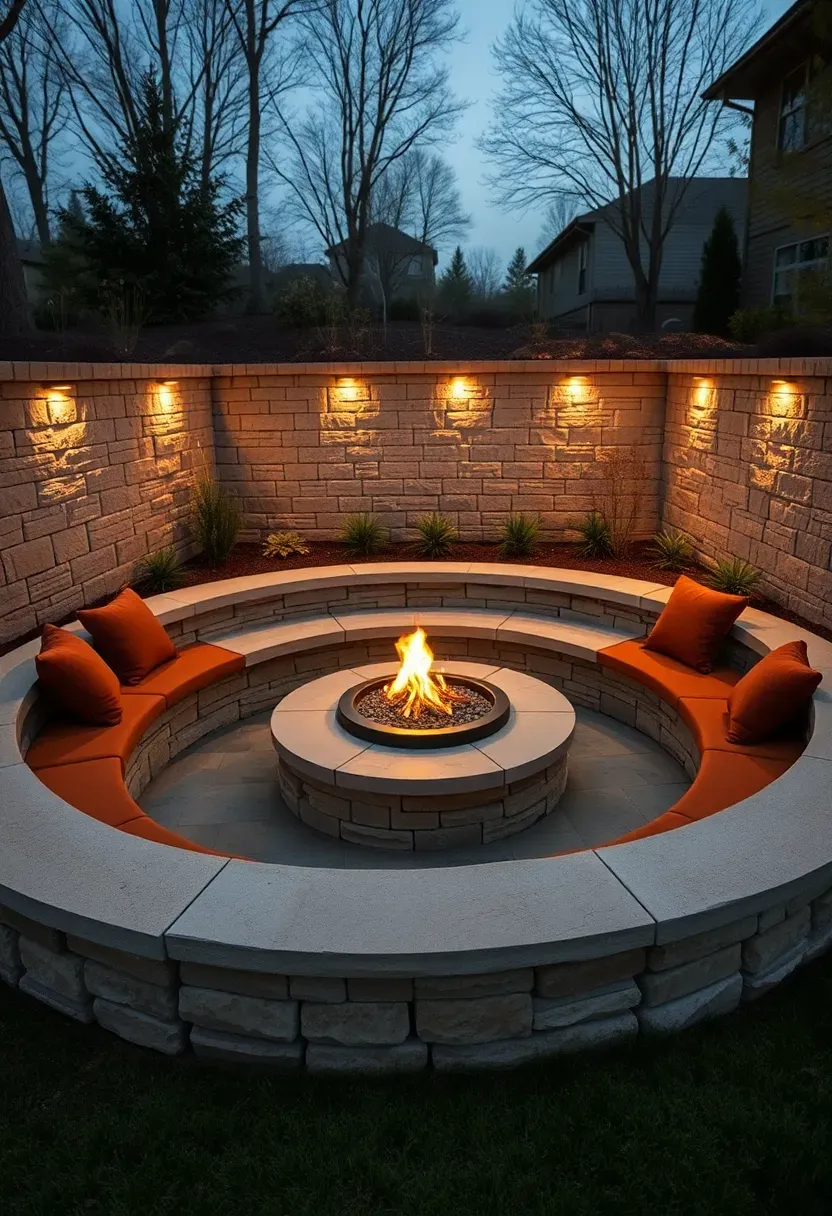
Dropping the seating area two feet below grade transforms the social dynamic of a fire pit entirely. The excavated zone wraps guests in planting and retaining walls, creating a natural windbreak that extends the usable season well into autumn. AI modeling handles the engineering puzzle — drainage path, step placement, wall height — that makes this concept safe before you commit to a single shovel of excavation.
Built-in stone bench seating lines the perimeter, capped with bluestone or concrete slabs and padded with weather-resistant cushions. Recessed LED lights in the retaining wall faces eliminate the need for floor lamps. The fire table sits low at the center, its flame visible from every seat at the same comfortable viewing height.
What to Watch Out For
- A French drain beneath the pit floor is non-negotiable — standing water after rain ruins the concept
- Include at least two entry points to prevent the space from feeling trapped during larger gatherings
- Check local building codes before excavating; some municipalities require permits for grade changes above 18 inches
We picked a few things that go well with this idea: HDPE Stackable Adirondack Chair Set (4-Pack) (★4.7), SERWALL Foldable Adirondack Chair Set (4-Pack) (★4.4) and VINGLI Wood Folding Adirondack Chair Set (4-Pack) (★3.4). As an Amazon Associate we earn from qualifying purchases.
4. Pergola Fire Pit Combo
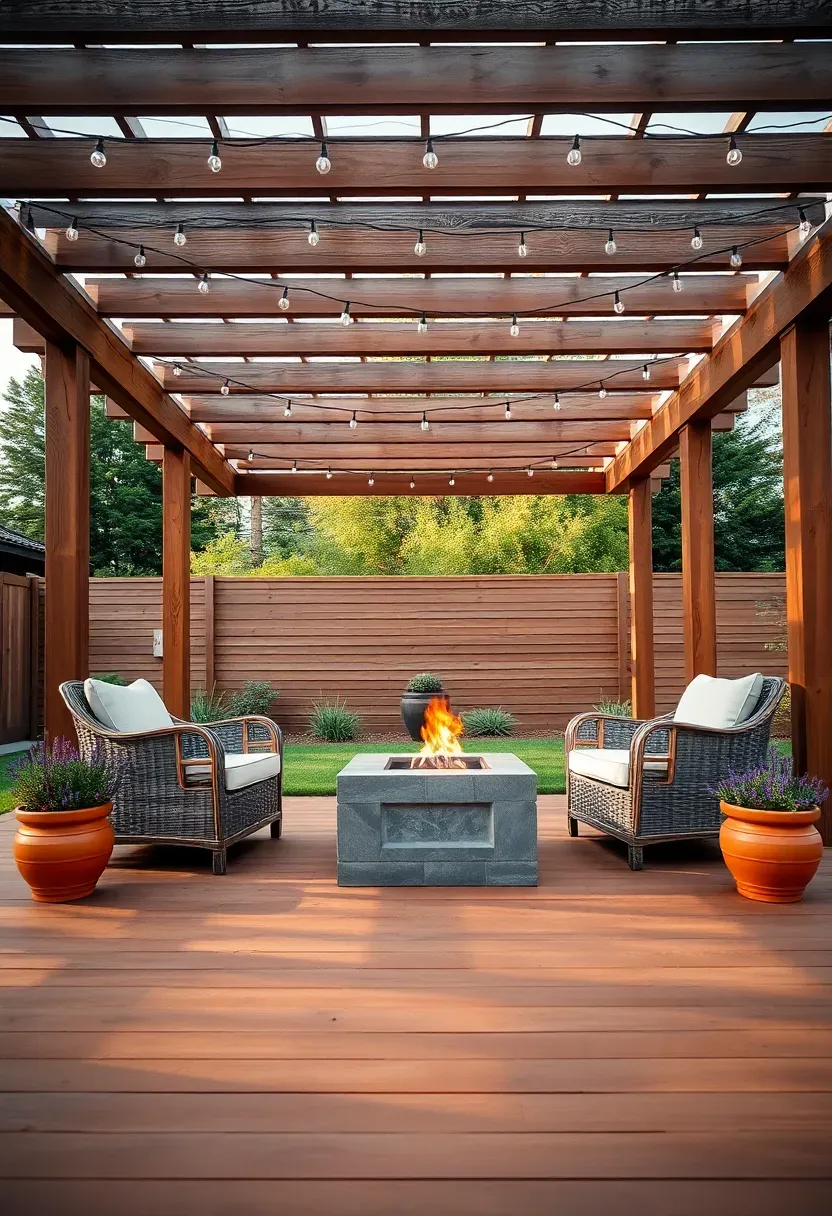
A freestanding pergola overhead transforms a fire pit zone from an open clearing into a defined outdoor room. The structure also gives string lights a logical home — draped beam to beam, they create the kind of soft evening glow that photographs beautifully and feels even better in person.
How to Build It
Step 1: Size the pergola first. AI tools recommend a minimum 12-by-12-foot footprint to comfortably house two lounge chairs, a fire table, and circulation space around all sides.
Step 2: Choose the fire source. A propane fire table suits this enclosed-overhead situation better than wood-burning, which can trap smoke under the beams.
Step 3: Select seating that breathes. Rattan frames with Sunbrella cushions hold up to outdoor humidity while the open weave prevents the space from feeling heavy.
What to Watch Out For
- Maintain 18 inches of clearance between the fire table flame and any overhead structure or draping fabric
- Anchor pergola posts in concrete footings sized for your wind zone — freestanding structures need engineering in high-wind areas
- Add hooks for a removable canvas side panel on the windward side to block breezes without sealing the structure
Recommended
Items for this idea
5. Rustic Farmhouse Fire Pit
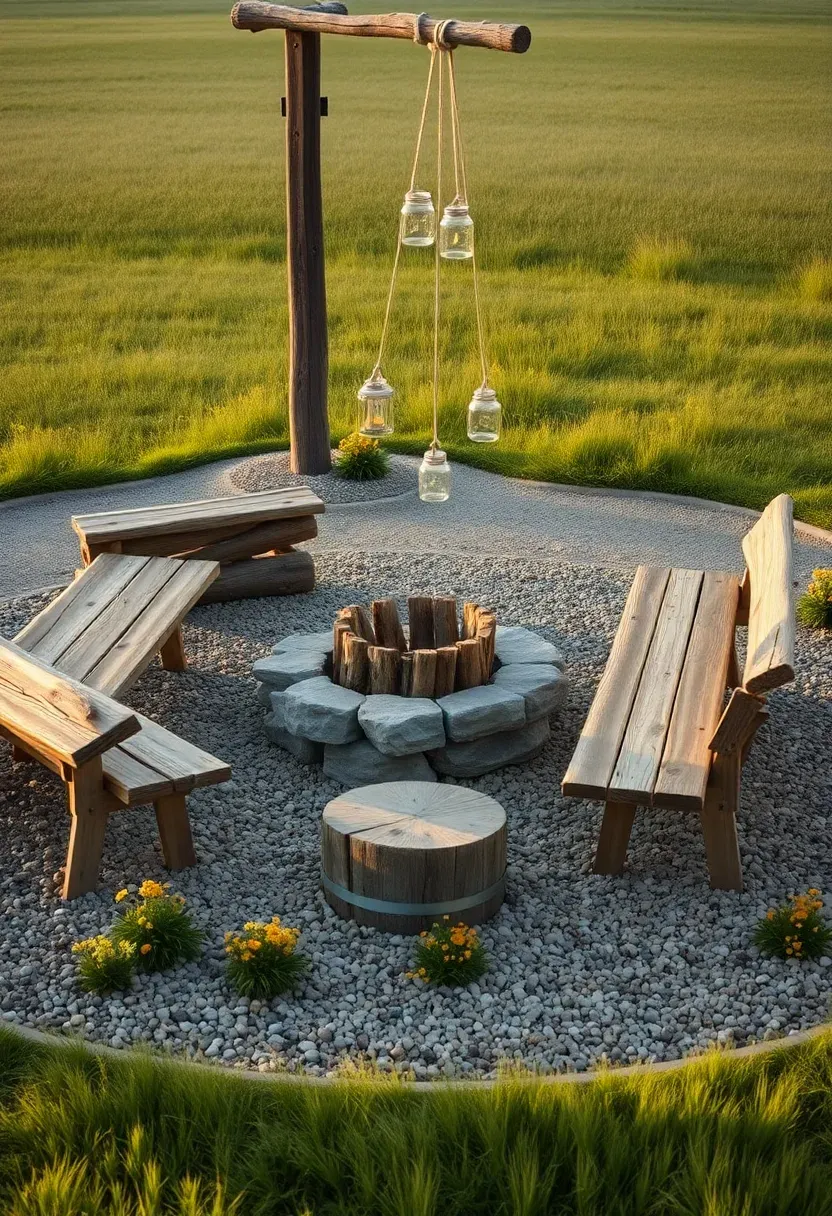
Some fire pit areas want to feel extracted from a catalog. This one wants to feel like it has been here for twenty years. A simple stone ring — not perfectly circular, not mortared — sits at the center of a gravel clearing edged with wildflower plantings. Reclaimed barn wood benches face the fire from two sides, and a log round serves as a side table. Mason jar lanterns hang from a weathered post.
AI rendering helps calibrate the gravel clearing size so it reads as intentional rather than unkept. The clearing should extend at least four feet beyond the fire ring on all sides for comfortable seating clearance and fire safety.
Styling Notes
- Use warm amber solar fairy lights inside the mason jars for power-free evening glow
- Let the wildflower edging grow slightly loose — clipped borders undermine the pastoral mood
- A cast iron skillet or Dutch oven hanging nearby adds functional authenticity
6. Rooftop Fire Pit Terrace
Comparing: Wood-Burning vs Gas on a Rooftop
Rooftop fire features require more careful material and fuel selection than grade-level installations, and the choice between fuel types has real consequences.
Wood-Burning on a Rooftop
Authentic crackling fire experience, but smoke rises directly into adjacent windows and neighboring terraces. Ash and ember management on a rooftop is genuinely difficult, and most building codes prohibit open wood fires above the first floor.
Gas Fire Bowl on a Rooftop
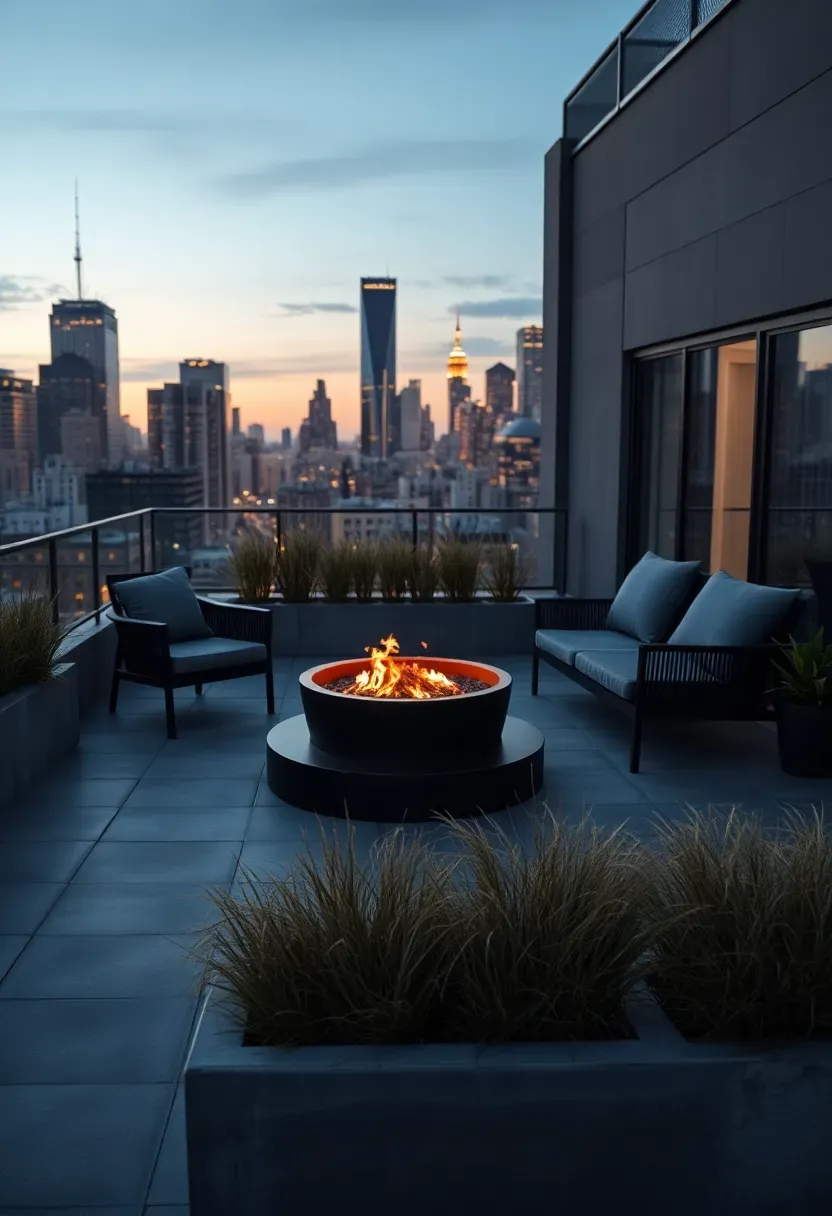
Clean combustion, code-compliant in most jurisdictions, and requires only a propane tank or a building gas connection. A sleek round matte-black steel fire bowl on a porcelain tile deck with contemporary loungers captures the urban terrace aesthetic AI tools generate most confidently.
What to Choose
Choose wood-burning if: you have a ground-level rooftop garden with strong prevailing winds that carry smoke away from neighbors and local codes permit it Choose gas if: you are on an elevated urban terrace where code compliance, neighbor proximity, and ash management make wood impractical
Recommendation
For rooftop installations, gas is the clear functional choice. Focus design energy on the bowl shape, tile pattern, and city-view framing — the fire is accent lighting, not the campfire experience.
Recommended
Items for this idea
7. Tropical Fire Pit Garden
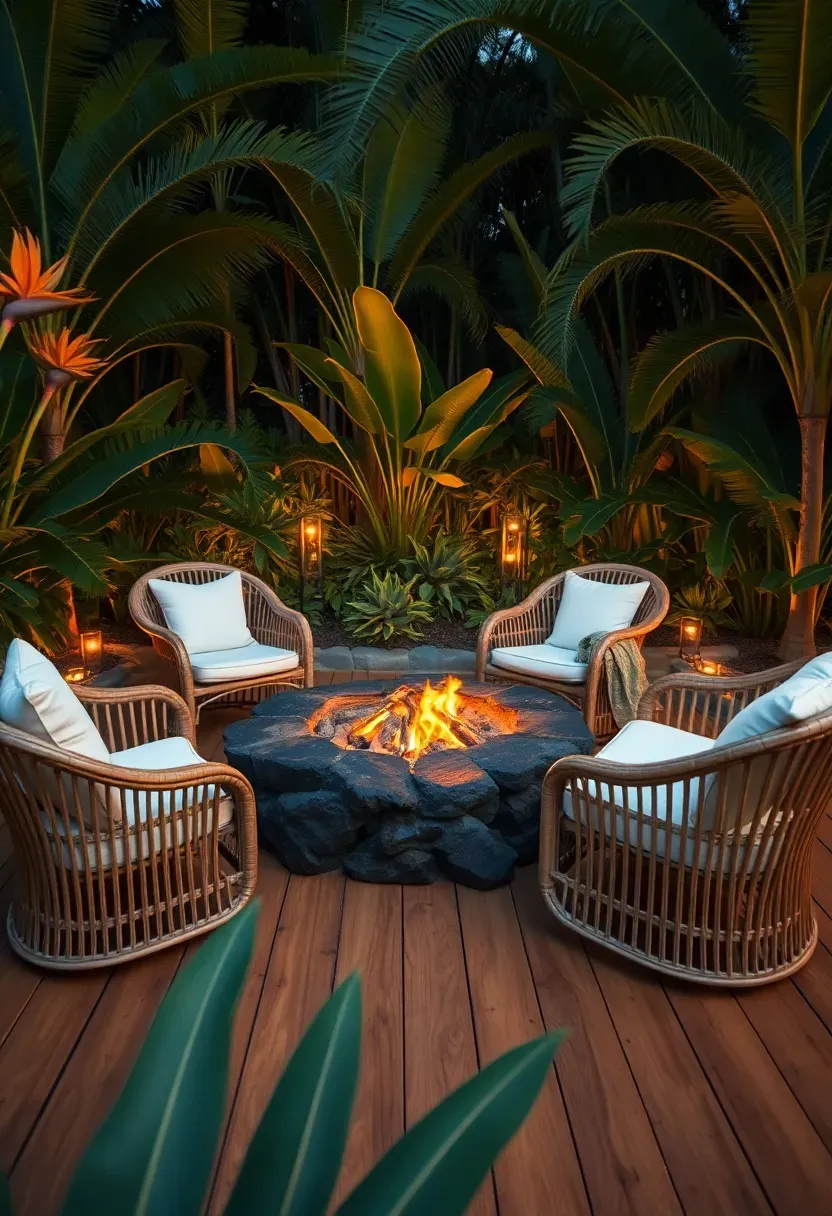
Tropical backyards thrive on density. The fire pit zone is not a clearing carved out of plantings — it is a clearing that plantings actively enclose, creating a room with living walls of bird of paradise, banana palms, and night jasmine. AI visualization shows exactly how much canopy to plant and at what distance to achieve that enveloped feeling without crowding the seating.
A natural lava rock fire pit suits this setting better than polished concrete or steel. Its porous black texture reads as geological rather than manufactured, grounding the fire in the landscape rather than making it feel imported.
Tips for Cooler Climates
- Hardy banana varieties like Musa basjoo survive down to zone 5 with heavy mulching over the root crown
- Night jasmine is tropical but grows well in containers that can overwinter indoors
- Solar stake lights among the foliage eliminate the need for electrical wiring through planted beds
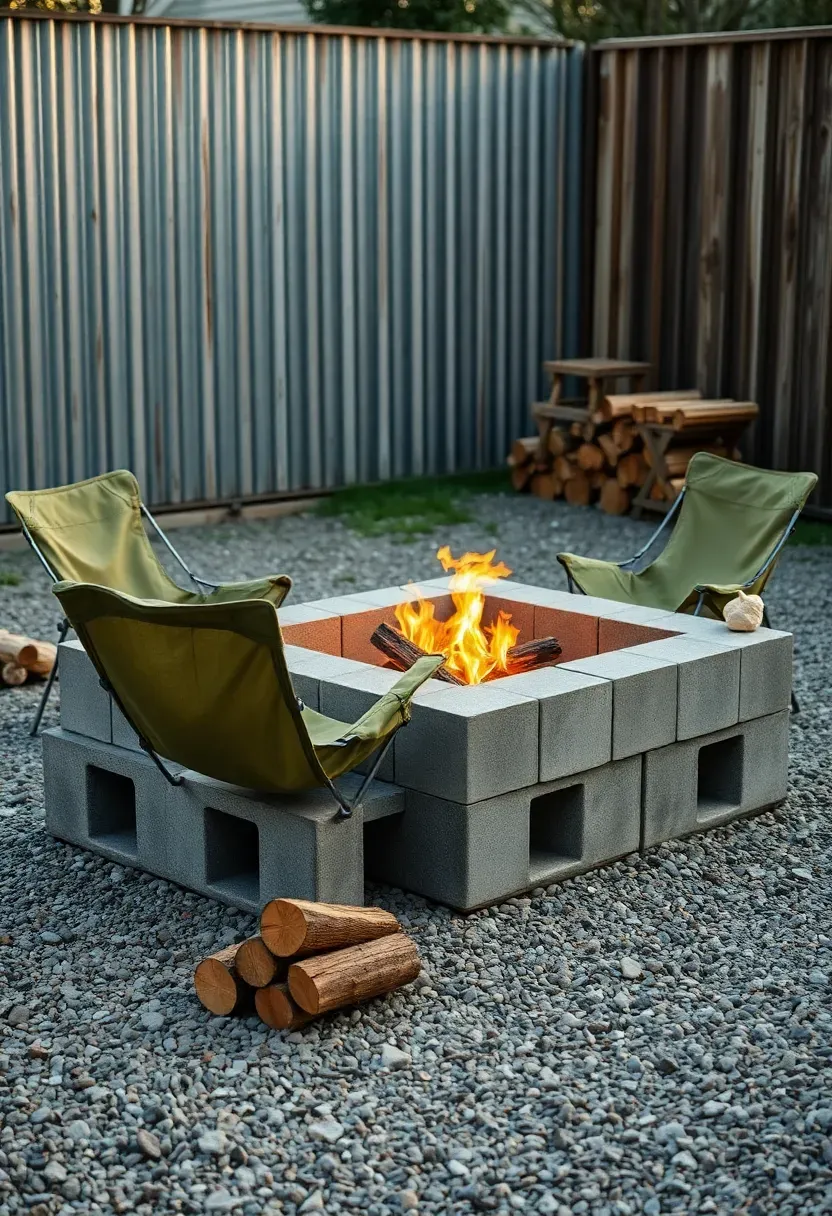
8. DIY Cinder Block Fire Pit
The Core Issue
Professional fire pit installations can run from $1,500 for a basic kit to $8,000 or more for a custom masonry build. For renters, first-time homeowners, or anyone testing whether they will actually use a fire pit before committing budget, that number is hard to justify.
The Solution
Standard concrete cinder blocks stacked two courses high in a square or rectangular formation create a functional fire pit for under $50 in materials. AI design tools model this concept with surprising sophistication, showing how the blocks can be oriented for maximum stability, which configuration produces the best airflow for the fire, and how to arrange camp chairs around the resulting pit shape. A crushed gravel pad underneath handles drainage and provides a clean, heat-resistant surface.
Pros and Cons
Pros: extremely low cost, no tools required, fully portable or disposable, easy to reconfigure Cons: standard cinder blocks are not rated for high-heat cycles and may crack over time — use fire-rated concrete blocks if longevity matters; the aesthetic is honest but unmistakably DIY
Recommended
Items for this idea
9. Copper Bowl on a Small Patio
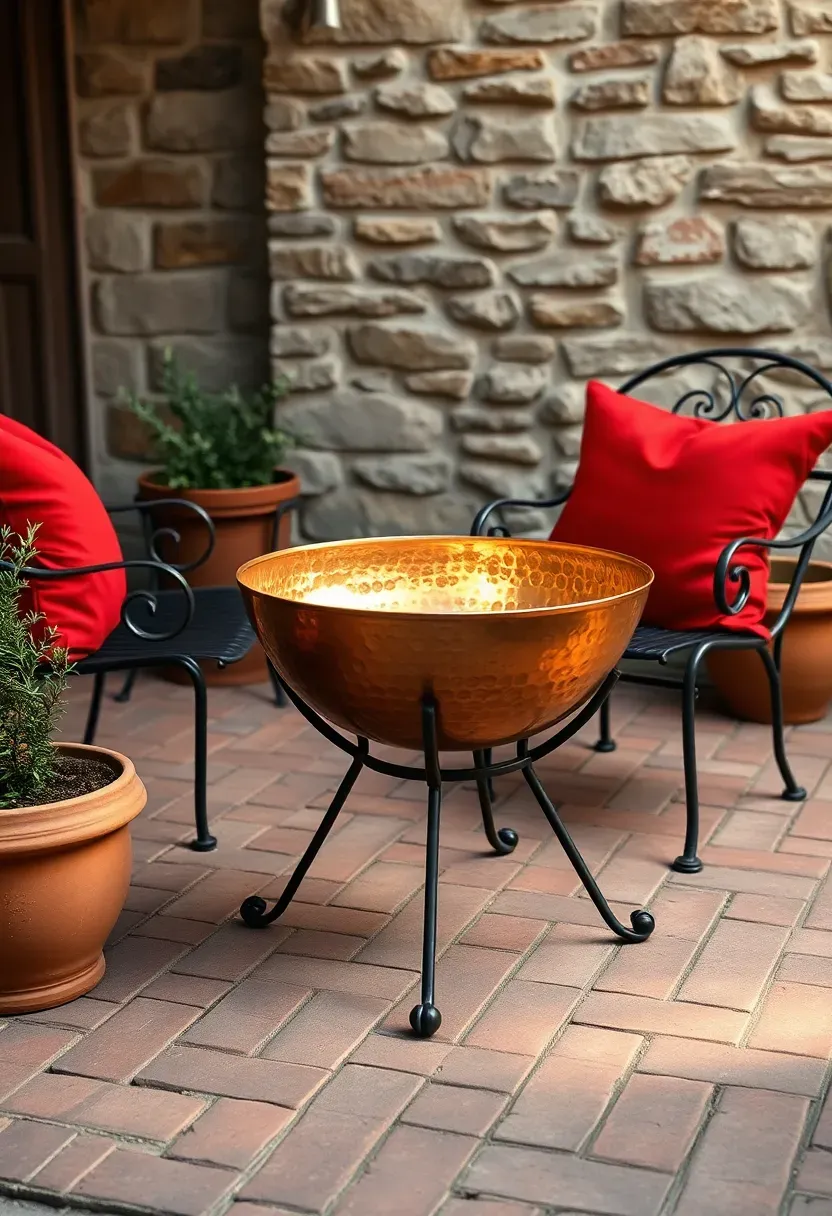
Small patios do not need small ambitions. A hammered copper fire bowl on a tripod stand brings sculptural presence that a large in-ground pit cannot achieve in a compact space. The copper develops a green-gray patina over seasons, making the bowl look progressively more interesting rather than progressively more tired.
AI rendering helps determine the right bowl diameter — typically 18 to 24 inches — relative to the patio dimensions and chair scale. Two bistro-style wrought iron chairs flanking the bowl complete a setup that takes up no more footprint than a small bistro table.
Tips for Small-Space Fire Success
- Position the tripod stand on a flat, stable surface — copper bowls tip if the legs settle unevenly on pavers
- Use a spark screen to contain embers on a patio where furniture sits closer to the fire than in an open yard
- A wall-mounted hose bracket nearby gives quick access for safe extinguishing without running across the patio
10. Fire Pit with Built-In Seating Wall
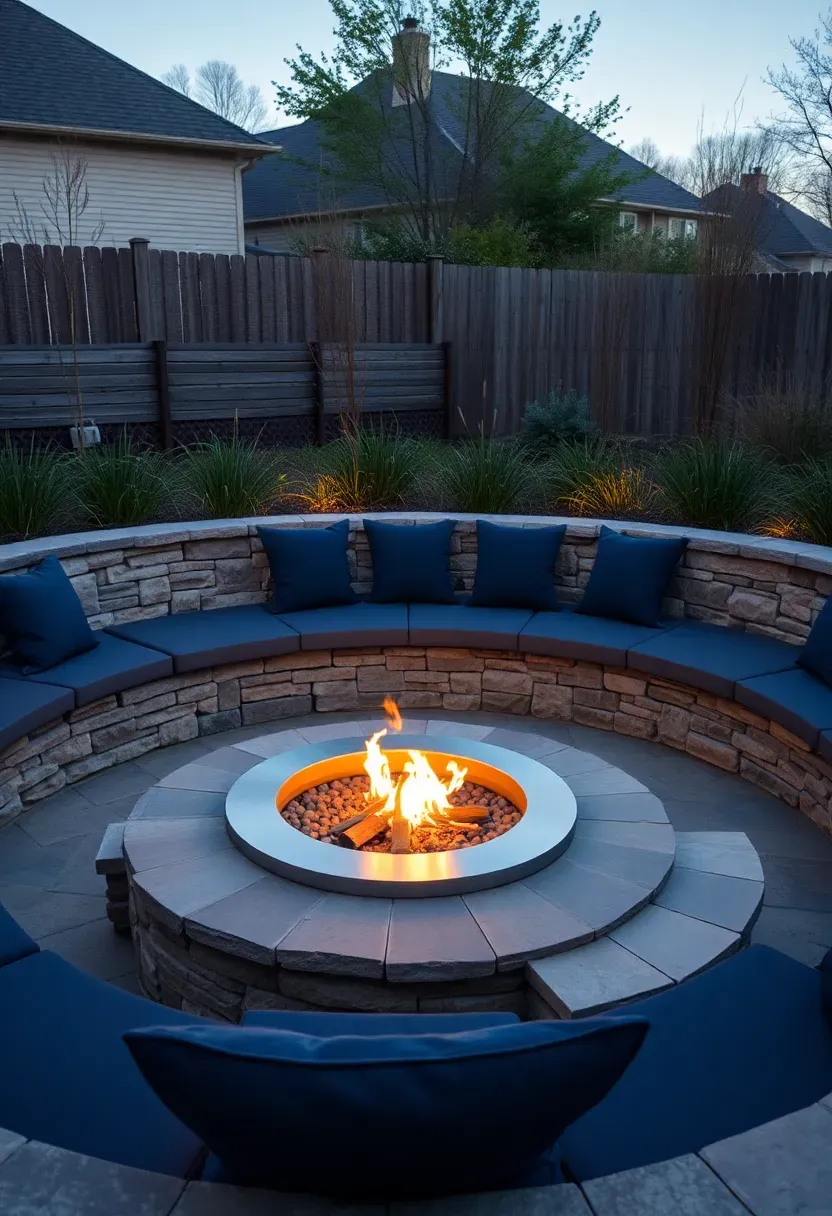
Built-in seating walls solve the perennial fire pit problem: chairs migrate, get left in the rain, fade unevenly, and require storage. A dry-stacked or mortared stone wall circling three-quarters of the fire pit creates permanent seating that doubles as a design anchor even when no fire is burning.
Topping the wall with bluestone coping slabs and thick outdoor cushion pads in a single solid color gives the zone a finished, architectural quality. The open quarter of the circle provides entry and egress without breaking the enclosing geometry.
Tips for Long-Term Comfort
- Cushion thickness matters on hard stone — use at least 4-inch pads for extended sitting comfort
- Store cushions in a deck box positioned just outside the wall opening for easy retrieval
- Add a small built-in side niche in the wall on one side to hold drinks, a lighter, and a skewer set
Recommended
Items for this idea
11. Bocce Court Fire Pit Zone
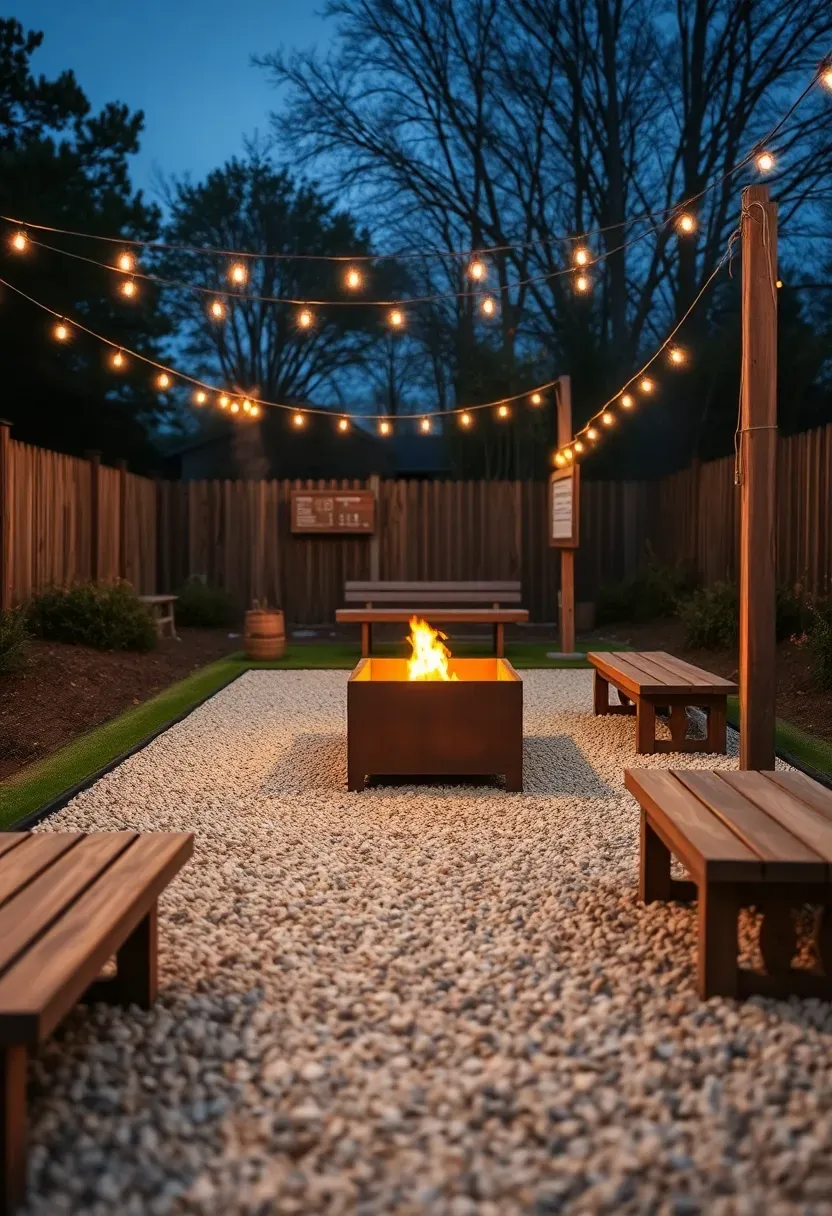
Why choose between a game area and a fire pit area? This concept positions a corten steel fire pit at the head of a crushed oyster shell bocce court, with low wooden bench seating running both long sides. String lights on steel posts define the full length of the playing surface overhead.
The result is a backyard zone that serves two entirely different purposes within the same footprint — active games before dark, relaxed fire-side conversation after. AI layout tools model the court-to-seating proportions with precision: standard bocce court dimensions (60 by 12 feet) leave enough room at the fire end for four people to sit comfortably without crowding the playing line.
Practical Notes
- Crushed oyster shell is a traditional bocce surface that packs firm, drains fast, and looks appropriately textural beside corten steel
- A scoreboard on a cedar post adds playful function and signals the intentional dual-purpose design
- Position the fire pit at the far end from the house so players face away from structures when they throw
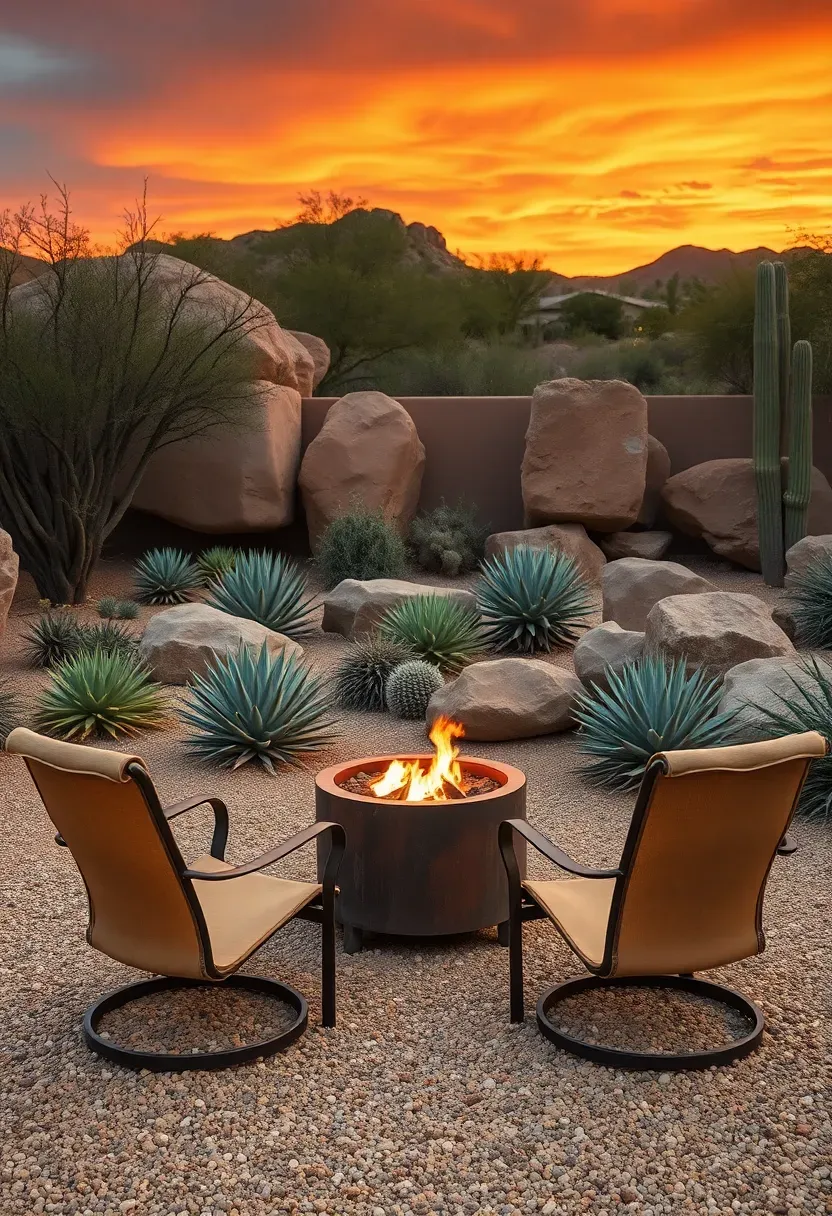
12. Desert Fire Pit with Cacti
Desert landscapes and fire are a natural pairing — both elemental, both visually bold. A cylindrical corten steel fire column on a decomposed granite pad suits the Southwest aesthetic without any of the manufactured quality that stone kits can carry. The steel weathers to a rust orange that echoes the boulders and soil of the surrounding landscape.
AI design tools trained on arid-climate plant databases recommend agave, prickly pear, and saguaro groupings that frame the fire zone with genuine dramatic silhouette. The planting strategy is minimal by nature — clusters of succulents in odd numbers, large boulders as anchors, and open decomposed granite everywhere else.
What to Watch Out For
- Spiny plants and fire pit proximity require careful path design — leave clear circulation routes between seating and plantings
- A cylindrical fire column radiates heat in all directions; site chairs at least 5 feet from the steel surface
- Decomposed granite surfaces need occasional raking to maintain a clean appearance around the seating zone
Recommended
Items for this idea
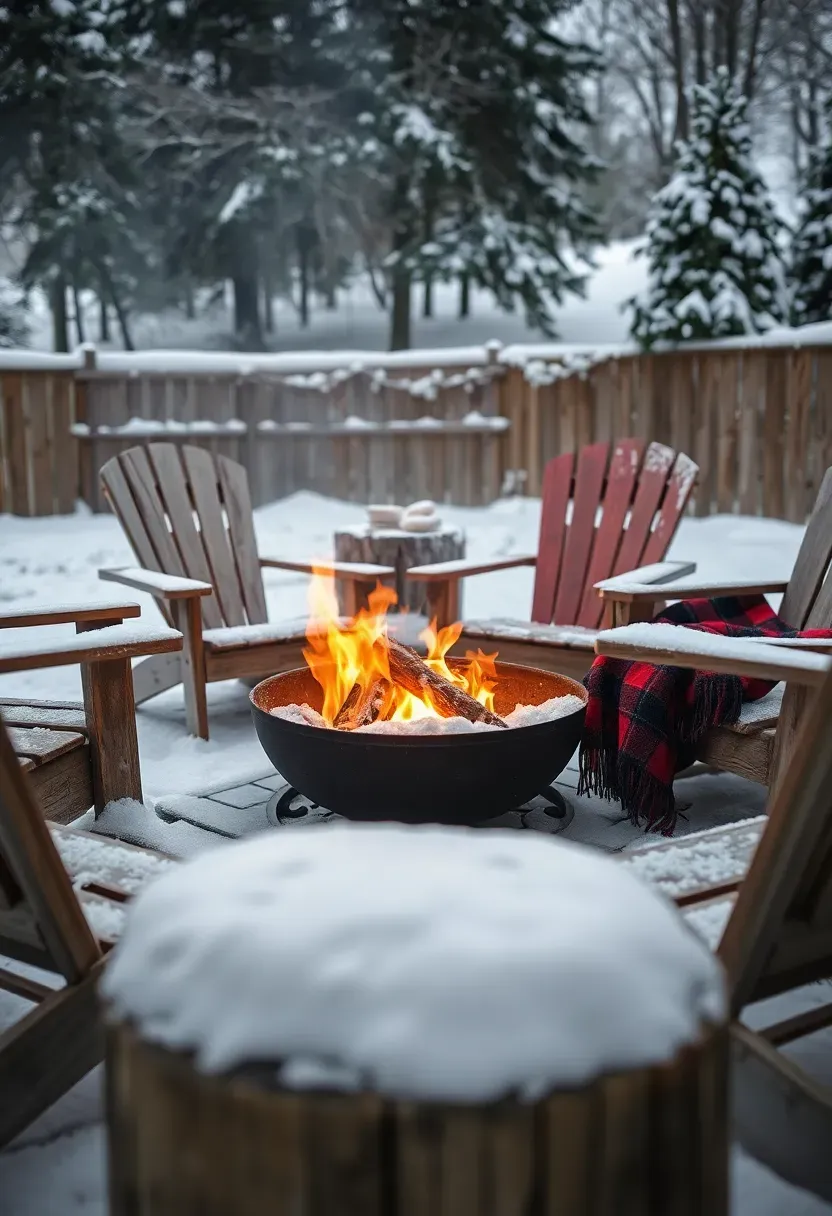
13. Winter Fire Pit Snow Scene
Most fire pit areas shut down in November and reopen in April. This concept is designed around the opposite idea. A round matte cast iron fire bowl holds a deep, roaring fire that pushes usable heat well beyond the flame's immediate radius — enough to sit comfortably outdoors at 25°F with a wool blanket.
AI rendering of this scene captures something that purely functional descriptions miss: the visual contrast between cold blue-white snow and warm orange fire creates an atmosphere that no summer fire pit can replicate. Three Adirondack chairs dusted with fresh snow facing that fire is genuinely dramatic.
Making Winter Fire Work
- Cast iron retains and radiates heat more effectively than steel or aluminum bowls
- Keep a supply of well-dried hardwood specifically for cold-weather fires — green or damp wood produces more smoke and less heat
- Position the fire bowl closer to seating in winter than in summer; the seated distance for comfort drops from 5–6 feet to 3–4 feet as temperatures drop
14. Fire Pit Dining Table Combo
The Core Issue
Outdoor dining after dark typically requires portable propane heaters that crowd the table, block sight lines, and topple in wind. The fire pit dining table eliminates all three problems by integrating the heat source into the table itself.
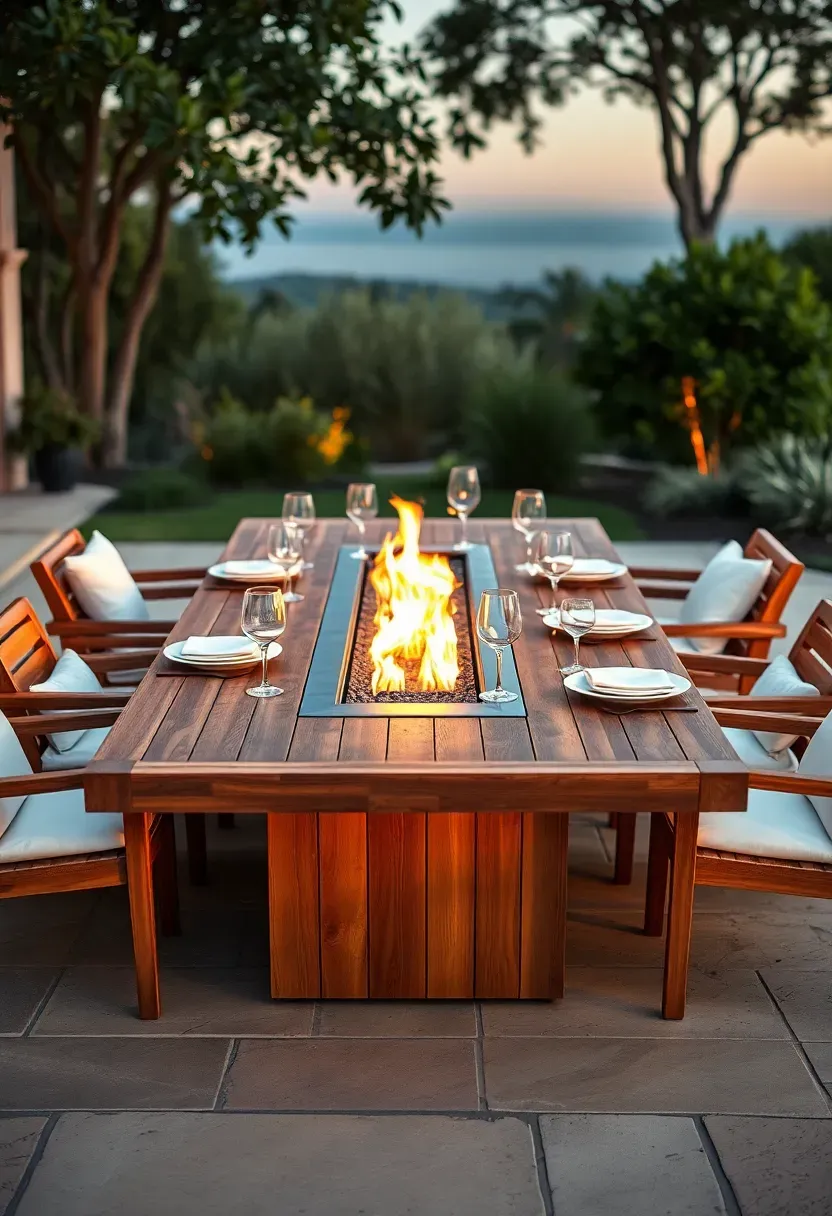
The Solution
A rectangular teak dining table with a propane fire insert running down the center channel allows guests to dine with their hands warm, their sightlines clear, and no freestanding heater between them and the person across the table. AI visualizations of this concept show eight-person configurations on a stone patio at dusk, wine glasses set, dinner plates flanking the flame — a setup that would cost $3,000 to $5,000 for a quality teak model but photographs as the most naturally elegant outdoor dining setup available.
Pros and Cons
Pros: combines two furniture functions in one piece, creates intimate ambient lighting at the dining table, eliminates the heater-versus-seating footprint problem Cons: significant investment, fire insert requires propane management at the table, guests seated at the long sides sit closest to the flame and may find it too warm in mild weather
Recommended
Items for this idea
15. Japanese-Inspired Fire Pit
Japanese garden design treats every element as intentional and every empty space as meaningful. Applying those principles to a fire pit area produces a setup that most Western gardens would call spare — and that most people who spend time in it describe as deeply calming.
Origins
The concept borrows from the Japanese tradition of the engawa — a liminal zone between the house interior and the garden, where one pauses to observe rather than move through. The fire becomes a focal point for that observation rather than a social tool.
Modern Interpretation
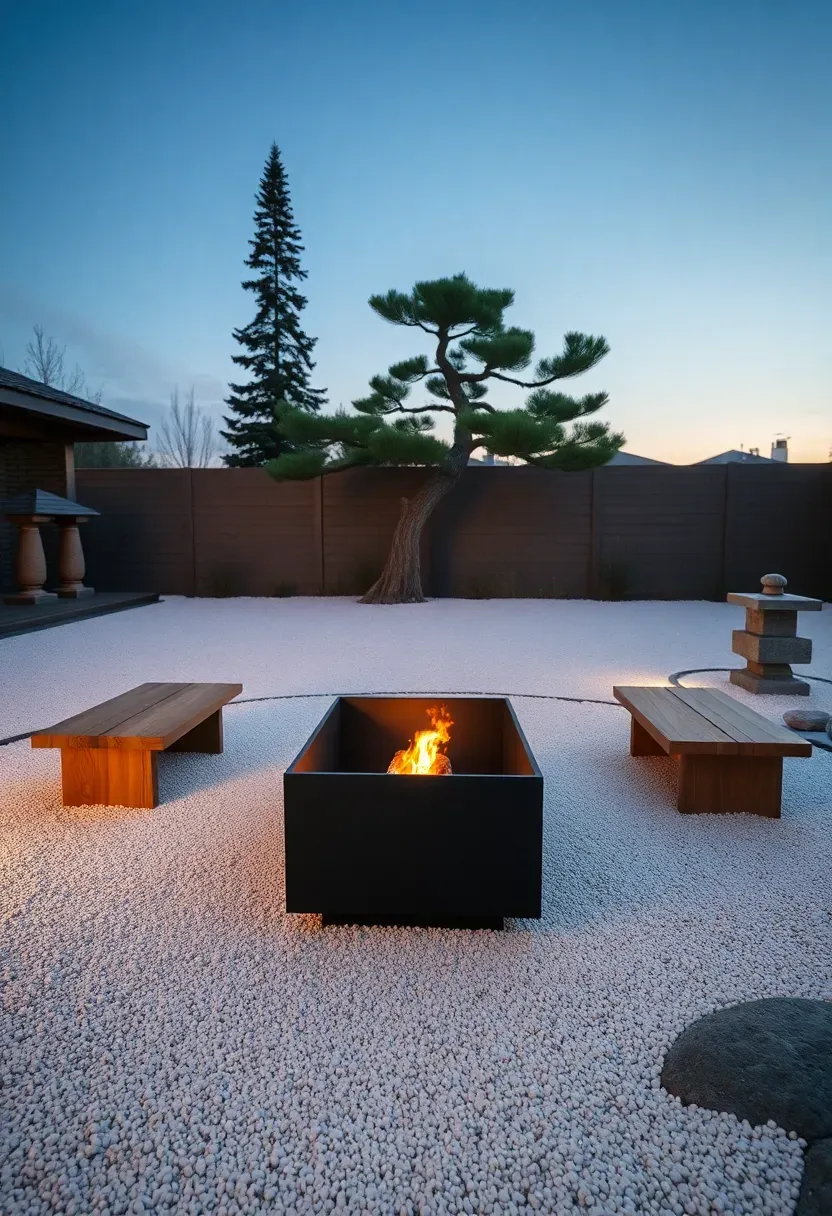
A sleek matte black rectangular steel fire vessel sits on a raked fine gravel courtyard. Two low hinoki cypress platform seats flank it with exactly enough space for two people. A sculpted Japanese black pine anchors one corner of the composition. A granite stone lantern provides ambient light from the opposite corner. Nothing else. AI asymmetric composition tools excel at calibrating this kind of restraint — the exact position of the lantern relative to the tree so the scene reads as balanced without being symmetrical.
How to Apply at Home
- Use fine white decomposed granite or Japanese sand for the raked surface; standard pea gravel is too casual
- Source a Japanese black pine from a specialty nursery — generic conifers will not hold the sculptural silhouette
- Resist adding more elements; the power of this concept is in what is left out
16. Coastal Fire Pit with Sea View
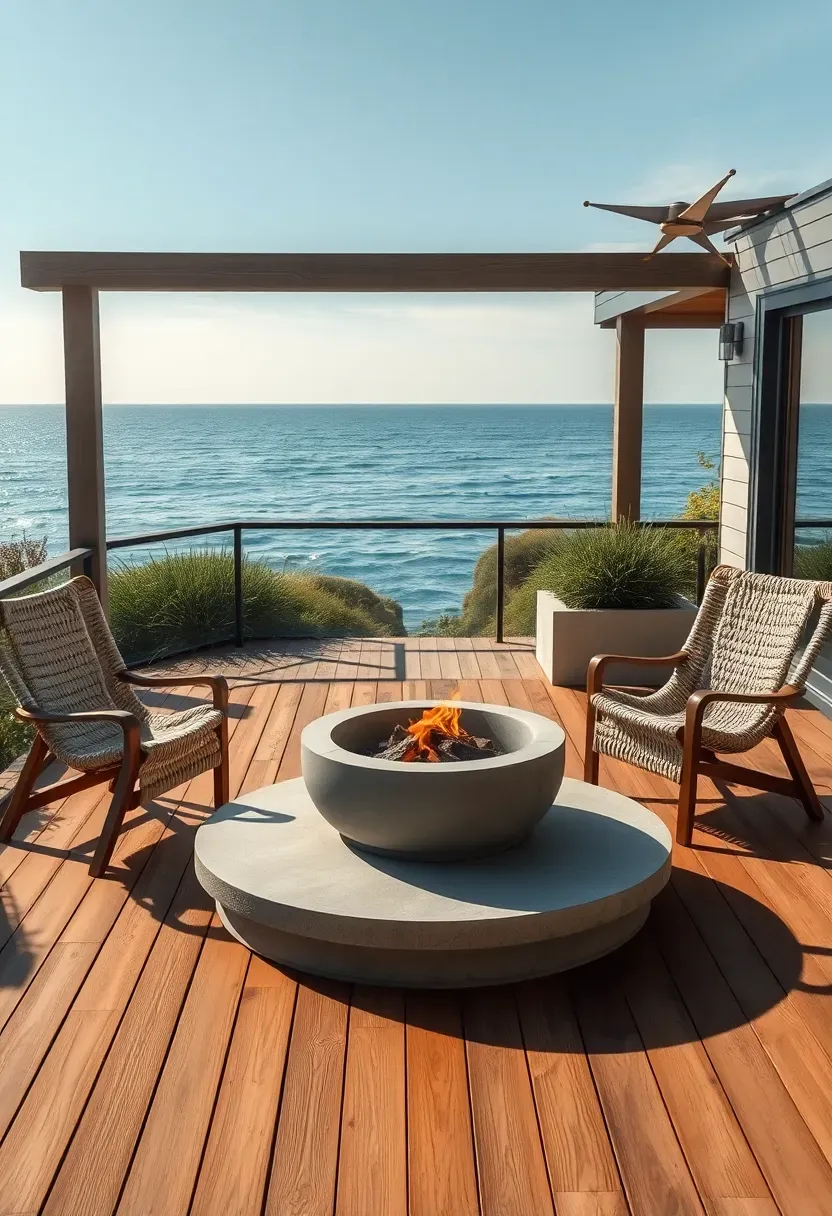
A fire pit at the water's edge — or within sight of it — requires a different set of material choices than an inland backyard. Salt air accelerates corrosion in mild steel and deteriorates cheaper synthetic fabrics within a single season. Coastal fire pit design is partly an exercise in material science.
AI design platforms handle this constraint by defaulting to coastal-appropriate materials: concrete or corten fire bowls, ipe or teak decking, solution-dyed acrylic fabrics, and tempered glass railings that maintain the view without offering wind resistance that knocks over furniture. Rope-woven lounge chairs in weathered driftwood tones hit the right tone between casual and considered.
What to Watch Out For
- Rinse metal fire pit components monthly in coastal environments to slow salt-induced corrosion
- Low-profile glass panel railings frame the ocean view, but check local coastal building codes — some jurisdictions require solid railings above certain heights
- Keep the furniture count minimal; the view is the dominant feature and competing with it defeats the concept
Recommended
Items for this idea
17. Scandinavian Minimalist Fire Pit
Origins
Nordic outdoor culture has a word for the satisfaction of sitting around a fire in cold weather: mys (Swedish) or hygge (Danish). Neither culture over-decorates the experience. The fire is enough.
Modern Interpretation
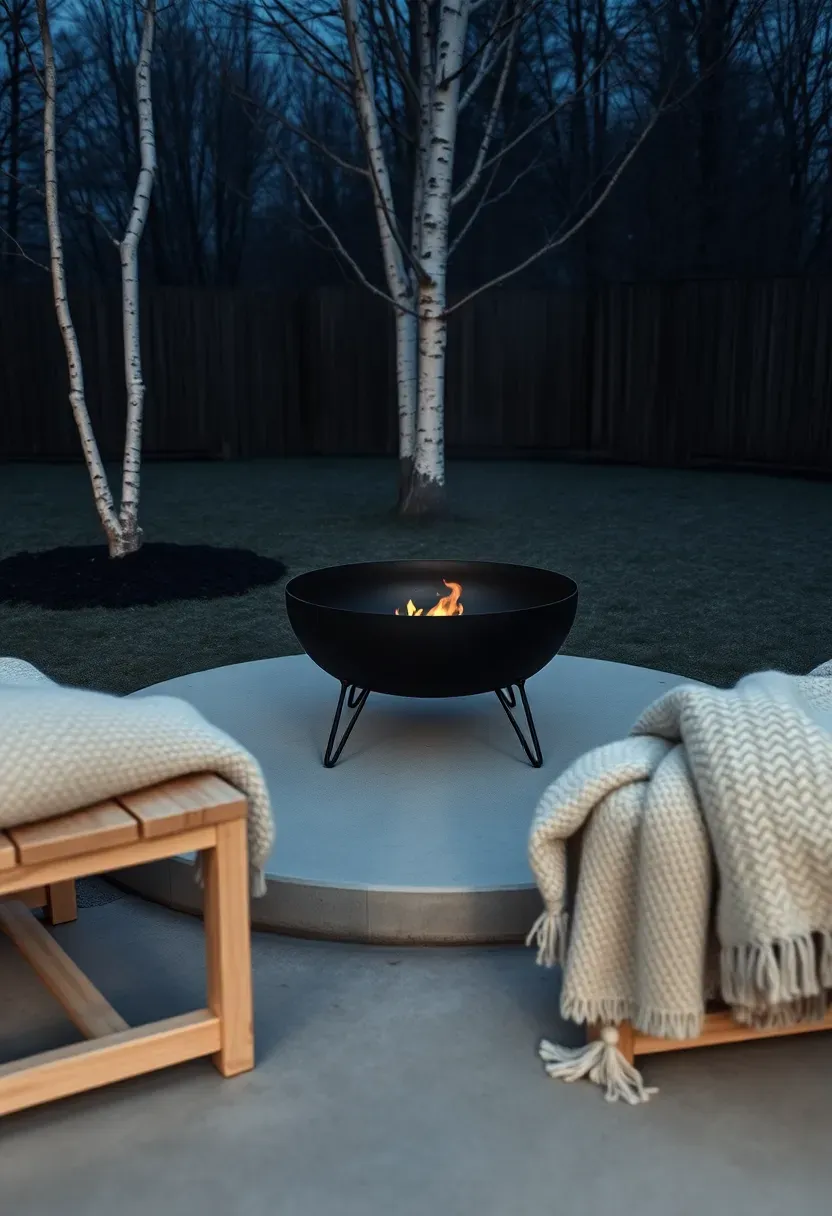
A simple round matte black steel fire bowl on hairpin legs centered on a pale concrete slab. Two low birch plywood benches with undyed wool fleece throws draped over them. A single silver birch with white bark standing nearby as the sole vertical element. The design removes everything that would distract from the fire itself. AI tools are particularly useful for Scandinavian concepts because they can test negative space — showing how much emptiness the composition can absorb before it tips from intentional to incomplete.
How to Apply at Home
- Source birch plywood benches from Scandinavian furniture brands or build simple versions from three pieces of ply and four dowel legs
- Undyed natural wool fleece throws in cream and light gray hold the palette; avoid bright colors or patterns
- Let the concrete slab develop weather patina — refinishing or sealing it annually would undermine the spirit of the design
Quick FAQ
Is a permit required to build a backyard fire pit? Requirements vary significantly by municipality. Most jurisdictions allow small recreational fire pits without a permit, but setback distances from structures, fence lines, and property edges are regulated almost everywhere. Check with your local fire marshal or building department before breaking ground — the rules for gas fire features are stricter than for wood-burning pits in most areas.
Wood-burning or gas — which is actually better? It depends entirely on how you use your yard. Wood-burning delivers the crackling sound, the campfire smell, and the ritual of building a fire that many people find central to the experience. Gas wins on convenience, smoke control, and code compliance in tighter urban settings. Neither is objectively superior — they serve different households.
Should the fire pit area have a dedicated hard surface underfoot, or can it go on grass? A hard surface is strongly recommended. Grass browns and eventually dies under radiant heat from a regularly used pit. More importantly, a stable flagstone, concrete, or gravel surface prevents chairs from sinking and tipping on soft soil. A 10-foot-diameter crushed gravel pad is the minimum practical base for most residential fire pit setups.
How far from the house does a fire pit need to be? The National Fire Protection Association recommends at least 10 feet from any structure, including fences, overhanging branches, and exterior walls. Many local codes set the minimum higher — 15 to 25 feet is common. Gas fire tables positioned on covered patios are exceptions if the overhead structure is open-sided and non-combustible.
Can AI design tools actually help plan a real fire pit area? Yes, and more usefully than most people expect. Beyond style visualization, AI tools with spatial modeling can calculate safe setback distances, recommend seating counts for a given clearing size, identify drainage problem areas from photo analysis, and suggest material combinations appropriate to your climate zone. Treat AI as the concept-development phase before consulting a landscaper or contractor for installation.
Trends come and go — fire pits will always be built, dismantled, and rebuilt in the next style. But the core of every successful fire pit area stays constant: a fire that feels safe and generous, seating that keeps people comfortable through the whole evening, and a surface underfoot that makes the whole setup feel like it belongs there. AI tools accelerate the path from concept to that result. Pick one of these seventeen approaches that fits your yard's character and your household's rhythm, feed it into your preferred design platform, and start from a visual proof rather than a guess.
Pinterest cover for 17 AI Fire Pit Area Design Ideas
About the author
OBCD
CGI visualization and interior design content. We create detailed 3D renders and curate practical design ideas for every room in your home.