23 AI Pet Friendly Home Design Ideas
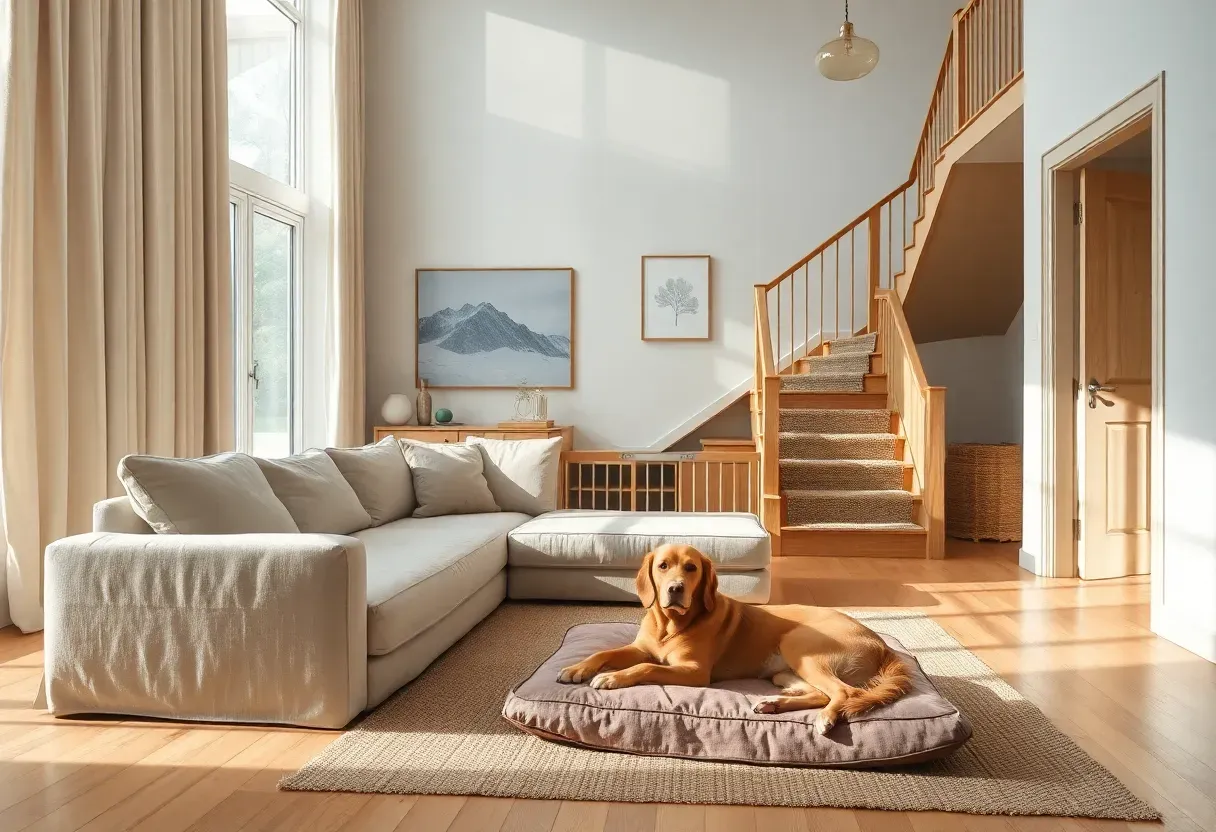
We've all felt that moment when the living room looks perfect in photos — and then the dog jumps on the sofa, the cat knocks over a plant, and muddy paw prints appear on the light hardwood floor you were so proud of. Pet friendly home design used to mean sacrificing aesthetics for practicality. AI-generated design concepts are changing that assumption entirely. By simulating hundreds of material combinations, spatial configurations, and built-in solutions in minutes, AI tools reveal what actually works when your household includes a retriever or three cats.
In this article I've gathered 23 ideas generated through AI design thinking — covering everything from hidden litter cabinets to full dog runs and biophilic bedrooms. Each section uses a different approach: some walk through steps, others compare options, and a few explore trends worth understanding before you renovate.
Table of Contents
- Built-in Pet Nook Under Stairs
- Washable Slipcover Sectional Sofa
- Pet-Friendly Flooring with Style
- Hidden Litter Box Cabinet
- Dog-Friendly Mudroom Entry
- Elevated Feeding Station
- Cat Wall Highway System
- Integrated Dog Crate Furniture
- Pet-Safe Indoor Plant Arrangements
- Built-In Dog Washing Station
- Pet-Friendly Outdoor Patio
- Acoustic Panel Pet Room Divider
- Scratch-Resistant Upholstery
- Smart Pet Door Integration
- Corner Reading Nook with Pet Bed
- Open-Plan Living with Pet Zones
- Staircase Balustrade Safety Rails
- Pet-Friendly Kitchen Layout
- Multifunctional Storage Pet Bench
- Cat-Friendly Window Seat
- Dog Run Backyard Design
- Pet Memorial Photo Gallery Wall
- Biophilic Pet-Friendly Bedroom
1. Built-in Pet Nook Under Stairs
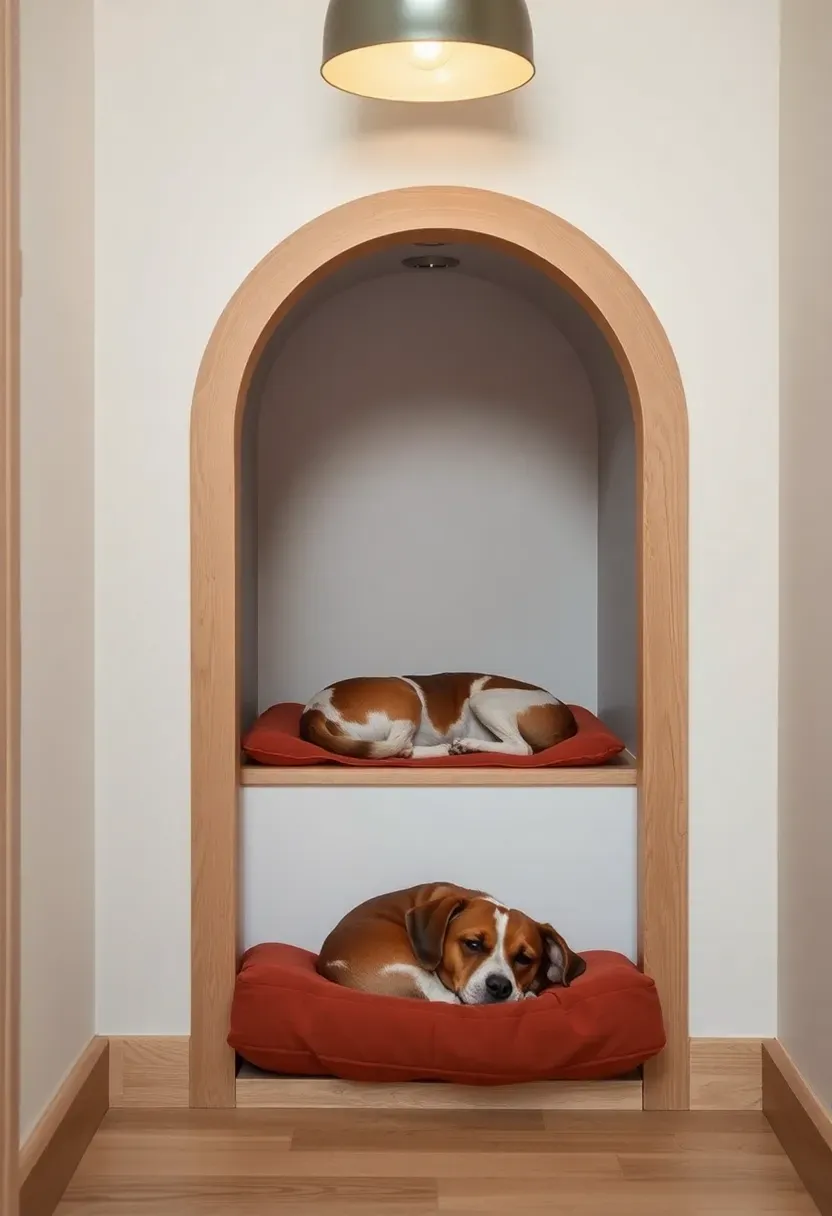
That triangular dead zone beneath a staircase is one of the most underused spaces in a home — and one of the best places to create a dedicated pet retreat.
How to Build It
Start by framing the opening with light oak plywood, then add a rounded archway trim to soften the entry point. A removable, machine-washable cushion in a durable canvas fabric sits flush on the floor. A small hook on the interior wall holds a leash or collar within easy reach.
What to Watch Out For
- Leave enough ventilation — a small wall grille or gap below the door keeps air circulating.
- Use a cushion that zips off completely for washing, not one with fixed batting.
- Paint the interior walls the same tone as your hallway so the nook reads as intentional, not an afterthought.
We picked a few things that go well with this idea: KEKUOU Stretch Sofa Cover Pet Friendly (★4.3), XINEAGE Washable Couch Cover (3-Cushion) (★4.2) and Smiry Non-Slip Fuzzy Pet Couch Cover (★4.4). As an Amazon Associate we earn from qualifying purchases.
2. Washable Slipcover Sectional Sofa
Why It Solves the Problem People Face
The average pet owner replaces their sofa every four to six years — not because the frame breaks, but because the upholstery becomes unsalvageable. Fixed fabric sofas are a losing battle with pets. The slipcover sectional reverses that dynamic.
The Solution
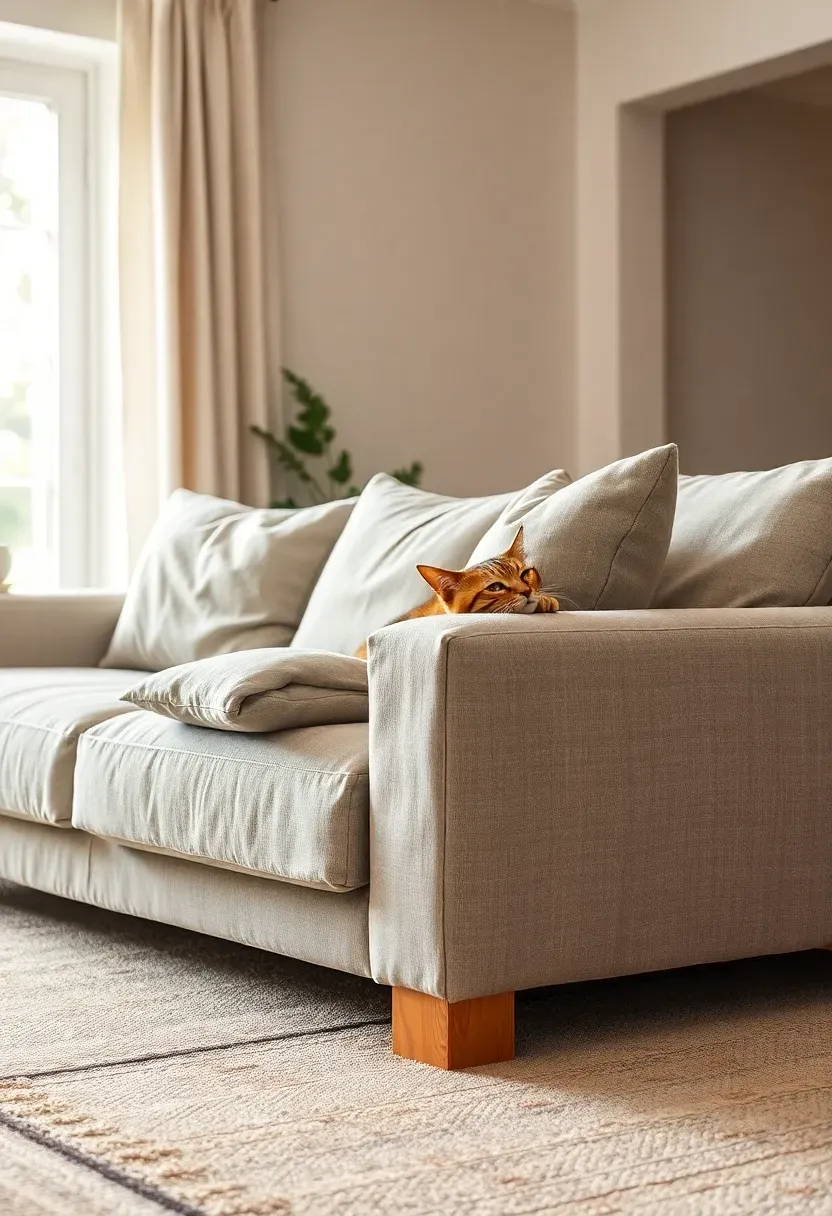
AI layout tools consistently recommend modular sectionals with fully removable, machine-washable slipcovers in stonewashed linen or canvas. Each cushion cover unzips individually. You can run a single cover through the wash on a Sunday and have it back on the sofa by evening. The modular format also means you replace one section if a cover reaches end of life — not the entire unit.
Pros and Cons
Pros: Low replacement cost, easy weekly cleaning, sustainable long-term investment.
Cons: Covers can shift during use and need periodic repositioning; stonewashed linen wrinkles visibly.
We picked a few things that go well with this idea: Piskyet Wooden Dog Crate End Table (★4.5), Casual Home Wooden Medium Pet Crate (★4.1) and Fulhope XL Wooden Dog Crate Furniture (43") (★4.5). As an Amazon Associate we earn from qualifying purchases.
3. Pet-Friendly Flooring with Style
Flooring is where pet friendly design meets the biggest compromise — or the biggest opportunity.
Comparing: Luxury Vinyl Plank vs. Matte Porcelain Tile
Both materials appear consistently in AI-generated pet-friendly home simulations. Understanding the tradeoffs determines which one fits your household.
Luxury Vinyl Plank (LVP)
Waterproof, scratch-resistant up to 12-mil wear layer, warm underfoot, easy DIY installation. Looks convincingly like wood from a distance, comfortable for dogs to lie on in cooler months.
Matte Porcelain Tile
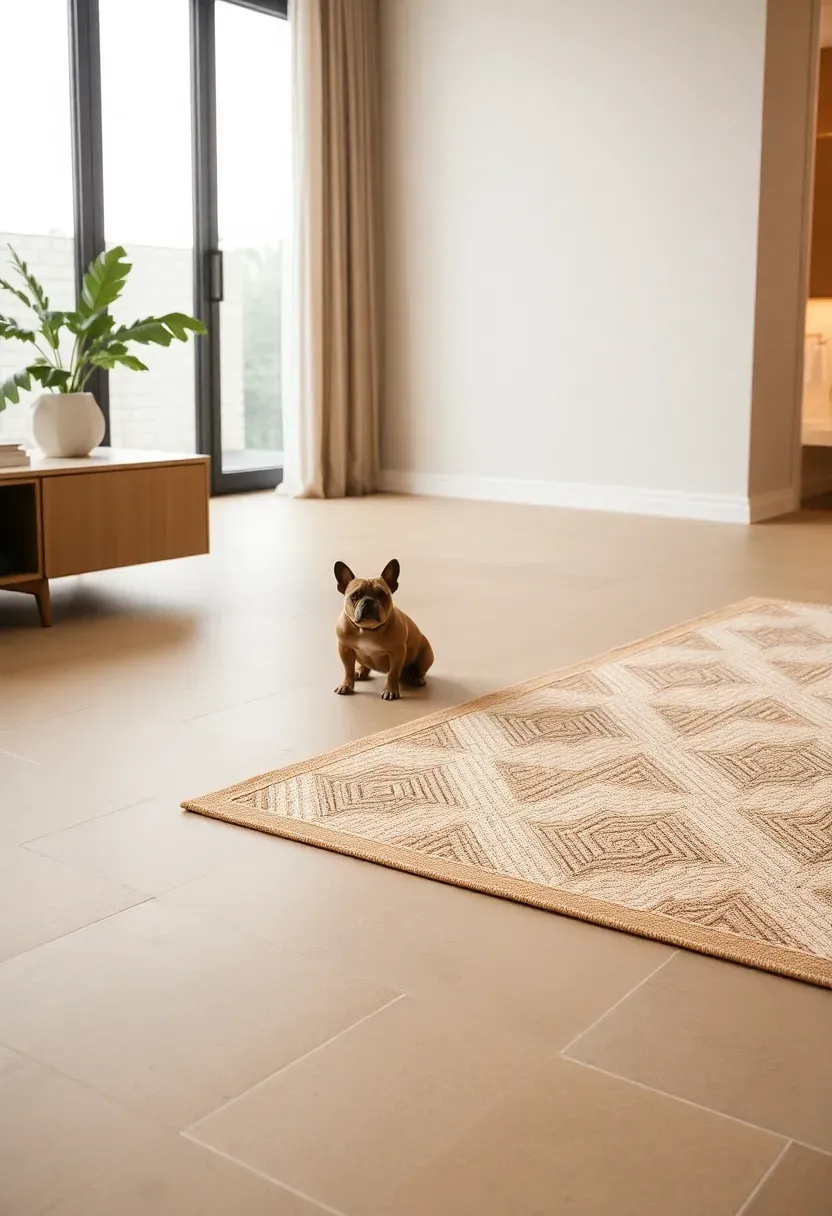
Harder and more scratch-proof than LVP, almost maintenance-free, ideal for high-traffic zones and muddy paw prints. The matte finish hides surface scuffs better than polished versions. Cold underfoot — pair with a low-pile washable rug.
What to Choose
Choose LVP if: you have older dogs with joint issues who need warmth and traction underfoot, or you rent and need a floating-floor solution.
Choose matte porcelain if: your pets are heavy shedders who track in mud, you want maximum durability, or the room connects to an outdoor space.
Recommendation
Layer a washable low-pile rug over porcelain in seating areas. You get the best of both: hygienic tile beneath and warmth above.
We picked a few things that go well with this idea: Modern 5-Piece Cat Wall Shelves Set (★4.3), FUKUMARU 4-in-1 Cat Wall Shelves Set (★4.3) and 5-in-1 Multi-Level Cat Wall Shelves (★4.4). As an Amazon Associate we earn from qualifying purchases.
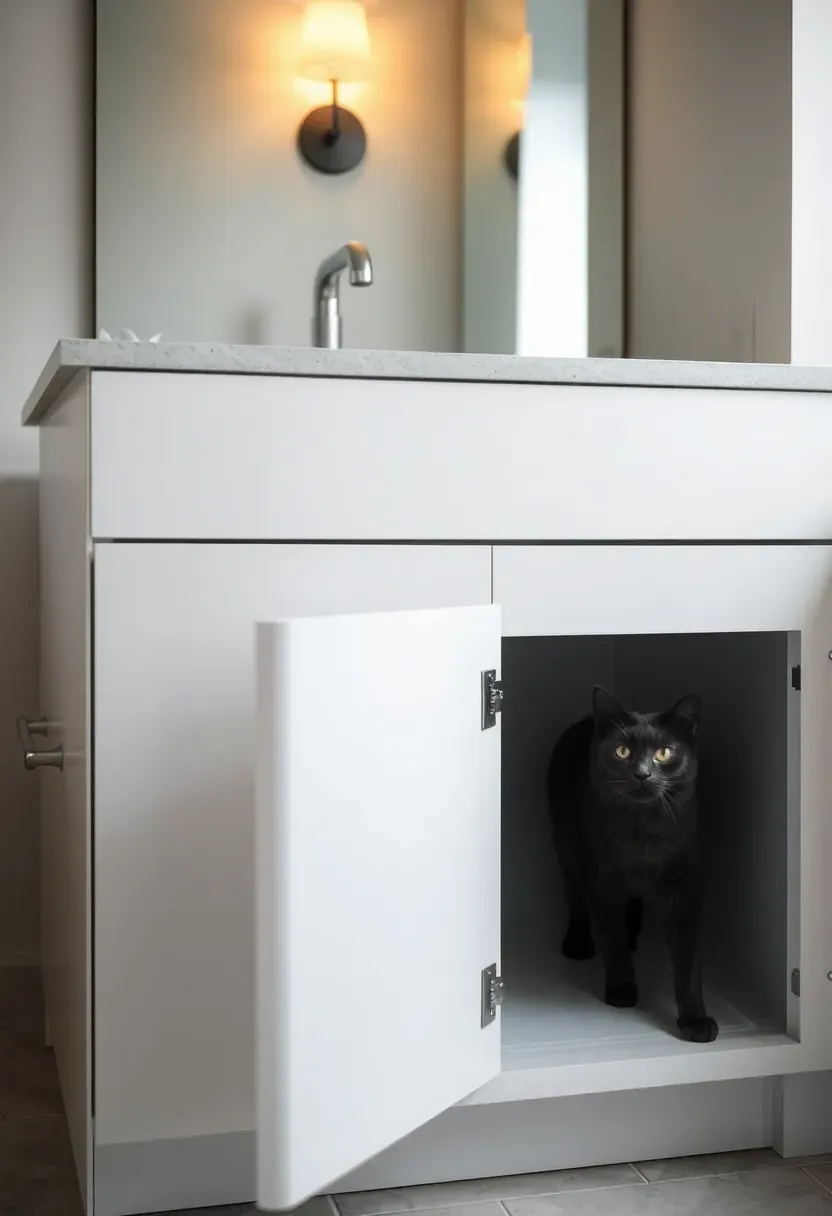
4. Hidden Litter Box Cabinet
The litter box is the element most people struggle to integrate into a clean interior — and the one AI design tools address most creatively.
The Core Issue
Exposed litter boxes disrupt any room's visual composition. Placing them in a spare bathroom works until guests arrive. Purpose-built furniture that hides the box elegantly is often overpriced and poorly ventilated.
The Solution
A vanity-height cabinet with a cat-access cutout integrated into the lower side panel solves three problems at once: it hides the box, provides ventilation through a recessed grille, and maintains counter space above for storage. The arched cutout shape — rather than a square hole — gives the cabinet a furniture-quality appearance. Use matte lacquered MDF in the same tone as your bathroom cabinetry for a seamless result.
Pros and Cons
Pros: Odor-contained with a charcoal filter on the grille, aesthetically cohesive, easy to clean with a pullout liner tray.
Cons: Requires custom build or modification of an existing unit; cats with large body frames need a wider cutout.
Recommended
Items for this idea
5. Dog-Friendly Mudroom Entry
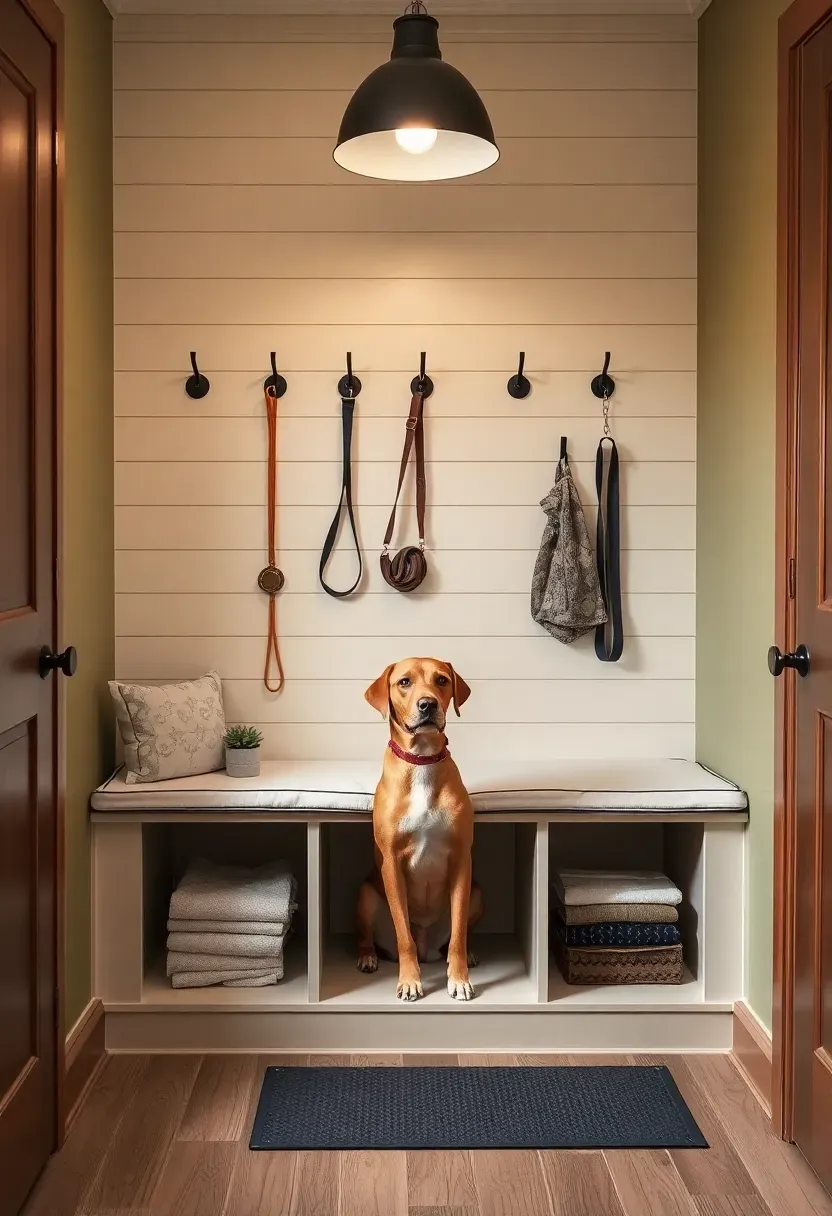
A well-designed mudroom is the single highest-return investment for dog owners. It keeps dirt, wet paws, and outdoor debris contained before it reaches the rest of the home.
Step 1: Define the Zones
Divide the mudroom into three horizontal bands: upper hooks for leashes and harnesses, mid-height bench for sitting while removing shoes or clipping a collar, and lower open cubbies for towels, paw wipes, and a spare mat.
Step 2: Choose the Right Wall Finish
Painted shiplap paneling in a warm sage or denim blue handles impact well and wipes clean. Avoid flat-painted drywall — scuff marks from leashes and crates become permanent quickly.
Step 3: Install a Rubber-Backed Entry Mat
A commercial-grade rubber-backed mat with a deep tread pattern traps moisture and debris before paws reach the main floor. Swap in a fresh mat while the other is in the wash.
What to Watch Out For
- Hooks positioned too low become a tail-wagging hazard — mount them at shoulder height.
- Choose a bench cushion in vinyl or performance fabric, not foam with a fabric cover that absorbs odor.
- Install a wall-mounted hose bib nearby if space allows — it makes quick rinses effortless.
6. Elevated Feeding Station
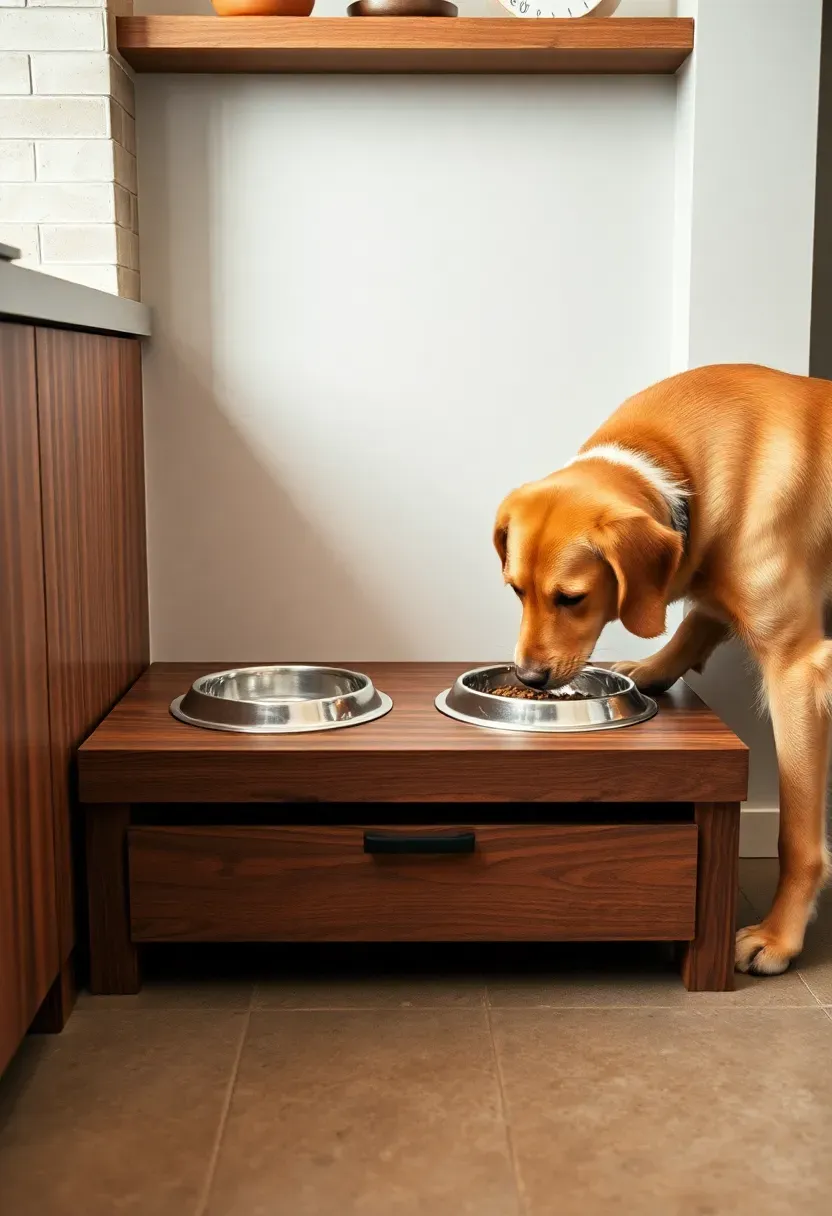
An elevated feeding station raises food and water bowls to a more comfortable height for medium and large dogs, reducing neck and joint strain during meals.
Built-In vs. Freestanding
Built-in platform: A low walnut wood platform built flush against a kitchen toe-kick or wall runs from 4 to 8 inches high, with routed recesses holding stainless bowls at a fixed position. A small drawer below stores a scoop, bags, and vitamins. Looks intentional and is difficult to tip over.
Freestanding stand: Adjustable height options suit dogs at different growth stages. More portable but easier to knock sideways during excited meal times.
What to Choose
Choose built-in if: your dog is fully grown and the kitchen layout has a natural alcove or unused toe-kick section.
Choose freestanding if: you have a growing dog or multiple pets of different sizes who share the same station.
Recommendation
The built-in version photographs better, integrates with kitchen cabinetry more convincingly, and is the consistently preferred solution in AI-generated kitchen layouts for pet owners.
Recommended
Items for this idea
7. Cat Wall Highway System
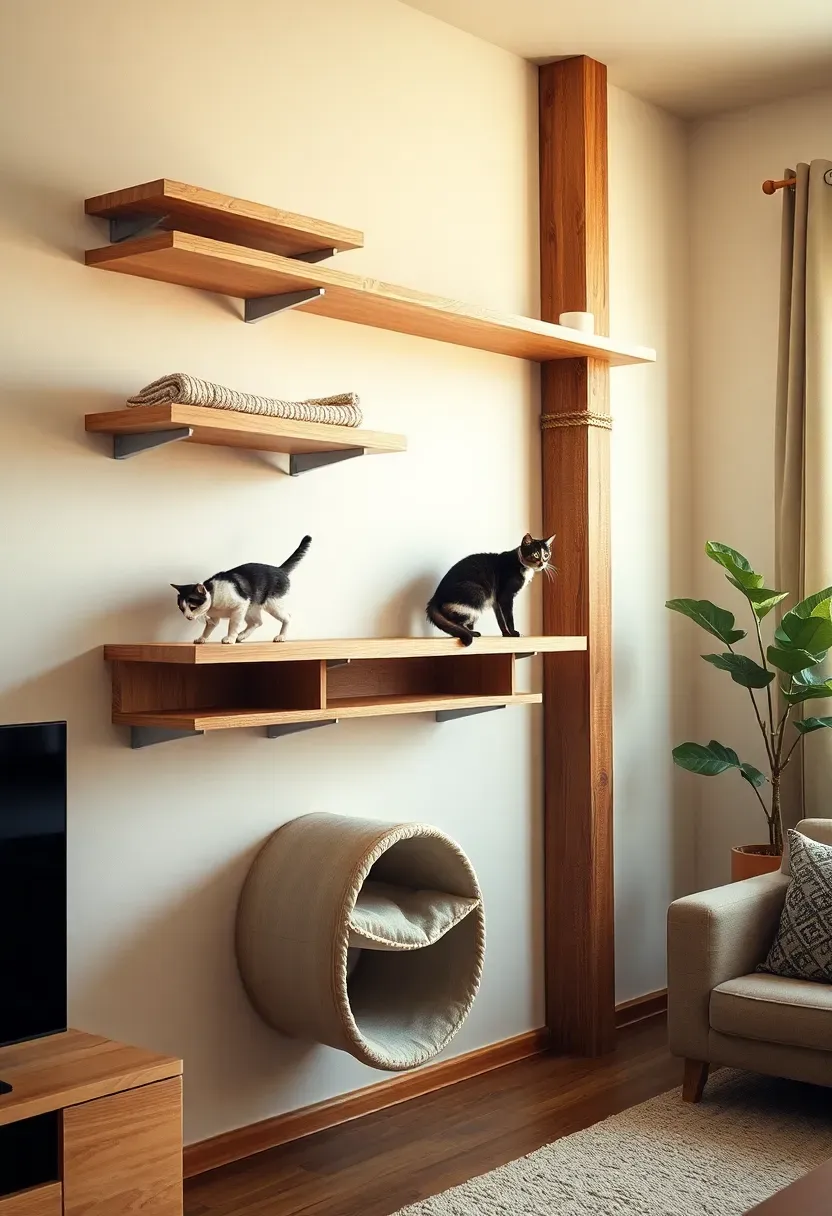
Cats need vertical territory. Giving them a wall-mounted path redirects climbing behavior away from bookshelves and curtain rods toward a purpose-built system that serves both the cat and the room's visual interest.
Origins / History
Wall-mounted cat furniture emerged from Japanese apartment design, where floor space is at a premium and cats need enrichment without horizontal sprawl. The original versions were utilitarian — bare pine shelves with minimal padding. Contemporary interpretations treat the wall system as an architectural element.
Modern Interpretation
Today's cat highway systems use floating shelves in light oak or walnut with hidden wall-mount hardware, padded pass-through tunnels upholstered in canvas, and sisal-wrapped vertical posts that double as scratching surfaces. The best installations follow the room's sightlines, positioning shelves near windows so cats can observe outdoor activity from height — providing mental stimulation alongside physical use.
How to Apply at Home
- Map the wall first: plan the route as a continuous path from floor to ceiling level, including at least one resting platform wide enough for a cat to lie flat.
- Use stud-mounted hardware rated for 50 lbs minimum per shelf — cats launch and land with force.
- Match shelf finish to existing furniture — the system should read as furniture, not an add-on.
- Add a sisal scratch post at the base of the first shelf to encourage the entry point.
8. Integrated Dog Crate Furniture
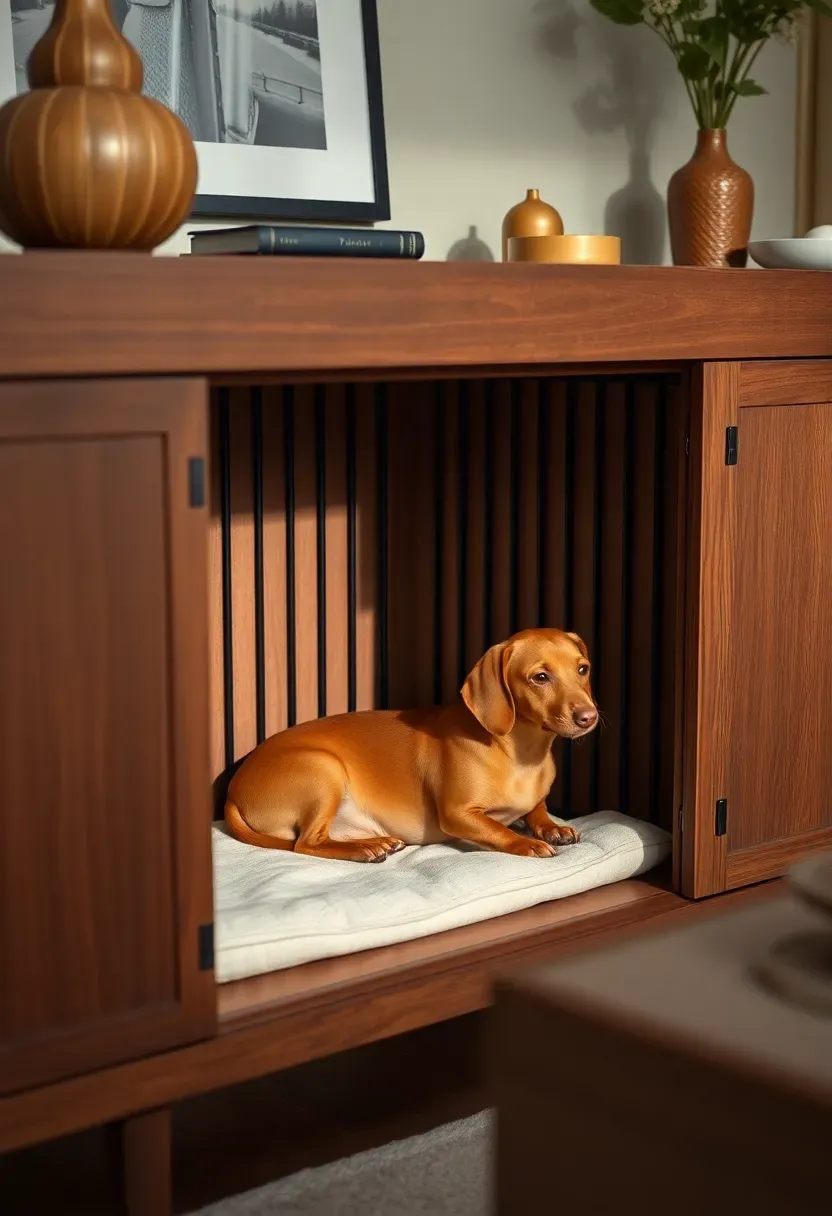
A dog crate doesn't have to look like a cage in the middle of a living room. Furniture-integrated crate designs conceal the function entirely while adding usable surface area.
The Core Issue
Freestanding wire crates break the visual continuity of a well-designed room. They're practical for dogs who need a secure resting space but create an institutional look that most homeowners cover with blankets — which then look worse.
The Solution
A low credenza with a slatted-door crate compartment on one side solves the problem directly. The slats — powder-coated steel in matte black or walnut veneer strips — allow air circulation and visibility while maintaining a furniture appearance. The remaining credenza drawers provide storage. A removable washable pad fits the crate floor exactly. The dog has a den-like space; the room has a clean sideboard.
Pros and Cons
Pros: Dual-purpose furniture, den-like enclosure that many dogs prefer over open crates, design-coherent.
Cons: Fixed in position — relocating it disrupts the room arrangement; height may be too low for large breeds.
Recommended
Items for this idea
9. Pet-Safe Indoor Plant Arrangements
Houseplants and pets coexist easily once you understand which plants are safe — and where to position them so curious animals can't access them.
Which Plants Are Safe
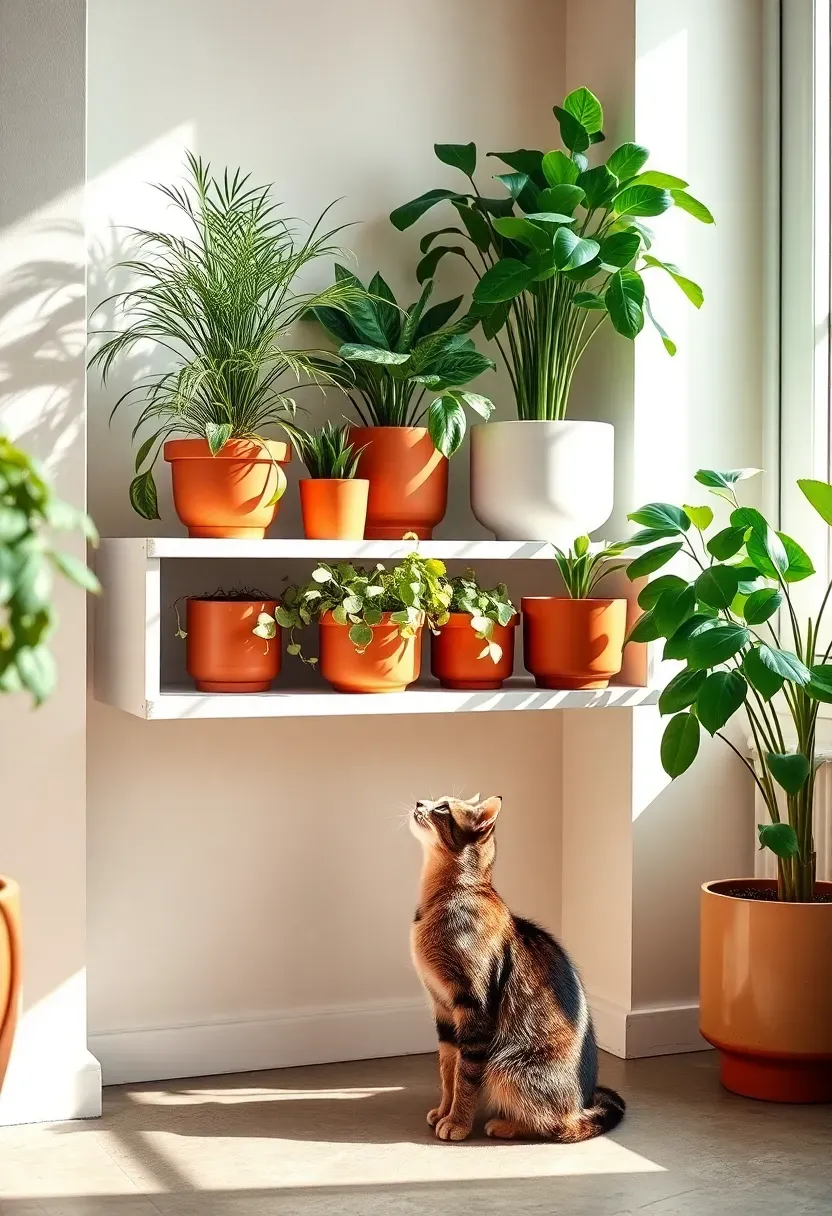
Common pet-safe options include spider plant, Boston fern, calathea, peperomia, and areca palm. These are non-toxic to both cats and dogs, widely available, and visually strong enough to anchor a plant arrangement.
Positioning Strategy
Height is the primary defense. A raised shelf at 48 inches or higher puts most plants beyond casual reach for dogs. For cats, height alone won't work — the shelf needs to lack a good jumping-off point nearby. A floating wall shelf with no adjacent furniture provides better protection than a plant stand sitting on the floor.
What to Watch Out For
- Verify every plant against the ASPCA toxic plant database before purchasing — common houseplants like pothos, monstera, and peace lily are toxic.
- Use heavy ceramic or terracotta pots that won't tip when nudged; avoid lightweight plastic.
- Keep potting soil covered with a layer of large smooth stones to prevent cats from using the pot as a litter box.
10. Built-In Dog Washing Station
How to Build It
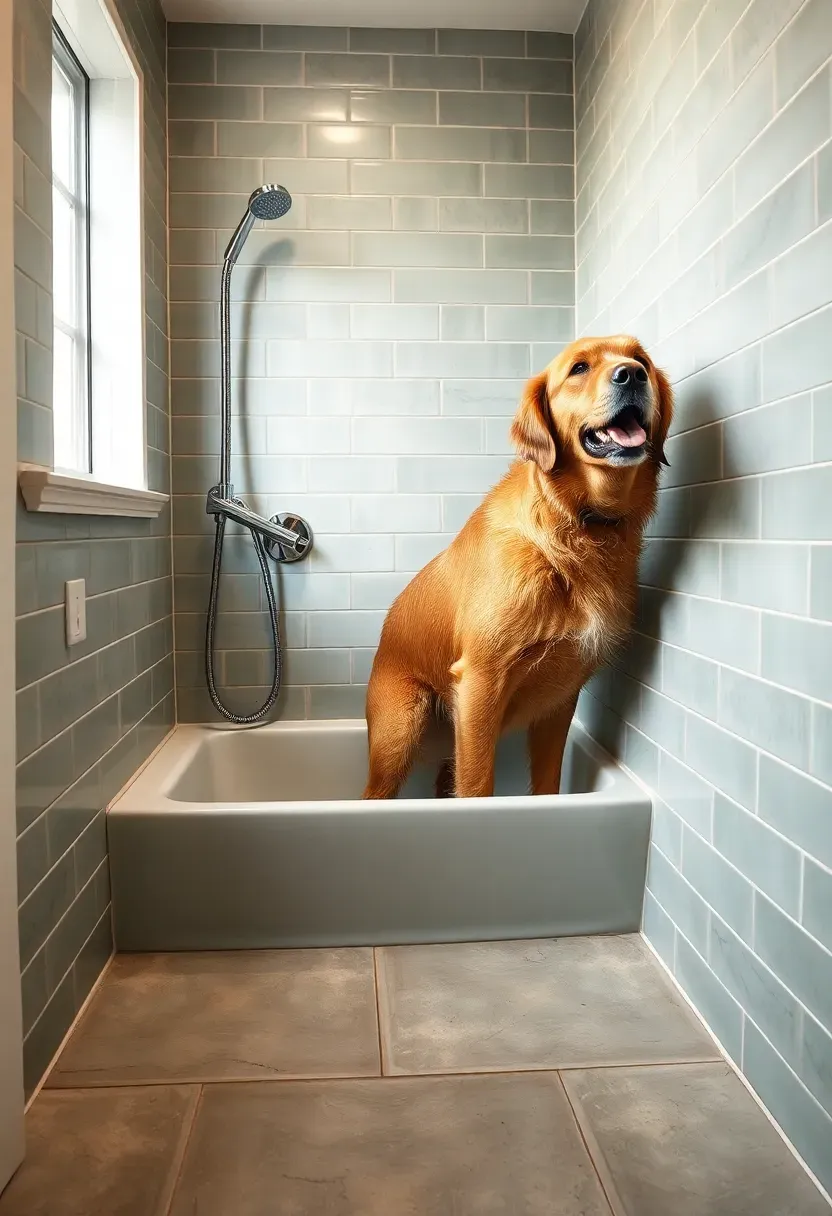
A built-in dog washing station requires a modest footprint — roughly 3 by 4 feet — and is best positioned in a mudroom, utility room, or garage transition space. Below is a step-by-step construction approach.
Step 1: Frame and Waterproof the Tub Area
Build a shallow walk-in tub using a prefab acrylic insert or custom-tiled concrete base. The entry should be low enough for the dog to step in without lifting — 6 to 8 inches maximum. Waterproof all surrounding walls with cement board and tile.
Step 2: Install Matte Tile and Drainage
Matte ceramic tile in a neutral sage or warm grey provides grip and wipes clean. The floor must slope consistently toward a central floor drain. A stainless steel linear drain along one edge looks cleaner than a center dome drain.
Step 3: Add the Shower Hardware
A handheld shower head on a sliding bar allows you to adjust height and direction without wrestling with a fixed overhead spray. Use a thermostatic valve so water temperature is consistent from the first use — no cold shock to a nervous dog.
What to Watch Out For
- A fold-down bench or hook beside the station holds towels within arm's reach while both hands are on the dog.
- Install a full-height glass panel on the open side to contain splash without making the space feel enclosed.
- Non-slip bath mats inside the tub area prevent slipping on wet tile.
Recommended
Items for this idea
11. Pet-Friendly Outdoor Patio
Outdoor patios designed without pets in mind quickly become frustrating — furniture tips over, dogs dig through gravel, and cats escape through gap-heavy fencing. A thoughtful layout addresses each of these in advance.
Key Design Elements
Start with composite decking in a teak tone. It handles heat, moisture, and paw traffic better than wood, requires no annual sealing, and doesn't splinter. A pergola with canvas shade panels reduces heat on warm afternoons, which is critical for brachycephalic breeds like bulldogs and pugs.
A corner pet playpen using powder-coated steel panels creates a contained zone without requiring a permanent fence installation. The panels interlock and can be reconfigured — useful for homes where the patio layout changes seasonally.
What to Watch Out For
- Avoid gravel ground cover beneath the pet zone — it collects waste and is difficult to clean. Artificial turf or poured rubber surface works better.
- Built-in water bowl holders attached to the pergola post keep water bowls from being knocked into the walkway.
- Shade at all hours matters: position the pet zone so it's shaded from late morning through mid-afternoon, not just in the evening.
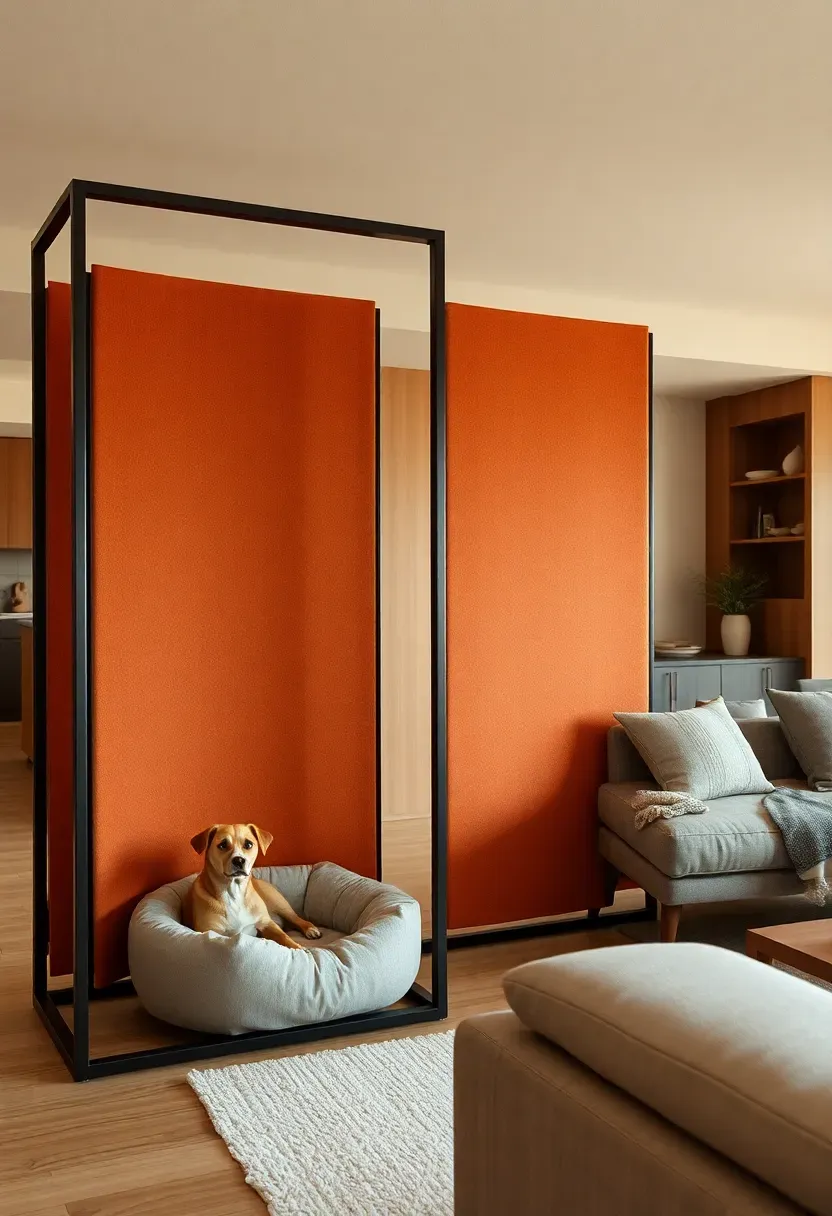
12. Acoustic Panel Pet Room Divider
Open-plan homes present a particular challenge: how do you create a contained pet zone without closing off the space with walls?
The Solution
Freestanding acoustic panel dividers serve three simultaneous functions. They define the pet zone visually, absorb ambient noise — useful when a dog whines or a cat knocks things over — and introduce a design element that reads as intentional furniture rather than a barrier. Panels in warm terracotta and oat tones work with most neutral interiors. A powder-coated steel frame keeps the structure stable without anchoring to the floor.
Pros and Cons
Pros: No installation required, repositionable as household needs change, acoustic benefits throughout the room.
Cons: A determined dog will push through or around a freestanding divider; this works best as a visual and behavioral boundary, not a physical containment system.
Recommended
Items for this idea
13. Scratch-Resistant Upholstery
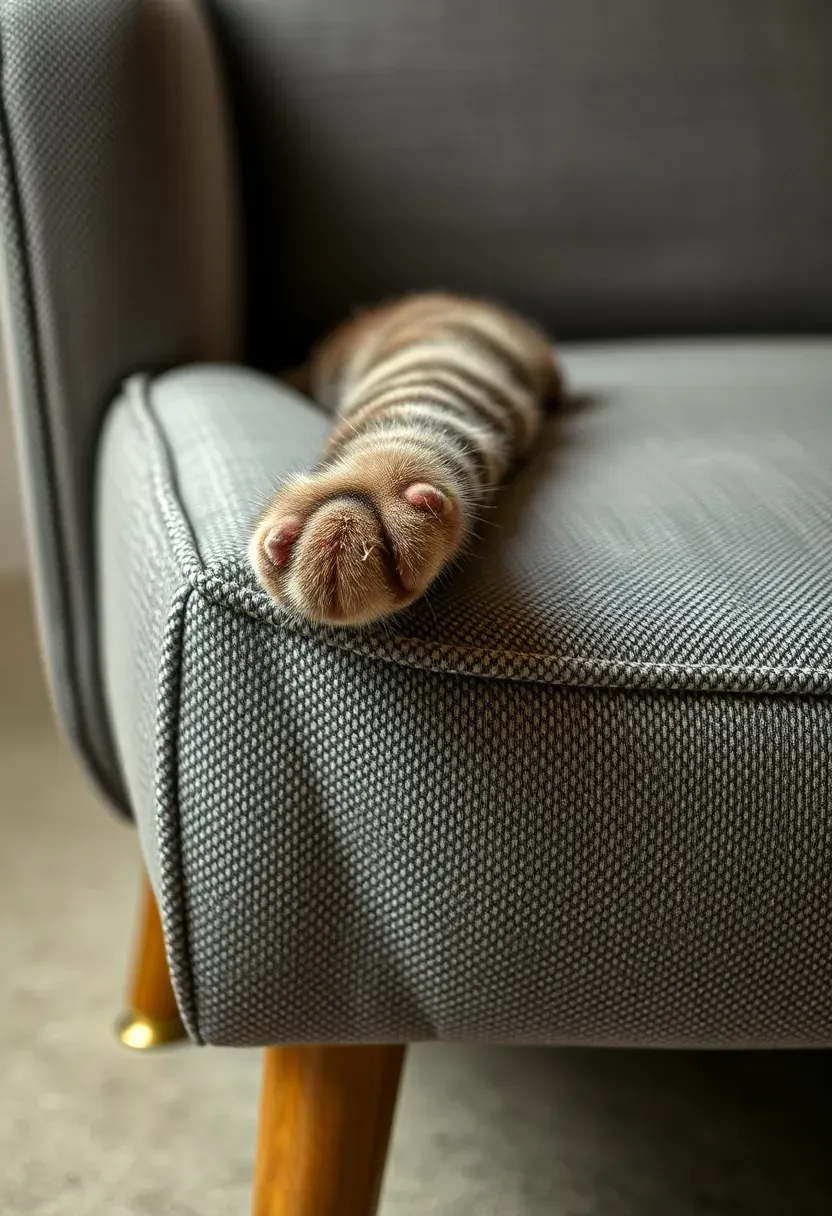
Scratch-resistant doesn't mean scratch-proof — the distinction matters when choosing upholstery for a home with cats.
Material Comparison
Performance microfiber: A tight weave with a flat pile that a cat's claw slides across rather than catching. The surface resists pilling and snagging remarkably well. The Achilles' heel is appearance over time — microfiber can develop a slightly matted look in high-contact areas.
Crypton fabric: A patented performance textile with moisture barrier and antimicrobial properties. Significantly more durable than standard upholstery, available in a wide range of textures including velvet-like finishes. More expensive but dramatically outperforms standard options.
Genuine leather: Scratching creates visible marks but doesn't penetrate to the padding. Many pet owners find that leather develops character over time rather than looking damaged — though this is subjective.
What to Choose
Choose performance microfiber if: budget is a priority and you want an easy-to-clean sofa that holds up well day to day.
Choose Crypton or performance fabric if: you have multiple cats and want a long-term furniture investment that doesn't show wear within two years.
Recommendation
Pair any upholstery choice with a sisal or cardboard scratching post positioned beside the furniture — cats scratch to mark territory and sharpen claws, not to destroy your sofa. Redirecting the behavior is more effective than relying entirely on material resistance.
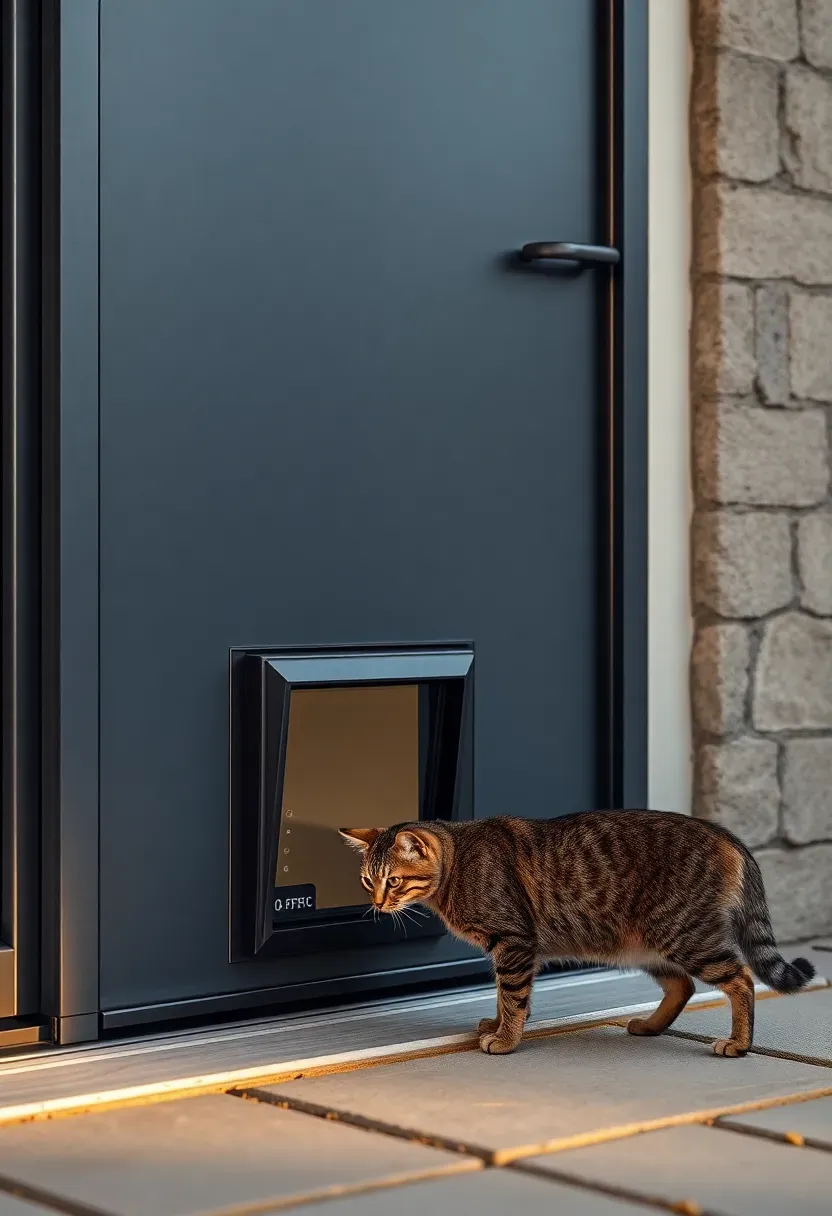
14. Smart Pet Door Integration
A smart pet door removes the daily friction of manually opening and closing the door for outdoor-access pets while keeping wildlife and neighbor animals out.
How the Technology Works
RFID-enabled pet doors read a microchip or collar tag and unlock only for registered pets. The electronic flap stays sealed until the sensor recognizes the specific signal, then releases for entry or exit. Premium models include directional control — you can set the door to allow exit but not entry during overnight hours, for example.
Installation Considerations
Smart pet doors install into existing door panels or wall sections. For composite exterior doors, a router cut with a finished surround maintains the door's thermal and security properties. A matte black surround trim aligns visually with contemporary exterior hardware.
What to Watch Out For
- Check the door's energy rating — poorly insulated models lose significant heat through the flap seal in winter.
- RFID-chip models require the pet to be microchipped, which is also best practice for pet safety independently.
- For cats, measure the shoulder width carefully — standard flap sizes accommodate most breeds, but Maine Coons and large Ragdolls need a wider cutout.
Recommended
Items for this idea
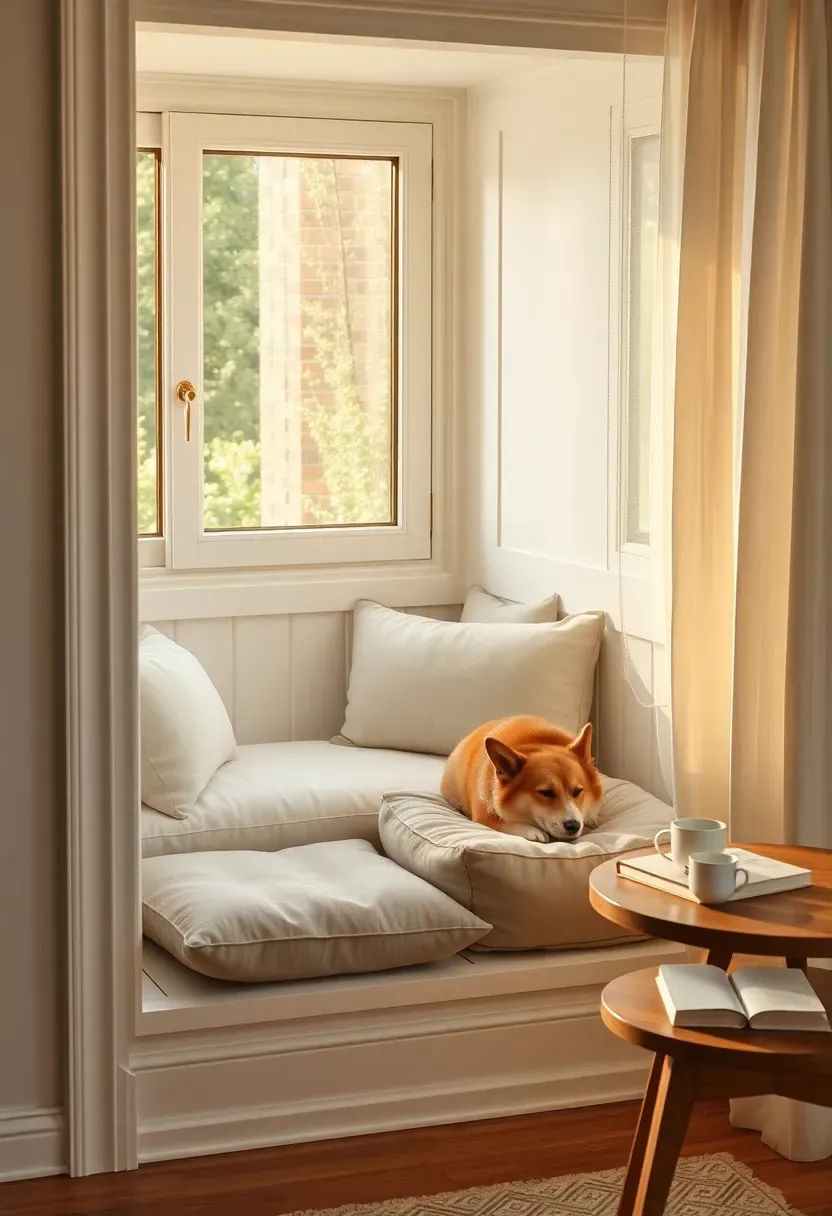
15. Corner Reading Nook with Pet Bed
There is something deeply satisfying about a reading corner that includes a dedicated space for your dog or cat at the same comfort level as your own seat. Designing both together — rather than squeezing a pet bed into whatever floor space remains — produces a more cohesive result.
Design Approach
A built-in window seat with a storage base and a cushioned bench forms the main seating element. Beside it — at a slightly lower height — a low platform holds a wool-covered pet bed at a level where the pet can make eye contact with the person reading without being on the same seat. A small side table completes the tableau.
What to Watch Out For
- The pet bed should be washable; bouclé and wool-blend covers wash well on a gentle cycle if the fill is removable.
- Position the window seat to catch afternoon light — both you and your pet will gravitate toward the warmest spot naturally.
- A small reading lamp placed on the side table rather than overhead keeps the mood intimate and doesn't disturb a sleeping pet.
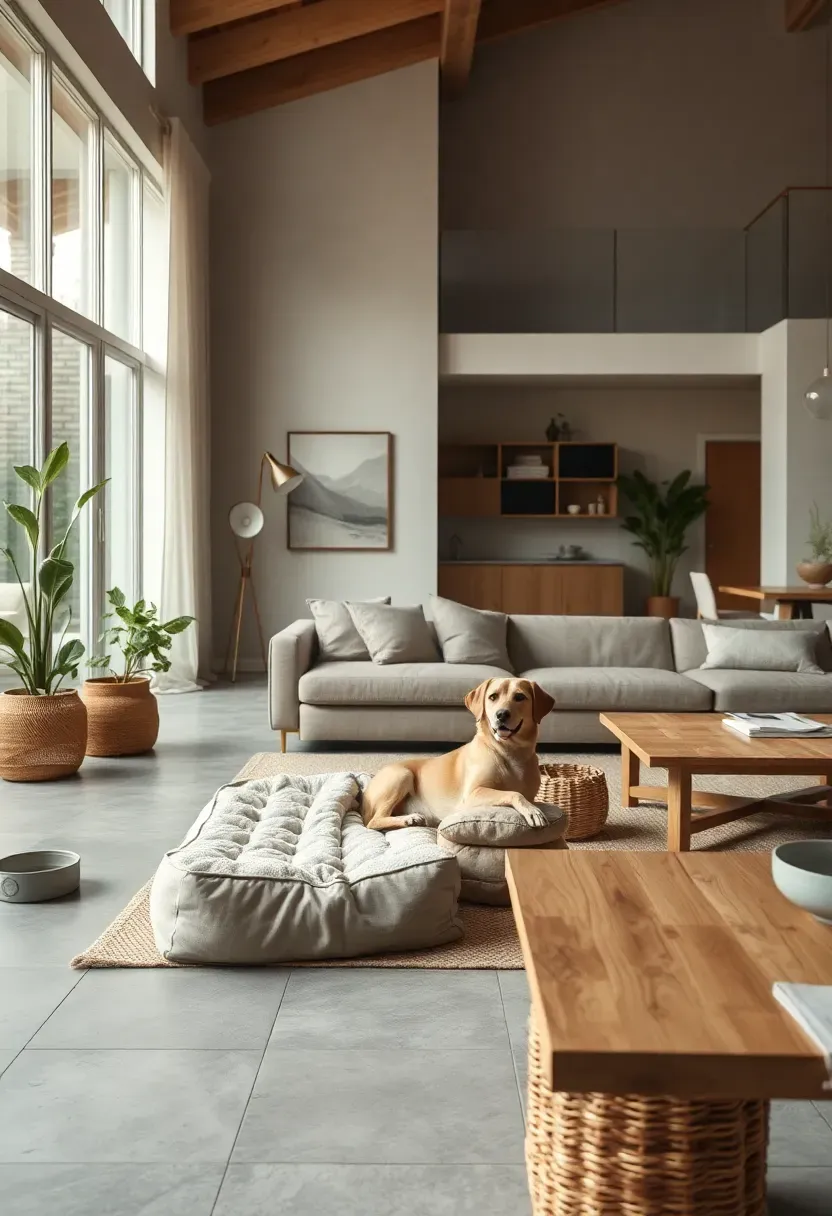
16. Open-Plan Living with Pet Zones
Open-plan layouts create a specific design challenge: without walls, how do you communicate to a pet — and to visitors — that certain areas are theirs?
Defining Zones Without Walls
Zone definition in open-plan spaces relies on three tools: flooring transitions, furniture arrangement, and accessory grouping. A low-pile washable rug in a warm tone anchors the pet zone in one corner of the room. A plush pet bed, a woven rattan toy basket, and a ceramic water bowl create a legible cluster that reads as a designated area — the pet learns this is their space, and guests understand not to sit there.
What to Watch Out For
- Avoid positioning the pet zone directly in the circulation path between rooms — it creates daily navigation frustration.
- The pet zone accessories should share a consistent material palette with the broader room: natural rattan, linen, and ceramic integrate far better than bright plastic pet products.
- Refresh the zone seasonally — a new cushion cover in a warmer tone for winter shifts the room's feel without a full redesign.
Recommended
Items for this idea
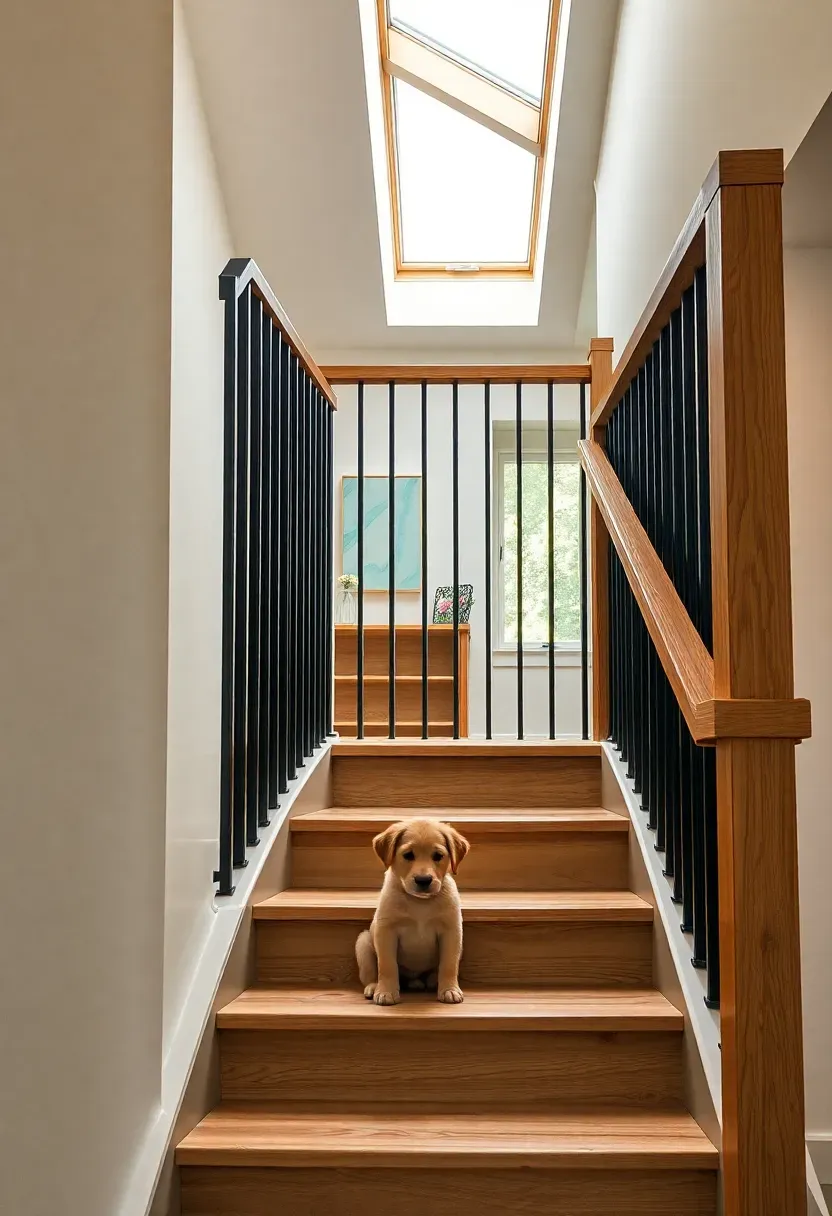
17. Staircase Balustrade Safety Rails
Staircases designed for human use often have baluster spacing that allows puppies and small dogs to squeeze through — or, more dangerously, to get their heads trapped between spindles.
The Upgrade
Replacing widely spaced decorative balusters with closely spaced vertical steel balusters — a maximum gap of 3.5 inches between each — solves the safety issue while producing a cleaner, more contemporary staircase aesthetic. Powder-coated matte black steel paired with a solid oak handrail and matching oak stair treads is one of the most consistently recommended combinations in AI-generated staircase redesigns for pet-friendly homes.
Step-by-Step Process
Start by having the existing balusters removed and the base rail inspected for structural integrity. New steel balusters mount via threaded shoe plates into the tread surface — a process that doesn't require replacing the structural stringer. The oak handrail fits over a steel newel post with a standard bracket system. Budget approximately one weekend for a single flight of stairs with professional help.
What to Watch Out For
- Check local building codes — baluster spacing requirements vary by region, and pet-safety spacing typically exceeds minimum code requirements anyway.
- Open-riser treads (without a vertical riser board between steps) can trap small paws; fill them with a thin oak panel if your dog is a small breed.
- Add non-slip stair treads in a rubber-backed wool blend — hardwood stair surfaces are genuinely hazardous for dogs at speed.
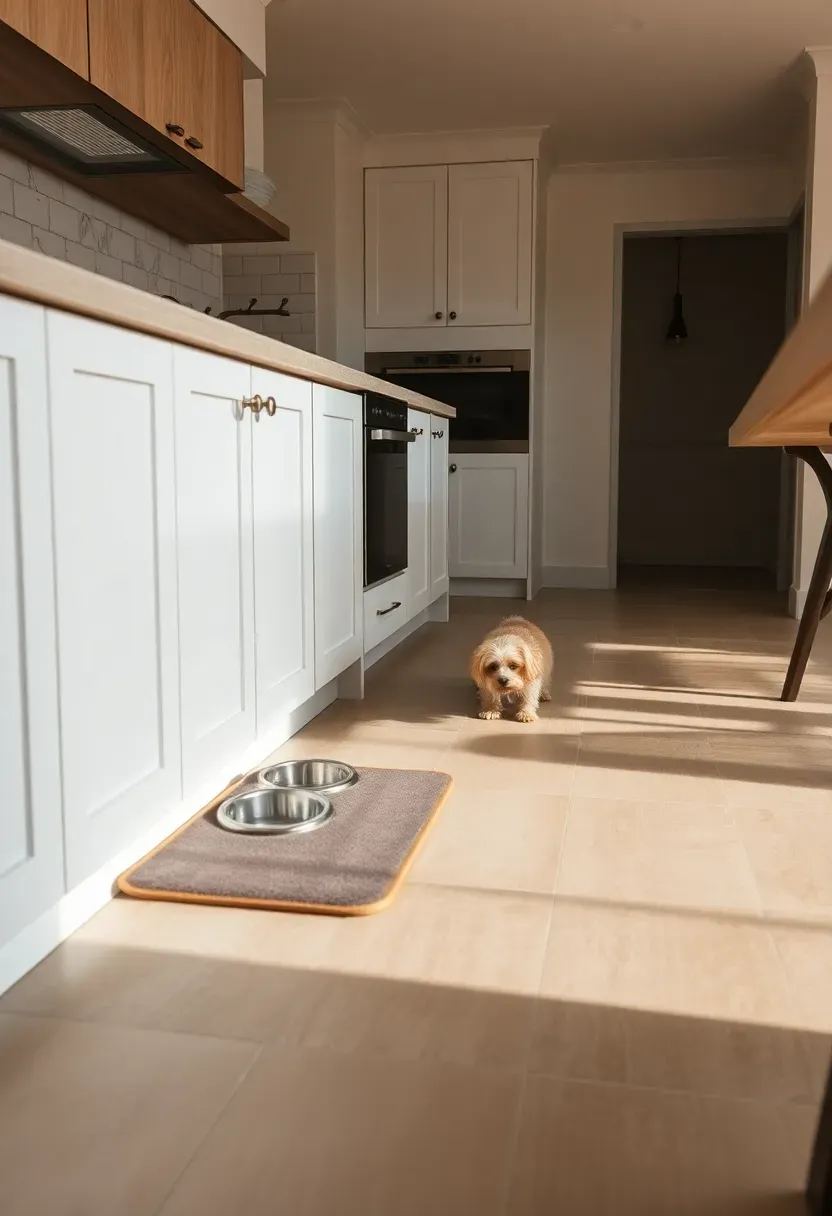
18. Pet-Friendly Kitchen Layout
The kitchen is where food preparation and pet feeding intersect — which creates both practical and hygienic design considerations.
Core Layout Adjustments
AI-generated pet-friendly kitchen layouts consistently recommend the toe-kick feeding station: two stainless bowls recessed flush into a modified lower cabinet toe-kick, with a pull-out drawer above for food storage. This keeps bowls completely off the traffic path — no more stepping over water dishes during meal prep — while integrating the feeding function invisibly into cabinetry.
A dedicated tile zone around the feeding station in a large-format porcelain that extends slightly beyond the bowl recesses creates an easy-to-mop splash zone that differentiates itself from the main floor material just enough to be intentional.
What to Watch Out For
- Ensure the feeding drawer uses a soft-close mechanism — loud drawer closing startles dogs who are actively eating.
- Position the station away from the oven and refrigerator: heat near food bowls accelerates spoilage and discourages eating.
- A wall-mounted bin inside a lower cabinet for pet food keeps it contained and pest-free — more effective than leaving bags open on the floor.
Recommended
Items for this idea
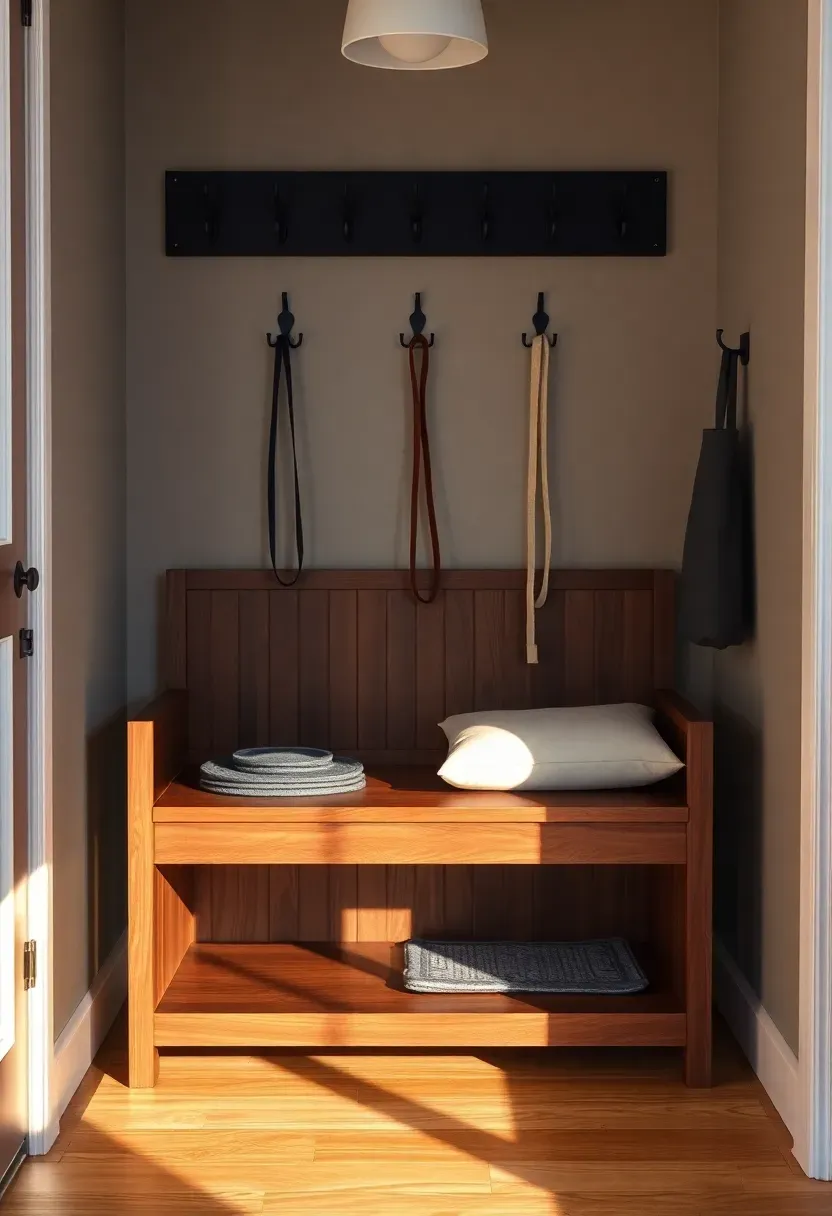
19. Multifunctional Storage Pet Bench
An entryway bench that doubles as pet storage is one of the most practical investments a pet owner can make — and one of the most straightforward to source or build.
What It Solves
The typical pet-owner entryway accumulates leashes, harnesses, paw wipes, waste bags, and seasonal coats faster than any storage system can contain. A purpose-designed bench addresses this with a lift-top compartment for accessories, a lower open shelf for a flat dog mat or crate pad, and wall-mounted hooks above for daily leashes and harnesses.
Material and Finish
Oiled walnut gives the bench warmth and durability. A linen-covered cushion on the lid adds comfort for sitting while putting on shoes. Matte black powder-coated steel hooks at shoulder height complete the storage tower. The overall effect is a piece that reads as furniture-quality cabinetry — not a pet supply station.
What to Watch Out For
- Size the lift-top compartment deep enough to hold at least one full bag of treats, a harness, and two leashes flat; this typically means a 6-inch interior depth minimum.
- Use concealed hinges with a slow-close mechanism on the lid — a lid that falls shut quickly is a hand hazard.
- Line the interior with a removable fabric panel so the compartment is easy to wipe clean when treats crumble or wipes leak.
20. Cat-Friendly Window Seat
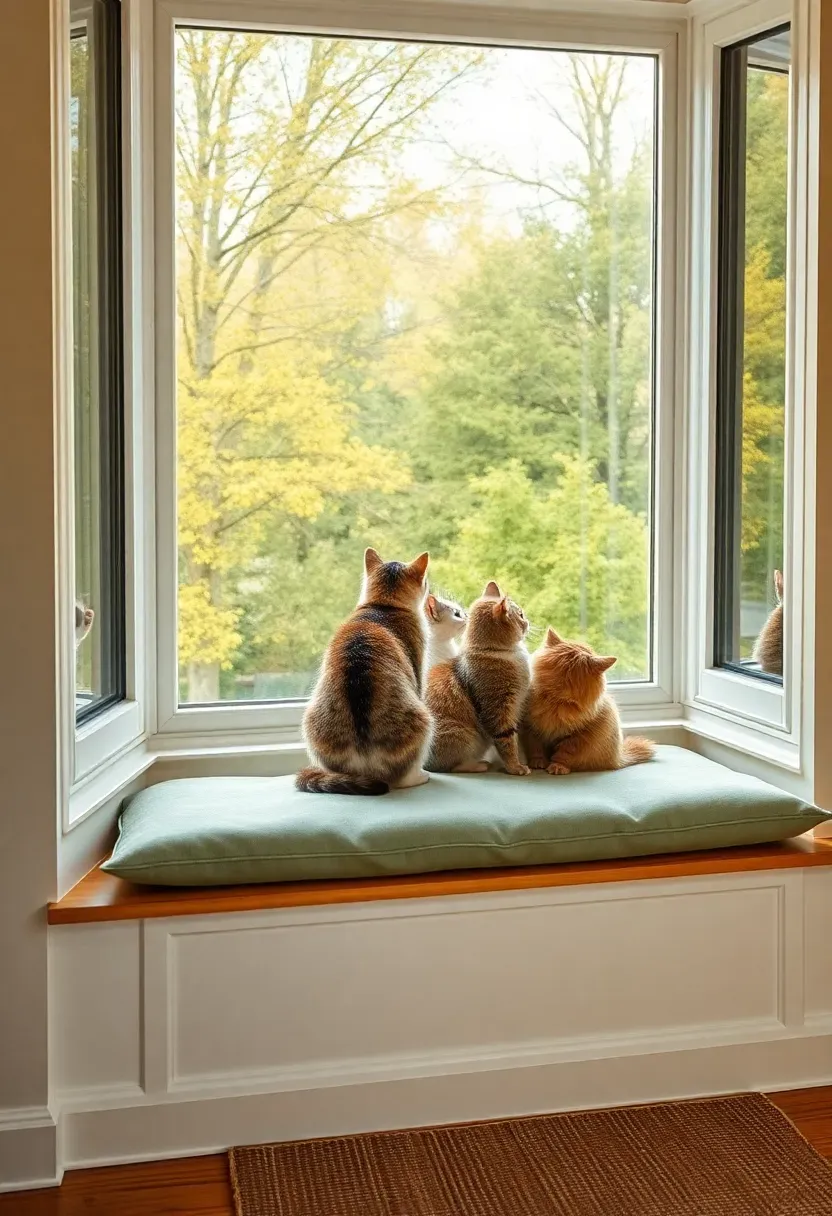
Cats are drawn to windows instinctively — the combination of warmth, elevated position, and visual access to outdoor activity is the nearest thing to cat paradise inside a home. A purpose-designed window seat turns this into a design feature.
The Design
A full-width bay window seat with a cotton velvet cushion in dusty sage provides the primary resting surface. Beside it, a lower raised platform — about 10 inches high — creates a stepping-stone approach that aging cats or kittens can navigate without a full jump. A sisal mat on the window sill provides a scratch-friendly surface that doubles as grip for cats who stand at the glass.
Trends Worth Knowing
Integrated cat window boxes — small exterior-mounted mesh enclosures that attach to the window frame — are emerging in AI pet-friendly design concepts as a way to give indoor cats safe outdoor air access without a full catio installation. They require a casement-style window and a simple weather-sealed frame attachment.
Recommended
Items for this idea
21. Dog Run Backyard Design
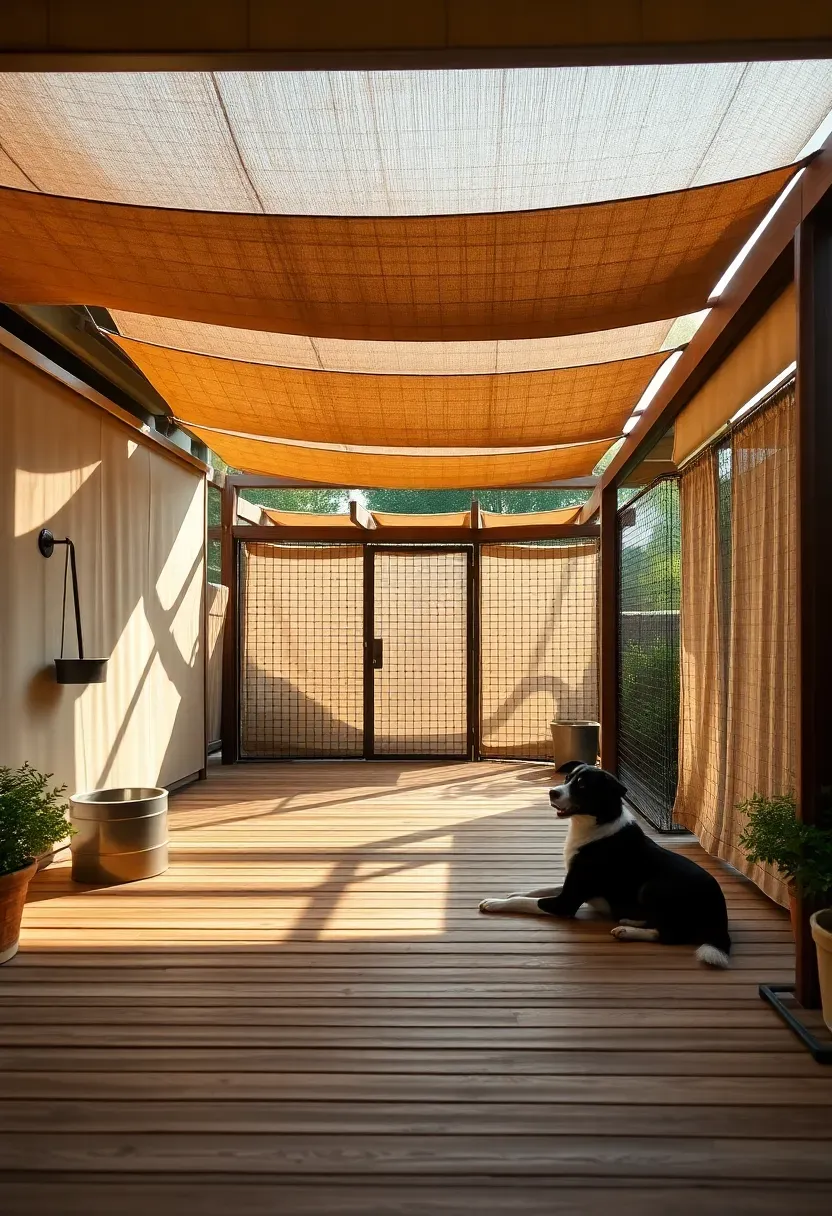
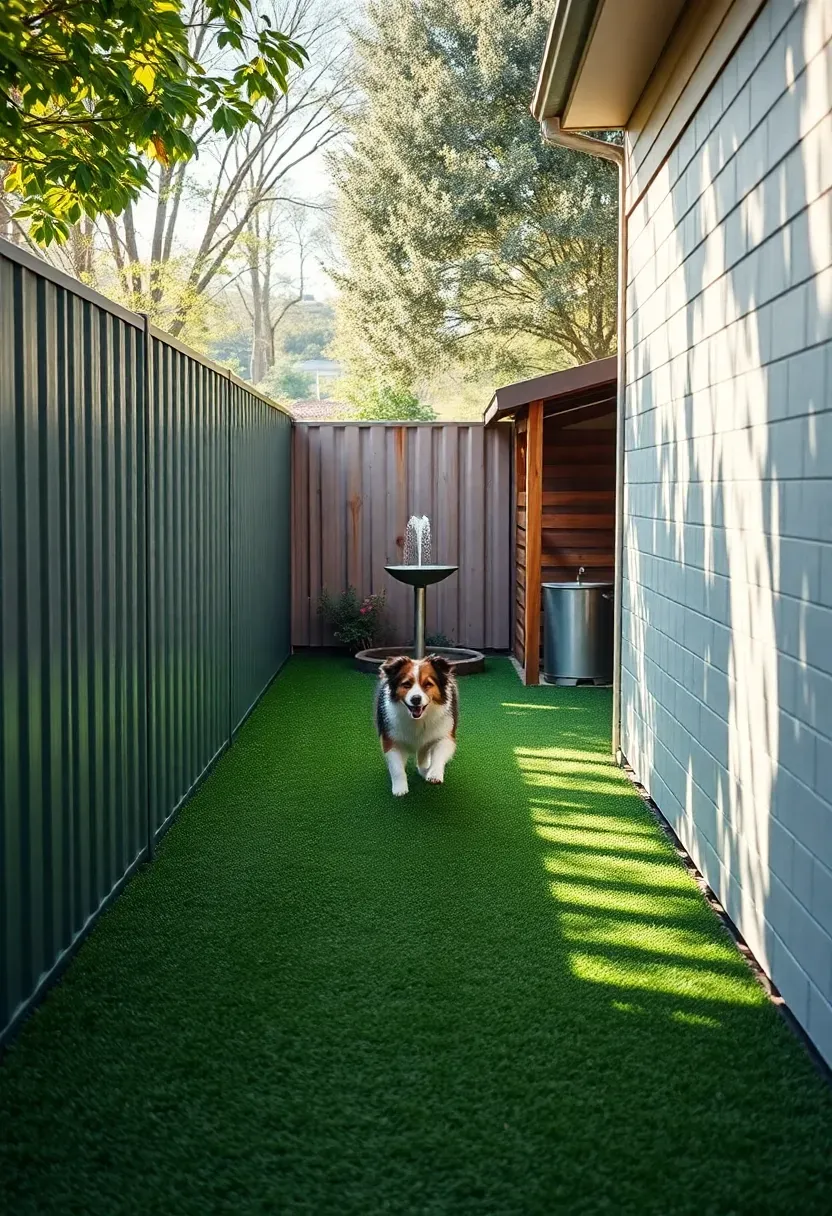
A dog run gives dogs a contained outdoor space for exercise and fresh air without requiring a fully fenced yard — and without sacrificing the visual quality of the main garden area.
Step 1: Choose the Location and Dimensions
Position the run along a side yard or fence line where it has access to shade for at least part of the day. A minimum of 3 feet wide and 12 feet long gives a medium-sized dog room to move; larger breeds benefit from 6-foot width and 20-foot length.
Step 2: Surface the Interior
Artificial turf provides the most livable surface — it stays cool relative to concrete, handles waste easily with a weekly rinse, and doesn't mud up in wet weather. Install a sub-base of compacted gravel beneath the turf for drainage.
Step 3: Frame the Enclosure
Powder-coated steel panels in sage green or charcoal integrate with most garden aesthetics better than raw galvanized chain link. Height should be at least 5 feet for medium breeds; escape artists need 6 feet with an inward overhang at the top.
What to Watch Out For
- A shaded kennel structure at one end is non-negotiable — dogs left in unsupported sun exposure overheat rapidly.
- A frost-proof water fountain on a ground-level pedestal handles hydration without daily manual bowl refilling.
- Install a double-gate entry system — an outer gate and an inner gate with a small buffer zone between — to prevent escape during entry and exit.
22. Pet Memorial Photo Gallery Wall
For many households, a beloved pet is a family member — and acknowledging that with a dedicated gallery wall is a design choice that combines emotional meaning with considered interior styling.
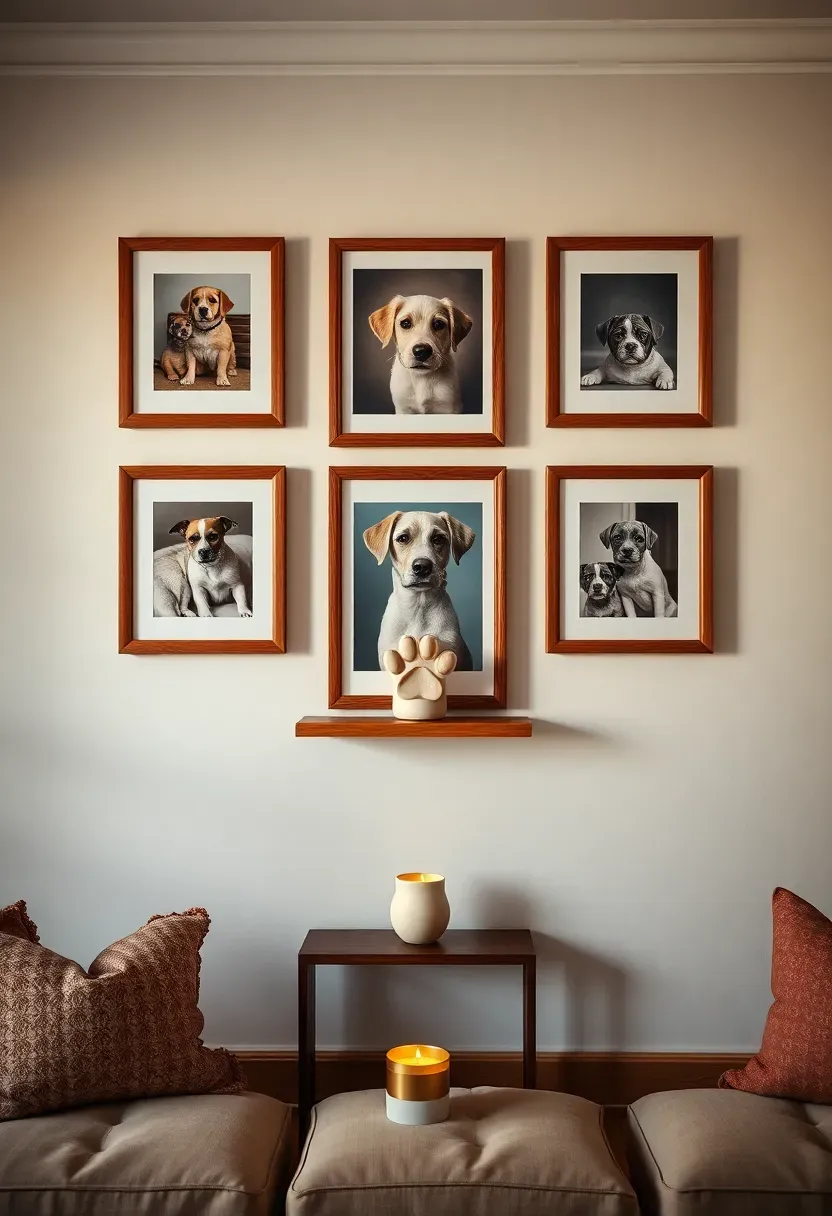
Design Approach
A symmetrical grid of matching warm oak frames in two or three sizes creates structure. A single larger print at the center — a high-quality portrait photograph — anchors the arrangement. Smaller prints at equal spacing surround it. A small floating shelf below the main print holds a ceramic paw-print keepsake and a votive candle, creating a ground point that gives the wall composition a base.
Historical Context
Memorial displays for pets have existed across cultures for centuries — from Egyptian cat sanctuaries to Victorian-era pet portraits painted in oils. The contemporary version replaces oil portraits with high-resolution photography printed on fine art paper, but the impulse is identical: honoring a companion that shared daily life.
What to Watch Out For
- Use UV-protective glass or acrylic in the frames — direct sunlight fades photographs faster than most people expect.
- Commission a professional pet portrait session if you have the chance while the pet is living; candid phone snapshots blown to large format rarely hold enough resolution.
- The shelf candle is a memorial gesture, not a daily flame — use an LED votive for a permanent installation.
Recommended
Items for this idea
23. Biophilic Pet-Friendly Bedroom
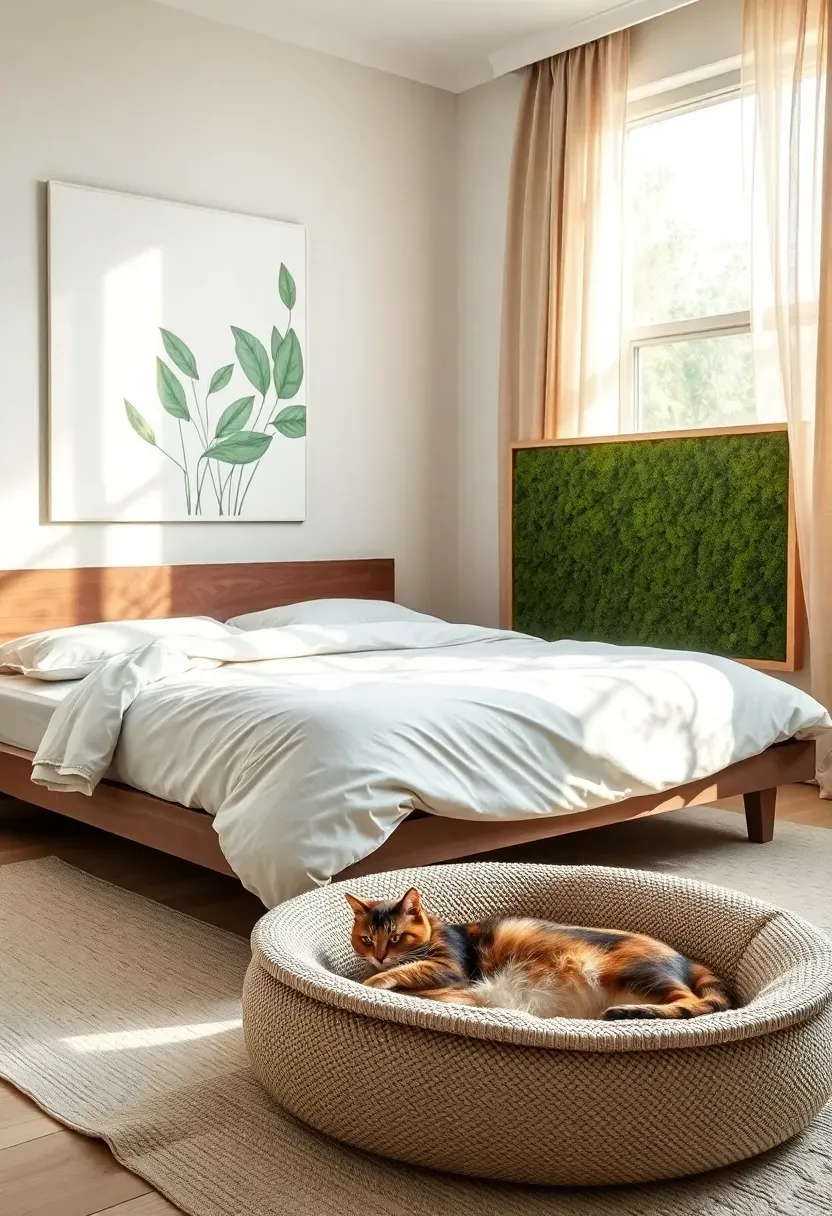
Biophilic design — the deliberate integration of natural materials, plants, and nature-inspired patterns into interior spaces — produces measurably calming environments. That calmness benefits pets as well as people.
The Concept
A low-profile walnut platform bed keeps the room's visual center of gravity closer to the floor, which coincidentally makes the space more accessible to pets. Linen bedding in sage and cream, a large botanical print on the wall, and a preserved moss panel beside the window introduce natural references without live plant care requirements.
The pet element integrates seamlessly: a floor-level bouclé pet bed positioned beside the moss panel and window creates a shared biophilic corner where both you and your cat or dog gravitate naturally toward natural light and texture.
How to Apply at Home
- Preserved moss panels require no watering or maintenance — they stay visually alive for years under normal indoor humidity levels.
- Bouclé fabric is soft enough for pet comfort and durable enough for daily use; choose a shade that coordinates with the bedding rather than matching it exactly.
- A large botanical print works best on the wall opposite the window so natural light illuminates it during the day.
- Keep the floor-level pet area away from the main traffic path around the bed — a corner placement reduces disturbance during nighttime movement.
Quick FAQ
Is luxury vinyl plank really scratch-proof enough for large dogs? LVP with a 12-mil wear layer handles normal paw traffic and occasional claw drag well. It won't show scratches from daily movement, but heavy dragging of furniture or a particularly energetic large breed can eventually score the surface. For large, high-energy dogs, matte porcelain tile is the more durable long-term choice.
Should the litter box cabinet have a fan or just passive ventilation? Passive ventilation through a charcoal-filtered grille handles odor reasonably well if you scoop daily. For multi-cat households or enclosed bathroom spaces, a small USB-powered computer fan mounted inside the cabinet and vented to an exterior wall makes a significant difference. It doesn't require electrical work — it runs off a wall adapter.
Can a dog run be added to a rented property? Most landlords permit freestanding panel enclosures that don't require ground anchors or permanent fencing. Interlocking steel panel systems work without stakes in most soil conditions; a weighted base plate at each corner provides stability. Always confirm with your landlord in writing before installing.
Which pet-safe plants actually look good, not just safe? Calathea, areca palm, and Boston fern offer genuine visual presence — they're not consolation prizes compared to monsteras. Spider plants work best as hanging displays where their trailing form adds dimension. Peperomia varieties cover a range of textures from succulent-like to leaf-heavy, and fit into small shelves without overpowering.
What's the difference between RFID and microchip pet doors? A microchip pet door reads your pet's existing implanted microchip — no additional hardware on the pet required. An RFID door uses a small tag attached to the collar. Microchip doors are generally more reliable because there's nothing for the pet to lose; RFID collar tags can fall off or get wet and fail. If your pets are already microchipped, a microchip-reading door is the cleaner solution.
Trends come and go, but a home that genuinely works for the animals sharing it never goes out of style. Start with one idea — the mudroom bench, the slipcover sofa, the hidden litter cabinet — and see how much easier the daily rhythms become before committing to larger built-in projects. The best pet-friendly home is one where both you and your animals are comfortable without anyone making constant compromises.
Pinterest cover for 23 AI Pet Friendly Home Design Ideas
About the author
OBCD
CGI visualization and interior design content. We create detailed 3D renders and curate practical design ideas for every room in your home.