19 AI Patio Design Ideas
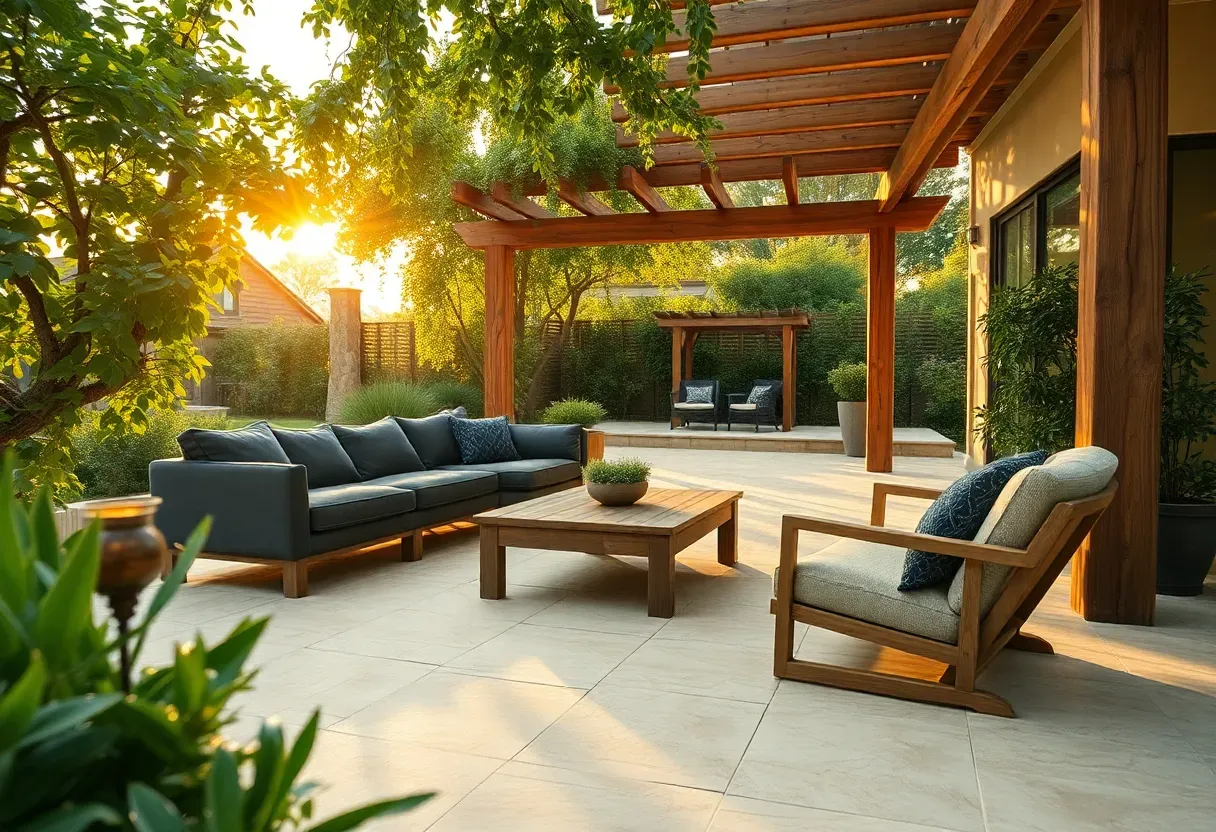
Picture yourself stepping through the back door into a space that feels as intentional as any room inside your house. That is the promise AI patio design delivers. Instead of flipping through hundreds of magazine photos and hoping something translates to your actual yard dimensions, AI tools generate photorealistic renderings tailored to your specific square footage, sun angles, and existing architecture. You input a photo, select a style direction, and within minutes you are staring at a fully realized concept complete with material callouts, furniture placement, and planting suggestions.
We have gathered 19 distinct AI-generated patio concepts below. Some chase relaxation, others prioritize entertaining, and a few blend both. Use the table of contents to jump to whatever catches your eye.
Table of Contents
- Sunken Lounge Patio
- Porcelain Tile Entertainer's Terrace
- Rustic Flagstone Retreat
- Courtyard Garden Patio
- Curved Seating Wall Patio
- Tropical Resort Patio
- Minimalist Concrete Slab Patio
- Pergola-Covered Dining Patio
- Desert Southwest Patio
- Multi-Zone Entertaining Patio
- Cottage Garden Patio
- Japanese Tea Garden Patio
- Fire Feature Gathering Patio
- Water Wall Patio
- Rooftop Container Patio
- Herringbone Brick Patio
- Tuscan Gravel Patio
- Mid-Century Modern Patio
- Wraparound Infinity Patio
1. Sunken Lounge Patio
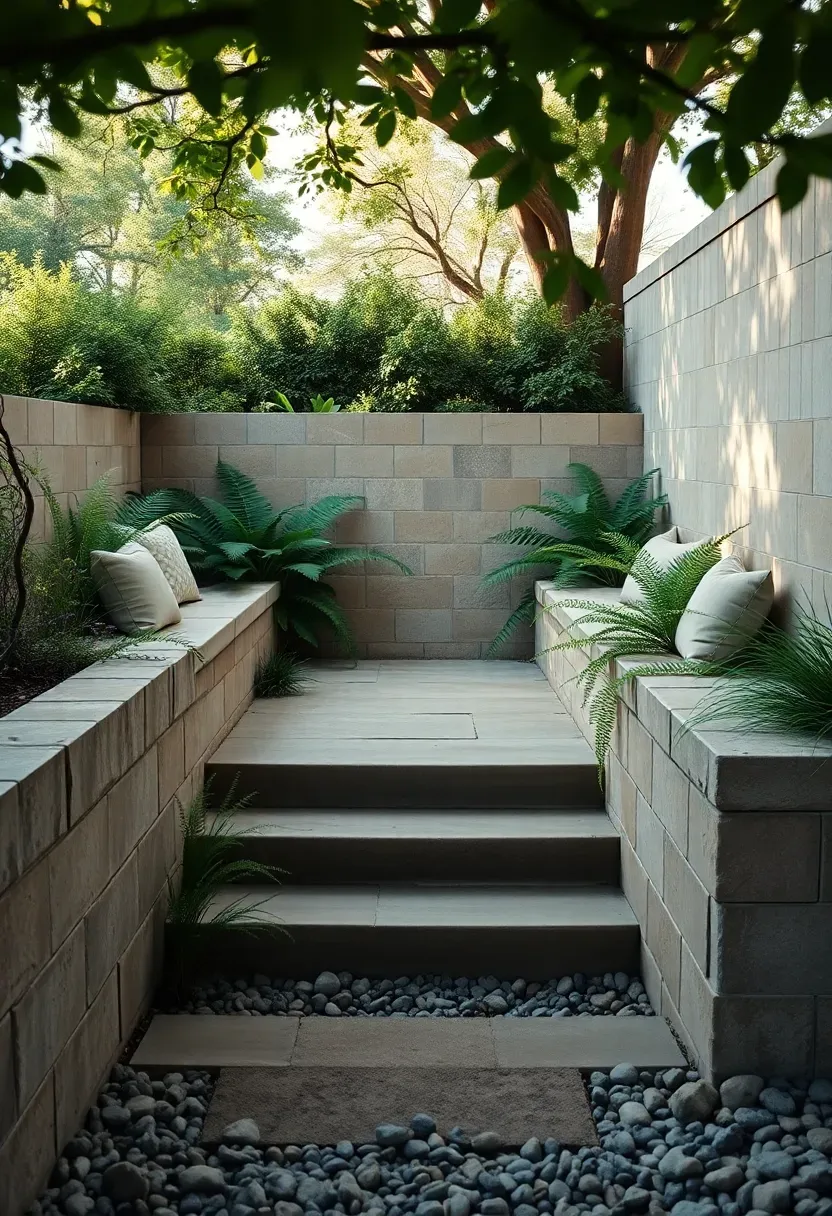
Dropping the patio floor 18 to 24 inches below grade creates something no level surface can: a feeling of enclosure without walls. AI design tools calculate excavation volumes, drainage requirements, and step placement in seconds, rendering the finished result so you can visualize exactly how the sunken space integrates with your surrounding landscape.
How to Build It
Step 1: Survey the site drainage. Water flows downhill, and a sunken patio sits at the bottom. AI tools flag grading issues and recommend French drain placement before you dig.
Step 2: Choose your retaining material. Natural stone stacked walls give organic warmth. Poured concrete with a wood-form finish suits modern homes.
Step 3: Build in seating along at least two walls. This eliminates the need for standalone furniture and reinforces the intimate, room-like feeling.
What to Watch Out For
- Install a center drain connected to a sump or dry well for storm runoff
- Keep step risers between 6 and 7.5 inches for comfortable transitions
- Avoid placing a sunken patio directly under large deciduous trees — leaf cleanup becomes relentless
We picked a few things that go well with this idea: Walsunny 43-Inch Propane Fire Pit Table (★4.4), Walsunny 45-Inch Fire Pit with Wind Guard (★4.2) and Ciays 43-Inch Propane Fire Pit (60K BTU) (★4.7). As an Amazon Associate we earn from qualifying purchases.
2. Porcelain Tile Entertainer's Terrace
The Core Issue
Traditional patio materials like poured concrete and natural stone have clear limits when it comes to achieving the seamless indoor-outdoor look that modern homeowners want. Concrete cracks. Stone needs sealing. Neither offers the precise, large-format aesthetic that interior floors deliver.
The Solution
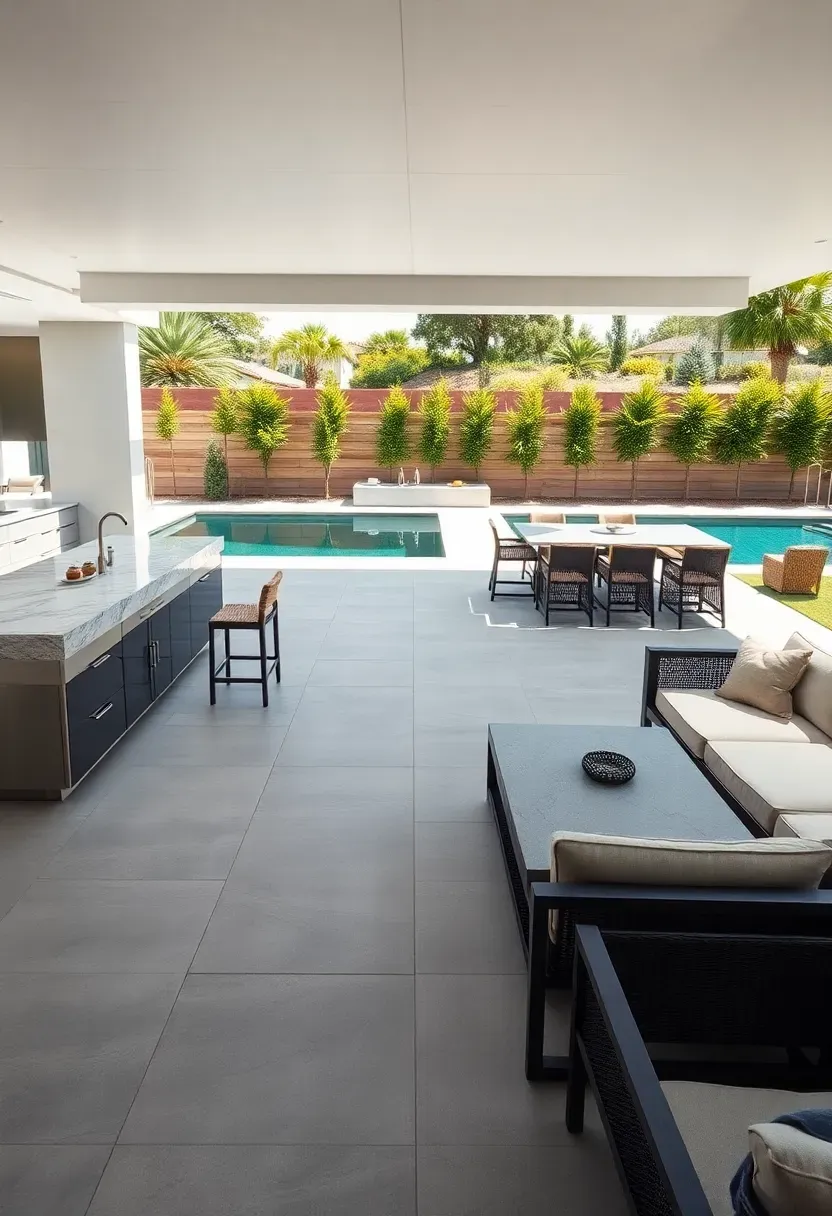
Outdoor-rated porcelain tile solves every one of those problems. Two-centimeter-thick pavers rated for freeze-thaw cycles mimic marble, travertine, or wood grain without any of the maintenance. AI rendering platforms now include porcelain tile libraries that show exact grout line spacing, color variation, and how different formats interact with your house facade. Pair the tile with a linear outdoor kitchen island and low-profile lounge furniture for a space that hosts 30 guests as comfortably as it hosts two.
Pros and Cons
Pros: virtually zero maintenance, consistent color that never fades, slip-resistant options available for pool-adjacent installations Cons: higher material cost than concrete or gravel, requires a perfectly level substrate, professional installation recommended for best results
We picked a few things that go well with this idea: FDW 4-Piece Wicker Patio Conversation Set (★4.2), Flamaker 3-Piece Wicker Patio Bistro Set (★4.4) and Devoko 4-Piece Patio Conversation Set (★4.2). As an Amazon Associate we earn from qualifying purchases.
3. Rustic Flagstone Retreat
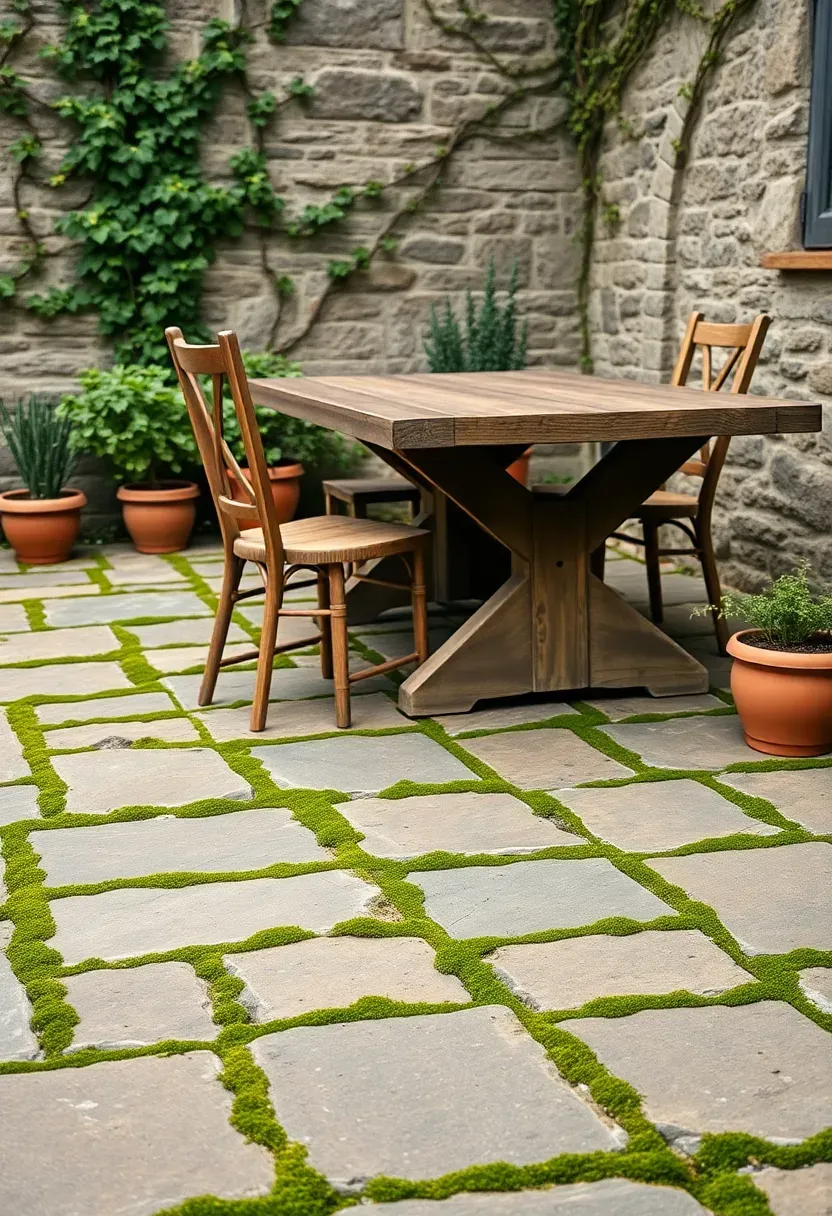
There is a reason flagstone remains one of the most photographed patio materials on Pinterest: each piece is genuinely unique. Irregular shapes, natural color variation, and the way moss colonizes the joints over time give flagstone patios a character that manufactured pavers simply cannot replicate.
AI design tools handle the puzzle-piece layout challenge that makes flagstone installation intimidating. Upload your patio footprint and the software arranges stone shapes for minimal cutting waste while maintaining consistent joint widths. It even suggests complementary joint-fill options — polymeric sand for a clean look, creeping thyme for a living surface, or pea gravel for a casual cottage feel.
Tips for a Natural Look
- Vary stone thickness between 1.5 and 2.5 inches for subtle surface undulation
- Let two or three larger stones anchor focal areas like the table zone or entry point
- Choose locally quarried stone — it harmonizes with the surrounding geology better than imported material
We picked a few things that go well with this idea: Brightown 50FT G40 Outdoor String Lights (★4.7), Brightown 100FT ST38 Outdoor Patio Lights (★4.7) and 100FT LED Patio String Lights with Remote (★4.3). As an Amazon Associate we earn from qualifying purchases.
4. Courtyard Garden Patio
Origins
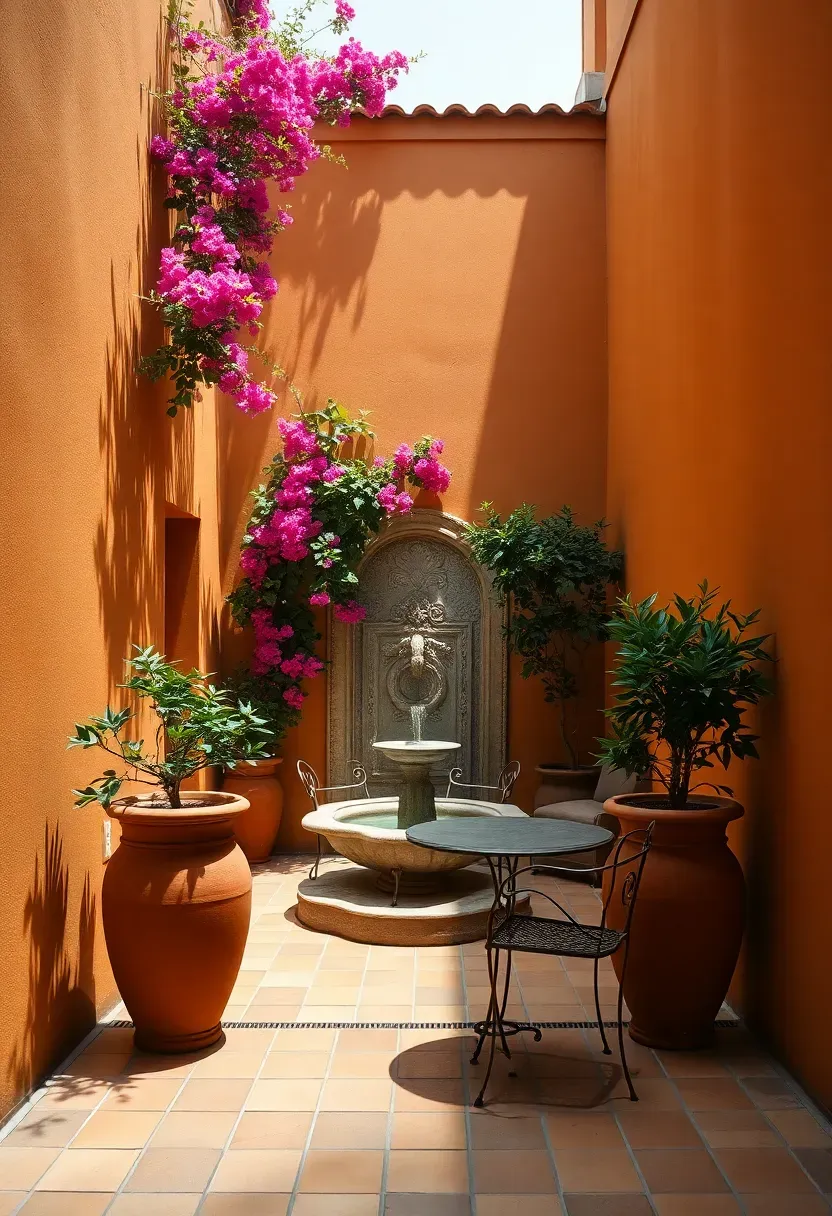
The courtyard patio traces back thousands of years to Roman peristyle gardens and Moorish riads, where an inward-facing outdoor room provided shade, privacy, and a cool microclimate in hot climates. Walls trapped cool air and the sound of trickling water.
Modern Interpretation
AI design platforms revive this ancient concept with contemporary proportions. Input your lot dimensions and the tool generates courtyard layouts that balance wall height with floor area to prevent a boxed-in feeling. A central water feature — even a modest wall-mounted spout — anchors the space acoustically. Climbing plants on two walls soften the architecture while leaving at least one wall clean for visual breathing room. Potted citrus or olive trees add height and fragrance without permanent planting commitment.
How to Apply at Home
- Use your house walls as two sides of the courtyard and build privacy walls for the remaining sides
- Keep the floor material simple — a single stone or tile type prevents visual clutter
- Install uplighting on walls to create dramatic evening shadow patterns
- Add a retractable shade sail across the top for midday sun control
Recommended
Items for this idea
5. Curved Seating Wall Patio
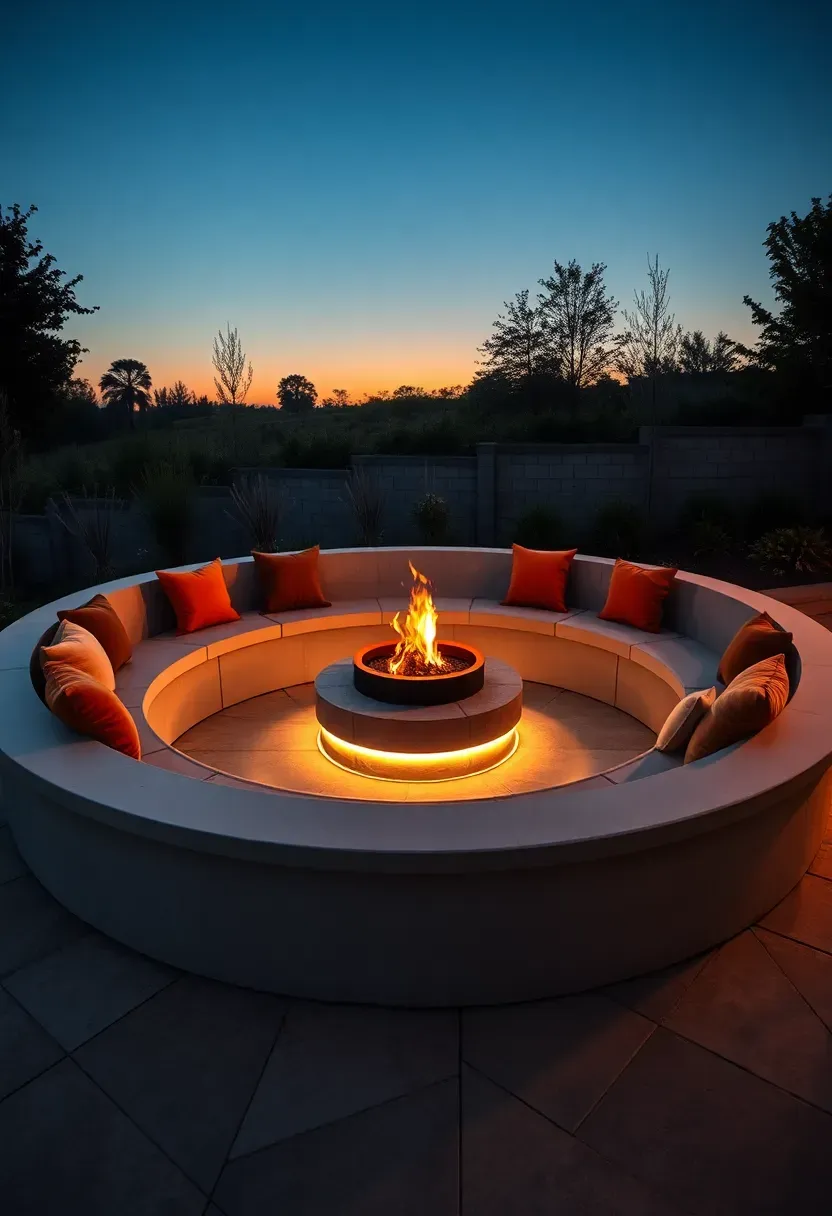
Straight lines dominate most patio designs because they are easier to build. But curved seating walls introduce a warmth and flow that rectangles struggle to match. AI modeling makes curves feasible by calculating exact formwork radii, material quantities, and cushion dimensions for any arc you specify.
A curved wall at seat height — 18 inches — doubles as a retaining wall, a planter back, and permanent seating that never needs to be dragged inside during storms. Pour it in concrete and cap it with natural stone, or build it from stacked stone veneer over a concrete block core. Center a fire pit within the arc and the geometry naturally directs conversation and warmth toward every seat.
Tips for Comfort
- Top the wall with a 2-inch stone cap overhang so rainwater drips away from seated guests
- Keep the seat depth between 16 and 18 inches — deeper feels like a ledge, shallower feels unstable
- Add outdoor cushions with quick-dry foam for extended comfort without mildew risk
6. Tropical Resort Patio
The Core Issue
Homeowners in warm climates dream of that vacation resort feeling but assume it requires professional landscaping budgets and acres of space. Meanwhile, their patios sit bare and baking under the sun.
The Solution
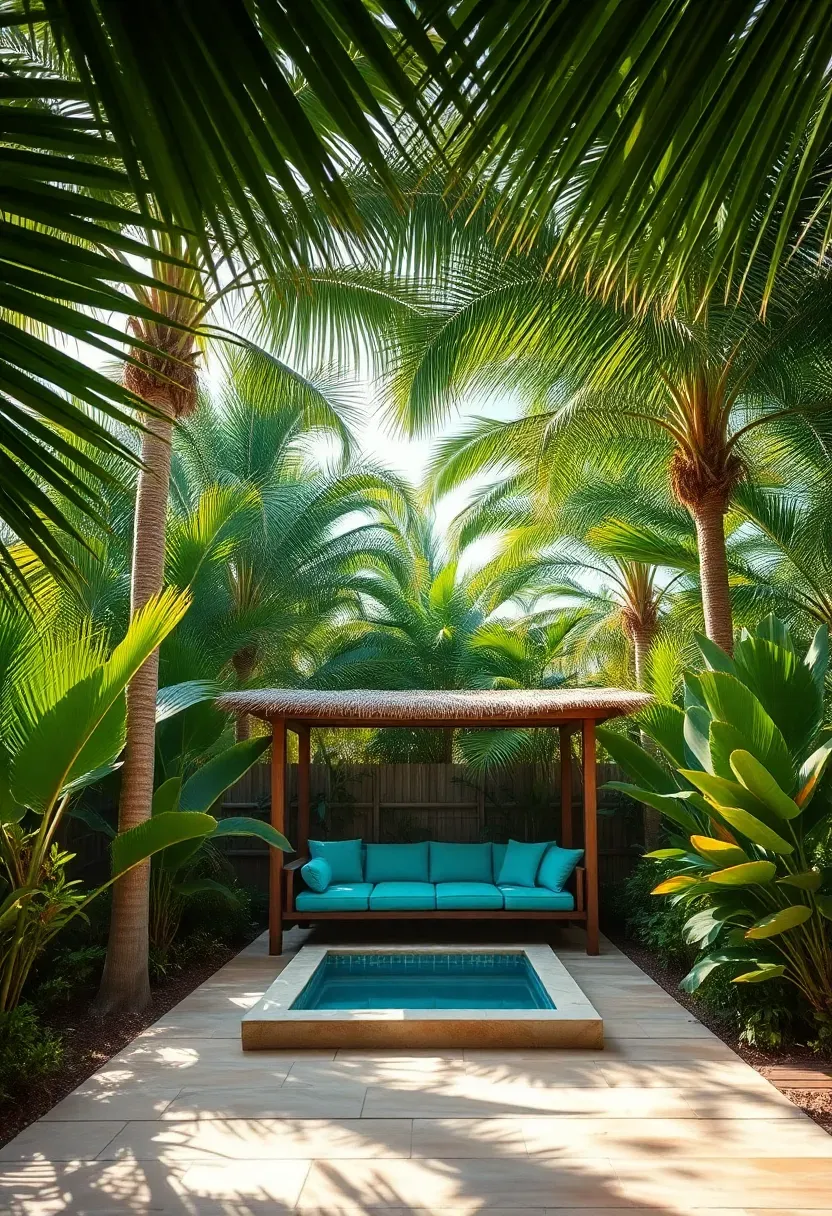
AI design tools trained on thousands of resort images generate tropical patio concepts scaled to residential lots. The formula is specific: layered planting heights from ground cover up through mid-story palms, a shade structure with natural material texture like thatch or bamboo, water in some form even if just a small plunge pool or bubbling jar, and furniture in saturated tones that pop against green foliage. The AI calculates shade coverage throughout the day so plants are positioned where they thrive and seating lands where afternoon shade falls naturally.
Pros and Cons
Pros: immediate vacation atmosphere, strong visual drama, excellent privacy from lush planting layers Cons: only practical in zones 9 through 11 without significant cold protection, higher water needs than xeriscaping, tropical plants can grow aggressively and require regular pruning
Recommended
Items for this idea
7. Minimalist Concrete Slab Patio
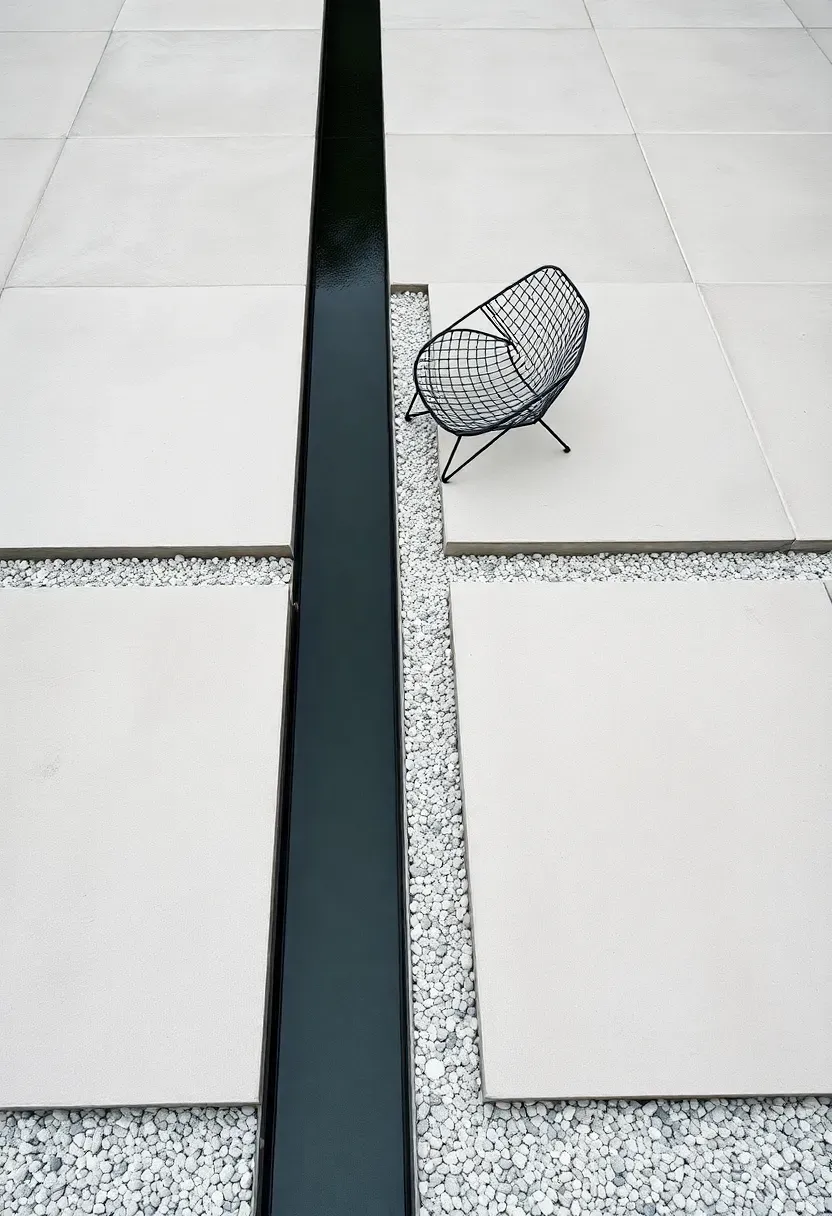
Strip away everything unnecessary and what remains is intention. A minimalist concrete patio achieves its power through restraint — oversized poured slabs separated by precise gravel or grass strips, one piece of statement furniture, and a single design gesture like a linear water channel or a solitary specimen tree.
AI rendering excels at this style because it calculates exact slab proportions that feel balanced rather than arbitrary. The software tests different gap widths, aggregate finishes, and edge treatments in seconds. A smooth steel-trowel finish reads as contemporary. An exposed-aggregate surface adds subtle texture. Acid staining introduces muted earth tones without compromising the clean geometry.
Tips for Execution
- Pour slabs at minimum 4-inch thickness over compacted gravel base for crack prevention
- Use expansion joints every 8 to 10 feet — position them as intentional design lines rather than afterthoughts
- Seal the surface annually with a penetrating sealer to prevent staining and moisture absorption
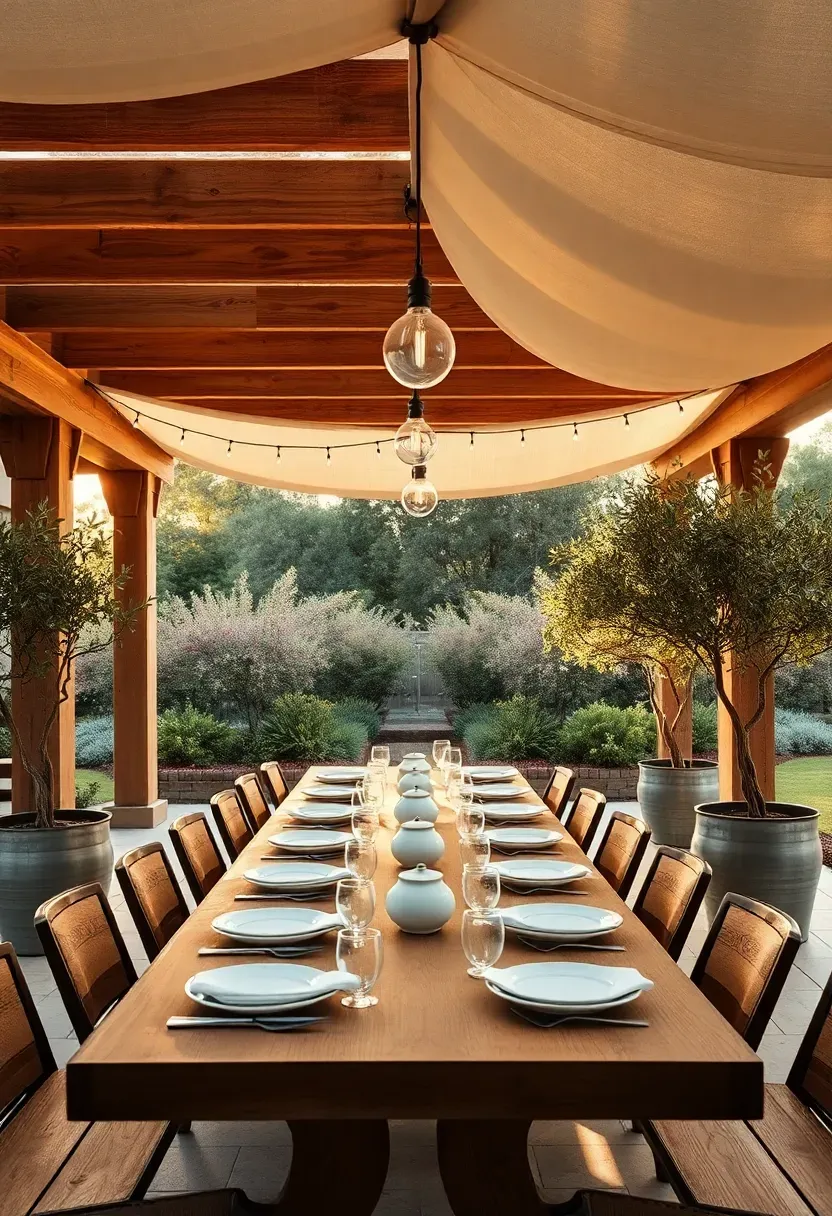
8. Pergola-Covered Dining Patio
A pergola transforms an open patio into a room. It defines overhead boundaries, supports climbing plants and lighting, and provides filtered shade that keeps midday meals comfortable without blocking all sunlight. AI design tools calculate rafter spacing, beam depth, and post placement to ensure the structure is both structurally sound and visually proportional to your patio footprint.
Step 1: Set the Footprint
Size the pergola to cover the dining table plus circulation space on all sides. AI tools recommend at least 3 feet of clearance between table edges and posts.
Step 2: Choose the Canopy Strategy
Open rafters for dappled light. Retractable fabric for adjustable shade. Polycarbonate panels for rain protection. AI renders each option so you can compare before committing.
Step 3: Layer the Lighting
String lights draped between rafters create soft ambient glow. Add a pendant fixture centered over the table for task lighting during dinner.
What to Watch Out For
- Check local building codes — pergolas attached to the house often require permits
- Use post bases elevated on concrete piers to prevent wood-to-soil contact and rot
- Wisteria looks beautiful on pergolas but is aggressive enough to damage lightweight structures
Recommended
Items for this idea
9. Desert Southwest Patio
Origins
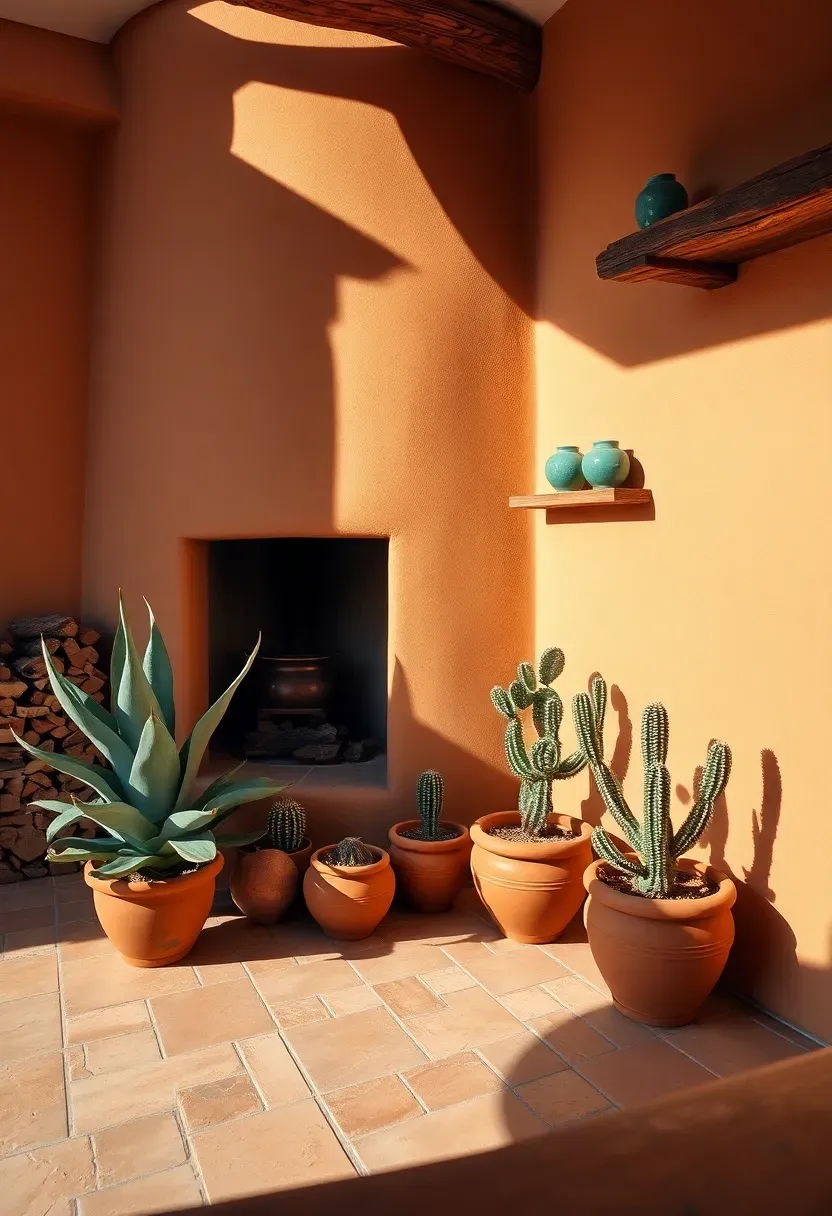
Southwestern patio design draws from a fusion of Native American, Spanish Colonial, and Mexican architectural traditions. Adobe walls, kiva fireplaces, and earth-toned surfaces evolved as direct responses to extreme sun, scarce water, and available building materials.
Modern Interpretation
AI design platforms translate these vernacular elements into contemporary residential layouts without reducing them to cliches. Smooth stucco walls in warm ochre or terracotta tones replace traditional adobe. A rounded kiva fireplace becomes the patio's focal point, positioned to radiate heat toward seating during cool desert evenings. Saltillo or terracotta tile provides an authentic floor surface that stays cool underfoot in shade. Native plantings — agave, prickly pear, ocotillo, desert willow — require almost no irrigation and contribute architectural silhouettes against clean walls.
How to Apply at Home
- Choose terracotta tile with a matte finish for slip resistance when wet
- Group cacti and succulents in odd-numbered clusters at varying heights
- Add turquoise or cobalt ceramic accents for color contrast against warm earth tones
- Install a misting system along the pergola for afternoon temperature relief
10. Multi-Zone Entertaining Patio
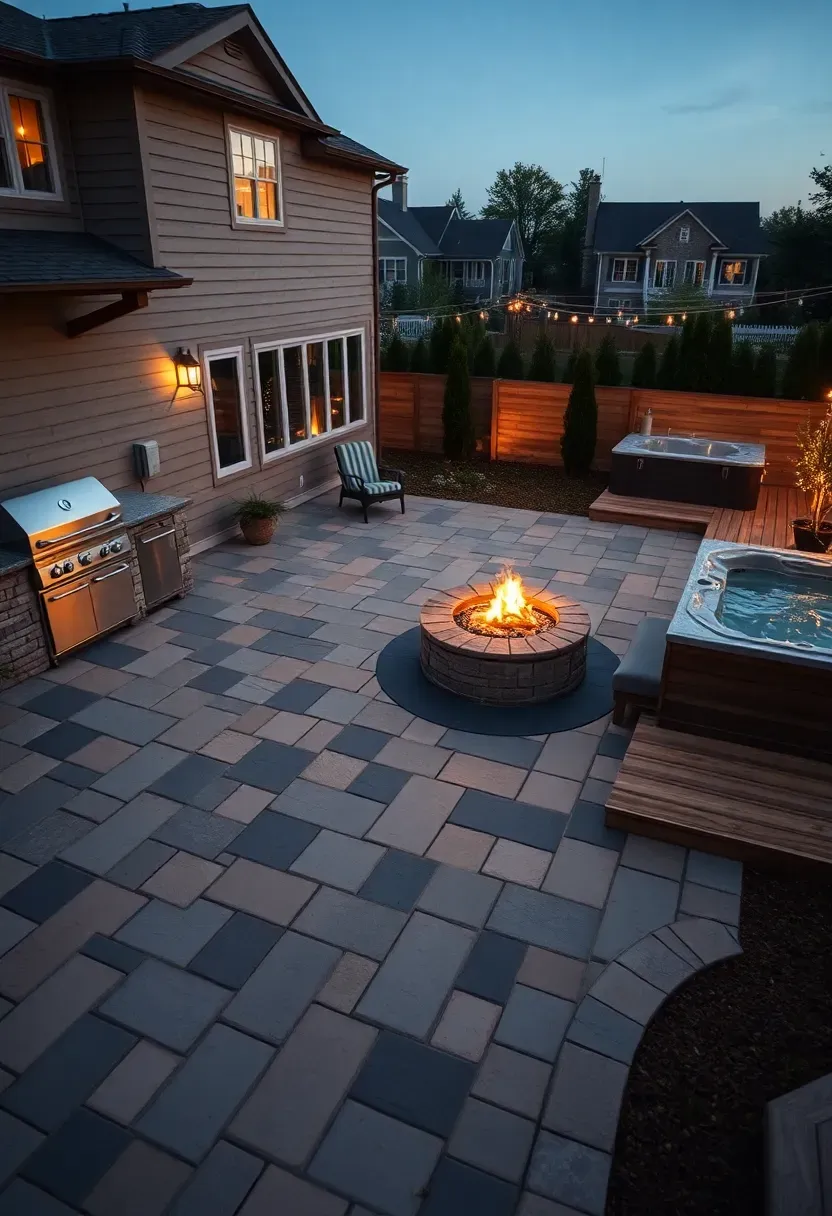
Why force one patio to serve every purpose when you can divide it into dedicated zones? AI layout tools shine brightest when tasked with partitioning a large footprint into cooking, dining, lounging, and activity areas that feel distinct yet connected.
The secret is material transitions. Each zone gets its own surface treatment — flagstone for the fire pit lounge, tile for the outdoor kitchen, composite decking for the hot tub surround — creating visual boundaries without physical walls. AI calculates traffic paths between zones so guests flow naturally from cooking area to seating to drinks without bottlenecks.
Tips for Zone Separation
- Drop or raise individual zones by one step to reinforce the room analogy
- Use planters or low walls as subtle dividers rather than fences
- Run consistent lighting fixtures across all zones so the separate areas still read as one cohesive space
- Position the cooking zone closest to the house for utility access and food transport
Recommended
Items for this idea
11. Cottage Garden Patio
There is something deeply satisfying about a patio that looks like it has been there for generations. A cottage garden patio achieves that sense of settled permanence through slightly imperfect materials, abundant soft planting, and a deliberate absence of sharp geometric precision.
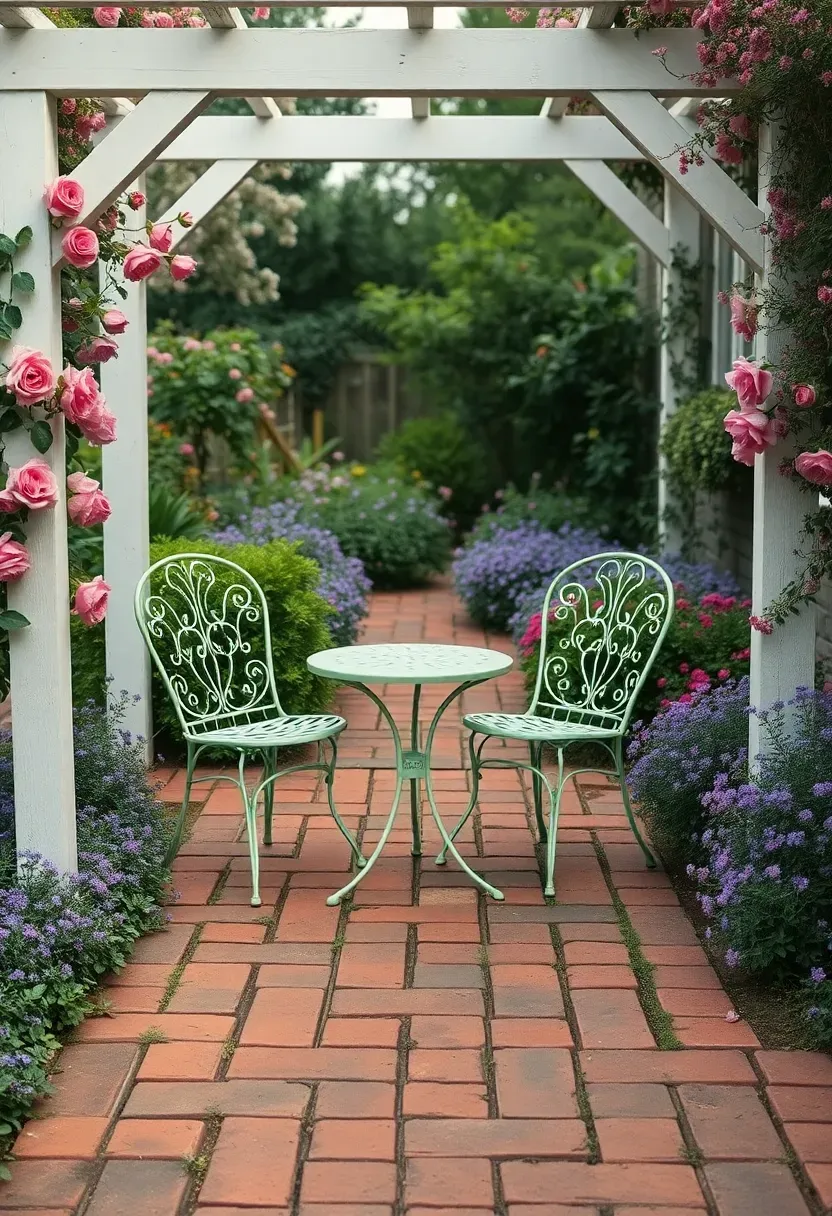
Reclaimed or tumbled brick pavers in running bond pattern form the floor. Joints are wide enough for creeping plants to establish — chamomile, thyme, and Corsican mint release fragrance when stepped on. Borders overflow with roses, lavender, catmint, and foxglove in a seemingly random profusion that is actually carefully planned. AI design tools are surprisingly adept at generating this controlled chaos, selecting plants by bloom sequence so color persists from spring through autumn.
Tips for Authenticity
- Use reclaimed brick or choose pavers with an antiqued tumbled finish
- Avoid symmetry — place the table slightly off-center, vary border widths
- Add one climbing rose over a simple painted arbor for vertical drama
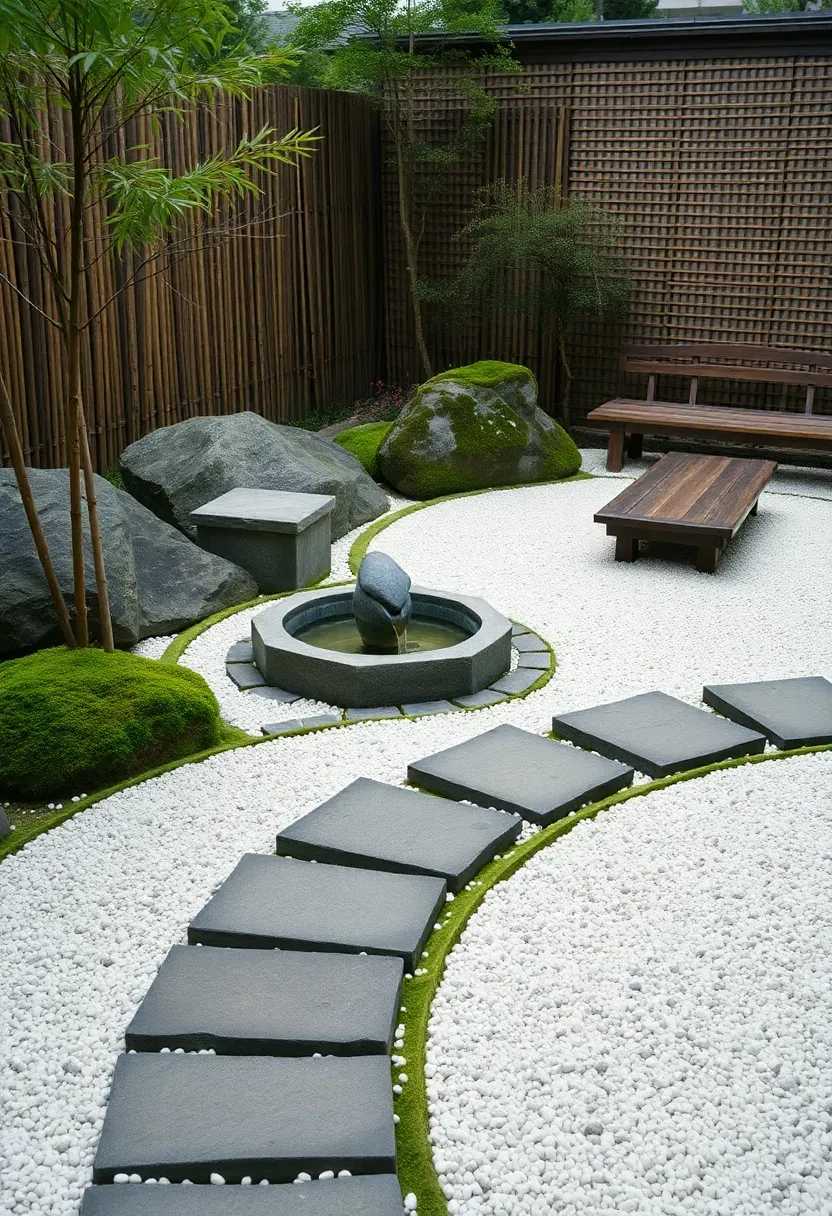
12. Japanese Tea Garden Patio
Comparing: Zen Garden vs Tea Garden
Both draw from Japanese tradition, but they serve different purposes and suit different patio lifestyles.
Zen Garden Style
Dry landscape focused on meditation and visual contemplation. Raked gravel, minimal plants, carefully placed boulders. Best for homeowners who want a low-maintenance space for quiet reflection.
Tea Garden Style
A transitional landscape designed to prepare visitors emotionally for the tea ceremony. Stepping stones guide a deliberate path through moss, ferns, and a ritual hand-washing basin. More planted and textured than a Zen garden.
What to Choose
Choose Zen if: you prioritize simplicity, dislike plant maintenance, and use your patio primarily for visual enjoyment Choose Tea Garden if: you want a richer sensory experience with plants, water sounds, and a sense of guided movement through the space
Recommendation
For a residential patio, the tea garden approach often works better because it accommodates practical use. Stepping stones create natural pathways, the water basin doubles as a water feature, and the denser planting provides genuine privacy.
Recommended
Items for this idea
13. Fire Feature Gathering Patio
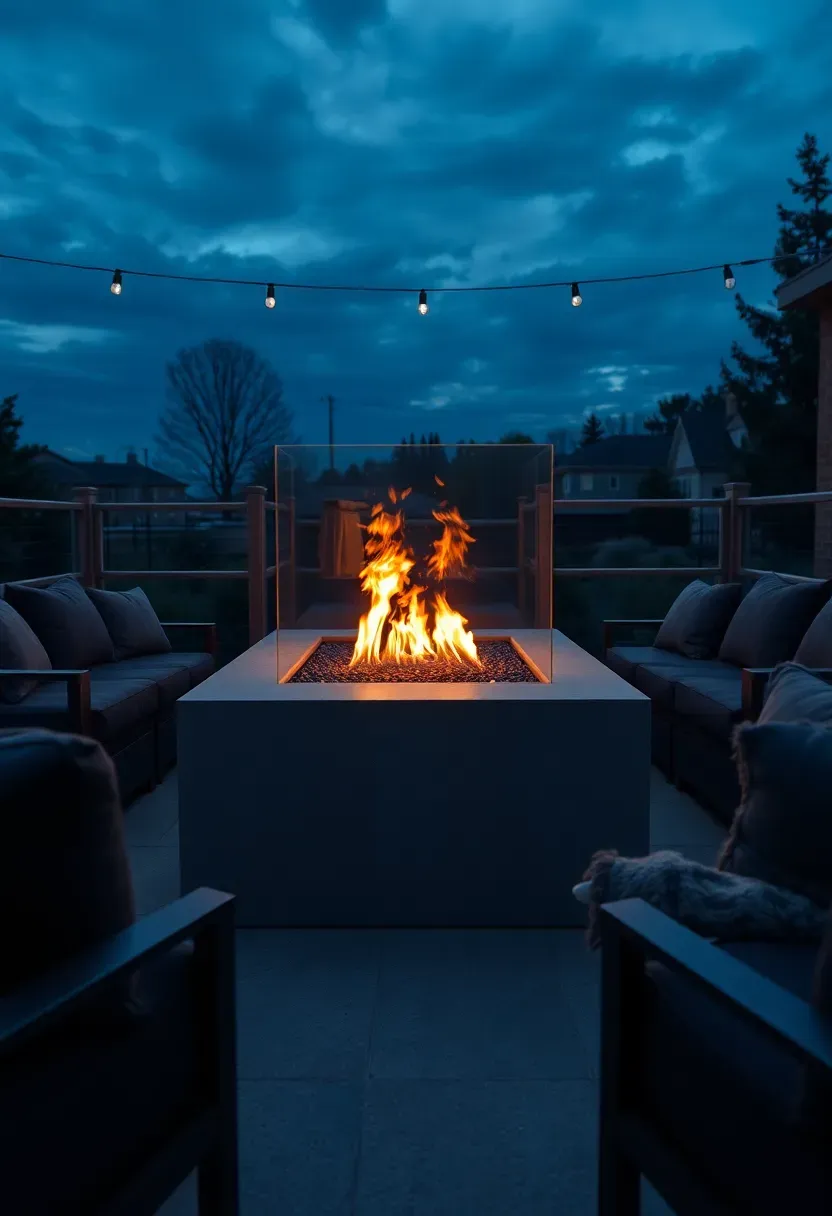
Fire does something elemental to outdoor spaces — it draws people in, extends the usable season by months, and creates a focal point that no amount of furniture arrangement can replicate. AI patio design tools treat fire features as anchor elements, positioning seating, lighting, and circulation around the flame.
The options span a wide range. A built-in gas fire table keeps flames at cocktail height with clean lines. A wood-burning pit set into the patio floor offers crackling authenticity. A linear fire trough running along a seating wall delivers contemporary drama. AI renderings show how each option changes the mood and spatial dynamics of your specific patio layout.
Tips for Safety and Style
- Maintain minimum 10-foot clearance between open flames and any overhead structure
- Gas fire features require a dedicated fuel line — plan this during the patio construction phase
- Choose fire glass or lava rock fill based on your style: glass reads modern, lava rock reads natural
- Position seating at 36 to 48 inches from the fire edge for warmth without discomfort
14. Water Wall Patio
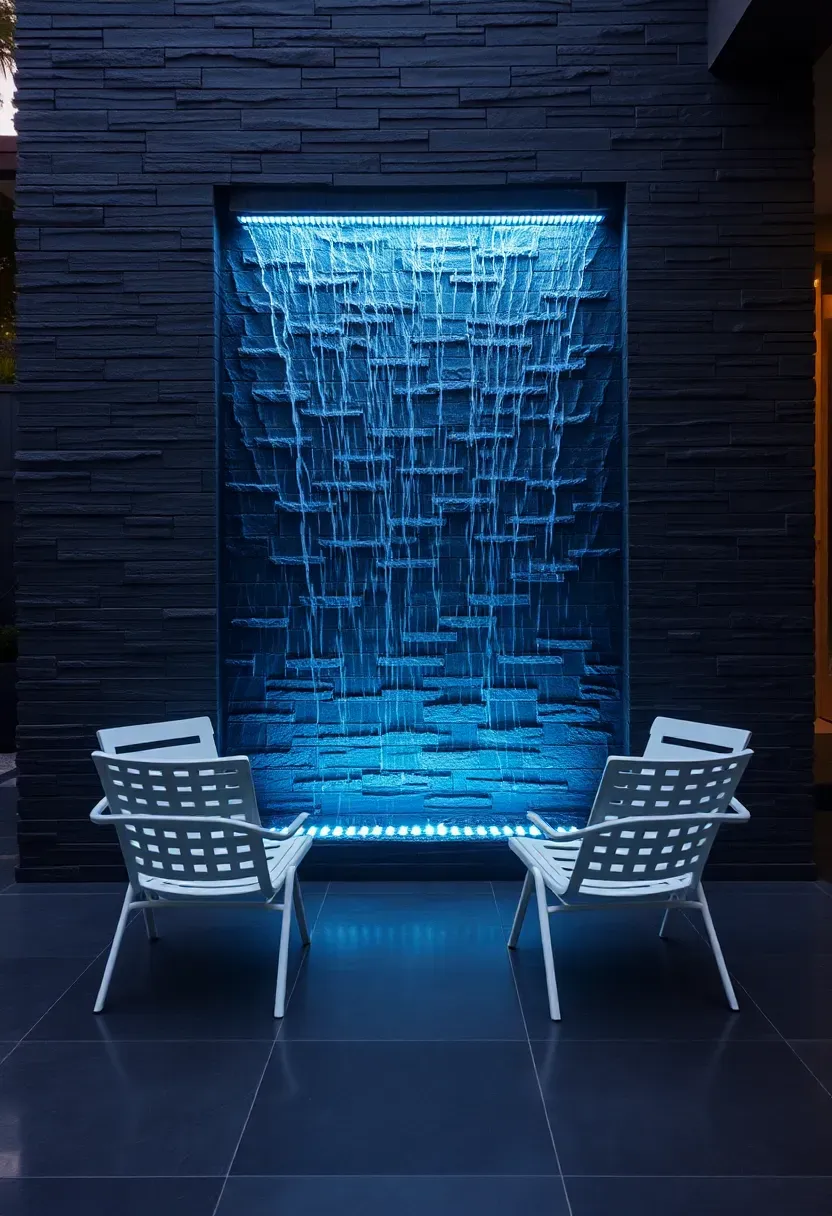
Sound design matters in outdoor spaces, and nothing masks urban noise as effectively as falling water. A vertical water wall turns a blank patio wall or fence into a dynamic, light-catching feature that provides visual movement, ambient sound, and a cooling microclimate on hot afternoons.
AI platforms model water wall dimensions based on your patio size and ambient noise levels. A 6-foot-tall wall suits most residential patios. Stacked slate or smooth copper sheeting creates the cascading surface. A hidden basin at the base catches and recirculates water through a submersible pump. LED strip lighting behind the water sheet transforms the wall into a glowing sculpture after dark.
Tips for Maintenance
- Add a water treatment tablet monthly to prevent algae growth
- Install an auto-fill valve connected to your irrigation line so the basin never runs dry
- Choose a variable-speed pump to adjust flow volume and sound level by occasion
Recommended
Items for this idea
15. Rooftop Container Patio
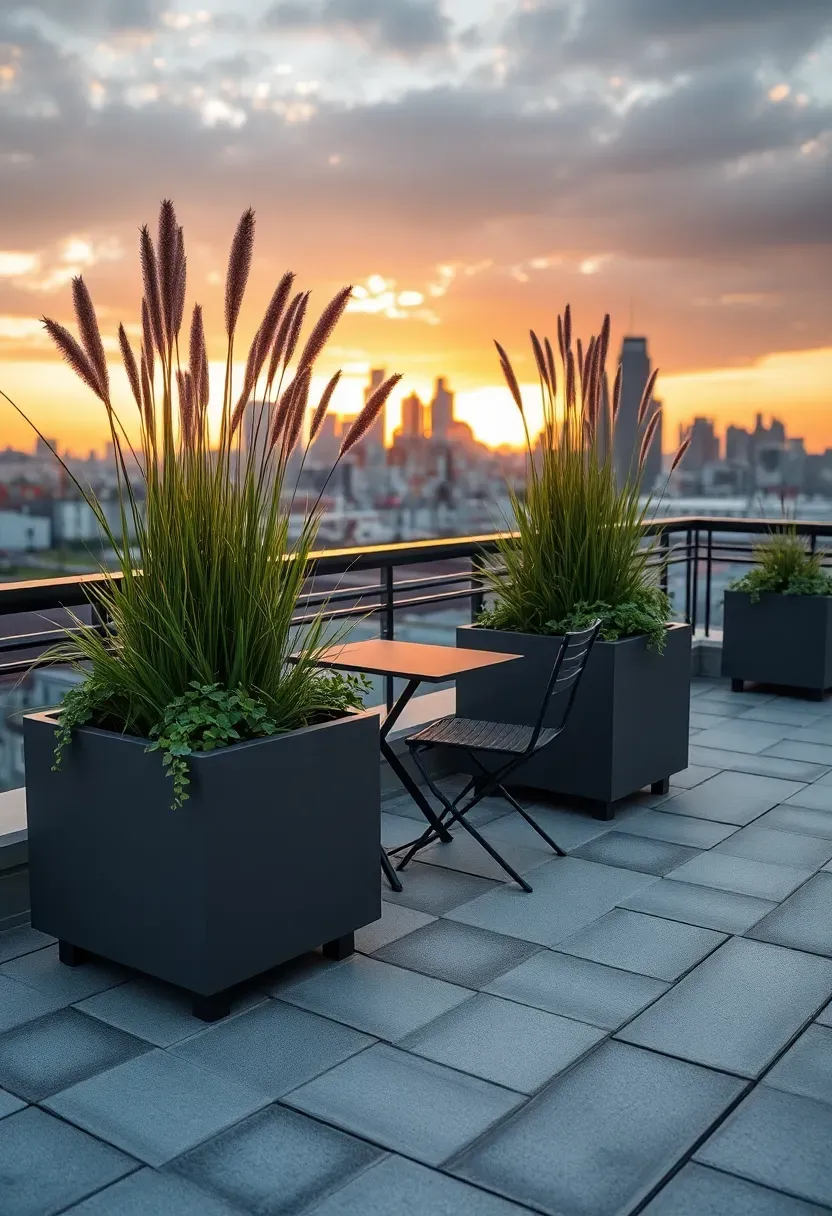
The Core Issue
Urban residents with rooftop access face unique constraints that ground-level patio design ignores entirely. Weight limits, wind exposure, waterproof membrane protection, and building codes all restrict what you can place up there.
The Solution
AI design tools trained on rooftop-specific parameters generate layouts that respect structural load limits while maximizing livability. Lightweight composite pavers on adjustable pedestal systems create a level floor without penetrating the waterproof membrane. Modular fiberglass planters filled with lightweight growing medium replace heavy terracotta pots. Wind-resistant furniture with low profiles and weighted bases stays put during gusts. The AI calculates total distributed load per square foot and flags any configuration that exceeds your roof's capacity.
Pros and Cons
Pros: dramatic views, privacy from ground-level neighbors, often underutilized space that adds genuine square footage to your home Cons: everything must be craned or carried upstairs, wind makes dining challenging without screens, weight restrictions limit material choices significantly
16. Herringbone Brick Patio
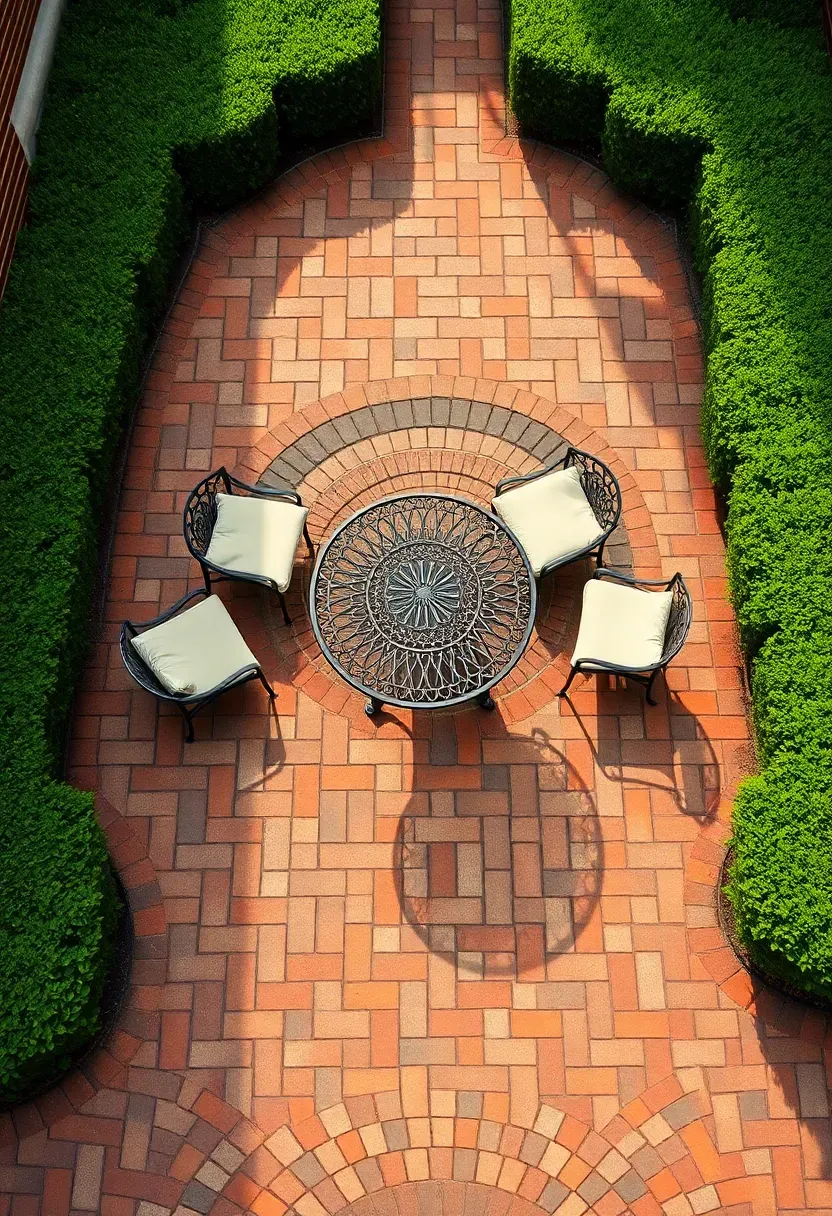
Herringbone is the brick pattern that architects have trusted for centuries, and for good reason. The interlocking 45-degree arrangement resists shifting under foot traffic and freeze-thaw cycles better than running bond or basketweave alternatives. AI paving layout tools calculate exact brick counts, cut angles for border transitions, and color blending ratios for multi-tone installations.
The visual effect is active without being busy. The zigzag rhythm guides the eye across the surface and creates a sense of movement that flat-laid patterns lack. Traditional red brick delivers timeless warmth. Gray or charcoal brick suits modern facades. Mixing two tones at a 70/30 ratio adds subtle depth without overwhelming the pattern.
Tips for a Lasting Installation
- Set bricks on a compacted gravel base with a sand leveling course for proper drainage
- Use polymeric sand in joints to lock bricks and prevent weed growth
- Edge the entire patio with soldier-course brick or steel edging to prevent creep
- Seal the surface if you want enhanced color; leave unsealed for a weathered patina over time
Recommended
Items for this idea
17. Tuscan Gravel Patio
Origins
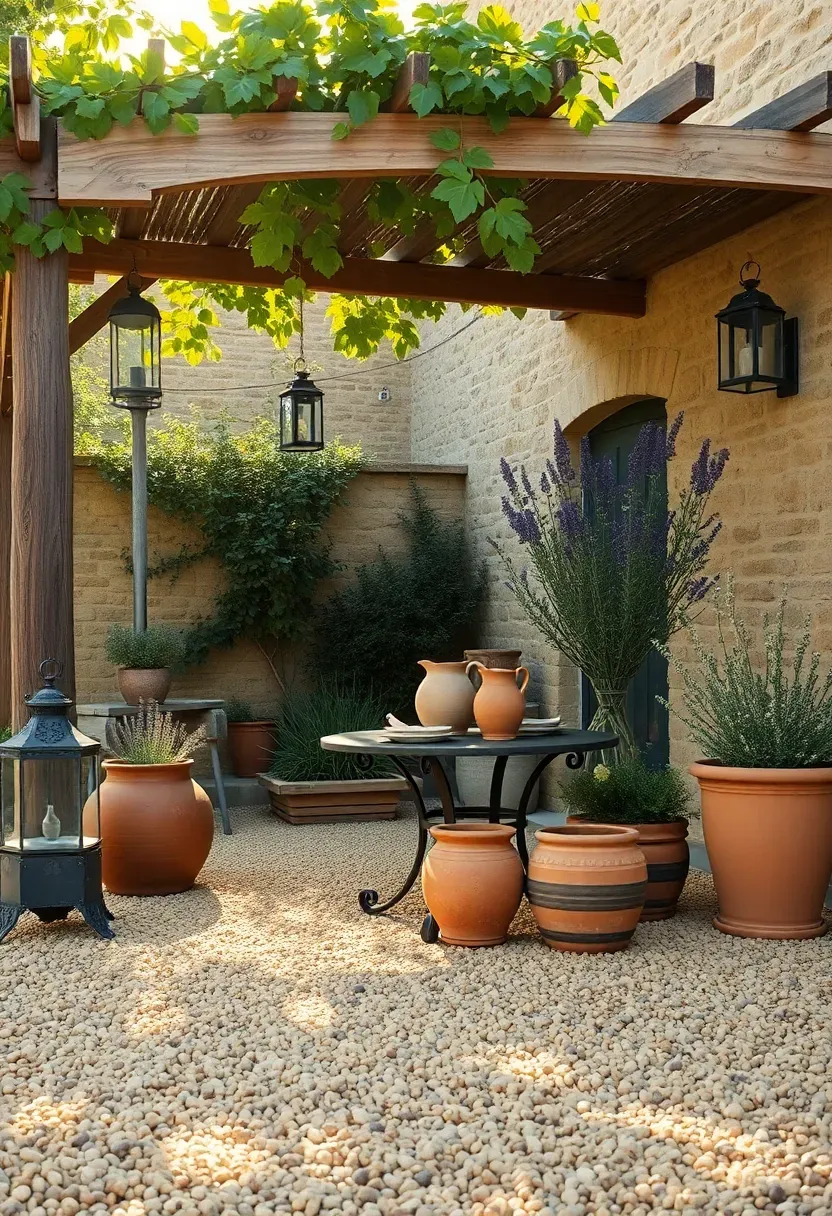
In the hills of Tuscany, gravel patios evolved from agricultural threshing floors. Crushed local limestone provided a level, permeable surface that drained quickly after rain and stayed cool in the shade of stone farmhouses. Function preceded beauty, but the aesthetic endured.
Modern Interpretation
AI tools recreate this effortless Italian style by pairing the right gravel aggregate with complementary furniture and planting. Crushed limestone in warm beige or gold tones forms the base surface — compacted in layers to create a firm, walkable floor that still allows rainwater to percolate. Terracotta pots overflowing with rosemary, lavender, and trailing geraniums cluster near the dining area. A simple wooden or iron pergola provides just enough overhead structure. The result is a patio that looks like it materialized organically over decades.
How to Apply at Home
- Compact gravel in 2-inch lifts to a total depth of 4 inches over geotextile fabric
- Choose angular crushed stone over round pea gravel — it locks together and resists displacement
- Add a stone or brick border to contain the gravel and define the patio edge
- Light the space with lanterns and candles rather than modern fixtures to maintain the rustic atmosphere
18. Mid-Century Modern Patio
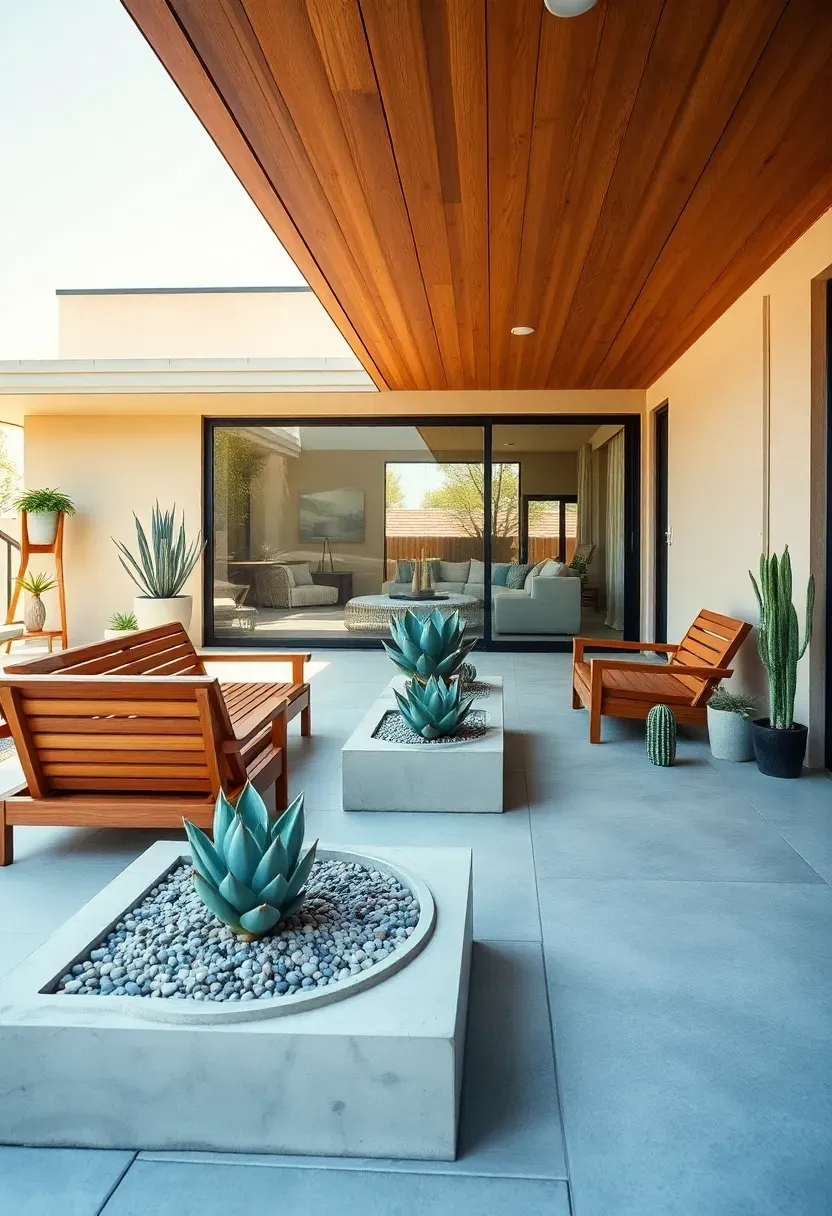
Mid-century modern architecture erased the boundary between indoors and outdoors. Floor-to-ceiling glass, cantilevered rooflines, and post-and-beam construction were all designed to pull the patio into the daily living experience. AI design tools understand these proportional relationships and generate patio concepts that feel era-authentic without descending into costume.
Clean-lined teak or powder-coated steel furniture in low-slung silhouettes sets the tone. Geometric concrete planters hold desert-adapted species — agave, aeonium, kangaroo paw. The floor surface stays simple: smooth poured concrete or large-format pavers in a neutral tone. A kidney-shaped planting bed or pool provides the single organic curve that counterbalances all the straight lines. The roofline extends over the patio, offering shade while framing the sky.
Tips for Period Accuracy
- Stick to a material palette of concrete, teak, steel, and glass — no wicker or resin
- Choose furniture with exposed structural frames rather than upholstered bulk
- Keep planters geometric and limit plant species to three or four bold selections
- Install globe or saucer pendant lights for era-appropriate evening illumination
Recommended
Items for this idea
19. Wraparound Infinity Patio
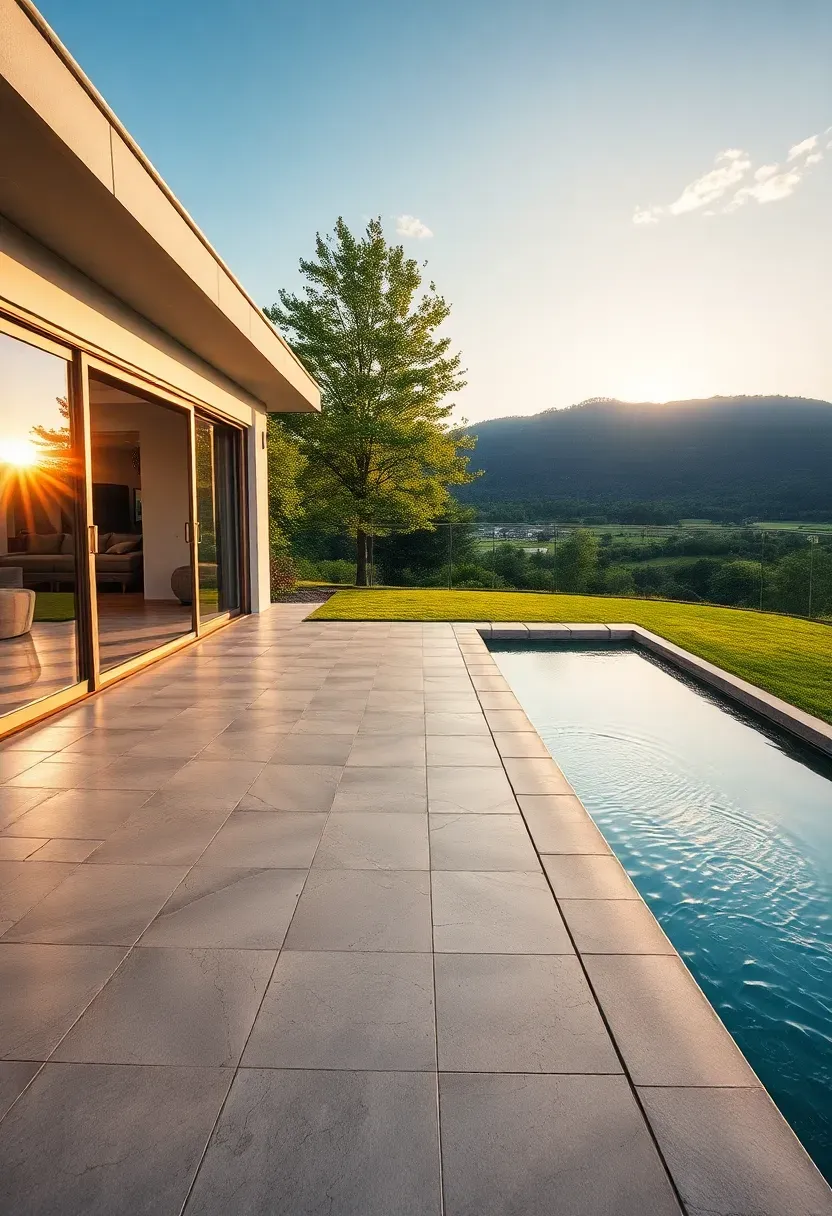
The final concept is the most ambitious. A wraparound patio follows the footprint of your home around at least two sides, creating continuous outdoor living space that interacts with multiple interior rooms. Pair this with floor-to-ceiling glass doors and you dissolve the wall between inside and out entirely.
AI modeling handles the complexity of corner transitions, varying widths along different facades, and how the patio relates to different interior rooms it borders — kitchen access on one side, bedroom privacy on another. An infinity-edge water feature along the outer perimeter enhances the sense of endlessness, reflecting sky and landscape. Material continuity is critical: the same paver or tile used indoors should continue through the glass line and onto the patio without a visible threshold.
Tips for Seamless Execution
- Match indoor and outdoor tile from the same manufacturer and lot for color consistency
- Use flush-track sliding doors to eliminate the step between interior floor and patio surface
- Vary the patio width by zone — wider near the living room for entertaining, narrower alongside the bedroom for a private walkway
- Run landscape lighting along the full perimeter so the entire wraparound reads as one connected space after sunset
Quick FAQ
Is AI patio design software accurate enough for real construction? AI renderings provide excellent conceptual guidance and surprisingly precise material estimates. However, they cannot detect underground utilities, assess soil bearing capacity, or account for local code nuances. Use AI output as a detailed brief for your contractor rather than a construction document.
Which patio material offers the best balance of cost and durability? Poured concrete wins on pure value — it costs less per square foot than stone or tile and lasts decades with proper sealing. For homeowners willing to invest more, porcelain pavers deliver exceptional longevity with virtually no maintenance.
Should you build a patio flush with the ground or raised? Ground-level patios integrate naturally with the surrounding landscape and eliminate trip hazards. Raised patios work better when the home's floor level sits well above grade or when you want to define the outdoor space as a distinct room. AI tools render both options so you can compare before deciding.
Do covered patios require building permits? In most jurisdictions, yes. Any structure attached to the house or exceeding a certain square footage threshold requires a permit. Freestanding shade sails and umbrellas typically do not. Check your local building department before construction begins.
Can you combine multiple patio styles in one backyard? Absolutely, and AI tools make this easier than ever. The key is material and color continuity between zones. A Tuscan gravel dining area can flow into a modern concrete lounge section as long as a shared element — the same stone border, matching planter style, or unified lighting scheme — ties them together visually.
A patio is not just a slab of something flat behind your house. It is the room where weather becomes atmosphere, where meals taste different, and where conversations last longer than they would indoors. Whether you start with a simple gravel pad or commit to a full wraparound infinity design, AI visualization tools let you test every idea against your actual space before spending a cent on materials. Pick the concept that resonates, photograph your backyard, and feed it into your preferred platform. The rendering that comes back might surprise you with how close your dream patio already is to reality.
Pinterest cover for 19 AI Patio Design Ideas
About the author
OBCD
CGI visualization and interior design content. We create detailed 3D renders and curate practical design ideas for every room in your home.