23 AI Rock Garden Design Ideas
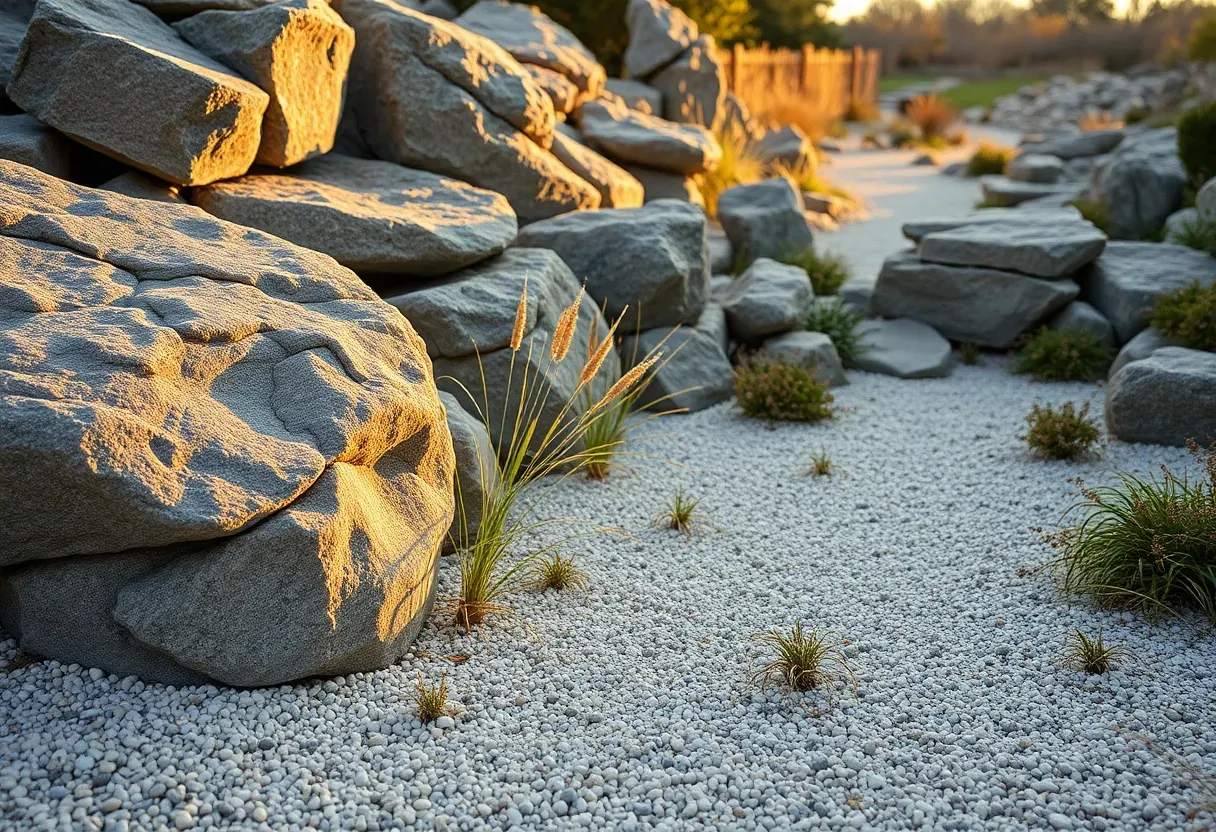
There is a particular quiet to a well-designed rock garden — the way flat stones anchor a slope, how boulders cast long shadows at dusk, the way sedums spill between rocks without a gardener coaxing them. For years, capturing that feeling required either a gifted landscape architect or years of trial and error. Artificial intelligence tools have changed the equation. Upload a photo of your yard, describe your climate and aesthetic preferences, and watch as algorithms draw from thousands of real rock gardens worldwide to generate photorealistic concepts before you move a single stone.
These 23 AI-generated rock garden designs range from tight urban corners to sweeping hillside compositions. Ready? Let us dig in.
Table of Contents
- Gravel and Boulder Minimalist Entry
- Japanese Karesansui Dry Garden
- Alpine Meadow Slope Planting
- Desert Southwest Xeriscape
- Cascading Waterfall Rock Bed
- Raised Stone Terrace Garden
- Stacked Slate Wall with Groundcover
- Moss and Fern Rock Hollow
- Prairie-Style Limestone Outcrop
- Coastal Driftwood and Pebble Garden
- Formal Symmetrical Stone Parterre
- Wild Scree Garden with Native Alpines
- Mediterranean Herb and Stone Terrace
- Modern Angular Basalt Garden
- Zen Boulder and Raked Sand Courtyard
- Fire-and-Stone Sunken Lounge
- Tropical Lava Rock Planter Bed
- Woodland Edge with Fieldstone Path
- Rain Garden with River Rock Swale
- Crevice Garden in Vertical Stone Slabs
- Night-Lit Rock Garden with LED Uplighting
- Children's Stepping Stone Adventure Path
- Four-Season Evergreen Rock Border
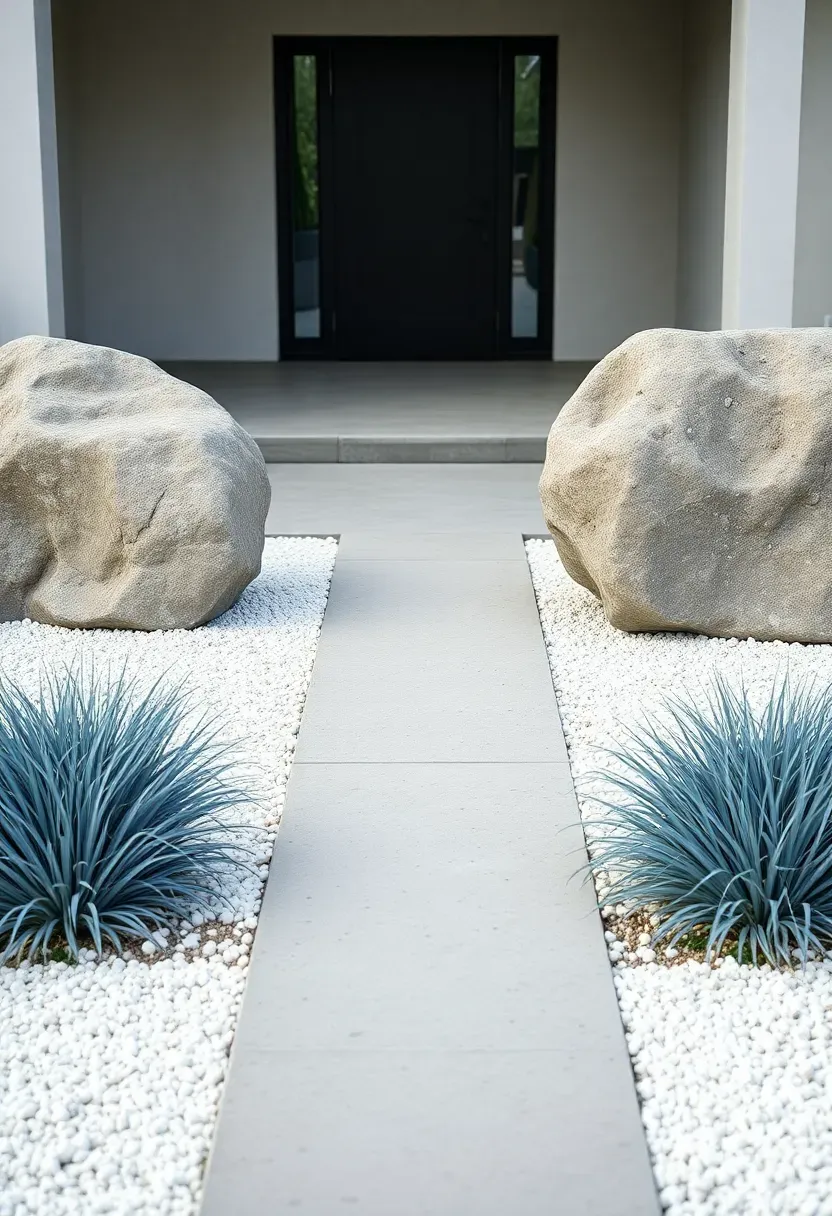
1. Gravel and Boulder Minimalist Entry
A stripped-back front garden where a few large rounded boulders anchor a sea of fine white gravel. Low-growing ornamental grasses add the only vertical interest, reinforcing the spare, modern tone.
Why It Works
The high contrast between pale gravel and dark stone reads clearly from the street, creating strong curb appeal without seasonal planting. Maintenance drops to nearly zero once established.
Tips for This Look
- Choose boulders at least one-third buried for a natural, settled appearance
- Limit grass varieties to one or two species to preserve the clean aesthetic
- Edge gravel with steel strip edging to prevent creep into adjacent lawn
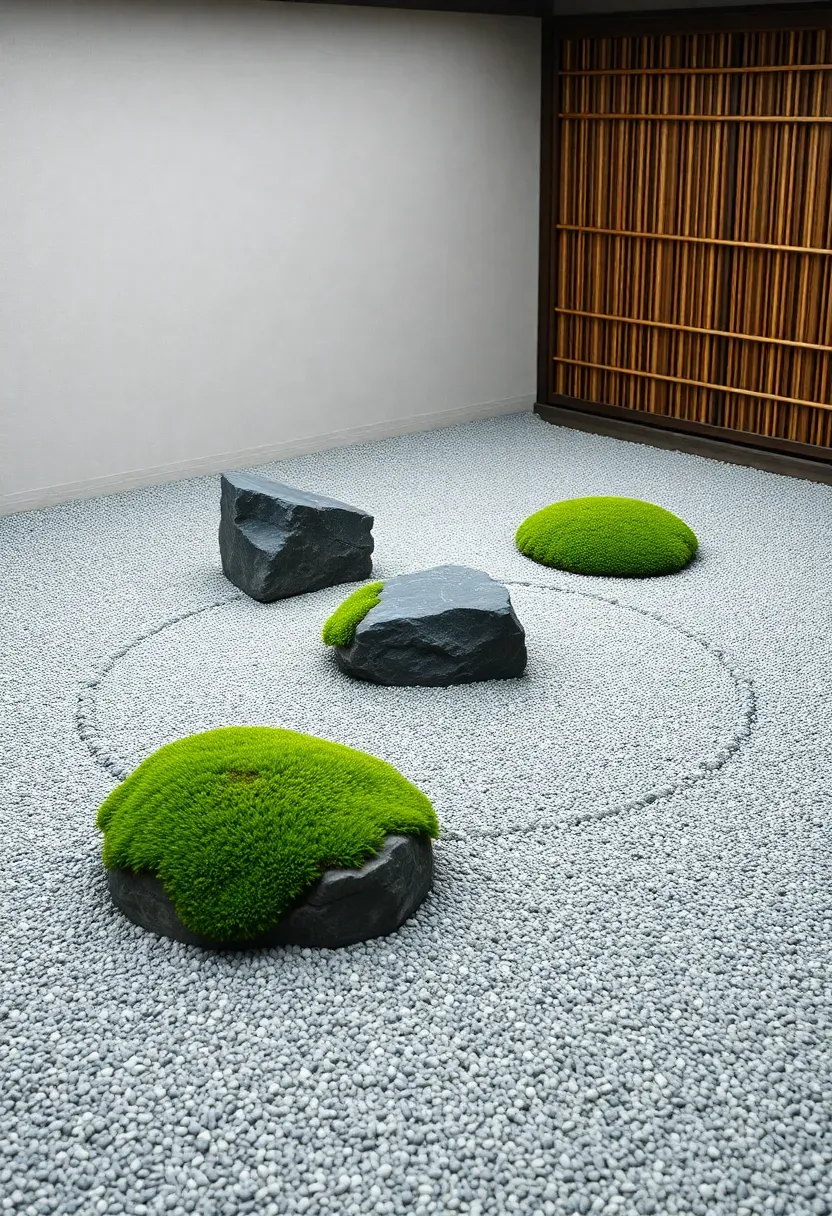
2. Japanese Karesansui Dry Garden
Raked gravel patterns ripple outward from three granite stones placed with deliberate asymmetry. Clipped moss islands and a low bamboo screen frame the composition.
The Philosophy Behind It
Karesansui gardens represent landscapes in abstract — the raked lines suggest flowing water, the rocks suggest mountains or islands. The design demands intentional empty space, which most Western gardens resist but which creates immediate calm.
Practical Adaptation
In small spaces: A 6×8 ft gravel rectangle beside a side door captures the essence without requiring a full garden overhaul. Maintenance note: Raking patterns can be meditative, but fallen leaves require daily attention in autumn.
Recommended
Items for this idea
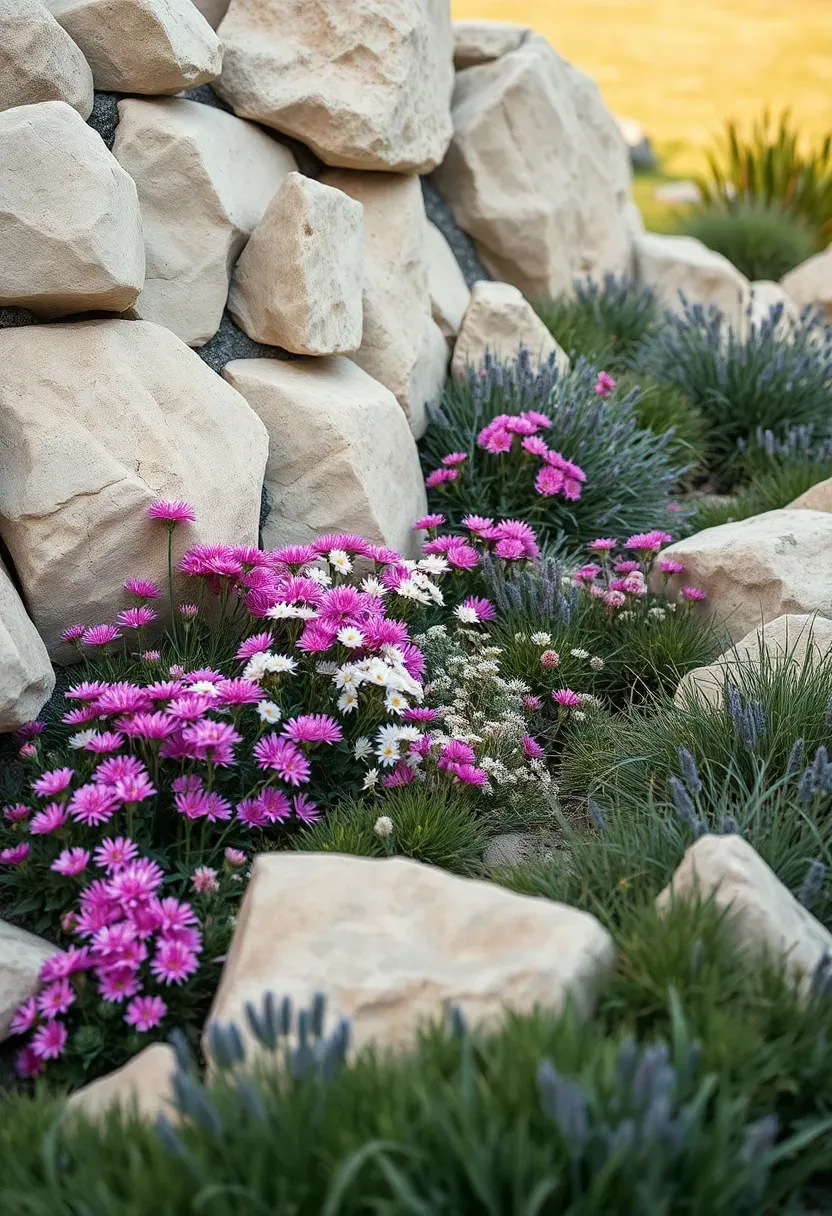
3. Alpine Meadow Slope Planting
Irregular limestone rocks stabilize a gently sloped yard while dianthus, saxifrage, and blue fescue tumble between them in naturalistic drifts.
How to Build It
Opening approach: slopes present both a challenge and an opportunity. Rocks solve the erosion problem while the planting pockets they create become some of the most interesting growing spots in any garden.
Step 1: Set Anchor Stones
Place the three largest rocks first, burying one-third of each. These establish the visual rhythm for everything that follows.
Step 2: Create Planting Pockets
Fill gaps between rocks with a sharp-draining alpine mix — two parts grit to one part topsoil.
Step 3: Plant in Drifts
Group plants in odd numbers (3, 5, 7) and let varieties overlap slightly for a continuous meadow feel rather than a polka-dot pattern.
What to Watch Out For
- Avoid plants with tap roots that cannot tolerate the sharp drainage
- Leave space for plants to self-seed — the garden improves each year as plants colonize new crevices
- Water deeply but infrequently during the establishment year

4. Desert Southwest Xeriscape
Golden barrel cacti and blue agaves anchor a terracotta gravel bed punctuated by sandstone boulders the color of dried clay. The palette reads unmistakably American Southwest.
Comparing Rock Choices: Sandstone vs. Granite
Introduction: in hot, dry climates stone selection affects not only aesthetics but also soil temperature and moisture retention around roots.
Sandstone
Porous and warm-toned, it blends naturally with desert palettes and absorbs heat slowly, buffering root zones against extreme temperature swings.
Granite
Dense and long-lasting, granite reflects heat and pairs with cooler, more contemporary plantings like agave or ornamental grasses.
What to Choose
Choose sandstone if: you want authentic Southwest character and work with cacti, yuccas, or agaves. Choose granite if: you prefer a modern edge and do not mind the brighter, harder visual quality.
Recommendation
For authentic xeriscape character, match rock to regional geology — your garden will look like it belongs rather than like a store display.
Recommended
Items for this idea
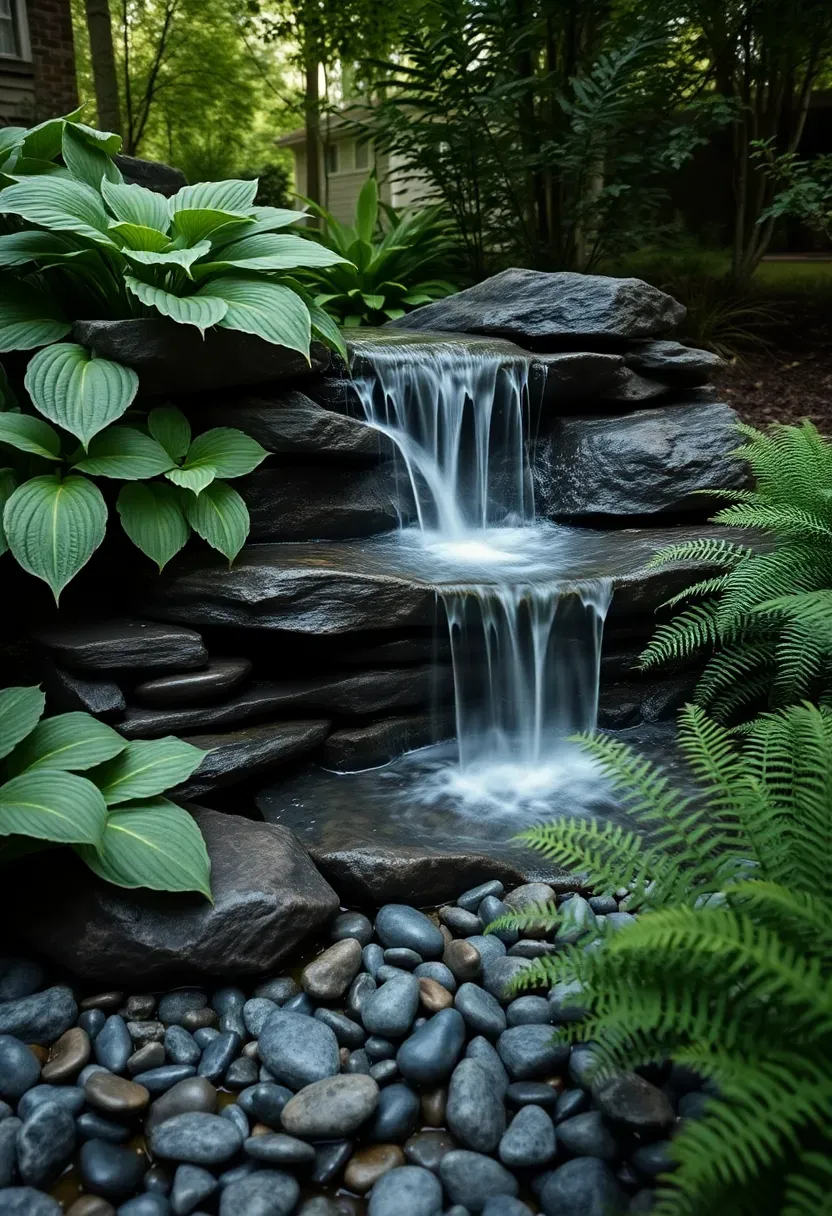
5. Cascading Waterfall Rock Bed
A recirculating pump sends water sheeting over a stacked fieldstone face into a pebble-lined stream bed below. Hostas and ostrich ferns fill the moist edges, their large leaves amplifying the shade and cool feeling.
Why the Combination Works
Rock and water create a sensory layer that purely dry gardens cannot match. The sound masks traffic noise, the moisture supports plants that would otherwise struggle, and the movement draws the eye from every garden angle.
Tips for Water Features in Rock Gardens
- Size the pump to turn the water volume over at least once per hour
- Use black pond liner under pebbles — it disappears visually once the stream fills
- Plant the stream edges with moisture-tolerant perennials that will soften the engineered look over time
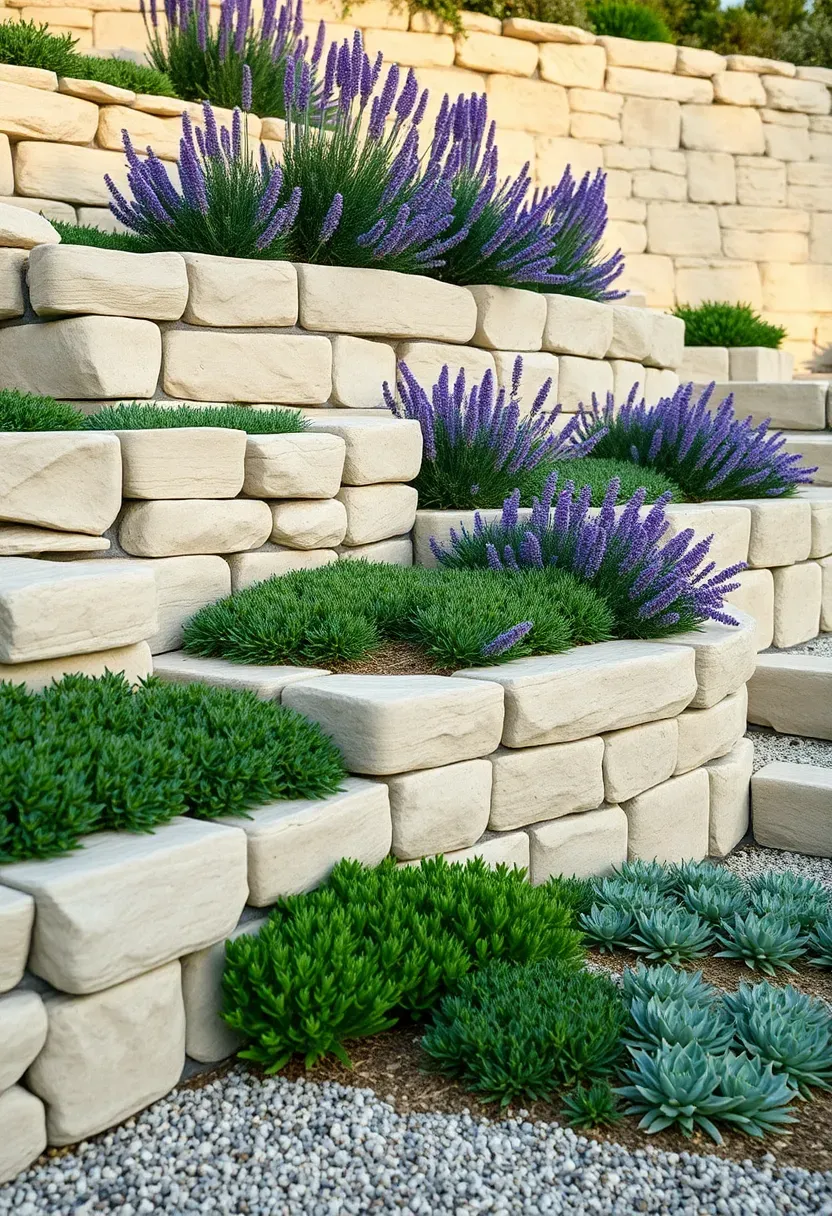
6. Raised Stone Terrace Garden
Dry-stacked limestone walls hold three distinct terraced levels, each planted with a different palette — lavender and salvia on the top tier, creeping thyme on the middle, and low sedums at ground level.
The Design Advantage
Terracing converts a difficult slope into three flat planting beds with excellent drainage. Each tier functions independently, which means different plant communities can thrive based on their individual sun, drainage, and soil needs.
Practical Notes
- Dry-stack walls above 24 inches benefit from a battered (angled inward) face for structural stability
- Backfill behind the wall with crushed stone before adding topsoil — this prevents frost heave
- Limit individual plant species per tier to maintain visual cohesion across the tiers
Recommended
Items for this idea
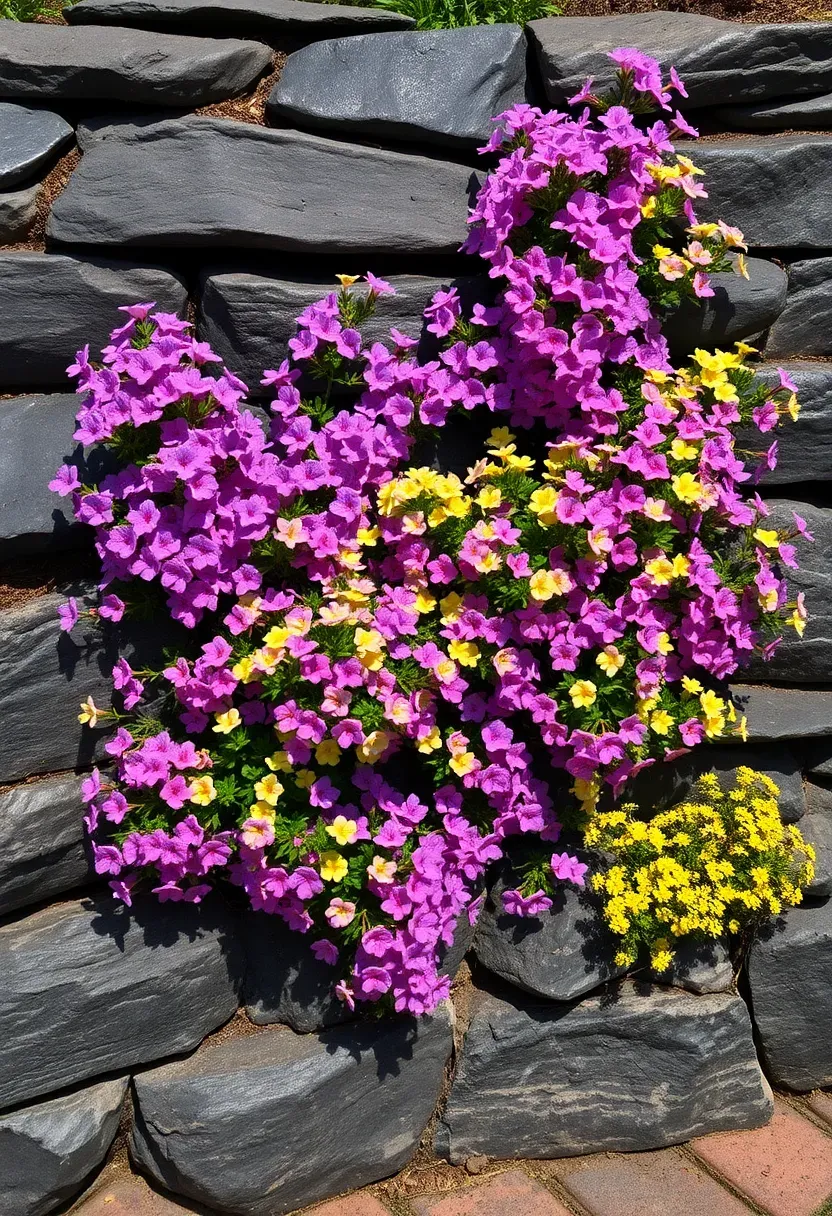
7. Stacked Slate Wall with Groundcover
Dark slate layered into a low retaining wall becomes a growing surface when creeping phlox, aubrieta, and thyme are planted in the gaps. In spring, the wall erupts in cascading purple and pink.
Origins and Modern Use
Stacked stone walls predate modern landscaping by millennia — dry-stone construction was the dominant field boundary method in Britain and Ireland for centuries. Contemporary garden designers have rediscovered their value as habitat structures and living walls in smaller residential settings.
How to Apply at Home
- Select slate pieces with relatively flat faces for stable stacking
- Plant wall crevices as you build, not after — it is far easier to insert root balls while the wall is open
- Mix bloom times: early aubrieta followed by mid-season phlox and then flowering thyme extends color across three months
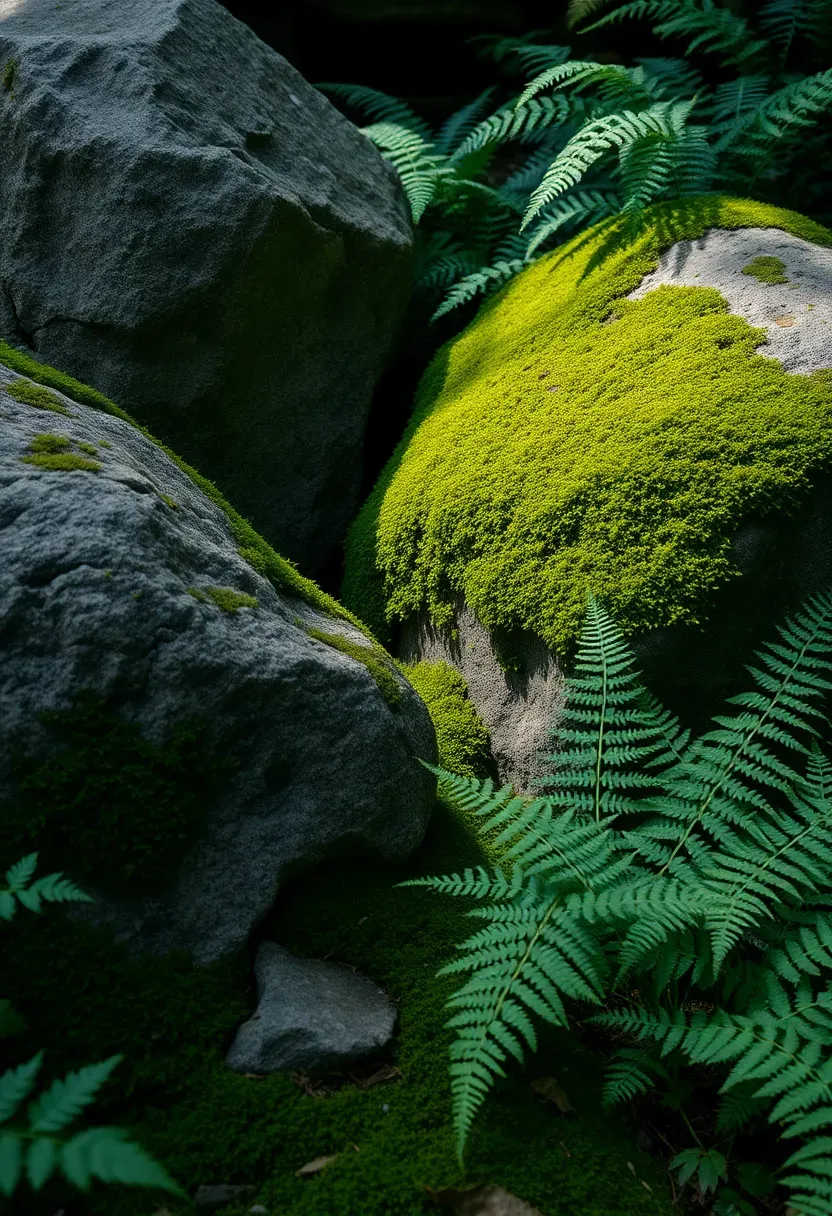
8. Moss and Fern Rock Hollow
In a shaded low point of the yard, weathered fieldstone boulders cradle maidenhair and Japanese painted ferns while cushion moss colonizes every damp surface. The result is the visual equivalent of an ancient forest floor.
Is Moss Difficult to Establish?
Moss thrives where little else succeeds: shade, moisture, and slightly acidic, poor-quality soil. The challenge is patience — moss establishes slowly but once settled requires almost no care. Avoid the temptation to fertilize nearby beds, as nitrogen runoff kills moss.
Step-by-Step Establishment
- Clear grass and weeds from the target area — moss will not compete successfully
- Lower pH to 5.5–6.0 with sulfur or acid mulch if your soil reads above 7.0
- Transplant moss plugs from shaded corners of your property or purchase sheet moss
- Mist daily for six weeks until the moss holds when tugged gently
Recommended
Items for this idea
9. Prairie-Style Limestone Outcrop
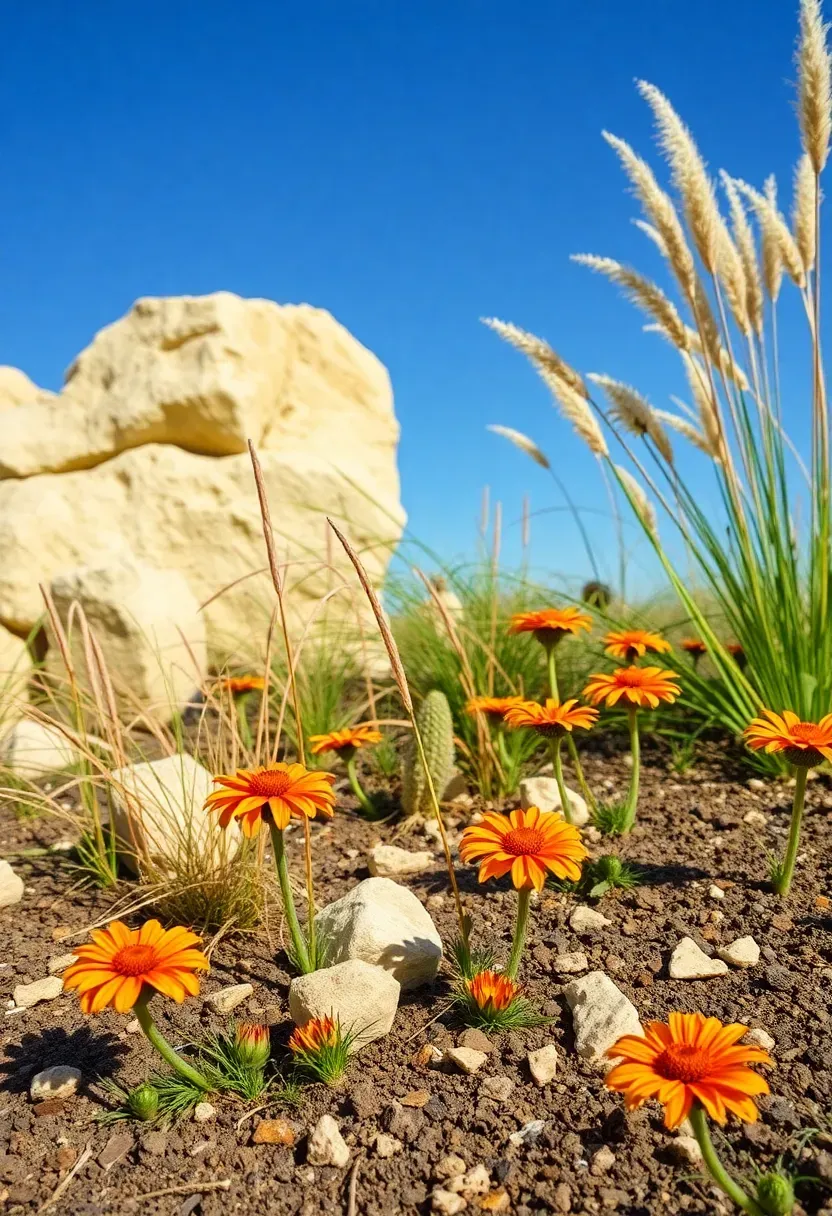
Rough limestone chunks emerge from the soil as if pushed up by geological pressure, surrounded by switchgrass, coneflower, and rudbeckia in loose, naturalistic drifts.
Why This Style Is Surging
According to 2026 landscape trend data, prairie and naturalistic garden styles have grown 34% in search interest over the past two years. Homeowners are moving away from formal arrangements toward plantings that mimic ecosystems, attract pollinators, and require fewer inputs to sustain.
Applying the Style
- Source limestone locally to match regional geology — imported stone creates a jarring visual disconnect
- Leave spent seedheads standing through winter for wildlife value and winter structure
- Accept self-seeding: coneflowers and rudbeckia will migrate naturally, and that movement is the point
10. Coastal Driftwood and Pebble Garden
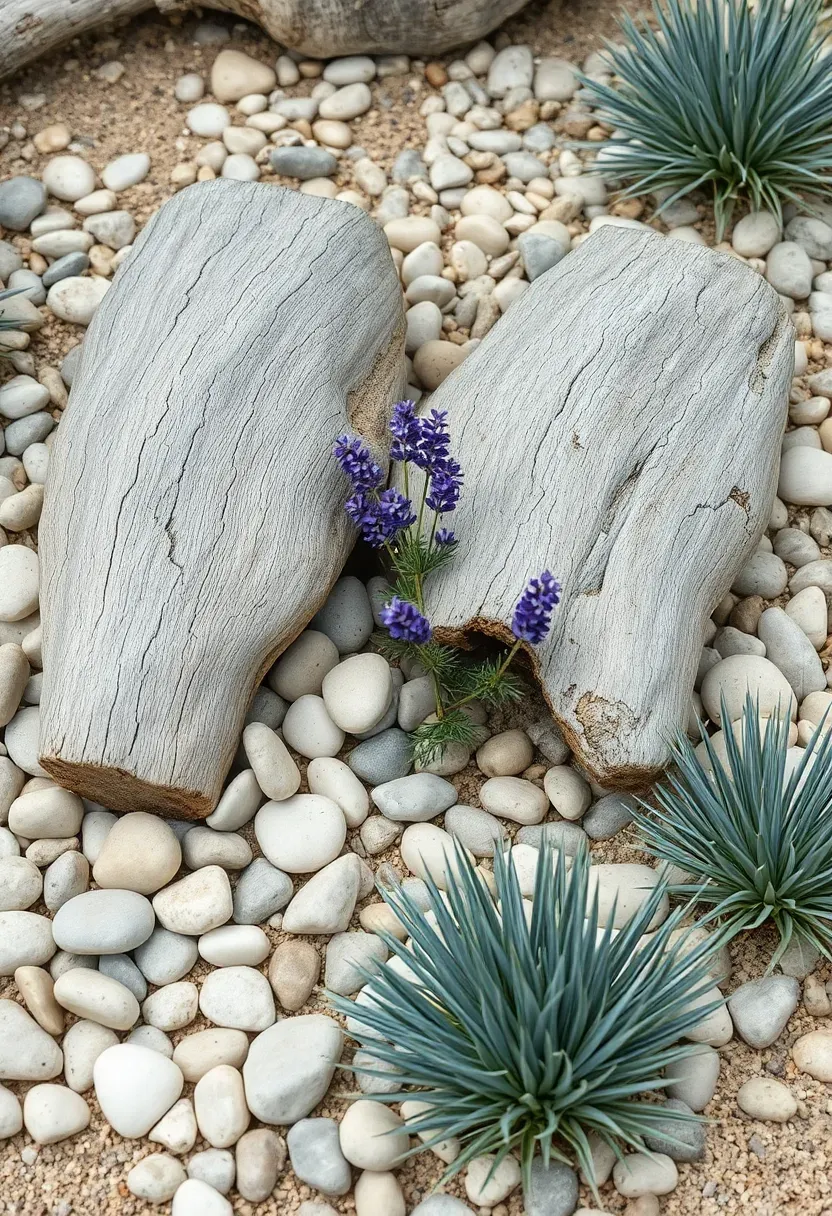
Bleached driftwood logs anchor a low bed of smooth sea pebbles, sea lavender, and blue lyme grass. The palette pulls from the beach: grey, cream, blue-green, and pale gold.
The Mood It Creates
Walk through this garden and the combination of weathered wood and rounded stones triggers the same sensory calm as shoreline walking — a psychologically grounding effect that most purely planted gardens cannot replicate.
Tips for This Look
- Source sea pebbles in a single size range (40–80mm) for a cohesive, natural appearance
- Anchor driftwood pieces with rebar stakes driven through the base — salt-bleached wood is often lighter than it looks and can shift in wind
- Choose plants tolerant of salt spray if you are genuinely near the coast; use look-alikes (sea oats, blue oat grass) inland
Recommended
Items for this idea
11. Formal Symmetrical Stone Parterre
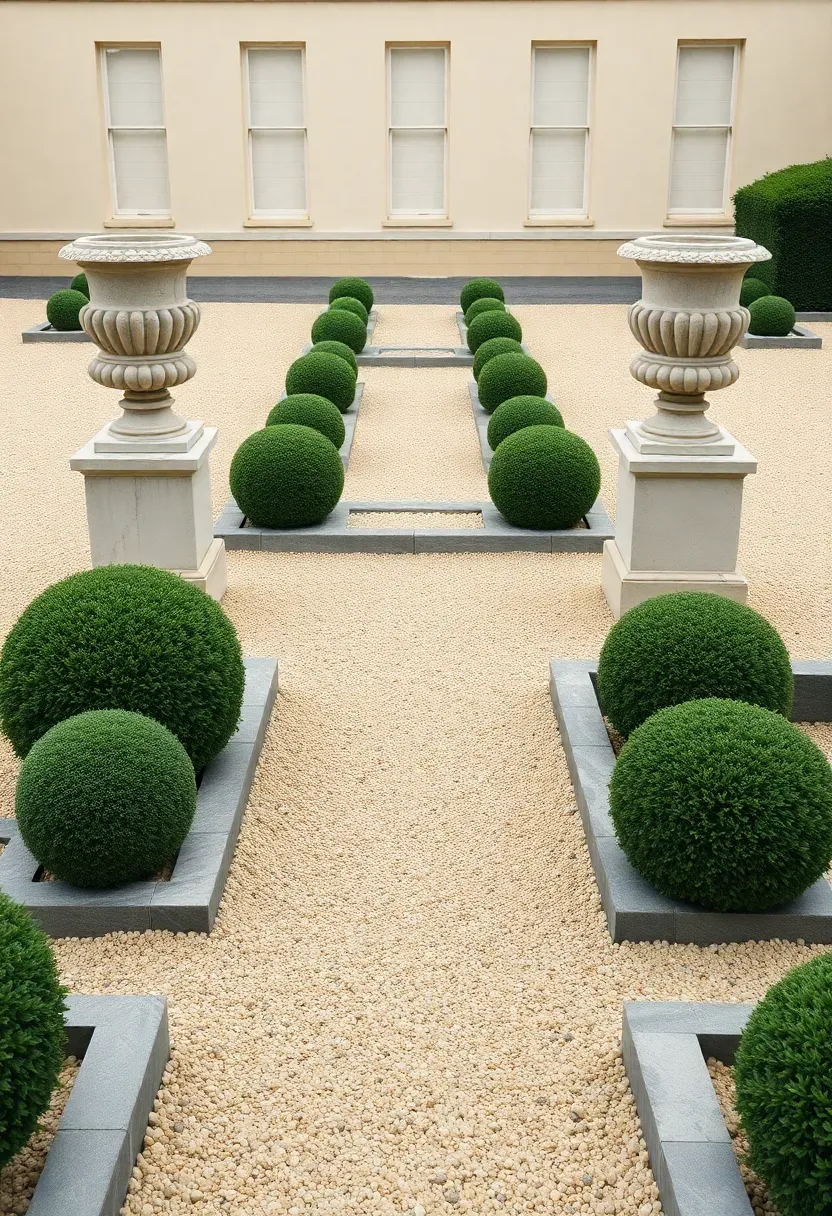
Two matching stone urns flank a central rectangular gravel panel edged with low granite kerbing. Clipped box hemispheres repeat the formal geometry at regular intervals.
Pros and Cons
Pros: Immediately readable structure that anchors larger formal gardens; timeless European style that integrates with classical architecture; gravel panels require far less maintenance than lawn. Cons: Clipped hedging demands quarterly attention; perfect symmetry is unforgiving of any single element placed even slightly off-center.
12. Wild Scree Garden with Native Alpines
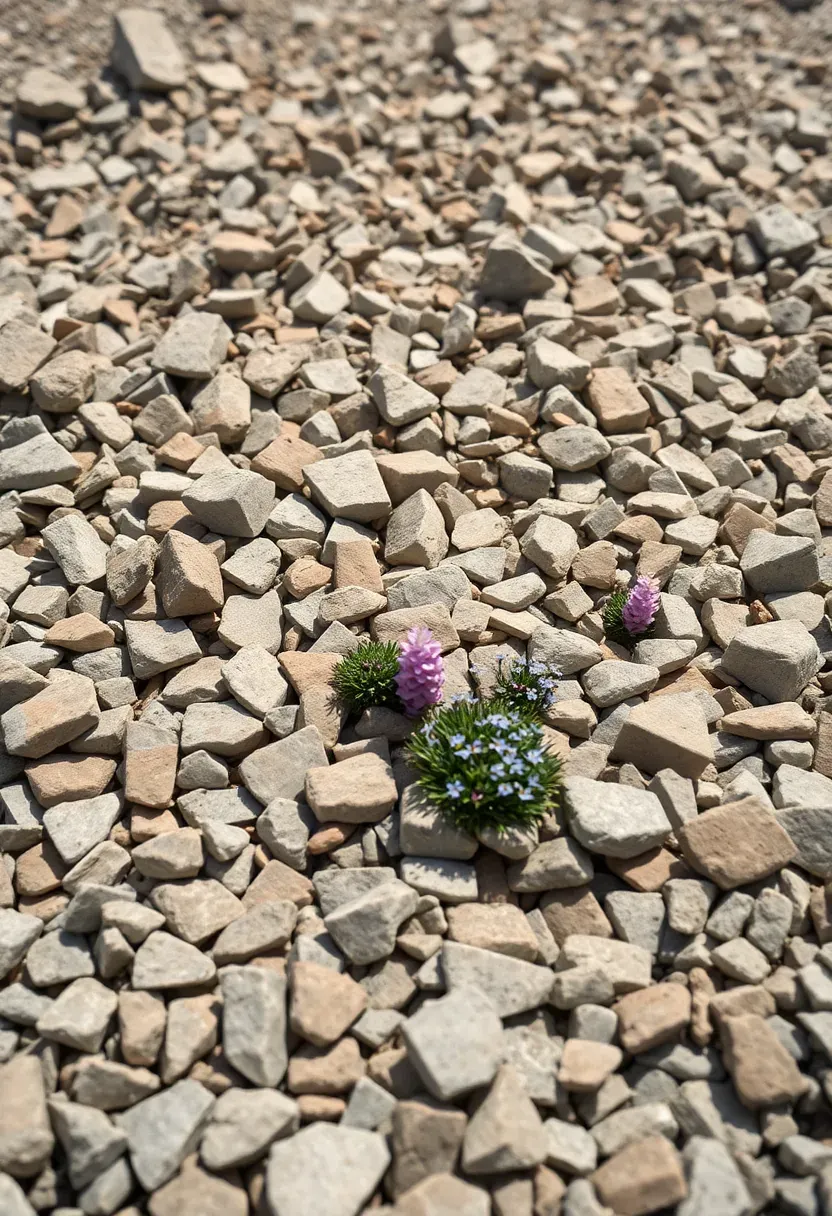
Loose angular stone chips replicate a high-altitude scree field, planted with cushion saxifrage, alpine phlox, and creeping veronica. No straight lines, no edging — just rock and plant in free collaboration.
What Makes Scree Effective
Scree drainage is extreme: water passes through almost instantly, and roots grow deep and cool underneath the stone blanket. This environment suits an entire family of cushion plants that struggle in ordinary border soil but are perfectly adapted to these harsh, sun-drenched conditions.
Building Your Scree
- Use stone chips 10–30mm, not pea gravel — the angular edges lock together and create stable plant pockets
- Depth matters: 6–8 inches of stone over a drainage base is the minimum for true scree conditions
- Shop for alpines in early spring when specialist nurseries bring in the widest selection
Recommended
Items for this idea
13. Mediterranean Herb and Stone Terrace
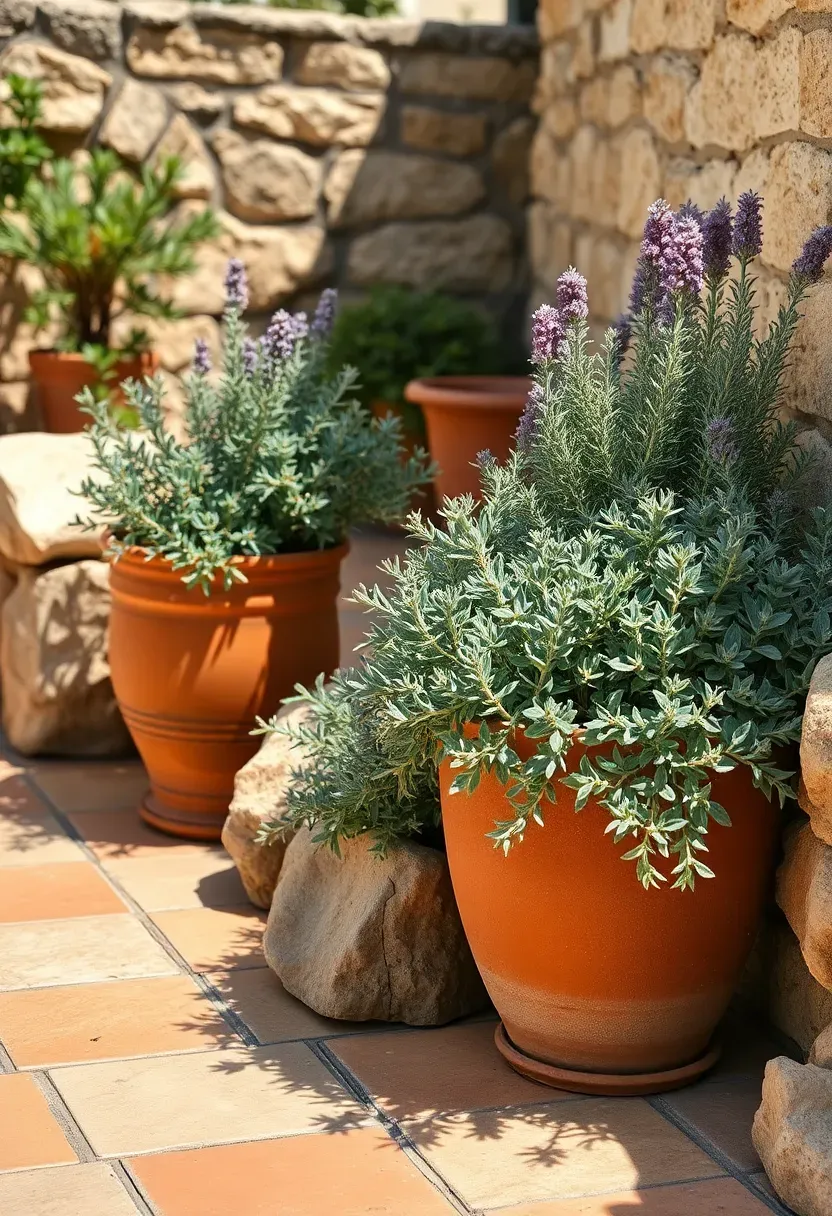
Terracotta pots overflow with rosemary, thyme, and variegated sage between warm limestone slabs and rough stone walls. The planting is both decorative and culinary.
Making the Most of Hot, Dry Conditions
Mediterranean herbs evolved in stony, nutrient-poor soils baked by summer sun. Replicating those conditions — sharp drainage, reflected warmth from stone surfaces, minimal irrigation — produces not just healthy plants but intensely aromatic ones. The essential oils that give these herbs their kitchen value concentrate when plants experience mild drought stress.
Practical Setup
- Mix herbs of different heights: tall rosemary at the back, mid-level sage in the middle, creeping thyme at stone edges
- Use terracotta pots rather than plastic — they breathe, reducing root rot in hot, sunny spots
- Feed lightly once in spring with a low-nitrogen fertilizer to avoid soft, lush growth with reduced flavor
14. Modern Angular Basalt Garden
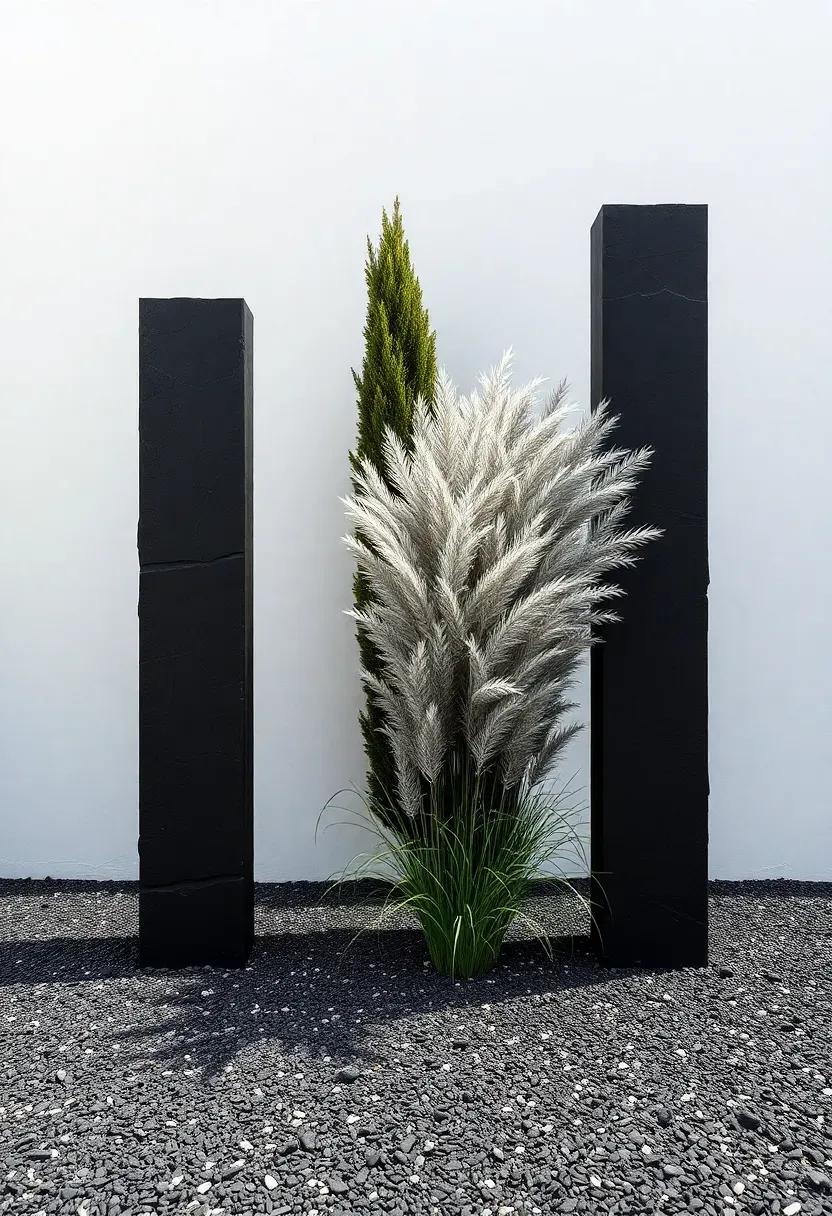
Vertical basalt columns of varying heights stand in a field of fine black crushed basalt, flanked by upright phormium and a single architectural clump of giant miscanthus. The mood is sculptural and deliberately austere.
Why Basalt for Modern Gardens
Basalt's naturally dark color, columnar fracture pattern, and volcanic origin give it an inherently dramatic quality that softer sedimentary stones cannot match. It pairs cleanly with contemporary architecture and materials — steel, glass, concrete — without the rustic associations of fieldstone or the warmth of sandstone.
Tips
- Source basalt columns from quarries that sell offcuts at reduced cost — full architectural columns can be expensive
- Let the stone speak: resist the urge to add colorful plantings, which will fight the dark palette rather than complement it
- Night lighting transforms this garden — a single uplight behind each column creates shadows that shift as the grass moves
Recommended
Items for this idea
15. Zen Boulder and Raked Sand Courtyard
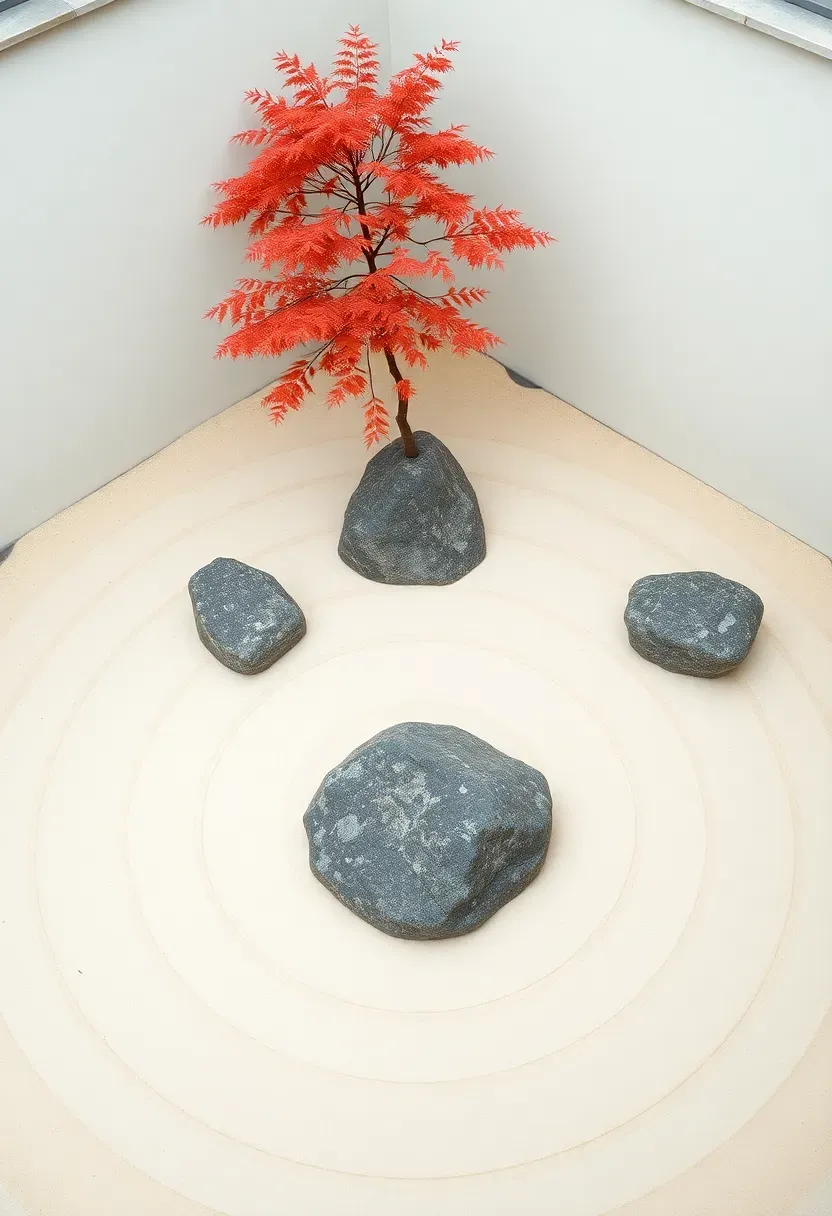
Three granite boulders of ascending size occupy a walled courtyard where pale sand is raked into patterns that echo the stones' positions. A single Japanese maple is the only plant.
The Psychology of Simplicity
Research into restorative environments consistently finds that spaces with limited visual complexity — few elements, clear relationships, predictable geometry — reduce cortisol and promote focused attention. This is why Zen gardens have functioned as meditation spaces for seven centuries and why modern neuroscience increasingly validates what Buddhist monks understood intuitively.
Creating the Space
- Walls or hedges are essential — this garden depends on enclosure to create psychological separation from the busy world outside
- Rake sand weekly; seasonal leaf fall from the maple becomes part of the composition rather than a maintenance problem if left in place briefly
- The maple provides the only seasonal change, which makes its progression through bud, leaf, color, and bare branch feel profound
16. Fire-and-Stone Sunken Lounge
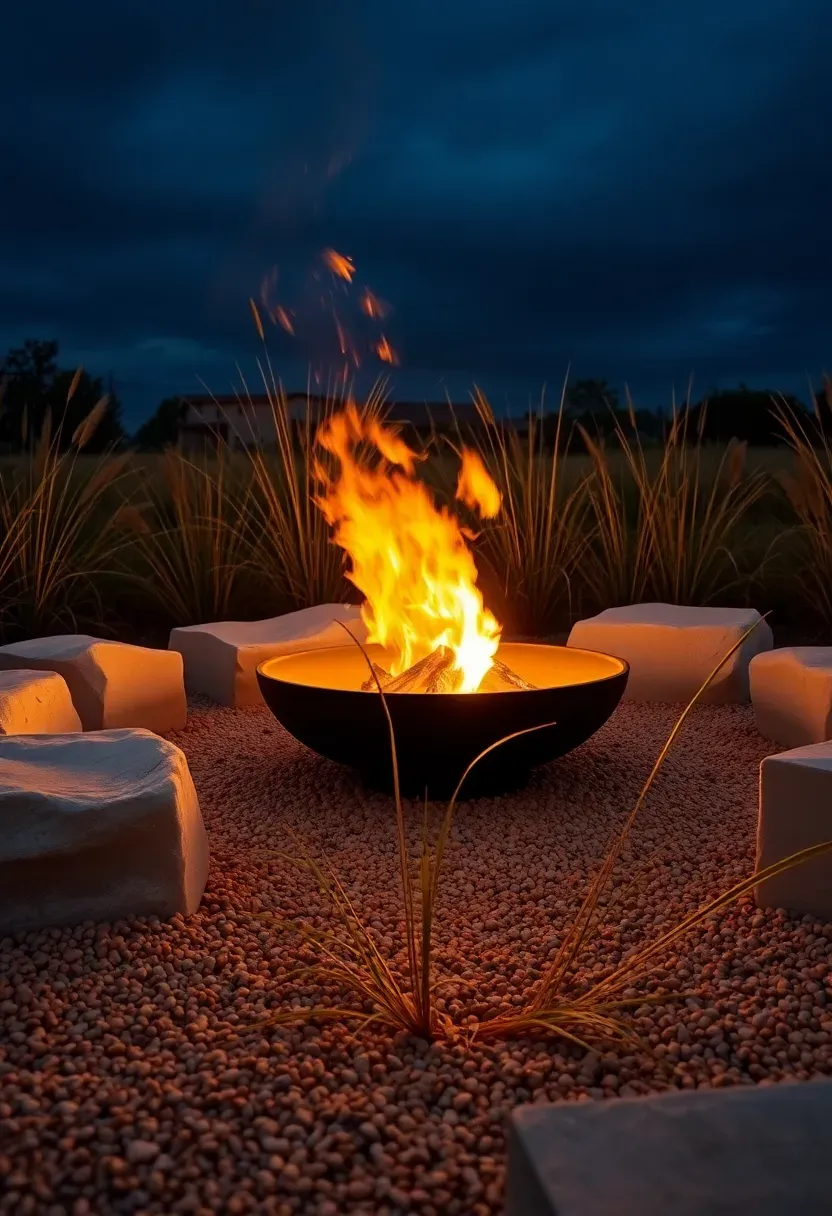
A circular fire bowl occupies the center of a sunken stone-paved lounge ringed by natural boulders used as informal seating and windbreaks. Gravel fills the outer band and ornamental grasses soften the hard perimeter.
The Combination Logic
Why fire, stone, and gravel belong together: all three are non-combustible, which means they can sit in close proximity without safety concerns. Gravel also suppresses weeds in the high-traffic lounge zone while stone boulders do double duty as both windbreak and extra seating.
Pros and Cons
Pros: Creates a destination — people gravitate toward fire, and the sunken design frames the experience; gravel and stone need virtually no seasonal maintenance. Cons: Excavation required for sunken design adds cost; fire features are regulated in some municipalities — check local codes first.

Recommended
Items for this idea
17. Tropical Lava Rock Planter Bed
Black lava rock beds frame bird of paradise, elephant ears, and ornamental banana in a planting that conjures a volcanic island feel. The dark stone provides a dramatic contrast to the oversized tropical foliage.
Origins of Lava Rock Gardening
Lava rock has been used as both a growing medium and landscape element in Hawaiian and Canary Island horticulture for generations. Volcanic soil — partially broken-down lava — is among the most fertile on earth, and raw lava rock used as mulch moderates soil temperatures and retains moisture surprisingly well despite its porous appearance.
How to Apply at Home
- Lava rock is lightweight compared to granite or limestone — it is practical for rooftop gardens and elevated planters
- The porous surface provides excellent habitat for beneficial soil organisms over time
- Pair with tropical or sub-tropical plants in USDA zones 9–11; in colder zones, use in large containers that can move indoors for winter
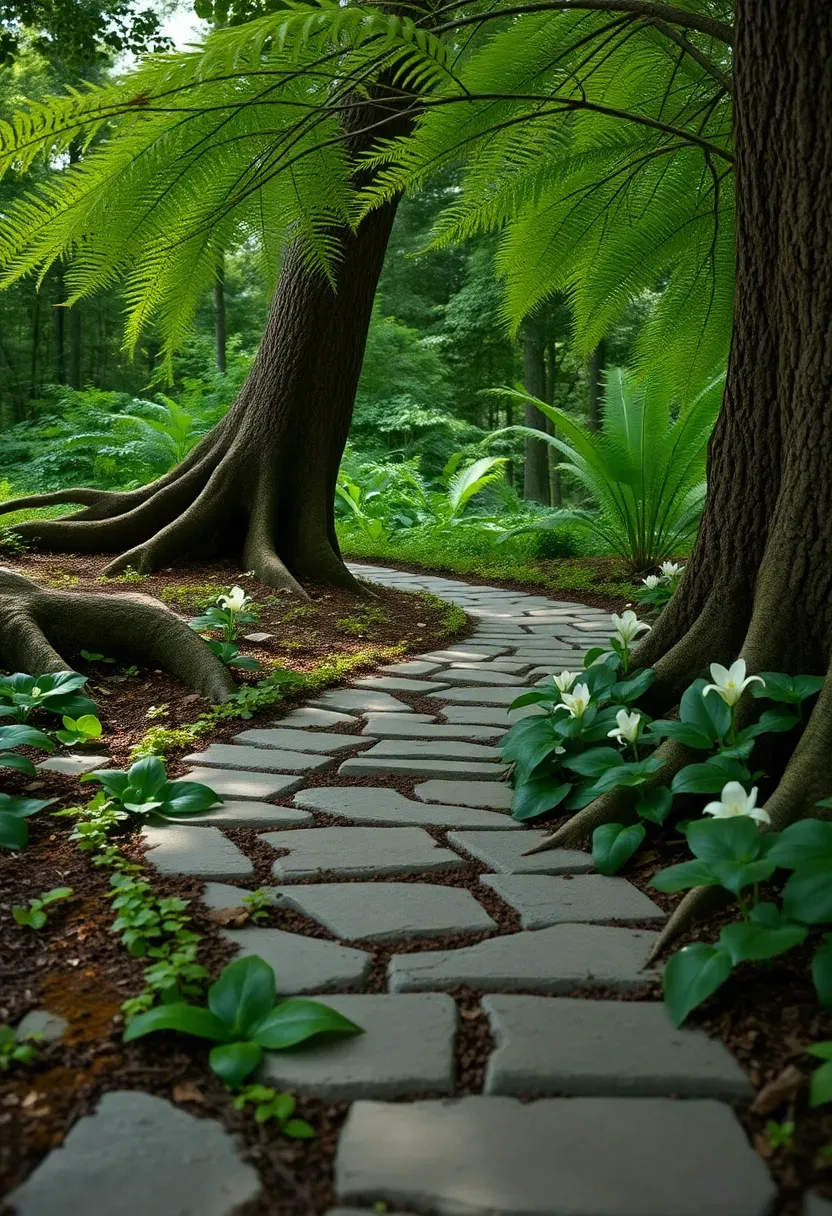
18. Woodland Edge with Fieldstone Path
An irregular fieldstone path winds along the edge of a shaded woodland area, with wild ginger, trillium, and ostrich fern filling the gaps. Each stone is slightly different in size and tone, giving the path an organic quality that formal paving cannot replicate.
What Distinguishes Fieldstone
Fieldstone is gathered rather than quarried — it is shaped by geology and time, not machinery. That history shows in rounded edges, varied tones, and the moss that begins colonizing surfaces within a few seasons. For woodland and naturalistic gardens, no manufactured material competes with its authenticity.
Path Building Tips
- Lay stones on a 2-inch sand base for stability without mortar — frost-heaved stones can be easily reset
- Aim for stones 18–24 inches across, large enough to step on confidently
- Plant thyme or mind-your-own-business between stones where light permits; let moss take over in deeper shade
Recommended
Items for this idea
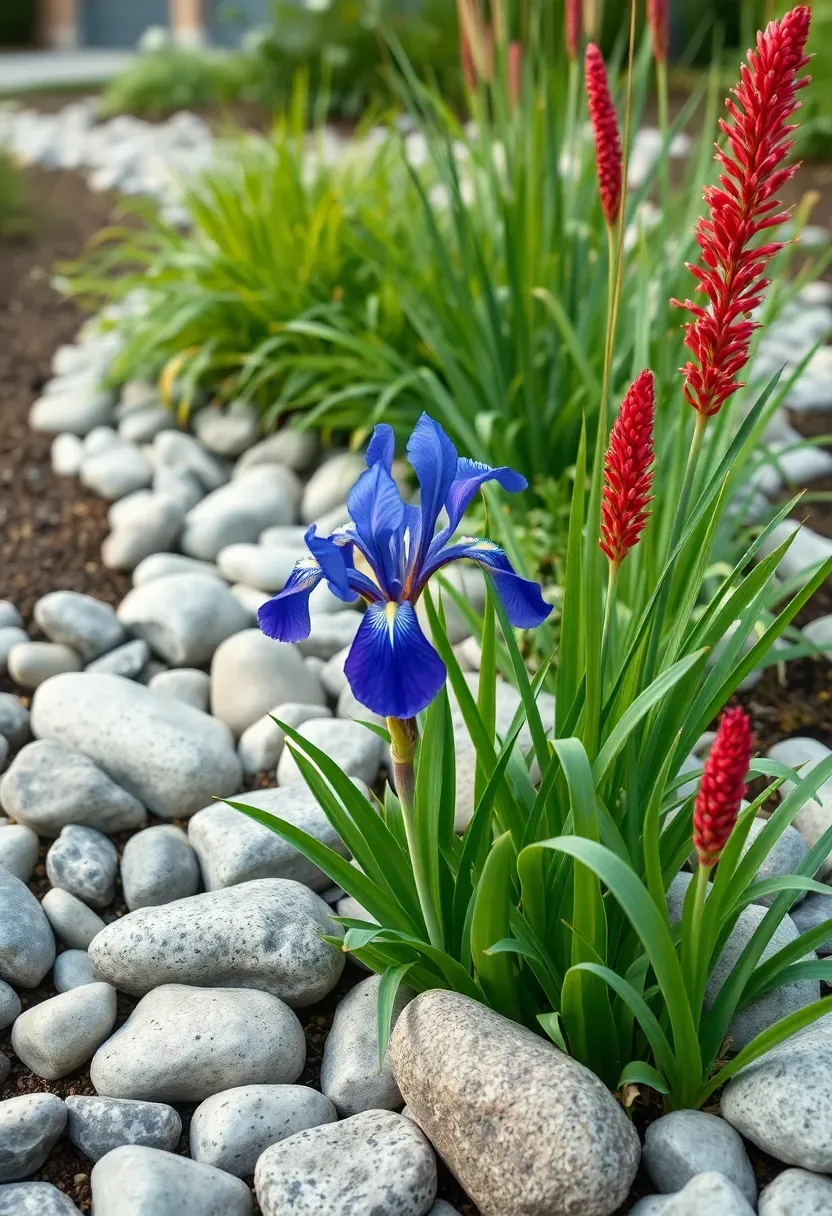
19. Rain Garden with River Rock Swale
River rocks line a shallow swale that collects roof and driveway runoff, slowing the flow enough for native sedges, blue flag iris, and cardinal flower to filter pollutants before the water percolates into the soil.
Should You Build a Rain Garden?
Rain gardens are one of the few landscape features that improve neighboring properties as well as your own. By capturing runoff on-site, they reduce downstream flooding, filter pollutants, and recharge groundwater. They are also eligible for municipal rebate programs in many North American cities, which can offset construction costs significantly.
Practical Considerations
- Size the rain garden to handle the volume from your largest roof section — a general rule is 30% of the roof area draining to that point
- River rock protects the swale bottom from erosion during heavy inflows; vary stone size from 40mm in the flow channel to smaller pebbles on the edges
- Choose plants that tolerate both wet feet and summer drought — iris, sedge, and swamp rose perform well across both extremes
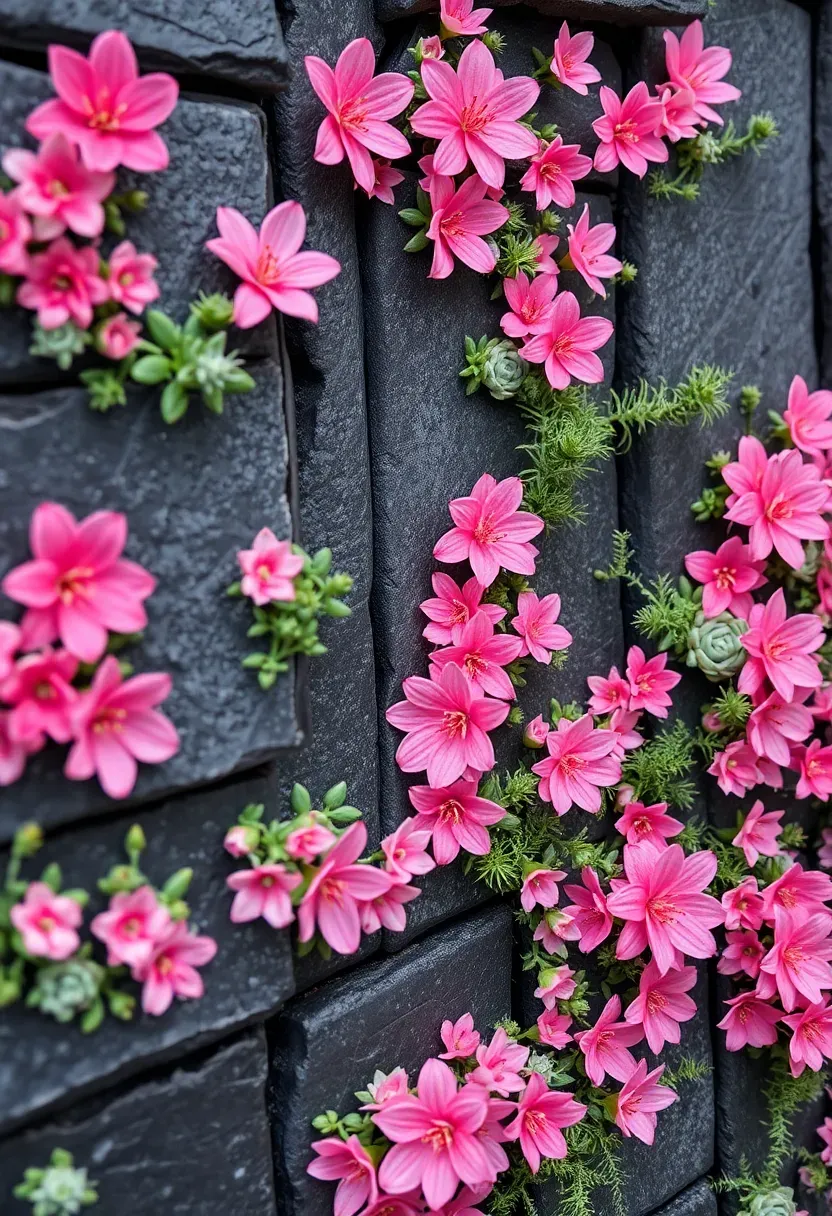
20. Crevice Garden in Vertical Stone Slabs
Thin stone slabs set vertically in parallel rows create deep crevices packed with lewisia, sempervivum, and tiny alpine ferns. Viewed from above, the garden resembles a cross-section of sedimentary rock.
The Crevice Garden Trend
Originating in Czech rock garden design and popularized at Denver Botanic Gardens in the 2010s, crevice gardening is now one of the fastest-growing specialty rock garden styles worldwide. The technique allows plants to replicate their natural cliff-face habitat, producing denser, more compact growth than the same species achieve in a standard border.
Building a Crevice Garden
- Use thin, flag-like stones (slate, schist, or soft sandstone) that split into slabs naturally
- Set stones at a slight inward tilt (10–15 degrees) so rain runs into the crevice rather than sheeting off
- Pack crevices with a 50/50 mix of crushed stone and sandy loam — this is the growing medium, so quality matters
Recommended
Items for this idea
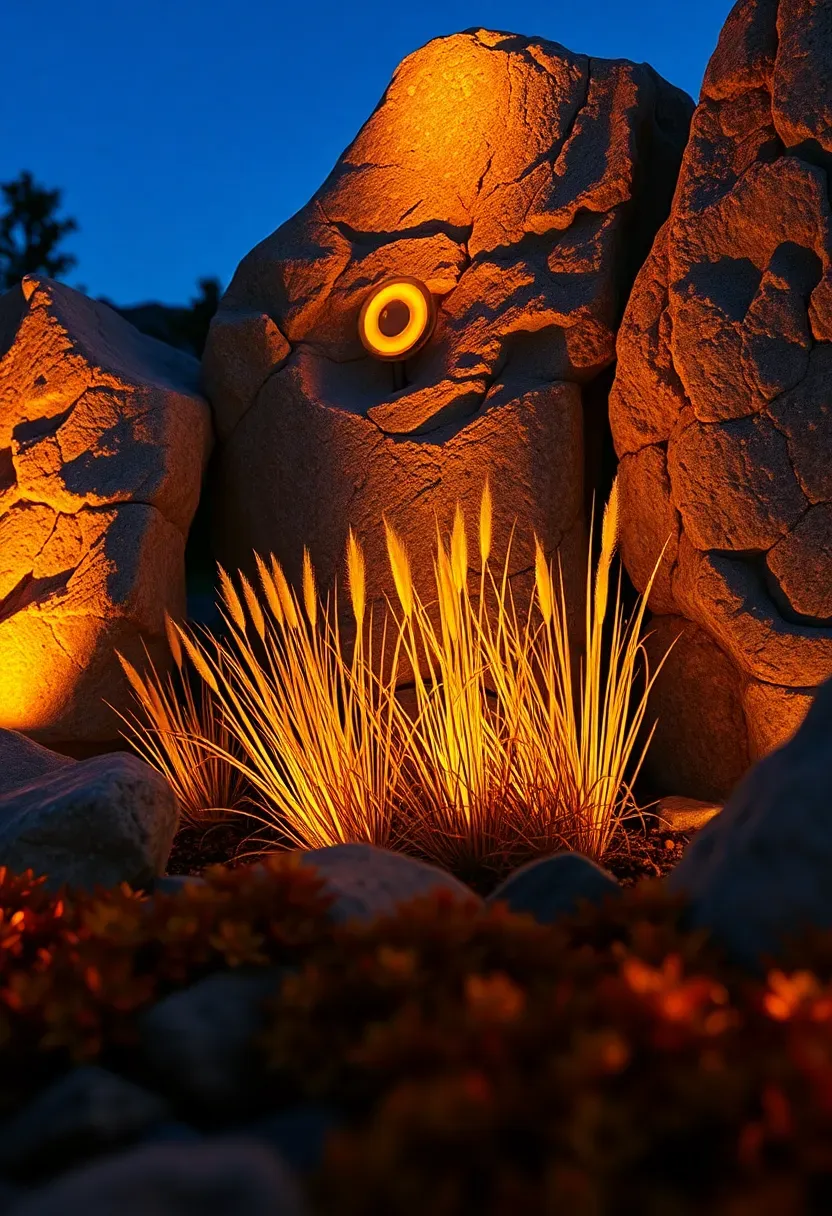
21. Night-Lit Rock Garden with LED Uplighting
Warm LED uplights positioned low between boulders transform the garden at dusk: shadows lengthen dramatically, grasses glow at their tips, and sedums take on amber tones that disappear entirely in daylight.
Why Lighting Changes Everything
A rock garden that reads as pleasant by day can become genuinely dramatic after dark — and rock is an ideal material for lighting design. Its varied surface texture catches and scatters light in complex ways that flat walls or gravel alone cannot. The shadows cast by boulders shift as ambient light changes, making the garden feel alive rather than static.
Lighting Setup Tips
- Use fixtures with a color temperature of 2700–3000K (warm white) for natural-looking results; cool white lights make rock look clinical
- Bury conduit before planting — retrofitting lighting through established rock gardens is painful
- Solar-charged fixtures work in the outer garden where cable runs are long; use wired fixtures near the house for consistent output
22. Children's Stepping Stone Adventure Path
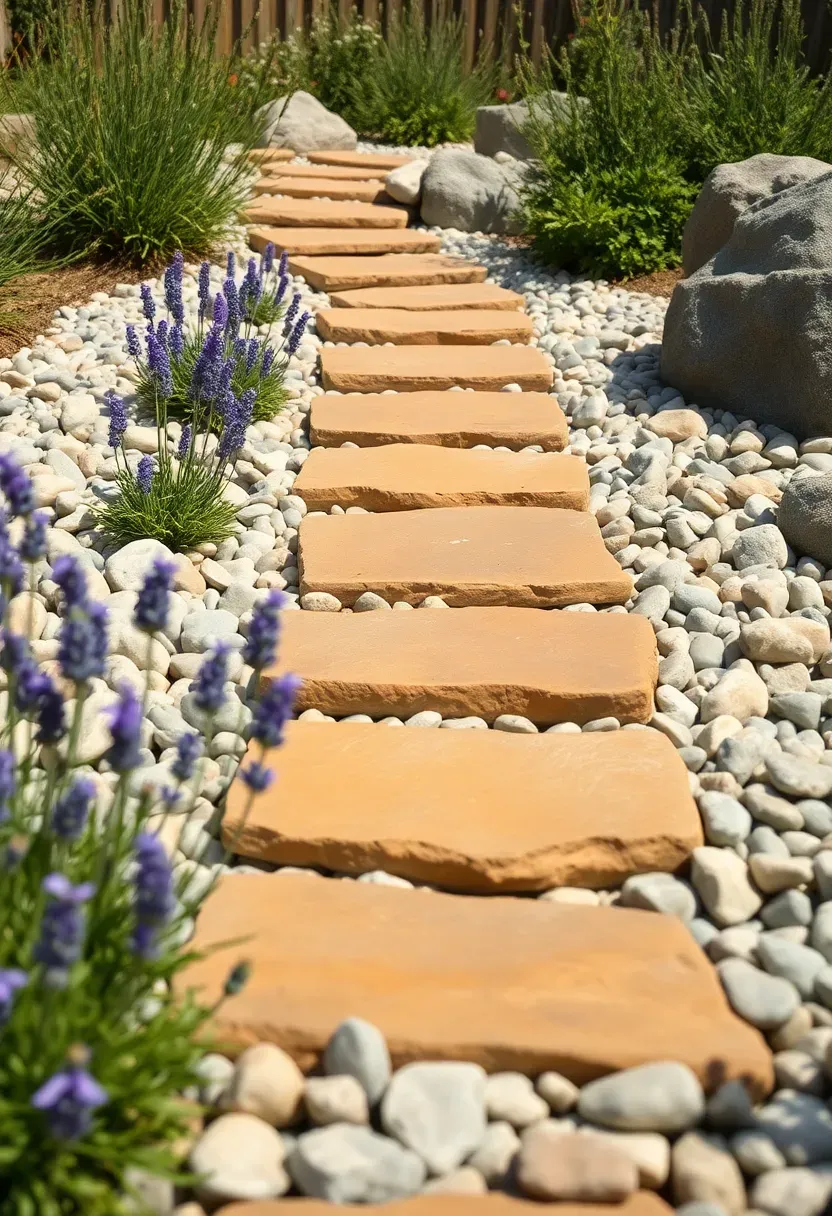
Oversized flat stones set at deliberately varied spacing encourage children to jump and balance between them, flanked by low lavender and rounded boulders sized for climbing and sitting.
Designing for Children Without Sacrificing Style
A children's-friendly rock garden does not need to look like a playground. The key is scale — stones large enough to be interesting physically, spacing varied enough to be a challenge, and edges smooth enough to land on safely. The same boulders that delight a six-year-old read as landscape architecture to adult eyes.
Pros and Cons
Pros: Encourages outdoor play and gross motor development; rugged materials tolerate rough treatment; design evolves naturally as children age. Cons: Sharp-edged angular stones are not appropriate — select rounded river boulders; loose pebble fill requires periodic raking back after active play.
Recommended
Items for this idea
23. Four-Season Evergreen Rock Border
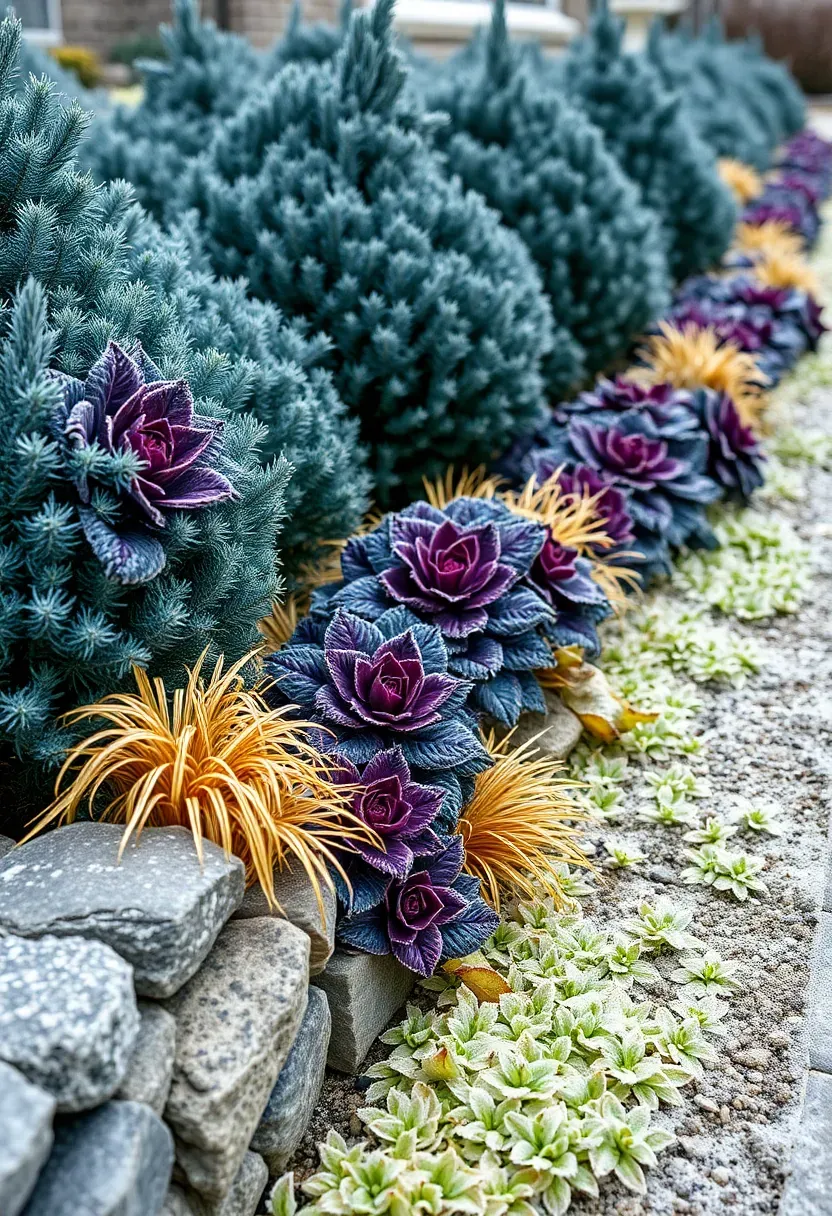
Dwarf conifers anchor the framework year-round while ornamental sedge, winter-interest kale, and low sedums ensure the garden holds visual structure even when snow covers the surrounding lawn.
Why Year-Round Structure Matters
Most garden design conversations focus on spring and summer peak performance. A rock garden that looks deliberate in February — interesting silhouettes, textured surfaces visible above snow, dried seedheads providing wildlife value — is a fundamentally more successful design than one that becomes invisible for five months of the year.
Plant Combinations for Four Seasons
- Spring: Bulbs planted beneath gravel — tulips and alliums push through to signal the season
- Summer: Sedums, thyme, and ice plant provide color and texture at ground level
- Autumn: Ornamental kale, grass seedheads, and rock surfaces take center stage as everything else fades
- Winter: Dwarf conifers, frosted stone surfaces, and hollow stems shelter overwintering insects
Quick FAQ
Is a rock garden high maintenance? Rock gardens require significantly less maintenance than traditional planted borders once established. Initial setup is labor-intensive — placing stones correctly is critical — but established rock plants generally need one trim, one feed, and occasional weeding per growing season.
Can rock garden designs work in small yards? Absolutely. Some of the most striking rock gardens occupy just a few square meters. A Japanese karesansui, a compact crevice garden, or a single boulder grouping with gravel mulch can transform a narrow side passage or small front garden in a way that flowering beds rarely achieve.
Which plants survive winters in rock gardens? Sedums, sempervivums, dwarf conifers, ornamental grasses, and most native alpines handle frost exceptionally well. Sharp drainage under the rocks prevents the root rot that kills many perennials in cold, wet winters — this is why rock garden plants often outlast the same species grown in standard border conditions.
Do AI tools actually help plan rock gardens? Modern AI landscape design tools generate photorealistic renderings from a simple phone photo of your yard. They are particularly useful for rock gardens because placement of large, unmovable stones is very difficult to visualize mentally. Testing five boulder arrangements on screen before renting a machine to move them is practical and cost-effective.
What type of rock is easiest to source for home gardens? Regional sedimentary stone — limestone, sandstone, or locally quarried fieldstone — is nearly always the most economical and visually harmonious choice. Stone that matches your regional geology looks like it belongs, while imported stone can appear incongruous regardless of how well the garden is designed.
Rock gardens occupy a rare position in landscape design: they are simultaneously ancient and contemporary, demanding and forgiving, structural and naturalistic. Start with one idea from this list — even a single well-placed boulder grouping with gravel mulch — and watch how it changes the feel of your outdoor space before committing to a larger project. The best rock gardens are rarely built all at once.
Pinterest cover for 23 AI Rock Garden Design Ideas
About the author
OBCD
CGI visualization and interior design content. We create detailed 3D renders and curate practical design ideas for every room in your home.