21 AI Waterfall Garden Ideas
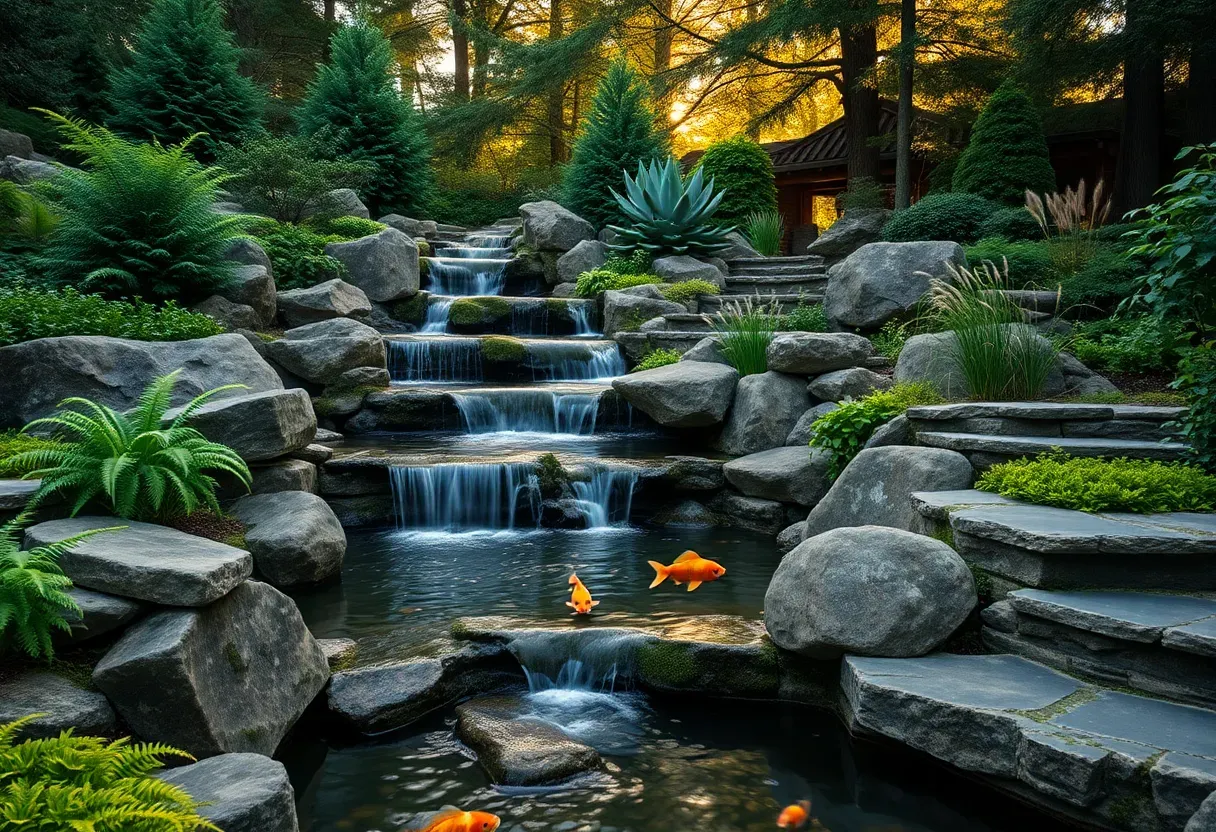
Water moves through a garden differently than any other element. It catches light, carries sound, draws the eye across a space, and invites a pause that flowering plants rarely achieve on their own. For a long time, designing a waterfall garden meant hiring a specialist or spending months experimenting with stone placement and pump sizing. AI landscape tools have changed that equation — feed them a photo of your yard, describe your style preferences and budget, and they generate photorealistic waterfall concepts drawn from thousands of real installations worldwide.
The 21 ideas collected here span everything from a humble DIY rain-chain trickle to a resort-style tropical plunge. In this article I've gathered designs that work in different climates, budgets, and yard sizes. Start wherever you like — every idea can stand alone.
Table of Contents
- Naturalistic Stacked Fieldstone Cascade
- Japanese Basalt Spillway and Stream Bed
- Modern Corten Steel Water Wall
- Pondless Limestone Waterfall
- Tropical Lava Rock Plunge
- Tiered Formal Stone Fountain
- Slate Wall Panel Courtyard Feature
- Rain Chain into River Rock Swale
- Hillside Terraced Water Channels
- Zen Dry Waterfall (Karetaki)
- Spa Spillover into Pool
- Millstone Bubble Fountain
- Illuminated Evening Waterfall
- Wildlife Pond with Pebble Beach Entry
- Monolith Boulder Crack Waterfall
- Shaded Woodland Seep Garden
- Gabion Wall Waterfall and Rill
- Container Amphora Waterfall for Terraces
- Four-Season Winter Weir Garden
- Children's Stepping Stone Stream
- DIY Reclaimed-Material Waterfall
1. Naturalistic Stacked Fieldstone Cascade
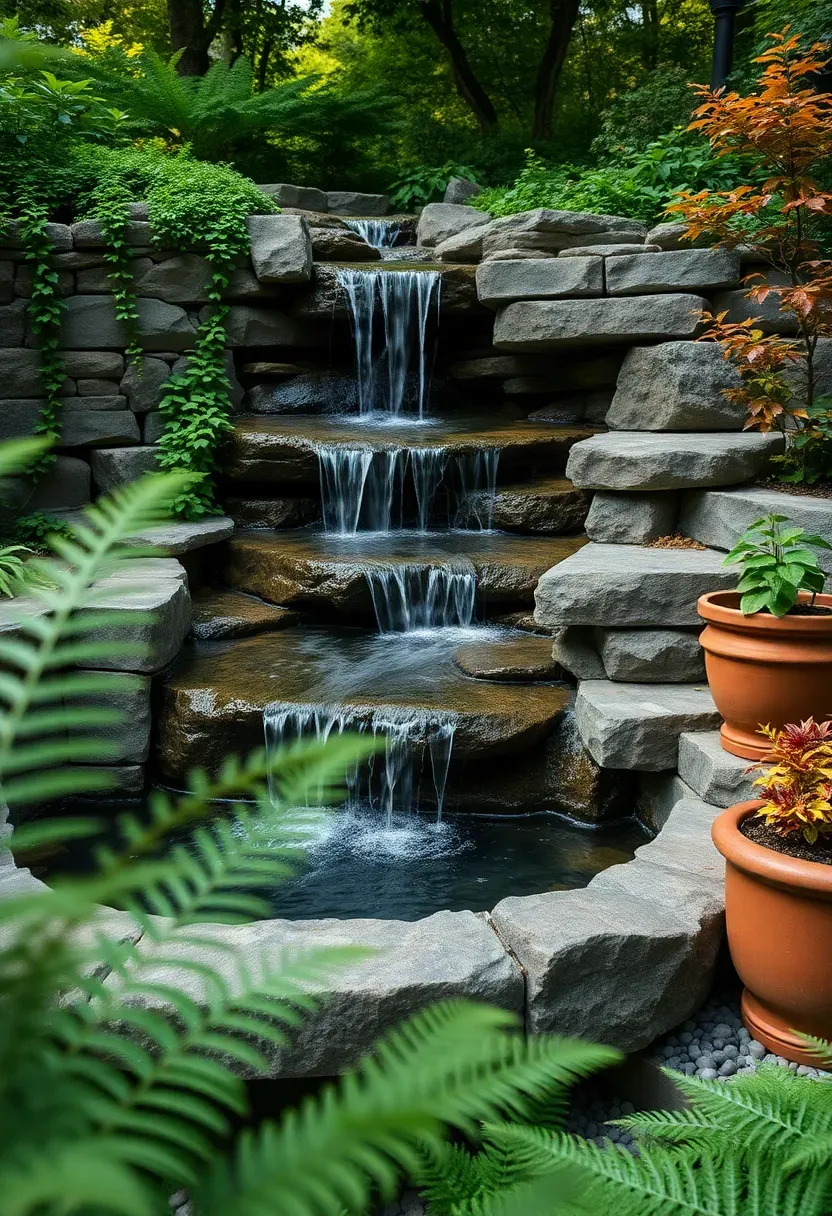
Fieldstone pulled from a single geological source gives this backyard waterfall its coherence — the stone looks like it has always been there, pushed up through the soil rather than delivered on a pallet. Water moves over three staggered levels into a small pool lined with river pebbles, catching enough air between drops to create audible white noise without requiring a large pump.
Why This Style Works in Most Yards
The irregular form of fieldstone means no two installations look identical, which makes it forgiving for DIY builders. Hostas and creeping Jenny thrive in the constant moisture at the edges, and the whole composition matures within two growing seasons as moss colonizes the damp stone faces.
Building Tips
- Tilt each stone slightly backward so water flows into the gap rather than sheeting off the face
- Size the pump to turn the pool volume over at least once per hour for clear water
- Plant moisture-lovers at the base immediately — bare stone edges look unfinished for longer than most builders expect
2. Japanese Basalt Spillway and Stream Bed
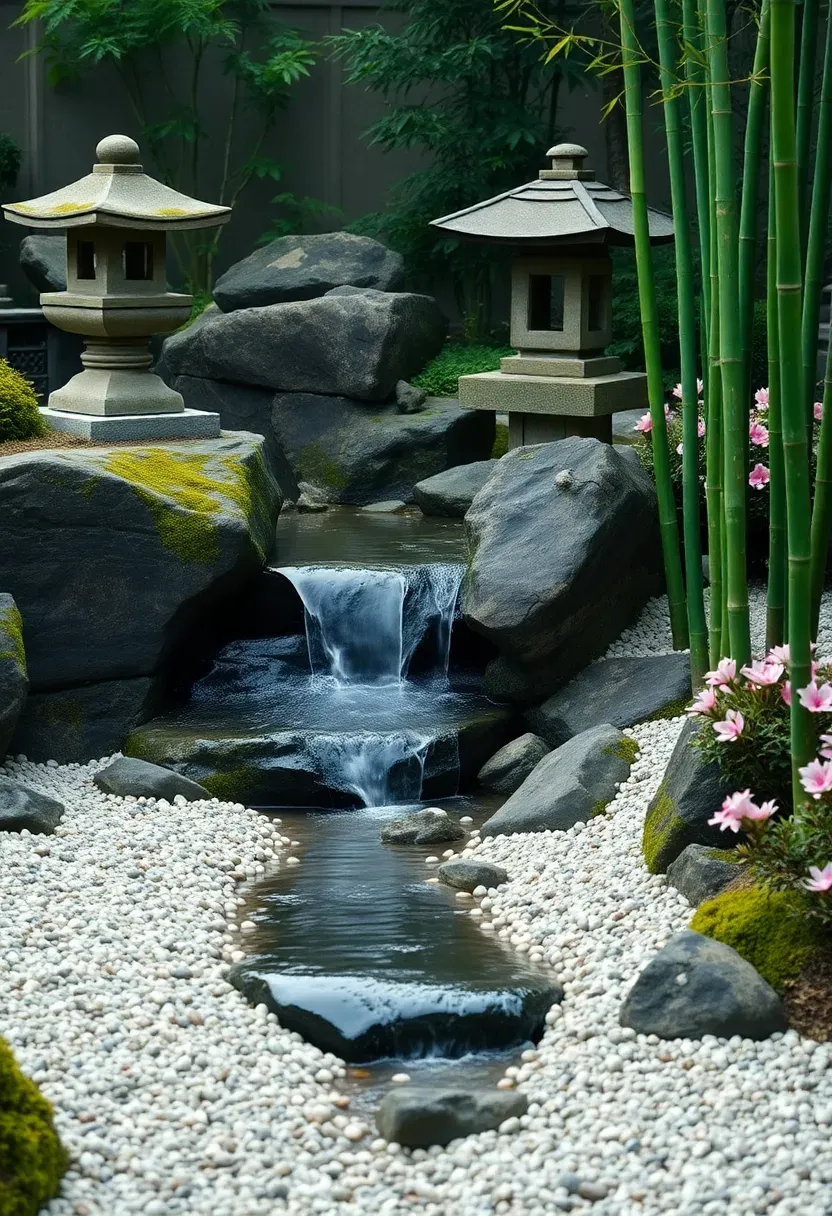
A polished basalt slab angled at ten degrees lets water slide silently across its face before spreading into a raked gravel and smooth pebble stream bed. The bamboo culms and moss-covered stone lantern are positioned with deliberate asymmetry — nothing is centered, and the intentional imbalance is the point.
The Philosophy of the Japanese Water Garden
In traditional Japanese garden design, water represents purity and the passage of time. The basalt spillway slows water enough to reflect sky and surrounding foliage — a quality called mizu kagami (water mirror) — while the raked gravel beside it suggests flow even when still. The combination delivers the full sensory effect of a stream within a compact footprint.
Practical Adaptation
In temperate climates: Protect the basalt surface from freeze-thaw cycling by running the pump continuously through winter, which prevents ice formation on the spillway face. Maintenance note: Bamboo drops leaves year-round, so install a simple mesh leaf trap over the pump intake to prevent blockage.
Recommended
Items for this idea
3. Modern Corten Steel Water Wall
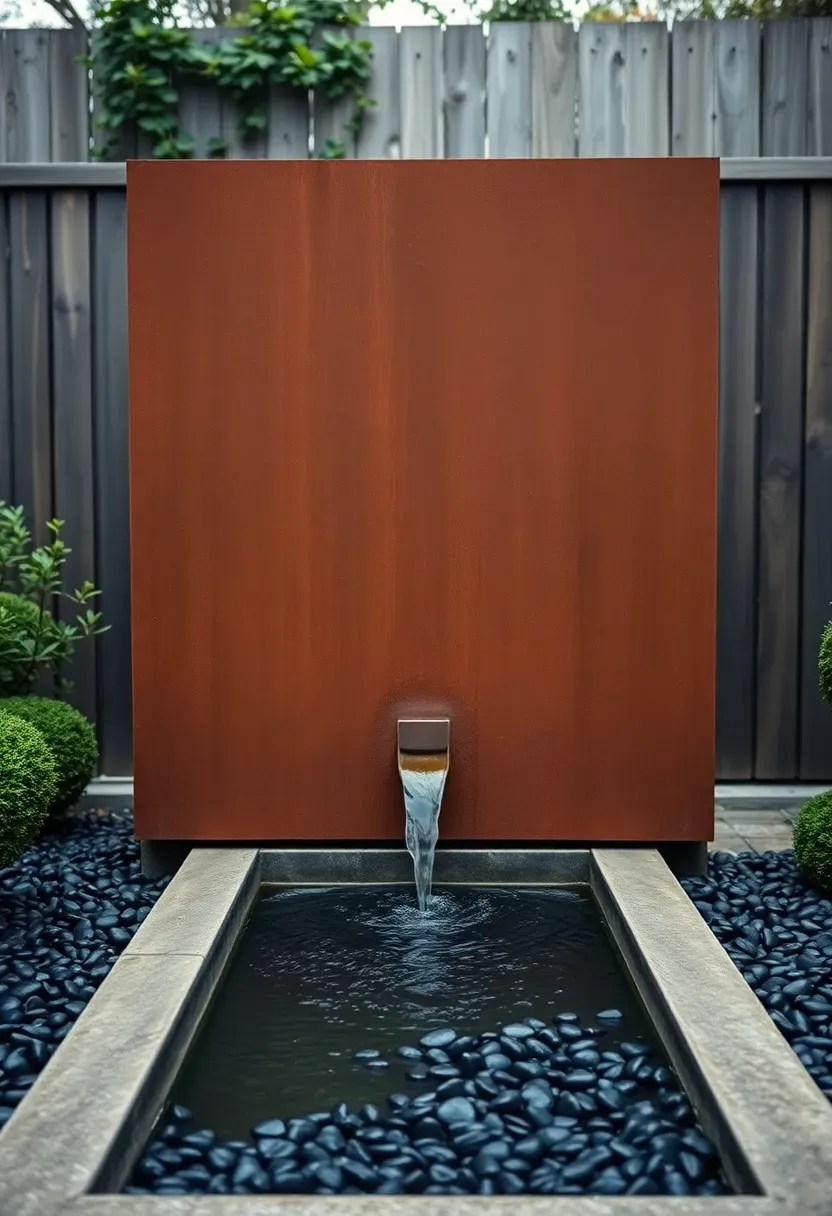
A flat Corten steel panel develops its characteristic rust-orange patina within the first season, making the water wall look more considered over time rather than less. The thin even sheet of water that slides over its face produces a white-noise hiss that is audible from a seating area four meters away — enough to create acoustic privacy in a built-up urban garden.
Comparing Materials: Corten Steel vs. Natural Stone
Introduction: the choice of water wall material defines both the visual tone and the maintenance commitment of the feature for the next decade.
Corten Steel
Industrial-warm, develops patina without sealing or treatment, suits contemporary architecture and coastal palettes. The eventual orange-brown tone is bold — it reads clearly against dark fencing or white rendered walls.
Natural Stone
Quieter visually, blends with planted gardens rather than anchoring them, requires no patina development but may need periodic sealing in freeze-thaw climates to prevent spalling.
What to Choose
Choose Corten if: your architecture has steel, concrete, or glass elements, and you want a feature that announces itself clearly. Choose natural stone if: the garden is primarily planted and the water feature should feel discovered rather than displayed.
Recommendation
For new urban courtyard gardens with hard landscaping, Corten is the lower-maintenance and more visually resolved option. For established cottage or woodland gardens, any stone in the regional geological palette will integrate more naturally.
4. Pondless Limestone Waterfall
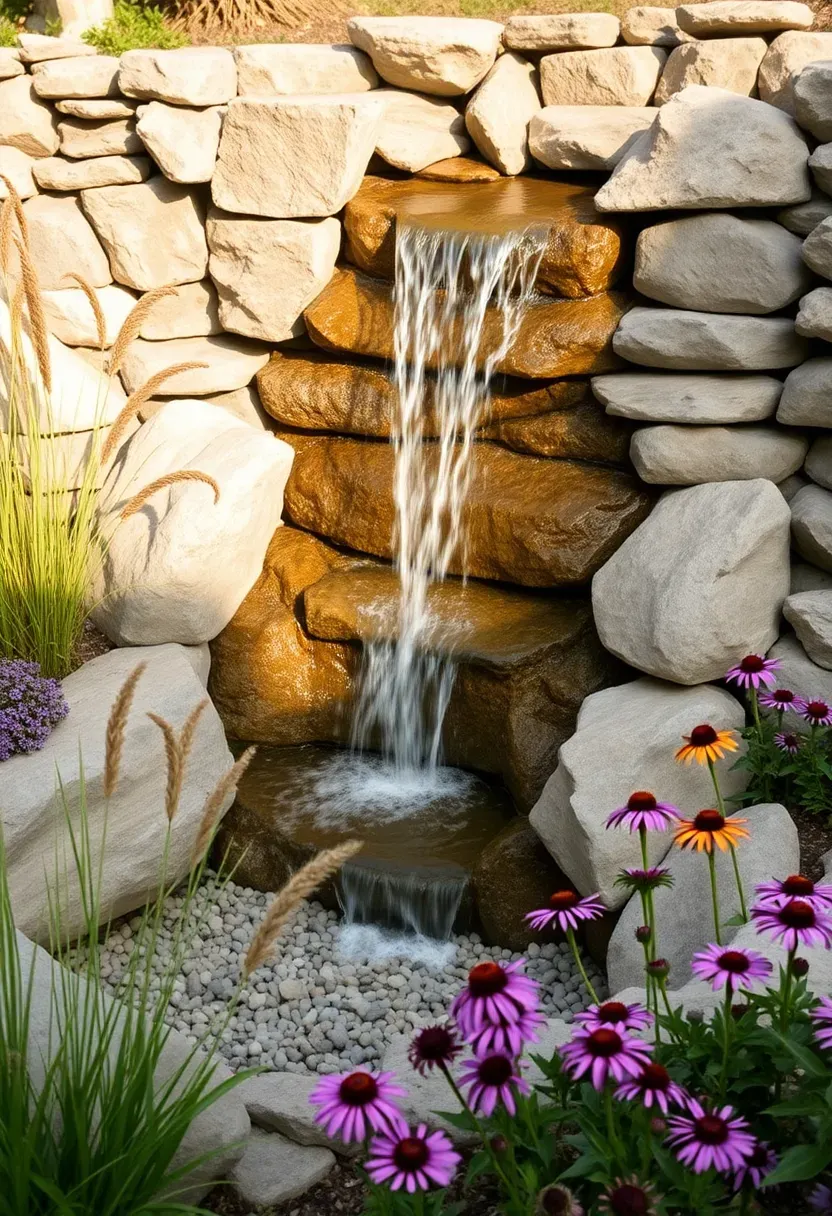
Water falls from a 1.5-meter limestone stack and disappears into a reservoir of angular crushed granite hidden under a decorative cobble surface. There is no standing pond — which eliminates mosquito habitat, removes the drowning risk for small children, and reduces the permit requirements that apply to open water features in many municipalities.
Why Pondless Is Growing in Popularity
According to 2026 landscaping trend data, pondless waterfall installations have grown 41% over the past three years, driven by families with young children and urban homeowners who want water sound without a maintenance-heavy pond ecosystem. The buried reservoir requires cleaning roughly once every two years — far less demanding than an open pond with fish.
What to Watch Out For
- The gravel reservoir must be deep enough to hold the full water volume when the pump is off — undersized reservoirs overflow when the system shuts down
- Use landscape fabric inside the reservoir rather than around it — you want fast drainage, not slow
- Grade the surrounding garden slightly away from the reservoir to prevent lawn runoff introducing silt
Recommended
Items for this idea
5. Tropical Lava Rock Plunge
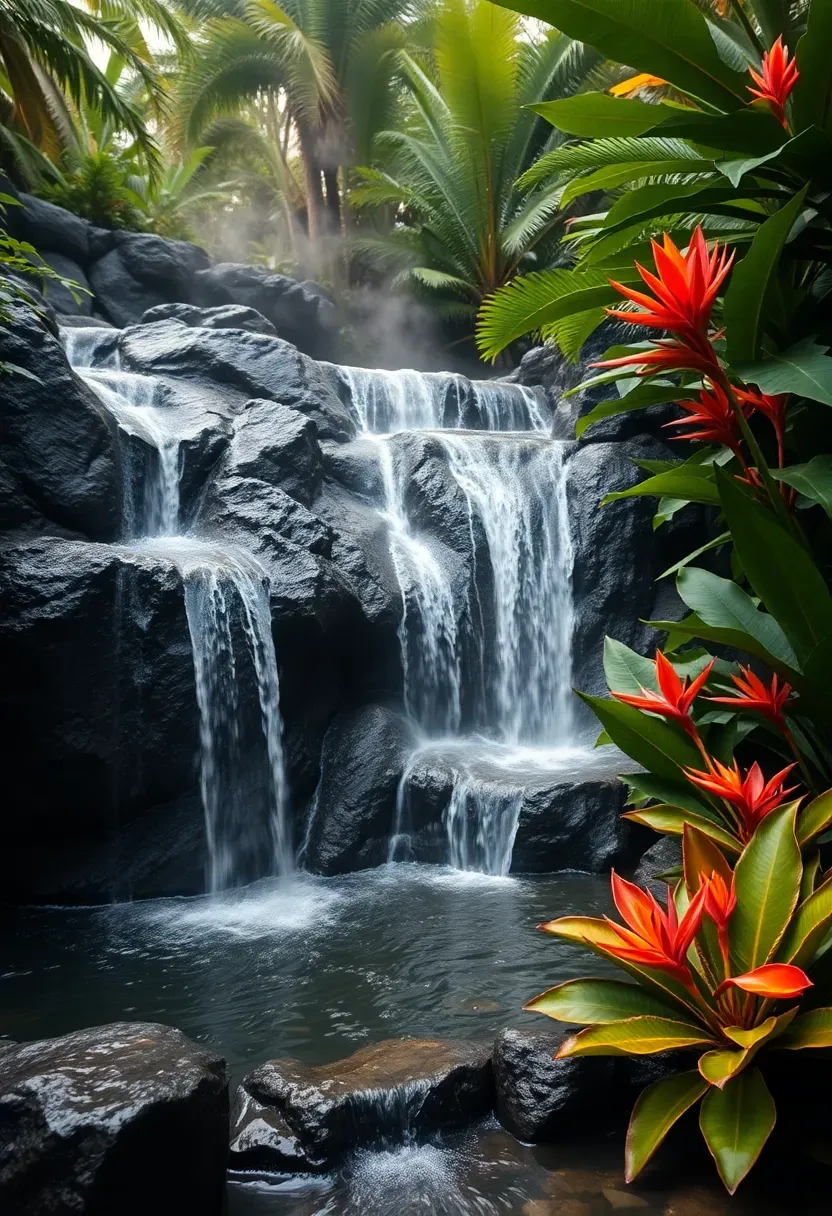
Dark volcanic lava rock holds heat from afternoon sun, warming the water as it sheets over the boulders and raises the temperature around the plunge pool by several degrees — a property that suits both the tropical planting and the humans using the pool. Bird of paradise and elephant ears planted tightly against the rock face create the impression that the waterfall emerges from a living wall.
Origins of Lava Rock in Garden Design
Hawaiian and Canary Island horticultural traditions have used raw lava rock as both a growing medium and landscape material for generations. Volcanic soil — partially broken-down lava — is among the most nutrient-rich on earth, and the porous surface of fresh lava rock supports extraordinary populations of beneficial soil organisms within the first few growing seasons.
How to Apply at Home
- Lava rock is significantly lighter than granite or limestone — useful for rooftop gardens, elevated decks, and raised pool surrounds where structural load is a concern
- In USDA zones below 9, use this design with large containers on wheels that can move indoors — the tropical plants require frost protection
- The porous rock surface will eventually be colonized by moss and lichen in humid climates, enriching the naturalistic effect without any intervention
6. Tiered Formal Stone Fountain
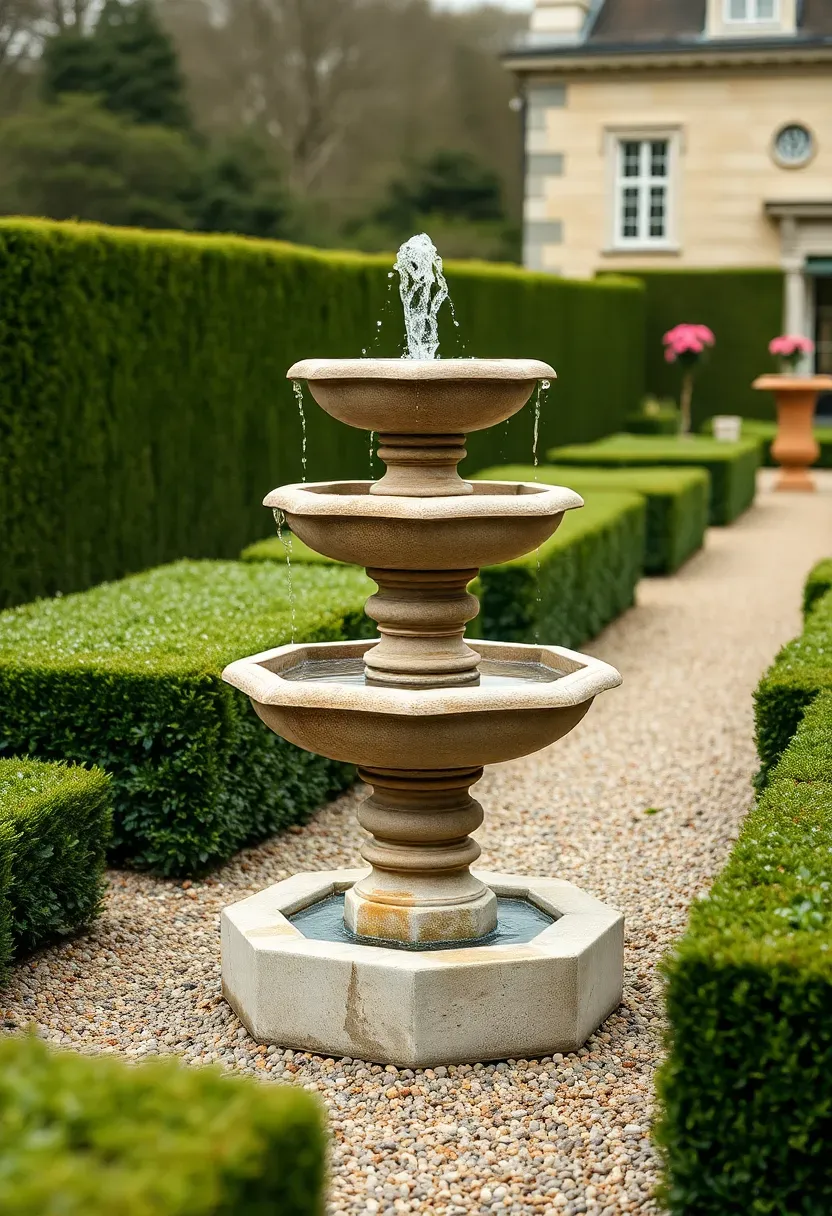
Three limestone basins descend in size, the water overflowing each lip with a musical, measured sound that carries across a formal garden without overwhelming conversation. The lichen on the oldest basins took decades to develop — or can be accelerated with a yogurt-and-moss slurry applied annually.
Step-by-Step for Installing a Tiered Basin Fountain
Opening: formal water features require precise leveling — even a two-millimeter tilt will cause one side of the basin to overflow while the other runs dry.
Step 1: Set the Base Basin
Excavate and level a concrete pad for the lowest basin. Check for level in four directions before the concrete sets.
Step 2: Install the Riser
A central hollow riser carries both the supply pipe and the electrical conduit. Cast or order this as a single piece to avoid joints that can shift over time.
Step 3: Set and Level Upper Basins
Work upward from the bottom basin. Shim each basin to level, then check overflow symmetry by running water at full flow before grouting the base.
What to Watch Out For
- Limestone requires sealing in freeze-thaw climates to prevent surface spalling over time
- Size the lowest basin generously — wind drift displaces water from upper bowls during gusty weather
- A timer valve that reduces pump output to a trickle overnight protects the pump motor without fully shutting the feature down
Recommended
Items for this idea
7. Slate Wall Panel Courtyard Feature
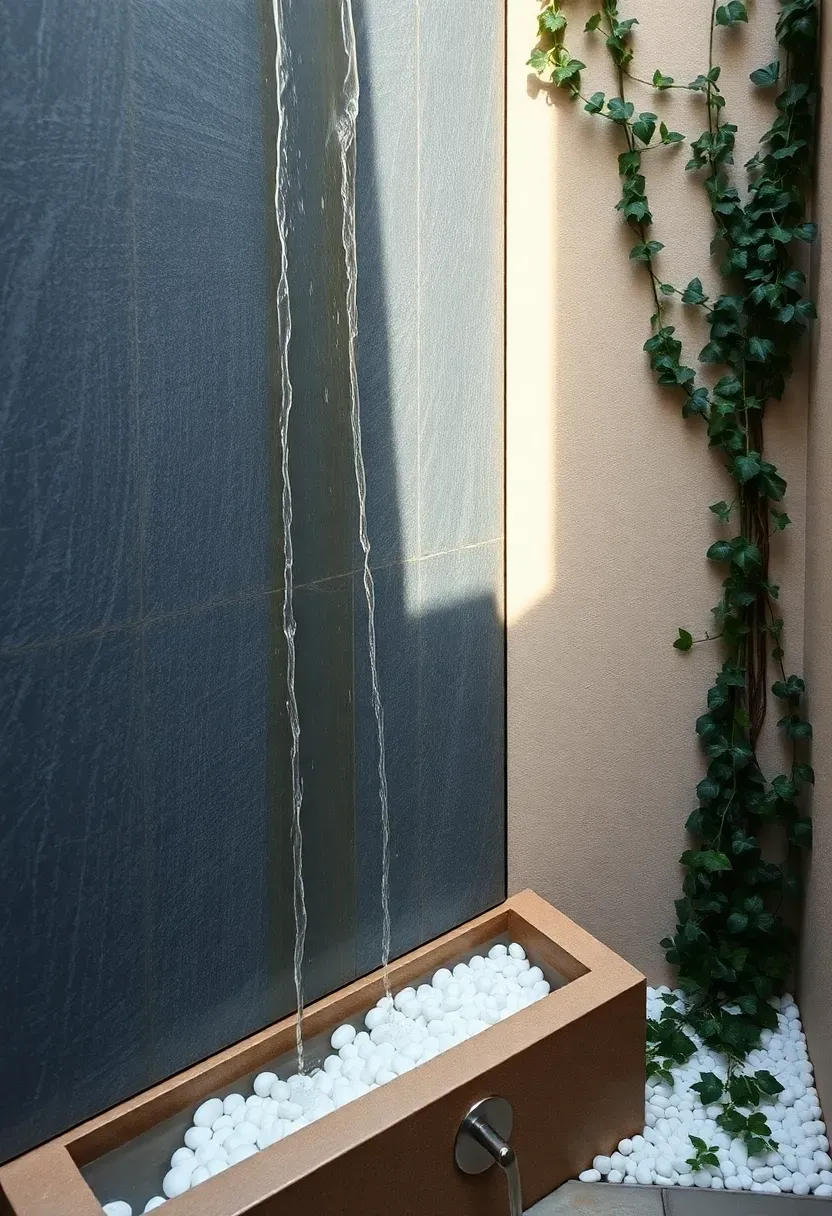
A rendered courtyard wall becomes a water feature when blue-grey riven slate tiles are fixed to its face and a stainless steel weir header distributes water evenly across their width. The result is a flat plane of moving water that occupies no floor area at all — the ideal solution for courtyards where every square meter counts.
The Case for Wall-Mounted Features in Small Spaces
Imagine a courtyard so narrow that placing a freestanding feature would block the path between the gate and the door. A wall-mounted waterfall removes that compromise entirely — the water feature is the wall. Trailing ivy planted in the trough below roots in the white pebble base and grows upward, eventually softening the transition between static wall and flowing water.
Practical Notes
- The header weir is the critical component — it must distribute flow evenly across the full width or water will channel down one side
- Seal the slate tiles with a penetrating stone sealer annually to prevent lime deposits from the water staining the surface
- Allow for a drip edge at the base of the slate panel to direct water cleanly into the trough rather than running down the rendered wall behind it
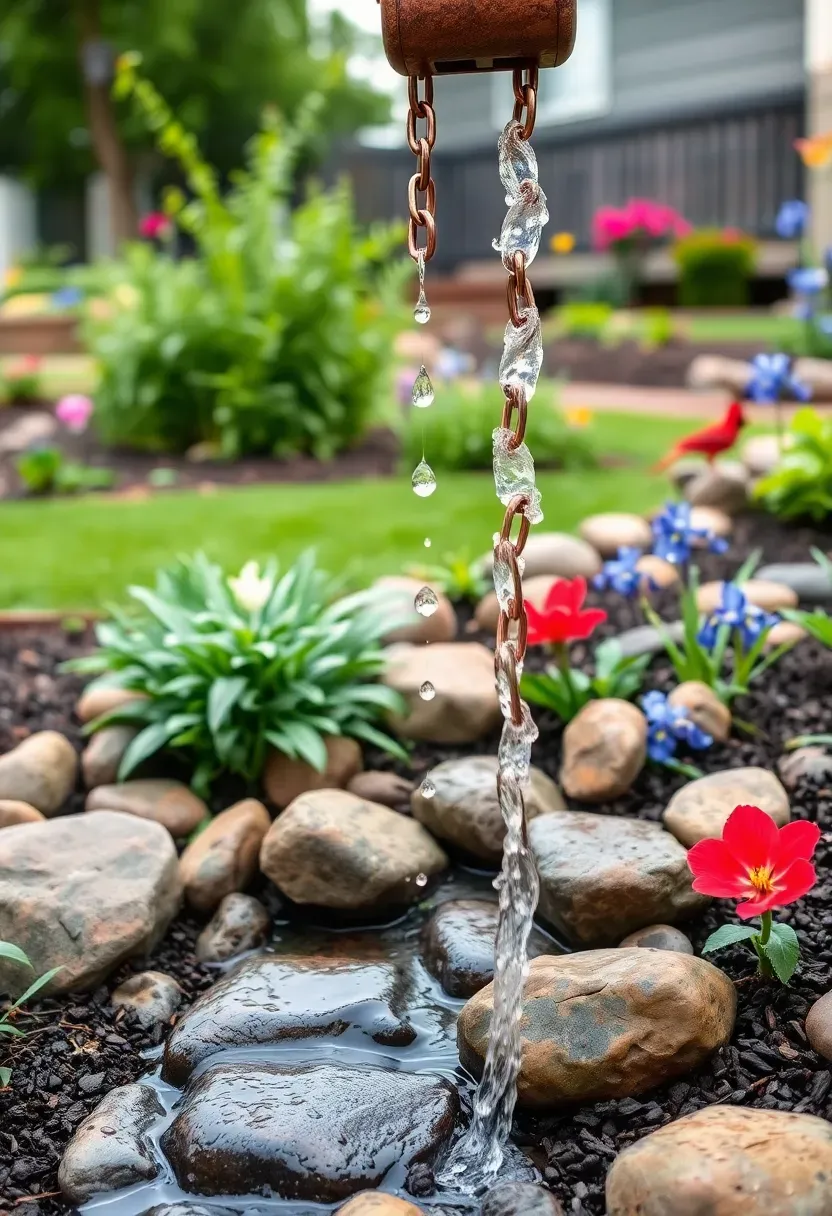
8. Rain Chain into River Rock Swale
A copper rain chain replaces the standard downpipe and guides roof water visibly and musically through a series of linked cups into a naturalistic river rock swale below. During dry periods, a small recirculating pump keeps the chain active. During rain events, the chain handles real roof runoff — making the feature genuinely functional rather than purely decorative.
Should You Replace Your Downpipes with Rain Chains?
Rain chains are one of the few garden features with a dual function: they look beautiful and solve an actual drainage problem simultaneously. Japanese kusari doi chains have been guiding roof water for centuries, originally in temple architecture and later in domestic settings. The modern version integrates a recirculating pump loop for dry-weather use, so the chain is active and audible year-round rather than only during rain.
Pros: Far more visually interesting than a standard downpipe; adds genuine sound and movement; handles real water volumes in rain events; copper develops an attractive patina. Cons: Not suitable for extremely high-volume downpipe positions — a large roof section during a storm can overflow the chain capacity; requires a well-designed receiver (the swale) to handle overflow gracefully.
Recommended
Items for this idea
9. Hillside Terraced Water Channels
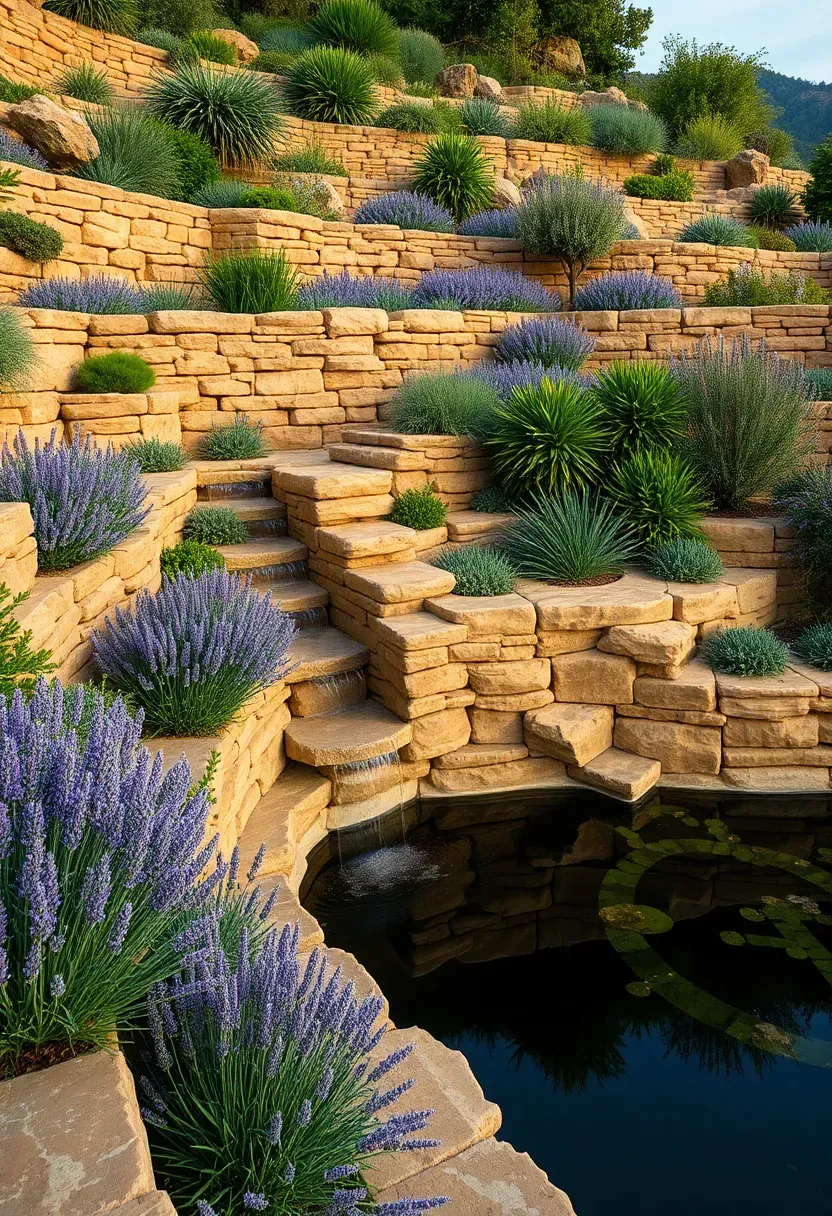
A sloped backyard that resisted conventional planting becomes a three-tier waterfall garden where water links each level through open flagstone channels. The highest terrace is planted with herbs — lavender, salvia, rosemary — whose roots tolerate the dry conditions near the stone wall tops. Aquatic marginals at the lower pool handle the opposite extreme: constant moisture.
Why Hillsides Suit Water Gardens Better Than Flat Ground
Gravity does the visual work on a slope. Water must travel somewhere, and guiding it through an intentional channel system transforms what was a drainage problem into a design feature. The terracing simultaneously converts a difficult-to-plant slope into three flat, productive garden levels — a net gain in usable planting area despite the excavation cost.
Planting the Three Levels
- Upper tier (driest): Mediterranean herbs, ornamental grasses, drought-tolerant perennials
- Middle tier (moderate): Salvias, agapanthus, ornamental alliums — tolerates occasional splash
- Lower pool margin (wettest): Iris, cardinal flower, sedge, marsh marigold — thrives in constant moisture
10. Zen Dry Waterfall (Karetaki)
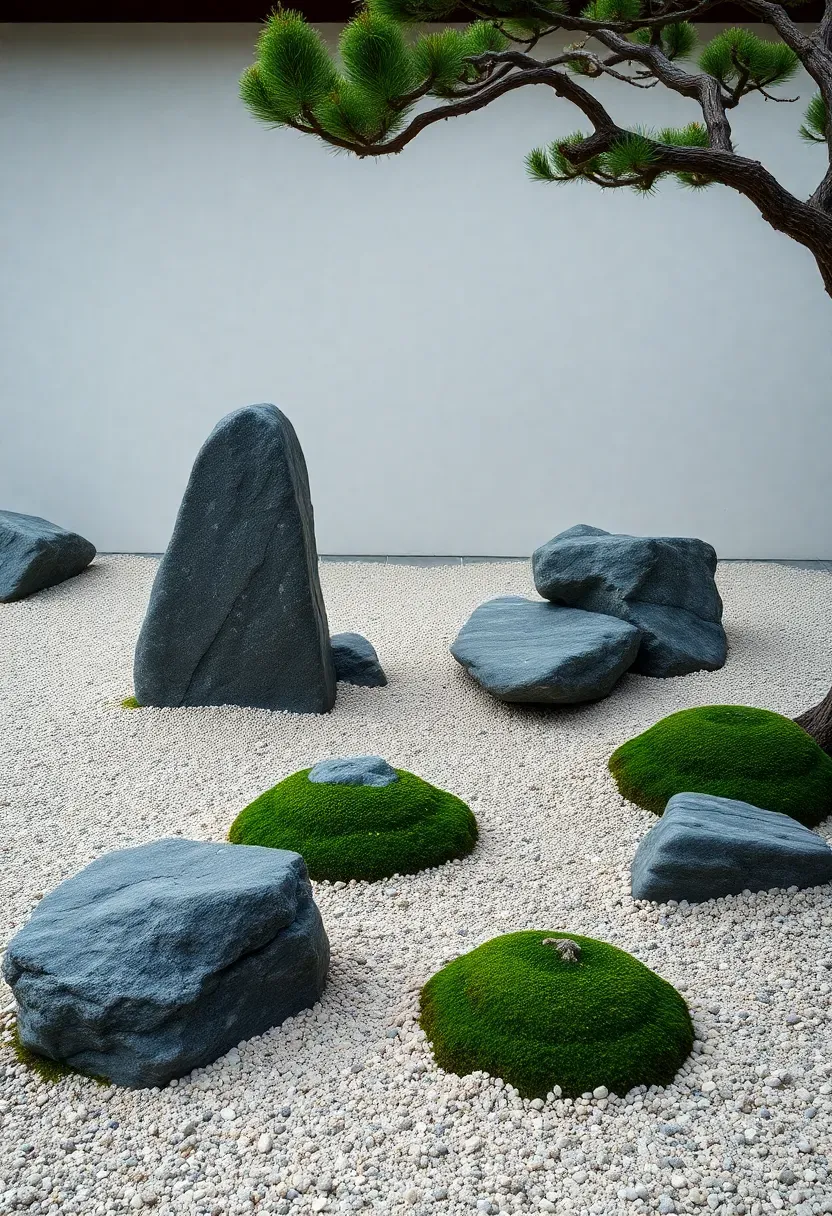
No pump. No water. Three upright dark granite stones arranged to suggest a frozen moment of cascading water — taller stones at the back implying the source, lower flat stones at the front suggesting the pool. Fine raked gravel radiates outward from the base stones, reinforcing the illusion of flow without a drop of water involved.
The History of the Dry Waterfall
Karetaki — dry waterfall — appears in Japanese garden design as early as the 11th century. The garden manual Sakuteiki describes techniques for arranging stones to suggest water through form alone. The practice reflected a fundamental principle of Japanese aesthetics: that suggestion is more powerful than depiction, and that the viewer's imagination completes what the garden only implies.
Why Consider a Dry Version
- Zero maintenance for the water element — no pump, no electrical, no winter draining
- Works in shaded gardens where water features create algae problems
- The design changes character with the seasons — spring raked fresh, autumn leaves left briefly in the gravel to become part of the composition
Recommended
Items for this idea
11. Spa Spillover into Pool
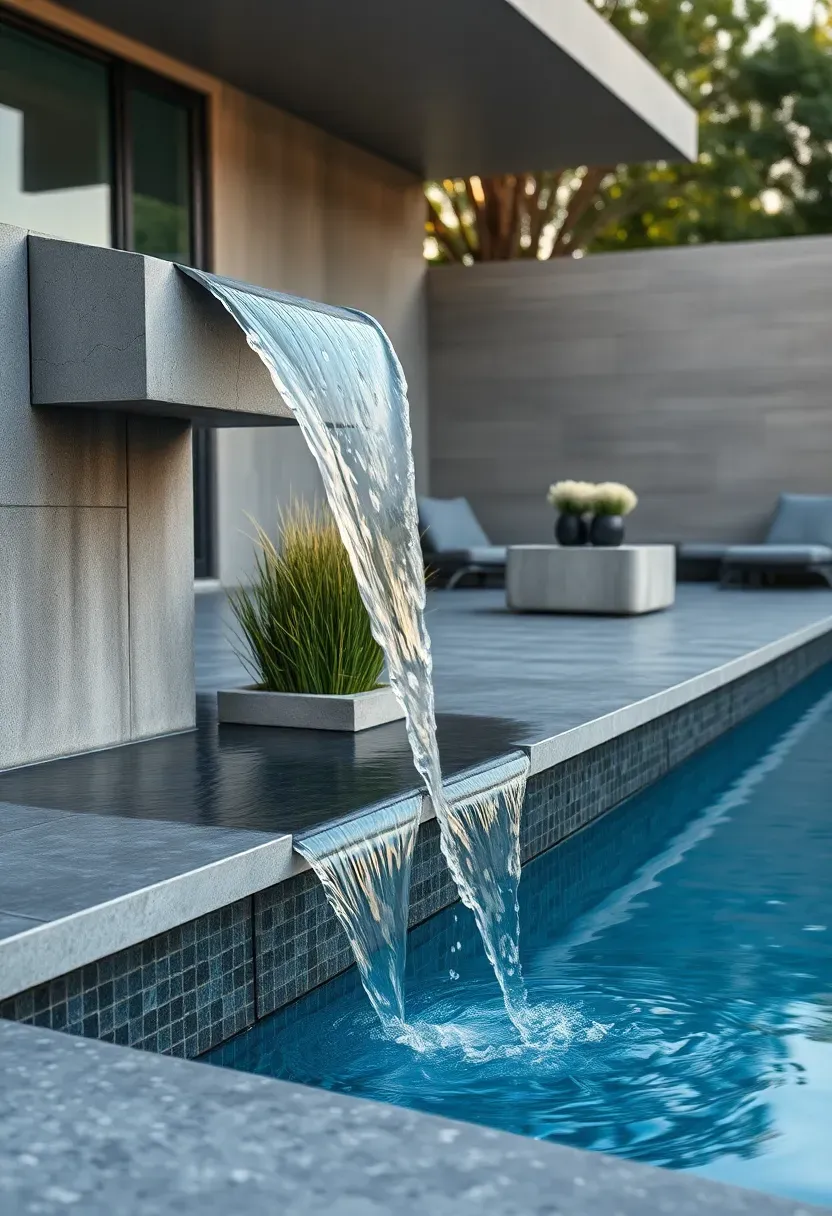
The elevated spa sits one meter above the main pool, and the water overflow from the spa spa edge becomes the pool's waterfall — a spillover that combines two features into one hydraulic system. Honed bluestone coping creates a crisp edge over which water falls as an even, glassy sheet rather than a broken cascade.
The Engineering Advantage
A spa-to-pool spillover requires no separate pump or plumbing — the spa's filtration return generates the flow automatically whenever the spa is running. The spillover waterfall is essentially a free addition to any elevated-spa pool design. The main variable is coping detail: a sharp, overhanging edge produces a clean sheet; a rounded edge breaks the water into drops.
Pros and Cons
Pros: No additional pump or electrical required; the water movement aerates the pool naturally; the sound of the spillover carries to every part of the pool deck. Cons: Spillover is only active when the spa runs — the pool is silent when the spa system is off; the elevated spa adds structural cost regardless of the waterfall benefit.
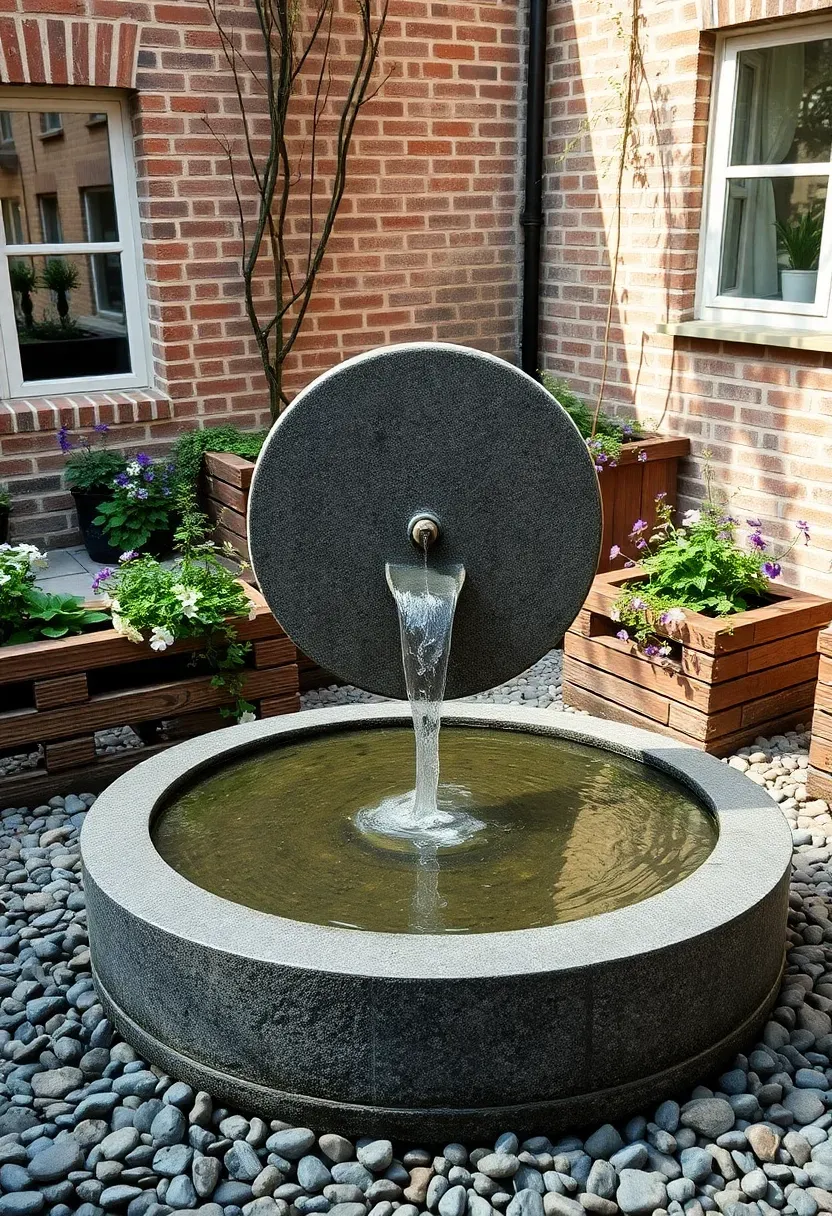
12. Millstone Bubble Fountain
A single granite millstone with a center-drilled hole becomes a self-contained water feature when a submersible pump lifts water to the surface and it sheets over the disc's face into a pebble-filled reservoir below. The whole installation fits in a two-meter circle, occupies no planting space, and can be completed in a weekend.
Why Small-Scale Features Deserve Attention
We often focus on dramatic, large-scale water features when planning gardens. But a millstone bubble fountain placed at a path junction or beside a garden bench delivers most of the sensory benefits — sound, movement, reflected light — at a fraction of the cost and complexity. The scale is intimate, which makes it feel personal rather than performative.
Setup Tips
- Drill the hole slightly off-center if the stone has a visually interesting grain pattern — centered drilling can bisect a beautiful feature
- Use a variable-speed pump so you can adjust the flow from a high bubbling jet to a gentle surface weep depending on mood
- Add a few aquatic plants in small pots submerged in the reservoir — they help keep the water clear without chemicals
Recommended
Items for this idea
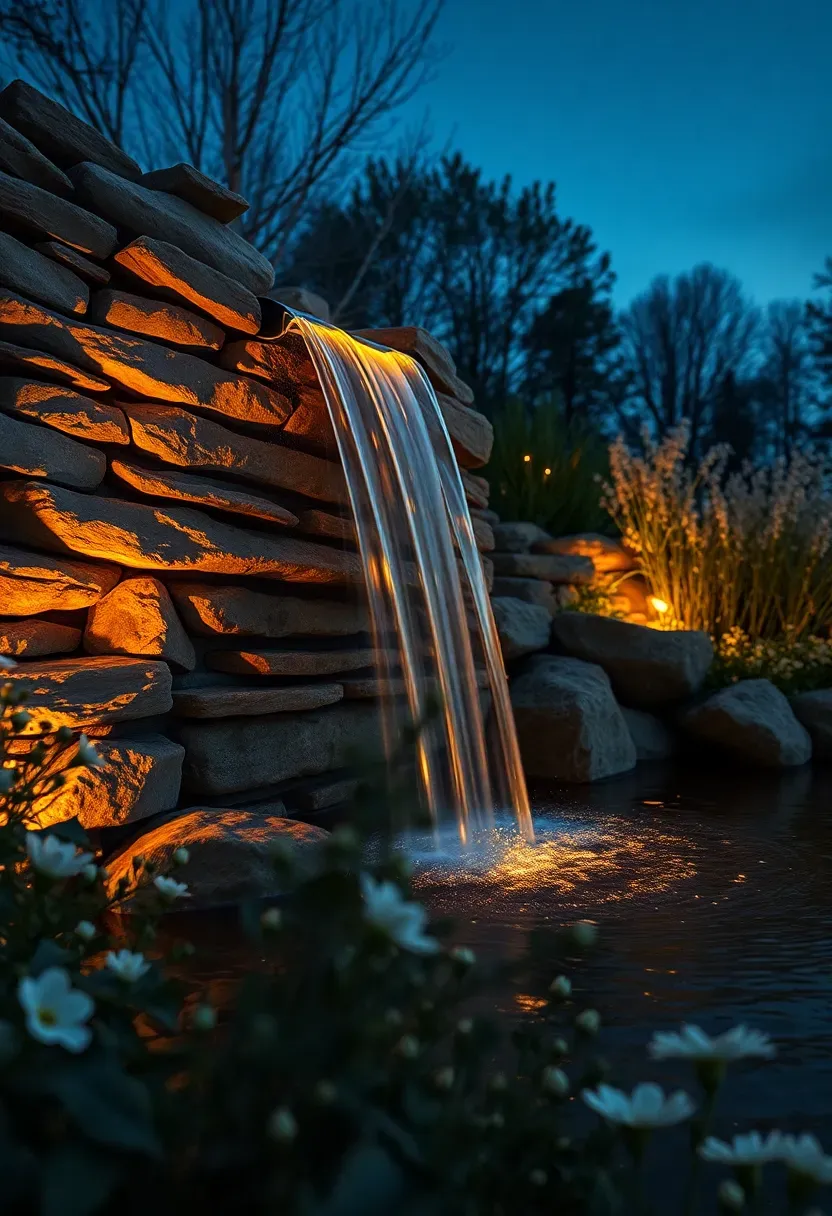
13. Illuminated Evening Waterfall
The stacked stone waterfall that reads as pleasant by day becomes genuinely dramatic after dark when warm LED uplights are positioned at the base of each boulder group. Water catching the amber light at different points in its fall creates a cascade of moving illumination — a visual effect that no amount of daytime planting can replicate.
Lighting a Waterfall: How to Get It Right
Placement determines everything. A light aimed directly at the falling water creates flat illumination; a light positioned to the side or behind the boulders, so water falls between the light source and the viewer, creates depth, shadow, and movement. Use fixtures with a color temperature of 2700–3000K — cooler light makes stone look clinical and drains the warmth from evening garden scenes.
Night Garden Plant Companions
- White moonflowers: Flowers open at dusk and close at dawn, providing bloom exactly when the lighting is active
- Silver artemisia: Reflects amber light strongly, appearing to glow from within
- Night-scented stock: Releases fragrance after dark, adding an olfactory layer to the visual experience
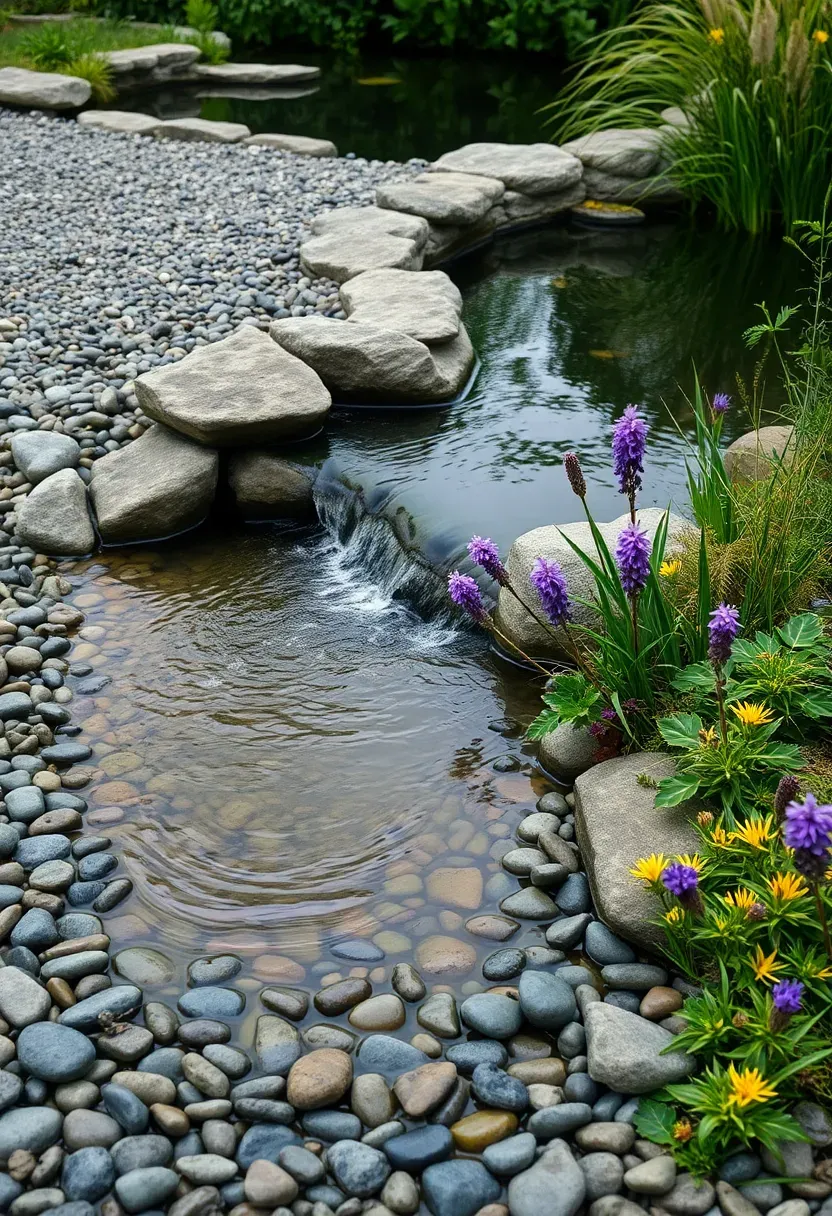
14. Wildlife Pond with Pebble Beach Entry
A gently sloped pebble beach replaces the vertical wall that makes most garden ponds inaccessible to wildlife. Water enters the pond over the beach from a small recirculating cascade above, creating the shallow-edge habitat that hedgehogs, amphibians, and birds all require to drink and exit safely. The trickling water sound also attracts birds from a wide radius during dry weather.
Building for Biodiversity
A wildlife pond is one of the highest-value interventions a homeowner can make for garden ecology. A 2024 Royal Horticultural Society study found that gardens with open water supported on average 8.3 times more amphibian species than comparable gardens without. The pebble beach entry is the critical element — without a shallow entry and exit, wildlife cannot use the pond safely.
What to Plant at the Margin
- Submerged: Hornwort, water crowfoot — oxygenate the water and provide spawning habitat
- Emergent edge: Blue flag iris, marsh marigold, water forget-me-not — support invertebrates and provide egg-laying sites
- Marginal terrestrial: Purple loosestrife, native sedges — shelter and food for adult frogs and hedgehogs
Recommended
Items for this idea
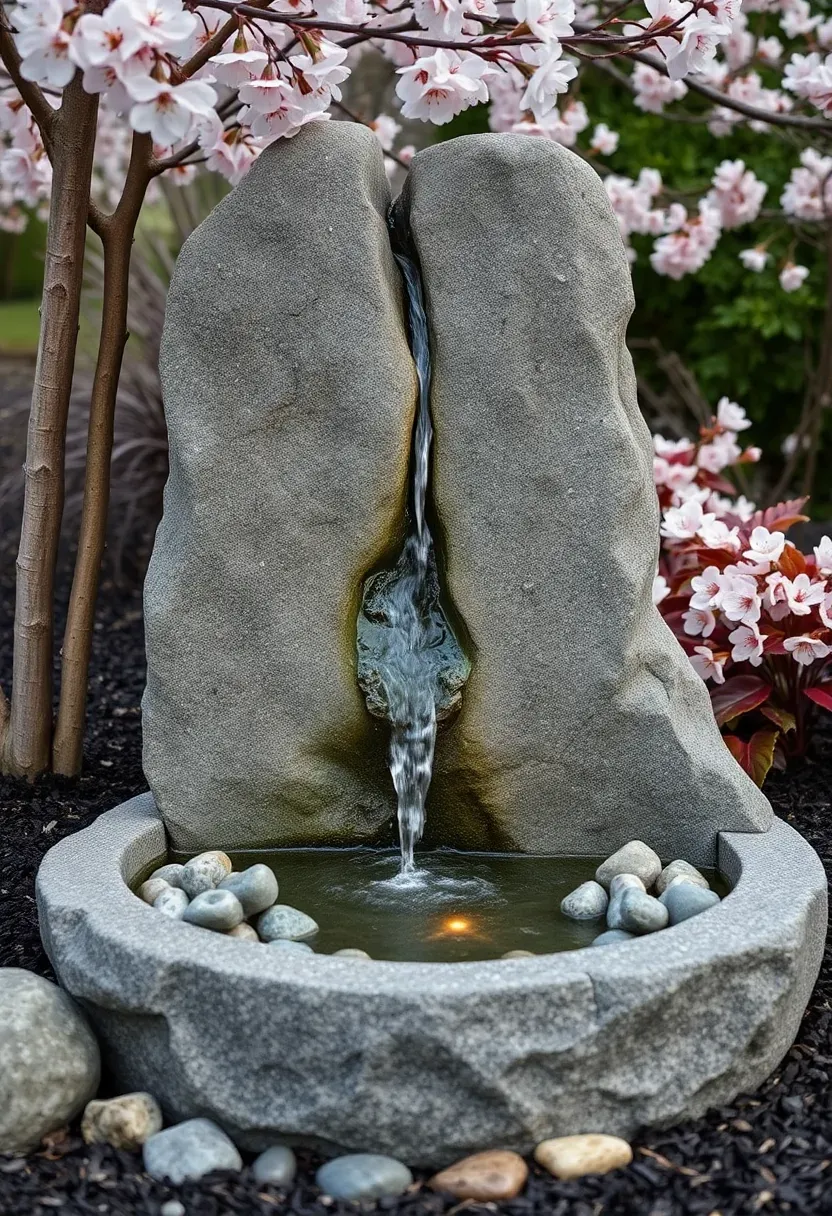
15. Monolith Boulder Crack Waterfall
A single granite monolith with a naturally occurring vertical fissure is positioned as a front yard focal point. Water is pumped to the top and channeled through the crack, emerging as a controlled trickle that follows the fissure's path before falling into a round cobble basin at the base. The natural crack makes the feature look geological rather than constructed.
Trend: Naturalistic Over Engineered
According to 2026 garden design trend reports, there has been a 28% rise in searches for "natural stone waterfall" over the past two years, driven by a broad shift away from visibly engineered features toward installations that appear to have grown from the site. The monolith crack technique is particularly effective because the feature exploits rather than hides the stone's natural character.
Finding the Right Stone
- Source from local quarries or stone yards — monolith pieces with natural fissures are common offcuts from architectural stone projects and are often sold at reduced cost
- The fissure should run vertically, or close to it, for reliable water channeling; diagonal fissures cause the water to migrate sideways
- Have the stone positioned professionally even if you do everything else yourself — moving multi-hundred-kilogram stones requires machinery
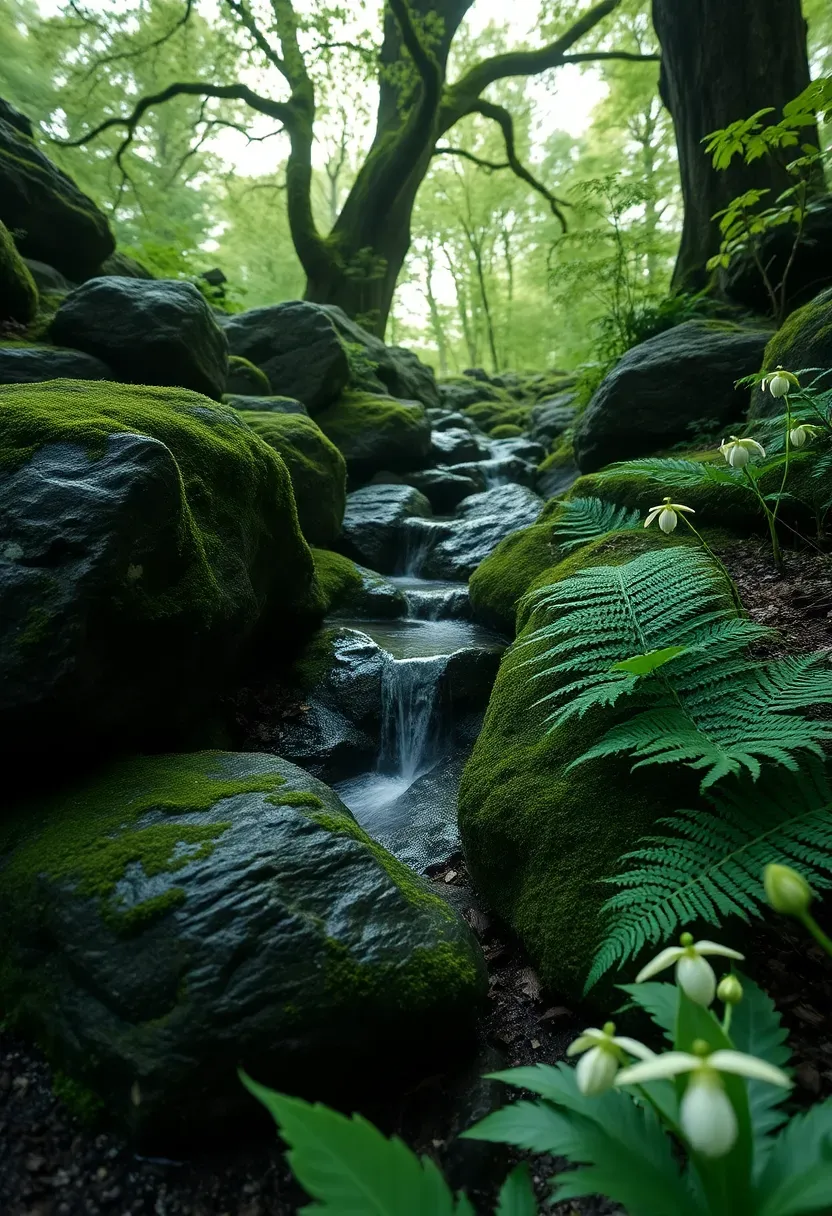
16. Shaded Woodland Seep Garden
In the shadiest corner of the yard — where grass struggles and flowering perennials sulk — water seeping between moss-covered boulders creates the perfect growing conditions for plants that cannot succeed anywhere else: ostrich ferns reaching knee height, trillium appearing briefly in spring, wild ginger carpeting every surface between the rocks.
Why Shade Gardens Benefit Most from Water
Shaded gardens face a perpetual problem: the plants that thrive in shade often need consistent moisture, but the same shade that limits sun also limits evaporation, causing feast-or-famine water conditions. A slow seep waterfall with a recirculating pump delivers precisely the consistent, low-volume moisture that woodland plants need, effectively turning the most challenging corner of the garden into its most lush.
Establishing a Woodland Seep
- Use a low-flow pump — this feature performs best when water barely trickles rather than flows; the goal is saturated moss and damp soil, not a running stream
- Moss establishes fastest on surfaces that are shaded, consistently damp, and slightly acidic (pH 5.5–6.5); test your water pH and amend if it runs high
- Introduce ferns as bare-root divisions in early spring when moisture is naturally abundant — they establish roots before summer stress
Recommended
Items for this idea
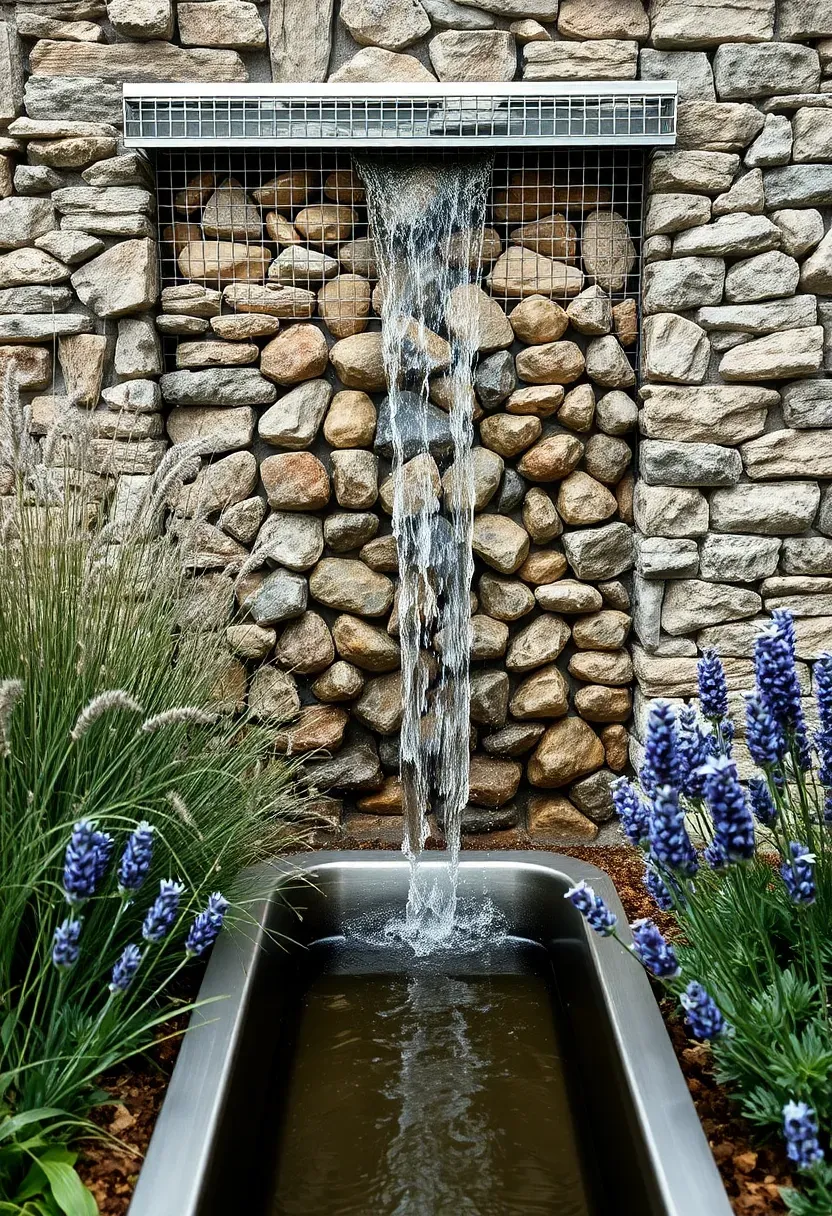
17. Gabion Wall Waterfall and Rill
A steel wire gabion cage filled with rounded river cobbles is topped with a simple steel weir header that distributes water evenly across its width. The water sheets down the textured cobble face and runs the length of a narrow steel rill channel before disappearing into a buried reservoir. The gabion acts as both structural retaining wall and water feature in a single element.
How Gabions Changed Garden Design
Gabion walls entered mainstream garden design in the early 2000s as a sustainable alternative to poured concrete retaining walls. The open mesh structure allows drainage behind the wall — preventing the hydrostatic pressure that eventually cracks poured walls — while the visible stone fill creates a texture that poured concrete cannot replicate. Adding a waterfall function to a gabion retaining wall is a natural extension that repays the wall's cost with an additional aesthetic benefit.
Tips for Gabion Waterfall Construction
- Use cobbles in a single size range (80–120mm) for visual consistency and structural stability; mixed sizes create voids that the mesh cannot fully contain
- Position the steel weir header at least 50mm back from the gabion face so water has time to distribute evenly before it reaches the visible stone surface
- Plant the rill margins with low ornamental grasses rather than flowering perennials — the movement of grass beside the moving water creates a satisfying visual rhythm
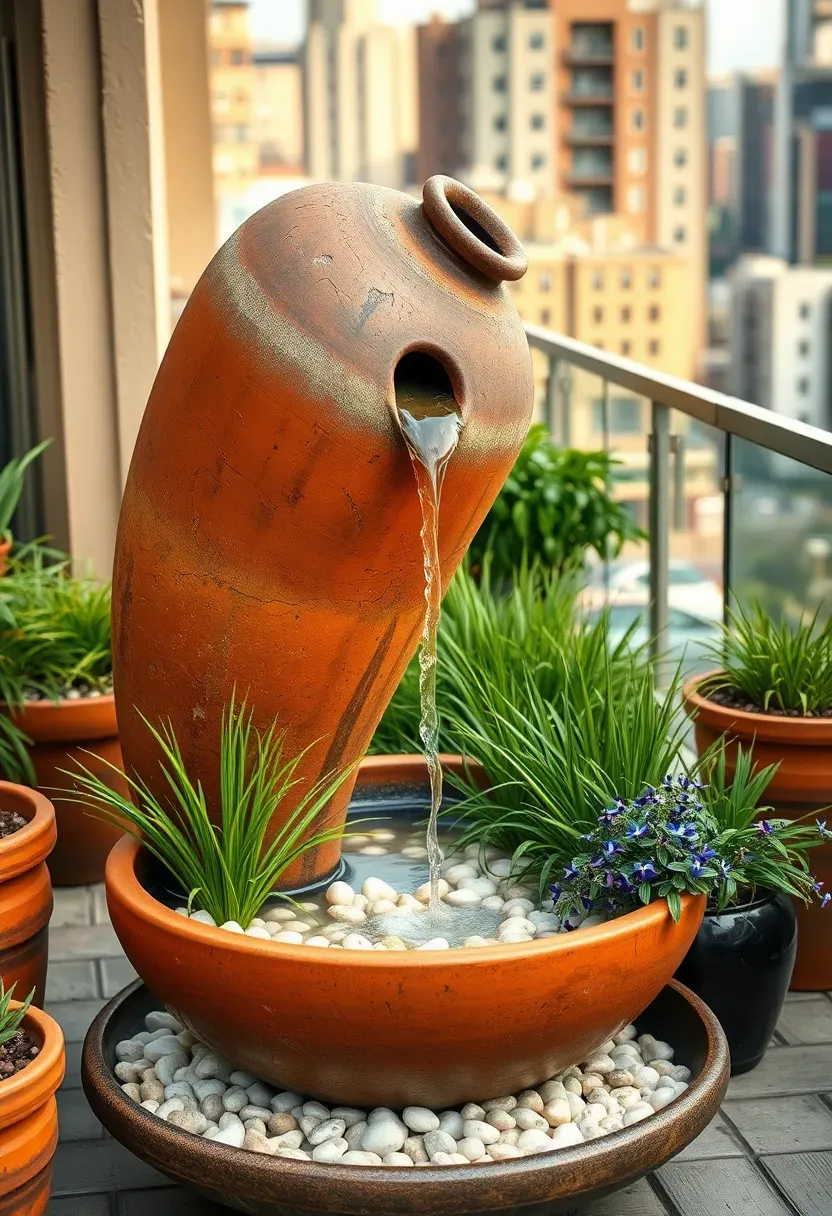
18. Container Amphora Waterfall for Terraces
A tall terracotta amphora tilted at thirty degrees with a pump tube running through its base allows water to flow continuously from the mouth, over smooth white quartz pebbles, and into a wide glazed bowl planter below. The entire feature occupies a 60cm footprint and weighs — when filled with pebbles and water — approximately the same as a large planter of potting mix. No ground penetration, no permit, no contractor required.
The Case for Container Water Features
"Start small" is advice that applies nowhere more usefully than to garden water features. A container waterfall on a terrace demonstrates within a single season whether you enjoy the maintenance, the sound, and the presence of water in your outdoor space before committing to an excavated pond or built water wall. It can also move — to a new terrace, a different garden corner, or a new house.
Making It Work
- Recirculating pumps for container features are available as ultra-low-wattage solar-powered units — no electrical outlet required if the terrace receives six or more hours of direct sun
- Add one or two aquatic plants in small mesh baskets submerged in the bowl — they filter the water biologically and reduce the algae growth that makes small features turn green within weeks
- The amphora's terracotta will stain and weather — accelerate the patina with a dilute iron sulphate wash in the first season rather than waiting years for it to develop naturally
Recommended
Items for this idea
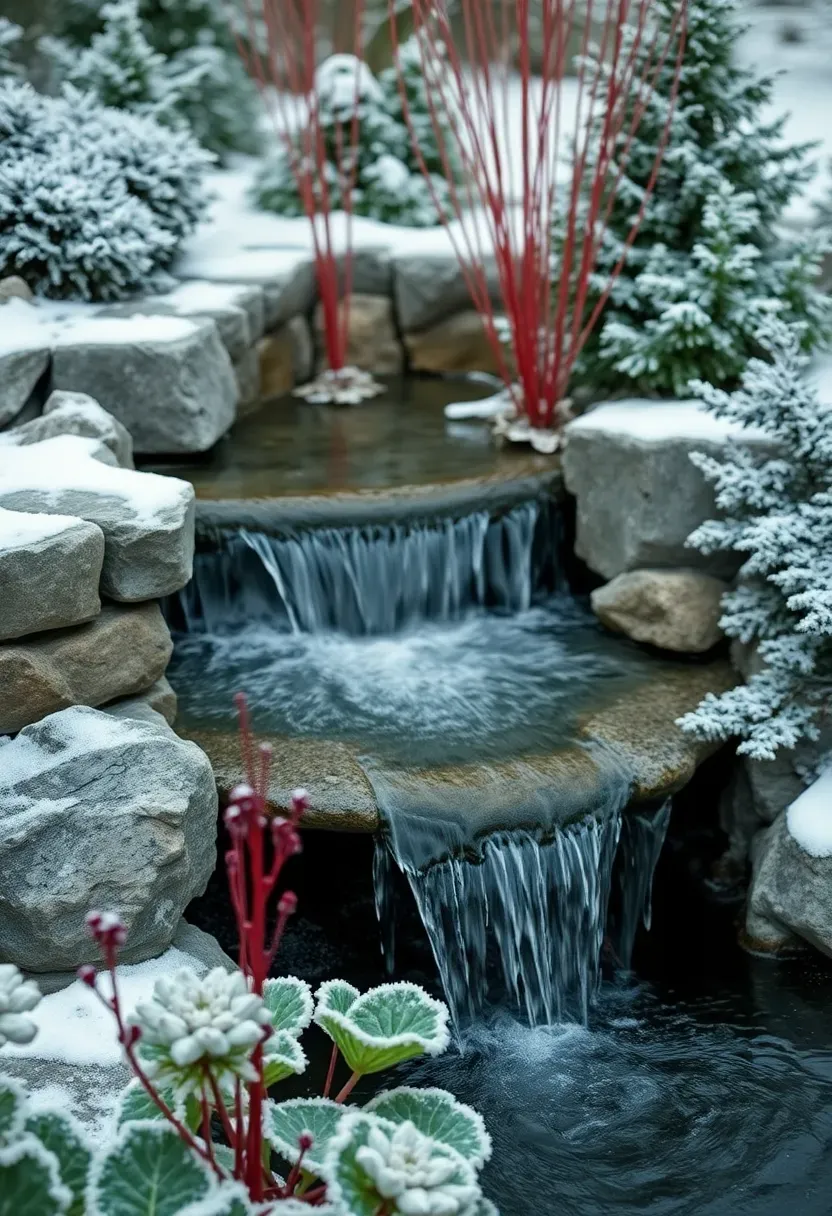
19. Four-Season Winter Weir Garden
Most waterfall gardens go silent in winter: the pump shuts down, the pond freezes, and the feature becomes invisible for five months. A heated stone weir with an insulated reservoir below keeps water moving year-round — and the contrast of flowing water against snow-covered ornamental kale and the vivid red stems of winter dogwood produces a garden scene that is far more striking than anything the same space achieves in summer.
Keeping Water Moving Through Winter
A low-wattage submersible pond heater prevents the reservoir from freezing solid while a weatherproofed pump continues to push water over the weir face. The energy cost is modest — comparable to running a 60-watt bulb — and the benefit extends from November through March: the garden remains alive and audible when every other garden in the street is invisible under frost.
Plant Combinations for Four Seasons
- Spring: Hardy ferns uncurling around the weir base signal the season's start
- Summer: Aquatic marginals at the pool edge bring texture and wildlife activity
- Autumn: Red-twig dogwood flares before leaf drop; ornamental grasses hold their seed heads
- Winter: Dogwood stems, frosted kale, and flowing water against snow — the garden's best month visually
20. Children's Stepping Stone Stream
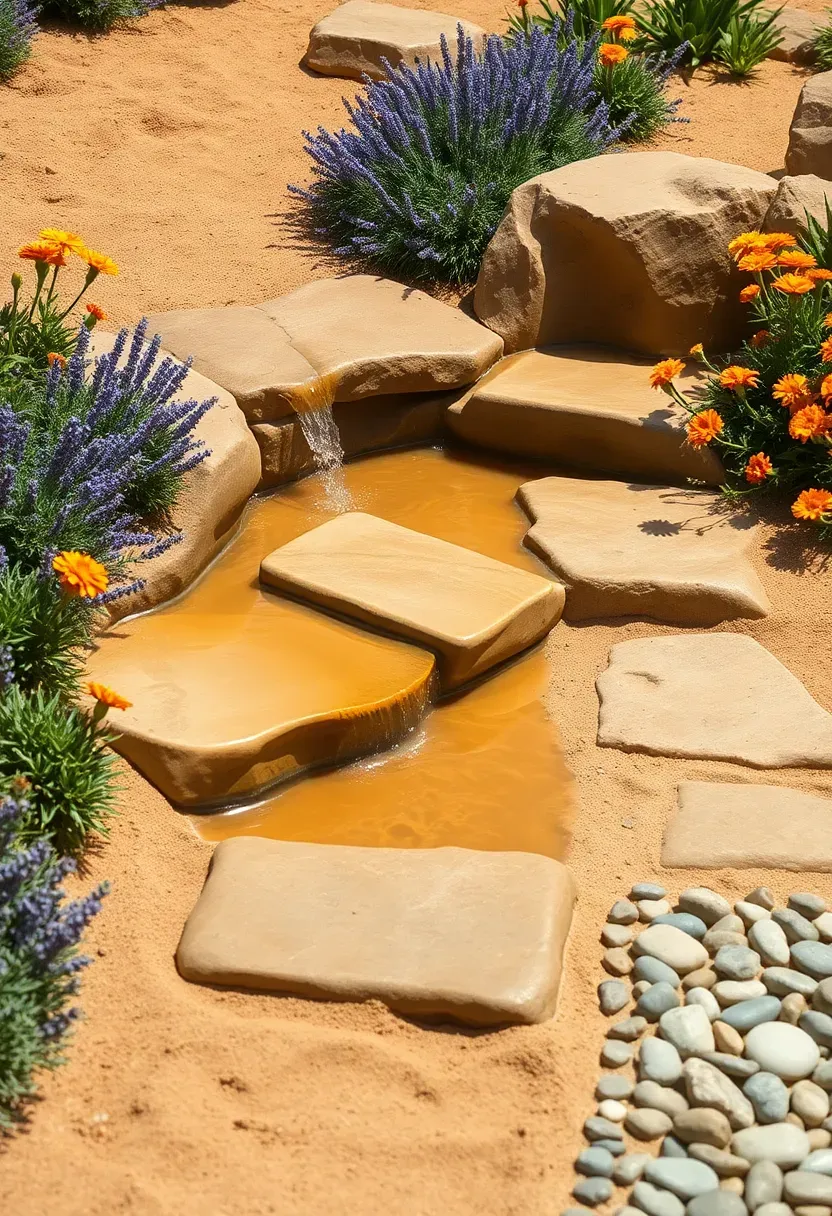
A shallow stream runs over a series of broad flat sandstone steps at a depth no greater than five centimeters — deep enough to be interesting, shallow enough to be safe without supervision. Children step from stone to stone across the stream, and the splashing created by their movement is part of the feature's design rather than a problem to prevent.
Designing for Children Without Sacrificing Style
A children's interactive water garden does not need to look like a playground. The flat stones read as landscape architecture from adult eye level; the shallow water catching afternoon light looks beautiful in photographs; the marigolds and lavender planted beside the stream smell wonderful to parents as well as to children. The design grows with its users — what is a stepping challenge for a four-year-old becomes a habitat study for a ten-year-old.
Safety and Practicality
- Maximum depth is 5cm throughout — no pooling, no still deeper sections
- Surface all stepping stones with a non-slip texture; sandblasted or textured sawn sandstone performs well
- Surround the stream channel with sand rather than pebbles at toddler level — pebbles are a choking risk for children under three
Recommended
Items for this idea
21. DIY Reclaimed-Material Waterfall
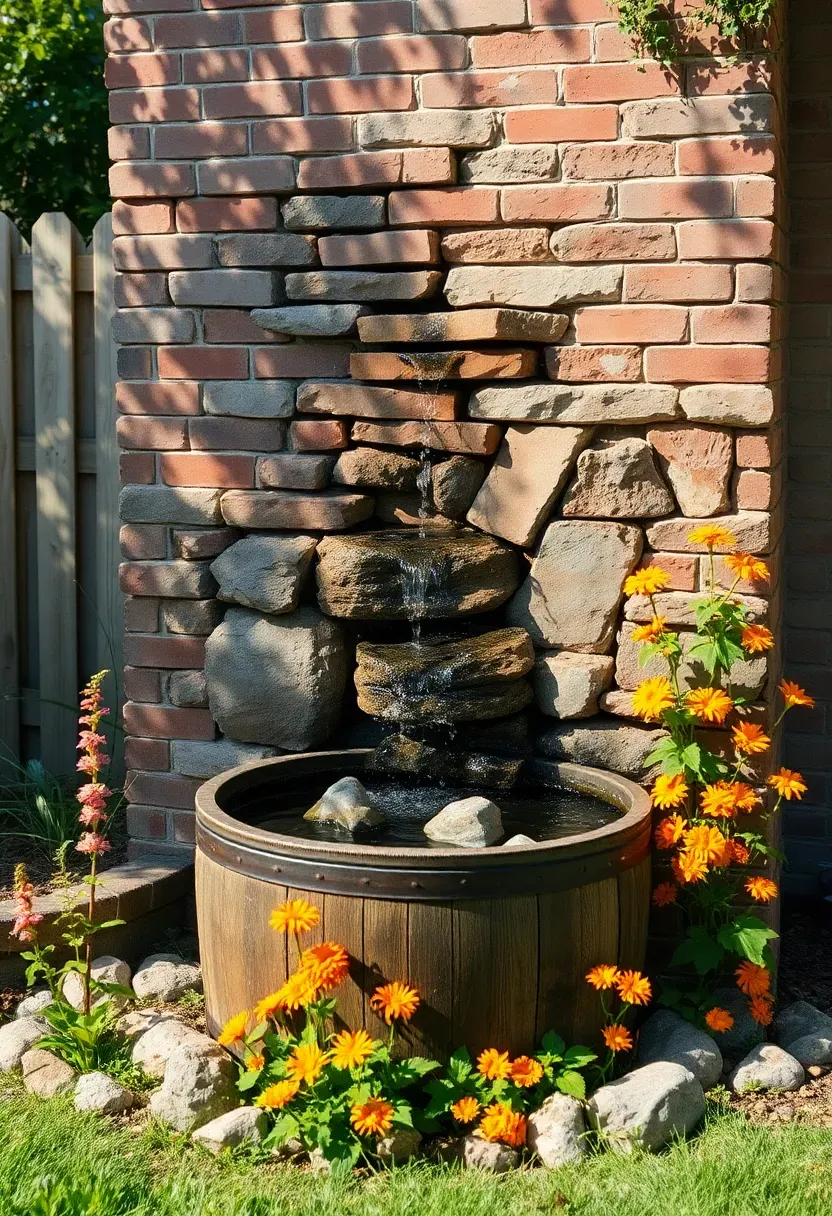
Reclaimed building materials — old brick, salvaged river stone, a retired oak half-barrel — combine into a waterfall that looks as though it has weathered decades rather than one weekend's work. Self-seeded foxgloves appear in the second spring, climbing nasturtiums drape the stonework by summer, and what started as a practical use of demolition offcuts becomes the most characterful corner of the garden.
Why Reclaimed Materials Work So Well for Waterfalls
Provenance is visible in aged brick and salvaged stone in a way that new materials cannot fake. The mortar remnants on old bricks, the rounded corners of river stone handled by previous builders, the stain rings on an oak barrel — all of these details communicate history. A waterfall made from reclaimed materials looks exactly as naturalistic as a fieldstone cascade at a fraction of the stone yard cost.
Sourcing and Building Tips
- Brick salvage yards and architectural reclamation companies are the most reliable sources; online marketplaces regularly list demolition materials at very low or zero cost
- Use a food-safe rubber pond liner inside the barrel rather than relying on the wood's water retention — old barrels leak
- The pump and pipe work can be hidden entirely within the brick stack; plan the cable and water supply route before laying the first course
Quick FAQ
Is a pond required for a garden waterfall? No. Pondless waterfall systems — where water disappears into a buried gravel reservoir — are now the most popular residential option precisely because they eliminate the open standing water that requires pond maintenance, creates safety concerns around children, and demands mosquito management. The sound and visual movement are indistinguishable from a pond-based system.
Which pump size do I need for a home waterfall? A general rule: for every centimeter of waterfall width, allow 400 liters per hour of pump flow rate. A 30cm-wide waterfall needs a pump rated at approximately 12,000 LPH. The head height (vertical distance from reservoir to waterfall top) reduces effective flow — check the pump's performance curve at your specific head height, not the maximum flow rate quoted at zero head.
Can waterfall garden designs work in cold climates? Yes, with two options: run the system year-round with a submersible heater to prevent the reservoir from freezing, or drain and winterize the system each autumn. Running year-round produces more interesting winter visual effects (flowing water against frost and snow) but adds a modest energy cost and requires a weatherproofed pump rated for cold-water operation.
What's the difference between a pondless waterfall and a rain garden? A pondless waterfall recirculates its own closed water supply using a pump — it is a decorative feature that uses the same water repeatedly. A rain garden is an open system designed to capture and absorb actual stormwater runoff from roofs or paved surfaces. Both can incorporate stone and naturalistic planting, but their functions are fundamentally different: one is aesthetic, the other is infrastructural.
Should I use chlorine to keep my waterfall pool clear? Not in a planted or wildlife waterfall garden — chlorine at any useful concentration harms aquatic plants, kills beneficial bacteria, and is toxic to amphibians. Instead, combine adequate pump flow rate (turning the volume over at least once per hour), a UV clarifier on the return line, and submerged oxygenating plants. This biological approach produces clearer water than chemicals while supporting garden ecology.
Trends come and go, but moving water in a garden has been valued in every culture and every era of garden design for a simple reason: it makes a space feel alive in a way that planting alone cannot. Start wherever your budget, yard size, or ambition lands you — even a single container amphora on a terrace changes how you use that space. The best waterfall garden is the one that gets built.
Pinterest cover for 21 AI Waterfall Garden Ideas
About the author
OBCD
CGI visualization and interior design content. We create detailed 3D renders and curate practical design ideas for every room in your home.