19 Arizona Landscape Ideas That Thrive in the Desert Heat
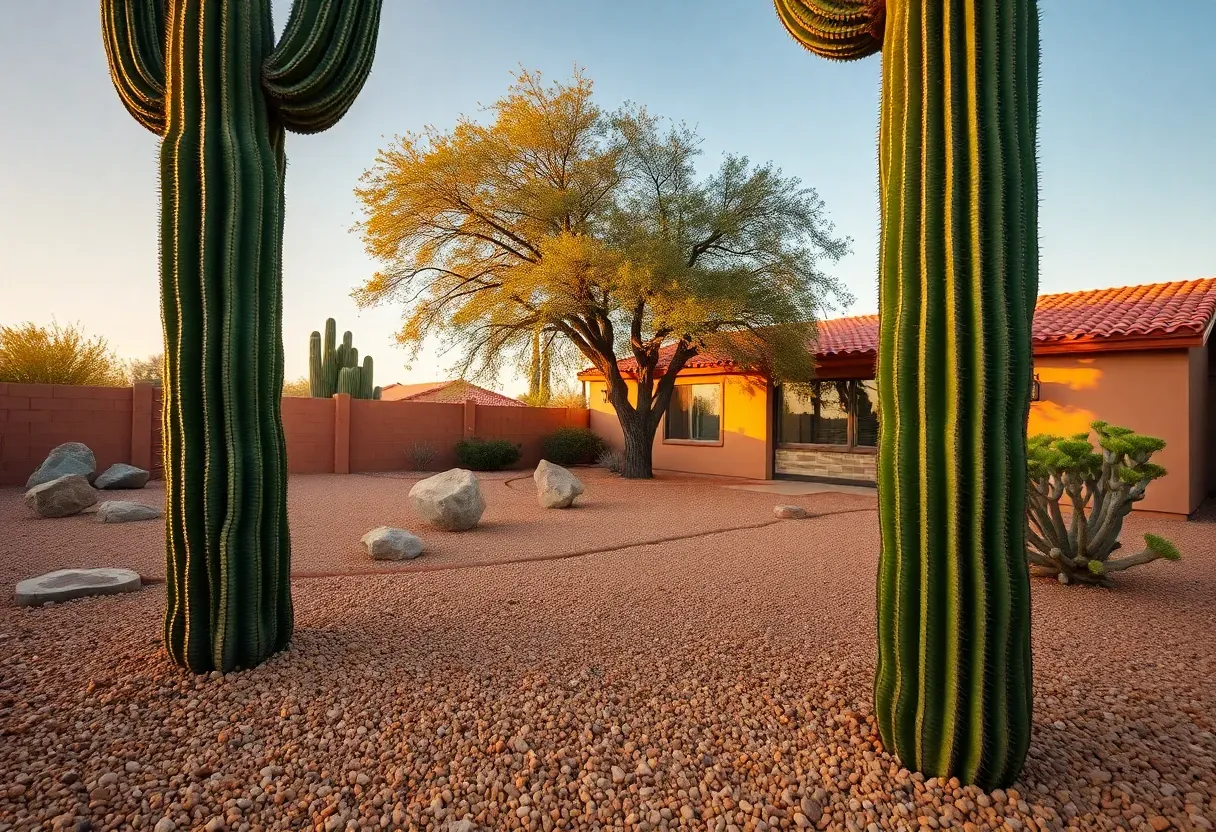
Picture your yard transformed from a patch of cracked earth into a living tapestry of sculptural cacti, silver-leaved shrubs, and warm-toned stone — all thriving without a drop of supplemental water beyond what the monsoon provides. In Arizona, landscape design isn't about fighting the climate; it's about partnering with it. The Sonoran and Mojave deserts offer some of nature's most dramatic plant forms and richest earth tones, ready to be shaped into spaces that are both beautiful and genuinely low maintenance.
Below you'll find 19 distinct ideas ranging from small-scale planting vignettes to full-yard transformations. Ready? Let's dive in.
Table of Contents
- Saguaro Statement Garden
- Dry Creek Bed with Boulders
- Decomposed Granite Courtyard
- Desert Wildflower Meadow
- Shaded Ramada Retreat
- Prickly Pear Color Block
- Mesquite and Palo Verde Canopy
- Agave Accent Border
- Desert Poolscape
- Tucson Adobe Walled Garden
- Night-Blooming Garden
- Native Grass and Wildflower Strip
- Rain Garden for Monsoon Capture
- Stacked Stone Retaining Wall
- Desert Herb and Edible Garden
- Ocotillo Fence and Living Wall
- Container Garden for a Small Lot
- Butterfly and Pollinator Corridor
- Lighting the Desert at Night
1. Saguaro Statement Garden
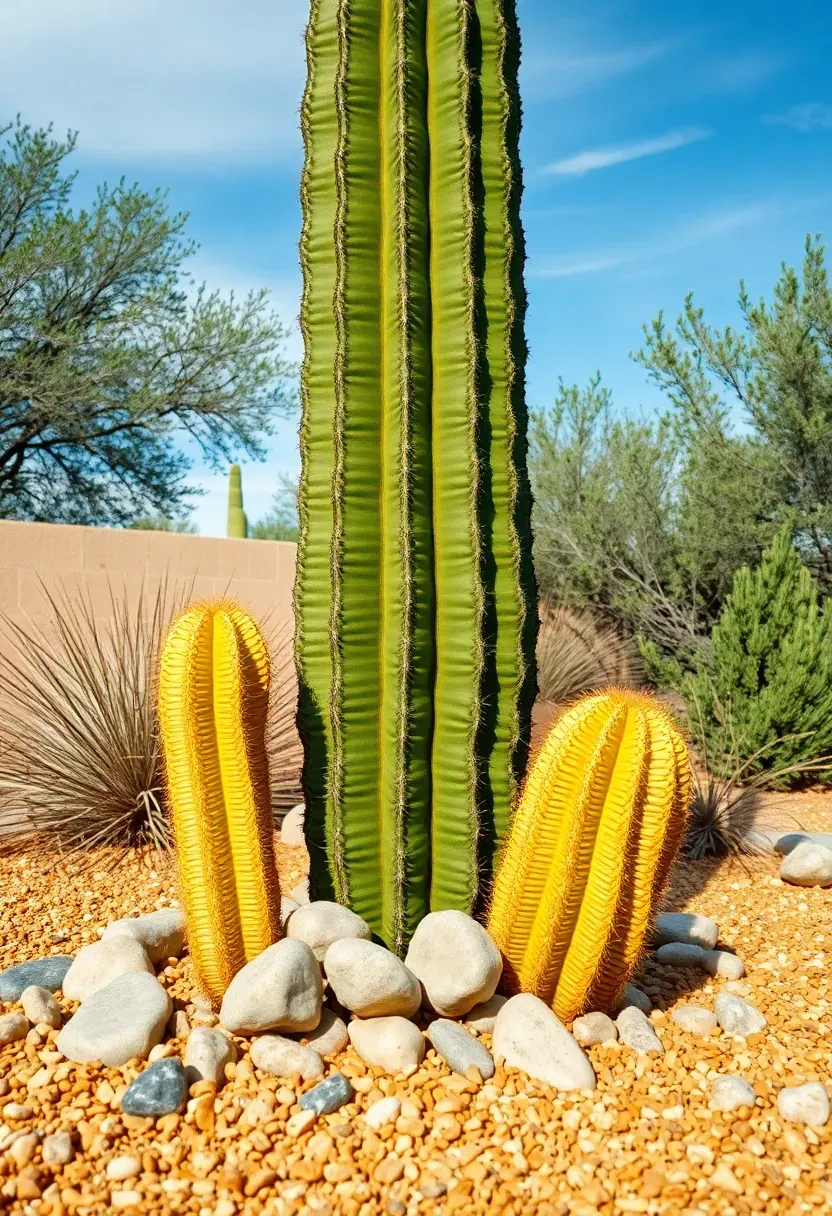
Few plants define Arizona as clearly as the saguaro. Growing one — or arranging several — as living sculptures in your landscape delivers immediate visual authority. Saguaros grow slowly (roughly an inch per year), so buying a nursery-grown specimen gives you instant height. Pair them with golden barrel cacti at ground level and smooth river cobbles beneath to create a composition that reads like a curated outdoor gallery.
Tips for Success
- Purchase saguaros only from licensed nurseries — collecting wild specimens is illegal in Arizona
- Face the warm side of the cactus toward the sun when replanting to prevent sunscald
- Allow at least 10 feet of clearance from structures for mature growth
- Complement with fairy duster (Calliandra eriophylla) for seasonal color contrast
2. Dry Creek Bed with Boulders
The Core Issue
Monsoon rains arrive fast and heavy in Arizona, often overwhelming flat yards and causing erosion or pooling near foundations.
The Solution
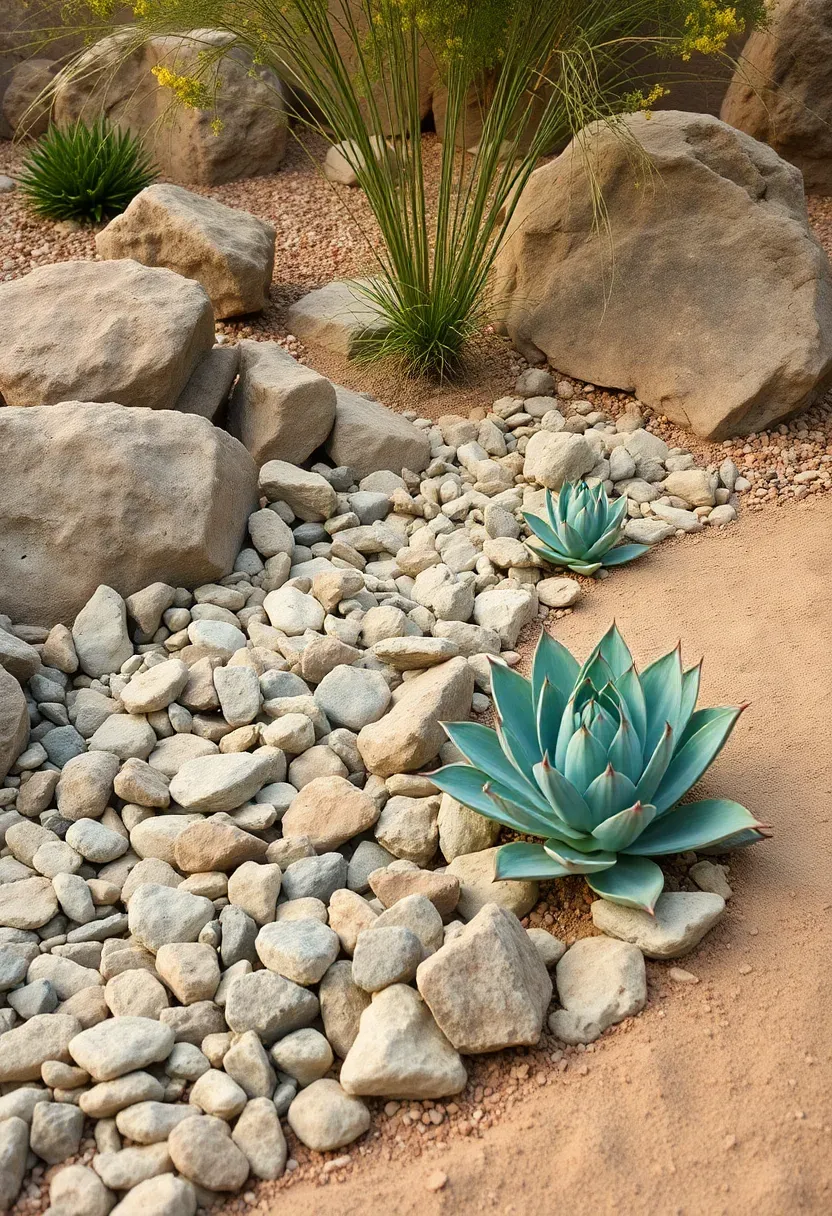
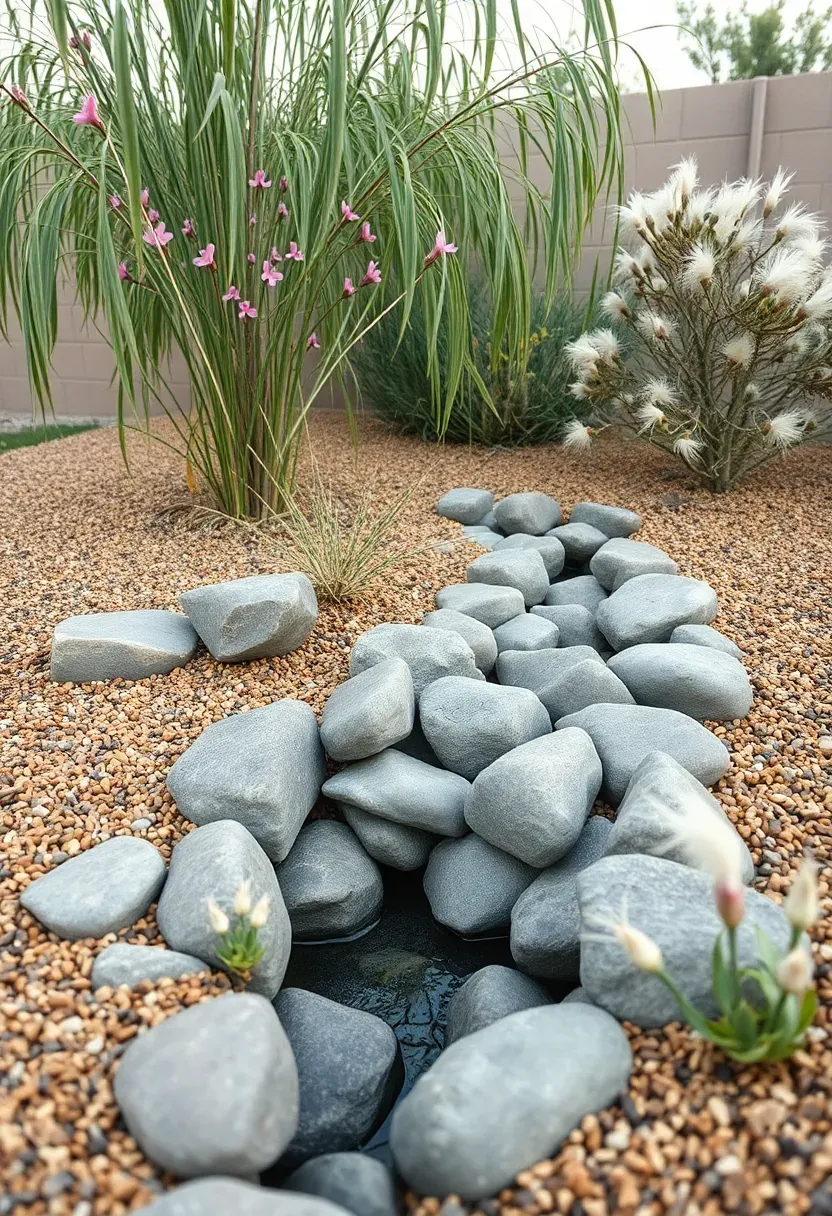
A dry creek bed solves drainage by channeling stormwater away from structures while looking intentional and beautiful during dry months. Lay a sinuous path of smooth river rocks graduated in size — smaller pebbles in the center, larger cobbles and boulders on the edges. Plant native desert willows (Chilopsis linearis) and brittlebush (Encelia farinosa) along the banks to anchor soil and add seasonal bloom. The bed reads as sculpture for ten months of the year and functions as a working channel during monsoon season.
Pros and Cons
Pros: Controls erosion naturally, requires no irrigation, adds strong visual structure year-round Cons: Rocks can shift during heavy flows and may need occasional resetting; large boulders require equipment to place
Recommended
Items for this idea
3. Decomposed Granite Courtyard
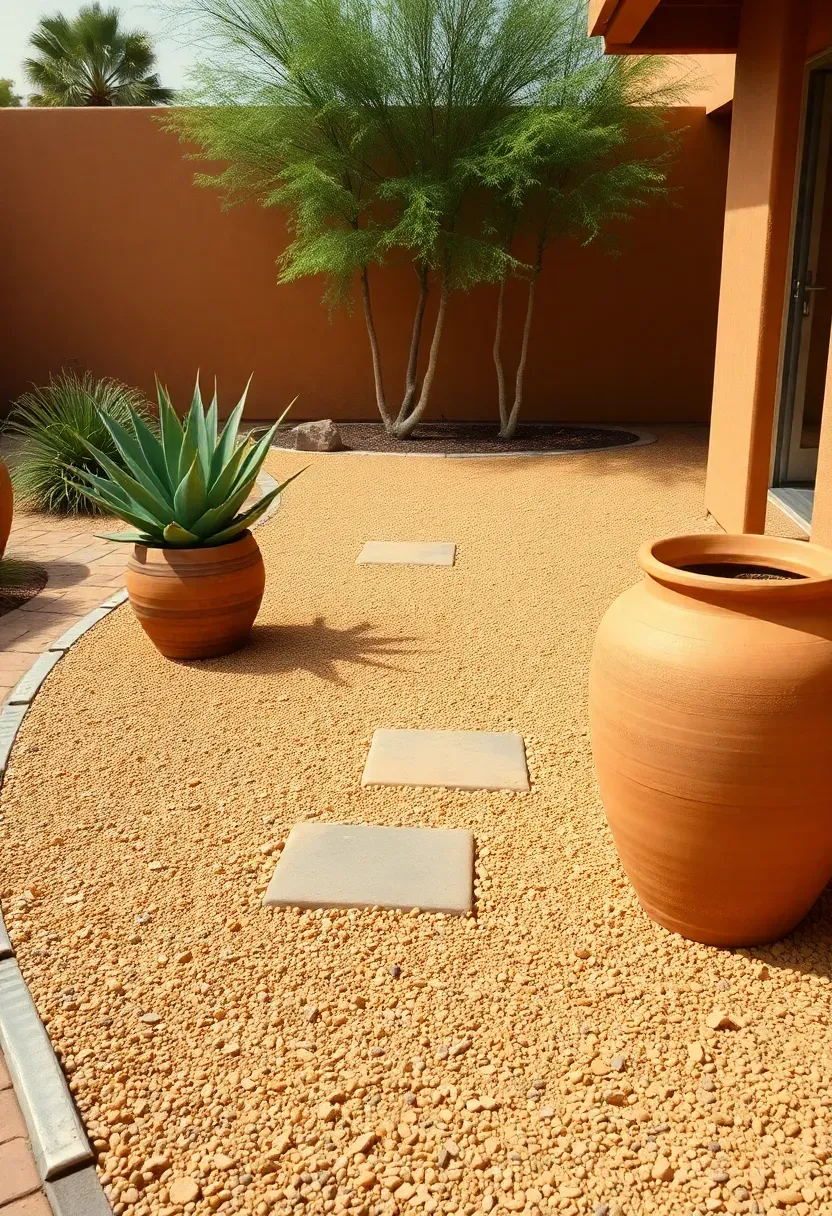
Decomposed granite — locally called DG — is the workhorse of Arizona landscaping. Its warm amber and russet tones echo the desert floor, drain freely, and stay cooler underfoot than concrete or asphalt.
Lay it at least 3 inches deep over a weed barrier fabric to suppress growth. Stabilized DG (with a polymer binder) hardens into a firm surface suitable for foot traffic and lightweight furniture. Use contrasting flagstone insets or a border of bricks to define seating zones within the courtyard.
Design Tips
- Choose DG color to complement your home's exterior tone — amber for earth tones, grey for contemporary exteriors
- Edge with steel or aluminum bender board to keep DG from migrating onto lawn or concrete
- Refresh the top inch every two to three years for a clean appearance
- Combine with potted aloe and agave for sculptural punctuation
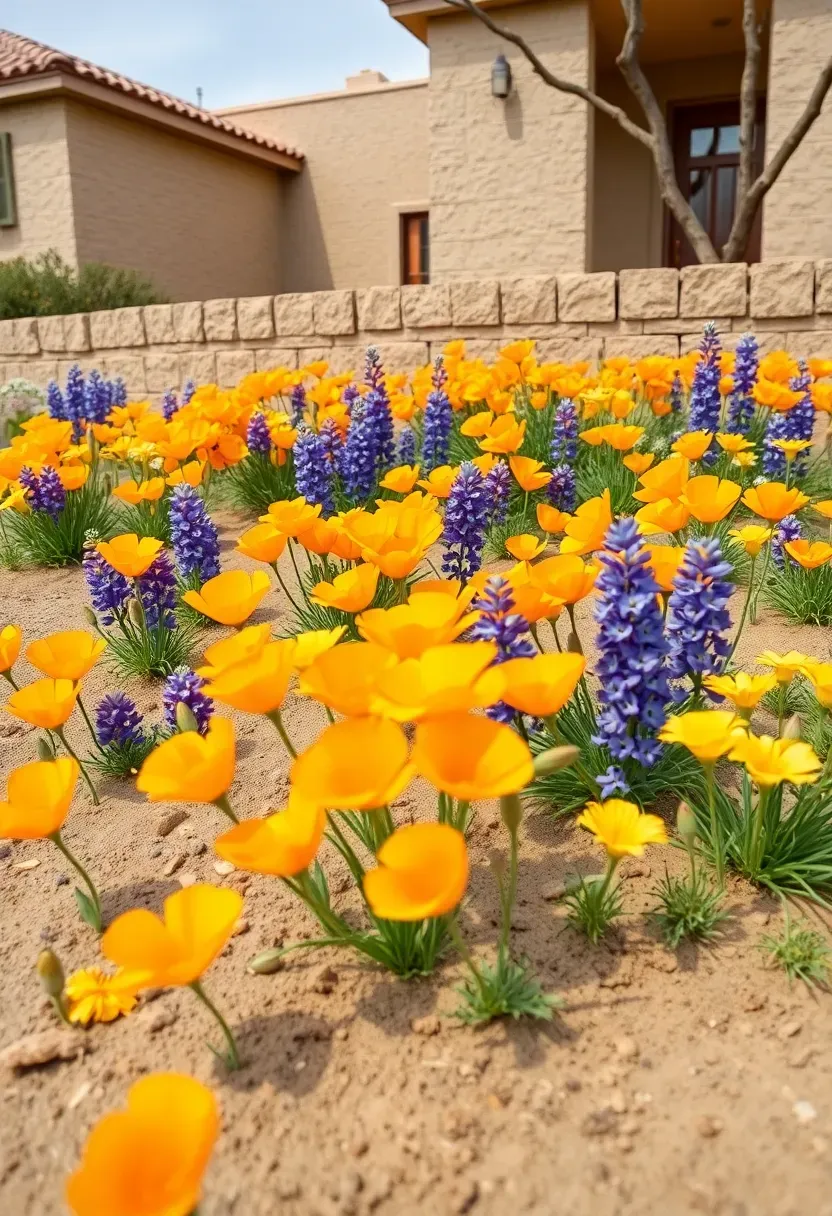
4. Desert Wildflower Meadow
Opening paragraph: Arizona springs are brief and spectacular — a 6-8 week window when Mexican gold poppies, lupine, desert marigold, and owl's clover blanket roadsides and hillsides. You can recreate this in your own yard with minimal investment.
Step 1: Prepare the Soil
Rake the area to remove existing plants and debris. Do not amend desert soil with compost — wildflowers native to Arizona perform better in lean, fast-draining conditions.
Step 2: Sow Seeds in Fall
Scatter a native Arizona wildflower seed mix between mid-October and mid-November before the first winter rains arrive. Press seeds lightly into the soil but do not bury them.
Step 3: Provide One Deep Watering
Water the seeded area thoroughly after sowing. In a typical year, winter rainfall handles the rest. If December is dry, provide one supplemental watering.
Step 4: Stand Back and Enjoy
By February buds emerge; by March the meadow peaks. Once seeds set in late April, stop watering entirely to encourage seed drop for next year.
What to Watch Out For
- Do not mow until seed heads have dried and fallen — typically late May
- Invasive buffelgrass competes with wildflowers; remove it by hand before sowing
- Results vary year to year depending on winter rainfall
Recommended
Items for this idea
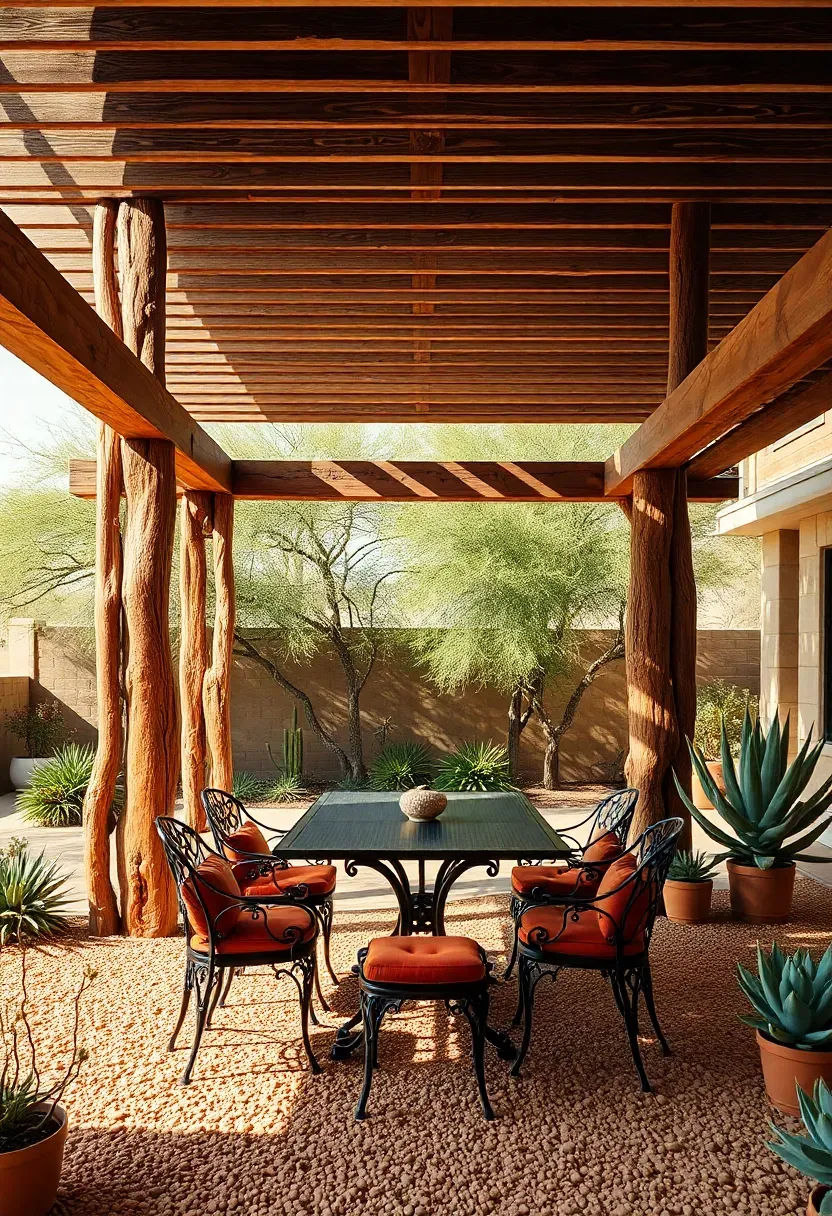
5. Shaded Ramada Retreat
Outdoor living in Arizona demands shade engineering. A ramada — an open-sided shade structure — extends the usable hours of your yard from a narrow window around sunrise and sunset to nearly the full day.
Origins / History
The word "ramada" comes from the Spanish ramada, meaning a shelter of branches. Indigenous peoples of the Sonoran Desert built open-sided shelters for centuries as both shade structures and social gathering spaces. Spanish settlers adopted the form, and it evolved into the modern structure familiar throughout the Southwest.
Modern Interpretation
Contemporary ramadas range from rough-hewn mesquite posts with woven ocotillo ceilings to sleek steel frames draped with shade cloth rated for 90% UV blocking. Solar-powered fans integrated into the ceiling push air across the seating area, and misting systems can drop ambient temperature by 20-30°F on the hottest afternoons. Surround the structure with desert-adapted jasmine (Jasminum nitidum) on trellises for fragrance and filtered light.
How to Adapt This at Home
- Size the ramada for at least 150 sq ft to accommodate a dining set and lounge chairs
- Use polycarbonate roofing panels for rain protection while maintaining light transmission
- Anchor posts below the frost line (12 inches minimum for most Arizona elevations)
- Plant palo verde (Parkinsonia microphylla) on the west side for supplemental shade within 3-5 years
6. Prickly Pear Color Block
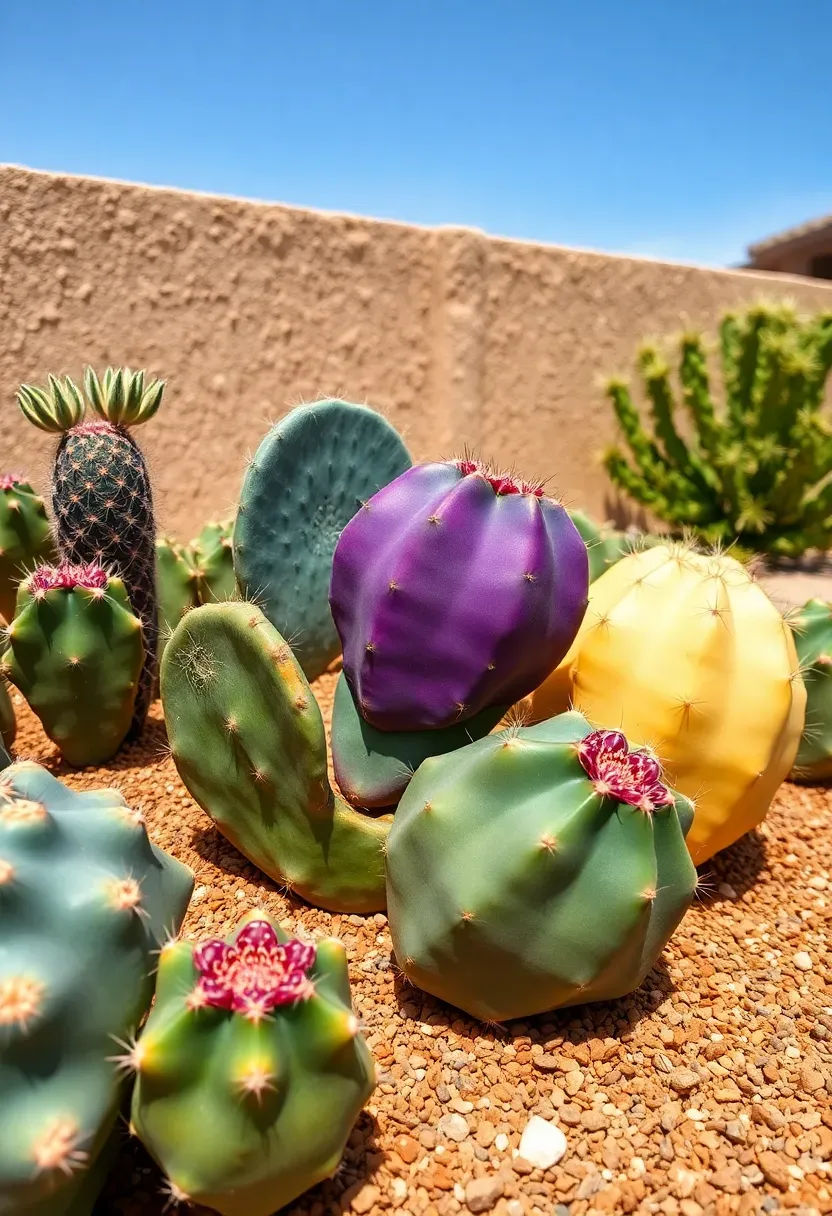
Prickly pear (Opuntia) is available in an astounding range of pad colors — blue-green, purple, red-tinged, and nearly yellow. Planting several varieties in adjacent blocks creates a geometric garden with the texture of a textile and the endurance of stone.
Comparing: Single Species vs. Mixed Palette
Single Species uses one Opuntia variety across a large bed for a bold, monolithic statement. The look is graphic and contemporary, drawing attention from the street.
Mixed Palette combines three to five varieties in a color-gradient arrangement — blue-green Opuntia robusta transitioning to violet-tinted Opuntia santa-rita and then to pale yellow Opuntia chlorotica. The result is painterly and seasonally dynamic when flowers bloom in April and May.
Choose Single Species if: you prefer a minimalist, architectural landscape that reads clearly from a distance.
Choose Mixed Palette if: you want visual complexity and are comfortable with the slightly higher initial plant cost and layout planning.
Recommendation
For front yards visible from the street, the mixed palette approach rewards close inspection while still reading as a unified composition from 50 feet away.
Recommended
Items for this idea
7. Mesquite and Palo Verde Canopy
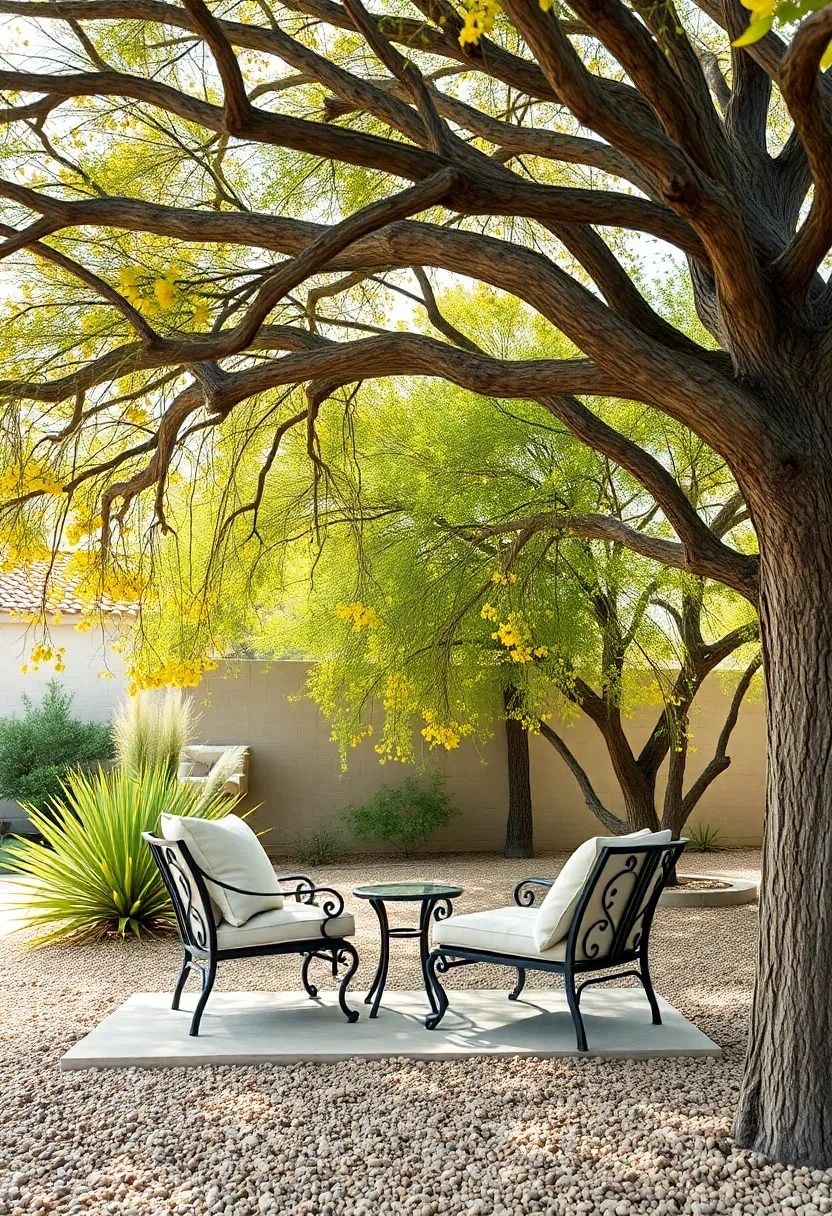
Arizona's native trees — velvet mesquite (Prosopis velutina) and the three species of palo verde (Parkinsonia) — do something no shade structure can: they grow, self-repair, and provide habitat for birds while cooling the air through transpiration.
Strategically planted on the south and west sides of a home, a canopy of two or three trees can reduce cooling costs by 10-25% by blocking direct solar gain during afternoon hours. Plant mesquite at least 20 feet from structures to account for mature spread, and expect palo verde to reward you with an explosion of yellow flowers each spring.
Tips for Establishment
- Water deeply and infrequently the first two summers to encourage deep root development
- Do not stake mesquite trees — wind movement stimulates trunk strength
- Mulch the root zone with 4 inches of wood chips to conserve moisture during establishment
- Once established (2-3 years), both species survive on rainfall alone in most Arizona elevations below 4,000 feet
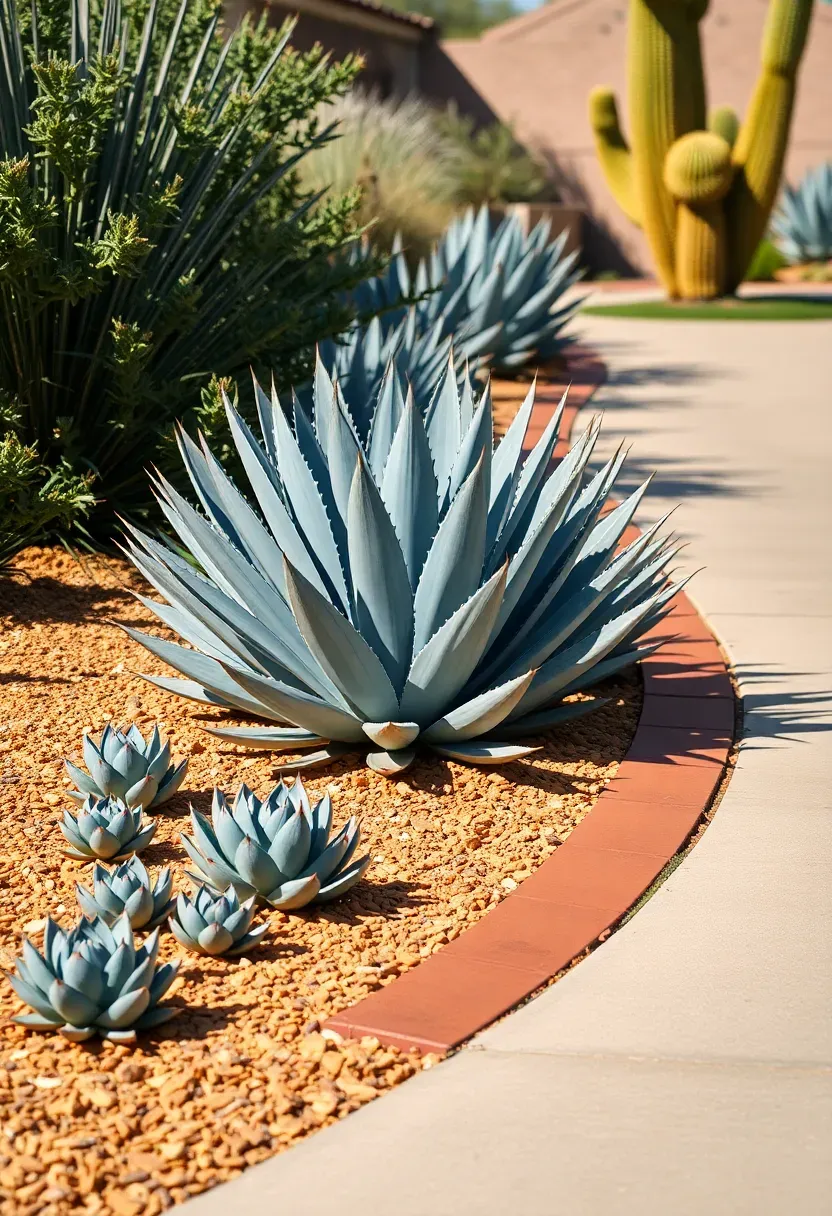
8. Agave Accent Border
Agave is the exclamation point of desert design. Its architectural symmetry — radiating rosettes of thick leaves tipped with terminal spines — creates instant visual order in even the most informal plantings.
Use agave as a border plant along pathways, walls, or property lines. Mix sizes and species for layered depth: small Agave parryi (artichoke agave) at 18 inches wide, mid-sized Agave americana at 6 feet wide, and bold Agave franzosinii at 8 feet wide for terminal accents.
Tips
- Keep agave at least 4 feet from foot traffic paths — terminal spines are hazardous
- Remove pups (offsets) regularly if you want to maintain spacing; leave them to form a spreading colony
- Agaves bloom once and die (monocarpic), but pups survive and continue the plant
- Underplant with trailing lantana (Lantana montevidensis) for color contrast and pollinator value
Recommended
Items for this idea
9. Desert Poolscape
Why Desert Poolscapes Work
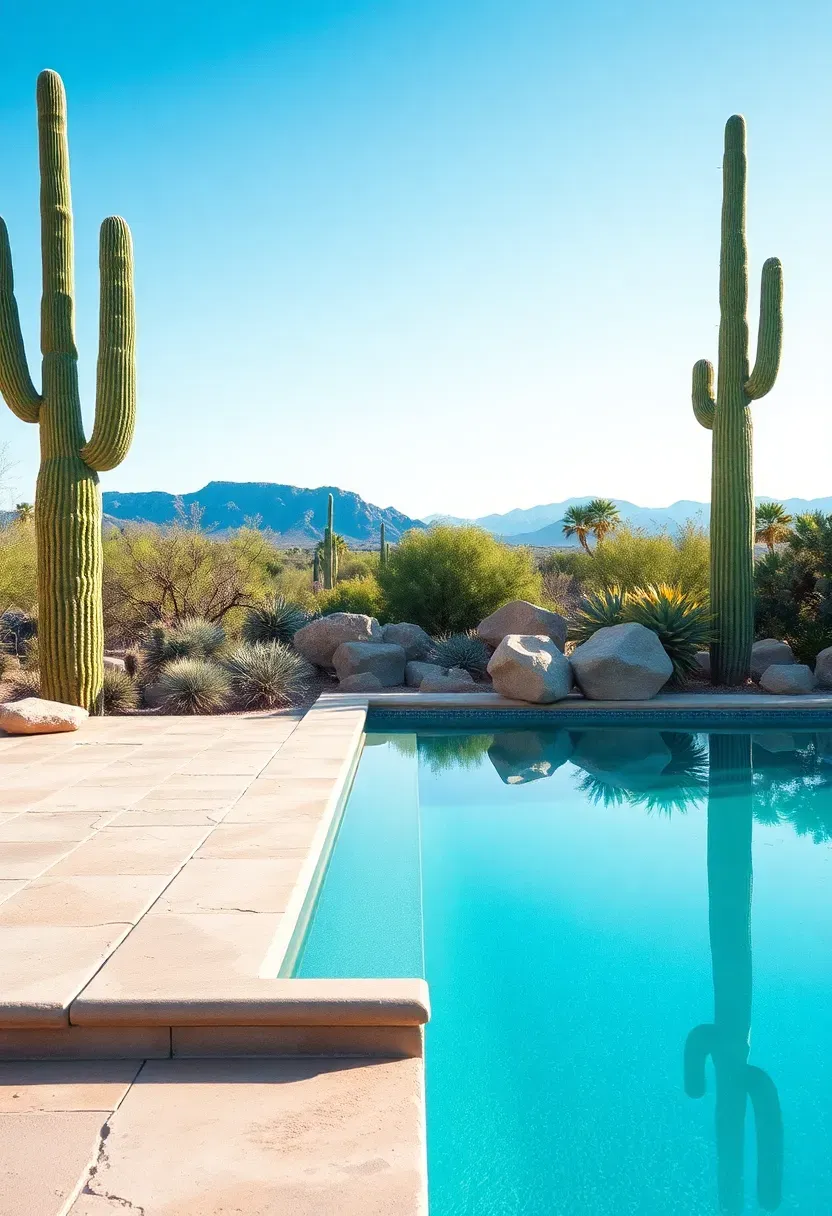
Combining a pool with desert planting feels counterintuitive — one requires water, the other conserves it. Yet Arizona has one of the highest rates of residential pool ownership in the country precisely because the heat demands it.
The Solution
The key is designing the pool surround to be entirely xeric. Use travertine or rough-cut flagstone coping (which stays cooler than plain concrete), plant saguaro and palo verde at the perimeter for shade and drama, and cover remaining ground with decomposed granite or crushed white marble for a clean backdrop that reflects light toward the water. Native desert plants require no irrigation once established — all supplemental water goes into the pool itself, not the surrounding landscape.
Pros and Cons
Pros: Dramatic visual contrast between still water and dry planting; low combined maintenance once plants establish; pool surround never gets muddy Cons: Initial installation cost is higher than lawn-based pool surrounds; some desert plants drop seeds or seedpods into the pool that require skimming
10. Tucson Adobe Walled Garden
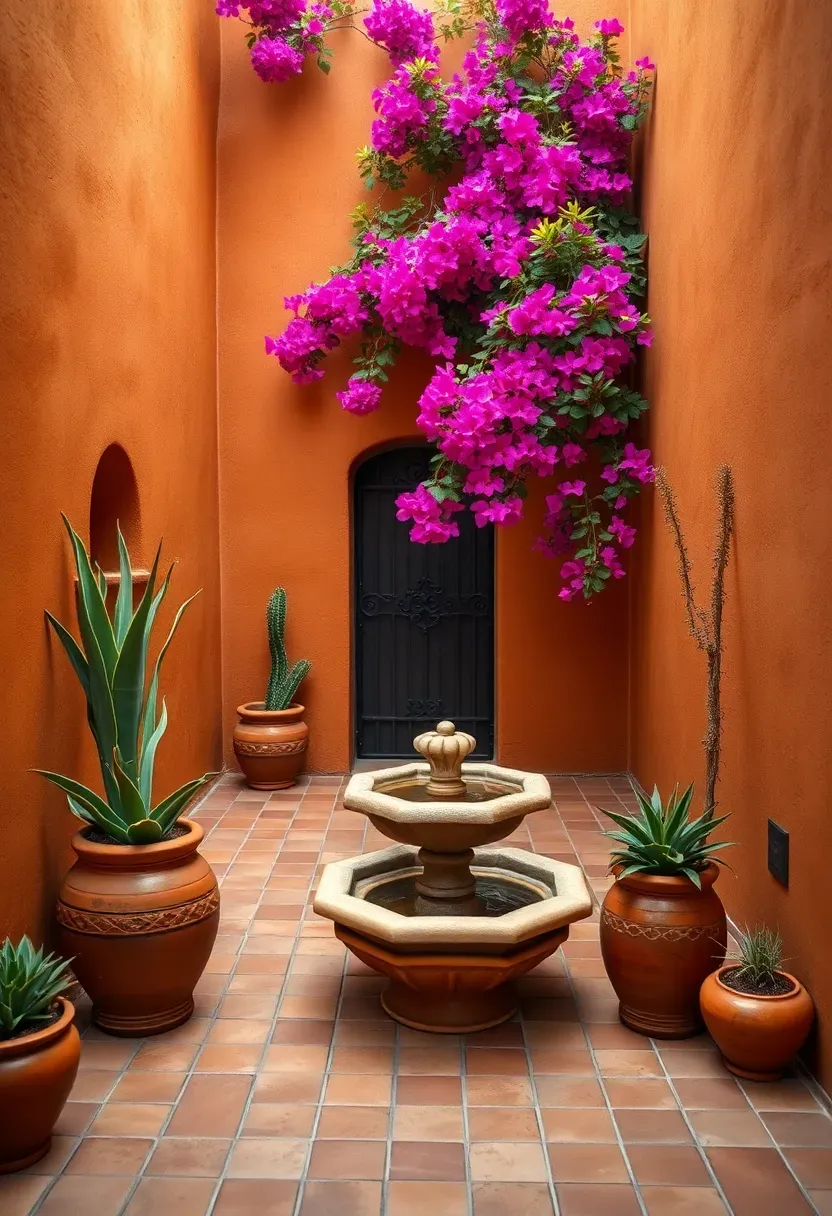
The walled courtyard is one of the oldest landscape traditions in the arid Southwest — borrowed from Spanish colonial and Moorish architecture, perfected by generations of Tucson homeowners.
Stucco or adobe walls painted in earth pigments (ochre, terracotta, deep umber) create an enclosed microclimate that is several degrees cooler than the open yard. Inside the walls, plant bougainvillea against the south-facing surface for explosive color, add a small recirculating fountain for the cooling effect of moving water, and arrange terracotta pots of aloe, herbs, and flowering succulents across a saltillo tile floor.
Tips
- Orient the enclosure to capture prevailing south or southeast breezes for natural ventilation
- A 6-foot wall provides full privacy and significant shade on the interior surface during afternoon hours
- Use a tinted concrete cap on the wall top to shed water and prevent stucco erosion
- Install an iron gate rather than a solid door to allow air movement while maintaining visual enclosure
Recommended
Items for this idea
11. Night-Blooming Garden
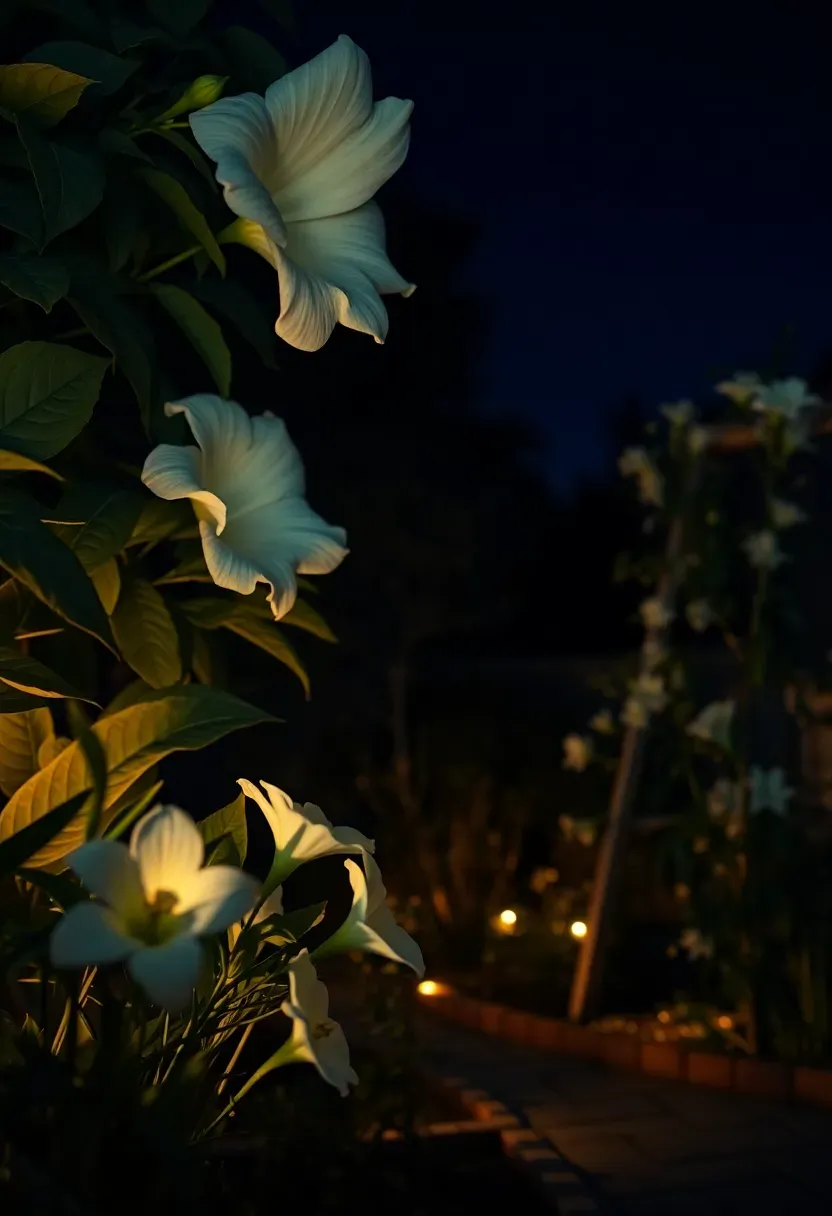
Summer in Arizona flips the schedule. After 4pm, temperatures begin their slow retreat, and by 9pm outdoor dining becomes genuinely comfortable. A garden designed for evening enjoyment takes advantage of this shift.
Sacred datura (Datura wrightii) produces enormous white trumpet flowers that open at dusk and close by midmorning — their fragrance on a warm evening is extraordinary. Evening primrose (Oenothera caespitosa), moonflower vine (Ipomoea alba), and night-blooming cereus (Peniocereus greggii) complete the palette. Pair these with soft amber landscape lighting at ground level and you have a garden that only reveals its full beauty after dark.
Tips
- Note that sacred datura is toxic if ingested — place it away from areas used by children and pets
- Night-blooming cereus flowers just one night per year in early summer; the event is brief but unforgettable
- Use warm-toned (2700K) LED path lights to enhance the cream and white tones of night-blooming flowers
- Position seating downwind from datura for maximum fragrance enjoyment
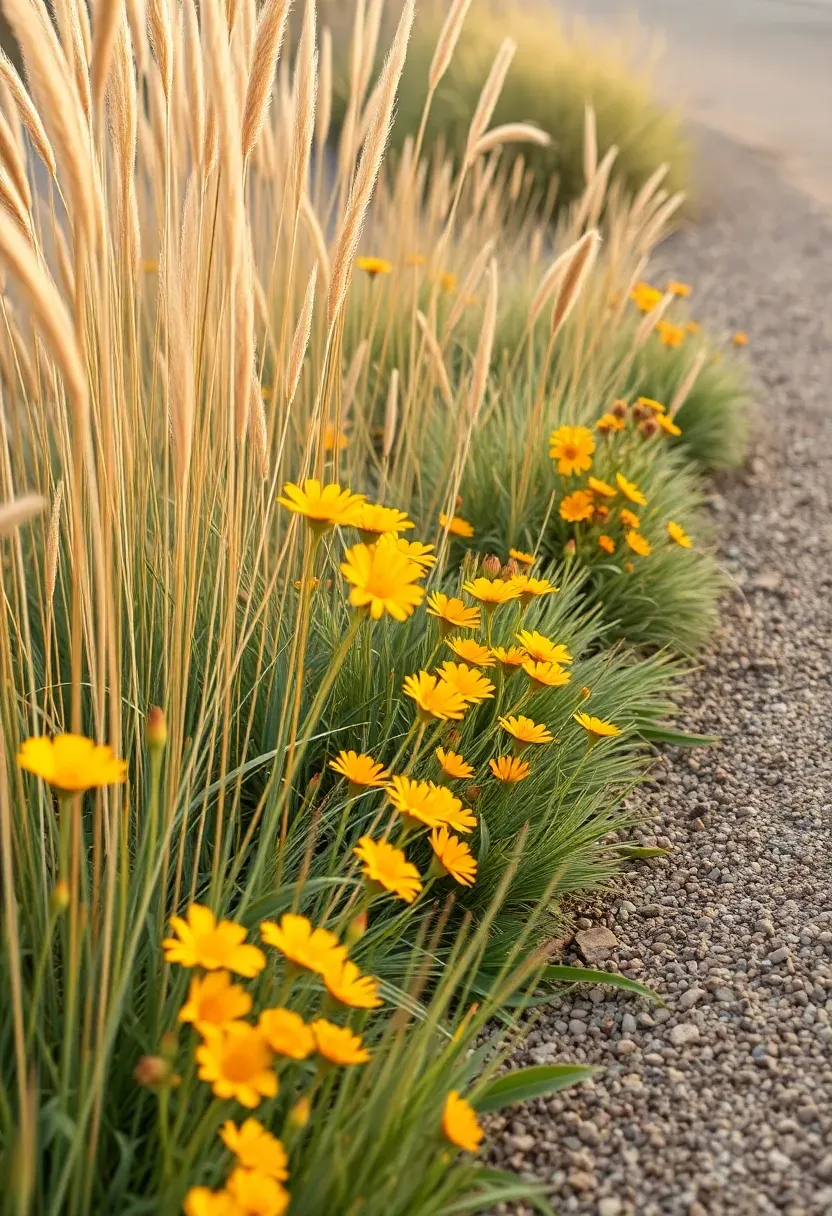
12. Native Grass and Wildflower Strip
Arizona's native grasses — sideoats grama (Bouteloua curtipendula), blue grama (Bouteloua gracilis), and deer grass (Muhlenbergia rigens) — provide movement, texture, and seasonal color that no hardscape can replicate.
A 4-6 foot wide strip of native grass mixed with flowering perennials like desert marigold (Baileya multiradiata) and globe mallow (Sphaeralcea ambigua) along a path or fence line creates a naturalistic edge that changes with the seasons. Grasses flush with new growth after monsoon rains and glow amber in winter light.
Tips
- Cut grasses back by one-third in early March before new spring growth begins
- Allow wildflowers to set seed before cutting for self-seeding in subsequent years
- Deer grass grows slowly the first year but expands rapidly once established
- No supplemental irrigation needed after the first summer for most central and southern Arizona locations
Recommended
Items for this idea
13. Rain Garden for Monsoon Capture
The Core Issue
Arizona receives the majority of its annual rainfall in 6-8 weeks of summer monsoon activity, arriving as intense downpours that compact soil cannot absorb quickly enough. Water runs off into the street, carrying topsoil with it.
The Solution
A rain garden is a shallow depression — typically 6-18 inches below grade — planted with water-tolerant native species that can absorb runoff from a roof, driveway, or compacted lawn. Position it at the low point of your yard, at least 10 feet from your foundation. Route a downspout toward the depression using a gravel-lined channel. Plant desert willow, Apache plume (Fallugia paradoxa), and cliff rose (Purshia stansburiana) — all of which tolerate seasonal flooding and prolonged dry spells between rain events.
Pros and Cons
Pros: Reduces erosion and street runoff; recharges groundwater; creates a lush planting zone that thrives on captured water with no supplemental irrigation Cons: Requires careful grading to ensure overflow goes away from the foundation; may require a permit in some municipalities
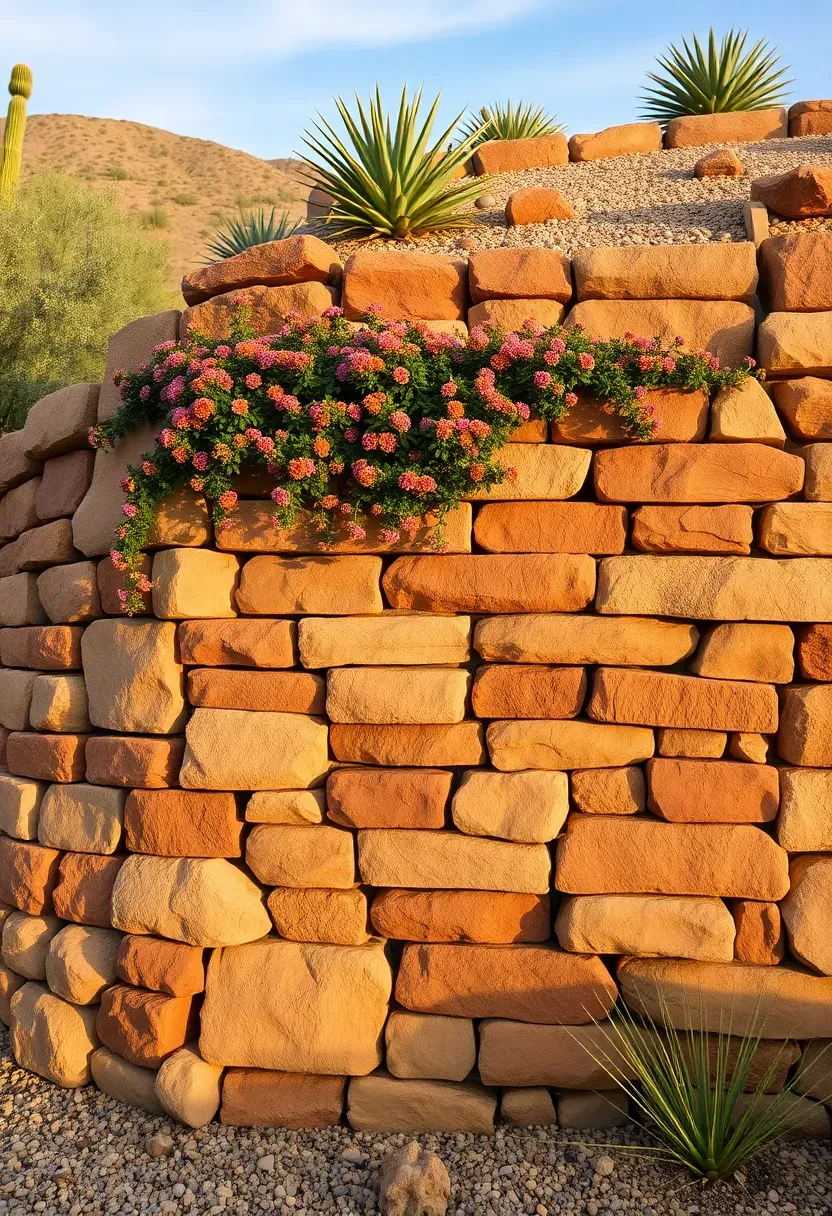
14. Stacked Stone Retaining Wall
Arizona properties on sloped terrain gain structure and planting area from dry-stacked stone walls. Unlike mortar-set walls, dry-stack construction allows water to weep freely through the gaps — essential in a climate where monsoon downpours can quickly build pressure behind a solid wall.
Source stone locally: Arizona limestone, basalt, and sandstone in warm buff, brown, and red tones integrate naturally with the landscape. Stack layers with a slight backward lean (batter) of 1 inch per foot of height for stability, and fill behind the wall with crushed gravel before backfilling with native soil.
Tips
- Walls above 3 feet require engineering calculations in most Arizona counties
- Plant creeping thyme (Thymus serpyllum) or trailing lantana in wall gaps for a softened, naturalistic look
- Use local stone rather than imported materials — the color match to existing desert rock is impossible to fake
- Position walls on the uphill side of sloped planting beds to create level terraces for easier plant establishment
Recommended
Items for this idea
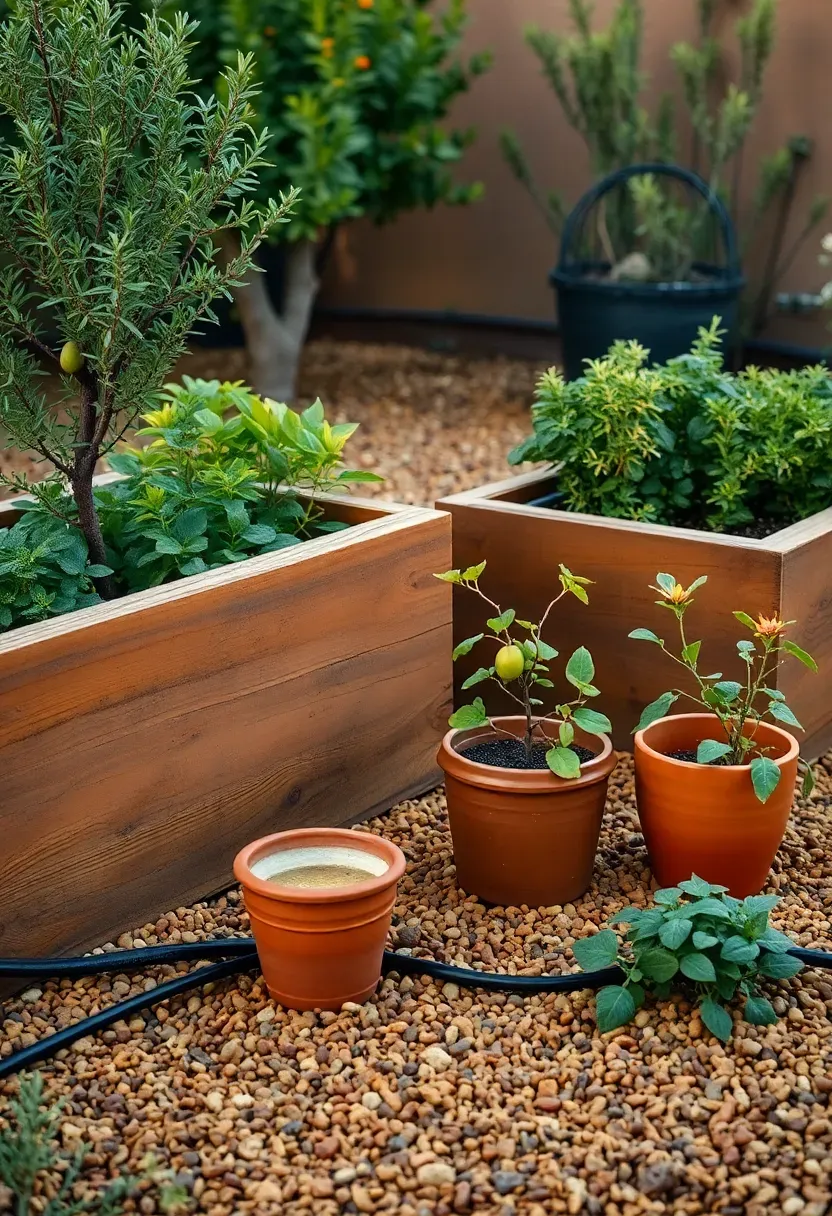
15. Desert Herb and Edible Garden
Arizona's climate is ideal for cool-season vegetables in winter and heat-loving herbs year-round. Rosemary, oregano, thyme, and culinary sage thrive in the same lean, fast-draining conditions that suit native desert plants — no amendment or coddling required.
Winter (October through March) supports lettuce, spinach, broccoli, and carrots. Citrus trees — lemon, navel orange, and grapefruit — produce abundantly in lower-elevation Arizona yards. Raised beds built from cinder block or rough-cut mesquite timber allow you to create a root zone with slightly richer soil without disturbing the surrounding landscape.
Step 1: Site Selection
Choose a location with 6-8 hours of sun per day in winter. In summer, provide afternoon shade from a ramada or shade cloth to protect cool-season crops that might overwinter if protected.
Step 2: Build Raised Beds
Construct beds 12-18 inches deep to allow carrot and beet development. Fill with a mix of native soil (50%), compost (30%), and coarse pumice (20%) for drainage.
Step 3: Install Drip Irrigation
Drip emitters at the base of each plant deliver water directly to roots with virtually no evaporative loss — essential in Arizona's low humidity.
What to Watch Out For
- Citrus trees are frost-sensitive below 28°F — cover or light at night during cold snaps at higher elevations
- Harvest cool-season vegetables before April when temperatures spike
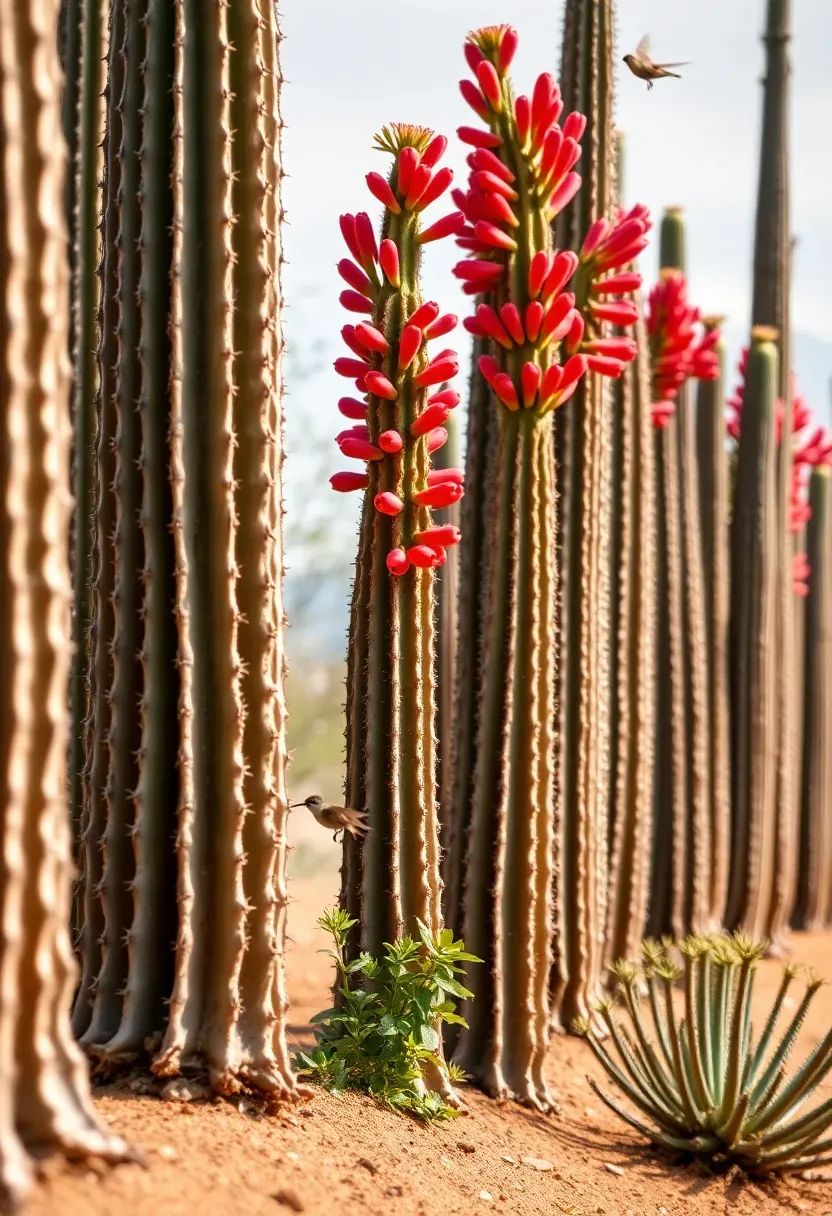
16. Ocotillo Fence and Living Wall
Ocotillo (Fouquieria splendens) is both plant and fence material in the Sonoran Desert. Ranchers have long used bundles of ocotillo canes as living fences — the canes, when planted vertically in moist soil, take root and eventually leaf out, producing the brilliant red flowers that hummingbirds adore.
A planted ocotillo fence along a property line delivers security (the spine-covered canes deter passage), privacy screening (at 6-15 feet tall), and seasonal spectacle (flame-red bloom tips in spring). Space canes 6-8 inches apart. Water every two weeks for the first year while roots establish; after that, rainfall alone sustains them in most Arizona locations.
Comparing: Ocotillo Fence vs. Block Wall
Ocotillo Fence: Living, seasonal, allows air movement, provides wildlife habitat, grows taller over time, costs less than masonry Block Wall: Permanent, provides full privacy year-round, noise reduction, no maintenance once built
Choose ocotillo if: you want a living landscape feature that changes with seasons and supports pollinators. Choose block wall if: you need guaranteed privacy and sound separation regardless of season.
Recommended
Items for this idea
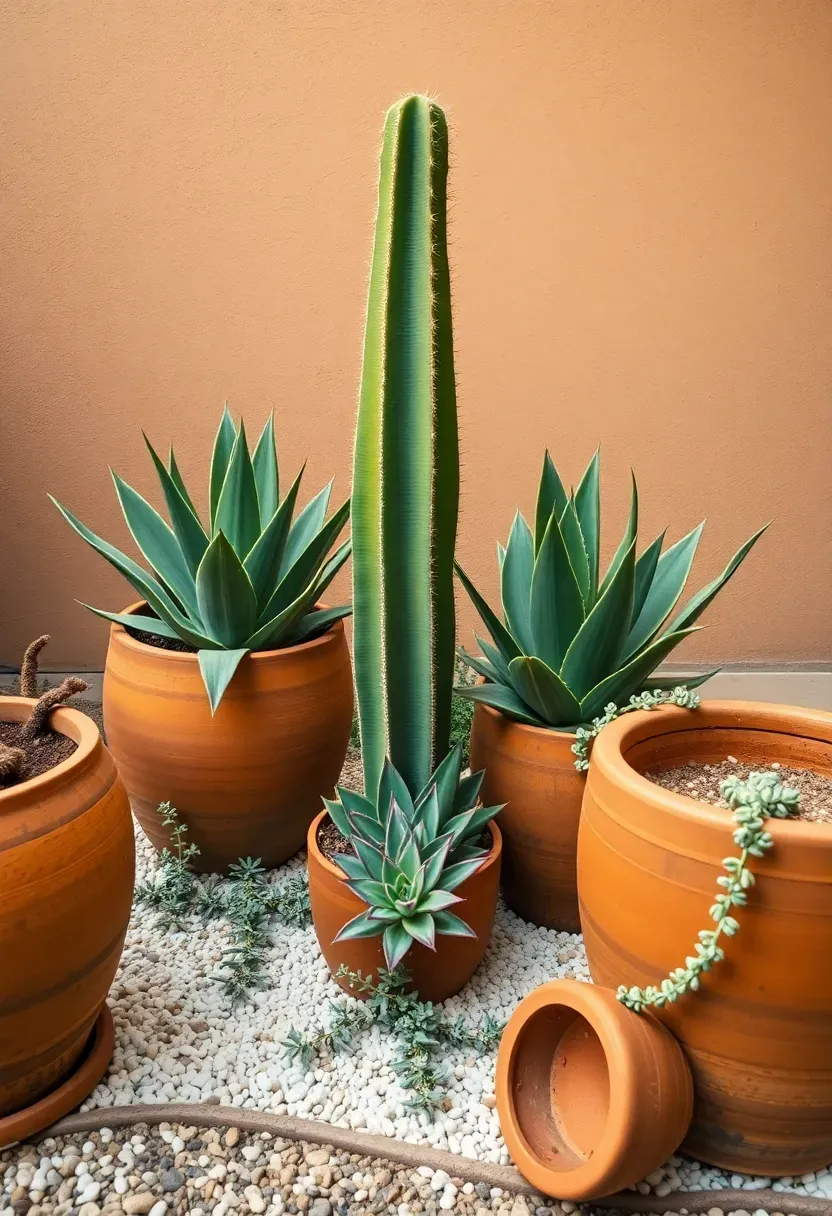
17. Container Garden for a Small Lot
Not every Arizona outdoor space is a sprawling quarter-acre. Townhome patios, narrow side yards, and apartment courtyards can still capture the spirit of desert design through large-format containers.
Terra-cotta pots in 18-24 inch diameters are the natural choice — their warm color echoes desert tones, and their porous walls allow excess moisture to evaporate, preventing root rot in cacti and succulents. Group containers in odd numbers at varying heights using overturned pots as risers. Plant a mix of barrel cactus, aloe vera, and agave as the tall focal points, with trailing sedum or graptopetalum spilling over the rims.
Tips
- Use a fast-draining cactus and succulent potting mix with added pumice (20% by volume)
- Move containers to a sheltered spot if frost threatens below 32°F
- Water container-grown cacti every 10-14 days in summer, monthly in winter
- Group containers tightly — the shared thermal mass keeps roots slightly warmer on cold nights
18. Butterfly and Pollinator Corridor
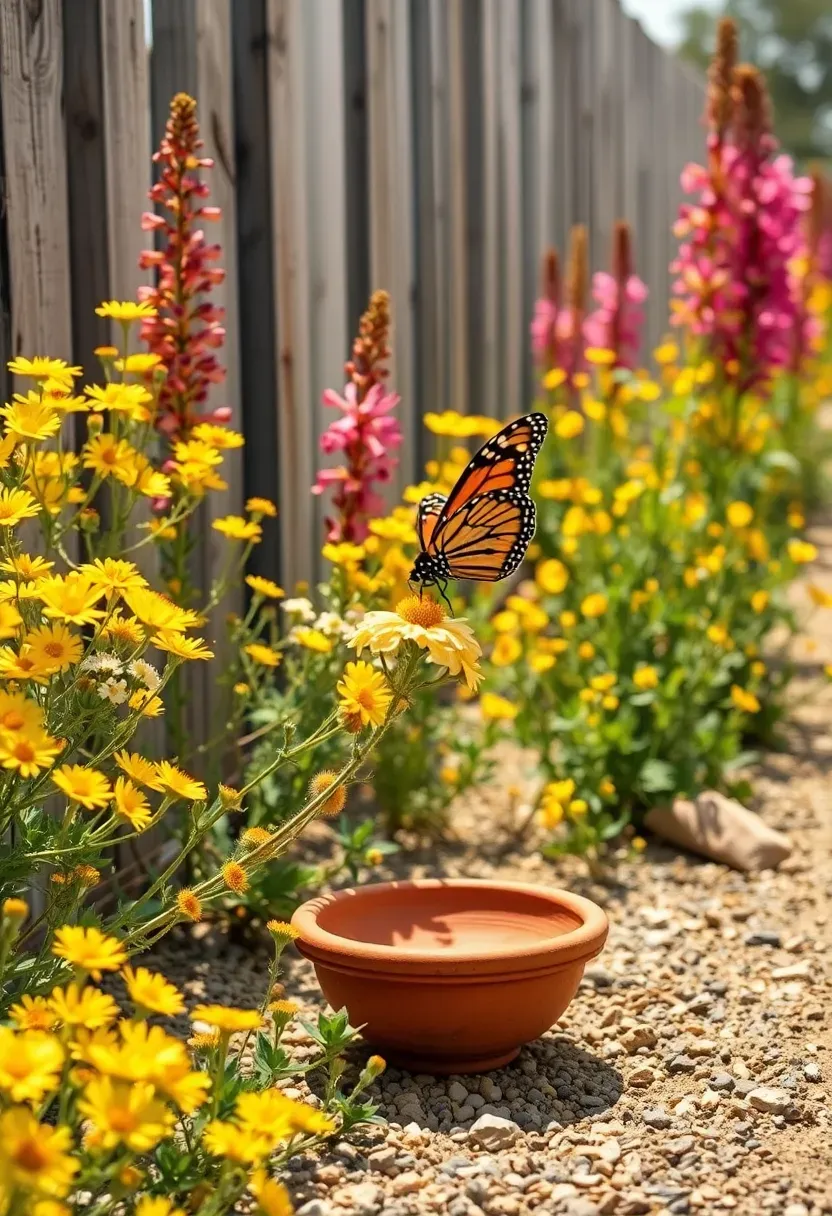
Arizona ranks among the most biodiverse states for pollinators — over 1,000 native bee species, 250+ butterfly species, and dozens of hummingbird visitors during migration. A dedicated pollinator corridor transforms your fence line or border into a wildlife highway.
Plant in overlapping bloom sequences: brittlebush flowers January through April, desert milkweed (Asclepias subulata) supports monarch butterflies from spring through fall, penstemon (Penstemon parryi) peaks in spring and attracts hummingbirds, and globe mallow blooms after monsoon rains. This staggered sequence ensures continuous bloom and nectar availability across nine to ten months of the year.
Tips
- Avoid pesticides entirely in pollinator corridors — even systemic products in nearby plantings can harm bee colonies
- Leave some areas of bare soil undisturbed for ground-nesting native bees
- Add a shallow terracotta saucer filled with pea gravel and water as a butterfly puddling station
- Desert milkweed is the only monarch host plant suitable for Arizona's year-round warm climate
Recommended
Items for this idea
19. Lighting the Desert at Night
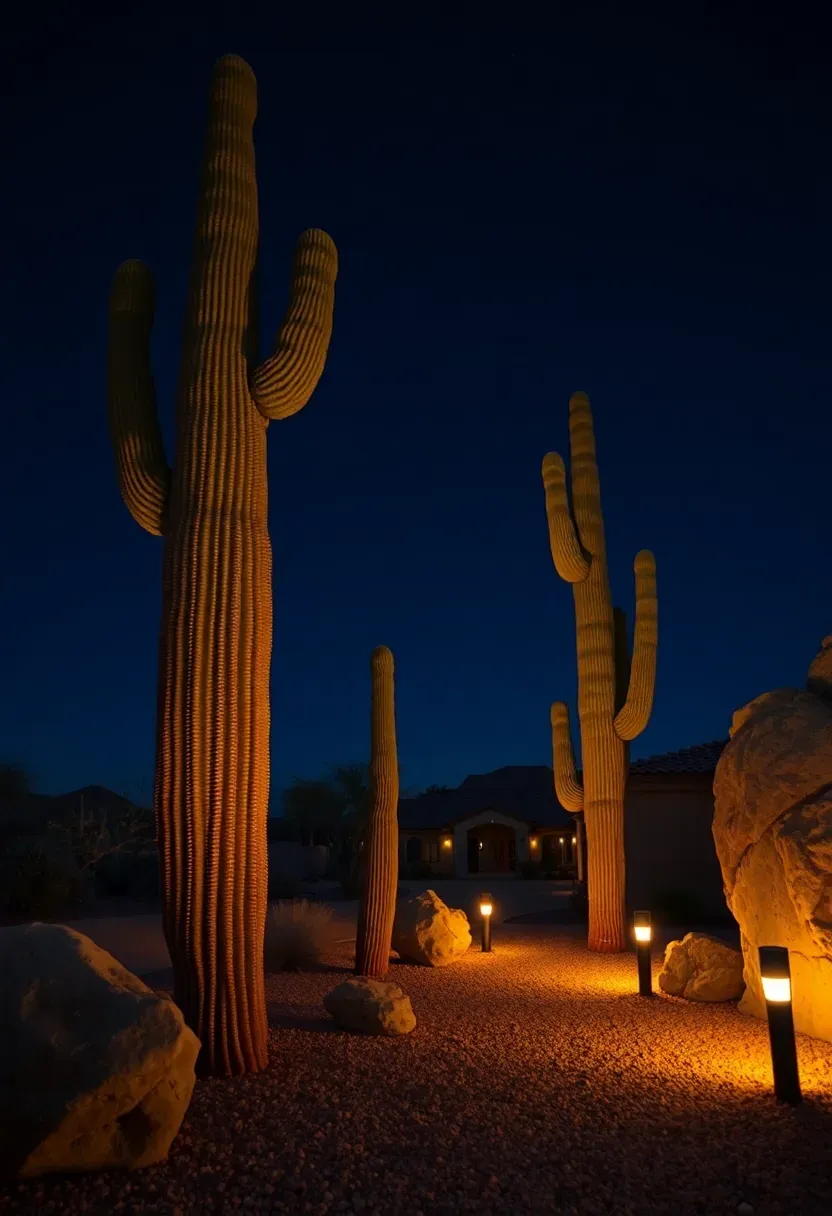
The desert at dusk undergoes a complete transformation. Colors deepen, shadows lengthen across boulders, and the sculptural profiles of cacti become dramatic silhouettes. Landscape lighting is the tool that extends this transformation through the night.
Step 1: Uplight Signature Plants
Direct 12-volt LED spotlights (warm white, 2700K) at the base of saguaros, large agave, and feature boulders. The upward light accentuates their vertical form and texture in a way daylight never can.
Step 2: Line Paths with Low Bollards
Path lights at 6-8 inch height along decomposed granite pathways define safe walking routes without creating light pollution. Choose fixtures with downward-facing shades to direct light onto the path surface.
Step 3: Add Ambient String Lighting
Outdoor-rated string lights strung between mesquite trees or along the ramada ceiling provide warm ambient light for social spaces. Choose Edison-style bulbs for a warm, inviting glow.
What to Watch Out For
- Avoid blue-spectrum (5000K+) LEDs in desert landscapes — they attract insects and disrupt wildlife that depends on the natural dark cycle
- Install all fixtures on a timer or photocell to prevent unnecessary overnight energy use
- Use conduit for all buried wiring in areas where saguaro or large agave roots may expand
Quick FAQ
Is it expensive to create an Arizona landscape from scratch? Costs vary widely. A DG courtyard with native plants can be completed for $2,000-$5,000 for a typical front yard. A full desert poolscape with stone coping and specimen saguaros runs considerably higher. The long-term savings on water and maintenance bills typically offset the initial investment within 5-7 years compared to a turf lawn.
Which plants survive Arizona summers without any irrigation? Established saguaro, prickly pear, ocotillo, jojoba (Simmondsia chinensis), creosote bush (Larrea tridentata), and brittlebush all thrive on Arizona rainfall alone once their root systems are established — typically after 2-3 years of supplemental watering during dry periods.
Should you remove all grass from an Arizona yard? In most Arizona cities below 4,500 feet elevation, replacing turf with xeriscape reduces outdoor water use by 50-70%. Several municipalities offer cash rebates per square foot of turf removed. The savings in water costs typically pay back the conversion cost within 2-4 years.
Can desert plants handle Arizona monsoon flooding? Native desert plants evolved with the feast-or-famine monsoon cycle and handle brief inundation well. Succulents and cacti are more sensitive to prolonged standing water — ensure your site drains within 24-48 hours. A dry creek bed or rain garden positioned uphill from your cactus planting protects it from monsoon overload.
What's the best time of year to plant in Arizona? Fall (late September through November) is the ideal planting season. Temperatures are moderate, monsoon rains have recharged soil moisture, and plants have the entire cool season to establish roots before facing their first summer. Spring (February through March) is the second-best window.
Trends come and go, but the desert endures. An Arizona landscape built around native plants, natural stone, and smart drainage becomes more beautiful every year as plants mature, boulders weather, and the yard settles into its own ecological rhythm. Start with one section — a dry creek bed here, a container grouping there — and let the landscape grow into itself at the pace the desert sets.
Pinterest cover for 19 Arizona Landscape Ideas That Thrive in the Desert Heat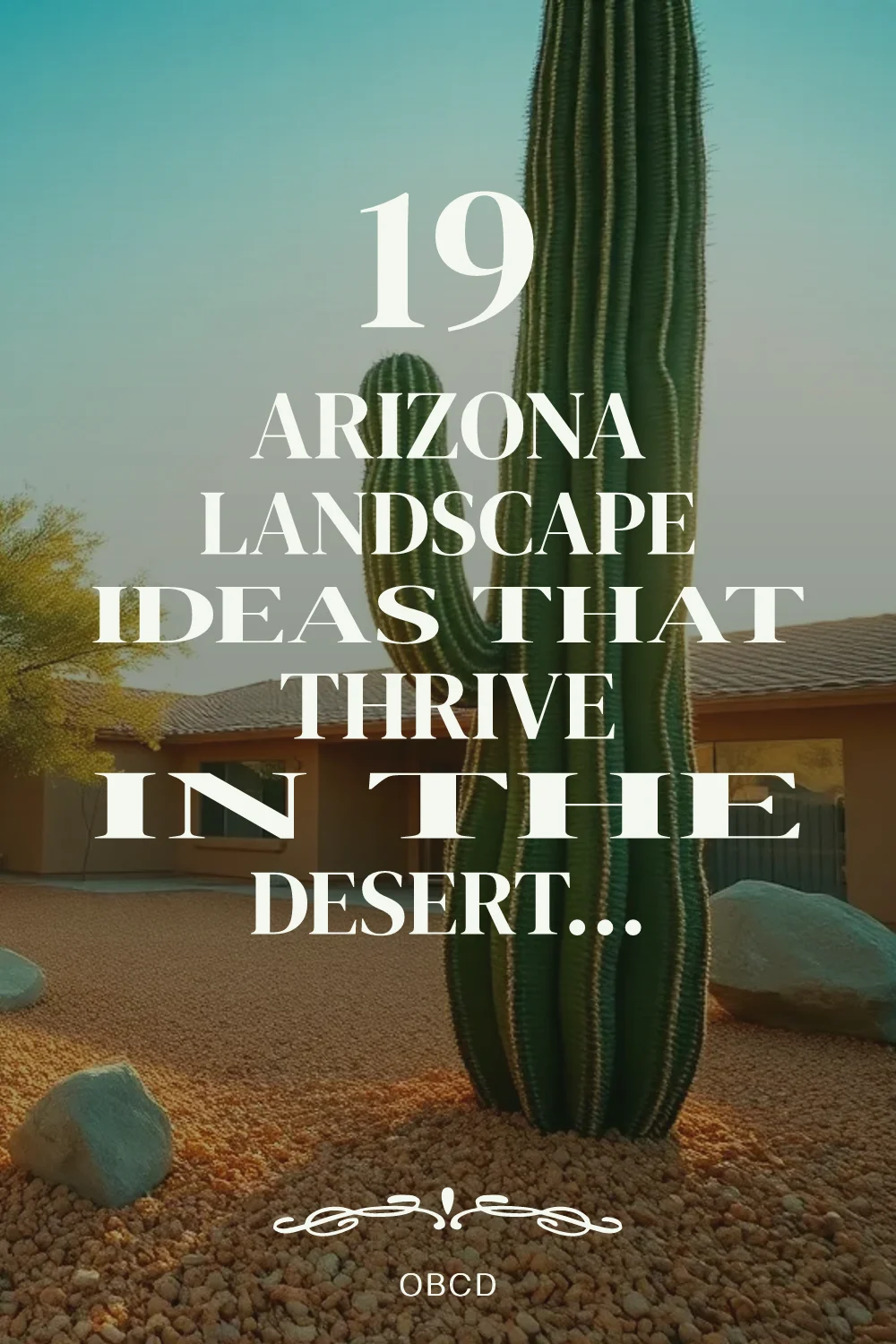
About the author
OBCD
CGI visualization and interior design content. We create detailed 3D renders and curate practical design ideas for every room in your home.