23 Art Nouveau Interior Design Ideas to Transform Your Home
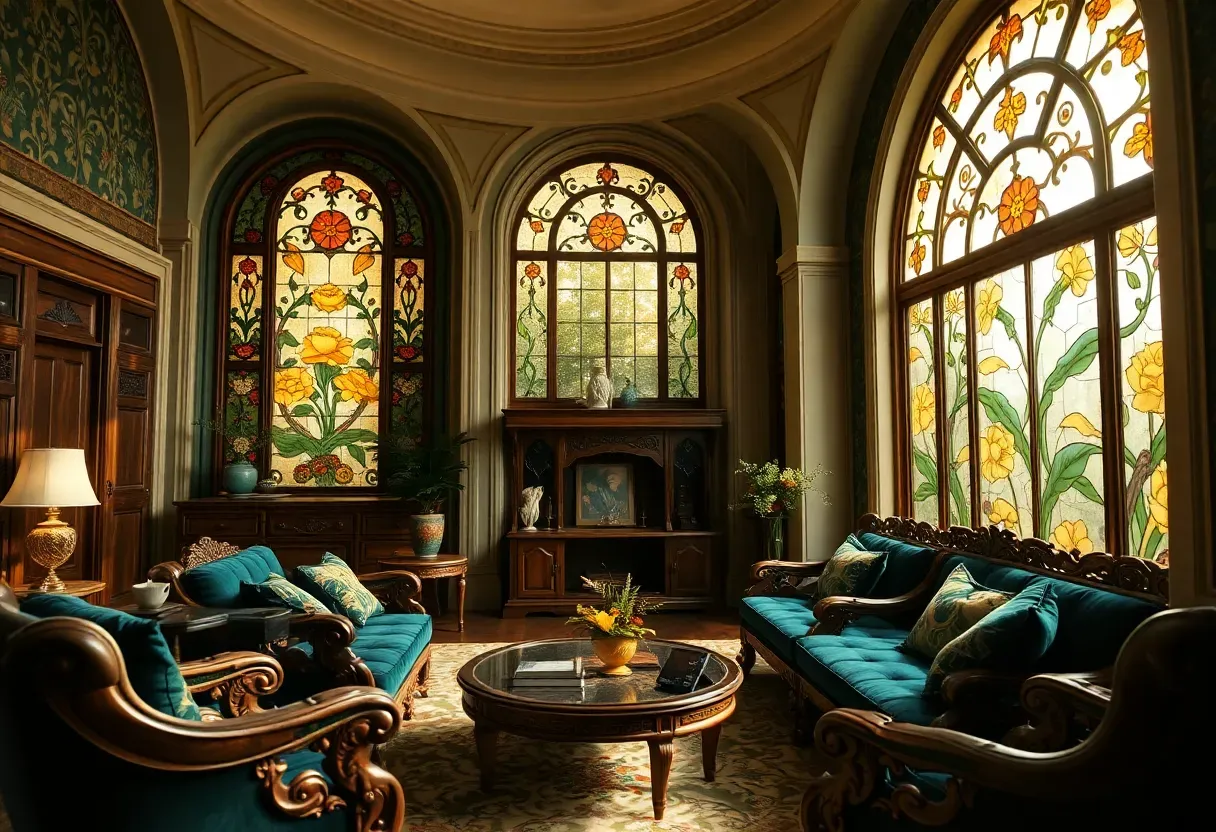
Picture walking into a room where every line flows like a river, where vines climb the walls in gilded relief, and light filters through stained glass in jewel-toned pools. Art Nouveau — born in the late 19th century — was never just a style. It was a philosophy: that beauty belongs in daily life, that handcraft matters, and that nature is the greatest architect. These 23 ideas bring that philosophy home.
In this article I've gathered a wide range of Art Nouveau-inspired approaches — from sweeping architectural gestures to small decorative touches you can introduce this weekend.
Table of Contents
- Whiplash Curve Archways
- Stained Glass Windows and Transoms
- Botanical Wallpaper Murals
- Sinuous Ironwork Railings
- Peacock Motif Textiles
- Organic-Form Furniture
- Mosaic Tile Floors
- Lily Pad Pendant Lights
- Gilded Relief Wall Panels
- Asymmetrical Fireplace Surrounds
- Dragonfly and Insect Decorative Accents
- Tiffany-Style Lamp Clusters
- Sculptural Plaster Ceilings
- Curved Wood Built-In Cabinetry
- Earthy and Jewel-Tone Color Palette
- Nature-Motif Door Hardware
- Art Nouveau Framed Mirror Gallery Wall
- Flowing Drapery and Textile Layers
- Ceramic Vessel and Vase Collections
- Carved Wood Bed Frames
- Verdant Indoor Plant Arrangements
- Decorative Exposed Beams with Carvings
- Art Nouveau-Inspired Kitchen Tiles
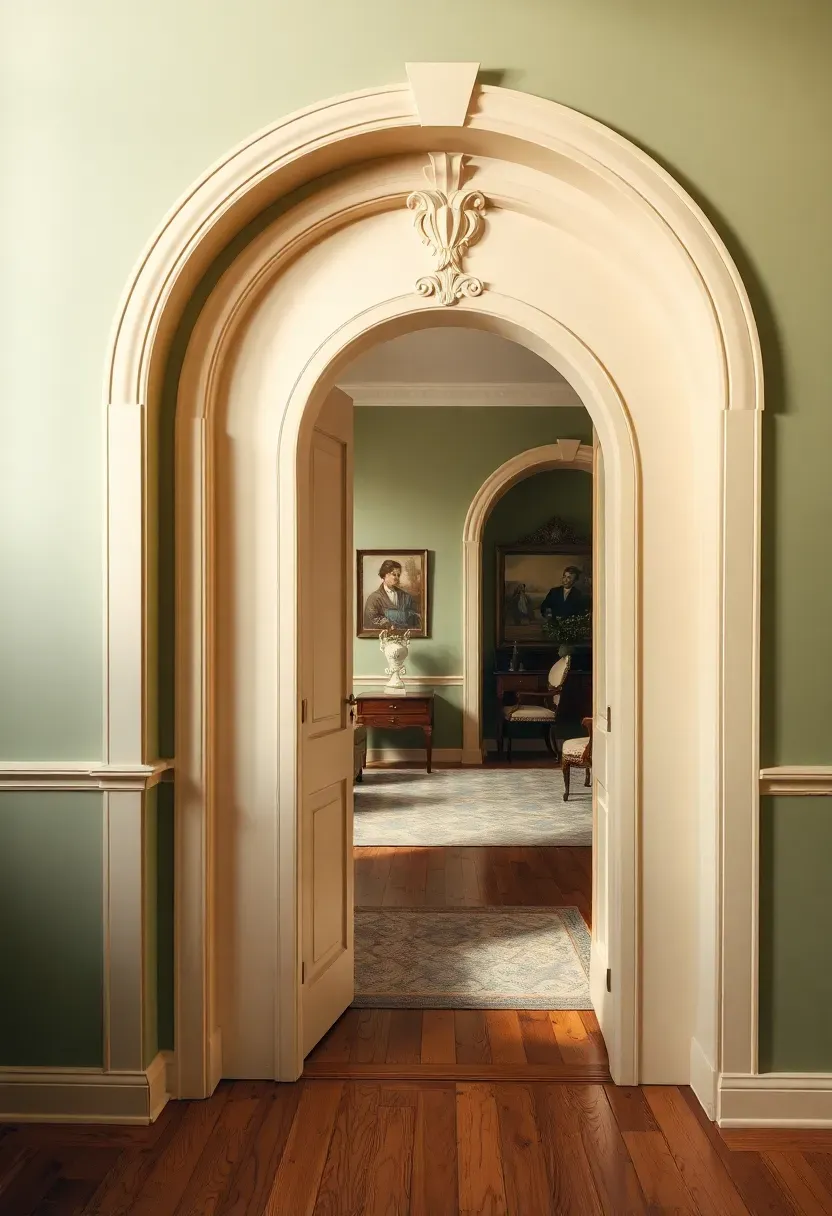
1. Whiplash Curve Archways
The whiplash curve — that sinuous S-bend inspired by plant tendrils — is the single most recognizable signature of Art Nouveau. Replacing a standard square doorway with a curved plaster archway instantly transforms a hallway from functional passage to theatrical threshold. The arch can be painted in cream or soft sage to feel organic rather than overwrought.
How to Adapt It
- Commission a plasterer to form a curved arch frame, or use flexible MDF molding for a budget-friendly version
- Paint the curve a tone slightly lighter than the wall to create subtle depth
- Add a small relief leaf motif at the keystone for an authentic detail
We picked a few things that go well with this idea: Touch of Class Clavillia Tiffany Glass Table Lamp (★4.8), Tiffany Umbrella Shade Lamp with Sculpture Base (★4.5) and Capulina Tiffany 2-Light Stained Glass Table Lamp (★4.8). As an Amazon Associate we earn from qualifying purchases.
2. Stained Glass Windows and Transoms
The Core Issue
Plain windows let in light, but they offer nothing for the eye to rest on — a missed opportunity in a home that aspires to artistry.
The Solution
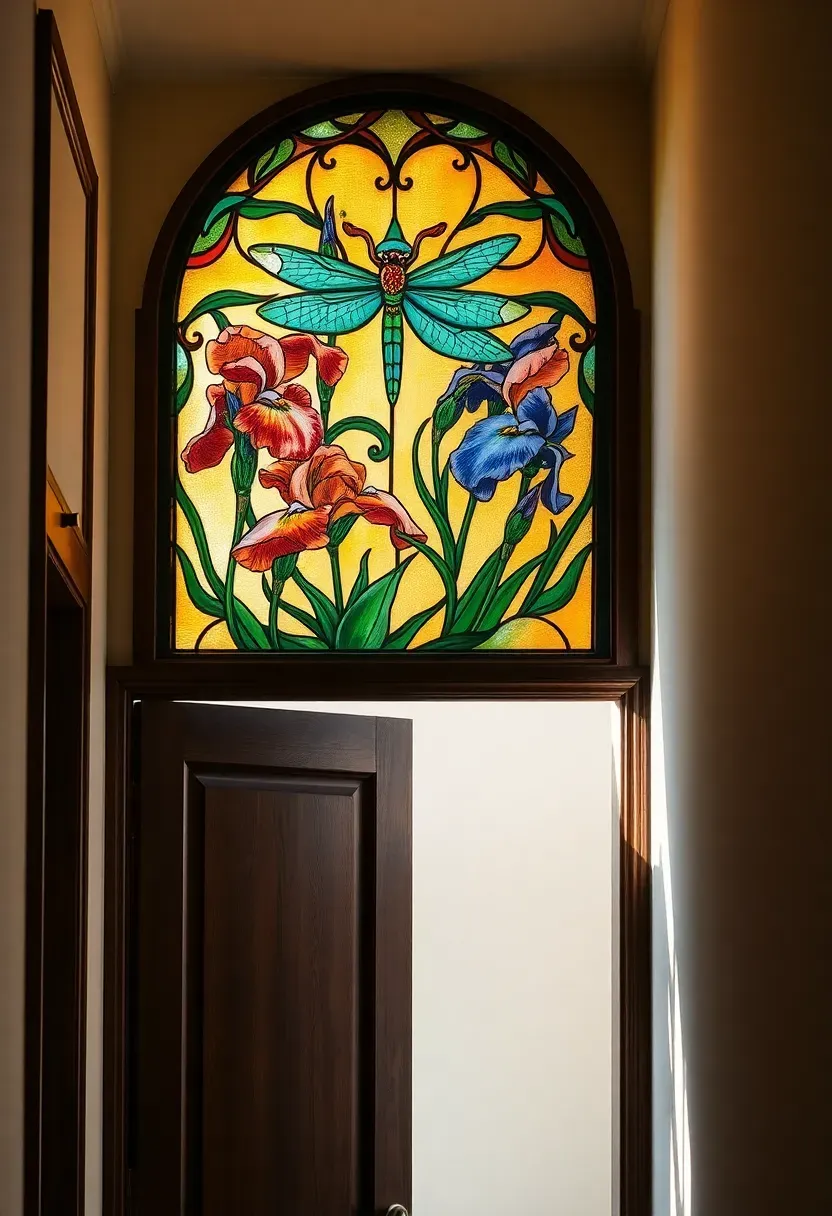
Art Nouveau stained glass turns every window into a composition. The classic motifs — dragonflies, water lilies, wisteria cascades, peacock feathers — fragment light into colored pools that shift throughout the day. Even a single transom above a door transforms an entry hall from perfunctory to poetic. Custom stained glass is an investment, but salvaged panels from architectural reclaim yards are widely available at a fraction of the cost and carry the patina of genuine history.
Pros and Cons
Pros: Creates dramatic, ever-changing ambient light; adds enormous visual character; increases perceived home value Cons: Custom commissions are expensive; salvaged panels require careful measuring for fit
We picked a few things that go well with this idea: Dark Botanical Floral Peel and Stick Wallpaper (★4.9), Vintage Floral Botanical Leaves Peel-Stick Wallpaper (★4.4) and Vintage Beige Wildflowers Botanical Contact Paper (★4.3). As an Amazon Associate we earn from qualifying purchases.
3. Botanical Wallpaper Murals
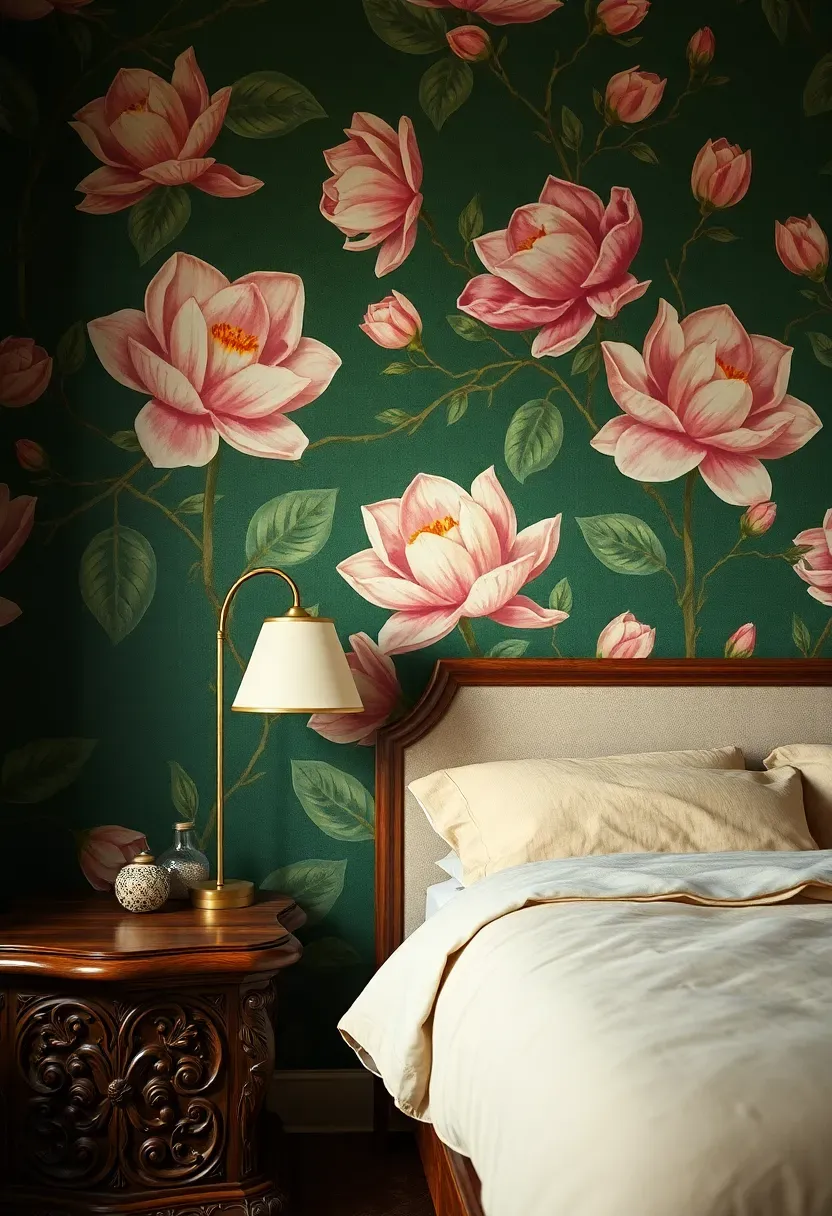
Art Nouveau designers — William Morris chief among them — believed that wallpaper was not decoration but environment. A mural-scale botanical print covering one entire wall can anchor a living room or bedroom in the style's worldview without requiring structural changes. Look for designs featuring large, stylized flowers with visible veining, climbing vines, and that characteristic flattened-yet-three-dimensional quality where forms overlap in shallow depth. Warm ochre, dusty rose, and deep forest green are period-authentic background tones.
Tips for Getting It Right
- Hang the mural on the wall that receives the most natural light so details read clearly
- Keep adjacent walls in a plain complementary tone pulled from the mural's palette
- Opt for paste-the-wall installation so large panels can be repositioned during hanging
We picked a few things that go well with this idea: Art Nouveau Cast Iron Door Stop Antique Bronze (★4.5), Antique Bronze Crystal Glass Door Knobs (2-Pack) (★4.7) and Vintage Oil Rubbed Bronze Crystal Door Knobs (2-Pack) (★4.5). As an Amazon Associate we earn from qualifying purchases.
4. Sinuous Ironwork Railings
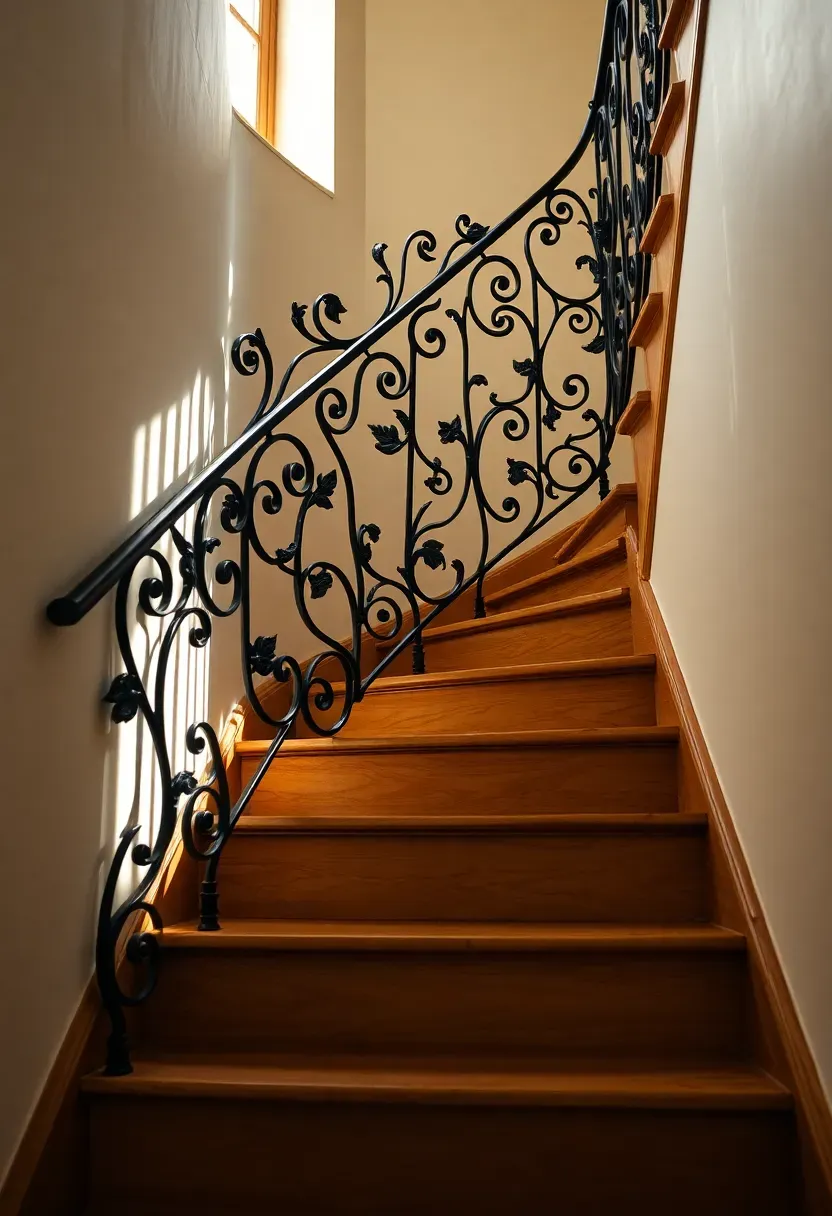
How to bring the rhythmic grammar of Art Nouveau into a staircase without gutting the entire space? Iron.
Wrought or cast ironwork lends itself perfectly to the style's organic vocabulary. Stair railings with repeating vine, iris, or water reed patterns transform a utilitarian structure into a focal piece guests notice the moment they enter. Many iron fabricators still work from period patterns, and the result works equally well in a Victorian terrace or a newer open-plan home.
Step 1: Source Your Pattern
Browse architectural salvage suppliers and custom metalwork studios. Period-accurate patterns such as the Glasgow rose or the Parisian metro aesthetic are widely available as reference.
Step 2: Determine Your Finish
Black matte evokes Hector Guimard's Paris metro entrances. Aged bronze reads warmer and suits rooms with wood tones.
Step 3: Integrate Lighting
Consider weaving slim LED strip lighting along the base rail — it highlights the ironwork at night and provides practical stair illumination.
What to Watch Out For
- Ensure any railing meets current building code height requirements before installation
- Have ironwork professionally sealed against rust in high-humidity environments
Recommended
Items for this idea
5. Peacock Motif Textiles
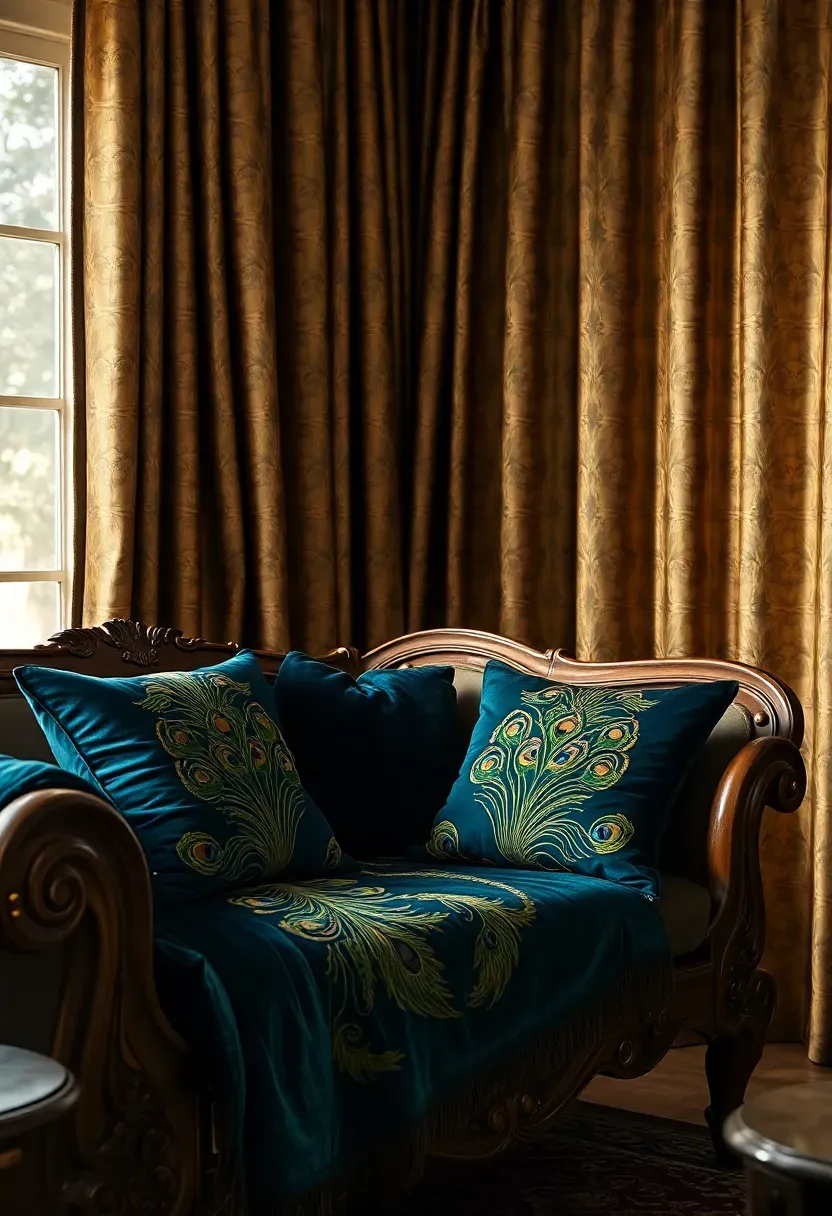
The peacock was Art Nouveau's unofficial mascot — its tail feathers the ultimate example of nature's own decorative excess. Introduce the motif through textiles: velvet cushions with embroidered feather eyes, brocade drapes in iridescent teal and bronze, or a silk throw draped across a reading chair. The richness of the motif means a little goes a long way; one or two peacock-patterned pieces are more elegant than an entire room covered in them.
Tips for Styling Peacock Textiles
- Pair with solid fabrics in deep jewel tones: sapphire, emerald, gold
- Avoid mixing with competing patterns — let the peacock motif be the hero
- Velvet and silk read most authentically; avoid synthetic sheen fabrics
6. Organic-Form Furniture
Comparing: Reproduction Pieces vs. Authentic Antiques
Introduction: Both options achieve the Art Nouveau look, but they serve different budgets and priorities.
Reproduction Pieces
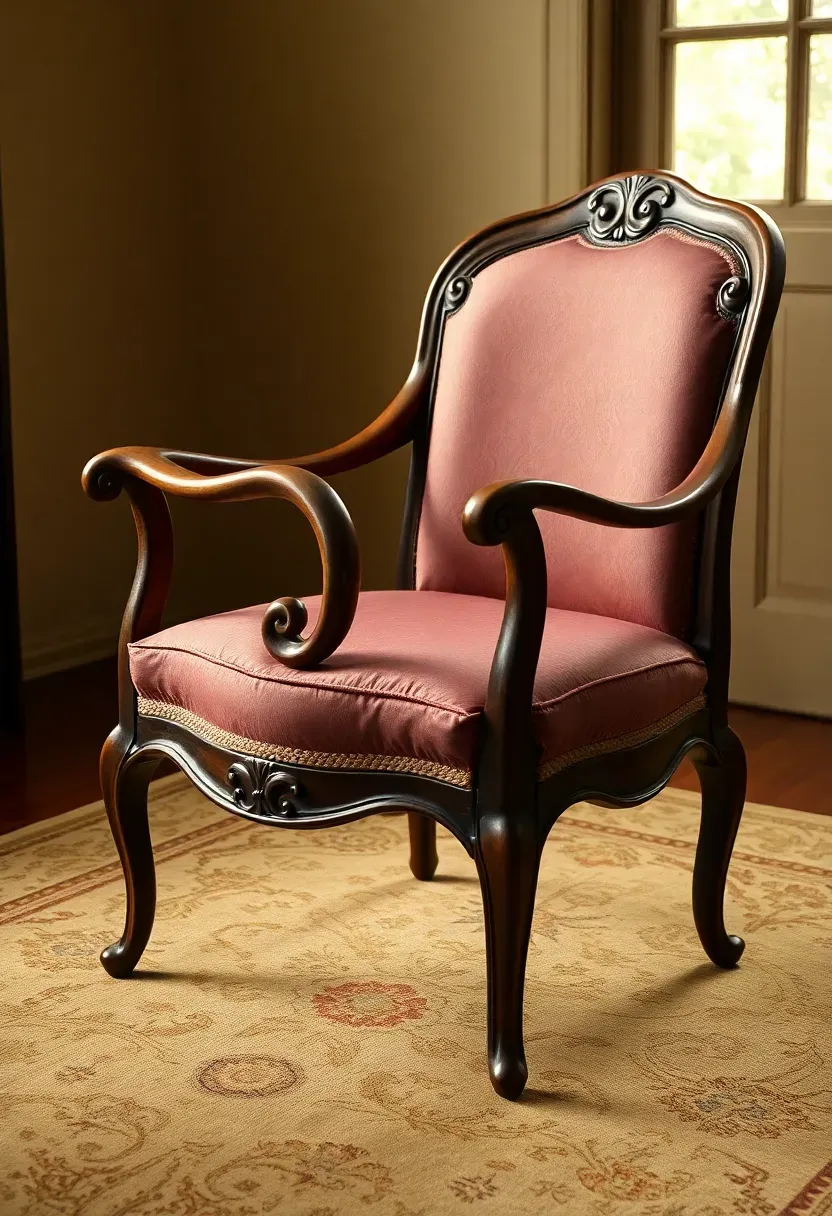
Well-made reproductions capture the sinuous silhouettes — cabriole legs that curve and re-curve, backs that flow upward like growing stems, drawer fronts with carved iris or rose reliefs. Prices are accessible and finishes are consistent.
Authentic Antiques
Original Art Nouveau furniture, particularly French pieces from the Nancy School, carries irreplaceable character: the slight irregularity of hand-carving, wood tones deepened by a century of patina, joinery that speaks of genuine craft. Prices range from modest for small pieces to substantial for case furniture.
What to Choose
Choose reproduction if: You want a cohesive, furnished look quickly and value practical durability Choose authentic if: You're building a curated collection and want pieces with historical provenance
Recommendation
One authentic statement piece — a carved walnut vitrine or a single hall chair — combined with quality reproductions creates the richest result for most budgets.
Recommended
Items for this idea
7. Mosaic Tile Floors
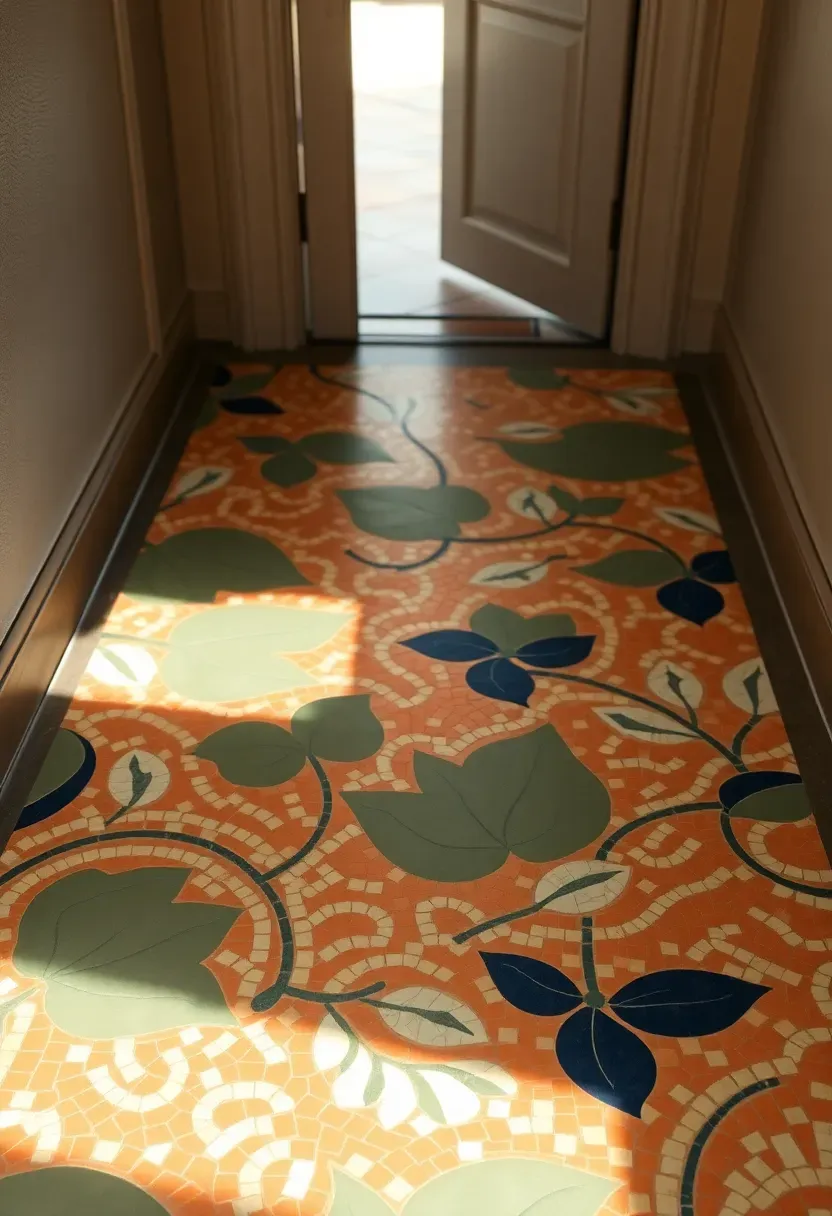
According to interior historians, mosaic tile flooring reached its artistic zenith during the Art Nouveau period. The technique — small tesserae laid into flowing, non-geometric compositions — allowed floors to become canvases rather than simply surfaces. A hallway or bathroom floor in period-correct mosaic immediately dates a space to the golden era of the movement while remaining entirely functional. Terracotta, sage, ivory, and navy are the period palette; organic motifs (leaves, fish scales, geometric floral repeats) are the grammar.
Tips for Mosaic Tile Success
- Use a professional tile setter experienced with mosaic — alignment is critical for flow
- Seal grout lines thoroughly in bathrooms and kitchens to prevent staining
- A 1-meter feature panel in a larger plain-tile floor is a cost-effective compromise
8. Lily Pad Pendant Lights
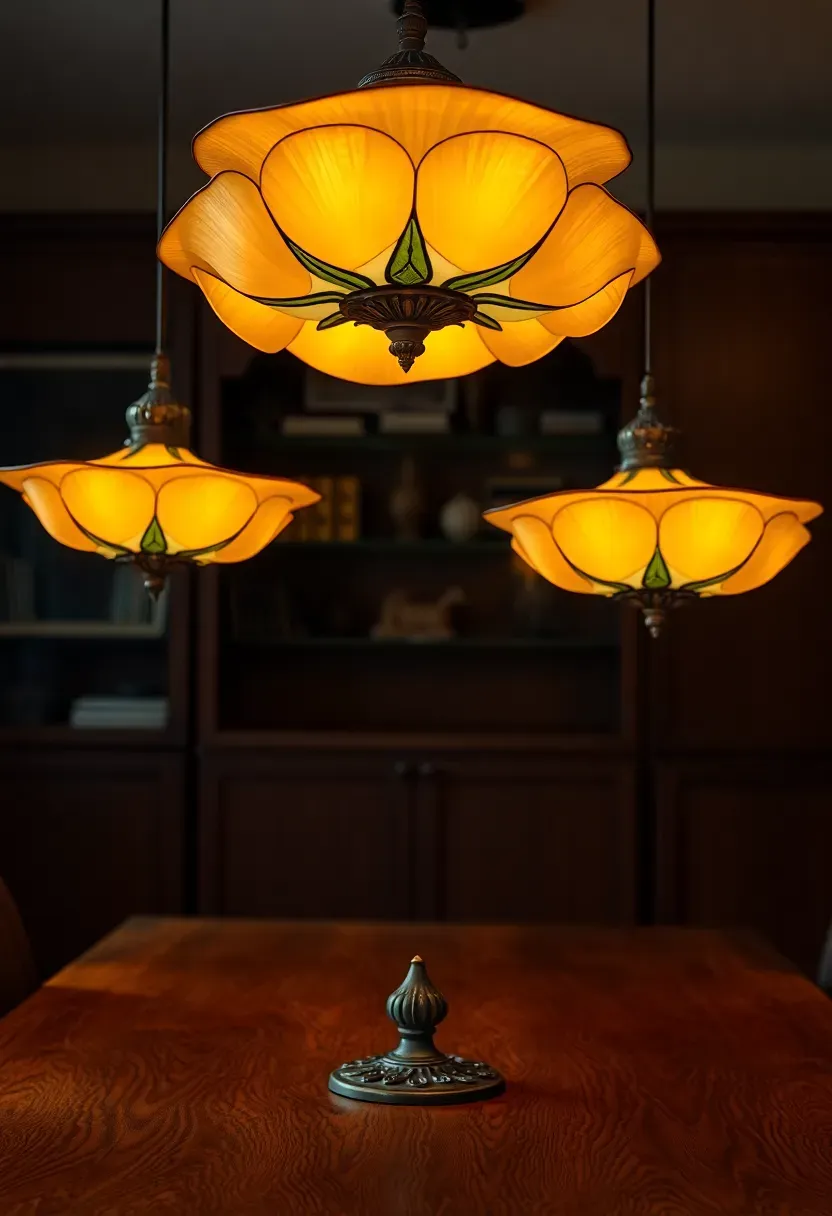
Light fixtures are arguably where Art Nouveau made its most lasting impact on domestic interiors. The water lily — with its flat, spreading pad and graceful upturned bloom — translated almost directly into pendant lamp forms. Amber, green, and opalescent glass shades over bronze or patinated brass hardware create the signature warm glow. A cluster of three lily pad pendants over a dining table transforms an everyday room into something closer to a hothouse than a house.
Step 1: Measure Ceiling Height
Lily pad pendants need generous drop lengths to read as intended — plan for the shade to hang at eye level when seated.
Step 2: Choose Your Glass Tone
Amber warms skin tones; green creates a lush, underwater mood; opalescent white reads cleanest in small spaces.
Step 3: Group Deliberately
Odd numbers (three or five pendants) at slightly staggered heights look intentional rather than repetitive.
What to Watch Out For
- Ensure a qualified electrician installs multiple pendant clusters — ceiling load and wiring capacity must be confirmed
- Clean glass shades gently; some period-style glass is more fragile than modern equivalents
Recommended
Items for this idea
9. Gilded Relief Wall Panels
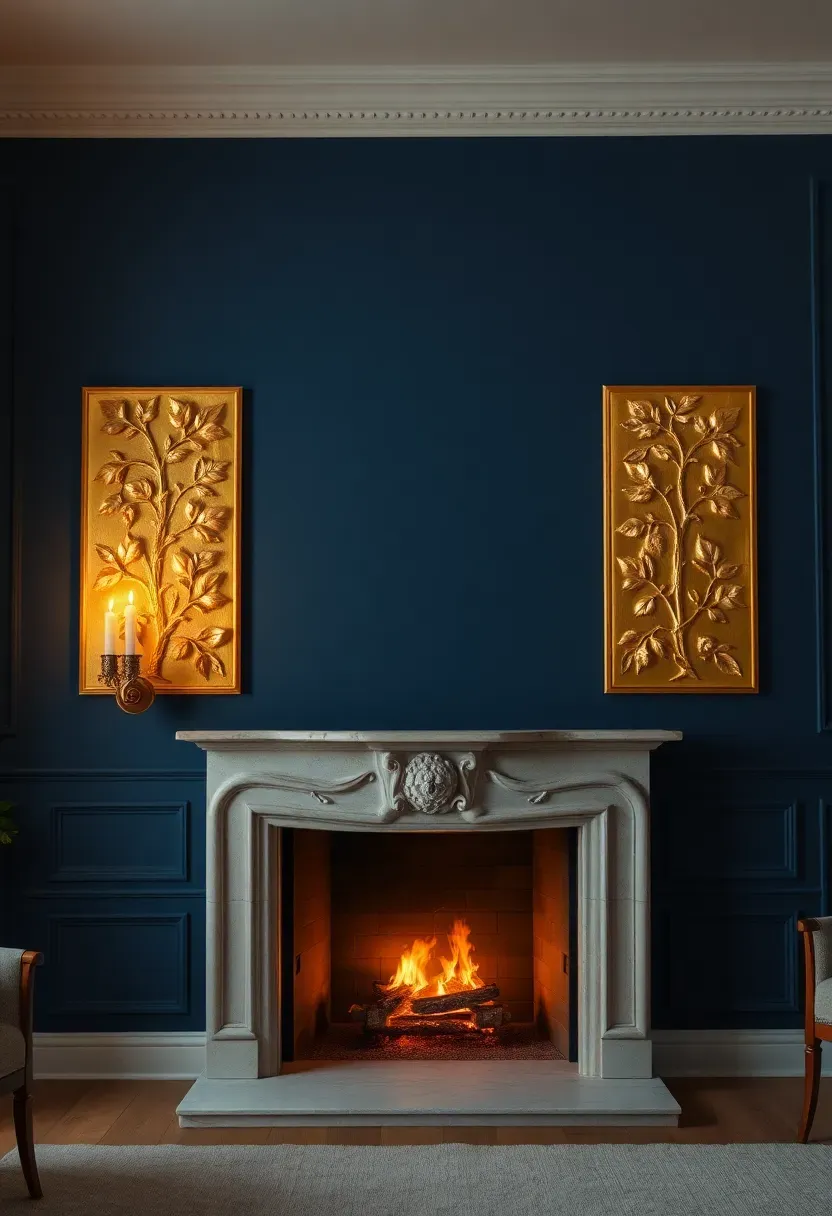
For centuries, gilded surfaces were reserved for palaces and churches. Art Nouveau democratized gold — applying it in relief panels at domestic scale, framing doorways, accenting cornices, tracing the lines of built-in furniture. A pair of gilded relief panels flanking a fireplace or flanking a sofa is one of the fastest ways to inject the style into an existing room. Modern polyurethane relief panels with applied gold leaf — or even quality gold paint in satin finish — deliver the effect without specialist costs.
Tips for Installing Relief Panels
- Fix panels with construction adhesive and finishing nails; fill nail heads before gilding
- Apply gold leaf size (adhesive) only to raised areas for maximum contrast against the painted base
- A deep jewel-toned background — midnight blue, bottle green, burgundy — makes gilded relief pop
10. Asymmetrical Fireplace Surrounds
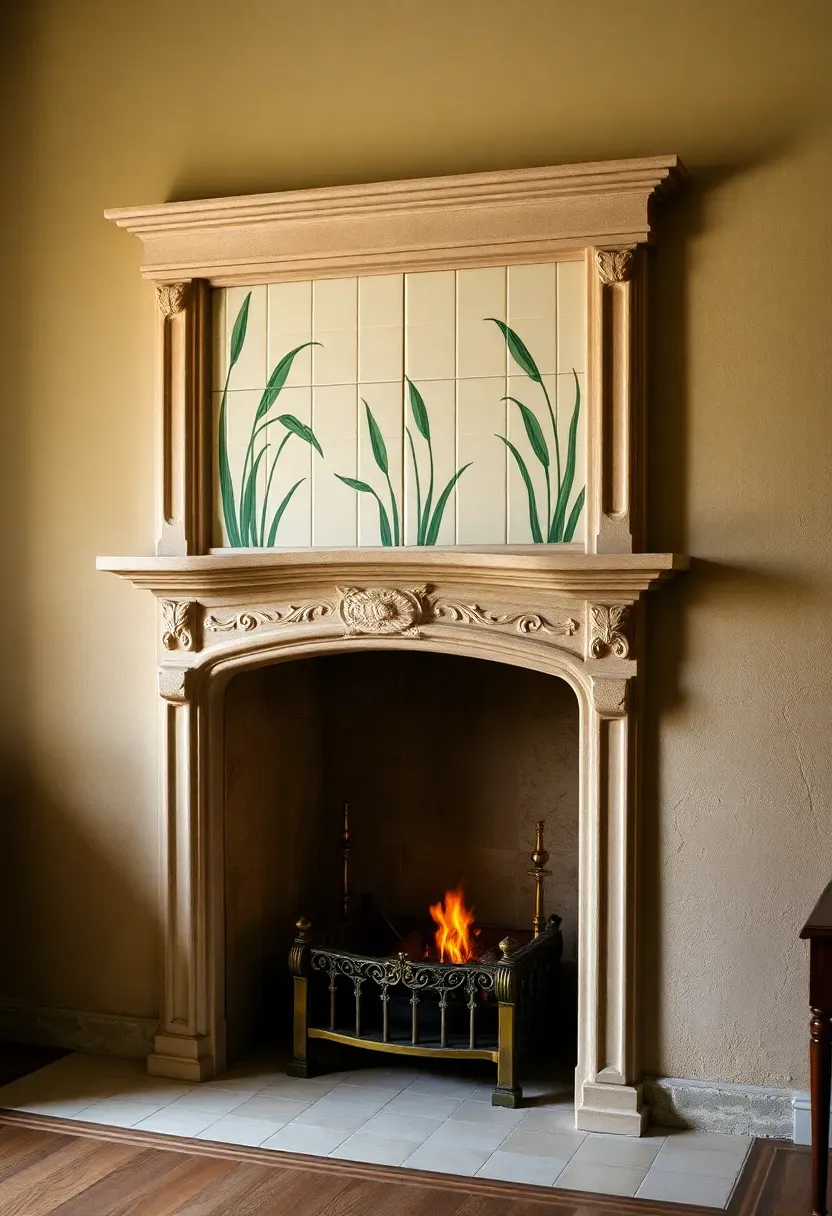
Why do we still design fireplace surrounds with strict bilateral symmetry when nature rarely offers it? Art Nouveau designers asked that same question and answered with hearths that grew from the wall like living things — one side taller than the other, mantel shelves that curved rather than squared, tile insets showing water reeds bending in an implied breeze. An asymmetrical surround is a bold choice, but it pays dividends: it makes the fireplace feel discovered rather than installed.
The Core Issue
Standard fireplace surrounds read as architectural furniture — pleasant but predictable. They rarely become conversation pieces.
The Solution
Commission a surround in carved limestone, painted ceramic, or stained wood with deliberate asymmetry in the uprights. Combine with period-correct encaustic or hand-painted tile inserts at the firebox. The investment is significant, but a fireplace this distinctive anchors a room for decades.
Pros and Cons
Pros: Becomes the genuine focal point of any room; entirely unique; deeply authentic to the period Cons: Higher cost than standard surrounds; requires skilled craftsperson; hard to reverse
Recommended
Items for this idea
11. Dragonfly and Insect Decorative Accents
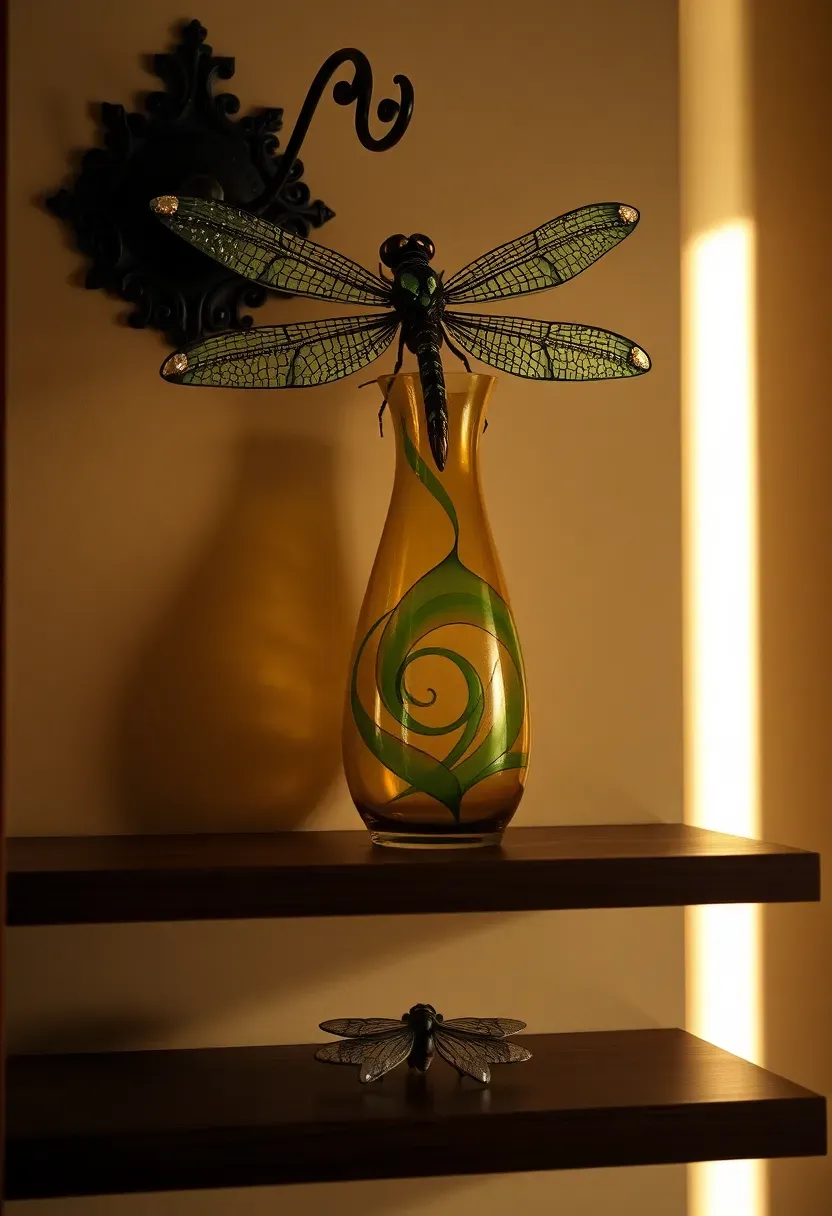
Art Nouveau was the first design movement to elevate insects to decorative heroes. The dragonfly — with its jeweled wings and geometric body — appeared on everything from René Lalique's jewelry to Émile Gallé's glass vases. Bringing this motif into a contemporary interior is easier than you might expect. Bronze dragonfly wall sconces, glass paperweights with trapped insect forms, embroidered cushion backs, and ceramic tile accent pieces all carry the motif without demanding full stylistic commitment.
Tips for Working with Insect Motifs
- Stick to one or two insect varieties — mixing dragonflies, beetles, and butterflies simultaneously reads as eclectic rather than Art Nouveau
- Bronze and verdigris finishes are more authentic than chrome or polished gold
- Scale matters: one large statement dragonfly piece reads with more intention than five small scattered ones
12. Tiffany-Style Lamp Clusters
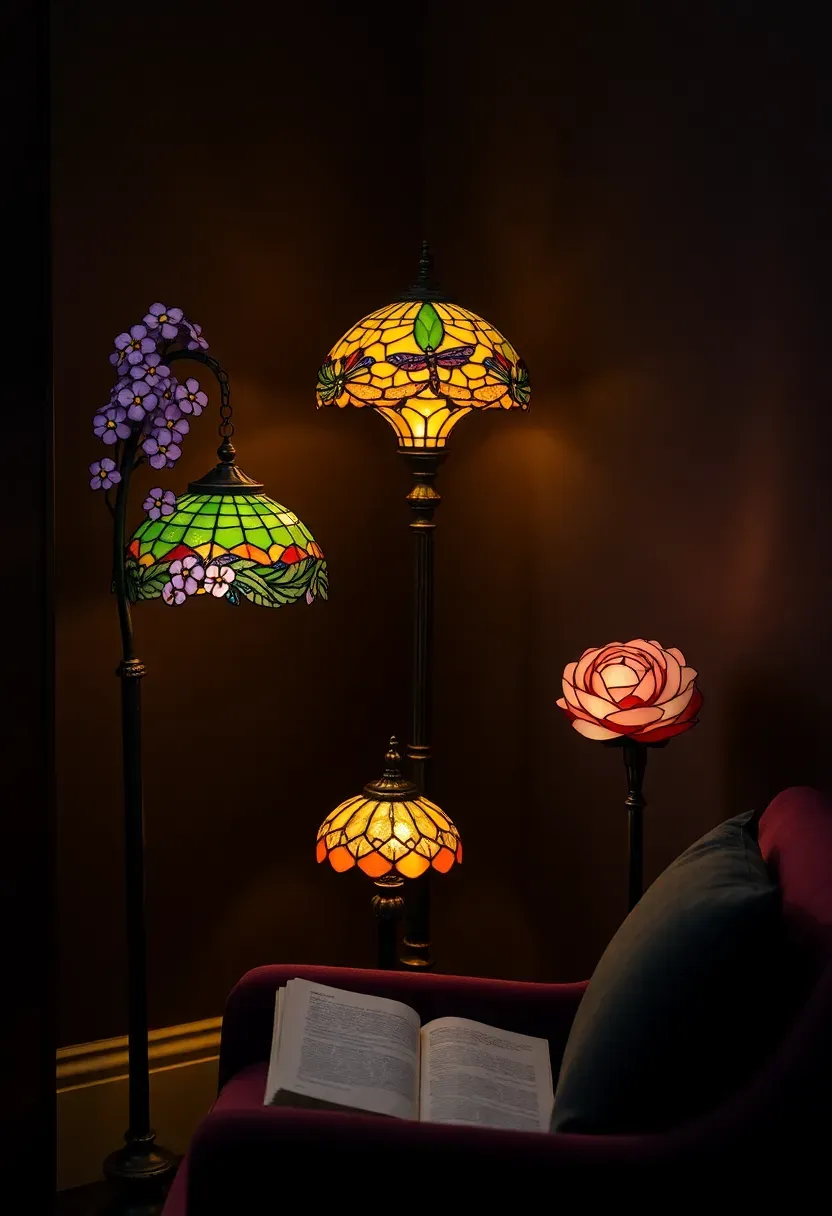
Louis Comfort Tiffany's leaded glass lamps are among the most recognized objects in design history — and with good reason. The technique of assembling hundreds of small glass pieces into floral, geometric, and landscape compositions created light sources that were simultaneously functional and fine art. Original lamps are museum-priced, but high-quality reproductions are widely available and deliver the same visual warmth. Group three lamps of different heights — table lamp, floor lamp, and a small accent lamp — for a reading corner that channels the spirit of a 1905 New York townhouse.
Tips for Lamp Placement
- Avoid placing Tiffany-style lamps in rooms with very cold, blue-toned lighting — the warm glass tones clash
- Mix dragonfly, wisteria, and peony shades within a group for variety without disorder
- Use lower-wattage warm bulbs (2700K) to enhance the amber and green tones of the glass
Recommended
Items for this idea
13. Sculptural Plaster Ceilings
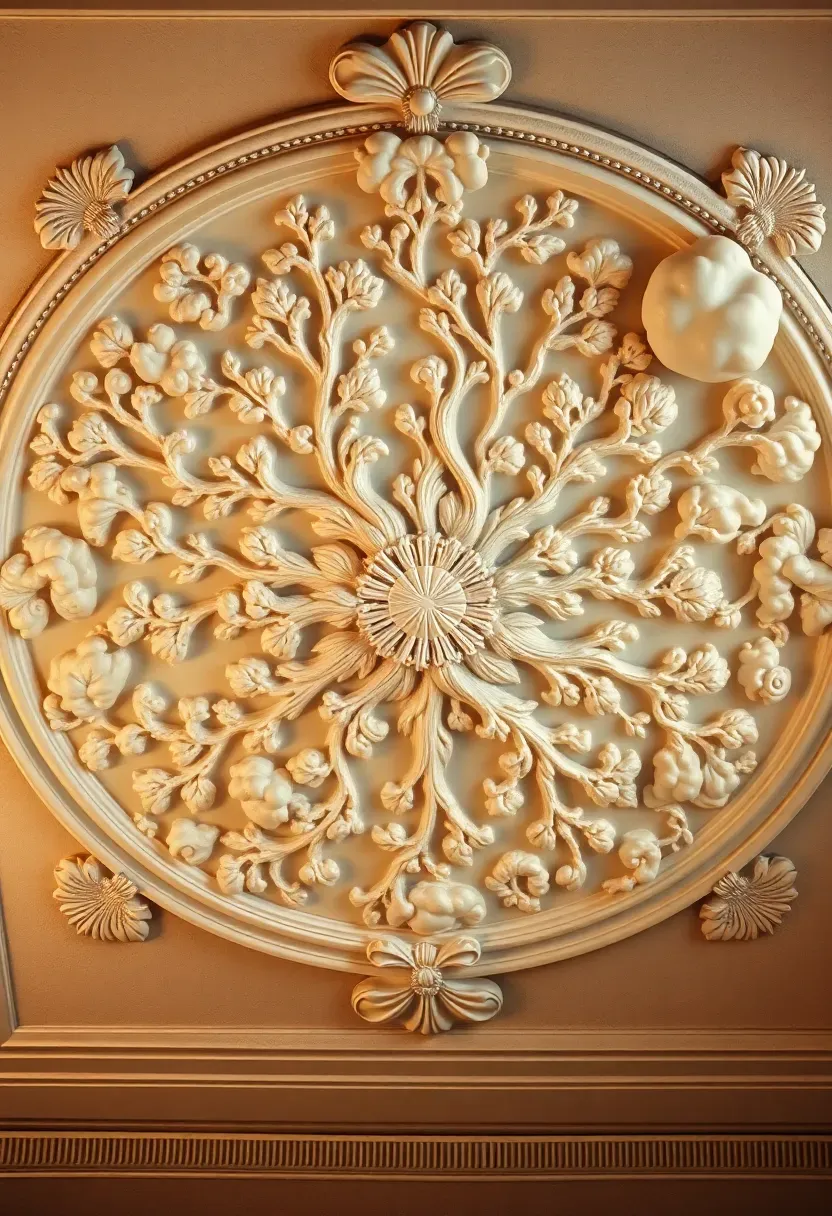
The ceiling was rarely an afterthought in authentic Art Nouveau interiors. Plaster could be modeled into bas-relief compositions — branching trees, unfurling ferns, cloud formations — that made looking up feel like lying in a forest clearing. A full sculptural plaster ceiling is a major undertaking, but a feature medallion in an organic motif, or a plaster border of repeating botanical forms at the cornice, achieves considerable impact at a fraction of the cost.
Tips for Plaster Work
- Photograph period examples thoroughly before briefing a plasterer — specificity prevents misunderstanding
- Paint plaster work in tonal variations rather than stark white: soft stone, warm cream, or pale sage read more authentically
- Subtle uplighting from the perimeter accentuates the three-dimensionality of relief work at night
14. Curved Wood Built-In Cabinetry
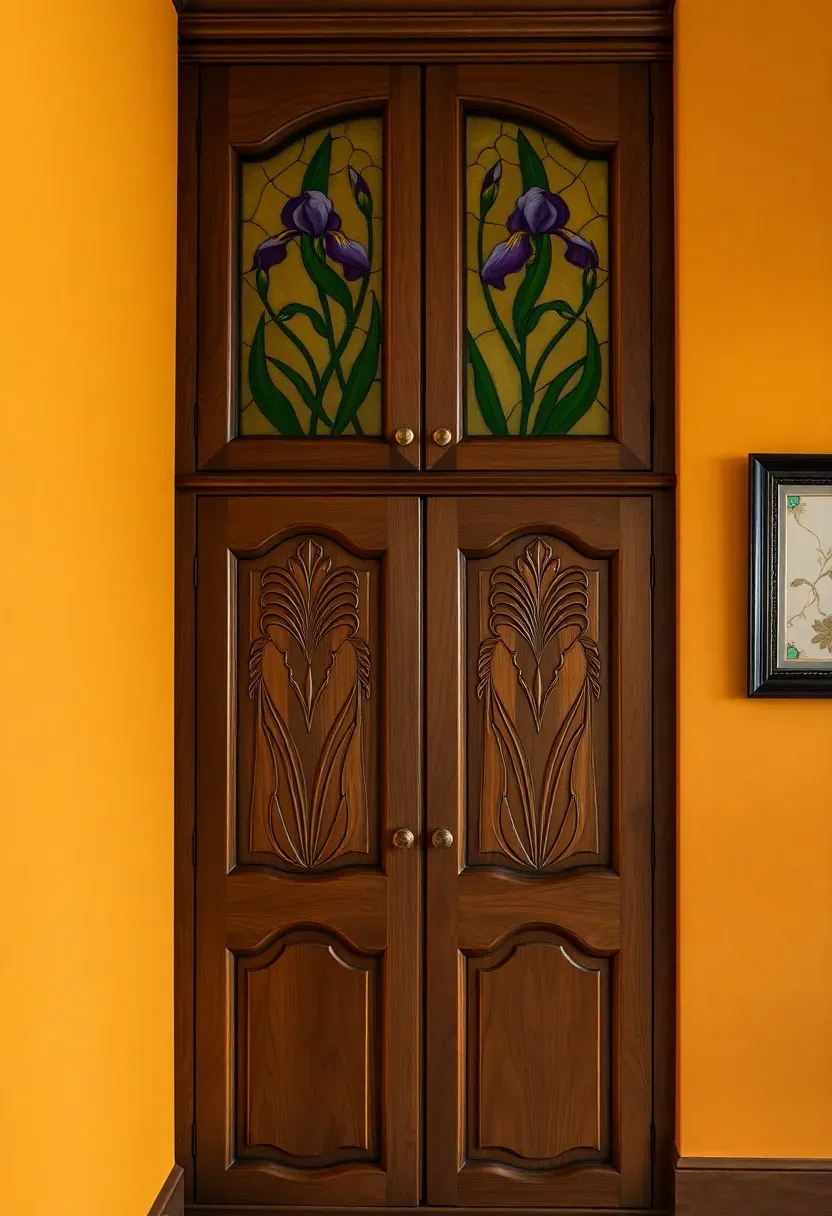
Ready-to-assemble kitchen and living room cabinetry is, by definition, rectilinear. Art Nouveau built-ins are the opposite: curved door fronts, cabinet tops that arc like breaking waves, shelving units whose uprights taper to carved points. Having bespoke built-ins made to Art Nouveau specifications is an investment, but the result is permanent architecture rather than furniture. Walnut, cherry, and chestnut were the period woods of choice — all produce the warm reddish tones that complement the style's color palette.
Step 1: Commission a Design Drawing
Work with a cabinetmaker or furniture designer to produce a scaled drawing before any wood is cut. Proportions matter enormously in curved work.
Step 2: Select Wood Species
Walnut offers the deepest color and finest grain for carved details. Oak is more cost-effective and carves cleanly.
Step 3: Plan Glass Inserts
Upper cabinet doors with colored or etched glass inserts let cabinetry participate in the room's light play.
What to Watch Out For
- Curved cabinet doors require specialized hardware; source hinges rated for off-angle installation
- Allow extra lead time — curved built-ins take two to three times longer to build than standard work
Recommended
Items for this idea
15. Earthy and Jewel-Tone Color Palette
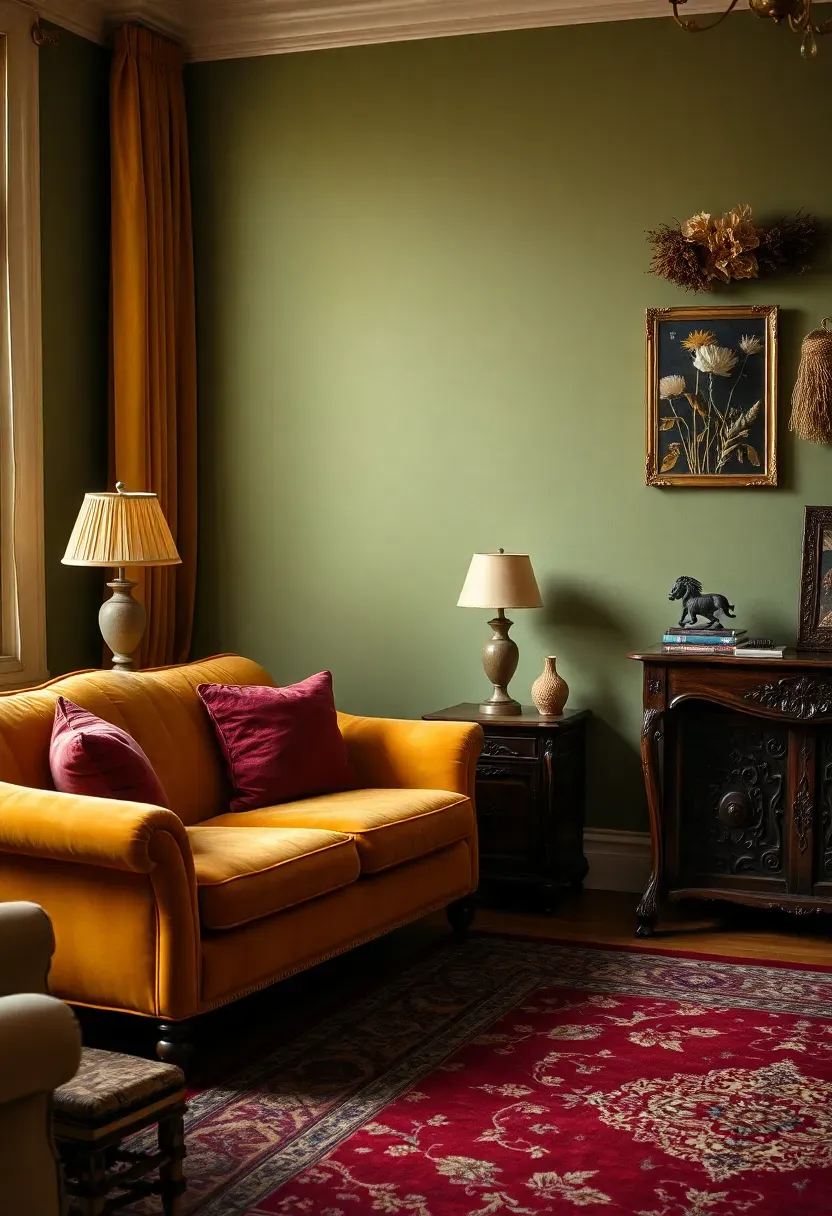
Art Nouveau color is not loud. It is deep, layered, and organic — drawn from the natural world that inspired everything else about the movement. Think of the colors of a forest floor in autumn, a peacock in morning light, a meadow at dusk. Sage green, golden ochre, dusty rose, deep teal, warm burgundy, and the particular muted purple of wisteria in shade. These tones work together because they share the same underlying warmth. Walls in deep jewel tones, woodwork in warm cream, accents in gold or bronze — this is the harmonic structure of the period palette.
Tips for Implementing the Palette
- Use the 60-30-10 rule: 60% dominant earth tone, 30% secondary jewel tone, 10% metallic accent
- Avoid cool grays and bright whites — they flatten the palette and kill its warmth
- Test paint colors under incandescent or warm LED light, which shows how they'll read in evening use
16. Nature-Motif Door Hardware
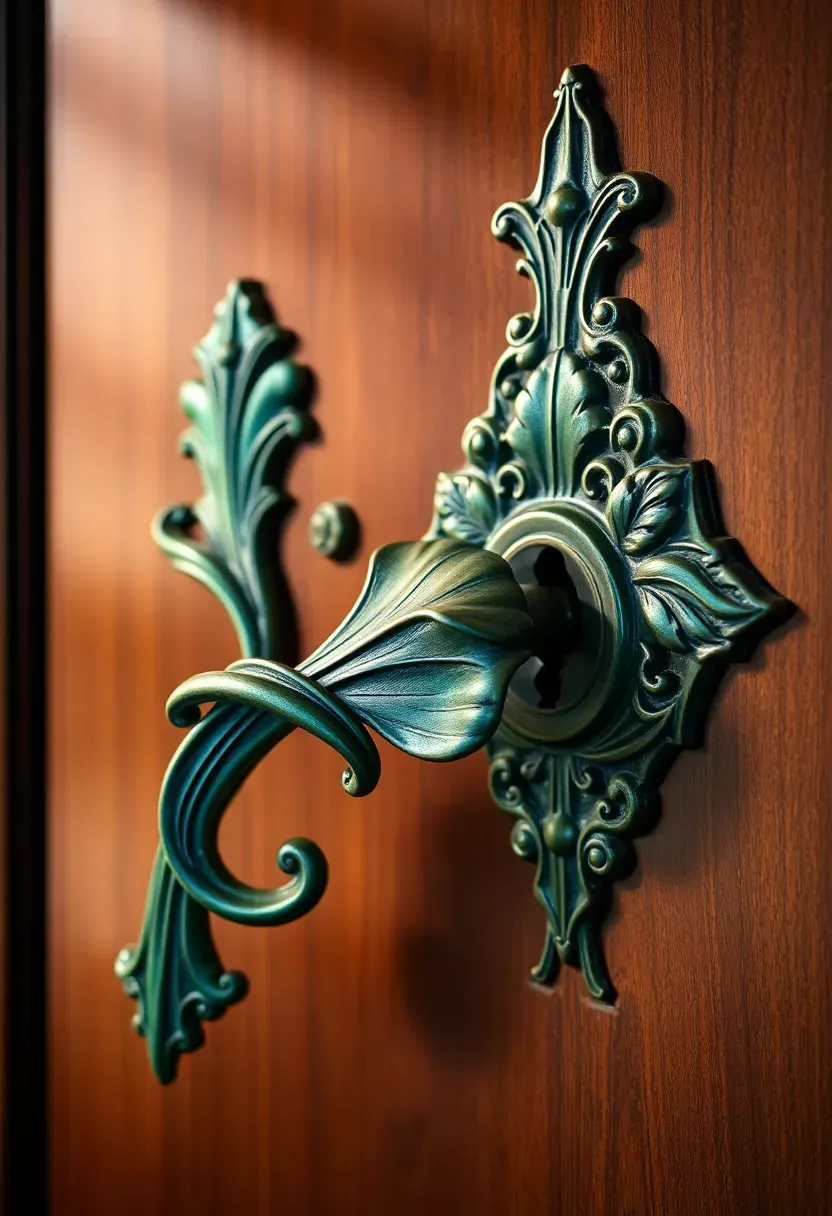
Should door hardware be an afterthought? In Art Nouveau philosophy, absolutely not. The movement's designers — from Louis Majorelle to Victor Horta — designed door handles, escutcheons, and hinges with the same care given to furniture and architecture. Cast bronze handles shaped as lily stems, backplates molded into leaf clusters, and keyhole surrounds with dragonfly or beetle forms are all available from specialist hardware suppliers today. Replacing standard lever handles with period-appropriate alternatives is one of the most affordable and impactful changes you can make.
Tips for Hardware Selection
- Buy handles and escutcheons as a coordinated set to avoid mismatched finishes
- Aged bronze and verdigris patina read more authentically than bright polished brass
- Interior and exterior hardware do not need to match — freedom to mix rooms gives each door its own character
Recommended
Items for this idea
17. Art Nouveau Framed Mirror Gallery Wall
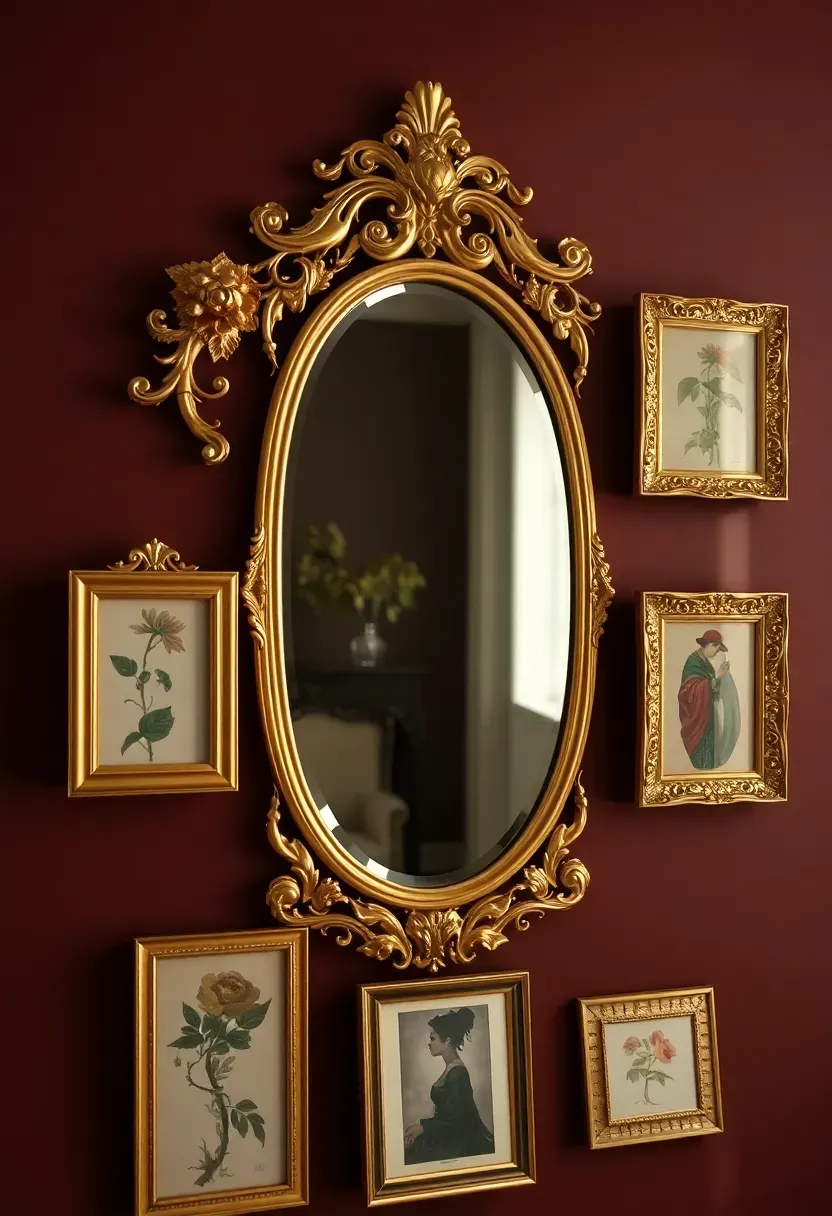
Gallery walls are everywhere — but most use generic frames that flatten the effect. Art Nouveau mirror frames — with their cast gesso or carved wood surrounds of vines, roses, and undulating bands — transform a gallery arrangement into something genuinely period-referential. Mix mirrors with prints of period botanical illustrations, Mucha posters, or silhouetted portraits for a wall that reads as a curated collection rather than decoration filler. Arrange in a loose horizontal band rather than a rigid grid for a more organic composition.
Tips for Gallery Wall Arrangement
- Lay out the arrangement on the floor first and photograph it before committing to wall fixings
- Vary frame sizes significantly — the contrast between a large oval mirror and a small rectangular print creates visual rhythm
- Keep a minimum 5cm gap between frames to let each piece breathe
18. Flowing Drapery and Textile Layers
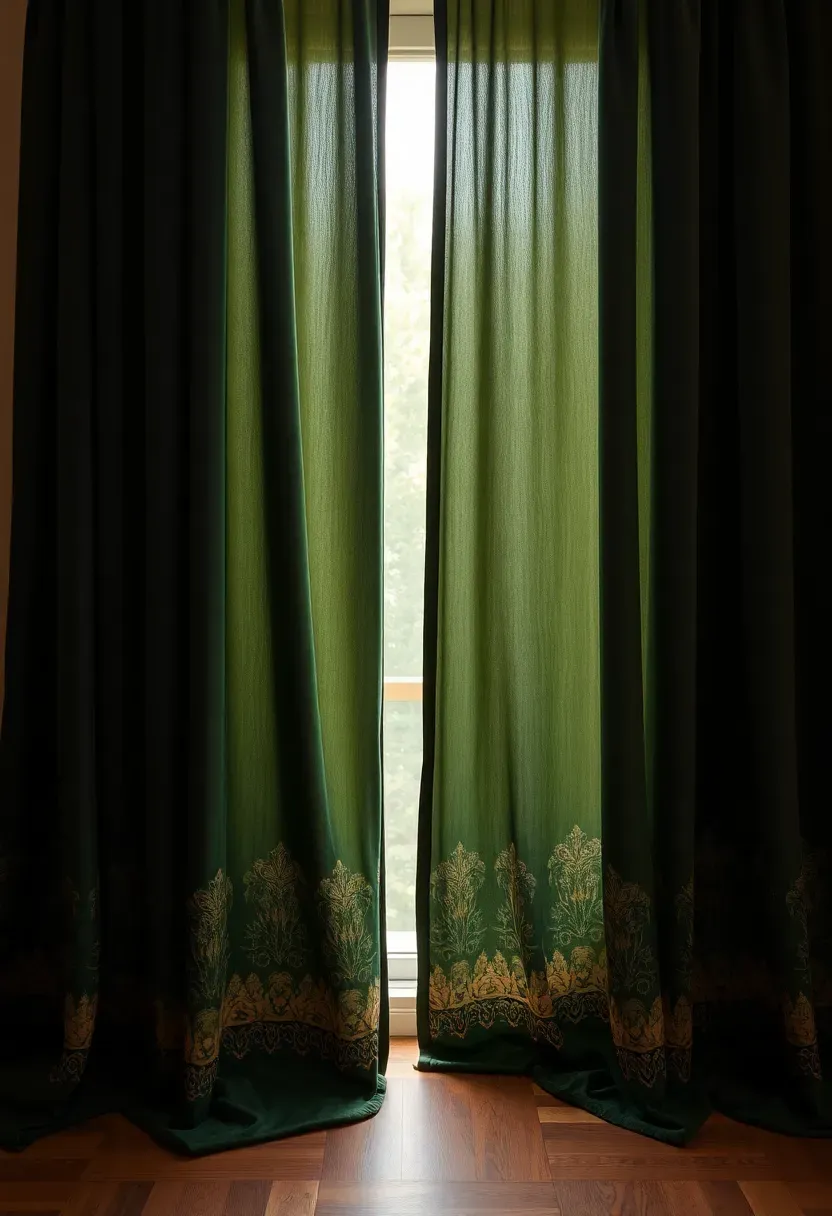
Imagine: you draw the curtains at dusk and the fabric falls in continuous, unbroken folds from ceiling to floor — silk or velvet in deep forest green or dusty rose, bordered with a botanical print band in gold thread. This is how Art Nouveau treated textiles: as soft architecture. Floor-length drapes with generous fullness (2.5× the window width) in period-appropriate fabrics make windows feel like portals rather than holes in the wall. Layer a sheer inner curtain in ivory behind the main drape to control light during the day.
Tips for Drapery
- Hang curtain rods as high as possible — ideally at ceiling height — to maximize the vertical drama
- Choose curtain rods in bronze or aged brass rather than chrome or brushed nickel
- Avoid grommets; use pinch-pleat or goblet-pleat headings for the most period-accurate fall
Recommended
Items for this idea
19. Ceramic Vessel and Vase Collections
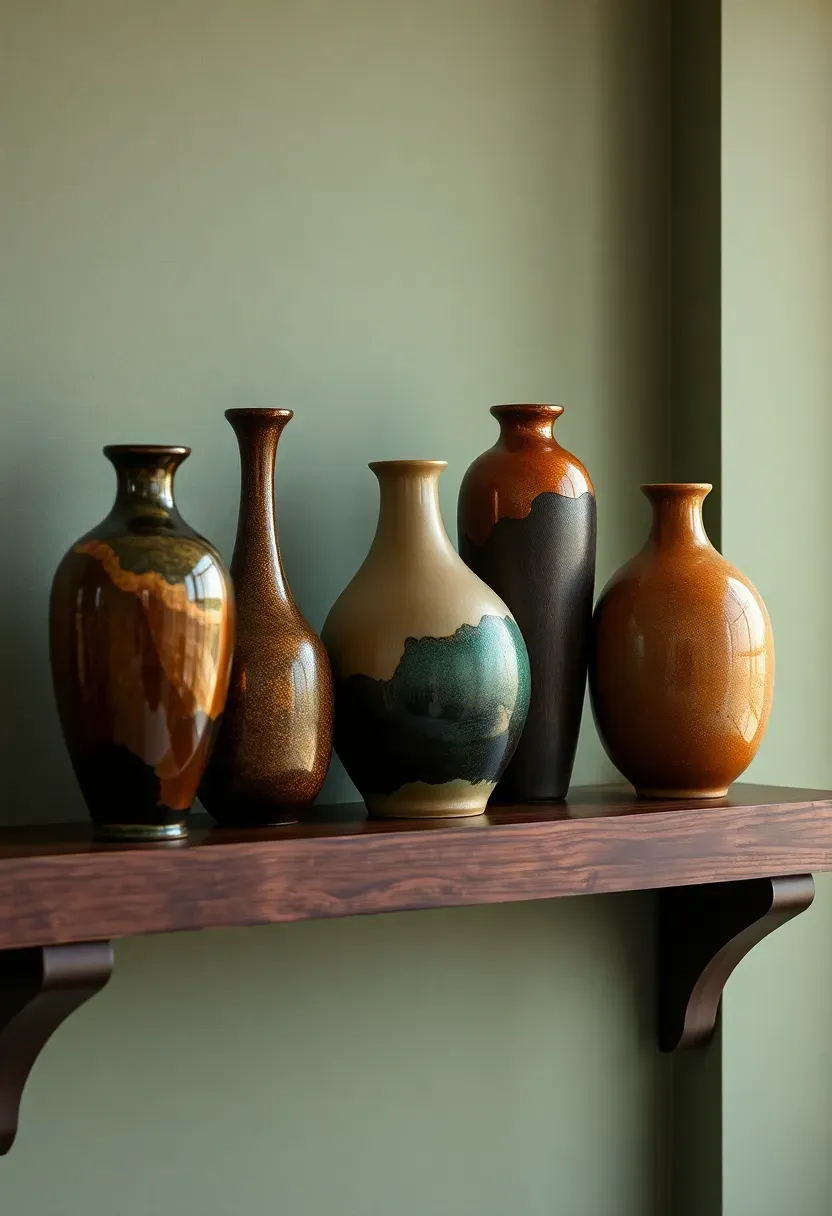
Art Nouveau transformed ceramics from utilitarian craft into fine art. The movement's potters — at Royal Doulton, Rookwood, and smaller studios across Europe — developed glazes that mimicked natural effects: the matte surface of unglazed stone, the iridescent slick of an oil spill on water, the deep pooling of color at a vessel's base. Building a collection of Art Nouveau-influenced ceramics — mixing genuine antique pieces with contemporary studio pottery that references the tradition — creates a shelf or mantel display with genuine depth and character.
Tips for Building a Ceramic Collection
- Start with one focal statement vessel (large, unusual glaze) and build outward with smaller pieces
- Mix heights, neck widths, and surface textures within the collection — monotony kills a shelf display
- Group in odd numbers on a plinth or mantel shelf against a plain, dark-painted wall for maximum contrast
20. Carved Wood Bed Frames
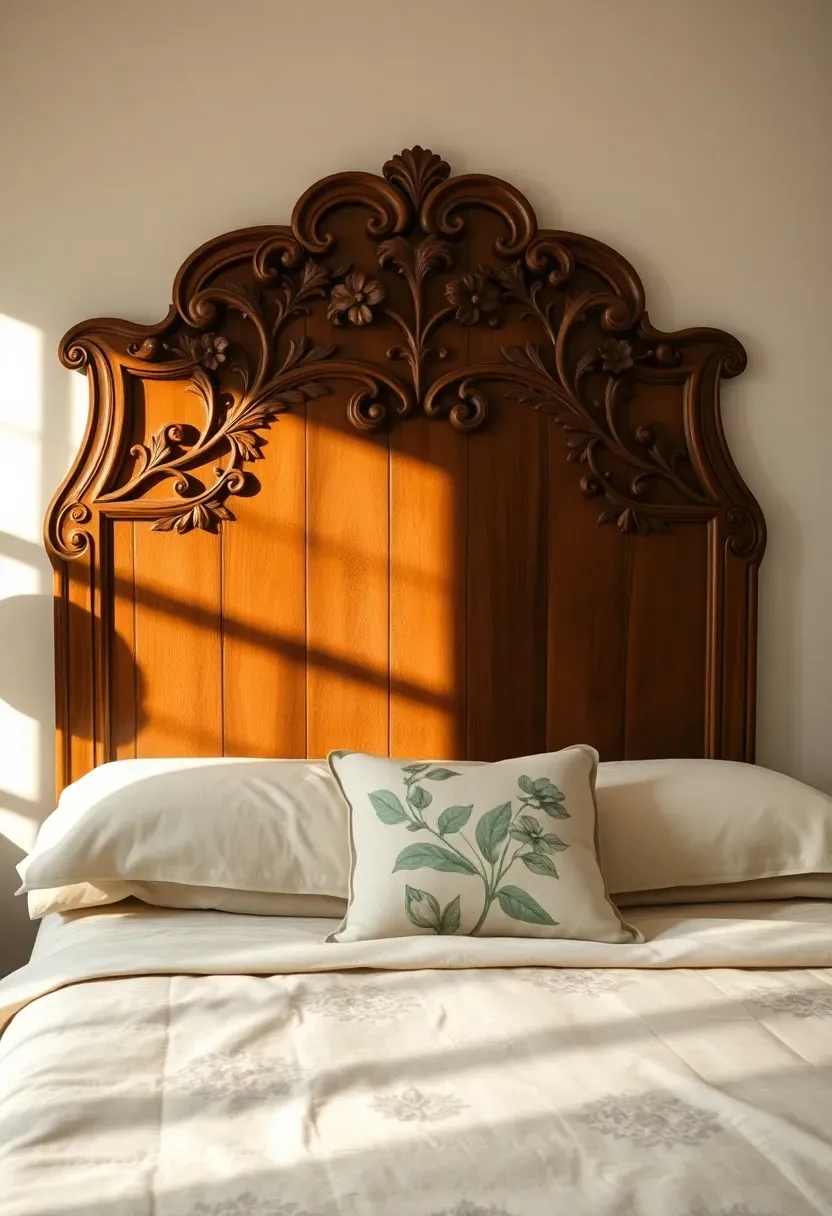
The bedroom was considered the most intimate canvas in Art Nouveau domestic design — and the bed frame, therefore, its most personal statement. Period examples feature headboards that rise in asymmetric carved forms: branches, unfurling blossoms, the abstracted geometry of plant cells. A bespoke carved headboard — even in a simplified, contemporary interpretation — elevates a bedroom from restful to ravishing. For those who want the aesthetic without the investment, wrought iron bed frames with organic curved detailing offer a closely related result.
Tips for Bed Frame Selection
- The headboard should be proportional to the room — in a small space, opt for a lower, more restrained carving
- Natural wax or oil finishes on wood let the grain breathe; avoid high-gloss polyurethane which reads as contemporary
- Pair with linen or cotton bedding in neutral earth tones to let the frame remain the visual focus
Recommended
Items for this idea
21. Verdant Indoor Plant Arrangements
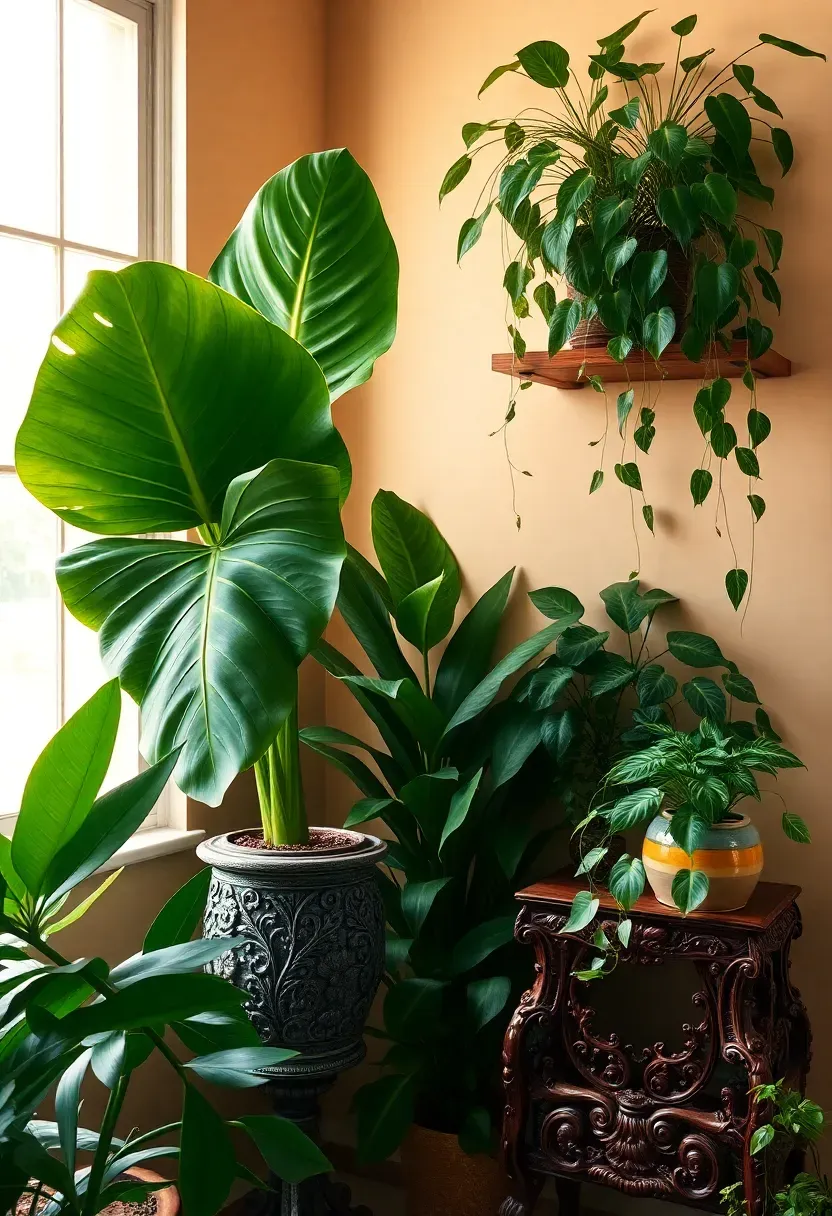
Art Nouveau was a love letter to nature — so filling a room with living plants is perhaps the most faithful homage of all. The movement's domestic interiors often featured palms, ferns, and trailing vines in ornamental pots, positioned as visual anchors at room corners or windowsills. Today's equivalent is a considered plant arrangement: a large fiddle-leaf fig or umbrella tree as the anchor, supported by trailing pothos, bird of paradise fans, and maidenhair ferns in smaller pots. Display them in ceramic planters with organic glazes or in cast iron jardinieres with botanical relief.
Tips for Plant Arrangements
- Group plants of varying height, leaf shape, and texture — contrast between broad and fine foliage is visually rich
- Place the arrangement where it catches some natural light and can be seen from the room's main seating position
- Use matching or coordinated planters to unify a group of otherwise disparate plants
22. Decorative Exposed Beams with Carvings
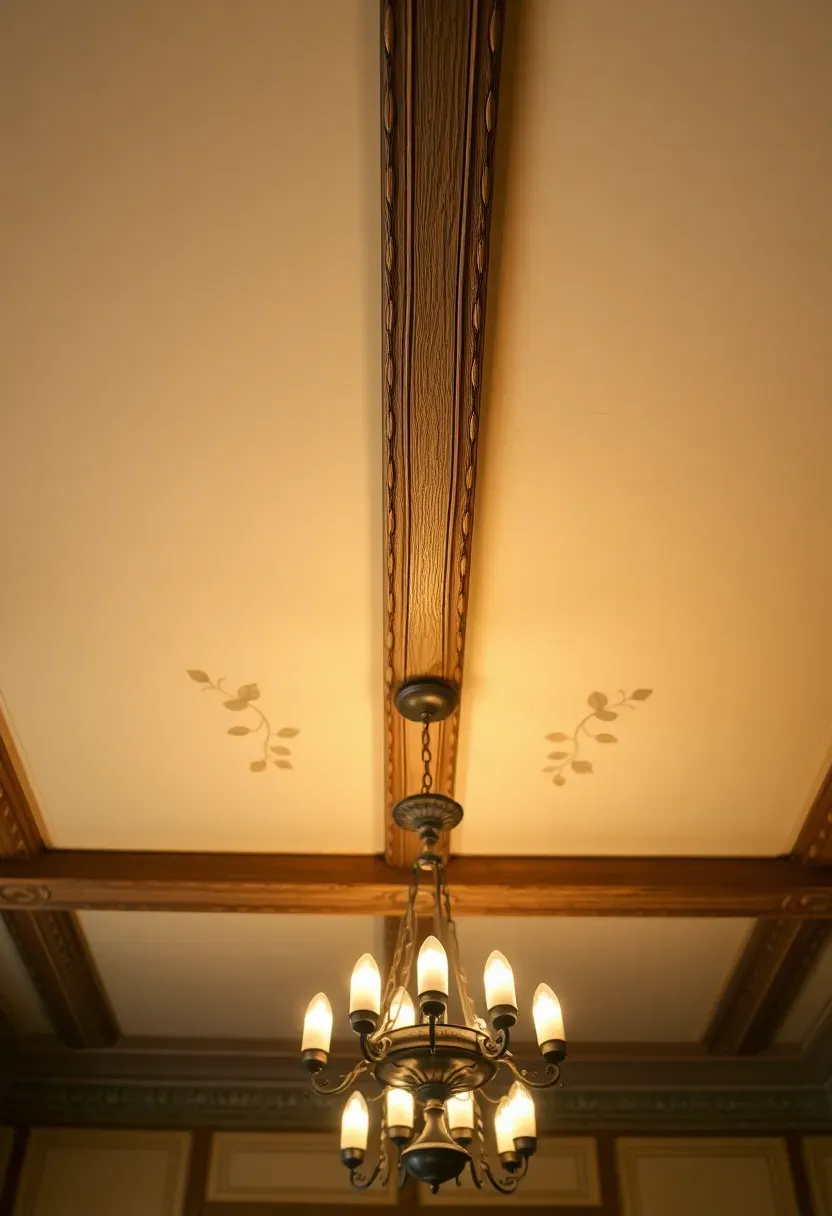
Trends come and go, but exposed structural timber has been a mark of quality in domestic interiors for centuries. Art Nouveau took the tradition further: beams were not merely exposed but carved — repeating botanical borders along their length, relief capitals at supporting posts, painted decoration between the beams in flowing foliate patterns. In a contemporary home, even a painted decorative border along a plain timber beam (using a stencil derived from period patterns) achieves the spirit of the approach without requiring structural intervention.
Tips for Beam Decoration
- Use oil-based paint or specialist timber paint for any decoration applied directly to wood — standard emulsion chips under movement
- Keep carved or painted decoration in the same value range as the wood tone for a harmonious result
- Pair decorated beams with a plain plastered ceiling — too many competing elements read as busy
Recommended
Items for this idea
23. Art Nouveau-Inspired Kitchen Tiles
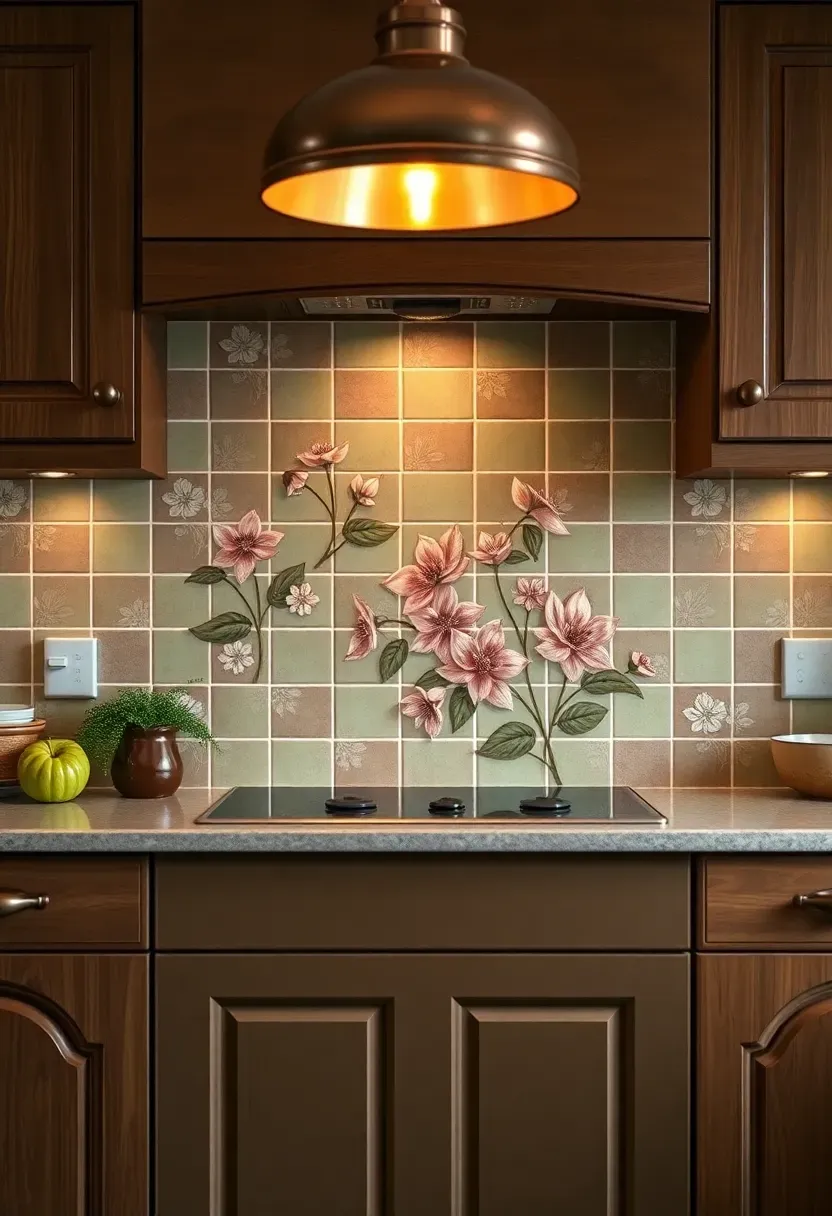
Ready? Let's end with the room where you spend the most time. The kitchen may seem an unlikely place for Art Nouveau — but hand-painted or relief ceramic tiles with botanical motifs transform it from a utilitarian workspace into a room with genuine personality. Splashback tiles in period-appropriate patterns (clematis, sunflower, iris, or simple organic geometric repeats) make the kitchen wall a display surface rather than a maintenance problem. Pair with plain tiles in a complementary tone for the majority of the run, using patterned tiles as feature accents at intervals.
Tips for Kitchen Tile Selection
- Hand-painted tiles are more expensive than transfers; specify accordingly in your budget
- Relief tiles (where the pattern is raised rather than flat) cast subtle shadows that add depth under task lighting
- A single row of feature tiles at eye height between plain upper and lower runs is a classic, cost-effective placement
Quick FAQ
Is Art Nouveau design practical for modern living? Absolutely. While the style originated in the late 19th century, many of its elements — organic forms, quality materials, nature-inspired color — translate seamlessly into contemporary life. The key is selectivity: a few well-chosen pieces or architectural details carry the spirit without making a home feel like a museum.
Which rooms benefit most from Art Nouveau touches? Hallways and living rooms reward the style most generously because they are seen frequently and hold architectural features well. Bathrooms are also natural fits — period mosaic tile, organic mirror frames, and lily pad light fixtures combine beautifully in a smaller space where every detail is close at hand.
Can I mix Art Nouveau with other interior styles? Yes, and it often works better than a pure period recreation. Art Nouveau elements pair particularly well with Japandi (both value natural materials and organic forms), with Arts and Crafts style (they share a philosophy of handcraft), and with contemporary interiors where a single statement piece provides welcome contrast against cleaner lines.
What's the difference between Art Nouveau and Art Deco? Art Nouveau (roughly 1890–1910) draws from nature: curved organic lines, floral motifs, asymmetry. Art Deco (1920s–1930s) reacts against it, favoring geometric forms, bold symmetry, and industrial materials. The two are often confused but represent genuinely different philosophies — though both celebrate decoration and craftsmanship.
Where can I find authentic Art Nouveau furniture and accessories? Architectural salvage yards, specialist antique dealers, and auction houses are the primary sources for genuine pieces. Online marketplaces surface a wide range of quality — examine photographs carefully for evidence of hand-carving versus machine production. For reproductions, seek out makers who work from original period drawings rather than generic "vintage" interpretations.
Start small: replace your door hardware this week, hang a botanical wallpaper panel this month, and commission an ironwork detail when the budget allows. Art Nouveau rewards patience — the style is at its richest when built up layer by layer, each element chosen with the same care the original designers gave to their work.
Pinterest cover for 23 Art Nouveau Interior Design Ideas to Transform Your Home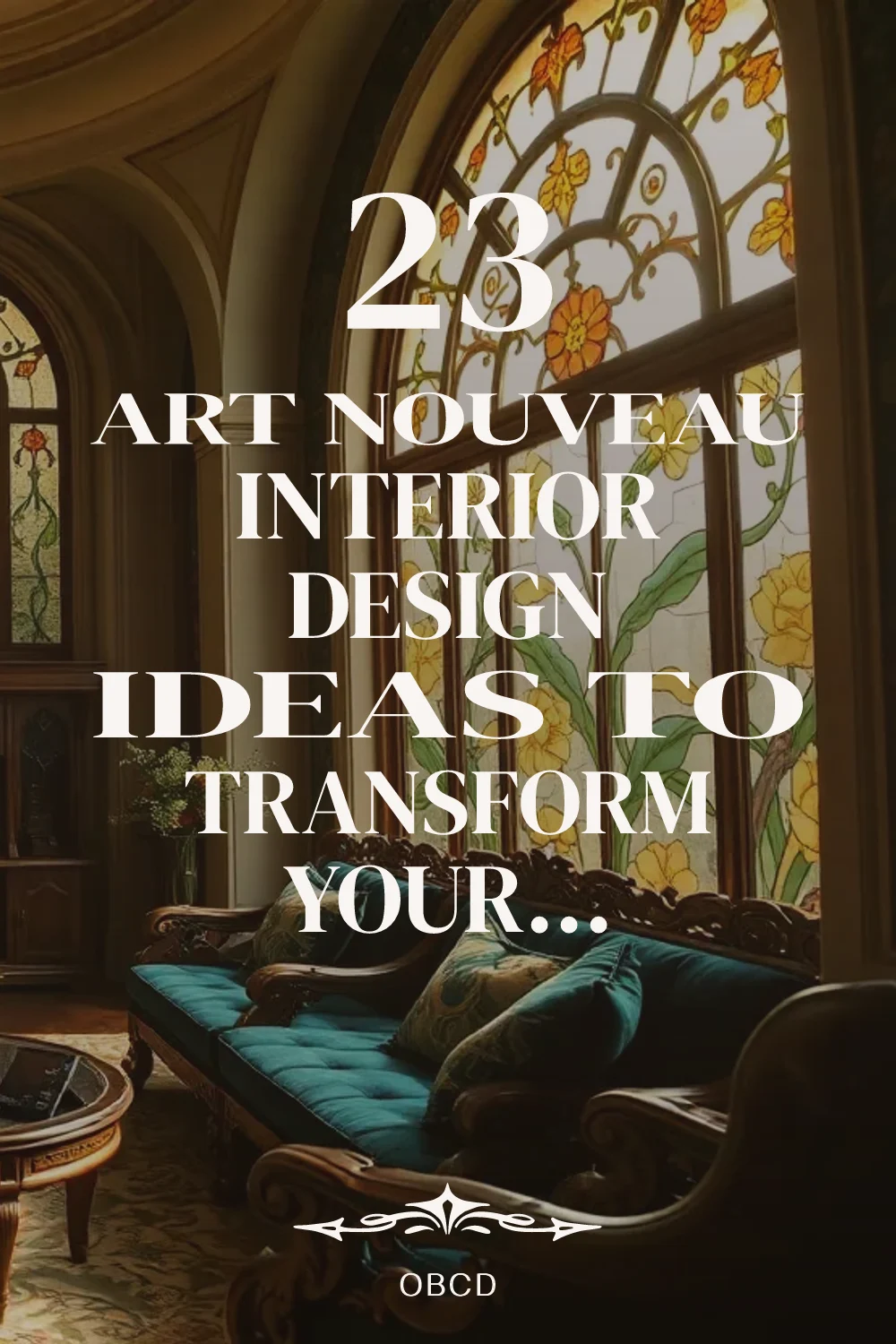
About the author
OBCD
CGI visualization and interior design content. We create detailed 3D renders and curate practical design ideas for every room in your home.