25 At Home Office Ideas for Every Space and Style
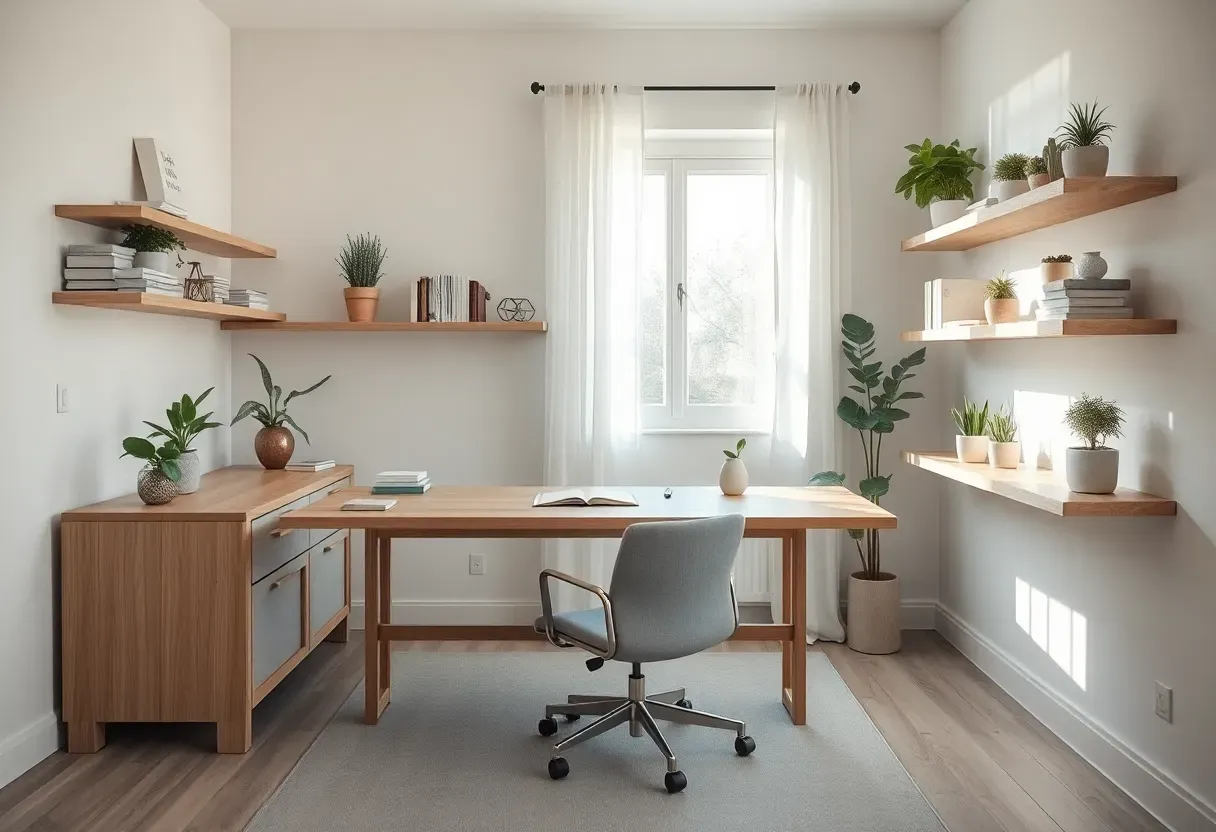
For centuries, the home and the workplace occupied completely separate worlds. Today that boundary has dissolved — and with it, the pressure to figure out where exactly you do your best thinking. A spare bedroom, a closet, a corner of the living room, a converted garage: every space holds potential if you know how to read it.
In this article I've gathered 25 genuinely different approaches to setting up a home office. Whether you have an entire room to dedicate or just a wall, whether your budget is tight or generous, whether you crave calm minimalism or moody drama — there is an idea here that fits where you are right now.
Table of Contents
- Dedicated Desk Nook
- Floating Shelves Workspace
- Closet Office Conversion
- Standing Desk Setup
- Minimalist Scandinavian Office
- Biophilic Workspace With Plants
- Built-In Bookcase Desk
- Window Seat Workspace
- Garage Office Conversion
- Murphy Bed With Integrated Desk
- Corner L-Shaped Desk
- Industrial Pipe Shelving Desk
- Japandi Home Office
- Dark Moody Workspace
- Feminine Home Office
- Tech-Forward Multi-Monitor Setup
- Tiny Apartment Loft Desk
- Outdoor Garden Office Pavilion
- Farmhouse Style Home Office
- Vintage Antique Desk Setup
- Family Shared Office Corner
- Creative Studio Workspace
- Ergonomic Wellness Office
- Budget IKEA Hack Office
- Luxury Executive Home Office
1. Dedicated Desk Nook
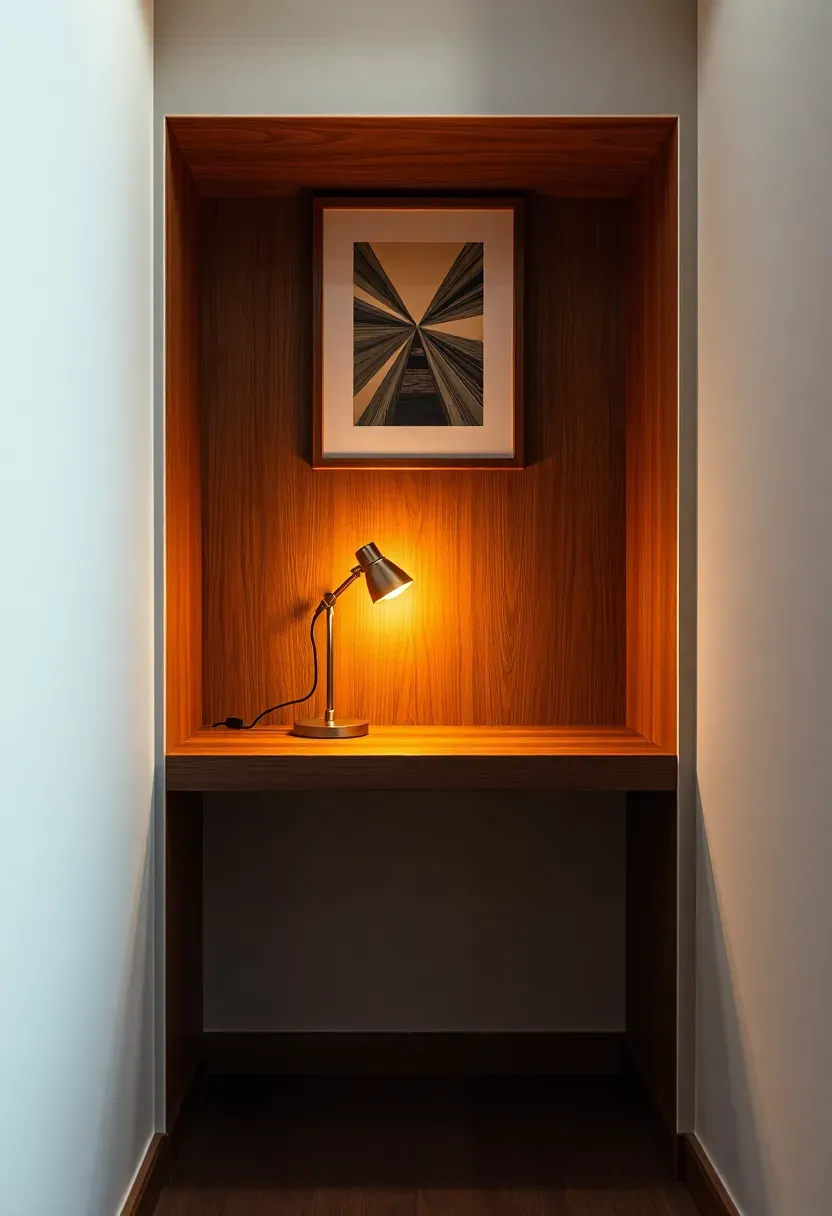
Some of the most productive home offices measure less than four feet wide. A recessed wall nook — whether purpose-built or discovered by removing a linen closet — concentrates your focus by limiting visual noise. Everything sits within arm's reach. The walls beside and above become prime real estate for a single shelf, a pegboard, or a small framed print that grounds the space visually.
What Makes It Work
The nook's real strength is psychological: you enter it, you work. You leave, you stop. That physical threshold — even a shallow one — trains your brain far better than a desk sitting open in a shared room.
Tips for Your Own Nook
- Install a task lamp at elbow height rather than overhead to reduce screen glare
- Use the back wall for a pinboard or magnetic paint so nothing piles on the desk surface
- A tension rod with a simple curtain lets you close it off completely when work is done
We picked a few things that go well with this idea: High Back Ergonomic Chair 3D Arms Headrest (★4.4), TRALT Mesh Ergonomic Desk Chair (★4.4) and Mesh Office Chair Flip-up Arms (★4.5). As an Amazon Associate we earn from qualifying purchases.
2. Floating Shelves Workspace
The Core Issue
Many remote workers run out of desk space fast — papers, notebooks, chargers, and reference books all compete for the same flat surface. Adding a second piece of furniture is not always possible.
The Solution
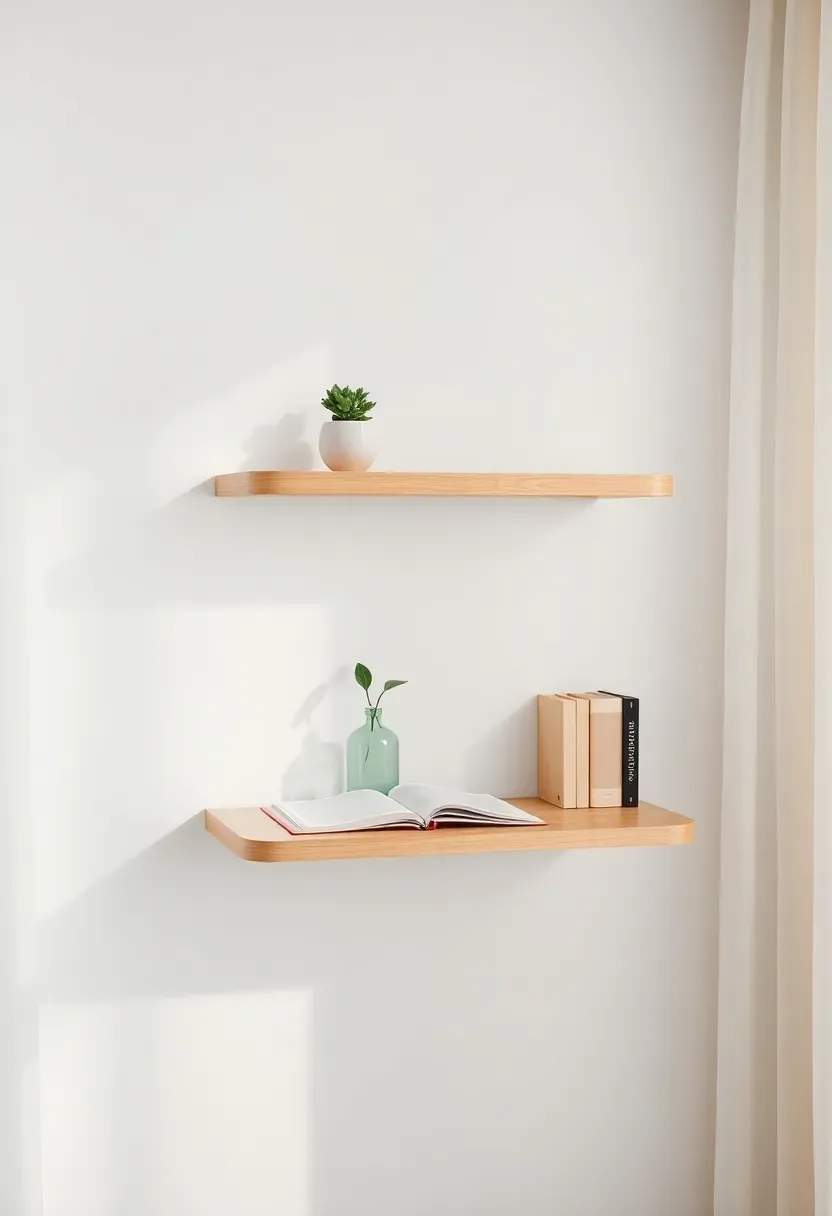
Staggered floating shelves above the desk move storage off the work surface and up the wall. Two shelves at different heights create visual rhythm while doubling usable storage. Keep the lower shelf at roughly eye level when seated so reference items stay visible without requiring you to stand up. The upper shelf holds objects you consult less often: a backup hard drive, seasonal planners, or purely decorative items that give the wall personality.
Pros and Cons
Pros: Clears the desk without adding floor furniture; fully customizable depth and height; works above any desk Cons: Requires wall anchoring (not renter-friendly without damage); tempting to over-fill until shelves feel cluttered
We picked a few things that go well with this idea: ErGear 48-Inch Electric Standing Desk (★4.5), Veken 63-Inch Electric Standing Desk (★4.4) and Veken 55-Inch Electric Standing Desk (★4.7). As an Amazon Associate we earn from qualifying purchases.
3. Closet Office Conversion
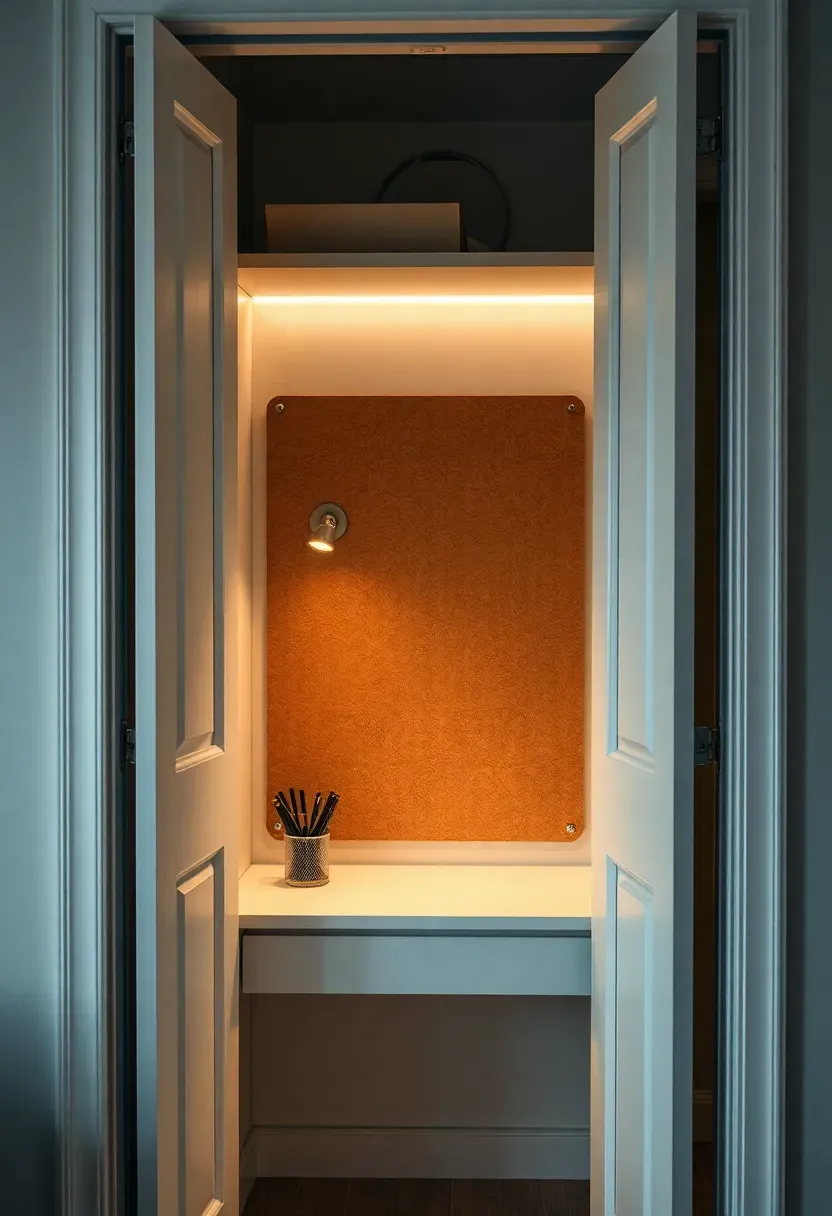
Reach-in closets hide surprising square footage behind their bifold doors. Strip out the hanging rod and shelves, install a desk surface at counter height, add a pinboard to the back wall, and you have a functional micro-office that disappears the moment the doors close.
Step 1: Measure and Plan
Measure depth and width precisely. Standard reach-in closets run 24 inches deep — enough for a monitor and keyboard. Sketch the layout before buying anything.
Step 2: Install the Desk Surface
A cut-to-size plywood panel with iron-on edge tape looks clean and costs a fraction of a custom shelf. Support it with two wall-mounted brackets at the sides. Leave an inch of clearance at the back for cable routing.
Step 3: Add Light and Storage
Under-shelf LED strips solve the overhead light problem without requiring an electrician. A corkboard or magnetic paint on the back wall keeps papers off the desk. A small power strip mounted to the underside of the desk keeps cables organized.
What to Watch Out For
- Check that the closet has adequate ventilation before adding heat-generating equipment
- Use bifold or barn-style doors rather than swing-out doors so you don't lose the space in front of the desk when working
- A narrow strip of carpet or a small rug inside the closet reduces echo if you take calls
We picked a few things that go well with this idea: OPNICE 2-Tier Monitor Stand with Drawer (★4.6), Black Office Supplies Desk Organizer Set (★4.4) and Mesh Desk Caddy 7 Compartments Pen Holder (★4.6). As an Amazon Associate we earn from qualifying purchases.
4. Standing Desk Setup
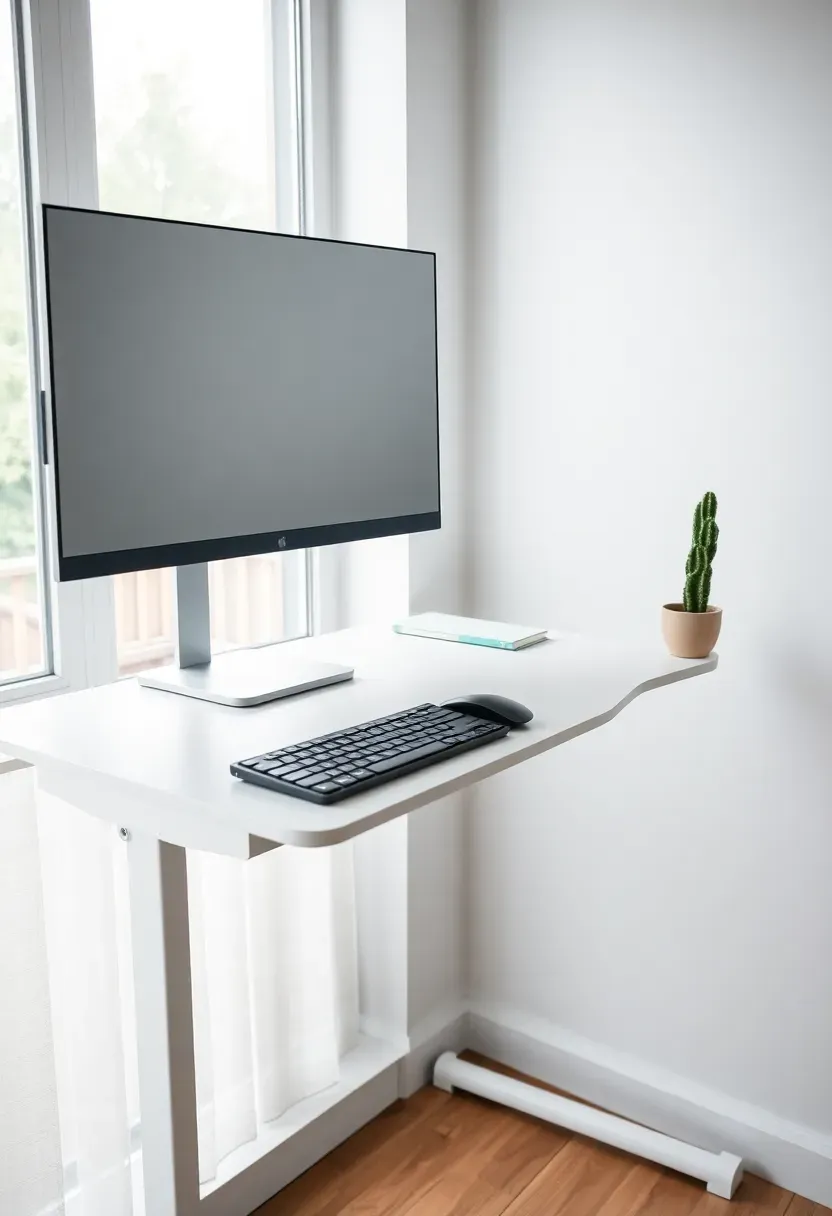
According to workplace health research, alternating between sitting and standing reduces afternoon fatigue significantly — and modern electric sit-stand desks make that transition effortless with programmable height presets. The key is that a standing desk only works if the setup around it is dialed in: monitor at eye level, keyboard at elbow height when standing, and an anti-fatigue mat underfoot.
Practical Recommendations
- Set two presets: one for sitting (desk at elbow height seated), one for standing (desk at elbow height standing) — don't guess every time
- Place the desk near a window so natural light reaches you from the side, reducing screen glare
- A slim balance board under the desk engages your legs passively while standing without the commitment of a full treadmill desk
- If budget is a concern, a manual crank desk costs far less than an electric model and still delivers the core benefit
Recommended
Items for this idea
5. Minimalist Scandinavian Office
Origins and Philosophy
Scandinavian design philosophy — rooted in the Nordic concept of lagom (just enough) — entered home offices through a simple premise: visual calm enables mental focus. Surfaces stay clear. Materials are natural. Light is maximized. Nothing is purely decorative unless it earns its place.
Modern Interpretation
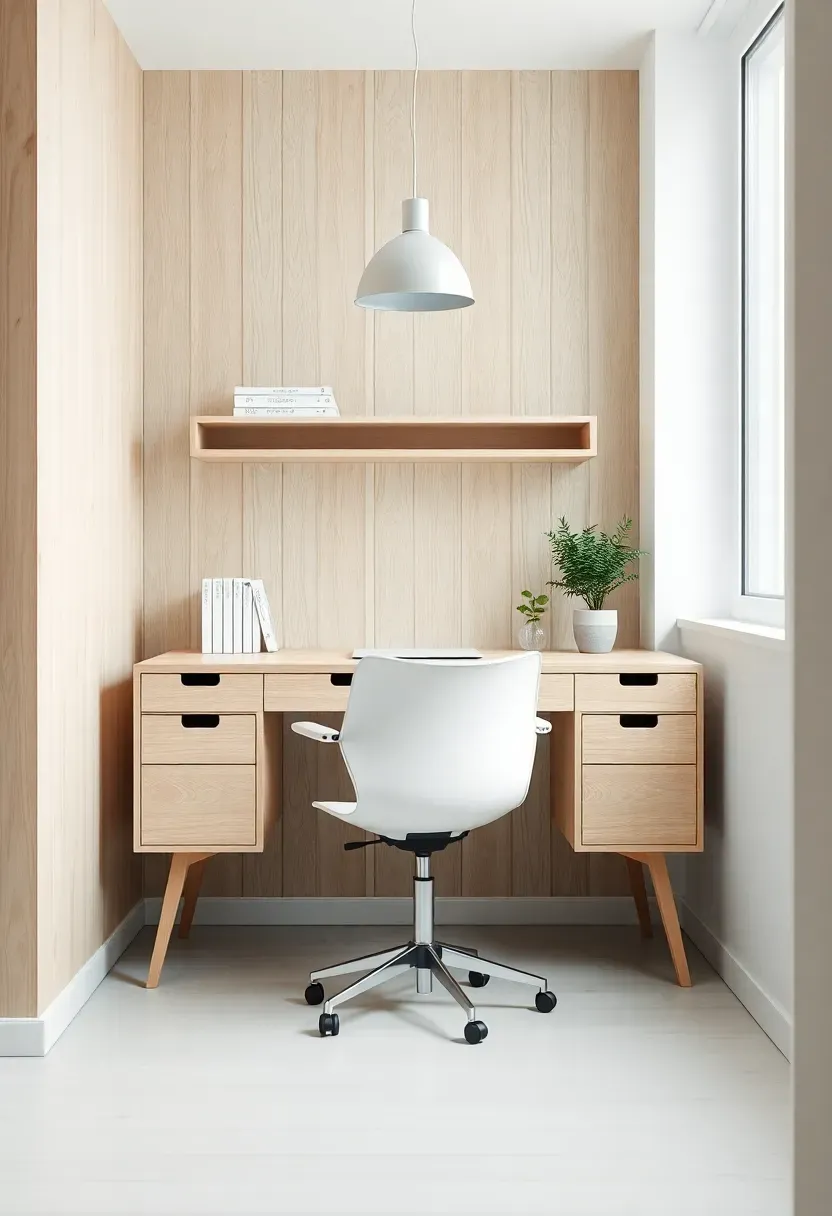
A Scandinavian home office today centers on a birch or ash wood desk, a task chair in white or pale grey, and a single pendant lamp overhead. Storage hides inside closed cabinets rather than open shelves. The color palette stays within a narrow range of white, pale grey, and warm wood tones, occasionally accented by a single small plant. The discipline is the point: every object on the desk is there because it needs to be there.
How to Apply at Home
- Choose a desk with clean lines and no visible hardware — simplicity starts at the surface
- Invest in a lamp with adjustable color temperature so you can shift from cool daylight mode during work hours to warm ambient mode in the evening
- A linen-covered storage box on the shelf corrals loose items without adding visual complexity
- Limit greenery to a single, simple plant in a plain ceramic pot — two plants becomes a collection, which conflicts with the lagom principle
6. Biophilic Workspace With Plants
Plants do more than look good. Research consistently links exposure to living greenery with reduced cortisol levels, improved attention restoration, and lower reported stress during cognitively demanding tasks. For a home office, this translates directly into longer productive sessions and a more enjoyable workday.
Practical Recommendations
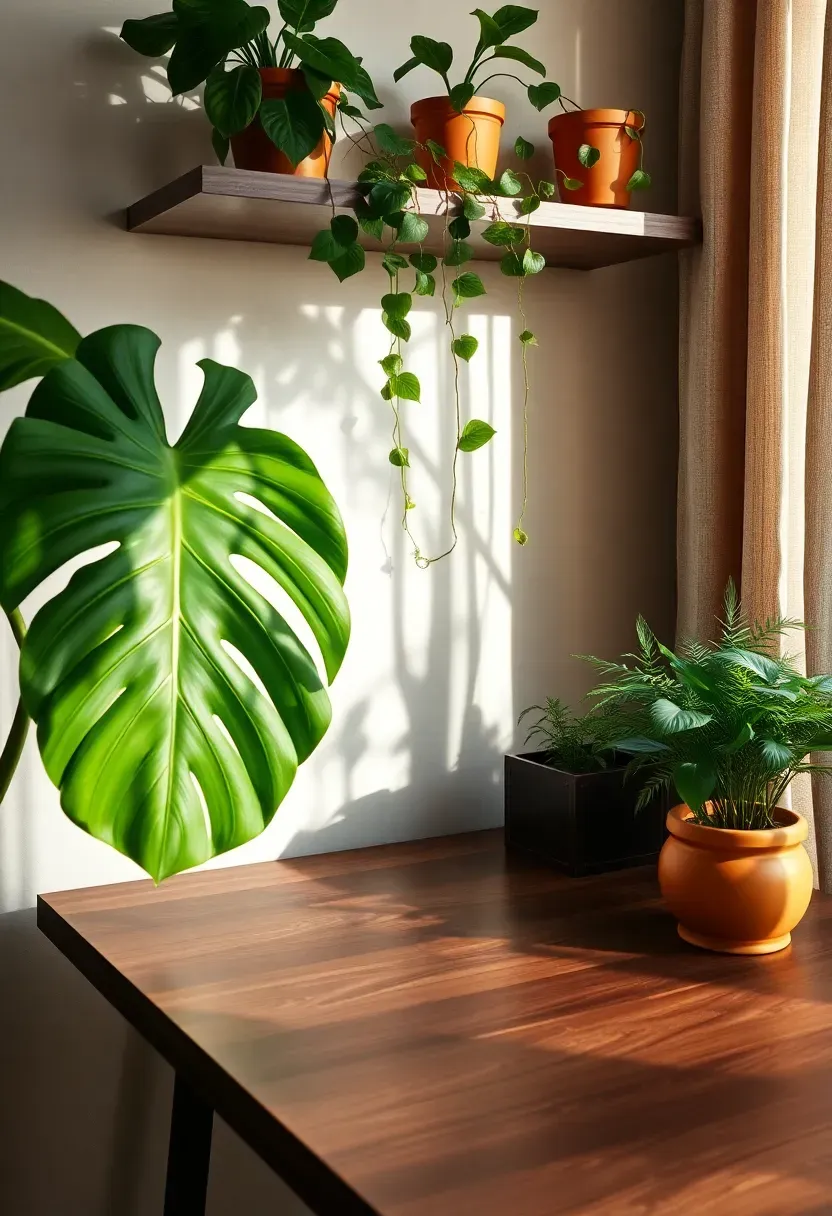
- Position a large-leaf plant (monstera, fiddle-leaf fig) beside the desk where it fills peripheral vision without blocking the screen
- Use trailing plants on shelves above the desk — pothos and heartleaf philodendron thrive in indirect light and require minimal maintenance
- A small fern or peace lily on the desk corner doubles as a natural humidifier
- Rotate plants every few weeks so all sides receive light, keeping growth even and the plant looking intentional rather than scraggly
- If natural light is limited, a grow light on a timer adds both function and a warm amber glow
Recommended
Items for this idea
7. Built-In Bookcase Desk
Comparing: Custom Built-In vs Freestanding Bookcase Desk
A dedicated room becomes significantly more functional and valuable when you invest in a floor-to-ceiling built-in. But the cost and commitment are real.
Custom Built-In
A cabinetmaker-built solution integrates perfectly with your ceiling height, runs wall to wall, and hides infrastructure (router, power strips, cable runs) inside dedicated compartments. It adds measurable resale value. Lead time runs 6-12 weeks and costs scale quickly.
Freestanding Bookcase Desk
An IKEA Billy bookcase flanking a desk mimics the look at a fraction of the cost. You lose the seamless integration but gain flexibility — you can reconfigure or move it if your needs change. For renters, this is the realistic option.
What to Choose
Choose custom if: You own your home, plan to stay long-term, and have a budget of $3,000 or more Choose freestanding if: You rent, have a flexible timeline, or want to test the layout before committing
Recommendation
Start with a quality freestanding combination to live with the layout for a year. That experience will sharpen exactly what you'd want if you later commission a custom unit.
8. Window Seat Workspace
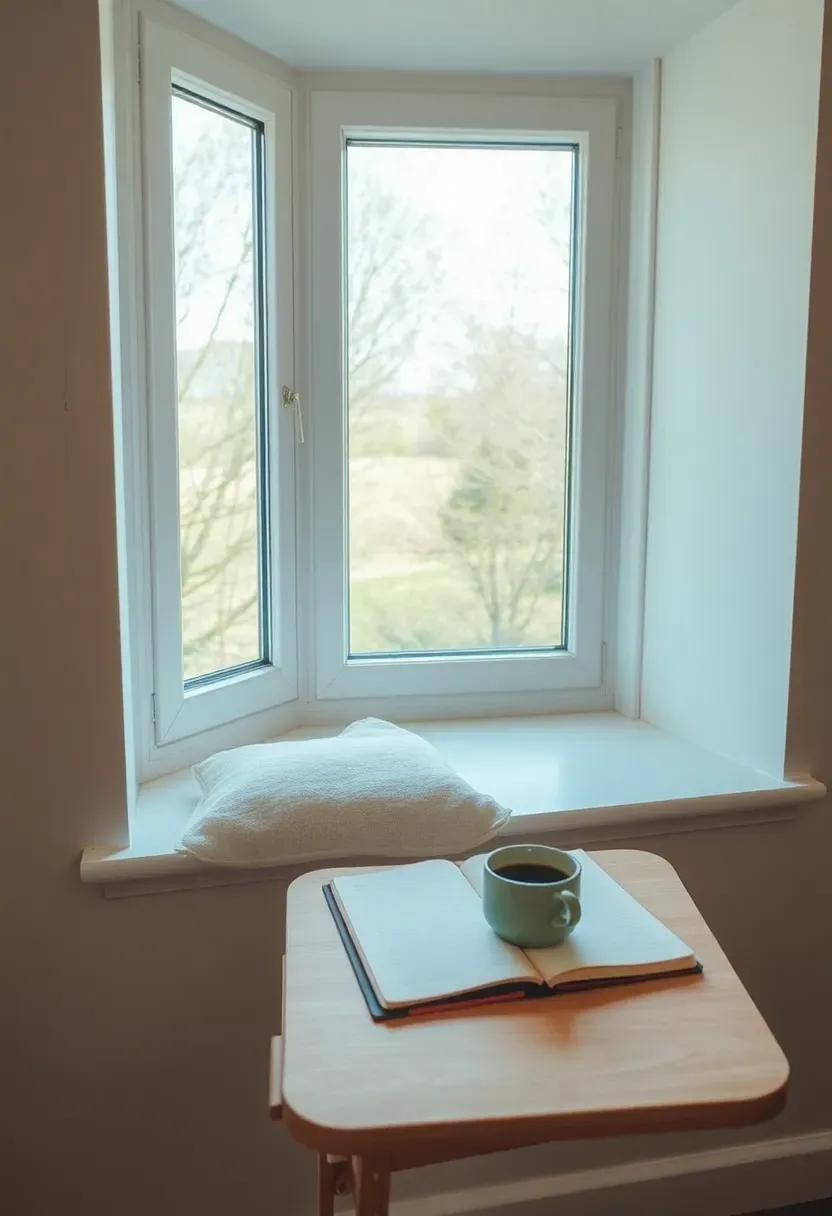
The idea is deceptively simple: a deep window sill or a built-in bench becomes a casual work surface for tasks that don't require a monitor. Laptop work, reading, journaling, calls — all are perfectly suited to a cushioned window seat with a fold-down desk panel below the sill.
What Makes It Work
Natural light from the window falls directly onto your work without creating screen glare (since you face the window rather than having it behind you). The view gives your eyes a natural resting point — critical for reducing eye strain during long sessions.
Tips for Your Window Seat Office
- A fold-down desk panel on piano hinges tucks flat against the wall when not in use — ideal for small rooms
- Choose a firm cushion (not a soft sofa cushion) for posture support during extended work sessions
- Keep a lap desk on the cushion for times when you prefer to sit cross-legged
- A USB charging strip hidden inside a bench storage compartment keeps devices topped up without visible cords
Recommended
Items for this idea
9. Garage Office Conversion
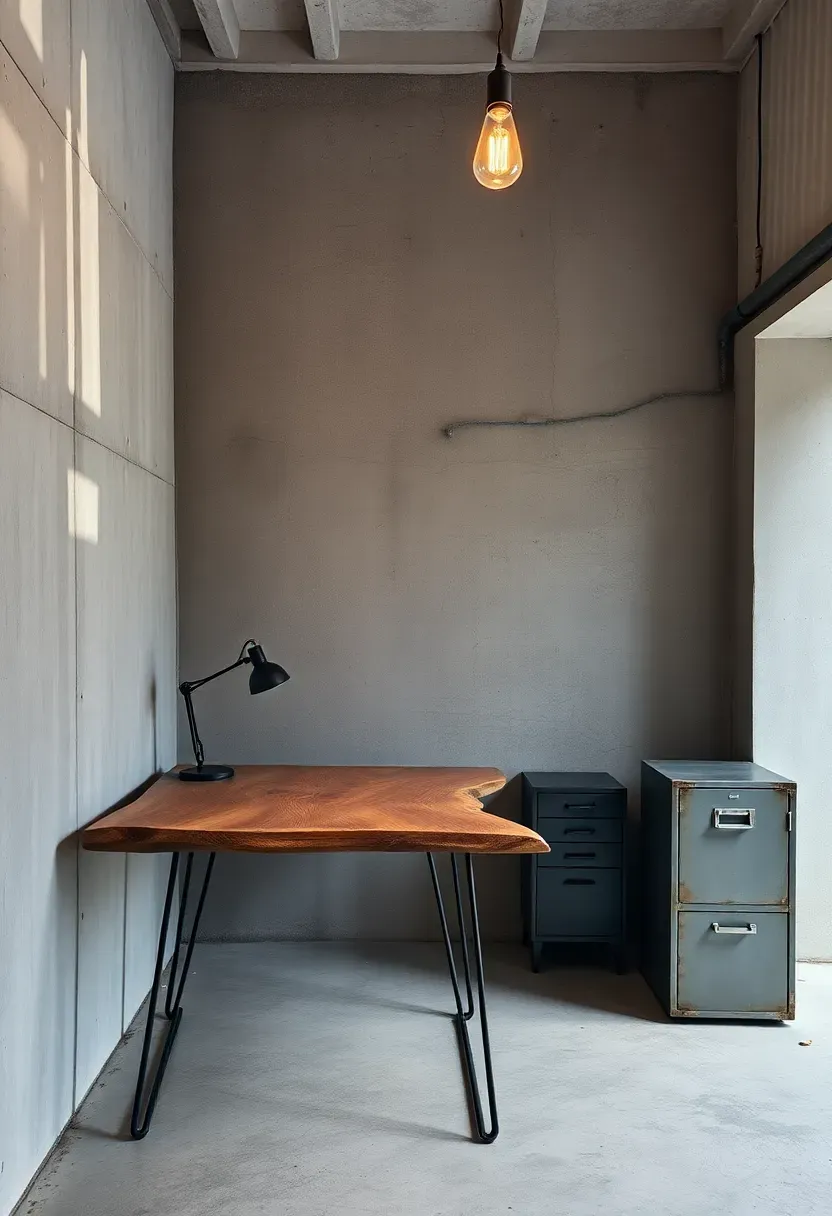
Garages offer something few spare bedrooms can: raw, character-rich space with genuine visual texture. Exposed concrete walls, high ceilings, and the industrial vocabulary of a working space create an atmosphere that many people find energizing rather than sterile. The conversion doesn't need to be total — even converting one corner into a dedicated office zone can be transformative.
Step 1: Address the Climate
Garages are uninsulated by default. Before adding furniture, insulate the walls you'll work adjacent to and install a portable electric heater or a mini-split for year-round comfort. A dehumidifier prevents moisture damage to equipment.
Step 2: Create the Zone
A raw oak slab on black hairpin legs against the concrete wall costs less than $400 in materials and immediately defines the workspace. A vintage metal filing cabinet adds both storage and era-appropriate character.
Step 3: Light the Space
Industrial pendant lamps on a metal conduit track illuminate the desk zone without requiring ceiling modifications. Add a task lamp for close work.
What to Watch Out For
- Seal the concrete floor before laying a rug — unsealed concrete off-gasses moisture that deteriorates rugs over time
- Run a dedicated electrical circuit to the office zone if you plan to run multiple monitors and desk equipment simultaneously
10. Murphy Bed With Integrated Desk
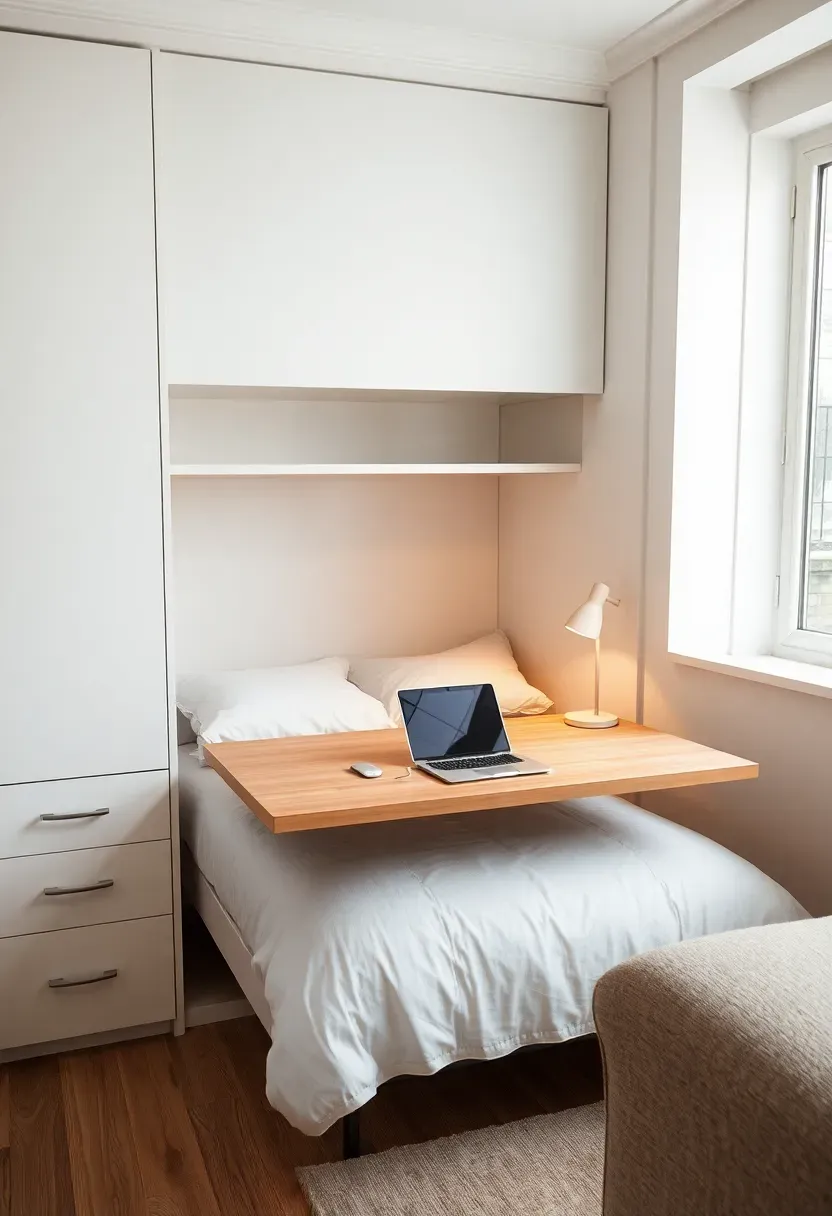
Guest rooms that sit idle five days out of seven are one of the least efficient uses of square footage in any home. A Murphy bed-desk combination solves this by putting the same wall to work twice. When the bed folds up, the desk folds down — automatically, usually in a single motion — converting the room from bedroom to office in under thirty seconds.
Practical Recommendations
- Look for models where the desk surface stays functional while the bed is folded down — some designs require clearing the desk entirely to fold the bed, which defeats the purpose
- A dedicated cable management channel along the back panel keeps your monitor setup intact through the transition
- Pair the Murphy unit with a closed-door cabinet section beside it to hide office supplies when the room is in guest mode
- The wall opposite the Murphy unit can hold a small sofa that reads as a living area — giving the room a third identity as a sitting room
Recommended
Items for this idea
11. Corner L-Shaped Desk
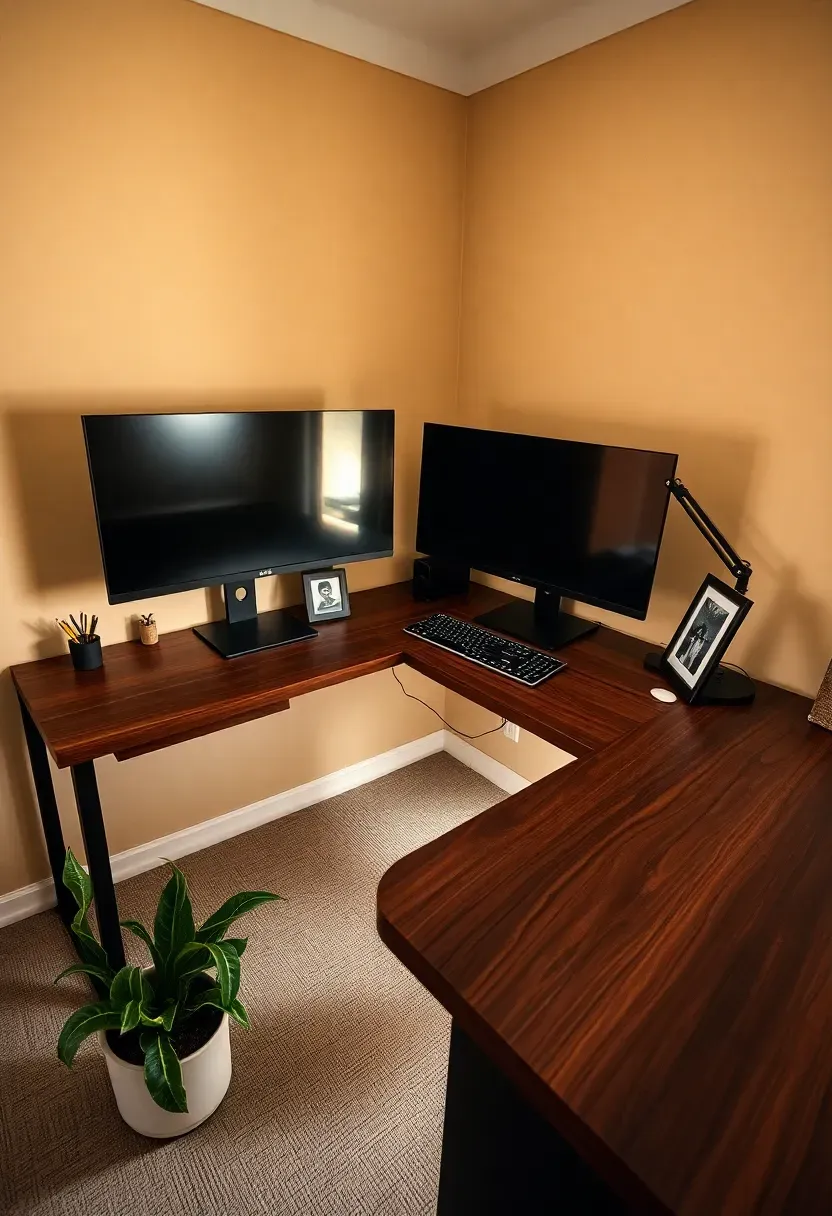
For anyone who manages multiple projects simultaneously — or simply needs one surface for the computer and another for writing and reference materials — an L-shaped desk is the most ergonomically efficient configuration available without a full second desk. The corner becomes functional rather than wasted, and the two surfaces create a natural boundary between primary and secondary work zones.
Practical Recommendations
- Anchor the monitor on the longer arm and keep the shorter arm clear as an analog work surface — mixing digital and paper tasks on the same surface creates visual clutter
- A corner monitor mount frees up significant desk space vs. using a stand
- Use the corner itself for a cable management box — it's the one spot neither arm actively uses
- A floor lamp in the room corner behind the desk provides ambient light without occupying desk surface
12. Industrial Pipe Shelving Desk
Style History
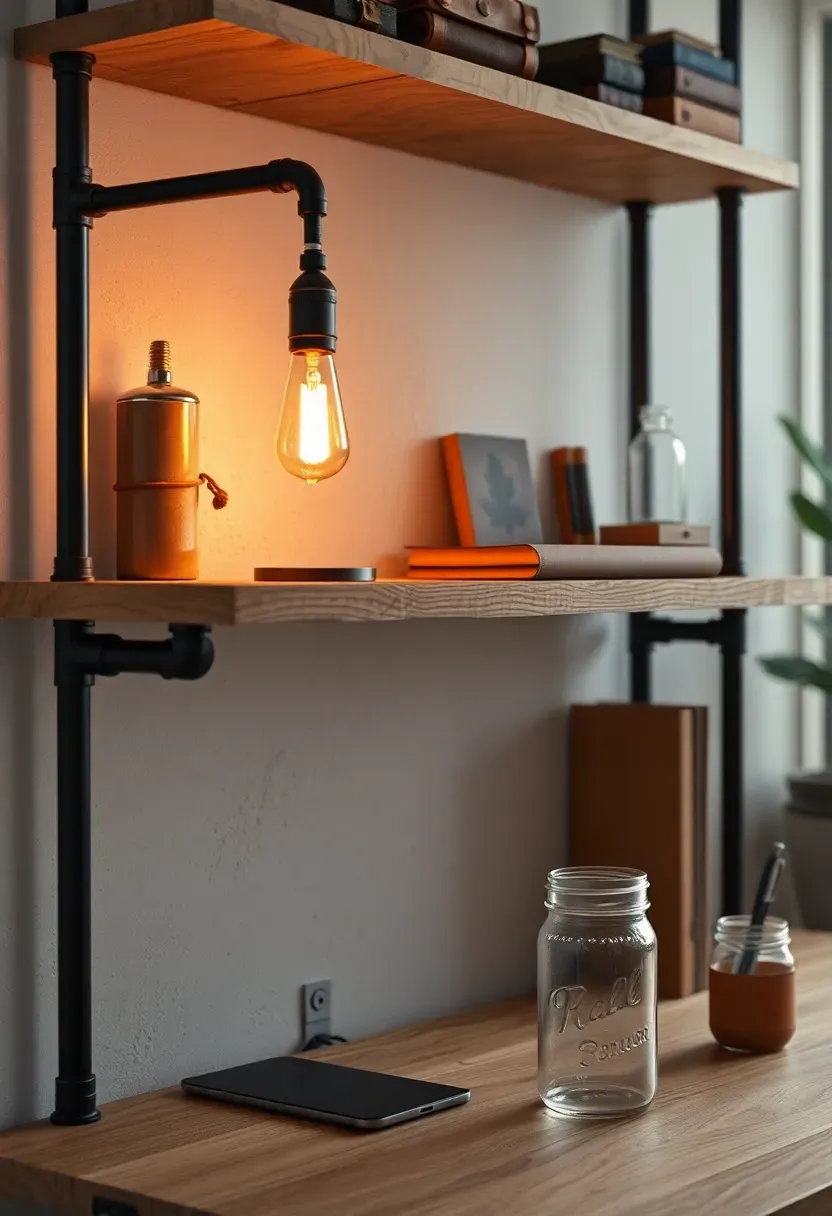
Industrial design as an aesthetic emerged in the 1990s as converted loft apartments in New York and London began showcasing their original plumbing and structural ironwork. What was once hidden became a design statement. Black iron pipe shelving — originally utilitarian hardware — became the signature element of this look, valued for its honesty of material and its robust, hand-made character.
Modern Interpretation
Today, industrial pipe shelving above a desk brings that same energy into a home office. Raw oak boards on black pipe brackets above a steel-framed desk create a cohesive material story: iron, wood, and leather feel earned rather than decorative. The Edison bulb lamp and mason jar pen holder reinforce the ethos — functional objects displayed rather than concealed.
How to Apply at Home
- Keep the pipe hardware black and matte — chrome or silver pipes break the industrial palette
- Use raw or oiled oak boards rather than finished laminate for the shelves to maintain the honest-material character
- Limit shelf items to three per shelf: one functional, one reference, one small personal object
- A worn leather desk mat grounds the surface and adds patina that improves with use
Recommended
Items for this idea
13. Japandi Home Office
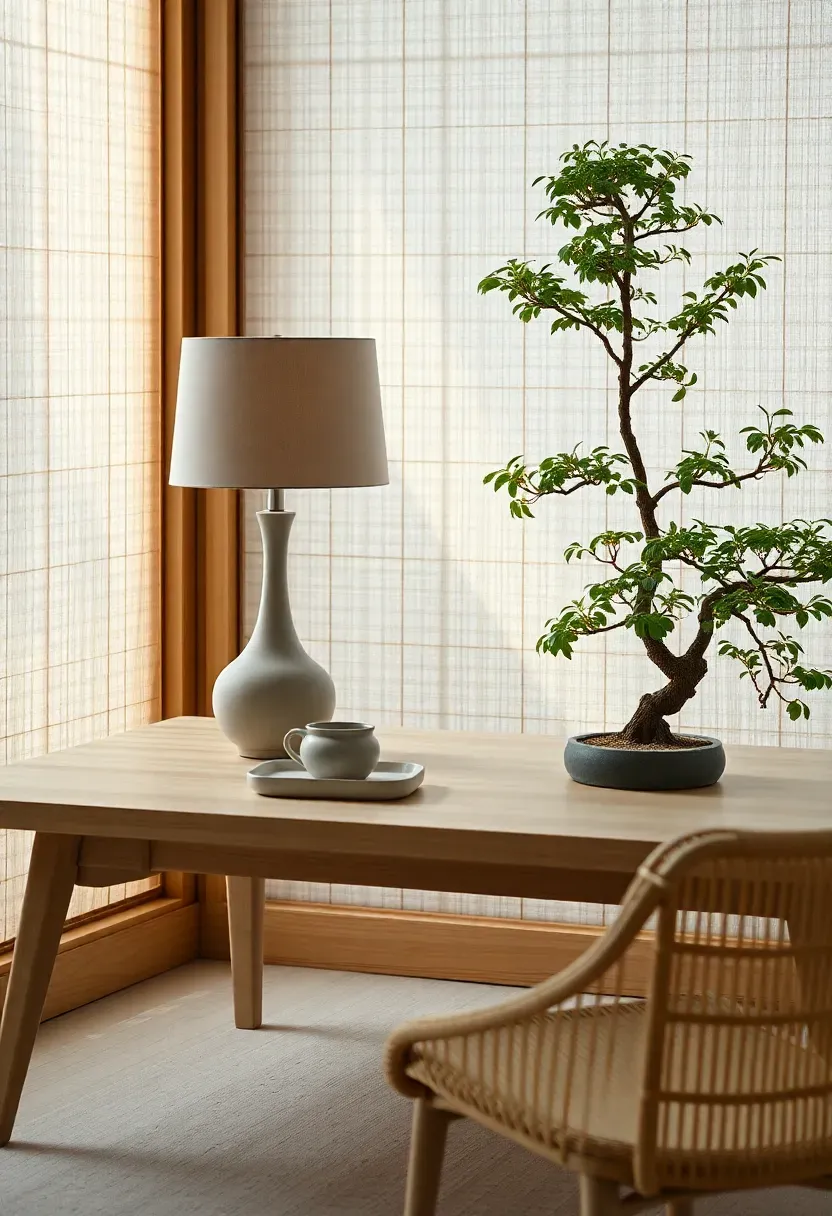
Japandi — the hybrid of Japanese minimalism and Scandinavian simplicity — produces home offices that feel genuinely calm. Not empty, not austere, but resolved. Every object has been considered. Materials are natural and slightly imperfect. The palette stays within pale wood, bone, and muted sage green. The result is a workspace that quiets ambient anxiety rather than adding to it.
Practical Recommendations
- Choose a desk with very low, clean legs — the Japandi aesthetic favors furniture that sits closer to the ground and does not visually dominate the room
- A washi paper lamp shade on a ceramic base provides warm, diffused light that avoids the harshness of a bare bulb or a glass shade
- A handmade ceramic pen tray costs under $30 from independent makers and communicates the craft-conscious aesthetic perfectly
- Keep technology visible but intentional: a single monitor on a simple riser, a wireless keyboard — no cable tangle, no peripheral sprawl
- A bonsai or small-leafed indoor tree on the desk corner grounds the space with living material without the wild-plant energy of larger plants
14. Dark Moody Workspace
Why do we still assume offices should be bright and white? The evidence for dark, saturated workspaces is compelling: deep wall colors reduce peripheral distraction, warm focused light on the task surface creates a cone of concentration, and the overall atmosphere feels more like a dedicated sanctuary than a beige corporate echo chamber.
What Makes It Work
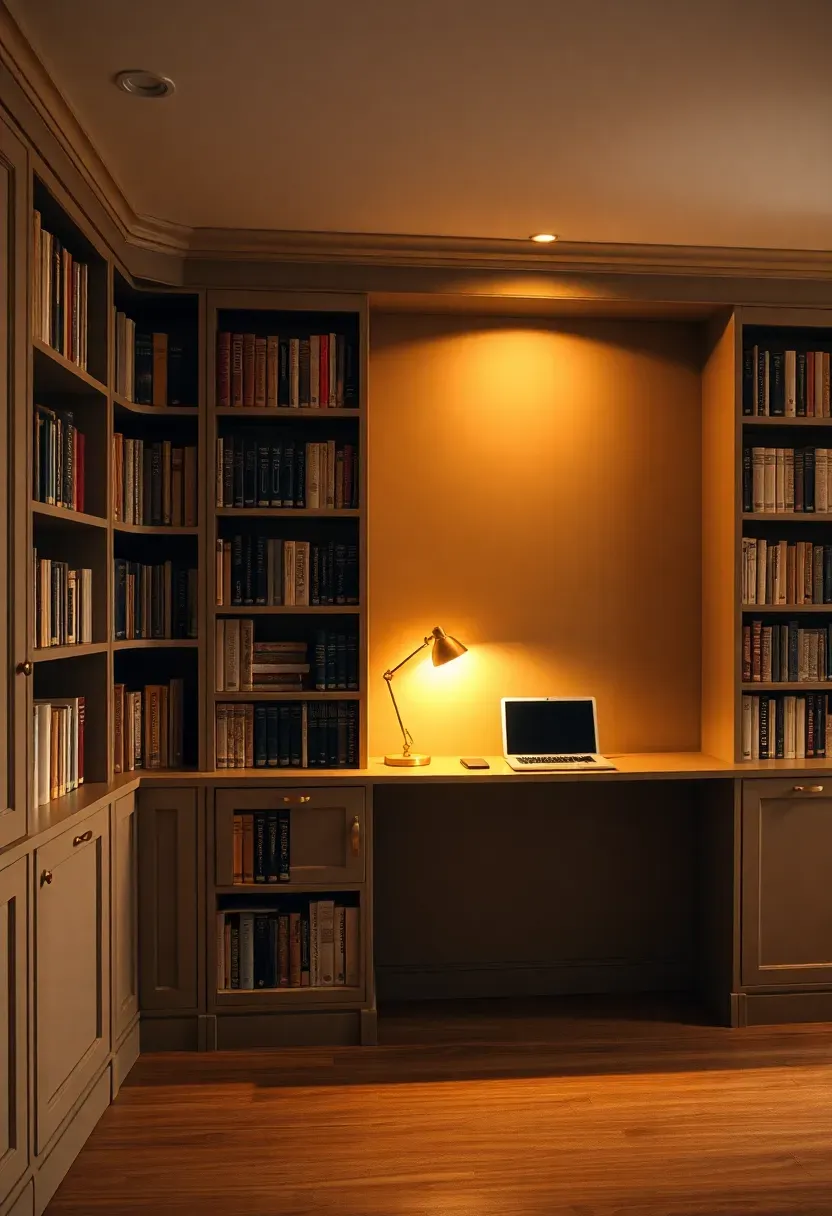
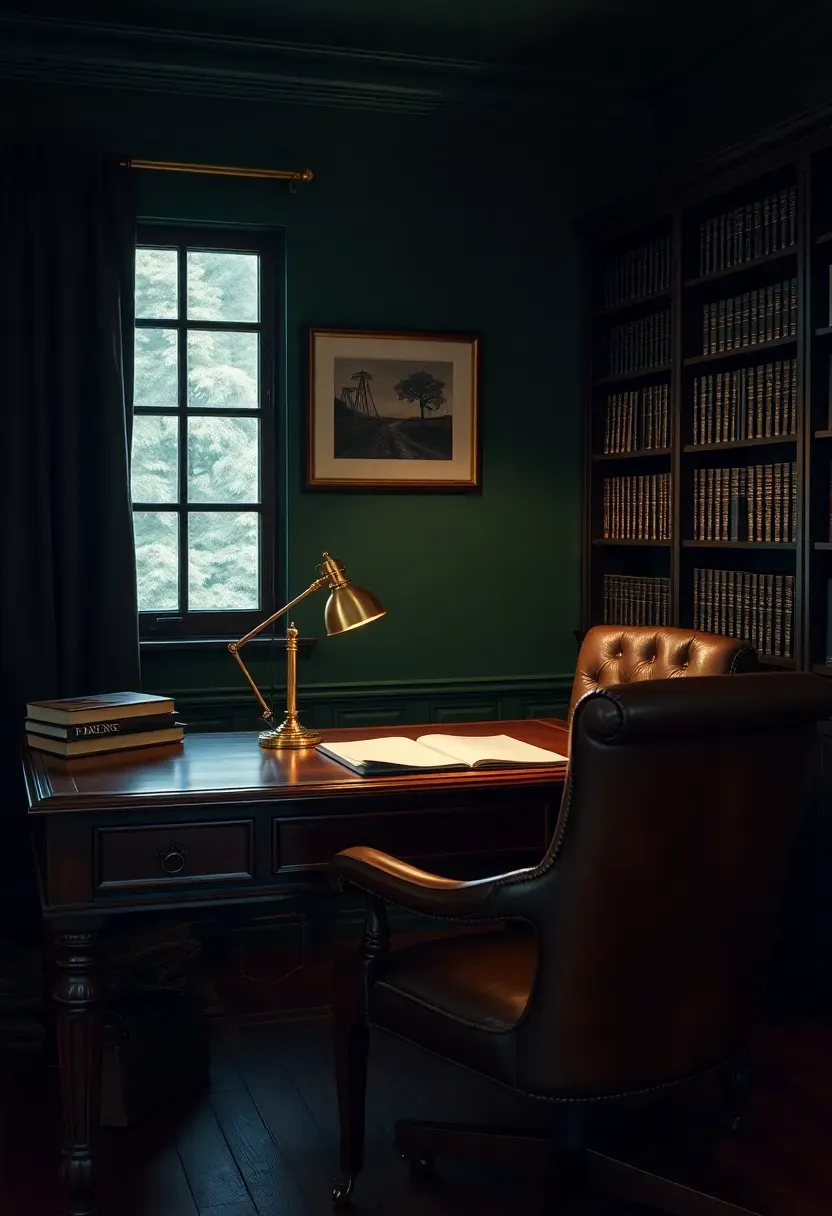
The secret to a dark home office that feels sophisticated rather than oppressive is light layering. The deep green or navy wall stays in shadow. A brass banker's lamp or a warm desk lamp creates a tight pool of light exactly where work happens. The contrast between dark surround and warm task lighting produces a studio-like focus.
Tips for a Dark Office
- Choose one saturated wall color rather than going full dark on all four walls — a single statement wall achieves the drama without making a small room feel like a box
- Warm brass hardware (lamp, drawer pulls, hooks) prevents the color from reading as cold
- Pair the dark walls with pale natural wood on the desk surface so the materials breathe against the backdrop
- Keep shelves organized by color and size — in a dark room, visual disorder reads more loudly than in a light room
Recommended
Items for this idea
15. Feminine Home Office
The Core Issue
Generic "neutral" office setups often default to a corporate grey-and-black palette that many people — regardless of gender — find cold and uninspiring. The workspace is where you spend a significant portion of your waking life, and it should reflect your actual aesthetic sensibility.
The Solution
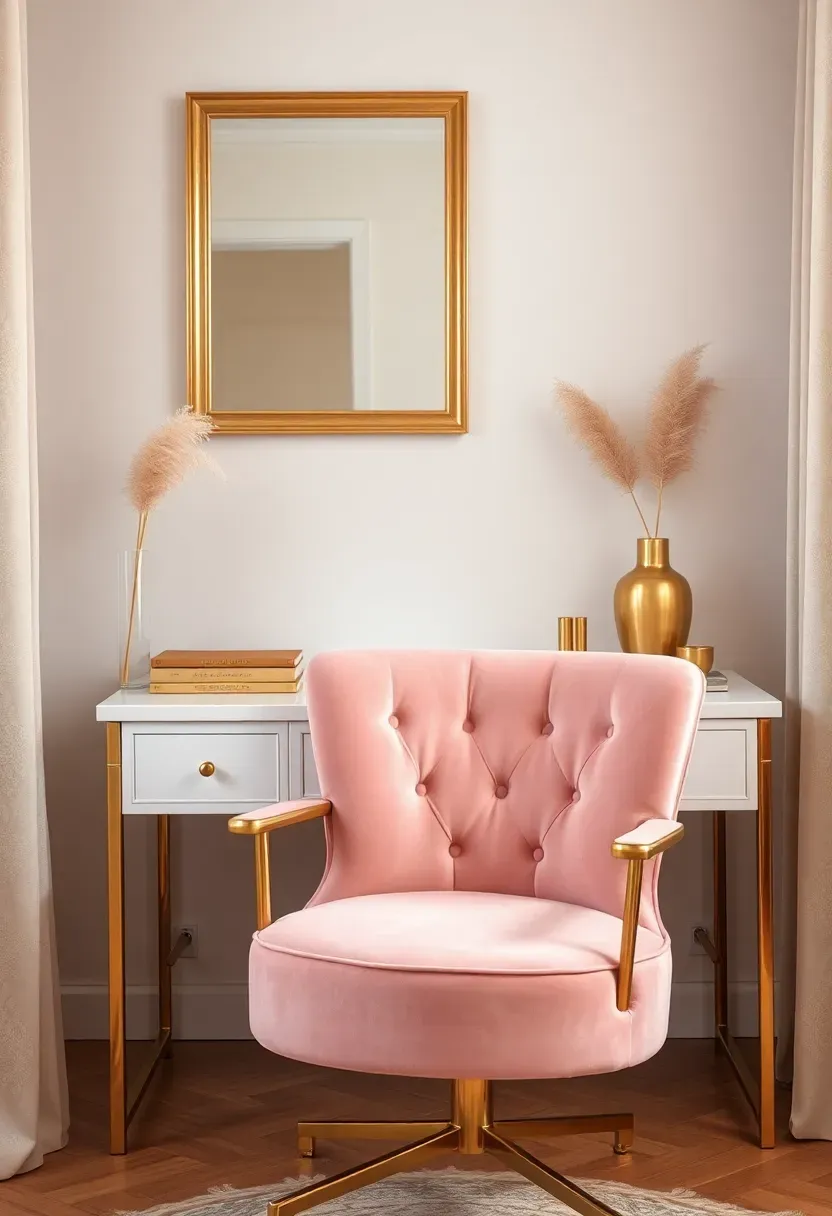
A feminine home office doesn't mean pink overload. It means intentional softness: a blush velvet chair that makes you want to sit down, a white lacquer desk that reflects light and feels clean without feeling clinical, a gold-framed mirror above the desk that makes the wall feel finished. Dried pampas grass in a frosted vase adds organic texture without the maintenance of living plants.
Pros and Cons
Pros: Creates a workspace that genuinely reflects your personality; soft textures actually improve acoustic comfort; blush and ivory palette works in natural and artificial light equally well Cons: Light-colored upholstery shows wear; velvet attracts pet hair; gold hardware requires occasional polishing to maintain luster
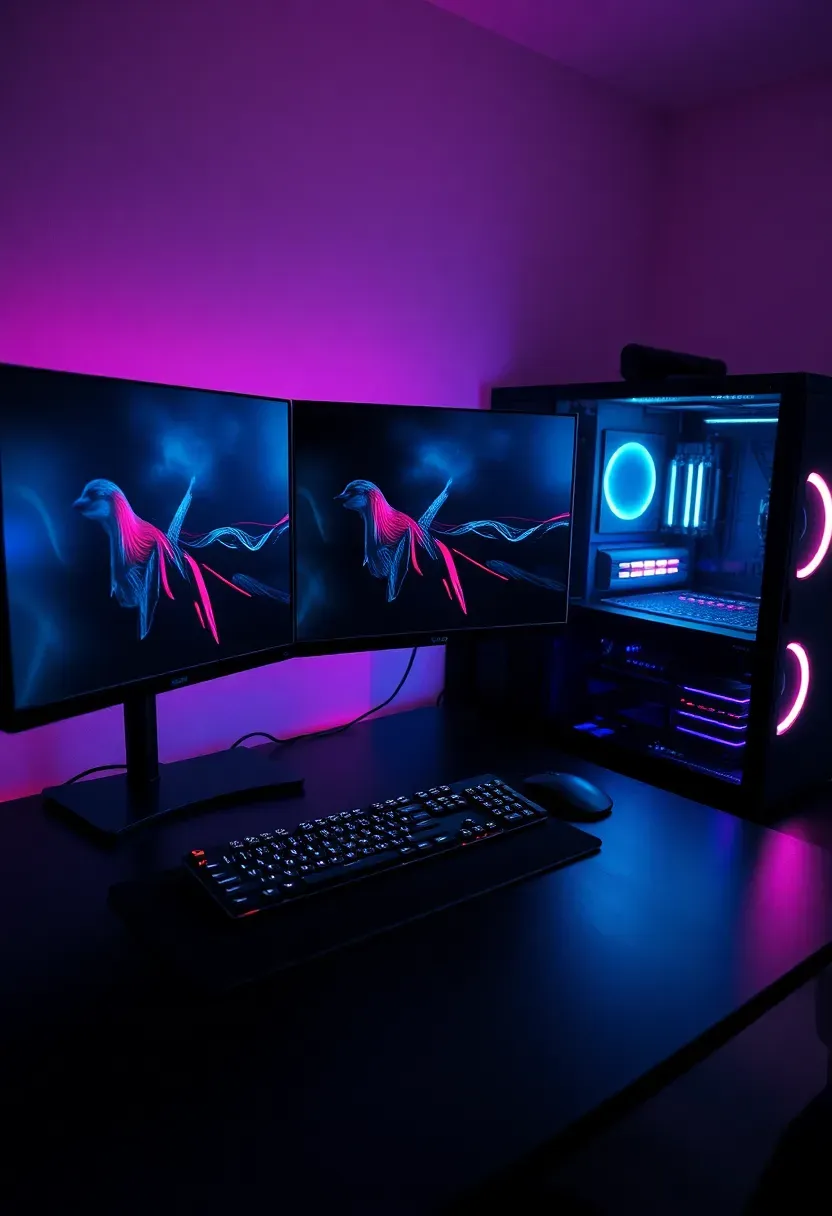
16. Tech-Forward Multi-Monitor Setup
Productivity research on knowledge workers repeatedly shows that a second monitor increases throughput by 20-30% for tasks involving reference, comparison, or cross-application work. A triple-monitor setup takes that further for traders, video editors, programmers, and anyone who lives in multiple applications simultaneously.
Step 1: Plan the Ergonomics First
Before ordering anything, determine optimal viewing distance (typically arm's length for each monitor) and the desk width required to maintain it. A 72-inch desk is the practical minimum for three monitors.
Step 2: Use a Monitor Arm Array
A triple-monitor arm mounts all three screens on a single desk pole, eliminating stands and freeing the entire desk surface below. It also allows precise positioning for each screen.
Step 3: Manage Cables Aggressively
RGB and multi-monitor setups generate significant cable volume. A cable raceway along the back desk edge and velcro ties at every junction keeps the setup looking intentional rather than chaotic.
What to Watch Out For
- Bias lighting (an LED strip behind each monitor) dramatically reduces eye strain during long sessions — a simple, high-ROI addition
- A KVM switch allows you to control multiple computers from a single keyboard and mouse if your setup involves both a personal and work machine
Recommended
Items for this idea
17. Tiny Apartment Loft Desk
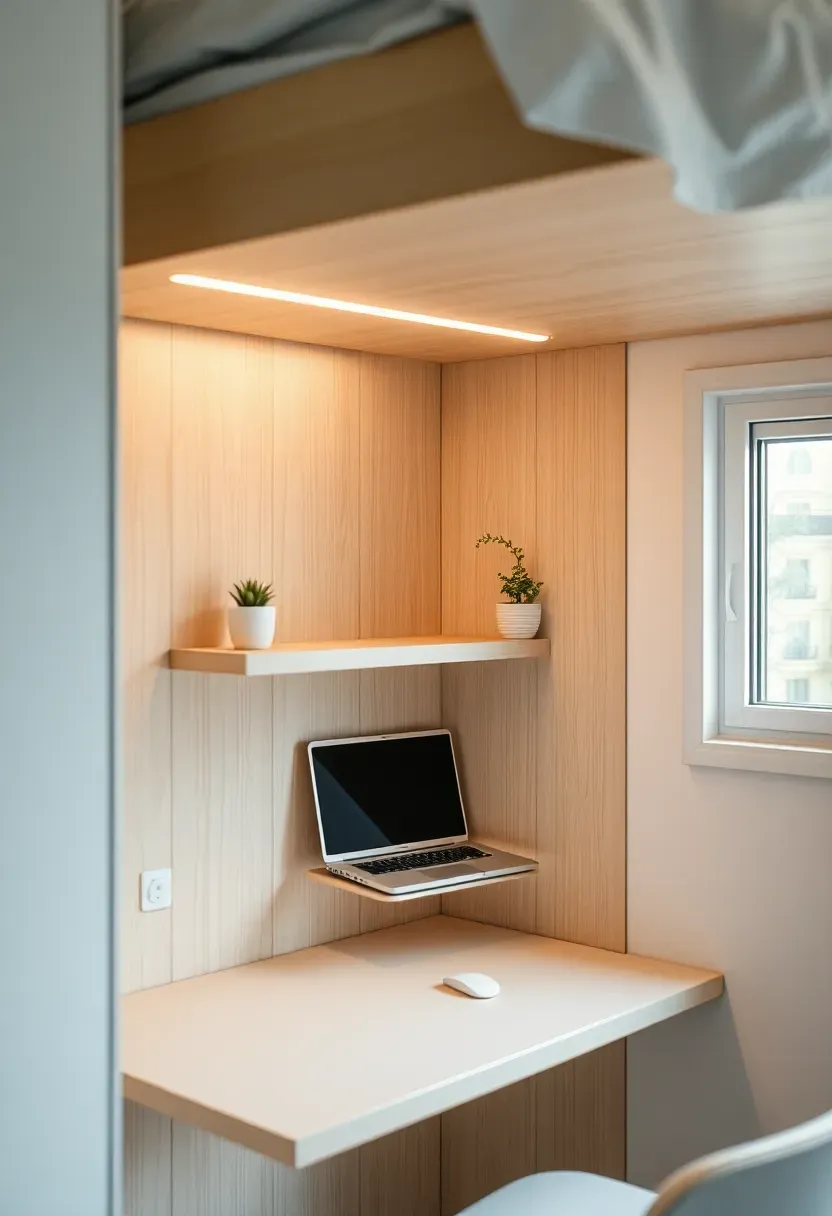
Small apartments force creative thinking about vertical space. The area beneath a loft bed — typically dead space — holds enough room for a full desk setup if you plan around the ceiling height constraint. A wall-mounted fold-down desk under the loft uses zero floor space when closed and provides a complete work surface when open.
Practical Recommendations
- Mount the fold-down desk at a height that allows you to sit on a low stool beneath the loft beam — measure twice before drilling
- An LED light strip mounted along the underside of the loft beam solves the overhead light problem without requiring ceiling fixtures
- A magnetic strip on the wall beside the desk replaces a pinboard — thinner, lower profile, and equally functional
- Limit desk objects to exactly what you use daily; in a micro-workspace, every inch matters
- A single small trailing plant on a wall-mounted mini shelf adds life to the space without consuming desk real estate
18. Outdoor Garden Office Pavilion
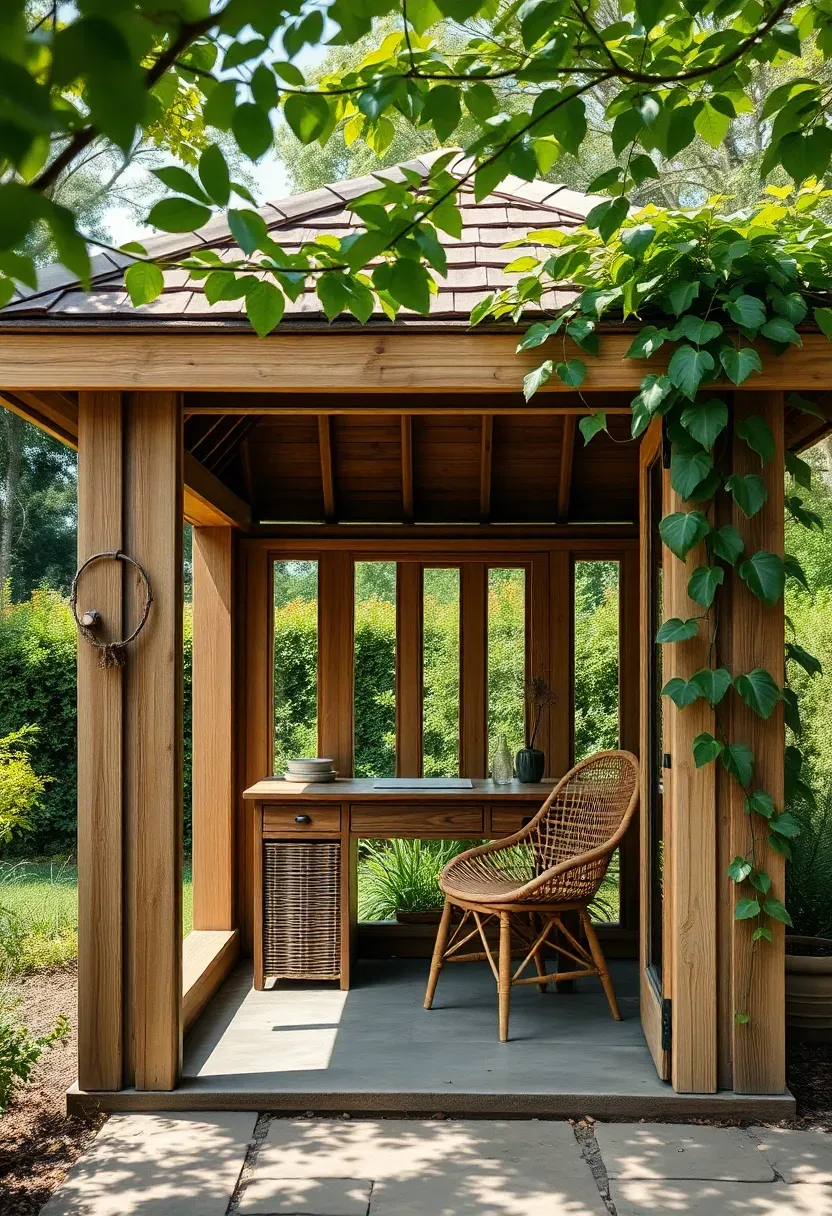
Is the best home office not technically inside the home? A purpose-built garden pavilion — or a carefully adapted pergola — delivers what no interior room can: genuine outdoor air, birdsong, and a complete separation from the domestic environment. For people who find it hard to mentally leave work because their office is literally in their living space, the garden office solves the problem architecturally.
Practical Recommendations
- A wooden-framed structure with a solid roof and open or screened sides costs significantly less than a fully enclosed garden studio and suits temperate climates well for 6-8 months of the year
- Teak or cedar furniture weathers beautifully and requires only annual oiling rather than frequent replacement
- A weatherproof outdoor power outlet (installed by an electrician) allows you to run a laptop, lamp, and phone charger — the essential tech minimum
- A climbing vine on the frame provides natural shade, privacy from neighbors, and aesthetic character that takes only one growing season to establish
- A weighted outdoor rug under the desk zone defines the workspace and reduces the hardness of a stone or paver floor
Recommended
Items for this idea
19. Farmhouse Style Home Office
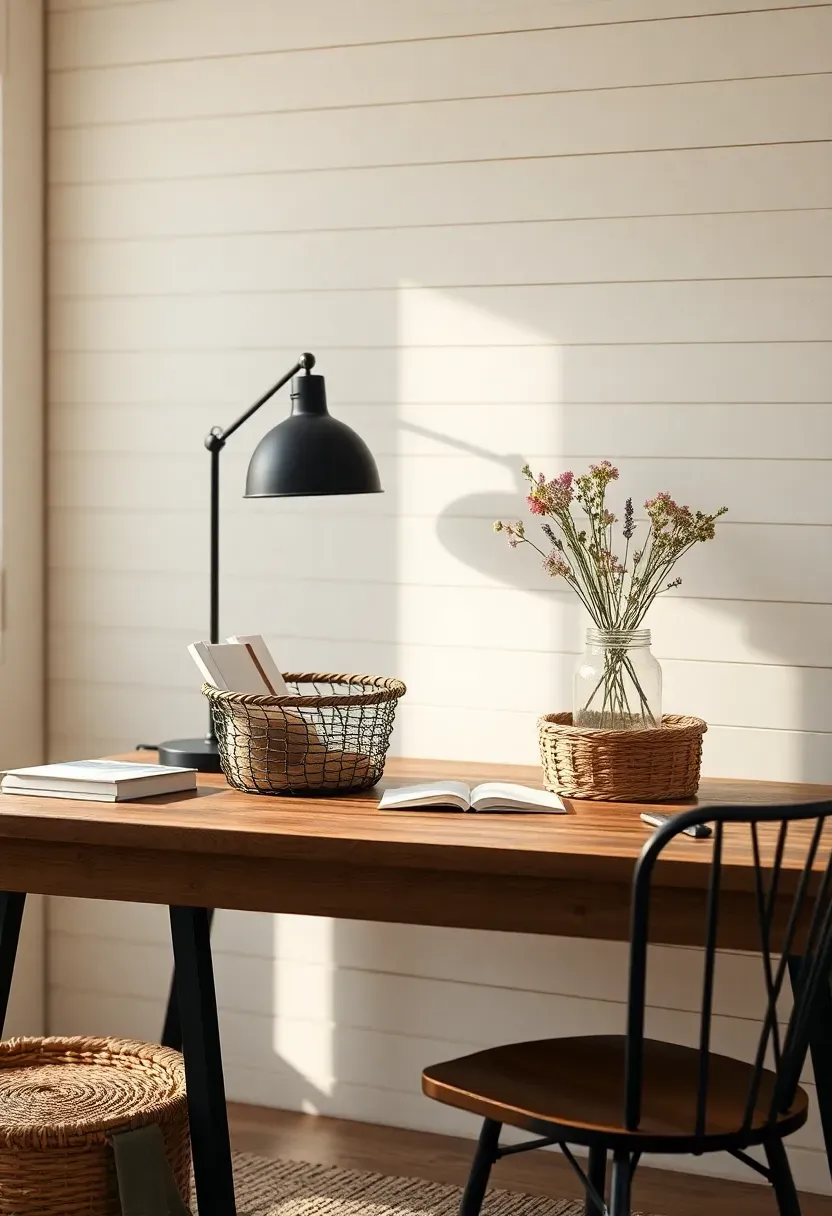
The farmhouse aesthetic translates exceptionally well to a home office because its core materials — reclaimed wood, painted white surfaces, black iron accents — are naturally understated and durable. There is no pretense here. The desk looks like it has been used, because it has. The shiplap wall behind it tells a story of honest construction. The mason jar of wildflowers communicates that this is a human workspace, not a showroom.
Practical Recommendations
- A reclaimed wood plank desk can be sourced from architectural salvage yards for a fraction of the cost of new furniture — and the natural wear and patina is the point, not a flaw
- Black iron pipe and strap brackets for shelving align perfectly with the farmhouse vocabulary and are widely available at hardware stores
- Shiplap wall paneling (real or the plywood-gap simulation) takes a weekend to install and instantly transforms the background of every video call
- Woven seagrass baskets on open shelves corral papers and office supplies while staying visually cohesive with the natural material palette
- A galvanized metal desk lamp or a repurposed industrial lamp is thematically appropriate and inexpensive
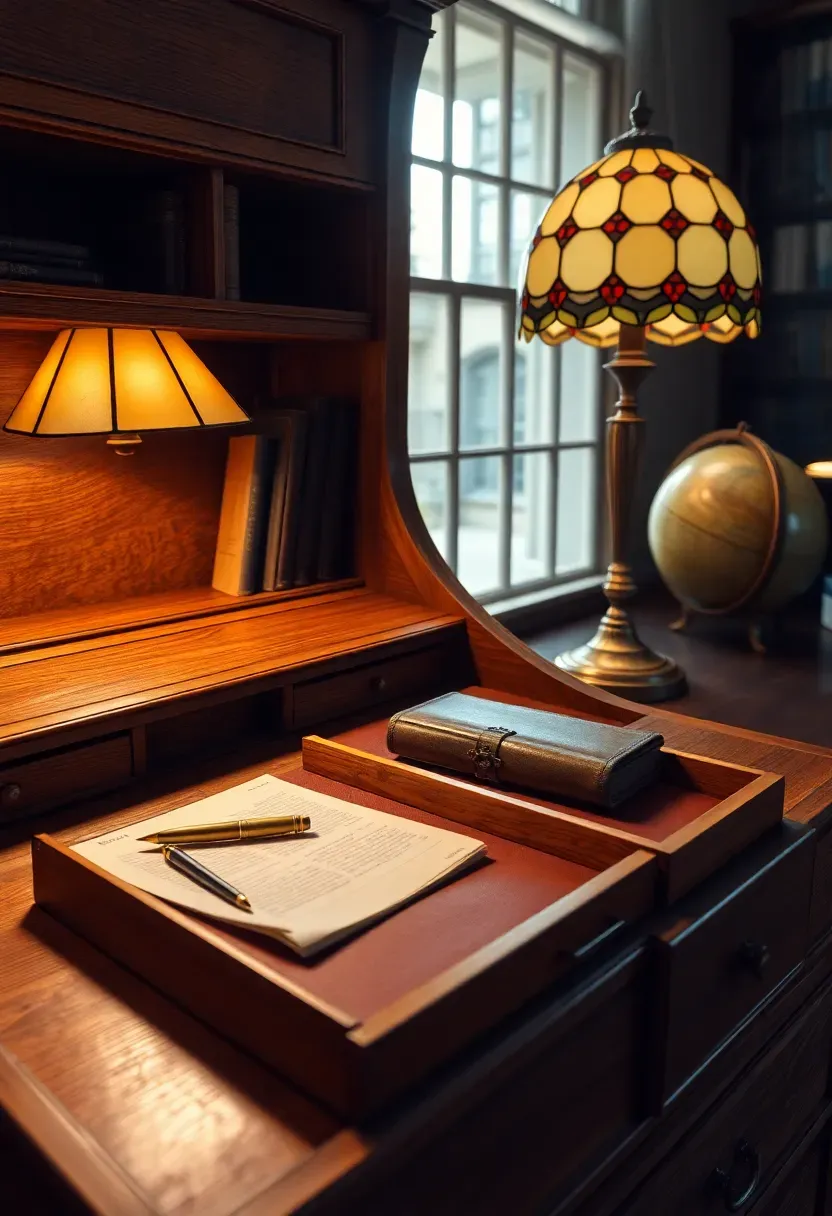
20. Vintage Antique Desk Setup
Comparing: Antique Desk vs Modern Vintage-Inspired Desk
True antique desks — roll-top secretaries, Victorian writing tables, mid-century executive desks — carry irreplaceable character. But they also carry real tradeoffs.
Genuine Antique Desk
A roll-top oak secretary from the early twentieth century provides dozens of small compartments, a leather blotter surface, and joinery that represents genuine craftsmanship. It anchors an entire room with presence. But drawers may stick, the surface height may not suit modern ergonomic standards, and integration with technology requires creative cable management.
Vintage-Inspired Modern Desk
A contemporary desk designed with antique vocabulary (carved legs, brass hardware, leather inset surface) delivers the aesthetic without the functional compromises. You get USB ports, correct desk height, and smooth drawer operation.
What to Choose
Choose genuine antique if: You collect furniture, work primarily with pen and paper, and the desk's history is part of its appeal Choose vintage-inspired modern if: You need ergonomic function and technology integration alongside the aesthetic
Recommendation
If you go genuine antique, pair it with a modern task chair and a discreet cable management box — the contrast of old and new actually heightens the antique's character rather than diminishing it.
Recommended
Items for this idea
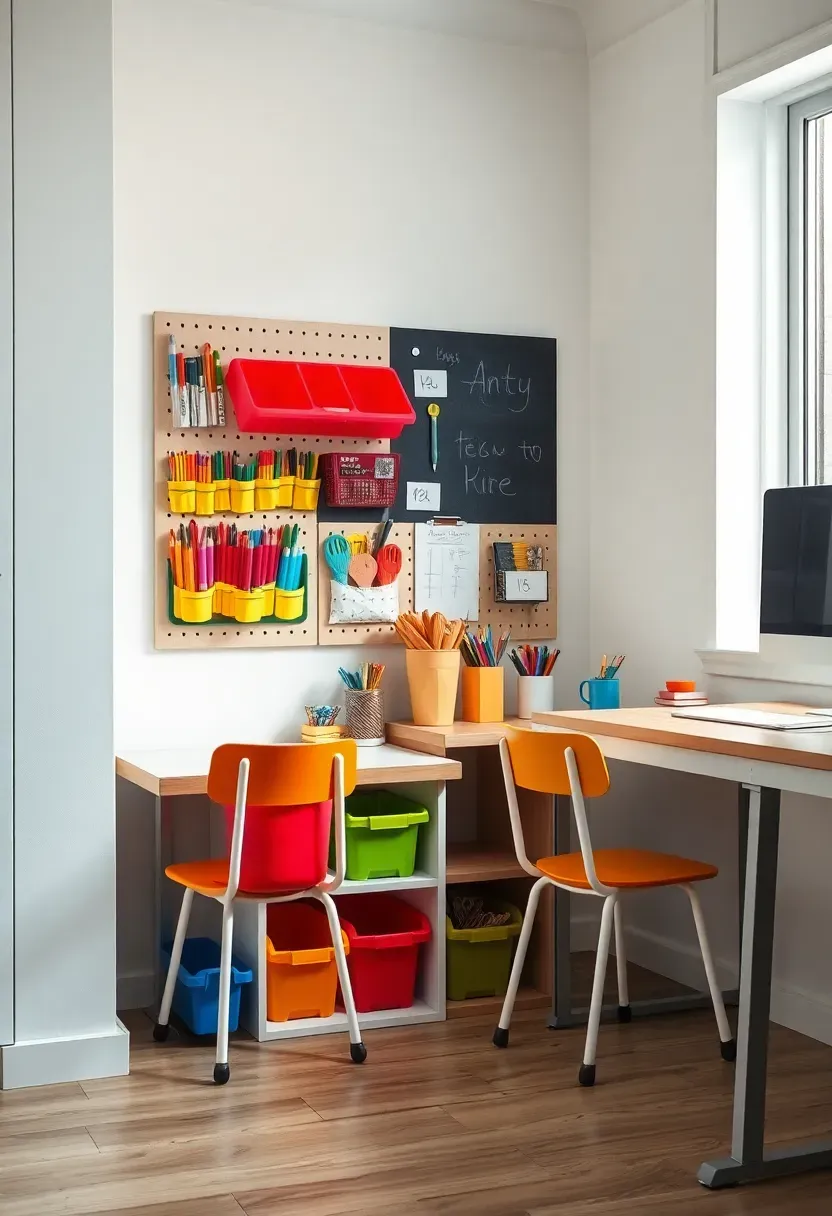
21. Family Shared Office Corner
Remote work and remote schooling increasingly demand that adults and children share space simultaneously. A dedicated family office corner acknowledges this reality rather than fighting it. Two child-height desks beside the adult desk create a visual hierarchy that communicates roles while sharing the space. The chalkboard wall strip above the children's desks gives them a surface to draw on without marking walls.
Step 1: Define Each Zone Clearly
Physical separation matters even in a shared space. Position the adult desk perpendicular to or slightly apart from the children's desks. Each zone should have its own lamp, its own storage, and its own personality.
Step 2: Shared Storage Overhead
A pegboard above all three desks unifies the space visually and provides shared storage for shared supplies. Label hooks and cups so each family member knows where things live.
Step 3: Manage Noise
Children doing homework and adults on video calls generate conflicting noise. A simple acoustic panel behind the adult's monitor (disguised as wall art) meaningfully reduces background noise on calls.
What to Watch Out For
- Colorful storage bins for the children's zone are practical but keep them on lower shelves — the adult eye line should stay calm and professional for video calls
- Build a simple daily routine around setup and teardown so the family zone doesn't creep into the adult workspace
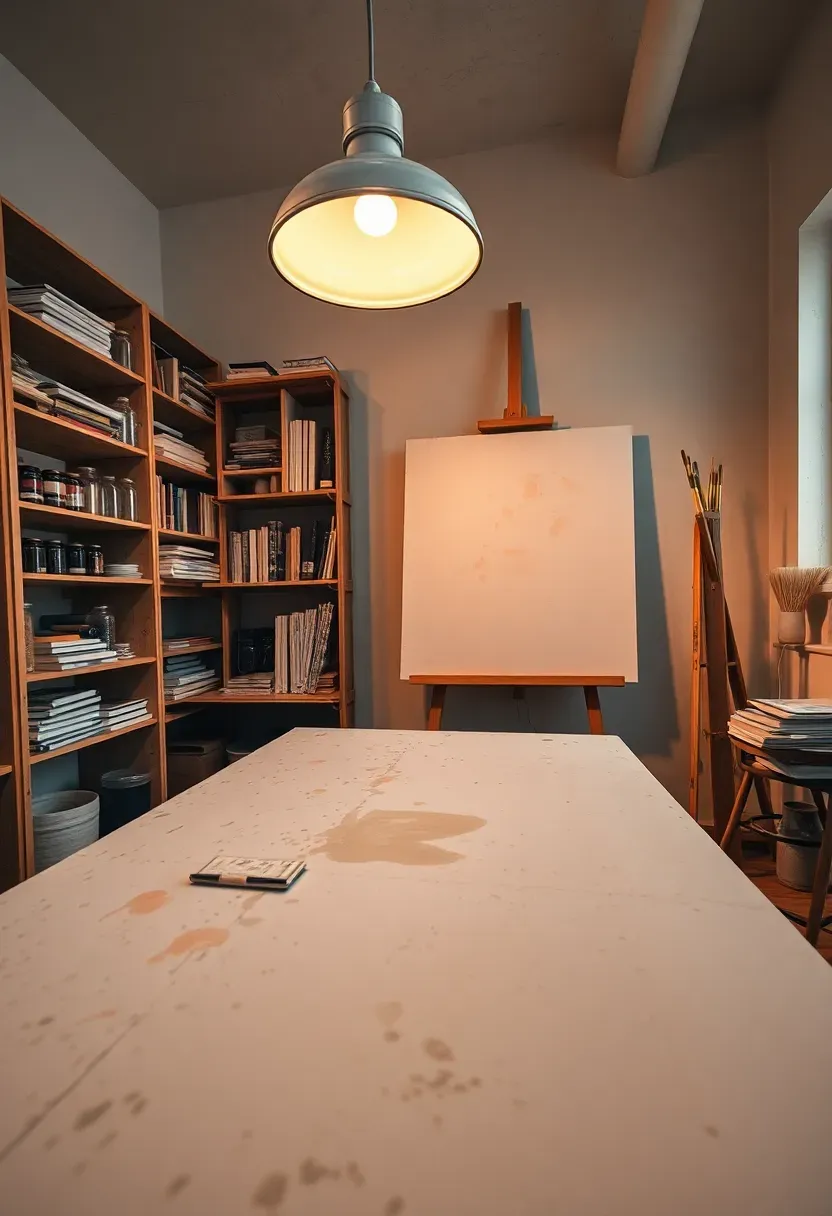
22. Creative Studio Workspace
A workspace for makers, writers, artists, or designers requires a different logic than a standard home office. The surface needs to be large enough to spread materials. Storage must make supplies visible and accessible, not hidden. The light needs to be bright and consistent. And the space must tolerate — even celebrate — productive mess.
Practical Recommendations
- A large birch plywood work table (48 x 24 inches minimum) provides enough surface for concurrent projects without requiring expensive furniture
- Open shelving rather than closed cabinets keeps art supplies visible — you use what you can see, you forget what is hidden
- Glass jar storage for brushes, markers, and tools creates an organized-but-alive workspace aesthetic that feels professional without being sterile
- A drafting lamp on an adjustable arm provides consistent overhead light that you can redirect as needed — critical for color-accurate work
- Accept the paint traces, ink stains, and creative evidence on the work surface — a pristine studio is usually an uninspiring studio
Recommended
Items for this idea
23. Ergonomic Wellness Office
The home office boom of the early 2020s revealed an uncomfortable truth: most people work in setups that would fail a basic ergonomics audit. Chairs at the wrong height, monitors too low or too far, no variation in posture across eight hours. The wellness office corrects this systematically — not as an indulgence but as an investment in sustained capacity to work well.
Practical Recommendations
- Monitor height: the top of the screen should sit at or just below eye level when you are seated upright — raise your existing monitor with a riser before buying a new one
- Chair height: feet flat on the floor, thighs parallel to the ground, a slight forward tilt of the pelvis — most chairs allow this adjustment but most people never make it
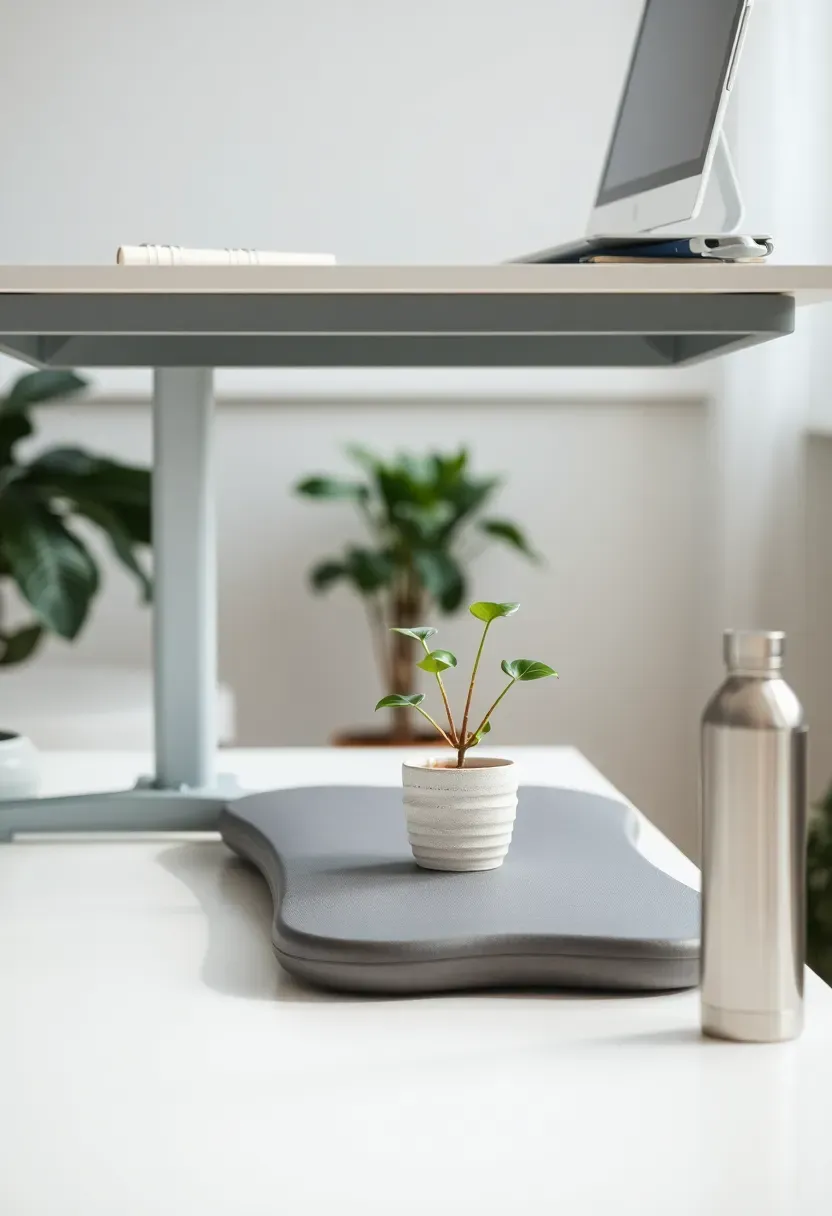
- A balance board under the standing desk position costs $40-80 and meaningfully reduces lower-back fatigue during standing periods
- A lumbar support roll (not a full ergonomic chair) can transform a mid-range chair into one that supports the natural curve of the lower back
- Keep a glass of water visible on the desk — studies show that visible hydration cues correlate with better actual hydration behavior throughout the workday
24. Budget IKEA Hack Office
The Core Issue
Home office furniture marketing targets the premium end of the market. A quality standing desk, an ergonomic chair, and a proper monitor setup can easily total $2,000 or more — a sum that prices out anyone in an early-career or transitional stage.
The Solution
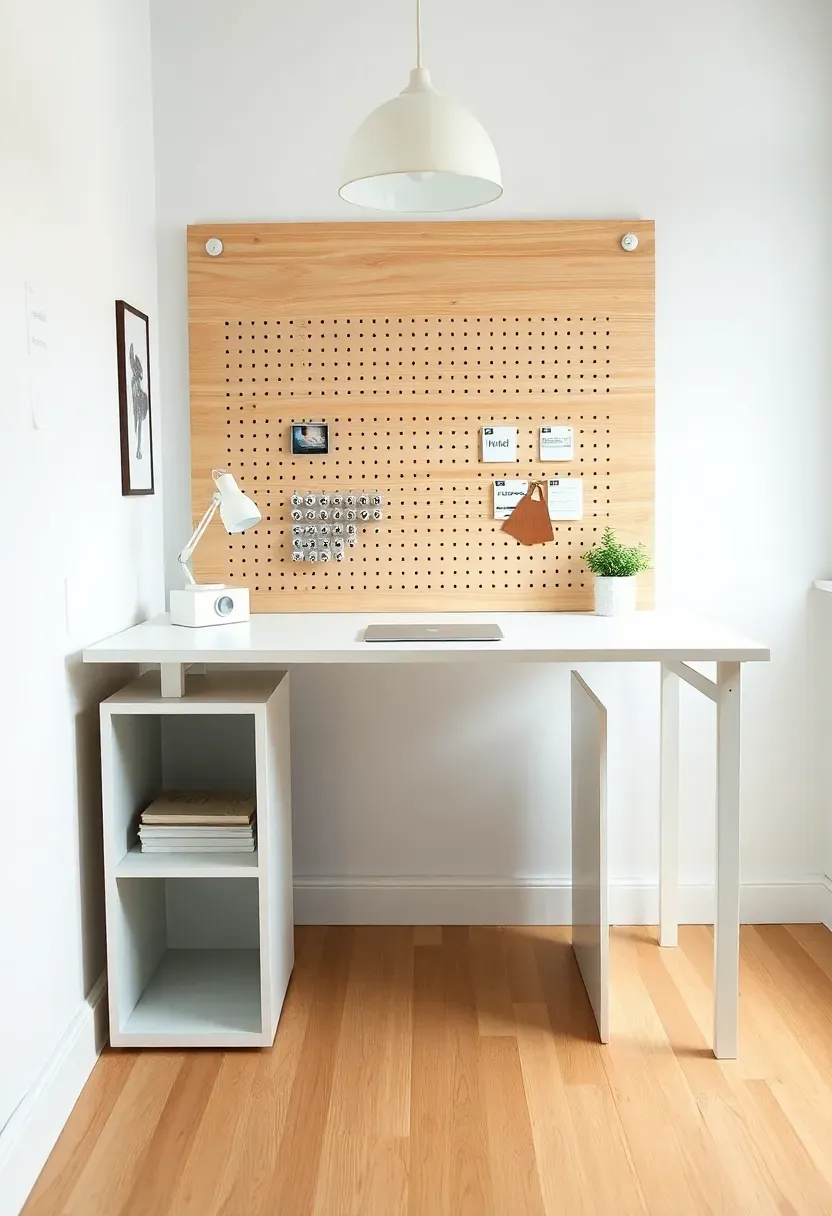
The KALLAX-as-desk-base hack is one of the most replicated projects in the DIY design community for good reason: a $70 four-cube KALLAX unit on its side, topped with a $25 LINNMON tabletop, creates a desk with 8 open storage cubes below the surface — more storage per dollar than almost any purpose-built desk on the market. A pegboard on the wall above costs $15 at any hardware store and replaces the functionality of expensive desk organizers.
Pros and Cons
Pros: Total cost under $200; highly customizable with cube inserts; scales easily as needs grow; widely available replacement parts Cons: MDF construction is heavy and not easily relocated; the aesthetic is recognizably IKEA, which matters to some; cube inserts add cost incrementally
Recommended
Items for this idea
25. Luxury Executive Home Office
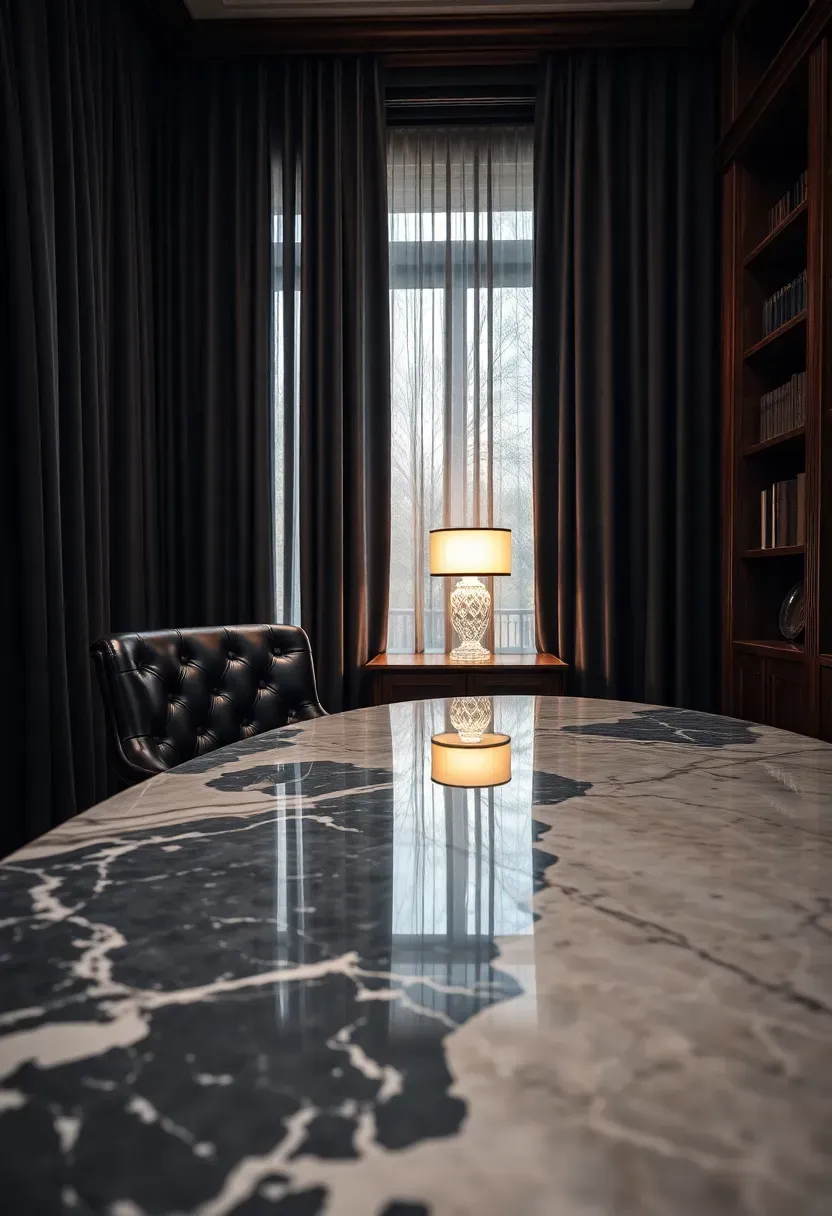
The luxury home office is not about excess — it is about material permanence. Carrara marble on the desk surface will outlast every piece of particle-board furniture ever made. A properly maintained tufted leather chair improves with age. Dark walnut bookshelves develop a patina over decades. The investment calculus is different from fast furniture: you buy once, well, and the objects in the space appreciate in both quality and meaning.
Practical Recommendations
- A marble desk surface requires a dedicated base — custom fabrication is the cleanest solution, but a stone-topped console table from a furniture maker works equally well
- Tufted leather takes a beating gracefully; budget-leather imitations do not — the difference is visible within two years of daily use
- Floor-to-ceiling curtains in deep charcoal velvet elongate the room visually, frame the window dramatically, and provide genuine acoustic dampening for calls
- A crystal or hand-blown glass table lamp adds sparkle without modern tech-aesthetic LEDs — the light quality is warmer and more human
- Commission a custom bookcase rather than assembling a retail unit: the difference in joinery quality, finish, and proportion is immediately visible and worth the premium in a room at this level
Quick FAQ
Is it possible to create a productive home office in a studio apartment? Absolutely — but it requires accepting that the office will share physical space with other functions. The key is creating a visual and psychological boundary: a distinct desk area, a lamp that is only on during work hours, and a habit of physically putting away work materials at the end of the day. The boundary is behavioral as much as physical.
Should you invest in an ergonomic chair before other office upgrades? Yes, with one caveat: an ergonomic chair only helps if it is properly adjusted. Many people own expensive ergonomic chairs set at the wrong height. Before buying new, spend ten minutes adjusting what you have — then decide if a new chair is actually the bottleneck.
What's the difference between a home office that looks good on video calls and one that actually supports deep work? A video-call-friendly office prioritizes what's visible behind you: a clean wall, appropriate lighting from the front, no visual chaos. A deep-work office prioritizes what's in front of you: minimal distraction, excellent task lighting, comfortable temperature, and acoustic comfort. Ideally your setup does both — but if you have to choose, optimize for function first and arrange the camera angle to show your best wall.
Which home office style works best in a shared household? The closet conversion or Murphy bed-desk combination creates the clearest boundaries in a shared home. When the closet doors close or the desk folds up, work visually ceases to exist — which protects both your focus when working and your household relationships when you are not.
Do I need a dedicated room to have a real home office? No — but you need a dedicated mindset about the space you do use. Some of the most effective home offices are corners, nooks, and converted closets. The physical size of the space matters far less than the consistency with which you use it only for work.
Trends in home office design will keep shifting — the standing desk craze gave way to ergonomic nuance, the open industrial look gave way to warm biophilic spaces. But the underlying need stays constant: a place at home that is genuinely yours for thinking, making, and doing your best work. Start with what you have, add one element that improves the experience this week, and build from there. The best home office is always the one you'll actually use.
Pinterest cover for 25 At Home Office Ideas for Every Space and Style
About the author
OBCD
CGI visualization and interior design content. We create detailed 3D renders and curate practical design ideas for every room in your home.