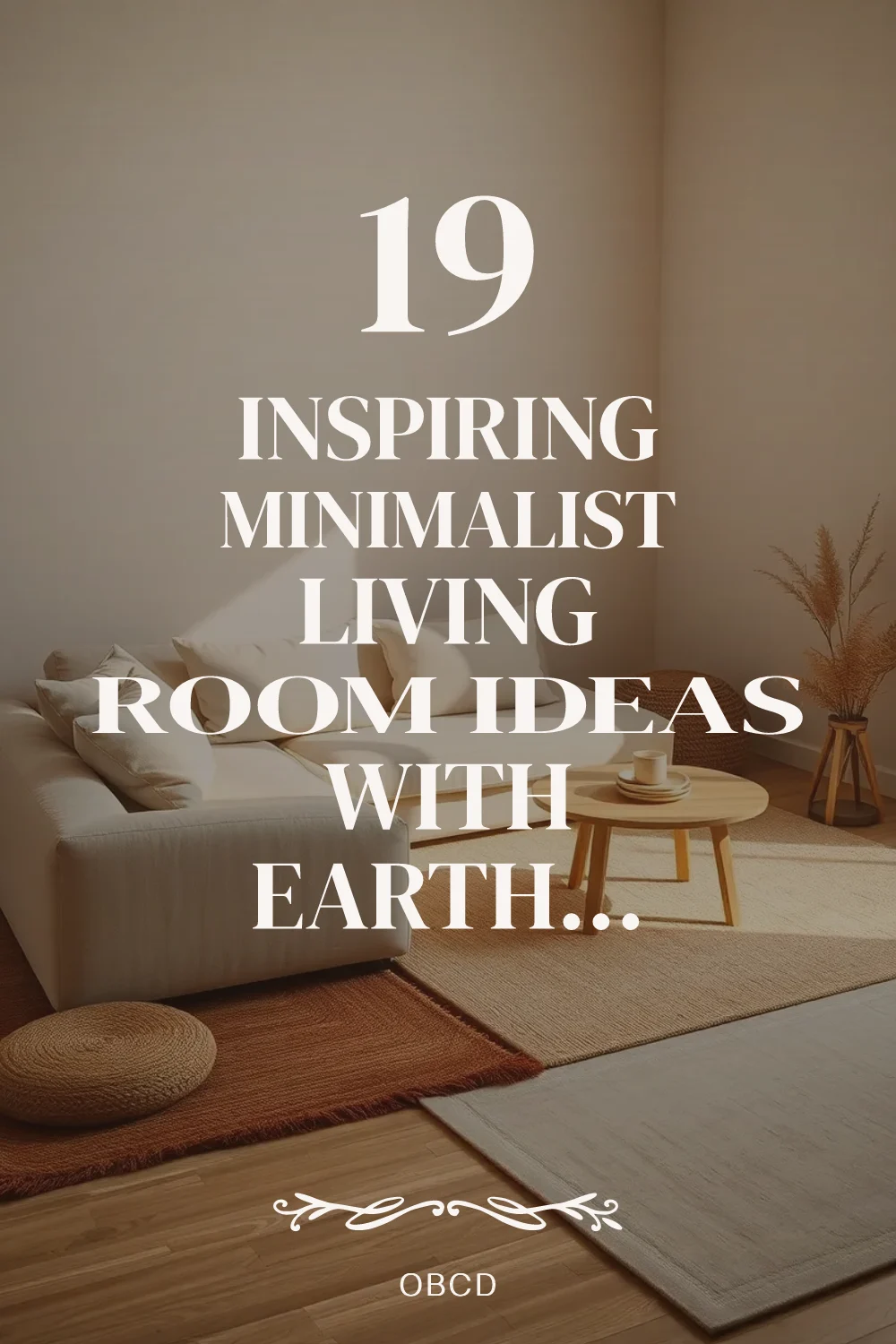
19 Minimalist Living Room Ideas with Earth Tones (Cozy Layouts)
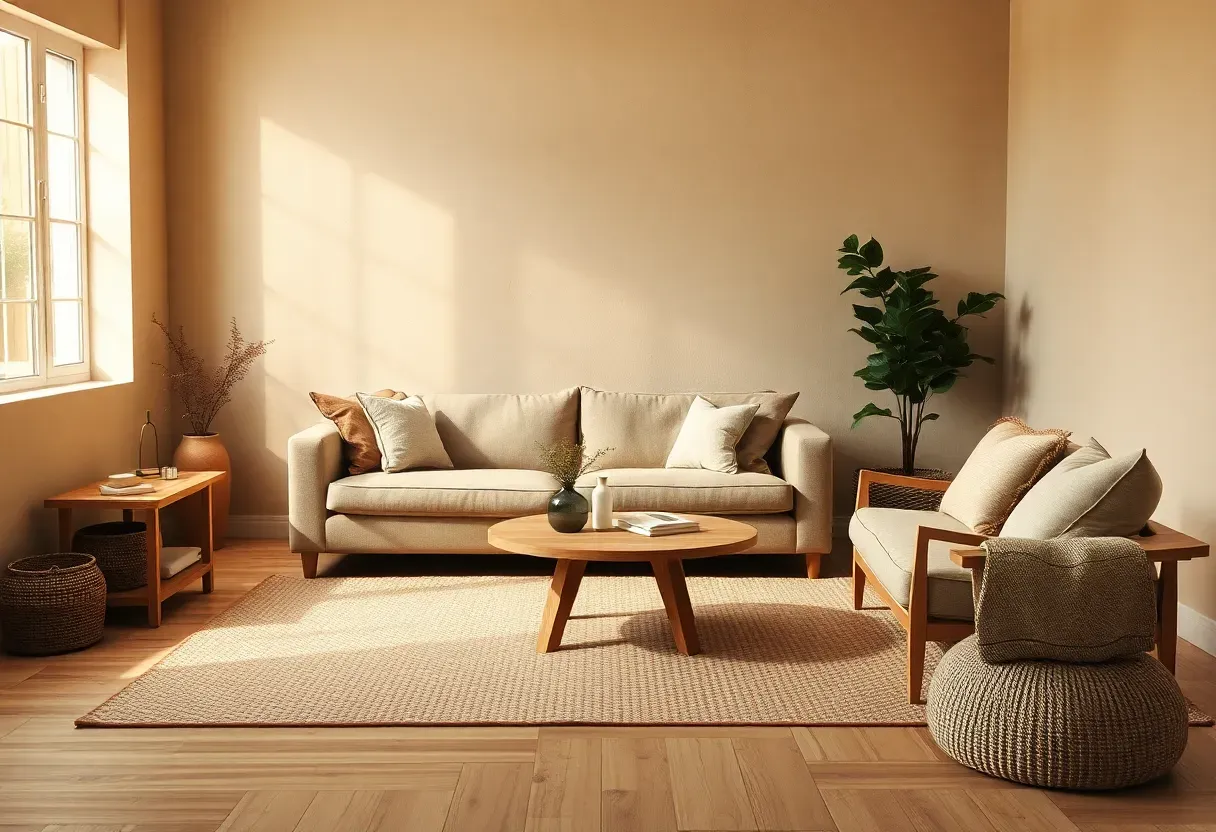
The best minimalist living room ideas with earth tones go beyond a few throw pillows. They start with a full layout built around warm neutrals, natural materials, and intentional zoning so the entire room feels calm and grounded.
Whether you are working with a small apartment or an open-plan space, these 19 earth tone living room ideas offer complete room plans you can adapt. Each layout pairs cozy textures like linen, wool, and boucle with clean lines and smart storage to keep visual clutter out. Pick the variant that matches your floor plan and commit to the system for the best result.
Quick FAQ
Which minimalist living room ideas work best with earth tones?
Layouts with one strong focal wall and layered neutrals work best. Keep furniture low and materials natural to preserve calm.
How do I make a minimalist living room feel comfortable?
Use soft textures like linen, wool, and boucle and keep lighting warm. Comfortable layouts prioritize circulation and easy seating flow.
Should earth tones be light or dark in a minimalist living room?
Use light earth tones for small rooms and deeper tones for larger spaces. Balance dark accents with warm neutrals for comfort.
Which minimalist living room ideas avoid clutter best?
Built-in storage walls and closed media cabinets are most effective. One continuous storage run keeps visual noise down.
How many earth-tone colors should I use in a living room?
Keep it to three or four tones: one base, one mid-tone, and one accent. This keeps the space calm and consistent.
As an Amazon Associate I earn from qualifying purchases.
Table of Contents
- 1. Low modular sofa with layered earth-tone rugs
- 2. Compact L-shaped sofa and built-in media wall
- 3. Linen sofa with oak coffee table gallery wall
- 4. Pair of lounge chairs around a round table
- 5. Floating media ledge with concealed storage
- 6. Microcement floor with jute rug island
- 7. Limewash wall with clay and terracotta accents
- 8. Storage headboard wall for living room seating
- 9. Full-height curtains with soft layered lighting
- 10. Closed base cabinets with open shelf band
- 11. Two-tone paint band with long bench
- 12. Slim console behind sofa for small rooms
- 13. Walnut credenza with art rail focus
- 14. Built-in window seat with hidden storage
- 15. Minimal reading nook with floor lamp
- 16. Symmetric seating plan with twin side tables
- 17. Sliding panel to hide TV and cables
- 18. Living-dining combo zoned by rugs
- 19. Future-proof modular storage and plant wall
1. Low modular sofa with layered earth-tone rugs
This minimalist living room layout uses a low modular sofa and layered rugs to create a comfortable living space without extra furniture. Place the sofa along the longest wall and center two rugs, a 6x9 base and a 4x6 topper, to define the main zone. Keep the palette in warm earth tones like sand, clay, and soft brown so the room feels grounded. For contrast, avoid a bulky sectional and upgrade to a low, armless module set instead. The result is a full-room plan that feels calm and cohesive.
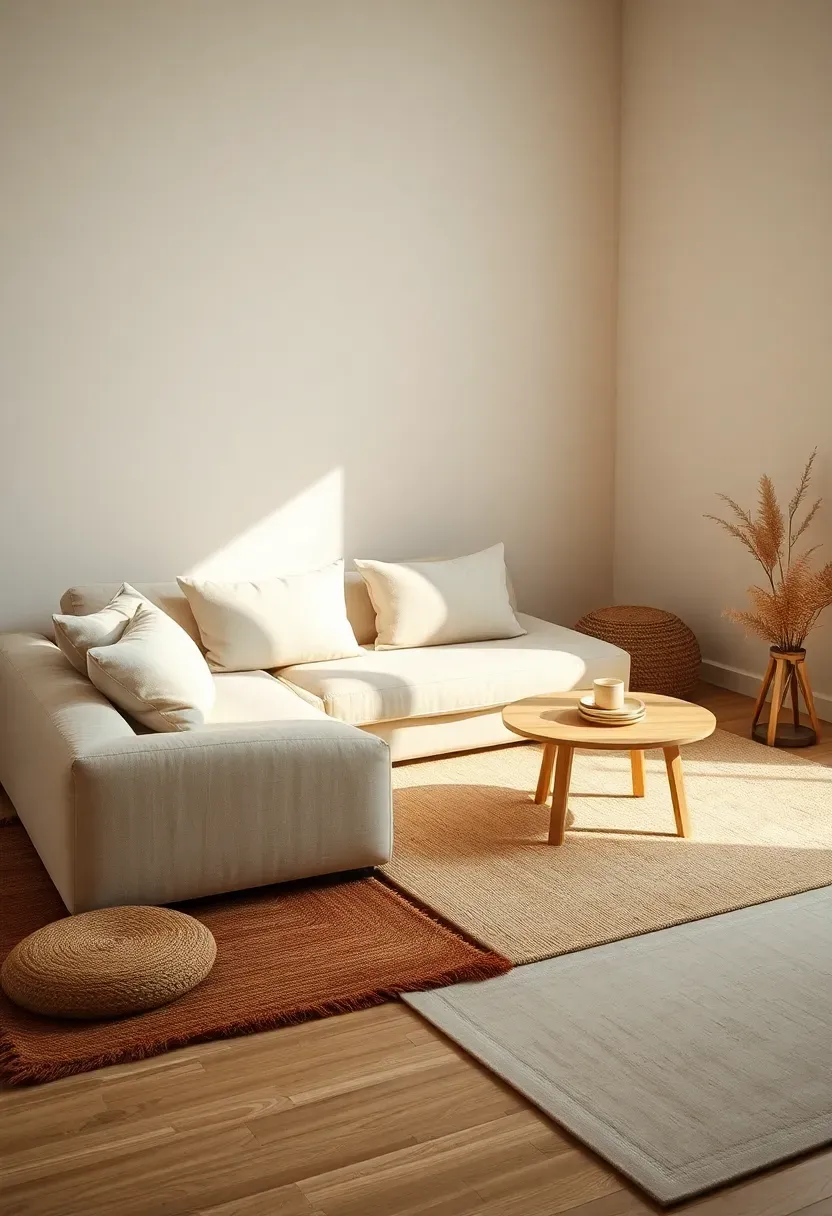
Use a 36-inch square coffee table to keep circulation open and add a single floor lamp at 2700K for warmth. The trade-off is less closed storage, so add one low cabinet behind the sofa or along the short wall. If you want a stronger focal point, introduce a darker rug topper rather than extra decor. A single textured throw keeps the layout soft without adding clutter. This arrangement creates a comfortable, finished room with minimal pieces.
Tips
- Do: keep sofa depth under 40 inches for small rooms.
- Don’t: layer rugs with high-contrast patterns.
- Do: align rug edges to a single axis for visual calm.
Best for: open-plan apartments that need one clear living zone.
What this gives you: a grounded, cozy layout with minimal furniture count.
We picked a few things that go well with this idea: Anickal Rustic Linen Throw Pillow Covers (2-Pack) (★4.6), MIULEE Velvet Throw Pillow Covers (2-Pack) (★4.6) and Fancy Homi Corduroy Patchwork Pillow Covers (2-Pack) (★4.7). As an Amazon Associate we earn from qualifying purchases.
2. Compact L-shaped sofa and built-in media wall
This minimalist living room plan uses a compact L-shaped sofa paired with a built-in media wall to keep the room calm and organized. Place the sofa in the corner with a 24-inch clearance path and run a 90-inch media cabinet along the opposite wall. Use a muted olive or warm taupe wall tone to support the earth-tone palette. For contrast, avoid open shelves and upgrade to flat-front cabinets that hide cables and devices. The room reads as one clean system rather than scattered pieces.
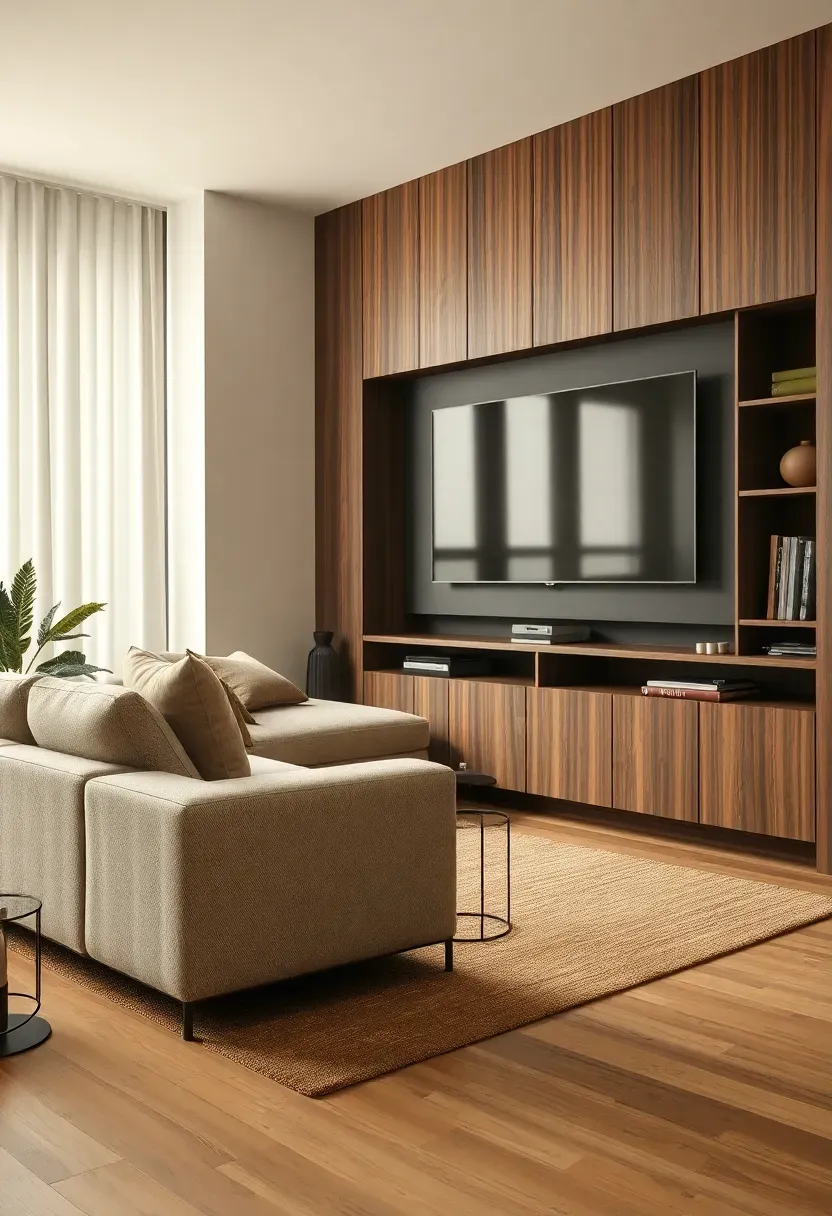
Placement note: Keep the media wall depth under 16 inches to preserve floor space.
Choose a low, 16-inch-high cabinet so the TV sits at a comfortable viewing height. The trade-off is less display space, so limit decor to one ceramic vase and one stack of books. Add a 5x8 rug to anchor the seating area and soften the floor. If you want warmth, use a travertine tray on the coffee table instead of extra decor. This layout delivers a complete, tidy living space with minimal visual noise.
For a calm media wall approach, see 21 Cozy Mid Century Modern Living Room Decor Ideas to Try.
Tips
- If the sofa feels bulky, then choose slim arms under 6 inches wide.
- If storage is tight, then add shallow drawers for remotes and cables.
What this gives you: a compact, media-ready room with hidden storage.
We picked a few things that go well with this idea: Bedsure 6x9 Faux Wool Area Rug Cream (★4.2), SAFAVIEH Natura Handmade Wool Blend Rug 6x9 (★4.6) and SAFAVIEH Abstract Wool Viscose Rug 6x9 (★3.5). As an Amazon Associate we earn from qualifying purchases.
3. Linen sofa with oak coffee table gallery wall
This minimalist living room variant uses a linen sofa, oak coffee table, and a simple gallery wall to create an earth-tone focal point. Place the sofa centered on the main wall and keep a 42-inch clearance to the coffee table for easy movement. The supporting term here is oak, which adds warmth without heavy color. For contrast, avoid glossy frames and choose matte black or natural wood instead. The layout feels curated but still quiet.
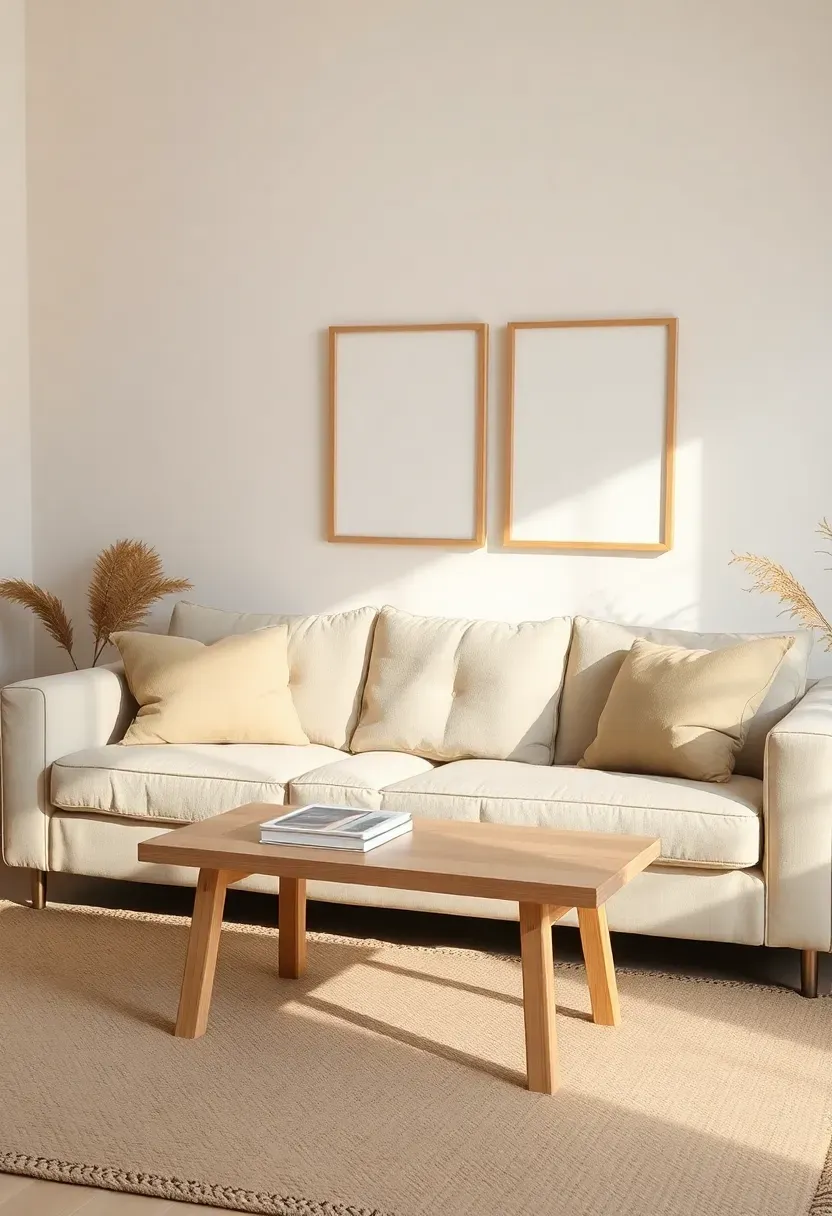
Why it works: the gallery wall adds personality without extra furniture.
Keep the gallery to six frames in a 60-inch-wide grid and use sepia or clay-toned prints. The trade-off is less open wall space, so keep the rest of the room minimal and avoid extra shelving. Use a 6x9 rug in a warm oatmeal tone to define the zone. Add one stoneware bowl on the coffee table for texture, not multiple objects. This creates a full-room look that still feels airy.
Tips
- Pro: art adds depth without consuming floor space.
- Con: too many frames can feel busy.
- Fix: keep frame colors to two tones max.
Best for: renters who want personality without bulky furniture.
What this gives you: a balanced, art-led layout with warm materials.
We picked a few things that go well with this idea: Honyee Modern Oval Oak Coffee Table (★4.6), 2-Tier Minimalist Coffee Table with Storage (48") (★4.7) and Modern Oak Coffee Table with Storage (39") (★3.7). As an Amazon Associate we earn from qualifying purchases.
4. Pair of lounge chairs around a round table
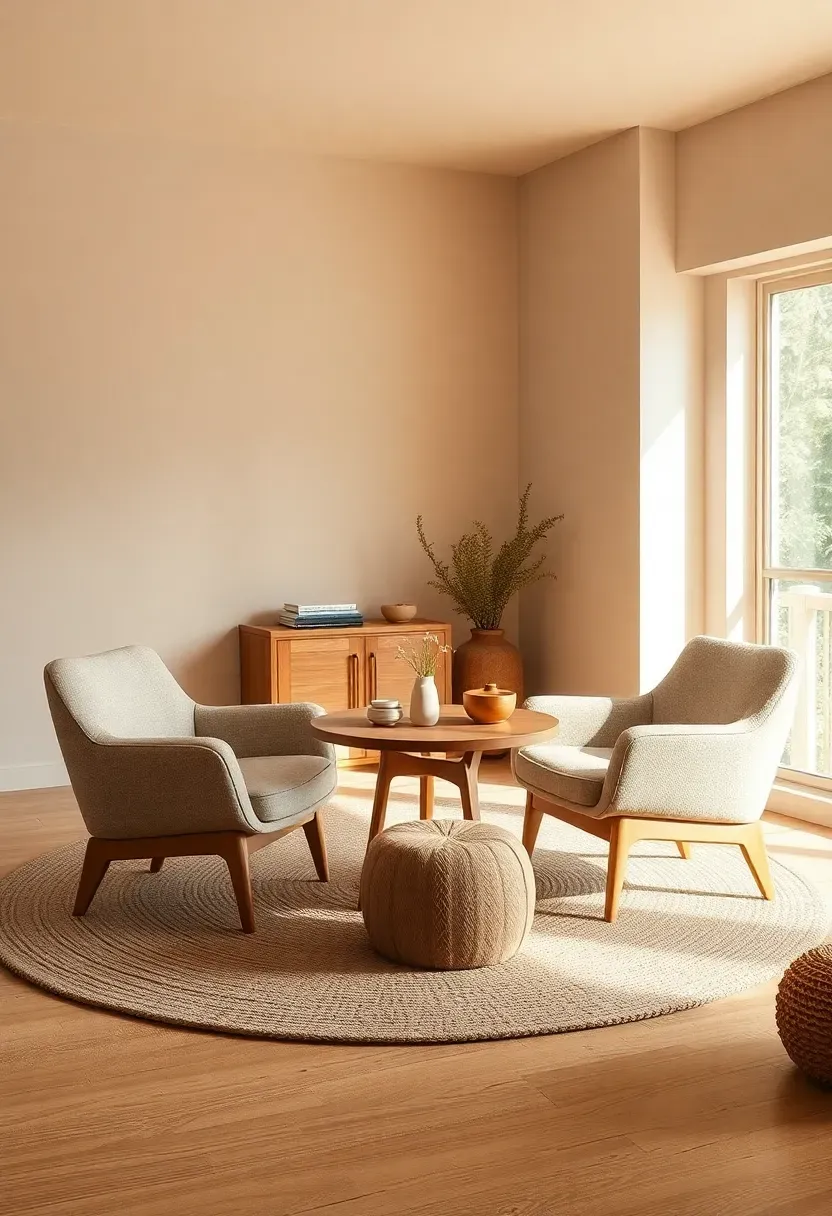
This minimalist living room option swaps a large sofa for two lounge chairs and a round table, creating a conversational island. Use chairs with low arms and place them 30 inches apart to keep the zone intimate. The supporting term here is boucle, which adds softness without pattern. For contrast, avoid oversized armchairs and upgrade to compact silhouettes that keep the room open. The layout feels deliberate and cozy in small spaces.
Recommended
Items for this idea
Common mistake: using a table that is too small, which makes the zone feel temporary.
Choose a 28-inch round table and a 5x7 rug to anchor the island. The trade-off is less seating capacity, so add a low bench along the wall for guests. Keep lighting soft with a single floor lamp at 2700K. If you want contrast, use a smoked glass tabletop rather than bold colors. This creates a full-room plan that feels intentional and relaxed.
For compact seating ideas, see 21 Scandinavian Mid Century Living Room Decor Ideas.
Tips
- Keep chair width under 30 inches for tight rooms.
- Use a table height of 16-18 inches for balance.
- Place chairs at a 10-degree angle for comfort.
What this gives you: a social, space-saving layout that feels cozy.
5. Floating media ledge with concealed storage
This minimalist living room layout centers on a floating media ledge with concealed storage below to keep the room visually clean. Mount the TV above a 72-inch ledge and add a slim, closed cabinet underneath. The supporting term here is travertine, which works well as a small tray or base on the ledge for texture. For contrast, avoid open cubbies and upgrade to push-latch doors. The room reads as calm and complete.
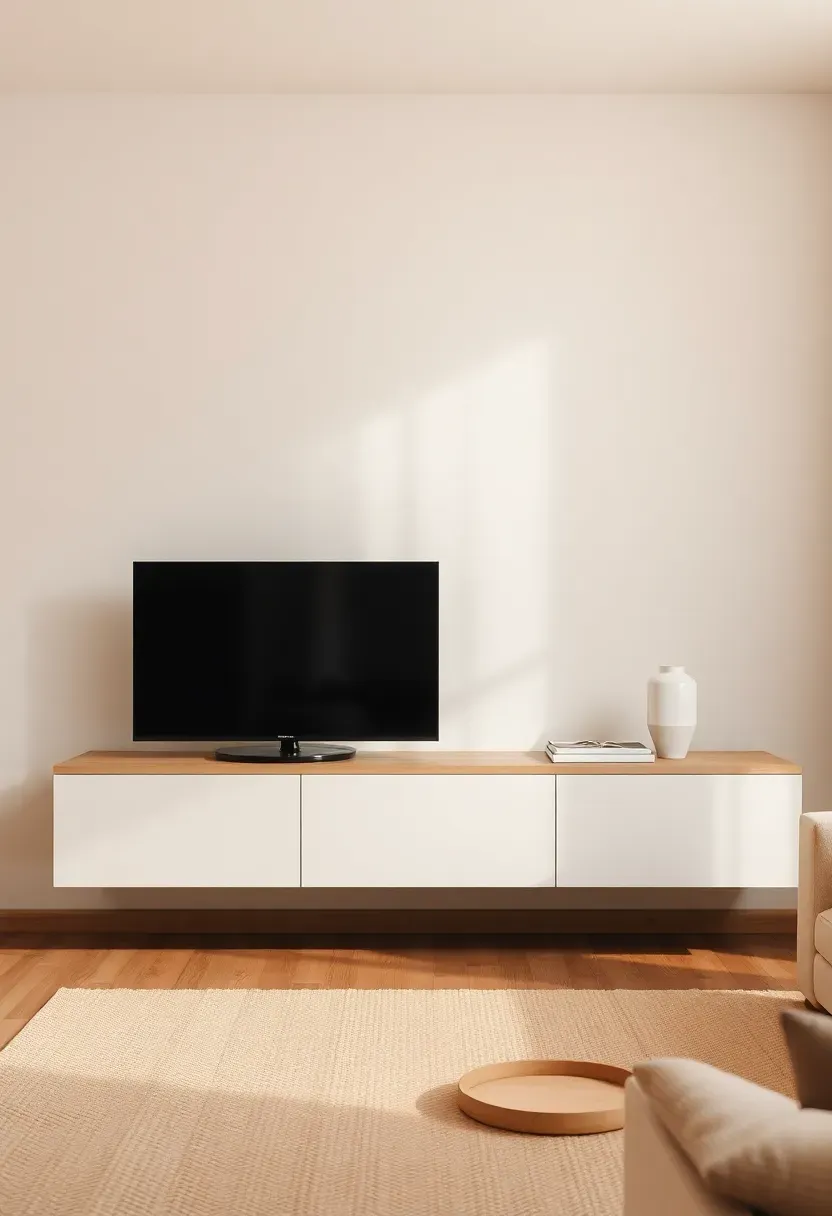
Keep the ledge depth around 10 inches so it feels light. The trade-off is limited storage, so use the cabinet for electronics and store extra items in a basket behind the sofa. Add a 6x9 rug to anchor the seating zone and keep the sofa centered with a 36-inch walkway. If you need warmth, choose a linen slipcover in sand instead of patterned pillows. This produces a clean, practical layout for small apartments.
Tips
- Do: mount the TV so the center is 42 inches from the floor.
- Don’t: place decor above the TV.
Budget/Time: A floating ledge plus cabinet typically costs $300-$900 installed.
What this gives you: a streamlined media zone with hidden storage.
6. Microcement floor with jute rug island
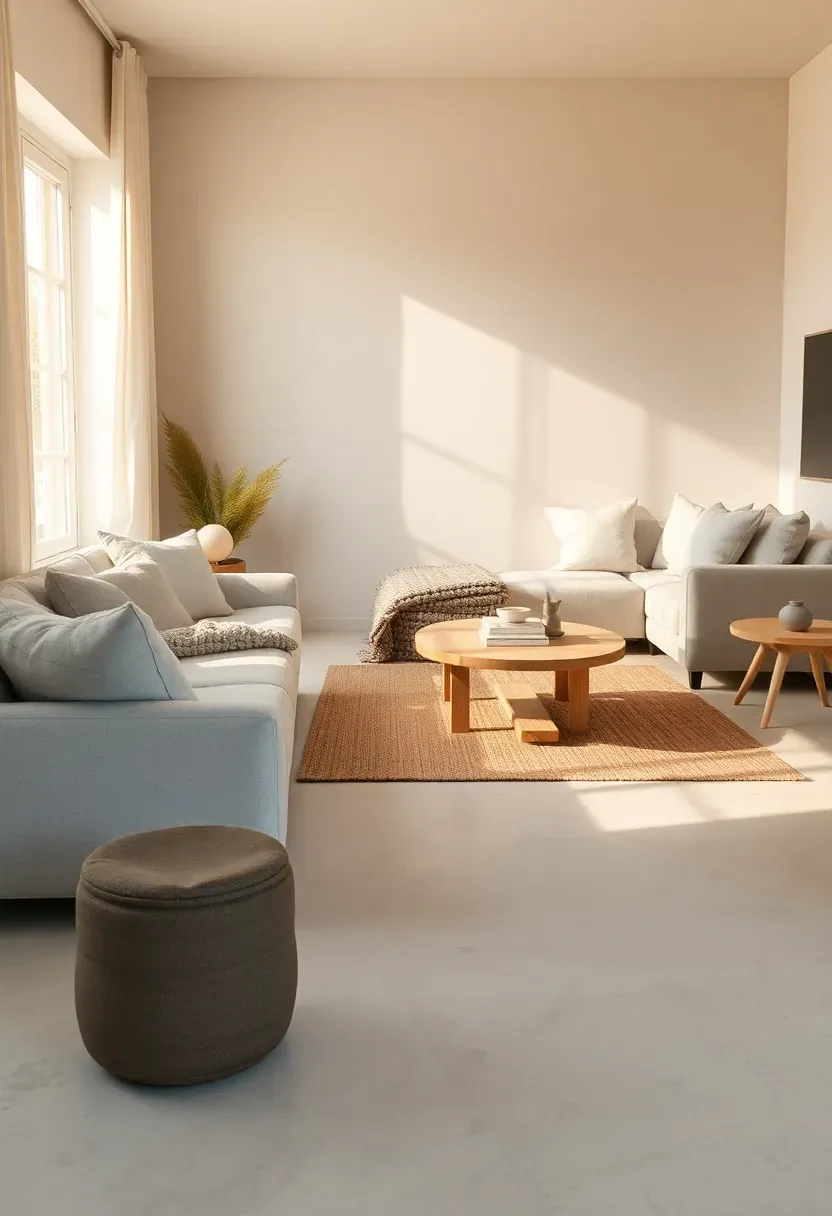
This minimalist living room idea uses a microcement floor as a quiet base and a jute rug island to warm the seating area. Place a 7x10 rug under the sofa and chairs to define the zone without breaking the floor. The supporting term here is jute, which brings earthy texture without strong patterns. For contrast, avoid high-pile rugs and upgrade to flat-woven natural fibers instead. The room feels modern but still comfortable.
Recommended
Items for this idea
Placement note: Leave at least 8 inches of floor visible around the rug.
Use a low, 14-inch coffee table to keep the room airy and balanced. The trade-off is a cooler floor, so add a wool throw and warm lighting at 2700K. Keep wall decor minimal to let the texture speak. If you want contrast, use a matte black lamp base and keep textiles neutral. This layout creates a full-room system with a clean, architectural base.
For texture-led calm, see 21 Boho Living Room Decor Ideas for a Cozy Home.
Tips
- If the floor feels cold, then add a thick rug pad.
- If the rug shifts, then use a non-slip underlay.
- If you need softness, then add a linen slipcover.
What this gives you: a modern base that still feels warm and grounded.
7. Limewash wall with clay and terracotta accents
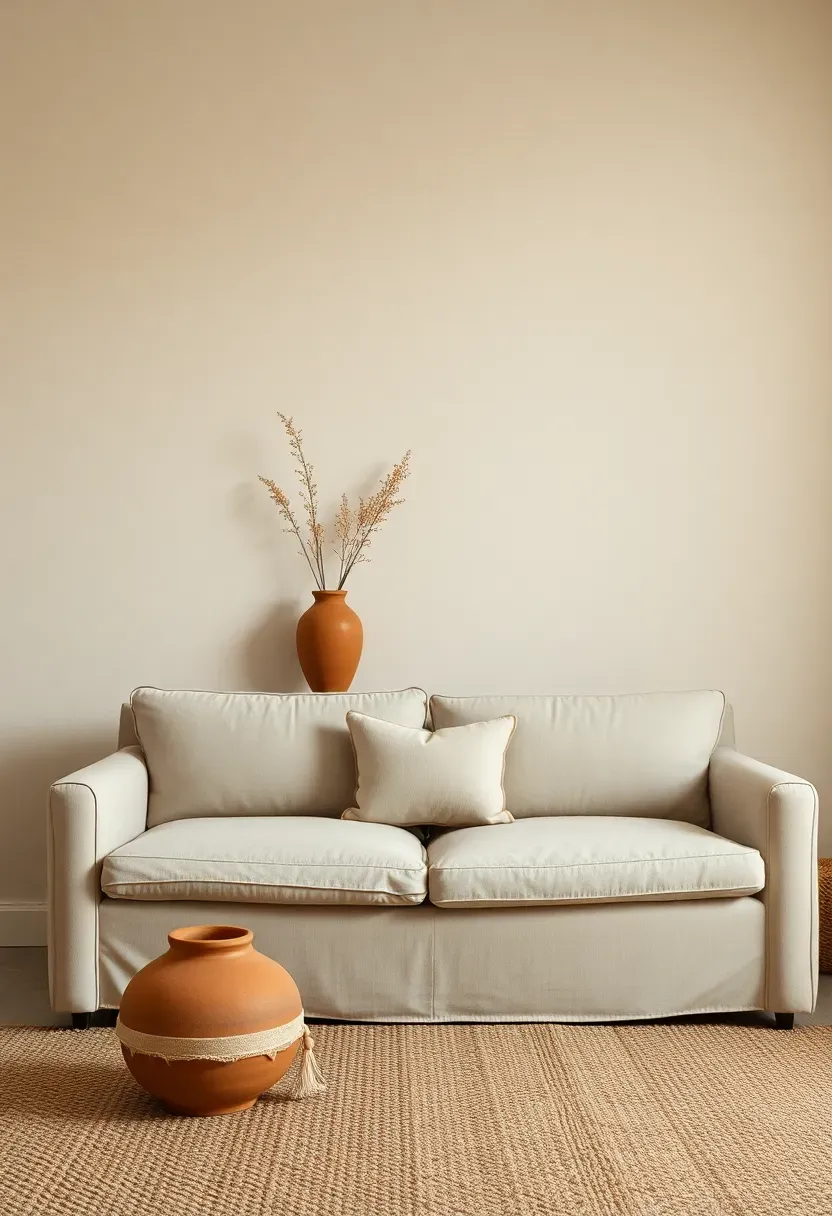
This minimalist living room plan uses a limewash wall as the main feature and keeps furnishings simple. Paint the main wall in a soft clay tone and keep the remaining walls warm white for balance. The supporting term here is limewash, which adds depth without bold patterns. For contrast, avoid glossy art frames and use matte pottery or terracotta instead. The room feels cohesive and earthy without extra decor.
Why it works: the textured wall provides interest without adding objects.
Pair the wall with a 7-foot linen sofa and a low oak table to keep the focus on texture. The trade-off is less wall art, so use one large print in a soft clay tone. Add a 6x9 rug in sand to unify the palette. If you need contrast, bring in a smoked glass vase rather than a dark color block. The layout feels complete with just a few key elements.
Tips
- Pro: limewash hides small wall imperfections well.
- Con: it needs a skilled application for even texture.
- Fix: use a sample board before committing.
Best for: rooms that need texture but minimal decor.
What this gives you: a warm, tactile feature wall with minimal clutter.
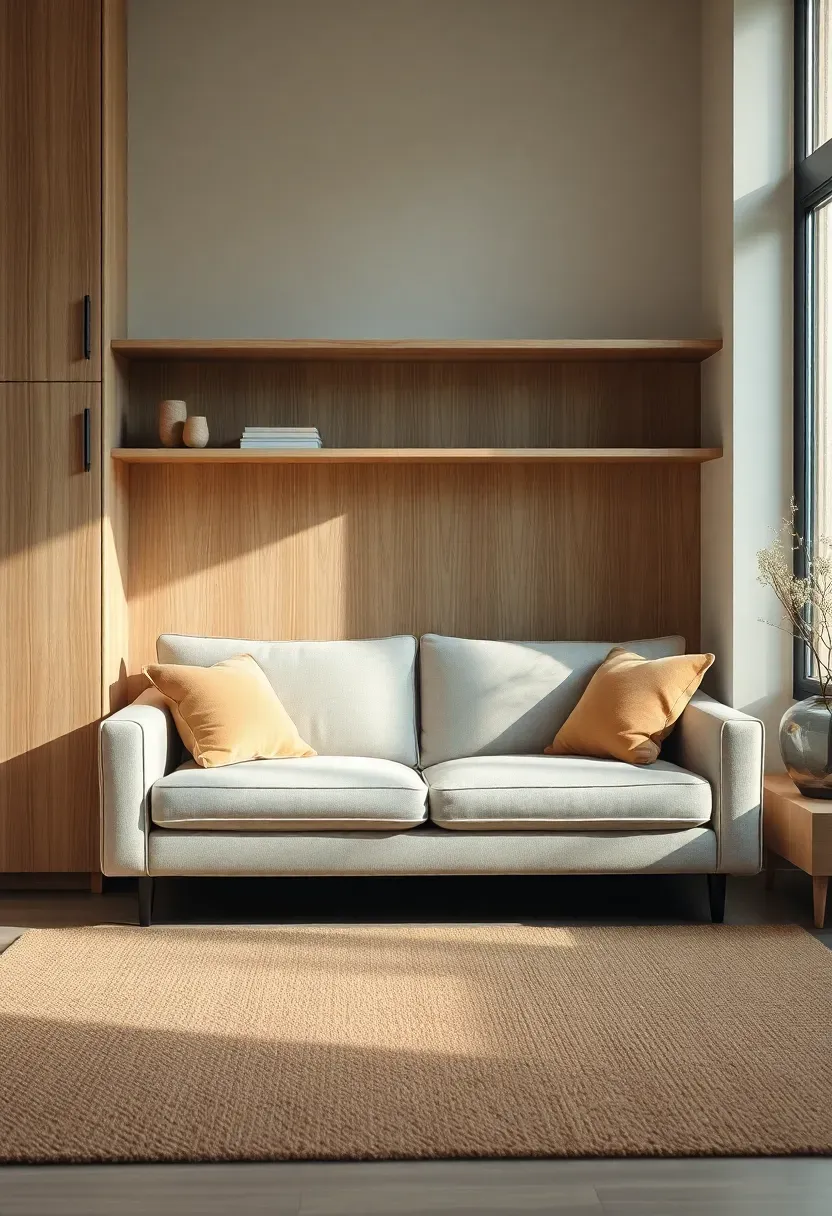
8. Storage headboard wall for living room seating
This minimalist living room layout creates a storage wall behind the sofa, similar to a headboard wall, to keep the room tidy. Use a 10-inch-deep ledge with closed cabinets below and keep the sofa centered on the wall. The supporting term here is oak veneer, which adds warm texture to the storage wall. For contrast, avoid mixed materials and use a single wood tone with matte black accents. The room reads as a single, clean system.
Recommended
Items for this idea
Placement note: Keep the shelf ledge at 40 inches high for easy access.
Use the ledge for two or three items only, such as a lamp and a stoneware bowl. The trade-off is less wall art, so add one large panel above the ledge instead of a gallery. Add a 5x8 rug to anchor the seating and keep the coffee table slim. If you want contrast, use a matte black tray and keep all other objects neutral. This delivers a complete storage-and-seating solution for small rooms.
For warm minimal styling, see 19 Soviet Interior Design Ideas That Feel Authentic and Livable and adapt the restrained palette.
Tips
- Use push-latch doors for a seamless look.
- Keep cabinet depth at 16 inches or less.
- Add felt pads to reduce sound on the ledge.
What this gives you: storage that feels integrated, not bulky.
9. Full-height curtains with soft layered lighting
This minimalist living room idea uses full-height curtains and layered lighting to create a comfortable earth-tone backdrop. Run a curtain track wall-to-wall and use linen panels in a warm sand tone to soften the room. The supporting term here is linen, which adds texture without visual clutter. For contrast, avoid patterned drapery and choose a solid weave instead. This creates a calm, continuous wall that makes the room feel taller.
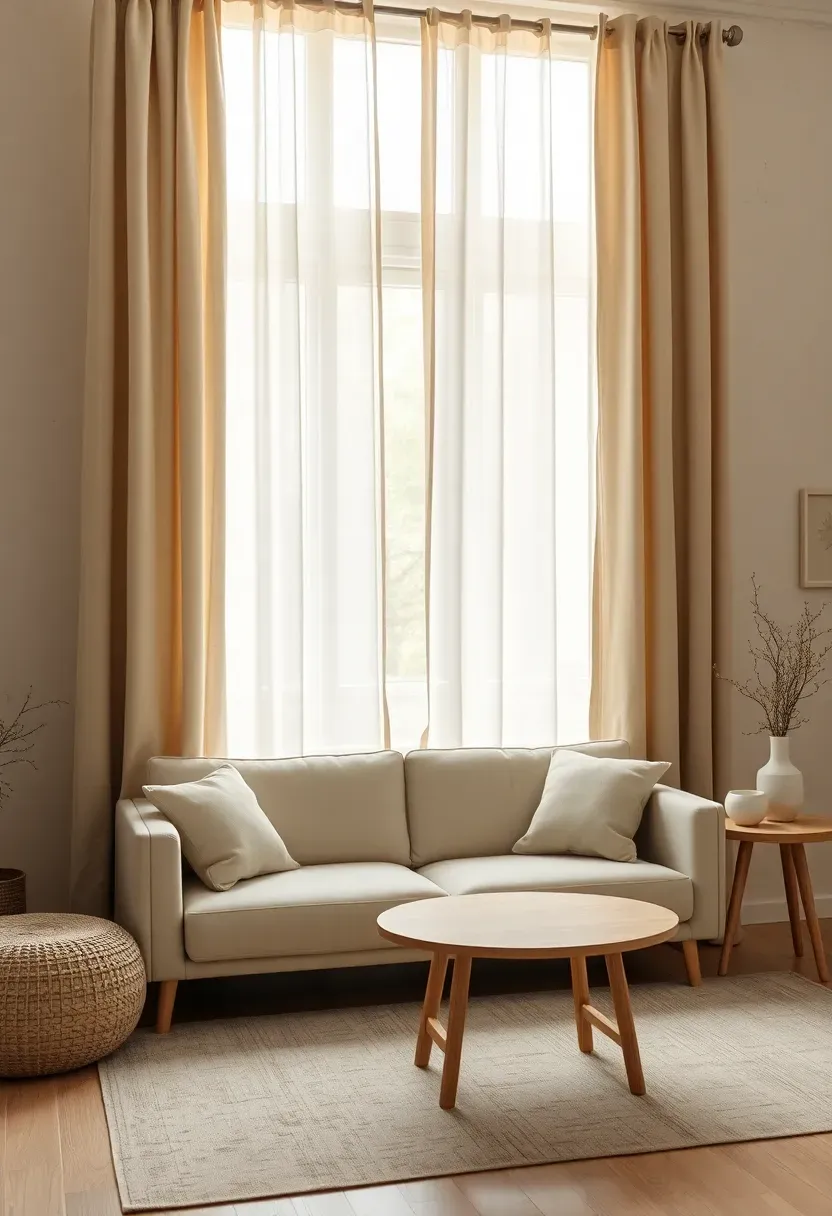
Use two light sources: a wall sconce at 58 inches and a floor lamp at 2700K. The trade-off is less wall art, so keep a single framed print near the lamp only. Place a 6x9 rug under the seating to anchor the zone. If you want contrast, use a bronze sconce instead of black. The room stays warm and serene without extra decor.
Tips
- Do: extend the curtain track 12 inches past each window edge.
- Don’t: let curtains stop above the floor.
- Do: use a double track for sheer and blackout layers.
Best for: small rooms that need height and softness.
What this gives you: a taller, softer room with layered light.
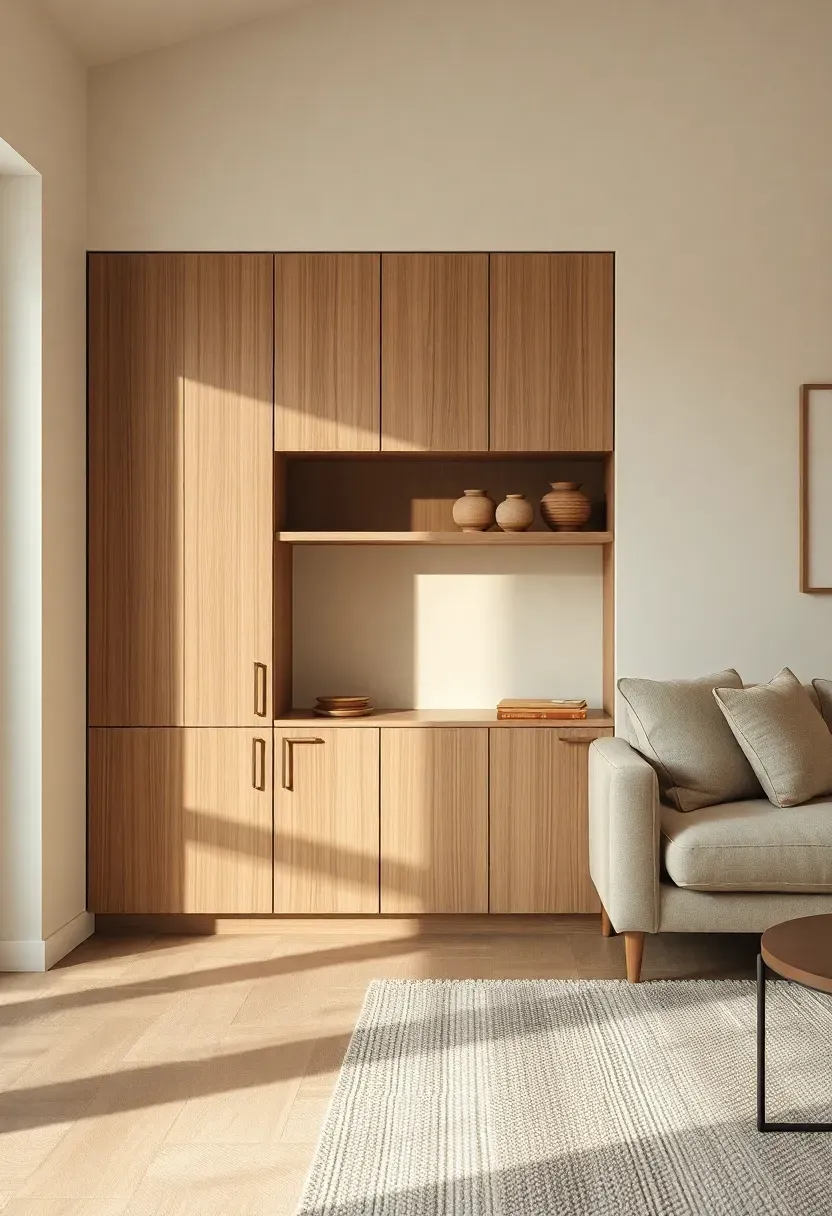
10. Closed base cabinets with open shelf band
This minimalist living room layout uses a closed base cabinet run with a slim open shelf band to keep storage hidden but accessible. Install a 90-inch cabinet along the wall and add a 6-inch open shelf above for a few curated items. The supporting term here is stoneware, which works well for two or three pieces on the shelf. For contrast, avoid open bookcases and keep the shelf band narrow. The room feels tidy and complete.
Recommended
Items for this idea
Placement note: Keep the shelf band at 54 inches high for eye-level display.
Use cabinet fronts in warm oak or matte beige to stay within the earth-tone palette. The trade-off is limited display, so keep the shelf to three objects only. Add a 5x8 rug and a 36-inch coffee table to anchor seating. If you want contrast, use a black metal shelf bracket instead of bright decor. This produces a calm storage wall that still feels styled.
For clean storage runs, see Soviet Interior Design Style Guide 19 Authentic Looks for Modern Life.
Tips
- If you need more storage, then extend cabinets to the corner.
- If the shelf looks busy, then remove one object.
What this gives you: hidden storage with a controlled display line.
11. Two-tone paint band with long bench
This minimalist living room idea uses a two-tone paint band and a long bench to define the seating wall. Paint the lower 48 inches in a warm taupe and keep the top in soft white to add depth without decor. The supporting term here is painted band, which frames the room without extra objects. For contrast, avoid high-contrast black lines and keep the band tone subtle. The long bench provides extra seating without crowding the room.
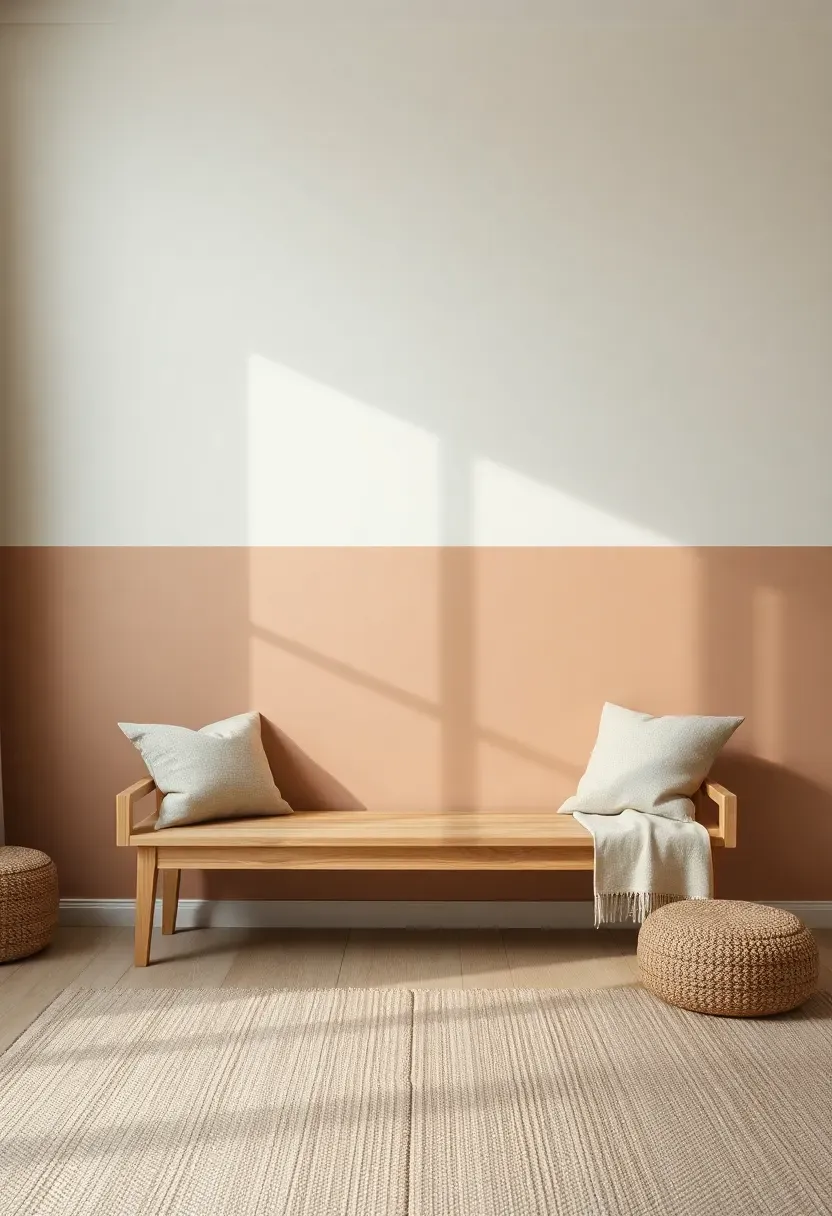
Why it works: the paint band adds structure while the bench keeps the layout flexible.
Use a 60-inch bench with a 2-inch linen cushion for comfort. The trade-off is less storage, so add a low cabinet under the window or beside the sofa. Keep a single 4x6 rug under the bench to define the wall zone. If you need contrast, add one charcoal pillow on the bench instead of patterned art. This creates a full-room layout with a gentle architectural frame.
Tips
- Pro: paint bands add depth without furniture.
- Con: misaligned bands can feel off-center.
- Fix: align the band with window sills for precision.
Best for: long, narrow rooms that need visual structure.
What this gives you: a calm wall feature that supports flexible seating.
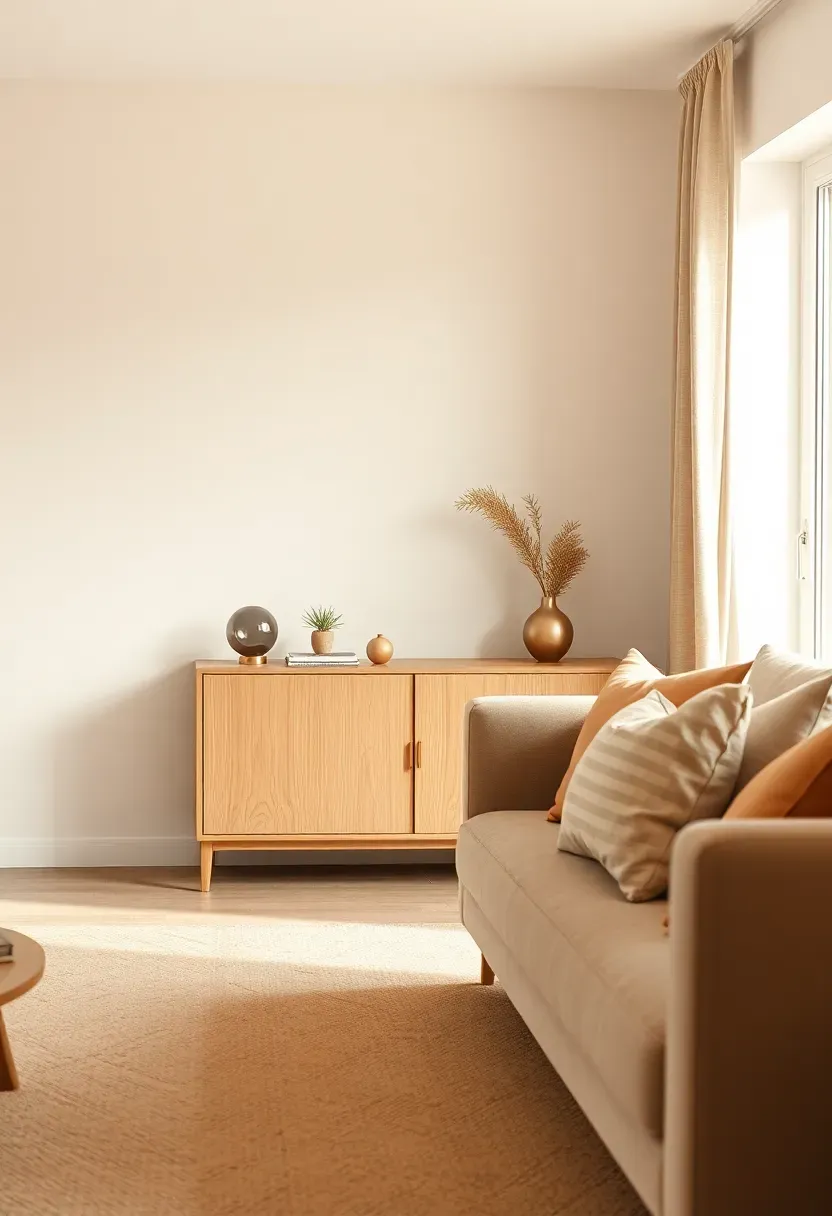
12. Slim console behind sofa for small rooms
This minimalist living room plan uses a slim console behind the sofa to add function without taking extra space. Choose a console under 10 inches deep and use it for a lamp and a tray. The supporting term here is bronze, which works well for a small lamp base that adds warmth. For contrast, avoid a bulky side table and use the console as a single, clean line. The room feels complete and uncluttered.
Recommended
Items for this idea
Placement note: Keep 18 inches between the console and the back of the sofa.
Use a 24-inch lamp height to keep sightlines open. The trade-off is less surface area, so keep only two objects on the console. Add a 6x9 rug to anchor the sofa zone and keep the rest of the floor clear. If you want contrast, choose a dark bronze lamp and keep all textiles light. This layout adds function without breaking the minimalist feel.
For compact layout strategies, see 17 Stunning Green Couch Living Room Ideas for Cozy Comfort.
Tips
- Use a console height around 30 inches for balance.
- Keep cords hidden with a slim cable channel.
- Choose a narrow tray to control small items.
What this gives you: a functional line without cluttering the floor.
13. Walnut credenza with art rail focus
This minimalist living room variant uses a walnut credenza and a slim art rail to create a single focal band. Place the credenza under the main wall and mount a 48-inch art rail above it to hold one or two prints. The supporting term here is walnut, which adds rich earth tone without overwhelming the palette. For contrast, avoid multiple frames and keep the rail minimal. The layout feels polished but still restrained.
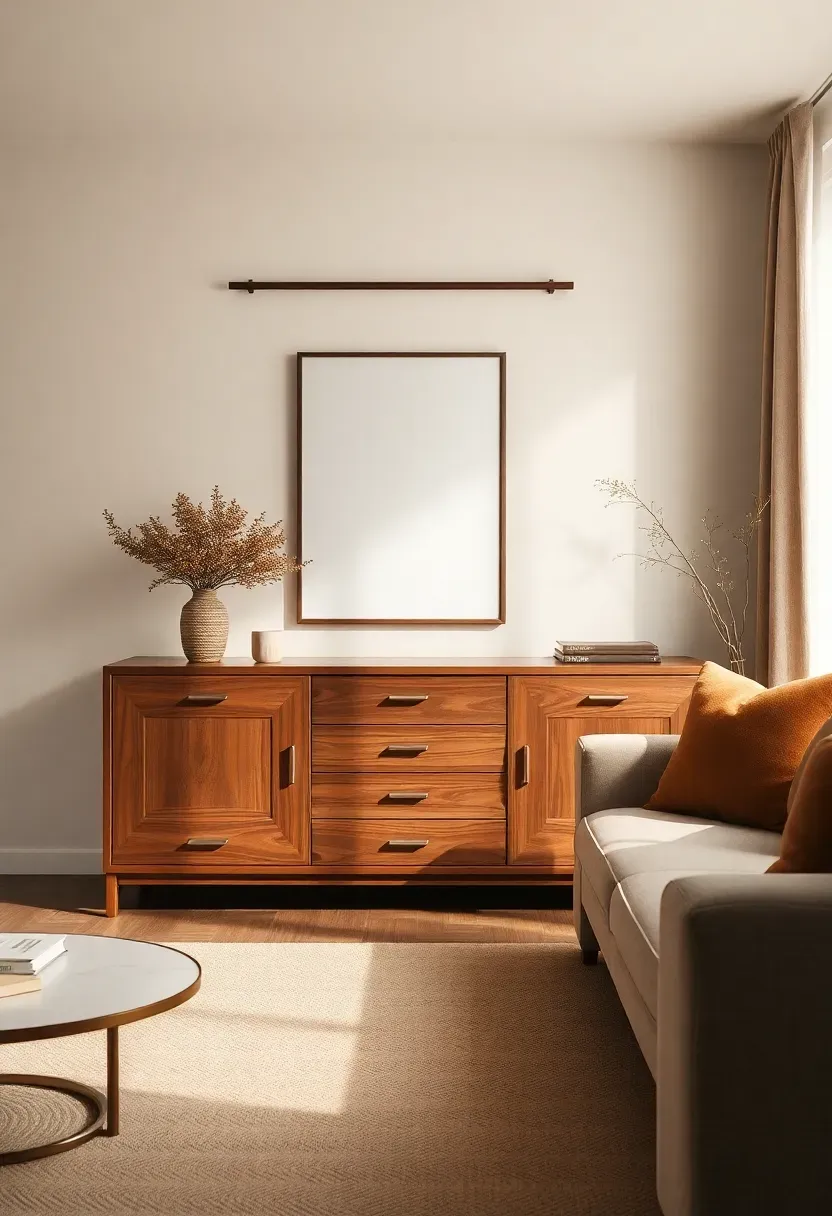
Why it works: the rail replaces a gallery wall while keeping the room light.
Keep the credenza depth under 18 inches and use it for hidden storage. The trade-off is fewer display surfaces, so add one sculptural object in a muted stone color. Use a 5x8 rug to anchor the seating area and keep the sofa centered. If you want contrast, use a matte black rail and keep art in soft tones. This provides a complete, elegant focal line with minimal pieces.
Tips
- Pro: a rail allows art rotation without new holes.
- Con: too many pieces can look busy.
- Fix: limit the rail to two frames max.
Best for: rooms that need a single, refined focal point.
What this gives you: a rich, minimal statement with controlled display.
14. Built-in window seat with hidden storage
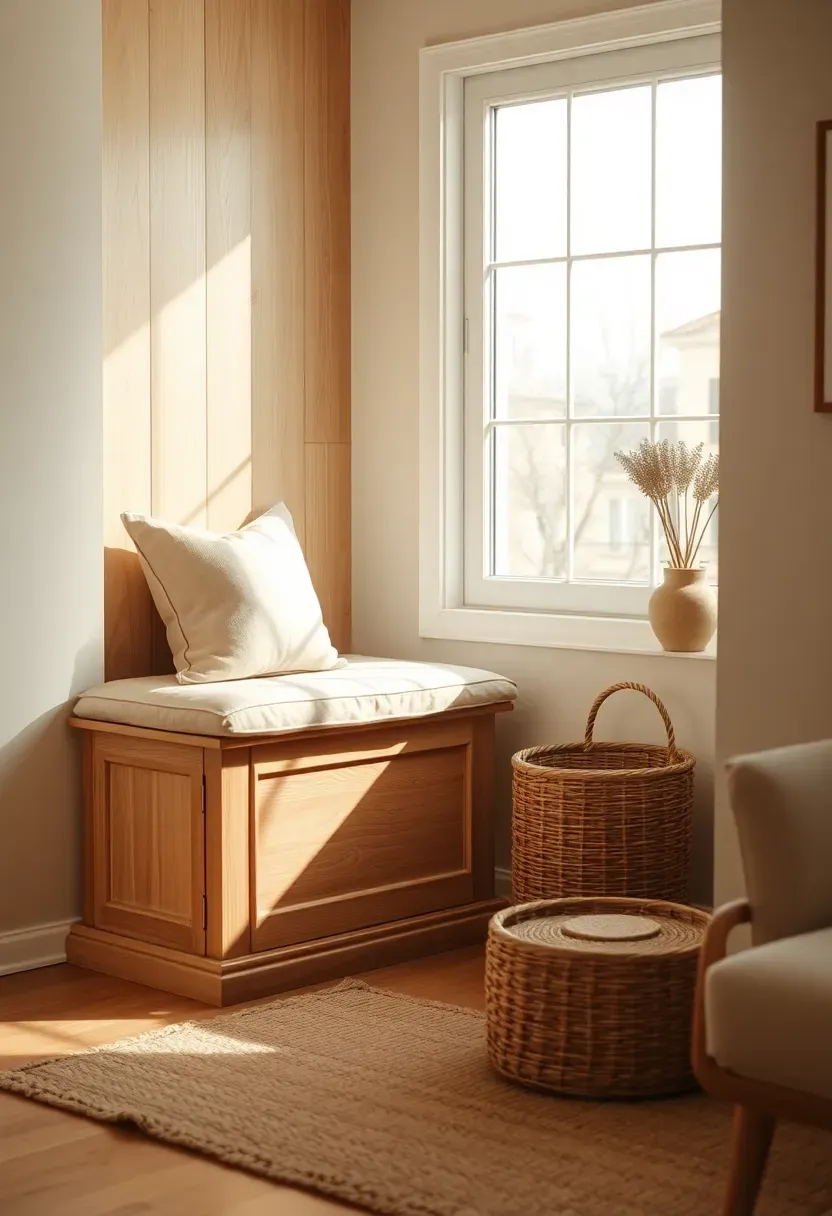
This minimalist living room plan uses a built-in window seat to add seating and storage in one clean move. Build a 16-inch-deep seat with lift-up storage and place it under the main window to keep the wall free. The supporting term here is rattan, which can be used in a single basket to warm the seat. For contrast, avoid patterned cushions and keep textiles in soft sand tones. The room feels complete and practical.
Recommended
Items for this idea
Placement note: Keep seat height around 18 inches for comfortable use.
Use a 2-inch cushion and keep the wall above the seat clear for light. The trade-off is less flexibility, so keep other furniture movable and light. Add a 4x6 rug nearby to define the zone and place a single floor lamp next to the seat. If you want contrast, use a matte black sconce instead of patterned pillows. This creates a full-room layout with smart storage.
For warm minimal cues, see 17 Warm Minimalist Kitchen Ideas to Create a Cozy Space.
Tips
- If storage feels shallow, then add dividers inside the bench.
- If the cushion slides, then use a non-slip pad.
What this gives you: seating and storage without extra furniture.
15. Minimal reading nook with floor lamp
This minimalist living room variation creates a reading nook with one chair, one lamp, and a small table. Place the chair in a corner and use a 24-inch round table to keep the footprint small. The supporting term here is sage, which works well for a single cushion or throw to add earth-tone softness. For contrast, avoid bulky recliners and choose a slim lounge chair instead. This adds a complete zone without crowding the room.
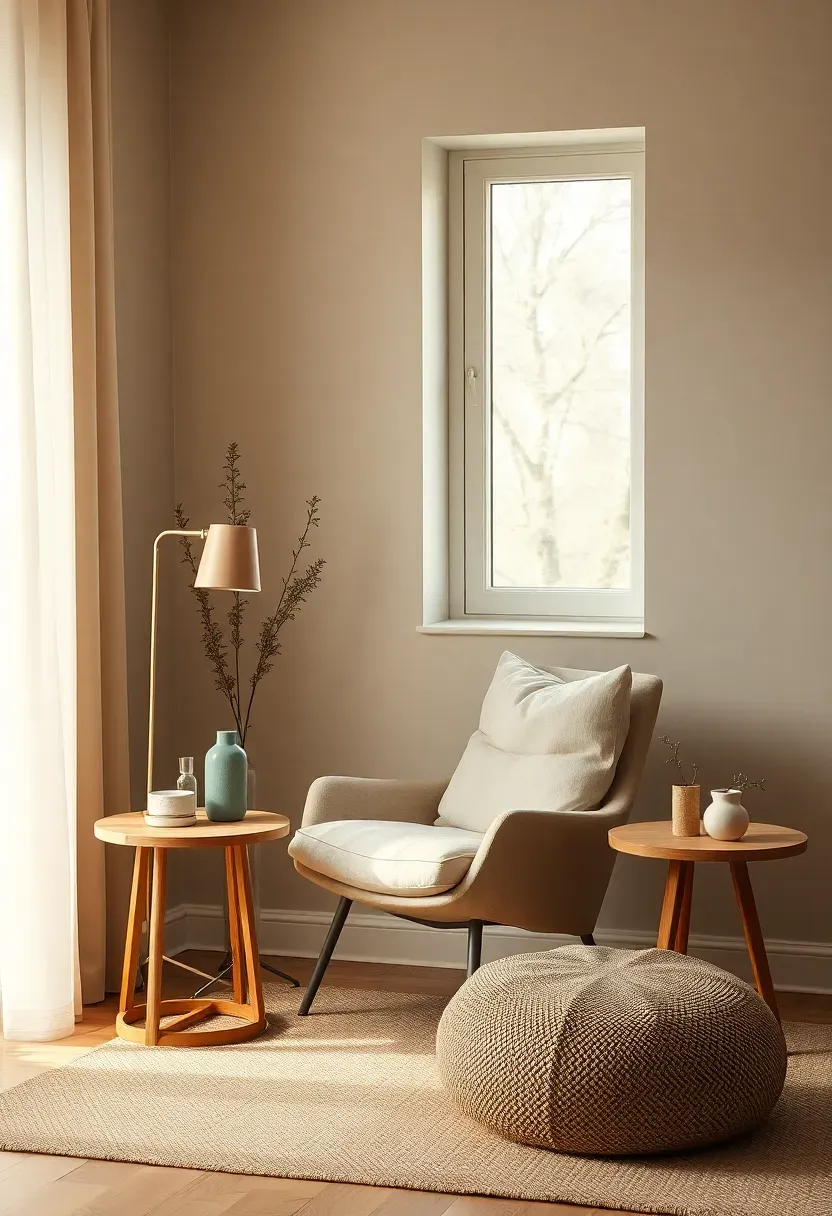
Why it works: one dedicated nook adds function without breaking the main seating plan.
Keep the lamp height around 60 inches for good reading light and add a 3x5 rug to define the nook. The trade-off is less open wall space, so keep nearby decor minimal. Use a single book stack and a ceramic mug on the table, nothing more. If you want contrast, use a charcoal floor lamp base with light textiles. This keeps the room calm while adding a usable corner.
Tips
- Pro: a small nook adds function without a new room.
- Con: oversized chairs can dominate the corner.
- Fix: choose a chair under 30 inches wide.
Best for: small living rooms that need a quiet seat.
What this gives you: a focused reading zone with minimal furniture.
16. Symmetric seating plan with twin side tables
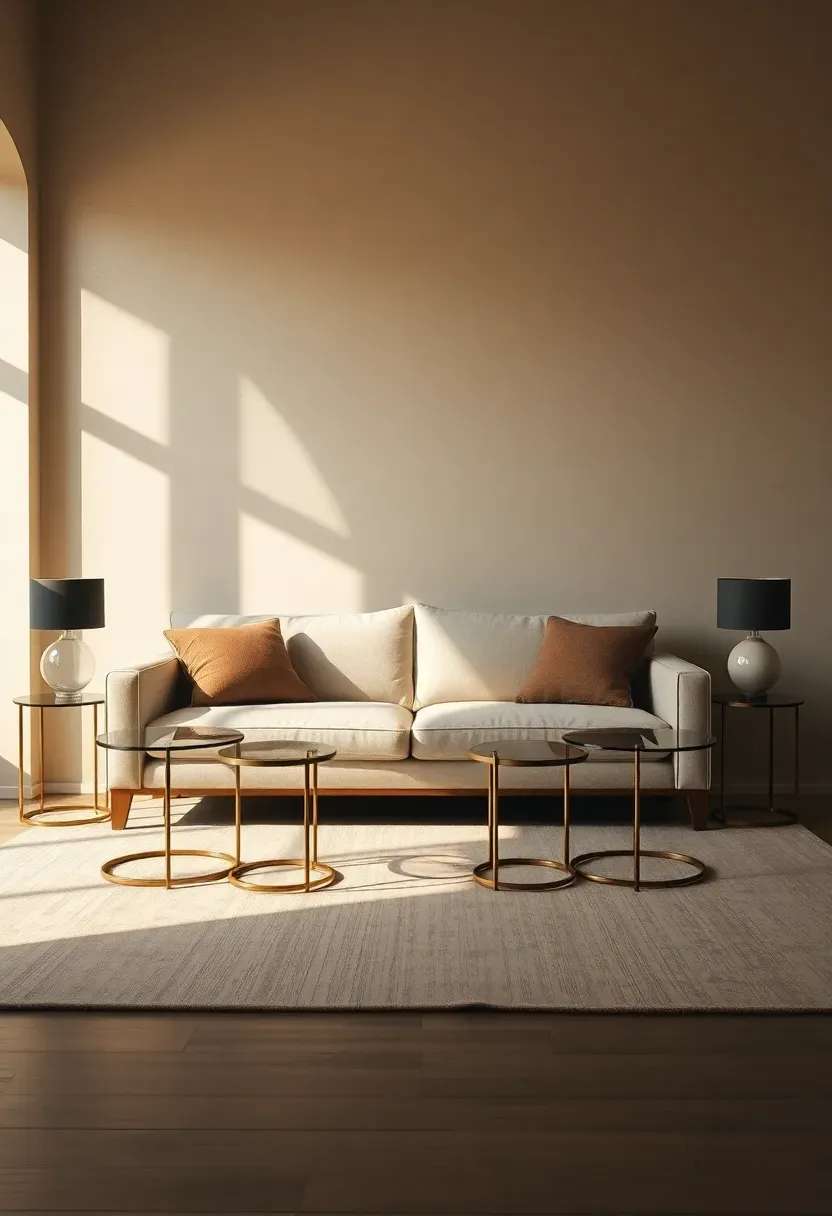
This minimalist living room layout uses symmetry to make the room feel calm and intentional. Place a sofa centered on the main wall and add two identical side tables with matching lamps. The supporting term here is smoked glass, which works well for table tops to add depth without weight. For contrast, avoid mismatched tables and keep the pair identical. The room feels complete and balanced even with few pieces.
Recommended
Items for this idea
Common mistake: using lamps that are too tall and overpower the sofa.
Choose lamps around 22 inches high and keep table diameter at 18 inches. The trade-off is less flexibility, so keep the rest of the room light and open. Use a 6x9 rug to anchor the seating and a single coffee table in light oak. If you want contrast, use a matte black lamp base and keep the rest neutral. This layout creates a complete, serene living room with minimal pieces.
For calm symmetry inspiration, see Cozy Guest Bedroom Ideas for a Welcoming Stay.
Tips
- Use identical lamps to reinforce symmetry.
- Keep side tables within 2 inches of sofa height.
- Align the sofa to the room centerline for balance.
What this gives you: a calm, symmetrical plan that feels intentional.
17. Sliding panel to hide TV and cables
This minimalist living room solution uses a sliding panel to conceal the TV and cables, keeping the room clean when screens are off. Mount the TV on the wall and add a 48-inch sliding panel in light wood or matte fabric. The supporting term here is oak, which keeps the panel warm and natural. For contrast, avoid heavy doors and choose a slim, light panel that glides easily. The room stays calm and screen-free when needed.
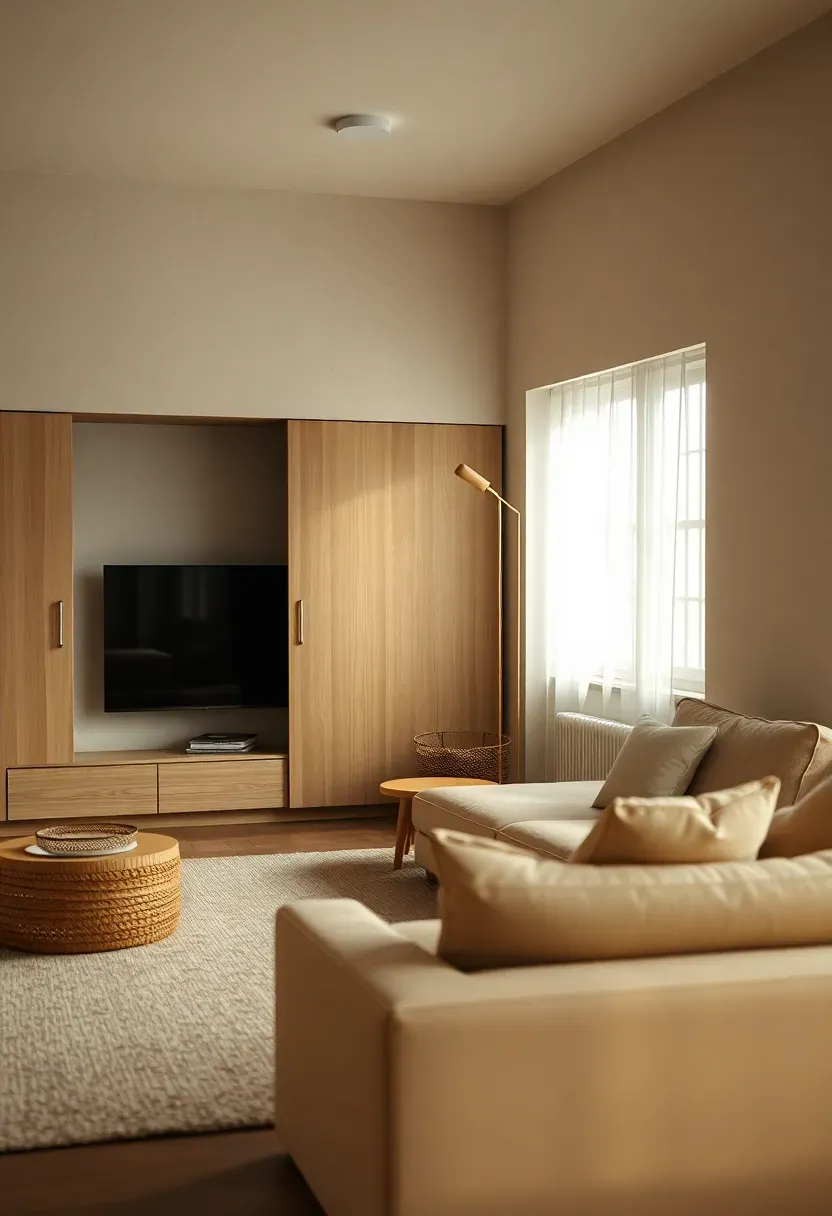
Why it works: the panel creates a flexible wall that can switch between media and calm.
Keep the panel track under 2 inches tall for a clean line. The trade-off is less wall art, so add a single ceramic object on a low shelf. Use a 5x8 rug to anchor the seating and keep the coffee table slim. If you need contrast, use a matte black track and keep the panel light. This design makes the room feel intentional and restful.
Tips
- Pro: sliding panels hide clutter without extra storage.
- Con: panels can rattle if tracks are loose.
- Fix: add soft-close hardware and adjust rollers.
Best for: living rooms that double as relaxation zones.
What this gives you: a screen-free look with flexible function.
18. Living-dining combo zoned by rugs
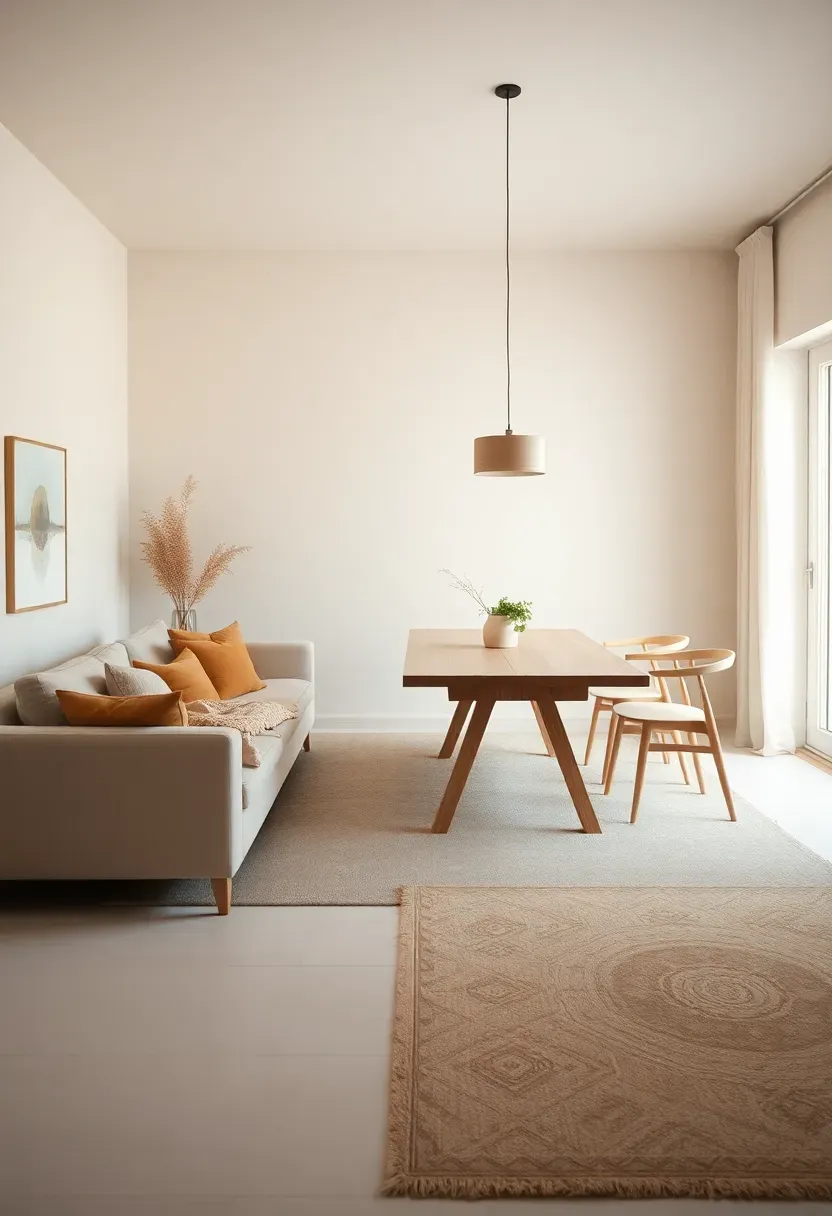
This minimalist living room layout uses rugs to zone a living-dining combo without walls. Place a 6x9 rug under the sofa area and a 5x7 rug under a small dining table. The supporting term here is ochre, which can appear in a single dining chair cushion for warmth. For contrast, avoid large patterned rugs and keep textures subtle. The room feels divided but still cohesive.
Recommended
Items for this idea
Placement note: Leave 12 inches between rugs to keep zones distinct.
Keep dining chairs armless and light to avoid crowding. The trade-off is less storage, so use a slim sideboard no deeper than 14 inches. Add a 2700K pendant over the dining table and a single floor lamp near the sofa. If you want contrast, use a darker rug under dining and keep the sofa rug light. This creates a full-room plan that works for small apartments.
For space-sharing ideas, see 23 Stunning Minimalist Kitchen Design Ideas for Modern Homes.
Tips
- If the room feels tight, then use a round dining table under 36 inches.
- If rugs slide, then use a low-profile rug pad.
What this gives you: two clear zones without walls or clutter.
19. Future-proof modular storage and plant wall
This minimalist living room idea uses modular storage and a plant wall to keep the room flexible over time. Place a low modular cabinet along the main wall and add two or three tall plants in clay pots to bring earth tones into the space. The supporting term here is terracotta, which works well for planters and small accessories. For contrast, avoid many small pots and choose a few larger ones instead. The room feels calm and adaptable.
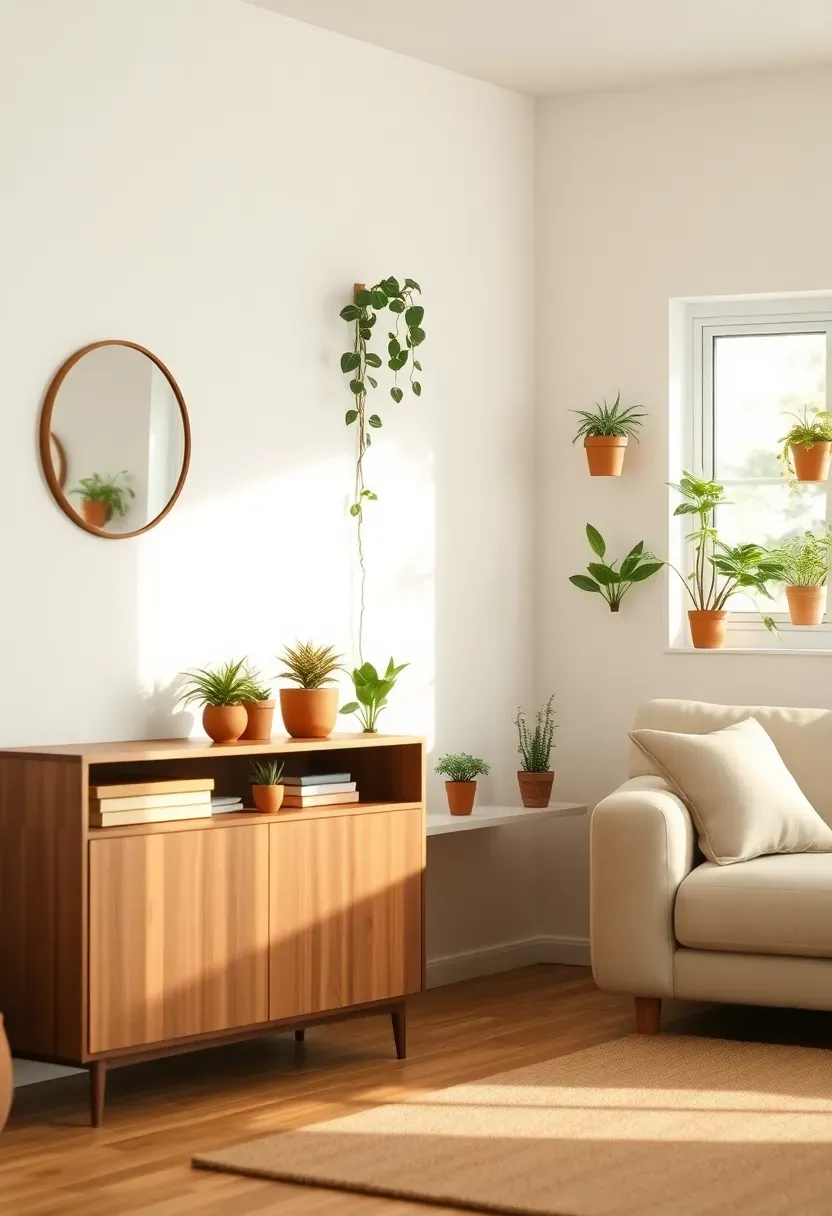
Why it works: modular pieces let you adapt the layout as needs change.
Keep the cabinet height under 24 inches and use a 6x9 rug to define the seating zone. The trade-off is plant maintenance, so choose low-care options like snake plant or olive. Add one 16-inch side table for drinks and keep surfaces clear. If you want contrast, use a matte black planter base for one plant only. This layout delivers a comfortable, future-proof living space.
Tips
- Pro: modular storage moves easily when you change layouts.
- Con: uneven heights can look scattered.
- Fix: align cabinet tops and keep planters grouped.
Best for: renters who want a flexible, earthy living room.
What this gives you: a calm, adaptable layout with natural warmth.
Minimalist living room ideas with earth tones work best when you commit to a full layout rather than isolated decor swaps. Use these room-scale plans to build clear zones, warm textures, and storage that keeps the space calm. Mix and match layouts to fit your floor plan, but keep the palette to three or four warm neutrals for consistency. Whether you rent a small apartment or own a larger home, a minimalist earth tone living room can feel cozy, stylish, and easy to maintain for years.
About the author
OBCD
CGI visualization and interior design content. We create detailed 3D renders and curate practical design ideas for every room in your home.