29 AI Staircase Design Ideas to Transform Your Home's Vertical Space
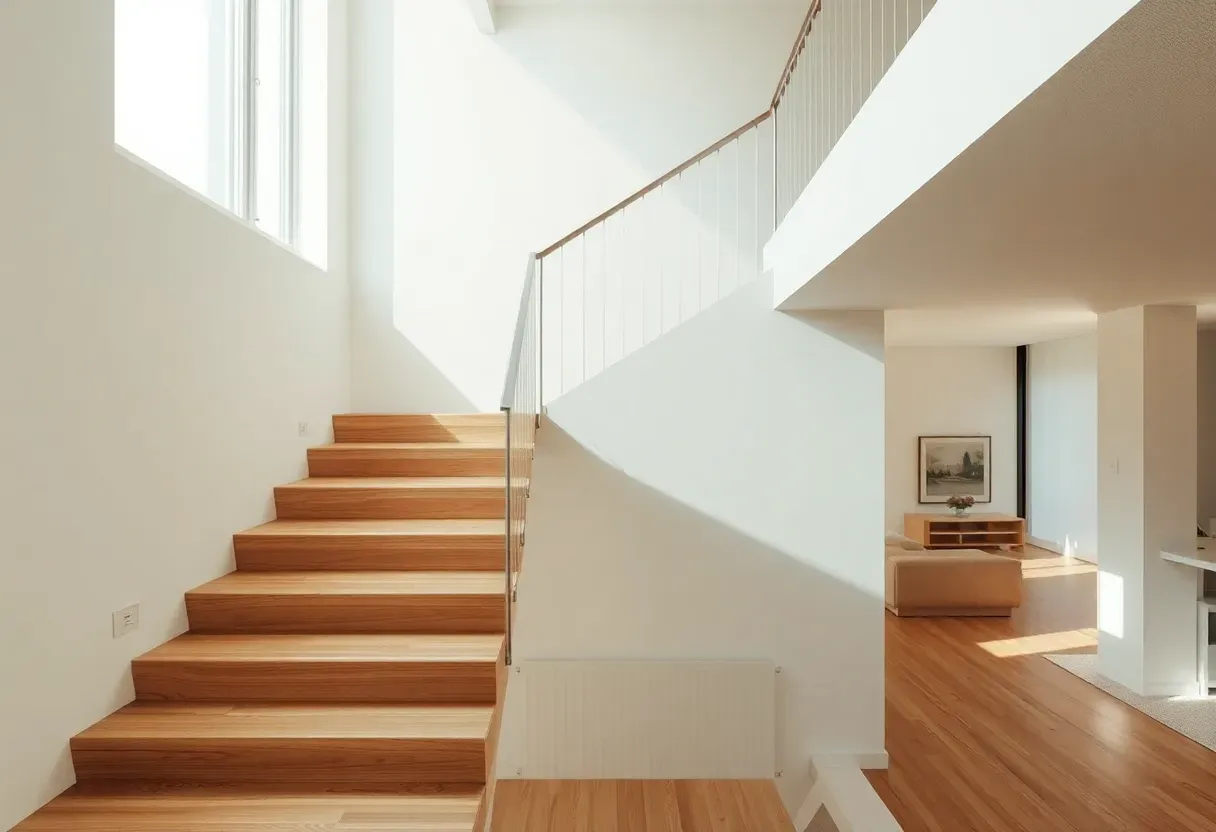
Imagine walking into a home where the staircase isn't a functional afterthought — it's the statement. For centuries architects have treated vertical circulation as a design canvas, but most residential builds reduce it to a box of steps and a basic handrail. AI visualization tools changed that calculus dramatically: homeowners can now preview bold cantilevers, glowing glass treads, and sculptural railings before committing a single nail. According to 2026 interior forecasts, staircases rank among the top five renovation investments that deliver the highest perceived value. The ideas below draw on AI-generated concepts spanning every major aesthetic — from raw concrete brutalism to Scandinavian birch minimalism, coastal rope rails to Victorian carved mahogany.
In this collection I've gathered 29 distinct staircase directions. Whether you're building from scratch or refreshing an existing staircase, you'll find something to spark a real-world project.
Table of Contents
- Floating Walnut Treads
- Elegant Iron Spiral
- Rustic Farmhouse with Jute Runner
- Backlit Glass Treads
- Industrial Blackened Steel
- Cantilevered Concrete with LED Nosing
- Grand Traditional Curved Stair
- Scandinavian Rod-Baluster Minimal
- Built-In Under-Stair Storage
- Dramatic Pendant Lighting
- Wabi-Sabi Stone Slab Steps
- Coastal Rope-Rail Staircase
- Hollywood Regency Glamour
- Mid-Century Modern Teak
- Dark Gothic Moody Stair
- Outdoor Cedar Treehouse Stair
- Luxury Calacatta Marble
- Sage Green Cottage Staircase
- Futuristic Ribbon Staircase
- Rolling Library Ladder
- Alternating-Tread Loft Stair
- Mediterranean Talavera Tile Risers
- Forest Silhouette Art Railing
- Victorian Carved Mahogany Restoration
- All-Black Monochrome Statement
- Colour-Changing Glass Balustrade
- Under-Stair Bar Nook
- Biophilic Living Wall Beside Stairs
- Family Stair-Slide Combo
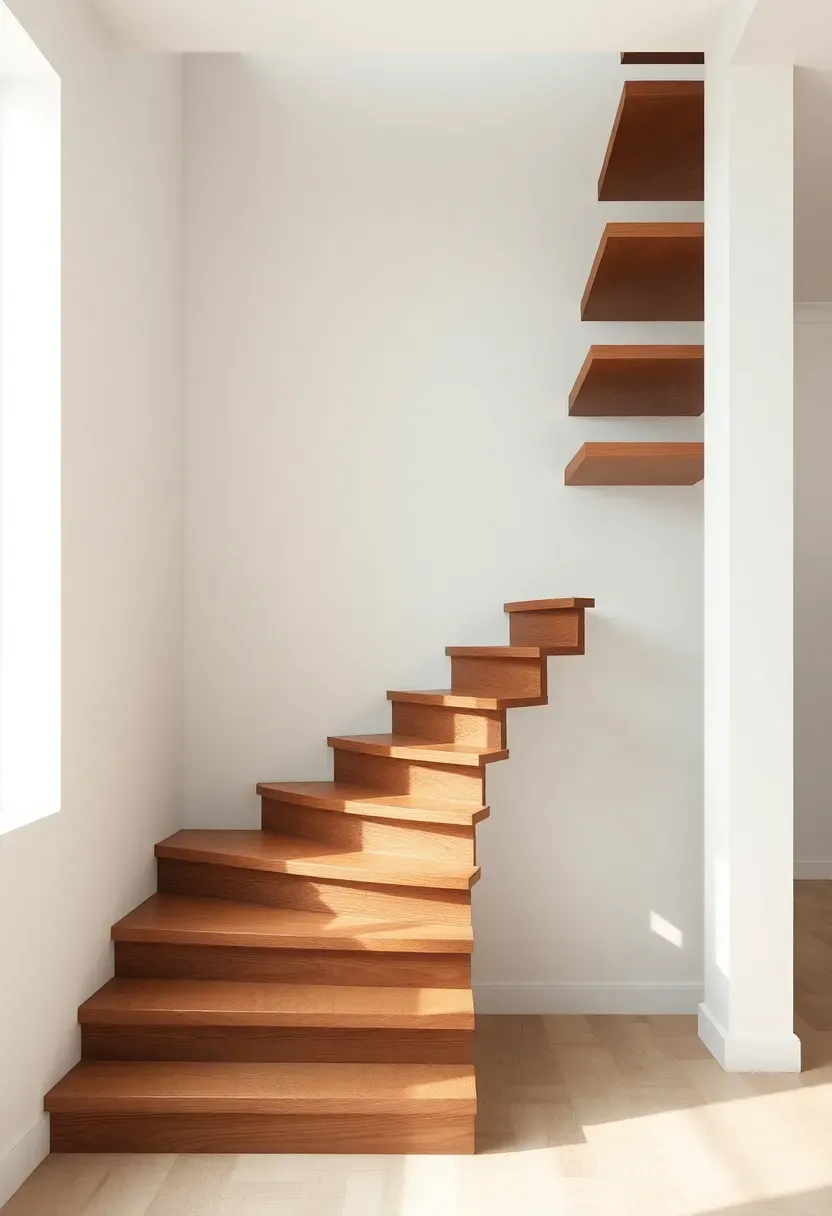
1. Floating Walnut Treads
There's a reason floating staircases dominate design feeds: the absence of visible supports creates a sense of suspended gravity that makes any interior feel more spacious. Thick slabs of oiled walnut are the go-to tread material — the grain is rich enough to be interesting without feeling rustic. A slim black powder-coated steel stringer runs along one side where structural requirements demand it, while the opposite side appears to float entirely. Open risers let light pass through every level, connecting upper and lower floors visually rather than separating them with a solid wall of steps.
Tips for Getting It Right
- Ensure treads are at least 40 mm thick; thinner slabs flex underfoot and creak within months
- Use stainless steel threaded rods concealed inside the wall to carry the tread load
- Finish walnut with a hardwax oil rather than varnish — it resists scratches and is easy to spot-repair
We picked a few things that go well with this idea: Clear Non-Slip Stair Treads (20 Pack) (★4.9), COSY HOMEER Non-Slip Edging Stair Treads (15pc) (★4.7) and Lucida Surfaces Vinyl Stair Tread and Riser Combo (★3.9). As an Amazon Associate we earn from qualifying purchases.
2. Elegant Iron Spiral
The Case for Spiral
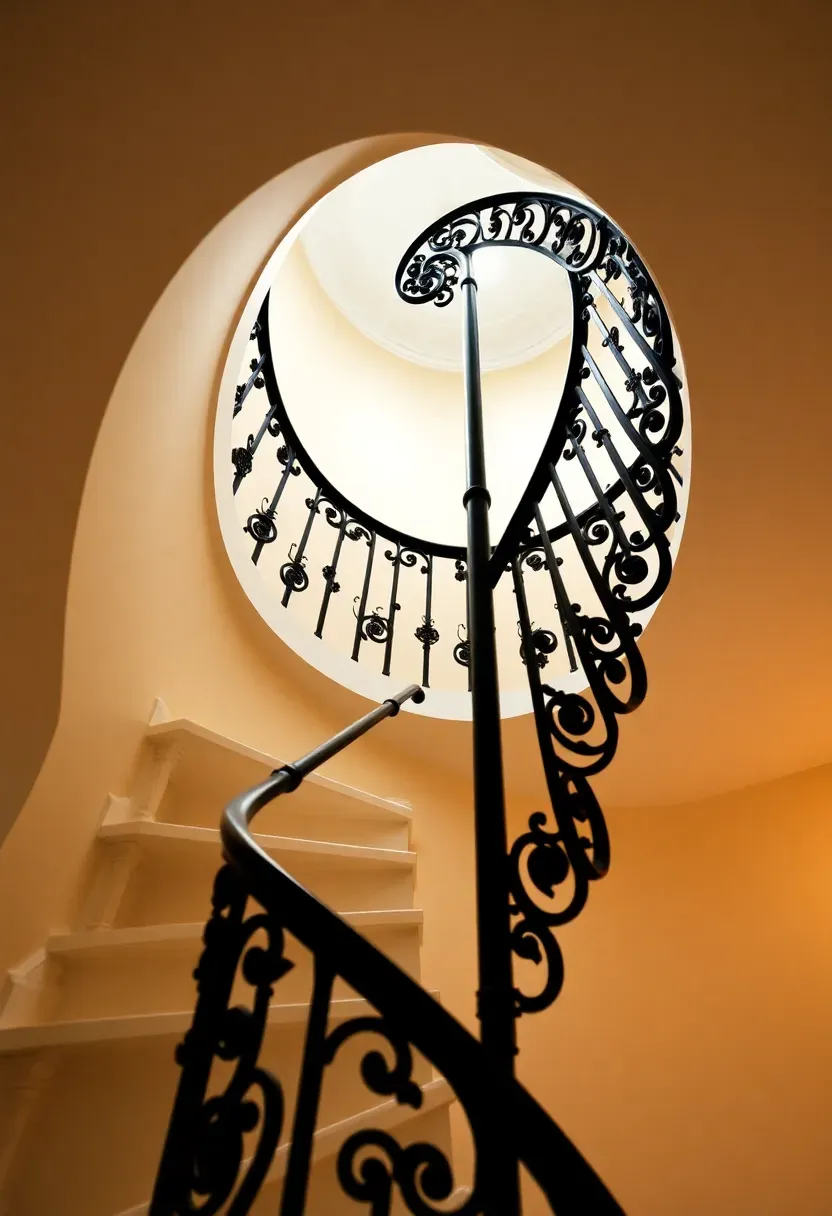
A spiral staircase occupies roughly a third of the floor area of a conventional straight run, making it the obvious solution for lofts, pool houses, and compact townhouses. But the real reason designers reach for iron spirals is pure visual theatre — a helical form catches the eye from every angle and shifts character as you move around it.
Design Approach
A wrought iron central newel post anchors everything, with individual tread plates welded at precise pitch intervals. Scroll-detail balusters add period weight without feeling heavy, and white-painted treads lighten the overall mass. Viewed from below, the converging geometry is architectural sculpture.
Pros and Cons
Pros: space-efficient; striking from all angles; customisable ironwork detail Cons: moving furniture up or down is nearly impossible; not accessible for wheelchairs or small children without supervision
We picked a few things that go well with this idea: Muzata Black Cable Railing Kit 2-Post (5-10ft) (★4.4), Muzata Black Cable Railing Kit 3-Post (10-15ft) (★4.4) and Muzata 4-8ft Black Cable Railing Kit Pre-Crimped (★5.0). As an Amazon Associate we earn from qualifying purchases.
3. Rustic Farmhouse with Jute Runner
The Warmth Factor
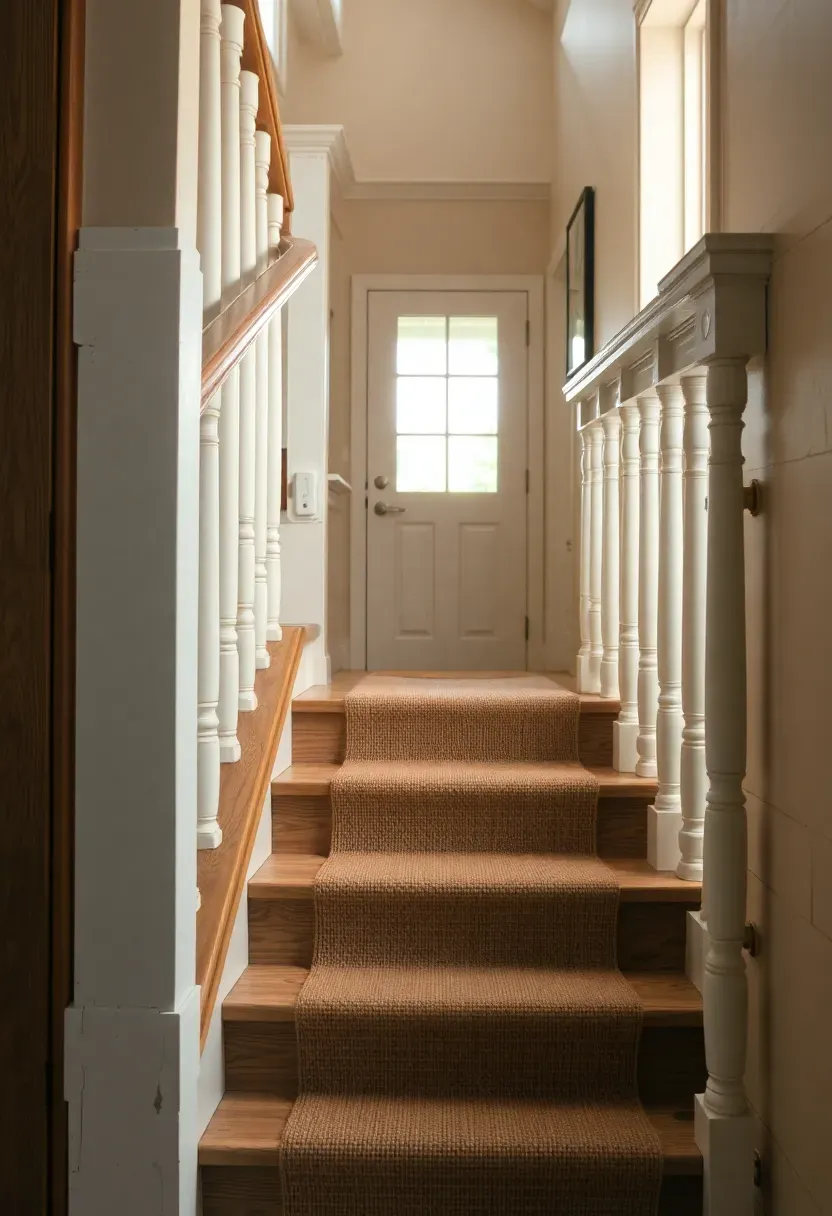
Before engineered materials and digital rendering, most staircases were exactly this: rough-hewn timber, simple turned spindles, and a runner rug to soften the footfall. The farmhouse staircase hasn't dated because it carries genuine material honesty — you can see the growth rings in the planks and feel the texture underfoot.
Step-by-Step Approach
Step 1: Choose your timber. Reclaimed pine boards with visible knots and colour variation beat new plantation timber for character.
Step 2: Prep and treat. Wire-brush the surface to lift grain, then apply a lye wash to silver the wood slightly before finishing with a natural oil.
Step 3: Fit the runner. A natural jute or sisal runner anchored with polished brass stair rods adds both safety grip and tactile warmth.
What to Watch Out For
- Reclaimed timber may carry uneven drying; acclimatise boards for at least two weeks before installation
- Brass stair rods need polishing every 6–12 months or they tarnish to a flat bronze tone
- Avoid overly fine balusters — chunky turned spindles match the material weight of thick plank treads
We picked a few things that go well with this idea: Rubber-Cal Azteca Rubber Stair Tread Mats (6-Pack) (★4.5), Rubber-Cal Diamond-Grip Rubber Step Mats (6-Pack) (★4.6) and Rubber-Cal Coin-Grip Non-Slip Stair Mats (6-Pack) (★4.4). As an Amazon Associate we earn from qualifying purchases.
4. Backlit Glass Treads
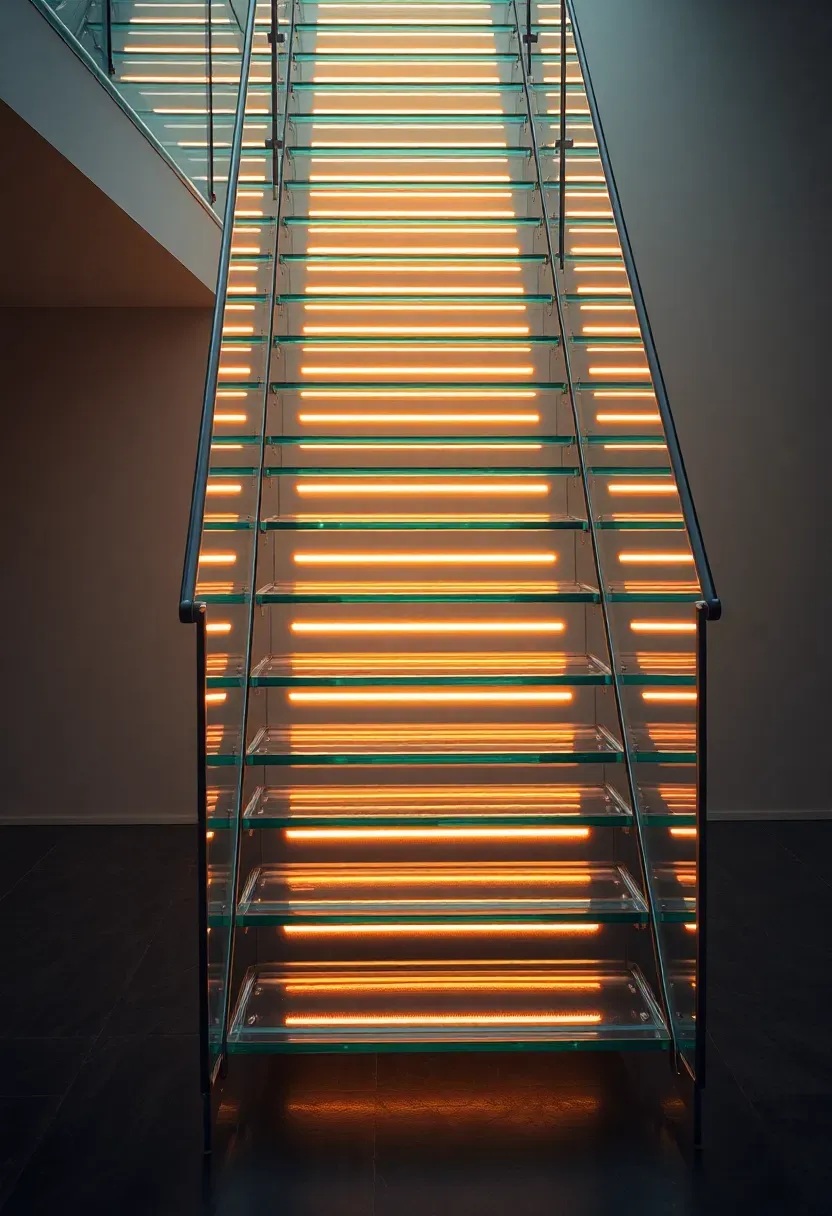
Glass treads are the most technically demanding staircase material, and also the most dramatic when they work. Each tread uses a laminated tempered unit — two layers of toughened glass bonded with a translucent interlayer — with a warm LED strip recessed into a channel beneath the nosing. At night the staircase becomes a glowing sculptural object; in daylight the transparency creates a visual connection between floors that no other material can match.
Tips for Backlit Glass
- Use a warm 2700K LED strip rather than cool white — cool light makes glass look clinical rather than luxurious
- Specify an anti-slip surface treatment (sandblasted band across each tread) during manufacture, not as an afterthought
- Clean with only microfibre and ammonia-free glass cleaner; abrasive products dull the surface permanently
Recommended
Items for this idea
5. Industrial Blackened Steel
Why It Works in Lofts
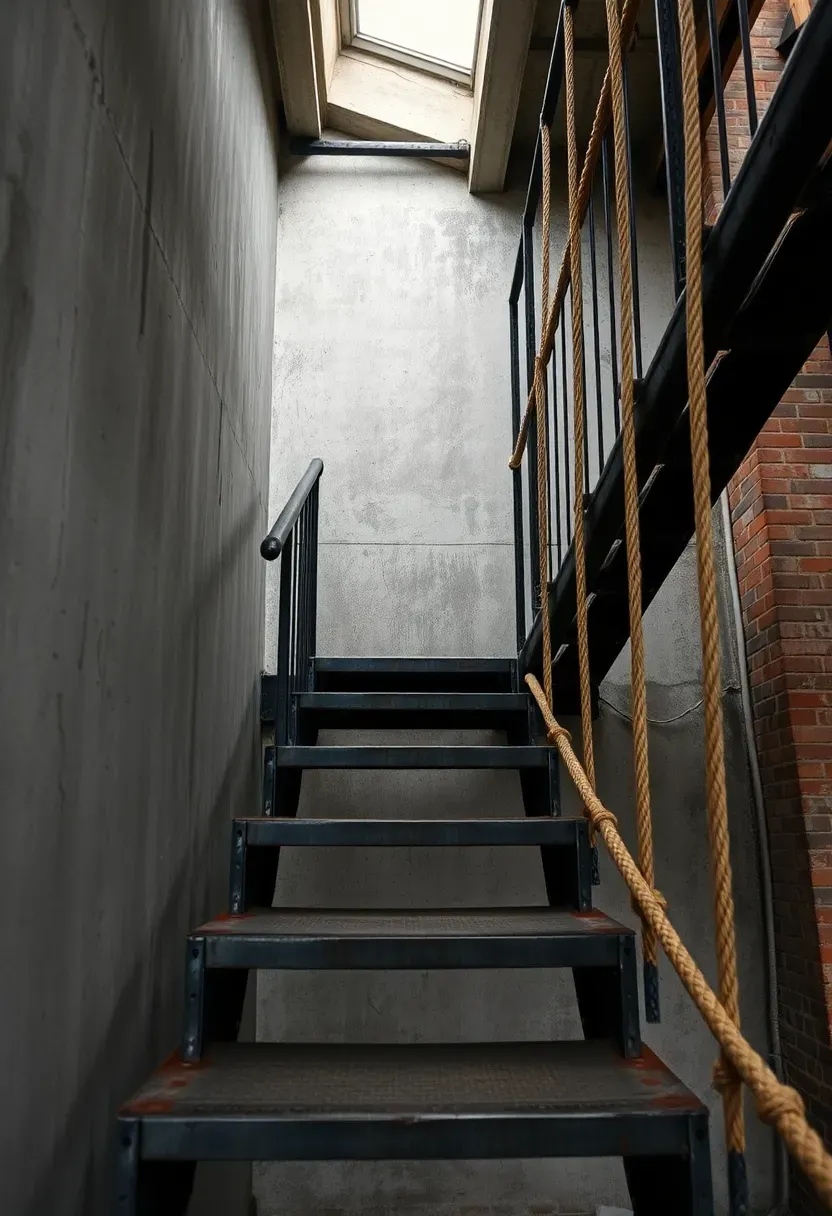
Industrial staircases survive the jump from factory to residential because raw steel honestly expresses its load-bearing role — there's no veneer, no decoration, just the metal itself. Blackening (a controlled oxidation patina applied in a cold-process chemical bath) gives mild steel a deep, warm near-black tone that reads as sophisticated rather than unfinished.
The Components
Open-riser steel plate treads are welded to a pair of heavy side stringers. Pipe-rail uprights feed a twisted hemp rope handrail rather than a conventional steel bar — the tactile contrast between cold metal and warm rope is the detail that elevates the whole composition.
Pros and Cons
Pros: extremely durable; patina deepens beautifully with age; can be fabricated off-site and installed in a day Cons: cold underfoot without a tread insert; condensation risk in poorly heated spaces; professional welding required
6. Cantilevered Concrete with LED Nosing
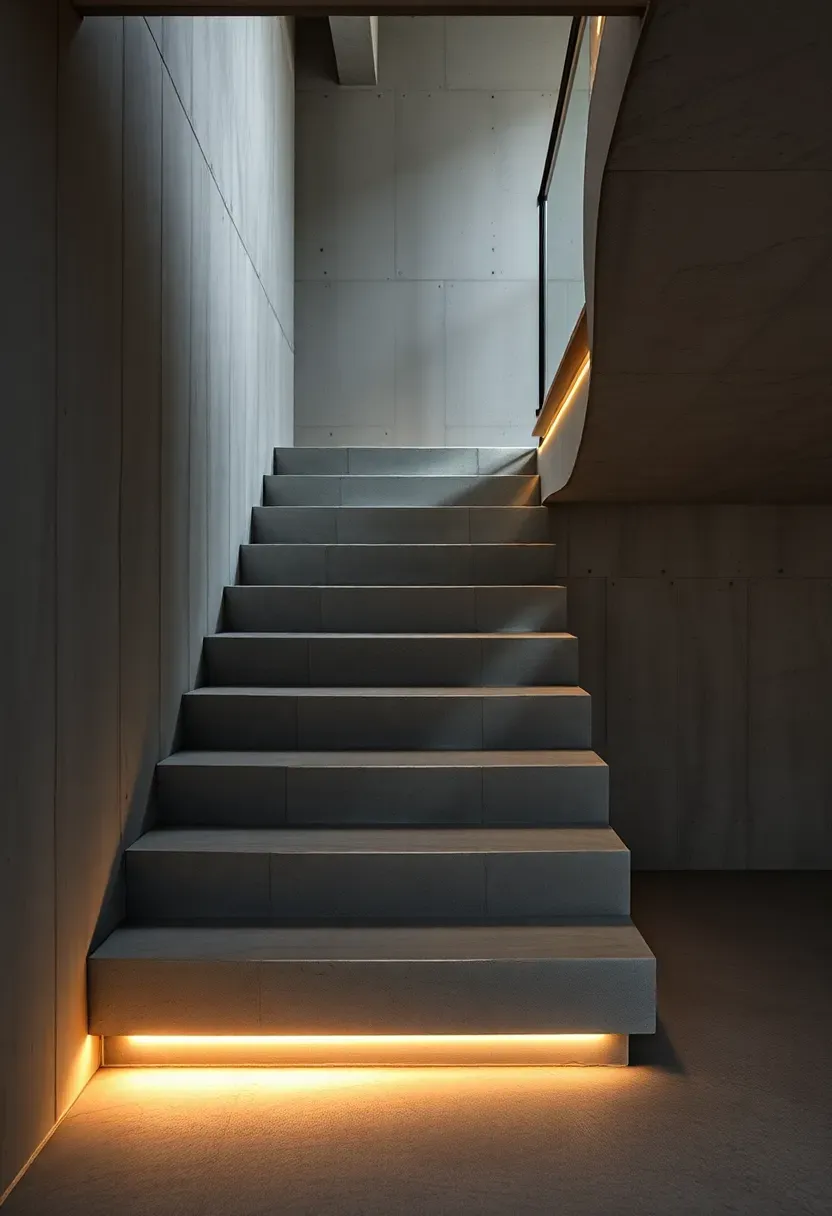
Concrete stairs feel like they belong to museums and galleries, but residential projects have adopted them because nothing else delivers the same combination of mass and minimalism. Each tread is poured in board-form shuttering, leaving the horizontal grain of the formwork pressed into the surface — evidence of how the thing was made. Recessed LED channels beneath each nosing mean the staircase effectively lights itself, throwing a warm band of amber light down the riser face. The glow is deliberately subtle: enough to guide your foot at night, not enough to look theatrical.
Tips for Concrete Treads
- Seal with a penetrating silane-siloxane sealer, not a surface coating — surface sealers peel and look terrible
- Allow 28-day full cure before load; early loading causes hairline cracking at the cantilever root
- Consider a contrasting aggregate in the top layer for texture and anti-slip properties
Recommended
Items for this idea
7. Grand Traditional Curved Stair
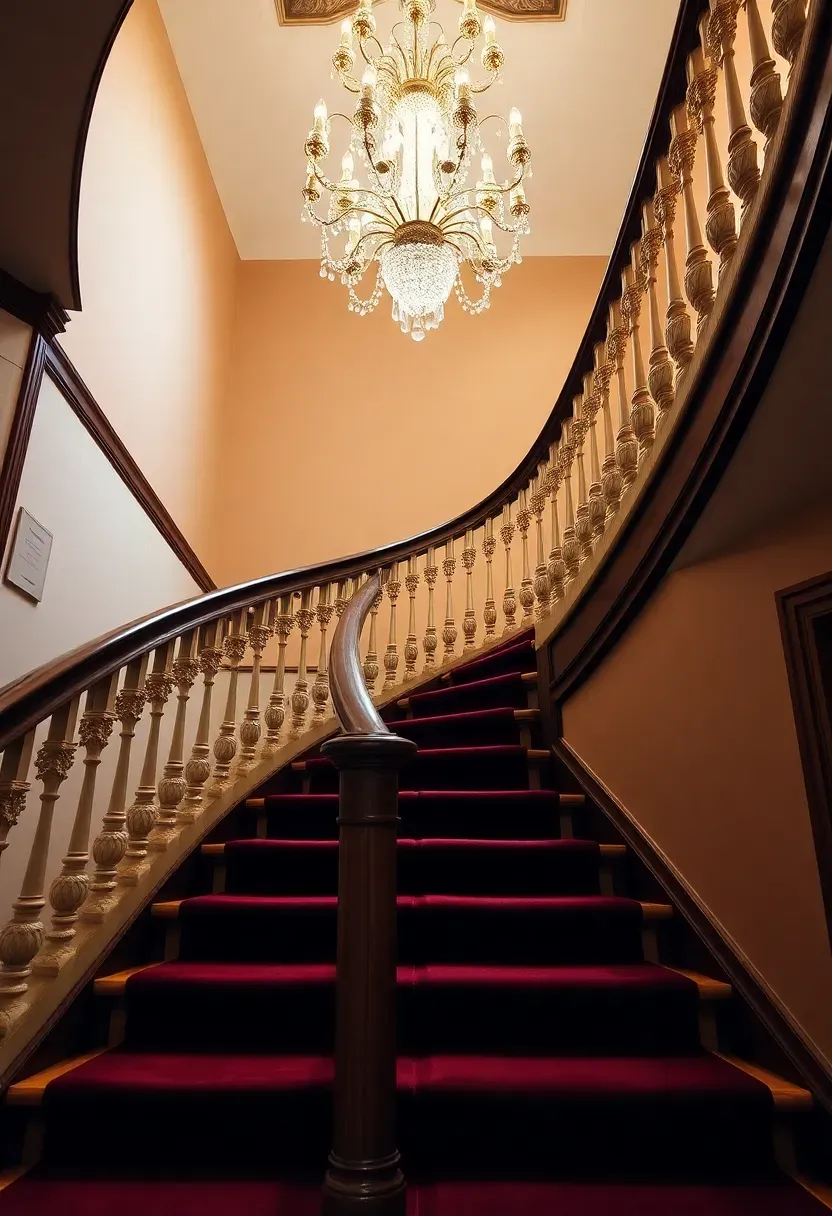
There's a theatre to the grand curved staircase that no other typology can replicate. A sweeping mahogany handrail that rises from a carved newel post and follows the geometry of the curve — tightening at the bottom, relaxing as it climbs — is one of the most technically demanding joinery tasks in all of woodworking. Cream-painted carved balusters keep the composition from feeling too dark and heavy, and a deep burgundy wool carpet runner with brass stair rods adds colour and reduces the hard sound of leather soles on mahogany. The chandelier above needs to be scaled to the void: in a double-height space, a 90 cm diameter fitting looks small.
Tips for Grand Stairs
- Hire a specialist stair joiner, not a general carpenter — handrail wreath cuts require dedicated tooling
- Specify cotton-wool blend carpet for the runner; pure wool pills; synthetic pile wears unevenly
- Light the newel post from below with a recessed floor uplight to emphasise the carved detail
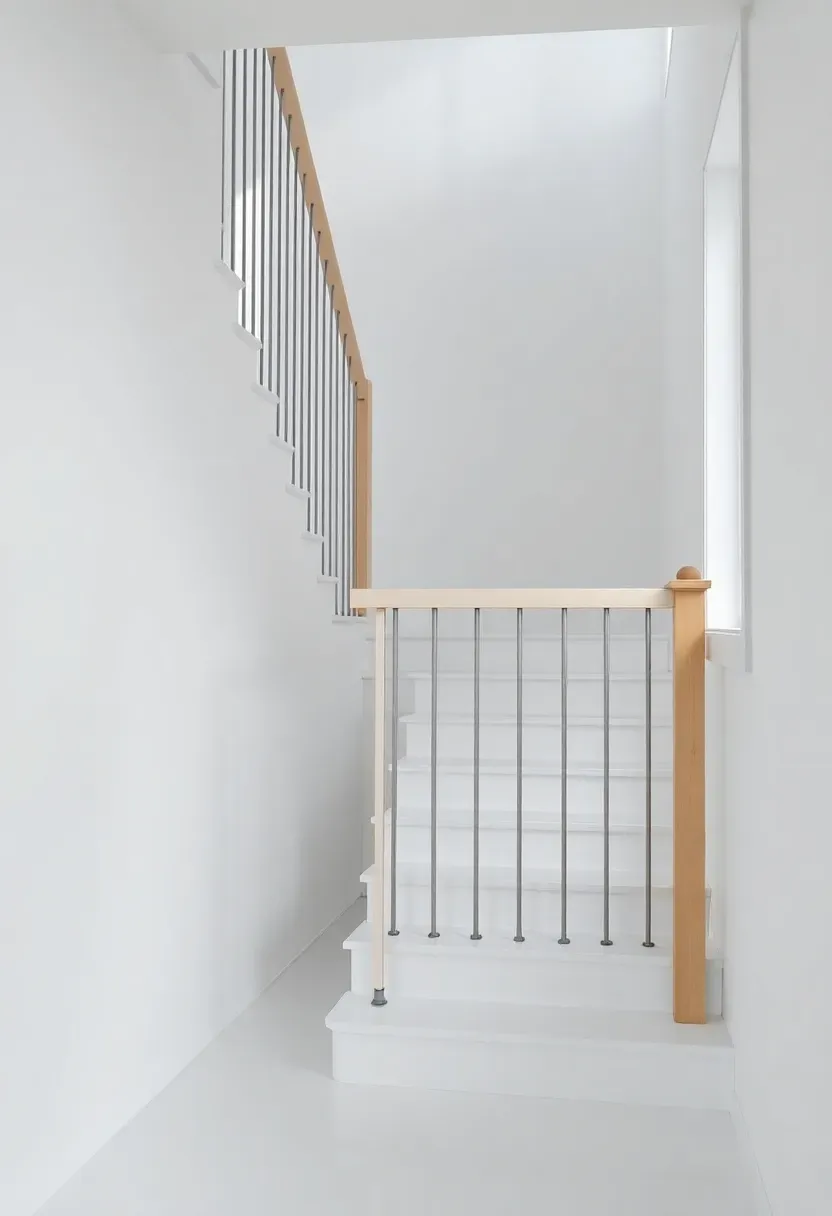
8. Scandinavian Rod-Baluster Minimal
What Makes It Nordic
Nordic staircase design reduces every element to its functional minimum. Treads and risers are white-painted closed units — no open risers, no material drama. Thin brushed-steel vertical rods replace conventional balusters; the gap between them passes the required 100 mm sphere test while maintaining near-total visual transparency. The handrail is a simple round section in white-painted pine, slightly warm against the cool steel rods.
How to Replicate It at Home
- Paint treads with a floor-grade water-based enamel in off-white (not pure white, which shows scuffs instantly)
- Space rod balusters at 90 mm centres — close enough to pass code, open enough to feel airy
- Keep the newel posts as slender as structural requirements allow — chunky posts break the minimal logic
Recommended
Items for this idea
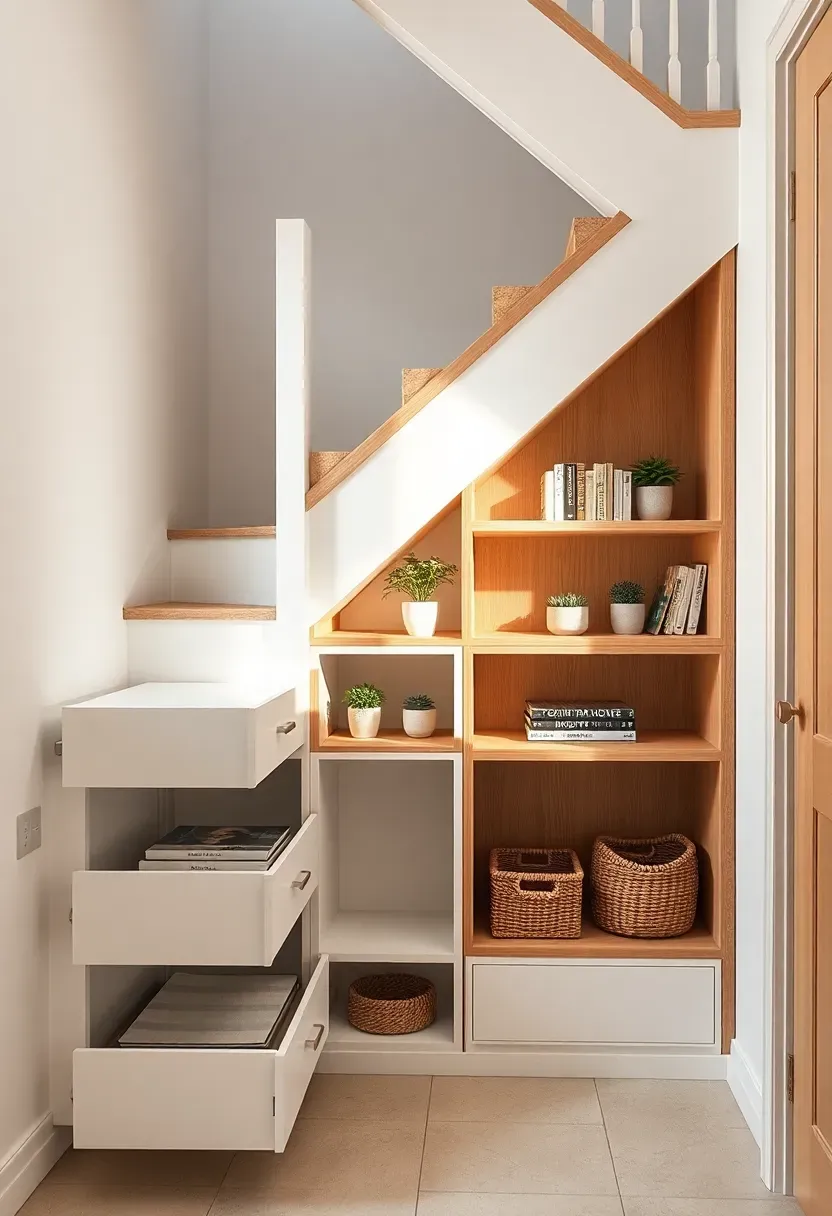
9. Built-In Under-Stair Storage
The triangular void beneath a staircase is typically wasted — a place for a vacuum cleaner and forgotten luggage. Purpose-built cabinetry transforms it into one of the most storage-efficient spaces in the house. The lower end of the triangle (where headroom is too low for shelving) takes pull-out drawers on soft-close runners. The taller section toward the back becomes open shelves wide enough for books, baskets, and plants. A single flush-inset panel at the deepest point can conceal a small home-office nook with a fold-down desk.
Tips for Under-Stair Joinery
- Custom-angle the top of each unit to match the stair rake — gaps at the ceiling line look unfinished
- Use full-extension drawer runners so the deep back section is actually accessible
- Install a motion-sensor LED strip along the underside of the lowest stair soffit so the storage area self-illuminates
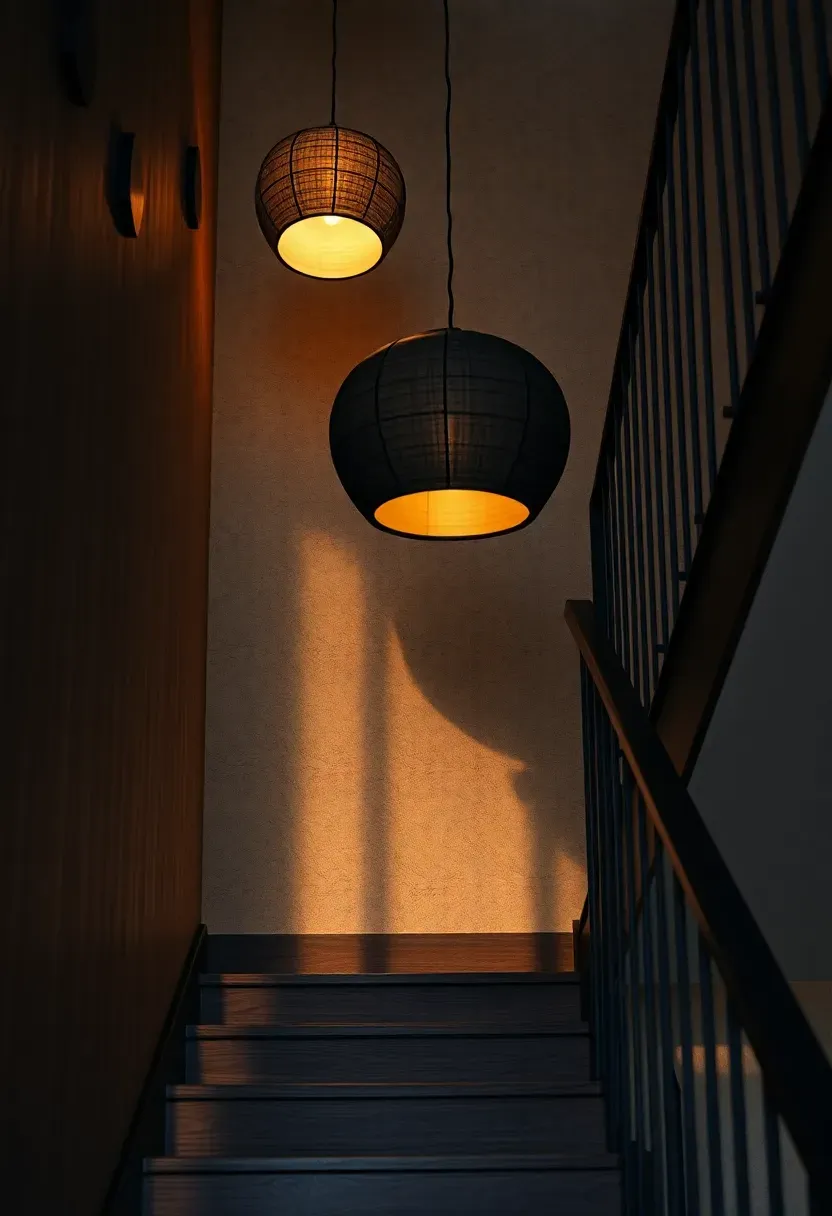
10. Dramatic Pendant Lighting
The Stairwell as Lighting Gallery
A stairwell is one of the few spaces in a home where vertical height can be exploited for pendant lighting drama. Three oversized black linen globe pendants hung at different heights — lowest over the mid-landing, highest near the upper floor — create a cascading composition that's visible from both the ground floor hallway and the upper landing simultaneously.
Making It Work
The pendants must be positioned so they never intercept the natural swing path of someone carrying bags upstairs. Measure the trajectory carefully — centre the fixtures toward the wall rather than above the tread nosing. Dark oak treads and a matte black metal railing anchor the colour palette so the pendants read as part of a cohesive scheme rather than an afterthought.
Practical Notes
- Use dimmable LED filament bulbs inside globe shades — they create visible warm filament glow through the fabric
- Group all stairwell pendants on the same circuit and dimmer so levels can be set uniformly
Recommended
Items for this idea
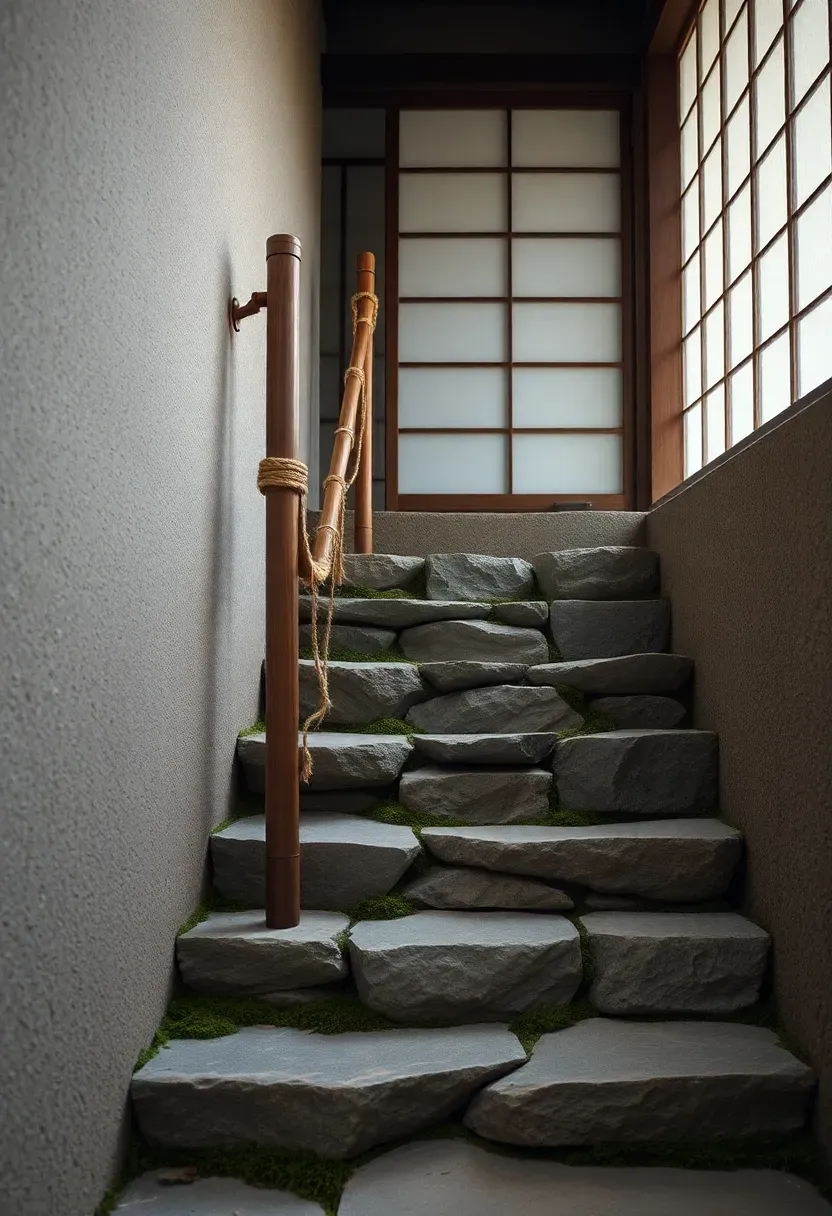
11. Wabi-Sabi Stone Slab Steps
Wabi-sabi, the Japanese aesthetic of beauty found in imperfection and transience, translates naturally to staircases because stairs are fundamentally about wear and time. Irregular fieldstone slabs are selected for colour variation and surface undulation rather than uniformity. Each stone is bedded into a rammed earth substrate rather than concrete, which allows the assembly to breathe and shift slightly with seasonal moisture. Moss colonises the gaps over time, softening what was already soft. The bamboo handrail is lashed rather than welded — the knots are functional but also quietly ceremonial.
How to Apply at Home
- Source stones from a local quarry rather than an imported range — regional geology reads more authentically
- Accept imperfection: a slight rise variation between steps (within code tolerance) adds to the handcrafted quality
- Place a diffusion layer of crushed granite below the rammed earth base to manage drainage in humid conditions
12. Coastal Rope-Rail Staircase
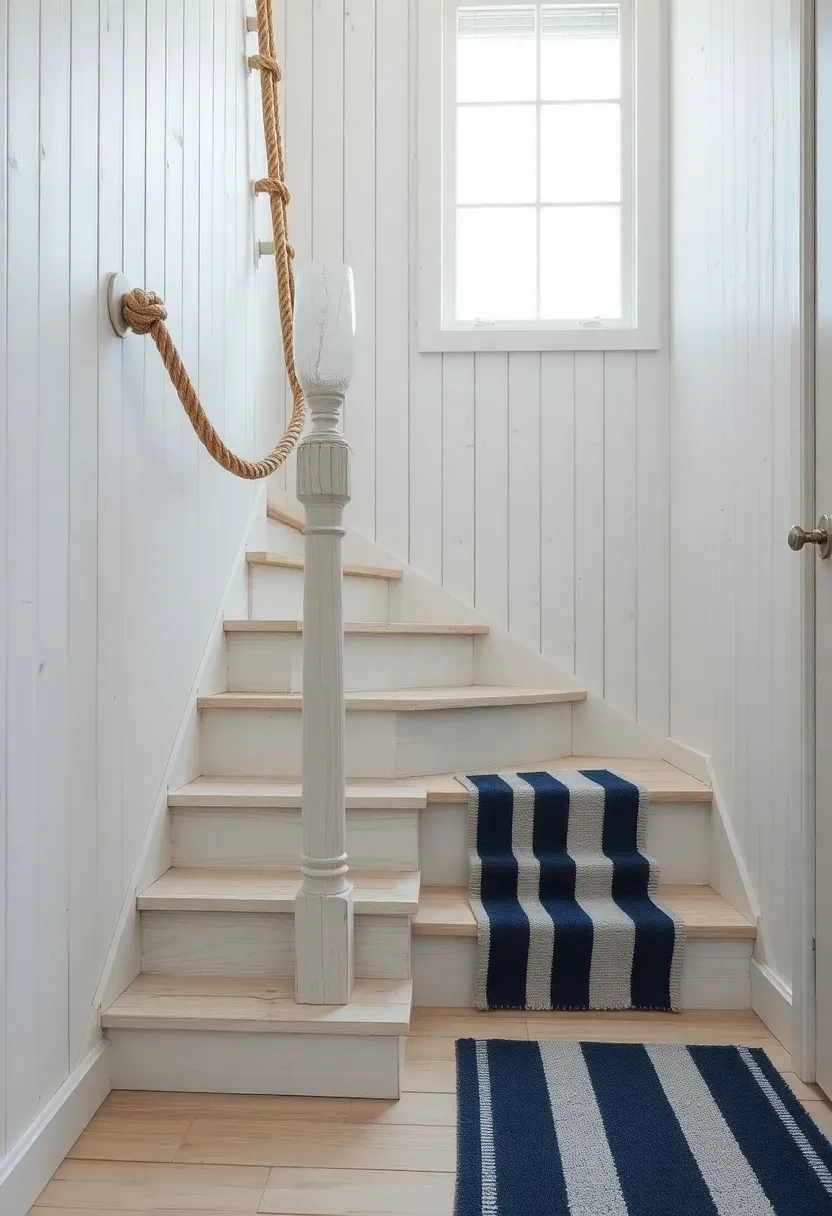
We've all felt that particular ease that washes over you in a beach house — the pale wood, the woven textures, the sense that nothing needs to be too serious. A coastal staircase earns that mood through material honesty: whitewashed pine treads that suggest driftwood without trying too hard, a white-painted shiplap wall on the stringer side (the horizontal groove pattern slowing the eye as it climbs), and a thick twisted manila rope for the handrail. The rope is knotted at the newel posts and runs through ring bolts along the wall rather than through balusters, which keeps the profile open and the installation forgiving.
Tips for Rope Railings
- Use marine-grade stainless ring bolts — coastal air attacks mild steel within months
- Treat manila rope with a UV-stable linseed oil annually or it dries, greys, and weakens
- Code requires a graspable handrail profile: twisted rope qualifies only if it measures within the graspable diameter range; check local building regulations before specifying
Recommended
Items for this idea
13. Hollywood Regency Glamour
Comparing: Marble vs Lacquered Wood Treads
A question that surfaces whenever a client wants maximum drama: should the tread face be marble or lacquered wood?
Marble Treads
White Carrara or Calacatta marble on a riser staircase is the apex of material luxury. The veining carries visual energy independent of any decorative addition. Cold underfoot in winter, but undeniably beautiful.
Lacquered Wood Risers + Marble Tread Combo
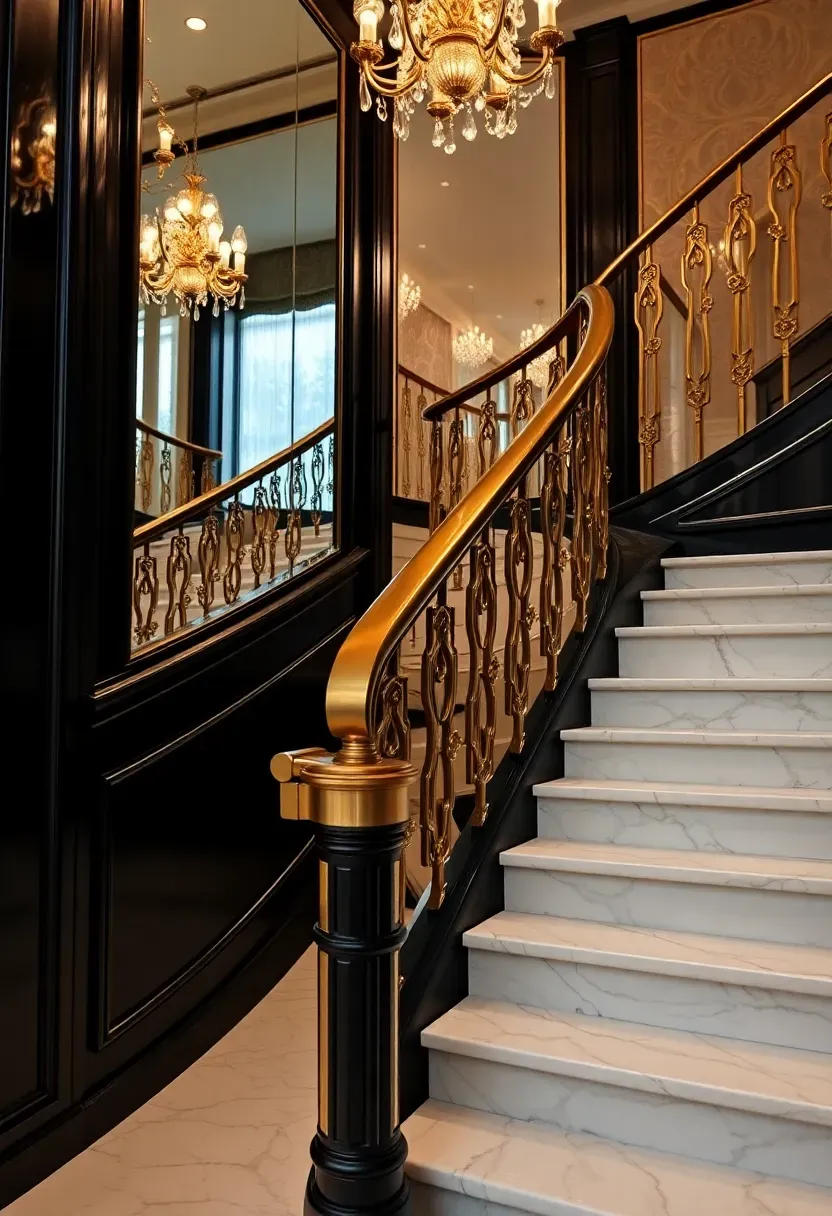
Black lacquered risers alternating with white marble treads is the Hollywood Regency answer — the hard contrast does the dramatic work so the railing doesn't have to compete. Polished brass geometric openwork panels in the balustrade add period personality without being fusty.
What to Choose
Choose marble treads if: you want the floor material to be the centrepiece and you're prepared for a cold, maintenance-heavy surface Choose lacquered riser combination if: you want drama from contrast and your budget is better directed at the railing detailing
Recommendation
For a true Regency staircase, invest in the brass railing first — the metal finish defines the glamour level more than any tread material.
14. Mid-Century Modern Teak
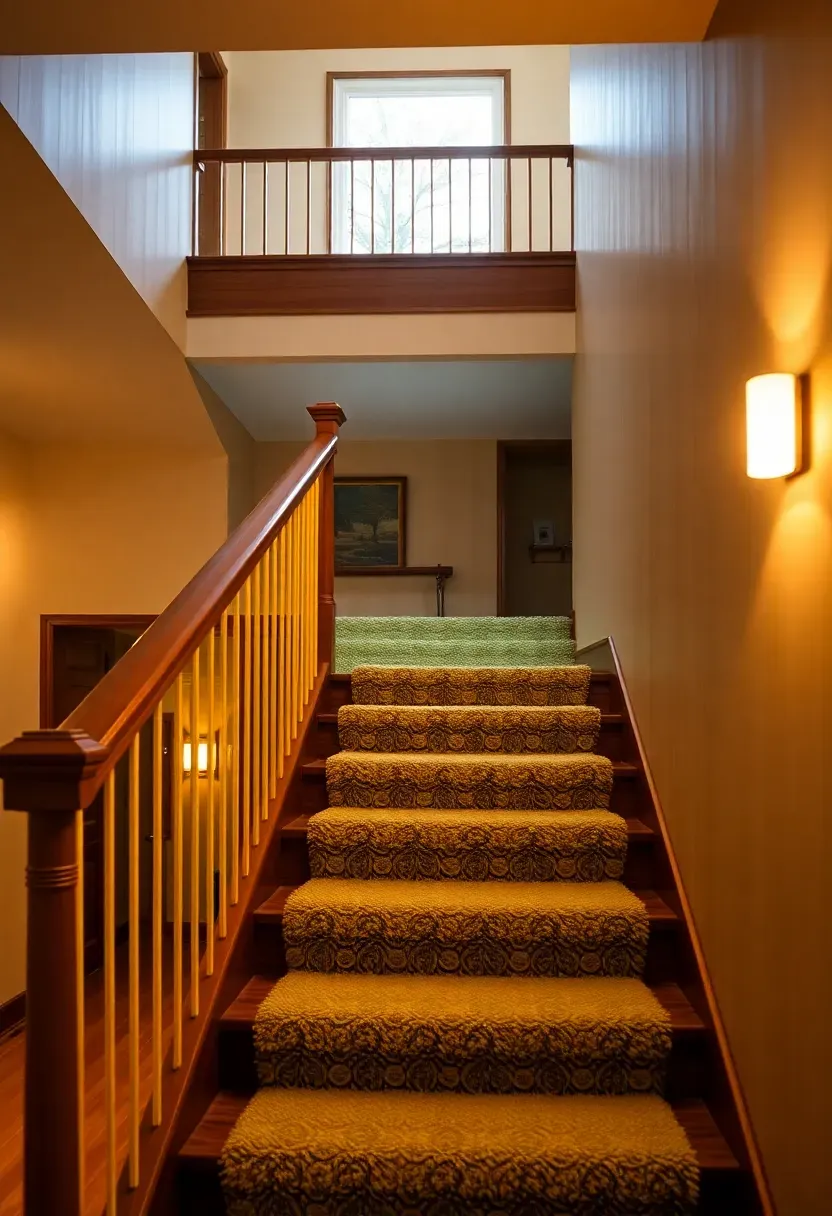
Solid teak open-riser treads signal the late 1950s and 60s with total conviction — the grain has the warm red-orange that no other commercially available hardwood replicates. Tapered wrought iron balusters painted mustard yellow make the reference explicit without becoming a costume: mustard was the dominant accent tone across Scandinavian and American mid-century interiors. The walnut-capped handrail is a textural departure from the teak, darker and smoother, which prevents the stair from reading as a monolithic timber block. An avocado shag rug at the landing ties the palette together with the irreverence the style demands.
Tips for Mid-Century Stair Details
- Source original teak from salvage yards where possible — plantation teak is fine but lacks the tight grain of old-growth material
- If repainting balusters, use an oil-based enamel in a period-accurate tone: RAL 1006 maize yellow or Farrow & Ball Babouche are reliable references
- Leave exposed treads unsealed or use a very light natural oil — a thick polyurethane destroys the period feeling
Recommended
Items for this idea
15. Dark Gothic Moody Stair
Origins
Gothic revival architecture entered domestic interiors in the 1840s under Augustus Pugin, who argued that pointed arches and dark polished timber were morally superior to the Greek Revival fashions of his day. Whether you share the theology or not, the aesthetic delivers a specific mood — one that has returned forcefully in 2025–2026 interior design culture via the "dark academia" and "witchy home" aesthetics that dominate visual social platforms.
Modern Interpretation
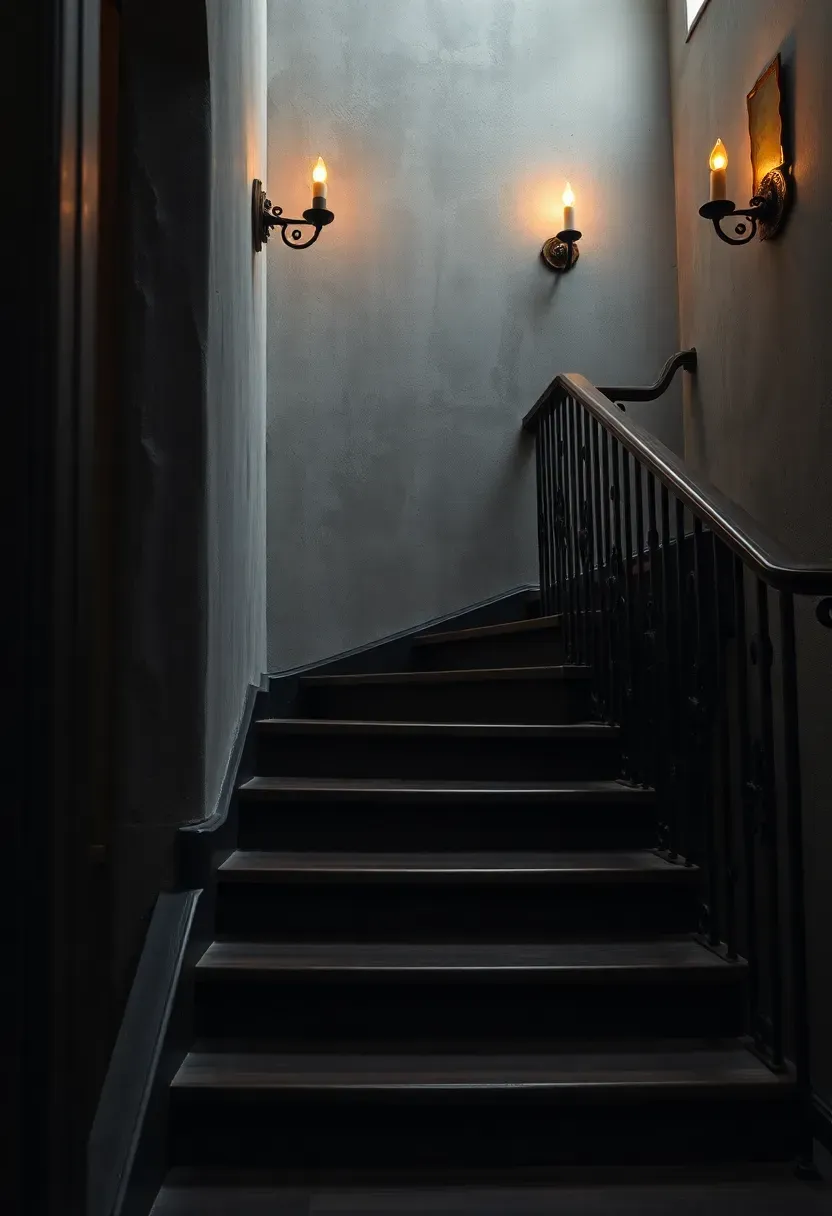
Ebonized oak treads (achieved with a tannic acid and iron vinegar treatment rather than dark stain, which penetrates the grain differently) sit below a flat grey lime-plaster wall. Wrought iron railing panels feature gothic arch cut-outs — a direct Pugin reference — and antique brass wall sconces fitted with flame-shaped LED bulbs cast pools of amber light at each baluster cluster.
How to Apply at Home
- Apply the iron vinegar ebonizing treatment to oak rather than buying pre-stained stock — the result has genuine depth
- Keep walls in grey or stone tones rather than black: black walls tip from moody into oppressive
- Source reproduction gothic iron panels from specialist architectural metalworkers rather than trying to adapt modern balusters
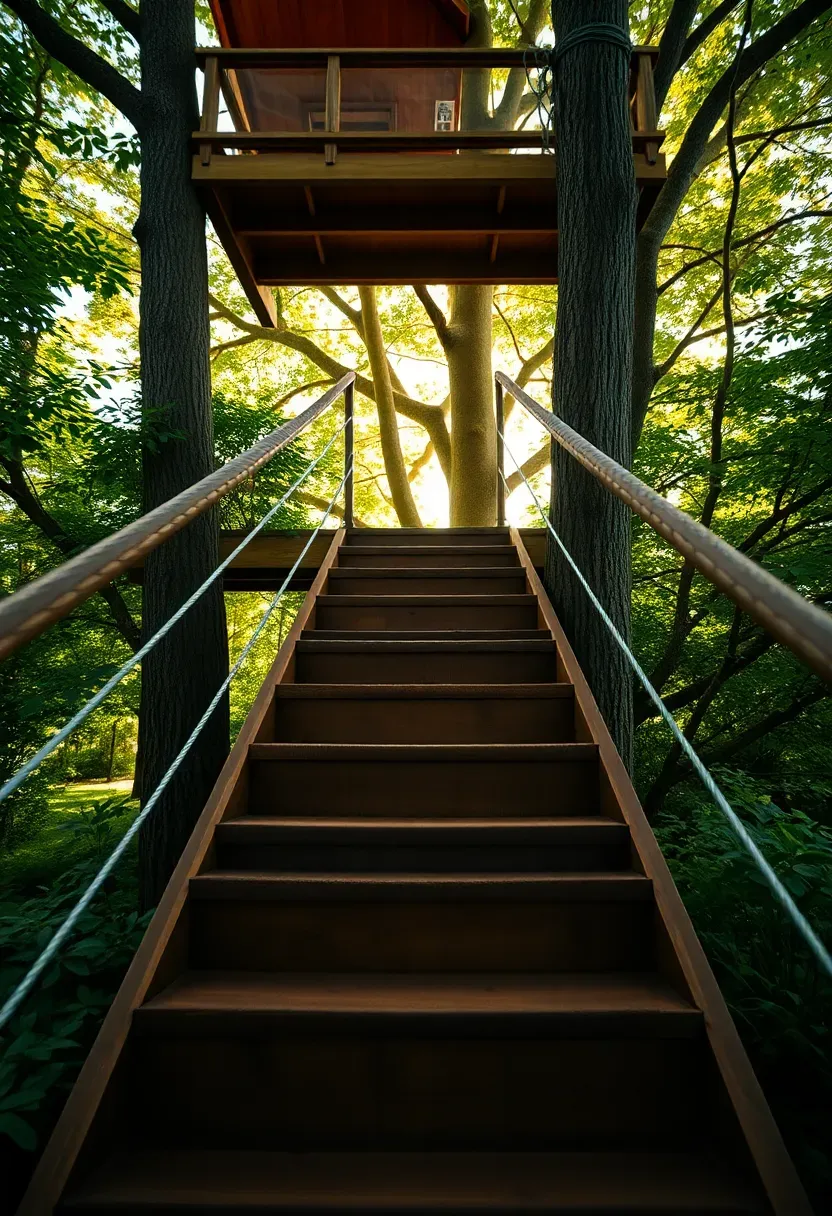
16. Outdoor Cedar Treehouse Stair
Why Cedar Wins Outdoors
Confronted with rot, UV, and wet-dry cycling, most wood species struggle. Western red cedar contains natural preservative oils (thujaplicins) that resist fungal decay without chemical treatment. The heartwood is a rich salmon-red when freshly cut, weathering to a distinguished silver-grey over 3–5 years depending on exposure.
The Design
Rough-sawn cedar planks become the treads — the saw marks add grip and express the material's origin honestly. Galvanized steel cable runs through stainless eye bolts at top and bottom; the cable resists the lateral flex that causes timber post railings to work loose over time. The whole composition reads as purposefully handbuilt rather than designed, which suits the treehouse context perfectly.
What to Watch Out For
- Space treads at 6 mm gaps to allow water to drain freely and air to circulate beneath
- Galvanize all steel fasteners — stainless is better but costs roughly three times as much per bolt
- Check local building codes for open-air railing height requirements; outdoor decks typically require 1,000 mm minimum
Recommended
Items for this idea
17. Luxury Calacatta Marble
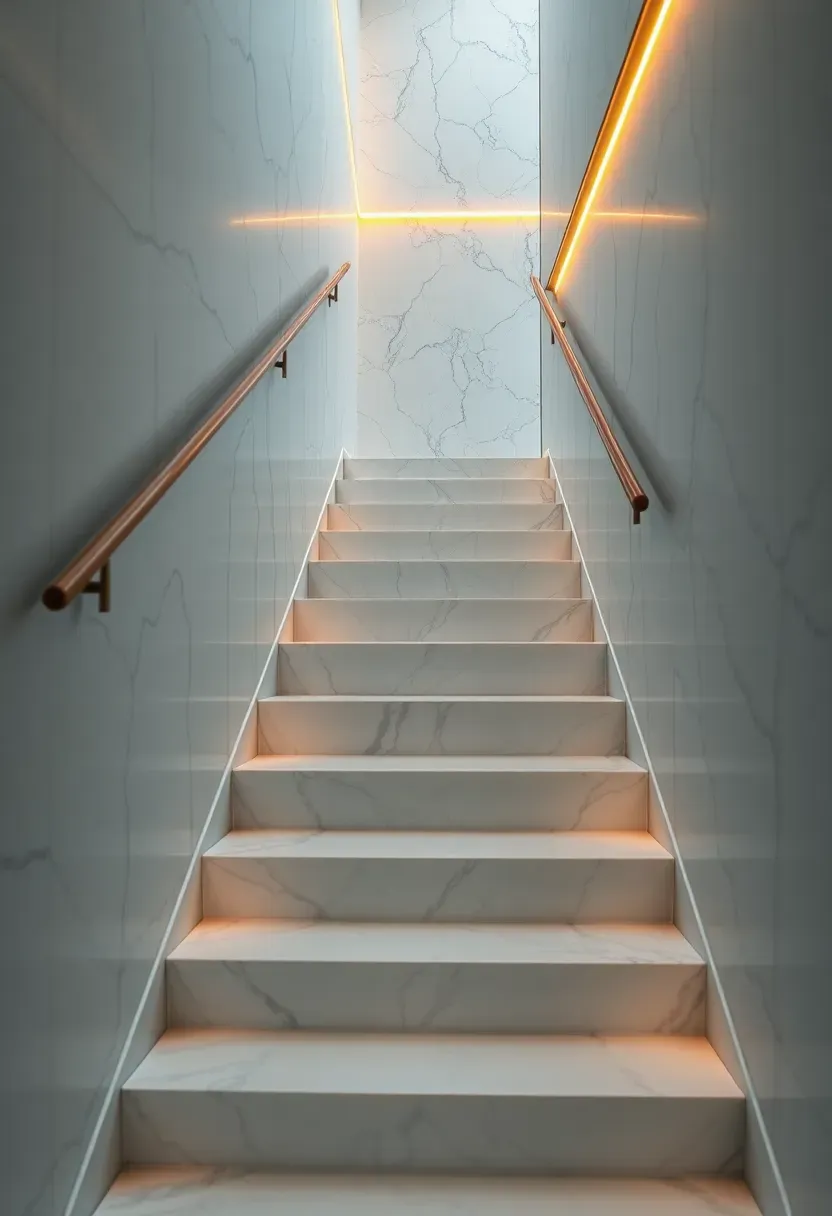
Book-matched marble is the staircase equivalent of a bespoke suit: it requires selecting slabs from the same quarry block, cutting them sequentially, and opening them like pages to mirror the veining across adjacent surfaces. On a staircase, where each tread is a separate element, true book-matching runs the grey-gold veining continuously from riser face to tread top to the next riser in an unbroken geological narrative. The polished stainless steel cable balustrade is chosen specifically for near-invisibility — any more visual weight in the railing would compete with the marble rather than frame it.
Tips for Marble Stairs
- Specify a honed (matte) finish for treads only; polished marble on a tread surface is a slip risk regardless of dryness
- Seal immediately after installation with a penetrating nano-sealant; marble is porous and stairs receive constant traffic
- Avoid dark grout lines — use an ultra-thin tile-on-tile adhesive and colour-matched grout to keep the veining continuous
18. Sage Green Cottage Staircase
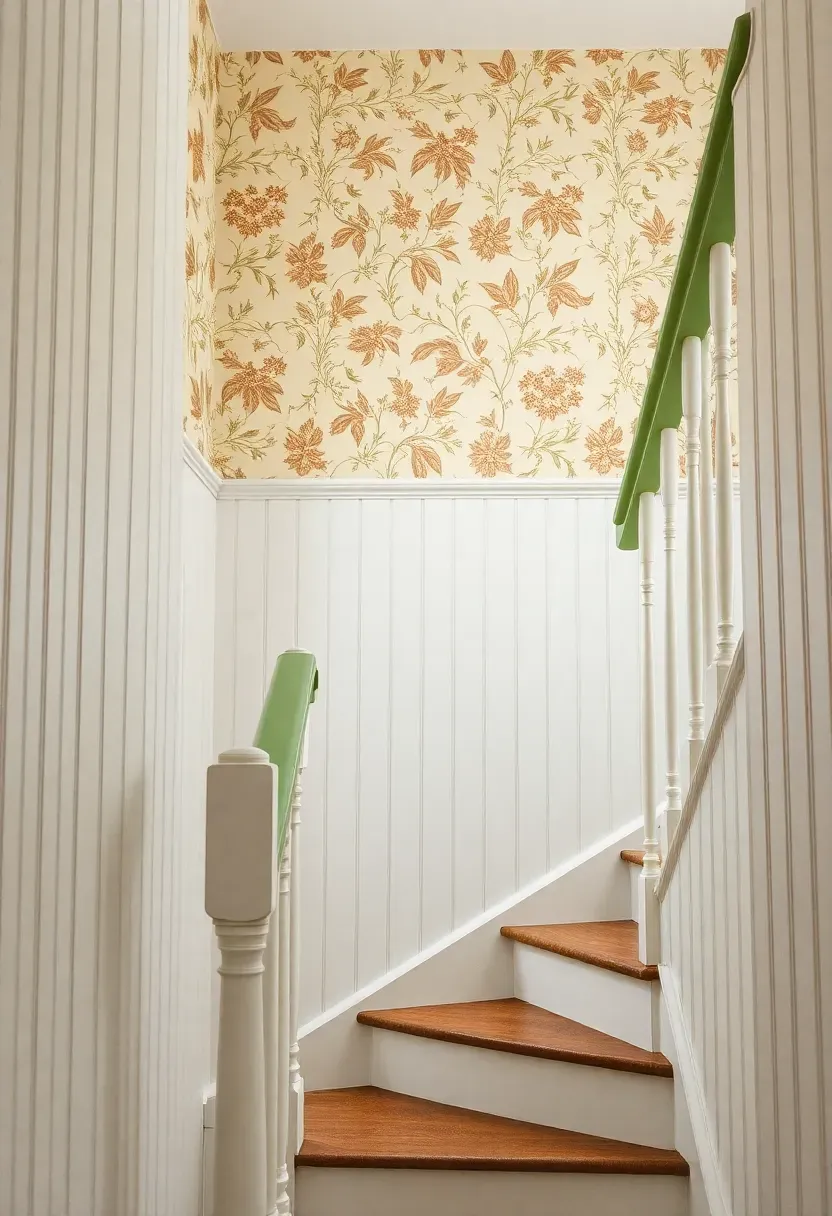
Start small: a single pot of sage green paint and a weekend is genuinely enough to transform a tired cottage staircase. The key move is painting only the handrail, newel posts, and string while keeping balusters and risers white — this creates a colour accent that reads intentional rather than overwhelming. White beadboard panelling on the wall below the handrail (the dado height) adds texture and a period reference that suits any house built before 1970. A floral wallpaper above the dado on the landing connects the stair to the wider domestic character of the cottage and rewards the eye as you reach the top.
Tips for Cottage Stair Colour
- Farrow & Ball Mizzle, Sage, or Mould Green all read as sage without going too cool or too warm
- Prime bare wood with shellac-based primer before topcoat — wood tannins bleed through water-based paints and yellow the green
- Use eggshell sheen on the handrail where hands grip most — matte paint wears through rapidly at touch points
Recommended
Items for this idea
19. Futuristic Ribbon Staircase
The AI Vision
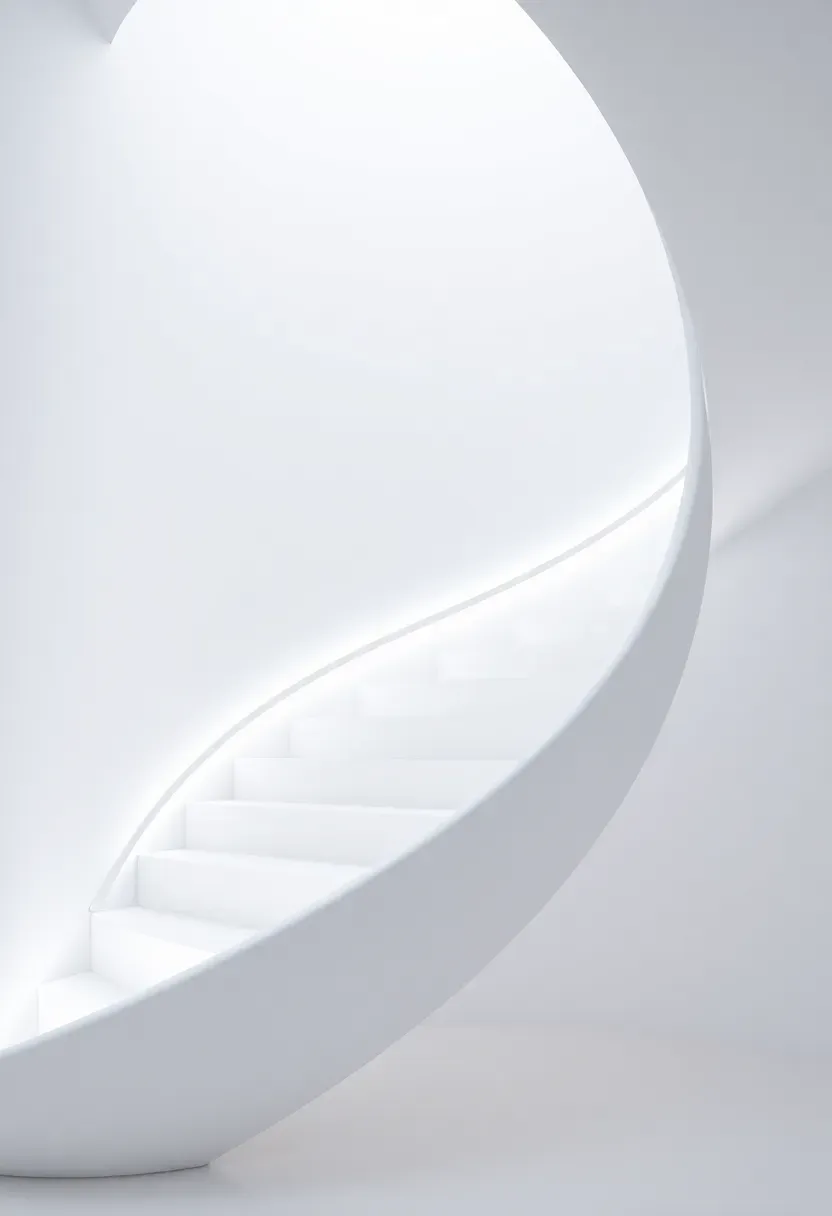
This is the concept that AI visualization tools make possible before any fabrication technology has fully caught up: a staircase whose treads and railing are one continuous surface, folded from a single material like a Möbius strip of architecture. The AI-generated version renders it in a white polymer composite with a continuous LED channel tracing the entire undersurface curve.
Origins
The form draws from Zaha Hadid's parametric architecture and from concept car interior design where surfaces flow without seams. In residential application, the closest current realization uses CNC-milled foam cores with fibreglass composite skins — labour-intensive but technically achievable.
How to Apply at Home
- Commission a parametric design from an architect comfortable with Rhino and Grasshopper software
- Fabrication in GFRC (glass fibre reinforced concrete) is more durable than fibreglass composite for high-traffic residential use
- Build a full-scale mock-up in MDF before committing to the final material — subtle tread pitch errors only reveal themselves at scale
20. Rolling Library Ladder
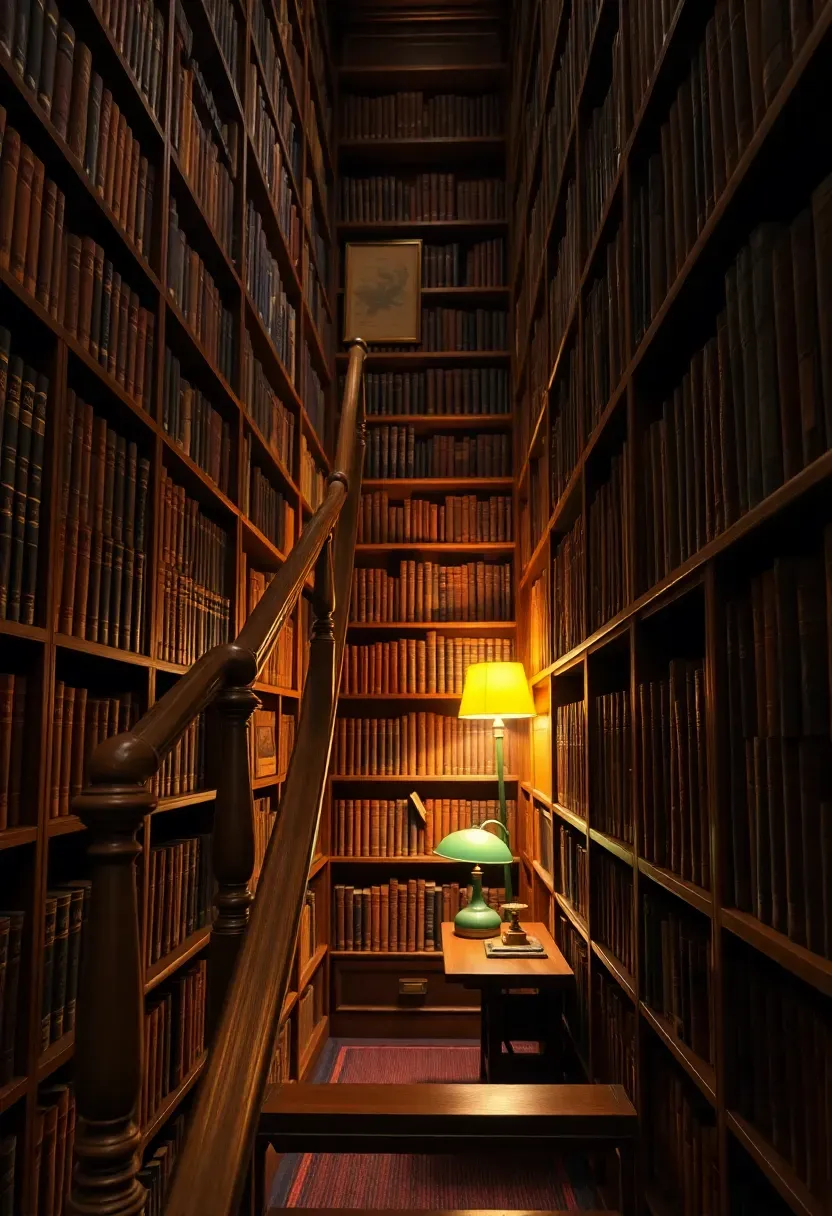
The rolling library ladder belongs to its own category — it's less a staircase than a vertical circulation element that happens to be one of the most desirable design objects you can add to a room. The classic Besnier library system (the French originator of the rolling brass rail) requires a continuous track at the top secured into the shelf standard, and a floor rail at the base to keep the ladder perpendicular to the shelves as it rolls. The combination of dark mahogany, polished brass, and aged leather book spines is an interior that all but generates its own reading atmosphere.
Tips for Library Ladders
- Ensure shelf standards are wall-fixed at every bay — the lateral load from someone climbing is substantial
- Floor track must be set into the floor flush, not proud — a protruding track is a tripping hazard at the base of the shelves
- Specify solid brass fittings rather than brass-plated steel; the plating wears through within five years of regular use
Recommended
Items for this idea
21. Alternating-Tread Loft Stair
Why Alternating Treads
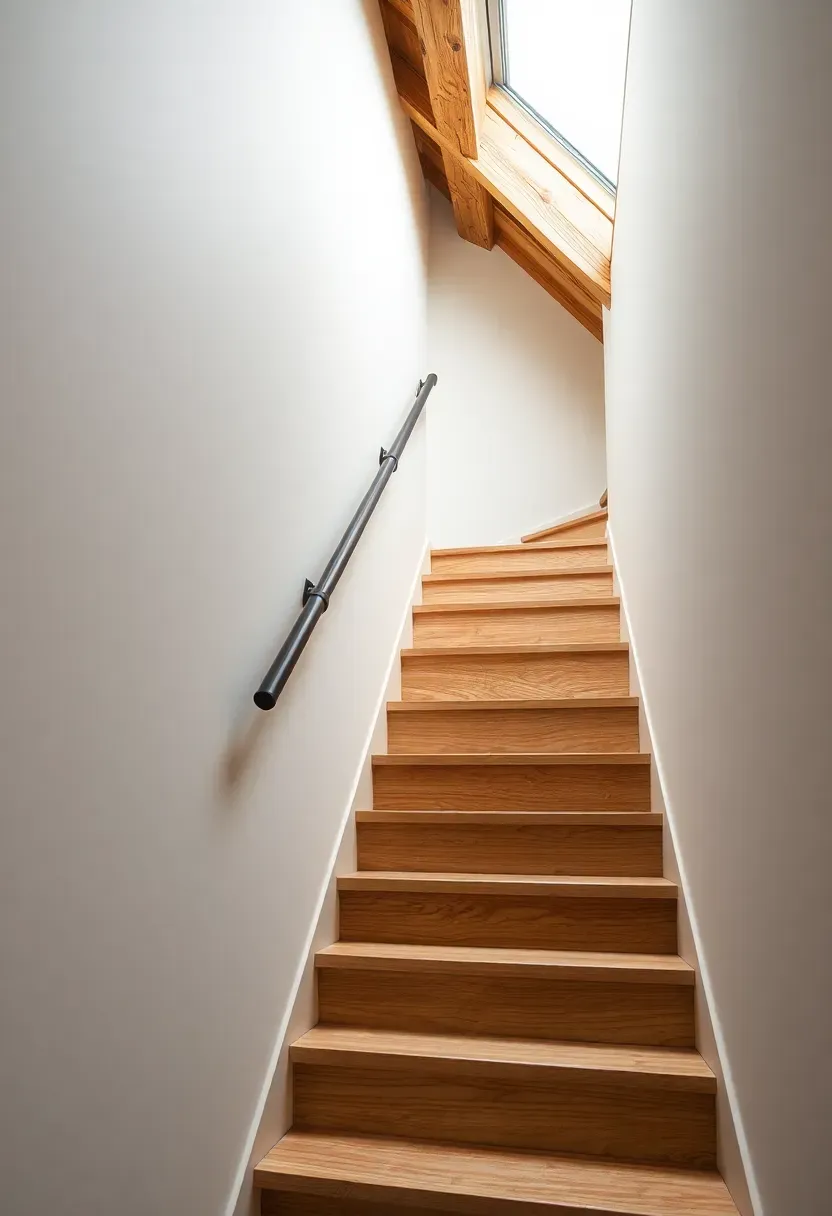
An alternating-tread (or "sambo") stair uses half-width treads that alternate left and right, allowing a steeper pitch — typically 60–70 degrees against the conventional 38–45 degrees — in roughly half the floor footprint of a standard stair. It's a code-compliant solution for loft access where a conventional stair would consume too much floor area, and where a loft ladder would be impractical for carrying objects.
Comparing: Standard vs Alternating Tread
Standard stair: broader pitch, full-width treads, safer for the elderly and young children, occupies more floor area Alternating-tread stair: steep, narrow footprint, excellent for fit adults accessing loft space regularly, slight learning curve on descent
What to Choose
Choose standard if: the loft is a bedroom used by a range of people including guests and children Choose alternating-tread if: the loft is a private home office or plant room accessed mainly by one or two adults daily
Recommendation
Pair ash treads with a blackened steel stringer — the light grey-white of ash against near-black steel maximises the visual lightness of an inherently compact form.
22. Mediterranean Talavera Tile Risers
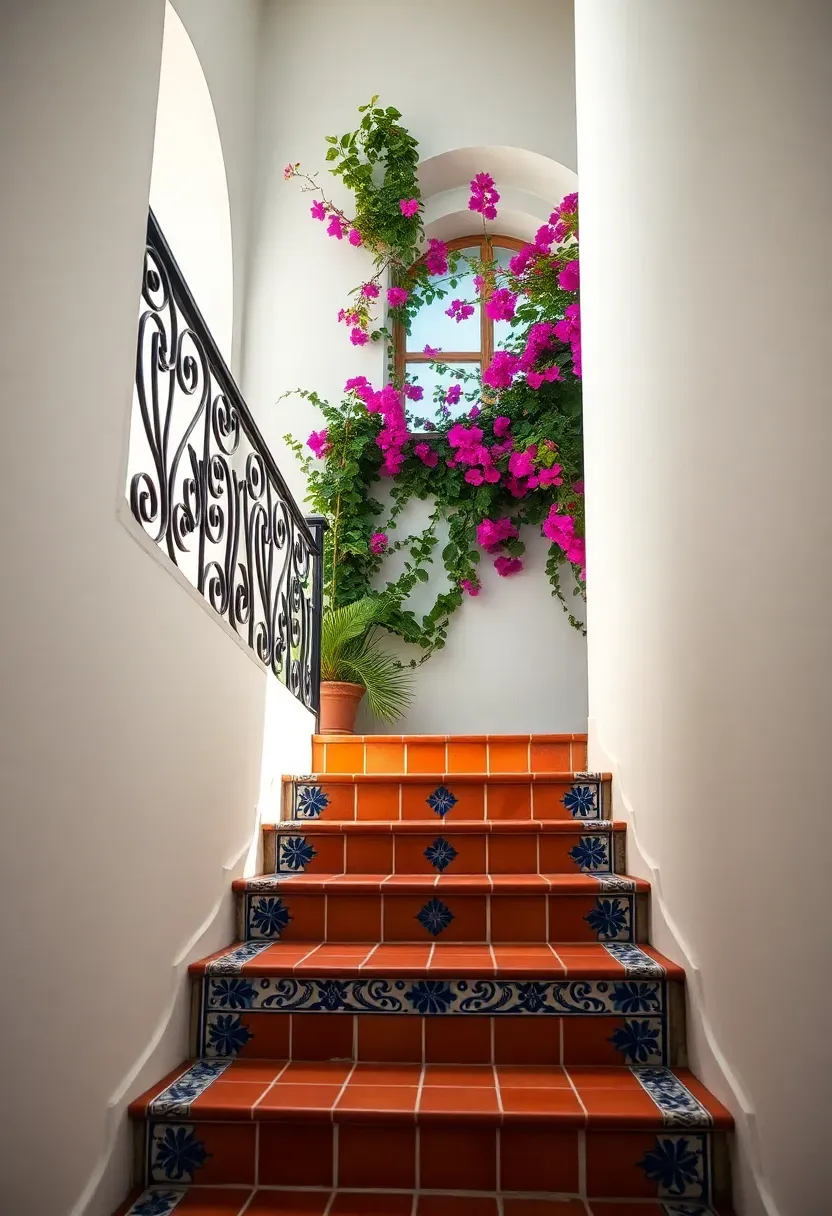
Hand-painted Talavera tiles are made in Puebla, Mexico and Talavera de la Reina, Spain — both UNESCO-recognized craft traditions. Each tile is wheel-thrown, tin-glazed, and painted by hand with cobalt blue on a white tin-glaze ground, which means every single riser in a Talavera staircase is genuinely unique. The terracotta tread above each painted riser absorbs the colour contrast and returns the eye to warmth. Wrought iron vine-scroll railings are the material that completes the Southern European narrative — any other railing material produces a confused hybrid rather than a coherent aesthetic.
Tips for Talavera Riser Installation
- Source authentic Puebla or Talavera tiles, not import copies — the glaze depth and colour saturation differ visibly
- Use a flexible tile adhesive and movement joints at every landing to accommodate thermal expansion in sun-exposed spaces
- Seal terracotta treads with a topical penetrating sealer before grouting — terracotta absorbs grout staining permanently without pre-treatment
Recommended
Items for this idea
23. Forest Silhouette Art Railing
The Concept
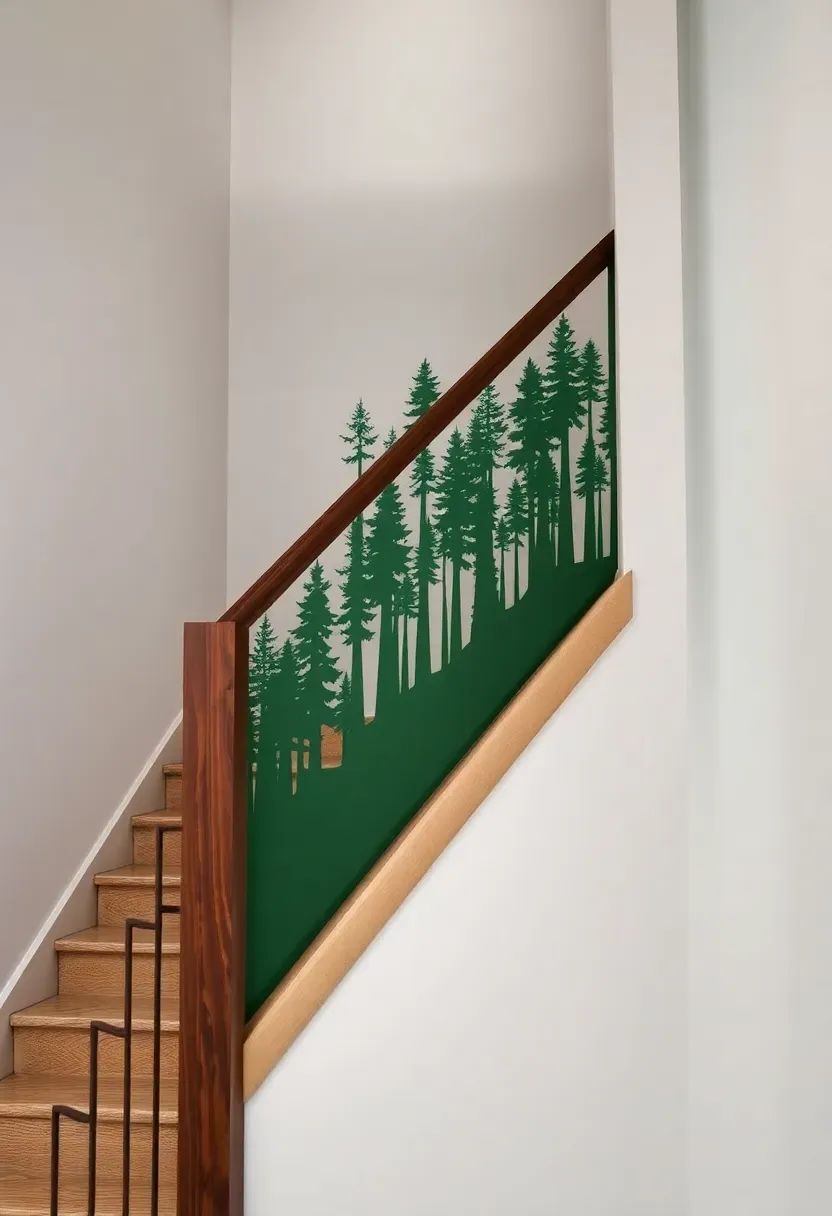
Standard vertical balusters are structurally efficient but visually inert. Replacing them with flat laser-cut steel panels that carry a figurative image — in this case a continuous forest treeline silhouette — converts the railing into a gallery installation that occupies the entire width of the staircase.
Design Details
The panels are cut from 5 mm mild steel flat plate and powder-coated in a matte forest green. The silhouette is continuous: left panel connects to right panel as though the forest stretches unbroken across the full run of stairs. A dark walnut handrail caps the top of each panel, providing the graspable element required by building codes while introducing a warm material counterpoint to the green steel.
How to Apply at Home
- Work with a local metal fabricator rather than an online supplier — file transfer and cutting tolerance are much better managed in person
- Choose a design motif that references something meaningful (a landscape, a family location) rather than a generic pattern
- Powder coat is more durable than paint for cut steel edges; laser cutting leaves a sharp arriss that needs powder coat coverage to resist rust
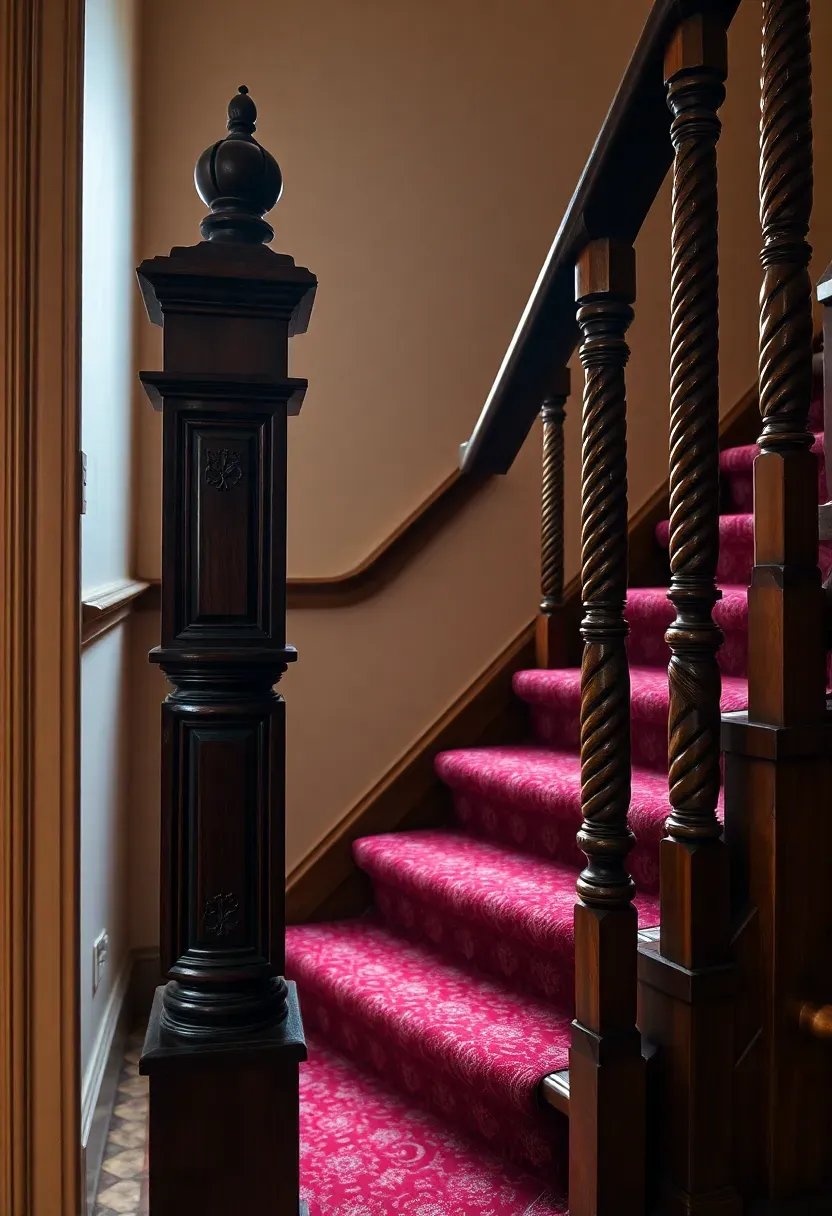
24. Victorian Carved Mahogany Restoration
"Why do we still restore Victorian staircases when everything else in the house has moved on?" Because nothing built since has matched the sheer technical ambition of a full Victorian stair: carved balusters with reeded and twisted sections that require four separate woodworking operations per baluster, a wreath-cut handrail that follows the curved geometry of the bottom newel in three dimensions, and encaustic geometric floor tiles at the base that are simultaneously a work of Islamic geometry and a Victorian manufacturing marvel. The deep red Axminster runner with its repeating acanthus border exists in a pattern family that has barely changed since 1855. Restoring rather than replacing is both the environmentally correct and architecturally honest decision.
Tips for Victorian Stair Restoration
- Match existing baluster profiles with a specialist stair joiner who owns the appropriate hollowing and rounding planes
- Source period reproduction encaustic tiles from specialist tile manufacturers — Victorian originals are available at salvage yards but rarely in matching quantity
- Strip old varnish chemically rather than by sanding — Victorian mahogany balusters are often thin enough that sanding removes the carved detail entirely
Recommended
Items for this idea
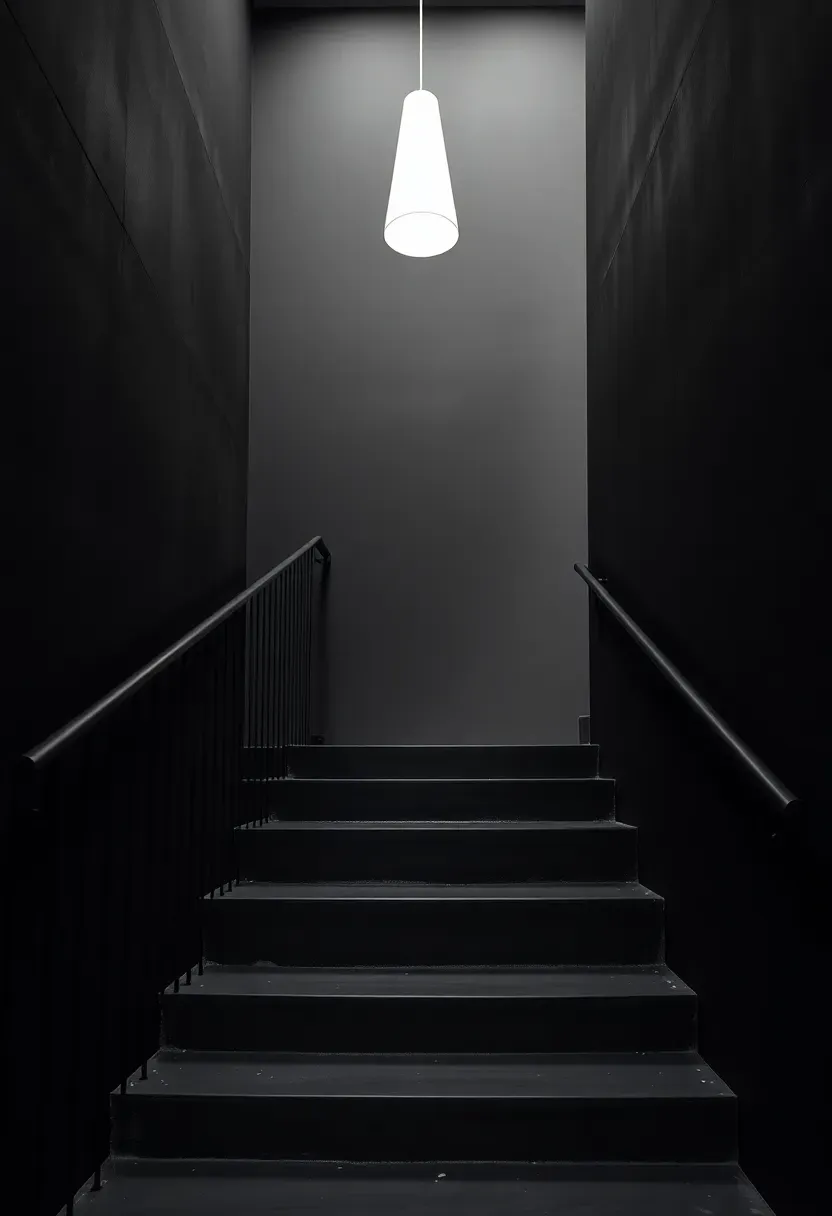
25. All-Black Monochrome Statement
Trends come and go, but all-black architectural interiors have proven their staying power precisely because they demand commitment. A staircase that goes fully monochrome — pigmented black concrete treads, matte powder-coated flat-bar steel railing flush with the tread edge, black-painted plaster walls — creates a space where only the geometry and texture remain visible. The single white cone pendant light hanging in the void above isn't an accident: it's the only element that isn't black, which means the eye goes directly to it and then traces the descending railing geometry outward from that focal point.
Tips for All-Black Stairs
- Use a matte finish on every black surface — any sheen variation between treads and walls destroys the monolithic effect
- Light the space with a single strong directional source rather than diffuse ambient light, which reveals the geometry rather than flattening it
- Black concrete is achieved by adding iron oxide pigment to the mix before pouring; the result is food-safe, UV-stable, and never looks painted
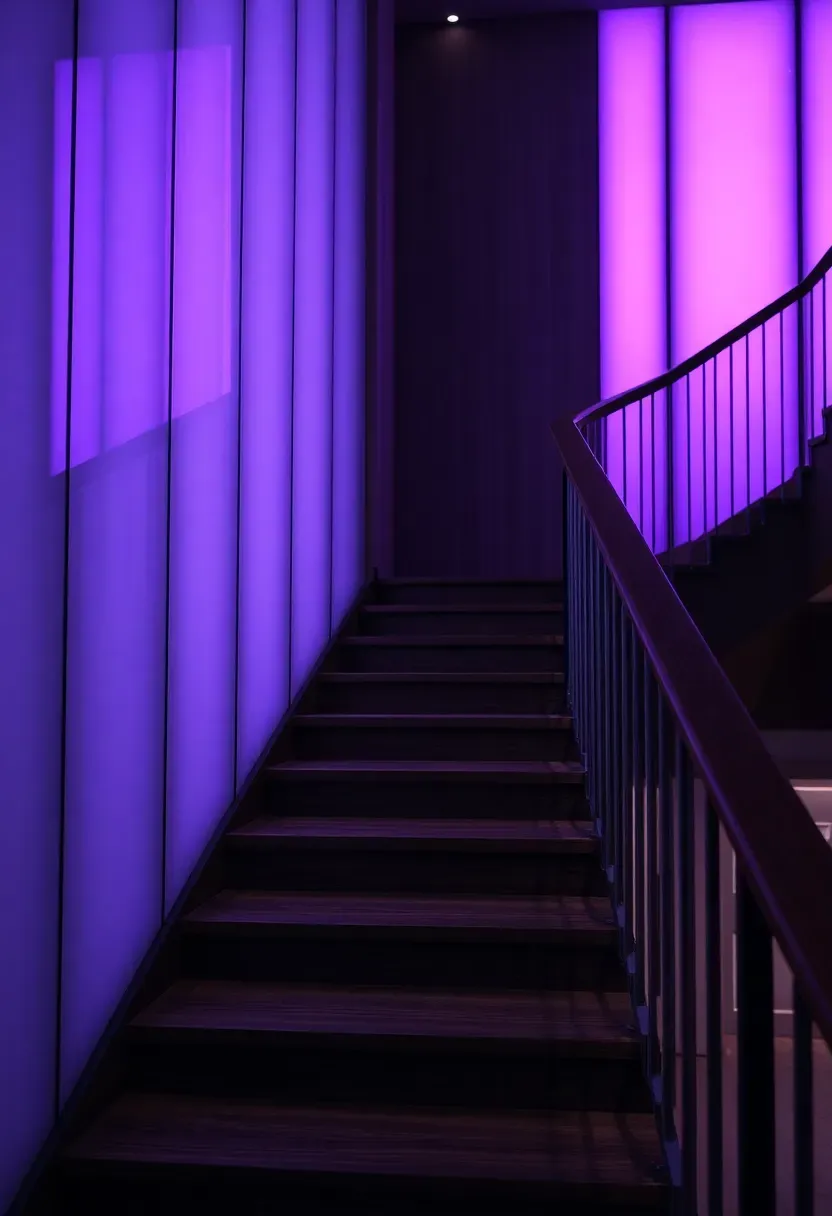
26. Colour-Changing Glass Balustrade
The Technology
LED electroluminescent film sandwiched between two layers of frosted laminated glass produces a soft uniform glow across the full panel surface. The film is a separate circuit from the house lighting, controlled via a standard smart home dimmer or colour controller, allowing the panels to shift from warm white to lavender, amber, or blue depending on the mood or event.
Practical Considerations
Dark espresso oak treads and handrail are the correct pairing — a light timber would compete with the luminous glass rather than frame it. The railing only reads as dramatic in low ambient light; in daylight the frosted glass simply reads as a quality contemporary balustrade without the chromatic effect being visible.
How to Apply at Home
- Specify the LED film at the glass manufacturer stage, not as a retrofit — interlayer films are bonded in the autoclave during lamination
- Run a dedicated low-voltage circuit to the balustrade; mains connection requires an electrician and should be isolated from the main lighting circuit for safety
- Keep the colour palette to two or three settings programmed into a scene controller rather than chasing the full spectrum, which can read as garish
Recommended
Items for this idea
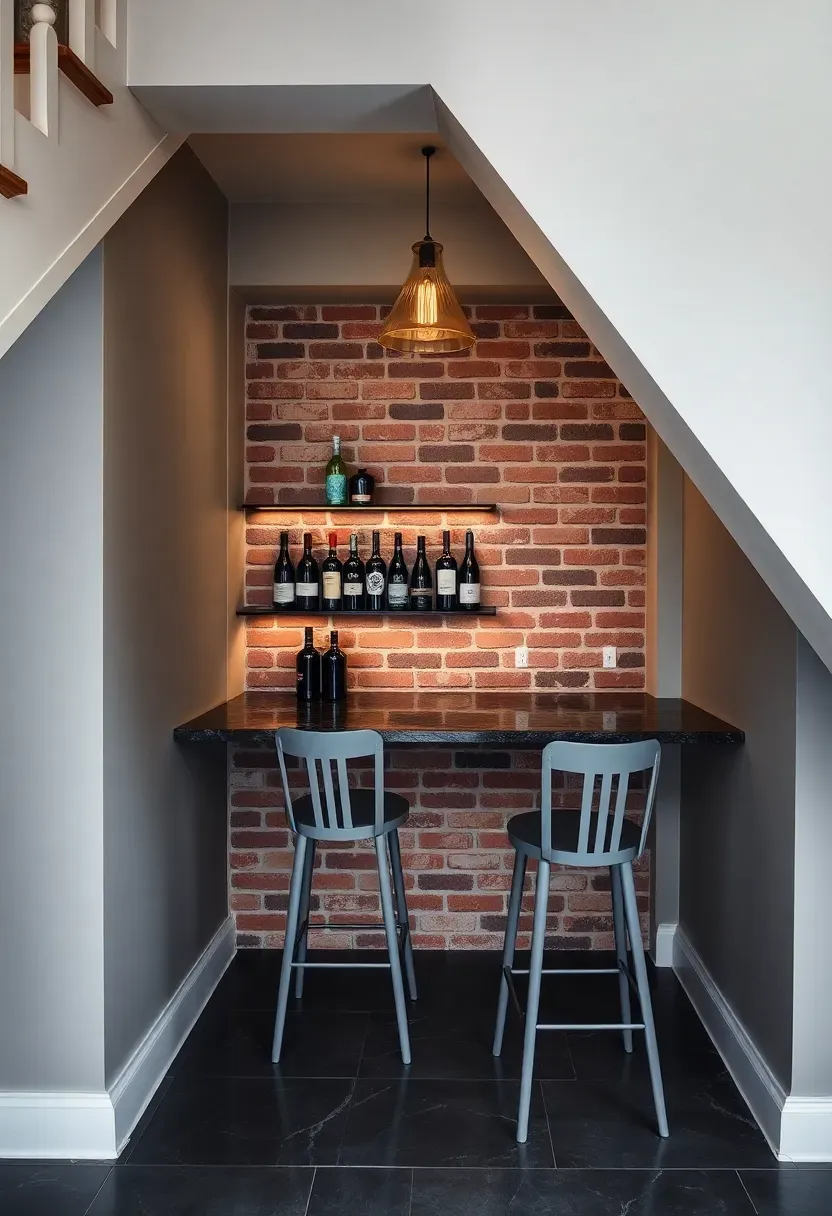
27. Under-Stair Bar Nook
Is it possible to create a genuinely functional bar in the space beneath a standard domestic staircase? Absolutely — and it's one of the most space-efficient uses of what is otherwise dead square footage. The key constraint is headroom: the sweet spot is the mid-section of the understairs triangle where adults can stand comfortably. A herringbone brick wine rack behind a frameless glass panel fills the deepest low-headroom section. A dark granite counter runs along the accessible zone at bar height, with two slender bar stools tucked beneath it. A single blown glass pendant light inside the nook provides both task illumination and a warm visual anchor.
Tips for Under-Stair Bars
- Install a small wine fridge beneath the counter if headroom permits — it occupies the awkward mid-height zone perfectly
- Use dark materials (slate, granite, dark brick) deliberately: the low ceiling feels intentional and cozy rather than cramped when the palette is dark
- Run a 13-amp socket and a single cold water feed to the counter before closing in the structure — retrofitting plumbing through a finished stair is extremely disruptive
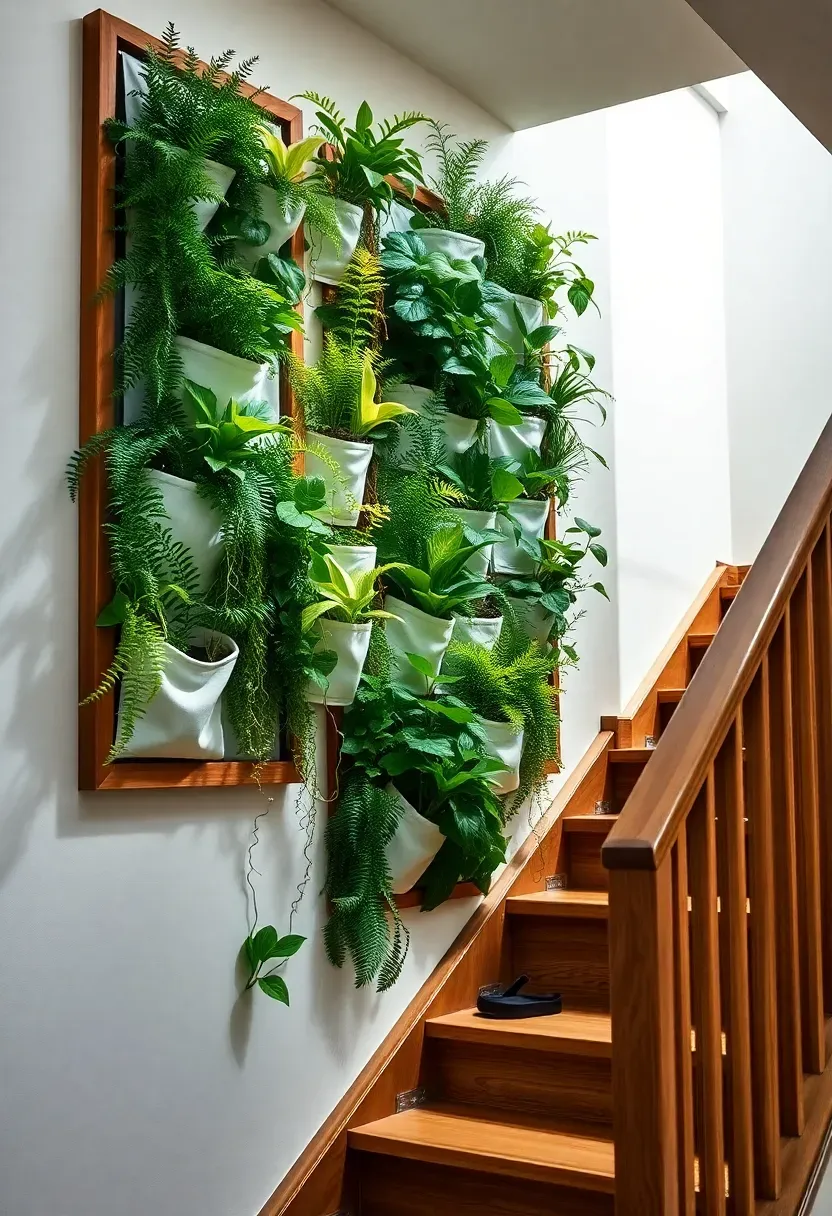
28. Biophilic Living Wall Beside Stairs
A staircase wall is typically the most neglected vertical surface in a house — a corridor of plaster that receives nothing but a coat of paint and a few picture hooks. Replacing it with a modular living wall fundamentally changes the experience of moving between floors: the air smells different, the visual texture shifts with seasonal growth, and the humidity benefits extend into the adjacent rooms. Felt pocket planters mounted to a teak frame hold a curated selection of ferns, pothos, and peace lilies — all chosen for tolerance of indirect light and for their air-purifying properties.
Tips for Stairwell Living Walls
- A permanent drip-irrigation feed from the loft above is far more reliable than manual watering — staircase walls are easy to forget in a busy household
- Weight-bearing: a saturated felt living wall adds roughly 20–30 kg per square metre; ensure the stud wall can carry the load
- Trim plants quarterly rather than waiting for them to become unruly; a neat living wall reads as curated, an unruly one reads as neglected
Recommended
Items for this idea
29. Family Stair-Slide Combo
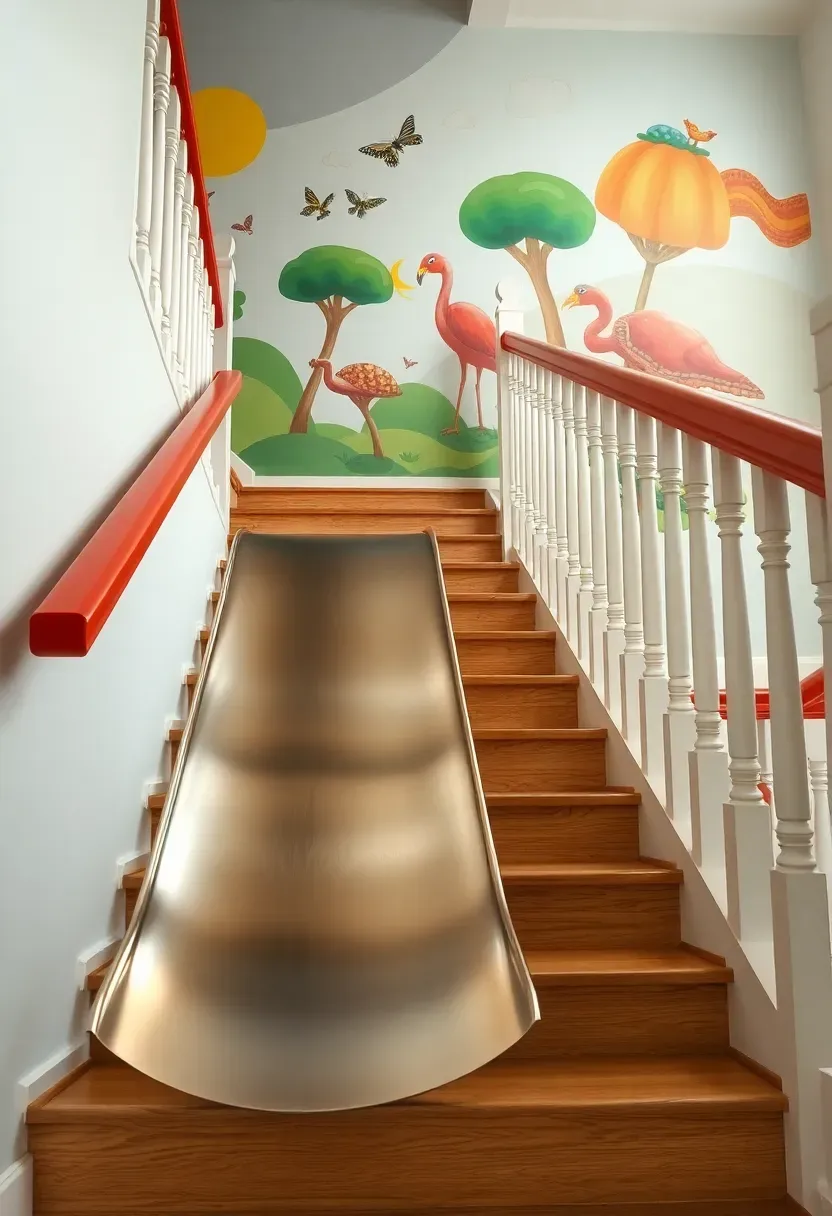
Remember: the best home is the one that makes people smile the moment they walk through the door. A stair-slide hybrid achieves that with unusual directness. Half the staircase width is given over to a polished stainless steel wave-form slide; the remaining half retains standard white oak treads for conventional ascent. The slide's handrail side uses a red rubber-coated tube rather than metal — warm to touch and clearly differentiated from the timber stair handrail. Primary colour murals on the adjoining walls signal the zone as playful without requiring expensive architectural intervention.
Tips for Residential Stair-Slides
- Commission a structural engineer to confirm the stair's support structure can carry the additional lateral forces a slide generates
- Polish the steel to at least a No. 4 directional finish — lower quality polishes develop drag lines that slow descent uncomfortably
- Ensure the slide exits onto a padded landing zone, not directly onto hard flooring; a recessed rubber mat flush with the floor is the tidiest solution
Quick FAQ
Should I choose open or closed risers for my staircase? Open risers make a staircase feel lighter and allow light to pass between floors, which suits modern and minimal interiors. Closed risers provide a more traditional look, are easier to carpet, and feel more solid underfoot — better for family homes with young children or elderly occupants.
Is floating stairs the same as cantilevered stairs? Not exactly. Floating stairs describe the visual effect of treads with no visible supports. Cantilevered stairs specifically describes the structural method — treads fixed into a wall at one end and unsupported at the other. All cantilevered stairs look floating, but a floating look can also be achieved with a hidden central spine beam.
Which railing material lasts longest outdoors? Stainless steel (grade 316) outlasts all other common railing materials in outdoor and coastal environments. It costs roughly twice as much as powder-coated mild steel but requires no maintenance beyond periodic washing, whereas coated steel needs re-coating every 7–10 years as the finish degrades.
Can under-stair storage be added to an existing staircase? Yes, and it's one of the more achievable DIY-adjacent projects when the staircase is accessible from the side. The primary structural consideration is ensuring the stringer (the diagonal side board carrying the treads) is not a load-bearing element that needs to remain intact — in most domestic staircases it isn't, but always verify before cutting.
What's the best lighting approach for a staircase if I don't want a major electrical installation? Battery-powered LED step lights with motion sensors can be surface-mounted to the riser or wall beside each tread without any electrical work. They activate on movement, run for 6–12 months on AA batteries, and are available in warm white 2700K tones that look far more considered than earlier generations of battery lighting.
The staircase you live with every day deserves the same creative attention as any other room in your house. Try at least one idea from this list — whether it's painting the handrail sage green this weekend or commissioning a floating walnut run for a major renovation — and you'll understand why architects treat vertical circulation as the spine of a home's entire interior narrative.
Pinterest cover for 29 AI Staircase Design Ideas to Transform Your Home's Vertical Space
About the author
OBCD
CGI visualization and interior design content. We create detailed 3D renders and curate practical design ideas for every room in your home.