25 AI Zen Garden Design Ideas
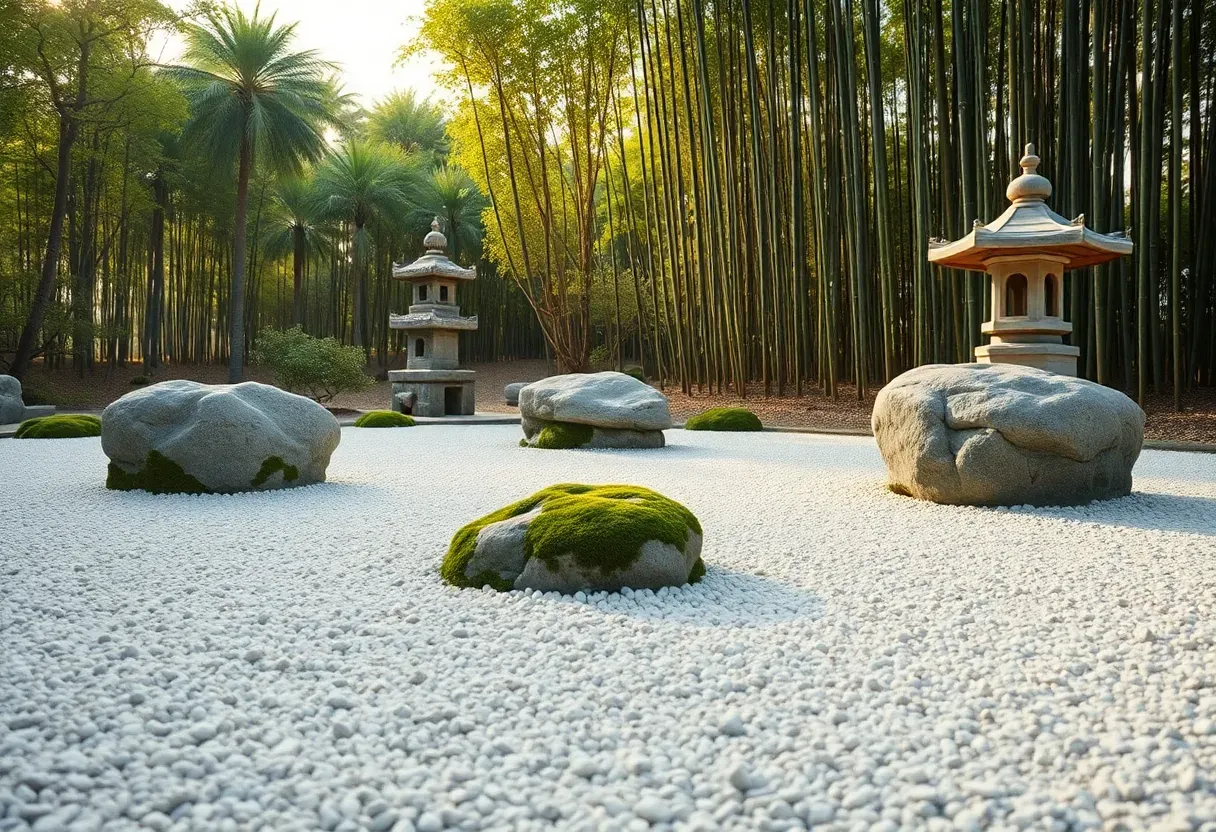
Picture a garden that asks nothing of you except to be still. No lawn to mow, no beds to weed — only gravel, stone, and silence shaped into something that quiets the mind the moment you step through the gate. That is the promise of a Japanese-inspired zen garden, and artificial intelligence is making the design process more accessible than ever. Describe your available space, preferred materials, and the feeling you want to cultivate, and AI tools will generate photorealistic concepts that bridge centuries-old garden philosophy with your specific backyard or courtyard. Below are 25 distinct ideas ranging from compact balcony retreats to sweeping residential landscapes.
In this article I've gathered diverse styles — classic karesansui, lush moss gardens, bamboo groves, and quietly modern interpretations — so you can mix, match, or borrow freely.
Table of Contents
- Classic Karesansui Dry Garden
- Moss and Stone Courtyard
- Bamboo Grove Pathway
- Stone Lantern Focal Point
- Minimalist Water Basin (Tsukubai)
- Raked Sand Ripple Patterns
- Stepping Stone Meditation Path
- Bonsai Display Garden
- Enclosed Karesansui Viewing Garden
- Modern Concrete and Gravel Zen Yard
- Koi Pond with Rock Surround
- Bamboo Water Spout (Shishi-odoshi)
- Night-Lit Stone Lantern Garden
- Wabi-Sabi Moss Wall Backdrop
- Compact Balcony Zen Corner
- Roji Tea Garden Path
- White Gravel and Black Lava Rock Contrast Garden
- Lichen-Covered Boulder Cluster
- Meditation Pavilion with Gravel Surround
- Minimalist Single-Boulder Garden
- Layered Stone Terrace Zen Space
- Gravel Labyrinth Meditation Garden
- Indoor Zen Garden Tray Installation
- Seasonal Maple and Gravel Garden
- Fusion Zen: Japanese Meets Scandinavian
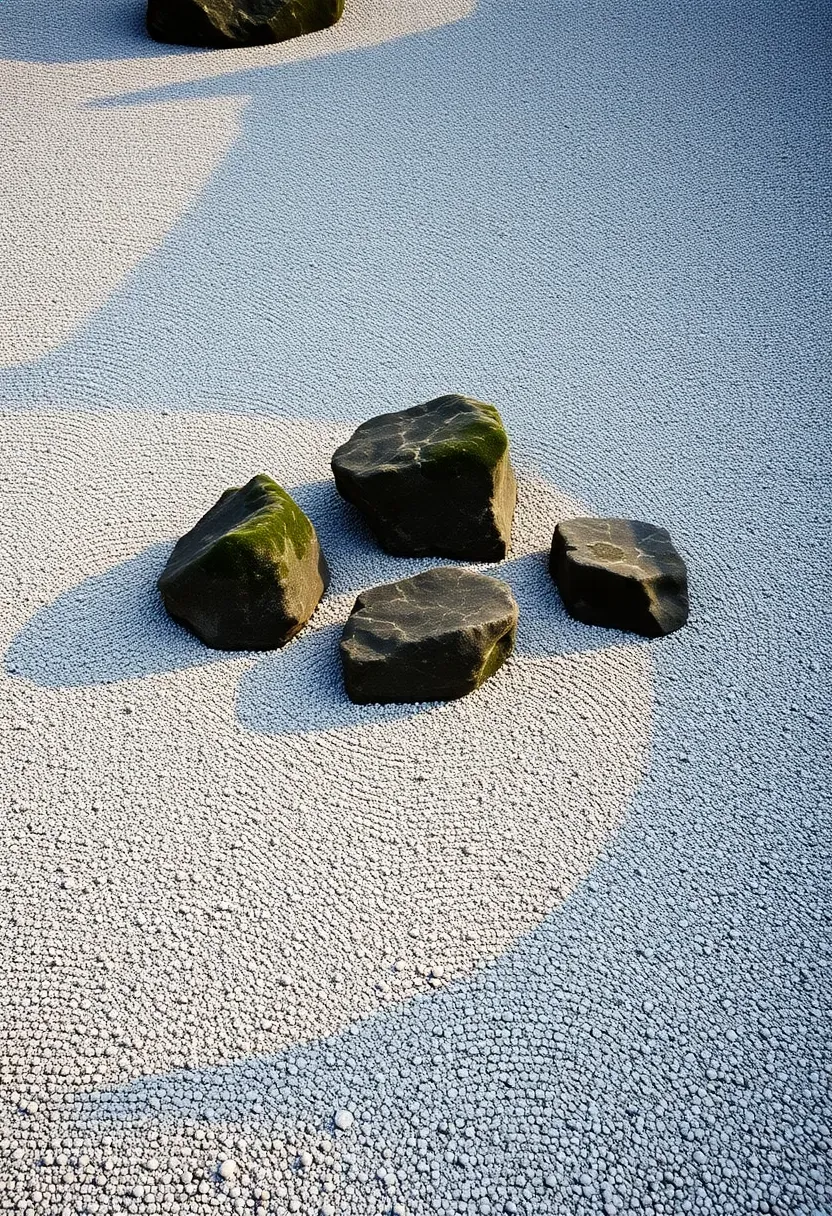
1. Classic Karesansui Dry Garden
Few garden forms carry more philosophical weight than the karesansui. Originating in 14th-century Kyoto temple compounds, this style arranges rocks to suggest islands or mountains within a sea of raked gravel. AI tools recreate the restraint masterfully — pulling from thousands of documented temple gardens to propose boulder placements and raking patterns tuned to your dimensions.
Why It Works
The minimalism removes visual noise, directing attention toward individual stones and the negative space between them. Maintenance is low: rake the gravel once a week, keep moss trimmed, and the garden essentially tends itself.
Design Tips
- Odd-number groupings: Place rocks in groups of three, five, or seven — even numbers feel static in Japanese aesthetics.
- Avoid symmetry: Offset boulders slightly so the eye travels across the composition rather than resting at the center.
- Choose angular stones: Flat-topped or angular granite reads as "mountain"; rounded river rocks suggest water.
We picked a few things that go well with this idea: Zen Sand Garden with Rake and Rocks (★4.6), Mini Zen Garden Rake Tools Kit (6-Piece) (★4.4) and Miniature Zen Garden Sand Rake Set (4-Pack) (★4.3). As an Amazon Associate we earn from qualifying purchases.
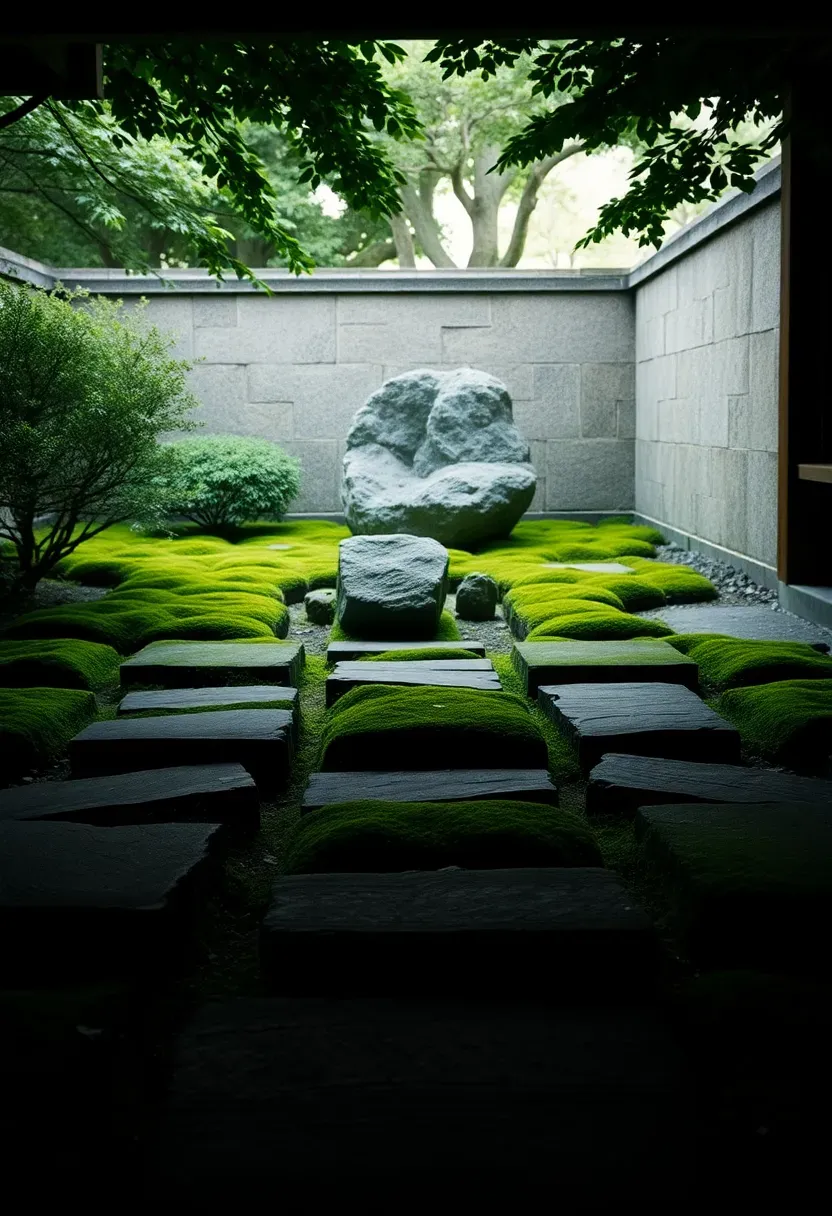
2. Moss and Stone Courtyard
The Setting
A closed courtyard where sunlight filters through overhead bamboo, and every surface between the stepping stones is carpeted in vivid green moss.
Why Moss Works in Zen Design
Moss signals age, moisture, and stillness — three qualities central to Japanese garden philosophy. Unlike grass, it never needs mowing, it thrives in shade, and its texture invites you to look closely rather than glance quickly. AI-generated concepts for moss gardens excel at proposing which varieties suit a microclimate: cushion moss for open patches, sheet moss for slopes, fern moss for shaded corners.
Pros and Cons
Pros: Year-round green color, extremely low maintenance once established, suppresses weeds naturally.
Cons: Requires consistent moisture — not ideal for dry climates without supplemental irrigation. Foot traffic will eventually thin it; use stepping stones to redirect walking routes.
We picked a few things that go well with this idea: Natural Granite Japanese Pagoda Lantern Statue (★4.8), Solid Rock 2-Piece Concrete Pagoda Lantern (17") (★4.3) and Glitzhome Faux Concrete Pagoda Garden Statue (16") (★4.8). As an Amazon Associate we earn from qualifying purchases.
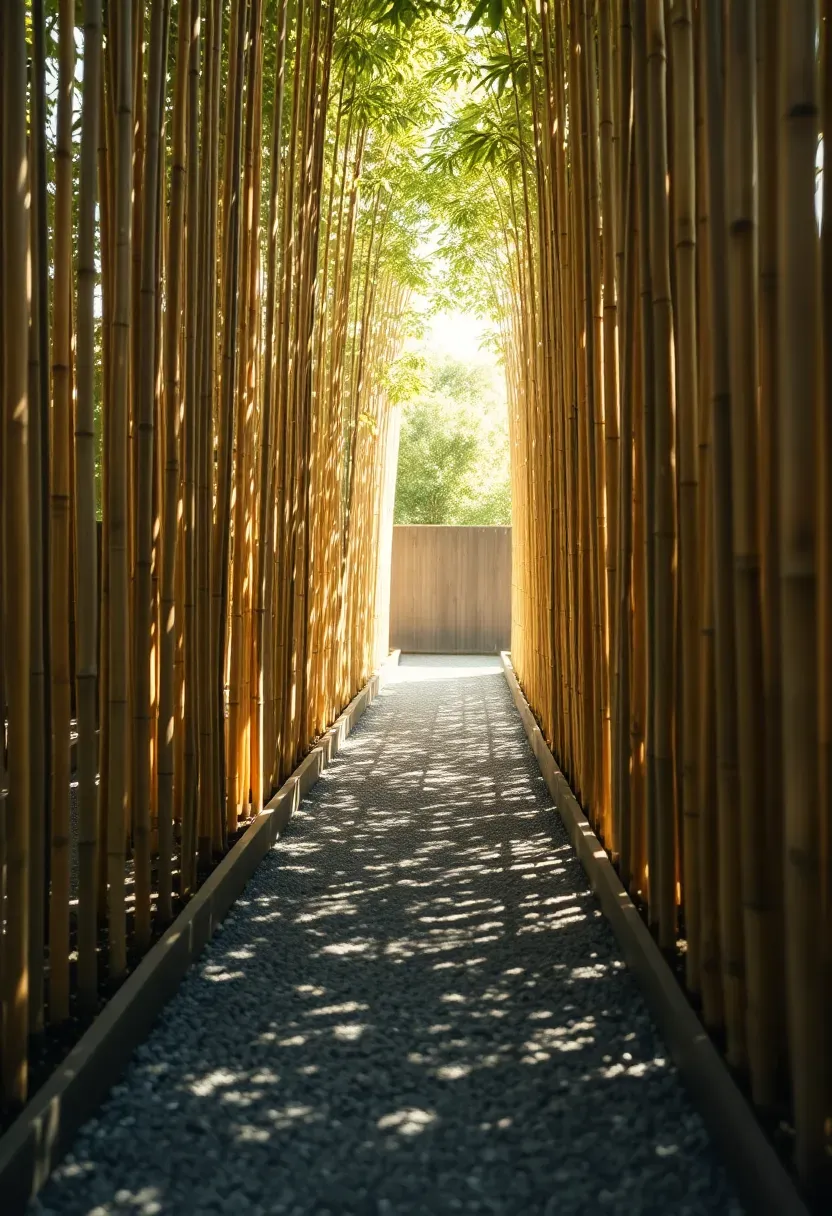
3. Bamboo Grove Pathway
A passage lined with tall bamboo converts an ordinary garden walkway into a transitional experience. The rustle of canes overhead, the shifting shadows on gravel below — the journey to a seating area becomes as purposeful as the destination. AI design tools can model bamboo density, species height, and planting distances for a given corridor width, ensuring the grove looks lush without overrunning adjacent beds.
Step 1: Choose Your Bamboo Species
Running bamboo (Phyllostachys) creates denser groves quickly but needs root barriers. Clumping bamboo (Fargesia) is better behaved in small gardens.
Step 2: Install Root Barriers
Bury 60 cm deep HDPE root barriers on all sides before planting. This single step prevents most bamboo regret stories.
Step 3: Set the Ground Plane
Lay a 5 cm bed of fine gray gravel along the path. Gravel compresses underfoot, drains instantly, and contrasts beautifully with bamboo's golden culms.
What to Watch Out For
Wind can topple young bamboo before root systems anchor; stake new plants for the first season. In very cold climates, choose a species rated two zones hardier than your minimum temperature.
We picked a few things that go well with this idea: Bamboo Accents 12" Half-Round Spout Fountain Kit (★4.4), Bamboo Accents 36" Traditional Bamboo Fountain with Pump (★4.3) and Bamboo Accents 18" Branch Arm Fountain Kit (★4.4). As an Amazon Associate we earn from qualifying purchases.
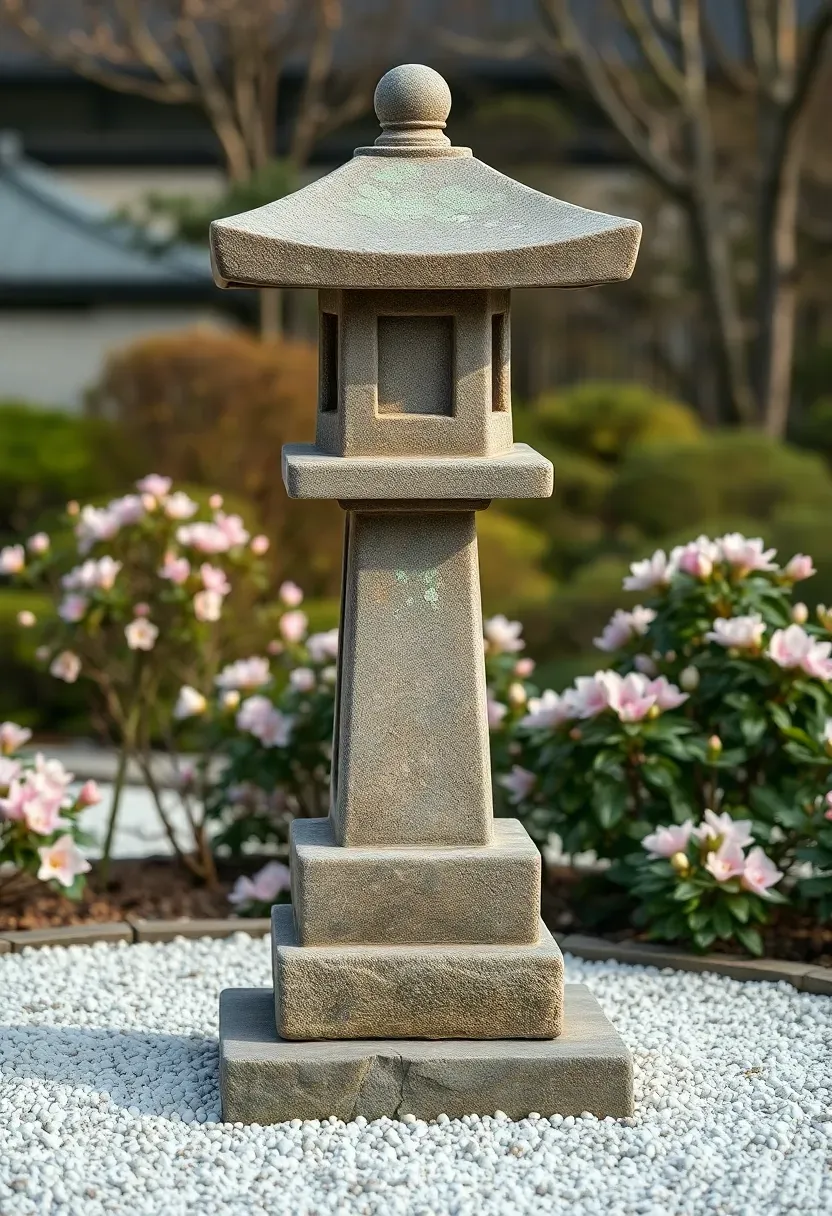
4. Stone Lantern Focal Point
The tōrō — stone lantern — has anchored Japanese gardens for over a thousand years. Originally functional (lighting temple paths), today it serves as a sculptural anchor that draws the eye and grounds the composition. AI-generated layouts typically position the lantern at a path's first bend or beside a water feature, where it reads as a moment of pause rather than a destination.
Selecting the Right Lantern Style
| Style | Best Setting |
|---|---|
| Yukimi (snow-viewing) | Beside a pond or low planting |
| Kasuga (tall pedestal) | Open gravel plane or lawn |
| Oki (pedestal-free) | Moss or groundcover beds |
| Ikekomi (buried post) | Path edges and entrances |
Placement Tips
- Lean the lantern 2–3 degrees from vertical — perfect uprightness looks mechanical; slight imperfection reads as natural.
- Position it so the fire chamber faces the main viewing point from your seating area.
- Surround the base with low-growing azaleas or mondo grass rather than bare gravel; the contrast in texture softens an otherwise stark composition.

Recommended
Items for this idea
5. Minimalist Water Basin (Tsukubai)
The Core Idea
A tsukubai is a low stone basin fed by a bamboo spout — originally a place to rinse hands before a tea ceremony, now prized for the sound and movement it introduces to an otherwise still garden.
Why a Tsukubai Transforms a Space
Sound is the missing dimension in purely visual garden design. The soft trickle of water over stone is measurably relaxing — studies on soundscapes consistently show that moving water reduces perceived stress. An AI-designed tsukubai arrangement plots the basin position relative to existing slopes, ensuring gravity-fed water flow without a visible pump housing.
Installation Essentials
- Basin should be low enough to require bending — this posture of humility is intentional in Japanese culture.
- Use a recirculating submersible pump hidden under a gravel pit covered by a steel grate.
- Surround with koke (moss) and flat pebbles; avoid flashy colored stones.

6. Raked Sand Ripple Patterns
Raking is the garden's form of calligraphy — repeated, meditative, and temporary. Each morning the pattern is reset; each session is a fresh practice. AI tools generate pattern libraries — straight parallel lines, concentric ovals around boulders, diagonal crosshatch — that you can print and use as raking guides.
Classic Patterns and Their Meanings
- Parallel lines (nami): Represent calm water or ocean waves; the most beginner-friendly pattern.
- Concentric circles (uzumaki): Energy radiating from a central stone; suggests a stone dropped in still water.
- Crosshatch (Kagome): A weave pattern traditionally associated with warding off evil.
Raking Gear
A wooden or bamboo garden rake with tines set 3–5 cm apart produces the cleanest grooves. Metal rakes leave marks that erode in rain too quickly. Keep your rake dry and lightly oiled to prevent tine warping.
Recommended
Items for this idea
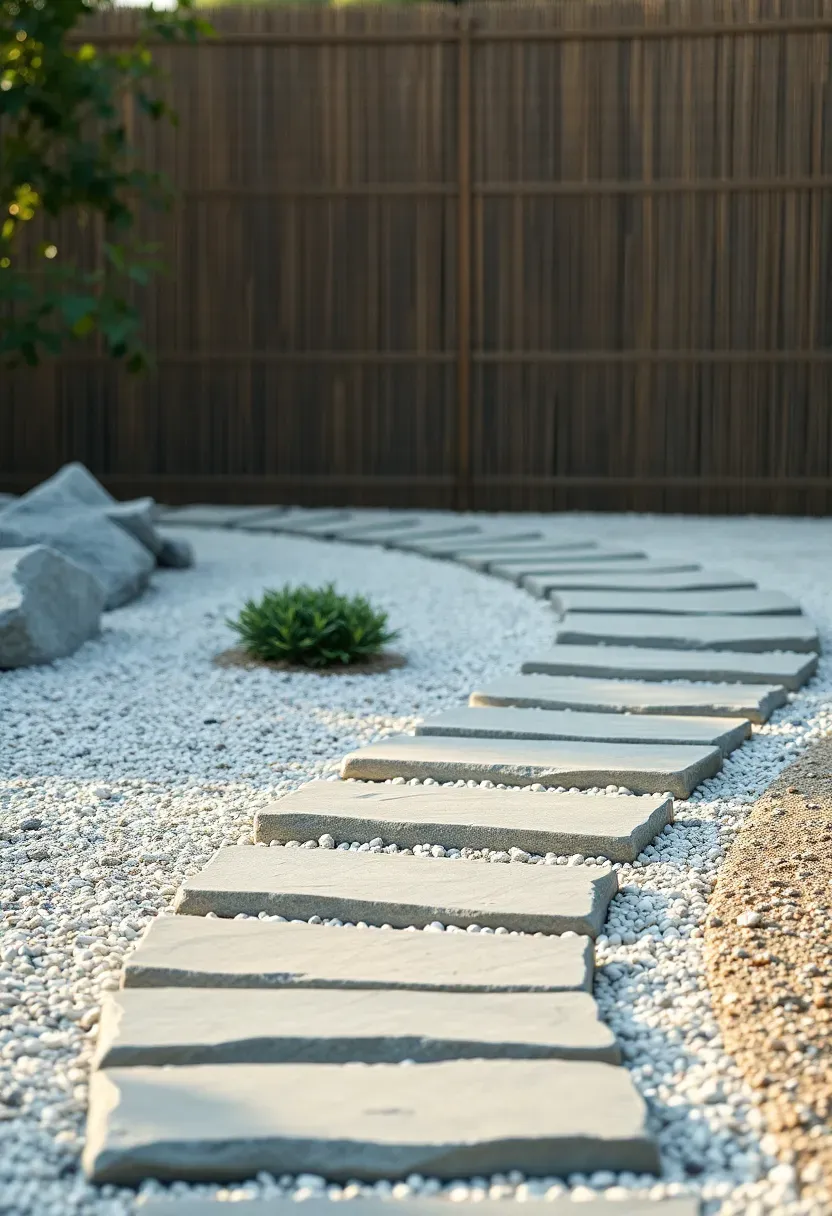
7. Stepping Stone Meditation Path
A meditation path is not about getting somewhere faster — it is about slowing you down. Irregularly spaced flat stones placed slightly closer than a normal stride force a shortened, deliberate step that shifts attention from destination to the act of walking itself.
Spacing Logic
- Normal spacing (60 cm): Efficient transit. For service paths or busy routes.
- Shortened spacing (40–45 cm): Zen pace. Slightly awkward stride = full awareness of foot placement.
- Interrupted spacing (varied 35–65 cm): Maximum engagement. Stepping stones feel discovered rather than installed.
Stone Selection
Irregular fieldstone or split granite slabs feel more organic than perfectly cut pavers. Set each stone 2–3 cm above the surrounding gravel so they drain cleanly after rain and visually "float" above the ground plane.
8. Bonsai Display Garden
Origins of the Form
Bonsai arrived in Japan from China during the Heian period (794–1185 CE), where it was practiced by scholars as a contemplative art. The word bonsai — "tray planting" — describes the method but not the philosophy: each tree is a living sculpture that captures the essence of age and wildness in miniature.
Modern Interpretation
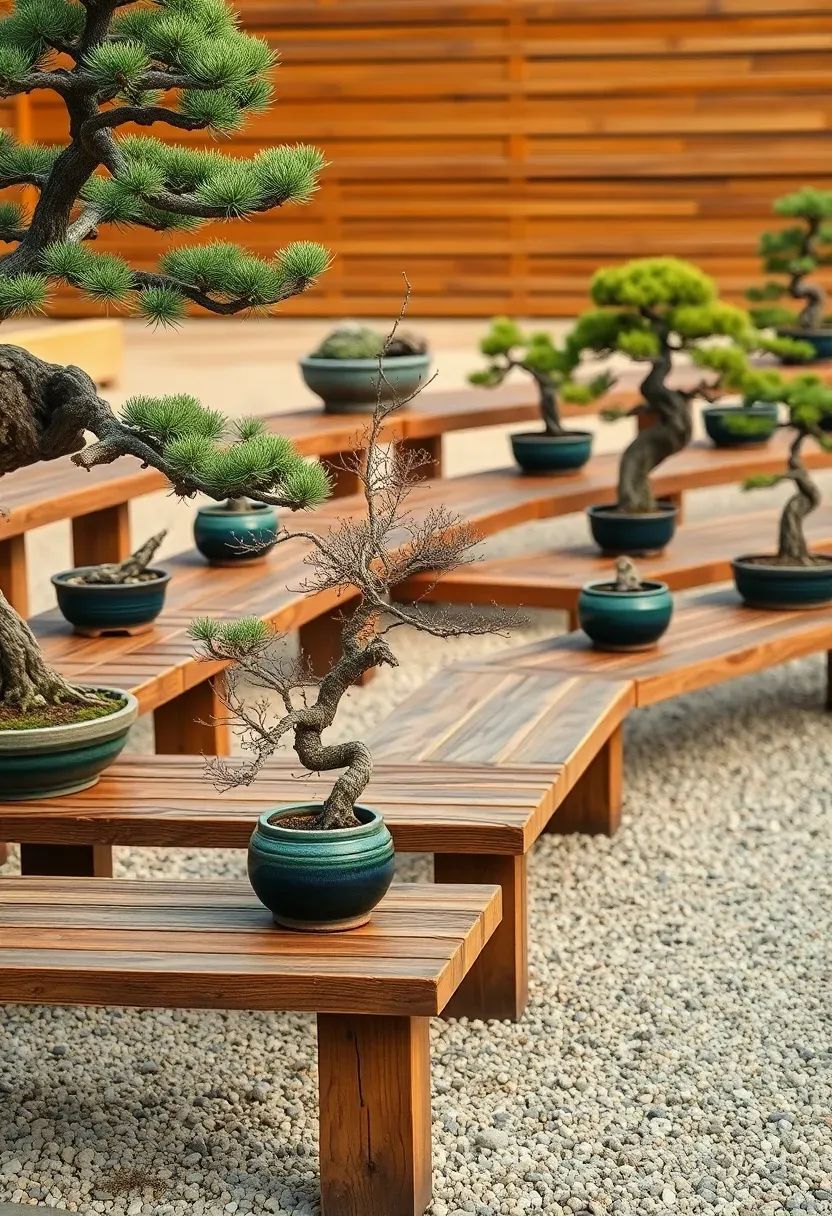
AI-generated bonsai garden layouts arrange display benches at staggered heights so no tree obscures another. The background is typically a panel of raked gravel or a bamboo fence that provides a neutral foil for each tree's individual silhouette.
How to Apply at Home
- Bench height variation: 40 cm, 70 cm, and 90 cm stages allow you to appreciate each tree from a different angle.
- Species grouping: Group by style (formal upright, windswept, cascade) rather than species for visual coherence.
- Seasonal rotation: Move trees in peak display to the front row; rest others in a growing area with better light.
- Gravel surround: White or tan decomposed granite beneath benches reflects light upward onto lower canopies.
Recommended
Items for this idea
9. Enclosed Karesansui Viewing Garden
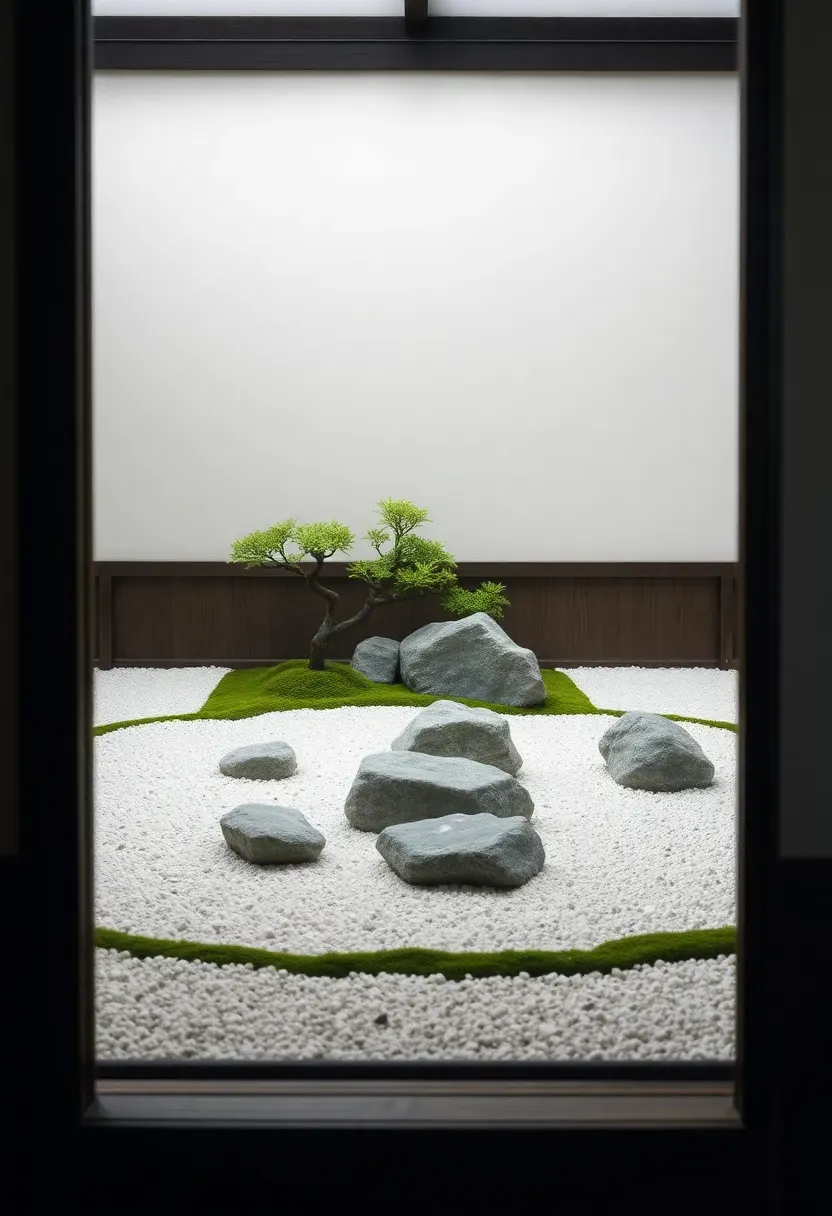
The most contemplative of all zen garden formats: a sealed composition viewed from a fixed point — typically a engawa (verandah) or window seat — and never entered. The garden becomes a painting that changes with the light, the seasons, and the weather.
Why Never Enter?
The untouched surface is the point. Footprints break the illusion of water. Viewing from outside creates psychological distance that deepens contemplation — you observe rather than participate, which is a specific meditative mode.
Designing for a Fixed Viewpoint
AI tools shine here: feed in your window dimensions and viewing distance and the algorithm places rocks to appear in balanced proportion from precisely that vantage. Stones that look right from one angle often look wrong from another — AI eliminates the guesswork.
Pros and Cons
Pros: Near-zero maintenance; no foot traffic means raked patterns last weeks.
Cons: Works only where a clear, unobstructed viewing window or seat exists. Not ideal for gardens that also serve active social functions.
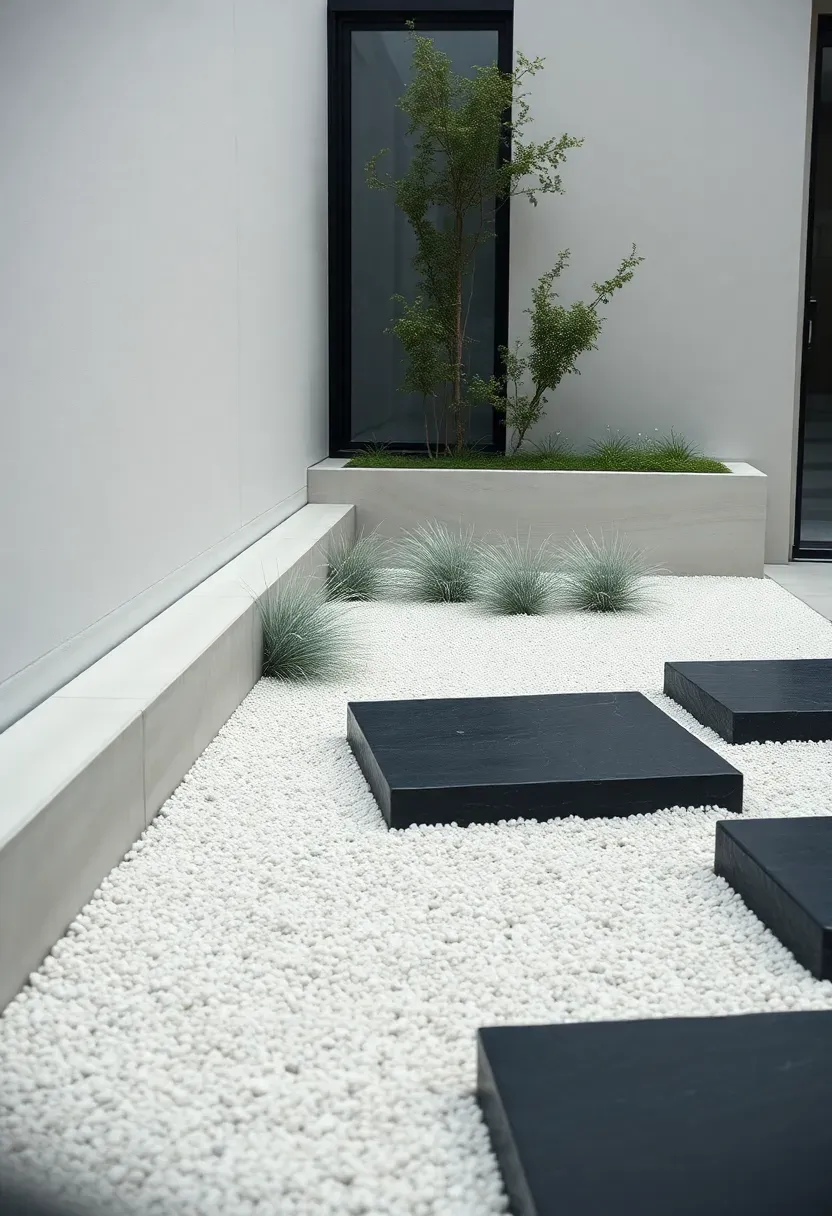
10. Modern Concrete and Gravel Zen Yard
Comparing: Traditional Zen vs. Modern Zen
The classic karesansui uses raw stone, aged wood, and hand-raked gravel. The modern interpretation swaps weathered timber for polished concrete, adds clean-edged steel planting borders, and might introduce black or charcoal gravel instead of white.
Traditional Approach
Warm, earthy palette; irregular edges; moss encouraged; every surface shows age. Best for cottage homes or traditional Japanese architecture.
Modern Approach
Cool, geometric palette; crisp edges; polished or brushed concrete; minimal plant material. Perfectly suited to contemporary architecture, townhouse courtyards, or office lobby gardens.
What to Choose
Choose traditional if: your home has warm-toned timber, exposed brick, or you value organic imperfection.
Choose modern if: your architecture features concrete, glass, and steel, or you want the garden to feel intentionally curated rather than aged.
Recommendation
You do not have to pick one entirely. A modern border frame containing a traditionally raked interior creates compelling tension between control and acceptance.
Recommended
Items for this idea
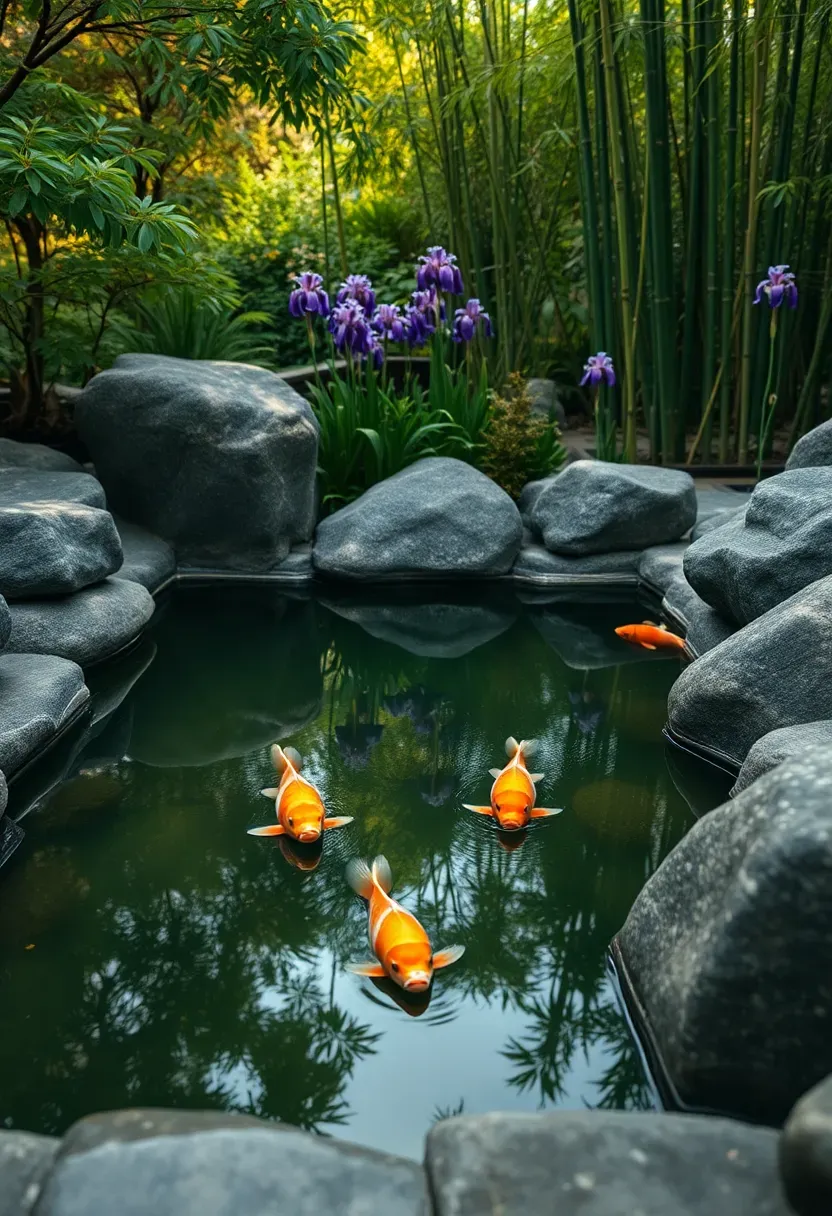
11. Koi Pond with Rock Surround
A koi pond introduces life — shimmering movement beneath still water — into what might otherwise be a static composition. The fish themselves become living calligraphy: orange on black, white on blue-green, always moving but never hurrying.
Key Design Principles
Depth matters more than surface area: koi need at least 120 cm depth to overwinter safely and escape heron predation. Surround edges with boulders that step into the water so koi can shelter under overhang during summer heat.
Plant Selection for Rock Surrounds
- Iris ensata (Japanese iris) — tall vertical element, flowers in early summer
- Acorus gramineus (sweet flag) — low, grass-like, drapes naturally over stone edges
- Nelumbo (lotus) — floats on water surface, classic Japanese aesthetic
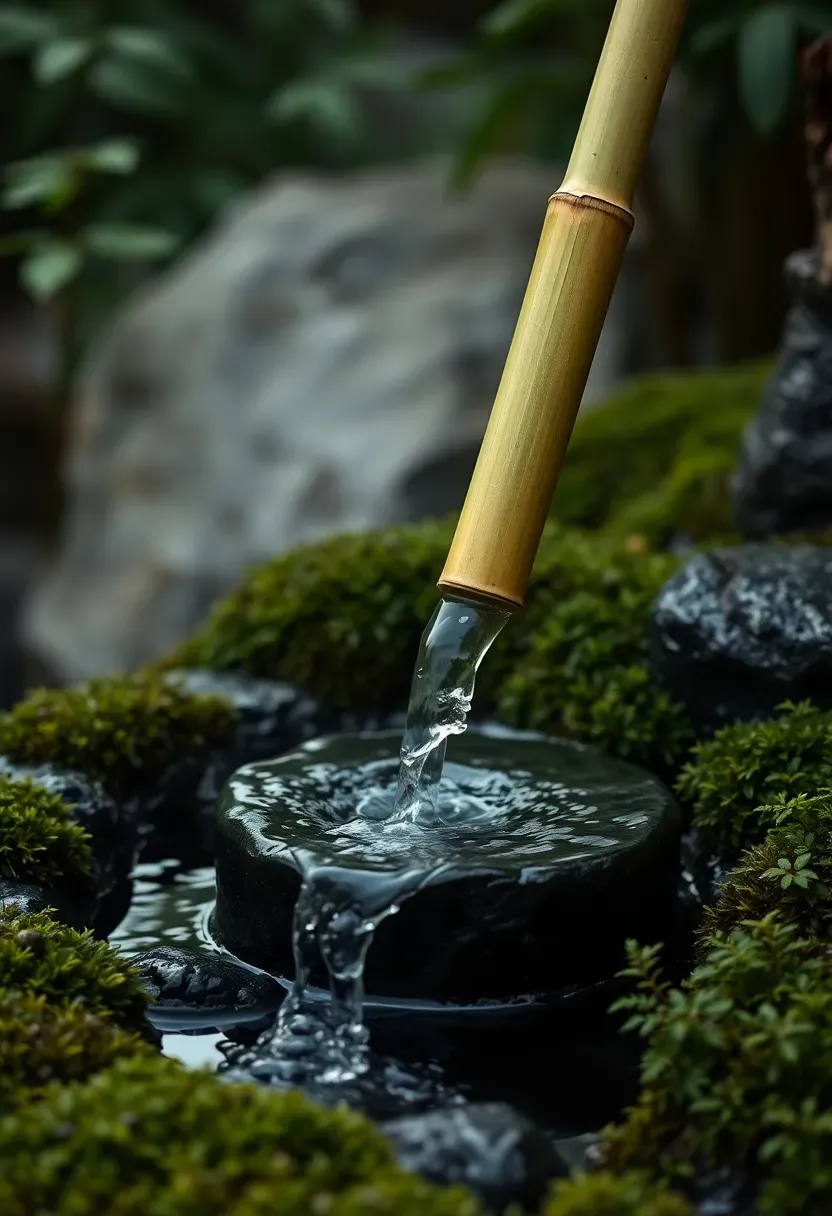
12. Bamboo Water Spout (Shishi-odoshi)
Originally designed to frighten deer from rice paddies, the shishi-odoshi — a pivoting bamboo tube that fills, tips, empties, and resets with a sharp knock against a stone — has become one of the most iconic sounds of the Japanese garden. AI-generated concepts typically pair it with a shallow water basin, bamboo screen, and moss surround for a tightly composed water feature that needs almost no footprint.
Building One Yourself
The mechanics are simple: a bamboo tube balanced on a wooden peg, positioned so water from a recirculating pipe fills the open end slowly. When it tips, the other end strikes a resonance stone. Total build time: an afternoon. Required materials are widely available at bamboo supply shops.
Sound as Design Material
The irregular rhythm of the shishi-odoshi — silence, silence, knock — teaches the garden visitor to be present for the next strike rather than mentally elsewhere.
Recommended
Items for this idea
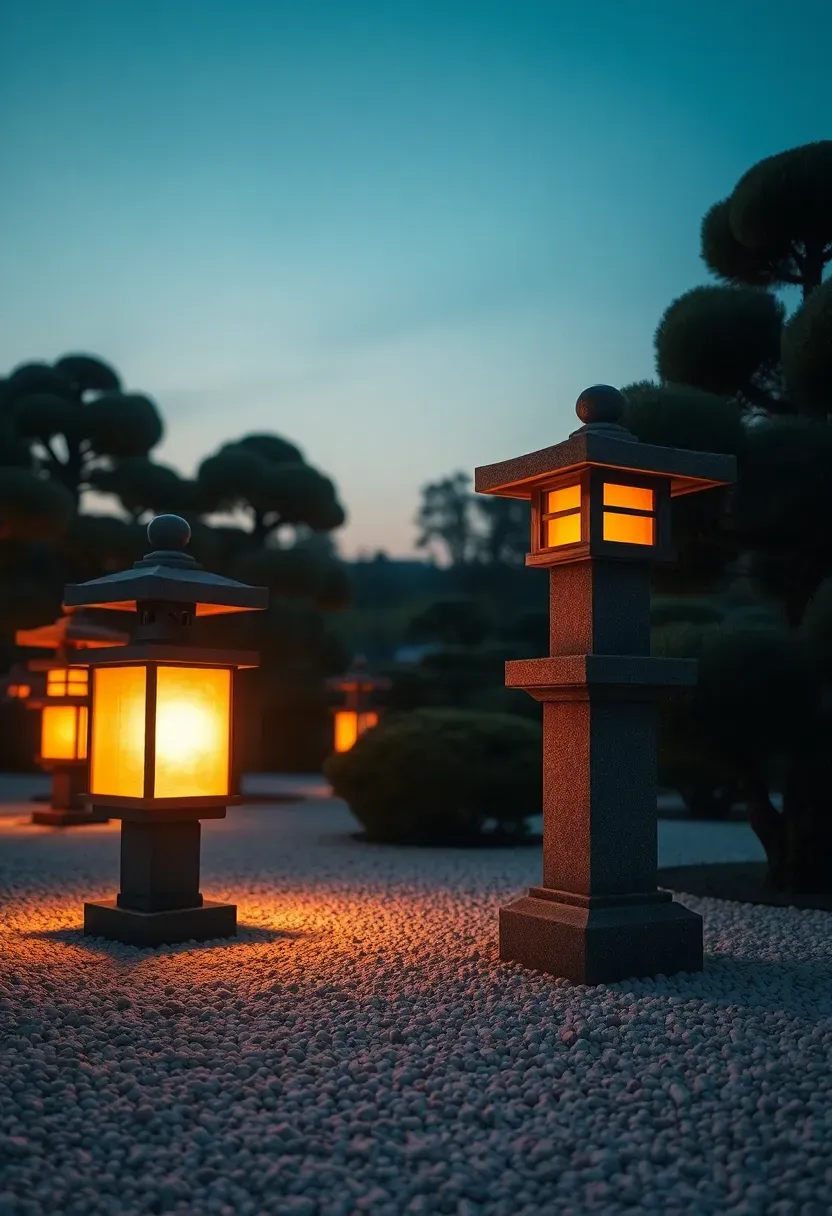
13. Night-Lit Stone Lantern Garden
Daylight reveals the garden's structure; nightfall reveals its mood. Solar-powered LED inserts placed inside stone lanterns cast warm amber light across raked gravel, creating shadow patterns that the midday sun cannot. AI-designed night garden layouts map light cones and shadow directions so that every stone casts an intentional silhouette rather than an accidental one.
Lighting Layers
- Primary: Stone lantern inserts (warm white or amber, 2700K maximum)
- Secondary: Path edge uplights hidden under stepping stones
- Accent: Single-spot uplights aimed at specimen boulders or bonsai
Keep overall light levels low — a zen garden at night should feel like candlelight, not a parking lot.
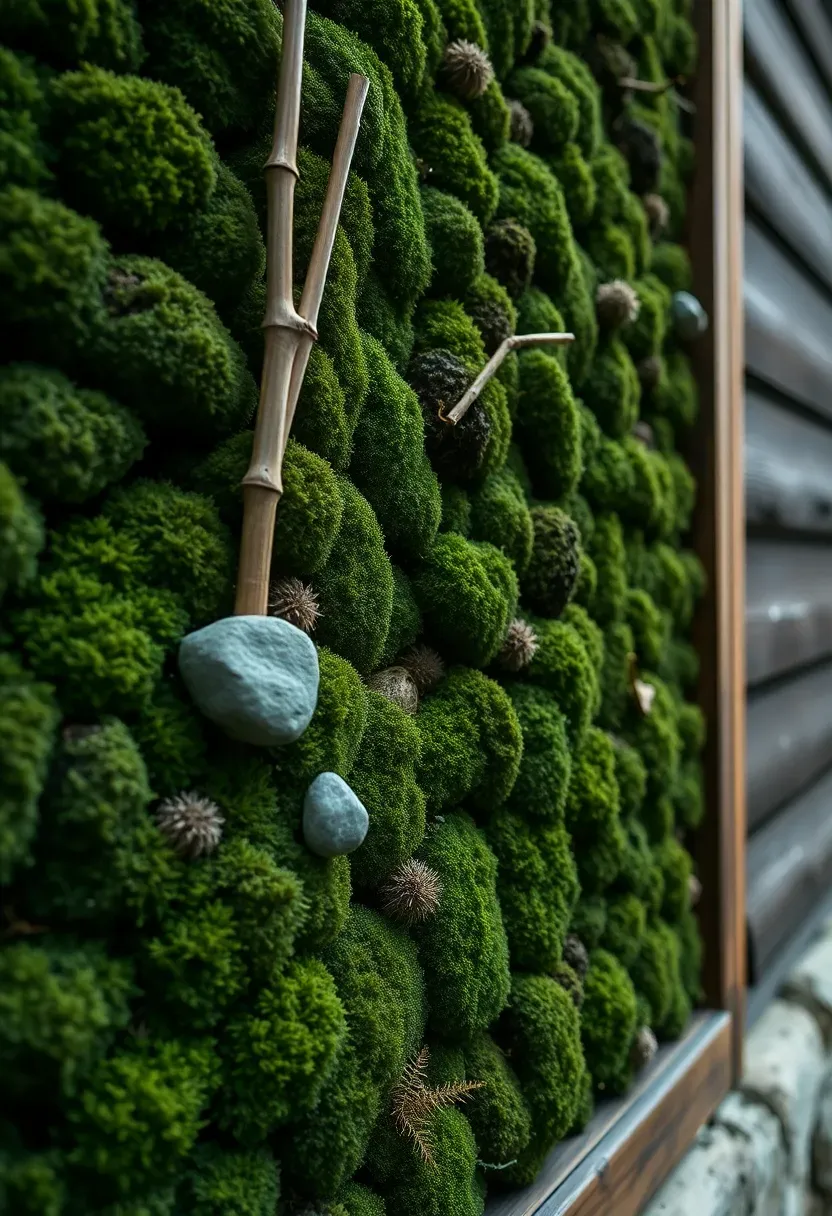
14. Wabi-Sabi Moss Wall Backdrop
Wabi-sabi — beauty found in imperfection and transience — finds its perfect material in moss. A living moss wall serves as a backdrop for stone arrangements or bonsai displays, its uneven texture and gradually shifting color providing the "imperfect perfect" that Japanese aesthetics prize. AI concepts for moss walls specify species mixes that produce layered height variation and shade tolerance ratings for north-facing aspects.
How to Apply at Home
- Frame it: A simple timber frame or recessed wall panel contains the moss and signals intentionality.
- Irrigation: Mist twice daily during dry periods; a timer-controlled misting system makes this effortless.
- Companion plants: Insert small ferns or a single stalked iris into the moss surface for dimensional interest.
- Allow weathering: Resist the urge to "fix" brown patches — seasonal color shifts are the point.
Recommended
Items for this idea
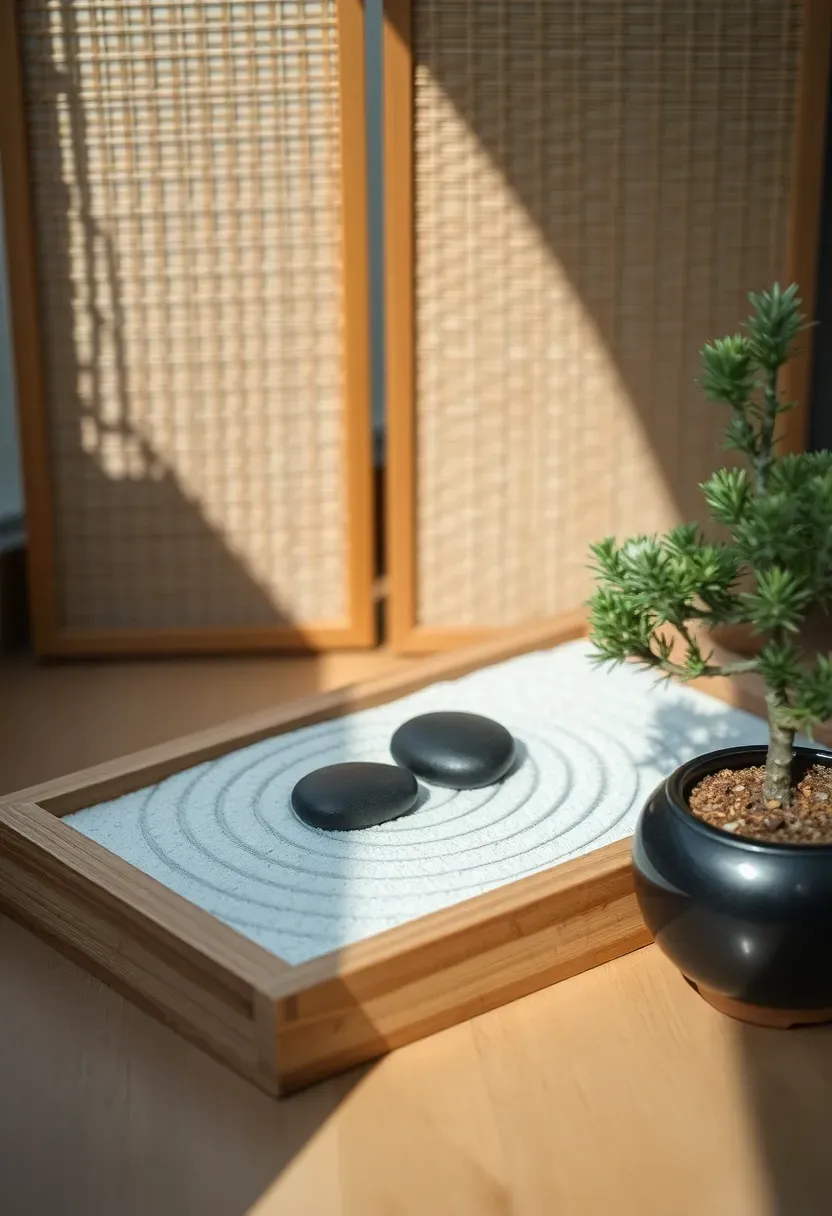
15. Compact Balcony Zen Corner
No yard? No problem. A 60 × 90 cm wooden tray filled with fine sand, two carefully chosen river stones, and a single bonsai juniper creates a fully functional zen garden on a balcony table. AI tools specifically optimized for small-space design can propose exact tray dimensions, sand depth, stone placement, and companion plant selection for a given balcony size and light exposure.
Essential Elements for a Tray Zen Garden
- Tray: Untreated cedar or hinoki cypress — both weather gracefully and complement sand tones.
- Sand depth: 5–7 cm minimum for raking satisfaction.
- Stones: Two or three pieces maximum. More stones = less serenity.
- Mini rake: A 15 cm bamboo rake is sufficient for most tray gardens.
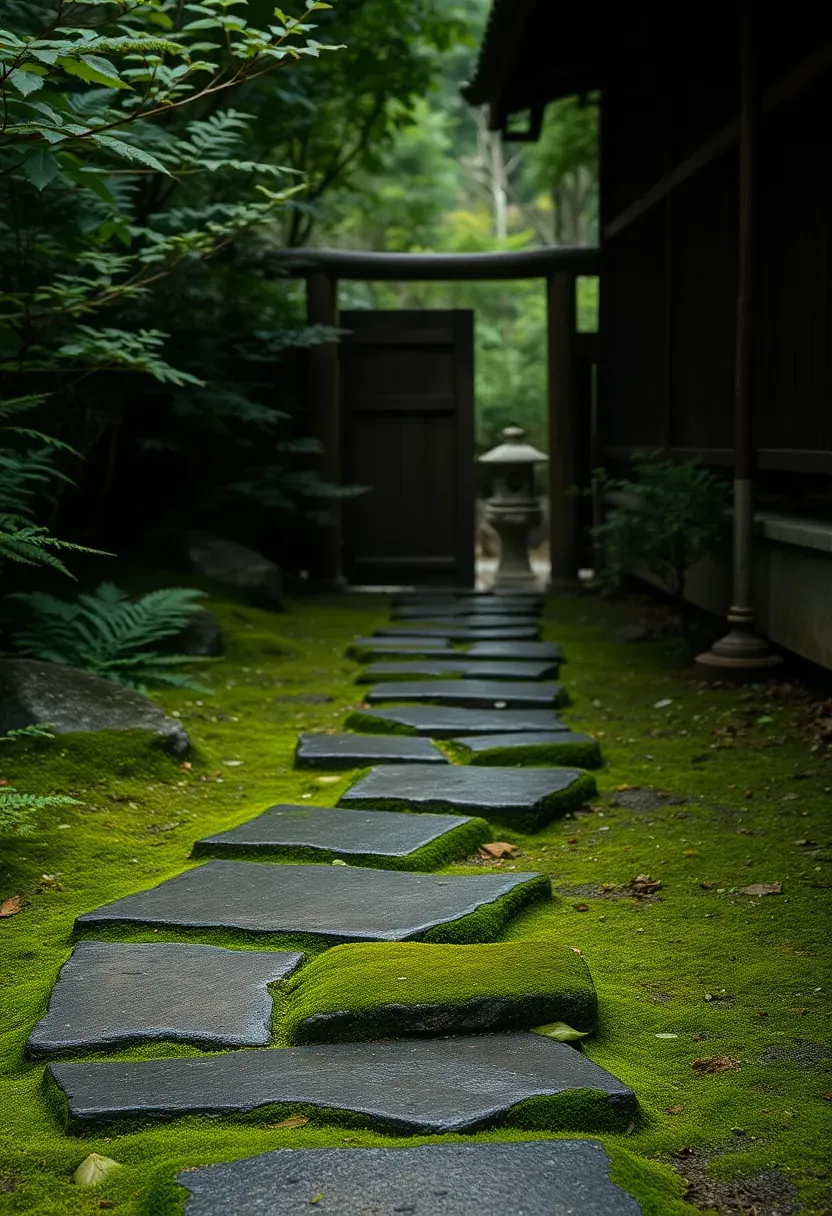
16. Roji Tea Garden Path
The roji — literally "dewy path" — is the garden sequence leading to a tea house. Its design purpose is transformation: as you walk its short distance, you leave the everyday world behind and enter a state of quiet receptivity appropriate for the tea ceremony. Every element — a glimpsed stone, the rustle of bamboo, a half-hidden lantern — is choreographed to deepen that transition.
Origins
The roji concept was refined by tea master Sen no Rikyū in the 16th century. He specified that the path be short enough to walk in minutes but rich enough in sensory detail to feel like a longer journey.
Modern Interpretation
Even without a tea house, the roji principle applies to any garden passage. AI tools model a roji sequence by mapping sensory transitions: from bright open entry to shaded mid-path, to a final turn that reveals the destination. Plant placement, stone curvature, and overhead canopy are all calibrated for this theatrical effect.
How to Apply at Home
- Start with a gate or threshold marker (a simple timber post is enough).
- Introduce a mid-path pause point — a bench, a tsukubai, or a view stone.
- Ensure the destination is not visible from the start; the path should unfold gradually.
- Keep plant material low and dark green along the edges to focus light toward stepping stones.
Recommended
Items for this idea
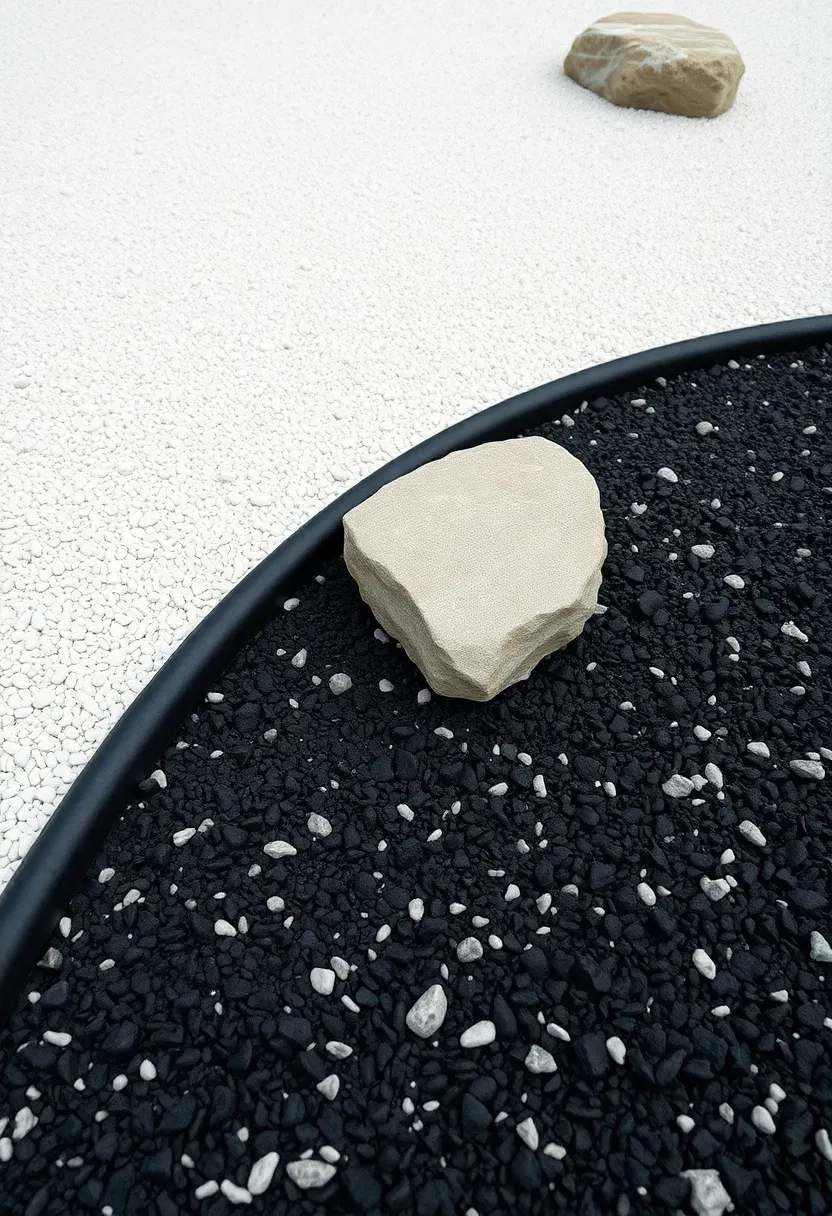
17. White Gravel and Black Lava Rock Contrast Garden
Monochromatic Japanese gardens traditionally use a single gravel type. Introducing black lava rock alongside white gravel creates a deliberate tension — yin and yang made literal in the ground plane. AI-generated concepts for this style propose organic boundary lines between the two materials that suggest moving water rather than a hard edge.
Execution Notes
- The boundary line between white and black should flow in a single gentle curve, not zigzag.
- Use a flexible plastic edging strip buried 5 cm deep to prevent gravel migration over time.
- A single pale granite boulder placed where the boundary curves most sharply anchors the composition visually.
18. Lichen-Covered Boulder Cluster
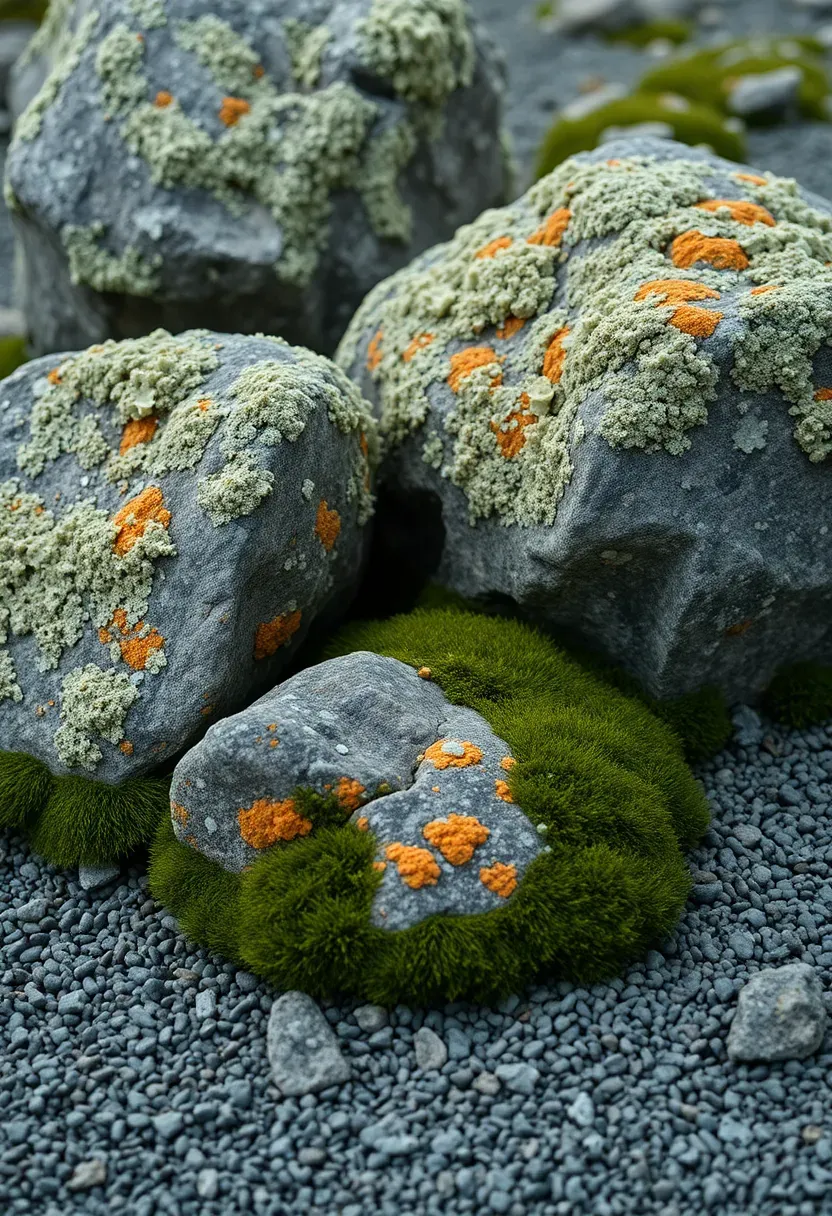
Lichen is time made visible. A boulder colonized by silver-green, orange, or white lichen communicates decades of undisturbed stillness — the ultimate zen signal. Sourcing pre-lichened boulders from a quarry or salvage yard gives an instant-ancient quality that even the best new stonework cannot replicate. AI tools help identify stone species and surface textures most likely to support lichen growth in a given climate.
Placement Strategy
Group three boulders in a tight triangle — the largest at back-left, medium at right, smallest partially buried at front-center. This arrangement, called sanzon (three deities), recurs across centuries of Japanese garden design because it creates visual depth on a flat ground plane.
Recommended
Items for this idea
19. Meditation Pavilion with Gravel Surround
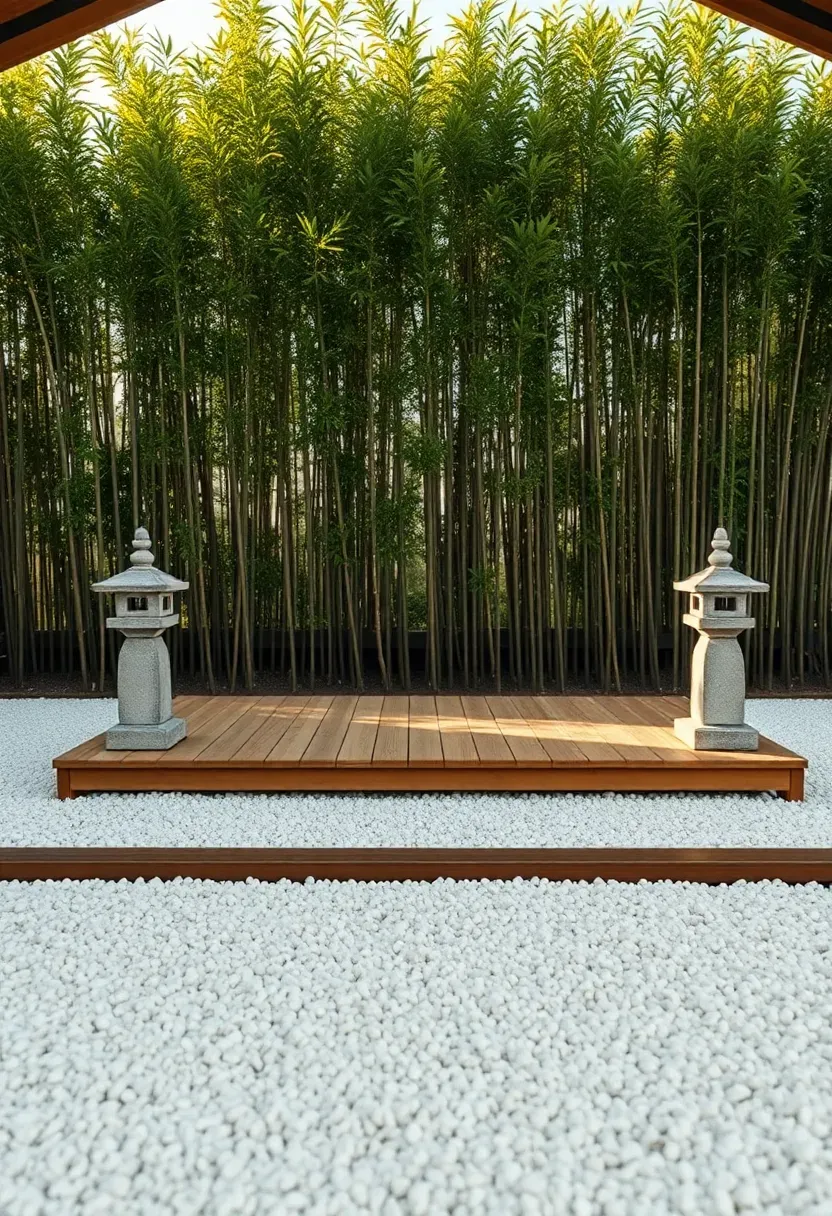
A low timber platform — 30–40 cm above grade — positioned at the geometric center of a gravel garden gives the meditator a seat at the composition's heart. From this point every raked line radiates outward, reinforcing the sensation of being centered. AI layouts for pavilion gardens compute the platform's ideal size relative to the garden's total area: typically 5–8% of the ground plane for visual balance.
Structure Notes
Untreated cedar or black-stained timber both work well. Leave gaps between deck boards wide enough to see the gravel below — this permeability connects the platform to the garden rather than interrupting it. Four corner lanterns mark the space without enclosing it.
20. Minimalist Single-Boulder Garden
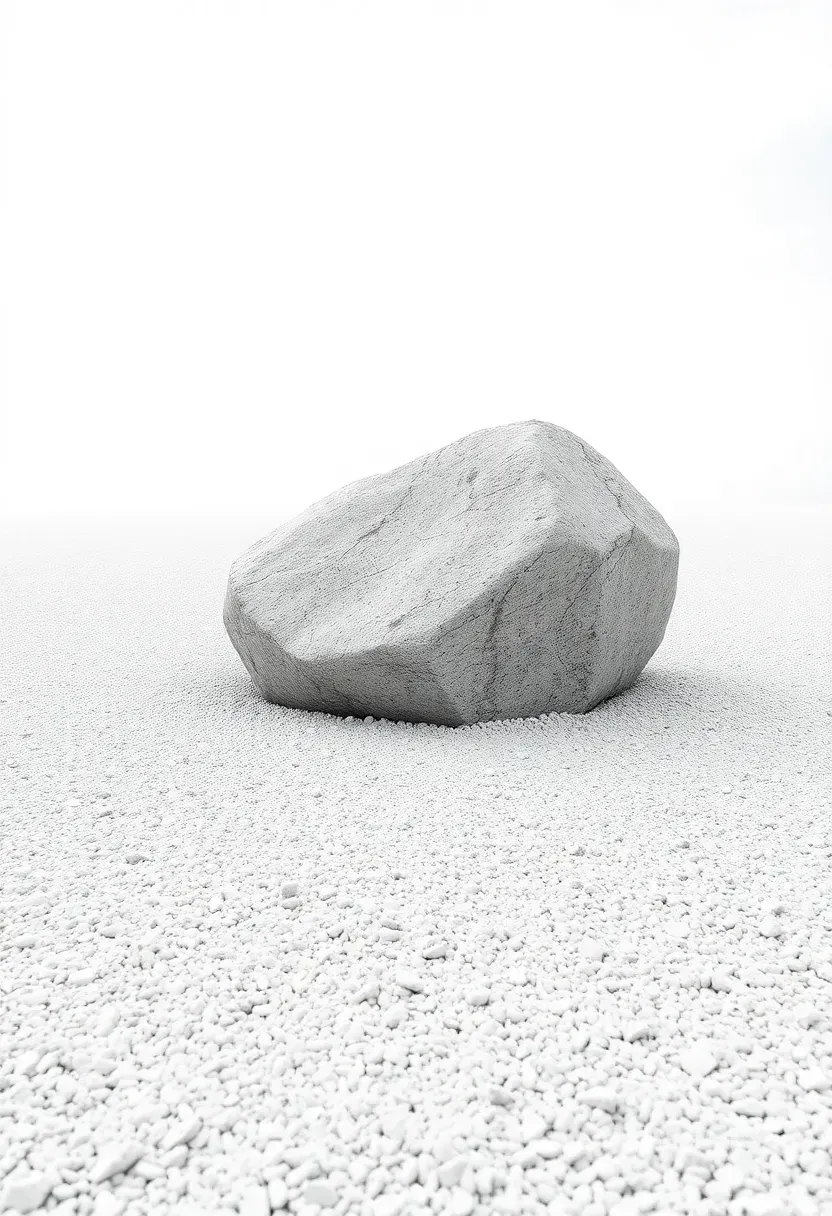
Why do we still insist on filling every corner? The single-boulder garden is perhaps the purest expression of zen aesthetics: one stone, a field of raked gravel, nothing else. All the design tension comes from the relationship between presence and absence — the boulder and the void around it. Getting this right is harder than it looks, which is exactly where AI earns its place: it tests dozens of size ratios and placement positions to find the precise point where the boulder feels discovered rather than placed.
What Makes a Good Solo Stone
- Mass: Large enough to command the field — at least 40% of the garden's visual "weight."
- Character: One dominant face, ideally with a vertical seam or lichen patch that gives it a history.
- Placement: Off-center by the golden ratio (approximately 38% from one edge, 62% from the other).
Recommended
Items for this idea
21. Layered Stone Terrace Zen Space
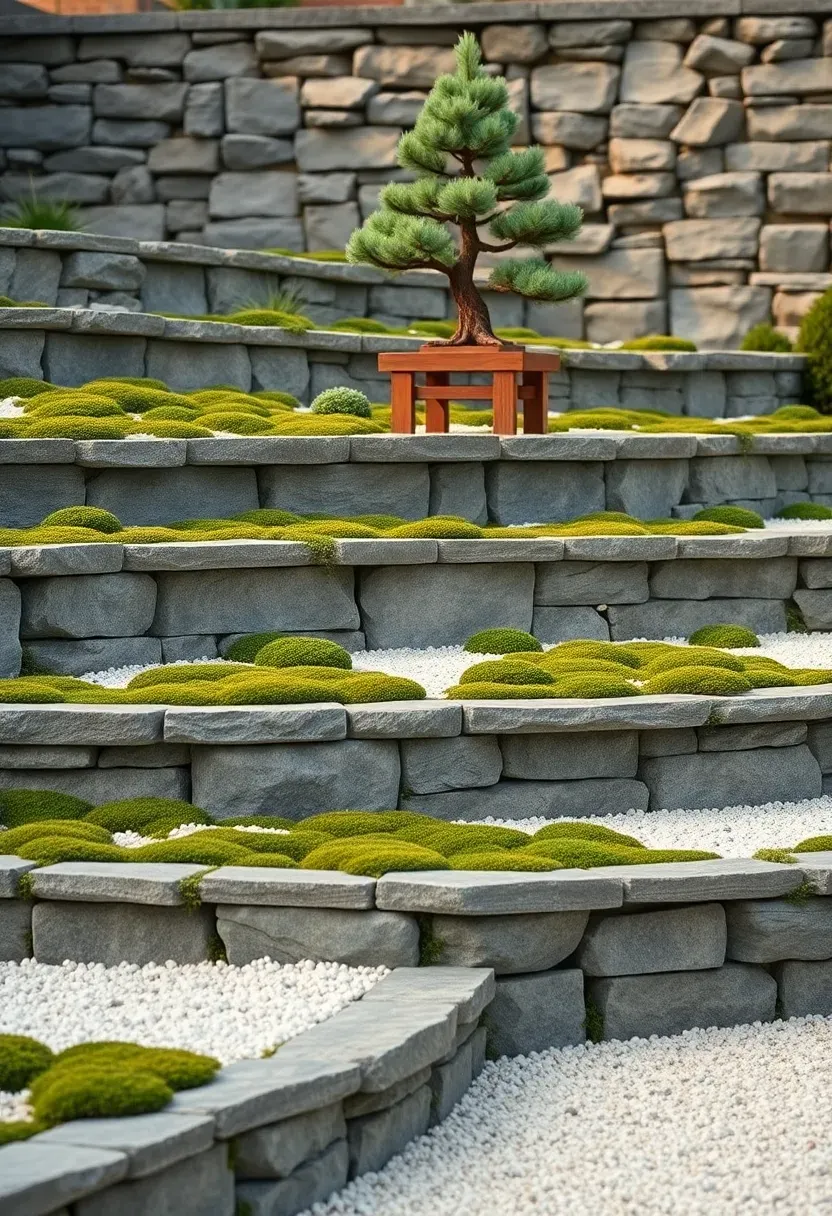
Sloped sites are opportunities, not obstacles. Stacking flat stone into low terraces (30–40 cm each) creates a multi-level zen garden where each tier can express a different material: gravel at the bottom, moss at mid-level, bonsai at the top. AI landscape tools calculate stable terrace heights and setbacks for a given slope gradient, eliminating the structural guesswork.
Material Pairing by Level
- Bottom tier: Raked white gravel with stepping stones
- Middle tier: Cushion moss with embedded flat stones
- Top tier: Decomposed granite with bonsai on timber stands
Fill terrace joints with akadama (a porous fired clay used in bonsai soil) mixed with grit — this mixture drains quickly and supports moss and small ferns.

22. Gravel Labyrinth Meditation Garden
A labyrinth has one path — no dead ends, no choices. You follow it from edge to center, then retrace it out. The walking itself is the meditation: repetitive, predictable, and precisely because of that, freeing. Raking a single-path labyrinth into fine gravel with a wooden board creates a temporary installation that can be raked flat and re-formed. AI tools generate labyrinth patterns scaled to specific garden dimensions, ensuring the path width is comfortable (minimum 60 cm) and the total walk distance meaningful (ideally 3–7 minutes).
Design Tip
A circular labyrinth with seven rings fits in a 6 × 6 m space — a reasonable size for most suburban backyards. Edge with smooth dark river stones rather than raised borders to keep the visual field calm.
Recommended
Items for this idea
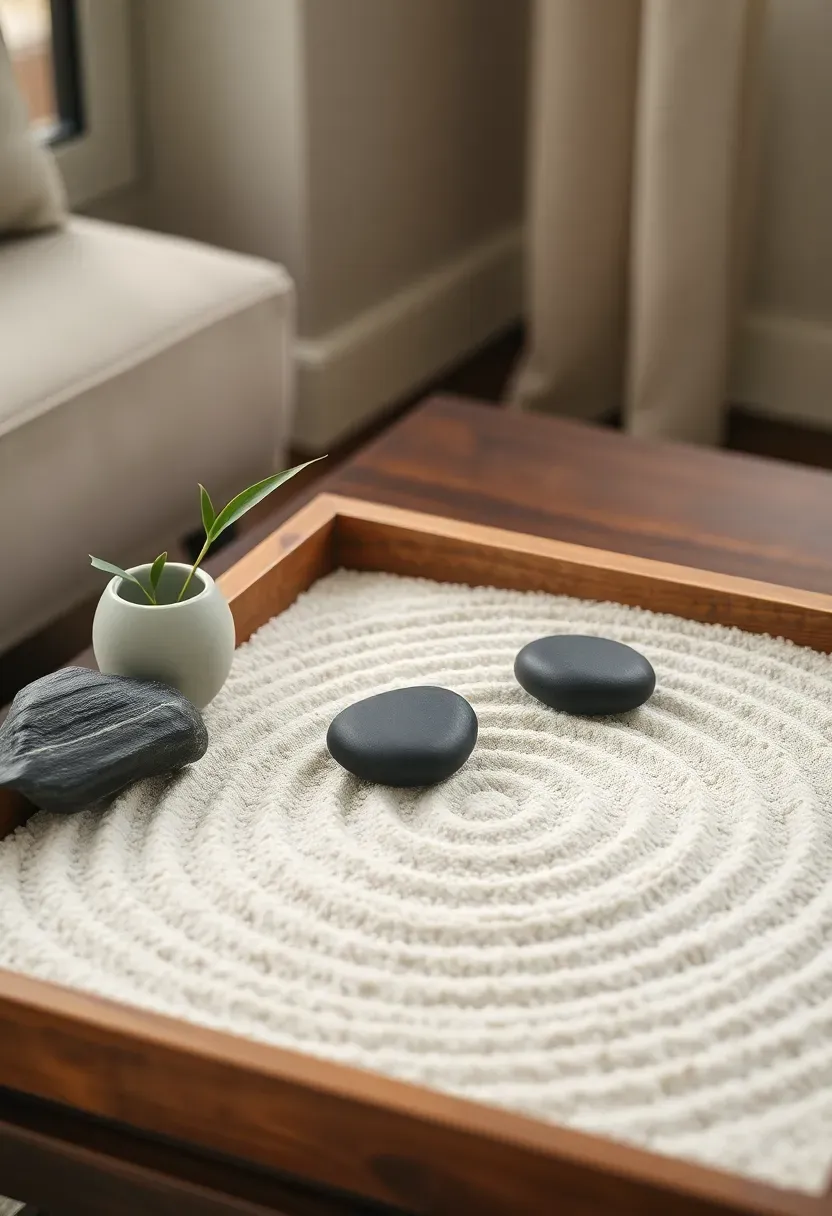
23. Indoor Zen Garden Tray Installation
The Core Idea
An indoor zen garden brings the contemplative quality of Japanese garden design to a desk, coffee table, or shelf. The materials are the same — sand, stone, a miniature rake — but the scale is domestic and the maintenance is minimal.
The Benefits
Research on focused attention tasks consistently shows that brief engagement with an object requiring fine motor control (like raking sand patterns) significantly reduces cortisol levels. A desktop zen garden is, in effect, a medically plausible stress management tool that also happens to look beautiful.
Practical Setup
Choose a tray with sides at least 4 cm tall to contain sand during raking. Use fine-grain beach sand or purpose-sold kinetic sand (slightly denser, holds patterns longer). Keep a damp cloth nearby — ambient dust settling on the surface is the only real maintenance challenge.
24. Seasonal Maple and Gravel Garden
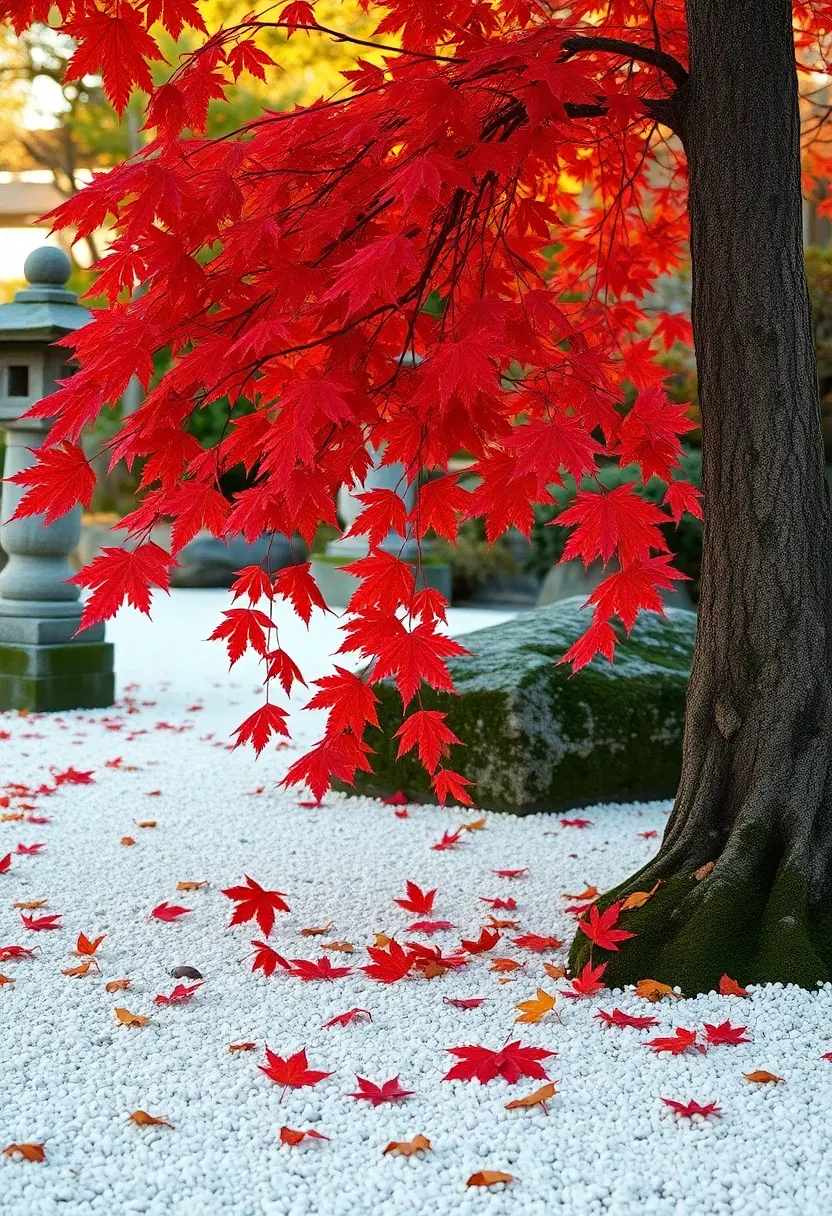
A zen garden anchored by a single Japanese maple (Acer palmatum) changes personality four times a year: lime green in spring, deep burgundy in summer, blazing scarlet in autumn, stark silhouette in winter. AI design tools model all four seasonal states, ensuring the garden composition holds together when the tree is bare — the hardest season to design for.
Variety Selection
- Seiryu (feathered, upright — good for narrow spaces)
- Crimson Queen (weeping form — pairs beautifully with a low stone lantern)
- Osakazuki (classic rounded form — autumn color is unmatched)
Plant the maple off-center so autumn leaf-fall scatters asymmetrically across the raked surface — the fallen leaves become part of the pattern rather than a distraction from it.
Recommended
Items for this idea
25. Fusion Zen: Japanese Meets Scandinavian
Why This Trend Is Growing
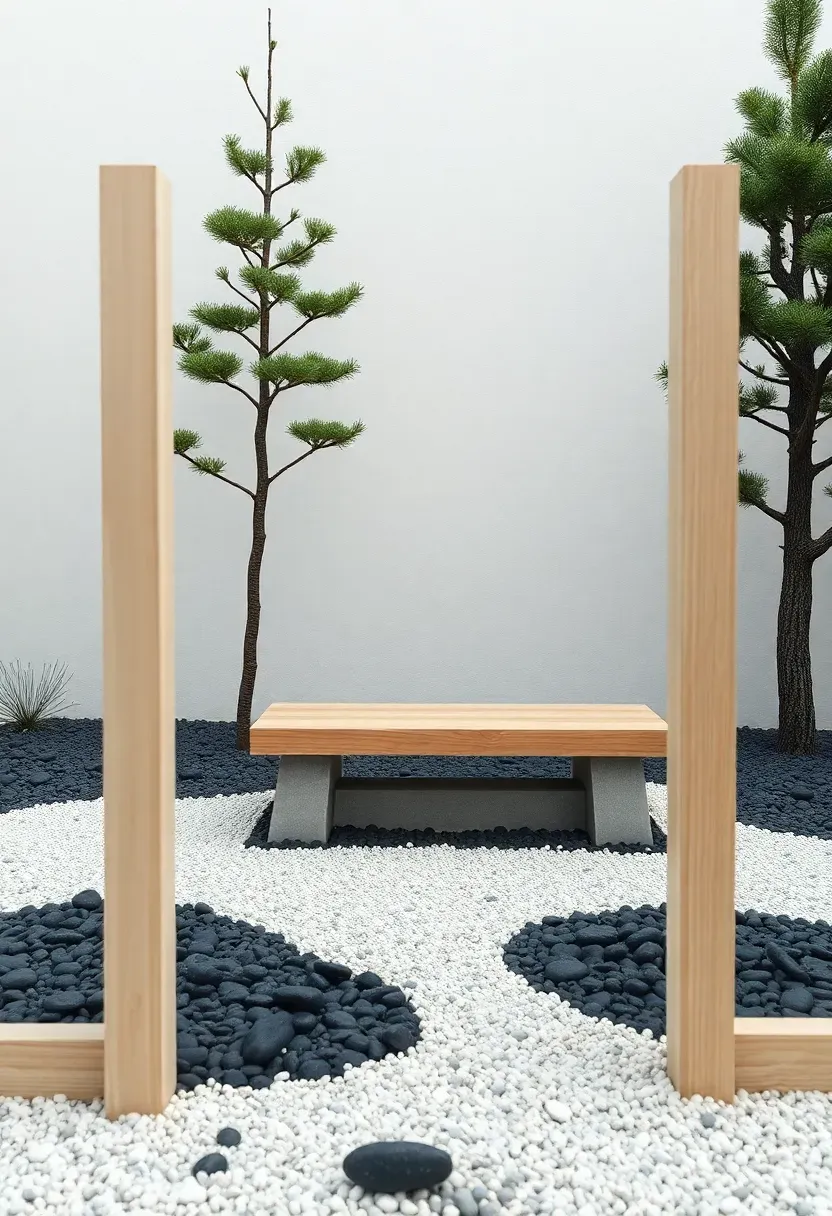
Both Japanese and Scandinavian design traditions prize restraint, natural materials, and the quality of empty space. Their fusion — sometimes called "Japandi" in interior design — translates powerfully to outdoor spaces. White gravel and raw timber reads as Nordic; irregular boulder placement and raked patterns read as Japanese; the combination feels globally contemporary rather than culturally derivative.
Japanese Elements to Retain
Asymmetric stone placement, raked gravel patterns, and a tsukubai or shishi-odoshi water feature.
Scandinavian Elements to Introduce
Pale birch timber borders, simple geometric seating in concrete or oiled oak, and a restrained plant palette of black pine, silver-leafed grasses, and white-flowering groundcovers.
What to Choose
Choose pure Japanese if: you want a garden deeply rooted in contemplative tradition.
Choose the fusion approach if: your home's architecture leans modern and eclectic, and you want the garden to feel current without cultural pastiche.
Recommendation
Commit to one vocabulary for structure (stone and gravel placement) and the other for materiality (borders and furniture). Mixing both vocabularies in both categories produces confusion rather than fusion.
Quick FAQ
Is a zen garden difficult to maintain? A classic karesansui requires minimal maintenance — raking weekly, removing fallen leaves, and occasional moss trimming. Water features add a pump and pipe system to monitor, but overall zen gardens are among the lowest-maintenance garden styles available.
Should stepping stones be set in mortar or left loose? For a natural zen aesthetic, set stepping stones directly into the gravel bed without mortar, slightly recessed so they neither rock nor protrude sharply. This allows adjustment over time as the ground settles and your preferred path shifts.
Which plants work well in dry karesansui gardens? Black pine (Pinus thunbergii), mondo grass (Ophiopogon japonicus), azaleas, and dwarf heavenly bamboo (Nandina domestica) all tolerate the dry conditions around raked gravel while contributing authentic Japanese character.
Does a zen garden need a large space to be effective? Not at all. Some of the most powerful karesansui in Kyoto occupy less than 100 square meters. Even a 2 × 3 m courtyard or a rooftop terrace can contain a fully resolved zen composition — AI design tools are particularly useful for maximizing small footprints.
What gravel size and color works best for raking patterns? Use washed granite grit in 5–10 mm particle size. Finer particles clog during rain; coarser particles resist the rake. White or pale silver tones show shadow and pattern most clearly; avoid very dark gravel in shaded gardens as patterns become invisible.
Trends come and go, but the principles behind zen garden design — restraint, asymmetry, an honest use of natural materials — have proven their staying power across six centuries. A well-designed zen garden does not follow a moment's fashion; it creates a space that the best version of yourself will still value twenty years from now. Begin with a single stone placed just so, and build outward from that intention.
Pinterest cover for 25 AI Zen Garden Design Ideas
About the author
OBCD
CGI visualization and interior design content. We create detailed 3D renders and curate practical design ideas for every room in your home.