27 American Colonial Interior Design Ideas for Timeless Homes
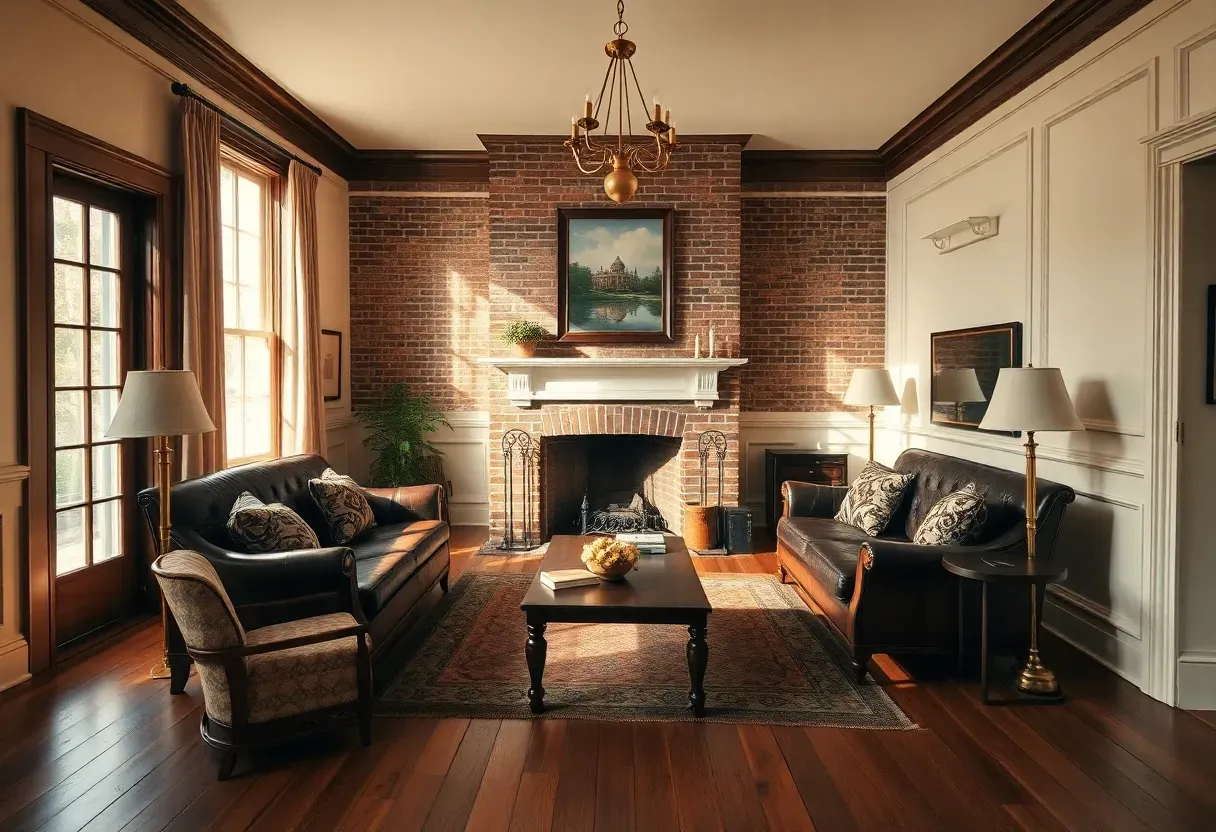
For centuries, colonial homes have defined a particular kind of American elegance -- the kind that values proportion, craftsmanship, and materials that age with dignity. This style didn't survive by accident. It endures because symmetry calms the eye, dark-stained hardwood warms a room instantly, and honest millwork never feels like it's trying too hard. Whether you live in a 1780s saltbox or a brand-new build, colonial design principles adapt without losing their soul. These 27 ideas show you exactly how to bring that quiet authority into your own space.
Below -- a detailed guide covering fireplaces, furniture layouts, textiles, lighting, and finishing touches that anchor a colonial interior without making it feel like a museum.
Table of Contents
- Raised Panel Wainscoting in Deep Navy
- Federal-Style Fireplace Mantel
- Wide Plank Pine Flooring
- Brass Candlestick Chandelier
- Windsor Chair Dining Set
- Built-In Corner Cupboard
- Toile de Jouy Window Treatments
- Antique Secretary Desk
- Symmetrical Bookcase Flanking the Fireplace
- Crown Molding with Dentil Detail
- Pewter Tableware Display
- Canopy Bed with Turned Posts
- Stenciled Floor Border
- Ladder-Back Rush Seat Chairs
- Dutch Door Entry
- Tavern-Style Kitchen Table
- Oil Portrait Gallery Wall
- Handwoven Coverlet as Wall Hanging
- Keeping Room with Cooking Hearth
- Saltbox Color Palette
- Blown Glass Hurricane Lamps
- Needlepoint Upholstered Side Chair
- Exposed Ceiling Beams
- Milk Paint Finish on Furniture
- Delft Tile Fireplace Surround
- Hooked Rug on Hardwood
- Transom Window Above Interior Doors
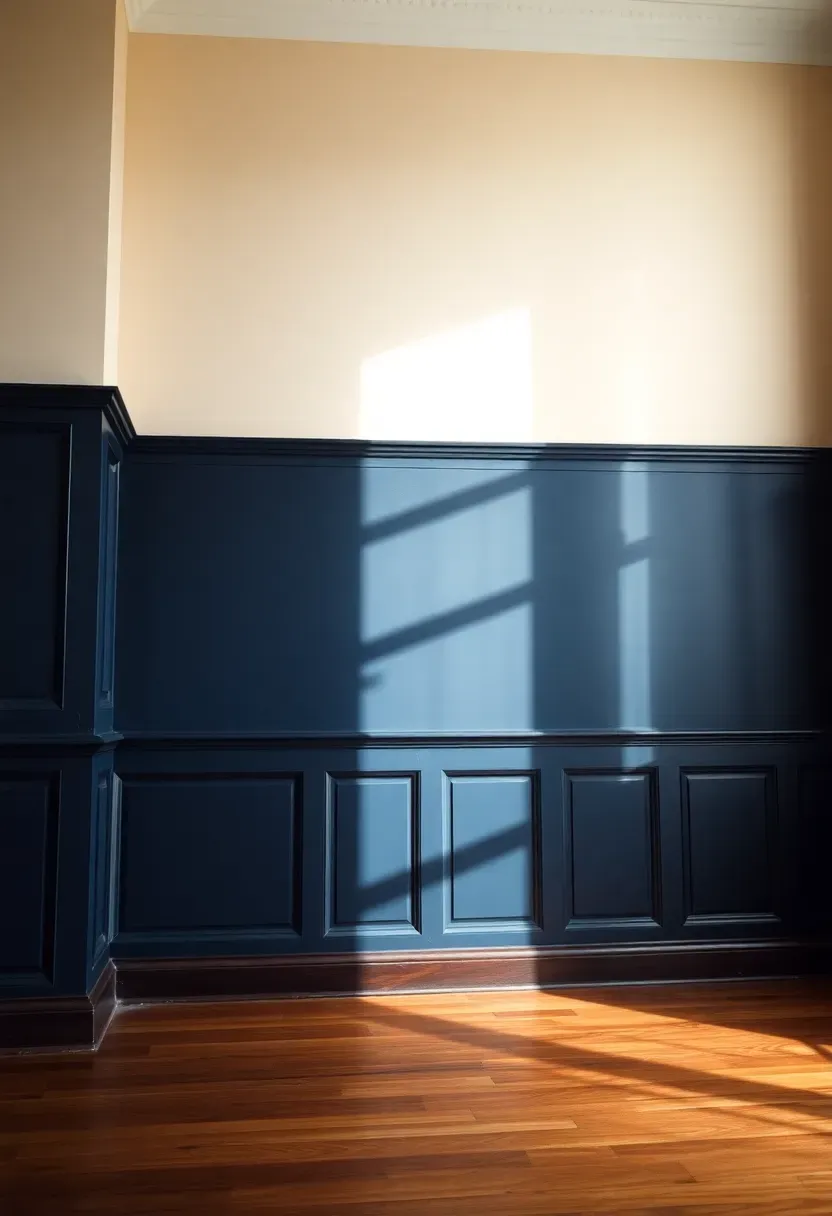
1. Raised Panel Wainscoting in Deep Navy
Nothing anchors a colonial room faster than raised panel wainscoting painted in a saturated navy or Prussian blue. The panels add sculptural depth to walls that would otherwise feel flat, and dark paint below the chair rail grounds lighter tones above, creating the visual weight colonial interiors depend on. Original examples from the 1700s survive in houses throughout New England, proving this treatment outlasts every passing trend.
Tips / Practical Recommendations
- Set panel height at 32--36 inches, roughly one-third of wall height, for classical proportion
- Use MDF panels for budget builds -- once painted, the look is identical to solid wood
- Pair navy wainscoting with warm cream or pale ochre above the rail to avoid a cave-like feeling
We picked a few things that go well with this idea: Kira Home 6-Light Brass Chandelier (★4.8), Brass Candle Chandelier 6-Light (36") (★4.8) and Vintage Brass 6-Light Candle Chandelier (★4.7). As an Amazon Associate we earn from qualifying purchases.
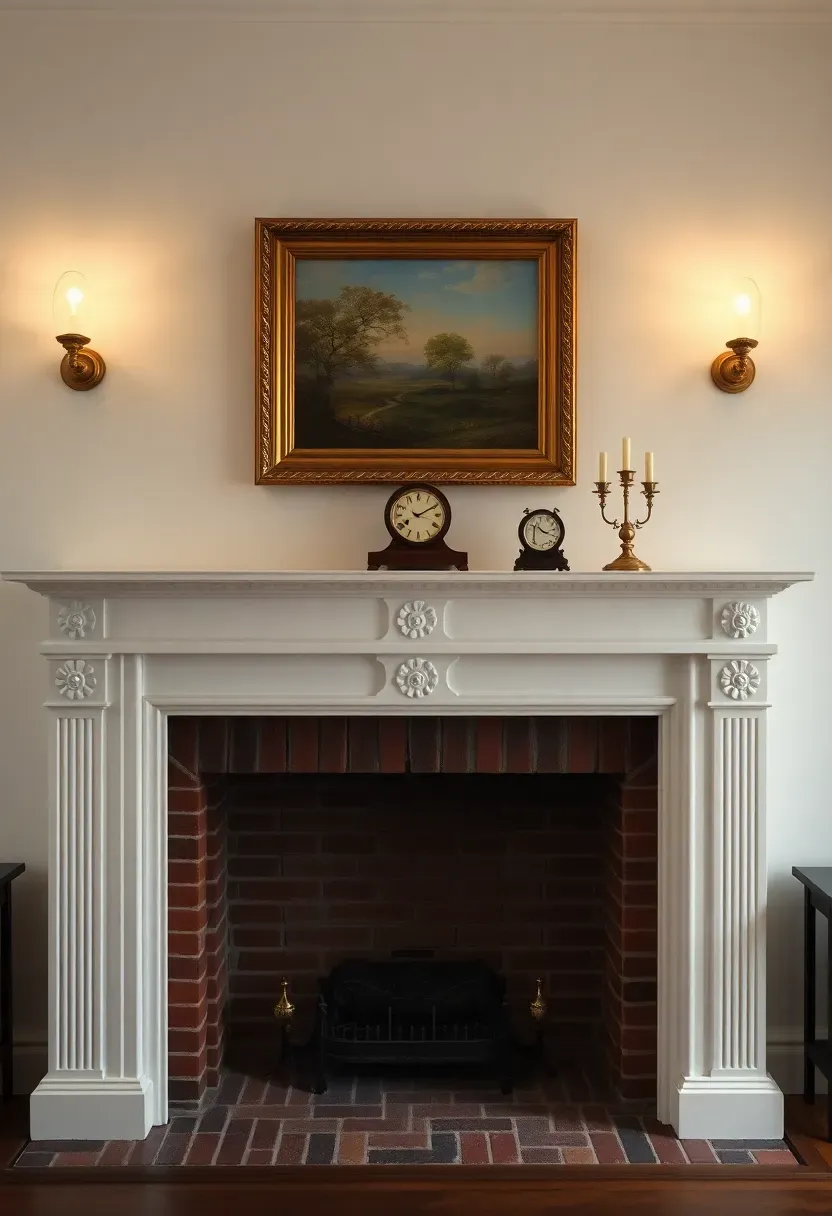
2. Federal-Style Fireplace Mantel
Origins / History
The Federal period (1780--1830) refined colonial mantels into elegant compositions with fluted pilasters, carved rosettes, and delicate molding. Architects like Samuel McIntire drew from ancient Roman proportions to create pieces that balanced grandeur with restraint.
Modern Interpretation
Today's Federal-style mantels work in both period homes and contemporary spaces. A white-painted mantel with clean fluting provides a focal point without overwhelming the room. Pair it with a landscape painting or antique mirror above, and keep the hearth surround in simple brick or marble to let the millwork speak. Pre-fabricated mantel kits now replicate these profiles accurately at a fraction of custom woodworking costs.
How to Apply at Home
- Source a pre-built Federal mantel surround from specialty millwork suppliers
- Paint in high-gloss white or soft ivory for authentic period sheen
- Keep mantel decor minimal -- a clock, two candlesticks, and one object of interest
- Size the mantel opening to your firebox plus 6 inches on each side for proper framing
We picked a few things that go well with this idea: LUE BONA Windsor Chairs Set of 4 (★4.8), Windsor Spindle Back Chairs Set of 4 (★4.8) and SAFAVIEH Camden Windsor Chairs (Set of 2) (★4.2). As an Amazon Associate we earn from qualifying purchases.
3. Wide Plank Pine Flooring
Why Narrow Strip Flooring Misses the Mark and How Wide Planks Fix It
The Core Issue
Modern narrow-strip flooring, while practical, erases the handmade character that defines colonial interiors. The tight seams and uniform widths feel industrial rather than crafted.
The Solution
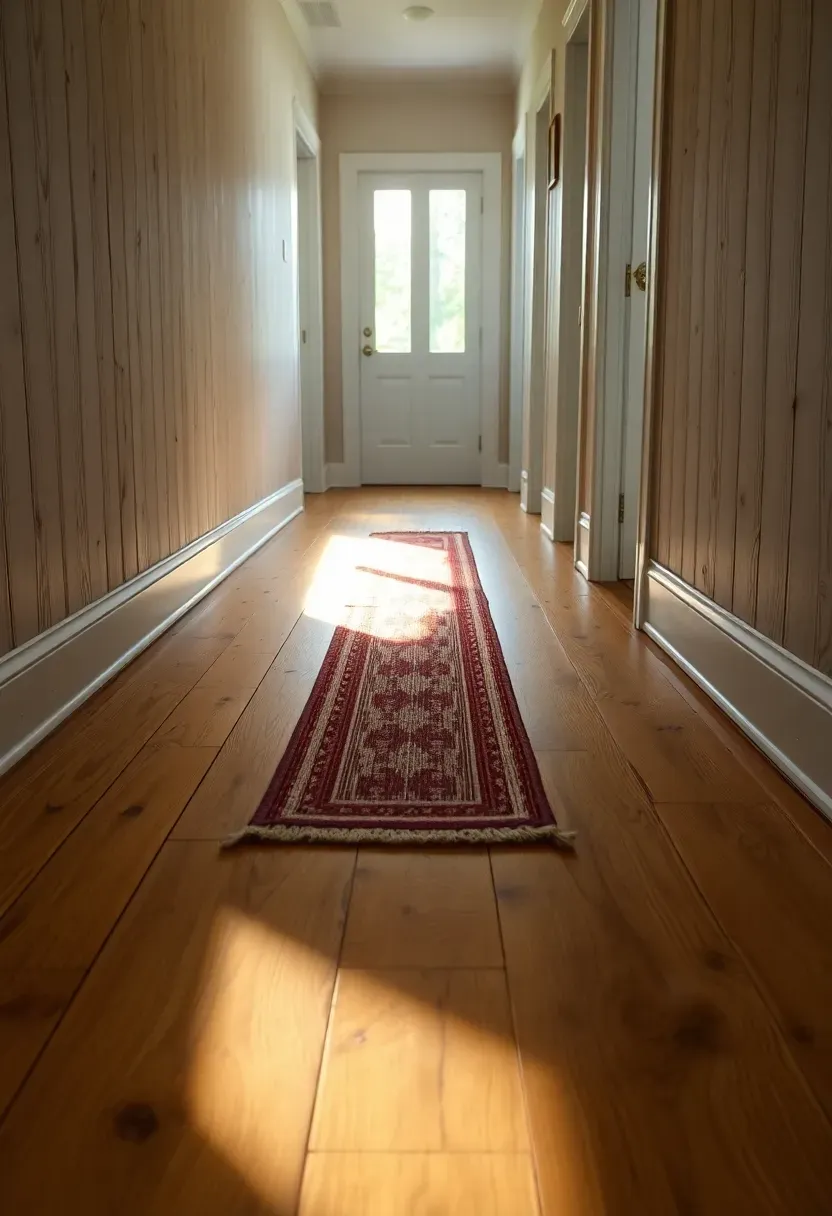
Wide plank pine -- boards ranging from 8 to 14 inches -- immediately signals age and authenticity. Eastern white pine was the go-to material for colonial builders because of its availability and workability. Today, reclaimed wide plank pine carries genuine patina: nail holes, saw marks, and color variation that no factory finish can replicate. New-growth wide pine is also available and accepts stain beautifully for a more controlled look.
Pros and Cons
Pros: Unmistakable colonial character, softwood is warm underfoot, reclaimed options are sustainable Cons: Pine dents easily under heavy furniture, requires periodic refinishing, wider boards may cup in humid climates
We picked a few things that go well with this idea: SAFAVIEH Chelsea Hand-Hooked Wool Rug (4' Round) (★4.6), SAFAVIEH Chelsea Floral Wool Rug (6'x9') (★4.5) and SAFAVIEH Chelsea Floral Oval Rug (3'x5') (★4.5). As an Amazon Associate we earn from qualifying purchases.
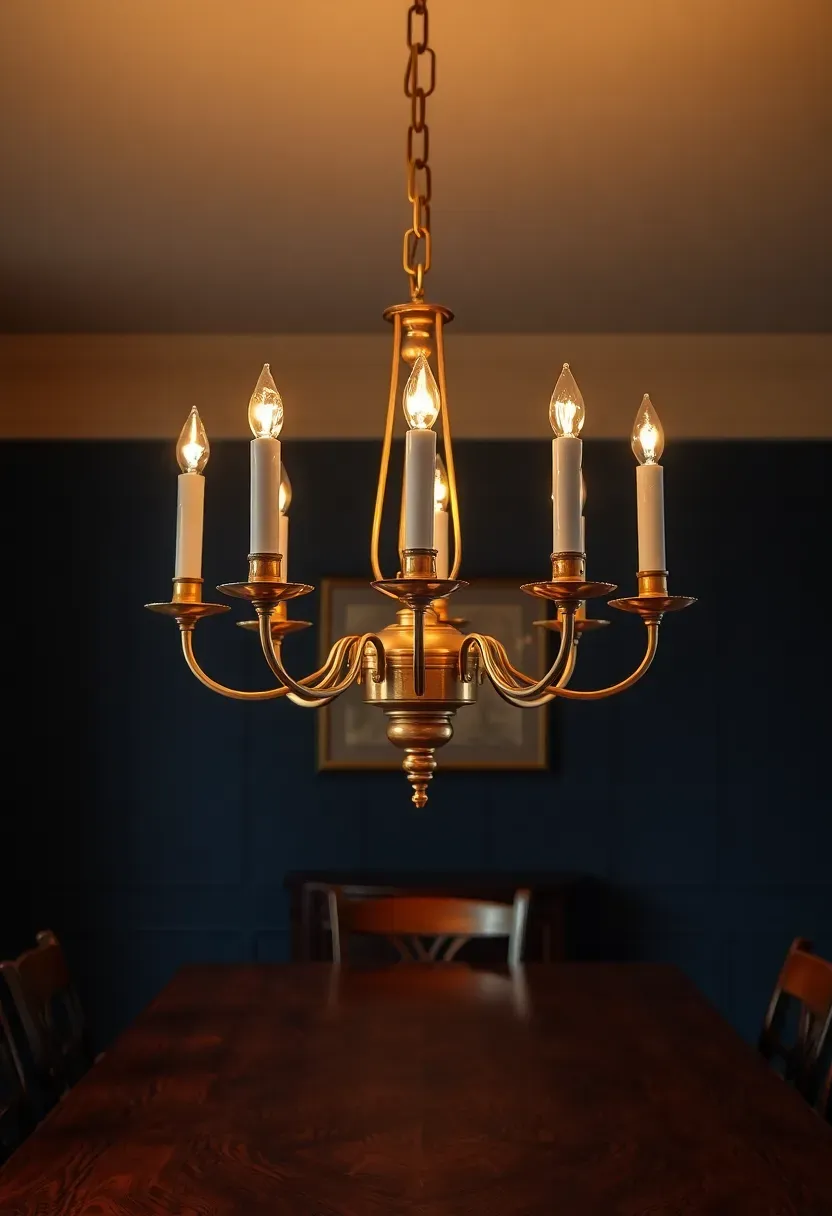
4. Brass Candlestick Chandelier
Picture the warm glow of six tapered candles reflected in polished brass arms, casting soft pools of light across a dining table set with pewter and linen. Colonial-era lighting revolved around candles, and a brass chandelier captures that spirit while accommodating modern electric bulbs. Choose flame-tip LED candelabra bulbs in 2200K for a convincing flicker effect that pays respect to the original without the drip hazard.
Tips / Practical Recommendations
- Hang the chandelier 30--34 inches above the table surface in dining rooms
- Select unlacquered brass so the fixture develops a natural patina over time
- Avoid overly ornate crystal styles -- colonial brass should be straightforward and geometric
- Dimmer switches are essential for controlling the warm, intimate mood
Recommended
Items for this idea
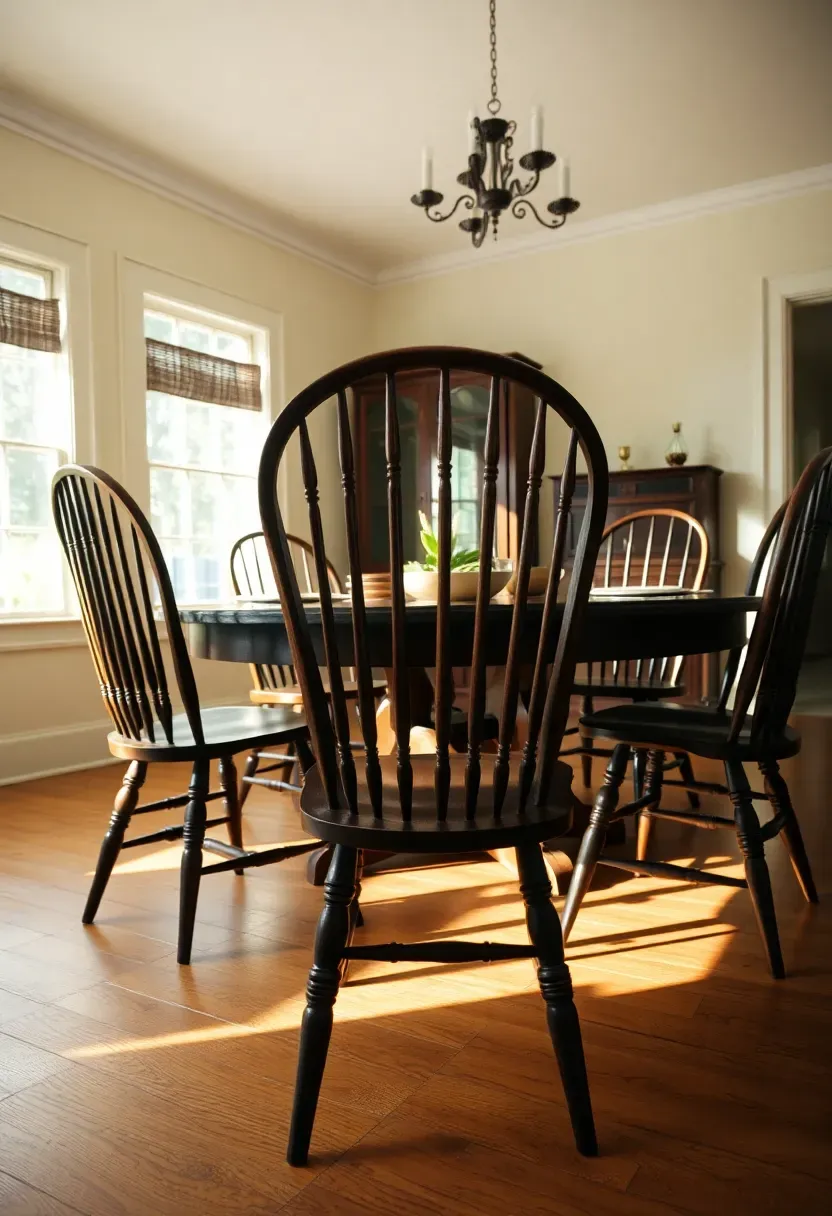
5. Windsor Chair Dining Set
Comparing: Bow-Back Windsor vs Comb-Back Windsor
Introduction: Windsor chairs have been an American staple since the 1720s. Both silhouettes bring colonial authenticity, but they suit different settings and comfort preferences.
Bow-Back Windsor
The continuous curved back creates a lighter, more compact profile. It slides easily under tables and works well in smaller dining rooms. The bent-wood bow feels graceful and pairs naturally with oval or round tables.
Comb-Back Windsor
Taller spindles topped by a horizontal crest rail give this version a more imposing, throne-like presence. It suits formal dining rooms and longer rectangular tables where vertical emphasis complements the room's proportions.
What to Choose
Choose Bow-Back if: your dining space is compact, you prefer a casual feel, or you plan to mix chair styles around the table. Choose Comb-Back if: you want a stately presence, have a dedicated formal dining room, or value extra back support for long dinners.
Recommendation
For most colonial-inspired homes, a set of bow-back Windsors with a pair of comb-back chairs at the table ends creates a layered, authentic arrangement that avoids monotony.
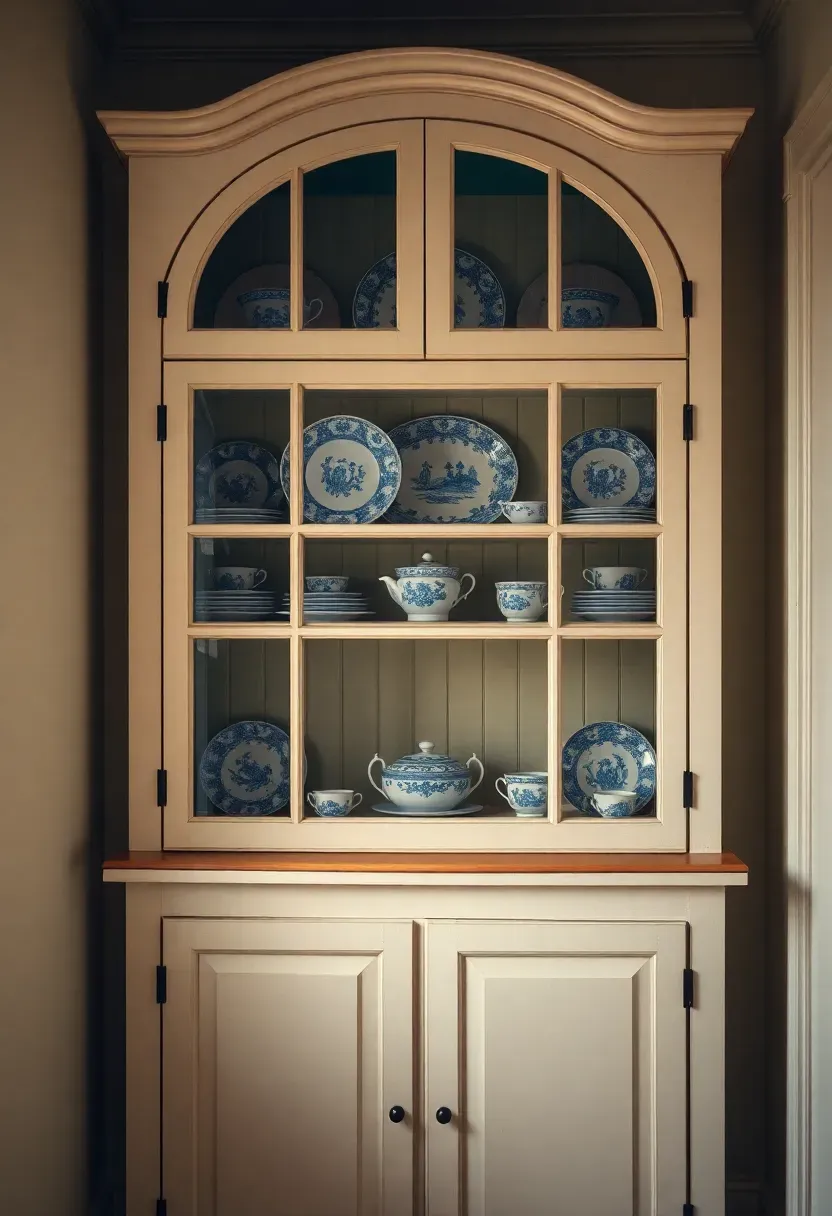
6. Built-In Corner Cupboard
Colonial builders wasted nothing, including corner space. A built-in corner cupboard with an arched or barrel-top opening transforms a dead angle into a display cabinet for your best china, glassware, or pewter collection. These pieces were status symbols in 18th-century homes -- visible proof that the household owned fine goods worth showing. Today they serve the same purpose while solving a practical storage problem that freestanding furniture cannot address as elegantly.
Tips / Practical Recommendations
- Paint the interior a contrasting color -- deep red, teal, or mustard -- to showcase displayed items
- Add plate grooves to shelves for secure display of decorative plates
- Glass-paned upper doors and solid lower doors follow the most common colonial pattern
Recommended
Items for this idea
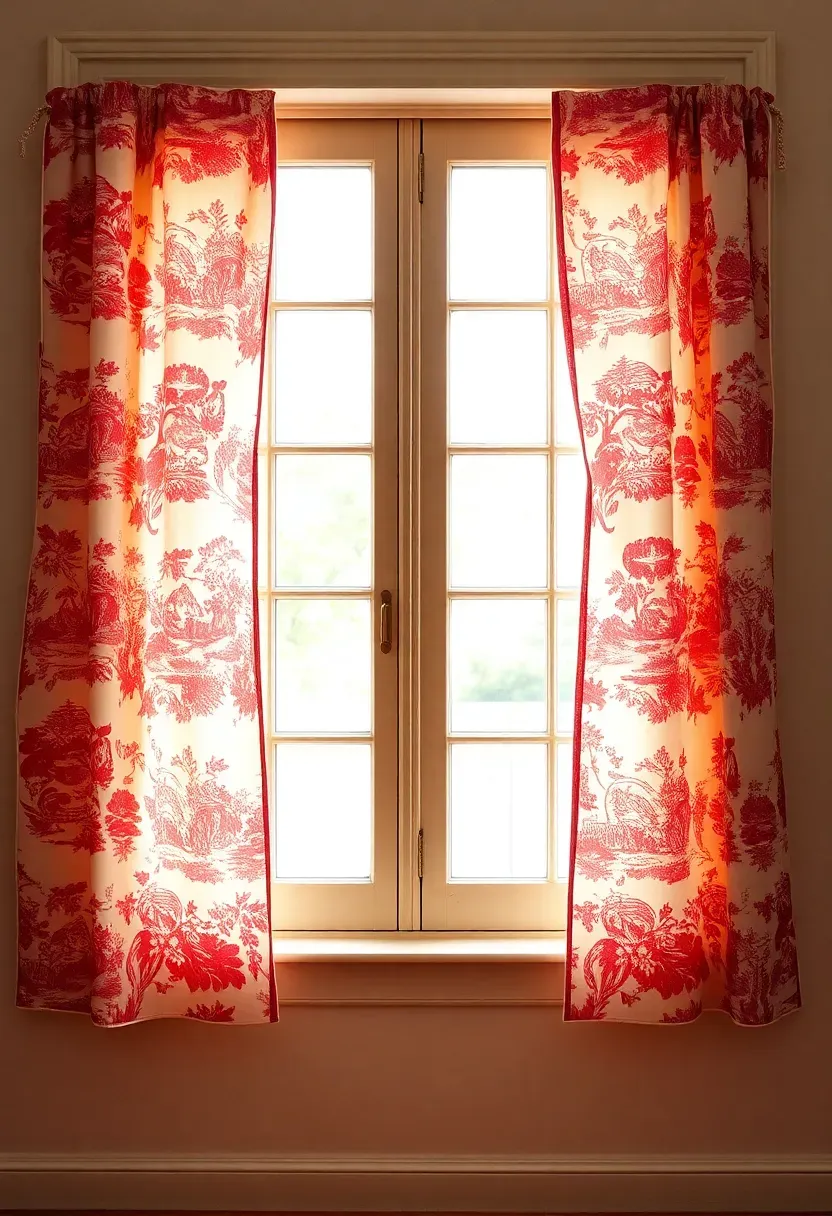
7. Toile de Jouy Window Treatments
The scenic pastoral prints of toile bring narrative into a room. Originally French but wildly popular in American colonial homes, toile curtains in red-and-cream or blue-and-white tell stories -- shepherdesses, farm scenes, classical ruins -- that reward a second look. These prints add visual richness without the heaviness of damask or velvet, keeping rooms bright and airy while delivering unmistakable period character.
Step 1: Choose Your Color Story
Red toile on cream grounds feels warm and traditional. Blue on white skews cooler and pairs well with delft pottery and coastal colonial homes. Black toile on ivory reads more modern.
Step 2: Select the Right Fullness
Use fabric at 2 to 2.5 times the window width for proper gathering. Flat panels look too thin for toile's large-scale patterns and lose the print's narrative scenes.
Step 3: Hang at the Right Height
Mount rods 4--6 inches above the window frame and let curtains graze the floor. This elongates walls and gives the treatment the presence it deserves.
What to Watch Out For
- Avoid mixing toile with other busy prints -- pair with solid coordinates instead
- Pre-wash cotton toile before sewing to prevent shrinkage after hanging
- Line curtains to protect the fabric from sun fading, especially in south-facing rooms
8. Antique Secretary Desk
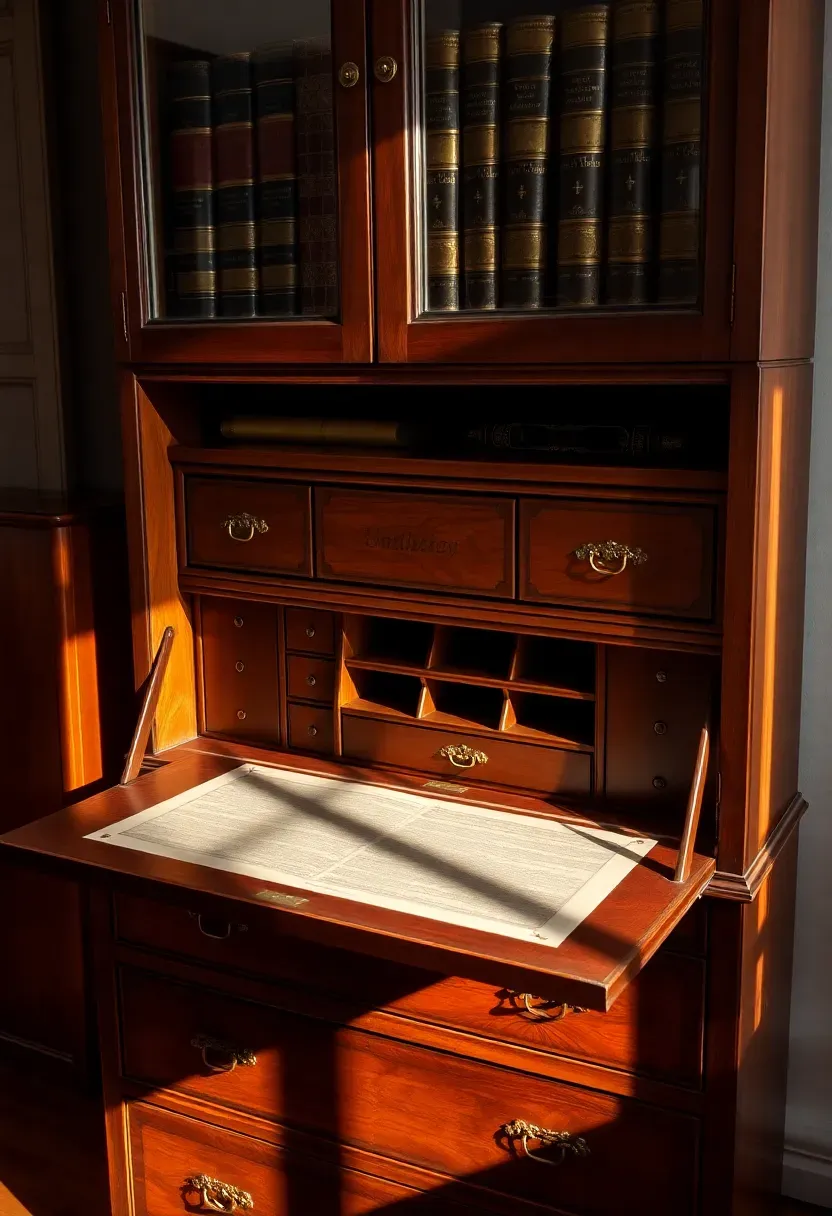
A secretary desk condenses an entire home office into a single piece of furniture no wider than three feet. The drop-front writing surface folds up to conceal papers, while the upper bookcase section displays leather-bound volumes behind glass doors. In colonial homes, this was the intellectual center -- where letters were composed, accounts settled, and books stored. Today it serves as a compact workspace that disappears when not in use, making it perfect for living rooms and bedrooms where a bulky modern desk would feel out of place.
Tips / Practical Recommendations
- Look for dovetail joints and hand-cut brass hardware as signs of quality in antique pieces
- Position near a window for natural task lighting when the writing surface is deployed
- Keep the interior organized with period-appropriate leather desk accessories
Recommended
Items for this idea
9. Symmetrical Bookcase Flanking the Fireplace
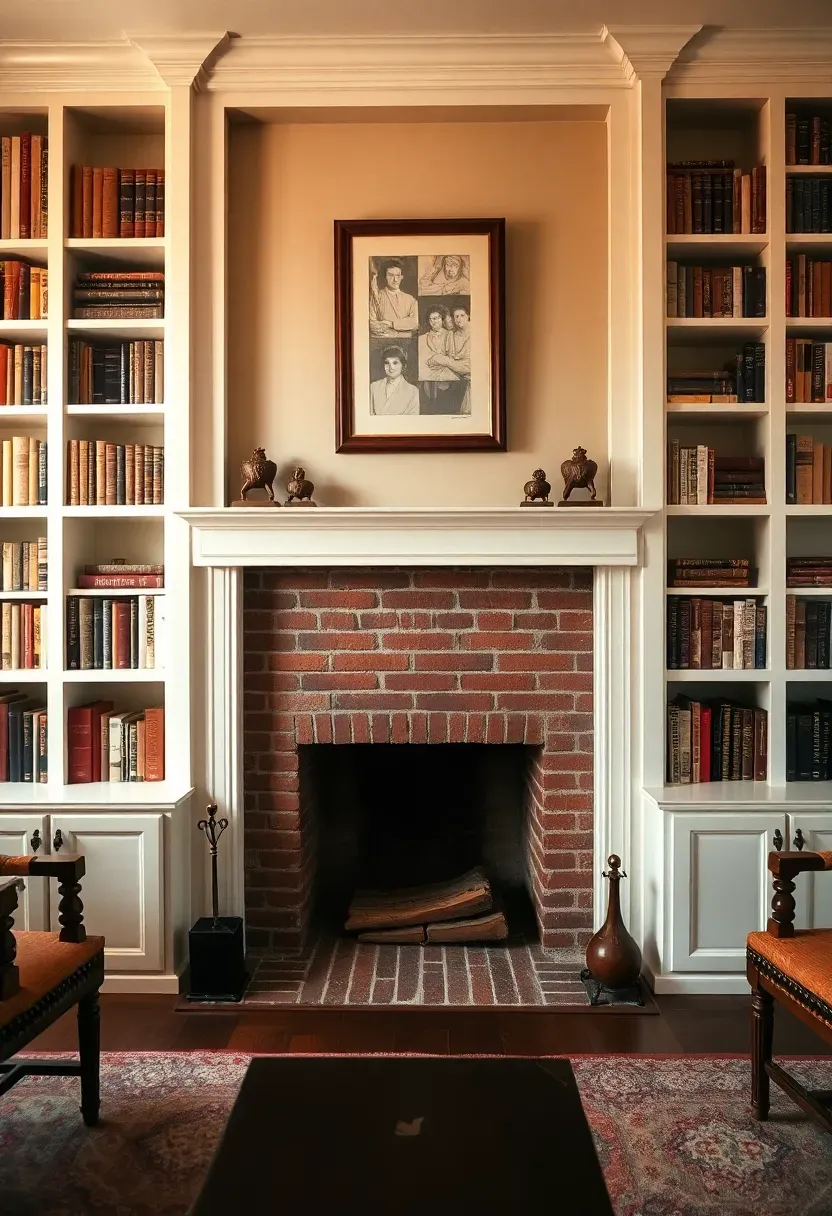
Symmetry is the backbone of colonial design, and nothing demonstrates that principle more clearly than matching built-in bookcases on either side of a fireplace. This arrangement creates a balanced focal wall that draws the eye toward the hearth -- the heart of any colonial home. The bookcases provide functional storage while reinforcing the room's sense of order and architectural intention.
Step 1: Establish Dimensions
Match bookcase height to the mantel shelf or ceiling, whichever creates better proportion. Depth should be 10--12 inches to accommodate standard books without protruding too far.
Step 2: Add Architectural Detail
Include baseboard, crown, and face-frame trim that matches existing room millwork. Consistency in trim profiles ties the bookcases into the architecture seamlessly.
Step 3: Style with Restraint
Fill shelves to about 70 percent capacity. Alternate vertical books with horizontal stacks, add a few decorative objects, and leave breathing room. Overcrowded shelves undermine the orderly colonial aesthetic.
10. Crown Molding with Dentil Detail
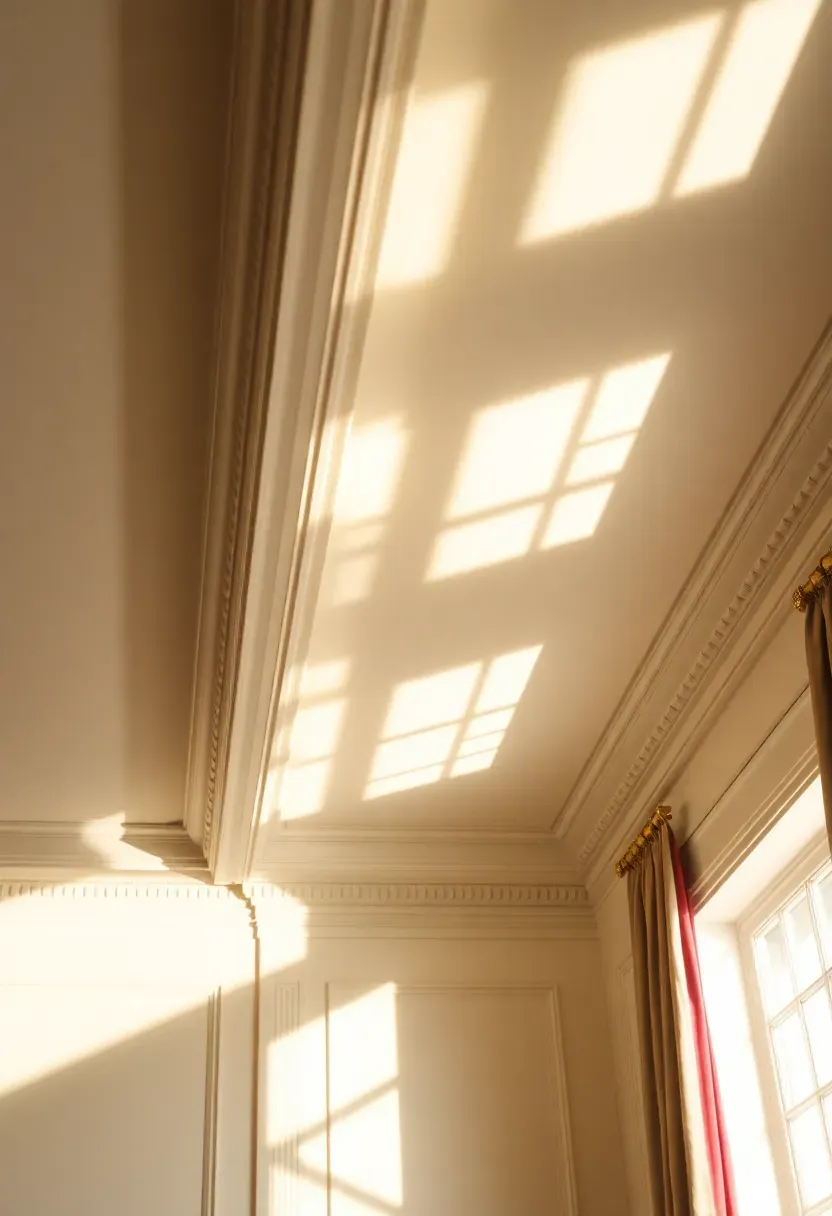
The small, evenly spaced rectangular blocks known as dentils trace their lineage back to ancient Greek temples, but they became a signature of Georgian and Federal colonial architecture in America. Adding dentil crown molding to a room is one of the most effective ways to elevate it from ordinary to distinguished. The repetitive geometric rhythm catches light along the ceiling line, creating subtle shadow patterns that change throughout the day.
Tips / Practical Recommendations
- Standard dentil spacing is equal to block width -- each block and each gap should be the same dimension
- Install in rooms with at least 8.5-foot ceilings; dentil molding in low rooms feels oppressive
- Paint in semi-gloss to emphasize the three-dimensional shadow play
Recommended
Items for this idea
11. Pewter Tableware Display
Origins / History
Before porcelain became affordable, pewter was the primary tableware material in American colonial households. Its soft gray sheen, durability, and ability to take on a warm patina made it both practical and beautiful. Pewter pieces marked special occasions and were often listed individually in household inventories.
Modern Interpretation
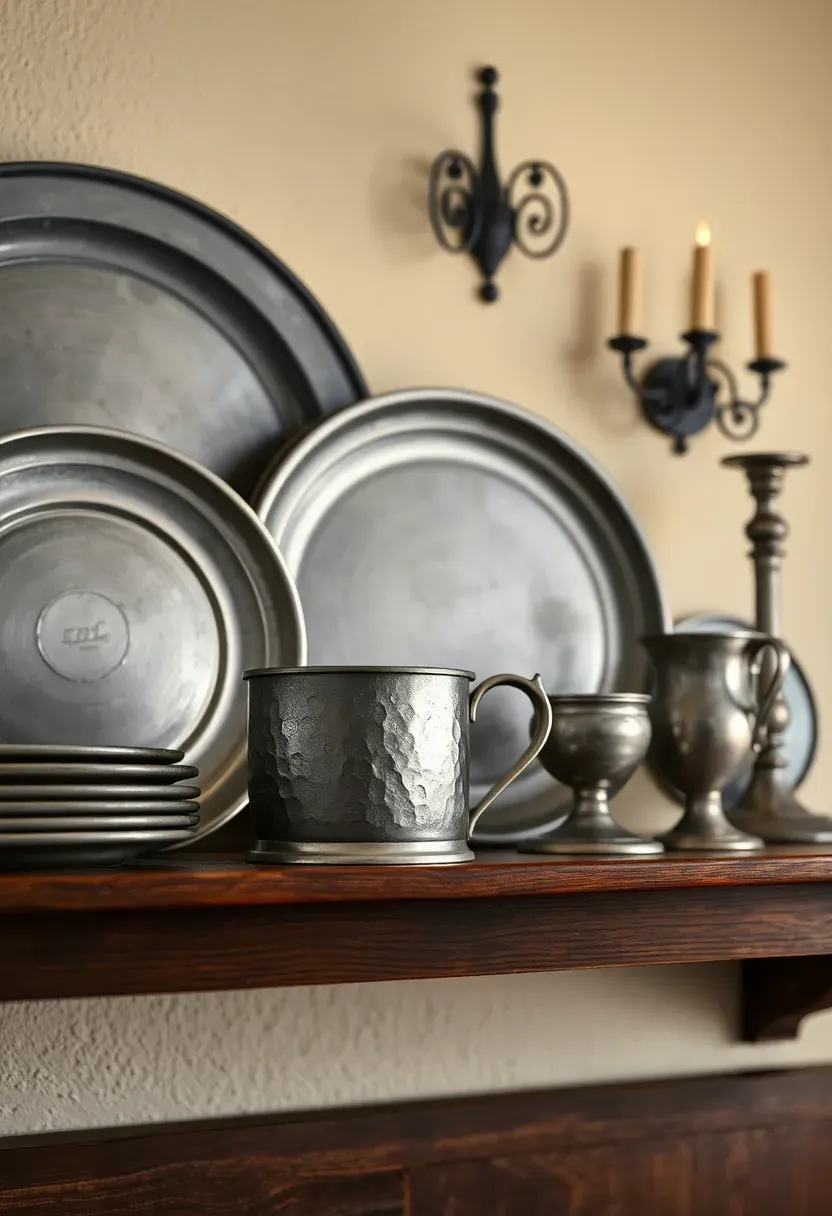
Today pewter serves a decorative role that aluminum and stainless steel cannot match. The matte, hand-hammered quality of antique pewter plates, tankards, and candlesticks adds authentic texture to colonial displays. Arranged on a plate rack, hung on walls, or grouped on a sideboard, pewter anchors a room in material honesty without competing with other metals in the space. Reproduction pewter from American craftspeople is readily available and maintains traditional alloy compositions.
How to Apply at Home
- Group pewter in odd numbers -- three candlesticks, five plates -- for natural visual rhythm
- Mix forms: a tall tankard beside a flat charger beside a small porringer creates interest
- Polish lightly with beeswax rather than commercial metal polish to preserve the soft matte finish
- Display against dark wood backgrounds where the gray tones contrast most effectively
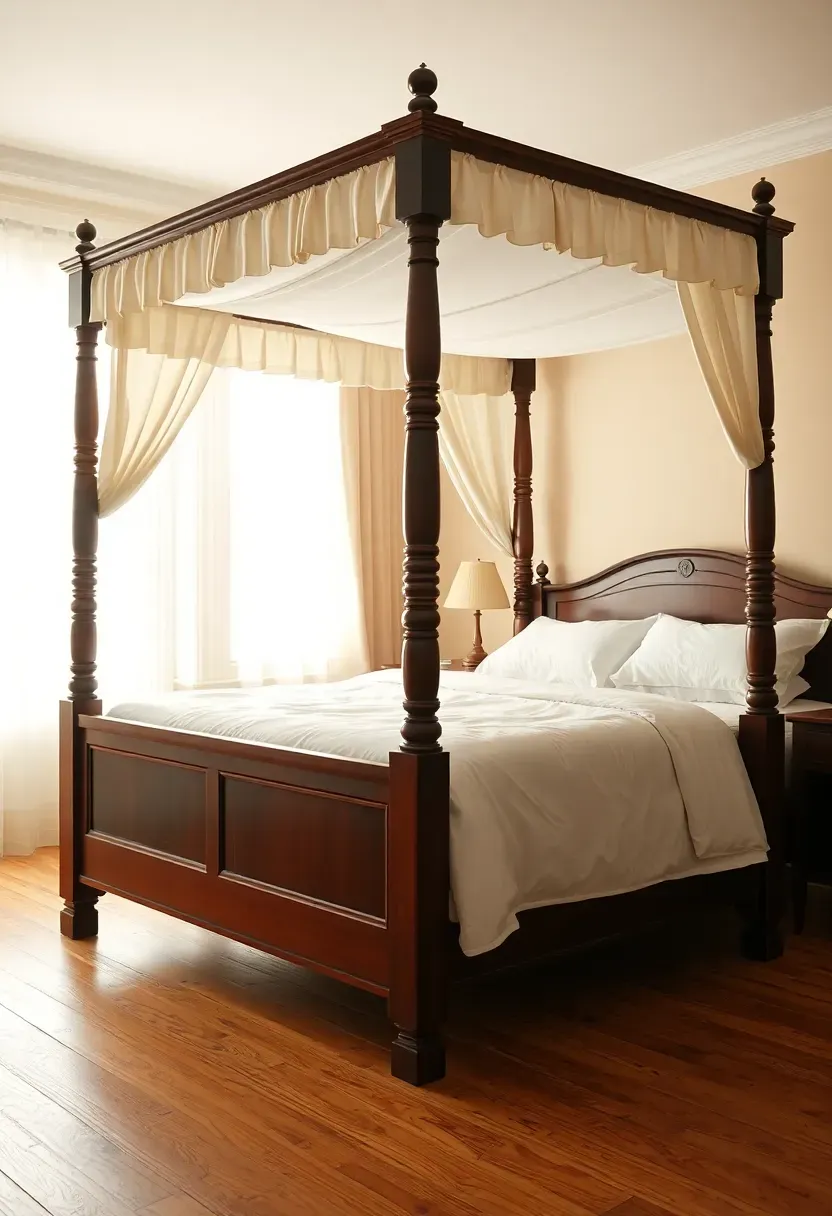
12. Canopy Bed with Turned Posts
A four-poster canopy bed commands a colonial bedroom like no other piece of furniture. The turned posts -- shaped on a lathe into baluster, spiral, or acorn profiles -- reflect the woodturning skills that were central to colonial craftsmanship. Full fabric canopies were practical in drafty 18th-century homes, trapping warm air around sleepers. Today, lighter treatments work: sheer linen panels or a simple flat canopy frame without fabric give the vertical presence without overwhelming modern heating systems.
Tips / Practical Recommendations
- Ceiling height should be at least 9 feet for a full canopy; use a pencil-post bed in lower rooms
- Cherry, mahogany, and maple are the most historically accurate wood choices
- Skip heavy brocade drapes in favor of lightweight cotton or linen for a fresh, livable feel
Recommended
Items for this idea
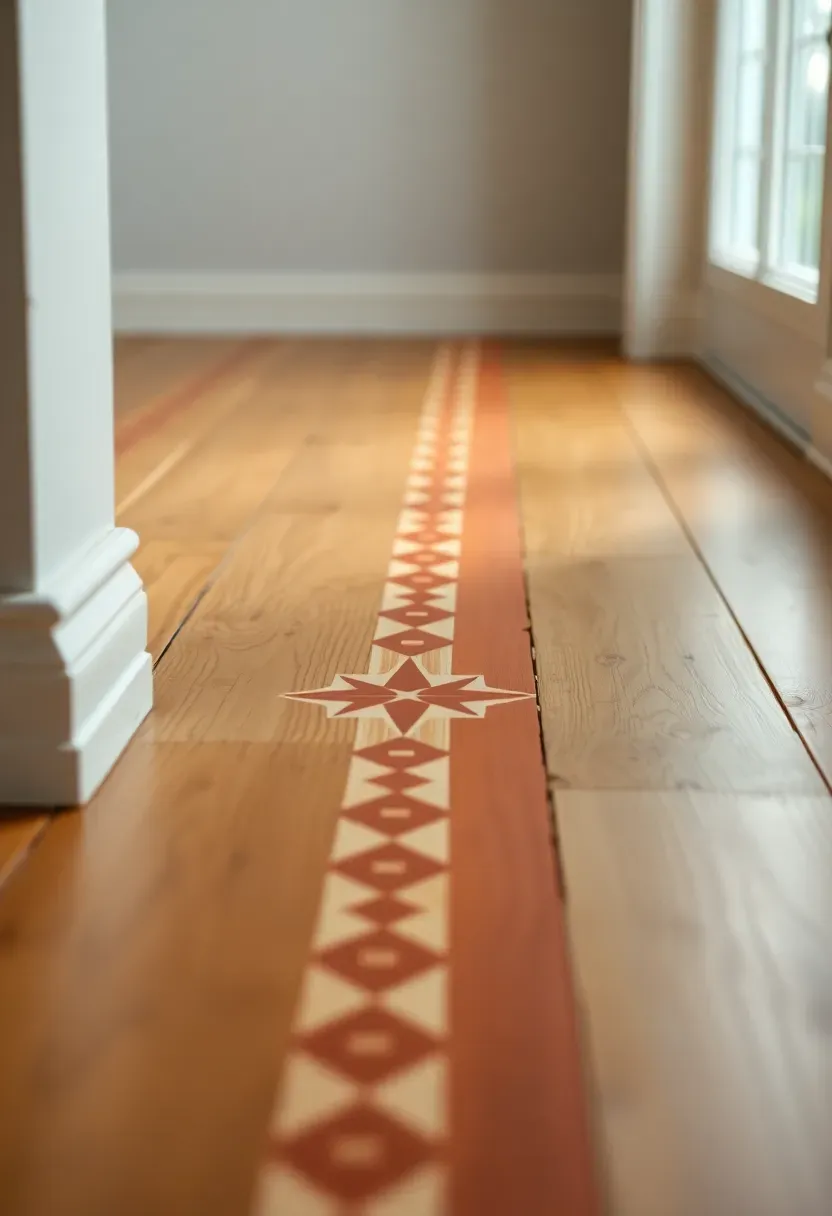
13. Stenciled Floor Border
Before wall-to-wall carpeting existed, colonial homeowners decorated bare wood floors with hand-painted stencil patterns. Running a geometric or floral border along the room's perimeter creates a frame-within-a-frame effect that defines the space and adds color at ground level. This technique is especially effective in rooms without rugs, giving the floor personality without hiding the wood grain beneath.
Step 1: Select a Pattern
Compass stars, running vines, and diamond chains were common colonial motifs. Choose one that complements your room's existing details.
Step 2: Prepare the Surface
Sand and seal the floor area that will receive the stencil. Clean, smooth wood accepts paint crisply. Apply a primer coat if the floor is dark-stained.
Step 3: Apply and Seal
Use a stencil brush with minimal paint to prevent bleeding. Build color in thin layers. Once dry, protect with three coats of polyurethane for durability.
What to Watch Out For
- Practice on scrap wood before committing to the actual floor
- Keep the border width between 6 and 12 inches -- wider borders overpower small rooms
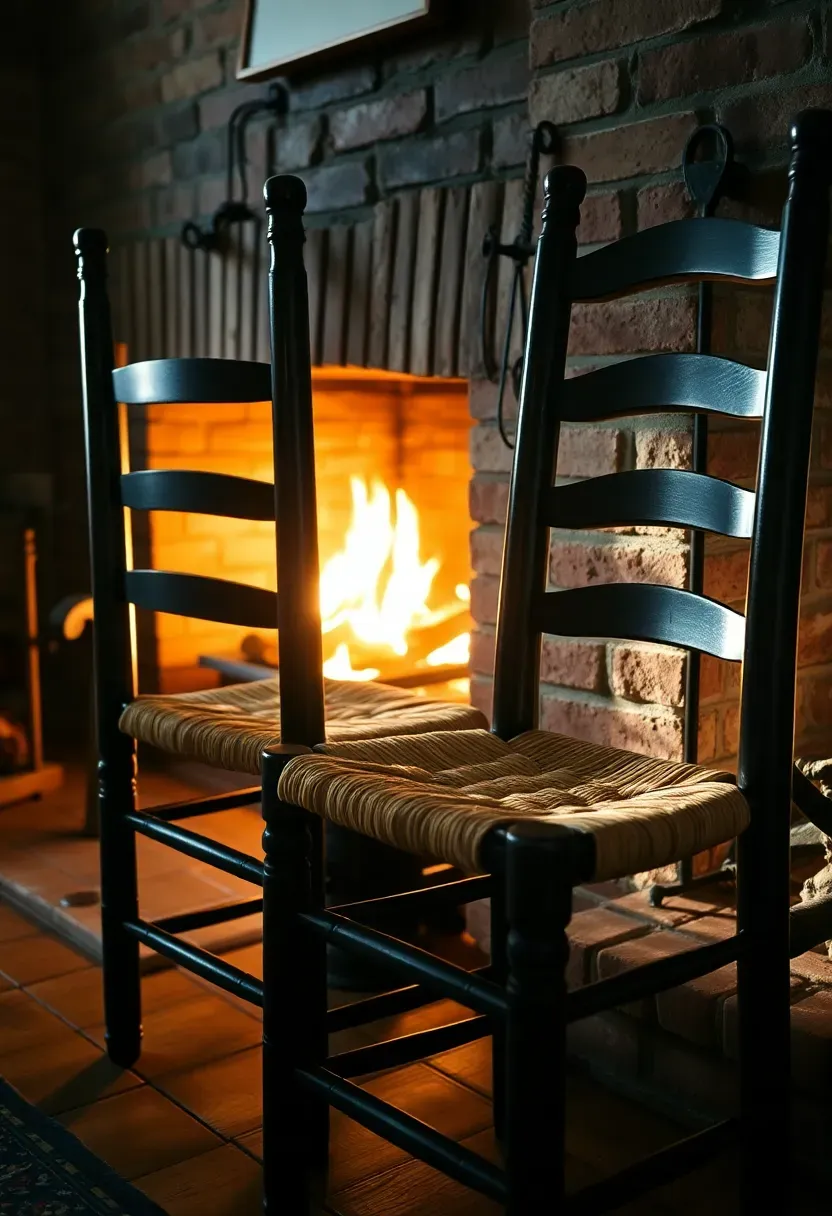
14. Ladder-Back Rush Seat Chairs
These chairs are colonial design distilled to its essence: turned maple posts, horizontal slats for back support, and a hand-woven rush seat. No upholstery, no cushion, no excess. Ladder-backs were workday chairs -- pulled up to kitchen tables, placed beside hearths, carried between rooms as needed. Their lightweight frames and honest construction make them versatile accent seating in modern colonial interiors, equally at home in a dining room, bedroom corner, or entryway.
Tips / Practical Recommendations
- Authentic rush seats use cattail or bulrush and can be re-woven when worn
- Pair ladder-backs with a heavier table to create visual contrast between light chairs and solid surface
- Look for five or six slats -- more slats generally indicate higher-quality construction
Recommended
Items for this idea
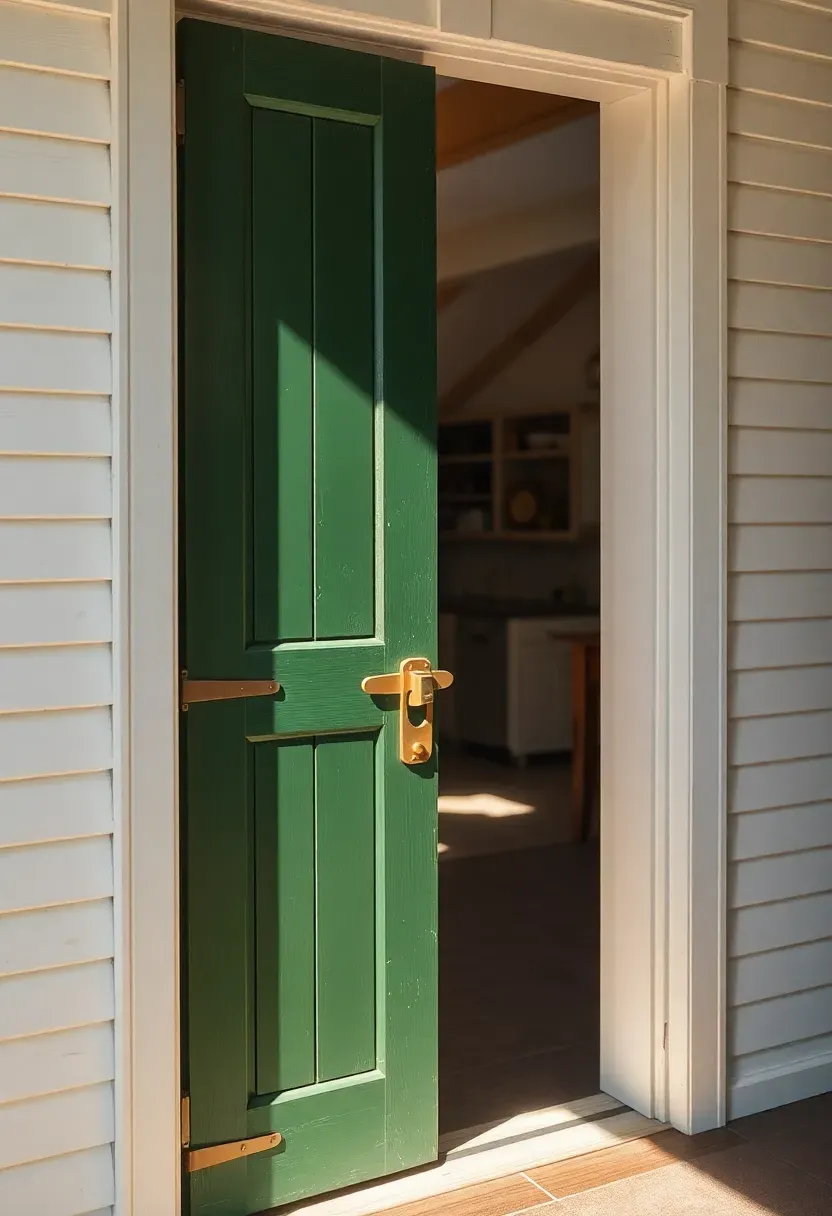
15. Dutch Door Entry
Why Standard Doors Limit Your Home and How a Dutch Door Opens Possibilities
The Core Issue
A conventional front door offers only two states: open or closed. On pleasant days you want fresh air and natural light but not wandering pets or toddlers.
The Solution
A Dutch door -- split horizontally into independent upper and lower halves -- solves this elegantly. Open the top half for ventilation and conversation while the bottom stays latched. Colonial homes throughout the Mid-Atlantic and New England featured Dutch doors as standard, and the style integrates seamlessly with clapboard siding, paneled shutters, and period hardware. Modern reproductions include weatherstripping at the split joint for insulation when both halves are closed.
Pros and Cons
Pros: Ventilation without security compromise, charming street presence, conversation-friendly design Cons: Split joint requires maintenance to prevent air leaks, fewer off-the-shelf options than standard doors, higher cost than single-panel doors
16. Tavern-Style Kitchen Table
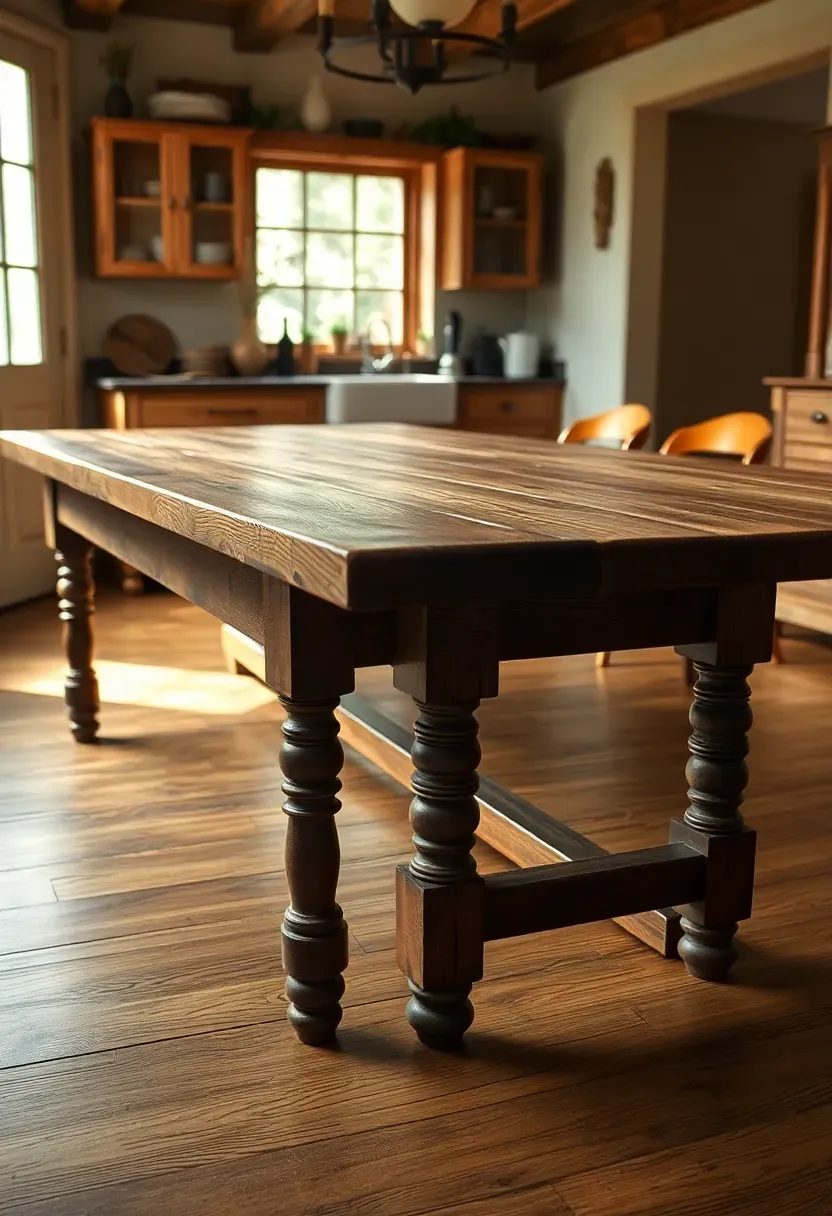
Colonial taverns needed tables that could take punishment -- spilled ale, heavy pewter plates, years of scrubbing. The tavern table evolved to meet that demand: thick tops with breadboard ends to prevent warping, sturdy turned or splayed legs, and stretcher bars for structural reinforcement. These tables bring that same indestructible honesty to modern kitchens. Their proportions suit informal dining, and the well-worn aesthetic only improves with daily use, scratches, and the occasional ring from a hot mug.
Tips / Practical Recommendations
- Standard tavern table height is 28--30 inches; most seat 6--8 depending on length
- Leave the top unfinished or apply a penetrating oil rather than polyurethane for authentic patina development
- Pair with mismatched period chairs for a collected-over-time look that avoids catalog uniformity
Recommended
Items for this idea
17. Oil Portrait Gallery Wall
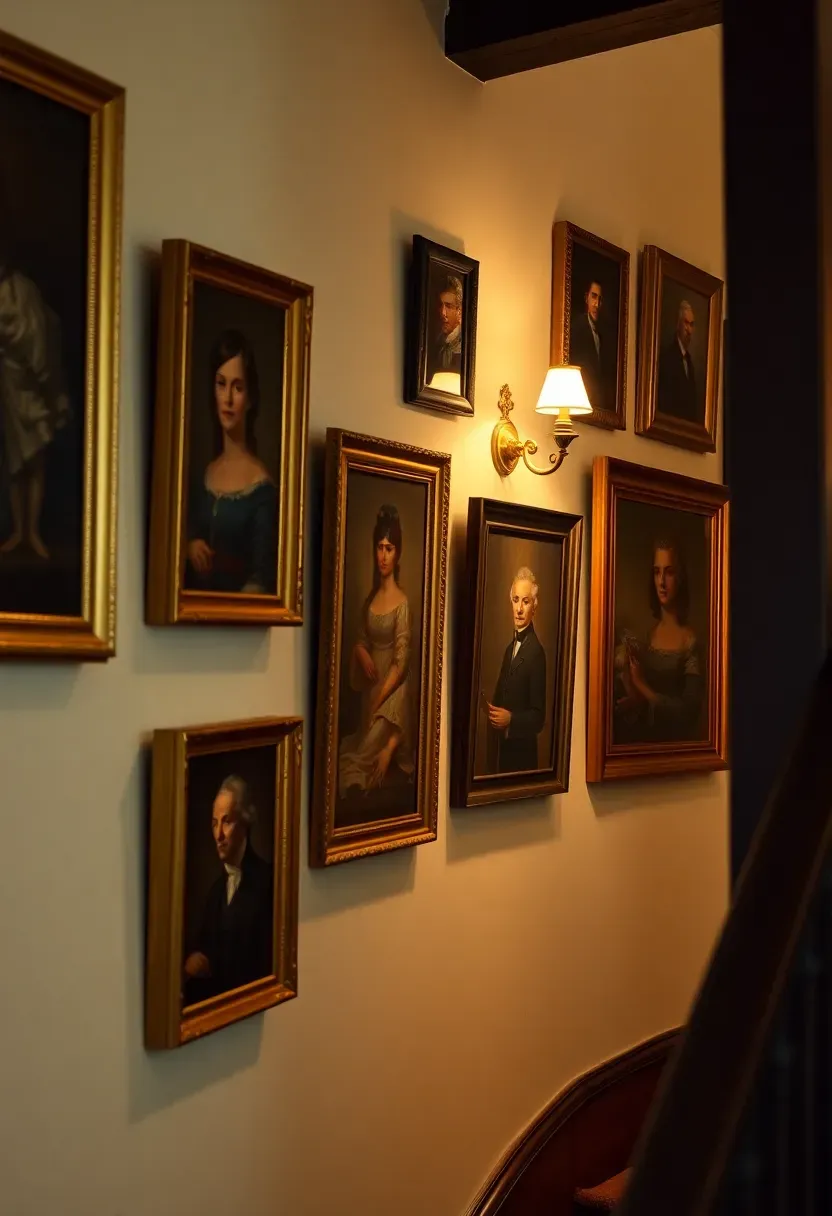
Lining a staircase or hallway wall with framed oil portraits -- whether ancestral, collected, or commissioned -- creates a sense of lineage and permanence that no other wall treatment matches. Colonial homes displayed family portraits as declarations of identity and continuity. You don't need actual ancestors in the frames; antique portraits from estate sales, vintage reproductions, or contemporary commissions all serve the narrative purpose while building a wall of character.
Step 1: Curate a Cohesive Collection
Aim for similar frame styles -- gilded, dark wood, or ebonized -- in varying sizes. Mix oval and rectangular shapes for visual interest within the consistent frame language.
Step 2: Plan the Layout
Arrange frames on the floor first. For staircase walls, follow the angle of the stairs with the bottom edges of frames tracking the incline. Maintain 2--3 inches between frames.
Step 3: Hang with Period-Appropriate Hardware
Use picture rail hooks or brass picture wire rather than adhesive strips. The hanging hardware is part of the aesthetic in colonial interiors.
18. Handwoven Coverlet as Wall Hanging
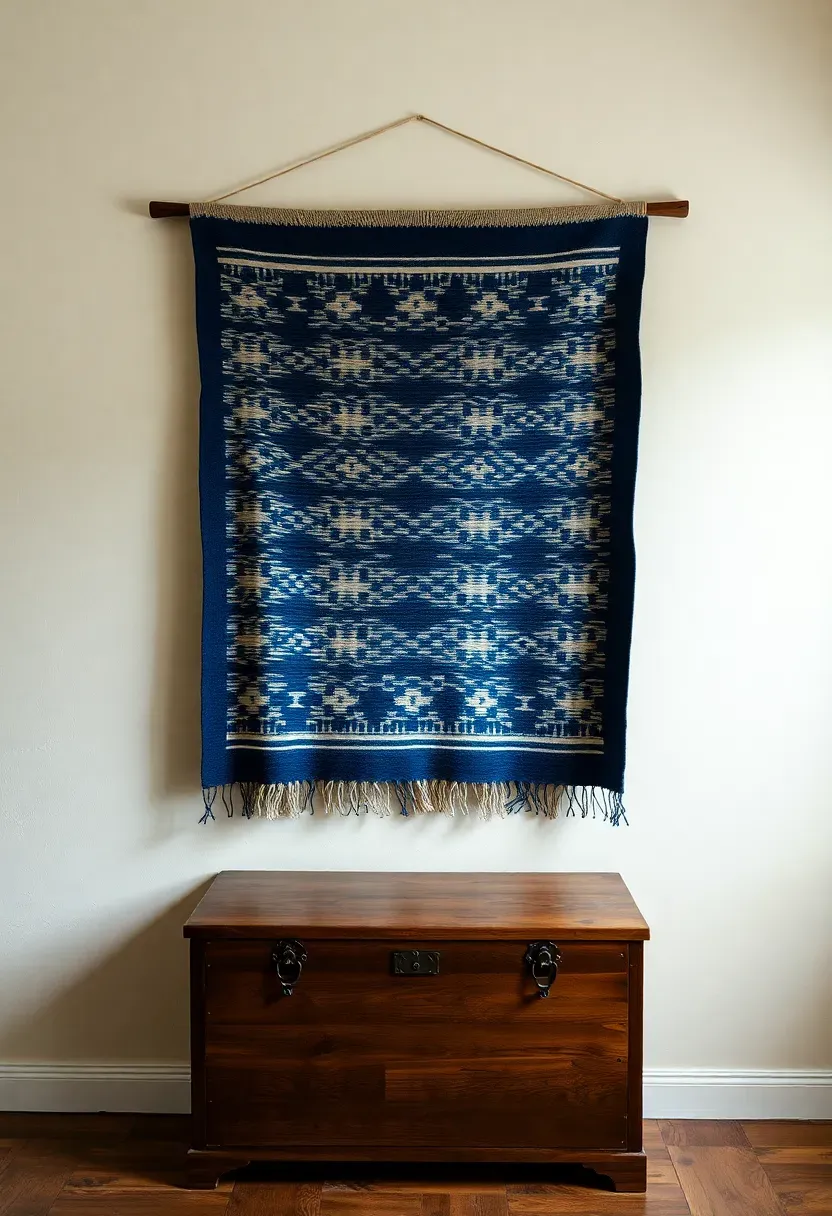
Before mass production, woven coverlets represented hours of skilled labor and served as both bedding and decoration. Geometric patterns in indigo, rust, and natural white were typical of colonial weaving traditions. Mounting a vintage or reproduction coverlet on a wall -- stretched on a rod or hung from a wooden batten -- transforms textile craft into large-scale art. The woven texture absorbs sound and softens hard wall surfaces while adding authentic colonial character that printed fabric cannot replicate.
Tips / Practical Recommendations
- Use a fabric-safe mounting method: a wooden batten with Velcro strips distributes weight without puncturing the textile
- Rotate hung textiles yearly to prevent uneven light exposure and fiber stress
- Display against a lighter wall color so the pattern reads clearly from across the room
Recommended
Items for this idea
19. Keeping Room with Cooking Hearth
Origins / History
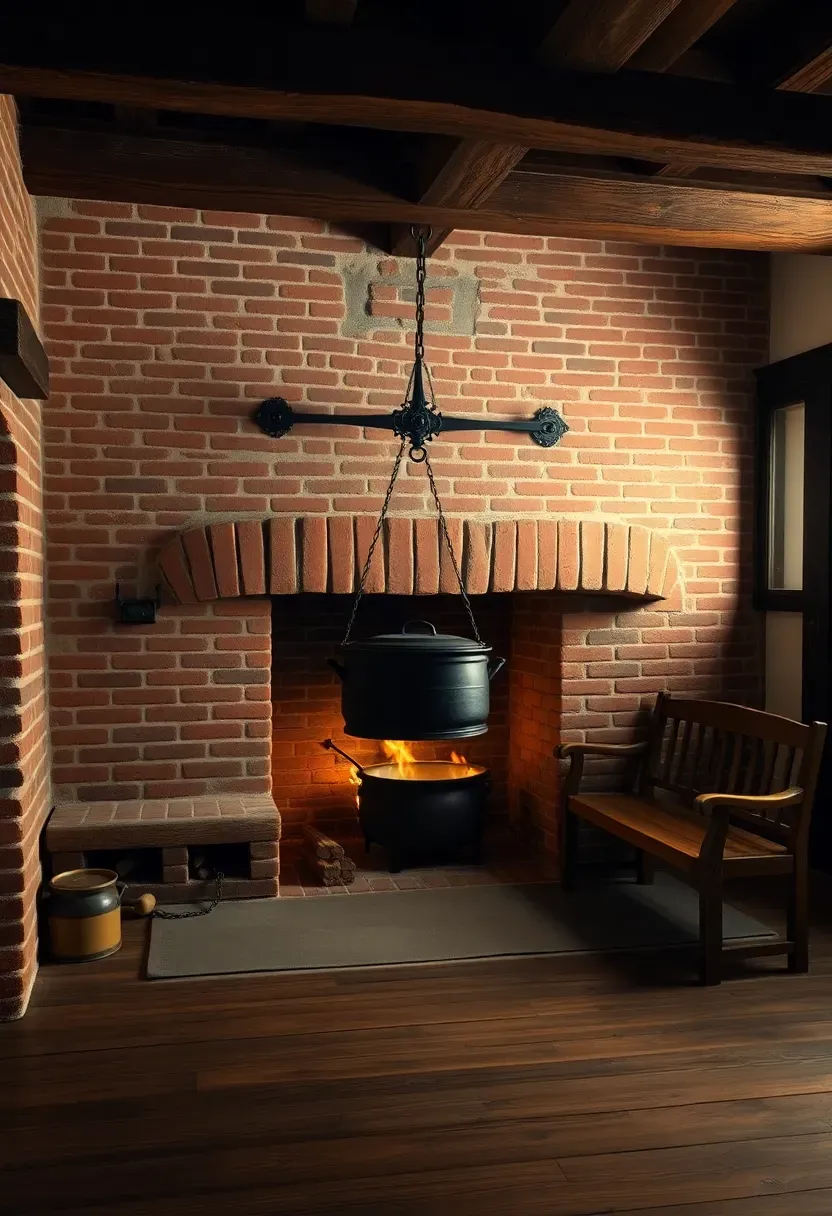
The keeping room was the heart of a colonial home -- a multipurpose space adjacent to the kitchen where the family gathered for warmth, meals, and daily activities around a large cooking hearth. It predates the modern family room concept by two centuries.
Modern Interpretation
Reviving the keeping room concept means creating a casual, fire-centered gathering space connected to the kitchen. A large brick hearth with a functional or decorative cooking crane, iron pots, and a wooden settle bench beside it captures the communal spirit. Even without a working cooking hearth, the visual elements -- the oversized firebox, the brick surround, the iron hardware -- establish the room's identity. This approach works particularly well in open-plan renovations where defining zones requires visual anchors rather than walls.
How to Apply at Home
- Install a masonry fireplace with a 48-inch or wider opening for proper keeping room scale
- Add a pot crane or trammel hooks as decorative ironwork even without active cooking use
- Place a wooden settle or high-backed bench beside the hearth to create an intimate seating nook
- Use wide plank flooring and exposed ceiling beams to complete the architectural envelope
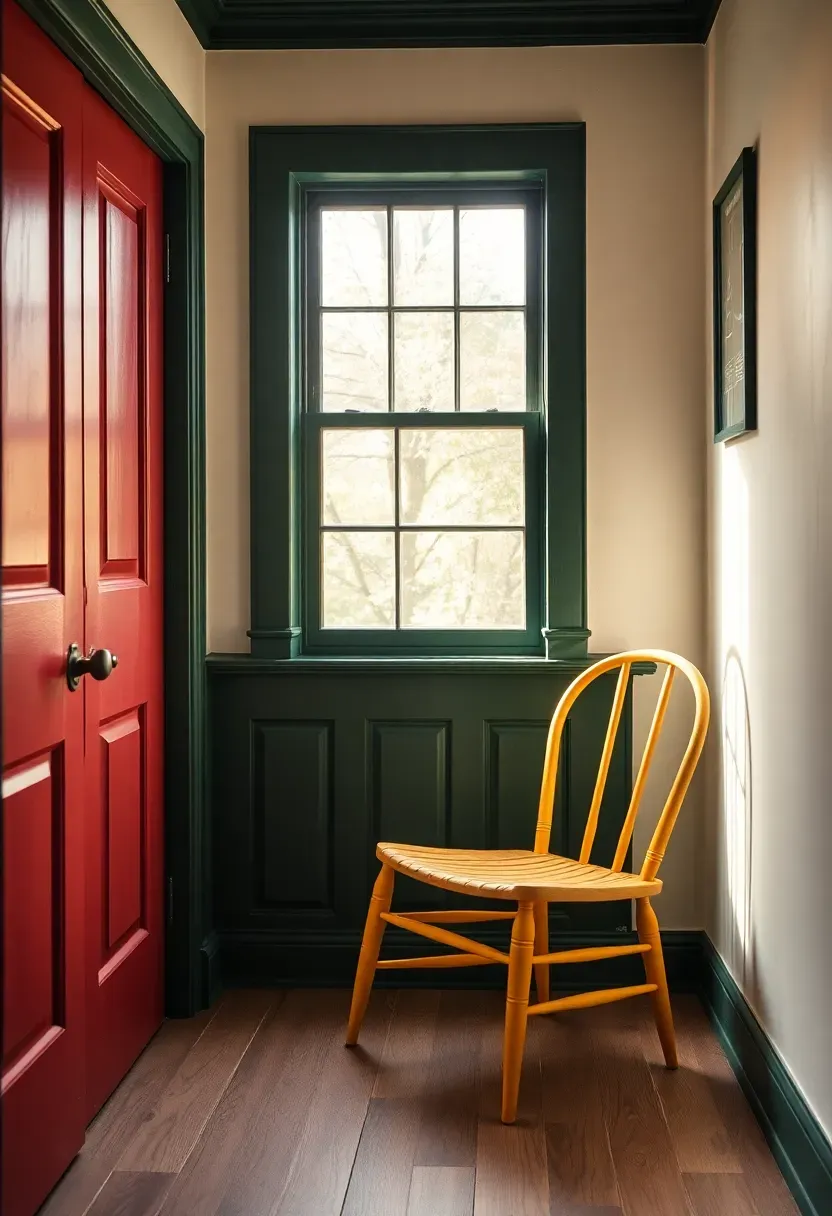
20. Saltbox Color Palette
Colonial paint colors came from natural pigments mixed into milk paint or lime wash, producing a specific range of muted, earthy tones that modern paint companies now replicate precisely. The saltbox palette centers on barn red, deep forest green, mustard yellow, cream, and slate blue -- colors that appear throughout preserved colonial homes from Massachusetts to Virginia. Using these historically accurate colors grounds an interior in authenticity, and because they derive from earth pigments, they harmonize naturally with wood, stone, and iron.
Tips / Practical Recommendations
- Benjamin Moore's Historical Collection and Farrow & Ball's archive line both offer verified colonial colors
- Use flat or eggshell finishes on walls -- high gloss on trim only -- to match period paint technology
- Limit each room to two or three palette colors plus white trim to maintain colonial restraint
- Test colors in natural light; north-facing rooms may need warmer selections from the palette
Recommended
Items for this idea
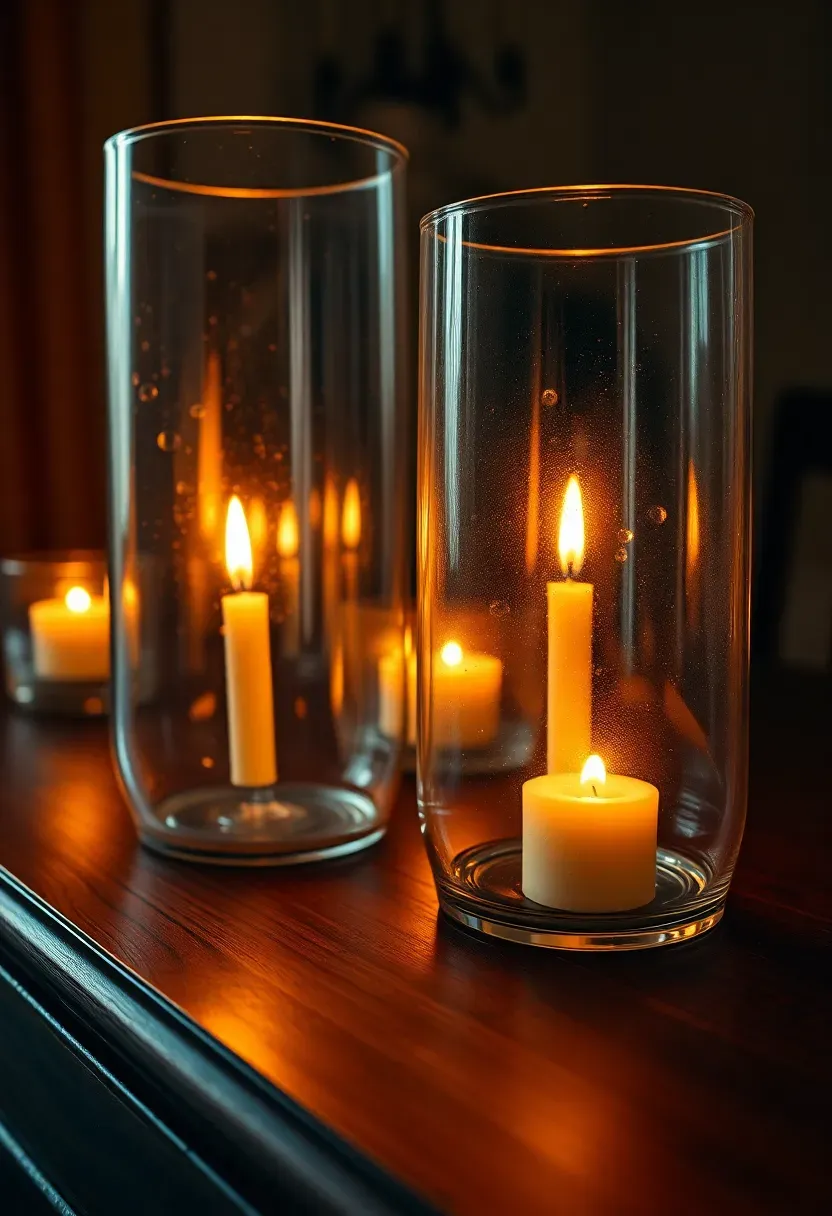
21. Blown Glass Hurricane Lamps
Hurricane lamps protected candle flames from drafts in colonial homes, and the clear hand-blown glass cylinders became objects of beauty in their own right. The slight imperfections in antique glass -- bubbles, waviness, uneven thickness -- catch and scatter candlelight in ways that machine-made glass cannot. Place a pair on a sideboard, center one on a dining table, or line three along a mantel shelf for atmospheric lighting that no electric fixture can match.
Tips / Practical Recommendations
- Use beeswax taper candles for a warm, honey-toned flame and subtle sweet scent
- Seek out reproductions from American glassblowers who use period techniques
- Clean glass with white vinegar and a soft cloth to avoid scratching the surface
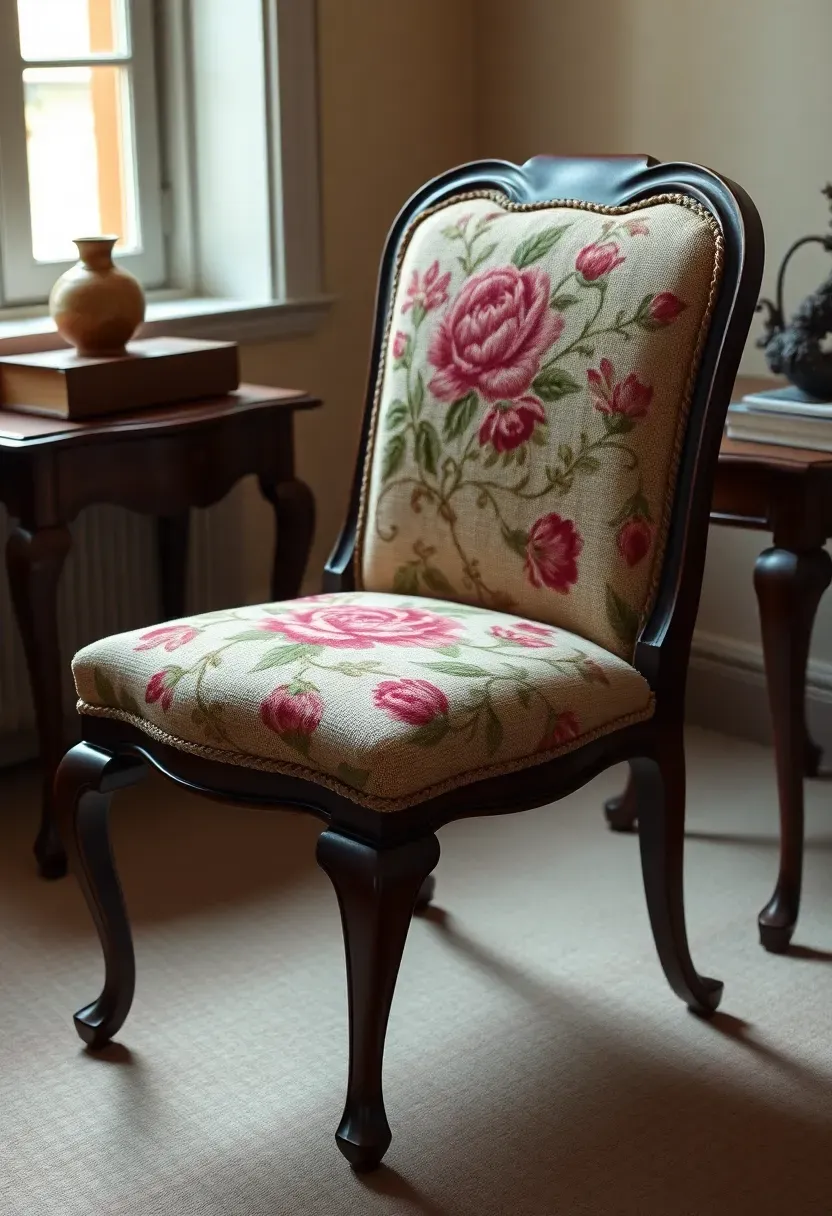
22. Needlepoint Upholstered Side Chair
A single needlepoint chair introduces handcraft and color to a colonial room without overwhelming it. The dense stitching of needlepoint -- typically wool on canvas -- creates a textile surface that is both decorative and remarkably durable. Floral, crewel, and heraldic patterns were popular in the colonial period. One carefully placed needlepoint chair beside a writing desk or in a bedroom corner becomes a focal point that rewards close inspection with its intricate handwork.
Tips / Practical Recommendations
- Vintage needlepoint seats can be professionally cleaned and restretched onto new frames
- Protect from direct sunlight to prevent wool fading -- position away from south-facing windows
- Pair with a small round side table and a reading lamp to create a dedicated sitting vignette
Recommended
Items for this idea
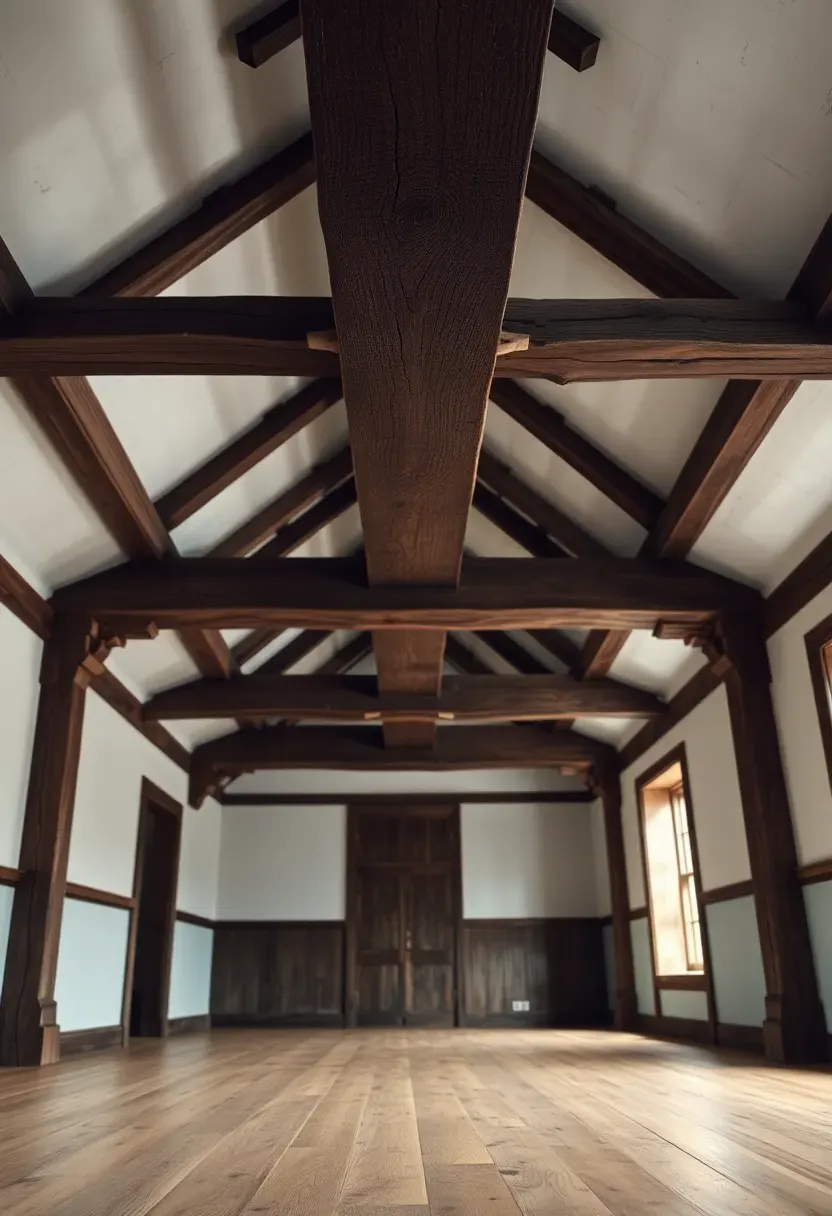
23. Exposed Ceiling Beams
Hand-hewn ceiling beams carry the marks of the adze and broadaxe that shaped them -- tool marks that tell a construction story no milled lumber can replicate. In colonial homes, these structural members were left exposed out of practicality, not aesthetics, but their rough-textured surfaces have become one of the most sought-after colonial features. Whether original or added as decorative elements, dark wood beams against a light plaster ceiling create dramatic contrast and lower the visual ceiling height to create intimacy in tall rooms.
Tips / Practical Recommendations
- Reclaimed barn beams are available from architectural salvage dealers and bring genuine patina
- Faux beams made from lightweight polyurethane foam offer the look without structural modification
- Space beams 3--4 feet apart for proper rhythm; too many beams clutter the ceiling
- Stain or leave natural -- avoid painting beams white unless matching a specific coastal colonial aesthetic
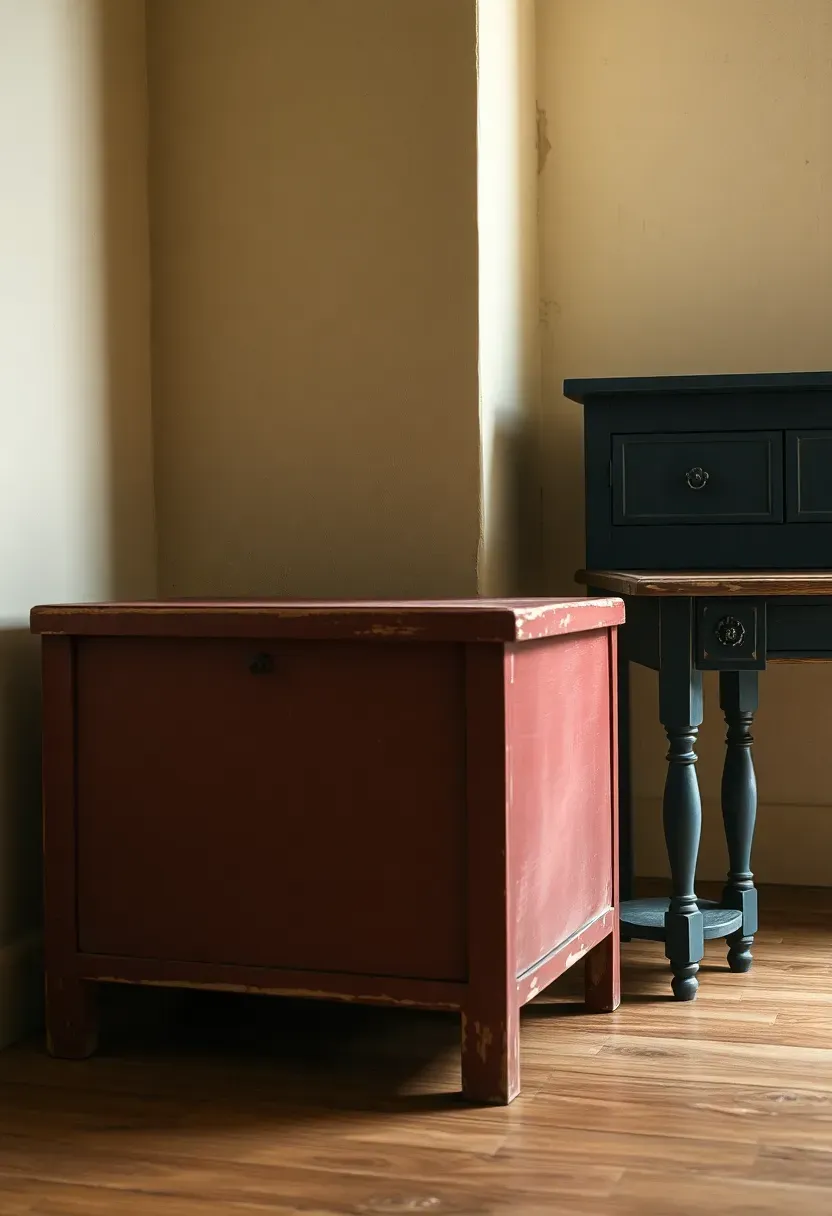
24. Milk Paint Finish on Furniture
Why Modern Paint Falls Short and How Milk Paint Delivers Authenticity
The Core Issue
Standard latex and acrylic paints produce a uniform, plastic-like surface that reads as contemporary no matter what color you choose. On colonial furniture, modern paint looks wrong because the surface is too perfect.
The Solution
Milk paint -- made from milk protein (casein), lime, and natural pigments -- produces the slightly uneven, chalky, layered finish found on original colonial furniture. It bonds differently to wood than modern paints, creating soft edges, subtle color variation, and a matte surface that feels handmade. The finish can be burnished with steel wool for a smooth touch or left raw for a more rustic effect. Brands like Old Fashioned Milk Paint Company sell authentic powder formulations that mix with water.
Pros and Cons
Pros: Historically accurate, non-toxic, develops beautiful patina with age, available in period colors Cons: Requires bonding agent on previously finished surfaces, shorter pot life once mixed, less durable than modern paints without a topcoat
Recommended
Items for this idea
25. Delft Tile Fireplace Surround
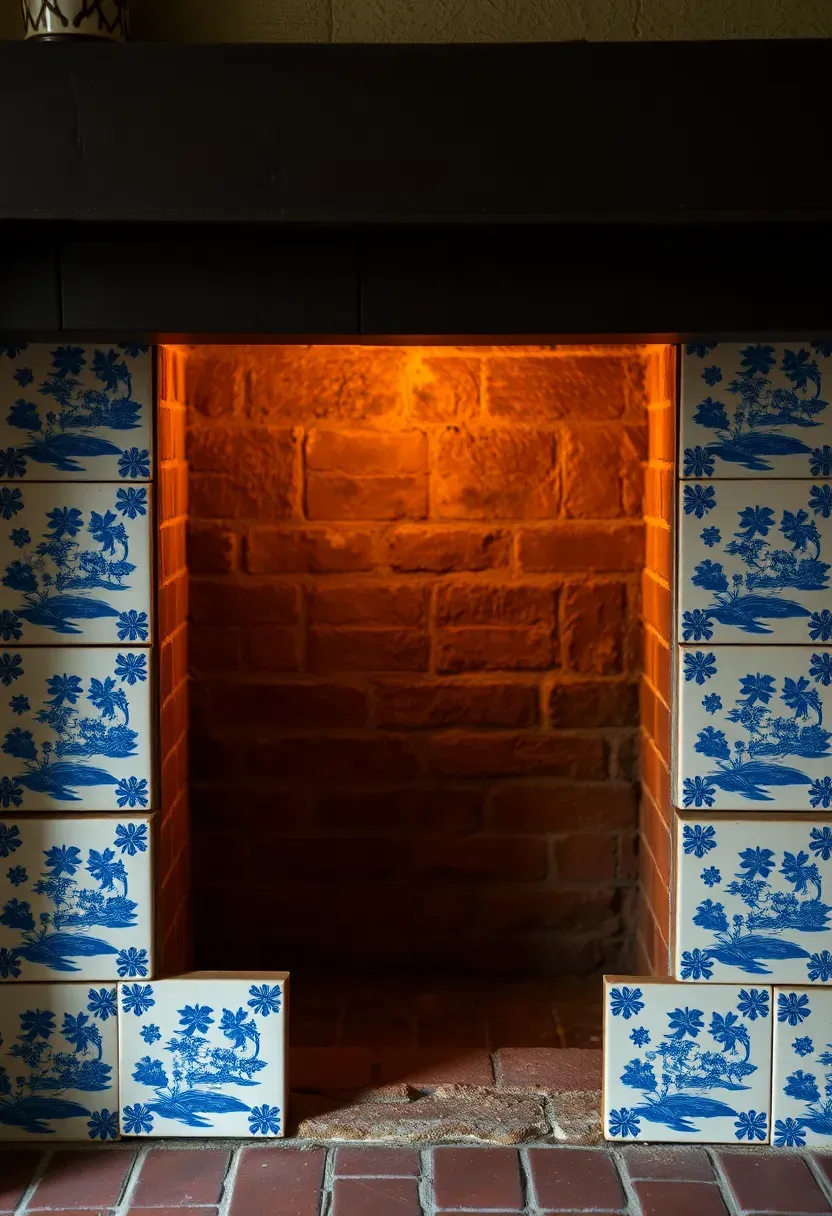
Imported Dutch Delft tiles -- hand-painted in blue and white with scenes of windmills, ships, biblical stories, and floral motifs -- decorated the finest colonial fireplaces. Each tile was a miniature painting, and surrounding the firebox with them created a picture gallery at the hearth. Modern reproduction Delft tiles are fired using traditional methods and maintain the slightly irregular charm of the originals. A fireplace surround of Delft tiles becomes the room's centerpiece and conversation starter.
Step 1: Source Quality Tiles
Authentic reproductions from Dutch manufacturers or American artisans use hand-painting rather than decal transfer. The brushwork variation is part of the character.
Step 2: Plan the Layout
Traditional layouts placed tiles in a grid pattern with uniform spacing. Some installations mixed scene tiles with simpler corner motif tiles for visual variety.
Step 3: Install and Grout
Set tiles on a heat-resistant substrate with thin-set mortar. Use narrow grout lines (1/16 inch) in a neutral color that doesn't compete with the blue-and-white imagery.
What to Watch Out For
- Verify that tiles are rated for fireplace temperatures if flanking an active firebox
- Consider framing the tile field with a simple wood molding to define the surround as a deliberate design element
26. Hooked Rug on Hardwood
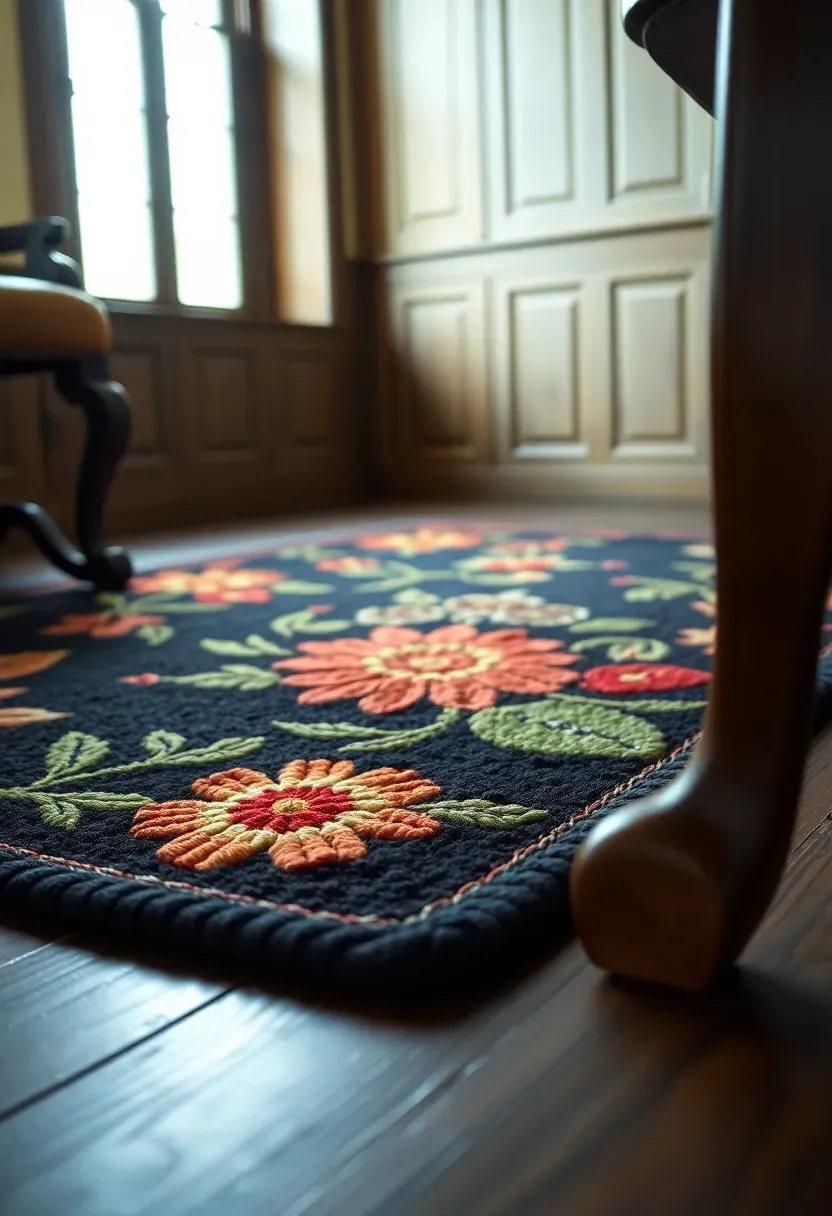
Hooked rugs emerged from colonial resourcefulness -- scraps of worn clothing and fabric pulled through burlap backing to create durable, colorful floor coverings. The folk art quality of hooked rugs -- slightly uneven lines, bold simple patterns, saturated colors on a dark ground -- brings warmth and handmade authenticity to colonial hardwood floors. Florals, geometric borders, animals, and patriotic motifs were all common, and the tradition continues with contemporary rug hookers who maintain colonial techniques.
Tips / Practical Recommendations
- Place a quality rug pad underneath to prevent slipping and extend the rug's life on hard floors
- Vintage hooked rugs should be displayed in low-traffic areas to preserve their condition
- Size the rug to leave 12--18 inches of exposed floor around its edges for proper framing on the hardwood
Recommended
Items for this idea
27. Transom Window Above Interior Doors
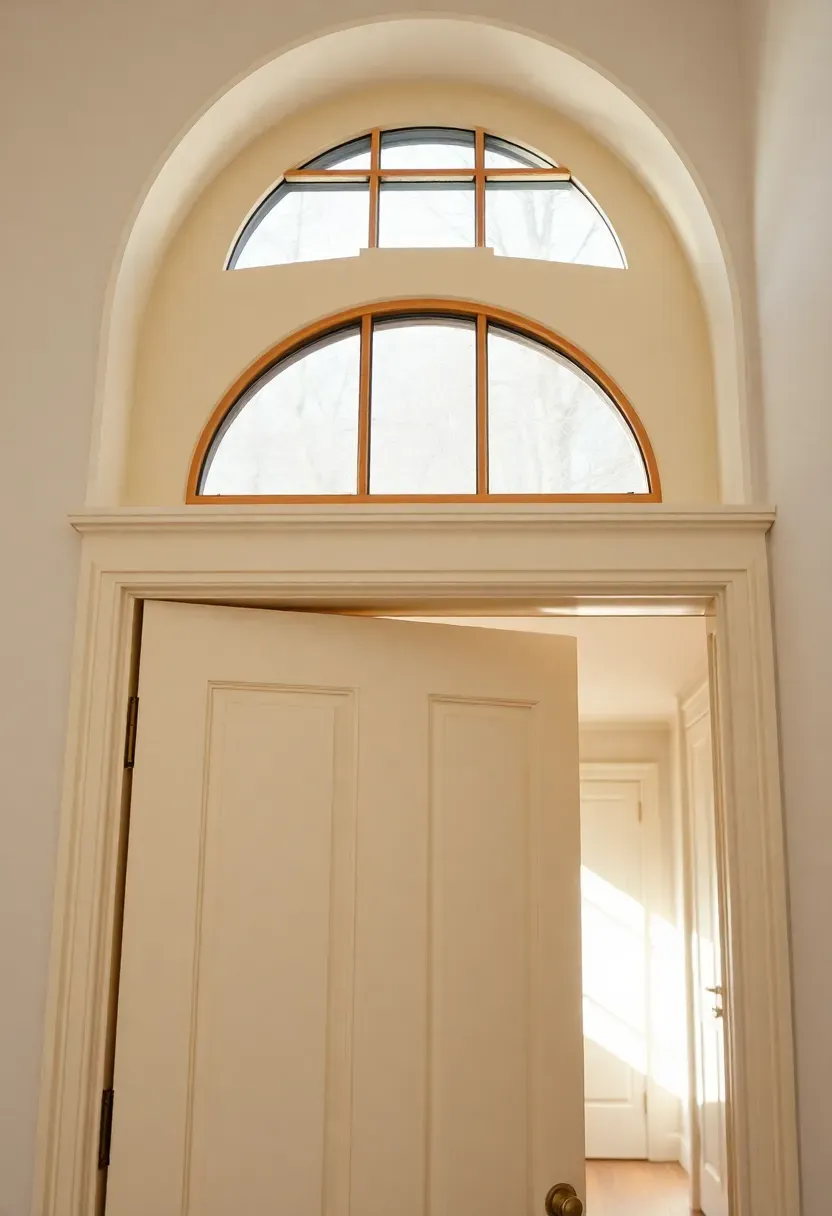
Transom windows -- the small windows set above interior door frames -- served a crucial ventilation purpose in colonial homes built before mechanical air conditioning. Opening the transom allowed warm air to circulate between rooms without sacrificing privacy. Today, fixed or operable transom windows add vertical interest to doorways, bring borrowed light into hallways and interior rooms, and increase the perceived ceiling height. The divided-light pattern of a colonial transom -- typically three or four small panes -- echoes the multi-pane windows that define the style's exterior.
Tips / Practical Recommendations
- Standard transom height is 10--14 inches; taller transoms suit rooms with higher ceilings
- Clear glass shares light between rooms; frosted or seeded glass adds privacy
- Match the muntin profile to existing window mullions for architectural consistency throughout the home
Quick FAQ
Is colonial interior design only appropriate for old houses? Not at all. Colonial design principles -- symmetry, natural materials, restrained color -- work in any structure. New construction homes adopt colonial elements through millwork, paint choices, and furniture selection without requiring period architecture. The style is about proportion and material honesty, not building age.
Should every room match exactly in a colonial home? Colonial homes varied room by room in reality. Formal parlors received more elaborate trim and furnishings, while keeping rooms and bedrooms were simpler. Varying the level of detail by room actually creates a more authentic result than applying the same treatment everywhere.
Which wood species are most historically accurate? Cherry, walnut, maple, and pine were the most common. Cherry and walnut went to fine furniture; maple to chairs and utilitarian pieces; pine to flooring, paneling, and built-ins. Using these species -- or staining to approximate their tones -- strengthens the period connection.
Can colonial design feel modern without losing its character? Absolutely. Editing is the key. Choose three or four strong colonial elements -- paneling, a period fireplace, Windsor chairs, brass lighting -- and keep everything else clean and uncluttered. The colonial pieces gain more presence when surrounded by breathing room rather than competing with excessive decoration.
Where do I find authentic colonial reproduction furniture? Workshops like D.R. Dimes, Eldred Wheeler, and the Museum of Early Southern Decorative Arts shop produce historically accurate reproductions. Estate sales, auction houses, and specialized antique dealers are also reliable sources for original period pieces.
Trends come and go, but the proportions, materials, and craftsmanship behind colonial design have held their ground for over 300 years. Start with one room, one strong choice -- a paneled wall, a brass chandelier, a Windsor chair -- and build from there. The beauty of this style is that each genuine piece you add makes everything around it look better.
Pinterest cover for 27 American Colonial Interior Design Ideas for Timeless Homes
About the author
OBCD
CGI visualization and interior design content. We create detailed 3D renders and curate practical design ideas for every room in your home.