19 Arizona Backyard Ideas on a Budget
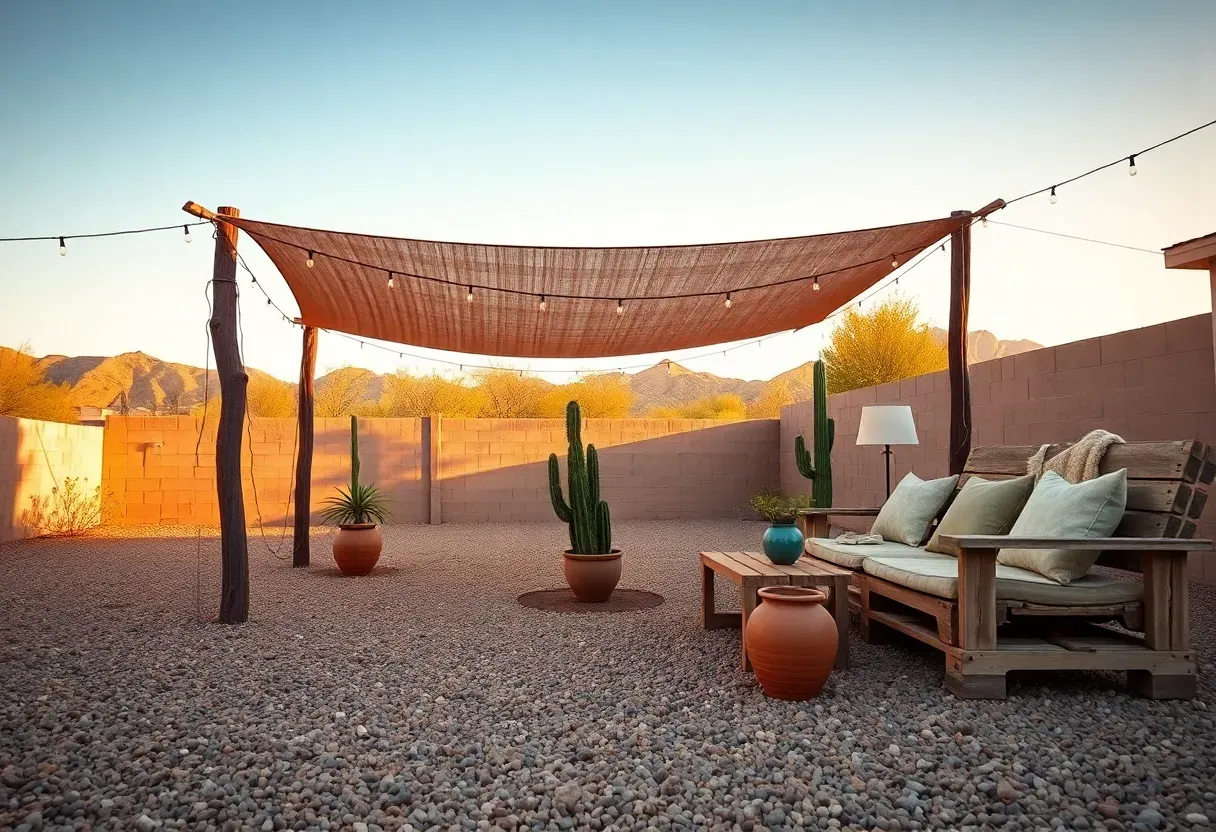
We've all stood in our Arizona backyards during a 110-degree July afternoon and wondered: is there any way to make this space livable without spending a fortune? The answer is a firm yes. Desert climate actually works in your favor when you stop fighting it and start designing with it. Gravel costs a fraction of sod, native plants skip the sprinkler bill entirely, and shade structures earn back their cost in lower AC usage the very first summer. The trick is knowing which improvements deliver the biggest visual and functional payoff per dollar spent.
In this article I've gathered 19 ideas that real Arizona homeowners have used to turn bare dirt lots into genuine outdoor living rooms — all without draining the savings account. Let's get into it.
Table of Contents
- Decomposed Granite Patio
- Pallet Shade Structure
- DIY Desert Fire Pit
- Painted Concrete Slab Makeover
- Succulent Rock Garden
- Salvaged Metal Edging
- String Light Canopy
- Gravel and Stepping Stone Path
- Container Cactus Garden
- Budget Shade Sail Setup
- Recycled Brick Seating Wall
- Desert Wildflower Border
- DIY Ramada from Reclaimed Wood
- Stock Tank Pool
- Xeriscaped Dry River Bed
- Thrift Store Patio Furniture Refresh
- Solar-Powered Landscape Lighting
- Mesquite Chip Mulch Beds
- Outdoor Rug and Floor Cushion Lounge
1. Decomposed Granite Patio
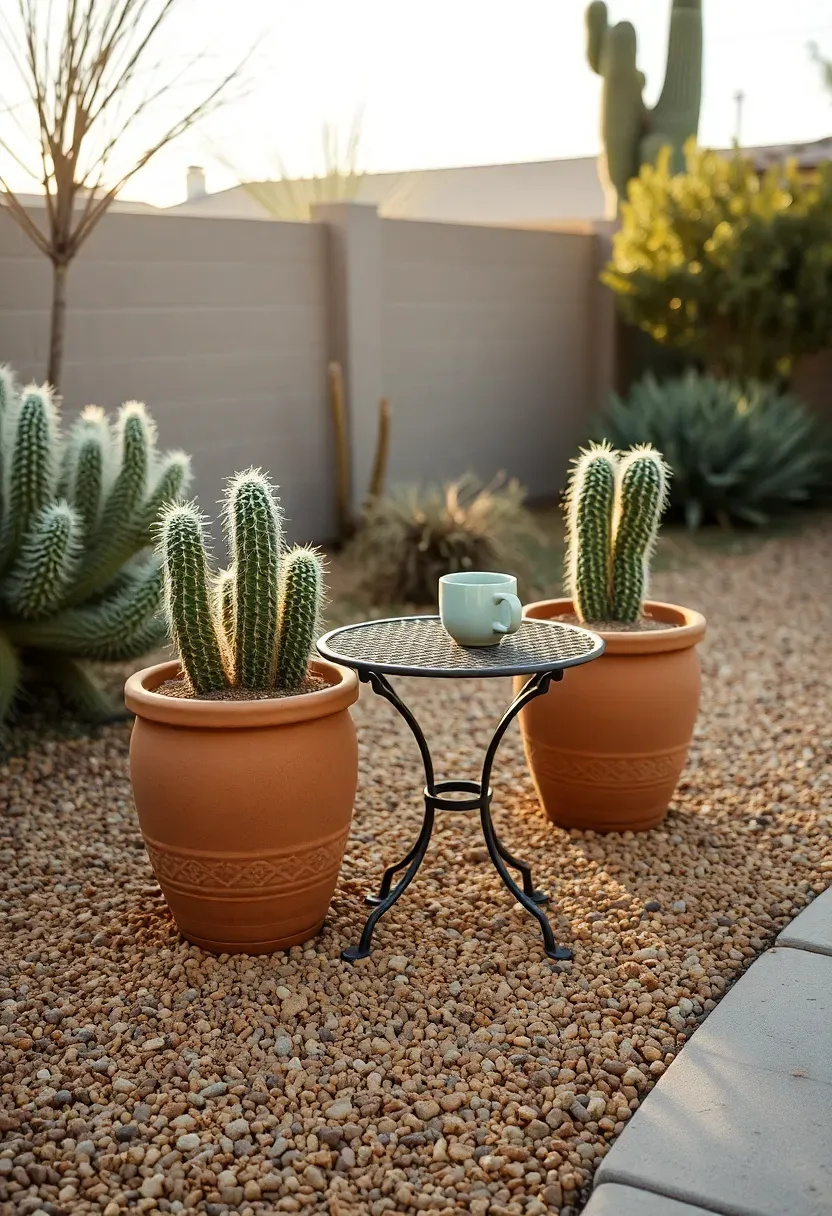
Decomposed granite — DG for short — is the single most cost-effective ground cover for Arizona backyards. A ton of it runs roughly thirty to fifty dollars, and a few tons can resurface an entire patio area in a weekend. The warm amber and russet tones blend seamlessly with the surrounding desert landscape, so the result looks intentional rather than improvised.
How to Lay It Right
- Excavate three to four inches of existing soil, then compact the base before spreading DG
- Use stabilized DG (mixed with a binding agent) near seating areas so it stays firm underfoot
- Edge with steel or recycled plastic borders to keep granules from migrating into planting beds
We picked a few things that go well with this idea: LOVE STORY 12ft Triangle Shade Sail (★4.5), Royal Shade Heavy Duty Triangle Sail (★4.5) and Shade&Beyond 16ft Triangle Sun Sail (★4.5). As an Amazon Associate we earn from qualifying purchases.
2. Pallet Shade Structure
The Core Issue
Arizona sun beats down relentlessly from May through September, making unshaded patios unusable during peak hours. Professional pergolas start around two thousand dollars installed.
The Solution
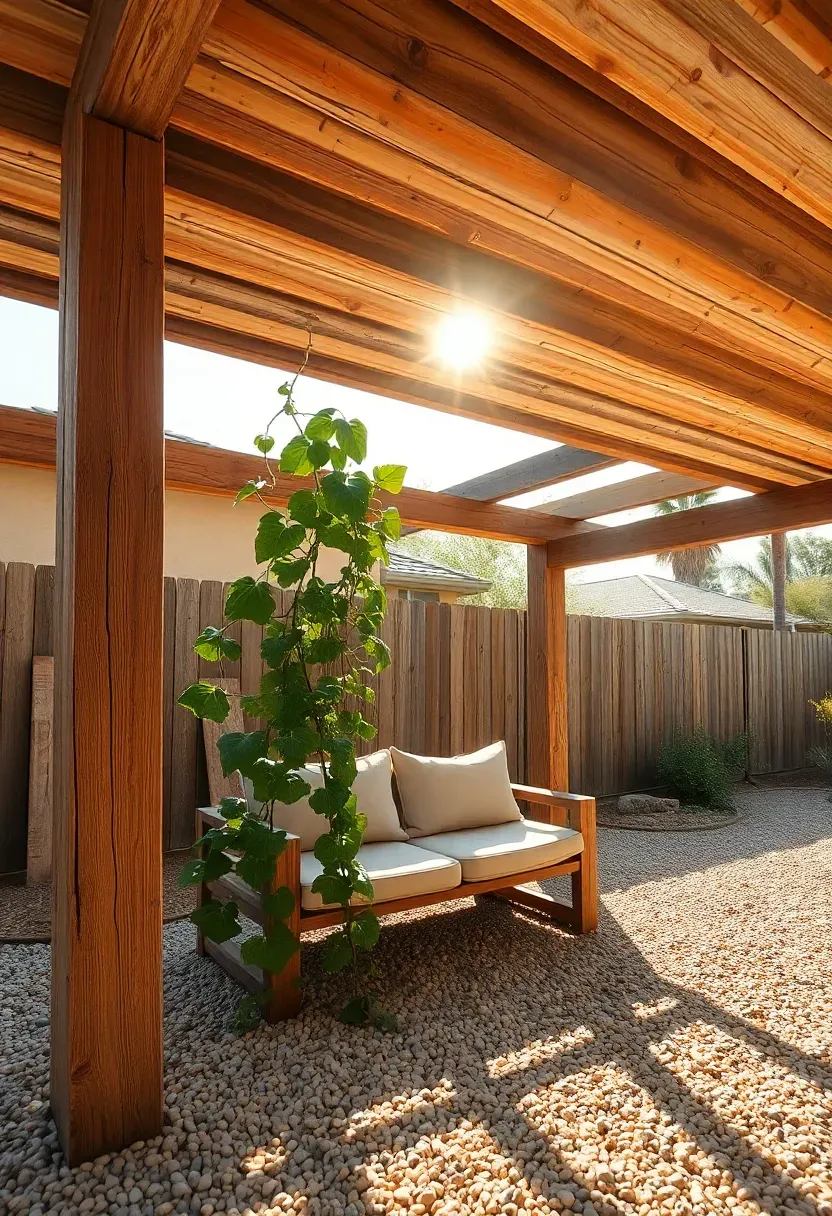
Reclaimed shipping pallets — often free from local warehouses — can be bolted together into a slatted overhead structure that filters harsh sunlight while allowing airflow. Mount four sturdy posts in concrete footings, then lay pallets horizontally across the top. The gaps between slats create striped shade patterns that shift throughout the day. Train a drought-tolerant vine like Arizona grape ivy along one side for added coverage by the second growing season.
Pros and Cons
Pros: Near-zero material cost, rustic visual charm, easy to disassemble or reconfigure Cons: Wood weathers fast in desert UV — treat with exterior sealant annually, load capacity limits prevent heavy overhead fixtures
We picked a few things that go well with this idea: Waterproof Solar Path Lights (12-Pack) (★4.4), ALEPOD Solar Pathway Lights (8-Pack) (★4.5) and Dusk-to-Dawn Solar Garden Lights (12-Pack) (★4.3). As an Amazon Associate we earn from qualifying purchases.
3. DIY Desert Fire Pit
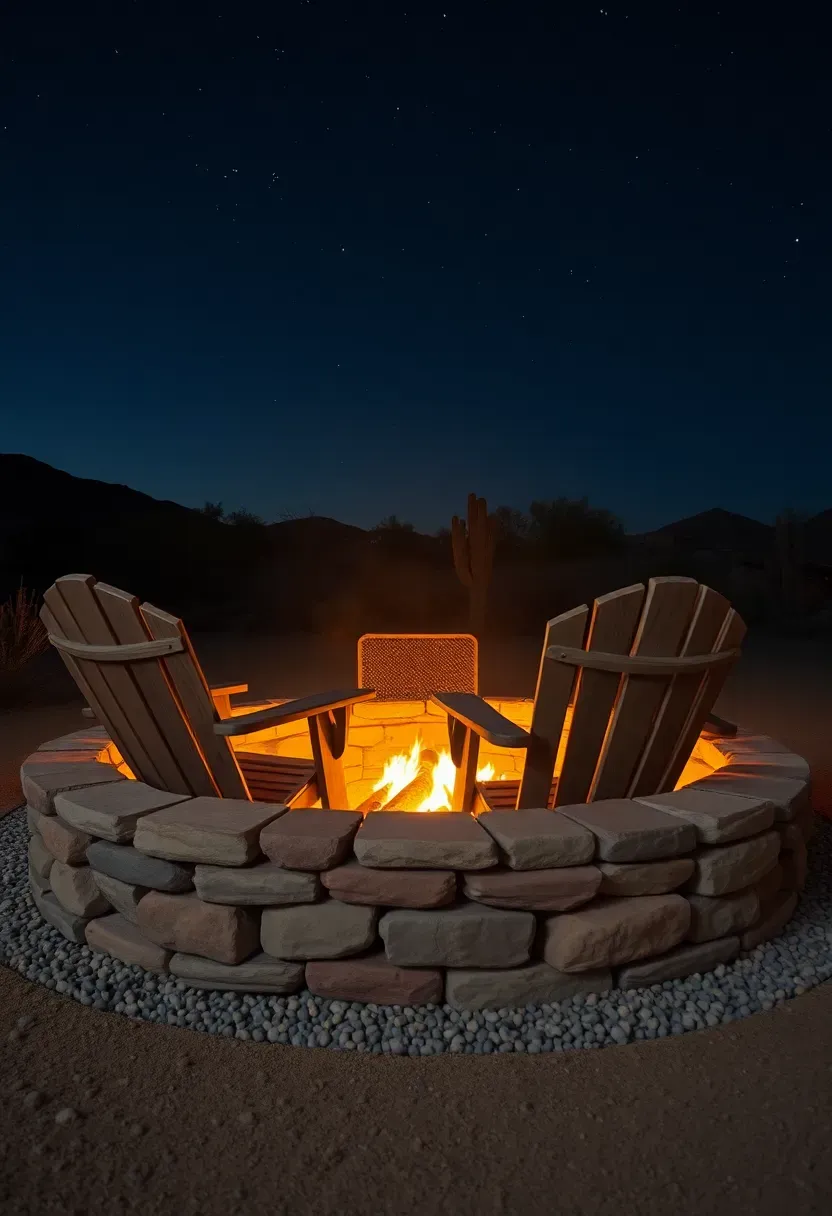
Nothing extends your Arizona backyard season quite like a fire pit. Desert evenings cool rapidly after sunset — sometimes dropping thirty degrees in two hours — and a simple ring of stacked stone turns a chilly November patio into a gathering spot worth lingering at.
Step 1: Choose Your Stone
Source local flagstone or salvaged concrete blocks. Many Arizona landscape supply yards sell "seconds" — stones with minor chips or irregular shapes — at steep discounts. Expect to spend under a hundred dollars for enough material.
Step 2: Build the Ring
Dig a shallow circular pit roughly three feet across, line the bottom with pea gravel for drainage, and dry-stack stones two to three courses high. No mortar needed — dry stacking lets you adjust or relocate the pit later.
Step 3: Add the Finishing Touches
Surround the pit with a ring of decomposed granite and set out folding Adirondack chairs. Keep a metal screen cover on hand for windy evenings.
We picked a few things that go well with this idea: Bestway TANX 10ft Stock Tank Pool (★4.0), Behlen Country 6ft Galvanized Stock Tank (★4.0) and Behrens 15-Gallon Galvanized Steel Tub (★4.1). As an Amazon Associate we earn from qualifying purchases.
4. Painted Concrete Slab Makeover
Why It Works on a Budget
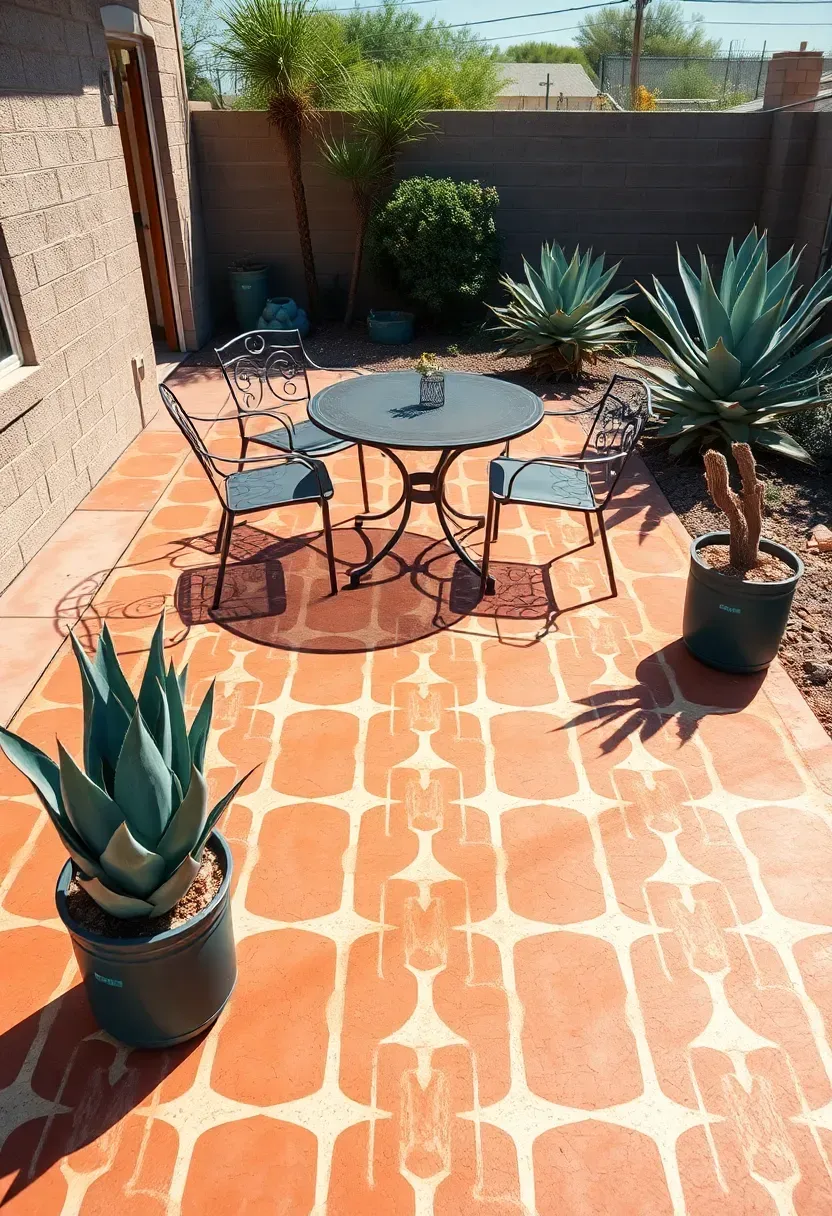
Most Arizona tract homes come with a basic gray concrete slab out back. Rather than demolishing and replacing it — a job that easily runs several thousand dollars — a coat of specialized concrete paint transforms the surface for under two hundred dollars in materials.
Modern Interpretation
Stenciled geometric patterns in terracotta, sage green, or warm cream tones are trending heavily in Southwest outdoor design. Use a concrete stencil kit from any home improvement store, apply masonry primer first, then alternate colors through the stencil openings. Two coats of clear concrete sealer on top protect against UV fading and monsoon moisture.
How to Apply at Home
- Power wash the slab thoroughly and let it dry for forty-eight hours before painting
- Apply paint early in the morning before surface temperatures climb above ninety degrees
- Refresh the sealer coat every two years to maintain color vibrancy
- Start with a small corner section to test your color palette before committing to the full slab
Recommended
Items for this idea
5. Succulent Rock Garden
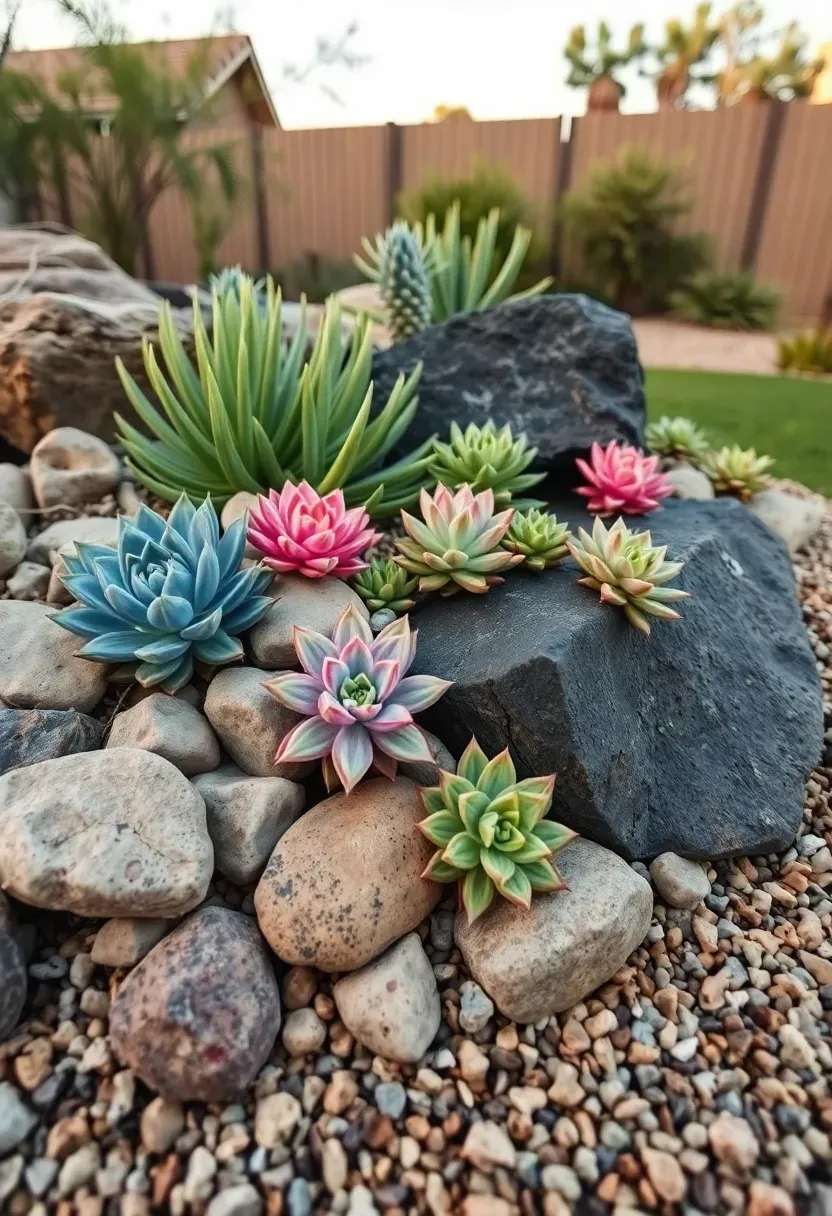
Succulents are the ultimate budget landscaping plant for Arizona. Many varieties propagate from cuttings, meaning a single trip to a neighbor's garden or a local plant swap can yield dozens of starter plants at no cost. Arrange them among river stones, volcanic rock, and a few statement boulders for a composition that looks curated and expensive despite costing almost nothing.
Tips for Desert Success
- Group succulents by water needs — agave and prickly pear want less frequent irrigation than echeveria or aloe
- Elevate plantings slightly above grade on mounded soil to ensure fast drainage during monsoon downpours
- Use light-colored rock mulch around heat-sensitive varieties to reflect sunlight and reduce root-zone temperatures
6. Salvaged Metal Edging
Comparing: Metal vs. Plastic Edging
When defining planting beds and pathways in your Arizona backyard, the choice of edging material matters more than you might expect.
Option A: Salvaged Corrugated Metal
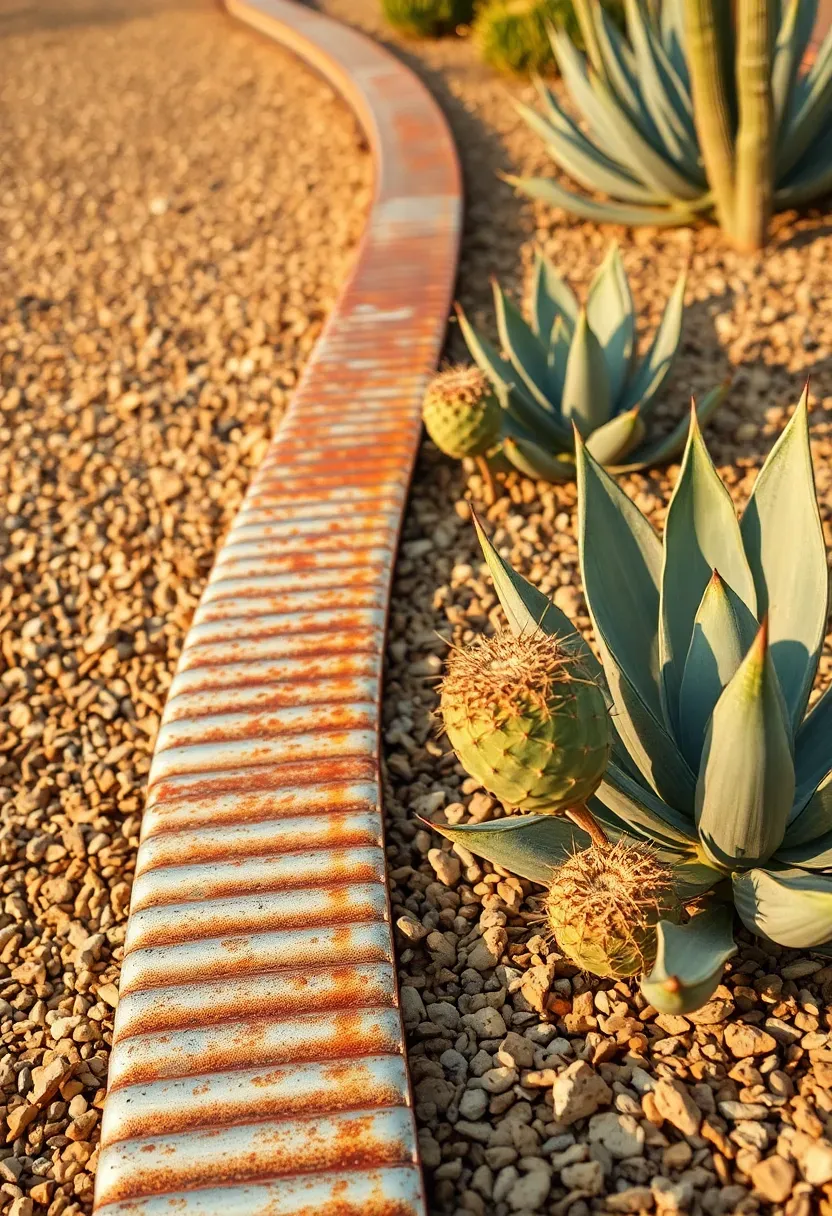
Reclaimed roofing panels cut into twelve-inch strips and buried halfway create bold, industrial-style borders. The weathered patina of rusted metal harmonizes beautifully with desert earth tones. Source panels from demolition sites or salvage yards for a few dollars per sheet.
Option B: Commercial Plastic Edging
Black plastic roll edging costs roughly fifteen to twenty dollars for a forty-foot section. It installs quickly and disappears visually, but UV exposure in Arizona causes it to become brittle and crack within two to three seasons.
What to Choose
Choose metal if: you want a visible design element with a rugged Southwest aesthetic that lasts indefinitely Choose plastic if: you need a temporary, hidden border for a rental property or a space you plan to redesign soon
Recommended
Items for this idea
7. String Light Canopy
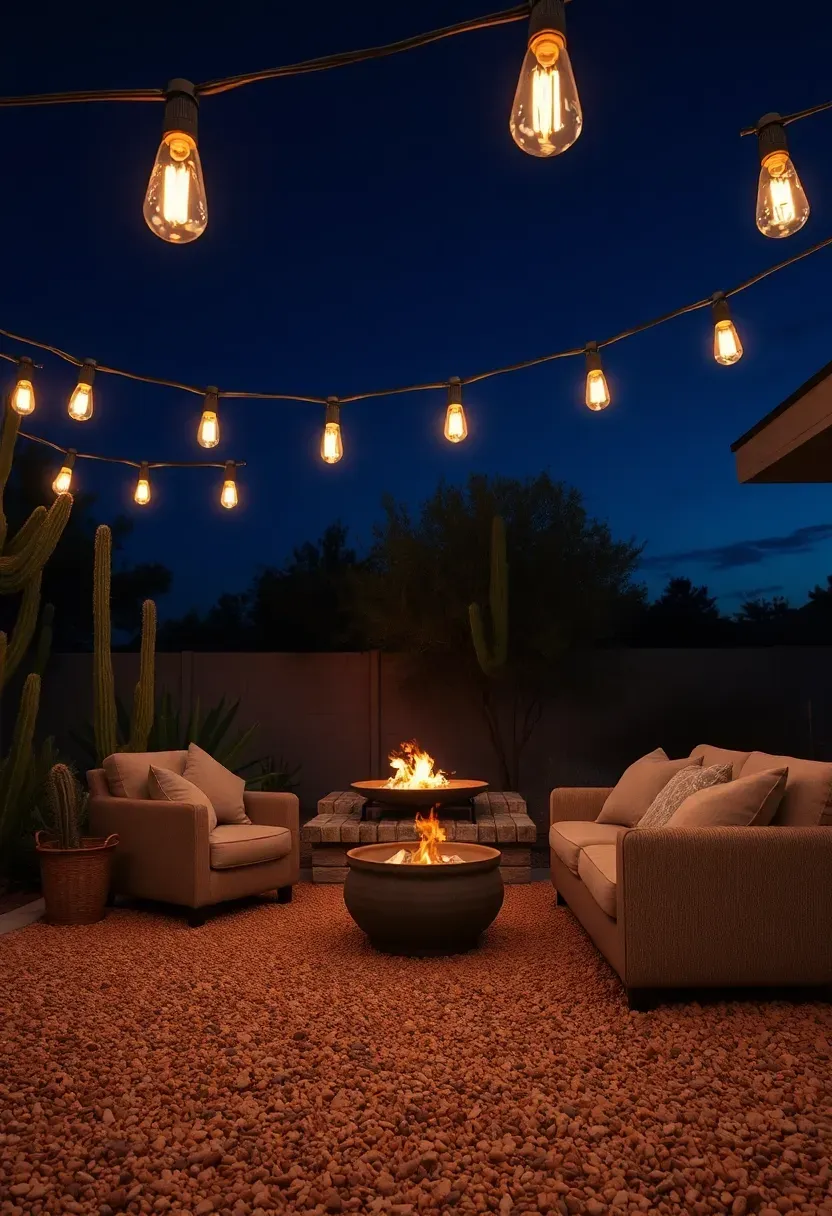
Few upgrades deliver as dramatic a transformation per dollar as string lights. A hundred-foot strand of commercial-grade LED café lights costs around thirty dollars and draws so little power that running them every evening barely registers on your electric bill. Suspend them in a zigzag or radial pattern from the house eave to fence posts or freestanding poles anchored in five-gallon buckets of concrete.
What to Watch Out For
- Use commercial-grade (not decorative indoor) strands rated for outdoor and high-heat environments
- Avoid running strings through areas where trees or shrubs will grow into them — desert wind plus tangled branches equals broken bulbs
- Mount the connection point near a GFCI outlet and add a simple outdoor timer so lights switch on automatically at dusk
8. Gravel and Stepping Stone Path
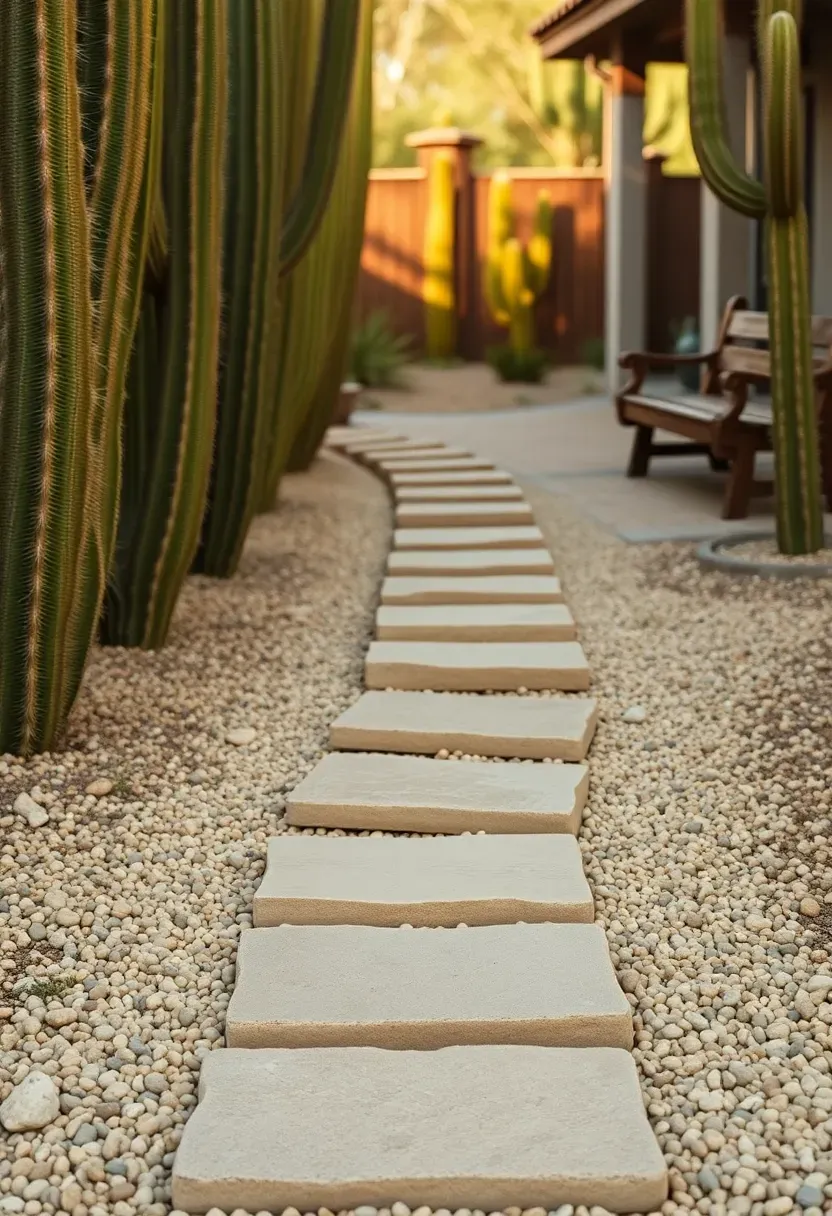
A path does more than connect point A to point B — it organizes a backyard into distinct zones and gives the eye a line to follow. In Arizona, pea gravel or quarter-minus crushed rock paired with flat stepping stones creates a permeable, heat-tolerant surface that handles monsoon runoff without ponding.
Step 1: Map the Route
Lay a garden hose along your desired path to visualize curves. Gentle arcs feel more natural than rigid straight lines in desert landscapes.
Step 2: Set the Stones
Excavate three inches, spread landscape fabric, fill with gravel, and press stepping stones into the surface at comfortable stride intervals — roughly twenty-four inches center to center.
Step 3: Plant the Edges
Tuck low-profile desert plants like blackfoot daisy or trailing lantana along the path borders to soften the transition between gravel and surrounding yard.
Recommended
Items for this idea
9. Container Cactus Garden
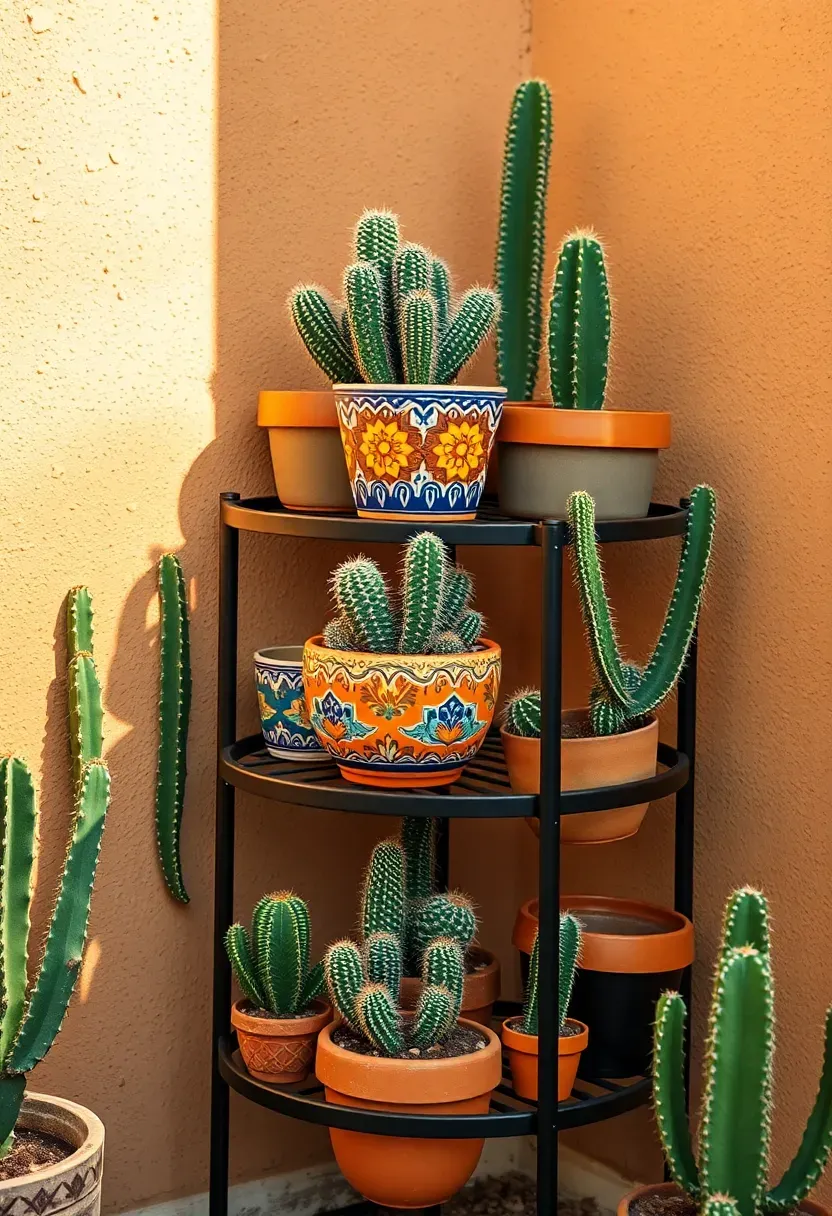
Should you commit to in-ground planting when you rent your Arizona home or might move in a few years? Probably not. Container gardening lets you build an impressive desert plant collection that travels with you. Thrift stores, estate sales, and Mexican import shops offer ceramic pots at a fraction of nursery prices. Group containers of varying heights on a tiered metal plant stand or arrange them along a low wall for maximum visual impact with zero irrigation infrastructure.
Tips for Container Cacti in Arizona Heat
- Use a fast-draining cactus mix — never standard potting soil, which retains too much moisture
- Choose light-colored pots or wrap dark containers in burlap to prevent root cooking in summer
- Water deeply but infrequently — once every ten to fourteen days during summer, once monthly in winter
10. Budget Shade Sail Setup
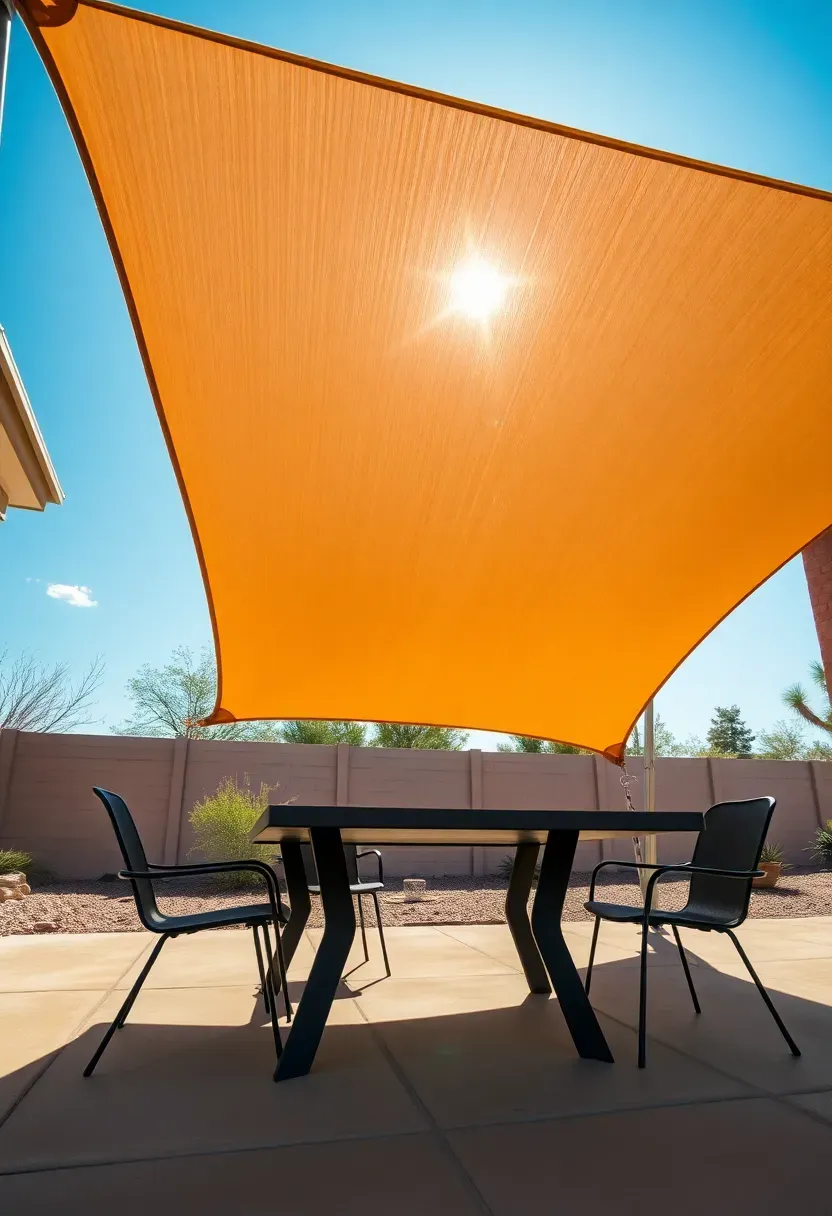
Shade sails rank among the smartest investments for any Arizona backyard. A single triangular sail measuring twelve by twelve by twelve feet costs between forty and eighty dollars online. Compared to a built pergola, installation takes one afternoon instead of one weekend, and the visual effect is equally striking — clean geometric lines floating above your outdoor space.
Origins and History
Shade sails evolved from the ancient Roman velarium — massive canvas awnings stretched over amphitheaters to shelter spectators from Mediterranean sun. The modern fabric version arrived in Australia during the 1990s, where intense UV conditions mirror Arizona's own climate challenges.
Modern Adaptation
Today's shade sails use UV-stabilized high-density polyethylene fabric that blocks up to ninety-five percent of harmful rays while allowing air circulation. Mount attachment points to the house fascia, fence posts, or dedicated steel poles set in concrete. Overlap two sails at different angles for larger coverage areas and a more dynamic visual profile.
Recommended
Items for this idea
11. Recycled Brick Seating Wall
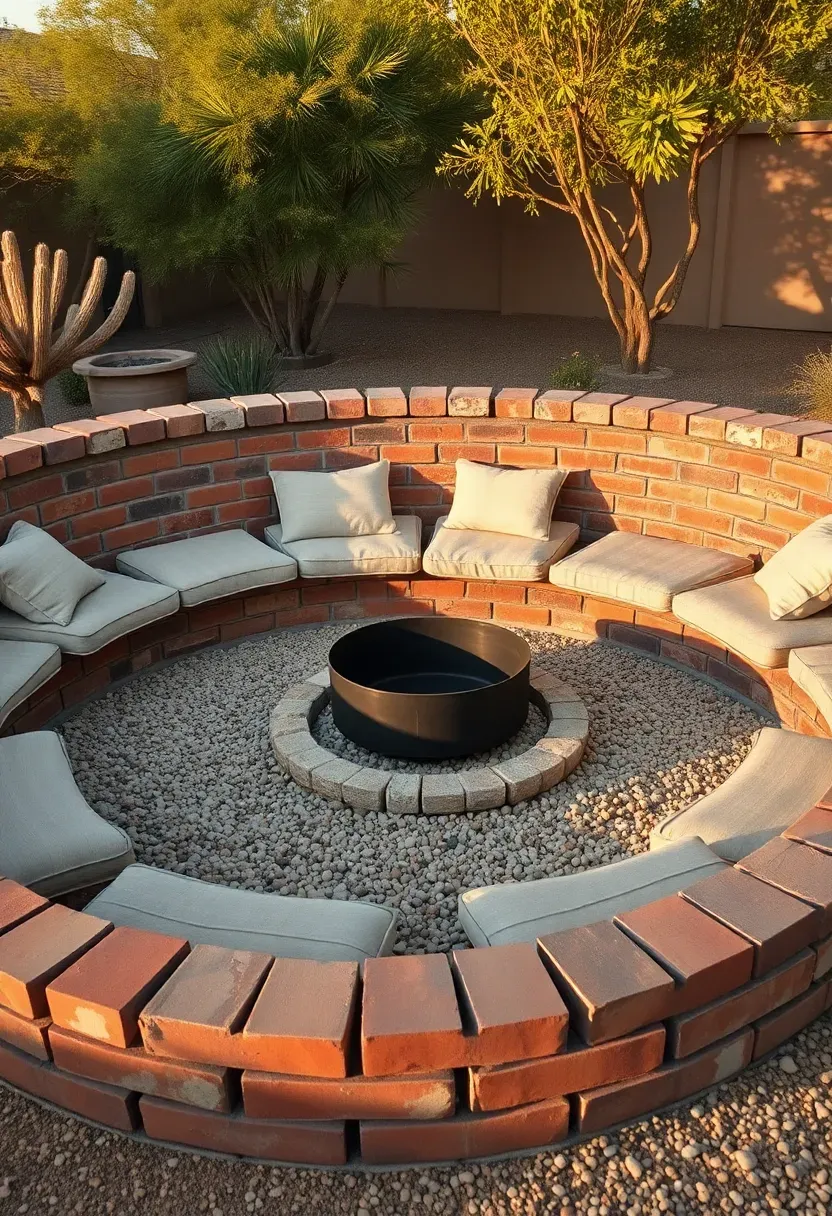
Demolished buildings, old patios, and construction leftovers produce mountains of used bricks that Arizona salvage yards sell for pennies per unit — sometimes as low as ten cents each. A low seating wall, roughly eighteen inches tall and two bricks wide, defines a gathering area around a fire pit or garden focal point while doubling as extra seating when guests come over.
Practical Recommendations
- Dry-stack bricks on a compacted gravel footing for a project you can complete without mortar skills
- Cap the top course with smooth flagstone pieces for comfortable sitting
- Curve the wall gently rather than building it straight — arcs feel more inviting and are structurally more stable without mortar
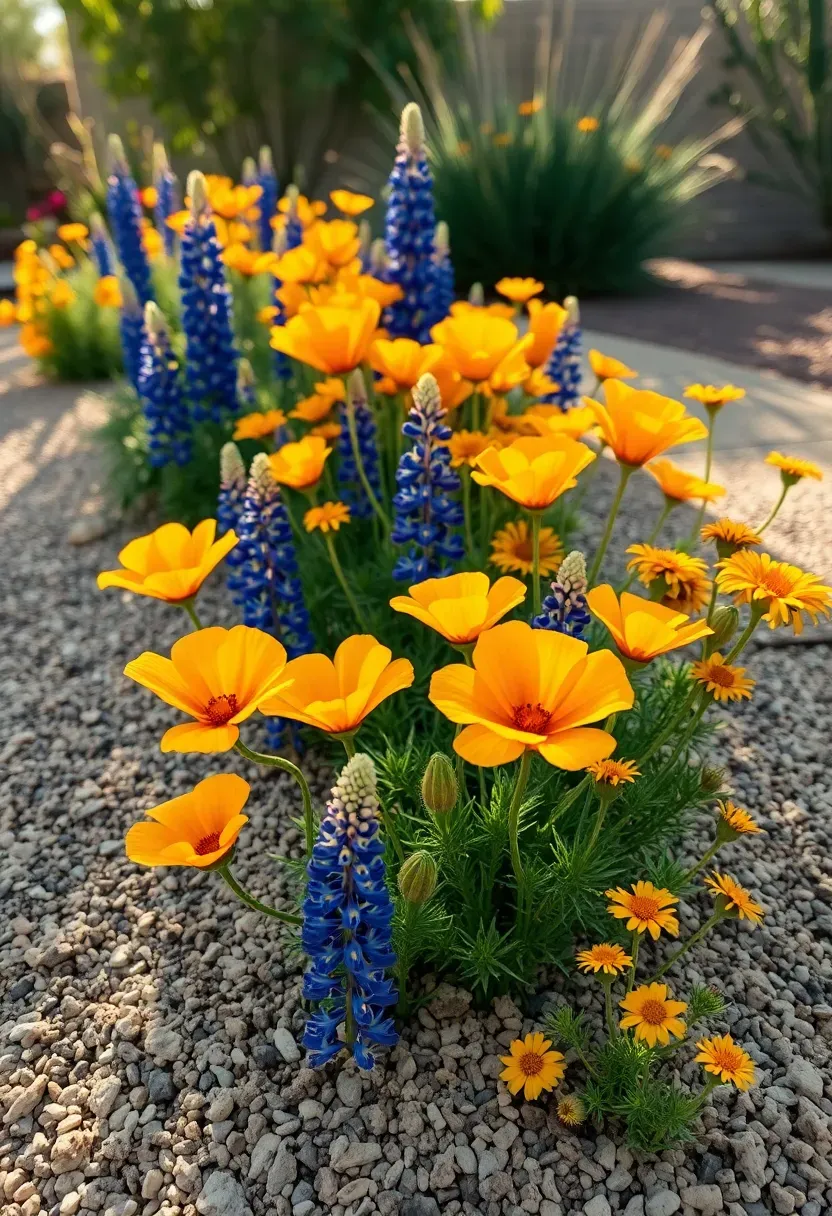
12. Desert Wildflower Border
Why Wildflowers Beat Imported Annuals
Nursery flats of petunias and impatiens demand daily watering in Arizona's heat and rarely survive past June. Native wildflower seeds, on the other hand, cost under ten dollars per packet and are genetically programmed to germinate after monsoon rains, bloom brilliantly, then reseed themselves for the following year.
The Solution
Scatter seeds of Mexican gold poppy, desert lupine, globe mallow, and desert marigold along path borders or fence lines in late September. The winter rains trigger germination, and by March your backyard explodes with color that lasts through May. Once established, a wildflower border is essentially a self-renewing garden that costs nothing after the first season.
Pros and Cons
Pros: Nearly free after initial seeding, attracts pollinators, zero supplemental watering required Cons: Dormant and brown during summer months, can look weedy if planted in overly formal settings
Recommended
Items for this idea
13. DIY Ramada from Reclaimed Wood
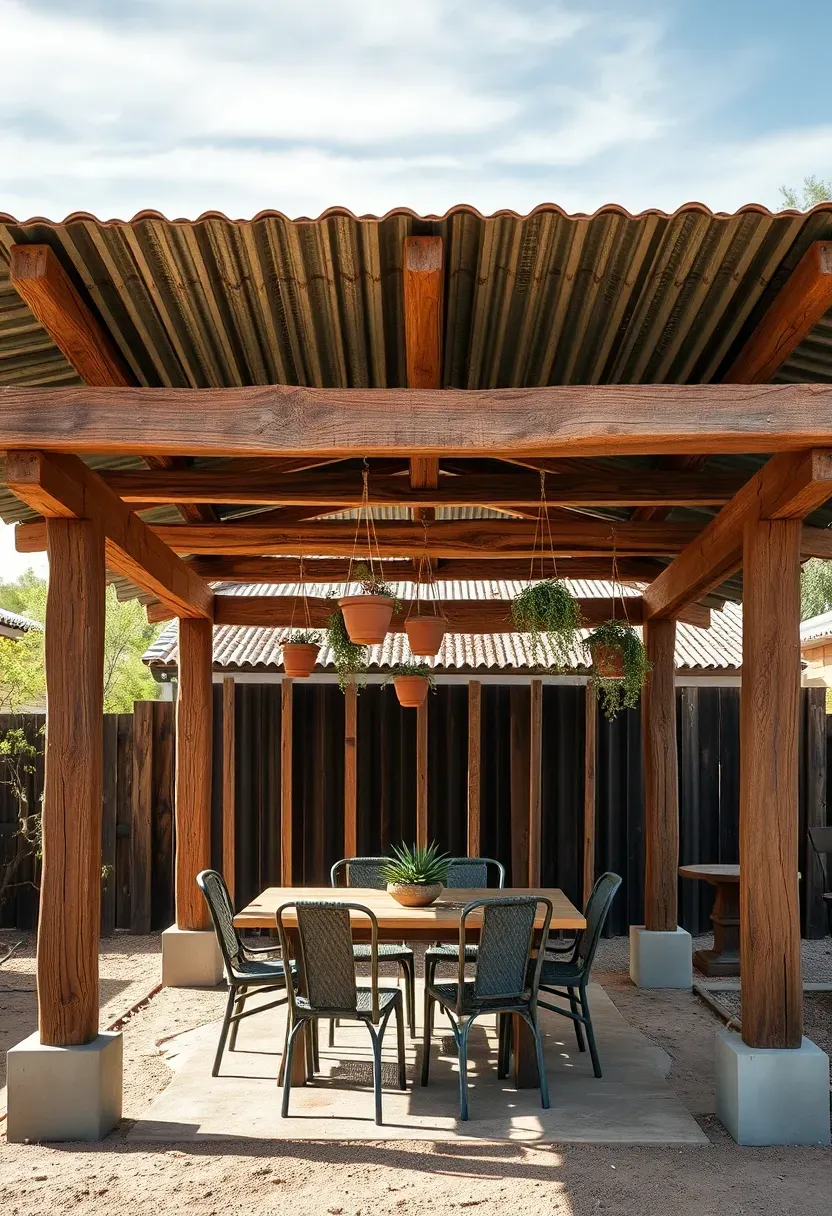
A ramada — the traditional Southwest open-air shade shelter — provides serious relief from direct sun while maintaining airflow that keeps the space comfortable even in triple-digit heat. Building one from reclaimed lumber and a sheet of corrugated metal roofing keeps the total material cost under three hundred dollars for a structure covering roughly ten by ten feet.
Step 1: Source Materials
Check Craigslist, Facebook Marketplace, and local salvage yards for rough-sawn beams. Old fence posts and railroad ties also work for the vertical supports.
Step 2: Frame and Roof
Set four posts in concrete footings, bolt horizontal beams across the top, and screw corrugated metal panels (available at home improvement stores for about fifteen dollars per sheet) onto the frame with a slight pitch for rainwater drainage.
Step 3: Personalize
Hang potted plants from the crossbeams, drape shade cloth along one open side for afternoon sun protection, and string lights along the roofline for evening atmosphere.
14. Stock Tank Pool
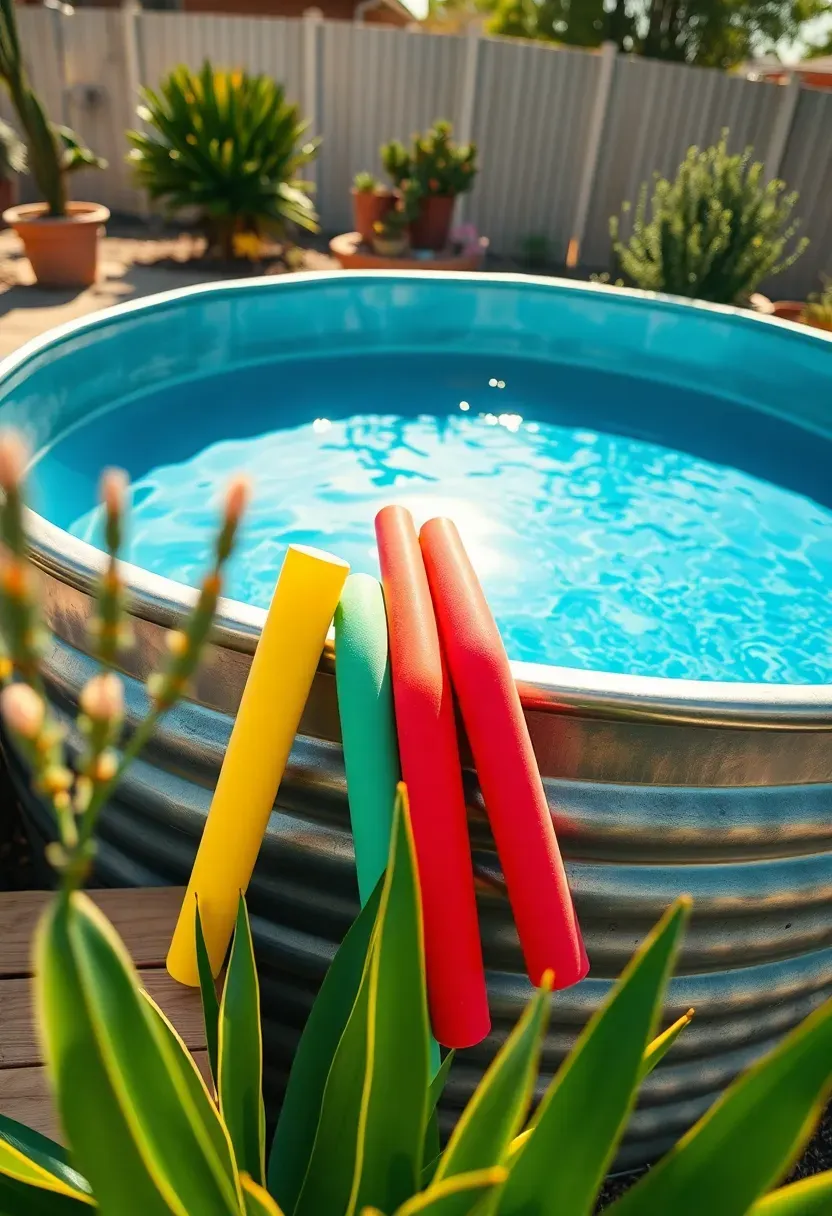
Is it possible to have a backyard pool in Arizona for under five hundred dollars? Absolutely — the stock tank pool has become a genuine desert phenomenon. These galvanized steel livestock watering troughs, available at farm supply stores in sizes up to eight feet in diameter, hold enough water to cool off during the brutal summer months without requiring permits, plumbing contractors, or a second mortgage.
Making It Work
- Add a small submersible pump and cartridge filter (around a hundred dollars) to keep water circulating
- Treat with pool chlorine tablets — one small floater handles the chemistry
- Build a simple wooden deck platform around the base to create a sun-lounging area
- Paint the exterior with heat-reflective white or a fun accent color using metal-rated spray paint
Recommended
Items for this idea
15. Xeriscaped Dry River Bed
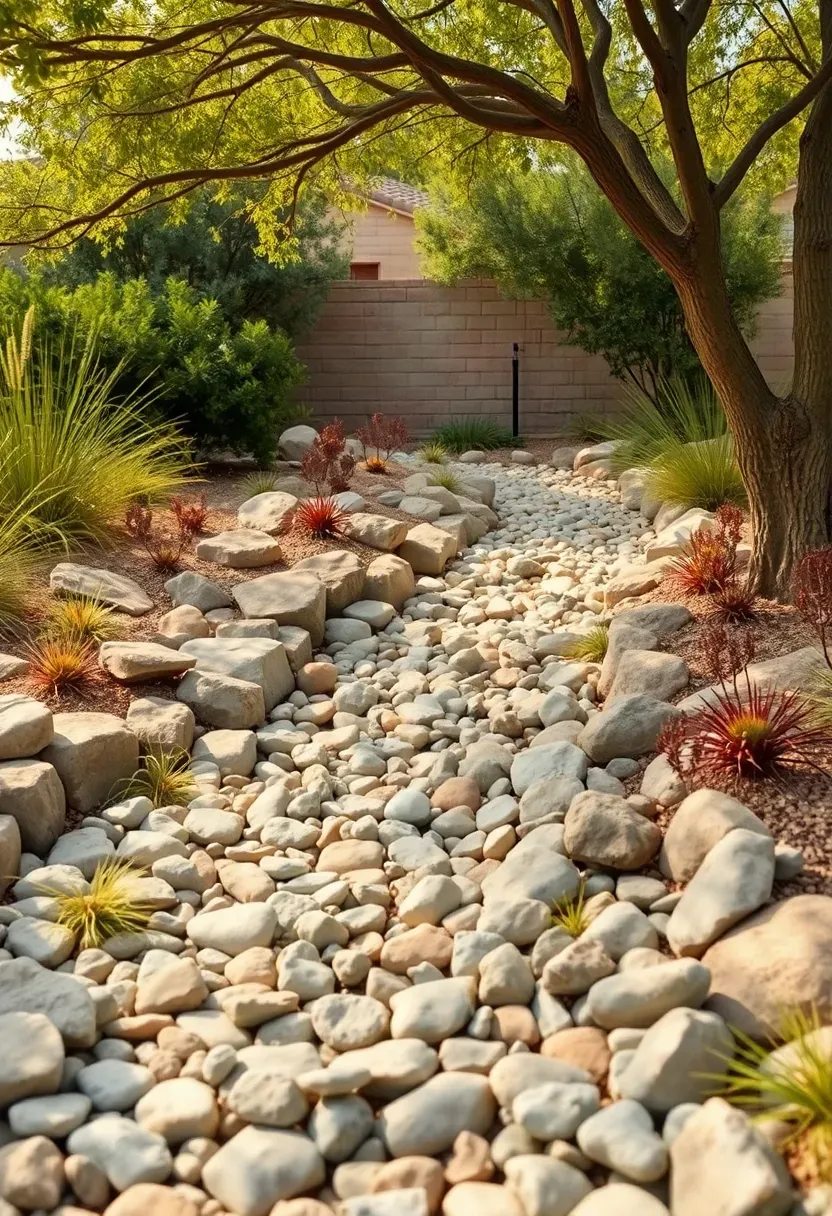
A dry river bed serves both aesthetic and functional purposes in an Arizona backyard. Visually, it introduces flowing organic lines that break up the flat monotony of bare desert lots. Practically, it channels monsoon runoff away from foundations and toward planting areas where the water does the most good. The entire project requires only river rock, a few boulders, native grasses, and an afternoon of sweat equity.
Tips for Natural-Looking Results
- Vary rock sizes from small pebbles in the center channel to larger cobbles along the banks
- Plant desert spoon, deer grass, or red yucca along the edges to mimic a natural wash
- Follow the natural slope of your yard — even a one-percent grade is enough to direct water flow
- Add a bridge made from a single reclaimed railroad tie where the bed crosses a path
16. Thrift Store Patio Furniture Refresh
The Core Issue
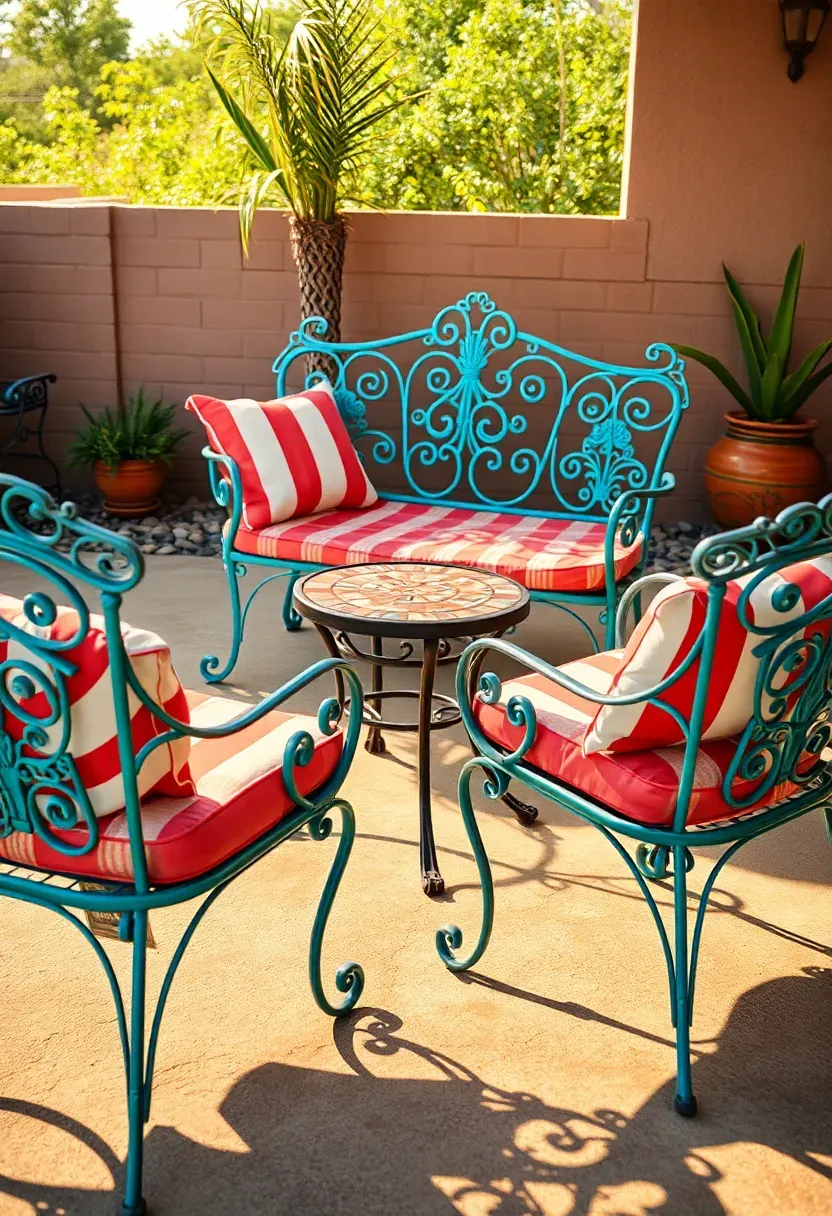
New outdoor furniture sets cost anywhere from five hundred to several thousand dollars. Meanwhile, thrift stores, garage sales, and estate sales in Arizona overflow with wrought iron chairs, metal side tables, and wooden benches that previous owners discarded simply because the finish faded.
The Solution
A can of rust-resistant spray paint costs five dollars. New outdoor cushion covers from discount fabric stores run about fifteen dollars per seat. In a single Saturday afternoon, you can transform a twenty-dollar thrift store find into patio furniture that looks like it came from a boutique catalog. Wrought iron is the best material to hunt for — it's virtually indestructible in Arizona's dry climate and takes paint beautifully.
Pros and Cons
Pros: Dramatic savings, unique one-of-a-kind pieces, environmentally friendly reuse Cons: Requires time hunting for the right pieces, some items need minor welding or bolt replacement
Recommended
Items for this idea
17. Solar-Powered Landscape Lighting
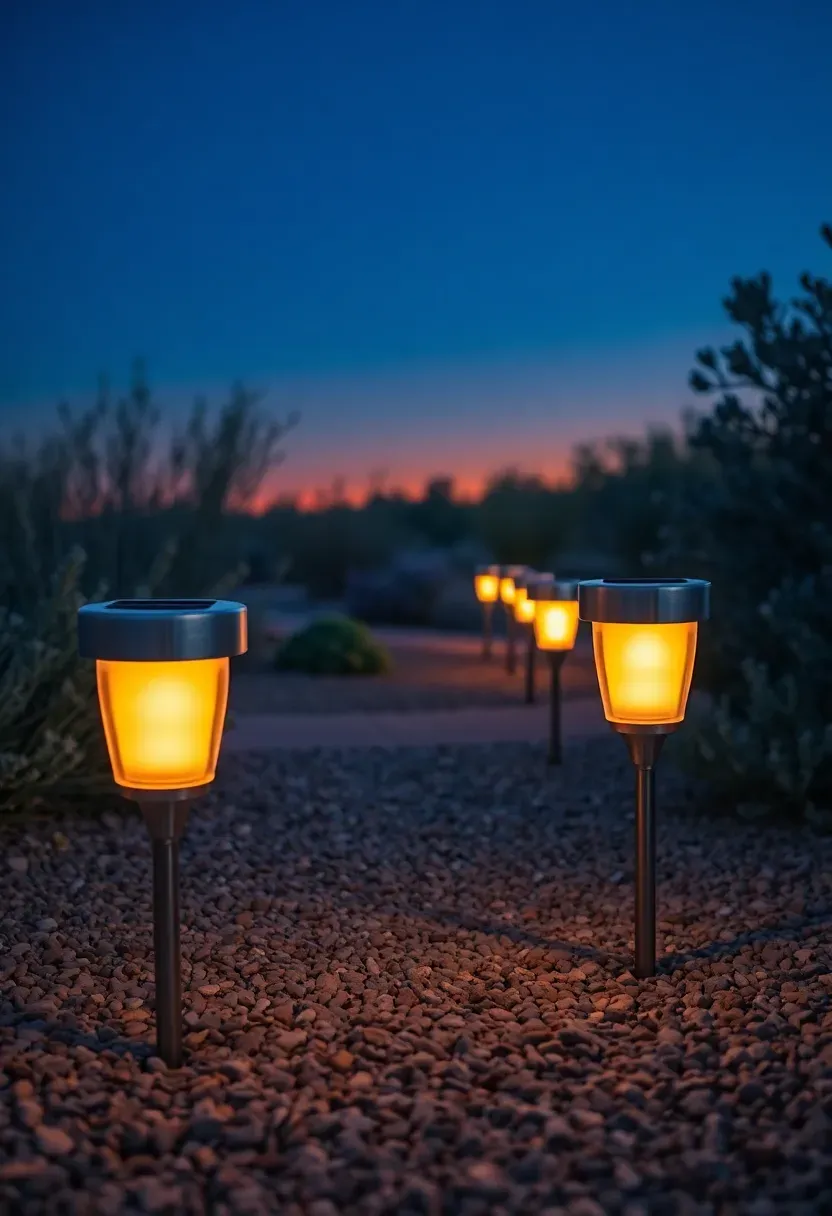
Arizona averages over three hundred sunny days per year, which makes solar landscape lights almost absurdly effective here compared to cloudier climates. A pack of ten solar path lights costs around twenty-five dollars and requires zero wiring, zero electrician fees, and zero ongoing energy costs. Stake them along pathways, around planting beds, or beside your fire pit for warm amber illumination that switches on automatically at dusk.
What to Watch Out For
- Position lights where they receive direct sun for at least six hours daily — avoid placing them under shade structures or dense plants
- Choose warm white (2700K to 3000K) over cool white for a more inviting desert evening atmosphere
- Replace rechargeable batteries every twelve to eighteen months when brightness starts to fade
- Splurge on one or two solar-powered spotlights (about fifteen dollars each) to uplight a dramatic saguaro or accent wall
18. Mesquite Chip Mulch Beds
Trend Watch: Natural Mulch Over Rock
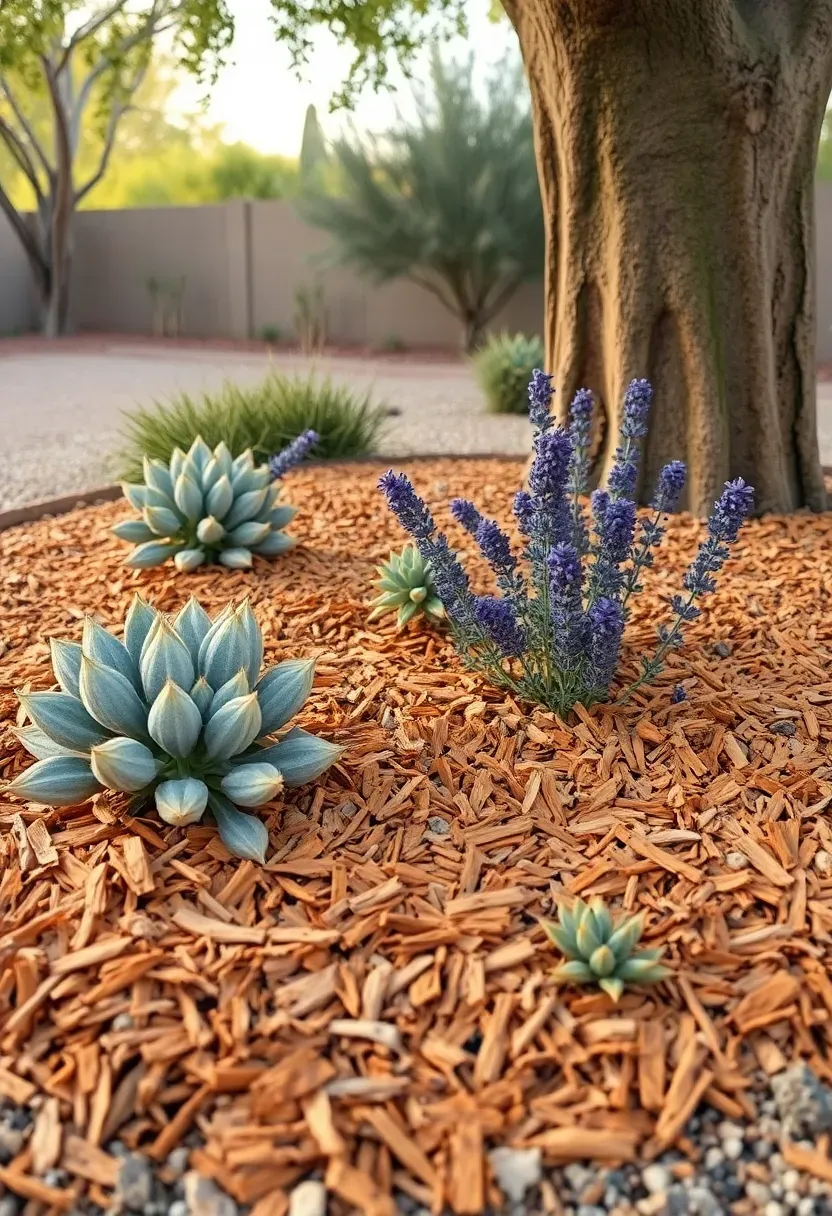
While gravel dominates Arizona landscaping, a growing number of desert gardeners are turning to mesquite wood chips as an alternative mulch material. Made from trimmed or fallen mesquite trees — often available free from local tree services — these chips decompose slowly in arid conditions, adding organic matter to nutrient-poor desert soil while retaining moisture around plant roots.
Modern Interpretation
Spread mesquite chips three to four inches deep around the base of native trees and shrubs, leaving a six-inch gap around trunks to prevent bark rot. The warm reddish-brown color contrasts beautifully with the gray-green foliage of desert plants like jojoba, creosote, and desert lavender. Unlike rock mulch, mesquite chips stay cooler in summer sun and create a softer, more garden-like feel in planting areas while still looking distinctly Southwestern.
How to Apply at Home
- Contact local arborists or tree trimming services — many will deliver chips for free to avoid dump fees
- Avoid using mesquite chips directly against house foundations where termites could become a concern
- Refresh the layer annually as it naturally compresses and decomposes
- Combine with drip irrigation for plants that benefit from consistent root-zone moisture
Recommended
Items for this idea
19. Outdoor Rug and Floor Cushion Lounge
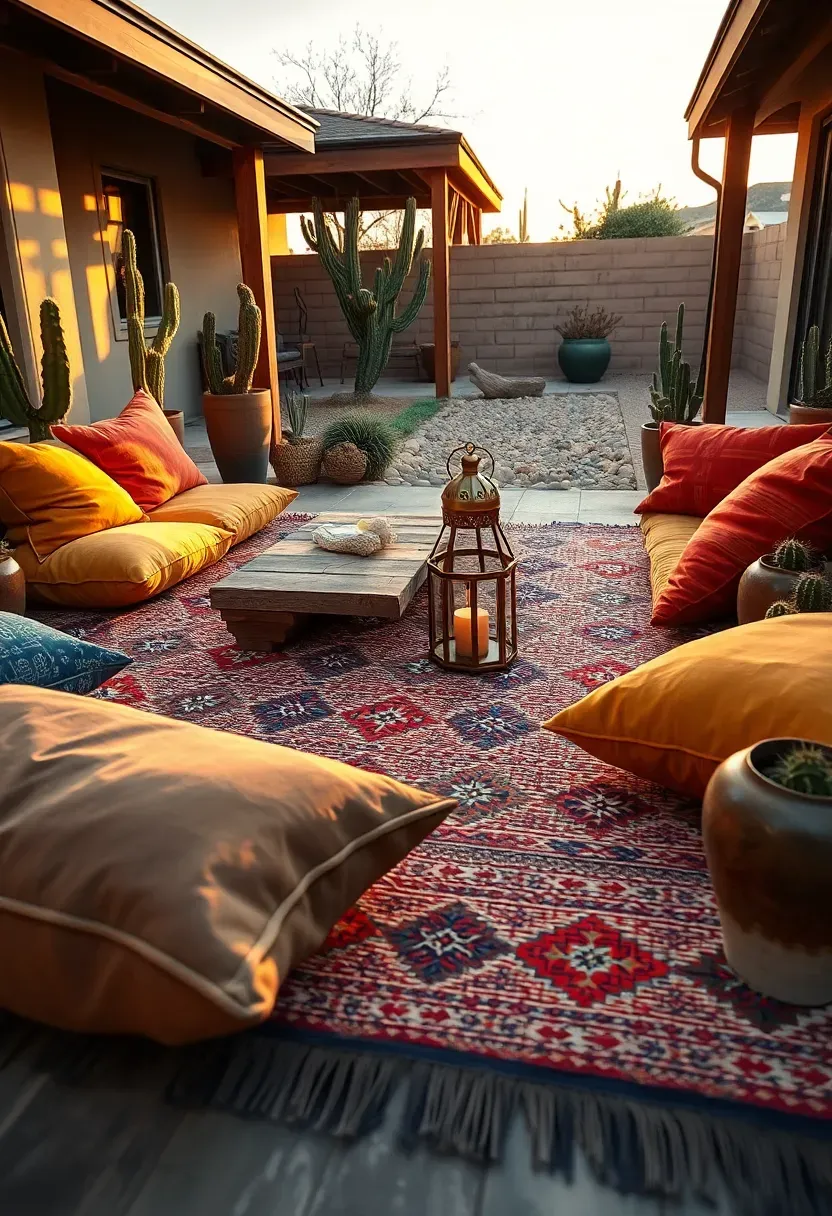
Who says you need expensive patio furniture to create a comfortable outdoor living space? A large outdoor area rug (polypropylene rugs rated for exterior use start at around forty dollars) paired with oversized floor cushions creates an instant bohemian lounge zone that feels worlds away from a standard patio set. Arrange cushions around a low wooden table or directly on the rug for a casual, ground-level gathering spot that works perfectly for game nights, stargazing, or lazy Sunday morning coffee.
Practical Recommendations
- Choose rugs labeled as UV-resistant and fade-proof — Arizona sun will bleach non-rated fabrics within weeks
- Store cushions in a weatherproof deck box between uses to protect from monsoon dust storms
- Layer two smaller rugs at angles for a more eclectic look than a single large rectangle
Quick FAQ
Is xeriscaping really cheaper than traditional grass in Arizona? Significantly cheaper, both upfront and over time. Installing desert-adapted landscaping costs roughly half of what sod installation runs, and you eliminate the monthly water bill that maintaining grass in Phoenix or Tucson demands — often seventy to a hundred dollars during summer months alone.
Which budget project gives the biggest visual payoff? String lights combined with a decomposed granite patio deliver the most dramatic before-and-after transformation for the least money. Together they cost well under a hundred dollars in materials but completely redefine how your backyard looks and functions after dark.
Should you worry about HOA restrictions on these ideas? Many Arizona HOAs have specific rules about visible structures, paint colors, and plant types. Check your CC&Rs before building anything permanent like a ramada or seating wall. Most of these ideas — container plants, rugs, string lights, furniture — fall under temporary or decorative items that HOAs rarely regulate.
What is the best time of year to tackle Arizona backyard projects? October through April is your ideal window. Summer temperatures make outdoor labor dangerous and cause materials like paint and concrete to cure unpredictably. Late fall offers comfortable working conditions and gives new plants time to establish roots before the first hot season.
Do stock tank pools need city permits in Arizona? In most Arizona municipalities, above-ground pools under a certain depth (typically twenty-four inches) do not require permits. Stock tanks usually fall under this threshold. However, local codes vary — Maricopa County differs from Pima County — so verify with your specific jurisdiction before filling.
A backyard worth spending time in doesn't require a contractor's invoice with four zeros on it. Start with one or two ideas from this list — maybe the fire pit and some string lights — and build outward as your budget allows. The desert provides the backdrop for free; your job is simply to furnish it.
Pinterest cover for 19 Arizona Backyard Ideas on a Budget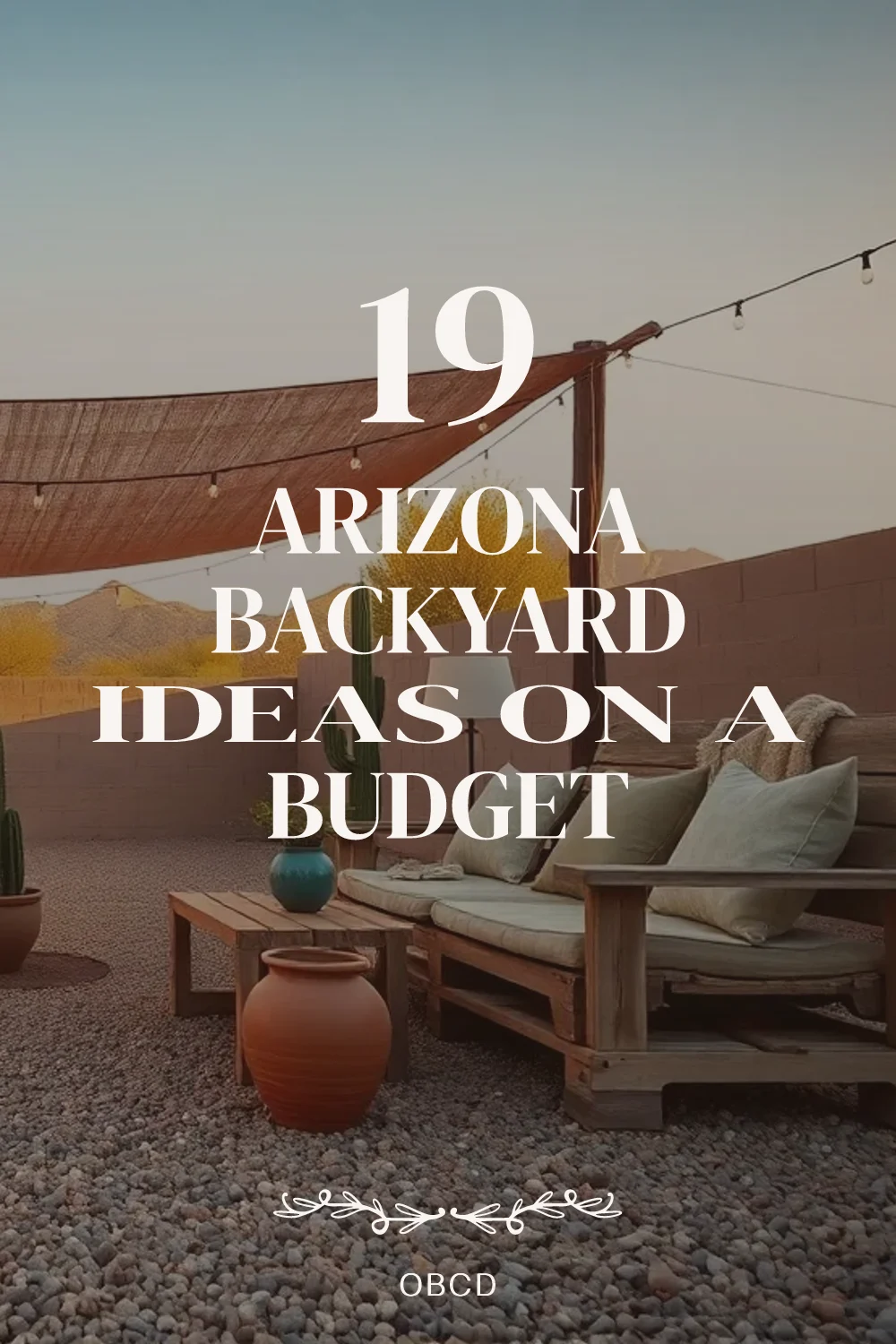
About the author
OBCD
CGI visualization and interior design content. We create detailed 3D renders and curate practical design ideas for every room in your home.