19 Apartment Patio Ideas That Turn Tiny Outdoor Spaces Into Retreats
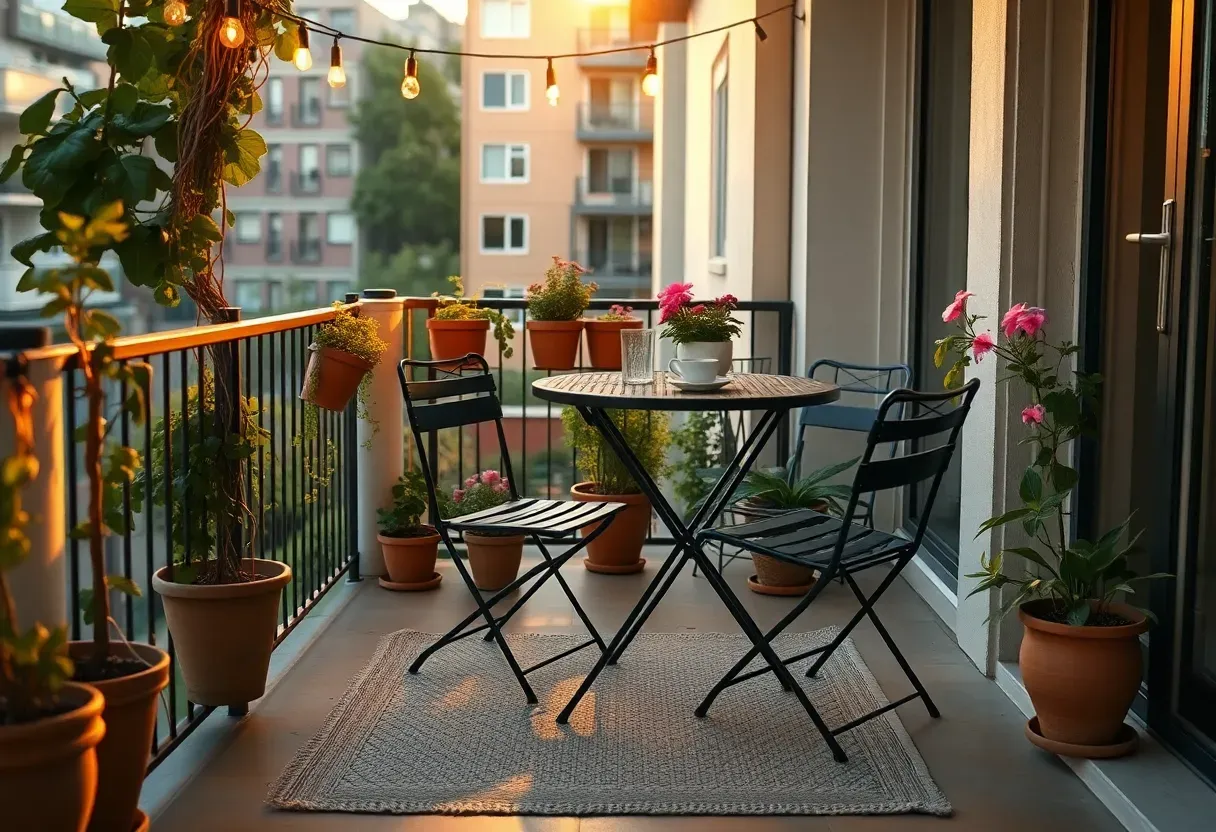
Imagine stepping outside your apartment door and finding yourself in a space that actually feels like yours — not a concrete slab with a plastic chair, but a genuine extension of your living room. Most renters look at their patio, measure the 60 square feet they have to work with, and assume nothing meaningful can happen there. They are wrong. A compact outdoor area, when treated with the same attention you give your bedroom or kitchen, becomes the room you spend the most time in from April through October.
In this article I have gathered 19 approaches that work specifically for apartment-sized patios — no permanent construction, no landlord negotiations, no thousand-dollar budgets required. We start with flooring and furniture fundamentals, then move into greenery, lighting, and finishing details.
Table of Contents
- Interlocking Deck Tile Flooring
- Folding Bistro Set for Daily Use
- Vertical Pocket Planter Wall
- Outdoor Rug as a Room Anchor
- String Light Canopy Overhead
- Privacy Screen with Climbing Plants
- Floor Cushion Lounge Corner
- Compact Herb Garden Station
- Railing Planter Box System
- Foldable Wall-Mounted Table
- Japanese-Inspired Minimalist Retreat
- Boho Textile Layering Scheme
- Tiny Water Feature for Ambient Sound
- Hanging Chair Statement Piece
- Outdoor Bar Cart Setup
- Solar Lantern Collection
- Mirror Wall to Double the Space
- Seasonal Container Garden Display
- Cozy Fire Pit Table for Cool Evenings
1. Interlocking Deck Tile Flooring
The Core Issue
Bare concrete is the single biggest reason apartment patios feel unwelcoming. It reads as unfinished, collects stains, and radiates heat in summer. Most renters assume the floor is permanent and untouchable.
The Solution
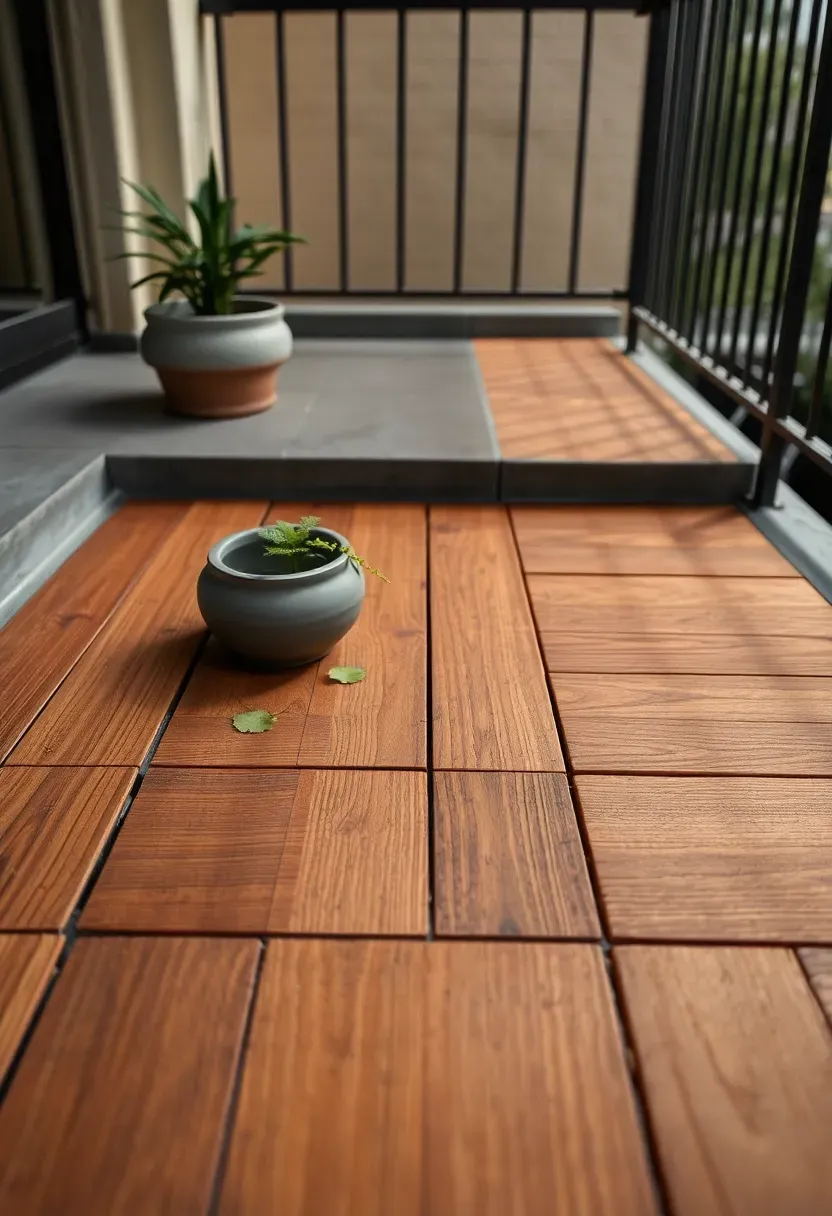
Interlocking deck tiles snap together directly over concrete without adhesive, screws, or landlord approval. Acacia wood and composite options both work well — acacia brings warmth and grain variation while composite resists moisture and requires zero maintenance. A 50-square-foot patio takes roughly 45 minutes to tile completely. When you move, you pop them apart and pack them flat.
Pros and Cons
Pros: Instantly elevates the space; completely removable; hides cracked or stained concrete.
Cons: Debris collects between tile gaps — sweep or vacuum monthly to prevent buildup.
We picked a few things that go well with this idea: Acacia Wood Interlocking Deck Tiles (10-Pack) (★4.5), PrimeZone Acacia Deck Tiles (54-Pack) (★4.5) and Acacia Wood Patio Deck Tiles (9-Pack) (★4.5). As an Amazon Associate we earn from qualifying purchases.
2. Folding Bistro Set for Daily Use
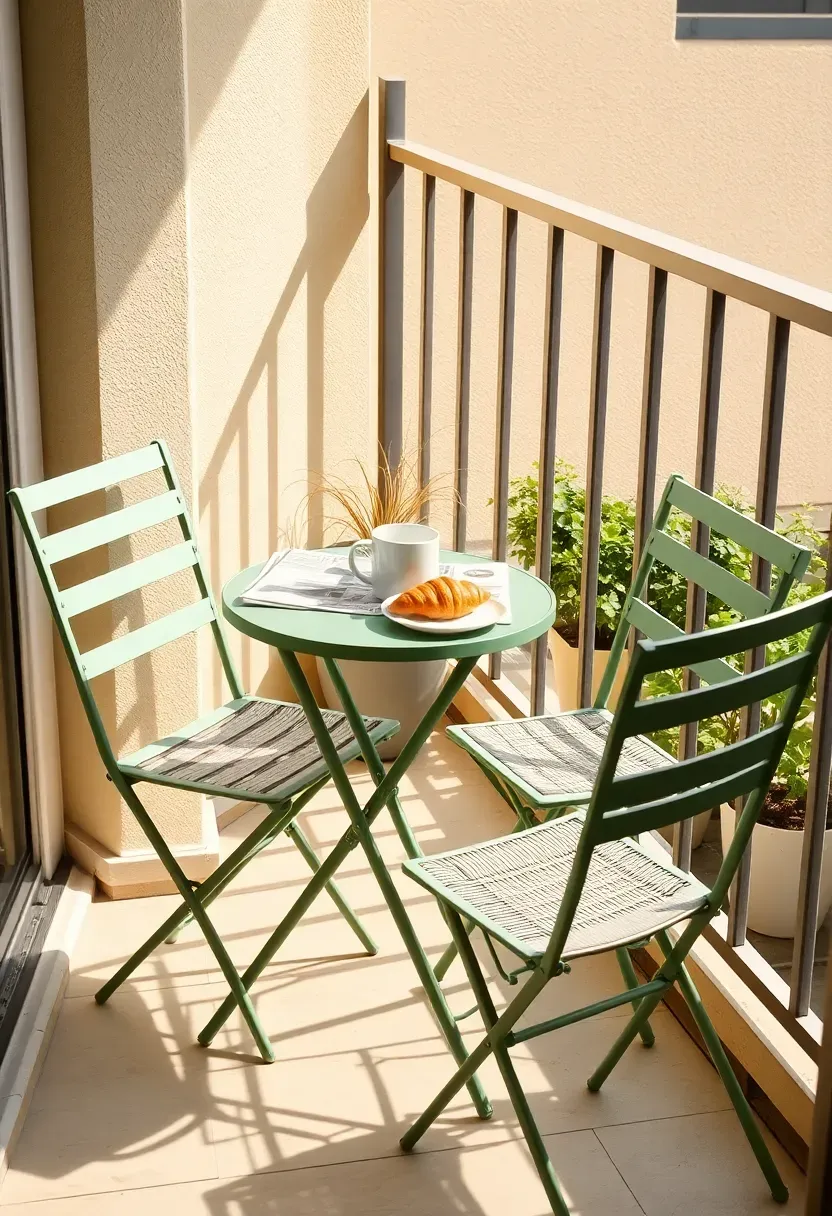
A folding bistro set is the Swiss Army knife of apartment patio furniture. It opens for morning coffee, seats two for dinner, and collapses flat against the wall when you need the floor space for yoga, plant care, or simply walking through without bumping your shins on chair legs.
Tips for Choosing the Right Set
- Pick powder-coated steel or aluminum frames — they survive rain without rusting and weigh little enough to fold one-handed.
- Seat diameter matters more than table diameter: chairs should be at least 15 inches wide for genuine comfort.
- Black or dark green frames blend into most patio backgrounds; avoid white unless you enjoy scrubbing city grime every two weeks.
We picked a few things that go well with this idea: Brightown Edison String Lights (100FT, 50 Bulbs) (★4.5), Addlon LED Edison String Lights (48FT) (★4.6) and Banord LED Patio String Lights (48FT) (★4.5). As an Amazon Associate we earn from qualifying purchases.
3. Vertical Pocket Planter Wall
Why Go Vertical
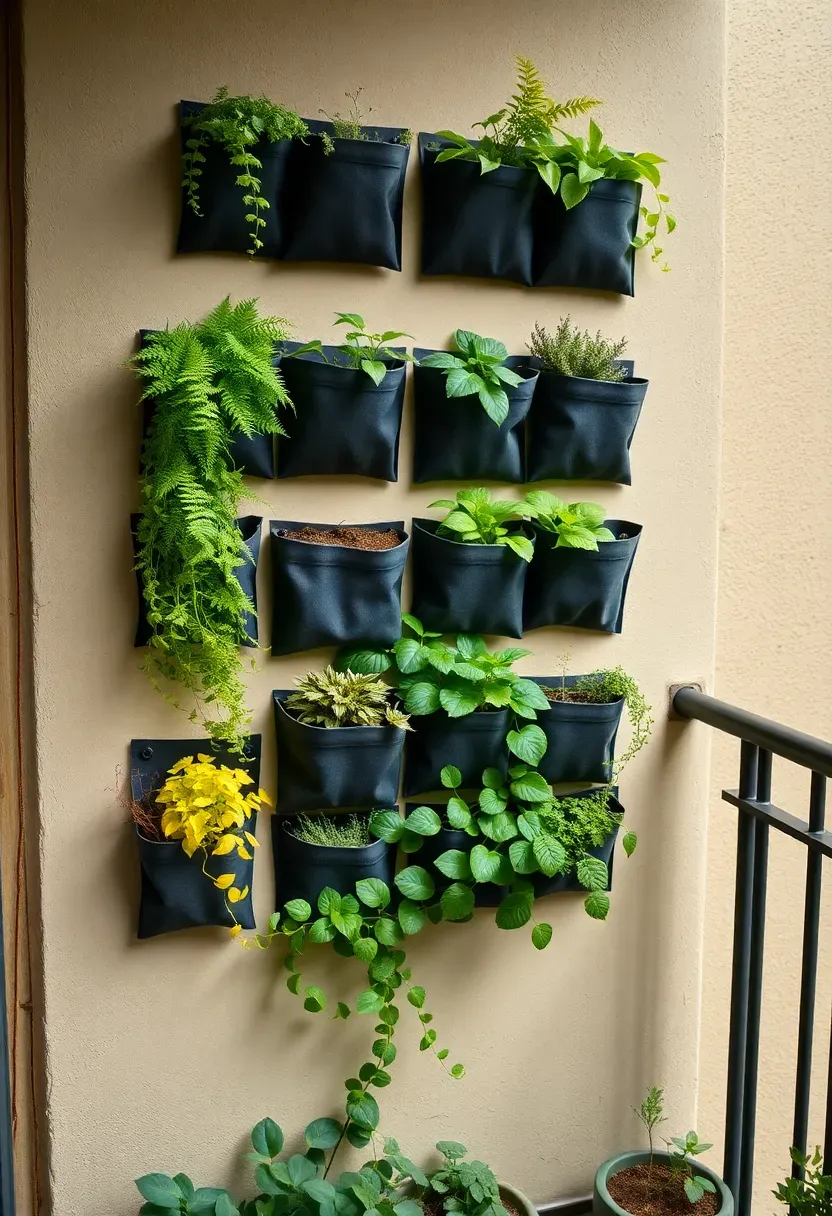
When your patio measures six feet wide, every square inch of floor space is currency. Vertical planters move your greenery onto the wall, freeing the floor for furniture, movement, and the visual breathing room that prevents a small space from feeling cluttered.
How to Set It Up
Step 1: Choose Your System
Felt pocket planters, modular plastic grid systems, and hanging shoe organizers (yes, really) all work. Felt breathes better and drains naturally; rigid plastic modules look cleaner and last longer.
Step 2: Mount Without Damage
Use adhesive-backed Command strips rated for outdoor use, or hang the planter from an existing nail or hook. Avoid drilling into apartment exterior walls.
Step 3: Select the Right Plants
Trailing varieties steal the show — pothos, string of pearls, creeping jenny, and trailing petunias cascade downward and fill visual gaps between pockets. Mix in a few upright herbs like rosemary for texture contrast.
What to Watch Out For
- Water drips downward through pocket planters — position them above tile or a drainage tray, not above wooden furniture.
- Morning sun exposure works best; full afternoon sun on a south-facing wall will cook most trailing plants.
We picked a few things that go well with this idea: Karlliu Railing Planter Box with Coco Liner (2-Pack) (★4.5), Holensun Railing Planter Boxes (3-Pack, 16 Inch) (★4.4) and Dahey Metal Hanging Railing Planter (3-Pack) (★4.6). As an Amazon Associate we earn from qualifying purchases.
4. Outdoor Rug as a Room Anchor
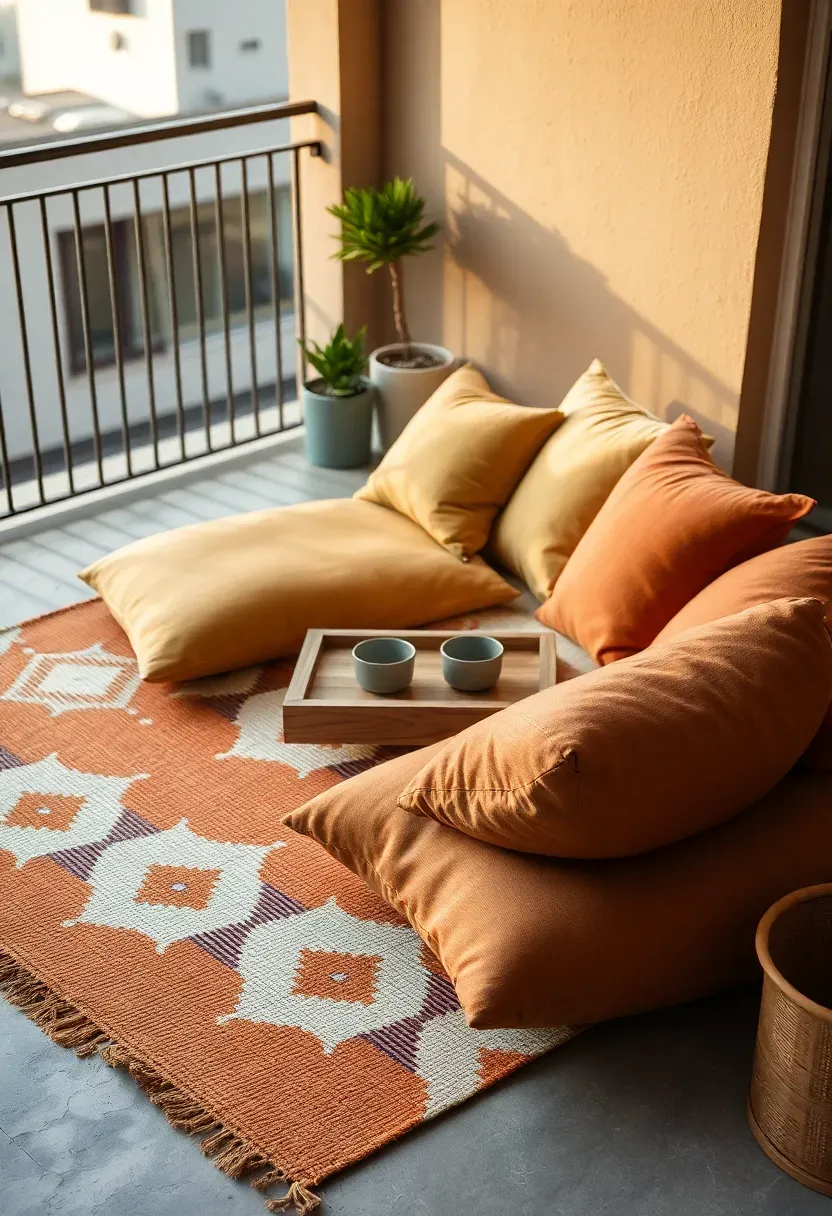
The moment you lay down an outdoor rug, the patio stops being a leftover concrete pad and starts behaving like a room. The rug defines boundaries, absorbs visual noise from the floor surface, and gives bare feet a reason to step outside without shoes. Choose a flatweave polypropylene rug rated for outdoor use — it resists mold, dries quickly after rain, and vacuums or hoses clean in minutes.
Tips for Sizing and Placement
- The rug should cover at least 70 percent of the patio floor, leaving a 4- to 6-inch concrete border visible around the edges.
- Place all furniture legs fully on the rug, not half on and half off — partial placement looks accidental and makes chairs wobble.
- If your patio is rectangular and narrow, a runner along the length creates the illusion of depth rather than width.
Recommended
Items for this idea
5. String Light Canopy Overhead
Why Lighting Changes Everything
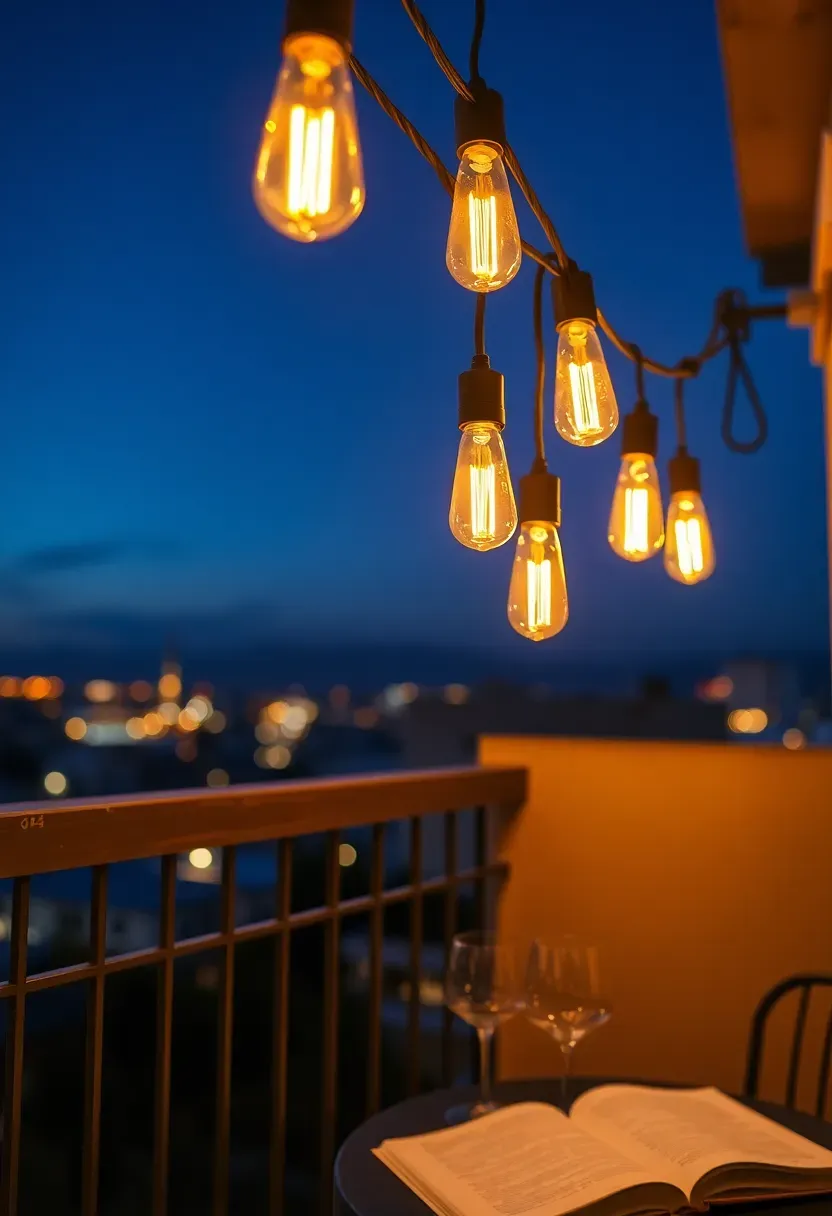
An unlit patio is a daytime-only space. Adding overhead string lights extends your usable hours from sunset through midnight and transforms the mood from utilitarian to genuinely inviting. The warm glow softens hard edges, hides imperfect walls, and makes a 50-square-foot space feel intimate rather than cramped.
Step 1: Plan Your Attachment Points
Identify two to four anchor points — railing posts, wall hooks, a tension rod between walls, or adhesive-backed cup hooks on the ceiling overhang. You need at least two points on opposite sides to create a crossing pattern.
Step 2: Choose the Right Bulbs
LED Edison-style bulbs (2700K warm white) strike the best balance between ambiance and energy efficiency. Avoid cool white (4000K+) entirely — it creates a commercial cafeteria atmosphere. Solar-powered strings eliminate the need for an outlet entirely.
Step 3: Drape, Don't Pull Tight
Allow a gentle swag of 6 to 12 inches between anchor points. Taut strings look like utility wiring; relaxed drapes create the casual restaurant-patio feel that photographs beautifully.
6. Privacy Screen with Climbing Plants
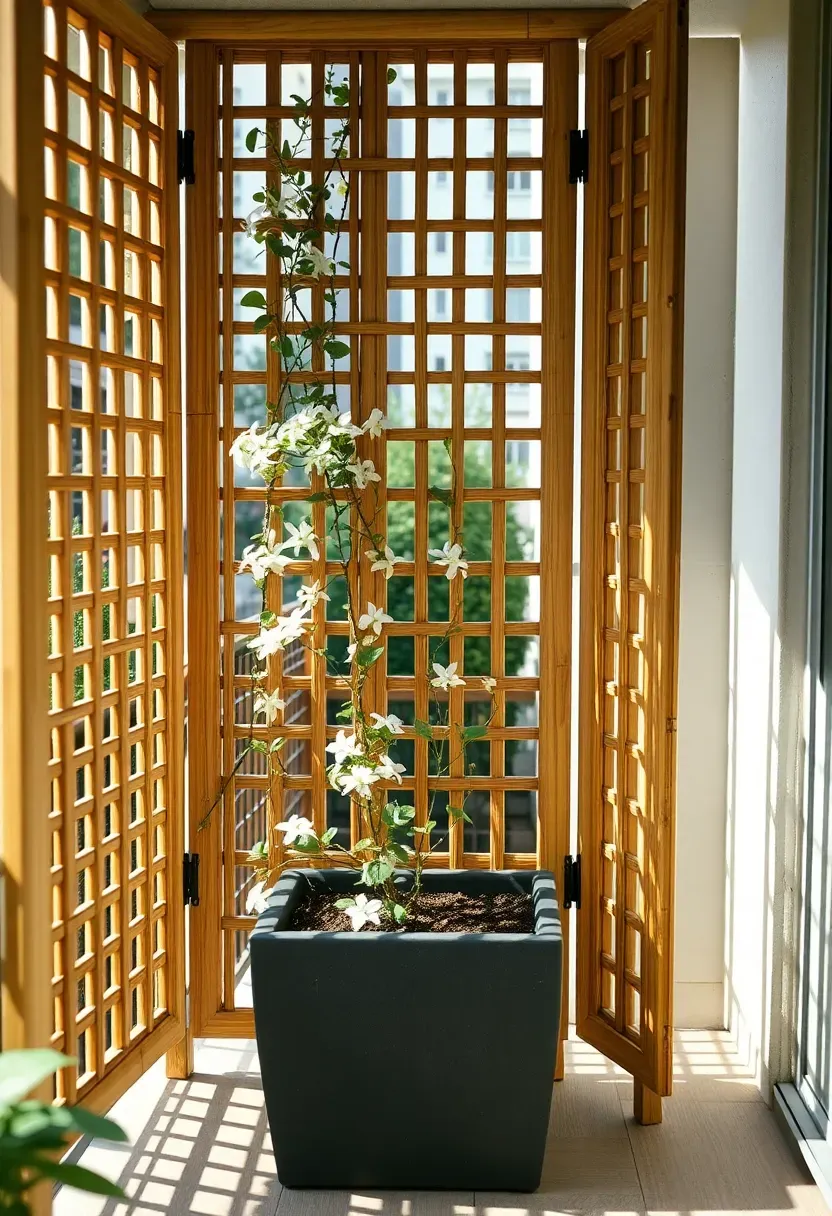
Apartment patios share sightlines with neighbors, parking lots, and corridors. A living privacy screen — bamboo trellis panels combined with fast-growing climbers like jasmine, clematis, or passion vine — blocks direct views while adding fragrance and greenery that a solid partition cannot match.
Tips for a Renter-Friendly Installation
- Use freestanding trellis panels in heavy planter bases rather than wall-mounted options. The weight of the soil anchors the panel; no drilling required.
- Star jasmine grows 3 to 5 feet per season and produces fragrant white flowers from late spring through summer.
- Position the screen on the side facing your most exposed boundary — you rarely need full-perimeter coverage.
Recommended
Items for this idea
7. Floor Cushion Lounge Corner
Comparing: Chairs vs. Floor Seating
Should you invest in traditional chairs or go low to the ground? The answer depends on your patio dimensions and how you plan to use the space.
Traditional Chairs
Standard patio chairs require roughly 3 by 3 feet per seat including leg clearance. On a narrow apartment patio, two chairs and a table can consume the entire footprint, leaving no room for plants, storage, or movement.
Floor Cushions and Poufs
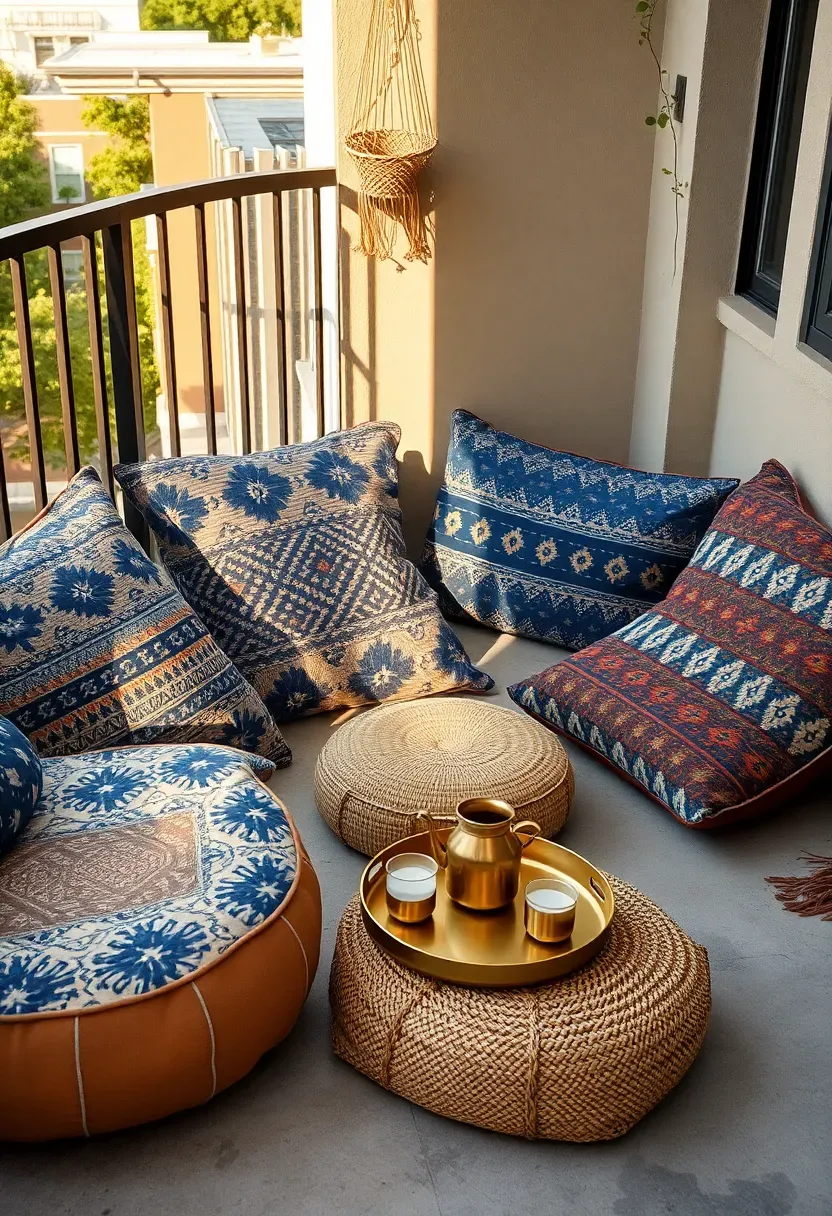
Oversized floor cushions, outdoor poufs, and zabuton-style pads stack and store vertically when not in use, reclaiming the full patio floor. They sit closer to the ground, making the ceiling feel higher and the space more open. They also invite lounging rather than perching — a different kind of comfort.
What to Choose
Choose chairs if: you eat meals on the patio regularly and need table-height seating for plates and utensils.
Choose floor cushions if: you prioritize flexibility, want to host more than two people, and mainly use the patio for drinks, reading, and conversation.
8. Compact Herb Garden Station
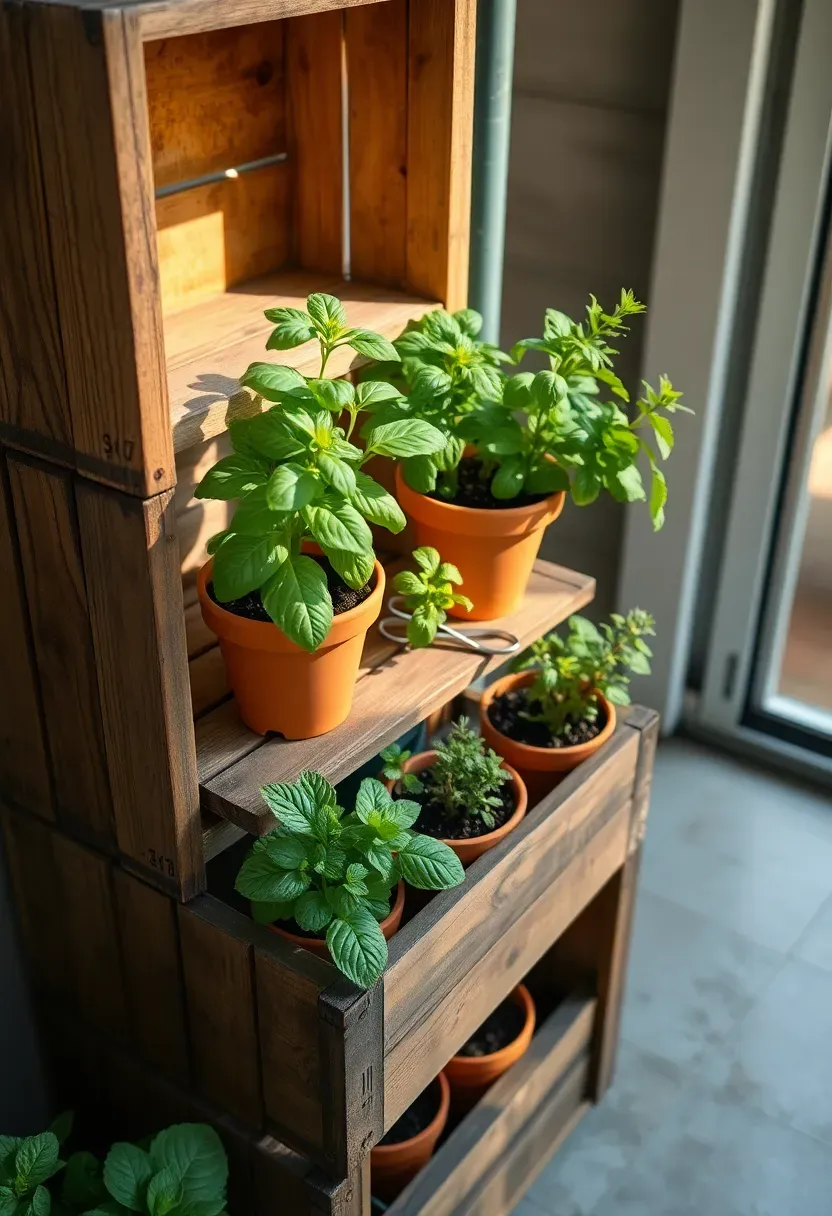
Growing herbs on your apartment patio delivers daily rewards that purely decorative plants cannot match. You walk outside, pinch a few basil leaves, tear some mint, snip rosemary — and dinner gains flavor that dried jars from the supermarket never replicate. A tiered wooden crate system, a repurposed bookshelf, or a simple three-pot arrangement on a plant stand keeps everything within arm's reach of the door.
What to Watch Out For
- Basil and cilantro demand at least 6 hours of direct sun — if your patio faces north, swap these for shade-tolerant herbs like mint, parsley, and chives.
- Use terracotta pots with drainage holes rather than decorative ceramic — herbs despise soggy roots more than almost any other plant category.
- Harvest regularly. Pinching stem tips encourages bushy lateral growth and prevents leggy, top-heavy plants that flop over in wind.
Recommended
Items for this idea
9. Railing Planter Box System
The Core Issue
Apartment patio railings occupy linear footage that typically goes to waste. Meanwhile, floor space is too precious to fill with rows of heavy pots. The railing sits there doing nothing except keeping you from falling — it could be working much harder.
The Solution
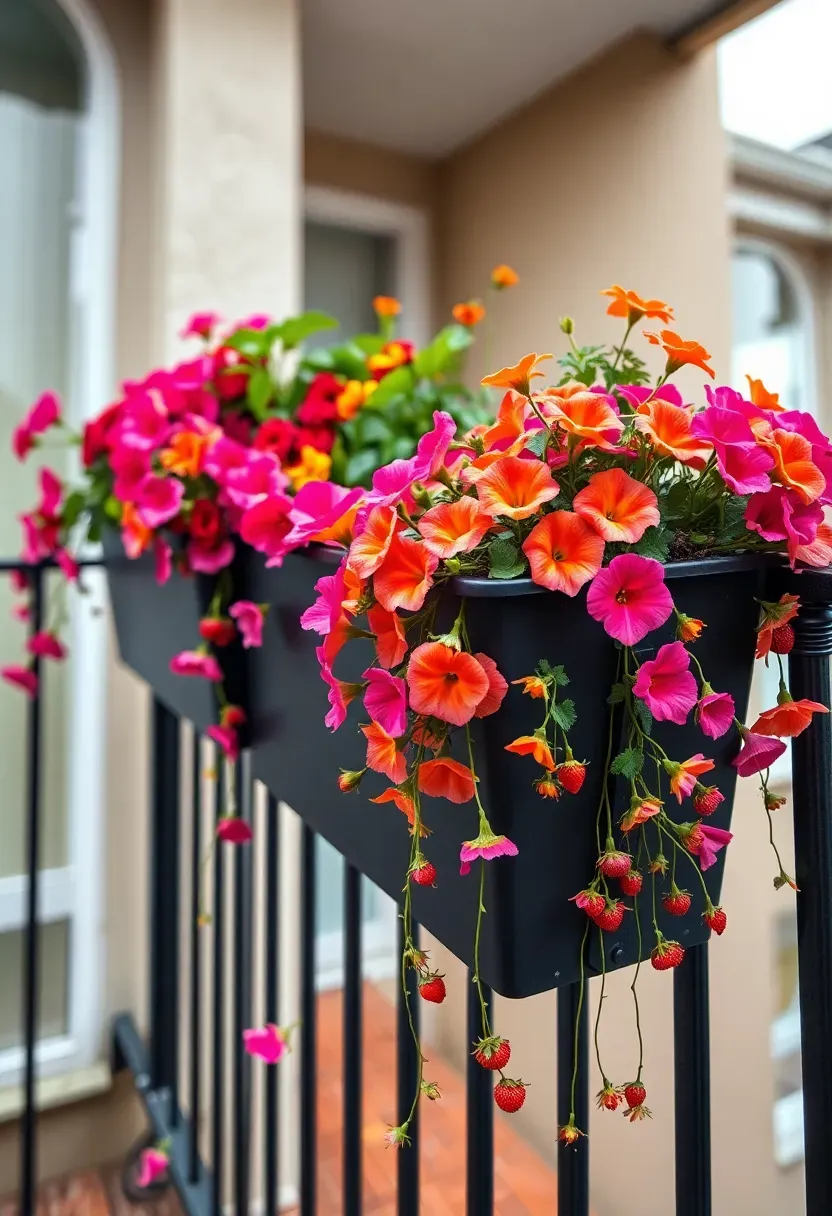
Adjustable railing planters clamp onto metal or wooden railings without tools, screws, or modifications. A set of three 24-inch boxes gives you 6 linear feet of planting space — enough for a continuous ribbon of trailing petunias, nasturtiums, or strawberry plants that softens the railing edge and adds color visible from both inside and outside the apartment.
Pros and Cons
Pros: Zero floor space used; creates a garden-like border visible from indoor rooms; easy to remove at lease end.
Cons: Wind exposure at railing height dries soil faster — expect to water every other day in summer heat.
10. Foldable Wall-Mounted Table
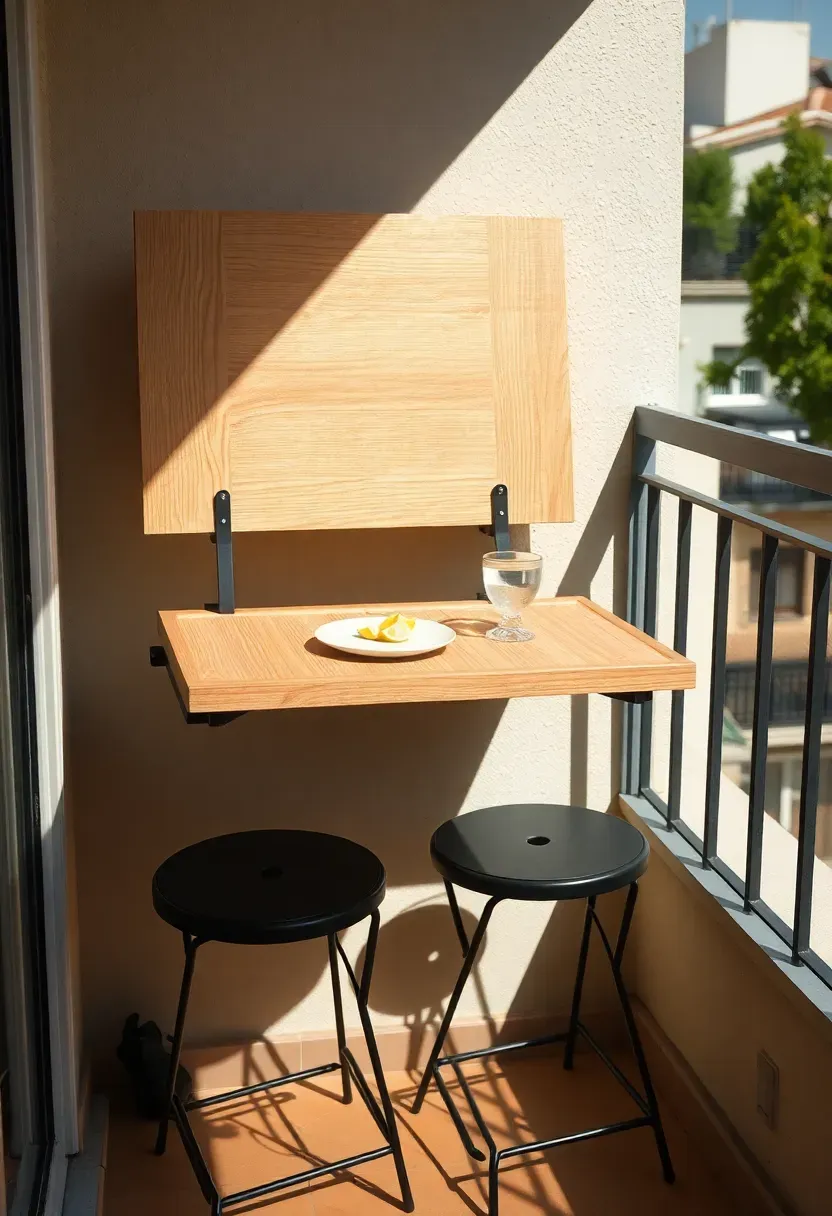
When a permanent table consumes a third of your patio, a wall-mounted drop-leaf table solves the equation. Folded up, it protrudes just 4 inches from the wall — invisible. Folded down, it provides a 24- by 30-inch surface for meals, laptop work, or potting plants. Pair it with two stackable stools that tuck underneath, and the entire dining setup vanishes in 10 seconds.
How to Install Without Permanent Damage
Step 1: Find the Studs
Use a stud finder or knock test to locate wall framing behind the exterior wall surface. The table bracket must anchor into solid material — drywall anchors alone will not hold the weight of dishes and elbows.
Step 2: Use Removable Mounting
If drilling is prohibited, heavy-duty adhesive mounting strips (rated for 16+ pounds per strip, applied in pairs) can support lighter folding shelves. Test with weight before loading food.
Step 3: Position at the Right Height
Mount the hinge bracket so the table surface sits at 28 to 30 inches — standard dining height. Lower than 28 inches feels like a children's table; higher than 30 makes stools awkward.
Recommended
Items for this idea
11. Japanese-Inspired Minimalist Retreat
Origins and Philosophy
Japanese garden design condenses vast natural landscapes into contained spaces — a principle called shakkei (borrowed scenery). The approach values restraint over abundance: one well-chosen stone matters more than twenty random pots. This philosophy suits apartment patios perfectly because small spaces reward simplicity and punish clutter.
Modern Interpretation
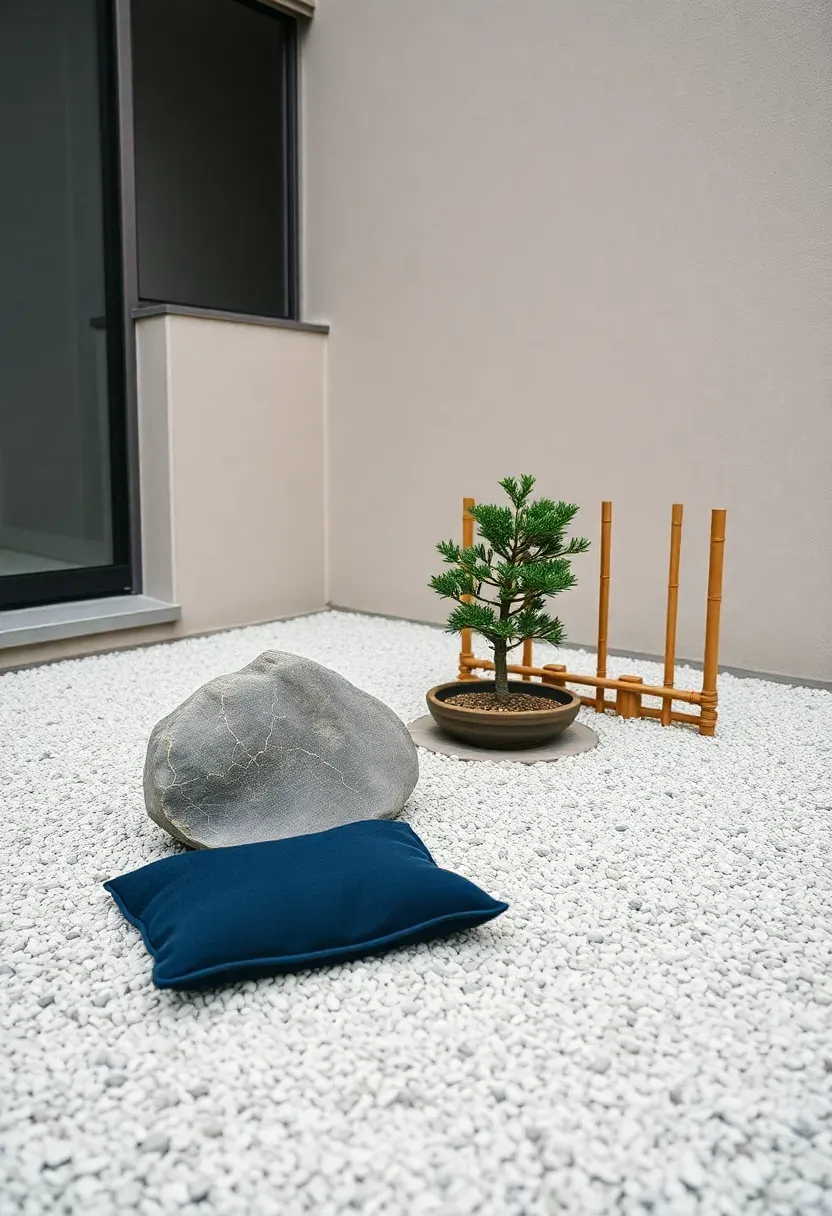
A single weathered stone, a shallow ceramic bowl with floating flowers, a miniature bonsai juniper, and a bamboo water spout create a complete scene in under 4 square feet. Use fine white gravel or smooth river pebbles as ground cover instead of an outdoor rug — the pale surface reflects light upward and makes the patio feel larger. Add a single low wooden stool or zabuton cushion for sitting. Every object earns its place through intentional selection, not accumulation.
How to Apply at Home
- Start by removing everything from the patio. Add items back one at a time, stopping when the space feels complete.
- Choose a color palette of no more than three tones: gray stone, green foliage, warm wood.
- Replace visual noise (multiple patterned cushions, clashing pot colors) with a single texture repeated — raw wood, matte ceramic, or woven bamboo.
- Leave at least 30 percent of the floor surface completely empty. Negative space is a design element, not a missed opportunity.
12. Boho Textile Layering Scheme
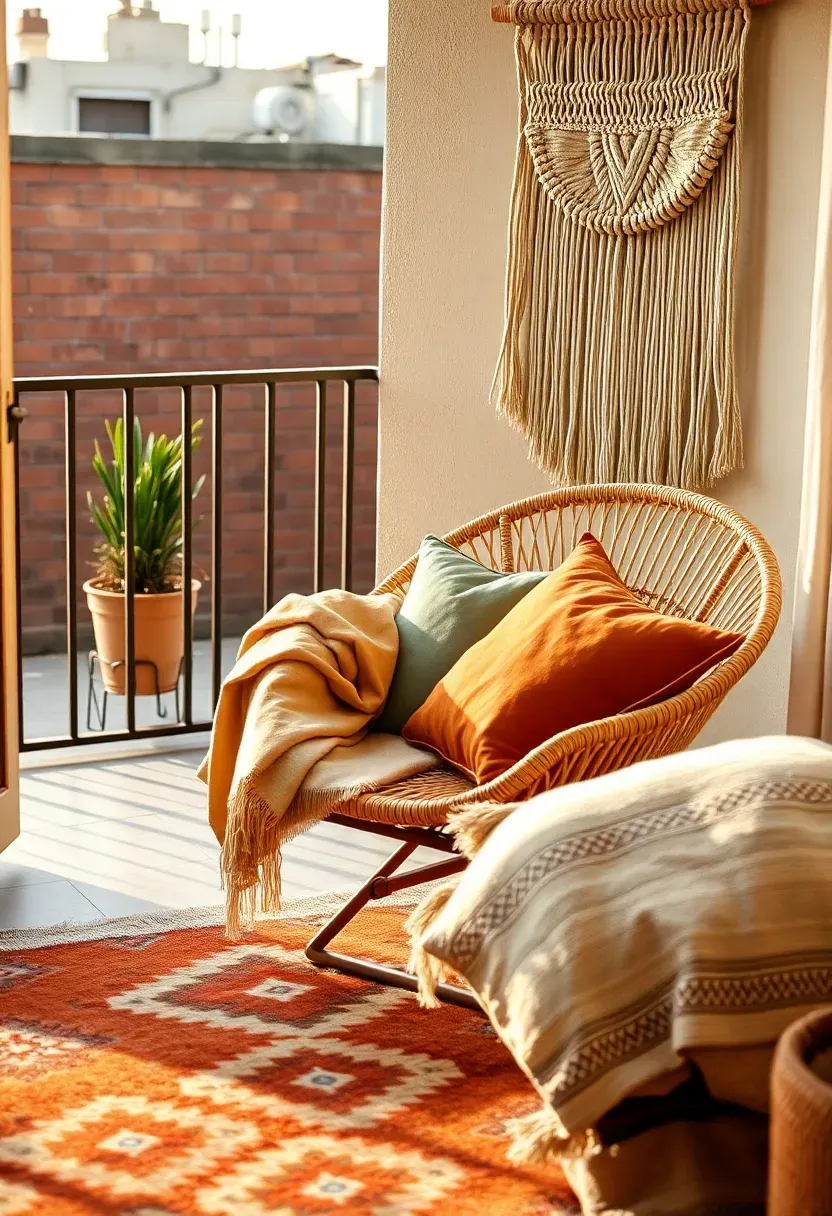
Bohemian styling thrives in small spaces because it relies on texture, color, and fabric rather than large furniture pieces. The goal is sensory richness — the visual equivalent of walking into a spice market rather than a sterile showroom. Layer a kilim-patterned outdoor rug beneath mismatched cushions, drape a lightweight throw over a rattan chair, and hang a macrame wall piece on the one bare wall. Each textile introduces warmth without consuming floor area.
Tips for Weather-Resistant Boho Style
- Invest in outdoor-rated fabrics (Sunbrella, Olefin) for anything that stays outside permanently. Reserve natural cotton and wool for items you carry indoors after use.
- Stick to a warm palette — terracotta, mustard, sage, cream — and let pattern mixing do the visual work. Three different patterns in the same color family always look intentional.
- Anchor the textile chaos with one solid-colored grounding element: a single-tone rug, a plain wooden bench, or unglazed terracotta pots.
Recommended
Items for this idea
13. Tiny Water Feature for Ambient Sound
Why Sound Matters Outdoors
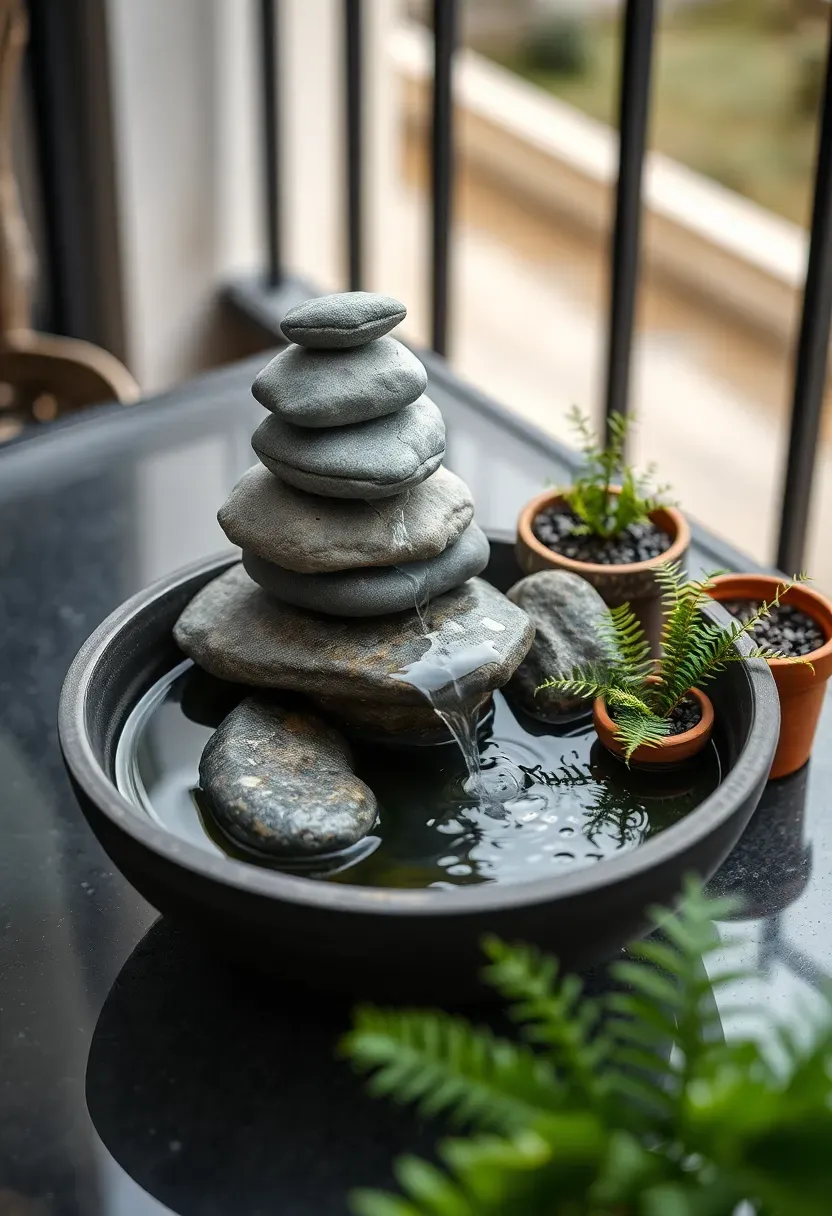
Traffic noise, neighboring conversations, and HVAC units define the acoustic reality of most apartment patios. You cannot eliminate these sounds, but you can mask them. A small recirculating water fountain produces continuous white noise that softens hard urban frequencies and makes the patio feel psychologically removed from the building around it.
Choosing the Right Size
Tabletop fountains (8 to 14 inches tall) suit apartment patios best. They plug into a standard outlet or run on solar power, use minimal water, and produce a gentle trickling sound rather than a rushing torrent. Stacked-stone and ceramic bowl designs blend with both minimalist and bohemian aesthetics. Avoid fountains with exposed plastic basins — they cheapen the look instantly.
What to Watch Out For
- Refill the reservoir weekly in dry weather; evaporation accelerates in direct sun.
- Position the fountain away from seating to prevent splash onto cushions during windy days.
14. Hanging Chair Statement Piece
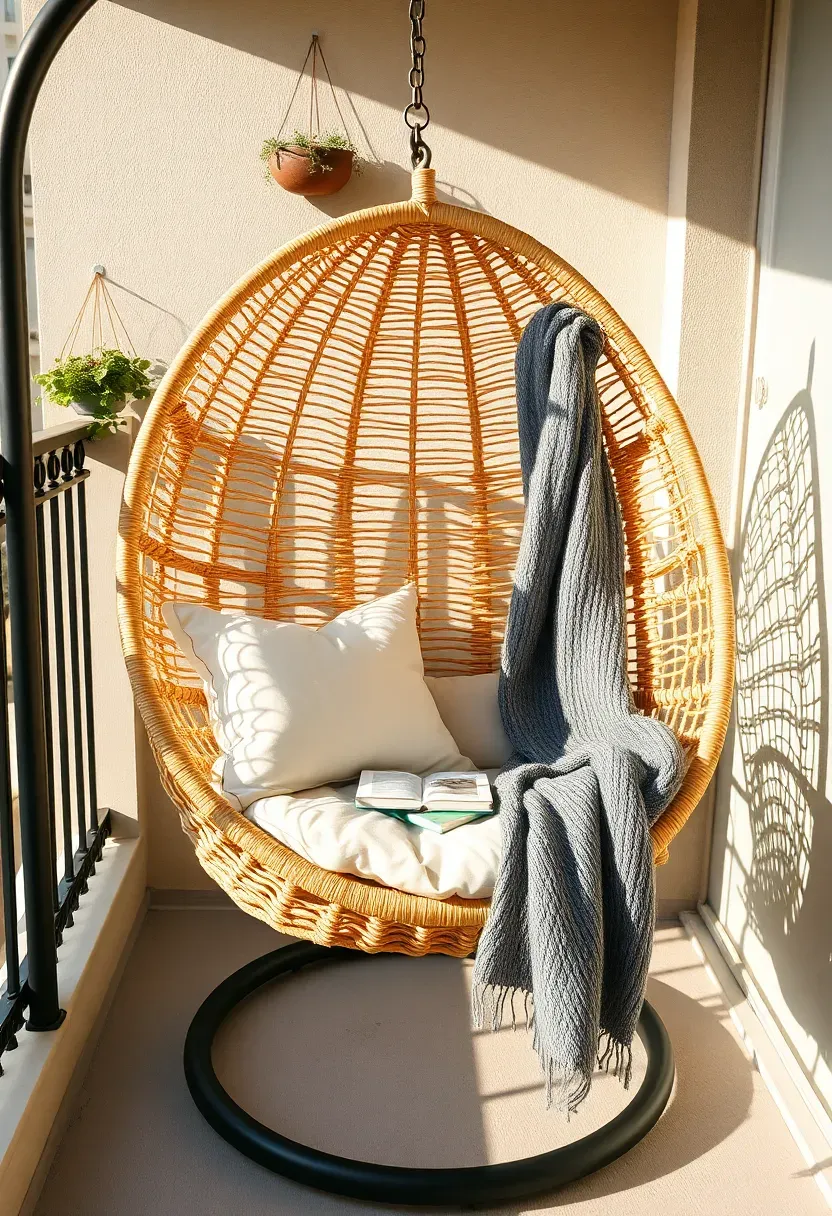
A single hanging egg chair or pod chair transforms the visual identity of an apartment patio faster than any other single purchase. It says "this space was designed" in a way that no amount of standard furniture can replicate. Freestanding models with their own base frame require no ceiling attachment — critical for renters who cannot drill into overhangs.
Practical Considerations
- Measure twice: a hanging chair with frame needs roughly 4 by 4 feet of floor space including the swing arc. On patios smaller than 40 square feet, the chair will dominate at the expense of everything else.
- Weight capacity varies widely — confirm the frame supports at least 250 pounds before purchasing.
- Add a thick seat cushion and a weatherproof throw blanket. The chair itself is the structure; the textiles make it comfortable enough for a two-hour reading session.
Recommended
Items for this idea
15. Outdoor Bar Cart Setup
Trend Origins
The outdoor bar cart migrated from rooftop cocktail parties in Brooklyn and London loft buildings to mainstream apartment living around 2022. What started as a hosting flex became a daily convenience — a rolling station for coffee in the morning, sparkling water in the afternoon, and cocktails at sunset, all without walking back to the kitchen.
Modern Interpretation
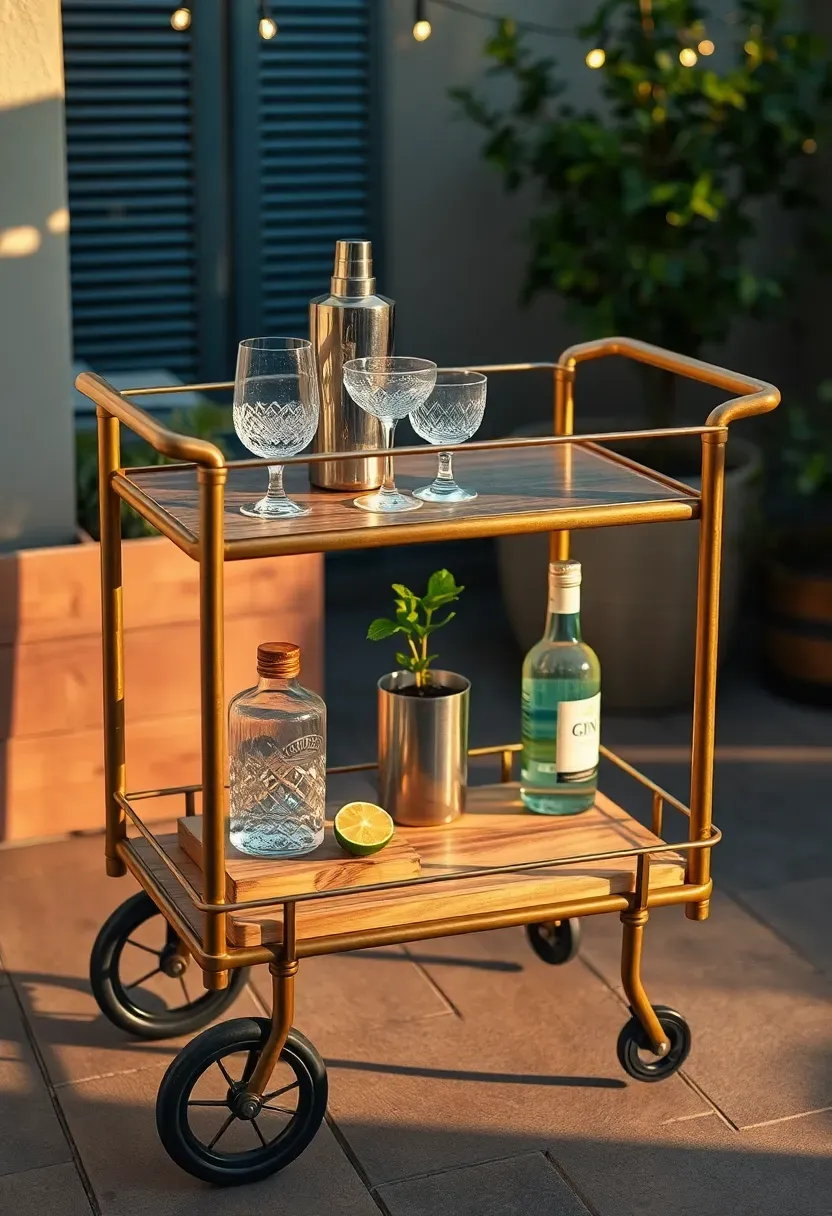
Today's apartment patio bar cart serves triple duty: beverage station, plant shelf when not in use, and decorative vignette that adds personality to an otherwise utilitarian space. Choose a two-tier metal cart with rubber wheels that roll smoothly over deck tiles and outdoor rugs. Stock the top tier with your daily beverages and a few attractive glasses. Use the bottom tier for a potted herb (mint for mojitos, basil for gin drinks) and a small ice bucket.
How to Apply at Home
- Position the cart against the wall nearest your apartment door for easy kitchen access.
- Add a small cutting board and bar knife to the top shelf — functional and photogenic.
- Roll the cart indoors during heavy rain or extended travel; even powder-coated steel corrodes with prolonged water exposure.
- Display a single bottle and two glasses rather than your entire liquor collection — restraint looks more curated.
16. Solar Lantern Collection
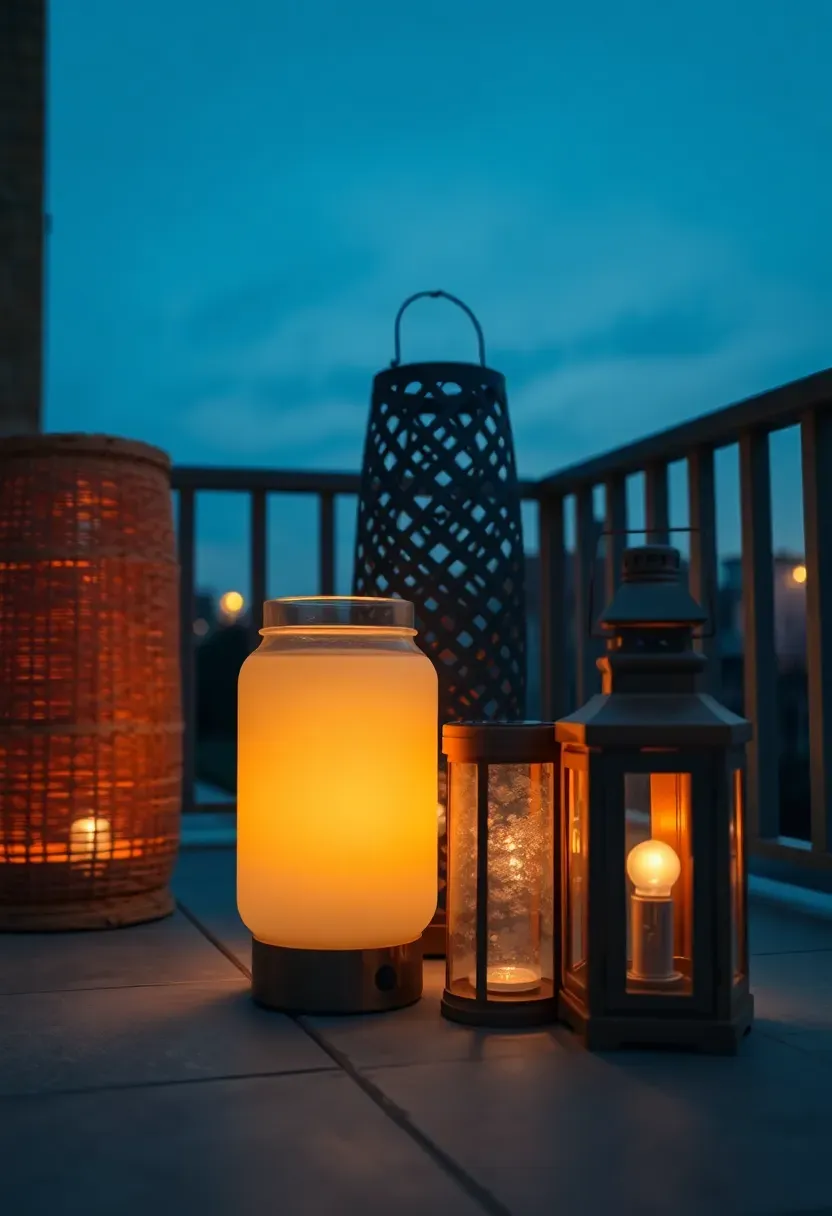
Solar lanterns solve the perennial apartment patio problem: limited or nonexistent electrical outlets. They charge during the day and emit a warm amber glow for 6 to 10 hours after sunset — no cords, no batteries, no electrician. Collect three to five lanterns in varying heights and arrange them in a cluster on the floor, on a side table, or along the patio edge.
Tips for Maximum Impact
- Mix materials: one woven rattan lantern, one metal cutout design, one frosted glass cylinder. The variety prevents a catalog-display look.
- Group in odd numbers (three or five) — odd groupings feel organic while even arrangements read as formal and rigid.
- Place the tallest lantern at the back of the cluster and let heights cascade forward. This creates depth in a flat space.
Recommended
Items for this idea
17. Mirror Wall to Double the Space
The Core Issue
Small apartment patios suffer from visual compression — walls close in, the ceiling feels low, and the space reads as a box rather than a room. No amount of furniture rearrangement fixes the fundamental perception of confinement.
The Solution
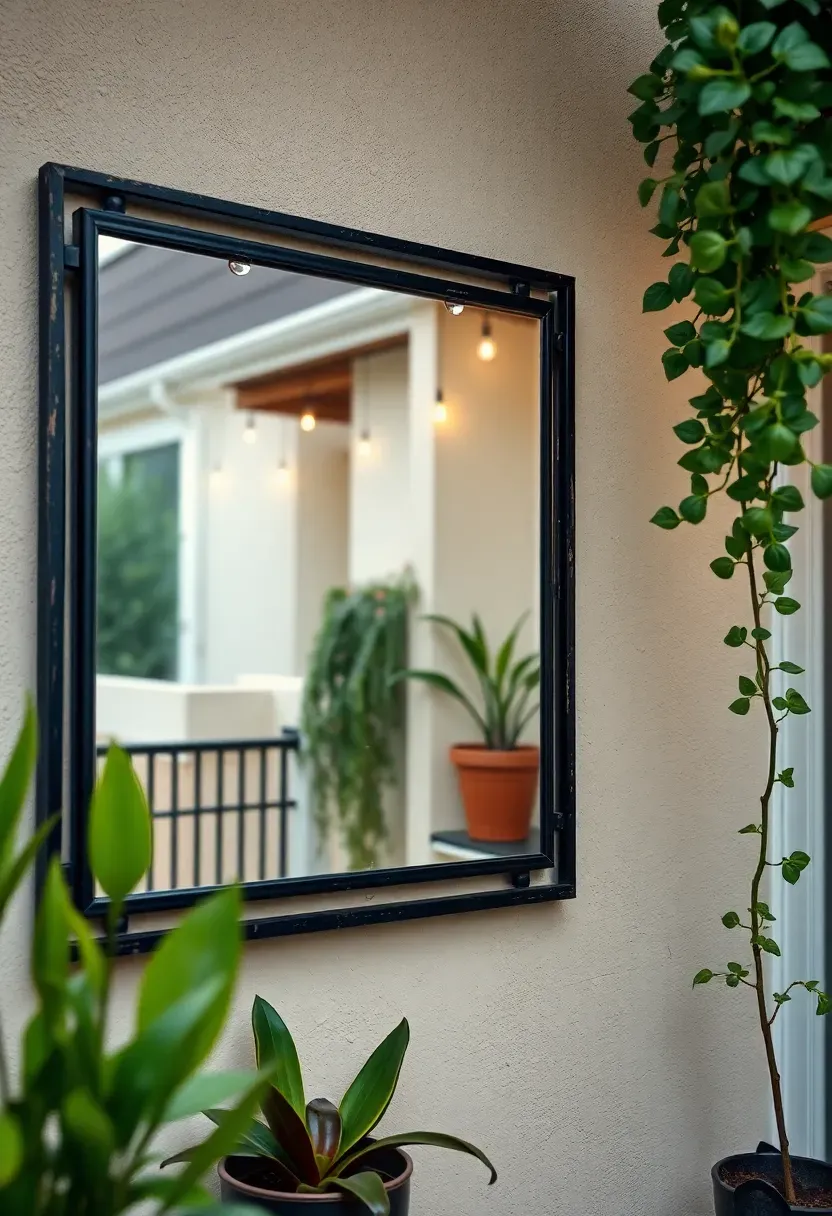
A weatherproof outdoor mirror mounted on the most visible wall reflects light, greenery, and sky back into the space, creating the optical illusion of doubled depth. Choose a mirror at least 24 by 36 inches — anything smaller functions as a decoration rather than a spatial trick. Position it to reflect the most visually interesting element on the opposite side: your plants, your string lights, or the sky above.
Pros and Cons
Pros: Immediately makes the patio feel twice as large; reflects additional light into shaded corners; creates visual depth.
Cons: Must be truly weatherproof (not bathroom mirrors, which will delaminate); needs secure mounting to prevent wind-related accidents.
18. Seasonal Container Garden Display
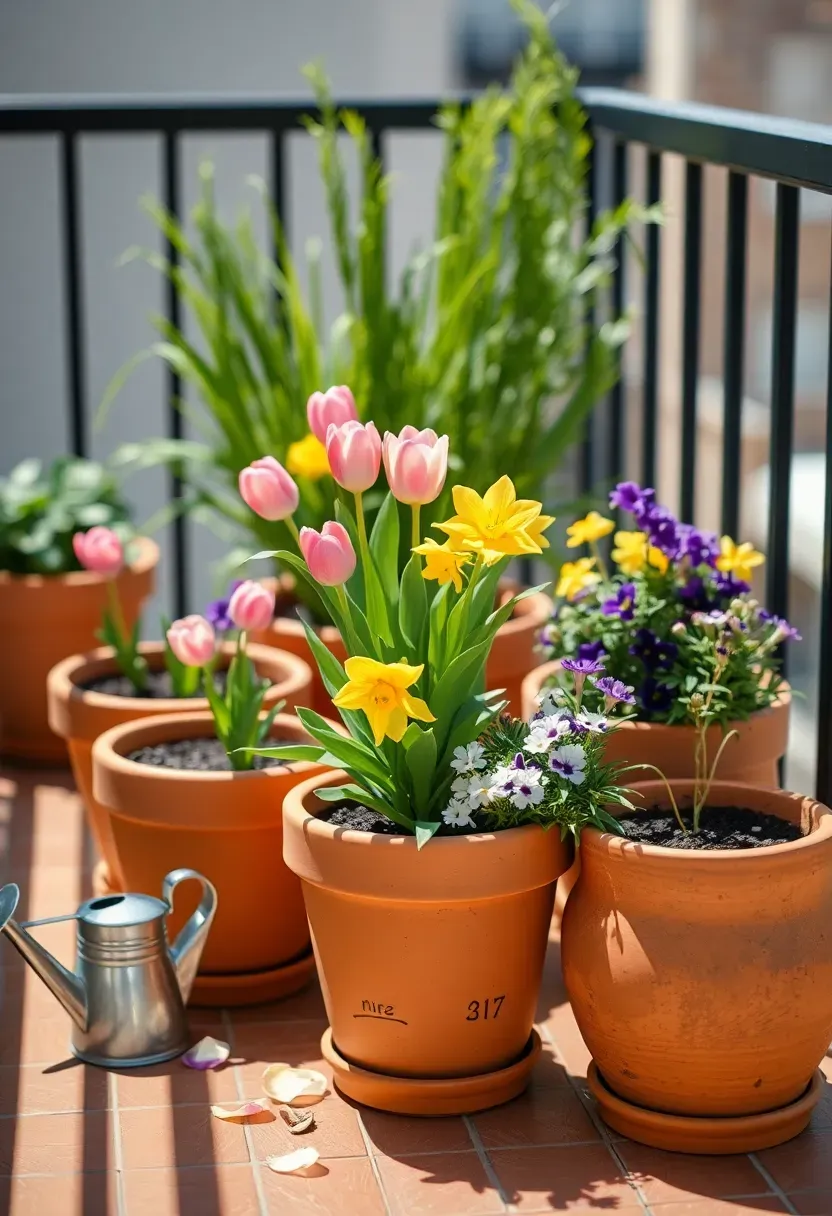
Rather than planting once and watching everything fade by August, treat your patio containers as a rotating gallery that changes with the seasons. Spring brings tulips, daffodils, and pansies in cool pastels. Summer swaps in bold zinnias, marigolds, and trailing sweet potato vine. Autumn arrives with ornamental kale, chrysanthemums, and miniature pumpkins. Winter finishes the cycle with evergreen sprigs, winterberry branches, and frosted rosemary topiaries.
Tips for Smooth Transitions
- Use three to five matching pots in a single material (terracotta, matte black ceramic, or galvanized metal) so the containers provide visual continuity even as the plants change completely.
- Keep a bag of fresh potting mix on hand for each seasonal swap — reusing exhausted soil produces weak, leggy plants.
- Photograph each seasonal arrangement from the same angle. After a year, you will have a visual calendar that helps you refine and improve each rotation.
Recommended
Items for this idea
19. Cozy Fire Pit Table for Cool Evenings
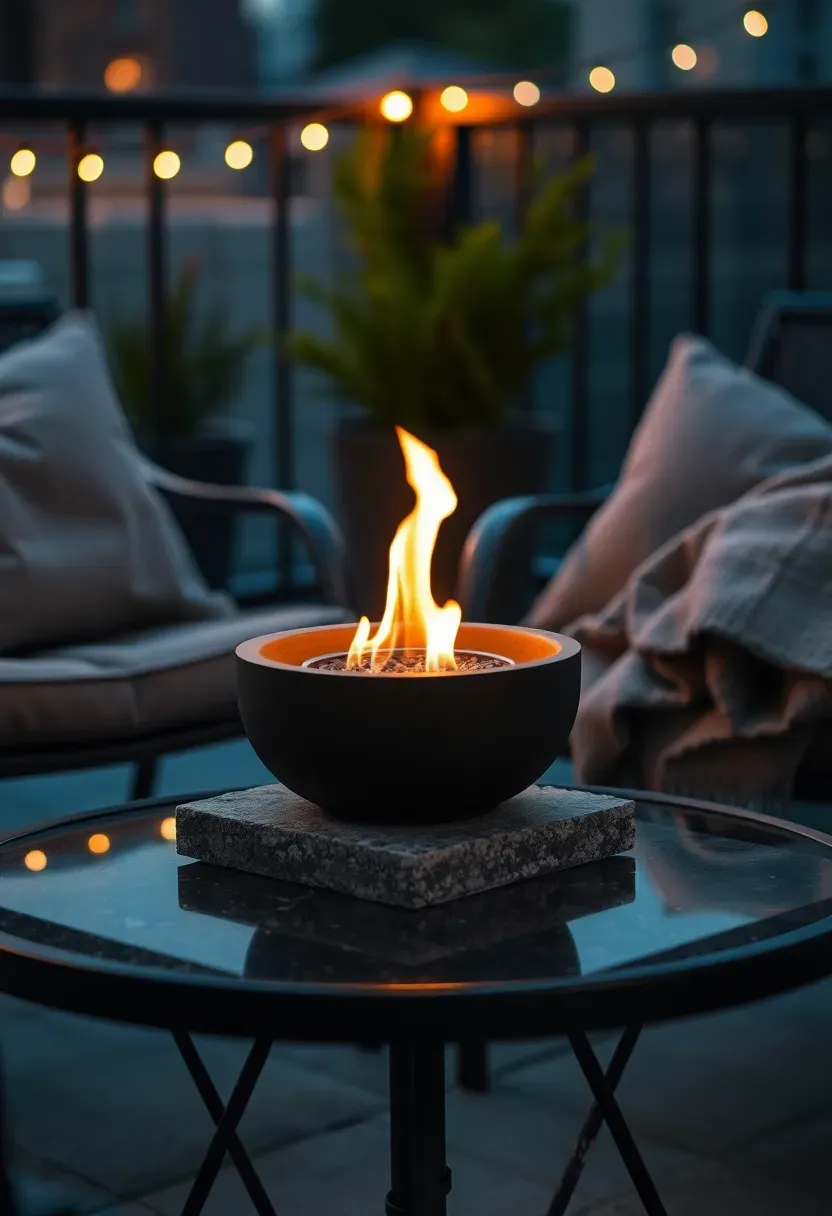
A tabletop fire pit — fueled by clean-burning bioethanol or rubbing alcohol gel — brings the campfire experience to a 50-square-foot patio without smoke, ash, or landlord complaints. The contained flame sits inside a fireproof bowl at table height, producing enough warmth to take the edge off a cool spring evening and enough visual drama to make the patio feel like a rooftop lounge.
What to Watch Out For
- Check your lease and local fire codes. Most jurisdictions allow ventless tabletop fire pits on apartment patios; full-sized propane fire pits are often prohibited above the ground floor.
- Place the fire bowl on a heat-resistant surface — stone, ceramic tile, or a designated fire mat. Never set it directly on a wooden table or deck tiles.
- Keep the flame at least 3 feet from any fabric: cushions, curtains, umbrella canopies. Bioethanol burns cleanly but is still genuine fire.
Quick FAQ
Is it worth investing in outdoor furniture for a rental apartment patio? Absolutely. Quality folding furniture and outdoor textiles travel with you to the next apartment. Choose pieces that are lightweight, foldable, and not built-in, so nothing stays behind when you move. The cost-per-use over even a single warm season makes most patio purchases worthwhile.
Should I ask my landlord before making patio changes? For removable items like rugs, furniture, plants, and string lights — generally no permission is needed. For anything involving drilling, mounting brackets, or structural changes, always ask first and get written approval. When in doubt, choose adhesive or freestanding solutions.
Which plants survive best on a shaded apartment patio? Ferns, hostas, impatiens, begonias, and most varieties of ivy thrive with limited direct sunlight. For herbs, mint, parsley, and chives tolerate shade better than basil or rosemary. Group shade-loving plants together and position any sun-seekers along the railing edge where they catch the most available light.
What is the fastest way to make an apartment patio feel bigger? Three moves: lay a light-colored outdoor rug to unify the floor, hang a mirror on the largest wall to reflect depth, and keep furniture low to the ground so sightlines extend to the railing. These three changes take under an hour and cost less than a single piece of furniture.
Can I use a fire pit on my apartment patio legally? Tabletop bioethanol fire pits are permitted in most apartment settings because they produce no smoke and require no gas line. Propane and wood-burning options face stricter regulations, especially on upper floors. Always verify with your lease agreement and local fire code before purchasing.
Trends come and go, but the desire for a personal outdoor space never fades. Your apartment patio might be compact, but it does not have to feel like an afterthought. Start with the one idea from this list that excites you most — maybe it is the interlocking deck tiles, maybe it is the string light canopy — and let that single change pull you outside more often. The rest of the transformation will follow naturally, one small decision at a time.
Pinterest cover for 19 Apartment Patio Ideas That Turn Tiny Outdoor Spaces Into Retreats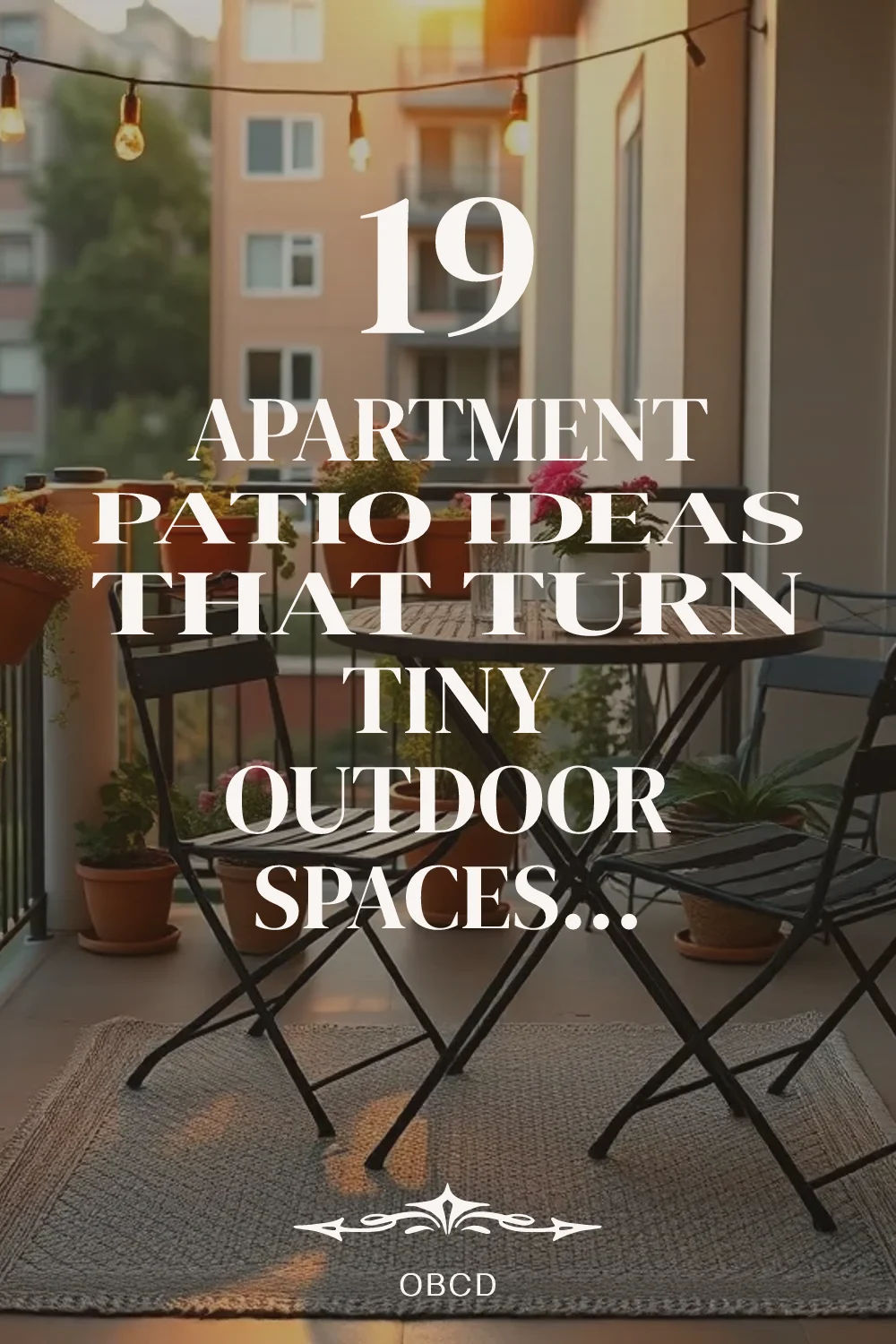
About the author
OBCD
CGI visualization and interior design content. We create detailed 3D renders and curate practical design ideas for every room in your home.