23 Baby Boy Nursery Ideas for Small Rooms
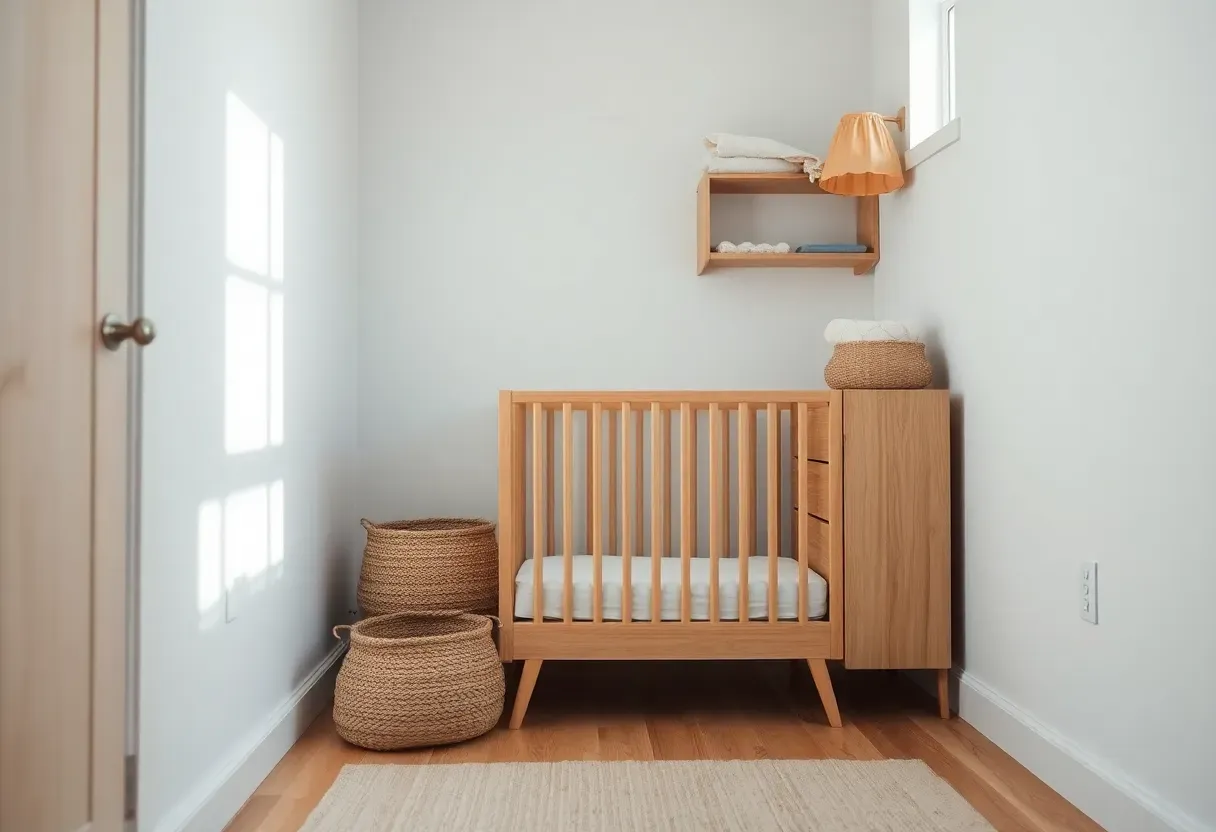
We've all felt that moment when the smallest bedroom in the house gets assigned nursery duty and the floor plan just doesn't cooperate. The crib is bigger than expected, the dresser blocks the door, the glider won't fit at any angle. A small room for a baby boy is not a design limitation — it is a design challenge with genuinely satisfying solutions. Compact nurseries force clarity: every piece earns its place, every wall does extra work, and the result is often more thoughtful than a room where space is plentiful and decisions are easy.
Below you will find 23 ideas built specifically around the constraints of small rooms — vertical storage, dual-function furniture, light-amplifying palettes, and clever layout tricks that make a modest square footage feel exactly right.
Table of Contents
- Mini Crib with Under-Crib Drawer Storage
- Wall-Mounted Changing Station
- Corner Crib Placement
- Floating Shelves Instead of a Bookcase
- Dresser-as-Changing-Table Combo
- Navy Accent Wall with White Furniture
- Loft-Style Elevated Storage Shelf
- Convertible Crib for Long-Term Use
- Mirror to Expand Visual Space
- Vertical Pegboard Organizer
- Narrow Glider or Rocker Chair
- Window Seat with Hidden Storage
- Monochrome Blue and White Palette
- Over-Door Organizer for Baby Supplies
- Light Wood Furniture for Airiness
- Mural Wall Instead of Busy Decor
- Ceiling-Height Curtains to Add Height
- Built-In Closet Nursery Corner
- Geometric Wall Decals for Character
- Soft Sage Green for Calm
- Hanging Mobile as Main Decor
- Basket Storage Under the Crib
- Shared Room Nursery Divider
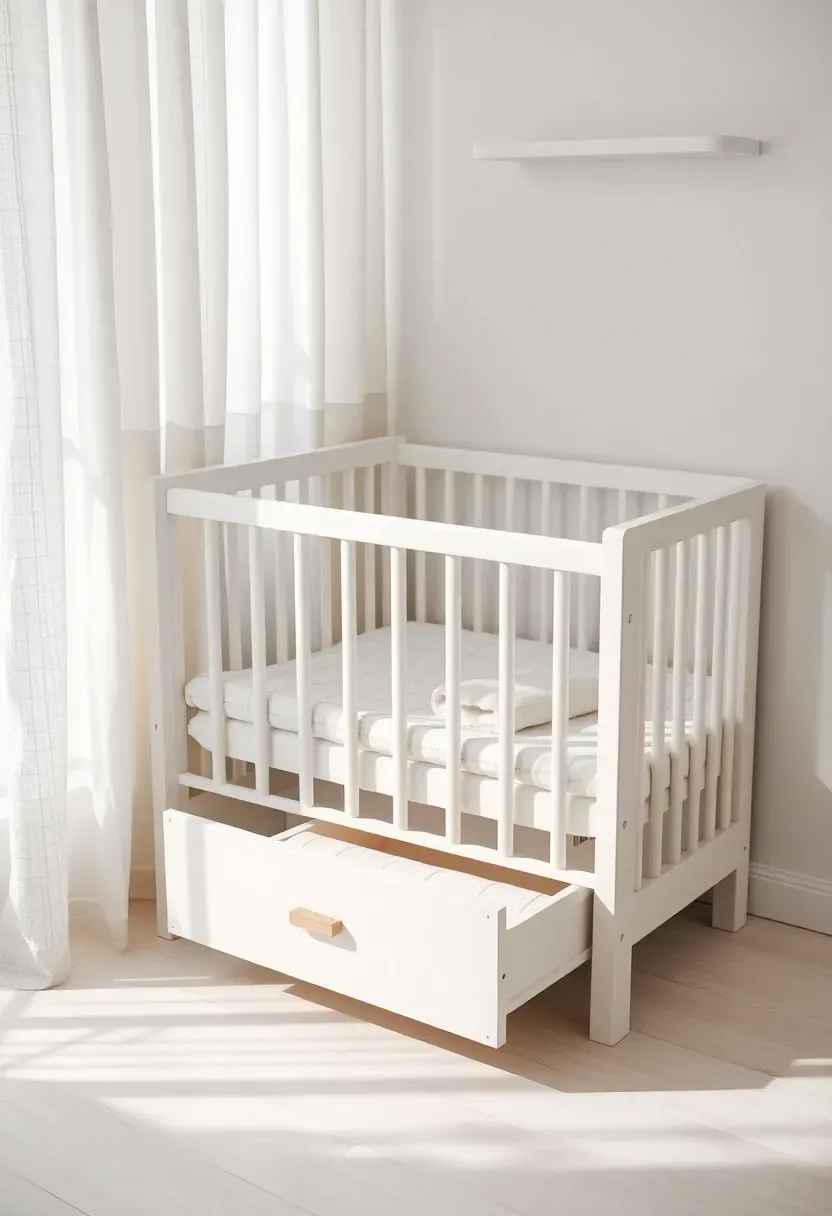
1. Mini Crib with Under-Crib Drawer Storage
A standard crib occupies roughly 53 by 30 inches of floor space. A mini crib cuts that footprint to around 38 by 24 — a difference that, in a small room, can open up an entire furniture arrangement. Many mini crib models now include a built-in drawer underneath, effectively giving you a second storage unit without adding a single inch to the room's footprint.
Tips for Choosing a Mini Crib
- Confirm the mini crib converts to a toddler bed — this extends its usefulness by two to three years
- Under-crib drawers work best for folded items and spare linens, not heavy gear
- Choose a model with adjustable mattress heights so you can lower it as the baby grows more mobile
We picked a few things that go well with this idea: Dream On Me Jayden 4-in-1 Mini Crib (★4.4), Carter's DaVinci Colby Mini Crib with Drawer (★4.6) and Carter's DaVinci Colby Mini Crib Natural (★4.6). As an Amazon Associate we earn from qualifying purchases.
2. Wall-Mounted Changing Station
The Core Issue
A traditional changing table is one of the bulkiest pieces in a nursery. In a small room it can consume two to three feet of floor space while being used for only six to eighteen months — a poor trade.
The Solution
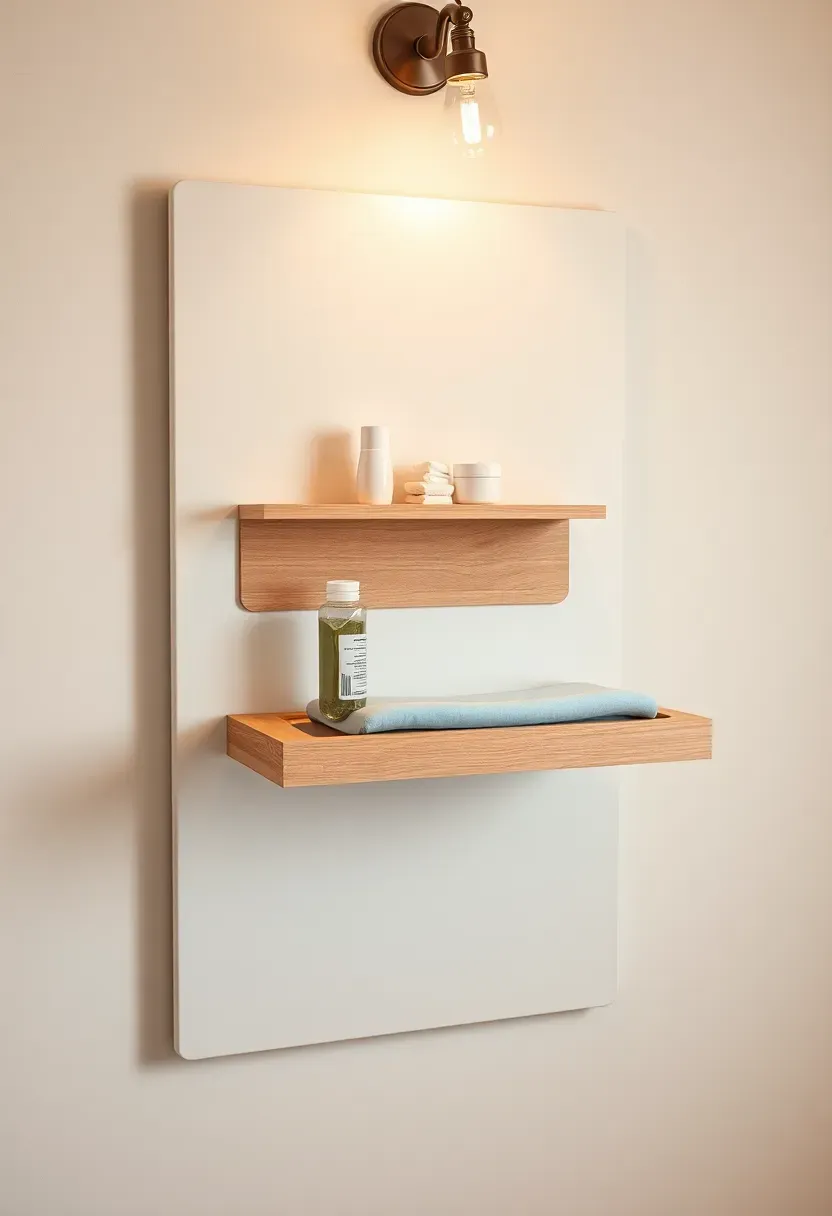
A wall-mounted fold-down changing station changes the equation entirely. When folded up, it projects just a few inches from the wall. When folded down, it becomes a full-size changing surface. Pair it with a small shelf just above it to hold diapers, wipes, and creams within arm's reach, and you have eliminated the need for a freestanding changing table altogether.
Pros and Cons
Pros: recovers floor space when not in use, mounts at the ideal height for your body, can be repurposed as a small desk later Cons: requires solid wall anchoring into studs — drywall alone cannot support the weight of a baby plus parent pressure
We picked a few things that go well with this idea: Nordic Geometric Mountain Wall Decals (★4.3), Space Planets Astronaut Boy Wall Decals (★4.6) and Dino Geometric Wooden Wall Art (3-Pack) (★4.2). As an Amazon Associate we earn from qualifying purchases.
3. Corner Crib Placement
In most small nurseries, the crib goes against the longest wall by default — which leaves awkward dead space in the corners. Rotating the layout to place the crib in a corner frees the center and the long wall for other furniture and creates clear pathways to every piece.
Step 1: Measure the Corner Clearance
Confirm there is at least 18 inches of clear space on the two open sides of the crib for safe access during nighttime pickups.
Step 2: Use the Corner Wall
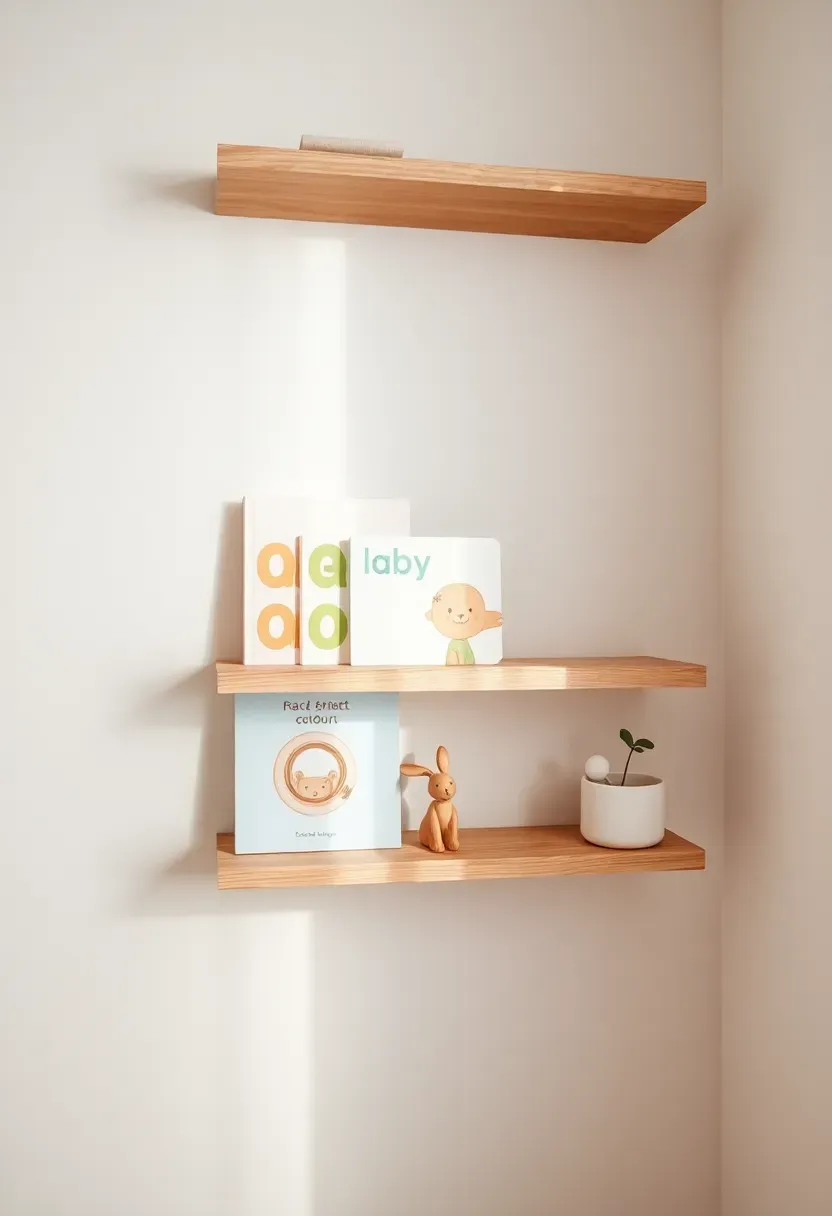
Mount a floating shelf system above the crib in the corner to use vertical space the corner placement opens up. Two or three staggered shelves hold books, a monitor, and small decor without adding any floor furniture.
Step 3: Keep the Path Clear
Position the glider or rocker opposite the crib rather than beside it. This keeps the entire center of the room open for floor play as the baby grows.
What to Watch Out For
- Never place the crib against an exterior wall in colder climates — temperature fluctuations matter
- Keep crib away from window blind cords regardless of placement
We picked a few things that go well with this idea: Jute Rope Storage Basket Set (5-Pack) (★4.7), Vagusicc Seagrass Wicker Storage Baskets (5-Pack) (★4.7) and Nonam Natural Seagrass Baskets with Lids (3-Pack) (★4.5). As an Amazon Associate we earn from qualifying purchases.
4. Floating Shelves Instead of a Bookcase
A freestanding bookcase takes up floor footprint and visual weight. Floating shelves mounted directly to the wall achieve the same storage with zero floor impact. In a small nursery, this is the difference between a room that feels designed and one that feels stuffed.
Styling the Shelves
- Mount shelves at multiple heights — some at adult reach, one lower row at the child's eventual eye level
- Use face-out book ledges (narrow rails) rather than deep shelves for baby books — you see the covers and access is easier
- Group decor items in odd numbers: three objects per shelf is the most balanced
Recommended
Items for this idea
5. Dresser-as-Changing-Table Combo
Origins
The combination dresser-and-changing-table has existed in nursery design for decades, but it gained real momentum when parents realized they were buying two large pieces of furniture when one would do both jobs.
Modern Interpretation
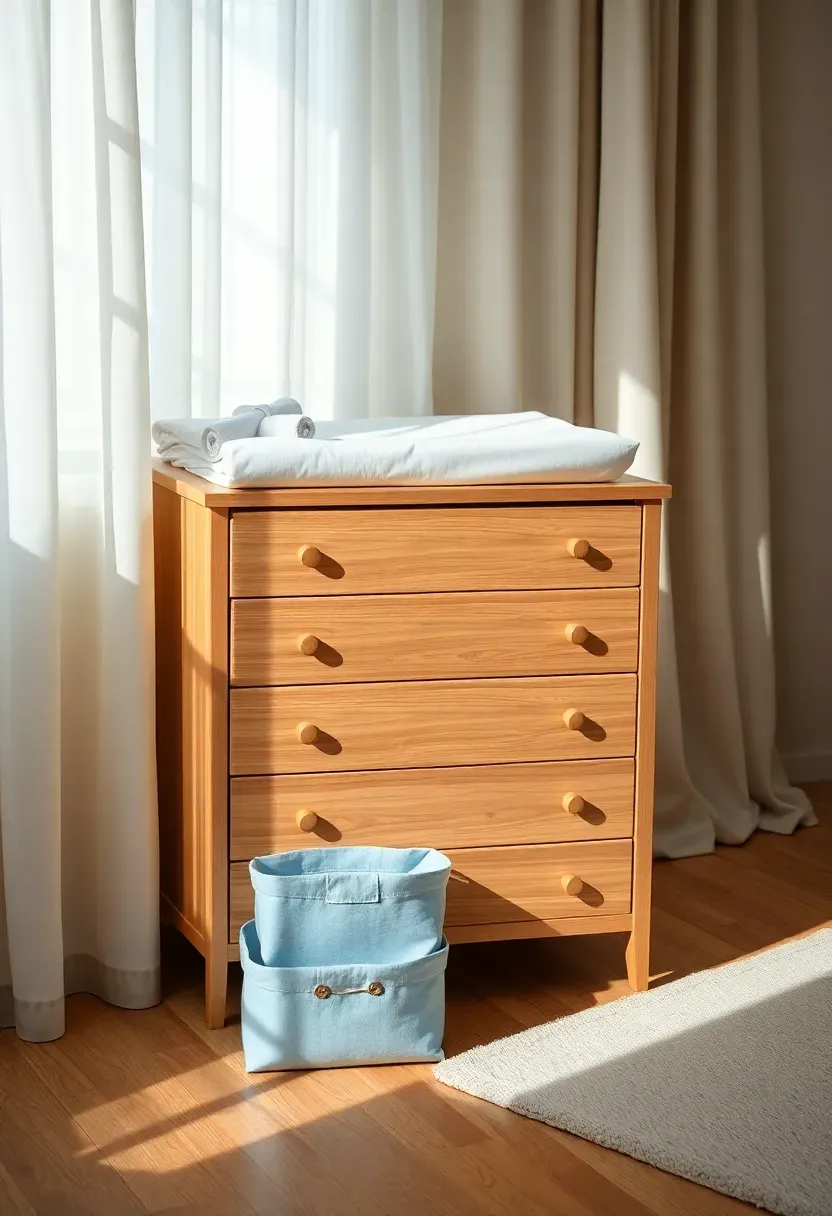
Today's approach skips the dedicated changing table entirely. A mid-height dresser (30 to 34 inches, which is ergonomically correct for most adults when changing a baby) with a removable changing topper on top serves as both clothing storage and changing surface. When the baby outgrows diapers, remove the topper and the dresser continues its life as an ordinary dresser — no disposal, no replacement.
How to Apply in a Small Room
- Choose a dresser that is narrower than standard (30 to 32 inches wide rather than 48+) to save horizontal space
- Wall-anchor the dresser — a changing baby shifts weight and an unsecured dresser is a tip hazard
- A small organizer tray on top holds diapers and wipes without requiring a separate shelf
6. Navy Accent Wall with White Furniture
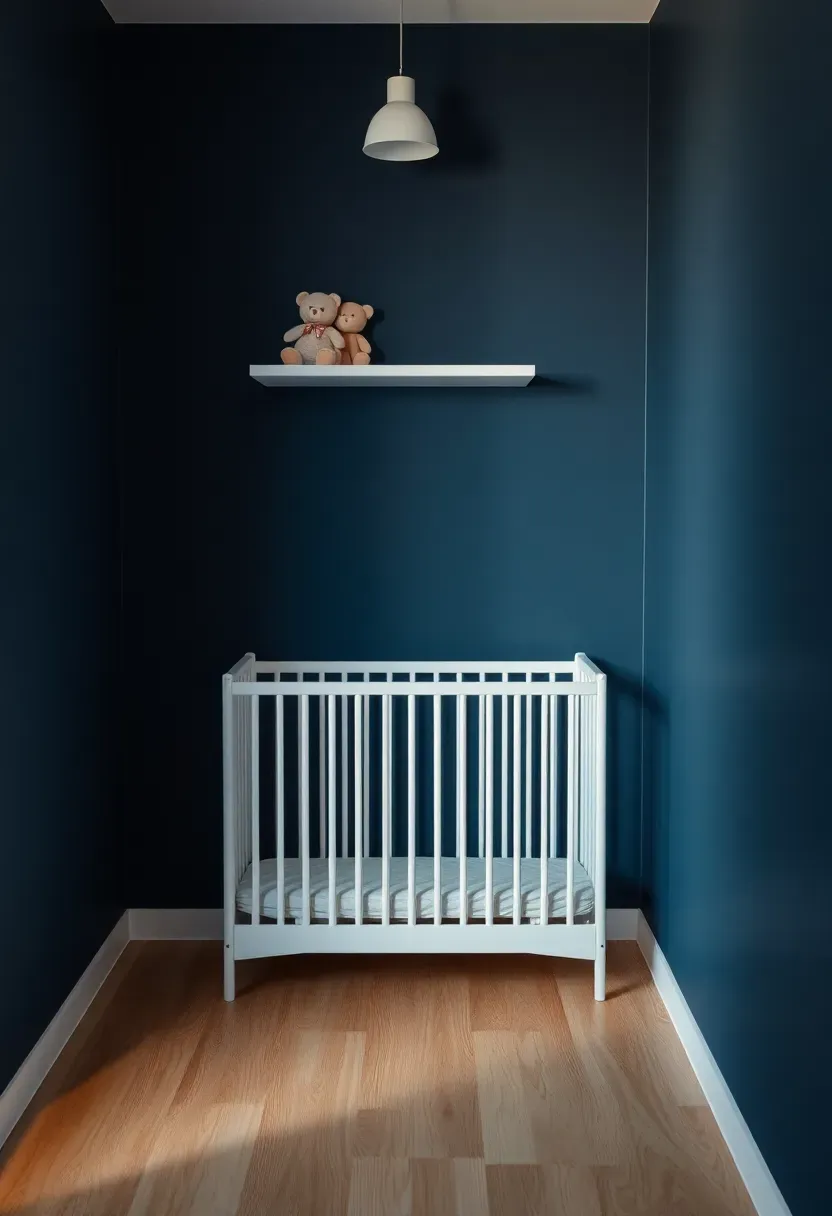
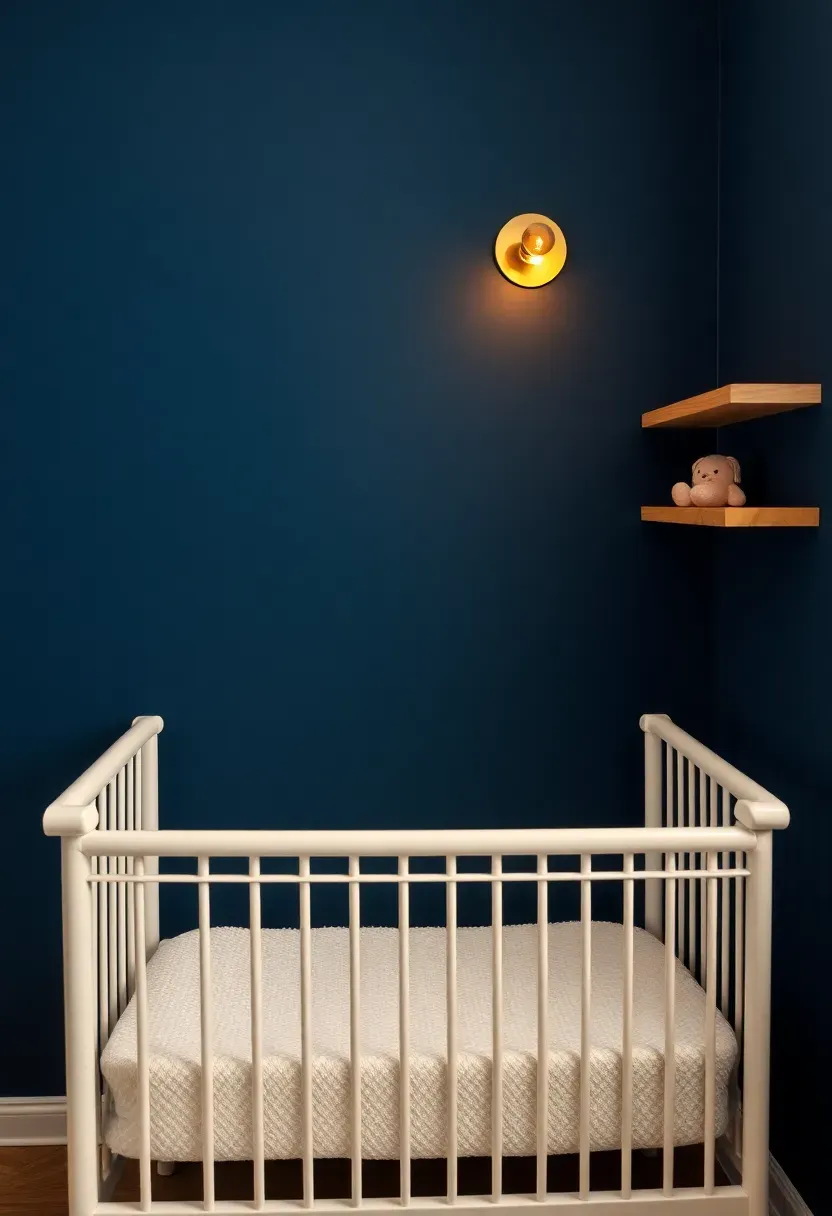
In a small room, a common fear is that dark colors will make the space feel smaller. But a single navy accent wall — specifically the crib wall — behaves differently. It creates depth and makes the white crib pop with graphic clarity, while the remaining three lighter walls keep the room from closing in. The contrast reads as intentional, and the depth effect actually makes the room feel more dimensional than an all-white approach.
Tips for Getting It Right
- Use a flat or eggshell finish on the navy wall to avoid light bounce that exaggerates imperfections
- Keep all furniture white or natural wood to maintain the navy's impact
- A single warm-toned light fixture (brass or antique gold) prevents the navy from reading cold
Recommended
Items for this idea
7. Loft-Style Elevated Storage Shelf
Comparing: Upper Storage vs. Floor Storage
Both approaches work, but in a small room the trade-offs are significant.
Upper Storage
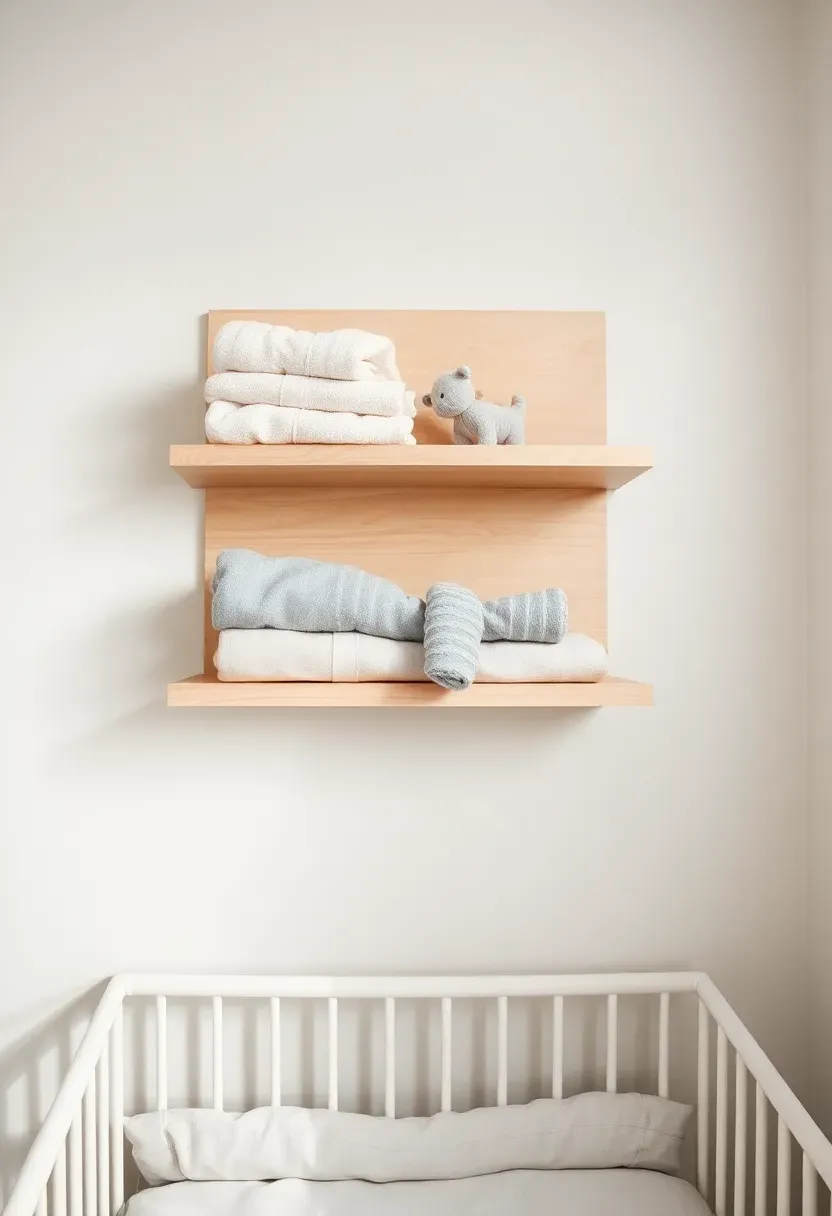
Shelves mounted at 60 to 72 inches provide storage that does not compete with floor space or visual sightlines. Items up high are adult-access only — ideal for out-of-rotation clothes, extra diapers, and decor. The wall above the crib becomes functional without adding a single piece of floor furniture.
Floor Storage
Freestanding shelves, baskets, and low cube units are easier to access but consume the floor space that is already at a premium in a small room.
What to Choose
Choose upper storage if: every square foot of floor is spoken for and the priority is maximizing movement space Choose floor storage if: the baby is approaching crawling age and you want items accessible at the child's level
Recommendation
In truly small rooms — under 100 square feet — prioritize upper storage for out-of-season and backup items, and keep floor storage to a single rolling basket that can be moved aside easily.
8. Convertible Crib for Long-Term Use
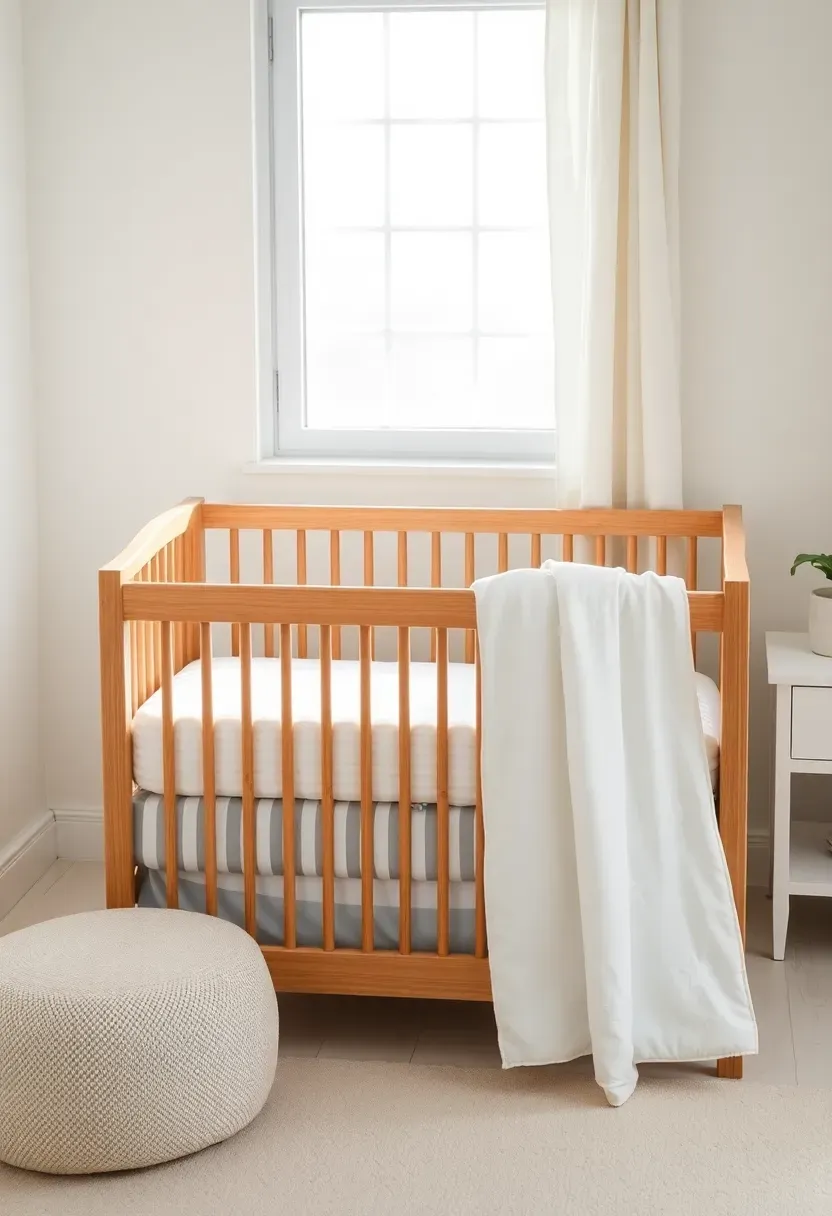
Why does a convertible crib matter specifically for small rooms? Because in a compact nursery, the idea of eventually removing a crib and replacing it with a toddler bed means two rounds of furniture disruption, two rounds of measurements, and the interim period where both pieces temporarily coexist. A convertible crib eliminates that entirely.
Practical Recommendations
- Confirm the toddler conversion kit is included or available before purchasing
- Look for models that convert to a full-size bed as well — this adds another five to seven years of useful life
- Choose a footprint that fits comfortably as a toddler bed, not just as a crib, so the room continues to work as the child grows
Recommended
Items for this idea
9. Mirror to Expand Visual Space
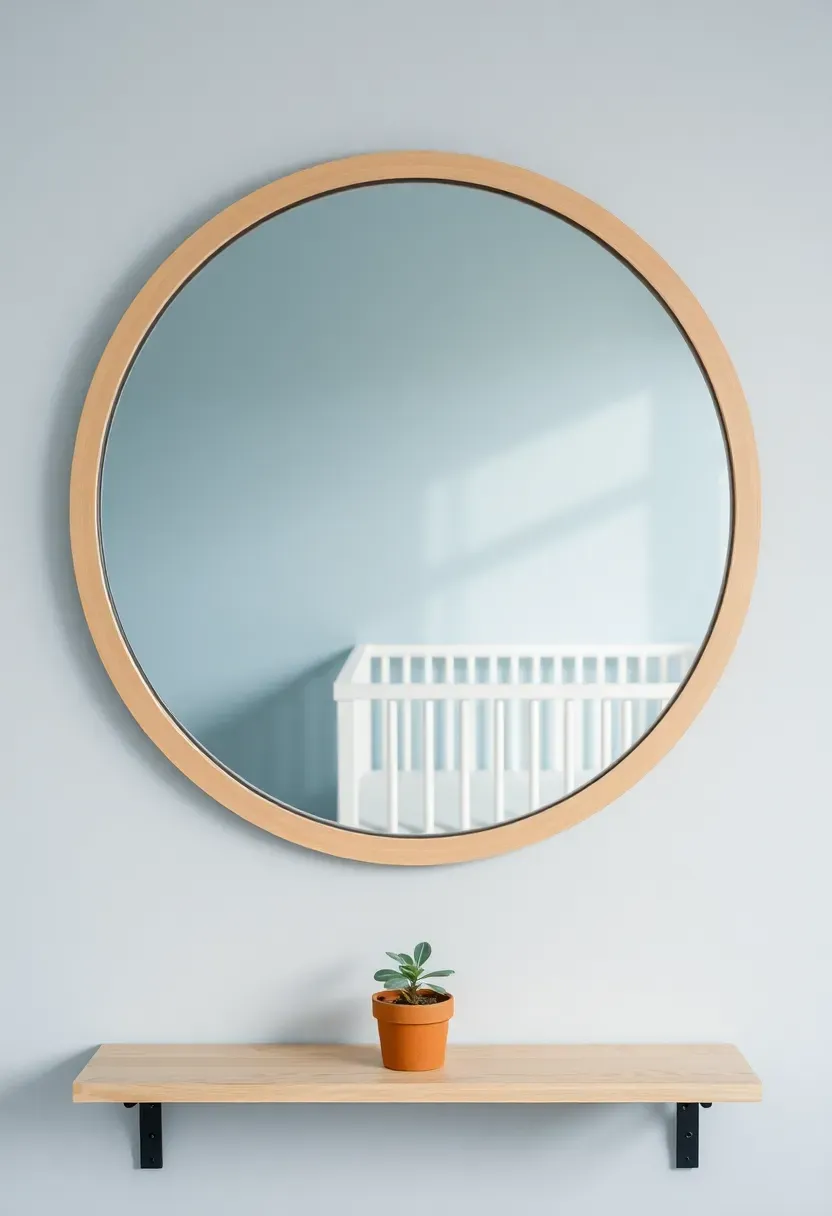
Is a mirror a genuine design tool or an interior design cliche? In a small nursery, it is genuinely functional. A large mirror — ideally at least 24 by 36 inches — mounted securely to the wall reflects both natural light and the room itself, creating the visual impression of additional depth. For a baby, a mirror on the lower portion of the wall also provides developmental stimulation during tummy time and early crawling.
Placement and Safety
- Mount mirrors into studs with proper hardware rated for the mirror's weight
- Use a shatterproof or frameless tempered glass mirror — not a decorative frame with thin glass
- The best position is on a wall perpendicular to the window so it captures and bounces natural light
10. Vertical Pegboard Organizer
Step 1: Choose the Location
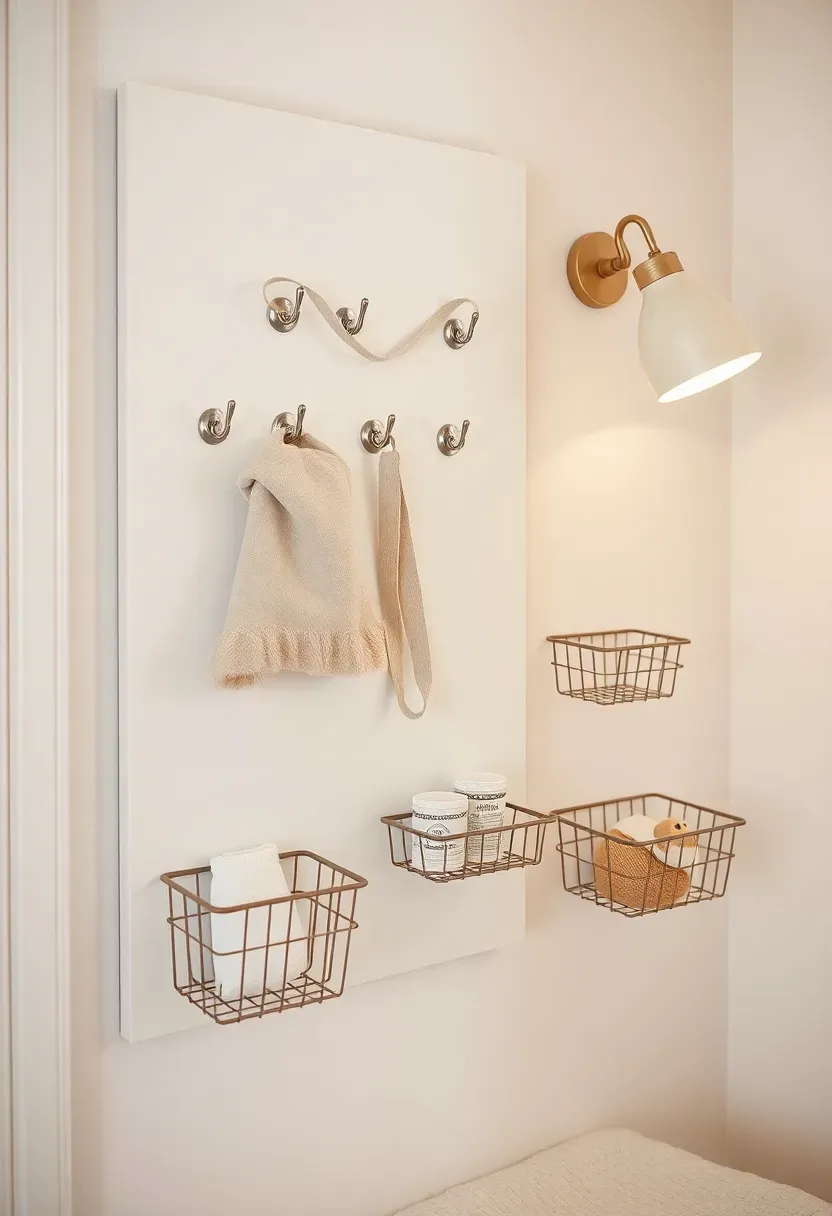
Mount the pegboard on the wall beside or above the changing area — not behind the crib. This keeps supply access near the functional zone. A 24 by 48 inch panel provides ample organization surface.
Step 2: Configure the Hooks and Baskets
Start with five to seven hooks for items used every change: baby carrier, diaper bag, spare outfit bag, muslin cloths. Add two or three small wire baskets for diaper creams, wipes, and nasal aspirators. One small bin at the bottom of the board holds rolled swaddles.
Step 3: Style It
A white or pastel-painted pegboard looks intentional rather than utilitarian. A few small plants in narrow pegboard pots and a framed print of the baby's name mounted beside it blur the line between storage and decor.
What to Watch Out For
- Keep all hooks pointed downward so nothing falls on the baby during a nearby change
- Avoid heavy ceramic containers — pegboard pegs have weight limits, especially for plywood panels
Recommended
Items for this idea
11. Narrow Glider or Rocker Chair
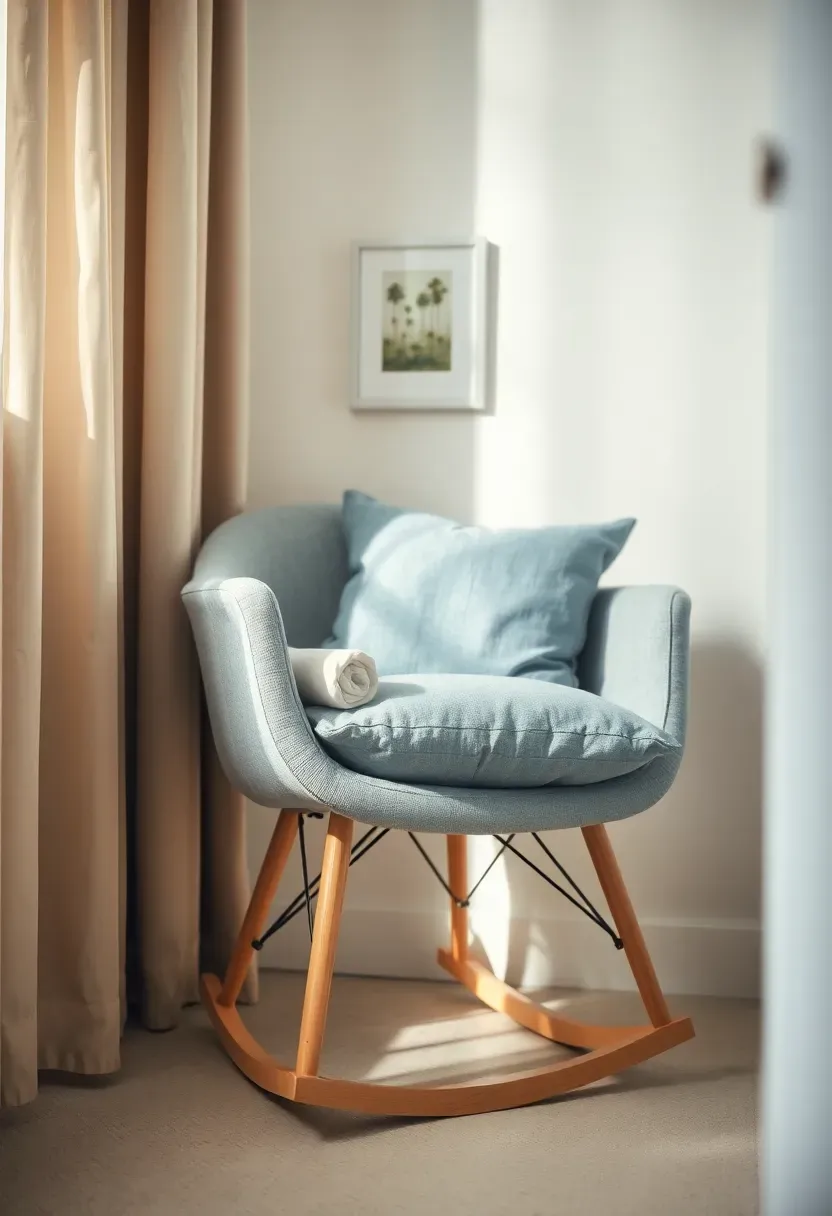
The nursing or rocking chair is non-negotiable in a nursery — but many standard gliders are enormous. A compact armless rocker or a narrow-profile glider (under 26 inches wide) fits into spaces where a standard glider simply cannot go without blocking a door or dresser.
What to Look For
- Measure the room before ordering — gliders look smaller in showrooms and online than they are in a small room
- Armless rockers take up less visual space even when the footprint is similar
- A cushioned floor rocker (low to the ground, not raised on legs) works for night feeds and takes up dramatically less visual volume
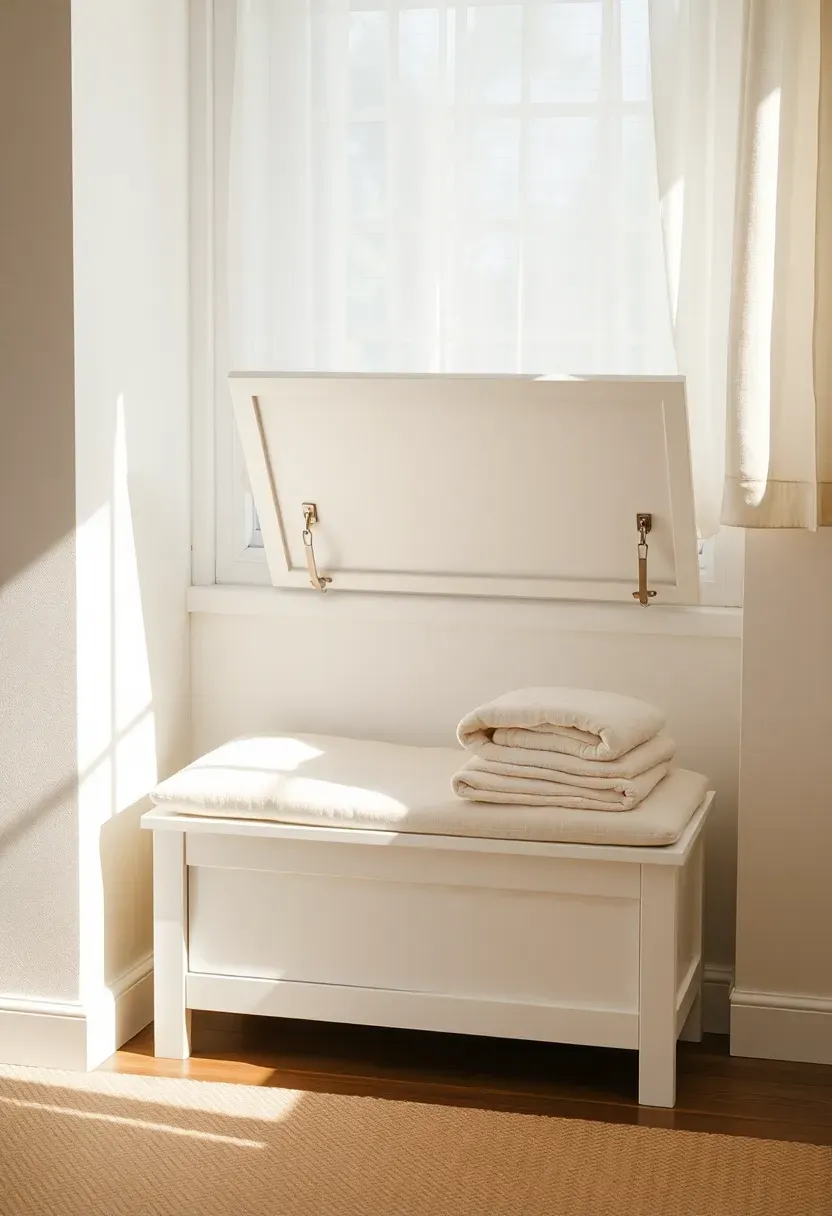
12. Window Seat with Hidden Storage
If the nursery window has even a shallow sill or an alcove, a built-in window seat can reclaim space that otherwise serves no purpose. A box bench with a hinged lid and a removable cushion provides seating for nighttime feeds, a safe surface for diaper bag organization, and hidden storage in a single footprint.
Building Considerations
- A basic window bench can be constructed from MDF and a piano hinge — no advanced carpentry needed
- Depth of 16 to 18 inches provides adequate seating without consuming too much floor space
- Line the interior with a cedar or lavender sachet to keep stored blankets fresh
Recommended
Items for this idea
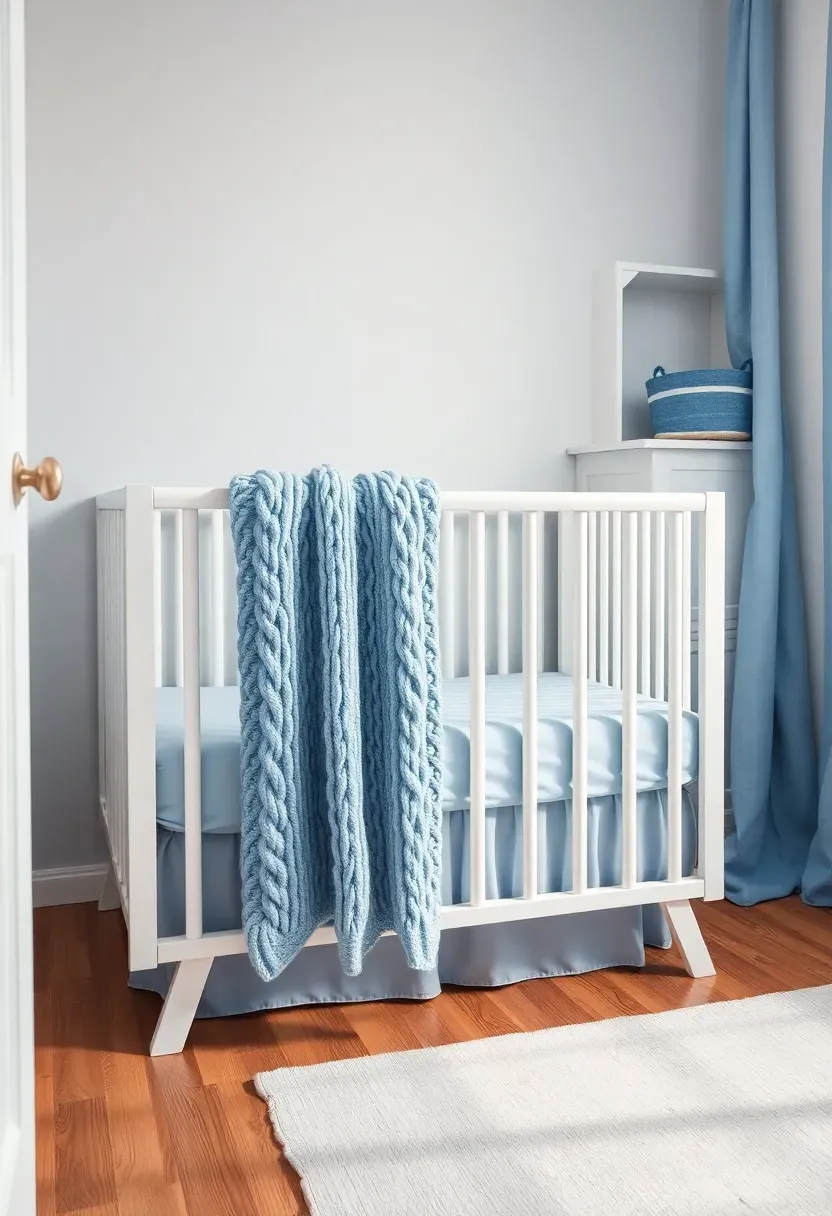
13. Monochrome Blue and White Palette
Why Monochrome Works in Small Rooms
A single-color palette — blues in varying tones across walls, textiles, and accents — creates a room that reads as unified rather than busy. The eye does not have to reconcile competing colors, so it flows naturally from element to element, which makes the room feel larger. White as the secondary tone provides necessary contrast and prevents the blue from becoming monotonous.
The Solution
Choose three shades within the same blue family: a pale sky blue for walls, a mid-tone cornflower blue for the bedding, and a deeper denim or navy as an accent in one throw or rug. White crib, white dresser, natural wood shelves. The layering creates depth through tone rather than through multiple colors.
Pros and Cons
Pros: visually cohesive, space-expanding, timeless for a boy's room, easy to update with new textiles Cons: requires careful tone selection — blue family colors can shift toward gray or green in different lighting, so test swatches in the actual room
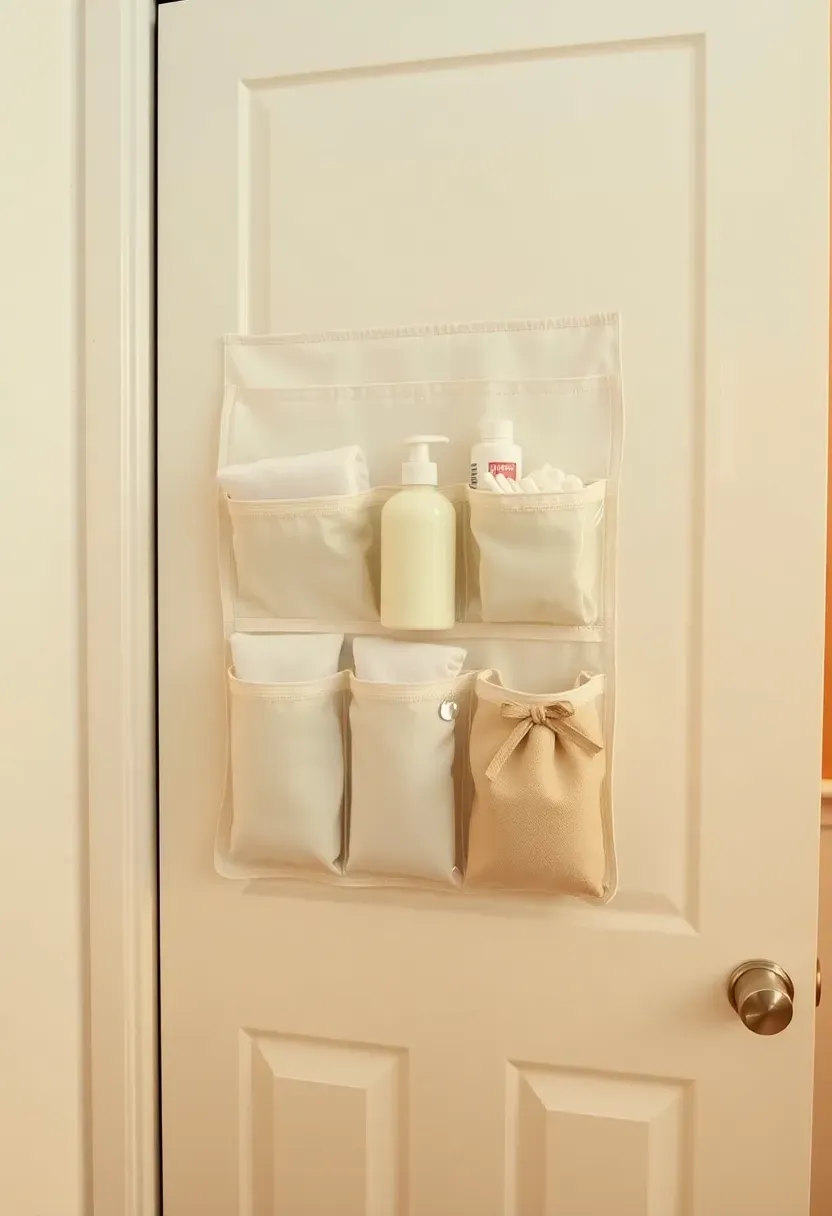
14. Over-Door Organizer for Baby Supplies
Every door in a small nursery is a storage opportunity that most parents overlook. An over-door organizer — the kind with clear pockets or fabric bins — holds diapers, wipes, nasal aspirators, nail clippers, and first aid items in a format that keeps them visible and accessible without consuming a single inch of counter or shelf space.
Maximizing the Door Space
- Choose a clear-pocket version so you can identify contents without opening each compartment
- Use the upper pockets (adult height) for medications and safety items — not within a crawling child's reach once they begin to climb
- A second over-door hook bar on the inside of the closet door holds swaddles, burp cloths, and outfits by size — an entire organizational system that disappears behind a closed door
Recommended
Items for this idea
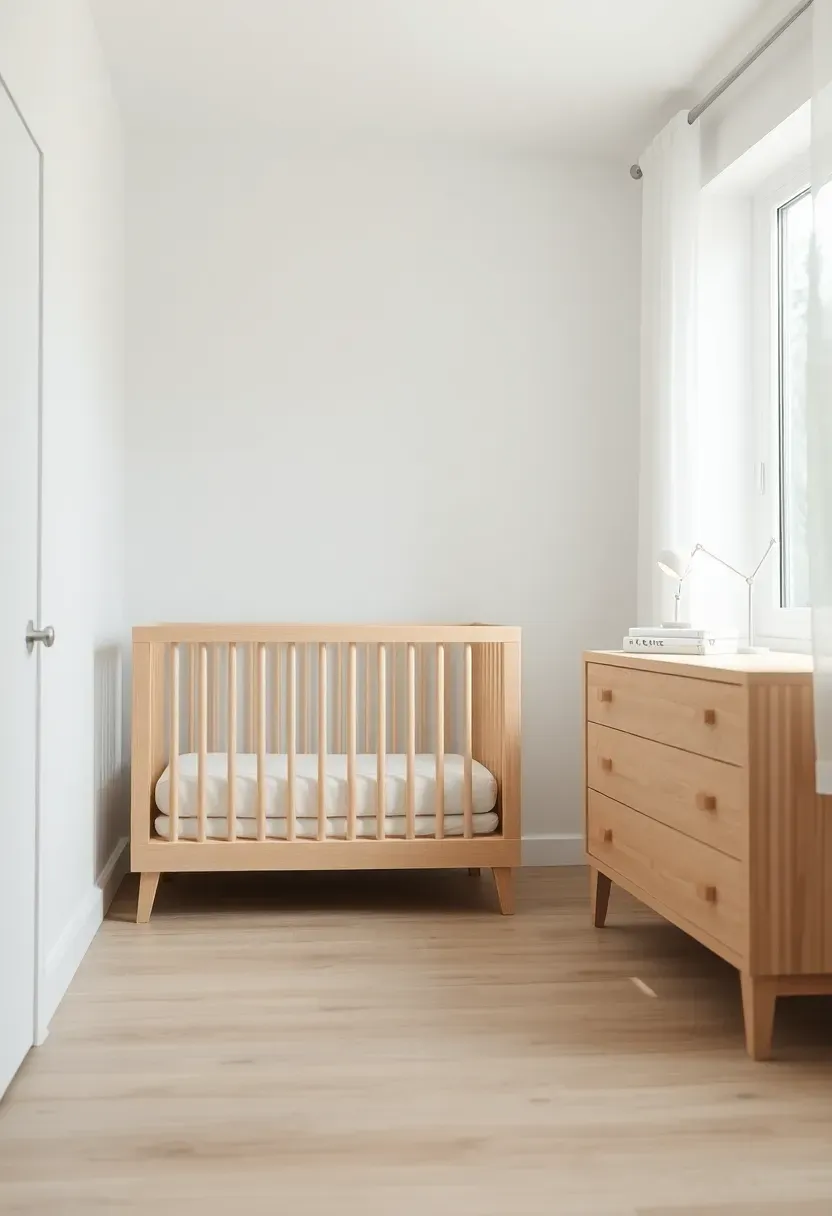
15. Light Wood Furniture for Airiness
Origins of the Light Wood Preference
Scandinavian design's preference for pale wood — birch, pine, and ash — developed partly from necessity. In Nordic climates where natural light is limited, light-toned materials maximize whatever light enters a space. Applied to a small nursery, the principle holds regardless of geography.
Modern Interpretation
Light birch or maple furniture in a small room visually recedes rather than advancing toward you, as dark wood tends to do. A pale oak crib, a matching birch dresser, and natural wood shelves create furniture that brightens the room it inhabits. The furniture is present but not heavy. Add white or cream walls and the room gains a sense of air that darker pieces would eliminate.
How to Apply in a Small Boy's Room
- Stick to one wood tone — mixing light and dark in a small room creates visual clutter
- Choose furniture with thin legs (where safe) rather than solid bases — visible floor beneath furniture adds spatial openness
- Avoid high-gloss finishes that reflect harshly — matte or satin wood finishes diffuse light more gently
16. Mural Wall Instead of Busy Decor
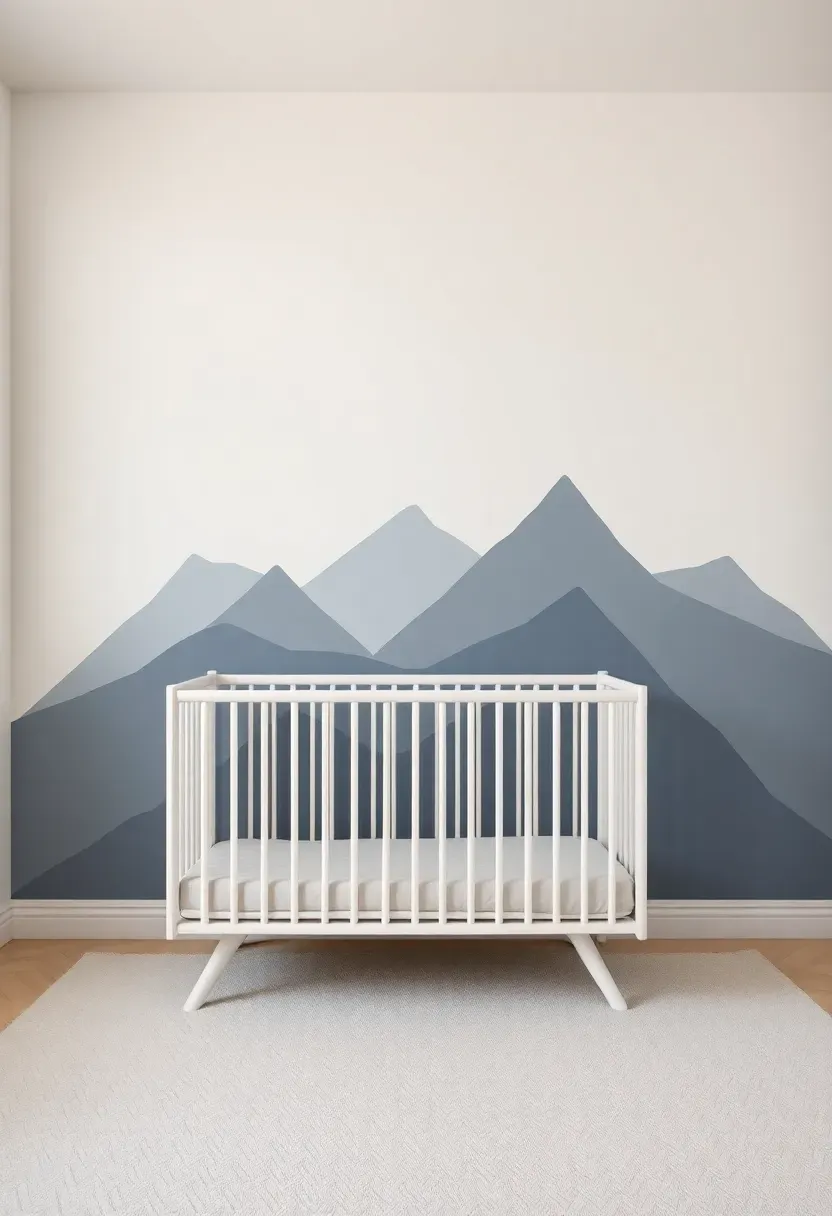
In a small room, multiple small pieces of wall decor — frames, prints, decals scattered everywhere — create visual noise that makes the room feel cramped. A single mural on one wall achieves character and theme with zero clutter elsewhere.
Step 1: Choose the Right Wall
The crib wall or the wall directly facing the entry door creates the strongest impact. A mural here becomes the room's identity.
Step 2: Keep the Theme Simple
A soft mountain silhouette in graduating gray-blue tones, a simple tree-line horizon, or a single large celestial illustration work better in small rooms than detailed, complex scenes. Clean shapes read clearly even when the viewer is close.
Step 3: Leave Other Walls Bare
One statement wall plus three quiet walls creates balance. Resist the urge to add anything to the adjacent walls beyond a single small item — a clock, a name sign, or a small shelf.
What to Watch Out For
- Test mural paint colors at night under artificial light — colors shift dramatically between daylight and lamp light
- Peel-and-stick murals are ideal for small rooms since they can be repositioned if the initial placement is off
Recommended
Items for this idea
17. Ceiling-Height Curtains to Add Height
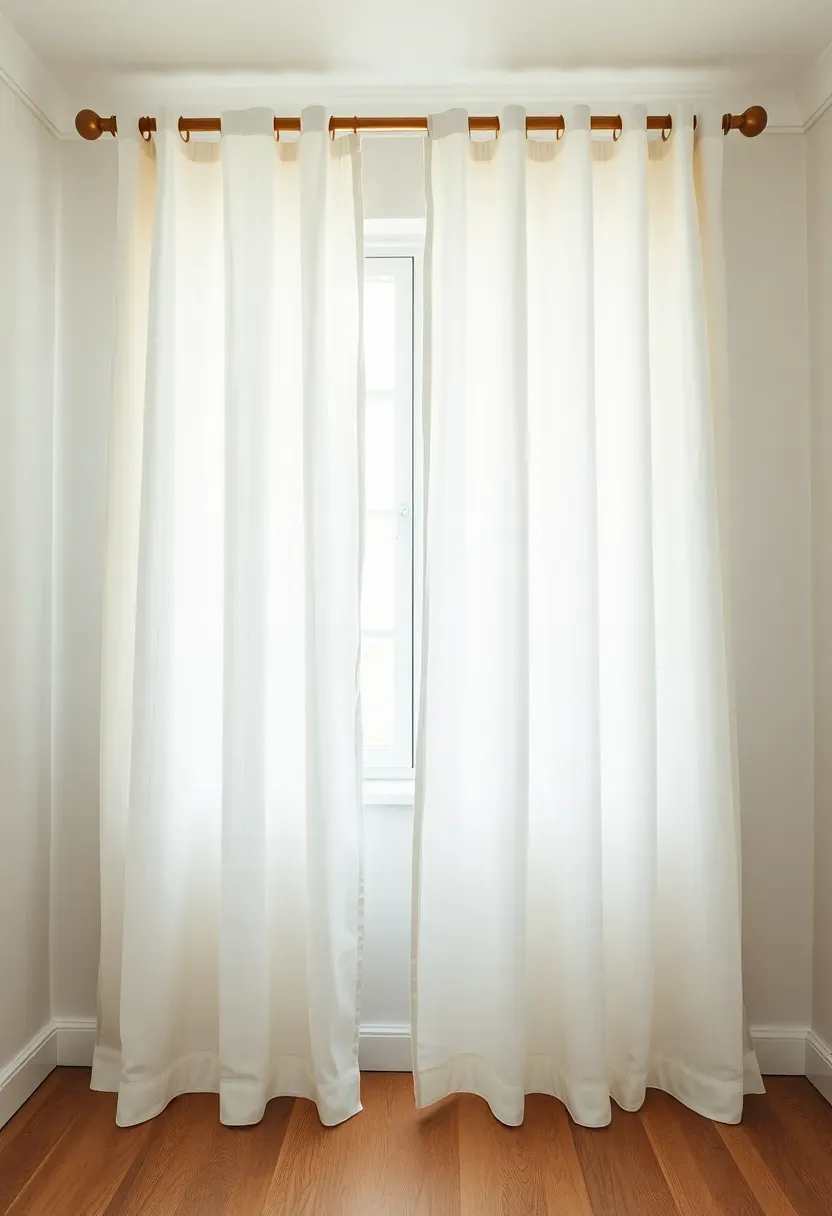
Hanging curtain rods at ceiling height — even if the window is only halfway up the wall — creates the visual illusion of taller ceilings and a larger room. For a baby boy's nursery, this means hanging the rod at or near the ceiling (usually 8 to 9 feet in a standard home) and using curtains that pool slightly on the floor.
Practical Details
- Use blackout or room-darkening fabric — sleep quality in small rooms depends on controlling light
- Choose curtains 1.5 to 2 times the window width for fullness when drawn
- Lightweight linen or cotton in white or a soft blue maintains the airy effect while providing darkness when needed
18. Built-In Closet Nursery Corner
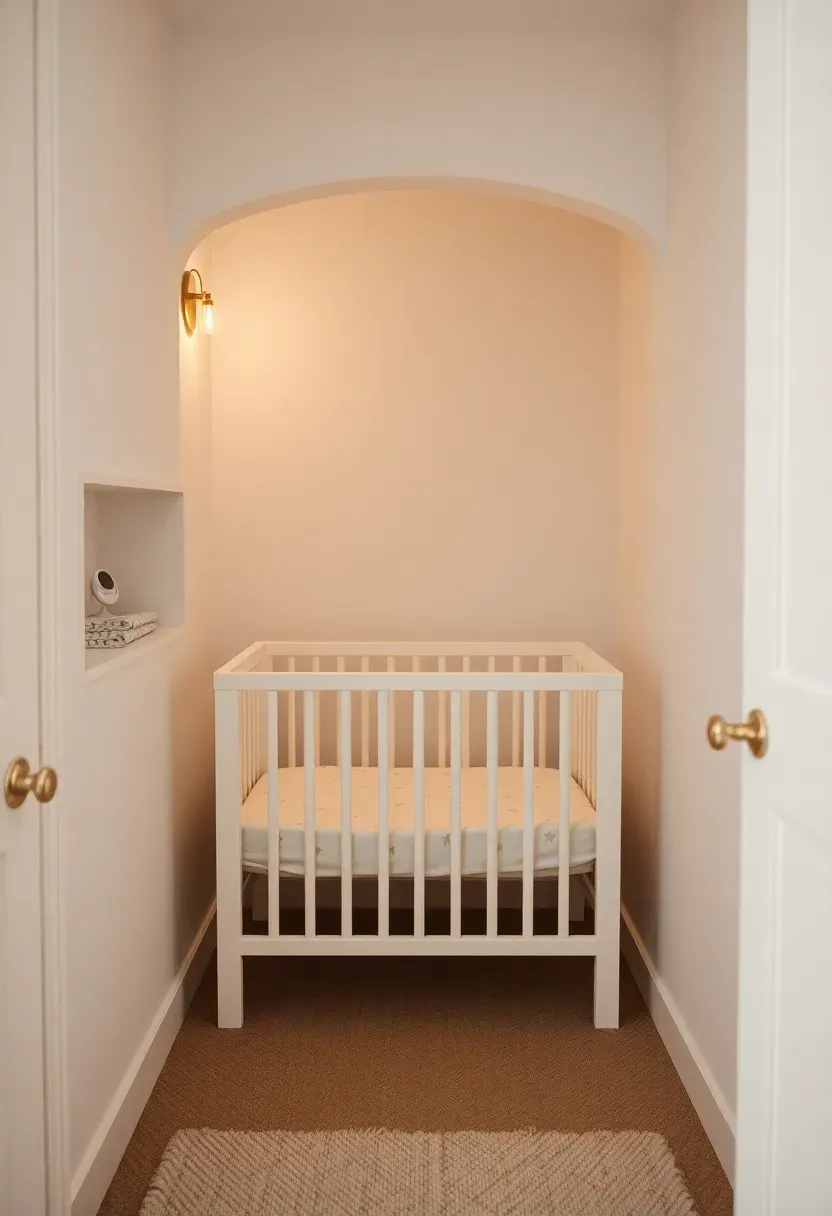
Should you sacrifice a closet to gain a nursery? In some small homes, the answer is absolutely yes. Removing the closet doors and placing the crib inside the closet alcove creates a dedicated sleep nook that is naturally enclosed, slightly darker than the rest of the room, and visually separated from the play area. The walls of the former closet handle all storage via shelves and hooks.
What to Consider
Consider this approach if: the room has another storage solution nearby (hallway closet, built-in dresser) and the crib fits comfortably with 18 inches of clearance on at least two sides Avoid this approach if: the closet is the only storage in the room — you will regret losing it by month three when the baby gear multiplies
Recommendation
Reserve this idea for rooms under 80 square feet where a traditional crib placement simply does not work. The enclosed nook effect is genuinely calming for sleep and worth the storage trade-off if alternatives exist.
Recommended
Items for this idea
19. Geometric Wall Decals for Character
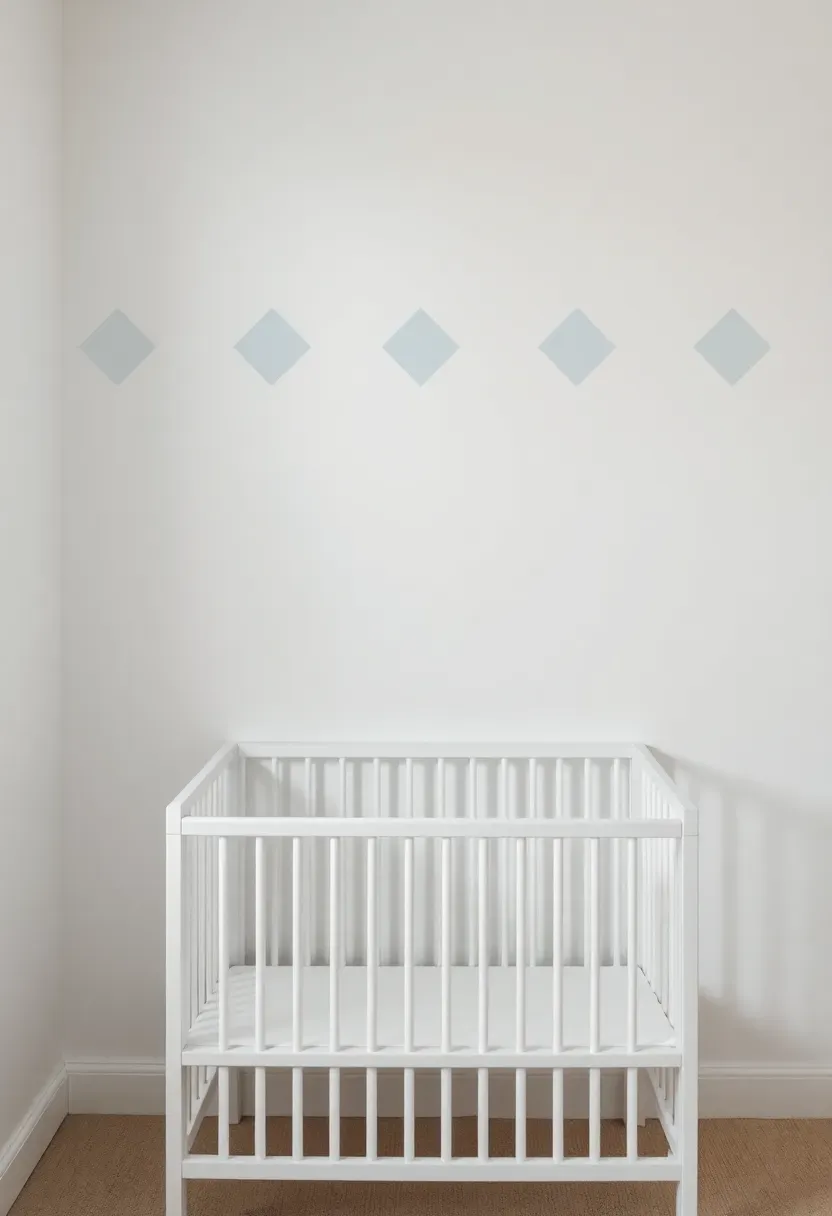
In a small room where a full painted accent wall might feel committing, removable geometric decals offer a middle path. A pattern of overlapping diamonds, hexagons, or triangles in two to three soft tones covers enough wall area to feel deliberate without requiring paint, wallpaper paste, or a weekend of preparation.
Tips for Small-Room Decals
- Opt for a pattern that covers the upper two-thirds of one wall — stopping before the floor reads more designed than random
- Choose muted tones (dusty blue, pale gray, soft white) rather than saturated colors — they expand rather than contract
- Always apply to a clean, dry wall and leave a margin of plain wall at the edges so the pattern has visual breathing room
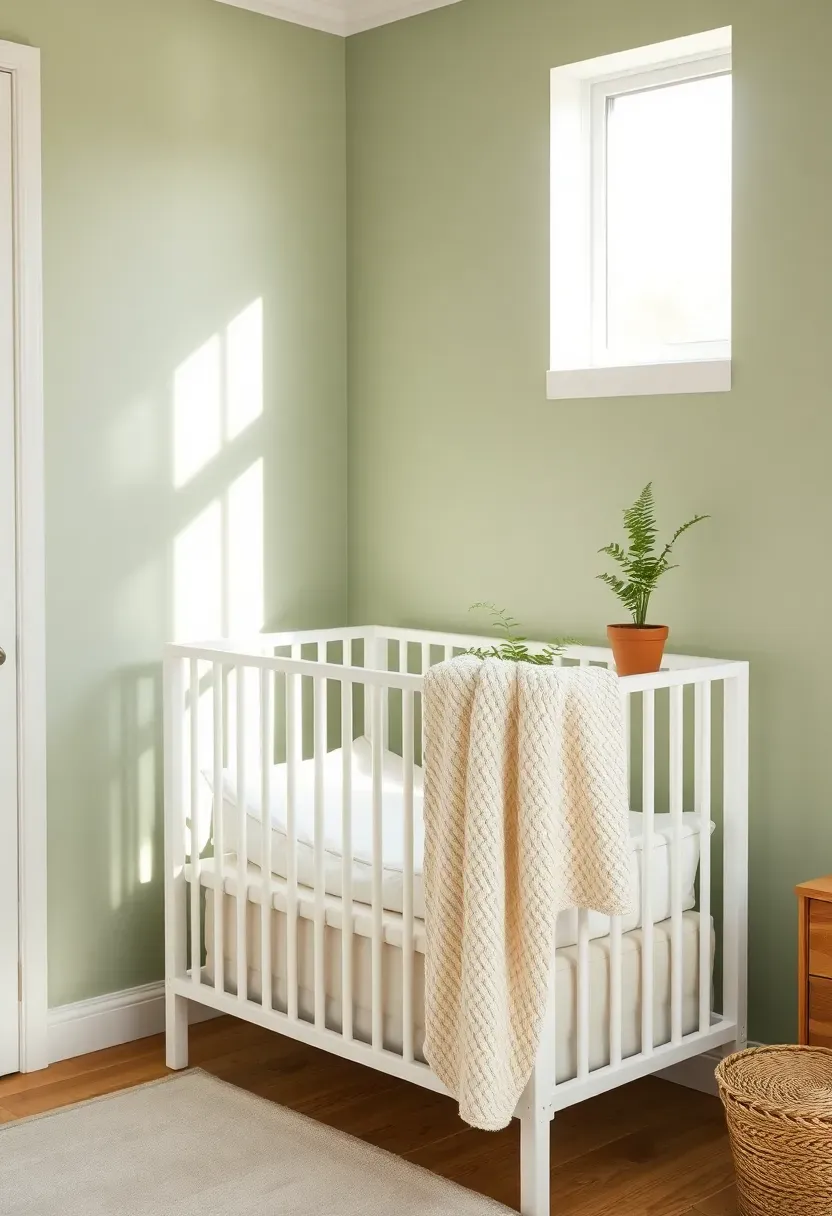
20. Soft Sage Green for Calm
Sage green occupies a unique position in the color spectrum — it reads as both warm and cool depending on the light, which makes it forgiving in rooms that face multiple directions. For a baby boy's small nursery, sage creates a calm that blue-gray alone cannot, with a subtle life quality that connects to outdoor nature without feeling like a design statement that will age quickly.
Practical Recommendations
- Use sage on all four walls in a small room rather than just one — the wraparound effect is more soothing than an accent
- Pair with cream or off-white rather than stark white to keep the warmth in the palette
- Natural wood in any tone works alongside sage green without clashing
- A single navy or forest green accent (throw, lamp shade, storage bin) deepens the palette without abandoning the calm baseline
Recommended
Items for this idea
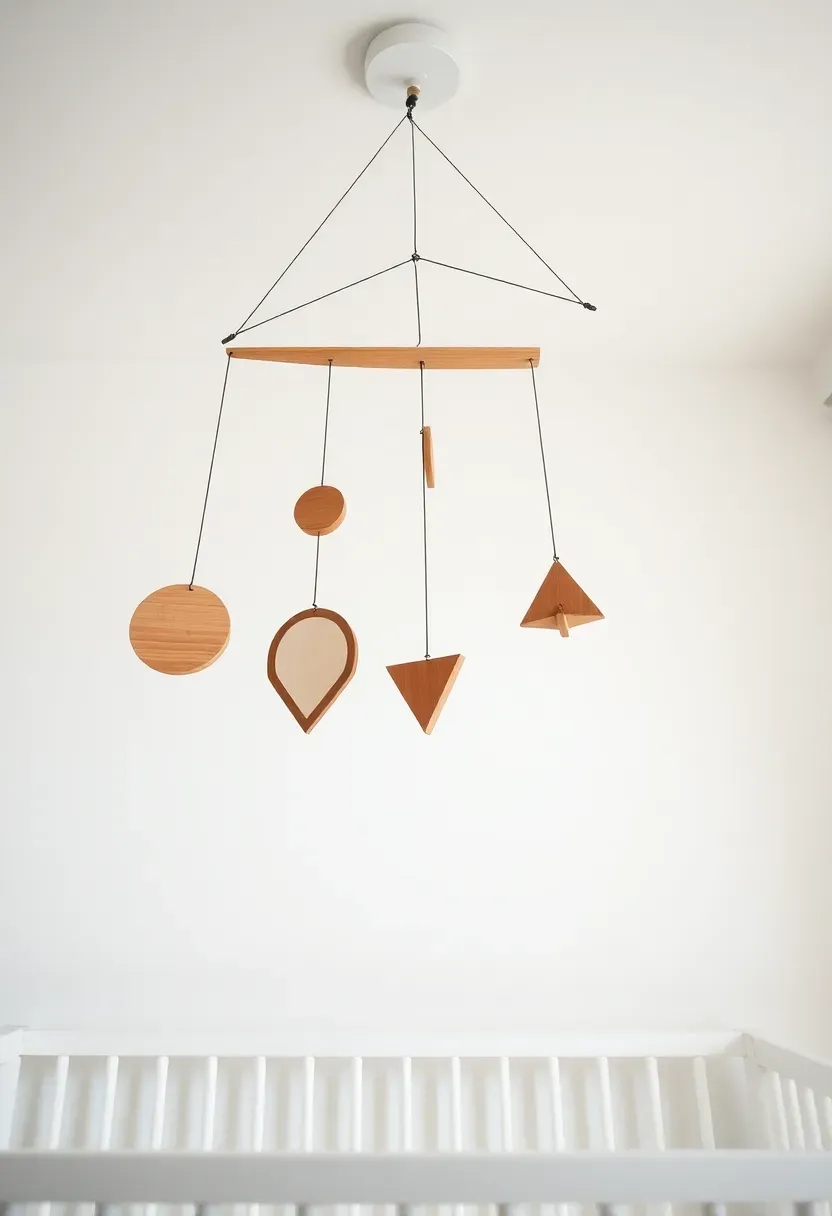
21. Hanging Mobile as Main Decor
A small room that needs visual interest without wall clutter has one often underused surface: the ceiling. A statement mobile — something more substantial than the classic musical mobile — becomes the room's visual centerpiece while occupying zero floor or wall space. Geometric wooden shapes, a collection of hand-sewn felt clouds, or a sculptural brass and acrylic composition each bring personality without adding mass.
Choosing and Positioning
- Hang the mobile at least 16 inches above the crib mattress surface — high enough to be out of reach
- A mobile that moves gently in air currents is more engaging for the baby than a powered one that follows a fixed path
- When the baby begins to pull to stand, remove the mobile entirely — its purpose has been served
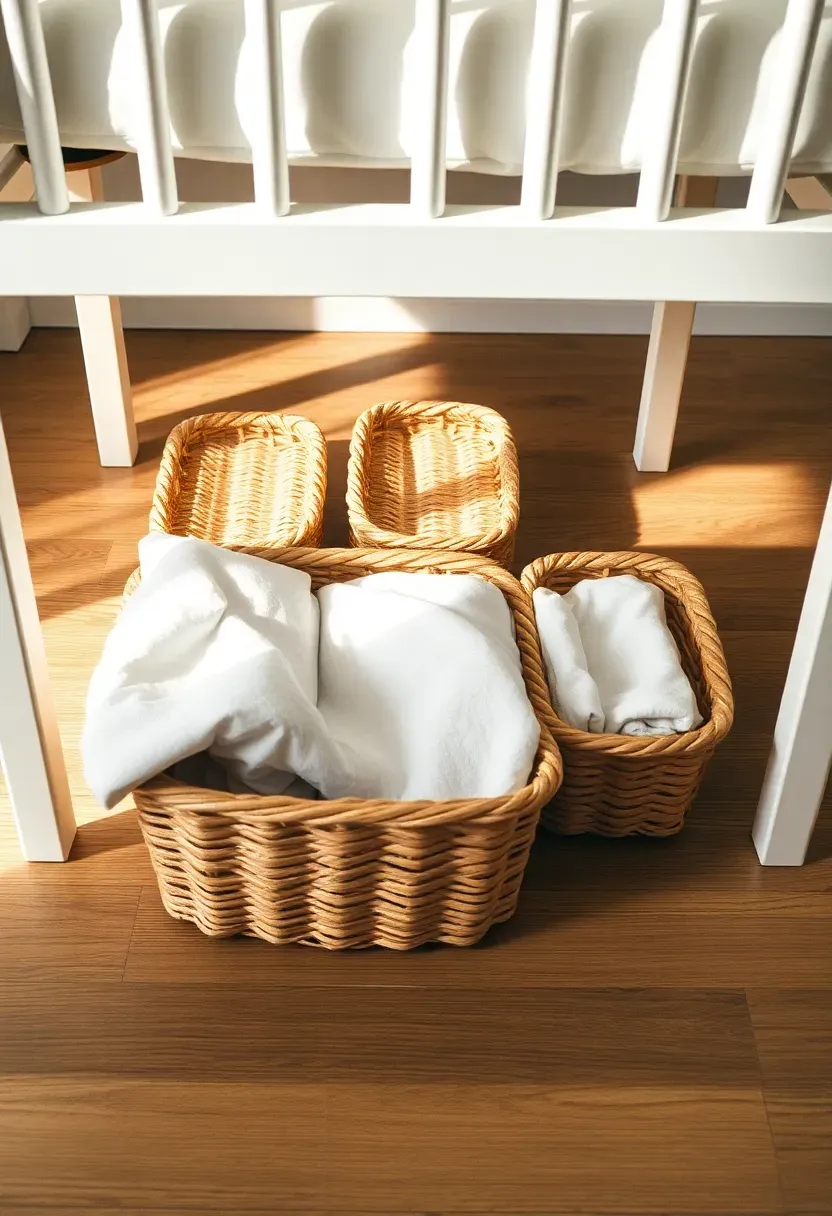
22. Basket Storage Under the Crib
The Core Issue
In a small nursery, the floor space under the crib — typically 6 to 10 inches of clearance — goes completely unused in most setups, even though it represents one of the only truly available storage zones in the room.
The Solution
Flat-profile woven baskets or low rolling bins slide under a standard crib without modification. A set of three baskets can hold extra diapers, spare swaddles, unused clothing sizes waiting their turn, and seasonal bedding — all out of sight, all accessible by crouching or using a simple pull tab.
Pros and Cons
Pros: uses existing dead space, keeps items off shelves and out of visual clutter, cost-effective Cons: items stored here require more effort to access than a shelf, and the baskets need to be removed to vacuum effectively under the crib
Recommended
Items for this idea
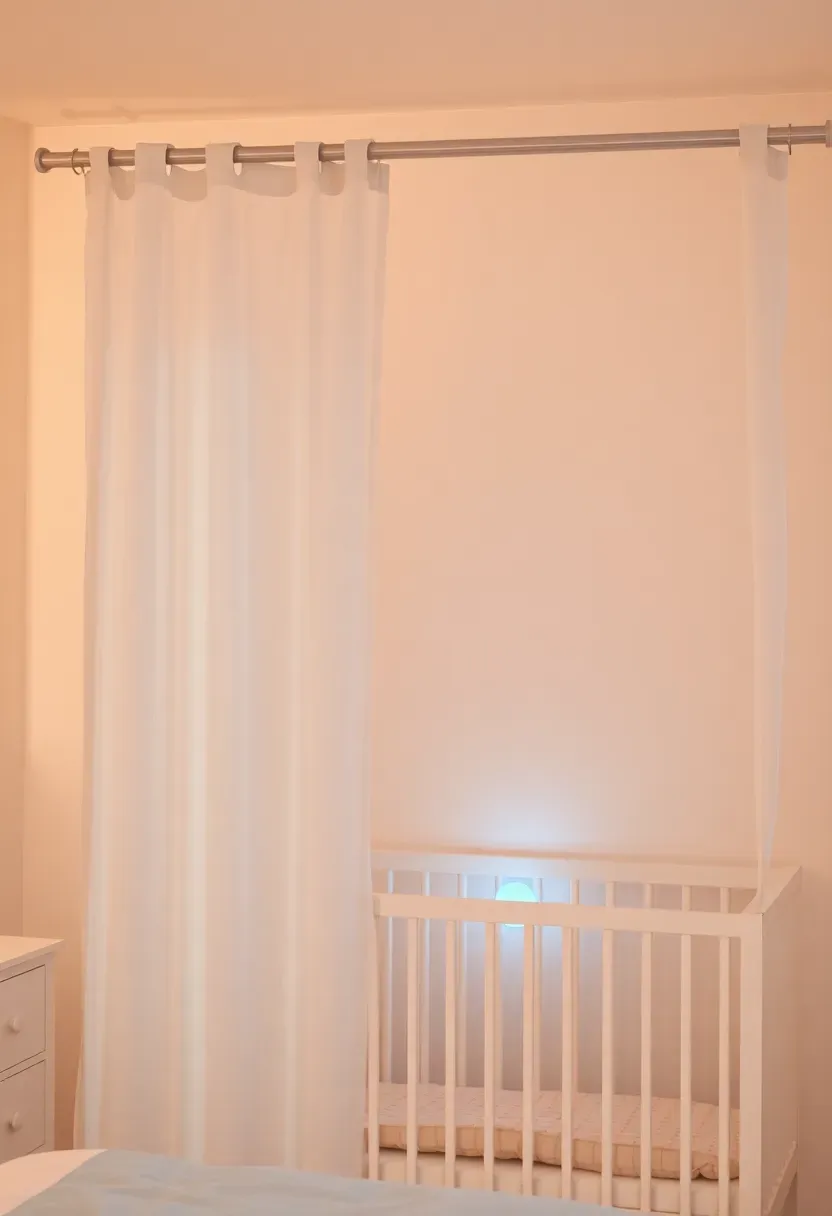
23. Shared Room Nursery Divider
Sometimes the small nursery is not a dedicated room at all — it is a corner of a shared bedroom or an open living area. A soft divider (a sheer curtain on a ceiling track, a low open bookshelf, or a fabric-covered room screen) creates the psychological and practical boundary of a nursery without building a wall.
Building the Division
- A ceiling-mounted curtain track offers the most flexible and renter-friendly solution — the curtain can slide open during the day and closed at night to cue sleep
- A waist-height open shelf as a divider stores nursery items on the baby's side and bedroom items on the parent's side — functional on both faces
- Keep the baby's side of the divider visually simple: just the crib, one light source, and a single piece of calming art
Practical Notes
- White noise becomes especially important in shared room nurseries to mask adult activity sounds
- A dedicated nightlight on a timer helps maintain the nursery side's distinct sleep environment
Quick FAQ
Is a small room actually okay for a baby boy's nursery? Yes. Newborns do not need large spaces — they need proximity to caregivers, a safe sleep surface, and a few essential supplies nearby. Many pediatric sleep consultants argue that smaller rooms with less visual stimulation support better infant sleep. The constraint is a feature when planned for.
Which furniture should I skip in a small nursery? The changing table is the first piece to eliminate — a dresser with a removable topper does the same job in a smaller footprint. A large upholstered glider is the second candidate for replacement with a narrower rocker or a floor cushion. Both sacrifices recover meaningful space.
Can dark walls work in a tiny boy's nursery? A single dark accent wall — the crib wall — works very well in small rooms. It creates depth and makes the room feel more dimensional rather than smaller. Avoid dark paint on all four walls unless the room has strong natural light from multiple windows.
What is the best layout for a small rectangular nursery? Place the crib on the shorter wall (usually the entry-facing wall or the wall opposite the door), the dresser on the longest wall, and the rocker in the far corner. This keeps pathways clear along the room's length and places the most-used items — crib and dresser — at logical distances from each other.
Should the nursery share a theme if the room is small? A light, consistent theme actually helps small rooms feel intentional. A single color story (blue and natural wood, sage and white, navy and brass) reads as designed rather than cluttered. Avoid mixing two competing themes — it adds visual complexity that a small room cannot absorb easily.
A small room for a baby boy is not a compromise — it is a focused brief. Start with the layout, choose one idea from this list that solves your biggest constraint, and build from there. The rooms that end up feeling the most complete are rarely the ones with the most space. They are the ones where every decision was deliberate.
Pinterest cover for 23 Baby Boy Nursery Ideas for Small Rooms
About the author
OBCD
CGI visualization and interior design content. We create detailed 3D renders and curate practical design ideas for every room in your home.