17 Attic Closet Ideas to Maximize Every Awkward Inch
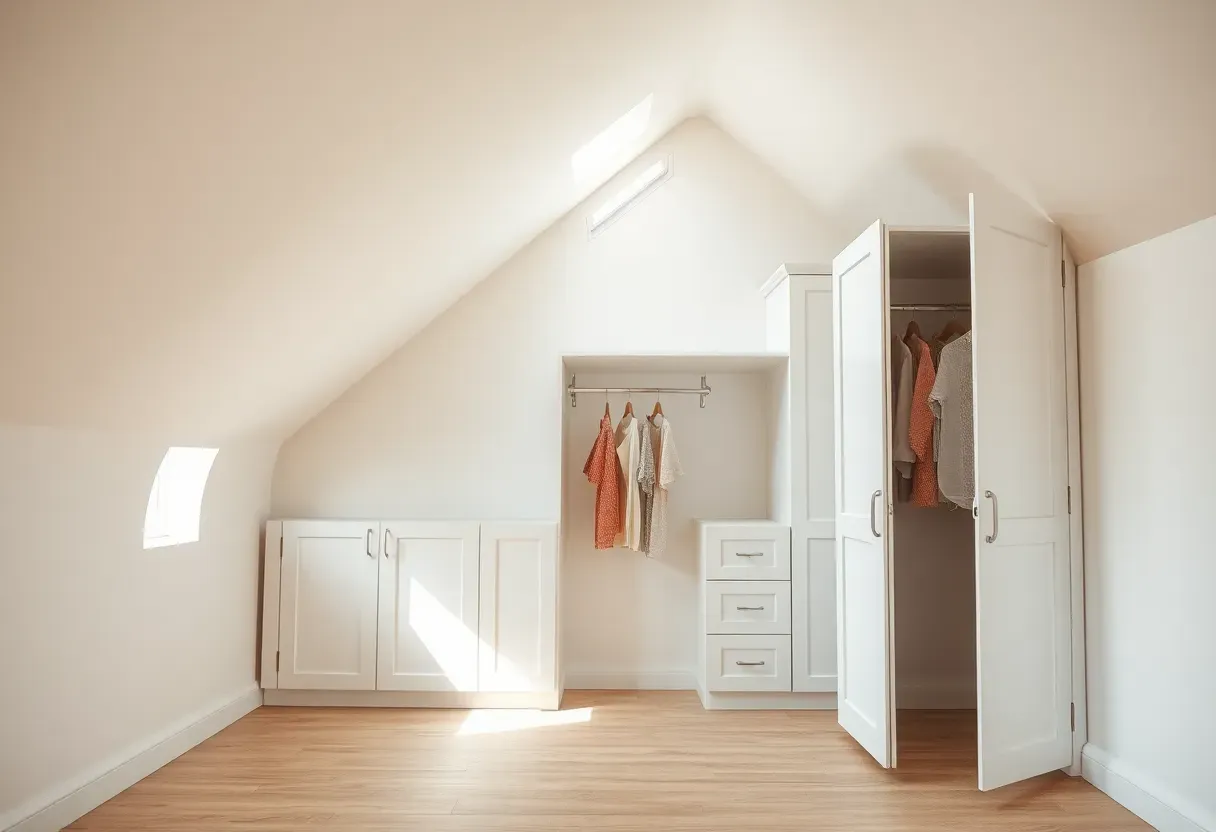
Attic spaces have a reputation for being difficult — sloped ceilings, knee walls, odd angles, and limited headroom. But that reputation undersells them. When you approach an attic with the right storage strategy, those very quirks become defining features. The low eaves that seem useless become deep shelving zones. The sloped ceiling that limits standing space frames a tucked-away wardrobe that no flat-ceilinged room could replicate. These 17 attic closet ideas cover every layout type, budget range, and organization style — from compact single-rod setups to full walk-in configurations with custom millwork.
In this article I have gathered practical concepts you can adapt whether your attic is a finished room, a half-finished bonus space, or just a promising shell. Let us start with the fundamentals and build toward the more ambitious builds.
Table of Contents
- Built-In Knee Wall Cabinets
- Single Hanging Rod Under the Slope
- Dormer Closet Nook
- Open Shelf Tower at the Peak
- Cedar-Lined Seasonal Storage Closet
- Low Eave Drawer System
- Pegboard and Hook Wall
- Curtained Closet Alcove
- Full Walk-In Attic Wardrobe
- Modular Cube System
- Double Hanging Rod Configuration
- Pull-Out Accessory Trays
- Mirrored Door Closet
- Attic Closet With Integrated Lighting
- Painted Plywood Built-Ins
- Kids Attic Closet With Colorful Storage
- Minimalist White Wardrobe System
1. Built-In Knee Wall Cabinets
What It Is and Why It Works
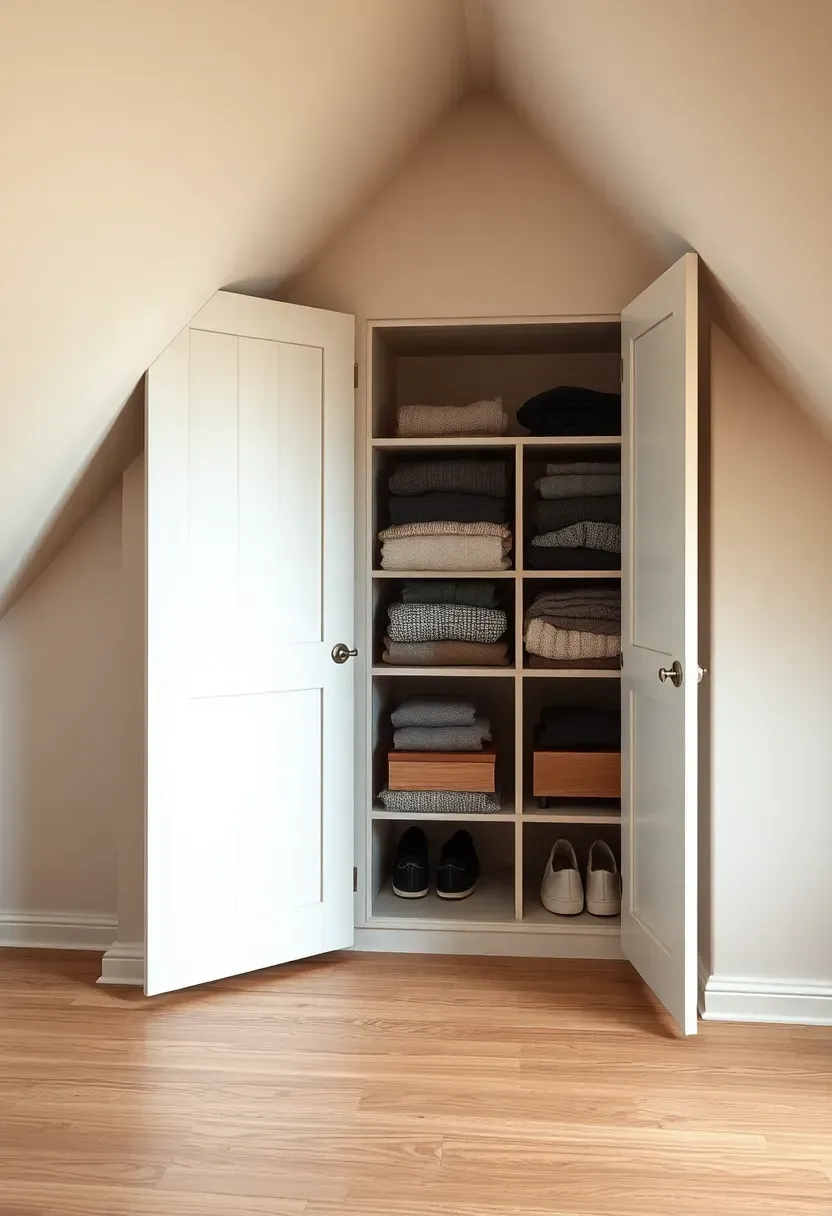
Knee walls — the short vertical walls that run along the sides of an attic floor where the ceiling meets the slope — are the most underused surface in any attic. Building flush cabinet doors directly into them creates a clean, architectural look while hiding surprisingly deep storage behind a flat surface. The depth behind a knee wall is often 18 to 24 inches, enough for folded clothes, shoes, or off-season items.
How to Implement
The simplest version uses a plywood box frame with inset or overlay doors. Add interior shelving or a hanging rod depending on your needs. For a polished finish, paint everything the same color as the wall so the doors nearly disappear.
Tips
- Install doors with push-to-open latches for a handle-free look
- Line the interior with cedar boards to repel moths naturally
- Use full-extension drawer slides for bins at floor level for easy access
We picked a few things that go well with this idea: Walk-In Closet Organizer with Hanging Rods (★5.0), Besiost 2FT Closet System with Drawers (★4.5) and Portable Closet Rack 4-Tier with Hanging Rods (★4.5). As an Amazon Associate we earn from qualifying purchases.
2. Single Hanging Rod Under the Slope
The Core Issue
Many attic renovation plans skip hanging storage entirely because the ceiling drops too quickly. The assumption is that you need full standing height for a hanging rod — but that is not true for most garments.
The Solution
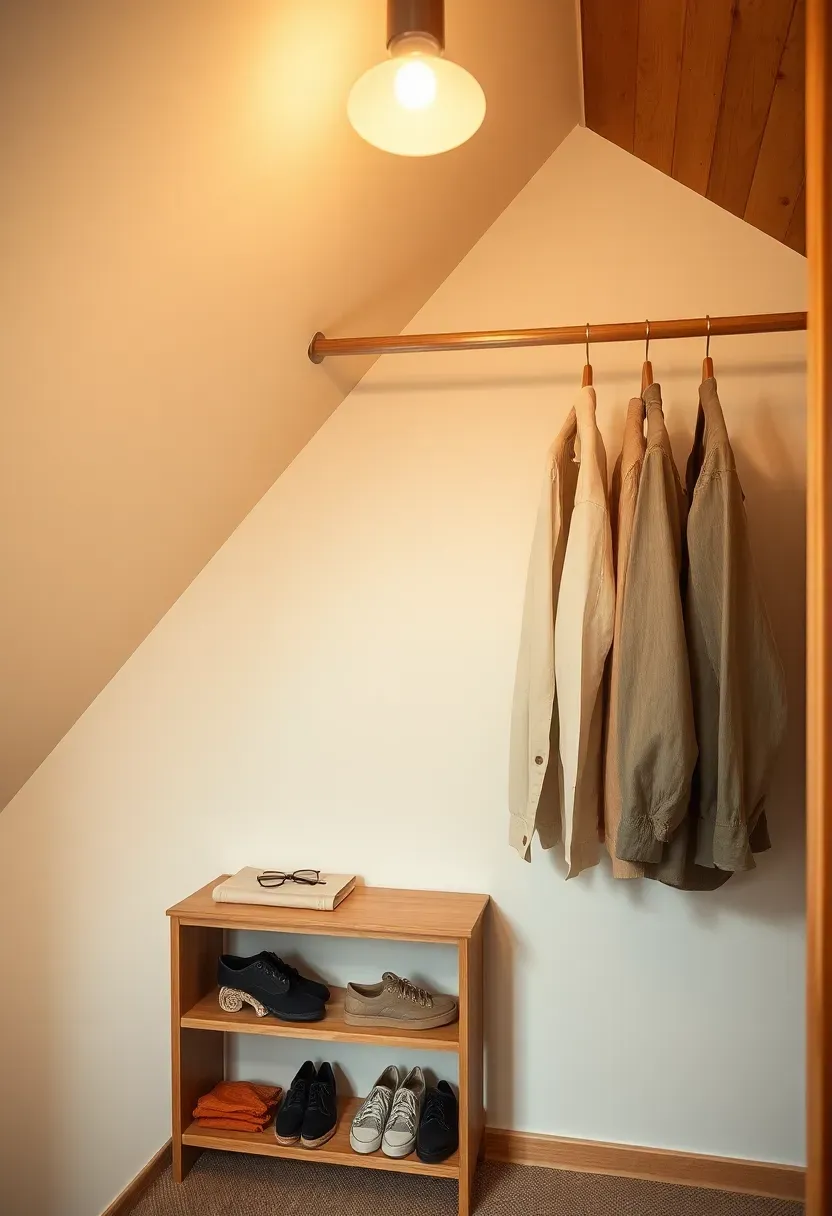
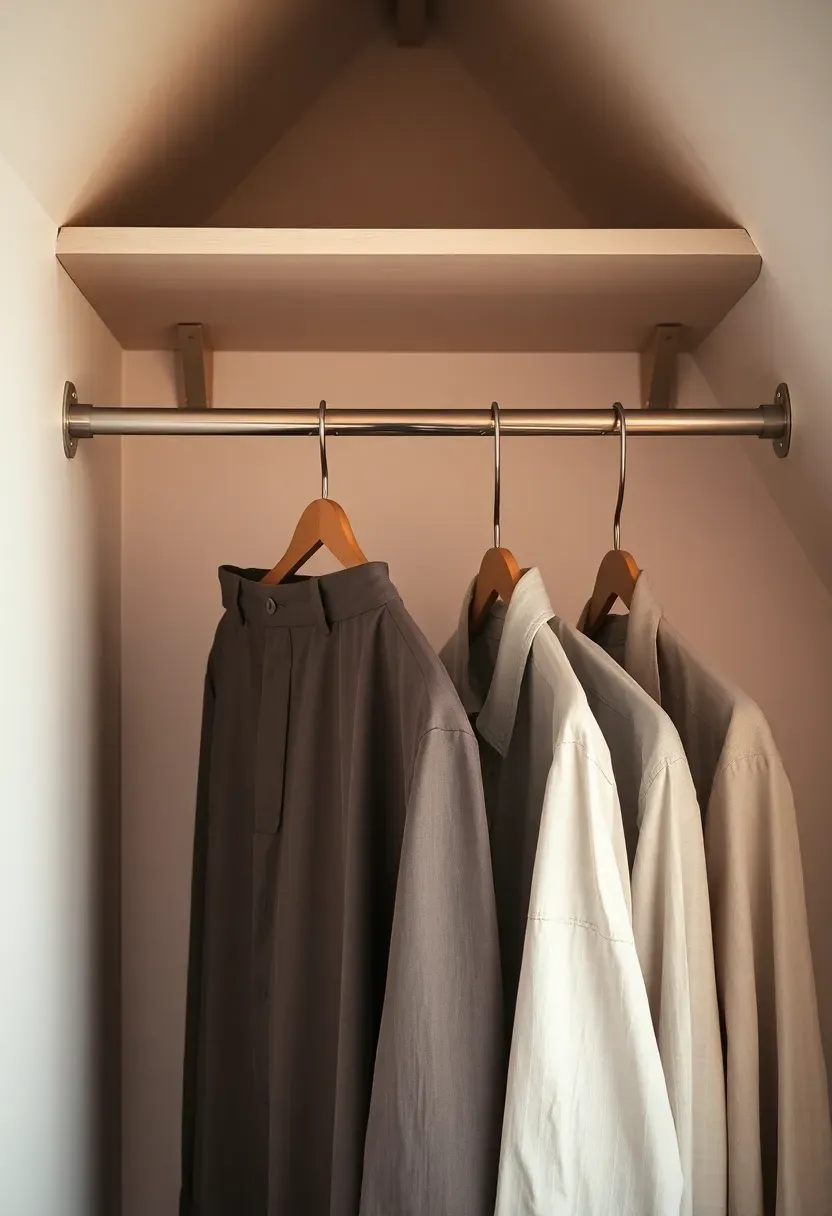
A single rod installed at the highest usable point along the sloped ceiling — typically 5 to 5.5 feet from the floor — accommodates shirts, jackets, blouses, and shorter dresses with ease. Position a small open shelf at the low end of the slope for folded items and shoes. This configuration costs almost nothing compared to custom built-ins and can be installed in an afternoon.
Pros and Cons
Pros: Very low cost, fast to install, flexible — the rod height is easy to adjust later
Cons: Not suitable for full-length dresses or coats unless ceiling height allows; no drawer storage without additional units
We picked a few things that go well with this idea: Cedar Elements Aromatic Red Cedar Closet Liner (15 sqft) (★4.2), Household Essentials Cedar Wood Closet Panels (10-Pack) (★4.1) and Homode Aromatic Cedar Closet Liner Planks (8-Pack) (★4.4). As an Amazon Associate we earn from qualifying purchases.
3. Dormer Closet Nook
If your attic has a dormer — the protruding window structure that punches through the roofline — you have a natural closet alcove already framed for you. The walls on either side of the dormer are vertical, which means shelving and hanging rods fit without any adaptation for slope. Install open shelving on each side wall and a hanging rod at eye level. The dormer window provides natural light that makes choosing clothes easier and the space feel far less like a closet.
Step 1: Frame the Alcove
Add a simple header beam across the opening if you want a more enclosed feel. Alternatively, leave it open and use curtains for privacy.
Step 2: Install Side Storage
Attach shelf brackets directly to the vertical dormer cheek walls. Standard bracket spacing works because these walls are fully upright.
Step 3: Add the Hanging Rod
Mount a rod between the two shelf units at a height that suits your longest garments. A length of 36 inches of hanging space per person is a useful baseline.
What to Watch Out For
- Condensation near dormer windows can be a problem — ensure the window is properly sealed before installing wood shelving
- Avoid blocking the window entirely; natural light improves the usability of any closet
- Paint the inside of the alcove a lighter color than the surrounding room to make it feel intentional rather than tucked-away
We picked a few things that go well with this idea: Cube Storage Organizer with 6 Printed Bins (★4.2), Amazon Basics Collapsible Fabric Storage Cubes (6-Pack) (★4.7) and NELYE 6-Cube White Bookcase with Fabric Bins (★4.5). As an Amazon Associate we earn from qualifying purchases.
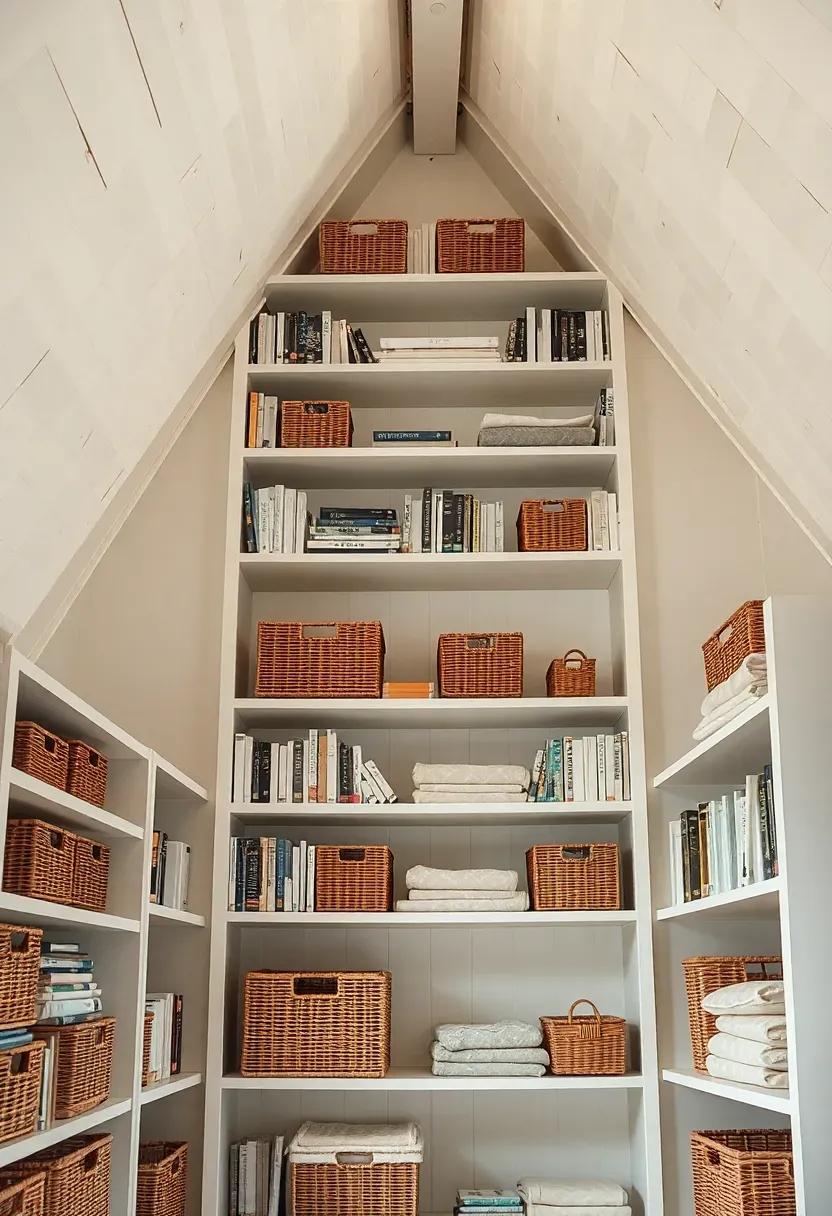
4. Open Shelf Tower at the Peak
Origins in Attic Architecture
The peak of an attic — the ridgeline — is often the only point with real standing height. It makes intuitive sense to use this vertical real estate for tall shelving rather than leaving it as empty air.
Modern Interpretation
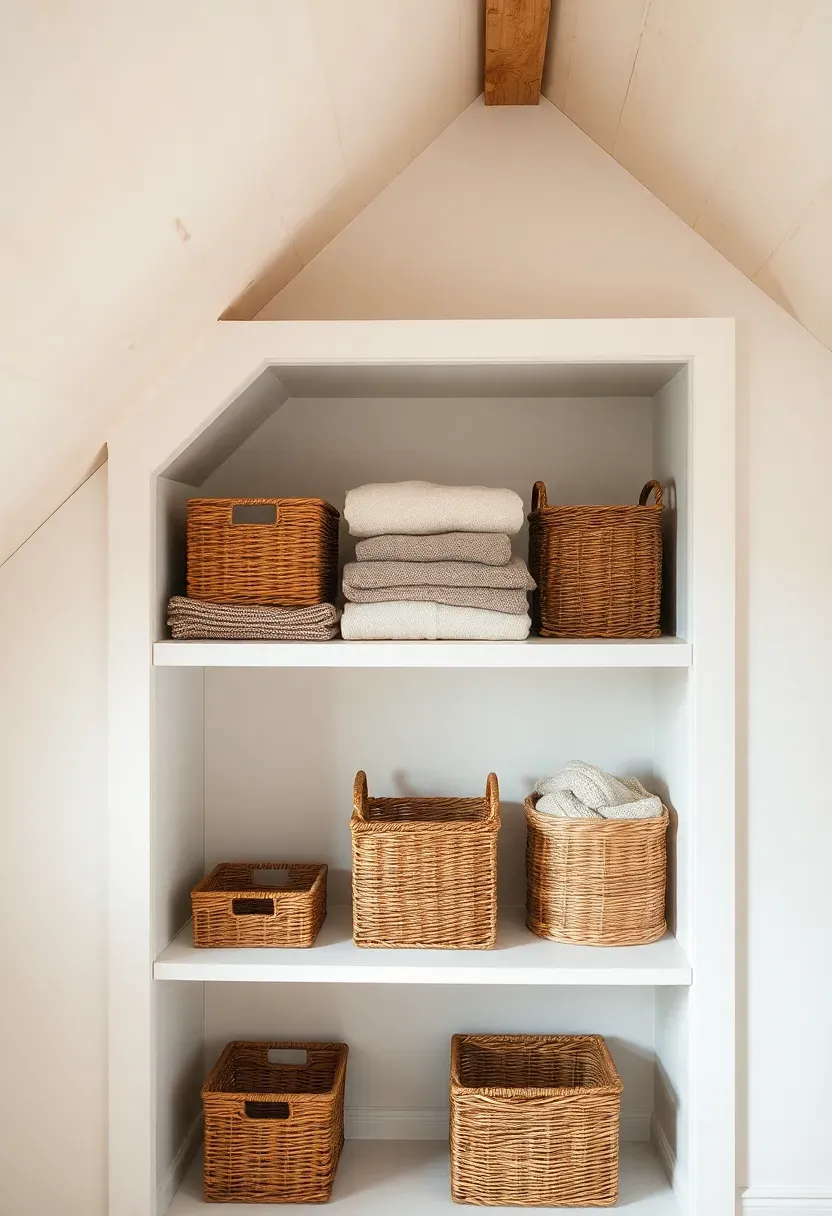
A floor-to-ceiling open shelf tower built directly under the ridge becomes the organizational anchor of the attic. Books, baskets, folded sweaters, and display objects all find a home here. The tower also draws the eye upward, making the space feel more generous than it is.
How to Apply
- Use the same wood stain or paint as the rest of the room's trim so the shelving reads as built-in rather than freestanding
- Style the visible shelves with a mix of closed baskets and folded textiles to reduce visual clutter
- Consider adjustable shelf pins so spacing can change as storage needs evolve
Recommended
Items for this idea
5. Cedar-Lined Seasonal Storage Closet
Comparing: General-Purpose vs. Dedicated Seasonal Storage
Not every attic closet needs to hold everyday items. Comparing a general wardrobe closet with a dedicated seasonal storage closet reveals different priorities.
General-Purpose Wardrobe
Designed for frequent access — shirts, pants, shoes for the current season. Needs good lighting, easy-reach hanging space, and quick-access shelving. Temperature and humidity fluctuation are minor concerns when items cycle in and out regularly.
Cedar-Lined Seasonal Closet
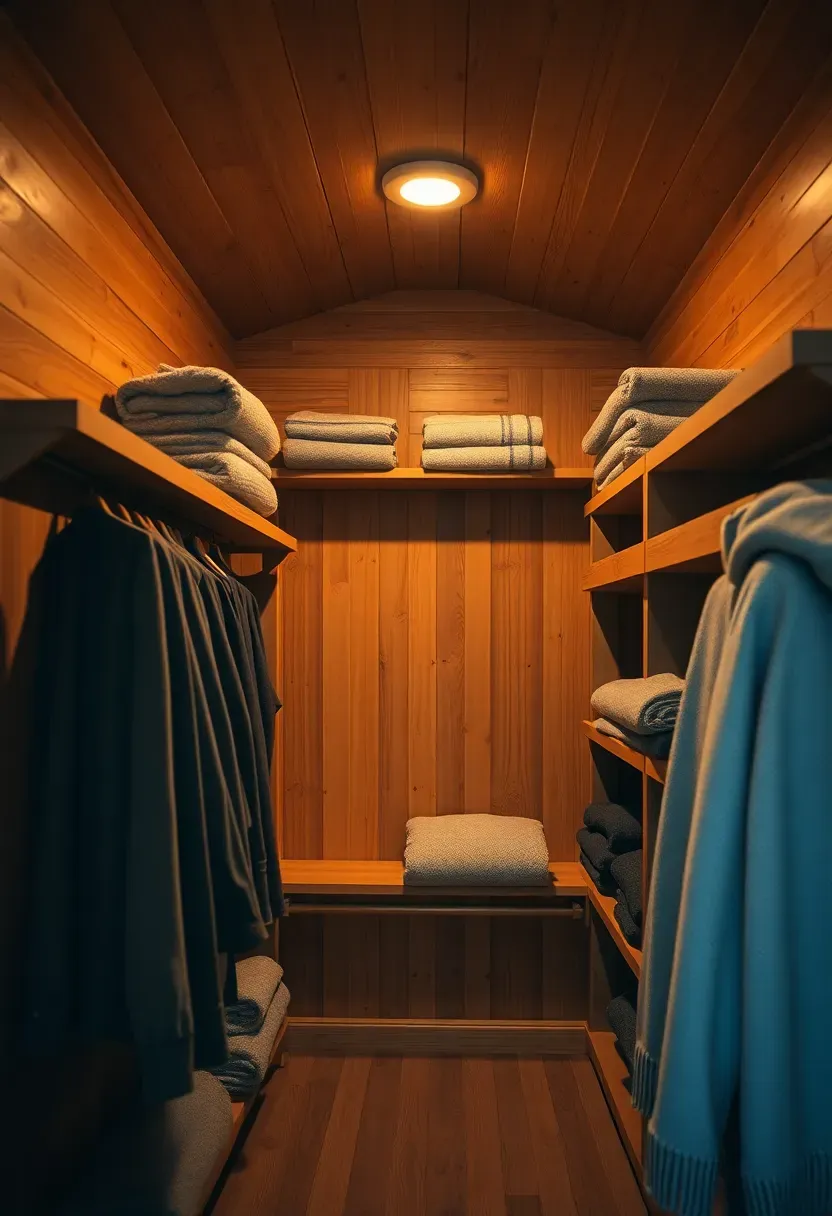
Designed for infrequent access — winter coats, holiday decorations, extra linens. Cedar naturally repels moths and absorbs moisture, making it ideal for attics where temperature swings are more extreme. Items stored for months need protection that a standard painted plywood cabinet does not provide.
What to Choose
Choose general-purpose if: You use the attic as a primary bedroom or dressing room and need everyday access.
Choose cedar-lined if: The attic is secondary storage and you want garments protected through long off-season periods.
Recommendation
Install cedar on the interior walls and ceiling of one dedicated knee wall cabinet and use it exclusively for seasonal textiles. This focused application costs less than lining an entire closet and provides targeted protection where it matters most.
6. Low Eave Drawer System
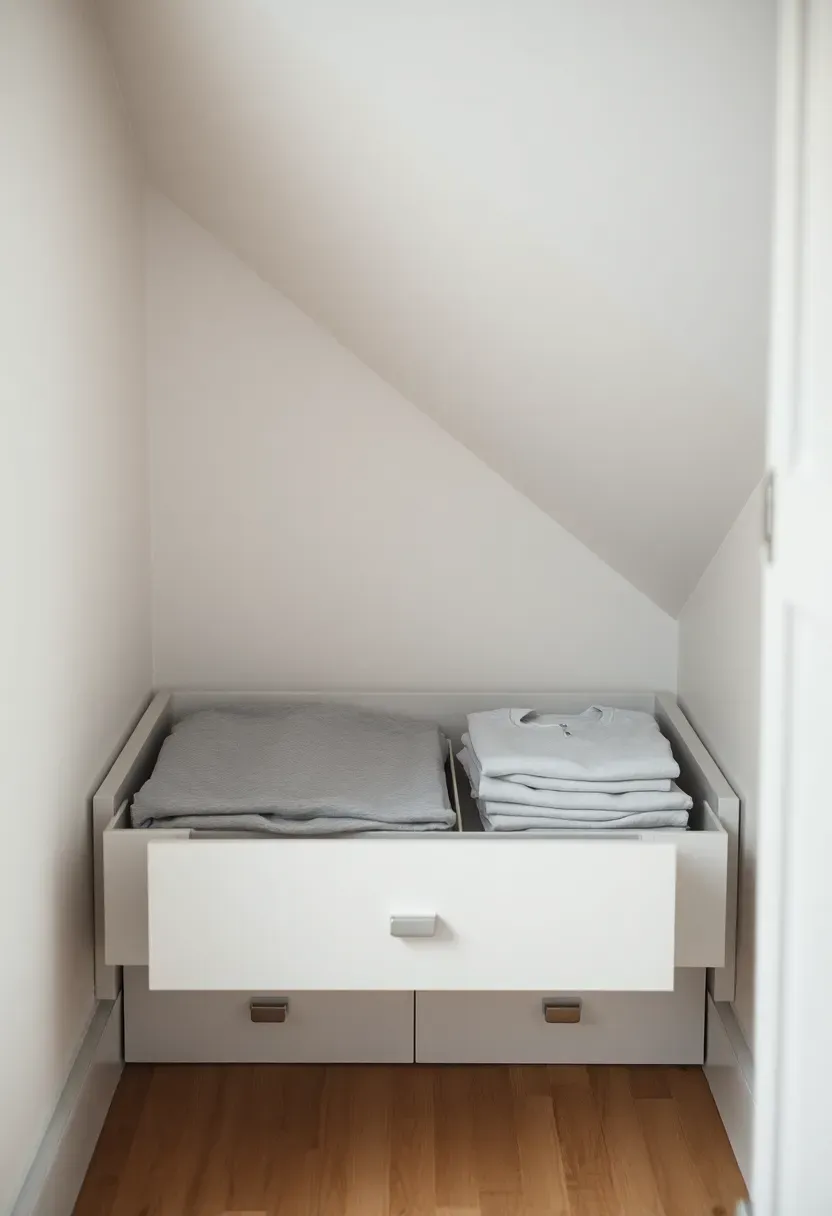
Imagine opening a drawer that pulls out from a wall where the ceiling is only three feet high — and finding a perfectly organized compartment for shoes, folded t-shirts, or seasonal accessories. That is exactly what a low eave drawer system delivers. The space beneath a 30- to 45-degree slope seems unusable for anything upright, but it is perfect for horizontal drawers.
Build a simple box frame to fill the eave cavity and install full-extension drawer slides. Drawer heights of 6 to 9 inches work well for most folded clothing categories. Label each drawer clearly so the contents stay sorted over time.
Tips
- Full-extension slides are essential — you cannot see into a low drawer without pulling it fully out
- Use shallow drawers (4 to 6 inches) for accessories and deeper drawers (8 to 10 inches) for folded sweaters
- Paint the drawer fronts the same color as the sloped wall for a seamless, architectural finish
Recommended
Items for this idea
7. Pegboard and Hook Wall
Why It Works in Attics
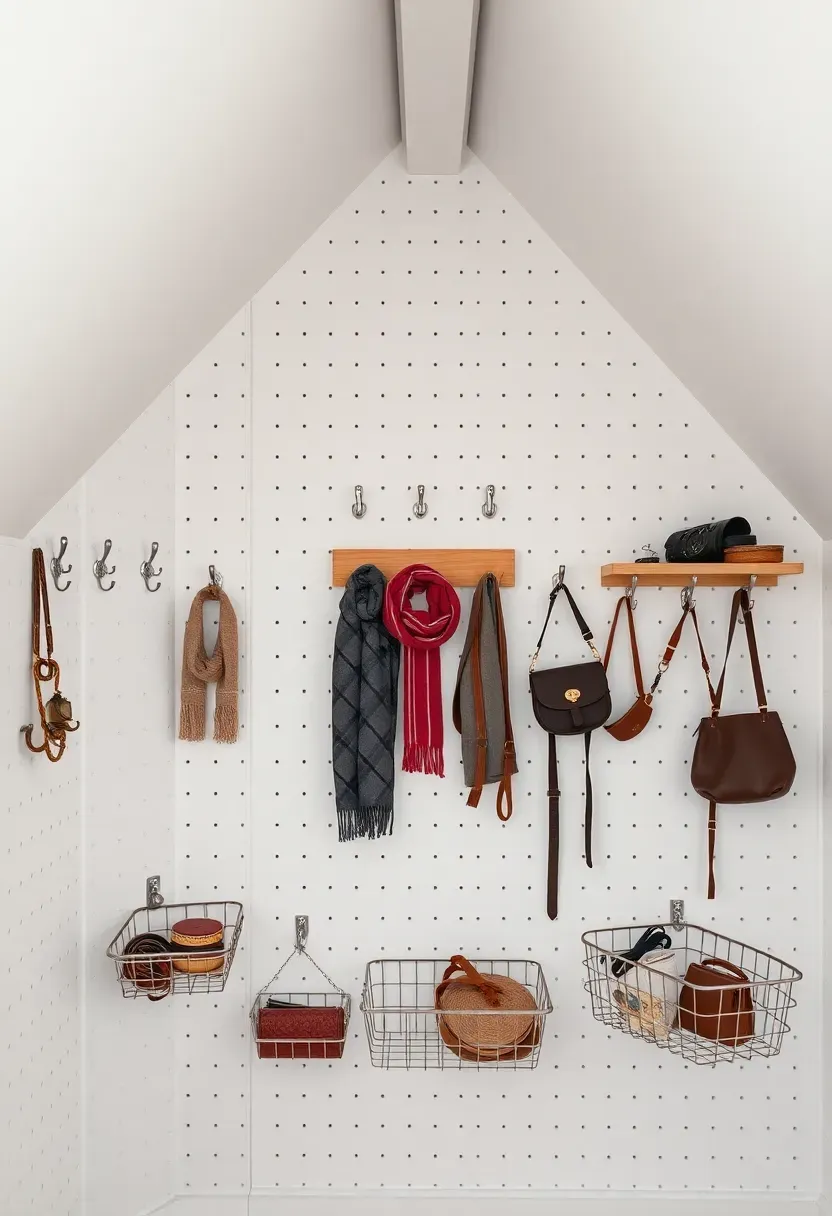
Flat vertical walls in an attic are rare and valuable. Any full-height wall — at the gable end, for instance — is prime real estate for a pegboard system. Pegboard stores items visually, makes them instantly retrievable, and adapts as your collection changes.
The Solution
Cover a gable wall with pegboard panels and add a mix of hooks, small shelves, and basket holders. Use it for accessories: bags, belts, scarves, hats, and jewelry. This works especially well when the attic doubles as a dressing room, because keeping accessories visible means they actually get used.
Pros and Cons
Pros: Completely flexible — nothing is permanent; very low cost; wall space that might otherwise go bare is fully utilized
Cons: Items collect dust faster than inside a cabinet; the visual complexity can feel chaotic without intentional styling
8. Curtained Closet Alcove
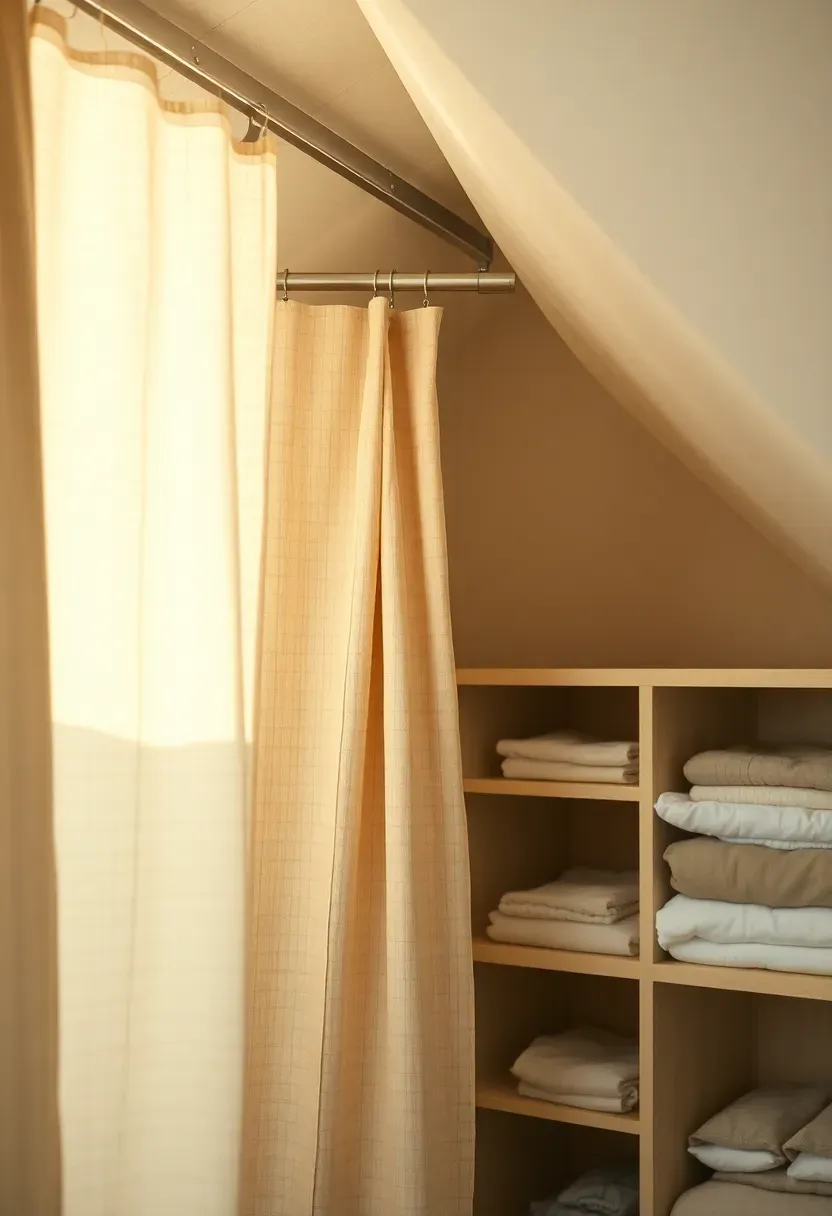
For a softer, more relaxed interpretation of attic storage, a curtained alcove skips the cabinet doors entirely. A ceiling-mounted track or tension rod holds a linen or cotton panel that conceals shelving and hanging rods behind it. This approach is particularly effective in attics used as guest rooms or creative studios, where the overall aesthetic tends toward lived-in warmth rather than built-in precision.
The curtain can be drawn aside in seconds, the rod is adjustable, and the whole setup costs a fraction of any custom joinery. Choose a fabric that complements the wall color — a tone-on-tone neutral keeps the look cohesive even when the curtain is closed.
Tips
- Use a ceiling-mounted track rather than a tension rod for heavier fabrics — it will not sag or slip
- Line the alcove with painted plywood shelves before hanging the curtain so the interior is still organized
- Blackout-lined curtains serve double duty if the attic also gets morning light that you want to control
Recommended
Items for this idea
9. Full Walk-In Attic Wardrobe
How to Create One
A full walk-in attic wardrobe is the most ambitious version of attic closet design — and often the most rewarding. The key is planning the layout around the slope, not fighting it.
Opening paragraph: attic walk-ins work best when designed in three zones based on ceiling height.
Step 1: Map the Height Zones
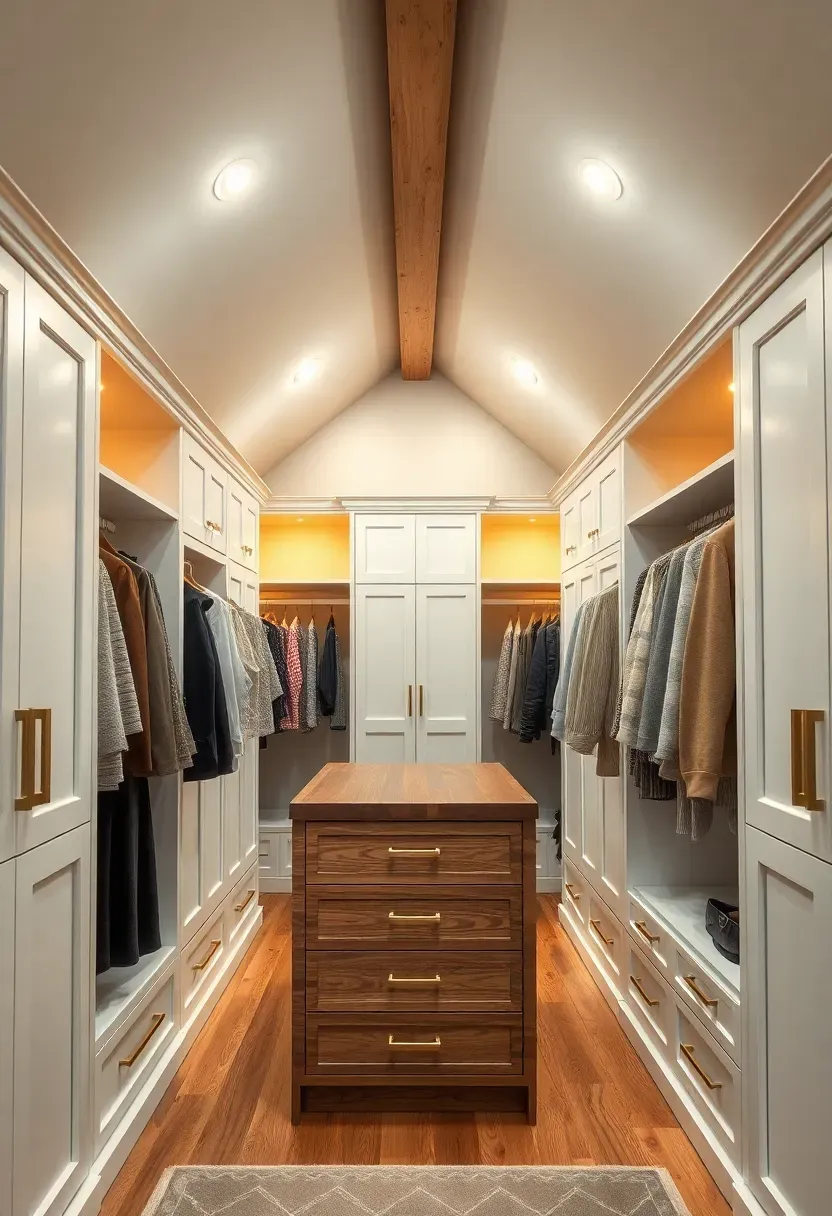
Divide the attic floor plan into three zones: standing height (above 7 feet), medium height (5 to 7 feet), and low zone (below 5 feet). Assign storage categories to each zone based on how often you need access and what the vertical clearance allows.
Step 2: Assign Storage Types
Standing zone gets the hanging rods and any tower units with full-height shelving. Medium zone gets double-tier hanging or shelving for folded items. Low zone gets drawers, pull-out bins, or knee wall cabinets.
Step 3: Plan the Lighting
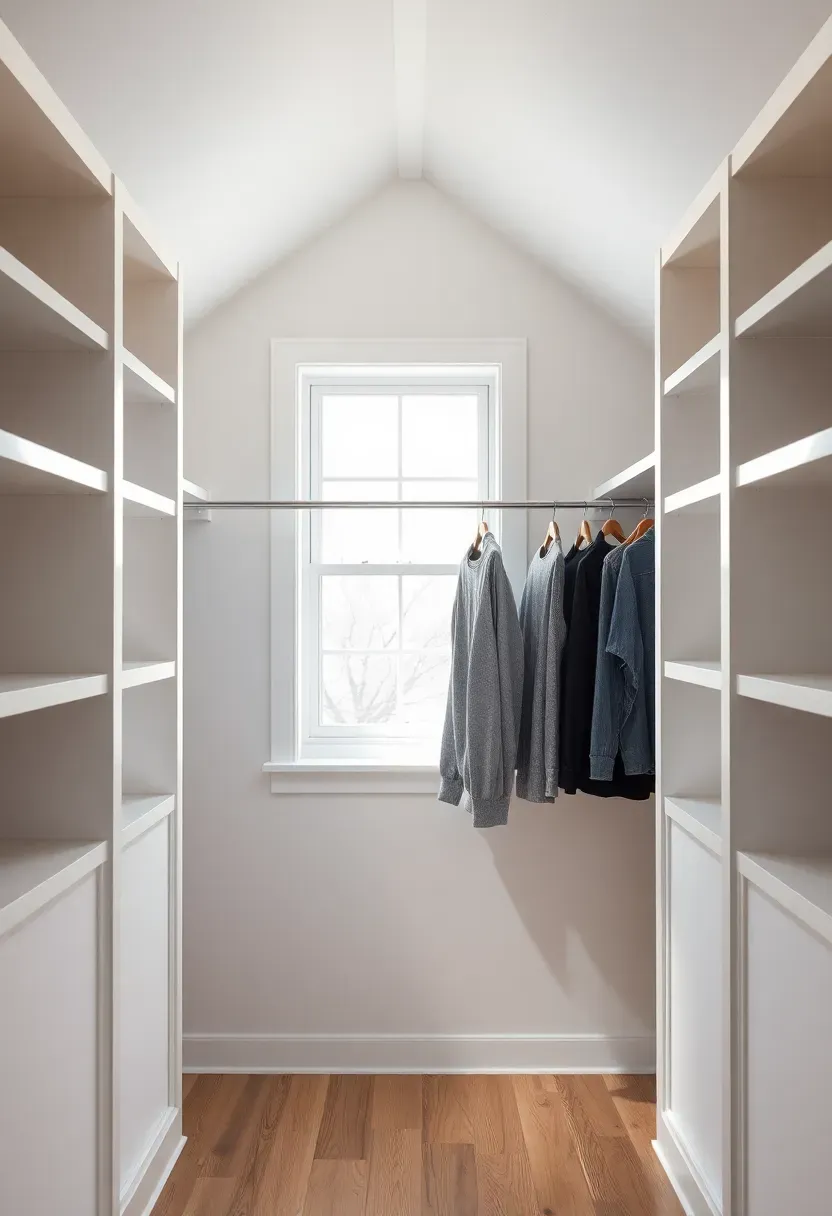
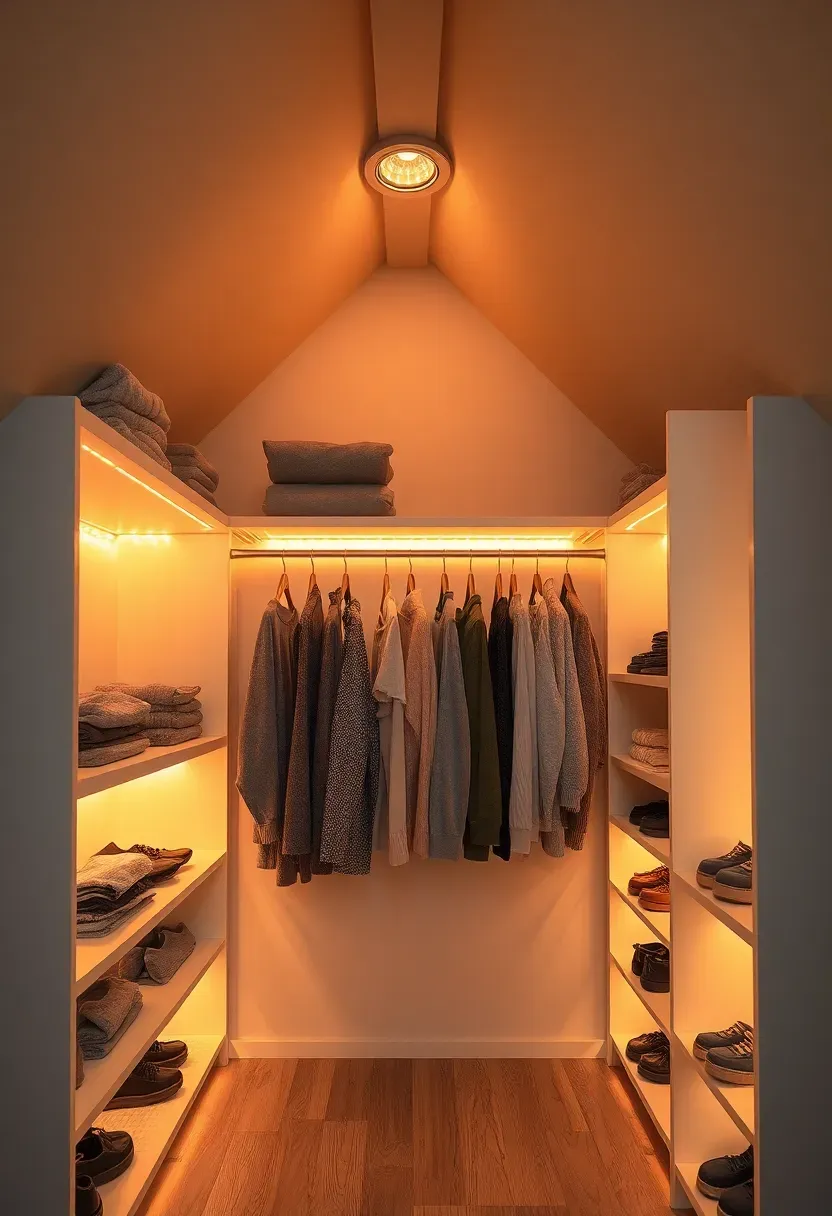
Walk-in closets without adequate lighting feel oppressive. Recessed lights in the ceiling peak, LED strip lighting under shelf edges, and a small pendant or sconce for the central standing area create a layered effect that makes the space functional at any time of day.
What to Watch Out For
- Ventilation matters — attic spaces can get warm in summer; a small vent or ceiling fan keeps the wardrobe fresh
- Leave a clear central aisle of at least 30 inches so you can move freely
- Custom millwork is expensive; consider combining IKEA PAX frames with custom doors for significant cost savings
10. Modular Cube System
Origins and Appeal
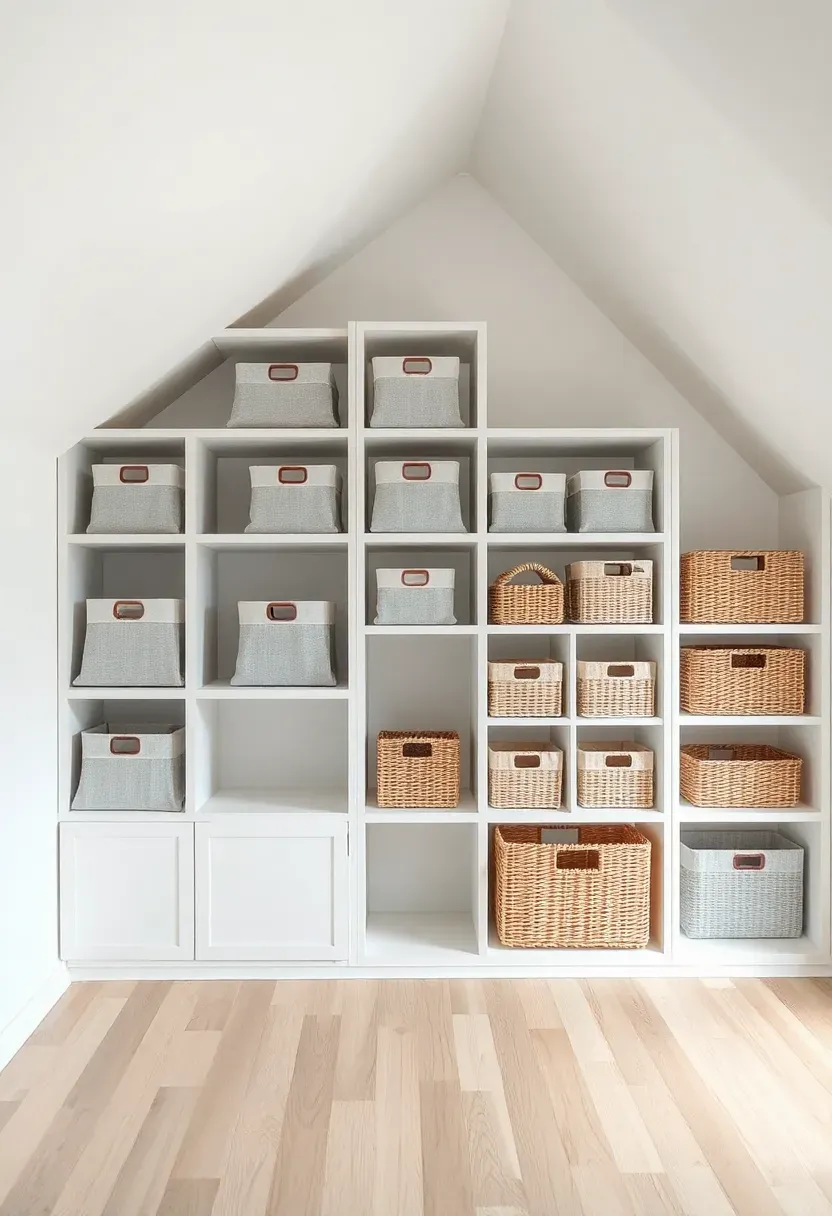
Modular cube shelving — the kind you assemble from individual square units — has been a storage staple since flat-pack furniture took over the market. In an attic, its adaptability is a specific advantage: you can configure units to fit the sloped ceiling by stepping them down as the ceiling drops.
Modern Interpretation
Arrange a row of cubes starting at full height near the attic peak and reducing the stack by one cube as you move toward the eaves. Insert fabric bins or wicker baskets into the cubes to keep contents hidden and the visual read clean. Leave some cubes open for folded items or display pieces.
How to Apply at Home
- Anchor the back of the tallest stacks to the wall to prevent tipping — attic floors can be uneven
- Match the cube color to the wall paint for a built-in look without built-in cost
- Use the lowest row of cubes as a shoe rack by removing the bins and stacking shoes directly on the cube base
Recommended
Items for this idea
11. Double Hanging Rod Configuration
Where the attic ceiling reaches 7 feet or more, a double hanging rod configuration dramatically increases the volume of hanging storage within the same floor footprint. The upper rod holds shorter items — shirts, jackets, folded trousers — while the lower rod does the same. The total hanging capacity roughly doubles compared to a single rod.
The critical measurement is ceiling height at the wall where the rods mount. You need at least 78 inches (6.5 feet) to comfortably fit two rods with garments hanging freely on both. Add a narrow shelf above the upper rod for folded sweaters or storage boxes.
Tips
- Chrome rods with adjustable brackets allow you to fine-tune heights after installation
- Space the upper rod at 80 inches from the floor and the lower at 40 inches for a standard double-hang setup
- A pull-down rod extender is useful if the upper rod is difficult to reach comfortably
12. Pull-Out Accessory Trays
Why This Detail Matters
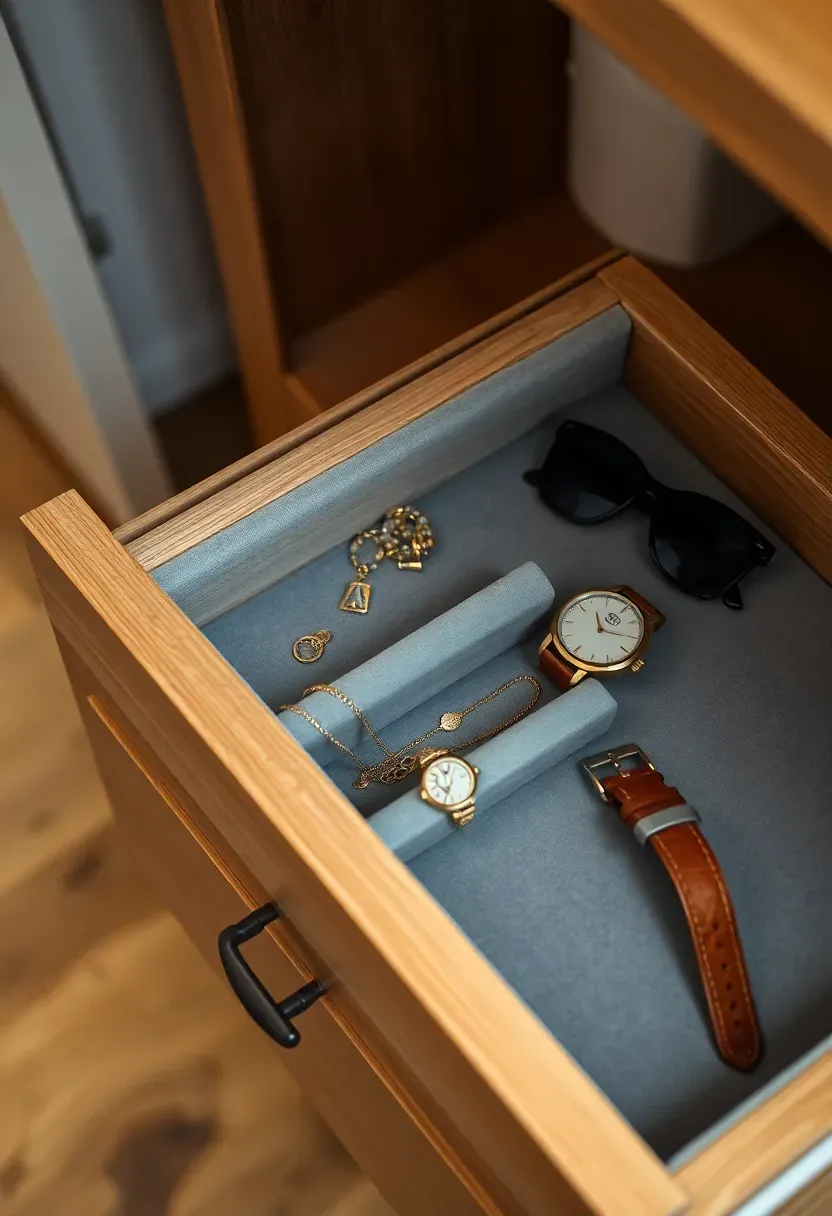
An attic closet can be perfectly organized for clothing while remaining a frustrating mess for small accessories. Jewelry, sunglasses, watches, and scarves tend to pile up on whatever flat surface is available. Pull-out accessory trays solve this by giving every small item a dedicated spot that slides into and out of a drawer unit.
The Solution
Shallow pull-out trays — 2 to 3 inches deep — lined with velvet or foam inserts keep items separated and visible. They mount inside an existing drawer or cabinet using standard drawer slides. A tray for jewelry, a second for sunglasses, and a third for scarves and belts covers most accessory categories without requiring a separate vanity or dresser.
Pros and Cons
Pros: Small footprint with high organizational impact; velvet lining protects delicate items; completely out of sight when closed
Cons: Custom velvet-lined trays can be expensive; standard drawer inserts from organizing retailers are a lower-cost alternative that works nearly as well
Recommended
Items for this idea
13. Mirrored Door Closet
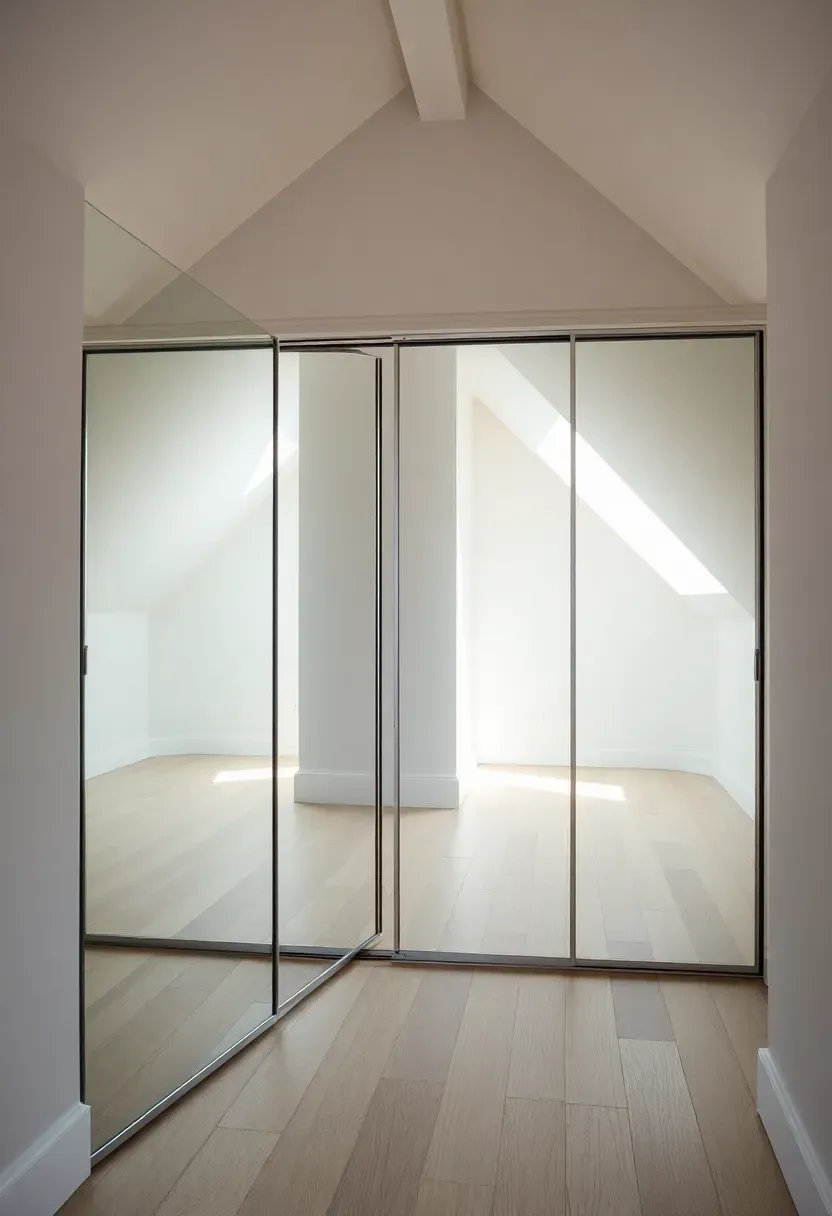
According to 2026 interior design trends, mirrored sliding doors remain one of the most effective strategies for making a small enclosed space feel significantly larger. In an attic context, they serve a second purpose: mirrors bounce light into a room that typically has fewer windows than the floors below.
Mirrored bypass doors work well on any flat wall section — particularly the gable end of an attic where there is full standing height. Behind the mirrors, a standard shelving and hanging rod configuration keeps the practical function intact while the exterior reads as an elegant, light-amplifying wall.
Tips
- Frameless mirrors on sliding tracks look the most contemporary and least dated
- Two panels that overlap in the center allow access to either side of the closet without moving furniture
- Clean mirrored surfaces with a microfiber cloth to avoid streaks — especially important in attics where dust settles quickly
14. Attic Closet With Integrated Lighting
How to Plan It
Lighting transforms an attic closet from a dark, hard-to-use space into one you actually enjoy using. The challenge is that attic electrical access can be limited. Here is how to plan integrated lighting for maximum effect.
Step 1: Choose the Light Types
Recessed LED downlights work in the ceiling peak. LED strip lighting under shelves eliminates shadows on lower zones. A single pendant or wall sconce near the entry provides ambient fill. Battery-powered puck lights are a renter-friendly option for any shelf.
Step 2: Plan the Circuit
If you are running new wiring, connect closet lighting to a circuit with a dedicated switch near the closet entry. Motion-activated switches are particularly convenient when your hands are full.
Step 3: Install in Sequence
Ceiling fixtures first, then strip lights under shelves, then switches and covers. Test each zone before closing walls or finishing surfaces.
What to Watch Out For
- Incandescent bulbs generate heat that can damage stored clothing — LED only inside any enclosed attic closet
- Color temperature matters: 2700K to 3000K (warm white) is easier on garments than cool daylight tones
- Ensure any recessed fixtures are rated for insulated ceilings (IC-rated) if insulation contacts the fixture housing
Recommended
Items for this idea
15. Painted Plywood Built-Ins
For centuries, craftsmen have built furniture from whatever wood was locally available and affordable. In modern attic renovations, paint-grade plywood continues that tradition — it is dimensionally stable, widely available, and takes paint beautifully when properly primed.
A full set of attic built-ins in painted plywood can cost 60 to 80 percent less than the equivalent in solid wood or MDF with veneer. The key is in the finishing: sand well, apply a shellac-based primer to seal the grain, then finish with a quality cabinet paint in satin or semi-gloss.
How to Apply at Home
- Use 3/4-inch plywood for shelves carrying significant weight; 1/2-inch is fine for vertical dividers
- Edge-band all visible plywood edges with iron-on veneer tape before painting for a clean finish
- Painting all built-ins and walls the same color creates a cohesive, custom-built look regardless of material cost
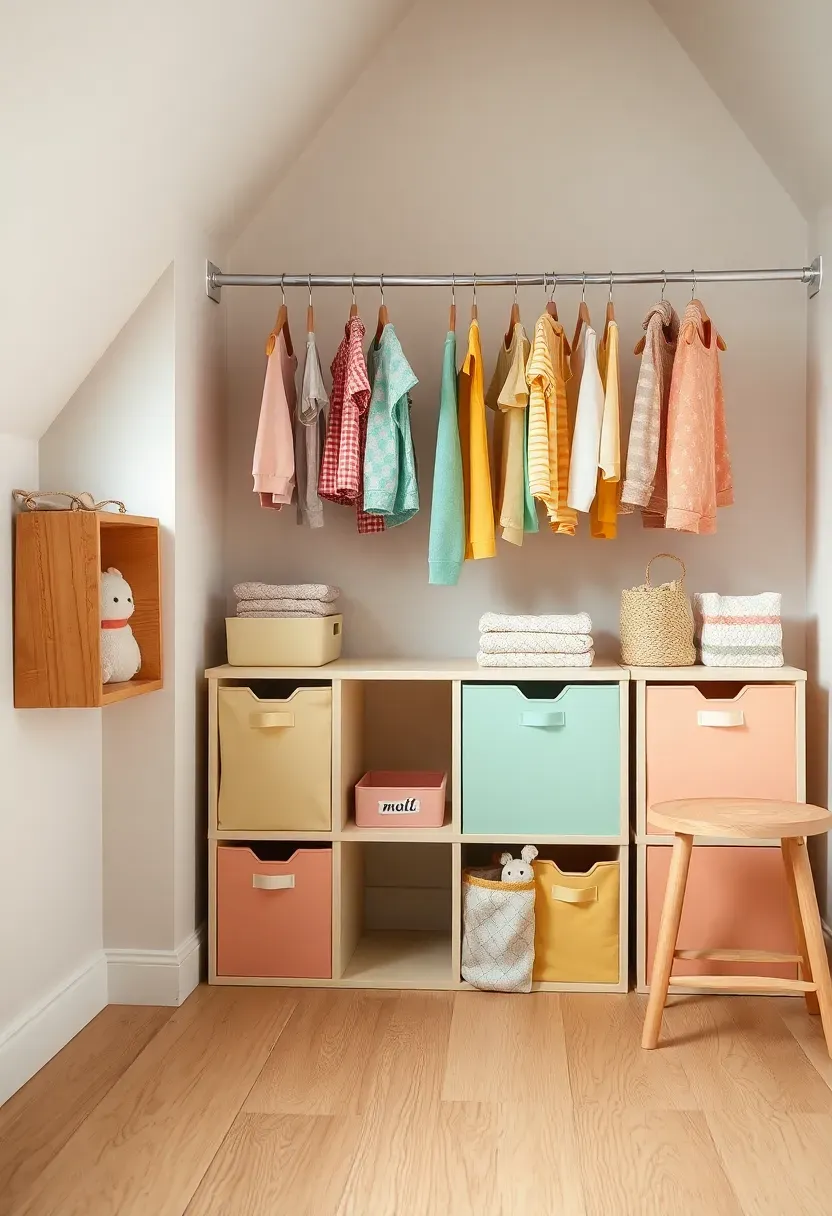
16. Kids Attic Closet With Colorful Storage
Comparing: Adult Wardrobe vs. Kids Closet in an Attic
An attic closet designed for a child operates on completely different principles than one planned for an adult.
Adult Attic Wardrobe
Prioritizes hanging space, visual calm, neutral palette, and access to full-length garments. Everything is at adult reach height.
Kids Attic Closet
Prioritizes low hanging rods (children's garments are short, so a single rod at 4 feet works), labeled fabric bins at floor level for easy self-sorting, colorful cube units that make finding things fun, and adjustable configurations that can grow with the child.
What to Choose
Choose adult configuration if: The attic is a primary or guest bedroom used by adults.
Choose kids configuration if: The attic is a child's bedroom or playroom — low rods, labeled bins, and visible open storage encourage independence.
Recommendation
Use a combination of low cube units and a single adjustable rod that can be raised every few years. Keep the palette fun but not overwhelming — two accent colors against a white base ages better than an all-primary rainbow scheme.
Recommended
Items for this idea
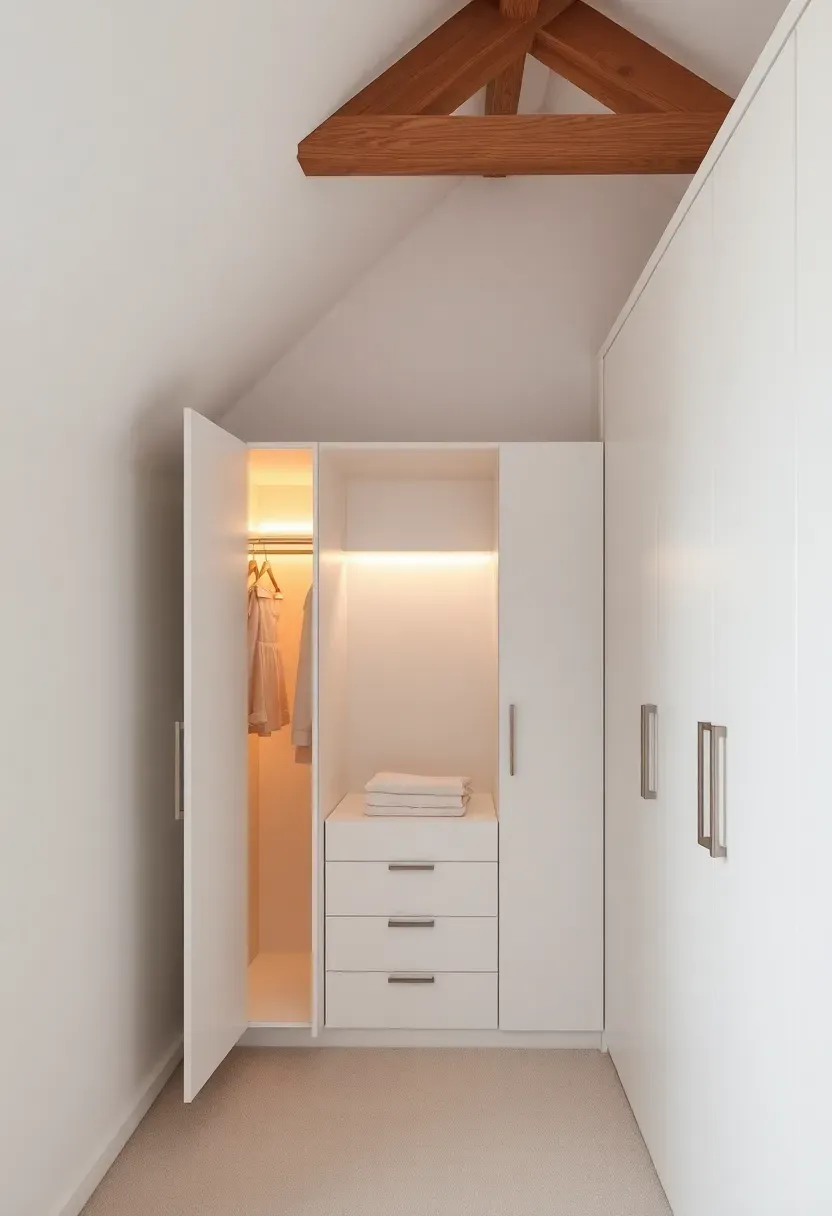
17. Minimalist White Wardrobe System
Why do some attic closets look cluttered even when they are organized? The answer is almost always too many visual elements competing for attention. A minimalist white wardrobe system solves this by reducing every visible surface to a single tone — white — and eliminating hardware, visible hinges, and decorative elements.
Handleless push-to-open cabinet doors, white-painted interiors, and white shelf edges create an environment where the contents disappear when the doors close. The attic architecture — the slope, the beams, the angles — becomes the visual interest instead. This approach works especially well in attics with original timber frame elements, because the wood grain against clean white creates contrast without clutter.
Tips
- Semi-gloss or satin finishes are easier to wipe clean than matte in a closet environment
- Interior LED strip lighting on a separate switch lets you illuminate the inside without turning on the whole room
- Include a few open sections even in a mostly closed system — a completely opaque wardrobe can feel oppressive in a low-ceiling space
Quick FAQ
Is an attic a good place for a closet? Yes — especially when the attic is a finished room or connected to a bedroom. The irregular geometry that makes attic space feel awkward for furniture actually suits closet design well, because low zones and knee walls become purpose-built storage rather than wasted space.
Should I insulate behind knee wall cabinets? Absolutely. Knee wall cavities connect directly to the unconditioned space behind the attic wall. Without insulation, summer heat and winter cold transfer directly to the cabinet interior, which can damage clothing and make the room less comfortable. Rigid foam board insulation behind the cabinet back panel is a simple fix.
Can I build attic closet built-ins myself without a contractor? Many of the ideas here — pegboard walls, modular cube systems, curtained alcoves, and even basic plywood shelf units — are DIY-accessible with basic carpentry skills. The more complex built-ins with face frames, inset doors, and integrated lighting typically benefit from professional installation, but the budget versions of most concepts are achievable over a weekend.
What is the minimum ceiling height needed for a hanging rod? A hanging rod needs approximately 66 to 68 inches of clearance from the floor to accommodate most garments without dragging. For shirts and shorter items, 60 to 62 inches is workable. Map your attic ceiling height before choosing between hanging and shelf-only configurations.
Which materials hold up best in an attic closet? Painted plywood and MDF are the most practical for shelving and cabinet boxes — they resist seasonal movement better than solid wood in spaces with temperature fluctuation. Avoid particleboard in attics with humidity variation, as it swells and loses structural integrity. Cedar is the best choice for any surfaces in direct contact with stored woolens or seasonal clothing.
Trends come and go, but the fundamental challenge of attic storage stays the same: awkward geometry, limited headroom, and the temptation to treat the whole space as overflow. These 17 ideas prove that a well-designed attic closet is not a compromise — it is an asset. Start with a single knee wall cabinet or a hanging rod under the slope. See what the space can do before assuming it cannot.
Pinterest cover for 17 Attic Closet Ideas to Maximize Every Awkward Inch
About the author
OBCD
CGI visualization and interior design content. We create detailed 3D renders and curate practical design ideas for every room in your home.