23 Baby Closet Ideas for a Perfectly Organized Nursery
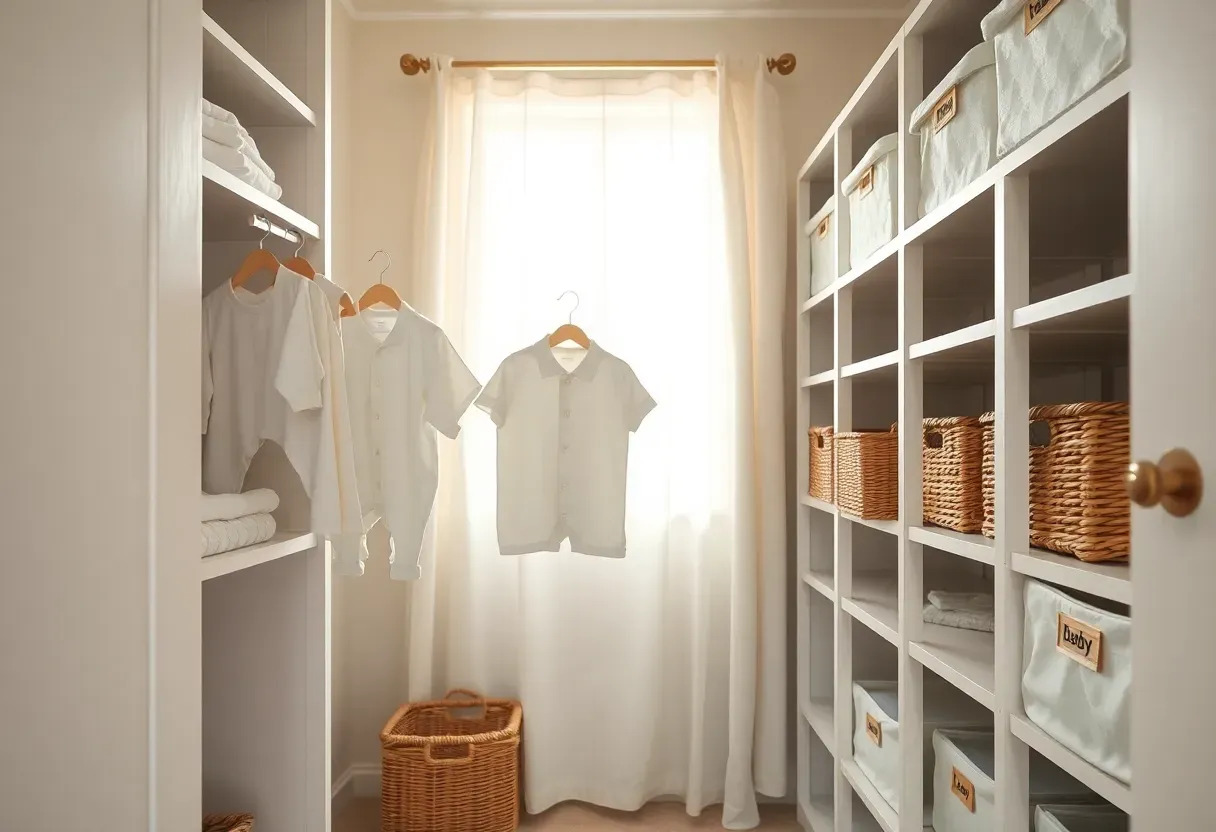
For centuries, closets were an afterthought — a dark corner behind a door where things disappeared. But when a baby arrives, that closet suddenly becomes mission control. Tiny onesies, blankets, bibs, swaddles, shoes the size of your thumb, seasonal layers they outgrow before wearing twice. A baby closet that actually works isn't about buying more organizers. It is about designing a system that matches how you live with a newborn — one-handed grabs at 3 a.m., quick visual scans to find the right size, and enough flexibility to evolve as your child grows from infant to toddler to preschooler.
Ready? Let's dive into 23 approaches that turn even the most neglected nursery closet into a space that genuinely helps.
Table of Contents
- Double Hanging Rod Setup
- Fabric Bin Drawer System
- Open Shelving Wall
- Size Divider Tabs on the Rod
- Rolling Cart Next to the Closet
- Built-In Dresser Inside the Closet
- Door-Mounted Pocket Organizer
- Color-Coded Storage Baskets
- Tension Rod Shoe Display
- Woven Basket Shelf Inserts
- Pull-Down Closet Rod
- Clear Front Storage Bins
- Nursery Closet Reading Nook
- Pegboard Accessory Wall
- Seasonal Rotation Shelf
- Divided Hanging Shelf Organizer
- Closet-to-Changing-Station Conversion
- Wooden Crate Stacking System
- Label Everything Approach
- Slim Velvet Hanger Upgrade
- Top Shelf Long-Term Storage
- Curtain Instead of Closet Door
- Grow-With-Me Modular Closet System
1. Double Hanging Rod Setup
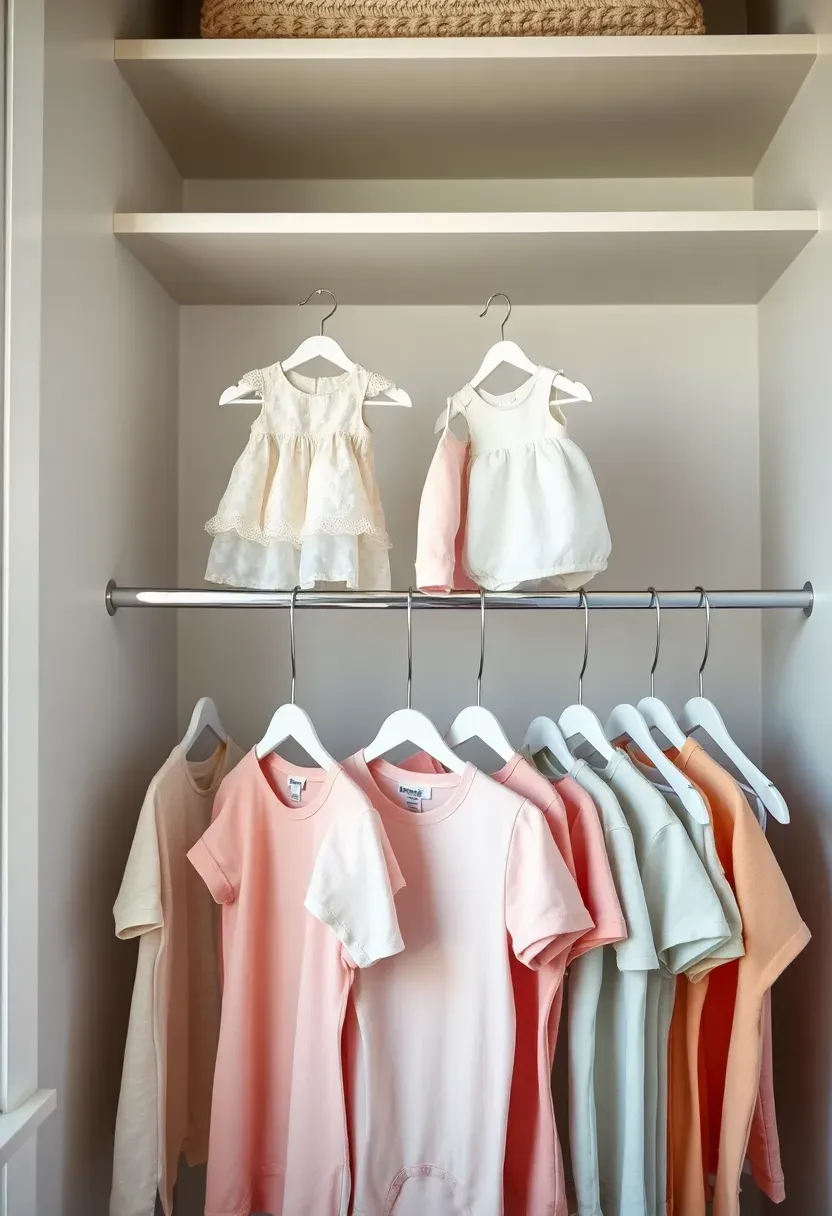
Baby clothes are short. A single rod at adult height wastes the entire lower half of the closet. Installing a second rod below the first instantly doubles your hanging capacity without adding any shelving or hardware beyond a basic tension rod or mounted bracket.
How to Set It Up
Step 1: Measure the longest garment you plan to hang — usually a sleep sack or small dress. Add two inches for clearance.
Step 2: Mount the lower rod at that height above the closet floor. The upper rod stays at standard height.
Step 3: Assign categories: everyday outfits on the lower rod (easy reach), special occasion or next-size-up clothing on the upper rod.
What to Watch Out For
- Tension rods work only in closets narrower than 40 inches — wider openings need a mounted bracket
- Leave at least 3 inches between the two rods so hangers don't tangle
- Reassess rod heights every 6 months as clothing sizes grow
We picked a few things that go well with this idea: CUBEDIY Baby Closet Organizer Armoire (★4.6), Modular 15-Cube Baby Wardrobe Closet (★4.6) and VIPZONE 12-Cube Baby Closet Organizer (★4.6). As an Amazon Associate we earn from qualifying purchases.
2. Fabric Bin Drawer System
The Core Issue
Traditional dressers eat floor space that small nurseries cannot spare. And rigid plastic bins inside a closet look institutional, collect dust in the grooves, and crack when toddlers inevitably stand on them.
The Solution
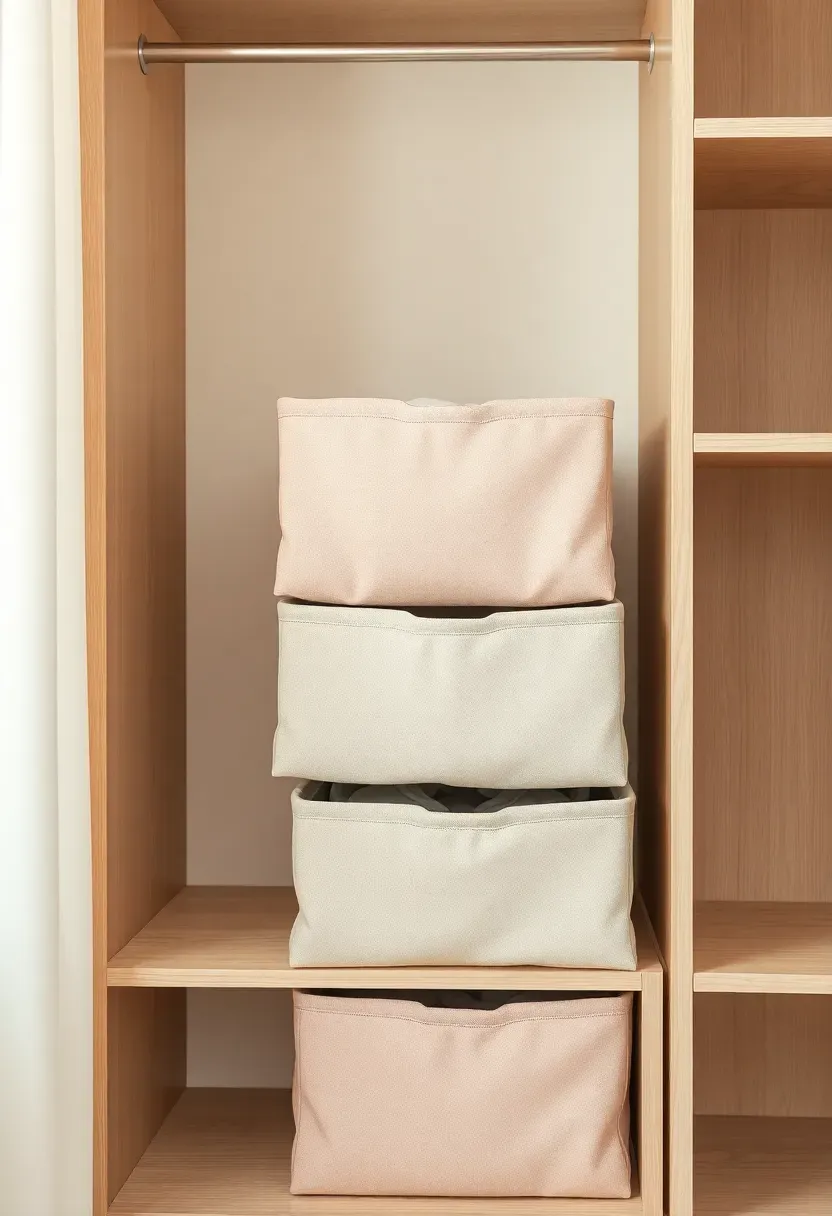
Fabric bins on shelf cubbies behave like soft drawers. They slide out smoothly, collapse flat when empty, and come in textures and colors that feel intentional rather than utilitarian. Stack three or four on a cube shelf unit inside the closet. Label each bin by category — socks, pajamas, pants, tops — and you have a dresser replacement that costs a fraction of the price.
Pros and Cons
Pros: lightweight, washable, easy to rearrange, gentle on small hands Cons: they sag when overstuffed, and toddlers can pull the entire bin off the shelf
We picked a few things that go well with this idea: Amazon Basics Baby Velvet Hangers (30-Pack) (★4.8), Amazon Basics Baby Velvet Hangers Gray (30-Pack) (★4.8) and Amazon Basics Baby Velvet Hangers (50-Pack) (★4.8). As an Amazon Associate we earn from qualifying purchases.
3. Open Shelving Wall
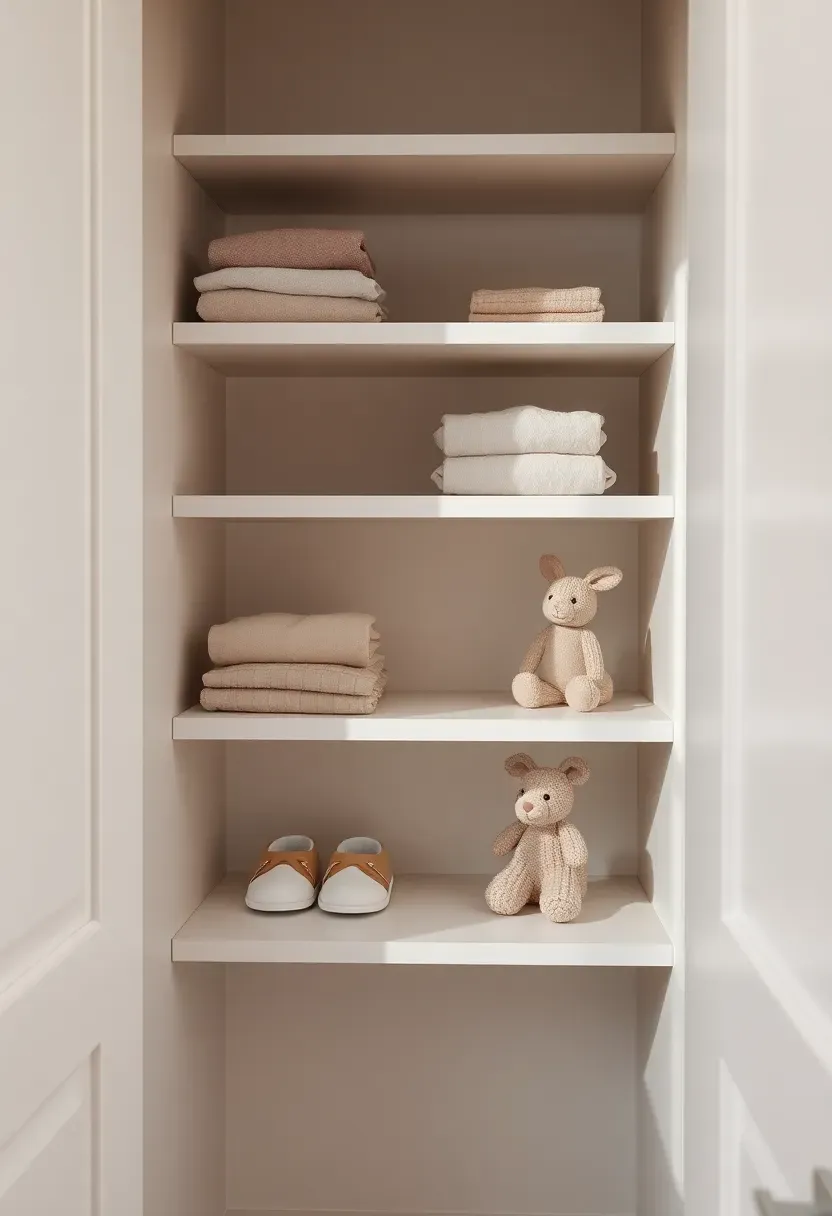
Forget doors. Forget drawers. An open shelving wall inside the closet turns storage into display. Folded onesies become neat stacks, shoes line up like a tiny boutique, and you can spot exactly what you need without opening anything.
Tips for Making It Work
- Keep stacks no more than 5 items high — taller stacks topple when you pull from the middle
- Reserve the eye-level shelf for daily essentials: diapers, wipes, the outfit rotation for the week
- Place less-used items on the top and bottom shelves
- Add a small plant or framed photo on one shelf to prevent the "stockroom" feel
We picked a few things that go well with this idea: White Woven Cotton Rope Baskets (5-Pack) (★4.6), INough Woven Cotton Rope Toy Basket (★4.6) and Small Woven Rope Storage Baskets (8-Pack) (★4.5). As an Amazon Associate we earn from qualifying purchases.
4. Size Divider Tabs on the Rod
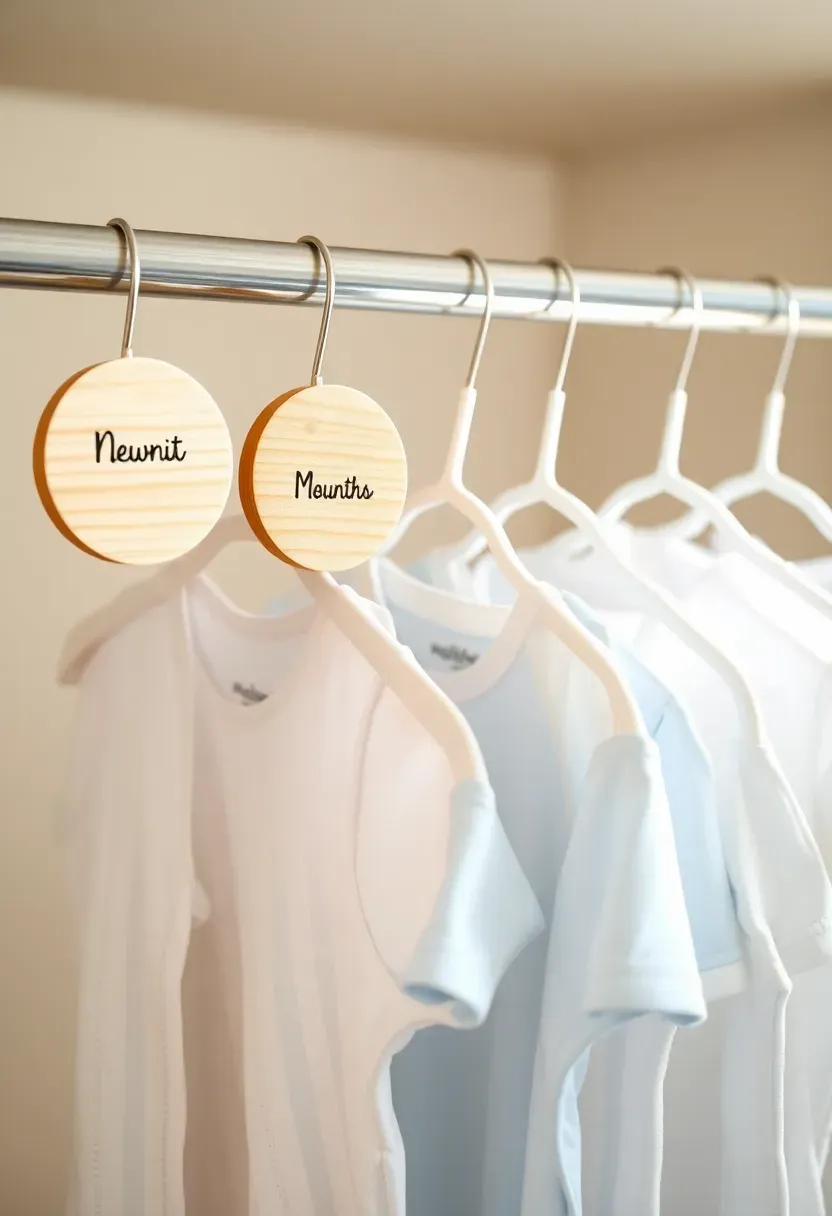
Babies move through clothing sizes faster than any adult expects. One week everything fits; two weeks later half the wardrobe is too snug. Size dividers — small round or rectangular tabs that hang on the rod between sections — solve the constant guessing game.
Step 1: Sort Everything by Size
Pull every item off the rod. Group by size label: newborn, 0-3, 3-6, 6-9, 9-12, 12-18 months.
Step 2: Place Dividers
Hang a labeled divider between each size group. You can buy ready-made ones or cut circles from cardboard and write the size with a marker.
Step 3: Maintain Weekly
Every Sunday, do a quick scan. Move outgrown items to a donation bag or a "next baby" bin on the top shelf. Shift dividers as sections shrink or grow.
Recommended
Items for this idea
5. Rolling Cart Next to the Closet
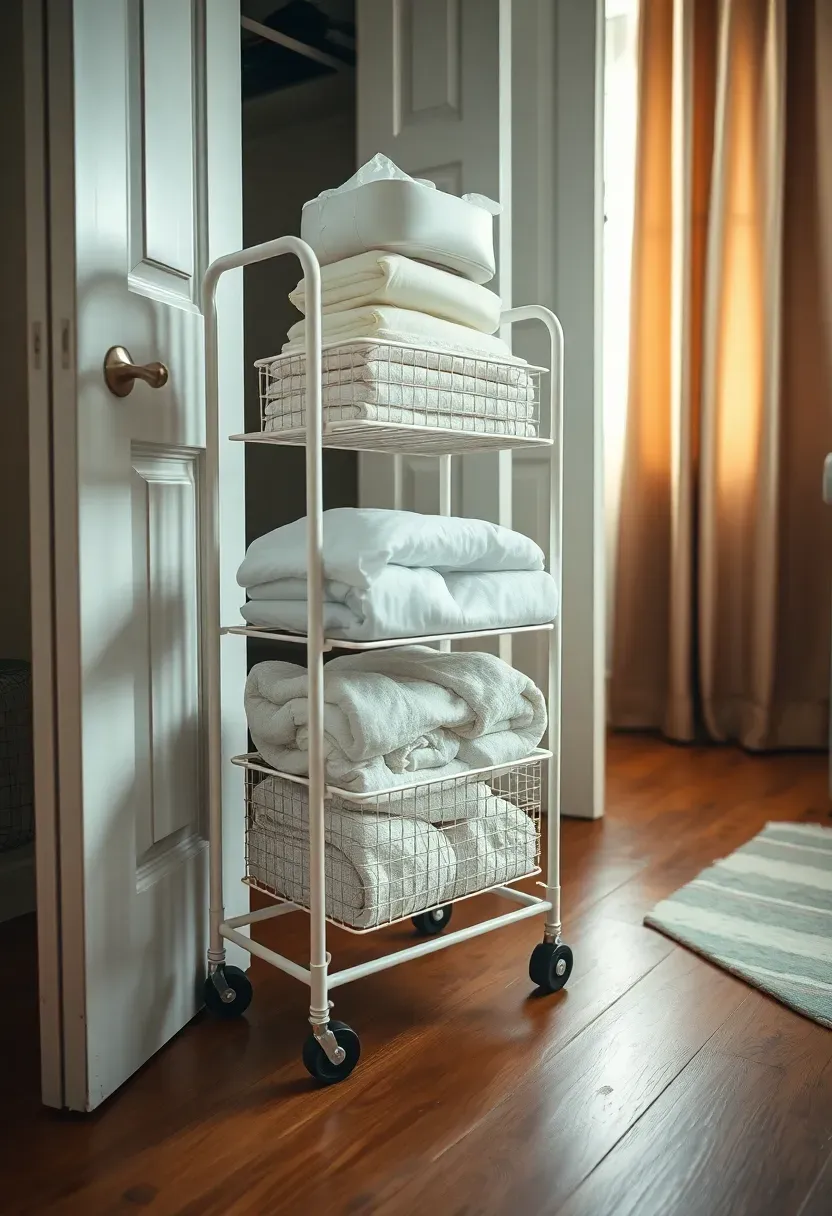
Not every nursery closet has enough interior space for bins, shelves, and rods. A slim three-tier rolling cart parked just outside the closet door acts as overflow storage that moves wherever you need it — next to the changing table during diaper duty, beside the crib during midnight feeds, back by the closet when company comes.
Best Items for the Cart
- Top tier: current diaper supply, wipes, cream
- Middle tier: burp cloths, bibs, spare pacifiers
- Bottom tier: blankets, swaddles, sleep sacks
Recommendation
Choose a cart no wider than 15 inches so it fits between furniture without blocking walkways. Metal mesh sides prevent items from falling off during rolling.
6. Built-In Dresser Inside the Closet
Why This Works Better Than a Standalone Dresser
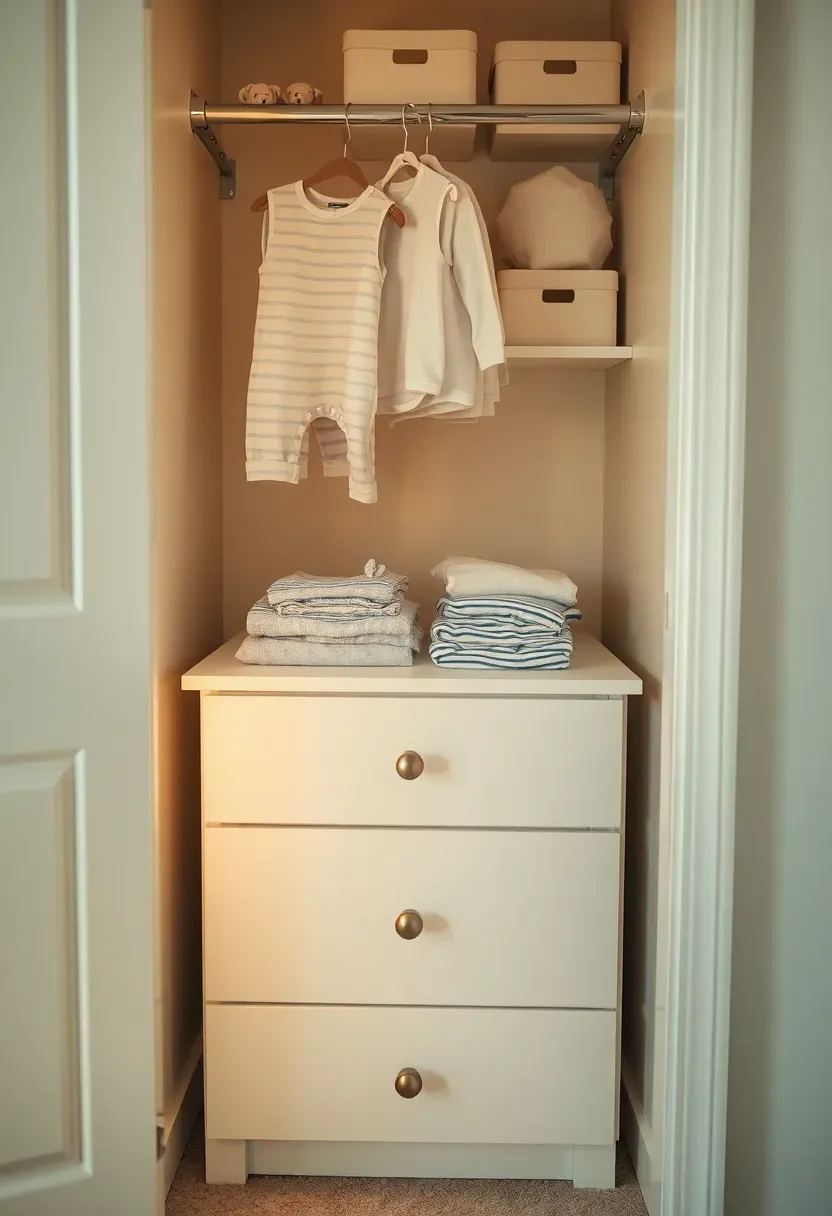
A freestanding dresser occupies 18 to 24 inches of bedroom floor depth. Moving that dresser inside the closet — either as a built-in unit or by simply sliding an existing dresser in — frees that floor space for a glider, play mat, or nothing at all. The closet still has its upper rod for hanging items, and the dresser drawers handle everything that folds.
How to Plan It
Measure your closet depth (most reach closets are 24 inches deep). Choose a dresser no deeper than 20 inches to allow the drawers to open fully. If building custom, three drawers is the sweet spot — enough division without requiring you to bend too low for the bottom drawer.
What to Watch Out For
- Secure the dresser to the wall with anti-tip brackets, even inside the closet
- Leave at least 6 inches above the dresser for the hanging rod clearance
- Use drawer dividers inside each drawer to prevent the folded-laundry avalanche
Recommended
Items for this idea
7. Door-Mounted Pocket Organizer
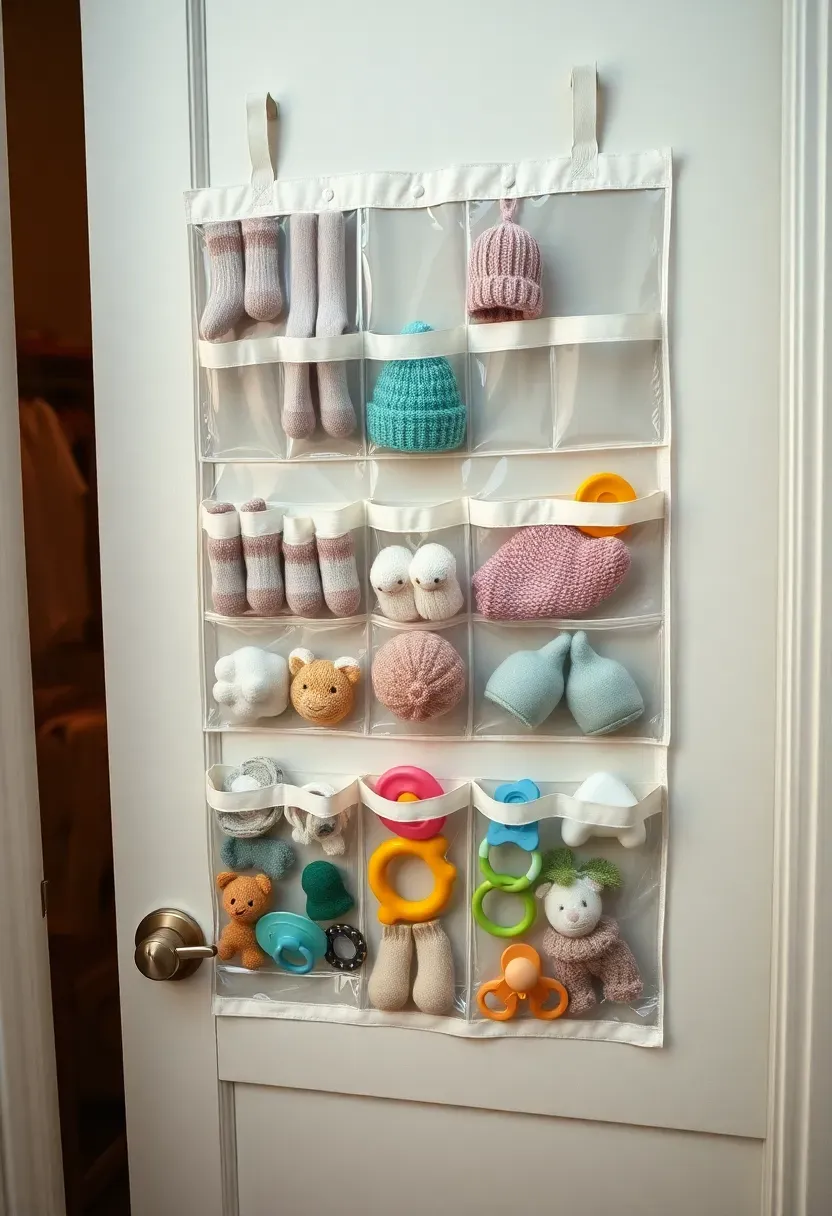
The closet door is prime real estate that almost everyone ignores. A hanging pocket organizer — the kind with 20 to 30 clear vinyl or fabric pockets — turns a flat surface into a vertical filing cabinet for small items that always get lost: socks, mittens, hair bows, pacifiers, teething toys.
Tips for Maximum Use
- Group pockets by item type from top to bottom: accessories at the top, socks in the middle, small toys at the bottom
- Choose clear pockets over opaque ones so you can scan contents without touching each pocket
- Pick an over-the-door hook design rather than screw-mount — no holes, easy to move, works on any door thickness
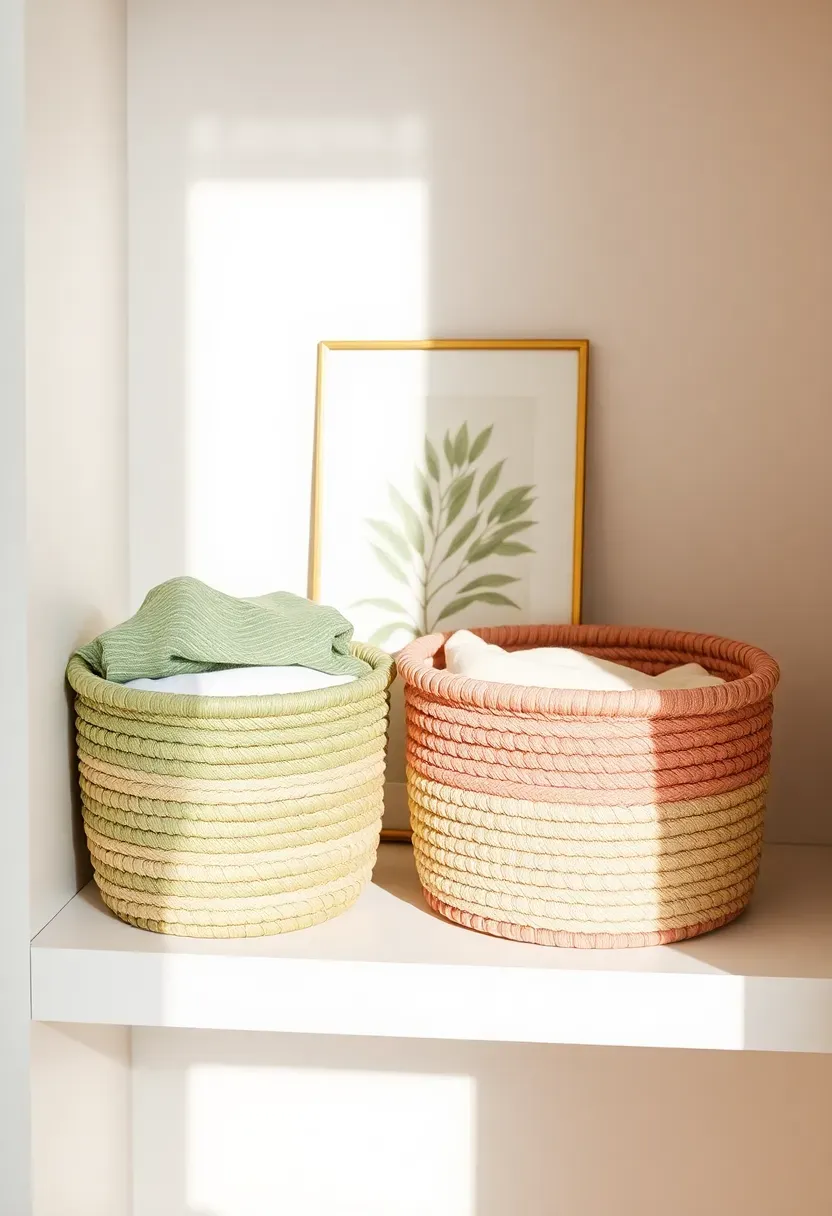
8. Color-Coded Storage Baskets
Assign one color per category. Sage green for bottoms, cream for tops, dusty rose for sleepwear. The visual shortcut means anyone caring for the baby — grandparents, babysitters, a sleep-deprived partner — can find the right category without reading a label or asking where things go.
Comparing: Woven Baskets vs Plastic Bins
Woven baskets breathe, look warm, and age gracefully. They cost more and are harder to wipe clean after a diaper blowout.
Plastic bins are waterproof, stackable, and cheap. They look utilitarian and crack over time.
What to Choose
Choose woven if: aesthetics matter, the closet is visible from the nursery, and you handle spills promptly. Choose plastic if: the closet has doors, budget is tight, and you want maximum durability without maintenance.
Recommended
Items for this idea
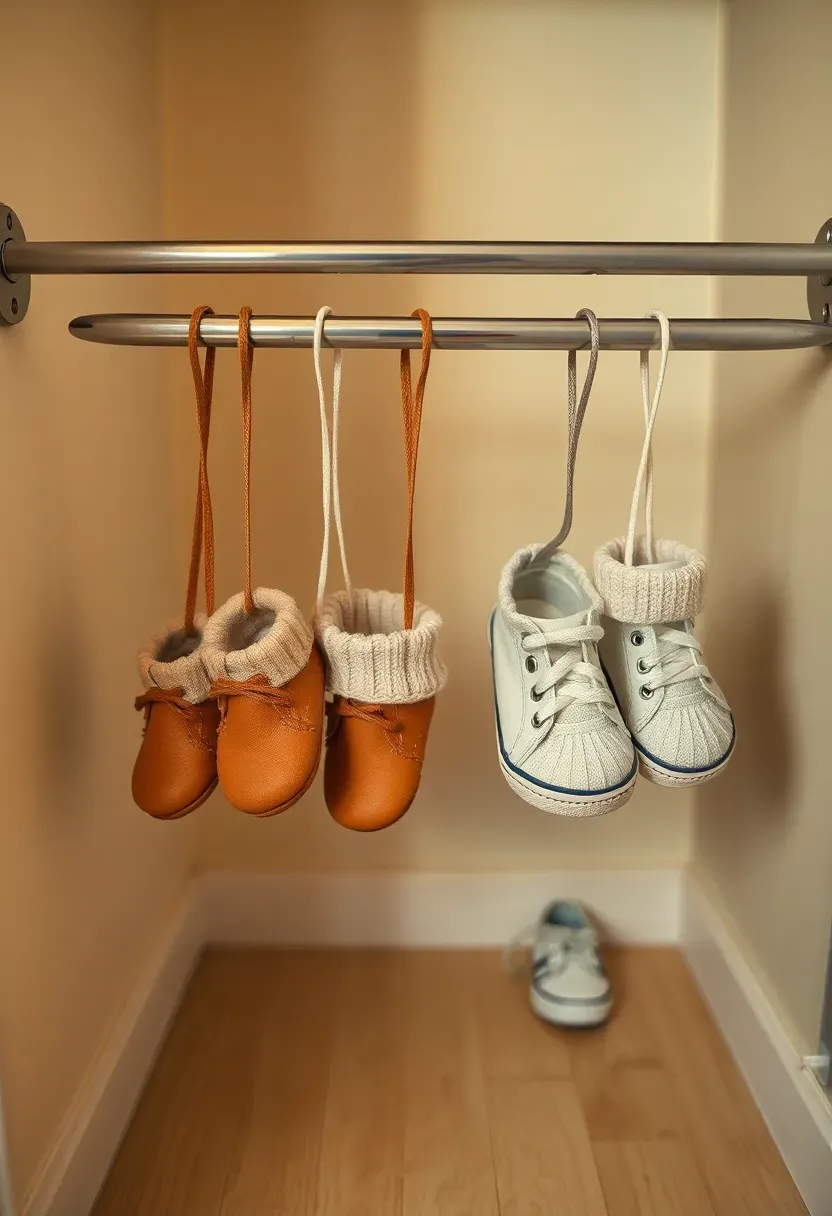
9. Tension Rod Shoe Display
Baby shoes are adorable but almost impossible to store neatly. They're too small for adult shoe racks and too oddly shaped for bins. A tension rod mounted 6 inches from the closet floor lets you hang shoes by their straps or tuck them behind the rod in pairs, creating a miniature shoe wall that keeps every pair visible.
This works best for soft-soled shoes and sandals. Heavier toddler sneakers do better on a small shelf or in a shallow basket below the rod.
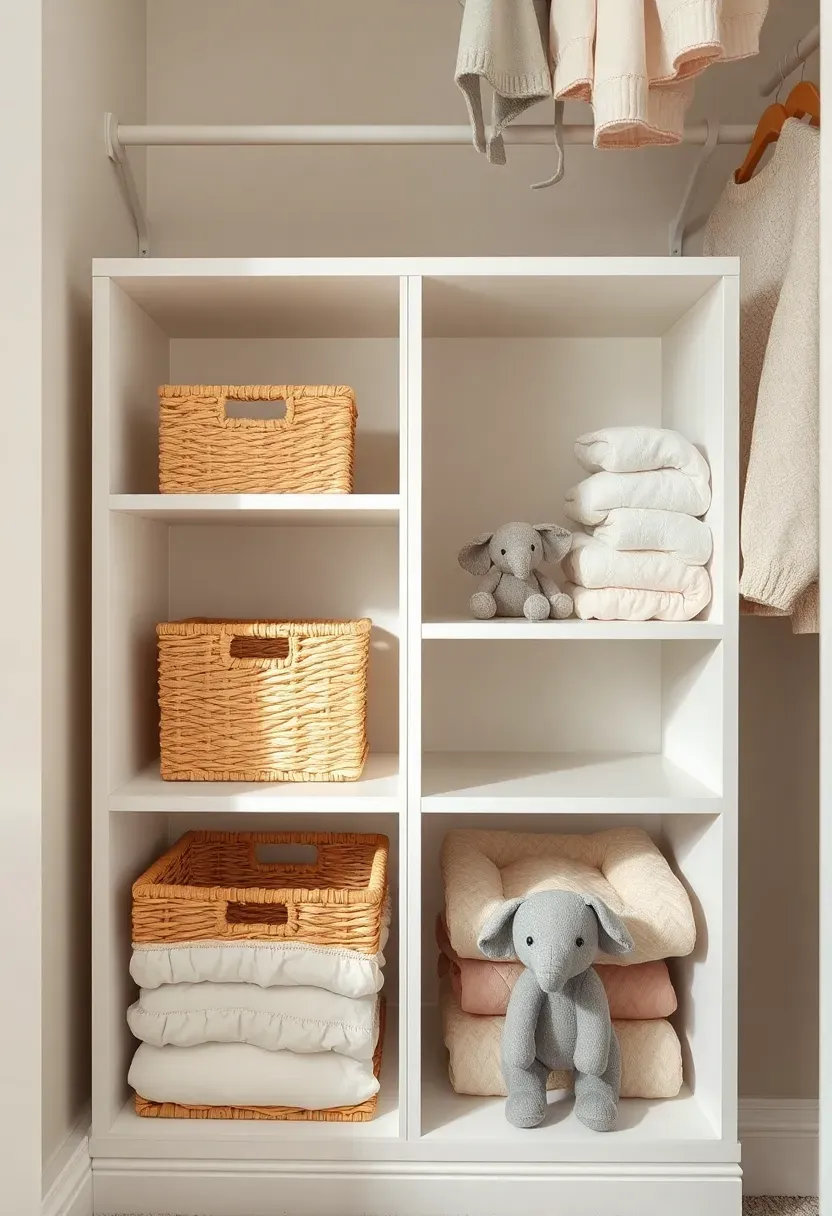
10. Woven Basket Shelf Inserts
Cube shelving plus woven basket inserts is one of the most adaptable storage systems for a nursery closet. The baskets hide clutter while the open cubes provide structure. When the baby outgrows the nursery, the same system works in a playroom, mudroom, or linen closet — making it a genuinely long-term investment rather than a baby-specific purchase.
How to Style It
- Alternate baskets with open cubes displaying a stuffed animal or a framed photo
- Keep the heaviest items in the bottom cubes and the lightest on top
- Pull baskets out only halfway when browsing — it prevents the shelf from tipping forward
Recommended
Items for this idea
11. Pull-Down Closet Rod
Origins
Pull-down closet rods were originally designed for accessibility — making high closet rods reachable for wheelchair users. The mechanism is simple: a spring-loaded handle pulls the rod down to waist height, and a gentle push sends it back up.
Modern Interpretation
In a nursery, this mechanism lets you access the upper rod without a step stool, which matters when you're holding a baby in one arm. As your child grows into toddlerhood and wants to "pick my own outfit," the pull-down rod becomes their first taste of independence. They pull it down, choose a shirt, and push it back up. The closet teaches autonomy without any furniture rearranging.
How to Apply at Home
- Install on the upper rod position only — the lower rod stays fixed for daily items
- Choose a model rated for at least 35 pounds to handle a full rod of clothing
- Test the pull-down resistance before buying; some models require too much force for a toddler
- Mount securely into studs, not drywall anchors
12. Clear Front Storage Bins
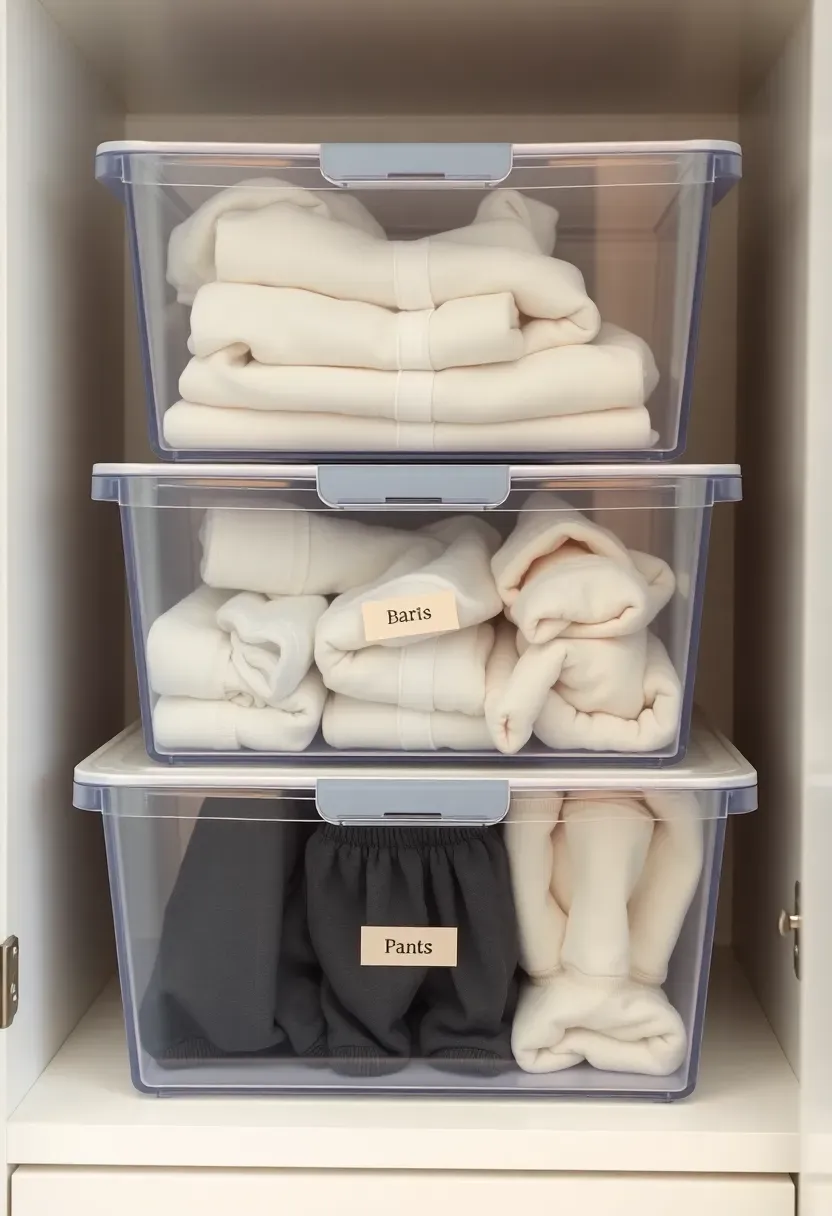
Opaque bins create a guessing game. You open three containers before finding the one with the sleep sacks. Clear front bins eliminate that friction entirely. The front panel is transparent while the sides and back remain solid, giving you visibility without the cheap look of an all-clear plastic container.
Tips for Clear Front Bins
- Label the bin anyway — the label serves as a category reminder when the bin is half empty and contents are ambiguous
- Stack no more than three high; beyond that, the bottom bin becomes impossible to access
- Choose bins with a flip-up lid rather than a snap-on lid for one-handed opening
Recommended
Items for this idea
13. Nursery Closet Reading Nook
Why This Works
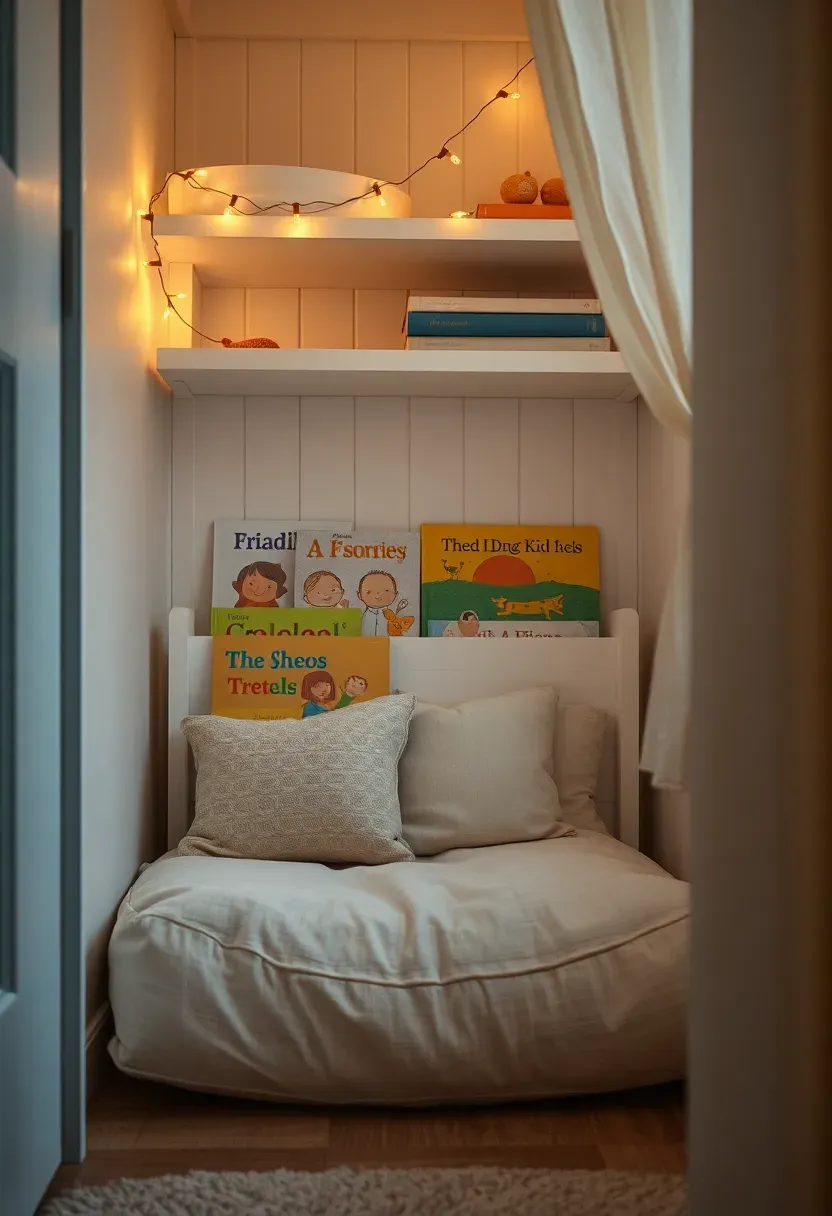
Some nurseries have a second closet, or the primary closet is deep enough to sacrifice half the hanging space. Removing the rod and lower shelves from one section creates a cave-like nook that toddlers find irresistible. Add a floor cushion, a short bookshelf, a strand of battery-powered fairy lights, and the closet transforms from storage to sanctuary.
How to Build It
Remove the rod and any shelf below 30 inches. Install a shallow shelf at 24 inches for books. Place a waterproof cushion on the floor (spills are inevitable). Hang a curtain from the closet opening so the child can "close" their reading spot for privacy. Keep one upper shelf for storage above the curtain rod.
What to Watch Out For
- No hard edges at toddler head height — pad any exposed shelf corners
- Battery-powered lights only; never use plug-in strands inside a child-accessible nook
- Check the cushion cover for removability and washability before purchasing
14. Pegboard Accessory Wall
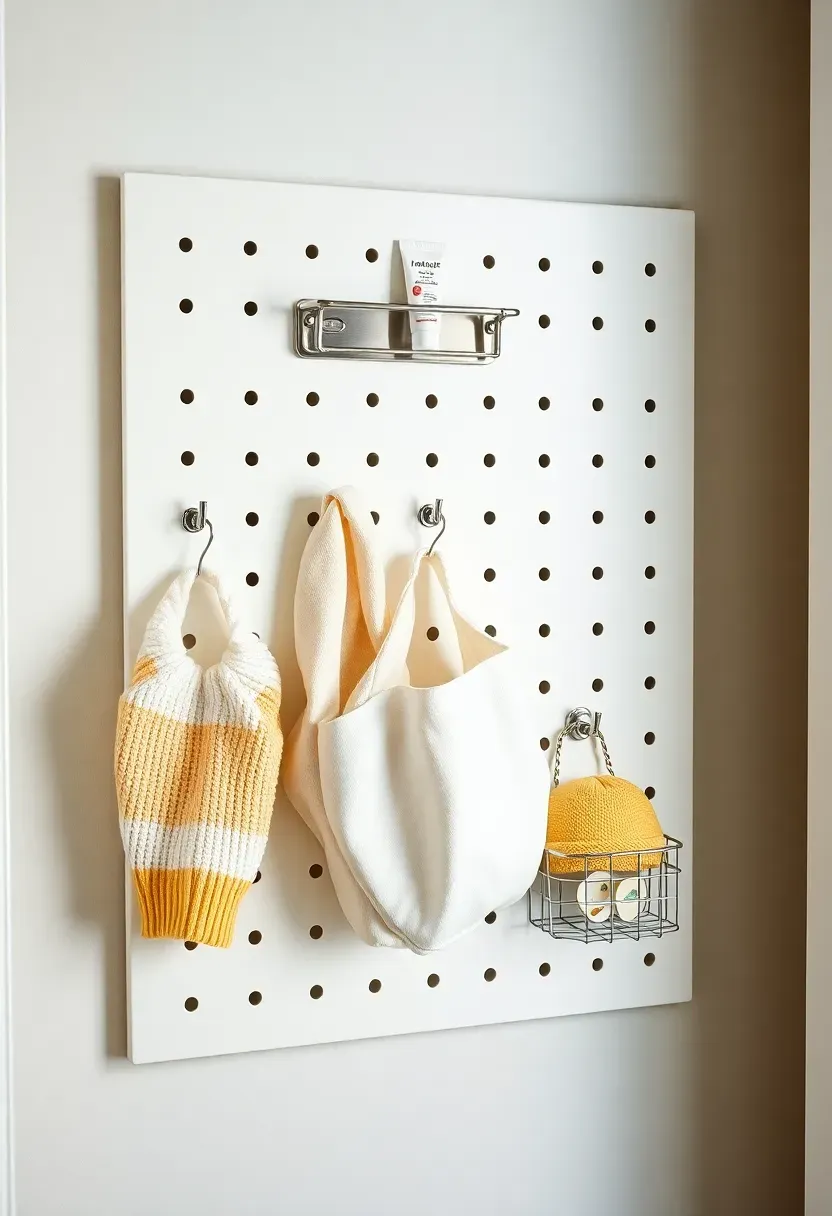
A pegboard on the closet's back wall turns dead vertical space into customizable storage. Hooks hold hats, bibs, and small bags. Small shelves clip onto the board for sunscreen, nail clippers, or thermometer storage. Baskets attach for loose items. The beauty of pegboard is that you rearrange it in seconds as your storage needs shift — and they will shift constantly during the first two years.
Practical Recommendations
- Use a 2-foot by 4-foot board for a standard reach-in closet
- Paint the pegboard to match the closet interior or go bold with a contrasting nursery accent color
- Metal hooks hold more weight than plastic ones
- Mount the board with spacers so hooks can insert from behind
Recommended
Items for this idea
15. Seasonal Rotation Shelf
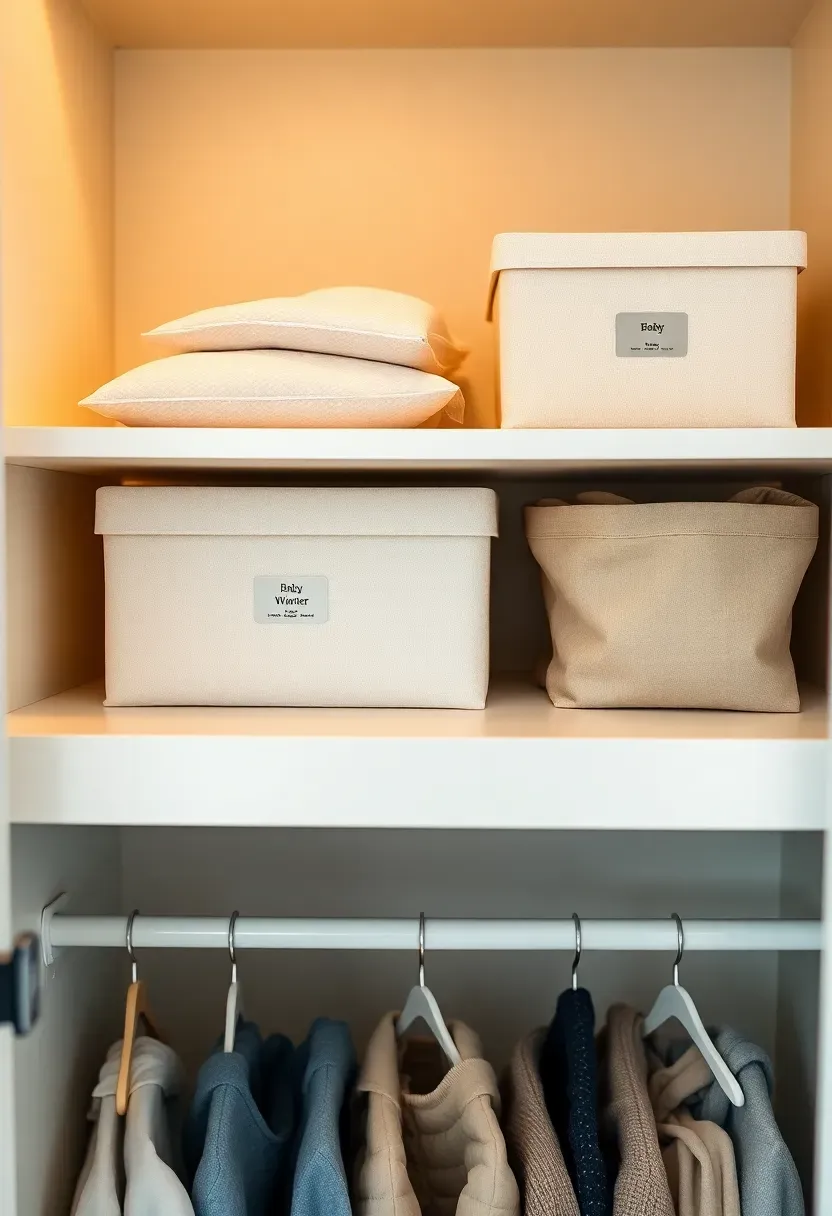
Babies don't need winter coats in July or swimwear in January. Dedicate the highest closet shelf — the one you need a step stool to reach — to off-season and outgrown clothing. Vacuum-sealed bags compress bulky winter items to a fraction of their size. Labeled bins sort outgrown sizes for donation, resale, or a future sibling.
Step 1: Sort by Season
At the start of each season, pull everything down. Separate into "fits now," "too small," and "wrong season."
Step 2: Compress and Store
Vacuum-seal the wrong-season pile. Label the bag with size and season. Place on the top shelf.
Step 3: Decide on Outgrown Items
Items in good condition go into a "pass along" bin. Stained or worn items get recycled or donated to textile recycling.
16. Divided Hanging Shelf Organizer
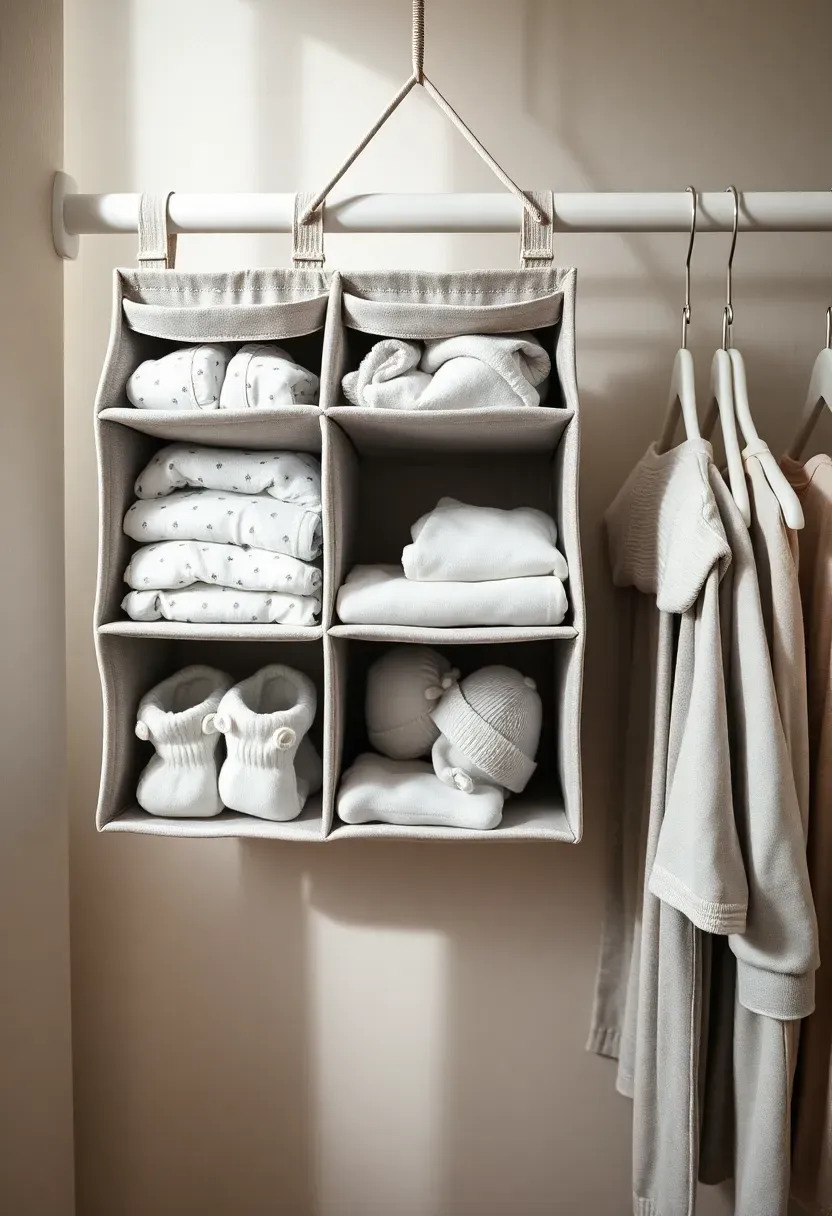
These fabric organizers hang directly from the closet rod and provide 5 to 10 compartments for folded items. They work best for categories that don't need hangers: pajamas, underwear (once toddler age arrives), socks, hats, and swimwear. The key advantage over a dresser is vertical use of rod space — the organizer hangs alongside regular hangers without occupying any floor or shelf area.
Pros and Cons
Pros: zero floor footprint, installs in 30 seconds, travels easily for vacations or grandparent stays Cons: compartments stretch over time with heavy items, swings when you pull items out, limited weight capacity per shelf
Recommended
Items for this idea
17. Closet-to-Changing-Station Conversion
The Core Issue
Changing tables occupy 18 by 36 inches of floor space and become useless within 18 months. In a small nursery, that footprint is a luxury you cannot afford.
The Solution
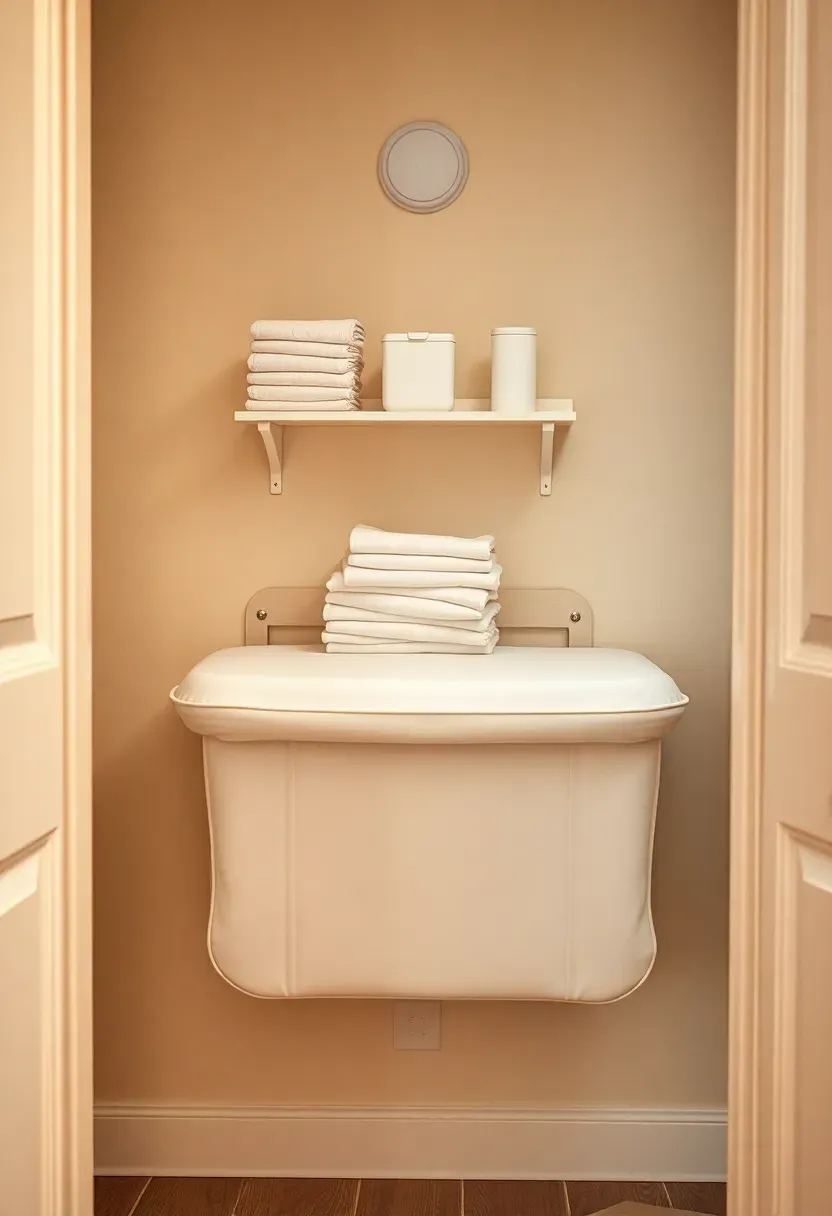
Mount a fold-down changing pad inside the closet at waist height. Shelves above hold diapers, wipes, and cream. A small battery-powered light fixture ensures visibility during nighttime changes. When the changing pad is folded up, the closet looks and functions like a normal closet. When folded down, it extends over the closet threshold and creates a stable changing surface.
Pros and Cons
Pros: saves 4 to 5 square feet of floor space, keeps all diaper supplies in one zone, folds away completely Cons: requires sturdy wall mounting into studs, limits closet access while the pad is down, changing pad width is constrained by closet opening
18. Wooden Crate Stacking System
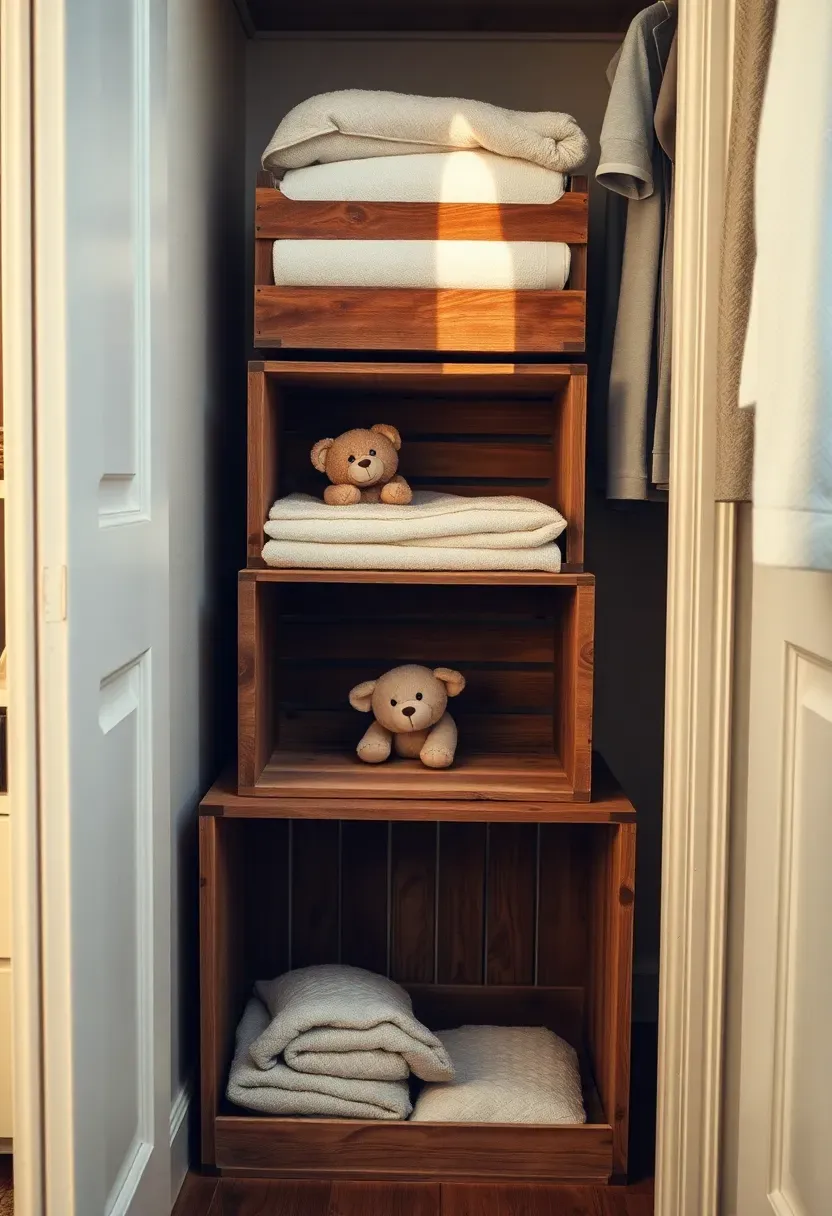
Wooden crates — the kind you find at craft stores or flea markets — stack into a freestanding shelf system inside the closet. Turn some crates on their side for open cubbies. Stack others upright for taller storage. The rustic texture adds warmth to an otherwise utilitarian space, and individual crates can be pulled out and carried to wherever you need them, functioning like portable drawers.
Tips for Safe Stacking
- Sand any rough edges to prevent splinters
- Secure stacked crates to each other with wood glue or small L-brackets
- Limit stacks to three crates high for stability
- Line the bottom of each crate with felt pads to protect the closet floor
Recommended
Items for this idea
19. Label Everything Approach
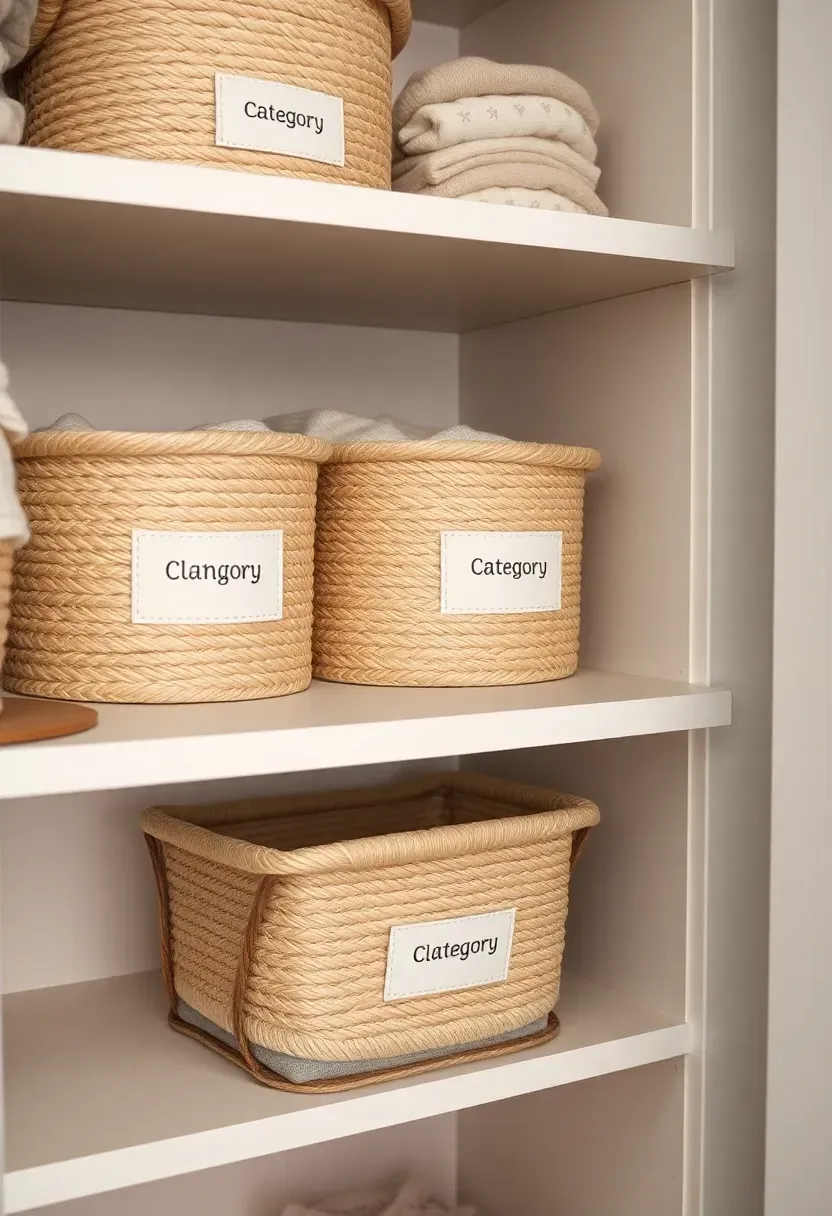
Labeling sounds obsessive until you hand the baby to someone else and they need to find the backup pacifier, the size 6-month pants, or the gas drops. Labels turn your closet into a system that anyone can navigate without a tutorial. Printed labels look cleaner than handwritten ones, but even a strip of masking tape and a marker works in the first exhausting weeks.
Where to Label
- Every bin, basket, and shelf section
- The front of each drawer if using a closet dresser
- Size dividers on the hanging rod
- The inside of the closet door with a master inventory list (optional but helpful during growth spurts when sizes shift rapidly)
20. Slim Velvet Hanger Upgrade
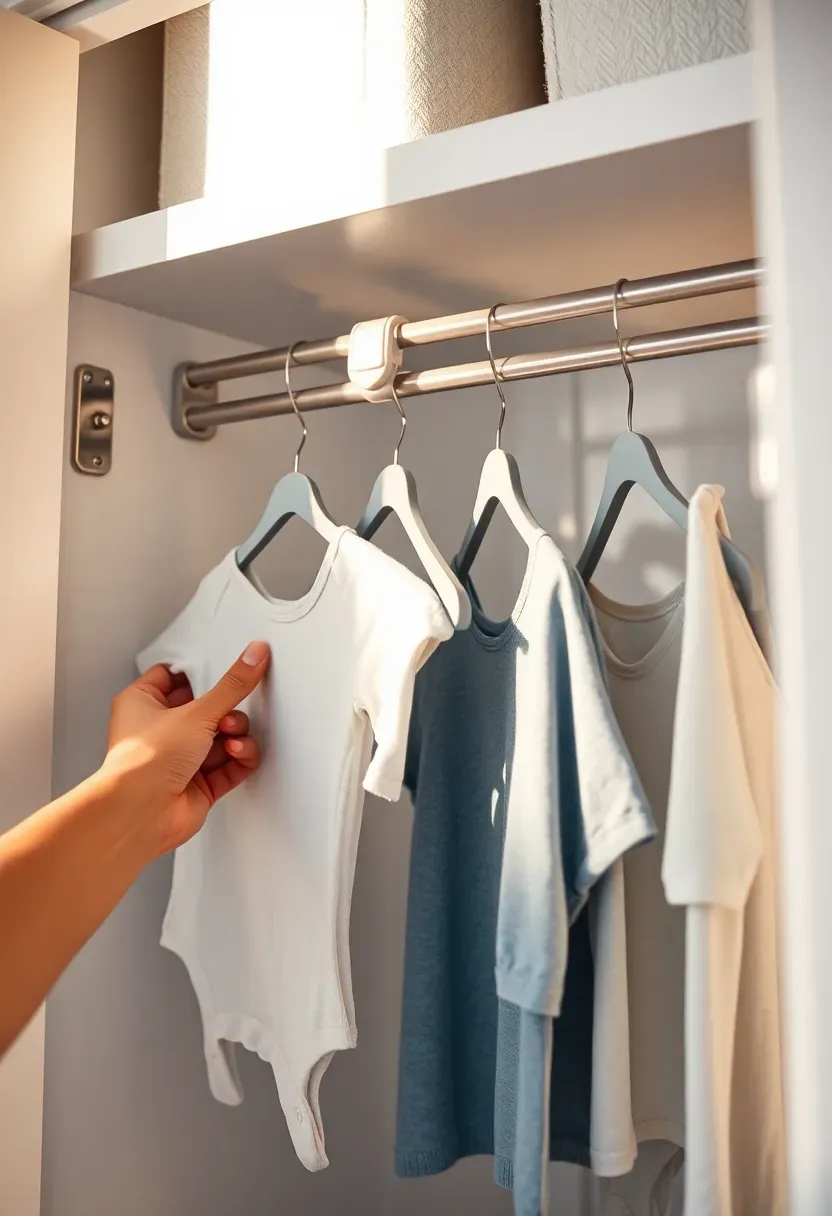
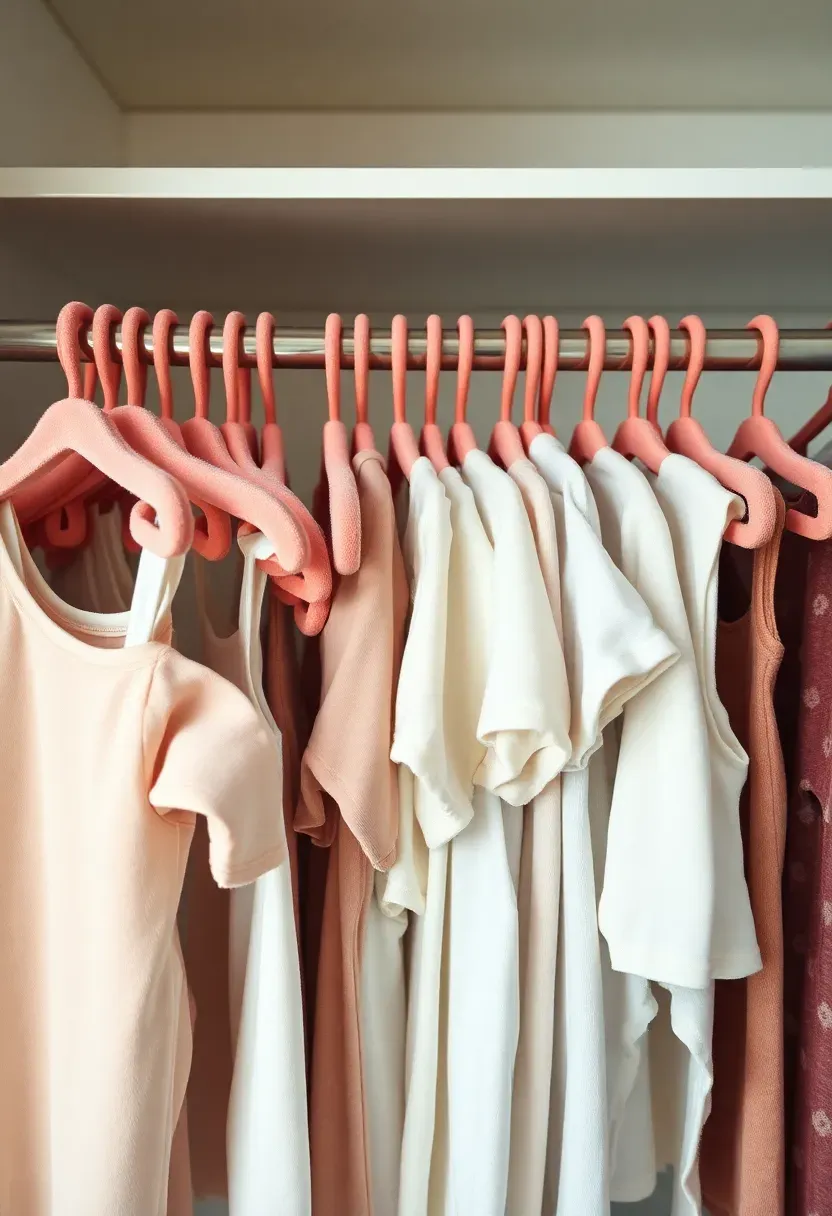
Standard plastic hangers are thick, slippery, and waste rod space. Slim velvet hangers are roughly one-third the thickness, grip fabric so clothes don't slide off, and create a uniform visual line that makes the closet look intentional rather than chaotic. Switching every hanger in the baby closet to velvet typically frees up 25 to 30 percent more rod space — enough for an extra season's worth of clothing.
Should You Buy Baby-Sized or Standard?
Baby-sized velvet hangers (10 to 12 inches wide) fit newborn to 2T clothing perfectly. Standard hangers distort small necklines and create shoulder bumps. The baby-sized versions cost slightly more per unit but prevent stretched-out collars on those outfits you actually want to preserve.
Recommended
Items for this idea
21. Top Shelf Long-Term Storage
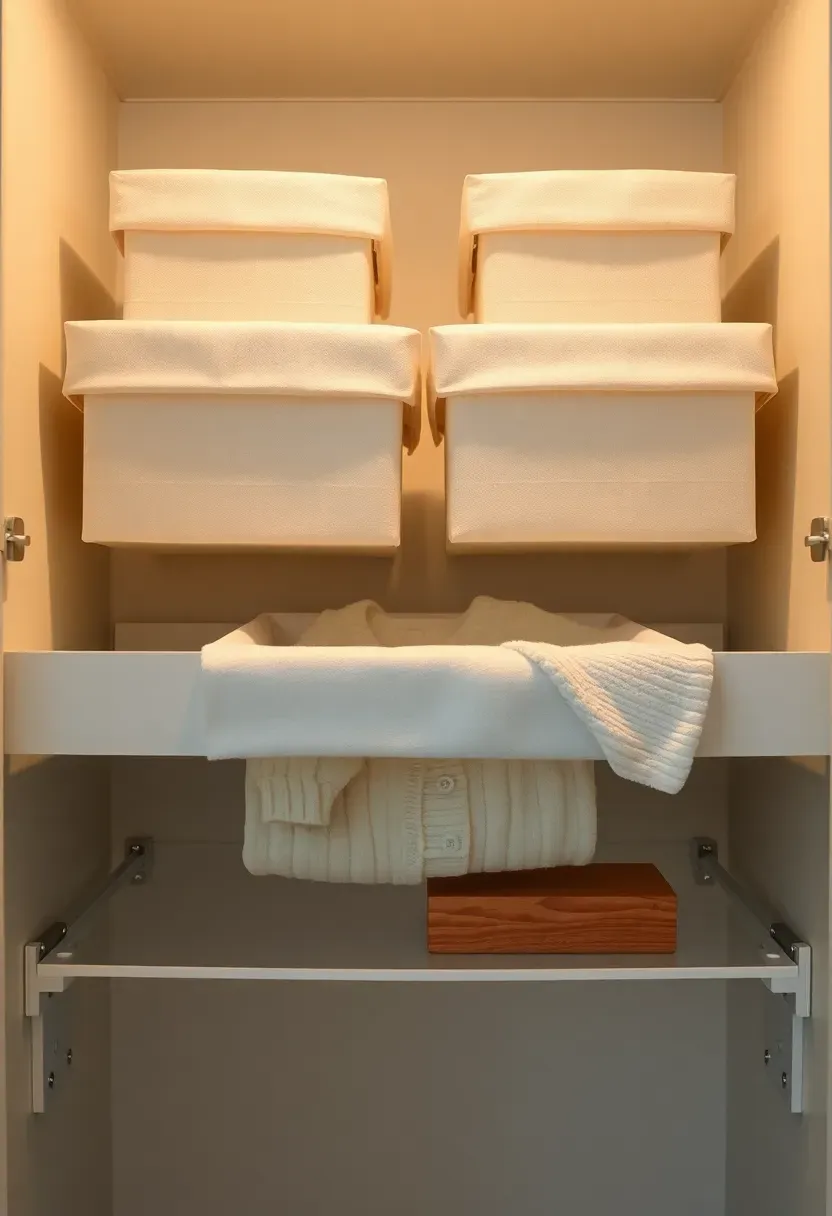
The top shelf is for things you need rarely but want to keep: keepsake outfits, the coming-home-from-hospital set, heirloom blankets, photo books of the nursery setup. Use uniform boxes or bins with lids. Label clearly. Place the heaviest items closest to the shelf brackets for stability.
Practical Recommendations
- Acid-free tissue paper between keepsake clothing layers prevents yellowing
- A single cedar block per box deters moths without chemicals
- Revisit the top shelf every six months to prevent it from becoming a forgotten storage dump
- Keep one open spot for quick stashing when guests arrive and clutter needs to vanish
22. Curtain Instead of Closet Door
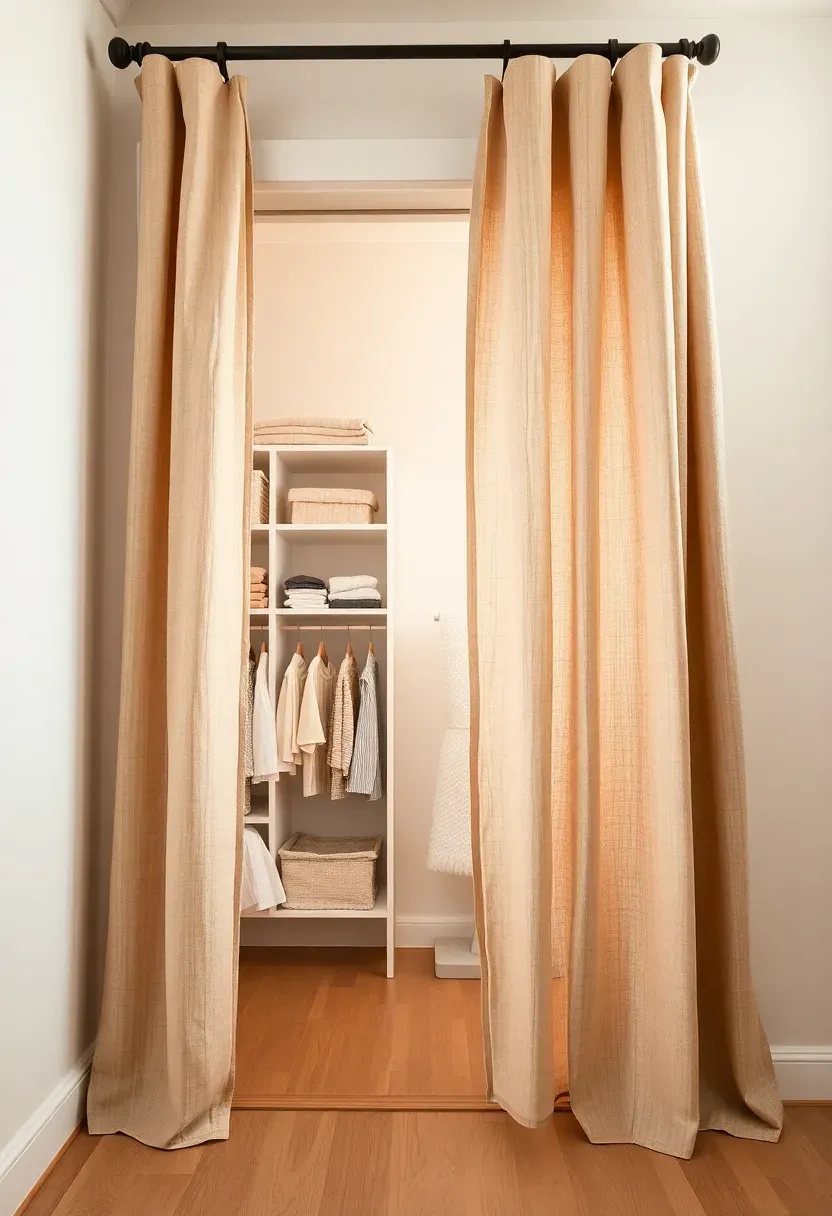
Closet doors — whether sliding, bifold, or hinged — all demand clearance space. A floor-to-ceiling curtain replaces the door entirely, eliminating the swing radius, softening the room's acoustics, and adding a layer of texture that makes the nursery feel warmer. Linen, cotton canvas, or light muslin work well. Mount the curtain rod 2 inches above the closet frame and 4 inches wider on each side to ensure full coverage.
Is It Worth It?
Choose a curtain if: the closet is in the nursery's main sightline, you want a softer look, or the existing doors are noisy and sticky. Keep doors if: you need the closet to muffle sound (stored white noise machine, for instance), or the room gets dusty quickly and you want sealed storage.
Recommended
Items for this idea
23. Grow-With-Me Modular Closet System
The Long View
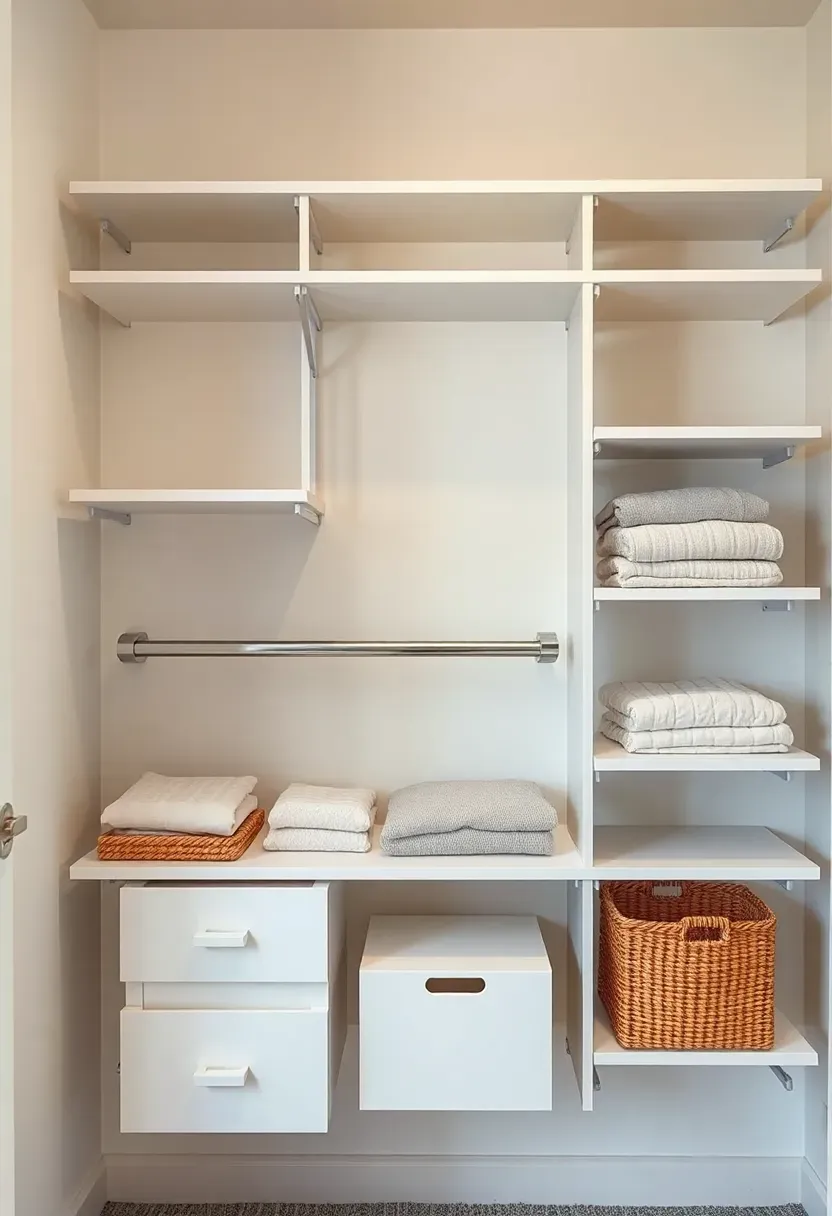
A baby closet has a lifespan of about 18 months before the child's needs shift dramatically. A modular closet system — with adjustable shelf heights, removable rods, and interchangeable drawer units — adapts without replacement. At 6 months, the system holds tiny folded items on closely spaced shelves. At 3 years, those shelves spread apart for larger clothing and toy bins. At 6 years, the rod raises to adult height and the shelves hold school supplies and books.
How to Choose a System
Look for wall-mounted track systems rather than freestanding units. Track systems anchor into studs and support heavier loads as the child's belongings grow in both size and weight. Brands offering individual component purchases (rather than fixed kits) give you the most flexibility. Budget roughly 30 percent more than a basic wire shelf setup — the long-term adaptability pays for itself by eliminating two or three closet overhauls over the next decade.
What to Watch Out For
- Measure twice before drilling — track systems are harder to reposition than freestanding shelves
- Start with fewer components than you think you need; add as the child grows
- Choose a finish (white, wood-tone, matte black) that works beyond the nursery aesthetic
Quick FAQ
Is it worth investing in a custom baby closet system? It depends on whether you plan to use the same room for the child long-term. A modular system that grows with the child from infancy through elementary school justifies the upfront cost. If the room will become a guest bedroom in two years, basic bins and a double rod are more practical.
Should I remove closet doors to gain more space? Removing doors adds usable width — especially with bifold doors that eat 12 to 18 inches when open. Replace with a curtain or leave the opening bare. The only downside is dust accumulation on exposed clothing, which matters more in dry or pet-heavy households.
Which organizer type lasts longest through multiple children? Woven seagrass and cotton rope baskets hold up through years of use and look better with age. Fabric bins tend to stain and stretch after two to three years of heavy use. Plastic bins last longest physically but yellow and crack with time.
Can I organize a baby closet without buying anything new? Absolutely. Repurpose shoe boxes as drawer dividers, use binder clips as size dividers on the rod, stack books as shelf risers, and fold receiving blankets into shelf liners. The system matters more than the products.
What is the single most impactful upgrade for a messy baby closet? A double hanging rod combined with size dividers. These two additions — which cost under twenty dollars total — solve the two biggest nursery closet problems: wasted vertical space and size confusion.
A baby closet is not a project you finish once and forget. It is a living system that shifts every few months as your child grows, seasons change, and hand-me-downs arrive in mysterious garbage bags from well-meaning relatives. Start with the ideas that match your closet's size and your current sanity level, then layer in more structure as you figure out what your family actually needs. The best organized closet is the one you can maintain at 2 a.m. without thinking.
Pinterest cover for 23 Baby Closet Ideas for a Perfectly Organized Nursery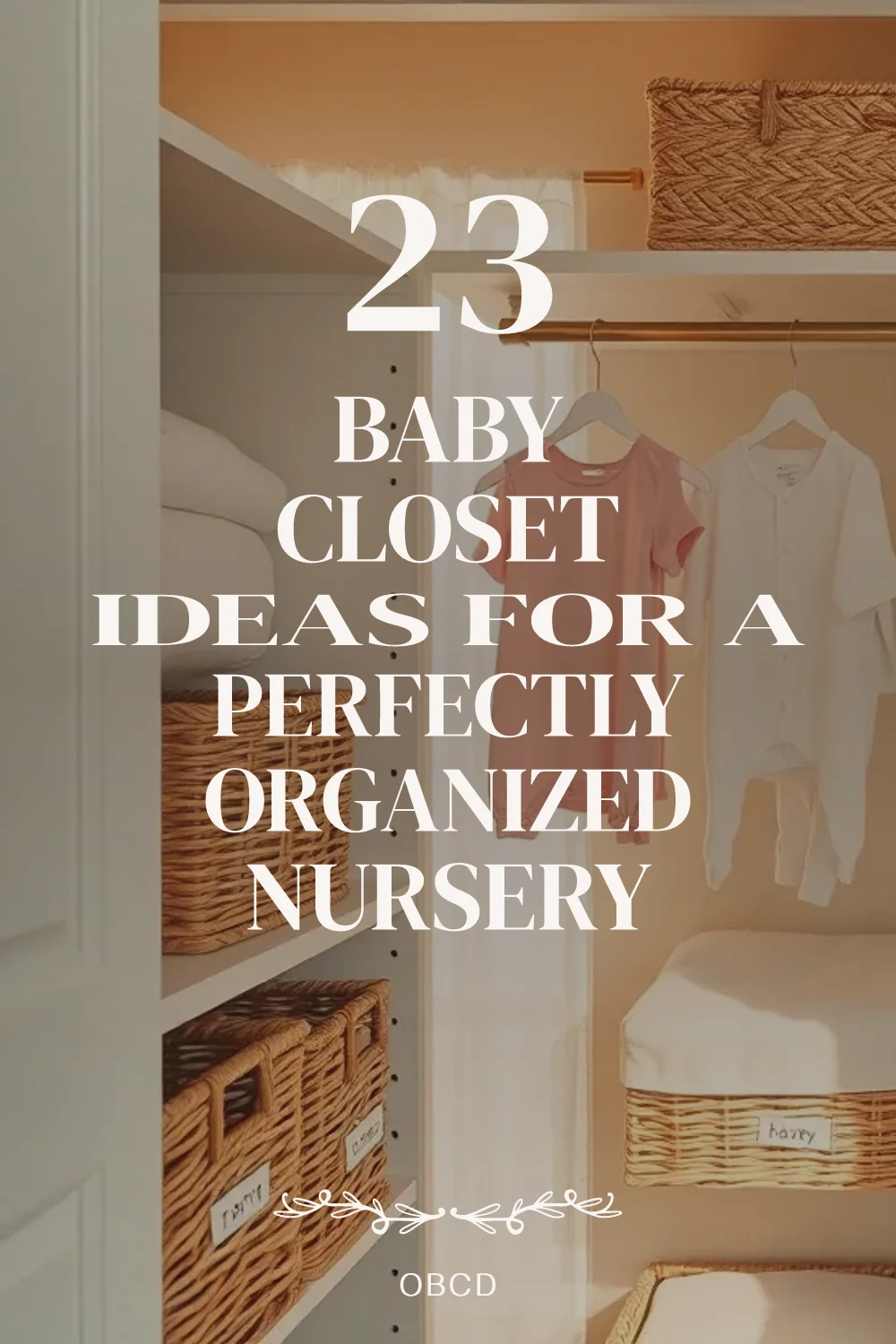
About the author
OBCD
CGI visualization and interior design content. We create detailed 3D renders and curate practical design ideas for every room in your home.