17 Minimalist Fireplace Living Room Ideas for Cozy Simplicity
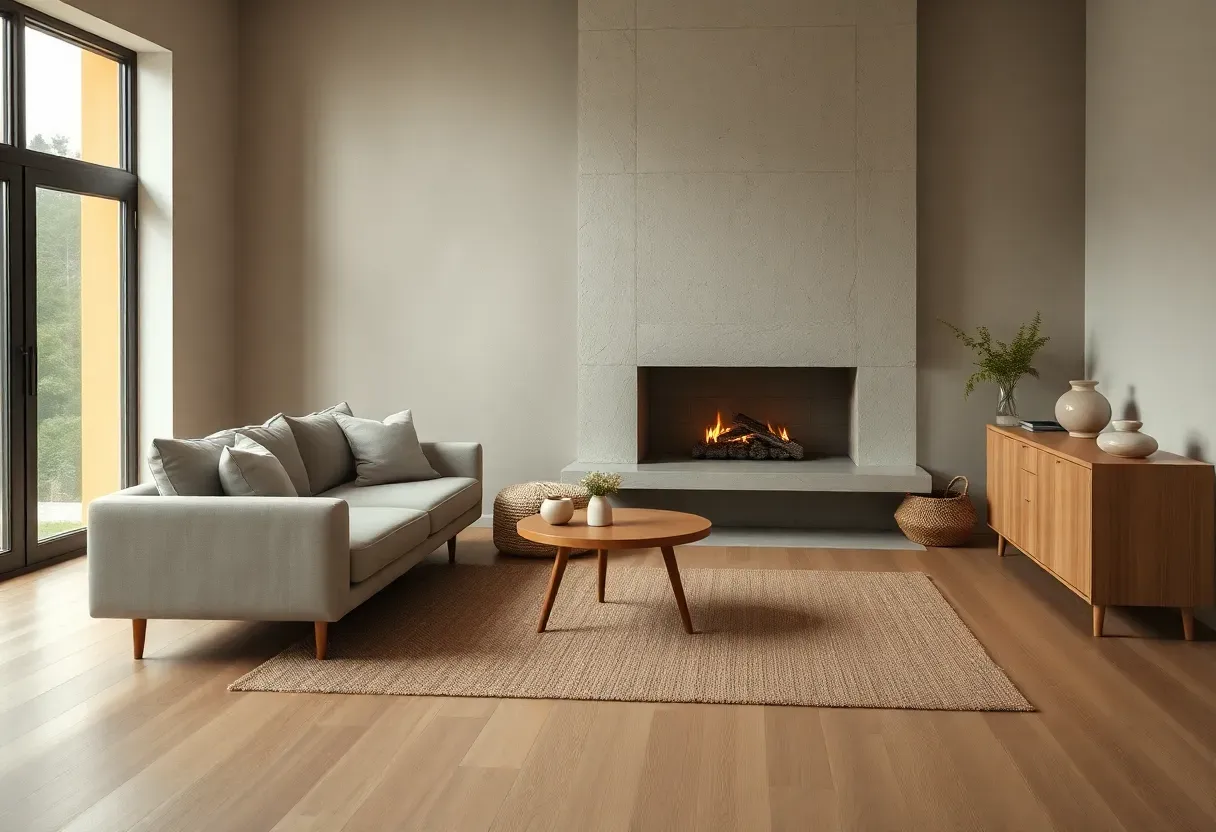
The best minimalist fireplace living room ideas start with the layout, not the decor. When seating, storage, and circulation are planned around the hearth, the entire room feels warm and intentional. These 17 ideas focus on room-scale arrangements, from cozy fireplace living room layouts with zoned seating to modern fireplace wall systems with hidden storage.
Whether you have a small apartment or an open-plan space, each idea uses warm materials, soft lighting, and simple furniture to keep the fireplace as a calm focal point. Use them to build a living room that stays cozy, balanced, and easy to maintain.
Quick FAQ
Which minimalist fireplace living room layouts feel most cozy?
Centered layouts with a low sofa facing the hearth feel the most welcoming. A single rug island helps define the zone.
How do I keep a minimalist fireplace living room from feeling empty?
Use warm materials like wool and light oak to add texture. Keep lighting layered and warm for comfort.
Should the TV be above the fireplace in a minimalist living room?
Only if the wall is planned as a media wall and the TV sits low enough for comfortable viewing. Sliding panels can hide it when not in use.
What colors work best for a cozy minimalist fireplace living room?
Warm neutrals like sand, clay, and soft beige keep the room calm. Avoid high-contrast palettes that overpower the hearth.
How much clearance should I leave around the fireplace zone?
Aim for a 30-inch circulation path to keep the room open and safe. Keep seating at least 36 inches from the firebox.
As an Amazon Associate I earn from qualifying purchases.
Table of Contents
- 1. Centered hearth wall with low sofa axis
- 2. L-shaped seating facing the fireplace wall
- 3. Symmetric chairs around a round hearth table
- 4. Built-in storage flanks with slim bench
- 5. Floating mantel with low cabinet run
- 6. Corner fireplace with diagonal seating plan
- 7. Window seat paired with fireplace zone
- 8. Two-zone layout: hearth plus reading nook
- 9. Minimal fireplace with long bench opposite
- 10. Firewood niche with low media cabinet
- 11. Plaster surround with earth-tone rug island
- 12. Sliding panel to conceal the TV wall
- 13. Double-sided fireplace with split seating
- 14. Stone hearth ledge with floor cushions
- 15. Microcement floor with wool seating zone
- 16. Minimal art rail above a calm mantel
- 17. Future-proof modular layout around the hearth
1. Centered hearth wall with low sofa axis
A minimalist fireplace living room feels grounded when the hearth wall anchors a centered, low sofa axis. Place the sofa directly opposite the fireplace and align a 6x9 rug with the firebox for a clean visual line. Keep the mantel simple and low so the fireplace remains the calm focal point. For contrast, avoid heavy built-ins and upgrade to a single floating shelf instead. This creates a full-room layout that feels open and balanced.
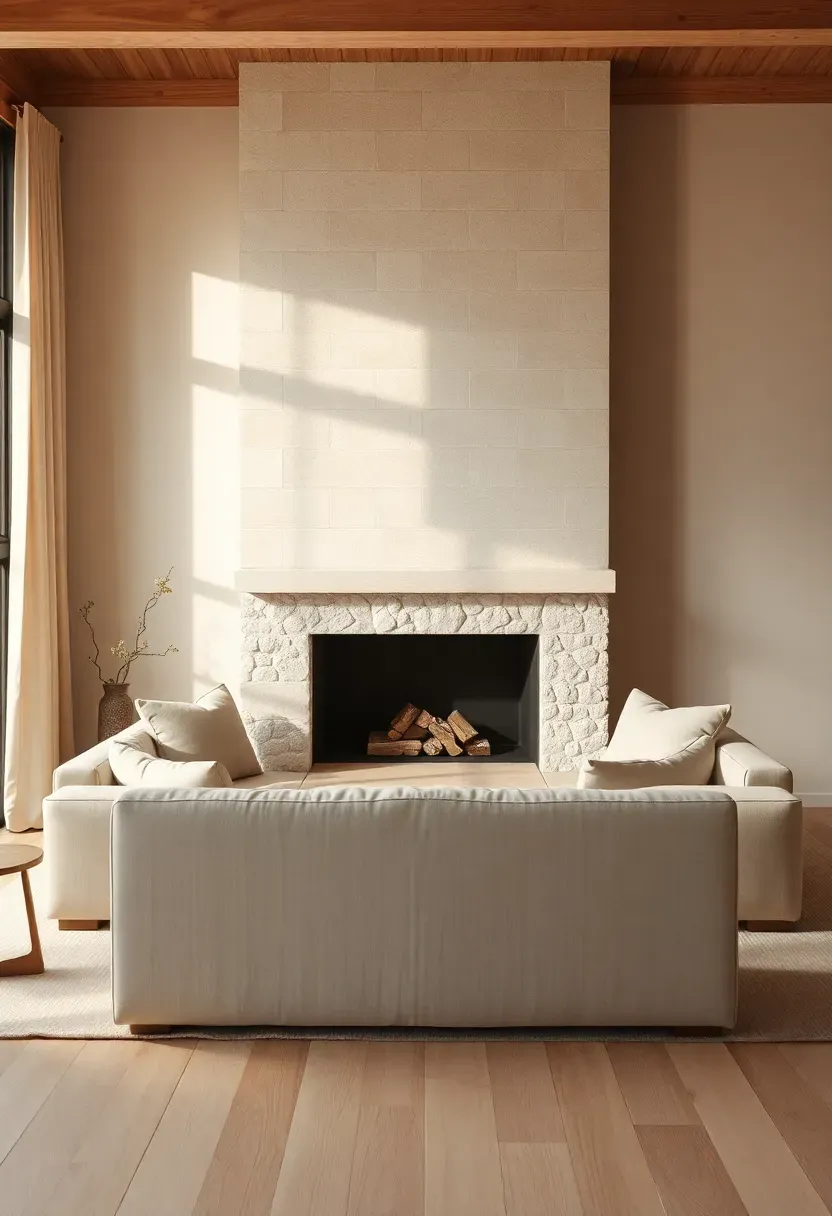
Use a 36-inch coffee table and keep 18 inches of clearance around it for comfortable circulation. The trade-off is less storage, so place a low cabinet along the side wall for hidden items. Add a wool throw in warm beige to soften the seating without visual clutter. If you need a stronger contrast line, use a matte black sconce instead of bold art. The room feels calm, warm, and intentionally composed.
Tips
- Do: keep sofa depth under 40 inches for smaller rooms.
- Don’t: place tall shelving beside the hearth wall.
- Do: align the rug edge with the fireplace opening.
Best for: rooms that need a single, clear focal axis.
What this gives you: a centered hearth layout with calm visual flow.
We picked a few things that go well with this idea: Bedsure 6x9 Faux Wool Area Rug (★4.2), SAFAVIEH Natura Handmade Wool Blend Rug (6x9) (★4.6) and SAFAVIEH Abstract Wool Viscose Rug (6x9) (★3.5). As an Amazon Associate we earn from qualifying purchases.
2. L-shaped seating facing the fireplace wall
This minimalist fireplace living room plan pairs an L-shaped sofa with a clean media wall to keep the hearth central. Place the sectional in the corner and keep a 24-inch circulation path along the main axis. Use a low cabinet run under 16 inches deep so the room stays open. For contrast, avoid open shelving and upgrade to closed storage that hides cables. This produces a clear, full-room plan that feels tidy and warm.
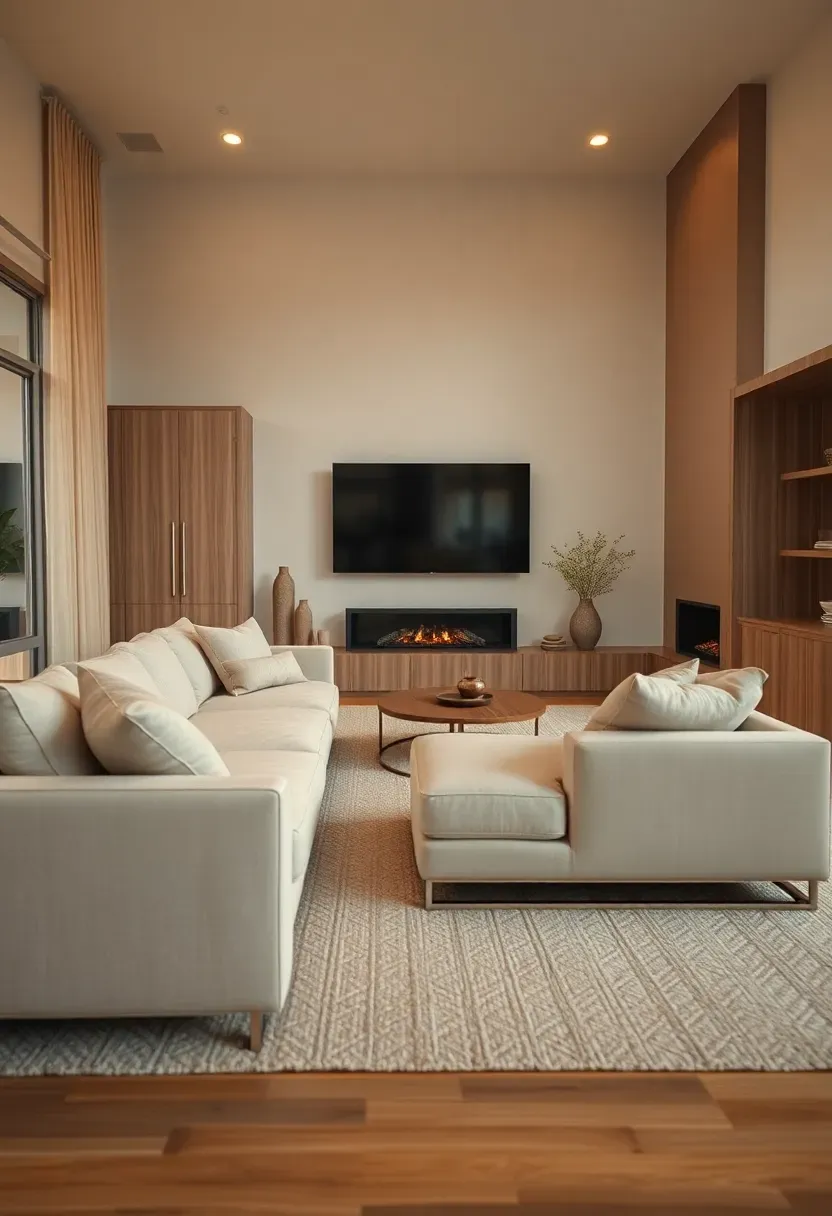
Placement note: Keep the media cabinet under 20 inches high for calm sightlines.
Use a 30-inch round table to soften the sectional geometry and a 5x8 rug to anchor the seating. The trade-off is less side storage, so add a slim console behind the sofa for baskets. If you want contrast, use matte black hardware instead of darker furniture. Keep lighting warm at 2700K to enhance the hearth glow. The room stays cozy while maintaining a clean layout.
For a calm media wall approach, see 21 Cozy Mid Century Modern Living Room Decor Ideas to Try.
Tips
- If the sectional feels bulky, then choose slim arms under 6 inches.
- If storage is tight, then add shallow drawers for remotes.
What this gives you: a compact, hearth-focused layout with hidden storage.
We picked a few things that go well with this idea: Modern Boucle Accent Chair Solid Wood Frame (★5.0), KINWELL Sherpa Swivel Barrel Chair (34") (★4.9) and Modern Boucle Lounge Chair Wood Frame. As an Amazon Associate we earn from qualifying purchases.
3. Symmetric chairs around a round hearth table
This minimalist fireplace living room layout uses symmetry to create a cozy conversation circle around the hearth. Place two lounge chairs facing the fireplace and add a small round table between them. Keep the chairs low and neutral so the fire remains the focal point. For contrast, avoid oversized chairs and upgrade to compact silhouettes under 30 inches wide. The plan feels intentional and welcoming without a large sofa.
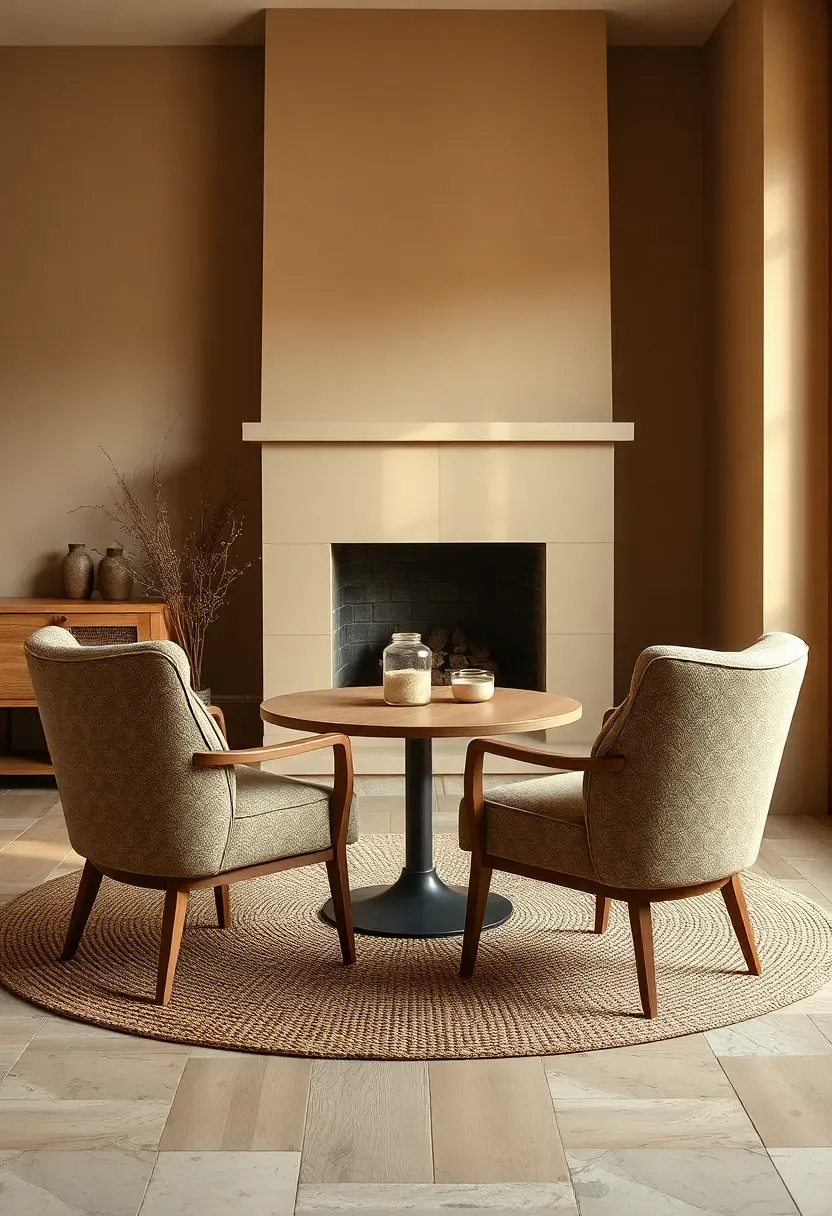
Why it works: symmetry keeps the focus on the hearth while seating feels balanced.
Use a 28-inch table and a 5x7 rug to anchor the grouping. The trade-off is less seating capacity, so add a low bench along the wall for guests. Keep lighting soft with a single floor lamp at 2700K. If you want contrast, choose a smoked glass tabletop instead of dark wood. This creates a calm, full-room plan that still feels social.
Tips
- Pro: paired chairs keep sightlines open around the fire.
- Con: extra seating can be limited.
- Fix: add a slim bench under the window.
Best for: small rooms that need a light, social layout.
What this gives you: a balanced hearth circle with open flow.
We picked a few things that go well with this idea: Beige Minimalist Ceramic Vase (6") (★4.6), Minimalist Ceramic Vases Set (3-Pack) (★4.5) and Large Rustic Ceramic Vase (9.8") (★4.9). As an Amazon Associate we earn from qualifying purchases.
4. Built-in storage flanks with slim bench
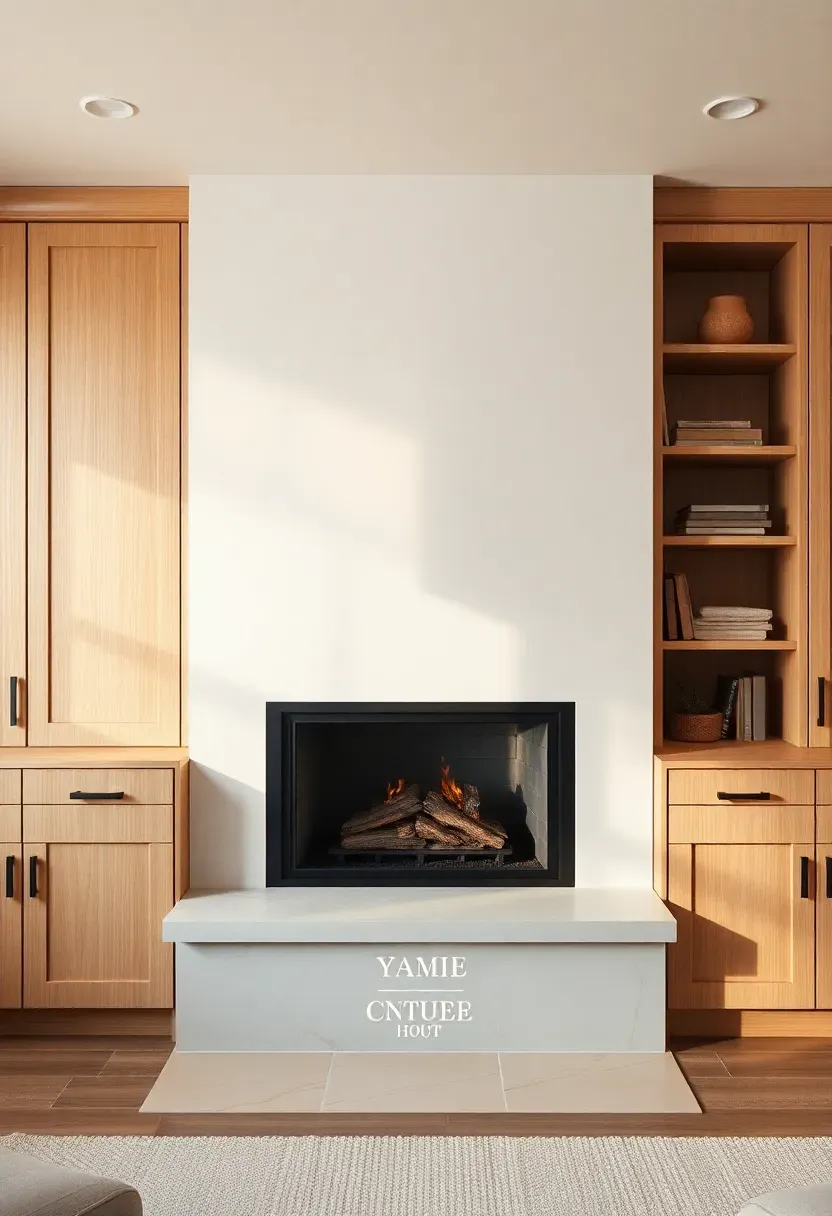
This minimalist fireplace living room plan uses built-in storage flanking the hearth and a slim bench to keep the wall cohesive. Run closed cabinets on both sides and keep the bench under the mantel line to avoid visual clutter. The supporting term here is built-in storage, which keeps the room clean without extra furniture. For contrast, avoid mixed materials and keep the flanks in a single warm tone. The result is a full-room focal wall that feels calm.
Recommended
Items for this idea
Common mistake: using open shelves that make the wall look busy.
Keep the bench depth under 16 inches and use a single 2-inch cushion in warm linen. The trade-off is less display space, so place one ceramic object on the mantel only. Add a 6x9 rug to anchor the seating zone and keep the coffee table light. If you want contrast, use matte black pulls instead of darker wood. The layout feels tailored and composed without extra decor.
For built-in wall inspiration, see 21 Boho Living Room Decor Ideas for a Cozy Home.
Tips
- Keep bench height around 18 inches for comfort.
- Use push-latch doors to avoid hardware clutter.
- Store bulky items behind the flanks, not on top.
What this gives you: a cohesive hearth wall with hidden storage.
5. Floating mantel with low cabinet run
This minimalist fireplace living room design uses a floating mantel and a low cabinet run to keep the wall light. Keep the mantel at 54 inches and run a 72-inch cabinet below for storage. The supporting term here is floating mantel, which keeps the fireplace airy and modern. For contrast, avoid bulky mantels and upgrade to a slim wood slab instead. This creates a complete wall system that feels simple and warm.
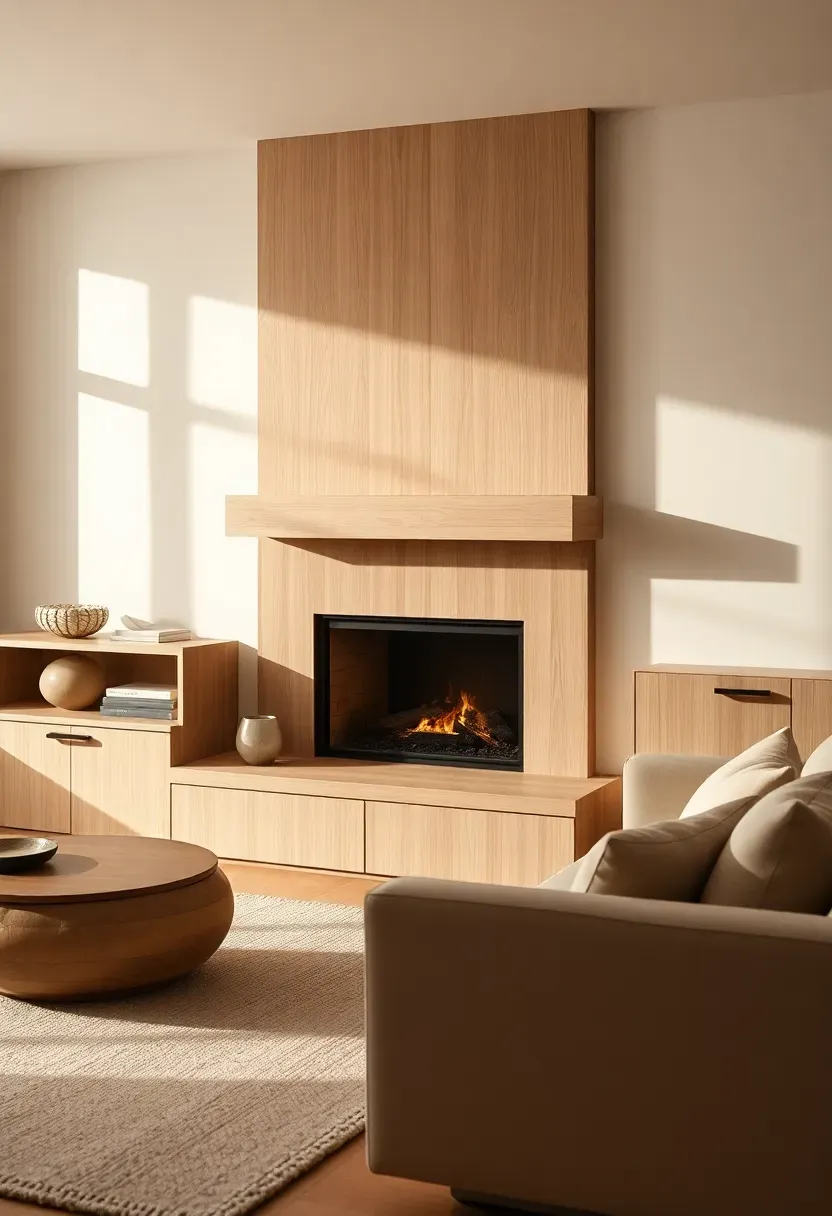
Keep the cabinet depth around 14 inches so the room stays open. The trade-off is less display space, so keep the mantel to one sculptural piece only. Add a 5x8 rug to anchor the seating and keep the coffee table under 36 inches wide. If you want contrast, use a matte black sconce instead of dark decor. The room reads calm and intentionally minimal.
Tips
- Do: keep the mantel thickness under 3 inches.
- Don’t: stack layered objects along the mantel line.
- Do: hide media devices inside the low cabinet.
Budget/Time: A floating mantel plus cabinet typically runs $400-$1,200.
What this gives you: a light, modern hearth wall with storage.
6. Corner fireplace with diagonal seating plan
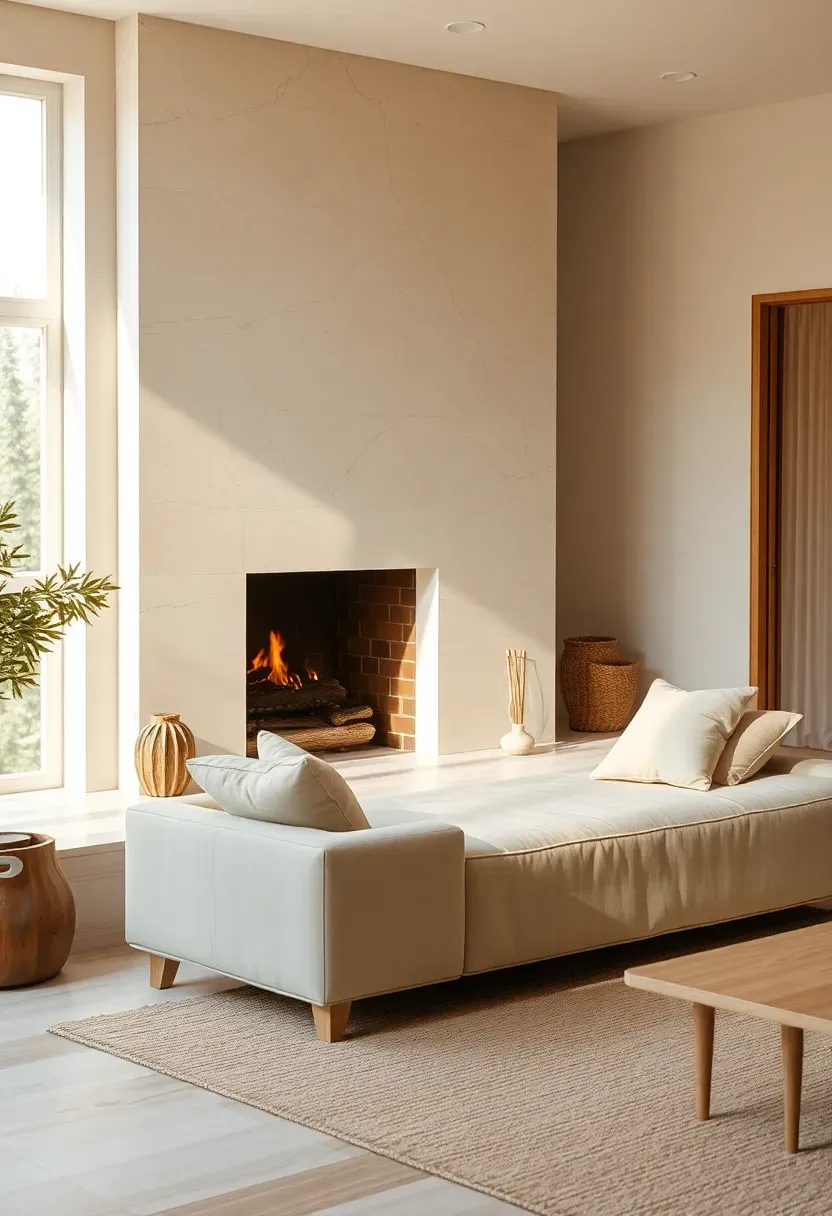
A minimalist fireplace living room can feel cozy when a corner fireplace is paired with diagonal seating. Place the sofa at a 15-degree angle to face the corner and keep a 30-inch circulation path behind it. The supporting term here is corner fireplace, which makes the layout feel more dynamic. For contrast, avoid straight-on seating and upgrade to a slight diagonal that softens the room. This creates a full-room plan that uses awkward corners well.
Recommended
Items for this idea
Placement note: Keep the sofa at least 36 inches from the firebox.
Use a 5x8 rug angled to match the seating and keep the coffee table round for flow. The trade-off is less wall space for art, so use one tall floor lamp instead. If you want contrast, use a matte black table base rather than dark textiles. Add a small basket for firewood near the corner to keep the hearth practical. The layout feels intentional and warm without crowding the room.
For angled seating ideas, see 21 Scandinavian Mid Century Living Room Decor Ideas.
Tips
- If the room feels tight, then choose a loveseat instead of a full sofa.
- If circulation is awkward, then shift the rug rather than the fireplace.
What this gives you: a corner-focused layout that feels cozy and balanced.
7. Window seat paired with fireplace zone
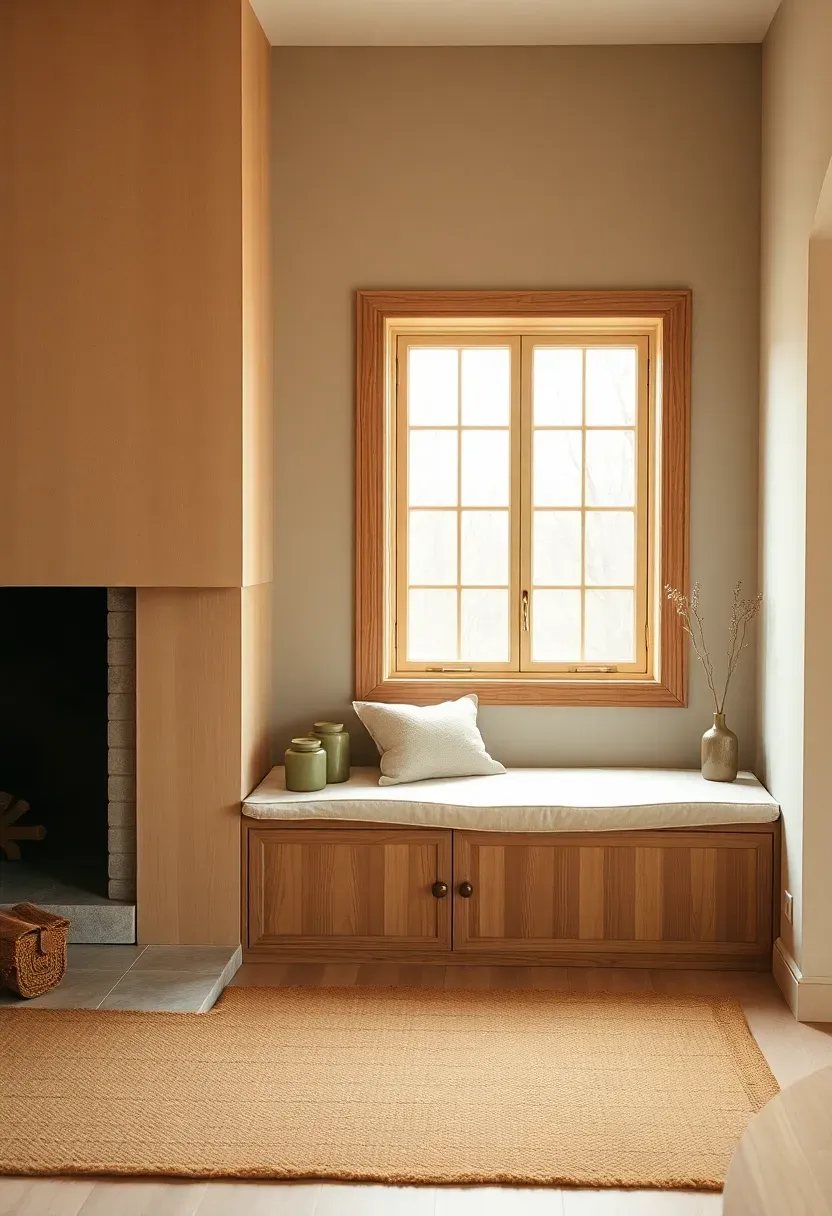
This minimalist fireplace living room uses a window seat to extend the hearth zone and add extra seating. Build a 16-inch-deep bench below the window and keep the sofa opposite the fireplace. The supporting term here is window seat, which creates a second calm zone without adding chairs. For contrast, avoid bulky ottomans and upgrade to a built-in seat with hidden storage. The room feels cohesive and comfortable.
Why it works: the seat adds function while keeping the hearth wall uncluttered.
Use a 2-inch cushion and keep the wall above the seat clear for light. The trade-off is less flexibility, so keep other pieces light and movable. Add a 4x6 rug near the seat to define the nook and place a floor lamp nearby. If you want contrast, use a matte black sconce instead of patterned pillows. This builds a full-room layout with two calm zones.
Tips
- Pro: built-in seating reduces the need for extra chairs.
- Con: built-ins limit future layout changes.
- Fix: keep the rest of the furniture modular and light.
Best for: rooms with large windows beside the fireplace.
What this gives you: a paired seating plan that feels calm and practical.
8. Two-zone layout: hearth plus reading nook
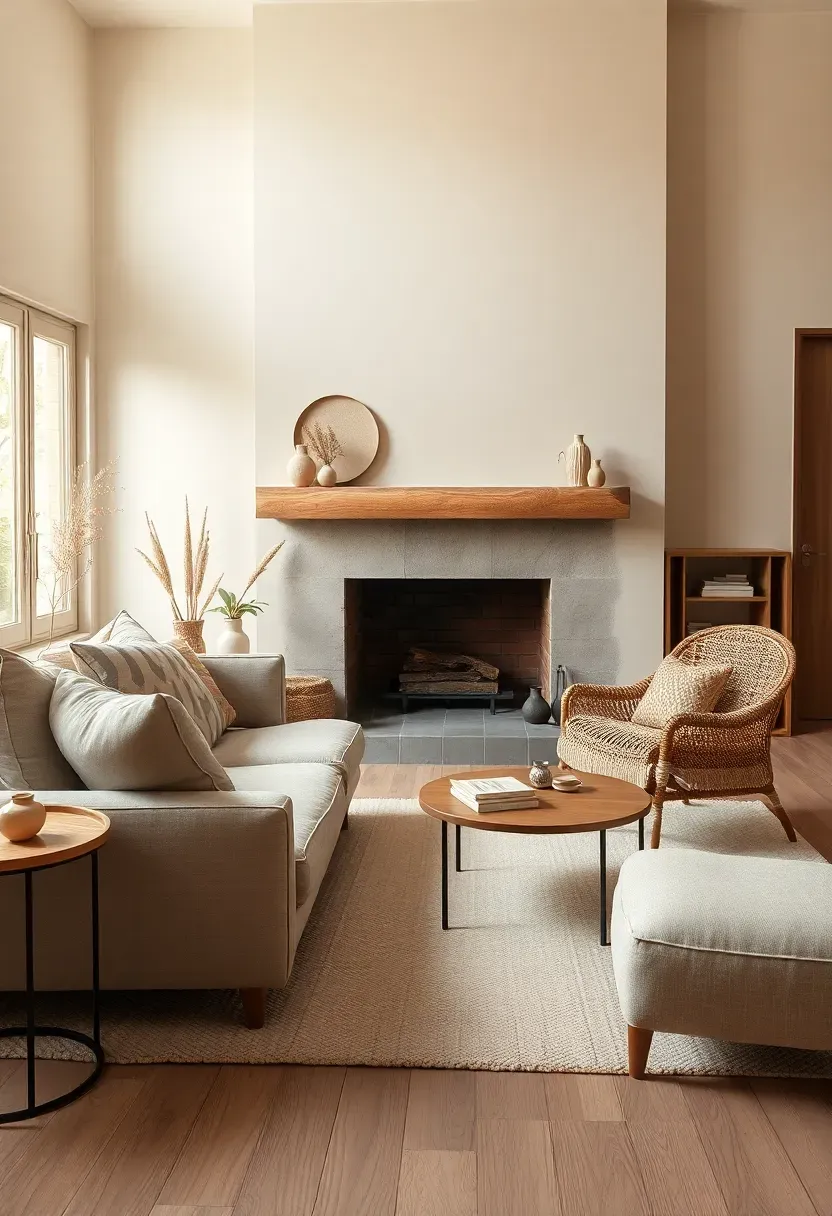
This minimalist fireplace living room layout splits the space into two clear zones: a hearth seating area and a reading nook. Place the main sofa facing the fireplace and use a single chair in a corner for reading. The supporting term here is reading nook, which adds function without extra furniture. For contrast, avoid large recliners and upgrade to a slim lounge chair instead. The room stays warm while adding a second use area.
Recommended
Items for this idea
Common mistake: filling the second zone with too many small pieces.
Use a 24-inch round table in the nook and a single floor lamp at 2700K. The trade-off is less open floor, so keep the main rug 6x9 to consolidate the hearth zone. Add a small side basket for books rather than extra shelves. If you want contrast, use a charcoal lamp base and keep upholstery light. This layout feels intentional and cozy without clutter.
For compact zoning ideas, see 17 Stunning Green Couch Living Room Ideas for Cozy Comfort.
Tips
- Keep the reading chair under 30 inches wide.
- Place the nook rug at least 12 inches from the hearth rug.
- Use one lamp for the nook, not two.
What this gives you: a hearth-centered room with a useful side zone.
9. Minimal fireplace with long bench opposite
This minimalist fireplace living room uses a long bench opposite the hearth to keep the room open while adding seating. Keep the bench aligned with the fireplace opening and use a single cushion to soften the line. The supporting term here is bench seating, which feels lighter than a second sofa. For contrast, avoid heavy upholstered benches and upgrade to a slim wood seat instead. This creates a simple layout with an airy feel.
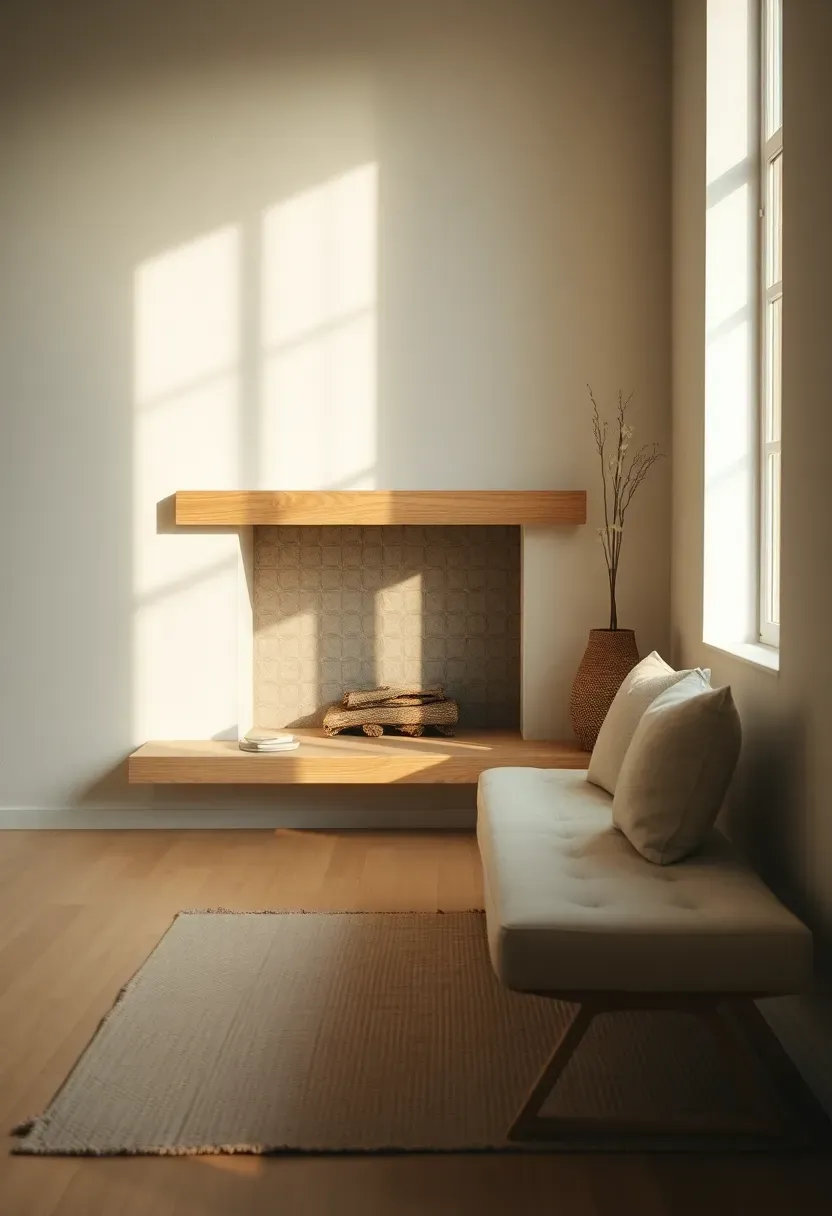
Use a 6x9 rug under the main seating and keep the bench depth around 14 inches. The trade-off is lower back support, so add one lumbar cushion and keep the rest clean. A slim coffee table helps maintain circulation while keeping the hearth central. If you want contrast, add a matte black table base instead of darker textiles. The room reads minimal but still warm and usable.
Tips
- Do: keep bench height around 18 inches for comfort.
- Don’t: add bulky storage under the bench front.
- Do: align the bench length with the hearth width.
Best for: narrow rooms that need light seating.
What this gives you: a light, open layout with extra seating.
10. Firewood niche with low media cabinet
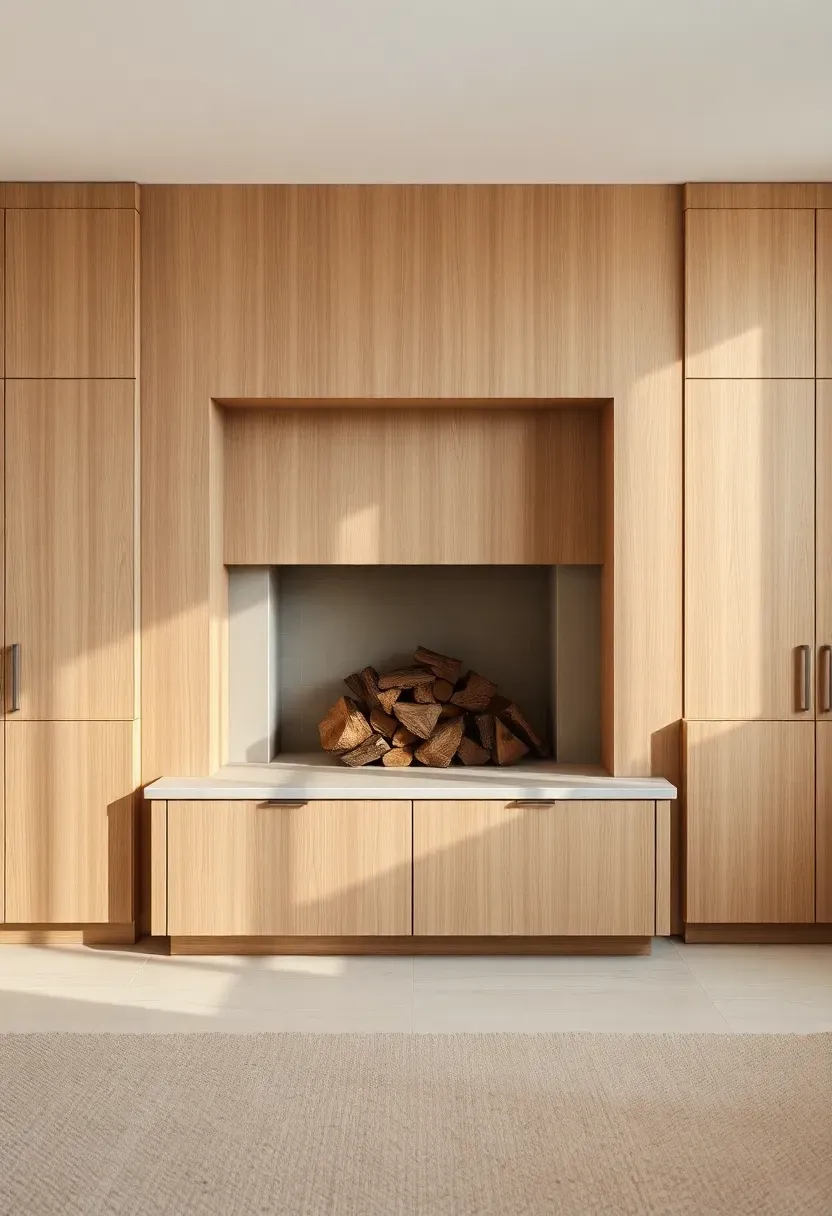
This minimalist fireplace living room design adds a built-in firewood niche beside a low media cabinet. Place the cabinet under the TV and carve a narrow vertical niche for logs to keep the wall balanced. The supporting term here is firewood niche, which adds texture without extra decor. For contrast, avoid messy stacks and upgrade to a single vertical niche with clean edges. The room feels curated and functional around the hearth.
Recommended
Items for this idea
Placement note: Keep the niche width under 16 inches to avoid a heavy look.
Use a 5x8 rug to anchor the seating and keep the sofa centered on the fireplace wall. The trade-off is less open wall, so limit the mantel to one object. Add a basket of kindling only if it fits inside the niche. If you want contrast, use black fireplace tools and keep cabinets light. This layout keeps the hearth practical while staying minimal.
For warm material balance, see 19 Inspiring Minimalist Living Room Ideas with Earth Tones for a Comfortable Living Space.
Tips
- If the niche feels empty, then add one stacked log bundle.
- If the wall looks busy, then remove one cabinet object.
What this gives you: a practical hearth wall with controlled texture.
11. Plaster surround with earth-tone rug island
This minimalist fireplace living room uses a plaster surround and an earth-tone rug island to create warmth without extra decor. Keep the surround smooth and matte, then center a 6x9 rug in oat or clay. The supporting term here is plaster surround, which adds texture without bold color. For contrast, avoid glossy tile and upgrade to a soft plaster finish instead. This creates a calm, room-scale plan that feels welcoming.
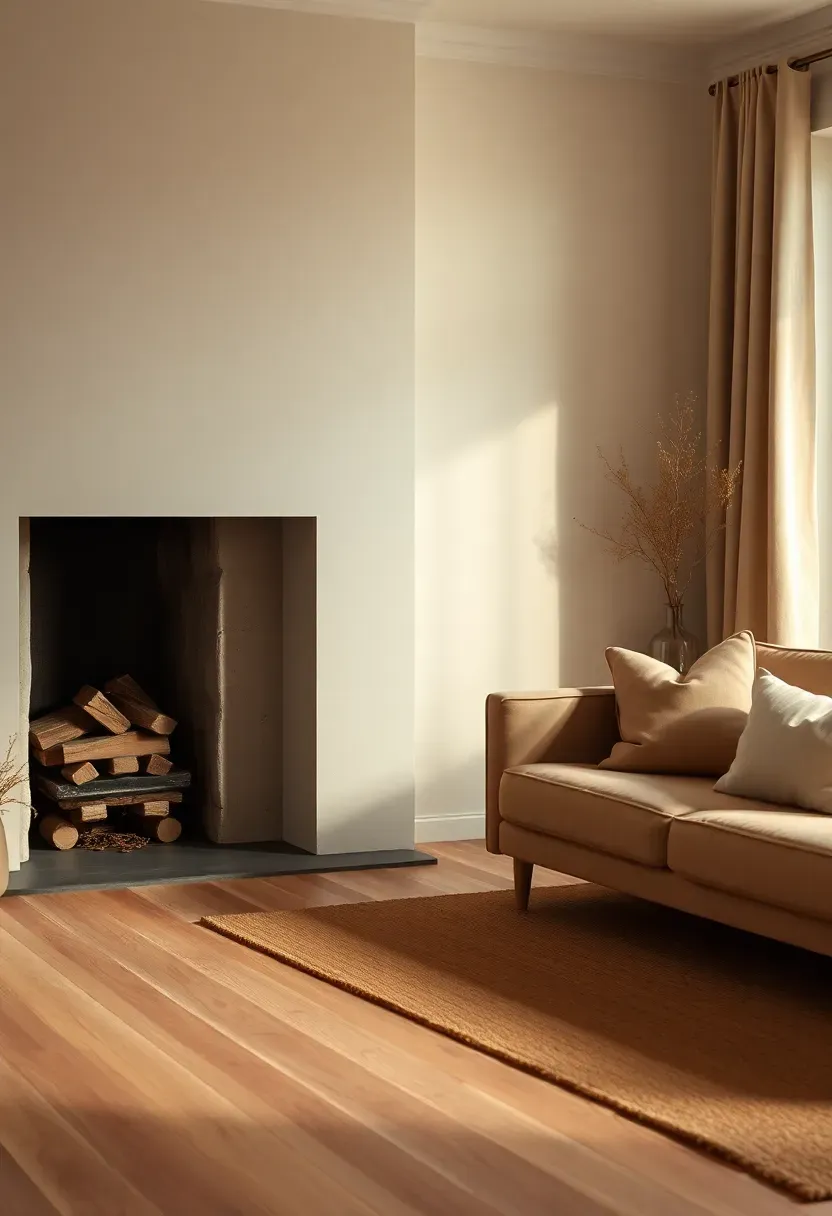
Why it works: the rug anchors the seating while the plaster keeps the wall quiet.
Use a low, 14-inch coffee table and keep the sofa depth under 38 inches. The trade-off is less accent color, so add one terracotta pillow for warmth. Keep the mantel clear or add a single ceramic piece only. If you want contrast, use a matte black sconce rather than dark textiles. The layout stays calm and cohesive with simple materials.
Tips
- Pro: plaster adds depth without pattern.
- Con: it can mark if bumped.
- Fix: use a durable matte sealer for protection.
Best for: rooms that need warmth without heavy decor.
What this gives you: a calm hearth wall with grounded warmth.
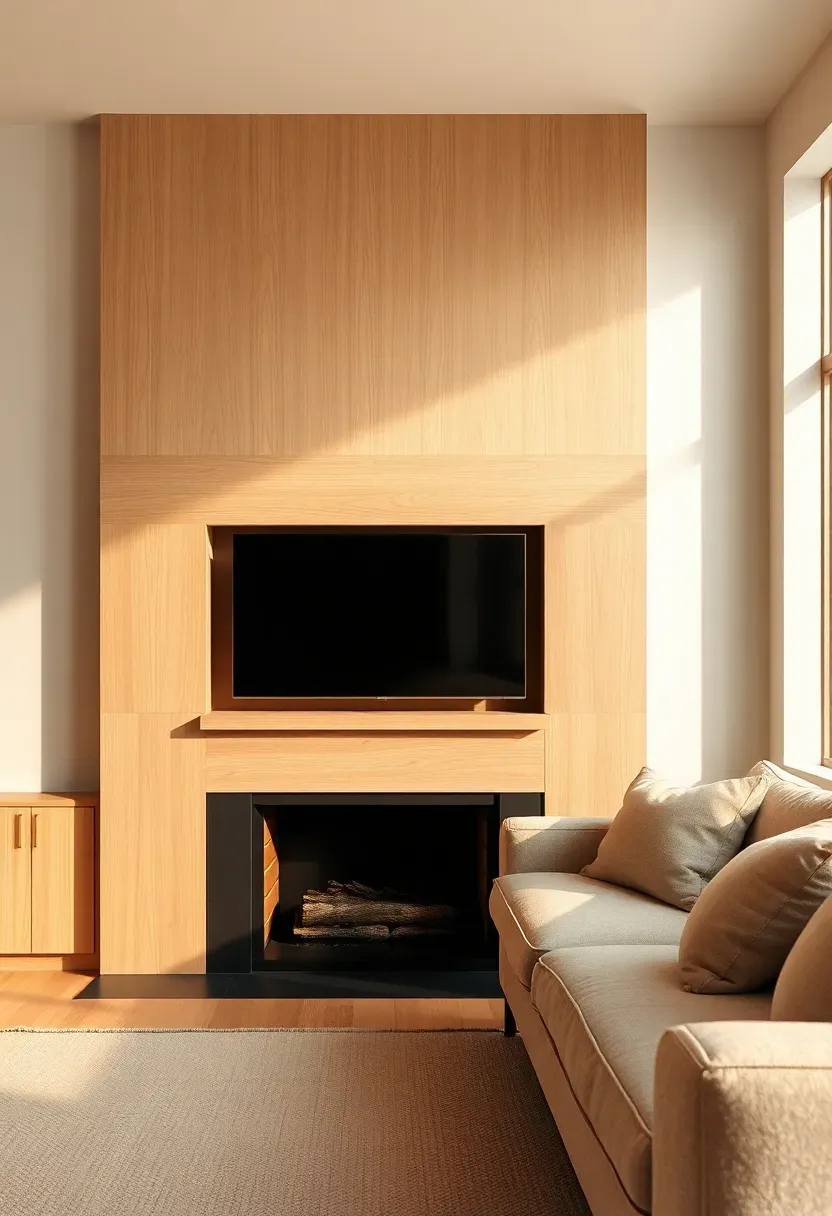
12. Sliding panel to conceal the TV wall
This minimalist fireplace living room hides the TV behind a sliding panel so the hearth stays the focus. Mount the TV low and add a 48-inch sliding panel in light oak or matte fabric. The supporting term here is sliding panel, which keeps the wall clean and flexible. For contrast, avoid heavy doors and upgrade to a slim track that keeps the wall light. The room feels calm when the screen is hidden.
Recommended
Items for this idea
Common mistake: using a panel that is too heavy for the track.
Keep the track under 2 inches tall and use a low cabinet below for devices. The trade-off is less wall art, so place one ceramic object on a low shelf only. Add a 5x8 rug to anchor the sofa and keep the coffee table slim. If you want contrast, use a matte black track and keep the panel light. This layout feels intentional and restful around the hearth.
For clean media walls, see Soviet Interior Design Style Guide 19 Authentic Looks for Modern Life.
Tips
- Keep the panel width at least 30 inches for full coverage.
- Use soft-close hardware to reduce noise.
- Align the track with the mantel line for cohesion.
What this gives you: a screen-free hearth wall with flexible function.
13. Double-sided fireplace with split seating
This minimalist fireplace living room uses a double-sided hearth to divide the space into two calm zones. Place the sofa on one side and a pair of chairs on the other to create balanced use areas. The supporting term here is double-sided fireplace, which makes the layout feel intentional and modern. For contrast, avoid tall dividers and upgrade to a low hearth bench instead. This creates a full-room plan that supports multiple activities.
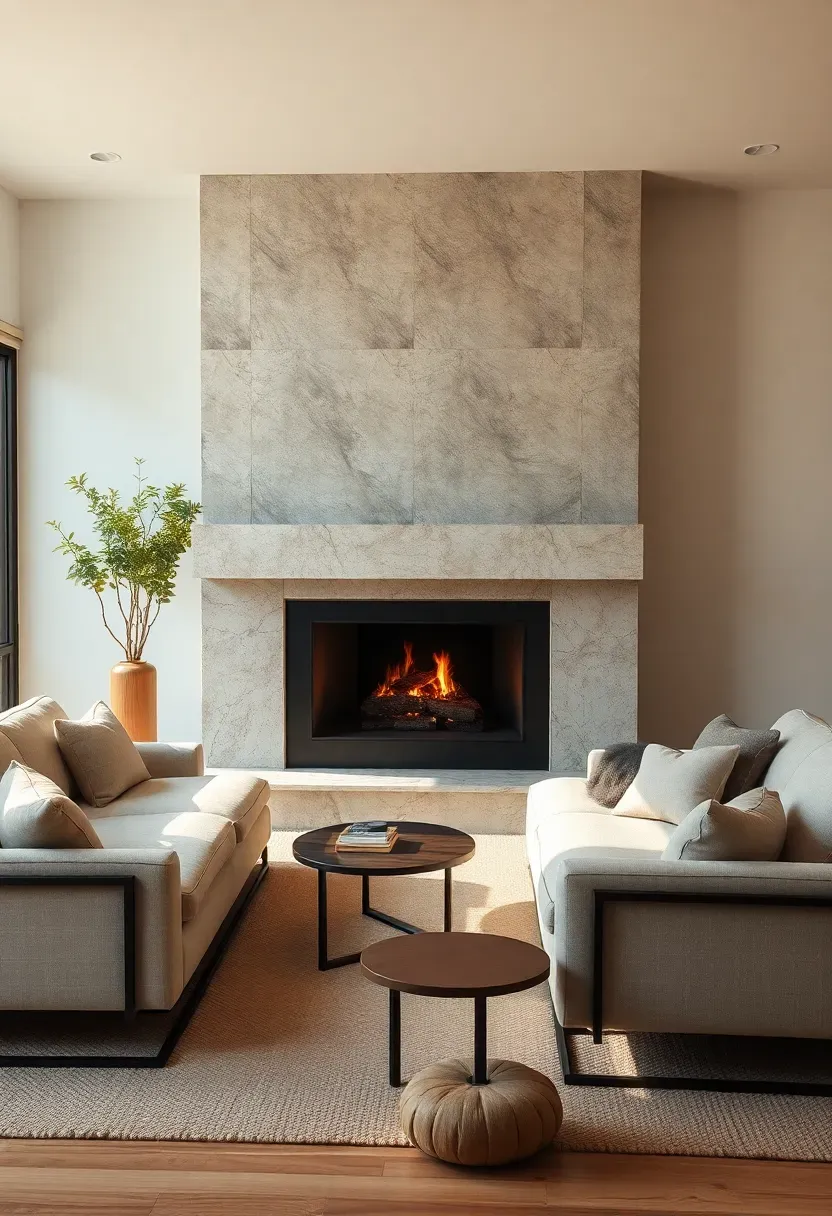
Keep seating 36 inches away from the firebox on both sides to maintain safety. The trade-off is less wall space for storage, so use a low cabinet near the sofa only. Add a 6x9 rug under the main seating and a 5x7 rug in the secondary zone. If you want contrast, use a matte black hearth frame and keep textiles light. The layout feels open while clearly zoned.
Tips
- Do: keep sightlines through the fireplace open.
- Don’t: place tall shelving beside the firebox.
- Do: align rugs to the hearth centerline.
Best for: open plans that need two distinct zones.
What this gives you: a split layout that still feels cohesive.
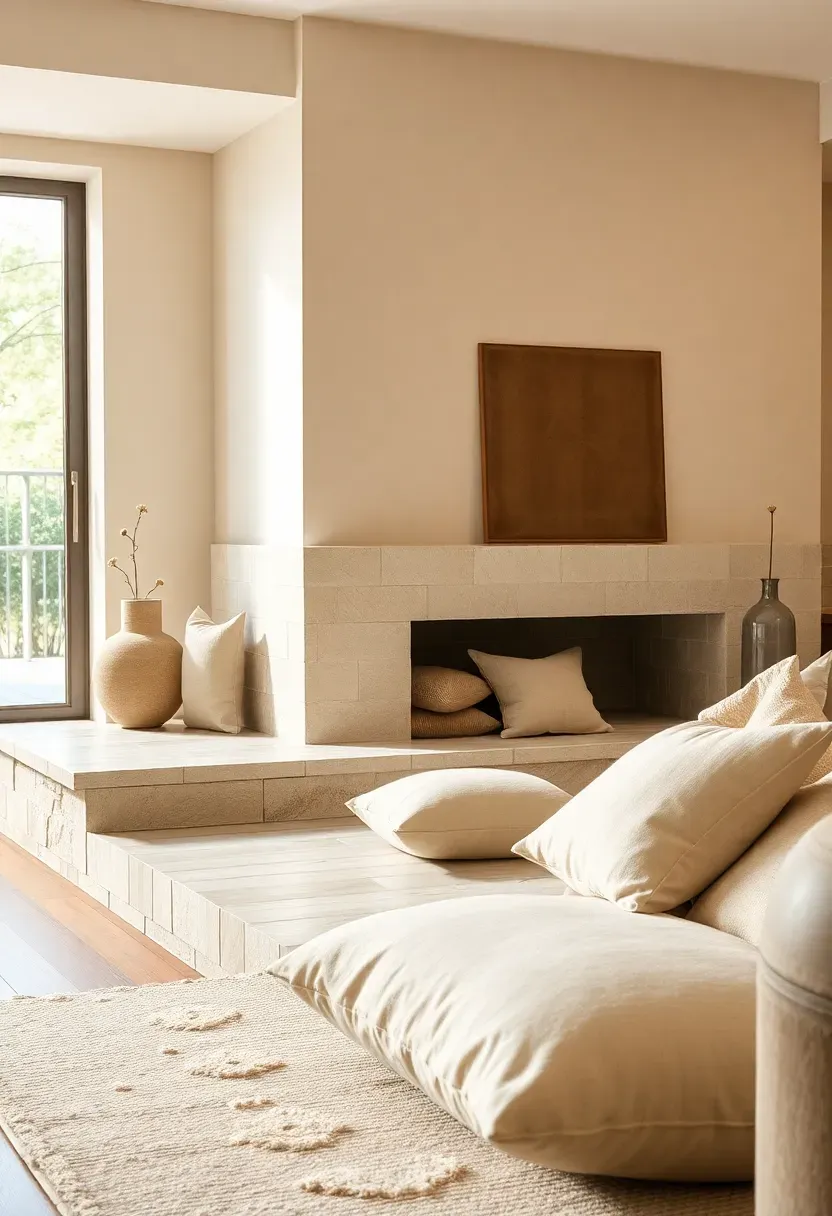
14. Stone hearth ledge with floor cushions
This minimalist fireplace living room uses a deep hearth ledge and floor cushions for relaxed seating. Extend the hearth 12 inches and add two neutral cushions for flexible use. The supporting term here is hearth ledge, which creates a built-in perch without extra furniture. For contrast, avoid bulky armchairs and upgrade to low cushions instead. This creates a cozy, room-scale plan that feels grounded and casual.
Recommended
Items for this idea
Placement note: Keep cushions at least 24 inches from the firebox.
Use a 6x9 rug under the main seating and keep the cushions in warm linen tones. The trade-off is less back support, so limit cushion seating to casual use. Add a low coffee table and keep side tables slim to maintain flow. If you want contrast, use a matte black tray on the table rather than darker textiles. This layout adds a cozy edge without clutter.
For warm, grounded palettes, see 19 Japandi Bedroom for a Cozy and Stylish Space.
Tips
- If the ledge feels cold, then add a thin wool pad.
- If cushions slide, then use a non-slip mat.
What this gives you: a relaxed hearth zone with flexible seating.
15. Microcement floor with wool seating zone
This minimalist fireplace living room uses a microcement floor and a wool rug to soften the seating zone. Place a 7x10 wool rug centered on the hearth and keep furniture low and simple. The supporting term here is microcement floor, which keeps the room clean and modern. For contrast, avoid high-pile rugs and upgrade to a dense wool weave instead. The room stays warm without losing its minimal structure.
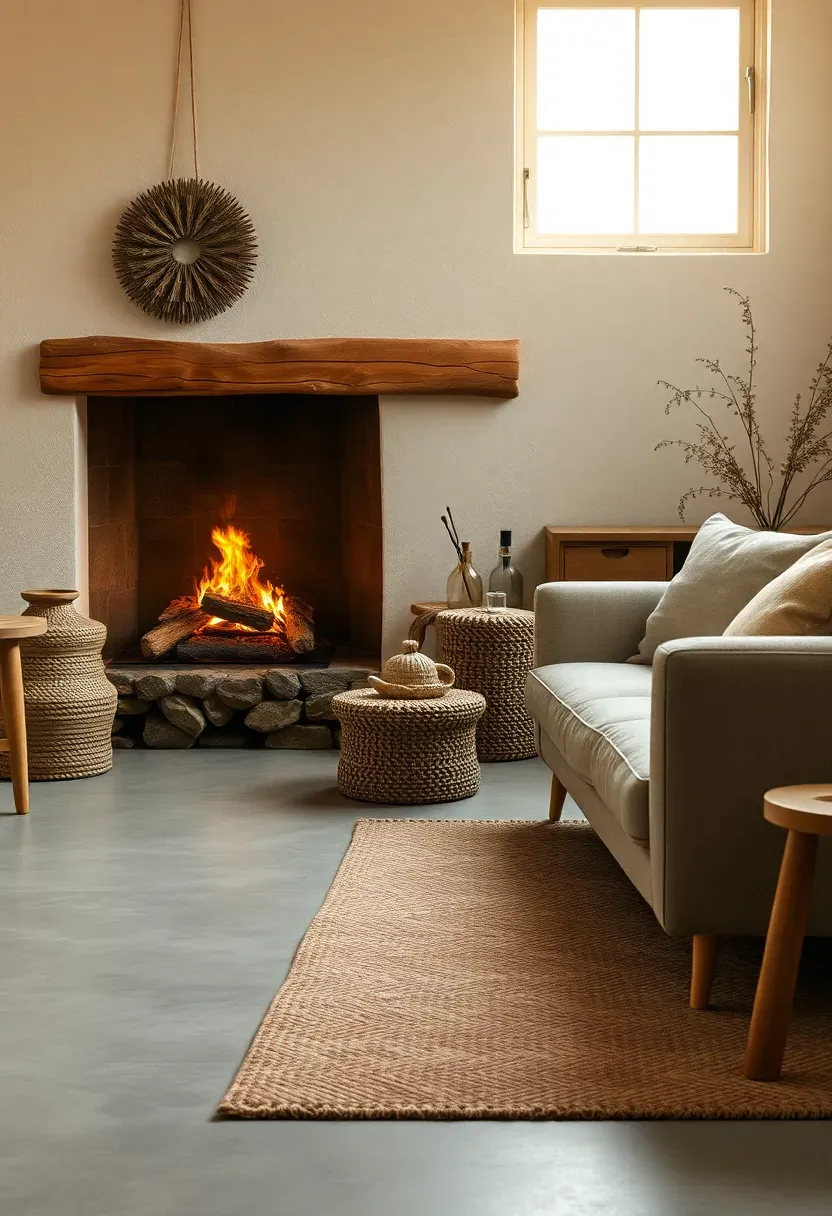
Why it works: the rug anchors the seating while the floor keeps the room expansive.
Use a low, 14-inch coffee table and keep the sofa depth under 38 inches. The trade-off is a cooler floor feel, so use warm lighting at 2700K and add one wool throw. Keep mantel decor minimal to let the texture contrast stand out. If you want contrast, choose a matte black lamp base rather than darker textiles. The layout stays calm, warm, and modern.
Tips
- Pro: microcement makes the room feel larger.
- Con: hard floors can feel cold underfoot.
- Fix: use a thick rug pad for softness.
Best for: modern rooms that need warmth without clutter.
What this gives you: a clean base with a cozy seating zone.
16. Minimal art rail above a calm mantel
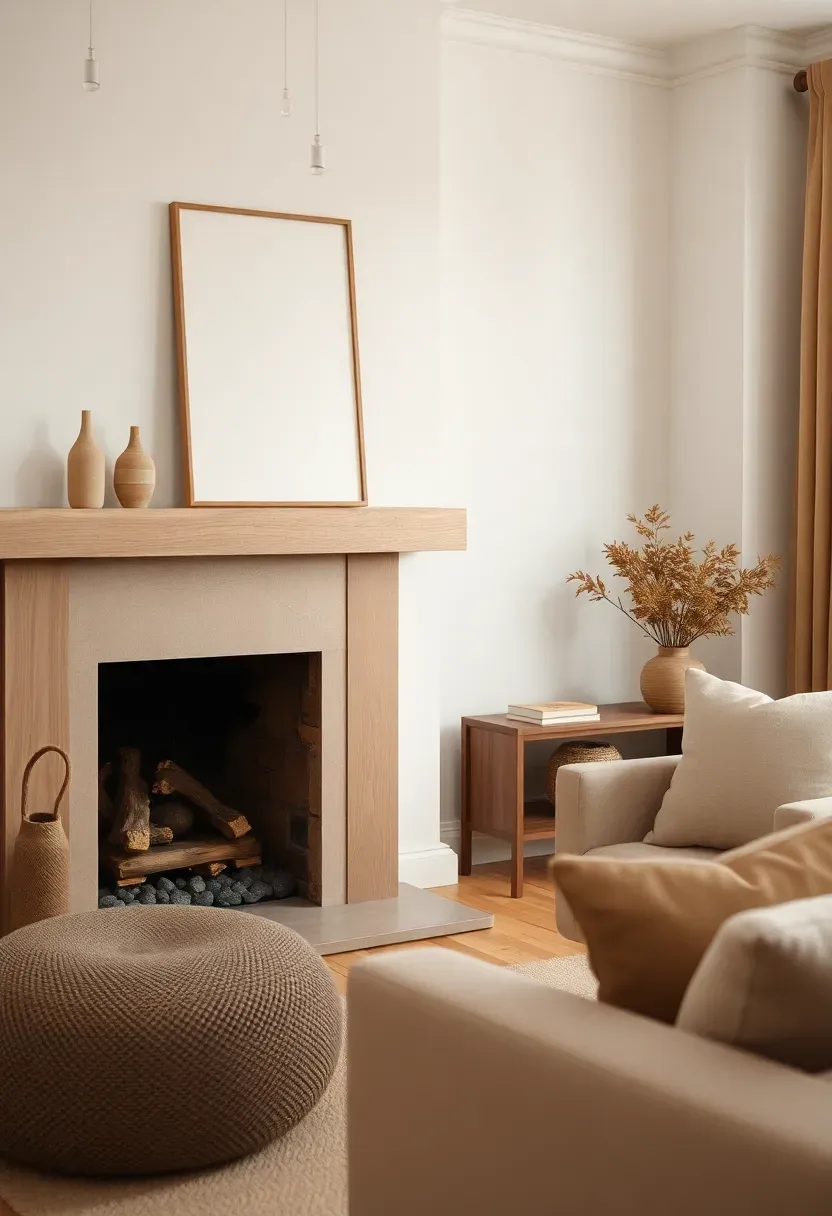
This minimalist fireplace living room uses a slim art rail above the mantel to add personality without clutter. Keep the mantel clear and place one or two frames on the rail in warm neutral tones. The supporting term here is art rail, which allows rotation without wall damage. For contrast, avoid busy gallery walls and upgrade to a single, controlled line instead. The room feels curated and restful around the hearth.
Recommended
Items for this idea
Common mistake: stacking too many frames that compete with the fireplace.
Use a 48-inch rail and keep frames under 18 inches wide. The trade-off is less wall art, so add one sculptural object on a side table instead. Anchor the seating with a 6x9 rug and keep the coffee table light. If you want contrast, use a matte black rail and keep art in soft tones. The layout stays quiet while still feeling styled.
For restrained styling cues, see 19 Soviet Interior Design Ideas That Feel Authentic and Livable.
Tips
- Keep the rail to two frames max.
- Align the rail with the mantel centerline.
- Use matte frames to reduce glare.
What this gives you: a curated mantel wall without visual noise.
17. Future-proof modular layout around the hearth
This minimalist fireplace living room uses modular seating and storage so the layout can shift over time. Choose a sofa system that can expand or split, then pair it with a low cabinet that moves easily. The supporting term here is modular seating, which keeps the hearth zone flexible and tidy. For contrast, avoid oversized fixed pieces and keep everything low and movable. This creates a full-room concept that adapts without a redesign.
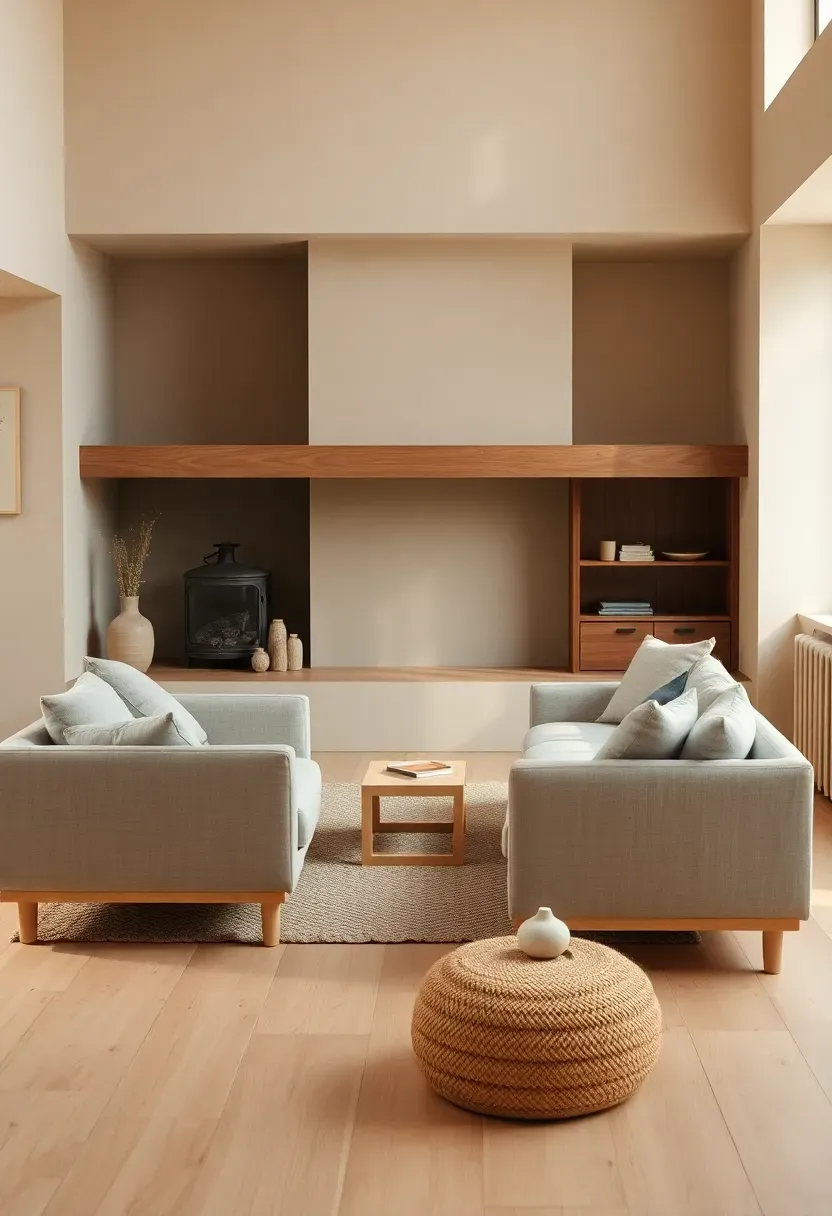
Keep one wall clear for circulation and use a 6x9 rug to anchor the main seating so modules align to the rug edges. The trade-off is less built-in storage, so add a shallow shelf for essentials. Use a single floor lamp and a neutral throw to keep the palette cohesive. If you want contrast, use a charcoal cushion rather than patterned textiles. This design stays calm now and adaptable later.
Tips
- Do: align modules to the rug edges for order.
- Don’t: mix different module depths in one line.
- Do: keep storage height under 24 inches for openness.
Best for: renters who want flexibility without clutter.
What this gives you: a flexible hearth layout that stays welcoming.
A minimalist fireplace living room feels most comfortable when the whole layout is designed around warmth, balance, and clear zones. Use these minimalist fireplace living room ideas to build a room-scale system with natural materials, soft lighting, and practical storage. Keep the palette consistent and let the hearth lead the composition. Whether you are working with a small apartment or an open-plan space, a cozy fireplace living room stays calm and easy to live in when the plan is intentional from the start.
About the author
OBCD
CGI visualization and interior design content. We create detailed 3D renders and curate practical design ideas for every room in your home.