27 Back Yard Deck Ideas for Every Budget
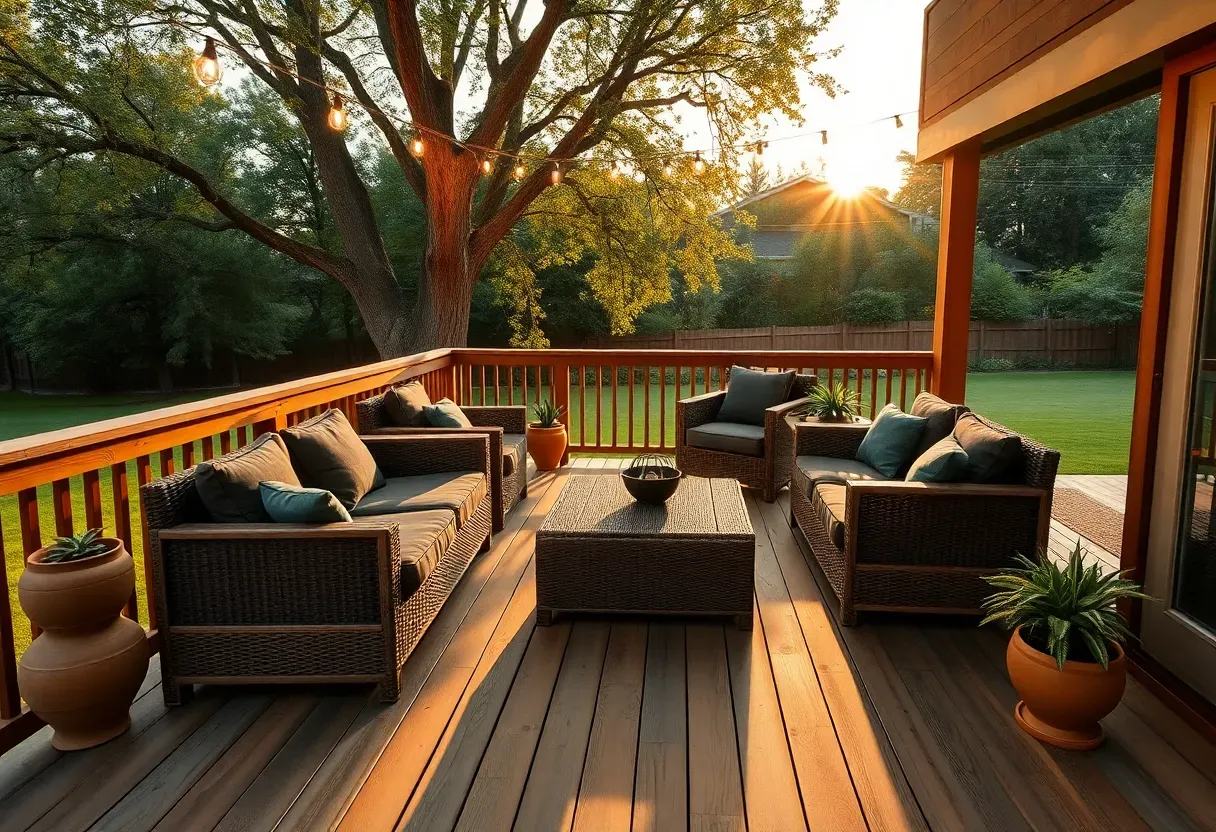
Last spring I ripped out a crumbling concrete slab behind my house and replaced it with a simple cedar deck. The project cost less than I expected and completely changed how we use the yard — dinner outside became the default, not the exception. A deck does not need to be complicated or expensive to make a real difference. What matters is picking the right shape, material, and height for your specific lot. Some of these ideas suit a weekend DIY build. Others need a contractor and a permit. All of them will give you a better backyard.
Below are 27 back yard deck ideas organized by style, from ground-level platforms to ambitious multi-tier builds.
Table of Contents
- Ground-Level Floating Deck
- Wraparound L-Shaped Deck
- Multi-Level Tiered Deck
- Composite Deck with Hidden Fasteners
- Small Bistro Deck Platform
- Raised Deck with Under-Deck Storage
- Pool Surround Deck
- Japanese-Inspired Engawa Deck
- Rooftop Garage Deck
- Deck with Built-In Bench Seating
- Fire Pit Deck with Sunken Center
- Cedar Deck with Herringbone Pattern
- Cantilevered Hillside Deck
- Deck with Pergola Overhang
- Narrow Side-Yard Deck Walkway
- Hot Tub Deck Platform
- Painted Deck in Bold Color
- Deck with Cable Railing
- Freestanding Island Deck
- Screened-In Deck Room
- Ipe Hardwood Deck
- Budget Pallet Deck
- Deck with Outdoor Kitchen Zone
- Two-Tone Deck with Border Inlay
- Low-Profile Deck with Flush Steps
- Deck with Privacy Wall
- Wraparound Tree Deck
1. Ground-Level Floating Deck
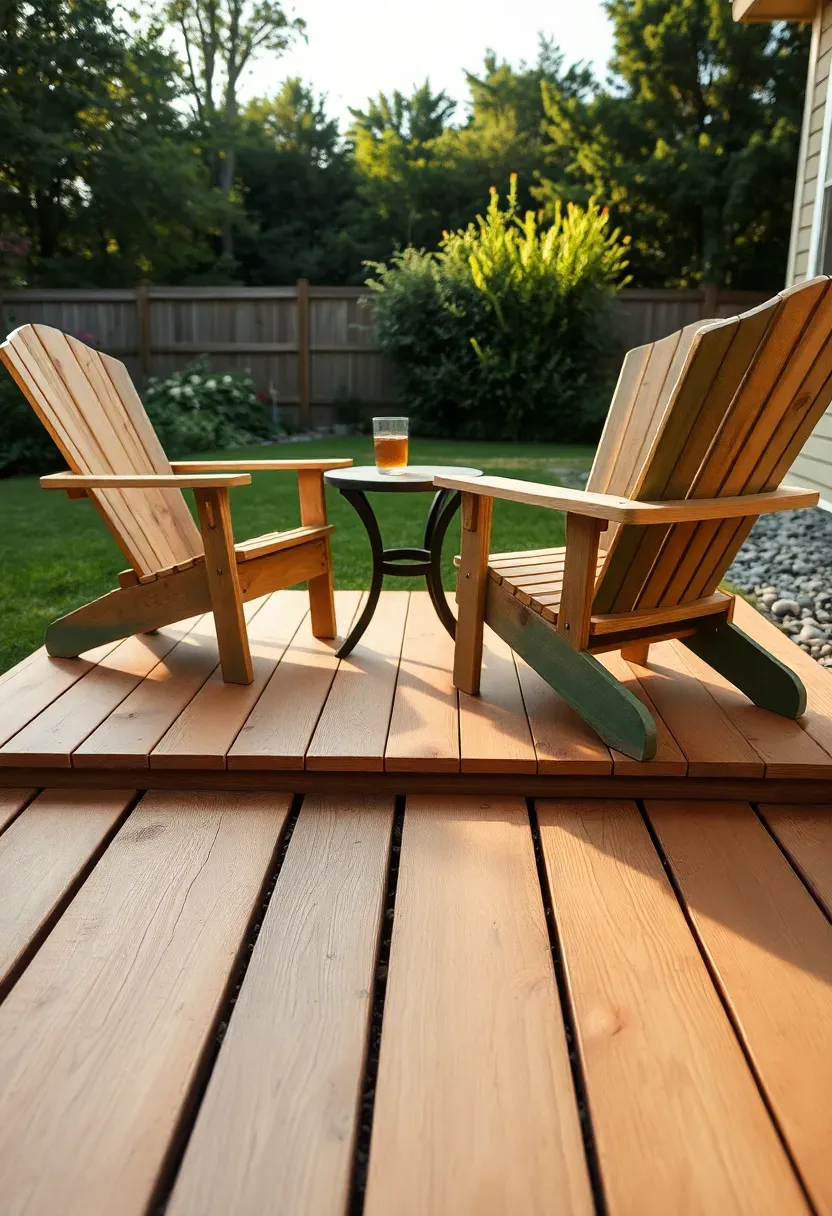
A floating deck sits on concrete deck blocks rather than poured footings, which means no digging and — in most jurisdictions — no building permit. You lay out the blocks in a grid, set pressure-treated joists on top, and screw down your decking boards. The whole thing can be done in a weekend with one helper. Keep the frame at least an inch above ground so air circulates underneath and moisture does not get trapped. A 10-by-12-foot platform is enough for a dining table and four chairs.
Getting Started
- Use 16-inch joist spacing for a solid feel underfoot
- Lay landscape fabric and two inches of pea gravel beneath the blocks to prevent weed growth
- Check diagonal measurements to make sure the frame is square before attaching boards
We picked a few things that go well with this idea: PURE ERA Composite Deck Tiles (10-Pack) (★4.0), Pure Garden Composite Patio Tiles (6-Pack) (★4.1) and Treela Interlocking Deck Tiles (48-Pack) (★4.3). As an Amazon Associate we earn from qualifying purchases.
2. Wraparound L-Shaped Deck
Why It Works
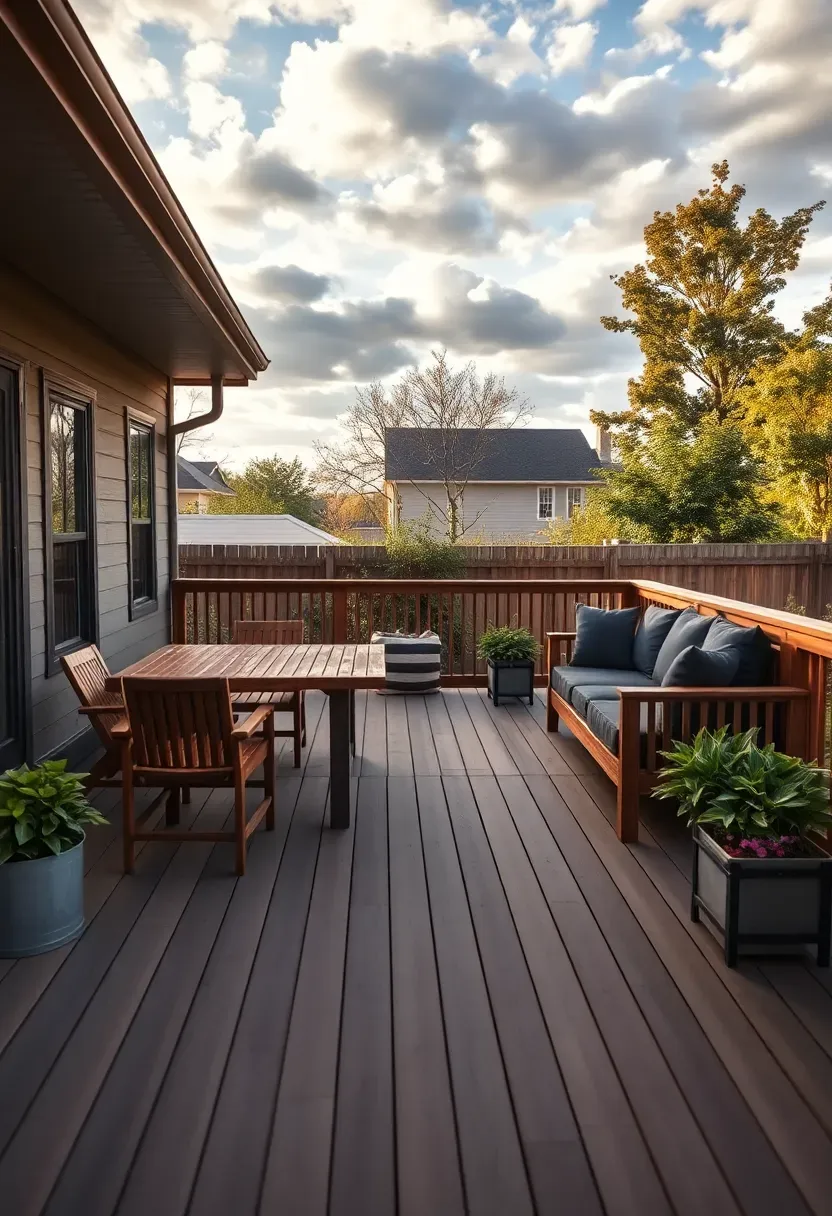
An L-shape gives you two distinct zones without building a second deck. One wing handles dining — table, chairs, maybe a serving cart against the railing. The other wing becomes a lounge with deep-seat outdoor furniture. The corner where the two wings meet is a natural spot for a large planter or a built-in bench. This layout also follows the footprint of a house corner, making it feel like a genuine extension of the building rather than an afterthought bolted onto one wall.
Practical Realities
Pros: Creates separate activity areas, follows the house shape naturally, looks more intentional than a rectangle Cons: Corner framing is trickier — you need a double beam and additional posts at the junction, which adds cost and complexity
We picked a few things that go well with this idea: OHLUX 55FT Shatterproof LED Patio Lights (★4.5), Brightever 200FT LED Edison Deck Lights (★4.4) and Brightever 36FT Dimmable Outdoor Deck Lights (★4.5). As an Amazon Associate we earn from qualifying purchases.
3. Multi-Level Tiered Deck
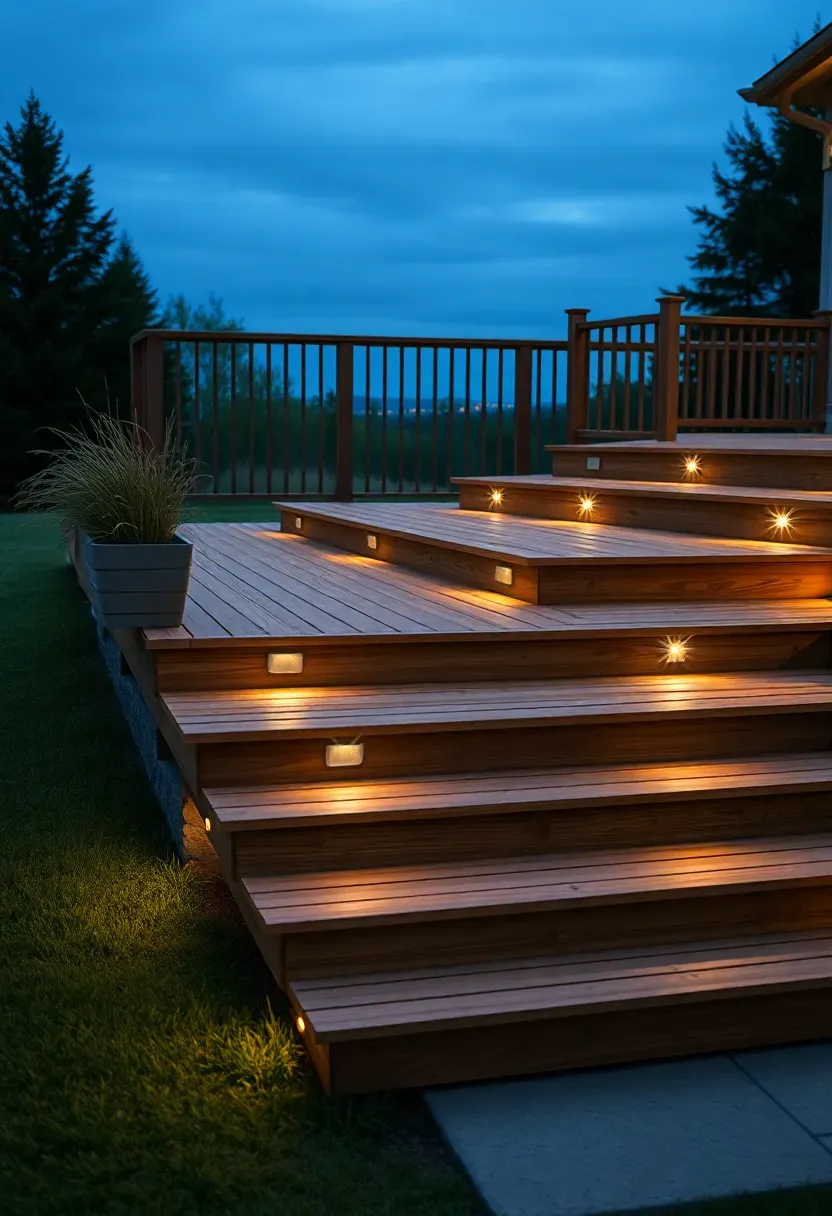
If your yard slopes, a tiered deck turns that grade change into an asset instead of a problem. Each level steps down eight to twelve inches, with short stair runs connecting them. The top tier near the house works for cooking and prep. The middle level handles dining. The lowest tier, closest to the yard, becomes a fire pit lounge or a play area visible from above. Riser lights on each step keep things safe after dark and add a layered glow that flat decks cannot match.
Tips
- Keep each tier at least 8 feet deep so furniture fits comfortably
- Run electrical conduit during framing — retrofitting lights later is a headache
- Use matching materials across all levels for visual continuity
We picked a few things that go well with this idea: Wicker Chaise Lounge Set of 2 with Table (★4.3), WAROOM Wicker Reclining Lounge Chairs (Set of 2) (★4.2) and Outsunny 3-Piece Wicker Lounge Set with Wheels (★4.1). As an Amazon Associate we earn from qualifying purchases.
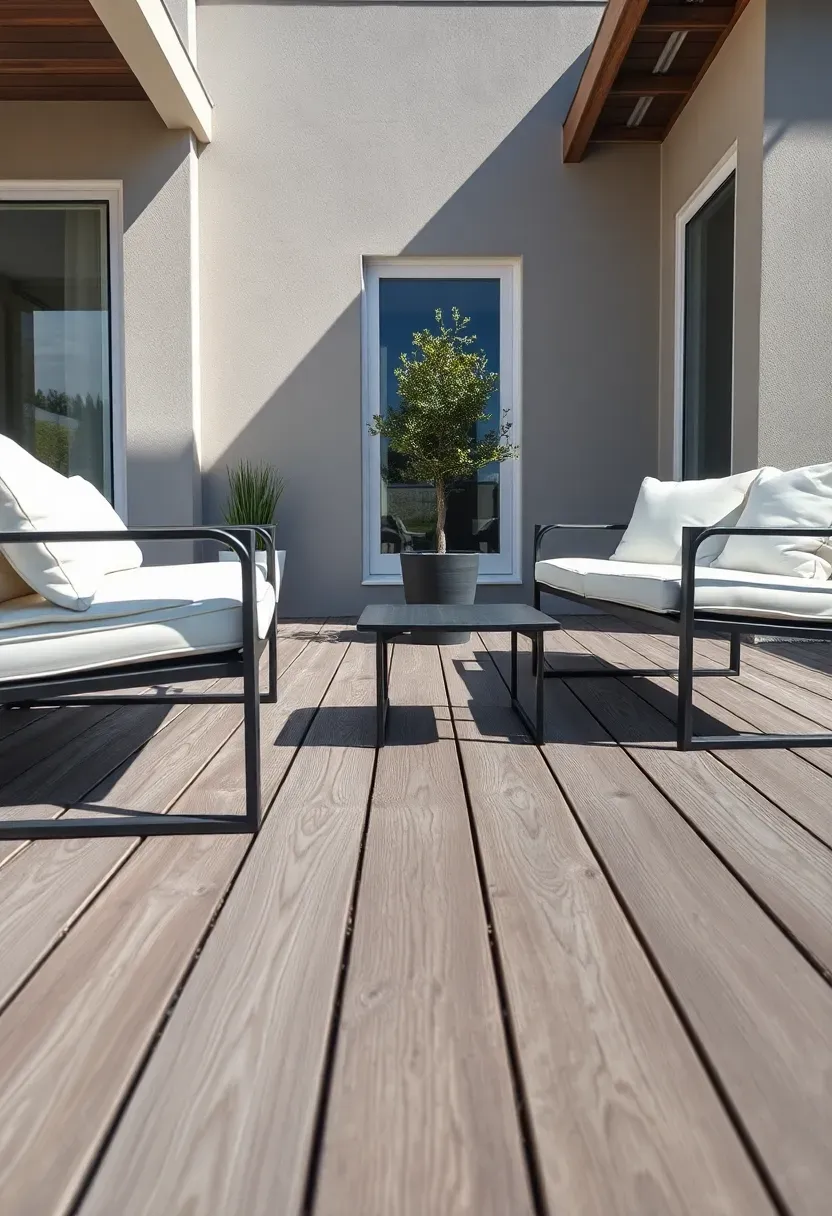
4. Composite Deck with Hidden Fasteners
The Maintenance Question
Wood decks need sanding and sealing every year or two. Composite boards — made from recycled plastic and wood fiber — skip all of that. The latest generation from brands like TimberTech and Trex look much closer to real wood than the shiny plastic planks from ten years ago. Hidden fastener clips slot between boards, eliminating face screws entirely. The surface stays smooth, splinter-free, and consistent in color for decades.
Is It Worth the Premium?
Composite decking costs roughly double the price of pressure-treated lumber per square foot. But factor in zero staining costs, no replacement of rotted boards, and no annual labor, and the numbers tilt in composite's favor around year seven. If you plan to stay in your house, it pays for itself.
Recommended
Items for this idea
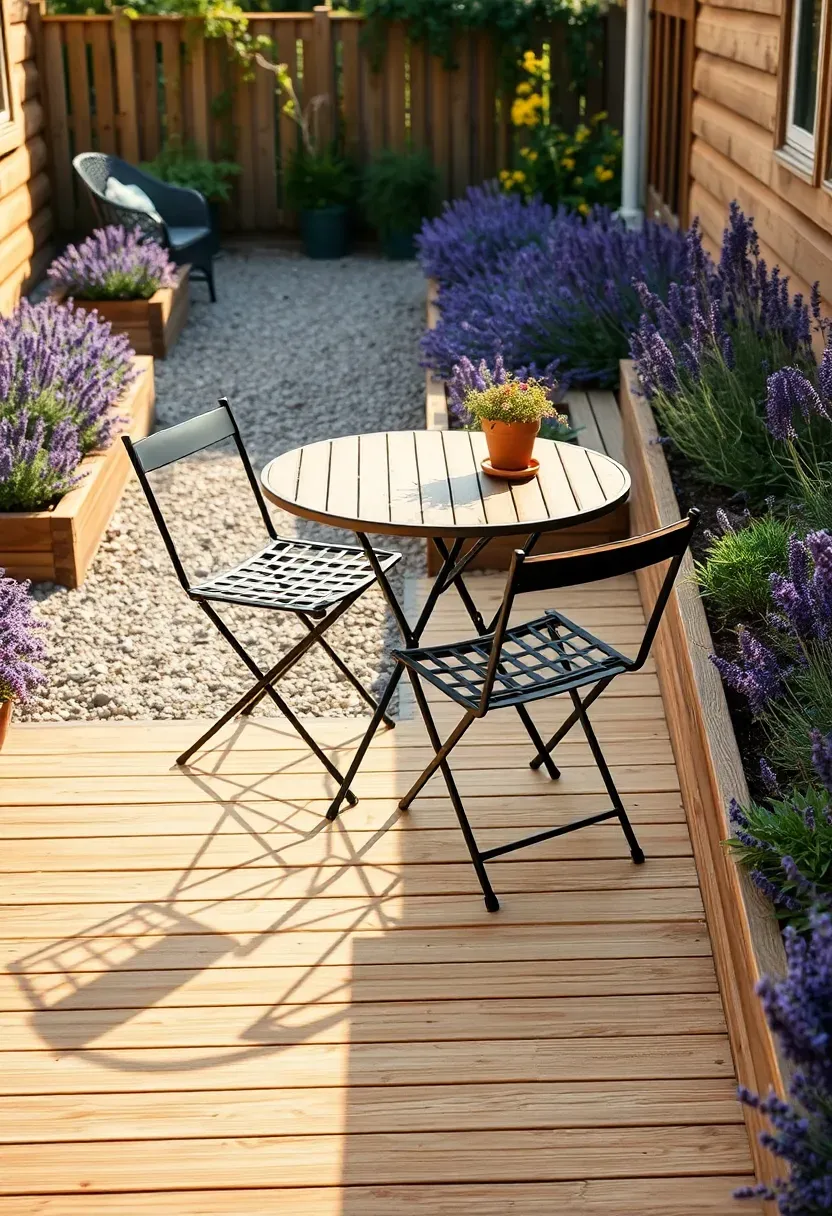
5. Small Bistro Deck Platform
Not every back yard deck needs to be massive. A four-by-six-foot platform tucked into a garden corner gives you a morning coffee spot that feels intentional. Build it from leftover decking scraps or a few boards from the hardware store. Set it on four concrete blocks, sand the edges, apply a single coat of exterior oil, and you are done by lunch. Place a small round bistro table and two folding chairs on top. It becomes the kind of spot people gravitate toward at a garden party.
Tips
- Position it where morning sun hits for the best breakfast experience
- A single potted herb arrangement on the table doubles as decor and seasoning
- Keep it light enough to relocate if you rearrange garden beds later
6. Raised Deck with Under-Deck Storage
The Problem
Yards accumulate stuff — hoses, seasonal cushions, bags of mulch, kids' outdoor toys. Sheds eat up valuable ground. Garages are already full.
The Solution
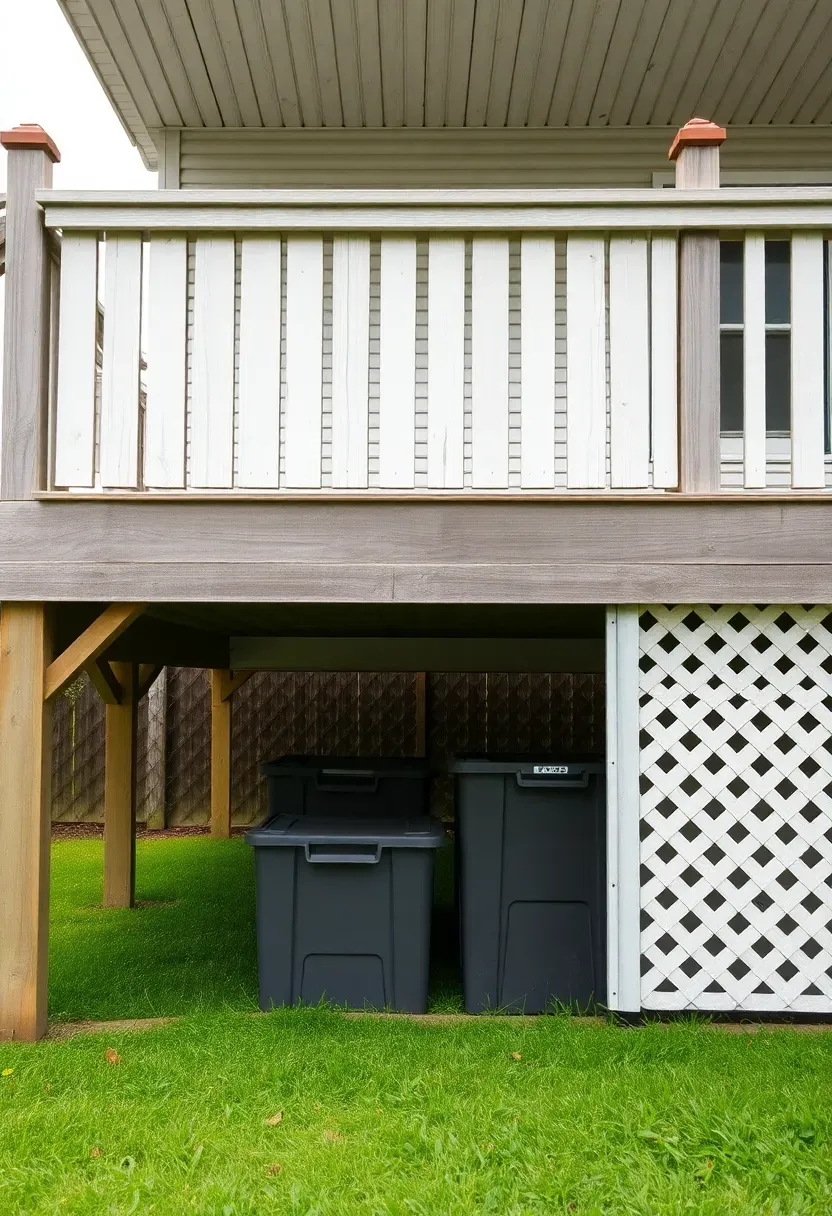
A raised deck — anything higher than about 30 inches off grade — creates a usable storage cavity underneath. Frame the space with removable lattice panels or hinged skirting so you can access bins and equipment without crawling. For yards that flood occasionally, store items on pressure-treated platforms or wire shelving to keep them off the dirt. You get a deck above and a dry-ish shed below without sacrificing any additional footprint.
Watch Out
- Ensure proper drainage under the deck so water does not pool against your foundation
- Hinge at least one skirting panel for easy access rather than screwing everything shut
Recommended
Items for this idea
7. Pool Surround Deck
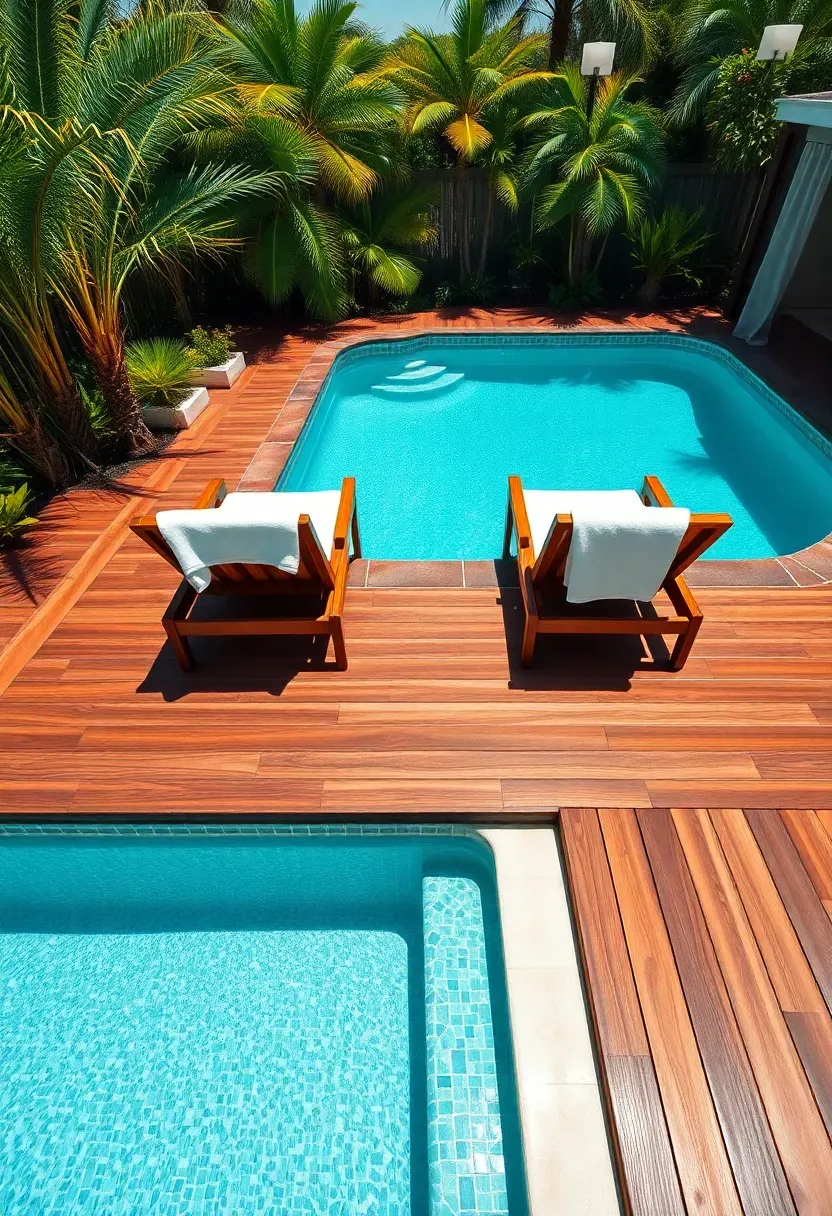
A deck that wraps three sides of a pool replaces the standard concrete coping with a surface that stays cooler underfoot and looks warmer. Use composite or ipe for water resistance — pressure-treated pine will check and splinter near chlorinated water faster than you expect. Leave a one-inch gap between each board for drainage, and slope the frame slightly away from the pool edge so runoff heads toward the yard, not the water. The deck edge doubles as an informal seat for dangling feet.
Tips
- Choose boards with a textured grain for wet-area grip
- Install stainless steel screws or hidden clips — standard galvanized hardware corrodes near pool chemicals
- Add a built-in towel rack at one end to keep things tidy
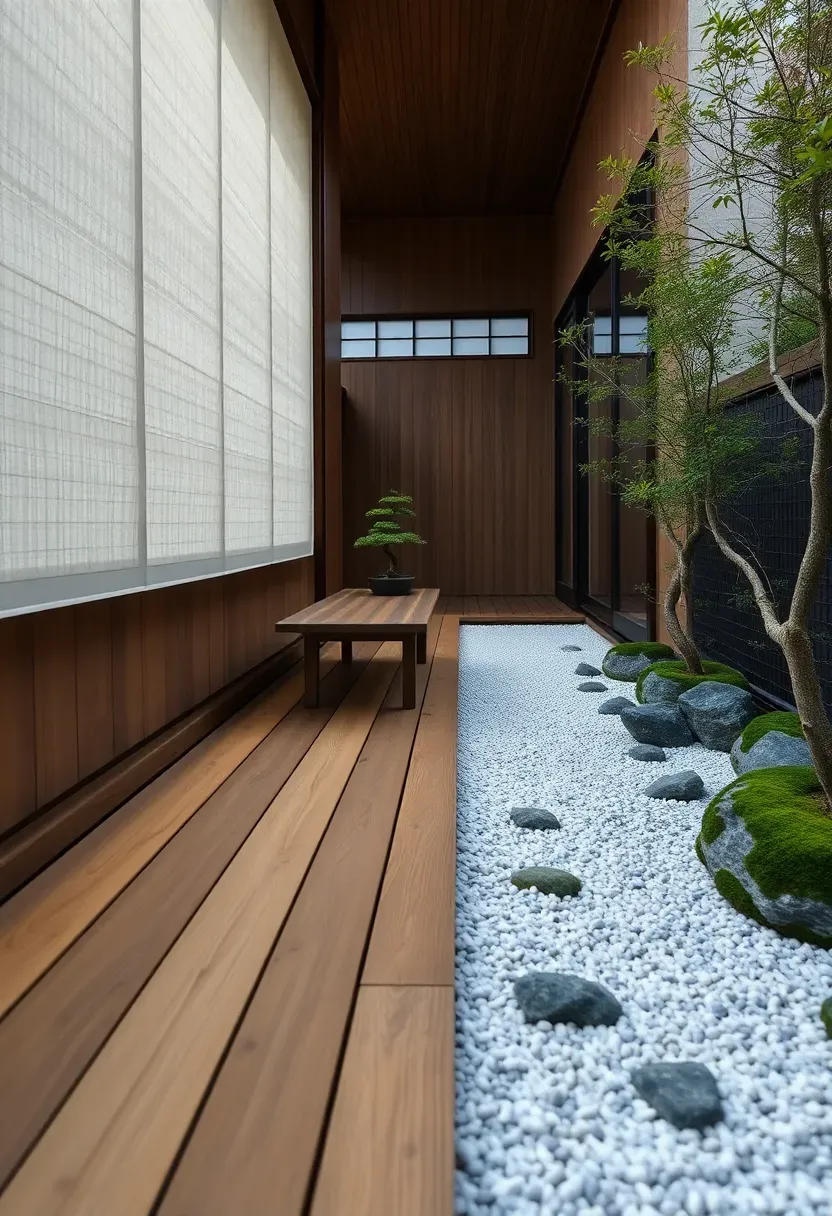
8. Japanese-Inspired Engawa Deck
An engawa is the narrow wooden veranda that wraps traditional Japanese homes — part hallway, part porch, part meditation seat. You can adapt the concept by building a deck that runs the full length of your back wall at about 18 inches deep and 16 inches high. It functions as a step, a bench, and a transition zone between indoors and garden. Pair it with a gravel or moss garden alongside, and the proportions start to feel deliberately calm rather than cramped.
How to Apply at Home
- Use tight-knot cedar or cypress with a natural oil finish for an authentic warm tone
- Keep the surface flush with your interior floor height so the threshold feels seamless
- A single low table and a zabuton cushion turns any section into a reading nook
Recommended
Items for this idea
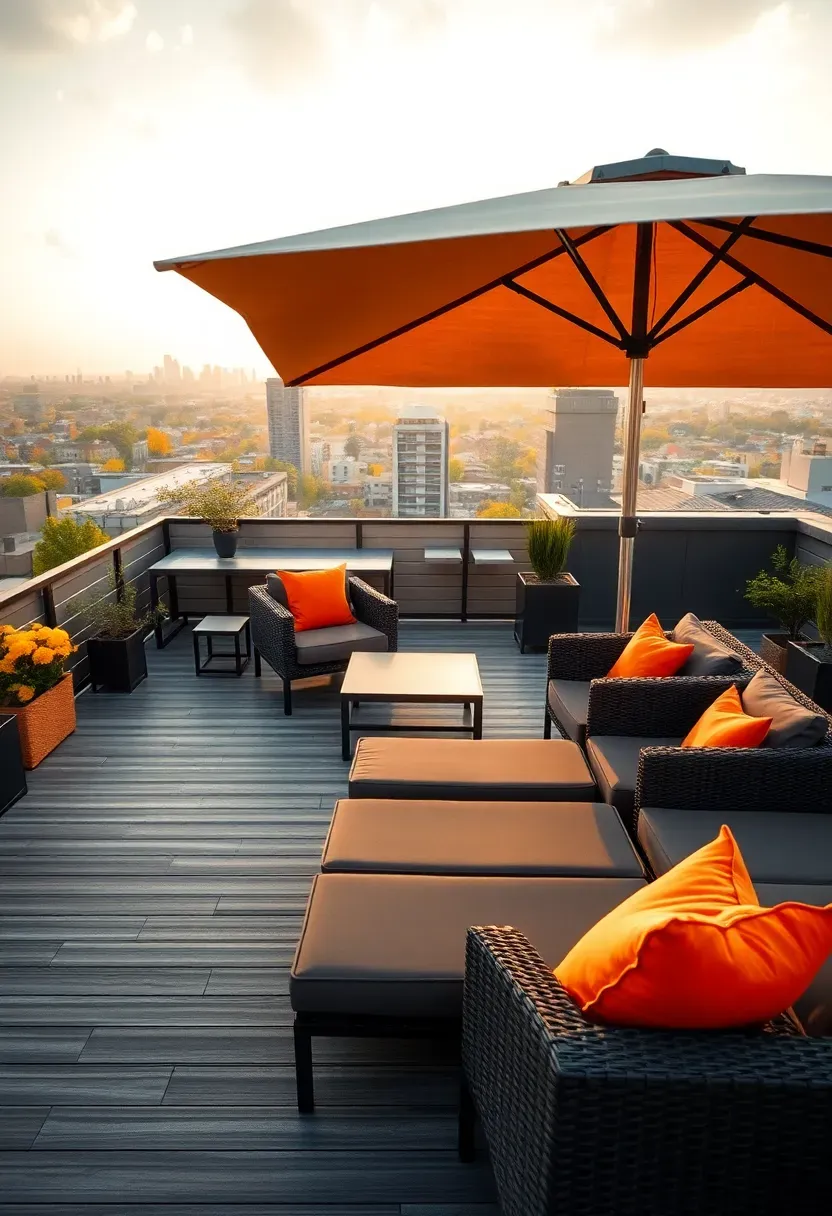
9. Rooftop Garage Deck
Can Your Garage Handle It?
If your detached garage has a flat or low-slope roof and the structure is sound, adding a deck on top gives you an elevated outdoor room with better views and more breeze than anything at ground level. You will need a structural engineer to confirm the roof can support the additional live load — typically 40 pounds per square foot for a residential deck. Waterproof the roof membrane first, then build a sleeper system on top using pressure-treated two-by-fours and composite decking.
Worth Knowing
Pros: Uses otherwise dead space, gives you elevation for views, feels private Cons: Requires engineering approval, waterproofing is critical, stairs or a permanent ladder add cost
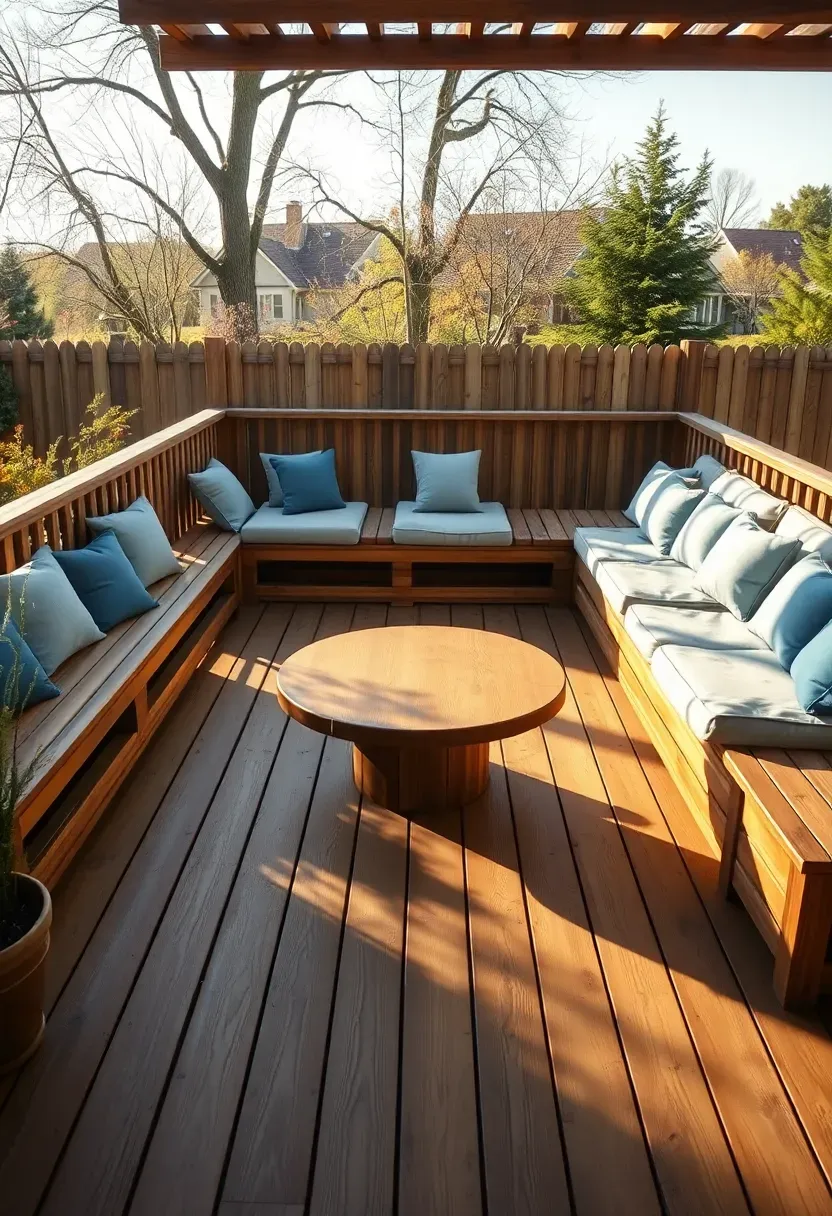
10. Deck with Built-In Bench Seating
Built-in benches save you from buying and storing separate outdoor chairs. Frame them into the deck railing at about 18 inches high and 16 inches deep — standard chair dimensions. Add a hinged seat lid and the bench becomes a storage box for cushions, throws, or pool toys. The continuous line of seating around the perimeter opens up the center of the deck for a dining table, a fire bowl, or just open floor space for kids to play.
Tips
- Angle the backrest at about 5 degrees off vertical for comfort over long dinners
- Use the same decking material for bench seats so everything matches
- Removable cushions with ties keep things comfortable but allow winter storage indoors
Recommended
Items for this idea
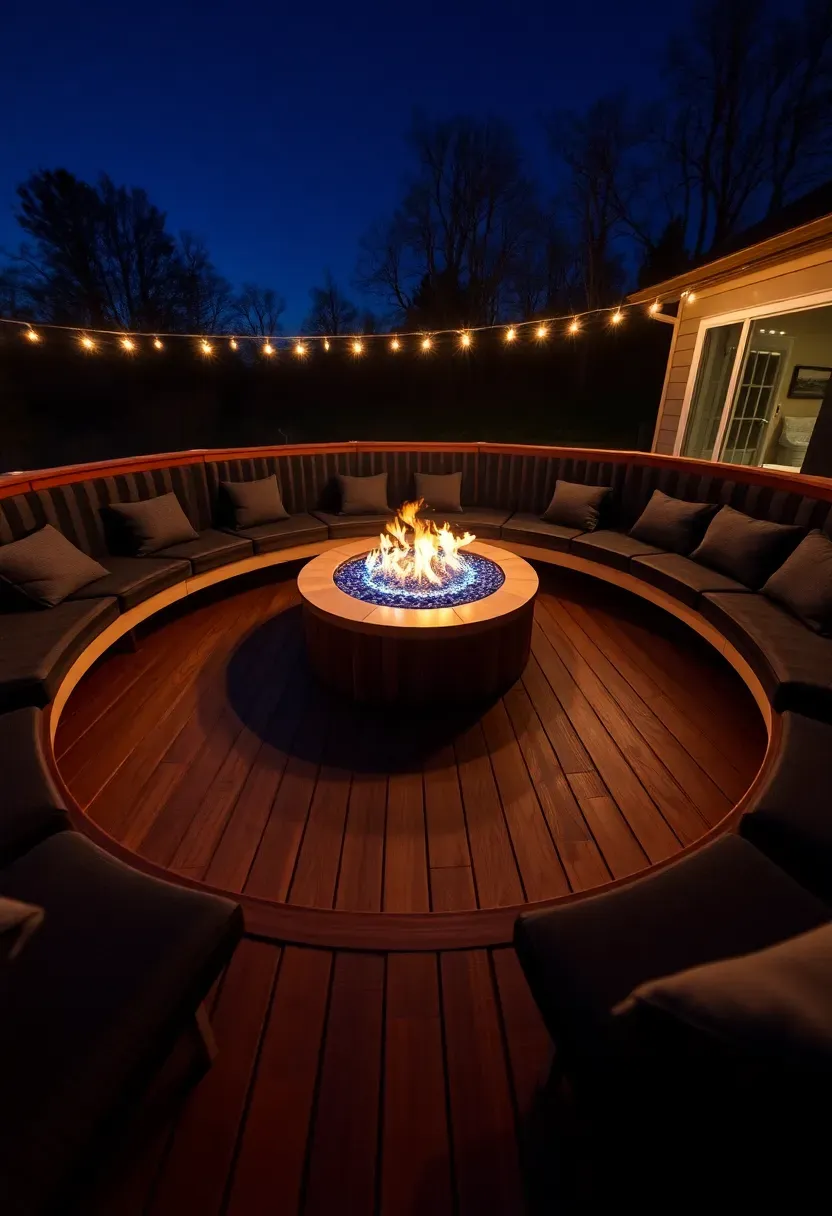
11. Fire Pit Deck with Sunken Center
How It Works
Drop the center section of your deck about eight inches below the surrounding surface and install a gas fire pit in the middle. The sunken area creates a natural gathering bowl — people sit on the step-down ledge or on cushions around the fire. It feels more intimate than a fire pit sitting on a flat deck because the lowered center changes sightlines and blocks wind. Gas rather than wood is non-negotiable here; embers and wooden decking are a combination you want to avoid entirely.
Safety First
Pros: Dramatic focal point, wind protection, conversation-friendly layout Cons: Requires careful fireproofing beneath the pit, gas line installation, and a permit in most areas
12. Cedar Deck with Herringbone Pattern
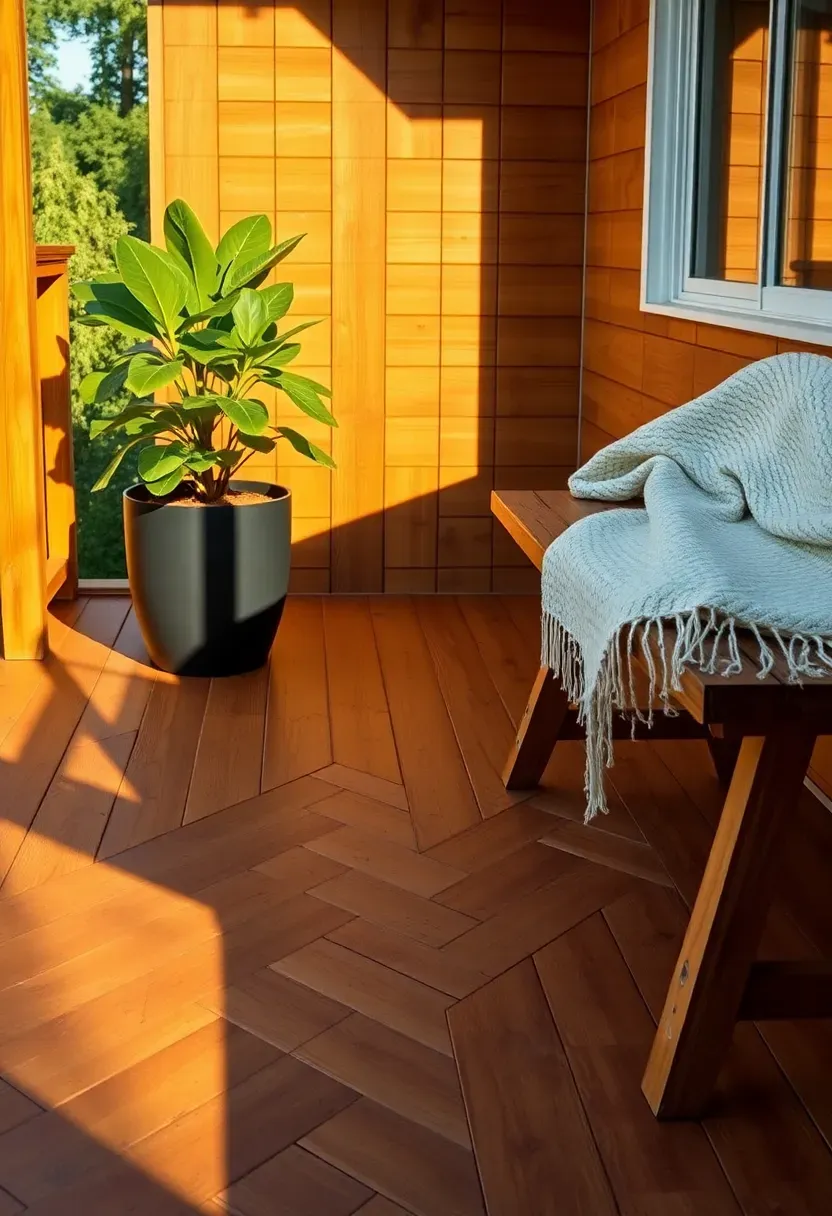
Standard deck boards run in one direction. A herringbone pattern lays them at 45-degree angles in alternating zigzags, and the visual difference is significant. Cedar works well here because it cuts cleanly, resists rot without chemical treatment, and weathers to a silver gray if you leave it unsealed — or keeps its warm honey color with annual oil. The pattern does require more cuts, more waste (plan for 15 percent extra material), and a doubled joist structure underneath. But it turns an ordinary rectangle into something people notice and ask about.
Tips
- Use a speed square clamped at 45 degrees for consistent miter cuts
- Pre-drill every screw hole near board ends to prevent splitting
- Run a picture-frame border around the perimeter to contain the pattern neatly
Recommended
Items for this idea
13. Cantilevered Hillside Deck
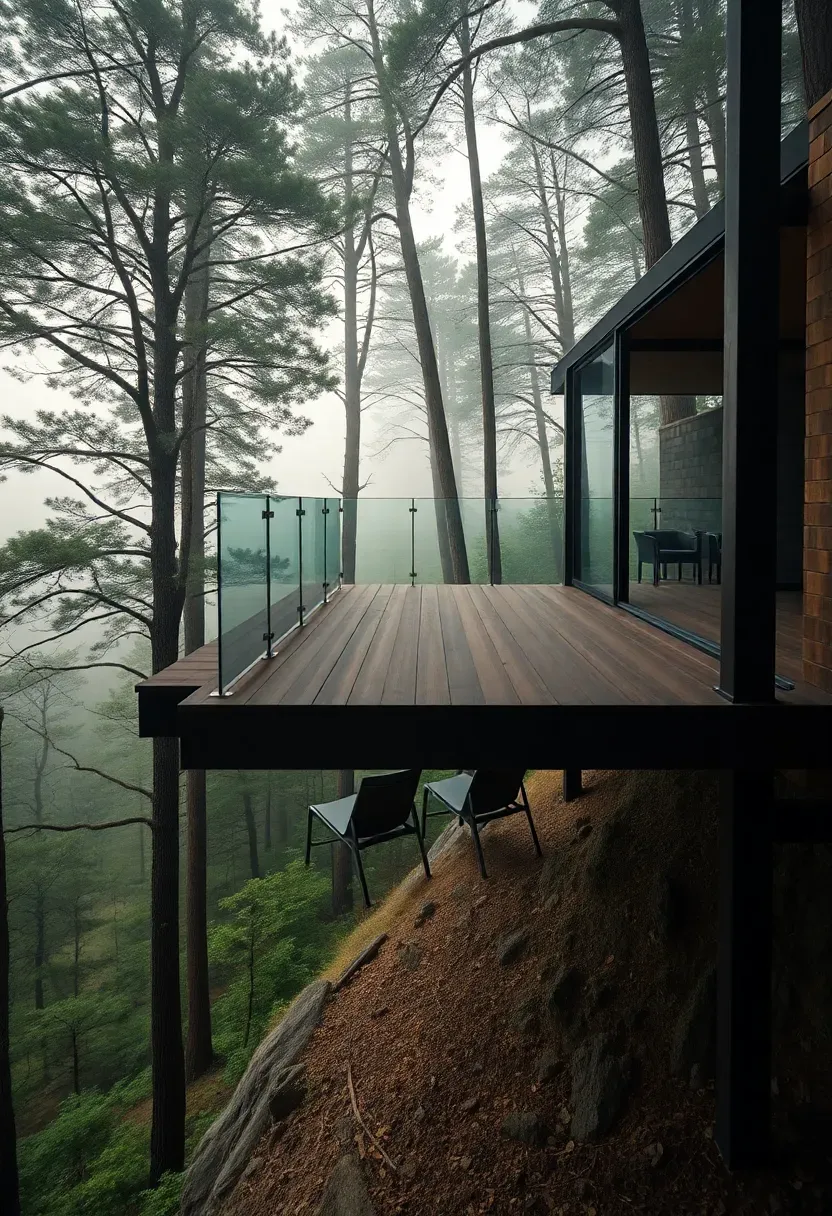
A steep backyard does not have to mean no deck. Cantilevered construction uses steel or engineered lumber beams anchored to the hillside, extending the deck surface out beyond the slope. The result is a platform that seems to float above the landscape — you get unobstructed views and the feeling of a treehouse without the tree. This is not a DIY project. You need an engineer, helical piers or concrete footings drilled into the slope, and a contractor experienced with grade changes. But the payoff is dramatic.
Plan For
- Budget 30 to 50 percent more than a comparable flat-ground deck due to engineering and foundation work
- Glass or cable railing preserves the view that justified building on the slope in the first place
- Drainage on the hillside above the deck needs attention so runoff does not undermine footings
14. Deck with Pergola Overhang
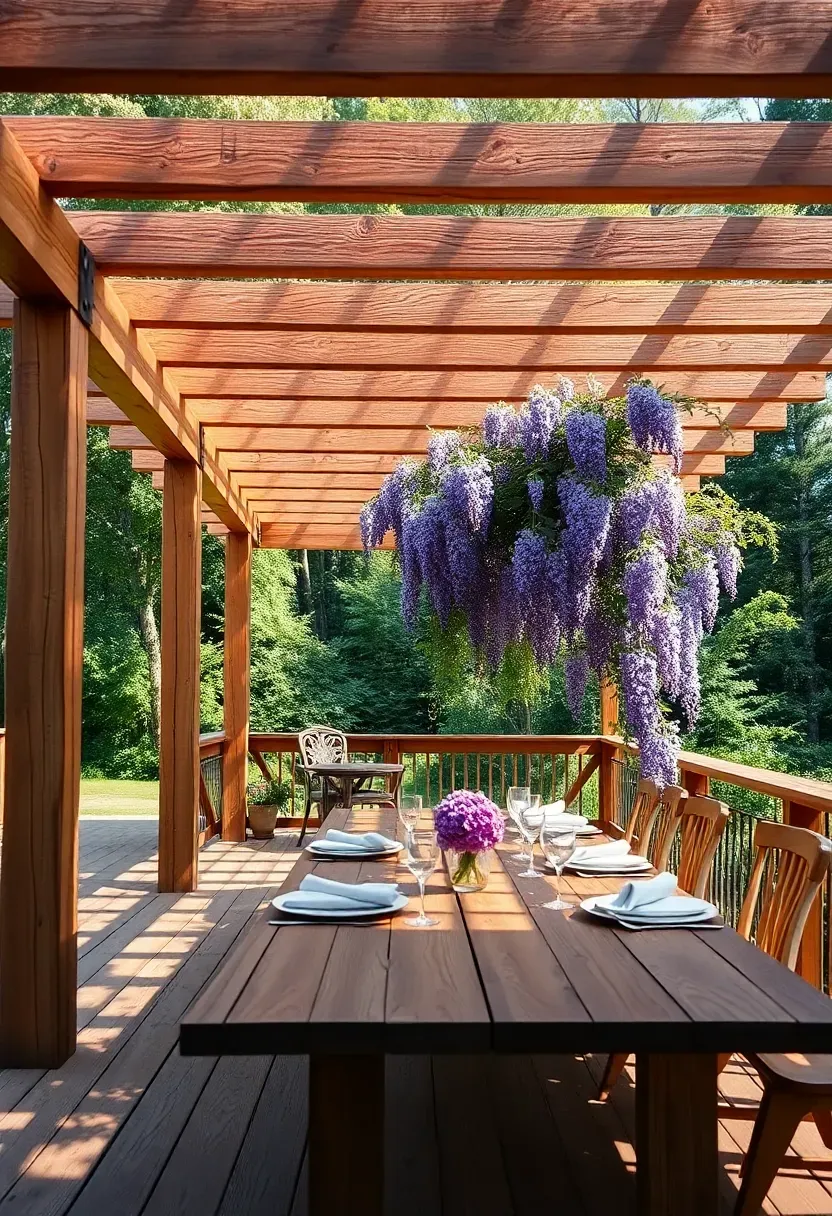
A pergola over part of your deck gives you shade without the closed-in feeling of a solid roof. The spaced rafters filter about 50 percent of direct sun, enough to make midday dining comfortable in most climates. Train a climbing vine — wisteria, jasmine, or grape — up one post and across the top for living shade that thickens each season. If you want more coverage on demand, add retractable shade cloth panels that slide between the rafters on wire tracks.
Tips
- Bolt pergola posts to the deck frame with through-bolts, not lag screws alone
- Size rafters at 2x8 minimum for spans over 10 feet to avoid sag
- Leave the south-facing side open if you want winter sun to reach the deck when vines are dormant
Recommended
Items for this idea
15. Narrow Side-Yard Deck Walkway
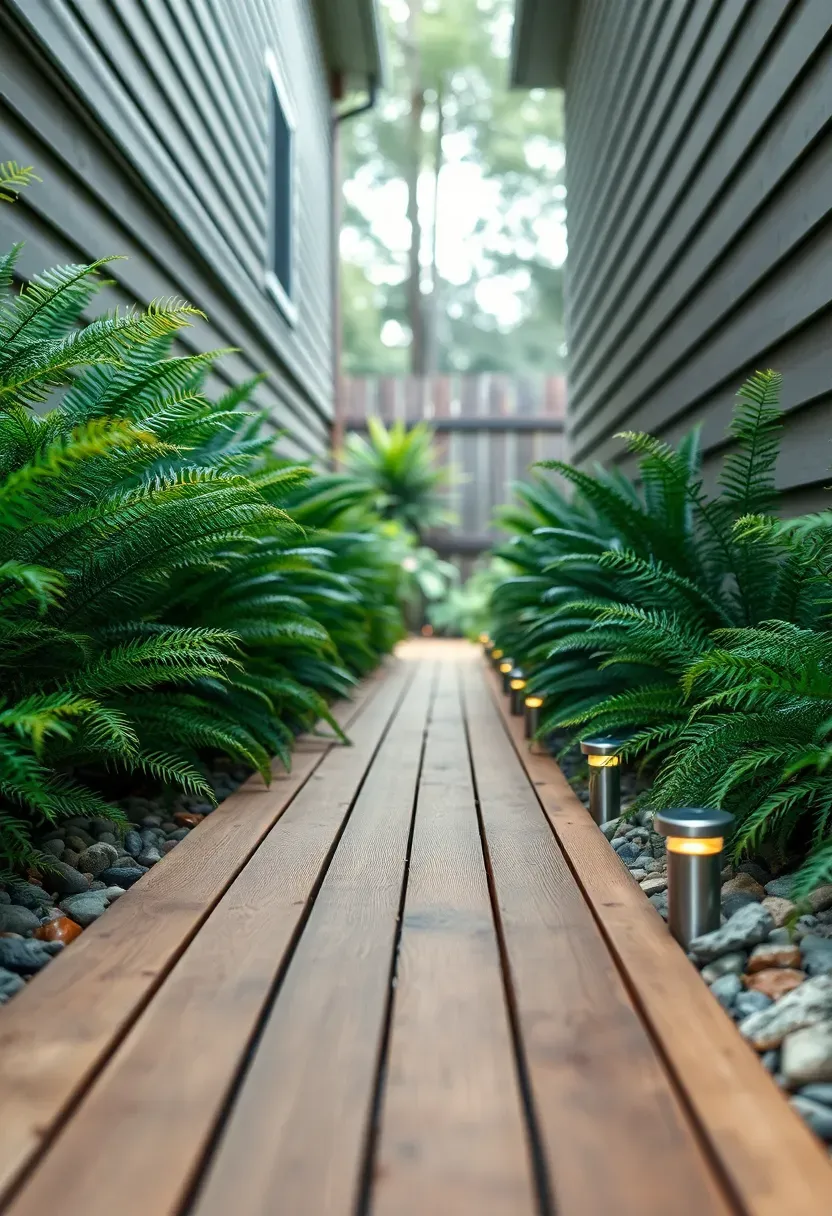
That three-foot gap between your house and the fence usually collects weeds, mud, and forgotten garden tools. A narrow deck walkway — just 30 to 36 inches wide — turns dead space into a clean, dry path connecting front and back yards. Build it as a series of short floating sections on gravel pads so it follows slight grade changes without complicated framing. Add low solar path lights along one edge. Suddenly you have a usable corridor instead of a neglected alley.
Tips
- Use rot-resistant wood or composite since side yards stay damp and shaded
- Space boards with 3/16-inch gaps for drainage in these low-airflow zones
- A gate at one end adds security and a sense of arrival
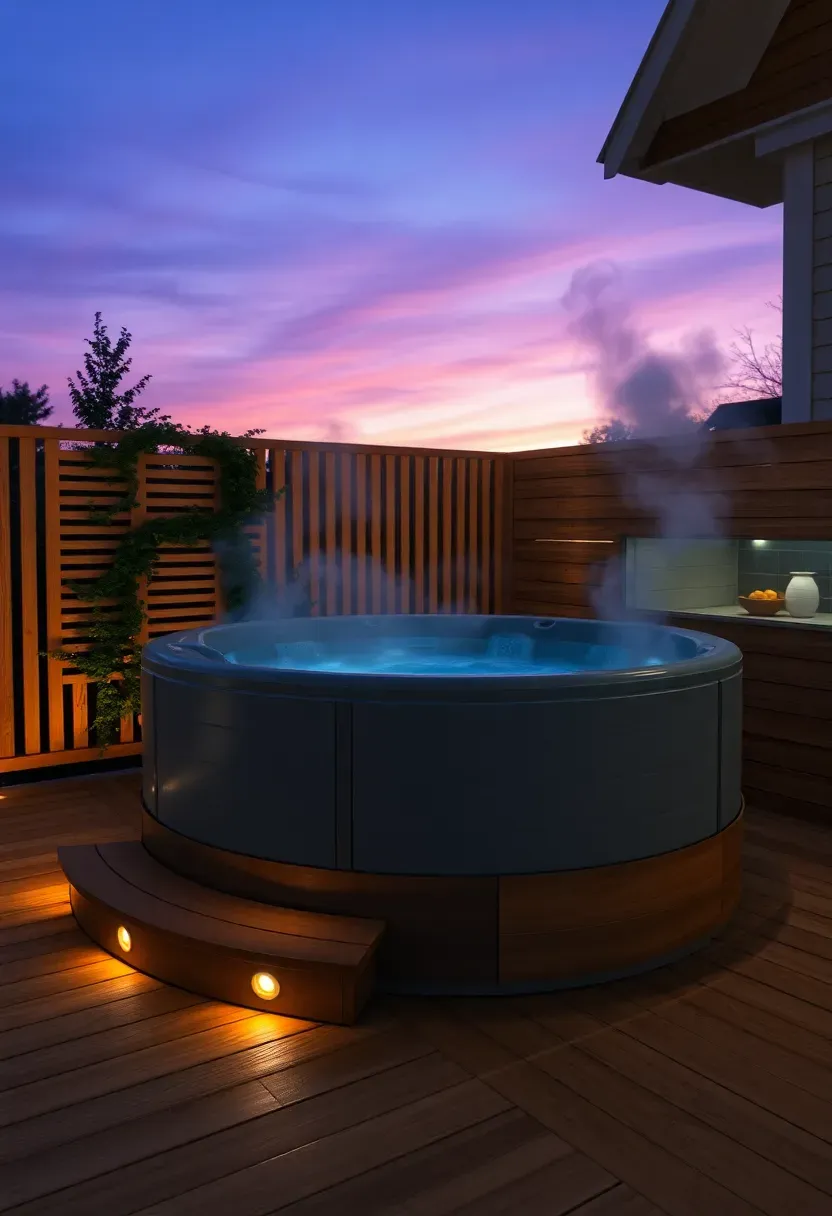
16. Hot Tub Deck Platform
Before You Build
A filled hot tub weighs between 3,000 and 5,000 pounds depending on size and occupancy. Standard residential deck framing cannot support that. You need doubled or tripled joists beneath the tub footprint, posts on concrete footings spaced no more than four feet apart, and beams sized for the concentrated load. Check your local code — some jurisdictions require an engineer-stamped plan for any structure supporting a hot tub.
Making It Feel Right
Frame the tub so the rim sits flush with the deck surface or just a few inches above it. Surround three sides with decking and use the fourth for a privacy screen with lattice or tall plantings. Step lighting around the base prevents stubbed toes during nighttime soaks.
Recommended
Items for this idea
17. Painted Deck in Bold Color
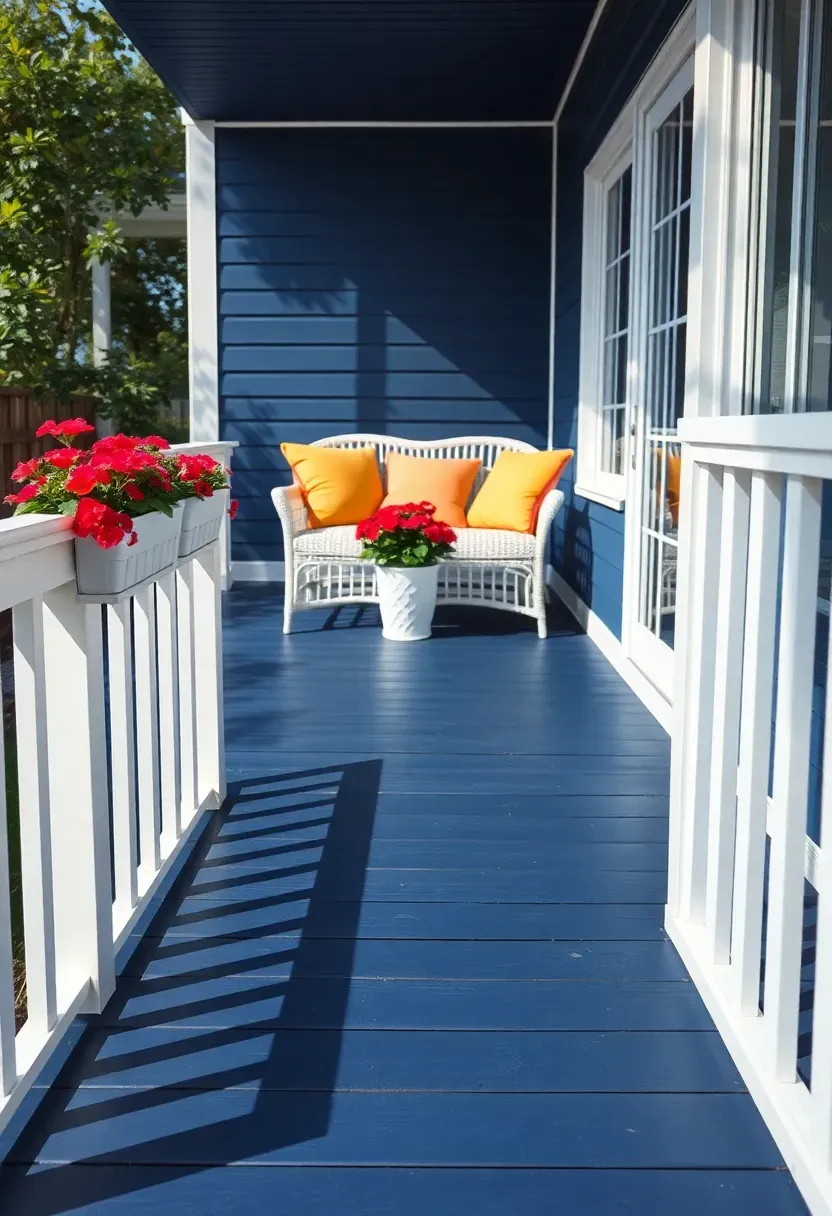
Most decks stay brown, gray, or natural wood. Painting yours a deliberate color — deep navy, forest green, barn red, or even black — turns it into a design statement. Use a high-quality exterior deck paint with anti-slip additive mixed in. The prep matters more than the color: sand the surface, fill any cracks, prime bare wood, and apply two coats with a roller on flat sections and a brush along edges. A painted deck needs a fresh coat every three to four years, but the visual punch makes it worthwhile.
Tips
- Test your color on a scrap board and leave it outside for a week to see how it looks in different light
- Dark colors absorb heat — avoid black in full-sun climates unless you wear shoes outdoors
- White or light colors show dirt and mildew faster but make small decks feel larger
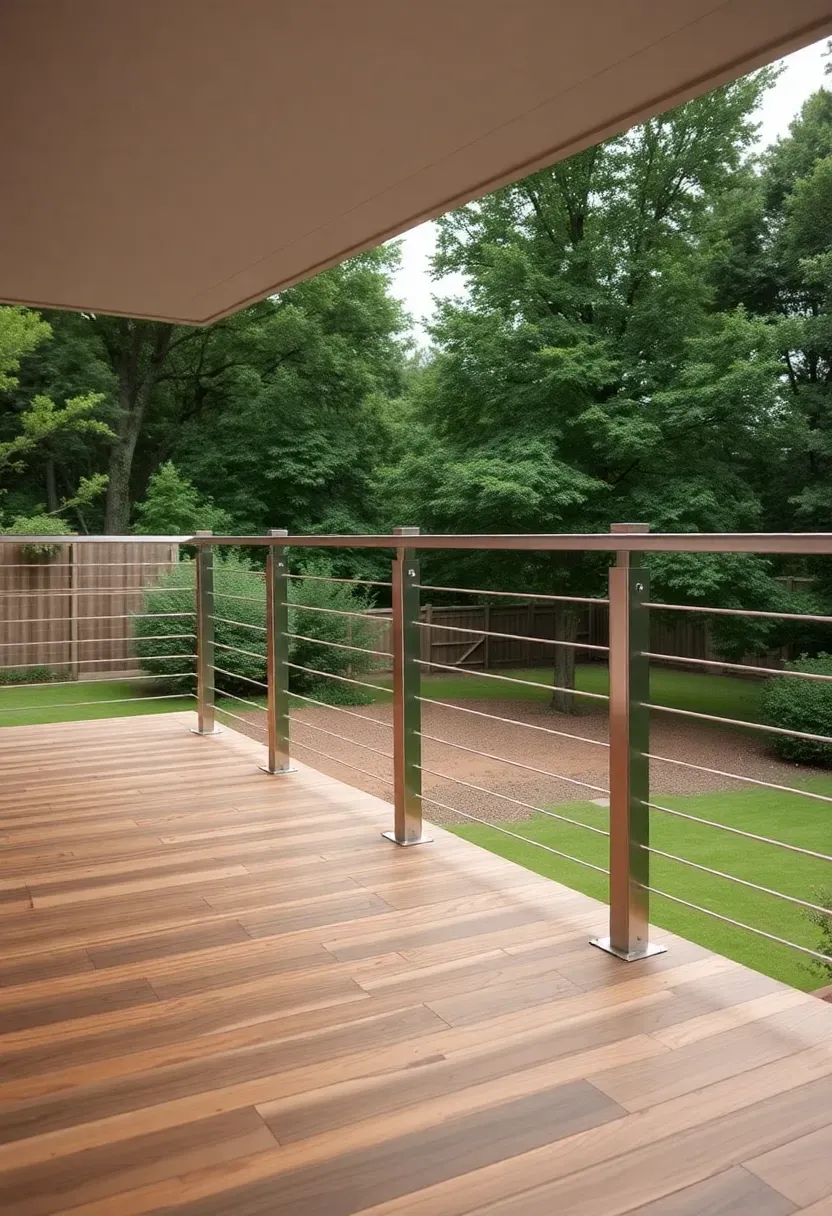
18. Deck with Cable Railing
Cable vs. Traditional Balusters
Vertical wood balusters create visual bars across your view. Horizontal stainless steel cables practically disappear, preserving sightlines to the yard, garden, or landscape beyond. The cables run through drilled intermediate posts every four to six feet and tension at one end with a turnbuckle. Code requires cables spaced close enough that a 4-inch sphere cannot pass through — usually about 3 inches apart. The cost per linear foot is higher than wood balusters but lower than glass panels.
Choose Cable If
- Your deck overlooks something worth seeing
- You prefer a modern or contemporary aesthetic
- You want minimal visual weight along the railing line
Recommended
Items for this idea
19. Freestanding Island Deck
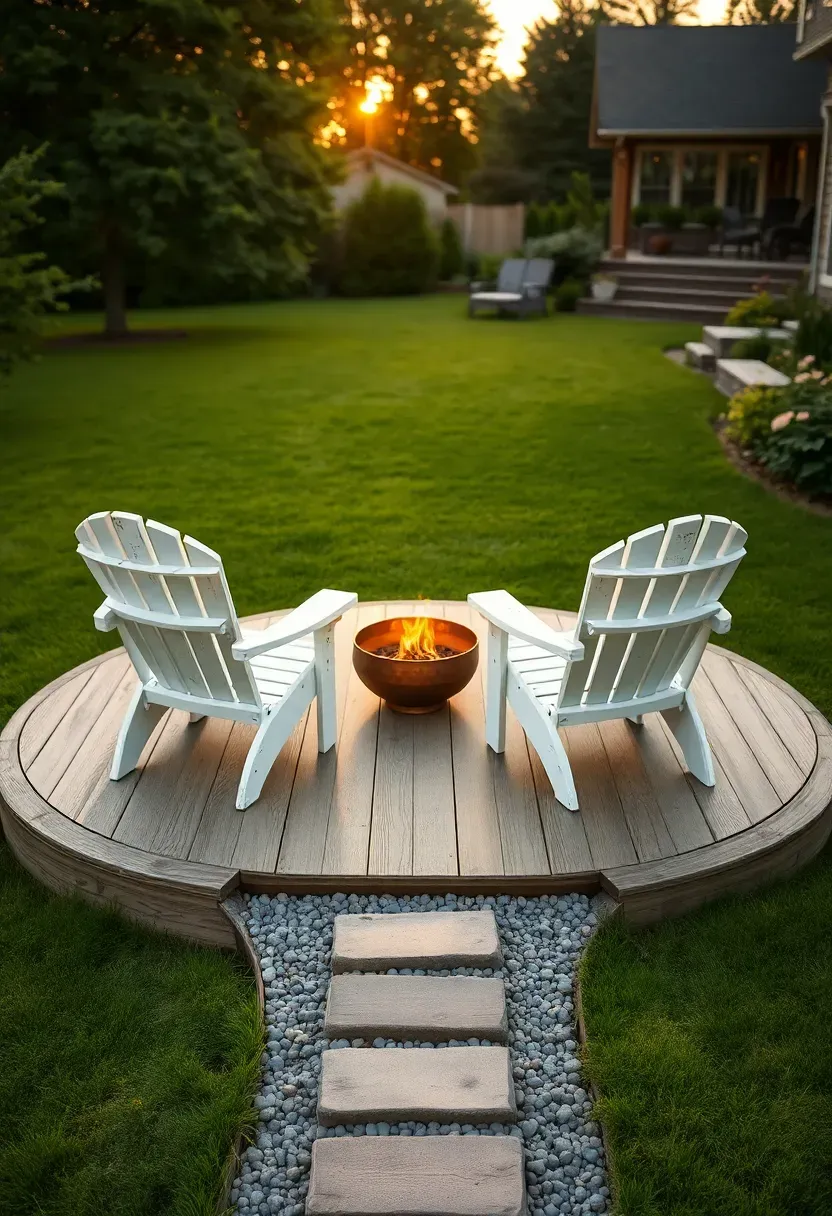
Who says a deck has to attach to the house? A freestanding platform placed 20 or 30 feet into the yard creates a destination — somewhere you walk to rather than step onto. Oval or organic shapes work better than rectangles here because the form looks deliberate rather than misplaced. Build it as a floating deck on blocks, place two good chairs and a fire bowl, and you have an outdoor room with its own identity. Connect it to the house with a gravel path or stepping stones for a complete circuit.
Tips
- Position it where the best evening light falls — this becomes a sunset-watching spot
- Keep it low to the ground so it blends with the landscape rather than towering over the lawn
- A small solar-powered LED light on a stake marks the path back to the house after dark
20. Screened-In Deck Room
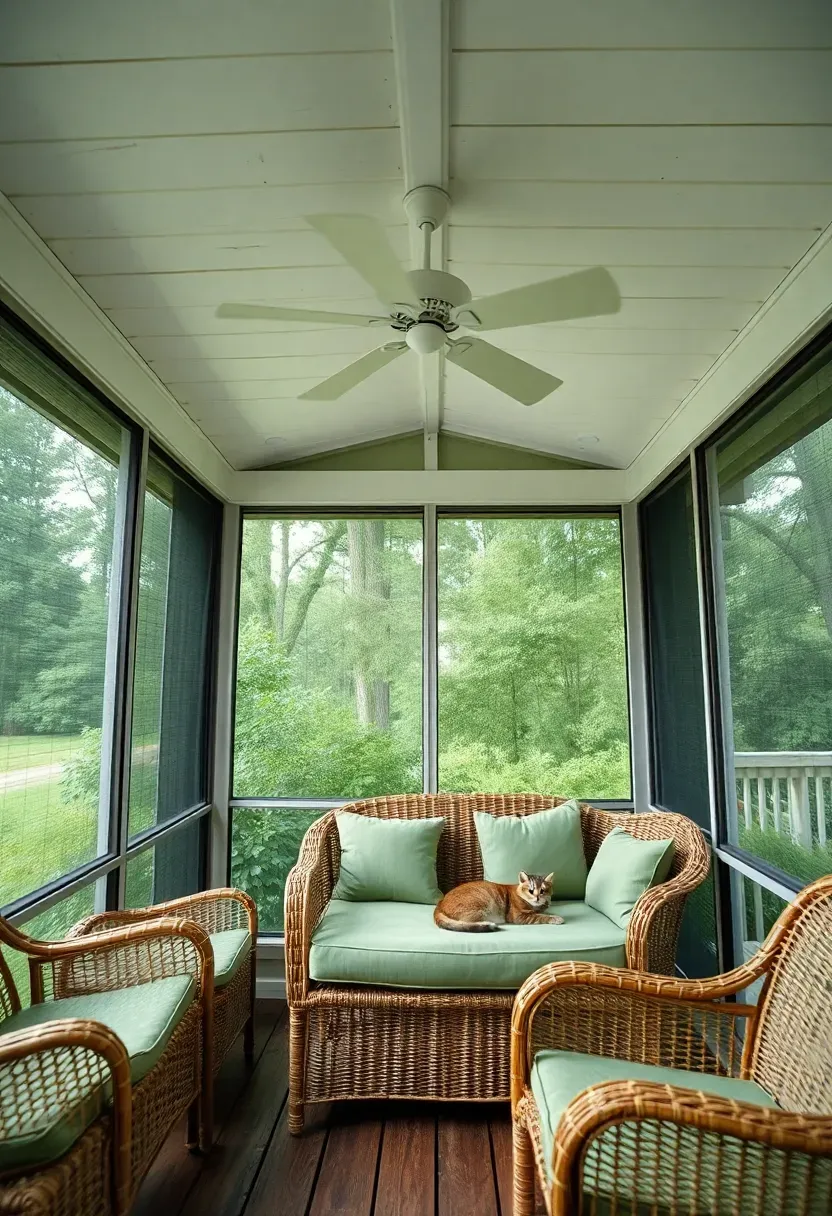
A screened room is a deck that forgot it was outdoors. Frame a roof structure over your existing or new deck, wrap three sides in fiberglass screen panels, and leave the house wall as the fourth side. You get airflow without mosquitoes, sunlight without direct glare, and a room that works from spring through fall without air conditioning. It functions as a dining room, a reading room, and — with a daybed — a napping room that no interior space can replicate because of the sound of rain on the roof overhead.
Tips
- Use a shed-roof slope (minimum 2:12 pitch) so rainwater runs off efficiently
- Install a ceiling fan rated for damp locations to keep air moving on still days
- Opt for dark screen mesh — it is easier to see through than bright aluminum
Recommended
Items for this idea
21. Ipe Hardwood Deck
Origins and Reputation
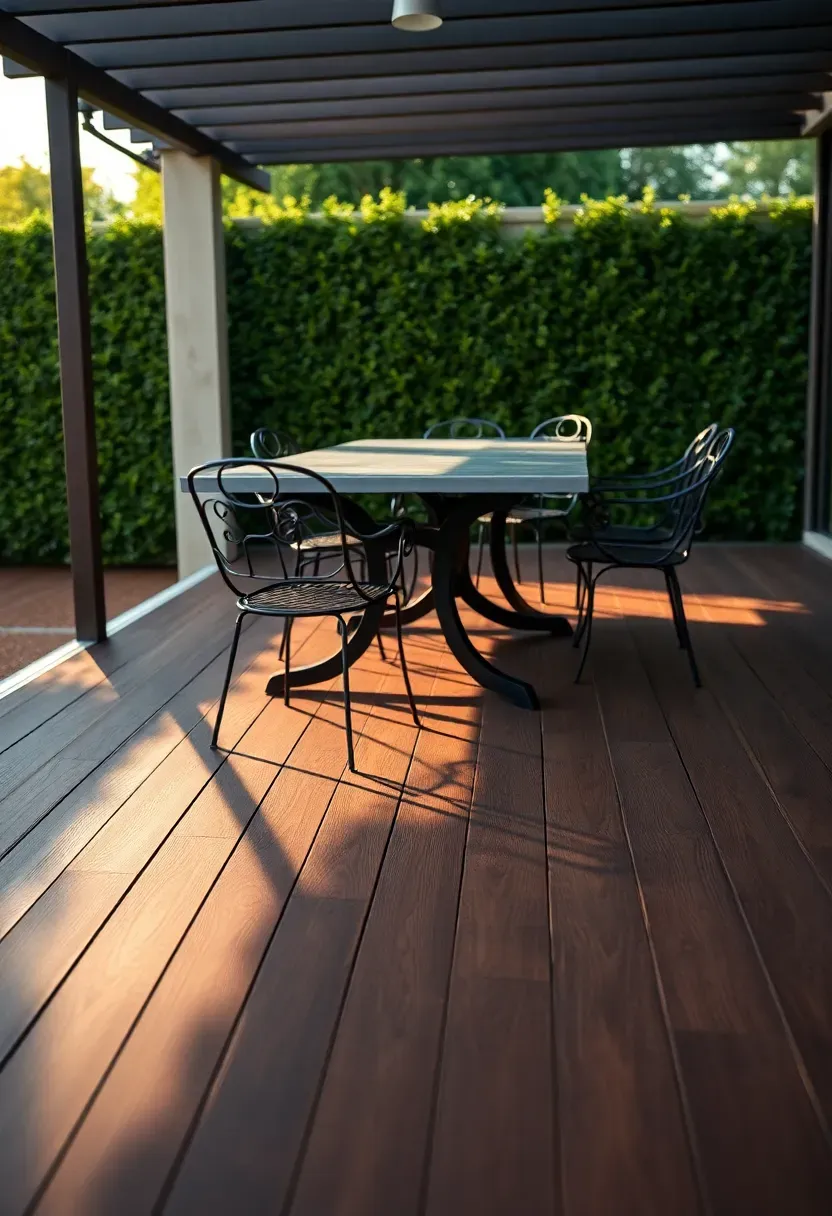
Ipe (pronounced ee-pay) is a Brazilian hardwood so dense it barely floats. Builders have used it for boardwalks, docks, and high-end decks for decades because it resists rot, insects, and UV damage without any chemical treatment. A properly installed ipe deck can last 40 to 50 years. The wood starts as a rich chocolate brown and weathers to a silver gray if left untreated — or keeps its color with annual oil.
Modern Considerations
Ipe is expensive — roughly four to five times the cost of pressure-treated pine per board foot. It also dulls saw blades quickly and requires pre-drilling for every fastener because the wood is harder than some metals. But for a deck you never want to rebuild, nothing else comes close.
22. Budget Pallet Deck
Step by Step
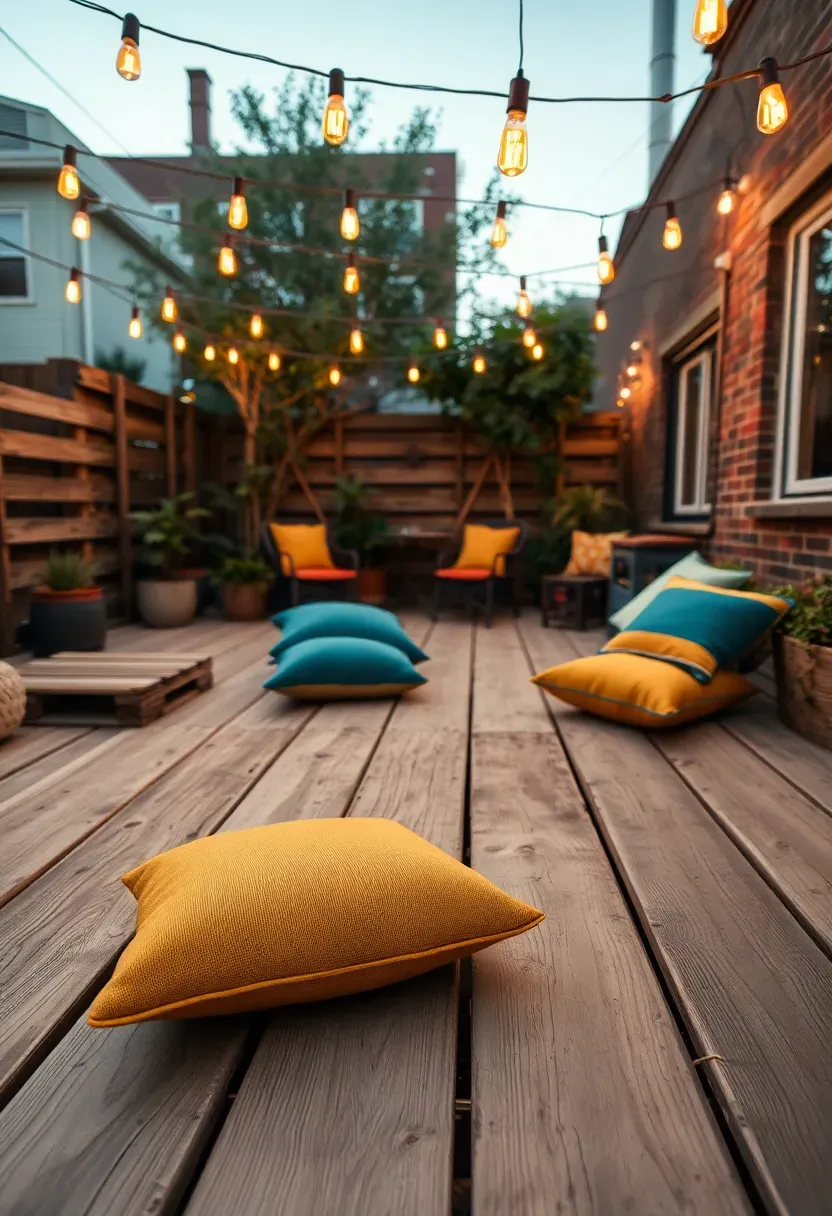
Pallets offer free or near-free lumber, and building a deck from them is the most accessible entry point into outdoor woodworking.
Step 1: Source and Select
Find heat-treated pallets stamped "HT" — avoid chemically treated ones stamped "MB." Look for pallets with minimal damage and consistent board widths.
Step 2: Disassemble and Prep
Pry boards off the stringers with a pry bar and hammer. Sand all faces with 80-grit paper. Apply a wood preservative or exterior stain.
Step 3: Build the Frame and Lay Boards
Use the pallet stringers as joists on a level gravel pad. Screw the prepped boards across the top with consistent spacing.
Watch Out
- Pallet wood is typically rough softwood that will splinter if not sanded properly
- Boards vary in thickness, so plan to shim or plane for a level surface
Recommended
Items for this idea
23. Deck with Outdoor Kitchen Zone
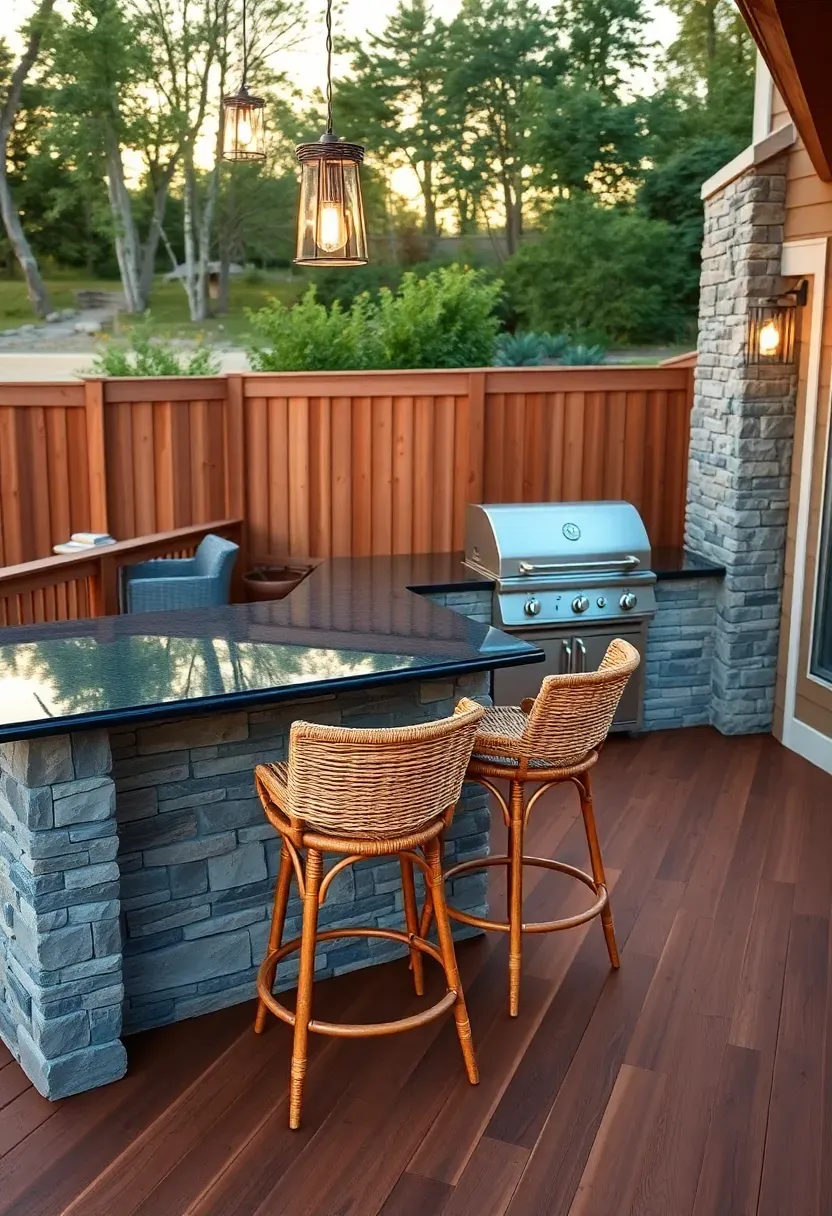
Designate one end of your deck for cooking by building a non-combustible island — steel framing with cement board and stone veneer — directly on the deck surface. Drop in a built-in grill, add a countertop for prep, and run a gas line from the house. A small bar-height counter on the opposite side gives guests somewhere to sit and talk while you cook. Keep the cooking zone at least six feet from the house wall and any overhead structure. A dedicated deck area for food changes how often you actually cook outside.
Tips
- Use porcelain tile or stone on the cooking island surface — wood counters near a grill will scorch
- Install a GFCI outlet for blenders, electric griddles, or phone charging
- A small under-counter fridge saves constant trips to the kitchen indoors
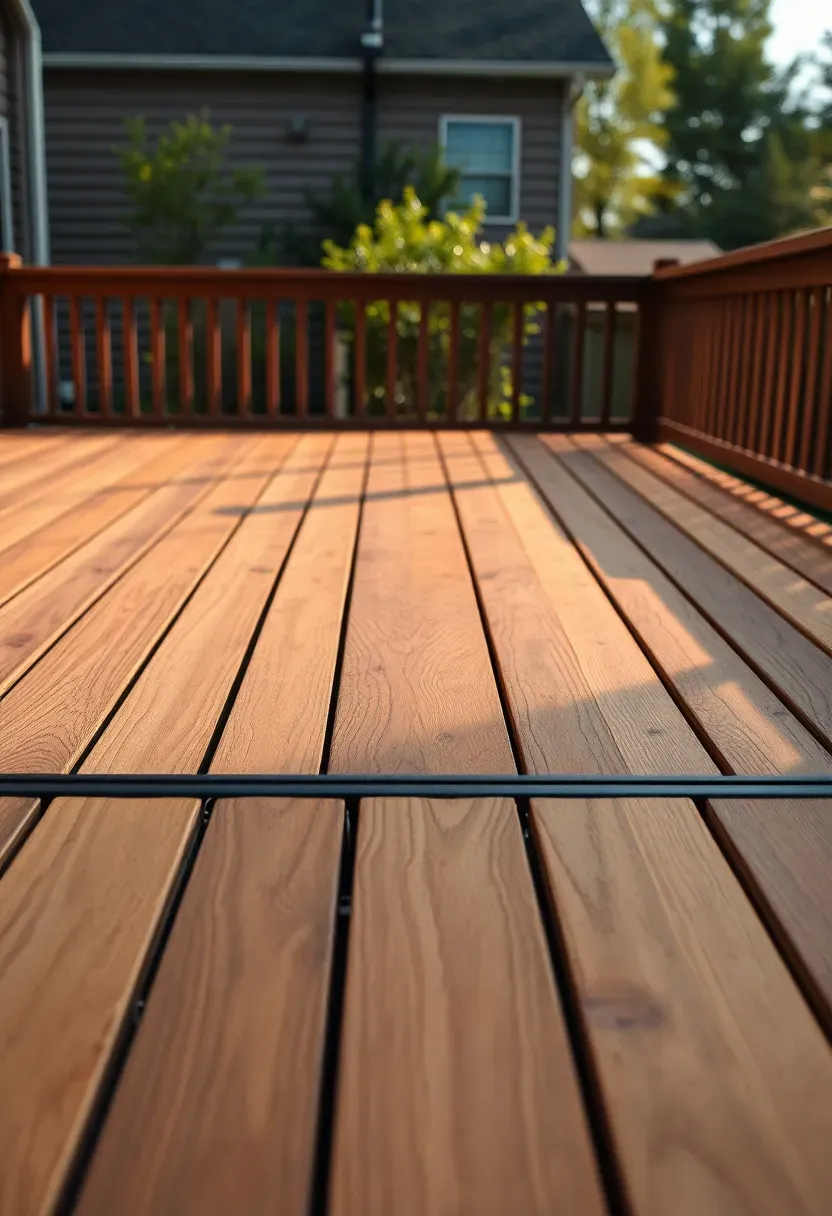
24. Two-Tone Deck with Border Inlay
A vs. B: Layout Approaches
Picture-Frame Border: Run a contrasting color or material around the entire deck perimeter. Dark border with light field is the classic combination. The border boards run perpendicular to the field boards, creating a clean visual break.
Diagonal Inlay Center: Keep the perimeter boards straight and run the center section at 45 degrees in a contrasting shade. This draws the eye to the middle of the deck and makes a rectangle feel more dynamic.
Recommendation
The picture-frame approach works on any deck shape and size. The diagonal center requires more cutting waste and looks best on decks at least 12 feet wide. If your deck is under 200 square feet, stick with the frame — it adds sophistication without overwhelming a compact space.
Recommended
Items for this idea
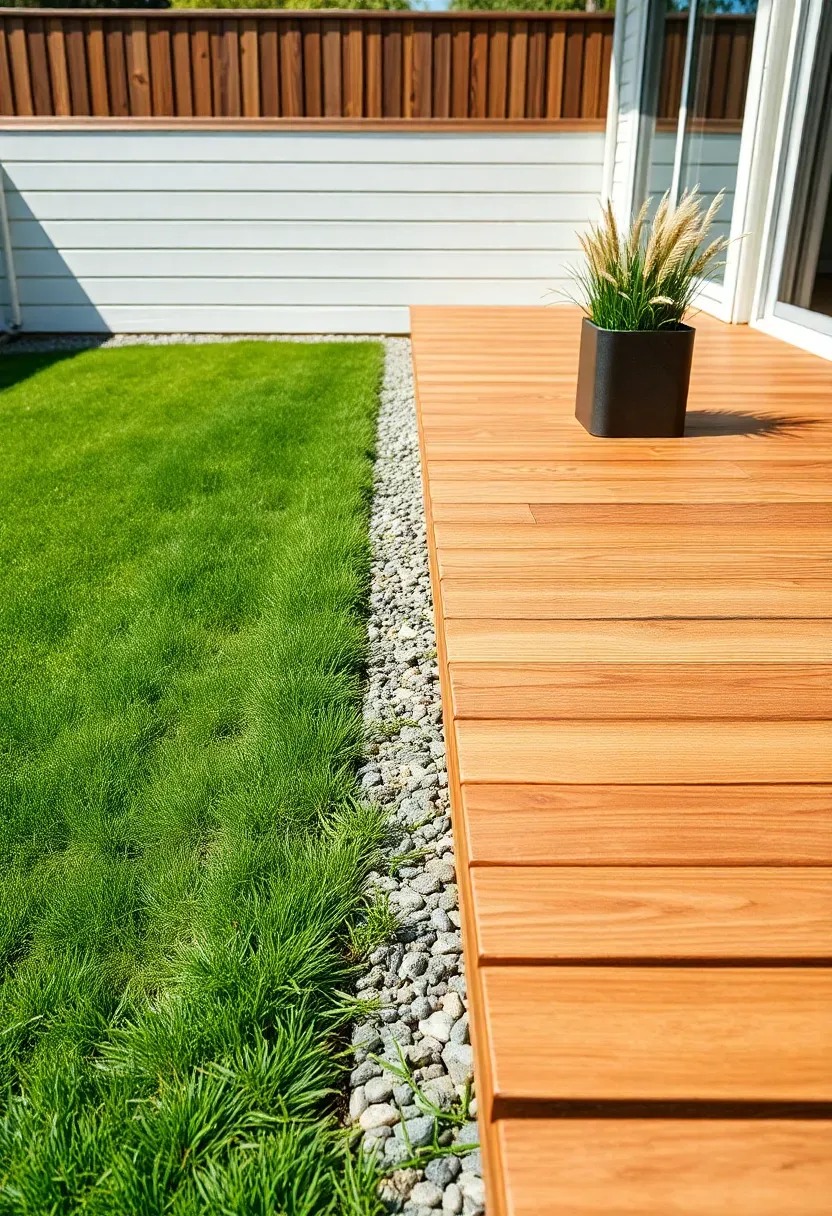
25. Low-Profile Deck with Flush Steps
A deck that rises only four to six inches above ground level feels less like a structure and more like a continuation of the landscape. Wide steps — 48 inches deep or more — double as casual seating. Build flush with the surrounding grade so the transition from lawn to deck is almost seamless. This approach works especially well for modern and minimalist homes where clean horizontal lines matter. No railing is required at this height in most codes, which keeps the look open.
Tips
- Use ground-contact-rated lumber since the frame sits close to soil moisture
- Create a generous gravel border around the perimeter for drainage and to prevent dirt splashing onto boards
- Mow to the deck edge for a crisp lawn-to-wood transition
26. Deck with Privacy Wall
The Problem
Your new deck is perfect except that the neighbors can see everything. Fences only go so high. Curtains look flimsy outdoors.
The Solution
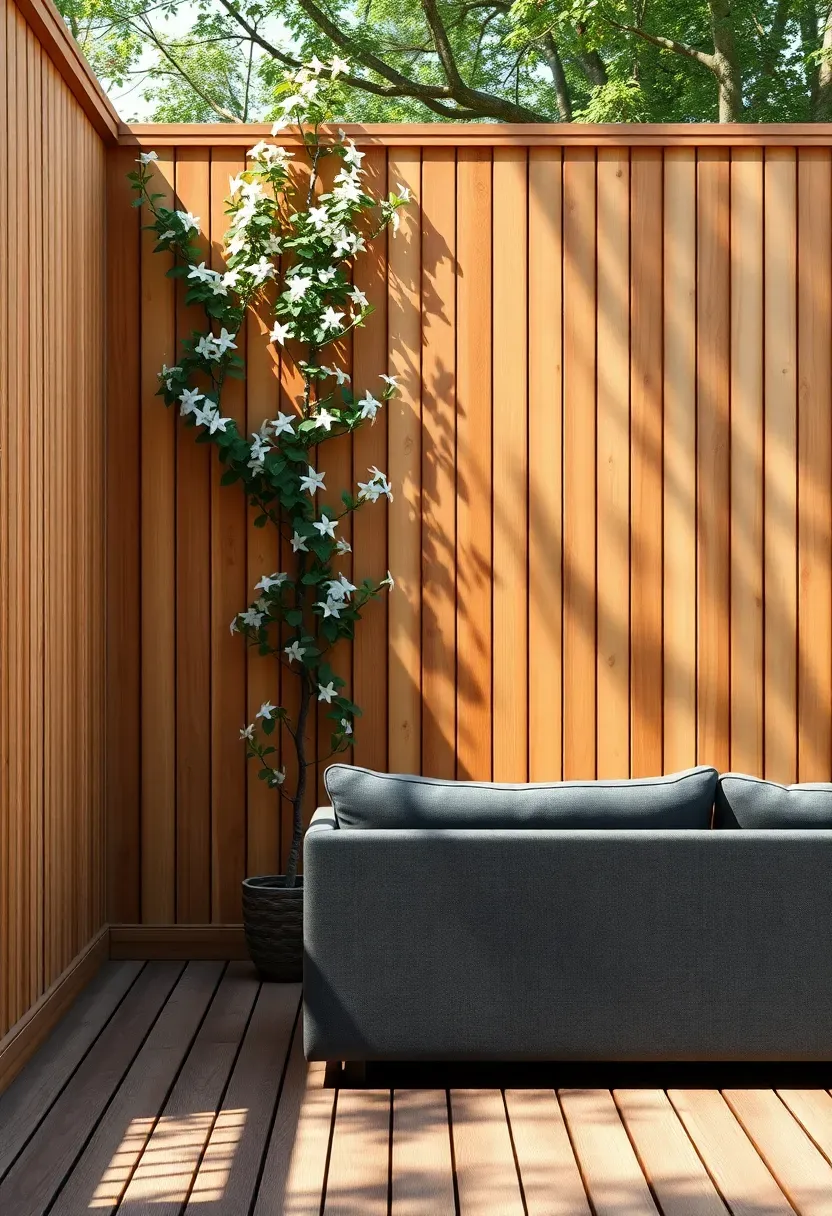
A slatted privacy wall built directly into the deck frame solves visibility without feeling like a fortress. Use horizontal boards spaced half an inch apart — tight enough to block sightlines from ground level but open enough to let breeze through. Build it six to seven feet tall on the most exposed side. Train a fast-growing vine like star jasmine or clematis up the face for added coverage and fragrance. From the inside, it reads as a feature wall rather than a barrier.
Pros and Cons
Pros: Blocks neighbor views, reduces wind on the deck, supports climbing plants Cons: Creates some shade on the screened side, requires deeper post footings to resist wind load
Recommended
Items for this idea
27. Wraparound Tree Deck
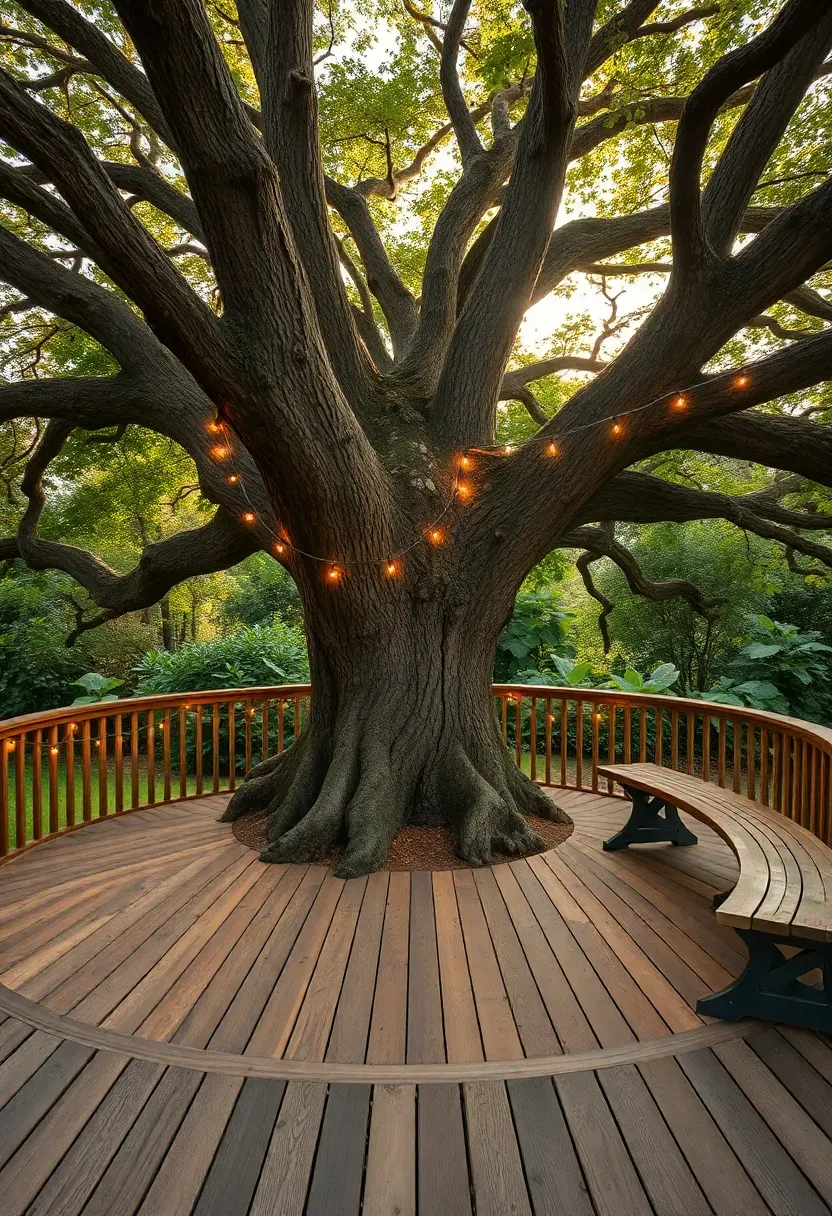
If you have a mature tree in your yard, build the deck around it instead of cutting it down. Frame a circular or hexagonal opening in the deck surface, leaving at least six inches of clearance on all sides so the trunk can move in the wind and continue growing in diameter. The tree provides natural shade, a sculptural centerpiece, and habitat for birds — benefits no umbrella or pergola can match. Fairy lights wound through lower branches turn the canopy into a living chandelier after sunset.
Tips
- Never bolt anything into a living tree — it damages the cambium layer and invites disease
- Revisit the opening size every few years and trim boards back if the trunk grows close
- Sweep fallen leaves regularly to prevent moisture buildup and staining on the boards below
Quick FAQ
Do I need a permit to build a backyard deck? It depends on your municipality and the deck height. Many areas exempt floating decks under 200 square feet and 30 inches off the ground. Anything attached to the house or above that height almost always requires a permit and inspection. Call your local building department before buying materials.
Which lasts longer — composite or pressure-treated wood? Composite decking typically lasts 25 to 30 years with almost no maintenance. Pressure-treated pine lasts 15 to 20 years if you sand and seal it every other year. Cedar falls in between at about 20 years untreated. Your maintenance tolerance matters as much as the material itself.
How much does a back yard deck cost per square foot? Pressure-treated pine runs $15 to $25 per square foot installed. Composite sits between $30 and $50. Ipe hardwood ranges from $40 to $75. These numbers include framing, hardware, and basic labor but not railings, stairs, or built-in features, which add 20 to 40 percent on top.
Can I build a deck directly on the ground? Not directly on dirt — you need at least a gravel pad and concrete deck blocks to keep the wood off moist soil. A ground-level floating deck on blocks works well and avoids permit requirements in most areas. Always allow airflow beneath the frame to prevent rot.
What is the best deck board direction for a small yard? Running boards perpendicular to the longest sightline makes the deck feel wider. Diagonal boards add visual interest but waste more material. For most small decks, running boards parallel to the house wall is the simplest and most efficient layout.
A deck is one of the few home projects where the return is almost immediate — you finish building on Saturday, and by Sunday evening you are eating dinner outside wondering why you waited so long. Pick the idea that fits your space, your budget, and your willingness to maintain it. Start with something simple if you have never built before. You can always expand later. The yard is not going anywhere.
Pinterest cover for 27 Back Yard Deck Ideas for Every Budget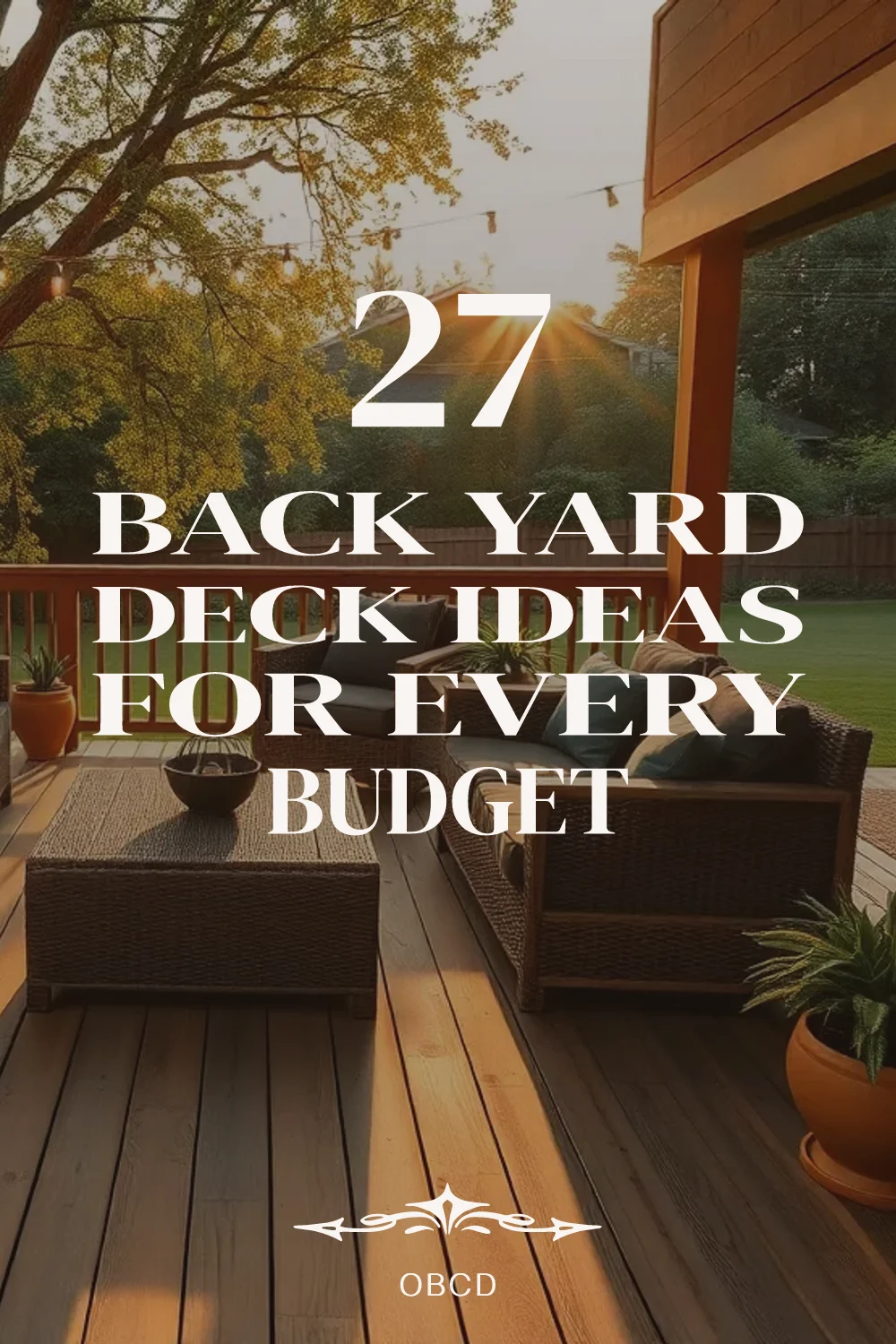
About the author
OBCD
CGI visualization and interior design content. We create detailed 3D renders and curate practical design ideas for every room in your home.