17 Back Deck Ideas for a Better Outdoor Space
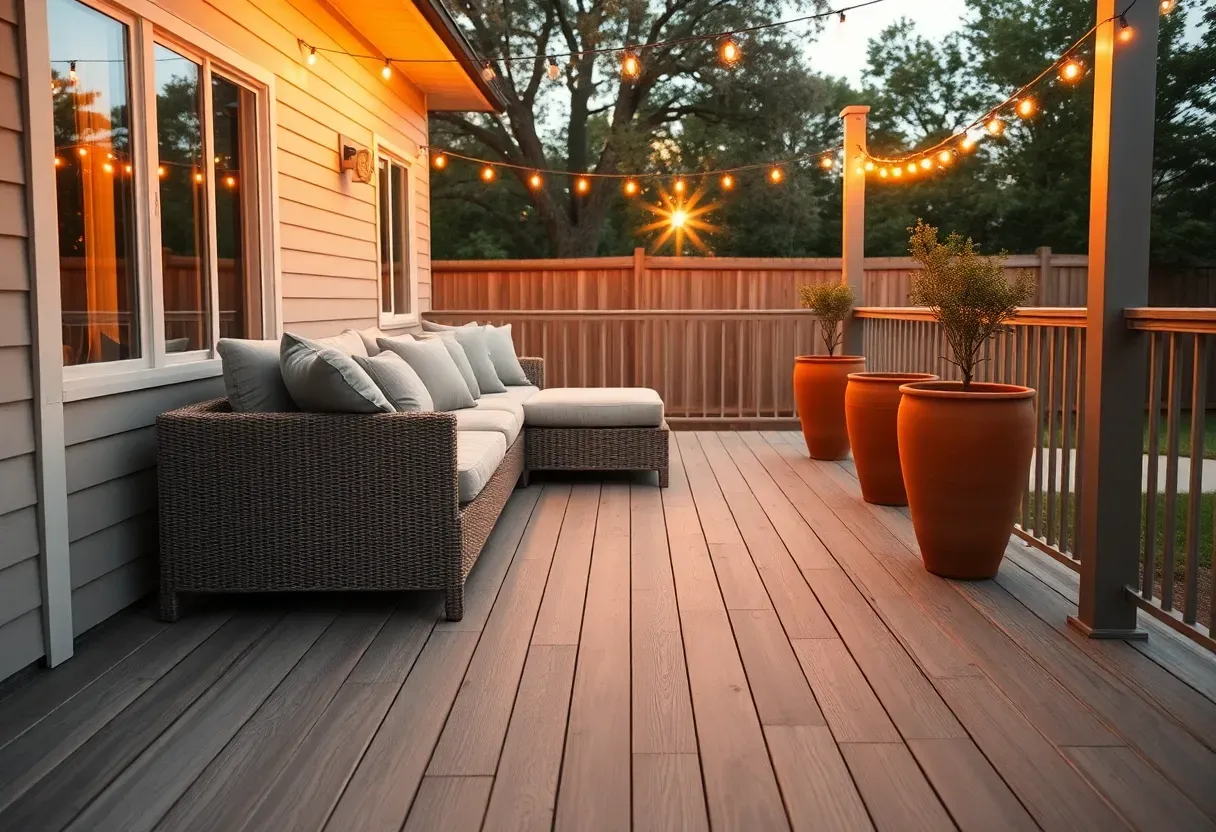
Most backyards have more potential than their owners realize, and the deck is usually the piece that unlocks it. I have seen patchy grass areas and cracked concrete slabs become genuine gathering spots once a well-planned deck goes in. The key is matching the design to how you actually spend time outside. A family that grills three nights a week needs a different layout than a couple who mostly reads out there on Sunday mornings. Material choice matters too — pressure-treated pine behaves differently from composite, and both age in ways that affect maintenance for years. Below are 17 back deck ideas organized by function and style, each with enough detail to help you move from browsing to building.
Here are the ideas grouped from simple ground-level builds through multi-zone entertaining decks and covered outdoor rooms.
Table of Contents
- Floating Platform Deck
- Wraparound Bench Deck
- Pergola-Covered Dining Deck
- Multi-Level Tiered Deck
- Ground-Level Lounge Deck
- Composite Deck with Cable Railing
- Cedar Hot Tub Surround Deck
- Screened-In Deck Room
- Fire Pit Deck with Sunken Seating
- Narrow Side-Yard Deck
- Poolside Deck with Built-In Storage
- Japanese-Inspired Minimalist Deck
- Rooftop-Style Deck with Planters
- Rustic Reclaimed Wood Deck
- Cantilevered Hillside Deck
- Outdoor Kitchen Deck
- Stained Herringbone Pattern Deck
1. Floating Platform Deck
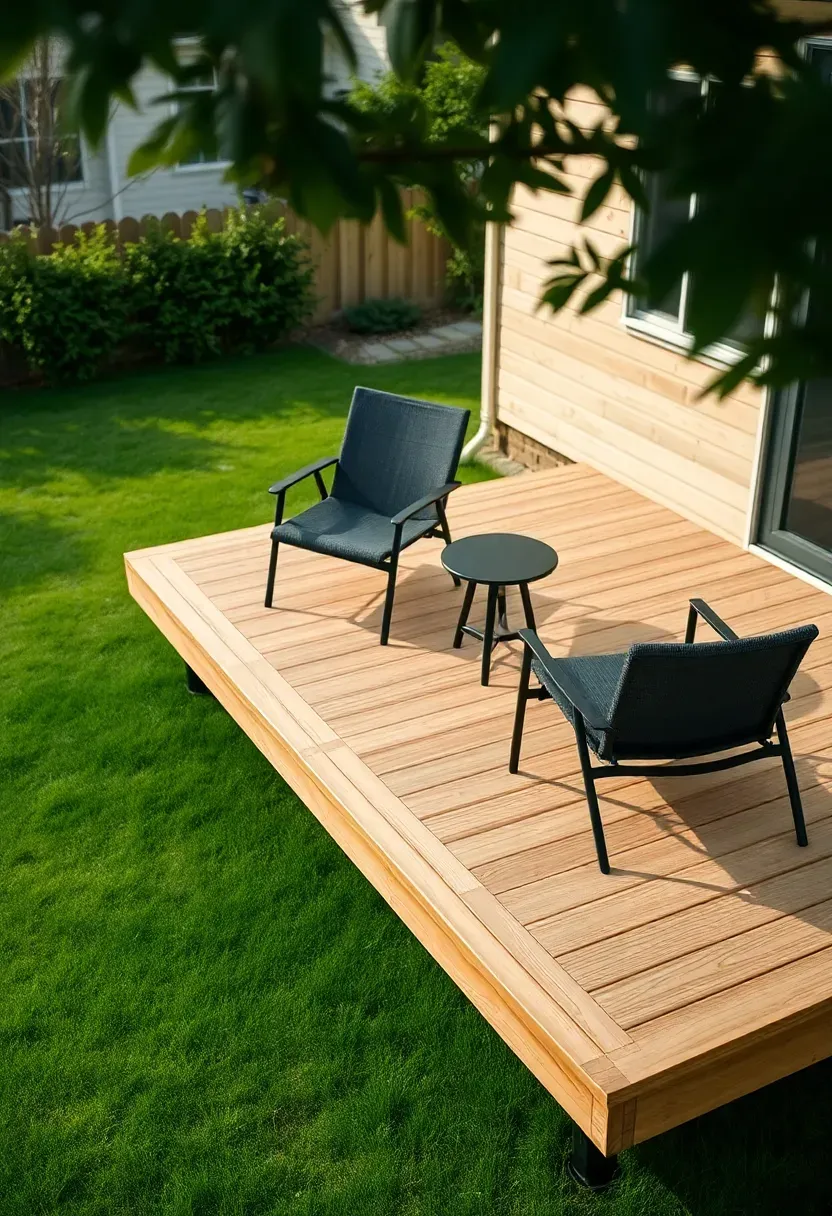
A floating deck sits directly on the ground without permanent footings, which means you can skip the permit process in many municipalities. The structure rests on concrete deck blocks spaced every four to six feet, with pressure-treated joists laid across them. Most homeowners can finish a 10x12 foot version in a weekend with basic tools. The low profile works well in flat yards where a raised deck would feel disproportionate.
Practical notes
- Use landscape fabric underneath to block weeds from growing between the blocks
- Leave a quarter-inch gap between boards for drainage and seasonal expansion
- Check local codes anyway — some towns still require permits even for ground-level structures
We picked a few things that go well with this idea: Brightever 100FT LED Outdoor String Lights (★4.6), Addlon 100FT G40 Globe Patio Lights (★4.6) and Brightown 50FT Waterproof Globe String Lights (★4.7). As an Amazon Associate we earn from qualifying purchases.
2. Wraparound Bench Deck
Why fixed seating changes the layout
Built-in benches along two or three sides of a deck create more usable seating than a cluster of individual chairs while freeing up floor space in the center. The benches double as storage if you hinge the seat tops and build compartments underneath. This approach works especially well for smaller decks under 200 square feet where freestanding furniture crowds the walking path.
How to build it
- Frame the bench supports from the same lumber as your deck joists for a unified look
- Set the seat height at 17 to 18 inches — standard chair height — with a depth of 16 inches
- Round the front edge of the seat boards with a router to prevent shin bruises
Watch out
- Hinged storage lids need marine-grade hardware to resist rust from trapped moisture
We picked a few things that go well with this idea: 7-Piece Wicker Patio Sectional Sofa Set (★4.1), Vongrasig 5-Piece Rattan Patio Sectional (★4.1) and Aoxun 7-Piece Outdoor Wicker Sectional Set (★4.4). As an Amazon Associate we earn from qualifying purchases.
3. Pergola-Covered Dining Deck
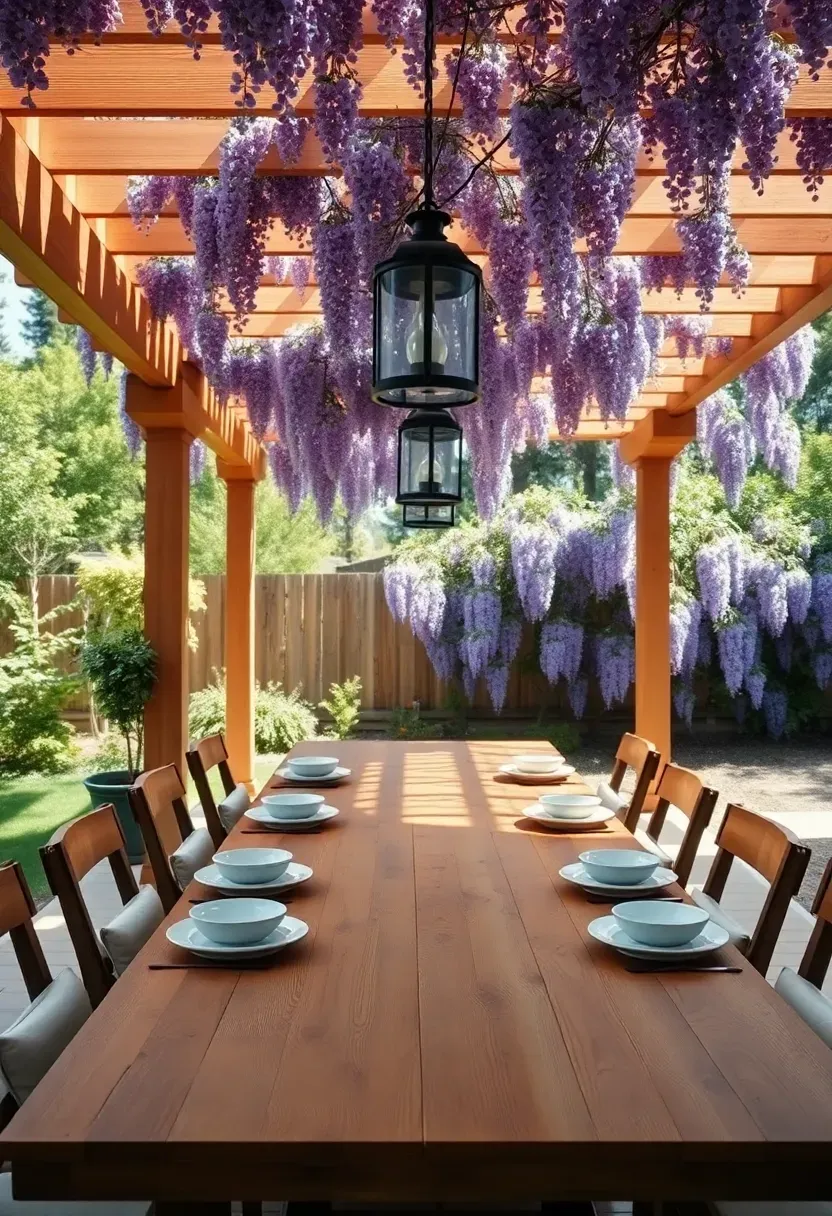
Eating outside loses its appeal fast when the afternoon sun hits the table at full strength. A pergola mounted directly onto the deck framing provides dappled shade without blocking airflow the way a solid roof does. Cedar and redwood resist rot naturally, so you can skip the chemical treatments. Space the overhead slats at four to six inches apart for the right balance of sun and shadow — tighter spacing for south-facing decks, wider for those that get less direct exposure.
Tips
- Train climbing plants like jasmine or wisteria up the posts for seasonal shade that thickens over two to three growing seasons
- Hang pendant lanterns or string lights from the crossbeams instead of mounting fixtures on the house wall
- Use stainless steel post brackets to anchor the pergola legs to the deck surface rather than embedding them in the framing
We picked a few things that go well with this idea: Sophia & William 56-Inch Rattan Fire Table (★4.6), 48-Inch Propane Fire Pit Table with Stone Panel (★4.6) and 48-Inch Rectangular Propane Fire Pit Table (★5.0). As an Amazon Associate we earn from qualifying purchases.
4. Multi-Level Tiered Deck
Sloped yards vs flat yards
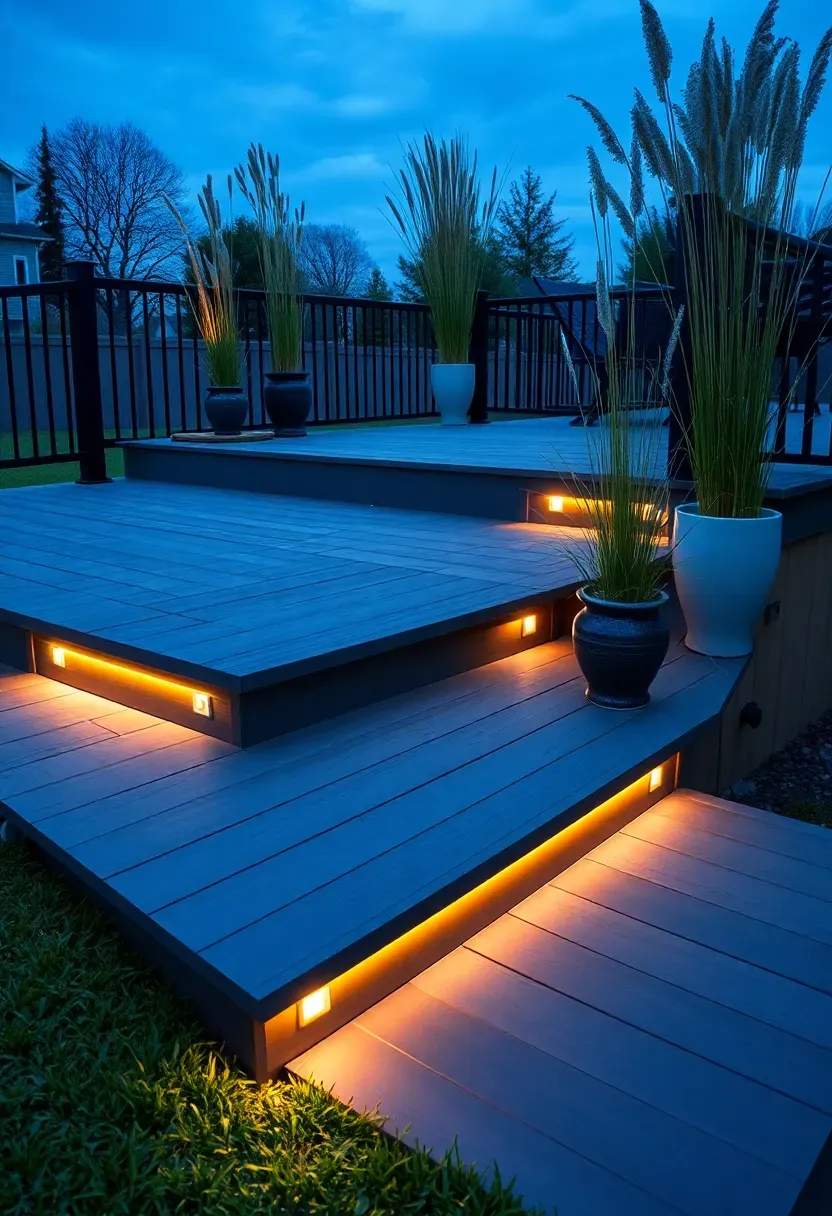
A yard that drops three feet or more from the house to the property line is a strong candidate for a tiered deck. Instead of building one tall platform with long stair runs, you create two or three connected levels that follow the grade. Each tier serves a different purpose — dining near the house, lounging at mid-level, a fire pit or garden access at the lowest point. The stepping effect also makes the overall structure feel less imposing from the neighbor's perspective.
The build approach
Separate ledger boards at each level attach to independent post-and-beam frames. Wide steps (at least 48 inches deep) between tiers double as casual seating during parties. Run low-voltage LED strips along each riser for safety after dark.
Pros and cons
- Tiered layouts naturally define zones without needing walls or dividers
- Construction cost is higher than a single-level deck because of additional framing and footings
- Snow and leaf removal requires attention at each transition point
Recommended
Items for this idea
5. Ground-Level Lounge Deck
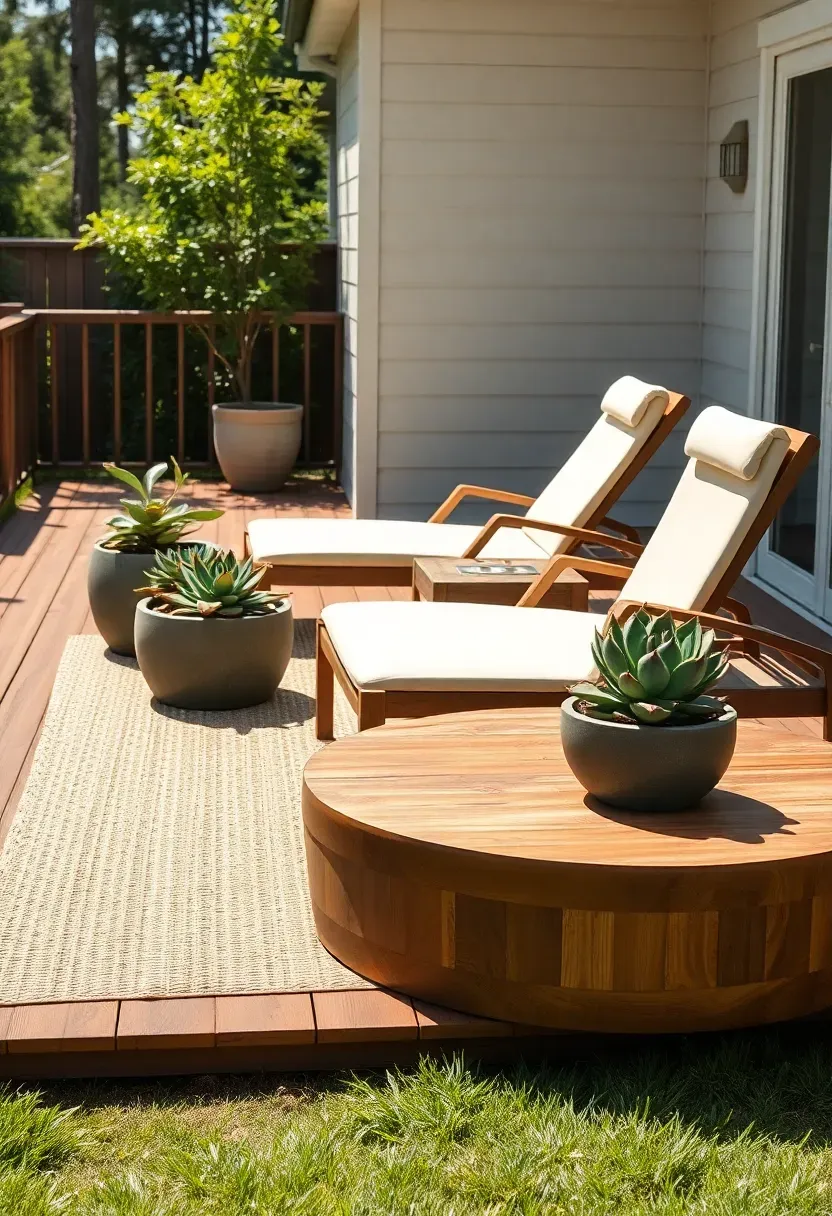
Ground-level decks sit close enough to the lawn that you do not need railings, which strips the design down to its simplest form. The result feels more like an outdoor room than a traditional raised deck. Composite boards in warm gray or teak tones hold up better at ground level than natural wood because they resist the moisture trapped between the deck surface and the soil below. Frame the space with large planters instead of railings to create a soft boundary that blends into the yard.
Tips
- Install a gravel pad underneath with proper drainage pitch to prevent water from pooling beneath the boards
- Choose furniture with short legs — chaise lounges and floor cushions suit the low profile
- Add an outdoor area rug to anchor the seating group and soften the hard surface
6. Composite Deck with Cable Railing
Cable railing vs traditional balusters
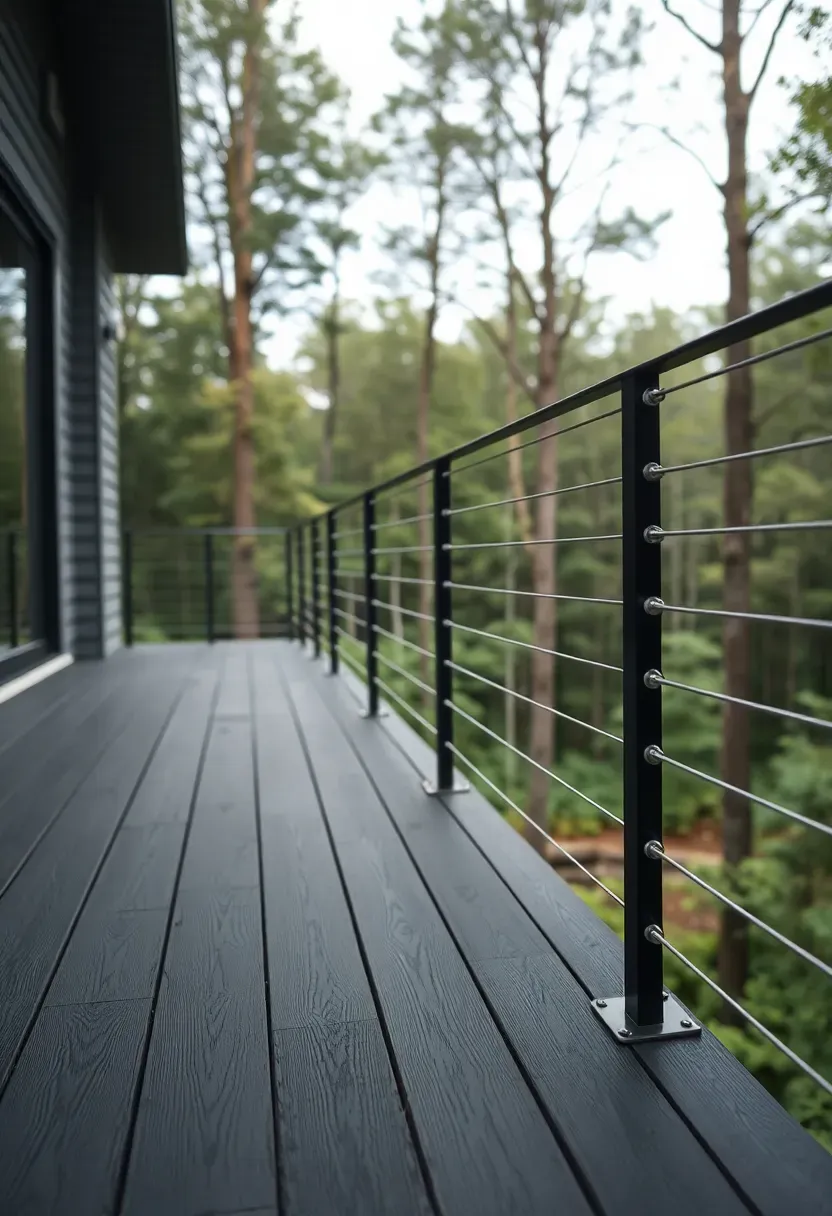
Standard wood or aluminum balusters create a visual fence line that chops up your sightline to the yard. Cable railing uses thin stainless steel wires tensioned between posts, which nearly disappears from most viewing angles. The result is an uninterrupted view that makes a modest backyard feel larger. Composite decking in dark charcoal or walnut tones pairs naturally with the industrial look of the cable hardware.
Choose cable railing if
- Your deck overlooks a garden, tree line, or water feature you want to keep visible
- You prefer the clean horizontal lines of modern design
- You are comfortable with the higher material cost (roughly double the price of wood balusters)
Choose traditional balusters if
- Local code requires specific baluster spacing that cable cannot satisfy
- You have small children and want a barrier they cannot squeeze through
- Budget is the primary concern
Recommended
Items for this idea
7. Cedar Hot Tub Surround Deck
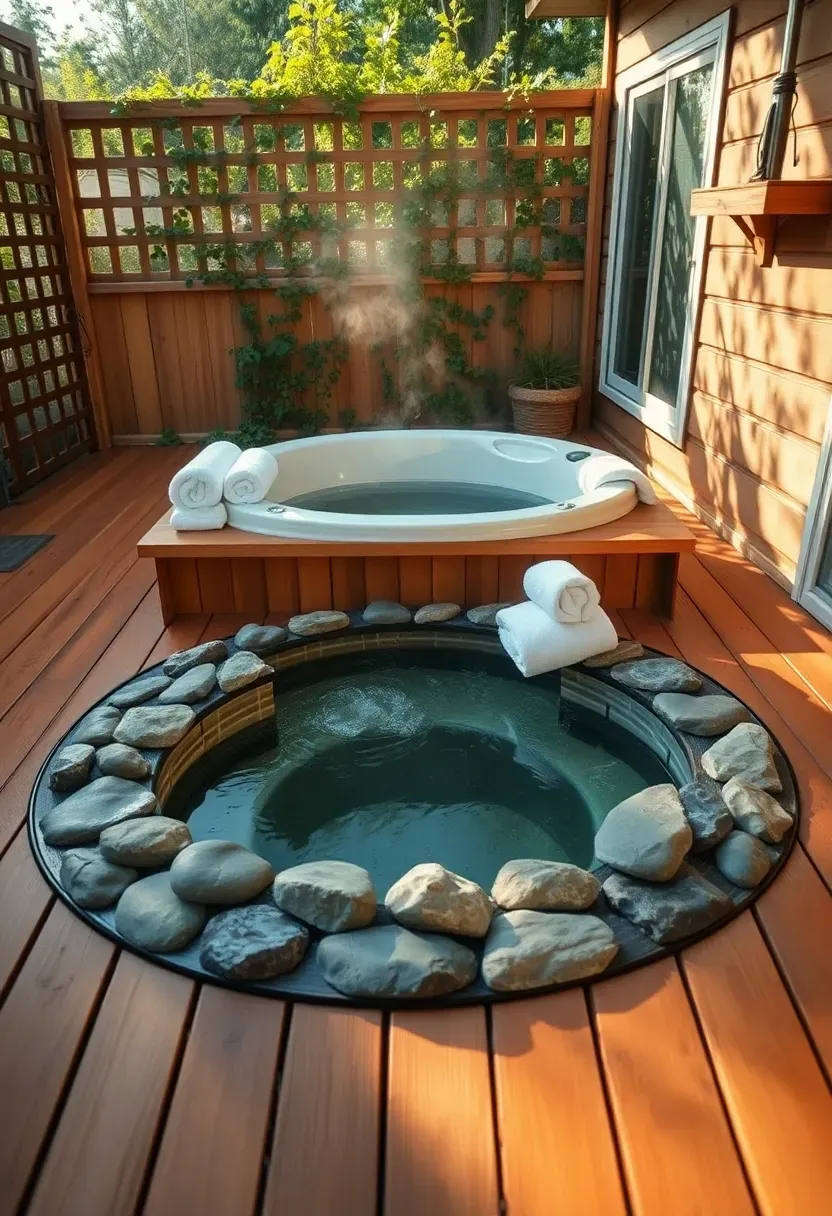
Building the deck around the hot tub rather than placing the tub on top of the deck solves two problems at once. First, it lowers the step-over height so getting in and out feels safer, especially on wet surfaces. Second, it hides the plastic shell and mechanical housing that most hot tubs display when freestanding. Cedar works well here because it handles the constant moisture cycling from splashes and steam without warping as quickly as pine.
Tips
- Reinforce the subframe directly under the tub to carry the filled weight, typically 3,000 to 4,000 pounds for a six-person model
- Leave a removable panel on one side so a technician can access the pump and heater without dismantling the deck
- Install a lattice privacy screen on the most exposed side and let climbing plants fill it in over a season
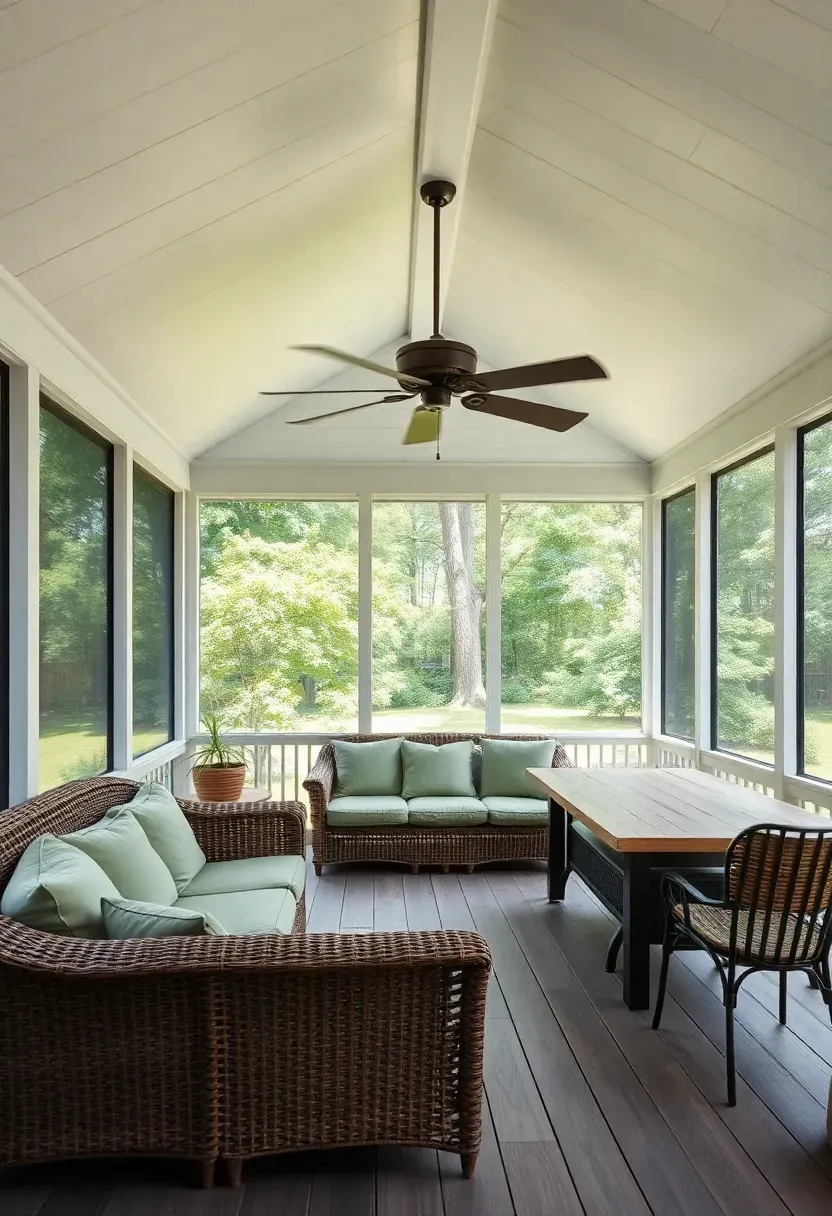
8. Screened-In Deck Room
The bug problem
In regions with heavy mosquito seasons, an open deck goes unused for months. Citronella candles and fans help marginally, but a full screen enclosure is the only reliable solution that lets you eat dinner outside at dusk without getting bitten every thirty seconds.
The solution
Frame a screen room directly on your existing deck using pressure-treated 4x4 posts and aluminum screen frames. Fine mesh (20x20 weave) blocks even small gnats. A ceiling fan in the center keeps air moving and adds another layer of insect deterrence. The structure can support a lightweight metal roof or a fabric shade canopy depending on your budget and whether you want rain protection.
Pros and cons
- Three-season usability in mosquito-heavy climates makes this the highest-return upgrade for many homeowners
- Construction adds $3,000 to $8,000 depending on size and roof type
- Screens need annual inspection and patching where branches or animals create small tears
Recommended
Items for this idea
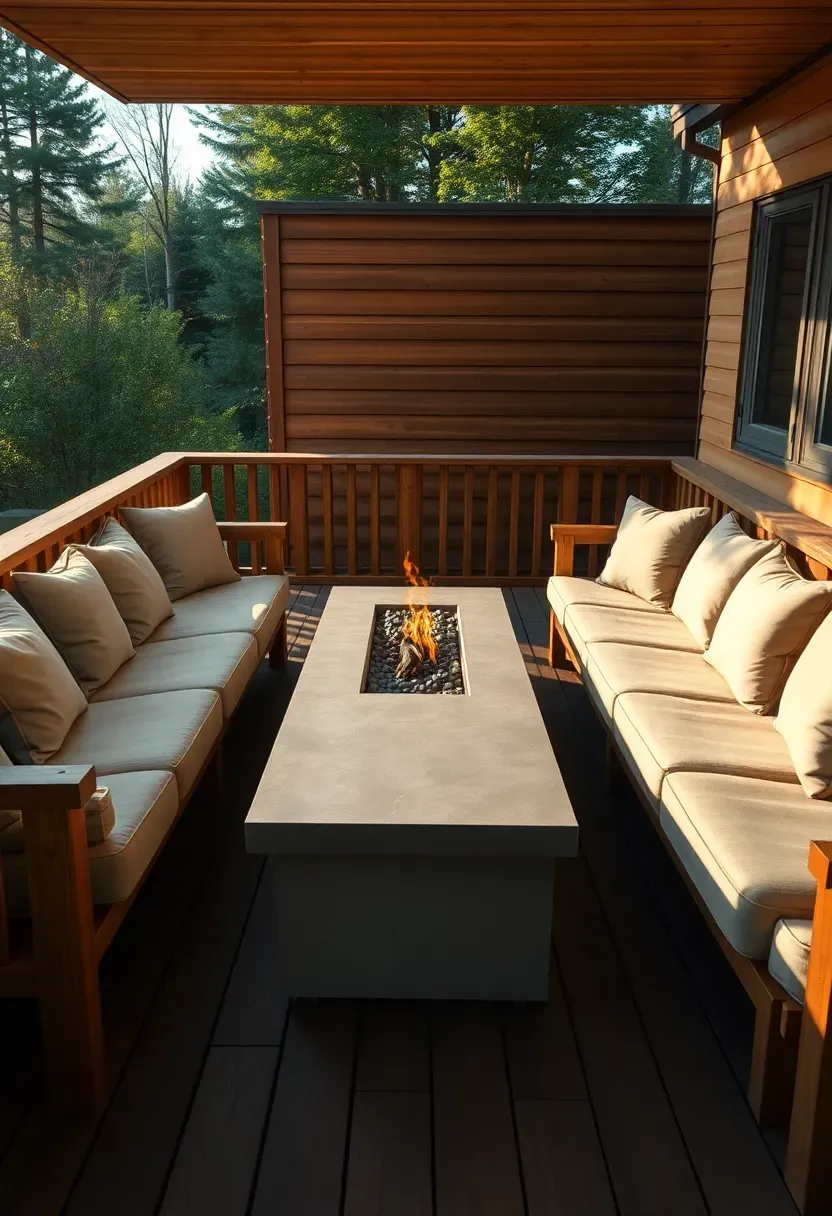
9. Fire Pit Deck with Sunken Seating
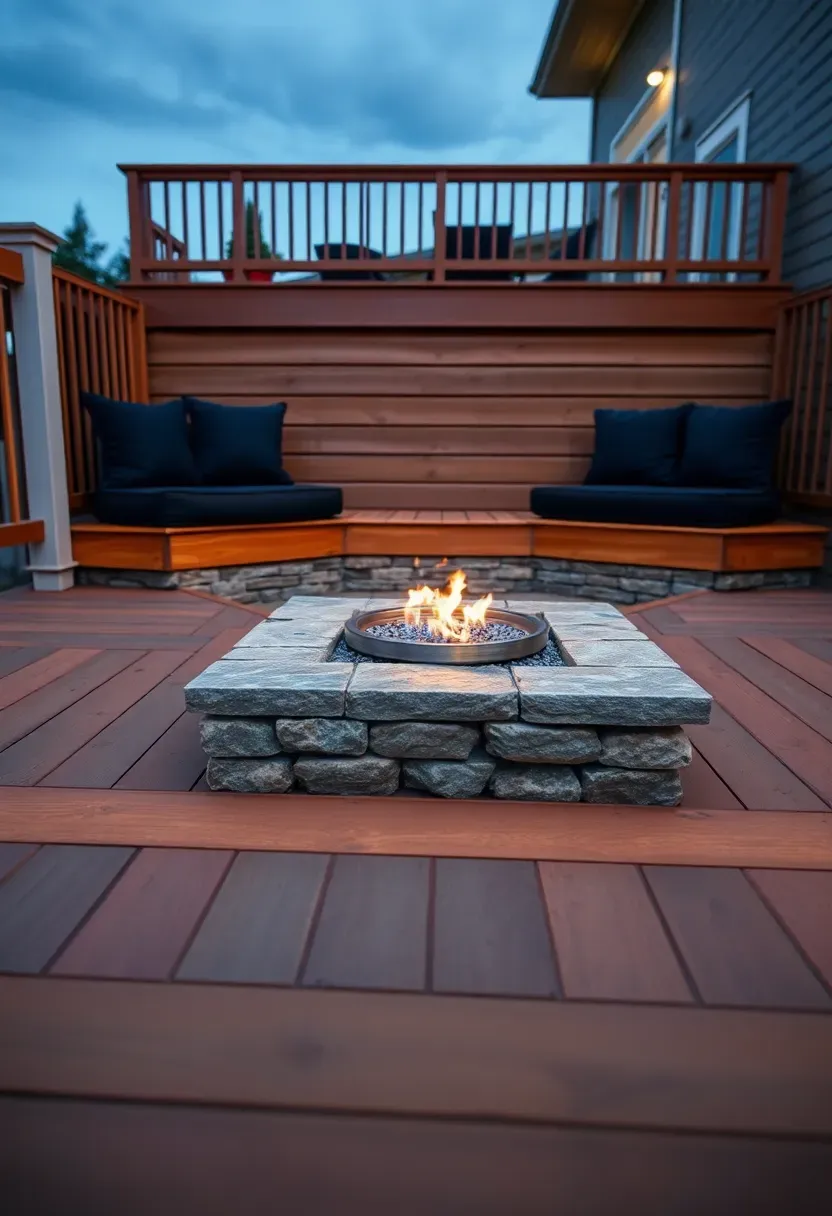
Dropping the fire pit area a step below the main deck surface creates a sheltered feeling that a flat-grade fire pit cannot match. The sunken zone acts as a natural wind break, keeps flames below the sight line of people sitting at the dining table behind them, and gives the deck visual depth. Line the lowered section with stone or fire-rated pavers and frame it with built-in benches at the standard 17-inch seat height.
Tips
- Use a gas fire pit insert rather than wood-burning in this configuration to reduce spark risk near decking
- Keep the sunken area at least four feet from any composite or wood surface
- Install a drainage channel at the lowest point so rain does not pool in the seating area
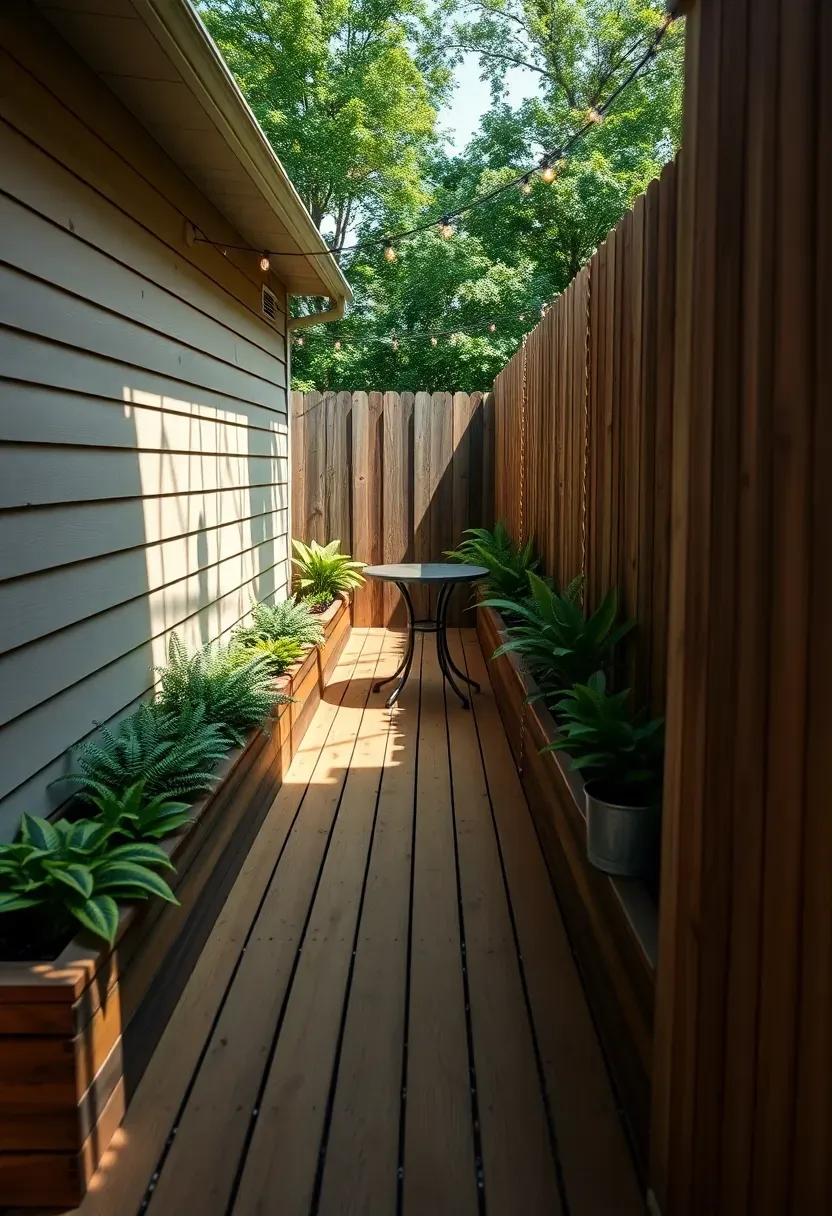
10. Narrow Side-Yard Deck
Most side yards collect garbage cans and forgotten hoses. A narrow deck — even four feet wide — reclaims that dead space and connects the front and back yards with a usable walkway. Add a single bistro table near the midpoint and the strip becomes a private morning coffee spot that no one can see from the street or the neighbor's windows.
Making it work
- Measure the narrowest point between the house wall and the fence line, then subtract six inches per side for clearance
- Run the deck boards lengthwise to emphasize the corridor effect rather than cutting against it
- Build planter boxes along one edge to soften the hard boundary and add greenery without losing floor width
Watch out
- Check drainage patterns first — side yards often carry roof runoff toward the backyard, and your deck cannot block that path
Recommended
Items for this idea
11. Poolside Deck with Built-In Storage
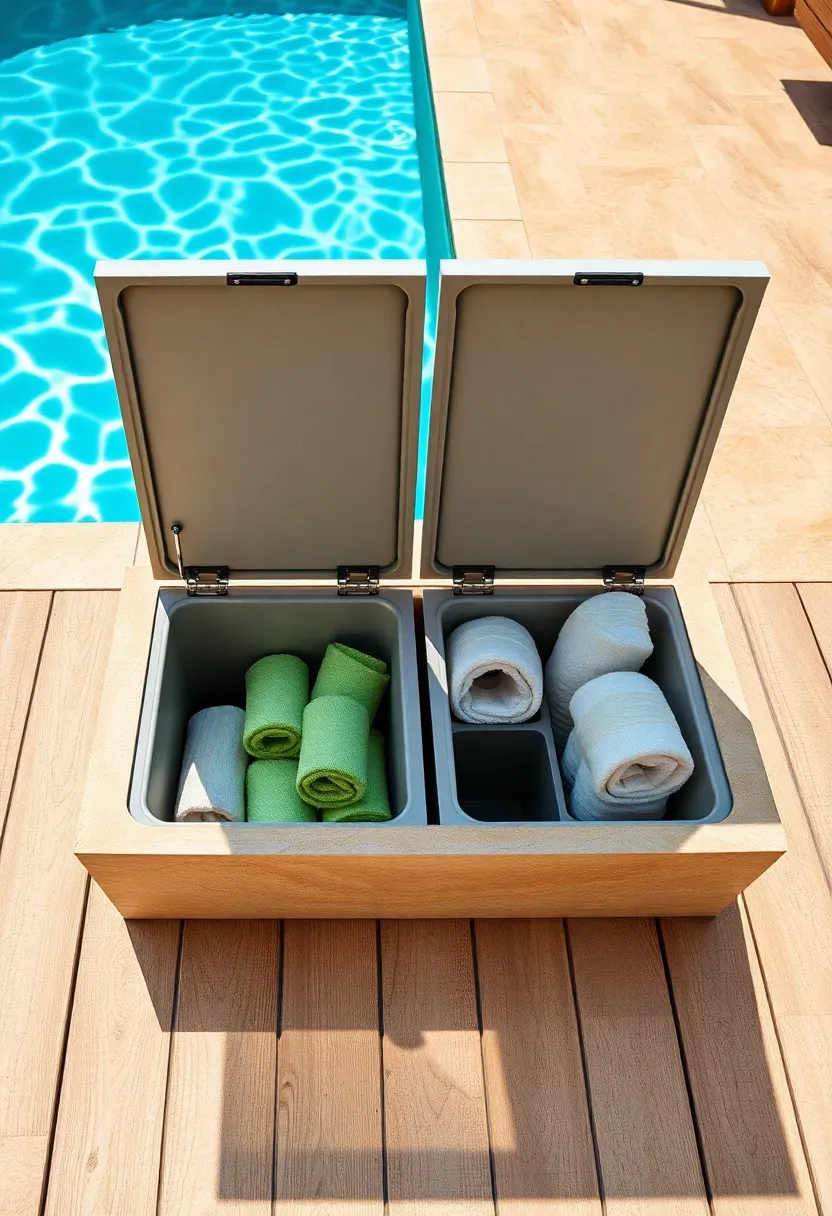
Pool gear spreads across a yard fast. Noodles, floats, towels, chemicals, skimmer nets — within a season, the garage becomes a dump zone. A deck built alongside the pool with integrated storage compartments keeps everything within arm's reach but hidden from view. Flip-up lids in the deck surface access bins underneath. Composite decking handles the chlorine splashback and UV exposure better than natural wood in this application.
Tips
- Line storage compartments with perforated plastic bins so wet items drain and dry without trapping water in the wood frame
- Place chemical storage on the far end away from seating areas, ideally with a ventilated lid
- Use non-slip composite boards rated for wet areas around the pool edge
12. Japanese-Inspired Minimalist Deck
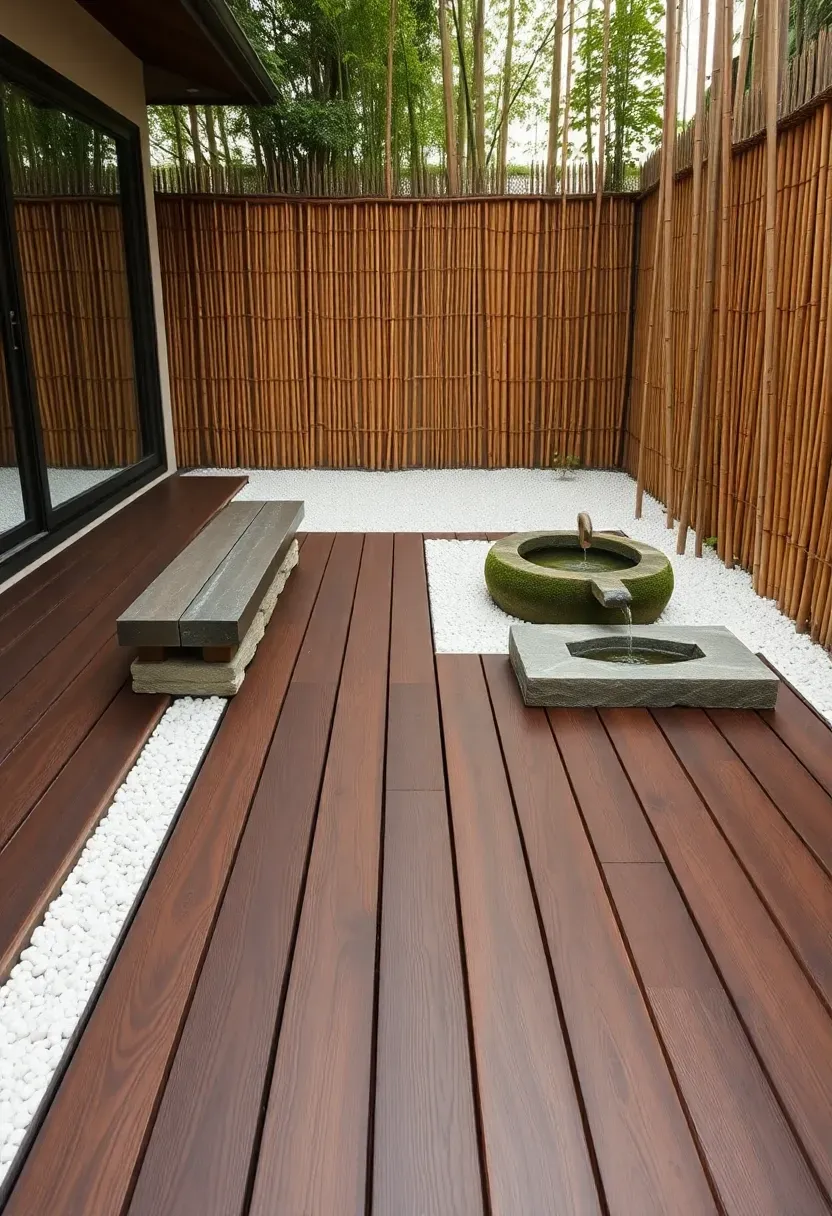
Subtract rather than add. That is the governing principle behind a Japanese-influenced deck design. The surface is smooth and uncluttered — ipe or garapa hardwood with tight joints and no visible fasteners. Furniture is limited to one or two low pieces. A raked gravel border replaces flower beds. A single water basin near the edge provides ambient sound. The restraint feels deliberate, not empty, because every element earns its place.
Tips
- Use hidden clip fasteners for a surface free of screw heads
- Choose wood species with naturally tight grain like ipe, which weathers to silver-gray without staining
- Keep plantings to a few sculptural species — Japanese maple, black pine, ornamental grass — rather than mixed borders
Recommended
Items for this idea
13. Rooftop-Style Deck with Planters
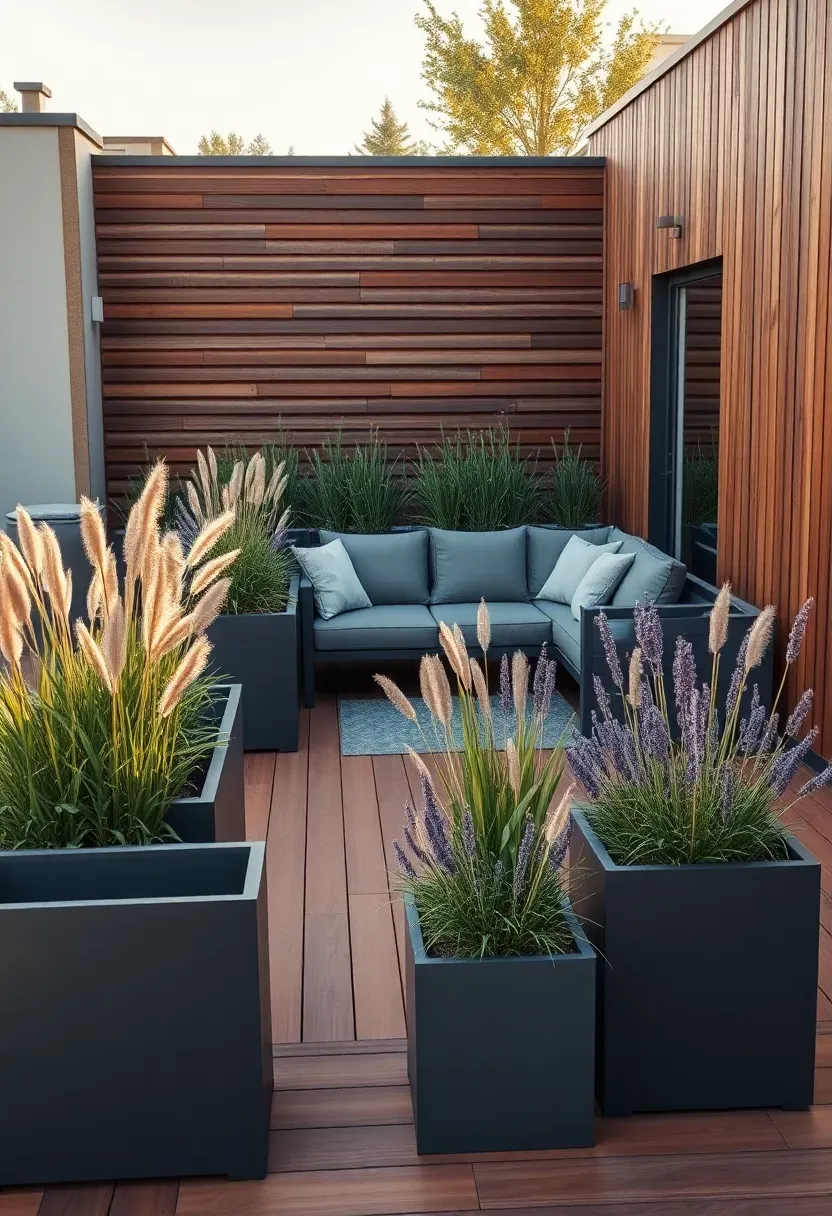
You do not need a rooftop to borrow rooftop design language. The hallmarks — modular furniture, oversized planter boxes, slatted privacy screens — translate directly to a ground-level back deck. Large rectangular planters filled with ornamental grasses along the perimeter replace railings while creating wind protection and visual screening. The planters sit on the deck surface rather than being built into the framing, so you can rearrange the layout seasonally.
Tips
- Use lightweight fiberglass planters with built-in reservoirs to reduce watering frequency
- Select grasses that reach three to four feet at maturity for meaningful privacy without blocking all light
- Group furniture in a central island arrangement to keep circulation paths clear around the planter perimeter
14. Rustic Reclaimed Wood Deck
Where to source reclaimed lumber
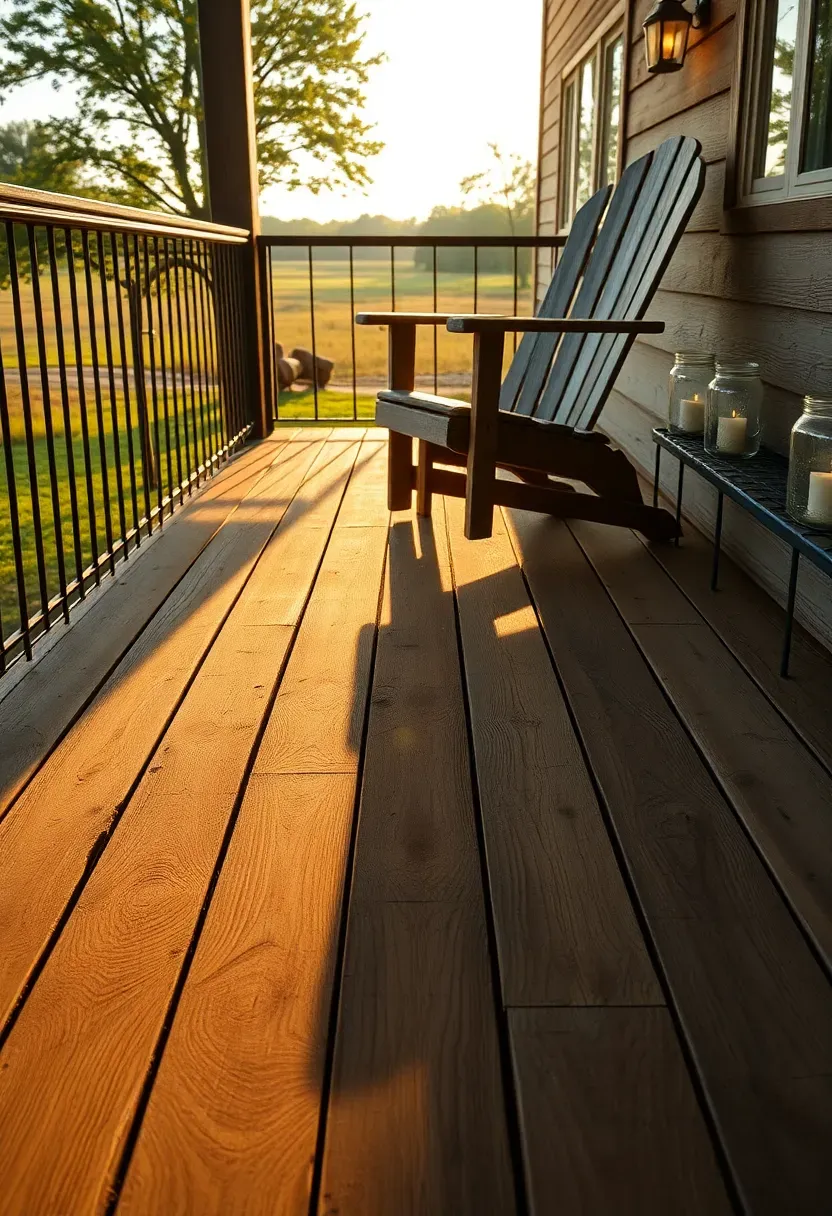
Salvage yards, barn demolition sites, and online marketplaces sell reclaimed boards ranging from old-growth oak to weathered Douglas fir. The character marks — nail holes, saw marks, color variation — give each plank a look that new lumber cannot replicate. Expect to pay more per board foot than standard decking, but the cost often includes thickness and density you will not find at a big-box store.
Working with it
Reclaimed lumber requires extra preparation. Pull old nails and fasteners with a pry bar and metal detector. Run each board through a planer to establish uniform thickness for a level walking surface while keeping the weathered face visible on top. Seal with a penetrating oil rather than a film-forming finish to preserve the aged appearance.
Pros and cons
- Genuinely one-of-a-kind appearance that tells a story
- Old-growth wood is often denser and more durable than modern plantation lumber
- Inconsistent widths and hidden damage mean more waste during construction, so buy 20 percent extra
Recommended
Items for this idea
15. Cantilevered Hillside Deck
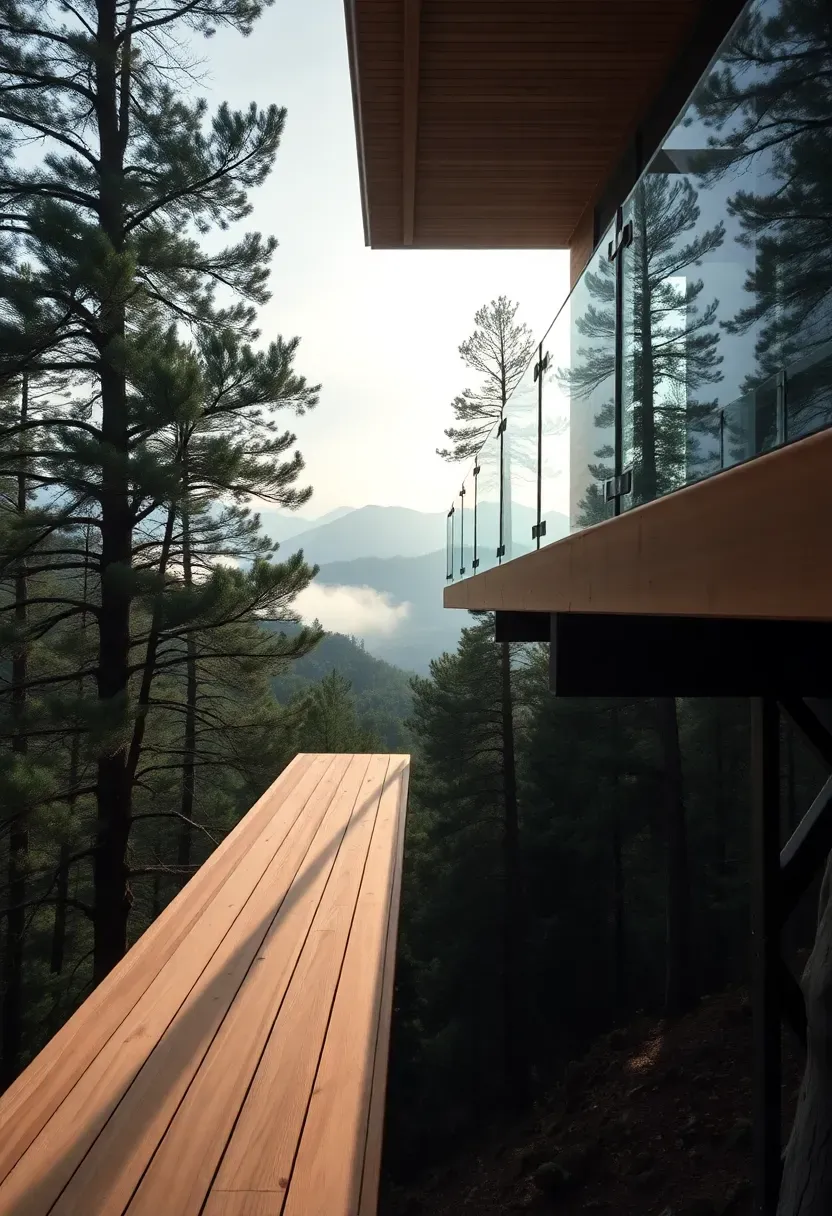
A steep lot does not disqualify you from having a usable back deck — it just changes the engineering. A cantilevered design extends the deck platform beyond its support posts, creating the illusion that the structure floats over the slope. Steel beams anchored to the foundation handle the load while keeping the post count low so the space beneath stays open. Glass panel railings preserve the elevated sightline.
Tips
- Hire a structural engineer before drawing plans — cantilever spans depend on soil conditions, beam size, and local snow loads
- Budget for steel fabrication rather than standard wood framing in the cantilevered section
- Use the shaded area under the deck for terraced plantings or a rain garden that handles runoff from the surface above
16. Outdoor Kitchen Deck
From grill station to real kitchen
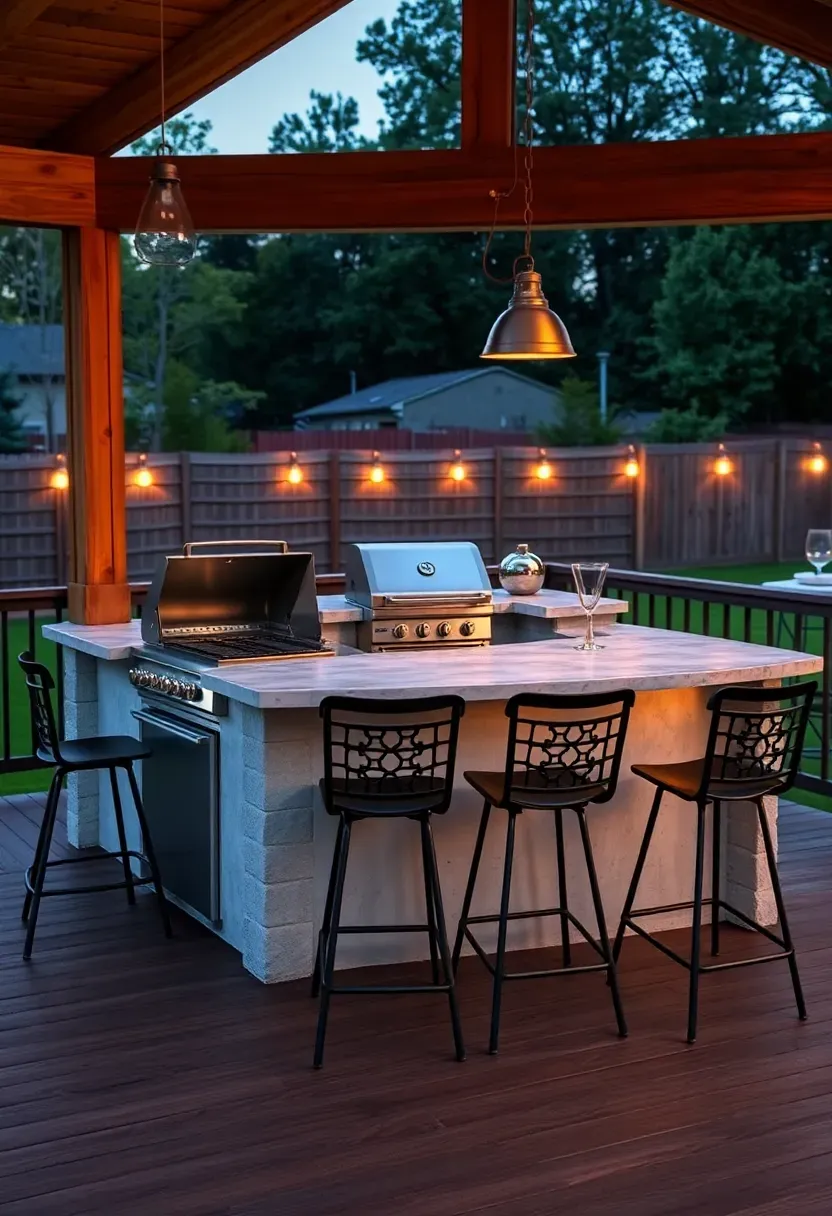
A standalone grill on the deck is fine, but building a full kitchen island onto the deck structure turns casual barbecues into genuine cooking sessions. A concrete or granite countertop wrapping the grill provides prep space, a small undercounter refrigerator eliminates trips inside, and a built-in sink with running water makes cleanup possible without leaving the deck.
Making it practical
- Run gas and water lines before framing the deck surface — retrofitting is expensive and disruptive
- Place the cooking zone downwind from the primary seating area to keep smoke from drifting over dinner guests
- Choose a vented grill cabinet to prevent heat buildup that could damage surrounding deck boards
Watch out
- Local code may require a dedicated gas shutoff valve accessible from the deck surface
- Composite decking near the grill should be heat-shielded with a stainless steel or tile pad
Recommended
Items for this idea
17. Stained Herringbone Pattern Deck
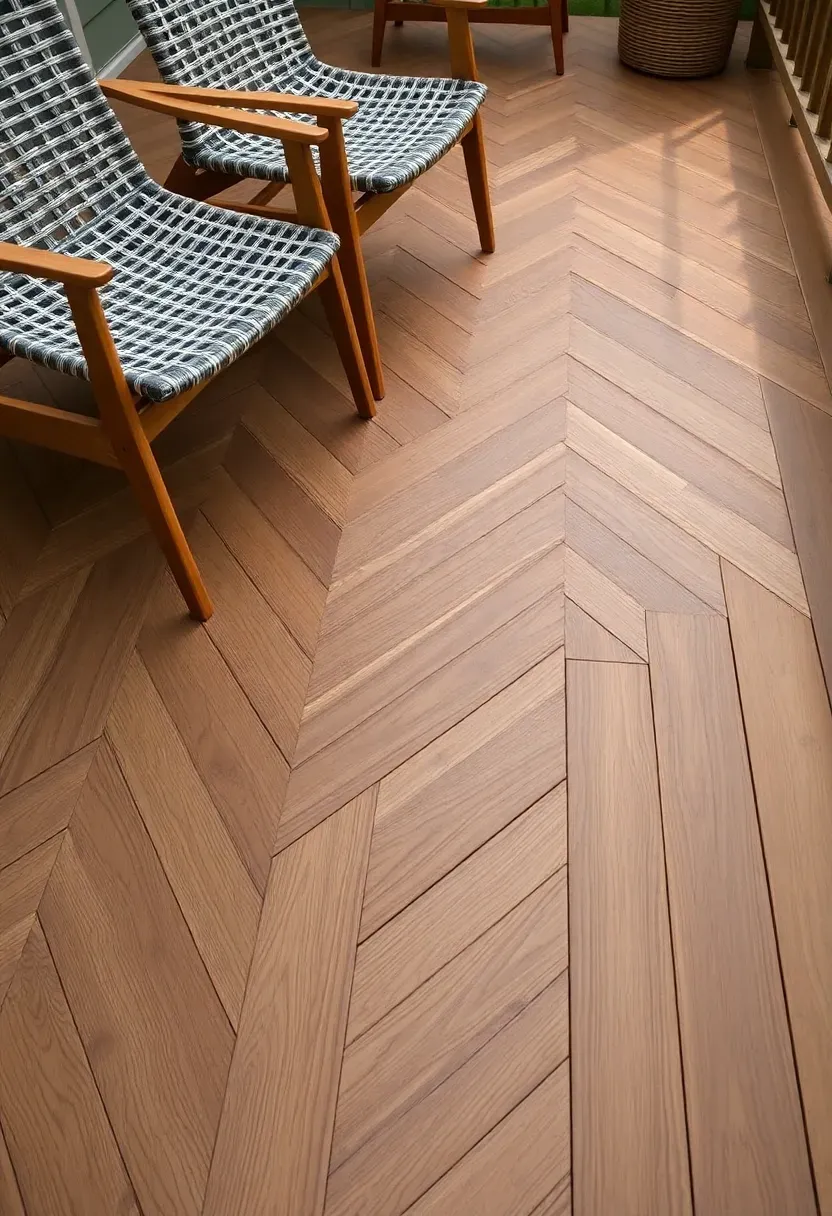
Standard parallel board runs are the default because they are the easiest to frame and install. A herringbone pattern — boards meeting at 45-degree angles in a zigzag — breaks that monotony and gives the deck surface a finished-floor quality that draws attention on its own. The trade-off is more cutting, more waste, and a subframe that needs diagonal blocking to support the angled ends.
Tips
- Use boards no wider than five and a half inches for herringbone — wider stock exaggerates the joint gaps at each angle change
- Stain before installation so every cut end gets sealed against moisture absorption
- Stick with a single stain color to let the pattern speak rather than competing with it
Quick FAQ
Does a back deck increase property value? A well-built deck typically returns 60 to 80 percent of its cost at resale, depending on your market. Wood decks tend to appraise lower than composite because buyers factor in future maintenance. The bigger value is often lifestyle — a functional outdoor area can be the deciding factor for buyers comparing similar homes.
Which decking material lasts longest with the least maintenance? Capped composite boards from brands like Trex, TimberTech, and Fiberon carry 25-year fade and stain warranties and need only soap-and-water cleaning. PVC decking lasts even longer but feels less natural underfoot. Ipe hardwood can last 40-plus years but requires annual oiling to maintain color.
How much does it cost to build a back deck? Pressure-treated pine decks average $15 to $25 per square foot for materials and labor. Composite runs $30 to $60. Hardwoods like ipe push into $50 to $80. A typical 300-square-foot deck lands between $4,500 and $18,000 depending on material, railing style, and whether you need footings or just ground-level blocks.
Can I build a deck without a permit? Rules vary by municipality. Many jurisdictions exempt ground-level decks under a certain square footage (often 200 square feet) that are not attached to the house. Raised decks almost always require a permit and inspection. Call your local building department before ordering materials — the conversation takes five minutes and can save you from fines or forced removal.
When is the best time of year to build a deck? Late spring through early fall gives you the most consistent weather for construction. Concrete footings need temperatures above freezing to cure properly. Staining and sealing also require dry conditions above 50 degrees Fahrenheit. If you are hiring a contractor, booking in late winter often gets you a better rate and earlier start date than waiting until peak season.
A back deck does not need to be complicated to work well. Start with how you want to use the space — eating, lounging, cooking, soaking — and let that drive the layout, material, and feature decisions. The best decks I have walked onto felt like they belonged to the house and the yard at the same time, which usually means the owner spent more time planning the proportions than picking the board color. Take measurements, check your local codes, and build something you will actually use five years from now, not just something that looks good in a photo next week.
Pinterest cover for 17 Back Deck Ideas for a Better Outdoor Space
About the author
OBCD
CGI visualization and interior design content. We create detailed 3D renders and curate practical design ideas for every room in your home.