19 Backyard Batting Cage Ideas for Better Practice at Home
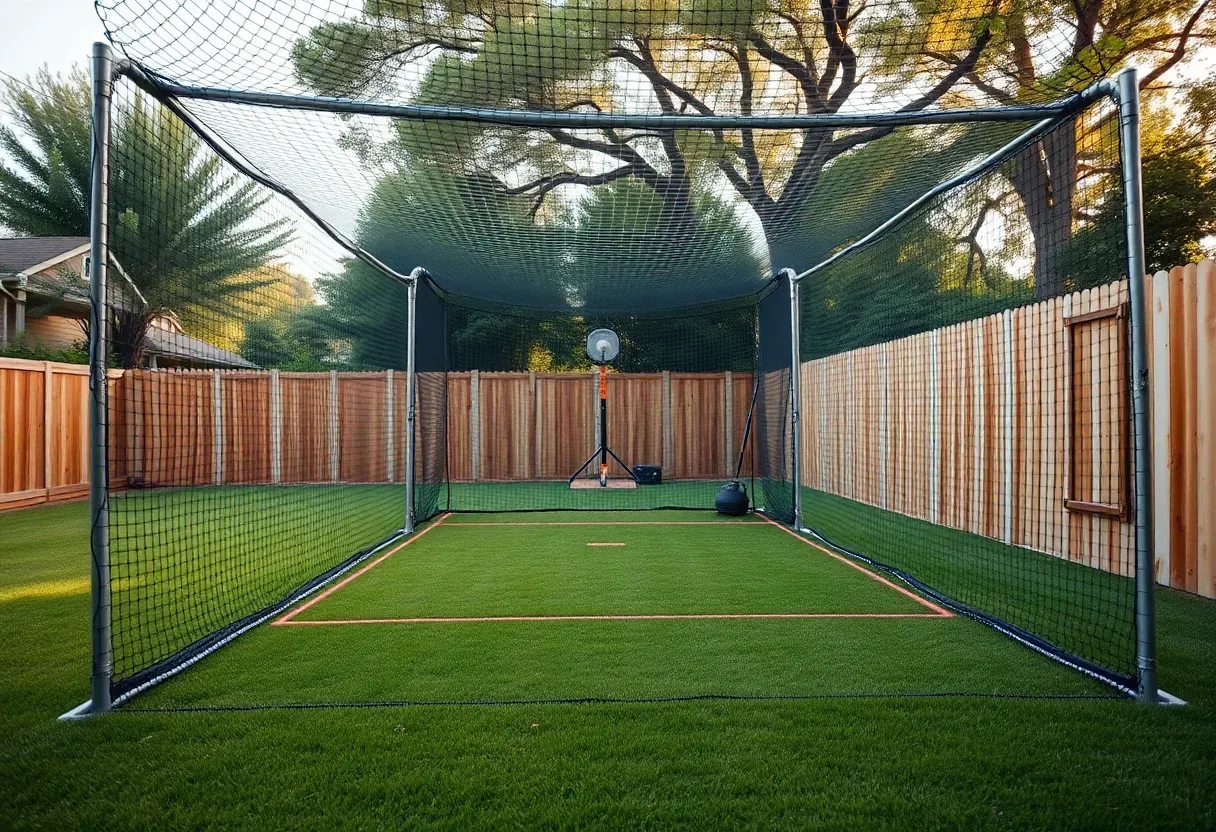
Picture this: your kid grabs the bat after dinner, walks out back, and gets in thirty real swings before it gets dark. No driving to the facility. No waiting for a lane. Just the satisfying thud of contact, over and over, until the muscle memory starts to stick.
A backyard batting cage makes that happen. It doesn't have to cost a fortune or eat your entire yard. The right setup depends on your space, your budget, and how serious the player is — but there's an option here for almost every situation.
Below are 19 ideas, from weekend DIY projects to permanent installations worth building around.
Table of Contents
- Freestanding Pop-Up Net
- PVC Frame Cage on a Budget
- Steel Pipe Permanent Frame
- Attached Garage Wall Cage
- Fence-Mounted Side Net
- Underground Post Anchored Cage
- Full-Length Indoor Garage Conversion
- Pitching Machine Integration
- Tee Station Only Setup
- Turf Floor and Drainage Base
- Backstop with Open Sides
- L-Screen Plus Short Net Combo
- Covered Cage with Shade Canopy
- Night Lighting Setup
- Multi-Sport Net Configuration
- Raised Deck Cage Platform
- Side Yard Long and Narrow Cage
- Portable Roll-Away Cage
- Full Regulation-Length Cage
1. Freestanding Pop-Up Net
The fastest way to get hitting practice started. Pop-up nets unfold in minutes, require no tools, and store in a bag when not in use.
Why it works
They're ideal for younger players who just need a target backstop — you're not worried about full cage containment. Most pop-up nets catch pitches thrown by hand or off a tee without any frame assembly.
What to watch out for
- Cheap versions tear at the seams within a season; look for reinforced corner grommets
- Wind is the enemy — stake or sandbag the base
- Not designed for hard-hit balls from older, stronger hitters
We picked a few things that go well with this idea: Heater PowerAlley Batting Cage Net & Frame (★4.3), Fortress Heavy-Duty Enclosed Batting Cage Net (★4.5) and FORZA Pop-Up Portable Batting Cage (★4.2). As an Amazon Associate we earn from qualifying purchases.
2. PVC Frame Cage on a Budget
The build
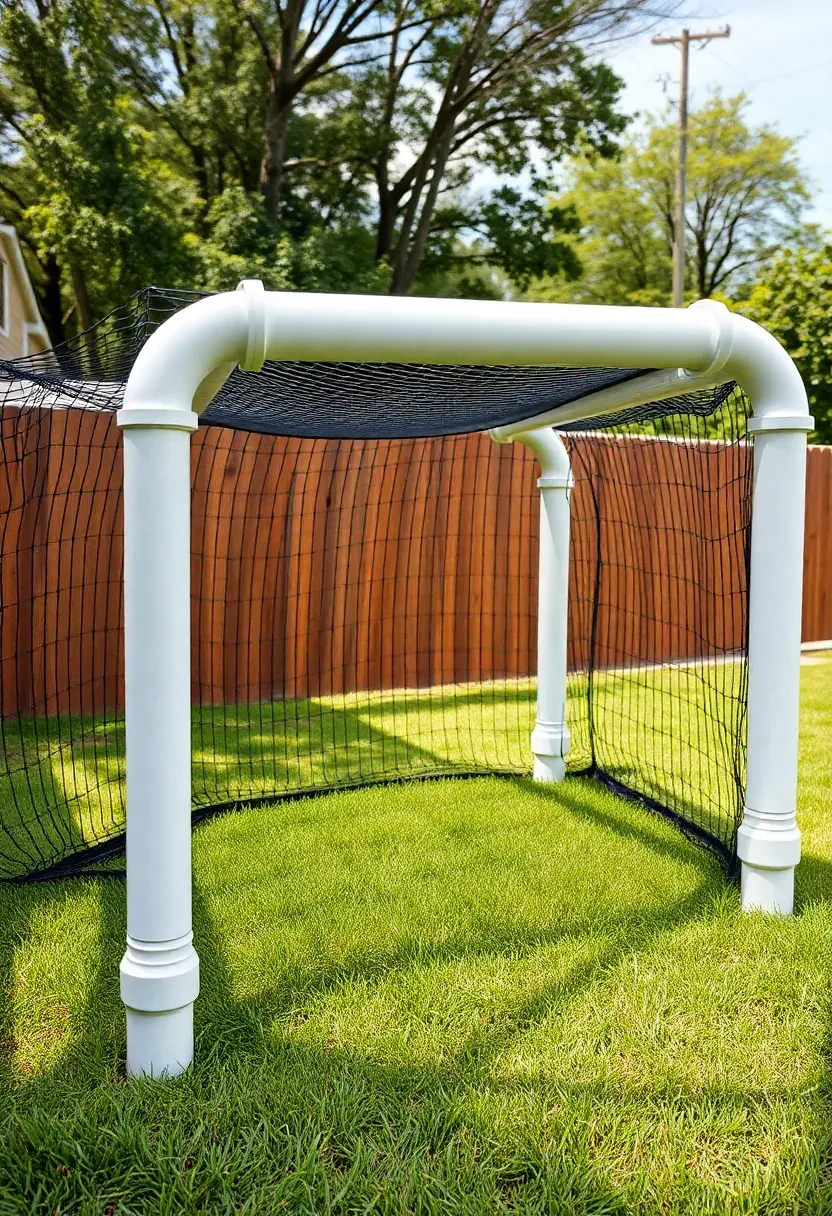
A PVC-framed batting cage uses schedule 40 pipe (1.5" or 2" diameter) and standard fittings to create a box structure. You hang a #42 or #60 netting over the frame and secure it with zip ties or rope. Materials for a 12' x 12' x 35' cage often run under $400.
Pros and Cons
Pros: Very low cost, no welding required, modifiable if you want to change dimensions
Cons: PVC flexes under net tension — expect some sag. It won't handle a hard impact from a foul ball rattling the frame. Works fine for tee work and soft toss, less ideal for live pitching from experienced throwers.
Tip
Run a center ridge pole the full length and add mid-span supports every 10–12 feet to reduce sag on long cages.
We picked a few things that go well with this idea: Heater Power Alley Lite 360 Pitching Machine (★4.2), Heater Heavy-Duty Pitching Machine with Feeder (★4.2) and Heater Power Alley Pro Baseball Machine (45 MPH) (★3.9). As an Amazon Associate we earn from qualifying purchases.
3. Steel Pipe Permanent Frame
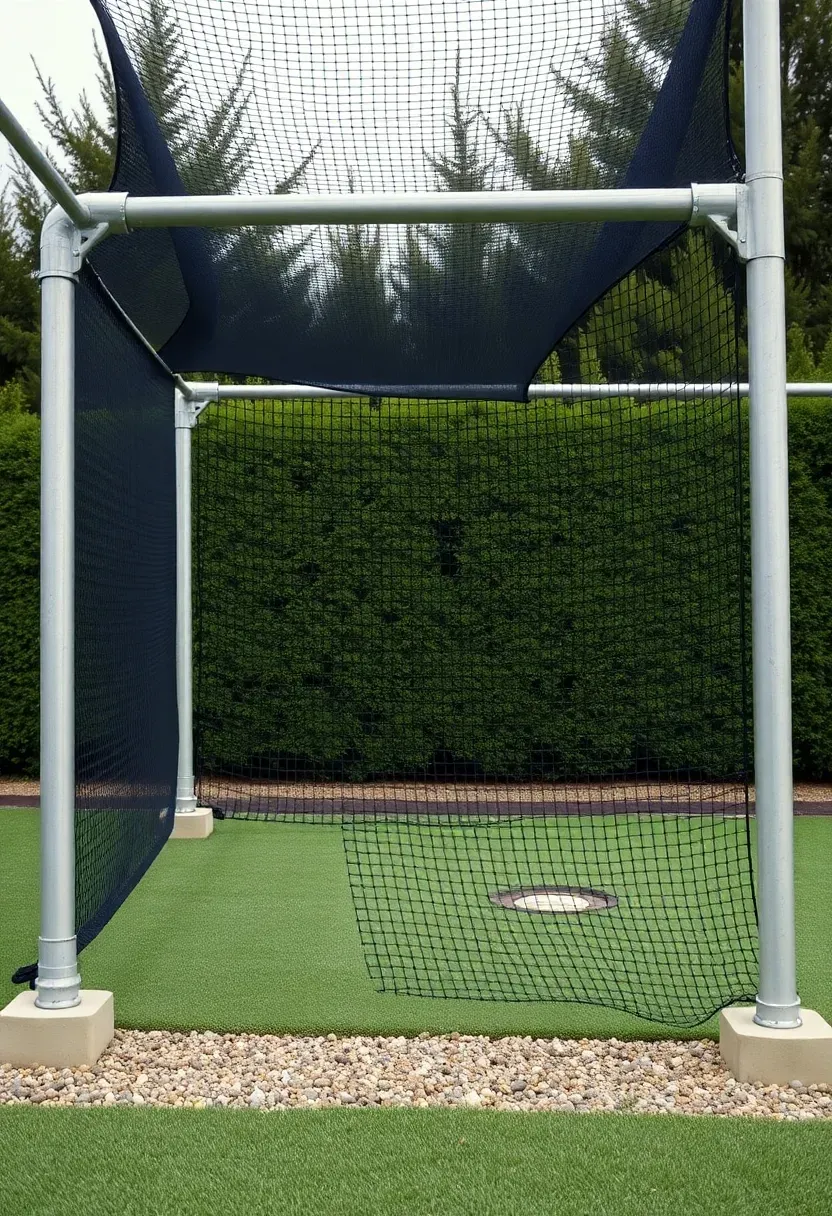
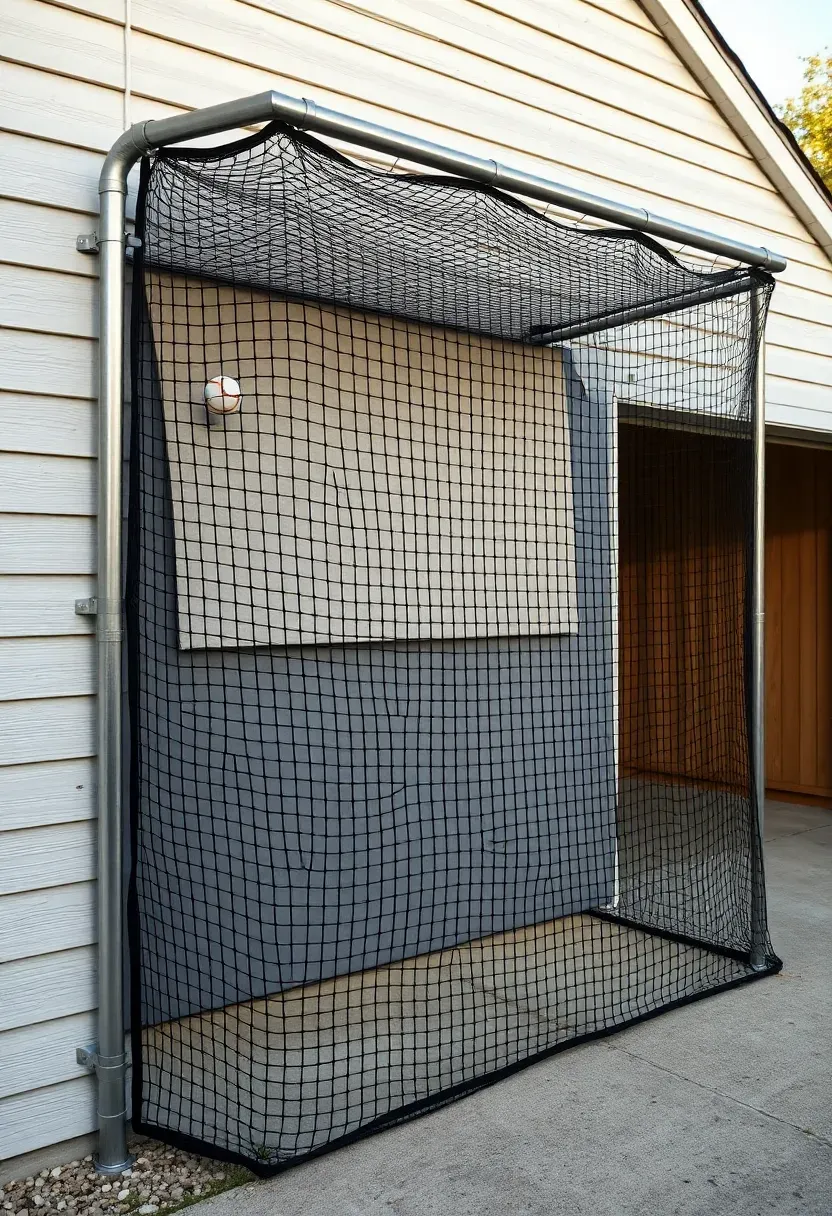
If you're building something meant to last, galvanized steel pipe in 2" or 2.5" diameter is the way to go. Anchor the uprights in concrete footings 18–24 inches deep.
What you get
This frame handles the repeated tension from heavy netting and won't deform when a line drive slaps the side net. A properly built steel cage can last 15–20 years with only netting replacement every 5–7 seasons.
Step-by-step
Mark corners and mid-span post locations first. Standard residential cage runs 12' wide x 10' tall x 55–70' long.
Dig footings below your frost line and pour concrete — let it cure at least 72 hours before you start applying net tension or the posts will move.
Set uprights, attach the horizontal top rails by welding or pipe clamp, then hang the netting starting from the roof, working to the sides, then the back. Use bungee cable or wire rope as the top ridge line to keep tension even.
Budget for professional welding if you don't have the equipment yourself. Footings that aren't level or deep enough will shift over a few seasons, and fixing them means pulling the whole frame.
We picked a few things that go well with this idea: Tanner Tee Original Pro Batting Tee (★4.7), Tanner Heavy Weighted Claw Base Batting Tee (★4.8) and Franklin Sports Adjustable Heavy Duty Batting Tee (★4.5). As an Amazon Associate we earn from qualifying purchases.
4. Attached Garage Wall Cage
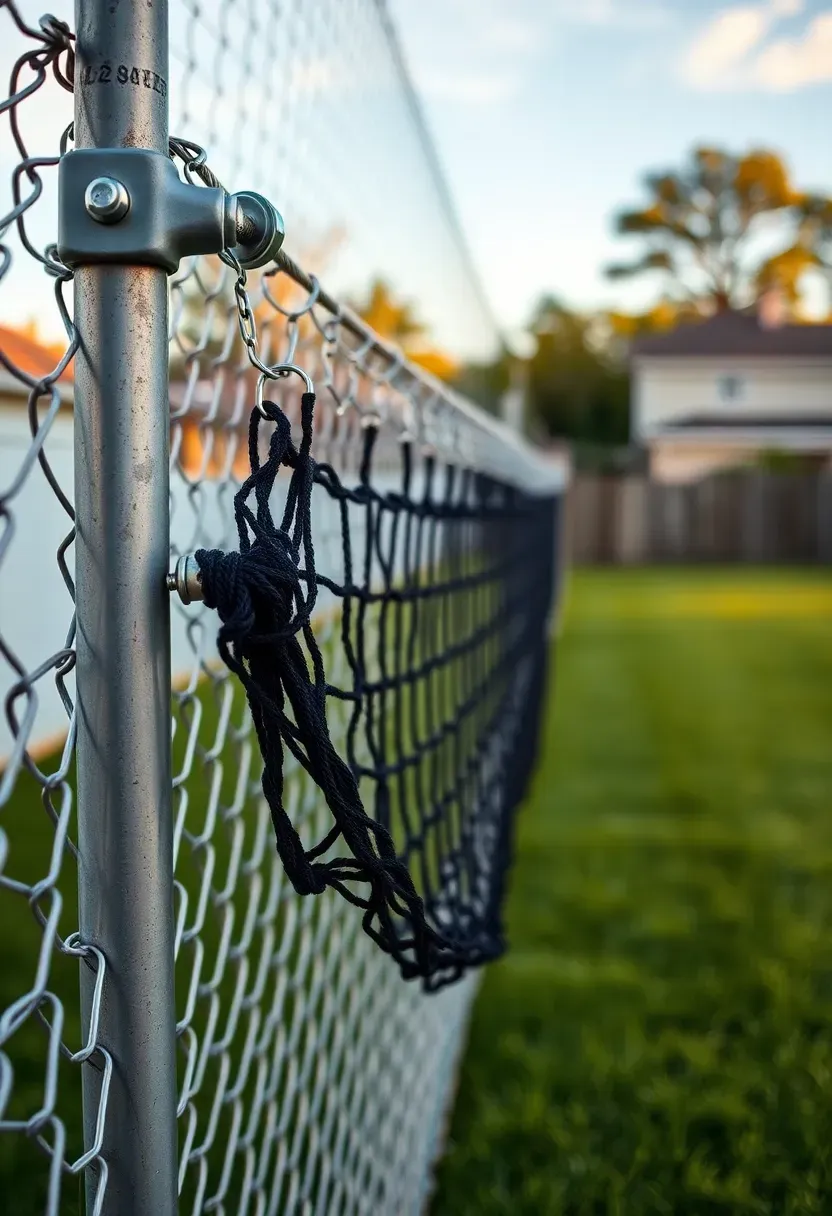
Mount one end of your cage frame directly to the exterior garage wall using heavy-duty lag bolts into the wall framing. This saves money on one full end structure and gives you a rigid anchor point.
The garage wall can also double as the back stop — hang a thick rubber or foam impact panel to protect the siding. The net runs from the wall outward, making the garage itself part of the cage.
Practical tips
- Locate wall studs and use 3/8" lag screws minimum
- Keep the net a few inches off the wall to prevent abrasion
- Great use of narrow side yards where you want the cage running alongside the house
Recommended
Items for this idea
5. Fence-Mounted Side Net
When the fence does half the work
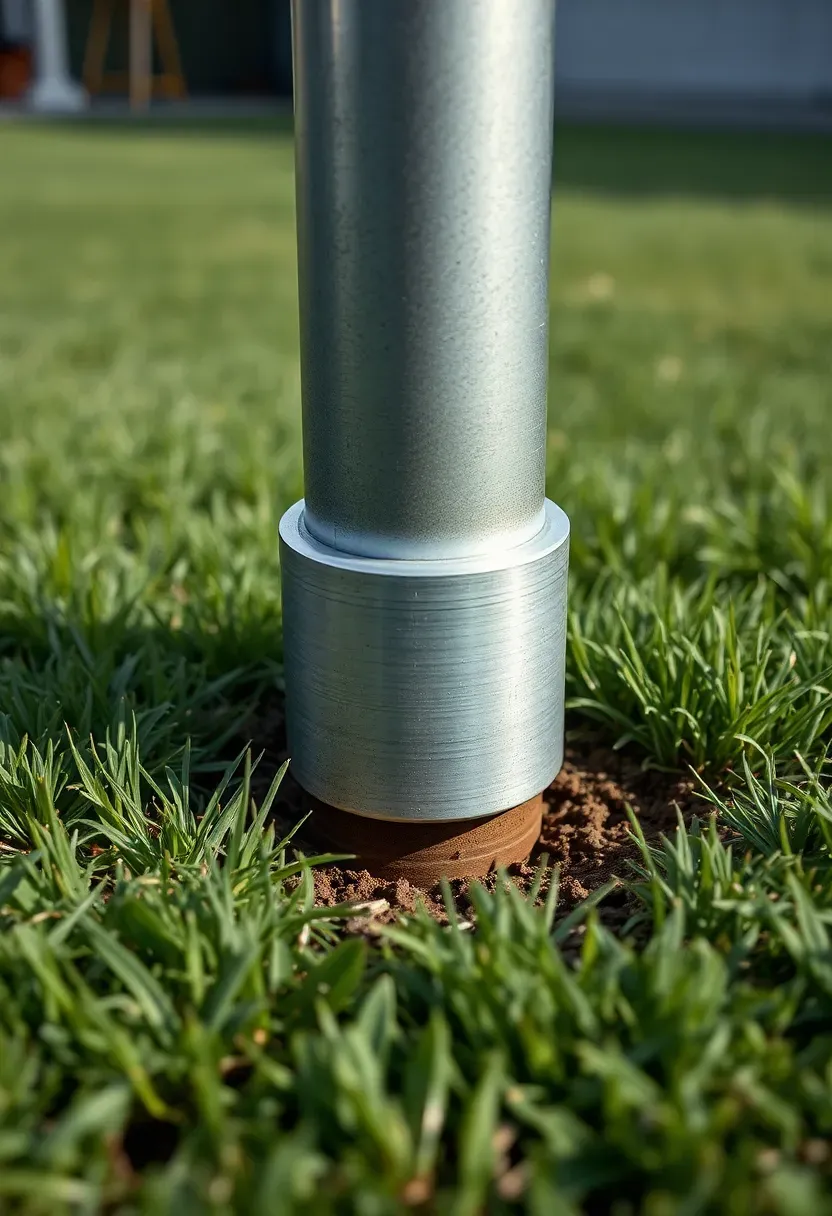
If your fence runs along the batting line, you can mount a backstop net directly to fence posts and skip building an entire back wall structure.
The setup
Attach eyebolts or D-rings to the top of fence posts and run a cable between them. Hang the backstop net from this cable. Side nets extend at 90 degrees using a simple pole anchored in the ground.
This works when your fence is solid wood or chain-link rated for the load, and the neighbor situation is cooperative. A ball that clears your net isn't just your problem.
Don't try this with an old or decorative fence. Loading a backstop net applies real lateral force to those posts.
6. Underground Post Anchored Cage
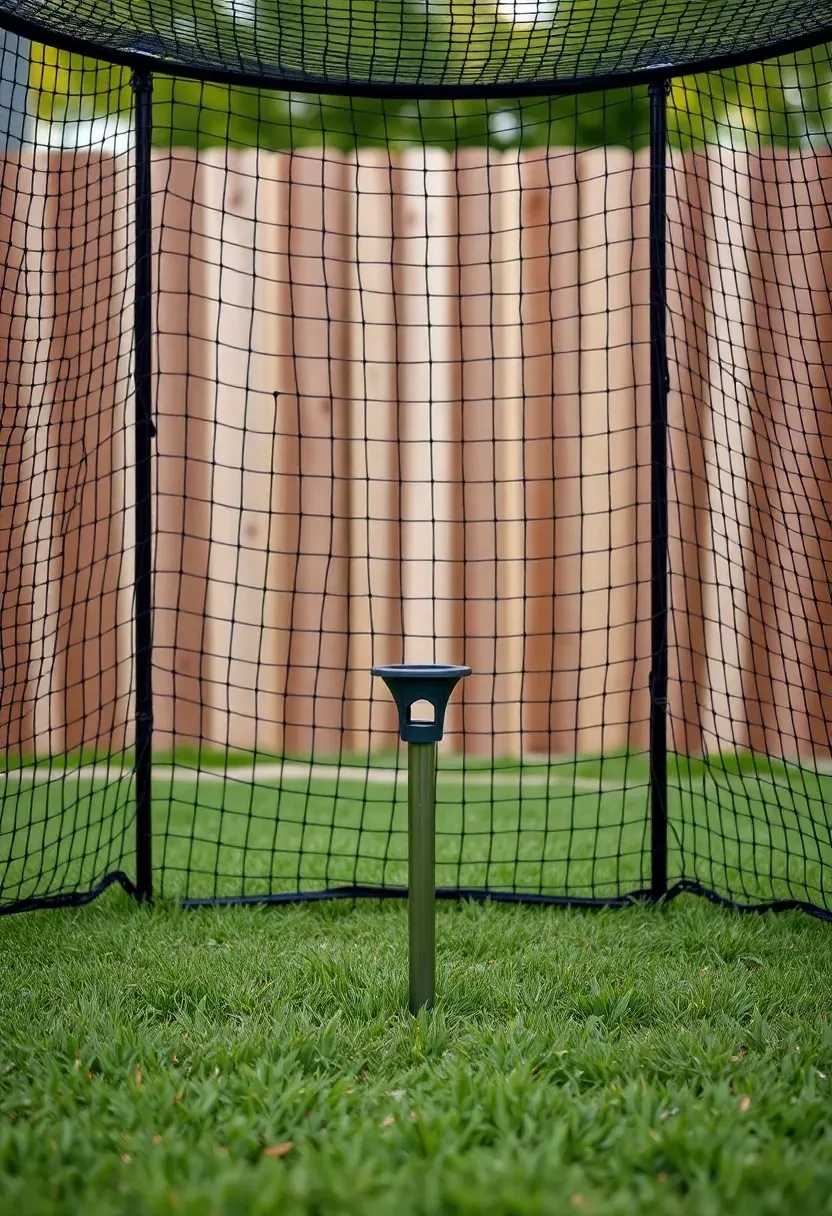
One of the cleaner permanent-but-removable solutions: weld or buy steel ground sleeves, set them in concrete, and drop your uprights in when you want the cage up. Pull them out when you want the yard back.
The sleeves sit flush with the lawn surface when not in use — you can actually mow over them. When it's time to practice, uprights drop in and get secured with a locking pin.
Pros and Cons
Pros: Best of both worlds — solid structure when up, clean yard when down. Great for dual-use properties.
Cons: Initial install cost is higher than PVC. Requires precise sleeve spacing during setup or the frame won't square up.
Recommended
Items for this idea
7. Full-Length Indoor Garage Conversion
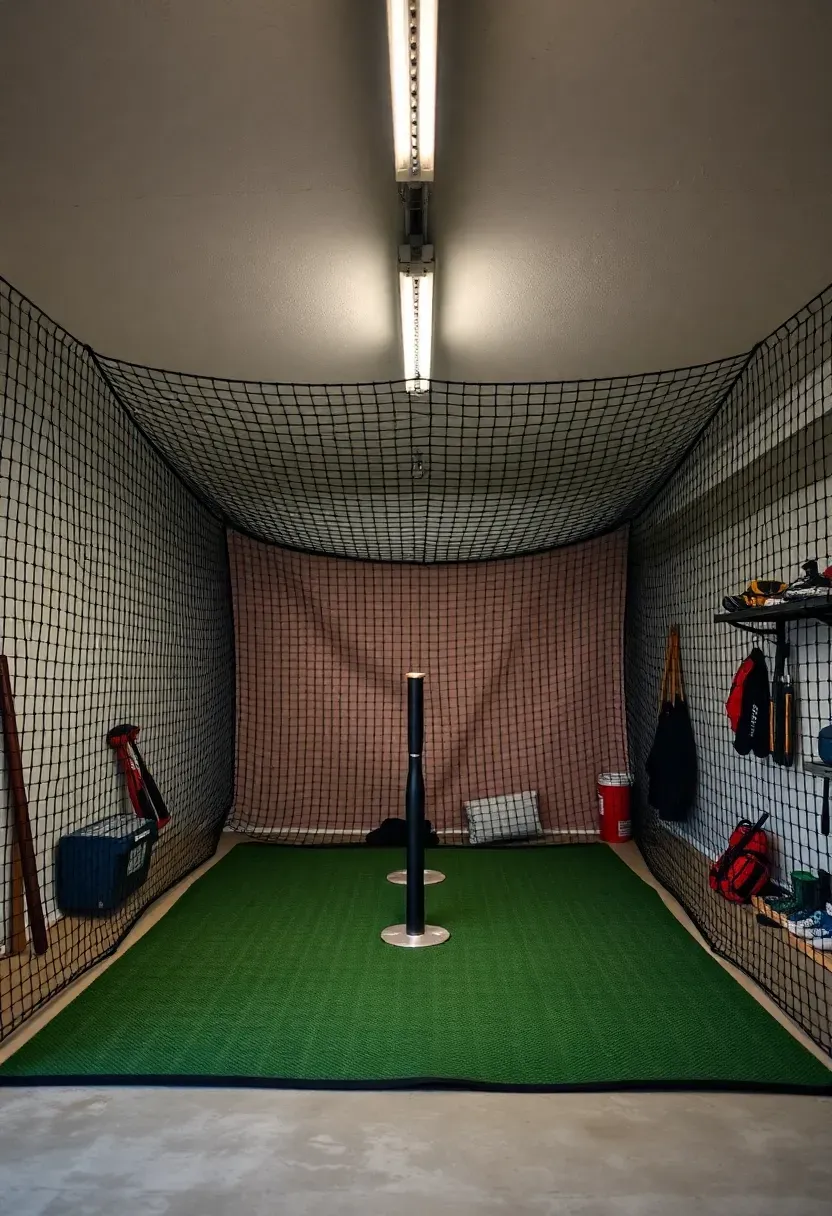
A two-car garage runs about 20' wide and 22' deep — tight for a full cage but workable with a short-toss setup. A three-car garage (22' x 32'+) gives you enough room for actual pitching distance.
Hang a #42 or heavier net from the ceiling joists using eye hooks and bungee cables. Line the back wall with foam panels. Roll out artificial turf to define the batter's box.
Year-round use is the big win here. Rain, cold, or dark — none of it matters. The downside is that garage batting cages vibrate the whole structure. Tell your neighbors.
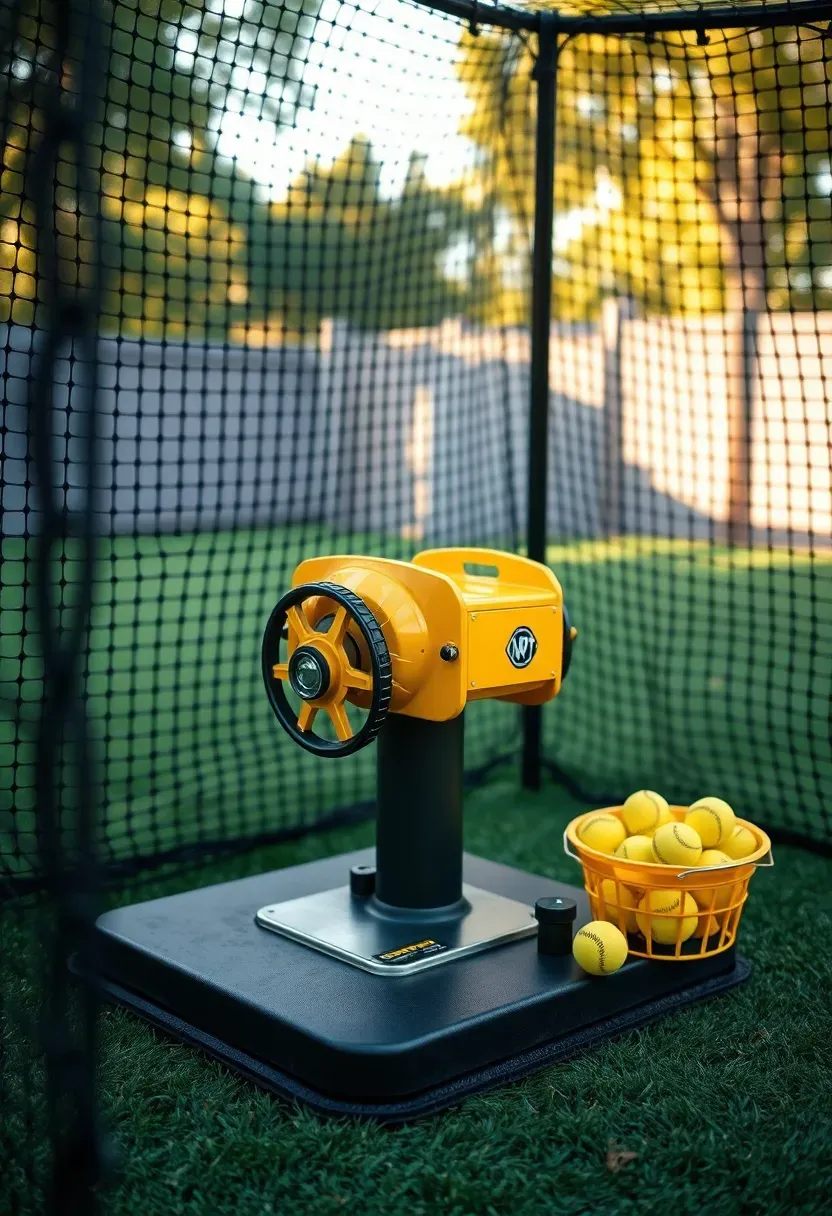
8. Pitching Machine Integration
A cage without a pitching machine depends on someone throwing, which limits solo practice. A machine makes the whole thing self-contained — usable any time, no second person required.
Pitching machine types
Wheel machines replicate pitch trajectories reasonably well. Entry-level models like the Jugs Lite-Flite start around $400 and work fine for younger players. Dual-wheel machines at the higher end can throw 80+ mph.
Arm-style machines are more realistic in terms of ball flight — the delivery looks closer to a real pitcher — but they cost significantly more and are harder to find used.
What to choose
Choose a wheel machine if: you want reliable velocity control and don't mind the visual difference from a real pitch.
Choose arm-style if: the hitter needs to work on realistic timing against a simulated delivery.
Recommendation
For most home setups, a mid-range wheel machine like the Jugs BP1 gives the best return. Pair it with a remote control so the batter can adjust speed solo.
Recommended
Items for this idea
9. Tee Station Only Setup
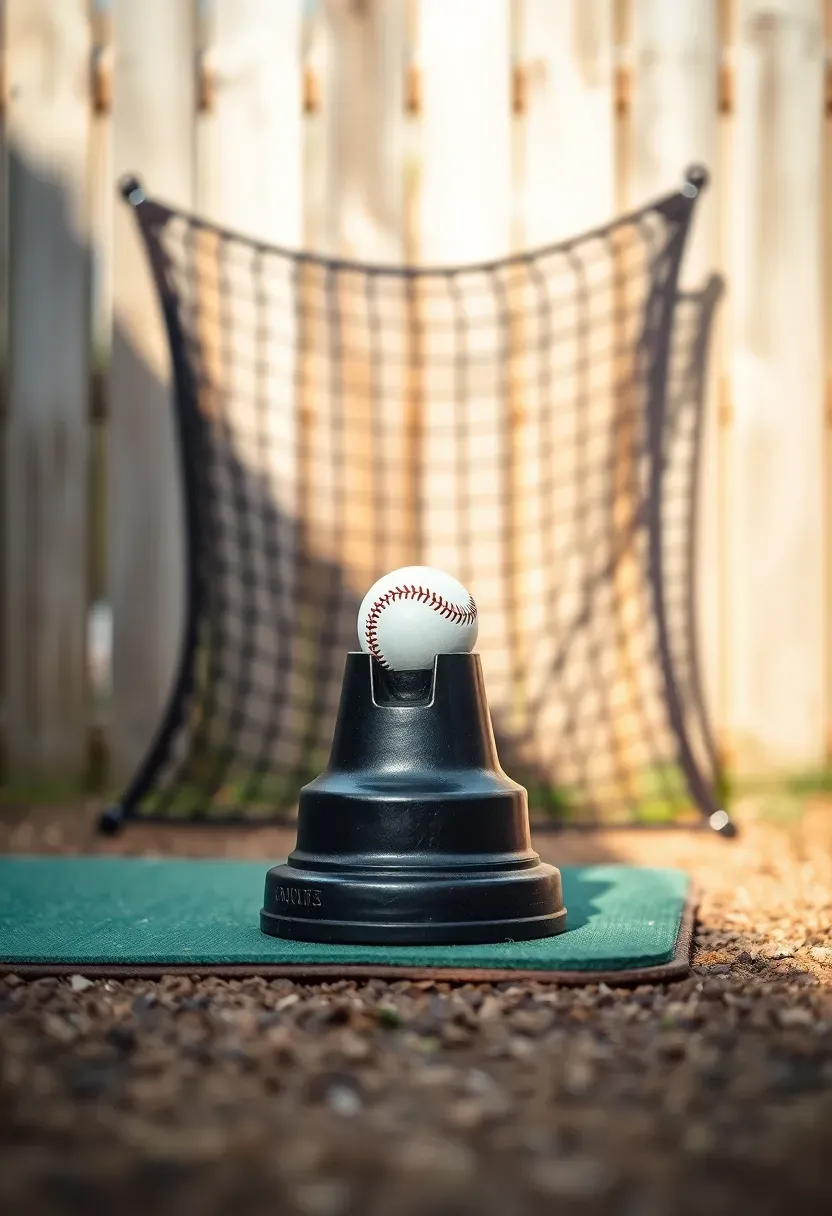
Not every setup needs to be about live pitching. A dedicated tee station — a good batting tee, a backstop net, and a consistent hitting surface — can do more for swing mechanics than a full cage with bad habits baked in.
Tips
- Position the tee at the front hip, not the middle of the plate — most players set it too far back
- Use a heavy, stable tee base (Tanner Heavy is a popular choice) — cheap tees fall over and break contact with the swing
- Hang a target zone on the backstop net so the hitter has a visual aim point
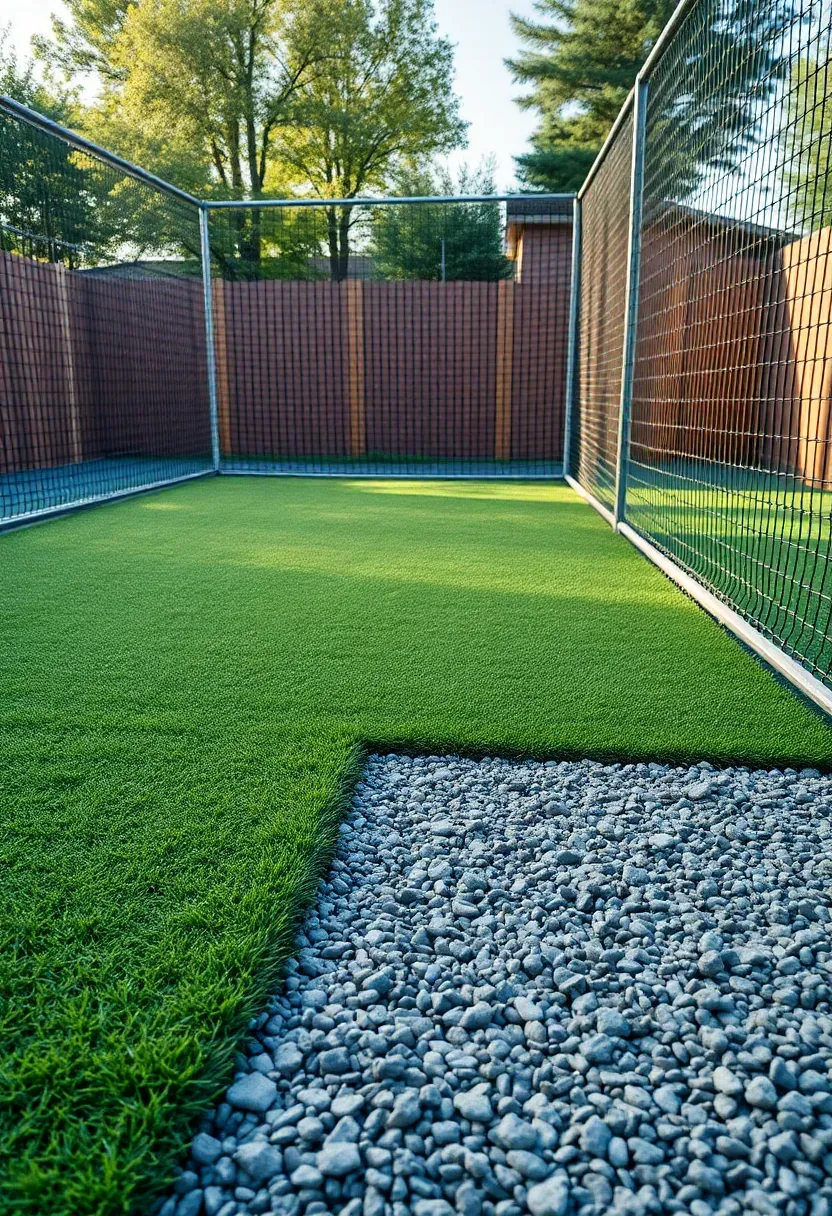
10. Turf Floor and Drainage Base
The ground under a batting cage takes constant foot traffic and repeated ball impact. Grass dies quickly. Bare dirt turns to mud in the rain.
Build a proper base: start with 4–6 inches of compacted gravel for drainage, then top with artificial turf or rubber mat tiles. This gives consistent footing, drains well, and stays flat regardless of weather.
Pros and Cons
Pros: Clean, professional look; extends the usable season considerably; reduces leg fatigue on hard surfaces
Cons: Adds $500–$1,500 to the project depending on size and materials; requires some excavation and leveling work upfront
Recommended
Items for this idea
11. Backstop with Open Sides
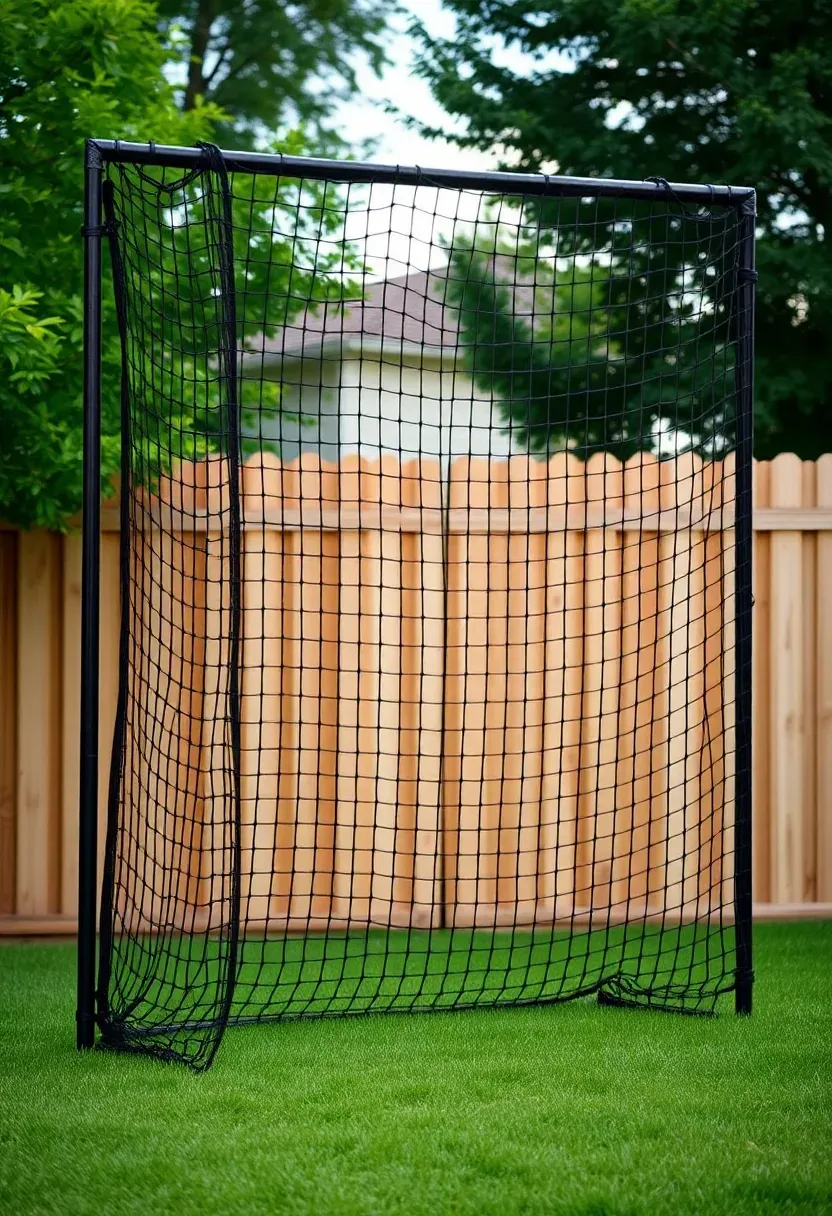
A backstop — just the back net without enclosing sides — is a middle ground between a full cage and a simple pop-up net. It catches the ball after contact but doesn't fully contain it.
This setup suits smaller yards where a full cage won't fit, or players who want more natural conditions than a closed cage provides. You still have a defined target, and you're not chasing every ball into the neighbor's yard.
Works best with hand-feed practice or soft toss. Less suited for a pitching machine where errant balls need full containment.
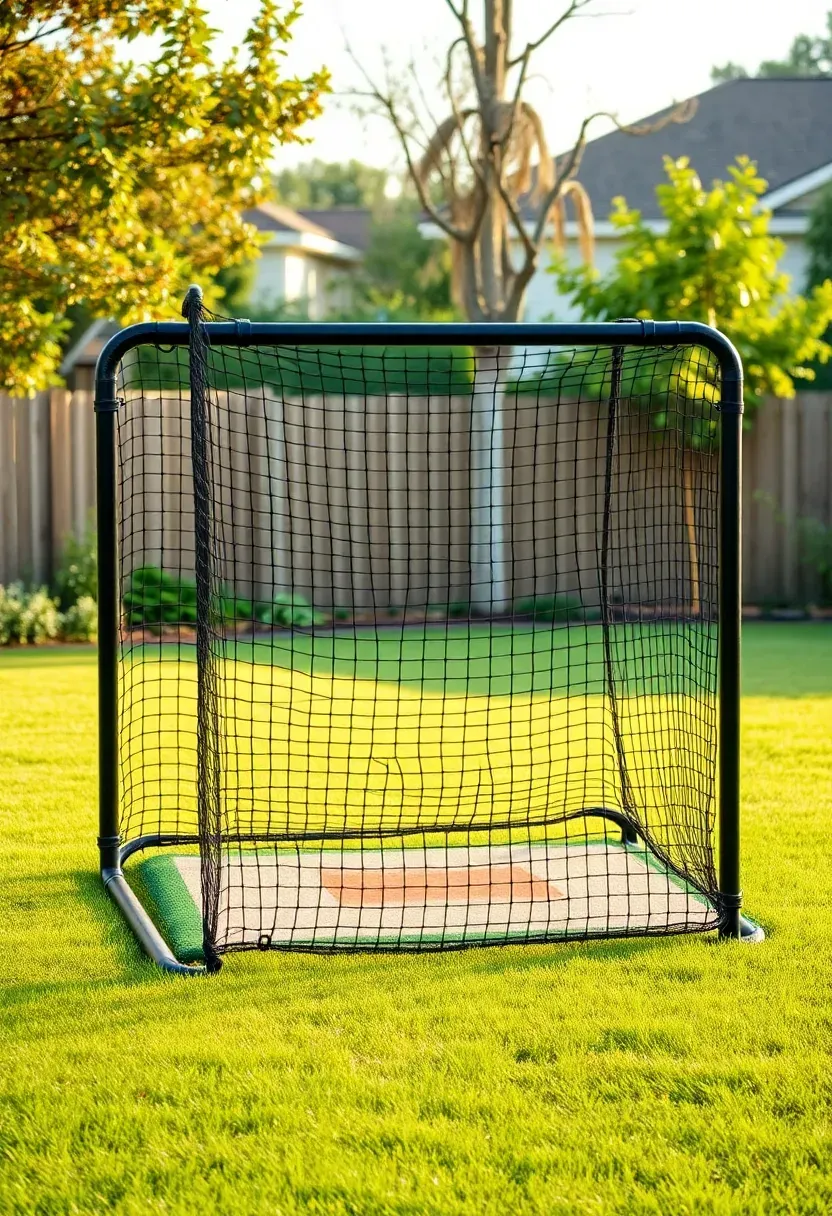
12. L-Screen Plus Short Net Combo
An L-screen protects whoever's throwing. A short backstop net (12' x 12' or smaller) catches everything behind the plate. Together they cover the two biggest safety concerns for a family practice setup.
How to set it up
Put the L-screen at standard pitching distance, or closer for younger players. Position the backstop net directly behind the batter, centered on the hitting zone. Define the batter's box with a rubber mat or chalk line — it sounds minor, but starting from the same spot every session makes the practice data actually mean something.
This combination costs under $600 total and is easy to store. It's not a full cage, but it handles most of what a recreational player actually needs.
Recommended
Items for this idea
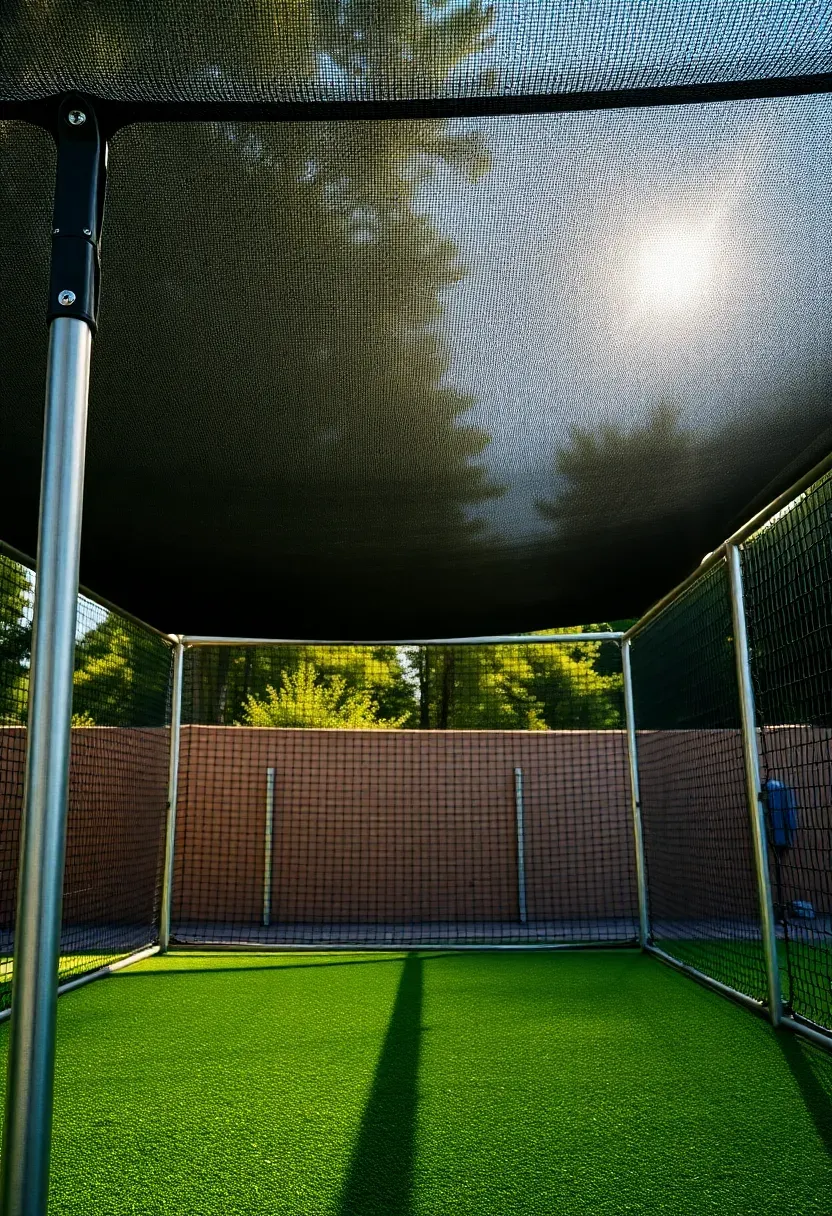
13. Covered Cage with Shade Canopy
A shade canopy over the cage changes the summer experience. Without it, afternoon practice in direct sun is genuinely unpleasant and cuts sessions short. With a UV-blocking mesh or polycarbonate roof panel over the cage, you can go two hours without either party suffering.
The roof doesn't need to be full length — covering the batter's box area and 10–15 feet toward the pitcher is enough to keep the key participants shaded. Some installations use a basic pergola frame as the cage top structure, which handles both functions at once.
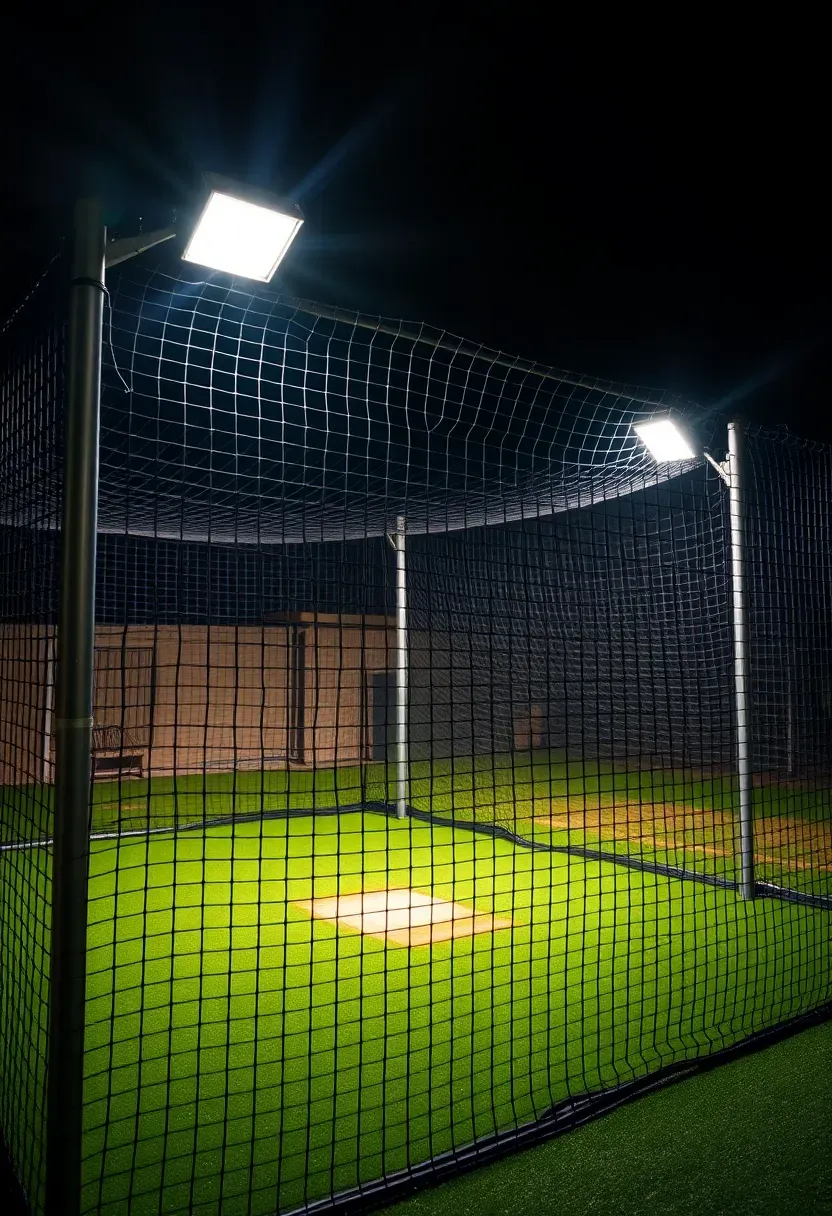
14. Night Lighting Setup
A batting cage is only as useful as the hours you can use it. Adding two or four LED floodlights on poles or mounted to the cage frame extends practice into evenings — which is when most players actually have free time.
Tips
- Position lights at 45-degree angles to the cage, not directly overhead — overhead lighting creates shadows that make it hard to track pitches
- Use 5000K daylight color temperature for the clearest ball visibility
- Consider solar flood lights as a low-installation option for occasional use, though corded LED fixtures give stronger, more consistent output
Recommended
Items for this idea
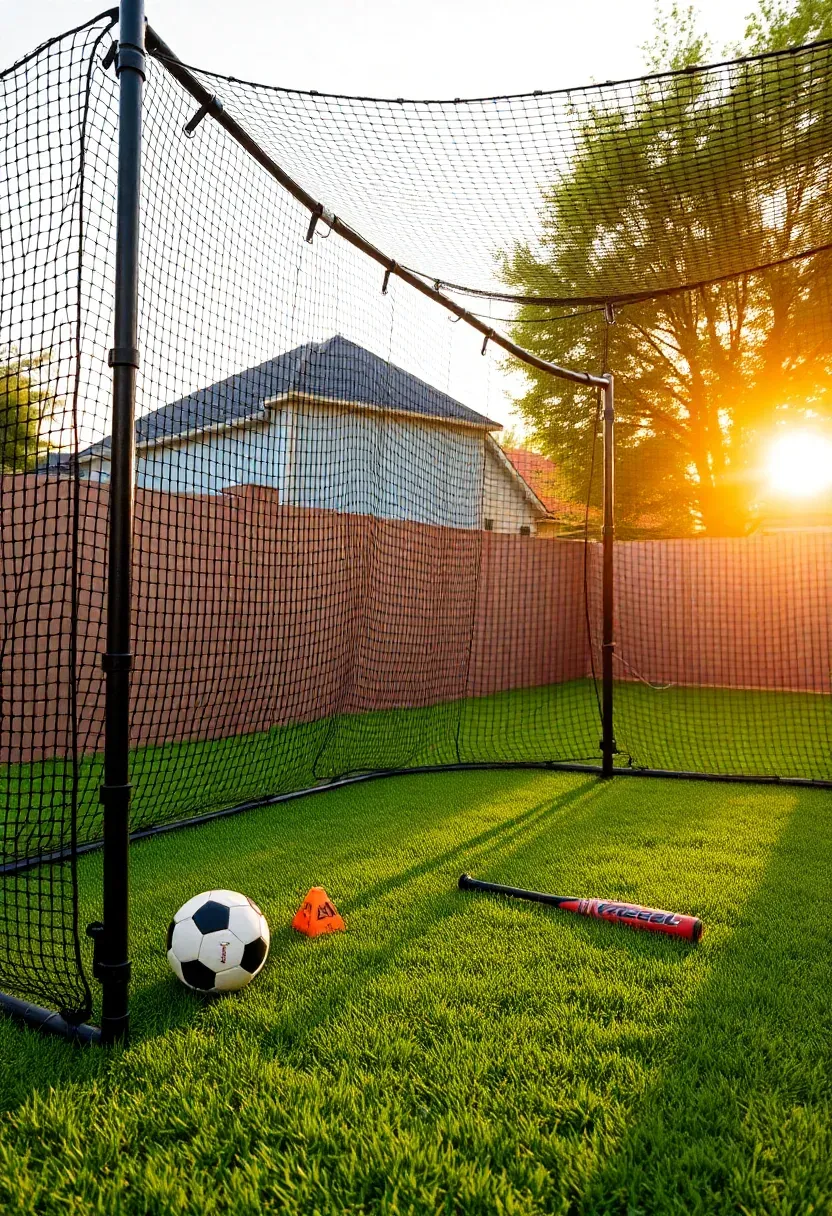
15. Multi-Sport Net Configuration
A standard batting cage built for baseball handles softball fine with minor machine adjustments. But soccer, lacrosse, football throws, and golf all have different containment needs — different ball sizes, angles, and impact forces — so a cage optimized for one sport starts to compromise the others.
What to choose
Single-sport: Simpler to optimize — pick the right net density (#42 for baseball, heavier for softball) and you're done.
Multi-sport: Use a 12' x 12' backstop net with detachable side panels. This lets you reconfigure the space for different activities without permanent compromises.
Recommendation
If the yard serves multiple kids with different sports, a modular side-panel system is worth the extra initial cost. Otherwise, optimize for the primary sport.
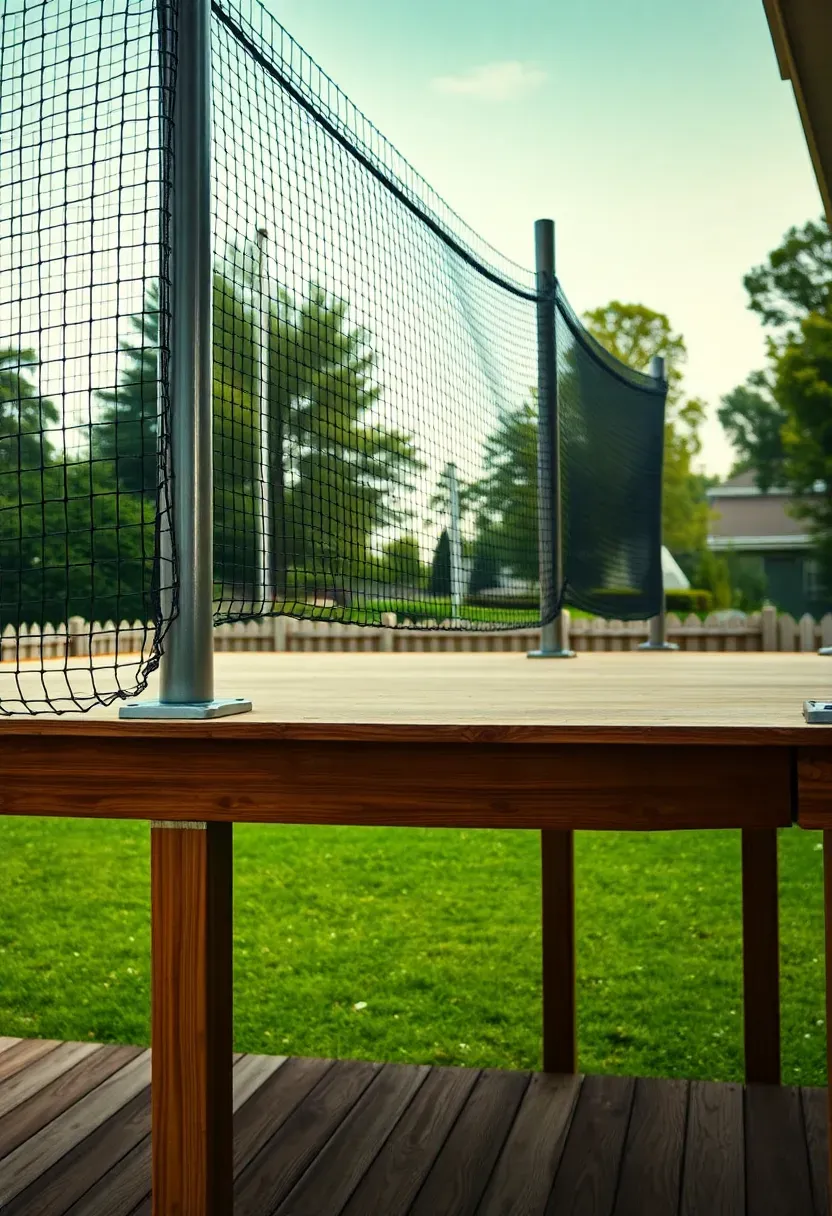
16. Raised Deck Cage Platform
Some yards have grade changes — the flat area is a raised deck or concrete pad. Building the cage on this platform works, but requires solid railing or barrier integration so nets anchor securely without relying on ground posts.
The raised position actually helps with drainage (water runs off the deck naturally) and can make the visual footprint feel smaller from the house. Mount cage uprights directly to deck ledger boards using structural-grade post bases rated for the load.
Recommended
Items for this idea
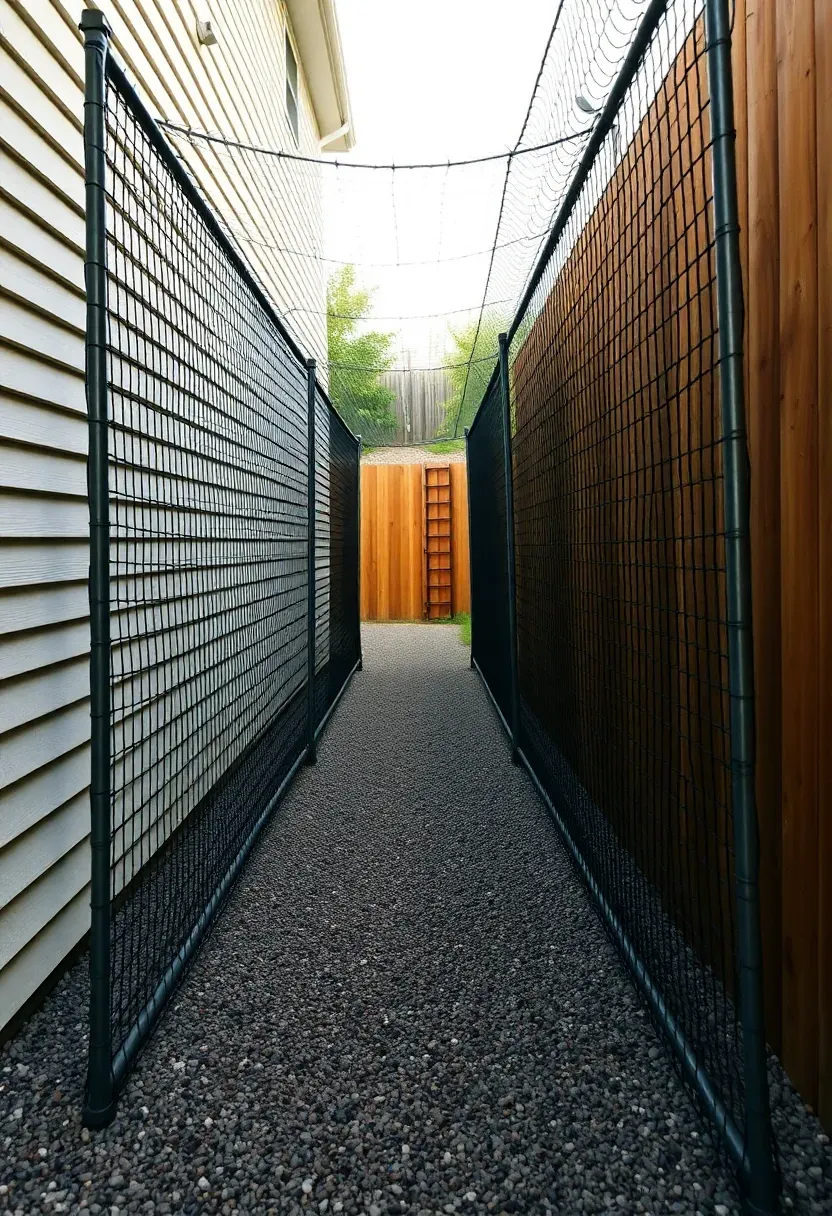
17. Side Yard Long and Narrow Cage
The typical backyard is wider than it is deep. But a side yard often runs the full length of the house — 40–60 feet or more — making it the better location for a batting cage that needs linear length.
A side yard cage tends to be narrower (8–10 feet wide vs. 12 feet), but that's enough room for a right-handed or left-handed batter with full swing clearance. The fence or house wall on one side can serve as a structural anchor.
This is one of the most underused configurations. If your main yard feels too valuable to give up, look at the side.
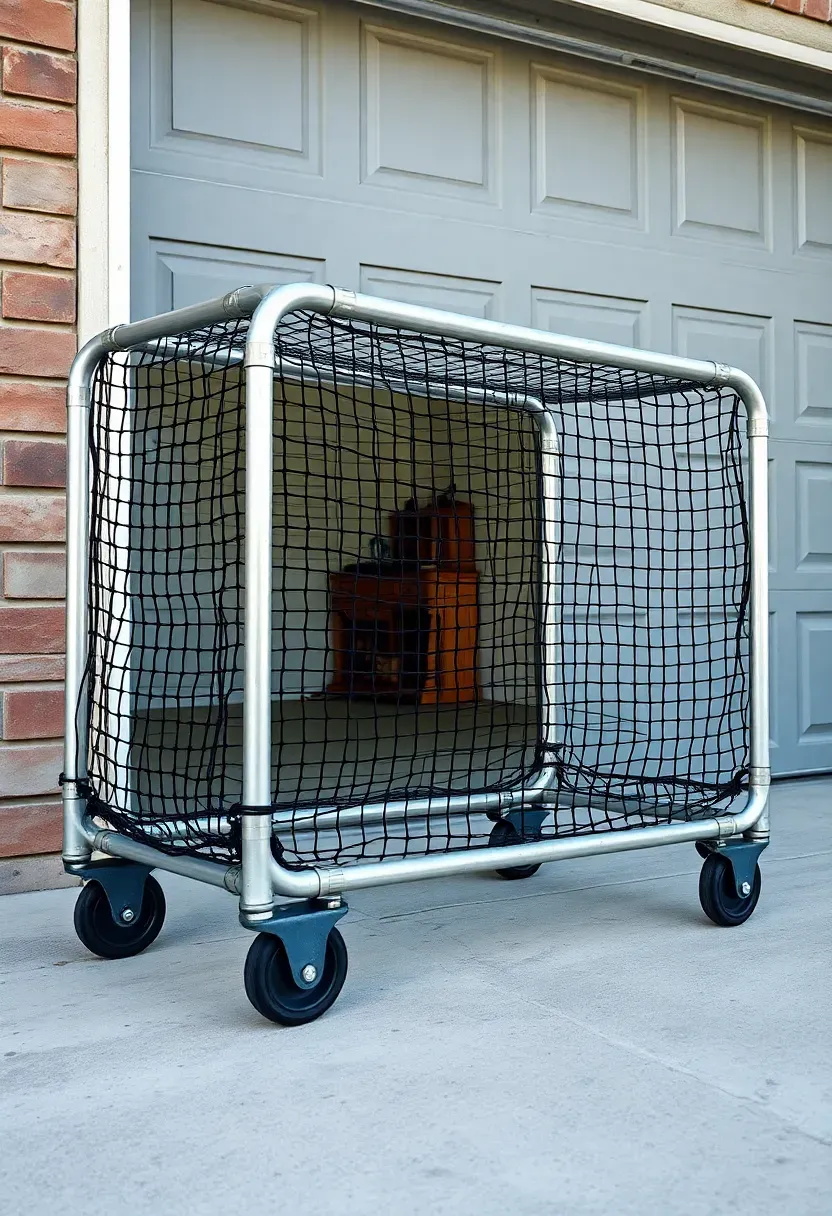
18. Portable Roll-Away Cage
Some manufacturers sell batting cage frames on heavy-duty casters — the entire structure rolls into a garage or shed when not in use. This solves the "I don't want a cage in my yard 365 days a year" problem without sacrificing structural integrity.
The trade-off is cost: roll-away systems run $2,000–$4,000+, and you need a level surface to roll on. But for families who entertain outdoors and want the yard back on weekends, it's a real solution rather than a workaround.
Recommended
Items for this idea
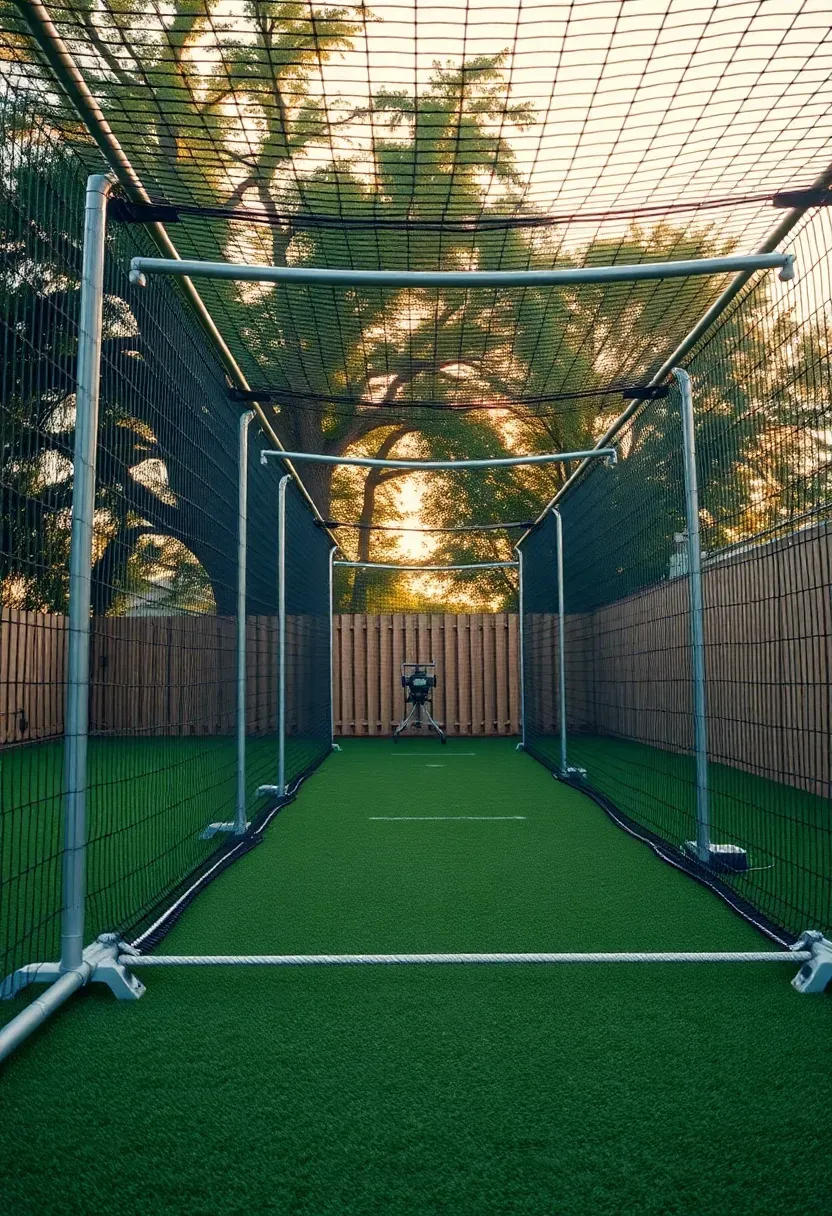
19. Full Regulation-Length Cage
A regulation batting cage runs 70 feet long — long enough for full pitching distance at any level up to high school. Building one in a residential backyard requires roughly 12' wide x 12' tall x 70'+ of clear space.
The commitment
This is not a weekend project. You're looking at professional installation or significant DIY skill, concrete footings, galvanized steel framing, and premium netting (#42 polyethylene or knotless nylon). Total cost for a quality build: $4,000–$10,000+ installed.
What you get
Every rep happens at actual game distance. The pitching machine works at any velocity. There's no mental adjustment between how you practice at home and how the game actually plays — the distances are the same. That matters more than most people expect.
Quick FAQ
Does a backyard batting cage need a permit? It depends on your municipality and whether the structure is permanent. Temporary or portable cages rarely require permits. Permanent structures with concrete footings often do — check with your local building department before digging anything.
Is 35 feet long enough for a functional batting cage? For tee work, soft toss, and younger players, yes. For pitching machine work at game-realistic distances, you'll want 55–70 feet. A 35-foot cage limits pitch trajectory and doesn't replicate real hitting conditions well for competitive players.
What netting weight should I choose? For recreational backyard use with occasional pitching machine work, #42 netting handles it. If you have a high-velocity machine (75+ mph) or strong teen/adult hitters, go with #60. Knotless nylon costs more but lasts longer and resists UV degradation better than standard knotted polyethylene.
Should the cage be oriented toward the house or away from it? Orient the cage so the batter faces away from the house whenever possible. A misdirected swing that clips the ball at an odd angle sends it toward the pitching end — not toward the house. This also helps with sunlight angles.
Can I build a batting cage myself or should I hire out? PVC and basic backstop setups are genuine DIY projects. A permanent steel frame with concrete footings is doable for someone with construction experience, but the post alignment and welding steps are harder than they look. Most people who hire out the steel work are happy they did.
Start with what you have space and budget for. A $200 backstop net and a decent tee will improve swing mechanics more than no practice at all. Scale up from there as the player gets serious — the cage grows with them.
The best backyard batting cage is the one that actually gets used.
Pinterest cover for 19 Backyard Batting Cage Ideas for Better Practice at Home
About the author
OBCD
CGI visualization and interior design content. We create detailed 3D renders and curate practical design ideas for every room in your home.