23 Backsplash Behind Stove Ideas for Every Kitchen Style
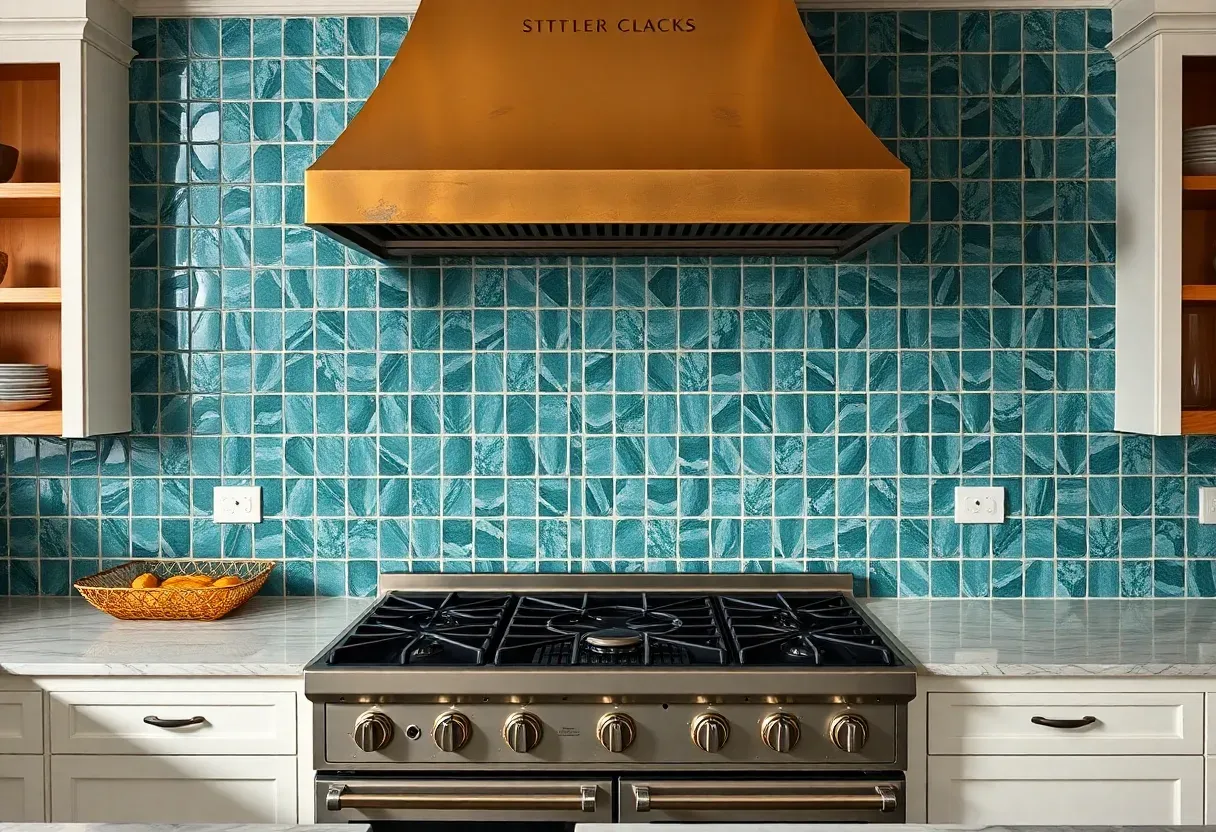
The wall behind your stove takes more abuse than any other surface in the kitchen — grease, steam, spatters, heat. Most people cover it with whatever tile extends from the counter up, and call it done. But that spot is actually the visual anchor of the whole room. Your eye lands there every time you walk in. When the stove wall is doing something interesting, the kitchen feels intentional. When it's the same four-inch subway tile you've seen everywhere, it just... disappears.
These 23 ideas run the full spectrum — budget peel-and-stick options for renters, dramatic stone slabs for a full remodel, and a handful of approaches that fall somewhere in between. Each section covers what the material actually looks like to live with, not just how it photographs.
Table of Contents
- Classic White Subway Tile
- Zellige in Deep Jewel Tones
- Full-Height Marble Slab
- Handmade Ceramic in Warm Neutrals
- Bold Geometric Encaustic Cement Tile
- Stacked Stone Ledger Panel
- Terracotta Saltillo Tile
- Glossy White Brick Pattern
- Patterned Moroccan Fish Scale
- Mirrored Glass Mosaic
- Unlacquered Brass Sheet Metal
- Penny Round Mosaics
- Concrete Look Porcelain
- Hand-Painted Talavera Tile
- Slate Tile in Charcoal Gray
- White Marble Herringbone
- Colored Grout Subway Tile
- Beveled Edge Tile with Deep Shadows
- Blue and White Delft-Inspired Tile
- Travertine Tumbled Stone
- Peel-and-Stick Removable Tile
- Wood-Look Ceramic Plank
- Full Slab Quartzite with Waterfall Edge
1. Classic White Subway Tile
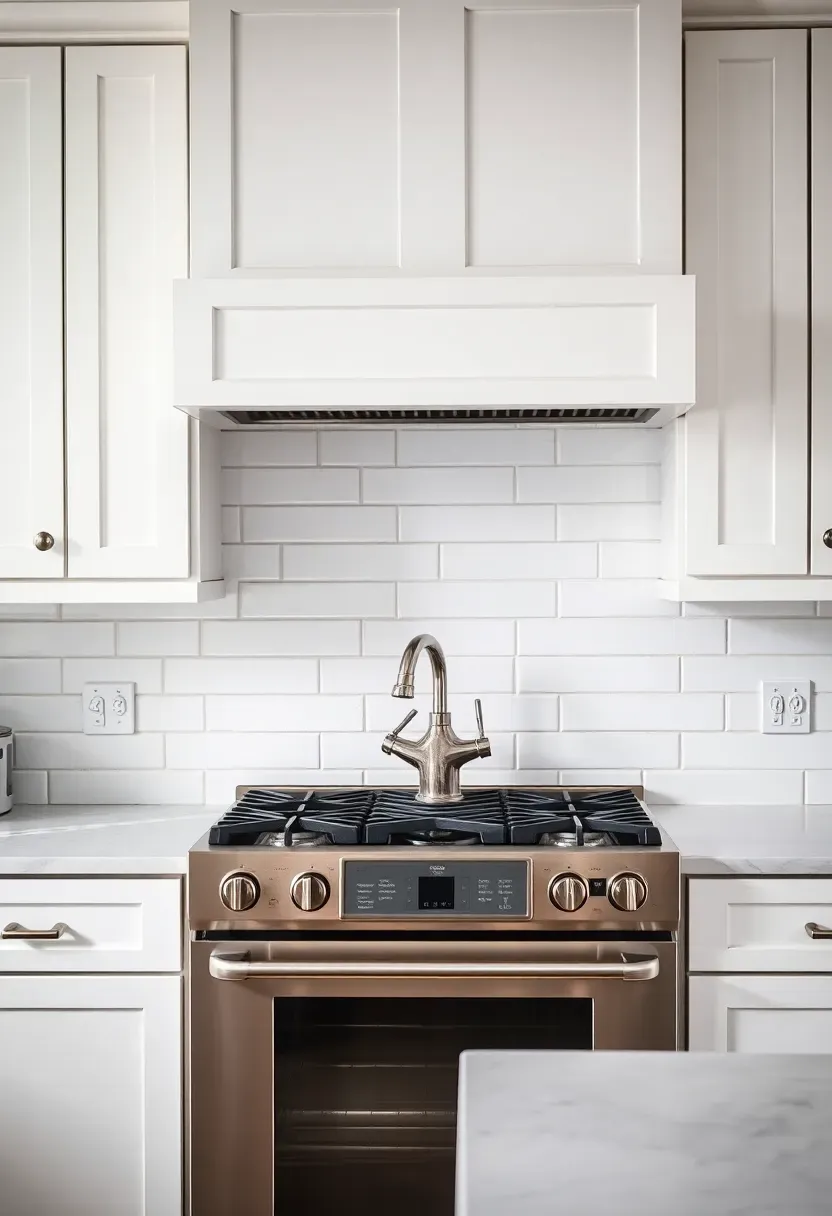
The case for subway tile is simple: it has stayed relevant for over a hundred years because it works in almost any kitchen. Three inches by six inches, white glaze, white or light gray grout. Clean and quiet.
Why it still holds up
The real strength of this format is that it disappears into the kitchen without competing with anything. If you have interesting countertops, patterned curtains, or a statement range hood, white subway lets those things breathe.
Tips for the stove wall specifically
- Use a slightly larger format (4x8 or 4x12) behind the stove to avoid a busy grid effect
- Matte finish hides water spots better than glossy but shows grease more
- White grout directly behind burners will discolor; go with light gray from the start
We picked a few things that go well with this idea: StyloVue Peel and Stick Subway Tile (100-Piece) (★4.4), White Glossy Ceramic Subway Tile 3x6 (★3.7) and AULIGET Polished White Peel Stick Subway Tile (100-Piece) (★4.5). As an Amazon Associate we earn from qualifying purchases.
2. Zellige in Deep Jewel Tones
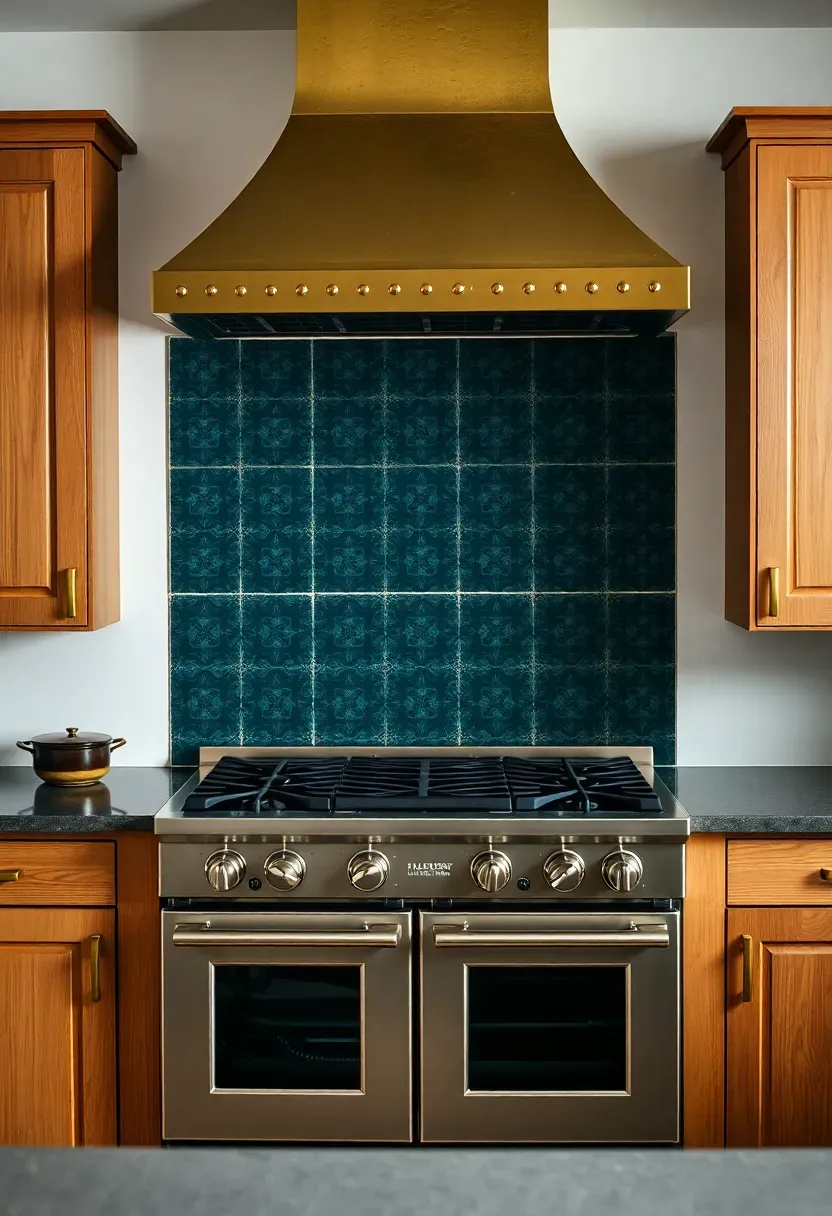
Zellige is Moroccan handmade terracotta tile coated in thick, irregular glaze. No two tiles look quite alike — the surface catches light differently depending on the angle. Teal, forest green, ink blue, and warm amber are the most common colors appearing in kitchens.
The visual effect
The slight irregularity is the whole point. A wall of zellige behind the stove reads almost like water or fabric from across the room — lively without being loud. The texture plays especially well with brass or unlacquered bronze hardware.
Pros and Cons
Pros: genuinely beautiful, ages well, unique character in every installation
Cons: more expensive than machine-made tile ($15-35/sq ft installed), grout lines need sealing regularly, not all installers are familiar with setting irregular handmade tile correctly
We picked a few things that go well with this idea: Art3d Smoothing Tool Kit for Backsplash (★4.6), QEP Tile Installation Tool Kit (★5.0) and WRAPXPERT Smoothing Tool Kit for Backsplash (★4.6). As an Amazon Associate we earn from qualifying purchases.
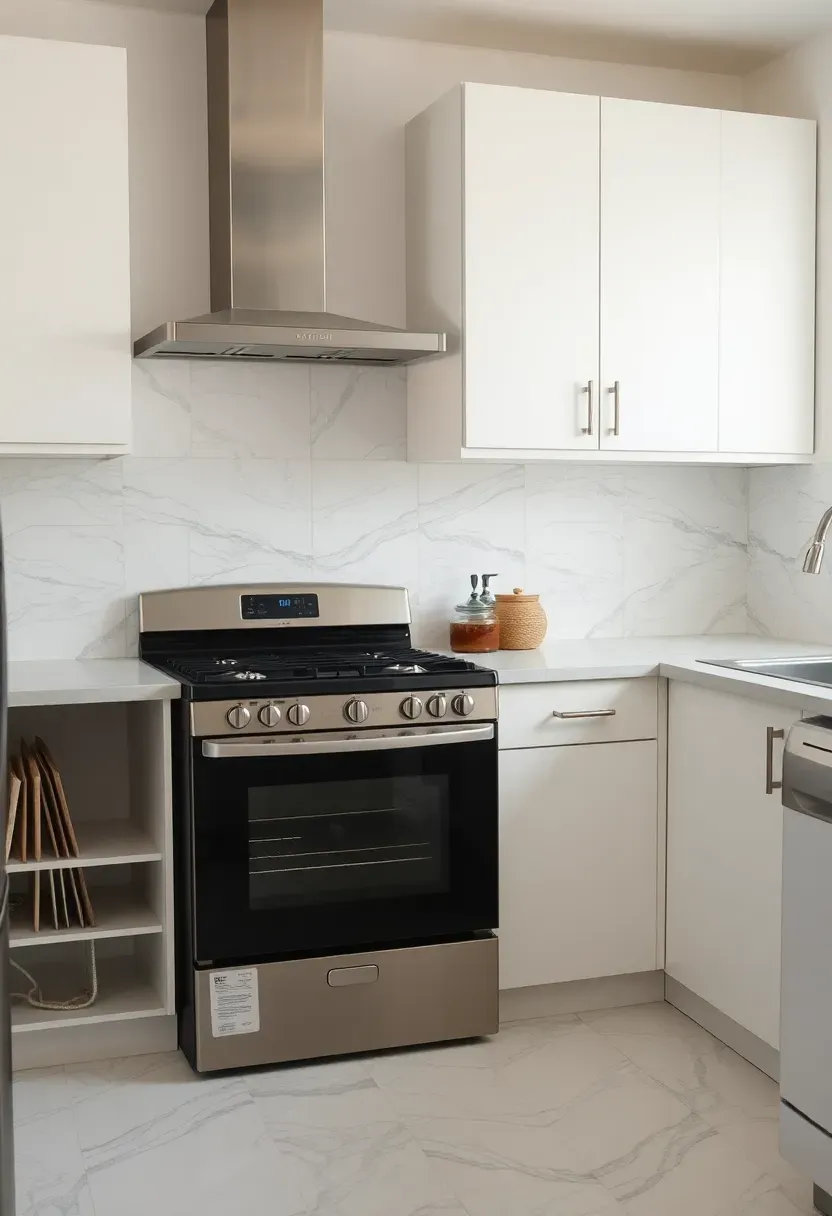
3. Full-Height Marble Slab
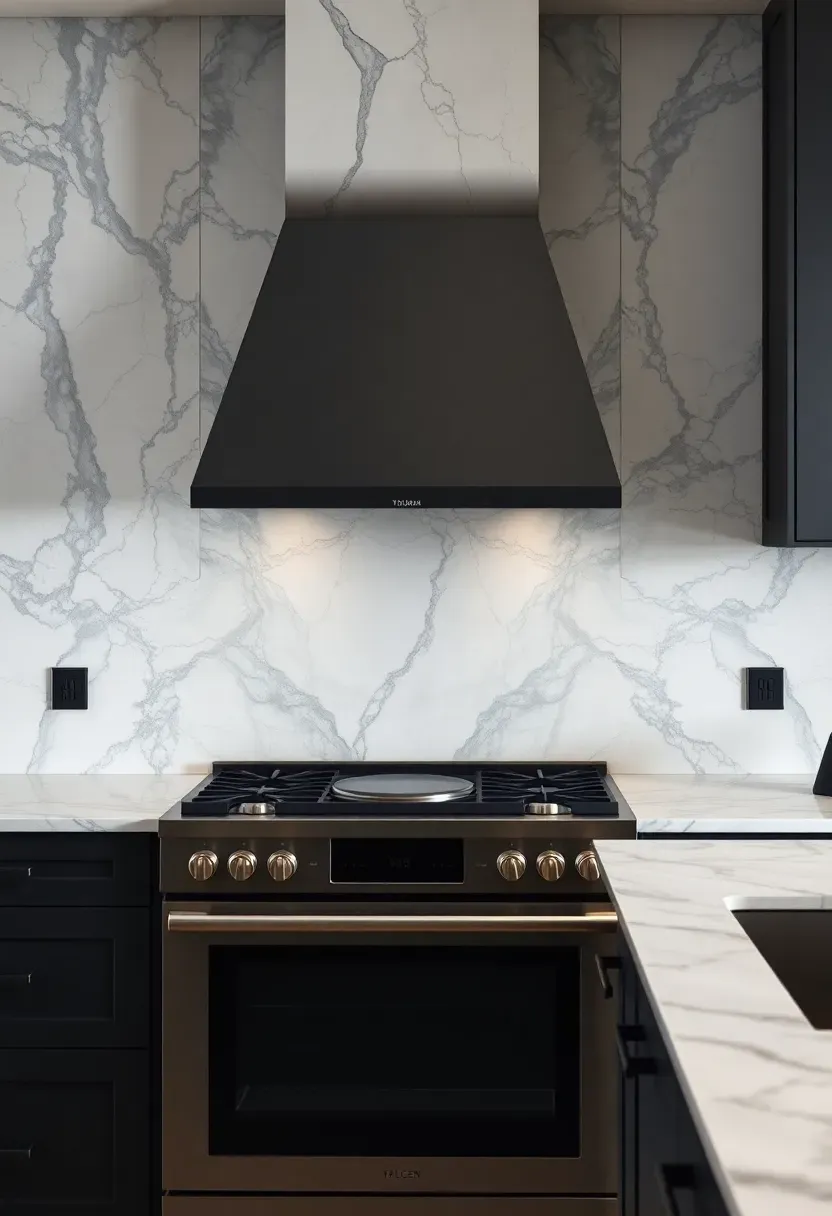
One piece of stone, floor-to-ceiling behind the range. No grout lines. No pattern interruption. Just the natural veining of the marble going up the wall, continuous.
This is the option people want when they see it in a magazine and can't quite figure out what makes that kitchen feel so clean and resolved.
What to know before committing
Marble is porous and will etch from acidic splatter — lemon juice, tomato sauce, vinegar. Behind the stove, this is unavoidable. The surface will develop patina over years. Some people love that; others find it frustrating. If you want the look without the maintenance, large-format porcelain slabs that mimic marble veining are a practical alternative.
How to apply at home
- Use book-matched slabs if budget allows — the mirror-image veining creates a striking visual symmetry
- Seal natural marble every 6-12 months minimum in a cooking zone
- Pair with simple, flat-front cabinetry so the stone reads as the star
We picked a few things that go well with this idea: Art3d Peel and Stick Marble Backsplash (10-Sheet) (★4.3), Art3d Premium Stick On Marble Backsplash (10-Sheet) (★4.2) and Midcard Peel Stick White Marble Backsplash (20-Sheet) (★4.6). As an Amazon Associate we earn from qualifying purchases.
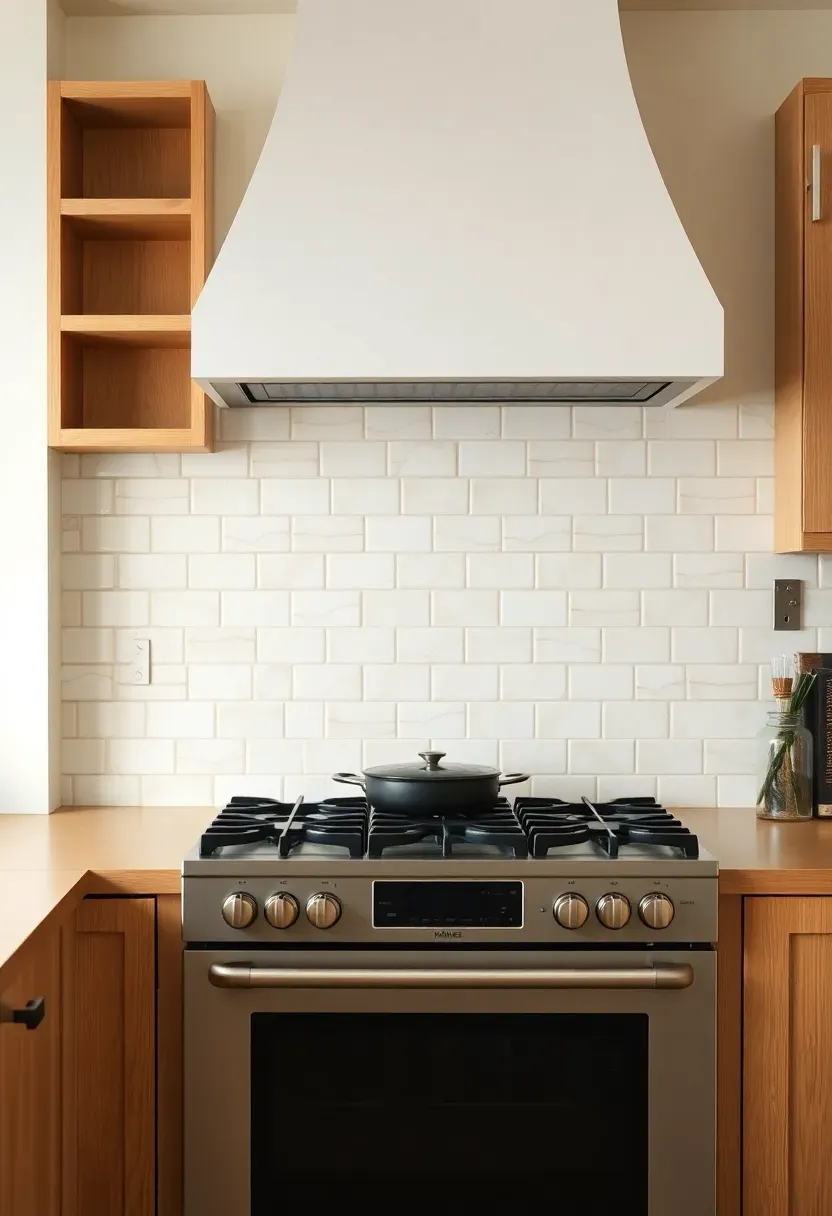
4. Handmade Ceramic in Warm Neutrals
Factory-made tiles are perfectly flat and uniform. Handmade ceramic tiles are not — they bow slightly, the glaze pools at the edges, the color shifts across the face. That's what you're paying for.
The character factor
Off-white, cream, sandy beige — these warm neutral handmade tiles work well in kitchens leaning toward organic modern, cottagecore, or Japandi. The slight surface variation catches light gently without the drama of zellige.
Step-by-step: getting the look right
Step 1: Choose a muted glaze. Avoid stark white — it reads too clinical. Look for milky, warm undertones.
Step 2: Use a wide grout joint (3/16" or more). The slight irregularity needs room; tight grout lines fight against the organic feel.
Step 3: Pair with natural materials. Wood open shelving, raw linen, unfinished stone — anything that leans into the handcrafted aesthetic.
What to watch out for
- Budget will jump fast; handmade ceramics are labor-intensive to produce
- Uneven surfaces require a skilled installer comfortable with back-buttering each tile individually
- Very light glazes behind active burners will show oil splatter more than medium tones
Recommended
Items for this idea
5. Bold Geometric Encaustic Cement Tile
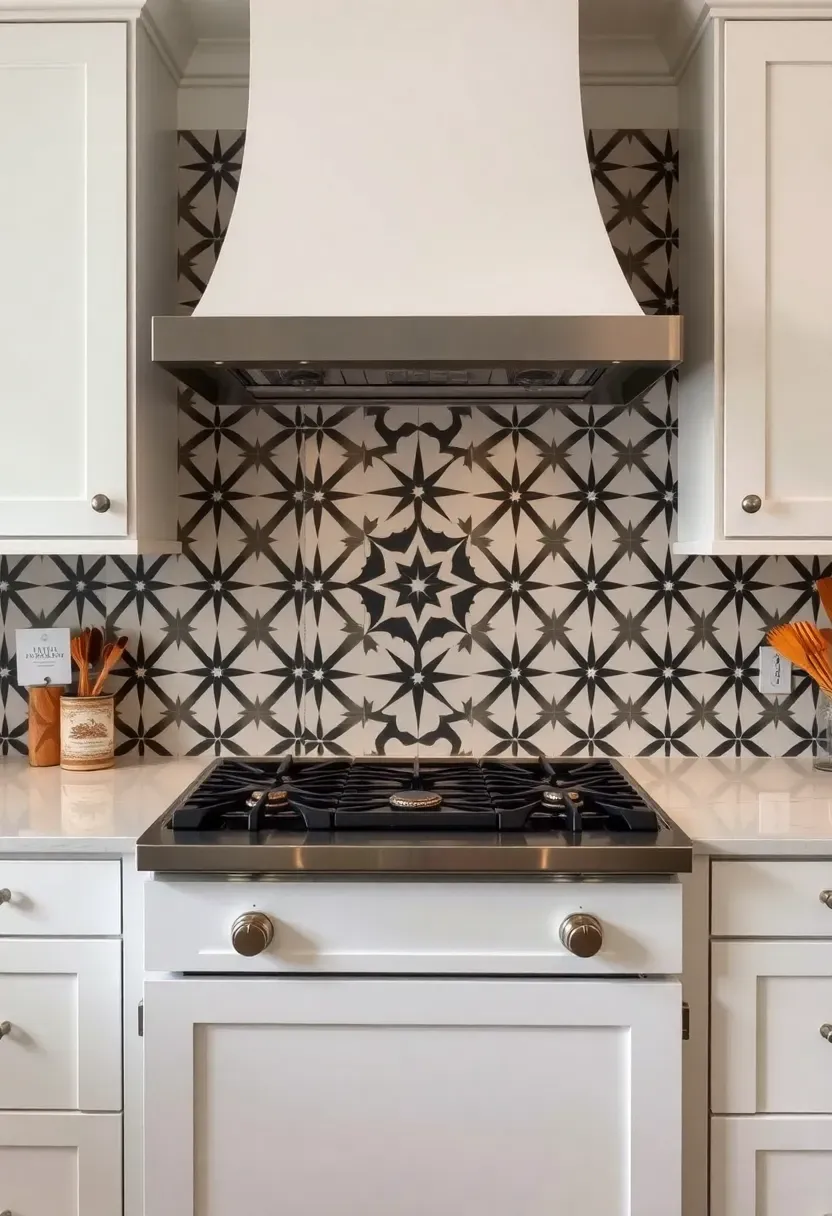
Encaustic cement tile is pigmented all the way through — no glaze, just pure compressed cement and mineral pigment. The patterns are geometric: stars, diamonds, Arabic lattice, checkerboard. Colors can be as subtle or dramatic as you want.
When this works
Behind the stove, a bold pattern in a 4x4 or 6x6 format creates a focal point that functions like a piece of art. It works especially well when the rest of the kitchen is restrained — white or neutral cabinets, simple hardware, nothing else competing.
Comparing: small pattern vs. large pattern
Small pattern (4x4 tile): More intricate look, needs a larger wall to breathe, can feel busy on a narrow stove wall
Large pattern (8x8 tile): Bolder statement, reads more clearly from across the kitchen, typically easier to install cleanly
Choose small if: you have a wide open stove wall, 30+ inches across, and a simpler overall kitchen Choose large if: the stove wall is more compact or the kitchen has other visual noise
6. Stacked Stone Ledger Panel
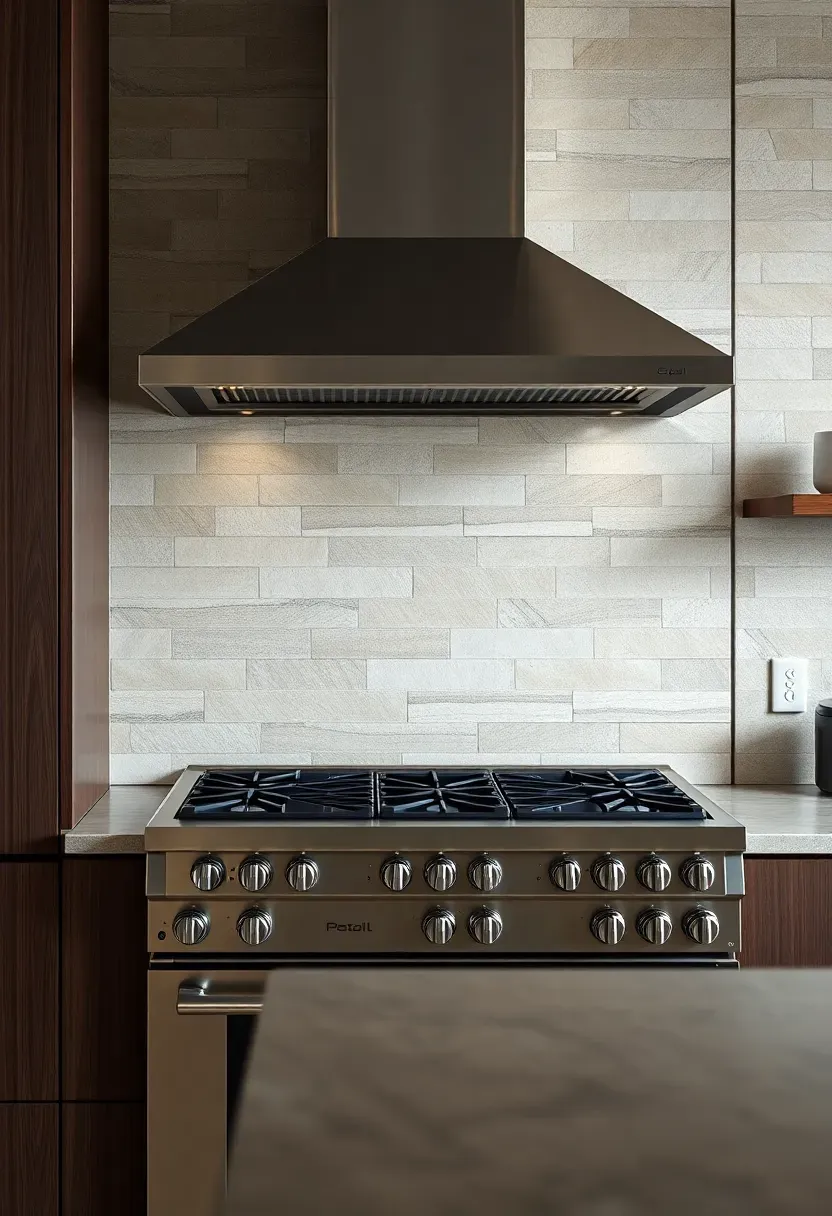
Ledger panels are thin slices of natural stone — quartzite, slate, basalt — stacked in horizontal rows and mounted to mesh backing. The surface is three-dimensional, not flat.
The practical reality
This one looks striking but has some honest limitations. The irregular surface behind an active cooking zone means grease has more places to collect. If you cook with high heat and a lot of oil splatter, cleaning around stone ridges gets tedious. That said, in a kitchen used primarily for low-mess cooking, it holds up fine and adds genuine texture that no flat tile can replicate.
Tips for installation
- Keep it in the zone behind the stove only — ledger on all walls reads more like a fireplace surround
- Seal the stone every year, more often if you cook frequently
- Pair with a simple range hood, not an ornate one — the stone itself is decoration enough
Recommended
Items for this idea
7. Terracotta Saltillo Tile
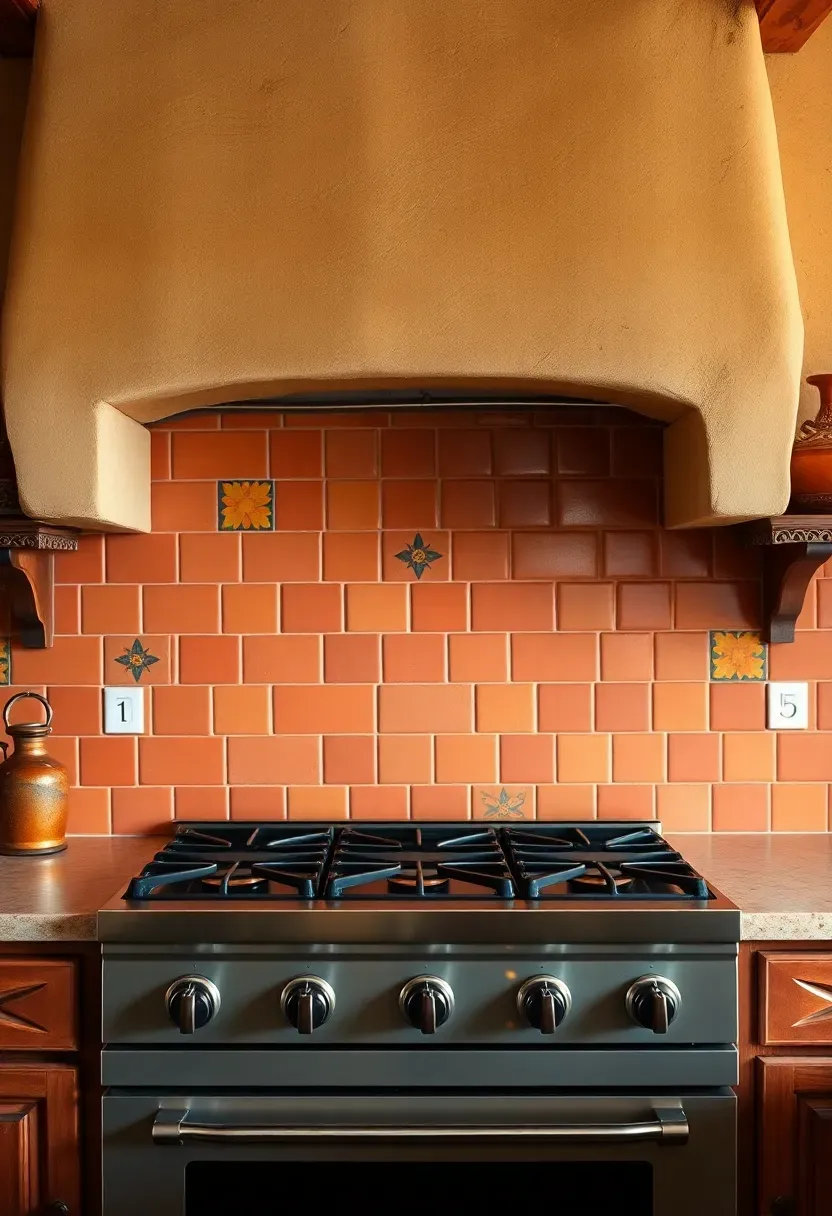
Saltillo tile comes from Saltillo, Mexico — hand-formed clay, sun-dried, fired at low temperatures. The result is a matte, warm orange-red tile with natural variation and occasional swirl marks left by the tools.
This is the material that makes farmhouse and Southwestern kitchens feel genuinely authentic rather than aesthetically assembled. It's earned, not applied.
Modern interpretation
Recent kitchen designs have been pairing saltillo with matte black hardware and darker cabinet colors — olive green, charcoal, deep navy — which pulls the terracotta warmer and more contemporary than the traditional pairing with white and turquoise.
How to apply at home
- Seal thoroughly before grouting and again after — raw terracotta absorbs everything
- Use a warm-toned grout (buff, sand) not white
- Combine with warm wood tones rather than cool-toned materials
8. Glossy White Brick Pattern
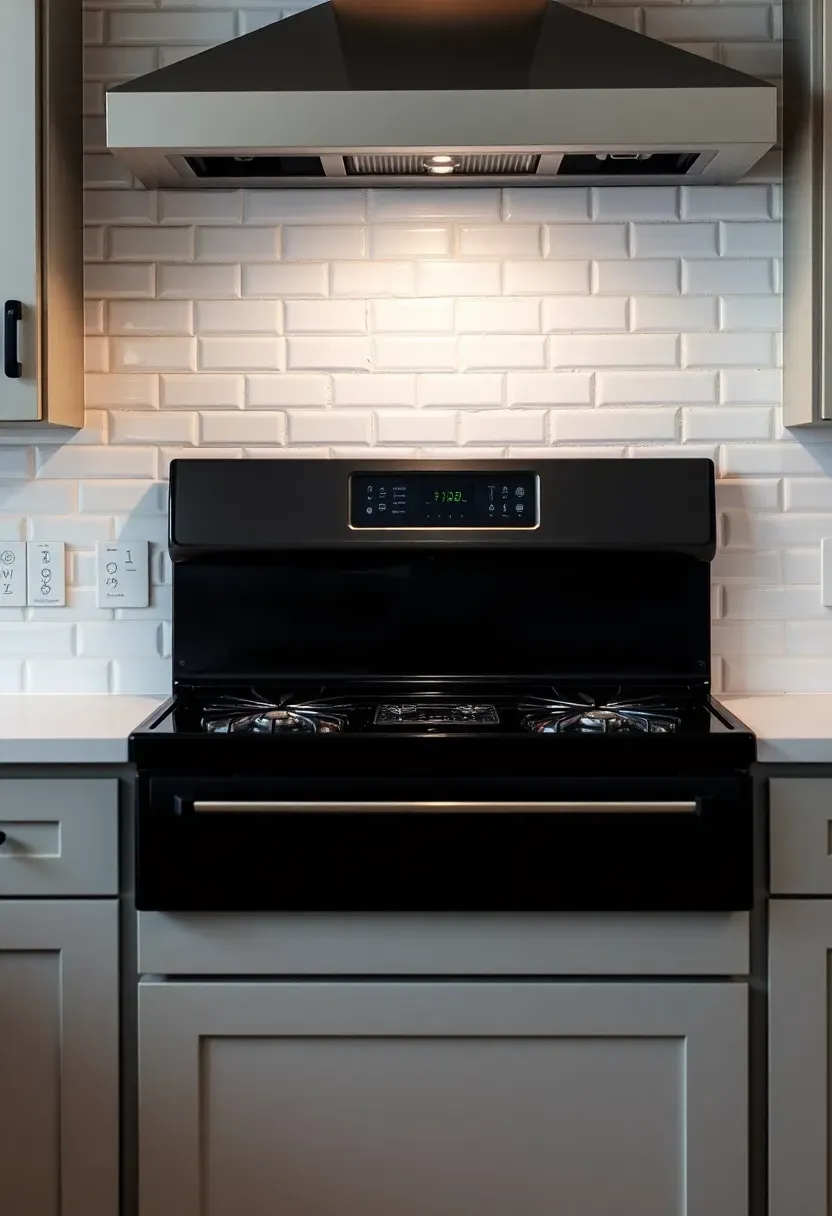
The brick layout is a running bond pattern — each tile offset by half a length from the row above and below. When done in a glossy finish, the staggered grout lines create a subtle rhythm that catches light more than flat subway.
Why glossy works behind the stove
Gloss is actually easier to wipe down than matte behind cooking zones. Grease and splatter sit on the surface rather than settling into the texture. It also reflects light, which helps in kitchens where natural light doesn't reach the stove wall.
Pros and Cons
Pros: easy to clean, reflects light, inexpensive, widely available
Cons: every water spot and smudge shows; needs frequent wiping near the cooking zone; can feel dated in very design-forward kitchens
Recommended
Items for this idea
9. Patterned Moroccan Fish Scale
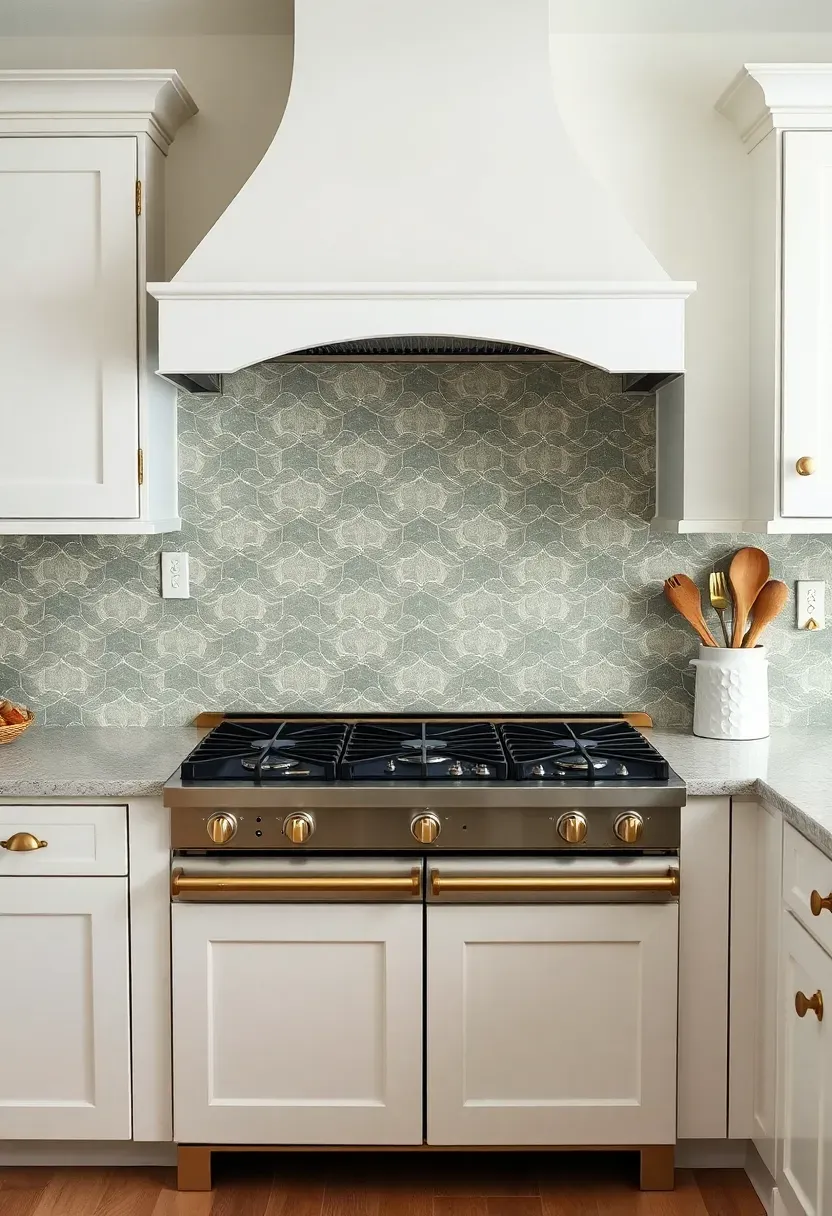
Fish scale tile (also called scallop or fan tile) has a curved top edge that interlocks with adjacent tiles. The pattern creates an organic, almost reptilian texture across the wall.
Sage green, dusty rose, slate blue, and pearl white are the formats currently appearing most in kitchen renovations. Behind the stove, a single color across the whole field reads cleaner than a multicolor pattern.
Tips for this tile format
- Use a consistent grout color close to the tile color to let the scale shape read, not the grout grid
- Install only behind the stove wall — extending to the full kitchen makes it feel like a bathroom
- Glossy finish shows the scallop shape most clearly; matte softens it considerably
10. Mirrored Glass Mosaic
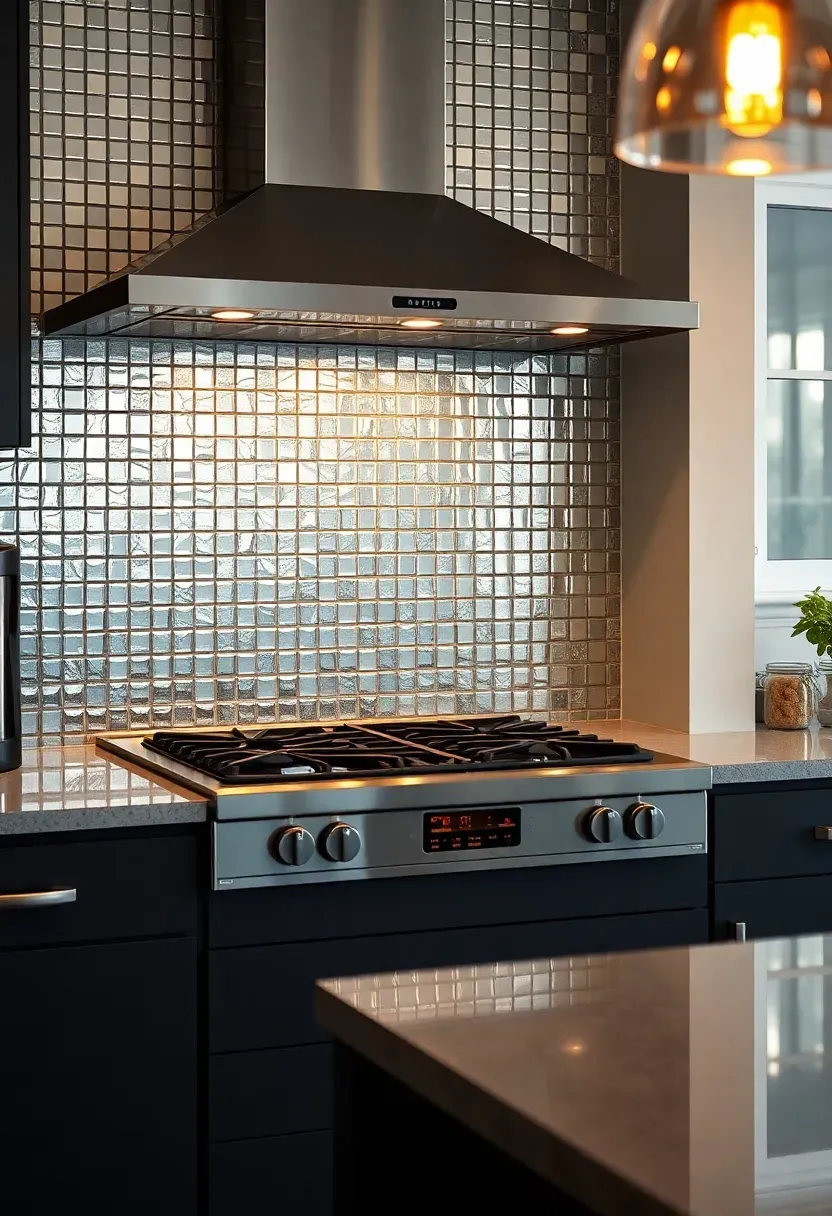
Small squares of reflective glass tile — either clear mirror or antiqued silver — mounted in mesh sheets. The surface bounces light constantly.
When this makes sense
Small or north-facing kitchens where natural light is limited benefit more from mirror mosaic than any other material. It functions almost like a light fixture, distributing and amplifying ambient light across the cooking zone. The effect is less dramatic in already-bright kitchens.
What to know
- Antiqued mirror (with slightly patchy silvering) reads more sophisticated than clear mirror in most kitchens
- Install only in a defined field — full-wall mirror mosaic reads like a nightclub
- Avoid if you hate cleaning: the reflective surface shows every water spot immediately
Recommended
Items for this idea
11. Unlacquered Brass Sheet Metal
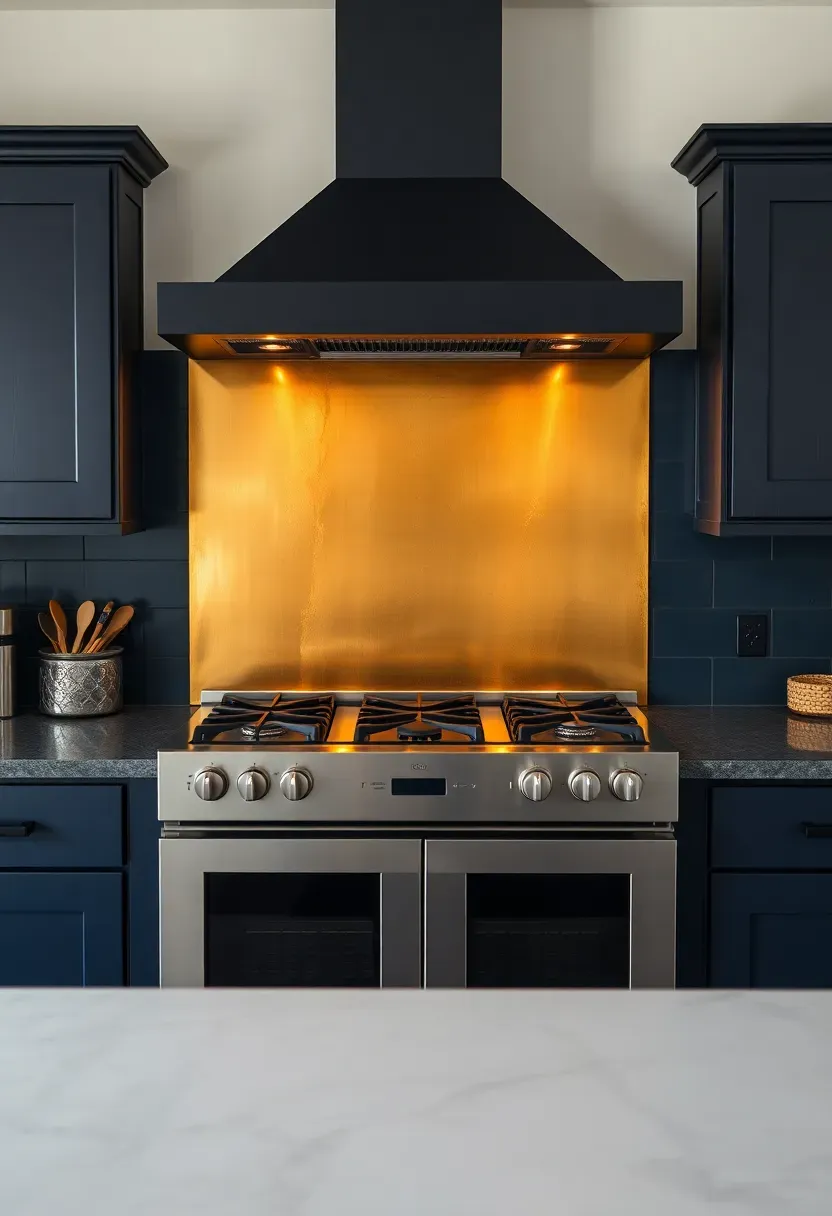
Not tile at all — a single sheet of raw brass metal, fabricated to fit the stove alcove. The brass starts bright gold, then develops a warm patina over time as it oxidizes.
This is an unusual choice that tends to look either very considered or very wrong depending on the kitchen. It works in spaces with a clear commitment to warm metals throughout — brass fixtures, bronze hardware, copper accents.
The patina question
Unlacquered brass will change. Within a year, the surface will have warm brown tones mixed with the original gold, deeper in areas that see the most heat. Some people find this beautiful. Others order lacquered brass or brushed stainless instead, which holds a consistent appearance.
How to apply at home
- Commission from a local metal fabricator — not a standard tile-shop product
- Match the brass tone to your faucet and hardware before committing
- Pair with darker cabinetry; the brass reads warmer against charcoal or navy than against white
12. Penny Round Mosaics
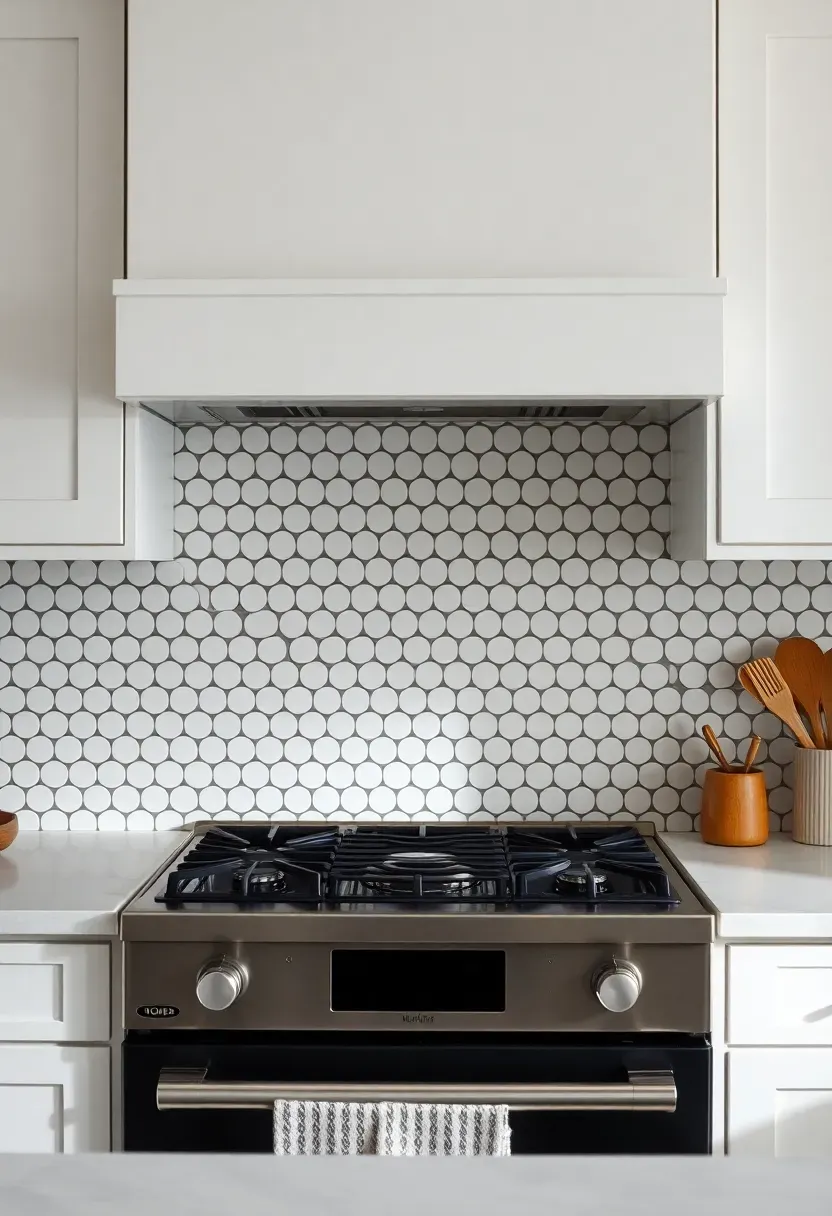
One-inch circles, tightly packed in a honeycomb arrangement. The format is technically from the early twentieth century but reads fresh in modern kitchens when paired with contemporary hardware and fixtures.
Structure and color
White penny round with dark gray grout is the most common version. The contrast between tile and grout creates a fine circular grid that's active without being overwhelming. For a softer effect, use off-white tile with a grout tone close to the tile color.
Comparing: white with dark grout vs. all-neutral
White tile, dark grout: High contrast, very graphic, clean and modern
Cream tile, warm grout: Quieter, softer, works better in farmhouse or traditional kitchens
Choose high contrast if: your kitchen has strong horizontal lines and a modern sensibility Choose low contrast if: you want texture without visual noise
Recommended
Items for this idea
13. Concrete Look Porcelain
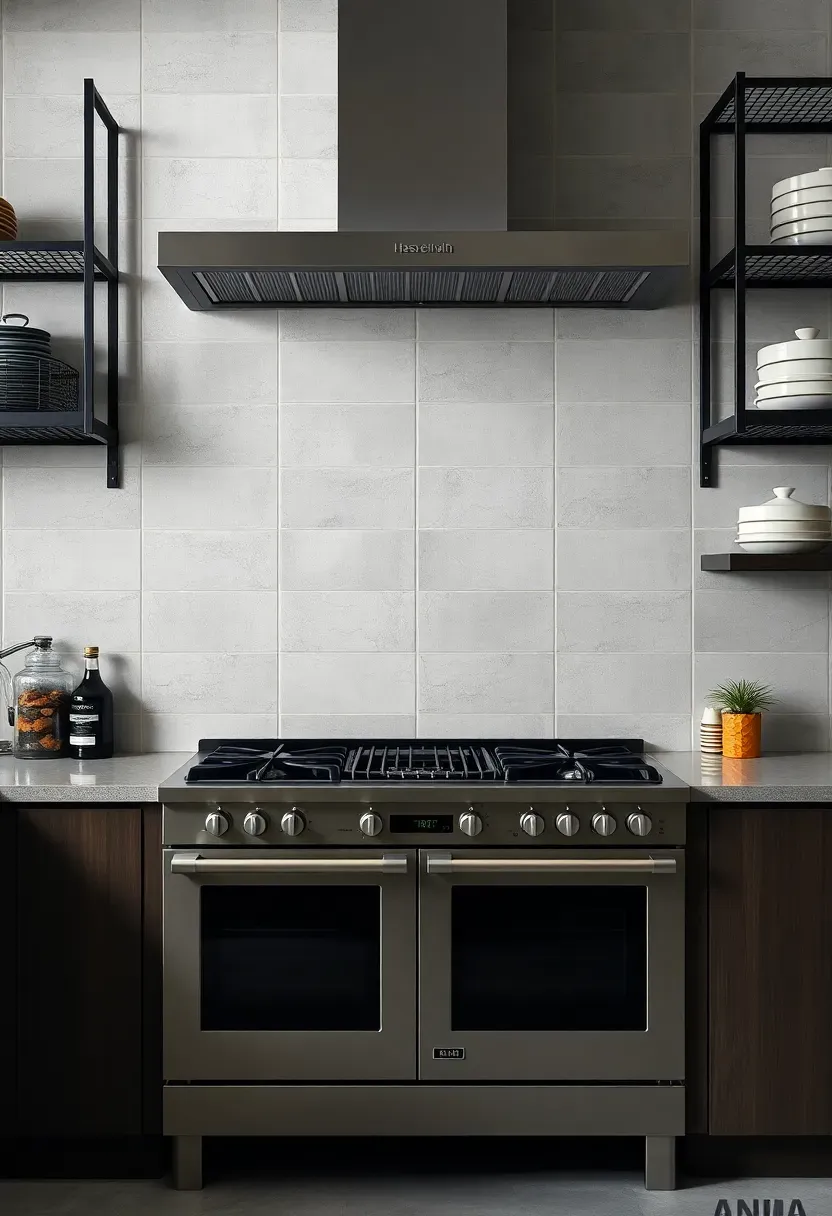
Large-format porcelain tiles that replicate the surface of poured concrete — soft gray, slightly clouded, with minimal surface variation. The key is minimal grout lines, which gives the stove wall an almost seamless appearance.
The industrial kitchen angle
This format pairs naturally with stainless appliances, open shelving on metal brackets, and cabinet hardware in black or gunmetal. It reads industrial without trying hard, which is exactly why it works.
Tips for installation
- Go large: 12x24 or 24x48 for the fewest grout lines
- Keep grout color within two shades of the tile — strong contrast breaks the illusion of a poured surface
- Semi-gloss finish handles cooking splatter better than matte in this style without looking shiny
14. Hand-Painted Talavera Tile
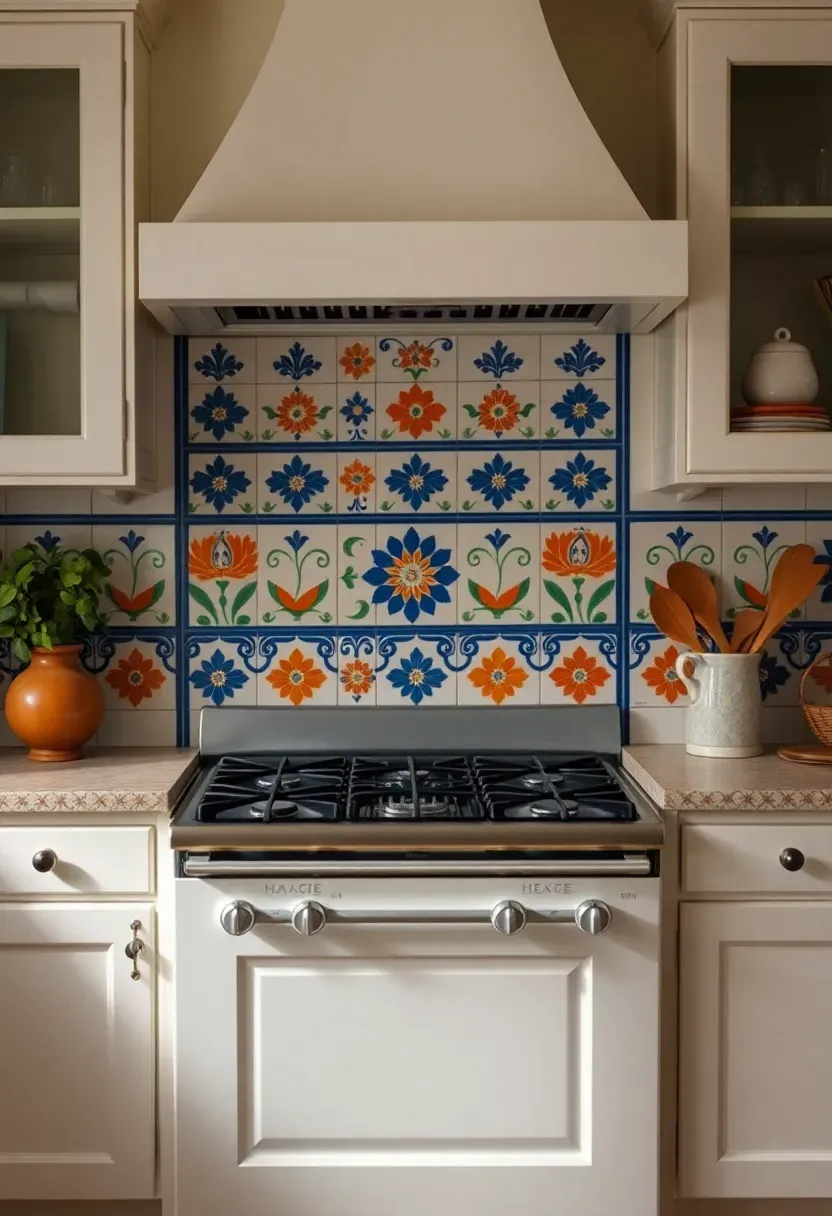
Talavera is tin-glazed earthenware from Puebla, Mexico — each tile hand-painted with cobalt blue, terracotta, yellow, and green on a white base. The patterns are floral, geometric, or narrative. No two tiles are identical.
Behind the stove, Talavera creates an effect closer to a mural than a surface treatment. It's the opposite of the trend toward neutral and restrained.
Is it possible to use Talavera in a contemporary kitchen?
Yes — the key is limiting it to the stove wall only, and keeping everything else very simple. White cabinets, unfinished wood counters, plain open shelves. The tile does all the work.
Pros and Cons
Pros: genuinely beautiful, strong cultural and craft identity, nothing else looks like it
Cons: doesn't work in every kitchen style, requires real commitment to the aesthetic, authentic Talavera is imported and more expensive than domestic ceramic
Recommended
Items for this idea
15. Slate Tile in Charcoal Gray
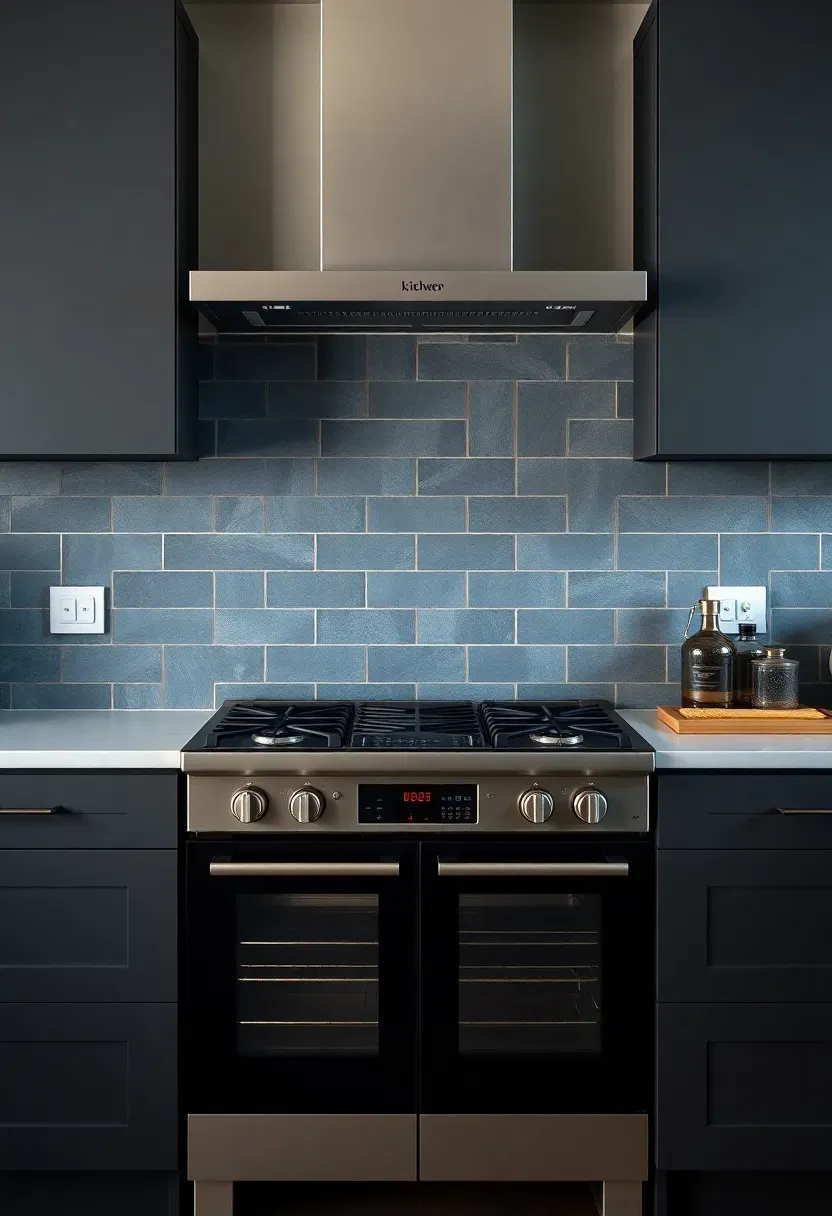
Natural slate splits along flat planes, leaving a surface called "cleft" — slightly rough, irregular, dark. Charcoal and graphite tones are most common. The material has an austere, almost Scandinavian quality when used behind a range.
Origins and design context
Slate in kitchens carries the same design DNA as stone-floor Scandinavian farmhouses — utilitarian, honest, built to last. In a contemporary kitchen, that aesthetic lands as quietly sophisticated rather than rustic.
Modern interpretation
Charcoal slate behind a matte black or brushed steel range, white walls, minimal hardware — the combination looks almost monochromatic until the light shifts and the stone surface comes alive with blue and green undertones.
How to apply at home
- Seal before installation and annually after — slate is porous
- Use a black or dark gray unsanded grout to keep the stone reading as the dominant element
- Avoid polished slate; the cleft texture is what makes it interesting
16. White Marble Herringbone
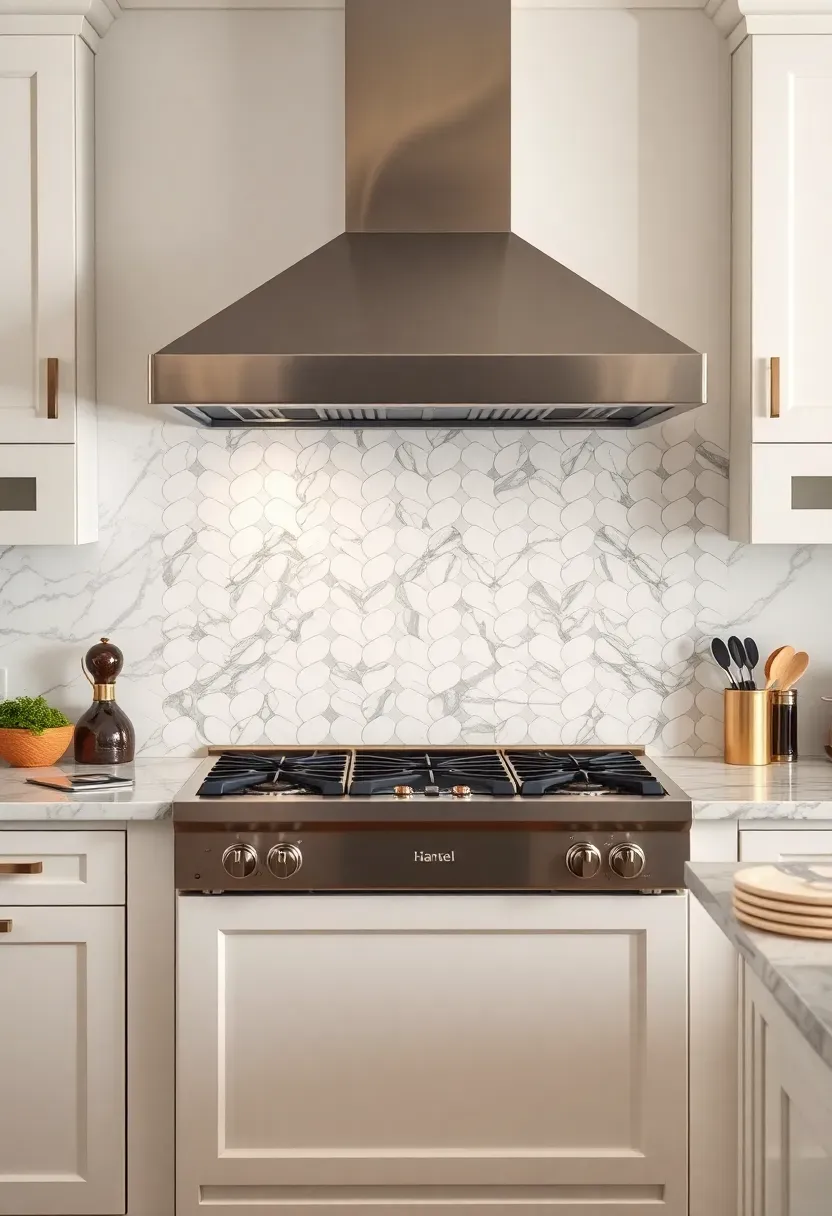
Marble tile cut into rectangles and set at 45-degree alternating angles — the herringbone pattern. The movement of the tile layout amplifies the natural veining of the stone, making a relatively small area look complex and layered.
This is the version of marble that shows up in luxury kitchen photography constantly. It reads expensive because marble is expensive, but the herringbone format also works in porcelain at a fraction of the price.
Practical notes
- The pattern requires precise cuts at the edges — factor in higher installation labor cost
- Calacatta (heavy gray veining) reads bolder than Carrara (lighter, more subtle) — both work
- Polished marble shows cooking residue clearly; honed marble hides splatter somewhat better
Recommended
Items for this idea
17. Colored Grout Subway Tile
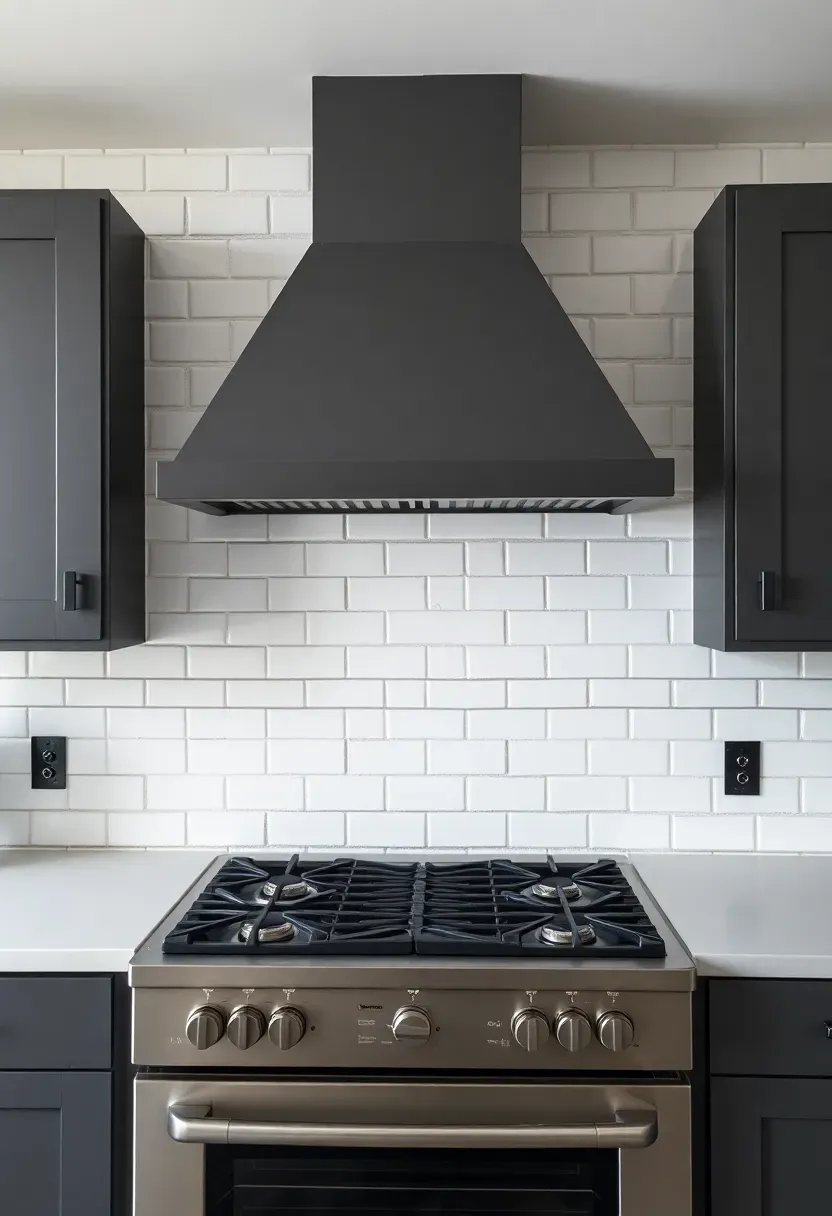
Same subway tile as idea one — different result entirely. Dark charcoal or black grout turns a standard tile job into a graphic grid. The tile stays white; the grout does the design work.
Why grout color matters more than people realize
White tile with white grout disappears. White tile with dark grout creates a strong horizontal line pattern across the wall. The same material, same installation, completely different visual effect. This is one of the cheapest ways to add character to a subway tile kitchen.
Should you use dark grout?
Use it if: you want visual weight on the stove wall without changing the tile material, you're okay with grout that shows heat discoloration over time, you're doing a new installation (retroactively darkening grout is messy)
Skip it if: your kitchen already has strong pattern elsewhere and the stove wall needs to be neutral
18. Beveled Edge Tile with Deep Shadows
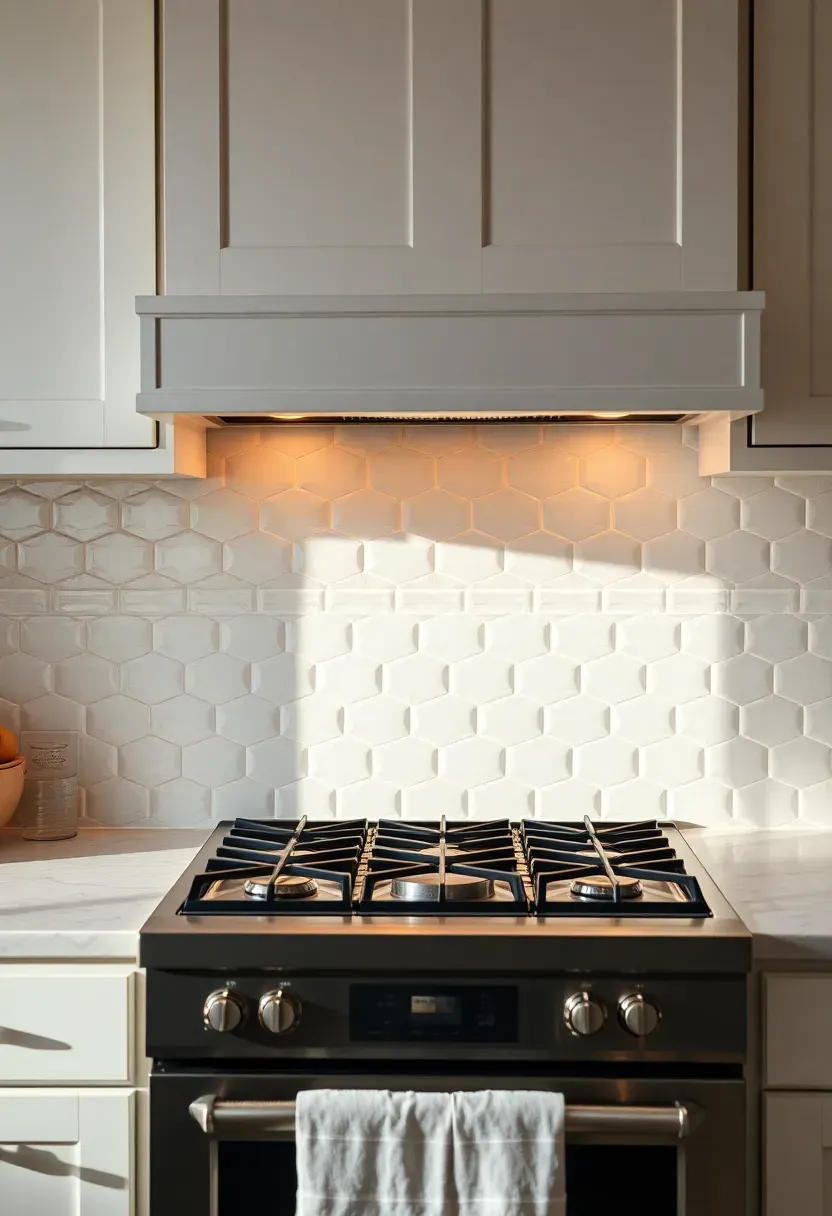
Beveled tiles have angled edges — instead of a flat face running flush to the wall, the edges slope back. Light hits the angled surface and casts a visible shadow line into the grout joint, giving the wall a three-dimensional quality.
This works best in kitchens with directional lighting over the stove. Flat overhead light kills the effect; side-lighting from pendants or under-cabinet LED strips makes the bevels stand out clearly.
Tips for this look
- White or off-white works best — the shadows provide the contrast, not the tile color
- 3x6 or 3x12 is the standard format; the longer tile makes shadow lines more continuous
- The effect is subtle but consistent — it looks different at every time of day as light shifts
Recommended
Items for this idea
19. Blue and White Delft-Inspired Tile
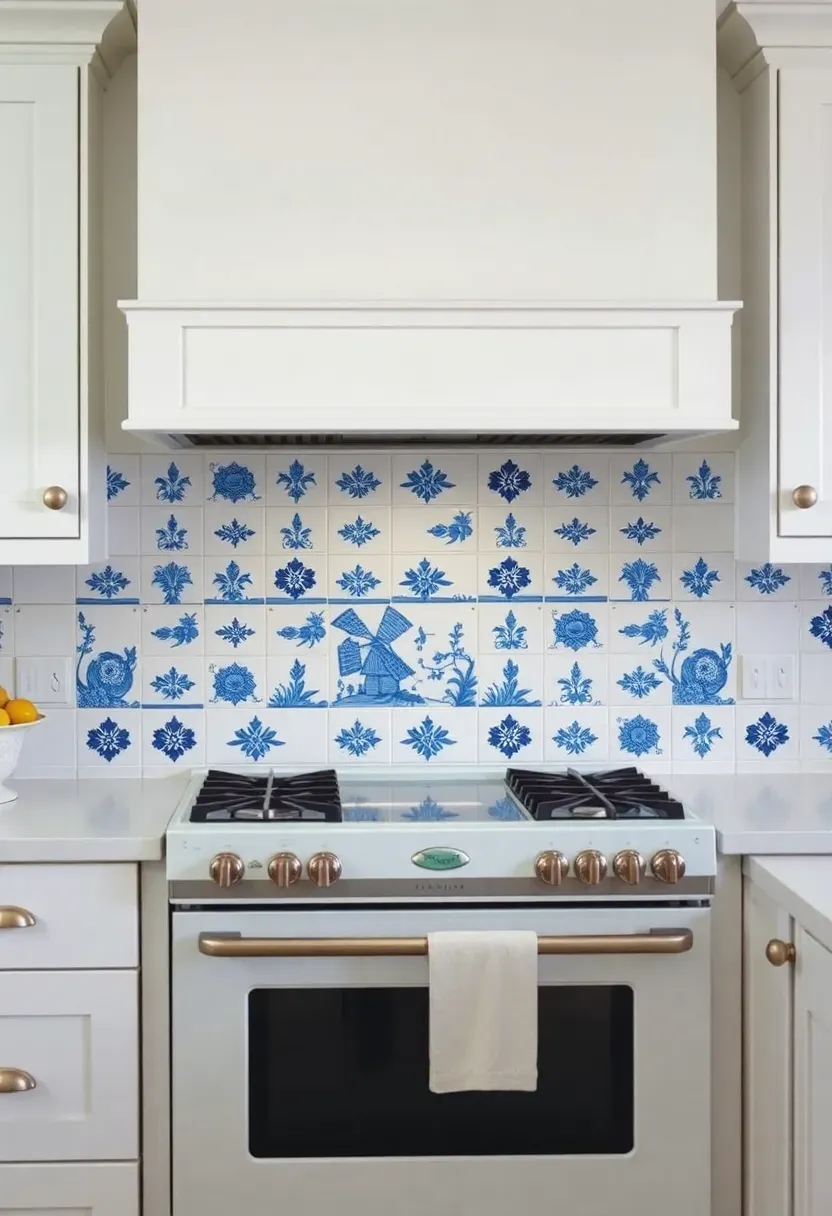
Hand-painted blue on white — the pattern language of Dutch Delft pottery applied to kitchen tile. Windmills, tulips, geometric borders, or abstract landscapes in cobalt blue on a white glaze.
The difference between authentic and mass-produced
Authentic hand-painted Delft tile from Dutch suppliers costs $30-60 per tile and takes weeks to ship. Ceramic imitations made in Portugal or China look similar at a distance but lack the slight irregularity and depth of hand-painted glaze. Both work; the choice depends on budget and how close people will look.
How to apply at home
- Use as accent tiles mixed into a plain white tile field — every third or fourth tile — rather than a solid Delft wall
- Traditional kitchens suit this best; contemporary kitchens with Delft tile usually look like a mismatch
- Install in a grid layout, not herringbone — the pattern needs to read upright
20. Travertine Tumbled Stone
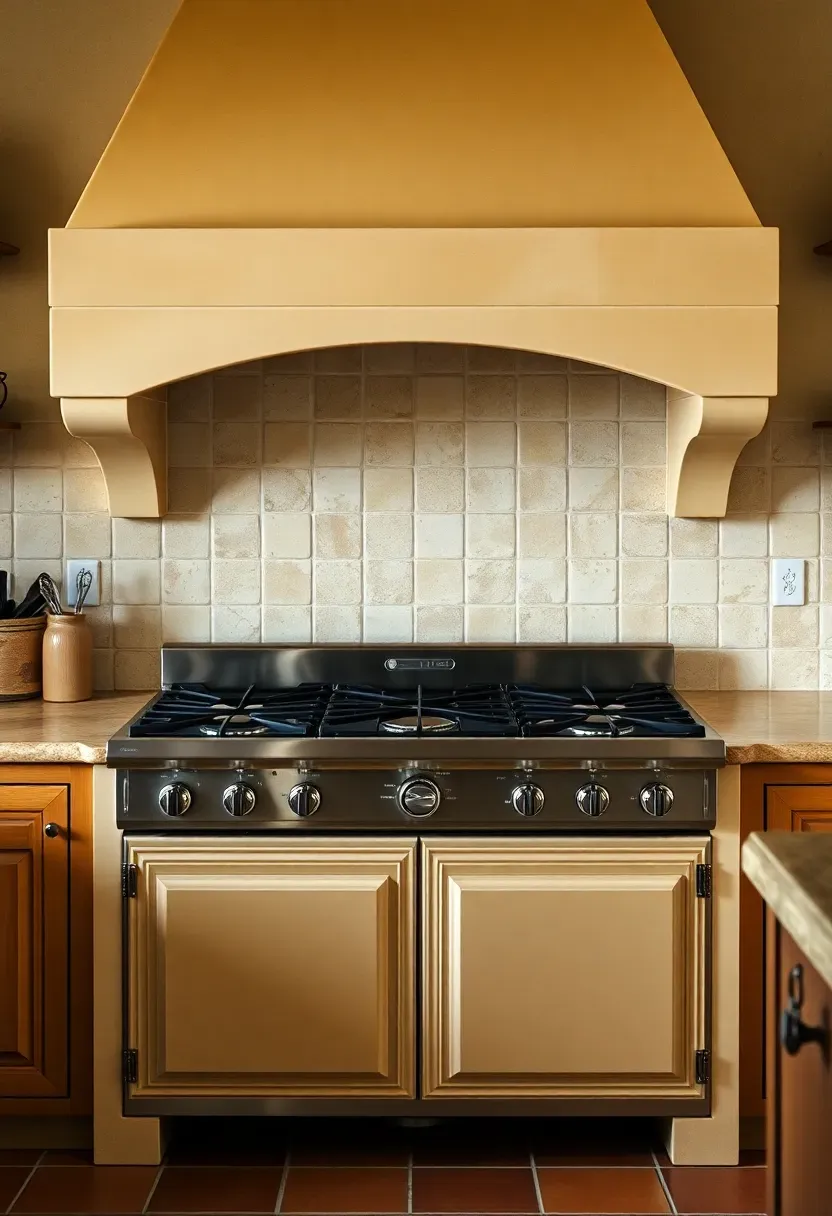
Travertine is a limestone formed by mineral springs — the stone has natural pits and voids in its surface. Tumbled travertine has been processed to round the edges and further open the surface texture, creating a worn, ancient appearance.
The warmth of travertine — creamy beige, honey, walnut — suits Mediterranean, Spanish Colonial, and Tuscan-inspired kitchens naturally. In more modern kitchens, the warm beige tones work against the typical cool gray and white palette.
Maintenance honestly
Travertine is porous. The pits and voids collect cooking residue. If you're not sealing regularly and cleaning carefully, the material deteriorates faster than most stones. It's beautiful and high-maintenance. Know which one matters more to you.
Recommended
Items for this idea
21. Peel-and-Stick Removable Tile
For renters, or anyone who wants to change the backsplash without destroying the wall behind it, peel-and-stick tile has become genuinely viable. Not the cheap plasticky versions from ten years ago — current products from brands like Aspect and Tempaper use real metal, natural stone veneer, or thick vinyl that photographs convincingly.
What it can and can't do
It can update the visual appearance of the stove wall in an afternoon with no tools and no mess. It cannot replace real tile in a kitchen where you cook heavily — heat from the burners, steam, and grease will eventually affect adhesion near the cooking zone.
Practical advice
- Use only in the zone at least 12 inches away from active burners
- Clean the wall thoroughly before application — anything under the adhesive will cause lifting
- Budget for replacement every 3-5 years in a regularly used kitchen
22. Wood-Look Ceramic Plank
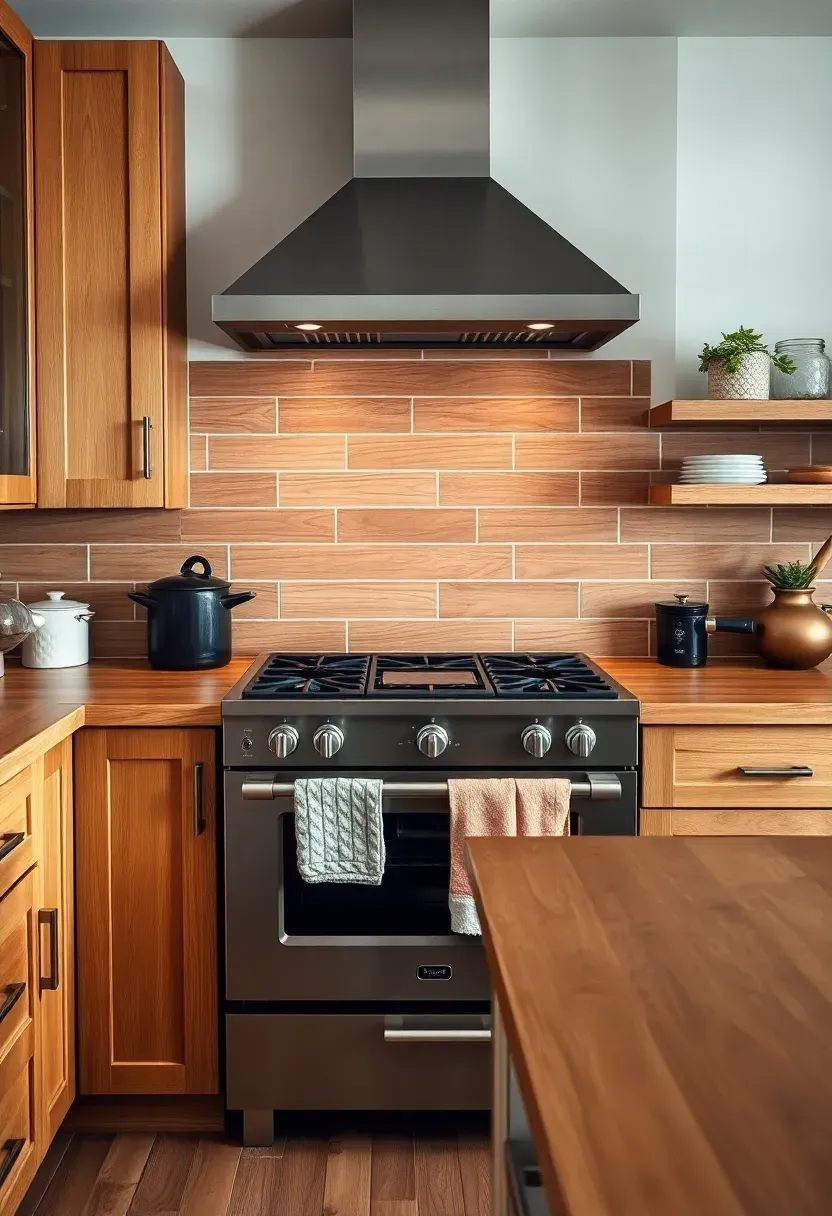
The surface reads like horizontal wood planks — a long, narrow ceramic tile printed with realistic wood grain. Used behind the stove, it adds warmth that stone and standard tile can't provide, without the actual fire risk of real wood.
Why this works in kitchens wood normally wouldn't
Ceramic has none of wood's problems in a kitchen: it doesn't warp from moisture, it won't burn, it's easy to clean. The visual warmth of the grain texture does something useful — it brings the cooking zone into visual alignment with wood-forward kitchens that have wood cabinets, butcher block counters, or open shelving.
Comparing: horizontal vs. vertical plank orientation
Horizontal: Makes the wall feel wider, reinforces the linear quality of a galley kitchen
Vertical: Draws the eye up, reads more like shiplap, suits kitchens with lower ceilings
Choose horizontal if: you have a standard or wide stove alcove Choose vertical if: you want to emphasize ceiling height or lean into a coastal/cottage look
Recommended
Items for this idea
23. Full Slab Quartzite with Waterfall Edge
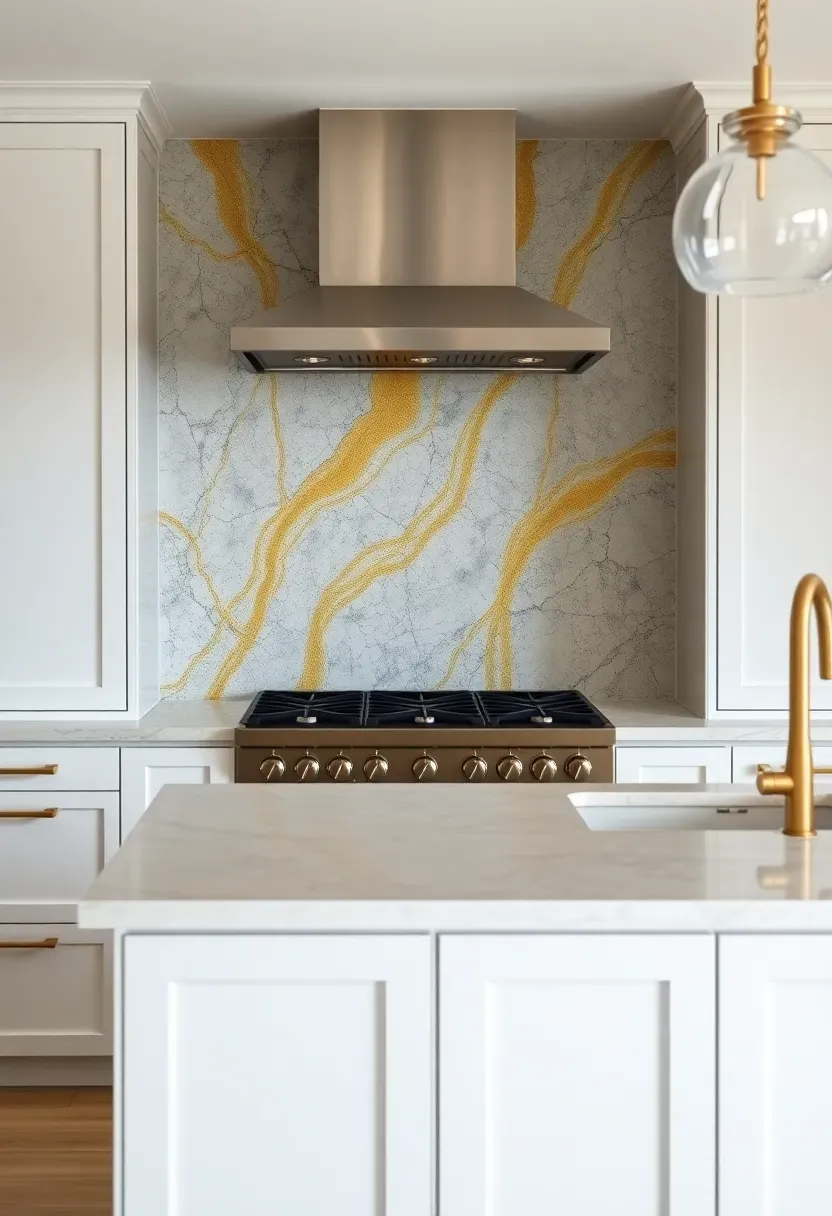
Quartzite — not to be confused with quartz (engineered stone) — is a natural metamorphic rock. The slabs come in dramatic formats: white with gold veining, gray with blue tones, rust and cream in chaotic patterns that look almost like abstract painting.
The waterfall edge means the slab continues down the side of an island or counter run, rather than ending at the edge. When the same stone goes from countertop to full-height backsplash behind the stove, the kitchen reads as one continuous surface rather than separate materials stacked on each other.
The honest case for this option
This is the most expensive option in this list by a significant margin. Stone slab, custom fabrication, careful installation — it adds up fast. But no other material creates the same unified, resolved look. If you're already investing in a full kitchen remodel, the cost difference between good tile and quartzite slab is smaller as a percentage of the total budget than it looks.
Quick FAQ
Is tile behind the stove a requirement, or can I use drywall? Standard drywall is not rated for the heat and moisture levels behind an active cooking range. You need a non-combustible surface — cement board with tile, natural stone, metal, or similar materials. Check your local building code for specific requirements.
Which backsplash material is easiest to clean behind the stove? Polished or glossy surfaces — glass tile, glossy ceramic, polished stone — are the easiest because grease sits on the surface rather than soaking in. Porous materials like travertine, raw terracotta, and unsealed natural stone require the most attention.
Should the backsplash behind the stove match the rest of the kitchen backsplash? It doesn't have to, but there should be a clear visual logic if it doesn't. The stove wall as a distinct material from the rest works when it's clearly a focal-point decision — same style, different format, or a complementary color. Random mismatches just look unplanned.
What height should the backsplash go behind the range hood? Standard practice is countertop to the underside of the upper cabinets, typically 18 inches. If there's no upper cabinet on that wall, run the tile to the underside of the range hood. Full-height floor-to-ceiling tile behind the stove is a legitimate design choice but requires more material and a stronger visual commitment.
Can I install backsplash tile myself behind the stove? Standard subway and ceramic tile is DIY-accessible with basic tools and YouTube instruction. Natural stone, large-format porcelain, and handmade tile (zellige, Talavera) benefit significantly from professional installation — the material costs too much to risk on an uneven set job.
The wall behind your stove is one of the few surfaces in the kitchen that you chose rather than inherited. Even if everything else is fixed — the cabinets, the layout, the countertops — this one area is usually replaceable in a weekend. Start there.
Pinterest cover for 23 Backsplash Behind Stove Ideas for Every Kitchen Style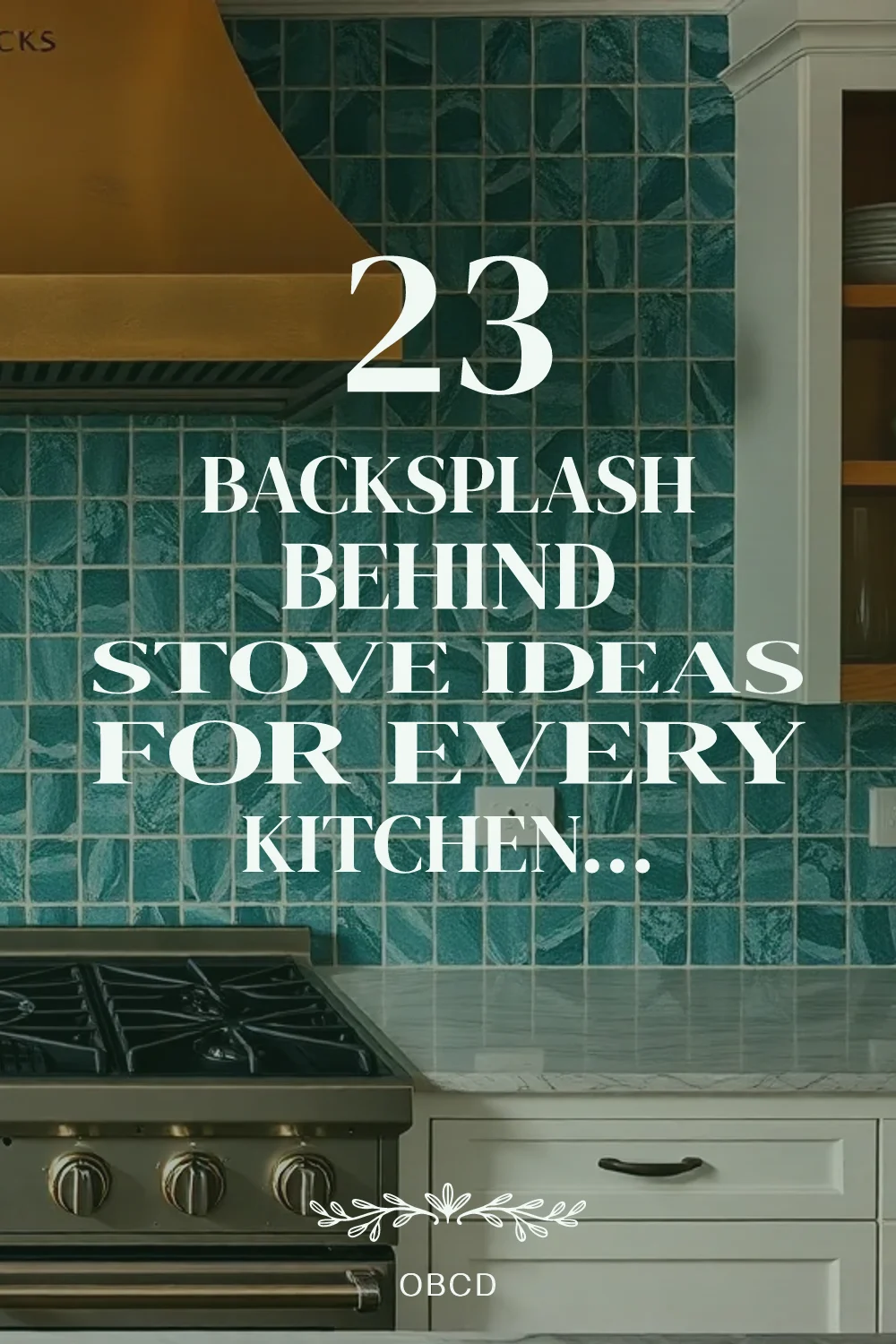
About the author
OBCD
CGI visualization and interior design content. We create detailed 3D renders and curate practical design ideas for every room in your home.