29 Backsplash Ideas for White Cabinets and Quartz Countertops
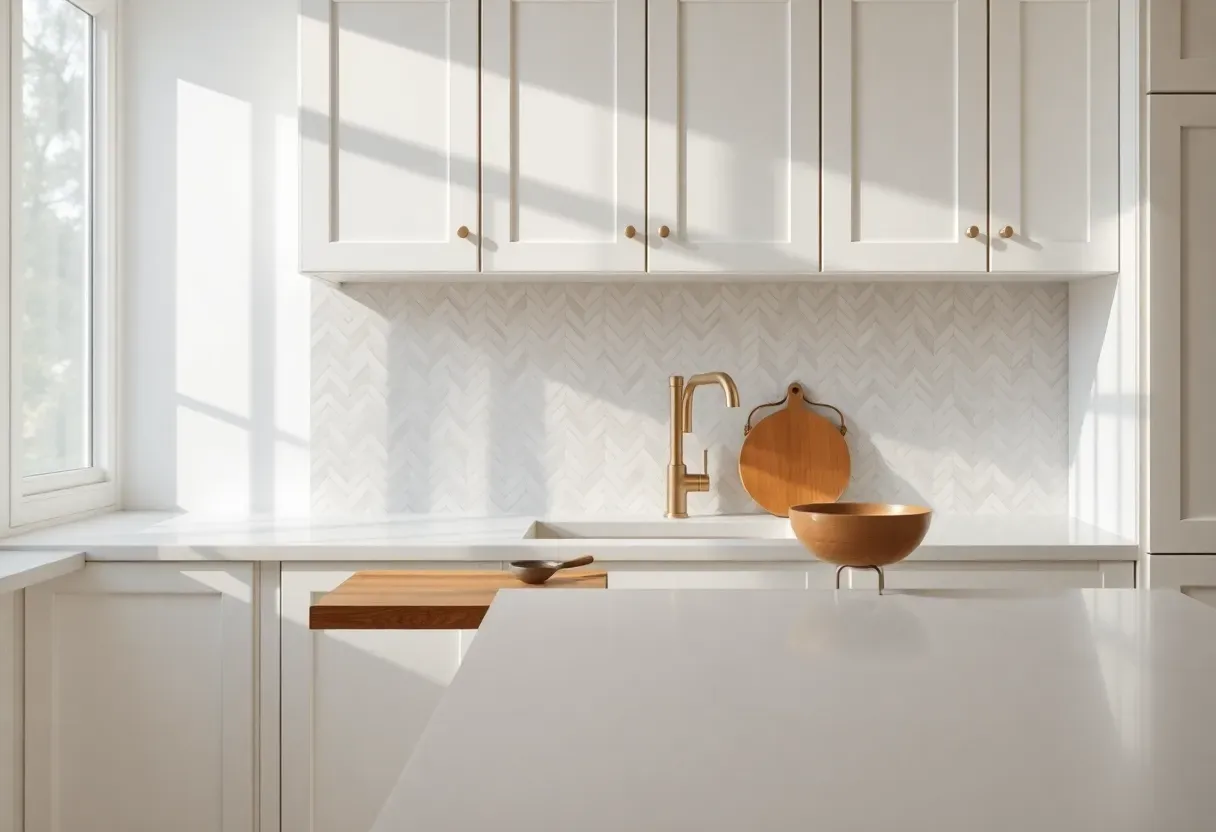
White cabinets and quartz countertops account for something like 40% of kitchen renovations in the US right now. The pairing is popular because it is hard to mess up — both elements stay neutral, reflect light, and work with almost any hardware or fixture finish. But that blank canvas quality also means the backsplash carries enormous weight. It is the one place where you introduce texture, color, movement, or pattern into an otherwise monochrome space. Pick something too safe and the kitchen looks builder-grade. Pick something too wild and it fights the clean backdrop.
These 29 options cover the full range — stone, ceramic, glass, metal, and a few unexpected materials. Each one is specifically chosen to work with the white-on-white foundation.
Table of Contents
- Calacatta Marble Slab
- Herringbone White Subway Tile
- Zellige Tile in Weathered White
- Blue and White Patterned Cement Tile
- Vertical Stacked Gray Subway
- Natural Quartzite Slab
- Scallop Fan Tile in Soft Blue
- Black Hexagonal Mosaic
- Fluted Porcelain Panel
- Tumbled Travertine in Ivory
- Green Glazed Brick Tile
- Polished Nickel Metal Tile
- Large-Format Porcelain with Marble Look
- Terrazzo Slab in Warm Neutrals
- Elongated Picket Tile in Matte White
- Soapstone Slab Backsplash
- Moroccan Fish Scale in Teal
- White Penny Round Mosaic
- Limestone Field Tile with Honed Finish
- Open Shelving with Painted Wall
- Glass Mosaic in Seafoam
- Concrete-Look Porcelain Tile
- Arabesque Lantern Tile in Cream
- Stacked Natural Stone Ledger Panel
- Peel-and-Stick Vinyl for Renters
- Beadboard Paneling
- Reclaimed Brick Veneer
- Mirrored Antique Glass Panel
- Bold Wallpaper Behind Glass
1. Calacatta Marble Slab
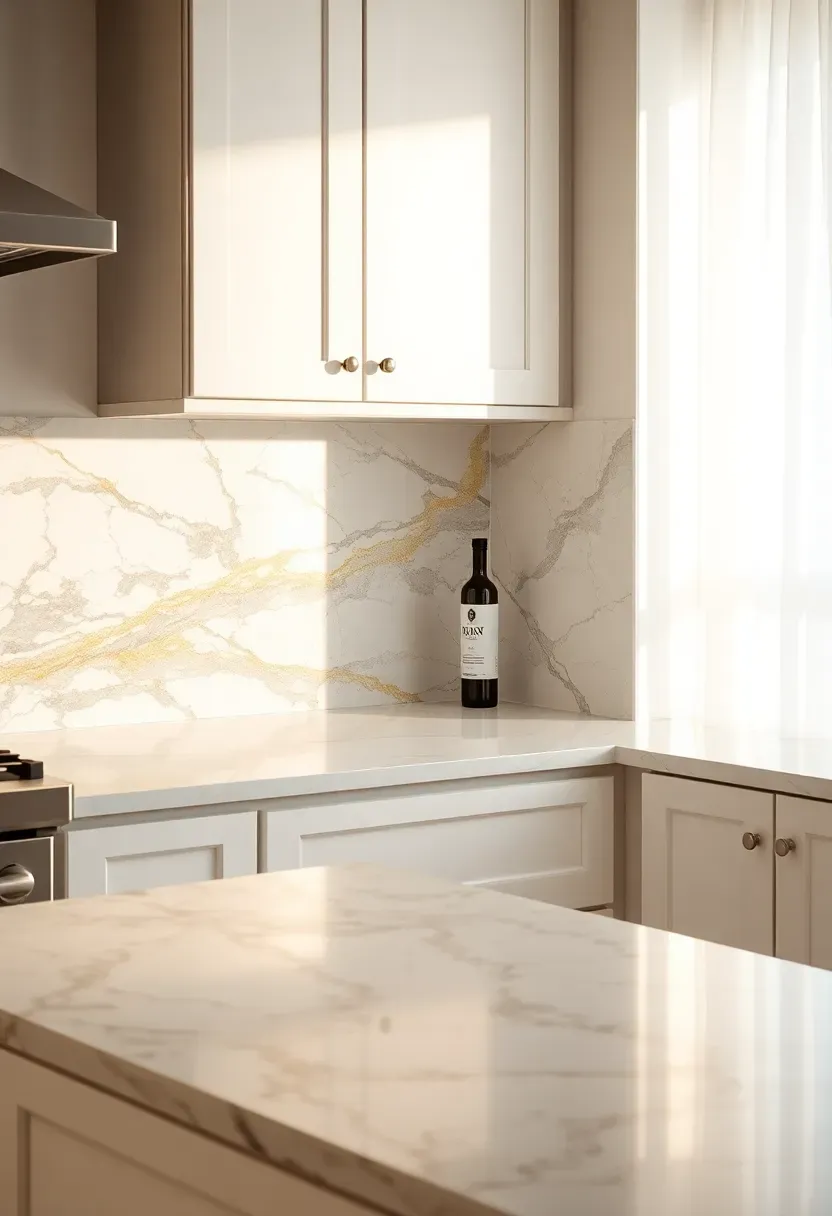
A single slab of Calacatta marble running from countertop to upper cabinets gives you the most dramatic version of a white kitchen backsplash. The bold gray and gold veining does all the visual work — no pattern, no grout lines, just continuous natural stone. Because both cabinets and countertops are already white, the marble veining becomes the only element with real movement in the space. Book-matched slabs, where two pieces are cut from the same block and mirrored, create a symmetrical pattern that looks intentional behind a range.
Tips
- Honed finish shows fewer water spots than polished, which matters near a sink
- Seal every 6-12 months — marble etches from lemon juice and vinegar
- Budget $40-100 per square foot installed, depending on slab quality and your region
We picked a few things that go well with this idea: STICKGOO White Subway Peel and Stick (10-Sheet) (★4.1), StyloVue Glossy White Subway Tile (100-Piece) (★4.4) and Art3d White Subway Peel and Stick (10 Tiles) (★4.2). As an Amazon Associate we earn from qualifying purchases.
2. Herringbone White Subway Tile
Why This Pattern Works Here
The Issue
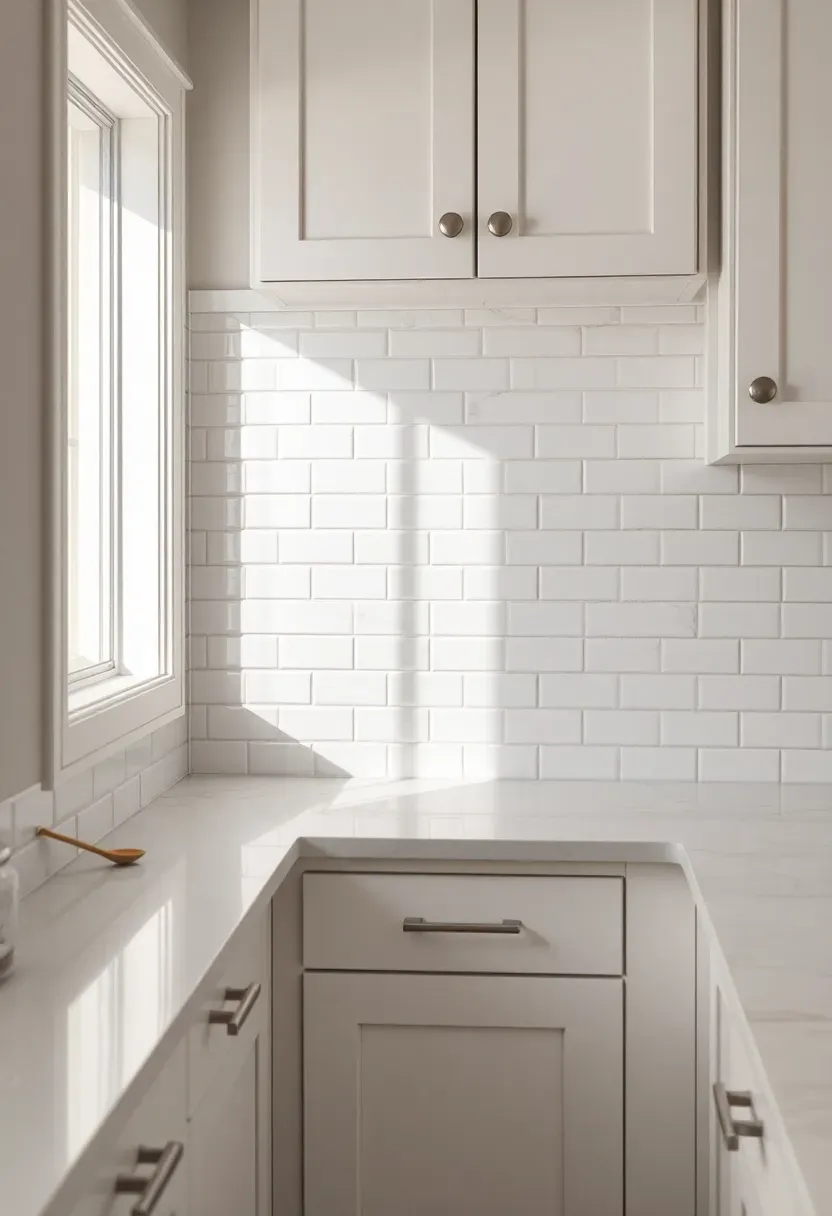
Standard horizontal subway tile in a white kitchen can disappear. White tile on white cabinets with white counters — there is nothing for the eye to grab onto.
The Solution
Herringbone layout takes the same 3x6 or 2x6 subway tile and installs it at alternating 45-degree angles. The V-shaped pattern creates shadow lines and directional movement that read clearly even in an all-white space. The tile itself costs the same; you just pay more for labor since the cuts are more complex and installation takes longer. Expect to add 25-30% to installation cost compared to a standard running bond layout.
Pros and Cons
Pros: Adds depth without introducing color, timeless pattern, uses affordable tile Cons: More expensive to install, requires precise cuts at edges, busier look that may compete with detailed cabinet hardware
We picked a few things that go well with this idea: Vamos Tile Marble Grain Peel and Stick (100-Piece) (★4.4), Marble Peel and Stick Wall Panels (10-Pack) (★3.9) and Art3d White Marble Peel and Stick (10-Sheet) (★4.3). As an Amazon Associate we earn from qualifying purchases.
3. Zellige Tile in Weathered White
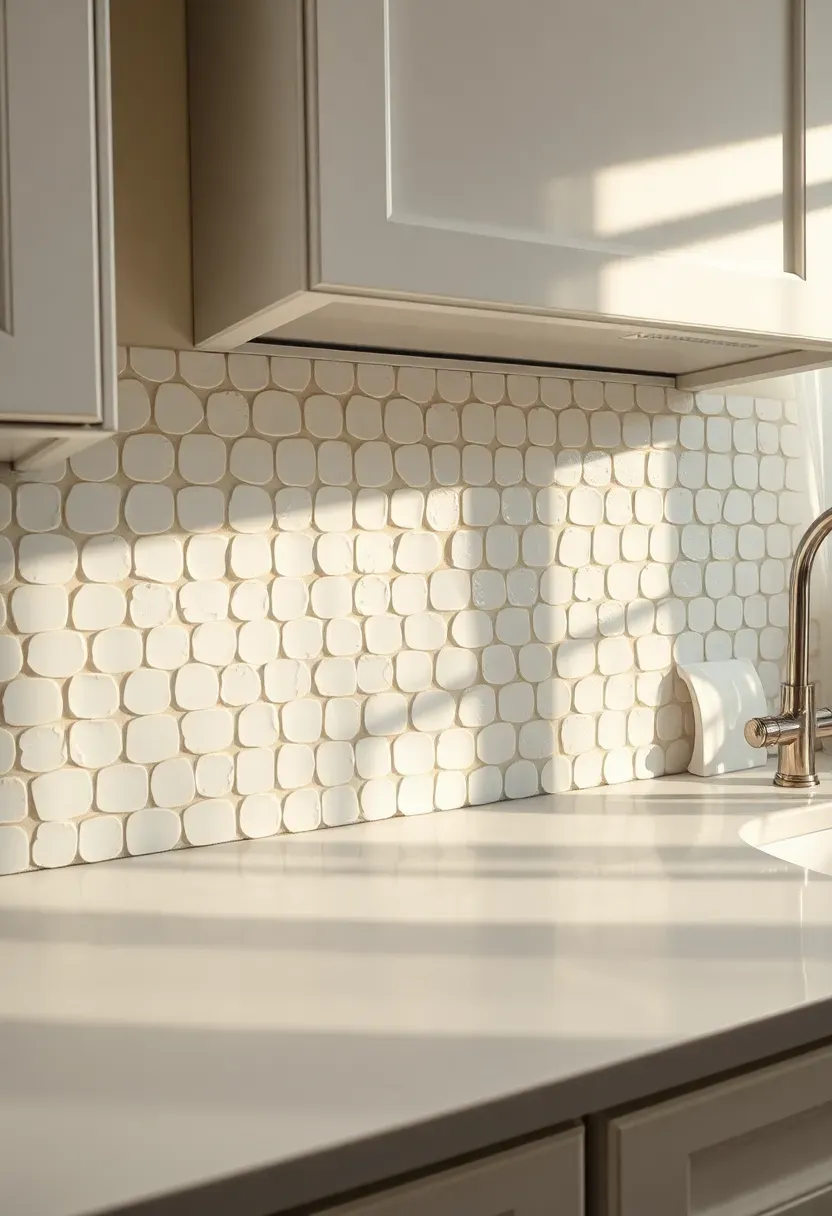
Each zellige tile is hand-cut and individually glazed in Morocco, which means no two tiles are the same shade of white. Some lean warm ivory, others cool gray-white, and the uneven surface catches light at different angles throughout the day. In a white kitchen that risks feeling flat, zellige adds the kind of subtle variation that makes people walk up and touch the wall.
Tips
- Order 20% extra — breakage during cutting is normal and color variation between batches makes reorders risky
- These tiles are thicker than standard ceramic, so your installer needs to account for the extra depth at outlets and switches
- Porous surface requires sealing before grouting and again after installation
We picked a few things that go well with this idea: AQUA-X Clear Grout and Tile Sealer (16 Oz) (★4.3), Miracle Sealants 511 Penetrating Sealer (Pint) (★4.5) and Miracle Sealants Grout Sealer (6 Oz) (★4.2). As an Amazon Associate we earn from qualifying purchases.
4. Blue and White Patterned Cement Tile
How to Add Bold Pattern Without Overwhelm
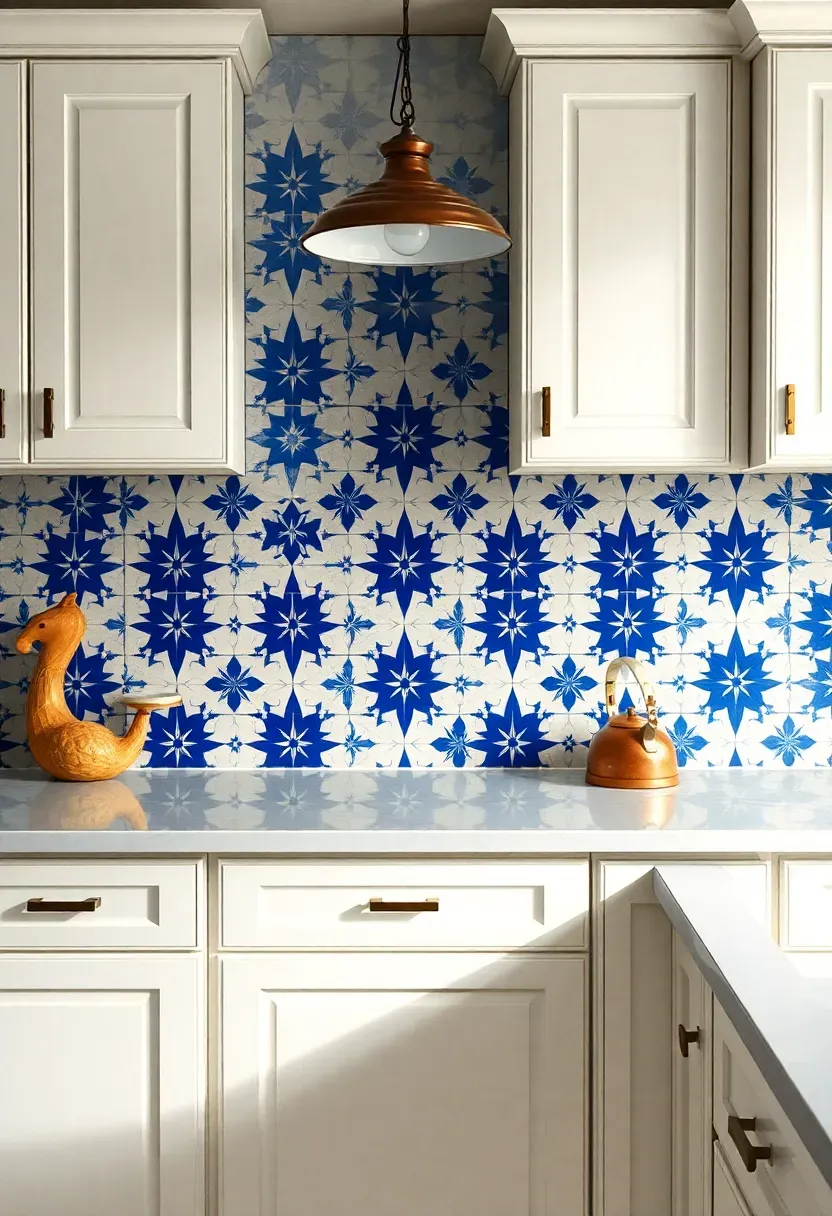
Blue and white cement tile is one of the few patterns that can go big in a white kitchen without making the space feel chaotic. The white in the tile pattern connects to the cabinets and counters, while the blue introduces an actual color. Mediterranean star patterns and Portuguese azulejo-inspired designs work best because they have built-in symmetry that reads as orderly rather than random.
Step 1: Pick the Right Scale
8x8 inch tiles show enough pattern detail at backsplash height. Smaller formats turn into visual noise from across the room.
Step 2: Limit the Coverage
Run the patterned tile only in the main backsplash area — behind the range and sink. Wrap corners and side walls in a coordinating solid blue or white field tile to keep costs down and avoid pattern fatigue.
Step 3: Match the Blue
Bring a cabinet door and countertop sample to the tile showroom. Some blues pull purple under warm kitchen lighting.
Watch out
Cement tile needs sealing every 6-12 months. It stains from oil and red wine if left unsealed.
Recommended
Items for this idea
5. Vertical Stacked Gray Subway
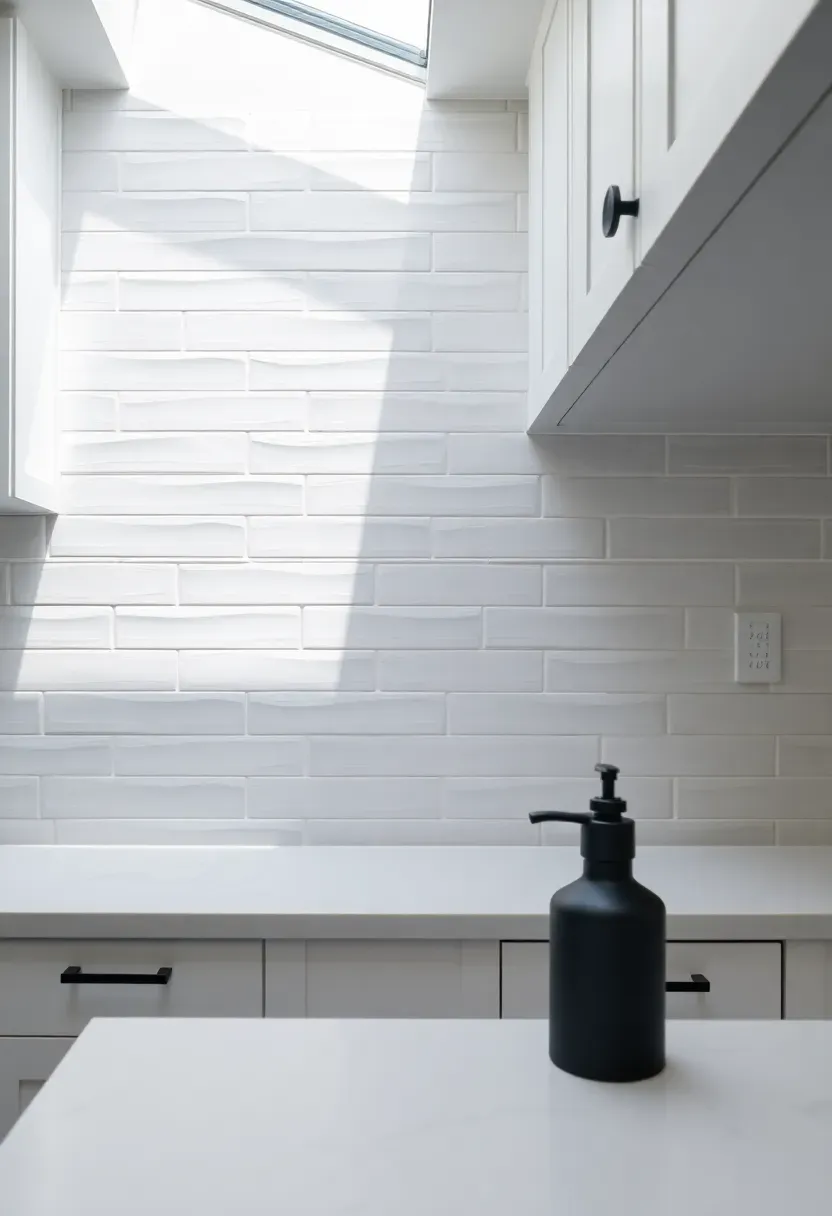
A light gray subway tile installed in a vertical stack bond adds two things to a white kitchen: subtle color contrast and strong linear rhythm. The vertical lines draw the eye upward and make standard 8-foot ceilings feel taller. Gray against white reads as intentional and modern rather than mismatched. Stick to a light gray — think 10-15% gray — so the contrast is gentle.
Tips
- Rectified tile is mandatory for stack bond layouts since uneven edges expose every flaw
- Match the grout to the tile color for a seamless look, or go slightly darker to define each tile
- Matte finish on gray tile avoids the glossy-cheap look that plagues some ceramic
6. Natural Quartzite Slab
Quartzite vs. Quartz — They Are Not the Same
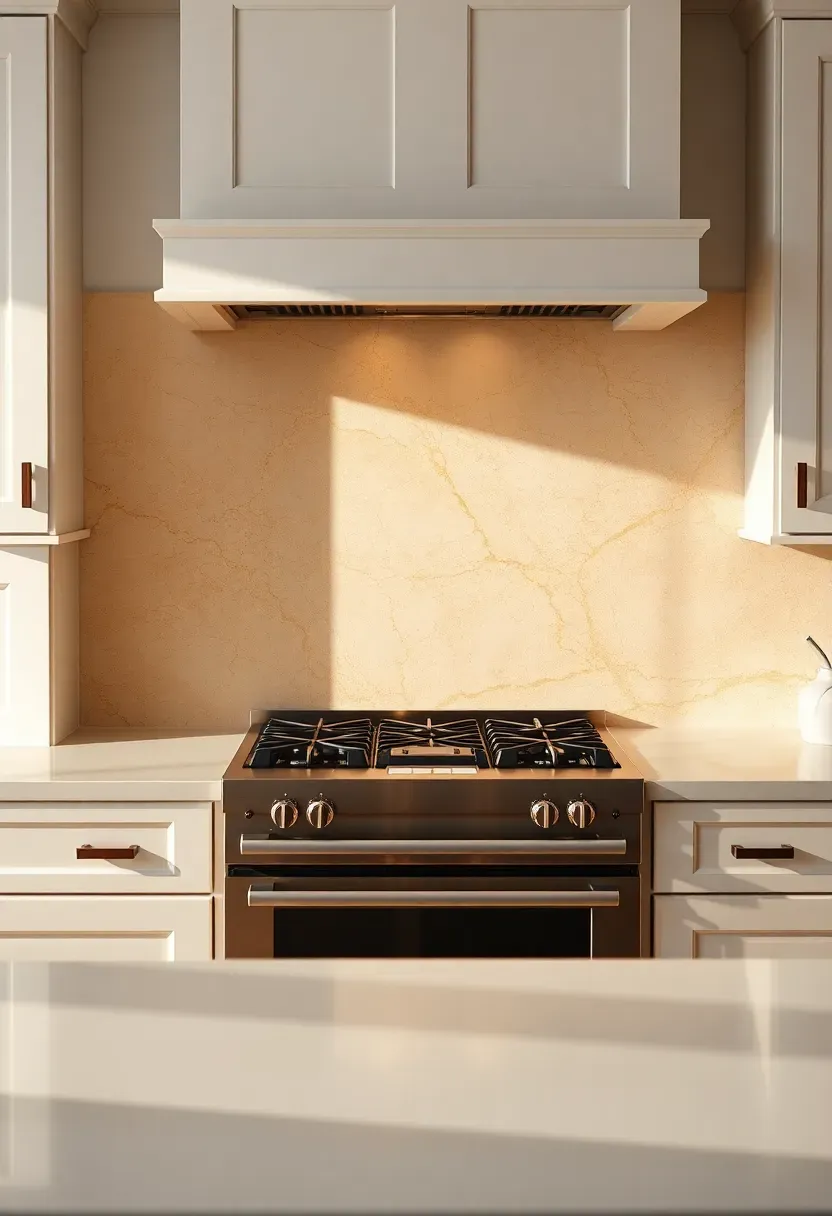
Quartz countertops are engineered. Quartzite is a natural stone, harder than granite, with veining patterns similar to marble. Using a quartzite slab as your backsplash when you already have quartz counters creates an interesting material conversation — the engineered surface below, the natural one above.
Why Quartzite for This Kitchen
Taj Mahal quartzite has warm gold and brown veining on a white base. White Macaubas has gray and blue movement. Both bring organic variation to an otherwise controlled palette. Because quartzite resists heat and etching better than marble, it holds up behind the range without the maintenance anxiety.
Choose quartzite if
- You want natural stone drama without marble's fragility
- Your quartz counters have minimal veining and you want movement on the wall
- Budget allows $50-120 per square foot installed
Recommended
Items for this idea
7. Scallop Fan Tile in Soft Blue
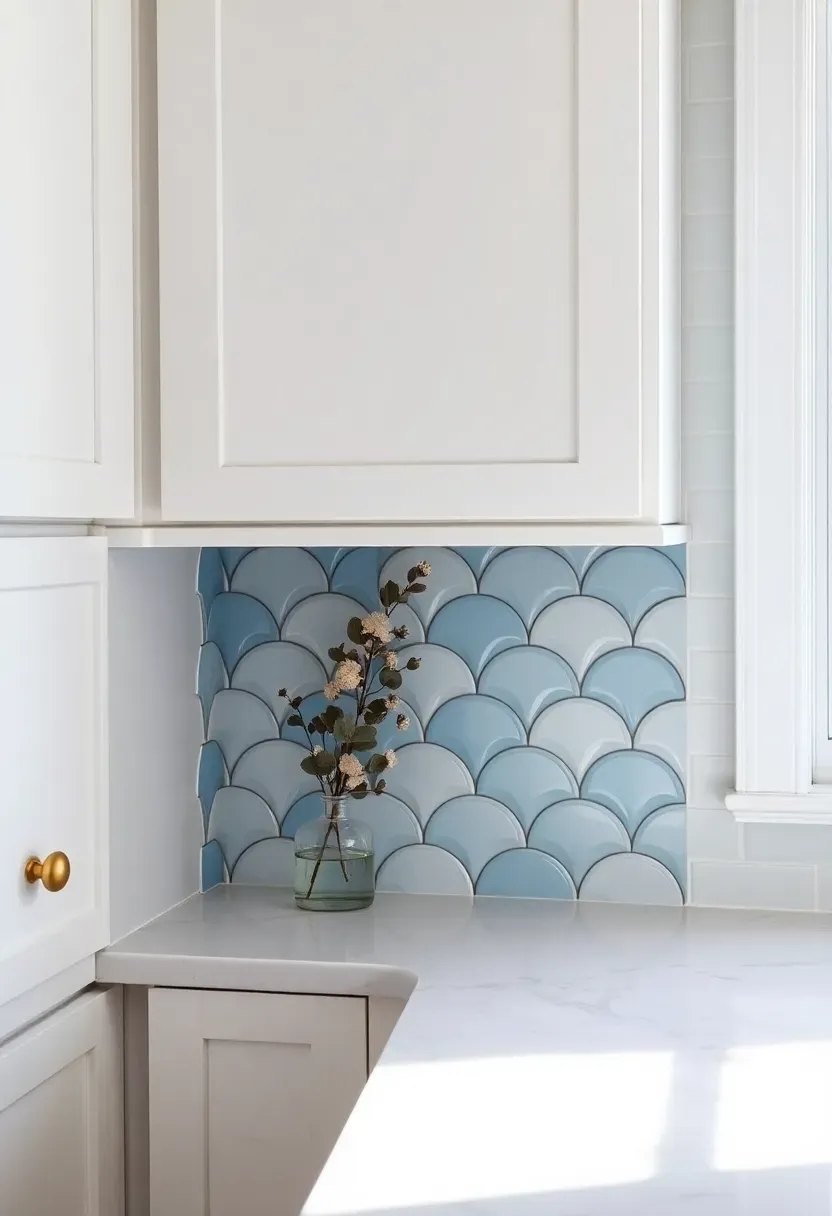
Scallop tiles — also called fan tiles or fish scale tiles — have a curved edge that creates an overlapping pattern no straight-cut tile can replicate. In soft blue, they bring a coastal quality to a white kitchen without resorting to nautical cliches. The repeating arcs generate shadow lines that shift as overhead lighting moves across them during the day. Each scallop is about 3-4 inches across, so the pattern reads clearly at arm's length but blurs into a pleasant texture from across the room.
Tips
- Glossy glaze in light blue maximizes the reflective quality of the curved surface
- White grout lets the shape do the talking; colored grout adds more contrast but can look busy
- These tiles require more cuts at edges and corners than rectangular formats — budget for extra labor
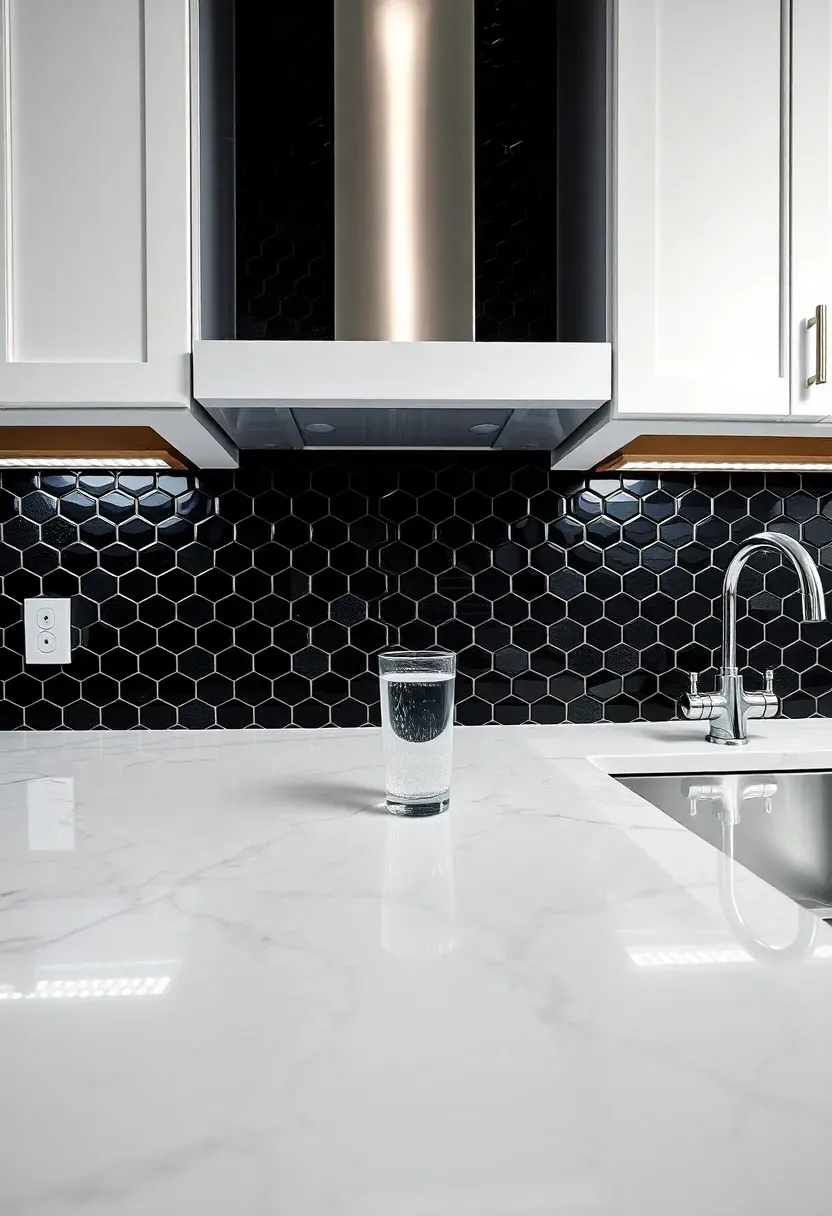
8. Black Hexagonal Mosaic
The Case for Going Dark
The Problem
All-white kitchens can feel washed out. Every surface blends together under bright overhead lighting and nothing anchors the room.
The Solution
A black hexagonal mosaic backsplash provides the sharpest possible contrast against white cabinets and quartz. The hexagonal shape softens the contrast slightly compared to square or rectangular formats — the geometry feels more organic. 2-inch hexes in matte black porcelain with medium gray grout give you the best balance between bold and livable. The dark field makes under-cabinet task lighting essential, but that lighting creates beautiful highlight effects on the faceted tile surface.
Pros and Cons
Pros: High visual impact, inexpensive tile ($4-8/sq ft), hides stains and splatter Cons: Shows dust and water spots on matte black, can make small kitchens feel closed in, requires excellent task lighting
Recommended
Items for this idea
9. Fluted Porcelain Panel
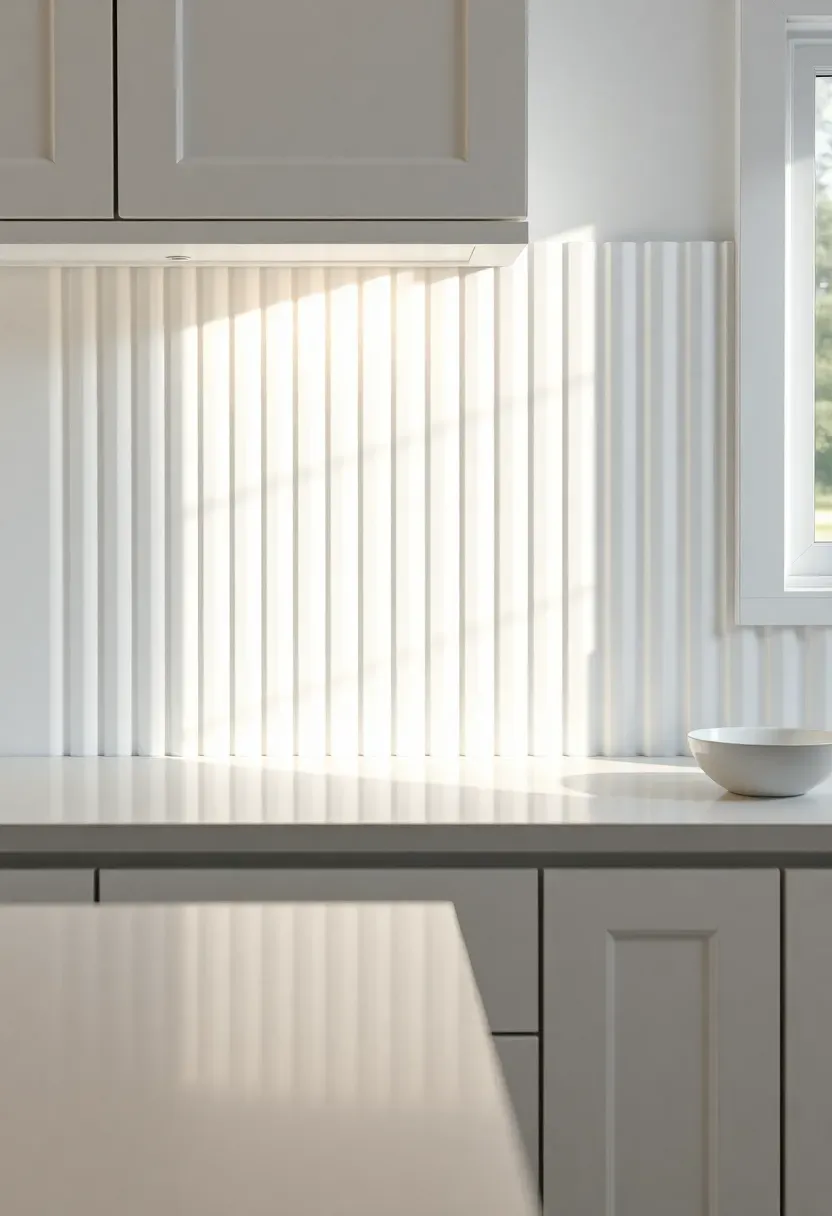
Fluted or reeded porcelain panels have vertical ridges molded into the surface. These ridges catch light and create parallel shadow lines that add three-dimensional depth to a flat wall. In a white kitchen, this texture is everything — it is the difference between a wall that feels blank and one that feels designed. Large-format fluted panels (typically 24x48 inches) minimize grout lines and cover the backsplash in two or three pieces.
Tips
- LED strip lighting under upper cabinets makes the ridges pop — without directional light the texture goes flat
- Porcelain is impervious to water and stains, making this one of the lowest-maintenance options
- Fluted panels cost $12-25 per square foot; installation requires large-format tile experience
10. Tumbled Travertine in Ivory
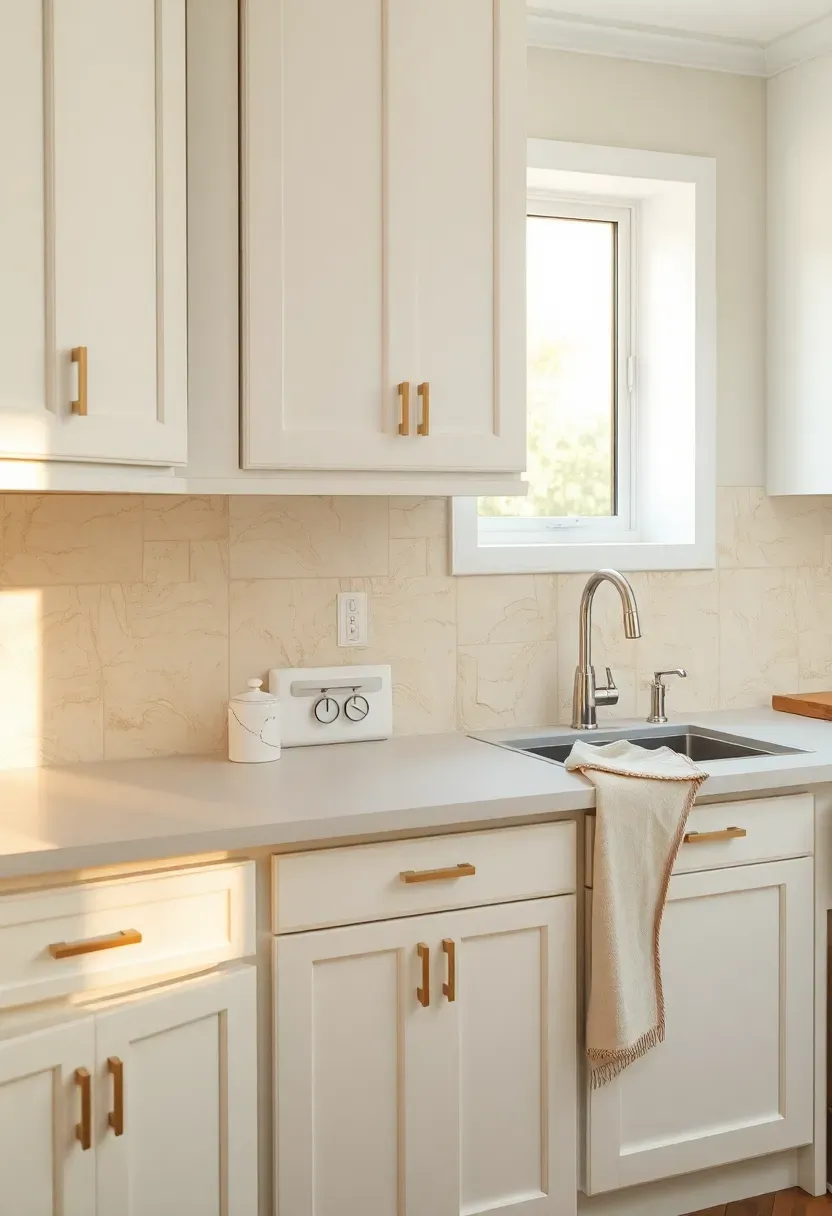
Travertine has natural pits and a soft, worn surface that immediately adds age and warmth to a new kitchen. The ivory color sits close enough to white cabinets to feel cohesive but has enough yellow and tan variation to register as a separate material. Tumbled finish emphasizes the stone's rough texture — it looks like it has been there for decades even when freshly installed.
Tips
- Fill the natural pits with grout or leave them open for more texture — filled is easier to clean
- Seal travertine with an impregnating sealer before use; the stone is porous and stains from cooking oil
- Running bond layout (offset like brickwork) is the classic pattern for travertine; avoid stack bond which looks too modern for this material
Recommended
Items for this idea
11. Green Glazed Brick Tile
From Neutral to Notable
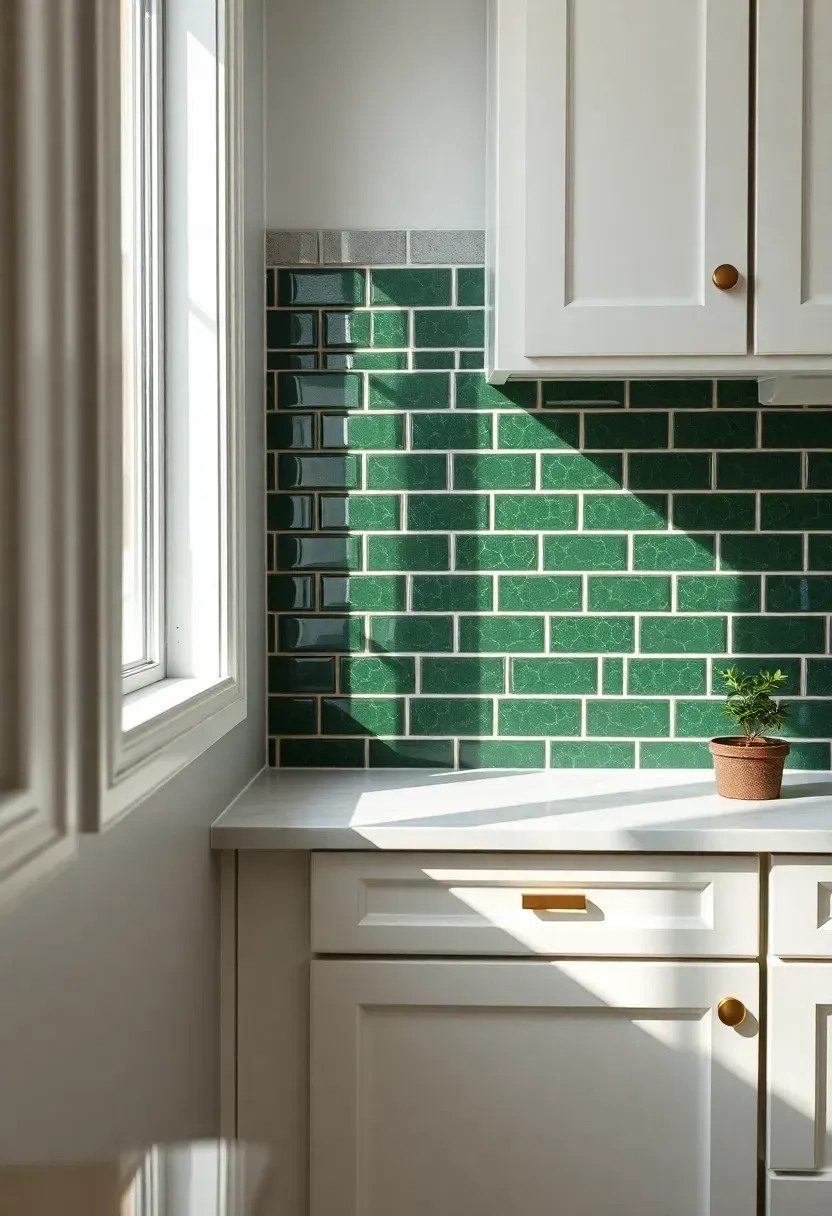
Forest green, hunter green, or deep sage glazed brick tiles are the fastest way to give a white kitchen an actual personality. The brick format (roughly 2.5x8 inches) has a familiar, approachable shape. The green glaze adds depth — especially glazes with a crackle finish, which develop fine hairline patterns that catch light and give each tile a handmade quality.
Step 1: Choose Your Green
Forest green reads traditional and pairs with brass hardware. Sage green leans contemporary and works with matte black or brushed nickel. Hunter green sits between the two.
Step 2: Select the Glaze
Glossy crackle glaze has the most visual interest. Matte glaze is subtler. Both clean easily; the crackle is cosmetic only and does not trap dirt.
Step 3: Plan the Layout
Running bond is standard. Stack bond modernizes the look. Either works with white cabinets.
Watch out
Green tile commits the kitchen to a color. Changing hardware is easy; removing tile is not. Live with a large sample taped to the wall for at least a week before ordering.
12. Polished Nickel Metal Tile
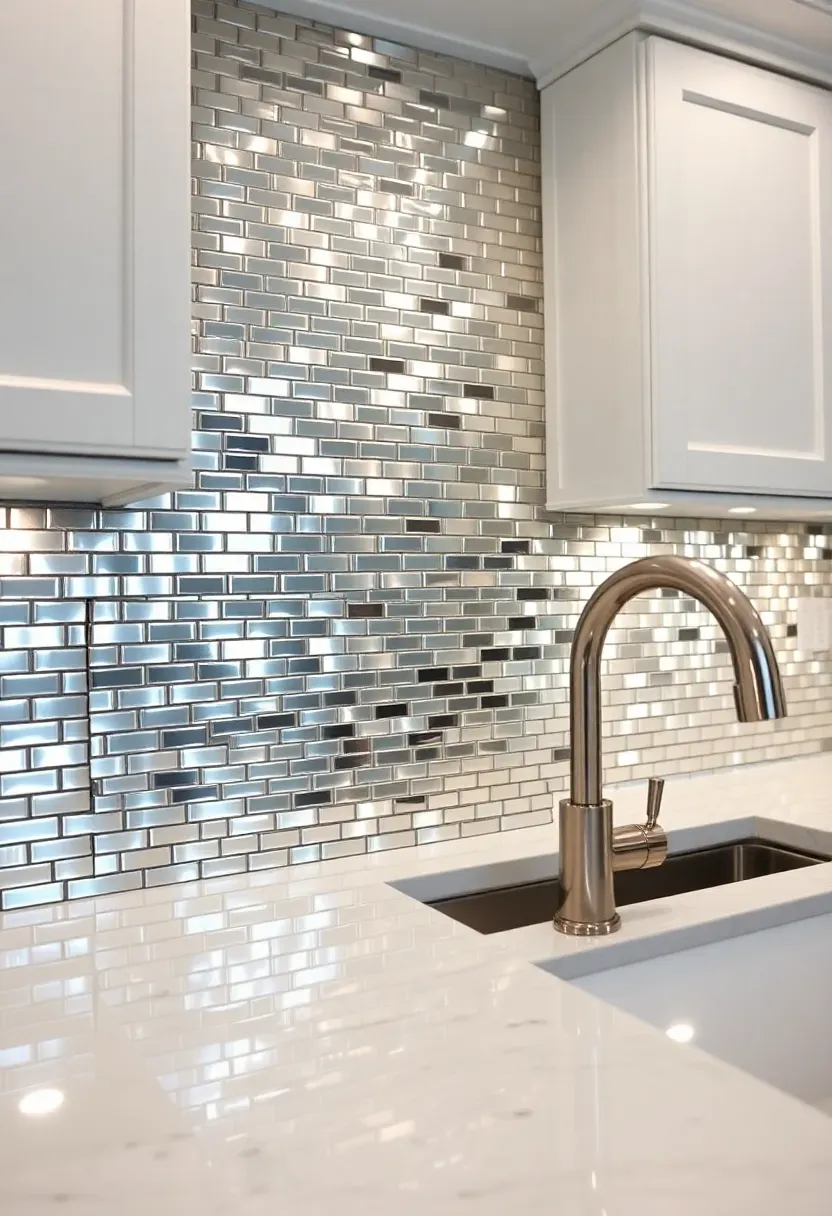
Metal tile backsplashes were trendy in the early 2000s and then disappeared. They are coming back, but in more refined formats — small 1x1 or 1x2 inch polished nickel mosaics rather than the stamped stainless steel panels that looked commercial. Nickel has a warm silver tone that complements both cool and warm white quartz. The reflective surface bounces light around the kitchen and visually expands the space.
Tips
- Metal tiles dent if hit hard, so avoid placement behind areas where you swing cabinet doors open
- Pair with polished nickel faucet and hardware for cohesion
- Use a neutral grout that matches the metal tone — white grout against silver tile creates too much contrast
Recommended
Items for this idea
13. Large-Format Porcelain with Marble Look
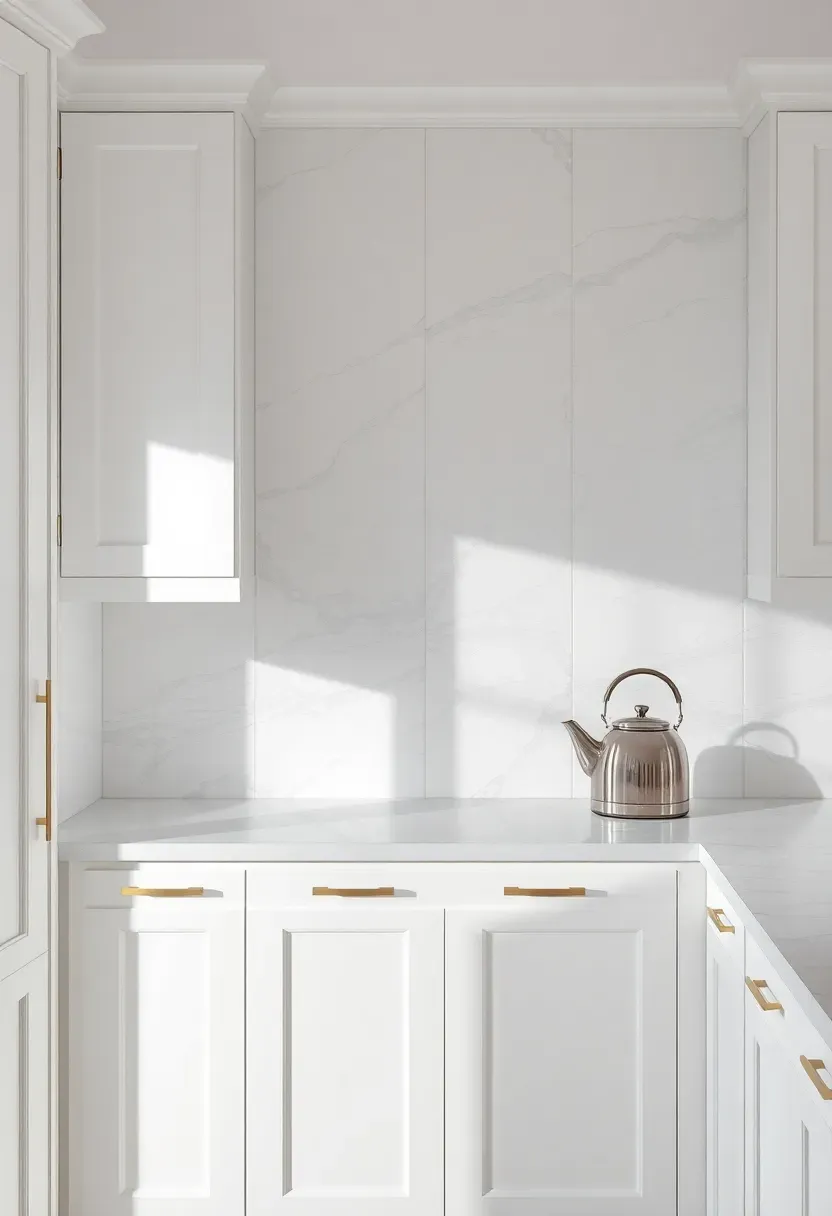
If you want the look of a marble slab backsplash at a third of the cost, large-format porcelain tiles printed with marble veining get surprisingly close. The technology has improved enough that the veining looks dimensional rather than flat, especially in tiles 24x48 inches or larger. Fewer grout lines than standard tile means the pattern reads as continuous stone from across the room.
Tips
- Book-match the veining by working with your installer to align the pattern across adjacent tiles
- Rectified edges are essential at this size for tight grout joints
- Porcelain is non-porous — no sealing, no etching, no staining. Zero maintenance beyond normal cleaning
14. Terrazzo Slab in Warm Neutrals
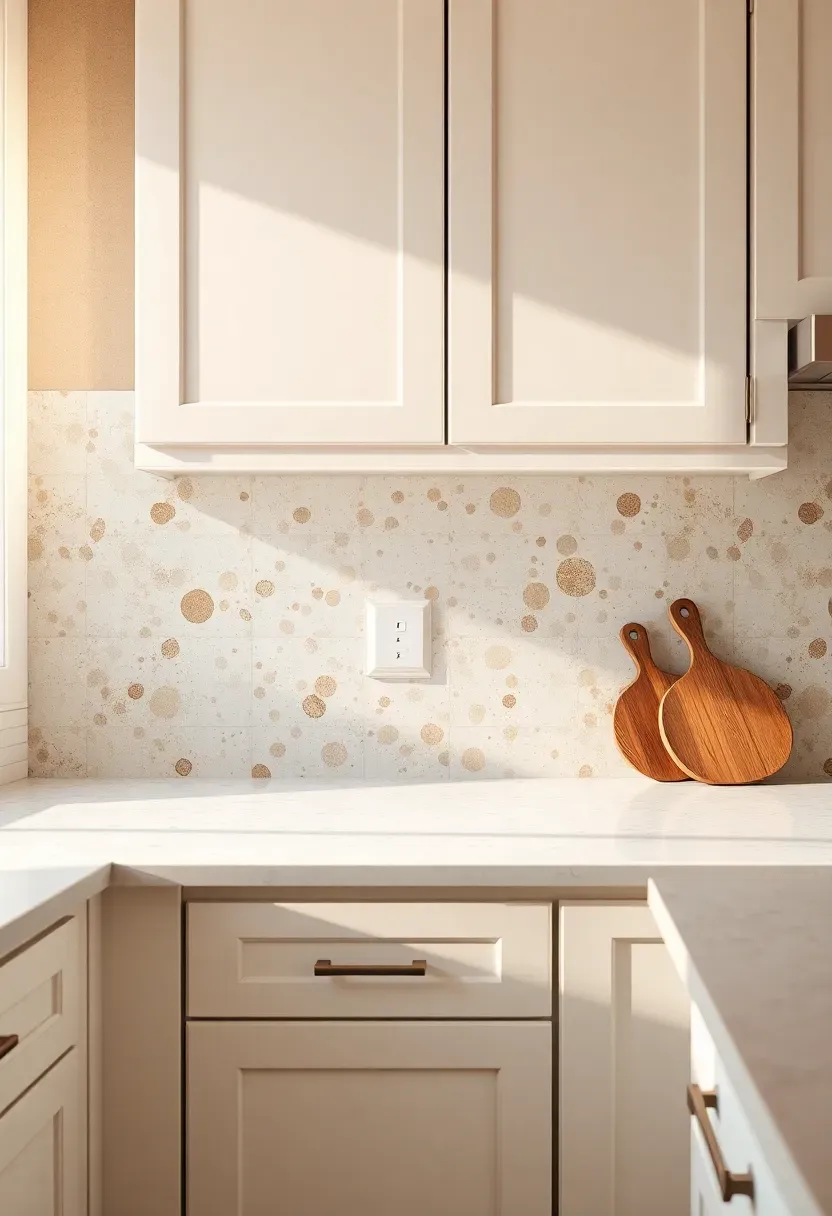
Terrazzo — concrete embedded with chips of marble, quartz, and glass — has moved from commercial flooring to residential surfaces. As a backsplash slab, terrazzo with warm neutral chips (cream, tan, blush, soft gray) adds speckled interest to a white kitchen without introducing a dominant color. The random chip pattern means no two installations look the same.
Tips
- Precast terrazzo slabs are easier to install than poured-in-place and give a smoother finish
- Choose a white or light gray cement base to keep the backsplash bright against white cabinets
- Seal terrazzo like any concrete surface — semi-annual reapplication keeps it stain-free
Recommended
Items for this idea
15. Elongated Picket Tile in Matte White
Picket tiles have pointed ends that create a zigzag pattern when installed vertically. The elongated version — about 3x10 inches — amplifies this effect and produces a pattern with more movement than subway tile but less busyness than mosaic. In matte white, the shape creates subtle shadow lines that keep a white kitchen from looking flat.
Tips
- Vertical installation creates an arrow pattern that draws the eye up
- Horizontal installation produces a more traditional woven look
- Matte finish prevents glare from under-cabinet lights bouncing off the pointed surfaces
16. Soapstone Slab Backsplash
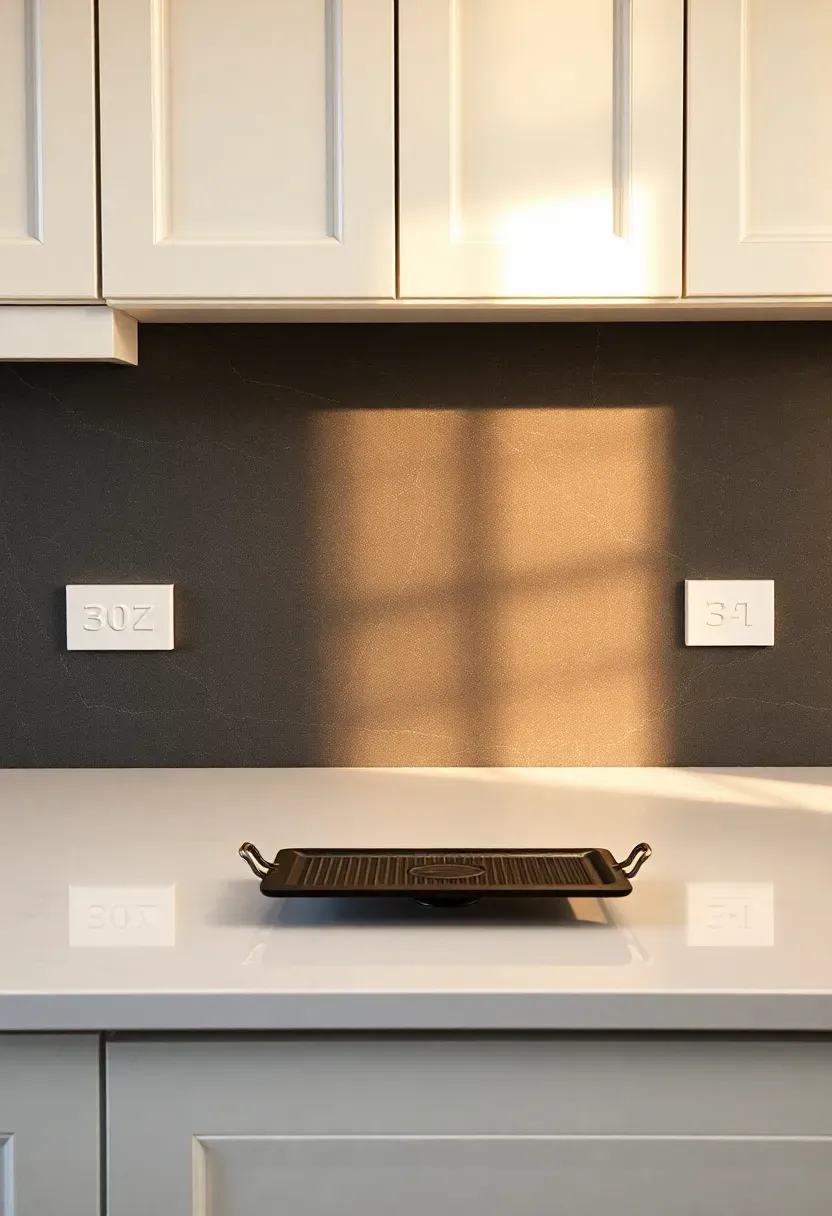
Soapstone is dense, non-porous, and naturally resistant to heat and stains — ideal for a backsplash behind the range. Its dark charcoal-gray color provides strong contrast against white cabinets, and its chalky, matte surface feels distinctly different from the engineered smoothness of quartz. Over time, soapstone develops a patina that darkens the stone further. You can accelerate this with mineral oil or let it happen naturally.
Tips
- Soapstone scratches easily but scratches can be sanded out with fine-grit sandpaper
- No sealing required — the stone is naturally non-porous
- Runs $50-100 per square foot installed; limited color range (mostly grays and charcoals)
Recommended
Items for this idea
17. Moroccan Fish Scale in Teal
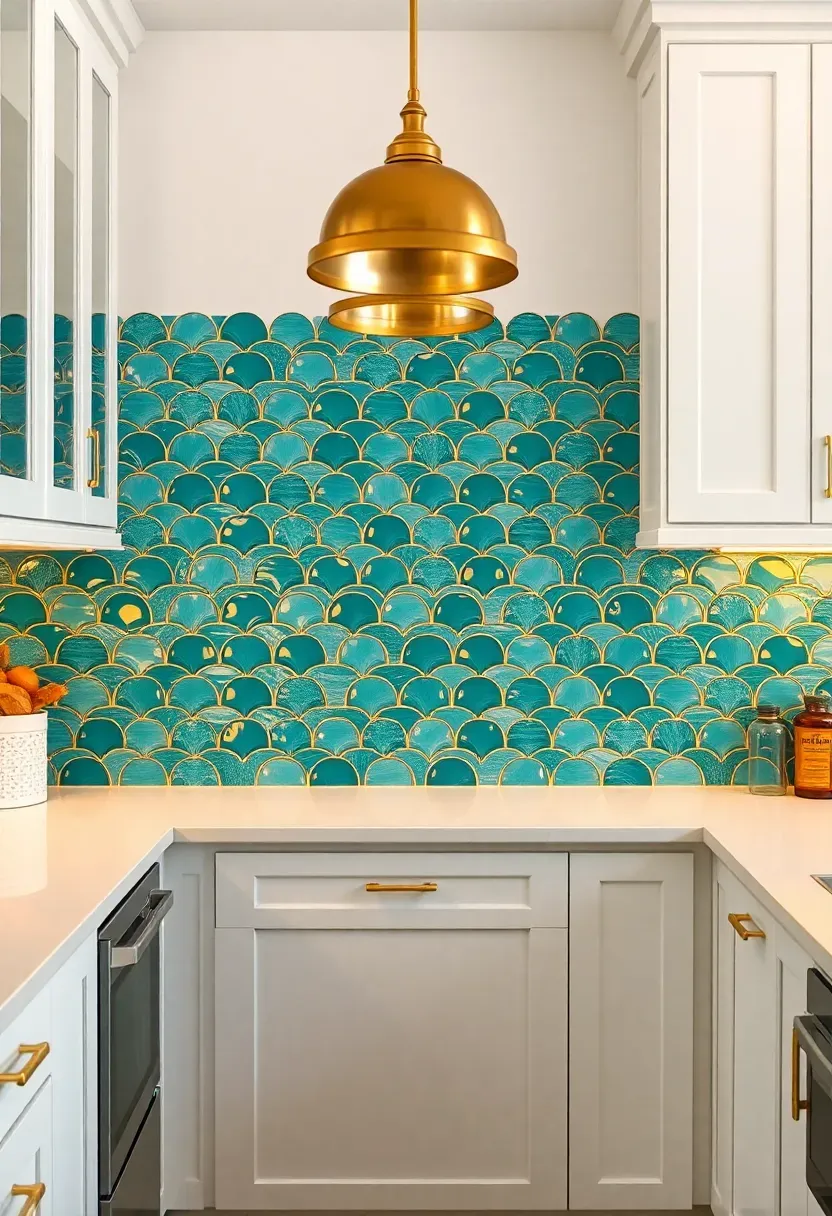
Fish scale tile in teal is a statement. Against white cabinets and quartz, the saturated blue-green becomes the undeniable focal point of the kitchen. The overlapping curved shape of each tile creates a rhythmic pattern that references Moroccan architecture. Glossy glaze on teal fish scale tiles reflects light in a way that makes the color shift between blue and green depending on the time of day.
Tips
- Limit teal fish scale to one wall or a defined zone — covering every surface in a bold color overwhelms
- Pair with warm metallic hardware (brass, gold) to complement the teal's warm undertones
- White grout defines each scale shape clearly; teal-matched grout creates a more solid field effect
18. White Penny Round Mosaic
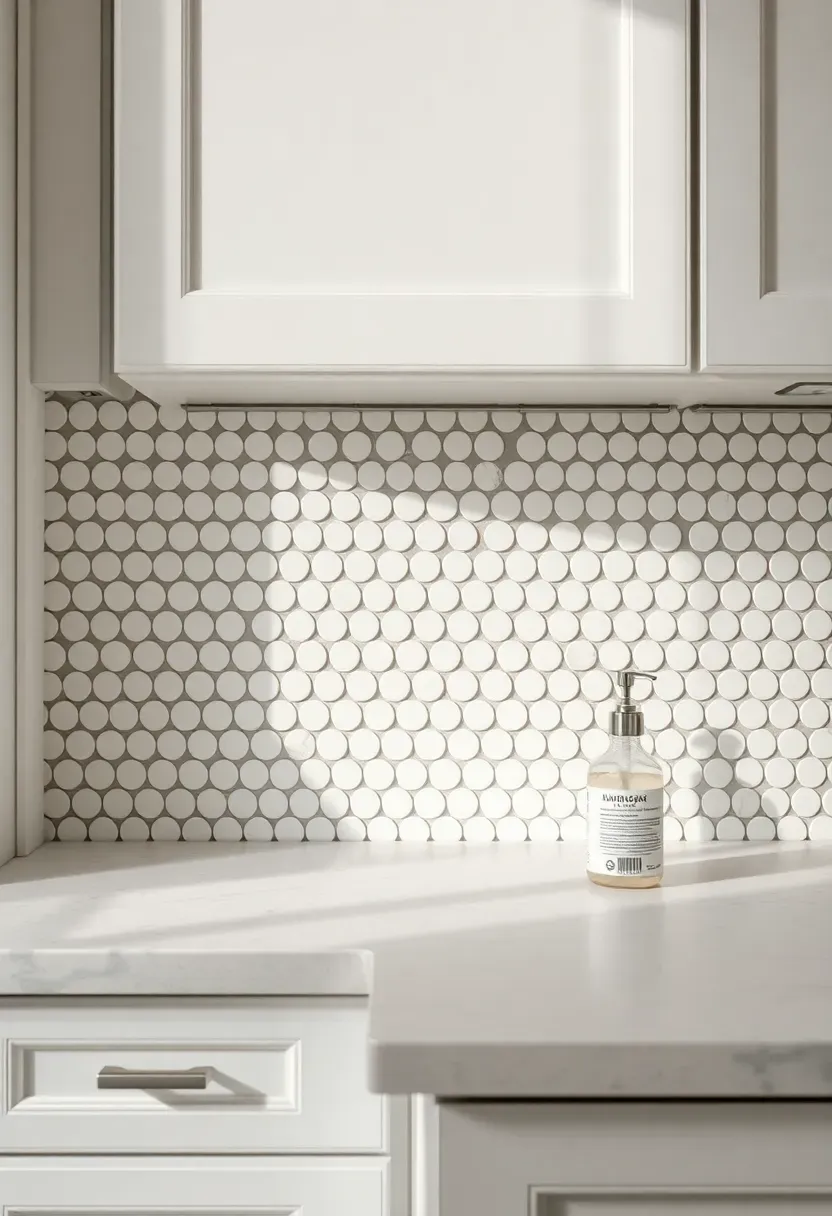
Small round tiles create a texture-forward backsplash that reads as almost fabric-like from a distance. In a white kitchen, white penny rounds maintain the monochrome palette while adding tactile interest through the curved surface and visible grout lines. The circles soften a kitchen full of straight lines and right angles.
Tips
- Gray grout is essential — white grout on white penny rounds produces no visible pattern
- Porcelain penny rounds are denser and more stain-resistant than ceramic
- Sheet-mounted mosaics speed installation, but check for alignment between sheets before grouting
Recommended
Items for this idea
19. Limestone Field Tile with Honed Finish
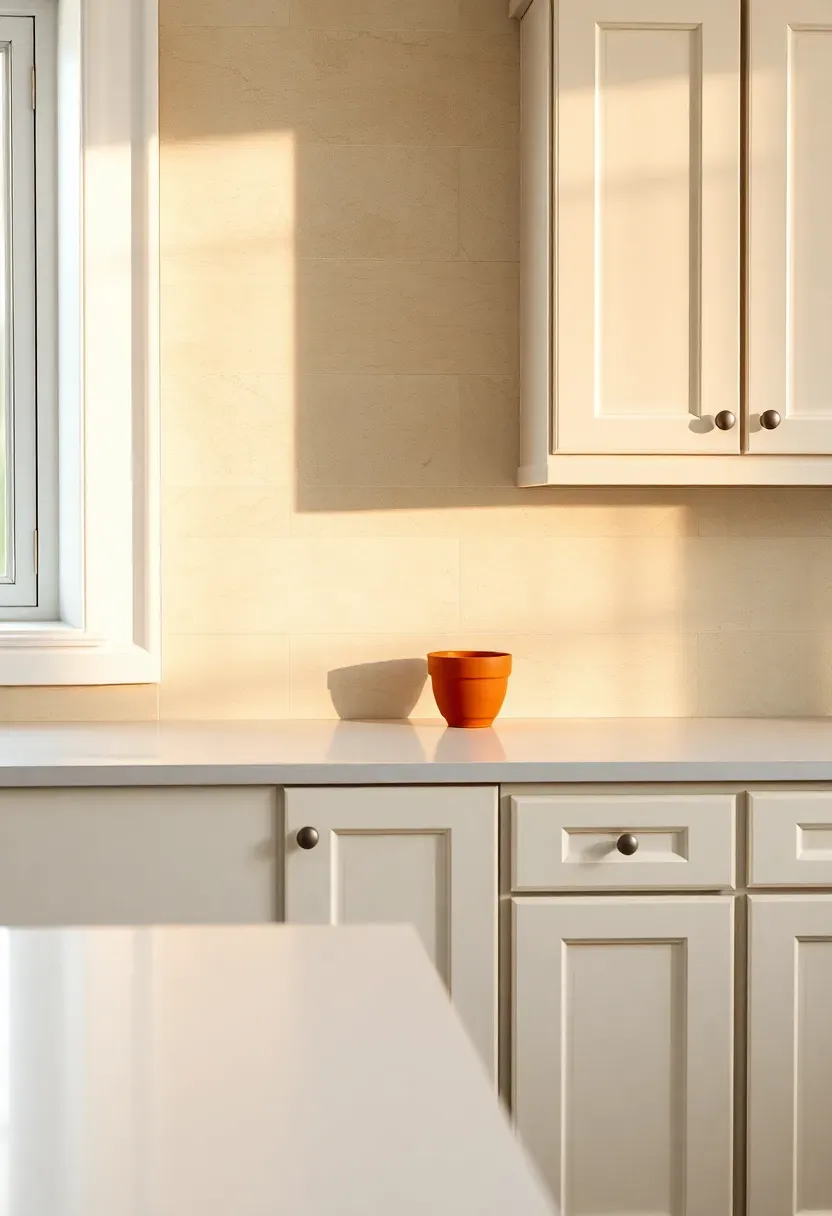
Limestone has a warmth that porcelain and ceramic struggle to replicate. The honed (matte, smooth) finish reveals the stone's subtle color shifts and occasional fossil inclusions. In a 4x4 or 6x6 field tile format, limestone brings a quiet, European farmhouse quality to a white kitchen without the heaviness of a full slab.
Tips
- Limestone is softer than marble and requires sealing at least annually
- Avoid polished limestone in kitchens — it shows every water spot and etches from acidic cleaners
- Jerusalem Gold and Crema Marfil are two popular choices for warm white kitchens
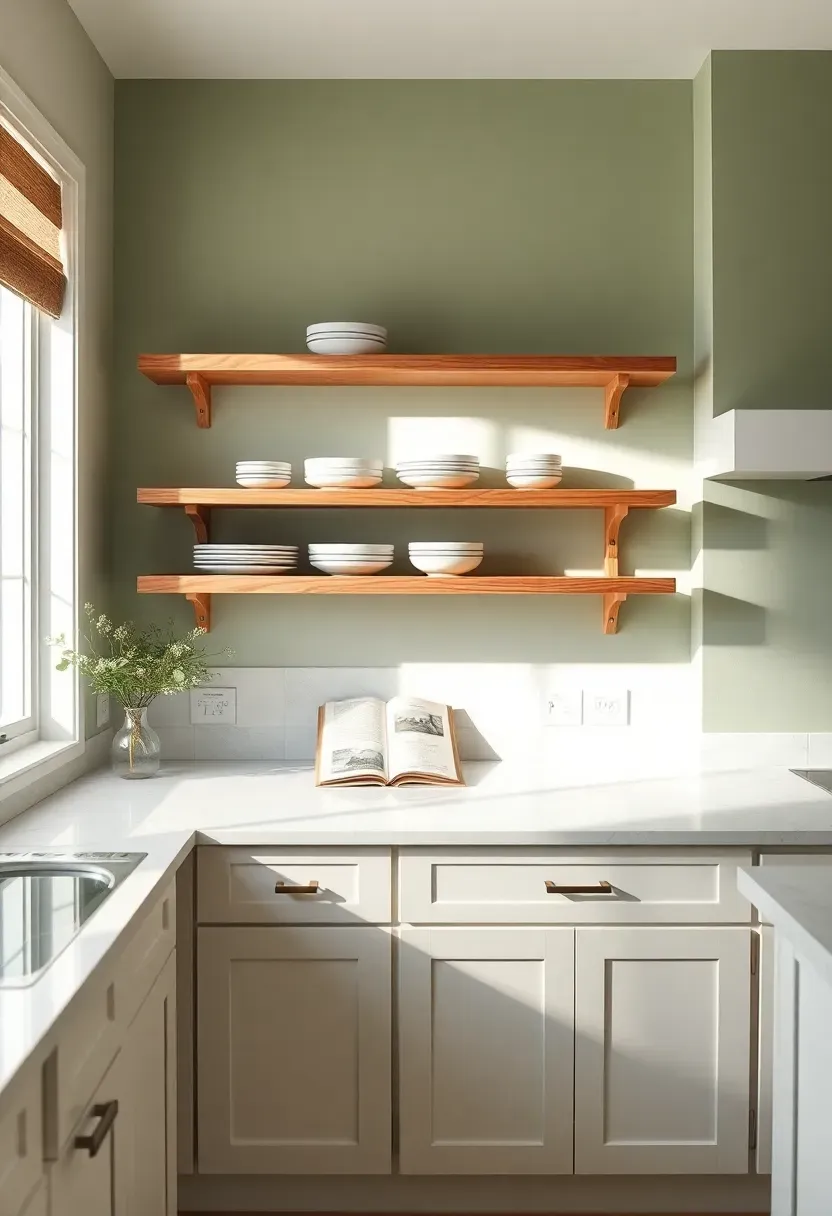
20. Open Shelving with Painted Wall
Skipping Tile Entirely
The Problem
Tile is permanent, expensive to install, and expensive to remove when you change your mind. For renters or anyone who redecorates often, committing to a tile backsplash feels risky.
The Solution
Remove the upper cabinets (or skip them in a remodel), install floating shelves, and paint the wall a contrasting color. The painted wall becomes the backsplash. Sage green, navy, or charcoal gray against white lower cabinets and quartz counters creates the same contrast that tile would — at a fraction of the cost and with full reversibility. Use a semi-gloss or satin paint finish for easy cleaning in the splash zone.
Pros and Cons
Pros: Cheapest option, fully reversible, easy to change colors seasonally Cons: Less water-resistant than tile, requires more frequent touch-ups behind the stove, open shelving means everything is on display
Recommended
Items for this idea
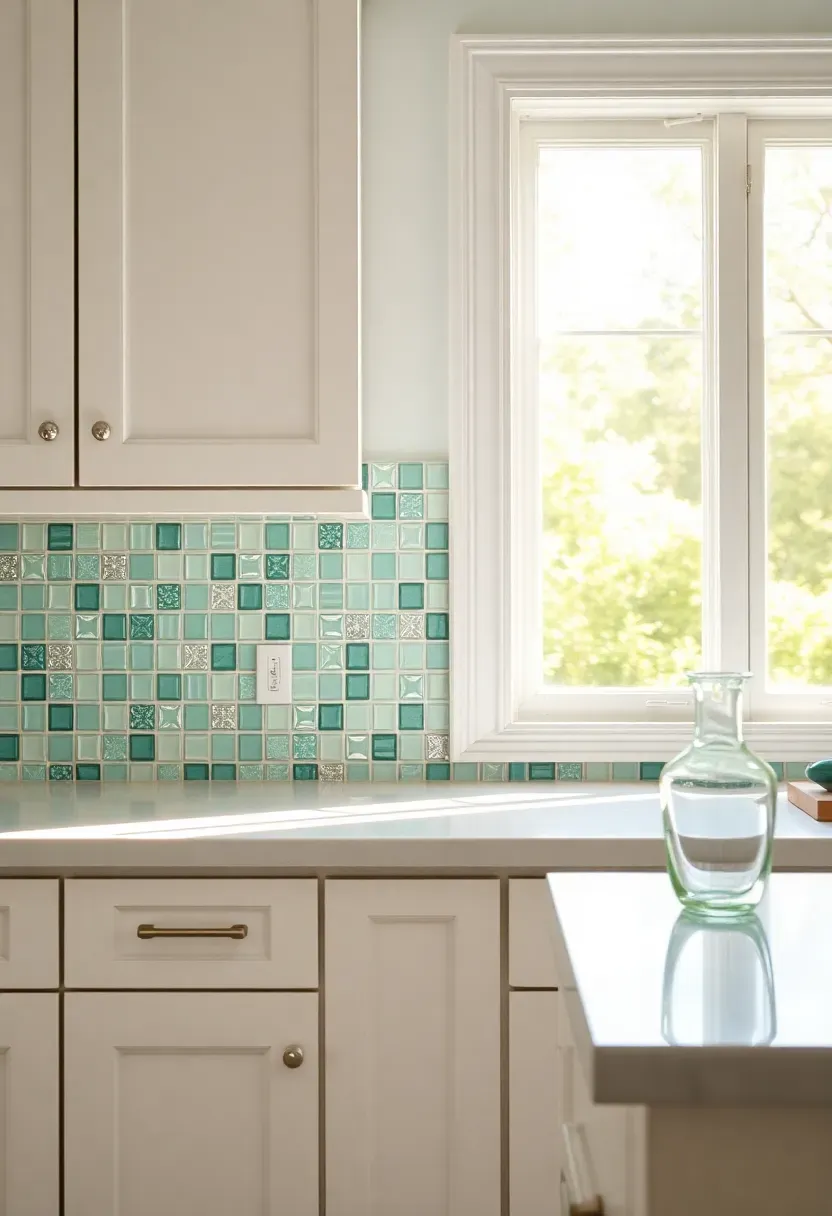
21. Glass Mosaic in Seafoam
Glass tile has a translucent quality that other materials cannot match. Light passes into the tile and bounces off the adhesive or backing behind it, creating a glow effect that is visible even in small formats. Seafoam green glass mosaics in 1x1 or 1x2 inch squares bring a watery, luminous color to a white kitchen that feels fresh without being cold.
Tips
- Glass tile requires white thin-set adhesive — gray shows through the translucent material
- Use unsanded grout in narrow joints to avoid scratching the glass surface
- Glass is impervious to water and stains, but the grout between pieces still needs sealing
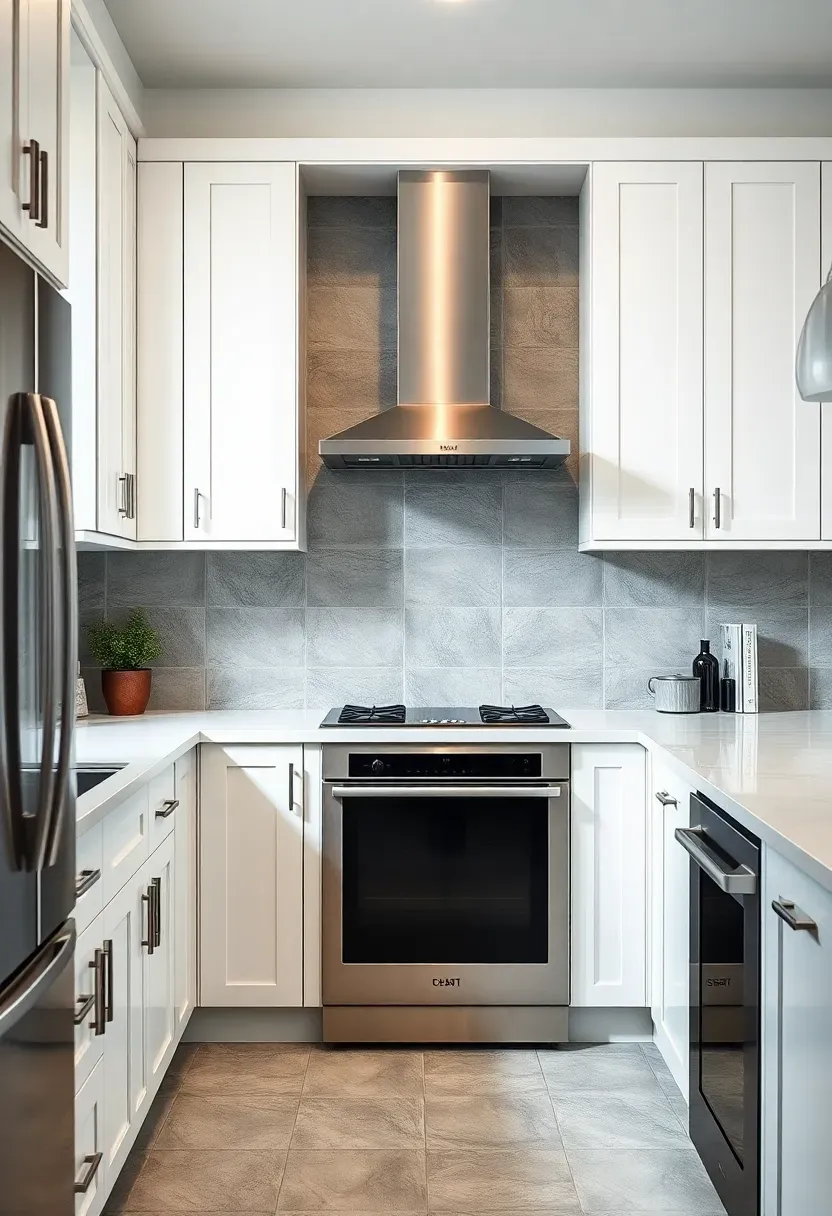
22. Concrete-Look Porcelain Tile
Industrial and minimalist kitchens need a backsplash that looks raw without actually being raw. Concrete-look porcelain tiles replicate the surface of poured concrete — including the slight color variation and matte texture — while being completely waterproof and stain-resistant. Against white cabinets, the medium gray concrete tone provides grounding without darkness.
Tips
- Large format (12x24 or larger) minimizes grout lines and makes the surface look more like actual concrete
- Pair with matte black fixtures and hardware for a consistent industrial aesthetic
- Porcelain is frost-proof, which only matters if your kitchen connects to an unheated porch or outdoor space
Recommended
Items for this idea
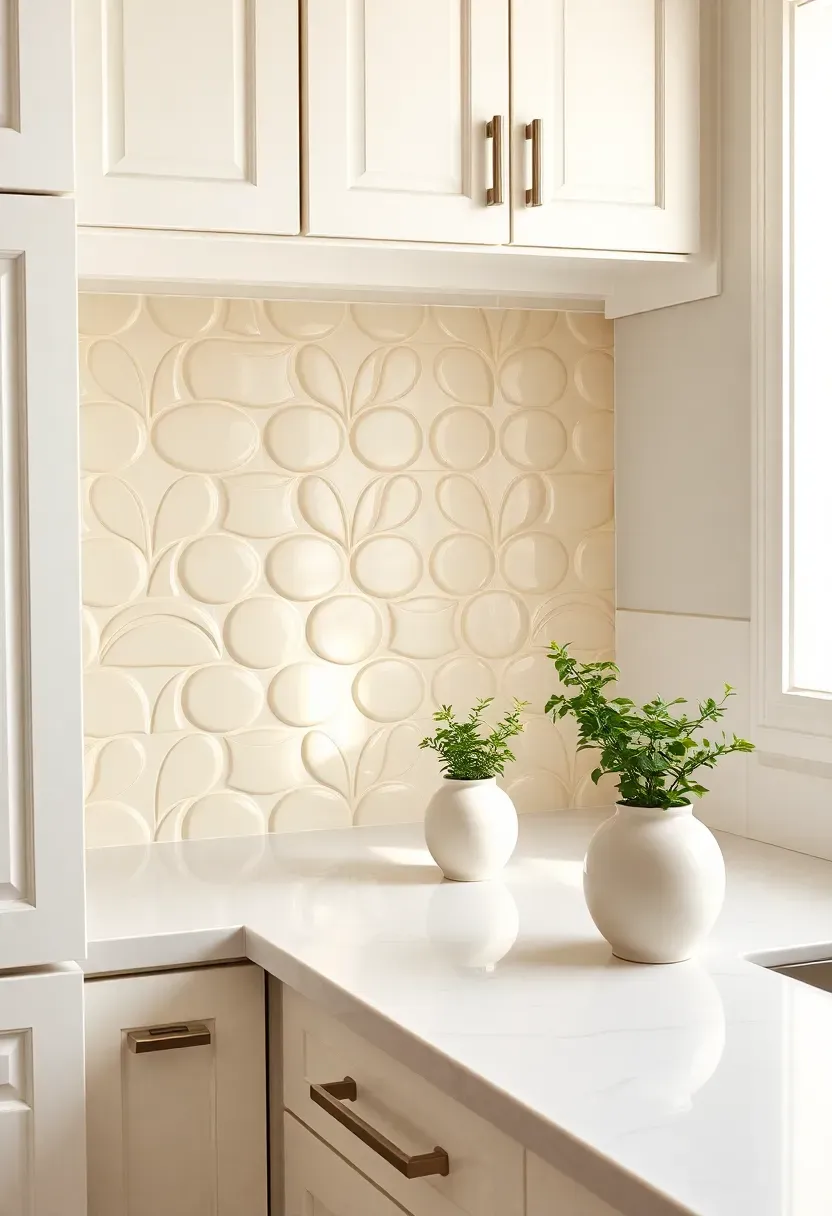
23. Arabesque Lantern Tile in Cream
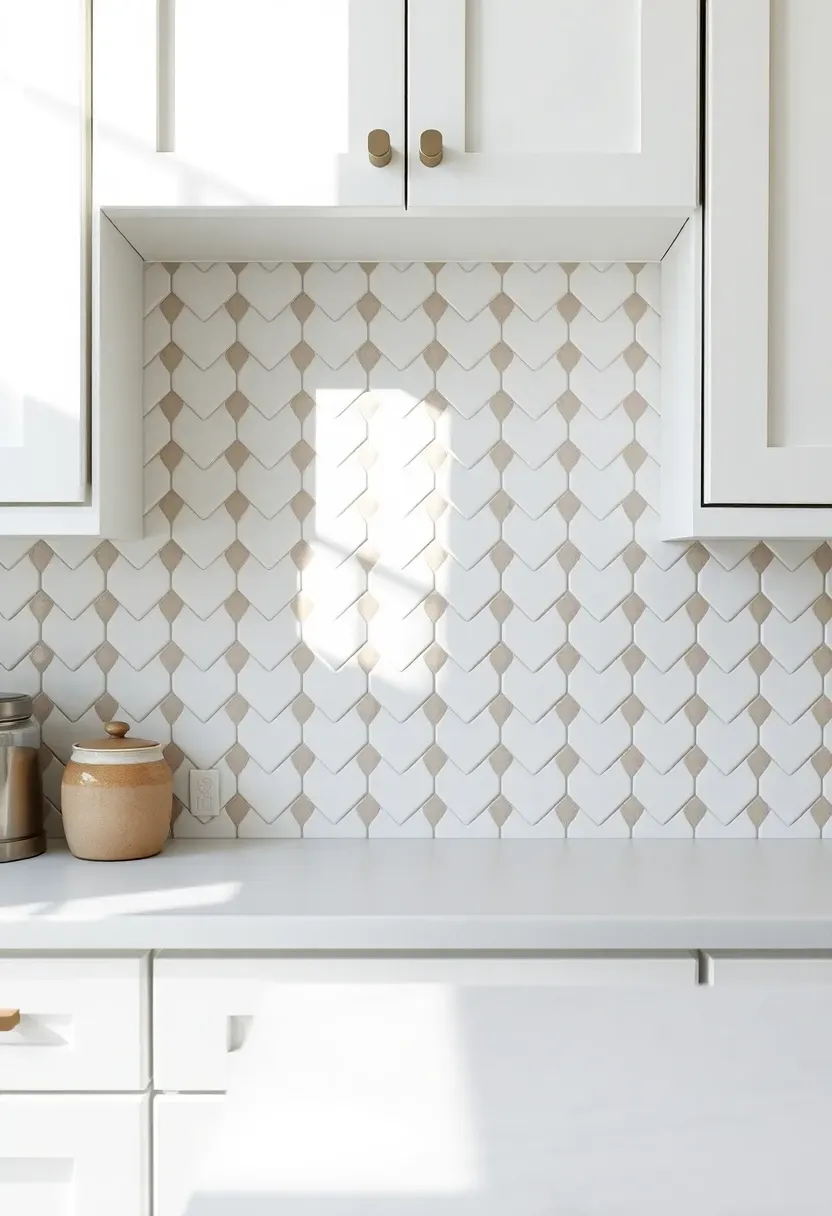
The arabesque shape — a teardrop with an elongated top — produces one of the most distinctive tile patterns available. In cream, it adds warmth and a Moorish decorative quality to a white kitchen without the chromatic punch of a colored tile. The curved outlines create organic rhythm on the wall.
Tips
- Cream arabesque on white cabinets works because the slight color difference is enough to define the backsplash as its own element
- These tiles have lots of grout surface area due to the curves — use an epoxy grout for easier cleaning
- The ornate shape suits transitional and Mediterranean kitchen styles better than stark modern ones
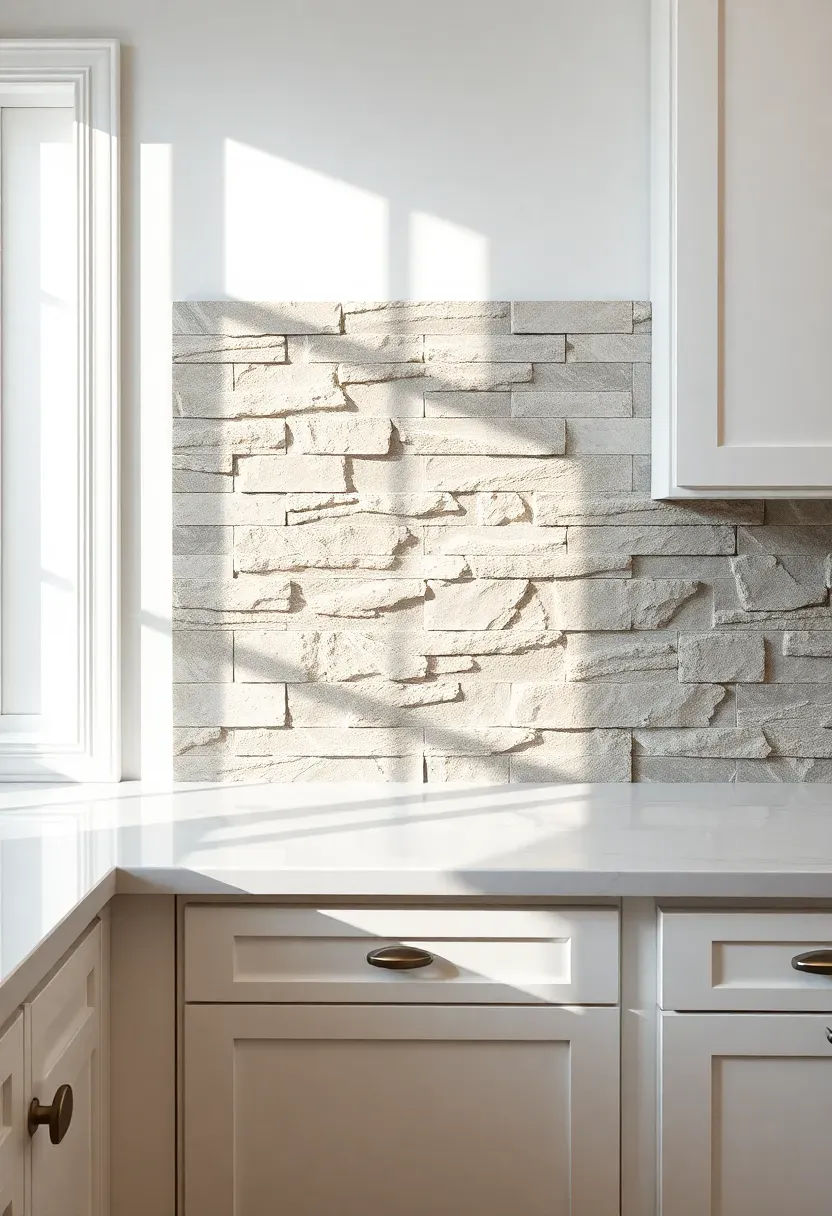
24. Stacked Natural Stone Ledger Panel
Ledger panels — thin strips of natural stone mounted on a mesh backing — create a stacked stone effect that adds serious texture. In a white kitchen, choose ledger panels in light gray, cream, or white quartz stone to keep the brightness while introducing a rough, dimensional surface. The depth of the stone strips (typically protruding 0.5 to 1.5 inches from the wall) casts real shadows that change throughout the day.
Tips
- Ledger panels are harder to clean than flat tile — grease and dust settle in the crevices
- Best used as a focal wall behind the range rather than full-perimeter backsplash
- Stone ledger is heavy; verify your wall can support the weight and use appropriate adhesive
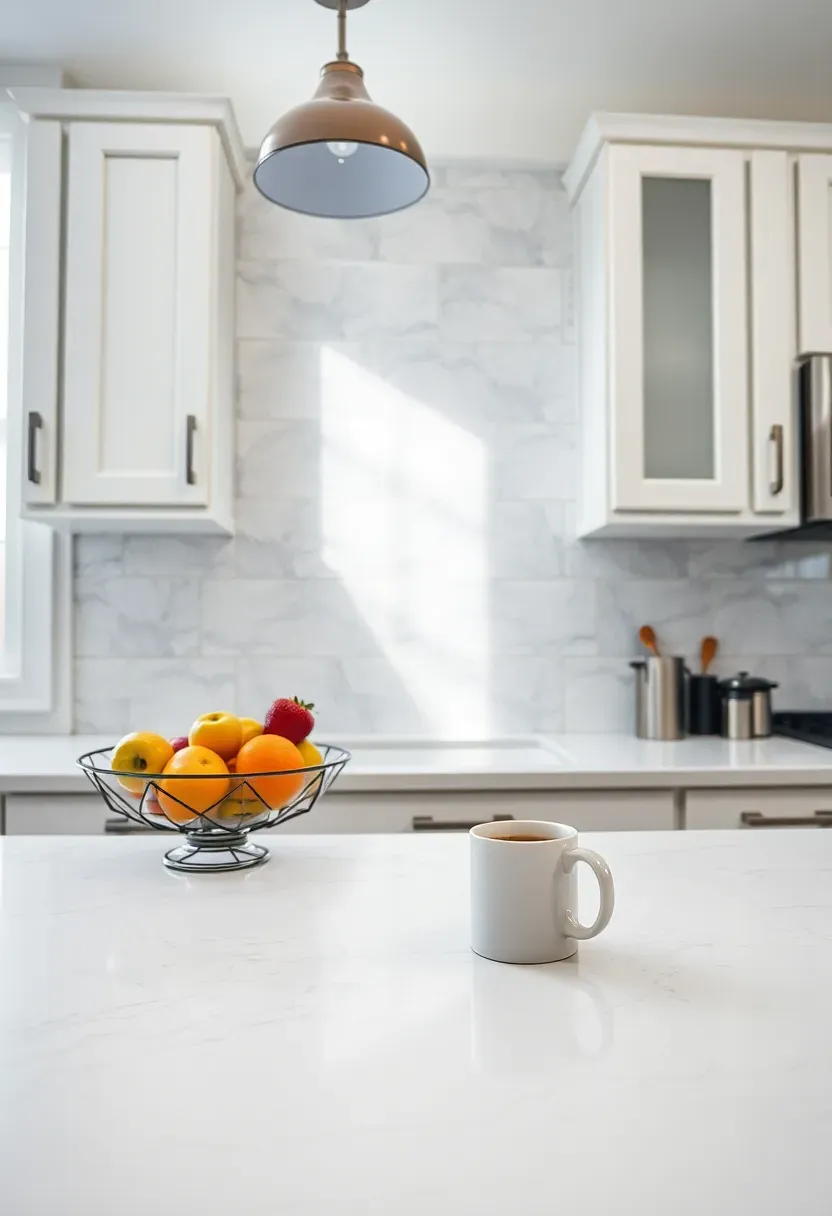
Recommended
Items for this idea
25. Peel-and-Stick Vinyl for Renters
The Budget-Friendly Temporary Option
Peel-and-stick backsplash tiles have improved dramatically. Current products from brands like Tic Tac Tiles and Smart Tiles use thick, rigid vinyl with printed surfaces that convincingly mimic marble, subway tile, or mosaic patterns. They adhere directly to clean, smooth walls and remove without damage — genuinely useful for renters who cannot modify the kitchen.
Step 1: Prep the Surface
Clean the wall with TSP or degreaser. The adhesive fails on dusty or greasy surfaces.
Step 2: Plan the Layout
Dry-fit tiles before peeling the backing. Cuts happen with a utility knife and straight edge.
Step 3: Install from Bottom Up
Start at the countertop line and work upward. Press firmly and use a roller on seams.
Watch out
Heat behind the stove can soften the adhesive. Keep peel-and-stick at least 6 inches from gas burners or use a heat-resistant version rated for stove proximity.
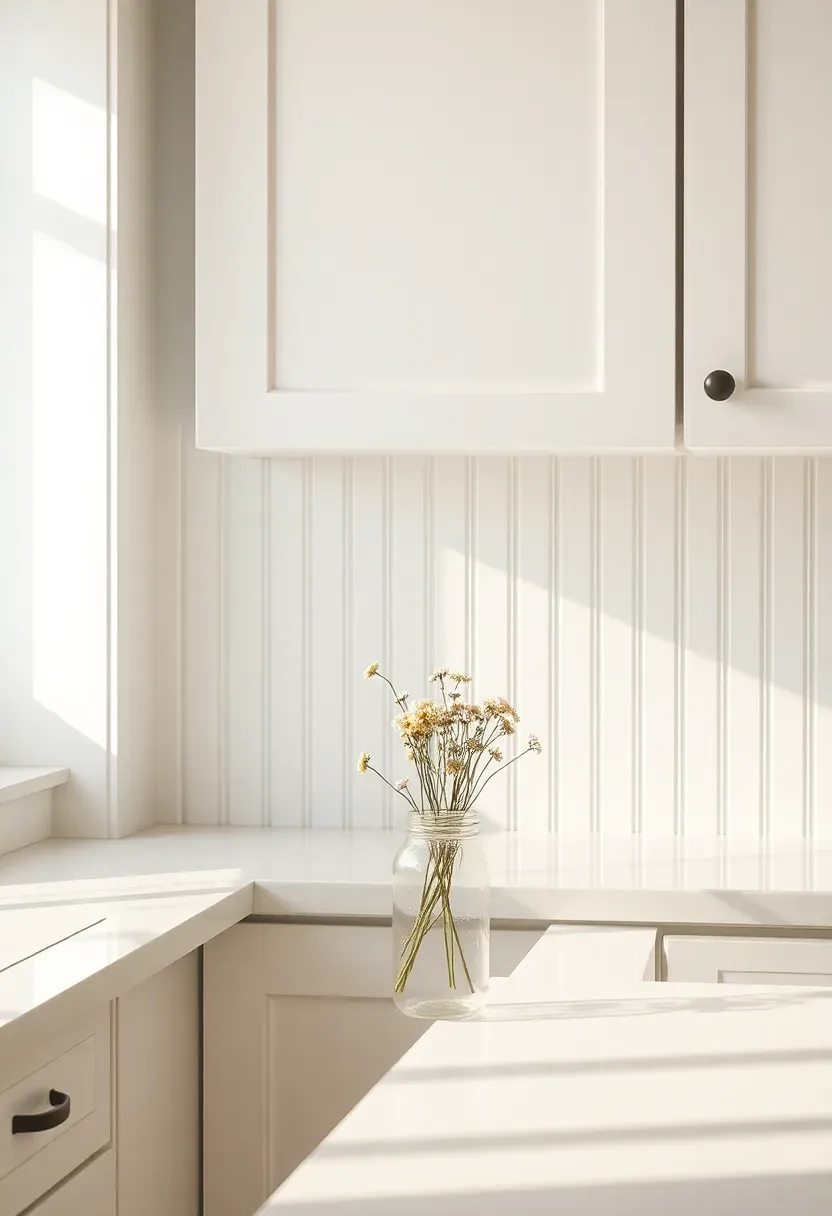
26. Beadboard Paneling
Beadboard as a backsplash is a cottage and farmhouse staple. The narrow vertical planks with their characteristic groove between each board add texture and rhythm to a white kitchen without changing the color palette. Painted white, beadboard disappears into the cabinets while still providing visual texture that flat drywall lacks.
Tips
- Use PVC or composite beadboard in kitchens, not solid wood — moisture and heat behind the stove will warp real wood
- Semi-gloss or high-gloss paint finish makes beadboard easy to wipe down
- Install beadboard vertically for the classic look or horizontally for a more modern take
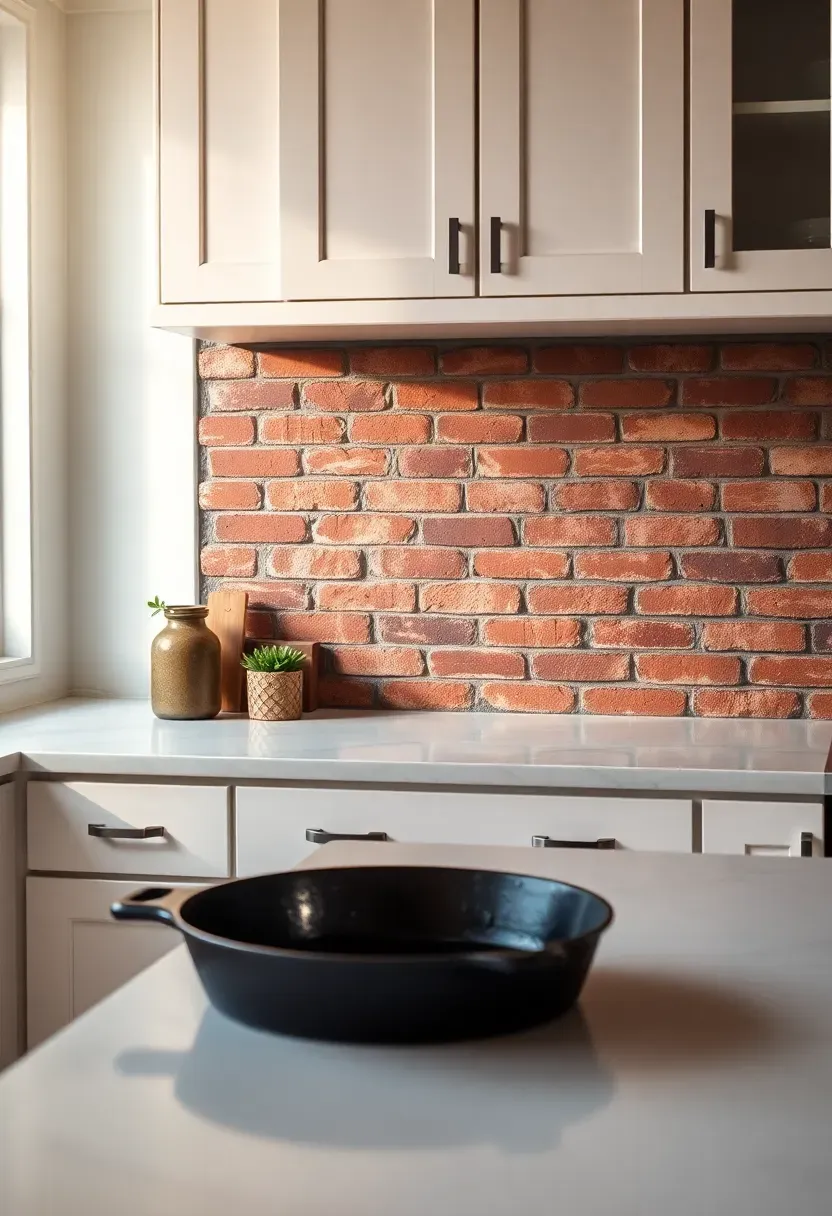
Recommended
Items for this idea
27. Reclaimed Brick Veneer
Thin brick veneer — sliced from reclaimed bricks or manufactured to look reclaimed — brings warmth, color, and industrial character to a white kitchen. The red, brown, and orange tones of old brick against crisp white cabinets create a contrast that is earthy rather than stark. Brick veneer is typically 0.5 inches thick, so it does not eat into counter depth the way full bricks would.
Tips
- Seal brick veneer with a matte penetrating sealer to prevent grease absorption
- Whitewashing the brick with diluted paint softens the red tones if the contrast feels too strong
- Real reclaimed brick veneer is heavier and more irregular than manufactured faux brick — both work, but the real thing has more character
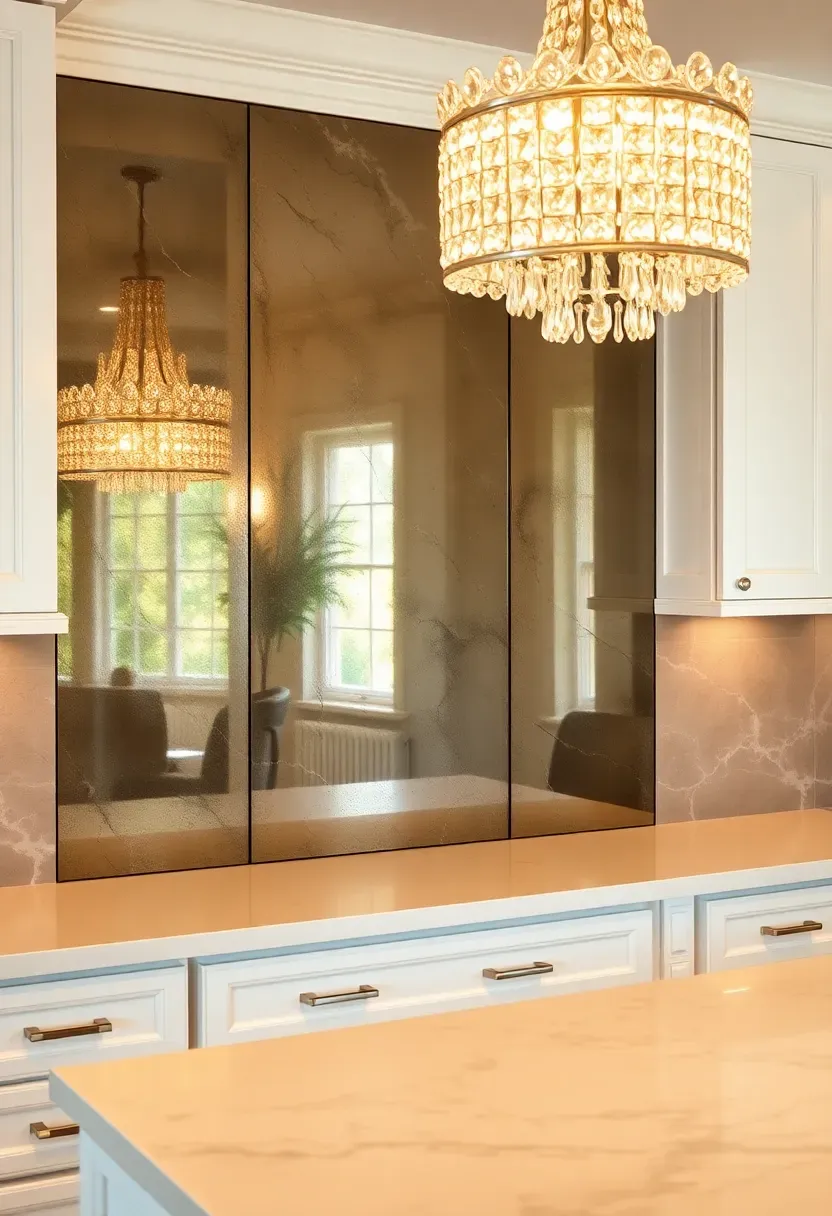
28. Mirrored Antique Glass Panel
Antique mirror backsplashes use glass that has been chemically treated to create a clouded, aged reflective surface. The effect is glamorous without being garish — the antiquing prevents it from looking like a bathroom mirror mounted in the kitchen. Against white cabinets, the reflective surface amplifies every light source in the room and visually doubles the kitchen's depth.
Tips
- Custom-cut panels fit better than mirror tiles, which show seams
- The antiquing pattern (smoky, spotted, or veined) varies by manufacturer — get a large sample before committing
- Clean with glass cleaner only; abrasive cleaners damage the antiqued coating
Recommended
Items for this idea
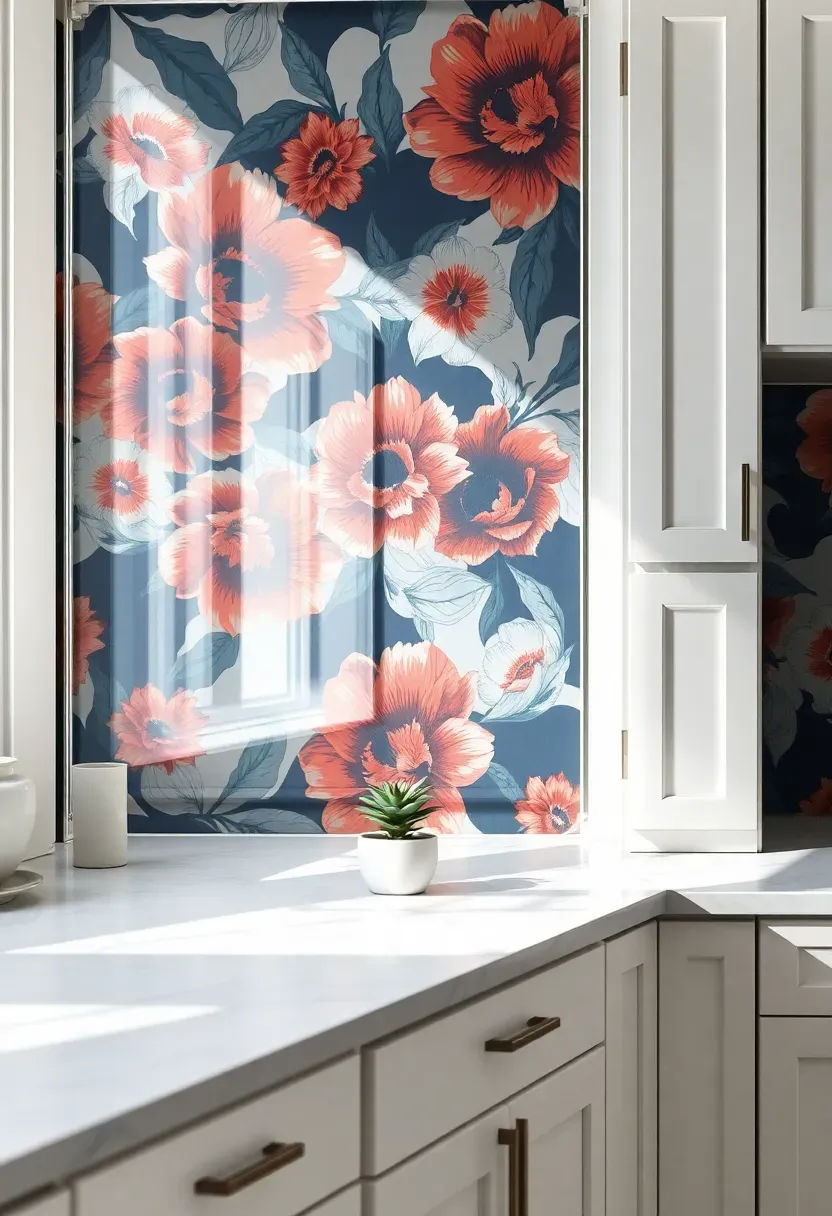
29. Bold Wallpaper Behind Glass
The Unexpected Approach
This one surprises people. Install a bold wallpaper — oversized florals, geometric prints, or hand-painted murals — on the backsplash wall, then cover it with a sheet of clear tempered glass. The glass protects the wallpaper from water, grease, and heat while letting the pattern show through completely. You get a backsplash that looks like nothing else in anyone's kitchen.
Step 1: Choose the Wallpaper
Go bold. The glass covering mutes the pattern slightly, so subtle prints get lost. Large-scale florals, saturated colors, or graphic black-and-white designs work best.
Step 2: Install the Wallpaper
Apply wallpaper to the clean, primed wall using standard paste. Let it dry completely — at least 48 hours.
Step 3: Mount the Glass
Have 3/8-inch tempered glass cut to size with polished edges. Mount it with standoff hardware that holds the glass about 1/4 inch off the wall, allowing air circulation behind the panel.
Watch out
The glass panel must be tempered for heat resistance near the stove. Regular glass can crack from thermal stress.
Quick FAQ
Can I use the same quartz for the backsplash and countertop? Yes, and fabricators often sell backsplash pieces cut from the same slab as your counters. A 4-inch quartz backsplash behind the countertop is common. Going full-height with matching quartz looks seamless but can feel monotone — adding a different material behind the range breaks it up.
Which backsplash materials are the easiest to maintain? Porcelain, glass, and large-format slabs (quartz, quartzite) top the low-maintenance list. They are non-porous or nearly so, resist staining, and clean with a damp cloth. Natural stone (marble, travertine, limestone) and cement tile need regular sealing.
Does backsplash tile need to match the cabinet hardware finish? Not exactly, but it should not fight it. Metal tiles and metallic grout should coordinate with your faucet and hardware. For non-metallic tile, the finish of the hardware matters less — the tile color and pattern do the heavy lifting.
How high should a backsplash go with white cabinets? Standard height is countertop to the bottom of upper cabinets, usually 15-18 inches. Taking tile to the ceiling behind the range hood creates a dramatic focal point. Full-wall tile (counter to ceiling everywhere) works in open kitchens without upper cabinets.
What is the most affordable backsplash option for a white kitchen? Painted wall with semi-gloss paint costs under $50 for the whole kitchen. Peel-and-stick vinyl runs $3-8 per square foot. Standard ceramic subway tile at $2-5 per square foot is the cheapest permanent tile option, though installation adds $8-15 per square foot for labor.
The white kitchen is a canvas, and the backsplash is where you actually make a decision. Whether you go with a marble slab that costs more than some used cars or a peel-and-stick option you can swap out next year, the point is the same — pick something that breaks the monotony of all that white and gives the room a focal point. Start with three or four options that appeal to you, order samples, and tape them to your wall for a week before committing. The one you stop noticing is probably too safe. The one you keep looking at is the one to install.
Pinterest cover for 29 Backsplash Ideas for White Cabinets and Quartz Countertops
About the author
OBCD
CGI visualization and interior design content. We create detailed 3D renders and curate practical design ideas for every room in your home.