25 Backsplash Tile Ideas for Every Kitchen Style
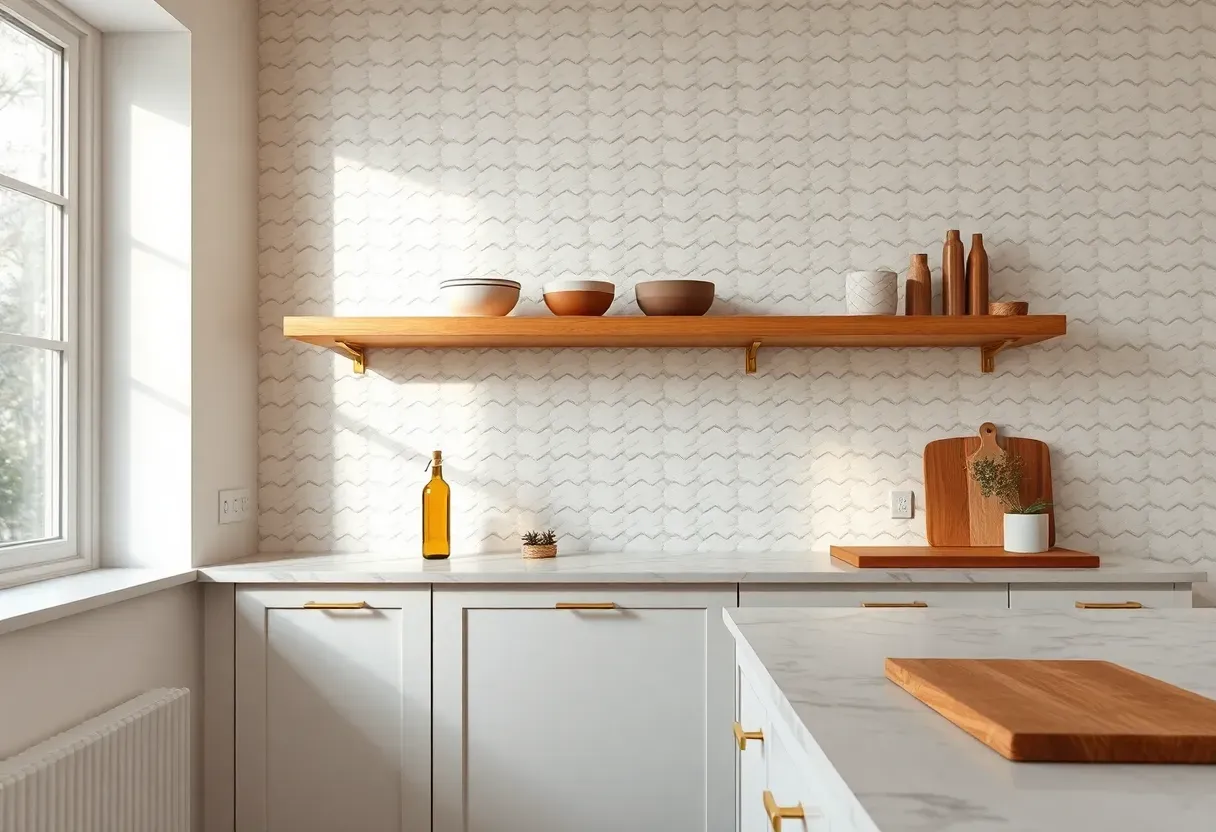
Picking a backsplash tile sounds simple until you realize there are roughly 4,000 options at any given tile showroom. Subway, zellige, penny round, large-format slab, hand-painted ceramic, natural stone in fourteen different finishes. The choice matters more than most people expect — your backsplash is the biggest uninterrupted vertical surface in the kitchen, and it sets the visual tone for everything around it. A wrong pick and the whole room feels off. A good one pulls countertops, cabinets, and hardware together without trying.
Here are 25 tile options sorted by material, shape, and style — with honest notes on cost, maintenance, and where each one actually works best.
Table of Contents
- Classic White Subway Tile
- Zellige Tile
- Herringbone Pattern Subway
- Hexagonal Marble Mosaic
- Large-Format Porcelain Slab
- Handmade Ceramic in Earthy Tones
- Penny Round Tile
- Vertical Stack Bond Subway
- Encaustic Cement Tile
- Basketweave Marble
- Glazed Terracotta
- Glass Tile in Jewel Tones
- Fish Scale (Fan) Tile
- Chevron Pattern Porcelain
- Picket (Arrow) Tile
- Natural Slate Split Face
- Arabesque Lantern Tile
- Square Stacked Glossy Ceramic
- Terrazzo-Look Porcelain
- Skinny Brick Tile
- Diamond Pattern Marble
- Star and Cross Ceramic
- Fluted or Ribbed 3D Tile
- Scalloped Edge Tile
- Tumbled Travertine
1. Classic White Subway Tile
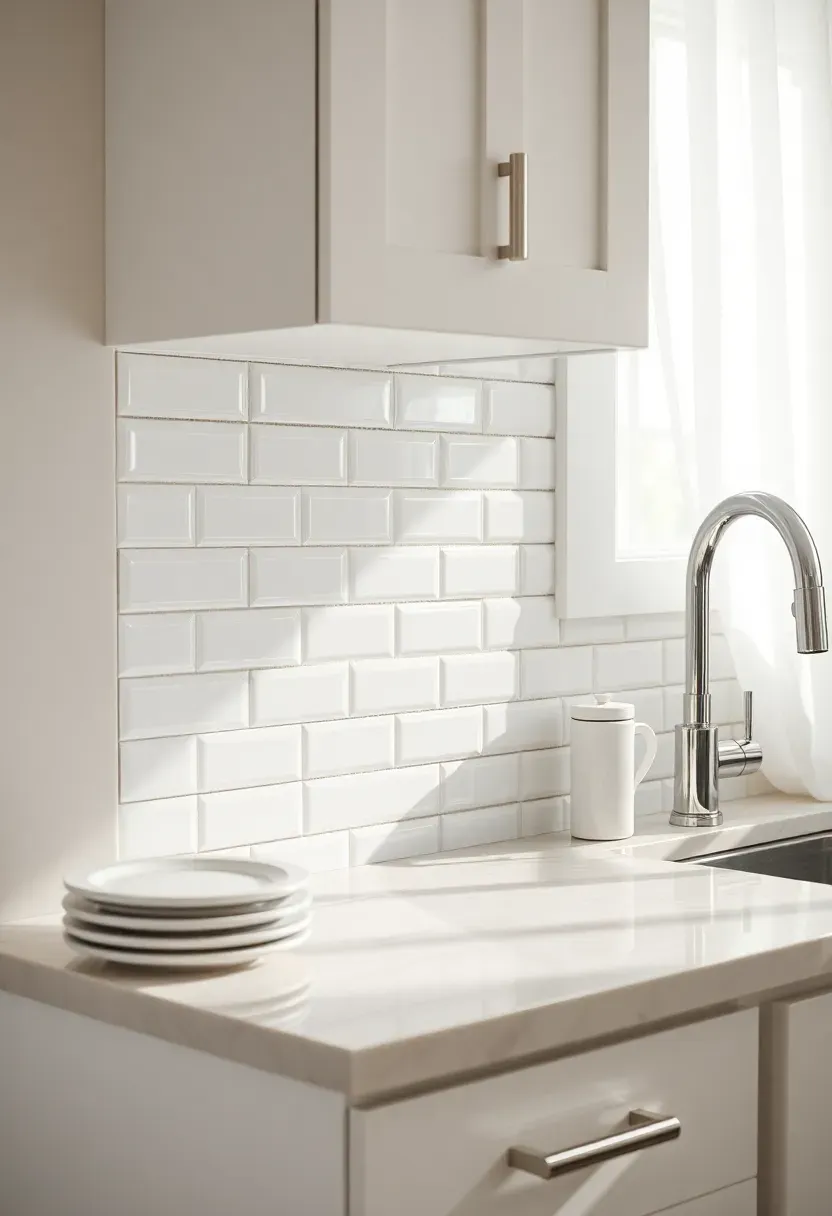
There is a reason white subway tile has survived every design trend since 1904. The 3x6-inch format is cheap (often under $2 per square foot for basic ceramic), widely available, and pairs with literally any cabinet color or countertop material. It reflects light in small kitchens, disappears behind open shelving, and never dates a home.
What most people get wrong
- Using bright white tile with bright white grout — this creates a flat, institutional look. A light gray or warm almond grout adds depth without making a statement.
- Going too thin on grout lines. A 1/16-inch joint looks modern but shows every slight variation in tile size, especially with cheaper tiles.
- Skipping the sealer on cement-based grout behind the stove — grease stains set in within weeks.
We picked a few things that go well with this idea: STICKGOO Peel and Stick Backsplash (10 Sheets) (★4.4), STICKGOO White Subway Peel and Stick Tile (★4.2) and Art3d Glossy White Subway Tile (102-Piece) (★4.4). As an Amazon Associate we earn from qualifying purchases.
2. Zellige Tile
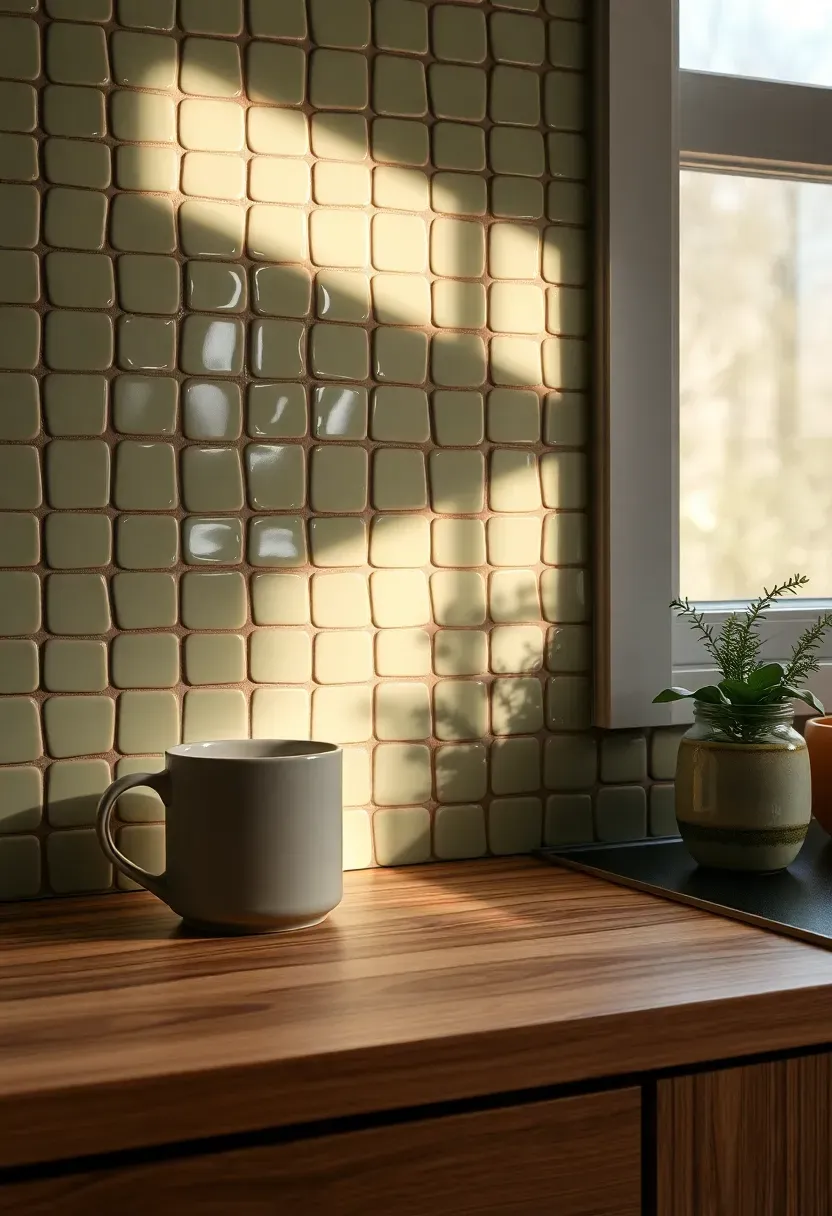
Zellige is a hand-cut, glazed terra cotta tile from Morocco. Each piece varies slightly in color, thickness, and surface texture, which gives the finished wall a watery, undulating quality that machine-made tiles cannot replicate. The imperfection is the entire point.
Why it costs more
Authentic zellige runs $15 to $35 per square foot. You are paying for handwork — each tile is individually glazed, fired, and then hand-cut with a chisel. Installation takes longer too because the thickness variation means more thin-set adjustment per tile.
Choose if
- You want a backsplash with visible texture and depth
- Your kitchen leans toward organic, Mediterranean, or collected-over-time aesthetics
- You can live with minor chipping as part of the charm
Skip if
- You want perfectly uniform lines
- You are on a tight budget and covering a large area
We picked a few things that go well with this idea: Natural Marble Stone Backsplash Tile (★5.0), STICKGOO Dolomite Mosaic Marble Look (10 Sheets) (★4.5) and SUNWINGS 3D Stone Mosaic Marble Tiles (5-Sheet) (★4.4). As an Amazon Associate we earn from qualifying purchases.
3. Herringbone Pattern Subway
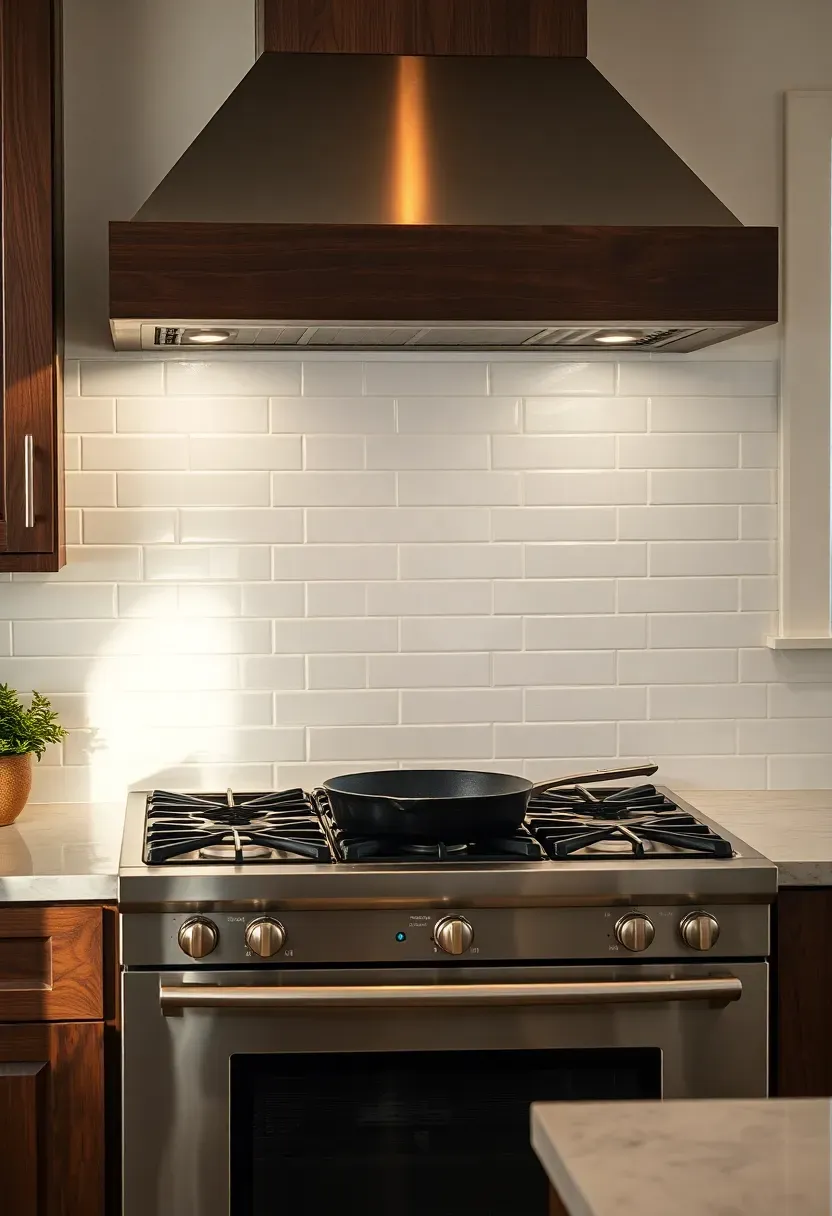
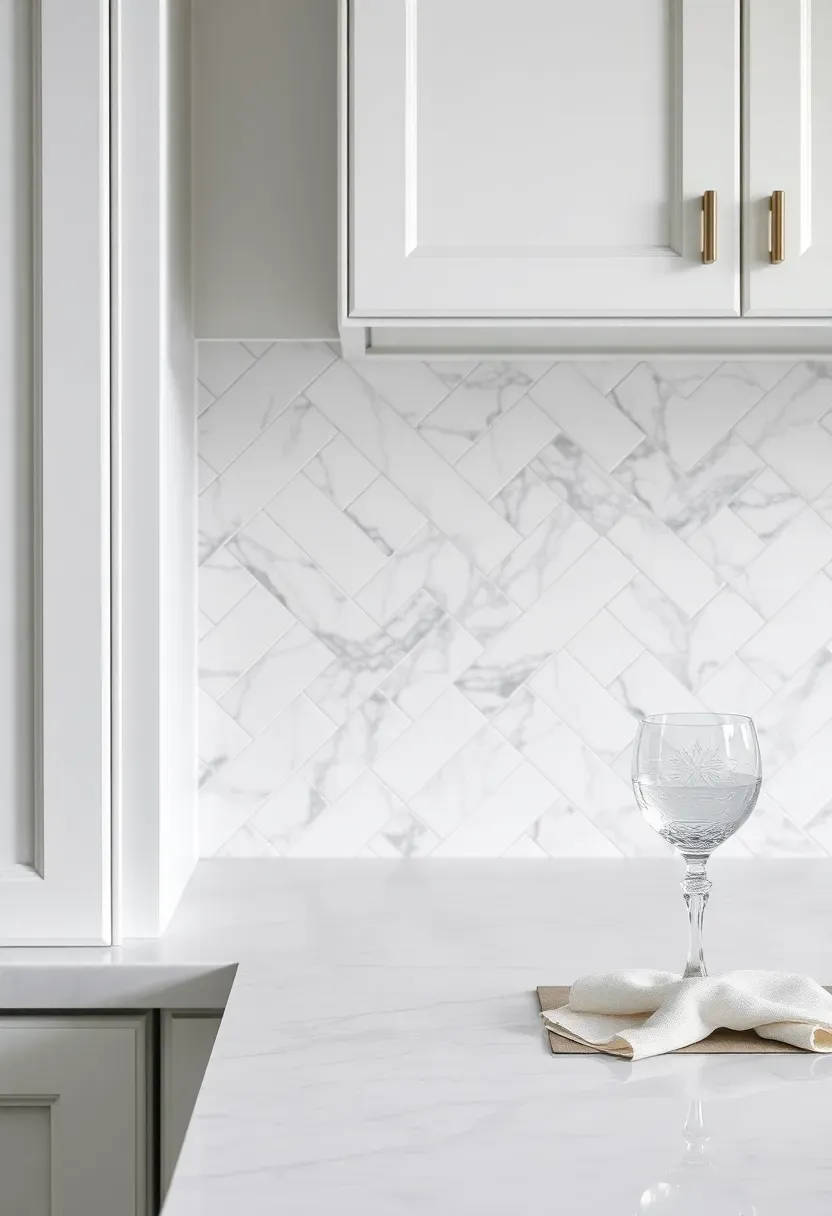
Same tile as #1, entirely different effect. Laying subway tiles at alternating 45-degree angles creates a herringbone pattern that adds movement and visual interest without changing the material or color palette. The pattern draws the eye upward, which helps in kitchens with lower ceilings.
How to get it right
- Start from a center plumb line and work outward so the pattern stays symmetrical. Eyeballing the starting point is the most common DIY mistake.
- Pre-cut your end pieces in batches. Herringbone creates a lot of angled cuts at the edges, and cutting one at a time triples your installation time.
- Use tile spacers consistently — even small drift in spacing becomes obvious at this angle.
Watch out
- More waste than straight lay. Budget 15% extra tile beyond your square footage.
- The V-pattern at each joint collects grout haze during cleanup if you are not careful with the sponge.
We picked a few things that go well with this idea: Art3d Smoothing Tool Kit for Tile (★4.6), WRAPXPERT Smoothing Tool Kit for Backsplash (★4.6) and Storystore Tile Leveling System (800-Piece) (★4.5). As an Amazon Associate we earn from qualifying purchases.
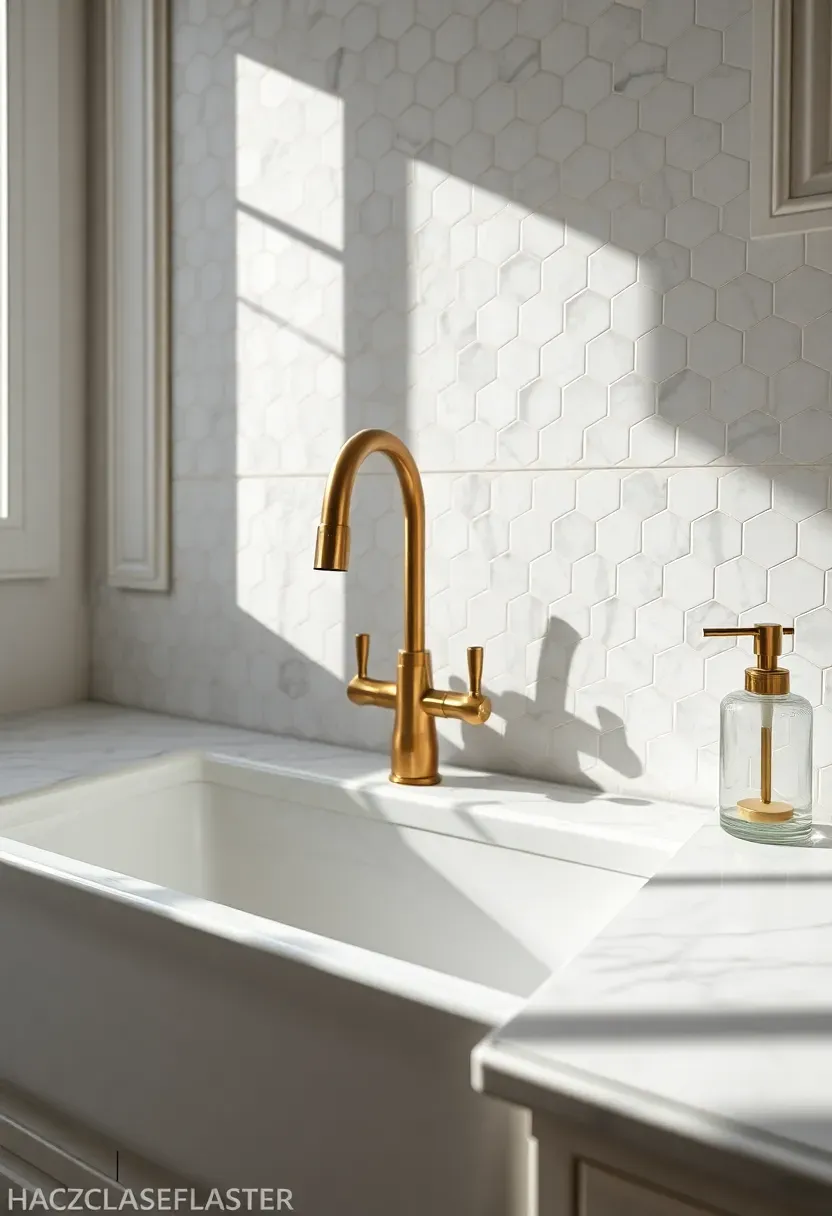
4. Hexagonal Marble Mosaic
Small marble hexagons — usually 1-inch or 2-inch across — arrive pre-mounted on mesh sheets. The honeycomb geometry reads as classic and slightly formal, particularly in Carrara or Calacatta marble. This is a popular choice behind range hoods and as a focal panel between flanking subway tile.
Tips
- Seal before grouting, not just after. Marble is porous and will absorb grout pigment permanently if left unprotected.
- Avoid dark grout with white marble unless you want the hex grid to dominate the look — it can feel busy at close range.
- Mesh-mounted sheets sometimes have individual hexagons that sit slightly crooked. Press each sheet firmly and check alignment before the thin-set sets up.
Recommended
Items for this idea
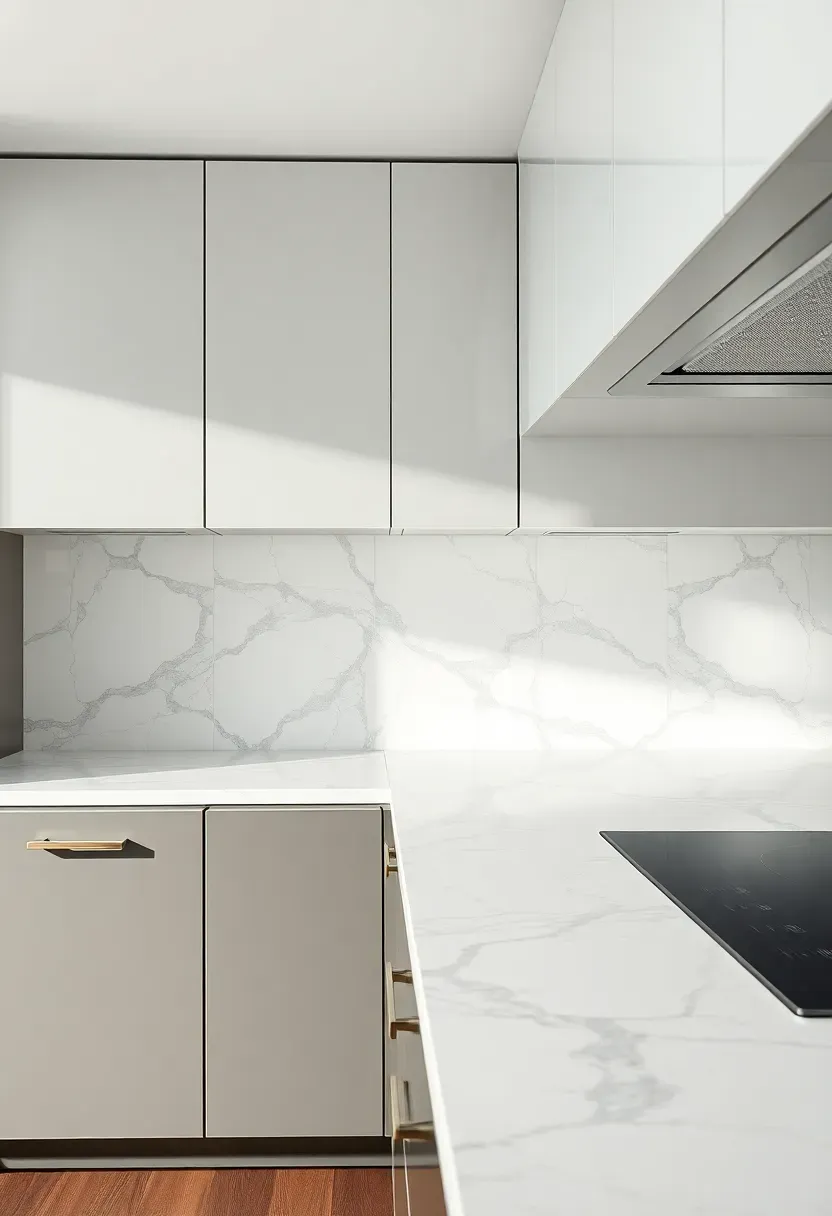
5. Large-Format Porcelain Slab
A single slab of porcelain — sometimes 5 feet by 10 feet — eliminates grout lines almost entirely. The result is a smooth, continuous surface that mimics natural stone, concrete, or even wood, depending on the print. Countertop-to-ceiling installations with no visible seams look particularly clean.
Comparing to natural stone slabs
| Factor | Porcelain Slab | Natural Stone Slab |
|---|---|---|
| Cost per sq ft | $8-25 | $30-80+ |
| Sealing required | No | Yes, annually |
| Weight | Lighter (thinner) | Heavy |
| Pattern variation | Repeats across slabs | Unique per slab |
| Stain resistance | High | Moderate |
Recommendation
Porcelain slab works best in modern kitchens where you want the look of Calacatta marble without the maintenance anxiety. If you value one-of-a-kind veining and do not mind the upkeep, natural stone still wins on character.
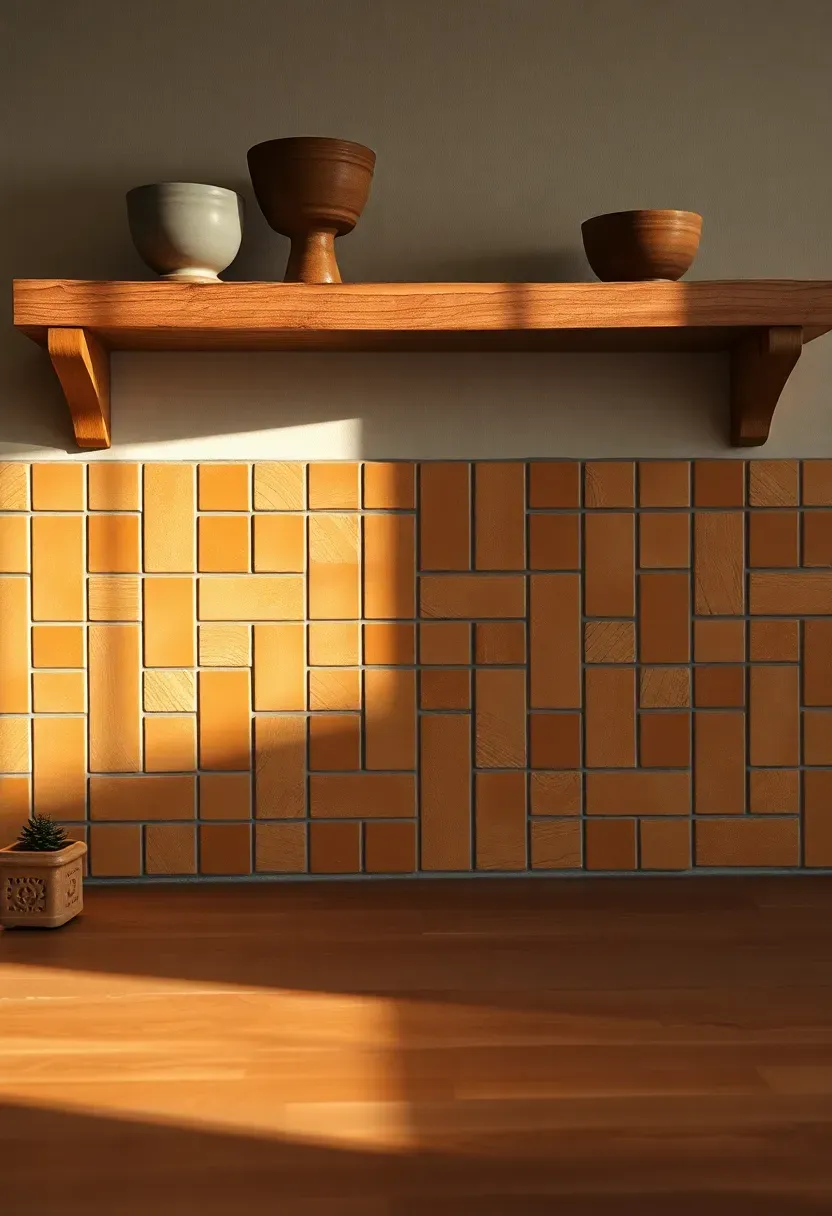
6. Handmade Ceramic in Earthy Tones
Small-batch ceramic tiles made by independent studios bring warmth that factory tiles struggle to match. Irregular edges, visible glaze pooling, subtle color shifts from tile to tile — these details give the backsplash a crafted, human quality. Warm whites, ochre, sage, and terracotta are the most common palette.
Where to source them
Etsy, local ceramicists, and specialty tile shops like Fireclay, Clé, and Mercury Mosaics carry handmade options. Expect lead times of 4 to 8 weeks and prices from $20 to $50 per square foot. Order 10-15% overage because matching a second batch months later is nearly impossible — kiln conditions vary.
Tips
- Handmade tile thickness varies. Use a medium-bed mortar to compensate.
- Lay tiles from multiple boxes simultaneously to distribute color variation evenly across the wall.
- These tiles pair best with wide grout joints (1/8-inch or more) that embrace the rustic character.
Recommended
Items for this idea
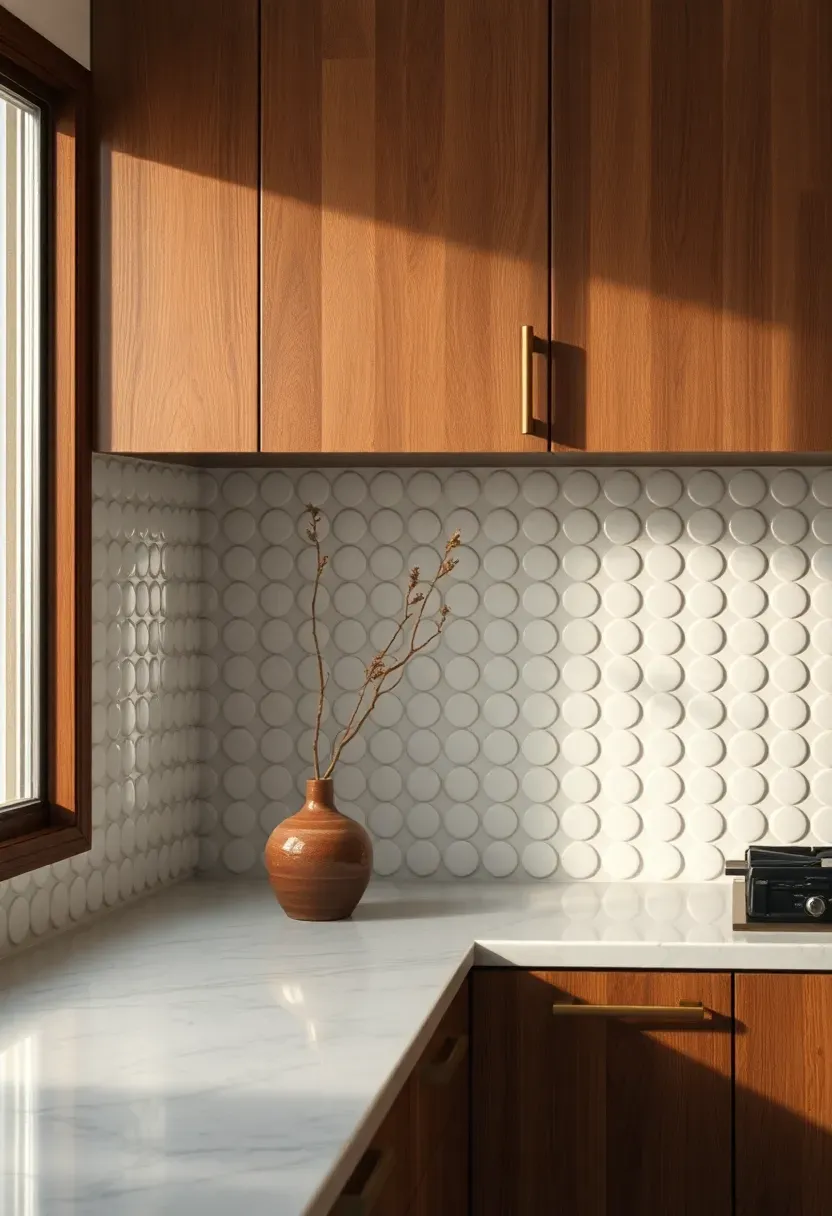
7. Penny Round Tile
Small circular tiles, typically 3/4-inch to 1-inch diameter, mounted on mesh sheets. The format references early 1900s bathrooms but has migrated into kitchens over the past decade. Penny rounds work especially well in midcentury modern and retro-inspired spaces.
The grout problem
Penny rounds have more grout surface area per square foot than almost any other tile format. That means more cleaning, more potential for staining, and more visual weight from the grout color. An epoxy grout (like Laticrete SpectraLOCK) resists staining far better than standard cement grout and is worth the extra cost here.
Tips
- Matte finishes hide water spots better than glossy
- Black penny rounds with white grout create a graphic, high-contrast look that reads as intentionally bold
- Keep the backsplash height under 18 inches if you find the pattern busy — a full wall of penny rounds can overwhelm
8. Vertical Stack Bond Subway
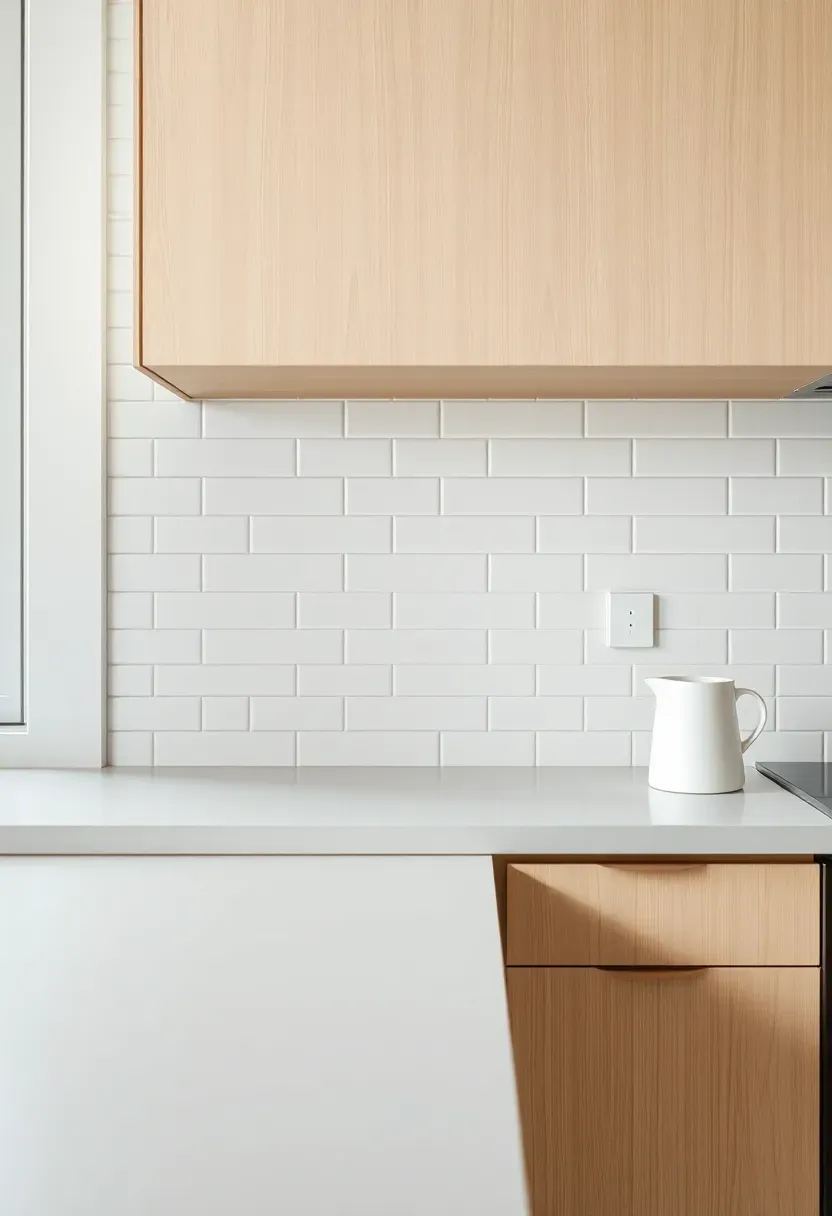
Instead of the traditional offset (running bond) layout, stack bond aligns every tile edge-to-edge in a strict grid — and in this case, oriented vertically. The look is clean, geometric, and distinctly modern. It avoids the diner association that horizontal subway sometimes carries.
Step by step
- Mark a level vertical line at the center of the wall. This is your reference — all tiles align to this line.
- Apply thin-set in small sections. Stack bond is less forgiving of alignment drift, so you need to check level frequently.
- Use precision spacers (1/16-inch for a minimal joint) and adjust each tile individually. The straight lines in stack bond make any misalignment immediately visible.
Watch out
- Stack bond is structurally weaker than running bond because joints align. For a backsplash this does not matter, but do not use this pattern on floors.
- Vertical orientation elongates the wall visually — helpful in kitchens with short backsplash heights, less useful if you are already going countertop-to-ceiling.
Recommended
Items for this idea
9. Encaustic Cement Tile
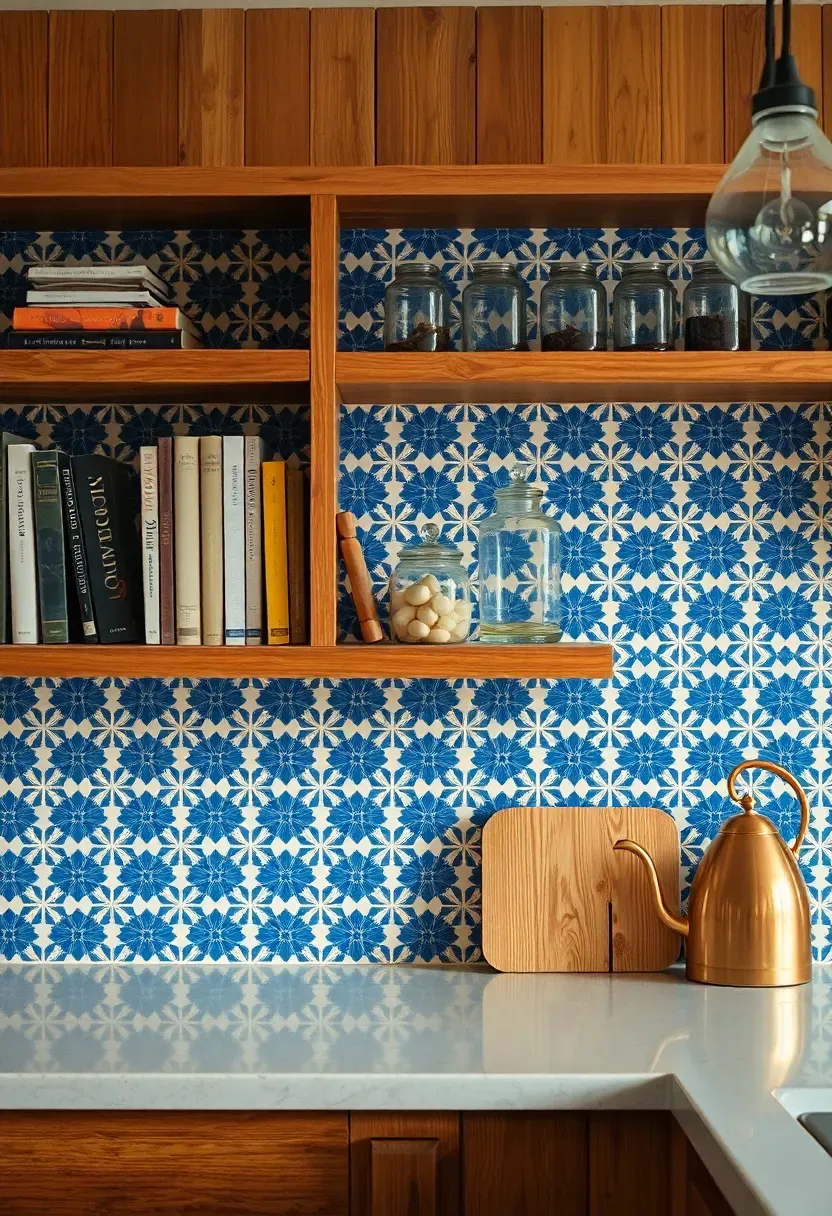
Encaustic tiles are made from layers of colored cement — not glaze. The pattern goes through the tile body, which means it can be sanded and refinished decades later. Bold geometric prints, Moorish star patterns, and Art Deco florals are standard offerings. These tiles bring serious personality to a kitchen.
Maintenance reality
Cement tile is porous. It needs sealing before use, after grouting, and periodically thereafter. Without sealer, cooking oils and tomato sauce will stain the surface within days. Most manufacturers recommend a penetrating sealer like Dry-Treat Stain-Proof, applied in two coats.
Choose if
- You want a backsplash that functions as the room's focal point
- You enjoy maintenance as part of owning something with patina
- Your kitchen has relatively simple cabinets and countertops that will not compete with the pattern
10. Basketweave Marble
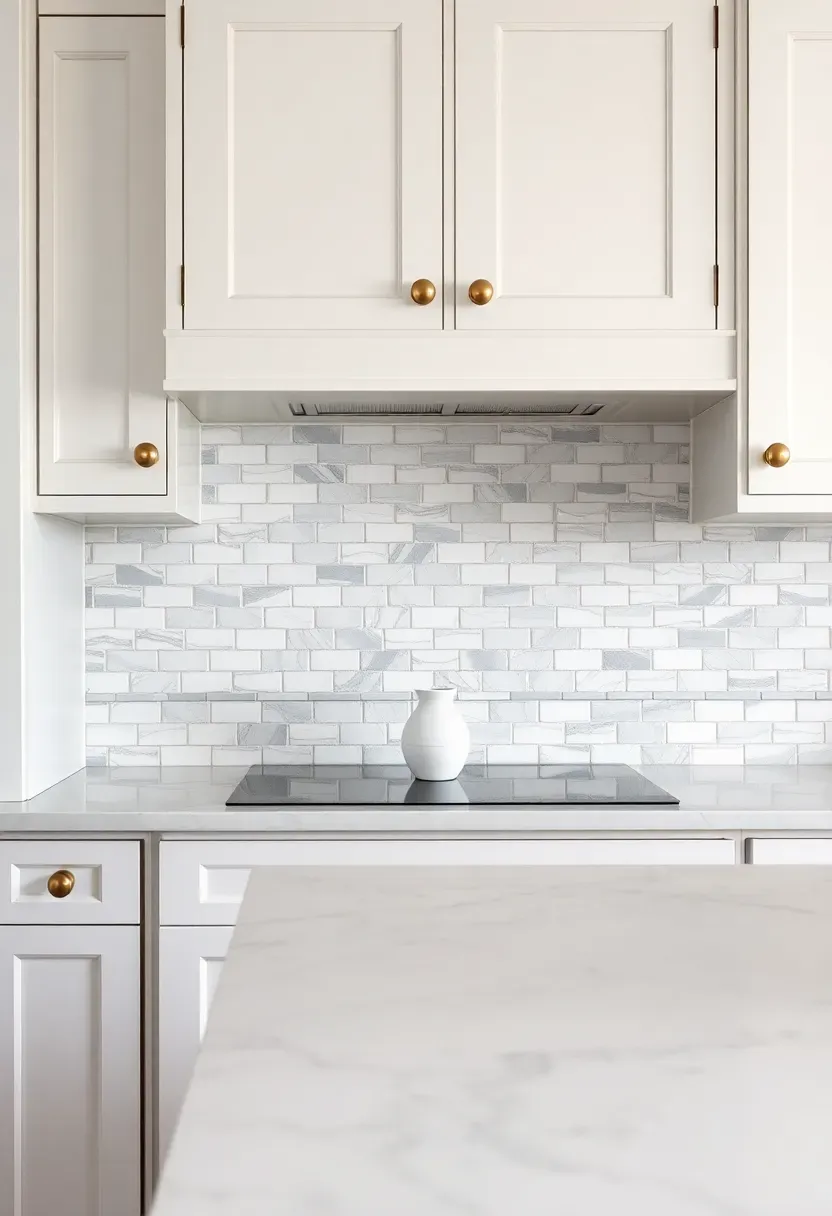
The basketweave pattern weaves rectangular and square marble pieces into a textile-like grid. It is unmistakably traditional — you see it in prewar apartment bathrooms and high-end colonial kitchens. In a backsplash, it reads as dressy and deliberate.
Tips
- Pairs well with Shaker cabinets, marble or quartz countertops, and polished nickel hardware
- The pattern is busy enough on its own — keep surrounding surfaces quiet
- Seal marble aggressively in the cooking zone; basketweave has even more grout surface than subway tile due to the small mosaic pieces
Recommended
Items for this idea
11. Glazed Terracotta
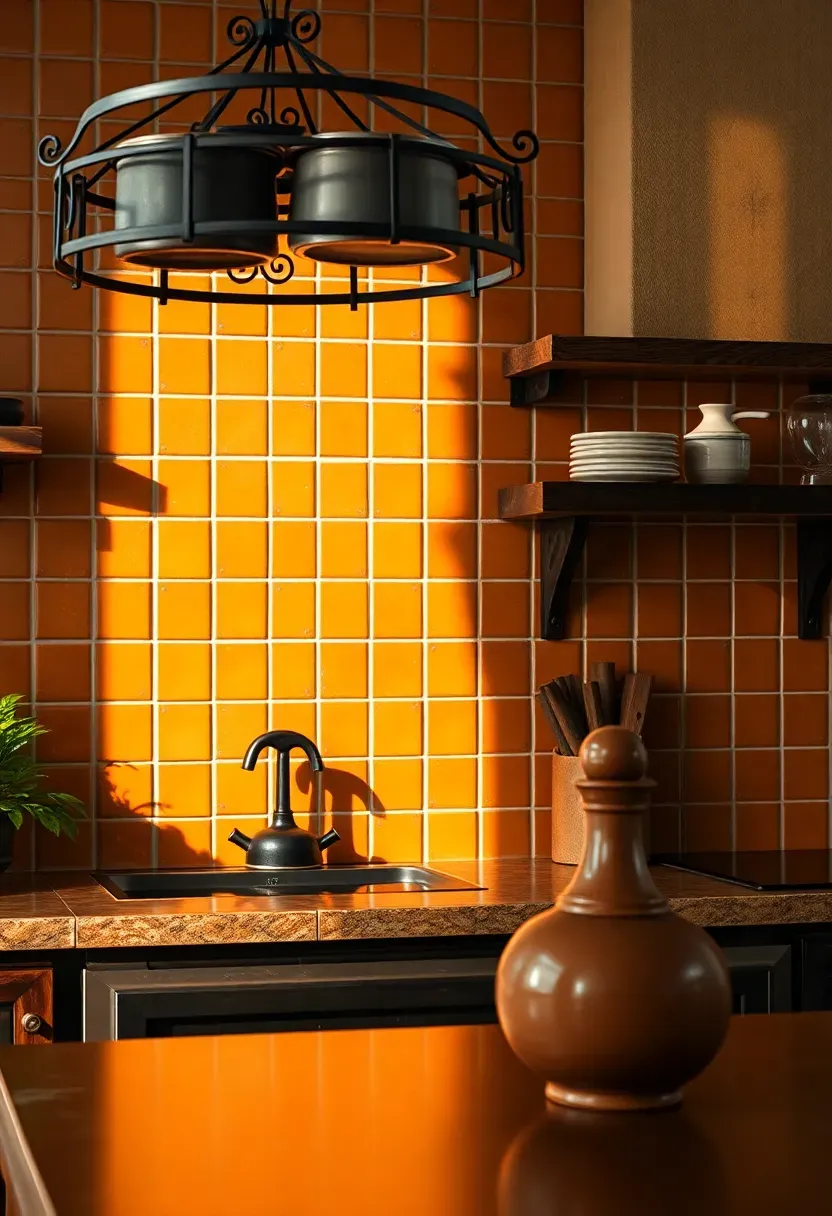
Terracotta tile has been used in Mediterranean kitchens for centuries. A transparent or colored glaze over the clay body adds water resistance and a slight sheen while keeping the warm, ruddy color underneath visible. The material connects a kitchen to an older building tradition that predates industrial ceramics.
Origins and modern use
Traditional terracotta was made from local river clay, shaped by hand, and fired at low temperatures. Modern glazed versions use more consistent clay bodies and higher firing temperatures for better durability, but the color palette remains rooted in the same earth tones — burnt sienna, dusty rose, amber, and deep rust.
Apply at home
- Install glazed (not unglazed) terracotta behind the stove — unglazed terracotta absorbs grease permanently
- Pair with dark wood, wrought iron, and matte black fixtures for a cohesive Mediterranean look
- Consider mixing square and rectangular formats for a less uniform, more authentic appearance
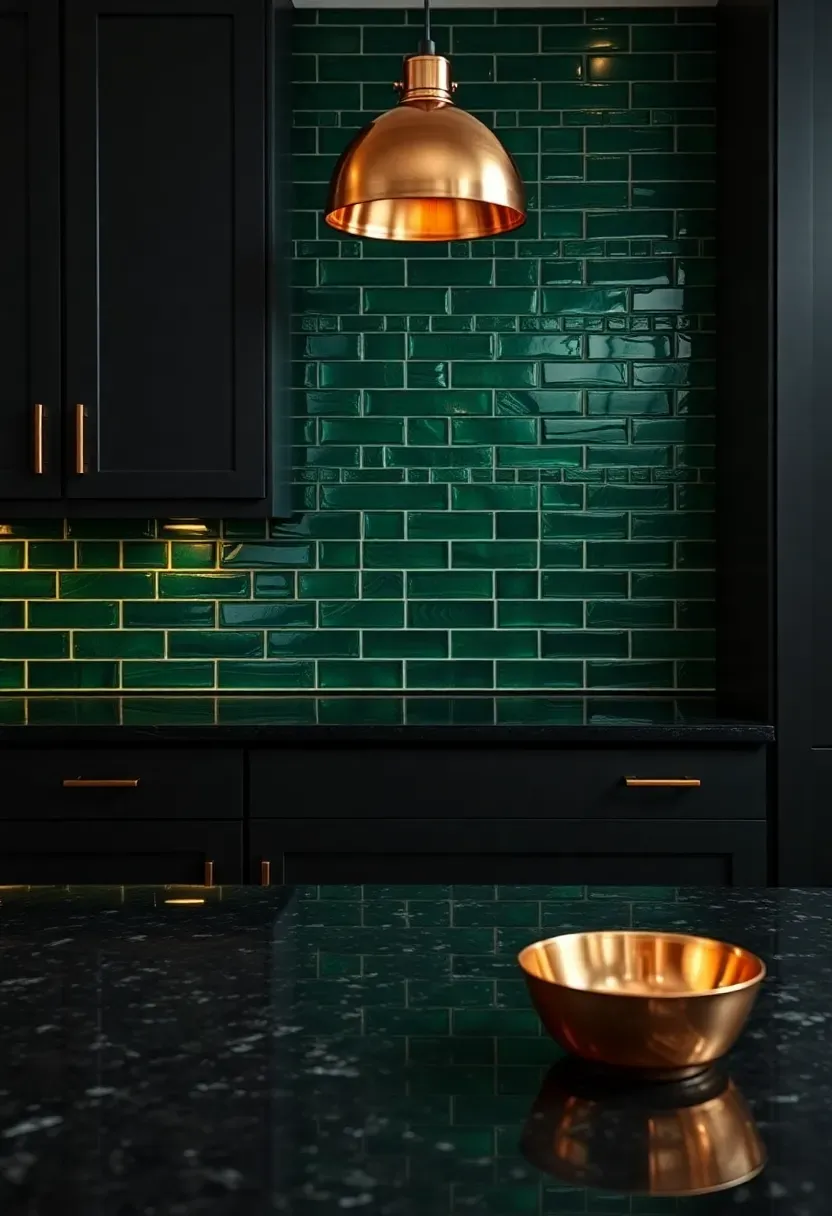
12. Glass Tile in Jewel Tones
Glass tile transmits and reflects light differently than ceramic. A deep emerald, sapphire, or ruby-toned glass backsplash changes appearance throughout the day as natural light shifts. Under-cabinet LED lighting amplifies this effect dramatically at night.
Why it costs what it costs
Glass tile ranges from $10 to $60 per square foot. The material itself is not expensive — the cost comes from manufacturing precision (glass cracks if cut poorly), specialized installation adhesive (white thin-set shows through translucent glass, so you need a specific product), and the slower installation pace glass demands.
Tips
- Use white or light gray thin-set only — dark adhesive colors show through and muddy the glass color
- Glass is non-porous, so grout staining is not an issue, but it shows fingerprints and water spots more than ceramic
- Avoid glass behind a commercial-style range that throws heavy heat — thermal shock can crack individual tiles over time
Recommended
Items for this idea
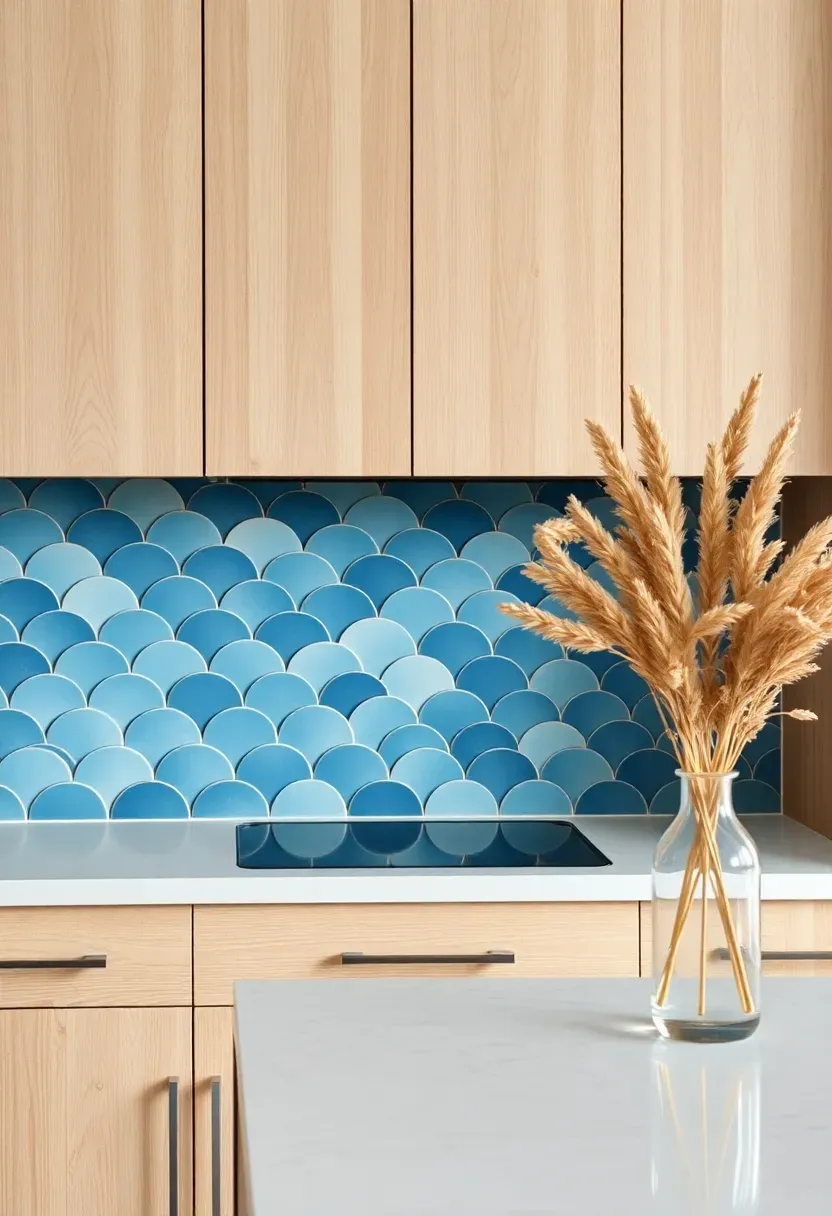
13. Fish Scale (Fan) Tile
Fan-shaped tiles arranged in overlapping rows create a scalloped, ocean-inspired texture. The shape is inherently decorative, so even a single neutral color produces significant visual impact. Blue and green gradients — darker at the bottom, lighter at the top — are a popular approach for coastal kitchens.
Installation basics
- Start from the bottom row. Each subsequent row overlaps the row below, so the bottom edge of each fan tucks behind the top curve of the fan beneath it.
- The curved shape means uneven grout widths. Use unsanded grout for joints under 1/8-inch and sanded for wider joints.
- Edge cuts along cabinets and corners require a wet saw with a fine blade. The curves make cuts trickier than straight-edged tile.
Watch out
- Fan tile uses roughly 20% more material than straight-edged formats due to the overlapping layout and curved waste cuts
- Very busy in large areas. Best used as a feature panel rather than wrapping the entire kitchen
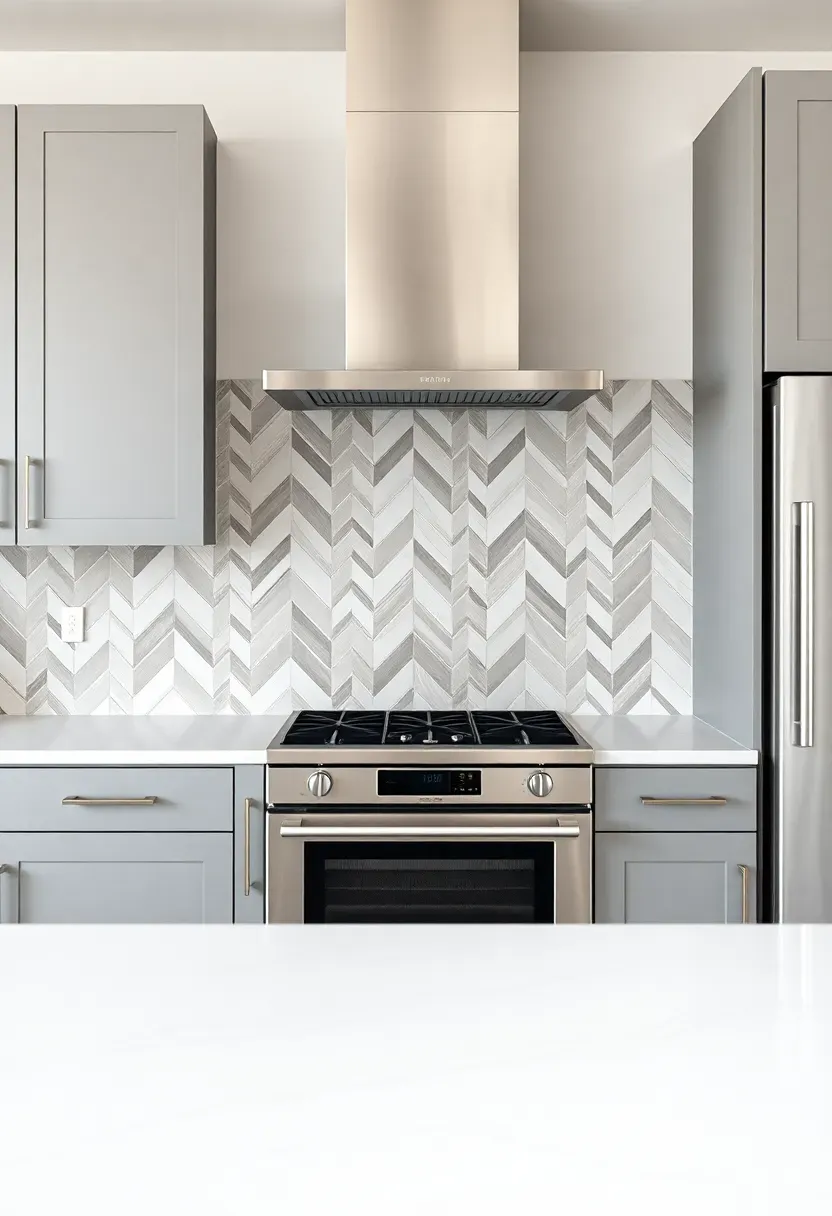
14. Chevron Pattern Porcelain
Chevron tiles are parallelogram-shaped pieces that meet at a center point to form continuous V-shapes. Unlike herringbone (where rectangular tiles alternate direction), chevron creates a sharper, more directional zigzag. The pattern adds energy and movement to an otherwise static wall.
Chevron vs. Herringbone
| Detail | Chevron | Herringbone |
|---|---|---|
| Tile shape | Parallelogram (angled ends) | Rectangle (square ends) |
| Pattern | Continuous V-shapes | Staggered L-shapes |
| Cut waste | Higher | Lower |
| Visual effect | More directional, modern | Classic, woven texture |
| Difficulty | Harder to align | Moderate |
Recommendation
Pick chevron when you want the pattern to read as deliberately graphic. Pick herringbone when you want movement without the sharpness.
Recommended
Items for this idea
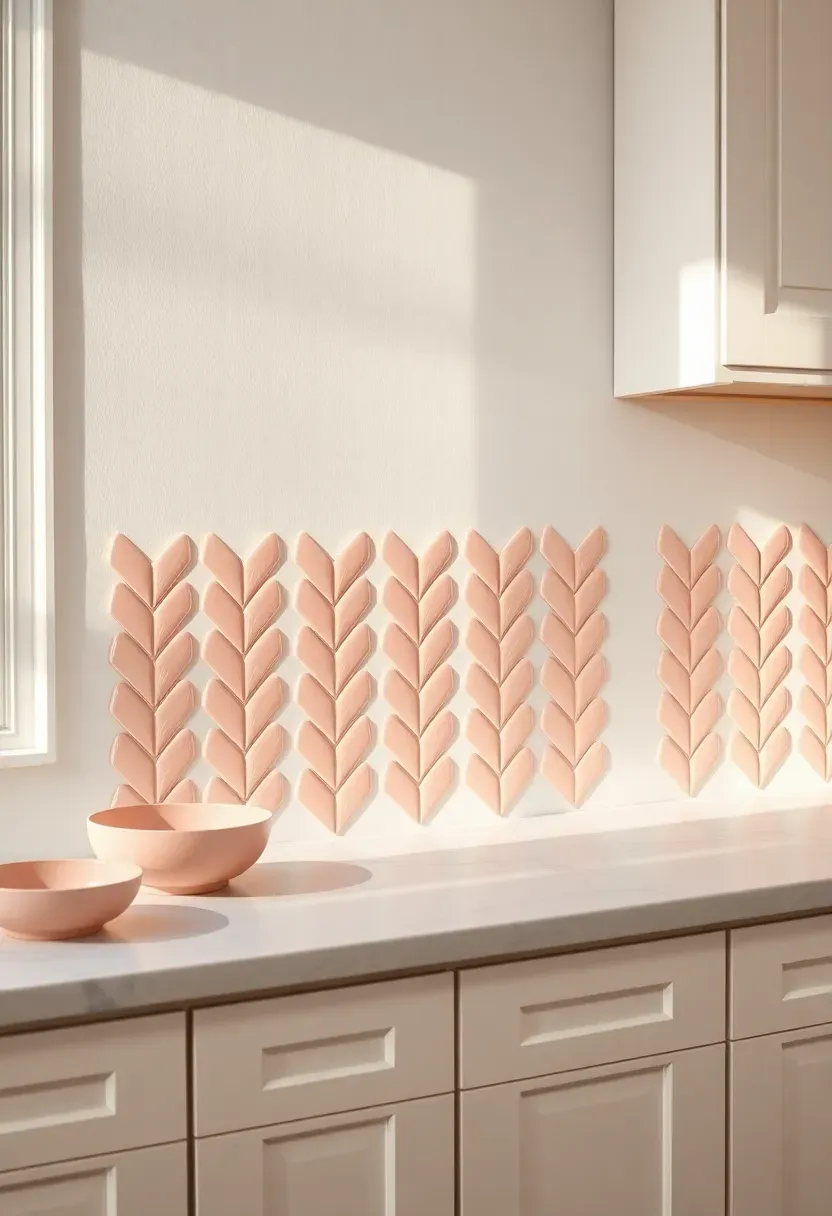
15. Picket (Arrow) Tile
Picket tiles are elongated hexagons — pointed at both ends like a fence picket. Installed vertically, they create a rhythmic, arrow-like pattern. The shape is distinctive enough to hold attention but not so complex that it overwhelms. Glossy glazes in soft colors (blush, celadon, pale blue) work particularly well.
Tips
- Vertical installation elongates the wall and draws the eye upward
- Horizontal picket layouts exist but tend to read as busier and less cohesive
- Grout color matters more here than with simpler shapes — the points of each tile create tight joints where grout color is highly visible
16. Natural Slate Split Face
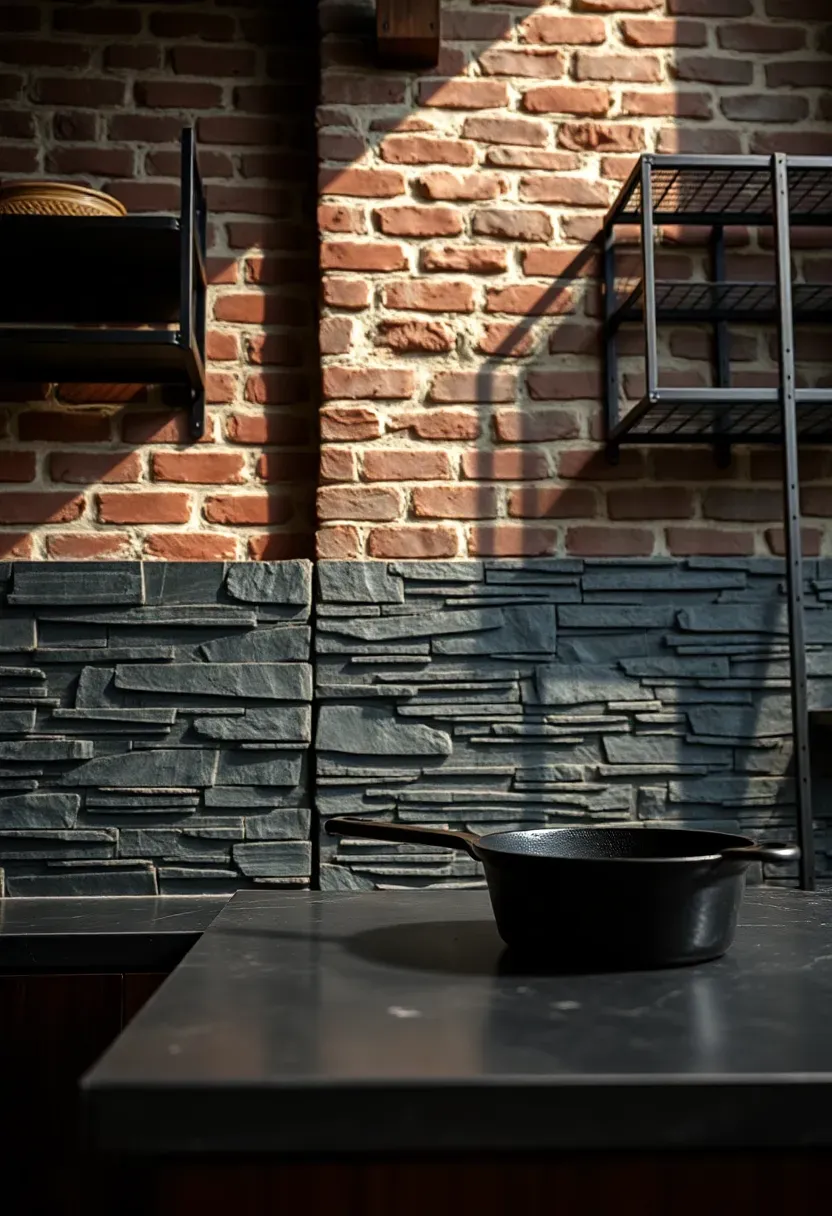
Split-face slate is cleaved along its natural grain to expose a rough, layered surface. The result is a highly textural wall with real depth — some areas protrude half an inch or more from the substrate. This is not a subtle backsplash. It suits industrial, rustic, and mountain-lodge kitchens where raw materials are the design language.
The practical tradeoff
That rough surface is gorgeous but terrible to clean. Grease, sauce splatters, and dust settle into every crevice. Behind a stove, this material becomes a maintenance headache within months. It works better flanking the stove — behind a sink, next to a window, or on a wall without direct cooking exposure.
Tips
- Seal with a matte-finish impregnating sealer to resist staining without adding unwanted sheen
- Use ledger-style panels (pre-mounted interlocking strips) for faster installation than individual stone pieces
- Pair with simple, flat-surface cabinets to avoid visual competition
Recommended
Items for this idea
17. Arabesque Lantern Tile
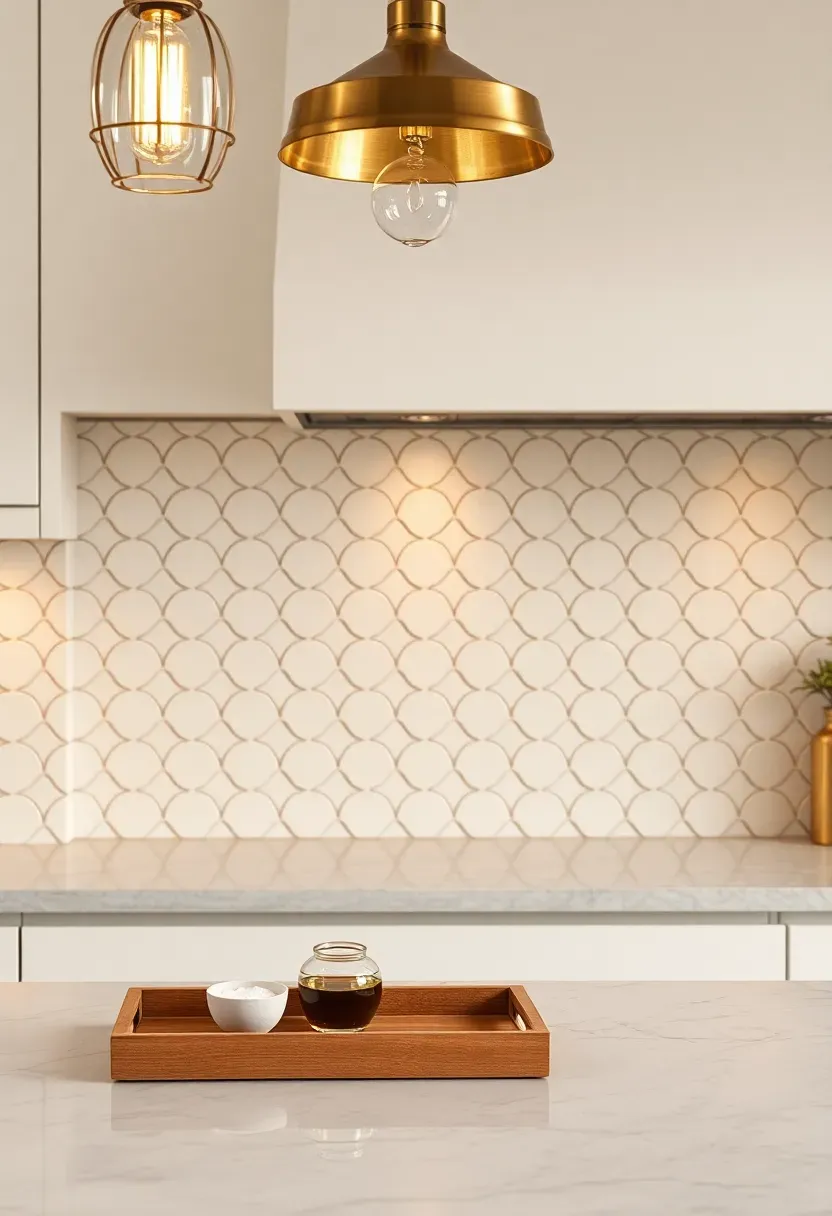
The arabesque shape — a curving, lantern-like silhouette — references Islamic geometric art. Each tile interlocks with its neighbors to form a continuous pattern of flowing curves. In a solid color with contrasting grout, the shape does all the work. No pattern mixing needed.
Origins and modern use
Arabesque tile geometry has roots in North African and Moorish architecture dating back to the 8th century. The form migrated into Western interior design through Mediterranean revival homes in the early 1900s and saw a major Pinterest-driven resurgence around 2015. It remains popular because the shape is instantly recognizable but not overdone.
Apply at home
- White or cream arabesque with gray grout is the safest choice and works in transitional, farmhouse, and Mediterranean kitchens
- Bold colors (navy, forest green, black) in this shape make a strong statement — limit the area to prevent visual fatigue
- The curved grout lines are harder to clean than straight ones; use epoxy grout if installing near the cooktop
18. Square Stacked Glossy Ceramic
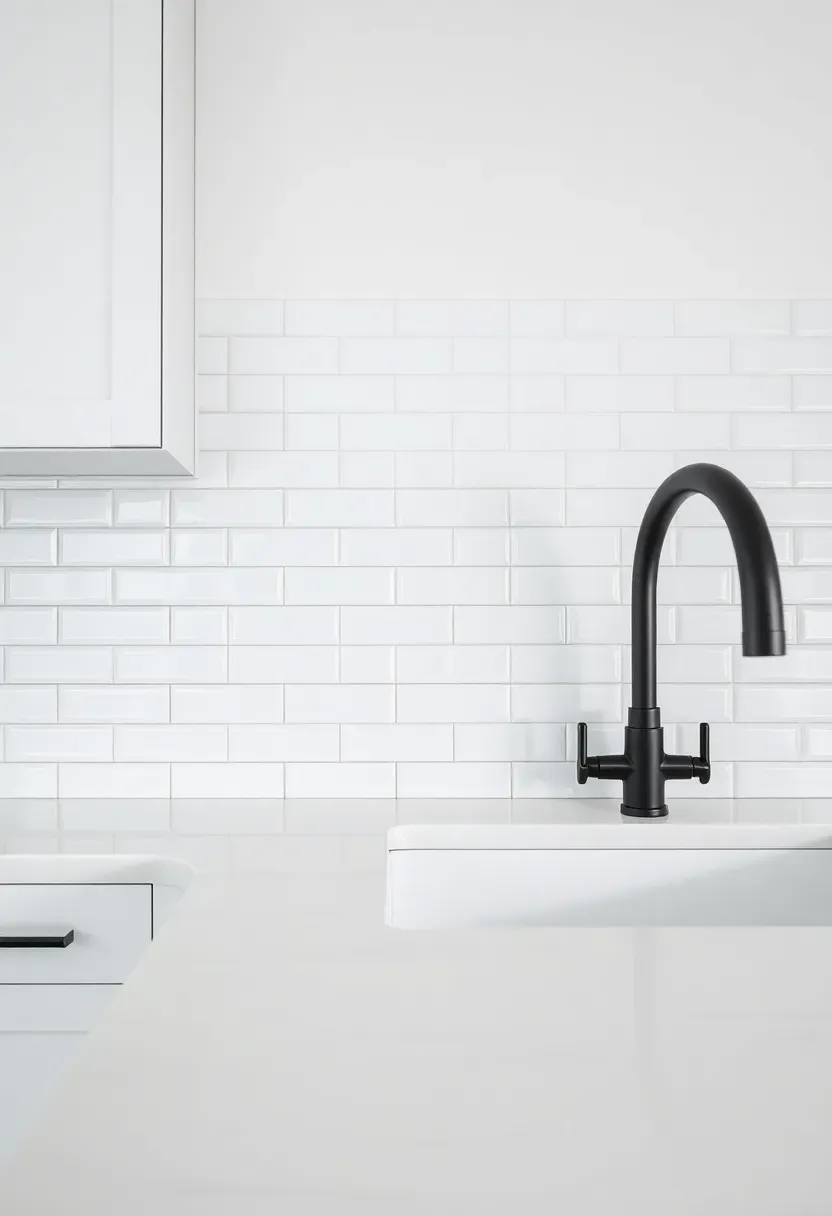
4x4-inch or 6x6-inch glossy ceramic tiles installed in a straight stack bond grid. Nothing fancy. The gloss reflects light, the square format reads as orderly, and the simplicity lets other elements in the kitchen — a statement range, open shelving, a bold countertop — take center stage.
Why it works for rentals and flips
Square ceramic tile is the cheapest backsplash option that still looks intentional. At $1 to $3 per square foot, you can tile an entire kitchen backsplash for under $100 in materials. Installation is fast because there are no complex cuts or pattern alignment issues. For landlords and house flippers, this is the rational choice.
Tips
- A slightly off-white or warm white (like Daltile's Arctic White) looks richer than pure bright white under kitchen lighting
- Glossy surfaces show every imperfection in the wall beneath — skim coat uneven drywall before tiling
- Colored grout (charcoal, navy, terracotta) can make a basic square tile look surprisingly designed
Recommended
Items for this idea
19. Terrazzo-Look Porcelain
Porcelain tiles printed to mimic terrazzo — the composite material made from chips of marble, granite, quartz, and glass set in concrete. Real terrazzo requires professional pouring and grinding. Porcelain versions give you the speckled, confetti-like appearance at a fraction of the cost and with zero maintenance beyond normal cleaning.
Pros and Cons
Pros: no sealing required; consistent pattern across tiles; available in large formats that reduce grout lines; handles heat and moisture without issue
Cons: the pattern repeats if you look closely, which real terrazzo never does; lacks the depth and texture of genuine poured terrazzo; printed surfaces can look flat in certain lighting
Choose if
- You like terrazzo's playful, colorful character but not its price tag ($25-80/sq ft installed for real vs. $5-15 for porcelain)
- Your kitchen has simple cabinets that benefit from a backsplash with some visual energy
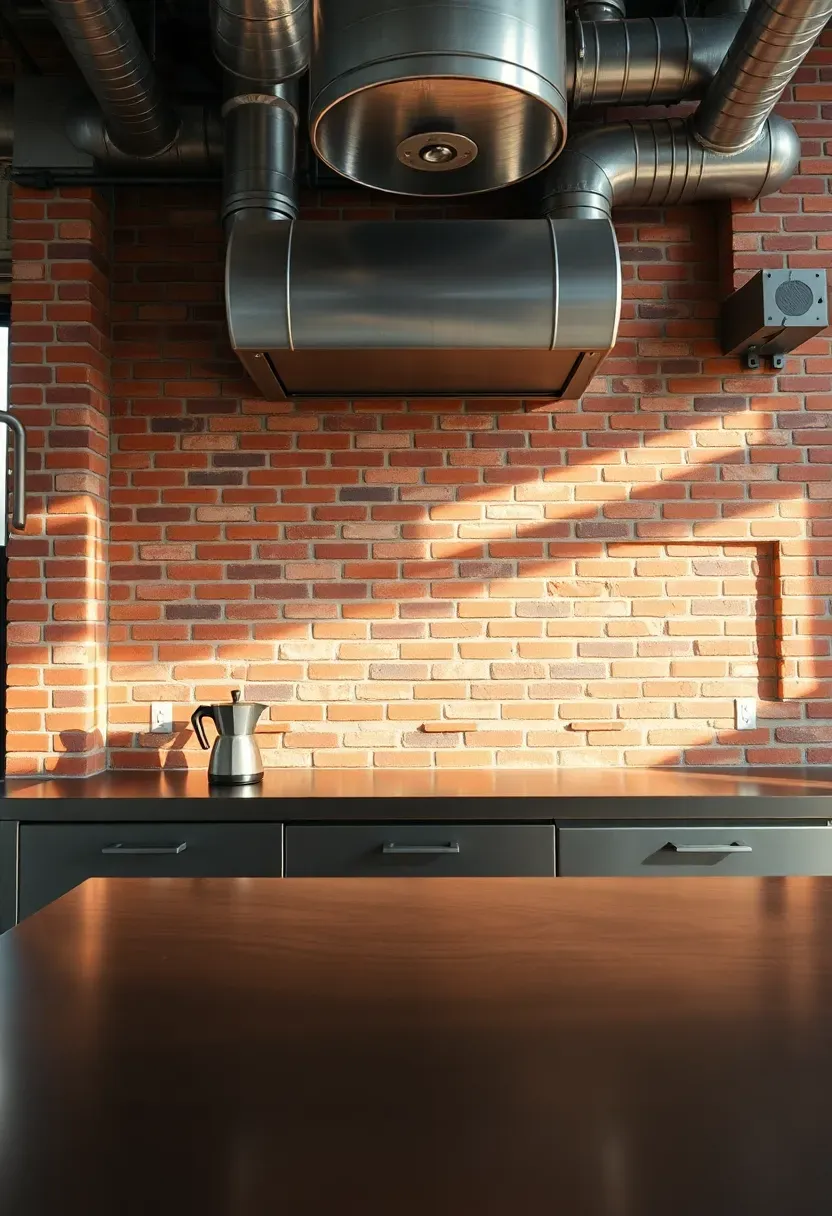
20. Skinny Brick Tile
Thin-cut brick veneer — about half an inch thick — applied directly to the wall like tile. It brings the texture and warmth of exposed brick without the structural requirements of a full masonry wall. Colors range from classic red to whitewashed, charcoal, and blond.
Step by step
- Apply a scratch coat or use a cementitious backer board as the substrate. Brick veneer is heavier than ceramic tile and needs a solid bond.
- Butter the back of each brick and the wall surface for full adhesive coverage. Gaps in adhesive behind brick can trap moisture.
- Use brick spacers or a story pole to keep courses level. Unlike ceramic tile, thin brick often has slight size variation that compounds row by row.
Watch out
- Porous surface absorbs stains and grease. Seal with a masonry sealer before use, especially near the stove.
- Cutting thin brick produces a lot of dust. Use a diamond blade wet saw, not a tile nipper.
Recommended
Items for this idea
21. Diamond Pattern Marble
Standard square marble tiles rotated 45 degrees to sit on-point. The diamond orientation adds formality and makes the backsplash look more considered than a straight grid of the same material. This is a classic treatment in traditional and transitional white kitchens.
Tips
- The 45-degree rotation creates triangular cuts at every edge and corner. Budget for 15-20% waste.
- Smaller tiles (4x4 or smaller) in diamond layout look busy; 6x6 or larger reads as elegant.
- Polished marble in diamond layout can read as a bit much — honed marble softens the formality.
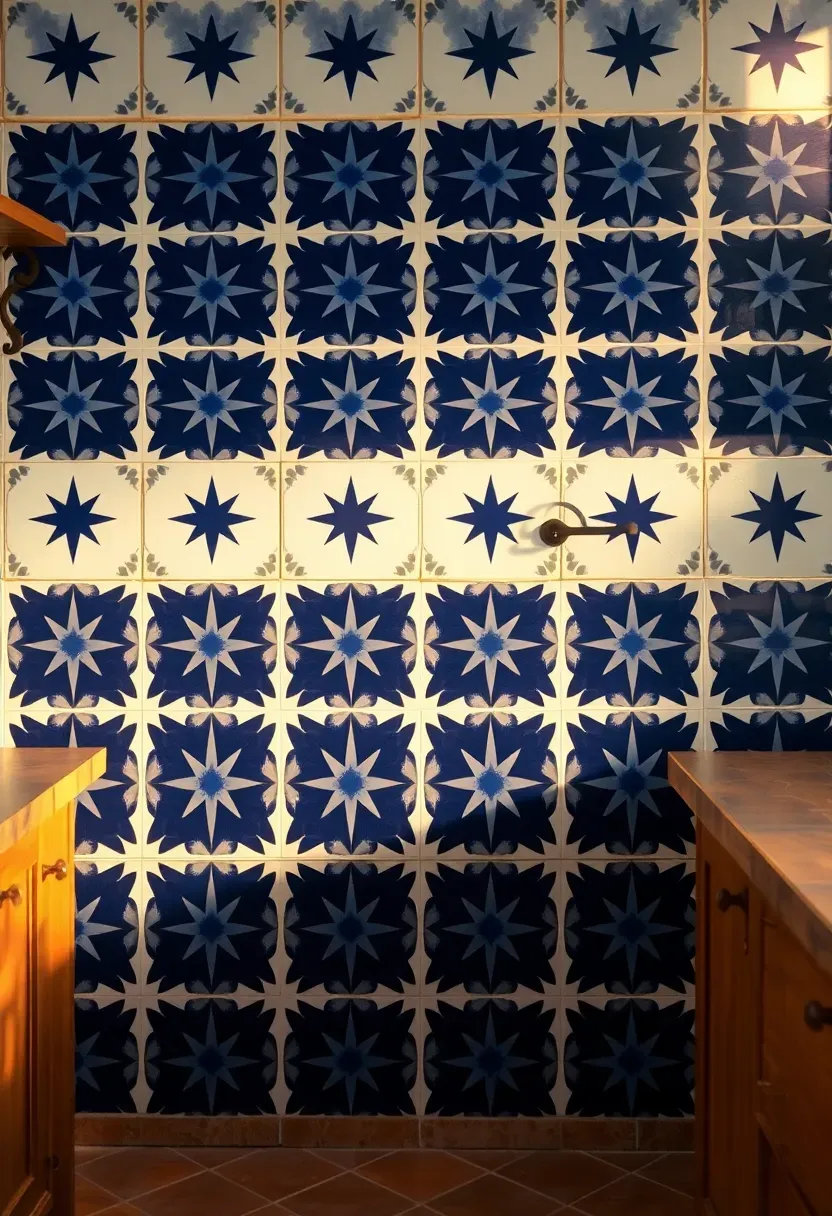
22. Star and Cross Ceramic
A two-piece pattern where star-shaped tiles alternate with small cross-shaped tiles to form a continuous geometric grid. The interplay between the two shapes creates a rhythmic, almost textile-like surface. This pattern shows up in historic Spanish, Portuguese, and Moorish architecture.
Origins and modern use
The star-and-cross arrangement dates to medieval Islamic tiling, where geometric precision substituted for figurative imagery in sacred spaces. It entered domestic European architecture through Moorish Spain and has persisted in Mediterranean-influenced design ever since. Modern versions come in porcelain and cement, with two-tone color combinations being the most popular approach.
Apply at home
- Two-tone versions (dark stars, white crosses) create the strongest graphic impact
- Monochrome versions in a single glaze color let the geometry show through shadow and grout lines alone
- This pattern has a lot of grout — consider a grout color that nearly matches the tile for a quieter effect
Recommended
Items for this idea
23. Fluted or Ribbed 3D Tile
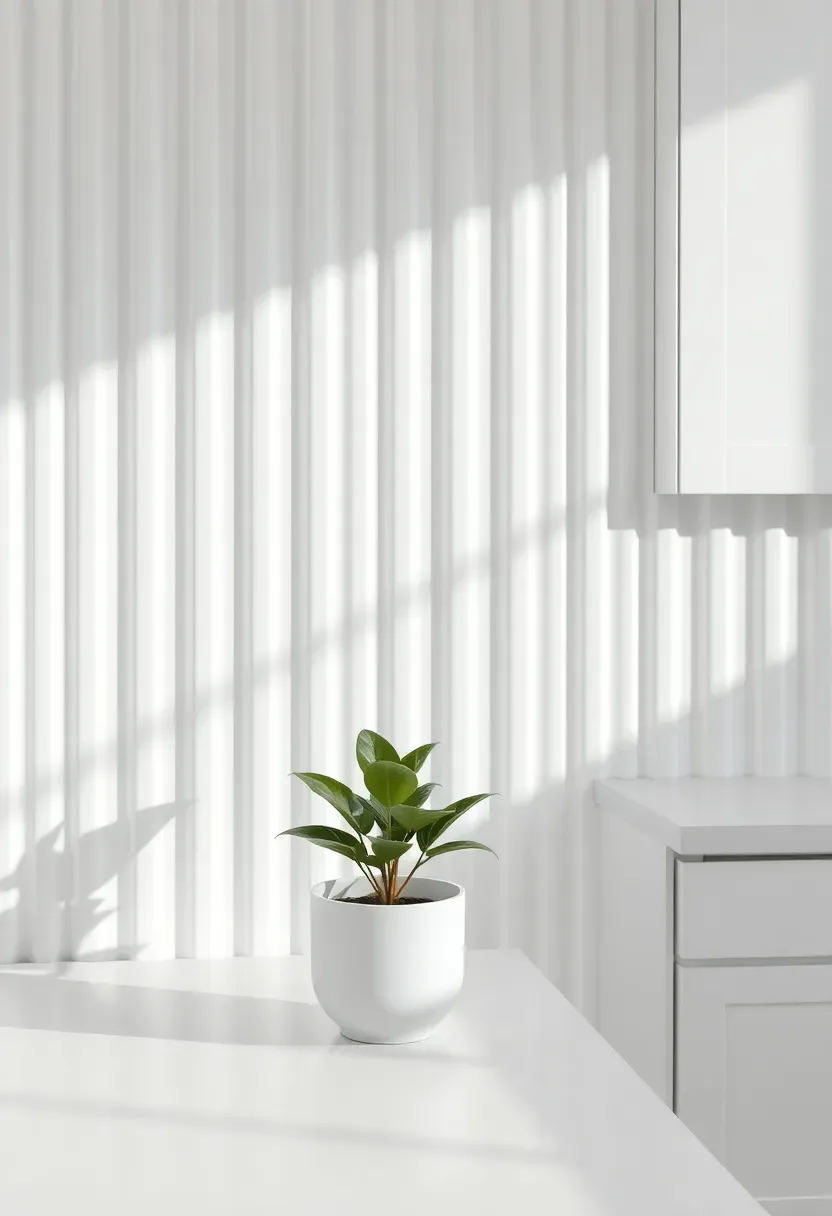
Three-dimensional tiles with parallel vertical ridges — like a ceramic version of fluted plaster or reeded glass. The ridges catch light and cast micro-shadows that change throughout the day. The effect is architectural and tactile without relying on color or pattern.
Pros and Cons
Pros: adds depth and interest to monochrome kitchens; the texture makes simple white tile look expensive; pairs well with other fluted elements like reeded cabinet fronts or channeled range hoods
Cons: the grooves collect grease and dust over time — cleaning requires a brush rather than a flat wipe; not ideal directly behind the stove where splatter is heaviest; installation on uneven walls requires extra thin-set buildup
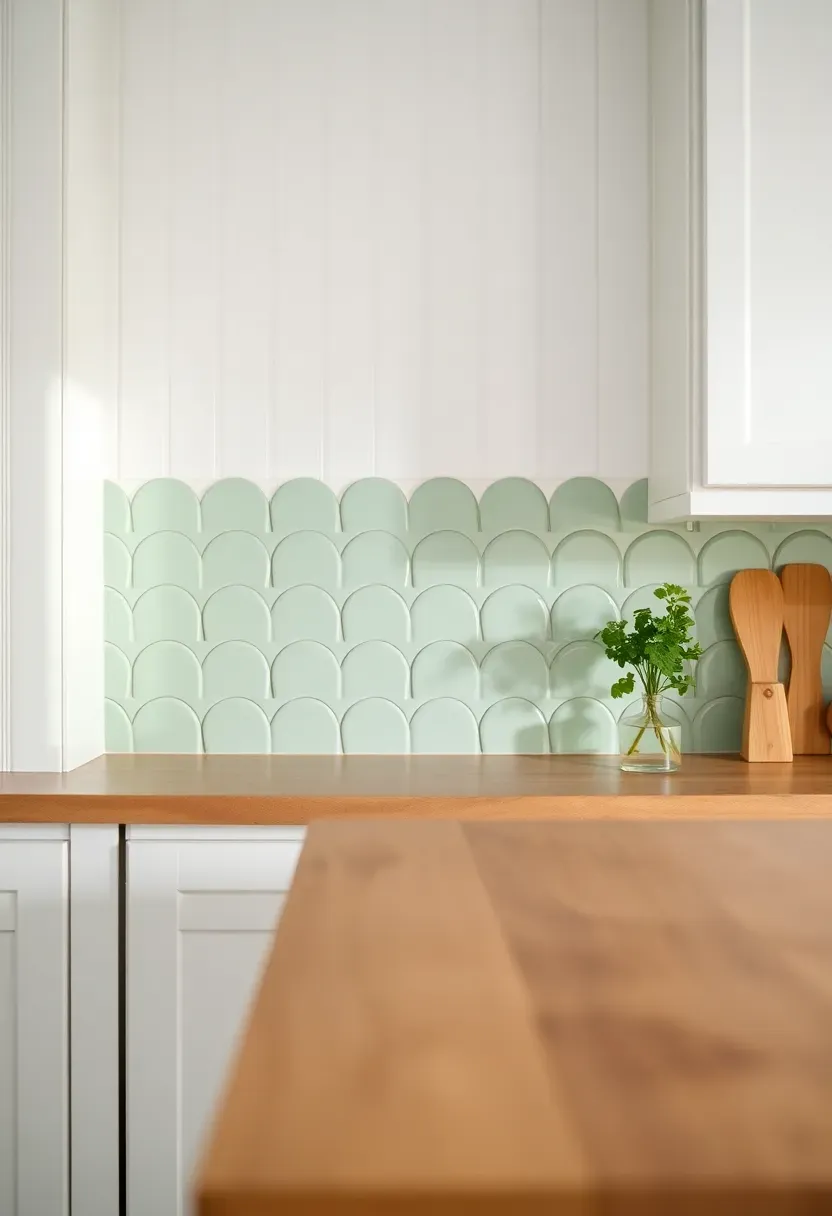
24. Scalloped Edge Tile
Similar to fish scale but with a softer, more rounded profile — like overlapping seashells. The scalloped shape reads as whimsical and slightly feminine, which makes it popular in cottage, coastal, and pastel-toned kitchens. Mint, soft coral, lavender, and butter yellow are common color choices.
Tips
- The curved bottom edge of each tile creates a dimensional shadow line that adds visual interest even in a single color
- Pair with simple white cabinets and natural wood to let the tile shape carry the room
- Scalloped tile is harder to cut than rectangular formats — expect higher installation labor costs
Recommended
Items for this idea
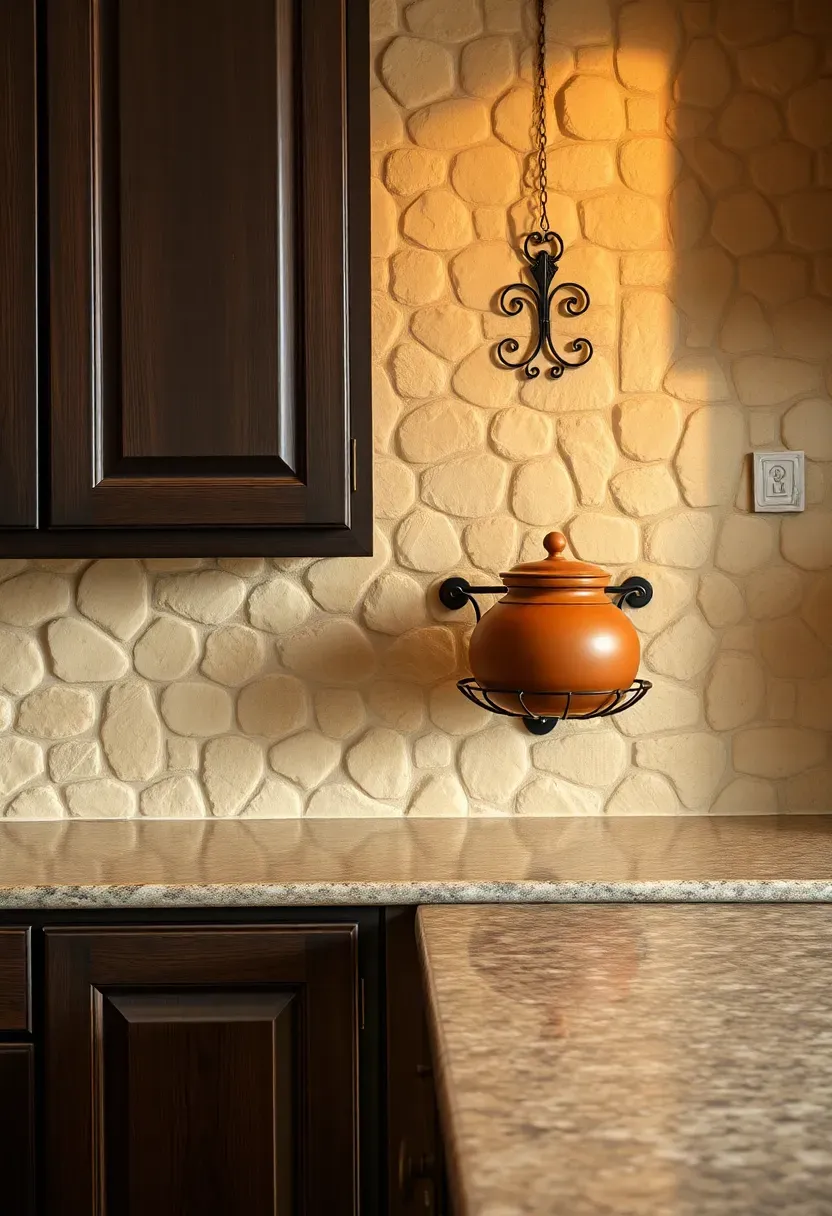
25. Tumbled Travertine
Travertine is a form of limestone deposited by mineral springs. The tumbling process rounds the edges and exposes the stone's natural pitting — small holes and indentations that give each tile a weathered, ancient quality. Ivory, walnut, and gold are the standard color range.
Maintenance reality
Travertine is softer and more porous than marble or granite. It requires sealing upon installation and annually thereafter. Acidic substances — lemon juice, vinegar, tomato sauce — will etch the surface on contact if the sealer has worn through. This is not a low-maintenance material.
Choose if
- You want a backsplash that looks like it belongs in a centuries-old Italian farmhouse
- You are comfortable with a maintenance routine that includes annual resealing
- Your kitchen design uses warm, natural materials throughout
Skip if
- You cook with a lot of acidic ingredients and are not diligent about cleaning splashes immediately
- You prefer surfaces that stay looking new rather than developing patina
Quick FAQ
Which backsplash tile is easiest to keep clean? Large-format porcelain slab (idea #5) wins by a wide margin. Fewer grout lines means less surface area for grease and grime to accumulate. Glossy ceramic in any simple shape is the runner-up.
Can I install backsplash tile over existing tile? Yes, if the existing tile is well-bonded, flat, and the wall can support the added weight. Rough up the old surface with 80-grit sandpaper, apply a bonding primer, and use a high-quality modified thin-set. It is not ideal but it works for budget renovations.
How high should a kitchen backsplash go? Standard height is 4 inches above the countertop, but the current preference is 18 inches (to the bottom of upper cabinets) or full height to the ceiling. Taller backsplashes protect more wall surface and make the kitchen feel more finished.
Does backsplash tile need to match the countertop? No. Matching creates a coordinated look, but contrasting the backsplash against the countertop often produces a more interesting result. The key is picking materials that share at least one tone or texture element so they relate without being identical.
Are peel-and-stick backsplash tiles worth it? For renters, absolutely. For homeowners, they are a temporary fix at best. Peel-and-stick tiles do not bond as permanently as thin-set, cannot handle direct heat exposure, and tend to peel in humid environments within a few years.
Your backsplash does not need to be complicated to look good. Some of the best kitchens in this collection use a single white tile in a single pattern — the difference is in the grout color, the layout orientation, and knowing when to stop. Pick one idea from this list, commit to it, and resist the urge to combine three different tiles on the same wall. Restraint is usually the better design move.
Pinterest cover for 25 Backsplash Tile Ideas for Every Kitchen Style
About the author
OBCD
CGI visualization and interior design content. We create detailed 3D renders and curate practical design ideas for every room in your home.