21 Japandi Bedroom Textile Ideas That Feel Cozy and Chic

Japandi bedroom textile ideas help you build a cozy, chic retreat by using natural fibers like linen, wool, and cotton gauze as the main design structure. These layered looks rely on tone, weave, and soft light so the room feels calm and cohesive without permanent changes -- perfect for renters and small apartments.
Below you will find 21 cozy japandi bedroom fabric and textile layouts, each designed as a whole-room plan rather than a simple accessory swap. Every idea includes placement tips, budget notes, and renter-friendly alternatives so you can adapt it to your space on any budget.
Quick FAQ
Which japandi bedroom textile ideas feel most timeless?
Stick to low profiles, natural fibers, and a tight neutral range. Linen, wool, and matte cotton age well and keep the look calm.
How do I keep a textile-led japandi bedroom from looking busy?
Limit textures to two or three families and keep the colors within two shades. Let one textile be the hero and keep the rest understated.
Which fabrics work best for a cozy japandi bedroom?
Stonewashed linen, soft wool, and cotton gauze deliver warmth without shine. They also drape well on low, minimal furniture.
Should I mix patterns in a japandi bedroom textile plan?
Yes, but keep patterns subtle and low contrast. Use one muted weave or stitch line and keep the rest solid.
What lighting keeps textiles looking warm at night?
Use warm 2700K bulbs with diffused shades. Soft side lighting shows texture without harsh shadows.
As an Amazon Associate I earn from qualifying purchases.
Table of Contents
- 1. Stonewashed linen canopy with low platform layout
- 2. Cotton gauze wall drapery to soften the bed zone
- 3. Boucle headboard wall paneling for quiet texture
- 4. Herringbone wool rug grid to zone sleep and dressing
- 5. Slub cotton bedding with tonal quilted spread
- 6. Ramie curtain panels that mimic shoji light
- 7. Felted wool bench nook at the bed end
- 8. Woven jute runner and floor mat pairing
- 9. Tussar silk accent pillows for subtle sheen
- 10. Stonewashed linen slipcovered storage bench wall
- 11. Cotton gauze canopy divider for a reading corner
- 12. Boucle upholstered closet fronts with hidden pulls
- 13. Herringbone wool layered rug plus matte oak frame
- 14. Slub cotton duvet with contrast piping
- 15. Ramie textile art grid as headboard alternative
- 16. Felted wool acoustic panels for calm sleep
- 17. Woven jute and linen tatami-style mat layout
- 18. Tussar silk throw to add chic warmth
- 19. Stonewashed linen bed skirt to soften low storage
- 20. Cotton gauze layered curtains for light control
- 21. Boucle floor cushion lounge zone
1. Stonewashed linen canopy with low platform layout
A textile-led japandi bedroom feels grounded when a stonewashed linen canopy frames a low platform bed. Keep the canopy rails around 80 inches high so it reads airy, not heavy. The linen softens the ceiling line and makes the layout feel intentional instead of styled. For contrast, skip glossy curtains and use matte linen instead. This sets a calm base for the rest of the room.
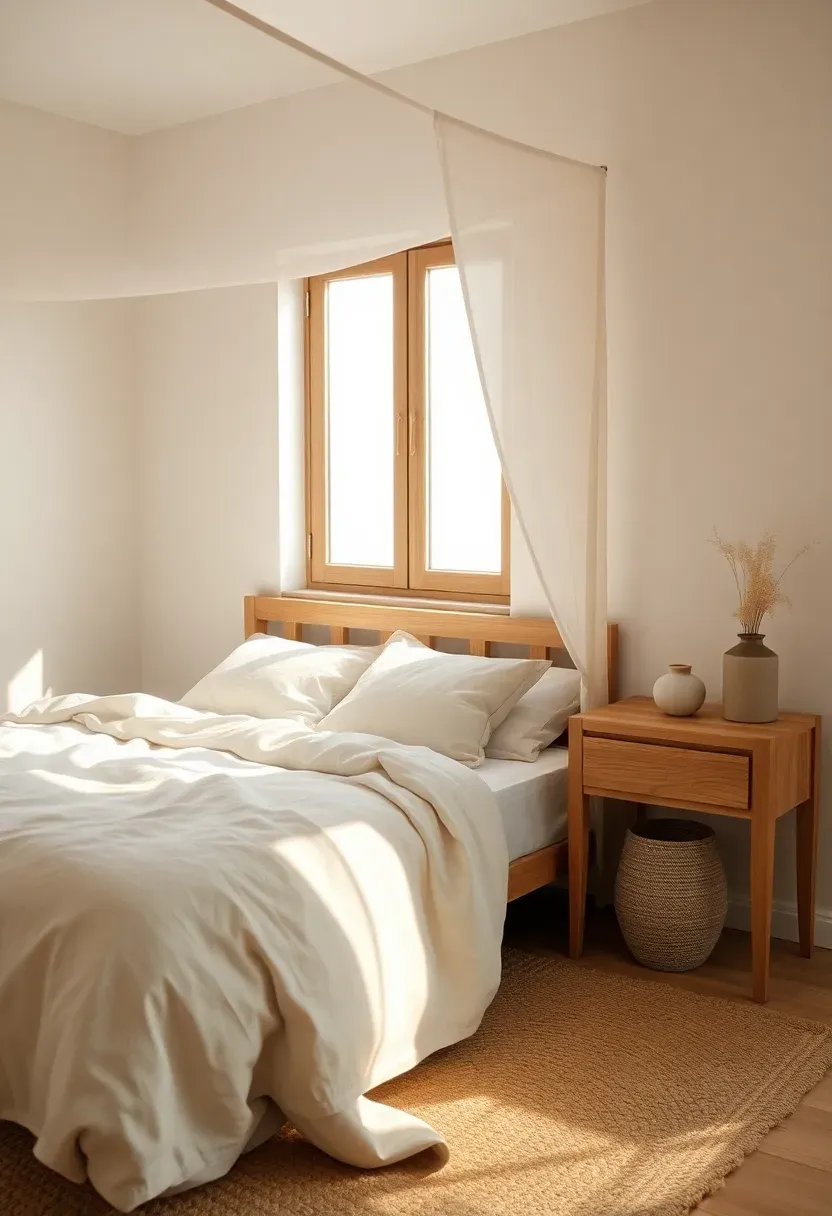
Pair the canopy with a 7x10 woven jute rug to widen the bed zone and warm the floor. Add one light oak nightstand and a paper lantern to keep the scene balanced and softly lit at 2700K. The trade-off is less wall space for art, so keep decor minimal and let texture lead. A slim bench in matching oak keeps circulation clear at 28 inches from the bed edge.
Tips
- Do: keep the canopy fabric slightly loose for soft folds.
- Don't: pair this with shiny satin bedding.
- Do: anchor the canopy to a simple wood frame.
Best for: rooms that need softness without adding bulky furniture.
What this gives you: a calm, grounded focal point with layered texture.
We picked a few things that go well with this idea: Simple&Opulence French Linen Duvet Cover Set (★4.5), BFS HOME Stonewashed Linen Duvet Cover King (★4.2) and BFS HOME Stonewashed Linen Duvet Cover Queen (★4.2). As an Amazon Associate we earn from qualifying purchases.
2. Cotton gauze wall drapery to soften the bed zone
A japandi bedroom textile plan feels softer when the bed wall is wrapped in cotton gauze drapery rather than painted art. The gauze filters daylight and turns the whole wall into a quiet backdrop. Hang panels so they finish 1 inch above the floor to keep the line clean. For contrast, avoid heavy velvet and keep the weave airy. This move makes the room feel taller without adding furniture.
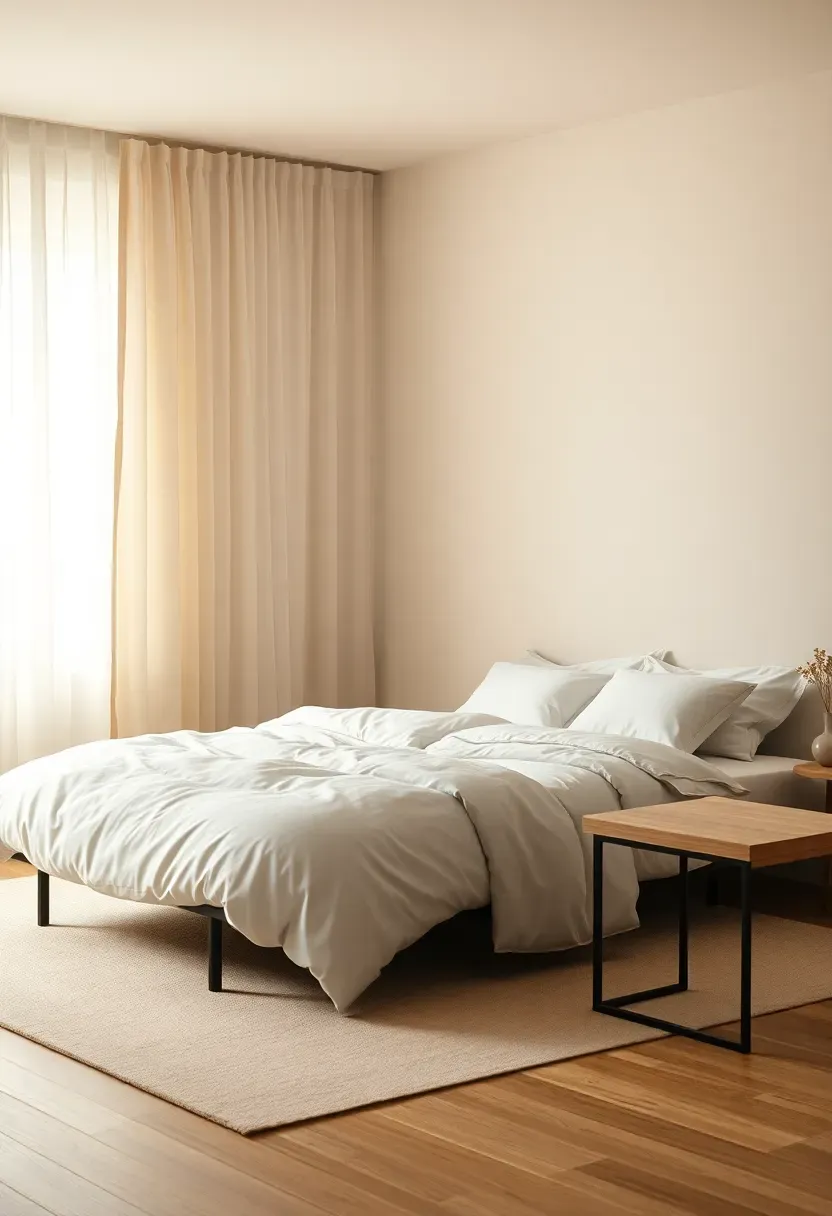
Placement note: Mount the track 8 inches out from the wall so the drape reads as a layer.
Use a double track so you can pull fabric aside during the day and let the wall breathe. The trade-off is more fabric to launder, so plan on a gentle wash every two to three months. A single matte black sconce keeps the wall from feeling too soft while staying minimal. Keep bedding in oatmeal tones so the drape stays the hero.
For a cleaner modern base, see 17 Modern Japandi Bedroom for a Cozy and Stylish Space and adapt the wall layering.
Tips
- If the room is narrow, then choose a lighter gauze weight.
- If you want more privacy, then add a second inner layer.
- If the wall feels flat, then add a thin wool rug to balance it.
What this gives you: a tall, soft backdrop that calms the bed zone.
We picked a few things that go well with this idea: Handcrafted Herringbone Wool Area Rug (9x12) (★4.2), Handcrafted Herringbone Wool Area Rug (4x6) (★4.2) and Beige Taupe Herringbone Wool Area Rug (9x12) (★4.0). As an Amazon Associate we earn from qualifying purchases.
3. Boucle headboard wall paneling for quiet texture
A japandi bedroom textile scheme can still feel sleek when you add a boucle headboard wall panel instead of a bulky upholstered bed. Keep the panel height at 48 inches so it frames the pillows without dominating. The tight loop texture adds warmth while staying matte. For contrast, skip glossy leather and choose boucle instead. This keeps the palette soft but structured.

Why it works: boucle absorbs light and hides seams, so the wall reads calm and continuous.
Mount the panel on a thin oak rail so it floats 1 inch off the wall. The trade-off is dust in the texture, so vacuum with a soft brush monthly. Pair with a slatted oak nightstand to repeat the rhythm without extra decor. Add one ceramic lamp to keep the scene grounded.
Tips
- Pro: boucle feels warm even in a neutral palette.
- Con: loose loops can snag if you have pets.
- Fix: choose a tighter loop with a sturdy backing.
Budget/Time: $240-$600 and a weekend install.
What this gives you: a soft focal wall that still feels minimal.
We picked a few things that go well with this idea: FUTEI Boucle Textured Pillow Covers (Set of 2) (★4.6), Foindtower Boucle Throw Pillow Covers (2-Pack) (★4.6) and MIULEE Boucle Textured Pillow Covers (Set of 2) (★4.5). As an Amazon Associate we earn from qualifying purchases.
4. Herringbone wool rug grid to zone sleep and dressing
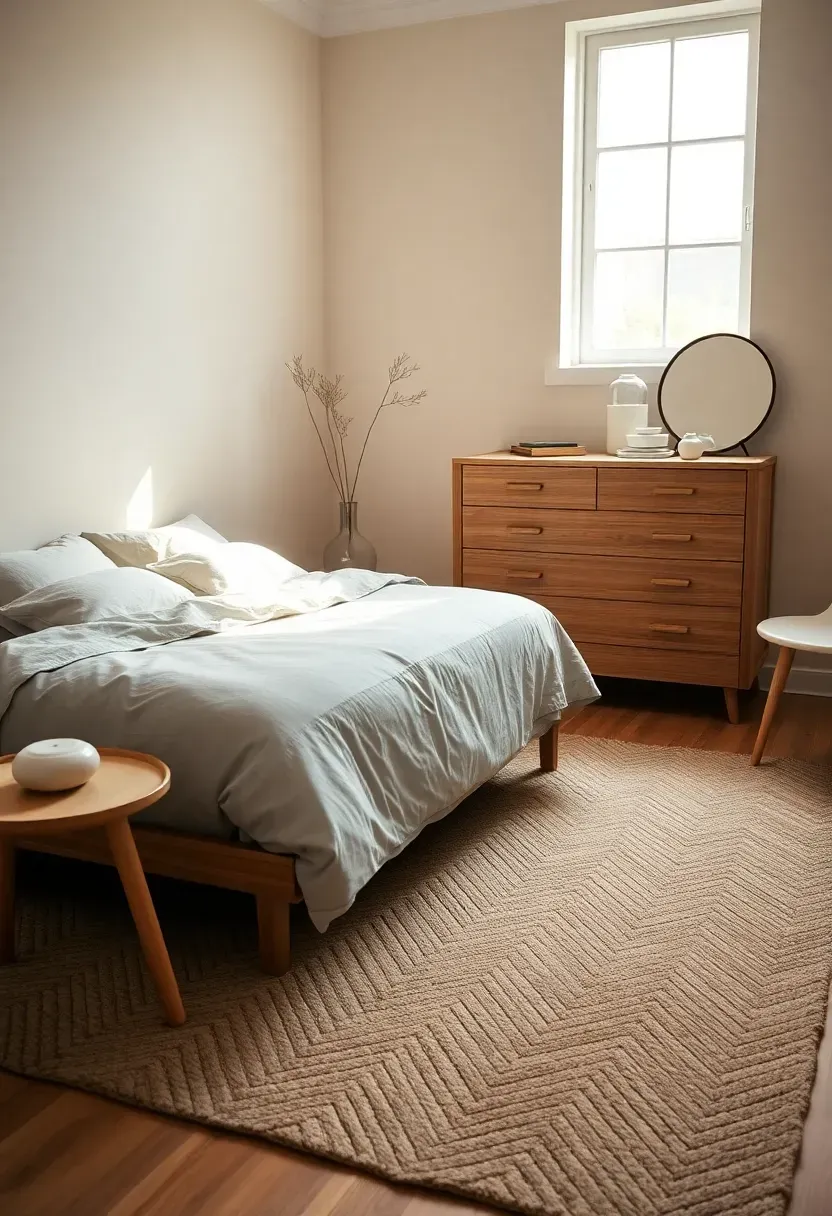
A textile-forward japandi bedroom feels organized when you build a herringbone wool rug grid that defines sleep and dressing zones. Use two rugs, one 8x10 under the bed and a 3x5 at the dresser, to create quiet borders. The herringbone weave brings subtle pattern without busy contrast. For contrast, avoid shag and stick to flatweave wool. This keeps the look crisp and grounded.
Recommended
Items for this idea
Common mistake: aligning both rugs to different axes, which makes the room feel skewed.
Square the bed rug to the longest wall and align the smaller rug to its edge so the layout reads intentional. The trade-off is less visible floor, so keep the wood tone light to maintain airiness. A slim oak dresser and a linen runner on top keep the palette calm. Add a 1/2-inch felt pad to reduce rug movement.
Tips
- Use rug tape at the corners to keep edges crisp.
- Rotate the smaller rug every season to even wear.
- Vacuum along the herringbone line for a neat finish.
What this gives you: a clear layout that feels calm and intentional.
5. Slub cotton bedding with tonal quilted spread
Japandi bedroom textile ideas feel most cohesive when slub cotton bedding sets the tone for the entire palette. Choose a slub cotton duvet in warm sand so the subtle texture reads from across the room. Keep the bed frame low and the headboard simple to let the textile lead. For contrast, avoid bright white sheets and use creamy ivory instead. This keeps the room quiet and warm.
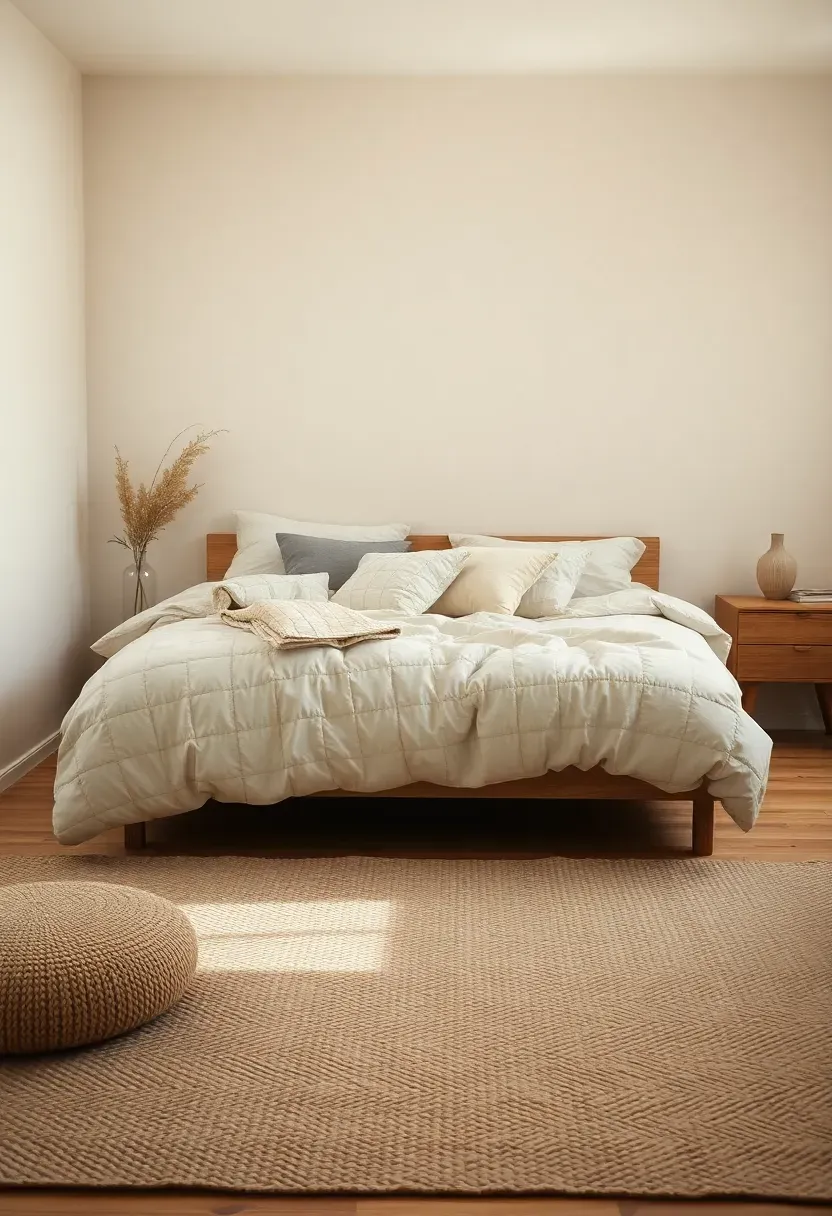
Layer a tonal quilted coverlet to add depth without introducing new colors. A 14-inch high platform bed keeps the stack looking tidy rather than bulky. The trade-off is that slub cotton shows wrinkles, so embrace the relaxed look. Add one light oak tray for nightly items and keep decor minimal.
If you want a softer palette companion, see 19 Beige Minimalist Bedroom Ideas: Serene Simplicity for Comfort and Visual Balance and borrow the tonal layering.
Tips
- Do: wash slub cotton on cold to protect texture.
- Don't: stack more than two layers on the bed.
- Do: keep pillow count to three for a clean look.
Rental note: refresh with removable covers instead of reupholstering.
What this gives you: a bed that feels soft, calm, and cohesive.
6. Ramie curtain panels that mimic shoji light
A japandi bedroom textile layout can mimic shoji calm by using ramie curtain panels that glow like Kyoto paper screens. Hang the ramie across a full wall so the window light washes the room evenly. Keep the weave open so the wall feels airy. For contrast, skip blackout velvet and use a light ramie blend instead. This turns a plain wall into a soft architectural layer.

Recommended
Items for this idea
Placement note: Mount the track 4 inches below the ceiling and extend it 12 inches past the window.
Plan for 2.5 times the window width so the folds look generous, not flat. The trade-off is light spill at night, so add a hidden roller shade if you need darkness. Pair with a thin wool rug to keep the room balanced. Keep the rest of the palette in warm bone and light oak.
Tips
- If the light feels harsh, then layer a second ramie panel.
- If you need privacy, then choose a tighter weave.
- If the room feels cool, then add a wool throw at the bed end.
What this gives you: a soft, glowing wall that calms the room.
7. Felted wool bench nook at the bed end
A japandi bedroom textile idea that feels architectural is a felted wool bench nook at the bed end. Use a low bench wrapped in felted wool so it reads soft but structured. Keep the bench height around 18 inches to align with the mattress. For contrast, avoid tufted upholstery and choose clean felt panels instead. This adds function without visual noise.

Why it works: felted wool absorbs sound and adds calm, making the room quieter at night.
Pair the bench with a 24-inch deep rug edge so the foot area feels grounded. The trade-off is lint on felt, so brush it every few weeks. Add a small oak stool nearby for a tray or book. A single linen lumbar pillow keeps the nook inviting without clutter.
Tips
- Pro: felted wool hides seams and looks tailored.
- Con: light colors show dust faster.
- Fix: choose a mid-tone taupe for easy upkeep.
Best for: rooms that need a landing zone without extra storage furniture.
What this gives you: a quiet, functional nook with soft texture.
8. Woven jute runner and floor mat pairing
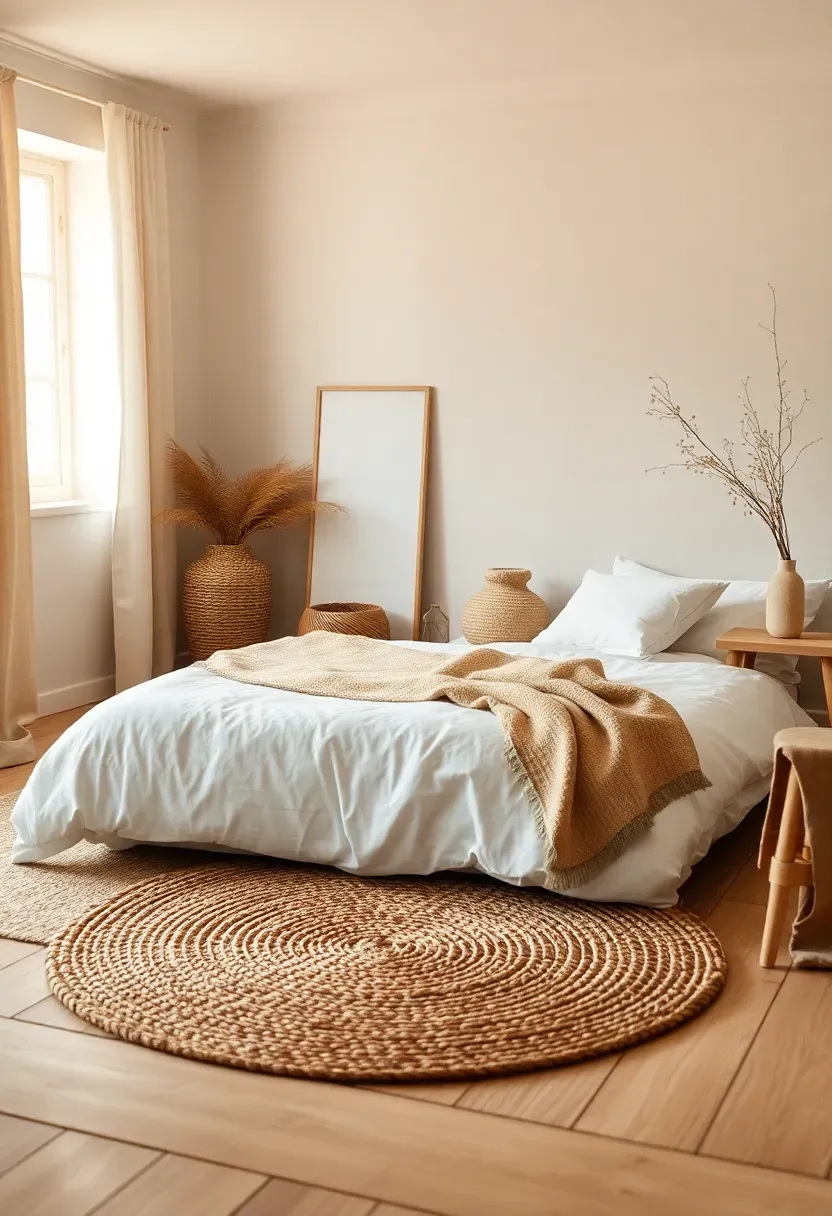
A textile-led japandi bedroom feels stable when a woven jute runner defines the path from bed to closet. Use a 2x8 runner so the walkway feels guided without crowding the bed. The jute adds earthy texture that balances smooth wood. For contrast, avoid glossy sisal and choose matte woven jute instead. This keeps the room grounded and natural.
Recommended
Items for this idea
Common mistake: choosing a runner that is too narrow, which makes the path feel tight.
Aim for at least 24 inches of visible floor on both sides of the runner to keep circulation open. The trade-off is jute shedding at first, so vacuum weekly for the first month. Pair the runner with a soft wool area rug under the bed to soften the mix. Keep nightstands simple and low to maintain the calm line.
Tips
- Use a natural latex pad to prevent slipping.
- Trim loose jute fibers instead of pulling them.
- Keep the runner centered with the bed line.
What this gives you: a clear path that feels calm and grounded.
9. Tussar silk accent pillows for subtle sheen
A japandi bedroom textile scheme can feel chic when you use tussar silk accent pillows to add a quiet sheen. Keep the pillows in muted clay or smoke so the shine stays subtle. Use only two pillows to avoid a busy look. For contrast, skip shiny satin and choose matte tussar silk instead. This introduces richness without breaking the calm.
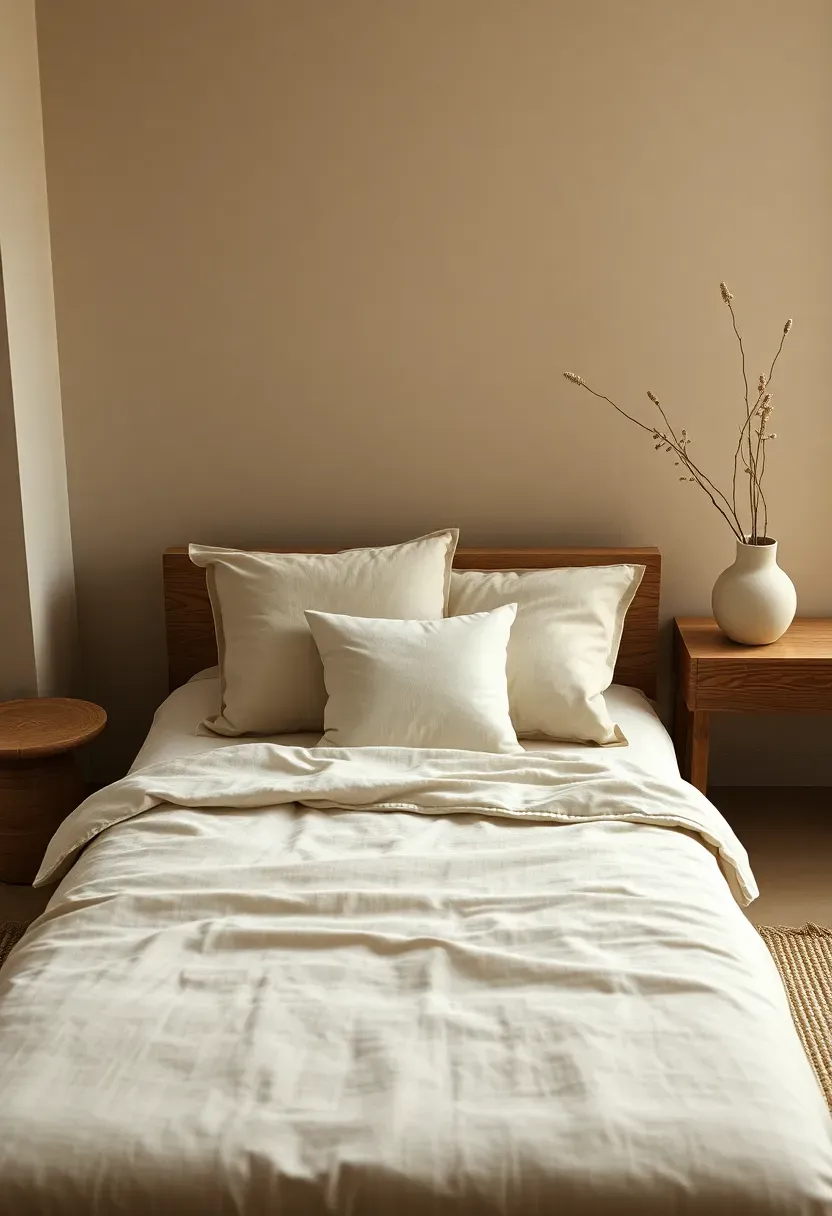
Balance the sheen with simple linen sheets and a low oak bench at the bed end. The trade-off is silk care, so spot clean and avoid direct sunlight. Add a small paper lantern to keep the glow soft. Keep the pillow size around 20 inches so it frames the bed without stacking high.
For more warm minimal layering, see 19 Japandi Bedroom for a Cozy and Stylish Space and borrow the restrained palette.
Tips
- Do: choose a hidden zipper for a clean edge.
- Don't: mix glossy pillows with shiny metallic lamps.
- Do: pair silk with matte linen for balance.
Avoid if: you prefer fully machine-washable bedding.
What this gives you: a chic highlight that still feels calm.
10. Stonewashed linen slipcovered storage bench wall
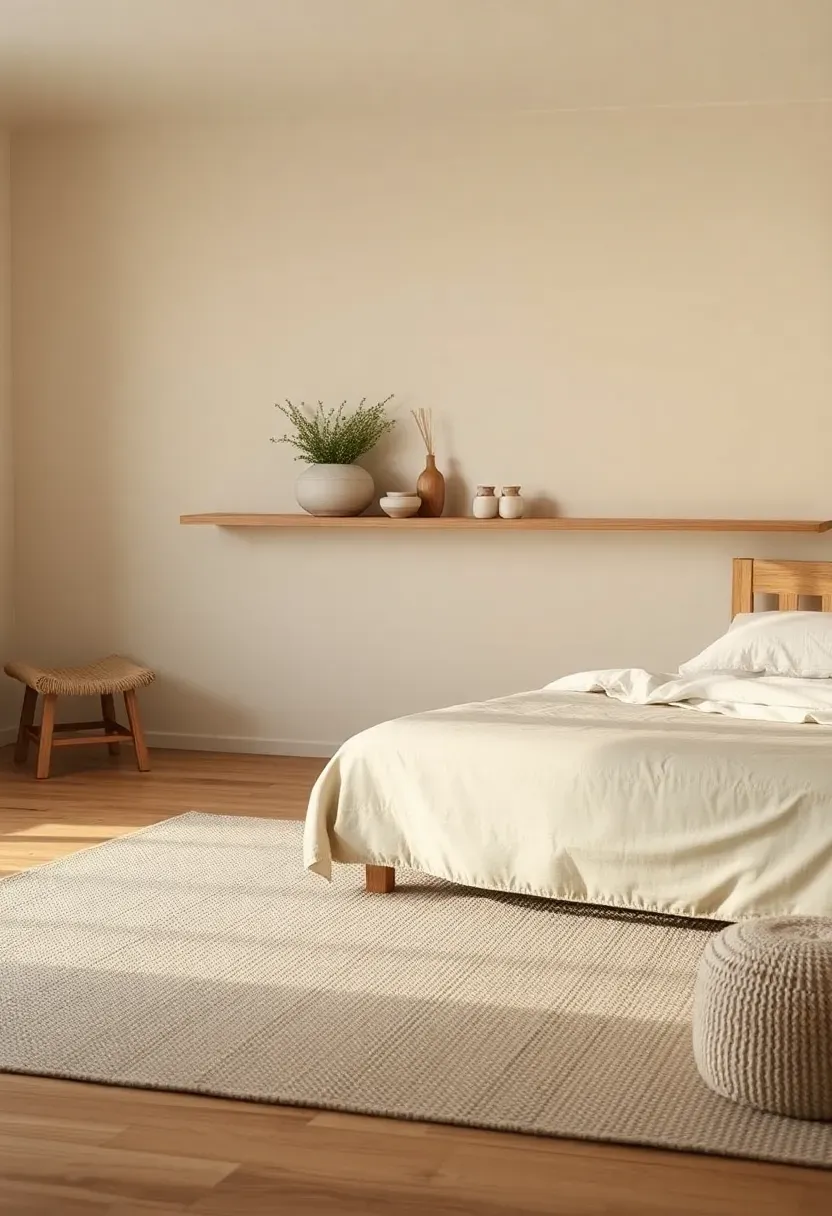
A japandi bedroom textile layout looks tailored when a stonewashed linen slipcovered storage bench runs along the wall. The bench works as a soft boundary and hides seasonal bedding. Keep the slipcover in warm flax to match the bed textiles. For contrast, avoid slick leather benches and choose textured linen instead. This keeps the room cohesive.
Recommended
Items for this idea
Placement note: Keep the bench depth at 16 inches so it stays slim and walkable.
Use a continuous bench length of about 60 inches to anchor the wall and avoid small, fussy pieces. The trade-off is dust under the bench, so leave a 2-inch leg clearance for cleaning. Pair with a low rug in warm gray to ground the zone. A single ceramic tray keeps items tidy.
Tips
- If you store bedding, then use a washable slipcover.
- If the room is small, then choose a bench without arms.
- If you want warmth, then add a thin wool cushion.
What this gives you: soft storage that looks built-in and calm.
11. Cotton gauze canopy divider for a reading corner
A japandi bedroom textile idea that doubles as zoning is a cotton gauze canopy divider for a reading corner, inspired by the lightness of Nara interiors. Hang the gauze from a ceiling track to carve out a quiet alcove. Keep the canopy wide enough to drape around a lounge chair. For contrast, avoid heavy drapes and stay with sheer cotton gauze. This keeps the corner calm and airy.
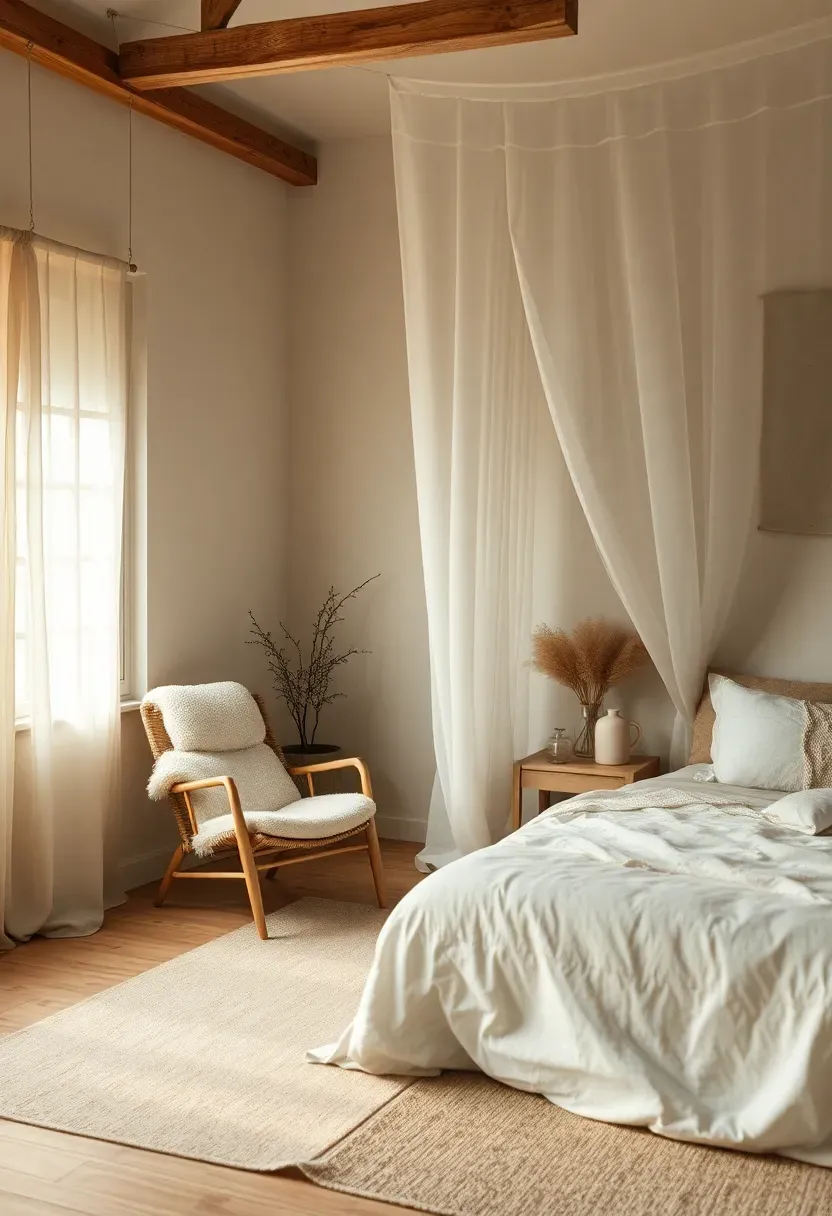
Why it works: cotton gauze diffuses light and gives privacy without creating a hard wall.
Allow at least a 36-inch clearance around the chair so the canopy can move freely. The trade-off is light bleed at night, so layer a small floor lamp with a 2700K bulb. Add a small oak side table and a wool rug to anchor the corner. Keep the rest of the bedding simple to avoid competing textures.
Tips
- Pro: gauze adds privacy without blocking airflow.
- Con: it can snag on rough hardware edges.
- Fix: use a smooth track and soft curtain rings.
Budget/Time: $180-$420 and a one-hour install.
What this gives you: a calm reading corner that feels light and soft.
12. Boucle upholstered closet fronts with hidden pulls
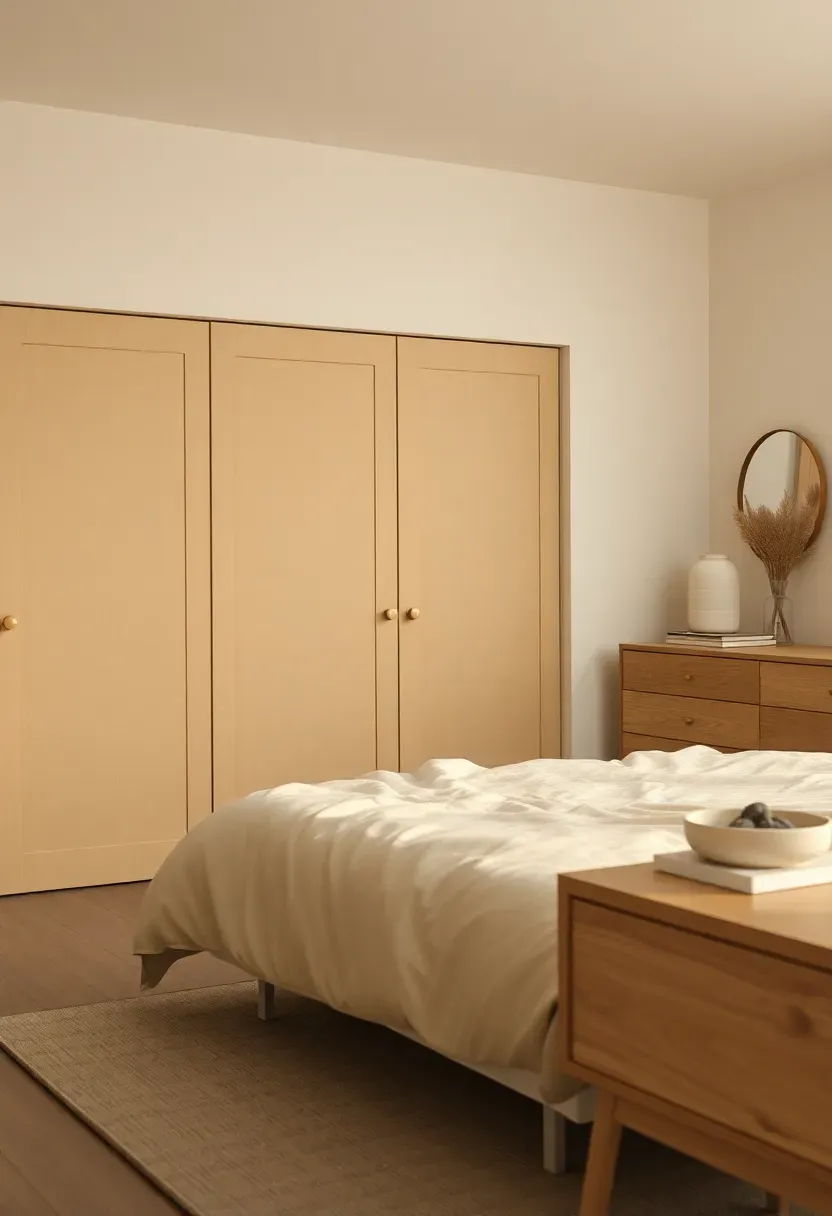
A textile-forward japandi bedroom feels polished when the closet fronts are wrapped in boucle and finished with hidden pulls. Keep the boucle in oatmeal so it blends with the wall tone. This makes storage feel like part of the architecture. For contrast, avoid glossy laminate and stick to matte boucle instead. The result looks soft but clean.
Recommended
Items for this idea
Common mistake: using thick boucle that makes doors stick or drag.
Choose low-pile boucle and install slim pulls or touch latches to keep lines minimal. The trade-off is a surface that can catch dust, so vacuum monthly with a brush attachment. Pair with a light oak dresser to keep the wood tone consistent. A narrow 10-inch lamp adds scale without clutter. Keep a soft brush nearby to refresh the surface.
Tips
- Test a sample to confirm it resists snagging.
- Keep hardware in a matte finish to avoid glare.
- Use felt pads on door edges for a quiet close.
What this gives you: soft storage fronts that still feel sleek.
13. Herringbone wool layered rug plus matte oak frame
Japandi bedroom textile ideas feel more architectural when a herringbone wool rug is layered with a matte oak frame around the bed. The rug gives the bed a clear footprint, while the oak frame adds a clean border. Use an 8x10 rug and a 1-inch oak surround so the edge reads intentional. For contrast, avoid high-contrast borders and keep the oak tone light. This keeps the look calm but defined.
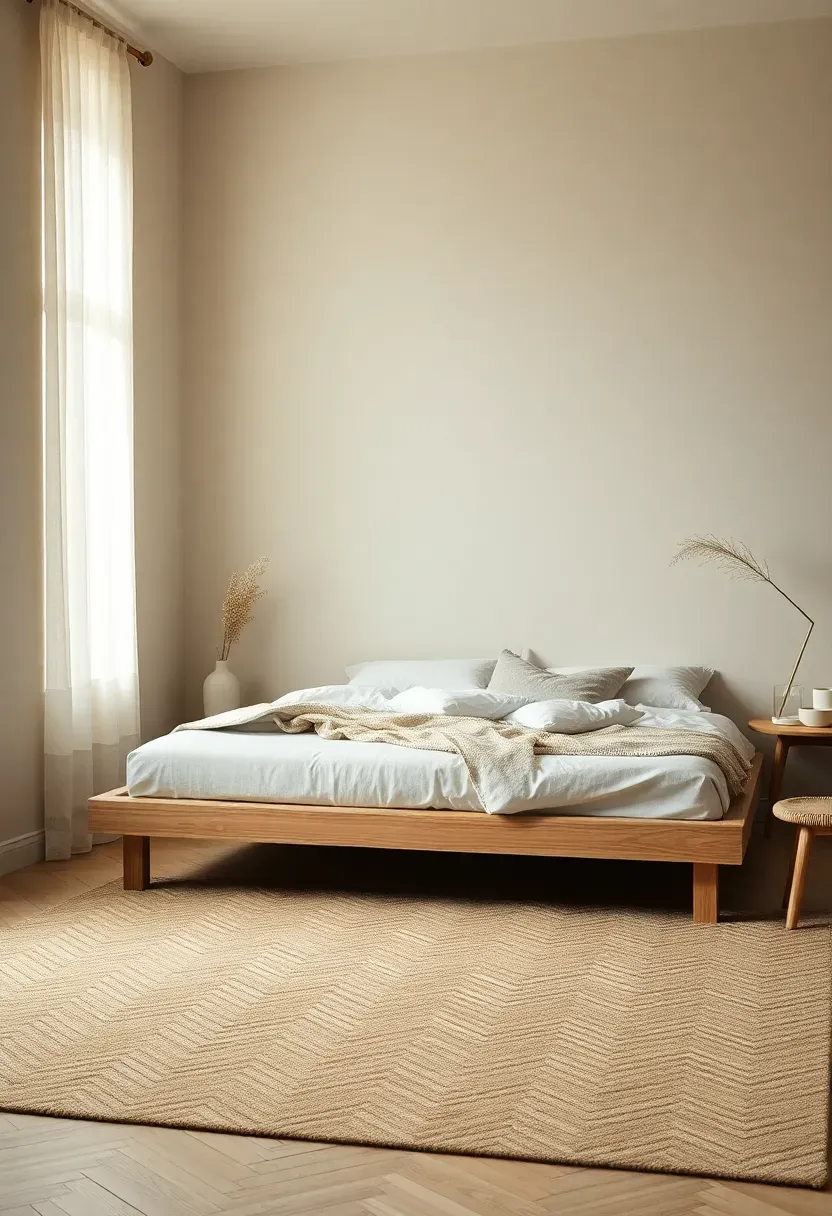
Let the rug extend 22 inches past the bed sides for easy footing. The trade-off is a bit more rug maintenance, so choose a low pile for easy vacuuming. Add a simple linen duvet to keep the texture mix balanced. A paper lantern overhead keeps light soft and even.
For more texture-driven layouts, see 17 Ideas for a Minimalist Bedroom with Natural Textures for Comfort and Visual Balance and adapt the layered approach.
Tips
- Do: choose a rug with a tight herringbone pattern.
- Don't: use a frame thicker than 1 inch.
- Do: keep the frame tone close to the bed wood.
Best for: rooms that need structure without heavy contrast.
What this gives you: a clean bed zone with subtle texture.
14. Slub cotton duvet with contrast piping
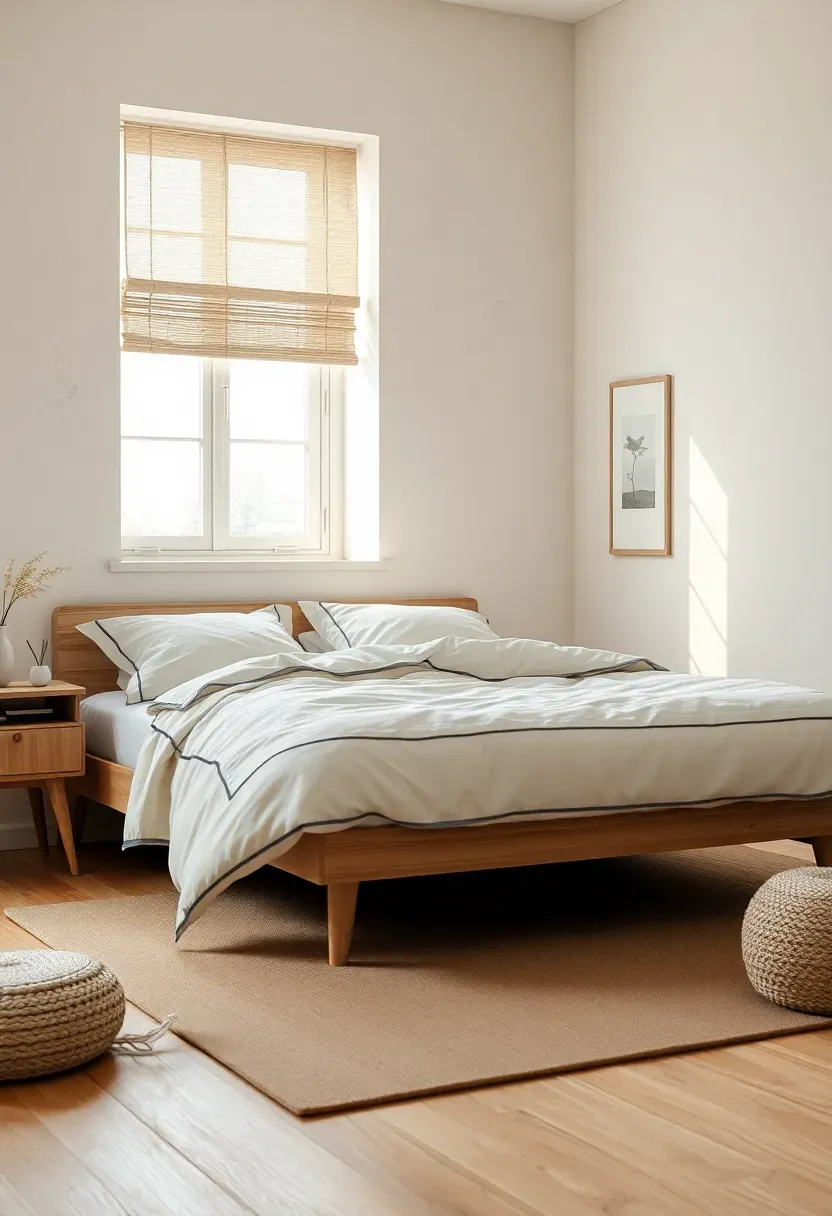
A japandi bedroom textile plan stays crisp when a slub cotton duvet is finished with slim contrast piping. The piping creates a subtle frame that adds order without a bold pattern. Keep the color contrast within two shades of the base. For contrast, skip bold black piping and use soft taupe instead. This delivers definition without visual noise.
Recommended
Items for this idea
Placement note: Use piping no thicker than 3/8 inch so it reads refined, not graphic.
Keep the duvet weight medium so it drapes well across a low platform bed. The trade-off is visible seams, so choose high-stitch density for durability. Add matching linen shams and a single textured throw at the foot. Keep nightstands minimal to let the bed be the focus.
Tips
- If you like contrast, then keep it within warm neutrals.
- If the bed feels flat, then add a thin wool throw.
- If you want softness, then use a brushed cotton underside.
What this gives you: a clean bed frame effect with subtle detail.
15. Ramie textile art grid as headboard alternative
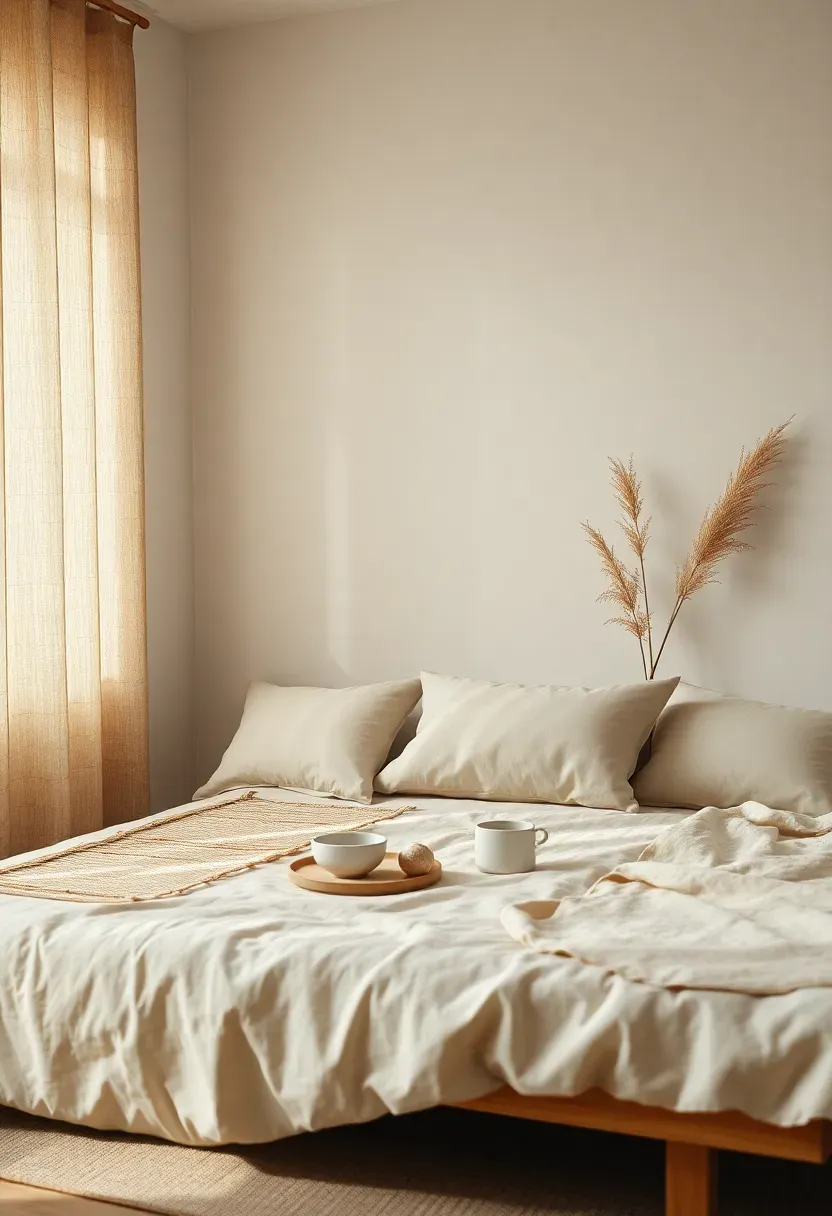
A japandi bedroom textile idea that replaces wall art is a ramie textile grid mounted on Scandinavian pine slats. The grid gives the bed wall structure while staying soft. Use three to five panels to keep the rhythm simple. For contrast, avoid glossy canvases and stay with matte ramie. This keeps the wall tactile and quiet.
Why it works: ramie has a crisp weave that reads clean from a distance.
Mount the grid so the bottom edge sits about 6 inches above the headboard line. The trade-off is wall holes, so use a rail system for easy adjustment. Pair the panels with light oak furniture and a wool rug to keep the palette cohesive. A small ceramic lamp adds warmth without competition.
Tips
- Pro: textile panels absorb light and reduce glare.
- Con: they can fade if placed in direct sun.
- Fix: use a sheer shade to soften the light.
Avoid if: you need a fully washable wall surface.
What this gives you: a calm headboard wall with soft texture.
16. Felted wool acoustic panels for calm sleep
A textile-led japandi bedroom feels restful when felted wool acoustic panels line the headboard wall. The panels soften sound and reduce echo, which makes the room feel calm at night. Keep the panels in a warm gray so they blend with the bedding. For contrast, avoid glossy acoustic tiles and use matte felted wool instead. This keeps the wall soft but refined.

Recommended
Items for this idea
Common mistake: covering too much wall and making the room feel smaller.
Limit the panels to the width of the bed plus 12 inches for a focused backdrop. The trade-off is less wall space for art, so keep the rest minimal. Add a light oak floating shelf for one ceramic piece. Choose a 1/2-inch thick panel for effective sound dampening.
If your bedroom is compact, see 17 Japandi Bedroom Ideas for Small Rooms for scaled-down textile strategies.
Tips
- Use removable strips if you rent the space.
- Match panel color to the duvet for a soft blend.
- Keep panel edges square for a crisp line.
What this gives you: a quieter room with a soft visual backdrop.
17. Woven jute and linen tatami-style mat layout
Japandi bedroom textile ideas look grounded when a woven jute mat pairs with linen floor cushions in a tatami-style layout. Use the mat to define a soft sitting zone beside the bed. Keep the cushions low and square to echo the room lines. For contrast, avoid bold prints and stick to plain weave. This creates a calm, flexible zone.
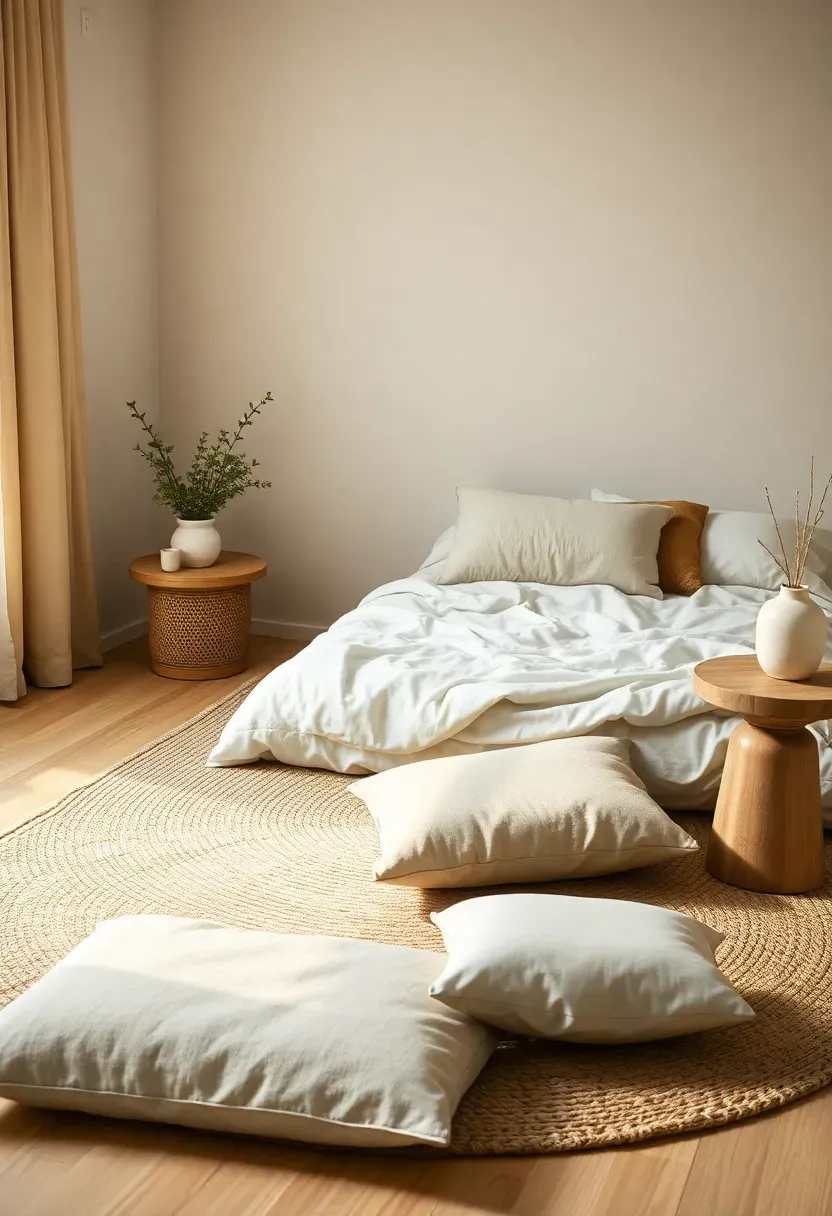
Plan the mat at roughly 5x7 feet so two cushions fit comfortably. The trade-off is jute sensitivity to spills, so place a small tray for tea or books. Add a slim oak side table to keep the zone functional. Use washable linen covers for each cushion. A warm 2700K floor lamp keeps the nook cozy.
Tips
- Do: use cushion covers with hidden zippers for easy washing.
- Don't: add patterned pillows that fight the weave.
- Do: keep the mat edges parallel to the bed.
Budget/Time: $140-$320 and an afternoon setup.
What this gives you: a calm sitting zone that feels intentional.
18. Tussar silk throw to add chic warmth
A japandi bedroom textile layout can feel elevated when a tussar silk throw is folded at the foot of the bed. The soft sheen adds chic warmth without overpowering the neutral palette. Choose a warm clay or muted cocoa tone to keep it subtle. For contrast, avoid shiny satin and keep the silk matte. This adds elegance with restraint.

Recommended
Items for this idea
Placement note: Fold the throw into a 20-inch band so it reads tidy, not bulky.
The trade-off is delicate care, so hand wash or dry clean once a season. Pair the throw with wool bedding accents for balance and keep pillows minimal. A low oak bench helps the throw stay in place and adds structure. Keep the rest of the room in soft beige to let the texture shine.
For a more contemporary base, see 17 Modern Japandi Bedroom for a Cozy and Stylish Space and layer the throw over a cleaner silhouette.
Tips
- If you want more warmth, then add a thin wool blanket under it.
- If the throw slides, then use a small cotton liner.
- If the bed feels tall, then fold the band narrower.
What this gives you: a chic accent that still feels calm.
19. Stonewashed linen bed skirt to soften low storage
A japandi bedroom textile idea that hides storage is a stonewashed linen bed skirt that softens the base of a platform bed. The skirt reduces visual clutter and makes low storage feel intentional. Keep the drop at 12 inches so it grazes the floor without puddling. For contrast, avoid stiff tailored skirts and use relaxed linen instead. This keeps the base calm and soft.
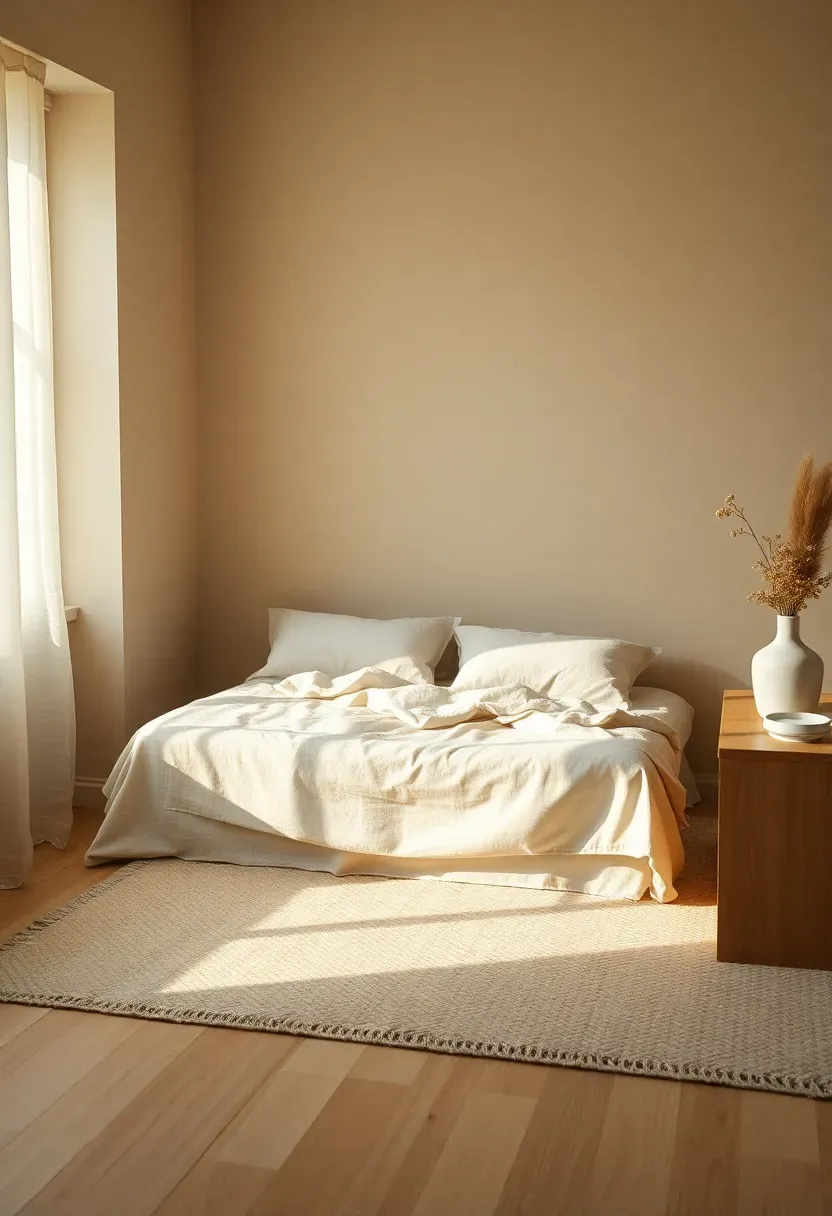
Why it works: linen texture breaks up the hard line of the bed without adding color.
The trade-off is lint at the hem, so vacuum lightly every two weeks. Pair with simple cotton sheets and a light oak nightstand for balance. Add a wool rug to keep the lower half warm and cohesive. Use hidden clips so the skirt can be removed for washing.
Tips
- Pro: bed skirts hide storage boxes and cables.
- Con: long hems can collect dust faster.
- Fix: choose a slightly shorter drop for easy cleaning.
Rental note: use clip-on skirts instead of stapled fabric.
What this gives you: a cleaner base with soft, relaxed texture.
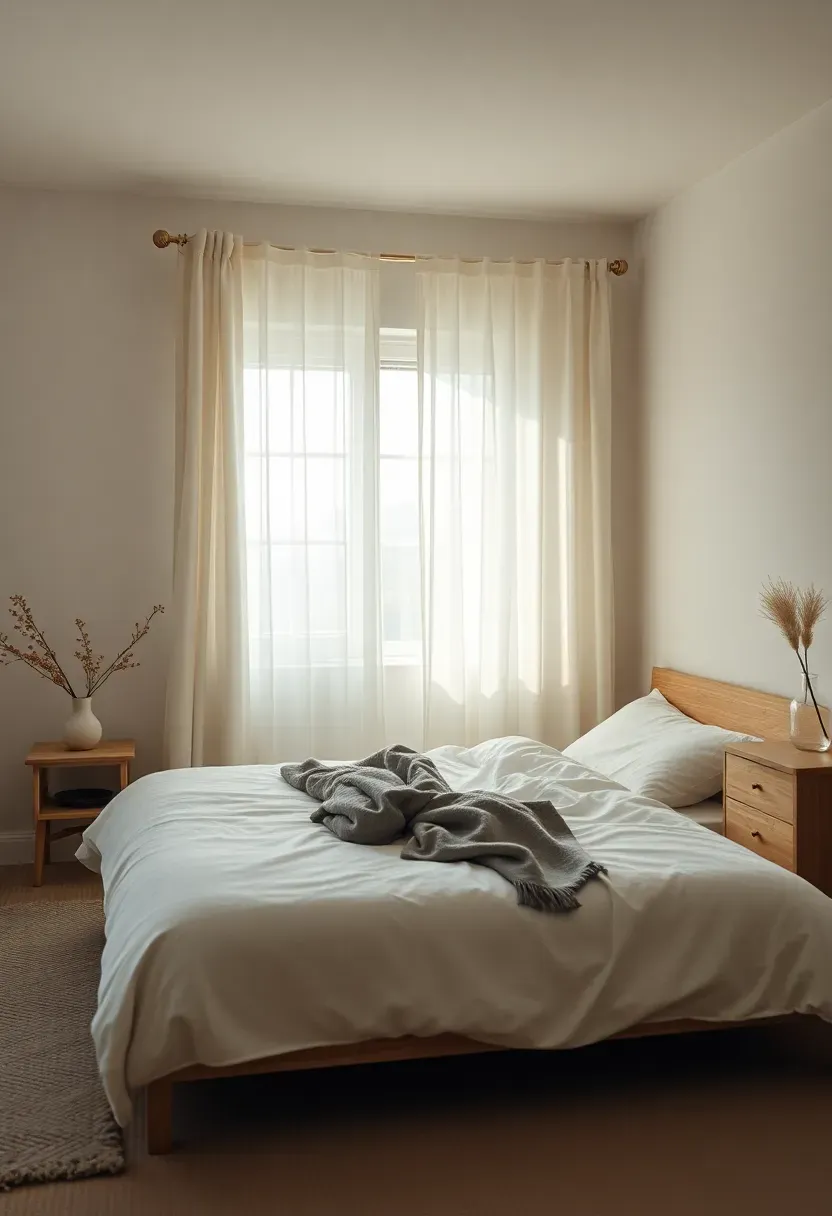
20. Cotton gauze layered curtains for light control
A textile-led japandi bedroom feels adaptable when cotton gauze curtains are layered with a thin blackout liner. The gauze keeps the day look light, while the liner controls sleep. Use a double rod so the layers move independently. For contrast, avoid thick curtain stacks and keep the layers slim. This preserves the airy feel.
Recommended
Items for this idea
Common mistake: choosing a liner that is too stiff and makes the gauze bunch.
Pick a soft blackout with a 1/8-inch thickness so it drapes cleanly. The trade-off is more hardware, so use matching matte finishes to keep it tidy. Keep the bedding neutral so the window stays the focus. A simple linen tieback keeps the lines clean during the day. Plan for 2x fullness on the gauze for a gentle wave.
Tips
- Steam the gauze after hanging to relax creases.
- Use tiebacks only during the day for a clean line.
- Keep the rod finish aligned with other metals.
What this gives you: flexible light control with a soft look.
21. Boucle floor cushion lounge zone
Japandi bedroom textile ideas can include a lounge zone when boucle floor cushions replace bulky chairs. Keep the cushions in oatmeal and place them on a low rug near the window. The soft forms echo the bed and keep the room balanced. For contrast, avoid patterned cushions and stick to solid boucle. This makes the nook feel calm and chic.
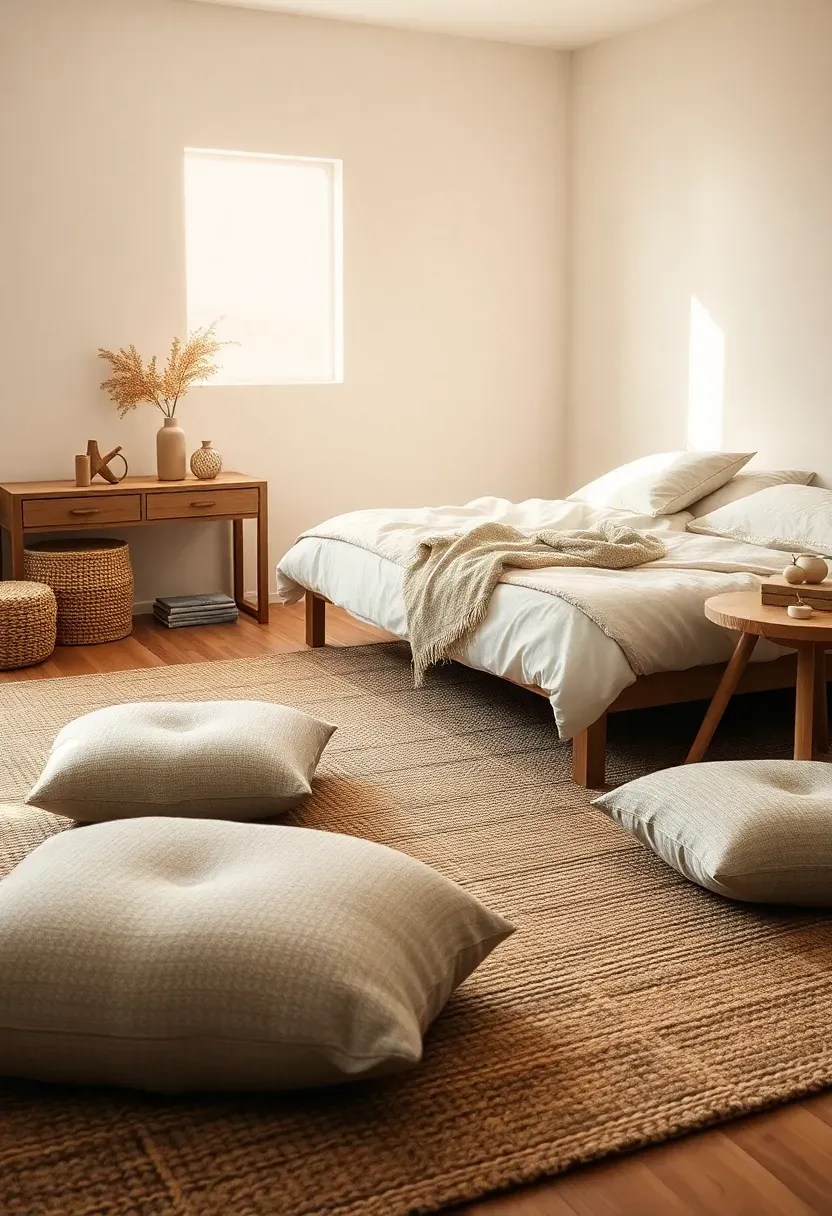
Use two 26-inch cushions so the zone feels intentional but not crowded. The trade-off is floor seating height, so add a low oak side table for comfort. Pair with a light linen throw to soften the touch. Tuck a thin felt pad under each cushion for stability. A small paper lantern adds warm light without glare.
Tips
- Do: keep cushion covers removable for easy cleaning.
- Don't: mix boucle with shiny leather in the same zone.
- Do: place the cushions on a low pile rug for stability.
Best for: rooms with a quiet window nook or extra corner space.
What this gives you: a relaxed lounge area that still feels refined.
Japandi bedroom textile ideas work best when they guide the whole layout, not just the bedding. Keep your palette tight, rely on natural fibers like linen and wool, and let soft light reveal the weave. A textile-led japandi bedroom feels calm because each layer has a purpose and a place. Whether you rent or own, these renter-friendly fabric choices let you create a cozy, chic space that stays balanced and restful year-round -- no permanent changes required.

About the author
OBCD
CGI visualization and interior design content. We create detailed 3D renders and curate practical design ideas for every room in your home.