24 Japandi Bedroom with Indoor Plants Ideas for a Calm Retreat
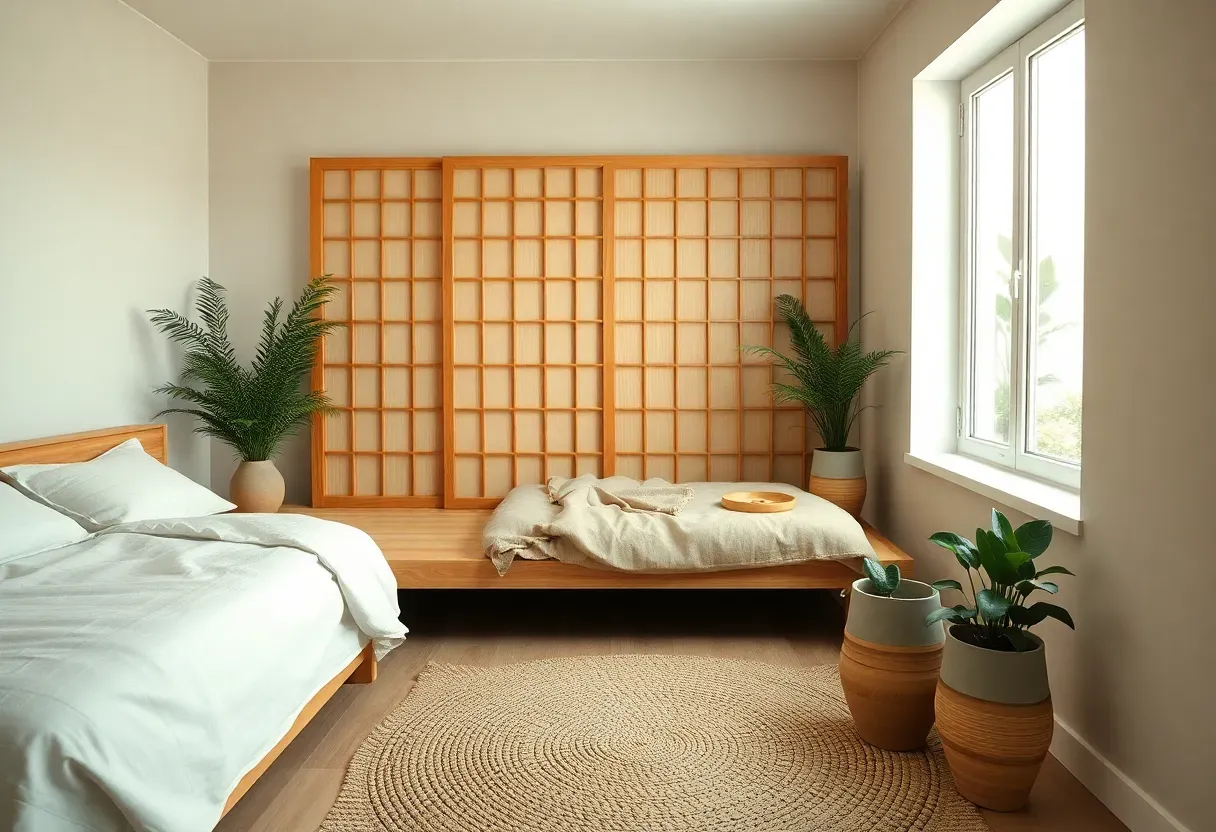
A japandi bedroom with indoor plants turns any rental or small apartment into a calm, nature-led retreat by treating greenery as part of the room's architecture. These 24 ideas lean on biophilic design, low-profile furniture, and soft neutrals so the space feels balanced and breathable, even with limited square footage.
Whether you are working with a studio layout or a standard bedroom, the layouts below serve as whole-room plans rather than isolated styling tweaks. Each idea pairs specific plant placement with japandi principles like negative space, natural materials, and muted earth tones to help you create a serene bedroom that looks and feels intentional.
Quick FAQ
How many plants should I use for japandi bedroom with indoor plants ideas?
Aim for three to five plants, mixing one tall anchor with smaller pots. This keeps the layout calm while still feeling lush.
Which indoor plants work best in low light?
Snake plants, zz plants, and cast-iron plants stay tidy with limited sun. Choose matte planters so the leaves remain the focus.
Where should plants go so the room still feels open?
Keep most greenery along the window wall or one corner. This preserves circulation flow around the bed and keeps visual calm.
Should I group pots or spread them out in a japandi bedroom with indoor plants?
Group two or three pots for a single focal point and leave the rest open. Spreading too many small plants creates visual noise.
What materials keep the look calm and cohesive?
Light oak, linen, clay plaster, and matte ceramic keep the palette grounded. These surfaces soften reflections and feel natural.
As an Amazon Associate I earn from qualifying purchases.
Table of Contents
- 1. Low platform bed with window greenery as the visual axis
- 2. Plant-lined shoji screen that creates a quiet sleep zone
- 3. Balanced bedside planters to frame the room symmetrically
- 4. Floor cushion lounge with layered greenery and soft boundaries
- 5. Wall-length storage ledge that doubles as a plant gallery
- 6. Soft green neutral palette for a calm biophilic base
- 7. Headboard niche with mini planters and hidden light
- 8. Entry-view focal tree to set the retreat mood
- 9. Sliding divider with a slim plant shelf for zoning
- 10. Minimal dresser wall with mirror bounce and tall plant
- 11. One statement plant with textured neutrals for restraint
- 12. Tatami-style platform with clustered plants at the perimeter
- 13. Clay plaster backdrop to make leaves read as art
- 14. Stone and wood mix to ground the plant corner
- 15. Paper lantern lighting that highlights plant shadows
- 16. Window seat with planter edge instead of a headboard
- 17. Open shelving for ceramics and plants with negative space
- 18. Single hanging planter to lift the eye without clutter
- 19. Bed-as-divider layout with a green screen behind it
- 20. Slatted wardrobe front with a built-in planter trough
- 21. Foot-of-bed bench paired with a low plant grouping
- 22. Rug zoning and plant placement to guide circulation
- 23. Earthy textiles that echo foliage for cohesive color flow
- 24. Indoor-outdoor threshold styling for a retreat feel
1. Low platform bed with window greenery as the visual axis
A japandi bedroom with indoor plants feels most composed when the bed and greenery sit on one visual axis. Set a low platform bed around 12 inches high and align a tall plant by the window so the eye travels in a calm line. This is biophilic design at room scale, where the plant reads as architecture. For contrast, skip scattered tabletop pots and anchor a single bold plant instead. The axis makes the room feel longer and more deliberate.
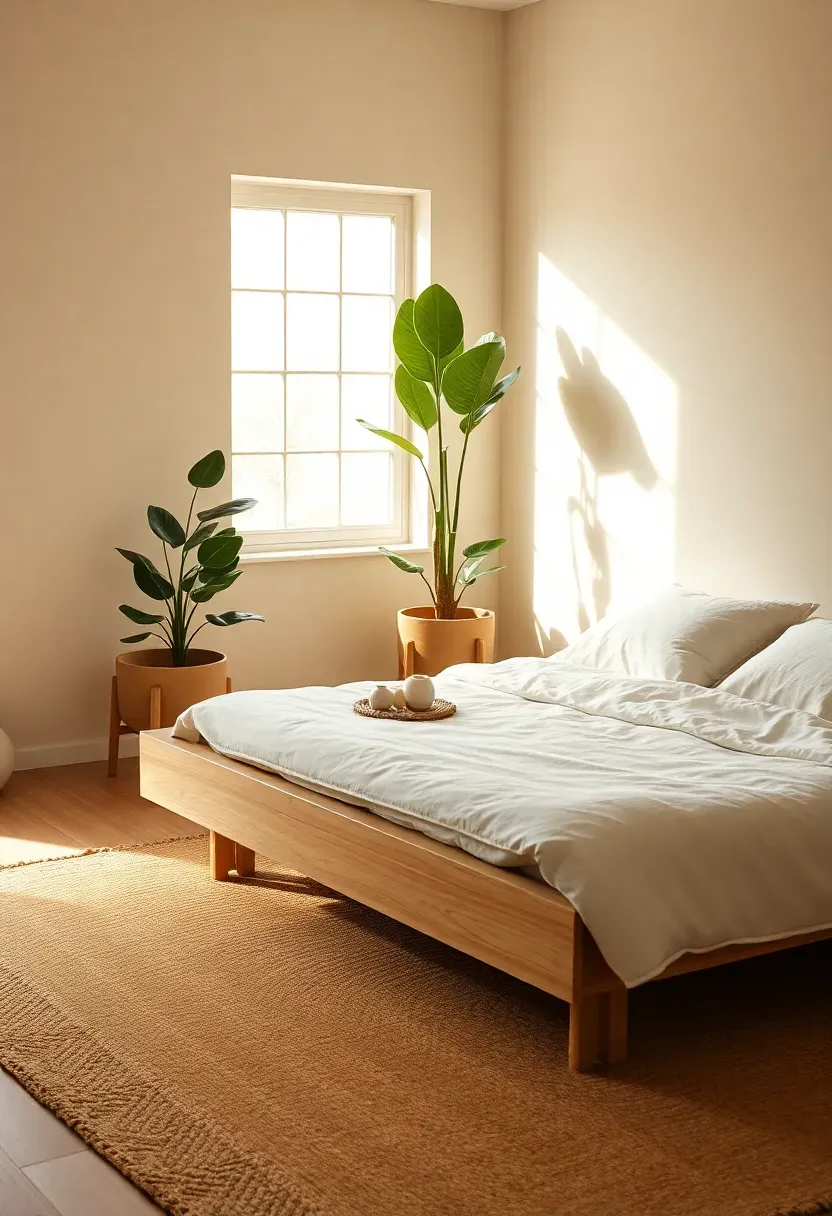
Use a 7x10 jute rug to widen the bed zone and keep circulation flow at least 24 inches on each side. A light oak nightstand and a matte ceramic lamp hold the palette without adding shine. The trade-off is less storage, so tuck baskets under the frame rather than add a bulky dresser. Keep the window wall free of heavy drapes so soft daylight becomes the main finish.
Tips
- Do: place the tallest plant within 12 inches of the window frame.
- Don't: mix glossy metal planters with matte wood finishes.
- Do: keep the bed height under 14 inches for a low-profile look.
Best for: rooms with a strong window wall that can anchor the layout.
What this gives you: a long, serene sightline that feels curated and restful.
We picked a few things that go well with this idea: HERDUK Matte Black Ceramic Planter (6-Inch) (★4.7), D'vine Dev Beaded Stoneware Planter (6-Inch) (★4.8) and Kate Sleek Matte White Ceramic Planter (5-Inch) (★4.7). As an Amazon Associate we earn from qualifying purchases.
2. Plant-lined shoji screen that creates a quiet sleep zone
Japandi bedroom with indoor plants ideas often work best when a shoji screen and greenery define the sleep zone without adding walls. Place a low screen about 72 inches high and line a few planters along its base. The screen filters natural light and keeps the palette airy while the plants soften the edge. For contrast, avoid dark partitions that block the glow and feel heavy. This creates a calm boundary that still feels open.
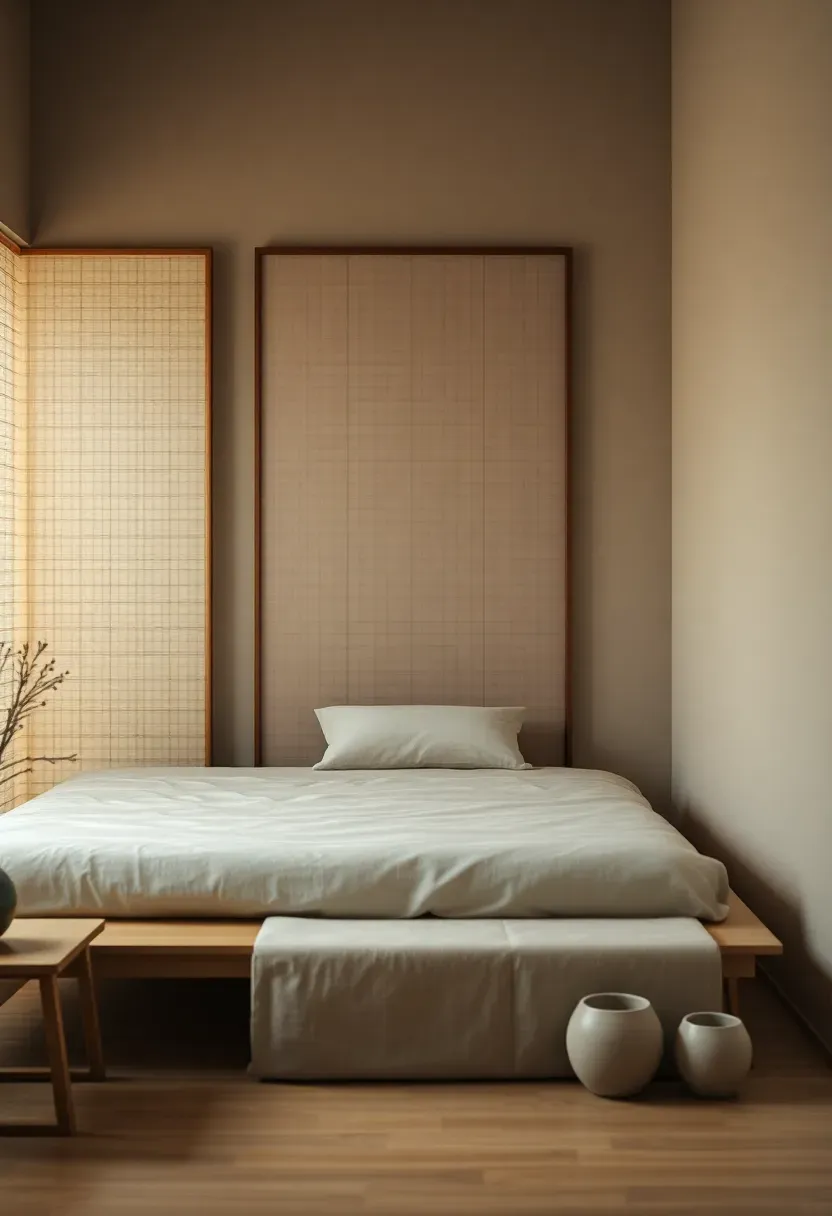
Placement note: Set the screen 10 to 12 inches off the bed to keep airflow and easy access.
Keep planter spacing around 12 to 16 inches so the line reads calm instead of busy. A linen duvet and one matte black sconce add structure without competing. The trade-off is more plant care along one edge, so group pots with similar watering needs. Add a slim oak bench at the foot of the bed to balance the horizontal line.
Tips
- If the room is narrow, then use smaller pots to keep the screen light.
- If you need privacy, then add a second shoji panel behind the plants.
- If leaves touch the screen, then trim them back to keep it crisp.
What this gives you: a soft divider that zones sleep without blocking light.
We picked a few things that go well with this idea: Zinus Lucinda Wood Platform Bed Frame (★4.6), Mellow Naturalista Solid Wood Platform Bed (★4.6) and Zinus Joseph Low Profile Platform Bed (6-Inch) (★4.6). As an Amazon Associate we earn from qualifying purchases.
3. Balanced bedside planters to frame the room symmetrically
A japandi bedroom with indoor plants can feel hotel-calm when bedside planters mirror each other. Use low-profile furniture like 18-inch nightstands and place matching pots to frame the bed. The symmetry keeps the room tidy even with greenery present. For contrast, skip mismatched planters that break the rhythm. This approach makes the bed the center of the composition.
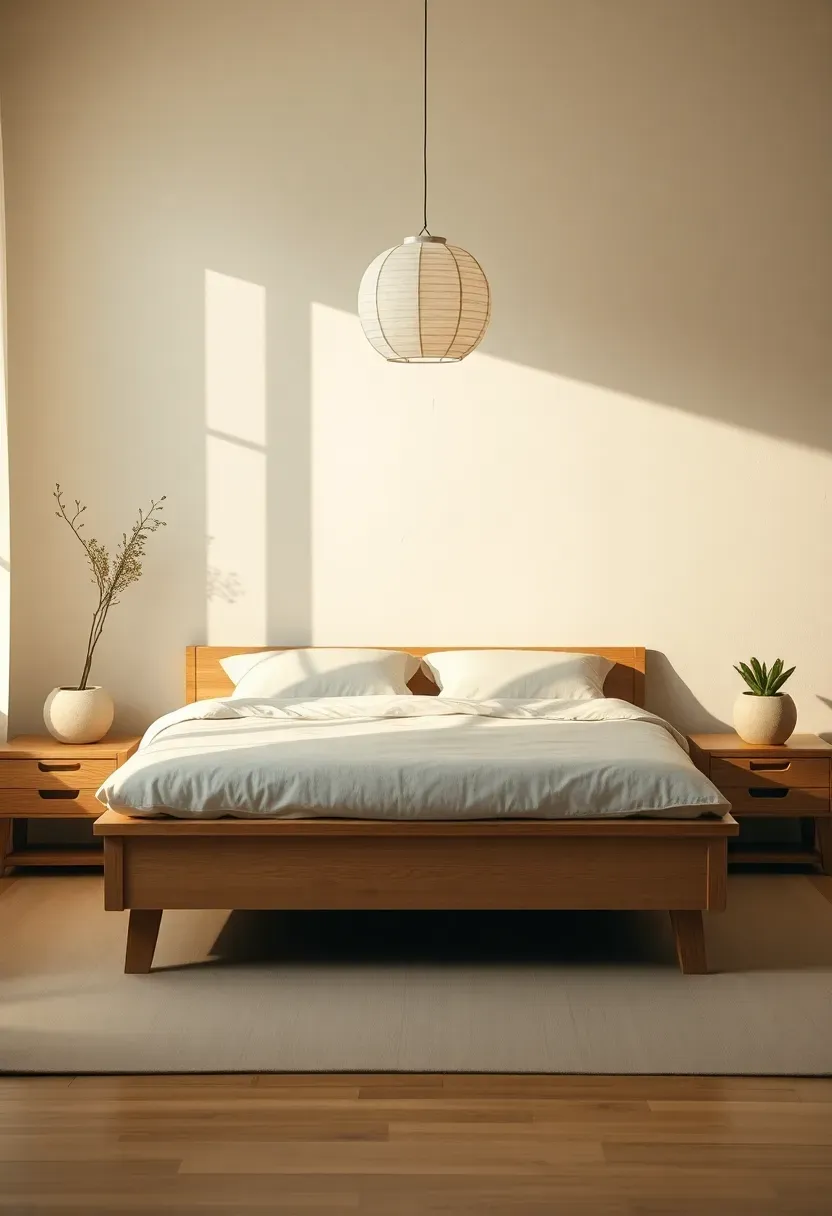
Why it works: the mirrored planters create visual order, so the greenery feels intentional, not scattered.
Keep plant height between 24 and 30 inches so the foliage sits just above the pillows. The trade-off is a more formal mood, so soften it with linen bedding and a 5x8 wool rug. Use one warm lamp at 2700K to avoid a showroom feel. A slim tray on each nightstand keeps essentials contained.
For a softer base, see 17 Ideas for a Minimalist Bedroom with Natural Textures for Comfort and Visual Balance and adapt the symmetry.
Tips
- Pro: symmetrical pots reduce visual noise.
- Con: it can feel too formal for casual rooms.
- Fix: add one textured throw to soften the edges.
Avoid if: you want a layered, eclectic mix of mismatched pieces.
What this gives you: a calm, balanced frame that keeps the bed centered.
We picked a few things that go well with this idea: DAPU French Flax Linen Duvet Cover Set (★4.5), Simple&Opulence Washed Linen Duvet Cover Set (★4.6) and Bedsure Washed Cotton Duvet Cover (Queen) (★4.3). As an Amazon Associate we earn from qualifying purchases.
4. Floor cushion lounge with layered greenery and soft boundaries
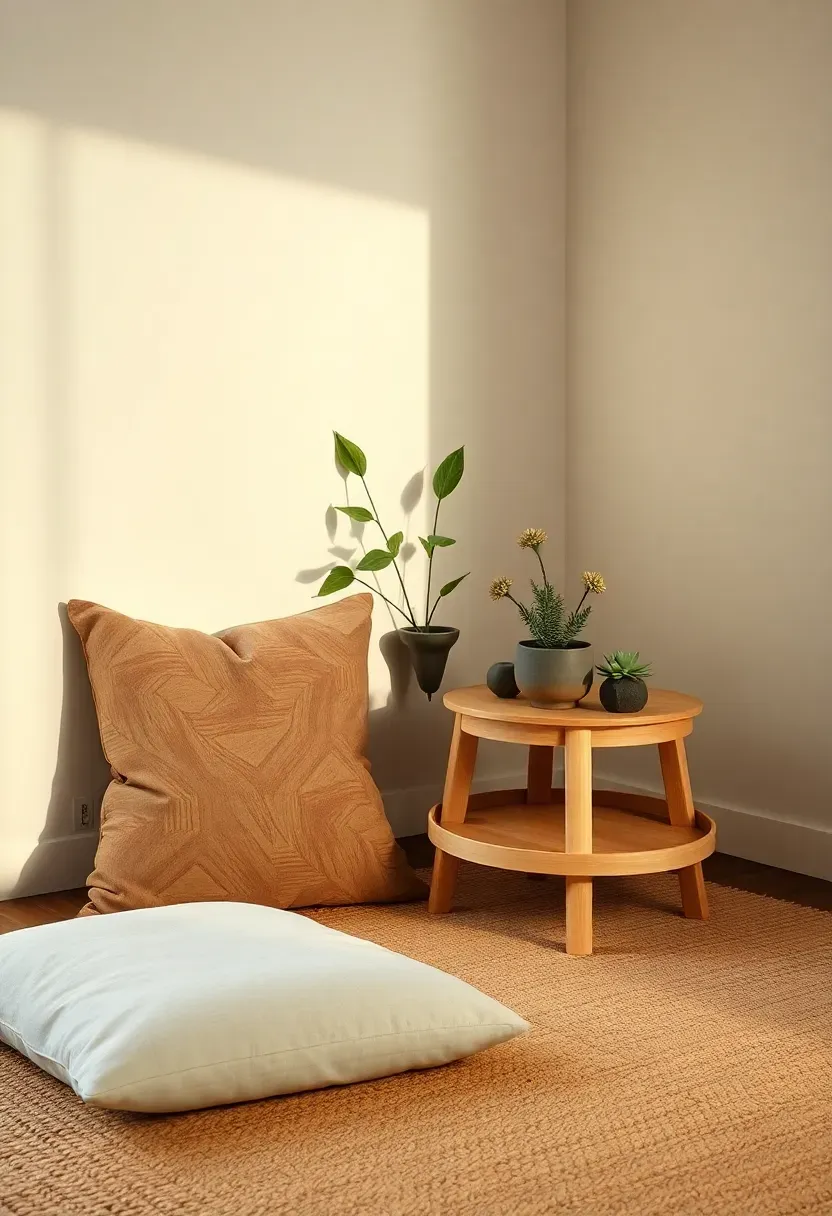
A japandi bedroom with indoor plants can include a lounge corner without breaking the calm. Use a 5x8 flatweave rug, a low floor cushion, and a compact side table to keep circulation flow clear. Place two plants of different heights behind the cushion so the corner feels layered. For contrast, avoid oversized armchairs that fight the low-slung look. This creates a quiet retreat within the room.
Recommended
Items for this idea
Common mistake: pushing the lounge too close to the bed, which clutters the pathway and feels cramped.
Keep at least 30 inches between the lounge and the bed edge so the room stays breathable. Add a linen throw and a shallow tray for a book or tea to keep the corner functional. The trade-off is less floor area for storage, so rely on under-bed bins instead. A single wall hook can hold a robe without adding extra furniture.
Tips
- Use one cushion in a warm sand tone to anchor the corner.
- Keep plant pots in matching matte finishes for cohesion.
- Choose a low side table under 15 inches high.
What this gives you: a soft retreat zone that still reads minimalist.
5. Wall-length storage ledge that doubles as a plant gallery
Japandi bedroom with indoor plants ideas feel cohesive when storage and greenery share one calm horizontal band. Mount a wall-length ledge around 30 inches high and keep it shallow, about 6 inches deep. This preserves negative space above while giving plants a clear stage. For contrast, skip crowded gallery walls and let the plants be the art. The long line makes the room feel wider and more intentional.
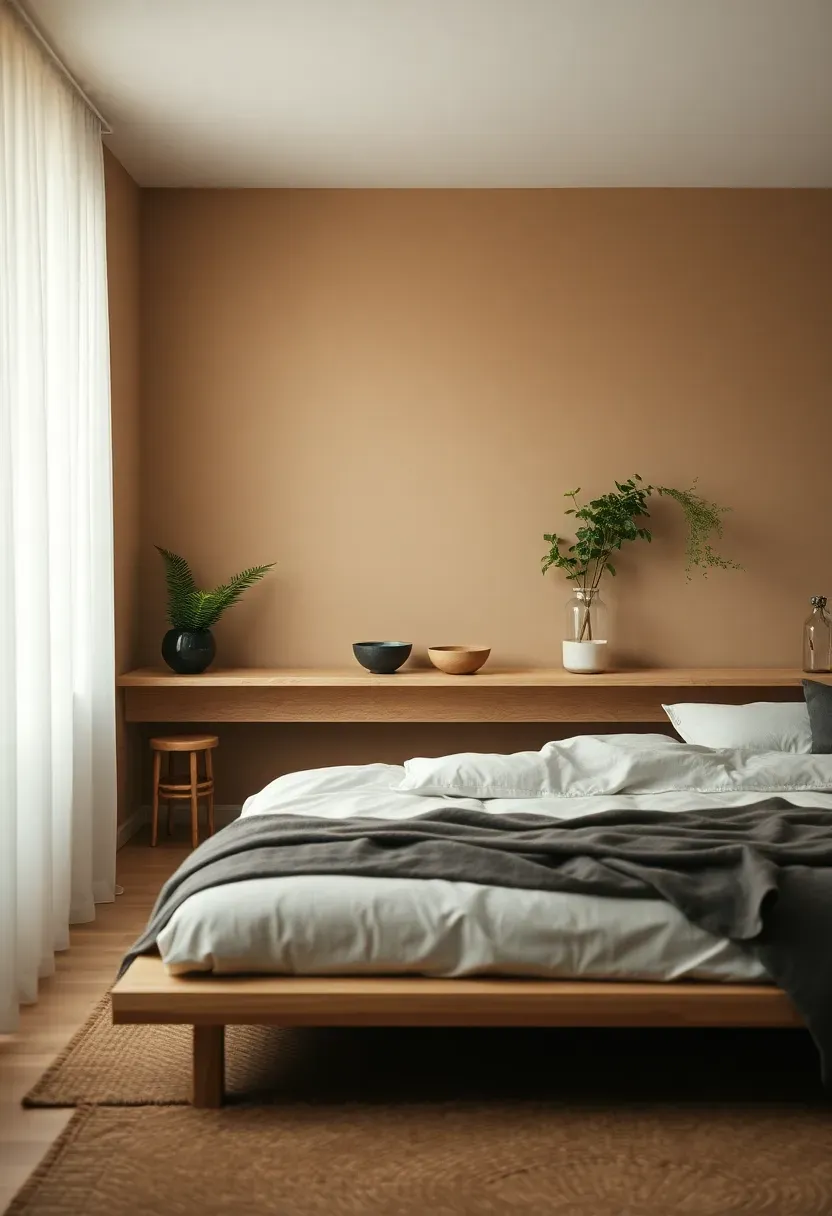
Keep to three pots and one ceramic piece so the ledge reads curated, not busy. A 1-inch gap between items helps each plant breathe visually. The trade-off is less closed storage, so use hidden bins under the bed for linens. Add a single picture light or slim sconce to wash the ledge at night without overpowering the calm.
Tips
- Do: use the same planter material for all pots.
- Don't: stack books or souvenirs on the ledge.
- Do: keep the ledge depth under 7 inches.
Budget/Time: a simple ledge build can be done in a weekend under $120.
What this gives you: storage and greenery that read as one clean line.
6. Soft green neutral palette for a calm biophilic base
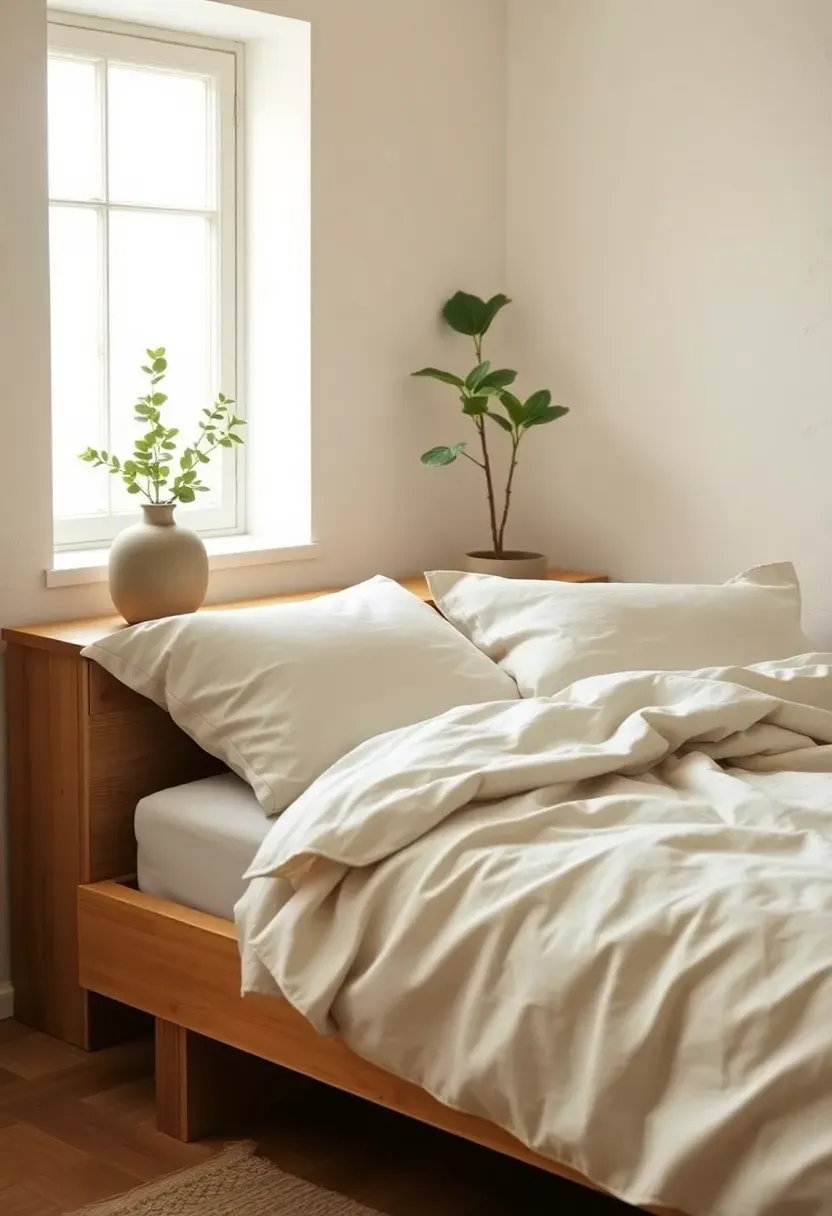
Japandi bedroom with indoor plants ideas shine when the neutral palette does most of the work. Use warm white walls, sandy linen bedding, and a soft sage accent in one textile layer. This keeps the greens in your plants feeling intentional, not loud. For contrast, avoid bright emerald accents that overpower the room's quiet tone. The muted base makes the plants feel like a natural extension.
Recommended
Items for this idea
Placement note: Keep the green accent to one throw, one pillow, and one plant cluster.
Stick to a maximum of three greens so the palette stays cohesive. The trade-off is a quieter room, so add texture with a nubby wool rug or a slub linen duvet. Use 2700K bulbs to keep the greens warm at night. A single black metal sconce adds definition without stealing focus.
Tips
- If the room feels flat, then add a textured rug in oatmeal.
- If the green looks cold, then swap to a warmer sage tone.
- If the bed feels heavy, then lighten the duvet with a white cover.
What this gives you: a muted base that lets greenery feel natural and soft.
7. Headboard niche with mini planters and hidden light
A japandi bedroom with indoor plants can stay minimal when the greenery sits inside a built-in headboard niche. Frame a niche about 60 inches wide and 6 inches deep, then add two small planters and a concealed LED strip. The plants read as part of the wall, not extra decor. For contrast, skip bulky headboards that push the bed forward. The niche keeps the room low and clean while adding layered lighting.
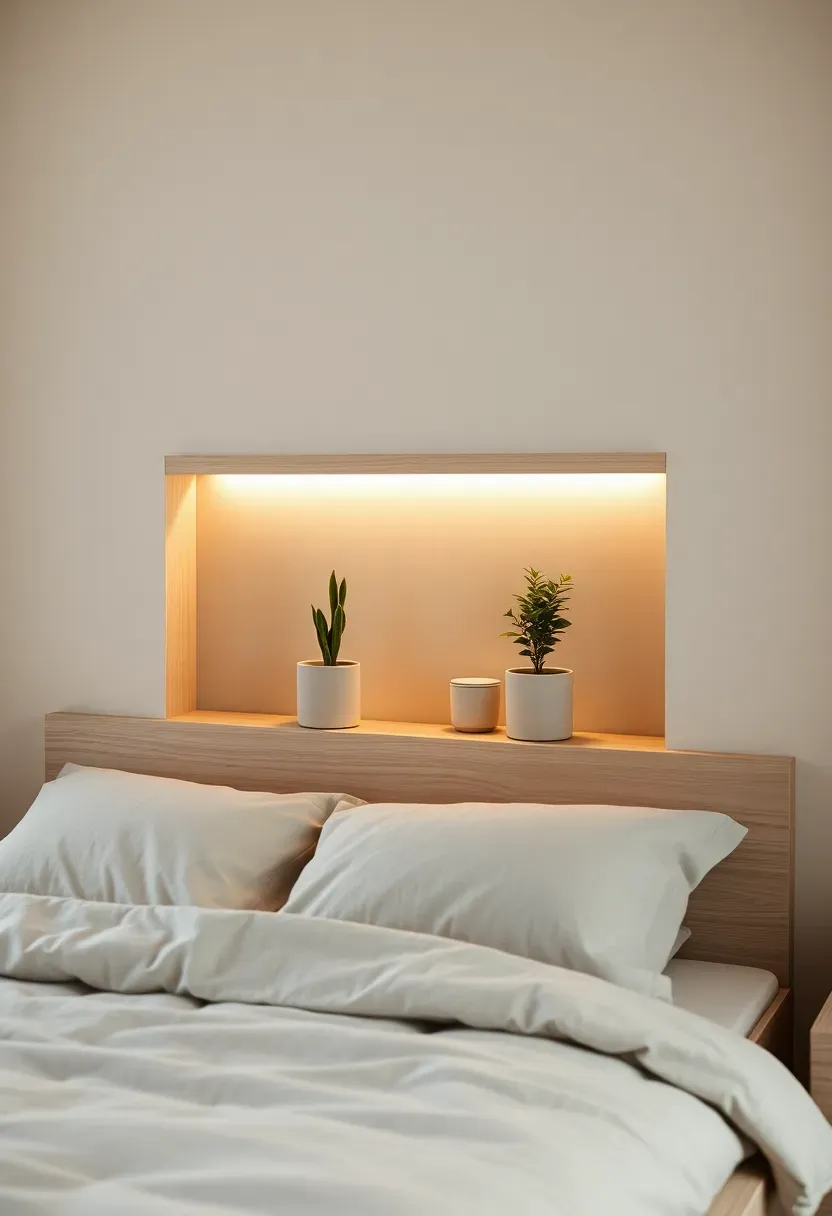
Why it works: the recessed niche hides the clutter line, so the plants feel integrated and calm.
Keep the LED strip under 3000K to avoid a cold glow, and use small pots around 4 to 5 inches wide. The trade-off is less surface space for books, so add a slim wall shelf at nightstand height. Use the same plaster finish inside the niche to keep the look seamless. This keeps the wall reading as one calm plane.
For a simpler backbone, see 17 Modern Japandi Bedroom for a Cozy and Stylish Space and layer the niche onto the layout.
Tips
- Pro: hidden lighting makes the plants glow without clutter.
- Con: niches are harder to clean and water around.
- Fix: use self-watering pots and wipe the niche monthly.
Rental note: use a removable picture ledge with battery lights if you cannot build in.
What this gives you: integrated greenery with a soft, architectural glow.
8. Entry-view focal tree to set the retreat mood
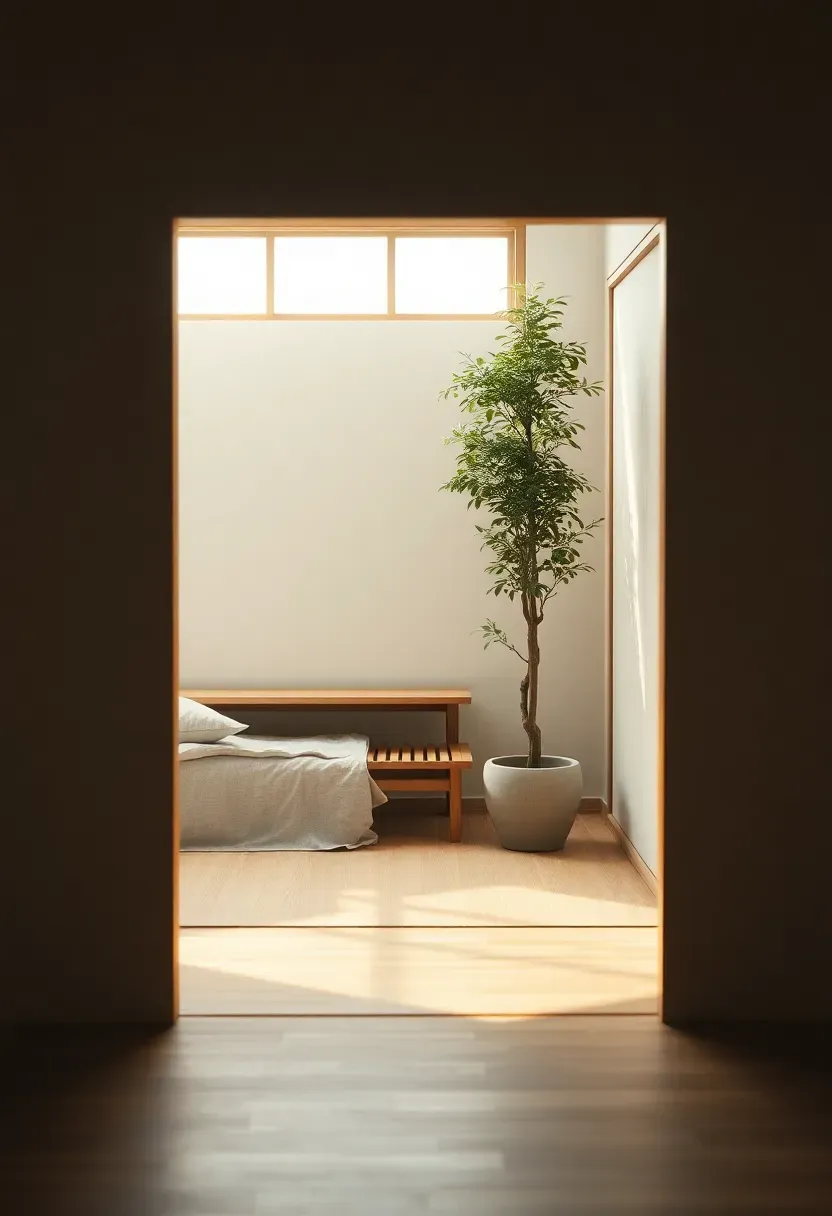
A japandi bedroom with indoor plants feels more intentional when the first view includes a single focal tree. Place an air-purifying plant like a rubber tree in a matte planter where it is visible from the doorway. Keep the bed line simple so the plant becomes the entrance statement. For contrast, avoid clustering several small pots at the entry, which reads messy. The focal tree sets the retreat mood before you reach the bed.
Recommended
Items for this idea
Common mistake: choosing a plant that is too wide, which blocks the doorway and feels cramped.
Keep the pot diameter under 12 inches and leave 18 inches of clear walkway beside it. A slim bench at the foot of the bed balances the vertical tree with a low line. The trade-off is less space for a dresser near the door, so use wall hooks instead. A soft wool runner guides the eye toward the bed without adding clutter.
Tips
- Angle the planter slightly so the leaves face the window.
- Choose a single-trunk plant to keep the silhouette clean.
- Use a low bench under 18 inches high for balance.
What this gives you: a calming first impression that sets the tone.
9. Sliding divider with a slim plant shelf for zoning
A japandi bedroom with indoor plants can feel organized when a sliding divider adds a plant shelf for light zoning. Use a 72-inch shoji panel and attach a slim shelf about 5 inches deep on the lower third. This keeps visual calm because the shelf reads as one quiet band. For contrast, avoid tall open shelving that adds visual noise. The divider gives you separation without losing the airy feel.
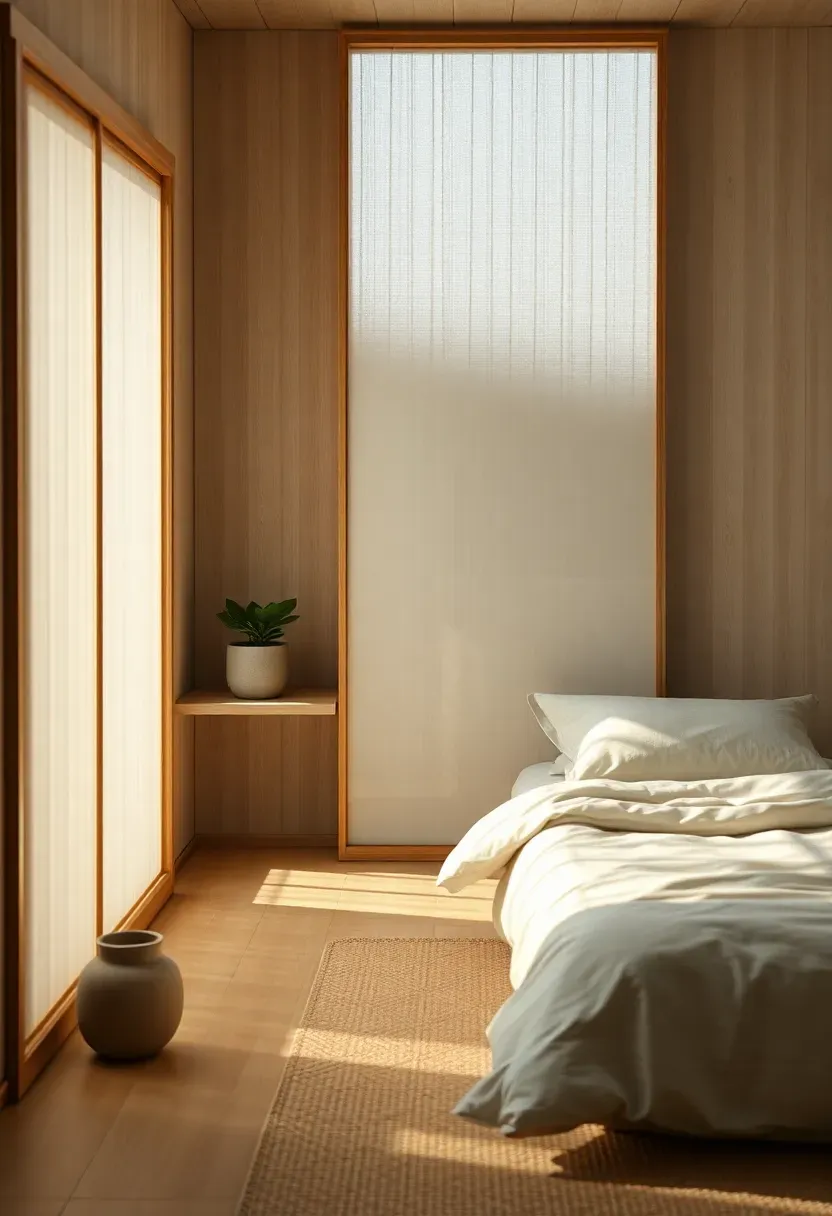
Keep the shelf to two or three small pots so the panel still reads light. A low bed and a 6x9 rug help define the sleep zone without extra furniture. The trade-off is less wall space for art, so lean into texture with linen and matte plaster. Maintain a 28-inch clear path around the divider for easy movement.
Tips
- Do: choose pots under 5 inches tall to keep the shelf slim.
- Don't: use glossy white pots that glare against the screen.
- Do: keep the divider track hidden for a cleaner line.
Best for: studio layouts that need a soft bedroom boundary.
What this gives you: a subtle zone line that still feels open.
10. Minimal dresser wall with mirror bounce and tall plant
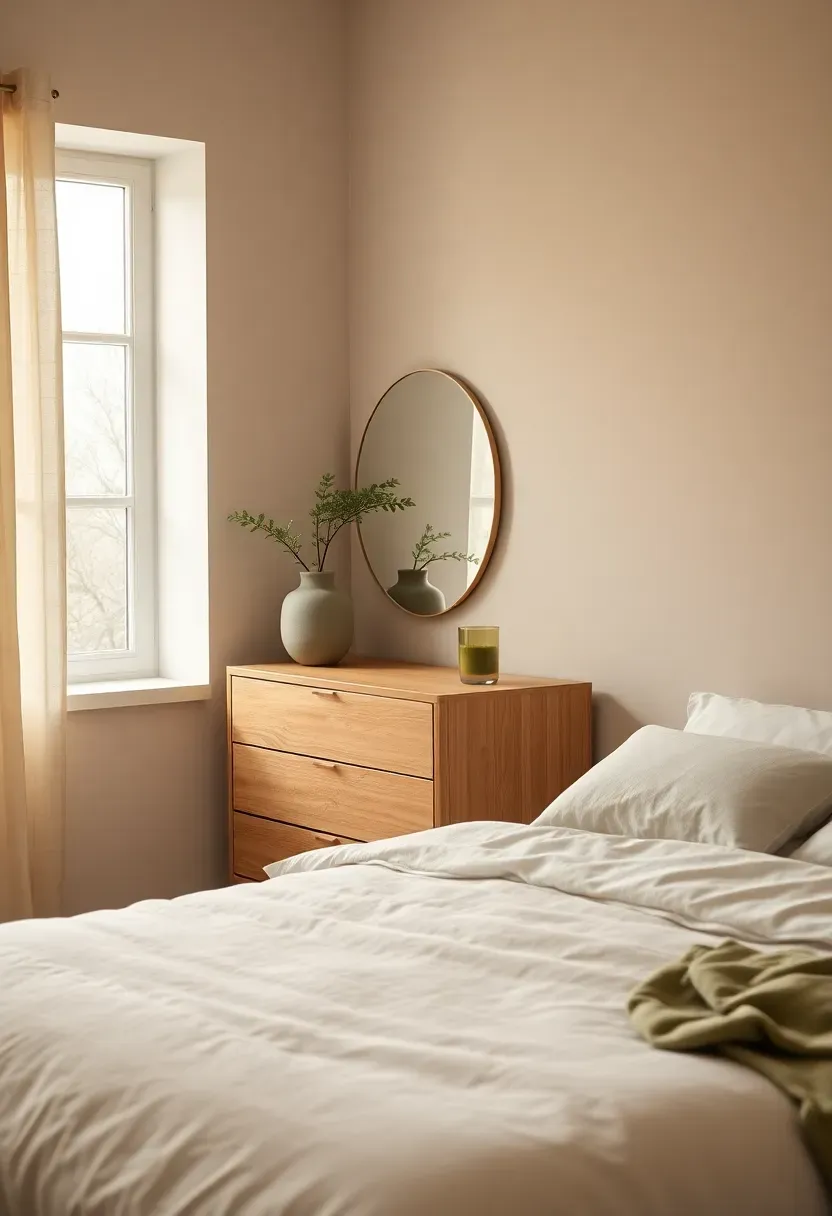
Japandi bedroom with indoor plants ideas can be clean and functional when the dresser wall stays minimal. Pair a low dresser with one tall plant and a simple mirror to bounce light. The mirror adds textural contrast by reflecting soft greens against matte wood. For contrast, skip heavy framed art that competes with the plant silhouette. The wall feels calm but still finished.
Recommended
Items for this idea
Placement note: Hang the mirror so its center is around 58 inches from the floor.
Keep the dresser top clear except for a small tray and one ceramic vase. The trade-off is fewer display spots, but the room reads far calmer. Use a plant pot around 12 inches wide to balance the mirror size. A single linen runner on the dresser adds softness without visual clutter.
Tips
- If the mirror feels stark, then choose a thin oak frame.
- If the plant looks tall, then move it 6 inches back.
- If the wall feels empty, then add a slim wall sconce.
What this gives you: a clean utility wall that still feels styled.
11. One statement plant with textured neutrals for restraint
A japandi bedroom with indoor plants can be powerful when you choose only one statement plant. Use textured neutrals like nubby wool and slub linen so the single plant becomes the hero. This keeps humidity balance easier because you are caring for one large pot. For contrast, avoid multiple medium plants that dilute the focal point. The room feels composed, not crowded.
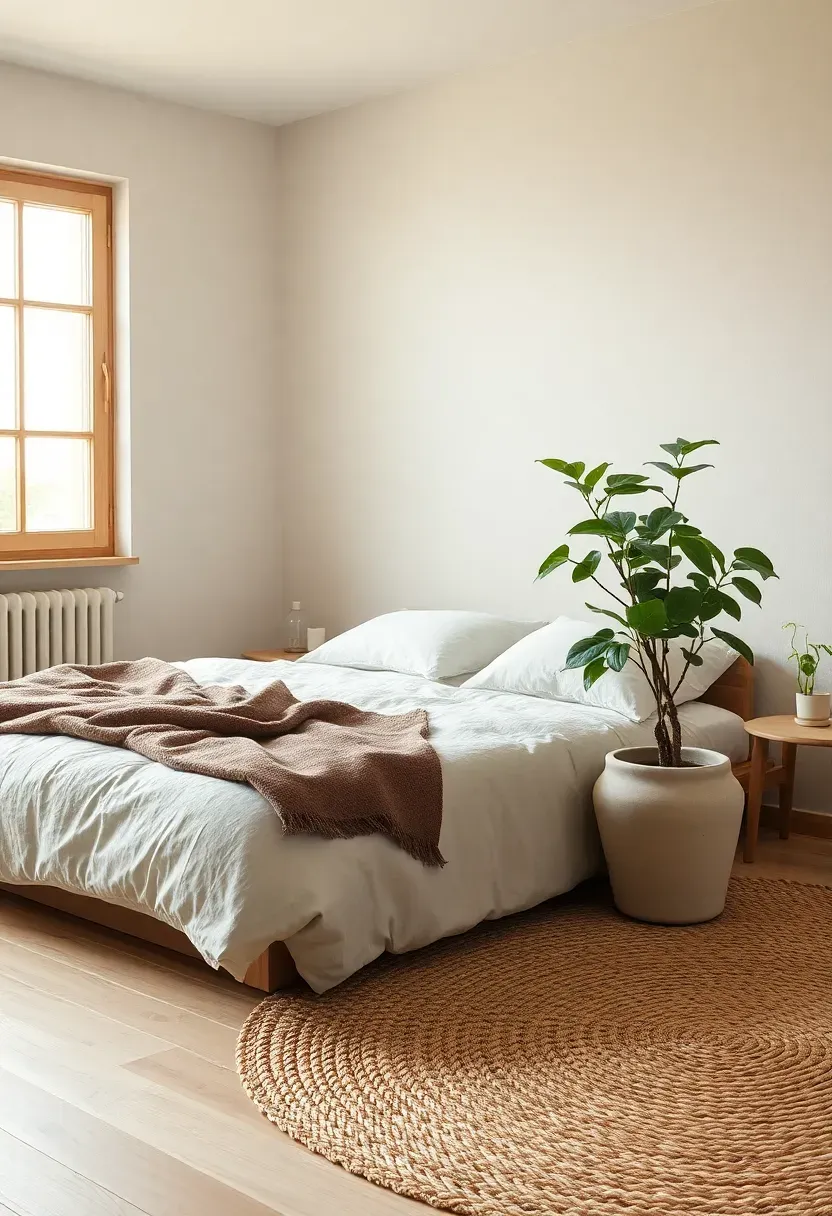
Why it works: one strong focal plant makes the room feel deliberate, while textures deliver depth without clutter.
Choose a pot around 14 inches wide and a plant that reaches shoulder height when you sit on the bed. The trade-off is a more minimal look, so add warmth with a woven wool rug and a chunky linen throw. Keep nightstands slim so the plant stays dominant. Let soft daylight shape the leaves rather than using bright overhead light.
For neutral layering ideas, see 19 Beige Minimalist Bedroom Ideas: Serene Simplicity for Comfort and Visual Balance and apply the texture mix.
Tips
- Pro: one plant keeps maintenance simple.
- Con: it can feel too sparse for plant lovers.
- Fix: add one small bud vase to soften the room.
Avoid if: you prefer a layered, greenhouse-style look.
What this gives you: a strong focal point with clean visual restraint.
12. Tatami-style platform with clustered plants at the perimeter
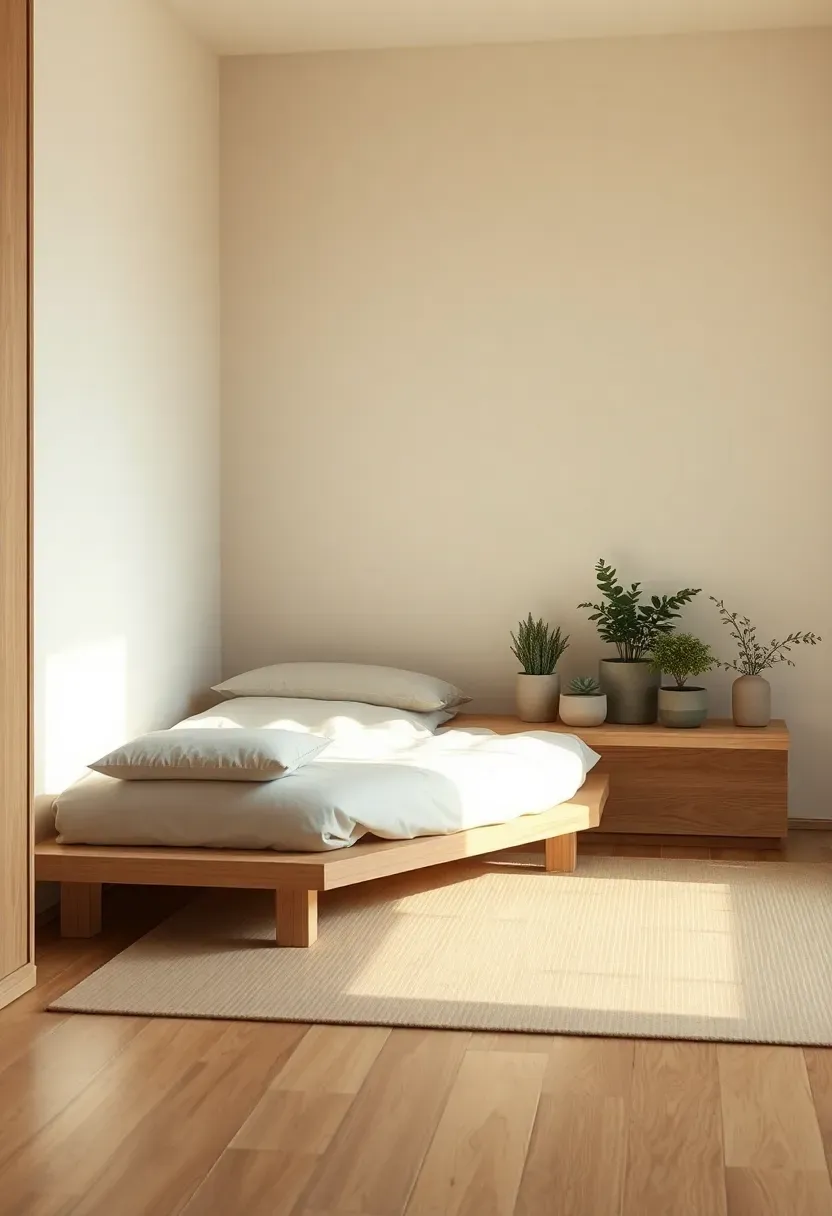
Japandi bedroom with indoor plants ideas feel grounded when a tatami-style platform defines the sleep zone. Build a low platform about 8 inches high and outline it with a cluster of plants at the perimeter. This creates a soft boundary without adding walls. For contrast, avoid tall planters on the platform itself, which feel top-heavy. The layout reads calm and grounded.
Recommended
Items for this idea
Common mistake: placing plants too close to the bed edge, which makes watering messy.
Leave a 6-inch buffer between pots and the platform edge to protect the tatami surface. Keep the plant cluster to two heights, around 18 and 30 inches, so the line stays quiet. The trade-off is less open floor, so skip a bench and use a narrow stool instead. A soft paper lantern adds light without breaking the low profile.
Tips
- Use a low plant stand to lift one pot slightly.
- Choose one planter shape to keep the cluster calm.
- Keep the platform perimeter clear on the entry side.
What this gives you: a grounded sleep zone with a soft green boundary.
13. Clay plaster backdrop to make leaves read as art
Japandi bedroom with indoor plants ideas look refined when a clay plaster wall becomes the backdrop for foliage. The tactile finish softens light and makes leaf shadows feel like art. Apply a warm beige plaster and keep the bed low and simple. For contrast, avoid patterned wallpaper that competes with the plant shapes. The wall becomes a quiet canvas for greenery.
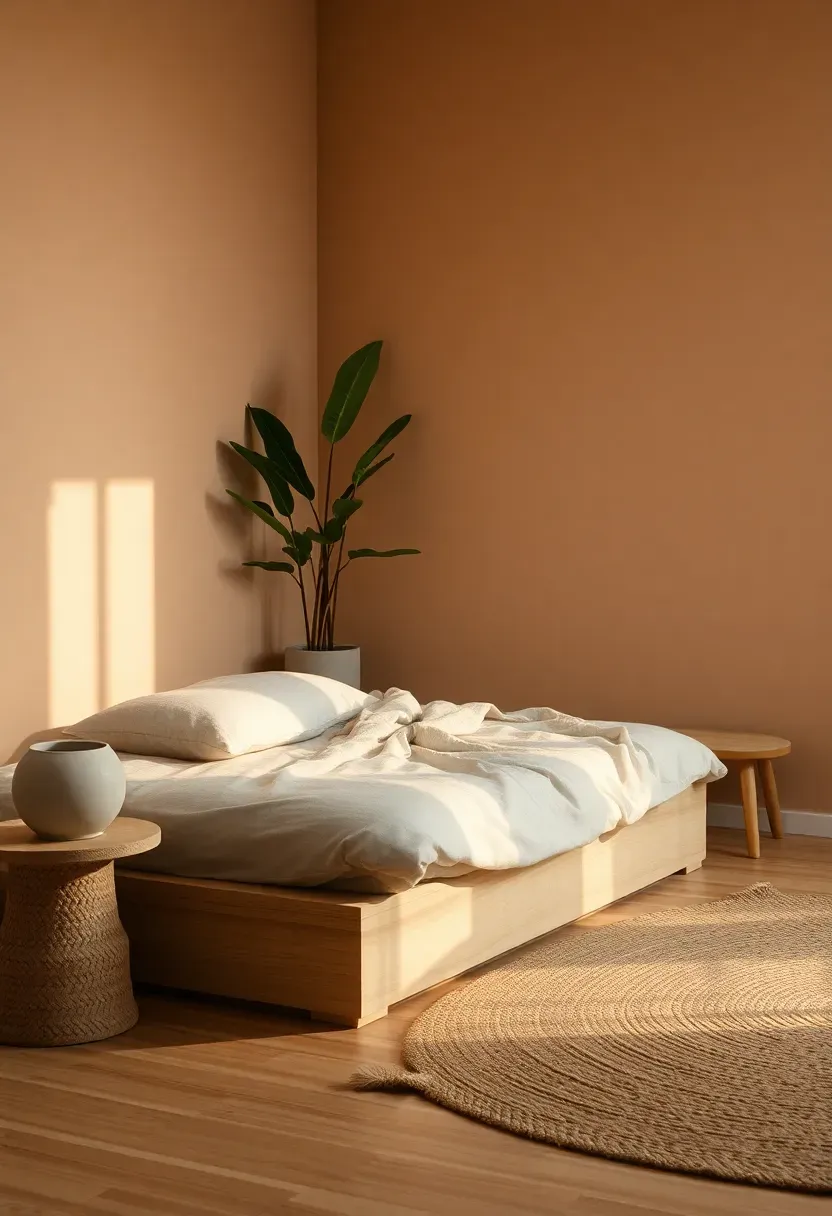
Keep the plant 8 to 12 inches from the wall so shadows stay soft, not harsh. The trade-off is wall upkeep, so use a breathable sealer to avoid stains. Add a simple oak bench at the foot of the bed to balance the textured wall. A linen duvet in sand tones keeps the palette cohesive.
Tips
- Do: choose matte plaster with subtle movement.
- Don't: place glossy art over the plaster finish.
- Do: test a small patch before committing.
Budget/Time: expect two to three days for plaster prep and cure.
What this gives you: a sculptural backdrop that makes plants feel intentional.
14. Stone and wood mix to ground the plant corner
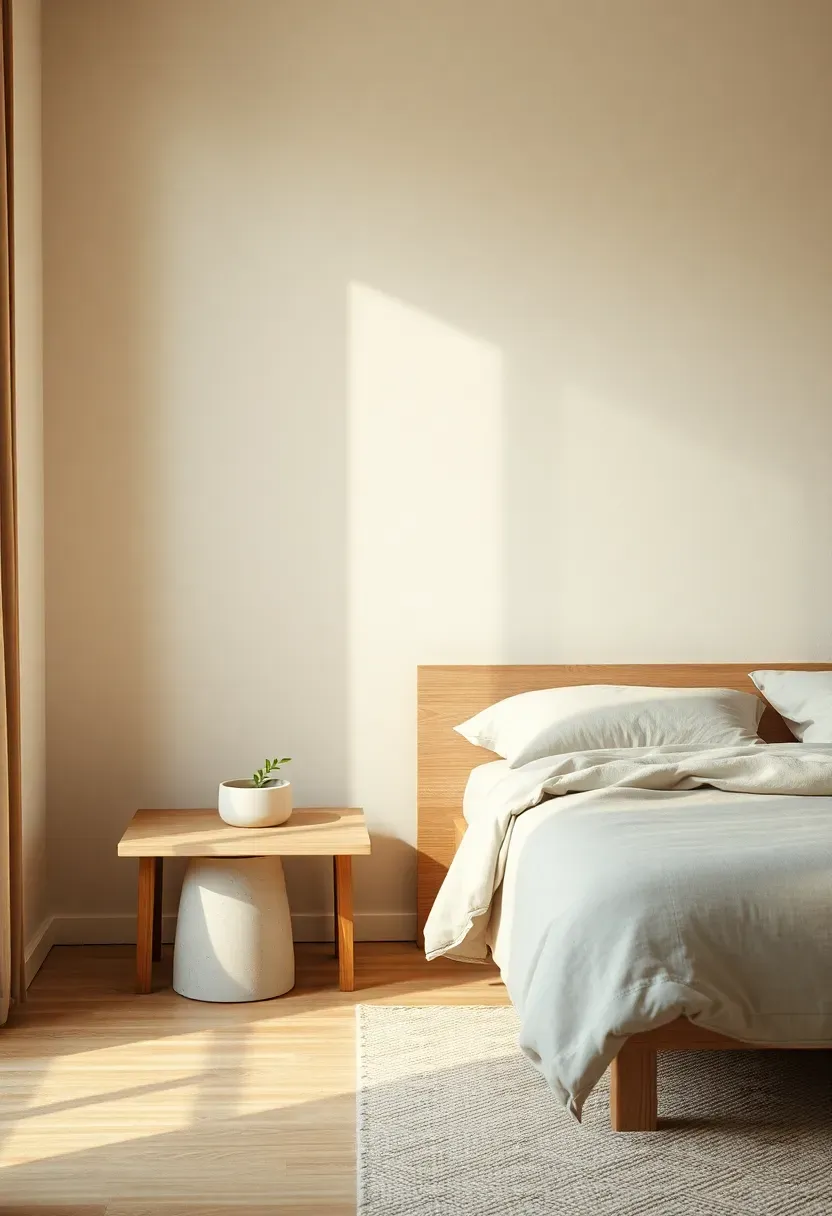
Japandi bedroom with indoor plants ideas gain weight when stone and wood balance each other. Pair a light oak bed with a travertine side table and a medium plant nearby. The material contrast anchors the corner and keeps the greenery from feeling floaty. For contrast, skip shiny marble that reflects too much light. The matte stone keeps the room grounded.
Recommended
Items for this idea
Placement note: Keep the stone table within 6 inches of the bed to feel purposeful.
Choose a table around 16 inches tall so it aligns with the mattress height. The trade-off is weight, so avoid moving it often and use felt pads. A slim linen runner on the bed softens the stone's edge. Keep the plant pot matte and low to maintain balance.
Tips
- If the stone feels cold, then add a wool rug nearby.
- If the corner looks heavy, then choose a thinner tabletop.
- If the plant leans, then rotate it weekly for balance.
What this gives you: a grounded corner that feels stable and calm.
15. Paper lantern lighting that highlights plant shadows
A japandi bedroom with indoor plants feels atmospheric when paper lanterns cast soft shadows on the leaves. Hang a lantern around 70 inches from the floor and place a plant nearby so the silhouette reads clearly. The shadow play adds depth without extra decor. For contrast, avoid bright spotlights that flatten the foliage. This keeps the room moody but still light.
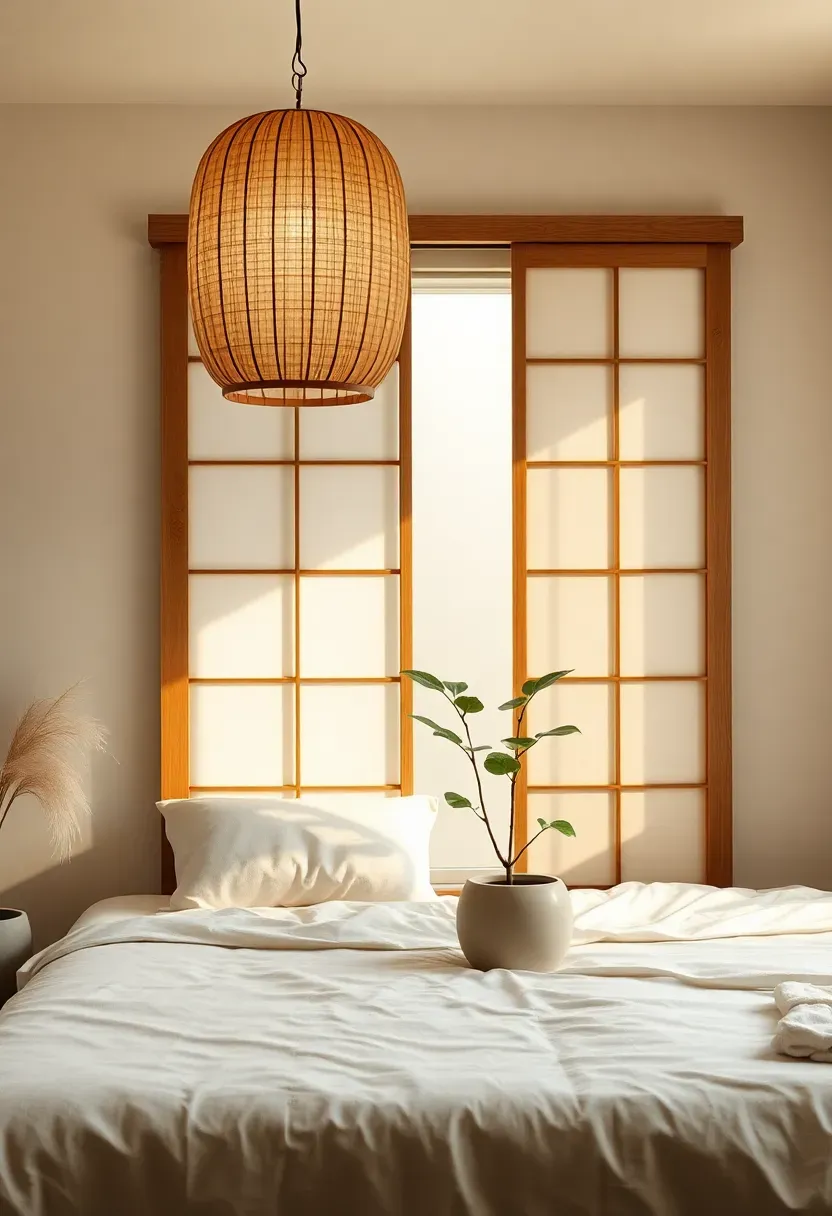
Why it works: the lantern diffuses light, so the plant shadows look soft and intentional.
Use a 2700K bulb and keep the lantern shade matte to avoid glare. The trade-off is less direct task light, so add a small reading lamp on the nightstand. Keep the plant within 18 inches of the lantern to catch the glow. A linen bedspread keeps the room warm without adding shine.
Tips
- Pro: soft light makes the leaves look sculptural.
- Con: paper shades collect dust over time.
- Fix: wipe the lantern monthly with a dry cloth.
Rental note: use a plug-in pendant or a floor lamp with a paper shade.
What this gives you: gentle light with subtle plant shadow drama.
16. Window seat with planter edge instead of a headboard
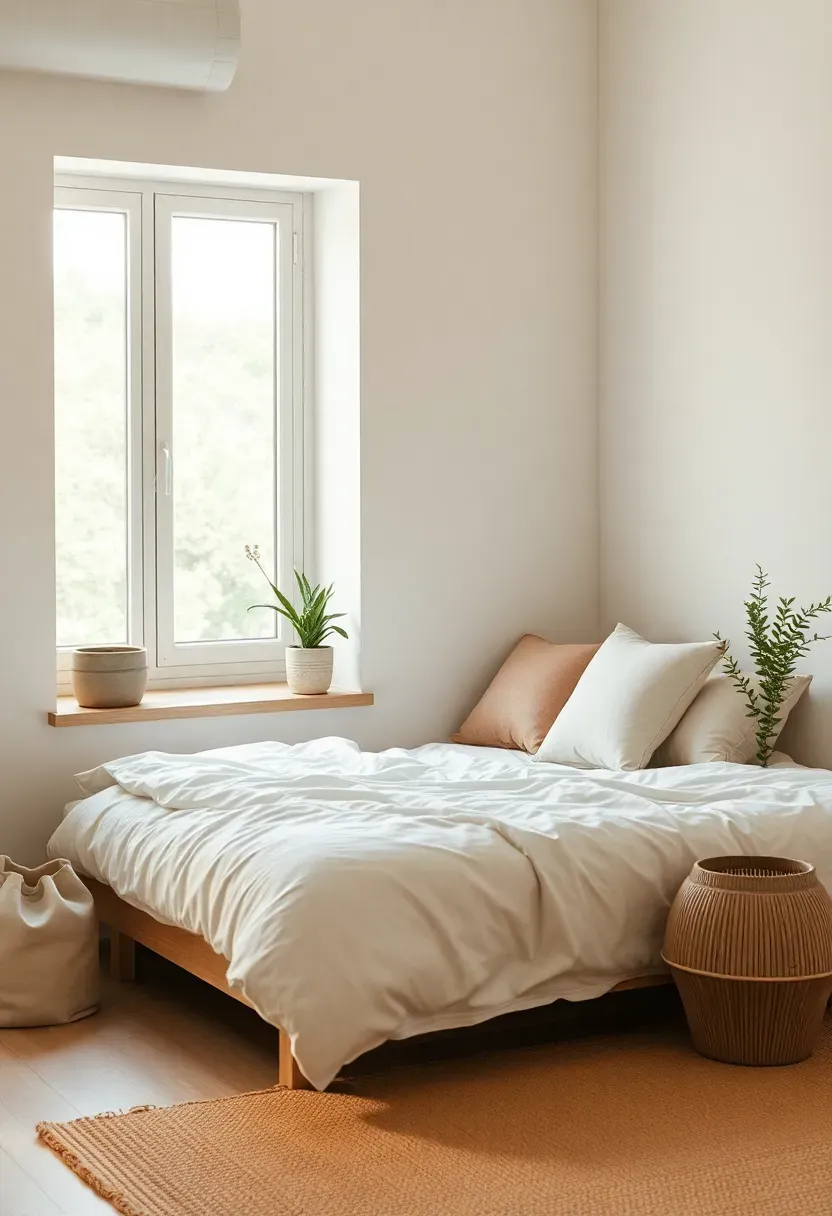
Japandi bedroom with indoor plants ideas can feel architectural when a window seat doubles as the headboard wall. Build a seat about 18 inches deep and run a planter edge along the back. The plants frame the bed without adding height. For contrast, avoid tall upholstered headboards that block the window. This layout keeps the space open and light.
Recommended
Items for this idea
Common mistake: making the planter too deep, which crowds the bed and steals floor space.
Keep the planter edge at 6 inches deep and use low-maintenance plants that stay under 18 inches high. The trade-off is less headboard padding, so add a long linen bolster for comfort. Leave 24 inches of clear space at the bed sides for easy access. The seat can also double as a quiet reading perch.
For a warmer wood balance, see 29 Japandi Dark Wood Bedroom Ideas That Ooze Zen for a Cozy and Stylish Space and translate the wood mix.
Tips
- Use a continuous bench cushion to keep the line clean.
- Place a slim tray on the seat for books or tea.
- Keep planter soil low to avoid spills near bedding.
What this gives you: a light-filled headboard alternative with built-in greenery.
17. Open shelving for ceramics and plants with negative space
A japandi bedroom with indoor plants can look curated when open shelving leaves room for air. Use a narrow shelf system and keep at least 60 percent of it empty. Place two ceramics and one plant to maintain negative space. For contrast, avoid stuffing shelves with books or decor. The open gaps create the calm Japandi look.
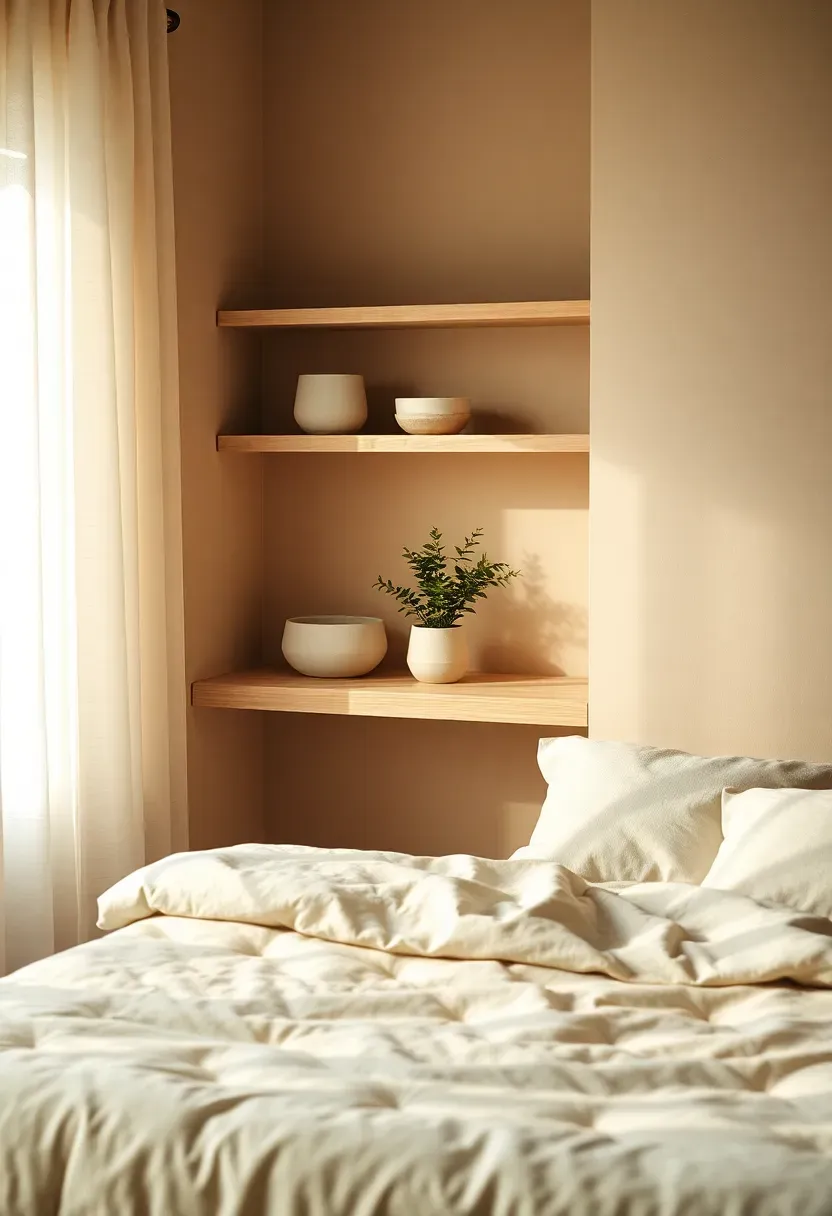
Keep shelf depth under 10 inches to avoid bulky storage. The trade-off is less capacity, so stash extras in closed drawers. Balance the shelf with a 6x9 rug and a simple bed frame to keep the room grounded. A soft linen curtain adds texture without interrupting the open look.
Tips
- Do: limit the shelf palette to two materials.
- Don't: stack objects higher than 12 inches.
- Do: space objects a palm-width apart.
Best for: rooms that need display space without visual clutter.
What this gives you: a curated shelf wall that still feels light.
18. Single hanging planter to lift the eye without clutter
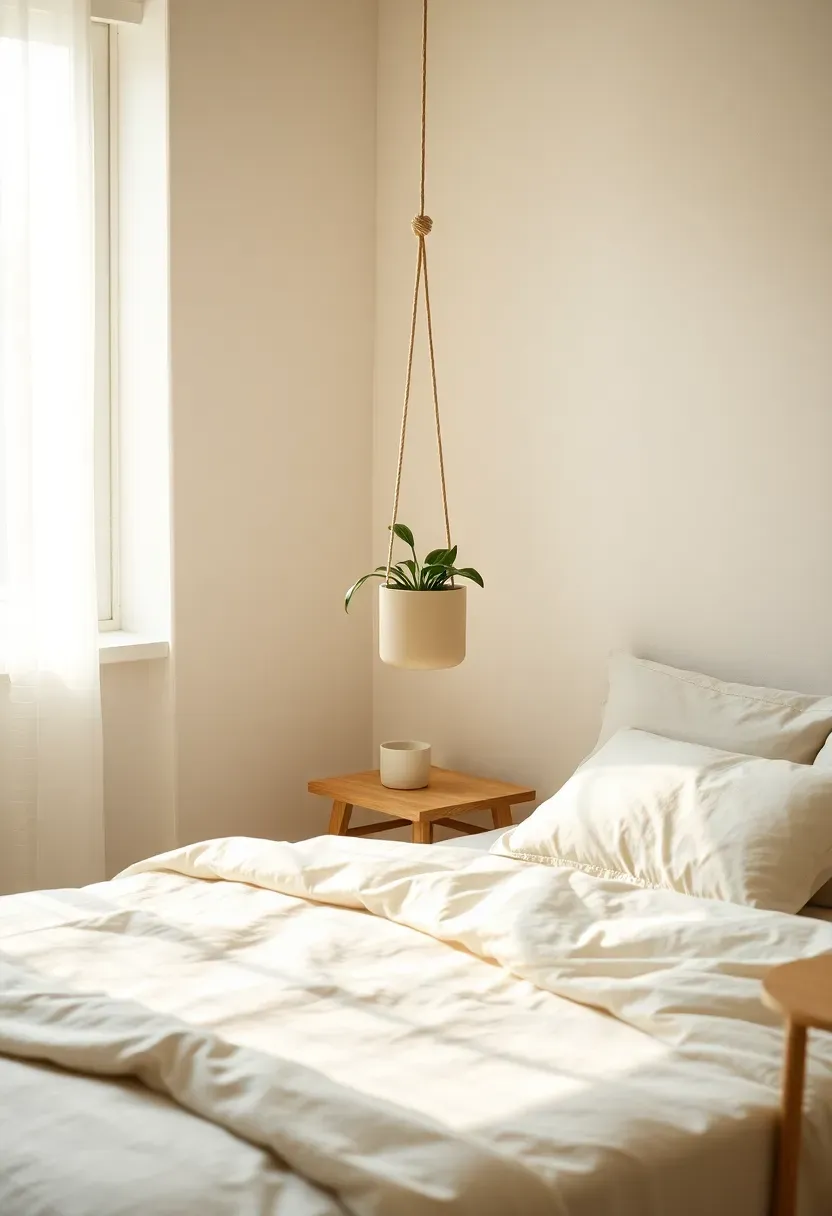
Japandi bedroom with indoor plants ideas can go vertical with one hanging planter instead of many floor pots. Hang it around 72 inches high so it feels airy and leaves clear floor space. This adds vertical balance without adding clutter. For contrast, avoid multiple hanging plants that can feel boho rather than Japandi. One plant is enough to lift the eye.
Recommended
Items for this idea
Placement note: Keep the planter at least 30 inches away from the bed for safety.
Choose a pot under 8 inches wide so it stays light and controlled. The trade-off is less greenery overall, so add a textured rug to keep the space rich. Use a slim hook that blends with the ceiling line. A simple linen throw on the bed keeps the room warm and grounded.
Tips
- If the plant looks heavy, then switch to a lighter pot.
- If you need more green, then add a small pot on the floor.
- If the ceiling is low, then hang the planter closer to the window.
What this gives you: a lifted focal point without crowding the floor.
19. Bed-as-divider layout with a green screen behind it
Japandi bedroom with indoor plants ideas can reshape the plan by floating the bed as a divider. Place the bed away from the wall and add a slim plant screen behind it to define zones. This approach improves zoning without heavy partitions. For contrast, avoid bulky shelving as a divider, which blocks light. A green screen keeps the separation soft and calm.
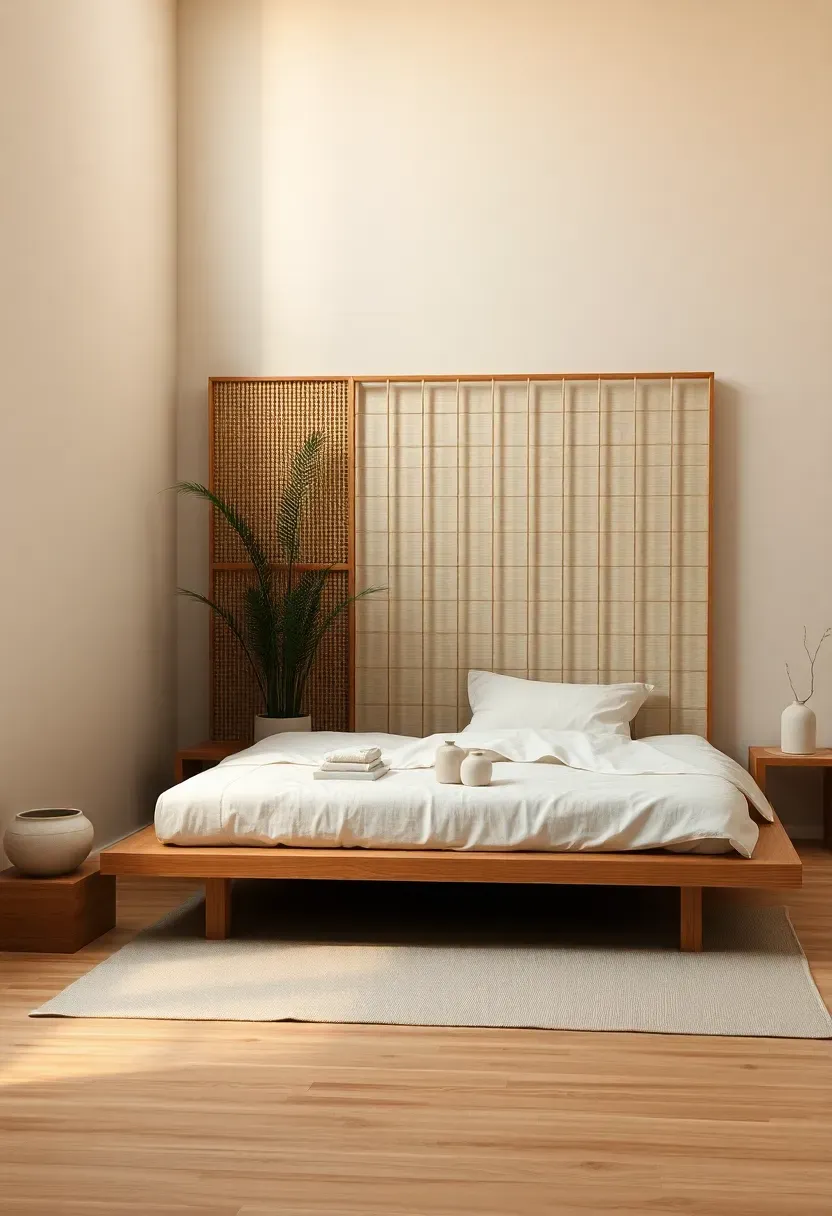
Why it works: the green screen creates a visual boundary while letting light and air pass through.
Leave 36 inches of clearance on the entry side so circulation flow stays easy. The trade-off is less wall space for a dresser, so use a slim wall cabinet instead. Keep the screen height around 60 inches to avoid blocking light. A wool runner helps guide the path toward the bed.
Tips
- Pro: floating the bed makes a studio feel larger.
- Con: it requires careful cable management.
- Fix: route cords under a slim rug or floor channel.
Avoid if: your room is under 10 feet wide.
What this gives you: gentle zoning without heavy walls.
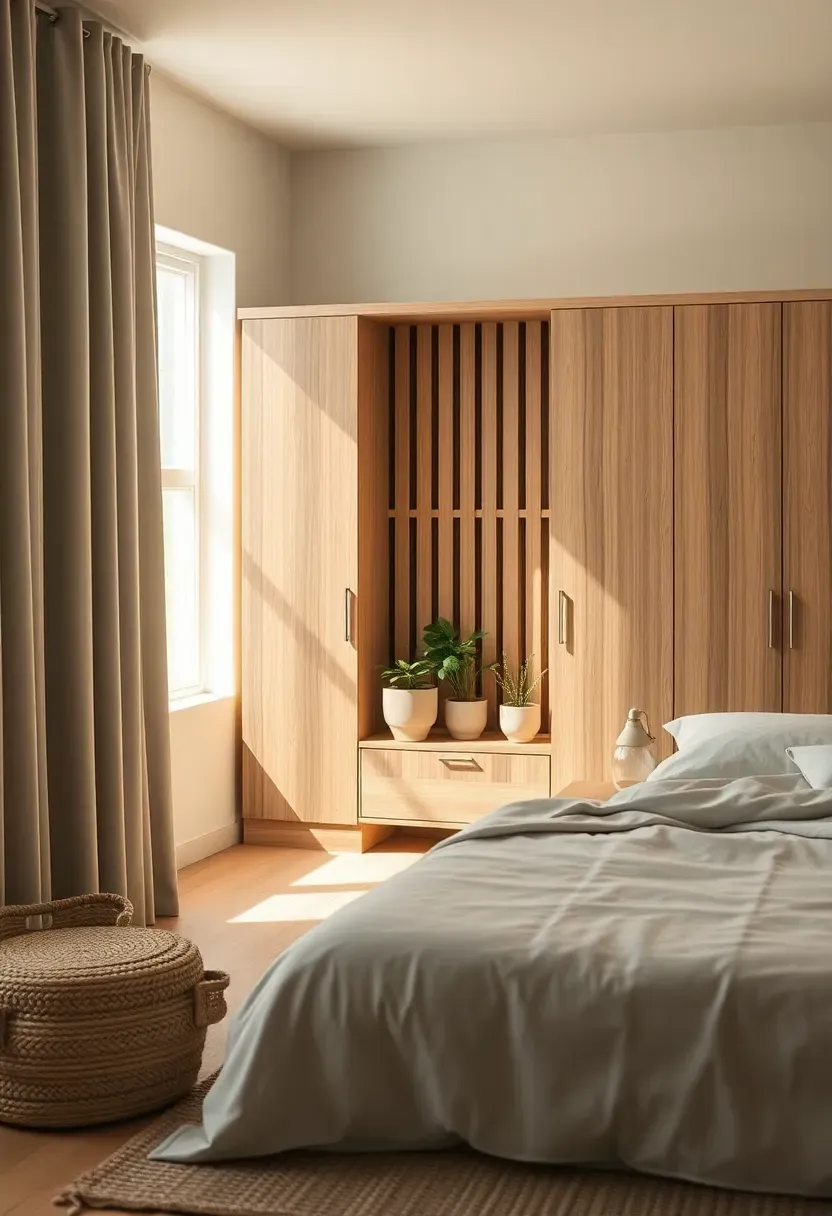
20. Slatted wardrobe front with a built-in planter trough
Japandi bedroom with indoor plants ideas can turn storage into a design feature with a slatted wardrobe. Add a slim planter trough at the base to tie the storage wall to greenery. The material rhythm of the slats keeps the look calm and structured. For contrast, avoid glossy wardrobe doors that reflect too much. The trough adds softness without taking floor space.
Recommended
Items for this idea
Common mistake: using a trough that is too deep, which bulks out the wardrobe line.
Keep the trough depth under 8 inches and choose plants with tidy growth habits. The trade-off is smaller pots, so pick low-profile greenery like peperomia. Add felt pads so the trough does not scratch the floor. A simple linen curtain on the opposite wall keeps the rhythm balanced.
Tips
- Use slats spaced 1 inch apart for a clean rhythm.
- Choose matching planters to keep the line quiet.
- Keep the trough clear at the door swing area.
What this gives you: storage that feels warm and nature-integrated.
21. Foot-of-bed bench paired with a low plant grouping
Japandi bedroom with indoor plants ideas feel grounded when a low bench and a small plant grouping sit at the foot of the bed. Keep the bench height around 16 inches so it stays in scale with low-profile furniture. Place two small plants on the floor beside the bench for a soft, balanced line. For contrast, avoid tall plant stands that draw attention away from the bed. The bench anchors the end of the room without clutter.
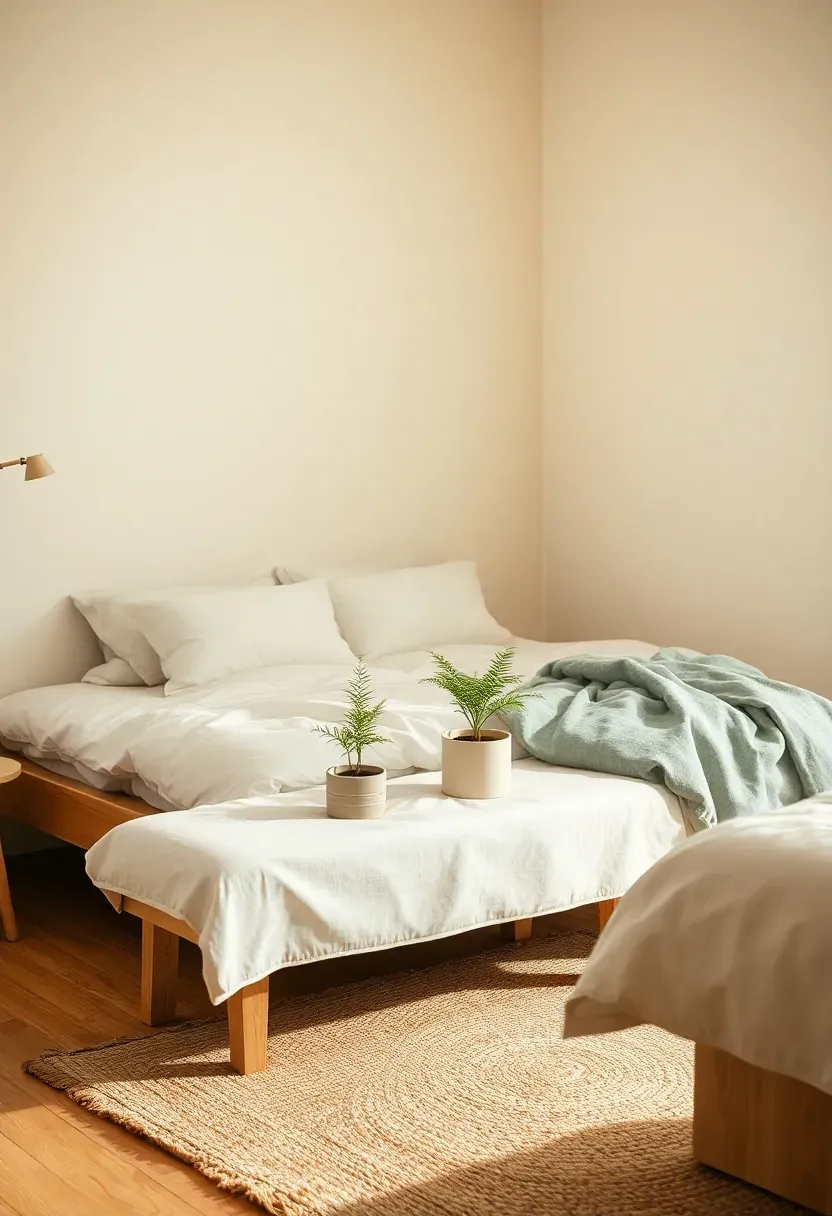
Leave 20 inches between the bench and the bed edge so it does not feel tight. The trade-off is less walking space, so skip extra stools or baskets. Add a linen runner on the bench for softness without extra color. Keep pots in the same finish to maintain a calm line.
For a stronger contrast base, see 21 Japandi Industrial Bedroom for Comfort and Visual Balance and soften it with greenery.
Tips
- Do: pick a bench with simple straight legs.
- Don't: place tall floor plants at the bed foot.
- Do: keep the bench length close to the bed width.
Budget/Time: a simple bench and two pots can be added in an afternoon for under $200.
What this gives you: a calm anchor that finishes the bed zone.
22. Rug zoning and plant placement to guide circulation
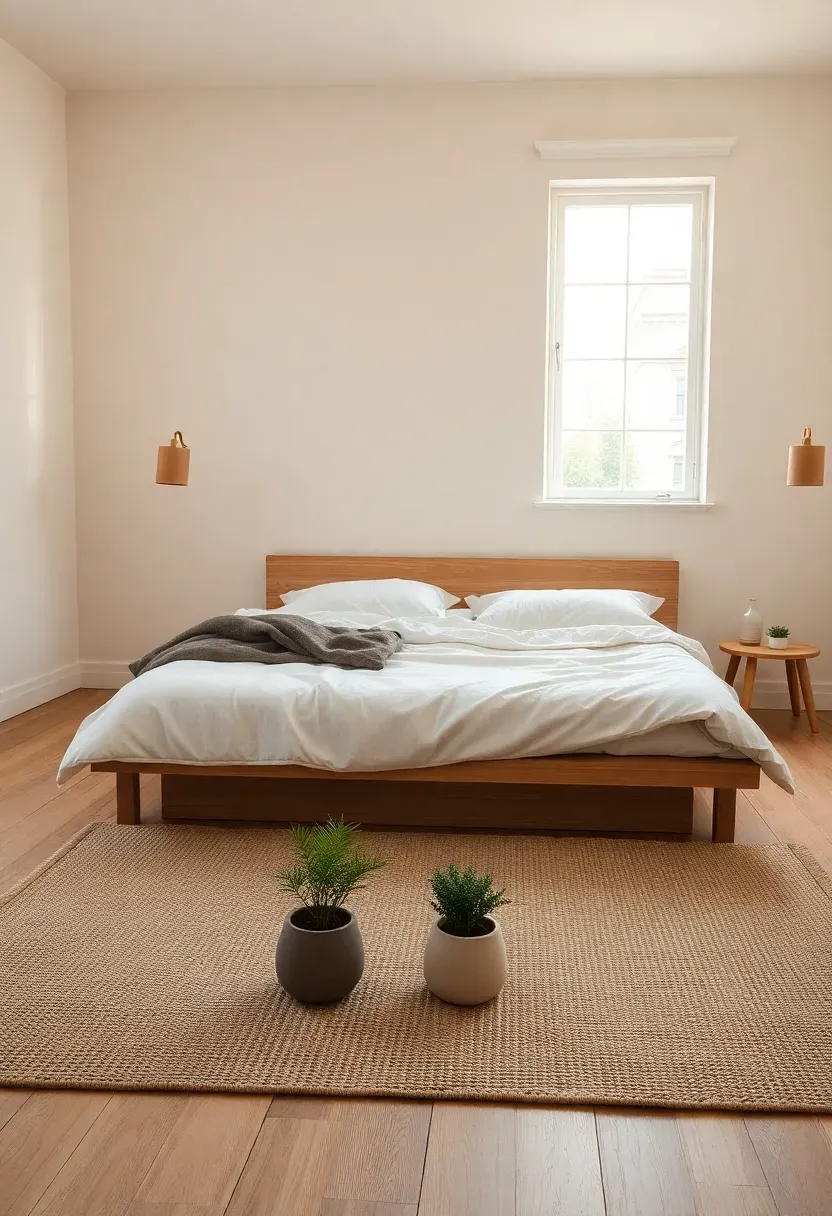
Japandi bedroom with indoor plants ideas feel most restful when circulation flow is planned first. Use a large rug to anchor the bed and place plants outside the rug edge to guide the path. This keeps the room readable and calm. For contrast, avoid tiny rugs that make the bed float and the plants feel random. The rug becomes the map for movement.
Recommended
Items for this idea
Placement note: Use an 8x10 rug and let it extend at least 18 inches beyond the bed.
Keep plant pots at the rug corners so they feel like boundary markers. The trade-off is less flexibility for rearranging, but the room feels calmer. Add a linen bed skirt to soften the rug edge. Stick to one plant height per side to keep the line even.
Tips
- If the rug feels busy, then choose a flat weave with no pattern.
- If the plants feel crowded, then move them 6 inches outward.
- If the bed looks small, then size up the rug one step.
What this gives you: a clear path that keeps the layout calm and easy.
23. Earthy textiles that echo foliage for cohesive color flow
Japandi bedroom with indoor plants ideas feel unified when textiles echo the foliage. Choose bedding in oat, moss, and clay tones so the plants blend into the palette. This creates a smooth color flow without bold contrasts. For contrast, avoid bright white sheets that make the plants look too sharp. The room feels soft and settled.
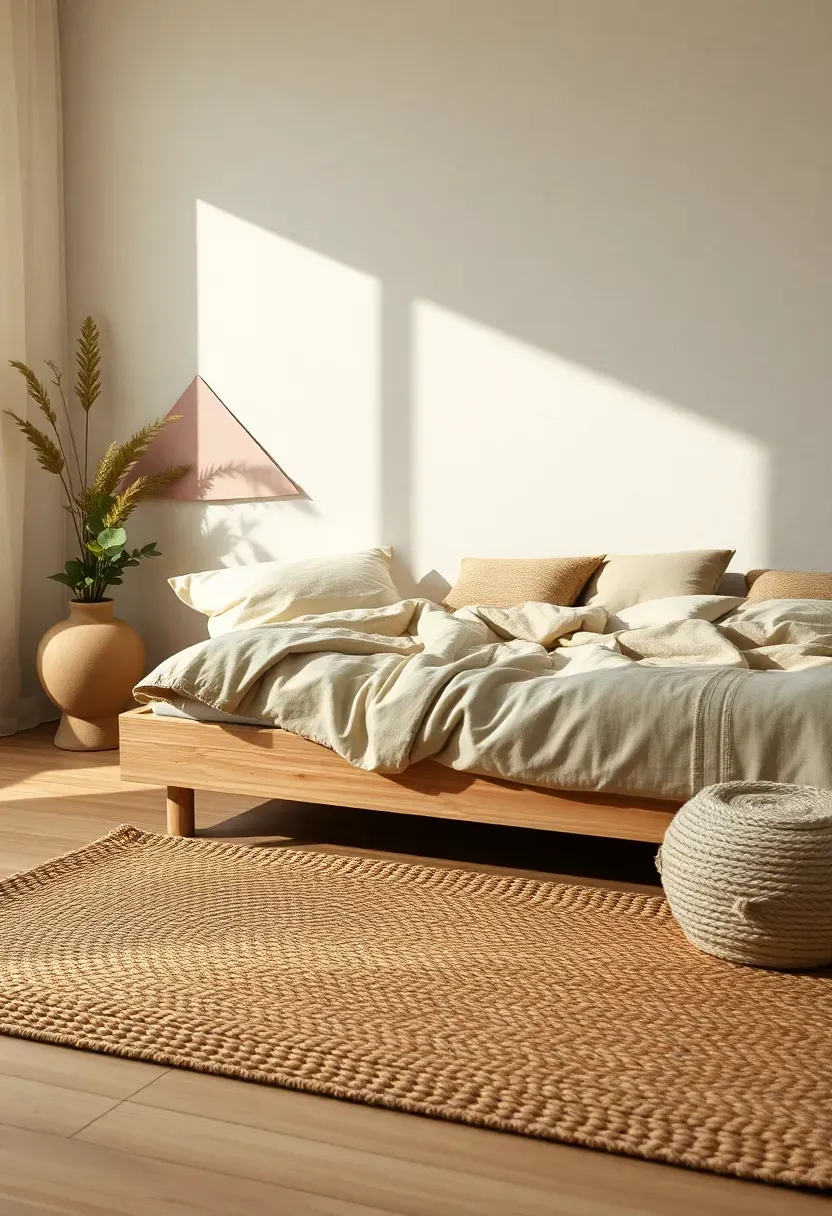
Why it works: the fabrics repeat the leaf tones, so the plants feel built into the palette.
Use a linen duvet and a cotton throw in two close shades, then add one plant with deeper green for depth. The trade-off is a more muted look, so bring in texture with a nubby rug. Keep pillow count low to avoid visual noise. A small ceramic vase adds a subtle tonal bridge.
Tips
- Pro: tonal bedding makes greenery feel intentional.
- Con: it can look flat if textures are too smooth.
- Fix: add a wool throw or woven pillow for texture.
Rental note: textiles are the easiest way to echo greenery without painting walls.
What this gives you: a cohesive palette that feels soft and natural.
24. Indoor-outdoor threshold styling for a retreat feel
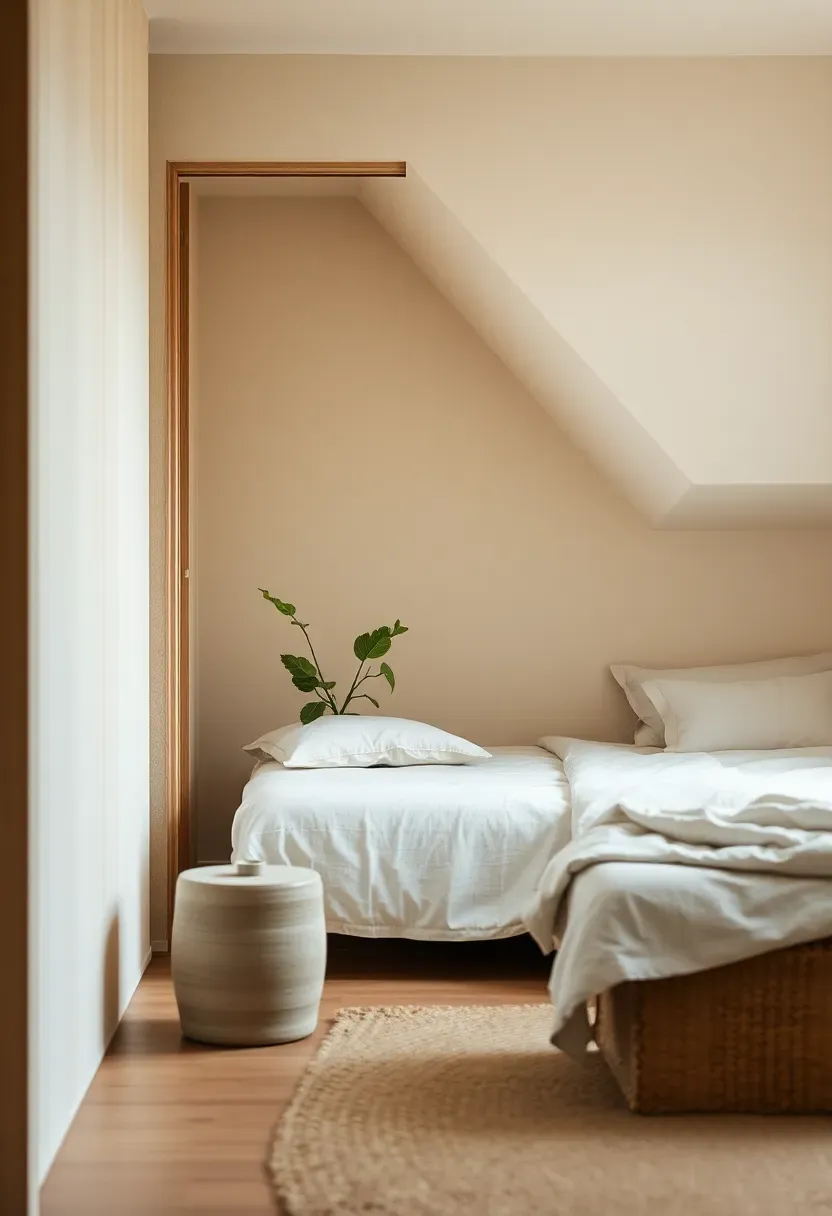
Japandi bedroom with indoor plants ideas feel most like a retreat when the indoor-outdoor threshold is styled with care. If you have a balcony door or large window, place a plant and a simple stool nearby to frame the view. Natural light becomes a design element rather than just illumination. For contrast, avoid cluttering the threshold with multiple accessories. The clean edge makes the outdoors feel part of the room.
Recommended
Items for this idea
Common mistake: pushing furniture too close to the doorway, which blocks light and feels tight.
Keep at least 30 inches of clearance at the threshold so the room stays open. The trade-off is less space for extra seating, so use one slim stool instead of a chair. Add a light linen curtain to soften the doorway without heavy fabric. A low plant with rounded leaves keeps the edge calm.
Tips
- Place a small tray on the stool for a candle or book.
- Use a door mat in a matching neutral to extend the palette.
- Keep plant pots under 10 inches wide to avoid crowding.
What this gives you: a light, open edge that feels like a retreat.
These japandi bedroom with indoor plants ideas work best when the layout, materials, and light all support the greenery rather than compete with it. Use low-profile furniture, soft neutrals, and intentional plant placement to build a biophilic bedroom that feels calm and breathable, even in a small rental. The details above show how zoning, texture, and lighting can shape a true nature retreat. Keep the palette quiet and the plants deliberate for a space that stays serene year-round.
About the author
OBCD
CGI visualization and interior design content. We create detailed 3D renders and curate practical design ideas for every room in your home.