19 Japandi Blue Bedroom Ideas for a Serene, Restful Space
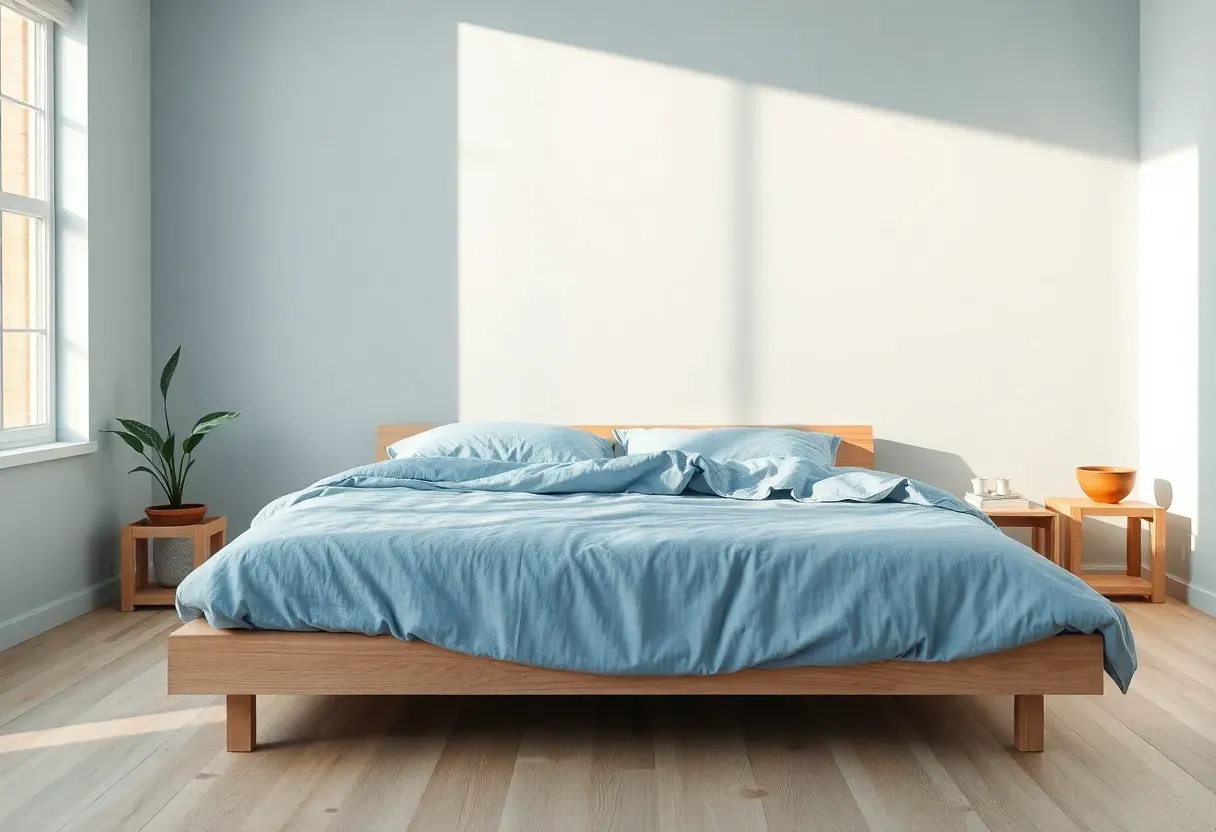
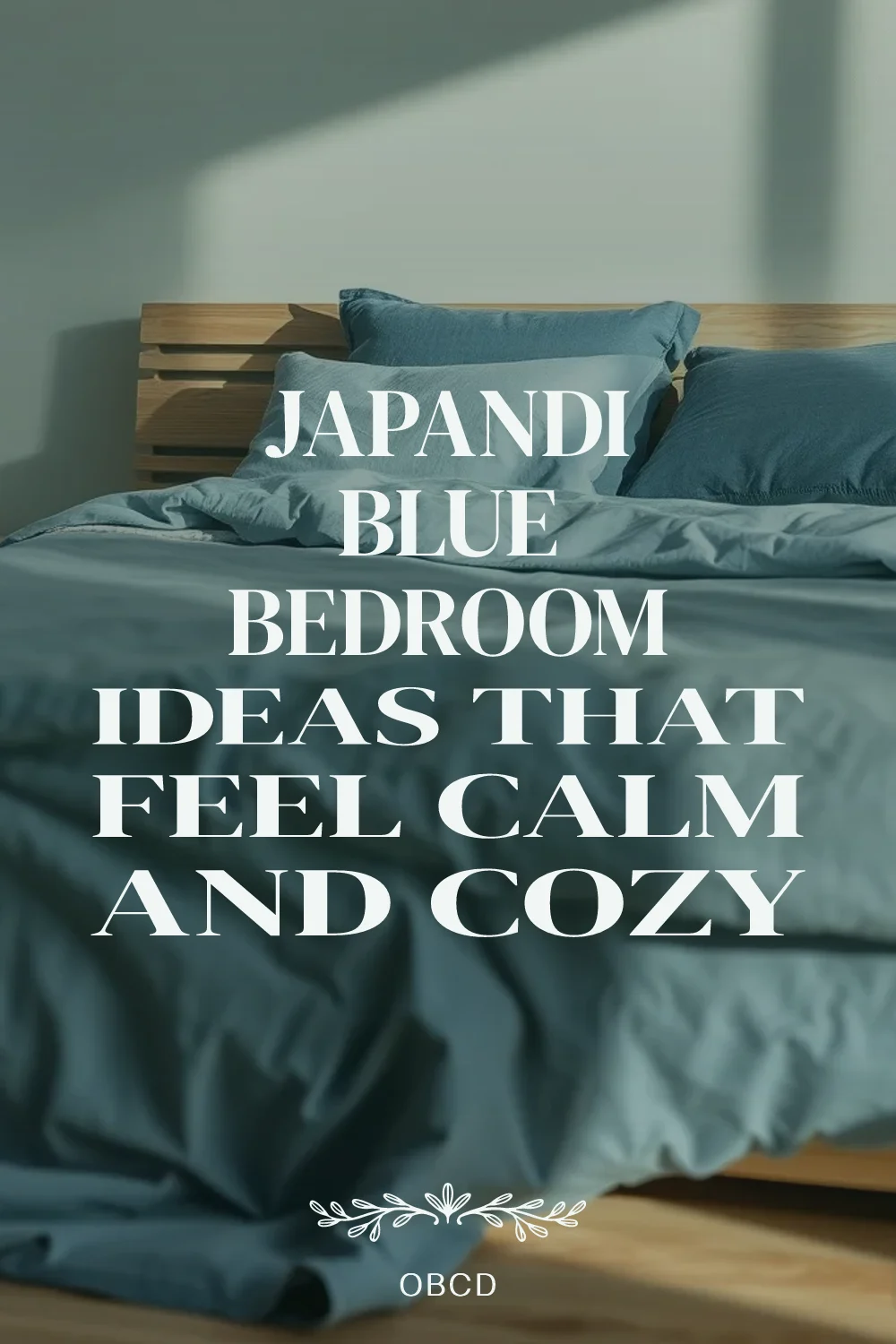
A Japandi blue bedroom combines the serene minimalism of Japanese design with the cozy warmth of Scandinavian style to create a balanced sanctuary for restful sleep. These japandi blue bedroom ideas pair soft dusty blues, natural wood, and clean lines so every element serves a purpose while contributing to an atmosphere of calm.
Whether you're drawn to pale icy blues or deeper navy shades, these 19 ideas show how to add blue to a minimalist bedroom without overwhelming the space. Each concept works in a rental apartment or a permanent home, and most require no drilling or permanent changes. Use this list to build a serene blue bedroom that feels curated, livable, and entirely your own.
Quick FAQ
What makes a Japandi blue bedroom different from other blue bedroom styles?
Japandi style blends Japanese wabi-sabi appreciation for imperfection with Scandinavian functionalism, featuring clean lines, natural materials, and muted blue tones that prioritize simplicity and calm over bold statements or excessive decor.
Which shade of blue works best for a Japandi bedroom?
Soft, desaturated blues like dusty blue, slate blue, pale cerulean, and muted navy work best—avoid bright primaries or neon tones in favor of colors inspired by nature like ocean mist, twilight sky, or weathered wood.
How do I keep a blue bedroom from feeling cold?
Warm up the space with natural wood furniture, textured textiles like wool throws and linen bedding, layered lighting with warm-toned bulbs (2700-3000K), and organic materials that add tactile warmth to the cool blue palette.
Can I mix different blue tones in one Japandi bedroom?
Yes, but stick to a cohesive tonal family within 2-3 shades—pair a light blue wall with darker navy accents or layer multiple blues of similar intensity for depth without visual chaos.
What materials complement a Japandi blue color scheme?
Light oak or ash wood, natural linen, wool, matte ceramics, unpolished stone, and brushed metals enhance the serene aesthetic while adding texture and warmth that balances the cool tones.
Should blue be on walls, bedding, or accents in a Japandi bedroom?
Any approach works—pale blue walls create an immersive serene backdrop, blue bedding makes the bed the focal point, or use blue primarily in accents like artwork, textiles, and furniture for a more subtle effect.
As an Amazon Associate I earn from qualifying purchases.
Table of Contents
- 1. Soft Blue Linen Bed Layering with Light Wood Furniture
- 2. Dusty Blue Accent Wall Behind Platform Bed
- 3. Pale Blue Shoji Screen Room Divider with Storage
- 4. Navy Built-in Wardrobes with Light Oak Trim
- 5. Slate Blue Woven Headboard with Minimal Bedside Tables
- 6. Icy Blue Platform Bed with Floating Nightstands
- 7. Muted Blue Tatami-Inspired Sleeping Area
- 8. Weathered Blue Vintage Rugs with Minimal Furniture
- 9. Blue-Green Gradient Wall with Natural Wood Bed Frame
- 10. Deep Blue Low Profile Bed with Light Flooring
- 11. Cerulean Window Nook Reading Corner
- 12. Blue-Dyed Hemp Textiles throughout the Room
- 13. Two-Tone Blue and Natural Wood Built-in Storage
- 14. Monochromatic Blue Japandi with Textural Variety
- 15. Sky Blue Slatted Wood Wall Behind Bed
- 16. Blue Ceramic Vase Arrangements on Minimal Surfaces
- 17. Indigo Dyed Linen Curtains with Simple Hardware
- 18. Blue Stone Accent Wall with Warm Wood Bed
- 19. Layered Blue Textiles on Neutral Foundation
1. Soft Blue Linen Bed Layering with Light Wood Furniture
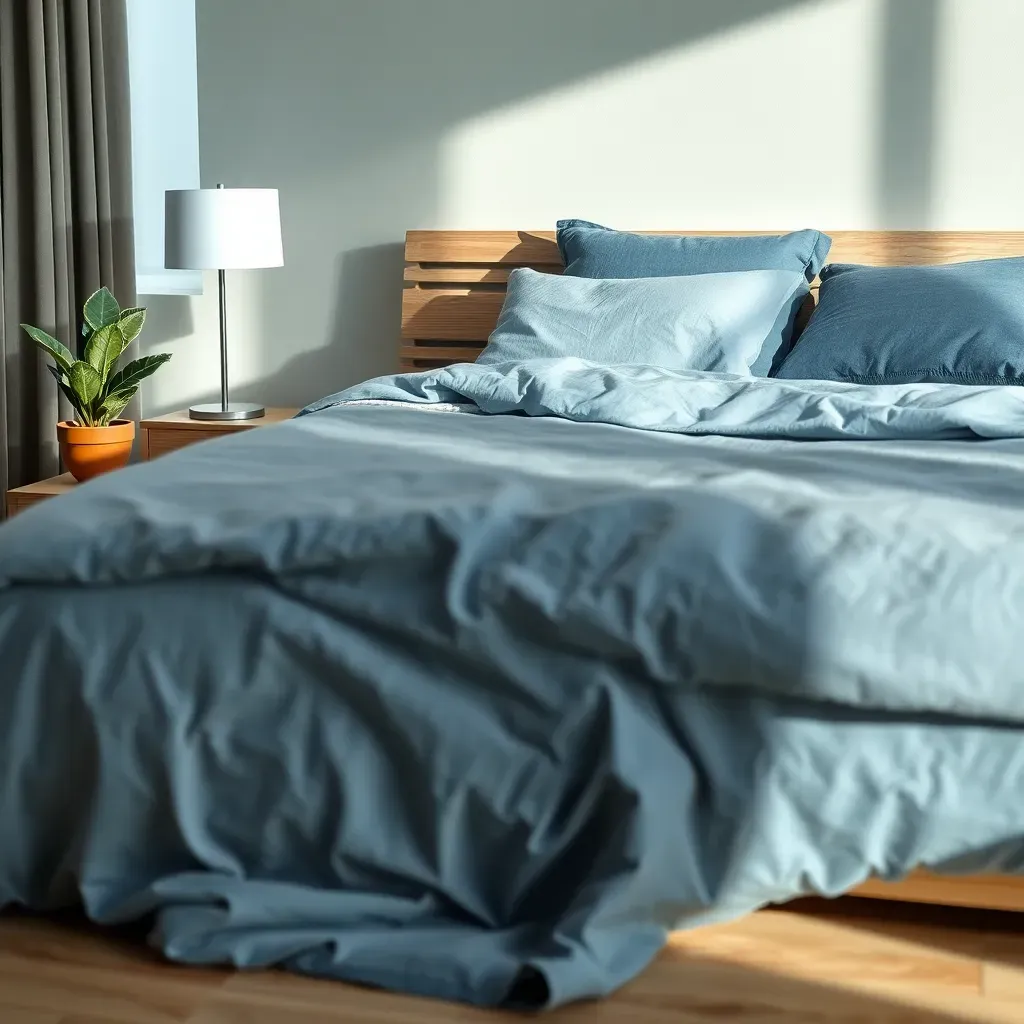
Prompt: Nature documentary capture on Hasselblad X2D 100C with XCD 90V lens at f/4. Hyper-realistic 3/4 view of a Japandi blue bedroom with a platform bed made of light ash wood, dressed in layers of soft blue linen bedding—duvet cover in dusty blue, flat sheet in pale icy blue, pillowcases in slate blue. Materials: washed linen with visible natural texture, light ash wood grain, matte ceramic bedside lamp. Soft diffused morning light from window left (4800K), creating gentle shadows and highlighting fabric textures. Serene minimalist mood with visible floor—light oak planks, one potted snake plant in terracotta pot. Clean composition with shallow depth of field on bedding textures. No text, no logos. Aspect ratio 2:3.
This layered bedding approach demonstrates the Japandi principle of thoughtful simplicity—similar material layering appears in modern Japandi bedroom concepts where texture creates visual interest without clutter.
Layering multiple shades of blue through bedding creates visual depth while maintaining the calm monochromatic palette essential to Japandi design. The light wood platform bed anchors the composition with warmth, balancing the cool tones of the linens while keeping the overall feel grounded and serene. Each layer of blue from duvet to sheets adds subtle dimension without introducing competing colors, creating a cohesive look that feels both intentionally designed and effortlessly relaxed. The natural variation in linen texture enhances the sophistication of the color layering.
Avoid matching every blue exactly—slight variations in tone and fabric texture prevent the bed from feeling flat or overly coordinated. The key is selecting blues from the same tonal family: dusty blue, slate blue, and icy blue harmonize because they share similar gray undertones rather than competing warm or cool casts. Light wood furniture in ash or oak provides necessary warmth against the cool bedding palette, creating that essential Japandi balance between serene and cozy.
Tips
- Do choose linen with visible natural texture for added depth.
- Don't introduce bright white—opt for ivory or oatmeal instead.
- If the room feels too cool, add a wool throw in a warm neutral.
What this gives you: A serene sleep sanctuary that feels visually cohesive while maintaining tactile richness through thoughtful material layering.
We picked a few things that go well with this idea: Simple&Opulence Linen Duvet Cover Set (Queen) (★4.5), Simple&Opulence Linen Duvet Cover Set (King) (★4.5) and Simple&Opulence Ruffle Linen Duvet Cover (Queen) (★4.6). As an Amazon Associate we earn from qualifying purchases.
2. Dusty Blue Accent Wall Behind Platform Bed
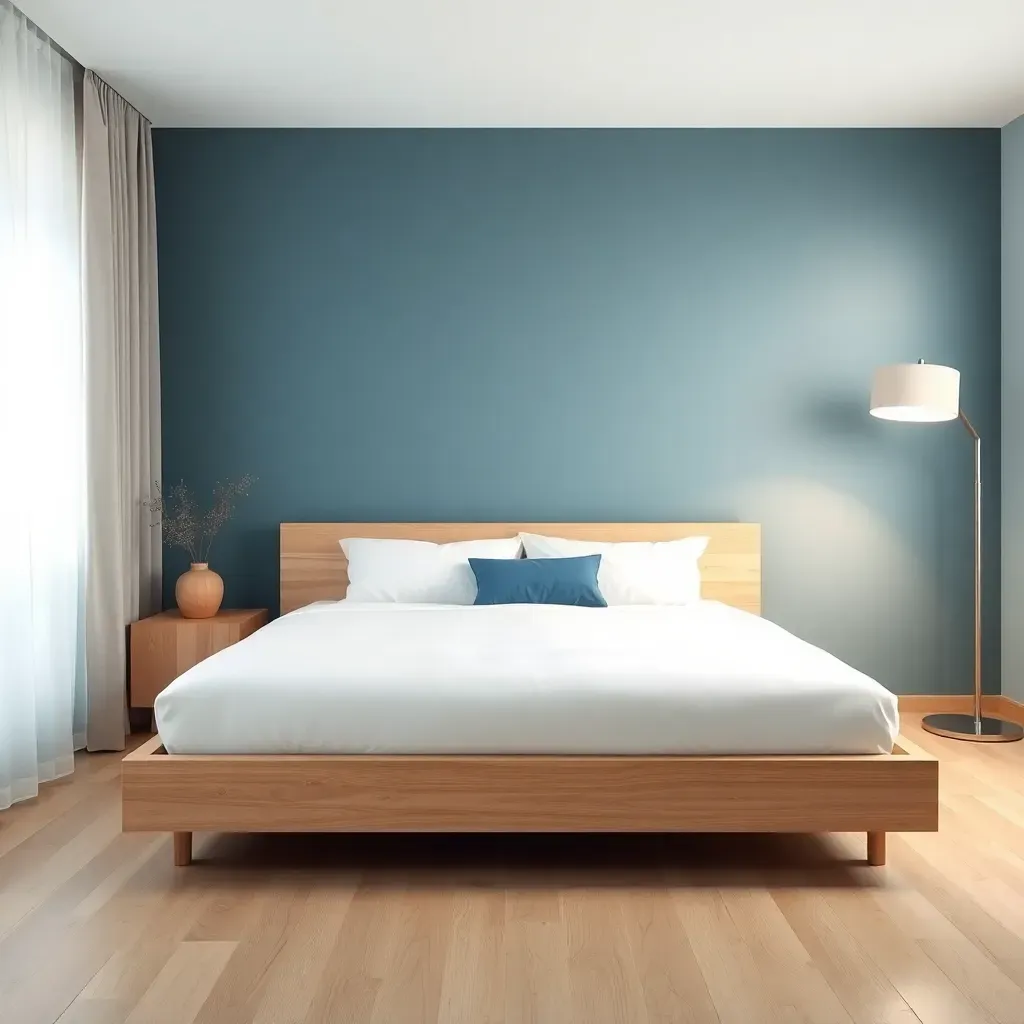
Prompt: Nature documentary capture on Hasselblad X2D 100C with XCD 90V lens at f/4. Hyper-realistic straight-on view of a Japandi bedroom with a dusty blue accent wall behind a low platform bed in light oak wood. The wall color is matte, slightly textured painted drywall in a muted dusty blue tone. Bed has simple white linens and one blue accent pillow matching the wall. Materials: painted drywall, oak wood, cotton percale. Soft ambient light from modern floor lamp right (3000K), window light filtering through sheer curtains left. Tranquil mood with visible light wood floor. Minimal styling—bedside table is wooden cube with ceramic vase. Clean horizontal lines, rule-of-thirds composition. No text, no logos. Aspect ratio 2:3.
A single dusty blue accent wall behind the bed creates a focal point that defines the sleeping area without overwhelming the room with color. This strategic use of blue draws the eye to the bed as the room's centerpiece while allowing the remaining walls to stay neutral, maintaining the spacious uncluttered feel central to Japandi philosophy. The matte paint finish absorbs light rather than reflecting it, enhancing the serene mood by softening the wall's presence and making the color feel like part of the architecture rather than a decorative addition.
Placement note: Limit the blue wall to the wall behind the bed only—using accent color on multiple walls diminishes the impact and can make the space feel smaller or cozier than intended in Japandi design. The contrast between the blue backdrop and neutral surrounding walls creates depth and visual hierarchy that guides focus to the sleeping area while maintaining balance.
Platform beds in light natural wood work particularly well against blue walls because the warm undertones in oak or ash prevent the combination from feeling cold or sterile. Keep bedding relatively simple with white or very pale blue linens to avoid competing with the accent wall—one or two blue pillows that pick up the wall color create cohesion without repetition. Consider the direction of natural light when choosing your blue shade; north-facing rooms may need a slightly warmer dusty blue to avoid feeling gray, while south-facing light can handle cooler blue undertones.
Tips
- Do test paint samples at different times of day—blue shifts dramatically with light.
- Don't choose blue with strong purple or green undertones.
- For a subtle effect, consider blue only halfway up the wall with chair rail trim.
Best for: Bedrooms where you want color impact without committing to an all-blue room.
What this gives you: A defined sleep sanctuary with intentional color focus that feels both dramatic and serene through strategic restraint.
We picked a few things that go well with this idea: Interlocked Matte Ceramic Decorative Vase (Set of 2) (★4.7), Matte Blue Ceramic Japandi Vase (Set of 3) (★4.3) and CEMABT Matte Ceramic Vase (Set of 3) (★4.8). As an Amazon Associate we earn from qualifying purchases.
3. Pale Blue Shoji Screen Room Divider with Storage
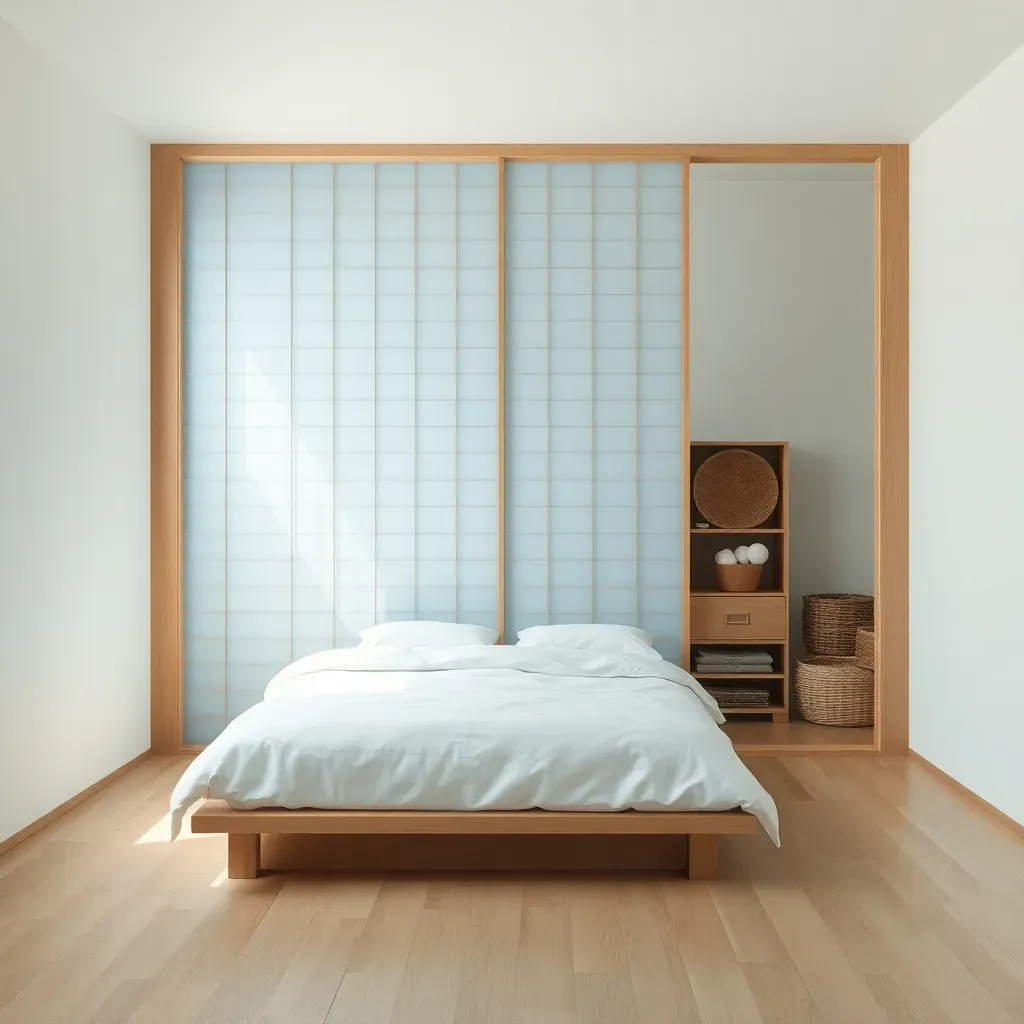
Prompt: Nature documentary capture on Hasselblad X2D 100C with XCD 90V lens at f/4. Hyper-realistic angled view of a Japandi bedroom featuring a pale blue shoji screen room divider with grid pattern, separating sleeping area from small storage space. Screen frame is light natural wood, panels are translucent paper in very pale icy blue. Behind screen: glimpses of woven baskets and wooden storage. In front: platform bed with white linens, light wood floor. Materials: washi paper in pale blue, ash wood frame, woven rattan baskets. Soft window light from left creating subtle shadows through screen grid. Serene minimalist mood. Shallow depth of field on screen texture. Clean vertical composition. No text, no logos. Aspect ratio 2:3.
This innovative take on traditional Japanese shoji screens introduces pale blue as an atmospheric element rather than a surface color, filtering light through translucent paper panels to create an ethereal glow in the bedroom. The screen serves dual purposes: gently dividing the space to create a dedicated sleeping nook while providing concealed storage behind it, maintaining the clutter-free aesthetic essential to Japandi design. The pale blue paper tint softens incoming daylight throughout the day, casting a serene cool-toned ambiance that feels calming rather than cold thanks to the warmth of the wood framework.
Why it works: The blue tint functions more like a lighting modifier than a wall color, creating a pervasive sense of calm that doesn't read as "blue room" but rather as "serene light quality."
Built-in storage or simply organized shelving hidden behind the screen keeps everyday items accessible but out of sight, supporting the minimalist visual while maintaining practical functionality for real living. Choose a screen with substantial wood framing in ash or light oak to balance the delicate blue panels with solid natural warmth—the grid pattern itself becomes architectural detail that adds interest without decor. Position the screen to filter morning light away from the sleeping area for more restful wake-ups, or use it to create a dressing zone that doesn't disrupt the visual calm of the main bedroom space.
Tips
- Pro: Use LED strip lights behind the screen for ambient nighttime lighting.
- Con: Paper panels can tear—consider durable synthetic washi alternatives.
- Fix: Reinforce paper edges with washi tape in complementary neutral tones.
What this gives you: A luminous room divider that creates distinct zones while filtering light through soft blue tones for all-day serenity.
We picked a few things that go well with this idea: Fluted Floating Nightstand with Drawer (Set of 2) (★4.4), Nathan James Floating Nightstand (Set of 2) (★4.4) and VINGLI Fluted Oak Floating Nightstand (Set of 2) (★4.4). As an Amazon Associate we earn from qualifying purchases.
4. Navy Built-in Wardrobes with Light Oak Trim
Recommended
Items for this idea
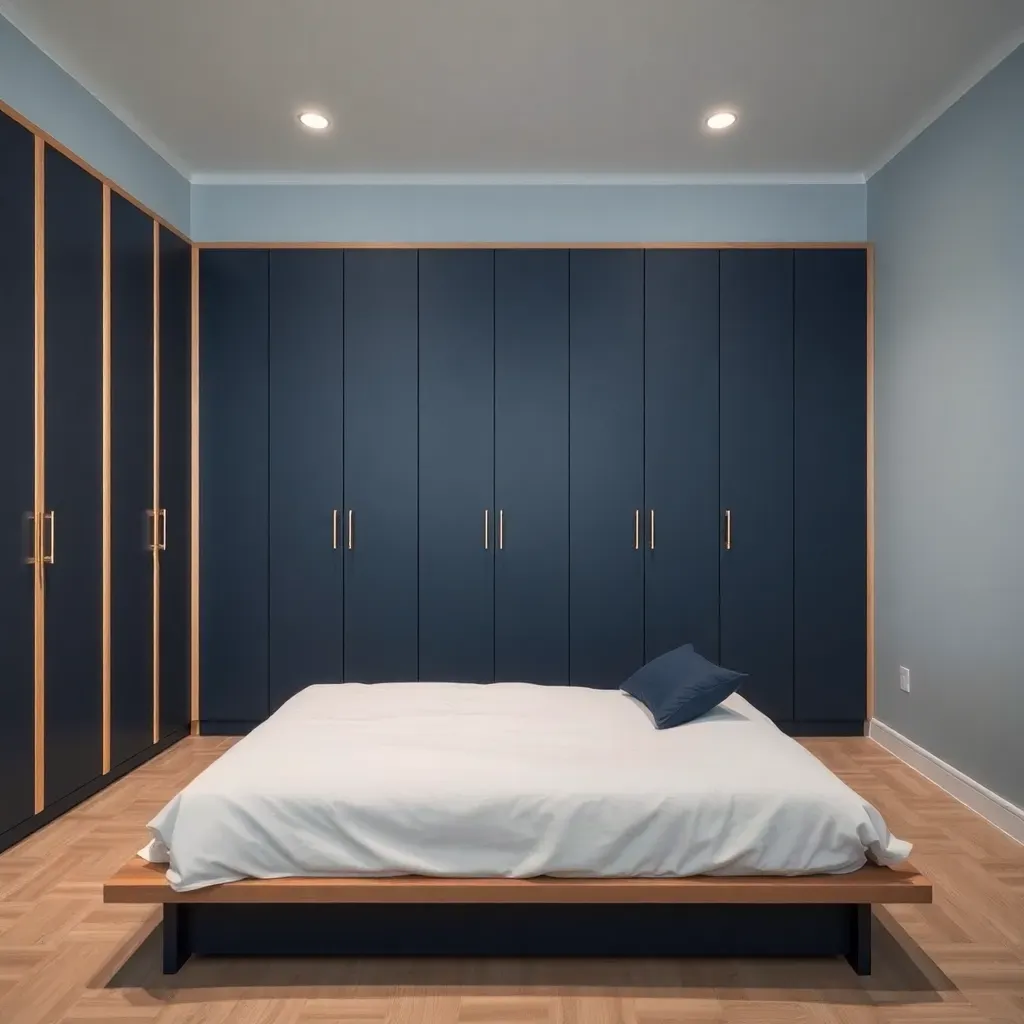
Prompt: Nature documentary capture on Hasselblad X2D 100C with XCD 90V lens at f/4. Hyper-realistic frontal view of Japandi bedroom with floor-to-ceiling built-in wardrobes in matte navy blue, accented with light oak trim and handleless push-latch doors. Wardrobes line one wall, bed in foreground with white linens and navy accent pillow. Light wood floor, pale blue-grey walls. Materials: matte navy lacquer, light oak wood, cotton bedding. Soft ambient light from recessed ceiling fixtures (3000K). Clean minimalist mood with strong vertical lines. Mid-depth focus showing wardrobe texture. Symmetrical composition. No text, no logos. Aspect ratio 2:3.
Deep navy built-in wardrobes create a sophisticated backdrop that adds gravitas to the bedroom while maintaining Japandi principles of functional minimalism and thoughtful material contrast. The dark blue storage wall grounds the space visually, providing weight and dimension that balances lighter elements while concealing all clutter behind seamless handleless doors for an unbroken serene aesthetic. Light oak trim at the edges and around any integrated details prevents the navy from feeling too heavy or formal, introducing natural warmth that softens the dramatic color choice.
Unlike freestanding wardrobes that create visual clutter with gaps and varied proportions, built-ins create a unified architectural element that feels like part of the room's structure rather than furniture placed within it. This integrated approach maximizes floor space and storage capacity while maintaining the clean lines essential to Japandi design—the navy color transforms what could be purely functional into a intentional design feature. Consider running the wardrobes wall-to-wall and floor-to-ceiling for a custom built-in look that makes the room feel larger through its tailored precision.
Tips
- If you're replacing doors, spray paint existing hardware navy to match.
- Then add oak edge banding or trim strips for contrast detail.
- Interior lighting in wardrobes enhances functionality without affecting room aesthetics.
Budget/Time: Full custom built-ins require professional installation; simpler DIY approach uses navy peel-and-stick veneer on existing flat-door wardrobes with oak trim added.
What this gives you: Maximum storage with dramatic visual impact through a cohesive architectural element that defines the room's sophisticated character.
5. Slate Blue Woven Headboard with Minimal Bedside Tables
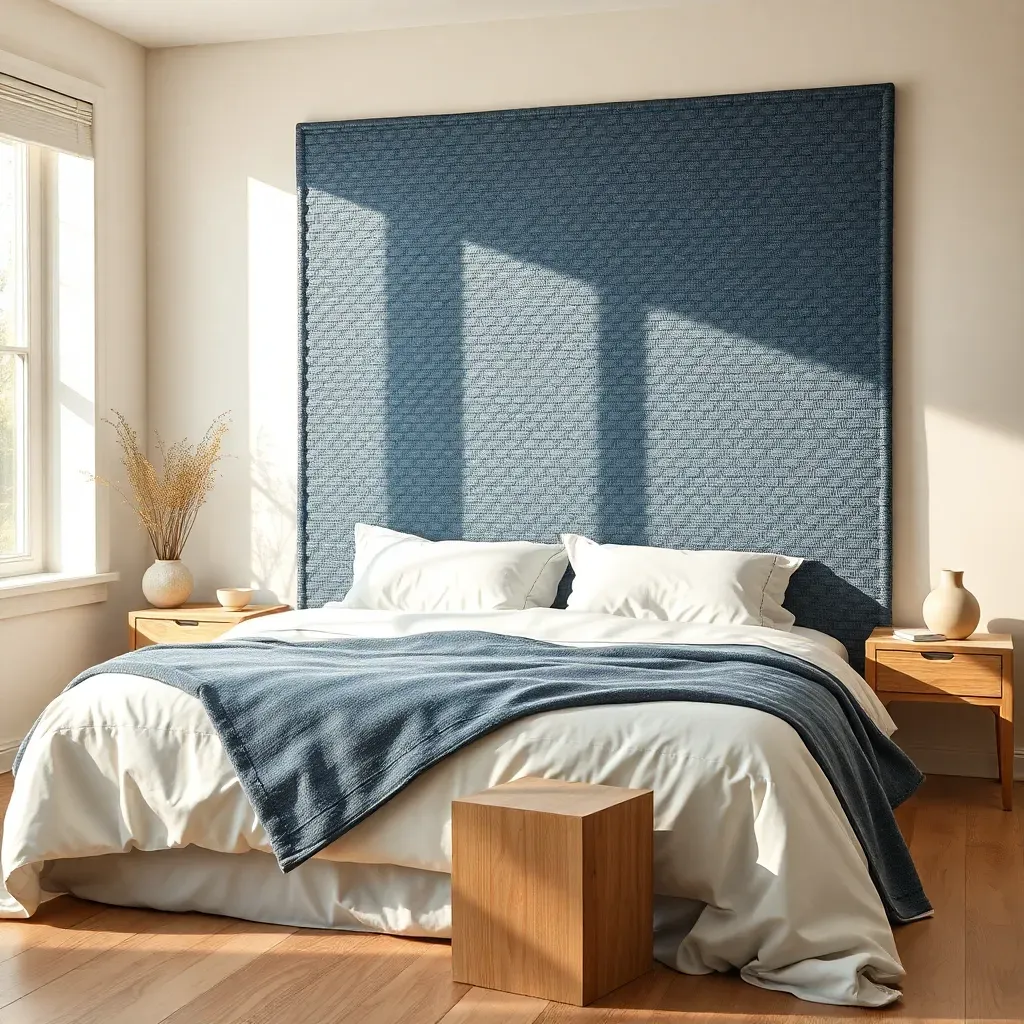
Prompt: Nature documentary capture on Hasselblad X2D 100C with XCD 90V lens at f/4. Hyper-realistic slightly elevated angle view of a Japandi bedroom bed featuring a large woven headboard in slate blue—made of woven textile or rattan dyed blue. Headboard texture is visible, slightly irregular handmade weave. Bed has simple white linens, minimal light wood bedside tables—simple cube stools. Light wood floor, walls in soft cream. Materials: woven blue textile, light oak wood, matte ceramics. Warm morning light from window left (4500K), casting shadows on headboard texture. Cozy minimalist mood. Shallow focus on headboard weave. Rule-of-thirds composition. No text, no logos. Aspect ratio 2:3.
A woven headboard in slate blue introduces handcrafted texture and organic irregularity that embodies the Japanese wabi-sabi appreciation for imperfect beauty while the blue color ties the room together in a distinctly Scandinavian palette. The three-dimensional quality of woven construction adds depth and shadow play throughout the day as light shifts across its surface, creating visual interest without additional decor or pattern. This textural element becomes the room's focal point through material quality rather than size or ornamentation, perfectly aligning with Japandi preference for substance over styling.
Bedside tables should be deliberately minimal—simple wood cubes or small floating shelves—to avoid competing with the substantial headboard visually. The key is restraint: a substantial textured headboard anchors the space, so surrounding elements should recede through simplicity and neutral materials. Light wood tones in the bedside tables and floor provide necessary warmth against the cool blue headboard, preventing the composition from feeling cold or monochromatic. Keep bedding simple in white or very pale blue to allow the headboard's color and texture to take center stage without visual competition.
Tips
- Do consider handwoven options from artisan makers for authentic texture.
- Don't choose bright blue—slate with gray undertones reads more sophisticated.
- For budget DIY, dye natural rattan webbing or attach woven blue fabric to plywood.
What this gives you: A textural focal point that adds warmth through handcrafted quality while the blue hue creates a cohesive color foundation.
6. Icy Blue Platform Bed with Floating Nightstands
Recommended
Items for this idea
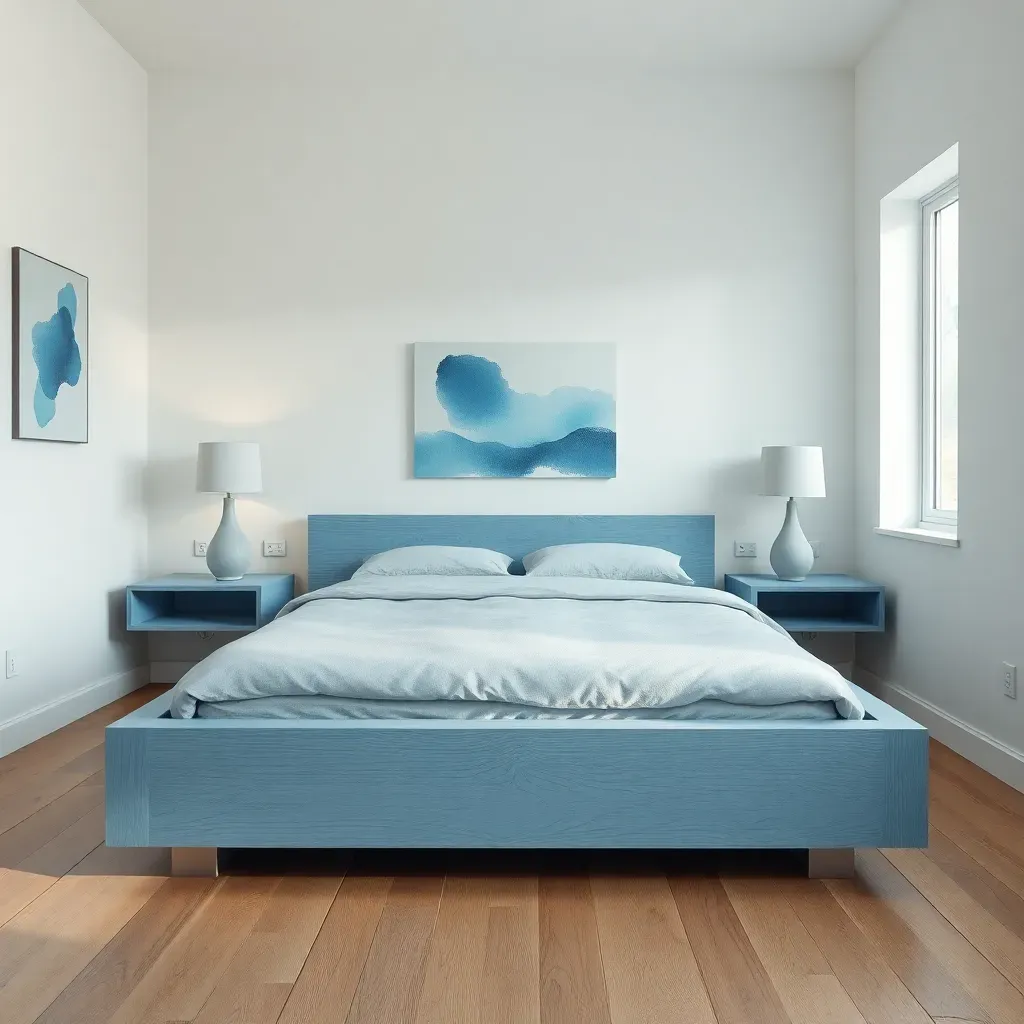
Prompt: Nature documentary capture on Hasselblad X2D 100C with XCD 90V lens at f/4. Hyper-realistic low angle view of a Japandi bedroom featuring a platform bed frame in icy blue stained wood—very pale blue with visible wood grain. Floating nightstands in same blue stain protrude from wall on either side. Bed has pale blue-grey linens, floor is light oak. Walls white with minimal blue abstract art. Materials: blue-stained light wood, cotton percale, matte ceramic lamp. Soft window light from right (5000K cool daylight). Serene modern mood with clean lines. Deep focus showing wood grain texture. Minimal styling—single small vase on each nightstand. No clutter. Symmetrical composition. No text, no logos. Aspect ratio 2:3.
Staining wood in a translucent icy blue rather than painting it opaque creates a subtle color-washed effect that preserves the natural beauty of wood grain while introducing a whisper of blue that feels fresh and serene. This approach to color is distinctly Japandi—respecting natural materials while gently influencing their tone for a cohesive palette. The floating nightstands in the same blue-stained wood create a unified furniture suite without the visual weight of traditional matching sets, maintaining the airy minimalist aesthetic through wall-mounted design that leaves floor space open and uncluttered.
Common mistake: Choosing opaque paint that hides wood grain entirely—translucent stain or wash allows the material's natural character to remain visible, which is essential to Japandi appreciation for authentic materials.
The pale icy blue tone works particularly well because it reads as neutral from a distance but reveals its subtle blue character up close, creating sophistication through understatement rather than bold color statements. This subtlety allows the furniture to feel calm and serene without dominating the space visually. Keep walls light and linens in pale blue-grays or whites to let the blue-stained wood serve as the room's primary color element. The translucent stain approach means the furniture can adapt over time—restain or sand to refresh without complete replacement, and the natural wood variations ensure each piece feels unique rather than mass-produced.
Tips
- Do test stain colors on scrap wood first—blue stains can shift unexpectedly.
- Then apply multiple thin coats rather than one thick coat for even coverage.
- For rental, use removable blue-toned wood veneer or washi tape on existing furniture.
What this gives you: Subtle color integration that preserves natural wood character while creating a unified serene palette through translucent staining.
7. Muted Blue Tatami-Inspired Sleeping Area
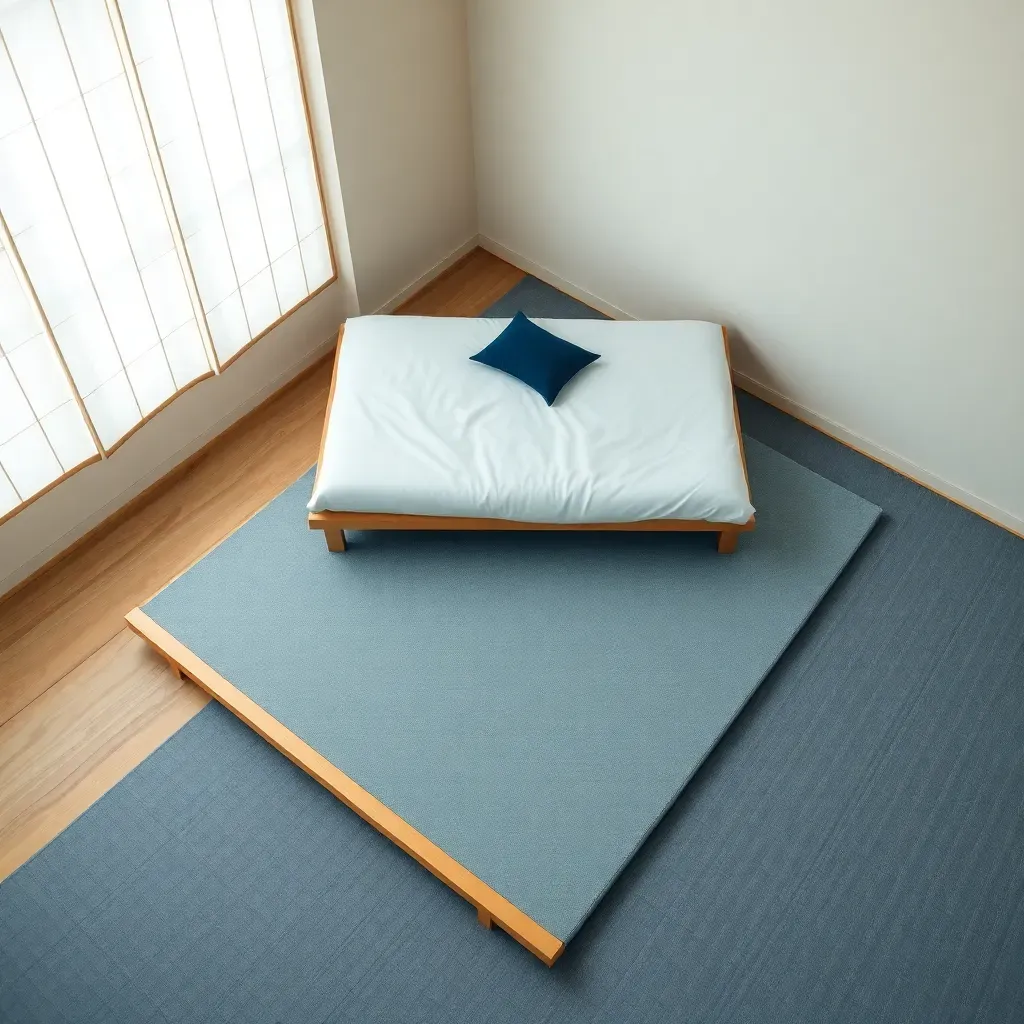
Prompt: Nature documentary capture on Hasselblad X2D 100C with XCD 90V lens at f/4. Hyper-realistic high angle view of a Japandi bedroom with tatami-inspired floor sleeping area—floor platform covered in pale blue-grey tatami mats or muted blue low-pile rug. Low bed frame sits directly on platform, simple white linens with one navy cushion. Floor surrounding platform is light oak wood. Minimal low furniture—small low table in corner. Walls soft cream with shoji window coverings. Materials: blue-grey textile flooring, light wood, cotton. Soft diffused light (5500K). Zen minimalist mood. Deep focus showing texture. Negative space emphasized. No text, no logos. Aspect ratio 2:3.
Drawing inspiration from traditional Japanese sleeping arrangements, a tatami-style platform in muted blue creates a designated sleeping zone that feels grounded and serene while maintaining the light, airy qualities of Scandinavian design. The slightly raised floor platform defines the bed's domain without walls or partitions, creating a psychological boundary that separates rest from the rest of the room's functions while maintaining open space and flow. The muted blue flooring choice—whether actual tatami in blue tones, a low-pile carpet, or a large rug—adds color underfoot while keeping the overall palette restrained and sophisticated.
This approach works particularly well in open-plan bedrooms or studio spaces where creating visual distinction between sleeping and living areas enhances functionality and rest quality. The low-profile bed furniture maintains the Japanese aesthetic of closeness to the ground, which feels both humble and serene, while the surrounding normal-height furniture keeps the room from feeling like a themed reproduction. Consider the blue tone carefully: a blue-gray with slight green undertones creates a more natural, organic feel than purple-leaning blues that can read as artificial or cold. The raised platform itself can provide valuable storage underneath for bedding or out-of-season items, combining aesthetic intention with practical function.
Tips
- Do use non-slip padding under tatami or rug on raised platform for safety.
- Don't attempt authentic tatami in humid climates without proper ventilation.
- For budget, build simple platform frame and cover with large blue-grey area rug.
What this gives you: A defined sleeping sanctuary that creates physical and psychological separation through elevated flooring in calming blue tones.
8. Weathered Blue Vintage Rugs with Minimal Furniture
Recommended
Items for this idea
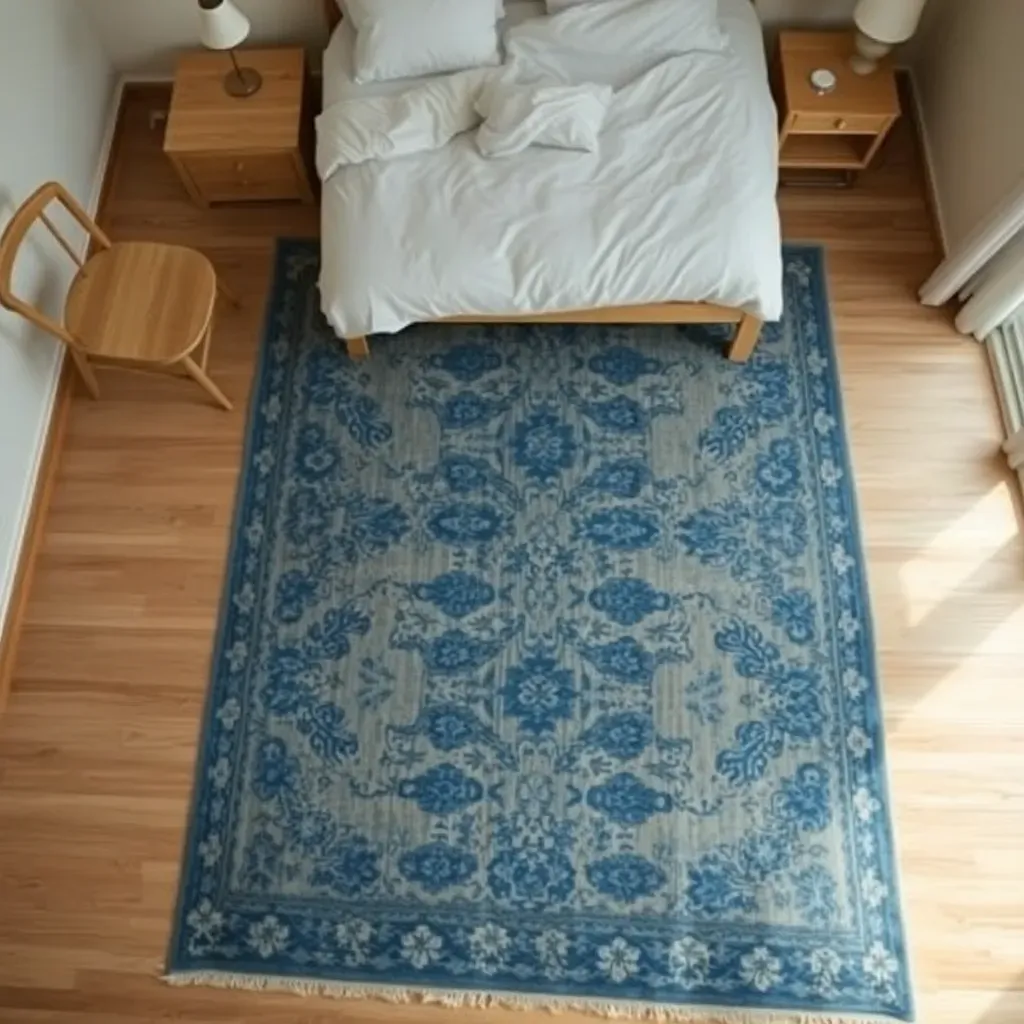
Prompt: Nature documentary capture on Hasselblad X2D 100C with XCD 90V lens at f/4. Hyper-realistic overhead view of Japandi bedroom showing weathered blue vintage rug layered on light wood floor—rug has faded blue patterns, worn edges, authentic vintage patina. Bed sits partly on rug, simple white linens, light wood bed frame. Minimal furniture—simple wooden chair in corner, small nightstand. Walls cream. Materials: vintage wool rug with faded blue motifs, light oak wood, unbleached cotton. Bright morning light from window (5500K), showing rug texture and wear. Wabi-sabi mood celebrating age. Deep focus on rug patina. Minimal objects. Asymmetrical composition. No text, no logos. Aspect ratio 2:3.
Vintage rugs with faded blue patterns introduce history, imperfection, and visual warmth that perfectly embodies the Japanese wabi-sabi principle of finding beauty in age and wear while the restrained blue palette maintains Scandinavian calm. These heirloom pieces add layers of visual interest through their complex patterns and variations in dye saturation that create depth without disrupting the room's serene foundation. The weathered quality prevents the blue from feeling flat or uniform—instead, the rug becomes a storytelling element that adds character and soul to the minimalist space.
Keep furniture deliberately simple and minimal to allow the vintage rug's complexity to shine without competition. A bed frame in light natural wood, simple wooden bedside cubes, and perhaps one chair create a balanced composition where the rug provides the visual richness while furniture contributes clean lines and solid surfaces. The contrast between the rug's aged, worn character and the new, simple furniture creates that essential Japandi balance between old and new, perfect and imperfect. Layering the rug so it extends partially under the bed helps ground the furniture composition while allowing the full pattern to be visible at the foot and sides.
Tips
- Do look for rugs with predominantly blue but some faded accent colors for depth.
- Don't choose bright new reproductions—authentic wear is key to wabi-sabi aesthetic.
- If vintage budget is limited, consider tea-washing or gentle distressing new blue rugs.
Rental note: Rugs are the perfect renter-friendly way to add color and pattern without permanent changes -- layer multiple smaller rugs if a single large vintage piece isn't available. For more small-space solutions, see our Japandi small apartment bedroom ideas.
What this gives you: Visual richness and historical character through imperfect vintage textiles that add soul while the blue palette maintains serenity.
9. Blue-Green Gradient Wall with Natural Wood Bed Frame
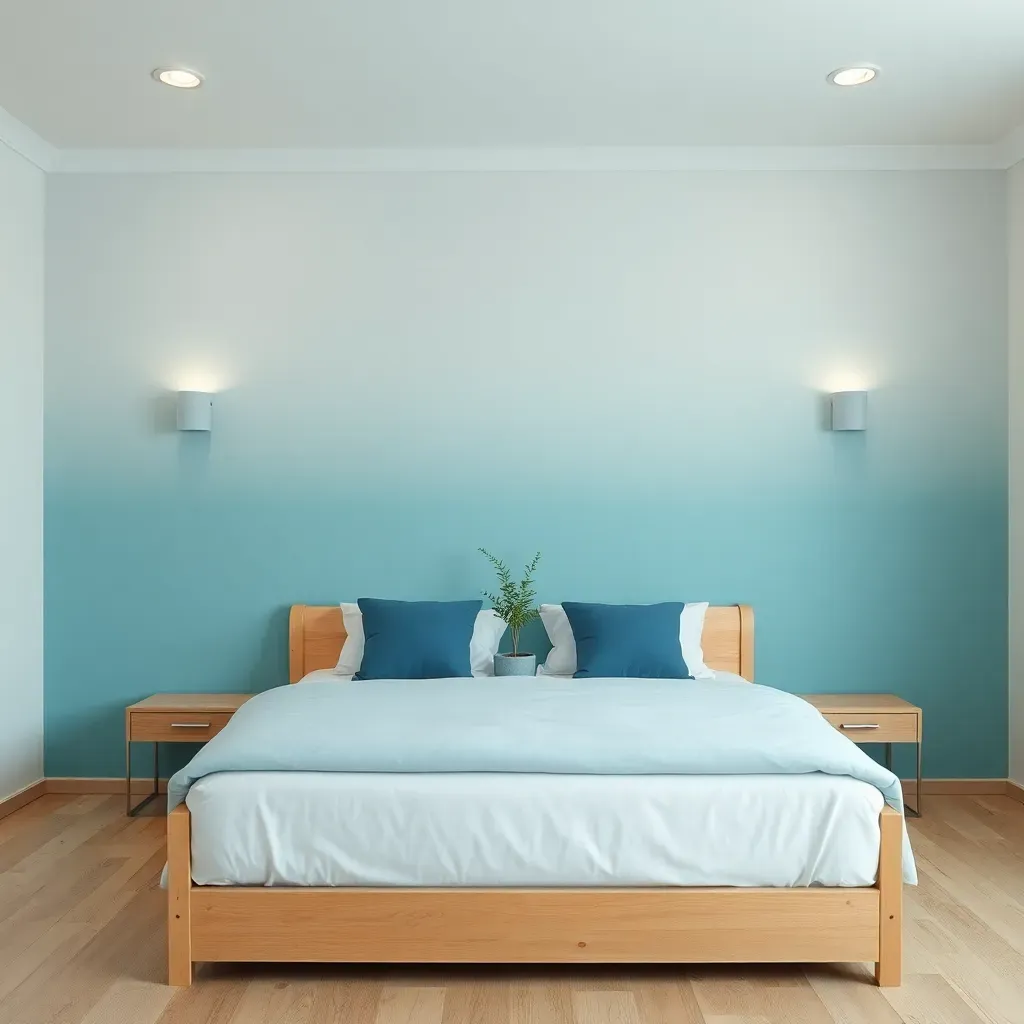
Prompt: Nature documentary capture on Hasselblad X2D 100C with XCD 90V lens at f/4. Hyper-realistic view of Japandi bedroom wall featuring subtle blue-green gradient ombre effect—pale icy blue at top transitioning gradually to soft teal-blue at bottom. Bed frame is natural light wood with simple white linens and two blue-green pillows. Floor light oak, ceiling white with minimal recessed lighting. Materials: painted gradient wall, light wood, cotton linen. Soft ambient light (3000K warm) from wall sconces. Calm mood with visible color transition. Mid-focus showing gradient blend. Minimal decor—single potted plant. No clutter. Vertical composition emphasizing gradient. No text, no logos. Aspect ratio 2:3.
A gradient wall that shifts from pale blue at the ceiling to deeper blue-green at the base creates a subtle ombre effect that adds visual interest through color transition rather than pattern or decoration. This sophisticated approach to wall color feels both contemporary and timeless, creating a sense of depth and movement that draws the eye naturally while maintaining the calm foundation essential to restful spaces. The blue-green undertones at the wall's base visually ground the room, creating a connection to the natural wood bed frame and flooring that enhances the organic, serene mood.
Why it works: The gradient technique adds complexity through color manipulation alone, avoiding the need for artwork or additional decor while creating a unique backdrop that feels custom and intentional.
DIY gradient walls are achievable with careful paint mixing and systematic application—start with the lightest blue at the ceiling and gradually mix in small amounts of green as you work downward, blending each section into the next while the paint is wet for smooth transitions. The key is subtlety: extreme color contrasts will feel jarring in a Japandi space, but gentle shifts within the same tonal family create sophisticated ambiance. Keep bedding simple and furniture minimal to let the wall remain the star—the natural wood bed frame provides necessary warmth against the cool gradient without competing for attention. Consider the room's lighting when planning your gradient; the effect should be visible but not overwhelming in both natural daylight and artificial evening light.
Tips
- Do practice gradient technique on sample board first—blending timing is crucial.
- Don't attempt without two people—one person blends while the other mixes new batches.
- Then paint two full coats for consistent color depth across the gradient.
Budget/Time: DIY gradient painting costs approximately $100-150 in paint supplies and requires 1-2 days including drying time; professional painting costs $500-1000.
What this gives you: A unique architectural element that adds sophistication through subtle color transitions while maintaining the calm minimalist foundation.
10. Deep Blue Low Profile Bed with Light Flooring
Recommended
Items for this idea
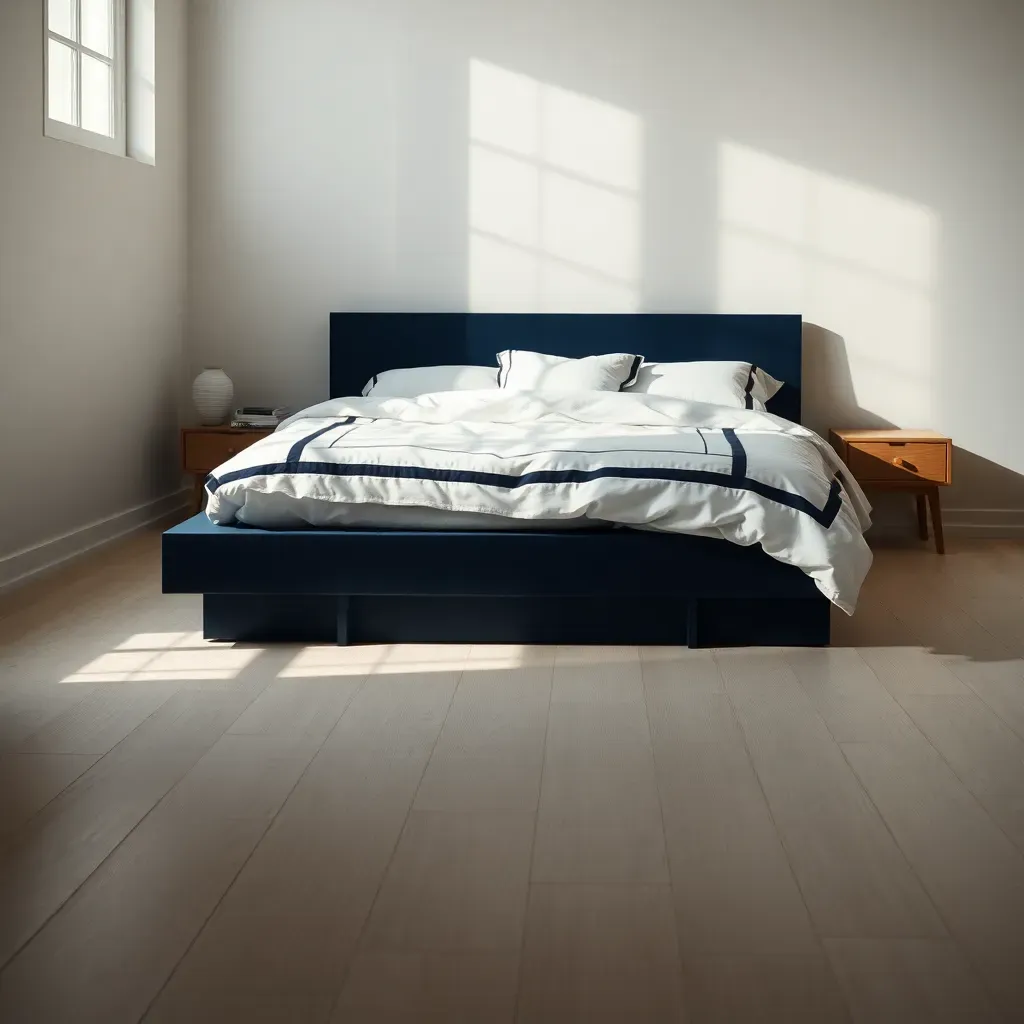
Prompt: Nature documentary capture on Hasselblad X2D 100C with XCD 90V lens at f/4. Hyper-realistic side angle view of Japandi bedroom featuring low-profile bed platform in deep navy blue matte finish—bed sits close to floor on simple blue base. Bed linens are crisp white with navy border detail. Floor is very light ash or white oak, creating strong contrast with dark bed. Walls soft cream, minimal furniture—simple wooden nightstands. Materials: matte navy painted wood, pale ash flooring, crisp cotton. Soft window light from left (4500K), casting shadows beneath bed. Dramatic minimalist mood. Deep focus on bed-floor contrast. Very minimal objects. Low angle emphasizes bed profile. No text, no logos. Aspect ratio 2:3.
A deep blue low-profile bed creates dramatic contrast against light flooring while maintaining Japandi principles through its simplicity, close-to-the-ground positioning, and lack of ornamentation. The dark blue bed becomes the room's anchor—a substantial visual element that grounds the space through color contrast without overwhelming it with size or decoration. Keeping the bed low to the floor preserves the Japanese aesthetic of humility and connection to the earth, while the Scandinavian influence appears in the clean matte finish and lack of unnecessary detail.
The strong contrast between dark blue bed and light flooring is a bold design move that works because it's balanced by neutral walls and minimal furniture. This high-contrast approach can make a small room feel larger through the clear distinction between elements and the sense of grounded stability the dark bed provides. Light flooring in ash, white oak, or even pale stone keeps the overall room feeling bright despite the dark furniture, preventing the space from feeling cave-like or overly enclosed. White bedding with simple navy accent details ties the bed to the floor color while maintaining crispness—avoid adding more colors or patterns that would complicate the bold two-tone foundation.
Tips
- Do choose matte finish over glossy for sophistication—gloss reads more modern than Japandi.
- Don't pair dark bed with dark floor—the contrast with light flooring is essential.
- For rental, achieve this look with dark blue low-profile bed frame on existing light floors.
Avoid if: Your bedroom lacks good natural light—the dark bed may feel oppressive in a dim room without sufficient windows.
What this gives you: Dramatic visual impact through bold contrast while maintaining serene simplicity through minimalist design and restrained color palette.
11. Cerulean Window Nook Reading Corner
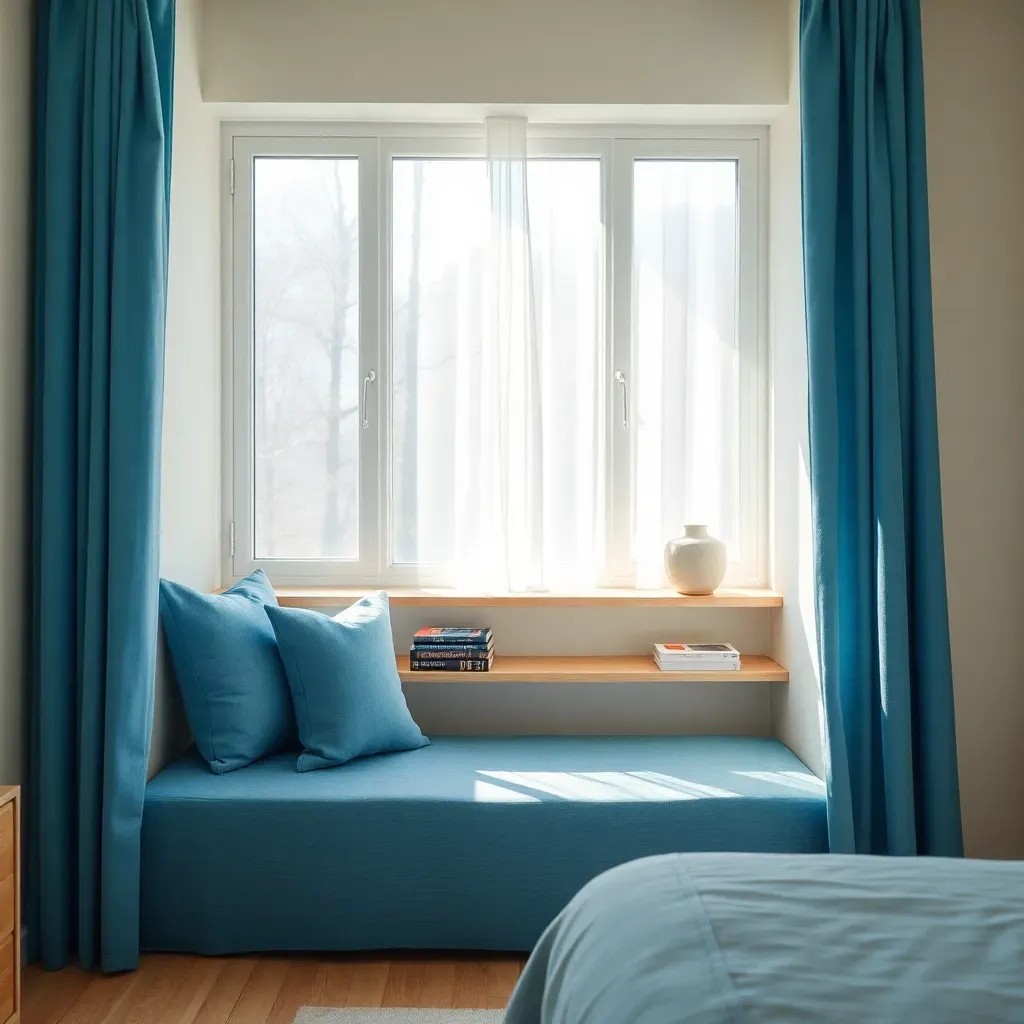
Prompt: Nature documentary capture on Hasselblad X2D 100C with XCD 90V lens at f/4. Hyper-realistic view of Japandi bedroom window nook reading corner—window with deep built-in seat upholstered in cerulean blue fabric, pale blue cushions. Simple wooden shelf at window height for books and small ceramic objects. Natural light streaming through sheer curtains (5500K), illuminating blue upholstery. Floor light oak, walls cream with glimpse of bed in background. Materials: cerulean wool upholstery, light wood shelving, cotton sheer curtains. Peaceful reading corner mood. Deep focus on shelf and cushion texture. Minimal styling—few books, one small vase. No clutter. Composition centers on window. No text, no logos. Aspect ratio 2:3.
A window nook upholstered in clear cerulean blue creates a dedicated reading retreat within the bedroom that maximizes natural light while introducing a cheerful blue that brightens the entire space. This built-in seating area serves dual purposes: providing a cozy spot for reading or morning coffee while adding an architectural feature that enhances the room's functionality and charm. The cerulean tone—clearer and brighter than the muted blues elsewhere in Japandi design—works because it's confined to a small area and amplified by natural daylight, creating an uplifting focal point that doesn't overwhelm the overall serene palette.
Building a window seat requires either actual construction work or creative use of existing space—deep windowsills can be enhanced with a custom cushion, or a simple bench can be positioned beneath a window and dressed with blue upholstery to achieve a similar effect. The key is creating a sense of enclosure and coziness through positioning and materials: blue cushions in varying tones from cerulean to slate create depth, while a simple wood shelf at the window provides storage for books and display space for carefully chosen objects. Sheer curtains in white or very pale blue filter light without blocking it, creating that essential soft glow that makes window nooks feel magical throughout the day.
Tips
- Do install a simple reading light on the wall or shelf for evening use.
- Don't over-accessorize—keep the nook clutter-free for visual calm.
- For budget, use a bench or two small chests covered with blue cushions and throw.
Best for: Bedrooms with generous windows or unused alcove space that can be transformed into functional charm.
What this gives you: A cheerful light-filled retreat for reading and relaxation that adds architectural interest through color and functionality.
12. Blue-Dyed Hemp Textiles throughout the Room
Recommended
Items for this idea
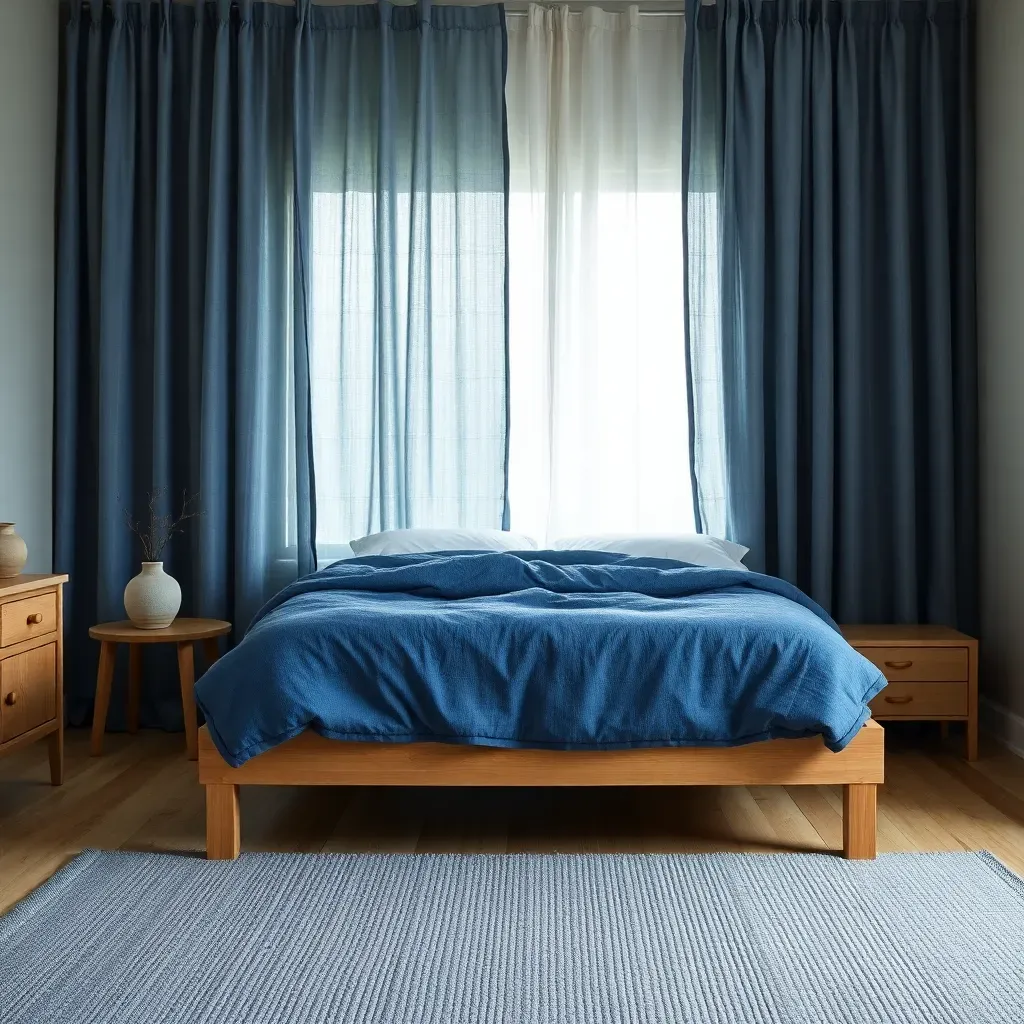
Prompt: Nature documentary capture on Hasselblad X2D 100C with XCD 90V lens at f/4. Hyper-realistic view of Japandi bedroom featuring blue-dyed hemp textiles throughout—curtains in natural hemp dyed dusty blue, bedspread in slate blue hemp with visible coarse texture, hemp rug in pale blue-grey on light wood floor. Bed frame light oak, simple wooden furniture. Materials: coarse hemp fabric in various blues, light oak wood, unbleached cotton linens. Soft window light through hemp curtains (5000K), showing fabric texture. Organic sustainable mood. Deep focus on textile textures. Minimal styling—ceramic vase on nightstand. Natural imperfections in fabric. No text, no logos. Aspect ratio 2:3.
Embracing blue-dyed hemp textiles throughout the bedroom creates a cohesive organic narrative while emphasizing natural materials and sustainable craftsmanship -- core values explored in our Japandi bedroom textile ideas guide. Hemp's coarse, visible texture adds substantial tactile warmth that prevents the blue palette from feeling cold or sterile, while the natural variations in dye color create subtle visual interest without pattern or ornamentation. This material-focused approach to color design feels authentic and grounded, prioritizing material quality over surface decoration for a result that feels both intentional and effortlessly organic.
Using hemp in multiple applications—curtains, rug, bedspread, perhaps throw pillow covers—creates unity through material consistency rather than color matching alone. The slight variations in how hemp takes dye mean each piece will have unique character while clearly belonging to the same color family, perfectly embodying wabi-sabi appreciation for natural variation. Layering different blue tones from pale blue-grey hemp curtains to slate blue bedspread creates depth while maintaining the monochromatic palette. Keep furniture simple in light natural woods to complement rather than compete with the strong textile presence—hemp's coarse texture is the visual star, so surrounding elements should recede through simplicity.
Tips
- Do pre-wash hemp textiles before use—natural fibers shrink and soften significantly.
- Don't expect perfectly uniform color—natural dye variation is part of the aesthetic.
- For budget, start with one key hemp piece (curtains or rug) and add over time.
Best for: Those prioritizing sustainable materials and organic texture who appreciate the visible handmade quality of natural textiles.
What this gives you: A materially authentic room where blue color emerges through natural fibers rather than synthetic dyes, creating organic warmth and environmental mindfulness.
13. Two-Tone Blue and Natural Wood Built-in Storage
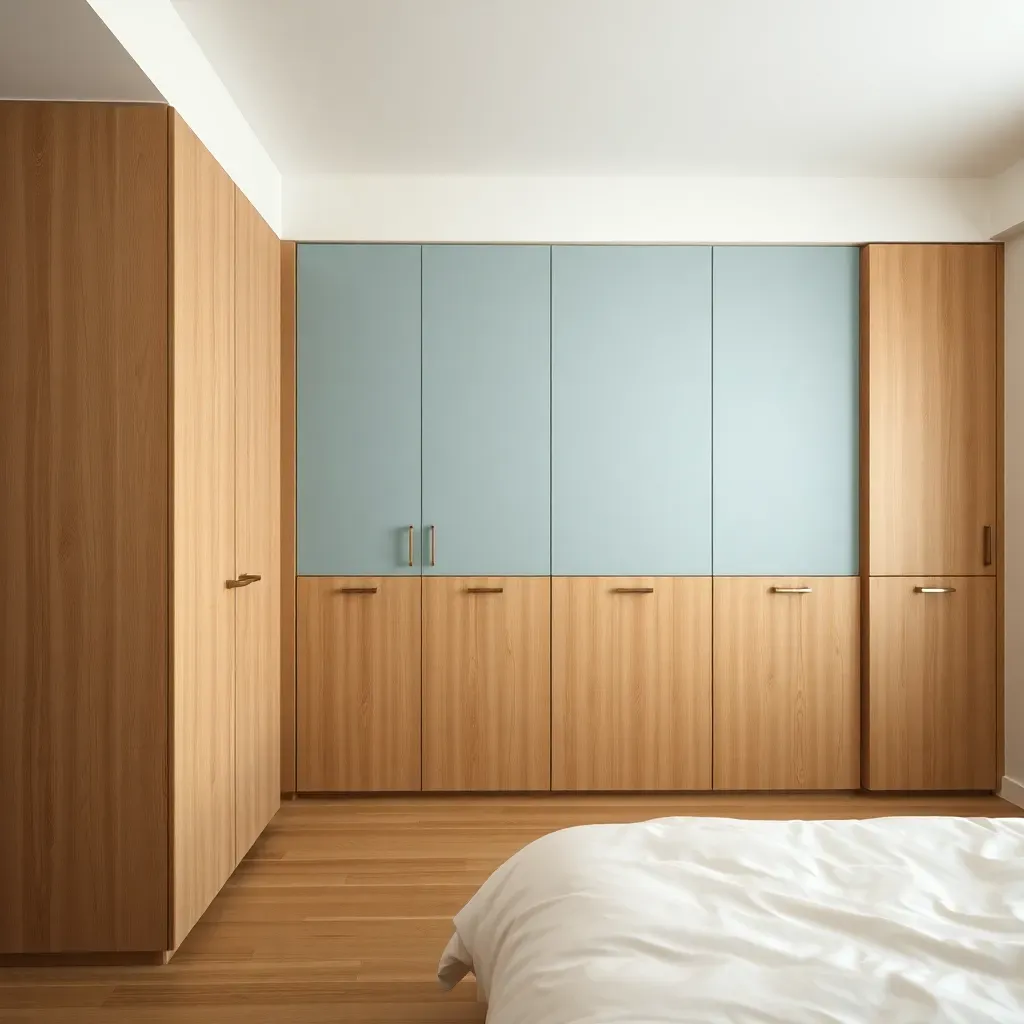
Prompt: Nature documentary capture on Hasselblad X2D 100C with XCD 90V lens at f/4. Hyper-realistic view of Japandi bedroom with built-in storage wall featuring two-tone design—upper cabinets in pale blue, lower cabinets in light oak wood. Handleless doors with push-latch opening. Storage wall spans one wall, bed in foreground with white linens. Floor light oak, walls cream. Materials: matte pale blue lacquer, light oak wood, cotton bedding. Soft ambient light from ceiling fixture (3000K). Organized minimalist mood. Mid-depth focus on cabinet texture. Clean vertical and horizontal lines. Very minimal decor—single small ceramic piece. No clutter. No text, no logos. Aspect ratio 2:3.
Two-tone built-in storage that combines pale blue upper cabinets with natural wood lower cabinetry creates visual interest through color blocking while maintaining the clean uninterrupted lines essential to Japandi minimalism. This approach breaks up the expanse of storage wall without introducing additional materials or decorative elements—simply through thoughtful color placement that adds architectural detail. The pale blue upper cabinets visually recede, making the ceiling feel higher and the room more spacious, while the wood lower cabinets ground the storage wall and provide warmth that balances the cool tones above.
This color-blocking technique serves both aesthetic and practical purposes: the differentiation between upper and lower sections creates visual rhythm and breaks the storage wall into human-scaled proportions rather than one overwhelming expanse of cabinetry. Functionally, you might choose different interior configurations for upper versus lower cabinets—upper for seasonal items or less-used pieces, lower for daily essentials—and the color differentiation subtly reflects this practical hierarchy. Handleless push-latch doors maintain the seamless minimalist aesthetic; choose soft-close mechanisms for quality feel and quiet operation that won't disturb peaceful bedroom ambiance. The two-tone approach allows you to introduce blue without committing to an entire wall of color, making it more adaptable if your tastes evolve over time.
Tips
- Do match the blue undertones to other blue elements in the room for cohesion.
- Don't place the color split at random height—align with furniture proportions or sight lines.
- For DIY, paint upper cabinet doors only and add wood trim to lower doors for similar effect.
Budget/Time: Custom built-ins require professional design and installation; simpler approach modifies existing cabinetry with paint and wood trim addition.
What this gives you: Architectural interest through color blocking that adds sophistication while maintaining seamless minimalist functionality.
14. Monochromatic Blue Japandi with Textural Variety
Recommended
Items for this idea
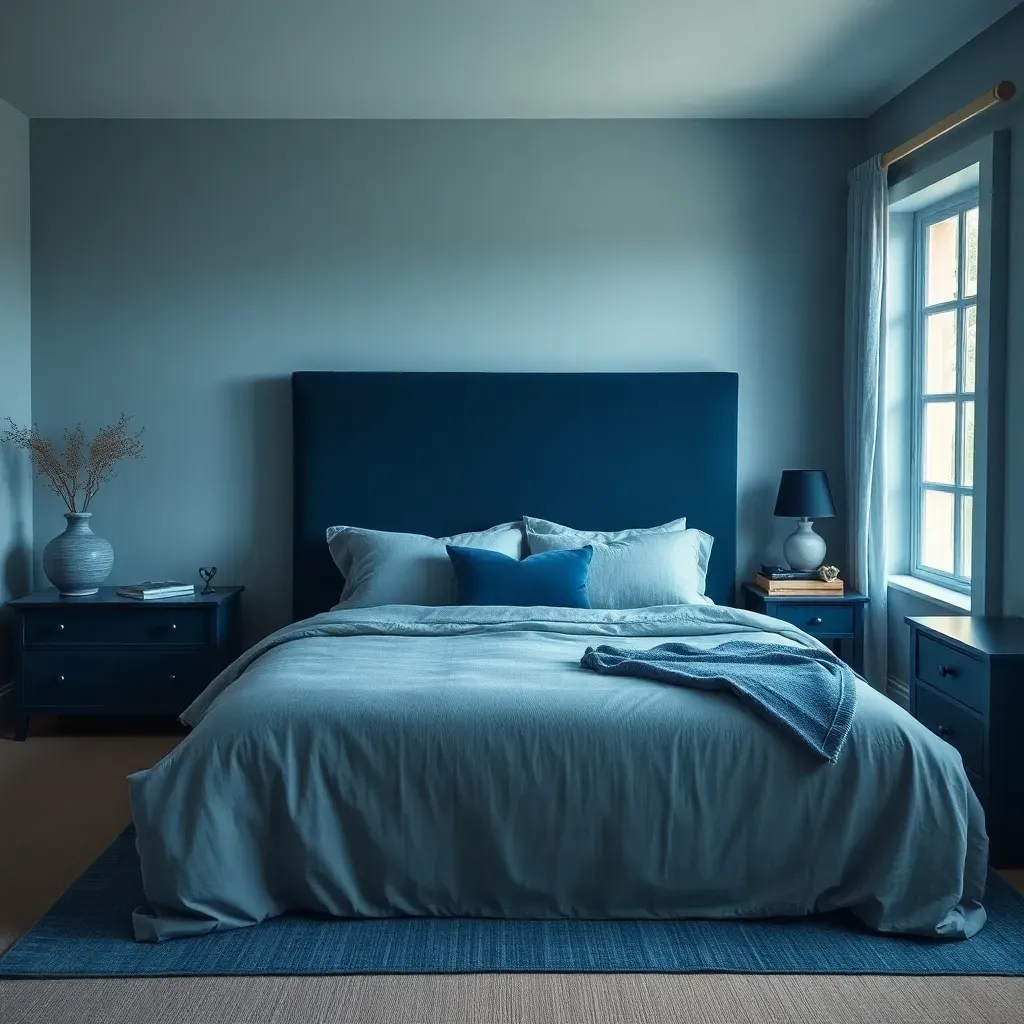
Prompt: Nature documentary capture on Hasselblad X2D 100C with XCD 90V lens at f/4. Hyper-realistic wide view of monochromatic blue Japandi bedroom—everything in shades of blue but varying textures: velvet navy headboard, linen pale blue duvet, wool slate blue rug, silk blue accent pillow, matte blue ceramic vase, blue-grey painted walls. Furniture in various blue-stained woods. All different blue tones but cohesive palette. Soft diffused light (4500K). Sophisticated monochromatic mood. Deep focus showing textural variety. Minimal styling with intention. No clutter. Balanced composition. No text, no logos. Aspect ratio 2:3.
A fully monochromatic blue room might seem risky, but when executed through textural variety rather than flat color blocks, it creates one of the most sophisticated and serene bedroom designs possible in the Japandi aesthetic. Every surface contributes to the blue palette but through different materials and textures that create visual richness without pattern or contrast colors: velvet absorbs light while linen reflects it, smooth ceramics contrast with nubby wool, matte wood grain plays against polished silk surfaces. This textural diversity becomes the primary source of visual interest, making the room feel layered and complex despite its restrained color range.
Common mistake: Choosing all materials with similar texture (all flat weaves or all smooth surfaces)—this creates a flat, monotonous effect rather than sophisticated layering.
The key to successful monochromatic design is selecting blues from a cohesive tonal family and then exploring how light interacts with different materials in that color range. Include both matte and slightly shiny surfaces, both rough and smooth textures, both opaque and translucent materials. This approach creates visual drama through contrast of finish and texture rather than contrast of color or pattern. Keep the room's forms simple and minimalist—all that textural richness needs clean lines and uncluttered space to be appreciated rather than feeling chaotic. Natural light becomes particularly important in a monochromatic blue room, as it will interact differently with each surface throughout the day, creating shifting visual interest as light quality changes.
Tips
- Do include at least 4-5 different textures for genuine richness.
- Don't mix warm-toned and cool-toned blues—stick to one undertone family.
- Start with one or two key blue pieces and build texture gradually.
Best for: Design-confident individuals who appreciate subtle sophistication and want a bedroom that feels uniquely curated.
What this gives you: A masterclass in sophisticated minimalism where textural variety creates visual richness without relying on pattern or color contrast.
15. Sky Blue Slatted Wood Wall Behind Bed
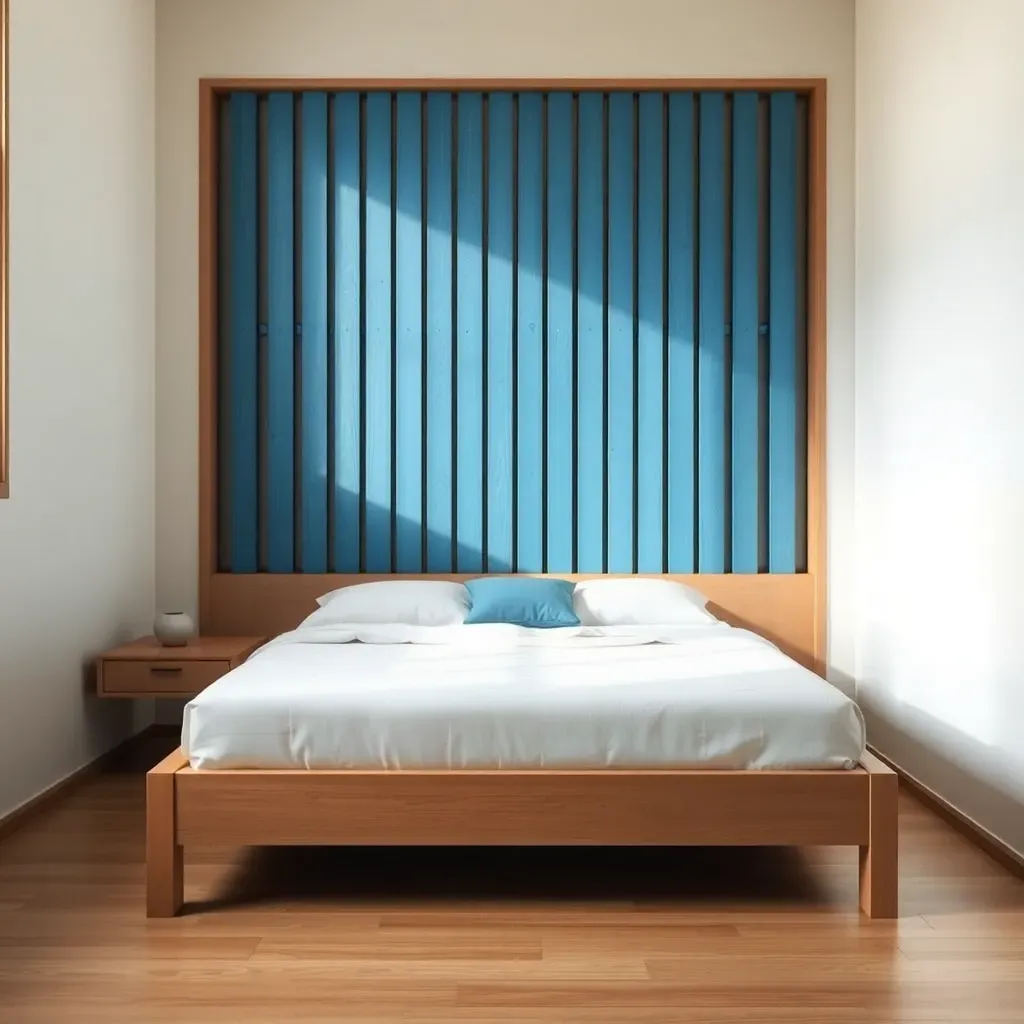
Prompt: Nature documentary capture on Hasselblad X2D 100C with XCD 90V lens at f/4. Hyper-realistic view of Japandi bedroom with slatted wood accent wall behind bed—vertical wood slats stained sky blue, spaced with gaps showing pale wall behind. Bed is simple platform in light oak with white linens and one sky blue pillow. Floor light oak, walls pale cream. Materials: blue-stained wood slats, light oak frame, cotton bedding. Soft window light from left (5000K), creating shadows between slats. Architectural minimalist mood. Mid-focus showing slat spacing and wood grain. Minimal decor—single small ceramic piece on nightstand. No clutter. Vertical composition emphasizing slats. No text, no logos. Aspect ratio 2:3.
A slatted wood wall stained in sky blue creates architectural interest through both texture and color while maintaining the light, airy quality essential to Japandi bedroom design. The vertical slats add rhythm and dimension without feeling heavy or enclosing, as the gaps between slats keep the wall visually permeable and allow glimpses of the wall behind. This architectural element serves as a dramatic yet restrained backdrop for the bed, creating visual interest through shadow play as light shifts across the slatted surface throughout the day. The sky blue stain introduces color while preserving the natural wood grain, connecting to Japandi appreciation for authentic materials and craftsmanship.
Building a slatted accent wall is achievable as a DIY project with careful planning—vertical slats are easier to install and create more height than horizontal orientation, making them particularly suitable for bedrooms where a sense of airiness is desirable. The spacing between slats dramatically affects the overall feel: narrower spacing creates more solid color coverage, while wider gaps emphasize the architectural pattern and allow more of the background wall to show through. Consider the background wall color carefully—pale cream or white lets the blue slats star, while a complementary pale blue-green creates subtle depth. Keep the bed styling simple to allow the slatted wall to be the focal point; white linens with one or two blue pillows that pick up the wall color create cohesion without competing visually.
Tips
- Do use thin slats (1-2 inches wide) for elegance rather than chunky proportions.
- Don't attempt without leveling tools—even slight misalignments are highly visible.
- For rental, create faux slatted effect with blue wood trim or washi tape patterns.
Budget/Time: DIY slatted wall costs $200-500 in materials depending on wall size; takes 1-2 weekends for careful installation.
What this gives you: Architectural interest through color and texture that creates a sophisticated backdrop while maintaining the light, airy Japandi aesthetic.
16. Blue Ceramic Vase Arrangements on Minimal Surfaces
Recommended
Items for this idea
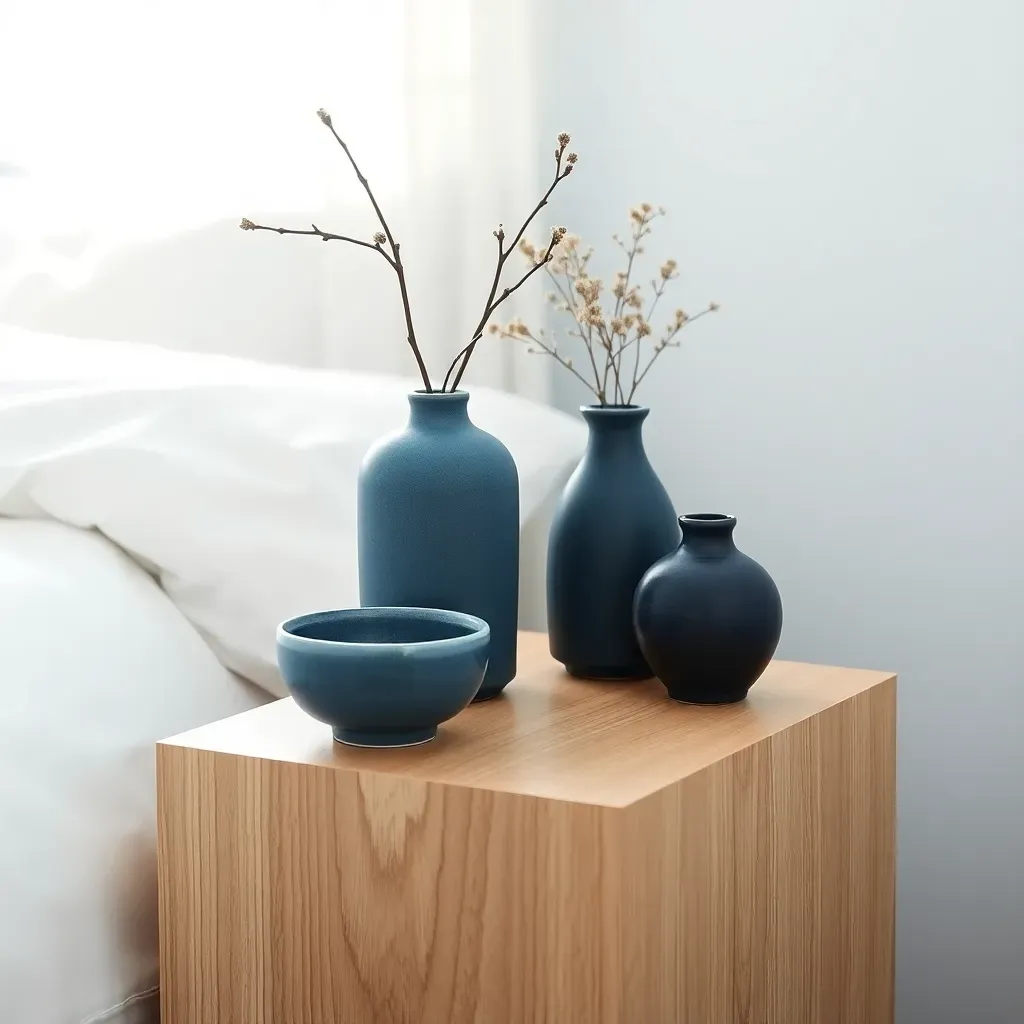
Prompt: Nature documentary capture on Hasselblad X2D 100C with XCD 90V lens at f/4. Hyper-realistic close view of Japandi bedroom bedside table—simple light wood cube with carefully arranged blue ceramic vases in varying heights and blue tones: one tall dusty blue vase with single branch, one medium slate blue bowl, one small navy bud vase. Surface wood grain visible. Background shows glimpse of white linens and pale blue-grey wall. Materials: matte ceramic in various blues, light oak wood, dried botanical. Soft window light from right (4500K), creating subtle shadows on ceramic surfaces. Curated minimalist mood. Shallow focus on ceramic textures. Very minimal styling. No clutter. No text, no logos. Aspect ratio 2:3.
Curated arrangements of blue ceramic vases on minimal surfaces introduce color through sculptural objects that add visual interest without disrupting the serene foundation of the bedroom. This approach to decoration embodies Japandi principles at their best: every object is intentional, beautiful in its own right, and contributes to the overall aesthetic without creating clutter or visual noise. The variety of blue tones from dusty to slate to navy creates depth and sophistication, while the diversity of vase shapes and sizes adds visual rhythm without needing multiple colors or patterns.
Keep surfaces to a minimum—one or two carefully chosen pieces per surface rather than collections that feel accumulated rather than curated. A tall vase with a single branch or dried stem adds height and organic reference, a medium bowl might hold nothing but its own form, a small bud vase provides delicate scale—this varied composition creates visual hierarchy and interest through proportion and negative space rather than abundance. Group odd numbers of objects (three or five) rather than even-numbered pairs for more dynamic, less symmetrical arrangements that feel natural rather than staged. The ceramics themselves should be beautifully made—matte finishes generally feel more Japandi than glossy, visible wheel marks or hand-formed irregularities add wabi-sabi character, and variations in blue tone that come from natural firing variations are assets rather than flaws.
Tips
- Do choose vessels beautiful enough to stand empty—ceramic form matters more than flowers.
- Don't overcrowd surfaces—negative space is essential to minimalist display.
- For budget, start with one quality blue ceramic piece and build arrangement slowly.
Rental note: Ceramic objects are the perfect renter-friendly way to add color—no installation required, completely portable, and easily changeable as tastes evolve.
What this gives you: Curated color accents through sculptural objects that add sophistication without clutter, perfectly embodying intentional minimalism.
17. Indigo Dyed Linen Curtains with Simple Hardware
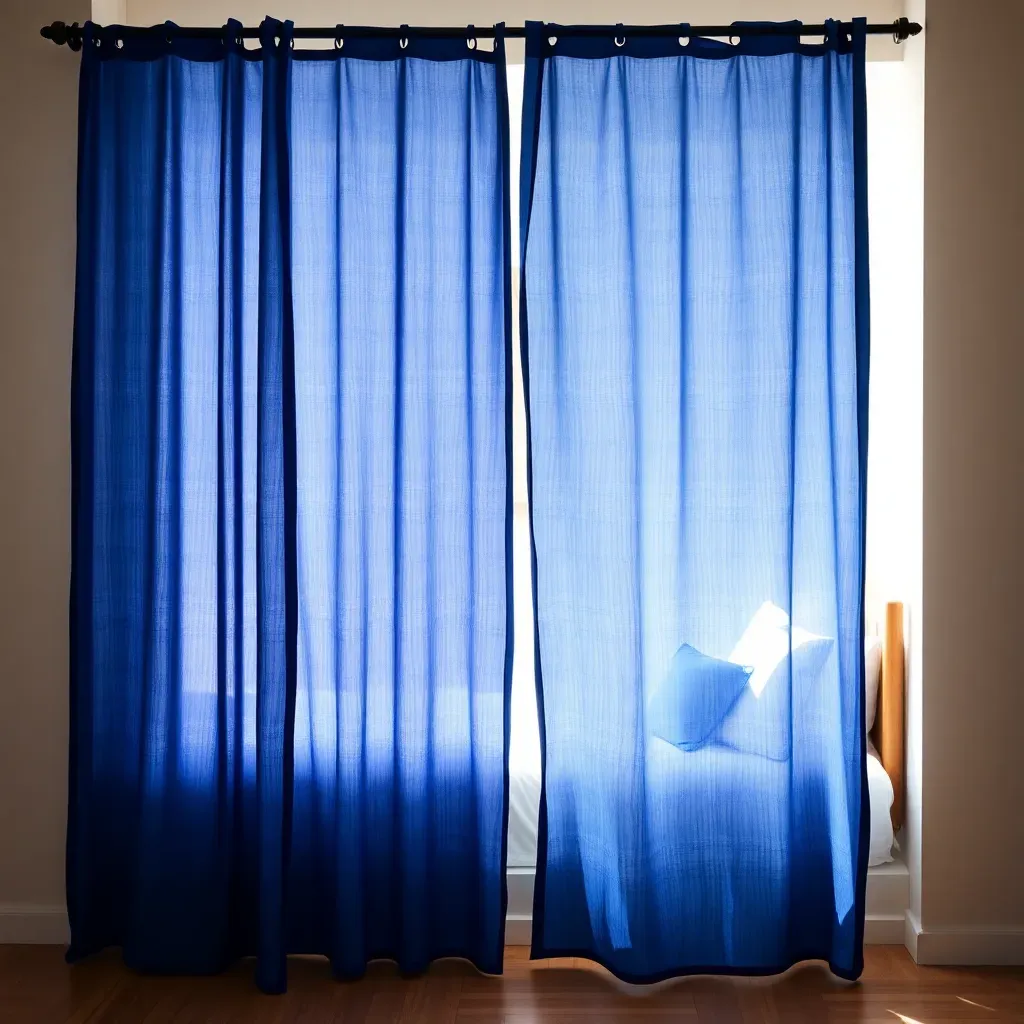
Prompt: Nature documentary capture on Hasselblad X2D 100C with XCD 90V lens at f/4. Hyper-realistic view of Japandi bedroom window with indigo dyed linen curtains—deep blue but translucent, filtering natural light. Curtains hung on minimal black metal rod with simple rings. Fabric texture clearly visible, slight variations in dye color. Bed visible in background with white linens and indigo throw pillow. Floor light oak, walls cream. Materials: indigo-dyed linen fabric, black metal hardware, light wood. Bright daylight filtering through curtains (5500K), showing fabric translucency. Organic craft mood. Deep focus on fabric texture. Minimal styling. No clutter. No text, no logos. Aspect ratio 2:3.
Indigo-dyed linen curtains introduce deep rich blue while maintaining the bedroom's serene foundation through fabric quality and functional simplicity. The natural variations in hand-dyed indigo create subtle visual interest that reads as sophisticated rather than uneven, while the linen's translucency ensures the curtains filter light beautifully rather than blocking it completely, maintaining that essential Japandi connection to the outdoors and natural light. Deep indigo adds gravitas and color weight to the room without feeling heavy or dark because the fabric's quality and light interaction keep the overall feeling airy and calm.
The beauty of indigo-dyed fabric lies in its natural variations—each dip in the dye bath creates slightly different saturation, and the natural properties of indigo mean the color will develop a unique patina over time, perfectly embodying wabi-sabi appreciation for materials that age with character. Keep curtain hardware deliberately simple: black metal rods and rings or natural wood poles allow the fabric itself to be the star rather than decorative finials or elaborate treatments. Hang curtains high and wide to maximize the sense of height and space, and consider layering sheers behind the indigo linen for light control while maintaining the textural richness. The deep blue of the curtains will influence the entire room's color quality as light filters through them, creating a pervasive serene ambiance that feels sophisticated without feeling dominated by blue.
Tips
- Do choose linen with visible slub and texture for authenticity.
- Don't machine dry indigo linen—air dry to prevent uneven fading.
- For budget, start with one indigo textile panel and add matching pieces over time.
Best for: Bedrooms with good natural light where translucent blue curtains can enhance rather than darken the space.
What this gives you: Rich color depth through handcrafted textiles that filter light beautifully while adding artisanal character to the serene space.
18. Blue Stone Accent Wall with Warm Wood Bed
Recommended
Items for this idea
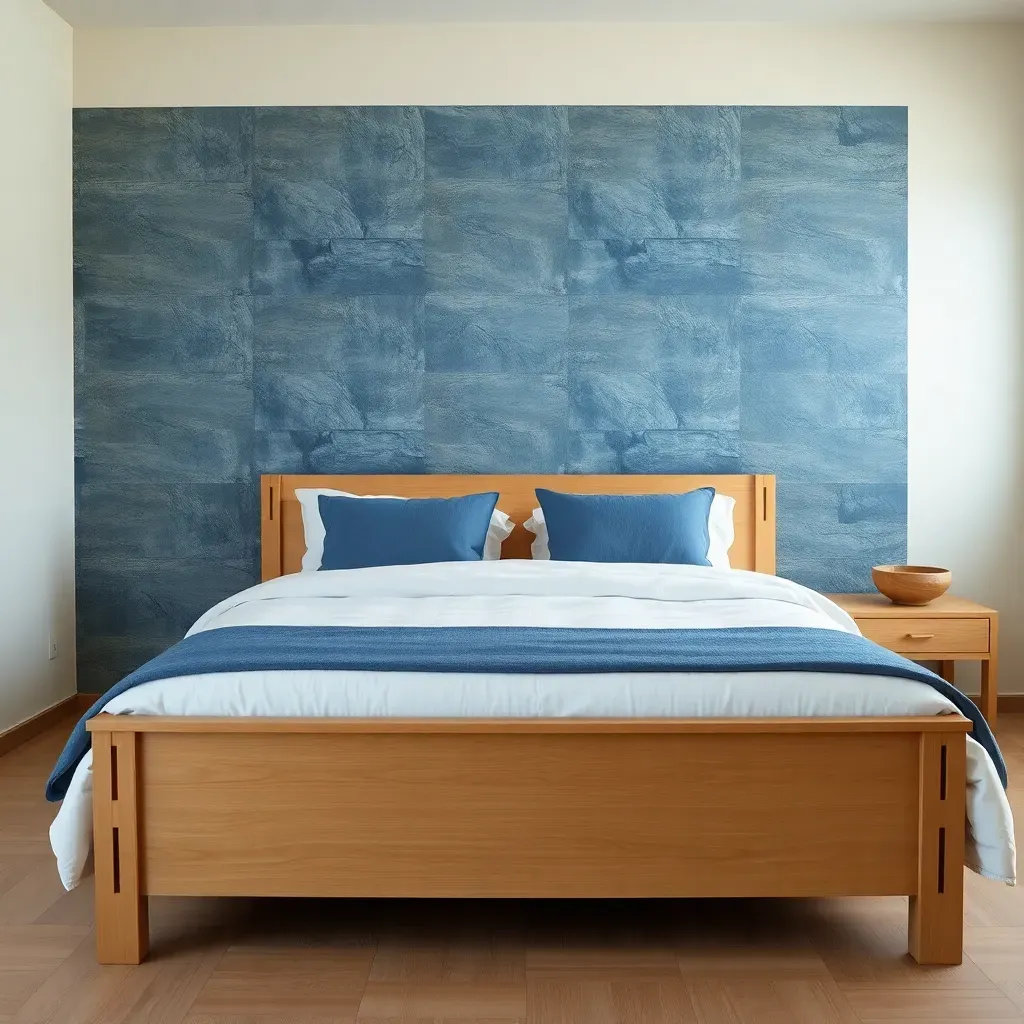
Prompt: Nature documentary capture on Hasselblad X2D 100C with XCD 90V lens at f/4. Hyper-realistic view of Japandi bedroom with natural blue stone accent wall behind bed—slate or bluestone with natural blue-grey tones, visible natural stone texture and variation. Bed frame is warm light oak, simple white linens with blue-grey accent pillows. Floor light oak, walls cream. Materials: natural blue stone, light oak wood, cotton bedding. Soft ambient light from fixture (3000K warm) enhancing stone texture. Organic modern mood. Deep focus on stone surface variation. Minimal decor—single small wooden bowl on nightstand. No clutter. Horizontal composition emphasizing stone grain. No text, no logos. Aspect ratio 2:3.
A natural blue stone accent wall brings organic texture and sophisticated color depth that creates a stunning backdrop for a warm wood bed, perfectly balancing cool and warm elements essential to Japandi design. Slate, bluestone, or other naturally blue-grey stones provide color that feels grounded and earthy rather than applied or artificial—the blue emerges from the stone's mineral composition rather than pigment, creating a connection to nature that resonates with both Japanese and Scandinavian design philosophies. The natural variation in stone tones from deeper navy-blue areas to paler blue-grey sections creates visual richness without pattern, while the tactile surface quality adds dimension and shadow play throughout the day.
Natural stone works particularly well as an accent wall because it feels substantial and permanent yet not overwhelming—limited to one wall, it creates a focal point without dominating the entire room. The warmth of a light oak bed frame against the cool stone creates that essential Japandi balance between yin and yang elements, preventing the space from feeling too cold or too warm. Keep bedding relatively simple to let the stone be the star—white or very pale linens with perhaps two blue-grey pillows that pick up tones from the stone create cohesion without competing. Lighting becomes particularly important with stone; consider adjustable fixtures that can highlight the stone's texture at night while soft ambient lighting maintains the serene mood. The natural stone's thermal properties also help regulate temperature, adding practical benefit to its aesthetic contribution.
Tips
- Do seal natural stone to prevent staining and simplify maintenance.
- Don't attempt installation without professional masonry experience—stone is heavy and unforgiving.
- For budget, consider stone-look porcelain tiles or blue stone veneer panels.
Budget/Time: Real stone installation costs $2000-5000+ depending on wall size and stone type; stone-look alternatives cost $500-1500.
What this gives you: A sophisticated nature-inspired backdrop with organic color depth and texture that elevates the entire room through authentic materials.
19. Layered Blue Textiles on Neutral Foundation
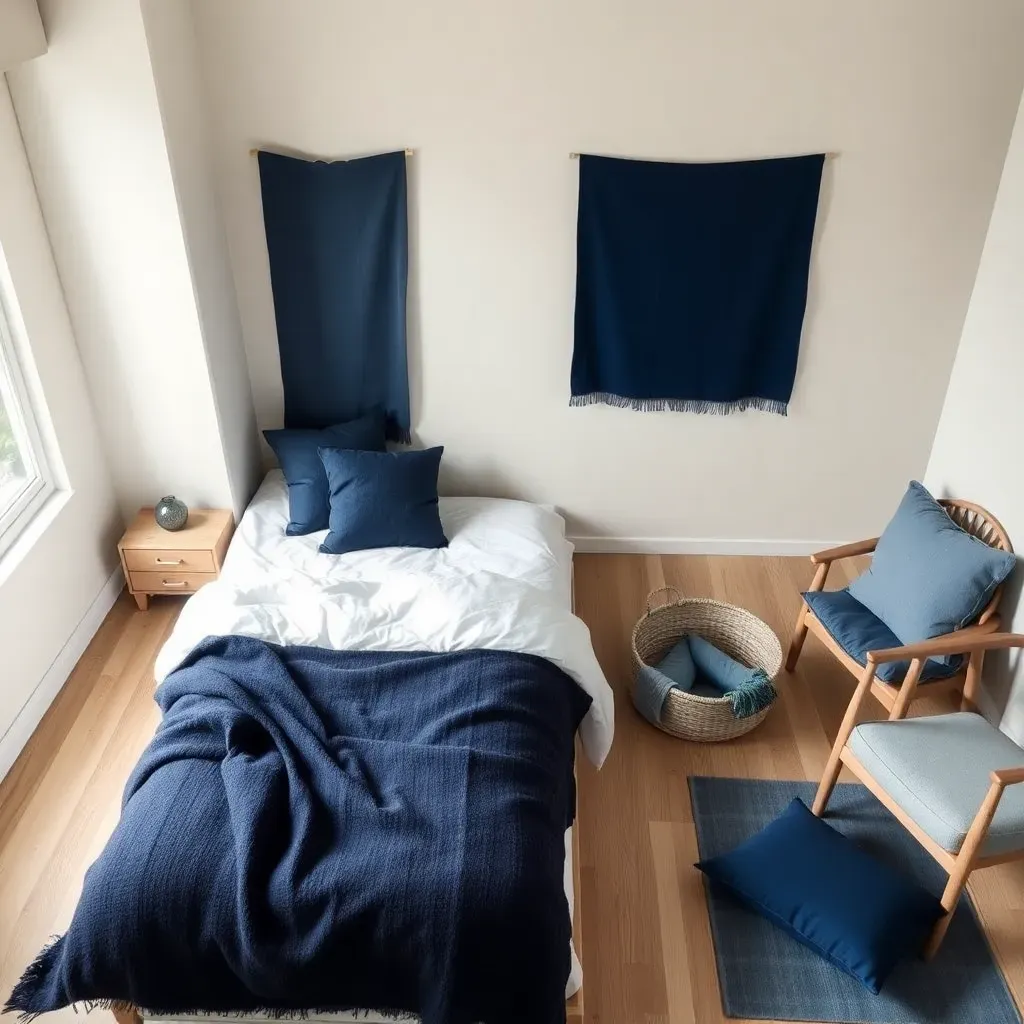
Prompt: Nature documentary capture on Hasselblad X2D 100C with XCD 90V lens at f/4. Hyper-realistic elevated view of Japandi bedroom with layered blue textiles on neutral foundation—cream walls, light oak floor, simple white bed linens. Blue textiles layered throughout: navy wool throw at foot of bed, slate blue linen pillows, pale blue-grey rug, indigo storage basket, dusty blue cushion on chair. All different blue tones but cohesive against neutral base. Materials: various textiles in blues, light wood, cotton. Soft window light (5000K). Calm layered mood. Deep focus showing textile textures. Minimal styling with intentional color placement. No clutter. No text, no logos. Aspect ratio 2:3.
Building a blue color story through layered textiles on a neutral foundation creates warmth and sophistication while maintaining the light, airy quality essential to Japandi serenity. This approach introduces blue gradually through textiles rather than large surface areas, making it feel accumulated and organic rather than designed or applied. The neutral foundation of cream walls and light wood floors keeps the overall room feeling bright and spacious despite multiple blue elements, while the variety of textile textures—wool, linen, cotton, perhaps velvet or silk—creates tactile richness that elevates the simple color palette.
This layered approach allows for flexibility and evolution over time: start with one or two key blue textiles—a rug and throw blanket, for example—and gradually add complementary pieces as you find textiles that enhance the existing palette rather than perfectly match it. The key is varying the blue tones rather than aiming for exact color matching—navy, slate, dusty blue, pale blue-grey, and indigo can all coexist beautifully when they share similar undertones and are distributed thoughtfully throughout the space. Keep each textile addition intentional and considered: one blue element per area or furniture piece prevents the room from feeling overwhelmed by color. The neutral foundation means you can change the entire room's mood by swapping out blue textiles seasonally—as deeper blues in winter for coziness, lighter blues in summer for airiness—while maintaining the same serene foundational pieces.
Tips
- Do start with larger textiles (rug, curtains, bedspread) before adding smaller accent pieces.
- Don't introduce blues with clashing undertones—test new pieces against existing ones.
- For budget, build collection slowly with investment in quality over quantity.
Best for: Those who want color flexibility and the ability to evolve their room gradually without major renovations.
What this gives you: A sophisticated layered blue aesthetic that feels organic and evolved while maintaining the light, serene foundation essential to restful spaces.
These 19 japandi blue bedroom ideas show that color can enhance serenity rather than compete with it, creating a sleep sanctuary that feels curated and effortlessly calm. The fusion of Japanese appreciation for wabi-sabi simplicity and Scandinavian cozy warmth results in spaces that prioritize rest through every design choice -- from a single dusty blue pillow to an entire blue stone accent wall. Whether you rent a small apartment or own a spacious home, the Japandi framework ensures your blue bedroom will feel sophisticated, serene, and timeless. Start with one idea that resonates, layer in natural wood and soft textiles, and let the calm palette do the rest.
About the author
OBCD
CGI visualization and interior design content. We create detailed 3D renders and curate practical design ideas for every room in your home.