17 Japandi Bedroom Ideas for Small Rooms (Maximize Every Inch)
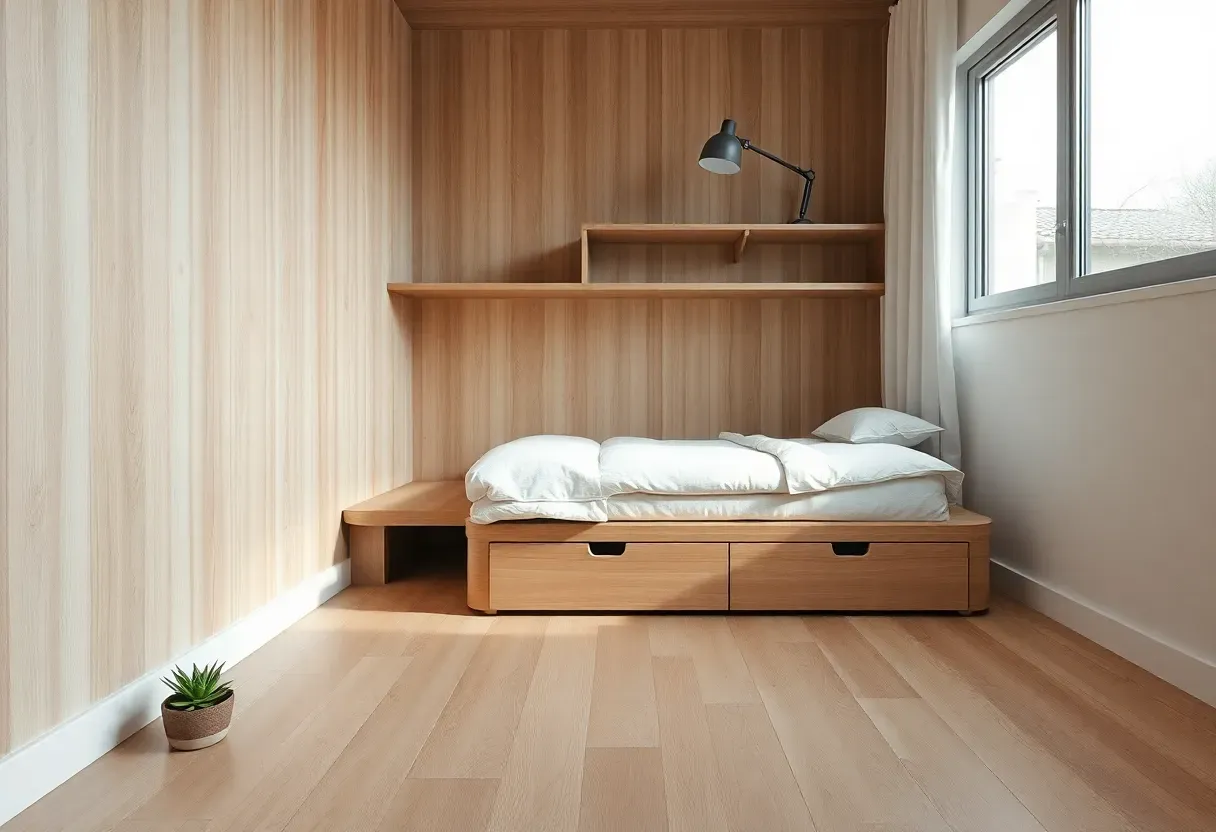
These japandi bedroom ideas for small rooms show how to pair Japanese minimalism with Scandinavian warmth so a compact space feels twice its actual size. The approach relies on light wood tones, smart storage, and clutter-free layouts that keep every square inch working without sacrificing the zen calm a bedroom needs.
Whether you rent a studio apartment or simply have a small bedroom to work with, each idea below is a modular layer you can add or remove with no permanent changes. Use the list to build a minimalist small bedroom that stays serene, functional, and entirely your own.
Quick FAQ
What makes Japandi design ideal for small bedrooms?
Japandi design emphasizes minimalism, light colors, and smart storage—perfect for small spaces because it reduces visual clutter, maximizes natural light reflection, and incorporates multifunctional furniture that serves multiple purposes without overwhelming the room.
Which colors work best in a small Japandi bedroom?
Light neutral tones like white, cream, soft beige, pale gray, and light wood create an airy spacious feel—avoid dark colors that absorb light and make compact rooms feel smaller or more enclosed.
How do I maximize storage in a small bedroom without clutter?
Utilize under-bed storage drawers, built-in wall-mounted shelving, vertical space with floor-to-ceiling wardrobes, and multifunctional furniture like storage beds or wall-fold desks to keep belongings concealed and maintain visual calm.
Can a small bedroom still feel cozy with Japandi minimalism?
Absolutely—Japandi balances minimalism with hygge warmth through textured textiles like wool throws and linen bedding, layered lighting with warm bulbs, and natural wood accents that create coziness without physical clutter.
What type of bed works best in a small Japandi bedroom?
Low platform beds with built-in storage or minimalist frames with open legs maximize floor space visibility and air circulation while providing essential storage—avoid massive headboards or bulky footboards that consume precious square footage.
Should I use mirrors in a small Japandi bedroom?
Yes, strategically placed mirrors opposite windows reflect natural light and create the illusion of depth—choose simple frameless or light wood-framed mirrors that complement the minimalist aesthetic without adding visual weight.
As an Amazon Associate I earn from qualifying purchases.
Table of Contents
- 1. Low Platform Bed with Built-in Storage Drawers for Small Rooms
- 2. Wall-Mounted Folding Desk for Multi-Use Space
- 3. Floor-to-Ceiling Built-in Wardrobes with Light Doors
- 4. Floating Nightstands to Preserve Floor Space
- 5. Minimalist Shelves Above Bed for Display
- 6. Light Wood Palette to Enhance Small Bedroom Spaciousness
- 7. Sheer Curtains for Maximum Light Penetration
- 8. Compact Reading Nook in Window Corner
- 9. Under-Bed Storage Baskets in Natural Materials
- 10. Single Statement Wall Art Instead of Gallery Clutter
- 11. Wall-Sconce Lighting to Free Surface Space
- 12. Neutral Rug to Define Zone Without Visual Weight
- 13. Sliding Door Wardrobe for Space Efficiency
- 14. Monochromatic Palette for Seamless Visual Flow
- 15. Vertical Lines to Draw Eye Upward
- 16. Hidden Behind-Mirror Storage
- 17. Low-Profile Japandi Furniture to Maintain Air Circulation
1. Low Platform Bed with Built-in Storage Drawers for Small Rooms
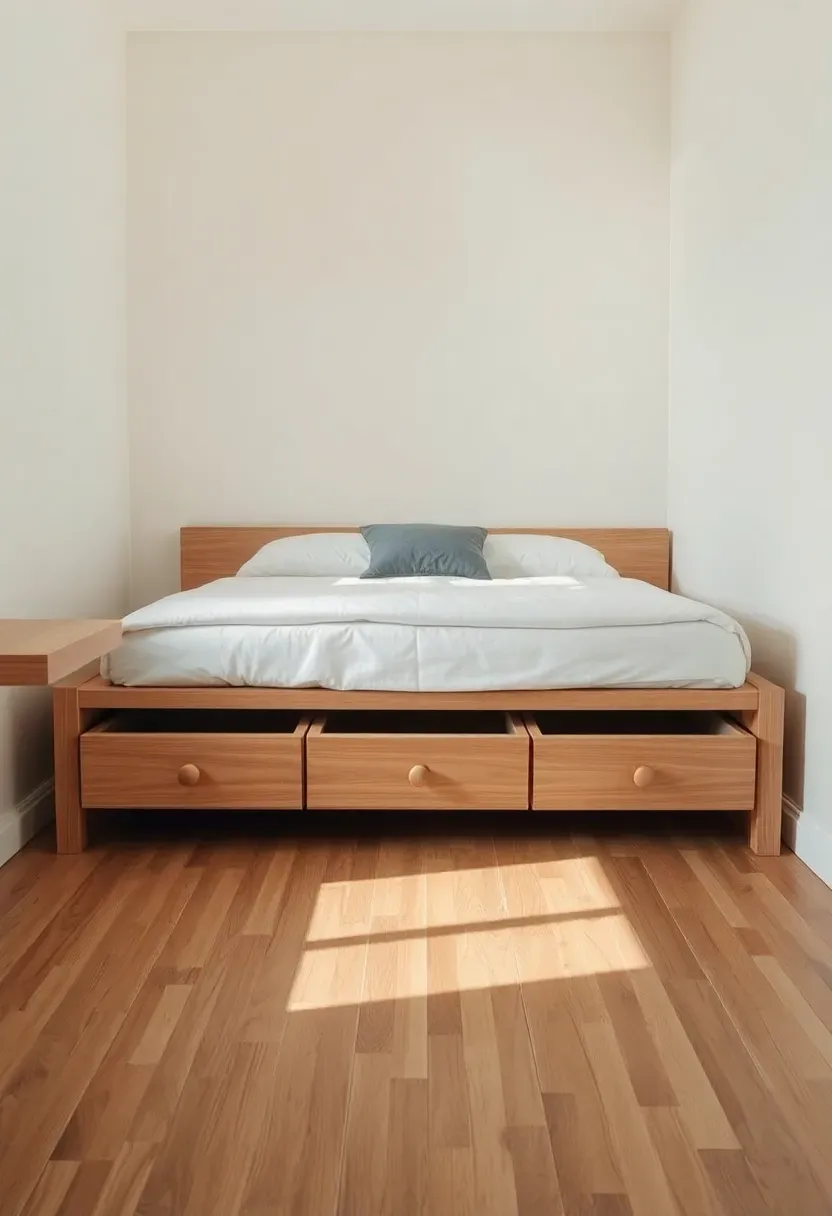
Prompt: Nature documentary captured on Hasselblad X2D 100C with XCD 90V lens at f/4. Hyper-realistic 3/4 view of a compact Japandi small bedroom with low platform bed featuring three integrated storage drawers underneath. Bed frame in light oak wood, mattress with white linens and one gray accent pillow. Room shows visible floor space around bed—light oak planks. Walls soft cream, minimal floating nightstand. Materials: light oak wood, cotton bedding, matte drawer pulls. Soft morning light from window (4800K), casting gentle shadows highlighting wood grain. Serene minimalist mood emphasizing space efficiency. Clean composition showing bed as focal point with visible storage functionality. No text, no logos. Aspect ratio 2:3.
This storage-integrated approach mirrors the practical simplicity found in modern Japandi bedroom designs, where every piece earns its place through dual functionality.
The low platform bed with integrated storage drawers exemplifies Japandi efficiency by combining sleep space with concealed storage in one streamlined furniture piece that doesn't sacrifice aesthetics for functionality. The bed's low profile maintains visual lightness while the drawers eliminate the need for additional dressers or storage units, preserving precious floor space in compact rooms. Light wood construction adds warmth without visual weight, creating a grounded foundation that feels substantial yet airy despite its storage capacity.
Unlike traditional bed frames with wasted under-bed space, this design maximizes every vertical inch while maintaining the clean horizontal lines essential to Japandi aesthetics. Choose drawer fronts that match the bed frame seamlessly for a cohesive built-in appearance, or opt for contrasting pulls in matte black or brushed brass for subtle architectural detail. The key is maintaining the minimalist silhouette—no bulky hardware or ornamentation that disrupts the calm visual flow. For rooms under 10x10 feet, this single furniture piece can eliminate the need for a separate dresser entirely, creating that essential open space that makes small rooms feel larger and more serene.
Tips
- Do choose soft-close drawer mechanisms to prevent jarring noise in peaceful bedroom settings.
- Don't overstuff drawers to the point where they're difficult to open—organized storage preserves calm.
- If budget allows, customize drawer interiors with dividers for organized clothing storage.
What this gives you: Maximum storage capacity without sacrificing floor space or visual calm through integrated furniture design.
We picked a few things that go well with this idea: XIAO WEI Platform Bed with Storage Drawers (★5.0), Yaheetech Upholstered Platform Bed with Drawers (★4.2) and AOGLLATI Storage Platform Bed with Bookcase Headboard (★4.0). As an Amazon Associate we earn from qualifying purchases.
2. Wall-Mounted Folding Desk for Multi-Use Space
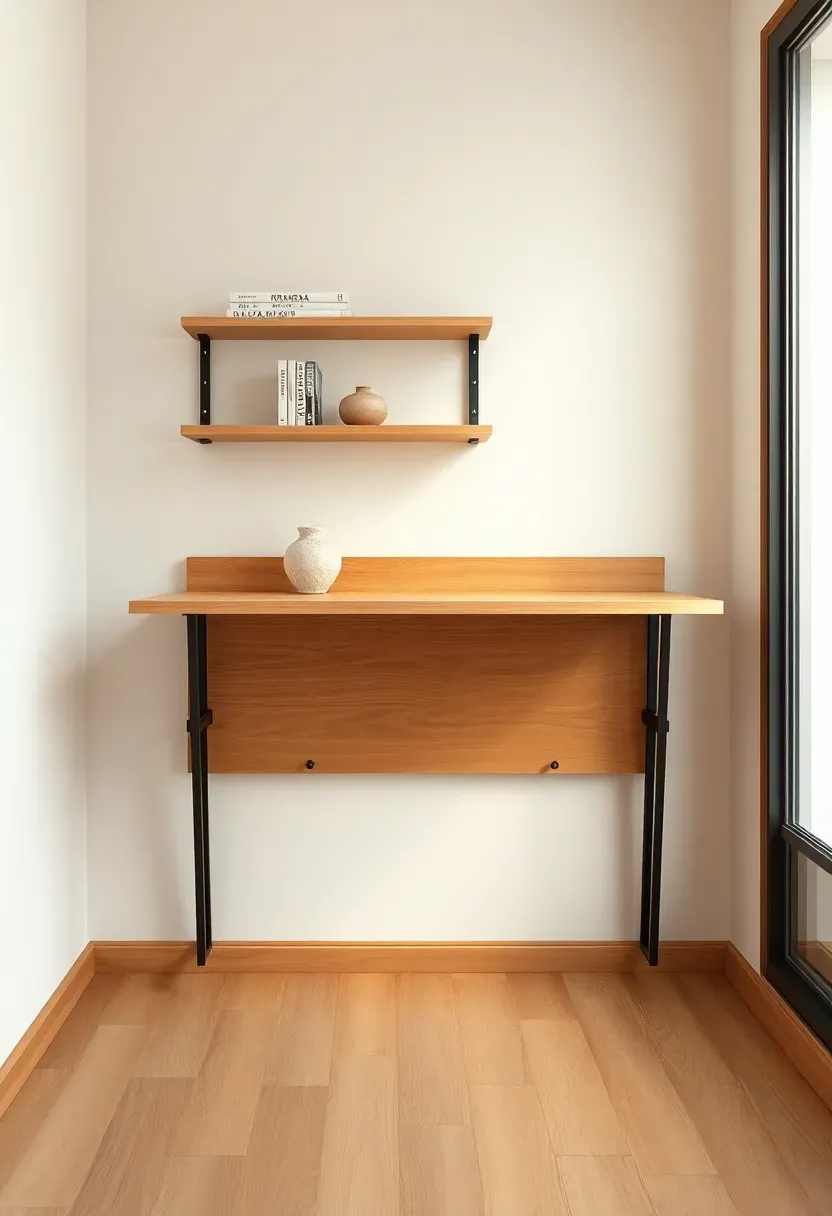
Prompt: Nature documentary captured on Hasselblad X2D 100C with XCD 90V lens at f/4. Hyper-realistic angled view of small Japandi bedroom with wall-mounted folding desk in light wood, folded down against wall showing compact profile. Desk surface is light oak with folding metal supports in matte black. Above desk: simple floating shelf with few books and small ceramic vase. Room otherwise minimal—platform bed with white linens visible in background. Walls pale cream, floor light oak. Materials: light wood, matte black metal, ceramic. Soft diffused window light (5000K), enhancing wood tones. Functional minimalist mood emphasizing space-saving design. Clean composition showing desk's folded state against wall. No text, no logos. Aspect ratio 2:3.
Placement note: Position the folding desk on the wall opposite your bed or beside a window to maximize natural workspace light without creating visual clutter that competes with the sleep zone's serene atmosphere.
A wall-mounted folding desk transforms a small bedroom from sleep-only space to multi-purpose room without permanently sacrificing floor area or disrupting the minimalist aesthetic. When folded down, the desk becomes a slim vertical profile against the wall—barely noticeable yet ready to deploy for work, study, or creative pursuits. This flexible approach embodies Japandi pragmatism: spaces should adapt to needs rather than remaining static single-purpose rooms, but this adaptability should never compromise visual calm.
The folding mechanism should be sturdy yet smooth—gas struts or quality hinges prevent the desk from feeling flimsy or difficult to operate. When folded up, consider the wall space created: a small bulletin board, a mounted mirror, or simply clean empty wall that enhances the sense of spaciousness. When deployed, the desk should be at standard height (28-30 inches) for ergonomic comfort, with enough depth (at least 20 inches) for functional workspace. Keep the surface clear when not in use—perhaps one essential item like a laptop or notebook—but avoid the accumulated clutter that transforms flexible space from asset to burden.
Tips
- Do install a small floating shelf above the desk for workspace essentials that stays in place when folded.
- Don't choose a desk that requires clearing completely before folding—designate items that can remain.
- For rental-friendly installation, use heavy-duty removable wall mounts rather than permanent construction.
Best for: Bedrooms under 100 square feet where dedicated workspace would encroach on essential movement and breathing room.
What this gives you: Flexible workspace that appears and disappears on demand, preserving open space while adding functionality without permanent visual footprint.
We picked a few things that go well with this idea: EYYTHUNG Fluted Floating Nightstand Set of 2 (★4.4), Nathan James Floating Nightstand Set of 2 Oak (★4.4) and VINGLI Oak Fluted Floating Nightstand Set of 2 (★4.4). As an Amazon Associate we earn from qualifying purchases.
3. Floor-to-Ceiling Built-in Wardrobes with Light Doors
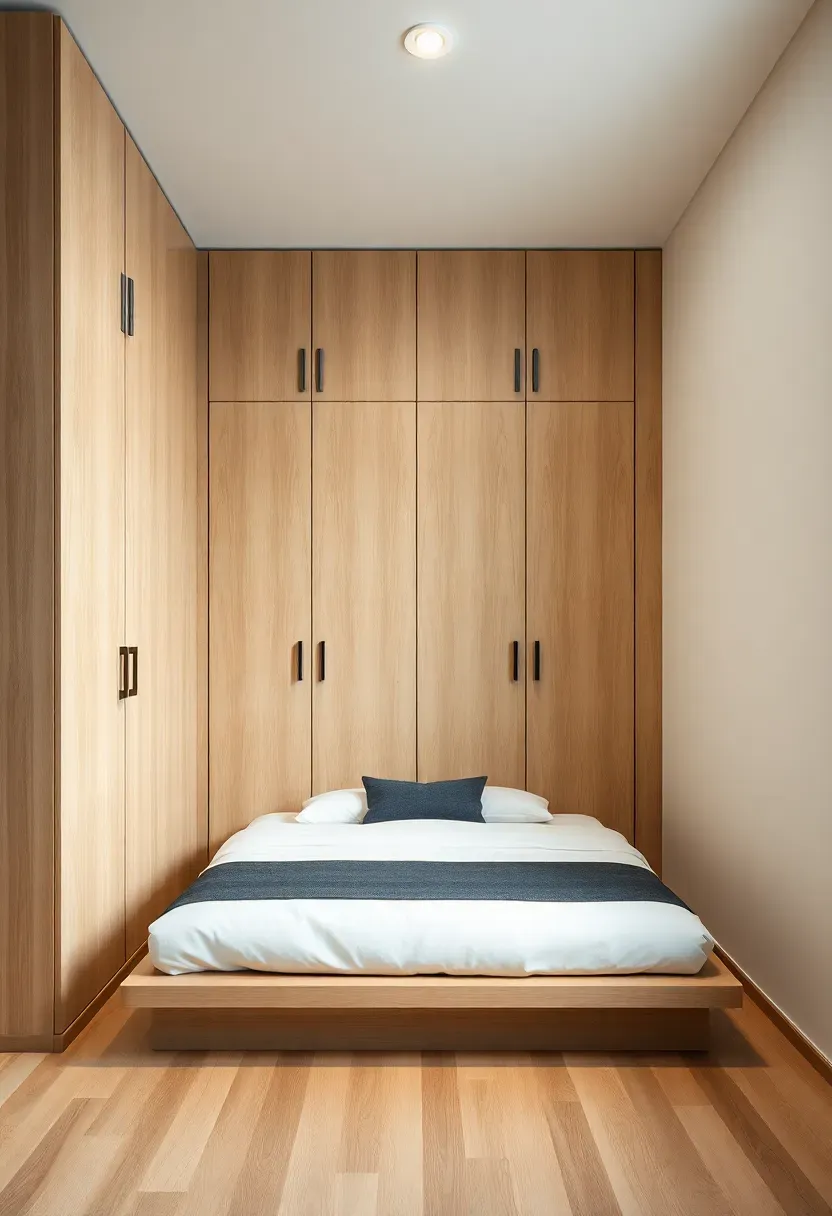
Prompt: Nature documentary captured on Hasselblad X2D 100C with XCD 90V lens at f/4. Hyper-realistic frontal view of small Japandi bedroom with floor-to-ceiling built-in wardrobe wall along one side. Wardrobe doors are matte light wood with handleless push-latch opening, creating seamless vertical lines. Bed visible in foreground—low platform with white linens, one charcoal pillow. Floor light oak, walls soft cream. Materials: light oak veneer, cotton bedding. Soft ambient light from ceiling fixture (3000K warm). Organized minimalist mood emphasizing vertical storage. Mid-depth focus on door texture. Very minimal decor. Vertical composition emphasizing height. No text, no logos. Aspect ratio 2:3.
Floor-to-ceiling built-in wardrobes capitalize on vertical space that's often wasted in small bedrooms while creating a seamless architectural wall that conceals all visual clutter behind smooth light doors. The continuous vertical lines draw the eye upward, enhancing the room's perceived height, while the handleless design maintains uninterrupted surfaces that feel calm and cohesive rather than utilitarian. This storage solution essentially eliminates the need for any other clothing storage, freeing up floor space and keeping the room's primary function as rest sanctuary uncluttered by multiple furniture pieces.
Why it works: Built-ins that span from floor to ceiling maximize storage while creating the illusion of architectural features rather than furniture—the wardrobes feel like part of the room's structure, not additions occupying space.
Light wood doors reflect natural light and maintain the airy quality essential to small bedrooms, avoiding the cave-like feeling that dark or wood-heavy storage can create in compact spaces. Interior organization should be customized to your needs: dedicated hanging space, adjustable shelves, and drawer units that prevent the chaos that makes wardrobes frustrating to use. Consider dedicating one upper section to out-of-season items or less-used pieces, keeping frequently accessed clothing at eye level and within easy reach. The investment in built-ins pays dividends in both daily functionality and long-term home value, but ensure the design is timeless rather than trendy—Japandi principles favor clean classic lines over fashionable details that will quickly feel dated.
Tips
- Pro: Include integrated LED lighting inside wardrobes for visibility without affecting room ambiance.
- Con: Full custom built-ins require professional installation and significant investment.
- Fix: Modify existing standard wardrobes with light wood veneer and remove hardware for similar effect at lower cost.
Budget/Time: Full custom built-ins cost $3000-8000 depending on size and materials; DIY modification of existing wardrobes costs $500-1500.
What this gives you: Maximum storage capacity that enhances rather than diminishes the room through seamless architectural integration.
We picked a few things that go well with this idea: Best Choice Products Woven Under Bed Storage (2-Pack) (★4.7), Handwoven Water Hyacinth Rolling Under Bed Storage (★3.3) and StorageWorks Seagrass Storage Baskets (2-Pack) (★4.8). As an Amazon Associate we earn from qualifying purchases.
4. Floating Nightstands to Preserve Floor Space
Recommended
Items for this idea
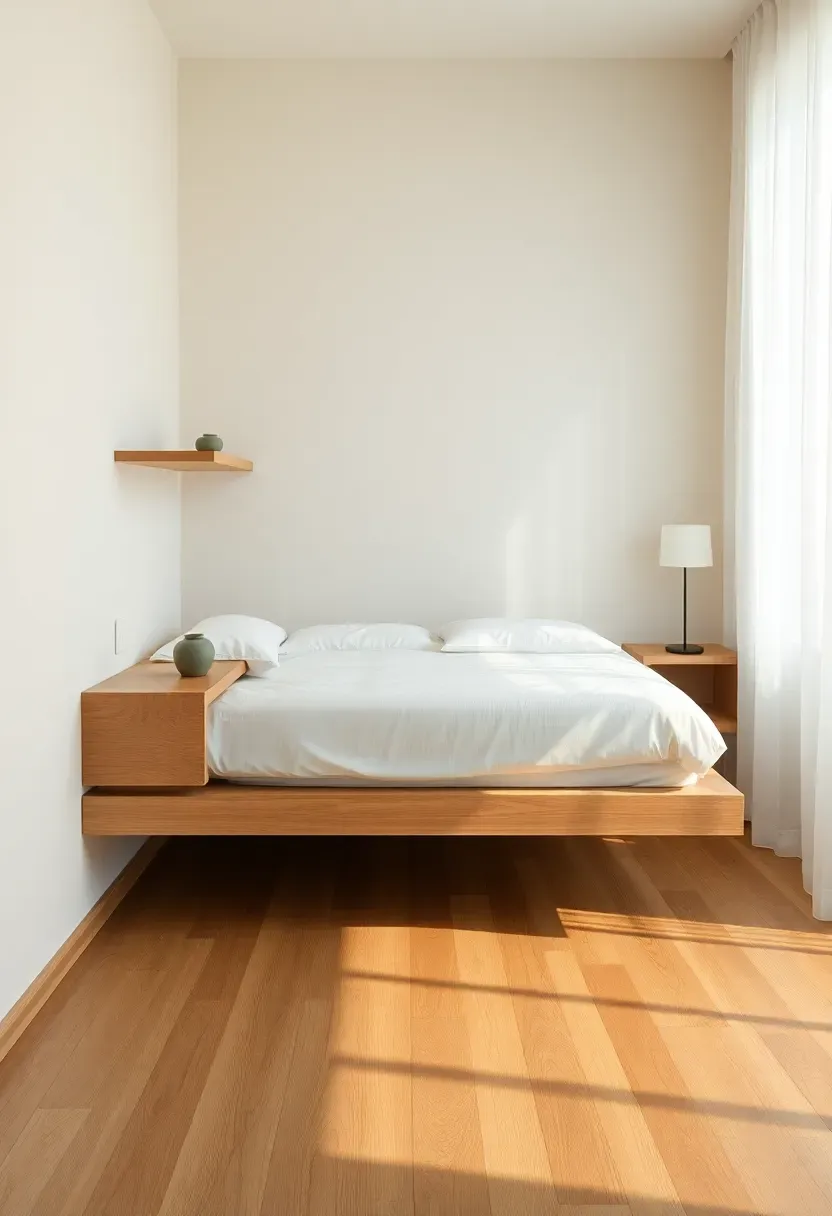
Prompt: Nature documentary captured on Hasselblad X2D 100C with XCD 90V lens at f/4. Hyper-realistic side view of Japandi small bedroom showing floating wall-mounted nightstands—simple light wood shelves mounted directly to wall on either side of bed. Bed is low platform with white linens. Each nightstand holds minimal items: one small ceramic vase, one matte lamp. Floor visible beneath nightstands—light oak planks showing continuous space. Walls cream, window with sheer curtains. Materials: light oak shelves, matte ceramic, fabric lamp shades. Soft window light (5000K), creating shadows beneath floating shelves. Airy minimalist mood emphasizing open floor. Clean composition. No text, no logos. Aspect ratio 2:3.
Floating nightstands mounted directly to the wall eliminate the visual weight and floor consumption of traditional bedside tables while maintaining essential surface space for lamps, books, and overnight necessities. The wall-mounted design creates a continuous line of floor space beneath that makes small rooms feel larger and more open, while the streamlined shelves provide just enough surface without bulk. This approach embodies Japandi philosophy: every element should be essential, functional, and visually unobtrusive—no wasted space, no unnecessary mass.
Traditional nightstands occupy precious floor real estate and create visual interruptions that break up the clean lines essential to serene small spaces. Floating alternatives maintain functionality while preserving both physical and visual space. The shelves should be substantial enough to prevent feeling flimsy—minimum depth of 8-10 inches and adequate width for your essential items—but modest in scale to avoid overwhelming the room. Mount at standard nightstand height (24-26 inches from floor) for ergonomic access, or consider customizing to your bed height for perfectly proportioned alignment. The open space beneath is both practical and aesthetic: easy floor cleaning, visual lightness, and the illusion of more square footage than actually exists.
Tips
- Do use proper wall anchors and studs for secure mounting—floating shelves will bear weight and need solid support.
- Don't overload with decor items—keep surfaces minimal with 1-3 essential pieces per side.
- For rental, use heavy-duty removable mounting strips rather than permanent screws if local codes allow.
What this gives you: Essential bedside surface without consuming floor area or disrupting visual flow through wall-mounted minimal design.
5. Minimalist Shelves Above Bed for Display
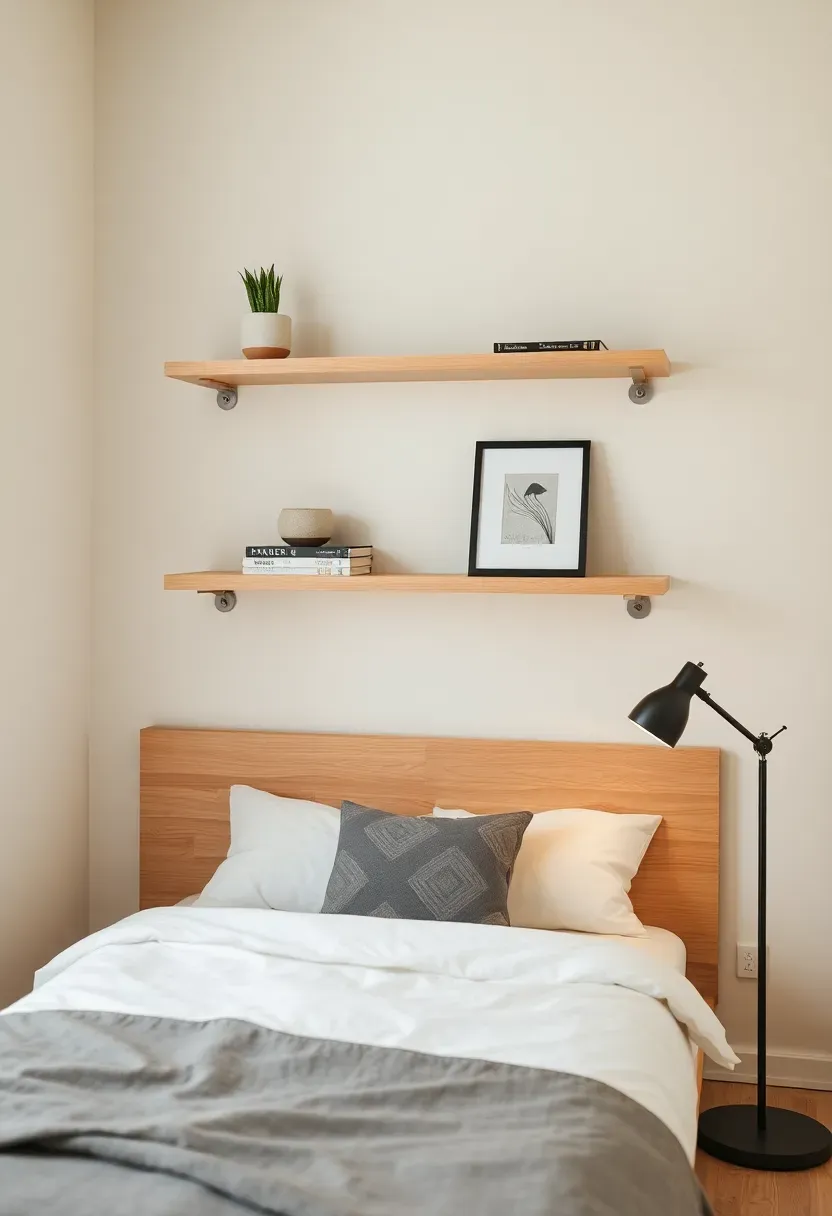
Prompt: Nature documentary captured on Hasselblad X2D 100C with XCD 90V lens at f/4. Hyper-realistic view of small Japandi bedroom with two floating wall shelves mounted above bed headboard area. Shelves are light natural wood, simple rectangular planks with minimal visible brackets. On shelves: carefully curated items—small potted succulent, one ceramic vessel, two stacked books, small framed art piece. Bed below is low platform with white linens and gray throw pillow. Walls cream, floor light oak. Materials: light wood, ceramic, paper, fabric. Soft ambient light from modern floor lamp (3000K). Curated minimalist mood. Shallow focus on shelf objects. Minimal styling with intention. No clutter. No text, no logos. Aspect ratio 2:3.
Installing minimalist floating shelves above the bed utilizes otherwise empty wall space for display and storage without consuming any floor area—crucial strategy in small bedrooms where every horizontal surface counts. The shelves provide a home for carefully curated decorative items, books, or personal objects while keeping them visible yet organized, preventing the accumulation that creates surface clutter on limited nightstands and dressers. This vertical approach to storage and display embodies Japandi efficiency: functional use of available space that maintains visual calm through intentional curation.
Common mistake: Installing shelves too low above the bed creates a cramped, suffocating feeling—maintain at least 18-24 inches of clearance from the top of your mattress to the bottom shelf for comfortable headspace and visual breathing room.
Keep shelving minimal—two or three well-spaced shelves rather than a wall-to-wall bank that feels overwhelming. The objects displayed should be thoughtfully curated: a small plant, one or two artful objects, a few books, perhaps a framed photo or small artwork. Avoid the temptation to fill every inch—negative space between objects is essential to the serene Japandi aesthetic. Consider shelf depth carefully: deeper shelves (10-12 inches) can hold books and larger items, while shallower shelves (6-8 inches) force lighter curation that prevents visual heaviness. The key is restraint—these shelves should feel like a gallery display, not storage overflow.
Tips
- Do use level tools during installation—shelves must be perfectly straight for polished appearance.
- Don't place heavy or fragile items where they could fall and become hazards during sleep.
- For safety, consider museum putty or small lip edges on shelves to secure displayed objects.
What this gives you: Vertical display and storage space that adds personality without consuming floor area or creating visual clutter.
6. Light Wood Palette to Enhance Small Bedroom Spaciousness
Recommended
Items for this idea
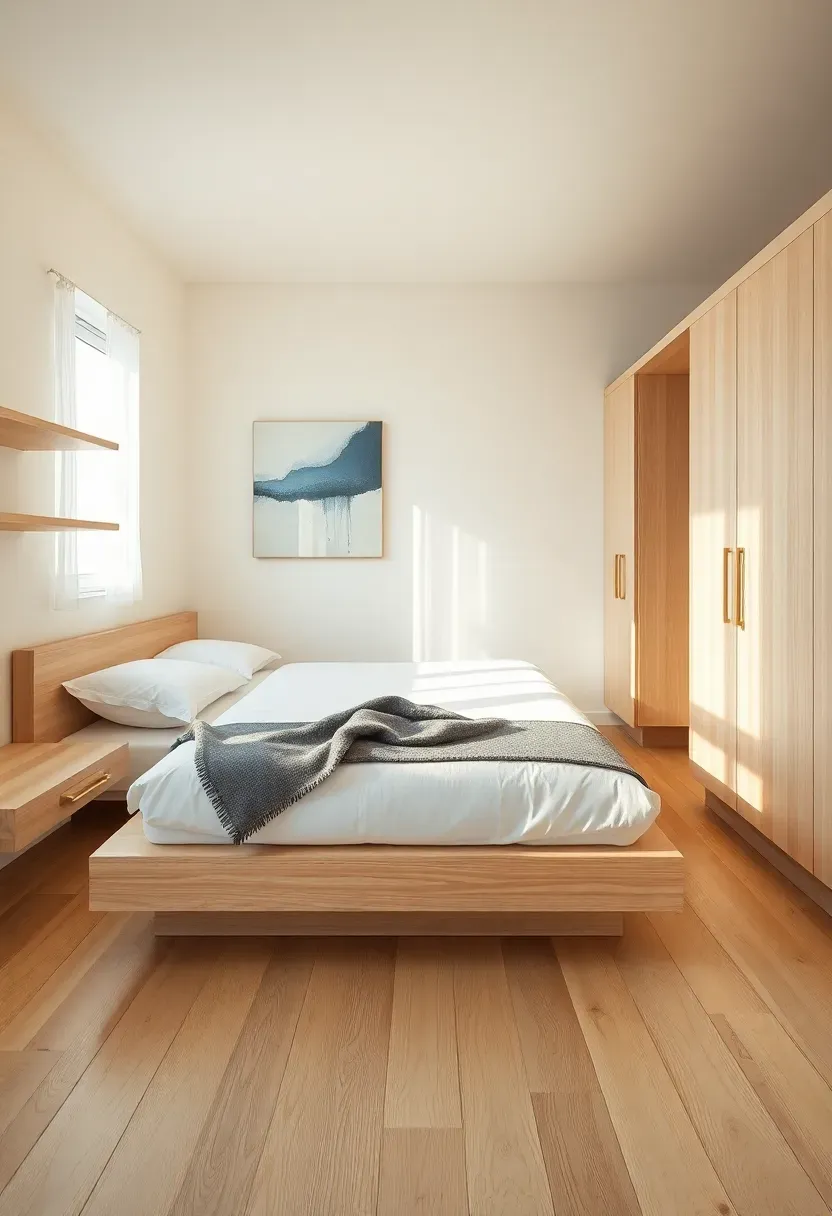
Prompt: Nature documentary captured on Hasselblad X2D 100C with XCD 90V lens at f/4. Hyper-realistic wide view of small Japandi bedroom with all-light-wood palette creating airy spacious feel. Light oak floor, platform bed frame in light ash, floating shelves in pale birch, wardrobe doors in light maple. Bed has white linens, one gray wool throw. Walls are soft cream with minimal blue-gray abstract art. Window with white sheer curtains. Materials: various light woods in different grains, white cotton, gray wool. Bright natural daylight from window (5500K), making wood tones glow. Spacious serene mood. Deep focus showing wood grain variations. Minimal styling emphasizing openness. No text, no logos. Aspect ratio 2:3.
Embracing a cohesive light wood palette across flooring, furniture, and architectural elements creates seamless visual flow that makes small bedrooms feel significantly larger and more serene. If you want to explore this material-first approach further, our roundup of minimalist japandi bedroom design ideas covers palette layering in depth. Light woods like ash, birch, maple, and oak reflect natural light rather than absorbing it, brightening the space while maintaining warmth through natural materiality. The monochromatic wood approach eliminates visual breaks and interruptions that compartmentalize small rooms, creating instead a continuous calm backdrop that feels expansive despite limited dimensions.
The key to success with this approach is variation within the light wood family rather than exact matching—different species with slightly different grain patterns and undertones add depth without disrupting the cohesive palette. Light ash flooring with birch furniture and maple accents creates subtle sophistication through variation while maintaining the essential lightness. Avoid heavy dark woods that create visual anchors and weight—small rooms benefit from furniture that visually recedes rather than asserts presence. The light wood foundation also provides maximum flexibility for accent colors and textiles, serving as a neutral canvas that can evolve with your tastes without requiring replacement of major furniture pieces.
Tips
- Do choose wood finishes with visible grain for texture that prevents the monotony of solid colors.
- Don't mix warm-toned and cool-toned light woods—stay within one undertone family for cohesion.
- For rental, use light wood peel-and-stick veneers on existing furniture to achieve unified palette affordably.
What this gives you: A bright cohesive foundation that enhances perceived spaciousness through light-reflecting materials and seamless visual continuity.
7. Sheer Curtains for Maximum Light Penetration
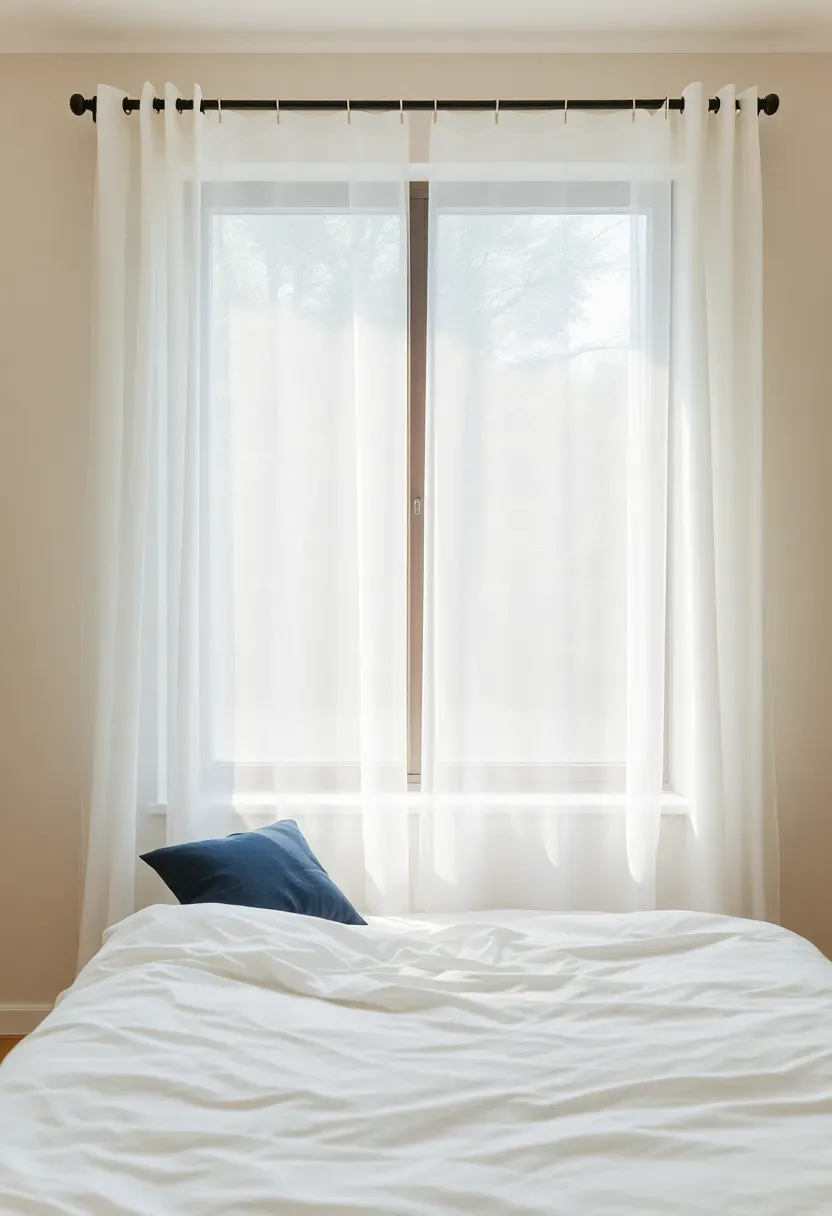
Prompt: Nature documentary captured on Hasselblad X2D 100C with XCD 90V lens at f/4. Hyper-realistic view of small Japandi bedroom window covered in white sheer curtains that filter soft daylight. Curtains are lightweight semi-transparent fabric, hung high and wide on simple black metal rod. Window shows glimpses of outdoor greenery through fabric. Bed visible in foreground—low platform with white linens, one navy pillow. Floor light oak, walls cream. Materials: white sheer fabric, black metal, light wood, cotton. Soft diffused light filtering through curtains (5000K), creating ethereal glow. Airy serene mood emphasizing natural light. Deep focus on fabric translucency. Minimal styling. No clutter. No text, no logos. Aspect ratio 2:3.
Sheer curtains maximize natural light penetration in small bedrooms while providing necessary privacy and softening window glare, creating that essential bright airy quality that makes compact spaces feel open and expansive. The translucent fabric filters harsh direct sunlight into soft diffused glow that enhances rather than overwhelms the room, while the floor-to-ceiling hanging style draws the eye upward and emphasizes vertical space. Unlike heavy drapes or blackout shades that can make small rooms feel closed in, sheers maintain connection to the outdoors and preserve natural light—crucial elements for psychological spaciousness.
Placement note: Mount curtain rods 4-6 inches above the window frame and extend hardware 6-12 inches beyond each side—this technique makes windows appear larger and allows curtains to be pulled completely clear of glass when open, maximizing both light and apparent window size.
For small bedrooms, layer sheer panels with simple roller shades or blackout blinds behind if light control is needed—this combination provides flexibility without sacrificing the airy quality sheers provide. Choose high-quality sheer fabrics with substantial weight and texture that prevent the cheap, flimsy appearance of basic panels. Natural materials like linen or cotton sheers drape beautifully and develop character over time, embodying Japandi appreciation for authentic materials that age gracefully. White or very pale neutrals work best in small spaces—avoid patterned or colored sheers that introduce visual complexity and reduce light transmission.
Tips
- Do choose curtain rods at least 12 inches longer than window width for proper stacking when open.
- Don't choose sheers with visible seams or poor hems that detract from quality appearance.
- For budget, use extra-wide white flat sheets with rod pockets sewn in—creates custom look affordably.
What this gives you: Maximum natural light with privacy protection through translucent window treatments that enhance spaciousness.
8. Compact Reading Nook in Window Corner
Recommended
Items for this idea
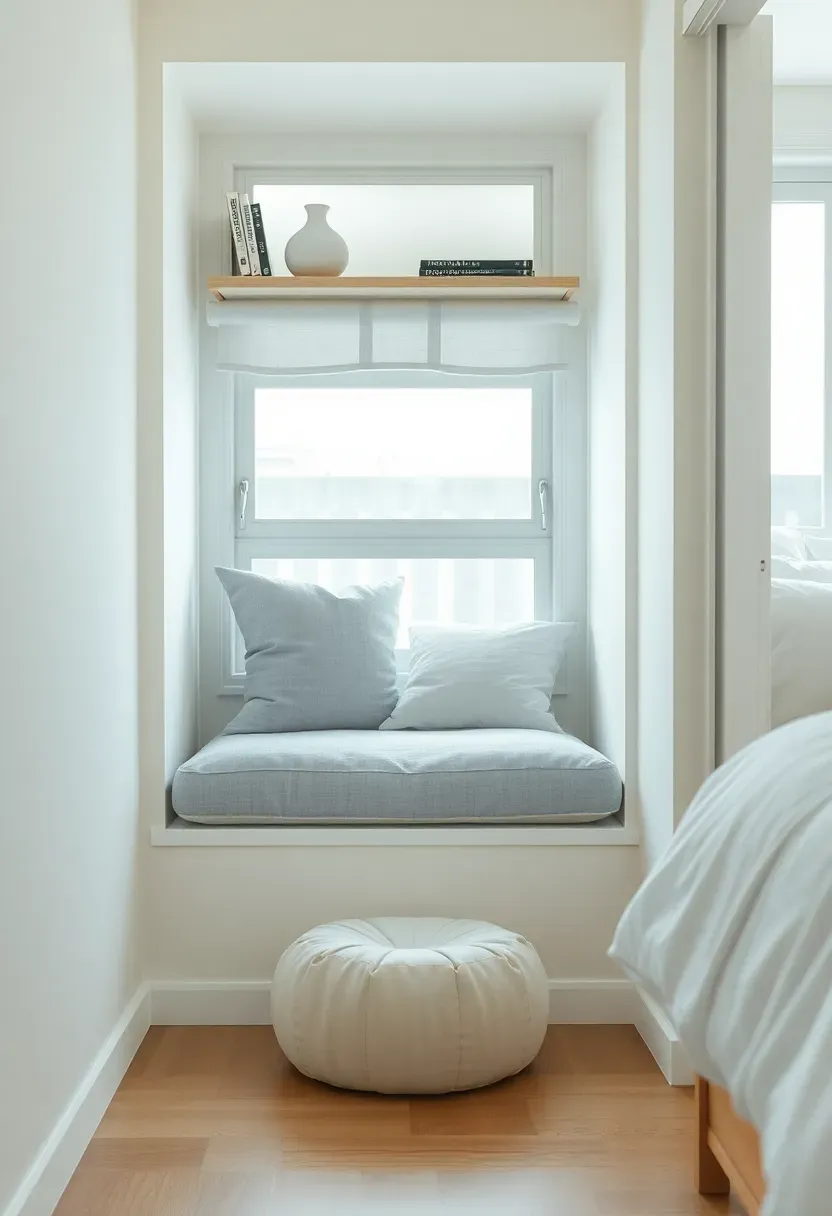
Prompt: Nature documentary captured on Hasselblad X2D 100C with XCD 90V lens at f/4. Hyper-realistic angled view of small Japandi bedroom corner with compact reading nook. Window alcove features built-in window seat with cushion in pale gray linen, two small pillows in light blue. Above window: simple floating shelf with few books and small ceramic vase. Floor has small round pouf in light wood frame with cream fabric. Walls soft cream, light oak floor. Glimpse of bed with white linens in background. Materials: linen cushion, cotton pillows, light wood, ceramic. Soft natural light from window (5000K), illuminating reading area. Cozy minimalist mood emphasizing efficient use of corner. Shallow focus on cushion texture. Minimal styling. No clutter. No text, no logos. Aspect ratio 2:3.
Carving out a compact reading nook in a window corner transforms underutilized space into a functional retreat that adds both practical utility and cozy charm without consuming significant floor area. The built-in window seat provides dedicated lounging space separate from the bed, creating a mini-sanctuary within the bedroom for reading, morning coffee, or quiet contemplation. This multi-zone approach prevents the bed from becoming the room's only usable surface while adding functionality that feels intentional and integrated rather than squeezed in.
Why it works: Window corners are often wasted space in small bedrooms—transforming this area into functional nook adds utility without subtracting from circulation or primary sleep zone.
The window seat should be custom-built to the alcove dimensions for maximum efficiency and seamless integration, with hinged storage beneath for pillows, throws, or books. Keep the cushion substantial enough for comfort (4-6 inches thick) but scaled to the space—overstuffed deep cushions overwhelm small alcoves. A small floating shelf above the window provides storage for books and display space for one or two carefully chosen objects, while a small pouf or floor cushion adds flexibility for extra seating. The key is maintaining the minimalist aesthetic—avoid over-accessorizing this tiny zone, which transforms it from serene retreat to cluttered corner.
Tips
- Do choose outdoor-rated or sun-resistant fabrics for window seat cushions if the corner receives direct sunlight.
- Don't eliminate any walking path to accommodate the nook—maintain minimum 24-inch clearance for movement.
- For budget DIY, build simple box frame and cover with custom cushion made from high-density foam and fabric.
Rental note: Achieve similar effect with bench or storage cubes topped with substantial cushions and throw pillows—no construction required, completely reversible.
What this gives you: A functional cozy retreat within the bedroom that adds utility and charm without sacrificing floor space or disrupting minimalist calm.
9. Under-Bed Storage Baskets in Natural Materials
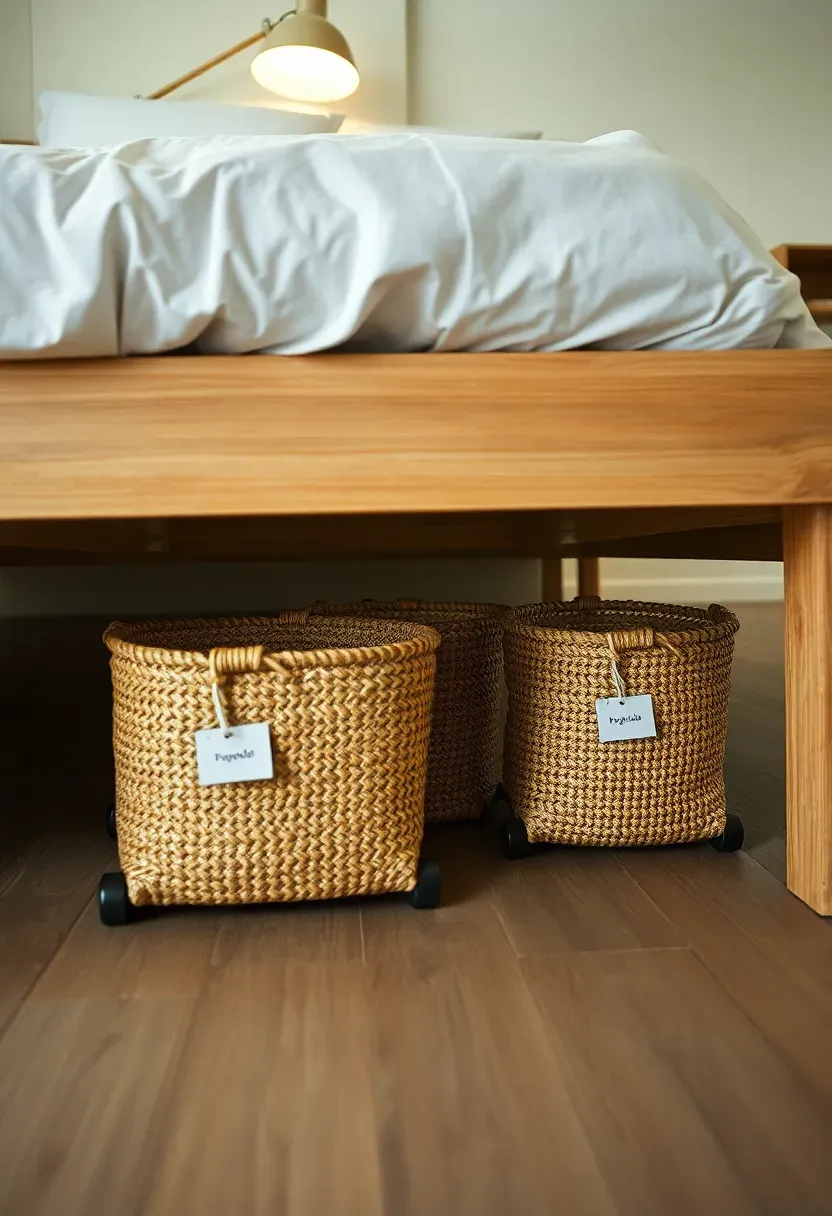
Prompt: Nature documentary captured on Hasselblad X2D 100C with XCD 90V lens at f/4. Hyper-realistic low angle view of Japandi small bedroom showing under-bed storage—platform bed with three woven seagrass baskets on rollers underneath. Baskets are natural woven fiber with visible texture, each with simple fabric label. Bed has white linens, floor visible—light oak planks with baskets partially visible. Walls cream, minimal floating nightstand. Materials: woven seagrass, light wood, cotton. Soft ambient light from floor lamp (3000K warm). Organic minimalist mood emphasizing natural storage. Shallow focus on basket weave texture. Very minimal styling. No clutter. No text, no logos. Aspect ratio 2:3.
Under-bed storage baskets in natural woven materials provide concealed storage capacity while adding organic texture and warmth to small bedrooms that might otherwise feel sterile from minimalism. The baskets slide easily on casters or smooth floor surfaces, making stored items accessible while maintaining the clean visual line that keeps small rooms feeling spacious. Natural materials like seagrass, rattan, or woven jute introduce textural interest that enlivens the room without adding visual weight or clutter—perfect balance to the smooth wood and fabric surfaces typical of Japandi design.
Unlike plastic bins that look utilitarian and temporary, natural baskets feel intentional and integrated into the room's aesthetic, serving as storage solution and decorative element simultaneously. Choose uniform baskets for cohesive appearance—matching size, material, and color creates the seamless look essential to small spaces where visual unity enhances perceived spaciousness. Label baskets subtly with simple tags or handwritten notes to maintain organization without creating visual noise. The natural variation in woven textures adds character and warmth, preventing the room from feeling flat or overly coordinated while maintaining the essential calm foundation.
Tips
- Do measure bed clearance carefully—most platform beds allow 6-8 inches, requiring low-profile baskets.
- Don't overfill baskets to the point of bulging—organized storage maintains calm appearance.
- For dust protection, choose baskets with lids or line with fabric bins that conceal contents while showing natural material exterior.
What this gives you: Substantial concealed storage with organic warmth through natural materials that enhance rather than disrupt the serene aesthetic.
10. Single Statement Wall Art Instead of Gallery Clutter
Recommended
Items for this idea
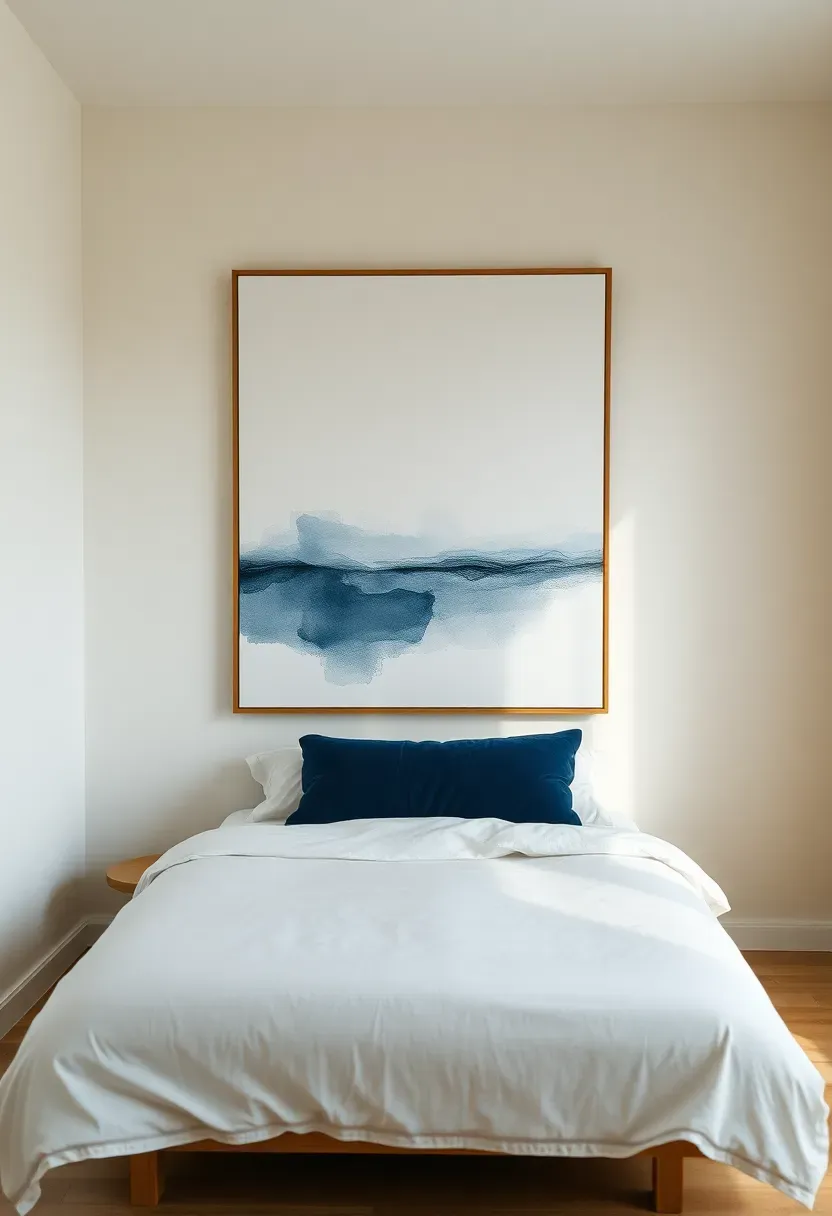
Prompt: Nature documentary captured on Hasselblad X2D 100C with XCD 90V lens at f/4. Hyper-realistic view of small Japandi bedroom wall featuring one large statement art piece instead of gallery wall. Art is minimalist abstract painting in muted blues and grays on white background, simple wood frame. Wall is soft cream, art占据了 significant portion but breathing room around it. Bed visible in foreground—low platform with white linens, one navy pillow. Floor light oak. Materials: canvas paint, wood frame, cotton bedding. Soft ambient light (3000K), illuminating art evenly. Serene minimalist mood emphasizing single focal point. Mid-focus on art texture. Minimal decor otherwise. No clutter. No text, no logos. Aspect ratio 2:3.
One substantial statement art piece creates sophisticated visual interest without the cluttered feeling of gallery walls, making small bedrooms feel curated and intentional rather than decorated or overwhelmed. The single artwork becomes a focal point that draws the eye and adds personality, while adequate negative space around it maintains the breathing room essential to serene Japandi aesthetics. This less-is-more approach to wall decor embodies the Japanese principle of ma—conscious use of empty space as design element rather than something to be filled.
Common mistake: Installing multiple smaller artworks or creating gallery walls in small rooms creates visual clutter that makes compact spaces feel busy and cramped—one substantial piece has more impact while maintaining calm.
The statement piece should be substantial enough to hold the wall—artwork or mirror that spans at least one-third to one-half of the wall width creates presence without overwhelming. Choose artwork with a restrained palette that complements rather than competes with the room's neutral foundation: abstract compositions in muted tones, simple line drawings, or monochromatic photographs work beautifully in Japandi spaces. The frame should be simple and minimal—thin natural wood or matte black in understated profile that doesn't compete with the art. Position the artwork at eye level (approximately 60 inches from center to floor) with generous surrounding space—let the wall breathe around the piece rather than crowding it with additional decor.
Tips
- Do use proper picture-hanging hardware for the artwork's weight—small rooms deserve secure, professional installation.
- Don't lean art against walls in small spaces where floor area is precious—hang properly to preserve open space.
- For budget, source oversized thrift store frames and paint or add new art—creates custom scale affordably.
What this gives you: Sophisticated visual focal point that adds personality without clutter through intentional single-piece curation.
11. Wall-Sconce Lighting to Free Surface Space
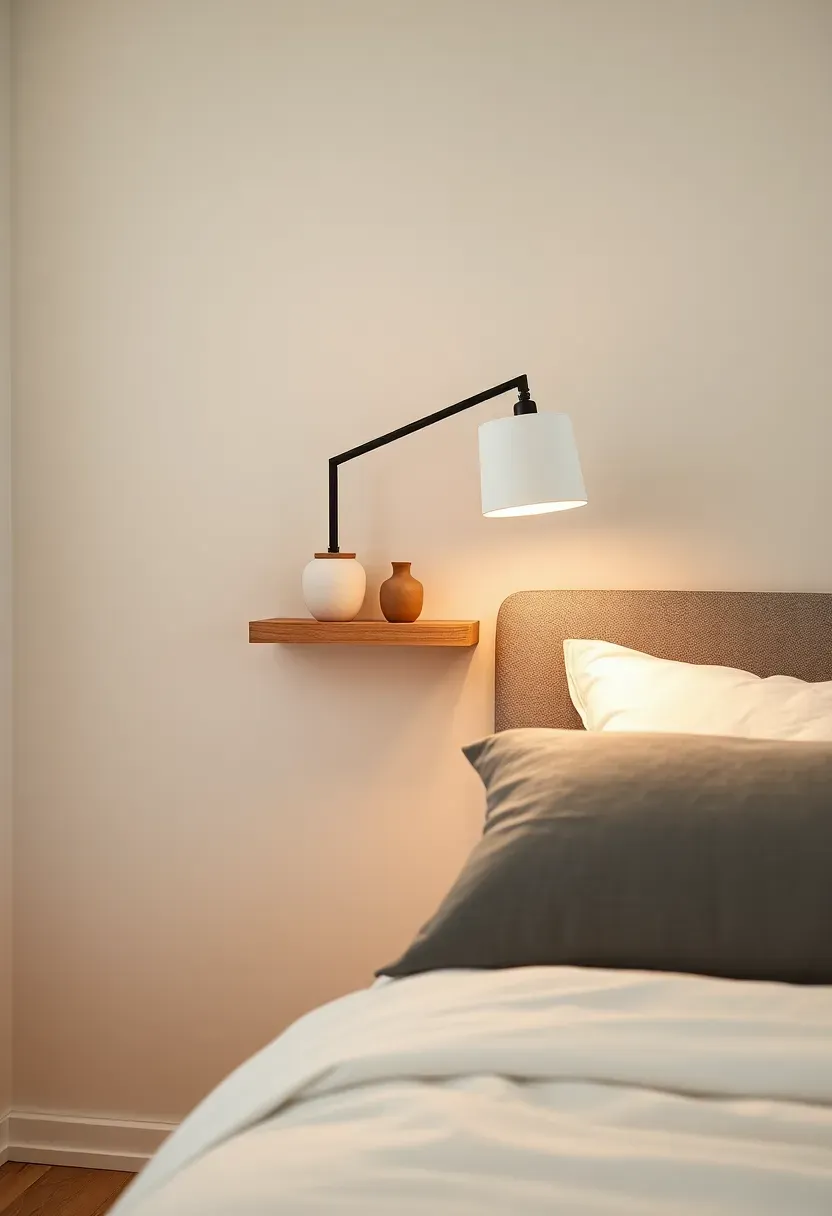
Prompt: Nature documentary captured on Hasselblad X2D 100C with XCD 90V lens at f/4. Hyper-realistic close view of Japandi small bedroom bedside wall with mounted wall sconce light. Sconce is minimalist design—matte black metal arm extending from wall with small white fabric shade casting warm light. Beside sconce: floating wood shelf with single small vase and book. No traditional table lamp visible. Walls cream, light oak floor. Bed linens white with gray pillow visible in foreground. Materials: matte black metal, white fabric shade, light wood, ceramic. Warm light from sconce (2700K), creating cozy ambiance. Functional minimalist mood emphasizing surface freedom. Shallow focus on sconce detail. Minimal styling. No text, no logos. Aspect ratio 2:3.
Wall-mounted sconce lighting eliminates the need for table lamps that occupy precious surface space on small nightstands while providing focused task lighting for reading and ambient illumination for the room. The hardwired or plug-in sconces mount directly to the wall, floating above nightstands and leaving those minimal surfaces completely clear for essential items only—no lamp base consuming space, no cords creating visual clutter. This vertical lighting approach embodies Japandi efficiency: functionality achieved without sacrificing floor or surface area, maintaining the clean unencumbered surfaces essential to calm small spaces.
Choose sconces with adjustable arms or shades that allow directing light for reading while providing ambient glow for the room. Hardwired installation creates the cleanest appearance with no visible cords, but quality plug-in sconces with careful cord management (hidden behind furniture or run through raceways) provide flexibility for renters or those avoiding electrical work. Position sconces approximately 24-28 inches above the nightstand surface and 6-8 inches from the wall on either side of the bed for balanced lighting. The fixture style should be minimalist—simple arms, matte finishes (black, brass, or nickel), and understated shades that provide function without drawing attention away from the room's serene foundation.
Tips
- Do install sconces with dimmer switches for adjustable ambiance from bright task light to soft evening glow.
- Don't choose fixtures with elaborate decorative details that compete with minimalist aesthetic—simplicity is key.
- For rental, use high-quality cord covers or hide cords behind furniture for polished appearance without permanent installation.
Best for: Bedrooms with nightstands smaller than 20 inches wide where table lamps would consume most available surface area.
What this gives you: Task and ambient lighting without consuming surface space through vertical wall-mounted fixtures that preserve clean lines.
12. Neutral Rug to Define Zone Without Visual Weight
Recommended
Items for this idea
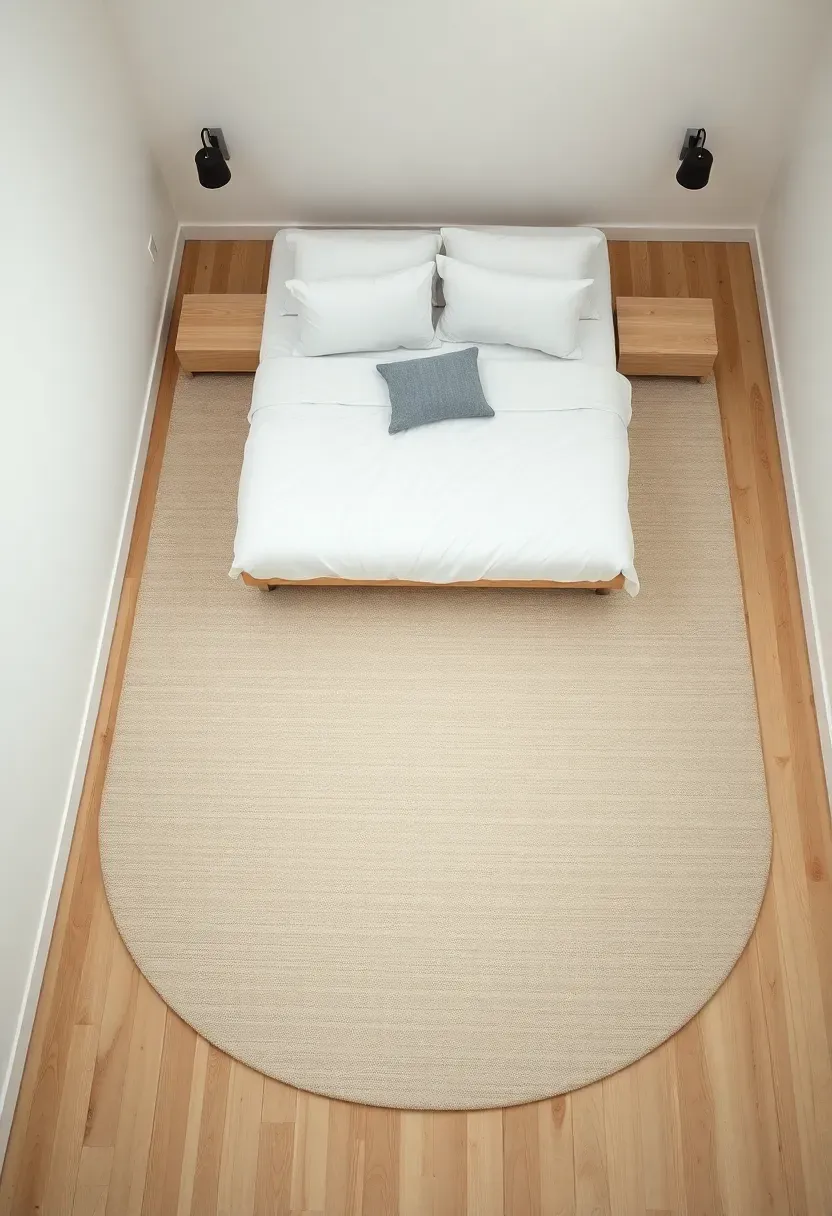
Prompt: Nature documentary captured on Hasselblad X2D 100C with XCD 90V lens at f/4. Hyper-realistic overhead view of small Japandi bedroom with neutral area rug defining sleep zone. Rug is pale cream wool with subtle texture, placed partially under low platform bed. Bed has white linens, one gray pillow. Floor surrounding rug is light oak—contrast in tone but similar lightness. Walls cream. Minimal furniture—floating nightstands visible. Materials: wool rug, light wood, cotton. Soft window light (5000K), enhancing rug texture. Calm defined mood emphasizing zone creation. Deep focus showing rug weave. Minimal styling. No clutter. No text, no logos. Aspect ratio 2:3.
A neutral area rug in pale cream, soft gray, or natural fiber defines the sleep zone within small bedrooms without introducing color, pattern, or visual weight that makes compact spaces feel busy or enclosed. The rug creates a psychological boundary that designates the bed area as dedicated sanctuary, adding a layer of softness underfoot that enhances comfort while maintaining the seamless visual flow essential to spacious-feeling small rooms. This zone-defining technique adds sophistication and intention without consuming visual attention or disrupting the calm neutral palette.
Placement note: Position the rug so it extends at least 18-24 inches beyond the bed's sides and foot—this proportion creates adequate framing without overwhelming small rooms with excessive rug space.
Choose substantial natural materials like wool or high-quality natural fiber rugs that add texture and warmth without pattern or color variation. The rug should be large enough to create a defined zone but not so expansive that it wall-to-walls the room—some visible flooring around the perimeter maintains the sense of spaciousness and prevents the room from feeling carpeted or enclosed. Pale neutrals reflect light and maintain brightness, while texture in the weave adds interest that compensates for lack of pattern. Consider the pile height carefully—low-pile or flat-weave rugs maintain smooth transitions between floor and rug surfaces, preventing tripping hazards and creating easier movement in tight spaces.
Tips
- Do use non-slip rug pad underneath for safety on smooth floors—prevents shifting in tight spaces.
- Don't choose rugs with prominent patterns or bold colors that compete with serene neutral foundation.
- For budget, layer multiple smaller neutral runners to create larger rug area affordably—maintains effect while reducing cost.
What this gives you: Defined sleep zone with added softness and sophistication through neutral rug that enhances calm without visual weight.
13. Sliding Door Wardrobe for Space Efficiency
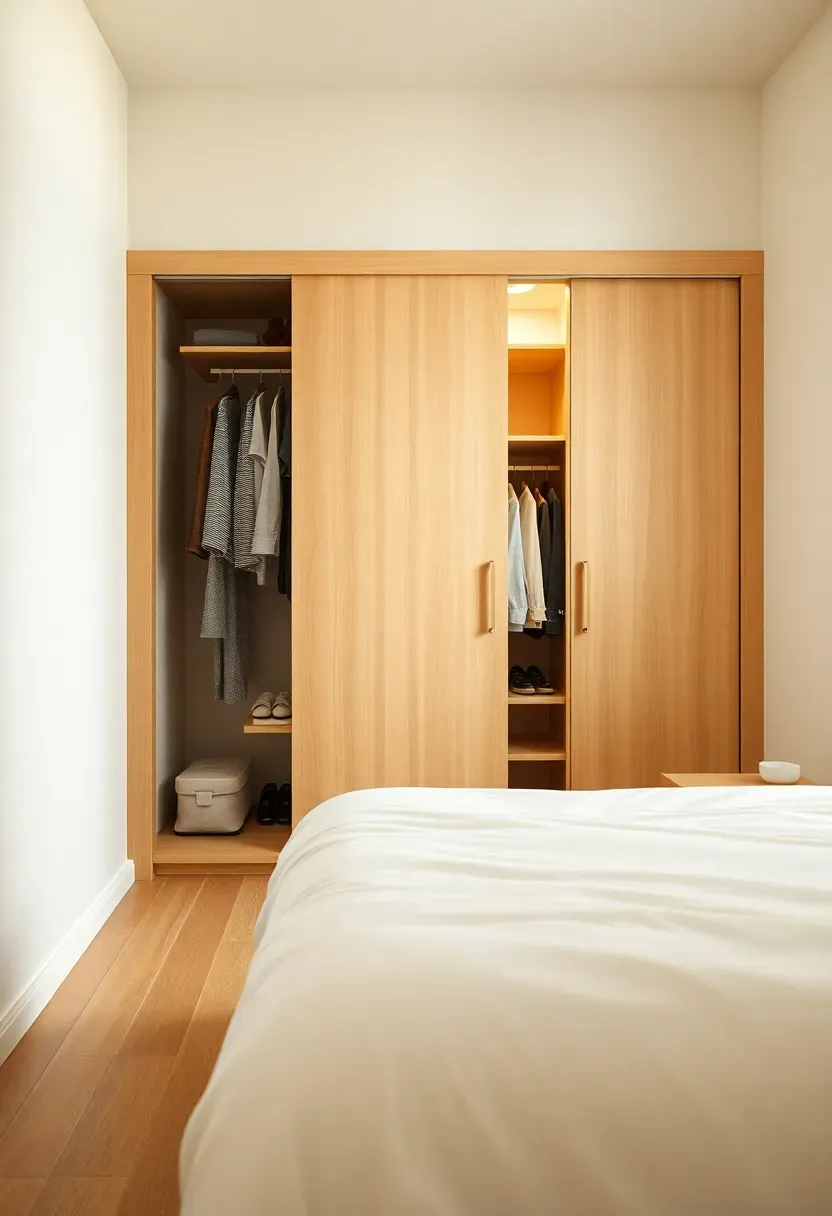
Prompt: Nature documentary captured on Hasselblad X2D 100C with XCD 90V lens at f/4. Hyper-realistic view of small Japandi bedroom with sliding door wardrobe along one wall. Wardrobe features two light wood sliding panels with minimal visible tracks at top and bottom—no protruding handles. One door is partially open showing organized interior with hanging clothes and shelves. Bed in foreground—low platform with white linens. Floor light oak, walls cream. Materials: light wood veneer, mixed fabric clothing visible, cotton bedding. Soft ambient light (3000K). Organized minimalist mood emphasizing space-saving design. Mid-focus on door mechanism. Very minimal styling. No clutter. No text, no logos. Aspect ratio 2:3.
Sliding door wardrobes eliminate the clearance space required for traditional hinged doors, making them ideal space-saving solutions for small bedrooms where every square inch counts. The doors glide parallel to the wardrobe body rather than swinging outward into the room, preserving precious floor space for circulation and furniture placement. This efficient hardware allows the wardrobe to be positioned closer to the bed or other furniture without creating awkward traffic patterns or cramped conditions—crucial advantage in compact rooms where standard swing doors would consume significant usable area.
Beyond space efficiency, sliding doors create large smooth surfaces that contribute to the calm minimalist aesthetic essential to Japandi design. Choose handleless designs with push-latch openings or integrated finger pulls that maintain seamless surfaces, or select simple recessed pulls that don't protrude or create visual clutter. Light wood finishes reflect light and maintain brightness, while matte surfaces prevent the glare that can make small rooms feel harsh. The interior organization should be customized to maximize every inch of storage capacity—hanging rods at multiple heights, adjustable shelving, and designated drawer units prevent the chaos that makes storage frustrating to use regardless of door style.
Tips
- Do invest in quality sliding hardware—cheap tracks bind, stick, and undermine the smooth operation essential to daily satisfaction.
- Don't overfill interior to the point where doors can't open fully—maintain clearance for functional use.
- For DIY, convert existing hinged-door wardrobe to sliding doors with aftermarket track hardware and custom door panels.
Best for: Bedrooms where standard wardrobe doors would obstruct bed placement, walkways, or other essential furniture arrangements.
What this gives you: Maximum storage with minimum space consumption through sliding hardware that preserves floor area and maintains seamless aesthetic.
14. Monochromatic Palette for Seamless Visual Flow
Recommended
Items for this idea
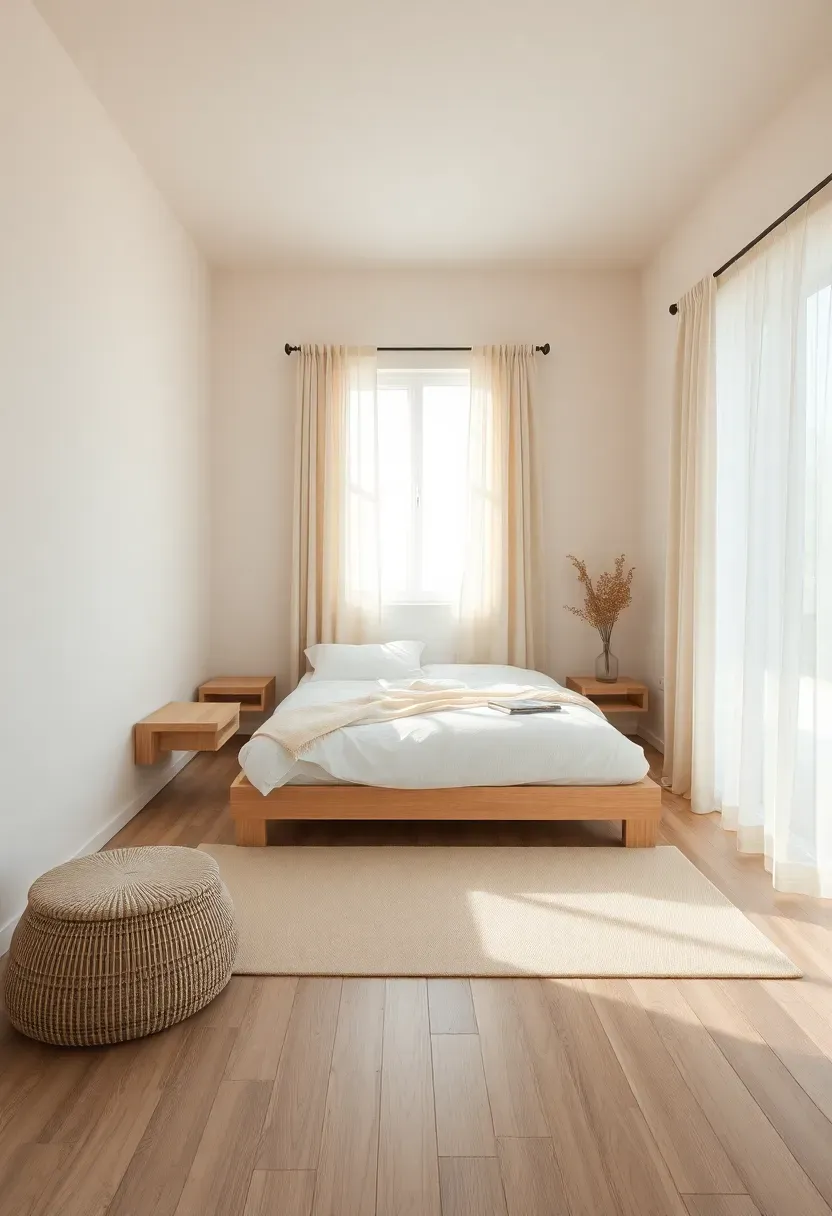
Prompt: Nature documentary captured on Hasselblad X2D 100C with XCD 90V lens at f/4. Hyper-realistic wide view of small Japandi bedroom with monochromatic neutral palette creating seamless flow. Walls cream, floor light oak, bed frame in pale ash, bedding white with cream throw, rug pale beige, curtains ivory. All surfaces within similar tonal range—no dark contrasts or bold colors. Minimal furniture—low platform bed, floating nightstands. Window with sheer cream curtains. Materials: various light neutrals in wood, fabric, textile. Bright natural light from window (5500K), enhancing neutral palette. Spacious serene mood emphasizing continuity. Deep focus showing subtle tonal variations. Minimal styling. No clutter. No text, no logos. Aspect ratio 2:3.
Embracing a monochromatic neutral palette eliminates visual boundaries and breaks that compartmentalize small rooms, creating instead seamless visual flow that enhances perceived spaciousness and maintains calming continuity. When walls, floor, furniture, and textiles all exist within the same light tonal family, the eye moves continuously across surfaces without interruption, making small bedrooms feel significantly larger and more open. This cohesive approach eliminates the visual noise of color contrasts that break up compact spaces, replacing it with sophisticated unity that feels both serene and expansive.
Why it works: Monochromatic schemes eliminate color boundaries that the eye reads as separate spaces—without these visual breaks, small rooms read as one continuous expansive environment rather than collection of small zones.
The key to success with monochromatic design lies in variation through texture rather than color: smooth wood floors against nubby wool rugs, crisp cotton bedding alongside linen throw pillows, sleek metal lamp bases contrasting with ceramic vessels. These textural differences prevent the room from feeling flat or monotonous while maintaining the essential color unity. Choose undertones carefully and commit to one family—either warm neutrals (cream, beige, taupe, honey wood) or cool neutrals (white, gray, pale blue, ash wood), but avoid mixing warm and cool undertones which create subtle discord. The monochromatic approach doesn't mean boring—it means sophisticated restraint where texture and quality take center stage rather than color and pattern.
Tips
- Do incorporate at least 4-5 different textures for genuine richness within the monochromatic scheme.
- Don't introduce even small pops of accent color—they create focal points that disrupt seamless flow.
- For longevity, invest in quality neutral textiles and materials that look expensive even in monochromatic settings.
What this gives you: Perceived spaciousness and sophisticated calm through seamless visual continuity achieved by monochromatic neutral palette.
15. Vertical Lines to Draw Eye Upward
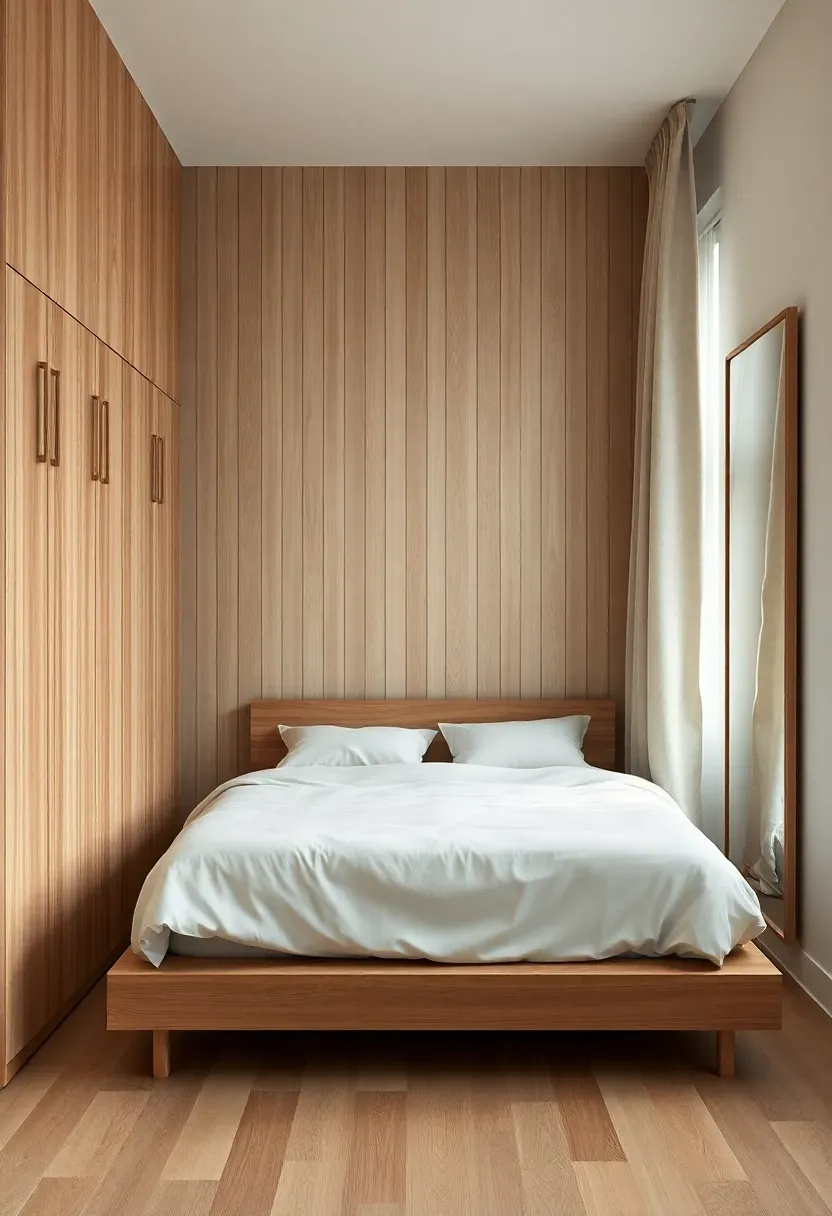
Prompt: Nature documentary captured on Hasselblad X2D 100C with XCD 90V lens at f/4. Hyper-realistic view of small Japandi bedroom emphasizing vertical lines to enhance height. Tall floor-to-ceiling wardrobe with light wood vertical grain, vertical shiplap wall treatment behind bed in pale cream, tall windows with floor-length sheer curtains hung at ceiling height, full-length lean mirror. Bed is low platform with white linens, emphasizing vertical contrast. Floor light oak. Materials: vertical wood grain, painted shiplap, sheer fabric, glass mirror. Soft ambient light (3000K). Vertical rhythm mood emphasizing height. Deep focus on linear elements. Minimal styling emphasizing verticality. No clutter. No text, no logos. Aspect ratio 2:3.
Incorporating strong vertical lines through architectural details, furniture choices, and styling draws the eye upward and enhances the perceived height of small bedrooms, making compact spaces feel airier and more spacious. Vertical elements—floor-to-ceiling wardrobes, tall windows with curtains mounted at ceiling height, vertical wall treatments like shiplap or board-and-batten, full-length mirrors—all create upward visual movement that counteracts the horizontal compression small rooms often feel. This vertical emphasis becomes particularly powerful in bedrooms with standard 8-foot ceilings, where maximizing perceived height dramatically improves spatial comfort.
The key is incorporating vertical elements without adding visual weight or clutter—tall furniture should be slim and streamlined rather than massive, vertical wall treatments should be subtle rather than bold patterns, and window treatments should be sheer rather than heavy. Floor-to-ceiling curtains hung well above the window frame (even at ceiling height) make windows appear larger and ceilings higher while adding softness without bulk. A full-length mirror mounted on the wall (rather than leaned) creates vertical reflection that doubles perceived space while adding functionality. The vertical theme should be consistent but not overwhelming—two or three strong vertical elements create the effect without the room feeling like a study in linearity.
Tips
- Do hang curtains at ceiling height even if windows are standard size—creates luxury and height perception.
- Don't choose vertical treatments with strong color contrast that creates visual stripes—subtle tonal variation is more sophisticated.
- For rental, use removable wallpaper with vertical stripe patterns or lean tall mirrors against walls for temporary vertical emphasis.
What this gives you: Enhanced perceived height and spaciousness through strategic vertical elements that draw the eye upward.
16. Hidden Behind-Mirror Storage
Recommended
Items for this idea
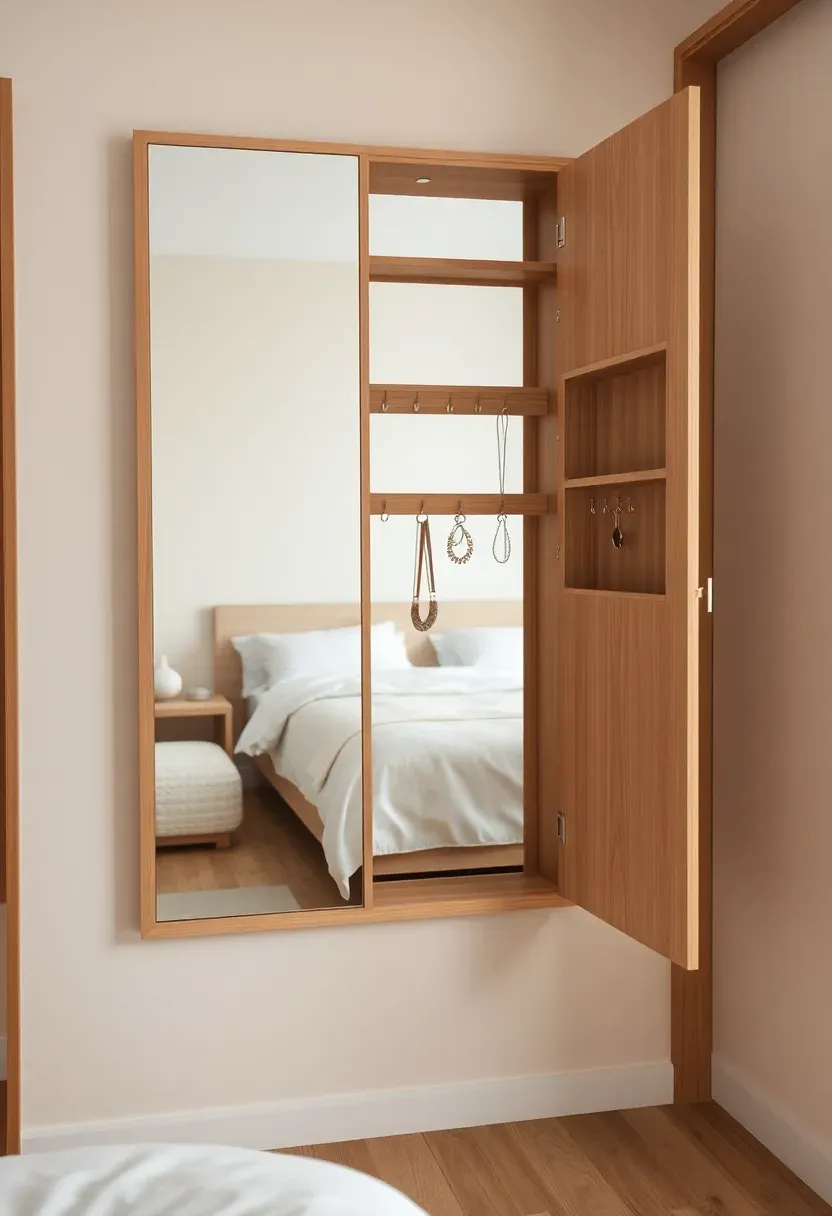
Prompt: Nature documentary captured on Hasselblad X2D 100C with XCD 90V lens at f/4. Hyper-realistic view of small Japandi bedroom with full-length mirror mounted on wall revealing hidden storage—mirror is on hinges or has cabinet door mechanism, shown partially open to reveal jewelry hooks and small shelves inside. Mirror frame is light wood, blending with wall. Bed visible in background with white linens. Floor light oak, walls cream. Materials: mirrored glass, light wood frame, interior velvet-lined jewelry storage. Soft ambient light (3000K). Clever storage mood emphasizing hidden functionality. Shallow focus on mirror mechanism. Minimal styling. No clutter. No text, no logos. Aspect ratio 2:3.
Behind-mirror storage utilizes wall space for essential storage while maintaining the seamless minimalist aesthetic—what appears to be simple full-length mirror actually conceals organized storage for jewelry, accessories, or small items. This hidden storage approach adds substantial functionality without consuming floor area or creating visual clutter, perfectly embodying Japandi principles of intentional design where every element serves multiple purposes. The mirror itself provides essential functionality for dressing and enhancing spatial reflection, while the concealed storage behind it keeps valuable items organized and accessible but out of sight.
The mechanism should be quality and smooth—either a hinged system that allows the mirror to swing open like a cabinet door, or a sliding mechanism that reveals the storage compartment. The interior should be thoughtfully organized with hooks, small shelves, velvet-lined compartments, or dedicated holders that keep items untangled and accessible. Lighting inside the storage compartment adds both functionality and luxury, making contents easy to see and adding a premium detail. From the exterior, the mirror should appear as simple wall-mounted mirror with no visible indication of hidden storage—this seamless quality is essential to maintaining the minimalist aesthetic while maximizing functionality in small spaces.
Tips
- Do install at comfortable height for mirror use while ensuring storage interior remains accessible.
- Don't overload hidden storage with heavy items that strain the opening mechanism over time.
- For budget, create DIY version with mirror mounted on small cabinet or repurposed medicine cabinet with exterior mirror.
Rental note: Use over-door mirror organizers or lean a substantial mirror against small wall-mounted cabinet for similar hidden storage without permanent installation.
What this gives you: Clever concealed storage with essential mirror functionality through seamless dual-purpose design.
17. Low-Profile Japandi Furniture to Maintain Air Circulation
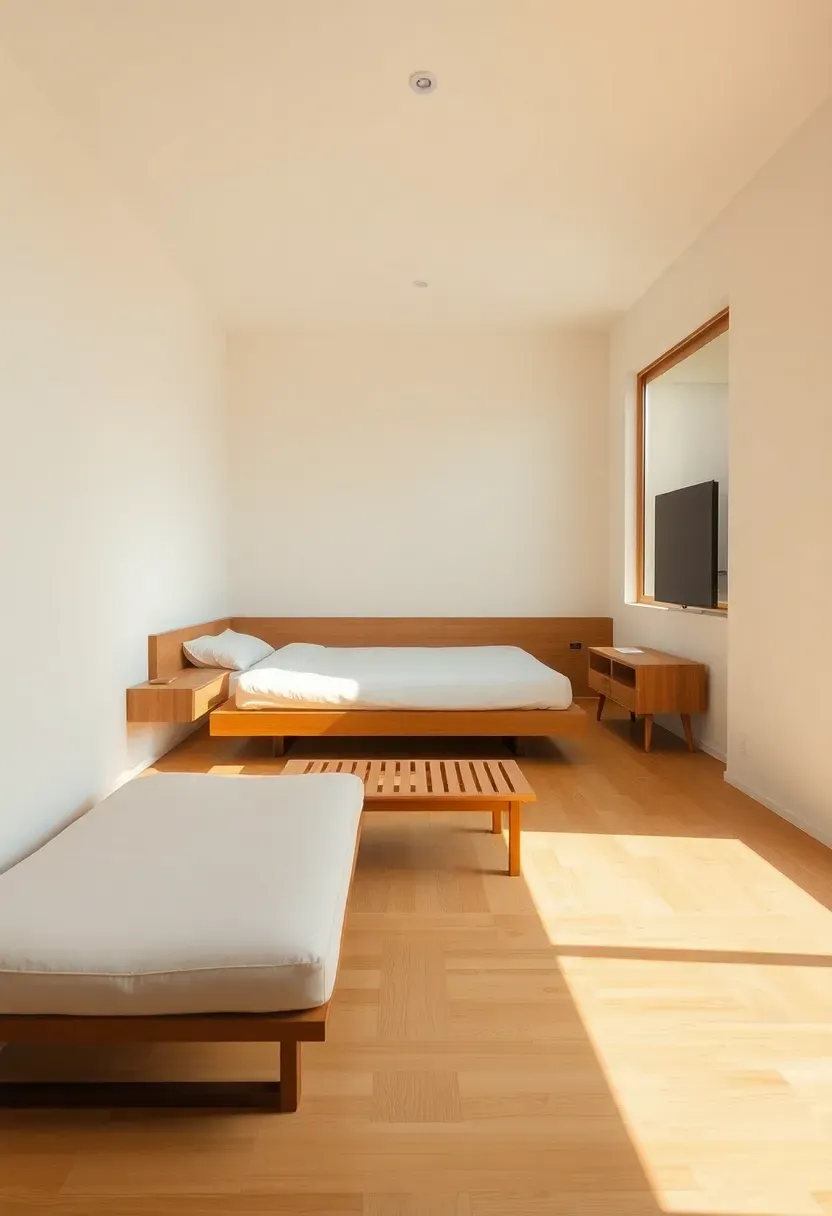
Prompt: Nature documentary captured on Hasselblad X2D 100C with XCD 90V lens at f/4. Hyper-realistic wide view of small Japandi bedroom featuring low-profile furniture emphasizing air circulation and spaciousness. Low platform bed sits close to floor, floating nightstands are slim and mounted low, bench at foot of bed is low backless design. All furniture maintains low horizontal profile—no tall bulky pieces. Walls extend visibly upward, enhancing ceiling height perception. Floor light oak with large area showing between furniture pieces. Walls soft cream. Materials: light wood, cotton bedding. Bright natural light from window (5500K). Airy spacious mood emphasizing openness. Deep focus showing floor visibility. Minimal styling emphasizing low profile. No clutter. No text, no logos. Aspect ratio 2:3.
Choosing low-profile furniture that sits closer to the ground maintains visual and physical air circulation in small bedrooms, preventing the cramped, stuffed feeling that bulky tall furniture creates in compact spaces. Low beds, benches, and nightstands preserve significant visible floor area around their bases, creating breathing room that makes small rooms feel larger and more open. This horizontal approach emphasizes floor space and creates continuous sightlines across the room, while the preserved vertical space above low furniture enhances ceiling height perception—crucial advantages in bedrooms where every dimension matters.
Common mistake: Choosing standard-height furniture with substantial mass underneath (boxy storage beds, traditional nightstands with solid bases) that blocks floor visibility and creates visual heaviness—low-profile alternatives maintain air circulation without sacrificing storage or surface space.
The Japanese influence in Japandi design traditionally favors low furniture that creates connection to the ground, while Scandinavian practicality provides the storage and functionality solutions that make low-profile living workable for modern needs. Platform beds with under-bed storage maintain the low aesthetic while providing essential storage capacity. Bench seating at the foot of the bed offers surface space without the back height of traditional seating. Floating nightstands mounted at lower height preserve floor visibility. The key is maintaining visual lightness from floor level to ceiling—furniture that doesn't dominate vertically allows walls and ceiling to feel expansive rather than enclosed by massive furniture pieces.
Tips
- Do ensure low bed height allows comfortable entry and exit—test actual mattress height before committing to very low platforms.
- Don't choose ALL furniture at the same low height—some variation prevents monotonous profile while maintaining overall low aesthetic.
- For back-friendly alternatives, look for platform beds with raised headboards but open space beneath—maintains airiness while providing back support.
What this gives you: Enhanced spaciousness and air circulation through low-profile furniture that preserves floor visibility and ceiling height perception.
These seventeen japandi bedroom ideas for small rooms prove that limited dimensions inspire rather than restrict good design. The fusion of Japanese minimalism with Scandinavian warmth creates bedrooms that work harder without feeling utilitarian, providing sanctuary within small footprints through intentional curation rather than expansive square footage. If you are working with an entire compact apartment, our guide to japandi small apartment bedroom ideas extends these principles room by room. Whether you start with a single storage bed or rethink the whole palette, the Japandi approach shows that serenity comes from what you exclude rather than what you accumulate.
About the author
OBCD
CGI visualization and interior design content. We create detailed 3D renders and curate practical design ideas for every room in your home.